Joanna C. Valente’s Marys of the Sea is a rare poetry collection that deserves to be called many things, but perhaps uncomfortable is the only one that sets it apart and does it justice. Raw, real, and painfully honest, the poems in this book touch on subjects that range from physical abuse and loss to maternal love and the emotional connective tissue that turns physical pain into the shattering of the spirit. These poems are made from feelings distilled from profound, life-altering experiences, and they echo with truth and the strong, even voice of a true survivor.
From page one, Valente makes it clear that her poetry will tread on everything sacred in the name of catharsis, and that the treading will, through internalized and shared suffering, create its own religious experience. However, in order to participate of this communal experience, the reader must first endure the onslaught of violent, aching, spiritual imagery. And that is no easy task. Valente’s sharing is brutal and relentless; a bloody, tender wound that becomes a screaming voice that hopes for justice and demands healing, love, and rebirth through remembrance, through the tender celebration of all things lost.
“One day, I had come home from school knowing there was a sickness in my gut. When the doctor asked me where it hurt, I pointed. Bury it in the soil, he instructed — there was no chance unknowing. Dying children are only getting lonelier. No one likes children but that doesn’t mean you don’t have them.”
Perhaps the most impressive element of Marys of the Sea is that, while very obviously anchored in personal experiences and with communication and release as its main goals, it ends up being a powerful text that bridges the gap between Kant and the blind faith of the strongly devout. In this way, the collection, despite being emotionally gritty and concerned with both the past and the present, almost approximates transcendental poetry in the sense that, under all that ugliness and awful experiences, there is something that keeps the poet going, something that points to an inherent goodness in them and those around them and that makes survival the only viable option. Furthermore, the corruption of body and spirit is not a insurmountable obstacle but rather something that gives new shape to those who overcome it.
The difference between forgettable poetry collections and those that fly into the middle of the collective consciousness is sometimes timing, and this book comes at a perfect time. At a time of political tensions and upheaval, a time in which race and the female body have been thrown into the discussion as elements over which hegemonic powers can make decisions over the wishes of the overpowered Other, Valente’s words are a rebellious scream that refuses to speak anything but her truth. This is personal poetry that can be easily adopted and turned into flag by those inhabiting Otherness, those who feel like they don’t belong:
“We are two people at the bottom of a fish tank & sometimes we recognize
each other as open/closed parentheses.
Most other times, we don’t. We read self-help books to make us passionate
because our heart valves switched off
& things feel bad on the inside now in new America, my America full
of everyone but me.”
Marys of the Sea explores the universe of memories inside Valente and the world outside, and does it all in less than 100 pages. This collection is and simultaneously is beyond being feminine and feminist because it is too universal to be exclusive. These are poems about loss and desire, love and wanting to be loved, the shattered psyches and the body that accompanies it in an eternal ouroboros where pain might come to either first. These poems are a gospel for our times, and they deserve to be read as such.
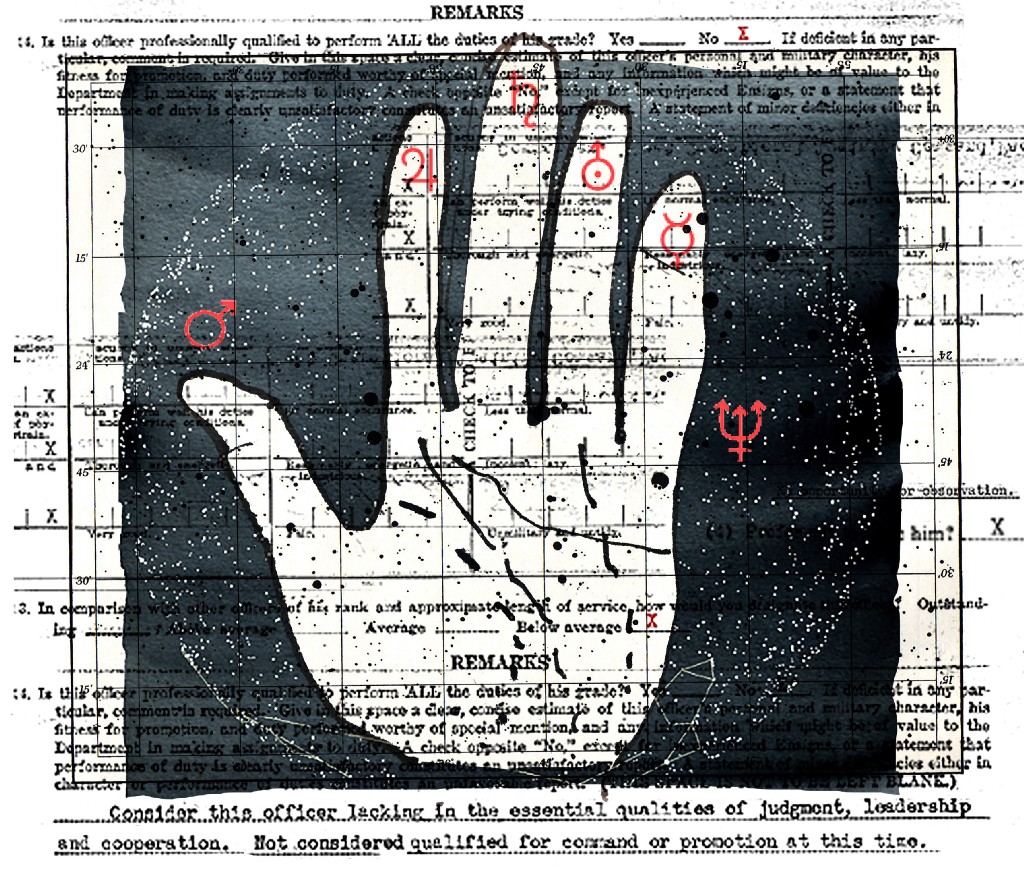
NAVAL MEDICAL CENTER FIRM LAND, COUNTREE EPTE OUTPATIENT MEDICAL BOARD
NAME: THE ANCIENT MARINER RATE/RANK/SER: O2/USN/AD
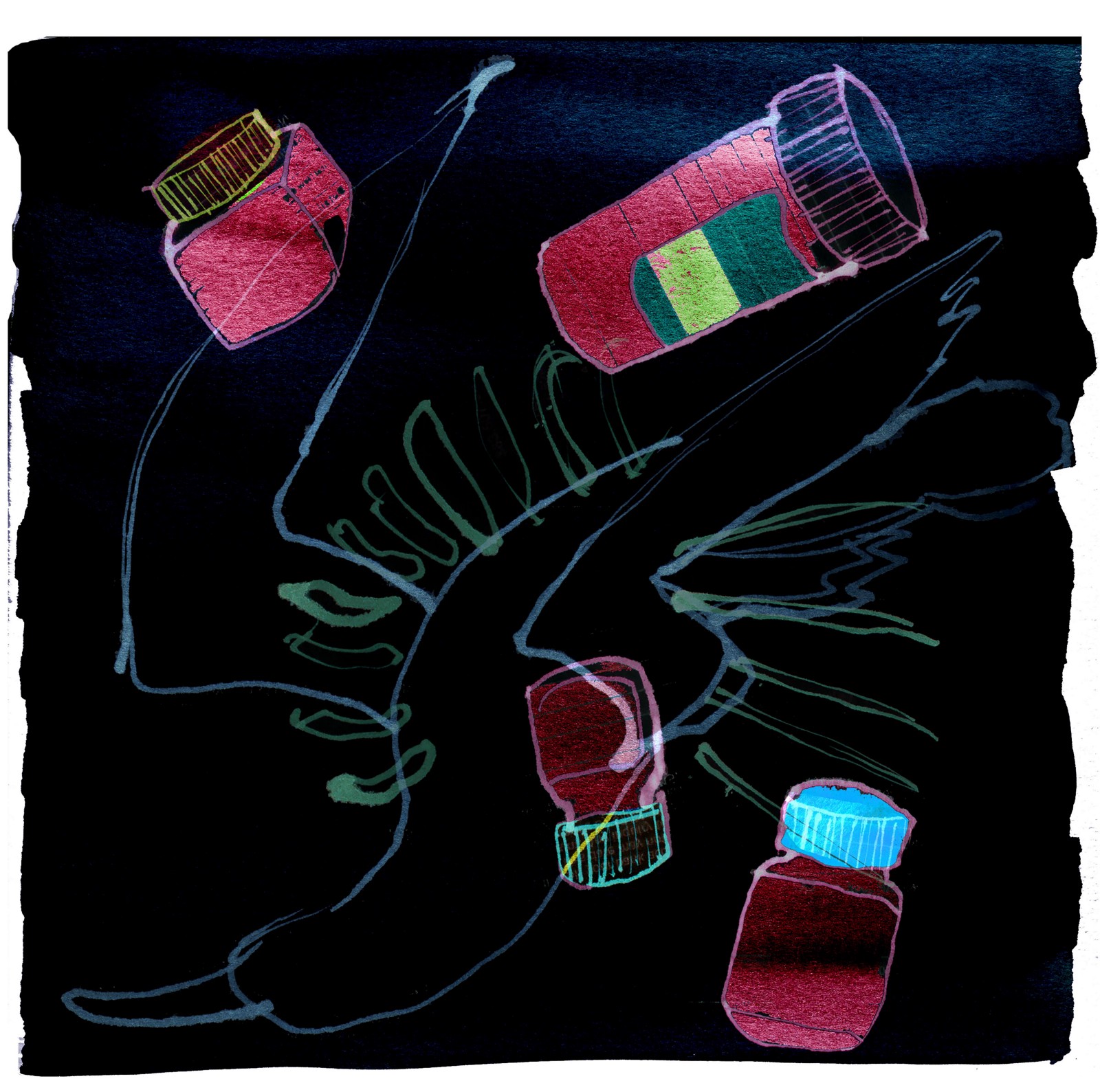
INTRODUCTION: This is an ancient left-hand-dominant male, LTJG/USN/AD, with service on the sea, first presented for psychiatric evaluation at NAVMEDCEN in his own countree upon grounding the pilot’s boat. Attention is invited to the Limited Duty Boards.
HISTORY OF PRESENT ILLNESS: The Mariner describes lifelong feelings of dysphoria, and fascination with suicide and depression, beginning during childhood, persisting through early adolescence and throughout his days on the sea, and gradually becoming more severe. He describes social isolation from friends and family, and “did only speak to break the silence of the sea! And in dreams assured were of the Spirit that plagued us so.”
The Mariner notes making a decision to end his life with daily thoughts of suicide. He describes self-destructive behaviors to include “a hellish thing. And it woke’n woe, for all averred I had killed the bird that made the breeze to blow. I bit my arm, I sucked the blood.” He would drink to the point of blacking out on a nightly basis.
The Mariner was placed on Limited Duty by the Hermit with a diagnosis of Adjustment Disorder and recommended for Administrative Separation, which the Mariner supported as he expressed a desire to get out of that silent sea. Despite being on Limited Duty, he experienced inability to focus and concentrate on problems at work and could not recall conversations, nor shapes of men, nor beast. He states: “The ice was all between.”
The Mariner continued to have thoughts of suicide, and reported thoughts of shooting himself with his own cross-bow. He feels hopeless throughout the day for most weeks and states: “seven days, seven nights I saw that curse, and yet I could not die.”
The Mariner feels ashamed. His enjoyable outside interests have declined. His overall mood is as “white as leprosy. The nightmare life-in-death was she, who thicks man’s blood with cold. A weary time! A weary time!” He was started on Zoloft, which caused bruxism, and was switched to Lexapro, which had fewer side effects. He was referred to and screened at Naval Medical Center Firm Land PIOP. Hesitant to engage in group therapy treatment, he declined treatment. He was re-screened and attended the second time, completing PIOP. The history was not consistent with hypomania, mania, substance-induced mood disorder or psychosis. But a weary time! A weary time!
PAST PSYCHIATRIC HISTORY: The Mariner has engaged in psychotropic medication management. He was treated with Zoloft, Ambien, Celexa, Wellbutrin, Lexapro and Abilify. He was also seen by a Lonesome Spirit from the South Pole for individual therapy every other week, but stopped going, stating: “every tongue through utter drought was withered at the root; we could not speak, no more than if we been choked by soot.”
The Mariner was referred to the Spectre-Woman and her Death-mate for testing for diagnostic clarification with the following results: “The Mariner’s pattern of responding on the MMPI-2-RF, MCMI-III, and the SIMS is consistent with significant over-reporting or marked exaggeration of psychiatric, somatic, cognitive and neurological problems. Therefore, the test data are not sufficiently reliable or valid to support diagnostic hypothesis, and similarly, the interview data may not be completely accurate. Personality traits suggested by the MCMI are of questionable validity.The Devil knows how to row.”
The Mariner endorsed suicidal thoughts throughout his life and once placed a loaded cross-bow in his mouth. He denies previous inpatient psychiatric hospitalizations or psychotropic medication use prior to seeing the Hermit. He was screened by SARP and diagnosed with Alcohol Abuse. He was referred to Level I, which he completed. Out of the sea came he!
PSYCHOLOGICAL/FAMILY HISTORY: The Mariner is an only child, alone, alone, all, all alone on a wide wide sea! He grew up below the kirk, below the hill, below the lighthouse. He describes his father as a good father who took him boating as a child. He denies a history of sexual, physical, or emotional trauma, but ’twas sad as sad could be.
The Mariner went to sea after high school. After serving on the sea, he was discharged. The bright-eyed Mariner graduated from University. He became a commissioned officer in a ship with his glittering eye. And now the storm BLAST came, and he was tyrannous and strong. He struck with his o’ertaking wings. And now came both mist and snow, and it grew wondrous cold.
SUBSTANCE USE: The Mariner would consume alcoholic drinks on that silent sea, but acknowledges concerns about his previous heavier alcohol use and in this context reports feeling as though he was unable to control/stop drinking, feeling guilt over his alcohol use, regretting drinking to the point of memory loss, and failing to meet his social/interpersonal obligations as a result of alcohol consumption, stating “what evil looks had I from old and young.” Instead of the cross, the Albatross about his neck was hung.
Since, the Mariner has abstained from alcohol. A weary time! A weary time!
PAST MEDICAL HISTORY: None.
MEDICAL STATUS EXAMINATION: The Mariner, whose eye is bright, whose beard with age is hoar, is alert and oriented in all spheres. He is very thin, long and lank and brown in appearance as is the ribbed sea-sand, with intermittent eye contact, and skinny hand, so brown. He has a strange power of speech, spontaneous with a slow rate, normal rhythm, monotone, and soft volume. Some mild psychomotoric slowing is noted. His mood is frustrated, somewhat dysphoric and irritable.
TREATMENT COURSE: The Mariner reports that he has been under the care of two different psychiatric providers for depressive symptoms prior to initiation of treatment with the Wedding-Guest.
There was a ship! And the Mariner was an officer on it at sea, but currently passing, like night, from land to land while on Limited Duty. He reports he has been on multiple medications, most recent Lexapro and Wellbutrin and Abilify. He reported continued bruxism with Wellbutrin, which was discontinued and side effects left him free. He has completed PIOP, which he may’st hear the merry din. He has been involved in individual therapy with the Lonesome Spirit from the South Pole, which he reports is “sometimes sweeter than the marriage feast, sometimes wrenched with a woeful agony.” He reports despite medications continuing to feel what he describes as nor breath nor motion; as idle as a painted ship upon a painted ocean, as sad as sad could be. He finds himself being a catastrophic thinker and is frustrated with the uncertainty of his future.
FINDINGS: After an adequate period of observation, evaluation and treatment, a seraph-band reviewed the available records and current findings. This seraph-band, each waved his hand: It was a heavenly sight! This seraph-band, each waved his hand, no voice did they impart — No voice; but oh! the silence sank and they agree that the Mariner suffers from a condition that precludes his rendering any further useful service to ships on the sea.
The Mariner’s claimed conditions to the countree were reviewed and no further changes are recommended to God himself.
DIAGNOSES:
Axis I: Major depressive disorder, single episode, moderate, Alcohol Abuse
Axis II: Deferred.
Axis III: Recently diagnosed heart as dry as dust.
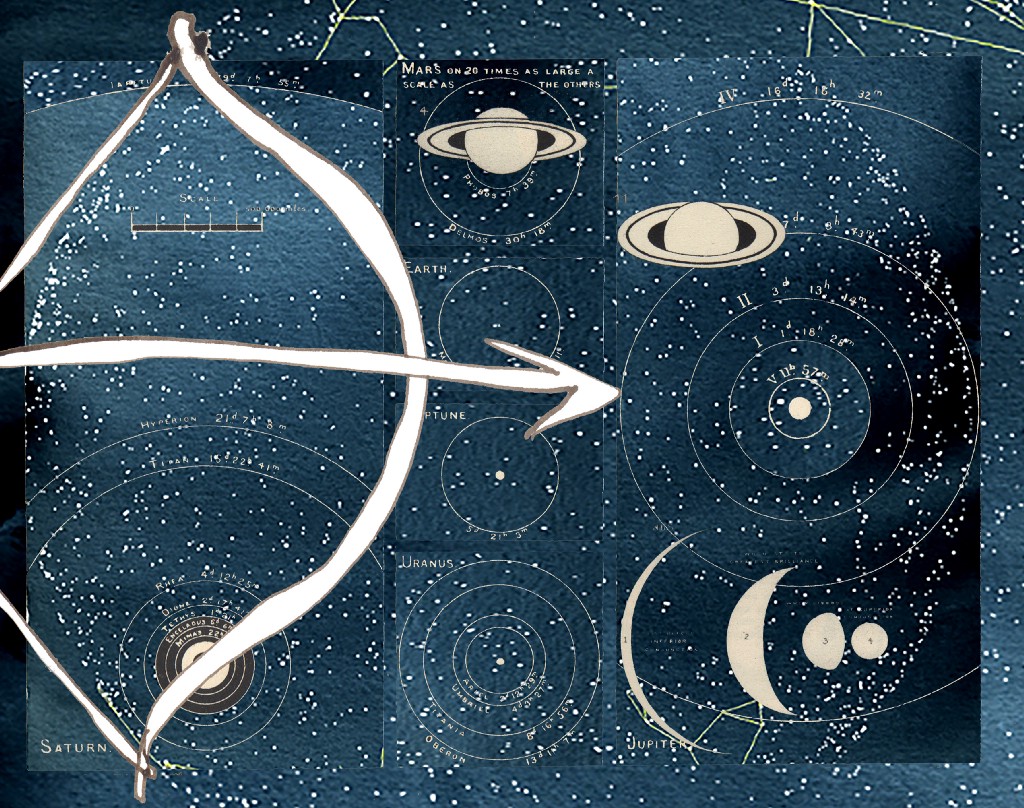
Axis IV: The sky and the sea, and the sea and the sky
Axis V: GAF of 5.
RECOMMENDED MEDICATIONS: Continued psychopharmacological medication is advised. The level of medication required does not plague the Mariner so as to fling the blood into his head and fall down in a swound. The Mariner takes the prescribed medications appropriately and can be expected to do so upon discharge.
RECOMMENDATIONS: Following a review of the clinical findings, the seraph-band is of the opinion that the Mariner suffers from a condition that existed prior to service and is considered to have been aggravated by a period on the sea. The seraph-band recommends that the Mariner’s case be forwarded to God himself for disposition.
DISPOSITION: The seraph-band is further of the opinion that the man hath penance done, and this has not restored the Mariner to a duty status, nor restored his glittering eye. At the present time, the Mariner is considered fully competent to be discharged from the sea, does not constitute a danger to self or others, and is not likely to become a public charge; and penance more will do.
MENTAL COMPETENCY: The seraph-band is of the opinion that the Mariner is mentally capable of handling his own financial affairs.
DISCIPLINARY STATUS: There is no known disciplinary action, investigation or processing for an administrative discharge pending. The Albatross fell off, and sank like lead into the sea.
Hello, and welcome to my week-by-week review of the world. Today I am reviewing childbirth.
CAUTION: This review contains explicit descriptions of genitals and other gross things. It is unsuitable for readers under the age of 18.
You might think I can’t review something I’ve never experienced first hand. Like the time I reviewed Avatar without having seen it. And while technically I’ve never given birth myself, there’s nothing more first hand than having been given birth to.
In the final moments before the baby comes out of the vagina there’s a lot of drama and wide-eyed looks. The soon-to-be mother may scream loudly and often, but it’s a different type of scream from what you would hear at a surprise birthday party or on a rollercoaster, unless the rollercoaster has derailed. The pain the mother feels is the result of a baby trying to fit through a vagina. Vaginas are made more for fitting things into, not out of.
Once the baby comes out there’s more screaming, but this time it’s the baby, who is screaming out of sheer terror. Imagine you were walking to work on a warm, sunny day when suddenly an invisible force shoves you through a mailbox and you come out on the other side of some strange world, naked, cold, and unable to talk. That’s basically what’s happened to the baby.
When the baby first appears, it’s purple and covered in goo. It’s a bit alarming if you were expecting the Gerber baby to appear. But if you’re someone with generally low expectations in life, this probably won’t seem like a big deal.
One of the weirdest things about childbirth is how many people are staring really intently at the mother’s vagina, silently rooting for a baby to come out. I think it must be a lot of pressure for the mother. What if the baby comes out another orifice? I’m not great with anatomy but I don’t think that’s impossible.
Once that baby finally comes out, regret may set in, although it could take many years before that happens.
Please join me next week when I’ll be reviewing Woody Harrelson.
Last year we profiled Detroit nonprofit Write A House, an organization created in 2012 to renovate houses and give them away to writers. Recently, Write A House has reassessed the model of their organization moving forward to ensure greater sustainability, while keeping their mission of providing long-term affordable housing for writers so that they can pursue their art without the fear of rising costs.
“We came to realize that giving away the homes was not putting us on a path to financial stability and decided to adapt so that we can grow,” Write A House Co-Founder and Director Sarah F. Cox told me through email. “Our goal is to reduce vacancy and fill renovated homes with emerging, low-income writers, and we can’t do that at the rate of one home a year we were going at.”
Write A House recently awarded the final home under its original model to Nandi Comer, notably the first Detroit native to receive a home in the program (all previous winners — poet Casey Rocheteau, journalist Liana Aghajanian, and cultural critic Anne Elizabeth Moore — had been living in other cities). Fundraising for Nandi’s home began in May 2016, but Write A House “didn’t see donations come in at the level we wanted,” says Cox. “Around the same time, our board started to look at models of artist residencies that had been more successful than we had in growing and discussed what we could do to learn from them.”
One model that Cox mentions is Project Row Houses in Houston, Texas, which offers affordable housing as well as public art projects in their neighborhood revitalization efforts. Write A House wants to be a good neighbor to long-term residents and currently owns a vacant lot near its next two houses, and they hope to acquire more lots in the future and work with other organizations to address public space.
The biggest change at Write A House for writers is that, following the completion of the first four home awards, deeds to houses will no longer be turned over to the writer in residence after two years. “After Nandi’s home is completed,” says Cox, “we’re going to focus on more multifamily properties and ways to create long-term stability for writers in terms of subsidized rent and pathways for them to purchase homes.” Future winners of the Write A House program will be given an inexpensive place to live for as long as they choose to live there, but the house will remain the property of Write A House to guarantee that it continues to serve writers and community revitalization should its first tenant decide to move on. “We’ve never had to deal with someone moving out before, but the long term reality is that one day it will happen and our second version of the project is better equipped to make sure that artist housing stays artist housing for the long-haul.”
Write A House plans to roll out a new application process for writers later in 2017, but the cycle is dependent on donors giving so that they can renovate more homes. To tie up what they began in May 2016, Write A House is still raising money to complete Nandi’s home, seeking to raise $20,000 by the end of January 2017.
You can donate to the renovation of Nandi’s home here. As with previous job sites, Write A House will hire a local Detroiter who has gone through a job training program in construction and is on a path to greater job stability. “We make sure that when we spend money on these houses that we help locals become more financially stable,” says Cox. “Detroit still needs a lot more jobs, and the faster we raise more money to expand, the more we can do about that as well.”
On the 208th anniversary of Edgar Allan Poe’s birthday, the Mystery Writers of America have announced the finalists for the 2017 Edgar awards. The Edgars cover everything from best novel and best short story to best biography and best TV episode teleplay. The 2017 Finalists include big names like Stephen King and Joyce Carol Oates, and unsurprisingly, everyone’s favorite fall breakout series Westworld made the longlist for best teleplay. Stay tuned, the winners will be announced in April in New York City!
Best Novel
The Ex by Alafair Burke (HarperCollins Publishers — Harper) Where It Hurts by Reed Farrel Coleman (Penguin Random House — G.P. Putnam’s Sons) Jane Steele by Lyndsay Faye (Penguin Random House — G.P. Putnam’s Sons) What Remains of Meby Alison Gaylin (HarperCollins Publishers — William Morrow) Before the Fall by Noah Hawley (Hachette Book Group — Grand Central Publishing)
Best First Novel
Under the Harrow by Flynn Berry (Penguin Random House — Penguin Books) Dodgers by Bill Beverly (Crown Publishing Group) IQ by Joe Ide (Little, Brown & Company — Mulholland Books) The Drifter by Nicholas Petrie (Penguin Random House — G.P. Putnam’s Sons) Dancing with the Tiger by Lili Wright (Penguin Random House –Marian Wood Book/Putnam) The Lost Girls by Heather Young (HarperCollins Publishers — William Morrow)
Best Paperback Original
Shot in Detroit by Patricia Abbott (Polis Books) Come Twilightby Tyler Dilts (Amazon Publishing — Thomas & Mercer) The 7th Canon by Robert Dugoni (Amazon Publishing — Thomas & Mercer) Rain Dogs by Adrian McKinty (Prometheus Books — Seventh Street Books) A Brilliant Death by Robin Yocum (Prometheus Books — Seventh Street Books) Heart of Stone by James W. Ziskin (Prometheus Books — Seventh Street Books)
Best Fact Crime
Morgue: A Life in Deathby Dr. Vincent DiMaio & Ron Franscell (St. Martin’s Press) The Lynching: The Epic Courtroom Battle that Brought Down the Klan by Laurence Leamer (HarperCollins Publishers — William Morrow) Pretty Jane and the Viper of Kidbrooke Lane: A True Story of Victorian Law and Disorder: The Unsolved Murder That Shocked Victorian England byPaul Thomas Murphy (Pegasus Books) While the City Slept: A Love Lost to Violence and a Young Man’s Descent into Madness by Eli Sanders (Penguin Random House — Viking Books) The Wicked Boy: The Mystery of a Victorian Child Murderer by Kate Summerscale (Penguin Random House — Penguin Press)
Best Critical/Biographical
Alfred Hitchcock: A Brief Lifeby Peter Ackroyd (Penguin Random House — Nan A. Talese) Encyclopedia of Nordic Crime: Works and Authors of Denmark, Finland, Iceland, Norway and Sweden Since 1967by Mitzi M. Brunsdale (McFarland & Company) Shirley Jackson: A Rather Haunted Lifeby Ruth Franklin (W.W. Norton — Liveright) Something in the Blood: The Untold Story of Bram Stoker, the Man Who Wrote Dracula by David J. Skal (W.W. Norton — Liveright)
Best Short Story
“Oxford Girl” — Mississippi Noir by Megan Abbott (Akashic Books) “A Paler Shade of Death” — St. Louis Noirby Laura Benedict (Akashic Books) “Autumn at the Automat” — In Sunlight or in Shadowby Lawrence Block (Pegasus Books) “The Music Room” — In Sunlight or in Shadowby Stephen King (Pegasus Books) “The Crawl Space” — Ellery Queen Mystery Magazine by Joyce Carol Oates (Dell Magazines)
Best Juvenile
Summerlost by Ally Condie (Penguin Young Readers Group — Dutton BFYR) OCDaniel by Wesley King (Simon & Schuster — Paula Wiseman Books) The Bad Kidby Sarah Lariviere by (Simon & Schuster — Simon & Schuster BFYR) Some Kind of Happinessby Claire Legrand (Simon & Schuster — Simon & Schuster BFYR) Framed! by James Ponti (Simon & Schuster — Aladdin) Things Too Huge to Fix by Saying Sorryby Susan Vaught (Simon & Schuster — Paula Wiseman Books)
Young Adult
Three Truths and a Lieby Brent Hartinger (Simon & Schuster — Simon Pulse) The Girl I Used to Beby April Henry (Macmillan Children’s Publishing Group — Henry Holt BFYR) Girl in the Blue Coatby Monica Hesse (Hachette Book Group — Little, Brown BFYR) My Sister Rosaby Justine Larbalestier (Soho Press — Soho Teen) Thieving Weaselsby Billy Taylor (Penguin Random House — Penguin Young Readers — Dial Books)
TV Episode Teleplay
“Episode 1 — From the Ashes of Tragedy” — The People vs. O.J. Simpson: American Crime Story, Teleplay by Scott Alexander & Larry Karaszewski (FX Network) “The Abominable Bride” — Sherlock, Teleplay by Mark Gatiss & Steven Moffat (Hartswood Films/Masterpiece) “Episode 1 — Dark Road” — Vera,Teleplay by Martha Hillier (Acorn TV) “A Blade of Grass” — Penny Dreadful, Teleplay by John Logan (Showtime) “Return 0” — Person of Interest, Teleplay by Jonathan Nolan & Denise The (CBS/Warner Brothers) “The Bicameral Mind” — Westworld, Teleplay by Jonathan Nolan & Lisa Joy (HBO/Warner Bros. Television)
Robert L. Fish Memorial
“The Truth of the Moment” — Ellery Queen Mystery Magazine by E. Gabriel Flores (Dell Magazines)
Mary Higgins Clark
The Other Sisterby Dianne Dixon (Sourcebooks — Sourcebooks Landmark) Quiet Neighborsby Catriona McPherson (Llewellyn Worldwide — Midnight Ink) Say No More by Hank Phillippi Ryan (Tor/Forge Books — Forge Books) Blue Moon by Wendy Corsi Staub (HarperCollins Publishers — William Morrow) The Shattered Treeby Charles Todd (HarperCollins Publishers — William Morrow)
Listen to Christopher Lee, Vincent Price, Christopher Walken, James Earl Jones, and Lou Reed read his most famous poem
Two hundred and eight years ago today, Edgar Allan Poe was born in Boston, Massachusetts. Famous for his Gothic stories of murder and madness, Poe’s work has had a profound influence on the horror genre and helped create the genre of detective fiction. To celebrate his birthday, here are a whole bunch of different people reading his iconic poem “The Raven”:
At the end of Kate Zambreno’s 2011 novel Green Girl, Ruth, the titular heroine, goes to the Tate Britain museum to see Francis Bacon’s 1944 painting Three Studies for Figures at the Base of a Crucifixion. As she stares at the triptych, contemplating the three half-abstract, half-anthropomorphic figures, twisting and tortured against a burnt orange background, Zambreno lets us in on Ruth’s thoughts:
The open mouth. What is there to do but scream? And no sound comes out. We have lost ourselves. We offer ourselves up to our popes of abandon, of frenzied despair. Our identities gone. Our faces blurred, racing.
When pressed to vocalize her opinion by her male companion, however, Ruth is unable to find any words. All she can answer is “It’s horrible and beautiful. Like life, horrible and beautiful.”
This assessment of existence — as well as the level of inner life provided to the main character — is a generous step forward for Zambreno. In her previous novel, O Fallen Angel — loosely inspired by the same Bacon painting and now being reissued by Harper Perennial — life is pretty much only horrible. A twisted fairy tale in three intersecting parts, Zambreno’s 2010 novel dissects the willful blindness and rigid oppressiveness of contemporary American life, unsparingly charting its murderous consequences.
The first of the three sections, which alternate throughout the book, introduces us to the character of Mommy. In a long, unbroken paragraph, Zambreno begins by mimicking the sing-song tone of a children’s book to situate us in the world of a rule-abiding suburban family: “She is his Mrs. and he is her Mister the Mommy and Daddy.” As the section continues, the language becomes a playful stew of reading primer exposition, clichéd language, and punning wordplay, all designed to take us into and around the limited consciousness of Mommy.
This matriarch, we soon learn, is a stickler for defined familial roles and is terrified of anything outside her suburban enclave. “When she was a little girl,” Zambreno writes, “she had her whole life mapped out a whole houseful of children! In their pajamas with the footsies for Christmas morning!” Anything that differentiates from this fantasy, imbibed from her own parents and passed on to her children, is inadmissible in her world. She turns off the news when anything unpleasant comes on and her only experience of other countries is the simulacra provided by a trip to Disney’s Epcot Center.
But the world is stubborn; it just won’t cooperate with Mommy. Not only does her brother turn out to be gay, but her daughter, Maggie is a very bad seed. Unlike her brother, who has followed accepted practice by marrying and reproducing, Maggie finds herself locked in a downward spiral of drug use and random fucking, and is later diagnosed with bipolar depression. In the Maggie sections of the book, Zambreno breaks up the breathless sections of prose that she uses in the Mother section into tiny paragraphs — perhaps reflecting Maggie’s clipped consciousness — but maintains the same heady stew of language.
Indoctrinated by her mother’s love of fairy tales, Maggie sees her life as being defined and betrayed by these stories. “Maggie used to dream of Prince Charming,” Zambreno writes, but “Prince Charming is really a wolf in disguise.” Maggie is unable, given her natural curiosity, to limit herself to the role dictated by her mother. As a result, she sees herself as bad, and then, as in a self-fulfilling prophecy, acts out the way she feels, throwing herself to the metaphorical wolves (i.e. fuck-and-run men). In grimly hilarious prose, Zambreno charts this descent: “And Sleeping Beauty didn’t make him wear a condom and now she has pelvic inflammatory disease and crotch-itch and genital warts, but oh, the memories.”
But for all its dank humor and brutal dissection of the nuclear family, O Fallen Angel is also a philosophical novel, deeply concerned with the problem of freedom. For the Sartre-reading Maggie, the question of purpose is foremost. She knows that she wants more to life than to “always [do] the dishes and [hold] a steady job,” but, after seeking freedom from that life, she can’t conceive of any alternative. And, so, at the end of the book, homeless, jumping from one man’s bed to the other, she achieves the only freedom available to her, one that isn’t really free at all. For her mother, who by contrast, rejects anything out of the accepted order (“What’s the use with all that freedom Mommy thinks”), things end nearly as bleakly, as this paragon of repression transforms into something like a tragic character, unable to escape her own overwhelming fear.
If this deliberately myopic woman chooses to see the world only as benignly angelic, then she finds her dark counterpart in a self-appointed avenging angel. The third section of the book follows a madman named Malachi, based on Virginia Woolf’s Septimus Smith, who receives messages from the air and rebroadcasts them to passersby near the highway. This prophet of doom, the “messenger angel” who has “come down to warn the people,” views the world in its proper state of grotesquerie. Like Bacon channeling his vision into writhing abstractions, Malachi looks at TV sets and sees “Guillotined heads. The disembodied.” He contemplates our “cell phone towers of Babel.” He wants to offer the world a “spectacle of human suffering” to break through our distractions. If Mommy, then, insists on viewing the world in its narrowest terms and Maggie is overwhelmed by the enormity of a ruleless life, it is Malachi who provides a wider perspective, an essential third viewpoint. That his own existence proves as futilely mortal as that of the other two characters means that Zambreno’s acid vision is a fully committed one, but it also serves as a stern reminder that, even in defeat, our so-called false prophets may still have plenty to tell.
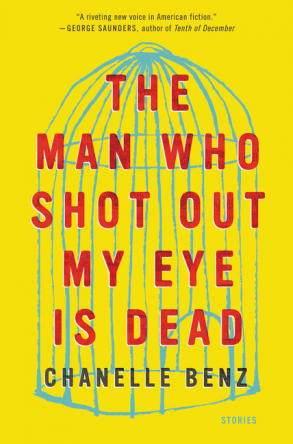
Finding a distinct voice is the first benchmark any great writer must accomplish. Chanelle Benz, author of The Man Who Shot Out My Eye Is Dead (Ecco), has created more than just a voice to stand out from the crowd. She’s created ten.
The stories in Benz’ debut collection are told from perspectives ranging from an eighteenth century slave to a baroque-style piece told in the collective We. The book begins with a non-traditional western that grabs the reader in close, then follows up with a contemporary story of family and violence that is just as gripping. It’s not just the wide-ranging eras and plots that make each story stand out; it’s the carefully-crafted voices. Benz is a trained actress who learned presentation is everything when it comes to captivating an audience and translated that skill into her writing. I recently spoke with her about how this collection came to be, how she found the voices, and people of color in the literary world.
Adam Vitcavage: It is easy for a short story collection fall into the trap of every story becoming redundant because the author wanted cohesion. Your collection is cohesive in tone, voice, and theme, but each story is so unique. How did you come up with such a wide variety of ideas?
Chanelle Benz: I initially set up an experiment for myself. What if I wrote a spy story? What if I wrote a post-apocalyptic story? What if I wrote a western? The first story I wrote was “Adela” — the second story in the collection — and I started doing that challenge. Things started to go awry. My version of a spy story was “The Diplomat’s Daughter,” which isn’t really a spy story; it’s more of an identity story. I just had a lot of fun doing it.
For me, part of it was trying to find a container for my story. It was healthy for me to set this experiment up. I guess the other cheat was that I was going to all of these periods of time that I’m interested in. When I was a woman growing up, and as a brown person, you’re not in historical movies or a lot of things. You have to insert yourself into it. If you want to be Billy the Kid or part of his posse you have to be his half-sister from some illegitimate fling.
Adam Vitcavage: One thing I found very interesting about the collection were the distinct voices of each narrator. How did you hone in on all of the different characters and how they sounded?
Chanelle Benz: I used to be an actress. I came from mostly a theatre background where we did a lot of Shakespeare, the Jacobian dramas, so I think part of it was from my theatre background. When we were learning accents, we would learn phonetically, as well as sometimes by ear. But I could not get a handle on phonetics. I could just not understand it that way. What I could do with accents was give myself a key into it. It was some sort of sentence that I would repeat to myself over and over again until my tongue memorized the movement of the accent.
I think I must have done something similar with the writing. If I found a key into the voice I could find a way into the story. For the final story, “That We May All Be One Sheepfolde,” I read a lot of Thomas More’s letters and made lists of words to find my way into the cadence of that time without making it so far removed from what modern day readers would know.
Some voices come right away for me while others take a lot of work. “Adela” opened with the children’s voice. I wrote the first sentence and had to figure out where to go next. I added the scholar’s voice later. It just so happened that I was reading a lot of scholarly, post-Colonial essays at the time that I could pull some of that language.
Adam Vitcavage: Are there any examples that still stand out?
Chanelle Benz: I can’t think of any off of the top of my head because I made such long lists [of words]. I might end up dropping some of that, but I never came up with a single sentence. Just words I would try to insert into the story somehow.
Adam Vitcavage: You mentioned how growing up you weren’t really represented in movies and whatnot. How do you feel these time periods tie back into current events and how people of color are portrayed today?
Chanelle Benz: I think that it has a lot of resonance. When I set out to write [the stories], I wasn’t consciously thinking that I was going to write any political message. I think there were stories, like in “The Peculiar Narrative of the Remarkable Particulars in the Life of Orrinda Thomas,” Orrinda says something about it’s her crime to be two things: a brown woman. These two words “brown” and “woman.”
I feel that’s true today. There’s a punishment. You’re persecuted for just being. I don’t go around thinking of myself as as a brown woman. I just go around as me. It’s just the outside world that shows me I am these things and that there is a cost to that.
I don’t go around thinking of myself as as a brown woman. I just go around as me. It’s just the outside world that shows me I am these things and that there is a cost to that.
That’s true for a lot of my characters. There’s a cost to being who they are and how they were born into the world. I think that’s still true and that it’s probably going to get even more true.
Adam Vitcavage: I live in Arizona and a lot of my friends are of Mexican or Navajo descent and while I rarely think about it, hearing them talk about recent events, I try to connect, but as a white male I know I’ll never really understand. There are these outside persecutors telling us that we’re different in some way even though we aren’t.
Chanelle Benz: Because I’m brown and kind of lighter, that also carries a privilege, too. I haven’t had to put up with a lot of things other people have. I’m British and used to have an accent, so because of how I talked and looked, some of those things carry a privilege. I never experienced the things my friends might have because they were slightly browner or speak a different way. They’ve had to carry something different.
I think the things that are happening with Trump and the racial hatred that is coming out, for a lot of people in the black community or different communities of people of color, they’re not surprised. It’s not new to them. The news of police brutality is interesting because it’s not new. Not at all. The rest of us have just never had to deal with that on a daily basis.
It’s interesting because the things that other people had to deal with for so long while a huge majority of us haven’t are all of a sudden having to be dealt with by all of us.
Adam Vitcavage: Do you feel that — and I don’t want to use the word — but do you feel that there is a duty for people of color to express this through literature? Or what’s the place of literature in a climate like this?
Chanelle Benz: I don’t feel there is a duty. I definitely don’t feel like it’s people of color’s job to write about or even talk about these things. You know, I want the right to talk about dragons. I want the right to write about whatever.
I do think in a time like this and you’re an artist, you can be an activist, you can call your senator, you can be involved. But you’re a writer. It’s important. What I guess I would say is that you shouldn’t be afraid to alienate your fan base by standing up for your convictions. Don’t be afraid of putting something on Twitter because my Trump readers won’t buy my book.
All stories are about the human condition. That’s what all of the greatest stories do. They make all of the trappings of humanity transparent and they tap into that. I think that it’s important to not be shallow but to dig deep, whatever that means. It doesn’t need to mean be political. It just means to get at what it means to be human.
It doesn’t need to mean be political. It just means to get at what it means to be human.
Adam Vitcavage: Within this short story collection, a lot of it thematically deals with race, history, family, and violence. What drew you to these larger themes?
Chanelle Benz: Family is one of those things that you keep repeating. You just keep coming back to it. It’s a deep unresolved issue. As for violence, I just think we live in a violent world. In my own life I have had to deal with a certain amount of violence like I’m sure a lot of people have. It’s something that carries a certain charge and a certain stain. When you’re involved in an act of violence, especially taking someone’s life, you can’t undo it.
Peter Brook, who is an English theatre director, talks about Hamlet as this great moral dilemma to avenge his father and kill his uncle. But once he takes his life, his soul is stained forever. Brook talks about what it means to kill someone. On a certain level, violence is like that as well. Once you do violence on someone, it’s marked on their body forever. Mostly all of the characters in the collection have a choice where they can become involved in this or not.
Adam Vitcavage: Did you always plan on releasing these as a collection? I know some of them were published previously, but was that always the plan?
Chanelle Benz: Once I had two or three, I thought I had a collection. I probably thought I had 20 stories. There was a story that didn’t make it and “Recognition” was written right before the manuscript was final. I know the stories are very different, but I think there is a thread that binds them together.
Adam Vitcavage: I read an interview you did with Kit Frick in 2013 and you had the title of the collection then. Is that how long you knew this was a cohesive work?
Chanelle Benz: Yup. [laughs] The first story I wrote in around 2010 and I didn’t know it was a collection. I was working on a failed novel then. When I started writing stories I didn’t think of myself as a short story writer and I thought my novel was what I was going to finish. I was working with George Saunders around 2012 and the mechanics of the short story really clicked for me. That’s when I knew I could do it.
Adam Vitcavage: Out of the stories in the collection, which one proved to be the most difficult or had the most revisions?
Chanelle Benz: When I’m writing them, I think they’re all really hard. Definitely “The Diplomat’s Daughter” had the most revisions. I ended up with five versions of that. I had the one I liked, the one my agent liked, the one someone likes, you know? In the end the one we went with didn’t bother me. That’s what I like about short stories: I feel like you can totally have a few versions that go different ways and they’re all viable, unlike the novel. There doesn’t have to be a definitive one.
It was challenging to figure out the order [of the story]. I had to put myself inside of the reader. To me the story is very clear, but there are a lot of scenes and then there weren’t. It was a story that was very pulled back and I had to put a lot more in to lead the reader. I was hesitant to put the headers in there, but an editor at Granta was very helpful.
It was the kind of story that was like a deck of cards where I could keep adding scenes to it. It felt at times that there were turning points and different kinds of revelations. Actually, the version I put in Granta is different than the version in the book.
Adam Vitcavage: What about the easiest or most natural story?
Chanelle Benz: I think “West of the Known.” I’ve probably been writing that in my mind since sixth grade. It came out naturally — not perfectly; I had to change around a lot — but I can remember writing a lot of the scenes quickly and how it felt when I was going to write the bank robbery scene. I told myself to just do it and write a bad version of it first.
When [the character] Jackson came onto the page I instantly knew their relationship. It came so naturally.
Clipped off by infinity. Poet and essayist Joseph Brodsky is describing the ends of a bridge arching over the Canal Grande on a night trip around Venice. On my reading of Brodsky’s words to Janina, she speaks of her father: she is the bridge with no ends and her father is infinity.
Two Poles walk into a café. One is Janina, a second-generation Australian; I am an immigrant who occasionally struggles with the peculiarities of speaking English in this country. I want to write about Janina’s life, so we sit in the café on Acland Street in St Kilda and Janina tells me she is scared of her father. She is middle-aged — at her last birthday she turned forty-eight — but she remains scared of a man she hasn’t seen for many years. The fear sticks to her guts and it is the same size as it was when she was eight, nine, ten, eleven, twelve, thirteen years old.
I want to write about Janina’s life, so we sit in the café on Acland Street in St Kilda and Janina tells me she is scared of her father.
Here is one meaning of fear: when a thought of someone or something arrives unwelcomed in your mind and begins a tug-of-war between your heart muscle with its needy hurt and every other muscle fibre in your body, rigid with adrenaline.
To unknot this sensation, the thought requires shaking loose. To shake loose means its opposite here: it is to sit still with a thought and the emotion fed by that thought. In her hands, Janina holds a filthy, folded piece of paper. She unwraps it and reveals a handwritten list of ‘Dos’ and ‘Don’ts’ for the times in the day when her heart, mind and body separate and compete for attention. Do sit with the discomfort, which will roll over you like a wave (but mostly like a tsunami, Janina says). Do name the emotion. Don’t resist it. Don’t chase the thought or the feeling. Do accept the pain, and that what you are feeling right at this moment is your hurting heart, and that it will pass. Do this repeatedly, for as long as it takes until the suffering ends.
Janina speaks of her father in a whisper using his given name and even this is a reluctant utterance. She was born in Australia but carries his European past in her blood, skin and muscle. For four decades Janina has not spoken about what happened to her as a child. Some mornings she is surprised to be alive, surprised that she can see out another day. She is sensitised to the intensities of daily life, and recites to me lines from a poem (by a poet whose name she cannot recall) that reminds her of this vulnerability: ‘With disbelief I touch the cold marble, / with disbelief I touch my own hand.’
It is Czeslaw Milosz. This, I can understand. Milosz writes poems only in Polish, refusing to write for English speakers: ‘Let them accommodate; why should I accommodate to them?’ he said.
Janina says: I can only know this Polish man through translation by another.
Janina talks to me about a professor of literature, Elaine Scarry, whose book The Body in Pain explores pain as being not ‘of’ or ‘for’ something. We have a fear of something (terrorism, something happening to our children) and we hold a love for someone or something (a tiny wounded bird in our hands), but pain has no object in the external world. Pain is not of or for anything: it can only ever be itself. And pain itself has the ability to destroy a sufferer’s language.
Pain is not of or for anything: it can only ever be itself. And pain itself has the ability to destroy a sufferer’s language.
The experience of suffering great pain and watching others in pain can unmake humans in different ways, Janina says. Although the Royal Commission into Institutional Responses to Child Sexual Abuse in Australia is ongoing, and although the media is saturated with commentary on how damaging this form of abuse can be, she says the inability to understand or empathise with another’s pain is why some human beings can listen to adult victims of child abuse and say: It happened decades ago. Can’t you move past it? Why didn’t you speak up sooner?
Janina knows these questions well; she regularly asks them of herself.
Vivian Gornick writes: “the way life feels is inevitably the way life is lived.” Janina says she struggles with her shattered identity — her sense of ‘I ’ — and now and again life feels too painful for her to continue. She says she cannot help feeling this way. She wants it to be otherwise, but she cannot find the words to make it so.
And what of the Commissioners and County Court Judges exposed to accounts of institutional sexual violence against children or sexual abuse within the social institution of the family, Janina asks. Imagine the pain of hearing another’s agony so intricately described and watching the faces of those reliving relentless memories from long ago.
Imagine the pain of hearing another’s agony so intricately described and watching the faces of those reliving relentless memories from long ago.
The Commissioners overseeing the Royal Commission have access to counselling and peer support, I say. A County Court of Victoria worker told me the Court offers a similar program to help Judges, Associates and Tipstaves with the vicarious trauma that can result from listening, hour after hour, day after day, year after year, to testimonies of sexual violence.
Does all that witnessing silence them, Janina asks.
Sometimes, I say. The County Court worker said one strategy Associates and Tipstaves use to offer each other relief is to make inappropriate jokes and remarks that they would never say outside of the Court environment. It helps lift the mood.
What’s brown and sticky, Janina asks.
I laugh. A stick, I say.
It is the only joke I know, she says.
I cannot escape myself or my past,says Janina.
She still accepts every portion of blame for what happened to her as a child. But how can an eight-year-old be responsible for the actions of an adult? What happened to you could not possibly be your fault, I say. The moral obligation for protection lies with the adult. She says two things she does know are the power to change the self-blame sits in her open palms, and the responsibility for staying alive is her work to do because there can be no reprieve from herself.
Some things only reveal themselves with time.
Janina met an Australian man a few years ago who was identical in manner to her father: infested with paranoid, vain arrogance and a pathological need for perfection and, thus, for control. With this man she replicated her father-daughter relationship. He told Janina he felt dead inside. Twice he told her this, once when drunk, once sober. At the time she knew anxiety and joy and living in confusion with these two emotions as well as the occasional desire to kill herself, but not the acute sensation of dying or death. After entertaining for a short time this man’s past (as complicated as hers) and his determined but probably unconscious desire to destroy her, Janina recognised inside herself an empty, discarded loneliness that came close to what the man described as dead inside. She says it took one year of not talking, not writing, not reading, not listening to music, being visited with Father Flashbacks every night, four nervous breakdowns, time in a psychiatric hospital and a recovery centre before something resembling relief re-entered her life. Janina calls this year-long trudge through punishing pain and unconscious self-excoriation survival.
She says it took one year of not talking, not writing, not reading, not listening to music, being visited with Father Flashbacks every night, four nervous breakdowns, time in a psychiatric hospital and a recovery centre before something resembling relief re-entered her life.
Janina says every human being on this planet has a complex personhood, and to sociologist Avery Gordon this means people ‘remember and forget, are beset by contradiction, and recognize and misrecognize themselves and others.’ We also suffer both ‘graciously and selfishly’, get stuck in our troubles, yet have the remarkable ability to transform ourselves. And to survive.
But Janina will not use the words ‘victim’ or ‘survivor’ to describe herself. She fears they will seep inside, smother her permanently, boxing her into how she should be. While her days continue to contain miniature ripples of joy alongside oceans of despair, she will not carry around those words like lead. She wants a rarer and better thing: To be unlabelled. Unmarked.
After she explains to me her injurious relationship with the Australian man, I tell Janina this is what I see: she was a victim of what Freud called repetition compulsion – a drive to repeat an original trauma in her life in order to overcome the constant anxiety stemming from that trauma. Although she was worn down by her need to attend to the mastery of this anxiety by having an affair with identical-Father, somewhere along the way she made a conscious decision to slough away the exterior and internal threats of self-annihilation through persistence and sheer guts so she could succeed at the basics of what a life requires — that is, to survive each day.
She laughs at me. She tells me I am full of Shit ‘n’ Freud.
In Ghostly Matters, her masterful book on the cultural experience of haunting, Avery Gordon quotes legal scholar Patricia Williams: “that life is complicated is a fact of great analytic importance.”
Analyzing the complexity of her emotions and memories is the only way Janina can understand her father.
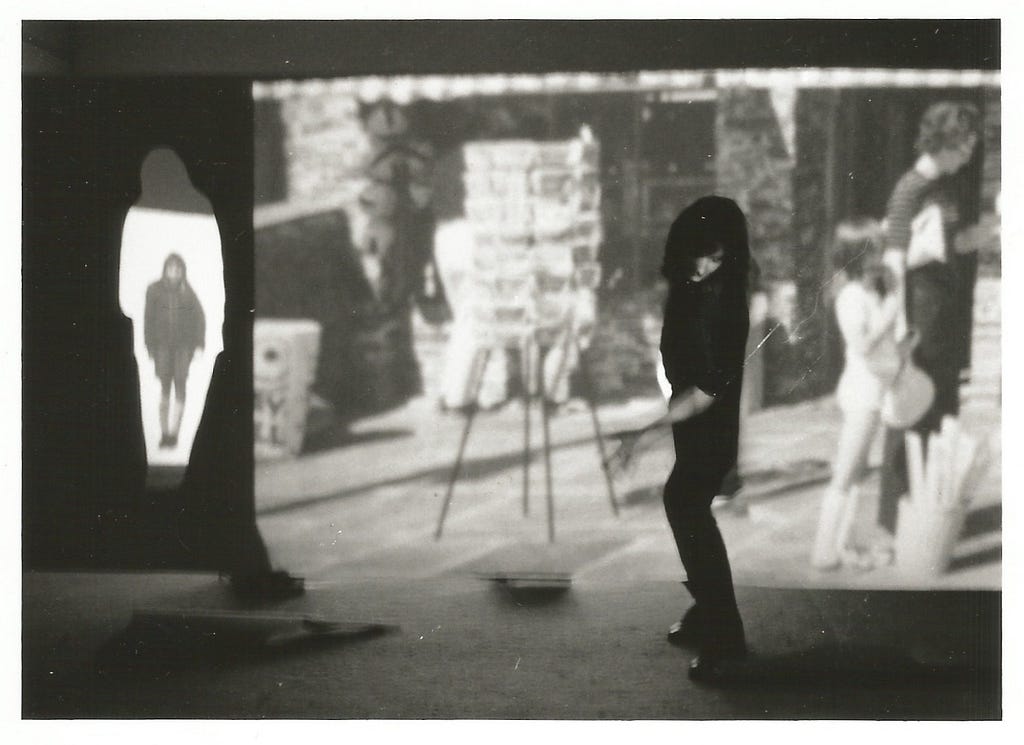
“When I Grow Up I want to be Remembered.” Performance #1. Slide projections of family snapshots, paper, knife. 1991. ANU School of Art. Janine Mikosza
When he calls her on the phone from the other side of Australia to ask how she is, this happens: she is suspicious; she doesn’t believe him; and she doesn’t trust him. Why would a man who harmed her so deeply and who remains taut-mouthed on the past want to ask after her health? Does he do it for forgiveness? Is it forgetfulness? Janina listens to him ramble and is patient when he wants to talk about his grandson, her son who has not known one shred of vileness, and when she hangs up the phone she murders each day on her calendar with a violet pen until the next call.
Janina says some people she’s met who have had stable, loving, unviolent childhoods have difficulty understanding the need to run towards something and away from it at the same time; it is beyond the exactness of personal experience. To them it is like dodging cars on a busy road, putting yourself at risk of certain harm. She says there is no point explaining that you live haunted by things that happened to you decades ago and there are pictures and sounds in your head constantly playing like an endless looping GIF, and apart from a temporary reprieve by detaching from reality nothing you can do or say will make them disappear.
The best you can do is to learn how to manage your emotions and lower your immediate distress.
The ones among us who have the ability and opportunity to corral their thoughts, memories, experiences and opinions within the tidy boundaries of a story and who can disclose their trauma publicly in this way are the ones we are attuned to, the ones we want to hear. Of course they are: their voices are less messy, more sane, more contained than voices like Janina’s. When I say to Janina I will write her story because my role is to make certain the forgettable ones are never forgotten and she displays great bravery for her survival, she says you don’t understand.
When I say to Janina I will write her story because my role is to make certain the forgettable ones are never forgotten and she displays great bravery for her survival, she says you don’t understand.
Although I am now proficient in English, it will always remain my secondhand language, and sometimes, as the novelist Maaza Mengiste writes, “I have fallen between its cracks trying to trudge my way toward comprehension.” But this fight to write and speak English words is also why I can face Janina and say: My struggle for le mot juste makes me work harder to understand what you say and mean and feel, and to know your trauma, vicariously.
Speak out, they say. Write what you fear and throw it out into the world, they say. It will be cathartic, they say. As a writer, Janina has met too many of these they people. Janina does not want to write her life story. Memoir; personal essays: she chokes on these words. The exposure of the confessional ‘I.’ Even though she knows the ‘I ’ is a construction (often a confection, says Janina), it creeps through many forms of non-fiction, foregrounding the author/narrator as subject. The topic revolves around the narrator’s perfectly flawed centre and everyone outside this self is collateral damage to the author’s journey of discovering themselves.
Janina does not want to write her life story. Memoir; personal essays: she chokes on these words.
(Done well, this writing contains evocative ideas and wiry muscle words, I say.)
(Yes, but mostly it is not well done, says Janina.)
Of course, while the narrator critiques others, they may also speak poorly of themselves (“please note my lack of education and/or lack of sophistication and/or dysfunction of some type”). Janina agrees with Maggie Nelson, who, in The Art of Cruelty, labels the principle of memoirists and personal essayists that claims you can say anything about other people as long as you make yourself look just as bad as a “sham, a chicanery, one with its roots planted firmly in narcissism.”
Essayist David Rakoff wrote that he researched subjects in the hope he would find out more about himself. He called his research “me-search.” At least he was honest, says Janina.
Maggie Nelson also wrote, “Writing can hurt people; self-exposure or self-flagellation offers no insurance against the pain.” Janina says this is another reason why she has no desire to write memoir or personal essays, or to deliberately write autobiography into her fiction, or to speak of what happened to her except in a general way. She has no need to injure those who hurt her. In exposing them, she harms herself: for me, this is not justice, she says.
Due to her aversion to writing personal narrative, but with a need to know where the roots of her family’s violence took shape, Janina asks her father to write and send her his life story. She wants to know more about his childhood during the war and to find in his tale a reason or reasons for why he did what he did to her, and in the process discover more about herself (this is her “me-search”). But she does not want to be in his presence. She uses her young son as cover (my fear is despicable, she says), and asks her father to write his life for her son so he will know where he came from.
Janina says to me: I can only know my Polish father through my son.
She asks her father to write as well as he can in English. Her son doesn’t speak Polish.
I ask: Why doesn’t he speak Polish?
She says: Because I don’t speak it and never will, and children are given what their parents are able to give them, and nothing more.
While Janina’s father hurt her body he spoke to her only in Polish. When he called her useless, hopeless, stupid in front of others he said it in English so she would feel the precise articulation of his words.
When he called her useless, hopeless, stupid in front of others he said it in English so she would feel the precise articulation of his words.
When he argued with Janina’s grandmother, aunt and uncles he did so in Polish.
When Janina’s mother called her one of those girls on the street corner, and when she told her husband you spend more time with your daughter than you do with me, she said it in English in front of Janina so her daughter would understand every word.
She shares her grandmother’s name. She pronounces it with a ‘J’ — Jar-neena — and I wince at its harshness. Janina with a soft ‘J’, like a ‘Y’: this is how you pronounce it, I say. But she cringes whenever it is spoken this way. My name can never be gentle, she says, and I call myself by my Australian name — Janine with a hard ‘J’ and no ending in ‘a’.
Janine knows “yes” in Polish (tak), but she can’t remember “no.”
Is it net? she asks. Or ne, or nein?
It is simple, I say. It is ‘nie’.
Janine says nie, and with her Australian accent it sounds like a “yeah.”
I cannot escape myself or my past, says Janine.
But she has no need to write violent details of her childhood. As Susan Sontag once wrote, “there’s nothing wrong with standing back and thinking.” Some things can remain your own and don’t have to be released to the world. If she did reveal in print the crimes against her, she could (potentially) have a sniff of temporary freedom from her suffering, and readers would congratulate her on her courage and the redemptive brutality of her self-exposure. And she could add to the literature on family violence piling up like dead bodies in bookstores. But then what? What comes afterwards? Would this revealment sustain her? Would it be effective in offering her some sense the suffering would end? She would return to the daily struggles of her life with the additional pressure of being labelled a memoirist.
But then what? She would return to the daily struggles of her life with the additional pressure of being labelled a memoirist.
There are some things broken that can never be unbroken. Pain has the ability to destroy a sufferer’s language, so Janine says: I will find other ways to describe the experience and aftermath of violence, how I feel it, taste it, hear and smell it, and write my stories not detailing explicit violence but clearly borne from it. I need to write about states of uncontainment, says Janine. To make the pain of and for something.
I am not sure what this would look like, but I will not write Janine’s life story. I can attend to what she says and doesn’t say without locking it up into words. It is her right to argue against public disclosure, to not write of her past, and to live with ambivalence and uncertainty and contradiction. For now, we sit in this café and I paraphrase Brodsky’s words — what makes a narrative breathe is not the story itself but what follows what. And what follows what, I say, is both the summation of our lives, and for each of us to decide.
Janine looks at me in my eyes, smiles and says: Nie. You know nothing.
All the best literary links that are fit to, well, link
Lena Dunham talks to Mary Karr about dealing with Trump voters, teaching, and getting asked about David Foster Wallace too often: “Everybody in America owes me a dollar who read Infinite Jest. I guess having grown up in the period of time that I grew up, I grew up with this. I think women of your generation, they have better underwear. They have better eyebrows. They have better bra technology. Better politics. I think they like themselves a little better. I think the men of your generation are a little better, a little more sophisticated. They’re not going to call a woman a whore because she has a job that she goes out at night in a car. You have freed women to talk about the shitty sex of hookup culture and how hard it is to have relationships with other women at your age, through your twenties when you get out of school, those pressures. As I say, I think you’ve made the all-American menstrual hut.” — Mary Karr
Michiko Kakutani writes on President Obama’s voracious reading while in office — “During his eight years in the White House — in a noisy era of information overload, extreme partisanship and knee-jerk reactions — books were a sustaining source of ideas and inspiration, and gave him a renewed appreciation for the complexities and ambiguities of the human condition.”
(Read this for all of President Obama’s book recs)
Ottessa Moshfegh discusses her depression, writing, and the Scottish singer Lena Zavaroni with The Atlantic’s Joe Fassler: “My nature is not to feel thrilled at being alive. I’m 35 now, but up until my 30s, I really just wanted off the planet. I also have been somebody who felt pretty helpless about my own eating disorder. Nobody came to my rescue, and it was really depressing. I think eating disorders are a way of trying to change who you are because you feel powerless to change the world.”
How an independent bookseller obsesses over his customer interactions: Samuel Gaffe Goldstein writes on the perils of customer service — “My human weakness revealed itself recently when a customer asked for a Copenhagen travel guide and I handed her a Lonely Planet Belgium. To confuse Belgium with Copenhagen takes real talent”
Tom McAllister on why podcasts may be the future of book reviews — “Book reviews have traditionally been written in an ostensibly objective voice, while podcasts provide a more personalized, idiosyncratic response to a given book.”
DON’T MISS OUT
Sign up for our newsletter to get submission announcements and stay on top of our best work.
YOUR INBOX IS LIT
Enjoy strange, diverting work from The Commuter on Mondays, absorbing fiction from Recommended Reading on Wednesdays, and a roundup of our best work of the week on Fridays. Personalize your subscription preferences here.