Kathleen Rooney & The Art of the Stroll

Kathleen Rooney’s new novel, Lillian Boxfish Takes a Walk (St. Martin’s Press) follows the life of the red-headed poet of Murray Hill. Spanning six decades, from Lillian’s illustrious career as R.H. Macy’s highest paid ad-writing woman, her life of poetry, love, and heartbreak, to the New Year’s Eve of 1984, where she takes her long, adventurous walk through Manhattan, this novel is both sprawling and personal, and in Kathleen Rooney’s hands, Lillian is nothing short of extraordinary. Via email, I had the pleasure of discussing the new book with Rooney, where we covered Lillian, the joys of research, and the Rooney’s own love of walking.

— Timothy Moore

Timothy Moore: There’s so much here that I want to talk about with Lillian Boxfish, and time, and writing, but maybe we should start with something more basic: walking. A major part of your new novel is Lillian’s journey from one end of Manhattan and back on New Year’s Eve, 1984. It’s no small task, Lillian being in her eighties during a time when New York City was seen as deteriorating and dangerous, but it becomes increasingly important for her to make this long trek. Can you discuss a bit your own views of walking? Do you find walking to be important to your development as a writer/teacher/editor/person? Maybe it’s not so basic a question after all!

Kathleen Rooney: This is a basic question in the sense that aimless yet attentive walking around an urban environment — aka flânerie or dérvive or psychogeography — is one of the basic necessities and joys of life: city walking is fundamental. An essential foundation. A starting point. I’ve been a walker ever since I was a little kid — every time I get to a new place, the first thing I want to do is to walk around it and map it in my mind with my feet. Walking means so much to me that it’s difficult to distill what I love — the physicality and rhythm, the potential for meditation, the freedom, the chance encounters with strangers — into a single response, which I suppose is why I had to write a novel about it.

Walking resembles and relates to both reading and writing to such an extent that I teach a class at DePaul (and sometimes in the Iowa Summer Writing Festival) called Drift and Dream: Writer as Urban Walker. It might seem surprising that you could teach a whole class on something as universal as walking, but I’m continually amazed at how relatively few people walk, or how walking is mistakenly seen as a chore to be minimized or an inconvenience to be avoided. I grew up in the suburbs and intuitively despised car culture — its waste, its destruction of our environment, its isolation of people into tiny, atomized units where serendipitous encounters with others are almost totally eliminated — and found myself drawn to cities and to flânerie before I even know the activity had a name. As soon as I could leave for college, I chose to move to Washington, DC and since then have lived in cities almost exclusively. I’ve lived in Chicago for almost 10 years now, and no matter how many times I walk through this city, I never get bored. Because if you’ve taken a walk once, you’ve taken it once — even if you walk down the same stretch of street a hundred times, it will be different on every single journey because the city is an organism that’s always growing, changing, dying and being reborn.

Lillian shares this admiration of cities, as well as the xenophilia that a lot of urban drifters share — not a fear of difference, but a desire to seek it out and interact with and appreciate and understand it. Normally, I’m leery of hyperbolic prescriptive claims, but I truly believe that if more people took walks through cities, the world would be a better place.

I truly believe that if more people took walks through cities, the world would be a better place.

Moore: That’s what really struck me with Lillian — her ability to seek out people, strangers really, and have patience with them, and more often than not, she connects with them. Even though, by the 1980s, her poetry is no longer in fashion, and her writing career at R.H. Macy is long over, and the city itself is drastically changing, she holds onto this personal ethos. I think the fact that she is aware of her failures and growing loneliness (she is no Pollyanna!) while holding onto what she values, makes her a more complicated character. While Lillian was inspired, in part, by the real life Margaret Fishback (who was also a poet and ad woman in the 1930’s) — I’d be interested to learn of your process with developing Lillian as a full-fledged character in her own right.

Rooney: Thanks to an invaluable tip from my high school best friend, Angela Ossar, I got to be the first non-archivist ever to work with the archives of Margaret Fishback at Duke University back in 2007. Fishback herself is an important proto-feminist figure, a pioneer of advertising and a gifted light verse author, so I’m hopeful that the novel gives readers an occasion to learn more about her. I’ve written a piece about her advertising innovations and poetry for the Poetry Foundation that you can read here. And I worked with them to get a selection of her work included in their archives here.

That said, it took me several years before I figured out what to do with the material I’d worked with in the archive on a larger scale. The key that unlocked my idea that it should end up as a novel was to give Lillian the fictional character an undying affinity for flânerie, and also to give the book a split structure, partly set starting in 1926 to chart Lillian’s stratospheric rise and eventual fall, and partly set on New Year’s Eve in 1984 as she’s on this magical — but still realistic — 10-plus-mile drift. This balance let me have the imaginative flexibility to create scenarios for Lillian to respond to, and to round her out as someone distinct from the person who inspired her. I love movies — like Adventures in Babysitting or Desperately Seeking Susan — and books — like Patrick Modiano’s In the Café of Lost Youth and Vivian Gornick’s Fierce Attachments — where the city itself stops just short of becoming a character. So in a way, getting to research so much about New York in all its various 20th century incarnations is what helped me to create the character of Lillian most of all.

Moore: This split structure really paints the drastic changes in New York’s incarnations — I wonder, what was it about 1984 New York City that worked for a setting instead of, say, 1990? Was there something about this year that struck a chord with you?

Rooney: 1984 was the year I needed because of Bernhard Goetz, aka the Subway Vigilante. On December 22, 1984, he shot and seriously wounded four black teenagers — who he claimed were muggers — on a downtown 2 train. He escaped and went into hiding for nine days before eventually turning himself in to police. You know that Billy Joel song, “We Didn’t Start the Fire” that came out in 1989? Nine-year-old dork that I was at the time, I looked up every single reference and out of all the monumental historic events listed in the lyrics, that one stunned me the most because I couldn’t imagine doing that: taking “justice” into my own hands with the intent to kill four strangers on mass transit. As an adult, I continue to be fascinated by how polarized public opinion was regarding his act at the time, with some people appalled and others hailing him as a hero. The crime rate in New York in that era was incredibly high and a lot of people despaired at how to turn it around, which meant some people inevitably thought Goetz’s approach was the right one.

Lillian, of course, finds violence repulsive. So I wanted her to simultaneously have a chance to weigh in on Goetz’s horrific act in terms of her beliefs in respect and civility, but also to show how fearless she’s resolved to be. To stay in New York from 1926 to 1984 would take quite a bit of commitment and determination, and Lillian has it.

Personally, the suburbs make me sick because they’re boring, exclusionary, homogenous, car-centric and full of suspicion of people who are different. So thematically, I wanted to show Lillian being enamored and unafraid of the unruly and heterogeneous city in a way her own son, Gian, a city kid turned city-fearer is no longer capable of. Also, at a time when a lot of her old friends are bailing for the Sun Belt, Lillian continues to be true to her first and most consistent love: New York.

Last but not least, 1984, lucky for me, worked with the age that I needed Lillian to be for the timing of the rest of the story (the Roaring 20s, the Depression, WWII, etc.) to work. She was born in 1899 (though she lies and says 1900 to not have to admit to having been born in the 19th Century), so by 1984, she’s quite old. I wanted her to be elderly enough for a walk of this distance and duration to be exceptional and impressive, but not implausible.

Moore: A lot of writer’s struggle with research and incorporating their findings. Would it be fair to say that you lie on the opposite side of that spectrum? Is there any advice you can give writers in the midst of their research?

Rooney: The research phase of any project — whether it’s fiction, nonfiction, or poetry and whether it’s something set now or in the past — is my favorite phase. Because when you’re researching, everything about the project is pure potential — it could be anything and it could be the best! Once you start translating what you’ve learned during the research phase into the book itself, of course, the potential energy becomes kinetic and the ideal that you may have held in your mind starts to emerge as a less-than-perfect real thing. That part is fun, too, but research is fascinating to me because I love reading and learning and finding inspiration in sources outside my own lived experience. I can usually tell that I’m doing research right when I get the feeling that even though I am dealing with facts, the process is also an imaginative act. Little stumbled-upon details can illuminate a character or suggest a setting or trigger a scene, and tiny bits of trivia can open out onto much bigger vistas.

As for advice, the thing about research is that a person could theoretically do it forever. It would be impossible to ever truly hit a point where you know everything there is to know about a given topic. So you have to judge when to move on from research — or at least pure research — and into the writing phase itself. Eventually, you have to let your inevitably imperfect knowledge be enough so you don’t get stalled out. You can always move back into more research after you’ve begun writing if you need more info or detail for a particular chapter or scene.

A piece of advice that I find invaluable specifically for the relationship of research to fiction comes from Janet Burroway who got it from Mary Lee Settle. In her excellent text book, Imaginative Writing, Burroway says that Settle says: “Don’t read about the period your researching, read in the period,” meaning immerse yourself in the vernacular of that era — the memoirs, the letters, the magazines, the novels, etc. This recommendation helps ensure that the fiction doesn’t become too non-fiction-y, which is to say bogged down with excessive and almost journalistic detail at the peril of plot, voice, and character.

Moore: I think that’s great advice — especially since we get such a good feel of the ads and the poetry of Lillian’s time in your novel. There’s a witty, playful quality to her writing specifically; it’s not fluff as there’s often a seriousness and intention behind her work (both in her ad writing and her poetry). Later in the novel, Lillian is viewed as an anomaly in the ad writing that she’s done — do you think Lillian’s brand of writing is a lost art in advertising? What about poetry?

Rooney: Lillian’s era was one in which magazines and newspapers included verse in virtually every edition or issue, and in which the poets who write that verse could be handsomely paid for it. That era is over, but thanks to Poems While You Wait, I can say that people are still willing to pay good money for poetry. More importantly, I can say that people still like to read and enjoy it. Whenever we set up our typewriters somewhere to do poems on demand at five dollars a pop, we almost always encounter demand from the public that exceeds our supply. I get so bored when I hear people say that poetry is dead or that nobody reads poetry. It practically seems like the main poetry critics for the New York Times Book Review, for instance, David Orr and William Logan, are contractually obligated to say in every review something along the lines of: “Nobody likes this stuff, but here’s a review of a new poetry book anyway!” It’s tiresome. So sure, light verse is arguably a lost art, but people still love, need, and want poetry, especially poetry that is, like Lillian’s (and her real-life inspiration, Margaret Fishback’s) fun but serious. A great book coming out in 2017 that I think is a perfect example of light-yet-heavy and brilliant work is Bill Knott’s I Am Flying into Myself: Selected Poems 1960–2014, edited by Tom Lux.

Lillian’s kind of snappy, rhyming ad copy is mostly a lost art, too — or maybe less lost art and more just out of fashion. But I think that someone with her attitude — attentive, observant, generous, sharp, progressive and a great watcher of people — would still be well-suited to excel in the field of advertising, except in different structures and formats.

Moore: Now that we’re reaching the end of our interview, I’m going to cheat a bit and ask you multiple questions, all wrapped in one! Now that Lillian Boxfish Takes a Walk is out in the world, can you reflect on your experience with writing this novel? Has it been different from your other work? And, finally, what will you miss most about writing Lillian?

Rooney: Multiple questions in one — nice efficiency! And retrospection! I sent this novel to my agent in August of 2015, and St. Martin’s accepted it for publication in November of that year, so the book has been written for a while, and the actual experience of writing it feels far away, especially because I’ve been working on other projects — including Magritte’s Selected Writings and another novel — since then. But when I look back on writing Lillian, I have particularly fond feelings about working so closely with the Google Map I made of her route across Manhattan, a more artistically rendered version of which is on the inside cover of the book. The fact that my protagonist, though imaginary, had such a tangible path is something that sets this book apart from anything else I’ve done. I like that anyone could take her walk in real life if they were inclined to do so, and I’m grateful to St. Martin’s for doing such a gorgeous job with the map, because maybe some people will actually take it. As for what I’ll miss most about writing Lillian, there are so many things I like about her, but I think that here I’ll say: her lifelong work ethic. She is someone who loved her work and was able to lose herself and find joy and fun in it, and that made it easier for me, when it came to writing the novel, to do the same.

About the Interviewer

Timothy Moore has been published in McSweeney’s Internet Tendency, the Chicago Reader, and Entropy. He is a Kundiman fellow. He currently lives, teaches, and sells books in Chicago.

Ottessa Moshfegh’s Cold, Lonely World

In the introduction to his book Excellent Sheep: The Miseducation of the American Elite and the Way to a Meaningful Life, professor and essayist William Deresiewicz writes: “The ability to engage in introspection… is the essential precondition for living the life of the mind, and the essential precondition for introspection is solitude.”

Though a hunk of metal and glass can hardly qualify as company, one cannot deny that true solitude is scarce inside the first-world bubble of interconnectivity. Writers in this modern world are incentivized to call attention to themselves as writers, to promote themselves, to be their own PR people, their own agents. Advocating for one’s writing in the public domain can overshadow a writer’s focus on many things, their own writing included. What impact is the interconnected world is having on the quality of our work and our perception of others’ work? Wouldn’t our work be better if we spent more time thinking, introspective, alone? Wouldn’t we care more about the quality of the work than the publicity around it?

Ottessa Moshfegh was born in May of 1981, the daughter of classical musicians from Croatia and Iran. From a young age, Moshfegh had ambitions of following in her parents’ footsteps to become a classical musician, and spent countless hours of her childhood practicing piano in isolation.

But in the end, Moshfegh chose another solitary craft. She began writing at the age of 13 and fell in love. A summer stay at the Interlochen Center for the Arts intensified her passion. She matriculated to Barnard College, and eventually attended the Brown University MFA program, from which she graduated in 2011.

For those who have never read Moshfegh’s writing, the following quote from her NPR interview with Scott Simon will give you some idea of what her work is like:

“I remember the first story I ever wrote. I can’t remember what it was called, but the first lines went like this. ‘I killed a man this morning. He was fat and ugly and deserved to die.’”

As this first effort indicates, Moshfegh’s writing leaves her reader cold and empty. But like all great fiction, her stories change the way you understand yourself and the world around you. All of those murky, repulsive things that have been lingering at the back of your mind about your boss, your wife, your son, your neighbor — suddenly they’re not so ugly any more. Suddenly they’re OK. Ottessa Moshfegh’s fiction does for the devil on your should what Elena Ferrante’s Neapolitan novels do for female friendship.

Moshfegh began gaining notoriety with her short stories. She became a frequent contributor to the Paris Review, publishing six stories in the magazine between 2012 and 2015, and has also published stories in The New Yorker, Granta, and VICE. Her story “Bettering Myself” won the Paris Review’s Plimpton Prize for Fiction in 2013, the same year that she received the Wallace Stegner fellowship from Stanford University.

Moshfegh’s first longer effort, the novella McGlue, garnered her the FENCE Modern Prize in Prose in 2014. McGlue tells the story of a sailor with crippling alcoholism attempting to piece his life together as he struggles with his addiction in the underbelly of a whaling ship. FENCE Prize judge Rivka Galchen praised McGlue for its “mouthfeel of language:” indeed, with McGlue, Moshfegh displays an ability to create a language of her own, reminiscent of William Gibson’s effort in Neuromancer or Anthony Burgess’s in A Clockwork Orange. McGlue feels like the bowels of a ship, its words the dried blood and insects and spilled rum that warp the wood of its hull. It’s a gorgeous and bewildering first person account of a life that is somewhere between forgotten and ethereal.

Moshfegh’s short fiction continued to appear in the Paris Review and elsewhere until Penguin Press released her debut novel Eileen in August of 2015. Eileen tells the story of Eileen Dunlop, a secretary at a prison for boys who lives with her abusive, alcoholic father and whose world turns upside down when a gorgeous new colleague enters her life.

Though Eileen won the Pen/Hemingway Award for Fiction and was short-listed for both the National Book Critic’s Circle Award for Fiction and the Man-Booker Prize, it received mixed reviews. There is no denying the distinctiveness of Moshfegh’s writing, but Moshfegh maps her voice over a paint-by-numbers narrative structure that she clearly cribs from the noir genre. Eileen’s voice acts as the only force of narrative propulsion for the majority of the novel. The books begs us to read the last 40 pages for the first 220 pages. In the end, Eileen is a frustrating novel of atmosphere, a gorgeous vortex of exquisite sentences that chases its own tail.

Moshfegh subsequently gave some validation to the novel’s detractors. In a Masters Review essay entitled “How To Shit,” Moshfegh writes:

“A few years ago, when I was very broke, I made up my mind to write a novel that would appeal to a greater audience than my previous work. I deliberately embraced the conventional narrative structure in order to reach the mainstream. I pictured a plausible audience of avid readers as people who live vicariously through books — in other words, people with boring lives. I considered the personal paradigm of a bored, imaginatively escapist person. Boredom is a symptom of denial, I thought. A bored person is a coward, essentially. So I conceived of a character trapped by social mores, who plumbs the depths of her own delusions and does something incredibly brave; I thought that would be fun for the kind of audience I was writing to. Thus Eileen was born. And I did make a little money. I’m telling you this because many of my creative decisions were motivated by the emptiness of my bank account. I looked at the dominating paradigm and I abused it.”

Moshfegh here self-criticizes for allowing popular opinion to guide her art. Eileen was Moshfegh’s moment of imitation. She imitated to great acclaim, but her subsequent interrogation of her motivations behind the novel reveal a deep unease with her decision to allow popular norms and outside voices into her creative process. In trying to create something that would appeal to a broader audience, Moshfegh betrayed herself and felt dissatisfied with the resulting work.

With a dazzling novella and an acclaimed novel under her belt, Moshfegh’s next book is Homesick for Another World, a collection of fourteen short stories, out on January 17 from Penguin Press.

Homesick for Another World towers above Moshfegh’s previous two book-length efforts, containing multiples of the emotionality, tragedy, black comedy, pathos and genius of her previous two books combined. It is rare for an author’s collection of short fiction to have so much more power than their novel, but it is in fact the case that every story in Moshfegh’s collection packs the punch of her novel. Homesick presents us with 14 Eileens in a purer form, stretching across the the world, brought together in one volume to define who we really are and how pointless that definition is.

But this is no surprise to those familiar with Moshfegh’s short fiction. Each of her stories distills her brilliance. Ringing with heartless descriptions of the emotions of pathetic men and miserable women, her short stories create realities of isolation that grapple with the filth and visceral discomfort of what it is to be a human being. Her stories employ a brutalist nihilism, forcing you to follow a character into the inner depths of their self-inflicted pain. Each scene is a right hook of eloquent depravity. Each sentence is a hand-crafted bullet.

“Bettering Myself” encapsulates what it is to be young, fucked up and off the rails in New York. “The Weirdos” pits a narrator with no self-esteem against a methamphetamine-addicted psychopath. In “No Place for Good People,” Moshfegh dissects the plastic happiness and performative glee coating suburban America with far more darkness and far fewer words than David Foster Wallace. The end of “Slumming” places you before a harrowing act of cruelty and provides no clear explanation for this act. “Nothing Ever Happens Here” is an exquisite rendition of suffering and delusion in Los Angeles. “The Surrogate” contains some of the collection’s most memorable gems of self-hatred and fatalism. If you want to understand the headspace in which Ottessa Moshfegh operates, look no further than “The Locked Room,” the shortest story in the collection. “Mr. Wu” and “A Better Place” are the best stories in the collection; the ending of “Mr. Wu” detonates in your hands, while the ending of “A Better Place” pierces your heart like a splinter.

Ottessa Moshfegh has spent a great deal of her life alone. The vast majority of her characters are severely lonely. In her short stories, Moshfegh uses isolation to convey profound truths that simultaneously horrify and comfort you.

Moshfegh’s third book displays just how cutting and transcendent these truths can be. Homesick for Another World is a spider web dripping with existential pain and vapidity and self-obsession and lust, the very elements that most haunt us in this day and age of interconnectivity, the very forces that drive us to blog and to post and to tweet in search of some kind of fulfillment that these actions will never bring us. Her narratives fester beneath us, ancient ruins of existential despair. They remind us that it’s normal to be in pain, to feel sadness, and to keep our pain and sadness to ourselves. Her stories tell us that being lonely can be satisfactory. They make us disengage from the noise of the modern world and enter a vacuum in which we can look inward and think about who we are and what we care about and why we do what we do.

Ottessa Moshfegh is at peace with these stories. She wrote them without an audience in mind. She didn’t write them because she needed the money. She is not promoting them on social media. In fact, she has no public social media accounts. You won’t find a way to order her collection on her author website because she has no author website (as the New York Times’s Teddy Wayne pointed out). These stories are Moshfegh’s deepest, darkest moments of introspection. Let them in.

Adolescent Obsession and Chris Kraus’s I Love Dick

Our dance teacher was an ideal object of adolescent obsession for my best friend and I. We were fifteen and he was forty. A young, disheveled, oblivious forty, a working-class Michigan sports fan whom we never saw without a baseball cap on. He was bisexual and unmarried, chain-smoked cigarettes and argued with us as if we were equals. If we weren’t trying hard enough or he was simply in a bad mood, he would make us do punitive drills. “It’s too hot,” we’d say. “Hot is better than cold for your muscles times infinity,” he’d answer. He was the most exquisite dancer any of us had ever seen. Even the unobsessed were overcome by his dancing when it happened, which was rarely.

After each class my friend and I would sit in the backseat of my mom’s car and dissect every moment. What he wore, what sort of mood he’d been in, had he made eye contact with us, for how long? If he’d come around to readjust our bodies, what had his hands felt like, how many seconds did he touch us, did he touch me longer than her, what did that mean? “His hand was here.” We would touch each other. “From now till” — counting the seconds in our heads — “now.” Before we knew his age, we had spent hours hypothesizing. He might look older than he was because he smoked. He might look younger because he was an athlete. Or maybe he was ageless. We made him mythological — he never took his hat off; he showered in it; his head was shaped like a baseball cap; the hat we thought he wore was, indeed, his head.

This obsession, of course, had very little to do with our teacher and everything to do with my friend and me. He happened to be the perfect vehicle for our energy — he was unusual, solitary, and, most importantly, safe. But perhaps anyone would have done. Our focus was internally on each other, on this obsession we worked on together, this project. We fed off the other’s mania. If she hadn’t loved him too, I would not have loved him as much. We squirreled away each memory, gathered content for later, for when we would be alone together to continue our work. Sometimes we didn’t even hear him talking, because we’d been talking to each other about him.

Chris Kraus

It is this very specific category of obsession, that when I recognized it in the first few pages of I Love Dick triggered an exhilaration I haven’t felt since I was fifteen — the memory of a closeness I haven’t had with anyone else since my friend. At the beginning of the book Chris Kraus writes about the protagonist, Chris Kraus, and her husband, Sylvère, spiraling absurdly, terrifyingly, and very recognizably out of control. They take turns writing letters to Sylvère’s colleague, Dick, with whom they have had one dinner and a somewhat intimate overnight stay at his house because of bad weather.

At that dinner Chris unexpectedly “notices Dick making continual eye contact with her,” and finds herself a bit stirred, alerted to him. One page later, at Dick’s house, while the three are drinking, Chris sees that Dick is openly flirting with her. The couple watch a video of him dressed as Johnny Cash, and Chris’s complex reaction to his bad art strengthens her connection to him: “She dreams about him all night long. But when Chris and Sylvère wake up on the sofa bed the next morning, Dick is gone.”

Chris and Sylvère leave Dick’s house without seeing him again. “Because they are no longer having sex, the two maintain their intimacy via deconstruction: i.e., they tell each other everything. Chris tells Sylvère how she believes that she and Dick have just experienced a Conceptual Fuck. His disappearance in the morning clinches it…” With that, on page three, we’re off. We don’t really need Dick anymore. We are swept into Chris and Sylvère’s universe, where they wind each other up, pass the laptop back and forth, in bed for days, writing letters to Dick concerning Chris’s infatuation with him.

We as readers find ourselves wondering — less from the way this book is training us to think and more because of how the common conflicts in our lives have trained us — about jealousy. And indeed, Kraus writes, “Why does Sylvère entertain this?” Some reasons are offered: because he loves Chris and she is suddenly alive, because he himself is bored, avoiding other work, enjoying the collaboration. But, I would argue, these don’t fully encompass the hysteria which Sylvère participates in. In his own letters to Dick he wonders what they’re doing and about his role in it, trying to fit the phenomenon into a recognizable situation — “a ménage à trois” — and he himself into the stereotype of “the willing husband,” though none of it is right. The hysteria he shares with Chris is its own intellectual and emotional project, one separate from Dick. “They take turns giving DICK-tation. Everything is hilarious, power radiates from their mouths and fingertips and the world stands still.” The hysteria is Sylvère’s as much as Chris’s. And without his participation, without having him to share it with, I wonder whether Chris’s infatuation would reach the heights it ultimately reaches.

This shared experience between Chris and Sylvère is what’s missing in the adapted Amazon television pilot episode of “I Love Dick.” It’s been replaced by other elements that will perhaps be more successful across a full series — a new character, Devon (Roberta Colindrez), a neighbor of Chris and Sylvère’s, seems especially promising. But this shared hysteria is such a singular and powerful element in the book that it was what I had been most excited to see interpreted. And maybe it will be in the series’ subsequent episodes (the pilot — helmed by “Transparent” showrunner Jill Soloway — ultimately got picked up. This is only the beginning).

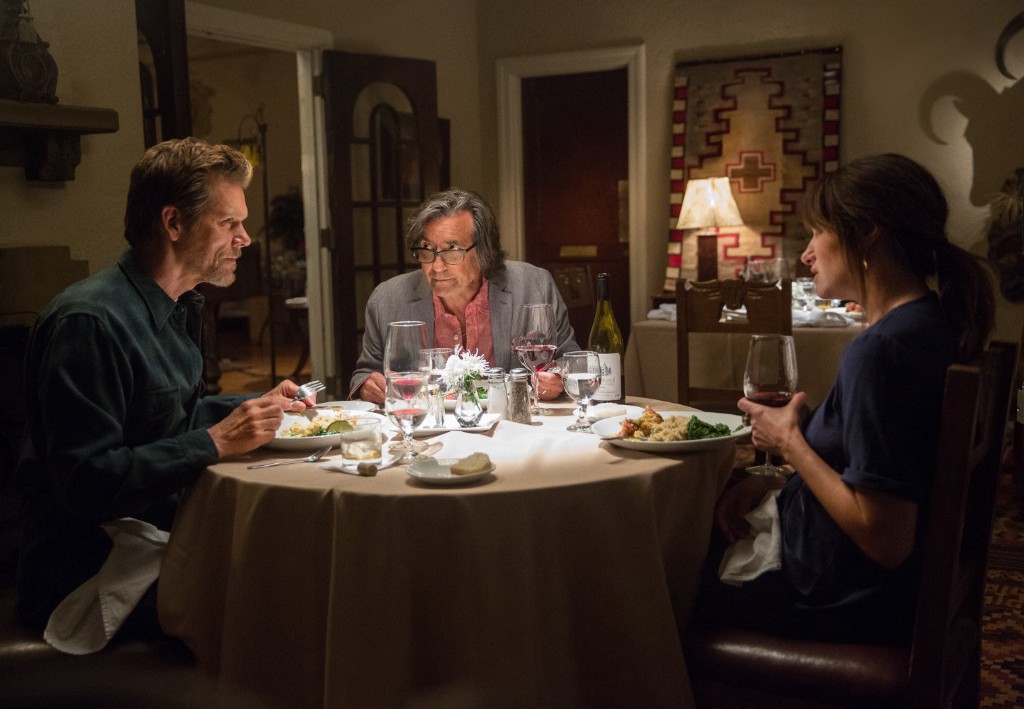
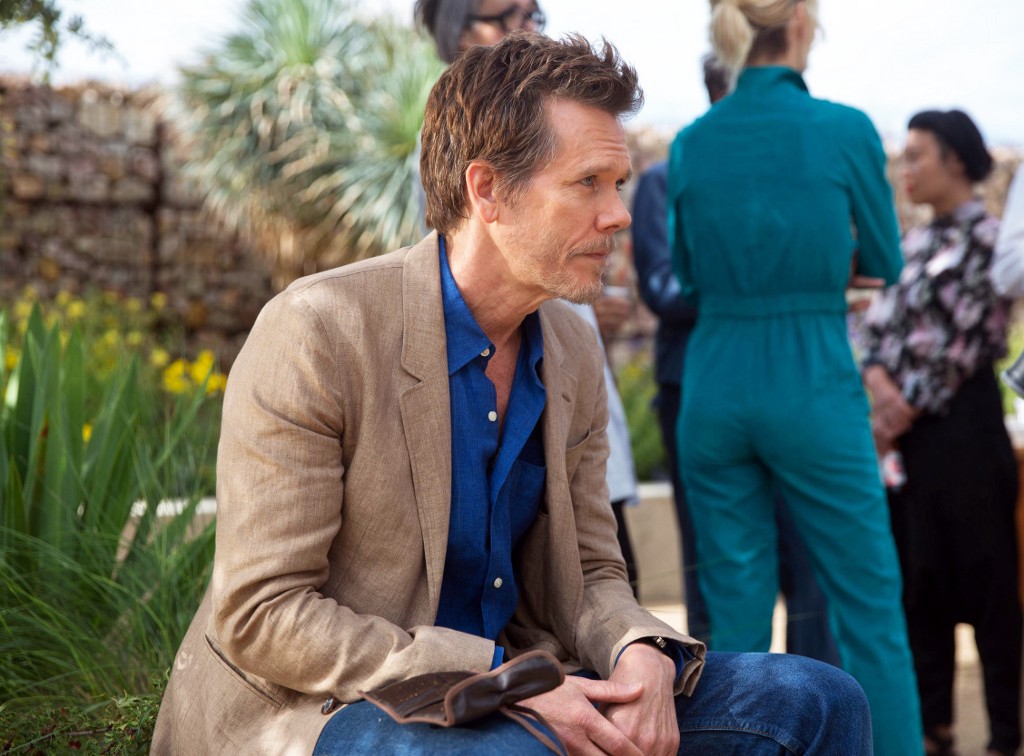
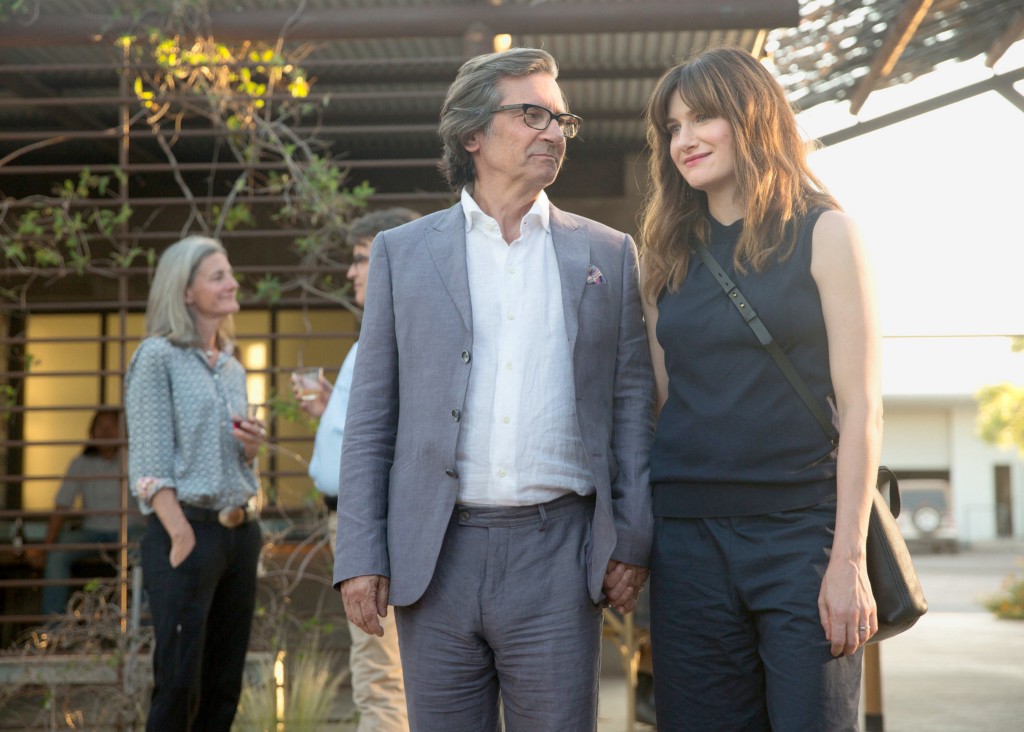
Kevin Bacon, Griffin Dunne, and Kathryn Hahn, in “I Love Dick”

Even if they portray it, the subtle but substantial differences in Sylvère’s character (Griffin Dunne) make me think that the hysteria will have a different tone. In “I Love Dick,” Chris (Kathryn Hahn) and Sylvère’s dry spell is far more highlighted, and a source of passive aggression between the two — a dynamic not particularly significant to the book. Sylvère demands that Chris read him the story she wrote about Dick after they have dinner with him. In hearing about her desire for someone else, he is aroused for the first time in a long time, and ends their dry spell in a brief, triumphant burst. In the book it seems that the intense intimacy of writing letters together ends their dry spell, more of a natural, mutual — if unceremonious — progression of emotions. The sex is mentioned only after thirty pages — “and then they made love” — but not described, which lends to a sense of fluidity in all their modes of intimacy: writing, talking, taking turns to make coffee, having sex, describing their dreams, juggling finances, and living all over each other.

Kevin Bacon, in “I Love Dick”

Dick in the pilot, too, differs from his text-based counterpart. He’s much more prominent in the show, and I suspect will continue to be. For one thing, he is played by Kevin Bacon, a perfect choice for the portrayal of the inaccessible cowboy. We also have scenes of him alone, signaling that he’ll perhaps be a character in his own right, and not one seen solely through Chris’s lens. In fact, so far he has been a much more active participant in instigating a situation with Chris. Dick on screen is shown to be visibly annoyed and disappointed when Chris mentions that she has a husband. At dinner he is provocatively insulting to her both as an artist and a person. And he’s aggressive, challenging her in a way that does indeed seem sexual. In the book, on the other hand, Chris’s idea that Dick has proposed some sort of game between them seems very much in her mind, an extension of her increasing infatuation, though Dick himself remains oblivious and uninvolved, no longer physically present at this stage. For Dick in the show it seems the game may very well be something real between him and Chris, something which doesn’t involve Sylvère.

Near the end of the episode, Chris and Sylvère’s neighbor Devon decides to write a play about the pair after observing them, describing the idea to friends as centering on “a couple from New York. It’s not about a couple; it’s about a woman. And she hates herself. And her husband, he kind of hates her too. And the play is about them figuring that out.” It seems that Devon is poised to be our interpreter in the series, which should come as a reassurance: calm, reasonable, and constitutionally the opposite of the other players in the drama, there’s no character I would rather have in that role.

Roberta Colindrez, in “I Love Dick”

I believe that this, Devon’s description, is what the show will ultimately be about. But it’s not how I would describe the book. The way Chris feels about herself and Kraus’s embedded ideas about Jewish 1990s art-world feminism — ideas that become expansive through their specificity in the book — are complicated. Perhaps topics better left for a separate discussion. As far as Sylvère is concerned, I did not read him as hating Chris, the way he loves her in some instances even bordering on the divine. He is committed to her well-being; he loves her separately from their togetherness.

These relationships as they’re shown in the pilot, between Chris and Sylvère, Chris and Dick, feel more common and categorizable than they do in the book. The conflicts are easier, more in the realm of situations we’ve seen before. And, in the book, Kraus eventually reaches beyond the hysteria between Chris and Sylvère, towards a simpler, perhaps more adult form of obsession. In her afterword, Joan Hawkins writes that the novel “establishes a fictional territory where adolescent obsession and middle-aged perversity overlap and intersect…” We see that as Chris goes on alone to write to Dick for many, many months. And maybe that’s the point: this particular kind of intimacy, this intense creation and cocooning that Chris and Sylvère engage in together is not sustainable. It’s rare, and — should it happen at all — it is fleeting. Maybe that’s why I haven’t experienced it in my life again since I was fifteen. Maybe I’m lucky to have experienced it at all.

In trying to describe the phenomenon I experienced with my friend — akin to that happening between Chris and Sylvère in the book — I’m perhaps doing something more similar to the Amazon pilot. I’m spending much more time describing our dance teacher — our Dick — than looking directly at an intimacy so intense that it transcended jealousy. That intimacy is much harder to study, harder to describe, because my friend and I weren’t opposite each other, staring at one another. We were side by side. We were completely together and staring out at the world.

Nothing Comes Back from the Dump

My daughter Moriah has been watching Inside Out, the 2015 film by Pixar Animation Studios. She has been watching it and watching it.

The first time was at a movie theater. I took her.

Her mother took her to see it again, some weeks later, at the second-run theater.

More recently, I paid fifteen dollars to Amazon.com so that we could stream Inside Out whenever we wanted.

Moriah watches it often, at least once every weekend, sometimes twice in one weekend. I don’t know how many times she has seen it, nor how many times I have watched it with her. It has been a lot of times.

Putting on a movie is a way for me and her mother to take a break from Moriah, from having to fulfill her needs, which are many. She needs to eat raisins, she needs to drink water. She needs to go to the bathroom. She needs to sleep, but doesn’t want to, and so has to be convinced to lie down and stay down. Her only need when watching Inside Out is to keep watching Inside Out, though she sometimes asks for popcorn.

Her only need when watching Inside Out is to keep watching Inside Out, though she sometimes asks for popcorn.

Moriah has not been obsessed with many movies. She has no patience for most of them. She is too afraid of Dave, the octopus in Penguins of Madagascar, to view it again, though I also paid Amazon fifteen dollars so that she could watch it when she wanted to.

There is no octopus in Inside Out. Instead there is a prepubescent girl, who moves from Minnesota to San Francisco and has an emotional breakdown. She is made to leave the vestiges of childhood behind and begin to become a teenager.

She has trouble, as people often do with that sort of thing. She gets into a fight with her parents while they eat Chinese food. She doesn’t seem to eat much of the food. Her parents disappoint her, as does all of San Francisco. She doesn’t like what they put on pizzas; she doesn’t like the house she is expected to live in.

She tries to run away from her parents and go back to Minnesota. She goes so far as to steal some of their money and climb aboard a bus that will take her home.

Sometimes I look away from the screen so that I won’t cry, but I still cry.

Then, at the last second, she has a change of heart. She returns to her parents. She confesses to them that she doesn’t like San Francisco. She misses Minnesota.

She cries, and every time she cries I cry, too.

Sometimes I look away from the screen so that I won’t cry, but I still cry. Sometimes I leave the room just at the moment Riley begins to cry, but even when I am in the next room I can hear it. I know what is happening in there. I am demolished by the crying scene, sometimes from several rooms away. I am not even someone who cries very often.

Moriah is someone who cries very often. She doesn’t cry when she watches Inside Out.

I don’t know what or how much she gets out of watching the movie. Her mother and I have spoken more than once about how relatively complex it is, how much of it might well elude her understanding.

Its exterior action is simple enough, with Riley moving from one region of the country to another, attending a new school for the first time, being humiliated in front of her classmates, doing poorly at a hockey tryout, and otherwise having a bad couple of days in the Bay Area. Those events, though, comprise just a fraction of the total running time. What makes Inside Out interesting, and what I probably don’t need to describe, since it’s a very popular movie that many people have seen, or at least know about, is that while all of this is going on in Riley’s life the film shows us what’s happening inside her mind. Five of her emotions — Joy, Sadness, Fear, Anger, and Disgust — are personified and voiced by comedians. Inside of her, they take turns controlling her actions. They argue with one another about what’s going on in Riley’s life and what they should do about it.

Five of her emotions — Joy, Sadness, Fear, Anger, and Disgust — are personified and voiced by comedians.

Two of the emotions — Joy and Sadness — have an adventure, one that corresponds with what’s happening to Riley in the parallel narrative of her move to San Francisco and its aftershocks. When Riley cries in front of her classmates, and is humiliated, Joy and Sadness are at that moment ejected from her Headquarters, leaving Anger, Fear and Disgust in charge, meaning that for most of the movie Riley cannot properly reckon with the situation at hand.

While Sadness and Joy are gone from Headquarters, they travel through Riley’s mind to the land of imagination, and to Riley’s islands of personality, which represent the most important elements of her self. There is an island for hockey, because Riley plays hockey, and an island for family, because Riley likes her parents. As we watch, the islands fall apart and drop into oblivion. Because her parents have removed her from Minnesota, Riley loses everything.

Moriah’s obsession with Inside Out — a movie about a girl who moves many miles away to a different part of the country — coincided with our own move to a different part of the country. At about the time she began demanding to see it again every weekend, we were preparing to leave Cranston, Rhode Island for Kansas City, Missouri.

Moriah’s obsession with Inside Out — a movie about a girl who moves many miles away to a different part of the country — coincided with our own move to a different part of the country.

It may have registered, for Moriah, that what she was watching Riley go through was about the same thing she was about to go through.

I don’t think it registered. I don’t think she really grasped what we, as a family, were about to do.

She would point out her bedroom window at night, sometimes, and tell me that the lights we saw out there were Kansas City.

Really it was more of Cranston, Rhode Island. It was the part of Cranston in which, last year, a former student of mine murdered his pregnant girlfriend and tried to burn her house down.

I didn’t tell that to Moriah.

There was a lot I didn’t tell Moriah: that she’d never see her friends from daycare again, after we left; that life would not be what it had been, better though it was likely to be. It is possible that what drew her to Inside Out again and again was what it told her about what was ahead, what changes were in store. I don’t know. I know she likes the part where Joy spins around and makes her dress twirl.

Between the start and end of Inside Out, Riley’s Sadness comes to understand her significance, as do the other feelings, while Riley grows up, maturing in a dramatic leap as she is displaced from where she spent her childhood.

Sadness, we see, wasn’t good for much in Minnesota. She caused Riley to overreact to small problems, like not getting what she wanted at the grocery store, losing her ice cream, and getting strapped into a car seat. A toddler’s sadness is small-time, the film shows us in a montage — and as I have seen firsthand, many times, not in a montage.

A toddler’s sadness is small-time, the film shows us in a montage — and as I have seen firsthand, many times, not in a montage.

I fucking wish. Moriah’s early sadness would have been laughable, more often than not, were it not so exasperating, did her tantrums not last so long.

The sadness of an adult or adolescent, the film shows us, is far more substantial than those fledgling sorrows. When you’re older you break down not when your dessert hits the pavement but when you lose the whole world you’ve always known, or when the career you spent the best years of your youth working for turns out not to be what you expected or wanted it to be.

You don’t throw a tantrum, when faced with adult sorrow and disappointment; you fight it until you can’t fight it anymore. You don’t lash out; you hide your face and weep, after staving off the tears for as long as you can.

A young girl, Moriah is still in the Minnesota stage of her sadness. It is one of the few things I can say about the contents of her mind with any certainty.

I know she thinks often of Inside Out, of Riley and the Joy and Sadness that live inside her. At playgrounds, Moriah declares herself Sadness, calls me Joy, and says we need to get back to Headquarters.

You don’t throw a tantrum, when faced with adult sorrow and disappointment; you fight it until you can’t fight it anymore.

I don’t know for sure that Moriah knows that the Headquarters in Inside Out is meant to be a representation of a part of Riley’s mind. Mostly, the film just switches from showing us what’s happening to Riley’s exterior to showing us what her feelings are doing inside her. It expects us to pick up on the correlation between these two dramatic theaters.

I know what the relationship is between them because I’ve watched a lot of movies, and I’ve seen things that similarly show what’s happening in someone’s mind and what’s going on with that person’s outsides.

These things include Fantastic Voyage, and the short film in Woody Allen’s Everything You Always Wanted to Know About Sex, in which Burt Reynolds and Tony Randall play operators of the brain of a man who is on a date with a woman. Woody Allen plays a sperm cell.

I don’t know that Moriah sees the correspondence between Inside Out’s parallel narratives of Riley and her feelings. She hasn’t even seen Annie Hall. She may only like watching both the Joy and Sadness narrative and the Riley narrative, and take it for granted that they are patterned together, not recognizing that they reflect one another.

I imagine that she does get it, especially after seeing it so many times. I don’t know, though. I have tried talking with Moriah about it, but when I ask her leading questions about Joy and Sadness she begins talking authoritatively about the film in a way that indicates to me that her understanding of it is warped, somehow.

At home and at school, at 3 ½ years, Moriah wants very much to be in charge of conversations about things she is not in a position to explain.

It is what Moriah does. She rarely admits that she doesn’t comprehend something. She covers up her failure to understand by declaiming about whatever it is she doesn’t fully get with great apparent authority. When I try to interrupt, she talks over me.

At home and at school, at 3 ½ years, Moriah wants very much to be in charge of conversations about things she is not in a position to explain. It is possible she learned this from me and her mother, as we have spent the last four years working as English professors. It is one way she has been blocking my attempts to see inside her head, to find out what’s going on in there.

I want to know what’s going on in Moriah’s mind, which I had a hand in bringing into this world. I want to know very badly.

Inside Out was made for children, ostensibly, but it does something parents want most, which is to let us see the contents of the brain of a child who is not unlike ours. As a father I am in a near-constant state of wanting to know what’s going on with Moriah, like when it is suddenly very important that I apply her toothpaste to exactly the center of the toothbrush bristles, but she doesn’t bother telling me that until I’ve already done it wrong, and she is livid.

Inside Out was made for children, ostensibly, but it does something parents want most, which is to let us see the contents of the brain of a child who is not unlike ours.

It seems to me that for parents like me, the appeal of Inside Out is that we are allowed to look behind the eyes of a child who has parents like us, who have problems with her like the ones we have with our children. “Do you ever look at someone and wonder,” says Joy in a voice-over at the start of the film, “‘what is going on inside their head?’”

Of course I do; I do it often, and I am willing to bet I wonder what’s going on in Moriah’s head much more often than she wonders what’s happening in mine.

Lots of kids’ movies have elements that only grownups appreciate, jokes that are intended to go over the heads of the children, but I think Inside Out is the one kids’ movie, out of all of them, that is really made for the people who drove the children to the theater, or bought the film for them on Amazon, and not the children themselves. There is more stuff in it than there usually is in a kids’ movie that’s bound to be lost on the children, like the stages of abstract thought that Joy and Sadness pass through, which include deconstruction.

Every time I’ve spoken with a grownup about Inside Out, that grownup says it made her cry.

Of course it did. It is supposed to make us cry.

I don’t know any children who’ve cried over Inside Out. Not small children, anyway. I haven’t asked any of the older ones.

That the movie was really made for adults doesn’t mean it strays from the story template that’s consistent throughout nearly all other Pixar movies, the formula followed by Toy Story, Monsters, Inc., Brave, The Good Dinosaur, probably Cars, which I don’t want to watch, because cars are boring, Up, and maybe A Bug’s Life, which is another one I don’t want to see. It looks dumb.

I don’t know any children who’ve cried over Inside Out. Not small children, anyway. I haven’t asked any of the older ones.

The Pixar formula goes like this: two characters who are by nature opposed to one another, but who enjoy a certain equilibrium under regular circumstances, are ejected from their regular circumstances. They spend the film returning to where they came from, reconciling their differences, and achieving a new equilibrium. It is usually the case that one of the two characters comes to understand the value of the other; he or she begins the film convinced that he/she is where it’s at, but learns the lesson that he/she isn’t really where it’s at, or isn’t the only one who is where it’s at.

Kids probably don’t know about the formula. If they do, I imagine they don’t care that it’s a formula. It certainly doesn’t bother me.

I don’t go to Pixar films for the elegant story structure. I go because there is a movie showing that won’t scare Moriah, and I don’t have many compelling ideas as to what to do with the young’uns.

I would love to be a dad who takes his kids into the woods to be with nature, who tells them about tree species and identifies fungi on their behalf. We don’t live near enough to the woods, though, for communion with the natural world.

In Rhode Island, sure, we lived near a city park, where I saw some natural things, like geese, and a hawk, one morning, who was gnawing on something dead. I also saw things I would call unnatural, like used condoms on the ground, and guys on benches trying out drugs. Those things are parts of the world, and I can’t change them. The men had as much of a right to the park as I did, but when Moriah saw them she asked questions I didn’t yet feel up to answering.

Moriah doesn’t even like to go on walks. When I try to bring her with me on walks, she demands that I put her on my shoulders. My posture is ruined.

I would love to be a natural dad, a paleo-father, but I can only be the father that my surroundings, and my children, permit me to be.

And I like going to movies. I like being in movie theaters. I like that watching a movie at the theater requires me to sit still and not look at anything but the giant screen for a while. I emerge feeling centered, probably because outside of movie theaters I am so distracted and befogged.

I would love to be a natural dad, a paleo-father, but I can only be the father that my surroundings, and my children, permit me to be.

I’ll go and see any movie, as long as it isn’t scary; I am too impressionable for scary. I’m happier if the film is good, and Pixar movies are usually good. Inside Out is good.

I have seen it so many times, now, that it doesn’t matter that it’s good. If it were bad, I would feel the same way about it as I do now.

I feel numb about it, mostly. The ending still makes me cry.

When Moriah and I play the game in which I am Joy and she is Sadness, which only she can initiate, she talks about the Dump. We can’t fall into the Dump, she says — meaning the memory dump in Riley’s mind, the great, black pit that underlies the landscape of Riley’s psyche. It is where all the pieces of Riley’s child mind go as she begins to grow up.

Throughout the film, we see relics from Riley’s childhood torn apart, bulldozed, and sent into the Dump, all of them gone for good. “Nothing comes back from the dump,” declares a mindworker with the voice of Paula Poundstone.

When Moriah and I play the game in which I am Joy and she is Sadness, which only she can initiate, she talks about the Dump.

When something enters the Dump in Riley’s mind, it sits in a massive pile of spherical memories as they turn grey, then black, and finally sublimate into mist and are gone.

I think often of how little of the time I’ve spent with Moriah will last very long, in her mind, how much of her life so far she won’t remember. She’ll be four, soon, but I think we haven’t yet crossed the threshold past which she is likely to have abundant, if hazy, recollections.

I think we’re still in what is bound to become, soon, the long dead zone of Moriah’s memories.

Everything here is going to the Dump. Nothing comes back from the Dump.

The house where we lived for three years in Rhode Island will be in the Dump. The time we’ve spent at playgrounds will have to go, though I am unlikely to forget it altogether. It helps that I’ve written it down.

The time we went to see Inside Out at the theater must be in the Dump, in both Moriah’s mind and mine; I know that we went to see it, and I recall how badly Moriah reacted to Lava, the short film that preceded Inside Out. Other details, though, have been lost to time and to repeated viewings of Inside Out.

Every time I’ve seen the movie, it’s been folded over itself. It’s all one mass of Pixar animation, now, bright and rich with color, a partially convincing imitation of real life.

It isn’t totally convincing.

The San Francisco that Riley moves to isn’t much like the one I saw in real life, when I spent two weeks there in the summer of 2004. I wasn’t really doing anything there. I was visiting a friend. It was the kind of thing I could do before the children took over.

In Riley’s San Francisco, as far as I can tell, there are no homeless people, and the only black person is the teacher at her school. The only Latino I have noticed in my repeated viewings is the Brazilian helicopter pilot, a man who is conjured up as a distant memory in the mind of Riley’s mother’s when the family eats dinner together. I don’t think he lives in San Francisco.

In Riley’s San Francisco, as far as I can tell, there are no homeless people, and the only black person is the teacher at her school.

Maybe there are non-white classmates at the school, but while their skin tones vary it isn’t clear what’s going on there, exactly. They don’t have lines, or do very much, in the scene in which Riley’s teacher asks her to talk about Minnesota.

Riley cries, then; only then does she begin to comprehend how much she’s lost and just how gone it is.

The young woman behind the counter at the pizzeria is white, as is the cool girl at school, as is the man who drives the bus that Riley boards when she makes her aborted escape attempt, at the end of the film.

I admit that it’s been years since I’ve been back, but when I went to San Francisco not everyone was white. In fact, in many parts of the city I went to, I was the only white person there. For two weeks I stayed in the Mission District, where the only other white people I saw were the ones I was staying with.

I don’t imagine this is news to anyone. San Francisco is known for its diversity, for not being full of people who look like me. It was something I liked about being there, as I have spent so much of my life among people who look a lot like me, or who are, at least, white.

In Inside Out’s San Francisco, nearly everyone is white — which is, to say the least, an interesting choice on the part of the filmmakers.

It isn’t as if Riley and her white parents have moved to a suburb, or an upscale neighborhood from which all non-white people would have, in a real-life San Francisco, been removed in the name of gentrification. Their Victorian home looks out on an alley. It may have once had a gay couple living in it.

In Inside Out’s San Francisco, nearly everyone is white — which is, to say the least, an interesting choice on the part of the filmmakers.

Speaking of which: early in the film, Riley’s Anger says he “saw a really hairy guy” as they made their way into the city. “He looked like a bear,” he says. It is the only suggestion that anyone in San Francisco is gay. When we see into Riley’s father’s mind, the personification of his Disgust is an unmistakable butch, but other than that Inside Out’s CGI city is the land of straight people.

When I went to San Francisco, everyone was gay.

Or, not everyone. I went to a Giants game, and found myself swarmed by straight people, or overtly straight people, the likes of which I had not seen in my time spent walking the city.

“Where the hell did all these straight, white people come from?” I remember asking the friend I was staying with. He didn’t know. But if you took all the people I saw at that Giants game and made them the only inhabitants of San Francisco, you would get the city portrayed in Inside Out.

I wonder if the demographics of Inside Out are in part reflective of the changes the real San Francisco has undergone since I was there, and since before I was there, with all the tech companies rolling in and driving everyone out.

Or else, it is the filmmakers’ imaginary San Francisco, the city they think it is, or want it to be, projected out of the offices of Pixar, which are awfully near San Francisco.

I don’t know what it means. It’s only something I couldn’t help noticing, the third time I watched Inside Out, and which I’ve noted again every time I’ve watched it since.

But it seems significant. And I have seen Inside Out enough times to also find it significant that Riley has blue eyes.

Her parents have brown eyes. I didn’t notice the disparity until probably the fourth time I’d watched Inside Out. It was at that time that I misremembered a presentation on YouTube by Helen Caldicott on the dangers of nuclear power.

It wasn’t the dangers of nuclear power I was wrong about; nuclear power is extremely dangerous. One of the reasons I am glad to have moved away from Rhode Island is that there are multiple nuclear power plants in the vicinity of Rhode Island which, if one of them melted down, would mean certain cancer for both of my children, their mother, and possibly me, too, if we don’t already have the makings of it in us from the fallout that traveled across the Pacific and spread across the United States when Fukushima went up.

I have seen Inside Out enough times to also find it significant that Riley has blue eyes.

The part of Caldicott’s talk that I messed up in my mind was that I thought she said if you have blue eyes and both your biological parents have brown eyes then those brown eyes came from “the milkman”; that because two people with brown eyes can’t produce a blue-eyed child the genes for those blue eyes must have come from elsewhere.

She doesn’t say that, though. It isn’t true. One night, recently, I watched her presentation all the way through again, renewing my horror at what humankind hath wrought in the form of impending nuclear death, which I am powerless to stop, in order to verify the thing she says about blue eyes. What Caldicott actually says is that if biological parents with blue eyes have a brown-eyed child then there must have been a milkman intervention.

This is good, I guess: I am the only one of my parents’ six children with blue eyes, and my parents don’t have them, either. Parents with brown eyes can have a child with blue eyes without it meaning anyone who delivers milk intervened in the sex life of one of them; it’s just unlikely that brown-eyed parents will produce a blue-eye. It doesn’t necessarily mean anything.

Except, I’m not the only one who has noticed this aspect of Inside Out. Late one night I watched another YouTube video that didn’t have Helen Caldicott in it. It starred a young man with glasses and a haircut, who spoke with the voice of an aspiring entertainment reporter about his theory.

His theory was that Riley was adopted by her parents; that neither of them is meant to be her biological parent. He cited as evidence of this her blue eyes and her parents’ brown eyes, and things less compelling, like the fact that in Riley’s birth scene, when Riley is born and Joy with her, they meet Riley’s parents, and both of them are equally calm. Neither one looks out of sorts, the way one does when one has just given birth, or has attended to someone in labor.

His theory was that Riley was adopted by her parents; that neither of them is meant to be her biological parent.

The YouTube guy speculated that this meant Riley’s parents adopted her, that they were there for her birth but weren’t directly involved.

But it could just as easily be an oversight on the part of the filmmakers, who make movies for children and not for YouTube guys who turn to cinema in search of evidence of adoption.

That he leapt to the conclusion that Riley was adopted, and not that she is the product of an adulterous affair, is boring, and isn’t reinforced by certain other elements of the film that might indicate instead that Riley’s mother hasn’t always been faithful to Riley’s father — or, in another scenario, that she didn’t couple with the man Riley now knows as her father until she was already pregnant by another man. Maybe she was in a porno movie.

In the dinner scene, Riley gets into a fight with her parents, culminating in her father shouting at her, “Go to your room.” It is then that Riley’s mother fantasizes, for a moment, about the man who’s referred to by her emotions as a “Brazilian helicopter pilot.” He appears, in a memory summoned by the mom’s feelings, and says to her, “Come! Fly with me, gatinha!”

“Gatinha” is Portuguese for “kitten,” or “pussy,” and it is possible that the helicopter pilot is Riley’s real dad. He has brown eyes, which doesn’t help this theory any. But it’s not outside the realm of possibility that, prior to his offer to fly Riley’s mother somewhere, which she presumably turned down, they had sex and she got pregnant.

Not that this is anything the filmmakers intended. I doubt they meant for Riley’s eye color to indicate anything about her mother’s sexual history. I suspect they merely knew that film audiences, like Pecola in The Bluest Eye, would identify most readily with a blue-eyed protagonist, and made Riley’s eyes blue for that reason, giving brown eyes to everyone else for some other reason, maybe to make her blue appeal stand out against a brown background. I don’t know.

Not that this is anything the filmmakers intended. I doubt they meant for Riley’s eye color to indicate anything about her mother’s sexual history.

But there are deliberate choices at work in this; it’s not as if they cast actors with certain eye colors and didn’t feel like getting them contact lenses. They made these characters from scratch, and were in control of everything. They could have made their eye colors consistent. They could have added some Latino extras to their exterior shots without even having to hire real Latino actors.

It must have come up, at Pixar headquarters, that certain viewers would see the characters’ eye colors and interpret them a certain way. Or maybe it didn’t come up, and they focused more of their attention on Joy, Sadness, and the rest of Riley’s mind, to the exclusion of other things.

When we see into Riley’s mother’s mind, Sadness is the feeling that predominates, the one that presides over her psyche in the scene in which we see into her head. Sadness sits at the center of her control panel. All other feelings defer to her.

When we see into Riley’s father’s mind, it’s his Anger that’s in charge — which is consistent with the fact that in the family he seems to be the authoritarian. Among his feelings, there is a clear pecking order; his Sadness, Disgust, Joy and Fear call his Anger “sir.” This dad isn’t angry most of the time, but he is the one in the family who gets angry most often.

The mother is never angry, which is not consistent with my experience of mothers. I haven’t found them to be particularly angry, but their tempers do rise from time to time.

The mother is never angry, which is not consistent with my experience of mothers.

It could be that the anger disparity between the two parents is meant to say something about the individual Inside Out characters only, and not about men and women generally. Maybe Riley’s mother is guided by sadness for reasons specific to her — like because she should indeed have chosen the Brazilian gyrocaptain, and she knows she cannot reverse her fateful decision not to fly away with him.

Maybe her husband is trapped in his anger because he suspects, rightly, that his wife longs often for the Brazilian helicopter pilot she could have — should have — absconded with. He knows he’s no helicopter pilot, and maybe Riley’s mother faced that crossroads after Riley was born. Maybe he told her, “Fly with me, gatinha,” when Riley was two or three, and he meant to save her from a dull life in Minnesota with an angry husband, to take both her and Riley with him someplace better, someplace sexier than Minnesota, like Brazil, or nearly any other place in the world, except maybe Germany.

Maybe Germany is sexier than I’m giving it credit for. Maybe Minnesota is, too.

And I admit that I don’t like what I have been doing here, looking for adult themes in a children’s movie. This essay is becoming something like those parodic or — worse — pornographic drawings of children’s cartoon characters having sex with one another. Or a version of the song “I Love to Laugh” from Mary Poppins, with the lyrics rewritten so that it’s about the faces people make during orgasms. I hate that I’ve had the idea for that.

The Inside Out mother isn’t sad for sexual reasons. I imagine she is driven by her Sadness, the father by his Anger, because that’s how they at Pixar know their audience is likely to see men and women. It isn’t a perception they invented; it is consistent with how men and women are often portrayed — with Achilles and Helen, Hades and Persephone, men in Woody Allen films and women in Woody Allen films.

I wouldn’t have minded an Inside Out in which these expectations are disappointed, where gender roles are complicated, where it’s not the father but the mother who has led the family to San Francisco so that she can start a new business. But mainstream cartoons aren’t generally where that sort of work is done.

When so much money is on the line, you don’t risk failure, or anything like it, by showing people that dads are full of sadness, or that anger can persist in a mother’s mind at a low boil.

It cost $175 million to make Inside Out. When so much money is on the line, you don’t risk failure, or anything like it, by showing people that dads are full of sadness, or that anger can persist in a mother’s mind at a low boil until a child’s recalcitrance sets it off, or that a woman can show initiative and start a new business. Essays are better places to do that sort of thing; it cost me nothing but time to write that last sentence, and I stand to make, from having written it, either a little bit of money or none at all.

I have no investors. There is no one checking in to make sure I’m on schedule and within my allotted budget.

I don’t have an allotted budget. No one even knows I’m writing this.

But in defense of looking for adult themes in Inside Out, it is the story of a girl who’s on the verge of becoming an adult. It would be appropriate, or at least clever, of the filmmakers to include things in it that the adults in the audience might see but which their real kids and the fictional Riley are oblivious to, or that they don’t see the significance of, or wouldn’t understand, but probably will understand soon enough.

Maybe Riley is adopted and doesn’t know it. Maybe the filmmakers wanted to get that across not to the children but to the more alert grownups. Or to grownups who aren’t especially alert but who see the film over and over again, weekend after weekend.

Helen Caldicott says we are on the brink of nuclear annihilation, that we have never been as close to it as we are now. We should have universal healthcare, she implores in a lecture you can watch on YouTube. Instead we have the Pentagon, which is working day and night to force Russia against the wall, when they’re already so close to the wall we’re lucky we haven’t been vaporized yet by way of their nuclear warheads, they by ours.

If the missiles come, they will collide with us at twenty times the speed of sound. We won’t even hear them. No one will be left alive.

But I have seen Inside Out so many times now that it matters to me, in spite of all that.

I didn’t realize, before I had children, that taking care of them entails living partway — more than partway — in their world. Or I knew it, but hadn’t lived it. I didn’t get it completely.

I didn’t realize, before I had children, that taking care of them entails living partway — more than partway — in their world.

The share of my mind that the children have claimed is growing all the time; the older they get (Moriah has a little sister) the longer they stay up at night, the more insistent their demands become. Tonight I may watch a television show that has violence and swearing in it, or watch footage on YouTube of Helen Caldicott telling an audience of presumably concerned people about the dangers of nuclear weapons and nuclear power. Tomorrow I will wake up and look after the children.

I am in their world. I can’t get out. I come up for air, but not as often as I’d like, not enough to prevent myself from writing about childish things, without them impressing themselves on me as essential things.

People who make movies for children must know what distress there can be for those who are in charge of the children, who look after them. It must be why they throw the parents bones, here and there, giving them things to understand at the expense of the children, jokes to laugh at that kids won’t get for many years.

Inside Out goes farther in this than other Pixar films do.

Near its end, when Riley is on the bus to Minnesota, where all her good memories were made, and where Anger has decided Riley should return, the bus begins making its way out of the city. It nears the interstate, and as it does Riley’s control panel begins to turn black.

Joy and Sadness still have not returned. The three feelings left in the control room have lost control. They don’t understand what is happening. Neither do we in the audience.

Joy and Sadness still have not returned. The three feelings left in the control room have lost control.

It could mean that Riley will die soon, if she doesn’t change her mind.

It could mean Riley is making a decision that has deep implications for her, that she’s doing something that will make her go evil. It could mean she is about to be abducted, that there’s someone on the bus who’d like to keep her in his basement for the next dozen years.

It seems that the worst thing that could happen is about to happen to her, something that would cause her far more prolonged suffering than the sudden detonation of a hydrogen bomb, which would, at least, be quick.

I know of only a handful of scenes from children’s movies that are as dark as this one.

One is when Optimus Prime dies in the original Transformers movie.

Another is the start of An American Tail, when the village that the Jewish mice live in is torched by Cossacks.

I know of only a handful of scenes from children’s movies that are as dark as this one.

Even that isn’t as memorable as the part in The Rats of NIMH in which Mrs. Frisbee’s children are in a house that’s sinking into mud and just this side of drowning. A cartoon rat in that movie gets knifed in the back, too, if I remember right.

Then there is the scene in Watership Down where a rabbit has a vision of a forest that runs with blood and seems to melt into the sky. I will never forget the sight of that.

In another version of Inside Out, one that’s a little more daring, and less a product of its time, the movie might start with Riley getting on a bus to escape from her parents and the new life they have chosen for her.

In a different Inside Out, it wouldn’t be the near-end of Riley for her to leave the city on her own. Another kind of Inside Out might start with its hero, a young girl, abandoning the world of her parents in the hope of finding something better.

I am inclined to take Riley’s side, when she gets on that bus.

I’ll admit that this is in part because I’ve done something similar. Like Riley’s parents, I made a decision to move far away in search of a better job and a bigger life. Like Riley, I have done what I could to take that decision back. With the family I co-created in Rhode Island, I have come running back to Missouri, where we have a chance at feeling like we’re at home, the way Riley felt when she was in Minnesota.

Another kind of Inside Out might start with its hero, a young girl, abandoning the world of her parents in the hope of finding something better.

I don’t think it’s wrong of Riley to want to leave and go home. Her parents have gone west to help whiten a whitening city. It seems like a regrettable project to be a part of. It’s not like she chose to go with them.

We don’t know the nature of her father’s new business. What are the chances that it’s a good business? He’s not starting an environmental advocacy group. He didn’t go there to work with Black Lives Matter.

He took his family there so that he could make money. They seemed to be doing all right in Minnesota, though; they had a house and a car. They had nice furniture.

It seems to me that Riley’s angry dad has given up everything that made him and his family happy in search of more money; that when Riley gets on that bus, she is turning her back on her father’s greed. She is choosing life over wealth.

But because this is a film that’s really been made to satisfy the desires of the parents who watch it, for Riley to slip out of their control and try to run away has to be a bad thing, the worst she could do.

I don’t want Moriah to run away from home. I’m not that kind of dad. But not all children’s movies portray Riley’s sort of rebellion as tragic.

Maybe the parents of today, like me, can’t handle even fictional children acting out like Riley does.

When I was young, the video game company Nintendo released a promotional film disguised as a kids’ movie called The Wizard, about a few kids who run away from home. It was a horrible movie, but the runaway kids were its heroes, and there are plenty of better movies that feature children who are wiser than their parents, and who do the right thing despite them or without their knowledge. E.T., Gremlins, The Goonies, Small Soldiers, Explorers, Flight of the Navigator, The Neverending Story, The Iron Giant, Home Alone — all of them privilege the good sense of the children over the oblivion of their parents.

Maybe the parents of today, like me, can’t handle even fictional children acting out like Riley does. It has to be a tragedy for her to have a risky adventure without her legal guardians there to keep her safe.

Maybe all of our fictional children have to suffer, now, when they step out of line.

Another popular film, also by Pixar, Finding Nemo, features an overprotective fish parent whose son tries to escape his grasp, and who goes on an adventure as a result of his defiance. But he only embarks on that adventure because he’s been captured by a human being. He is taken away against his will. His journey into the unknown is a punishment for his having stepped out of line.

These movies are wildly popular, and lucrative. Dads like me eat up what they have to offer like it’s movie theater popcorn.

Of course we do: they are movies about children who are punished for their disobedience. It’s exactly the thing that we want to see.

I want Moriah to stay here with me, and not get on a bus to Rhode Island. I want her to do all the things I ask and expect her to do. Surely, though, by now she has earned some wish fulfillment, something in the culture she absorbs that reflects what she wants over what I want. That’s not what Inside Out has to offer.

Maybe that’s what Dora the Explorer has to offer. Maybe that’s why she keeps asking to watch the same few episodes of it over and over.

I don’t think that’s the reason, though. I don’t have any idea what she sees in Dora the Explorer. Made to look like a point-and-click computer game from the early 1990s, it looks as if it were produced by joyless people, out of a sense of obligation. Inanimate objects sing the same songs in every episode. Dora’s map sings a song the lyrics of which are “I’m the map.”

He sings it over and over again. It is enough to make me miss Inside Out.

I don’t miss Inside Out anything like I miss the girl Moriah was at the time she was most obsessed with it.

She is still the same girl, but she isn’t; she changes so dramatically from one month to the next that when I look at old photos of her I feel as if I have known many Moriahs by now, like she has been replaced again and again by newer models of daughter.

I don’t miss Inside Out anything like I miss the girl Moriah was at the time she was most obsessed with it.

Nothing comes back from the Dump, says Riley’s mindworker, and I imagine that’s what makes me cry every time Moriah watches Inside Out, aside from the sad music that plays at the end, and the words Riley says, and everything else. I know that all the Moriahs my daughter has been are gone and are not coming back. I have the current model, and I am lucky for that, and thankful, but she’ll be gone soon, too, replaced with a taller Moriah, one who is calmer and who asks bigger questions. She will gain so much, but something will be lost, and all I will have of the girl I have woken up too early for, so many times, and sat through Inside Out with, so many times, are my memories, which fade and turn to mist just as rapidly as hers do.

Writing that Twists the Knife

The Man Who Shot Out My Eye is Dead is an invigorating debut story collection. Chanelle Benz writes with beauty and formal invention about an ever-expanding set of time periods and subjects, taking innumerable risks along the way. What makes it stand out, however, is the way Benz always keeps one eye looking towards whatever hurts the most.

The collection opens with “West of the Known,” which is set sometime between 1850 and 1912, back when New Mexico was a territory of the United States. It follows Lavenia, an orphan who is living with her Aunt, Uncle, and their abusive son. Her brother, Jackson, comes to take her with him, and she joins his group of bank robbers. Benz is acutely focused on how Lavenia’s gender changes the manner in which people treat her. The big stakes in the story play well, highlighting the treachery of navigating a sexist paradigm.

Benz hits her stride with the next story, “Adela, Primarily Known as The Black Voyage, Later Reprinted as Red Casket of the Heart.” The piece is written from a collective first-person perspective and footnoted as though it were an edited text in need of clarification. Adela is, more or less, trying to find love and the narrators are trying to exert control over when and with whom. Information about the characters comes slowly but steadily, and Benz knows how to use each drop to twist the dynamics. It works marvelously.

“All good story collections coalesce into something greater than the sum of their parts.”

Perhaps the most remarkable story in the collection is “The Peculiar Narrative of the Remarkable Particulars in the Life of Orrinda Thomas, An American Slave, Written by Herself.” Thomas is a talented writer and poet who goes to Louisiana from Massachusetts, where she lives, with Crawford, the man who is enslaving her but has told her she is free. It’s written as a series of personal letters, which Benz uses well. Thomas is always concerned with the safety and treatment of those who are enslaved on the plantation where she has been hired to perform, but the way her relationship to their subjugation and dehumanization changes when she learns of her own enslavement is powerful.

All good story collections coalesce into something greater than the sum of their parts, but The Man Who Shot Out My Eye is Dead does so more than most. Benz has a deep understanding of the way people are marginalized by their gender, race, class, and other identities, and she finds a way to evoke that in every story. This creates a great deal of tension throughout the entire length of the book. The character’s never seem far from encountering what they — and by extension, the reader — fear most. This is felt deeply in James III, a story about a boy who has run away from home. The safety of the characters is never guaranteed and Benz makes sure the reader has no chance to escape.

The high-reaching success of most of these pieces makes the one — and there really is only one — story that doesn’t work hurt worse. “That We May All Be One Sheepfolde, or, O Saeculum Corruptisssiumum,” the book’s closing story, is ambitious and formally impressive, but the prose-style feels forced and, ultimately, it just doesn’t land.

Still, as a book, The Man Who Shot Out My Eye is Dead is exhilarating in a visceral way. Benz has an innate sense of what formal choices work best for a story, and that is clearest in “The Diplomat’s Daughter.”

After an opening heading, which reads, “The Kalahari Desert, Beirut, 2001–2011,” the story begins:

Natalia used to be a wife. His name was Erik. His name was Viggo. His name was Christien. His name was Lucas. His name was Nils.

He hit her. They had no children. He drove a motorcycle. Ran a company. Was a pastor, a surfer, an accountant. He taught her how to shoot, to drink, to bleed. Her husband. Her boss. Her man.

The story is told out of chronological order, but the headings are there to make it easy to follow. One character, Natalia’s husband, is referred to by many different names, interchangeably, because he is a mercenary and Natalia must call him different names at different times for their work. Benz manifests the confusion in the text so that the reader can feel it too, so that the reader can have all the necessary pieces of information to read a paragraph, or sentence, or word correctly and still be off-balance. Benz, more than most writers, has a sense of how to twist her words and style and structure to make what the characters are feeling levitate off the page.

This may be the most exciting debut story collection to come out since I Am an Executioner by Rajesh Parameswaran came out in 2012. Each story has its own surprising element, that, in the hands of Benz, feels wholly new and unique. The Man Who Shout Out My Eye is Dead is a wonderful achievement of a book. To speak of her potential — which seems limitless — seems to do a disservice to the great work she has already done. She is going to be a writer to watch for years. The stories in this collection are vital, and it’s only the beginning.

This Video Shows How Far Libraries Have Come

Watch a 1950s educational video on how libraries used to be organized

In our digital age where you can search the contents of books through Google and check out books with cellphone apps, it is hard to believe we ever managed without the internet. But we did. As the below video shows, libraries used to be organized by hand with card catalogs. Hat tip to Mental Floss for uncovering this library time capsule.

Barack Obama — Reader-in-Chief

With our current President — a scholar, a sophisticate, a man of letters; in short our most literary leader in recent times — set to leave the White House, his place taken by a narcissistic bigot with a 140-character attention span and disdain for all things thoughtful, we at Electric Literature are already starting feel nostalgic for those bookish halcyon days. Remember when the President would make a regular pilgrimage to Politics & Prose then follow it up with a night cap at Upshur Books? Or on summer vacation, when he’d drop into Bunch of Grapes in Vineyard Haven and browse the shelves after a morning of golf, bicycling and leading the free world? Those were the days.

Call it sentimentality, denial, wallowing, or just an homage — we wanted one more trip to the bookshop with our favorite Reader-in-Chief, so we pulled together a quick de-brief — every summer reading list, every Small Business Saturday bookshop haul, every all-time-favorite-list President Barack Obama has put out since taking office back in 2008. The man’s taste runs the gamut: William Finnegan, Jhumpa Lahiri, Neal Stephenson, Ta-Nehisi Coates, Jonathan Franzen, Colson Whitehead, Daniel Woodrell…That’s the type of President you want in office, right? Someone who makes a study of the full range of human experience and ideas. A person who appreciates art, scholarship and a little mystery, or a dash of sci-fi on a summer night, who unwinds from the highest-pressure job in the world by reading James Salter.

Maybe in addition to fixing our country’s outdated and discriminatory system of political districting, Obama’s post-Presidency plans could also include some sort of national book club. We could all use that, right?

For now, let’s find comfort in looking back on the many books of Obama.

2016 Summer Reading — Martha’s Vineyard

  • Barbarian Days: A Surfing Life by William Finnegan
  • The Underground Railroad by Colson Whitehead
  • H Is for Hawk by Helen Macdonald
  • The Girl on the Train by Paula Hawkins
  • Seveneves by Neal Stephenson
President Obama awards Toni Morrison Presidential Medal of Freedom.

2015 Small Business Saturday — Upshur Books

  • Purity: A Novel by Jonathan Franzen
  • Two Years Eight Months and Twenty-Eight Nights: A Novel by Salman Rushdie
  • Elske: A Novel of the Kingdom by Cynthia Voigt
  • On Fortune’s Wheel by Cynthia Voigt
  • Jackaroo: A Novel of the Kingdom by Cynthia Voigt
  • A Snicker of Magic by Natalie Lloyd
  • Stargirl by Jerry Spinelli
  • Diary of a Wimpy Kid: Hard Luck, Book 8 by Jeff Kinney
  • Dork Diaries 1: Tales from a Not-So-Fabulous Life by Rachel Renée Russell

(POTUS also revealed his favorite of 2015: Lauren Groff’s Fates and Furies)

2015 Summer Reading — Martha’s Vineyard

  • All The Light We Cannot See by Anthony Doerr
  • The Sixth Extinction by Elizabeth Kolbert
  • The Lowland by Jhumpa Lahiri
  • Between the World and Me by Ta-Nehisi Coates
  • Washington: A Life by Ron Chernow

(There was also a POTUS Summer Vacation 2015 playlist on Spotify.)

2014 Small Business Saturday— Politics & Prose

  • Being Mortal: Medicine and What Matters in the End by Atul Gawande
  • Junie B. Jones and a Little Monkey Business by Barbara Park
  • A Barnyard Collection: Click, Clack, Moo and More by Doreen Cronin
  • I Spy Sticker Book and Picture Riddles by Jean Marzollo
  • Nuts to You by Lynn Rae Perkins
  • Junie B. Jones and the Stupid Smelly Bus by Barbara Park
  • Brown Girl Dreaming by Jacqueline Woodson
  • Redwall by Brian Jacques
  • Mossflower by Brian Jacques
  • Mattimeo by Brian Jacques
  • Cartwheeling in Thunderstorms by Katherine Rundell
  • The Narrow Road to the Deep North by Richard Flanagan
  • The Laughing Monsters by Denis Johnson
  • All the Light We Cannot See by Anthony Doerr
  • Heart of Darkness by Joseph Conrad
  • Nora Webster by Colm Toibin
  • Age of Ambition: Chasing Fortune, Truth and Faith in the New China by Evan Osnos
POTUS at Politics & Prose, 2014.

2013 Small Business Saturday at Politics & Prose

  • The Lowland by Jhumpa Lahiri:
  • Flora and Ulysses: The Illuminated Adventures by Kate DiCamillo:
  • Red Sparrow by Jason Matthews
  • Lulu and the Brontosaurus by Judith Viorst and Lane Smith:
  • Ragtime by E.L. Doctorow
  • Journey by Aaron Becker
  • The Buddha in the Attic by Julie Otsuka
  • Harold and the Purple Crayon by Crockett Johnson
  • A Constellation of Vital Phenomena by Anthony Marra
  • The Sports Gene: Inside the Science of Extraordinary Athletic Performance by David Epstein
  • Collision Low Crossers: A Year Inside the Turbulent World of NFL Football by Nicholas Dawidoff
  • Wild by Cheryl Strayed
  • All That Is by James Salter
  • Half Brother by Kenneth Oppel
  • Heart of a Samurai by Margi Preus
  • My Ántonia by Willa Cather
  • The Ballad of the Sad Cafe by Carson McCullers
  • Jinx by Sage Blackwood
  • The Kite Runner by Khaled Hosseini
  • Ottoline and the Yellow Cat by Chris Riddell
  • Moonday by Adam Rex
POTUS at Politics & Prose, 2013.

2013 Favorite Books

In lieu of a summer reading list, the President named his five favorite books.

  • Song of Solomon by Toni Morrison
  • Moby-Dick by Herman Melville
  • Parting the Waters: America in the King Years by Taylor Branch
  • Gilead by Marilynne Robinson
  • Self-Reliance by Ralph Waldo Emerson

2012 Small Business Saturday at One More Page Books

In 2012, no official book list was released, but the White House told the press that President Obama bought 15 children’s books to hand out as gifts.

2012 Summer Reading

The man was busy campaigning, so no Vineyard vacation. Dammit, Mitt.

2011 Small Business Saturday at Kramerbooks and Afterwords Cafe

In 2011, a complete book list was not released, but purchases included:

  • The Invention of Hugo Cabret by Brian Selznick
  • Diary of a Wimpy Kid: Cabin Fever by Jeff Kinney
  • Descent into Chaos: The U.S. and the Disaster in Pakistan, Afghanistan, and Central Asia by Ahmed Rashid

2011 Summer Reading — Martha’s Vineyard, Bunch of Grapes

  • The Bayou Trilogy: Under the Bright Lights, Muscle for the Wing, and The Ones You Do by Daniel Woodrell
  • Rodin’s Debutante by Ward Just
  • Cutting for Stone by Abraham Verghese
  • To the End of the Land by David Grossman
  • The Warmth of Other Suns: The Epic Story of America’s Great Migration by Isabel Wilkerson
The Obamas leave Bunch of Grapes, in Vineyard Haven, 2011. Carolyn Kaster/AP

2010 Summer Reading — Martha’s Vineyard

  • Freedom by Jonathan Franzen
  • To Kill a Mockingbird by Harper Lee
  • The Red Pony by John Steinbeck
  • Tinkers by Paul Harding
  • A Few Corrections by Brad Leithauser

2009 Summer Reading — Martha’s Vineyard

  • The Way Home by George Pelecanos
  • Lush Life by Richard Price
  • Hot, Flat, and Crowded by Tom Friedman
  • John Adams by David McCullough
  • Plainsong by Kent Haruf

“Carry Me Home, Sisters of St. Joseph” by Marie-Helene Bertino

I am quitting a boy like people quit smoking. I am not quitting smoking. The pamphlet insists: Each time you crave a cigarette, eat an apple or start a hobby! Each time I think about Clive, I smoke a cigarette. If I have already smoked a cigarette, I eat an apple. If I have already eaten an apple, I start a hobby. I smoke two packs a day. I pogo-stick, butterfly-collect, macramé, decoupage. I eat nothing but apples. I sit in my kitchen, a hundred of them arranged on the table. If I can eat this pyramid of apples, I will be over Clive.

The pamphlet insists: Identify then eschew all triggers! Clive was a rodeo clown. When a rodeo comes on TV, its riders attempting to buck and kick into my mind, I turn it off. I eschew you, rodeo. Clive was also a devout Christian. I drive two blocks out of my way to avoid Saint Terese of Avila. I eschew you, Church.

The pamphlet isn’t all hard love. After time passes, it admits, you can reclaim your triggers. For instance, answering an ad for a groundskeeper and general helper and moving into the basement of Saint Terese of Avila.

Saint Terese of Avila’s convent shelters fifteen sisters of Saint Joseph. On the first day, Sister Crooked Part leads me around the halls, pointing out significant rooms and answering my questions. Terese is the patron saint of headache sufferers. Her symbols are a heart, an arrow, and a book. The sisters of Saint Joseph are a teaching order. They do not fly and they do not sleep in cubbies built into a wall, their names spelled out in puffy paint. Do I have any serious questions?

“Are there patron saints for everything?”

Nuns should wear nametags. Another one, wearing the same drab dress and habit, leads me to the basement where I will be staying. My room is dimly furnished and contains a bed, a small desk, and rough-looking blankets the color of dirt. The air is wet. The gaping mouth of a vent hangs over the bed and through it I hear singing.

Sister Whoever says: “That’s the Sunday choir. Their voices are God’s messengers.”

I listen.

She asks if I have any dietary needs as I hoist my bag on the bed. “All I need are apples.”

On the desk I prop up the pamphlet on how to quit smoking. Next to it: three cartons of Marlboro Lights.

Sister Whoever says, “Trying to quit?”

“Dear Christ no.”

By the stairs, we pass an ordered line of silk slippers, fifteen pair or so, different colors and sizes.

“What’s up with the shoes?” I say.

She doesn’t answer, but continues to the courtyard I will be expected to maintain.

She frowns toward a line-up of sagging tomato plants. “We don’t have much luck. Lots of vines but no tomatoes. One or two for sandwiches. Maybe you could talk to them?”

Into the courtyard sweeps another nun, followed by a line of children. They walk with their index fingers poised over their lips. Each child wears rain gear designed to look like an animal or insect: tiger, fish, ladybug, duck. The procession halts at Sister Whoever, whose name turns out to be Helena. Helena introduces me to Sister Charlene, who removes her finger just long enough to whisper “hello.” Sister Helena explains what I will be doing at Saint Terese. I sense movement near me and look down into the big browns of a little boy. He has a frog rain slicker and a bowl haircut that went out in, what, 1984?

“Meow,” he says.

“I’m afraid you’ve received wrong information.”

“Your nose moves when you talk.” He looks disappointed in me.

Sister Charlene makes two sharp claps with her hands, startling us both. “Christopher! Back in line!”

He rejoins his classmates. Sister Helena says, “Charlene thinks you should talk to the tomato plants. Encourage them to grow.”

Sister Charlene smiles. “Say: how are you doing today, tomatoes?”

Sister Helena: “Reward their progress.”

I wait for them to reveal whether they are joking. The kids jostle in their slickers.

Sister Charlene leads them out of the courtyard and Sister Helena has business in the kitchen, so I am left alone with the tomatoes. I feel nervous like a newcomer at a party, trying to small talk with a person I’ve just met.

I say, “How you bitches doin’?”

I do laundry. I dust shelves. At dusk, I sweep the courtyard. It is a catchall, a dust collector. I start by the corner where the tomato vines slouch toward hell, and end up near my small window. The sisters of Saint Joseph allow me to keep my pogo stick in the courtyard. When I finish sweeping I pogo around, inordinately proud of the clean space.

Sister Helena takes a turn. It’s her first time on one; I yell pointers from where I lean, crunching an apple. Her skirt tucked between her small knees, she makes a happy zigzag through the courtyard. She doesn’t know how to disembark, and wobbles into the vegetable garden. The tomato plants break her fall.

Later she says, “What is your relationship to God?”

I fill a plastic bag with ice cubes. We sit at the mahogany breakfast table, where every morning I serve oatmeal to the fifteen sisters of Saint Joseph. Some like it milkier than others. Sister Helena never complains.

“Relationship with God,” I say. “Let me think about that.”

She waits. The ice cubes arrange themselves around her swollen elbow.

I want to know more information before I answer. “Does everyone have one?”

“With different gods and in different ways. Yes.”

“So it doesn’t have to be a go-to-church type thing?”

She smiles. “There are no wrong answers, Ruby.”

“I think there might be,” I say.

“What do you think happens when we die?” She sounds for a moment like a little girl asking about clouds.

“Atheist is the answer to the question you’re asking.”

“No God for you?”

“Sorry to say.”

“That’s all right. Each of us holds a piece of the puzzle.”

“Here’s a question: is there a patron saint for everything? Like, disappointing movies? Or turnips? Socks you can’t find? And outlet malls?”

Every night on the roof they switch on a giant, glowing Saint Terese. Palms facing heaven, she implores her god. Her heart is on the outside of her chest, it shines in porcelain. The light fills the courtyard and squeezes through the bars on my window. It doesn’t bother me. I chain smoke until dawn, blow smoke rings to her.

The first Friday night I am painting a ceramic cat and eating apples when I hear scuffling in the hall. Muffled whispering and the sound of a large door closing. In the hallway, the slippers are gone. I run to my window and stand on a crate.

The sisters are crossing the courtyard, quiet as secrets, each of them wearing a black coat. I can make out Sister Helena, the arms of her coat tied around her joyful shoulders. They move through the gate, the last one closes it behind her, and they are gone.

The next morning the slippers are back, pointed toward the wall in a perfect line. The toes: immaculate arrows.

I water the tomato plants. I’m not a fan of tomatoes, I tell them. They make bread soggy. But I like tomato gravy and bruschetta. Is it broo-shetta or broo-sketta?

They don’t answer.

I list other things I like.

Every week I assist Sister Charlene at Sunday school. My job is to walk the kids to recess and church, administer their snacks, generally make their stay comfortable.

Charlene runs her class like she is half clairvoyant, half yoga instructor. “I’m wondering why I hear talking toward the back of the carpet.” She holds her hands out like a sleepwalker. “I’m picturing a class that is ready for snack time.”

Order is maintained by a giant construction paper “stoplight” on the front board, comprised of a green, yellow, and red face. The green face holds a wide smile, the yellow face a constipated wince, the red a murderous frown. Every kid has a clothespin with their name on it, which begins every day clipped on green. If the kid misbehaves, their clothespin moves to yellow and the kid can’t participate in snack time. If the kid does anything mortal like strangle the goldfish, they move to red although, Sister Charlene informs me, no kid has ever moved to red.

“Most stay on green the whole day.” She beams.

If everyone stays on green all day, it’s a gold sticker day.

Sister Charlene passes a bookmark to each kid, face down. She counts to three. On three, they flip them over. Whoever has the rainbow sticker gets to feed the goldfish. The kids seem jazzed about this possibility. Rachel, a girl who constantly touches her nose as if confirming it is still there, wins. She tosses flakes into the aquarium under the reverent gazes of her classmates.

A kid near me starts to cry. It’s the frog with the bowl haircut.

“I never get the rainbow sticker,” he says. He seems to have an ongoing argument with the letter “r.” I nevell get the rainbow stickell.

“Christopher,” Sister Charlene warns.

“It’s just a sticker,” I say. “Two ninety-five for a pack of ten.” Then I realize he probably doesn’t have money.

“But I want to feed the goldfish!”

“It’s just a goldfish,” I say. “Do you want an apple?”

He does not want an apple and won’t calm down. In his distress, he accidentally backhands a little boy named Sergio.

Sister Charlene moves Christopher’s clothespin to the yellow face. “You are on yellow. No snack.”

Christopher stumbles forward and back. He screams, “Yellow!” and “Why?”

Sister Charlene looks away. “No elephant tears.”

I want to explain to him that yellow is just an idea, an arbitrary way of maintaining order. At my job they would give us written warnings. In the comments section, they would write “belligerent with clients,” or “sleeping at desk.” It’s the same thing. Belligerence is a matter of opinion, anyway. I got that warning after my work revamping the Trix slogan. They had Silly rabbit, Trix are for kids for something like 30 years and asked for something fresh. I made up storyboards and posters for what I thought was a brilliant new direction: Stupid fucking rabbit, not everything’s about you.

Sister Helena and I work in the garden. She informs me what each plant needs and I inform her when a bee is near her by saying “bee.” She arranges the trumpet of a lily. “I think nature has within it the cures to all human illness.”

“I’m curious how you know that.”

“It’s a theory, Ruby. It’s my own.”

I am disappointed. “I thought you had some inside info.” Then I say, “bee.”

She lets it land on her arm. “He’s part of the group.”

“Let’s see after your head swells to the size of a hot air balloon.”

I tell the tomato plants about the rainbow sticker. I tell them I’ve begun to differentiate the nuns. I tell them who my favorites are. In order: Sister Helena, Sister Charlene, Sister Mary. My least favorite nun is fat Sister Georgia.

Fat Sister Georgia scares the creamy lord out of me. She is a rotund woman who takes up two chairs in the dining hall. When you smile at Sister Georgia she does not smile back. Her green eyes are unamused always, and she does not think I am funny, which bothers me. She arrived at the convent years ago with a letter from her parish in Germany and a small valise Sister Helena said smelled like bacon. Her sound is a clipped, disapproving tsk. She sits in the dining hall surveying those around her with the unimpressed look of a gymnastics coach. The other sisters regard her with respectful fear. The occasion of her waddling by is a five-minute holiday in the courtyard. The sisters pause their trowels, mark their pages, scuttle out of her way. Their eyes follow her sadly, as if she were a specter or a town crazy.

“Please stop calling me at work,” Clive says.

I hang up the phone.

I walk the Sunday school kids to recess; single file, index fingers poised over their lips.

“You are a line of quiet ducklings,” I remind them.

Christopher breaks rank and walks next to me, body completely out of his control, like he is shaking something off every limb. He talks. To himself, to others, to Jesus, to the goldfish. He is never not talking. He is already on yellow for interrupting morning prayer with his thoughts on robots.

“Where do butterflies sleep?” He swings his arms.

“In the forest,” I say. “Back in line.”

“I’ve been to the forest,” he says. “And I’ve never seen a butterfly sleeping.”

“Then they sleep in chimneys,” I say. “Back in line.”

“Your face is weird.”

“You have an outdated haircut.”

“What’s an outdated — ”

“Back in line.”

We reach the yard and pray. Sunday school is an orgy of praying. Amen, and the ducklings scatter.

Minutes later, Tyler is screaming. He has not been offered the opportunity to turn the jump rope and has decided to become a lunatic bitch about it.

“Francine’s had five turns already!” he yells.

Francine is a little girl who looks like she could get you a job somewhere great. She holds her end of the jump rope in an elegant hand.

“What can I do to fix this?” I say.

“Tell her to give me a turn!”

“Francine, give Tyler a turn jumping rope!”

She shrugs, drops the handle.

Tyler bounds off, the pain of the previous five minutes gone. All he wants is the jump rope and once he gets it, he is fine. He does not wonder if it is something in him that makes Francine think he is undeserving of the jump rope. There is no longstanding rift. The needs of kids are simple. They want a turn jumping rope. They don’t want anyone to call them ugly. They don’t want their snot on them, they don’t want anyone else’s snot on them. Devoid of sarcasm, they are quivering, earnest-eyed balls of sincerity. When Tyler rejoins the game, he and Francine hug.

After fifteen minutes, I line them up.

“Let’s blow this pop stand,” I say.

Francine raises her hand. “We pray now.”

Once in a while, I smell Clive on my skin and it stops my day. It’s a train crossing, I wait to pass. Eventually the lights stop flashing, the barriers lift. I keep moving.

“Amen,” I say.

“Amen,” say the ducklings.

Bookmarks are on each desk when we return. Whoever gets the rainbow sticker hands out the singing books. This time it’s goody-goody Francine. Christopher supports his sad face on his fists.

“Stupid sticker,” he says.

“Christopher,” Sister Charlene warns.

A moment passes. The goldfish snaps at a flake of food.

“Stupid singing,” says Christopher.

Sister Charlene says, “Principal’s office.”

I escort him. We sit in folding chairs.

His voice is sober, finite. “I’m unlucky.”

I say, “You just need to learn how to zip it.”

Later, Sister Helena makes a blindfold out of her small hands and leads me sightless to the courtyard.

She counts to three and pulls her hands away, and I am face to face with a garden of green tomato vines and one bashful tomato. “And there are buds everywhere.” She points. “Here, here, and here. There. There. A bunch on this side. Look.”

I hold the tomato in my hand. The color red is just occurring to it, having reached halfway down its green body. But, it’s strong. You don’t have to be a gardener to know. This tomato has moxie. I bite into an apple.

Sister Helena folds her hands. “It’s a miracle.”

“I don’t believe in miracles,” I say.

“Yet there it is.”

Not long after, the tomatoes are cartwheeling from the vines. They swoon, they somersault, they enact big scenes.

“Now you’re just showing off.” I frown, but I’m proud and they know it. I tell them: I don’t think there is such a thing as luck. If there were such a thing as luck, tomato plants, I would be the unluckiest person on earth.

Consider my life.

Clive and I met at church; he was attending, I was asking directions to a bar. He spent five years as an attorney for a ridiculously named law firm before quitting to become a rodeo clown at Lone Star Steakhouse, reasoning a discount on Lone Star’s Frisbee-sized steaks was more appealing than helping millionaires iron out their real estate problems. He dropped g’s from his speech and added phrases like “no bigger than a minute” and “rat’s ass.” Twice during the dinner shift Clive galloped out on a broomstick and performed tricks. He became lauded in the steakhouse circuit for his “leaning tower” trick, where he encircled a patron, normally a woman eating a basket of steak bites, in a quivering column of rope. He left me for a waitress at Lone Star who posts pictures of herself on the Internet wearing nothing but a cowboy hat and chaps.

Being without Clive felt as absurd as seeing an ostrich counting exact change for the bus. Or, an ostrich doing anything, anywhere. Ostriches are bizarre and unrealistic. I was so upset I couldn’t sleep, which I remedied by sleeping at work. Because of that and the Trix people, I lost my job writing commercials.

Unemployed, the most I could hope for in a day was that one activity would set off a domino effect: check mail, mail has catalogue, call to order candlesticks made from found wood, operator has Southern accent, pull down book on Louisiana, realize book is dusty, dust bookshelves, celebrate over glass of wine with no clear memory of how the afternoon’s activities had begun, knock head against coffee table, die.

I know it’s not cancer. But, am I unlucky? Am I?

Clive says: you must must must stop calling me at work.

I hang up the phone.

Sister Helena and I sit near the glowing Terese and throw tomatoes across the courtyard to the other roof.

“Will we go to hell for this?” I say when one hits the opposite wall and slithers into the courtyard.

Sister Helena is fifty-five and still a giggler. At first she reminded me of a saucer-eyed French movie star, then a Muppet, now I’m back to French movie star. Her left eyebrow is a miracle: capable of expressing every human emotion.

“You have strange ideas about Catholics, Ruby.” She winds up and pitches her tomato. She has a surprisingly good arm.

I ask what it’s like being married to God.

“I feel protected and safe,” she says. “I don’t have to shave my legs.” The giggle again.

I stop, mid wind-up. “You don’t shave your legs?”

She shakes her head.

“Like, ever? You must have some growth. I’m just saying. When God gets home, you are going to have some serious maintenance to do.”

“I think God has more important things to think about.”

“Maybe,” I frown. “Maybe not.”

She asks if I pray and I say, “Praying is…involved.”

She says, “It’s like making a phone call.”

“A phone call to God.”

“I know you are saying that sarcastically but yes, a phone call to God.” She throws the last tomato and faces me. “Let’s make a phone call to God.”

I blink.

She holds her hand as a receiver. “Ring, ring,” she says.

I blink.

“Ring, ring.” She covers her pinkie, the “receiver.” “Answer the phone.”

I can’t do anything but blink. She keeps ringing. Finally, I answer.

“Ruby!” she says. “It’s God!”

“God,” I say, “where are you calling from?”

“Heaven!”

“You sure have a lot of explaining to do. There goes my other line.” I hang up.

“You can’t hang up on God,” she says. “Call him back.”

“Ring, ring,” I say.

Sister Helena pretends to do her nails. “Ring, ring,” I insist.

She answers her hand. “Hello?”

“God,” I say. “Ruby here.”

“How did you get this number?”

“Information,” I say. “You’re listed.”

“There’s my other line. So long!” She hangs up.

“You can’t hang up on me!”

“Just did.”

We sit for a moment in silence. Sister Helena seems pleased with herself.

I say, “Where do you ladies go on Friday night?”

She shrugs. “I’m glad you came, Ruby. Things are more fun now.”

“Don’t fall in love with me, Sister. I’m a runaround. A real slippery fish.”

“You talk like a gangster.”

A voice calls to us from the courtyard where Sister Luisa Nosy Pants stands with her hand shielding her eyes. “What are you doing up there?”

Sister Helena says: Run.

On First Fridays, I escort the ducklings to mass.

The Church at Saint Terese was built when people still feared God. It is shaped like the business end of an arrow. Built to, in the event of apocalyptic quake, wrench free from the earth and rocket straight to heaven. Serious pews. Stained glass windows throw colored lights onto our faces. Genuflecting, shaking hands: religious exercise. A lot of fuss. All this for me?

Maybe God gets nervous in places like this, the way I feel in restaurants with linen napkins, because if He does exist, I don’t feel him here.

Afterward, I water the tomato plants. I tell them, I did not eat one apple today. Not one. I hold a few of their bigger leaves, the exact size of my palms.

That night, I am decoupaging a lamp when I hear scuffling in the hall. The sisters of Saint Joseph slip into their shoes. I run to the window and stand on the crate. Whispers, multi-shouldered shadow, gate click and gone. I pace the floor. I wind a scarf around my neck and leap the stairs to the courtyard.

Don’t wait up for me, tomato plants!

The sisters shuffle up Route 1. I follow a spy’s distance behind, catching snatches of talking and singing. Summer is hanging on. The trees I pass showcase their leaves: gold and silver. Truck high beams light me; I leap into a bush. When I climb out, the sisters have vanished. I look up then down the road. A billboard above me says: Call Today! I run. Several yards ahead is a stucco building with a sign: The Slaughterhouse Bar. Down the highway I hear the defeated bleating of a horn: a cut-off, a missed signal. I decide to go in, drink whiskey, and figure out how I was given the slip by twelve women of the cloth.

It’s a saw-dusty local’s hole with pear-shaped men lining the bar. Walking through the vestibule I encounter a strange tableau: Sister Charlene feeding a bill into the beat-up jukebox. Fat Sister Georgia ordering beers and saying something I can’t hear to the bartender, a cute remark; he winks as he slides the tray to her.

Sister Helena is at the bar, sipping from a pint of beer. She notices me. “You have leaves in your hair.”

The rest of the sisters exchange worried glances.

“This is not good,” says Charlene. Then, “Trampled Under Foot” blares out of the speakers and she yells “Get the Led out!” The sisters of Saint Joseph hold their beers and wag their bodies around the dance floor.

Sister Charlene takes my arm. “You can’t tell anyone about this.”

“No one would believe me. Also, I have no friends.”

She nods. We drink.

“The rainbow sticker thing,” I say. “Is it necessary?”

Her shoulders pulse with the music. “The bookmarks?”

“It bums the kids out when they don’t get the rainbow sticker.”

“That’s part of life, Ruby.”

“I know it’s part of life…but they’re five. They have their whole lives to be disappointed. Maybe they don’t need a lottery enacted every Sunday.”

“It’s not a lottery, it’s a way of making a decision.”

“Well now, Sister, it’s a lottery.”

Sister Mary is playing an air drum solo. Her technique is chaste, virginal. “Lookin’ good, Mary!” Charlene yells, then to me says, “Agree to disagree.” She holds out her beer and we clink. “You’re here now, so you might as well dance.”

The sisters play every Rolling Stones, Led Zeppelin and ELO song the jukebox holds. I crochet in and out of them. Heaven exists, maybe. I drink to it, to the bar, these women and this night. I drink to the tomato plants. I drink to Christopher. I drink to all the ships at sea.

They seem to have an inside joke about “Houses of the Holy,” a joke I am trying to shoehorn myself into when the door opens and a group of men trudge in. One of them careens into Sister Charlene who pulls her skirt away and says excuse me as he passes.

Same man gets to the bar, and knocks Sister Helena with his elbow. The beer she holds splashes onto her habit and face. The man turns back to his buddies at the bar.

“Hey!” I call. “You spilled beer on Sister Helena.”

He turns around, his face blank. “What happened?”

Sister Helena dabs her nose with a napkin. “Ruby, it was an accident.”

I am having trouble keeping my balance. I lean on Sister Mary. “You spilled a beer on a nun,” I yell. “A nun!”

He stares blandly in her direction. “Sorry.”

“Are you the patron saint of dickheads? Say you’re sorry and mean it.”

When he looks up to see who is yelling at him his face takes on a look of bemusement. “I did.”

The sisters of Saint Joseph close ranks against, unbelievably, me. Sister Charlene gets between me and the man, whose look of bemusement is fading into something more volatile, which delights me. There are only two things I know how to do: encourage plants to produce tomatoes as bright as the sun, and fight. I paw the ground like a bull. I rev up.

“Calm down,” he says. Then, thinking about it, adds, “Bitch.”

I charge. The sisters of Saint Joseph spring into action. They rush me joyously, a line of wide receivers shouldering a tackling dummy. I am knocked ineloquent against the floor.

“You bitches are crazy,” I cry to the tin ceiling. “You crazy bitches are crazy!”

I try to get up. My drunk blooms. My head wants to stay down. The sisters pull me to my feet. They hang me like a wet T-shirt on a clothesline made out of the shoulders of Charlene and Mary. “Our apologies,” one of them says.

“Is she a nun?” the man says.

Sister Mary says, “Dear God no.”

They carry me out of the bar. Sister Helena walks in front, conducting us like an orchestra. “Don’t let her head loll around like that,” she says. “Hitch your hip against her thigh, Mary. Pin her hand to your shoulder, Charlene.”

Slowly, with Helena conducting, we make our way down the road to the convent.

They pause halfway to rest. I ignore Sisters Charlene and Mary, who rub their dancing hips in pain.

“Quit exaggerating.” I take a seat on a tree stump. The tree stump is swaying. Or, I am swaying. “I’m no bigger than a minute. No bigger than a cricket. No bigger than a very small thing.”

A voice says: Give her to me.

It is the brusque, masculine tone of Sister Georgia. I am struck by otherworldly fear.

“Don’t give me to her! She’ll crush me!” My legs pedal uselessly against the ground. Sister Georgia takes me into her arms.

“Go easy on me!” I say. “I’m not a kielbasa!”

The voice says: Quiet.

In the arms of Sister Georgia, I am surprised to find a soft place. The fat that hangs like half hula-hoops below her arms stabilizes me on both sides. Her dress holds a sweet smell, and through its coarse fiber I hear her flapping heart. She hauls me easily down the road.

“Did you learn how to carry someone like this in prison?” I say.

She makes her tsking sound. On every other occasion this fills me with worry and regret, but when you are tired enough, anything sounds like a lullaby. Crickets hum in the bushes we pass. “Those crickets are the same size as me.” I drift off against her soft bosom. My eyes are closed, but I know there is a moon. “I miss Clive,” I tell her metronome heart.

Then, Sister Georgia says so quietly I am unable to know with certainty if it is her voice I hear, or the forest sounds we pass that can be linked to neither animal nor bug: I miss Germany.

When we reach the gate of the convent, she hands me back to Charlene and Mary. I watch as she thunders into the night big-ly, as round as the moon that persists above her, until they are indistinguishable: the moon and my vestige of safe transport.

I am yanked through the opened gate. The courtyard fills with the shushings of women struggling under the weight of a drunk. I am that drunk, but am too drunk to feel bad about it. My inebriation is ebullient, wide enough for everyone. I forget about Sister Georgia because I have come up with a brilliant idea.

“Let’s do bell kicks.” I throw out my left leg and wag it. What I succeed in doing

is not a bell kick, but the effect is pleasing to me. I request the attention of Sister Helena.

“Admire my kick.” I do it again.

Helena’s mouth is knotted.

“You’re not even looking.”

Scuffling at the basement door: which sister has the keys buried in her vestment and who should hold me while they look?

“Flip a coin!” I demand.

Finally, we get in.

The sisters of Saint Joseph carry me down the stairs to my room. They arrange their shoes into a perfect line by my door. I hurl my boots on top. They carry me to bed. I am certain they have asked me to list every commercial tagline I know, so I, supine, call out to heaven:

Cardinal Bank: Named after a bird because Birds. Know. Money.

Kiwi Air: If you can beat these prices, start your own damn airline!

I hear rustling by the foot of the bed as the sisters root through my drawers. Then, into my vision intrudes the head of Sister Charlene.

“Where are your pajamas, Ruby?”

“You’re not Sister Helena,” I inform her.

“No, dear. I’m Charlene. We want to get you into your pajamas.”

I say, “Put Sister Helena on the phone!”

Finally, after what feels like a year, Sister Helena appears with a towel wrapped around her head.

“Thank god.” I lean forward, attempting to make a private space where we can gossip. “There are all these people pretending to be you.” I hoist my head in the direction of the doorway, where the blurry form of Sister Charlene leans in the shadows.

Sister Helena looks disappointed. “You’ve had a lot to drink.”

I have the rationale of whiskey. “You’ve had a lot to drink.”

She gives me an aspirin and I sit up to take it. Immediately, I feel it dissolve and fill my insides, making every atom in my body quake.

“This aspirin is frying me!”

“It’s not in your system yet, Ruby.”

“It is in my system. I feel it in my system.”

“You’re not making sense,” she says.

“You’re not making sense,” I say. “You’re the patron saint of not making any — ”

“Try to sleep.” She pushes my shoulders into the pillow. Then, she sits on the bed while I try to get my scrambling atoms in order. Fall in, ducklings. After a while, my quivering head slows. I begin to wonder what Sister Helena is thinking, if she feels she is wasting her night with me, a drunken sinner. I want to give her something so her time with me is worthwhile. An invaluable tip she will benefit from and, later, be able to trace to my good counsel.

“Leave the S off for Savings,” I tell her.

“I will,” she says. “Tomorrow.”

“Today,” I insist.

“Tomorrow, Ruby.”

“See the world in your Chevrolet,” I say.

“I will,” she says. “I promise.”

“You say that.” I close my eyes. “But you never will.”

I don’t remember anything else.

Dawn. I wake up with a headache. My limbs are attached to an invisible system of weights and pulleys. When I move them a glacier of pain descends on me.

I munch a palmful of aspirin and lay with a damp towel on my head. At noon the pain has not receded. Sisters Charlene and Mary visit after lunch with a bowl of onion broth and salted crackers. They adjust the curtains. Before they leave, they bow their heads by the foot of the bed and I catch a few words of Latin. By four when I should have been helping Sister Mary with dinner, my headache, as if acquiring strength from the advancing night, takes possession of my entire body. I throw up into a bucket, viciously, like I am trying to prove something to the bucket. I can’t keep my vision straight. I am slipping off the earth. This earth will go on without me I think, swing on after I’ve swung off. I am the patron saint of shit. My symbols are a pogo stick, a pack of Marlboro lights, and a tomato. Then, the bucket is full so I throw up onto the floor, my throat shifting into new gears to rid itself of every poison. I can barely keep up. I am flattened by sweat. I am stark naked, with no memory of taking off my pajamas.

“Terese of Avila!” I cry. “Patron saint of headaches. Release me!” It is the closest I’ve come to prayer.

Around midnight I pass out, still in pain. I have brief, thrilling dreams about apricots. I wake up, it is dusk, and I realize with a different pain I have missed Sunday school.

I find Sister Helena in the garden, where she is harvesting the last of the tomato plants, smiling into each tomato’s small mug.

“I’m sorry,” I say.

A smile she has extended to a nubby tomato is still on her face when she looks up. She holds a trowel.

“God told Saint Terese: no longer do I want you to converse with human beings but with angels. Terese felt different from everyone else. She had fire in her. She prayed for it to go away but it is good to have fire. Not to be eaten by it.” Sister Helena could pull it off, starting a conversation with a quote, because she was so frustratingly sincere. “Ruby,” she says. “Anger keeps you from God.”

As always she speaks in the quiet voice that makes it impossible to gauge how upsetting or special I am. She employs the same level of intensity to tell me we need more oatmeal as she uses to promise I will get into heaven. Ruby, they are showing Roman Holiday at midnight. Ruby, place your anger beside you and sit with it.

I squirm where I sit holding a gnarled tomato between my index and middle fingers. I picture it with arms and legs. I can teach this tomato how to walk and dance. Anything so I don’t have to look up and face Sister Helena’s disappointment in me full on, and in facing it, accept it.

“Please don’t be mad at me,” I say to the tomato.

With the last of the tomatoes, we make gravy. It simmers for hours, filling up the hallways and courtyard, picking up the corners of an otherwise regular Wednesday. That night, we feast. Lasagna, pizza, gnocchi. The sisters are giddy with good food. Even fat Sister Georgia eschews the constraints of her own personality to soak a hunk of bread in the gravy and bite into it with an erotic moan.

Good job, tomato plants.

In December I begin to see a man named Levon who sings in the choir. He visits me in the basement and we lie on top of the sheets of my bed. Sometimes we watch game shows on a television I buy at the Charity shop. He has more freckles than he needs and won’t sing for me. He believes when we die we get forgiven.

When I ask how certain he is about that he says, “Dead-bolt positive.”

I see his wife in Church sometimes, her purse clamped in her armpit like a wide receiver holding a football.

Levon asks if I love him and I say, I love cigarettes, they are my only, truest love. Sometimes I am still in the middle of smoking one when I already long for another. You tell me what is more love than that.

One afternoon, a storm collects around me as I sweep the courtyard. Dusk descends though it’s 2 o’clock, and the wind picks up, negating my match as I try to light a cigarette. Sister Helena calls: Ruby, better get in. She has the news on and there are advisories. Record-breaking winds and flooding. Biblical rains start and we can’t hear the television anymore. Thunder makes Sister Helena jump. I laugh every time.

Two quick pops, then a sound like a boulder detaching from the center of the earth. An explosion in the courtyard. The convent rattles. We rattle, too. What was that and will there be another one? Sister Charlene darts in, cries “Terese!” and darts out. Sister Helena and I look at one another then we dart too. The courtyard is gray and swirling. It takes a moment to figure out what we are looking at.

I scream.

The glowing Terese has performed a swan dive into the courtyard, head planting into the tomato garden. She has embraced the garden with her concrete arms and broken the fence on two sides.

We can’t lift her. She stays until morning when the rain slackens. It takes ten of the sisters with ropes, calling instructions to each other, to get her off. When they do I scramble underneath to survey the damage. Terese has ripped the earth with her hands, taken out roots and vines. The work nature did for next year, demolished. I kneel. I hold an unattached leaf. It trembles.

Sister Helena says, “We’ll plant a new garden in the spring.”

“Right, yes, certainly.” I am polite with shock.

I feel her hand on my shoulder. Sister Charlene places her hand on my other shoulder. Then Sister Mary, Sister Georgia and the others I haven’t mentioned by name due to time constraints but who each had their own idiosyncrasies, likes and dislikes, they place their hands on my shoulders, my head.

The day before Christmas break, rainbow stickers decide who puts the angel on top of the tree. Chrissy gets it: an I-lost-my-sunglasses-have-you-seen-my-sunglasses-oh-they’re-on-my-head kind of girl.

God damn it! someone says and when Charlene and the kids turn around I realize I have said it. I have sullied the Lord’s name in a Catholic classroom.

Christopher is too in awe of the curse to be upset about the sticker.

“Maybe you are just unlucky,” I say to him.

At the Christmas party I realize I haven’t thought of Clive in weeks, so I do this to my mind: I goosestep into thoughts of him, toe first, testing what is still raw, where I will fall through. His ludicrous, twisted feet, his rope theatrics that bordered on genius. Turns out nothing is raw, and I think of him as an autonomous being I hope is doing OK.

One of the presents under the tree bears my name. The sisters gather around as I open it. Red silk slippers.

“Red because you’re unique,” Sister Charlene points out.

“Red because her name is Ruby,” Sister Georgia says.

Sister Helena says, “Your dancing shoes.”

Then, the sisters of Saint Joseph and I dance to “YMCA.” We put up our hands to make the letters. I play my leg like a guitar. They look at each other while they prance around, nodding approval and showing each other their hips, their rumps. They look at me, too.

Valentine’s Day: holiday of choice for five-year-olds. Each kid brings in enough Valentines for everyone in class, even an extra for Miss Ruby. We use felt hearts, sequins and scissors to turn brown lunch bags into mailboxes. In the morning, we arrange the mailboxes on the floor in anticipation of passing out the Valentines. Christopher goes on yellow for crushing a few of them in an excited carpet slide. During recess, he shows me his Valentines with the care of a scientist; pale blue robots each bearing his earnest signature. Then, trying to reach the highest monkey bar, he knocks Tyler’s head into a pole. In the moment before Tyler reacts, I will the world to stop. He begins to cry, slowly at first, then with virtuoso feeling.

Christopher looks at me with scared eyes.

Sister Charlene exhales. “Christopher, you are now the first child ever to go on red. Miss Ruby, take him to the office.” Balancing the weeping Tyler, she leans into Christopher. “While everyone else is getting their Valentines, you will be sitting in the office. We will pass out your Valentines in… your….absence.”

She turns on her heel and leads the ducklings back into the building. Christopher and I are alone in the courtyard where it has begun to rain. From his backpack he pulls a kid-sized Spiderman umbrella and opens it. As we walk, he looks around wildly. Something in him knows there is a way to get out of going, but he’s too young to know what it is.

I leave Christopher in the office and rejoin the class. Tyler milks his injury, holding an ice bag to a swollen knot in his head. He gets to read on the beanbag while we clean up the morning’s art supplies. Every kid wants to sit next to him. More than they want ice cream. More than they want God’s love. They beg, they twist, they plead. So Sister Charlene lets them take turns, two at a time. At what age does the sick kid become the least popular?

I think of Christopher in the office. This is his Valentine’s Day, and he has to spend it surrounded by brown light and the aggressive penciling of fat Sister Georgia.

I imagine my anger as a thing I can hold, and place it beside me. Anger, you are one ugly looking pile of crap.

The happiness of the Valentine promenade seems forced and wrong. I ask if I can be excused.

Sister Charlene glares, but nods.

Christopher sulks on a folding chair, legs high above the floor. His weeping has downshifted to small chokes of despair.

Sister Georgia looks up when I come in. I ignore her.

“We have to stop meeting like this.” I take the chair next to him.

He raises his tear-streaked face. “Is Tyler OK?”

“He’s fine, Christopher. He’s a big baby. He’s the patron saint of being a baby.”

Sister Georgia clears her throat.

I clear mine back at her. I feel a soft pressure on my hand. It is Christopher, reaching out to me. “I am a bad boy.” His eyes are pretty with tears. He shakes his head, as if there is nothing to be done in the matter of him.

“You are.” I nod. “But there are worse things.”

The door to the office swings open, revealing Sister Helena.

“Ruby,” she says. “There’s a cowboy in the courtyard to see you.”

He is in his Lone Star uniform, complete with steakhouse-issued chaps, wig of red corkscrew curls, and cowboy hat, which he doffs when he sees me.

“Howdy.” He holds his lasso. “Happy Valentine’s Day.”

“Clive.”

“You haven’t called in a while.”

He releases the rope and it hovers over the ground obediently. He keeps small circles going as we talk. He says to the center of the swirling rope: “Come back.”

I strain to hear into the office, whether Christopher is crying again. All I can hear is Clive’s rope. “That’s so nice,” I say. I mean it. It’s a good day when someone, anyone, wants you. “You’re about six months and a couple weeks too late.” How amazing, I think, to be completely free of this, and how sad, and how pointless. Why do we pretend the people we love are special? I light a cigarette. The shelf life of getting over a rodeo cowboy is one year, tops.

“It’s never too late, Rubes.”

“That statement is inaccurate, Clive.”

He looks up from his rope for the first time. “What do you have to stay around for?”

Around the area of my heart, I feel a sharp pain. It is allegiance, or loyalty.

“Tomatoes,” I say. “You have to talk to them in a certain way. The soil has to be right. You can’t just throw them in.”

Suddenly in a motion I at the last second perceive could be aggressive, Clive advances toward me. When he is inches away he halts. I exhale smoke into his face. I hear the sizzle of the whip and feel cool air around me. The leaning tower.

“Enough,” I say. One by one, the columns of rope fall against the concrete. He bows his head, summons the rope.

“Goodbye, Clive.” I toe my cigarette out and walk away.

He rat-tails the wrought iron fence where the tomato plants sleep. It makes a patwink sound each time. Pa-twink. I used to love all the sounds of him, but now his tricks seem empty and tinny, the activities of a little boy.

Little boy. I am anvilled by a brilliant, sober idea.

“Clive,” I say. ‘Bring your rope and follow me.”

Christopher is staring into a corner, little boy mournfully. When he sees Clive his eyes widen.

“This is my friend,” I say. “He wants to show you some tricks.”

“Me?” he says.

“Just you. All the other kids can go to hell.”

Behind the desk, fat Sister Georgia clears her throat loudly.

I sit next to Christopher. “Do your thing, Clive.”

Clive bows to us. In our chairs, we bow. Clive gallops around the office. He yee-haws, he hitch-kicks, he yippie-skiddly-doos. He hurls his lasso to every corner of the room. When it is time for the Leaning Tower, Christopher can barely contain himself. Inside the whistling column of rope he claps and screams. Even fat Sister Georgia is moved. Over her paperwork, a smirk. When it is over, Christopher throws his arms around Clive’s knees. In the convent office that day, a private rodeo show for a bad little boy.

“You gave him the wrong message,” Sister Charlene says. It is after dismissal and I am being disciplined. We sit on beanbag chairs. Pinned to our blouses, construction paper hearts say Charlene! And Ruby! “You rewarded him for being bad.”

“I certainly understand,” I say, “how you could see it that way.”

Sister Helena and I order Chinese and eat in the kitchen. The other sisters are sleeping, reading or praying. We are lit by a single track of lights, and sit with the wide counter between us, passing containers of shrimp fried rice and corn soup back and forth. I tell her about Christopher’s Valentine’s Day. I reach the part when he realized he would not be passing out his Valentines when my throat closes and I am unable to breathe. I put my fork down.

“Sister,” I say. “I am going to cry.”

She touches her silverware lightly with her fingertips and nods.

I have big eyes that don’t produce tears often. When they do, they are prizewinning bulbs. Elephant tears. The first two smash against my collarbones.

We continue to eat. The soup is salty and warm.

I don’t want to cry in front of Sister Helena. My eyes twitch with effort; my throat fills with sorrowful carbonation. Sister Helena does not seem uncomfortable as she eats her fried rice.

I croak key phrases: Christoper, robot, why. “He has trouble printing. You know how long it probably took him to write his name on 14 Valentines? One lowercase h alone takes him five minutes.”

Remembering the curved handle of his Spiderman umbrella, it becomes impossible to continue. I cover my eyelids with my thumb and forefinger and shake the worst of it out. Sister Helena watches, giving me permission in her quiet, reverent way.

“I’m almost finished,” I squeak.

She moves onto her bowl of corn soup.

Finally, my crying subsides. I resume eating a forkful of shrimp. I say, “You tell me this: if God created everything, why did he create the brain I have that holds these thoughts? If he wanted us to think of nothing but sweet peas, why not engineer our brains so we can think of nothing but sweet peas?”

“What makes you different makes you special,” she says. “Don’t wish it away.”

She doles soup into my bowl.

“There is a word for these kinds of mushrooms,” she says. “The ones that look like houses.” She pins one with a fork and holds it out to me. “Shis-stack?”

“Shiitake,” I say.

That night Levon visits me and undresses by the foot of the bed. In the light a trick occurs and for a moment I think he is Sister Helena. I am glad for it. I would like her to lie next to me and press her woolen thighs against my stomach. Does she think of me in her prayers?

After sex, Levon and I lie in bed and glow. We are God’s messengers.

He says, “I have to go back to my wife.”

I admire them. They are good Christians. It must be comforting doing errands believing that when you die you’ll be wrapped in absolving light. The rest of us fight it out. Take medicine and say we’re sorry.

In March, we plant the new garden. The Sisters of Saint Joseph stand in the courtyard and say intentions as I walk by with a bucket of seeds.

“Go, tomato plants, go,” says Sister Helena.

“I am picturing you big and strong,” says Sister Charlene.

And so on, until we get to fat Sister Georgia, who looks away and tsks. “This is stupid, talking to seeds.”

I cover the bucket with my hands so they can’t hear. “Say an intention.”

“Come on, Georgia.” Sister Helena calls from the back of the line. The other sisters urge her until finally she says something in German.

I narrow my eyes. “Tell me what you said.”

She grins. “It’s between me and the tomato plants.”

“Georgia, if they grow up lopsided, you and I are going to have a come-to-Jesus.”

Her face contorts. She makes short barking sounds.

“What’s she doing?” I say.

Sister Charlene squints. “She’s laughing.”

Dear Apple juice Lord Tuscaloosa softball wonderful.

I kneel on the ground to say my own intention in private. I take a few of the seeds in my hand. No one knows what’s going on down here, guys, so just do your best. Try to be miracles. Be impetuous and stubborn. I will be here for you, every day.

I straighten up and realize what I have done is made a promise to be around.

“Fuck,” I say. “I have to quit smoking.”

Tonight, the sisters of Saint Joseph and I are going to the Slaughterhouse Bar. I have four rolls of quarters and we are going to dance until there’s blood in our slippers. It’s June, and the last day of Sunday school at Saint Terese. It’s barely 10 a.m., and Christopher is already on yellow. I’m proud of him; this year he has not learned a blessed thing.

Today, the kids will place a year of Sunday art projects into brown bags decorated with pipe cleaners. They will sit on the carpet and sing. Sister Charlene will walk around the circle and place bookmarks in front of them. The four kids with rainbow stickers will be allowed to pull out of the candy bin all their hands can hold.

The other kids can, essentially, suck it.

This lottery still infuriates me, but Sister Helena says my mind is on overload due to nicotine withdrawal.

Each time I want a cigarette, I eat an apple. If I have already eaten an apple, I start a hobby. Or, I talk to the tomato plants. Or, I sing a song with fat Sister Georgia who, it turns out, has a voice not unlike a cement mixer. This is surprisingly not unpleasant. If I have already done all that, I think of ways to mess with Sister Charlene. For example, today I was in charge of placing rainbow stickers on four bookmarks.

These kids will grow up. Some of the boys will never feel tall enough. Some of the girls will look great in pictures but in real life will be dull and forgettable, the girls on the bench at the mall you ask to move so you can throw out your soda. Some of them will never be able to find their keys. Some will triumph. One day, a person they love will say I do not love you. One day every one of them will die.

Today is not that day.

I think when we die, Jesus or Peter or whoever wheels in a VCR like they did in grade school to show us whatever we want from our life. We can rewind, fast forward, watch the good parts over and over. Life is shit mostly, but everyone has moments. Even me. Times when the clouds part and I am able to summon up a little hero.

Since Miss Ruby was in charge of placing the rainbow stickers on the bookmarks, today everyone gets one.

Today no one is lucky.

Marlon James Is Publishing an “African Game of Thrones”

The Man Booker Prize winner takes on the Fantasy Genre in His Latest Project

In 2015, Vulture reported on Marlon James’s intention to go full throttle geek and write his own fantasy series. The author of the critically acclaimed A Brief History of Seven Killings was inspired by the likes of George R.R. Martin and J.R.R. Tolkien, but was “sick and tired…of arguing about whether there should be a black hobbit in Lord of the Rings.” Today it was announced that James has officially taken the matter into his own hands, and Riverhead will be publishing his epic series, The Dark Star Trilogy — an “African Game of Thrones. The forthcoming books will be steeped in African mythology, and James will bring to life an entire new universe, complete with complex histories and fascinating characters. Here is the official description released by Riverhead Books:

“Three characters — the Tracker, the Moon Witch, and the Boy — are locked in a dungeon in the castle of a dying king, awaiting torture and trial for the death of a child. They were three of eight mercenaries who had been hired to find the child; the search, expected to take two months, took nine years. In the end, five of the eight mercenaries, as well as the child, were dead.

What happened? Where did their stories begin? And how did each story end? These are the questions Marlon James poses in the Dark Star Trilogy, three novels set amid African legend and his own fertile imagination — an African Game of Thrones. From royal intrigue to thrilling and dangerous voyages, and complete with pirates, queens, witches, shape-shifters and monsters, these novels are part fantasy, part myth and part detective story — all from the author of the Man Booker Prize-winning A Brief History of Seven Killings.”

The books are expected to be published next year.