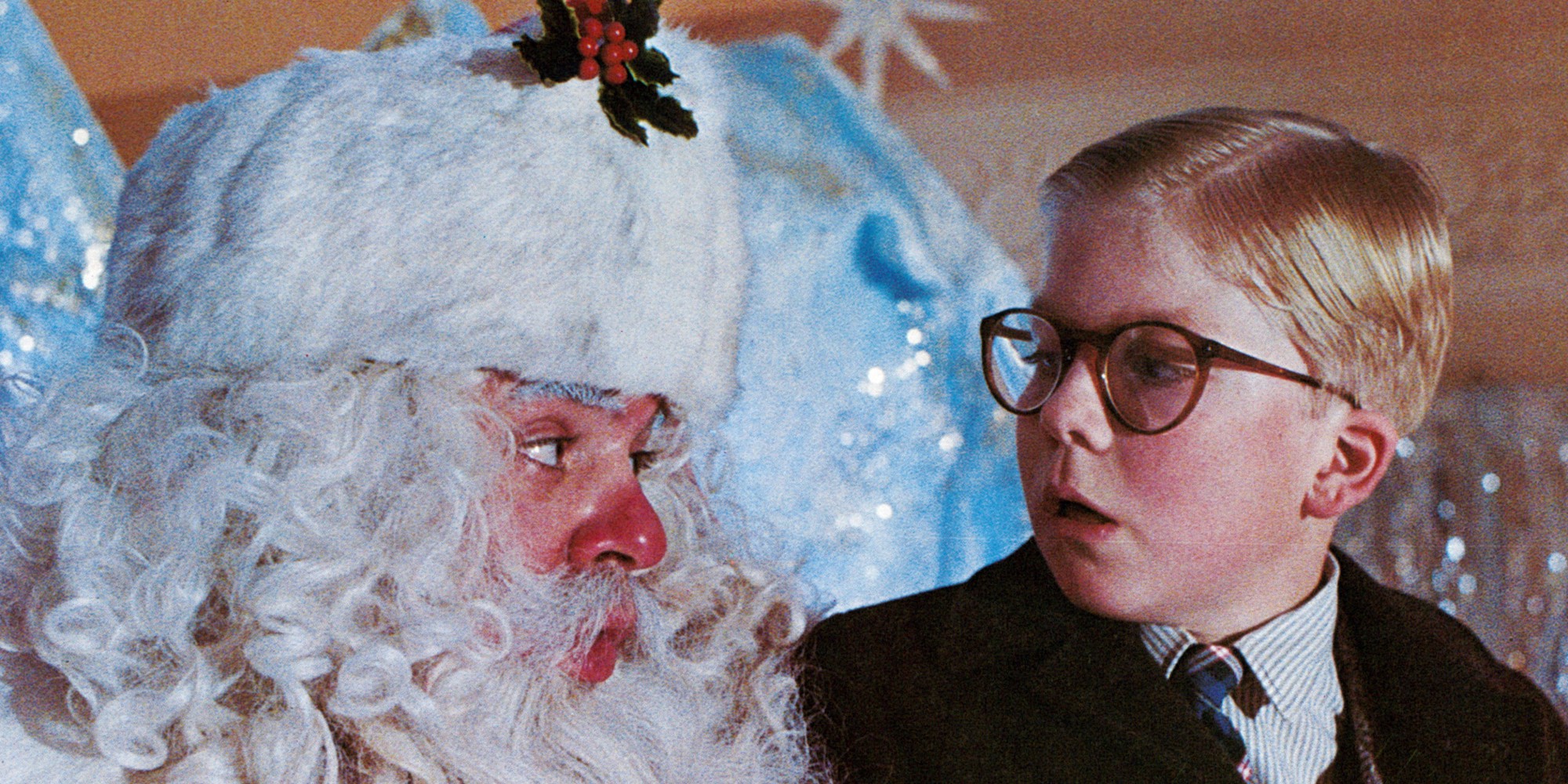
If disappointment equals expectation less reality, then the holidays are primed to be letdowns. We hope for delicious food, beautiful decorations, and charming company, and find ourselves with badly cooked birds and gifts that need to be returned. Still, the truly terrible holidays, the ones that make you long for January 2nd and gag at the site of a Christmas cookie, are usually the result of your company. What could go wrong when you’re forced around a table with people with whom you share nothing but blood, or blood alcohol level?
Pretty much everything, which is why writers from Harper Lee to Brett Easton Ellis have written terrible holidays into their novels. These eleven books mine holidays for all their awkwardness, simmering tensions, and escalation into full-blown catastrophe.
The Ice Storm is the story of the Hoods and the Williamses, two neighboring families in suburban Connecticut who are struggling to adapt to the cultural revolution of the 1970s. The tension that propels the novel is exemplified by Moody’s take on Thanksgiving, i.e. a forced, drunken convocation of people who are ideologically opposed. Simply put: “Thanksgiving dinner at the O’Malleys, as Benjamin had often pointed out, was like waiting for the end of a ceasefire.”
The Christmas Machine has appropriated and resold Charles Dickens’ tale as a feel-good children’s holiday story. Don’t be fooled — A Christmas Carol is terrifying. Ebenezer Scrooge is visited by ghosts; that’s ghosts plural, four to be precise, including one visit from the re-animated corpse of his former business partner, Jacob Marley. When Marley, who is doomed to travel the earth in chains as penitence for his sins, takes off the bandage around his head, his jaw falls off and onto his chest. Eggnog, anyone?
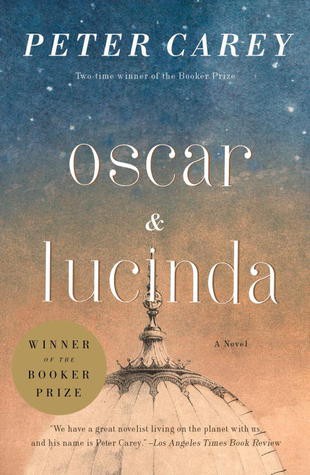
Peter Carey’s Booker Prize-winning novel is the sweeping tale of Lucinda, an enterprising glass-maker, and Oscar, a gambling minister, as they make their way through 19th century Australia. Like so many of the worst holidays, Oscar’s childhood Christmas suffers from intergenerational strife. Oscar’s father, Theophilus, is a fundamentalist Christian preacher who believes that Christmas is a pagan feast. When he catches Oscar eating a forbidden plum pudding, he strikes him for eating the “fruit of Satan.” Oscar asks for a sign from God to justify his festive dessert, and when his father starts bleeding, Oscar shuns him and starts on the path that leads him towards Lucinda.
David Sedaris is the king of darkly funny personal essays, so of course he would have a collection of essays about the holidays. Holidays on Ice features a range of disasters, from “SantaLand Diaries,” which chronicles his experiences working as a disenfranchised elf at a holiday grotto, to “Dinah, the Christmas Whore,” about the Christmas when he accompanied his sister on a mission to rescue a prostitute from her abusive boyfriend.
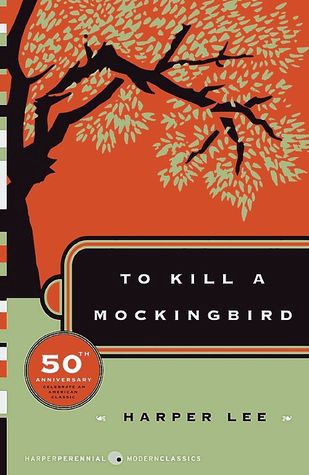
In Lee’s classic novel, Scout’s Aunt Alexandra and her terrible grandson, Francis Hancock, come for Christmas at Finch’s Landing. After opening presents (the kids receive air rifles, naturally), young Francis walks over to his cousin Scout and spews some bigoted remarks about Atticus. Scout lives out all our holiday fantasies of dealing with racist relatives and pummels him — though she gets a spanking from Uncle Jack as a result.
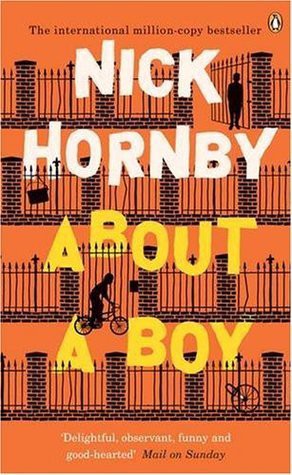
Marcus Brewer, the tween protagonist of Hornby’s sad yet comedic novel, is basically an ugly Christmas sweater personified. He’s so uncool that he’s cool, at least in the heart of the reader who follows his bromance with Will, an immature 30-something bachelor. Will, too, is a bit of the holidays come to life: he lives his responsibility-free lifestyle thanks to the royalities from his dad’s one-hit wonder, “Santa’s Super Sleigh.” When actual Christmas rolls around the Brewer household, it’s a gathering weirdos and emotional delinquents including Will, Marcus, Marcus’ suicidal hippie mom, her accident-prone ex-husband, and his new girlfriend.
Jane Austen excelled at describing bad parties, specifically those moments when, to borrow a phrase from David Foster Wallace, a “supposedly fun thing” becomes demonstrably awful. For Emma, that experience is Christmas Eve dinner at the Randalls. After enduring John Knightley’s long-winded rantings, she is shocked by an unwanted marriage proposal from Mr. Elton. Emma then has to sit there and take it while Mr. Elton, wounded by her refusal, insults her to her face.
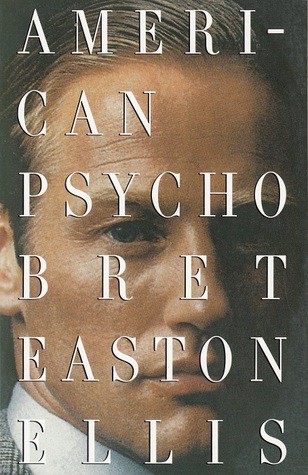
Patrick Bateman is one of literature’s best known psychopaths and he celebrates Christmas accordingly. After insisting that his girlfriend leave her own party, he takes her to a club called Chernobyl where they snort “expensive Christmas frost,” and he gets into a fight in the restroom. Even aside from his murderous impulses, Christmas with Bateman sounds like the worst.
Enid and Alfred Lamberts want to spend one last Christmas with their three children at the family house in the archetypal Midwestern hamlet of St. Jude. The problem? The family has grown apart, both emotionally and physically (the kids, now adults, have fled for the East Coast). Enid’s desire for a final, perfect Christmas is tied up in nostalgia for a happy past that never quite existed.
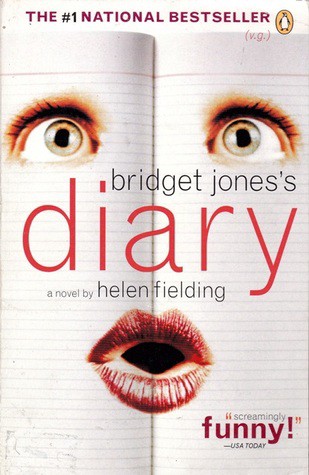
Even if you’ve had an otherwise enjoyable holiday season, New Year’s Day can be a potent cocktail of existential dread mixed with self-loathing and a pounding headache. Helen Feilding captures this in the opening of her first novel, when Bridget, having once again started the year in a single bed in her parents’ house, attends Una and Geoffrey Alconbury’s New Year’s Day Turkey Curry Buffet. Fielding wisely makes the point that it’s one thing to resolve to lose weight, ditch cigarettes, fix your job and get a love-life, and quite another to be publicly reminded that you need to do these things by an attractive man at a curry buffet.
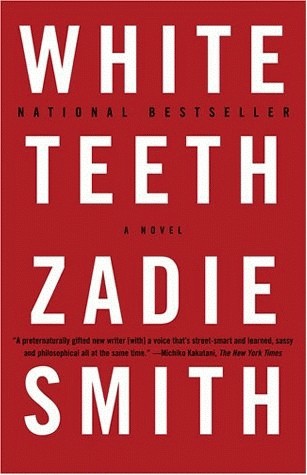
Archie Jones starts New Year’s Day, 1975, sealed in his Cavalier Musketeer station wagon, waiting for the fumes to kill him. Attempted suicide is a pretty grim way to start your holiday, even if you are accidentally saved by an aggrieved owner of a halal butcher shop who doesn’t want your suicide box/car blocking his delivery zone.
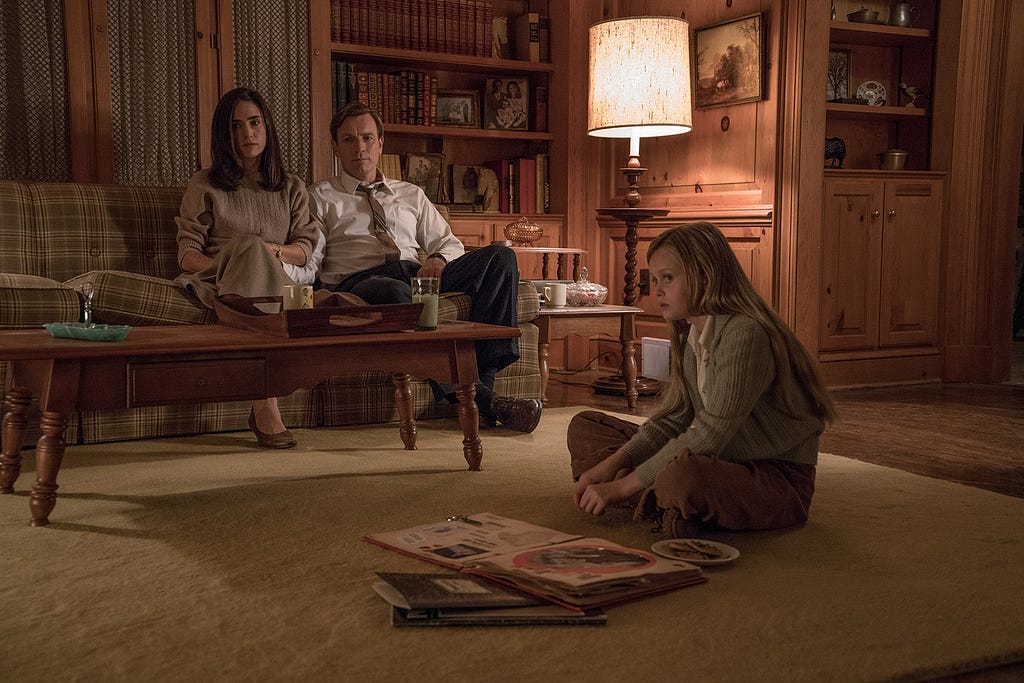
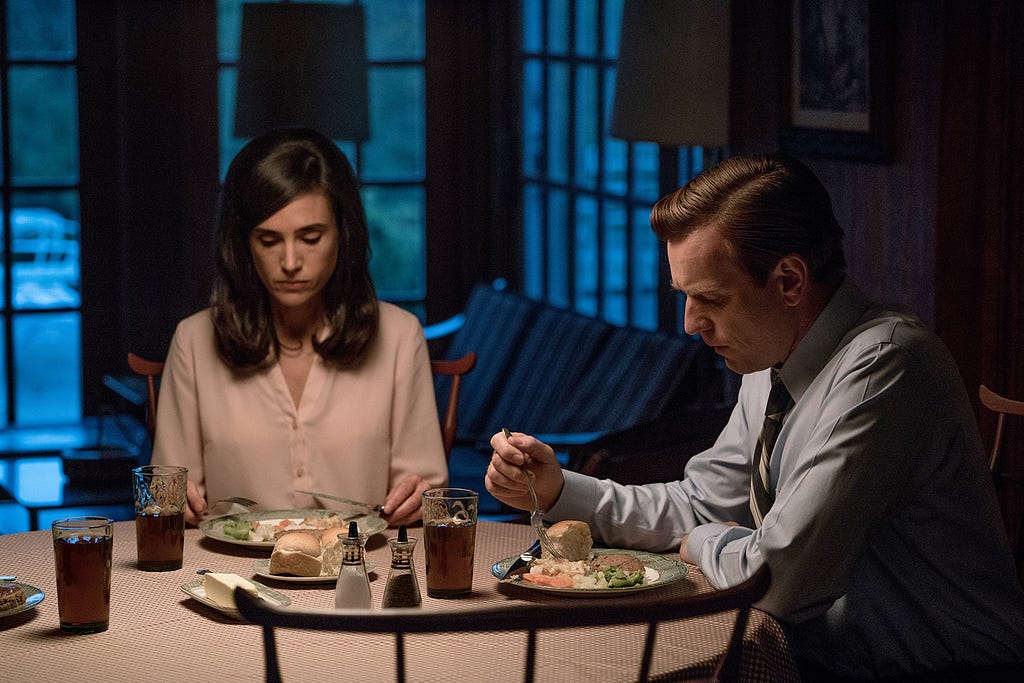
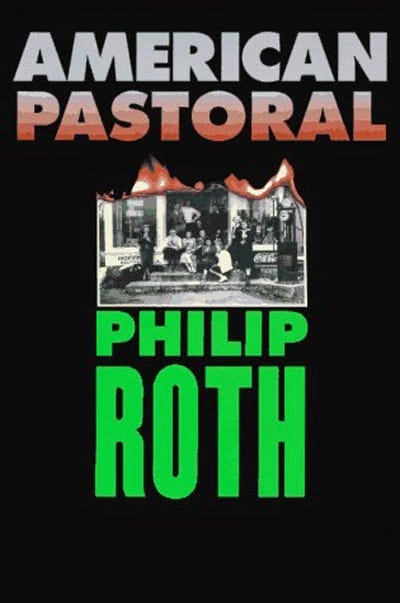
After a rocky road to production — marked by lapses in development, recasting, directorial switch-ups, budget adjustments, and a tepid initial film festival reception — American Pastoral, directed by its star Ewan McGregor, opened wide in theaters at the end of October. Adapted from the Pulitzer Prize-winning Philip Roth novel, it tells the story of Seymour “The Swede” Levov (McGregor), a Jewish high school athletic phenom, his wife Dawn (Jennifer Connelly), their daughter Merry (Dakota Fanning), and the disintegration of their Norman Rockwell-like life.
I should confess here I first encountered American Pastoral in a graduate class focused on literary antiheroines, why they are written and why they are read, and that I was profoundly frustrated by both Roth and the book: at its focus on the father’s pain to the near exclusion of the suffering daughter. I endeavored to think no more about it, until I heard that Ewan McGregor was starring in a filmed adaptation, at which point I wondered whether my lifelong adoration of McGregor’s talents would counteract my skeptical stance to Roth and his book. Considering that McGregor is the only reason I’ve ever rewatched a Star Wars prequel (or anything as gritty as Trainspotting), it did not seem impossible.
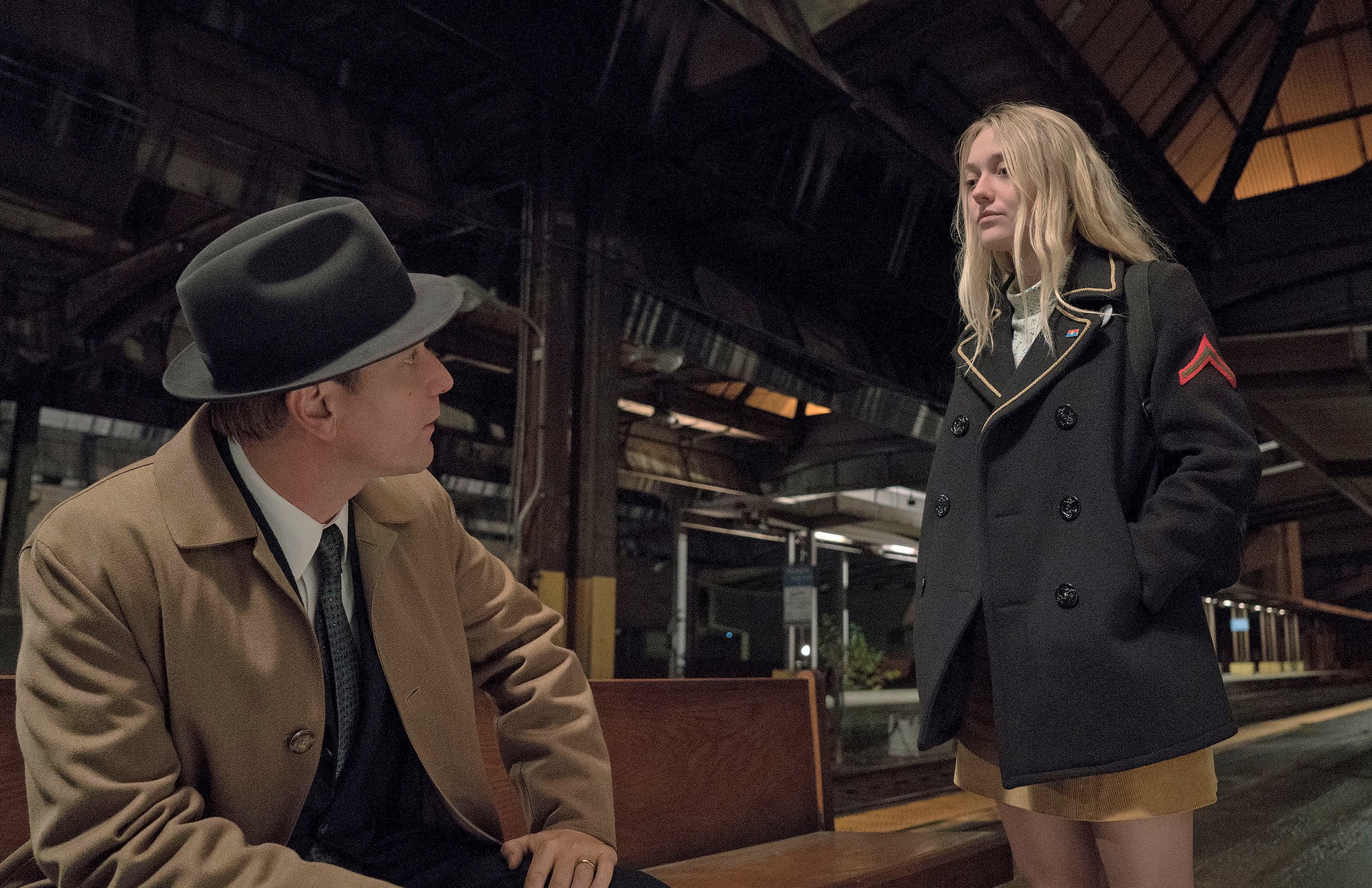
Jennifer Connelly, Ewan McGregor and Ocean James in ‘American Pastoral’
On screen, even the Levovs’ challenges at first seem idyllic — the handsome sun-kissed father, his self-assured beauty queen wife, a daughter whose charm is only enhanced by her stutter. She becomes distraught after witnessing the live TV broadcast of a self-immolating Buddhist monk, and afterwards climbs into bed with her parents who nestle with her under the comforting lamplight. Eventually she grows into an angry teenager, turning on her devoted parents and on LBJ with an irrepressible fury — yet, in a sense even this is as it should be. This is how teenage daughters do.
After yet another teen-angst-versus-parental-patience showdown, Merry finally crosses a line. She plants a bomb at the local post office, killing its proprietor, and flees. The Swede is never able to move on, spending his life trying to pick up the pieces and to understand what went wrong. Or at least, that’s what Nathan Zuckerman (David Strathairn), the writer who worshipped the Swede in his youth (and who serves as the novel’s narrator), imagines the Swede did.
The adaptation’s most compelling qualities are its earnestness and the beauty of its visuals (qualities which coincidentally apply to McGregor himself). The film is thoughtfully shot, well cast, and John Romano’s screenplay stands as a model of how to cultivate the essence of a literary work in another form — it remains luminous and grimy at the same time. Narratively, the novel American Pastoral is as much about Zuckerman’s failure of empathy for Merry as our own struggle to feel compassion towards her (and girls like her). Roth evokes our deepest fears, that our families, our children, will be subject to forces we can’t control and don’t understand, and that we will find ourselves alone. The book is notable for its chaotic depiction of a man in a maelstrom, knowing he should let his daughter go but maintaining a visceral certainty that he must save her. In the movie, however, that aspect is flattened. It reads more as a straightforward comment on rebellious daughters and their heroic fathers, rather than as a critique of the American dream’s very existence.
We see McGregor, as the Swede, in pain, expressive and vital, and doggedly stubborn to yet find a way through to his daughter. But he and the film are both so crisp and beautiful, even in moments of disarray, that what should be unbearable is muted to dissonance. For Roth’s part I do think he “gets it,” that on some level Zuckerman’s focus on the Swede is a meta-commentary on how the affairs of men are centered socially and personally, and on how destructive that failing is. The squalidness of the book’s details is part of that — everything has a gross smell or a texture or a fetid undertone, as if to counter the artificial perfection of the halcyon setting. But some of what the film sidesteps ultimately undermines the Swede’s potential for growth.
Zuckerman, looking for early signs that should have indicated Merry was headed for trouble, imagines her in the front seat of her father’s pickup at age twelve: one strap of her dress slipping down nymphet-like, asking the Swede to kiss her like he kisses her mother. In the film the frisson of this scene arises out of the shame on McGregor’s face as he is goaded by Merry’s insistence into mocking her stutter, followed by Merry’s admission that she knows she goes too far — that she is prone to losing control of herself. But in the novel the Swede does kiss her, and spends the rest of the story convinced that this kiss ruined her for life. Not that she was inescapably confronted with the horrors of the Vietnam War at a young age, or that everyone in her life pathologizes her speech patterns to the exclusion of all else about her. The Swede is certain that Merry was somehow tainted by him. Eventually, in the novel, the Swede reaches the painful place of understanding and acceptance: “She is not in my power and she never was.” But McGregor’s Swede never does. He is the father of four daughters in real life — perhaps he hasn’t yet himself.
If, as Zuckerman clearly does, you buy that the “tragedy of the man not set up for tragedy — that is every man’s tragedy,” if you feel the Pulitzer was warranted and you are angry about Dylan’s Nobel on Roth’s behalf, then the plot is heart-rending enough. “You’ve done everything wrong that you could have,” a testy cop says to the Swede, and his protest — “What, what have I done wrong?” — is obviously not only about his handling of this situation, but of his entire life thus far. As a blonde-haired blue-eyed male star athlete, who married a former beauty queen and inherited his father’s glove factory, he has done everything right and he’s still not been handed the life he was promised. If that sounds unfair to you, you will probably enjoy this movie. However, the film struggles, just as the novel did, with a protagonist in possession of every single privilege imaginable, who is also on the periphery of far more interesting lives.
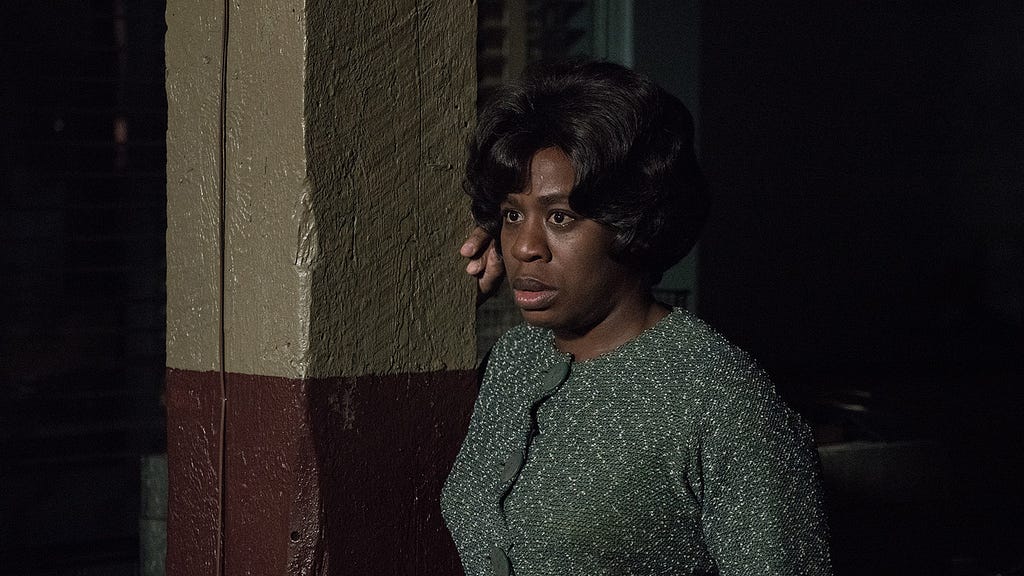
What of the tragedy of people who actually are set up for tragedy? The pathologized daughter. The wife whose only refuge is the pursuit of beauty and male attention. The widow of the man that Merry murders. The black student activists whose protests are met by the mobilized National Guard. The floor manager at the Newark Maid glove factory (Uzo Aduba, bringing far more to the screen than the underwritten role she was given) and the entire community of workers whose livelihoods are bruised by the Newark riots*. The tragedies that make this story timely and urgent and searing to more than just the fathers of daughters who do things which trouble them.
Uzo Aduba in ‘American Pastoral’
Yes, the monstrosity of Merry’s actions makes her hard to defend and impossible to like, but she did not become a monster in a vacuum. Casting Dakota Fanning — who is as expressive and talented a young woman as she was when a child actress — realizes the earlier Merry of the novel who was golden-haired and lithe-limbed, and ignores entirely adolescent Merry’s greatest sin in the eyes of her family and therapist (as written by Roth). Before she committed murder and became an unwashed Jain in atonement, she got fat.
She also stopped being apologetic for her stutter. In the book, Roth says, “by no longer bothering with the ancient obstruction, [Merry] experienced not only her full freedom for the first time in her life but the exhilarating power of total self-certainty.” What could be more thrillingly reckless than that for a teenage girl in America? No wonder we embraced Merry, and rained contempt down on her father and her author, in my literary antiheroines class.
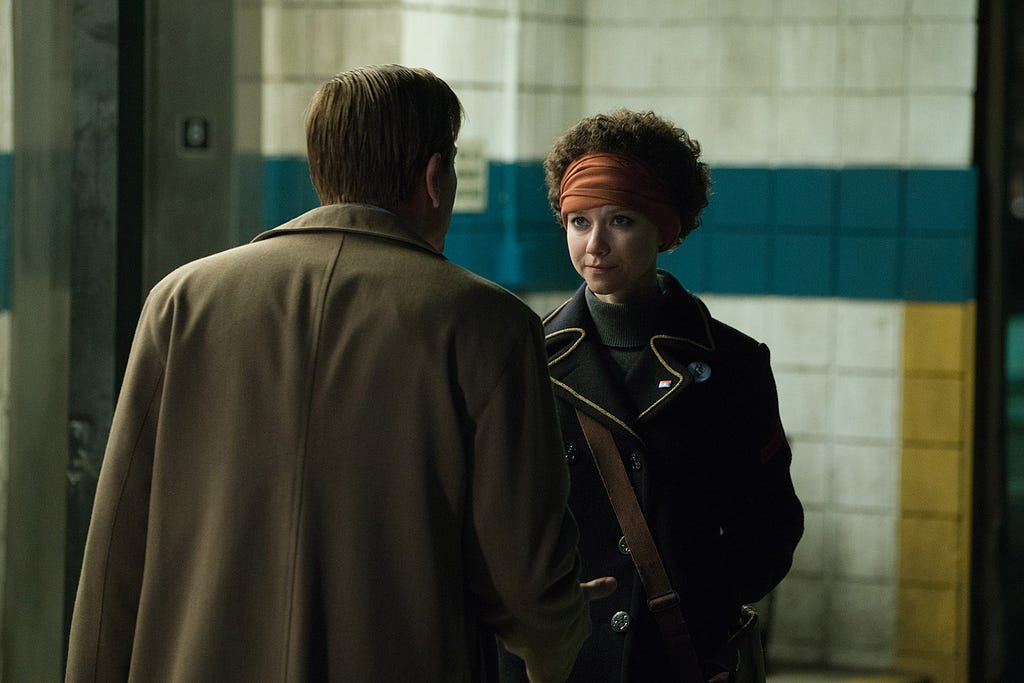
Roth, whose depiction of female sexuality is either discomfitingly clinical or pitiably superficial, can apparently think of no better remedy for Dawn’s crisis of selfhood than a naked factory-floor breakdown in her old Miss New Jersey sash, followed by a facelift, a brand new house and an extra-marital affair. Is Dawn a tawdry, selfish materialist, as we are led to believe? Is there no scrutinizing energy left over for the external factors that might have contributed? Following Merry’s disappearance the Swede is contacted by young revolutionary Rita Cohen (Valorie Curry), and meets her in a hotel room where she demands sex in exchange for information on his daughter, who is presumably her lover. The seduction feels wildly out of the realm of possibility, that a vibrant young radical would prefer to test the character’s virtue and not simply take the $10,000 he brought with him. Are we meant to be repelled by Rita? Why should we find appalling these young women who reject the lives and values their fathers wanted them to live by, especially now as we move, grimacing and pained, through the debris of the 2016 election?
Valorie Curry in ‘American Pastoral’
The inevitable flipside of the Swede’s devotion to the idea of who his daughter should be is a failure to accept the person she is. Yes, his disappointment and anger — at the stutter that mars her perfection, at her sizzling anger toward him and her mother, her violent crimes, the violations she endured on the run, and her living in squalor — are understandable. But, in the final scene the father and daughter have together on screen, when he has found her working at a veterinary clinic and living the life of a Jain, wearing a mask and pursuing ascetic purity as penance, his final effort to reach her is a claim of ownership. He plunges his hands into her mouth, exclaiming that he made her and that she can’t live this way. The story’s transformation into a counter-pastoral is complete. Not only does he have nothing left that he wanted — no wife, no daughter, no idyllic New Jersey life — what he did want has been diminished and destroyed. Perhaps this impossible struggle is the point: he can never let go, a tribute to the dedication and sacrifice of fatherhood, which is what this movie is ultimately about.
It’s just hard — in the wake of the post-audio tape, “I am offended because I have a wife and daughter” rhetoric which came to nothing, the persistent unchecked police brutality, the violations of women’s autonomy on every front, the national demoralization at the hands of a demagogue — to feel worse for the privileged disappointed golden boy than for the daughter who is genuinely lost. The redeeming moment of the film comes near the end, and has nothing to do with the Swede at all. It is when Zuckerman acknowledges that he could be completely off-base: that this is what life is, the potential to be wrong. I am all for films that depict the self-deprecating humility of a male novelist confronting his weaknesses. In the novel, Zuckerman confesses to this early and often. He even comes close to admitting that he was writing all this for the sake of his own shattered idolatry of the Swede, and not for the man or his daughter at all.
American Pastoral is, at its heart, the tragedy of a father whose daughter is unknown to him. And that truly is a tragic thing. The trouble with the prioritization of this tragedy, overshadowed by the Vietnam War, by race riots, Woodstock, the Moon landing, and Watergate, and framed by the idealization of a former classmate, is just how little room it leaves, in the end, for the tragedy of anyone else’s destruction.
* I’m torn about Roth’s engagement with the black factory workers in the novel. On the one hand, the employment of black workers is something which the Swede and his father pride themselves on—in which case, are the workers just props for the novel? On the other, Merry ruthlessly mocks her father when he gets an award for doing the only decent thing in hiring the workers back after the strikes and riots. So, is Roth is making a meaningful statement here about race and representation, highlighting the folly of believing that you can be “one of the good guys” while also sympathizing with the National Guard? Or does he think the Swede and his father are doing something significant—something which outweighs the need for actual representation in the book? Is Roth critiquing their absence or actually just omitting them from the narrative? Are they meaningful participants in this story, or demonstrations of a self-indulgent vanity?
As 2016 comes to a close, all of us at Electric Literature are taking stock of everything we’ve accomplished this year — from the great writing we’ve published to the new readers we’ve reached — and making resolutions for the year to come. Like many publishers and news outlets, these last few months have prompted serious reflection about our values and the service we provide to readers. What is the role of literature in speaking out against injustice, and what is our role in facilitating that speech?
Amidst these complex questions, there are a few things we know for certain. Electric Literature is a nonprofit driven by our mission: to support writers, preserve literature’s vibrancy, and to make great writing accessible to all. To serve a mission is a profound blessing and responsibility, and this month, I’m asking you to help us continue that work by becoming an Electric Literature member.
As member, you are an essential part of our organization, which, because it is a nonprofit and owned by no one, belongs to everyone. You also get full access to over 230 stories in the Recommended Reading archives, the option to submit your own fiction year-round, and 20% off everything in our store. All for just $5 a month.
Will you help us reach our goal of 100 new members by joining today?
In 2010 I was asked to teach a community college Kerouac class in his hometown of Lowell, Massachusetts. I didn’t have much knowledge of his work, but my punk rock background, I guess, made me the adjunct most qualified to teach his stuff. So I dove in, reading his novels one by one over a few months. While I’m not crazy about the guy, his writing, or the imitators he spawned, I became fascinated with presentation: all of his novels were intended to be read as one long narrative. But they weren’t written in the intended order– kinda like Star Wars, or William Vollmann’s “Seven Dreams” series — nor were they published in sequence. In other words, three distinct chronologies exist in Kerouac’s written work: intent, publication and authorship. Modern readers don’t follow the intended path and are none the wiser.
It was during this class that I became reacquainted with the work of William Burroughs. My initial Bill phase came on the cusp of college, when I was trying to fly a tarp of identity using bands, authors and directors to stake down the corners. Naked Lunch was a cool movie to like, so I chased down the book, as well as several others which I tried without much success to navigate. I had a pat response when asked about the man: “He invented the cut-up method, so I give him credit — but that doesn’t mean I have to read the stuff.”
But during one of my Kerouac prep sessions I had several books open and a football game playing on the television and two fantasy teams on my laptop while I texted a friend about Belichick’s failed fourth-and-two. Burroughs made more sense to me after that.
I’ve never been a theory guy, but the rearrangement of elements in both Burroughs and Kerouac at least resembles neutral monism, which says that everything is essentially made of the same stuff, even if it can be arranged in a certain physical way (like cut-up) or mental way (like the multiple orders of Kerouac).
Enter Jason DeBoer, a polymath director/writer whose new book, Annihilation Songs, takes the common trope of reimagining a crucial volume and turns it on its head by forging three new stories from Hamlet, the Tempest and Two Gentlemen of Verona, using only text from each source play.
I know, I know — it sounds precious, precocious, especially when taking into consideration some of the buzzwords DeBoer mentions in his author’s note: reintegration, restructure. Exercises in form can be engaging; they can also be tedious and fun-sucking. And I’ve never been crazy for Shakespeare. In college, it took me three tries to pass a course about the Bard and his work — I could get the gist of plays by watching them on VHS, but was never enraptured by the language like his ardent admirers.
But like the aforementioned Kerouac and Burroughs examples, there’s much more to consider than I initially thought. As unlikely as it sounds, there’s all the beauty and brutality, here reimagined for us to once again turn over in hand — even as it’s simultaneously the same stuff. Such is the power of the language therein.
Take the first of the three, “Puzzles of War,” which draws on the text of Hamlet. An army private named Cornelius is enlisted to dig mass graves following the battle of Normandy. On the brink of losing his sanity as “(t)he Norman sun made the dead bloat and split open…. like fat puppets with their strings cut” he kills his commanding officer, and absconds to a chapel wherein he finds a woman desperate to keep the memory of her deceased husband alive using any necessary means. All the while, the private reads a book on Nero and the fall of Rome.
The Nero text-in-a-text comments on Cornelius’s plight and brings to mind Tales of the Black Freighter, the comic-in-a-comic which comments on the main action in Alan Moore and Steve Gibbons’ Watchmen. The mood of Freighter is decidedly grim, what with its apocalyptic color scheme and with a cadre of sharks devouring a raft made of human corpses. DeBoer’s reimagination of Hamlet is similarly grim, both in its main and metatextual components — and the latter offers a wink. DeBoer knows how the concept of rearrangement sounds to skeptics. But he goes on.
The power of “Puzzles of War” comes from the same well of language — the same stuff — from which Shakespeare drew. As a modern reader, it’s easy to get tripped up by Shakespeare’s words and rhythms. Throughout DeBoer’s three reimaginations, I was struck by both the beauty and the modernity of his assembled verbiage. My conception of Shakespeare — like many readers, I suspect — has some roots in difficulty because of the age of the plays, and because, as the old chestnut goes, the stuff was meant to be seen, not read (once again, I’m reminded of checking out VHS copies from the college library to try to make head or tail). To say that there are surprises in Shakespeare after all this time and thought seems impossible, but DeBoer’s reordering of the prose draws attention not to the structure of the plays, or the characters therein, their plots, but to the language itself. And this is done in such a way that throughout I was not only dazzled by the way in which DeBoer pieced found fragments together, but the connotation of words, which had changed over time.
Witness this sample from “Here Swims A Most Majestic Vision,” which draws from the text of The Tempest:
“Often, she thought it was no rift between them, but a coil of closeness, and irreparable discord in which the hurt was tended between them as some fertile indulgence.”
Certainly the tortured psyche of Caliban in the source material carries some of the same twisted weight which DeBoer imbues here. But using words chosen five hundred years ago, Shakespeare, via DeBoer, discusses relationship dysfunction with modern nuance. Certainly we can look critically at characterizations in Shakespeare plays and apply our modern ideas to them; DeBoer reimagines different ideas that share a similar resonance — and he does so by using the same language. To me, this tonal similarity is the most fascinating thing about DeBoer’s successful experiment: that the feelings contained in these stories are just as strong and true as those in their sources, no matter the arrangement or lens.
I understand if this all sounds a little Pierre Menard. I was skeptical at first, too. But these aren’t just rote experiments — they ring out. Annihiliation Songs is transcends the ‘exercise’ tag in its readability and craft while yielding reflection long after its covers are closed.
On election night, driving in a carful of lifelong Democrats, most of them white, all of us dazed, I said that, if I’d loved this nation less, I wouldn’t be in such pain. I don’t know this America, they said. One friend asked if I could explain the love I felt. I’m writing this, I think, in that attempt. But maybe I’ll start by telling you that, looking as I do, I haven’t, not once, been called a chink. No one has insulted me by pulling up the outside corners of his eyes, or hers. In the United States in which I’ve lived, I’ve seldom been hailed with racist slights: no hostile “konnichiwa,” few “nihao” catcalls. Every now and then, a white person insists on finding out where I’m from, but no American has advised that I go back to Asia. To date, I’ve often thought that I belong.
Part of this, I’m sure, is a result of the upbringing I’ve had, in a small California town so full of Asians I made it through junior high before I realized that people who shared my ethnic traits formed, in America, a small constituent. I assumed the nation included a lot of public schools like mine, the class rosters crowded with the last names Kim, Lee, and Park. In time, I began to understand I was wrong: that being Seoul-born, a woman, I’d withstand challenges that white, straight, male friends might not undergo.
I assumed the nation included a lot of public schools like mine, the class rosters crowded with the last names Kim, Lee, and Park.
But even so, in all the U.S. cities I’ve inhabited since I left my town — in New Haven, D.C., New York, Palo Alto, and San Francisco — I haven’t felt out of place. No one stares at me, or fancies I can’t understand English. One could suppose this is because I’ve lived in such diverse cities, liberal enclaves on both coasts, but I’ve felt the same ease upon visits to New Mexico and Virginia; in rural, upstate New York; in off-season Colorado ski towns; and in Texas, Louisiana, and Florida.
Please don’t think I fail to realize what luck I’ve enjoyed, the relative privilege I’ve experienced: this isn’t the nation most non-white friends have known. But I’ve also lived in foreign places where I’ve felt alien, exotic, ogled, and plain intimidated. In my peripatetic twenties, I picked up jobs or fellowships that let me live in Paris, Madrid, Budapest, Siena, and Buenos Aires. In all of these cities, in spite of how fluent I was or wasn’t in the local language, I heard the onslaught of sidewalk “nihaos” at last. Strangers at parties kept asking where I was from. I said America, and they pushed: No, but where was I really from. America, I said, blood up, a patriot. Even when I tried living in Seoul, the city of my birth, I stuck out. If I said five words, taxi-drivers could tell by my accent that I was just visiting. They asked if I was Korean, inquiring, in one of the question’s literal translations, Are you a person of our land? Yes, but no, I replied. Each time I’ve returned to the States, I’m moved to tears by passport officials who tell me, without fail, Welcome home.
Even when I tried living in Seoul, the city of my birth, I stuck out.
I write this from a tranquil artists’ residency, a mansion-turned-idyll where I’m housed and fed, at no cost, a month-long paradise where all I’m expected to do is to write. Even so, as I walk through the bucolic estate, ginkgo leaves crackling with each step, I’m aware of how white I’m not. That I’m a woman. I’m conscious that, nationwide, hate incidents are on an upswing. I sit down to work, and sight blurs. I blot the useless tears so that I can write again.
I’m here to finish a novel about a group of born-again, hard-line Christians who, in the name of good, bomb abortion clinics. It’s taken almost a decade to write this book. For close to a third of my time on this earth, I’ve inhabited, and I’ve loved, the fictional minds of the fanatical pro-life. Disciples of Christ who, in the real world, like some of you, might have voted for the Republican on the ticket not with the intent of being racist, and hateful, but because they exalt a God who’s said to revile abortion. Before that, I was one of you: raised religious, I believed I was called to be an evangelist, a life plan that lasted until, at sixteen, I left the faith. This past month, I’ve also tried to imagine thoughtful citizens voting for a candidate because he promised he’d prevent their jobs from being shipped overseas. Or maybe — and this requires more of a cognitive stretch, but here I am, trying — you feel nostalgic for a past epoch, one in which you felt less often in the wrong. I’m a novelist; it’s part of my job, I think, to strive to see people as they see themselves. I’m trying.
I’m a novelist; it’s part of my job, I think, to strive to see people as they see themselves. I’m trying.
I write fiction, as I’ve said. This is the first time I’ve attempted writing like this, a song of fact. It feels indecent, all but obscene, to exhibit such wounds. I’d rather strip naked in public. I want to tell you, though, without the veil of invention, about this pain. It hurts so much, in spite of all I’ve tried to understand, to learn how many of you voted into office a presidential candidate who promised to build a wall to keep out Mexican immigrants. Pledged to put all Muslim people on a list, and boasted, on tape, about assaulting women. Who excluded black would-be renters from his properties, and vowed to jail political rivals. Admires Hitler’s collected speeches.
This month, I’ve thought so often of James Baldwin’s glorious assertion that it’s because he loves America that he insists on the right to perpetually criticize the place.
When I’m not writing, I’m often reading. In what I’ve read, I’ve studied the marginalized, exiled, gulag-banished, suppressed, and killed. I’ve learned from Primo Levi, Oscar Wilde, Simone Weil, Liao Yiwu, and Osip Mandelstam; I’ve an inkling of how fast, and on what absurd pretexts, human beings can stop belonging. But I’m an immigrant, and it’s possible I have the convert’s zeal: I persist in longing to have faith in this shining, fragile experiment of a republic. Meanwhile, the news worsens. White supremacists are recruiting. Hope flails. I’ve seen some of you who supported the president-elect explain you’re not racist, homophobic, and sexist, in which case, I wonder, when the lists are made, will you stand with those of us who are chinks, or — what are the other terms? Dykes, kikes, bitches, towelheads, fags; if we’re uppity, if we’re spics, documented or not, in all possible hues of skin; while we might not all be white, straight, Christian men, will you uphold the truth that we’re as American as anyone else?
This month, I’ve thought so often of James Baldwin’s glorious assertion that it’s because he loves America that he insists on the right to perpetually criticize the place. I love this land; I grieve. I know the next four years have just begun. What I’m writing could well prove to be a dirge, but this American would like to tell you it’s still a love song.
JK Rowling’s gift to her publisher ignites the bidding at Sotheby’s
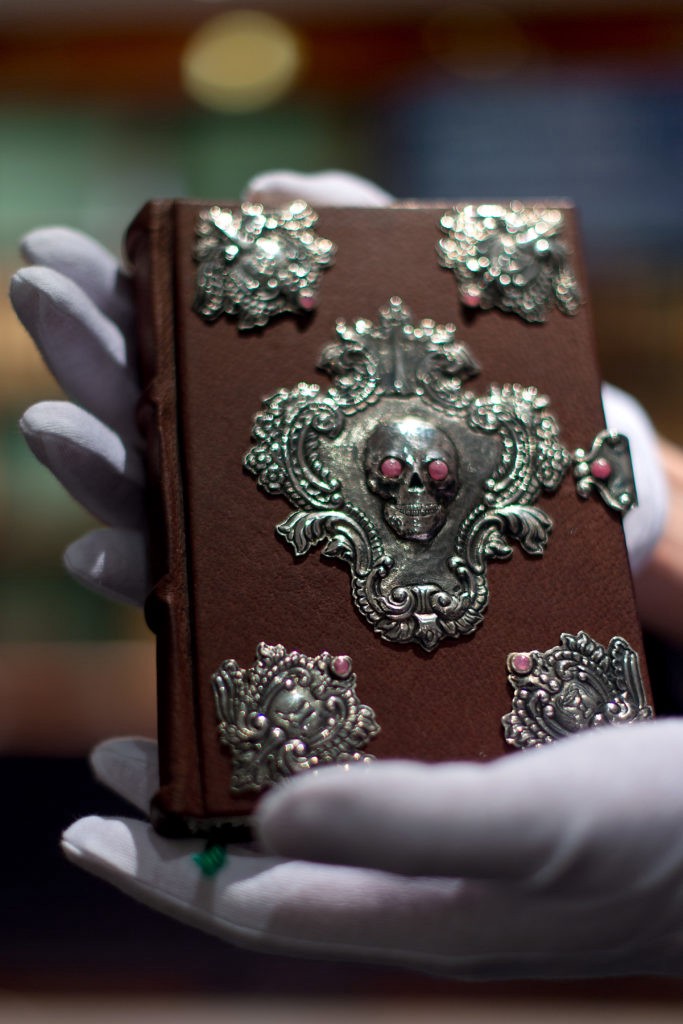
A handwritten and illustrated copy of JK Rowling’s The Tales of Beedlethe Bard has been sold at auction for a whopping £368,750. The book was originally a gift from Rowling to her publisher Barry Cunningham. In 2007 Rowling wrote out the stories that make up The Tales of Beedle the Bard — a collection of wizzarding legends that plays a large role in the fictional world of Harry Potter. (In the final installment, Dumbledore bequeaths the book Hermione.) Originally, only seven copies of the fictional-book-made-real were crafted. Six were given as gifts to those who, according The Guardian, Rowling considered “most closely connected to the Harry Potter books.” The seventh was auctioned by her charity, Lumous, selling for £1.95 million. In 2008, the stories received a mass release, earning enormous sales figures.
The leather bound volume that Cunningham received is also covered in semi-precious stones that, according to Rowling, are “traditionally associated with love, balance and joy in daily life.” There is also a note on the inside cover from the author that reads: “To Barry, the man who thought an overlong novel about a boy wizard in glasses might just sell … THANK YOU.”
Beedle the Bard was the big winner on the day. Part of Sotheby’s English Literature, History, Children’s Books and Illustrations auction, Rowling’s volume beat out letters from Darwin and Jane Austen for the high hammer price. So, take that, legends of English intellectual history. You got Potter’d.
“When I was a little girl, my dad left me and my mum, and he never came back. And you’re supposed to be gutted when that happens. But secretly I preferred it without him, cos it meant I had my mum completely to myself, without having to share her with anyone.”
Thus begins The Painted Ocean, Gabriel Packard’s first novel, in which Shruti and her hungry heart propel the reader through a narrative that never lets its reader rest. Some people are drawn to books to rest. This book is not for such readers.
When I first picked up The Painted Ocean, I could not put it down. My bookmark was eventually employed between pages 110 and 111, where I stopped not only because I was afraid for Shruti, but also (mostly) afraid for myself and my pounding, breaking, hurting heart. Shruti’s breathless voice is British (hence the “mum” and “cos”) and convincingly childlike: only an innocent could survey the adult world with such objectivity. Her distinctive voice, not to mention the rapidity and sheer number of events that occur, places Packard in a distinctly Dickensian realm.
And like one of Dickens’ heroes, though the worst things that can happen to a human happen to Shruti, she maintains her innocence. Her voice never shifts, but remains consistent from the first word to the last. If we are to consider Blake’s opposition of innocence and experience, it is perhaps because Shruti is consistently denied agency in her experiences that she maintains her innocence. This lack of agency is believable in Shruti’s account of her childhood, for though she must often navigate the English world on behalf of her immigrant mother, she does so with a child’s lack of nuance. Her inability to see layers in a situation — such as her mother’s cruelty — is not something she questions, though she presumably tells her tale from the vantage of adulthood. Furthermore, she is clearly the victim of her own innocence. In one gut-wrenching episode, Shruti’s complete trust of her teacher leads her into a rats’ nest of social services that ultimately isolates the child even more.
As Shruti tells of entering young adulthood, her innocence begins to come across as a pathological lack of self-awareness. Though the conditions that lead to that lack are certainly believable, one does stop to consider what the consequences often are for young women of color who have been misunderstood and mistreated by predominantly white, Western communities. Certainly not vacations in New Zealand. By the end of her first year in college, Shruti has only made one friend in life, a fellow daughter-of-immigrants named Meena, who reads alternately as a bully and the only character who sees Shruti as a person. Shruti attempts to recruit Meena for an overseas work-study trip to New Zealand using methods that, despite or perhaps due to her lack of awareness, seem rather like emotional manipulation and thievery. And so it becomes difficult to avoid attempting diagnoses of Shruti or the plot’s plausibility, especially when her manic restlessness, extreme paranoia, and seemingly incurable loneliness lead her to what she eventually claims as a very happy — perhaps Shruti’s only happy — experience: that vacation in New Zealand that the reader does not get to witness.
Because we do not get to follow Shruti on her one holiday, it is nearly impossible to believe the close of her tale:
“…what I regret is that I was ever so innocent and pure and filled with hope when I was young, because it would be so much easier now to have never known any good times.”
Though the narrative moves through Shruti’s life in England, abroad, and back, as well as through her childhood, adolescence, and adulthood, her voice does not waver. Nor does she divert from her need to make sense of humanity through the absolutes that have been imposed on her, in extreme measure. In other words, because her perspective never shifts, it is difficult to believe that her experiences ever did, that she was ever happy. Shruti was indeed innocent and pure as a child; she continued to be inexperienced in humanity as an adult who never felt connected to or loved by another human being. However, her “hopes” were few and her “good times,” invisible. The fictional heroine calls attention to her own fiction.
Perhaps the most awkward example of Shruti drawing attention to the telling of her own tale is when she sidesteps therapy in favor of joining a fiction workshop. Her account of her early family life — of her awful uncle from India and what, exactly, makes him bad — is called into question in one of these workshops, because Shruti has paid one of her white employees to pose as the author. This draws the author himself into the narrative, as if Packard were pre-empting critics of his book through the questions Shruti faces via her straw-author:
“the new…leader starts off by saying that he just wants to raise the question of whether…as a white person…has the right to occupy a character of South Asian ethnicity….”
By pitting the reader with Shruti against the workshop leader, Packard suggests that anyone who questions Shruti’s authority is questioning his own — an authority that, in both cases, would have been invisible by this point in the narrative. The wizard points to his own curtain.
And, for the most part, Shruti silences questions through the strength of her voice alone. Yet Shruti’s strength as a character is questionable, for even after she achieves physical safety away from the forces of evil that threaten her, she is not free of them. Shruti’s fear and pain dictate her decisions for the rest of her account of her life. She has so internalized the threats of her attackers that she believes she cannot be helped by telling the truth; she instead turns to that writing workshop, which fails to deliver the empathy and recognition she so desperately needs. Defeated, she neither wants to live nor die; she only can see people as good or bad, but they all turn out to be bad. And that is perhaps the tragedy Packard so empathetically delivers: that a human should have been so hurt by other humans that she can only ever know them as good or bad, never as something — as someone — in between.
Such a truth is one that only good fiction can deliver.
Hello, and welcome to my week-by-week review of the world. Today I am reviewing Big League Chew.
If you love how it feels to stuff your mouth full of chewing tobacco, but wish it was hot pink and capable of being blown into a bubble, then Big League Chew is the gum for you. It comes in a pouch just like real chewing tobacco but this shredded gum probably won’t give you cancer. But then again it might. I don’t want to say definitively that it won’t, and then get sued when it does. I’m not a doctor and probably never will be.
Big League Chew is the perfect starter for a child looking to learn the ins and outs of chaw. If you give a child chewing tobacco, a lot of them will think it’s gross and try to spit it out no matter how many pictures you show them of athletes using it. But if you offer the same child a gum that’s made to resemble chewing tobacco, they’re going to gobble it up!
One you’ve got a kid hooked on gum chaw, you can graduate he or she to candy cigarettes. But why stop there? Certainly there’s a market for a candy that mimics steroid use. If you think that’s in bad taste, wait until you taste it. I’m imagining a delicious liquid candy that’s “injected” into the mouth via a fake plastic syringe.
Just like drugs, Big League Chew is incredibly addictive. With most gums there is a clearly defined end point — they come in segments, often individually wrapped. With Big League Chew it is just a giant pouch of gum. You can’t even see the bottom. The only limit is the size of your mouth.
I once put so much Big League Chew in my mouth that I couldn’t close it. I didn’t dare pull the gum out for fear that I would unintentionally extract some of my weaker teeth, so I had to wait two days until my saliva had dissolved enough of the gum that I could finally start chewing it. By that point the flavor was completely gone. I blame the limitations of my body for this, not Big League Chew.
Similar to how bacon can be wrapped around another meat, Big League Chew can be wrapped around other gums. Or you can wrap it around meat like it’s bacon. If you pre-chew it slightly it becomes much more sticky than bacon ever could. And have you ever tried chewing raw bacon like it’s gum? Don’t.
BEST FEATURE: It can be worn like a wig if your head is cold. WORST FEATURE: When worn as a wig, no one will believe it is your real hair.
Please join me next week when I’ll be reviewing a splotch.
DON’T MISS OUT
Sign up for our newsletter to get submission announcements and stay on top of our best work.
YOUR INBOX IS LIT
Enjoy strange, diverting work from The Commuter on Mondays, absorbing fiction from Recommended Reading on Wednesdays, and a roundup of our best work of the week on Fridays. Personalize your subscription preferences here.