Out of the Woods: Appalachia, Literature, and the American Dream

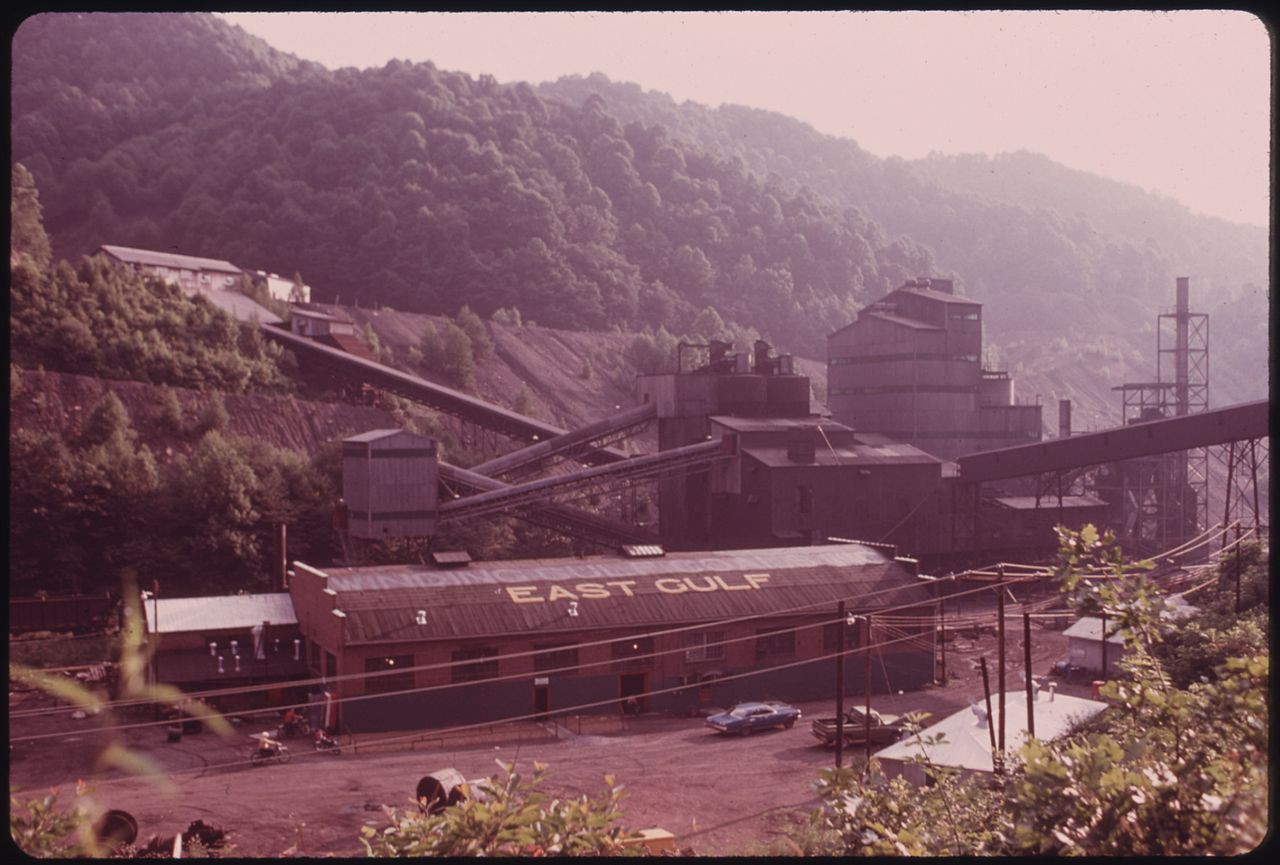
Driving down I-79 the steel bridges of Pittsburgh give way to peak and valley country, more than rolling hills it’s the dipped land of heft and hollows. Less than eight miles over the border of Pennsylvania into West Virginia, the evidence of mining cuts through rock. Ten minutes south are exits for the state’s flagship university, brick and stone buildings built into hillsides. On game day, the football stadium is more populous than any other place within West Virginia. The further south one travels, the more extraction industries have left their mark, and south of the “chemical valley” tucked against the state capital, the southern coalfields of West Virginia show the scars of that industry, dotted with slurry pools and little towns that hang on by a prayer and a Wal-Mart.

The southern coalfields of West Virginia show the scars of that industry, dotted with slurry pools and little towns that hang on by a prayer and a Wal-Mart.

Where there are rivers, rafting or whitewater boating and other outdoor activities become tourist dollars in the temperate months. Rivers, like the Elk, can reflect pristine beauty or be polluted at a moment’s notice, smelling sickly of licorice. Even when 300,000 in West Virginia were without useable water, one has to wonder who outside really noticed. Two years after the Elk River spill, Flint, Michigan’s lead-tainted water is an eerie reminder that we’ve been poor stewards of our environment and our precious resource. Though not in the same region, the Elk River and the Flint River flow as ruined reminders of forgotten places, pitted by loss of jobs, economic uncertainty, longing for solutions but coming up short.

The West Virginia writer Ann Pancake writes of her home state, “The devastation of my place is bald, unambiguous, and impossible to explain away as ‘natural’ or temporary or repairable.” This was before the Elk River spill. She also writes, “I’ve come to believe that the greatest challenge for many twenty-first-century artists is to create literature that imagines a way forward which is not based in idealism or fantasy, which does not offer dystopia or utopia, but still turns current paradigms on their heads.” I think this view of art can be instructive not only in Appalachia, but in our larger American culture.

Often, I am reticent to write about West Virginia, because my view feels complicated, and I don’t want my words to ring inauthentic. In experiencing Appalachia my vantage point is outside-in; while I have family roots in West Virginia and have lived in the state for over ten years, I’m not a native and didn’t spend my formative years here. Still, there is something that pulls me in and I can’t fully explain why. A neighbor flies a Confederate flag, a symbol that chills me. In spring I eagerly await the thriving farmers market, which is about more than food; it is a vestige of hope and a sense of community. I visit whitewater-filled and mountain-peaked state parks, the closed insane asylum, the still-active Fiestaware factory, the World’s Largest Tea Pot, nestled in a roundabout where highways meet and a gas station offers the only available parking.

Often, I am reticent to write about West Virginia, because my view feels complicated, and I don’t want my words to ring inauthentic.

I see this place not solely from the outsider’s perspective and experience it not quite as someone from within the folds. Regardless of my vantage point, I am not immune to the derogatory stereotypes that allow those from outside the region to pass judgement upon it. The Appalachian Studies and History scholar, Ronald D. Eller traces many of these stereotypes back to John F. Kennedy’s 1960 presidential campaign in West Virginia, when the media portrayed the region’s ruralness and poverty as contradicting popular notions of an affluent America. Appalachia, in the minds of many Americans, failed to live up to the newly-consumerized American Dream, somehow blocked from the prosperity embraced elsewhere in the country. Many assumed it had to be the backward locals.

Eller wrote in his 2008 book, Uneven Ground: Appalachia Since 1945, that these now-ingrained cultural ideas of Appalachia as some “other place” that didn’t follow mainstream progress that has “allowed us to distance ourselves from the uncomfortable dilemmas that the story of Appalachia raises about our own lives and about the larger society.” He argues that “Appalachia was not different from the rest of America; it was in fact a mirror of what the nation was becoming.” That Eller’s history was published in 2008, as the nation careened into financial collapse, was perhaps, prescient, as the nation, much as we have experienced in Appalachia, continues to erode its middle class, lose its good, steady jobs, while the gulf between the small community of so-called one-percenters widens ever greater from the larger pool of have-nots.

Appalachia, in the minds of many Americans, failed to live up to the newly-consumerized American Dream, somehow blocked from the prosperity embraced elsewhere in the country.

In places like West Virginia, southwestern Virginia, and eastern Kentucky, the inequities also played out in the use of land. One can hardly drive highways in this region without seeing “Friends of Coal” license plates or bumper stickers. We call the industry King Coal, and even as his reign showed signs of collapsed, our politicians, both Democrats and Republicans, bowed slavishly to the throne of black diamonds. Not just national but global demand for cheap energy led to hillsides dotted with “Coal Keeps the Lights On” signage, and in pursuit of “lights-on,” the mountains of Appalachia propelled surface mining and mountaintop removal at an unprecedented rate. Companies co-opted national pride, named themselves Patriot Coal and Freedom Industries, monikers meant to evoke patriotism to extractive not sustainable work. And they were, for the most part, owned from the outside.

Here, in Appalachia, to protect the environment became unpatriotic, against the values of growth, and against the national appetite for consumption, and certainly not in line with the American Dream’s myth of prosperity.

Here, in Appalachia, to protect the environment became unpatriotic, against the values of growth, and against the national appetite for consumption, and certainly not in line with the American Dream’s myth of prosperity. Eller reminds us that “In Appalachia, as much as in any other part of America, the false choice between jobs and the environment divided communities, pitting personal economic against the common good, short term gain against long-term survival.” During the Elk River spill, I remember a woman calling in to a West Virginia Public Radio program asking when people would stop having to choose between good water and good jobs.

Hope in Appalachia is imperfect and hard won, and recent fiction writing from the experience of the region depicts the difficulties of this region. Meet Dawn Jewell, the narrator and protagonist of Robert Gipe’s illustrated novel, Trampoline (Ohio University Press, 2016). Dawn is bright, funny, confused; she finds herself pulled into the fight to save a local mountain in her native (and fictional) Canard County, Kentucky in the state’s eastern coalfields. Her kin and community work the mines, her mother’s an addict after the loss of her father who was killed in a mine, and Dawn, only fifteen, finds her teenage confusion wrapped up in the blight of her community. “I was a freak, soft and four-eyed with black fingernail polish, a dead daddy, a drunk momma, a crackhead brother, outlaw uncles, and divorced grandparents who made trouble for normal people every time they come off the ridge.” It would be easy to place Dawn Jewell with other trouble teens of literature — a modern day, Hillbilly Holden Caulfield, pointing out all the phonies. That, perhaps, would lessen her impact. Dawn is a character drawn from the strife of Appalachia, and her appeal to us as readers — why we cheer her on — feels like the same reason we wish to show Appalachia as more nuanced and complex than stereotypes would suggest.
Dawn Jewell struggles to find her place in a place that struggles with itself. She is built from the strife, both being representative of her community and struggling mightily to find her place in it. She is the inside-outsider, one that is not wholly accepted by the people she most identifies with, and the conflicts of the region play out in her story. It isn’t as if Dawn wants to stay. “I was chickenshit was what I was,” Dawn says of herself, “That was why I was back in this shitty spookhouse county. Without the courage of my convictions, Mamaw would say.”

But later, she tells us, “I was never going to get out from under this place.” The American Dream, one might say, has passed her by, and her unwillingness to leave the place of her origin could easily be ascribed as culprit. Yet, in Gipe’s rendering, Dawn’s journey is as internal as anything else, and her desire to fit into her community is a strong theme of what it is to be American. There are places other than Appalachia where the people stay, despite hardship, because it is home. Being an outsider, and feeling dislocated even in a familiar place, becomes a key part of Dawn’s story.

Where does Dawn Jewell belong, if not as a member of her own community?

If we look to the literature of Appalachia, it’s not hard to spot this rub between being from a community and being at odds with it.

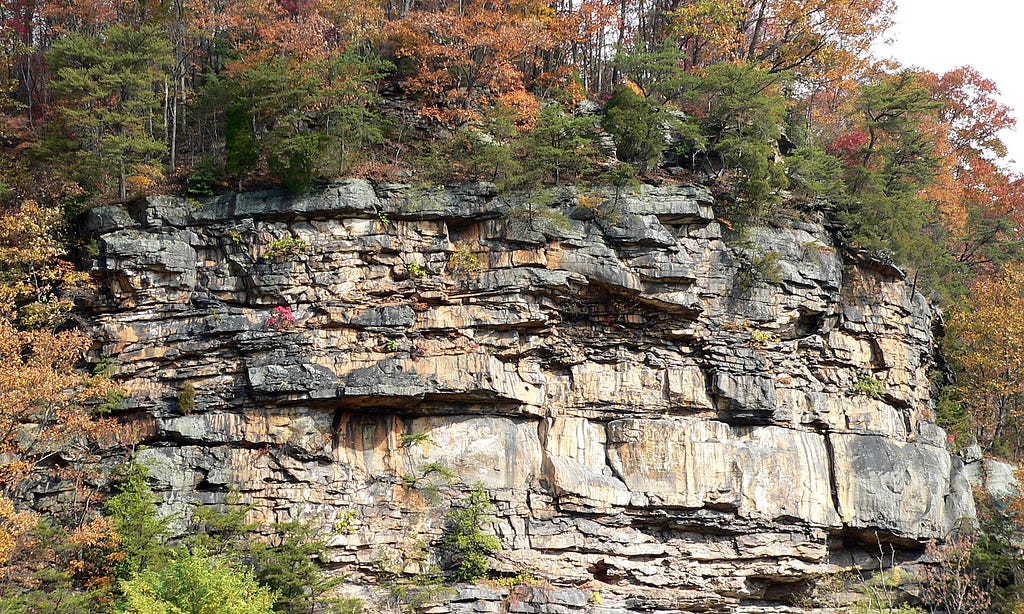
If we look to the literature of Appalachia, it’s not hard to spot this rub between being from a community and being at odds with it. Young people, in particular, find themselves in the crosshairs. In Jonathan Corcoran’s story collection, The Rope Swing (West Virginia University Press, 2016), we meet Christopher, a character in the book’s title story. Again, like Dawn Jewell, Christopher is teenaged, feeling trapped within his surrounding, which are also being destroyed through lack of land protection. “The new highway, on the other hand, just two miles to the east but out of sight, has four level lanes paved into the bombed-out heart of mountains. The ledges that frame both sides of that highway bear the jagged marks of explosives — artificial striations slicing across the once-impenetrable rock.” To get out of this place or to make one’s way through it takes environmental damage. As he considers the ways in and out physically, Christopher, who grapples with a growing understanding that he is gay, also understand that he, too, is both inside and out:

Just as soon as he imagines this life, he wills himself to forget it. The more time he spends at the river with Greg, the more he feels himself floating away from the things he understands. This is both exhilarating and painful. A moment of bliss, and then an evening of aching. He is a split self: his visible body and his hidden blood.

The split self — that which belongs to Appalachia and that which yearns to be free of it — can be seen as something particular to the region.

The split self — that which belongs to Appalachia and that which yearns to be free of it — can be seen as something particular to the region. With its above average poverty rates and lack of economic future, the closed feeling of its communities, it might be easy to say it’s an Appalachian problem. But if Eller is right, there might be more to learn from these characters that can speak to America proper. Who, in these times since the 2008 financial crisis, or perhaps even before that, felt a strong sense of belonging in these United States of America, to the communities in which they live? As people flocked to buy cookie-cutter homes, perhaps they spent in search of that sense of belonging, of community. When that crumbled, as foreclosures became a national discussion, perhaps a kind of erosion took place, and that characters like Christopher and Dawn offer a map as to how to confront it.

Ironically, it’s Appalachia’s “wild and wonderful” places that offer outsiders some sense of peace or fulfillment. Eller, in speaking about the region’s economic turn towards ecotourism, writes, “The flood of suburban tourists seeking to renew their relationship with the natural world passed young people along the highway leaving the mountains in search of better lives in the cities from which the urban refugees had fled.” Should we cheer Christopher and Dawn on to pilgrimages outside the region? One might say it would be impossible. As Eller reminds us, “Insiders and outsiders alike consumed the electricity generated by coal from surface mines that destroyed forest and decapitated mountains forever. Everyone searched for some connection to place.” Eller finds a name for folks like myself — neo-Appalachians, and along with new and old, suggests we’re tied together by the powerlessness caused by social, environmental and cultural consequences of rampant consumerism. We have become, he says, “voices of powerless people struggling to survive in a changing world.” Again, we cannot see the American Dream. Perhaps, though, if there is one overarching reason to read contemporary literature, is that the powerless find their voices.

In one of her illustrated panels, Dawn Jewell says, “I wanted out of the woods.” As she makes her walk, Dawn shows us what she sees:

A field opened up in front of me. It was the last beautiful bottom in Canard County, the last place to see how it was for the first white people, the last pocket pasture with its deep dark dirt, the last one that wasn’t road, wasn’t trailer park, wasn’t cigarettes for sale, wasn’t fucked-up mining equipment piled all archeological. But this last one was going to be our new high school football field. I crossed the field, climbed the horse fence that bound it, thinking how if you, if I had been a Cherokee, a Shawnee, we would have dreamed to see buffalo, to see elk, on that field and would have through a farmer’s field no better than a car wash.

I crossed that field, done thinking I could see my happiness by the week hour waterlight.

In this soliloquy, Dawn forces herself and us by extension to take stock of what we have lost in pursuit of the illusive American Dream. She finds her most true self in confronting this loss, a cold comfort for one who defines herself so much against all that is around her. And yet, in this imagining, she finds a sense of calm. Otherwise, Dawn is surrounded by chaos, and it is imagination that allows her respite. She can’t relate to her brother, her mother, her uncle, or even in the grassroots activism of her Mamaw. Thought connected to each, her sense of self reaches beyond what her family or community can give her.

At school the popular click brands Dawn a freak, which isn’t so much different than the view of her family. So completely isolated, she muses that her mother’s laugh had once been pretty, but that memory, like others, is tainted, “the past came in on me like the smell from a busted sewer line.” Soon after she falls asleep, Dawn awakes to her own Momma stealing her paycheck from a part-time job at a fast food joint.

While many of the stories in The Rope Swing show a view of Appalachia through the lens of characters who are also gay, it wouldn’t give the book it’s just due to call it only a view of “gay Appalachia.”

While many of the stories in The Rope Swing show a view of Appalachia through the lens of characters who are also gay, it wouldn’t give the book it’s just due to call it only a view of “gay Appalachia.” In fact, it speaks to the same gutting of community we see from Gipe’s Trampoline. In “Hank the King” Corcoran paints the descent of a town alongside the descent of one of its citizens. Hank, the protagonist, has lost his pawn shop, his youth and health, and his way of life. “His dominion was crumbling: the buildings of the town and his body. He was drawing social security, neck deep in bills, and trying to find what little pleasure was left in the world.” Much like Canard County, the fictional Kentucky locale of Trampoline, Hank Burkham’s small West Virginia town doesn’t serve up hope for a better future. “The downtown had become a big sea of nothing: the only thing bustling was the dollar store,” Corcoran writes. From his pickup truck, Hank witnesses the results of its decline:

…those sad men wandered up and down the streets of the downtown all day, blowing their money at the Legion or the Moonshiner Tavern. If they were more adventurous, or maybe just bored, they’d cash their disability checks, run into the old Green Valley Hotel — the marble lobby cracked and stained — and buy a bag of weed or some pain pills. People would do anything to feel numb.

Just as in Dawn Jewell’s Canard County, Hank’s world fills with addicts and trailers, and Hank himself keeps out of the house that is on the brink of foreclosure. At his family’s graveyard, Hank implores his dead mother, “I feel like life’s over, and I’m not even dead yet.” Those outside Appalachia might be tempted to think that these feelings, brought on by the problems of places like West Virginia are her problems alone. But in December 2015, Pew Research published an astonishing truth. “After more than four decades of serving as the nation’s economic majority, the American middle class is now matched in number by those in the economic tiers above and below it.”

Perhaps more are like Hank than feels comfortable. Just like Appalachia, the haves are growing in small numbers and large amounts of wealth, while the have nots continue to grow in number while they dwindle in fortune. Given this, can we continue to see Appalachia as other, or can we confront its issues and problems as the image in the mirror, reflecting the larger issues facing America? It might be tempting to see in Appalachian literature only the hopeless, but in this case, as in others, there are the glimmers.

In what feels like a jump ahead in time from “The Rope Swing” Corcoran gives us “A Touch,” the story of a West Virginia transplant in New York City. The unnamed narrator, fresh off a breakup, meets up with Darren, a friend in the city originally from rural Kentucky. In describing the friendship, this narrator tells us:

He called me “Mountain Boy” and I called him “Kentucky,” a reference to our shared former geography. We were careless with our freedom, burned through everything we touched: the money, the booze, the boys we thought we loved the most. But he was always my constant. We formed our little band of orphans, even though he had living, breathing parents back home. We said we would make our own families, with ties that had nothing to do with blood, and wouldn’t we be so much stronger because of it?

Place, to these men, is something shared, and perhaps, forges a bond beyond their new locale. Our unnamed narrator, admitting that he’s not been home in fifteen years, also admits to Darren his homesickness. He is as lonely even in the populous and prosperous New York City as he was back home in West Virginia. As a bit of folk wisdom says, we often bring our troubles with us, and in a modern world, one does not have to be physically located in Appalachia to understand its sense of dislocation. But just as our protagonist feels lost and alone in the world, he happens upon a moment of real and spontaneous connection. Wandering the streets after his meetup, he recognizes that he’s stumbled into some sort of rally or vigil, and the sight of lit candles, the sound of raised voices, and the simple act of a woman reaching and grasping his hand saves him from dark and solemn loneliness. “We’ll get through this together” the young woman says to this narrator. It is a redemptive, a pure moment of human connectivity in touch and word.

As a bit of folk wisdom says, we often bring our troubles with us, and in a modern world, one does not have to be physically located in Appalachia to understand its sense of dislocation.

So too, Dawn Jewell wins her fight to save Big Bear Mountain from mountaintop mining. Though the state has to pay companies not to excavate it, the land is saved. Yet Dawn isn’t fully satisfied with this outcome. Her Aunt June, a relative who has fled Canard County but is still marked by it — an inside-out viewer, one might say — reminds her young niece that she has protected eight thousand acres, no small feat for a fifteen year-old social outcast. As her momma, temporarily making up for past transgressions, is about to be baptized, Dawn muses, “…people change. They don’t always change the way they want to change, or even in the direction they set out to change in.”

Dawn may not have fully changed yet, and neither has Canard County, but we have the hope that she will, that she has and will continue to make a difference in her landscape, and among her people. At the end of the novel, Dawn is taken up above Canard County in a helicopter, and below, her boyfriend Willet has made giant words on the ground for her to read: YOU ARE HERE. The book ends with the illustration of Dawn, flanked by the words, “Ain’t that something?” Her grit turns to resilience, her fight into a distilled moment of satisfaction, and we, as readers, see it as something, indeed. We cannot win big fights unless we take on small ones.

Appalachia, as portrayed in these books, confronts and debunks that all it can be is a place of poverty and cultural backwardness. The question, then, is will it still reflect America? In times of change, we stare out towards an American Dream that may no longer exist the way it did in 1960. If we look towards today’s literature, we might find grit and resilience. These stories can matter because they are from and of us, both inside and outside of the region marked as Appalachian. Ann Pancake proposes:

…artists are also translators between the visible and invisible worlds, intermediaries between the profane and the sacred. How is this pertinent to the case I’m making for art’s ability to create change in the world? Only by desacralizing the world, over centuries, have we given ourselves permission to destroy it. Conversely, to protect and preserve life we must re-recognize its sacredness, and art helps us do that. Literature re-sacralizes by illuminating the profound within the apparently mundane, by restoring reverence and wonder for the everyday, and by heightening our attentiveness and enlarging our compassion. The magic and transcendence and mystery that characterize true literary art make a piece of literature a microcosm of the wider universe, of the mystery and profundity and transcendence that reside there for those willing to look for it.

Literature helps us to understand ourselves better, to enter into an imaginative realm that calms chaos. Our troubles are not our own, and literature reminds us that we are connected. Having lived outside West Virginia, in urban and suburban areas, my outside-in view reminds me that the troubles here happen elsewhere, and my living here is not the only connection I have to books like Trampoline and The Rope Swing. Ronald Eller says boldly in the introduction of his history, “We are all Appalachians.” If we go into the woods, literally like Dawn Jewell or metaphorically, those lessons we bring out of the experience might just change how we all approach a conflicted and complex larger world.

Our troubles are not our own, and literature reminds us that we are connected.

Our world currently feels less tolerant, less able to provide that better future we’ve always believed in. Our political rhetoric has turned from hope to xenophobic antagonism. But might we imagine an expanded, amended American Dream, one more accepting, with greater opportunity, and a sense of collective and belonging? Sometimes we must love what we know, imperfect as it is. Our stories must matter which is why good books matter. In them, we find connection, or, like Dawn Jewell, we experience our “YOU ARE HERE” moment. It’s a good lesson from either the experience or the literature of Appalachia, whether inside-out, or outside-in.

“Run, Little Girl” by Sheryl Monks

Brother Harpy delivered serpents to their house, to her daddy, the minister of Lick Branch, who put them in the icebox so they’d grow sleepy enough to handle next day at church. “Takes just as much faith to reach into a bag of sleepy serpents,” her father said, for the congregation was unaware, if she wasn’t.

Brother Harpy caught snakes all over McDowell County, and every Saturday, she watched him pull into their dirt yard and unload sacks writhing with rattlers and adders and copperheads. When he handled them, the sacks twisted and hopped as vipers struck the sides of the bags, fangs sometimes snagging and poking through the burlap. Brother Harpy would untie a sack as she sat straddling the porch railing, swinging her long legs back and forth or painting her toenails with her mama on the steps. She and her mama would watch him reach inside the bag and bring out a cottonmouth the size of his forearm. The snake would strike and its fangs would catch in the cowhide and rubber sole of his boot.

Then he’d look over at her mama and her and smile, and they would smile back, couldn’t help doing it, even though Brother Harpy didn’t belong to church and everything about him looked sinful. He was an old man, older even than her mama. His hair was down over his collar, almost as long as hers and had been dark once but now showed lots of gray, salt and pepper, her mama called it. He wore sunglasses and shirts with the sleeves torn off and a necklace of a kind that made him seem to have Indian in him, which is what they liked most about him, her mama and her. Something about the roughness of his face and the color of his skin, brown as a pear, made her think so, at least. He was an old, old man, but neither of them could take their eyes off him.

And he couldn’t take his eyes off them either. Her mama was the sexiest woman in Lick Branch, had a body as good as her own only looked like she knew how to use it. Before she had firmly lost all faith, her mama had backslid six times. She was weak-minded, people thought. Weak willed. Spiritless. Of the flesh. Wicked, though none went so far as saying that. It stopped just short of that, for she was their pastor’s wife.

Her daddy bore the shame of her mama’s transgressions with humility and forgiveness. He forgave her her sins, he said, each evening. He was a meek and righteous man, and until she had reached a certain age, the girl had been his charismatic little angel, reaching into the burlap sack and drawing out diamondbacks and copperheads. Her child’s faith convinced the sinners of Lick Branch that God would protect any who sought Him. She had saved many souls.

Including the soul of Elwood McGuire. When the news had reached Elwood McGuire about her, this young thing reaching into a sack of snakes and drawing them out and wrapping them about her arms and neck, when Elwood heard that, he had to see. And so he was drawn to the little white church he passed by every day, twice a day, on his way to the mines. He was drawn to the church and to the girl and to God Himself. And he became a great believer, picking her up under her arms and setting her up on the backs of pews where all could see her, this child of God.

And he traveled to churches and tent meetings far and wide, telling of her. Even when he got throat cancer and lost his real voice, took on that robotic voice of the tracheotomy, even then he praised God. And in a tent meeting over in Jolo, he took his leave, shouting and testifying. “Hal-le-lu-jah! I’m-a-be-liev-er.”

The congregation had swollen up and stood on its feet, and each one had begun to fall away, each into his or her own spirit, some singing “How Great Thou Art,” and others laying hands on Elwood, and still others speaking in tongues and shouting, their bodies no longer under their own control but filled with the Spirit of the Holy Ghost and moving about the tent wildly and falling to the dirt floor in convulsions, folks moving back metal chairs and making room so they would not hurt themselves too badly.

It was on this occasion that Elwood McGuire had been so fully filled with the Spirit and with a satisfied mind that he could have hugged and kissed the girl, that child who had drawn him into the bosom of Abraham. If she had been there at that particular tent revival that night. But she wasn’t; she was home watching television, fanning flies with her mama. And so, he had shaken the hands of everyone in the congregation and stepped outside, his wet handkerchief not yet even pushed back into his hip pocket before he was run over by a Lick Branch Colliery coal truck, highballing down Bear Town Mountain, and killed.

There was something about him, Brother Harpy, something she couldn’t name exactly, but something she felt and mostly at night, lying awake for hours the way she did, thinking back over her day. She’d heard he lived alone in a ramshackle, old company house somewhere near Johnnycake, and she wondered whether he could throw a tomahawk, and she guessed he could, that maybe he could kill a wildcat with one if he felt like it, or a snake.

She wanted to catch snakes herself, hot snakes with flicking tongues, angry serpents, not the sluggish pieces of rubber she’d handled at church. She felt she could, or at least she might have been able to at one time, when she was full of faith, before the coal truck and Elwood McGuire. You couldn’t grab up snakes with fear and doubt in your heart. And that is what made her love Brother Harpy. He had no fear, and just looking at him, that slick hair, both dark and light at once, that rough-looking face with its dark eyes, made her feel something funny, something akin to courage, a boldness. She drew nearer and nearer to him when he came delivering snakes. She helped him carry the jumping sacks into the basement, and he did not warn her to be careful. “I ain’t afraid,” she said.

And he said, “You ain’t, huh?”

She shook her head, and her blond hair fell down both sides of her face and moved like a soft breeze had picked it up and let it down again. He looked at her, standing under the single bulb of the hand-dug basement, her bare feet and calves gleaming white against the dark packed earth beneath them, her pretty pink toenails catching the light like opals. He tossed a sack into the basement and it jumped and rolled as the serpents fought each other inside the bag.

“How come they don’t kill each other?” she said. And he told her he couldn’t say. He stepped into the damp cellar and walked past her, picking up the sacks and throwing them into the icebox that was plugged into the same single light socket above their heads.

She had not flinched when the sack he’d thrown had flopped itself near to her, and he reached now to get it and throw it into the fridge. She stood still but the motion of his body caused the hem of her cotton dress to billow and lift slightly away from her legs. She pushed it down and he watched her and rose slowly, the sack still in his hand, and looked at her pretty face, her eyes so blue people had a hard time looking away from them, and so did he, she thought, staring back into his, which were dark and shiny, but not black. She couldn’t tell what color they were, and she couldn’t hold her gaze long enough to find out. She looked away first and smoothed her dress and stepped toward the door. “How old are you?” she said, and she saw his eyes lift from her hips to her face as she stepped away from him out into the light green of the day.

“How old do you think?” he said.

And she felt sassy, having caught his eyes where they’d been. “A hundred,” she said. And he laughed, and his smile was a candle inside the dark cellar and his laughter a black boom.

When he came back outside, she was sitting on the tailgate of his truck, her legs swinging slowly, one then the other, then the one again and then the other. Her skin was the toughest it would ever be, soft as it looked, tough in its softness, for she could walk barefoot over sharp rocks and the skin of her feet would not break but stretch over them, like wax or clay that would then go back to its own shape again. He could see her knees now, too, and her legs parted slightly like a boy’s, for she was a girl who hadn’t yet made up her mind about what she wanted to be.

“You got Indian in you?” she asked when he stepped around the truck and threw the last batch of empty sacks he had retrieved from the cellar onto the floorboard. He came back around to her, leaned over the side of the truck and draped an arm inside no more than a foot away from her own bare arm. She turned to face him, drew one leg up onto the tailgate and settled it under her weight. “I bet you got Indian in you,” she said.

He smiled at her again, but this time with no laughter, a different kind of smile, somber, more with his dark eyes than with his mouth, his face. And before she thought to look at his eyes again, to see their color, she fidgeted and hopped down from the bed of the truck, little pieces of weeds and dirt stuck to the backside of her dress. “What time is it?” she asked and looked at his wrist for a watch, but didn’t see one there. “Don’t you wear a watch?”

“Found none that’ll run on my arm,” he said.

“How come?” she said, and he looked at her with untelling eyes and rounded his shoulders. “Hmm,” she said. He had tattoos on his arms, a long-stemmed rose on his right forearm and some kind of funny black design on the shoulder of his other one. “What’s that mean?” she asked, but his eyes were drawn to something over her shoulder, her mama, standing on the porch watching them. She did not call to the girl, only stood holding onto the railing and looking. He walked toward the house, and the girl chased after him and ran around ahead of him and plopped down on the metal glider before he reached the porch.

He stood in the yard with one boot resting on the bottom step and the girl smiled broadly for having outrun him and breathed heavy, not trying at all to slow her breath, but breathing in and out hard like she was enjoying her lungs for the first time. Because a girl like that would not need to breathe so heavy after so short a run.

Her mama smiled at him, but he did not return the smile. He gave her mama a different look, a look the girl could not decipher. He parted his lips and the look seemed to emanate from there between the flesh of his lips, from somewhere inside his mouth and somewhere deeper, darker, wetter. Her mama held her daddy’s wallet in her hands, the same thick brown leather of his belt, which had striped her legs and had even striped her mama’s legs, maybe had striped her mama’s legs even more than her own.

Her mama pulled money out of the wallet and handed it to him without counting it; whatever there was, she gave him. Then he smiled, that same full sober smile from the cellar, and took the money and folded it and lifted it to a make-believe brim of a hat he didn’t wear. He nodded his gratitude, and looked again at the girl on the glider, rocking back and forth. He looked at her the same way another man had looked at her a couple of weeks earlier at the park when she had tried to ride a blue, iron pony she was too big for, her legs bent up like an insect’s to fit in the mock stirrups. “Get up off that,” her daddy had said, and given the man a bloodless look.

Her mama waited a minute more, as if there were something hanging between them to say, or as if maybe whatever it was had already been said, long ago, but not so very long. She looked at the girl, then, and turned to go, pulling open the screen door and pausing. The girl smiled at her, but her mama only half- smiled back, and then went inside without a word.

The girl walked across the porch and straddled the railing again, her dress hitched up high on her thighs, just barely higher than eye level where he stood at the bottom step. He looked at her long legs without apology and made no motion to go, though he had no more reason to stay now that he’d been paid by her mother.

“I bet your hands are fast,” the girl said, snatching at the air and laughing. “And strong. To grab them snakes.” She climbed down from the porch railing and came around to the steps where he stood, walked down to him and picked up his hand. She held his palm up and studied the lines. His hand was nearly as wide as half her body. She turned it over and rubbed her thumbs across the purple veins there. His hand was tan and warm, his fingernails slightly longish but clean, and she thought of a pocketknife somewhere amidst the fold of money he had shoved in his front pocket.

He was older than her daddy, but she wondered if he would kiss her if she kissed him first, and she guessed he would. She heard the fans blowing inside the house and longed for their breeze. It was hot there in the sun, but she knew a cool place, and she told him she did. She held onto his hand and pulled him into the woods, and he followed her, even when she turned loose and ran ahead again. He followed her.

They came down by a place in the river where the water ran fast over the rocks and shot through the exposed roots of gnarly, old oaks and ghost birches that grew out of the bank and leaned toward the sun. At the edge of the creek, she saw hoof marks and pointed them out. “Look,” she said, her eyes already tracing the tracks farther down along the water and up the bank. She never saw them, she said, but they came there to drink. He stood watching her, unhurried, his gaze measured and exact. Just the sound of the water was enough to cool you, she told him. “It’s colder than it looks, but we can go in if you want.”

He only stood there, shook his head, but not with conviction. If she wanted to go in, he would.

But she didn’t know what she wanted to do, only that she wanted to talk to him, to make him look at her, cause she liked that, how he looked at her. “I never showed nobody this place,” she said, to have something say, “and here I bring a stranger to it. I don’t even know you.”

It was a question, a request. She wanted him to make himself known to her. “Has anybody ever told you, you look a little like the devil?” she said, smiling, not catching his eyes now because she was afraid to. “I think you are the devil,” she said, walking around a tree and looking back at him. “That’s how you catch them snakes, why you ain’t afraid.”

“And you ain’t afraid either, huh?” he said, and something swept over his face, something ugly but it was too fast to tell what it was. Then he was smiling again, the most radiant he had smiled yet, and stepping toward her. “Kiss me,” he said, taking her hand, pulling her to him. His body was warm; his arms folded around her like wings and warmed her.

“I shouldn’t be here,” she said, already tasting his kiss but pulling away.

“Kiss me,” he said.

“I can’t.”

“One little kiss. It’ll be fun. It’ll be sweet. One little cocktail kiss.”

It sounded funny, him saying cocktail, this snake catcher, and she realized she had no idea who he was, or where he came from, or what he wanted from her.

But he was so beautiful to her, like an angel, a dark angel, Lucifer himself, she thought, and she knew she should run, but she didn’t want to.

“One little kiss,” he supplicated, and his breath entered her mouth and settled on her tongue and it was as if she had already done it, kissed him, and so she did. She opened her mouth and let him come in, and it was like a scourge of demons had slithered inside her, his mouth upon hers so hard, his tongue darting deep inside. He pulled her long hair and twisted it around his fists and wrenched her neck to him. He lifted her off the ground and pressed her into the tree until her bare flesh was shorn by its bark. “Run, little girl,” he said. And she knew if she did, he would only chase her down, grab her up with those big rough hands, and that’s not what she wanted — to be caught. And anyway it was too late now, though her legs worked themselves as if she had willed them to, and that’s what made her whimper, made him laugh. She would not be saved.

But she didn’t care, because she loved him and she knew that he had never lied to her; somehow she had known it all along. He wasn’t afraid of anything. Even if her father came, he wouldn’t care. She opened her eyes and looked at him. They were eye to eye, and she saw their color at last. They were blue, his eyes. Blue as her own, but inky, double dyed, blue black like the wing of a wasp.

She smiled.

For what was happening now, her dress being ripped and shoved down over her body, his hips lifting and forcing her harder into the tree — all of it, everything, was entirely of her own doing.

Midweek Links: Literary Links from Around the Web (November 23rd)

All the best literary links that are fit to, well, link

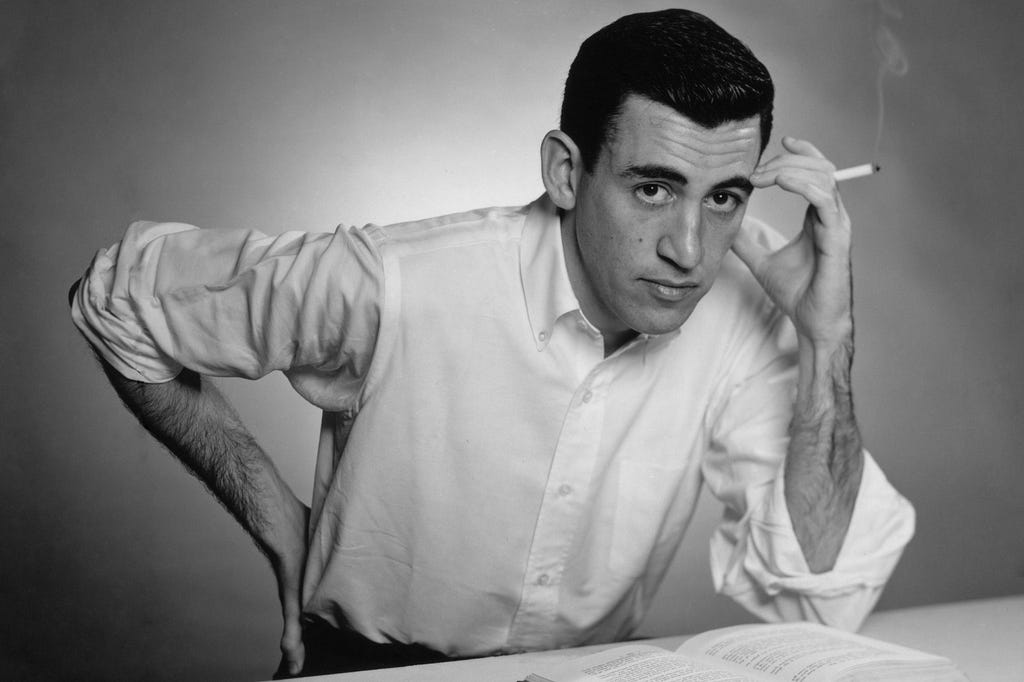
The film J.D. Salinger almost made

In memory of the late great short story writer William Trevor

Colombia’s police hunt down a stolen copy of One Hundred Years of Solitude

There may be a new TV adaptation of Dune in the works

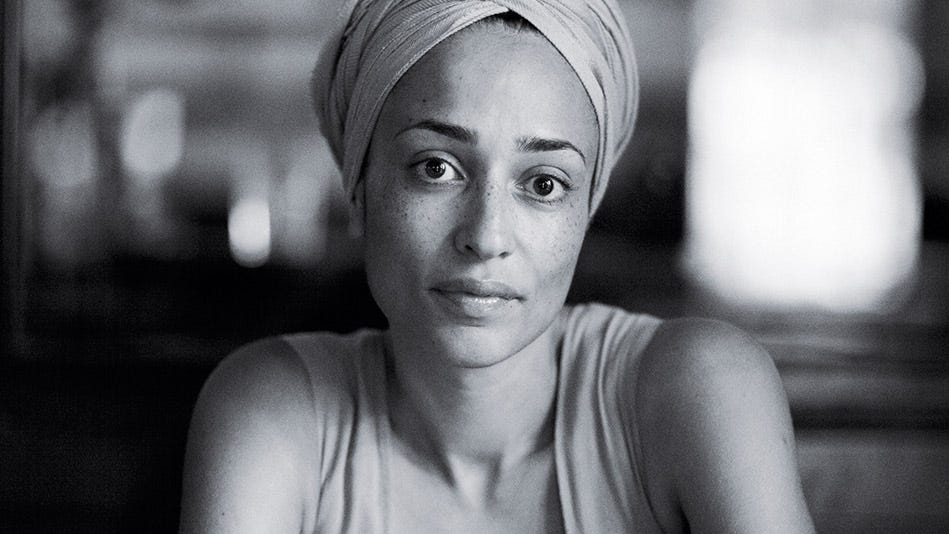
And Zadie Smith is adapting her brand new novel for TV

Writing advice from The Millions: “Don’t worry. Don’t wait. Write.”

And some advice on making a career as an author from the Author’s Guild

Contemporary novels by Muslims that everyone should read

Congrats (?) to the Bad Sex in Fiction finalists!

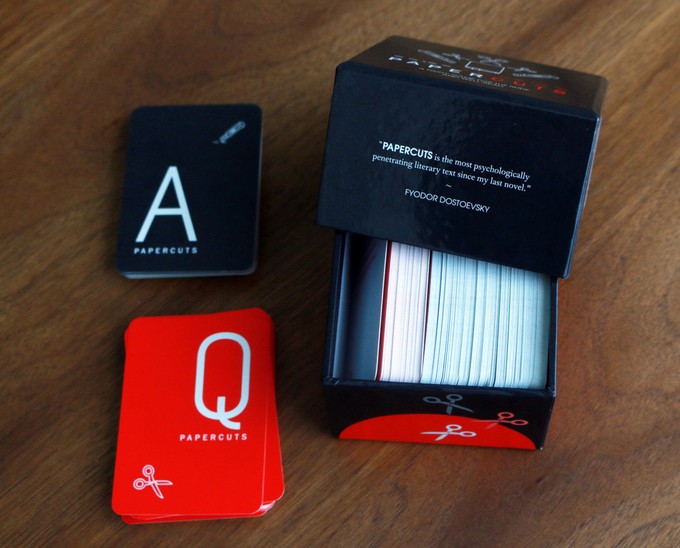
One Week Left to Fund Our Papercuts Card Game!

Are you rude and well-read? If so, you might like our new literary card game: Papercuts: A Party Game for the Rude and Well Read. So far, we’ve been very greatful for the response to our inaugural venture into the world of gaming. With just one week left on the clock, we’ve already more than 700 backers and more than doubled our Kickstarter goal!

Because of the great response to the game, we’ve also decided to create a stretch goal. If our Kickstarter hits $40,000, we’re going to create a 40-card expansion pack, and we want you to help us decide what it will be about. If you take our online poll you can vote on whether the expansion pack should focus on Fairytales, Shakespeare, 19th Century Literature, Science Fiction, or Mystery and Crime Fiction.

Our Kickstarter expires on November 31st, so check it out this week!

David Francis Goes Home

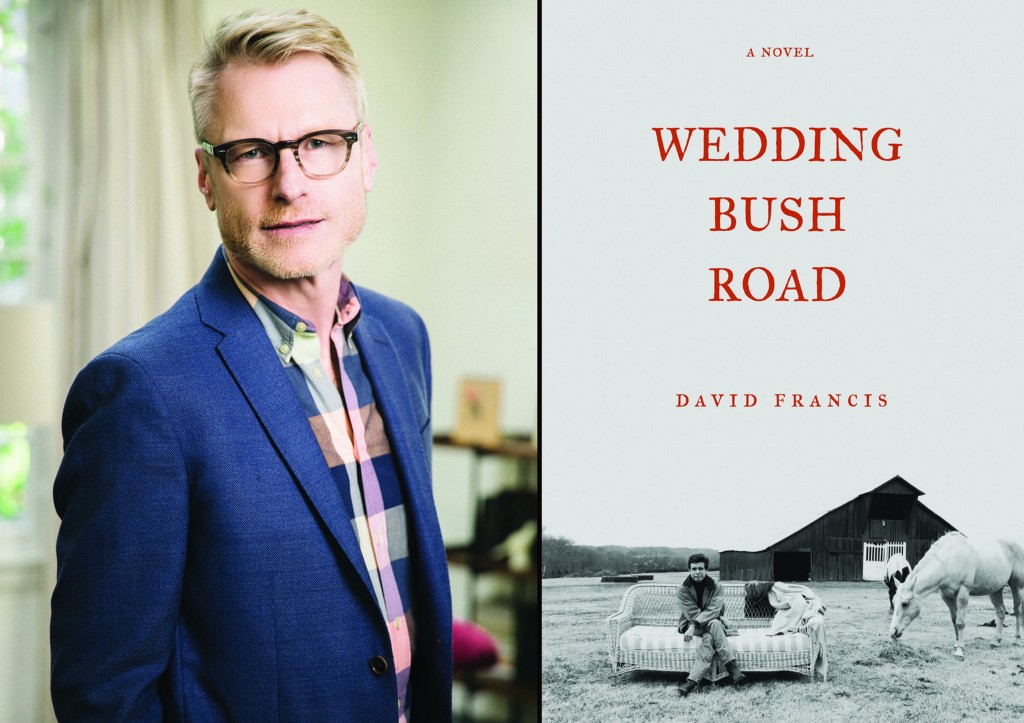
In David Francis’s third novel Wedding Bush Road (Counterpoint, 2016), Daniel Rawson leaves his new girlfriend, Isabel, behind in Los Angeles to spend Christmas week with his mother, Ruthie, on their family farm in southeast Australia. When he arrives, Daniel learns that Ruthie’s true motivation for luring him home is to manage the disputes between her ex-husband (and Daniel’s father), Earley, and his ex-lover, Sharen, a strangely sexy farm tenant with an affinity for arson. Sharen and her wild, young son, Reggie, complicate an already fragile family dynamic, especially as Daniel finds himself falling for her.

Francis is the author of The Great Inland Sea and Stray Dog Winter, which was named “Book of the Year” in The Advocate. He is also Vice President of the board of directors of PEN Center USA and works as a lawyer for the Norton Rose Fulbright law firm in Los Angeles. I met Francis soon after our mutual friend and writing mentor, Les Plesko, committed suicide in 2013. Francis invited me to sit at his table as “Les’s guest” at the Literary Awards Festival, and I’ve attended as a member of PEN Center USA each year since.

Over bowls of squash soup at Café Pinot, next to Central Library in Downtown LA, Francis spoke to me about his role at PEN Center USA, the merger between his publisher Counterpoint and Catapult, what it means to write with Les Plesko, and his latest novel Wedding Bush Road.

Andrea Arnold: This is the second book you’ve written about a relationship between a son and his mother. What is it about this bond that keeps you returning to it on the page?

David Francis: In real life I had a profound connection with my mother. I was what you might call a ‘mother-bonded child’ or ‘little husband.’ I had a very powerful, talented, interesting mother. And the mother in Wedding Bush Road, Ruthie, is pretty close to her. My mother and her sisters were on the first women’s polo team in Australia. And they played against the men! In the ‘50s! And they were better than the men. She was an amazing horseperson and a fierce personality, and so I grew up around that. I somehow keep circling that subject, even more while writing this book because she had a stroke and then she died while I was in the midst of writing it. That relationship was powerful enough that it was one of the reasons I moved eight thousand miles away.

My first novel, The Great Inland Sea, was set between the 1880s and 1950s. This new novel is more contemporary. The first was loosely based on the story of my grandmother growing up in outback Australia a long time ago merged with my own story of coming to the U.S. to ride showjumping horses, except set in the 1950’s. When I was at law school, my grandmother had gone blind. She was in her late nineties and I would sit with her and listen to her stories about her Austrian (yes Austrian) opera singer mother who was dragged by her Scottish husband to a cattle ranch of almost 100 square miles in the middle of Australia. There, my grandmother had a really unusual childhood, and I thought one day I would write those stories. Wedding Bush Road was more birthed by my relationship with my own mother and family, and the horse and cattle farm I grew up on (a mere 500 acres), rather than my grandmother’s experience deep in the outback.

AA: To me, the story of this family felt like an Australian August: Osage County. With a vast history. Can you say more about the origin of this fictional family?

DF: That’s an interesting analogy. Especially as Wedding Bush Road is in many ways, a kind of embellished memoir. The mother and the father are pretty close to reality. I have a brother and a sister who (lucky for them) don’t feature into the book. I always seem to write a narrator that is an only child, because it seems easier to deal with or maybe it’s a form of narcissism. The Sharen character is vaguely based on a tenant woman that we had on the farm, while the Reggie and Walker characters are the most manufactured. Recently, I have been realizing that they represent aspects of my own personality — the wild teenage boy and a darker side. I didn’t realize that until after I finished, but I’m talking about that in therapy now. [Laughs] My therapist read this book and she had all these questions! She would say things like, “There aren’t as many references to breasts in this book like in your last one.” She counted the number of references to nipples in Stray Dog Winter. She seemed pleased that there was a more nurturing relationship with breasts in Wedding Bush Road.

AA: Sharen is my favorite character. Probably because she was wrought with conflict. Just when the reader thinks she’s good for Daniel she has a meltdown. Was the real Sharen really that nuts?

DF: Yes. I went back to the farm one Christmas and my father had this woman ensconced in a cottage that had been my grandmother’s house that had been cut into parts and hauled on trucks to the farm. She was a bit crazy and feral. I had a terrible falling out with her because the situation was just so out of hand with her horses and son and my father. I started writing from that experience of anger at what my father had wrought. The book is a conflagration and a conglomeration of family stories and my own experiences and life on that farm which still exists. My sister lives there now, runs the pace, and I’m going back in a few weeks. We have about a hundred horses and a hundred head of cattle. When I was growing up there we had about a hundred and eighty horses. My father was a polo guy. My mother was a pretty famous riding teacher in Australia. We had our jumping horses, and all the rich people from the city would board their ponies and horses there. There’s a great big old homestead and up to thirty kids from the city would be staying with us in the holidays. I stayed in the meat safe and my sister in the bath of a giant unused bathroom where the cook had her bed. The cook who was my mother’s school friend and bridge partner — they were second in the Australia-wide bridge pairs!

AA: The portraits of deceased family members hang on the walls like in any good haunted house. In the writing it was a nice way of showing the generations that came before them. Why was it important to include Daniel’s dead family members in this story?

DF: Well, it’s set in a house that I see very clearly. Our family has been there for fifty years, since we moved from my mother’s family’s farm. The house has a formal dining room with an odd array of portraits from different generations. There’s Aunt Emma Charlotte hanging there and she’s really scary looking. She is my mother’s great aunt or something. In some ways it was easier to access this Australian setting at Tooradin than the Soviet Moscow in my last novel, Stray Dog Winter. I had been in Moscow for a month but it was more of a reach fictionally. Here I knew that dining room where the early scene unfolds, where Daniel arrives from L.A. and sees his mother and the dog hunting a possum around the picture rail. I’ve seen that. Those portraits are there. I wrote what I saw. There was once a possum that was running around that picture rail and it did pee on the paintings. There were pastels of me as a kid looking strangely innocent and wide-eyed, and the possum peed on it. Daniel says, “In the eyes that were never quite mine.” I always felt there was something symbolic in that.

AA: I loved the line: “I come from a line of men for whom fucking around is a form of mourning, a way to forget the dead.” What does it mean in the story?

DF: In the novel the father, Earley Rawson, has a brother who drowned when swimming across a river with a loaded pack on his back, training for the army. My father’s was at boarding school and I think his philandering and sexual “acting out” or ways of using sex and romance to obliterate feelings or lust was his way of coping with loss, disappointment, sadness, and feeling less than his brother who was now dead. Then my handsome father married this very powerful woman that he never matched up to, so he goes and gets his validation elsewhere. Daniel struggles with this in his father and himself in the novel.

AA: Great way of saying it. Daniel hates this aspect of his father but he also acts out. So is Daniel’s cheating generational and something he can’t help, or is he coming to terms with his father by being just like him?

DF: Daniel has moved to America and is in this relationship with this cool woman named Isabel, who is a little bit out of his realm. It’s going pretty well, but he is called back to Australia. You know when you go home and you’re around family you find yourself regressing to your old self? There’s that weird thing where you become who you were before you left. Daniel has struggled a little with infidelity before, but now that he has returned to the farm he feels himself drawn to this Sharen woman, as if he’s becoming his father after all, and that’s one of his struggles. He doesn’t want to be that person but he sees his behavior and his American life with Isabel unraveling. He has traveled 8,000 miles from home to re-invent himself and he has been seduced back by his mother and finds himself reverting. All he has tried to escape is right in his face. We all know that feeling. I think. It’s this precarious relationship with who I am and who I was and where is my true home versus the place I am from.

AA: This might be a stupid question. I’ve never been to Australia. When you were growing up on this farm did you have contact with Aboriginal culture, is it still an apparent aspect of Australian farm life, and how did that part of Australia’s past make its way into the novel?

DF: That’s a good and complicated question. Where I grew up there were not a lot of Aboriginal people around, although there had been. In the generation before me there was an Aboriginal family that lived and worked on the farm. As a kid growing up I had a sense of that Aboriginal presence on the land. There was a place called Foxes Hill where I used to camp out and I always imagined it had Aboriginal significance, it emanated from the land, the trees and gullies. I felt connected to that world somehow. As a boy, I read a book called the Red Chief about an Aboriginal warrior in the old days. In Australia it’s tricky writing about that Aboriginal presence because the misappropriation of indigenous stories is a complex and insidious issue. Reggie is a wild white boy who grew up around Aboriginal families and absorbed some of that culture. He was more into it than the Aboriginal kids because he hung around the elders. It’s not clear in the novel but maybe he has some Aboriginal lineage through his father, Walker. No one knows. I’m not sure. His father Walker is darker, and I realize now he was based on a guy who lived on the farm for awhile. A farrier and drover and racehorse trainer who lived in a camper van there. These things keep appearing now that I’m done. I learn about the themes of a novel during conversations like this. I try not to analyze while I’m writing. I just write.

AA: You chose to tackle several different points of views from Daniel’s to Sharen’s, Isabel’s and Reggie’s. These other characters are causes of Daniel’s inner turmoil. As you were writing, how did the narrative lend itself to each POV?

DF: This started off as a short story that was published in Harvard Review and Best Australian Stories. Then I heard Reggie’s voice. He’s the young wild guy who is Sharen’s son. I heard that voice quite distinctly and started writing in that weird patois. He has a very Australian country way of expressing himself. I started cupping more scenes together by hearing the different voices. In the initial drafts there were more of the other voices, all written in the first person present. In most writing courses they would encourage you not to do that in one voice, let alone numerous, but I liked the immediacy, flow and variety of those points of view in the present. It gave the narrative some urgency and propelled the story forward.

As much as we pretend that these characters we create are separate from ourselves, in reality they are not as distinct as we think.

What’s interesting to me is that I realize all the characters I write, while being based on real people, all carry aspects of my own personality. And to see that manifest in a work without knowing it fascinates me. To realize that Reggie’s voice lives in me. As much as we pretend that these characters we create are separate from ourselves, in reality they are not as distinct as we think. They live inside us. People write to work out what they believe. I think it was Joyce Carol Oates or Joan Didion who said, “I write to work out what I think about things.” I write to work out what I feel about things. Writing, for me, has been an exploration of aspects of myself and different periods of my life.

AA: Were you writing sequentially?

DF: Mostly, yes. But I had no idea where I was going. I write genuinely organically in a Les Plesko kind of way. I would write whatever scene I was seeing. But I did write more sequentially than I had in the past. This novel unfolded in that way.

AA: I know what it means to write in a “Les Plesko way,” but can you speak more to it?

DF: For me it means writing in a manner that is inherent and not contrived or engineered. If I have some great idea of writing from A to B, then I’m always trying to nudge the story toward B, but maybe F or H are likely far more original and interesting. Les talked about writing the scene that is the most resonant now, the one that has to be written, that is calling you. As the writing unfolds sentence by sentence, each informing the next, it reveals itself and takes me on a journey I hunger for. And if I don’t know where it’s going then neither does the reader. You know when you read books and have a sense of what’s going to happen? Well, I like not knowing. It creates an adventure and excitement for me as a writer. I’m very able to stay in the scene I’m working on and not be projecting or setting things up for something that my mind has decided is supposed to happen. I’m more interested in what my unconscious mind is ushering forth, which is why I write a lot long-hand in my half-sleep, trying to milk the dream state.

AA: The chapters are broken up in days of the week. Is that a lawyer’s need for an outline? Or what led to the structure of the novel?

DF: That was imposed afterwards. I added the days once I’d finished the novel for us to more readily keep track of time. The story is at times dreamy and I felt as though it would help to know how time is passing. The chapter breaks tell us where we are. I don’t outline at all, but perhaps I still unconsciously have a vaguely lawyerly, logical part of my psyche that I access more than I realize.

AA: When did you find time to write a third novel while practicing law?

DF: I have a very marginalized situation in a very big law firm. We have over 3,000 lawyers worldwide. I have arranged some flexibility. I get paid considerably less than I should but get billed out at a high-ish rate. It makes sense financially for the firm and I can get two or three months away. I received a writing fellowship in Paris at the Cite International des Arts and returned for a month each year for a number of years, and I go back to the farm and write. When I wake up I scribble longhand and I often write in my office in the evenings. I used to be very compulsive about the work, writing something every day, but I have to admit that more recently I write when I’m compelled to. I used to be very disciplined and now I only write when it’s there, as if I wait for the sentences to fly in to my head from somewhere, and then I run with them. I also find that because I fight for the time to write, when I do there’s usually something to be written. I’m basically crazier than I appear, so I work hard on myself with therapy and meditation and so on, so that I can be in a place where I can serve the story.

AA: What do you do for PEN Center USA? How did you get involved? Why is the organization important to you?

DF: Needless to say, I had always heard of PEN Center USA, mostly in the context of book awards and freedom-to-write advocacy, but had not become involved. A number of years ago, I was button-holed (in a lovely way) by Jamie Wolf at a dinner party. Jamie vigorously encouraged me to become a member. The next thing I knew, I was being seconded onto the board. Soon after, I was elected Vice President alongside Jamie. I go to a lot of the PEN events, including this year’s International Congress in Quebec City as representative of PEN Center USA where I learned a good deal about the “freedom to write” mandate, among writers representing more than sixty countries. Writers all around the world live and write and struggle in a very different reality from ours. In Quebec, the representative from Egypt abstained from voting on an LGBTQ initiative for fear of her safety as a writer. We have no idea what it takes to be a writer in Egypt, Iran, Ethiopia, Eritrea, our unholy ally Saudi Arabia, Myanmar, and sadly, still, Cuba. I’ve also been involved with the Emerging Voices and the Freedom to Write programs. Pen Center USA is a wonderful organization. I’m delighted to be a part of it.

AA: Did the merger between Counterpoint and Catapult affect you and this novel? What’s in store for this new publishing house?

DF: My first novel was bought in the UK by Fourth Estate, and as soon as I signed my contract they were bought by Harper Collins. Harper Collins, of course, is owned by Rupert Murdoch, who grew up on a farm not far from us in Australia! My grandmother and his mother were very good friends. And Murdoch is such an evil creature that I thought, how can I be writing for Murdoch! Then, I was with MacAdam/Cage here in the U.S. and my second novel came out right as they were going belly up! So my second novel was severely under-published; even though it won prizes and was well reviewed, it didn’t sell as it should have. Now, as Wedding Bush Road is coming out, Counterpoint is being bought by Catapult. At first I thought, yikes, but I now realize it’s a good thing! I think it’s a nice synergy. Catapult has a strong new media focus (doing with Electric Literature, Lit Hub, etc.) and is very forward-thinking while Counterpoint is arguably a more traditional environment, and probably the biggest and best of the independent houses. It’s a nice marriage. I think it’ll be great for all involved so I am delighted.

AA: Who were your early influences? Or your favorite authors? When did you know you were a writer?

DF: I always secretly wanted to write. I was doing horse stuff and practicing law, running around like a fart in a bath, running from L.A. to Palm Beach to compete at horse shows, and I was in therapy talking about what I really wanted from my life. I started doing morning pages, writing longhand stream of consciousness stuff in bed when I woke up each day. I had a writer friend, Josh Miller, who said if you want to be a writer you should go to Les Plesko’s class at UCLA, and if he likes you he’ll invite you to his private workshop. That’s what I did and became part of a new world of L.A. writers. I had never written anything and was workshopping with people like Janet Fitch, experienced writers. It was Janet, Sam Dunn, Rita Williams, Mary Rakow, Julianne Ortale — they were the leftovers from the legendary Kate Braverman writing workshop. Now I’m still in a writing group with Janet, Rita and Juliane.

For me it was like coming to religion without any baggage. I was easily able to embrace it. There was something about Les’s work that was spare, beautiful, poignant and unusual. It resonated in a way and I was inspired by it. I learned to edit myself through reading my stuff out loud. I learned to edit other people’s work because I heard it. I loved the whole organic process that was encouraged there. I don’t know if it’s a way to great commercial success, but I know it’s how I love to write and I know it’s what I like to read — and that’s all that matters to me really. To write what I must write, what no one else can, and to be continually intrigued and enthused by the process and the results.

For me it was like coming to religion without any baggage.

I tend to love novels, more than an author’s whole body of work. I was very influenced by Lolita — it’s poetic, wry, confronting, and brilliant. A Sport and a Pastime. Salter is a truly underappreciated writer. Both those novels spend many pages moving through the countryside, Nabokov in America and Salter in France. In their different ways, they are like going on tantalizing literary journey. I also was blown away by early Coetzee. Disgrace, In the Heart of the Country. Hyper-masculine in some ways, but amazing. These days I’m mad at Coetzee for some reason. Maybe I miss the music of Africa that so deeply infused his earlier work. I also loved early Jeanette Winterson. I have been influenced by so many books, I could go on for days.

AA: What are you working on next?

DF: I’m working on a novel that’s set here in LA. It’s contemporary and funny and is based on a story that was published in The Rattling Wall and Australian Love Stories. It’s gay. My second novel, Stray Dog Winter, was also pretty gay. Wedding Bush Road is not and I get a little flak from the gay literary community for being gay and not necessarily writing gay stories. But I also fall madly in love with women at times and that’s just how it goes. I really have little idea what my next novel is about, but when people ask I tell them what I know: a young Los Angelino named Patrick (who affects an accent and pretends he’s from a ranch in Australia when he’s actually from a desperate chicken farm outside Ventura) is ensconced in a relationship in the Hollywood Hills with an investment banker, Arthur Borenstein. When Arthur adopts a child named Marvel from Honduras, Patrick, the one used to garnering the attention, feels betrayed. In an ironic turn of events involving a cat named Moses, Patrick leaves Arthur on a quest to become something on his own, maybe an artist, maybe a man, perhaps something else entirely. If I have to make up a theme I say the novel explores the role and journey of the puer aeternus (the eternal youth) as a theme and an archetype. But in truth, for me, themes reveal themselves in the writing or, as I am experiencing now with Wedding Bush Road, in the aftermath of reviews and interviews and discussions of the finished novel.

Zadie Smith Is Adapting Her New Novel for TV

But you should still read the book…

Since its debut last week, Zadie Smith’s newest novel Swing Time has become one of the most widely written about books of the year. The highly anticipated publication follows her previous literary successes On Beauty, White Teeth, and NW. While critics are raving about the novel Swing Time, Zadie Smith is already working on turning it into a TV series co-written with her husband Nick Laird.

According to Flavorwire, Smith and Laird will be working with the British production company Baby Cow in order to bring the story to life. Zadie Smith released a statement expressing her excitement:

“I am absolutely delighted at the prospect of working with Baby Cow on an adaptation of Swing Time. Their extraordinary track record in both drama and comedy I have always admired from afar and it’s a thrill for me to get the chance to collaborate with Steve Coogan and Christine Langan.”

Film is a new territory for the author, but if anyone could pull it off, it’s Smith. We have all the faith in her writing capabilities, and look forward to watching the show (after completing the novel of course)!

Time Swings Widely

It is hard to write a review of a novel about brown women, white women, black women, dance, time, loneliness, and love. It is hard, but it is necessary, because if there is one thing that will get many of us through the next four years, it is art: appreciating it, creating it, continuing to give it life.

Swing Time by Zadie Smith is a magnificent, mature novel, but one that reads differently than the others previous books (which have all been incredible, each in its own way). The most noticeable thing about Swing Time, at least for a longtime reader of Smith’s work, is how much of it defies the old writing workshop adage — it tells as often as, if not more than, it shows. Paragraphs can last up to a page in length, the narration is first person, and there is a Jamesian quality to some of the sentences that is unexpected for Smith, who is an excellent wordsmith and always has been but who has tended to give her characters voice through their words more often than through their internal narration. All of which is to say that Swing Time is surprising — not that it is anything less than excellent.

An unnamed narrator is not quite at the heart of the novel — that belongs to her childhood best friend, Tracey — but she is, nevertheless, the vehicle through which we learn about the other characters, the passage of time, and the ideas the book grapples with. She is in her early thirties at the time of her narration and is looking back over the years of her life, going back and forth between her childhood and her recent past. She is mixed-race, her mother Jamaican and Black and her father British and white. Her best friend Tracey is also of mixed-race parents, but in her case, her mother is white and her father Black (and also Jamaican). The two girls recognize something in each other in the dance classes they attend as little girls, and they stick together, though their home lives, the very values they are being taught, seem to be incredibly different. Tracey is poorer — she lives in a worse London estate than the narrator — but her mother spends all her money on pleasing the child, on her dance classes, on her material happiness. The narrator lives in a better estate with an “aspirational” mother — that is, her mother goes back to school, attains a couple degrees, and begins a life of public service as a local politician.

The narrator in her recent past is the personal assistant to Aimee, a superstar who feels like Madonna, Bjork, and Cher rolled into one. She is incredibly rich, powerful, and naïve, and her latest venture has been to open a school for girls in an unnamed West African country (speculating according to the information given, it seems to be the Islamic Republic of The Gambia) that has a President-for-life, female circumcision, and not enough educational opportunities for women.

The plot threads its way through time, staying true to its title and swinging back and forth like a clock that hasn’t been wound, the pendulum’s distance between the narrator’s present and her past getting closer and closer until finally, at the end, the clock stops, the past has caught up, the present is all that remains. On the way, we watch the narrator’s relationship with Tracey dissolve as they grow older and their paths diverge — Tracey to attempt a career in dance, the narrator to become Aimee’s assistant. A lot happens, but it’s told expertly by Smith and her narrator and needn’t be repeated here.

Instead, the novel’s themes bear examination, as they are complex and look at the difficult relationship people have with their skin color, their origins, and the very wide gap that can come between those two things. The narrator is the daughter of a Jamaican woman and a white man, and so is much lighter skinned than the former and darker than the latter. When in college, she is lectured to often by her boyfriend, Rakim:

He had a cool vintage Panthers poster on his wall, in which the big cat looked about to leap out at you, and he spoke often of the violent life of the big American cities, of the sufferings of our people in New York and Chicago, in Baltimore and LA, places I had never visited and could barely imagine. Sometimes I had the impression that this ghetto life — though it was three thousand miles away — was more real to him than the quiet, pleasant [England] seascape in which we actually lived.

Rakim, as it turns out, is full of shit, which the narrator’s tone suggests in its irony (“I thought he was the most beautiful man in the world,” she tells us. “He thought so, too.”). But it doesn’t change the fact that the narrator does take a grain of truth from his speechifying, which is her assumption that because of her skin color, because of her connection to Africa by way of her mother, by way of Jamaica, by way of the slave trade, she will feel at home in the West African country she visits for Aimee’s half-baked attempt at making real change happen.

But once she’s there, the narrator realizes — over time, for very little in this novel is hasty, just as life rarely is — that she doesn’t really belong. She doesn’t get the sense of homecoming that Granger, the gay African-American bodyguard who works for Aimee, feels. She doesn’t feel the righteousness of her mother’s convictions or a sense of “her people” in those around her.

I was not, for example, standing at this moment in a field with my extended tribe, with my fellow black women. Here there was no such category. There were only the Sere women, the Wolof, and the Mandinka, the Serahuli, the Fula and the Jola, the last of whom, I was told once, grudgingly, I resembled, if only in basic facial architecture: same long nose, same cheekbones.

Still, she finds relationships there, though she continues to misunderstand even the woman she is closest to there, Hawa, who is some ten years her junior. When Hawa — who is the daughter of university professors — announces that she will be marrying an ugly man, a tablighi (a member of a Sunni Islamic group that proselytizes a return to true Sunni Islam), the narrator is confused and upset. How can this vibrant young woman who always has the best gossip, who is a teacher at the school for girls, who may, it is whispered, even be uncircumcised, who is the daughter of intellectuals — how could she marry such a man and give up on… on what? That is what the narrator is left to ponder, for after all, not everyone has a better path to take, a range of choices at their disposal. Hawa wants to leave the village where she works hard, both on housework and childcare and in the fields; she doesn’t want to be left there to care for so many others anymore. Instead, it is implied, she will journey with her tablighi husband, have adventures, see more of the world than she expected to.

This difficult relationship with choice and who has them is especially fascinating as time in the novel is treated as a privilege. The narrator spends years catering to Aimee rather than to her own desires and needs, floating through the years of sameness, but in West Africa she is faced with the fact that time works differently for these women who are not her “fellow black women.” They do not waste time, she discovers, but fill it with work, with talk, with a vim and vigor for life that she seems to have left behind in childhood. Which doesn’t mean they’re content with their lot or don’t forge new pathways for themselves, for as Hawa proves, they do.

Tracey, the narrator’s childhood best friend, haunts the novel: to what extent her choices were her own, is her life somehow socioeconomically and racially predestined, inevitable due to mysterious but presumed childhood PTSD, is she just a paranoid fuckup, or all/none of the above. She opens and closes the narration, her presence in the narrator’s life a hint, perhaps, to the road not taken, an alternate timeline. There is a sense that a whole novel could be written about Tracey alone — indeed, each of the characters begs to be explored further — but Smith only gives us the narrow track of one life, the narrator’s, which as this long review shows, is not so narrow at all.

Life Happens in the Pauses: Kelly Reichardt’s “Certain Women”

“She’s interested in the life that happens in the pauses.”

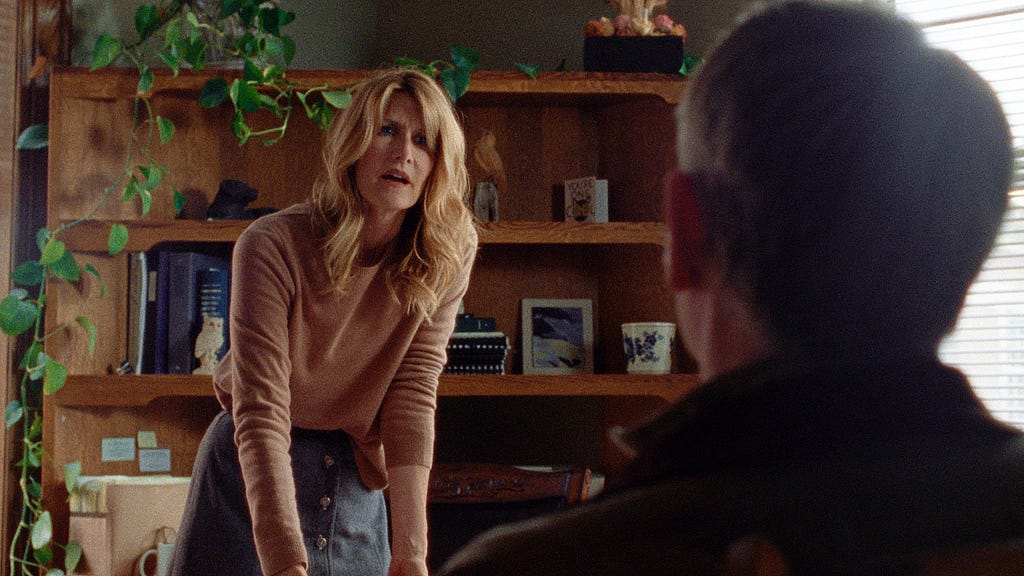
Laura Dern was speaking at a New York Film Festival press conference, following the screening of Kelly Reichardt’s new film Certain Women (2016), and describing what she admired about the work of that minimalist indie director. But she could just as easily have been referring to Maile Meloy, the author behind the three short stories from two of her collections, Both Ways Is the Only Way I Want It and Half in Love, which Reichardt brought to the screen in her Montana-set triptych film adaptation. In a New York Times review of Meloy’s collection the novelist Curtis Sittenfeld noted that what distinguished the work of the Montanan author was her restraint: “She is impressively concise, disciplined in length and scope. And she’s balanced in her approach to character, neither blinded by love for her creations, nor abusive toward them.”

The same holds true of Reichardt. As in her earlier films (all of which she co-wrote with Jonathan Raymond; this is the first she’s done solo), Certain Women is attuned to the smaller moments of life. The trio of narratives studiously observe the women they’re centered on without feeling voyeuristic, and she makes her camera (and by extension, her audience) empathize with the characters without demanding identification. Her frame is intimate yet never intrusive, catching the quietest, most telling details of the people we’re invited to meet.

Among them is Dern, who plays a small-town lawyer named Laura Wells. We meet her at first in a messy bedroom, where she has found refuge in the middle of her work day with a man now putting his clothes back on. Lingering longer than she should she finally gets dressed and heads back to the office, although, in her hurried state she only half-tucks her sweater into her skirt — a detail Reichardt’s framing encourages us to notice but without making it explicit.

Laura Dern in ‘Certain Women’ (2016)

Reichardt’s focus on these interstitial pauses functions as a visual conjuring of Meloy’s free indirect discourse, allowing moments that might otherwise be excised — because they don’t strictly advance a plotted narrative — to linger, stressing the way that our most obvious attempts at introspection happen not when staring out a window or furrowing our brow, but in the most mundane chores of everyday life. When Laura takes her client to hear a second opinion from a lawyer in a neighboring town (who repeats what Laura has already told him: there is no tort claim to file against his former employer, after the accident that’s left him physically and psychologically disabled), we can see the frustration in her face for the way her authority has yet again been undermined. We don’t need Meloy’s words — “I thought, That’s what it’s like to be a man. If I were a man I could explain the law and people would listen and say, ‘Okay.’ It would be so restful” — for Dern embodies it in the world-weary way she carries herself afterwards, as the full brunt of her client’s biased disregard for her opinion washes over her. Reichardt shows Dern driving, her eyes on the road ahead, her preoccupation with what has happened silently mingling with the need to make this turn, to mind that car, to take the next exit. And so, when we finally receive Meloy’s dialogue via a phone conversation, it feels like she is giving voice to thoughts we’ve already seen written on her face.

Later, when we’re introduced to Gina — played by Michelle Williams and based on a character from Meloy’s story “Native Sandstone” — Reichardt again gives preference to a moment of quiet meditation. Looking out of place dressed in chic athletic wear in the middle of the wintry Montana outdoors, Gina is walking back to the campsite where her daughter and husband pack up for the day. She is consumed by the landscape as she puffs on a cigarette, something clearly on her mind. As we learn later, she is intent on moving here and building a house that captures the spirit of the land around it. “Gina wants the house to be authentic,” her husband explains, to an old man whose sandstone they wish to buy — rumored as it is to have been reclaimed from the town’s old schoolhouse. Just as Meloy threads the story of a fraught marriage through her text without it taking over, Reichardt likewise relies on Williams to convey the narrative’s depth of feeling, which many other directors might have chosen to spell out.

Michelle Williams in ‘Certain Women’

In the film’s third and most striking section, adapted from Meloy’s short story “Travis, B.,” Reichardt goes a step further. The central character appears almost exclusively in near-silent scenes that ask us to inhabit her head, all but demanding we intuit for ourselves what she might be thinking. On the page “Travis, B.” follows Chet Moran, who grew up in Logan, Montana where a bout of polio left him with a limp, a physical reminder of his own inability to comfortably exist within his own body. While working at a ranch tending to horses he decides to venture into town one evening, where he stumbles onto a night class at the local high school, taught by a young lawyer. He’s taken with the lawyer, Beth, and clumsily invites her out to eat afterwards, despite the fact that she will need to drive back nine hours to where she lives. During their quick diner date, Meloy gives us access to both Chet and Beth’s inner monologues:

She studied him and seemed to wonder again if she should be afraid. But the room was bright and he tried to look harmless. He was harmless, he was pretty sure. Being with someone helped — he didn’t feel so wound up and restless.

The generous spirit of Meloy’s free indirect discourse is translated intact into Reichardt’s screen adaptation. With unfussy shots of her actors she offers us plenty of time to discern the way they measure each other’s company, before easing into a comforting routine that follows every class. While the dynamic at work is never precisely clear, the shared intimacy between them is palpable, in these late-night moments when Beth’s tiredness is buoyed by the other’s eager company. But the gendered dynamics that Meloy carefully deconstructs — Chet grows attached to Beth and proceeds to drive across state to see her one last time, a gesture as aggressive as it is romantic — are not only upended but altogether reframed in Reichardt’s retelling. Rather than a strapping, if timid, young man, Chet becomes a young woman: Lily Gladstone portrays the rancher who becomes smitten with her younger teacher, played by Kristen Stewart.

Kristen Stewart in ‘Certain Women’

What fascinates about the gender switch is that Reichardt feels little compelled to change much (or anything, really) about the rest of the piece. After offering Beth a ride on one of the horses to the cafe where they’ve met before, the rancher awkwardly stands before her, shifting her weight from foot to foot. In Meloy’s telling this is the moment when Chet “wanted to kiss her but couldn’t see any clear path to that happening.” In Certain Women — and in ways that speak to the semiotic slippage, from certainty to ambiguity, which the title sets up — Gladstone’s rancher appears to ponder those very thoughts, her musings seemingly no different than if she were a man. In turning Meloy’s characters into women who tentatively crave and pursue a same-sex attraction, Reichardt has found a simple and efficient way to deepen the central tension of this coupling. In her hands, “Travis, B.” unearths the quietly radical proposition of a connection between two women that follows and exceeds the confines of the romantic template Meloy arranged in her story. Beth and the Rancher’s hesitant relationship is both simpler and more complicated than on the page, though Certain Women is content with letting audiences fill in those pauses themselves, inciting us to reflection in the face of a straightforward narrative of longing, followed by loss.

Lily Gladstone in ‘Certain Women’

It’s the details that accumulate and remain once the credits roll, even if little has been resolved. A woman wiping her mouth with a napkin still wrapped around diner cutlery, another absentmindedly playing with a sandstone pebble, a man slurping a chocolate milkshake in prison. The images are fleeting but they speak to the unguarded moments Reichardt hones in and pauses on, bringing viewers closer to her characters even as they suggest a more expansive canvas. Reichardt, building on Meloy’s concise prose, finds depth in the elemental brushstroke, a life lived in the pregnant pause.

14 Novels of Wildness & Wilderness

When I find myself wishing for some vaguely imagined nonexistent book I’d like to read, I’m almost always pining for a novel of the wild outdoors. I love urbane social comedies and absurd novels about office work and many kinds of fiction set mostly indoors and in town. But if I get snowed into a cabin with only one kind of reading at hand, I want a big stack of books that take wilderness and wildness seriously, outdoor novels a bit wild themselves. Novels set in strange forests as surprising and wondrous as real ones. Feral novels that make more of nature than a screen on which to project the emotional lives of human characters.

Lots of outdoor fiction offers straightfaced realism written as if literature hasn’t changed in a century, or the didacticism of characters each standing in for a position on some environmental issue and making sure you know it whenever they open their mouths. But what I want is fiction with a sense of play in its style, bringing into the woods things taken for granted in novels about urban lives for decades but disappointingly rare beyond city limits — unreliable narrators and unexpected narrative structures. Stories that can’t be predicted from the opening pages, and a sense of humor sorely lacking in so much nature writing. In an era of bears surprising both deep forest hikers and suburban strollers engrossed in their phones, coyotes wandering down city streets, and birds in the rafters of home improvement stores, there’s a wild possibility of surprise in modern life. And at the less pleasant extreme there’s the chaos of climate change and other modern problems demanding modern stories about them.

I try to get that wildness into my own fiction, most recently with Scratch, my attempt at a feral, strange forest novel. And I try to find it as often as possible in my reading. There don’t ever seem to be enough of those books to keep me sated, but here are a few of my favorites (though I’ve left off a couple that are better known, for the sake of sharing some overlooked blooms in the scrub).

Wild Life by Molly Gloss

The first time I read Wild Life it blew me away and it does so again each time I return. Presented as the early 1900s diary of a proto-feminist, single mother author of pulp fictions who goes into an Oregon forest in search of a missing girl, only to get lost herself and discover mysterious creatures beyond what her insistent rationalism allows for, Gloss’s novel delves into myths of the “wildman” and myths of gender and does it all with a magnificent narrative voice as wild as the forest around it.

The Hunter by Julia Leigh

M, who goes by the name Martin though it isn’t his, gets hired by a pharmaceutical company to hunt and harvest DNA from the world’s last living Tasmanian tiger, long after the species is thought extinct. Somehow, in a very short novel, Leigh weaves together the shadowy reach of modern business, the tragic colonial and ecological histories of her setting, a classic story of exploration stripped of its celebratory machismo, and a mother and children left behind broken by the blinkered desires of men. Despite the remoteness of this novel’s forest, it is enmeshed in the networks of money and power that entangle us all, wherever we live.

The Wall by Marlen Haushofer, translated by Shaun Whiteside

I have to thank novelist and translator Michelle Bailat-Jones for introducing me to The Wall, because it quickly became one of my favorites. The nameless middle-aged narrator visits friends at their remote mountain hunting lodge, only to be left alone by the inexplicable appearance of an invisible barrier at the edge of the valley it occupies. Left to fend for herself, she breaks restraints built up over years spent sublimating her individual identity into that of a mother and wife, allowing a wilder self to emerge.

Birdbrain by Johanna Sinisalo, translated by David Hackston

I could have picked any one of Sinisalo’s novels to put on this list, because it’s hard to think of a writer consistently doing more exciting things in fiction about the natural world. But Birdbrain is the most “outdoorsy” among her English translations, as it brings us along with a Finnish couple hiking in New Zealand and Australia. Alternating between their accounts of events we’re privy to the relationship’s tensions and strains as the couple are stripped of pretenses and niceties by their time in the wild, but we’re also aware of an eerier presence in the forest around them.

Wild Harbour by Ian Macpherson

This one was published in 1936, but you wouldn’t know from its prescience. It’s an account of a Scottish couple fleeing the city for a wild home in the hills ahead of the imminent threats of perpetual war, disease, and disaster. But what makes it stand out from other stories of escaping modernity “back to nature” is how unavoidably the outside world presses in, and how earnestly Wild Harbour takes on harder questions seldom asked in similar stories about the ethics and impossibilities of hiding out in the back of beyond while the world burns.

The Blue Fox by Sjon, translated by Victoria Cribb

The Blue Fox moves between a hunter, his vulpine quarry, a boy with Down’s syndrome, and other characters in mysterious tandem, woven together as any place is with threads of history and folklore and transformation. Sometimes when I read literature in translation I suspect I’m missing so much that the power of the work is lost to me, but with The Blue Fox that opacity is one of the qualities I most enjoy: I know there are allusions and echoes I’m not attuned to, but that misunderstanding feels like wandering a landscape I only half understand and just makes me want to return.

The Year of the Hare by Arto Paasilinna, translated by Herbert Lomas

I visited friends in Finland quite a few years ago, and The Year of the Hare was the book — so they told me — everyone was talking about at the time. It’s a short, simple novel about a journalist who stops by the roadside to enter the forest in aid of an injured hare. There are plenty of novels offering sentimental accounts of characters giving up their fast city lives at the inspiration of some noble animal; perhaps some of those are imitations of this. But Paasilinna’s has a depth of wit and sadness, and awareness, that for me elevates it above many others.

Into the Forest by Jean Hegland

When the world collapses in ways and for reasons they don’t quite understand, sisters Eva and Nell are left alone at the remote cabin their family retreated to in preparation. Into the Forest is as gripping as any thriller or rural horror, but there’s a thoughtfulness to the novel perfectly balanced with details of the pragmatic, often painful means by which the sisters survive. Like some others on this list it pulls us so fully into its wild bubble that even as we know we should root for rescue or the world’s recovery, we’re torn because of what would be lost.

The Man Who Spoke Snakish by Andrus Kivirähk, translated by Christopher Moseley

Hands down one of the best reading experiences I’ve had in years. The language is wild, the setting is wild, the narrator is absolutely one of a kind, and this whole account of his life as the last speaker of the language of snakes — and one of the last members of his ancient forest culture who hasn’t abandoned the trees for life in town — is full of tragedy, comedy, mystery, absurdity, and everything you could possibly want from a novel. I’ve read that Kivirähk’s novel is so popular in his native Estonia there’s a board game based on it, and I can only hope it, too, is available in English someday so I can play and return to its remarkable world.

The Lion of Boaz-Jachin and Jachin-Boaz by Russell Hoban

Riddley Walker is Hoban’s best-known novel (and maybe his best), and Turtle Diary is the one most recently restored to print and public acclaim, but The Lion of Boaz-Jachin and Jachin-Boaz has to go down as my favorite. I’m a sucker for any story, fictional or otherwise, of animals popping up where they aren’t expected, so this account of a cartographer who abandons his family, his son’s expedition to find him, and a lion stalking the streets of a city long after lions disappeared from the world has gripped my imagination for twenty-some years. It is like nothing else, which is the wildest way to be wild of all.

Timothy, or Notes of an Abject Reptile by Verlyn Klinkenborg

A domesticated English garden hardly seems wild, but Klinkenborg’s novel narrated by the titular Timothy, a female tortoise kept by eighteenth-century naturalist Gilbert White, makes it so. There’s no fast-paced adventure or dangerous action but by slowing the world down in a small space as described by a creature with her own sense of what’s worth looking at, Timothy is a gently disorienting read that gives us no choice but to slow down, pay attention, and see a world where the unexpected might happen — what’s more wild than that?

Power by Linda Hogan

Power is the story of a Taiga teenager pulled into a maelstrom of media and politics after she watches her aunt kill a tribally sacred and legally protected panther. It’s a deceptively straightforward novel, at least in its telling, that sneaks up to unsettle by making us take a fresh look at what may seem familiar. Wild places aren’t usually what I associate with Florida, but Power is a welcome challenge to those assumptions — as are Jeff Vandermeer’s Southern Reach novels, which would be on this list were it longer.

Beastings by Benjamin Myers

This one’s as dark as dark gets, like Southern gothic in northern England, as it follows a teenage girl and a baby fleeing two men on her trail. But what offsets the grim cruelty of Myers’ characters is the implacable, steady presence of his landscape — yes, what’s happening is horrible, but how much does it matter in the longview of stone and hill? That’s a dual-awareness I often long for in fiction, and Myers delivers whether in the realist mode of novels like Beastings or in his novella Snorri & Frosti, a treat of absurdist minimalism about a pair of woodcutters.

Infinite Ground by Martin MacInnes

The newest book on my list, I wondered if it was too soon to count Infinite Ground among the others. But it’s just that good. MacInnes’ debut is a detective novel, following an inspector whose search for a missing man takes him deep into a strange jungle. And it’s also a story about the literal and figurative breakdown of identity, whether as a result of the daily grind of work or of sharing the landscape of our own skins with millions of microorganisms. Or in this case, both. Or possibly neither. It’s hard to pin down, like all wild things.