While science fiction’s prestigious Hugo awards have been racked with controversy after reactionary voters stuffed the ballot boxes to limit diversity, SF’s other prestigious awards, the Nebulas, are showcasing science fiction’s great diversity this year. In the 2016 awards, all of the categories were swept by women writers except for the Ray Bradbury Award for Outstanding Dramatic Presentation which went to the female-led film Mad Max.
Congrats to all the winners and finalists!
Novel
Uprooted, Naomi Novik (Del Rey) Raising Caine, Charles E. Gannon (Baen) The Fifth Season, N.K. Jemisin (Orbit US; Orbit UK) Ancillary Mercy, Ann Leckie (Orbit US; Orbit UK) The Grace of Kings, Ken Liu (Saga) Barsk: The Elephants’ Graveyard, Lawrence M. Schoen (Tor) Updraft, Fran Wilde (Tor)
Novella
Wings of Sorrow and Bone, Beth Cato (Harper Voyager Impulse) “The Bone Swans of Amandale,” C.S.E. Cooney (Bone Swans) “The New Mother,” Eugene Fischer (Asimov’s 4–5/15) “The Pauper Prince and the Eucalyptus Jinn,” Usman T. Malik (Tor.com 4/22/15) Binti, Nnedi Okorafor (Tor.com) “Waters of Versailles,” Kelly Robson (Tor.com 6/10/15)
Novelette
“Rattlesnakes and Men,” Michael Bishop (Asimov’s 2/15) “And You Shall Know Her by the Trail of Dead,” Brooke Bolander (Lightspeed 2/15) “Grandmother-nai-Leylit’s Cloth of Winds,” Rose Lemberg (Beneath Ceaseless Skies 6/11/15) “The Ladies’ Aquatic Gardening Society,” Henry Lien (Asimov’s 6/15) “The Deepwater Bride,” Tamsyn Muir (F&SF 7–8/15) “Our Lady of the Open Road,” Sarah Pinsker (Asimov’s 6/15)
Short Story
“Madeleine,” Amal El-Mohtar (Lightspeed 6/15) “Cat Pictures Please,” Naomi Kritzer (Clarkesworld 1/15) “Damage,” David D. Levine (Tor.com 1/21/15) “When Your Child Strays From God,” Sam J. Miller (Clarkesworld 7/15) “Today I Am Paul,” Martin L. Shoemaker (Clarkesworld 8/15) “Hungry Daughters of Starving Mothers,” Alyssa Wong (Nightmare 10/15)
•••
Ray Bradbury Award for Outstanding Dramatic Presentation
Ex Machina, Written by Alex Garland Inside Out, Screenplay by Pete Docter, Meg LeFauve, Josh Cooley; Original Story by Pete Docter, Ronnie del Carmen Jessica Jones: AKA Smile, Teleplay by Scott Reynolds & Melissa Rosenberg; Story by Jamie King & Scott Reynolds Mad Max: Fury Road, Written by George Miller, Brendan McCarthy, Nick Lathouris The Martian, Screenplay by Drew Goddard Star Wars: The Force Awakens, Written by Lawrence Kasdan & J.J. Abrams and Michael Arndt
•••
Andre Norton Award for Young Adult Science Fiction and Fantasy
Seriously Wicked, Tina Connolly (Tor Teen) Court of Fives, Kate Elliott (Little, Brown) Cuckoo Song, Frances Hardinge (Macmillan UK 5/14; Amulet) Archivist Wasp, Nicole Kornher-Stace (Big Mouth House) Zeroboxer, Fonda Lee (Flux) Shadowshaper, Daniel José Older (Levine) Bone Gap, Laura Ruby (Balzer + Bray) Nimona, Noelle Stevenson (HarperTeen) Updraft, Fran Wilde (Tor)
Hello, and welcome to my week-by-week review of the world. Today I am reviewing a mystery book.
Thrift stores are some of the best places to buy used books. Not only are the books cheap, but just a few feet away is a brand new outfit waiting for you to pick it out and wear while you read your new book! I chose a pair of overalls.
The downside of buying a book at a thrift store is that the cover might be so utterly mutilated as to render the book’s title and author credit illegible. That’s what happened to me with this mystery book. The cover had been torn in such a way as to eliminate any useful information. And the book’s indicia had been scribbled out. I have no idea what book this is or who wrote it.
And because the entire book is in Spanish I don’t even know what it’s about. I read the book from cover to cover and the only word I recognized was ‘burrito.’ The only clue as to the content is the cover image. It’s a horse eating grass, and in the background is a man being strangled. The horse has no idea what’s going on and all I can think is I hope the horse doesn’t turn around because not only will it have to witness a murder, but there’s no way that horse could get to the victim in time to save him. The horse would undoubtedly be full of guilt for not being able to prevent a death. To be honest, the cover image really fills me with a lot of anxiety.
Another thing about this book that fills me with anxiety is the guilt I feel for buying this book used. The author won’t receive even a quarter from me. Partly because the book was only ten cents, but also because authors don’t make any money from used book sales. It’s the same thing as if I downloaded the book off the internet or borrowed it from the library.
The interesting thing about reading a book you can’t understand is that you never know when the bad part is going to come, so you spend the entire time on the edge of your seat. But then the bad part never comes so you end the story on the edge of your seat, still craving some climax or resolution or something, anything.
There were several pages torn out from the middle of the book. It looked to be about 60 or so pages. I was left wondering what happened in that period. How did the characters’ lives change, if indeed the book has characters in it. And were there any more burritos? I’m never going to know.
BEST FEATURE: When people ask me what I think of this book I can say it’s indescribable and that will make the book sound much better than it is. WORST FEATURE: Being seen reading a mutilated book with 60 missing pages makes me look weird.
Please join me next week when I’ll be reviewing peanut butter on celery.
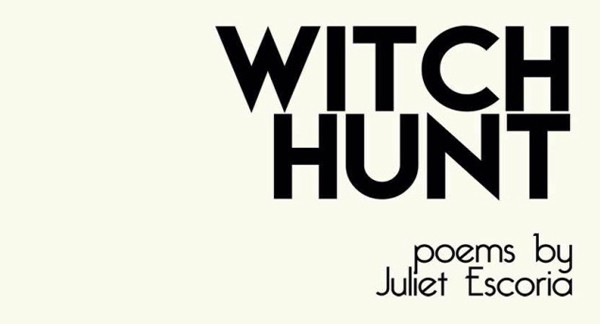
More than a celebration of beauty, great poetry is often an unapologetic acceptance of human fragility and the sharp darkness it’s wrapped in. Juliet Escoria’s Witch Hunt is the kind of poetry collection that digs into its author’s past traumas, lingering regrets, emotional and physical scars, and the memories of her most dismaying experiences to somehow create a communal song about how messed up, sad, and insolently self-destructive humans are. In fact, more than a poetry collection, Witch Hunt is an invitation to look at and probe all of Escoria’s wounds, which much like Nietzsche’s abyss, end up looking back at and probing the insides of the reader.
While a large percentage of contemporary poetry is either trying too hard to experiment on new ground but lacking a narrative to do it with or, on the other hand, still tied to themes like love, heartbreak, and beauty, the poems offered in Witch Hunt are about the “suicide attempts, the drugs, the hospitalizations, the relationship I had as a teen where he left bruises.” Page after page, Escoria digs around her past with a scalpel in order to present bloody, black-and-blue morsels of her journey, and the result is a collection that’s uncomfortable to read and impossible to forget.
Witch Hunt is divided into eight sections, but depression, chemicals, abuse of all kinds, despondency, and dealing with the past/processing memories are all cohesive elements that can be found throughout the collection. Also, there are parts within those sections that read like smaller subdivisions. One in particular is “Letters to ex-Lovers,” in which Escoria directly confronts past partners with unforgiving honesty. The first lines of “Dear Patrick” are a great example of her devastating honesty:
I’m not sorry for forgetting your address or your phone number, but I must admit I do have some regrets about the loss of your face. When I think of you there is nothing anymore, just static.
Escoria’s first book, Black Cloud, introduced the world to a voice that wasn’t afraid to go into the darkest corners of life and pull out whatever hides there. This new book, however, feels more dangerous because it already visited those places, so that any trace of fear is gone, any hesitancy has vanished, and the fact that her past has already been cracked open only means the author had to dig even deeper to deconstruct herself. This process leads to writing that’s viciously straightforward and stouthearted, writing that isn’t afraid to say things that most people would keep to themselves:
Sometimes when I look at a cute baby or an animal I think about it getting run over by a train and the noise it would make.
Sometimes when I’m trying to fall asleep I think of a giant, ripping the roof from my house like a sardine can and plucking me off into the night. He takes me home and lays me out on a baking sheet and I am too scared to run away. I’m put in the oven and it is very warm in there and it makes me sleepy. I am left in there for a long time. It feels like decades. Eventually I am all dried up and crispy, so the giant takes me out and chops me into a fine powder and lines me into rails and then he snorts me.
As the discussion about trigger warnings rages on, Escoria has released a cannon on the world. Breathtakingly raw and remorseless about the elements it brings to the table, Witch Hunt is intoxicating and sexy, dangerous and painful, strange and unexpectedly hypnotic in the way only things that make you feel like a voyeur can be. This book constantly walks the line between poetry and flash nonfiction and inhabits the interstitial space between journal and gutter manifesto. Some literature takes the spotlight, thanks to its creeping, unrelenting darkness, and this is one of those books. Sure, there are tiny slivers of hope sprinkled along the way, but each time the reader comes across one, what came before has been so disarming that it is impossible to bend down and pick it up. Ultimately, this is Witch Hunt’s greatest achievement: it shows us the ways Escoria lives and has lived, how she has dished out pain and how she been hurt, and we are thankful to be hurt alongside her.
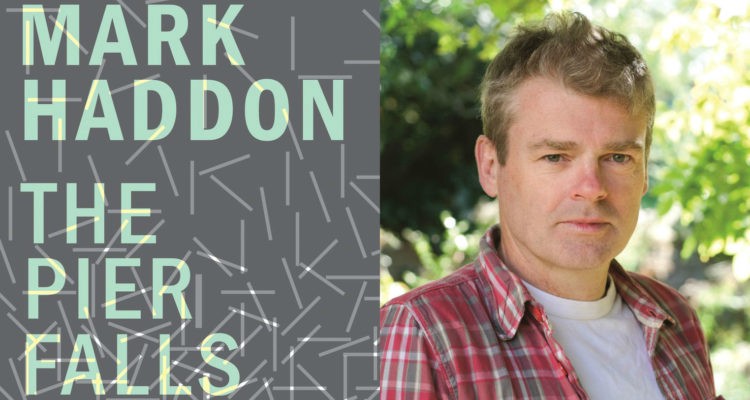
Wikipedia describes Mark Haddon, simply, as a novelist, but it might be more accurate to call him a literary renaissance man. Best known for the much-beloved 2003 mystery novel The Curious Incident of the Dog in the Night-Time — which sold over 2 million copies and was adapted into a Tony and Olivier-award winning play — Haddon is also the author of nineteen books for children and young adults, as well as two other critically acclaimed novels, a play, and a volume of poetry. His latest, and undeniably darkest, work is the short story collection The Pier Falls (Doubleday, 2016). Depicting characters in extreme, often near-fatal, states of loneliness and despair, there is also a rich vein of empathy and black humor running through these nine diverse tales. And diverse they most certainly are. One story is set in Ancient Greece; one in the Amazon jungle; another on the surface of Mars. The title story, told at a chilling remove, details the devastation wreaked upon a group of holiday-makers when a pier collapses in a sunny English seaside down in 1970, while “The Gun” — an O’Henry Prize-winner in 2014 — is an almost unbearably tense coming of age piece about a boy and his neighbor discovering a handgun.
I spoke to Mark over Skype in early April and, despite the unfortunately-timed construction symphony which erupted outside my window as I dialed his number, we managed to discuss everything from hate speech and banned books, to literary adaptations and the thrill of using fiction to blow apart childhood memories.
— Dan Sheehan
Dan Sheehan: Carol Birch in The Guardian called you “a master of the excruciating family set piece,” remarking that family has become your speciality. Your novels A Spot of Bother and The Red House, as well as your stories “Breathe” and “Wodwo,” all contain scenes of painfully escalating tension within family units in domestic spaces — what is it about this environment that so appeals to you as a fiction writer?
Mark Haddon: When I began writing fiction I wanted to write big novels about big subjects and learned, painfully and slowly, that I had other, smaller subjects where I was at home, subjects that suited me. Family is one; houses is one; what goes on in the mind when it’s not working properly is another. I’ve had to give up on those dreams of writing the big novel and admit that I’m actually at home on this quite small scale. And given that stories simply don’t happen without flaws, suffering and conflict, if you’re writing about families, houses and minds then painfully escalating tension with family units in domestic spaces is pretty much essential.
DS: Though you have addressed the “larger” themes of mental illness and psychological disintegration — both within that domestic sphere and in the wider, more anarchic world outside of it — time and again in your work; whether it’s bipolar disorder in your play Polar Bears, hypochondria in A Spot of Bother, or Schizophrenia in “The Weir.” Do you think fiction that deals with these subjects has a societal value beyond the artistic, in terms of our understanding of mental illness, or is that asking too much of stories and storytellers?
Literature has to work by stealth and in spite of itself.
MH: I think it has value, but only insofar as you don’t write it for that reason or publish it for that reason or force it upon readers for that reason. It’s paradoxical, isn’t it? It’s the Keats quote “We hate poetry that has a palpable design upon us.” Literature has to work by stealth and in spite of itself. It’s hard to read great novels without coming out the other end changed in some way, without your empathy broadened to some extent. But that wouldn’t happen if they were written as self-help books. Apropos of which, I was particularly proud that to find out yesterday that Curious Incident has appeared on two very different lists. In the UK it was added to a list of books recommended by the reading agency for doctors to prescribe to young people who are struggling with their mental health. I think that’s a wonderful thing. If you can read a book instead of taking a pill, then read the book. Read to find out more about yourself. Read to find our more about the world. In the US, on the other hand, the American Libraries Association included Curious on their list of ‘Most Challenged Books’ in schools and libraries throughout the US. I was one above the Bible and two above Fun Home by Alison Bechdel, but three down from 50 Shades of Grey, sadly.
DS: Well that was always going to be a tricky one to beat.
MH: [laughs] Between the Bible and 50 Shades of Grey, what a great place to be. More seriously, one of the unexpected upsides of the novel being challenged, and occasionally being banned, repeatedly throughout the US is that in almost every case the inevitably heated arguments always create a debate about freedom of speech, about censorship, about atheism and profanity in books, about why we read and what we expect to get from it. So, there are two very different examples of the way in which a book can have a societal value and I’m very chuffed that Curious appears in both categories.
DS: You haven’t shied away from criticizing the policies of the current Tory government in Britain; do you worry about the political climate at the moment with regard to some of the issues we’re talking about?
MH: There are reasons to be profoundly depressed about pretty much everything the Tory government is doing at the moment, most notably the systematic destruction of a welfare state upon which they, as wealthy people, have never relied, but which is essential for the health and welfare of millions of people for whom they appear to have no empathy whatsoever. Thankfully, freedom of expression isn’t something most writers have to worry about here. In any case the new arena in which those debates are fought is on the internet and the main focus is not political but personal — who has the right to offend and who has the right to be protected from offence. Part of the puzzle is a practical one. How do you sustain an environment in which people can express themselves freely and anonymously without it being an environment in which they can abuse others freely and anonymously. More interesting, I think, is watching old political paradigms shifting to accommodate a new landscape; witness Germaine Greer’s attempts to square the transgender experience with the feminism of the seventies and eighties. I don’t deny that it’s a genuine puzzle but it’s not one she has handled with sensitivity.
DS: I remember reading recently about a somewhat similar situation at the Decatur Book Festival at Emory University last year. Roxane Gay was in conversation with Erica Jong and at the Q & A which followed, Jong was asked how feminism might better include women of color, to which she answered “feminism has always included women of color.” It became clear that, even though there were these two champions of the feminist movement up on stage together, the opinions of one on some significant issues were very much stuck in a previous era, and were no longer in sync with how the new, more inclusive generation, feels.
MH: Absolutely; and I don’t think these discussions apply to books that much, because books are written slowly and published slowly and read by people who choose to read them. So it’s not a problem for writers in that sense, but it is very much a problem on social media. What’s really difficult on social media — not for me of course because I’m a white middle-class man so I can say anything I want and I’m not going to be abused. It’s not like I’m a woman with an opinion — is that when you have a potential audience which includes the whole world, it’s very easy to offend people and very difficult to discuss certain things.
DS: Turning to The Pier Falls, I don’t think I’ve ever read a collection that was set across such a broad and disparate range of places — you move from a seaside town in Britain to ancient Greece to the Amazon jungle to the surface of Mars, to name but a few. Did you envisage a unifying idea or theme when you began to put together this collection?
MH: Well, there was no overarching plan. I was just trying to write the stories that I could write. I had started many, many more stories than there are in the collection and I either stopped halfway through or threw them away. So instead of those nine being a deliberate choice of situations and characters, they were what remained when I threw away the stories that didn’t work. And then post-hoc I had to look at them and ask myself whether there was a theme. And I’m still not sure how much that theme is accidental or representative or what’s going on inside my head.
Unlike a lot of writers, I think the short story has given me much more freedom than a novel. I feel that I can take bigger risks. I mean, I would never set a novel on Mars because I would think that it’s simply not going to work, and there is no point in trying to put a year’s work into it just to have it go nowhere. But if it’s a short story, I can take that risk. Ironically, Clare Alexander, my agent, said to me “Mark, you seem to write novels in which nothing happens and short stories in which everything happens.” I had never really thought about it like that but I think she’s right.
DS: You’ve written close to nineteen books for children and four for adults so far, as well as a play and a volume of poetry. As a writer of different forms, but also an illustrator and visual artist, what aspect of your work brings you the most joy?
MH: This is an awful answer, but I rarely get joy from writing. I get a lot of joy from having written well, which happens sometimes. The actual process I find quite painful. I often wish that I did something which gave me flow, that psychological sense of being immersed and forgetting where I am and what the time is, but that never happens for me with writing. It used to happen more when I was doing illustration and sometimes it still happens when I do certain types of art, but sadly never with writing.
DS: I was fascinated by the undercurrent of black humour that accompanies disaster in many of these stories. Is that something that organically infuses your writing style now or did you consciously want to move toward a darker, more biting place with this book?
…there is a pleasure in writing a book that seems not to have come from the pen of the person who wrote that nice novel about the boy and the dog.
MH: Undeniably there is a pleasure in writing a book that seems not to have come from the pen of the person who wrote that nice novel about the boy and the dog. I quite liked putting that person to bed. I’ve been trying to get out from under that person for quite some time. But as far as the humor goes, I think there’s a region where humor, meaning what is funny, blends into something broader: an empathy and generosity that’s often not funny at all but which is a very close cousin to it, a warm way of looking at the world, and I think that’s certainly there. There’s also something in that which I think is very British. We lived in Boston for a year and one of the biggest cultural differences, for me, between the US and Britain — and there are lots, especially in Boston, which, with its bizarre anglophilia is a particularly odd place — was that I find certain stories of horrific trauma actually very funny. I remember telling friends in Boston about what I thought were very funny stories from back home, and they would look absolutely horrified, apart from a couple who would laugh and then say “I’m terribly sorry, I’ve been spending a lot of time with Canadians.” So I learnt to keep my amusement at horrific physical trauma to myself.
DS: The Curious Incident play has been a tremendous success, on both the West End and now Broadway (7 Oliviers and 5 Tonys). Was the prospect of stage or screen adaptation something that excited or concerned you in the wake of the book’s release? Does the idea of adaptation of your work in general fill you with dread?
MH: Except in rare circumstances, I think writers should steer clear of being involved in adaptation, for the same reason that surgeons don’t operate on their own children: you’re just too close to be objective. I’ve adapted other people’s work for TV, for example, and I know that you have to be harsh. Different things are needed. You have to make cuts which are often very painful for the original author. I also know writers who have been involved in trying to steer an adaptation in the direction they want, and you can lose years of your life trying to do that. I think you should take the check and go home, or if you still really want to be that involved, don’t take the check. I think the secret, and I discovered this retrospectively with Curious, is choosing the right people to do the adaptation. If you get the right people, it’ll work. If you get the people who are almost right, you can’t compensate for that yourself. My one stroke of genius with the stage adaptation of Curious was choosing Simon Stephens, who in turn wanted Marianne Elliott to direct and Frantic Assembly to do the movement. I had to do nothing except keep a sort of Zen-like detachment from the whole process. In the case of Curious, the reason it worked was not because it was a good or less good adaptation of the book, but because it was a celebration of what you can do on stage. I think if your main concern is to have a good adaptation of your book, then you’re sunk. Whereas if someone wants to make a great play or film using your book as a starting point, then I think you stand a much better chance of being pleased by what comes out at the end.
DS: This can often be a terrible question to ask authors, but have you decided on your next project?
I could happily not read about people like me in books for many, many years.
MH: Well, publication can end up taking a lot of your time if you’re not careful so I’ve always thought that you have to have another book well underway beforehand. Its always dangerous talking about these things in public because you can invoke that terrible curse, but I’ll take that risk: I’m about halfway through a novel about a house fire. It grew out of several things I discovered while writing the stories in The Pier Falls. I’d often tried to write about my past, but I don’t have a very interesting life story. I grew up in Northampton and nothing much of interest has ever happened in Northampton. It’s the middle of Middle England and I had a middle English upbringing. But I know it in detail and I often remind myself that, in a way, everyone’s life is of equal value. Having said that, people who’ve had the childhoods that I had have occupied too many pages in literature for too long. I could happily not read about people like me in books for many, many years. But the conundrum then is how do you use that past without writing a story that feels somehow smug or entitled or cosy. We all know those types of middle class novels, and I think they’re more common over here than in America. I realized that one way to do it was to go back and destroy parts of those lives [laughs]. The story “The Pier Falls” is actually based on a lot of my childhood holidays. When I tried to write about those holidays reverentially, the story became slightly saccharine and not terribly interesting. But then I realized that if you want to destroy — a place, a building, a structure, a family, a family occasion — then you have to write about that destruction with the same attention to detail and the same love that you would use if you were building it up from scratch. So I realized that instead of writing about the pier I remembered from my childhood, if I just smashed it to pieces, it would be the same pier but somehow more gripping.
DS: In a way, it made the story doubly terrifying because it felt known, it felt experienced, to the point where I found myself turning to Google to tell me more about this horrific real life event.
MH: And I think it’s also true of “Wodwo”. I know that kind of family, that milieu, really well, but the question was how to write about it in a way that was genuinely interesting. And I realized that one of the ways to make it interesting was to send someone in to tear it to pieces. And I’m allowed to use this material that I know so well, because I’m being so unpleasant to those characters! There’s a release to that as well, there’s a release in going back to your childhood and stamping all over it. It’s rather thrilling, worryingly thrilling when you realise you can do it. So that was in the back of my mind when I started writing about a house fire. I’ve always been interested in houses. I think, largely, because my father was an architect. I’m not someone who notices the clothes people wear or who remembers conversations word for word, but I could give you a good 3D sketch of all the buildings I’ve been in over the past six months. It’s one of the main languages in which I think about the world, so I decided to write about a house but then, having learnt from “The Pier Falls” and “Wodwo”, I thought “I’ll write about a house, and destroy it.”
The fan tweeted at Rowling about her struggles with bullying and suicidal thoughts, and said she wished to get a “expecto patronum” tattoo — a magical guardian spell in the Harry Potter universe.
@jk_rowling i wanna get 'expecto patronum' tattooed & it'd mean the world if it was in ur handwriting. here's why:')pic.twitter.com/fhldRiju3w
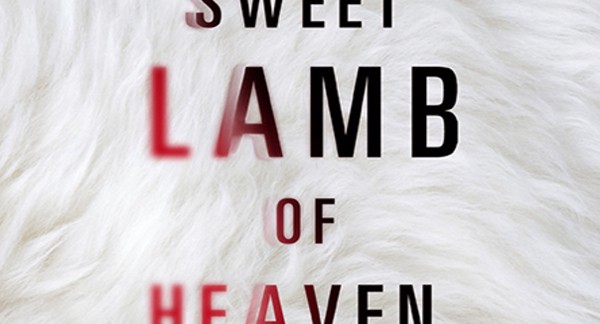
Lydia Millet deserves some sort of award for her books titles alone. Entries include Oh Pure and Radiant Heart; Love in Infant Monkeys; George Bush, Dark Prince of Love; How the Dead Dream; Ghost Lights; Magnificence; and Mermaids in Paradise. Sweet Lamb of Heaven is Millet’s 14th novel, her sixth in the last five years. She deserves another award for this heroic output.
The new novel has much in common with her other recent books: piercingly elegant sentences, a wide range of styles (“My books can’t be one thing all the way along,” Millet has said. “They always twist and turn, tonally.”), a love of the natural world and disgust with what humans have done to it. The threat of extinction in particular hangs above much of Millet’s work. In Sweet Lamb of Heaven, it shadows a young mother as she faces another threat, similarly malign, but more personal and immediate — the threat of a man against a woman.
The book initially resembles a diary whose canny author, Anna, tells us that she used to hear voices. Now she’s hiding out in a coastal Maine motel with her effulgent little daughter in tow and an ice-hearted husband in pursuit. Anna and this sociopathic man, Ned, used to live together in Alaska, but they’ve been estranged for six years. For a while, Ned hadn’t cared that Anna had taken their kid and left, but now he wants “his girls” back in Anchorage so they can serve as stage props for his burgeoning career as a politician, a Family Research Council-type. As Ned begins to take increasingly menacing (and eventually violent) measures to get what he wants, Anna’s sanity begins to unwind, and the narrative accelerates. Sweet Lamb of Heaven twists and turns into a thriller.
And like any proper thriller, the book piles questions onto the reader. How far will Ned go? What’s with all the other guests at the motel? But the novel’s central mystery is the source of the voice that Anna had been hearing. Anna tells us that she didn’t have any other symptoms of mental illness, and she says the voice doesn’t bear the hallmarks of a hallucination. It did seem tied to her daughter, Lena; Anna first heard the voice when Lena was born and it went quiet once she learned to talk. Anna writes,
The voice made light of what it held to be false ideas — for example, the yearning for an all-powerful father who grants wishes and absolves. On that subject it seemed to evince something like condescension, rattling off mocking wordplay when we passed a church marquee or once, another time, when I stood at the front door trying to get rid of a Witness.
Without offering any pat explanation for the voice, Millet uses it as a vehicle for ideas about God, nature, and language. It’s a brilliantly simple conceit that carries an incredible amount of symbolic weight.
Millet sets Ned up as a kind of antithesis to the voice. He is the cold rationality to its nonsense, the physical magnificence to its ephemerality, the mortal evil to its divine rightness. And his noxious right-wing politics seem particularly appropriate to contemporary American politics — it’s no stretch to read Ned’s dialogue in Ted Cruz’s voice — and the concerns that animate Sweet Lamb of Heaven are in direct conflict with the narrow worldview promulgated by Ned and Ted.
But Millet’s ideas can be more interesting than her characters. Anna’s mind is agile enough to make her a good mediating intelligence, but everyone else might have been culled from central casting. Lena’s precocious and adorable; the motel manager is avuncular and a little mysterious; the local librarian, who serves as a romantic interest, is virtuous and noble, if a tad overbearing. Anna describes her husband compellingly: He’s attractive and charismatic “Both before and after we were married, men and women alike would confide in me about their attraction to Ned,” but also cruel, manipulative, and sinister. “Ned’s monotony of empty assertions in the service of self-promotion, self-replication and mastery for its own sake, his reach that extended past the boundaries of even the body — that was a weapon without end.” He’s not merely sociopathic, but Satanic, reaching past the boundaries of even the body. But when Ned appears in any way, when he says or does anything, his menace starts to deflate. When he’s trying to be ingratiating. he says inane things like, “You like that Mexican Co-cola, don’t you? Cane sugar, not corn syrup? We need to bring that old-style Coke back to the U. S. of A.” When he’s mad, he snarls and calls Anna, “Bitch.” Ned’s a serious threat — at one point he breaks Anna’s nose — but there’s a gap between how he’s described and depicted.
In the end, the flatness of the characters isn’t too troubling of a flaw. In fact, it’s pretty typical for novels of ideas. You read Millet for the evocative power of her sentences and the moral force of her thought, not for her Strong Male Antagonists. Millet’s an interesting writer with bold ideas, and her plot only gets more engaging with each page, and these qualities make Sweet Lamb of Heaven a worthy entry in an excellent, rapidly growing body of work, evidence that Millet’s in the midst of a significant creative outburst.
Click here to read an interview with Lydia Millet about Sweet Lamb of Heaven and the future of the literary thriller. Click here to read one of Lydia Millet’s story, “Girl and Giraffe,” as part of Electric Literature’s Recommended Reading.
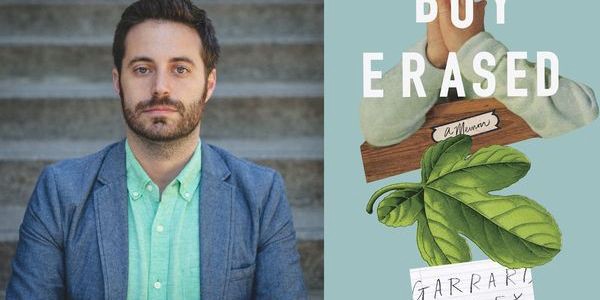
Garrard Conley’s new memoir Boy Erased (Riverhead, 2016) is a coming out story that involves rape, condemnation, loss and love. Conley was outed as gay during his freshman year of college to his mother and his father, a Christian Baptist minister in small-town Arkansas. The story interweaves Conley’s experiences with a high school girlfriend who hoped they would marry, the abuse he suffered by another boy in college, and the trauma of a church-supported conversion therapy program that promised to “cure” him of homosexuality. In 2004, he volunteered to attend Love In Action, an ‘ex-gay’ therapy facility, in order to save his family, but he eventually fled the facility in order to save himself from committing suicide. In spite of the struggles he faced growing up gay he has emerged triumphant, which is why Boy Erased will have a strong and positive impact on readers tackling similar issues concerning faith, family and community.
I met Garrard at the Bread Loaf Writers’ Conference in 2015 and liked him immediately. He’s the guy you tell all your problems to and take home for Thanksgiving. He is amiable, sincere and compassionate. He’s also fun on a dance floor. We met again at the AWP conference in Los Angeles, but it wasn’t until he was home in Sofia, Bulgaria, where he lives with his boyfriend and teaches English to high school students at the American College of Sofia, that I had the opportunity to phone him for this interview about Boy Erased.
Andrea Arnold: Anyone would find it difficult to be forthright in a book about his or her early sexual experiences and yours were heartbreaking and traumatic. As someone who also writes fiction, why did you choose to write Boy Erased as a memoir instead of a novel, where an author can hide behind fictional characters?
Garrard Conley: I started writing the first essay for the book in a nonfiction class at UNC-Wilmington. The professor asked all of us what part of our lives we would be writing about in his class. Before that moment I had never considered writing about ‘ex-gay’ therapy or my childhood, but I blurted out some details of my life and everyone in the room leaned forward to listen. The interest was palpable. One girl said, “How is it even possible that this still happens in 2004?” Her words were my first indication that the story might be more important as a memoir than as a novel.
I worried that as a piece of fiction the story might seem exaggerated. In fiction you can get away with covering up the nasty parts of an autobiographical story or making the prose subtle. In nonfiction, however, you have the chance be explicit and say, ‘This stuff actually happened to me.’
…one person asked, “How can a parent do that to a child?” That question has followed me throughout the entire process of writing the book.
The other indication that this might turn out as nonfiction came from a conversation I had at a café with friends at Columbia University in New York. I was visiting a friend, and someone asked about Arkansas, so I told the group a bit about my childhood. People at the table leaned forward just as they had at UNCW, and one person asked, “How can a parent do that to a child?” That question has followed me throughout the entire process of writing the book. My mom has also been asked this question many times, and she almost always cries and says something along the lines of, “I don’t know how we did this to you.” But the truth is, almost everyone in the church thought sending me to ‘ex-gay’ therapy was the right thing to do. Love in Action came highly recommended. And the more I started focusing on the question, this totally reasonable question of how it could happen and how any parent could do this to his or her child, I began to see that only memoir could begin to address the question.
AA: You were nineteen-years-old in 2004 when your parents encouraged you to go to ‘ex-gay’ therapy. Has the church changed or become more sympathetic about members coming out since then?
GC: The church changed right after I left. But you have to keep in mind that when we talk about ‘the church’ we are really talking about a lot of different dominations in the area I grew up in. There was the Assembly of God and the Church of Christ, which I honestly don’t know that much about, but my Missionary Baptist church was very plugged into the ‘ex-gay’ movement at the time. Church leaders considered it the best option if your kid turned out to be gay. But right after my experience in 2004, this sixteen-year-old kid Zack Stark posted all the rules of ‘ex-gay’ therapy at Love In Action on his blog, and this act caused a huge protest. There’s also a This American Life piece about it featuring John Smid, the former director of Love In Action, that explains why Smid decided to put an end to the facility. The documentarian Morgan John Fox even made a documentary about Love In Action called “This Is What Love In Action Looks Like,” which talks about how those protests raised awareness and caused even the ‘ex-gay’ counselors to reconsider their stance.
AA: Do you have a relationship with God today?
GC: My relationship with God is highly in flux. Like I said in the memoir, prayer for me was really a place of comfort. Like I could just speak into my head and order the world in some way. Even when I thought I was speaking to God, I was really speaking into my head and making a litany of the important things of the day or the things I wished would happen in my life. I sometimes still pray, but I wouldn’t say that I have a direct relationship with a knowable god.
AA: What about your parents? Do they?
GC: Yes. My father is still a preacher. His congregation is growing. He has a soup kitchen now and it’s pretty successful. And my mom is still a preacher’s wife, but she is very much in support of me. She’s stuck in the middle.
AA: It seemed like those recorded conversations highlighted in Part Two of Boy Erased were very difficult to have with your mother and that she was overwhelmed with guilt.
GC: It’s getting a little easier now, but we almost can’t go a full conversation without apologies and crying.
AA: The end made me cry openly like a baby. I think a lot of people can relate to having a parent who wants him or her to be something else. What is your relationship with your father like today? Has he read the manuscript?
GC: My dad was really worried about his congregation finding out about the book. As you know from reading it, there’s an idea in the church that says that the sins of the father are passed down to the son, or that whatever is reflected in the son’s behavior must be some fault of the parents. Because of this idea, my dad was worried that the church would turn against him and vote him out. His church has to be a self-sufficient by next year. Up until this year the Baptist Missionary Association has funded his church, but this funding will be cut off next year when his church becomes a fully-functioning, self-sufficient organization.
My father and I had this fruitful phone call about his fear. I said, “I know you don’t want to talk about the book, and ‘ex-gay’ therapy is not something we have talked about much in the past, but I want you to know that I didn’t write any of this to make you feel bad or to paint you as a villain.” I said, “I tried to make you into a three-dimensional human being.” He didn’t really respond this, but my mom said he went into his office, closed the door, and cried for about an hour. That night, he got behind the pulpit and said, “My son has this book coming out that’s about gay stuff. If you need to leave the church I’ll understand, but I’m staying here.” That was a really big deal in our family because he had not yet acknowledged the book, though there were certainly plenty of rumors.
Recently, some weirdo at my dad’s church saw my Twitter account and told my dad that he really needed to read what was going on. My dad got on there. I think he might’ve read the Virginia Quarterly Review excerpt. I think he read more of what the book was about, and my mom said he was really upset and wondering if I was going to Hell again. Even so, we just talked right before this interview and he seems to be okay. We’re no longer at a stalemate. I would say we’re just at a really awkward phase.
AA: What happened to the girl that you call “Chloe,” your high school girlfriend? Does she know about the book?
GC: I contacted her on Facebook right before I was about to write about her, because I didn’t want her to be mad at me. She was nice for a couple of days and then she blocked me! I guess my posts were too gay! [Laughs] But her brother, “Brandon” in the book, is openly gay and lives in California somewhere. He’s always posting these cute drinking pictures with his gay friends. She’s also cut him off a little bit. She’s married to a guy who in every photo on Facebook has camo on and her two children are carrying guns. So that’s a lost cause. [Laughs]
AA: You also wrote about how literature saved your life. What were your favorite books and authors growing up?
GC: The electric ‘ah-ha’ moment for me was when I read The Scarlet Letter for the first time. It was both the literal and metaphorical value of that scarlet letter that made me think: Okay, people hate her based on what she looks like and who she is, and everyone in this town is wrong! It was amazing: Someone took the time to craft this narrative that lets me know that everyone in a town can be wrong about an issue. Also, Hawthorne is obsessed with his family history, as I am. In the beginning of The Scarlet Letter he talks about how he discovered an embroidered scarlet letter in the file room where he was working this government job. He learned that his family was part of the Salem Witch Trials. Their family name was actually Hathorne but he changed his name to Hawthorne so he wouldn’t be associated with the Hathornes, who were some of the people that killed all those women. He felt like he had a moral duty to write about what his family had done and what people like that can do. I only found this info out later when I became obsessed with the book, but there’s also a more literal connection to the genogram. Hester Prynne had an A on her chest for adultery, and they (Love In Action) made me write an A on my family tree as part of a “Moral Inventory.” It’s really obvious why I would love that book, though at the time it just came as a shock of recognition.
AA: You got your masters from Auburn and then went to University of North Carolina — Wilmington for an MFA. You could have attended grad school in a liberal city like New York or Los Angeles. Why did you choose to stay in the South?
There are people living in North Carolina who aren’t privileged and mobile, who can’t leave the state, so we decided, Fuck it! Let’s go!
GC: One reason is that Auburn paid for everything [Laughs]. The other is that the South is what I have always known. I guess in some ways it’s easier to exist in a liminal space. I’ve since lived in Ukraine and Bulgaria, both of which are not progressive in terms of civil rights. The South is familiar to me, and I feel like I know my purpose there. Part of my upcoming book tour is with Garth Greenwell, and we’re booked for three different dates in North Carolina back to back. Bruce Springsteen recently canceled a concert in protest of the North Carolina Anti-LGBT Bill, but Garth and I are both Southern boys and we both feel like our best work will be to go to the places that hate us and shove it in their faces. [Laughs] We actually agreed to book two more dates together in North Carolina after the law passed. Publisher’s Weekly recently published an article about how the laws are harming bookstores. There are people living in North Carolina who aren’t privileged and mobile, who can’t leave the state, so we decided, Fuck it! Let’s go!
AA: Why did you move to Sofia, Bulgaria?
GC: I moved to Bulgaria because I fell in love with a Bulgarian man. We met at a writer’s conference called the Elizabeth Kostova Foundation. She wrote The Historian, which was a big book about seven years ago. She uses her money to fund five English-speaking writers and five Bulgarian writers to go to the Black Sea and do a workshop. While I was there I met my boyfriend, but then we lived apart for a year while I was at UNCW. After I sold my book and it was under contract that first year, I moved to Sofia to be with him while writing the book and teaching English.
AA: I read your Acknowledgments page. You said that you sold your memoir before you had even written it. What was the publishing process like for you?
GC: That was so crazy. The publishing process for this book is something that infuriates people if I just tell it to them while they’re in the process of trying to publish something. I try not to talk about it often. It was one of those fairy tale stories. I was at AWP in Boston and had been invited to this dinner by a great short story writer named Kathy Flann. This was during the mini-blizzard, and we were getting snowed in. Some guy was holding court at the head of the table, mansplaining something, and I turned to the woman next to me and said, “What is with this guy?” She said, “Thanks for saying that!” She turned out to be Maud Newton, who writes these great book reviews and has a book on ancestry coming out soon and has a blog that’s been very popular. She has so many connections. She asked me what I was writing, and I told her about my essay. Then she asked me if I would like to go to an agent party with her to meet Julie Barer. I was like sure! I drank too much because it was open bar. Julie spoke to me, and very soon afterwards I sent one of the agents at Barer Literary a query letter, not knowing at all what I was doing. They asked to see more. I had like eighteen pages. I said I had everything basically written but I just needed to revise. [Laughs] I spent the next two weeks at UNCW not sleeping and writing what became the second chapter, The Plain Dealers, on their computers, sort of stealing my way into the computer building at night. I sent the chapter in, and right after that I signed with Julie. I wrote a proposal that summer on one hundred pages, which was then rejected by every house except Riverhead. It was sent to like thirty people!
AA: Do you think they were just afraid of it? I mean, I see this as a big deal book.
GC: I don’t know. Several big name editors like Lee Boudreaux were interested, but I guess they couldn’t sell it to the whole house. I have a different editor at Riverhead now, the fantastic Laura Perciasepe, but the editor who called was Megan Lynch. She’s great! She bought it on the proposal and two chapters, along with an experimental part, which is now Part Two, with my mom in it. I feel like I’m still very lucky!
AA: I was raised without a formal religion. My mother grew up Catholic, my father Jewish. We didn’t go to services regularly and holidays were for fun. Before I read Boy Erased, the concept of ‘ex-gay’ therapy was almost unfathomable. Why do readers like me need to buy your book and read it?
GC: There are two points I would like to make about that. I was thinking about why people should read my book when Riverhead was picking up the proposal, because I was worried that an editor might want to sand off the edges and make my story more palatable to readers. I wanted this memoir to be an odd document of that particular period of time in that particular version of America, an America that I believed was out to get me and the rest of the world. I thought that if this ‘ex-gay’ experience happened to me then the event wasn’t necessarily an isolated one. You can see this in current politics. Look at the North Carolina bill that just passed. Look at Tennessee. Look at Mississippi. This stuff is coming back. One of the things I say to my students when I’m teaching about civil rights issues is that it’s never a straight line of progression. In fact, these bizarre happenings are an essential part of our culture. It wasn’t so long ago that we had George W. Bush. It feels like it but it wasn’t. Even today crazy thinking controls a lot of legislature that gets passed in our country. I don’t want to sound inflated, but firstly I wanted my memoir to be a true document and secondly that if anyone found it ten or twenty years from now hopefully they would say, “What the fuck were they thinking?” [Laughs]
I’m tired of the type of memoir that just shows you its scars and wants you to feel sympathy for it. This is not that kind of memoir.
I started teaching The Crucible while I was writing the second half of Boy Erased, and I believe we’re still interested in that story and obsessed with witch trials because this is a strand of American history that’s still alive. What I didn’t want was for my book to become a trauma narrative or a healing narrative that would be touted as merely a testament to love. It’s not meant to be only an uplifting and inspirational piece of literature. I’m tired of the type of memoir that just shows you its scars and wants you to feel sympathy for it. This is not that kind of memoir. I wanted it to be a little scary.
Always dreamed of studying writing with the most exciting debut and established literary authors in New York City?
Catapult is pleased to present a series of writing classes, workshops, and intensive bootcamps, co-presented by Electric Literature. Spend your summer workshopping your writing in courses that past students have called “a significant life experience” and “everything I could have hoped to expect and more.”
All classes are held in our New York City offices and are open to writers of all levels looking to join a community of like-minded and talented individuals.
All classes are accepting applications now. And if you’re looking to win a free class, make sure to enter our monthly giveaway.
Sign up for our newsletter to get submission announcements and stay on top of our best work.
YOUR INBOX IS LIT
Enjoy strange, diverting work from The Commuter on Mondays, absorbing fiction from Recommended Reading on Wednesdays, and a roundup of our best work of the week on Fridays. Personalize your subscription preferences here.