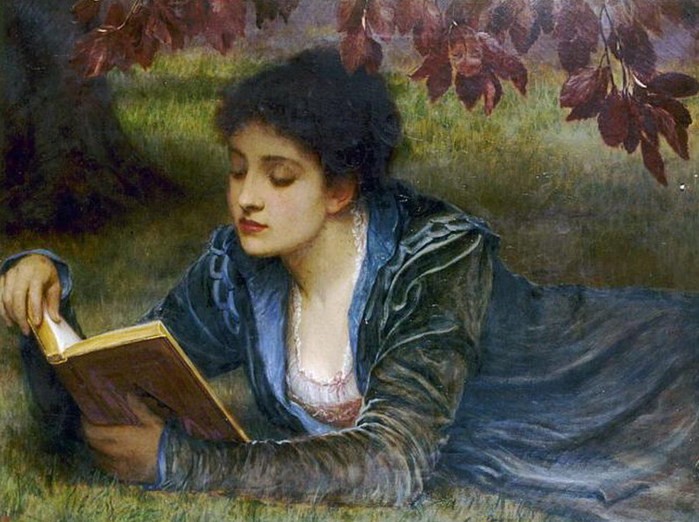
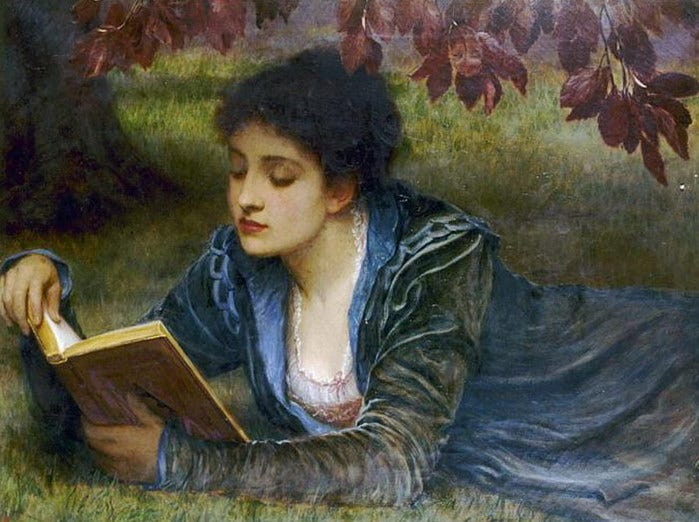
Want to take a writing class but feeling too broke or otherwise on the fence? Or do you just like winning stuff? We have good news either way: Once a month, we’ll randomly select a winner who will be offered a FREE spot in one of Catapult’s six-week workshops or one-day bootcamps, co-presented by Electric Literature. Classes are held in our shared NYC offices.
These intimate workshops and intensives are taught by some of the best debut and established contemporary writers. In May, writers can learn how to transform their diary into sellable nonfiction with Emily Gould, or how to evoke place using sensory detail with debut novelist and Hi Wildflower Botanica founder Tanwi Islam. Students will learn to think like an editor and write for their readers with Henry Holt editor and novelist Caroline Zancan, and they’ll hone their sentences until they pop with NY-Times approved short story writer Rebecca Schiff. In our publishing bootcamp with Dan Blank (We Grow Media) and Miranda Beverly-Whittemore (NY-Times bestselling author), writers will begin to build a marketing platform that will help them make their future books bestsellers, and in our travel-writing bootcamp, aspiring Elizabeth Gilberts will not only learn the craft of travel writing from Departures editor Jessica Flint, but also how to pitch pieces about their adventures abroad to paying venues.
All classes are accepting applications for regular admission now — feel free to double your chances of landing a spot by sending in a regular application and entering the giveaway. Giveaway winners are eligible for participation in all student programming, from our reading series to our free professional development events.
Click this link and enter your email for a chance to win! Our first winner will be announced on May 13th.
Reader, I did it. I reread Jane Eyre. It was, I’m sad to say, a bitter disappointment.
I reread Jane Eyre as part of an experiment aimed at resurrecting my love for reading. Soon after I enrolled in an MFA program in nonfiction, something completely unexpected happened to me: I could no longer derive any pleasure from books. At first, I blamed it on men. Although I started the program in the 21st century New York, the great majority of the books I was assigned were by male writers. How could I, a Turkish woman in her late thirties, be moved by the concerns and priorities of Updike, Roth, Nabokov, and Thoreau and lose myself in the literary discharge of their male minds? But, the reality was that I did not fare much better with women. The moment I turned my attention to contemporary female essayists, it dawned upon me that I shared little with them beyond an endorsement of the personal essay and memoir as literary forms. Most nonfiction works authored by women, I started to notice, were about illness and pain (mental or physical), men (as lovers or oppressors), and motherhood — topics I might be interested in socially, but not in a literary sense. I started missing the days when I was able to surrender my heart and soul to a character, be one with her (and, on occasion, him), and effortlessly, deliriously, read.
How could I, a Turkish woman in her late thirties, be moved by the concerns and priorities of Updike, Roth, Nabokov, and Thoreau and lose myself in the literary discharge of their male minds?
That’s when the idea occurred to me — how about Jane, my old friend? Perhaps she could respark my love of reading. Jane Eyre was the first non-picture book that I was given, when I was about eight. It was a small paperback, abridged for children and translated to Turkish. I referred to the protagonist as Janeh Eyreh, as silent vowels do not exist in my native Turkish. Our connection was immediate. I entered Jane’s life the way Alice entered the looking glass room. I stalked Jane through the dark and dreary corridors of Gateshead Hall. I fretted over her when she lost consciousness in the red room where she was so unjustly jailed by her awful aunt. I shivered in bed with her and Helen Burns the night Helen surrendered her soul to her maker. My identification with Jane was so complete that when Mr. Rochester fell in love with her, it was as if he fell in love with me.
Back in those days, reading was not an isolated activity that ended when my books did. I reread copiously and forced the stories into my life. I wanted to be Jane. I adopted her tastes. I decided to prefer rainy days because she did. Since our windowsills were awfully high and narrow, I could not read on them the like Jane. That didn’t deter me — I fashioned my own window seat by pulling a chair to the window and draping a curtain around it. I took up drawing to be more like Jane, and produced images of disembodied heads and stormy seas.
My identification with Jane was so complete that when Mr. Rochester fell in love with her, it was as if he fell in love with me.
Despite my earnest efforts, my life was nothing like Jane’s. I grew up in 1980s Turkey, not Victorian England. My mother, who survived childbirth twice and did not succumb to any epidemic, was loving. I had no mean aunt to lock me up. I went not to a boarding school but to a private one. I had never eaten porridge — hot, cold, or burnt. A diet of bread and water was out of the question even as an occasional indulgence — I was forced to eat an egg with my breakfast and three spoonfuls of yogurt with my lunch. All this only served to make me more interested in Jane’s peculiar life and spurred my desire to emulate her.
I was thirteen when I discovered that the real Jane Eyre was a lot longer than my little volume. I was overjoyed, and set out to read it. I breezed through Jane’s childhood and adolescence and was surprised to see how many pages I still had left — in my abridged version, Jane arrived at Thornfield Hall at about the halfway point. Soon after Jane became a governess, however, I found myself dreadfully bored and abandoned the book. I attributed my boredom not to Jane or Charlotte Brontë, but to to the fact that I was reading a dated translation into Turkish. Eventually, I did finish the unabridged Jane Eyre in the original English, when I was in my early twenties. It was part of a Victorian literature marathon that I deemed necessary at the time, to expand my knowledge of literature, and Jane blended in with Agnes Grey, Elinor Dashwood, Elizabeth Bennet, and Dorothea Brooke.
My childhood companion, the hapless, strong-willed orphan, grew up into a dour, self-righteous maid.
When I reread Jane Eyre at thirty-eight, I wasn’t expecting to relive my childhood. I was simply hoping that a novel that for me was so intimately tied to the joy of literature would allow me to lose myself in a book once more and perhaps trigger a reading spree of the sort I used to enjoy in my earlier days. The experiment started off well enough. Once again, I moved swiftly through Jane’s childhood and adolescence, this time admiring Bessie’s complex relationship with Jane and appreciating what an unusual character Helen Burns was. I also enjoyed Jane’s essayistic asides, when she stepped away from the moment to give the reader some background information or a piece of her mind. Nevertheless, soon after Helen died, my interest waned. My childhood companion, the hapless, strong-willed orphan, grew up into a dour, self-righteous maid. I found the passages of Jane’s religious moralizing insufferable and pedantic, even after making allowances for her 19th century roots. The relationship between Jane and her condescending, superior master Mr. Rochester (which I had once found romantic, if not sexy) was downright disturbing.
*
Though life experience may make one a better writer, it doesn’t necessarily render her a better reader. Youth reads with the benefit of an unbridled imagination that transcends isolated pictures and carries a story into life. The juvenile reader is not in search of originality, she is not even in search of a “good” story — any narrative that has forward momentum and a child protagonist will do.
The young reader, just like she can be friends any other girl her age, can identify with any heroine that fits her demographic. Presence or absence of toys, foods, and parents, being subject to unfair treatment by grownups, separation from family are all too relatable, independently of social background. When I was little, as a result of living in an economically mixed neighborhood, all my friends were children of poor, working class families that were more conservative and religious than mine. As I grew older, without any deliberate thought or action, my own friendships became limited to people who had similar educational and political backgrounds as myself. In parallel, I became more selective regarding the characters I could identify with and the writers I could tolerate, which slowly but consistently eroded my reading pleasure.
I became more selective regarding the characters I could identify with and the writers I could tolerate, which slowly but consistently eroded my reading pleasure.
With age, I grew sensitive to the writer’s political and moral agenda, separately from the protagonist’s. When I read Jane Eyre at eight, I gave little thought to Charlotte Brontë as a separate entity from Jane. At thirty-eight, what I perceived as Brontë’s moral standpoint rubbed me the wrong way. Nowadays, to enjoy a book, not only do I need to make peace with the characters but also, with the writer whose fingerprints I detect in every sentence. If I am put off by either, instead of sitting back and enjoying the story, I argue with it. Among my pet peeves are libertarianism, overt moralizing, unwarranted optimism regarding human nature, and a writer’s contention that he has within himself the entire human condition.
*
Technically, one need not identify with the protagonist or the writer to enjoy a good book. Although my eventual inability to relate to characters and writers did interfere with how much pleasure a book gave me, all through my twenties and early thirties, I continued to chain-read novels and memoirs written by a diverse group of men and women. I would find myself interested in a time period or a style — late 20th century American writers, pre-war British writers, social realism in the Turkish novel, Russian classics, literary horror — and read samples of it until I reached a point of saturation or boredom. This type of reading was not quite as gratifying as the way I read and reread Jane Eyre or Little Women as a child. Grownup reading was a little more detached from the characters, a little less enthusiastic, a little less visceral, but still one of my favorite pastimes.
I admired Wood’s ability to praise with intellectual rigor.
During my first year at the MFA, right about the time my anti-reading symptoms were starting to make themselves known, I picked up a small volume by James Wood titled How Fiction Works. I made slow progress but enjoyed it nevertheless. When a critic decides to praise the book he’s analyzing, it usually makes for an unexciting, predictable read. I admired Wood’s ability to praise with intellectual rigor. Moreover, unlike contemporary American writers, Wood was not overly concerned with being original, entertaining, or conspicuously passionate. He simply allowed his keen interest in the subject matter guide him and the reader.
I had read a number of the writers Wood analyzed — the Brontës, Jane Austen, Muriel Spark, Gustave Flaubert. However, as I made my way through How Fiction Works, I realized I had read them very superficially. Starting with the chapter entitled “Flaubert and the Modern Narrative,” Wood turned to the idea of “writer as a seer” and analyzed the types of literary details that masters bundle into sentences. Many of the excerpts he picked out to dissect were passages which must have once entered my mind (since they were from books I had read) but exited in silence, leaving no trace. For me, micro-level concepts such as literary detailing, the contraction and expansion of time, the proximity of the narrator to the protagonist’s mind, consciousness, or language were akin to faded stains on a waiting room carpet. I didn’t see them. They were overshadowed by the story and the characters. “I have to learn how to read,” I realized with panic. “I have to reread everything I ever read if I am going to keep walking around telling people that I read this book or that.”
“I have to learn how to read,” I realized with panic. “I have to reread everything I ever read if I am going to keep walking around telling people that I read this book or that.”
I didn’t realize at the time I read How Fiction Works, that my tendency to quick-read was actually allowing me to enjoy the story itself unencumbered by some yawning washerwoman over yonder, the purplish tint left behind by a sunset, the texture of the moss on the roots of some old tree, or the howling of the wind. What I thought was careless reading was in fact an unwavering loyalty to the plot. It made no difference to the old-me whether the writer collapsed a year into a paragraph or expanded a minute into a chapter — I remained equally oblivious to both as long as the narrative flowed smoothly. Detached narrators, omniscient narrators, the first person, the close third, I was blissfully blind to it all.
With or without James Wood, it was inevitable that the way I read would change after I started the MFA program. Once someone criticizes your work for perspective, suddenly it becomes impossible not to notice perspective in other works. Once a workshop classmate collapses a decade in one clumsy sentence, you become attuned to time in your own writing and elsewhere. Becoming hyper-aware of the nitty gritty of writing, however, did not not make me a better reader as I had originally expected. Paying attention to every word of every sentence is taxing. My new way of reading worked only to distance me from the story and its universe.
Paying attention to every word of every sentence is taxing. My new way of reading worked only to distance me from the story and its universe.
During my first semester at the MFA program, a translation professor told the class about Paul Valéry’s claim that he could never become a novelist because he refused to write arbitrary and purely informational sentences such as “The Marquise went out at five o’clock.” At first, I thought little of this anecdote. A year or so later, however, after I metamorphosed into a “close reader,” I began to find statements in the “The Marquise went out at five o’clock” category impossible to ignore and unbearable to read. Gone were the days that I could skim over such sentences and process them as information progressing the plot. They started making me cringe.
In How Fiction Works, Wood briefly addresses Valéry’s statement and dismisses it, concluding that the Marquise sentence is only arbitrary in isolation, not when it’s set up by a preceding sentence. My objection to the Marquise going out at five was not on grounds of arbitrariness alone, but also, banality. Unlike,Valéry, however, I do not refuse to write “The Marquise went out at five o’clock” — I will write anything that takes me from one paragraph to another. I just refuse to read it.
When my Jane Eyre experiment failed to rekindle my book love, I did not give up. I went on to read The Wide Sargasso Sea, which had a decade ago mesmerized me with its glorious imagery and its half-dream, half-nightmare universe. I had also been impressed that there existed a woman who had read Jane Eyre and identified not with Jane, but with Jane’s nemesis in the attic. But, I found no cure in The Wide Sargasso Sea either. No matter what I read, I saw the Marquise everywhere.
Nowadays, although I write everyday, my reading is limited to shop signs, emails, food labels, cosmetic ingredients, and book spines with an occasional glance at a back cover. But, I suspect that my evolution from repeat-reader to quick-reader to close-reader to no-reader is not over yet. The next stage may very well take me some place wonderful, laden with literary bliss where I meet Jane once more.
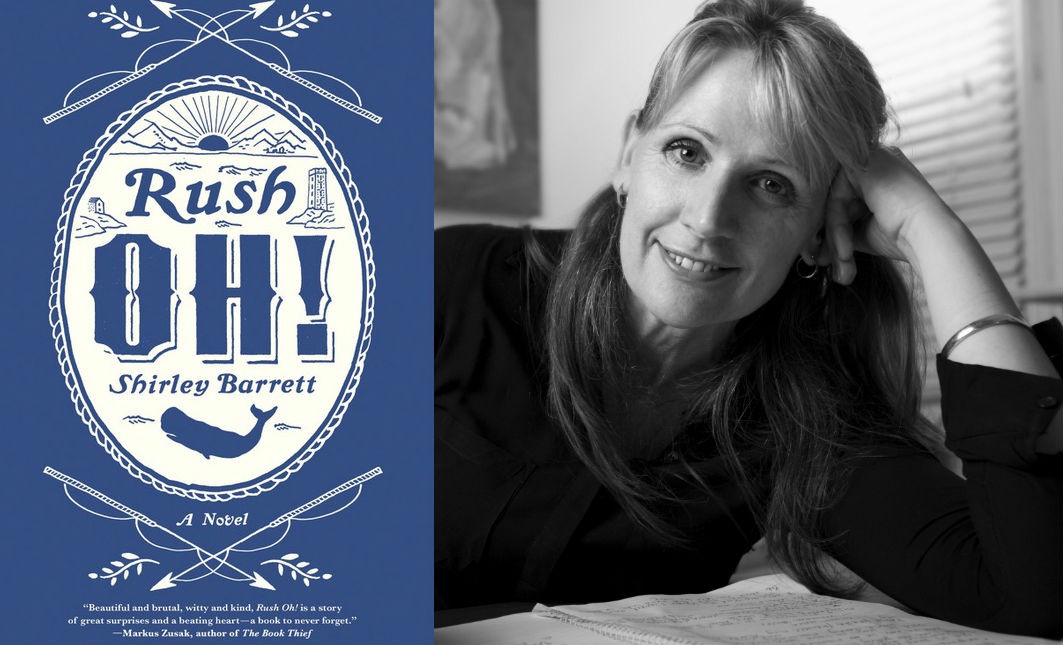
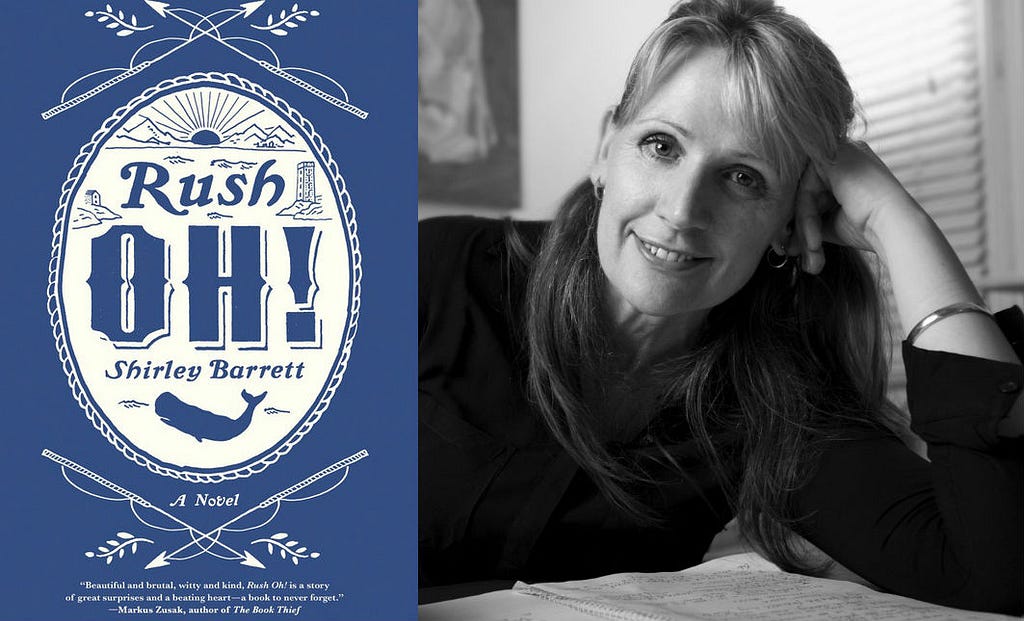
Shirley Barrett is best known as a screenwriter and director whose first feature film, Love Serenade, won the Caméra d’Or at the 1996 Cannes Film Festival. It’s with the publication of Rush Oh! that Barrett has quickly made her name as a novelist, with her debut featuring on the longlist for the Baileys Women’s Prize for Fiction 2016 and showing that her vivid and visual storytelling transfers perfectly to the page. Rush Oh!, based on a real story, tells the story of a New South Wales whaling community in the early 1900s that worked together with a pod of killer whales that returned each year to Eden bay for whaling season. I caught up with Barrett to discuss the writing of Rush Oh!, where the story came from, and how her work for the screen influenced her novel.
Peter Meinertzhagen: Rush Oh! began life as a feature film script before you turned it into a novel. How did you go about approaching that transformation?
Shirley Barrett: Having written it first as a feature film, it gave me a structure to hang the novel on, which helped. I already knew it was going to revolve around one particular whaling season. Also I had an entire set of characters that I’d lived with for a while, even cast them in my mind, so I was very familiar with them all when I began. The film script started the same way as the book with the arrival of John Beck, but it finished with the Plain and Fancy Dress Ball. It was a much simpler story, a romance. When I started the process of transforming it into a novel, I laboriously copied the dialogue from the script. As I grew more confident, I referred to the script less and less, and the novel began to dictate its own terms. I found that now I didn’t have to adhere to a tight screenplay structure, I could meander more, tell little stories on the side, and all that I found really enjoyable. I like detail, and there is precious little room for details in screenplays! Also, the movie was always going to be very expensive because of the whaling scenes, but now that I didn’t have to worry about expense, I could have as many whaling scenes as I liked. I didn’t have to hear kerching! kerching! every time another whale hove to.
PM: Having a cast in mind for each character must have really helped in bringing those characters to life. I know many authors base characters on people they know in order to realise them on the page. Do you think you’d approach your future fiction in a similar way, casting the characters in your mind?
SB: No, not really. I feel that would be quite limiting somehow. It is very useful, however, in screenwriting when you know the actors you’re writing for. You can really write to their strengths, and tailor the role for them. In fiction, however, that feels sort of redundant. One thing I do find very helpful as a stepping-off point, however is photographs, particularly portraits. I like to peer long and hard at photographs and try to glean as much as I can. I did this with a photo of the real Davidson offspring (see below), imagining various personalities for each of them. One of the girls had spectacles, and had also moved when the photograph had been taken, and was subsequently a bit blurred. She became Mary, my narrator.
PM: Were you worried when you began writing the novel that you would struggle to see it get published, after the difficulties you had with getting the movie produced?
SB: I didn’t really imagine I would get it published mainly because I wasn’t very confident that it was any good. I’d look at real novels, and think, hmm, they have much longer chapters than me — things like that. So I sent it off to Curtis Brown (literary agent) here in Sydney as a speculative thing really. I just wanted to see if it had any hope at all.
PM: How long did it take Curtis Brown to get back to you and what was their reaction?
SB: They got back to me within about two weeks, wanting to read more. I had sent them the first 45 pages, which I had polished up quite a bit. So then I had to frantically try to polish up the rest of it, not wanting to test their patience by taking too long over it. The ending didn’t quite work — it felt a bit rushed. Grace Heifetz, my agent at Curtis Brown, was immediately rapturously enthusiastic, even in spite of the fact it had a shaky last twenty pages. She absolutely loved it, and told me so — it was wonderful, especially after being in the film industry where everyone is much more circumspect when it comes to doling out any praise. She told me to go away and fix up the ending, which I did.
PM: Now that the novel is published and has enjoyed some success in the short time it’s been out, do you think it will be easier getting Rush Oh! turned into a film? Is that something you’ll still continue to pursue? Were you to re-adapt Rush Oh! for the screen, would you approach it differently than the first time around?
SB: Much as I would love to see Rush Oh! produced as a film, I don’t hold out a lot of hope, nor do I have any intention of pursuing it. The same difficulties still remain — it’s just a very expensive film to make owing to all the computer generated effects required for the whaling scenes, and really, who wants to watch whales being killed? It’s one thing to read about it (even then, my own mother had to put the book down for two days after the first whaling scene), but another thing to watch it unfold onscreen. I have sometimes wondered if it could be done in a less conventional way, so the whaling scenes were depicted in much the same way as the pen and ink illustrations in the book. Still expensive, but less horrifying perhaps…
Also I seem to have booby-trapped the book for movie adaptations by choosing to tell the story from thirty years hence. I know my heart always sinks at the prospect of an actress in age make-up and a crocheted rug, harking back to gentler times.
As to how I would adapt it differently were a producer to approach me with a pot of gold, that’s a good question! I think I would try to be a bit more adventurous and find a way to somehow include all those deviations, the flash-forwards and flash-backs. They can be annoying and disorienting sometimes in films, so it’s tricky. Also, maybe I’d dispense with the idea of telling the story from thirty years hence, thus ridding myself of the fore-mentioned actress in age-make-up problem.
Rush Oh! is told in the first person, too, and the reader is very much in Mary’s head. The only real way to achieve anything like this in film is to use voiceover, and I’m always leery of that as a device. It seems a bit clunky and ham-fisted. But I seem to be busily discouraging any potential producer from even contemplating the idea, so I’ll desist!
PM: The premise of Rush Oh! is based on a real story. When did you first come across the story of the killer whales of Eden? How faithful were you to the original story?
…this killer whale had been so loved and revered, a whole museum was built around his skeleton!
SB: Many years ago now, we visited Eden on a rainy day during a South Coast beach holiday and sought shelter in the Eden Killer Whale Museum. Tom’s skeleton, lovingly preserved by George Davidson, is right there as you walk in, and a pretty impressive sight it is too. I was struck by the fact that this killer whale had been so loved and revered, a whole museum was built around his skeleton! And then, of course, the more you learn of the story, the more amazing it gets. A pod of killer whales returning year after year, and assisting the whalers in the whale chase, sharing the spoils — the whole idea of inter-species co-operation appealed to me.
When I decided I would have a bash at telling the story, I had to find a way in. I have an old photograph of George Davidson with his offspring gathered around, and I used to stare at that and wonder what they were like. Somewhere along the line, I settled on telling the story from an imaginary eldest daughter’s point of view. I figured that way I could imbue the story with a female point of view, and perhaps give it some humour and romance. So I just leapt off the precipice, created my own brand new set of Davidson offspring, and did away altogether with George Davidson’s wife.
But I was concerned that if I’d taken a liberty like that in creating a fictional family, then would this undermine the parts of the story that were actually true, especially those pertaining to the killer whales? I didn’t want the reader to think I’d just concocted all that too. So I made a decision to try not to embellish anything concerning the killer whales and the whaling, and to make it clear what’s true and what’s not in the Author’s Note, supported by newspaper reports of the time.
PM: What compelled you to want to tell this story? Especially to go as far as writing a script and then re-writing it for a novel, clearly this story meant something to you.
SB: I think I fell in love with the world. I spent a lot of time poring over the Eden newspapers of the time, and the world seemed so rich and colourful and mad. I found it fascinating, and loved spending time immersed in it. So when I realised the film would never be made, I decided to have a go at writing it as a novel, just so I didn’t have to give it up. If I could write a string of sequels, I would, for the same reason. But of course I’ve thwarted that possibility by writing the novel from a viewpoint thirty years hence!
PM: Rush Oh! is sprinkled throughout with illustrations. Was the inclusion of these part of your original vision for the book?
SB: It occurred to me that since Mary talks a bit about her under-appreciated artwork, it might be nice to include some — particularly “Stern All, Boys!”, which she describes in some detail at the beginning of the book. I thought having a visual reference might help in understanding the whaling process too. It was also useful in depicting the differences in the killer whales’ dorsal fins, and details such as the flensing of the whale and so forth. I went to the State Library and found a wonderful collection of early Australian amateur artists’ sketch books. That was really inspiring — beautiful, carefully wrought illustrations of the surrounding fauna and birdlife, but, because a kangaroo or a kookaburra won’t stay still for long, they were always just slightly wrong, a little wonky.
We found a wonderful illustrator named Matt Canning to do the illustrations. I looked at his website and he had done a beautiful drawing of a whale, and I knew instantly he was the one. He’s based in the U.K., so we began an email correspondence. I had to encourage him to draw as if he were an untrained nineteen year old girl back in 1908. This meant, of course, drawing less well than he actually draws — a bit of a poisoned chalice, really. But he embraced it, and I think his illustrations are beautiful and add enormously to the book.
PM: Were there parts of the novel-writing process that you especially enjoyed over what you’re used to in writing screenplays? Was there anything you found more challenging?
…I suddenly had an enormous amount of freedom, where I had felt quite constrained within the conventional three-act structure of the screenplay.
SB: It just felt like I suddenly had an enormous amount of freedom, where I had felt quite constrained within the conventional three-act structure of the screenplay. As I said earlier, I loved the flexibility novel-writing gave me in moving about in time; I loved the way it gave me access to Mary’s thoughts; I loved the way I could include poems and newspaper reports and as many whale chases as I liked! As for what was most challenging, well, grammar has never been my strong suit…
PM: It what ways do you think your background as a screenwriter helped you in writing Rush Oh!?
SB: That’s a good question. I think working as a screen-writer, you become used to thinking visually, which is a useful skill. You also gain experience in working out the shape of a scene, how it begins and finishes, and how one scene will flow in to the next. Also as a director, you have to think about how the actors move within their space, and I think that discipline somehow carries through — you become used to thinking about things in three dimensions.
PM: This question came from Facebook from a fan of Love Serenade — In your work do you deliberately set out to set up and then undermine genres and genre expectations?
SB: A Love Serenade fan! Thank you for writing in. No, I don’t deliberately set out to undermine genres. I am pretty unsophisticated in my thinking, and actually I try to avoid thinking in terms of genre and so forth. I just wanted to write a story set in that particular town, and give it the same creepiness of that great Barry White song Love Serenade — those were really my stepping off points in writing it.
PM: What does your daily working routine look like?
SB: Well, I try to get up early, go for a run, and then do all my chores so I can sit down to write by about 9. It’s imperative for me to use an internet blocker — I am very easily distracted. I write fitfully, with frequent trips back and forth to the fridge and possibly a small nap at some point, till about 4, on a good day, and then I have to start thinking about what’s for dinner. I have days when I’m quite productive and days when I’m hopeless, but I think I’m used to that now, and don’t get too despairing about the bad days.
PM: If you could give a single piece of advice to an up-and-coming writer, what would it be?
…confidence, the belief that you can actually pull this off, is everything.
SB: I think it would be to be careful about getting too much feedback. I am not a fan of feedback. I don’t show anyone anything until it’s in a very solid state i.e. finished. If you do feel like you need feedback, then be very careful about who you select, and prepare yourself to reject completely anything they have to say if you disagree, or feel they’ve misread it. I just feel that the wrong feedback, especially when your work is at a formative stage, is potentially so destructive, not just to the work but to your confidence. And confidence, the belief that you can actually pull this off, is everything.
PM: What’s next? Will you be continuing with screenplays or is another novel in the works?
SB: Well, I continue to work as a television writer and director, but I am desperate to get stuck into another novel. I miss it. I have written one small horror novella since I finished Rush Oh! but no one seems very interested in it… So at least Stephen King has nothing to worry about.
PM:A horror novella sounds interesting, tell me more about it. And what has the response been to it?
SB: Only two people have read it, both in the publishing world, and they both told me to stretch it into a novel, that novellas are too difficult to market. But at this point, I don’t really see how I can — I don’t think it would work padded out. I want it to be a wild ride — you have to hang on tight till it throws you out at the end. So I’m not really sure what to do with it. Perhaps release it digitally myself? I would be happy to have any advice, if anyone has any bright ideas!
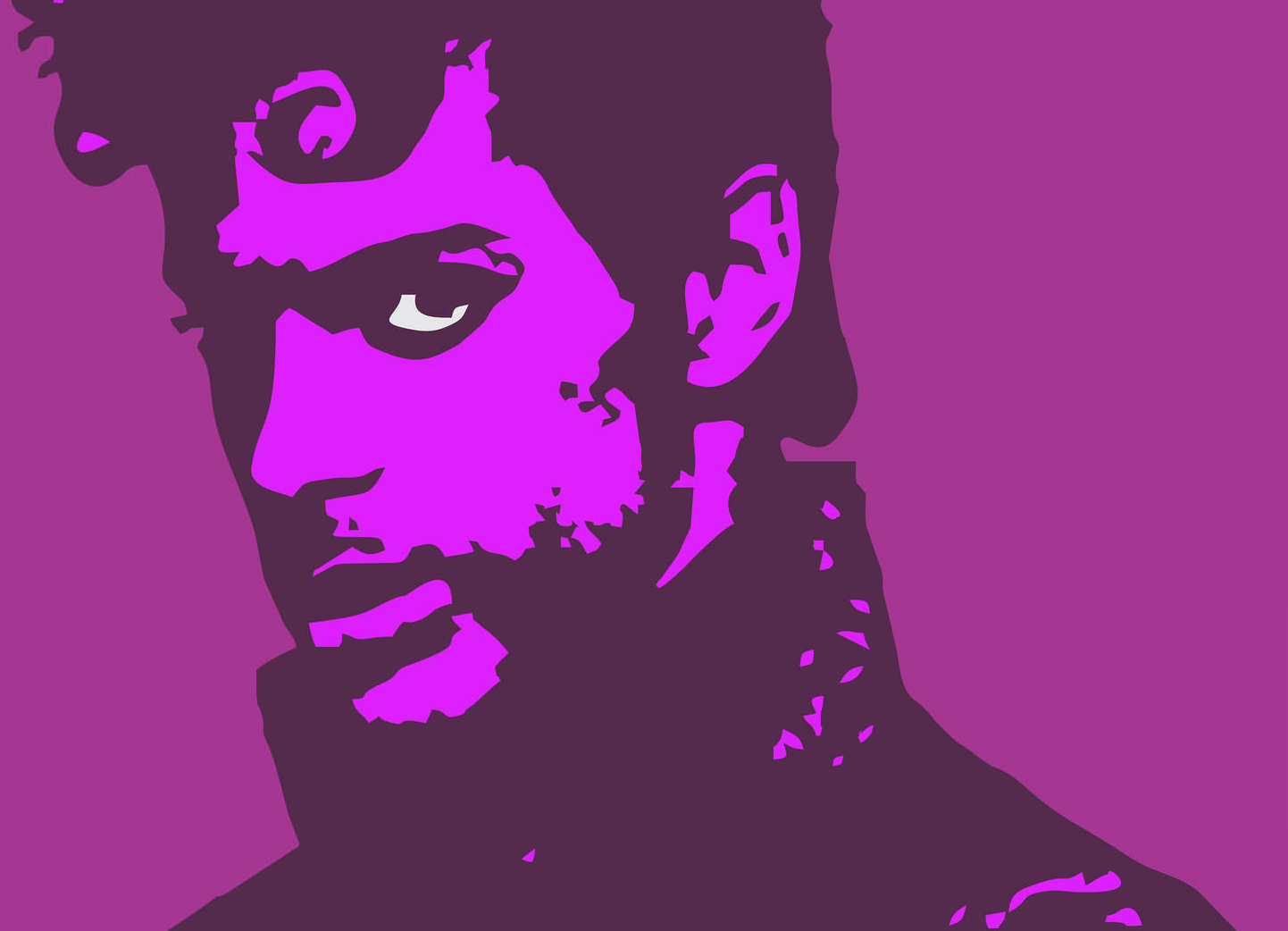
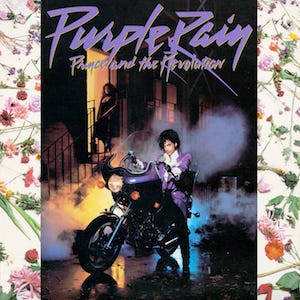
As the news of Prince’s death spread through the Electric Literature offices on Thursday, disbelief hung in the room as clearly as the “Purple Rain” that began emanating from someone’s speakers.
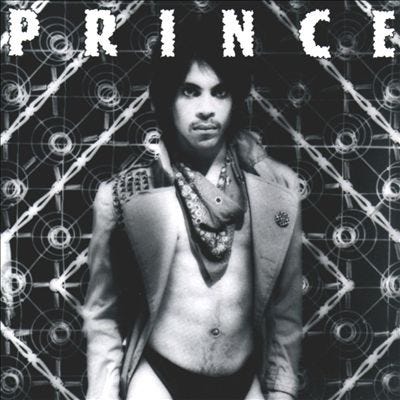
Prince was — is — a cultural icon, one of the few who is known by a singular name (and, sometimes, with just a symbol). He was prolific: in his 57 years, he gave us the gift of a staggering 50 albums, plus the majesty of his Paisley Park home, recording studio, and vault, which held an additional 385 unreleased finished recordings at last count. The wonder of Prince’s music: every single thing he created is undeniably funky and full of life and gave his listeners the permission to feel deeply.
Prince was everywhere, and he was refreshingly inclusive. Who among us has taken part in or witnessed a karaoke session that did not include the hugely popular “Kiss,” assuring us we didn’t need to be rich or cool or experienced to rule Prince’s world? Prince was funny, too, as evidenced by his work on Episode 201 of the Muppet Show, where he serenades the most unapologetically original girl in the class with a song called “Starfish and Coffee.”
While not all of us had the joy of seeing Prince perform live, let alone meet the man in person, what has become apparent in the last several days is how much the magic of Prince is due to his ability to affect so many of us so personally. Often, Prince’s music was what we needed not only for a good dance party with a crowd, but in our most solitary moments, too — Prince and his music are there for us when we are going through internal struggle as much as when we are dancing freely.
We asked several writers to reflect on their memories of Prince — a favorite song, album, or moment — and what the work and legacy of the Purple One meant to them.
Jesmyn Ward, author of Where the Line Bleeds, Salvage the Bones, and Men We Reaped
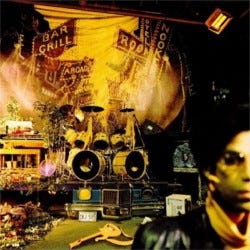
During the summer after I turned ten, multiple songs from the Sign o’ the Times album were in heavy rotation on black radio. That summer, a tumultuous one, was the last summer I would live in my grandmother’s house with my extended family in rural Mississippi.
In the room I shared with my younger brother and my two aunts and two cousins, there was a radio wedged on the windowsill, which my aunts let play all hours of the day and night. My mother and father had separated a year and a half earlier, and I was still reeling. I was also trying to process my immanent move to a different town, and enrolling in a new school as a junior high student in the wake of my parents’ split. Finally, I was in the beginning stages of puberty, which meant every day my flesh surprised me with some new alien, disturbing, horrible change. Boobs. Underarm hair.
As I sat in that room during the relentlessly hot, dogged days of summer, I listened to Prince sing, again and again, and the song that stuck with me, that I breathlessly waited for on the radio, was “If I Was Your Girlfriend.” Something about the beat, slow and somnolent, reminded me of the heat. When the melody dropped, it was like submerging myself into a warm body of water: for me, an amber river. The experience was simply visceral until his voice, high and sweet, crooned over the record, and suddenly, I was listening to Prince differently. I understood the longing in his voice. I understood his need to be the girlfriend of this woman he adored. To have her trust, to hold her confidence. To wash her hair, to make her breakfast. To hang out, to go to the movies, together. Underneath it all, Prince was saying this: he wanted to love her, and to be loved by her. For the first time, I understood some of the emotional power of Prince’s music. I understood the emotional subtext.
That summer I waited for my favorite Prince song to sound on the radio, I was just beginning to think about sexuality and gender, and “If I Was Your Girlfriend” confounded all of the theories I was constructing. It did so with lyrics and sound that were weirdly beautiful and frustrating, but still, I understood the soul of the song. I, with my heart still broken by my father’s leaving, understood what it was to love someone, to long for them.
Mira Jacob, author of The Sleepwalker’s Guide to Dancing
I was living in New York for seven years before I ever went to that kind of a show. My New York was barely lit Williamsburg in the 90s, dancing in spaces so tight I’d lose the skin on my hips and shoulders. Madison Square Garden? I’d go blind there. Not my shows, not my people.
Except it was Prince. I mean, we’ve gotta do it for Prince, right? Alison said, so we did the math and decided it was totally worth it not to eat out for months. The night of the concert, we dressed in velvet and lace and got caught in a rainstorm along with everyone else, so we arrived looking like damp tissues.
I’m not going to write about how I couldn’t stop shaking the entire time, how watching made me want him so badly I spent $60 on what turned out to be an undershirt smeared with purple glitter glue, how I wore that thing to bed all summer long because it felt like the exact moment he filled the stadium so fully he was fucking me in the cheap seats.
But when he started singing “Purple Rain,” my heart sank. Who knows why? Maybe because I was just tired of sharing him by then.
He sang it close up on the mic, just him and the guitar, eyes closed so he didn’t see when the first umbrella popped open.
He sang it close up on the mic, just him and the guitar, eyes closed so he didn’t see when the first umbrella popped open. He didn’t see the next either, or the next, but he must have sensed something moving through the crowd because suddenly his eyes flew open and he gasped a little, right in the middle of the chorus. Gave us a smile, shut his eyes and kept singing. And then it was on. All of us scrambling and unfurling, his eyes flashing open again, up and down, shaking his head like I can’t believe you as the whole stadium launched high with a vaunted pop, pulling the ripcord that might keep us suspended above him forever. There he is, way down there, a purple flame in a pool of black. Laughing now, his smile working the words differently. He pats his heart twice, points to us, still singing.
Kathleen Alcott, author of The Dangers of Proximal Alphabets and Infinite Home
…I began to believe that my wishes then to die and fuck and lie and drink did not eliminate some life in which I might live and work and love and think.
A cassette of Purple Rain — a copy made by someone else for someone else, scrawled in caps, which I bought at a sidewalk sale — came into my life exactly at the time when I needed to know a person could be many selves at once. In the space of my fifteenth summer, two people very close to me died, and when I began driving around my mother’s beaten Corolla shortly thereafter, Prince was the teacher I needed, the one who whispered, crooned, and screamed: identity lay on a continuum, was both familiar and inscrutable. Though I had changed overnight from a high-strung class president to a girl who smoked twenty-sevens and dated tattooed men with leases, that album lent me approval: I could masturbate with a magazine, I could hide somewhere between lover and friend, I could not know which leader I needed, I could exist that day only to get through that electric word life. I always listened to that album from start to finish, took cover in the way the songs fought with each other, and I began to believe that my wishes then to die and fuck and lie and drink did not eliminate some life in which I might live and work and love and think. I had little regard for the declining gas tank when Purple Rain was on, though I never had more than a few dollars, and I had always driven much too far from home.
Alexander Chee, author of Edinburgh and The Queen of the Night
For a glorious summer when I was 18, I had a DJ boyfriend who worked at a nightclub in Portland, ME, and all early Prince reminds me in particular of him and the pleasures of those summer nights, dancing late into the night, or driving around in search of a place to be, or getting ready for the night and you don’t know what will happen but you put on a song to get dressed for whatever you want to have happen.
Dirty Mind — the album and the song in particular — is my personal favorite, a song and album I found around the time my voice was changing and all that remained to me of the almost three octave boy soprano voice I had once had was a falsetto, which seemed like the most embarrassing disgraceful vocal tool. Until I discovered… I could use it to sing along to Prince.
It is a song you have to strut to in order to dance to it, a short, desperate beautiful test.
The first notes are still one of those “divas to the dance floor please” moments. The song just feels like it is taking you somewhere, like a car you’re getting into with a party going on inside of it, and the narration, so simultaneously tense and sweet and seductive and ambivalent — the feeling that this person might just take it or leave it, despite the intensity of their obsession and desire. He circles slowly, calm to frenzied and back again. “In my Daddy’s car/It’s you I really want to drive” — sung so calmly, but the sentence is an explosion. And I love how the whole song sort of flips beautifully on this line: “If you’ve got the time/I’ll give you some money/to buy a dirty mind.” It is a song you have to strut to in order to dance to it, a short, desperate beautiful test. And when I hear the driving synth beat and keyboard, a little smile comes over my mind, and, well, I would walk away from pretty much anyone and anything I was drinking to dance to it. Though depending on who they were, I might take them along.
Amy Brill, author of The Movement of Stars
In 1984 I spent my bat mitzvah money on my first stereo and a few albums. Purple Rain was one of them (Synchronicity and L.A. Woman were the other two). I discovered Prince at the same time he toppled into the fantasies of millions of other people. But in my room, alone at thirteen, he was all mine. I had kissed a boy, but just; I knew what sex was in theory only. The beats and the melodies slithered into me one song at a time — by turns funky, sweaty, hyper, weepy, wild, and mournful. In the lean space of 44 minutes, every note tapped into something in me that was yet unrealized, a thrilling promise, a hint of the sensual, a whiff of the divine. In the years since, I’m sure that my most uninhibited moments have been spent in his company — sometimes with friends, sometimes by myself — but never alone. My conscious, my love. How he will be missed.
Casey Rocheteau, poet and author of Knocked Up On Yes and The Dozen
Let’s Go Crazy:
This song is an existential black anthem. It is gospel in the truest sense of the word. It won’t lie to you, it won’t quit.
By the time I was a pre-teen, visits to see my biological father became less frequent. He had gotten married when I was nine, to a woman who resented my existence at best. Often, visits were relegated to me babysitting his wife’s son, four years my junior, and stuffing into uncomfortably frilly dresses to go to church, despite my mother’s insistence that I be raised without religion. I disliked my stepmother, a hood girl gone bougie, because she constantly derided me for not being black enough, even as a child. I had a lot of difficulty with my father because she encouraged him to do the same. Most of my memories of them from childhood are rooted in alienation, save for one. My cousin and I were probably eleven or twelve, and we were cleaning the kitchen with the radio on. When we heard the other worldly gospel begin — “Dearly beloved, we are gathered here today to get through this thing called life” — we turned the radio to top volume. We knew what to do. We sang into mop handles and twirled on linoleum. We pogo-ed on our awkward legs and smiled wide as we looked into each others eyes and yelled “Oh no, let’s go!” Halfway through the song, my father and his wife came to the doorway, looking very serious and still. We froze for a second, scared they were angry at us for playing when we were supposed to be doing chores, but it was a trick. They slid across the kitchen floor and belted “let’s go craaaazzzzyyy” and we laughed until our sides hurt, and kept dancing. Prince, for one swirling joyful moment, gave me a family who I knew loved and accepted me. I wasn’t zebra or lightskint heifer or even something to be ashamed of, because I had kin in Prince. Even when he said “in this life, you’re on your own” he was telling me I wasn’t. This song is an existential black anthem. It is gospel in the truest sense of the word. It won’t lie to you, it won’t quit. It is a celebration of mortality that swerves on everything that tries to break us. It is the home I always want to reside in.
Ryan Britt, essayist and author of Luke Skywalker Can’t Read
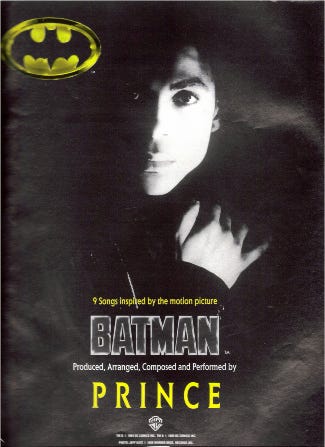
Having been born in 1981, I was only three years old when Prince and the Revolution released Purple Rain, so I’d be lying if I said I had a ton of childhood or pre-teen memories of the most famous of all Prince creations. But I do remember when the Purple One did the soundtrack for the 1989 Batman soundtrack. In the music video for “Batdance,” Prince cosplayed as the Joker while funking-up my young notions of what kind of music belonged in a comic book movie. Though the Danny Elfman score was probably more influential on future cinematic Batmen, the existence of not-so-famous Prince tracks like “The Future,” “Partyman,” and “Trust” introduced an eight-year-old me to a type of pop music that was challenging simply because it was something I wasn’t used to. When Jack Nicholson’s Joker is throwing money in the streets accompanied by giant balloons containing deadly toxins, Prince’s music turns this foreboding scene into a party. The fact that the cool funky music is associated mostly with the Joker and not Batman is deliciously subversive in ways I don’t think Tim Burton or anyone working on the film could have imagined. In short, Prince’s music in 1989’s Batman undercuts the cartoony violence of the film and replaces it — at least subliminally — with something more playful. Before his recent death, would anyone dream of putting original music from Prince in a contemporary superhero movie? Probably not. Guardians of the Galaxy famously employed a funky nostalgia-heavy soundtrack to rescue its generic plot from oblivion. While almost all of these tracks are fantastic, they do omit Prince, none are original, and they’re all also very safe. Prince on the soundtrack for Batman now? It would be like The Magnetic Fields doing the music for the next Avengers. Prince on that soundtrack in 1989 represented a willingness to take risks that I feel mainstream pop culture has sometimes forgotten was even possible.
For me, all great art creates confusion in your brain, or, at the very least, healthy contradiction. And in my first exposure to Prince via Batman, I was thoroughly confused as to how I was supposed to feel. Thankfully, because the rest of Prince’s oeuvre is just as unique — integrating very specific lyrical elements with unexpected melodies — I’m still confused as to why his music is as wonderful as it is. With Prince passing away so young, I can’t help but a feel a small part of popular culture has lost one of the riskiest and most vibrant artists of all time. And the craziest part is: unlike fictional characters like Batman or the Joker, you couldn’t invent Prince if you tried.
Mensah Demary, writer and columnist, Liner Notes
In the backroom of a bar in the Crown Heights neighborhood of Brooklyn, six months before his death, writers gathered together to worship, and unknowingly eulogize, Prince. Seven writers, one by one, stepped onto the stage and delivered the word to an audience of one hundred people, each writer revelling in the sex and satisfaction of Prince, in his divine lust, his ever-expanding Blackness, his unfathomable genius. As the night’s emcee, I stood to the side of the stage, waiting to introduce the next writer; in hindsight, with grief sieving the spirit from my body, I wish I too had delivered a word that October night. So I now offer as a coin tossed along with the billions thrown into the Pyre: Listen to Prince’s “Take Me With U,” from the eternal Purple Rain, while speeding down a highway in a Mustang. The rolling, hot pavement beneath the tires; the fresh white dotted lines slicing the road into thirds; the freedom achieved at ninety miles per hour, slashing traffic, passing tractor trailers, the Iowa terrain — with its flat, gold fields irrigated by colossal steel sprinklers — whipping past: combine all of this grace with the verse “Come on and touch the place in me/That’s calling out your name,” and feel the alchemy welling in your eyes, and witness the consecration of the electric word life Prince proclaimed to us as ours, forever. The music is the balm. Prince has left us for the Void, but it is still 1999 here on Earth. The music is the balm, and so we must continue to dance.
Marie Myung-Ok Lee, essayist and author of Somebody’s Daughter
Prince’s Purple Rain came out in 1983, when I was still a teenager — by then determined to leave Hibbing, Minnesota forever. I was at first dismissive of the seismic buzz emanating from this club, First Avenue, which I only knew of as a building near the grimy Greyhound bus station in Minneapolis; the Twin Cities was a place we visited a few times a year so my parents, Korean immigrants, could buy some kimchi at the lone Korean grocery in St. Paul.
Hibbing is actually Bob Dylan’s hometown, and townspeople didn’t speak particularly kindly of him — they actually didn’t say much at all. But this Prince person caused a bit of a scandal. “Is he wearing makeup?” “Is he…queer?” “Why doesn’t he have a last name? Even Bobby Dylan has a last name!” “Why does he…?”
Prince had come out of a Minnesota high school a few years before me, and I marveled at this person who was so happy with himself: a sexy weirdo. I’d heard stories of him getting pushed into lockers, spit on, called a fag. Yet, at nineteen, he made the Loring Park Sessions, a jam session, where he played all of the instruments, because — his face seemed to say — why not?
Prince basically showed that for the artist, the way is what you make. There was no one way to be a man, a person of color, to have and make a name. He wasn’t willing, as so many are, to cut corners on his soul so he could better fit in, a voluntary self-mutilation that I know I engage in, still, which stems from a fear of ridicule or people not liking me.
There was no one way to be a man, a person of color, to have and make a name.
In 2011, Prince let a reporter look in his fridge. Prince, being Prince, had: five pounds of Dunkaroos and a large jar of kimchi, “clearly actually buried in someone’s back yard at some point” of which he opined via email to the reporter, “This stuff is AMAZING.”
What can you say about someone who has both Dunkaroos and homemade kimchi in his fridgeand in the last months of his life did a pop-up performance at the Chanhassen Dinner Theater?
Dearly Beloved
We are gathered here today
2 get through this thing called life
And, oh, what a life.
Laura van den Berg, author of What the World Will Look Like When All the Water Leaves Us, The Isle of Youth, and Find Me
A handful of years ago, I was having a rough time. Nothing was “wrong-wrong” — i.e. no one had died — but a lot felt wrong. On a particularly shitty day I got the idea to host an afternoon dance party for myself, alone in my apartment, and it felt absurd and hilarious and a little sad and also pretty great. I listened to Prince’s “Kiss” again and again. How can you not feel better about life after hearing that song? These solo dance parties became a little secret habit I kept up for a while, and “Kiss” was always the first and last song I listened to. Of course, I had listened to his albums a million times before, danced to his songs at parities, blasted them in the car — but Prince once said “cool means being able to hang with yourself,” and “Kiss” will always be my very favorite Prince song because it helped me remember how to do just that. Like most Prince fans, I know so many people with stories of how Prince, who was never not himself, and his music helped them to feel less alone, to feel more at peace with their own struggling selves, to find whatever permission they needed. I hope desperately that Prince had some sense of, when he was no longer in this world, the ocean of gratitude and love he would be leaving behind. Thank you, Prince, for all that you gave us.
Morgan Jerkins, essayist and freelance writer
He talked about beauty and how it both deceives and bores him…
It is extremely difficult to try to pin down one particular Prince song that meant the most to me, because his catalogue is insane. Maybe I’ll just start with a recurring theme in Prince’s music, which is that beauty is both elusive and dangerous. In “The Beautiful Ones,” Prince places himself in a humble position because he wants to earn the affection of a beautiful woman. He ultimately realizes that the beautiful ones “hurt you every time,” presumably because they have so many suitors. And then in “Kiss,” Prince explicitly states that physical beauty is not a key criterion to arouse him, which meant a lot to me as a girl who used to be very insecure about her looks. Perhaps this is one of the reasons why Prince is timeless to me. He didn’t follow certain formulas that demonstrated traditional masculinity. He talked about beauty and how it both deceives and bores him, which means to me that there is something inherently deeper that brings two people together. What that something is remains to be seen…or in this case, felt. But, for me personally, I believe his songs give us a glimpse of the eternal, something beyond ourselves, and romantic and sexual attraction is the magic through which to reveal that depth.
Maris Kreizman, author of Slaughterhouse 90210
Before I (or any of us, really) had the proper vocabulary to discuss the fluidity of gender, before I’d ever heard the word “non-binary,” there was Prince. “I’m not a woman, I’m not a man,” he sings in the first lines of “I Would Die 4 U,” “I am something that you’ll never understand.” As a kid I may not have been wise to all the details, but I did understand: Prince was beautiful. It was as simple as that. He was the first crush I’d encountered who didn’t look like the dudes in my teen magazines. He was so sexy because he was singularly himself.
Sean H. Doyle, author of This Must Be the Place
As a young guitar player and devotee to the Church of Hendrix, seeing the movie Purple Rain at 14 was like witnessing a resurrection, the spirit of Jimi flowing through this beautiful and tiny man and pulsing from the theater and into my own blood, already purple. I immediately went out and bought the soundtrack and fell madly in love with the sounds, with the personae, with the mythology of Prince. I followed him wherever he took me — and Prince took me to places I never knew existed — and I am all the better for it. If you walk into any kind of establishment during the next month and they are NOT playing Prince, leave and never go back there. Do yourselves and the world a favor tomorrow: wear some purple, some dark shades, and get your strut on.
A six-year-old child’s eyes are set only about three feet off the ground, which is probably why the girls saw it first. I was bringing up the rear on the walk from the tennis courts when I noticed two or three of them crouching. “What is it?” I asked as I knelt to see what they saw.
It was a mouse — a baby — on its side in the grass. Its head was touched with blood but still its sides rose and fell. “What should we do?” I said, in part because it seemed as good a time as any to let them test their fledgling agency, in part because I had no idea myself.
“We need to save it!” shouted Rebecca*, a thin yet surprisingly muscular spider monkey of a child with long bronze hair and long bronze legs she used to climb all over my back. The other counselor, Diana, and I were sure she’d be a gorgeous terror far too soon.
We made a circle around the mouse while the girls shouted “Help!” and I looked on half-serious, so no one would mistake it for a real emergency, until someone important, signaled by a walkie-talkie clipped to cargo shorts, showed up and radioed for a maintenance man. He came, a teenager in a baseball cap and blue shirt with the word STAFF printed across the back, steering a golf cart with garden-gloved hands. The girls, gathered in a bunch at my knees, looked up at me as I explained to him: 1) We found a mouse, 2) it is living and it is hurt, and 3) is there anything you can do, please? The boy, perhaps a year or two younger than my nineteen, looked bored. Without a word he lifted the mouse, its thread of tail pinched between his thumb and forefinger, and flung it into the trashcan on the back of his cart.
•
I worked as a counselor at this standard-issue suburban day camp only once, in the summer of 2004. I had been a camper there for three summers, from when I was twelve until I was fourteen. These were the prime awkward years, scored by the dance hits of Ace of Base and La Bouche — summers of sweat-slicked idleness that served as an interlude between earlier and later years at an art camp where I learned to play classical guitar and developed hopeless unrequited crushes on boys who later, without exception, came out as Zionist or gay.
I had come home to live with my parents on Long Island in between my freshman and sophomore years of college. I was offered a job at a Bloomingdale’s in a mall named for one of my least-favorite poets, but I let my mother convince me that women who worked in department stores were catty and would make my life miserable, and so I declined. Instead, I took a night job at a record store, making half as much money as I would have at the department store, and a job at the camp making half as much as that. Along with Diana and two other counselors, I was placed in charge of the Flamingos, a baker’s dozen of five- and six-year-old girls.
Diana and I ate camp lunches while other counselors packed restaurant-style lettuce wraps redolent of low-carb diets and homes with staffed kitchens. Many were so thin that a pigeon-toed camper in a group challenging ours in kickball once asked if I, by contrast, was expecting a baby.
Among our girls, Corey and Emma were the group’s de facto leaders. Already cliquish and fashion-conscious at six, they carried miniscule handbags and spent free time brushing their hair. Corey was the spitting image of her mother, a sunbaked and sinewy blonde employed as the head counselor of another group. Looking at her made me think of tennis. The facility with which Emma lied was so remarkable that I wondered whom she took after. Her face never betrayed any hint of remorse. Another girl, Giada, had a family who might have encouraged her precociousness too much. When a music teacher asked who her favorite artist was, by which she’d meant pop music group, Giada answered, “David Hockney.”
Alexa, broad-faced and freckled, was beautiful like Rebecca but quieter in it, with a hum of a voice and gentle presence. She shied away from the other girls, clinging instead to Diana and me. We indulged her at first because she reminded us of our lonely childhood selves, but I began to worry that she wasn’t going to make any friends. I pulled away, but that only meant she cleaved to Diana ever more fiercely, and the parents tipped her most at the end of the summer.
I took Jordan, swarthy and strange, to the infirmary once. We walked back hand in hand to join the rest of the group for dismissal. I stopped at a flutter of tiny wings and said, “Look, a beetle landed on you!” Neither of us made any effort to brush it off. She glanced calmly down at the iridescent shell hooked to her arm’s terrain and then back up to tell me, as if it made perfect sense, “That’s my favorite time of day.”
•
I don’t remember how we found out. The camp directors may have called the head counselors over and asked them to tell the rest of us. It may have spread in murmurs. I do know that instead of releasing our campers to their buses all at once that day, we were asked to each take a few girls and deliver them over, one by one, into the care of the drivers who brought them to camp each morning and home every afternoon. I had Alexa with me and I took her last because she wanted to hold my hand the longest. By the time we reached her usual bus, the driver was pacing. The other children were already onboard, waiting. She grabbed the child up in a hug and swung her onto the bus. “I was so worried!” she said to both of us, and then only to me, “I heard it was a little girl.”
It was a little boy. Not much earlier that afternoon, as another group sat under a tree awaiting dismissal, a several-hundred-pound limb — appearing healthy from the outside but rotted through within — broke off and fell from a cherry tree. It scraped up a few children, including an eight-year-old girl. It killed her brother, seated beside her, age four.
•
The following morning, the staff gathered in the lunch area. We awaited the arrival of a children’s grief counselor, called in to speak with anyone who needed it. There was a man there with one sleeve of his shirt pinned up, empty. Someone approached him to ask if he was here to talk to the kids — reading the absence of his arm as a sign he had survived some trauma, certifying him an expert on loss — but he was only another counselor’s boyfriend, stopping by to drop off the lunch she had forgotten at home.
As the children came off their buses, we gathered them in the usual attendance spot on the basketball courts. At the therapist’s behest, the art department had given us construction paper and crayons. We were asked to ask the children to draw something they remembered from the previous day at camp. Giada and a few others drew what they had heard about at home and then imagined — what they could not have remembered because they had not seen: a child pinned beneath a broken tree. They drew red for blood. Most of the girls drew the swimming pool or the kitchen from cooking class or tennis balls. Rebecca — and I wanted to take her up in my arms then — drew (soft grey and curled fetal) the poor living mouse.
Many of us know that “Mark Twain” was really a nom de plume chosen by Samuel Langhorne Clemens, and that Mary Ann Evans wrote under the name “George Eliot” to make readers and publishers think she was a man. But did you know that Julian Barnes has also used a pseudonym? This handy infographic from Jonkers Rare Books lists the pen names of famous authors, and tells you why they chose them:
It’s only April, but already it seems as though we can’t go a week in 2016 without some musical idol receiving his or her final curtain. First it was David Bowie, then Glenn Frey of the Eagles, then Paul Kantner of Jefferson Airplane/Starship, then Maurice White of Earth, Wind & Fire, then L.C. Ulmer, then George Martin, Phife Dawg from A Tribe Called Quest, and then Prince. As a collective, we felt these losses so keenly not simply because they deprived us of our musical icons, but because they deprived us of our icons: that is, of the symbols and representations of our own selves. It’d been through these figures that we’d come to discover just who we are and construct parts if not entire segments of our personae, so when the news came that they’d taken their last bows, we understandably felt as though we’d lost a link or opening to corresponding parts of our identities.
It’s precisely this role musicians play in defining and preserving who we are that receives the attention in Justin Tussing’s inviting second novel, Vexation Lullaby. Introducing us to the affable if slightly aimless Peter Silver, it follows the young doctor as he’s invited to join the American tour of a one Jimmy Cross, a kind of enigmatic David Bowie/Bob Dylan/Scott Walker figure who responds to his own legend by keeping a low, self-effacing profile. Persuaded by the knowledge that this Mr Cross shares some history with his own mother, Peter boards the proverbial tour bus, hoping to understand himself a little better by the time of the tour’s final extravaganza.
Cue road trips and rabble rousing, which Tussing lovingly captures with much attention-to-detail. Clearly, he’s a music aficionado himself, since his translation of the often chaotic world of rock into a vibrant idiom betrays a passion usually reserved for the most obsessive of anoraks. In one memorable paragraph, he runs through a whole lexicon of terms for musical paraphernalia: “The band rides in the Toolshed. An acoustic guitar is a Thick One. A keyboard is a Zebra. Cords are Snakes.” Likewise, the entourage surrounding Cross exhibit all the quirks you’d come to expect from roadies and musicians, with bodyguards suddenly breaking out of their dour seriousness to ask, “You don’t know how to play mah-jongg, do you?” and Cross’ son, Alistair, often liable to sit “naked, in a pool of urine; his sodden clothes scattered across the floor.”
Of course, Vexation Lullaby isn’t simply an orgy of guitar feedback and debauched inebriation. For starters, the novel introduces subtlety into its narrative arc via its alternating structure, which switches from chapter to chapter between Peter’s story and that of an Arthur Pennyman, a monomaniacal super-fan who since July 27, 1988 has “attended every one of Jim Cross’s public performances.” It’s because of Pennyman’s life-negating, divorce-provoking dedication that he’s known as “The Restless One,” and it’s primarily through his shadowing of Cross’ tour that the novel offers its insight into how people often rely on musicians more for their senses of identity and self than for any actual music. As Pennyman himself admits, “on balance I find the band to be a tolerable distraction. I’d much prefer Jimmy appear on stage alone.”
Not only that, but it’s through the recurring contrast between what is actually happening on the tour and what Pennyman believes is happening on it that Vexation Lullaby reveals how fans are sometimes inclined to read far too much into their pop stars, looking for meaning where perhaps there isn’t that much to find. For instance, much of the novel’s intrigue revolves around a fabled song called “Purple River Serenade” that was cut from one of Cross’ most celebrated albums, a “theoretical song” that, for the singer’s devotees, “represents some Platonic ideal of music.” Prior to the events of the book, the song had never been played in public or heard in private, and the fact that these devotees get more excited about it than any other song by Cross implies that the musician’s fascination resides not so much in what he actually performs, but in what he hypothetically symbolizes for them.
As for what it means in particular to Pennyman, the novel approaches something of a crescendo in parallel with him developing a theory as to its significance. Almost needless to say, this theory isn’t quite as accurate as he’d like to think it is, but it’s perhaps in the revelation of its misalignment with Cross’s actuality that he and also Silver finally learn not to stake too much of their respective identities in Cross. Pennyman begins to intuit this fruitlessness for the first time at the end of an especially good concert in Columbus, when he reflects on Cross’s ‘true’ identity: “Really, he’s a stranger. Really, we’re all strangers […] Who is Arthur Jacob Pennyman? A person could follow me for years and never find an answer.”
It’s in this realization of how following a musician so ardently has ultimately made him a stranger to himself that Pennyman begins to pull away a little from Cross. The same thing could be said for Silver, yet it’s never entirely clear from the get-go as to what attraction Cross really has for him or why exactly he’d set off on tour with the musician. This uncertainty partly arises because he’s just too passive and accepting for his own good, waiting docilely in dressing rooms for people who never return and occasionally becoming the object of such questions as, “How much of who he was had he cribbed from other people?” As such, it’s sometimes hard to gain a clear sense of his character and motivations, and in turn this makes it difficult to sympathize with him.
This, however, is in contrast to the offbeat Pennyman, who for all his unsavory fixations is a well-rounded and surprisingly believable character with a rich backstory and a more definite trajectory. In fact, given that it’s he who appears to undergo the most notable transformations over the course of Vexation Lullaby, it’s very tempting to declare that the novel is more his than Silver’s. He’s the one who functions as the mouthpiece for most of its themes, pronouncing such aphorisms as “change is the only constant,” “I consider following Cross to be an artistic performance,” and “everyday Pittsburgh looks more like a fantasy of the past.” With such pronouncements, he contributes most of the shape to a novel that reminds us that looking to celebrities and mass culture for the answers to the all-important questions of who we are will, in the end, only ever lead us astray. Still, we can always look to Justin Tussing.
TIME magazine’s yearly 100 Most Influential People list is here, and three great writers have been named to the list: Ta-Nehisi Coates, Elena Ferrante, and Marilynne Robinson. (Frankly, three seems pretty skimpy for the entire field of literature, but at least all three picks are well-deserved.)
When his best-selling second book was released last summer, it seemed everyone came to understand that he is the real deal. Between the World and Me is brilliantly structured, insightful and forcefully argued. He navigates the complexities and burdens of race in America compassed by a father’s love for his son.
The story we hear most often about the Italian author Elena Ferrante is the story of her absence: her pseudonym and the deliberate choice to disengage from the world as an author. It’s odd, though, to imagine that a photo or biography could tell us more about Ferrante than her astonishing books, translated fluidly into English by the great Ann Goldstein, which together form a topographical map of an extraordinary mind.
Marilynne Robinson’s novels and essays manage to be serious without being solemn. They exude a sense of sensuous feeling but also rigorous thinking. She is concerned with how we should live, with the idea of the world as a sort of gift to us, which requires us to notice what we have been offered, and to study it, to appreciate it and to dramatize its textures and contours.
See the full list here, and go out and buy the works of Coates, Ferrante, and Robinson if you want to be, well, influenced.
Hello, and welcome to my week-by-week review of the world. Today I am reviewing kangaroo rides.
Earlier this year I won a free trip to Australia. Unfortunately when I arrived at the airport with all my bags, I learned that the $350 processing fee I’d paid for my free trip was part of a scam and there was no free trip. But that didn’t mean I couldn’t take a trip of my own, and since I was already at the airport, I figured why not.
When I landed in Sydney I went straight to the zoo and asked about the Kangaroo rides. It turns out that was also part of the scam. The zoo said there is no such thing. What a disappointment. I thought I could just capture and ride a kangaroo myself but there are no wild kangaroos in downtown Sydney. I did find their version of the pigeon which is much prettier than America’s. Theirs is a white ibis. Ours just has stumps for feet.
I went to the suburbs to look for kangaroos to ride. In addition to buses, Sydney also has boats. In Boston the only boats are ones you have to peddle yourself and they only go in circles in a pond. In Sydney they go all over, so I took one to Balmain. I found a dead possum and lots of adorable little streets, but couldn’t find any kangaroos. Not even with the kangaroo caller I’d paid that scam artist $49.99 for. The only thing it seemed to call was giant spiders. They were everywhere.
All this searching made me so tired and I worried that once I found a kangaroo, I wouldn’t have the physical stamina to ride it. I decided to sign up for some Zumba classes to get some exercise. In Sydney, their Zumba classes are a pastry shop called Zumbo, and instead of exercising you eat lots of incredibly delicious pastries. It was the best exercise class I’ve ever taken. I exercised on the bench outside their shop for over an hour.
The clerk at the Zumbo class told me the best place to look for kangaroos was out in the wild, not in Sydney. She also told me there was no way I could ride a kangaroo. I wasn’t sure if that was a comment about my age or a dare. I took that as a challenge and booked a ticket as far away as I could to Darwin.
Darwin is about 80 degrees sweatier than Sydney, so I bought a pair of shorts, a tank top, didn’t bother with underwear, and took a bus out to the woods to begin my kangaroo search. I positioned myself behind a mound of dirt and waited patiently for a kangaroo to show up. The heat made me drowsy and after drifting off I woke up to find that the mound of dirt was a termite mound, and that the termites were now all over me.
I screamed and ran so fast through the woods that I was quickly lost. Being lost in the Australian wild is not very much fun. Even if I found a kangaroo and rode it, I would have still been too anxious about getting home to enjoy the ride.
Out of desperation, I began eating ants. It turns out Australian ants have delicious, citrus-flavored, lime green butts. I don’t know if ants poop out of their butts like most animals, but I didn’t care.
The authorities eventually picked me up after a friendly Aboriginal family found me, gave me water, and fed me a goose. On the ride back to the airport I saw a kangaroo off in the distance and I asked the police officer to pull over so I could ride it. She told me that was not a kangaroo in the distance but a wallaby close up. A wallaby is a miniature kangaroo. I remembered that from the wallaby burger I’d eaten in Sydney.
BEST FEATURE: Kangaroo rides leave a lot to the imagination. WORST FEATURE: Kangaroo rides are impossible.
Please join me next week when I’ll be reviewing spider bites.
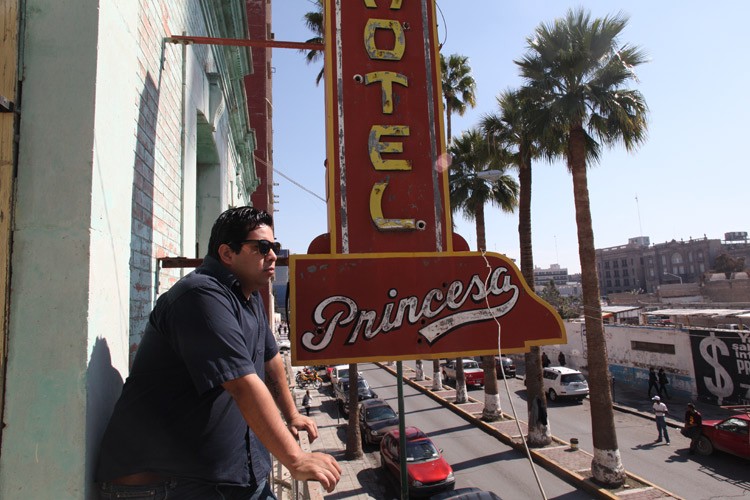
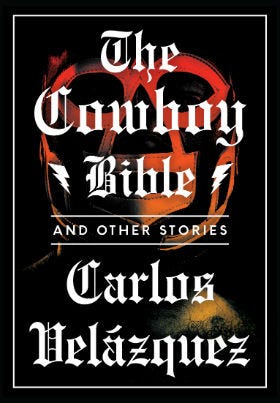
Reading Carlos Velázquez’s collection The Cowboy Bible and Other Stories (Restless Books, 2016) is a constantly shifting experience, moving through everything from absurdist realism to scenes that border on the mythic. His characters encounter everything from contemporary media culture to personifications of evil to intensely strong drinks. Throughout it all is the title phrase, which refers to everything from characters to objects in the stories contained within the book. Via email, I asked Velázquez about the origins of the book, the storytelling choices made within, and the region in which the book is set. His answers touched on perceptions of norteño culture, along with the works that influenced The Cowboy Bible, which includes everything from John Coltrane to Todd Solondz to Richard Brautigan.
Tobias Carroll: Where, for you, did The Cowboy Bible begin? Was it with the location, with the concept of running one name through a number of permutations, or something else entirely?
Carlos Velázquez: I’m atheist, but my favorite writer was Catholic: Kerouac. That’s what keeps me attuned to religious issues. The Cowboy Bible was born one afternoon when I saw a bible lined with bits of old blue jeans in a shop window, a practice that’s common. To protect their bibles, people have stopped covering them with paper and started using old jeans instead. This simple act encompasses the entirety of norteño culture. In the north, there’s a compulsive need to make everything norteño. From reality to the abstract, we reappropriate everything until it becomes our own. Covering a bible with jeans is the reappropriation of symbols that characterize the north. It’s not a completely innocent act, nor is it chance, it’s a subconscious impulse. If we could, we would put cowboy boots on the crucifix. It’s this exact idea that I had in mind when I wrote the story “The Post-Norteño Condition.” It’s a joke, but at the same time it’s an homage, to Lyotard’s postmodern condition. The way I see the world, if Lyotard had been born in the north, he would have suffered the anguish of being post-norteño.
…I needed a Los Angeles of the mind.
The fact that the bible is reincarnated in story after story follows one of the models I used while writing the book. In Trout Fishing in America, the book by Brautigan, all of the stories share the same protagonist. I chose two elements to appear throughout the book, the mix of classic mythology with popular mythology. For example, Los Cadetes de Linares with the Ipod. In this case I mixed Brautigan with David Lynch. Between Lost Highway and Mullholland Drive there are various reincarnations. I should clarify that for me classic mythology doesn’t mean the Greeks or even the Spanish Golden Age. It’s Leonard Cohen and Piporro. David Lynch sets his stories in Los Angeles because it’s a city where everything that’s unimaginable could happen. But I needed a Los Angeles of the mind. A territory that could fit Brautigan, Lynch, Burroughs, and that’s not something my geography could give me, or at least not directly. PopSTock!, where all of the stories take place, is similar to my town. But it’s just a representation, a product, that is, of the area where I live, which is one of the most interesting social laboratories in contemporary Mexico.
TC: On the second page of the collection, a footnote reveals that The Cowboy Bible is also known as The Country Bible; elsewhere, there’s a reference to The Country Bible also being known as The Western Bible. As you were writing this, how did one come to take precedence over the others?
Norteño culture is a product of identity that doesn’t belong to Mexico or the United States.
CV: It’s an exercise in Luddism. Although Mexico is part of the west, it’s always seen itself as part of Latin America, not to say that Latin America isn’t part of the west. Mexicans don’t think of themselves as westerners, but instead as Latinos, Hispanics, and Mexicans. In the north, where I live, the people don’t consider themselves Mexican. They are just norteño. Norteño culture is a product of identity that doesn’t belong to Mexico or the United States. It’s caught between the two, and it forms a symbolic third nation whose language is its nationality. There’s a misunderstanding in the center of the country with regards to the way we use language in the north. They think that to include anglicisms in literature is Spanglish, but Spanglish is a mix of languages that belongs to the children of Mexicans born in the United States. And that’s how the project of Chicano culture failed. That is to say that those kids aren’t completely gringo, but they are more so than they want to be Mexican. Therefore the literature that’s written in the north, and is sprinkled with English words, isn’t a hybrid between two languages. It’s the result of that limbo in which norteño culture is suspended and which is still being built. It’s because of the dynamic of language in this region. It’s alive and constantly changing in contrast to the Spanish that’s spoken in the capital, which is dead and hasn’t changed in decades. They speak the same Spanish there now as they spoke in the ’50s. The permutation of the bible is western, cowboy, cowgirl. It’s a way of responding to the notion that overwhelms us and pushes us to be western. It’s the feeling that we are in our own identity project and that we don’t yet know how to define ourselves, but as soon as we do, we’re sure we’ll belong to the west, and not to Mexico, the United States, or Latin America.
TC: One of the highlights of reading the collection is in seeing what form The Cowboy Bible would take from story to story. When you were writing these stories, did you figure out the placement of The Cowboy Bible intuitively, or did you write the stories without it and see where it would fit in the best?
CV: Although the book grew out of the premise that the bible would serve as the protagonist of all of the stories, each incarnation of it was not deliberate. The first story of the collection was the one that gave the book its name and the bible is a talisman. When I finished that story, each plot grew out of the next and everything came out intuitively. There was a lot of improvisation. While I was writing the book I sustained an impassioned romance with Coltrane. Thinking about it now, with some distance, it’s possible that was the inspiration for all of the reincarnations of the bible. I really like what I’ve written under the influence of Coltrane, but in particular the things that I’ve written impulsively. I see the bible as a record. For example, “Meditations” contains “The Father and the Son and the Holy Ghost,” “Compassion,” “Love,” “Consequences,” and “Serenity.” For me, the bible in each one of its transformations is like a track on a record. The same criteria is used to connect songs as with the bible. My obsession with Coltrane diminished after a few years, but I can tell that my best pages were written under the influence of his music. In fact, now that I am finishing a novel that is linked to The Cowboy Bible, I’ve had to go back and study it again in order to figure out the keys to my own writing.
TC: What inspired the creation of PopSTock! as a setting for these stories, rather than using an existing location?
CV: PopSTock! originated from the section by the same name of the Spanish rock magazine Rock de Luxe. There wasn’t a single place that could represent the territory that I was imagining in my head with all of its norteño characteristics, and there also wasn’t a name that defined it better than the stock of pop. Because above all, The Cowboy Bible is a pop artifact. For the writers of my generation, literary influences are longer the only thing that we base our books on. There are other platforms, like TV series, comics, etc. In my case, music is one of the principle tools for creating my work. Understanding that pop culture, references, premises, and music all form a narrative layer that’s found on the surface and whose individual parts don’t mean anything at all is essential. Below the hypertext there’s a story. All of this is due to Joyce. Including PopSTock! itself. It’s my personal Dublin. I once read that all of the references mentioned in Ulysses would form a book as thick as Ulysses itself. I didn’t write a voluminous book but I set out to create a book formed on references that would tell a story. Without intending to, during my youth, I read authors who used reincarnation in their work. Characters are not the only part of literature capable of reincarnation. Territories and places where stories develop can also be reincarnated. San Pedro Amaro, San Perdosburgo, San Perdoslavia — they’re nothing more than what I saw in the work of Kerouac. In each book they take on a distinct alter ego — Sal Paradise, Jack Duluoz, Leo Percepied.
TC: Kevin Ayers appears in a footnote, a Manic Street Preachers quote serves as the epigraph to one story. How would you describe music’s relationship to your writing?
I was born in an unknown town in the north of Mexico that was a hotbed for postmodernism.
CV: I was born in an unknown town in the north of Mexico that was a hotbed for postmodernism. I dedicated myself to literature accidentally. In reality I wanted to be a rock critic, but in a town like mine it was a ridiculous idea. There weren’t many books to read, few things arrived from the capitol. While my contemporaries read the Latin American Boom authors, I devoured rock magazines, which all curiously made their way to my town: Rolling Stone, Kerrang!, Uncut, La Mosca, Conecte, etc. That’s what I grew up on. The book that got me into literature was Tropic of Cancer by Henry Miller. I read it in high school when I was 15. Because of my interest in rock magazines, I’m unable to separate music from my narratives. It’s possible that I never would have become a writer if I hadn’t met my friend José Ramírez when I was 17. He was my brother and my teacher. He’s ten years older than I am and had already traveled around the country by the time I met him. When I discovered his well-stocked library, I moved into his attic and didn’t leave until I had read all of Bukowski and Paul Auster. That’s also where I discovered Pasto verde by Parménides García Saldaña, a work that was very important during my formative years. José was also a huge music-lover. During drunken evenings at his house I listened to many musicians for the first time including John Adams, Terry Riley, Luigi Nono, Mario Lavista, and Steve Reich.
TC: Your book is divided into three sections, “Fiction,” “Non-Fiction,” and “Neither Fiction Nor Non-Fiction.” What prompted this as a structure for the collection?
CV: I’m a fan of the films of Todd Solondz. Storytelling is traditionally divided into two parts: fiction and nonfiction. That was my model for breaking up The Cowboy Bible. In his films, Solondz plays a game. I repeated it, obviously with the same irony. Which stories could actually happen and which couldn’t, but I went beyond that. I created a category for stories that I believe don’t belong to fiction or nonfiction. So where do they belong? To a new way of telling a story. And just like with the references, they have value beyond their categorization. Stories that aren’t fiction or nonfiction border the supernatural, which is an important part of my culture. I don’t believe in witches, but in my region there are those who believe in them. What interests me is how stories can grow out of superstition. Above all it’s a lesson. It shows us how to tell a story. It’s a model. When I wrote the final stories in the Bible I was worried that I would be labeled a horror story writer. Or a science fiction writer, even though it’s clear that my stories don’t fit into that genre. So creating the section that was neither was what worked best for the book. It’s the only category that could fit some of my stories. Nobody would imagine that writing about a corrido singer who wants to sell his soul to the devil, or a singer who wants to become viper would be considered paying homage to Solondz, but it is.
TC: Early on in “Cooler Burritos,” you describe a bar that’s known for its “special brew.” Was there a real-life inspiration for that drink?
CV: There’s a very powerful drink in the north: sotol. It’s distilled from agave and from the same family as tequila. Historically, the Rarámuri people drank it, but it’s commercialized now. There’s a verse in “A Season in Hell” that says “to drink liquor like burning metal.” Ever since I read that line I’ve been obsessed with sotol. To cut its consistency of “burning metal,” many bars in my town serve it curándolo. They cut the intensity of it by mixing it with spices, fruit, and even cured meat. When I was writing The Cowboy Bible, I frequented a cantina called The Other Paradise. They sold sotol like this, known as grass, or crazy water. It was my inspiration for “Cooler Burritos.” For the people in my town, a good night of drinking can only end with cooler burritos. That’s why both of those things are part of the story. It’s also an homage to two symbols that contribute to our norteño identity, like carne asada or cabrito.
TC: Do you have a particular favorite of these stories?
CV: No. They are all equally important to me. Though I do have a favorite from my second story collection: “El club de las vestidas embarazadas.”
TC: The Cowboy Bible was first released in Mexico several years ago. What was the reaction to it like there as opposed to the reaction to it from readers in the United States?
CV: That’s a hard question for me. I don’t really know what the reaction was like in the U.S. In Mexico the book received great critical attention. What could have added to that is the fact that norteños came to North American writers through the work of Roberto Bolaño. But Bolaño wrote based on speculation, The Cowboy Bible and the work of Élmer Mendoza (which is already translated into English) is the real literature of the north. It’s written from the north, not just about it. It comes from the same culture. It’s not a simple phenomenology based on the femicides of Juárez. It’s built on the language of the north.
— Translation between Spanish and English by Nina Arazoza
DON’T MISS OUT
Sign up for our newsletter to get submission announcements and stay on top of our best work.
YOUR INBOX IS LIT
Enjoy strange, diverting work from The Commuter on Mondays, absorbing fiction from Recommended Reading on Wednesdays, and a roundup of our best work of the week on Fridays. Personalize your subscription preferences here.