Next time your favorite TV show ends with a cliffhanger, you can thank Charles Dickens. In a recent vlog, Evan Puschak — or The Nerdwriter — traces the fascinating evolution and longevity of serialized narratives, larger works that are published in installments rather than all at once. As Puschak explains, serialization began in the 19th century when Chapman & Hall commissioned Charles Dickens to write a series of linked “sporting stories,” The Pickwick Papers, that became enormously popular. With their sweeping casts of characters, many subplots, and wide appeal, comic books, soap operas, and even Star Wars all fall within the genre. Watch the full video above to hear Puschak discuss the history of serialization, and how it’s not only “the medium of delayed gratification,” but also of social engagement and inclusivity.
“I know no one is going to believe any of this. That’s okay. If I thought you would, then I couldn’t tell you. Promise me you won’t believe a word.” This is the middle of Kelly Link’s “The Faery Handbag,” and you feel it, don’t you? That you want to keep reading? That you’re promising, actually, to believe every last word.
Because — we love stories with magic. It’s a delight when Peter Pan’s shadow needs to be sewn to his foot, when a house from Kansas spirals into Oz, when a wardrobe bursts open like a color, to let in snow fawns and seasons and lions and swords.
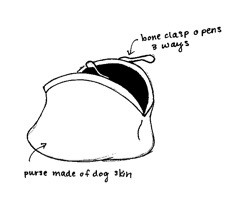
Or at least I love it. Fabulism is a curious way to explore and understand the ordinary. In Link’s story, the speaker spends her time hunting for this handbag. It’s black, made from dog-skin, with a clasp of bone that can open three different ways:
If you opened it one way, then it was just a purse big enough to hold […] a pair of reading glasses and a library book and pillbox. If you opened the clasp another way, then you found yourself in a little boat floating at the mouth of a river. […] If you opened the handbag the wrong way, though, you found yourself in a dark land that smelled like blood. That’s where the guardian of the purse (the dog whose skin had been sewn into a purse) lived.
Fabulism is a lot like this purse. It seems to belong to this world, but doesn’t follow all of the rules. It beckons you. It’s off. The more you explore it, the more mystery and power it has.
Fabulism v. Realism: “Just a Purse”
Now, realists do the great work of gesture, of symbols. Tim O’Brien places a pebble in the mouth of a solider who can’t kiss the woman who sent it in “The Things They Carried.” Junot Diaz shows deterioration in “Nilda” when she “put[s] on weight and [cuts] her hair down to nothing…” There’s a silver hair on the pillow in Faulkner’s “A Rose for Emily,” an indentation from a head, “two mute shoes” on the floor. We know what these moments mean. Realists are trained in the fine art of subtlety, and it relies on the reader’s recognition of gravity and subtext and mood.
But Fabulism has much greater agency.
Think of how different Toni Morrison’s Beloved would be if Beloved were just the memory of a dead infant, and not a body — a real woman who comes out of the water, a woman who has aged in death, and haunts the house, has sex, and disrupts. Beloved is not a suggestion, but real in that world. And giving an abstraction a body raises the stakes. A body meddles. A body holds grudges. It is more powerful to actually be haunted by your dead baby than to be “troubled” or “perplexed” or to run a finger along the long undusted cradle. When Beloved gets hands and cheeks and bones, the trouble skyrockets. And isn’t that what loss is actually like?
Fabulism makes the emotional reality the actual reality. It’s more real to confront your demons when they are in the room with you. So, you can’t escape. Amber Sparks writes that “It’s a perfect time to turn ourselves inside out by turning the world around us outside in.” Meaning fabulism privileges how it feels –it’s real because it feels real.
Also it’s Fun — The World Inside the Purse
I think we like it — the magic. It reminds us of childhood stories — of Narnia and Oz and Tuck Everlasting, our sense that “yes, it could be possible,” and “yes, in this world, it is.” Maybe there’s this misunderstanding that because there’s magic in a story it’s inherently more infantile. But really, Fabulism gives us more language to use. It gives us the flexibility to play, yes, but play while expressing truths.
I think of Zach Doss’ work, which is hilarious and tragic and incredibly playful. He writes this enchanting series of boyfriend tales, and I had the joy of hearing him read some live at this year’s AWP. In “Jane Eyre,” the speaker discovers that if he cuts off parts of his boyfriend, those parts regrow. The lines are cutting (haha) and an uncomfortable kind of funny, when you hear “Just a regular boyfriend arm,” or “You suspend the cut-off limbs in scientific fluids,” or “Ultimately you wind up with so many spare boyfriend parts you could make an entire second boyfriend if you cut off a few more things, so you cut off a few more things.” There’s play here — it’s an experiment, a how-far-can-we-go tale, and there’s a delight in hearing what happens next: “Even a head. Your boyfriend even re-grew his head.”
The thing about magical realism is there’s no way to know the metaphorical implications of the story until it’s finished. At the end of Zach Doss’ story, the meanings are many and complicated. It could be about having a backup plan, about breaking someone into bits, about a love that becomes procedural, or hypothetical, about having a back-up plan fail, about loving a partner who is too busy loving themselves. You can’t set out to make these meanings when you write a magical story, but fabulism makes them plentiful, surprising, and varied. That’s part of the magic.
And then there’s the dark side: The Guardian of the Purse
The greatest part of the faery handbag is that there’s a wrong way to open it — meaning a dangerous way, a way that can eat you alive. And it’s that third compartment or “way of opening up” that separates the magical realism of childhood stories from the magical realism of stories for adults.
I think of Kevin Brockmeier’s “The Ceiling,” where the sky gets so low that by the end of it we’re on our backs, about to be crushed by it. I think of Aimee Bender’s de-evolving lover who is changing into smaller and smaller species, who is set all adrift on a pastry tin so she doesn’t have to see who he’s changed into beneath a microscope. The kind of pressure magic applies to a situation can be deadly. At the end of Ben Loory’s “The Well,” a boy is trapped at the bottom of a well because he used to be able to fly — and now he isn’t, and now he’s drowning. When we come to the end of the story, and his father is in the well, trying to swim his son to the water surface, and trying to pump his chest, but being unable to tread water and resuscitate, we get the sentences “But there is no way up. There is no way up. There is no way up. There is no way up.”
In these stories, the magic is more in charge than we are. It has a body that isn’t bound by rules.
In my fourth grade English class, the one I teach, we read Tuck Everlasting last. There’s a line I’ve been haunted by since I was ten, where Tuck, a man who cannot die, stares at the body of a man who was just killed, whose head was cracked with the thick end of a shotgun. And what I remember is how Tuck stares at this body: like a starving man staring through a window at a great feast.
This terrifies me. I think death is scary but I think not dying is scarier. And it’s scary because of the springwater in the wood that can make you live forever.
What’s interesting is my students don’t see it like that. The ten-year-olds I teach are enamored with the idea of everlasting — it sounds great to them — it sounds like invincibility potion. To me, it sounds like “stuck,” like “you will never be able to leave.”
I think this is why Kelly Link gave the faery handbag three compartments, and I think it’s why fabulism is so complex — it is all three at once — it is of this world, it does contain another world inside it, it can, if it wants to, attack. We want to dive into the Faery handbag — we want access to something magic and maybe dangerous. Because real human feelings are.
Over drinks in a beer garden in Manhattan — the Flatiron building pointed at our backs — my editor and I considered the short story, and wondered why it remains unpopular in today’s reading world. The short story form is approximately 250 years old, perhaps older, and yet it still makes demands of the reader, a hostage negotiation seemingly ad infinitum — to participate in a short story is to acknowledge and accept, then embrace, a certain level of dissatisfaction. There is seldom the closure found in movies or novels. Names elicit frustration. “Nowhere…is the names so relentless,” writes Elif Batuman for N+1, “as in the first sentences, which are specific to the point of arbitrariness.” There’s little money in the short story as a source of income, which provides at best a threadbare existence for writers with subsistence from adjunct professor positions or a full-time job in an industry completely separate from storymaking. As for the writers themselves, they write thousands of short stories often, but not always, in preparation for their first novels, short stories that are often, but not always, reduced to excremental prose generated by and in service of a larger, future, superior work. Many readers are allergic to short stories and the brief worlds conjured, then populated with characters, and shaped with plot. Playing the role of a god appears far more interesting than reviewing the god’s schoolwork to test against craft, as if that’s all short stories have to offer.
My editor and I didn’t solve the anti-short-story equation, but we did think about the marvel and rarity of a perfect collection. I remembered Denis Johnson’s Jesus’ Son. That book is a heroin addict nodding off in a bathroom stall, his head resting against the wall where someone carved the koan: Poets are shit. Yet for all the book’s pleasures, its devotion to the cracked human apparatus, Jesus’ Son is still not perfect, unlike the timeless Illmatic by Nasir Jones (Columbia, 1994) — each listen adds to the sublime, nostalgic effect the album continues to have on me, increasing over time, still, a closed, elegant, spiritual loop.
The connection between story collections and albums is clear. An album, as a form, isn’t restricted only to the sensibilities and habits of the novel — skipping tracks isn’t the same as skipping chapters, for instance, where doing the latter causes the reader to miss the introduction of a new character, a new setting, and all the little nuances and revelations that might inspire a character to make a different set of decisions. Skipping a track is often of little consequence to the listener. The act, for me at least, is a simple matter of taste. Sometimes a song is no good, or not as good as the rest of the album. Similarly, there is little at stake when skipping a short story while reading a collection (unless of course if the stories are linked). As self-contained worlds, the stories which comprise a collection are not directly impacted by the strength or weakness of the previous and proceeding piece. The collection, much like an album, is considered in whole, as an entire experience from beginning to end. A weak story is a weak story, which doesn’t affect the stories around it, but it can mar the collection’s reading experience.
A weak story is a weak story, which doesn’t affect the stories around it, but it can mar the collection’s reading experience.
If presented with a choice, I’d rather discuss classic hip-hop albums than short story collections: the former evokes warmth, my need to consecrate my life to a certain fidelity and pure aural bliss channeled into nighttime sessions in the bedroom, lights off, completely enveloped by sound, while the latter invokes the image of a bottomless pit. Nevertheless, my fascination with and general uneasiness toward Nas connects directly to Illmatic, specifically to its perfection, its infallibility. Nas is an artist, a well-read, old-school recluse in a world which demands bombast, a gaudiness he aspired to at one point in his career. Ostentatiousness bogged down his art. Accordingly, he provides for me a cautionary tale as I revisit his sixth album God’s Son (Ill Will/Columbia, 2002), released with a bit of fanfare. Nas defeated Jay-Z — hyphenated at the time — and reestablished himself as the so-called King of New York, a triumph for the former Queensbridge Houses resident who ventured into the world no older than twenty, armed with a work of art in his backpack, and achieved outsized popularity, fame, wealth, and status, returning home to New York older, perhaps wiser, but nonetheless weary. God’s Son was a victory lap, but ultimately a mediocre one, yet I love the lyrics.
Nas is a world-class storyteller and practitioner of the narrative form. I don’t understand why there isn’t more discussion around hip-hop’s literary value among today’s millennial-and-boomer intelligentsia. The new New York literary salon is a twenty-something black woman whispering conspiratorially with a fifty-something white woman with regards to the diversity question: The optics alone leave me wobbly in the corner of the room, the bourbon’s Gaussian blur fogging my eyes. The house party — somewhere in SoHo, let’s say — is packed, and while I might hear the DJ play Future and/or Drake from Spotify, and the crowd is locked in, and not necessarily dancing — more like swaying — but definitely enjoying themselves, I wonder if this music is truly understood for all of its artistic value. I make a note on my phone to later write an essay about hip-hop and literature, but in what hopes? Sometimes, an essay is designed to convince; others ramble, but at least this isn’t a thinkpiece on culture from a writer too young to rent a car.
Anyway, “Made You Look” from God’s Son is dope. Nas is in rare form as he ascends the throne with a decidedly New York anthem. The sample, from the single “Apache” by Incredible Bongo Band, makes the difference. I cannot resist the click.
From Wikipedia:
The Incredible Bongo Band, also known as Michael Viner’s Incredible Bongo Band, was a project started in 1972 by Michael Viner, a record artist manager and executive at MGM Records. Viner was called on to supplement the soundtrack to the B-film The Thing With Two Heads. The band’s output consisted of upbeat, funky, instrumental music. Many tracks were covers of popular songs of the day characterized by the prominence of bongo drums, conga drums, rock drums and brass.
“Apache” is a popular sample, most famously used by The Sugarhill Gang. It gives “Made You Look” the movement it requires; otherwise, it’s a backpacker joint and the world doesn’t need any more of that bloodless music. Conscious hip-hop sought to wake the mind yet it often dulled the senses, a circumstance of sleepy soul samples chopped, screwed, sped up, and flipped over tinker toy drum beats. Mediocre music frustrates me, and God’s Son is as mediocre as it gets, yet it is not entirely unredeemable.
Inspired by trauma, God’s Son followed the death of Nas’s mother, Ann Jones, years after her initial breast cancer diagnosis. Described as a “personal” album, God’s Son is, to me, pragmatic, the gospel according to one of hip-hop’s biggest stars. Death has a grounding effect; the soul doesn’t soar, but takes root and immobilizes itself in the name of repair. For Nas’s sake, this crystallization is rendered into matter-of-fact verses, although imagery is still present. “If Virgin Mary had an abortion/I’d still be carried in a chariot/by stampeding horses,” from the track “The Cross,” is an amazing hook, both holy and severe. But one must endure the tepid beat; Eminem, mercurial emcee, occasionally terrorizes the genre with his attempts at beat-making. His shaky ear is evident when listening to the overproduced beat — too many unnecessary layers, an annoying piano provides the groove, a random record scratch appears, and there are timpani, a sign for any rap producer that the beat has jumped the shark.
Despite the genre’s much-ballyhooed and garish excess, the heart of the music lies in its minimalism. Two turntables and a microphone is not a truism, but a sensibility, a declaration of need, a rejection of artifice. There is a reason why three generations of hip-hop practitioners have plundered “Funky Drummer” — Clyde Stubblefield gifted to humanity the universal beat, the singular drum. Beatmakers and rappers heard the universe’s heartbeat, the throb, and harnessed it. But instead of using what god had provided, Eminem decided to take matters in his own hands, with Nas’s acquiescence.
Despite the genre’s much-ballyhooed and garish excess, the heart of the music lies in its minimalism. Two turntables and a microphone is not a truism, but a sensibility, a declaration of need, a rejection of artifice.
One can only imagine Nas’s career if guided by DJ Premier, one of the holy quartet who produced Illmatic, but I can only look at the career as it has been presented to me. This would include, unfortunately, the track “Oochie Wally” from the compilation album Nas & Ill Will Records Presents QB’s Finest. (The sample, from “Bambooji” by Gong, is a great and noteworthy find.) The ignominious single, the proverbial chain around the neck of Nas’s ghost, is lauded for its awfulness, a singularity in which the street cred Nas had generated, and dangerously squandered, but not entirely exhausted up to this point in 2000, finally collapsed. Centered around male-dominated sex — random, anonymous, casual, group — “Oochie Wally” is particularly odious, a veritable career-ender of a song. No wonder Stillmatic — a dog whistle of a title, for sure — was released a year after “Oochie Wally,” followed a year later by God’s Son. The need for personal, pragmatic music as contrast to the gloss was evident.
But I returned to God’s Son for one track: “Last Real Nigga Alive,” a narrative peek — however warped — into the machinations of the black creative elite. This track, at first glance, fits nicely into modern hip-hop’s knack for emotional spillage, for messy music used as catharsis for messier lives posited as fantasies worthy of pursuit for the masses who, with 9-to-5 jobs, can’t afford to squander $60,000 at Magic City. But this is all surface. “Last Real Nigga Alive” is effective due to its depth, assuming you believe Nas, the narrator, who sees it all, even if he only sees it his way. Dating back to sometime in the early 1990s, he recalls how now-legendary rap collaborations were formed, how friendships ended, and how petty squabbles ultimately short-circuited ambition. This is rap history according to him, with appearances by the Wu-Tang Clan, the Notorious B.I.G., Puff Daddy (his name at the time), and of course Jay-Z: as King of New York, Nas sets the record straight, the emperor delivering the word from the Garden. I see similarities between the rap world and my own — literary publishing — as artists jockey for sales and attention, fight for consumers’ hearts and wallets, and crave longevity, not only in terms of a career, but with respect to legacy. I don’t know what it means that I can find so many parallels and intersections between rap and literature, particularly as it pertains to someone like me. For over a decade, I respected Nas for “Last Real Nigga Alive,” but it’s only now I see why.
So an ordinary day crashed into my cruddy apartment. Cast-off furniture, small-barred windows looking onto a brick wall. Small-barred cast-off furniture, kitchen a mess, small-barred mess, sink full of dishes, kitchen in a brick wall, dishes in cast-off furniture looking onto a brick wall. Dead cockroach on its back. Coffee table on its back gouged with scratches, dead cockroach scratching the coffee table. Dead cockroach looking onto a brick wall. Ugly rag rug on the bathroom floor, a cake of Imperial leather soap, ugly rag rug on Imperial leather soap, amazed that all this was mine. What could be better? To be sane or not to be sane would be better. And maybe sell just one painting.
Which never happened. No one wanted weirdness hung on a wall.
I sifted through the post. I crashed through the post. Okay okay, flipping envelopes here and there. Not many letters these days, just phone bill, junk mail, and oh blast a postcard from Misty. Her holiday, tropical island, sparkling ocean, the tang of a margarita rimmed in salt, hula skirts rustling and swishing.
Hi Rebecca, Wish you were here.
But I wasn’t. Some people’s holidays caused a girl to feel dreadful.
Oh, Misty, my friend, this barnacle cemented to my consciousness. Which sounded romantic. Since childhood, we were the only people we knew but didn’t actually know. Misty was the shining child. But I was ghastly pasty face, plain square features, spider web skin, plump body, violet dagger eyes, quiet and spotty and resenting her for being pretty Misty. Compared to me Misty looked incredible. That’s what Misty wanted.
When we were twelve, we got drunk together, collapsing outside in the dark on the lawn. Misty put out her tiny pink tongue and panted. I rolled on top of her and pressed my straight nose hard against her perky nose and she screamed.
“Get off you lezzo.”
And we laughed ourselves sick.
At fifteen, Misty pulled my hair hard, she pulled her hand out of my tights, she pulled down the blind. She roared, “I’m not gay.”
I said, “Neither am I.”
I wasn’t anything. I wanted to kill her. As a kid I didn’t know the difference between dreaming sleep and waking reality. As if reality could be woken up. And when it did, I grew into an angel monster, this sweet, dumb, fierce, mad, everything a girl must be, and then turned into the absolute rottenest woman. Creative thin-skinned piddling tearful bottled. A fragile pot simmering. Never came to the boil. Despising the outside of myself, festering clueless in the lowest of why not show the world my insides? My lovely innards, which no one saw. So I flipped inside out, revealing slippery, red-rippled, meaty intestines, those tender kidneys, a bright grenade brain and cruel ribcage that imprisoned the gnashing. Sigh. A bit mixed up, I constructed a great distorted illusion, which led to obsession and the murder of an innocent tabby.
For the arty beast always said yes to everything except laughter. Yes to being marginally deranged. Yes to cultivating a talent for hating. Oh, I was a horrid artist but truly excellent at the art of animosity, fishy and confused living under water. By which I meant I didn’t get out much. It made sense. A girl couldn’t laugh under water. Fish had to live their whole lives under water.
I worked eleven hours a day at the fish market for ten dollars an hour. That unbearable stench and wet, white tiles and dark Italian men slitting fish, flicking out bones, spines, fins. The fishmonger bobbed up from behind a pile of trout. He wiped his forehead, shook an indignant arm bristling with coarse black hairs and shouted, “Don’t drop the fish.”
Which I did. This damp, nauseous occupation much too slimy for me and dangerous for fish. It seemed the entire population was wriggling in plastic crates, each fish waiting for me to strip them clean, gut them, skin them, chop off their heads. Mass murder, genocide, I knew the score. No escape, no surrender, no mercy. I had to eradicate every fish bastard, not because they deserved it and not because it made this worn out world a better place. Love was supposed to do that. And as it happened, love cropped up anywhere, anytime, a heart beating fast, kisses in the rain, shooting stars. Fish fell in love inside specially prepared spawning tanks. A fish swam round and round, came face-to-face with another fish, realized they had been alone their whole life and married in haste, too young. Love destroyed not only fish, but also me. This kind of destruction happened everywhere. The same as those starving gypsy moths. Once I told Misty about the moths. How they stowed away on board a Russian freighter. For years and years, two female moths gorged on the freighter and caused thirty-five billion dollars in damage.
Ate the entire thing.
Then in 1975, love cropped up shooting kisses, hearts in the rain, fast stars, so I took the plunge and wed at eighteen. Roll up, roll up, see the fishtail bride dressed in crimson satin. Such perversity, the color of blood was my choice. It matched the sudden gushing nosebleed (from the stress of what did I think I was doing), as I waltzed la-di-dah down the aisle to the dulcet notes of Debussy’s “La Mer.” Exquisite rhythms, of waves, sea, moonlight, and a fantastic vision with a bleeding nose tripping toward the boy groom. He stood stock-still, all mirthless, nothing in his baggy pants, and wondering how he got himself into this situation. And a group of stunned relatives and Misty there (never a bridesmaid), her goggle eyes smirking at my ridiculous bloody nose. Misty always acted superior because she was mighty dumb gorgeous, with parents so rich she never saw them, and I had none that I knew of.
After a year, the funfair wife began to resent what’s-his-name, the husband. Idiots with no money — two furious fish attacking each other in the murkiness of our unfurnished fish bowl. A proper aquarium had clear water, sunken treasures, plastic castles, and neon gravel. A proper home had hedges, delicious flowers, gates that locked, or rooms lined with yellow wallpaper. But there were no beautiful places for us.
I was pissed-off and nineteen years old when what’s-his-name left. I should have said bye-bye husband, cock much too small, never got me off. But no, no, I threw myself at him, begged him to stay, curled up in a ball, crawled on my hands and knees, clutched his feet dragging me like a bag of garbage across the floor and out into the street. His feet shouting, get off, get off. But I held on. So what’s-his-name extricated himself, prying off my fingers one at a time. His name was not worth a mention and I never remembered it anyway, but I did recall some questions we asked each other.
“Where’s my other sock?”
“Do we have any spare batteries?”
“Do fish get thirsty?”
“Why are you telling me you are speechless?”
It was still the starry-eyed seventies, ripping holes in my ragged jeans. I painted lightning bolts down both sides of my neck, and hung about near the stage at an outdoor rock concert in the local park where I met Grant. This rock star! A washed-out version of Jagger without the Jag. He sang in an Adelaide band, calling themselves Celestial Aviators. Grant swiveled his bandana and his dark glasses took me in. I was in love. Helpless I shrank before his slashed-paisley exposed, brick-red nipples. So alive and grinning.
“Hey lightning girl. I see you.”
The spotlight illuminated Grant’s long, thinning hair. I figured he must be at least thirty. He snaked across the stage as four blokes thrashed riffs and blues licks on guitars. A wicked drum machine banged out the bangs. I stood at the back. I blew a valve. In secret, I danced the moondance behind the moon. I crouched under bushes and drooled over gyrating Grant. I thought, maybe he might fancy a fanciful monster. Maybe not. I gave up too easily.
Misty sat cross-legged on grass right at the front. Torrential honey curls fell to the waistline of her batik kaftan. Her yellowish, determined eyes gazed at Grant, and her baby face glowed like a hijacker’s. Then that drummer smashed the air and I nearly jumped out from behind a tree.
Grant wailed, “E-evil woman, e-evil woman… ” as if an apparition might burst from his pale skin. Such perfect timing. I saw what Misty was doing and got jealous, fascinated, despairing. Her fishing-line eyes cast out and reeled Grant in. Oh, Misty. Who was the groupie now? Of course she must have him. I trembled with self-pity. Birds abandoned their nests. Possums ran like hell. My tortured heart tore itself out and hurtled away.
The sight of her adoring face lit by that god-awful music stayed with me for years. I wished her all the luck in the world. My normal, stupid friend. She stole the prize right out from under my pathetic, green tongue. Friends did that.
And a friend slipped away, slipped herself into the irresistible man and Grant did nothing but let her. I thought he called out once, “See you soon Becky.” But he never even looked at me again.
Misty moved to Adelaide to marry Grant. Her letters, these paper tentacles reached from there to sunny Sydney and strangled me into thinking all sorts of things that didn’t make sense.
Dear Rebecca,
Put me on edge, an animal caught in the headlights.
I haven’t heard from you in ages. Are you still overweight?
Which made me spit.
It’s a June wedding, lots of tulle, rosebud posies, and after the ceremony, a simple reception in the church hall, no frills, roast chicken, peas, mash, and apple pie. Oh, and I have to tell you, Grant’s friend Roger groped me behind a rhododendron bush. Great kisser. Lots of tongue.
What? Not like her to be so juicy.
I didn’t do anything. I love Grant! Did I tell you about his parents? Absolute weirdoes. His father collects buttons. I call him the python. The mother makes hideous raisin chutney and obsesses about Grant, her only child. Absolutely everybody in Adelaide detests me.
I hated her, too. Love and loathing kept that letter and each one after. For what goes on in the warped, bitter minds of women would baffle anyone. And her, poor baby, just a silly girl. She only wanted to be my friend. But how could I stand her wheedling crap? She couldn’t keep her mouth shut and bitched about me to the entire universe.
Rebecca’s husband left her. Rebecca slept with any man who took notice of her. Rebecca is a wretched creature scrabbling for money. Rebecca lives on junk food. Rebecca doesn’t know how to boil an egg. Rebecca bought a blonde wig and a black negligee and booked a hotel room and got paid for it. Rebecca shoplifts and hitchhikes and wears clothes that once belonged to dead people.
I bet she said those things and worse. More than anything, I wanted to post her a sharp knife to slice a few pieces off her tediousness. But it just wasn’t done.
And that wedding on the horizon.
Another letter, her erratic handwriting, a metal spring, looping and streaming across sheets of crumpled paper.
Hey sweet Rebecca, not long now! Are you coming to the wedding?
That wedding of froth and fake. I had to go. I must go and be nice.
Not one solitary soul offered to give me away.
Her father and mother on a yacht somewhere in the Caribbean.
No matter, Grant and I plan to walk down the aisle together. I’m not doing that by myself with Grant’s rock ’n’ roll friends staring at me.
I wanted to boast about my affair with a young virgin poet. He rode my unusual rides. His eyes greedy with wanting to undo the knot between my legs. Midnight, spines arched and his warm sticky substance misfiring on the rear seat of his Triumph under a tightening sky, thanking god for sheepskin car seat covers, begging, let me, let me. Oh god, his first time and his long thin penis not wide enough. His nose rammed into my belly button, his tongue sliding down, down, and his fingers digging deep at the back of my thighs. And a second clumsy fuck in a bus shelter at dawn. Uncomfortable splinters and scratched elbows and bare feet on broken glass. The last time, we did it spread out on a rock platform beside the Bungaroo bush track. We rolled around on those ancient Aboriginal rock carvings of kangaroos, a whale and a tribal warrior pointing his harpoon at my bruised nipples. I swore the poet melted into the contours of that spear-thrower. But it was just bad poetry. Later, I sketched his blunt, four-pronged weapon tickling my goose flesh, the tender bumps and this whale swallowing my body, spitting out the evil bits. And, as always, a dark part of me ached.
The poet wrote me a poem describing a naked woman with the body of a fish from the waist up, swimming in the sea. She believed love would drown her. An evil fisherman jerked his magic pole causing a tidal wave, sweeping her towards the shore. Tangled in his net she lay dying on the sand. The poet sobbed as he read the last line.
After I finished laughing, I said to the poet, “That poem sounds familiar. I don’t believe you wrote it. And ‘pole’? What the hell does it mean? Some kind of allegory for the holy penis? Do you realize how feeble that sounds?”
And he acted as if I had kicked him in the nuts.
A month later, that poet burned his poems and went to live on some cowardly island somewhere not too far away, but far enough.
Poet-less, I flew to little, little Adelaide, a city of churches, corpses, and parks. The landscape, without rise or fall, worried me more than anything. I believed those delinquent hills had uprooted and scampered away to escape faith and tedium, and what remained was a dry Mahler landscape. I could hear a tuba echoing one long, mournful note. Heard it in my head.
The day before the nuptials, dreading her wedding, aimless skipping along Hindley Street. A scorching gust of wind burned me with the blistering breath of some extinct creature. It really did and it smelled terrible. That heat forced me to pause in front of a store called The Enchanted Florist. I saw my own reflection in the shop window, this woman-child, my pollen lips scarlet with anxiety, eyes of blinded cornflowers, and a short body, now skinny from so much poverty and poetry. Ferns replaced my hair. My tulip arms bloomed nostalgic. Look at me now, Misty, how we used to be. Flower children.
The flowerchild caught the bus to the bride’s house. Grant opened the door. This aging rock star squeaking in leather pants, a whiff of whiskey on his breath. I held my nose.
“Grant! It’s a bit hot for leather isn’t it?”
He didn’t laugh. He took my hand and slurred, “Hey, Becky lightning girl.”
Such a cliché. Such a soap opera, the severity of missed opportunity. We crept into the garden. The pretense of we’ve never really talked. About lightning opening a hole in the air from which a bolt struck, and when the light disappeared, the air caved in to the sound of thunder. Grant’s head on my shoulder.
“How did I get here?”
“Where? In the garden?”
“Oh, Becky, I’m in too deep.”
“Yeah,” I twigged. “You are. Give it a couple of years. We’ll kill ourselves laughing when you tell me.”
“What?”
Musicians, I thought, weak as dishwater.
“All about drowning.”
His lips parted showing yellowing teeth. He tried to kiss me.
Misty yelled, “Grant, Grant.” Her face at the window.
“Don’t worry,” said Grant. “She’s not wearing her contact lenses.”
Such small bits either died or blossomed and this bit of almost kissing would hum over the years. I ran into the house and slammed the screen door. Coward. Misty plucked a stray leaf from my hair. I glared with angry twig eyes. Some white petals withered and fell from my face. I know they did because I felt my face falling off. Misty grinned vindictively. She had arranged for me to stay with Grant’s cousins.
“Sorry, I know they are a bit dreary.”
But what could I do?
Brian and Jean Finch, mousey hair, sharp features, freshly ironed, religious, tennis playing, IT professionals, ate steak and boiled vegetables every day in front of their TV in their den for their entire double lives. God only knows what Misty told them about me. Anyway, they welcomed me into their spotless house and put me in the spare room. That night we sat at a highly polished, teak dining table under bright lights, ten bulbs burning in a crystal chandelier. Meat and potatoes. Blinding. That dull couple thought I was strange.
The chapel nestled in the foothills of Adelaide. Stained glass windows. Lovely. And a phallic steeple bending slightly. My dress, a vintage white petticoat blew up revealing my unshaven legs. Church bells clanged with excitement. I tilted my white beret at an angle, tightened the white lace collar around my neck and in my white marching boots, stomped past an abandoned graveyard. I thought my outfit was brilliant.
But still I sat in the very last pew and wished I could crawl under it. The bride not yet arrived. No chat or laughter, just the beginning of stillness. The hippy minister entered from a side door. Happy-clappy, hairy chap, all beard and beads and sucking a lollipop. He stepped up to the pulpit and tripped on his bootlace. A thud hit bare boards as loud as a wrecking ball demolishing the planet. This woman sitting beside me pulled a mass of red wool from her handbag and began to knit. Bony fingers clicked needles. The shapeless thing rested in her lap, falling between her legs. Was it a scarf or a placenta?
The wooden church doors swung open and in a gothic archway, two tentative shapes stood against the sun. Misty and Grant walked toward the altar. Misty’s features were grainy behind the veil. Her large, wary eyes darted at Grant’s friends and family, as if she expected a hand to reach out and grab her. The dress a light blue silk, edged with Chantilly lace, silver bracelets tinkled along her arm, and a ring of daisies pinned to her untamed curls.
Grant’s nostrils fluttered one last breath. The purple veins on his hands stopped pumping strength to his heart. His shirt, always half unbuttoned, bared a hairless chest, on the verge of transparent, but not enough to expose a soul. No one realized how deathly he was. That hack stared straight at me and mouthed thanks for coming, thanks for coming.
A month after her wedding, Misty wrote to me.
Hi Rebecca,
I guess you already know marriage is tough. Look what happened to yours. Grant won’t talk to me. We never spend any time together. The heat of summer saps every drop of energy. I’m always sick. Grant got a job in a recording studio. When he get’s home, the bickering begins. Always about sex and money. I don’t get enough and he doesn’t have much.
In our bedroom he erected a shrine, complete with a crucifix, scented candles, and a photograph of his guitar for god’s sake.
Yesterday I made cinnamon cakes and he glued them to the kitchen wall. His idea of a joke. He thinks I am trying to poison him. Why should I? I don’t have time. I have so much to do.
And Grant has changed beyond recognition. There is no warmth in his body. His eyes are red-rimmed, unblinking. His joints creak. While he was sleeping, I put my ear to his chest. Nothing. It frightens me, so I hide under my bed.
Misty always exaggerated. Thwarted women lied and they believed in their own lies. I drank half a glass of antacid powder mixed with water and began to read The Truth About Lying by Stan Walters, the foremost expert on interrogation, evasion and outright lying in seven steps.
She continued writing to me. I didn’t mind but I never wrote back.
Hi Rebecca,
You’ll never believe this, but my neighbor is stalking me. He’s a weedy tax lawyer. He owns a letterbox stuck to a concrete seahorse. He bumped into me at the train station. I fell down a flight of stairs. An accident? I don’t think so. Just yesterday I discovered dirty fingerprints on the bathroom window ledge. He accused me of setting fire to his garden shed and attacked me with a rake.
I sent her a copy of Clues To Deceit, a practical guide in detecting deception written by a former special FBI agent, a member of an elite Behavioral Analysis Program.
Grant spends hours in the garage. I spied on him through the window. He’s constructing a weird wooden box. God only knows why. The thing resembles a coffin. And sometimes he hides under the hall table. If we have visitors, he crawls out and tries to bite their ankles. He is drunk. What other explanation is there?
Well, it could be Misty married a dead man.
If anyone asked, I claimed to be an artist. I moved every few months and finally settled in a shared house. Cheap rent, rough neighborhood, deadlocks, paint peeling off every wall. But I had a large room, plenty of space, and my housemates kept to themselves. A stuttering geologist dug up rocks in the desert, and the other, an unemployed actor survived on seven packets of two-minute noodles, one for each day of the week. An insect fashion model lived upstairs. Every Saturday, the insect made goose liver pate and Victorian sponges refusing to rise. Those cakes came out of the oven flat as the moon in the sky.
I worked as a cleaner by day, and at night, too tired to go out, got high, binged on cheeseburgers in my room, and painted with a loaded brush, dabbing at cartoon canvases. Madder and madder masturbating women, smeared with my favorite rose madder pigment, extracted from the common madder plant. Anyone would think I was mad. Which I was, madder and madder for a while, dreaming of Grant floating in his homemade coffin. And even better, Misty the enraged fish with dorsal fins and Chantilly scales deflecting her regrets. I was the mermaid reclining on sea-soaked sand. Fat blowflies moved unmolested over my waiting thighs, my waiting skin, my wild wild eyes. Which leapt out of their sockets as if shot from a pistol and ricocheted across the floor and came to rest on an envelope. A note tucked inside from her. Did I want to read it? Not really. It would remind me of Grant and his leathery stubble.
Dear Rebecca,
Not a dear. Not even close.
I found you! Aren’t I clever? Grant finished building that dreadful box. At dusk he lies in it, naked, suffering the mosquitos. Remember how pale he was? Now he is greenish. His teeth are falling out and he buries them in the garden as if expecting them to sprout. I am starting to worry. I miss you. I wish we didn’t live in different states. You live in a special world while I am stuck here in this sleepy suburb of Dulwich. Dull dull dull. If only we were neighbors! How I envy your freedom.
She signed her letter with a smiley face.
Stay happy, keep buzzing, and ignore those unhappy morons of the universe.
At the time, I was fucking a relentless boy. I spoke in a voice drenched in honey.
“I am not an unhappy moron. Not anymore.”
Oh my lickety-split. That lad thought I was such a puzzle.
And then nothing, until some time in 1987, she sent me an invitation for her thirtieth birthday. The card read gaudy breasts, bubbles, dirty thirty, she drink she drank she drunk. At the sight of it.
Hey Rebecca,
It’s been a while… but all is not lost, I’m still here!
No it hasn’t, yes it is, and I wish she wasn’t. Always there.
Grant and I are going through the usual nonsense. What else is new? Grant bought himself a telescope and thinks he can see into the future. We fight every day. I am passionate and he REJECTS me. And he’s so thin, I can almost lift his skeleton clear from his flesh. Do you remember showing me how to fillet a fish? Anyway, this year my birthday is on Mother’s Day. What a victory for Grant’s mum! Apparently, I’m the hussy destroying Grant’s potential because I never do his laundry. She keeps throwing that at me.
I pictured her mother-in-law flinging the washing at Misty lying stunned under a mountain of sheets with a pair of Grant’s holey underpants masking her face. I would have licked them. Such a slut.
Was it eight years, ten years? How Misty had changed. This flabby figure greeted me with a sour smile in its Chanel suit, fat calves, clenched buttocks. Rapunzel hair cut short, made her head resemble a pea balancing on some kind of boulder. Thick, black tarantula legs sprang from her eyelids. Rouge congealed on her greasy skin. Pink lacquer cracked on ten bitten fingernails. That was her now. A picture of Bette Davis in Whatever Happened To Baby Jane. Whatever happened, I looked sensational compared to her. This was going to be easy.
I was curious to see her house. She had raved on and on about how much money she spent on an interior decorator. And when I saw it. Christ.
Smugness, that insidious creature, slipped its skin over me. Floral patterns on the curtains exfoliated my brain. Golden stripes curled away from tacky wallpaper and bound my hands and feet. An advancing army of mauve satin quilts, towels and toilet seat covers trooped ahead of me as if I didn’t exist. Above the fireplace a passive Kabuki mask observed my horror. And the same as me, it seemed oddly out of place. I turned to face her.
“Where’s Grant?”
She waved a dismissive hand.
“Oh he’s in the backyard cleaning that morbid box.”
“Why?”
“Mr. Moggy peed in it.”
“Who?”
“Our pussycat, Mr. Moggy. Grant was furious.”
I bet he was.
“You must meet Mr. Moggy. Here he is… my precious darling sweetie puss.”
“Nobody says puss anymore.”
“I do.”
Misty thrust a tabby cat bomb at me.
“Oh how… cute.”
This grey/brown fluff sniffing me with its malicious snubbed nose brought back memories of her. Misty showed me Mr. Moggy’s special chair at the dinner table and his miniature, four-poster bed. I knew immediately I was going to murder Mr. Moggy.
That night at the party, colored streamers coming unstuck, nibbles, pickies, olives, chips, onion dips, mostly couples, a polite nod at Brian and Jean. I stayed as far away from them as possible. Grant huddled beside Misty. He gazed at me and muttered, “Thanks for coming thanks for coming.”
I blew him a kiss. Flirty. And idling next to me, Psychic Stacy, bright streaked hair, weekend fortune-teller, but in fact a bank clerk demanding to read my palm. Which I didn’t want, but the monster said yes to everything. Stacy traced my heart line, crooked luck line, and wobbly sex line. She frowned and hesitated before predicting, “I see fish everywhere.”
I saw a billion gallons of jealousy. So I kept a smile on my face at that party and waited until Misty was fall-down, blacked-out drunk. Then I took Grant by the arm and whispered, “Show me your box.” Which brightened the corpse.
“Sure,” said Grant.
Next morning, a sweltering day, too hot to sit inside, so we sat on the veranda, Grant still asleep or too embarrassed to face me. Breakfast was a plate of half-toasted crumpets dumped on the table. Wormy margarine and strawberry jam oozed through crumpet pores like an open wound.
Misty blinked and chunks of bitter mascara fell from the ends of her lashes. A limp crumpet in one hand, jam dribbling down her blouse. And in the garden magpies swooped for worms. Birds always did. A neighbor turned up the radio. They always did. People changed. They sometimes did. Shrubs rustled to distant strains of You’re doomed to this now… And I thought that couldn’t be. I stealthily put my crumpet on the plate. Misty opened her eyes wide. I sensed her impatience.
“Don’t you want your crumpet?”
“No.”
She snatched it.
“You know what? Grant is not normal. He hates sex.”
“Oh. That can’t be good.”
“It’s a bloody nightmare.”
“Well, you know, lots of people have eccentricities. Think of Gerard De Nerval leading his tired lobster on a blue ribbon leash through a park in Paris. And me! I am beyond wacky. I sleep on eight mattresses piled high and put a pea under the second last mattress and I feel it through all of them. And I thought about getting a pet boa but I freaked at the way it swallowed mice. So I bought a goldfish and named it Sid Fishous. I wear spectacles to bed the better to see my dreams. One night, I saw myself drinking drug-laced coffee with Baudelaire.”
She gaped at me as if I’d pulled a gun on her.
“Yeah well Grant rushes into the bathroom after we’ve had sex and scrubs his penis. I’m surprised it doesn’t fall off.”
The thought of a door ajar and a thin man hunched over genitals covered in frothing soapsuds made me sad. Poor Grant. But he chose her. I said, “You know what I would do?”
“What?”
“Buy some sexy lingerie. It might help.”
Treacherous Mr. Moggy brushed past my legs and flicked a switchblade scowl at me. He meowed, I know what you did last night.
But I had done nothing except pop a spoonful of poison in his bowl of cream and then had a laughable fumble with Grant in that uncomfortable coffin. He couldn’t get it up so we lay as if two packaged mannequins, our arms stiff by our sides, ready to be sealed shut and shipped off somewhere.
After breakfast, her voice swelled with the ear-splitting decibels of a chainsaw.
“Grant! Grant! You didn’t change Mr. Moggy’s kitty litter. Where’s Mr. Moggy’s blanky? Grant! Grant! Call the vet! Mr. Moggy is choking! Grant! Grant!”
On my way to the airport, rain drizzled, blurring the taxi windows. I checked my bag, glasses, wallet, ticket. I would never return to Adelaide. But I dreamed about plastic brides knee-deep in marzipan and rare crumpets and his clean limp dick.
After my visit this final message arrived in the post.
Dearest Rebecca,
Getting back to how I am, last week I left Grant. It’s no fun living with a corpse. Grant didn’t even try to find me. That hurt the most. Three days I waited before ringing to tell him where I was. But he wasn’t there. I can’t find him anywhere. Have you seen him?
Did she know?
I moved to another cramped, cast-off, barred, scratched apartment, and mixed colors, which kept me safe. I wrote just one letter to Misty: You’ll be pleased to know Grant is here. He’s not coming home. Surprise surprise.
Misty didn’t care. She ran off with Roger of the rhododendron bush.
Grant brought a larger coffin just the right size for the two of us and I asked, “Is it waterproof?”
Of course it was, so I filled it up.
I painted Grant lying under shallow water in the box. My distorted vision, a kind of fisheye lens. This peephole captured a wrong way of looking at life. And how should I depict my own monstrousness? What should I call this painting? Maybe “Fish Have To Live.” What else to do but to live? Or make a splash. Or bleed.
Everything in my head. And how necessary it was to come up for air so sharp and momentous it could be hacked with a hatchet.
I scooped up a large dollop of white paint and with my hands smeared it over the painting. My eyes closed tight. Everything finally covered with enchanting whiteness, everything blocked out as it should be. For nothing was as bad as it seemed, not the nose bleed, the bloodstains, the chicken-livered poet, madness, a dead cat, the burden of being under water so drowning wasn’t the issue, but living was. And my confusion of, I’d rather be crazy, screwing with my conscience like a drill. And now those obliterated memories made me laugh and laugh. Crazy was better than crying. There was no use in crying, and a crazy girl was supposed to cackle, not cry.
Then I lay with him under water. My weightless hair floated in strands. His fingers inched through me, softening my heart, unlocking my bones. Grant so special now, rosy cheeked, instant erections, completely bald and I could see straight through his transparent chest to his new soul growing and growing.
We sat up wet and glistening and laughing. What a hoot, howling and hawing like a donkey that saw the light. These tears of laughter, the logic of barking, panting, crowing of why did we wait so long? Why did he bother? Trying to be average and sane. Life would now get better. So in my sweet sour graveyard of divided ridiculous selves, stuck my tongue out, told everyone to go to hell and the monster finally yelled no no no and we laughed and laughed for no reason and didn’t stop. We drowned in air, we died from laughing. Thanks for coming thanks for coming thanks for coming.
Fantasy fans rejoice: Neil Gaiman is writing a script for a six-part TV adaptation of the fantasy novel he co-wrote with the late, great Terry Pratchett, Good Omens. And according to his blog, he’s “about 72% of the way through.” The news that Gaiman would write the adaptation was announced last week at a memorial event for Pratchett in London.
Although Good Omens, which was originally published in 1990 and was nominated for a World Fantasy Award, was once adapted for a BBC radio series, it has never appeared onscreen. In the early 2000s, a film adaptation — rumored to be directed by Terry Gilliam and star Robin Williams and Johnny Depp — was reportedly in the works, but it didn’t materialize.
As the Independent reports, Gaiman’s decision to write the Good Omens script was a difficult one, since he and Pratchett initially agreed to “only work on Good Omens things together.” But, before he died, Pratchett gave Gaiman his blessing to adapt the novel by himself. After hearing that Gaiman would go ahead with the adaptation, Pratchett wrote to Gaiman to express his approval:
“I would very much like this to happen, and I know, Neil, that you’re very very busy, but no one else could ever do it with the passion that we share for the old girl. I wish I could be more involved and I will help in any way I can.”
Gaiman, who’s been working on the script for about a year now, writes that he often wishes his friend and co-author Pratchett, who died in March of 2015, was still here to collaborate with him. When he comes up with something “clever or funny that’s new,” Gaiman says, he wants to “call him up and read it to him, and make him laugh or hear him point out something I’d missed.”
I sometimes hear that the literary world is too focused on short stories. We venerate obscure story authors the public doesn’t read, and our MFAs workshop fiction in 3,000 word chunks while failing to teach young writers how to structure novels. And yet when it comes to literary awards, short stories get the short end of the stick.
The major literary awards are either restricted to novels (e.g., Man Booker) or lump all adult fiction together in one category (e.g., the National Book Award, the Pulitzer Prize, and National Book Critics Circle award). None of these has a separate category for short fiction, despite the form being a very different beast. In theory, it is nice to have short story collections compete with novels in these awards. It puts them on the same level and tells readers that they are equally important. But in reality, they rarely win. In the last 15 years, no story collection has won a Pulitzer Prize — unless you count the novel in linked stories Olive Kitteridge — only one has won an NBCC award (Edith Pearlman’s Binocular Vision in 2011), and only two have won an NBA (Adam Johnson’s Fortune Smiles in 2015, and Phil Klay’s Redeployment in 2014.) If these awards naturally favor novels, why don’t we have a separate category for short fiction?
This is actually how most genre prizes operate. The major awards of science fiction (Hugo and Nebula), fantasy (World Fantasy Award), mystery (Edgars), romance (RITA) and horror (Bram Stoker and Shirley Jackson Awards), all have an award category for short stories. All of them except the Edgars also have awards for novellas, and most have awards for novelettes (long short stories), story collections, and story anthologies. Every year these awards give recognition to multiple short stories and collections in their genres, recognition that is mostly absent in the literary world.
Some people might say that this doesn’t matter, since no one reads short stories anyway. But if we only gave awards to popular categories we’d scrap the Pulitzer Prize in Poetry in favor of the Pulitzer Prize in Adult Coloring Books. We give awards to poetry because the literary world thinks it is important to promote poetry. And short stories do get read. Short story-publishing magazines like the New Yorker and Harper’s have circulations that dwarf the sales of most literary novels, and two of the best-selling books of last year were collections by Stephen King and George R. R. Martin. Sure, short stories are not as popular as novels and it is rare for a short story collection to be a bestseller, but it is worth asking to what degree this is due to audience preference, and to what degree the literary world’s lack of story promotion hurts the sales. Prizes like the Booker and Pulitzer can provide very real boosts in sales, especially for obscure books. Paul Harding’s Tinkers had only sold a little over 1,000 print copies before winning a Pulitzer. It went on to sell hundreds of thousands. Giving Pulitzers and NBAs to story writers each year likely wouldn’t cause that dramatic of an increase, but it would boost sales to some degree. And the attending money awards — which range from $10,000 to $70,000 — would certainly help short story writers continue writing stories. (My landlord is constantly reminding me I can’t pay my rent with contributor’s copies.)
Giving multiple awards for fiction already fits perfectly into how most awards operate, at least when it comes to non-fiction. While each gives only one award for fiction, the NBCC gives non-fiction awards in four categories (General Nonfiction, Biography, Memoir, Criticism) and the Pulitzer Prize — in addition to many prizes for journalism and reporting — gives three categories of non-fiction awards (History, Biography or Autobiography, and General Nonfiction). Granted, I’m a fiction lover who writes fiction and works at a literary magazine that publishes short stories, but I certainly think fiction covers at least as much terrain as non-fiction. If even memoirs and biographies deserve separate categories, I have a hard time seeing why every form of fiction in every single genre could be lumped together in one gigantic amorphous fiction ball.
Lorrie Moore once said, “A short story is a love affair, a novel is a marriage. A short story is a photograph; a novel is a film.” Although novels and stories are both fiction, they really are different forms that occupy different places in the literary ecosystem. It’s a cliché that some writers are naturally built for either short stories or novels and many famous writers only really succeeded in one form or the other. The constraints and freedoms are different, and readers typical encounter the work in different ways. Categories are always porous — many books combine fiction and nonfiction or poetry and fiction — but short stories are unique and prominent enough of a form to deserve their own awards.
Short stories will always have a hard time competing with novels because novels are more easily viewed as being about one thing. They can be simplified in a way that satisfies critics and allows awards to say, “This is the big important book about X!” (for similar reasons, even short novels have a hard time competing against tomes). Story collections typically cover a wider variety of topics, characters, themes, and modes. What makes a great collection is very different from what makes a great novel. It’s no surprise that when story collections do win awards, they are often more like novels (e.g., the linked short stories of Olive Kitteridge or the unifying subject matter of Redeployment) or else function as a lifetime achievement for authors publishing a new and selected collection later in their careers (e.g., Binocular Vision).
I do need to celebrate the excellent The Story Prize, which was founded in 2004 and gives an award of $20,000. There are also several year-end prize anthologies (the Pushcart, Best American Short Stories, and the O. Henry Prize Stories) that do important work promoting short stories.
Still, the lack of short story awards from the major literary prizes is unique to the literary world bubble. As noted, the major genre prizes all include multiple categories for short fiction. The result is that genre readers are more familiar with short stories, and story writing is a more lucrative pursuit for genre writers. This is especially true as the genre world always pays for fiction, both in magazine form and in the robust reprint anthologies, while the literary world far too often tells story writers they are just lucky to be getting published at all.
If we want literary writers to continue writing short stories and readers to buy more of them, maybe it’s time to follow the genre world’s lead.
I made a couple attempts at historical novels throughout my twenties. The first of these was called The Immaculate Birth of Concepta Obregon, a magical realist epistolary novel set alternately in present day Buenos Aires and in that same city thirty years previous in the midst of the Dirty War. Though there is no elevator pitch for the novel sufficient to its fundamental preposterousness, I do remember that it involved a haunted yet cheeky academic, the psychosexual mingling of a fallen noblewoman, a murderous junta general and an Argentine ragamuffin who is also a were-cat. My second attempt called The Skeleton Key — featuring a haunted yet cheeky Jewish blacksmith, a fallen noblewoman with five twin sisters, and a mustache-twirling lothario whose serial date rapes throughout the narrative are depicted with alarming coyness — was no rose either.
Yet apart from these books’ narrative flaws, they were moreover flawed as historical novels. They invoked history with a capital H. You know the kind of book I mean? Like that one you read set in the French Revolution which begins in the following thundering way: “It was summer of 1789 and the peasants were rioting in the warrens…” The cardinal sin of my novels was this: they were not about history, they were of it; their modern-day privilege of hindsight was nil. And in a world that has books like Wolf Hall by Hilary Mantel, Beloved by Toni Morrison, and C by Tom McCarthy, it doesn’t pay to dredge the past unless you can bring up fresh fish in your net.
In that spirit, here are 10 Gothic historical stories and novels that interrogate history but aren’t subject to it:
“Ovando” by Jamaica Kincaid (1989)
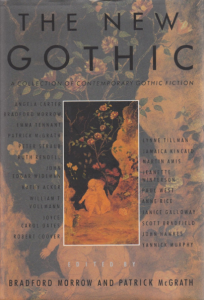
Unimpeachably kicking off Bradford Morrow’s 1991 anthology The New Gothic — which also features Robert Coover, Angela Carter, Jeanette Winterson and Peter Straub — Kincaid’s allegory of the horrors of colonialism takes place in a conceptually abstract space somewhat resembling a house. In the story, Kincaid’s unnamed and “exhausted” narrator is paid a nocturnal visit by a specter who goes by the name Frey Nicolas de Ovando (real-life 16th century Spanish Governor of the Indies and scourge of the Taino population of Hispanola), whose grotesque physical properties morph throughout the story, and throughout history, on a scale with the “endless suffering he [can] cause whenever he [wishes].” “Not a shred of flesh was left on his bones,” Kincaid writes. “He was a complete skeleton except for his brain, which remained, and was growing smaller by the millennium.” It quickly becomes clear whom Ovando and the narrator are meant to represent collectively and respectively: colonizers, colonized. As the “innocent” Ovando seeks to justify his blood-crimes, the narrator, too, finds herself at an impasse. “Who will judge Ovando?” she ponders. “Who can judge Ovando? A true and just sentence would be imbued with love for Ovando.” This is a story that washes its hands in the slippery offal of history itself.
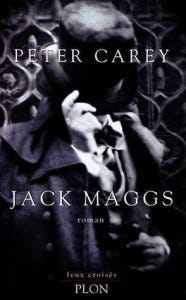
2. Jack Maggs by Peter Carey (1997)
Australian novelist Peter Carey’s shadowy appropriation of Charles Dickens’ Great Expectations is equal parts meta-fictional puzzle box, sinister murder mystery, and a gaslight panorama of Victorian London. The central character, Jack Maggs, is a literary double for Dicken’s Magwitch. The monstrously self-absorbed, second-rate writer he befriends in the course of the novel, Tobias Oates, is a lackluster double for Dickens himself. Jack Maggs, a fugitive of New South Wales missing two fingers from his left hand, sets things in motion when he comes to London to see to the fortunes of his erstwhile charge, Henry Phipps (see: Pip) whom he raised from a boy. Oates, a lay metaphysician, imprisons Maggs inside a mesmeric rapport in exchange for good info to help him find Phipps, seeking to decipher in the process the “[cartography]” of the “Criminal Mind.” If this sounds cheeky, never fear. Carey subverts the posturing of Victorian melodrama and channels it steeply toward moody despair. Caryn James, writing for the New York Times, wrote: “In Jack Maggs, the bright 19th-century surface masks a world-weary 20th-century heart.”
3. “The Lady of the House of Love” by Angela Carter (1979)
An excerpt from Angela Carter’s groundbreaking collection The Bloody Chamber, this story reimagines Sleeping Beauty at the Queen of the Vampires, deliquescing in her castle. In fact, Kelly Link recommended it here. Like all of the stories in The Bloody Chamber, which aren’t retellings so much as wholesale re-imaginings of popular fairy tales — in Carter’s words she sought to “extract the latent content from traditional stories” — the tale has an elegant feminist lens; it examines history by way of the history of narrative itself and, in due course, the shockingly little degree to which the female protagonists of popular myth have been granted agency in its unfolding. In “The Lady of the House of Love,” set among the medieval ruins of the Queen’s castle, a young soldier of the WWI variety arrives one day at the gate to find the child-bride Queen wasting away with in her boudoir, ceaselessly laying her “inevitable” Tarot and strumming the bars of the cage “in which her pet lark sings, striking a plangent twang like that of the plucked heartstrings of a woman of metal.” Here, the Queen and her sumptuous male bimbo engage in a game of cat and mouse. About the victor, who can say, except it’s not whom you might think.
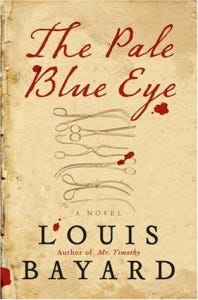
4. The Pale Blue Eye by Louis Bayard (2007)
Much like Carey’s Jack Maggs and Carter’s “The Lady of the House of Love,” Bayard’s novel The Pale Blue Eye pays tribute to another popular literary figure, but this time in his own life and times: Edgar Allan Poe. Set amidst the depredated austerity of West Point in the 1830’s, where Poe saw a short-lived career as cadet, Bayard’s novel showcases the relationship between Poe and New York City constable Gus Landor as they seek to decipher the riddle of another young cadet’s murder; the boy in question has been found hanged and, in a gruesome turn reminiscent of Poe, had his heart carved from his chest. Vacillating between Landor’s hardboiled-Victorian POV — he’s the Continental Op by way of the Brontes — and Poe’s own grandiloquent epistolary output, The Pale Blue Eye accomplishes the tricky business of seeming like a lost classic of the macabre while also interrogating the myth that has accrued around one of America’s most cherished literary personalities. The Gothic trappings liberate, allowing Bayard to navigate the past with one eye — “a pale blue eye, with a film over it” “[resembling] that of a vulture” — forever on the present moment.
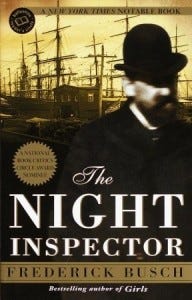
5. The Night Inspector by Frederick Busch (1999)
Busch invigorates the life of another famous literary American in The Night Inspector, set in the Five Points neighborhood of 1870’s New York City. This particular American works at the Customs House nights. He’s written books nobody reads — not during the time that he lived, anyway. At one point in the book he says: “I am my darkest, best-held secret. Do I wish to be? I would prefer not to.” His name is “M.” Can you guess who? Yet the more immediate poignancy to be found in Busch’s novel lies not in his dourly witty characterization of Herman Melville, but in the narrator William Bartholomew, a Union sharpshooter in the Civil War, which, as the novel begins, has ended only a few years previous. Disfigured in the conflict, he wears a papier-mâché mask; he collects standing debts from unsavory persons. In the world of the novel, Bartholomew is the sharpshooter, in fact, whom Winslow Homer sketched for his 1862 Harper’s print: “The Sharpshooter on Picket Duty.” Here, Bartholomew describes the aftermath of a massacre of women and children, which he comes upon in an abandoned barn during a reconnaissance mission for the Union Army: “It was their faces I wished not to look upon. I had seen men killed and I had killed them. I had smelled their corpses and the corpses other men had made… Here, however, I saw fury and despair, deep fright, and I sensed in them a dimunition — that they had understood, ultimately, that to someone in the world with the power to enforce his conviction, they had not mattered at all.” And so you can see that for a novel of the Civil War and its aftermath, Busch’s is as rigorously unromantic as you’re likely to find, pivoting between Bartholomew’s traumatized recollections of those he killed and saw killed, and his relationship with Melville. Together, the weary gentlemen aid former slave Jessie in shepherding a boatload of children still enslaved in Florida to freedom in New York. Much like Jack Maggs and The Pale Blue Eye, The Night Inspector’s portrait of 19th-century America is shot through with the juxtaposition of mythmaking and skepticism. Through a stereoscope, darkly, the world is made new.
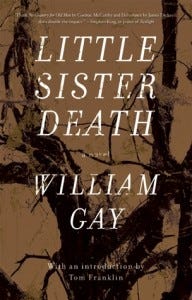
6. Little Sister Death by William Gay (2015)
Gay was long interested in the terrifying ways that the past informs the present, yet nowhere is this more apparent than in his posthumously published novel, Little Sister Death, a riff on the Bell Witch legend which rattled the bones of Gay’s native Tennessee. Little Sister Death, as with much of Gay, is above all a showcase for the jasmine-scented chiaroscuro of his sentences: “For no reason [Binder] could name he found himself watching the old toolshed, a leaning structure of gray planking set against the base of the hill. Above it the hill undulated eastward, cold and silverlooking in the moonlight, broken only by the dark stain of the cedars. He found himself waiting, staring intently at the doorway of the toolshed, a rectangle of Cimmerian darkness that seemed beyond darkness, darkness multiplied by itself, and he was thinking, Something is going to happen.” But Little Sister Death is also notable for its structure, which, much like The Night Inspector, moves sinuously among characters and time periods. In the foreground is David Binder, a successful Chicago novelist who moves with his pregnant wife and young daughter out to the maleficent Beale Homestead in Robertson County, Tennessee, where he hopes to write a commercial horror novel on the Curse of the Bell Witch. Woven into Binder’s story are scraps of historical narrative from as early as 1785 that become a living document of the Beale haunting as Binder researches it in the real-time of the novel. All this adds up to something downright meta-fictional, uncharacteristic territory for Gay, yet one that he manages to explore with his trademark elemental menace. There’s also a really freaking beautiful introduction to the novel and tribute to Gay’s life by friend and fellow writer, Tom Franklin, in case you were looking for extra incentive.
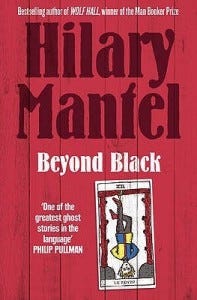
7. Beyond Black by Hilary Mantel (2005)
Mantel’s 9th novel, Beyond Black, is more than adequate proof that a story need not be set in the past to be historical. More so for the fact that Mantel, perhaps best known for her trilogy in-the-offing about Thomas Cromwell and Henry VIII (Mantel won a Booker Prize for the first volume, Wolf Hall, in 2009, and then again for the second, Bring up the Bodies, in 2012), brings a historical novelist’s knack for period detail and depicting larger-than-life characters with startling intimacy to the vaudevillian world of New-Age-y spiritualism in contemporary suburban England. At the center of Mantel’s novel is Alison, an obese and perfume-redolent medium who works the psychic fair-and-festival circuit, delivering bathetic condolences from beyond the grave to crystal-wielding, aura-photographing, principally female audiences. As an antidote to grief, Alison prescribes “closure” and “a cycle of caring,” constructing an Elysian vision of the afterlife in the minds of her sitters which the reader soon discovers is a merciful lie. Alison alone of all the novel’s players is privy to the truth of life after death, which amounts to a graceless confusion in the lost souls that people the novel, chief among them the figure of Morris, a louche pervert from Alison’s girlhood. The rub, of course, is that truth is an entirely subjective construct in Alison’s POV, a tension in the novel mediated by the entrance of Colette, a spiritual seeker whom Alison meets on the circuit and quickly makes her right-hand woman. What ultimately renders Beyond Black a historical novel apart from its immersive and unromantic depiction of modern England’s psychic set is the implicit juxtaposition of this milieu with that of toe-rapping, table-tipping Golden Age-spiritualism, which had been widely debunked over a hundred years previous to when Mantel’s novel takes place. We don’t learn from our past mistakes. The players change, the game endures.
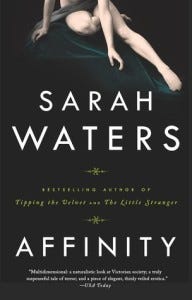
8. Affinity by Sarah Waters (1999)
Waters’ sophomore novel of socialites and spirit mediums in 1870’s England is a wonderful complement to Mantel’s Beyond Black in that it depicts the world of mediumism in its Golden Age with a studious commitment. On the surface, then, it has more in common with Bayard’s The Pale Blue Eye, seeking as it does to critique the 19th century from the inside out. The plot of Affinity creeps around protagonist Margaret Prior, a depressed aristocrat who visits Millbank Prison for Women on a service trip only to fall under the spell of a spiritualist medium imprisoned for fraud, Selina Dawes. In the cloistered realm of Millbank, overseen by a vividly imagined phalanx of prison matrons, the two women embark upon a friendship that becomes, for Margaret Prior, a dangerous obsession. If you’ve read Fingersmith,The Little Stranger or really anything by Waters then the revelation that everything with Selina isn’t as it seems is a given. It’s Margaret’s desire for Selina that burns, and drives the novel to its finish. Here, Margaret reflects on one-time love object Helen, mapped to lead her toward Selina: “I saw Helen watching us,” Waters writes. “There were pearls at her ears — they looked like drops of wax, I remember seeing them upon her in the old days and imagining them melting with the heat of her throat.”
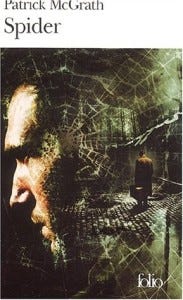
9. Spider by Patrick McGrath (1990)
For another psychological slow burn of a sophomore novel look no further than McGrath’s Spider, which was also adapted into a very good film by body horror-auteur David Cronenberg in 2002. Like many other books on this list, the novel feints between past and present timeframes, with its cerebrally dysfunctional and colossally unreliable anti-hero Spider (aka Dennis Clegg) narrating the goings-on in entropic, 19th-century inflected prose. Threadbare, muttering, coated in a body armor of cast-off newspapers and twine, and hounded by some undefined trauma, Spider walks the reader gingerly among the shattered bits of his boyhood with deadbeat dad Horace and mercenary prostitute stepmother Hilda Wilkinson intermingled with those of his present, living in a halfway house run by stepmother-doppelganger Mrs. Wilkinson after being released from a lunatic asylum where he spent the last 20 years. While McGrath isn’t a subtle writer, he is resoundingly self-aware. Spider’s references to 19th-century forebears like Poe and Maupassant give it the obfuscating sepia-cast of a historical novel while also allowing it to remain rooted in the late-late modernism of Beckett and Paul Bowles. Like Bayard and Waters, McGrath commits and the product, though it mightn’t be, is utterly convincing. It’s all right there in the novel’s playful opening in which Spider, a hot mess, reveals to the reader: “I’ve always found it odd that I can recall incidents from my boyhood with clarify and precision, and yet events that happened yesterday are blurred, and I have no confidence in my ability to remember them accurately at all…All I can tell you for certain — about yesterday, that is — is that there were people in the attic again, Mrs. Wilkinson’s people…”
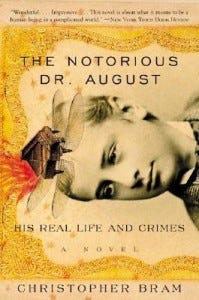
10. The Notorious Doctor August: His Life & Crimes by Christopher Bram (2000)
Bram, author of the melancholy masterpiece Father of Frankenstein about Frankenstein-director James Whale, works a vein of historical fiction somewhere in between Waters’ Affinity and Busch’s The Night Inspector in his Civil War-era novel about clairvoyant pianist Augustus Fitzwilliam Boyd (the “Doctor August” of the title, who also happens to be gay), former slave Isaac, and no-frills governess Alice Pangborn. Simultaneously interrogating the vicissitudes of being queer in the 19th-century and the emotional complexities of the Spiritualist movement, Doctor August takes readers from the American South, to New York City, to Europe, much of it in pursuit of Fitz’s main chance of contacting spirits (and gaining lucre) through his piano music of the spheres, ambiguously evidential. Meanwhile, Fitz, Isaac and Alice form a ruinous love-triangle that serves as the novel’s devastating and all-too-human emotional core. As Paul Quarrington wrote in his review for The New York Times, “It is the novel’s sly contention that Dr. August was the bridge from the Romantic to the Modern periods…” which elevates it above the problematic quagmire of being a 19th-century nostalgia-trip. Like all of these winning historical tales, Bram’s novel subverts a seemingly uncritical indulgence of the past by training upon it a critical eye.
About the Author
Adrian Van Young’s historical gothic novel Shadows in Summerland will be published by ChiZine this Spring.
Do you have any tips for handling an endless cycle of rejection … emotionally? I’m a 26-year-old fiction writer and I’ve barely ever been published; I’ve been rejected from MFA programs, lit journals, websites, contests, etc. And I feel sad about it every time. I’m not going to give up, but I think it would be fun and motivating to get some kind of validation every once in a while. I wonder if you have any tough advice that’s more specific than just, “toughen up”?
Thanks,
Rejected in Rejectsville
Hi Rejected,
Rather than “toughening up,” I’d focus on gaining perspective. Feeling sad about every rejection you get isn’t going to accomplish anything, but more importantly it’s usually misplaced sadness. Most of the time, rejection is not even about you. Editors reject work for all kinds of reasons — it just doesn’t speak to them on the hour of the day they happen to read it, they already have a similar story slated for the issue, they don’t spend enough time with it to get what you’re trying to do, they don’t like your name or the font you use, et cetera et cetera. You’re also just up against difficult math: Most publications only publish a small fraction of what they receive — the acceptance rate at top-tier journals is less than 1%. Good stuff gets rejected all the time. (And bad stuff gets published! “Good” and “bad” are relative anyway!) When making decisions, editors may end up choosing writers who already have name recognition or a publishing record over relative unknowns, all other things being equal. For these reasons, even if you send out lots of work, it’s not that surprising that you’re getting lots of rejections when you’re only 26.
Most of the time, rejection is not even about you.
You may know all this intellectually, but have trouble accepting it on an emotional level. If that’s the case, I strongly recommend that you do some editing work. Journals are always looking for help with reading submissions. Being on the other side of the desk for a while will give you a much stronger sense of the numbers involved, how much time editors (usually working for little to no pay) are able to spend on each submission, and the heuristics editors need to use to get through the submissions queue and figure out what to pass on and what to reject. In my other career as a manager in a corporate job, I’ve reviewed hundreds of resumes, and it’s given me a fundamentally different view of what should go in a cover letter and resume, as well as what kinds of jobs are even worth applying for given the candidate’s experience level. Doing some editorial work will give you the same kind of perspective, helping you see what editors do and don’t care about and just how much of the decision process isn’t personal.
It’s also important to keep in mind that every writer at every level experiences rejection. I know of no level of success where writers stop getting rejected (and stop at least occasionally feeling bummed about it). People generally make more noise about publications than rejections, the same way people mostly share pictures of happy moments on Facebook, making their sad moments invisible. So if you spend much time on social media, you might start to feel like you’re the only one fielding rejection slips. You just have to remember that’s not the case; the math assures you rejections are the rule, acceptances the exception. (And if other writers’ good news really gets to you, consider spending less time on social media.)
So, perspective. That’s step 1. But you are completely right when you say that occasional validation is fun and motivating. So how do you make sure you’re getting validation from time to time?
First, find a community of other writers to share work with so you can get readership and feedback without having to wait for publication. It’s so helpful to have at least one or two friends who are “good readers” of your work — meaning they understand what you’re trying to do and can help you achieve it. Generous but honest readers will help you figure out if your work is actually ready to send out, which is something you probably won’t get from editors. (Lots of rejections don’t necessarily mean there’s anything wrong with your story! I’ve found that some of my best poems have been the hardest to get published, probably because they are riskier.) I’ve talked more about the importance of finding a community here, here, and here.
It’s so helpful to have at least one or two friends who are “good readers” of your work — meaning they understand what you’re trying to do and can help you achieve it.
Second, ask yourself if you’re aiming too high with your current submissions. Every now and then a writer gets her first story or poem published in The New Yorker or whatever, but that’s just crazy luck. Most people have to work their way up to some extent. Your first publication will likely be a smaller, less selective magazine or journal. So if you have zero or few publication credits to your name, start out by trying to place some stories in small mags that take most of their work from the “slush” (some top-tier journals accept slush but give a lot of space to solicited work). There are so many journals out there, you should be able to find something small that also publishes work you genuinely like. (Maintain standards, obviously; you don’t want to end up actually disappointed by any acceptances.) And don’t “save” your best story for The New Yorker; by the time you have an editor or agent who can help you place it there, you’ll have written better stories.
*
Hi Elisa,
I’m in the final months of a Creative Writing MA. I also spend — outside of the course (I commute long-distance) — all my time with novelists and journalists. There’s a lot of talk about the tortures of publishing — agents, publicity, money, etc.
The course is almost like downtime. It’s a total joy working out the mechanics of writing with other writers. Discussing the publishing process is seen as a little forward. I know that’s not going to last forever, and anyone who denies getting published would be great is probably lying. Also, the downtime is pretty short, as much as they tell you the MA is for “experimenting” and “finding your voice.” The course culminates in a massive agent hoopla where lots of the best writers get picked off.
Maybe it’s anxiety, a lack of confidence, I don’t know, but all this stuff is demotivating (and I already procrastinate like hell). How I do I get back into my er, special place and just write without fear of what might happen after (or what might not?)
Thank you!
Please can this be anonymous…
Dear Please,
I’m going to use a dumb analogy to try to help you, and here it is: The holidays are not a good time to try to lose weight. If you roll into December with an extra ten pounds to lose, you’ll very likely still going to be wearing at least those ten pounds by January. Accepting this should take the pressure off and allow you to enjoy a bit of fudge, for pete’s sake, then re-motivate when there isn’t fudge everywhere you turn.
Why not give yourself this time to focus on the joyful part?
Similarly, writing the first draft of a novel is a time to be permissive and a little self-indulgent. You are going to have to worry about getting it in shape to be published, finding an agent and all that other anxious-making stuff later, if and when you finish the draft, so why not give yourself this time to focus on the joyful part? In fact, working on a project that brings you joy is the absolute best way to ensure you finish the project.
Basically, I’m giving you permission to procrastinate, but only put off the stuff that’s actually better to worry about later on. Thinking about what agents want, what publishers can market and so forth during the drafting stage is going to stifle you and lead you to make bad writing decisions. You can always revise later.
So next time you’re hanging out with your writer friends and the topic of agents/publicity/money comes up, try saying something like, “I decided to stop worrying about all that shit until I finish my novel and I’ve been much happier and more productive ever since.” Maybe you’ll inspire them!
Septimania (The Overlook Press, 2016) is a relatively compact yet sprawling novel. In just 336 pages, author Jonathan Levi, a founding editor of Granta magazine, traverses over 1300 years and several countries in the story of organ tuner Malory and his relationship with mathematical genius Louiza, as well as Malory’s connection to Isaac Newton and his own recently discovered lineage within the powerful kingdom of Septimania.
Septimania, which was largely inspired by Levi’s fascination with Rome, is his first published novel in over twenty years, since A Guide for the Perplexed (1992). It was conceived over many years, during which Levi worked a number of high-profile jobs in theater and festival production, and with the New York City Board of Education, among other pursuits.
I met with Levi for a leisurely conversation at a café not far from Columbia University. Though Levi has lived in Rome for several years, he still keeps a home in New York City and travels often for his various projects in theater, music, and journalism. We talked about his many interests and his multi-faceted career, and how it all comes into play in his writing practice and in the themes of Septimania.
Catherine LaSota:You live in Rome now?
Jonathan Levi: Yes, but I still have an apartment on the Upper West Side, and my kids all grew up here. We moved to Rome about 12 years ago for one year, to have the kids see what another culture was like, another language. It was equally foreign to all of us. (My wife) Stephanie and I sort of knew Rome, but we didn’t speak Italian.
CL:Why Rome?
JL: We wanted a big city, because the kids had grown up in New York, and we didn’t want somewhere cold, so we didn’t want Berlin, which would have been exciting.
So we went for one year, and then we came back here for two years, and when I went back again, 12 years ago, that’s when I decided to get back to writing again.
CL: What was it about going to Rome that made you feel that it was time to get back to writing?
JL: Well, it was sort of…I had been ootchity.
CL:Ootchity?
JL: You know, I had been uncomfortable, as though I’d had a marble in some uncomfortable place, because I’d been doing a whole bunch of other things, and I really wanted to get back into writing. I was just finishing up a three-year stint running a performing arts center up at Bard College — I had promised that I would give it three years.
CL:And you gave it exactly three years?
JL: I was counting the last hundred days…
CL:Because you really wanted to write!
JL: I really wanted to write. I went off (to Rome) and had a great year there, and came back here, but I found New York just impossible to write in, because there were so many tempting things.
CL:Tempting how?
JL: In this case, because I had opened this performing arts center — Frank Gehry had designed it — and there was talk about opening a Frank Gehry-designed art center down at Ground Zero, and so I was being wooed for that, which meant that I was wasting a lot of time going down and talking with people.
CL:That sounds exciting!
JL: It is! That’s what I’m saying, that it’s tempting. Because, you know, I have had jobs where there were cars, with drivers…and that’s kind of a nice way to get around New York City.
CL:I hear you.
JL: And you get caught up in that sense of self-importance, and it took over, and it was hard to say no. I remember at one point, after we’d been here for two years — our youngest daughter had done her first two years of high school by that point, our son was off to university — we just sort of turned to each other and said, why not go back? So we went back to Rome. That was 2007, and we’ve been there since. Just stayed and love it.
CL:Much of your novel Septimania takes place in Rome.
JL: People say, “Why did you write about Rome?” Well, I know writers who like to write about other places, but I really prefer doing research in Rome!
CL: Speaking of research, you clearly needed to have a grasp on so much background material to create this novel. I’m curious when you started this project.
JL: There were a couple of points at which I started. One point was probably the mid ’90s. That’s when I had the first idea for this character Malory. It came out of this dinner party I’d been to when I was a student at Cambridge University.
A friend of mine was this wild and wacky historian of science, and his specialty was Isaac Newton, and he grew up as a red diaper baby over there. He had a house that he inherited from his parents, and he painted the lions red, and he had all kinds of people living there, including my girlfriend at the time, and I was at a dinner party there one night. He was doing some work for a BBC series called Omnibus, which was using the guys who wrote the book Holy Blood, Holy Grail. It was a big series on the BBC, and the thrust of it was that they had discovered a secret society in France that was dedicated to rebuilding the Temple of Solomon in Jerusalem, and bringing back the Moravian Kings. Well, that sounds like a harmless bunch of nutcases, but, the trail of this secret society led to this little strange village in the south of France, in which all kinds of odd things were going on, and a huge treasure, perhaps the treasure of the Cathars (a sort of hermetic sect of Catholics, knights who didn’t marry), had been put down there, and the question was why? The question was, where did things all add up? And they traced it back to the theory that Mary was pregnant with Jesus’s child when she left Palestine, and she wound up in the south of France, where there’s a big cult to Mary, and gave birth, and so that the holy blood — the Sangue Grail, as in Holy Grail, the line of Jesus — continued through the Moravian Kings, and this turned into a French secret society. At one point, Isaac Newton was the president of this secret society. Since this friend, Simon, was an expert on Newtown, he was helping these guys at Omnibus.
So we’re at dinner one night with a bunch of people, drinking and laughing, and a phone call comes through, and Simon goes, “Hello? Oui…oui…oui…oui.” And hangs up the phone. And we say, “What was that?” And he said, somebody called me in French and said, “Stop working on this series, or else.”
CL:Whoa.
JL: So this gave me the idea to start working on a book. I went down to the south of France, and I did some research, and I came back…
CL:Were you writing during this time of research?
JL: Well, I had written one novel, A Guide for the Perplexed, which was published in ’92. I then wrote two more novels, both of them set in South America, and couldn’t get a publisher for them. At that point, I was getting going on this novel, but I was getting offers from other places. There was a project I was offered at the 92nd St Y to produce Dante’s Inferno, and so I figured, this writing thing isn’t maybe working right now — let me put it aside for a bit. So I went off and did this thing for the 92nd St Y, with Dante’s Inferno, and toured the production around the United States, came back, and was offered a great job with the Chancellor of the Board of Education. I did arts and culture for the city, and then that led to the job up at Bard. And that’s why, when you ask why I was “ootchity” to get back to writing…
CL:Well, it’s interesting that you say maybe something else was working better for you than writing during that time, but it sounds like the writing was still gnawing at you.
JL: Oh, very much. Because, you know, when you’re doing these other things, you’re enabling a lot of people. And you’re enabling good people, and nice people. One of my philosophies was, there’s a lot of talented people out there, so work with the nice ones, leave the jerks alone. But at a certain point you want to do your own thing.
Well, meanwhile, this guy Dan Brown came along and ran with this idea from Holy Blood, Holy Grail, and turned it into The Da Vinci Code. So I went, ah, I have to rethink this idea! So that’s what I did. I really restarted (my book) when we returned to Rome in 2007, that’s when I got going on it.
CL: So you returned to Rome in 2007 with the express purpose of working on this novel?
JL: Yes. Now, of course, prior to that, I had done a lot of research. The basic premise, that there was this kingdom of Septimania that was in fact a kingdom of Jews given by Charlemagne, was taken from a book that I saw back in the ’90s in the Columbia University library.
CL:Such a great library. I used to just spend time there.
JL: Isn’t it? And open stack libraries, which are disappearing. A friend of mine did a dissertation years ago on Thomas Pynchon. His thesis was based on the fact that years ago, Pynchon went looking for this one book in the New York Public Library, and shelved next to it, because the books were shelved according to when they came in, was a pamphlet on two other subplots that then became essential to his novel V.
CL:You never know what you’ll happen upon in open stacks libraries. That’s the argument for brick and mortar bookstores, too.
JL: Yeah, you just never know what’s going to hit. So I had done a lot of that, and I had notes and I had thoughts, but it was great to go away (and write). I wrote the first 150 pages of the book in a month in Bellagio.
CL:Did many of those first 150 pages change? This is a very complicated novel.
JL: Yes, huge amounts changed. I think there’s probably three times the amount of material somewhere. I wrote the novel in a couple years, and sent it off. I got a terrific new agent here, and I showed her the novel, and she said, “Jon, it’s a great novel. Ten years ago I could’ve sold it, but not in this literary climate, with literary novels. But if you want to take some notes…”
CL:What year would this have been?
JL: That was maybe 2010. So I took her notes, and two years later I came back to her with a rewrite. There are huge parts that changed, reformatted, whole characters appeared.
CL:Major characters?
JL: Major characters. Antonella had a very small part in the original. The point is, one can always learn. It’s not just a question of being marketable, but I think it’s a better novel because of her notes. There are very few agents you find these days who can do that kind of analysis and push you in the right direction.
CL:Who’s your agent?
JL: Her name’s Ayesha Pande. One of the reasons I went after her is she’s half German and half Indian. I was reviewing fiction for the Los Angeles Times for about five years in the late ’90s, early 2000s, and I just found myself drawn to international fiction much more than American fiction during that time. Part of it that is just a self-sifting process that happens when publishing houses here decide they want to publish a foreign author, because there is so little that is published in translation. I sort of felt that there’s this international consciousness that feels much more like where I want to be.
CL: I was going to ask what you were reading when you were working on your novel — you mention that were interested in international literature.
JL: Well, I was just down in Argentina for the first time. I had been talking to my wife about Borges while we were down there, and she had never read any Borges. I pulled out the beginning of “Tlön, Uqbar, Orbis Tertius.” The set up for the story is, he’s having coffee or a drink with his friend Bioy Casares, another Argentinian author, and Bioy Casares mentions a great thinker from Tlön, and Borges says, what’s Tlön? Bioy Casares says it’s mentioned in the Anglo-American Encyclopedia of 1923 or something…so they go look for it, and they can’t find it, but then Bioy Casares gets home and finds his copy (of the encyclopedia), and it’s only in Bioy Casares’s copy that they’ve got an article about Tlön. I hadn’t thought about that until I read it to Stephanie last night, but it’s that kind of thing of trying to remember what’s real and what’s invented. I mean, people sometimes ask me about Septimania, is this really true? And I can’t remember…
CL:The answer is yes, and no.
JL: Well, there’s this Charlemagne expert at the American Academy. At one point I figured, ok, I’ll take her out to lunch and ask her about the things in my book. I asked, do you think this could’ve happened? “No.” What about…? “No.” And…? “No.” And I figured, ok, I’m doing the right thing. But, yeah, (some events in my book were) a little while ago, you know, 1300 years ago…
CL:…and people’s versions of the truth change from person to person and year to year.
JL: Well, there’s another Borges story, “Pierre Menard, Author of the Quixote,” in which he does a fake review where he’s comparing Cervantes’s Don Quixote with a new book Don Quixote written by Frenchman Pierre Menard. He says in Cervantes’s version, it starts off with this epigram: “History, the mother of truth.” And he says in Cervantes’s mouth this is just some quasi-chivalrous nonsense that he picks up all over the place, but Pierre Menard writing after the second World War writes “History, the mother of truth,” and, my god, what a revolutionary concept!
I was in Mexico, teaching, in January, having lunch with a poet down there, a guy in his 70s, and I said to him, “Homero, you know Borges’s ‘History is the mother of truth?’ If history is the mother, who’s the father?” And he said, “Fiction, of course.” So I think that’s the answer.
CL:History is the mother of truth, and fiction is the father.
JL: Fiction is the father of truth, yeah.
CL:I noticed that there is a lot about writing and about books in Septimania. Your character Settimio, a librarian of sorts, takes great stock in books. And your character Louiza talks about how words only started making sense to her when she could visualize them as imaginary numbers. But it’s not just the power of reading and writing that plays a major role in Septimania. Your novel is about so much. It’s also about this intersection of Christianity and Judaism and Islam and physics…
JL: These are all my pet obsessions, and the book gave me a chance to explore them. I suppose this is where rewriting comes through — it gives you a chance to worry them a little bit the way a dog does with a bone, until you finally get the meat off in a certain kind of way.
CL:So, in gnawing the meat off the bone of these obsessions, did you surprise yourself at all? Did you find yourself drawn to certain obsessions more than others? And what were those?
One versus the many. Monomania versus septimania.
JL: Absolutely. One of the obsessions was the question of whether things can be boiled down to “one.” One versus the many. Monomania versus septimania. There’s something so enticing about the idea of one, about finding that kind of unified theory, about finding one love for life and possibly even one god; on the other hand, there’s that huge pull towards complexity, in which you sort of say, not just that it’s fun to play the field, but that the world is such a marvelously intricate and colorful place, that why do you just have bring all the color down to white light? Why can’t it just exist out there?
CL:It’s a huge question!
JL: And that’s what I’m saying, there’s a lot of meat on that bone to play with, and how do you play with it in such a way that it doesn’t become just, you know, either a Frank Zappa song or a dry treatise on something? How do you do it in such a way that it’s going to lead a reader along?
CL:And how do you write about it and not drive yourself insane?
JL: I had hair before I started! (laughs) No, there’s something that’s a lot of fun about writing a novel. It’s like a juggler with a lot of balls in the air. It’s a lot of stuff to keep in your mind, and that’s why things like writing retreats to just get away and have that quiet time where you don’t have to listen to anybody else, and you can just drive yourself insane a little bit for a month at a time, is necessary. Because it’s a lot of stuff to keep going on up there.
When you hear stories about people who have incredible memories, and how they build these memory palaces and put bits of information in different rooms? I think we do that while writing a novel. You put themes into characters and into interactions between characters. If the interaction between Malory and Tibor, let’s say, is one between a character who is committed to “one” (Malory), and a character like Tibor who is committed to “many”– that’s where that theme goes.
CL:Between character interactions.
JL: Between character interactions. Between Malory and Louiza, there are other things, there are things that have to do with language. How do we communicate, how do we make sense of the world?
CL:Let’s talk a bit about your time with the journal Granta. Can you describe briefly what the publishing industry felt like when you started editing Granta, the things that were distinctly of that time? Is it primarily the Internet that makes the publishing industry so different now than when you started Granta?
JL: I’m not sure, because, you know, I’m seeing it still a little bit from a distance. I’m not interacting with it in that kind of way. Part of that is just, as an old guy, it’s just too hard to look at a telephone and read it. I see people reading stuff on the subways, and I just can’t do that. I go on the subway with a book. But, on the other hand, when I’m at home on my computer, to be able to buzz around and get here and there and find things on the internet, more than when I’m searching for something that’s there and digitized, and I can just… I can get it. That’s fantastic.
When we started Granta we were trying to decide whether we should be a non-profit, and we just decided that our personalities were for-profit personalities.
CL:What is a for-profit personality?
JL: It means you want to make money! (laughs) It means you’re in you’re in your early 20s and you want to live better than you’re living now. Plus in those days when we were looking at Granta, we saw these new redone magazines like Esquire and Vanity Fair that were just coming out, and they were selling millions of copies, and we thought, well, if we can just get a small portion of that, we think those are our readers, too.
CL: Vanity Fair and Esquire? You considered those your readers?
JL: Oh, we went after those readers. I mean, when I left Granta in ’87, we were selling 100,000 copies. Selling 100,000 copies.
CL:In stores?
JL: In stores and by subscription. But that was 30 years ago. The world has changed. Back then, it cost nothing to go to the Fillmore East and see Jethro Tull or Emerson, Lake and Palmer, because they made all their money through selling records. Now nobody makes any money through selling records and they make it through concert tickets. Things change. You know?
CL: It’s a different era.
JL: A very different era. I had a cup of coffee with Sigrid Rausing, who owns Granta now, when she bought Granta 15 years ago. I gave her two pieces of advice, because she asked for advice. Number one, I said, just rip up the magazine. We always wanted to do that, and reformat it, and do it a different kind of way. And now I would do that, and I’d have a huge online presence. And the other thing was, I would get an American editor. Granta hadn’t had an American editor since I left in ’87. John Freeman came on as the American editor, and six years later he became Editor-in-Chief, and I think did a fabulous job in giving the thing life again, because it was not in its adolescence anymore.
CL:In addition to your experience being an editor and a theater producer, you also have a background in violin?
JL: Yeah, I still play. I play on the book trailer. I mean, I didn’t want to be a violinist — I wanted to learn violin well enough that I could have fun with it. I still play jazz violin with friends and old bands that I used to play with. The guy that produced the music for the book trailer, Andy Metcalfe, used to play with a band called Squeeze. He and I played together back when I was I was at Cambridge. He was in a group called The Soft Boys, and Robin Hitchcock and the Egyptians. I sat in with all those guys back in the days. Now Andy still has a pick up band, and when I go back to London I play with them — we do Django Reinhardt and that stuff. So, you know, I sort of keep my hand in doing that sort of thing.
CL:And you’ve also written a bunch of libretti, right?
JL: Yeah, and that’s part of, you stop beating your head against one brick wall and you start beating it against another.
CL:Wait — is that how you’re describing doing something creative, as beating your head against a brick wall?
JL: Well, when I realized the books weren’t happening, when I wasn’t getting the novels published, no matter how hard I beat my head against that wall, I went and found these other opportunities.
CL:Have you kept all these fires burning simultaneously? Music, writing, etc.? You said you still play violin.
JL: Yeah, it goes on. This guy Mel Marvin, whose grandfather fought in the Civil War, has had, like, six shows on Broadway — he and I have written two operas together, and one musical, and we’re still trying to get the musical put on. It’s about a really happy musical subject: Hurricane Katrina and the War in Iraq. So you can imagine that’s beating your head against another wall. But we just talked to a producer who’s interested in doing a second production of one of our operas that was premiered in Holland. It’s hard to say no to a lot of these fun distractions.
CL:So when you were working on Septimania, how did you actually get the novel written, amidst all these other interests you were pursuing? Did you have writing days?
JL: I’d like to think that I did. If my wife were sitting here and you asked that question, she’d just start laughing. It’s just (writing) all the time. The nice thing is that, when I finally finished at the Board of Education in 2000, after two years, and they came to me with the tax forms to fill out, I said, what are these? I’d been lucky in that I’d been able to cobble together jobs in certain ways so that I’d never had a nine to five job in my entire life before that. The various projects I’ve done through time, have been projects when I set my own hours, my own time.
CL:And you’re good about compartmentalizing, about setting boundaries?
JL: Well, I like to think that, essentially, I live in a world of serial procrastination, that I avoid one project by working on another one. And eventually I come around to everything I’m doing.
CL:Well, in that way, you get many different projects done, right?
JL: That’s the theory of it. Right now I’m putting to bed a project I do every year. I’m a consultant for a Russian music festival in Lucerne. It’s something I started with a guy in Switzerland five years ago. It’s a lot of fun; it’s great. I learn something every day.
CL:What kind of Russian music?
JL: Russian classical music mostly, but we’ve got Russian gypsy music this year. We’re doing an evening on the poetry of Pushkin and Lermontov, with these two great women, the Russian actress Kseniya Rappoport and a great Latvian accordion player named Ksenija Sidorova. So we’ve got these two Kseniyas with Pushkin and Lermontov…
CL:Hearing you talk about this, about all these different projects and your interests in different areas of the world, it makes sense that there’s such an expansive range to what you’re covering in your novel, too.
JL: Well, everything feeds everything else. That’s the nice thing. To say, therefore, I’ll put a stop to one thing while I’m doing another would be dishonest.
I think part of it is being outside, being away from New York, it’s easy to detach. And Rome is a wonderful, wonderful place to live.
CL: Because of the history, or…?
JL: It’s beautiful. You walk outside, and when you look at all those pre-War buildings, well, that one’s before the Venetian War, that one’s the Ottomans — you know, it’s not just pre-Civil War, it’s 17th century, 16th century, 15th century.
CL:But what is it about being around those buildings that’s so inspiring? Is it being around something that’s been there so long? Is it the physical beauty of buildings that are that old?
JL: I think it’s both. I think that initially it’s just the physical beauty, that’s what hits you for the first couple of years. As you start to get to know it, Italians trust that you’re going to be there, and that it’s worth spending time with you…then you start to get more into it. I’ll give you one example: in Argentina I was visiting a friend whose family goes way back in Italy as well as Argentina, and so he had a friend down there from a famous Italian family, and his wife was French, and she was asking me about Septimania. I was describing to her how it took place in Rome at various points, including 1666 with Bernini, etc. And she turned to her husband and said, “Francesco, when was your Pope?” Their family had a Pope, in 1667 — he was a patron of Bernini and everything.
CL:What. How amazing was that for you?
JL: This is what I’m saying. It’s not just the buildings. Francesco, he’s a really nice guy, he lives on a sailboat most of the year and doesn’t have a lot of money, but his family has a Pope. And not only that, but it’s as if Bernini therefore was the house painter.
CL:Right.
JL: You know, he was the local artist that the family used to hire, “oh yeah, they had him do, uh, those statues up in front of St Peter’s…”
CL:Wow.
JL: So that starts to seep into it, not only at that level, but in the histories of the people that you see. I go running in Rome, and I got into running with a running club because of this waiter Umberto at our local restaurant. He and I go running most Sundays together, and we do these races. And so I knew the history of his family — it’s not like here, where you’re a waiter or a waitress while being an actor or waiting to get on Broadway. It’s four or five generations (of waiters), and I’d hear the stories of what it was like to be a waiter 70 years ago, when his grandfather was a waiter.
CL:That must be interesting because of the identity that carries through generations, much like in your book, where you think Newton is maybe this person, and he’s also that person…
JL: That’s what I’m saying, is that there’s a sense of layering that’s very serious in Rome. And it’s digging through those layers. Not just in seeing how much further down the stream goes, but that underneath each layer, you know, under the layer of this church, there was a Roman temple, and under that there was a Mithraic temple, and under that there were other secret things that went way, way back.
CL: Right. And then all of those secrets create a kind of magic where all these things were piled.
JL: Without a doubt. When we first went to Rome in 2004, we lived on the hill of the Aventino, where I imagine that the real Septimania actually is — it doesn’t take much imagination when you’re up there to think that that’s where it is. In my book, there is a picture of a door in the back of the Pantheon, but up on the Aventino there are a lot of doors like this, locked up doorways in the middle of the hill, and you don’t know what they go to, but at some point people went through them, and they had lives like you and me, and they got pregnant and they had children, and they beat their heads against brick walls.
CL:I love what you said about all these different themes you’re working on, working out different ideas between different characters. It makes me think, well, here’s something that fiction can do that other writing forms can’t do. Like, you could write this story as nonfiction, but you have the unique opportunity to explore these different themes via character interactions in fiction.
JL: That’s absolutely true. Because you’ve got the freedom to push your characters in certain kinds of ways. You know, I think that writers who say they listen to their characters and let their characters lead them…I’m not sure, I don’t really know what that means, unless they’re downright crazy. But I think what they’re saying is that they’ve sort of melded enough with their characters, that when they want them to go a certain way, they know enough of their characters to know how to do that, and how that character would talk were that character to do it, in a very specific way.
I think that’s one of the things, that when you go back and you’re rewriting, you sort of say, eh, you know, I don’t think this quite works, I don’t think she would’ve done this.
CL:But your characters are still a piece of your imagination, and not a physical person out in the world whom you’re following.
JL: That’s right.
CL:So now that you’ve banged your head against the wall with so many different other projects, and you’ve published a second novel, are you going to keep writing?
JL: Oh, yeah.
CL:Are you working on something currently?
JL: Yeah, in the sense that I was working on something pretty hard until January, which is when we left Rome. I’ve been doing a bunch of teaching in Mexico and Colombia, and I was here, doing some stuff for this (the Septimania release). And we were just in Argentina, so it’s one of those things, when I get back to Rome in May, then I get back to it.
CL: Rome is your writing place.
JL: Without a doubt. I’ll get the thing finished by November. The new novel will be finished by November.
CL:How long have you been working on that one now?
JL: Well, again, it’s something I had an idea for about three or four years ago, and a lot of it takes place in Russia. I got a fellowship from a Russian organization to go and do research in St Petersburg, and…well, you can see that I’m a big fan of the idea that writing pulls all of these things together, or it can. The torture is doing it in such a way that you can communicate that to other people (and not just yourself the whole time)!
CL:There’s music in your novel Septimania, and there’s theater in your novel — all of your interests are in there.
JL: Yeah. But I never thought, I want to pull all these threads together, and that’s why I’m writing a novel. This is how I live. And these things are there. The challenge is, how do you communicate them to people who don’t know mathematics, who don’t know theater, in a way that doesn’t feel didactic or in a way that makes it feel like you’re making them feel stupid.
CL: Did you share the work along the way with other people?
JL: Mostly with my wife, who is very good and straightforward and couldn’t possibly lie to me if she wanted to, which is exactly want you don’t want at times, but really want you need. I also showed it to my parents. My father is a philosopher of science, and since there is some science in there I was curious (what he thought). And I think — I don’t know whether you feel like this with your own history, but — while your parents are alive, you still have a good bit of that super ego in which you want to prove (something) to them. I mean, my father wanted me to be a physicist. And…
CL: Here, I wrote about physics, read this!
JL: Yeah, exactly, (to show) that writing can be just as intellectually challenging and demanding as physics. But it was actually very helpful to get their perspectives, because I knew they would understand. My mother has an MA in English, and I knew that they would get it. The question was, where would their eyes glaze over, where would they put it down because they’d had enough? And that was very helpful as well. But I think ultimately, the best editor, the best reader I had, was my agent, and I was just very fortunate to find an agent — her background was at Farrar Straus as an editor — who is just terrific, because it’s not just a question of seeing what’s right or wrong, but saying it to the writer in a way that they’re going to get it, and make it better.
CL:A good editor makes a huge difference in any writing capacity, and actually can help you see what you’re doing sometimes, right?
JL: Yeah, exactly. Or at least can put you in a place where you may be more likely to see that.
CL:Right.
JL: I remember one time with A Guide for the Perplexed, that I had written one chapter towards the end that I thought was going to revolutionize English letters. I thought, people are going to write dissertations about this chapter…
CL:That’s a good amount of ego for a writer.
JL: I think I was between writing drafts of my Nobel Prize acceptance speech at that point.
As I showed the novel to my wife, and she got to that chapter, she threw it across the room and said, “I don’t like it.” I showed it to my parents, and they said, “I don’t know, Jon, about this one chapter.” Well, my ideal reader was coming back to town. I showed her the book, and I said, “How’d you like the end?” She said, “Oh, the end is wonderful!” I said, “You mean this chapter?” She said, “No, no I didn’t know what you were doing there. But I loved the end!” In any case, I sold the book like that, and when my editor got around to that chapter and doing the line editing, which was done on paper in those days, she got to that and wrote me this one note saying, you know, John, I think you’re missing a big opportunity here to do this. Like one sentence. It was a Friday I got that (note). Monday I had a new chapter for her. Because she said it in the right way. Instead of saying what’s wrong with it, or “I can’t read it,” she said, you’re missing an opportunity to do this.
CL:Giving the right push to an author but also not shutting him down, it’s such a delicate balance…it’s a skill.
JL: Yeah, as they say in Spinal Tap, there’s a fine line between stupidity and genius.
CL:So what are you reading these days?
JL: There are two great books I’ve just finished reading. One is Valeria Luiselli’s The Story of My Teeth. And I just finished her husband (Álvaro Enrigue)’s recent novel published in English, called Sudden Death, about a tennis match between Caravaggio and the Spanish poet Quevedo, using a ball made out of the hair of Anne Boleyn. Wacky Mexicans.
The Sympathizer by Viet Thanh Nguyen has won the 2016 Pulitzer Prize for Fiction, beating out such contenders as Hanya Yanagihara’s A Little Life, Lauren Groff’s Fates and Furies, Nell Zink’s Mislaid, and Paul Beatty’s The Sellout. The Sympathizer, which was published by Grove Press, “is the story of a man of two minds, someone whose political beliefs clash with his individual loyalties. In dialogue with but diametrically opposed to the narratives of the Vietnam War that have preceded it, this novel offers an important and unfamiliar new perspective on the war: that of a conflicted communist sympathizer.” The fiction jury was composed of Edward P. Jones, Art Winslow, and Leah Price.
The two finalists in fiction were Get in Trouble by Kelly Link and Maud’s Line by Margaret Verble.
This year was the 100th awarding of the Pulitzer Prizes, although a prize for fiction was not given out the first year. The first award for fiction went to Ernest Poole’s His Family in 1918.
Here are the winners for the other writing (non-journalism) categories:
Drama — Hamilton by Lin-Manuel Miranda
History — Custer’s Trials: A Life on the Frontier of a New America by T.J. Stiles (Alfred A. Knopf)
Biography — Barbarian Days: A Surfing Life by William Finnegan (Penguin Press)
Poetry — Ozone Journal by Peter Balakian (University of Chicago Press)
Nonfiction — Black Flags: The Rise of ISIS by Joby Warrick (Doubleday)
DON’T MISS OUT
Sign up for our newsletter to get submission announcements and stay on top of our best work.
YOUR INBOX IS LIT
Enjoy strange, diverting work from The Commuter on Mondays, absorbing fiction from Recommended Reading on Wednesdays, and a roundup of our best work of the week on Fridays. Personalize your subscription preferences here.