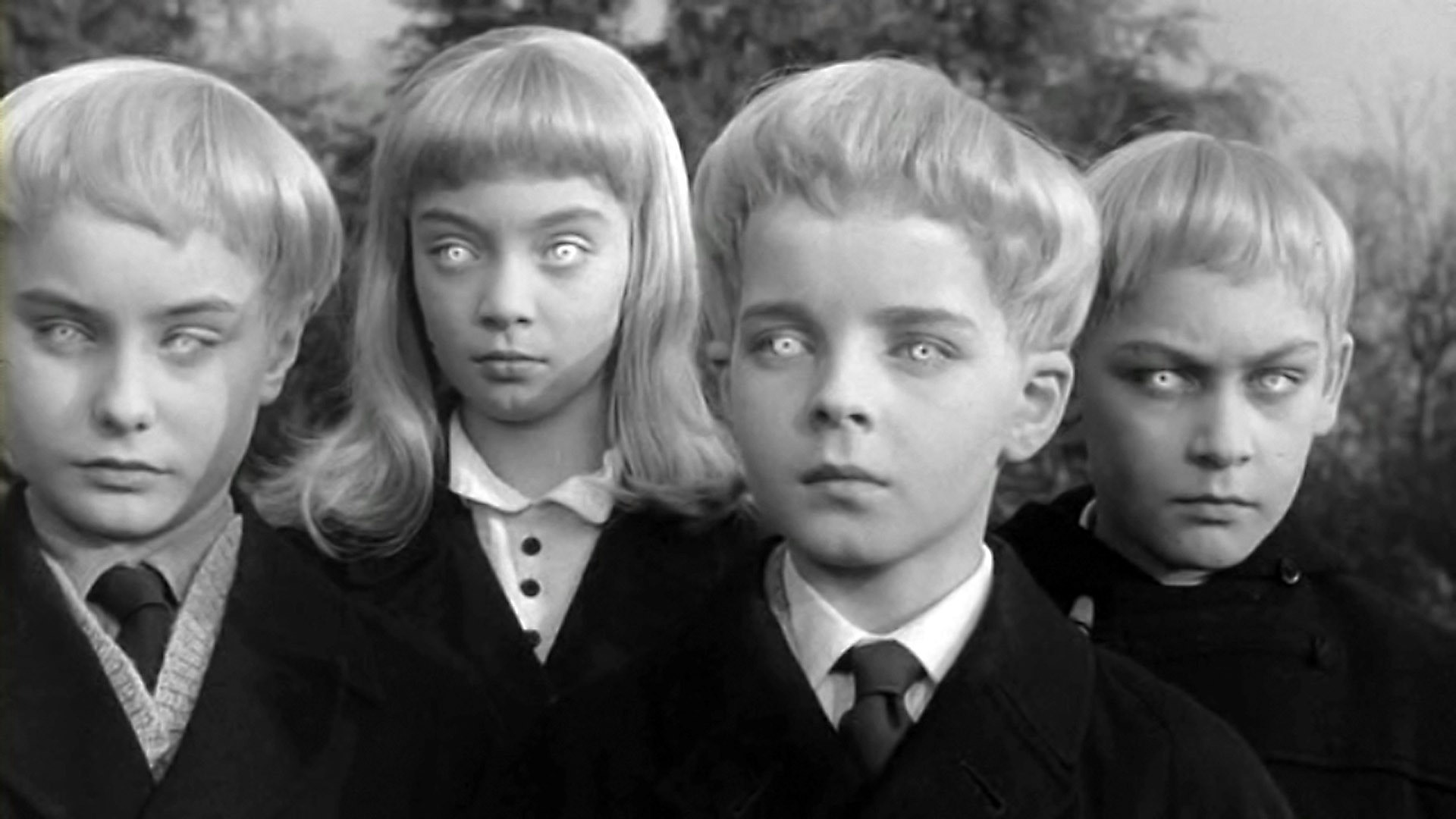
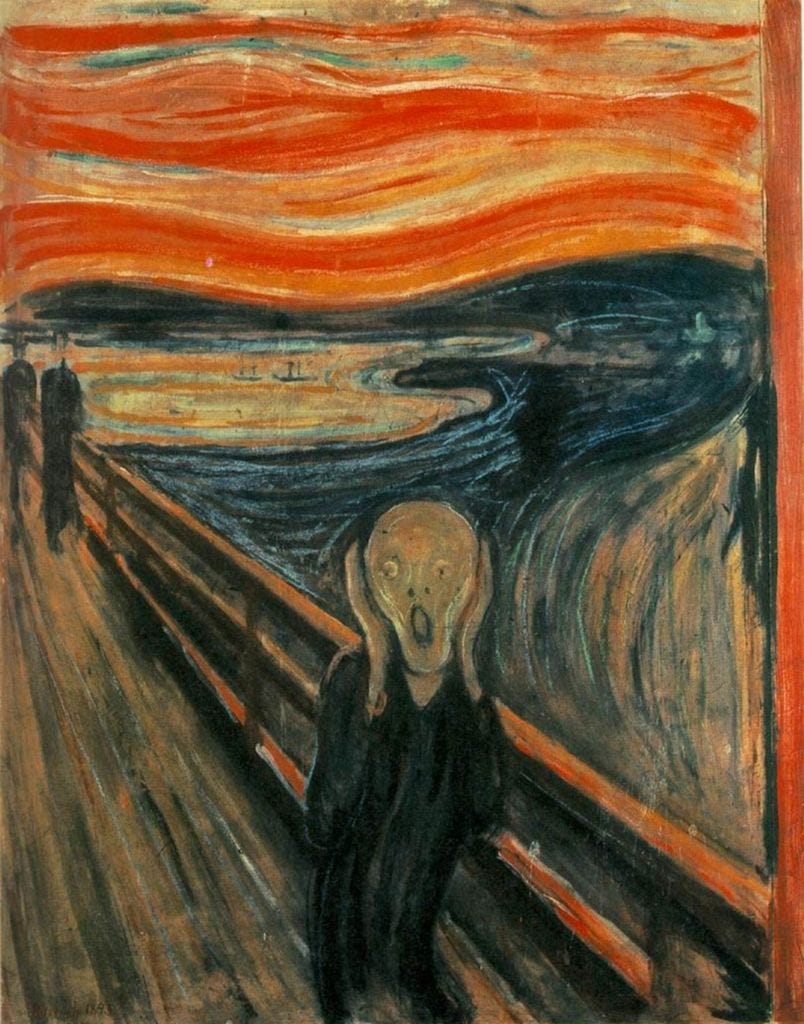
This mixtape is an instruction manual, How to Be a Deranged Cult Leader. My novel, Mr. Splitfoot, is two novels, fraternal twins. One is a walk through haunted places: the odd jewels of a backwater, the late Erie Canal or the verge of motherhood. The second exhumes the ghosts of American huckster faiths. In a fundamentalist group home, child con men talk to the dead. While writing Mr. Splitfoot, I built my own religion to understand how it’s done. I collected the things I love like outer space, geology, mountains, and vinyl records. I came up with the Etherists. Their holy texts sample the Bible, the Book of Mormon, a classic rock radio station at 2 AM in Troy, New York circa 1978 and Carl Sagan’s Cosmos. And while I like many things about the Etherists, their leader is a bad, bad man. Power corrupts, power corrodes a person’s insides. This mixtape examines that corruption. It is a soundtrack to carry one through each stage of creepy cult life.
1. Have You Never Been Mellow?, Olivia Newton John
The lyrics to this song could be printed in a recruitment brochure and your job would be done. “There was a time when I was in a hurry as you are. I was like you. I don’t mean to make you frown. I just want you to slow down.” But the part of this track that seals the deal (other than ONJ’s ethereal, hypnotic vocals) is the series of questions posed in the chorus, questions that any tired soul will be so grateful to hear asked. “Have you never been mellow? Have you never tried to find a comfort from inside? Have you never been happy just to hear your song? Have you never let someone else be strong?” While it’s unusual to acknowledge submission is beneficial, you, as a cult leader, might want to make it the first thing you say in the morning, the last words you whisper at night. Even if you don’t mean it.
2. Trafalgar, The Bee Gees
A song both triumphant and melancholy that says, without us, you are lost and here is brotherly harmony in the form of Barry, Maurice and Robin. “I need someone to know me and to show me” is the hole each potential cult member strives to fill, while the refrain, “Trafalgar, Trafalgar, please don’t let me down” focuses on a word that makes no sense to an American cult member and so can be used in a mantra-like way, in accordance with the best cult-building advice: keep it vague, keep it mysterious. Stop making sense. Trafalgar. Trafalgar. Trafalgar. Trafalgar. Trafalgar.
Brainwashing/Hypnosis
3. Love Letters, Ketty Lester
Nothing has the power to brainwash quite as effectively as love.
Nothing has the power to brainwash quite as effectively as love. Consider the teenage crush and attempt to harness this wild force. Ketty Lester, the most beautiful woman in the world, with a voice as powerful, will assist you. The repetition and modulation of doo wop is the essence of hypnosis and Lester casts a spell with the lyric, “I’ll memorize every line and I’ll kiss the name that you sign.” That’s witchcraft. That’s good. Here’s an idea: you could spend an entire day playing all the versions of this song for your new recruit/convert. They are many and various: Dick Haymes, Joni James, Cilla Black, Bobby Darin, Peggy Lee, Elvis Presley, Billy Thorpe and The Aztecs, Joe Walsh, Alison Moyet, Boz Scaggs, Frankie Miller, Ketty Lester. After that the new recruit will either be in love with you or will have gone insane, which might be just as effective.
4. Rocket Man, Elton John
As this is the period of induction and conversion for your followers, think in terms of electricity. Think scientifically or, even better, scientifical as, in a cult, it’s best to use words that only kind of make sense. John’s Rocket Man is well suited to welcome new members to your fold as it is both familiar and completely strange. The lyrics are creepy. We’re told he misses the Earth so much, yet, it’s going to be a long, long time before he returns. Why? “I’m not the man they think I am at home.” Then who are you? “All this science I don’t understand.” No, of course you don’t. Good thing I’m here.
Take Control
5. Oh, Daddy, Fleetwood Mac
Here’s where the power dynamic really shifts. Now’s the time to exploit your followers’ self-hatred. Everyone’s got some and your job is to turn it up. “Oh, Daddy. How can you love me? I don’t understand why?” Once you explain how you have special powers to love even people as lowly and underserving and lost as your followers, you can expect to hear Christie McVie’s refrain in response. “Why are you right when I’m so wrong? I’m so weak and you’re so strong.” I know, might be an appropriate answer.
6. Into the Night, Benny Mardones
This is also the time to begin planting ideas such as, God wants me to have a harem.
This is also the time to begin planting ideas such as, God wants me to have a harem. Really, that’s what God said and for this Benny Mardones could come in handy. “She’s just sixteen years old…but if I could fly I’d take you up, I’d take you into the night and show you love.” Which brings me to…
The Spiritual Honeymoon
7. Baby Give it Up, KC and the Sunshine Band
What works better than a pop-fueled dance track to convey the message, You are awesome! No one belongs here more than you! Just keep doing what you do (especially if that involves swallowing lots of drugs and signing over your bank account to me!) This song is pure affirmation. “Everybody wants you. Everybody wants your love.” And who can forget the mysterious album cover art? KC, in his bright blue jazz shoes, has caught a woman in his arms. While her shapely gams are exposed, her entire head is covered by a magenta scarf sending an important message, You can dance but try not to think too much.
Sex
8. Sex Planet, R. Kelly
Up next, freaky orgy. “Jupiter, Pluto, Venus and Saturn…I’ve got the control…once I enter your black hole…We’ll be gone for hours. I won’t stop until I give you meteor showers.” I appreciate how Kelly, like my cult in Mr. Splitfoot, exploits the mysteries of outer space in his pursuit of pleasure. Remember, followers like to feel they are doing something more important than just getting the leader off. They are on a mission.
Thorns
9. Walking on A Wire, Richard and Linda Thompson
Whether it’s selling roses by the side of the road or producing toxic gases in your chemistry lab, everyone must suffer for progress. Except you.
Linda Thompson is one of the reasons I wrote Mr. Splitfoot. I love her. She survived life in a cultish sect of mystical Sufis where all the food was prepared by women. She built a family and a career only to lose her voice as her marriage dissolved and she still has a great sense of humor and love. I am very interested in what it means for women to be silent. Cults are excellent places to study this and this song raise questions about the boundary of the self. So, now that you have followers, it’s time to put them to work. Whether it’s selling roses by the side of the road or producing toxic gases in your chemistry lab, everyone must suffer for progress. Except you. And this song’s lyrics, “This grindstone’s wearing me. Your claws are tearing me. Don’t use me endlessly,” could be helpful in realigning any followers who might wonder why they are doing all the work.
Disguising your income
10. Arab Money, Busta Rhymes
A perfectly confusing song for cult life. BR raps parts of the Qur’an. “Alhamdulillah” (all Praises to God) rhymes with: “My billions piling.” Could be a helpful piece when obscuring the source of your wealth, especially if you are, say, drugging your followers, removing their kidneys and selling the organs on the black market.
Spiritual Zombie/Divine Madness/Paranoia
11. Moon Maiden, Duke Ellington
Just Duke and a celeste. Duke’s vocal debut, on the occasion of the Apollo 11, is accompanied by an instrument that sounds like a fairy tale gone deeply dark and twisted. Just like you. So this is where things start to fall apart. Did you take too many drugs? Probably. And even if you didn’t, all this power-tripping has pickled your brain. Aliens are all around. No one can be trusted and there are girls on the moon. But, they might want to kill you.
12. Le Goudron, Brigitte Fontaine
Playing her records, you can pretend you are equally interested in hearing women’s voices speak, women’s thoughts, while the whole time you’re actually keeping dangerous female ideas trapped in a vinyl groove.
Really you should have been playing Fontaine’s records right from the start. She’s hypnotic and her lyrics only kind of make sense. “Time is a boat and the world is a cake.” Plus, she’s French anyway so likely no one will understand. Playing her records, you can pretend you are equally interested in hearing women’s voices speak, women’s thoughts, while the whole time you’re actually keeping dangerous female ideas trapped in a vinyl groove. This helps to convince your female cult members of their great value in your harem because who else is going to do all the cooking and cleaning? You? No, I didn’t think so and speaking of cooking…
Destruction
13. Cooking With Satan, Sun City Girls
The ATF is at your door or else you’re stirring up the cyanide Flavor-aid. It is important to invent an enemy so that your followers don’t realize the enemy is you.
The Ashes
14. Temps de Vivre, George Moustaki
15. Dream Baby Dream, Suicide
Years later when you are sitting alone in a Stewart’s convenience store, sipping fifty cent coffee and a microwaved hamburger, waiting for your sentencing hearing to begin, these songs will be playing on the satellite radio specifically tuned to crush what is left of your sorry, sorry soul.
About the Author
Samantha Hunt is the author of Mr. Splitfoot, a ghost story. Her novel, The Invention of Everything Else, won the Bard Fiction Prize and was a finalist for the Orange Prize. Her novel, The Seas, won a National Book Foundation award for writers under thirty-five. Hunt’s writing has been published in The New Yorker, The New York Times, McSweeney’s, A Public Space, Tin House, Cabinet, and a number of other fine publications.
With The Association of Small Bombs, Karan Mahajan succeeds in the difficult task of describing the immense, unbearable consequences of a terrorist act. The novel begins with a small bombing, it kills “only” about 50 people, at the Lajpat Nagar market in Delhi, in 1996. Mahajan’s prose is well-measured, his descriptions visceral and tactile, as he develops his story in short chapters that bring out the inner life of each character. In these characters’ humanity and fullness Mahajan displays his control of his craft, his artistry and brilliance.
Two of the people who die in the initial blast are Nakul and Tushar, 11 and 13, the sons of Vikas and Deepa Khurana. They go to the market to repair a TV with their friend Mansoor, who survives the blast, but suffers mentally and physically for years to come. The repair of a TV is a meaningless reason to die, which is among the first things we learn from this novel: all bombings are meaningless, except to the people that set them off. That must be why we are introduced to Shockie, the bomb maker, right after meeting the Khuranas and Mansoor’s family. Shockie has killed dozens of Indians in revenge for the military oppression of Kashmir, but we first encounter him when he is performing his pre-mission ritual of calling home to his sick mother.
Shockie’s character is as developed and human as any. He is full of anger and hate, but he has remorse for his actions when he gets to know some of his victims, and after his friend Malik is imprisoned for the mission he completed, he is plagued by guilt. Mahajan does not make it easy for his readers to apply to the perpetrators in his book any preconceived notions, instead he confronts us with their reasoning, their dreams and their friendships.
All though the terrorists in The Association of Small Bombs are well created and interesting, with motivations all grounded in political activism and not radical Islam (as one might expect), it is in the description of their victims that Mahajan truly devastates. The first thing that struck me about his writing is how brilliantly he describes the unexplainable experience of Vikas and Deepa’s loss. Their chapters are the most tender and relatable. The opening of the novel, “Blast,” immediately connects the reader to their story, and shows off Mahajan’s prose. Already on page five, we are placed in Vikas’ post bombing dream, where he becomes the bomb that killed his children:
The best way to describe what he felt would be to say that first he was blind, then he could see everything. This is what it felt like to be a bomb. You were coiled up, majestic with blackness, unaware that the universe outside you existed, and then a wire snapped and ripped open your eyelids all the way around and you had a vision of the world that was 360 degrees, and everything in your purview had been doomed by seeing.
Here, Mahajan describes the ruinous impact of the bomb through the eyes of the man it affected most of all. Choices like this one throughout the novel impressed me. Mahajan has an unfaltering ability to get at each event he describes from interesting, unexpected angles. The description of the bomb is also a great image for how the novel works. Like Vikas and the bomb, so do Mahajan’s readers experience the doom by seeing all angles and perspectives, everything that went into the act of the blast, and everything that came out of it.
As the book unfolds, we get to know young Mansoor as a timid, overprotected adult, who is finally safe from fear and terror when he arrives for his studies in California. Then 9/11 happens, and he immediately feels the impact of being a Muslim in a country that develops a sudden and all-consuming fear for his religion. Not to speak of the fact that Mansoor dreams of being a programmer, but during his time in America suffers a relapse to the pain he had in his wrists after the blast. He has carpal tunnel syndrome, which means he can never work with programming, and he returns home to find solace in the religion he didn’t practice much growing up, and a group of activist friends. Their group attempts to gain fair treatment of jailed Muslims, one of them Shockie’s friend, Malik, who is in prison for the bombing that Mansoor can blame for his suffering, and his recent return to India.
Mansoor has an impressionable nature, after having spent his childhood mostly “protected” in his parents’ house, dreading anything else that might happen to him out in the world. Therefore, it is no surprise that he seeks something to fill him with belief and meaning. Mahajan’s writing is sensitive and intelligent when he describes Mansoor’s new devoutness and engagement with politics. We are shown that this, arguably like most of what happens in the life of a young person, is more than anything about the friends he connects with and the community he finds. This realization makes Mansoor’s chapters all the more powerful and heartbreaking, the closer we get to the unavoidable tragic end of the novel. Finally, we understand just how fatalistic Mahajan’s story is; none of the victims of the small bomb at Lajpat Nagar will ever escape its consequences.
I’ve retreated to nonfiction and global literature to avoid the fate of leaving half-read books around my apartment. The title alone told me that Blackass was going to be irreverent and the fact that it was a satire sold me on the novel. This was a book that wasn’t going to be sanctimonious, but it would be serious. One of the the joys of reading world literature is that beyond the convention and obsessions of our own culture, we tap into a new perspective. Through it, we are exposed to different challenges that help us reframe the way in which we engage with our everyday frictions and larger societal issues. By erasing our ability to cozily make ourselves at home in the familiar postures and shorthand of a novel, are we opening ourselves up to the possibility of more incisive, thoughtful connections in the world?
In Blackass, no character is free from the engagement of escaping their prescribed lives. Some characters have more surreal exit strategies than others. On the morning of a crucial job interview, Furo Wariboko wakes up to find that he is no longer a black Nigerian. He’s confronted with a white body that alienates himself from himself, his family, and pretty much everyone he encounters. No one knows what to make of an oyibo, Nigerian slang for a white person, who speaks and acts with the fluency of a native black Nigerian.
Furo chafed under his father’s passive, unsuccessful career. His mother’s hard-earned success kept the family afloat and provided her two children with their education. Not only emasculated by living at home as an unemployed man in his thirties, Furo finds that he must turn to his savvy younger sister even for help with social media. He’s adrift and in search of an anchor. There is nothing cozy about the inertia he’s experiencing.
The condition of his status quo vanishes overnight. The morning that he wakes up as a white man, Furo flees his home, leaving behind his phone and all possessions to in order to sneak out, unnoticed. Even if he had managed to remember his wallet, he didn’t have any money and had planned to borrow some from his family in order to make it to the interview. Without thinking twice, he knows that he can’t expect his family to believe this white man is their Furo.
Despite these challenges, Furo still manages to charm his way into cash and a ride. And in spite of the stress of scrambling to make it to said interview, he was offered a different, better job with higher pay, a laptop, and company car. Within twenty-four hours of living as a white man, a series of absurd encounters leaves Furo with money in his pocket, a lucrative job, a new roof over his head, and, along with that new bed, an attractive, ambitious girlfriend. Why look back?
Unlike Kafka’s Gregor Samsa, Furo embraces his metamorphosis.
Meanwhile, Furo’s family struggles to make sense of his disappearance. As his parents mourn, his sister draws on her fluency in social media to cope. Through Twitter, her initial cries for help morph into the tweets of an outspoken self-marketer. Mastering the art of googling search engine optimization tips, she revels in her new followers, engages in Twitter feuds, and develops a new, assertive persona. While Furo could not be two people at once, his sister taps into the means of juggling various personalities. Barrett recognizes that what society can’t handle in person, it somehow accepts through the conduit of the internet. Twitter’s platform allows Tekena/@pweetychic_tk to make herself so visible that she attracts the attention of another transitional figure — Igoni, an author who meets Furo on the first day of his new life.
Complicating Barrett’s identity puzzle further, Igoni, who shares his name with the author but also refers to himself as Morpheus, transitions from living life a man to an existence as a woman. It’s through this new identity that she reaches out to Tekana/@pweetychic_tk over Twitter. Fascinated by a brief encounter with Furo, Igoni/Morpheus wants to follow the progress of a fellow traveler, treading between worlds.
While both Furo and Igoni transition into their new selves with incredible ease, the reader has to flip back to see when the switch occurs for Igoni/Morpheus. Her change is just that slippery. It feels problematic, even in a deliberately Kafkaesque novel, to move from one race or gender to another, but through this seamless transition, Barrett exposes the way in which life truly can be radically different in another skin.
Larger questions loom regarding the complications of adapting a different race or gender. How do we come to know our true selves? Would life be so different if we could simply swap out specific circumstances such as gender, race, class, religion, ethnicity, nationality? Is this the appeal of the internet: it’s ability to offer amnesty to those in need of community? What does it take for us to shake off the confines of various prescribed conditions? And in the end, where do we feel most “at home?”
In spite of the advantages he enjoys as a white man, Furo faces the skepticism of Nigerians who distrust the very details of his background. Through their inability to believe he is indeed a Nigerian, the ways in which one’s race determines one’s neighborhood, education, vernacular language, name, ethnicity, and sense of comfort with one’s self become excruciatingly clear. One begins to wonder: Is this a nightmare or a satirical look at the barriers built by racial difference?
Barrett’s fascination with social media begs another question: Can social media work to break through these barriers? Through Twitter, despite the fact that, throughout the course of the novel, she remains a Nigerian black woman, Tekana/@pweetychic_tk quickly acquires a powerful sense of agency. Through the experience of Furo’s new girlfriend Syreeta, the reader is keenly aware of the challenges inherent in being an independent woman in Lagos. Syreeta has a university education, but she is a kept woman relying upon a sugar daddy for her car, apartment, and income. Tekana/@pweetychic_tk represents a more mobile, fearless younger generation, eager to adapt and navigate independence on her own terms.
Absurdity provides Barrett with the ability to tease out these fraught issues across a tangled and loaded landscape. My frustration with the humorless novels I’d been reading may not be that their seriousness lacks amusement. Rather than accepting realism in fiction as a means of empathizing with the world, I’ve been aching for the higher stakes and more rigorous engagement with social issues that find a more fertile home in satirical, surreal fiction.
Barrett’s frenetic plot and pacing takes his characters to uncomfortable places that seem unbelievable and yet, in the moment of this novel, feel entirely plausible. When faced with the question of abandoning his personal history and family for his new life, Furo makes what seems like a shocking decision. For better or worse, his call speaks to the world we live in. Sometimes it’s only through the looking glass that we can honestly see the true extent of the damage inflicted by the world we live in.
Click here to read an excerpt from Blackass as part of Electric Literature’s Recommended Reading. Also, click here to read about A. Igoni Barrett’s writing life in Nigeria, part of Electric Literature’s series, The Writing Life Around the World.
There’s something embarrassing about writing short stories. First there’s the word “short,” a word I’ve always associated with my height, with having to stand in the front row in class pictures. I have a nagging feeling that if I were more disciplined, a bigger thinker, or even just taller, I’d have written a novel by now. Maybe I’d have written Herzog for ladies. The problem is that I really like stories. I like the efficiency. I like the things that are not said. I’m a sucker for an epiphany. Most of all, I like that stories are a chance to experiment.
Great novels also experiment and innovate, but a short story can make a never-before-seen formal leap and then peace out, before you’re even sure what’s happened. And we live in a thrilling time for stories — the last half-century, the last decade, the last year. In the past year, I’ve read stories by Paula Bomer, Rebecca Curtis, Greg Jackson, Shelly Oria, Matt Sumell, and Deb Olin Unferth that are strange in all the best way, stories that have excited me as much as anything I’ve read before. These writers are my age. Why are they — we — so bold? We may be less afraid to take chances in our stories because we grew up knowing that we were alive at the same time as writers who took even bigger chances in their stories — Grace Paley, Barry Hannah, David Foster Wallace. I mention these three because they died recently, and so can’t be included on my list, which will just be about the living.
This is supposed to be bad, but I learned how to break the rules of fiction before I learned the rules.
For some people, the short story starts with Chekhov. For others, it begins with Hemingway. For me, in the mid nineties, it began with Lorrie Moore. I was wandering under the klieg lights at Barnes and Noble, looking for the next book to get me through adolescence, and a book titled Self Help seemed like a good idea. There was no Electric Literature then to tell me that I would love Moore, that I would age quickly into her demographic (alienated women), that she would wind up mattering to me and a generation of short story writers. This is supposed to be bad, but I learned how to break the rules of fiction before I learned the rules. “Plots,” says Moore’s narrator in “How to Be a Writer,” “are for dead people.” For the living, there are Lorrie Moore jokes, whole pages that just say “Ha! Ha! Ha!”, completely original metaphors, and with them, a new way of seeing.
2. George Saunders
I hated the first George Saunders story I read. The story was “Sea Oak,” anthologized in the O’Henry Prize stories of 1999, and it confused and bothered me. “What the hell was that?” I thought, after I finished reading it. “I’m ready to get back to the rest of these stories now. Give me affecting realistic fiction, thank you very much.” Of course I don’t remember the other stories anymore. “Sea Oak” is a Saunders masterpiece, the story of a male stripper and his dead aunt Bernie, who never had anything nice in life and so comes back from the dead to give the narrator some memorable financial advice — “Show your cock.” Saunders has figured out a way to write about poverty in America, to cut through the clichés and sentimentality. “At Sea Oak, there’s no sea and no oak, just a hundred subsidized apartments and a rear view of FedEx.” There’s also a made-up TV show called “How My Child Died Violently,” a title that works because it has both consonance and assonance, for writers who want to learn how it’s done.
3. Joy Williams
Her stories make craziness seem so natural that I’ve become convinced that sanity is a construct…
Things get even darker and weirder in the stories of Joy Williams, whose collected stories came out this year. One of my favorites is about a woman named Miriam who is dating a forensic anthropologist named Jack Dewayne (“[His students] called themselves Deweenies and wore skull-and-crossbones T-shrits to class.”) Jack accidentally stabs himself in the eye mid-story and spends the rest of the story brain damaged, nursed by a student named Carl. Miriam befriends a lamp. The four — Jack, Carl, Miriam, and lamp — take a road trip. Another story of displaced affections involves a man who becomes convinced that his employer looks just like Darla. The employer replies, “This is of no interest to me, but who is Darla?” Darla was a beloved childhood babysitter, and like the lamp in the previous story, becomes more emotionally significant as the story progresses. Williams’s stories take things we think are of no interest to us and make us interested in them. Her stories make craziness seem so natural that I’ve become convinced that sanity is a construct, something we keep around because we are too scared to look (or stab) ourselves in the eye.
4. Alejandro Zambra
Alejandro Zambra is actually around my age, but he lives on a different continent and has already written three novels, three books of poetry, a collection of essays, and a collection of short stories. Maybe growing up under Pinochet gives you a sense of urgency — this needs to be said today in case I’m disappeared tomorrow. Zambra’s stories are urgent but still loose, funny because he has confidence that he is allowed to play. In the title story of his collection My Documents, Zambra writes, “My father was a computer, my mother a typewriter.” I don’t know what this means, but of course I know exactly what it means. My father and mother were the same way. Zambra also has a story called “I Smoked Very Well” where the narrator asserts, “I was good at smoking; I was one of the best.” He tries to quit and fails and tries again. It’s hard to stop when you’re good at something.
5. Sam Lipsyte
His stories take every risk you wish you were brave enough to take, and then risk some more.
Another writer with a smoking story is Sam Lipsyte, though his narrator has “quit quitting them again.” It takes courage to know that something as small as a pack of cigarettes is going to get us to childhood and parent death and lost love, but Lipsyte lets language lead the way to the cancer ward, where the narrator’s mother is dying and everyone is still lighting up. “Bald men, bald women, bald teens sat out in the summer twilight in their gowns. Cut open, sewn shut, garlanded with IV lines, poisoned with their futile glowing cures, they puffed away like wild heroes.” Lipsyte has written three novels, but his two story collections, Venus Drive and The Fun Parts, should make him a wild hero to short story writers. His stories take every risk you wish you were brave enough to take, and then risk some more.
6. Lydia Davis
I’m going to end with Lydia Davis, because I’ve exceeded my word count. Davis rarely exceeds hers. She can do in a paragraph or in a sentence what most writers can’t do in whole novels. “There are also men in the world,” begins a story called “Men.” Davis knows that half of her readers will get the joke. She knows we’ll get everything. I’m not worried about plot or characters when I read a Lydia Davis story. I just want her to do her thing, to play with language and obsession, and to frighten me. You could call her a stylist, but that would be undervaluing style, which in Davis’s hands is so original that it remakes the world.
About the Author
Rebecca Schiff is the author of The Bed Moved. She graduated from Columbia University’s MFA program, where she received a Henfield Prize. Her stories have appeared in n+1, Electric Literature, The American Reader, Fence, and Guernica. She lives in Brooklyn.
Hello, and welcome to my week-by-week review of the world. Today I am reviewing Turbo Boost.
The hit 80s drama Knight Rider was a portent of many of the technologies we have today, from cars that drive themselves to watches that are also walkie-talkies. Sadly, one of the show’s most exciting technological advances was Turbo Boost — the ability for cars to jump over obstacles.
Currently, the only way for a car to become airborne is with the use of a ramp or life-threatening accident. Typically the use of a ramp necessitates that it be installed beforehand, which requires a lot of preplanning. What’s so wonderful about Turbo Boost is that it can happen with only the press of a button.
There are a number of things I could have avoided driving into if I had Turbo Boost. The bunny that ran out in front of me last night, for instance. Perhaps car scientists can look into the bouncing abilities of bunnies to help develop the Turbo Boost technology. We would save a lot of bunnies and driving would look cuter.
It may be that the auto industry is intentionally suppressing advancements in Turbo Boost. This may be due to collusion with the tire industry. The more time spent airborne, the longer tires will last. It’s simple math. But if you’re looking to stick it to the tire industry and can’t wait for Turbo Boost, I’d suggest putting snow chains on your tires year round. It makes for a bumpier ride but your tires will last forever.
While I’ve never personally experienced Turbo Boost, I can imagine what it’s like to go soaring through the air while little children look up at you in awe. It’s pretty awesome. I’m imagining it right now. There’s one little kid looking up at me and he can’t believe how cool I am. And now there’s a tear in his eye. I hope it’s one of joy. Oh no. He just realized he’ll never be as cool as me. Now I feel guilty. Not too guilty though, because wheeeeeeeeeeee!
Turbo Boost would also be a big time-saver in heavy traffic or construction zones. If a deer runs out in front of you, Turbo Boost over it. If that deer is just a guy dressed as a deer and playing a prank, you won’t get convicted of manslaughter for driving into him.
What I’ve described here today is only the tip of the Turbo Boost iceberg. That’s why I implore the young and innovative tech companies to please invent Turbo Boost. Please, Mark Zuckerberg or Gary Google — if you’re reading this — the world needs you, and you’re the only ones who can save us.
BEST FEATURE: The name Turbo Boost is exciting, informative, and sounds a little like “burro juice.” WORST FEATURE: Once Turbo Boost is invented, a lot of people will be hitting their heads on their car ceilings.
Please join me next week when I’ll be reviewing an onion.
Lina Wolff begins Bret Easton Ellis and the Other Dogs with a character telling a first person narrator a story: “‘It was a Friday two weeks ago,’ Valentino told me on one of the days he drove me to school. ‘Alba Cambó and I met up at ten that morning and went for a spin in the car.’” As a reader, you don’t know who the narrator is. You know nothing about her (him?) other than what’s expressed between Valentino’s dialogue. She goes to school. Valentino gives her a ride. It’s not clear who Valentino is. The focus of his story is Alba Cambó. You don’t know who she is, either. For the next ten pages, Valentino tells a story of major, life changing events that occurred on that ride two weeks ago. The story is exciting. It’s gripping. It’s so interesting that you almost forget that Wolff is giving you no ground to stand on as a reader.
When I read the first chapter, I was fully invested in what Valentino told me about Alba Cambó, fully invested in their lives, but also struggling with this lack of a foundation. Who was “I”, the narrator? Why did she disappear after the first ten pages of her own novel? Why didn’t she respond to anything he said? Why didn’t she interject with her own feelings, her reactions, or even what she saw outside the car window? What was her relationship with Valentino? Why did he feel so comfortable sharing incredibly intimate details with her? Why is Alba so important to both of them? Should I be reading more into this? Do the names matter? Is Valentino supposed to harken romantic notions of a dashing silent film star? Does Alba’s last name carry symbolic weight: cambó, literally, “she bent”?
After a page or two of these questions, I had to make a decision: do I follow this author whom I’ve never heard of into uncharted reading territory or do I abandon this book for something more familiar, more comfortable? I knew that sticking with the novel would require a certain amount of trust. I would have to forego my typical expectations and reading patterns and just go with the flow of this novel. Valentino’s story was interesting enough. The fact that I cared to ask all of these questions so quickly mattered. I trusted Wolff and kept going. It was the right decision.
Part of the joy of this novel lies in all that is unknown. The back cover gives almost no sense of what to expect from the pages within. The title is misleading. It was possible for me to enter into my reading completely in the dark, then wait for Wolff to gradually turn on one light after another. She is a master at this. She controls the information in very compelling ways, giving just enough to intrigue, then letting us get lost in the characters before what’s going to happen happens. She’s so good about revealing the information slowly that I’m hesitant to even review this novel. I’ve already told you too much. You’re better off buying the book and reading it before you read another written here.
And now that I’ve done my due diligence in warning you, I’ll carry on with this review. Bret Easton Ellis and the Other Dogs has nothing to do with Bret Easton Ellis. It’s just the name of a dog that a minor character, Rodrigo, talks about, a dog that the narrator never meets. It came from a brothel where all the dogs are all named after famous authors. Rodrigo buys the dog as part of his plan to repair his deteriorating marriage. If there’s a literary allusion at all, it’s simply that looking toward Bret Easton Ellis isn’t the best way to fix your relationship. This is a warning that you probably don’t need — who looks to Bret Easton Ellis for relationship advice, anyway? In the brothel, the prostitutes feed rotten meat to the dogs when johns are cruel. The back cover tells you as much. Neither are dripping with significance in the novel.
The misdirection continues in the very nature of the novel. It’s written in Swedish and by a Swede, but there are no Swedish characters and no reference to anything Scandinavian. It takes place entirely in Spain and follows Spanish (and one Italian) characters. It would feel Spanish except that the translator is English and he uses English colloquialisms. Araceli’s mother is “Mum,” their apartment is a “flat,” friends are sometimes “mates” and colors are “colours.” All of this adds up to something beautiful and global in the same way that Lee Van Cleef in a Spanish desert that was supposed to be the American West and fighting Italians who were supposed to be Mexicans all made sense in The Good, the Bad, and the Ugly.
Once all of these typical expectations are abandoned, you can get to the heart of the novel. Bret Easton Ellis and the Other Dogs follows an eighteen-year-old narrator named Araceli. She lives with her mother in a crumbling two bedroom apartment in Barcelona. Not much is happening in their lives. Araceli attends a school for translation and interpretation even though she has no real talent for this and no real job opportunities on the horizon. Araceli’s mother is a government employee who eschews relationships but enjoys trysts. A short story writer named Alba Cambó moves into the apartment below them. At first, Araceli and her mother are intrigued by Alba from a distance. They buy the magazines that feature her short stories and read them. Gradually, they get to know her and her servant, a central American named Blosom. Alba, Blosom, and Araceli’s mother grow closer. The introduction of Alba’s new love, Valentino, only serves to strengthen their ties. The fact that Alba is dying — which she reveals to Valentino in that opening story of his — enriches their bond. Because she is a generation behind them, Araceli becomes the outcast of the group.
The novel moves forward, meanders, and backtracks through the stories of these women. While Araceli is the narrator and this is ultimately her story, she spends much of the novel in the background. She’s a character we’re familiar with in film: the best friend, the one whom the story is never about, but who shows up at a café to say to the protagonist, “What’s wrong? You haven’t been yourself lately?” At least, Araceli seems to see herself as somehow not worthy of a story all on her own. So Valentino tells his story, Rodrigo tells his, Blosom tells hers, Araceli witnesses the adventures of her mother and her more glamorous best friend and her famous downstairs neighbor, and we even get to read one of Alba’s short stories in a chapter all its own.
This discursive aspect of Bret Easton Ellis is reminiscent of The Savage Detectives. I know that, in about a decade, Roberto Bolaño has gone from obscurity to worldwide fame to the cliché reference point for all Latin American fiction. I don’t mention him lightly or make this comparison in passing. Wolff’s work reflects Bolaño like Haruki Murakami’s The Wild Sheep Chase reflects Raymond Chandler novels. In both cases, authors take something incredibly original and put it into a context so unexpected that the second work is brilliant in its own right. In this case, Wolff has learned something about how to tell a story from Bolaño. The Savage Detectives is revolutionary in the way it chooses to approach protagonists. The reader never gets too close to Ulysses or Arturo. We instead get the stories of everyone who encountered the pair — old friends, passing acquaintances, lovers, editors, enemies. Because we can never see the work of the two poets or read their thoughts or even get a chapter in which they’re the clear cut main characters, we have to reconstruct them in our mind from a series of tangential points. It’s never a clear view. In structuring The Savage Detectives this way, Bolaño touches on something unique to twenty-first-century identity construction. We’re starting to construct our own identities through tangential points — posts crafted to maximize likes, pictures or videos with no context that sometimes vanish after a few seconds, ideas restricted to 140 characters and shaped in hopes of retweets. Bolaño’s Ulysses and Arturo are hidden and guarded because they live the lonely, disconnected, and sometimes passionate lives of artists, not because they’re social media addicts. Regardless, in both cases, identities come to be hyperaware of how they’re viewed from the outside.
Wolff shifts this. Our protagonist is also our first-person narrator. Her hyperawareness of how others view (or more often, ignore) her becomes all the more poignant. She’s not searching for meaning in her life because, clearly, there’s not much hope for that. She’s not sharing much of her internal struggles, her ideas or dreams or feelings, because no one in her life seems interested in hearing them. Those around Araceli are dismissive of her to the point where Araceli seems to guard herself from what’s going on inside. Within this dismissal lies the real feminist power of the novel.
The only stories men will listen to in the novel are Alba’s. She writes dark stories about men who meet humiliating or violent ends. Her longest is about a mysterious place called Caudal. She describes it as the last town on the road to hell. The townspeople are the last remnants of an era on its way to becoming bygone. In many ways, they demonstrate the worst parts of our own personality, kind of a collective id that has forgotten how to have fun. A specter of death hovers over them. The cemetery is the town’s most prominent landmark. A new priest enters the town with hopes of reviving it. The town, instead, destroys him.
Even the men who don’t get humiliated or killed come across poorly in Alba’s stories. Still, men love the stories. Araceli seems to learn something from this. When she tells her own story, she finds way to show men in honest, if humiliating, ways. She lets them lead themselves to their own dark ends. Similarly, like Alba does in her stories, Araceli finds a way to keep the women prominent in the stories. The men can take the lead and carry on to their logical conclusions. The women, in the meantime, learn to operate on the margins. They work together and get stronger through this work. They confront their isolation and nurture one another. They leave situations that feel untenable. They reject patriarchy in blatant and subtle ways. As Araceli grows and changes around these women, she learns to tell her own story. While it may not matter much to the people around her, Araceli’s story matters to Araceli. As you read the novel, it matters to you, too.
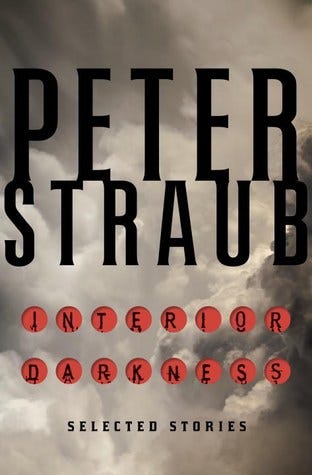
I must admit that when Electric Literature presented me with the opportunity to interview subversive master of psychological suspense Peter Straub on the occasion of the release of Interior Darkness: Selected Stories, I was not a little intimidated at the prospect. Not only were Straub’s novels Ghost Story, Koko and The Throat dear to me growing up, but his short stories, which I had never read, elevated him to another level completely. Populated by sociopathic teenagers who turn their siblings into somnambulant puppets, murderous kindergarten teachers who slather themselves in human feces, and wicked barristers who fall headlong into self-made purgatories of psychosexual entrapment, Straub’s stories stopped me in my tracks, often with a chuckling grimace, and forced me to take stock anew of a world I wrongly thought I understood. Nor was my giddy apprehension at interviewing Straub ameliorated by the fact that, even by email, Straub is a fiercely intelligent man with a mordant and suffer-no-fools sense of humor. Over the course of a couple of weeks we struck up a warm and complex repertoire. Some highlights not included here were hypothetical riffs on the fate of a fictional character name Romilley “Bud” Bitterman that Straub invented on the spot, Straub’s continuous stream of self-deprecating yet never self-effacing humor, and Straub’s unapologetic fabrication of a quote by Roland Barthes that he insisted, nonetheless, on including in this interview. Straub is a funny, engaging, quick man, with a dark restless mind, a cantankerous streak, and lacerating self-awareness. I thoroughly enjoyed our talk and fully trust that you will, too.
Adrian Van Young: What struck me foremost in reading these stories was a kind of baroque compression whereby the sentences accrue and pile up on each other in a way that both hides and reveals. Hides, in that each story’s revelatory moment is often surrounded by a cascade of less important moments. Reveals, in that these revelatory moments stand out, in turn, from the less revelatory moments that surround them. Take, for instance, this passage from “Ashputtle,” about an ecstatically degenerate and possibly murderous kindergarten teacher, which comes suddenly in the middle of an otherwise normal paragraph: “How it felt to stand naked and besmeared with my own feces in the front yard, moveless as a statue, the same as all nature, classical.” Can you speak to this tendency in your short fiction in terms of what effect you mean it to have on the reader?
Peter Straub: In general, the kind of sentences you are alluding to have several purposes, or so I fondly think. The simultaneous concealment and revelation demonstrates a sort of aspirational quality, often leaching into outright pomposity, on the part of the speaker. He may be trying to present a more sophisticated, better-educated version of himself, so a bit of comedy is freed to float through the atmosphere. Lots of times, however, this kind of internal contradiction signals an emotional disconnection, which may be so pronounced that the speaker literally has in fact no idea how he feels about his subject matter. The reader is intended, I think, to move wool-gathering along, mildly surprised by the (strictly unnecessary) form of these utterances and now and then amused by some local distraction, perhaps eventually to be concerned by the distance between what is being said and what, if anything, is imagined actually to be felt. A great violence might lay hidden behind what turns out to be a strenuous act of denial. You’re a smart guy, you know that absence always involves or invokes a presence, that strictly speaking absence does not exist. It’s like an empty, self-consuming category, an onstage curtain.
However, the sentence you quote, and the many others like it in “Ashputtle,” have an actual provenance. Their use represents an all-but act of appropriation. Tonally, they actually are pretty much a pure example of appropriation. The same set of exhibitions at the Whitney Museum, of which at the time I was a patron, in which I found the John Baldessari painting titled “Ashputtle” had also displayed, on another floor, a good many abstract paintings by Agnes Martin. I loved the Martin paintings. They were astonishingly serene and meditative in feel. Passages from Martin’s journals had been printed up and distributed throughout the galleries. The passages quoted were all surpassingly calm, wide, unpredictable: they were sentiments like “I am the same as all of nature, classical,” and “The work of art has no responsibility to its audience.” Were I to give such excellent sentiments to the mad, furious Ashputtle just coming into being in my mind, I thought, they would acquire an odd and useful resonance. So I did.
AVY: “The reader is intended… perhaps eventually to be concerned by the distance between what is being said and what, if anything, is imagined actually to be felt.” That’s apt and lovely. Granted, pretty much any first-person narrator is unreliable to some degree, but the first-person narrators in these stories seem particularly unreliable, and then in very specific ways. What is your favorite brand of unreliability in a narrator? How does it factor into the frequent portrayals of madness you undertake in your work?
PS: Hmm. Yes. Well. It is a mire, it is a midden. I guess I begin with the conviction that very nearly everyone, well, at least 75–80% of our population, anyhow, serves as its own unreliable narrators — that one’s truest, deepest motives lie locked within a lead-lined tray in a locked lead-lined chamber buried within a locked lead-lined vault deep at the back of a sub-basement beneath a windowless stone fortress guarded by savage dogs and surly, pissed-off deaf mutes. Of this wretched condition, which condemns us to an ongoing emotional ignorance, we remain of course, guess what, happily ignorant, convinced that we are savvy characters with very good ideas of what we are about. For many, a mingled dread and terror, thoroughly repressed, becomes a constant though silent and invisible companion, so close at hand as now and then to be experienced, in fleeting dimply perceived though poignantly experienced moments, as an ally. All of this is the case before we take even a single step past the front door, before we turn the key in the ignition. Once we are outside and moving through the world, we bounce off other people as misguided as ourselves. Deeply hidden plots collide or collude with other motivic and thematic switchbacks hidden no less deeply. Madness can beckon very easily from this situation; the confusion level is positively toxic, and what keeps us out of trouble is chiefly good will and whatever intelligence we can summon from the murk.
I overstate, but not by much.
AVY: You say that, “…what keeps us out of trouble is chiefly good will and whatever intelligence we can summon from the murk.” Granted, you’re referencing real-life here, which has no bearing on fiction, necessarily, but all the same these stories are fairly bleak. In “Blue Rose,” for example, it would seem that the protagonist is aware of the heinousness of his actions toward his little brother and continues on with his life determined to do better — and yet, he only glancingly acknowledges his complicity — indeed, his instrumentality — in what happened. The story concludes on a sinister note. Do you see that kind of redemption through acts of good will and intelligence as available to your characters in these stories?
PS: Real life has no bearing on fiction? Is that what one learns in the theory-academies these days? I am baffled, profoundly. Somewhere in Writing Degree Zero, maybe some other book actually but I don’t think so, doesn’t Roland Barthes — you may find him a bit sketchy, and I understand completely, but I’ve always liked his way around a Dingan sich — say something very like, “As if addressing an intimate friend, one says to the world, ‘The luxury, richness, and amplitude of narrative cannot but derive in the first instance to its relationship, that of connective tissue and torn newspaper hoardings, between itself and the world in which it is given us?’” Probably I do not really understand that sentiment, but it has always reminded me of the conviction I’ve held for years and is by now very dear to me, that Fiction IS Life. Without fiction, a condition in fact unthinkable because impossible, whatever we would call life would be barren, sterile, without memory or enduring emotion, tasteless, like death. Also, and this is really a side issue but at least quite an important one, it is always true that fiction has deep designs on life. It wishes to replace life. I can tell you, it certainly wishes to replace mine. Fiction wants to worm its way into my every memory, even the little desiccated rags and scraps, and stake its claim there, it wants to pitch camp and colonize all the surrounding territory. That’s its god-damned JOB!
Bleakness is really okay with me, you know.
Being sociopathic and without much internal life beyond fear and desire, even in childhood Beevers is way farther along the path toward fiction (Fiction) than most of us. He’s sort of like a tiny, directionless, blocked John Updike, a little Updike without the resources of Shillington and Harvard and Berks County. Harry is bereft of good will, except at times when it seems instrumental and he can display an imitation so flawless it would dupe Mother Theresa and Jacques Lacan, but intelligence is always available to him. Redemption is a meaningless concept to Beevers at any age in his life. Whatever he writes his girlfriend about his little brother and his father is false, actorly, feigned. Bleakness is really okay with me, you know.
AVY: That’s my kind of outlook! And, apropos of the fiction/life discussion: “it is always true that fiction has deep designs on life. It wishes to replace it.” I like that too. I suppose what I mean is that verisimilitude in fiction has always seemed like a false dichotomy to me — that fiction is in some way obligated to reflect the world as it really is. “Relatable” has become such a buzzword these days when it comes to how people connect to narrative in a way that seems antithetical to that signal aim of fiction you cite: “[replacing] life.” Sometimes, the best narratives are profoundly un-relatable to the average person; indeed, many of the narratives in Interior Darkness are. That said, several of the stories in this collection are also deeply experimental, which I was surprised to find given how much commercial success you’ve had as a novelist. Can you discuss the relationship between experimentation and more traditional narrative aims in your fiction? Is there something about the short story that allows you to more fully exercise the former?
PS: I suppose the “relatable” and the “immersive” exist not only side by side but are also holding hands, and both apart and together represent a really satisfying narrative stance. Readerly safety, comfort, security are taken care of; the reader drops her hands, lets her oars drift in the water, and closes her eyes, knowing that her little boat will veer well away from the rapids. For a long time, Stephen King, whom I love as a person and as a writer, attracted readers who understood this as it were Prudential contract to be the only valid relationship between narrative and its audience. Anything that jolted them out of the frame, anything that forced them to notice the very process in which they were so happily engrossed, was experienced as an offense against the act of reading. I guess my doubts about the totality of this project began to come into being after I moved back from London to the U.S. in 1979, started spending a lot of time with my friend the poet Ann Lauterbach, and through her met the poet Charles Bernstein and the novelist and editor Bradford Morrow. None of these people had any real interest in the total immersion school of narrative method. The more time I spent with them, the more limiting I, too, came to find it. I did not want to blow my readers out of the water, but neither did I wish to continue perpetuating a system in which all they felt and understood was what I, their concealed and paternalistic guide and tour director, arrayed before them.
Oh, they were all dead; oh, so HE’s the vampire; hey, that little boy is God! Okay, cool, what else you got in that box?
Without quite being aware that this was what I was doing, I began to loosen the bolts and rattle the floorboards by taking the same crucial bits of character detail — what had been done to whom — and assigning them to different people from novel to novel. So and so grew up at a certain address in Book X; in book Y, another person is given the same address. His life both chimes and does not with the life of the character from the previous book. Traumas were distributed the same way, as if by an amnesiac or indifferent author. Doing these things allowed me to destabilize narrative without damaging the traditional integrity of individual novels. (Much later, Ann Lauterbach’s description of the “whole fragment” helped me clarify this kind of procedure — I mean, to clarify it to myself.) In shorter fiction, with which I was a lot less comfortable/familiar, it was a lot easier to conduct my experiments in plain view: the conventional genre short story, almost always dependent upon a sort of reversal of a conventional polarity, never did strike me as very compelling. Oh, they were all dead; oh, so HE’s the vampire; hey, that little boy is God! Okay, cool, what else you got in that box? I just took it as part of the essential procedure that all bets were off, that you could do anything you felt like, could suppress, heighten, distend, flatten, aerate, amplify as you liked. It is worth remarking that ninety per cent of my short fiction has been published in Brad Morrow’s intrepid journal, Conjunctions, where it rubs up against fiction by writers like William Gass, William Burroughs, John Barth, Brian Evenson, and Rick Moody.
AVY: That’s quite an array of company in Conjunctions. I see the influence of those I’m most familiar with in your work — especially Evenson, Gass and Burroughs. That said, when I was reading this collection I was reminded of nothing so much as the early work of Ian McEwan (First Love, Last Rites and In Between the Sheets), specifically in the way he examines aberrant sexuality and rampant psychosis in this very cool, clinical light. I’m wondering: who are some other authors who have exerted the firehose pressure that we call influence on your work over the years? Who are some in more recent years that you’ve come to admire?
PS: I did always like the amazing writing of those early McEwan stories, and in fact kept on reading and admiring him right along. English novelists have always been very important to me. I liked the tone, the assurance, the implication that the whole central business was going to be taken care of really well, without fireworks or embarrassing displays of self-admiration. I’m speaking of Trollope, George Eliot, Wilkie Collins, Iris Murdoch, A S Byatt, Kingsley Amis, Muriel Spark. Of all these writers, Murdoch was far and away the greatest influence on me, especially in The Bell, The Unicorn, The Black Prince, The Nice and The Good. So was John Le Carre, in another way, especially in Tinker, Tailor and The Perfect Spy. Paul Scott’s Raj Quartet was also a huge influence on my work, both technically and emotionally. Henry James took up a lot of real estate in my mind, and the same is true of Raymond Chandler, Ross MacDonald, and John Gardner. I will describe the astonishing virtues and achievements of Donald Harington to anyone capable of listening to me for at least an hour. From when I first read him at the end of the seventies, Stephen King taught me a great deal, and he is still doing do. Newer writers I like a lot are Laird Barron, John Langan, Joe Hill, Caitlin Kiernan. Roberto Bolano has opened my eyes to a great deal, also the intrepid Laszlo Krasznahorkai. I think John Crowley is in a class by himself, of which he is naturally President. Once every decade or so, I reread The Ambassadors and marvel at the beauty of James’s language and technique.
AVY: That’s an estimable and in some ways surprising list. I’m especially interested in your mention of people like George Eliot, A S Byatt and Henry James. Partly due to literary-historical context and partly due to innate stylistic tendencies, these are all what I would call maximalist writers; they revel in the ornate, not only on the sentence level but also when it comes to things like structure, scope, characterization. Reading this collection all at once I was struck as though for the first time by what a gloriously ornate stylist you can be when you put your mind to it. I’m thinking specifically of stories like “Ashputtle” and “Mr. Cuff and Mr. Clubb,” and I’m wondering: is there a part of you that identifies as such a stylist? In a culture that increasingly values the “hot take” and defaults to terseness in its storytelling, what do you believe to be value of having an ornate and, some might even say, challenging style?
PS: When younger, by which I mean before I turned forty, I took an excessive amount of pride in the ornate lyrical complications of my own style. Not long after that spine-stiffening birthday, which I spent largely in a Westport, CT, riverfront bar called The Black Duck, I happened to notice that the style with which I had been so pleased had somehow softened up and run to fat and flab. Nuts to pride, it required a lot more discipline and attentiveness simply to be worthy of reading. I began to work toward a real transparency of style, and the word “work” in this sentence is not an over-statement. I wanted to get out of my own way, but even more than that to get out of the reader’s — to be as presentational as possible, as invisible as I could be while I went about doing my work. I worked this way for years, for at least a decade, without adjusting the formula.
Then I wrote a story called “Hunger: an Introduction,” not included in my Selected Stories, in which I wanted to release another kind of voice altogether, one more ornate, wilder, also more diffuse and pompous, a show-offy voice that demonstrated the aspirations, pretensions, self-satisfactions, and internal insecurities of the man producing it: a man who instead of “ratty” or “ratlike” would say “rodentine.” This was the origin of the style you admire. It began as an elaborate joke. In part because this sort of style was so absolutely different from the voice I began to evolve after I turned forty, it was very enjoyable to write — it was like a kind of holiday from responsibility, an invitation to have fun.
You will notice that in “Ashputtle” and “Clubb and Cuff” this more ornate style is still presented as the voice of specific characters and represents those characters’ evasions of various kinds. However, by the time I came to “Clubb and Cuff,” it no longer seemed merely the demonstration of evasiveness and pretension, but a valid method for presenting a more complex emotional style, a way of dealing with feelings. The revelations no longer needed to be purely unconscious, but a matter of individual will and intellect. It was still fun, but fun of a more exploratory nature. It felt to me like the opening of a room that had always been there but had been overlooked and passed by for a long time — entrance to the room seemed almost a bit dangerous, because in violation of orders that I had taken as my own decades earlier. Yet once I walked (burst) in, I learned that I was not at all damaging myself, but actually sort of expanding myself, not least into a variety of humor that I had been polishing in emails for maybe twenty years. Somewhere in the back of my mind as I write these sentences is the shade of Nabokov, the patron saint of so much American writing, especially in its maximalist and more self-consciously elevated modes.
AVY: Can we switch “rodentine” and “ornate” altogether? Transparency has its trade-offs, sure, but so do “ornate lyrical complications.” I wonder all the same though if it isn’t more rewarding for one to encounter a beautiful mess than a calibrated calibrated masterwork with monumental purpose. What beautiful messes do you most prefer?
I’m curious what you are working on now. Care to elaborate? What’s the new business?
PS: Here are some books, in part or altogether beautiful messes, that I like a lot.
Under the Volcano: Malcolm Lowry wrote his editor at Jonathan Cape a letter of more than twenty pages that justified and explained every square inch of this big, sprawling novel, a sure sign that it contains some substantial messiness. You don’t try that hard unless the wind is whistling down the back of your shirt.
Gravity’s Rainbow: Brilliant, sure, Pynchon always is, but too exuberant and unbuttoned to be anything but a bit of a mess.
The Tidewater Tales: John Barth’s great novel is straining against its own boundaries at every step. A deft, brainy, deeply felt exhilaration.
Women in Love: I think this is DH Lawrence’s absolutely greatest novel, really elevated by its sense of yearning to demolish both the conventions of fiction and its own limits.
These days and for maybe three years now I work away, when permitted by health and hospitals, on a long strange novel called Hello Jack. Jack the Ripper is invoked by a devoted admirer. The fifth-richest woman in America murders her dying husband. A black, retired homicide detective works as a private chauffeur, in which capacity he does a lot of good. Over various iterations of a very odd repeated story, the dead walk again, the young age hideously, and both seem exhausted by the effort. Henry James pops up, thinking hard, as does the 12-year-old Aleister Crowley. There’s a weird painting, but no one can figure it out.
Believe it or not, Fifty Shades of Grey and the Bible have wound up on the same book list: the American Library Association’s “Top Ten Most Frequently Challenged” books of 2015. John Green’s Looking for Alaska tops the list, which identifies the books — including nonfiction and picture books — that were most frequently recommended for censorship last year.
Beyond Magenta: Transgender Teens Speak Out by Susan Kuklin
The Curious Incident of the Dog in the Night-Time by Mark Haddon
The Holy Bible
Fun Home by Alison Bechdel
Habibi by Craig Thompson
Nasreen’s Secret School: A True Story from Afghanistan by Jeanette Winter
Two Boys Kissing by David Levithan
OIF bases its rankings on “anecdotal data derived from media stories and voluntary reports sent to OIF about book challenges in communities across the United States.” The organization defines a “challenge” as “a formal, written complaint, filed with a library or school requesting that materials be removed because of content or appropriateness.” OIF estimates that “for every reported challenge, four or five remain unreported.”
The most common reasons for the 2015 book challenges include “unsuited for age group,” “religious viewpoint,” “homosexuality,” “offensive language,” and “sexually explicit.” Fifty Shades of Grey fell victim to censorship due to concerns that it’s “poorly written,” and that “a group of teenagers will want to try it.” People objected to Two Boys Kissing because it involves homosexuality and “condones public displays of affection.”
The “religious viewpoint” challenge had a number of different applications. People challenged The Curious Incident of the Dog in the Night-Time, for instance, because of its “atheism.” NPR reports that a Florida parent challenged Nasreen’s Secret School: A True Story from Afghanistan out of fear that it would “indoctrinat[e] children with Muslim beliefs.” Deborah Caldwell Stone–deputy director of OIF–told NPR that people challenged the Bible, which appears on the list for the first time this year, based “on the mistaken perception that separation of church and state means publicly funded institutions are not allowed to spend funds on religious information.”
OIF publishes its annual list of challenged books to promote the freedom of information in libraries and schools, and to remind the public that “censorship is still a very serious problem.” “In an ideal world we would have more tolerance for the idea that people have different ideas, different beliefs and live in different cultures,” Stone told NPR. “Books are a way of exploring these different worlds and can help us appreciate the differences between us.”
DON’T MISS OUT
Sign up for our newsletter to get submission announcements and stay on top of our best work.
YOUR INBOX IS LIT
Enjoy strange, diverting work from The Commuter on Mondays, absorbing fiction from Recommended Reading on Wednesdays, and a roundup of our best work of the week on Fridays. Personalize your subscription preferences here.