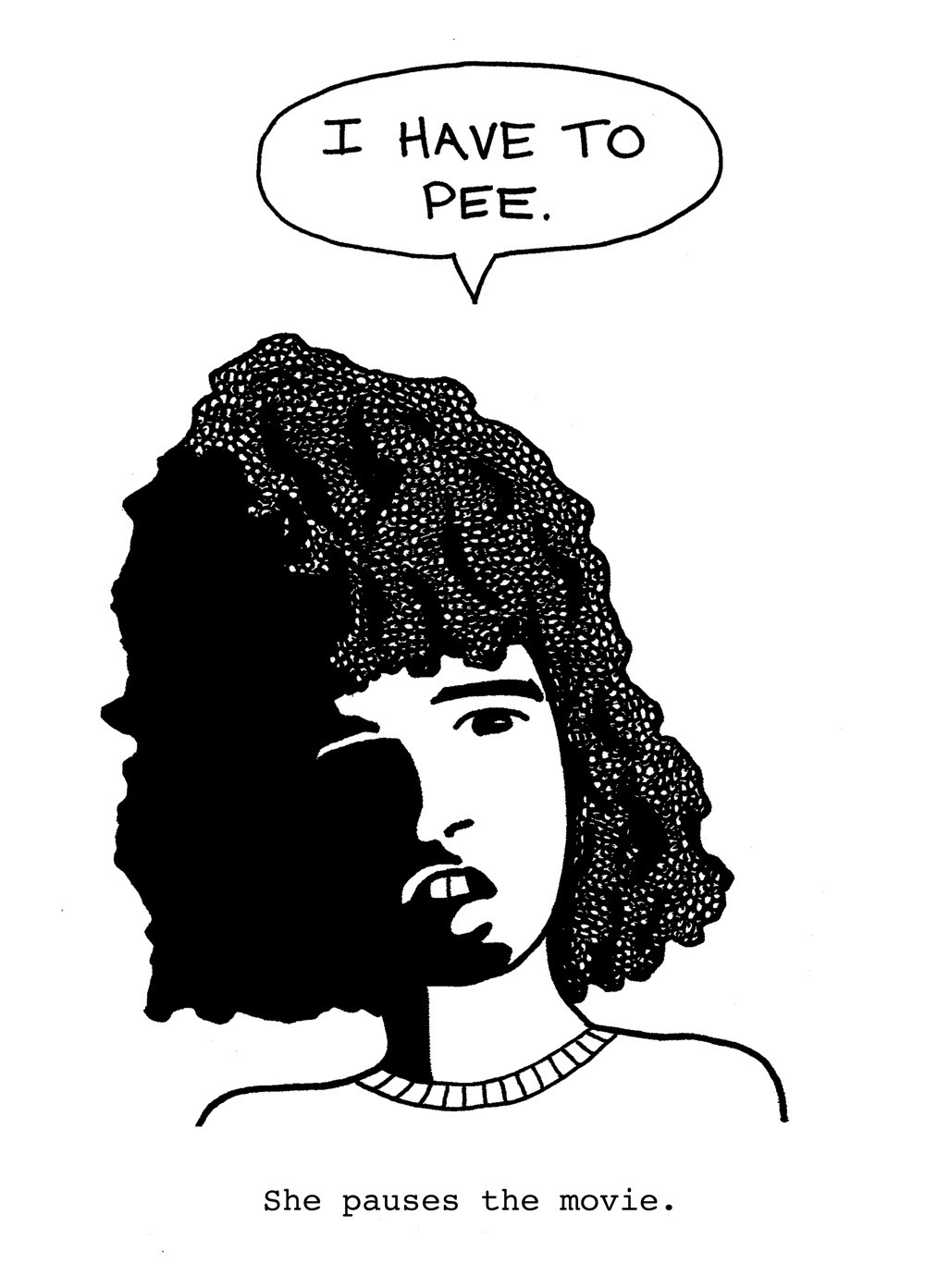
The Pride of Life

by Christopher Sorrentino

Toller’s mother withdrew from the world at the age of forty-five, when Toller’s parents moved to California after Toller’s father accepted a job with a computer company in Santa Clara. Toller’s mother instantly found the region to be uncongenial, and retired to her bedroom, where she would stay, more or less, for the next twenty years. Toller himself was young then, in the pride of life, and to the extent that he was aware at all of his mother’s reclusiveness he assumed that since she was now old, she had every reason to stop being an active participant in life. Toller’s father was absorbed in his work and either paid little attention to his wife’s increasingly eccentric behavior or did not confide in his son about his concerns.

After Toller graduated from college, he and the girlfriend he’d had since his sophomore year broke up and Toller decided to follow his parents to California, having heard, as everyone used to hear, about how inexpensive and easygoing it was in the Bay Area.

“Great,” his father said. “Can’t wait to be able to see you all the time, sport.”

“Oh, Toller,” his mother said, “why would you want to come to this miserable place?”

Toller came anyway, bouncing around for his first few months before settling in the East Bay, in Rockridge, where he took a room in a big house on Bryant Avenue he shared with four other people. Once a month or so he borrowed a car from a friend and drove to Palo Alto to visit his parents at their small house in College Terrace. His mother would come out of the bedroom, and the two of them would usually spend some time sitting alone on the patio in the backyard, a quiet little space that caught the breeze and was shaded by a mature cotoneaster and a lemon tree. Richly colored bougainvillea climbed over the fence and up the rear of the house. His mother had hung a hummingbird feeder from the kitchen window overlooking the patio and often one of the creatures would buzz past them to feed. Toller would watch the blur of the bird’s wings as it hovered, dipping its beak into the feeder’s fuchsia-shaped port.

“There he is,” Toller’s mother would say, “my best friend.”

“Wow, he’s really great,” Toller would say, admiring the bird’s ruby throat and precise, almost mechanical, movements.

“My best friend out here,” his mother would repeat.

Toller would find this sort of exchange disconcerting: he’d bargained on admiring a bird (or a pretty house nearby, or the smell of eucalyptus, or whatever seemingly innocuous subject had briefly shuffled into position before them), and now he felt obliged to console his inconsolable mother in her loneliness. She would explain to him, again, that it was impossible here: no one interesting to talk to, nothing interesting to do, and nowhere interesting to go; and although Toller found none of these things to be true, at twenty-three he wasn’t yet prepared to reject sweeping, categorical generalizations, least of all when they came from his mother. In any case there was little to do other than to agree with her, since she seemed to grow irritated with him if he did otherwise.

*
Things happened to Toller over the next few years — he grew close to some people and drifted away from others; he took jobs that interested him, that bored him, that paid well or poorly; he traveled, he enrolled in courses, he moved to San Francisco with a friend, he played in a band. He took advantage of some opportunities and missed out on others. He was an ordinary person whose life began to take on a reliable shape, and when he took stock of his small share of failures he did not, as a rule, have regrets, or anyway he didn’t dwell on them.

Throughout, he returned again and again to the patio. The plastic hummingbird feeder grew cloudy and opaque and his mother replaced it. If it was rainy or cold, he and his mother would sit in the wing chairs adjacent to the fireplace in the living room. They’d talk while waiting for Toller’s father to arrive. His mother hated the weather and felt that it was making her sick. His mother, who refused to learn to drive, hated having to wait to be driven everyplace. His mother hated the shape in which sticks of butter were manufactured on the west coast, and she hated the taste of the milk. Since it had been some time since Toller’s father had tried to persuade her to accompany him to the various parties, dinners, barbecues, banquets, and other functions that he liked or felt obliged to attend, she no longer talked too much about how she hated the people who were being presented to her as potential friends. She did, however, forge intense, empty attachments to supermarket clerks, pharmacists, medical technicians, hair cutters, and tradesmen who came to the house to make repairs, and though she knew nothing more about them than the things she learned making small talk, she would relate the information to Toller in minute detail. His mother would tell him the elaborate plots of the television shows she watched. If Toller told her about the things that were happening to him, she would grow silent, as if he’d rudely brought up an awkward subject.

When Toller was thirty, various circumstances coalesced so that he found himself, all at once, without friends, single, unemployed, and quite unhappy. Now, abruptly, he was receptive to his mother’s particular view of things. For six months he sat on the patio or in the wing chair once and sometimes even twice a week, immersing himself in his mother’s opinions. He felt, rightly, that they were closer than they’d ever been before. It was her invigorating sense of futility that helped him get past the difficulties of the period, that and the cash subsidies that his parents pressed on him. Eventually, he found a place to live that he could afford, he found a new job, he made new friends, he met a girl. Things eased; life began to regain its reliable shape, and for the first time Toller began to resist his mother’s judgments, as though his fleeting keen appetite for them was overly reminiscent of the circumstances that had stimulated it. Besides, now that things had turned out well, so well, they seemed slightly ridiculous.

His new girlfriend, Margaret, was a lively and sensible young woman to whom a life like the one Toller’s mother was living was incomprehensible, and she bluntly pointed out to him that it was more than merely odd, the apologetic word Toller had taken to using to describe his mother, but: pathetic, limiting, pathological, antisocial, paranoid, and crazy. She’d majored in East Asian studies at Stanford, and Toller — who was both offended by this evaluation and strongly enough infatuated with Margaret to lend credence to her every utterance — pedantically questioned her qualification to make such a diagnosis.

“It’s not a diagnosis, Toller. These are colloquial expressions in everyday use. When someone tells someone else that a third person they both know is paranoid or antisocial, everyone’s clear on the meaning.”

They’d left the house in College Terrace and were stopped at a light on Page Mill Road. Glass office buildings sat facing the road from the south behind acres of parking and a wide strip of landscaping that ran parallel to the sidewalk; on the north side, hidden behind thick growths of trees, were the winding, circular residential streets nestled at the base of the Stanford foothills. Though it was a cool night, they had the windows partly open and the good smell of wood smoke came into the car.

“I’m not clear on it, Margaret.”

“Wind chimes.”

His parents’ new neighbors were a couple around Toller’s age who had moved into the house next door earlier that year; they had installed in their backyard a set of wind chimes whose presence, Toller had noted, was gradually unhinging his mother, who now seemed to view wind chimes as a prominent element in an imagined version of the loathsome state’s coat of arms. For several months, no conversation with her had been without its obligatory reference to the ubiquitous device, whose percussive tones — when he’d even noticed them — Toller had always found pleasant. Tonight, Toller’s mother had subjected them to an extended harangue about the neighbors’ chimes: how the slightest stirring of the air caused them to jangle, how their particular pitch was especially annoying and atonal, how the breeze itself — once so welcome and refreshing — seemed to be conspiring against her, invariably starting up at exactly the moment when she sought out a quiet moment on the patio . . .

Margaret had interrupted: “Have you talked to the neighbors? Maybe they’d be willing to move the chimes, or even take them down.”

Toller’s mother waved the idea away irritably, her lips pursed. “I’ve never spoken to those people,” she’d said.

Now the light turned green and Margaret put the car into gear. “That was really something,” she said, softly.

“Yeah,” Toller said. “She’s odd. I agree. But it’s been hard on her out here. Totally new place, no friends.”

“Toller, she’s made it hard on herself. She’s made it impossible. How long has she been out here? Twelve years?”

“About.”

“Does she even go to the movies?”

“She can’t. She doesn’t drive.”

“Toller. My grandmother drives. She’s eighty-two. Born and raised in Taishan. She learned when my dad finally persuaded her to move down to Campbell from the city.”

Toller didn’t know how to respond to the news of this awesome accomplishment.

“And friends, Toller? Doesn’t she have any old friends she stays in touch with?” Toller explained that his mother had perfectly naturally lost touch with some friends, had fallen out with a few others, and so forth. He did not mention the occasion, a year or so earlier, when an old family friend had called to say that she was traveling in the Bay Area and that she’d love to drop by for drinks one evening. Toller had been there on the evening in question, and was disturbed that his mother pulled the curtains and left the lights off when it began to grow dark. When the doorbell finally rang, at about six o’clock, his mother had raised a hand for silence, and the three of them had sat there in the dark, his mother with her index finger laid across her lips, until the intruder had departed.

“Let’s assume for the sake of argument that she’s right,” Margaret continued. “That it’s horrible here: horrible, vapid, unwelcoming. Which isn’t true, Toller. You know it isn’t. I’m from here. It’s very hard for me to sit across that table from her and politely listen while she tells me that everything I identify with is stupid and phony. And also when you agree with her, which, really. But let’s assume just for the sake of argument that she’s right. How often does she leave?”

“Leave?”

“You know. Get on a plane and go back to whatever home means to her. Take off for a week in Rome or Paris. Hawaii. She doesn’t work. Your dad makes money. How often does she get away from this horrible place?”

Toller remained silent, half-expecting to hear about the heroic grandmother’s annual pilgrimages back to Taishan.

“You’re the one who told me that your mother never leaves the bedroom. What is she, a character from a nineteenth-century novel? Some Victorian lady with the vapors? What is that if not antisocial, and pathetic?”

“I wouldn’t have told you if I knew you were going to use it against her.”

“First of all, reminding you of something that you yourself told me is not using it against her. Second of all, you wouldn’t have had to tell me a thing.”

Margaret was right, but for now Toller only amended his thoughts of his odd mother to characterize her as someone who’d lost her way. That her actual life, a life that held her interest, had always seemed to exist at some point in time prior to the present, that the possibility of fulfillment had always seemed irretrievably lost to her, were conclusions that eluded him, as if the long crisis and profound isolation of the current setting threw these essential truths into such sharp relief that they were unrecognizable. Margaret was right, and for love of her Toller did find the limit to which he was willing to subjugate himself in order to align his behavior with his mother’s expectations, as always defined by her cloistered outlook. Margaret was right, and she alone seemed to have established a rapport with Toller’s mother, a rapport she felt she’d achieved through the respectful exercise of candor. She thought the older woman needed to be stood up to; needed — to use another colloquial expression in everyday use — a reality check. But Toller’s mother’s refusal to accept her adult son’s assertion of his adult prerogatives was beyond Margaret’s understanding, and she couldn’t imagine how reckless nearly everything that he undertook seemed from the vantage of the bedroom. So when Margaret was seven months pregnant with Toller’s baby and the couple decided to take advantage of their underemployment to spend two weeks alone at her parents’ cabin on the north shore of Lake Tahoe, Margaret urged Toller to assert himself while he nervously prepared to inform his parents over the phone of their plans. She didn’t understand his nervousness. He was thirty-two.

“Why would you want to go there?”

“It’s beautiful, Mom.”

“Toller, nothing in California is beautiful. It’s all ugly. And you sound like a jackass, a true California jackass. One of those jackasses who’s always talking about getting away, about taking the weekend. One of those sun fetishists who worships the weather and the fresh air. One of those self-righteous jackasses who belongs to hiking clubs, who wears a baseball cap, who — ”

“Mom, we’re going. Margaret really wants to take this time before the
baby comes.”

“And what about the baby? Don’t you think you ought to be more careful about money, now that you’re expecting a child?”

“I don’t . . . I’m not . . . I — ”

“How are you going to take care of it, hm? It’s a big responsibility, a baby. Have you given it any thought? Any thought at all? Or is it all you and Margaret can do to think about your fun, your vacation at this lake? This is a life, a human life, that you are responsible for — forever! Neither of you has a real job. If I were in your shoes I’d just take those two weeks to hunker down with the classifieds each morning and try to find work. It’s time to be an adult, Toller, not one of these jackasses here in California, grown men and women driving pickup trucks, who think life is all about fun and bicycling in silly shorts and a helmet and wind chimes. Wind chimes! For God’s sake!”

Toller drew his attention from the abyss that had opened in the telephone receiver he held in his hand; looked around the apartment, that his mother had never seen, the apartment in which he and Margaret lived; at the books and pictures, the newspapers and mail stacked on the table, the stasis and the flux, at Margaret herself and her wondrously swollen belly, all the evidence of his life that his mother refused, at the risk of derangement, even to acknowledge. The fullness of it all, the friends she would never meet, the adventures she refused to take interest in, the enthusiasms she could not comprehend — even his own child, this grandchild, she would never really know; her stunted awareness would derive only from the monthly appearances it would make on the patio. Toller’s mother should have understood him as well as anybody, but she understood only that he was the suddenly recalcitrant instantiation of the child who had once unquestioningly accepted her authority over every sphere of his life.

“Toller!” she brayed. “I don’t want to hear about it if you find yourself in financial trouble! When you were coming down here a couple of years ago so upset and unhappy, I thought you were coming to your senses! But it appears that you’re forgetting every lesson you should have learned!”

For the very first time Toller understood that his mother was truly the enemy of everything he was, all the things he’d sedulously worked to become, and that their connection had always been entirely, deceitfully, dependent on his successfully masking those things from her. Even her embrace of Margaret seemed doubtful: with the spat pronunciation of the hard consonants in words like California and jackass, words struck against the palate as if to generate sparks, he knew that she was identifying for him what she saw as the exact source of the contamination.

“Mom,” he said, “I know what I’m doing. It’s a vacation. People take them.”

People. Only in California would people take a vacation when they’re not working! Vacation from what?

“I don’t have to ask your permission, Mom.”

“How dare you!” she said. “How dare you! You little so-and-so!” There was a strangled noise, as if the heart of her indignation was beyond expression, and she slammed the phone down, leaving Toller, and Margaret, shaken.

*
Toller’s father, vivid to him in nearly all other contexts, seemed to him (it must be said) to be a cipher in connection with his mother; Toller had no idea whether his father was concerned about his mother or not, whether he truly agreed with her condemnation of their lives or simply humored her, whether that placid agreeability masked a secret life of his own. Toller knew that his father got up and dressed and left the house every morning, that he came home every evening with stories of the greater world, that he sometimes met other people for lunch or golf, that he kept in touch with old friends. When he would join them on the patio, or by the fireplace, or around the dining table, he listened to Toller’s mother attentively, although she could not possibly have been drawing anything new to complain about from within the enclosure of her life. His father’s uncanny equilibrium was such that Toller had sometimes felt, before he met Margaret, that his mother’s oddness was entirely a product of his own imagination. Perfect loyalty is what it was; Toller’s father was loyal to a fault — but Toller wouldn’t have understood this if he hadn’t grasped, three weeks after their return from Tahoe and nearly six weeks since he’d spoken to either of his parents, the furtiveness of the call he received from his father one morning.

“Toller, you have to call your mother and apologize.”

“Why do I have to apologize to her?”

“She feels very strongly that you spoke out of turn.”

“And that’s how you feel about it? Out of turn. She’s the one who spoke out of turn. It was her. I can run my own life. I’m having a kid. I’m thirty-two years old.”

“I know you are, Toller.”

With each declaration of maturity, Toller felt more flustered and infantile. It went on like that for a few minutes. Toller wanted badly for his father to acknowledge that his mother had been wrong — wanted his father to acknowledge more than that, actually, although he was sensible enough not to share his developing opinions on his mother’s mental condition — but the subject was taboo.

“How about her apologizing to me? Have you asked her that?” Toller asked again.

“I can’t, Toller.” His father was calling from his office, but he lowered his voice. And here Toller recognized the fragilely balanced forces holding together the marriage, and what must have seemed to his father to be his own life; his having reached, at sixty, the limits of its adaptability. Toller’s father wasn’t calling as his mother’s envoy, or as Toller’s ally, but as a man maneuvering to avoid a choice that would result either way in an unbearable loss. Toller understood; he hoped for the best with his mother, but he couldn’t stand the idea of losing his father. He called and apologized.

Toller’s mother continued scrupulously for a while to all but ignore Toller. It was so awkward, the way that she would talk around him if possible, as if he weren’t there, or brusquely tell him that she would call his father to the phone if she happened to answer when Toller called, that Toller half-expected her to stop the discomfiting game; to ask him if she had demonstrated to his complete satisfaction that — as with her other feats of self-estrangement — she was fully capable of sustaining this act of will: would he now conform to her requirements? For all that she required of him, she may as well have asked such a question of the entire despised state of California. Unexpectedly, she took to Margaret again wholeheartedly, which bothered Toller, who suspected that it was her coded way of denigrating the relationship; of subtly informing him that she saw a clear and definite separation between the two of them that she could emphasize by placing the wedge of herself in it, which seemed to be confirmed by Margaret’s curious reciprocation of her evident affection.

“When a nasty old cat decides it loves only you, you always love it back,” Margaret explained. Margaret had attained the condition of hallowed and empty bonhomie embodied by the Safeway cashier, the phlebotomist, the man who sawed off the dead branches of the live oak in the front yard, all those dear people his mother thought so highly of. It didn’t matter how or why.

To remain in Toller’s mother’s good graces meant to have sustained the glow of some positive impression, no matter how arbitrarily it had been registered. The impression didn’t need to have any depth. Toller’s mother certainly didn’t want to know any more about Margaret than she did about those cherished strangers of hers: she became visibly uncomfortable if Margaret spoke to her of her childhood in the South Bay; or of her father, a radiologist in San Jose, and her mother, the owner of a Hallmark store in Los Gatos. She did clap her hands with glee when Margaret told the story of her refusal to bend to her parents’ will and follow a pre-med course at Stanford, but became perplexed and sullen when it was made clear that the resulting rift had been temporary and superficial, as if the deepest and most mysterious disappointment of the human psyche was the willingness to forgive other people. And when things finally eased between Toller and his mother, when she began again to speak to him as if he were more than an unwelcome stranger, it was plain to him that she had neither forgiven him nor stopped being disenchanted with him.

Toller might have wondered why he’d bothered apologizing at all; it was obvious that his mother suffered his presence only in order to see Margaret and the baby, a girl, who was — as Toller had predicted — delivered to the patio each month in the back of the late-model Toyota sedan that the new parents, having somehow avoided the financial ruin their vacation was sure to bring on, had bought used. He might have wondered if not for the fact that, as intended, his apology enabled him to continue to see and speak to his father — more so than before, even, since the job of sitting with his mother in the shade of the cotoneaster and the lemon tree now was delegated largely to Margaret and the baby, allowing Toller and his father to spend time together. His father was now partially retired, providing consulting services to his former employer for several well-compensated hours each week. Though Toller never pointedly inquired about his mother’s habits, his father made it clear to him that the things he was doing in his now-abundant spare time he was doing by himself.

“And Mom?” Toller would ask, casually.

“Oh, you know your mother,” his father would say. “She has her books and her cards and things. I just try to stay out of her hair.”

Toller followed this obliquely delivered advice to the letter; he persisted in hoping for the best with his mother, but he had little idea what the best might be, and the degree of deformation inherent in the family mechanism became painfully evident on occasion, most notably when his mother refused outright to attend his wedding to Margaret and insisted that his father remain behind to chauffeur her to a scheduled doctor’s appointment. Even the illusion he maintained of unfettered access to his father became strained to the breaking point in such instances, and in the case of their wedding Toller had to beg Margaret not to call his mother and give her a piece of her mind, fearing that if
Margaret made it onto what they called his mother’s “shit list” — this ordinary phrase evoked in Toller’s imagination an actual lengthy document, with names inscribed indelibly upon it — he would never be able to see his father again.

Toller and Margaret continued to make their monthly pilgrimages to Palo Alto, eventually from the suburban town of Brisbane, where they moved into a house built on one of the lower slopes of a mountain. They raised their daughter, had another. Sometimes, in the evening, when he stepped out of the kitchen door and stood on the little redwood deck overlooking his backyard with a bottle of beer in his hand, watching his older daughter play in the soft light remaining with the sun now behind the mountain, listening to a mourning dove calling, that desolately beautiful sound he associated with the pale orange of twilight here, he’d think of the precipitating offense, of the misconception at its heart — wasn’t this his house, his deck, his daughter, his beer? What had he done so badly? He was able to shrug it off, though: aside from the hunkering mystery of his mother, life was good to Toller, reliable and satisfying, and it was typical of a simplicity of mind that he would have been the last to suspect that he believed it would continue this way forever.

When Toller was forty-two, his father was diagnosed with a brain tumor, and he died six months later. Toller learned that his father was dead when his mother called while he was on his way to the hospital.

“Don’t let them take him away,” Toller said automatically.

It was the most reflexive thing he had ever said, completely unprompted and unscripted, and he pondered it, this primal desire, as he drove along 280, exiting at Sand Hill Road and coasting down the long incline toward the Stanford campus and the medical center at its edge, Hoover Tower rising in the distance. A malfunctioning sprinkler operating on one of the emerald swaths of grass on either side of the road sprayed the windshield and passenger side windows of Toller’s car as he passed, startling him from his reverie, and he fumbled for the wiper switch.

At first, after the diagnosis, Toller had been tremendously hopeful — hopeful that his father would survive, and hopeful that the crisis would repair the rift between his mother and him. Who else, he’d wondered, could she turn to? And who else, he might have wondered, did he have? Even a hated son resists the idea of his own orphaning. But although he’d carefully dressed and groomed himself for his appearances in his role as concerned adult son, hoping to gull his mother from behind the disguise of his ongoing success, she’d been unrelenting, and when Toller had checked the time on his wristwatch, a wristwatch he was proud of, as the two of them waited for his father to emerge from surgery, she had casually ridiculed it, gesturing at it as if to the very unseen audience to whom Toller was playing. “What kind of a watch is that? That’s an absurd watch for a grown man.” And, after the surgeon had finally appeared to deliver the unhopeful news, when Toller had leaned toward his mother and begun to say vaguely reassuring words, she had twisted the section of newspaper that she held in her hands — a section he had offered her in the courtly manner that he imagined was befitting a considerate and beloved son — into a club, as if she intended to strike Toller
with it. His own newspaper!

“For God’s sake, Toller. I don’t need comforting. I don’t need you to comfort me.”

When he arrived at the hospital on the day his father died, he found his mother standing at the nurse’s station, a paper grocery bag on the counter before her. He started for his father’s room, but his mother’s voice stopped him: “He’s gone, Toller.” He pushed through the voice; she couldn’t possibly mean what she seemed to be saying, but when he reached the room it was empty, the bed already efficiently stripped.

“I wanted to see him,” Toller said.

“You didn’t want to see him like that.”

“I did,” Toller insisted. “I did want to see him.”

“Well, I didn’t want to wait in there with him while you took your time getting here,” she said. “All right? Please, don’t make a scene. If you want to see him, you can go down to the morgue. The morgue, right?”

A nurse looked up brightly from the computer terminal and open files before her and nodded. Toller’s mother had one hand on her hip and rested an elbow on the counter. She looked as if she was at the front desk of a hotel, checking out. It dawned on him that in the grocery bag were his father’s things. Toller sat down in a chair to wait while his mother squared things away. The chemo nurse came upstairs to hug her, the CT scan technician, the floor nurse, wearing a preposterous tunic depicting Sylvester and Tweety — stalking, chasing, pouncing, fluttering away, laughing. More of his mother’s great friends. Toller returned home to Brisbane that night — his mother having refused his perfunctory offer to stay with her at the house — and ate voraciously.

He had his father’s address book with him, and he wore his father’s signet ring on his finger. The girls were in bed and Margaret sat across the kitchen table watching him. He ate what was before him and then returned to the stove to get more from the pot. He drank an entire bottle of wine. Margaret said nothing when he started on the whiskey. He felt elated. A feeling of well-being spread throughout his body, easing a knotty tautness that seemed to have entered deep into each of his muscles months and years beforehand. He wondered if this was what his father had felt as his own depleted body began its final shutting down, an easeful surrender of all the worst things life had thrust upon him.

*
What, with that gone, would have been left to worry about? Surely he couldn’t have been worried about that boulder of refusal, of imprudent harsh resolve, that turned up at the hospital each day disguised as a wife, disguised as a person, to stand at his bedside, imparting her spurious good cheer to the personnel who jabbed, who poked, who choked, who abraded, who tormented his father throughout those final weeks. That fantastic act, honed over the course of decades while the malignancy of her genuine feelings burned glowing within her, lavished upon those who professionally and without the least emotion presided over his father’s destruction. After all that she could not forgive, all that fell short against that scale of rigid values she’d erected over the years, he found, with joy, that he could not forgive those smiles and tears she expended on them even after allowing their collaborators to haul his father away like meat. The two of them, mother and son, were free of one another at last. Thinking of his father dead — the imagined corpse that would always have to stand for the real one he hadn’t seen — he began finally to cry for the first time that day, and Margaret reached out to take his hands in hers with the incomplete but heartfelt understanding that is the best, really, that we can hope for.

Roxane Gay’s Debut Novel, An Untamed State, To Be Made Into a Movie

Roxane Gay’s 2014 debut novel, An Untamed State, gripped readers from its unlikely first sentence, “Once upon a time, in a far-off land.” The novel traces the abduction of a Haitan-American woman while she is on vacation in Port Au Prince and the harrowing thirteen days of her captivity.

Fox Searchlight has announced that they will turn An Untamed State into a movie. So many great books are made into terrible films (The Scarlett Letter, Great Expectations, and on), but luckily this feels like a project we can get behind. The film already has three great women onboard. Gay will cowrite the screenplay with director Gina Prince-Bythewood. Prince-Bythewood has directed and produced films such as Love & Basketball, The Secret Life of Bees, and Beyond the Lights. The lead will be played by actress Gugu Mbatha-Raw, star of Dr. Who, Concussion, and Belle. The production date hasn’t been announced, so if you haven’t read the original, you still have time.

Here Is the 2016 International Dylan Thomas Prize Shortlist

Drawing from published poetry, novels, short stories, and drama, the International Dylan Thomas Prize honors the best literary work written in the English language by an author aged 39 or under. Created in partnership with Swansea University in 2006, the prize is named for the Welsh poet Dylan Thomas, author of classics such as “Do not go gentle into that good night” and “A Child’s Christmas in Wales.” (And yes, who infamously died at age 39 after a drinking binge at New York’s White Horse Tavern.)

The winner, announced on May 15th, will receive £30,000 in prize money. Past recipients include Joshua Ferris, Maggie Shipstead, and Lucy Caldwell.

2016 International Dylan Thomas Prize Shortlist

Pond by Claire Louise-Bennet (short stories)

The Tusk that Did the Damage by Tania James (fiction)

Disinformation by Frances Lewiston (poetry)

Physical by Andrew McMillan (poetry)

Grief is a Thing With Feathers by Max Porter (fiction)

The Year of the Runaways by Sanjeev Sahota (fiction)

Drugs, Neon, and Danzig: Revisiting 1987’s Less Than Zero Adaptation

I feel like I’m doing it a great injustice saying this, but the 1987 adaptation of the Bret Easton Ellis debut of the same name is pretty much peak 1980s cinema. It’s got everything you could ask for from core brat pack members, drugs, lots of neon, and a great soundtrack with Danzig and The Bangles.

On this episode, writer Naomi Fry, who has written about Ellis, his work, and other Los Angeles topics like Vanderpump Rules and Eve Babitz, visits to talk about the film, her obsession with La La Land, and Ellis. You can find Naomi on Twitter at @frynaomifry, and should also look up the pieces we talk about.

Cinema Paradiso: excerpt from The Lights of Pointe-Noire, a memoir

by Alain Mabanckou

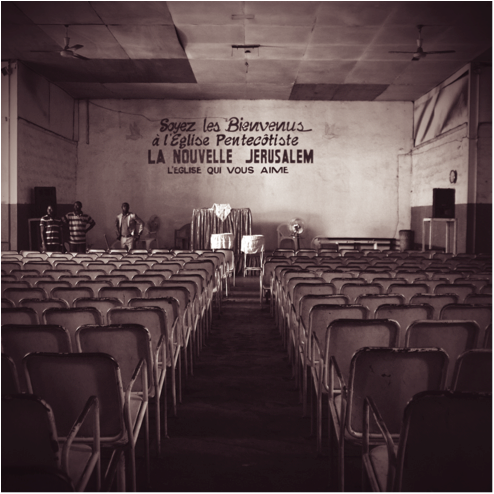
There are no cinemas left in this town, not since the 1990s, when the spread of the evangelical churches hijacked most of the buildings dedicated to the seventh art. The Cinema Rex, once a mythical venue for the projection of films, became a Pentecostal church called ‘The New Jerusalem’, with pastors in their Sunday best heralding Apocalypses like there’s no tomorrow, predicting the flames of Gehenna for wrongdoers, and miracles and good fortune for their flock. Disillusion is written on the faces of the blind, the deaf, the dumb and the lame. They loiter outside in the hope of divine healing.

Here, though, we would gather and wait every morning for the poster to be put up for the film to be shown in the early afternoon. Here we applauded the adventures of Bud Spencer and Terence Hill in They Call Me Trinity and Trinity Is Still My Name or Super Fuzz. The doorman, a professional boxer with a face like a gangster in a Wild West movie, called all the shots, telling us where to stand in the queue. He worked with his boxing gloves strung round his neck and at the first sign of unrest in the crowd he pulled them on. We were his subjects, who must yield to his will, comply with his whims, or we’d get an uppercut that would send us straight to the Adolphe-Sicé hospital. He would eject you from your seat if he felt like it, to make room for a member of his family, or someone who’d bribed him, and you just had to sit on the floor. He let children in to showings reserved for ‘over 18s’, in exchange for a hundred CFA franc coin. As far as I recall, he was the person responsible for most of the brawls that took place outside and inside the cinema, taking advantage of the venue to apply what he learned in the training gym. Since he was ugly, we promptly nicknamed him ‘Joe Frazier’, Muhammad Ali’s most stubborn opponent.

He would eject you from your seat if he felt like it, to make room for a member of his family, or someone who’d bribed him, and you just had to sit on the floor.
With the arrival in the capital of the first martial arts films, our local Joe Frazier realised no one was scared of boxing now, because a fighter, unlike a karateka, couldn’t fly into the air — what we called ‘lift-off ’ — landing behind his opponent, and dealing him a fatal blow. We didn’t realise these ‘lift-offs’ were just cinematic tricks, the actors were ordinary people like us. Overnight, posters of Bruce Lee in The Way of the Dragon, Enter the Dragon or The Game of Death replaced the ones of Clint Eastwood, Lee Van Cleef and Eli Wallach in The Good, The Bad and The Ugly. We lost interest in the spaghetti western actors, with their guns, which we could never own, and their horses, which we’d never seen up close. To us, karate seemed more accessible, you just had to learn the different katas and the philosophy of Master Gichin Funakoshi, the inventor of Shotokan Karate-Do. A number of dojos opened, where we handed over all our pocket money to Master Mabiala, who had proclaimed himself a black belt, 12th dan, and promised to reveal the secret of Bruce Lee’s ‘lift-off ’. We all eagerly awaited the crucial moment when we would fly into the air, emitting a cry that would terrorise our opponent, but the so-called master dwelt instead on physical exercises that left us so exhausted that the number of pupils diminished every day. The truth was, we were his servants, he made us sweep out the dojo and his house, prepare his food, do the washing up or wash his clothes in the River Tchinouka. When people grew impatient and asked him when we were going to actually learn how to do the famous lift-off he would reply:
‘You haven’t finished learning all Master Funakoshi’s katas yet, and even when you have, there’ll be more katas, ones that were added by his disciples, in memory of him! So stop complaining, a bird can’t fly the day it’s born, its wings have to grow! It’s the same with you, you have to allow the wings of your spirit to grow. One day you’ll lift off without even realising!’

A number of dojos opened, where we handed over all our pocket money to Master Mabiala, who had proclaimed himself a black belt, 12th dan, and promised to reveal the secret of Bruce Lee’s ‘lift-off ’.

The brave souls who continued to take his classes did finally manage lift-off: Master Mabiala put them up on the roof of his house with the aid of a ladder, and told them to jump, while doing Bruce Lee’s battle cry from The Big Boss

Comedies did survive the breaking wave of the martial arts films, thanks to the energy and droll mannerisms of Louis de Funès in the saga of The Gendarme of St Tropez or in Fantomas versus Scotland Yard and Fantomas Unleashed. The French actor played the role of Commissioner Juve, who is obsessed with capturing Fantomas, public enemy number one. The anti-hero spends his whole time taunting Superintendent Juve, then melting into the crowd, to the applause of the cinema audience. It was one of the rare times we cheered a baddie; we would never do that in a spaghetti western, where everyone booed Clint Eastwood’s enemies, demanding their money back. We particularly disliked it when villains Clint Eastwood had killed in a previous film appeared again in the next one. Since we took what happened in the cinema to be real, we were shocked and decided they must think we were too stupid to realise this was a piece of trickery designed to get us to hand over our money.

The Indian films escaped unscathed, thanks, no doubt, to the interminable love stories that were their hallmark, as well as to the physical strength of the actor Dara Singh, not to mention the magical world of The Magician from Hell, and above all the music, which made us weep. We dreamed that we would one day go to India, where we would marry Indian girls, adorned with the same jewels as the actresses who adorned the screen. India was our Peru, the place where our dreams would come true, with a little bit of magic, learned from what we saw at the cinema. We would express ourselves with ease in Hindi or Urdu, since we already sang along in these languages with the actors from these countries, even if we didn’t understand the words. Of course we’d be poor, but we wouldn’t mind, because in these films the man with no money always ended up marrying the beautiful girl, beating the rich man to it. We would insist on kissing the women properly, none of that modesty we found so irritating, and which obliged you to work out for yourself that the main actor and his sweetheart must have finally slept together…

We dreamed that we would one day go to India, where we would marry Indian girls, adorned with the same jewels as the actresses who adorned the screen.

The projectionist at the Cinema Rex was a young womaniser who took a different girl up to his box at each showing. He picked them from among the young ladies who stood in line with us. In order to get chosen, they dressed up and put on lots of make-up, as though they were going to a party. We watched as they fluttered their eyes, to catch the attention of the technician, who took his time making up his mind. They’d bicker and insult each other over who would be the chosen one, privileged to watch the film through a little hole, right next to the one the images came through. Certain mishaps in the projection of the film were caused by the operator who, in order to impress the girl, explained all the tricks of the trade and what he called ‘the enchantment of cinema’. Since he talked rather loudly, the spectators at the back could hear him explaining that a film had twenty-four images per second, and that a shutter closed off the light beam in between them to create an impression of fluid movement on the screen. Suddenly the young woman would get overexcited and ask to be allowed to replace the reels, and send out the images upside down, by mistake. You could hear them giggling, running off into their hidey-hole and starting to make out, to the applause of the crowd. We bore no grudge against the projectionist, since we knew the enchantment came from him and his skill in handling the 35mm projector.

The young man’s work was not limited to what he did up in his box. You’d hear him hurtling down the stairs and dashing outside to receive the reels delivered from the Duo and the Roy, on the other side of town, in a little Renault 4L van. In fact we had to wait till the two other places had finished at least two reels of fifteen to twenty minutes each. This meant that for long films — like The Savage Princess, which lasted over two and a half hours — the courier had his work cut out, as did the projectionist, who got booed by the spectators if there was a delay and the showing got cut off in the middle of some thrilling piece of action because the van had broken down, or the other cinemas had had a hitch. Cool as a cucumber, the operator would simply show us an advert for Cadum soap, over and over again…

The two protagonists would meet in the amphitheatre of the law faculty in Paris. We would hold our breath reading the passage where the white girl decides to introduce her black husband-to-be to her parents.

Outside the cinema a number of vendors spread their merchandise on the ground: comics featuring Tex Willer, Rodeo, Ombrax, Blek le Roc, Zembla, as well as the novels of Gérard de Villiers and San-Antonio. Sometimes you would come across an anthology of poems by Rimbaud, Baudelaire or the complete works of some author, published by Pléiade, bearing the stamp of the French Cultural Centre. Not something easy to sell, since in the ‘bookshop on the ground’ the most popular title was African Blood (volume 1, The African; and volume 2, A Woman in Love), by Guy des Cars. We were captivated by the two protagonists of African Blood, who were bound in a mixed marriage: a French woman, Yolande Hervieu — with her rich, racist ex-colonial parents — and the orphan from l’Oubangui- Chari, Jacques Yero, born into a poor family, adopted by whites who sent him to France to study in the 1950s, a time when the Negro was still struggling to prove to the world that he was a man like any other. The two protagonists would meet in the amphitheatre of the law faculty in Paris. We would hold our breath reading the passage where the white girl decides to introduce her black husband-to-be to her parents. We would be touched by the courage of the Frenchwoman, who would follow her husband to Africa, aginst the wishes of her parents, who were naturally opposed to their union. Throughout the first volume of African Blood, it was our own story we were reading, for the life of the couple on the black continent coincided with the independence of several francophone countries, and with l’Oubangui-Chari becoming the Central African Republic. The second volume showed us a couple in which the man had risen to a position of political power, arousing jealousy among blacks, as well as those whites who still liked to foster the view that their own race was superior. Later, when I arrived in France, I realised that Guy des Cars was an underrated author, so much so that his works were referred to as ‘station bookshop novels’, and the author sometimes nicknamed ‘Guy des Gares’. But this in no way diminished my admiration for a man who, without a doubt, had inspired a whole generation of Pontenegrins, not to say French-speaking Africans, with a taste for reading.

The ‘bookshops on the ground’, which were often to be found outside the Roy and the Duo, were dependent on the cinema clientele and therefore did not survive the demise of the cinemas. Times change; outside the Cinema Rex, traders have set up a makeshift telephone booth, offering calls for fifty CFA francs, selling mobiles and top-up cards. Others sell petrol in used pastis bottles they’ve collected in the centre of town. If the faithful of the New Jerusalem respect the spirit of the Bible, perhaps one day they will lay into these street traders, as Christ challenged the merchants in the Temple of Jerusalem.

***

It’s early afternoon and I’m standing outside the building that delivered our dreams, bringing fictional heroes from all over the world to our neighbourhood. The Cinema Rex looks tiny to me now, though at the time it seemed vast, immeasurably so. Is that because I have since been to bigger cinemas in Europe and Los Angeles, or in India, where the cinemagoers actually become actors themselves?

The Cinema Rex looks tiny to me now, though at the time it seemed vast, immeasurably so.

I look at our old cinema, and can scarcely conceal my disappointment. A banner announces that a festival of Christian music will take place in the building. Two members of the congrega- tion of the New Jerusalem, one tall, one small, are standing at the entrance, and give me a challenging look, as though they have guessed I’m planning on coming in. I approach the entrance and the taller one steps aside. Perhaps he thinks I have an appointment with the pastor. In the doorway I turn round and wave to my cousin Gilbert and my girlfriend, who are outside the Paysanat restaurant opposite. They cross the Avenue of Independence to join me.

At the sight of my girlfriend’s camera, the little one frowns and rushes up to her:

‘What’s that, madame? This is a place of worship, no filming or photographs allowed!’

At once Gilbert comes to her rescue: ‘My cousin’s from Europe, he’s a writer, he’s writing a book about his childhood memories and…’

‘Out of the question! Anyway, non-believers aren’t allowed in here, writer or not!’

‘Non-believer? You don’t even know him, and you call him a non-believer?’

‘I can tell by looking at him! If he was one of God’s children he wouldn’t turn up here with a video camera!’

‘It isn’t a video camera, it’s just a camera…’

‘Same thing!’

At a loss for arguments, my cousin decides to cut to the chase:

‘Bollocks to your religion! Why do you film your Sunday masses, then, to get on TV, if God doesn’t like images?’

The tall one intervenes: ‘That’s enough, now beat it!’

Furious, Gilbert pushes the little one aside and comes through to join me in the auditorium. My girlfriend does the same, while the two congregation members stand there like pillars of salt, shocked by our cheek. They come on through as well, and stick to us like glue. The tall one complains loudly while my girlfriend takes pictures: ‘Stop filming in the house of God!’

A young man dressed up to the nines appears at the back of the worship area.

The little one growls like a cooped-up dog:

‘Pastor, we couldn’t stop them! We told them they mustn’t enter the house of the Lord, but they came in anyway!’

In a calmer tone, the pastor asks us: ‘Do you have the owner’s permission to take photos in here?’

‘Who is the owner?’ my girlfriend asks.

‘He lives just at the back, I don’t think he’s going to be too happy about what you’re doing, you’re violating private property. You’d better come with me and explain yourself. He will make you destroy the pictures you’ve already taken. It’s not the first time this has happened!’

We exit in single file, the pastor at the front, and walk round to the back of the building. We find ourselves outside a plot where a man with a shaven head in a pair of bermuda shorts and vest is sitting in front of one of three doors in a long building up for rental.

The man notices us, opens his eyes wide in amazement when he sees me, and gives a great yell, leaving the pastor stunned: ‘It’s the American! I can’t believe my eyes! You came to see old Koblavi!’‘The Lord has forsaken this town, and in doing so He also turned His back on the Cinema Rex… Sometimes I go into the auditorium, I close all the doors, and I sit down in the middle, just to remember the

‘The Lord has forsaken this town, and in doing so He also turned His back on the Cinema Rex… Sometimes I go into the auditorium, I close all the doors, and I sit down in the middle, just to remember the old days, when it was packed full…’

The pastor murmurs something in his ear, but Koblavi pushes him aside: ‘No! No! No! He belongs here! He can photograph whatever he likes! You know the little street opposite the cinema, rue du Louboulou, that was his uncle who made that!’

The pastor stands with his arms drooping, his head on one side, and offers his apologies. Retracing his steps, he stops three times, to bow. Koblavi points to a chair at his side: ‘Please, take a seat, little brother! Gilbert and madame, you go and film the cinema while I have a chat with my American…’

As soon as Gilbert and my girlfriend are gone, Koblavi assumes a pained expression: ‘I’ve seen you so often on the TV, talking about your books. I’m sorry, I’m ashamed, I’ve never read them… One day in an interview you even mentioned the Cinema Rex, I can’t tell you what pleasure it gave me to hear that!…’

He looks up at the sky: ‘The Lord has forsaken this town, and in doing so He also turned His back on the Cinema Rex… Sometimes I go into the auditorium, I close all the doors, and I sit down in the middle, just to remember the old days, when it was packed full. I can hear the noise, the shouting, I can still see the dreams of those young people floating up above their heads, forgetting their everyday troubles, just for an hour or two…’

‘There are video recorders now, DVD machines, they can still have their dreams and…’

‘That’s all garbage, Mr American! How could that replace the atmosphere we had at the Cinema Rex? All these new things, it’s the age of individualism! We’ve forgotten the true meaning of cinema, little brother! A film you watch at home doesn’t affect you like a film you watch with a crowd at the cinema!’

He brushes away a couple of flies buzzing round his head and continues:

‘You’ve come from America, let me recommend you watch Becky Sharp! Now that’s real cinema, you take my word! And it’s not just because I like Miriam Hopkins, though I have seen her before, in Doctor Jekyll and Mr Hyde! She’s quite marvellous!’

He stands up, goes into the house, comes back a minute later with a photo of the American actress and hands it to me:

‘Look at her, wasn’t she beautiful? I insisted we show every film she’d ever been in at the Cinema Rex! Of course, people would rather watch shoot-outs and native Indians and Louis Funès fooling about, and all those idiot actors in the martial arts films. What can you learn from a martial arts film?’

He practically snatches the photo out of my hands and blows on it.

‘I’m not having any dust on my idol’s picture!’

He goes to put the photo back inside, and comes back with a bottle of beer and two glasses. I tell him about America, since he asks me. His eyes shine, he’s almost like a child who’s thrilled with a present:

‘So you’ve actually seen Miriam Hopkins’ two stars on the Hollywood Walk of Fame?’

‘No, sadly, I haven’t… I don’t know that actress. I wasn’t paying attention when I saw Doctor Jekyll and Mr Hyde…’

His face stiffens, as though I had just committed sacrilege. With eyes half closed, he murmurs: ‘That’s my dream, to go to Hollywood. I can’t believe you live in the city of cinema and you’ve never found time to go and see Miriam Hopkins’ two stars…’

Resigned now, he launches into a diatribe against the political authorities who failed to help him, obliging him to rent the Cinema Rex out to a religious congregation: ‘Those politicians, they killed the cinema! And it’s the same everywhere, little brother! Even in Brazzaville there are no cinemas left! How will young people ever get to know Miriam Hopkins? The cinema was something magical; wherever there was a picture house, the neighbourhood took its name. We’ve got the Rex district and the Duo district and the Roy district, but those politicians understand nothing about that kind of impact!’

‘Those politicians, they killed the cinema! And it’s the same everywhere, little brother! Even in Brazzaville there are no cinemas left! How will young people ever get to know Miriam Hopkins?’

Out of pure modesty, Koblavi avoids mentioning his historic and prestigious family name, the name of his Ghanaian grand- parents, who, in the late 1940s, dominated the fishing trade in Pointe-Noire. But the thing their descendant is apparently most proud of is the cinema, whose demise he continues to bewail. He’s almost apologising for having done a deal with these servants of God who sell tickets to paradise to their flock, unaware that many children in Pointe-Noire will never taste the atmosphere of those darkened movie houses, the succession of adverts and the opening credits of the film, followed by the applause of the audience. Noticing the little chain with a cross on around his neck, I say nothing critical about religion. But he touches it and tells me: ‘Ah no, I don’t belong to the New Jerusalem, I’m still a Catholic in the strict sense of the word…’

And finally he talks about my mother, whom he knew, about Uncle Albert, who was a friend of his father. As though speaking his last words, he murmurs very softly: ‘I know my origins are Ghanaian, by my parents, but I’ve always felt Pontenegrin. D’you hear my accent? No one’s more Pontenegrin than I am in this town! I’ve never been made to feel an outsider here, by anyone. This is where I live, this is where they’ll bury me…’

***

Gilbert and my girlfriend are back now. They’ve spent over half an hour taking photos of the old Cinema Rex, and as they show them to Koblavi his features, sunk in nostalgia till now, light up with a smile. He even allows himself to be photographed, with his broadest smile: ‘You should never look sad in a photograph, you don’t know who might look at it in ten years’ time, or twenty, or thirty, or forty, or fifty!’

He comes with us as far as the exit to his plot, and watches as we walk away.

We pass by the cinema again, where the two worshippers are still standing guard like a pair of Cerberuses. This time they don’t dare look us straight in the eye. There’s even a shadow behind them: the pastor, who watches us closely as we cross the Avenue of Independence…

Great Dysfunctional Families of Fiction

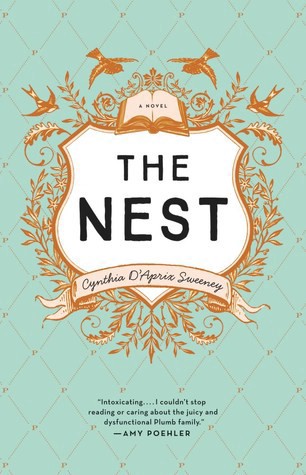
While I was working on my book, The Nest, the question I dreaded most was, “So what is it about?” It’s a logical question, of course, and that it never failed to stump me was embarrassing and, I feared, indicative of some kind of mushiness of intent or clarity or effort. When I would haltingly try to describe it, mumbling something about estranged adult siblings and money, my perplexed listener would almost always say, “Oh, so it’s about a dysfunctional family?”

I guess?

I never loved that descriptor because every family has its share of function and dysfunction; it’s just a question of percentages. A strictly functional family is, let’s be honest, a little boring in literature and life. I adore the adventuresome Ingalls and the can-do March sisters, but if I had to spend time in the company of a family from a book, I’d pick one with a little more spice and verve, a group with shifting alliances and festering grudges and faulty memories and unreliable behaviors. I like a raucous gathering populated by folks who have interesting stories to tell and that one person who just doesn’t know when to keep his or her mouth shut. So here are just a few of my favorites in no particular order.

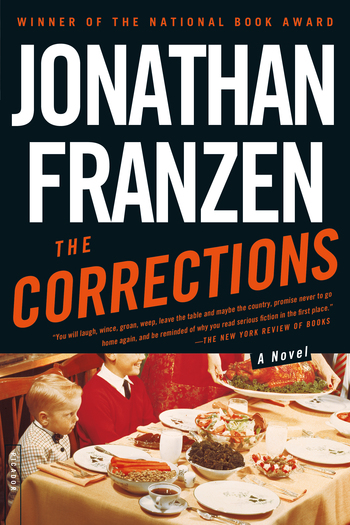
The Corrections

The Lamberts from The Corrections by Jonathan Franzen

I know, so predictable, but what can I say? I just really want to hang with Denise, who’s probably been priced out of Brooklyn by now. Probably she’s running an excellent food joint in Minneapolis so she can be closer to Enid. I’d invite Enid over for a girls’ night and maybe slip her a little Mexican A for old time’s sake. Denise would bring a nice wine and we’d get a little silly and complain about the Lambert men folk.

We Are All Completely Beside Ourselves by Karen Joy Fowler

The Cookes from We Are All Completely Beside Ourselves by Karen Joy Fowler

I’m a sucker for a family of academics and this novel features well-meaning academic parents with a tragic lack of boundaries. If you haven’t read it, don’t read anything about it before you do because the way Karen Joy Fowler manages to slowly reveal the plot-point at the heart of this broken family is both miraculous and devastating.

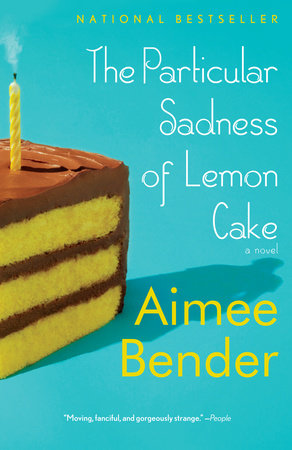
The Particular Sadness of Lemon Cake by Aimee Bender

The Edelsteins from The Particular Sadness of Lemon Cake by Aimee Bender

Speaking of lack of boundaries, the opening of Aimee Bender’s novel still stays with me, years after first encountering it, when nine-year-old Rose Edelstein bites into a piece of lemon cake her mother made and can taste her mother’s sadness and discontent–and chooses to bear the burden on her own.

On Beauty by Zadie Smith

The Belseys & The Kipps from On Beauty by Zadie Smith

Not one but two families of academics populate this smart, funny, generous book that is, in part, an homage to Howard’s End. Zadie Smith brilliantly dissects marriage, friendship, family life, politics, identity, personal beliefs and compromises, academia, Rembrandt and, of course, the elusive nature and relative value of beauty.

Position

The Mellows from The Position by Meg Wolitzer

I recommend this book all the time because it’s so much fun. Adulterous parents acting like entitled children; wounded children acting like entitled children; everyone aggrieved at the other’s behavior while obstinately blind to their own flaws. And it’s by Meg Wolitzer so it’s wickedly funny and smart. Did I mention the mysterious sex position? There’s a mysterious sex position.

The Cranes from The Past by Tessa Hadley

Four adult siblings and various family members come together for three weeks one summer to decide whether to keep or sell their family home. Tessa Hadley’s descriptions of the house and the Somerset countryside where it sits are so lovely and evocative that I think I’d recognize the house if I saw it, and I could ring the bell and invite myself in for tea with these complicated, argumentative, siblings who are trying to preserve and escape their past.

The Middlesteins

The Middlesteins by Jami Attenberg

Oh, to eat Chinese pork buns with Edie. I grew up in suburban Rochester, New York, which has much more in common with Chicago than New York City, and I relate to every member of this mid-western family and their particular heartaches. I would love to drop into the novel’s brilliant Bar Mitzvah set piece and roam from table to table, listening to the love and angst and history and hope in that room.

Mr. Bridge & Mrs. Bridge by Evan S. Connell

Mrs. Bridge and Mr. Bridge by Evan S. Connell

She wouldn’t approve of me, but I’d like to spend some time with India Bridge. Maybe she’d let me make her a drink (probably a whiskey sour) and then I’d refill her glass without her noticing. I’d tell her she deserves the things she desires and to stop worrying about her kids so much and read her the first line from Mr. Bridge: “Often, he thought: My life did not begin until I knew her.”

Nomi & Ray from A Complicated Kindness by Miriam Toews

Miriam Toews is such a powerful writer that just spotting the slim pink spine of this book on my shelf induces a wave of sadness. I love this broken family of Mennonites, including the two characters who have already fled the claustrophobic community in Manitoba and exist primarily in flashbacks that illustrate the gradual breakdown of this family. Sixteen-year-old Nomi is sure she belongs in New York City — or at least away from the place she lives–but for the “complicated kindness” that keeps her and her father rooted to each other’s side until one of them breaks.

Model Home

The Zillers from Model Home by Eric Puchner

Set in a beach town just south of Los Angeles in the mid-80s, Eric Puchner’s family is on the brink of implosion, about to be torn apart by the tried-and-true family destroyers: money and secrets. I especially want to take 16-year-old Lyle (short for Delilah) under my wing, not just to spare her her father’s folly and self-destruction, but because she is so recognizably flawed, so intelligent and witty, such a survivor.

Karan Mahajan on the Inner Lives of Terrorists & Victims in Today’s India

It is not Delhi that appears in Karan Mahajan’s The Association of Small Bombs (Viking, 2016), but Dilli, the Hindi pronunciation connoting the aggressive and warming city in which great love thrives alongside cynicism. Dilli implies an intimacy — whether or not you have lived there — with the middle-class aunties who send meals in steel tiffin boxes to one another’s kitchens, and with the drivers of sputtering auto-rickshaws, whose eyes are on the road while their ears are tuned to your backseat chatter, as well as with the wealthy traders who arrive in silent cars at discreet bungalows.

But Delhi, the seat of government in the world’s largest democracy, attracts the attention of those citizens who feel robbed of citizenship, too.

India has a long history of separatist movements. In some cases, these movements are complexly related to religious conviction. Residents of the country — home to a Hindu majority and a sizable population of Muslims, among many other religious groups — are gravely familiar with religious violence and terrorism.

In Mahajan’s book, an intelligent man associated with a separatist movement plants a bomb in a Delhi market. The explosion kills two boys out to pick up a television from a repairman, but spares their friend, who moves forward in a life marked with injury. As bombs go, this is a small one, “a bomb of small consequences.”

The truth, of course, is that there is no bomb that does not have vast consequences. The explosion profoundly changes the parents of the two boys killed, spurring their participation in political life. The survivor grapples with religion. Remarkably, we observe the inner lives of a bomb-maker and an idealist drawn to terrorism.

Mahajan and I chatted over email about the humanness of a terrorist, terror as a form of urban planning, and human-machine intimacy.

(You can read the opening chapter of The Association of Small Bombs — “Chapter Zero” — at Electric Literature’s Recommended Reading.)

Megha Majumdar: Tell me about the process of researching how to make bombs. I’d imagine that research request–whether borne out in the “privacy” of the internet, or at public libraries, or to scientists–carries with it the possibility of some suspicion, some alarm.

Karan Mahajan: Actually, you’re right. I was quite cowardly, for a long time, about searching for bomb-making information on the Internet; I felt it would arouse the suspicion of the invisible all-seeing eye of the government, or Google, immediately. Eventually, I got over it. In the end, though, I stayed away from the backwaters of the Internet. There are dozens of fine books on the subject, many historical, and I read newspaper reports and court documents, which are more granular in their descriptions of Kashmiri terrorism in the 1990s. There’s an entire documentary about car bombs in Beirut. The trouble with the Internet is that it takes you to sources that everyone else can look up too.

Once I was carrying a manuscript of the novel when I was stopped for a pat-down and was terrified that the TSA might decide to give it a quick read by the luggage scanner.

I did have about twenty books about terrorism checked out, at various points, from the Columbia library, and the UT Austin library, and I worried about my privacy. I can’t say if anything changed. But, for the last two years, since finishing the novel, I’ve been selected for random searches and scans far more often than any other time since 9/11. Once I was carrying a manuscript of the novel when I was stopped for a pat-down and was terrified that the TSA might decide to give it a quick read by the luggage scanner.

The key, in the face of all this psychic pressure applied by the government — as with all other terror — is to not alter your behavior.

MM: A dark reality that filtered, I think, into both of our childhoods, is India’s struggle with religious violence. Can you tell me about your childhood experience of growing aware of religious others, of religious friction, and how you found your way back to those topics with this book?

KM: My awareness was geographical. I grew up on the border of Jamia Nagar, the huge Muslim locality in South Delhi. It’s where the Jamia Millia Islamia University is based. But, though this huge Muslim population was a mere kilometer from where I lived, we had little interchange with them. I played cricket with local Muslim boys in the park, but that was it. I was aware that there was something wrong about this separation.

My school, with the exception of a couple of Muslim students, was entirely Hindu, with a smattering of Sikhs. Meanwhile the monuments I passed on the way to school everyday were Islamic — from the Mughal or Tughlaq or Lodhi past. This created a dissonance, an urge to understand Islam.

I wasn’t political growing up. I didn’t follow the news and we didn’t talk about it in my home. My hunger to write about politics comes out of a perverse need to catch up with all I didn’t know as a callous teenager in Delhi — particularly aspects of religious violence and the rise of the BJP.

I was also part of an NGO in Delhi one summer in college. This NGO educated students in Delhi about the riots in Gujarat. It was a way of bearing witness. This NGO couldn’t have differed more from the one in the novel — it wasn’t religious in the least bit — but it gave me a taste of the world of activism, its talk, and its ultimate smallness in a crowded media environment.

MM: The book is frank about police ineptitude and malice–and violence perpetrated by the police has, of course, received a great deal of attention and outraged discussion here in the US. But, when we see policemen in the book, they are mean, uncouth. They don’t get the complex treatment that, say, the character of a terrorist does. A facetious-serious question: Is a terrorist a more “sexy” character than a policeman?

I wanted the narrative to hew close to the victims and the terrorists. I didn’t want to turn the book into a thriller.

KM: Great question. The truth is that I didn’t want to write about policemen. The narrative of the corrupt policeman, the ineffective government has been done to death — and you know, as someone who grew up in India, that these things are a given. I wanted the narrative to hew close to the victims and the terrorists. I didn’t want to turn the book into a thriller. When policemen do appear, momentarily — as flickers almost — I’m writing from the perspective of either, a) very disappointed victims, who have come to distrust all emanations of governmental power, or b) terrorists, who are naturally terrified of the police. For this reason the police figures come across as mean and uncouth.

Anyway, the Indian reality is far more mean and uncouth than we can often imagine. If anything, my novel goes easy on the police.

MM: What are the possibilities and dangers of writing, and letting loose in the world, the character of a terrorist whose humanness is recognizable?

MM: I hope none (in terms of the dangers). Terrorists are humans. Many have been exceptional individuals in their own right: doctors, thinkers, engineers, economists. I wanted to show how idealism can be bent and corrupted to the point that you’d willingly kill civilians for an idea.

It’s scary for us to imagine that someone who shares our sensibilities could turn to terror. I wanted to show the steps, the blows, that lead to this point.

It was crucial to present terrorists as agents of their own destinies, as being fundamentally intelligent. In mediocre novels, individuals are driven into terrorism by poverty, or blackmailed into it, when in fact this often isn’t true. Most modern-day terrorists have been middle-class individuals with degrees. They are outraged by suffering they may or may not have experienced first-hand. It’s scary for us to imagine that someone who shares our sensibilities could turn to terror. I wanted to show the steps, the blows, that lead to this point.

MM: A striking thought in the book: “Terror is a form of urban planning.” Tell me more about how violence, or fear of violence, changes not just people but the spaces in which they move and gather.

KM: This statement is one of the keys to understanding my own interest in the subject. When I began writing, I didn’t know why I was drawn to terror, to this marketplace, to its dismantling and destruction. It’s only when I began to read and write about Mohammed Atta, one of the 9/11 hijackers, that the connection became clear. Atta was a student of urban planning. Instead of implementing his ideas serenely in an office, he altered the landscape of New York with his actions. I realized that the totalizing impulse behind urban planning is the same as the one behind terror. My first novel was about an urban planning minister who is scarring Delhi with flyovers.

Cities have been changed a great deal by terror. A friend who is about to visit Islamabad was telling me how the website of his hotel in the city boasts about its blast walls and special security room. Meanwhile, as Martin Amis said about the security regime at airports, 9/11 increased the sum total of boredom in the universe.

MM: There are aspects of this book that would certainly be noticed and commented on in India (Kashmiri separatism, specific political parties) but that might not be picked up as much in the US. In the US, the book might become about–well, let me ask you, are you noticing differences in how the book is being read in each country?

KM: The thing I’ve loved about reactions from Delhi is hearing people say, “It’s such a Delhi book!” And it is. The slightly curdled, direct, almost-cynical tone is the tone of Delhi Hindi; I often speak out sentences in Hindi before writing them in English (not because my Hindi is good, but because my mind exists at the intersection of the two languages). I blanketed South Delhi along Ring Road with my descriptions and scenes. It’s a novel about destruction, but you could recreate South Delhi from the writing.

These nuances obviously aren’t available to a US reader. But I like the idea of an American reader coming upon it almost as a work in translation. Part of the appeal of such books (such as Bolaño’s novels) is that they seem addressed to another audience. I don’t try to explain proper nouns.

I’ve been touched, so far, by the responses I’ve received in America. People aren’t necessarily thinking of it as a “foreign” book. A lot of this has to do with the cover, which is universal rather than “ethnic,” and the fact that it’s been described as a political book rather than an “Indian” book. Grief and loss are also universal subjects.

MM: The aftermath of a bomb blast, in this book, is not just grief and emotional devastation, but also a series of practical events. One needs to go to the hospital and agitate for better care for victims; one needs to follow up on the government’s promise to pay compensation to victims’ families. My sense is your research around survivors’ associations and victims’ advocate NGOs yielded more than could be included in the book. Tell me some of what you learned.

KM: You know — a lot of the NGO stuff is made up. What I did learn is how awful the response to bombings usually is — truly incompetent, with bystanders behaving in the cowardly way of roadside Indian crowds. People might lie around for an hour before anyone takes them to the hospital. The hospitals aren’t equipped to deal with mass tragedies. And yes, the government often lazily reneges on the initial promised compensation, or conveniently forgets to pay it out.

An NGO related to terror would necessarily need to address these things. But the NGO in my novel is also a little absurd, driven by fear, because there aren’t enough bombings to make such a group truly worthwhile. The NGO, like so many things in my novel, is a manifestation of extreme fear, an unhealthy obsession with terror, which, in some ways, plays directly into the hands of the terrorists.

MM: People and their machines are intimately related here. A young man, a programmer, who learns his wrists are injured from typing too much is devastated–how can he go on if he can’t use a computer? Another man, a father, relies on his camera and tripod to make a documentary film as a way of handling grief. What is interesting to you about human-machine intimacy?

KM: What a great question! It emerged organically, in the writing — the different ways in which people are dependent on, and destroyed by, machines. Some of it came out of a desire to see clearly, to see past names to the essence of things.

If the Indian reality is polluted and destroyed, we’re distracted by machines.

When I began to look at machines, interesting connections emerged: the Khurana boys are killed because they go to fetch a TV from a market; the bomb is made of local ingredients and clocks and wires; Vikas can only come at the world through the lens of the camera. It’s safe to say that machines have disconnected us from the natural world. If the Indian reality is polluted and destroyed, we’re distracted by machines. The bomb is the most extreme manifestation of this kind of machine: the machine finally turning against humans.

It’s interesting to remember that India’s technology boom was partly predicated on Y2K. When you start looking, an economy of fear underlies many developments.

Originally published at electricliterature.com on March 22, 2016.

Tyrants & Demagogues in Fiction: A Reading List

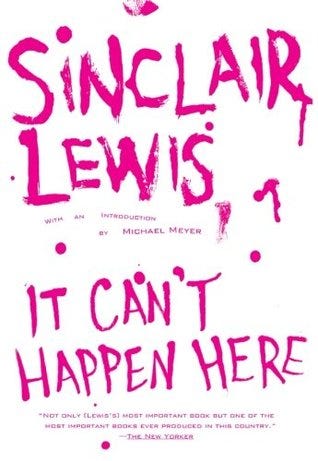
It Can’t Happen Here is a novel about Berzelius “Buzz” Windrip, a populist US senator who wins the presidency by playing on the fears of disgruntled white men and promising to return the country to “traditional American values.” Sinclair Lewis wrote the book in 1935 as a semi-satirical response to the rise of Fascism in Europe. A few years ago the book would have seemed just that, a satire, maybe even a little overkill. Because in America we elect candidates, not cartoons. Right?

Enter one floppy-haired candidate in a crazy primary season, and “Buzz” Windrip has an uncomfortable ring of truth. It almost makes you long for the old days, when cruel leaders were straight-up tyrants. By “the old days” I’m talking about the world of kings, pharaohs, sultans; guys with long bloodlines and fancy crowns. These villains, the Joffrey Baratheons, the Coriolanus Snows, give stories an epic feeling, they start quests of good versus evil.

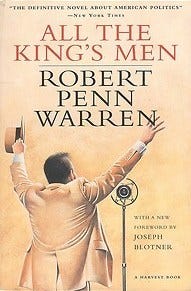
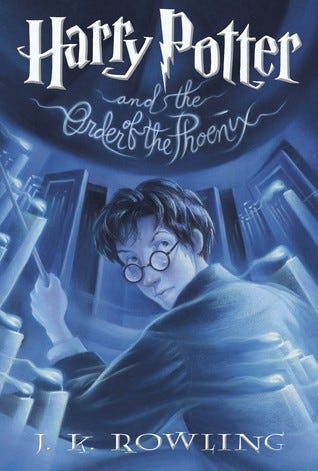
But having gone down the loud, confusing rabbit hole of political media coverage of late, I’d argue that fictional tyrants are a useful way to think about the current political climate. A novel can examine the workings of demagogues who wheedle their way into people’s hearts by playing on prejudices and delivering overblown promises; think of Willie Stark in Robert Penn Warren’s All the Kings’s Men or Napoleon in Orwell’s Animal Farm. Even the path of Lord Voldemort in the Harry Potter books contains an important message about the people who support crazy leaders on their path to power.

Here then are ten tyrants in literature, for times when you need a break from the pundits or you simply want to root against a jerk.

1. Willie Stark in All the Kings’s Men by Robert Penn Warren

Robert Penn Warren based his fictional governor, Willie Stark, off real-life politician and demagogue of 1930s Louisiana, Governor Huey Long. Like Long, Stark builds his career through a cocktail of populist promises and personal indiscretions. In Stark’s case, that means making big talk about taxing the rich while bullying and blackmailing his fellow politicians. Stark’s belief is that the world is inherently bad so you have to “make goodness out of the badness,” a catchy phrase until you realize that electing a person who believes the ends justify the means is a slippery slope.

2. The Dictator in Autumn of the Patriarch by Gabrielle Garcia Marquez

Leave it to Marquez to employ a near-maddening format, specifically a long, dense prose poem (each chapter is one paragraph, sentences can go on for pages) to bring the reader into the lonely, paranoid mind of an archetypical dictator in the Caribbean. The shifting chronology and POVs combine with Marquez’s trademark magical realism to impart the sense that reality is subjective–a useful feeling if you are a leader who wants to do what you want, when you want, without thinking of the people who will be affected.

3. Lord Voldemort in the Harry Potter novels by J.K. Rowling

Harry Potter’s nemesis isn’t just a scary, blood-thirsty wizard looking to rule the world (though he is that), he’s also a cautionary tale about how tyrants gain power. Someone supported every crazy leader when they were first starting out, and Rowling implicates a number of people in Voldemort’s rise. There are Hogwarts professors who allowed themselves to believe that young Voldemort’s interest in the dark arts was just innocent curiosity and the politicians who won’t call him out because they’re worried about their popularity. Voldemort also taunts and bullies the good guys throughout the book; a childish but effective route, if current politics are anything to go by.

4. Rafael Trujillo in The Feast of the Goat by Mario Vargas Llosa

Rafael Trujillo was the dictator of the Dominican Republic from 1930 until his assassination in 1961. In The Feast of the Goat, Vargas Llosa has imagined the circumstances surrounding the assassination of a man who during his 31 years in power was known simply as El Jefe, or, the Boss. By focusing on this abrupt, bloody end to a tyrant’s power, Vargas Llosa has invited the reader to examine the tipping point between the inviting stability of a powerful leader and the inevitable crumbling of a society that’s been stripped of its civil liberties.

5. Joffrey Baratheon in the Game of Thrones series by George R. R. Martin

A populist, Joffrey Baratheon is not. Joffrey gets the job as king of Westeros through good old-fashioned bloodlines and quickly becomes the poster child for the dangers of over-indulging your offspring. Though Joffrey is an ineffective king who can wield a crossbow in the bedroom but not the battlefield, there is something almost refreshing about his character. In today’s world of greyscale villains (see: Darth Vader, Draco Malfoy, Magneto) it’s fun to root against someone who’s so reliably evil.

6. Hitler in Look Who’s Back by Timur Vermes

What if Adolf Hitler was alive in 2011? That’s the premise of this contemporary German novel which imagines a scenario in which Hilter wakes up in a vacant lot in Berlin, unaware of life after 1945. People think that this recently woke (but still not #woke) Hitler is some comedian or method actor, and soon Hitler’s crazy racist rants land him a mass following on YouTube. Unfortunately, internet fame is just a step away from political power.

7. Mohammed Ben-Abbes in Submission by Michel Houellebecq

This satirical and often controversial novel also posits a what-if scenario, but in this case the place is France in the year 2022 and the charismatic politician is a man named Mohammed Ben-Abbes. Ben-Abbes sweeps to power with his party, the Muslim Brotherhood, and enacts reforms across France such as privatizing the Sorbonne so that it employs only Muslims and allowing men to take multiple wives. Ben-Abbes is used as the face of a much larger movement, his power felt even though he’s only spoken of and never actually seen.

8. Berzelius “Buzz” Windrip in It Can’t Happen Here by Sinclair Lewis

It Can’t Happen Here tells the story of Berzelius “Buzz” Windrip, a populist politician who gets himself elected president and then proceeds to use his base of support– i.e. poor, resentful white men– to rule the country as a dictator. The novel was originally penned as a response to the rise of fascism in Europe, though Buzz’s tactics seem to have stood the test of time: he uses dumbed down language to appeal to uneducated voters, employs a militia of self-armed crazies called the The Minute Men to suppress protesters, and promises that he’ll make America great again.

9. President Coriolanus Snow in The Hunger Games by Suzanne Collins

As far as paranoid, vengeful dictators go, President Coriolanus Snow of Panem is towards the top. Snow murders people if he feels they’ve made him or the government look foolish. He poisons allies, fearing that they might one day become enemies. A good representation of how the most tyrannical people can also be the most insecure.

10. Napoleon in Animal Farm by George Orwell

In a letter to his translator, Orwell described 1984 as satirical tale “against Stalin,” so there is no question who the tyrannical leader of the Farm, Napoleon, is modeled after. A pig in more than one way, Napoleon takes credit for projects he didn’t enact, scapegoats innocent animals, and eventually goes on a purge, killing his dissenters. Orwell’s classic makes a strong case for satire, as any high school student can tell you, those pigs will send a shiver down your spine.

Originally published at electricliterature.com on March 21, 2016.

Dzanc Books Announces $10,000 Fiction Prize

Writers, check this out: Dzanc Books has announced their inaugural “Dzanc Books Prize for Fiction” with a $10K prize and publication with the press in the fall of 2017. You may know of Dzanc Books as the publisher of books by authors such as William Gay, Jac Jemc, Shya Scanlon, Carmiel Banasky, Andrew Sullivan, and more. Here’s a great chance to get your name on that list.

The full press release is below.

For Immediate Release
CONTACT: michael@dzancbooks.org

Dzanc Books Announces Inaugural Dzanc Books Prize for Fiction

New York, NY (March 21, 2016): The Dzanc Books Prize for Fiction recognizes daring, original, and innovative writing. A $10,000 advance and publication in Fall 2017 by Dzanc Books will be awarded to the winner. Finalists will be compiled in-house and passed along for evaluation by this year’s judges: Carmiel Banasky (The Suicide of Claire Bishop), Kim Church (Byrd), and Andrew F. Sullivan (Waste).

Dzanc Books has championed a number of formally innovative works and writers, and our judges are an excellent example of the importance of fostering and cultivating the careers of our authors. Kim Church won the Crook’s Corner Book Prize for Best Debut Novel set in the South and the Independent Publisher Book Award Bronze Medal for Literary Fiction for her marvelous debut, Byrd. Carmiel Banasky, with her own debut, The Suicide of Claire Bishop, received glowing praise, including starred reviews from Publisher’s Weekly and Library Journal. Most recently, Andrew Sullivan’s novel, Waste, has quickly climbed to the top of readers’ to-read piles and has been featured on a number of writers to watch lists.

The contest is open to new, upcoming, and established writers alike. Agented submissions are also eligible. All submitted works must be previously unpublished novel-length manuscripts and should include a brief synopsis, author bio, and contact information. The full work should be formatted as a Word .doc or .docx file free of page numbers, headers, or footers.

We will accept submissions from April 1st, 2016 through September 30th, 2016 via our Submittable page. There is a $25 submission fee. (Note: we will not accept physical entries.) The winner will be notified directly on November 1st, 2016, and a public announcement will follow on the Dzanc Books webpage.

Dzanc Books is a 501(c)3 non-profit organization. All contest fees will go toward funding the prize as well supporting Dzanc’s commitment to producing quality literary works, providing creative writing instruction in public schools through the Dzanc Writers-in-Residence program, and offering low-cost workshops for aspiring authors. In addition to this year’s prize for fiction, Dzanc will also operate its annual Short Story Competition and Nonfiction contests.

URL: https://dzancbooks.submittable.com/submit