A Conversation About American Writers & Palestine

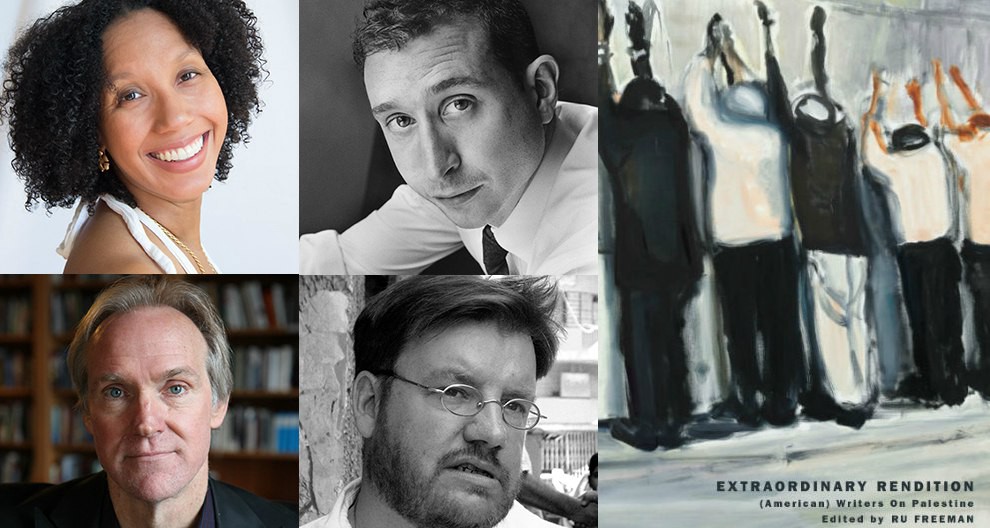
Last month, OR Books released Extraordinary Rendition: (American) Writers on Palestine. The anthology, edited by the novelist Ru Freeman, includes contributions from a host of esteemed writers, including George Saunders, Colum McCann, Nathalie Handal, Teju Cole, and Claire Messud. In Freeman’s introduction, she writes that she was inspired by a tradition of anthologies that asked authors to lend their voices to the important conflicts of the day: first, Nancy Cunard and W. H. Auden’s Authors Take Sides on the Spanish Civil War (Left Review, 1937), then, thirty years later, Simon and Schuster’s, Authors Take Sides on Vietnam (Peter Owen, 1967). “In 2014,” Freeman writes, believing that it was no longer possible “to take no side,” she asked “for a simple show of hands. Who might speak for Palestine?”

On the book’s release, Freeman and several of the collection’s sixty-five contributors met in New York City at the Center for Fiction to discuss the project and to read from their work. While the standing-room crowd filed into the Center, I sat down with Tiphanie Yannique, Sinan Antoon, Tom Sleigh, and Jason Schneiderman to discuss their contributions to the anthology, the urgency of continuing the tradition of literary activism, and the difficulties of writing about complex and ongoing political issues.

Dwyer Murphy: Discussing Palestine poses so many difficult issues, but it seems to me that for writers, in particular, there’s one very fundamental difficulty: the words themselves. Deciding which name to call a town, a community, a people, or how to describe an historical event, what was done and to whom — those are important, politically charged decisions. How daunting is it to write when the words themselves are so controversial?

Sinan Antoon: I have to say, I have a problem with the way the word “controversial” is used in this country. ‘Controversial’ is usually code for something that needs to be believed in silence. A lot about this conflict is not controversial, even in Israel itself. But in this country, we have a different ceiling for certain debates and discussions. I don’t think this topic is controversial. Rather, it’s urgent and necessary.

Maybe it’s old-fashioned to believe, but as writers and as citizens, we have a responsibility.

Another thing I would point out is this myth that’s prevalent amongst our peers. They think, “Well, I’m a writer, but I’m not political.” As far as I’m concerned, there is power everywhere in the world, so everything is political in various degrees. Maybe it’s old-fashioned to believe, but as writers and as citizens, we have a responsibility. We’re representing the world and representing it in a certain way. I don’t believe in this myth of neutrality.

Tiphanie Yanique: Neutrality is its own stance, of course.

Sinan Antoon: Yes. A political stance.

Tiphanie Yanique: Still, I know a number of people were anxious about contributing to this anthology and maybe chose not to. It’s one thing to have a conversation about this with your friends, where you’re bitching about how you feel and being honest about things. It’s a whole other thing to put it in writing. There’s more pressure to say something definitive when you’re writing, and your words may be recalled years later. You may even be quoted. Your actual choice of words becomes so key. And I think writers — especially writers — are afraid of that.

That said, I agree with you, Sinan: whenever you write, you write politics. Even if you say to yourself, “I’m not going to write about policy,” or “I’m not going to write about race or gender,” that in itself is a political stance.

So this pretense, of not being political, is nice and self-protective, but it’s bullshit.

As a fiction writer, whenever you have characters, your characters have bodies, races, genitalia, sexual preferences. That automatically puts politics on the table. So this pretense, of not being political, is nice and self-protective, but it’s bullshit.

Tom Sleigh: I’ll answer differently because, well, you ask about terminology. I’ve done a lot of journalism in Lebanon and Syria and Iraq and also, most recently, in Libya. I find that when you’re moving from town to town, all you need to do is say the word “Nakba,” for example, which in Arabic means “catastrophe” and also refers to the 1948 expulsion, which the Israelis call the War of Independence. There’s this vast web of claims and counterclaims.

When you’re writing about this region, I think what you have to do is realize that you’re stepping into an incredibly complicated, super nuanced situation. For me, at least, I want to do everything I can to have the most fine-grained understanding of what it is I’m saying, and also to be very upfront about what it is I don’t know.

Dwyer Murphy: Jason, your contribution looks at the ways in which we don’t talk about the conflict, how the conversation sometimes seems impossible.

Jason Schneiderman: Well, this is more consequential than most other conflicts. Just a few years ago, there was the kerfuffle with Tony Kushner and CUNY over his views on Israel. Decades ago, it was other prominent writers. As an American Jew, raised with a Jewish education, it can feel like Israel and the Holocaust are the primary things that define what it is to be Jewish. And that doesn’t work anymore. There has been, I think, over the past decade or two, an effort to redefine Jewishness, because the old definitions just don’t work anymore.

…the vast majority of the conversations I’ve heard about this subject have refused to acknowledge the humanity of the other side

But the vast majority of the conversations I’ve heard about this subject have refused to acknowledge the humanity of the other side. My rabbi goes to Israel every year and gives a report to the synagogue. The report offers a complicated understanding of what’s going on: the people, the checkpoints, etc. And basically the responses to the report fall into two categories: “I can never join your synagogue because you’re supporting our enemies,” and “Israel is a colonial project and has no right to exist.”

I’ve found it’s very difficult to speak from somewhere between those two positions.

And so my essay is about not wanting to speak about the conflict, because the conversation feels so un-nuanced. It feels almost useless.

Sinan Antoon: What you’re describing — the stark difference between those positions — is the problem with Zionism. (And I’ve learned more about Zionism’s problems from American Jewish intellectuals than from any other group.) Saying that Israel is a colonial state doesn’t also mean denying the humanity of Israelis. Critiquing the structure of the Israeli state doesn’t also mean denying that it has a right to exist. This is a problem for a lot of Americans. Perhaps because this country, in its formation, has —

Tiphanie Yanique: A very similar legacy.

Sinan Antoon: — an identical legacy. With Native Americans. With African Americans. For example, a lot of the activists from Black Lives Matter traveled to Palestine. And a lot of the Palestinian activists came to this country. They feel they have a lot in common: in their struggles, in the silence around the issue, in the erasure they face. That says something. We should be able to recognize that a colonial settler state, like this state and like Israel, has committed injustices against its population. Unless we recognize what that means and what are the costs and the traumas, nothing will change.

Tiphanie Yanique: That brings to mind an article that was published by an anthropology association here in the US comparing the language used to describe the Palestine-Israel conflict with the language used to describe what was happening in South Africa during the apartheid era. We tend to think, “Oh South Africa is done. We knew what was the right thing was there. If I had been around I would have been on the right side of history.” We all think that. But, according to the study, the language is exactly the same kind, in some cases, sentence-for-sentence. The justifications used to explain why it was okay to oppress Africans in South Africa is the same language being used to explain why it’s okay oppress — I’ll use the word oppress — Palestinians in Palestine. When you see the language side-by-side, it’s not that complex. We look at our history, and it’s pretty simple to know what is injustice and what is not.

Sinan Antoon: We have, both in American and in Israel, a continuous shock and an expression of innocence: we are post-racial, post-Zionist. Well, of course, if you’re at the top of society, and you have all the privileges, and land is appropriated and you can live on it with taxpayer money coming from the United States, of course it’s post-Zionist. But not for the victims of the project — those in the West Bank and in Gaza, but also the Palestinians inside Israel who live, for all intents and purposes, like second-class citizens, and whose land is still being appropriated for settlements as we speak. The excerpt I translated is from a novel by a Palestinian living inside Israel who sees the country disappearing. It’s not finished. This is happening still.

Dwyer Murphy: We’ve been talking about an obligation to speak out, but there’s also the question of who has the right to speak. For an outsider — or at any rate, one who is neither Palestinian nor Israeli — there’s always the question of authority. Someone will come along and ask, basically, who do you think you are? Is that something that you had to grapple with in deciding whether and how to contribute to the anthology?

Sinan Antoon: This is not about writing scholarship or history. This is fiction and poetry. On so many other issues in the world, American writers have no qualms about pontificating and legislating and telling people what to do. But when it comes to this, Palestine, they refuse. It’s not about lack of knowledge. It’s about a certain taboo because of geopolitics, and because of internal politics here in America. You don’t have to be Palestinian to write about that. We are American citizens. For 65 years, our government has subsidized the Israeli occupation. We have a responsibility. I do not want my taxpayer money funding bulldozers and tanks that decimate and kill people. That’s very simple. That’s not controversial, and it doesn’t require a lot of knowledge. It’s actually quite simple.

…you look at the shell casings of the 2006 bomb, and it’s damn clear that it was made in the United States. These things aren’t that distant to Americans.

Tom Sleigh: On that point, my essay in the anthology is about Quneitra, in the Golan Heights, where there was a massacre in 1996 and another in 2006. I use the word “massacre” by the way. Talk about a contested word, although I don’t know how else you’d call dropping a bomb — artillery shell — on a UN compound where civilians are gathered. And of course, you look at the shell casings of the 2006 bomb, and it’s damn clear that it was made in the United States. These things aren’t that distant to Americans.

Tiphanie Yanique: But I think it feels distant to a lot of people, especially those who claim, “I don’t know enough about this.” That’s supposedly why they’re unable to take a stance. They say, “This has been going on for a thousand years. Since the Bible! I’m not Israeli, I’m not Palestinian, I’m not even part of that world. I don’t have the right to write about this, I don’t have the right to have an opinion about this.”

And when you do voice your opinion, there will be folks disagreeing with you who will automatically respond, “You don’t know enough about this. You’re not a part of this history and therefore you can’t contribute.”

Sinan Antoon: This conflict is 120 years old, but in America we always hear this idea that it’s thousands of years old, it’s about religion. That’s a recipe for continuous disaster. The conflict is about land. In the sixties and seventies, it wasn’t about Islam. It was about Marxism and land: who has the land, who took away the land, who lost the land, and compensation for the lost land.

Tiphanie Yanique: Once the issue is framed as religion, you have to be super sensitive, which allows you to have no opinion and to remove yourself from the debate.

Our fears keep us from taking a stance. And that fear comes from concrete privilege. It is a privilege to not have have an opinion.

As a woman color, I’m sensitive to this. People in power — men, white men, or even white women — have made too many swath-like judgments from the outside. And I think there’s a fear — as liberals, as progressives, especially if we’re coming from the majority space — that we can’t have an opinion on people who are Other to us. We’re scared to have an opinion and perhaps be oppressive simply by taking a stance. And the result is often that we allow disaster and unfairness and catastrophe and incredible injustices to occur, because we’re afraid that we might seem to be racist or homophobic or anti-Islam or anti-Semitic. Our fears keep us from taking a stance. And that fear comes from concrete privilege. It is a privilege to not have have an opinion. It is a privilege to know injustice is occurring and to continue on your merry way.

Dwyer Murphy: I’d like to discuss a figure, Mahmoud Darwish, who looms over much of the work in this book. I expect many American readers won’t be familiar with his poetry, yet it seems, in reading these poems and essays and stories, that it’s almost impossible to approach the region and the conflict, from a literary perspective, without coming to some understanding of Darwish and his influence.

Sinan Antoon: He’s one of the most important poets of the last fifty years, not because of politics but because of form and innovation. Just looking at his life, we see the issues that won’t go away. He was born in a village at Galilee. At age six, his village was destroyed by the Israeli army, and he was forced to go to Lebanon, as a refugee. When he came back from Lebanon to his country, Israeli law designated these returnees as present absentees — it didn’t recognize them. So he lived in a village next to his old village, which was now destroyed. He lived with the ruins of his previous life. This was in a period when Palestinians were not recognized. Golda Meir said in the Times that there were no Palestinians. So, much of Darwish’s early poetry was very nationalist. For a society that was displaced, without a state, that poetry was very important. It anchored a collective identity.

So much of this discourse is about erasure.

But then what’s really fascinating about Darwish is that after he became a national poet, mythologizing the land and becoming himself a myth, he deconstructed his own myths. And in that deconstruction, he prepared the nation to begin to understand its problems. In 1967 he wrote a poem to his friend Shlomo Sand, the Israeli scholar, who was going to fight in the ’67 war. It’s an amazing poem — a poem addressed to the enemy, his friend. And yet, in the 1990s, when a leftist minister introduced a bill to the Knesset that would have brought Darwish’s work into Israeli schools, the bill was refused. They said Israel was not ready for Mr. Darwish’s poetry. So much of this discourse is about erasure.

Tom Sleigh: There’s one poem that I think is particularly interesting in this context, called “Murdered and Unknown.” It’s a really strange poem, because it doesn’t do any of the things you think it’s going to do. It’s a conversation, either in the self or between two people. There’s a lot of grass imagery. It’s all brown grass — this ain’t Walt Whitman with his regenerative grass that’s going to unify everybody; it’s dead, brown grass on the roadside. And there are these two voices. One voice says, “I am the victim.” And the other says, “No, I alone am the victim. “ So you have this strange moment in a lyric poem, which is clearly both memorializing and satirizing the collective wound. That seems to me a really powerful, interesting place to approach these problems from. That’s one of the things I like about Darwish. He crystallizes a certain kind of complexity of thought.

Sinan Antoon: He humanizes the enemy.

Tom Sleigh: Absolutely.

Dwyer Murphy: The book is titled Extraordinary Rendition: (American) Writers on Palestine. Without knowing each of your nationalities and identities, I wonder if any of you were reluctant to take on that role of “American writer,” or to be seen as speaking on behalf of Americans?

What do you do when you love a set of ideals that has become a nation, when you know the narrative occludes suffering?

Jason Schneiderman: The “American” part wasn’t complicated for me. In fact, it felt extremely parallel, because of the questions we’re asking: What do you do with a beautiful dream that’s built out of a nightmare? What do you do when you love a set of ideals that has become a nation, when you know the narrative occludes suffering? How do you bring those things together? For me, those questions make up the central crisis of being a United States citizen.

Tiphanie Yanique: I found the “American” part fascinating. I don’t think I totally recognized that that’s what we were being asked to participate in. I’m from the Virgin Islands, and we are effectively a colony of the United States. When I came to the US for college, I realized that while I was carrying an American passport and was an American citizen, culturally I was immigrating to my own country. This place was incredibly foreign, and I was treated as a foreigner.

In the piece I wrote for the anthology, I use some of that personal history. I make it very clear that I’m writing from a place called St. Thomas, St. Croix, St. John. These places, and my upbringing, become metaphors, which I use to talk about the conflict.

My biography is very complex. My parents weren’t married. My grandparents weren’t either. One part of my family is very wealthy, very established, and another part, the part that I’m from, is poor and less established. I was effectively a bastard twice over, for two generations. I found myself often ending up in spaces where my right to belong was called into question. “Who you belong to again? Oooooh.. Shhhhhh.” I was the secret, outside child. So I used that to talk about the conflict.

But the “American” title gave me pause, because I often do not identify as an American writer, although the world sometimes tells me “Oh, by the way, you’re an American writer,” or, “No, you’re not an American writer.” In the US, if anyone knows who the hell I am, they know me as a fiction writer. In the Caribbean, if anyone knows who the hell I am, they know me as a poet. I relate to people with separate identities. So it gave me pause, that American title. But it also allowed me to talk more effectively about what I wanted to discuss — issues of bastardization and colonialism. .

In terms of being an American, there’s not a whole lot of nuance that’s available with that term and the way in which it plays in other countries.

Tom Sleigh: One of the most interesting, and shocking and terrifying things about going to Lebanon was discovering that people there (or in Libya or Syria) say, “Well, American policy and Israeli policy are identical. There is no difference.” The assumption is, you’re American, you must agree with this policy. You can say whatever you want, but the fact of the matter is, it’s a widespread perception. That’s not just from policy-wonk people, but from everyone I talked to, top to bottom. They said, “Yeah, of course, everybody knows that.” In terms of being an American, there’s not a whole lot of nuance that’s available with that term and the way in which it plays in other countries. That’s one reason why a book like this is, I think, so important. If it’s read in other countries, other people might see it and think, “Oh, well, these people aren’t as stupid, or as united, as I thought they were.”

Sinan Antoon: I was born in Iraq, to an Iraqi father and an American mother, and lived there for twenty-three years. Before 9/11 and before the wars, I was struck that in the region, people always differentiated between government and peoples. It struck me, when I came to this country, that people here often say “we,” meaning 350 million people, Congress, the President… Before the “us” and “them” and the Bush years and all of that, there was more nuance in Iraq and in the region because people knew that you didn’t represent your government. I would say, sarcastically, that one advantage of living in a non-democracy is that you realize something: there are the people, and then there is the regime. But here people say “we.” It’s uncritical and very problematic. That’s why a book like this one is important. If you say “we,” and you think “we,” and you think that the “we” includes the government, then you’re responsible for what is done in the name of the “we.”

Or you say, “Not in my name.” There isn’t much we can do, but at least we can say, “That doesn’t represent me. The government doesn’t represent me.”

Ru Freeman and contributors, including Tess Gallagher, Peter Mountford, and Alice Rothchild, will read from and discuss Extraordinary Rendition: (American) Writers on Palestine tonight (January 7th) at Elliot Bay Books in Seattle.

Daniel Clowes and Chris Ware among Comic Artists Protesting Sexism in Angoulême International…

The renowned Angoulême International Comics Festival has received major backlash after failing to nominate a single female creator for their Grand Prix lifetime achievement award. In a statement that did not make matters any better, Frank Bondoux, one of the festival’s organizers, defended the selection to Le Monde:

When you look at the prize-winners, you see that the artists on it have a certain maturity and are of a certain age. Unfortunately, there are not many women in the history of comics. That’s just reality. If you go to the Louvre, you will also find few feminine artists.

Now, after several of the 30 male nominees dropped out in protest, the festival has agreed to add women to their list of nominations. Before they did, however, several of the nominees released statements and tweeted their discontent with the festival. Riaf Sattouf listed a number of female cartoonists he would gladly cede his place to on Facebook, including Rumiko Takahashi, Julie Doucet, Anouk Ricard, Marjane Satrapi and Catherine Meurisse. American nominee, Daniel Clowes called it “a totally meaningless ‘honor’.” The other men who withdrew in protest are Joann Sfar, Milo Manara, Etienne Davodeau, Pierre Christin, Chris Ware, Christophe Blaine and Charles Burns.

This is not the first time the festival has neglected to celebrate the work of female comic book artists, in their 43-year history, only one woman. Florence Cestac, has won the Grand Prix. It was the Women in Comics Collective Against Sexism that called for the boycott, saying: “It all comes back to the disastrous glass ceiling we’re tolerated but never allowed top billing.” American comics creator Jessica Abel introduced the boycott to English speakers on Facebook, with her own translation of their statement, read it here.

Midweek Links: Literary Links from Around the Web (January 6th)

Looking for some interesting reading to get you through the week? Here are some literary links from around the web to check out:

George R. R. Martin has blown another deadline, but so did many famous authors in the past

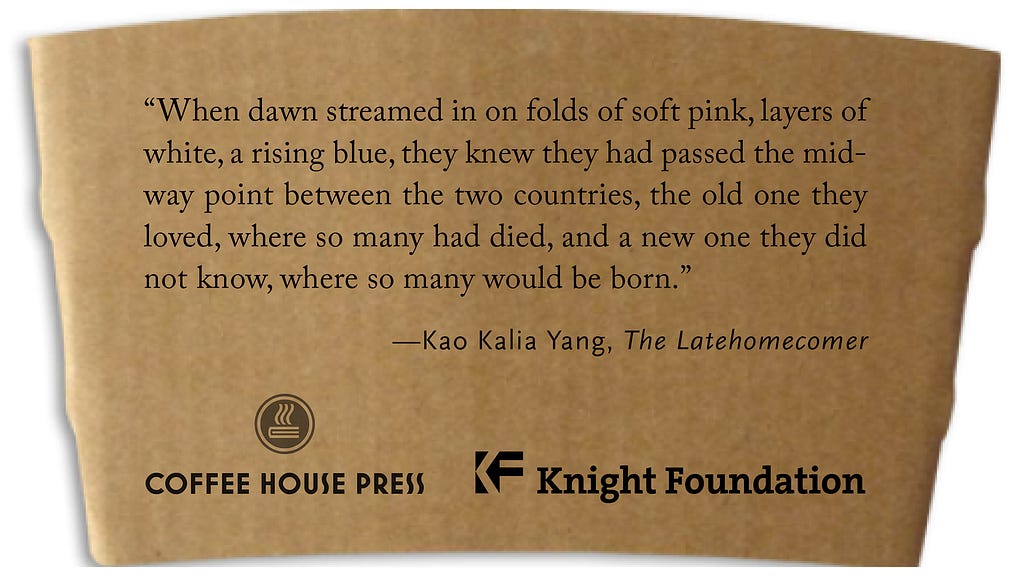
Coffee House Press is publishing works by writers of color on coffee sleeves

Roxane Gay lists her favorite books of 2015

What happens when your adult novel gets marketed as YA?

Philip Pullman warns that professional writers are becoming an endangered species as wages plummet

Is publishing finally over the literary vs. genre fiction war?

On the children of portal fantasy fiction

Poems for people who hate poetry

Vulture gets 28 authors to share the books that changed their lives

The Millions’s epic yearly book preview is here!

The Musical Vanity Boxes

by Lucia Berlin

“Hear the instruction of thy father and mother, for they shall be an ornament of grace unto thy head and chains about thy neck. If sinners entice thee, consent not.”

Mamie, my grandmother, read that over twice. I tried to remember what instruction I had had. Don’t pick your nose. But I did want a chain, one that rang when I laughed, like Sammy’s…

I bought a chain and went to the Greyhound bus depot where a machine printed things on metal discs… a star in the center. I wrote LUCHA and hung it around my neck.

It was late in June, 1943, when Sammy and Jake cut Hope and me in. They were talking with Ben Padilla and at first made us go away. When Ben left, Sammy called us out from under the porch.

“Sit down, we’re going to cut you in on something.”

Sixty cards. On the top of each card was a tinted picture of a Musical Vanity Box. Next to it was a red seal that said DON’T OPEN. Under the seal was one of the names on the card. Thirty three-letter names with a line beside them. Amy, Mae, Joe, Bea, etc.

“It costs a nickel to buy a chance on a name. You write the person’s name next to it. When all the names are sold we open the red seal. The person who chose that name wins the Vanity Box.”

“Hell of a lot of Vanity Boxes!” Jake giggled.

“Shut up, Jake. I get these cards from Chicago. Each one makes a buck and a half. I send them a dollar for each and they send me the boxes. Got that?”

“Yeah,” Hope said. “So?”

“So you two get a quarter for every card you sell, and we get a quarter. That makes us fifty-fifty partners.”

“They can’t sell all those cards,” Jake said.

“Sure we can,” I said. I hated Jake. Teenage punk.

“Sure they can,” Sammy said. He handed the cards to Hope. “Lucha’s in charge of the money. It’s eleven thirty… get going… we’ll time you.”

“Good luck!” they shouted. They were shoving each other over in the grass, laughing.

“They’re laughing at us… they think we can’t do it!”

We knocked on our first door… a lady came and put on her glasses. She bought the first name. ABE. She wrote her name and address next to it, gave us five pennies and her pencil. Precious loves, she called us.

We stopped at every house on that side of Upson. By the time we reached the park we had sold twenty names. We sat down on the wall of the cactus garden, out of breath, triumphant.

The people thought we were darling. We were both very little for our age. Seven. If a woman answered I sold the chance. My blonde hair had grown out twice the size of my head, like a big yellow tumbleweed. “A spun gold halo!” Because my teeth were gone I put my tongue up when I smiled, as if I were shy. The ladies would pat me and bend down to hear… “What is it, angel? Why, I’d just love to!”

If it was a man Hope sold. “Five cents… pick a name,” she drawled, handing them the card and the pencil before they could shut the door. They said she had spunk and pinched her dark bony cheeks. Her eyes glared at them through her heavy black veil of hair.

We were concerned now only with time. It was hard to tell when people were home or not. Cranking the door-bell handles, waiting. Worst of all was when we were the only visitors in “ever so long.” All of these people were very old. Most of them must have died a few years later.

Besides the lonely people and the ones who thought we were darling, there were some… two that day… who really felt it was an omen to open the door and be offered a chance, a choice. They took up the most time, but we didn’t mind… waited, breathless too, while they talked to themselves. Tom? That darn Tom. Sal. My sister called me Sal. Tom. Yes, I’ll take Tom. What if it wins??

We didn’t even go to the houses on the other side of Upson. We sold the rest in the apartments across from the park.

One o’clock. Hope handed the card to Sammy, I poured the money onto his chest. “Christ!” Jake said.

Sammy kissed us. We were flushed, grinning on the lawn.

“Who won?” Sammy sat up. The knees of his Levis were green and wet, his elbows green from the grass.

“What does it say?” Hope couldn’t read. She had flunked first grade.

ZOE.

“Who?” We looked at each other… “Which one was that?”

“It’s the last one on the card.”

“Oh.” The man with the ointment on his hands. Psoriasis. We were disappointed, there were two really nice people we had wanted to win.

Sammy said we could keep the cards and money until we had sold them all. We took them over the fence and under the porch. I found an old breadbox to keep them in.

We took three cards and left through the alley, in back. We didn’t want Sammy and Jake to think we were too eager. We crossed the street, ran from house to house, knocking on doors, all the way down the other side of Upson. All down one side of Mundy to the Sunshine Grocery.

We had sold two whole cards… sat on the curb drinking grape soda. Mr. Haddad kept bottles for us in the freezer, so it came out slushy… like melted popsicles. The buses had to make a narrow turn at the corner, just missing us, honking. Behind us the dust and smoke rose around Cristo Rey Mountain, yellow foam in the Texas afternoon sun.

I read the names aloud — over and over. We put X’s by the ones we hoped would win… O’s by the bad ones.

The barefoot soldier… “I NEED a Musical Vanity Box!” Mrs. Tapia… “Well, come in! Good to be seeing you!” A girl sixteen, just married, who had showed us how she painted the kitchen pink, herself. Mr. Raleigh — spooky. He had called off two Great Danes, had called Hope a sexy runt.

“You know… we could sell a thousand names a day… if we had roller skates.”

“Yeah, we need roller skates.”

“You know what’s wrong?”

“What?”

“We always say… ‘Do you want to buy a chance?’ We should say ‘chances.’”

“How about… ‘Want to buy a whole card?’”

We laughed, happy, sitting on the curb.

“Let’s sell the last one…”

We went around the corner, the street below Mundy. It was dark, matted with eucalyptus and fig and pomegranate trees, Mexican gardens, ferns and oleander and zinnias. The old women didn’t speak English. “No, gracias,” shutting the doors.

The priest from Holy Family bought two names. JOE and FAN.

There was a block then of German women, flour on their hands. They slammed the doors. Tsch!

“Let’s go home… this isn’t any good.”

“No, up by Vilas School there are lots of soldiers.”

She was right. The men were outside in khakis and T-shirts, watering yellow Bermuda grass and drinking beer. Hope sold. Her hair stuck now in strings over her olive Syrian face, like a black bead curtain.

One man gave us a quarter and his wife called him before he got his change. “Give me five!” he yelled through the screen door. I started to write his name.

“No,” Hope said. “We can sell them again.”

Sammy opened the seals.

Mrs. Tapia had won with SUE, her daughter’s name. We had an X by her, she was so nice. Mrs. Overland won the next. Neither of us could remember who she was. The third winner was a man who bought LOU which really should have gone to the soldier who gave us the quarter.

“We should give it to the soldier,” I said.

Hope lifted up her hair to look at me, almost smiling… “Okay.”

I jumped the fence to our yard. Mamie was watering. My mother was playing bridge, my dinner was in the oven. I read Mamie’s lips over the H.V. Kaltenborn news from indoors. Granpa wasn’t deaf, he just turned it up loud.

“Can I water for you, Mamie?” No thanks.

I banged the front door rippling stained glass on the wall. “Git in here!” he yelled over the radio. Surprised, I ran in, smiling, started to climb into his lap but he rustled me away with a clipped-out paper.

“You been with those dirty A-rabs?”

“Syrians,” I said. His ashtray glowed red like the stained glass door.

That night… Fibber McGee and Amos and Andy on the radio. I don’t know why he liked them so much. He always said he hated colored people.

Mamie and I sat with the Bible in the dining room. We were still on Proverbs. “Open rebuke is better than secret love.” “Why?” “Never mind.” I fell asleep and she put me to bed.

I woke when my mother got home… lay awake beside her while she ate Cheese Tid-Bits and read a mystery. Years later, I figured out that during World War Two alone my mother ate over 950 boxes of Cheese Tid-Bits.

I wanted to talk to her, tell her about Mrs. Tapia, the guy with the dogs, how Sammy had cut us in fifty-fifty. I put my head down on her shoulder, Cheese Tid-Bit crumbs, and fell asleep.

The next day Hope and I went first to the apartments on Yandell Avenue. Young army wives in curlers, chenille bathrobes, mad because we woke them. None of them bought a chance. “No, I don’t have a nickel.”

We took a bus to the Plaza, transferred to a Mesa bus to Kern Place. Rich people… landscaping, chimes on the doors. This was even better than the old ladies. Texan Junior League, tanned, Bermuda shorts, lipstick and June Allyson page boys. I don’t think they had ever seen children like us, children dressed in their mothers’ old crepe blouses.

Children with hair like ours. While Hope’s hair ran down her face like thick black tar, mine stood up and out like a tufted yellow beachball, crackling in the sun.

They always laughed when they found out what we were selling, went to find some “change.” We heard one of them talking to her husband… “Just come and see them. Actual urchins!” He did come, and he was the only one who bought a chance. The women just gave us money. Their children stared at us, pale, from their swing sets.

“Let’s go to the depot…” We used to go there even before the cards… to hang around and watch everybody kissing and crying, to pick up dropped change beneath the ledge under the newsstand. As soon as we got in the door we poked each other, giggling. Why hadn’t this occurred to us? Millions of people with nickels and nothing to do but wait. Millions of soldiers and sailors who had a girl or a wife or a child with a three-letter name.

We made out a schedule. In the mornings we went to the train station. Sailors stretched out on the wooden benches, hats folded over their eyes, like parentheses. “Huh? Oh, morning, sweethearts! Sure.”

Old men sitting. Paying a nickel to talk about the other war, about some dead person with a three-letter name.

We went into the COLORED waiting room, sold three names before a white conductor pushed us out by our elbows. We spent afternoons at the USO across the street. The soldiers gave us free lunch, stale ham and cheese sandwiches wrapped in wax paper, Cokes, Milky Ways. We played ping-pong and pinball machines while the soldiers filled out the cards. Once we made a quarter each punching the little counter that kept track of how many servicemen came in while the woman that did that went somewhere with a sailor.

New soldiers and sailors kept coming in with each train. The ones who were already there told them to buy our chances. They called me Heaven; and Hope, Hell.

The plan had been to keep all sixty cards until they were sold but we kept getting more and more money and extra tip money and couldn’t even count it.

We couldn’t wait to see who had won anyway, even though there were only ten cards left. We took the three cigar boxes of money and the cards to Sammy.

“Seventy dollars?” Jesus Christ. They both sat up in the grass. “Crazy damn kids. They did it.”

They kissed and hugged us. Jake rolled over and over, holding his stomach, squealing “Jesus… Sammy you are a genius, a mastermind!”

Sammy hugged us. “I knew you could do it.”

He looked through all the cards, running his hand through his long hair, so black it always looked wet. He laughed at the names that had won.

PFC Octavius Oliver… Fort Sill, Oklahoma. “Hey, where’d you find these cats?” Samuel Henry Throper, Anywhere, USA. He was an old man in the COLORED part who said we could have the Vanity Box if he won.

Jake went to the Sunshine Grocery and brought us banana popsicles. Sammy asked us about all the names, about how we did it… We told him about Kern Place and the pretty housewives in chambray shirtdresses, about the USO, about the pinball machines, the dirty man with the Great Danes.

He gave us seventeen dollars… more than fifty-fifty. We didn’t even take a bus, just ran downtown to Penney’s. Far. We bought skates and skate keys, charm bracelets at Kress and a bag of red salted pistachio nuts. We sat by the alligators in the plaza… Soldiers, Mexicans, Winos.

Hope looked around… “We could sell here “

“No, nobody’s got money here.”

“But us!”

“Worst part will be delivering the Musical Vanity Boxes.”

“No, because now we have skates.”

“Tomorrow let’s learn to skate… hey we can even skate down the viaduct and watch the slag at the smelter.”

“If the people aren’t home we can just leave them inside the screen door.”

“Hotel lobbies would be a good place to sell.”

We bought drippy Coney Islands and root beer floats to go. That was the end of the money. We waited to eat until we got to the vacant lot at the beginning of Upson.
The lot was on top of a walled hill, high above the sidewalk, overgrown with fuzzy grey plants that had purple blossoms. Between the plants all over the lot was broken glass dyed to different shades of lavender by the sun. At that time of day, late afternoon, the sun hit the lot at an angle so that the light seemed to come from beneath, from inside the blossoms, the amethyst stones.

Sammy and Jake were washing a car. A blue jalopy with no roof and no doors. We ran the last block, the skates thumping inside the boxes.

“Whose is it?”

“Ours, want a ride?”

“Where’d you get it?”

They were washing the tires. “From a guy we know,” Jake said. “Want a ride?”

“Sammy!”

Hope was standing up on the seat. She looked like she was crazy. I didn’t understand yet.

“Sammy — where’d you get the money for this car?”

“Oh, here and there…” Sammy grinned at her, drank from the hose and wiped his chin with his shirt.

“Where did you get the money?”

Hope looked like an ancient old pale yellow witch. “You cheating motherfucker!” she screamed.

Then I understood. I followed her over the fence and under the porch.

“Lucha!” Sammy, my first hero, called, but I followed her to where she squatted by the breadbox.

She handed me the stack of filled cards. “Count them.” It took a long time.

Over 500 people. We looked over the ones we had put X’s by, hoping that they would win.

“We could buy Musical Vanity Boxes for some of them…”

She sneered. “With what money? There is no such thing as a Musical Vanity Box anyway. You ever hear of a Musical Vanity Box before?”

She opened the breadbox and took out the ten unsold cards. She was crazy, groveling in the dust under the porch like a dying chicken.

“What are you doing, Hope?”

Panting, she crouched in the honeysuckle opening to the yard. She held up the cards, like the fan of a mad Queen.

“They’re mine now. You can come. Fifty-fifty. Or you can stay. If you come it means you are my partner and you can’t ever talk to Sammy again the rest of your life or I’ll murder you with a knife.”

She left. I lay down in the damp dirt. I was tired. I just wanted to lie there, forever, and never do anything at all.

I lay there a long time and then I climbed over the wooden fence to the alley. Hope was sitting on the curb at the corner, her hair like a black bucket over her head.

“Let’s go,” I said.

We walked up the hill toward Prospect. It was evening… all the families were outside watering the grass, murmuring from porch swings that creaked as rhythmically as the cicadas.

Hope banged a gate behind us. We walked up the wet concrete path toward the family. Iced tea, sitting on the steps, the stoop. She held out a card.

“Pick a name. Ten cents a chance.”

We started out early the next morning with the rest of the cards. We said nothing about the new price, about the six we had sold the night before. Most of all we said nothing about our skates… for two years we’d been hoping for skates. We hadn’t even tried them on yet.

When we got off the bus at the Plaza, Hope repeated that she’d kill me if I ever spoke to Sammy again.

“Never. Want blood?” We were always cutting our wrists and sealing promises. “No.”

I was relieved. I knew I would talk to him and without blood it wouldn’t be so bad.

The Gateway Hotel, like a jungle movie. Spittoons, clicking punkahs, palm trees, even a man in a white suit, fanning himself like Sidney Greenstreet. They all waved us away, rattled their faces back behind their papers as if they knew about us.. People like the anonymity of hotels…

Outside, across the heat-sinking tar of the street to catch a trolley for Juarez. Mexicans in rebozos — smelling like American paper bags and Kress candy-corn, yellow-orange.

Unfamiliar territory… Juarez. I knew only the fountained mirrored bars, the Cielito lindo guitar players of my mother’s war-widow nights out with the “Parker girls.” Hope only knew the dirty-donkey movies. Mrs. Haddad always sent her along on Darlene’s dates with soldiers, so everything would be ok.

We stayed at the Juarez end of the bridge, leaning like taxi-drivers, the wooden snake sellers against the shade of the Follies Bar, paddling forward as they did when the clusters of tourists, bobbing boy-soldiers came off the bridge.

Some smiled at us, anxious to be charmed, to be charming. Too hurried and awkward to look at our cards, shoving us pennies, nickels, dimes. “Here!” We hated them, as if we had been Mexicans.

By late afternoon the soldiers and tourists squirted off the ramp, clattering onto the sidewalk into the slow hot wind of black tobacco and Carta Blanca beer, flushed, hopeful… what will I see? They gushed past us, pushing pennies nickels into our fists without ever looking at the upheld cards or into our eyes.

We were reeling, giddy from the nervous laughter, from the lurching out, darting out of the way. We laughed, bold now, like the wooden snake and clay pig sellers. Insolent, we stood in their way, tugging at them. “Come on, only a dime… Buy a name, ten cents… Hey rich lady, a lousy dime!”

Dusk. Tired and sweaty. We leaned against the wall to count the money. The shoe shine boys watched us, mocking, even though we had made six dollars.

“Hope, let’s throw the cards into the river.”

“What, and just beg like these bums?” She was furious. “No, we’re going to sell every name.”

“We’ve got to eat sometime.”

“Right.” She called to one of the street boys… “Oye, where can we eat?”

“Eat mierda, gringa.”

We got off the main street of Juarez. You could look back at it, hear it, smell it, like a huge polluted river.

We began to run. Hope was crying. I had never seen her cry.

We ran like goats, like colts, heads lowered clopping clopping over the mud sidewalks, loping then, muffled. Sidewalks hard red dirt.

Down some adobe steps into the Gavilán Cafe.

In El Paso, those days, 1943, you heard a lot about war. My grandfather pasted Ernie Pyle into scrapbooks all day, Mamie prayed. My mother was a Gray Lady at the hospital, played bridge with the wounded. She brought blind or one-armed soldiers home to dinner. Mamie read to me from Isaiah about how someday everybody would beat their swords into plowshares. But I hadn’t thought about it. I had simply missed and glorified my father who was a lieutenant somewhere overseas… Okinawa. A little girl, I first thought about the war when we went into the Gavilán Cafe. I don’t know why, I just remember thinking then about the war.

It seemed everyone in the Gavilán Cafe was a brother, or a cousin, a relative, even though they sat apart at tables or at the bar. A man and a woman, arguing and touching. Two sisters flirting over their mother’s back. Three lean brothers in denim work clothes, stooped with the same falling brother lock of hair over their tequilas.

It was dark cool and quiet although everyone was talking and someone was singing. The laughter was unstrained, private, intimate.

We sat on stools at the bar. A waitress came over, carrying a tray with a blue and purple peacock on it. Her black-rooted hennaed hair was piled into wavy mounds, caught with combs of gold and carved silver and broken mirrors. Fuchsia enlarged mouth. Green eyelids… a crucifix of blue and green butterfly wings sparkled between her conic yellow satin breasts. “Hola!” she smiled. Brilliance of gold-capped teeth, red gums. Dazzling Bird of Paradise!

“Qué quieren, lindas?”

“Tortillas,” Hope said.

The ladybird waitress leaned forward, dusting crumbs away with blood-red nails, murmuring to us still in her green Spanish.

Hope shook her head… “No sé.”

“Son gringas?”

“No.” Hope pointed to herself. Syrian. She spoke then in Syrian and the waitress listened, her fuchsia mouth moving with the words. “Eh!”

She’s a gringa,” Hope said about me. They laughed. I envied their dark languages, their dark eyes.

“Son gringas!” the waitress told the people in the café.

An old man came over to us, carrying his glass and a Corona beer bottle. Straight… standing, walking straight and Spanish in a white suit. His son followed in a black zootsuit, dark glasses, watch chain. This was bebop time, Pachuco time… The son’s shoulders were stooped, in fashion, head lowered to the level of his father’s pride.

“What’s your name?”

Hope gave him her Syrian name… Sha-a-hala. I gave him the name the Syrians called me… Luchaha. Not Lucia or Lucha but Lu-Cha-a. He told everybody our names.

The waitress was named Chata, because her nose turned up like a rain pipe. Literally, it means squat. Or bed pan. The old man was Fernando Velasquez and he shook hands with us.

Having greeted us, the people in the cafe ignored us as before, accepting us with their easy indifference. We could have leaned against any of them and fallen asleep.

Velasquez took our bowls of green chili over to a table. Chata brought us lime sodas.

He had learned English in El Paso where he worked. His son worked there too in construction. “Oye, Raúl… díles algo… He speaks good English.”

The son remained standing, elegant behind his father. His cheekbones shone amber above a bebop beard.

“What are you kids doing over here?” the father asked.

“Selling.”

Hope held up the stack of cards. Fernando looked at them, turned each of them over. Hope went into her sales pitch about the Vanity Boxes… the name that wins gets a Musical Vanity Box.

“Válgame Diós…” He took the card over to the next table, explained it, gesturing, banging on the table. They all looked at the card and at us, uncertainly.

A woman in a bandana turban beckoned to me. “Oye, somebody wins the boxes, no?”

“Sí.”

Raúl had moved over, silent, to pick up one of the cards, looked down at me. His eyes were white through his dark glasses.

“Where are the boxes?”

I looked at Hope.”

“Raúl…” I said. “Of course there are no Musical Vanity Boxes. The person that wins the name wins all of the money.”

He bowed to me, with the grace of a matador. Hope bowed her wet head and cussed in Syrian. In English she said “Why did we never think of that?” She smiled at me.

“Okay, chulita… give me two names.”

Velasquez was explaining the game to people at the tables, Chata to a group of men at the bar with strong wet backs. They shoved two tables into ours. Hope and I sat at each end. Raúl stood in back of me. Chata poured beer for everyone seated around the table, like at a banquet.

“Cuánto es?”

“Un quarter.”

“No tengo… un peso?”

“Okay.”

Hope stacked the money in a pile in front of her. “Hey… we still get our quarter cut.” Raúl said that was fair. Her eyes glittered under eyeshade bangs. Raúl and I wrote down the names.

The names themselves were more fun in Spanish, nobody could say them right and kept laughing. BOB. Spilt beer. It took only three minutes to fill one card. Raúl opened the seal. Ignacio Sanchez won with TED. Bravo! Raúl said he’d made just about the same amount working all day. With a flourish, Ignacio scattered the coins and crumpled bills onto Chata’s peacock tray. Cerveza!

“Wait a minute…” Hope took out our quarter cut.

Two peddlers had come in, pulled chairs up to the table.

“Qué pasa?”

They sat with straw baskets in their laps. “Cuánto es?”

“Un peso… un quarter.”

“Let’s make it two,” Raúl said. “Dos pesos, fifty cents.” The new men with the baskets couldn’t afford it, so everyone decided they could go for one this time since they were new. They each put in a peso on the pile. Raúl won. The men got up and left without even having a beer.

By the time we had sold out four cards everyone was drunk. None of the winners had kept their money, just bought more chances, more food, tequila now.

Most of the losers left. We all ate tamales. Chata carried the tamales in a washtub, a casserole of beans we dipped into with hot tortillas.

Hope and I went to the outhouse behind the cafe. Stumbling, shielding the candle Chata had lent us.

Yawn… it makes you pensive, reflexive, to pee, like New Year’s.

“Hey, what time is it?”

“Oh.”

It was almost midnight. Everyone in the Gavilán Cafe kissed us good-bye. Raúl took us to the bridge, holding each of our tiny hands. Gentle, like the pull of a dowser’s branch, drawing our bony bodies into the pachuco beat of his walk, so light, slow, swinging.

Under the bridge, on the El Paso side were the shoe shine hustlers we had seen that afternoon, standing in the muddy Rio Grande, holding up cones to catch money in, digging in the mud for it if it fell. Soldiers were throwing pennies, gum wrappers. Hope went over to the rail. “Hola, pendejos!” she hollered and threw them quarters. Fingers back. Laughter.

Raúl put us in a taxi and paid the driver. We waved to him out the back window, watched him walk, swinging toward the bridge. Spring onto the ramp like a deer.

Hope’s father started beating her the minute she got out of the taxi, whipped her up the stairs with a belt, screaming in Syrian.

No one was home but Mamie, kneeling for my safe return. The taxi upset her more than Juarez. She never went anywhere in a taxi without a bag of black pepper in case of attack.

In bed. Pillows behind me. She brought me custard and cocoa, the food she served to the sick or the damned. Custard melted like a communion wafer in my mouth. The blood of her forgiving love I drank while she stood there, praying in a pink angel gown, at the foot of my bed. Matthew and Mark, Luke and John.

A Good Man is Hard to Write: In Defense of the Heroic Male Ideal

by Liesl Schillinger

Name the last time you read a literary novel about an exceptional, gifted, attractive man who loves his life and work, loves women, loves sex with women in his own age range, falls in love with one particular woman, marries her and remains (essentially) faithful to her, despite extreme tests. Name one male protagonist in recent fiction who, however complicated he may be, assigns himself an audacious goal and achieves it; a man who is admirable, yet also fairly conventional in his desires and dreams.

Until the last few years, I would have been hard-pressed to come up with a single example of such a character, later than Odysseus or, to be fair, David Copperfield (though Dumb Dora was no Penelope). Mr. Rochester (Jane Eyre) and Darcy (Pride and Prejudice) also hold great appeal, but are, effectively, unemployed, which (for me) compromises their status as paragons. I love contemporary (and older) fiction, and am compelled by its characters — male, female and other; heterosexual, homosexual, bisexual, etc.; cowardly or brave; hale or infirm — and their knotty problems. The work of literary fiction, on the whole, is the exploration of difficult, atypical lives and trying times. I applaud that endeavor, and am fascinated by its provocations and revelations. And yet…a decade ago, when a close friend of mine was going through a wrenching period in his personal life, and asked me if, as a critic, I could recommend a recent novel in which the male protagonist was not unhappy, was not drug-addicted or selfish, was not cynical, was not negative, did not screw up his relationships and let people down, was not on some level a bastard — who did not, in short, fail as a human, I was startled to realize that I could not think of one.

And I wondered: is there no place in the ambitious writerly imagination anymore for what used to be called the heroic male ideal? Dickens, in the opening line of his (largely autobiographical) novel David Copperfield, wrote, “Whether I shall turn out to be the hero of my own life, or whether that station will be held by anybody else, these pages must show.” Was that premise — that a man would set out intentionally to be heroic — now “out”? Did it strike modern sensibilities as embarrassing, cliché, conceited or retrograde? If so, what then should a man set out to be? Was no one left but Luke Skywalker to uphold a pattern of male excellence? Perhaps so, I thought. And yet, like many of us, I grew up reading works which have lived for centuries (not only Homer and Dickens, but Trollope, Stendhal, Tolstoy — even Louisa May Alcott), which made me think that this goal must be recognized, if only subconsciously, as worthy. The blueprint existed, but had been discarded, rejected, as out of date, uninteresting, or perhaps childish — something for YA and bodice rippers and airport novels, not for serious readers.

And so, it was with surprise and elation that I read a novel this fall called Fates and Furies, by Lauren Groff, which set out unapologetically to present a male protagonist in the heroic tradition — a charismatic, strapping, loving and beloved, prolific playwright named Lotto, who is devoted to his wife, Mathilde. (She turns out to be named Aurélie, actually, and constitutes a more familiar, tricksy, postmodern construction of attitude and artifice). But reading the author’s portrayal of Lotto in the book’s first half (which presents Lotto and Mathilde’s story primarily from his perspective) was for me like taking great gulps of oxygenated air, reviving the fainting corpse of romance between men and women.

Before reading Fates and Furies, the most moving and convincing romances I had read in decades had concerned either love between men — André Aciman’s breathtaking, passionate “Call Me By Your Name” and Annie Proulx’s heartbreaking short story “Brokeback Mountain;” or love between a woman and a weak-willed scoundrel (for instance, “One Day” by David Nicholls) or a woman’s platonic affair with her doomed, paraplegic boss (“Me Before You,” by Jojo Moyes). But in Lauren Groff’s novel, I discovered a vital protagonist who could give hope to cisgender women readers; that is, a male character who could make such readers believe it was not futile and senseless to fall in love with a heterosexual man.

As I pondered the dearth of such characters in ambitious contemporary fiction, it occurred to me that I had overlooked a striking example of the heroic everyman in a highly acclaimed recent body of work by another author. Karl Ove Knausgaard’s deeply detailed, introspective six-volume saga My Struggle has been lauded and examined ad infinitum by legions of critics (including me) who are astonished by his unconcealed emotionalism and his preternatural recall of the particulars of his past. But if you consider those books together, as one unified project, you see that they relay the story of a man who doggedly overcame obstacles to achieve creative and domestic fulfillment: a man who, to paraphrase Dickens, became the hero of his own life. Knausgaard, who is notoriously self-deprecating, likely would dispute that assessment. Still, the popularity of Fates and Furies and My Struggle proves to me that the power of this archetype endures.

There is room in the reading world for fiction about every kind of person on earth, whatever their sexual or gender identity or preference; whatever their deficit or surfeit of ability, whatever their weakness or strength of personality; whatever their luck, good or ill. My literary appetites are catholic and insatiable, and I require neither conventional plot structure and subjects nor happy endings (nor does Fates and Furies supply one, it is not a wish-fulfilment novel).

But when I remember my troubled male friend, who asked me not so long ago, during a dark moment, to recommend a novel about a man who succeeded, I am so glad that I can now give him a title. (Even now, I am not sure he should risk the Knausgaard).

A good man is an extraordinary thing; but more of them exist among us than literature likes to show.

The Body Problematic: A Conversation Between Lidia Yuknavitch & Anakana Schofield

by Lidia Yuknavitch

Anakana Schofield

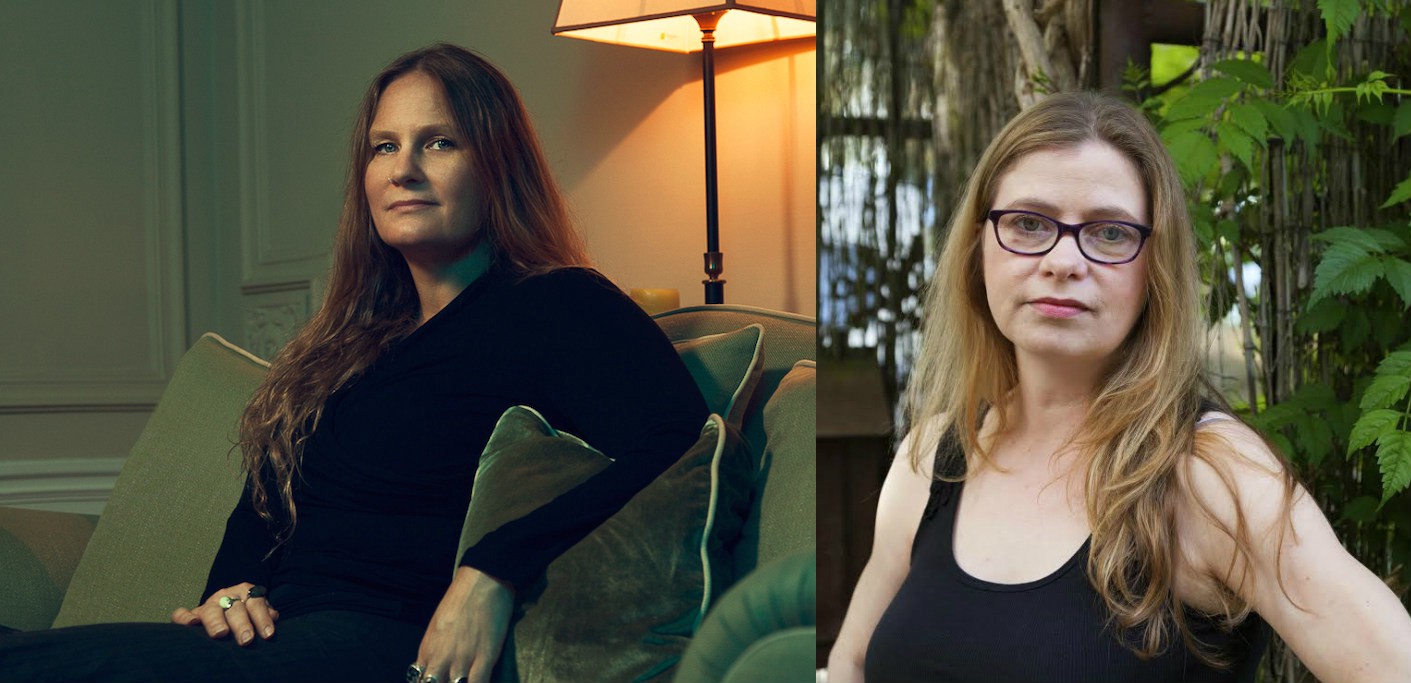
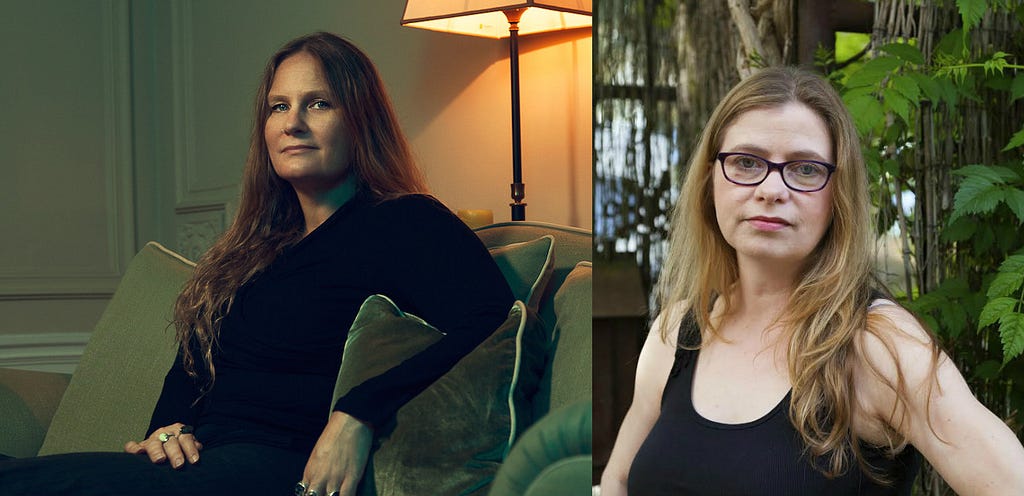
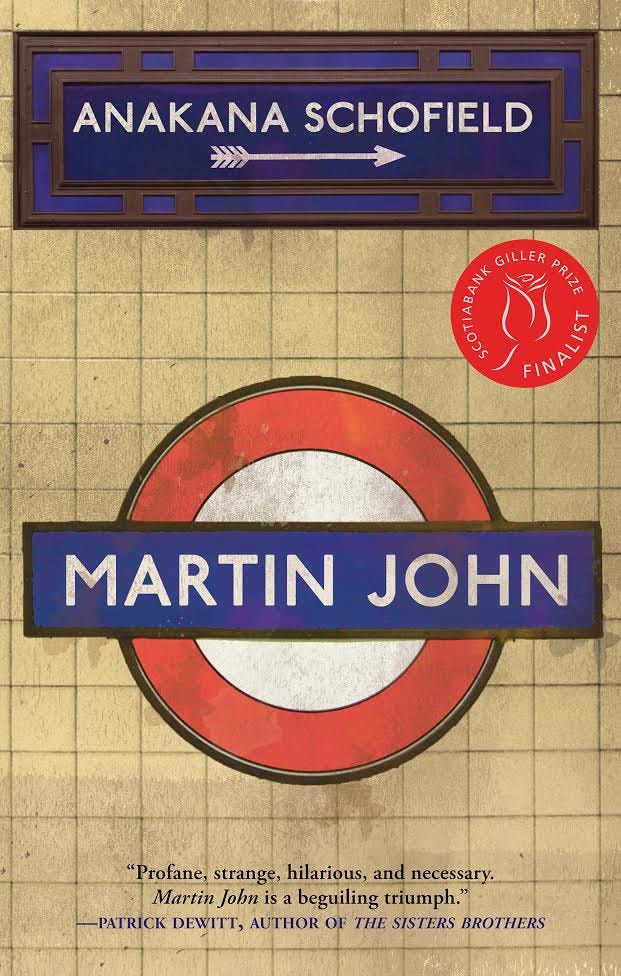
Anakana Schofield’s second novel, Martin John (Biblioasis, 2015), was described by Eimear McBride in the New York Times as, “Deploying some serious literary gumption … Schofield’s frequently hilarious, and distinctly modernist, linguistic games are always gainfully employed in the uneasy, indelicate task of placing her reader nose to nose with the humanity of a sex offender — and a sex offender’s mother.” It was recently shortlisted for the Giller Prize (Canada’s Booker Prize). Martin John explores the cyclical nature and actions of a simple minded molester and his demented relationship with his mother and surroundings. The novel is a loudly acclaimed, unique work that challenges literary form. Here Lidia Yuknavitch (author of the celebrated 2015 novel, The Small Backs of Children) and Anakana Schofield have a chat. (Note — the text includes all conversational interjections and marginalia).

Lidia Yuknavitch: When I first met you at Wordstock here in Portland, you took my breath away. We were both speaking on a panel about writing and the body. When you read your excerpt I couldn’t breathe. I was both smitten and I felt that thing I long to feel but rarely do: kindred. Your attention to formal investigations as equal in intensity to content investigations tickled me. I remain loyal as a dog to you and your work, and Martin John is a triumph.

Anakana Schofield: Firstly thank you Lidia for taking precious time to do this. Ever since our sex panel in Portland in 2012 the idea of a literature of the body that talks to and from the body or explores its complexities has been humming for me. I will also never forget your RED HOT reading & being the nun in residence sat beside you.

LY: Martin John has a difficult character at its center. But inside that “difficulty” I find something of all of us — before we trick ourselves into believing that we are good citizens…and he is rendered in bits and pieces of a self, almost as if he is never fully resolved, as in this example of his point of view that is, like so many moments, stunning to me: “Coats can drift. Open. That’s what coats are like. That’s what women like, open coats and a quick face full of him. He likes it too. He likes what they like.” His troubled point of view troubles the reader too, because we keep having to ask disturbing questions about him. Are the questions we have about him really about us?

AS: They are and they are not.

They are questions about us because Martin John is among us.

Martin John is one of us.

We’d rather settle on the more comfortable idea that sexual deviants are some distant aberration over THERE. Far from us.

He’s the product of a society that has deep psychosexual problems and that’s the collective us. Principally we need to deal with him and it’s easier not to deal with him. We’d rather settle on the more comfortable idea that sexual deviants are some distant aberration over THERE. Far from us. On another planet we don’t understand. But sexual deviants are not some distant aberration. They are beside us on the bus, at the kitchen table etc. This is partly why the narrative is in and of his groin and his groin-mind if you like and I am pretty relentless on the reader. Fiction is the place to posit difficult questions and scenarios. It’s not social science or qualitative research. It doesn’t rely on absolutes. You invent. You paint. You ponder. The reader joins you and completes that cycle or takes new departures from it.

It was vital the form of the novel be the content of the novel and reflect that impulse we have to look away, to deflect on the difficult questions. Certainly as a writer it would be easier not to paste this onto the page. But novels must become what they need to become and the novel will not do that if you turn your gaze away from that which is disturbing to you and to it.

In the passage you quote (and thank you for such kind words) I am working with syntax, with syncopation, to evoke his audacious and delusionary notions, to make what he’s about to do palatable in his mind. To thwart any dwindling moral reluctance he may feel to perhaps not do it. Since that’s always an option for men in these circumstances. An urge doesn’t need to be delivered or acted upon. It can be self-thwarted. But I had to “mount” his mind basically in order to plough him down onto the page. Almost like a form of literary tilling. Turning over that filthy soil. Get underneath him, so he will open his coat and display his uninvited cock. Persuaded, of course, that every woman wants a face full of him.

But I would question whether he is wholly us. Since there are many among us who do not ride about on public transit with their uninvited cocks publicly displayed and/or prod them into the back of some innocent subway passenger, disproportionately, if not always, a woman.

LY: A reader could argue, in fact I’ll risk it, I’ll argue, that Martin John is exactly what his society made him. As the reader struggles to ascertain if he is a sexual predator or simply quite mentally disturbed or both, his body in relation to other bodies keeps haunting me. His body was perpetually spit out from all the institutions and social organizations that might have made a difference in his subjectivity. And the bodies of women are written over with his violence. How important are bodies in this novel?

AS: Bodies are vital in this novel. The novel begins in the body or the “body problematic” and the body throughout is like some form of physical echolalia. It’s as you suggest, Martin John uses his physical body (sometimes literally, sometimes just the sight of it) as a weapon against the world, specifically against women in the world, even against himself. What is it about the male body that it is so readily used as a weapon of violence against the female body (and male body, but in this novel my focus is mainly on women)? These were philosophical starting points. I suppose they were answers to walking on the streets and riding buses and transit for the past umpteen years and pondering.

There is inverted female resistance in this novel. It’s deliberately not shouty and obvious because I don’t write with or to foist an agenda. Didacticism doesn’t interest me. (It did when I was younger, but fear no more the heat of the sun I grew out of it)

In the novel when Martin John thumps the young girl vaginally, later as a woman she finds strength in the fact that he did not get a direct hit. He only managed to hit her through fabric. It’s a small but vital detail. Also, at one point as a teenager he flashes a young girl on the street and he fails to elicit attention from her in the way he’d expected and he’s angry, depressed and puzzled as to why it hasn’t worked. Another woman on the subway grabs him by the throat and she’s framed with his line “he didn’t think women could do that”.

Nobody knows what to do with men like Martin John. They won’t stop until they are stopped. A compulsion is a compulsion. He is both a predator and mentally disturbed and made further anxious by his mother’s response or inability to respond appropriately to his demonstrated deviance. His mam is ill equipped to respond. She’s ashamed. She covers up his abuse. She sacrifices the young girls and women to her love for him. I kept asking myself throughout the writing questions like is it reasonable to imagine a mother might love her child to the point of sacrificing the welfare of another person’s child? How do you know whom you will give birth to? How will you know how to respond if your child is disturbed? We aren’t trained in these things. And if fear and stigma surrounds you would it be simpler to deny what’s happening.

We live with inexplicable urges to harm and do harm. We live with the results of that harm. It festers, ferments, repeats.

I return to the body even in the way his mother ultimately determines is her only option for dealing with him. (The Chair) and then his defiance against her and his own body with the kettle … and as I am typing all this out I think Oh Good Christ what have I written and how did I ever come up or contemplate such darkness?! But that’s who we are, that’s how we live, this is what we live with and have lived with and will continue to live with. We live with inexplicable urges to harm and do harm. We live with the results of that harm. It festers, ferments, repeats. It’s all very circular. Hence the loop throughout this novel: The repeat. The refrain. The chorus. The return. The form unrolls. The novel is hermetic only responding unto itself within itself.

CAN YOU TELL ME MORE ABOUT YOUR RELATIONSHIP TO THE BODY IN YOUR WORK, LIDIA?

LY: WHY YES, I CAN (ha).

I think in my work I am endlessly exploring the idea that the body is both a site of meaning-making, a real epistemological place, as well as a metaphor for all experience. So the idea of a single character with a unified subjectivity and heroic journey has always confounded me, since I understand the body as a raging territory fraught with ecstasies and drives and wonders and terrors — an actual state of matter.

I meant to undo the novel with bodies.

So in my most recent novel, for instance, The Small Backs of Children, I lead with the body. The physical and emotional intensities of each so-called character ARE the content. Those physical and emotional intensities don’t obey traditional narrative rules, so the forms on the page had to be reinvented by and through actual bodies. The body of a girl. The bodies of straight women and lesbian women and bisexual women and men. I denied the story a main character, a unified subjectivity, a sit still and move through time and space singular body and replaced that tradition with fragmented and multiple subjectivities and bodies. I meant to undo the novel with bodies. Ha.

We both seem to be insistent on heightening the form to render certain kinds of content. I am endlessly interested in experiences that cause a crisis in representation — particularly physical and emotional intensities that render us speechless. Can you talk a little bit about your formal choices or interests?

AS: I am interested in form and language. Form as content. Language as form. Syntax as form. Martin John was predicated entirely on a loop. The loop reflects the cycle of abuse, the cycle of re-offense, the cyclical nature of his obsessive thoughts, the cyclical nature of his mother appeasing herself over his behaviour and hoping it will stop and not interrupting it and on and on. Hence in this novel I took form right into the syntax of the sentence, the sentences loop, they are circular. I deploy 5 refrains that weave throughout the novel and we return to them again and again. After I’d published Martin John it did occur to me one day while boiling the kettle that the form may have been subconsciously influenced by the liturgical response in Mass and since the church has also been a site of much abuse that wouldn’t be such an unreasonable starting place.

The circle is also an interesting form to touch on complicity and I try to do this by folding the reader in and out of the narrative a few times by addressing them with a direct question or prod.

I really want to know more about your decision to ditch on any single narrator in The Small Backs of Children. Are there writers who have influenced this in your work?

There are infinite ways to make characters and stories. I don’t know why we pretend otherwise.

LY: Yup that’s what I was yammering about a minute ago…I took as my alternative literary history/canon Virginia Woolf, Doris Lessing, Marguerite Duras, Helen Cixous. Also Bakhtin’s idea of heteroglossia and the carnivalesque. Also Brecht. Because duh, PERFORMING our physical and emotional intensities. And a book that marked me forever with its over 63 characters — Leslie Marmon Silko’s Almanac of the Dead. I took as true that there is no such thing as a singular coherent unified subjectivity, that all stories “resolve” through a multiplicity of voices and experiences, even though we have culturally legitimized and fetishized the “mono” voice of the hero or main character. What a crock. Ha. I fragmented the sacred “voice” of the hero and replaced it with a variety of voices, none more or less than others. Characters still emerged with stories to tell. There are infinite ways to make characters and stories. I don’t know why we pretend otherwise. Well I mean I do know why, the market, but I wish we could agitate consumer culture enough to wake up.

You don’t have to agree with me on this, but, as a writer of tricky material I remain daunted at times by the large number of entertaining and safe books that are dominating the market just now. When I say “safe,” I mean easily accessible, likable characters, escapist happy-go-lucky, transparent language (meaning no language engagement what-so-ever). Do you consider yourself to be a writer who agitates that market-driven norm, or do you just do what you do and try not to think about it? I think of myself as a direct action literary agitator. More and more. And I think of you as a comrade in this regard. Do you mean your writing to agitate?

AS: This is a curious question. I like the way it commences because I actually think this is a problem for women and women writers — this ridiculous insistence we must agree with each other. We mustn’t! Or it isn’t compulsory! In actual fact in this case I agree heartily with you. These are very conservative and risk averse times in publishing and often consequently on the page. Market forces are shaping our reading and readers should be suspicious of this and in my view reject it. The readers should send a steaming message back to the market of do not underestimate me.

I don’t want to find myself in fiction. I am curious about what the novel might become rather than what I know it already to be.

I do what I do. I don’t consciously agitate, but I do interrogate. I am too inherently curious and perplexed by mankind not to. My starting point is always form and language; that’s where I want to provoke. There’s a particular expectation of narrative fiction that I’ll never provide. It’s its own bland welcome mat. I don’t want to be warm and welcoming necessarily in my work. I’m not interested in creating a novel that mounts in traditional paragraphs that comprise heapy description. I’m not interested in novels that promise to authenticate and replicate a verifiable place or personhood. I don’t want to find myself in fiction. I am curious about what the novel might become rather than what I know it already to be. But I am a probably a weirdo and I recognize that the rest of the world may not share my literary peculiarities. That said it’s worked out pretty well so far for my first two novels, I am getting to talk to you! I’ve travelled a great deal with my work to festivals and it’s been warmly embraced critically.

“I think of myself as a direct action literary agitator. More and more.” You write in your question above… I’ve sat on a panel with you and seen that room stuffed with people who’ve come only to listen to you and whatever about the agitator, I’d describe you as a literary life force! You also have an exceptional ability to encourage and facilitate other writers to agitate and activate.

You do invoke and frame this agitation directly early on in The Small Backs of Children when you write: “What is the story of a self? What is a chronology? The history of a life? Which story should I tell to make a narrator etc. You, or your character The Writer more accurately, also swiftly dismiss or declared your suspicion of narrators and their unreliability for us. “I don’t trust narrators. They’re chickenshits.”

I’d be interest to understand more about this near Brechtian type address. You take out the holy ghost of Virginia Woolf swifto too!

(I HAVE MOVED THIS QUESTION UP A BIT ABOVE)

LY: (YES I SAW THAT and ANSWERED ALSO I ADORE YOU)

AS: I mean you lay out your terms very early for your reader. You deconstruct them. Curiously for me you echo or call back to The Chronology of Water. It’s interesting to see this blending or conflation of the works. Is or was this conscious?

LY: Hugely. I mean for the two books to form, deform, and reform certain material that exists in both. I’ve become uninterested in the question I get asked so often: “What is the difference between fiction and nonfiction?” I am far more interested in the question: “How are they each deforming and reforming one another, endlessly?”

AS: Also I notice how you deploy what I’ll call “abruption” this combination of “interruption” and “abrupt” in your work. Do you want the reader to never know that the terrain is safe? The terrain can shift?

LY: I LOVE THIS WORD YOU MADE!!!! Yes, “abruption.” Mostly this formal strategy fascinates me because I don’t believe in linear time. Luckily science has my back on this one — time as an arrow is no longer accepted in physics. I think we live through micro-intensities — beginnings and endings that happen rapidly and intensely all the time.

Too, I think the intensity of an image or sound or smell or other corporeal system shock can sometimes stand in for a novel’s worth of storytelling. It has that weight for me. And I’m a HUGE fan of Willem de Koonig’s quote: “Content is a glimpse of something. It is very tiny, content.” I love the idea that “flashes” of intensity are as important as linear long traditional narratives. I love how one intense physical memory for Proust birthed VOLUMES. Ha.

Do you think women writers face a different set of literary challenges than their male counterparts? YOU DO NOT HAVE TO GO HERE IF YOU DO NOT WANT TO. but if you decide to, i’ll go with you…ha.

Let the work speak. Speak about the work of women writers. Be interested in other writers’ work. Write about reading. Do not submit biographic confessionals to support or qualify your work’s right to exist.

AS: Yes I do. I think women writers need to resist what’s becoming a chronic pattern/exercise of over analysing the process of writing to the detriment of talking about the actual work. Let the work speak. Speak about the work of women writers. Be interested in other writers’ work. Write about reading. Do not submit biographic confessionals to support or qualify your work’s right to exist. Male writers don’t do this nearly as automatically as women writers seem to. There’s a real danger in the extensive reading of How I Write type essays rather than the actual novels the person has written! I think young and emerging women writers are caving in too readily to the confessional (often style less) as the only means to establish a publishing platform. It’s not. But that said market forces are demanding this of women writers and shaping such gestures as the only means to sell books. Social media will bounce such stuff about to a collective nodding for 28 hours, so it’s instant affirmation, which is understandably rewarding for any isolated writer. My feeling is: don’t supply it. Stop talking about the writing life, stop supplying and bolstering this economy/business of writing which has usurped the real business and preoccupations of reading and thoughtful discourse on literature.

I do think that there’s a requirement that women somehow owe an additional explanation about why they write what they write, if the content is risqué or dark, whereby my male colleagues would be asked about the work rather than to qualify on why they wrote it. Rightly or wrong, my sense is that this why question is usually a prurient inquiry that will only be satisfied, again, by some personal nugget or confessional.

There are other challenges. Opinionated women are often perceived as unattractive and punished professionally if men (and women perhaps?) with power object to them but these kinds of uptight limited minds are gradually falling off the planet and will continue to, so this erosion is helpful. There’s clear sexism in the programming of panels. There are still men who do not want to share intellectual space equally with women, but women are busy sharing intellectual space generously with each other and to be honest such dullards are a dying species anyway so they can fuck right off would be my feeling. The younger generations seem remarkable in comparison. I look at my son’s generation; they are sizeably more tolerant and inclusive in every possible direction.

Finally women should stop expecting to agree with each other and resorting to “you are with us or with the terrorists” type rhetoric, when they do not hear what they determine to be the only possible female consensus on x or y or p issue.

At base though, whatever your gender, it’s very hard to write well and you have to be ruthless in that work and make it the best it can become. Don’t settle too soon. Demand more from it. Read endlessly, do your life’s work and whatever the outcome no matter, because once you are six feet under your pages will remain above the earth and can still be read. This is my thinking on literary endeavours.

I recommend all women writers surround themselves with smart women and participate in such working relationships.

I couldn’t survive without my close intellectual female cohort in the various time zones they all live in. My confidants are important in informing my thinking and development. We support each other, we read each other’s work, we place value on each other’s critical insights and we exchange non-stop on reading and on what we are reading. I recommend all women writers surround themselves with smart women and participate in such working relationships. Of course I have male literary confidants who are utterly splendid and generous and with whom I talk daily. But honestly it’s the women who make me feel like I can do this work when I feel like I may never be able pull it off. They have practically raised me from the dead and defibrillated me in my lowest and gloomiest and most hopeless of hours and I’ve no doubt will continue to. I owe them everything and will leave this planet with such a trail of debt it would take two further lifetimes to settle it.

WHAT DO YOU THINK THE PARTICULAR CHALLENGES ARE?

I know you are heavily invested in community and would be curious to learn in your work as a teacher what do you observe to be the challenges for women writers?

(I lead a pretty sedate and isolated writing life and I am part tortoise so I don’t know if my understanding is entirely trustworthy or informed.)

LY: HEY I’M NOT SURE I SHOULD SAY ANYTHING ELSE HERE BECAUSE WHAT YOU WROTE IN THAT ANSWER SUMS UP SO MUCH OF THE NUANCE…I LOVE YOUR ANSWER???

Although he’s a pervert, or deranged, or a sexual predator who commits violent acts, I laughed out loud and hard many times while reading Martin John. Is there something wrong with me, or is part of your intention to transform the bile in our throats at the horror of his actions into laughter we can’t help?

I just think humour is critical to literary work. There’s nothing more strangling than the hum of earnestness.

AS: In the very dark there’s always light. I just think humour is critical to literary work. There’s nothing more strangling than the hum of earnestness. I can understand angry people, I can understand frustrated people, disappointed people but one thing I will never understand is humourless people. People who survive horrible situations and very challenging daily lives often do so thanks to humour.

Coffee House Press to Publish Work from Writers of Color on Coffee Sleeves

by Melissa Ragsdale

There is perhaps no greater pairing than a good book and a warm drink, and Coffee House Press knows it. In their forthcoming Coffee Sleeve Conversations project, the indie publisher plans to print and distribute over 10,000 coffee sleeves with writing from local St. Paul writers of color.

The project aims to foster literary conversations and particularly to allow people who aren’t regular readers to make connections with the writers of color in the community. Local poet and activist Tish Jones has been hired to curate and solicit selections for coffee sleeve publication, sourcing both poetry and prose. Writing will additionally be accepted through an online call for submissions. Keeping in line with Coffee House Press’ established publishing practices, the project will publish both established and debut authors.

Coffee Sleeve Conversations was made possible through a grant from the Knight Foundation’s Knight Arts Challenge. The project is part of Coffee House Press’s ongoing Books in Action programming, which is dedicated to encouraging reader/writer interaction beyond the page. Other Books in Action projects have included writers’ residencies, the creation of public reading rooms, and the Ring Ring Poetry project, in which poems are written for specific locations and accessed by telephone.

Coffee Sleeve Conversations is not the first marriage of literature and food-packaging. For instance, Chipotle has been publishing new work on their cups and bags via the “Cultivating Thought” Author Series, which currently features writing from Jonathan Franzen, Colson Whitehead, and Lois Lowry, among other well-known voices. While the Coffee Sleeve Conversations project focuses on promoting writers of color, both initiatives share a drive to integrate literary thought into everyday life.

“We believe fervently that art, in all forms, is a part of daily experience,” said Coffee House Press Managing Director Caroline Casey. “Part of what we’ve done in our Books in Action programming…is to create new literary experiences for people that aren’t reading. It makes that everyday presence of art and literature visible, as well as the artists. Artmaking is a particularly human occupation. It deserves celebrating in small and big ways.”

“The Earth Drank Greedily in the Summer” — Read a New Essay by Matt Jones

ESSAY: SLOW BURN, BY MATT JONES

The earth drank greedily in the summer. This was Houston, Texas, and for weeks at a time the air wrinkled in heat shimmer as if the entire atmosphere had been piped out of the backend of a jet plane. I sat in my garage waiting for the weather to change and when the sky finally did give up some rain, the bayous behind my house swelled and overflowed. The earth guzzled and grew sick and heaved up everything it had swallowed into its tunnels and muddy shores.

At the mouth of the drainage tunnel just beyond my backyard, Jeffrey and I once unearthed a wallet after the water settled. We carried it back to my garage, each a hand on it, each guessing at whether its weight was made up more of mud or money. Jeffrey was lank with ears set perpendicular to his head. I was softer, shorter. My skin absorbed the pink of sunset so I glowed rosy even into the night.

The first thing we did with the wallet was set it in the open sun of the driveway to bake it hard and dry. After that, Jeffrey shifted it to my father’s worktable and set himself to dissecting the innards. He used flathead screwdrivers to pry apart the leather, Popsicle sticks to jimmy each fold. We couldn’t really see anything inside the wallet, but we thought we could. Summer was one distant mirage after another. Through the haze and the distance, there was always possibility. When I took my nail to the wallet and scraped, flecks of dirt came away to reveal the tarnished green of paper money.

As the afternoon went on, the sun dropped lower in the sky and worked its rays into the open mouth of the garage. I tried my hand at the cracked leather, but everything was fused together. We sipped sodas and talked about how we would spend the money, whatever money there might be. Jeffrey wanted cigarettes and Hustlers. I knew I wanted to be taller, less soft.

The great thing about being twelve was that you could look at yourself in the mirror and see anyone you wanted. Potential was always on the horizon as long as you never moved toward it. At that age, Jeffrey and I both suffered under the constant delusion of heat stroke and hallucination, the kind that bends waves of light dancing at the end of the driveway into plumes of smoke and nude women. In that wallet, there was money and in that money, there were things that each of us wanted. I’d never owned a wallet, so I was willing to just stick it in my back pocket at that point, mummified leather and all, and go on pretending.

Eventually, though, we got the money out. A solid mass of hardened and flaky mud, the cash itself was entombed in a hyper-delicate state, flaking into dust upon exposure like a vampire in the sun. Jeffrey filled up a ten-gallon bucket with hose water and when the bucket was halfway full, he tossed the brick of cash in and it sank down to the bottom lightly. I agitated the water with a yardstick and slowly the dirt came off, fleck by fleck, the money made more visible as the water turned itself murkier and browner.

I kept stirring and that once-hardened brick of money swelled and softened, occasionally surfacing in a grimy spiral. When Jeffrey tried to grab hold, it threatened to dissolve like tissue paper. So we just watched it there at the bottom of the bucket. I do remember the way it looked before breaking apart.

How We Are Haunted, How We Are Cured: Demon Camp by Jennifer Percy

by Antonia Crane

The complex mental, emotional and psychiatric effect of war on veterans has always been fundamentally mysterious to society. According to Dave Phillips, a reporter for the New York Times, “Of about 1,200 Marines who deployed (with the 2/7 in 2008), at least 13 have killed themselves, two while on active duty, the rest after they left the military. The resulting suicide rate for the group is nearly four times the rate for young male veterans as a whole and 14 times that for all Americans.” Another article reported a huge increase of military personnel and combat veteran suicides since 2009 “even as the United States military has withdrawn from Iraq and stepped up efforts to provide mental health, drug and alcohol, and financial counseling services.”

As a daughter of a Vietnam Veteran, I have often wondered if post-war trauma begins with the odd solitude of that specific, unholy experience of war: violence, near death and personal loss that sets one apart from his fellows, making re-entry unfathomable along with a burning desire for redemption, forgiveness, deliverance.

I wonder if Dave Morris is right when he writes in his astute memoir, “A Biography of Post-Traumatic Stress Disorder” that “PTSD is the failure of our culture to encourage people to seek wisdom on their loss and adversity and to consider trauma in anyway other than a narrow medical context.”

Many writers have written important, profound narratives that echo the specific haunting and deep need for post-war healing in a non medical context and yet, the cause of PTSD and its remedies remains unclear. A few of my favorite stories about PTSD include: Kurt Vonnegut’s’ Slaughterhouse Five, Tim O’Brien’s The Things They Carried, and Mac McClellan’s Irritable Hearts: A PTSD Love Story.

“Demon Camp,” a nonfiction narrative by Jen Percy not only grapples with the complexity of the PTSD condition with searing clarity but approaches the topic of non Western therapeutic healing with candid, observant humor and gobs of heart.

With admirable journalistic precision and restraint, Percy profiles an alternative trauma therapy group that performs exorcisms on veterans for 199 dollars in a Pentecostal church located in Portal Georgia, where it is believed that “the thread between life and death is thin.” The religious organization promised to rid Caleb, an army veteran who lost several friends in a 2005 helicopter crash in Afghanistan — of what he believed was a “the destroyer demon” — a ghost of his buddy with Alice and Wonderland tattoos following him around.

But “Demon Camp” is not a book about going to church and finding God and having a Messiah wipe away the blood, the screaming or the dead buddies of possessed soldiers.

It’s a book in which Caleb, her primary subject, seeks a holy cure after he suffers bouts of nightmares and nearly shoots himself in his own truck while quarreling with his girlfriend, Katie. It’s also a book about the seeking itself and the ways in which vets in particular feel haunted. “Demon Camp” promises the impossibility of “deliverance” after all.

Percy shows us there’s no easy fix. Yet American culture has financial investment in the so-called “easy fix”: fast solutions to complex problems — problems we may never completely solve. While PTSD is not an infection to treat or and illness exactly, it may have physical symptoms like audio hallucinations and depression. Hysterical blindness. Malaise.

We have no language for audiovisual hallucinations as a result of flash backs that won’t cause loved ones to dial 9–11.

In “Demon Camp” we follow Caleb as he sees the dead in the form of a dark thing and out of ideas as to how to get rid of it. The math of deliverance for him is quite sound: Having a tussle with a horned demon=another way of ridding himself of a psychic burden too terrible to bear.

Caleb was not an easy sell. He was skeptical of religion and of the bible. He knew logically that he had PSTD, like someone knows what weight they listed on their driver’s license. He also believed that he could see the future and he believed in a hierarchy of angels:

“They (angels) have ranks just like the military has ranks. It’s hard to tell the difference at first, but over time you learn.”

In a military structure, this ideology makes perfect sense. A person takes orders and carries them out at any cost along with his buddies; so joining a group with a built-in family dynamic with a leader promising a solution that would give power to his extreme helplessness was comforting. It was not only an opportunity for extreme forgiveness, but also a chance to help others like him.

Caleb believed that “deliverance” could change how people thought about PSTD and he wanted to rebuild his life, but more than anything, perhaps, he sought to process the experiences of war: the savage killing in which he played a part.

After hearing Caleb being followed by the destroyer demon, Percy writes, “Because Caleb said these things could transfer, and because these things are not limited to war, I started to wonder if it was following me.”

We follow Percy following Caleb who is being followed.

In essence, we are haunted by association.

While writing “Demon Camp,” Percy became deeply entrenched in the group’s culture, living with the group and observing them in Portal, Georgia for over six years. During that time, she agreed to also go through the exorcism herself after being told she had a demon and the leader told her and the rest of the group that the pink love mist that came in the room was Jesus:

“He wants to pour his love on you. Let him woo you. Jesus is going to be your greatest romance.”

Throughout “Demon Camp,” Percy catches the haunting like a sore throat, hunting demons alongside Caleb and the others. By the end of the book, Caleb was no longer associated with the deliverance church at all.

Percy’s empathy for Caleb’s suffering and seeking, redemption and peace were the haunting that we are left with and although we may never entirely relieve ourselves of our harrowing ghosts or traumatic experiences with pink mist or screaming rituals, Percy’s tale of earnest redemption and one man’s deep desire to do so made me think differently about PTSD and the seeking itself.

The Most Popular Electric Literature Articles of 2015

We like to ring in the new year taking a look at the last here at Electric Literature. Here were are most popular articles published in 2015:

Headertest-360x240

1) Speak Up!: A Graphic Account of Roxane Gay and Erica Jong’s Uncomfortable Conversation by MariNaomi

BluntInstrument_ElectricLit_small-360x240

2) Should White Men Stop Writing? The Blunt Instrument on Publishing and Privilege by Elisa Gabbert

literary podcasts

3) Eight Excellent Literary Podcasts for Your Morning Commute by Jessica Gross

literary novels

4) INFOGRAPHIC: How To Name Your Big Important Novel by Lincoln Michel and Nadxieli Nieto

books and likes

5) When Popular Fiction Isn’t Popular: Genre, Literary, and the Myths of Popularity by Lincoln Michel

True detective dialogue

6) True Detective’s Lessons on How Not to Write Dialogue by Lincoln Michel

Wonder Boys film

7) Writing On Screen: Why Do Writing Students Love Such Terrible Mentors? by Lee Schnelbach

The Exorcist film

8) That Thing: A True Story Based on The Exorcist by Adam Sturtevant

Neal Stephenson

9) The People Who Survive, an interview with Neal Stephenson, author of Seveneves by Steven Paulson

franzen, roth

10) What Women Can Learn From Reading Sexist Male Writers by Sigal Samuel