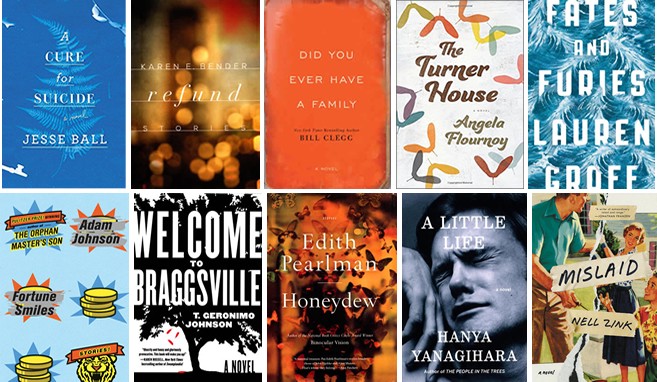
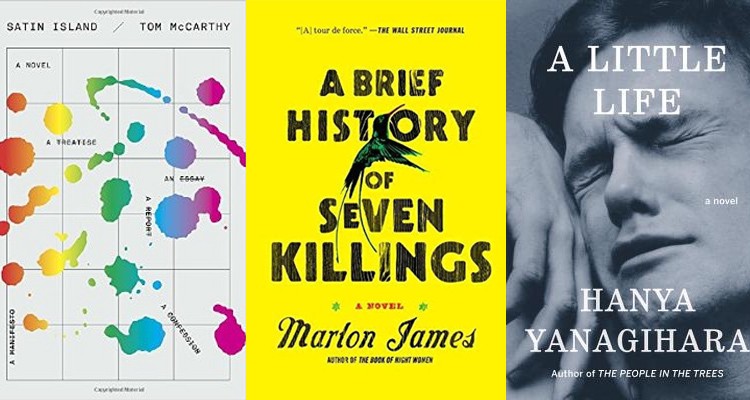
Here Is the National Book Award Longlist in Fiction

The National Book Award longlists are being announced this week, with the longlists already posted for Young People’s Literature, Poetry, and Nonfiction. Today, the longlist for fiction was announced.

Congrats to all the authors who made the list!

You can also read our review of Fates and Furies as well our interview with author Lauren Groff, our review of Nell Zink’s Mislaid, and our interview with Hanya Yanagihara.

Is This Really What We’re All Supposed To Want?:

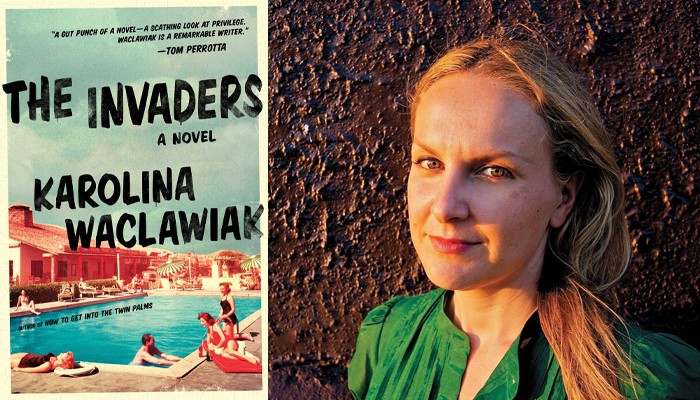
One of my favorite moments in Karolina Waclawiak’s second novel, The Invaders (Regan Arts 2015), concerns one of the book’s narrator’s Cheryl, who once was a young beautiful wife to an older, successful man, though when we meet her she has aged and their love has collapsed. She’s reminiscing about how she grew up, and more, how she grew into the woman she is. She remembers watching her mother get ready to go out with all types of men, watching these men come and go from the home. And then she plays at being the woman she sees her mother being, her earliest instruction in such things:

“My mother always dyed her hair a brassy blond and when she wasn’t entertaining, she put it up in curlers with a thin, gauzy scarf wrapped around it. But when she unwrapped the curlers and pulled her fingers through the loose waves, she looked beautiful….Her slender calves and shapely hips filled in her dresses just so as she wandered the house night after night. As I got older, I would put on the laciest of her bras and imagine taking them off for someone.”

What Cheryl is remembering is a kind of game. The game of playing dress up. Then soon enough, it isn’t a game any longer.

She remembers that heady early teen time when these men who had once called and come for her mother begin to pay attention to her, and eventually to call and come for her instead. To be a young girl is also to hint at the woman that girl will become. Along with her mother, those men who notice young Cheryl become teachers in a way. It’s a bit chilling but also unblinkingly honest, the truth about how we learn to be women from the women and men we watch and who watch us.

It reminded me of a moment in Waclawiak’s first novel, How to Get Into the Twin Palms, about a young Polish woman, Anya, trying to pass as Russian in order to be accepted into The Twin Palms, the hangout of seemingly glamorous women and brusque, tough men. In this moment, Anya is narrating her walk by a group of Russian men who hang out at the titular club:

“I know what they want to ask. Polska? Ruska? Svedka? Or maybe just Amerykanska. They can’t tell with me. They won’t ask, instead they stare; whisper something to see if I turn. Flick ash near me to see if I quicken my pace. They want to know if I’m used to men like them. I keep moving slowly because I want to see if it’s working.”

What I love so much here is the detail that they’ll flick their ash near her to see if she is scared. It’s both sensual and sinister. And it’s as elemental as much as it’s a game. Waclawiak excels at uncovering both the truths that makes us flinch and the secret desire that drives us. And I’ve been a fan of her take on the world since I first read her.

I emailed some questions I’d been wondering about The Invaders to Waclawiak and she graciously responded.

Diane Cook: I’ve always admired the way you capture not just the male gaze but the female knowledge, understanding, and complex yearning for it. The totems of womanhood that we have access to as girls build our sense of self early. Cheryl is wary of it now but admits to having felt a power from it. It’s complicated. Like a burden, a glory, or both. Are you looking for something definitive about a kind of femininity?

Is there something definitive to say about femininity? It’s a powerful drug.

Karolina Waclawiak: I was talking to David Shields about his book That Thing You Do with Your Mouth and the narrator in his book, Samantha, is both worried that her sexual trauma and her sexual openness has somehow been passed down to her daughter, very nearly on a molecular level. I was saying to him how interested I am in where we get our ideas about how to be a woman from. I do think it’s from watching our moms or other, older women around us. They’re passing on their ideas of femininity to us, and we are imprinted by them. I guess from an anthropological standpoint, I’m obsessively curious about how performative femininity is — especially in terms of acting out as a sexual woman from a young age. We know it’s expected of us from a young age — to be cute and charming — but we’re also punished if we go overboard. We are, of course, putting on this performance for someone else and when we realize we’re being looked at, we start to perform our femininity or sexuality to an even greater extent. It’s working! we think as young girls, and so we perform harder. Knowing we have the attention of boys or whoever suddenly gives young girls a blush of sexual power and then we’re off. I seem to always want to look at that balance of power and how feminine power shifts over time. Is there something definitive to say about femininity? It’s a powerful drug.

DC: I love Cheryl’s comebacks. Thinking specifically about her interaction with Tuck at a boring neighborhood party. She’s strong, sarcastic and quick. She owns the moment. I want to be her in that moment. Then there is this other Cheryl, frightened, frustrated, self-loathing — because of the situation she finds herself in, attached but unloved, judged and not fitting in. The difference feels stark but as the book goes on it feels familiar, reminds us that we all carry contradictions. Did Cheryl always have both sides?

KW: I think she did always have the two sides. The side she wants to reveal — the person she is — versus the person she’s comfortable showing. I feel like Cheryl is the type of person who is always worried she’s going to get in trouble. She’s always on her toes because she thinks everyone’s waiting for her to make a misstep. She isn’t going to give anyone any ammunition to take her down and so she behaves. I think that in this neighborhood, and perhaps neighborhoods like this, people are cracking from the pressure of suppressing how they feel. It’s a sort of “we have to keep the peace” mentality, i.e. these are our neighbors and we have to live in this weird, warped cage with them until it’s time to go to Florida so don’t make waves. And in the midst of this is Cheryl, who has always been relegated to interloper status, and who has moments of clarity where she acts out verbally — mostly with her neighbor Tuck because he feels safe. Someone recently likened the community in my book to a cult, which made me think about the book in a new way. Yes, of course it’s a cult. All these communities are cults where you are taught to act, speak, and live in a certain way. And Cheryl’s misbehaviors are of course going to get her kicked out of the cult or worse. So maybe she’s my Katie Holmes, testing the waters and looking for a way out.

DC: The novel is narrated by Cheryl and by her stepson Teddy, in an alternating structure. I had the pleasure of reading an earlier draft where Teddy seemed a more minor character. Now he kind of steals the show — his voice is so pitch-perfect. Talk about how he came to life.

KW: Teddy was so much fun to write. He was the entrance point into this whole world for me, to be honest. I had written a version of his character years ago. I thought about guys I had grown up with in Connecticut who came from wealthy families but had less-than-stellar work ethics and I wanted to see what could happen to someone like that in my world. At first, I had him pretty evenly an asshole throughout, but as I developed the book further I realized I wasn’t letting myself get to know him by keeping him at arm’s length. I had to fall for Teddy in order to truly understand him and make him empathetic. And it took coming to terms with the fact that these guys are just as wounded as anyone else (surprise!) to do so. He spends the entire book trying to keep you at a distance, and often, he does, but I like the idea of characters betraying themselves and unwittingly letting the reader in on their secrets. His brief stint marooned on an island was the moment that he really betrayed his true self to the reader. And I think from that point on, we understand his motivations for self-protection better. His bravado, his swagger is all self-protection.

DC: Cheryl’s successful, older husband Jeffrey is a really interesting character. I want to think of him with this broad stroke. He’s a jerk. His gaze is the one the book and Cheryl rail against but are also ruled by. So, it feels in some sense that he’s the problem. But he’s not really. In a neighborhood that follows its own worst instinct he is often a voice of reason, saying the thing you as the reader might be thinking. He seems pained yet entitled. Unhappy too. One moment I loved was when Cheryl jealously notes a woman, mid-peel of laughter practically sitting on Jeffrey’s lap at a party, and then she notes how bored he looks. This makes her happy. That’s not the typical male, self-centered character. How did you modulate Jeffrey, as both a kind of villain and also deeply human? Do you know what he’s looking for?

One day you wake up staring down at the fact that you no longer love your spouse and what are you supposed to do about it?

KW: In a way, every character is me, or has some part of me in them. I think it was Aleksandar Hemon who recently said the same thing in an interview and it’s so true. For me, I’m playing out some of my worst tendencies through my characters. That isn’t to say it’s a book about me. It’s fiction. However, I understand Jeffrey’s desire to pull away from a relationship that is falling apart as much as I understand his wife Cheryl’s desire to cling to it. I wanted to write Jeffrey as someone who falls out of love with his wife. Not because there’s another woman, though it feels easier for Cheryl to think that there is someone on the sidelines, but just because. I’ve been wrestling with the question of where does the love go for a very long time. I can imagine there are many, many people who have fallen out of love with someone and from the outside it may seem villainous, but it happens. One day you wake up staring down at the fact that you no longer love your spouse and what are you supposed to do about it? Let that person down by telling them to move out and you want a divorce or go through the motions because that’s what seems easier at the time? There is a certain numbness to this book and it all swirls around this feeling of, I didn’t think my life was going to end up like this. Jeffrey doesn’t know what he wants, except maybe to go into the life that he had mapped out for himself. This book is probably a reckoning about aging in general, and ending up in a life you didn’t plan for.

DC: Especially in the environment they are in. The book makes it clear that all these characters are weighted under the pressure to be and feel a certain way. Jeffrey must want a certain kind of woman, and even as the woman grows and changes, his desire can’t. Teddy is testing out what he thinks he’s supposed to want and it is bewildering to him. Cheryl is supposed to want to be a part of this world and yet she doesn’t. They all fall into a malaise that seems to come from not being able to be who they would naturally be outside of the structure they find themselves in. How much of the small world of this privileged town is to blame? Could they all run away together and find a kind of happiness, or is this a bigger force, impossible to escape, one we are all a part of?

KW: I think in this stratosphere you can’t really be who you want to be but that’s the price of admission. I can imagine their secret lives all function as a pressure valve for them. Would Teddy ever tell his friends he has a thing for 40-year old women? Doubtful. And though I think the town has blame in their being trapped, they are also living in self-made prisons. I think that could be true for anyone. What would really happen if you started exerting your real desires in a more overt way? These people are all trapped by their wants and needs and feeling those desires are out of the realm of possibility for them. They have come to believe that they have no control over their own lives so they give up. Is it different anywhere else? Not if you are too terrified to open yourself up to living how you want to live. That’s probably why people live how they want to live anonymously, online.

DC: You grew up in Connecticut, near areas like this and when I saw you in conversation with Michelle Tea at your reading at Green Apple Books in San Francisco, you mentioned that people from home think you’re writing about their town or the people there. Which, you’re not. But I imagine you’re writing about something that seems familiar, or that you recognize. As though, now that you’re older you have context for what you witnessed growing up. And it’s coming through. Is there something to that? Or is there some other impulse?

I am the product of the American Dream, but I also question our values. Why is the American dream suddenly now just having stuff?

KW: Growing up in a beach community in Connecticut was a miserable experience for me. I felt like there was a whole world out there that everyone was consciously shutting themselves off from. Class was a big thing that I noticed — who had money and who didn’t — and it was apparent right away. The kids in these towns were holding strong to the same hierarchies their parents were holding on to — who got to be in and who was cast out. While exploring the feelings I had growing up was the impetus for the novel, I went well beyond those initial feelings to build a world I’d seen in many different place I’ve been. I’ve heard people say, oh this feels like the Palisades, or I’m from Massachusetts and this is my community. The thing about it is, these kinds of communities make up America. In the novel I am asking the question, is this really what you want? Is this really what we’re all supposed to want? I get it, it’s the American Dream. The American Dream is why my parents left Poland. I am the product of the American Dream, but I also question our values. Why is the American dream suddenly now just having stuff? And, more so, the pursuit of stuff. I work in Beverly Hills and I see tourists taking pictures of all the stores on Rodeo Drive every day. We are all worshipping at the altar of wealth and stuff and it’s perverse to me.

DC: Was there a book or piece of culture you thought about a lot when you wrote The Invaders?

KW: I read two books while thinking about and writing The Invaders. The first is Richard Yates’ Revolutionary Road, which of course is a classic book about the suburbs. And I also read Mrs. Caliban by Rachel Ingalls, which is also a masterpiece and totally off the wall — it features a depressed housewife who falls in love with an escaped man-sized sea creature named Larry. Those two books about suburban dread made me start thinking about how I could approach the suburbs. That, coupled with the pervasive fear of “the other” that continues to grip the nation, made me want to write this book. It’s disturbing to see Trump on the campaign trail yell at everyone who doesn’t belong here to get out. It’s even more disturbing to see people at his rallies cheer that sentiment on so vociferously. The world of The Invaders is just a microcosm of what’s going on in the country and in the world, actually. We’re on high alert for threats, but we’re not even sure who the threat is anymore — everyone who isn’t white, I guess.

[ed. — Jason Diamond wrote for Electric Literature about the suburbs in Karolina Waclawiak’s work here.]

DC: I heard one of my favorite writers, Carolyn Chute, discussing the troubling way her characters were talked about in public. She took offense at the offhand classification that they were “white trash” our shorthand for a certain kind of rural white living in poverty. We forget the meaning of the words and it just becomes a term. But she said basically (and I’m paraphrasing here), “When you call someone white trash you’re calling them garbage. They’re not garbage. They’re people.” I feel that books which look at the wealthy or trophy wives are usually send-ups, we read them to cackle, feel good about ourselves because they are no longer people, they are just puppets of the term. Yours isn’t a send-up though because we see the inner lives of people. They are round and full and at odds with the rules they are living under and we hear that struggle.

KW: I’m glad you say that. Thank you. It pains me to hear people be dismissive of the people in the book. Or to say I’m skewering them. I didn’t want this to be a send up at all. For me, everyone here is trapped. Whether they know it or not. And it’s a tragedy.

DC: But an interesting twist is that the characters we get to know the best sometimes label those around them. We laugh easily at some or disregard others because the characters we’re aligned with do, as though to remind us of that reality — that way we can look at people without remembering they’re people. This layering of the trope showed the kind of mess we get in, the social game we play, railing against what binds us, while binding others. Was it hard to modulate these layers and keep the key characters feeling complex and real, which they do and so the despair hits even harder?

KW: I wanted to make sure I wasn’t being cruel in the way I was writing the book, even if the characters happen to be cruel to each other. That was difficult to do and took many, many drafts of trying to find small ways to humanize the minor characters and big ways to humanize the main characters. Everyone is playing off of each other and maybe not everyone is “likable,” but that doesn’t mean their actions don’t come from a place of real need and fear. I think that’s something that feels really true about people — most of our actions come from a place of need or fear, and, in some cases desperation. Layering that need and fear throughout the book made sense to me and I think it helped make the characters feel more complex.

DC: So as I said, I was thinking a lot about villains when I read this book. First because while all the characters behave badly in ways I still always felt sympathy for them. And like I just mentioned, even for Jeffrey, who could easily have come off as a caricature but doesn’t. And second, because I was thinking about the culture’s predilection toward easily defined characters. I remember some feedback you got from different early readers was that Cheryl was too unlikeable. I wonder what to think of the idea that we don’t want unlikeable characters when we love villains? We love those murdering, thriller girls. Aren’t they the runaway hits of the book world? Women behaving badly? We love the fantasy of this woman on a rampage but we reject the more real premise of a woman making small transgressions against the society that entraps her. And we don’t forgive her poor behavior, especially when it doesn’t free her in the end. A failed attempt is booed. Even though that trapped character is more like us than any cartoonish villainess. Why do we love to hate some characters and hate to hate others and so, hate them more?

Tiny transgressions and misbehavior on a smaller scale feel more damaging than a serial killer on the loose because it is a small voice saying this could be you.

KW: I’ve said before that the unlikeable complaint is most often lobbed at women so it’s inherently gendered and total bullshit. I do not give a fuck if people like my characters, or would make the same choices. But I do want you to turn the page to see what happens to them. I’m not looking for life affirmation in the books I read so I can’t really comprehend people who want to read something in order to have their morality nurtured and affirmed. As to why some unlikable characters are more popular than others, I think because extremes don’t seem as terrifying as someone who could maybe be you, even a little bit. I think we read extreme characters like psychotic women in a voyeuristic way. She could never be us, so she feels safe. We’re just along for the ride. Holding a mirror up to someone and asking, Are you happy? Could this be your life? feels more invasive and so there’s a more offended response. I don’t want to think about those things, some readers have said. Books that are not so extreme in their transgression make you think about how you act and the choices you make in your life. What you’ve given up to live how you live. That asks more of a reader than say, watch this wacko sociopathic woman get revenge. Think about popular shows on TV — they are morality plays. There are killers and there are good guys and at the end everything is made right in the world. The universe gets put back on its axis. Tiny transgressions and misbehavior on a smaller scale feel more damaging than a serial killer on the loose because it is a small voice saying this could be you. That’s really uncomfortable to some people and so they turn away from it.

DC: I’m very curious about the idea of redemption and when people feel they’ve seen it in a story and how indignant they can get if they don’t. As though the whole goal of living is to be redeemed somehow. Or to find a happy ending. (Is it that we want villains and happy endings and not much in between?) Do we need redemption in what we read? Is there redemption in The Invaders? (I feel like this is something a trick question but I’m hoping you have something smart to say about it because I personally hate the weight of this mandate and also understand there is something very human about the desire for it and so, creatively, it can feel like a trap…)

KW: I hate this mandate! I went on a tirade about redemption on a previous question, but I will just say one more time, I think it’s absurd to ask writer to pencil in some redemption at the end so the reader can walk away feeling all is right in the world. Not everyone is looking for redemption, not everyone wants to find a way to get clean. I think it comes down to people wanting the world to fit into these simplistic moral narratives. You are bad, you get in trouble, you get what you deserve. Or, you are bad, you realize you’re bad and you go find a way to be good again. The only redemption I see in The Invaders is that the characters finally find a way to be free. Some people don’t agree with my method of finding freedom, but that’s okay. I’m okay with that. Some of us aren’t looking to be saved by someone else. Some of us will go to an extreme to save ourselves in any way we see fit.

Midweek Links: Literary Links from Around the Web (September 17th)

Looking for some interesting reading to get you through the week? Here are some literary links from around the web to check out:

We need diverse books, and also diverse worlds in books

All your smart friends are talking about Valeria Luiselli (read our reviews and interview with Luiselli here)

The Man Booker shortlist offers up six diverse books from around the globe

More and more US authors are earning sub-poverty level wages

Interesting article on who gets to decide what counts as “immigrant fiction”

Does epic fantasy have to always be about the end of the world, or can it tell a small story?

Some cool graphic novels to check out this fall

Bill Clegg, an agent turned author: “I really understand the loneliness, excitement and vulnerability it takes to create a book now”

Some famous authors you may not have known wrote screenplays

A look at how “harrowing personal essays” took over the internet

Todo lo bueno que sé lo aprendí de las mujeres

by Tryno Maldonado, recomendado por The Buenos Aires Review

Mi madre es educadora. Maestra de preescolar. Si quieres joder las relaciones amorosas de un varón con las mujeres para el resto de su vida, no hay método más eficiente: inscríbelo en la clase de su madre en el preescolar. ¡Buena suerte, Freud! Con el tiempo he desarrollado la creencia de que mis relaciones con las mujeres no son más que una emulación tras otra de aquélla, mi relación platónica y tormentosa con mi profesora de preescolar. Que resultó, de paso, ser mi madre. Los mismos anhelos, la misma idealización, las mismas expectativas. Las mismas escenas de celos. Los mismos errores. Ah, Freud… Un día, a los seis años, mi madre me sorprendió masturbándome con unos calzones suyos que dejó secando en la regadera. Fui acusado. Mi abuela Amparo me dijo esa misma tarde que ardería en el infierno por ser un puerco y apagó las ascuas de su puro en el dorso de mi mano como un anticipo de lo que se me tenía reservado en el infierno. Freud… ¡Me cago en Freud!

A mi abuela Amparo le gustaba fumar puros por las tardes mientras tejía con ganchillo y chismeaba con sus nueras. Tomaban un café negro muy aguado en pocillos de peltre y fumaban. A veces, y sólo si mi abuelo no estaba, mi abuela echaba a escondidas un chorrito de mezcal en su café y en el café de las nueras. Nunca entendí por qué todas esas señoras, mis tías políticas, se reían tanto y tan escandalosamente. Su risa se oía incluso hasta la tienda de abarrotes de la esquina adonde me mandaban a comprarles más cigarros. Un día me tomé a escondidas el café de mi abuela. Remojaba un dedo y me lo llevaba a la boca de rato en rato sin que ella ni mis tías se dieran cuenta. Ese día tampoco pude dejar de reírme con ellas.

A mi madre le gustaba inventar palabras. O las había aprendido quizá de su madre y ella, a su vez, las había escuchado en el rancho donde nació. No lo sé. A mis hermanos y a mí nos decía, por ejemplo, que nos habíamos “reborujado” con el cambio o en alguna operación aritmética. Cuando lo que quería decir era que nos habíamos “confundido”, o nada más que estábamos equivocados. No te reborujes, decía. Uva se escribe con v, no con b. Había otras, que naturalmente, eran de su propia cosecha. Chucitos. Era como nos llamaba a mis hermanos y a mí. Según ella, yo era una mezcla entre Chucky, el muñeco diabólico, y Bruce Lee. Bruce Lee era por entonces mi ídolo, mi modelo a seguir. De él solía imitar las patadas voladoras como con las que había vencido a Karim Abdul Jabbar, sólo que yo las aplicaba contra los dientes de mis hermanos. Bruce Lee. Chucky. Chu-cee. Chu-ci. Diminutivo: Chucito. Mi madre. Así era. Las veces en que mi padre nos golpeaba con un cable de cobre en las nalgas y en los muslos por haber hecho alguna travesura, mi madre (aunque al principio del lado de mi padre) venía a consolarnos. ¡Chucitos!, decía. E invariablemente nos sacaba una sonrisa indecisa entre lágrimas que enseguida se transformaba en una carcajada. ¡Chucitos! Y mis hermanos y yo reíamos de nuevo.

Tengo varias cicatrices de quemaduras como callos en las manos. Mi abuela Amparo me las hacía con su puro encendido cada vez que mi madre iba a contarle desesperanzada que, de nuevo, me habían suspendido de la primaria por masturbarme durante la clase. Enséñame la mano con la que lo hiciste, decía mi abuela Amparo y me acercaba el puro encendido. Tú no te vas al cielo, decía. Yo entendía: Tú eres mi cenicero.

Entre las muchas escenas de celos que le gastaba a mi madre cuando fui su alumno durante el preescolar, recuerdo varias. Ser el hijo de la profesora llevaba consigo ciertas prebendas, privilegios. Y como además era el más avanzado de la clase, gozaba de impunidad académica (la hermana de mi madre, profesora de primaria, hacía tiempo que me había enseñado a leer y a escribir). Yo les ponía apodos bastante crueles a los otros niños de los que mi madre se ocupaba más que por mí, sobre todo a los que tenían algún defecto físico o eran muy tontos. Como al Doctor Celebro (que no Cerebro). El Doctor Celebro era un niño con síndrome de Down que iba en nuestro salón porque en mi pueblo no existían escuelas de educación especial. O al Patas de Oro, un niño de piernas lisiadas por la polio que debía usar bastones ortopédicos para caminar a duras penas y que yo torturaba haciéndolo correr detrás del balón de futbol durante el recreo. No reducía mi nivel de terrorismo de baja intensidad contra esos mocosos que se hacían pasar por hijos espurios de mi madre hasta que sus padres venían a quejarse amargamente con la maestra (o sea, con mi madre). A los más ricos, hijos de abarroteros y de profesores, yo solía robarles sus cosas en venganza si mi madre les ponía una estrellita en la frente o si se tomaba una foto con ellos durante los festivales. Crayolas caras, pegamento en envase de elefantes azules, plastilina en botecitos de colores, gomas para borrar con olor… Todo lo más bonito y caro del salón terminaba, sin variedad, en mi mochila. Es decir, en la mochila del hijo ejemplar de la maestra. Quien no quisiera pagar tributo sabía que se exponía a ser tildado con el peor de los apodos durante todo el año, o a verse obligado a que yo lo orinara encima o le tusara el cabello con mis tijeras Barrilito. Saboteaba los festivales si veía que mi madre se mostraba complacida con el talento de tal o cual niño para, digamos, cantar sin cambiar la letra o pegarle al pandero sin cagarla demasiadas veces. Como me tocaba formar detrás de todos por mi estatura, empujaba al del pandero o al que tuviera delante con todas mis fuerzas durante las presentaciones, luego me quitaba el zarape de pastor de pastorela y el imbécil sombrero de paja y los pisoteaba en el escenario. Y todo, desde luego, para reclamar la atención de la profesora (que era mi madre). A veces, mientras el resto de los niños trazaban estúpidamente planas de círculos de colores con crayolas en el salón, me gustaba irme a un rincón y masturbarme hasta que mi madre (es decir, la profesora) venía a prohibírmelo.

Mi abuela Amparo era de rancho. Ella y su familia vivieron de lleno la Revolución en Zacatecas. La Revolución. Una época de bárbaros del norte que en mi mente infantil servía para explicar por qué mi abuelo cargaba pistola en el cinturón o por qué mi abuela era la persona de este lado del hemisferio que mayor número de groserías podía escupirle en los ojos al primer desdichado que se le atravesara. Soltaba más leperadas que sus trece hijos juntos y que mi abuelo. Jamás dejaba de sorprenderme su amplio arsenal de mentadas. Algunas me parecían tan ingeniosas que me gustaba repetirlas en la escuela incluso sin saber qué significaban. Me volvían invencible. Pero cuando mi madre me sorprendía repitiendo las chingaderas que yo aprendía de mi abuela, me forzaba a tragarme un puño de jabón para lavar trastes y me tapaba la nariz hasta que me lo pasara. Mis primos, hermanos y yo sabíamos que era mejor no hacer enojar a mi abuela. Un peso de menos en el cambio cuando nos mandaba a la tienda de la esquina, una orden mal ejecutada y ya estaba. El riesgo era que soltara toda su batería de maledicencias sobre uno como insecticida sobre un insecto. Casi nunca nos pegaba, y a veces hasta nos solapaba e intercedía por nosotros con mi abuelo. Era mi abuelo quien sacaba el cinto de cuero a la menor oposición. Lo remojaba en agua, nos ordenaba bajarnos los pantalones hasta las rodillas y enseguida nos azotaba. ¡Dolía hasta la médula! A mis primos y a mí nos quedaban durante días unas franjas granates cruzadas en los muslos y en el culo. Había que dejar pasar una semana para poder volver a sentarse. Pero a los pocos días volvíamos a caer en la ilegalidad como forajidos curtidos por el castigo. Mi abuela, en cambio, era capaz de pisotearte y matar para siempre tu ridícula e insignificante alma de niño con dos o tres palabras llenas de veneno. Me doblada de risa escucharla decirle a alguien más “Váyase a la verga”. Aunque lo que yo entendía era: “Váyase a la alberca”. Decía mi abuela: “Ese cabrón es un pinche culero de mierda”. Y yo entendía: “Ese carbón es chinche en Kool-Aid de fresa”. Mi abuela le gritaba a alguien furiosa: “Chinga a tu madre”. Y yo entendía: “Si un gato muere”.

Una vez nos reunieron a todos los de mi salón. Mi madre (es decir, la profesora), nos acomodó en fila y salimos al patio de recreo. Hay un niño en este kinder que está enfermo, nos dijo la directora por el micrófono que se usaba sólo los lunes para los honores a la bandera. Es una enfermedad muy contagiosa, dijo. A ese niño enfermo le gusta tocarse sus partes delante de los otros niños y niñas. Así es que vamos a tener que suspenderlo para que no contagie a sus compañeros. Eso dijo la directora y, quién sabe por qué, a partir de ese día gocé de dos semanas de vacaciones.

Desde niño fui un caso extraño. Eso me dijo la directora del kinder hace poco, cuando la volví a ver. Extraño. Del latín extraneus, del exterior, extranjero, raro. Pasé a ese mismo kinder a recoger al hijo de mi hermano y le pregunté a la directora si se acordaba de mí. Hizo un gesto de espanto. Casi se santiguó. Que era un niño muy raro y que ya no sabían que hacer conmigo. Eso dijo. Yo no hablaba con el resto de los niños más que para ponerles apodos o amenazarlos. No socializaba durante el recreo. Y cuando había una excursión al exterior, me plantaba en un rincón con los brazos cruzados y ya nadie (ni la directora, ni el maestro de educación física, ni el presidente de la República) me movía de allí. Me quedaba todo el día sentado, en silencio, a esperar a que volviera mi grupo de la calle. Casi siempre, a la vuelta de la excursión, me encontraban con los pantalones del uniforme y los calcetines orinados. Mi orgullo no admitía moverme siquiera para ir al baño. Pero, en cambio, mis calificaciones me permitían estar en la escolta del kinder y yo accedía por una sola razón: la abanderada, una niña morena y delgada, usaba para las ceremonias unas botitas blancas de piel, nuevas y muy monas. Esos días en que tocaban honores a la bandera, ya por la tarde, cuando mi madre y yo íbamos de vuelta a la casa, me gustaba recostarme bocabajo sobre el asiento trasero del Volkswagen y restregar la ingle contra el hule espuma pensando en las botitas blancas de piel de la niña que llevaba la bandera.

La calle de mis abuelos donde mis primos y yo pasamos la infancia aparece en una novela de Cormac McCarthy. La calle por donde cruzan los vaqueros de McCarthy era la calle en la que nosotros cazábamos ratas con tira-fichas y jugábamos futbol. En una ocasión, una vecina de mi abuela con la que creo que estaba enemistada, llegó a tocar a la puerta. Se veía muy agitada. Fui yo quien abrió. Había salido temprano de clases y la casa de mi abuela estaba a unas cuadras de la primaria. La vecina llegó a quejarse amargamente conmigo. Gritaba mucho y movía los brazos. Mi abuela vino a defenderme de aquella señora histérica. Se hicieron de palabras. Aparentemente algo muy malo había hecho uno de los hijos de mi abuela con una de las hijas de aquella vecina. No entendí muy bien, pero estaba claro que era algo grave lo que fuera en que había incurrido alguno de mis doce tíos. O incluso mi padre. Me fui a esconder detrás de las enaguas de mi abuela Amparo. Dígale a su hijo que no vuelva a meterse con mi hija, le gritó la vecina. ¿Cuál de mis trece hijos, señora?, dijo mi abuela. Pues cuál va a ser. El más borrachito de todos, dijo la vecina. Con mucho gusto, señora, dijo mi abuela. Pero dígale a su hija que se ande con cuidado. ¿De cuál de todas mis hijas me habla?, dijo la vecina. Pues de cuál va a ser. De la más puta de todas.

10.

Jamás me atreví a hablarle a aquella niña que era la abanderada en el kinder. No puedo decir que me haya gustado su cara o que estuviera enamorado de ella. Ni siquiera me acuerdo cómo era. Llegué desde el primer día a la conclusión de que lo que me perturbaba de ella, lo que durante las noches me provocaba inquietud y ansiedad, era en realidad la contemplación de sus botitas blancas de piel que le llegaban hasta las rodillas. Era una fiebre ingobernable que me hacía querer restregar a todas horas la ingle contra prácticamente cualquier superficie blanda. Era como una enfermedad. Incluso mis padres me llevaron al médico con la esperanza de que lo mío tuviera una cura. Pero nada. Mi madre no sabía que hacer conmigo. Mi abuela Amparo me mandó a hacer una limpia con hierbas y un huevo podrido y me ordenó hacer una misa. Nada. Me masturbaba en la escuela. Me masturbaba en el baño. Me masturbaba en la cama. Me masturbaba en el coche. Me masturbaba en la calle. Me masturbaba durante la quinta y sexta entradas de los partidos de béisbol debajo del guante. Me masturbaba los domingos en la iglesia. Me masturbaba incluso dormido. ¡Era un campeón precoz de la puñeta! Había días, literalmente, que no bajaba a comer para no privarme del placer de frotar mi ingle contra el colchón imaginando las botitas blancas de piel de la niña que sostenía la bandera con el águila y la serpiente. Jamás en mi vida he vuelto a tener una temporada de tan ferviente patriotismo. Mi abuela, en castigo, me quemaba la mano con la punta de su puro cuando se enteraba de mi afición por la puñeta y repetía la consigna del infierno. ¡Qué me importaba el infierno si me llevaba conmigo el recuerdo de esas botitas de piel tan blancas y tan nuevas marcando el paso!

11.

¿Por qué mi madre, esa muchacha guapa de veintinueve años de la que todos los otros alumnos se enamoraban y demandaban a gritos su atención, no tenía ojos para mí durante las clases? Nada más traspasar la puerta del aula se volvía otra persona. ¡Cuánta frialdad! Sentía ganas de reventarme la cabeza a golpes contra la pared por los celos. Había, por ejemplo, un niño listo. Era un güero de familia rica que acaparaba la atención de mi madre durante las clases. Para su cumpleaños los padres nos llevaron una piñata. Una piñata cara, de esas bonitas pero tan mamonas que no te atreves a tocarlas para no echarlas a perder. Yo era más alto que el resto de los alumnos. En las fiestas infantiles (excepto las de mis primos que eran igual o más altos que yo) me tocaba siempre darle a la piñata hasta el final de la cola. Además, jugaba béisbol. Era famoso por la amenaza de mi poder destructivo contra la producción nacional de piñatas per cápita. Y el día del cumpleaños del niño güero y rico aquel, el consentido de mi madre (es decir, de la profesora), por supuesto que no iba a ser la excepción. La piñata apenas había recibido algunos impactos de los otros niños en la fila y había perdido un bracito o una pierna. Y allí voy yo, el último al bat, tomando impulso como si sujetara de veras un bat de béisbol en la caja de bateo. Los otros niños hacían una rueda alrededor y me cantaban y me aplaudían entusiasmados para que la quebrara. Pero el escándalo, la corredera y la gritería que se desató después de mi primer golpe fue superior a todos mis planes. Mi madre y las otras maestras salieron disparadas a levantar al niño rico con la nariz rota para llevárselo de inmediato al hospital. Gritaban y manoteaban histéricas. El uniforme del kinder le quedó completamente ensangrentado. Parecía mentira que una criatura tan frágil, pequeña y delicada pudiera producir tales cantidades de sangre. Fue mi madre quien le sujetó la cabeza sobre los muslos antes de que se lo llevaran. El delantal le quedó manchado con la sangre del niño mientras ella trataba con desesperación de contenerle la hemorragia sin éxito. Salí corriendo a esconderme en los baños de la escuela aún con el palo de la piñata entre las manos, todavía enervado por el impulso contradictorio del resentimiento de ver a mi madre sosteniendo la cabeza sangrienta de su alumno favorito sobre sus piernas y el placer secreto de haberle matado (en ese momento creí que lo había matado) a ese hijo espurio que ni era su hijo ni era yo, una sensación morbosa como una droga que pocas veces he podido volver a experimentar. Salvo un par de años después, cuando le arranqué un pedazo de la oreja a mi hermano.

12.

El día que murió mi abuela Amparo me negué a ir a su entierro. Mi madre nos vistió a mis hermanos y a mí con la mejor ropa que teníamos (que era la que ella compraba en un mercado de segunda mano y que yo heredaría a mis dos hermanos menores cuando ya no me quedara). Nos pasó un peine con limón por la cabeza hasta quedar los tres con los pelos como una sopa. Mis padres y mis hermanos se subieron al Volkswagen. Pero yo no quise. Ya íbamos con retraso al entierro. Cuando mi padre, enfadado, vino a averiguar dónde me había escondido, me encontró metido en la cama, debajo de las sábanas, con los pelos revueltos, sin ropa. Vístete y métete en el coche con tus hermanos si no quieres que te rompa la madre, dijo levantando el puño. Era lo que decía mi padre cuando más furioso estaba. Romper la madre. Y yo obedecía porque me imaginaba a mi madre rota como una figura de cerámica que se caía al suelo y se reventaba en mil pedacitos y me daban ganas de llorar. Vete a la alberca, dije colérico. Mi padre no se lo podía creer. ¿Qué dijiste? Que te vayas a la alberca, dije de nuevo. Sólo hasta que volvió en sí luego de la inusitada respuesta que había recibido a su mandato (el primer acto de rebelión en su casa), apretó los dientes y fue y me sacó de la cama por los pelos y me dio la peor paliza que jamás me había dado en su vida. Me golpeó fuerte, tal como yo había visto que él golpeaba a otros adultos de su peso y de su tamaño en las peleas que se suscitaban durante los partidos de futbol. Vete a la alberca, volví a decirle entre sollozos. Esta vez mi padre ni siquiera me miró. Salió del cuarto azotando la puerta. Luego escuché que mi madre arrancaba el motor del Volkswagen y que el sonido se perdía calle abajo. Hubo silencio en toda la casa. Me abordó una mezcla de coraje, impotencia y desolación al saber que mi familia se marchaba sin mí. Ellos cumplirían cabalmente con su responsabilidad como el hijo, la nuera y los nietos que eran. Lo que, por pura contraposición, me volvía a mí un canalla ante los ojos no sólo del resto de la familia, sino del resto del mundo. Un hijo de puta, diría mi abuela. Lo que sentía era un coraje y un odio dirigidos, sobre todo, hacia mí mismo por la terrible afrenta que le estaba haciendo a mi abuela. No sólo al faltar a mi deber como nieto en su entierro, sino por el hecho de que, por más que me esforcé ese día en ello, de veras no conseguí sentir tristeza ni fingir tristeza por su muerte. Juro que lo intenté. Lo intenté con todas mis energías. Era mi primer encuentro con la muerte y la verdad es que la muerte, ahora que la tenía tan cerca, me daba igual. ¿Qué clase de persona era? Quizá la directora del kinder se refería a eso cuando decía que yo había sido un niño extraño. Era un monstruo. Un extraño. Extraenus. Un extranjero que contemplaba desde el exterior la experiencia humana. Fue lo que pensé entonces, a los seis años de edad, y no pude deshacerme de esa imagen de mí mismo, de fenómeno, en muchísimo tiempo. Había creído que cuando alguien de mi familia muriera iba a ser un día tristísimo. Que habría rayos y truenos y que muy probablemente lloviera y que yo enloquecería por el dolor frente al ataúd. Pero nada de eso ocurrió. Esa tarde incluso vi Mazinger Z, mi caricatura favorita, sin el menor remordimiento, a pesar de la prohibición explícita de mi madre de no encender la televisión durante el duelo. En cambio, me sentí miserable por no experimentar ese dolor bíblico que creí que me partiría de la cabeza al cóccix como un relámpago. Sería el único de toda la inmensa prole de nietos que le negaría el último gesto de gratitud, la llamada última despedida, a mi abuela. Me quedé en el suelo, donde mi padre me había dejado luego de darme la paliza, y lloré pensando en lo ignominiosamente egoísta que era, en la atroz clase de ser humano que, a diferencia de mis muchos primos y a diferencia de mis dos hermanos, era yo por no sentirme triste por la muerte de la madre de mi padre, la atroz clase de ser humano que era yo por no sentirme triste por la muerte de mi abuela.

13.

El día del incidente con la piñata y la nariz rota del niño rico, descubrí a mi madre llorando en el baño de nuestra casa. Aparentemente la directora la había reprendido con severidad. El niño rico resultó ser hijo de un regidor local del PRI, por entonces el partido de Estado, y la cosa se pondría más oscura en delante para mi madre. Por mi culpa. Pero yo no tenía manera de saberlo, ni mucho menos de comprenderlo. A mi madre la habían suspendido. Y no sólo eso, sino que a raíz del incidente con el hijo del regidor del PRI, la harían cambiarse de zona. En castigo, la trasladaron a una escuela preescolar fuera de la capital. En aquel municipio conurbano al que fue enviada en represalia, mi madre trabajó el resto los días de su vida profesional, hasta su jubilación. Es decir, durante más de treinta años. Sólo la intervención del sindicato de profesores (también afín al PRI) evitó que mi madre fuera echada sin más. Mi madre jamás me propinó un castigo por lo del niño de la nariz rota. Era como si no hubiera ocurrido nada. Ni siquiera volvimos a hablar de ello. Ni por entonces ni ahora, que tengo más de la edad que tenía ella en ese tiempo. El día del incidente del niño de la nariz rota me desperté a media noche. Había escuchado ruidos en el piso inferior de la casa, una casa diminuta de interés social de dos habitaciones en la que la privacidad entre los cinco miembros de nuestra familia era imposible. Salí del cuarto de una sola cama que compartía con mis dos hermanos y fui al baño. El ruido que había escuchado eran los sollozos de mi madre. Lloraba desconsolada sentada sobre la tapa del excusado. Olvidó cerrar la puerta. Mi madre se sobresaltó al verme, pero de inmediato se rehizo. No son horas para que estés despierto, dijo. Tenía los ojos como berenjenas por tanto llorar. Es que tenía que decirte algo, dije. ¿No puedes dormir?, quiso saber ella. Sí puedo, dije. ¿Entonces? Chucita, dije. Chucita, dije otra vez, como un conjuro. Chucita. Y por primera vez, desde hace mucho tiempo, vi sonreír a mi madre.

Here Is the National Book Award Longlist in Nonfiction

The National Book Award longlists are being announced this week, and today the nonfiction list went up. It includes Ta-Nehisi Coates’s celebrated book on black life in America, Between the World and Me, and Sally Mann’s memoir in photographs, Hold Still. The judges were Diane Ackerman, Patricia Hill Collins, John D’Agata, Paul Holdengräber, and Adrienne Mayor.

  • Cynthia Barnett, Rain (Crown Publishing Group/Penguin Random House)
  • Ta-Nehisi Coates, Between the World and Me (Spiegel & Grau/Penguin Random House)
  • Martha Hodes, Mourning Lincoln (Yale University Press)
  • Sally Mann, Hold Still (Little, Brown/Hachette Book Group)
  • Sy Montgomery, The Soul of an Octopus (Atria/Simon & Schuster)
  • Susanna Moore, Paradise of the Pacific (Farrar, Straus and Giroux)
  • Michael Paterniti, Love and Other Ways of Dying: Essays (The Dial Press/Penguin Random House)
  • Carla Power, If the Oceans Were Ink: An Unlikely Friendship and a Journey to the Heart of the Quran (Henry Holt and Company)
  • Tracy K. Smith, Ordinary Light (Alfred A. Knopf)
  • Michael White, Travels in Vermeer: A Memoir (Persea Books)

Congrats to all the finalists!

Violent Histories: An Interview With Robert Kloss, Author Of The Revelator

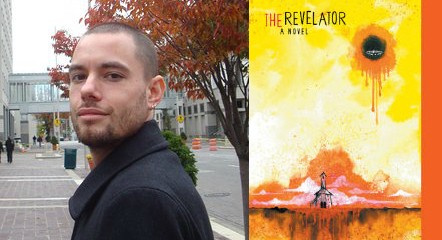
Robert Kloss’s novels take an unorthodox look at a violent strain in American history. His earlier novel The Alligators in Abraham followed one character from the Civil War through the early days of the 20th century, and featured hallucinatory interludes, an exploration of the racist politics of the time, and ill-fated polar expeditions along the way. His new novel The Revelator takes as its central character a man who graduates from assorted low-level crimes to founding a religion in the mid-19th century. Here, too, are surreal visitations, violent clashes, and the rise of fanaticism–it’s a searing and often phantasmagorical work.

Increasing the unpredictability of Kloss’s fiction is his use of the second person, which has the effect of pinning the reader to an increasingly unhinged point of view. It’s hypnotic and terrifying, a window into segments of history that many of us might prefer to forget. Kloss and I exchanged a series of emails in which we discussed the roots of his fiction, his historical inspiration, and much more.

TC: Both The Revelator and your earlier novel The Alligators of Abraham are largely set in the 19th century. What attracted you to this period of history?

RK: Well, I think partly the attraction comes from early on in my life — I always found photographs from that period very haunting, strange. And that’s not just because people back then took staged pictures of their dead infants — even photographs of men posed in a general store or a woman in a hat standing next to a horse takes on a strangeness. It’s a society and a people that we recognize as similar to our own, but something is off. Partly it’s the awkwardness of the posing — there’s a weird formality and severity to their faces and postures. There’s the distance of time and the recognition that those people and the world they inhabited and created is long dust, even as it went into the formation of our own. So just looking at those people going about their lives feeds into my ongoing reveries about mortality and life — and I do enjoy looking at those people long dead and yet captured and immortalized in that single moment in time and wonder about them and I always have. There’s also the idea that the 19th century, for the most part, is where the United States came from. We can point to different moments in that century and recognize the acceleration of history and technology and industry and pinpoint where things went right or wrong. I suppose my books focus on the “where things went wrong” side, but some good came out of those years as well.

TC: Do you remember what the first artifact from the 19th century that you came across was?

RK: No, but I lived in Massachusetts for 12 years, and everything out there is an artifact. You’re constantly made aware of the past, of the living past… every building is an artifact or monument. Even a Dunkin Donuts might be housed in a three hundred year old building. I’m originally from Wisconsin, so moving to a place with that much living history is very affecting. And then, just about everything is an artifact anyway. Birds are supposedly derived from dinosaurs, for instance, and I think about that whenever some crow swoops over my back deck.

TC: You’ve written several novels in the second person. What are some of the challenges of this? And how do you best shape a character when using this approach?

RK: I’ve been writing in the second person mostly exclusively since the summer of 2010, and entirely in the second since 2011, when I started The Alligators of Abraham. I find writing in the perspective very liberating — there are no restrictions. I believe in challenges, not restrictions, and in a way my challenge is always how to write in the most authentic, liberated way possible — and for me using the second person was one of those keys, and writing in period was one of the others.

For me there’s something almost primordial about the perspective, as if addressing the “you” creates the world out of the dust…

I have overthought the perspective in the past, because the perspective is less conventional — for instance, in the first draft of The Alligators of Abraham I tried justifying the perspective within the narrative by establishing the speaker’s identity, and I quickly realized that was a mistake. I think the second person works best when the speaker is somehow removed from events — when the speaker is greater or more powerful than the protagonist or is looking back on events with a wider perspective, a longer view. For me there’s something almost primordial about the perspective, as if addressing the “you” creates the world out of the dust, and I suppose in a way it does.

As far as shaping character, my philosophy is that character should move within the narrative, not drive the narrative. We have the illusion that we are in control of our lives, that we determine events, but we do not. We are at the mercy of forces far greater than ourselves. I actually prefer a passive character — observing, reacting, being buffeted around and responding to the world. The universe is active. Society is active. History is active. God moves, and characters respond, grope, search, wander. And slowly, in figuring out why that response happened, the character is revealed. But that revelation is less essential than the drive of historical event.

TC: In terms of using the second person: can you foresee a time when you might be interested in working in either the first or third person again?

RK: I’m open to any approach if it fits the material. Both The Revelator and the novel I wrote after it, The Woman Who Lived Amongst the Cannibals, contain sections in the third person and Cannibals has some first person as well (although second is again dominant). I did try out both third and first for my new book but eventually I went back to second — it just felt right. I suppose as long as second feels right I’ll stay faithful and the moment it feels wrong I will have to find the next perspective. I should mention that I’ve thought about doing something in the first person plural at some point, but I have no special plans right now.

TC: Is your next project also an exploration of history?

RK: Maybe? The manuscript I finished after The Revelator is fairly direct exploration of history, pre-history, post-history. So the idea of history and what it is and how it is shaped was really, directly, on the front of my thinking for almost two years. I’ve backed away from it, a little, with the new book, but I’m sure those ideas will inform my thinking… I did not reach any definitive conclusions about anything I wrote about. And now that I’m out west (I moved to Boulder, Colorado a couple weeks ago), you are constantly confronted with the juxtaposition of these mountains that are incredibly old and the remnants of what counts as history out here — a house constructed in 1890, for example, or the remnants of an old mining town on a mountain. So the idea of being human, being mortal, and being in the shadow of forces and influences much older and grander and (yet) more or less impermanent is always on my mind.

To answer your question a bit more directly the new novel is set in (roughly) the 1850s to… a time period probably post-reconstruction, but it’s all very loose and uncertain right now. So it’s a period novel and it’s a novel about early America, while also being a novel about contemporary America. It’s in the second person. But that’s all I really know right now.

TC: The Revelator can be described as a violent, hallucinatory take on the early days of Mormonism. What first drew you to this subject?

…the Mormon story seemed the largest and the grandest and in many ways the most American.

RK: I wanted to write a novel about the end of time — not a post-apocalypse novel, but a novel about the apocalypse. So the interest in Mormonism came out of my research into doomsday cults and doomsday scenarios. Eventually most of that material was dropped, but I suppose in general I’m drawn to stories about extreme beliefs, extreme individuals, extreme actions, and the Mormon story — the Joseph Smith story and the story of the rise of the church — is a story of so many extremes. I did draw from other traditions, other cults and religions, but the Mormon story seemed the largest and the grandest and in many ways the most American. There’s something very crucial about that national moment that illustrates a lot about where we are as a nation today.

TC: Your novels incorporate real historical figures, and at the end of The Alligators of Abraham, you include a list of works that you referenced. To what extent do you feel compelled to stay historically accurate?

RK: Oh, I’m not compelled at all. I’m not a scholar and I don’t write history — I write fiction. Although I did want to credit my references in the earlier novel, Alligators and The Revelator both abuse and manipulate history to the point that they are something other than historical fiction… fictional history, maybe. Researching for The Revelator I read more about Abraham from the Old Testament and other religious and political extremists than I did about Mormonism. And I ultimately place more importance on the role of imagination in novel writing than research and accuracy. I don’t think I could ever write like, say, William T. Vollmann, although I greatly admire his work and I obviously wish I could write books like his.

TC: As someone who’s read Ghosts of Cape Sabine, I was curious–how did you come to work that bit of history into The Alligators of Abraham?

RK: I keep my eyes and ears open, wherever I go, whatever I do; I’m always thinking about the book I’m working on, even if a little in the back of my mind, always working out problems or looking for material to add. I’m sure this is how many writers work, and it makes sense. You just naturally come into contact with the material you didn’t know you needed — the perfect information or perfect story or perfect bit of history or fact you’d somehow been moving toward. I walk library aisles, bookstore aisles, a lot, waiting for an impulse to grab a particular book. And I watch television programs on PBS and History Channel and whatever other station devote any time to “informational” programing. For instance, the Almighty’s black mountain in The Revelator comes from a program about Mount Fuji — a mention about the forest of suicides at the base of the mountain touched off something in me. It was exactly what the novel needed, and it was exactly what I had been looking for, and there it was. I read Ghosts of Cape Sabine after watching a program on PBS devoted to the Greely Expedition, and it was exactly what I needed for Alligators. I had been planning something in the novel for Lincoln’s plan to deport freed slaves, and the two ideas somehow collided perfectly when I saw the program. It just made sense.

TC: The Revelator explores the boundary between mysticism and self-interest; where, for you, does the line fall?

Rare is the holy fool, my ideal mystic, that raving fellow who falls from society and perishes in the wilderness or is consumed by a bear or swarmed by bees.

RK: I’m not sure. My first answer is that they are not compatible. Self-interest naturally corrupts and perverts and packages. How watered down or malformed can something become before it loses its essence? I lived in Salem, Massachusetts for nine years, and so I’m all too familiar with the charismatic mystic, the smooth mystic, the self-interested mystic, the mystic on a poster and the mystic in a shop window, the mystic as gossip. I don’t believe what you get in those shops is mysticism as much as commerce and entertainment and, often, outright fraud, but there are those who find some peace in having their palm read, or, at least, a greater sense of something beyond themselves. Of course, a psychic shop in Salem is on a different level than a cult leader who calls for a mass suicide or a megachurch leader who makes millions off the sick and weak and elderly. They all seem powered by the same motivations and impulses, if different levels of them, and they all seem on the American wavelength. Rare is the holy fool, my ideal mystic, that raving fellow who falls from society and perishes in the wilderness or is consumed by a bear or swarmed by bees.

TC: In the final third of The Revelator, the religiously-motivated violence becomes overwhelming at times. How did you find an approach to this that felt right?

RK: The level of violence and the kind of violence is probably the most historically accurate part of the book and I wanted to get it as right as I could — so I leaned a bit on historical accounts, when they existed. I certainly looked to how McCarthy handles violence in Blood Meridian. I also looked at accounts of cult and extremist related violence — for instance, I read about Jim Jones and the oppression and mass murders of Stalin-era Soviet Union. I tried to be as honest as possible. And I tried to be overwhelming, yes. I tried to convey with language as much as I could the horror and enormity of the violence. I did not want to write about violence and horror and oppression in this book in a half-stated way. It would have been dishonest to do so.

TC: You’ve worked on several projects with artist Matt Kish. How did you two first meet? How would you say that your working relationship has evolved over the years?

RK: I knew of (and greatly admired) Matt’s work from his Moby-Dick project, but we did not talk until my publisher at the time, J.A. Tyler at Mud Luscious Press, approached him to illustrate the cover for The Alligators of Abraham. That was about four years ago now. To this point he’s illustrated two more of my books — The Desert Places (co-authored with Amber Sparks) and now The Revelator. And I think the process was fairly similar in every case. I approached Matt to see if he was interested and then I let him set the terms. I gave him the books and let him do what he wanted with them. He decided what he would illustrate and how he would illustrate it. Limitations were set by the publishers are far as size and color, but I set no limits or criteria — I trust Matt and his vision completely. But that hasn’t changed — I knew he was a great artist from the first time I saw his blog and I also knew from the first that we had similar visions, even if we were working in different mediums, with different languages, and he had gone further in his.

We are also working on an ongoing bestiary project (that I’ve fallen behind on) where Matt illustrates and names a fantastic creature and then I interpret the beast with my writing.

I watched the Ralph Steadman documentary, For No Good Reason, about a year ago, and I found Steadman’s relationship with Hunter S. Thompson quite fascinating — the two worked together very closely, they went on adventures together. Matt and I have never met, other than a Skype session that we did through a third party, and maybe we never will. We’ve never spoken on the phone to each other. There’s always a little distance in our collaboration — and I like that. I don’t think two artists, especially artists who are close enough in sensibility, should get too close to each other. You become too friendly, maybe, and you lose some of the edge that should go into a project. Whenever I approach Matt about illustrating something or whenever I send him a piece for the bestiary project I feel an anxiety and dread that my work is not up to his standards. Because I see him foremost as a great artist and not a person that I am overly comfortable working with — and I want to maintain that. I think our working relationship, as stands, allows for the right amount of anxiety and dread.

Everything Good That I Know I Learned From Women

by Tryno Maldonado

Translated by Janet Hendrickson

Leélo en español

1.

My mother is a teacher. A preschool teacher. If you want to fuck up a man’s amorous relationships with women for he rest of his life, there’s no more efficient method than this: sign him up for his mother’s preschool class. Good luck, Freud! With time I’ve developed the belief that my relationships with women are nothing but one emulation after another of this, my platonic and stormy relationship with my preschool teacher. Who happened to be my mother. The same longings, the same idealizations, the same expectations. The same scenes of jealousy. The same mistakes. Ah, Freud… One day, when I was six, my mother caught me masturbating with a pair of her underwear that she’d hung to dry in the shower. I was accused. That afternoon my grandmother Amparo told me I would burn in hell for being a pig, and she put out the embers of her cigar on the back of my hand as a taste of what was reserved for me there. Freud… I shit on Freud!

2.

My grandmother Amparo liked to smoke cigars in the afternoon while she crocheted and gossiped with her daughters-in-law. They drank very weak black coffee in pewter cups and smoked. Sometimes, and only if my grandfather wasn’t there, my grandmother secretly poured a little stream of mescal in her coffee and theirs. I never understood why these women, my aunts, laughed so much and so loudly. You could hear them laughing as far as the corner store where they would send me to buy more cigars. One day I secretly drank my grandmother’s coffee. I dipped a finger in every so often and stuck it in my mouth without her or my aunts noticing. That day I couldn’t stop laughing with them, either.

3.

My mother liked to invent words. Or perhaps she had learned them from her mother who, in turn, had heard them at the ranch where she was born. I don’t know. For example, my mother would tell me and my brothers that we’d “regurbled” the change or some arithmetic operation. When what she wanted to say was that we’d gotten “confused” or simply, that we were wrong. Don’t regurble it, she’d say. You write cat with a c, not a k. There were others of her own vintage, naturally. Chucitos. That’s what she called me and my brothers. According to her, I was a mix between Chucky, the diabolical doll, and Bruce Lee. Bruce Lee was my idol at the time, my role model. I would imitate his flying kicks, the ones he used to defeat Kareem Abdul-Jabbar, only I applied them against my brothers’ teeth. Bruce Lee. Chucky. Chu-cee. Chu-ci. Diminutive: Chucito. My mother. That’s what she was like. When our father would beat us with copper wire across the ass and thighs for getting into mischief, our mother (though she was on our father’s side at first) came to console us. Chucitos! she would say. And invariably, she drew a hesitant smile from the tears, a smile that immediately turned into laughter. Chucitos! And my brothers and I would laugh again.

4.

I have several scars on my hands, like calluses, from burns. My grandmother Amparo gave them to me with her lit cigar every time my mother, driven to despair, went to tell her I’d been suspended from elementary school again for masturbating in class. Show me the hand you did it with, my grandmother Amparo would say, and she’d draw the lit cigar near. You’re not going to heaven, she would say. I understood: You’re going to be my ash bin.

5.

I remember several of the many scenes of jealousy that wore my mother out when I was her preschool student. Certain perks, privileges came with being the teacher’s son. Also, I enjoyed academic impunity, since I was the most advanced student in class. (My mother’s sister, an elementary school teacher, had taught me to read and write a while before.) I bestowed cruel nicknames on the children whom my mother spent more time with than me, especially children with physical defects or who were particularly stupid. Like Doctor Celebrum (not Cerebrum.) Doctor Celebrum was a boy with Down syndrome who was in our class because special education schools didn’t exist in our town. Or Golden Feet, a boy with legs crippled by polio who had to use orthopedic braces to walk, with great difficulty, and who I tortured, making him chase the soccer ball at recess. I didn’t reduce my level of low-intensity terrorism against those brats who passed for my mother’s bastard children until their parents came to complain to the teacher (that is, my mother). I stole things in revenge from the richest kids, grocers’ and teachers’ kids, if my mother put a little star on their foreheads or took a picture with them at school festivals. Expensive crayons, glue in containers with blue elephants, play dough in brightly colored canisters, scented erasers… All of the prettiest and most expensive things in the classroom invariably ended in my backpack. That is, in the backpack of the teacher’s exemplary son. Those who didn’t pay tribute knew that they risked being branded the whole year with the worst nicknames or would find me urinating on them or chopping off their hair. I would sabotage festivals if I saw my mother looked pleased with this or that child’s talent for, let’s say, singing without changing the words or banging on the tambourine without fucking up too much. I had to stand behind everyone else during presentations because of my height, so I’d push the kid with the tambourine or whoever was in front of me as hard as I could; then I’d take off my shepherd’s serape and the stupid straw sombrero from the play and trample them on stage. All, of course, to get the attention of the teacher (who was my mother). Sometimes, while the rest of the children stupidly traced pages of colored circles with crayons, I would go to a corner and masturbate until my mother (that is, the teacher) came over to forbid it.

6.

My grandmother Amparo was from the ranch. She and her family experienced the Revolution in Zacatecas first hand. The Revolution. An age of barbarians from the north that, to my childish mind, explained why my grandfather carried a pistol on his belt and why my grandmother could spit more swear words than anyone else this side of the hemisphere into the eyes of the first poor devil to cross her. She let out more profanity than her thirteen sons and my grandfather combined. Her wide arsenal of insults never ceased to surprise me. Some seemed so clever I’d repeat them at school without even knowing what they meant. They made me invincible. But anytime my mother caught me repeating the shit I learned from my grandmother, she’d force me to swallow a handful of dish soap and plug my nose until it all went down. My cousins, my brothers, and I all knew it was best not to make our grandmother upset. One peso short when she sent us to the corner store, an order poorly carried out, and there it was. You risked her loosing her whole battery of slander on you like insecticide on an insect. She almost never hit us, and sometimes she would even cover up for us or intercede with our grandfather on our behalf. Our grandfather would break out the leather belt at the least provocation. He’d soak it in water, order us to drop our pants to our knees, and flog us. It hurt to the bone. For days my cousins and I would be left with deep red stripes crisscrossing our asses and thighs. A week would pass before we could sit down again. But after a few days, like outlaws hardened by the punishment, we would fall back into the illegality. My grandmother, however, could trample you, could kill your ridiculous, insignificant child’s soul forever with two or three venomous words. I would double over laughing when I heard her tell someone else, “Go to hell.” Although what I understood was, “Go to smell.” My grandmother would say: “That son-of-a-bitch asshole isn’t worth shit.” And I understood: “That sandwich tadpole ate a banana split.” My grandmother, furious, would shout: “Go fuck your mother.” And I understood: “Good luck, brother.”

7.

Once she got everyone in class together. My mother (that is, the teacher) had us get in line and we went out to the playground. There’s a boy in this school who is sick, said the principal over the microphone only used on Mondays for the flag ceremony. It’s a very contagious disease, she said. This sick boy likes to touch his private parts in front of other boys and girls. We’re going to have to suspend him so he doesn’t infect his classmates. That’s what the principal said, and for whatever reason, I enjoyed two weeks of vacation, starting that day.

8.

I’ve been a strange case since I was a boy. That’s what the preschool principal said when I saw her again a little while ago. Strange. From the Latin extraneus, from the exterior, an alien, a foreigner, odd. I stopped by the preschool to pick up my brother’s son, and I asked the principal if she remembered me. She made a gesture of horror. She practically crossed herself. I was a very odd child, and they didn’t know what to do with me anymore. That’s what she said. I didn’t talk to other kids except to call them names or threaten them. I didn’t socialize at recess. And when there was a field trip, I would plunk down in a corner with my arms crossed, and no one (not the principal, not the gym teacher, not the President of the Republic) could move me from that spot. I would spend the day sitting in silence, waiting for the group to return. When they came back from their outing, they nearly always found me with my uniform pants and socks wet. My pride wouldn’t let me move, not even to use the bathroom. However, my grades allowed me to enter the preschool color guard, and I consented for one reason: the flag bearer, a dark, skinny girl, wore little white leather boots for the ceremony, boots that were new and very cute. On flag ceremony days, in the afternoon, when my mother and I went home, I liked to lay face down on the back seat of the Volkswagen and rub my groin against the foam, thinking of the flag bearer’s little white boots.

9.

My grandparents’ street, where my cousins and I spent our childhood, appears in a Cormac McCarthy novel. The street McCarthy’s cowboys traversed was the street where we hunted rats with slingshots and played soccer. Once, one of my grandmother’s neighbors, with whom I think she’d had a falling out, came and knocked on the door. She looked angry. I was the one who got the door. I’d left class early, and my grandmother’s house was a few blocks from the elementary school. The neighbor had come to complain to me. She screamed a lot and waved her arms. My grandmother came to defend me from her hysteria. They exchanged words. Apparently one of my grandmother’s sons had done something very bad to one of the neighbor’s daughters. I didn’t understand very well, but it was clear that one of my twelve uncles had done something serious. Or even my father. I went to hide behind my grandmother Amparo’s skirts. Tell your son not to go after my daughter again. Which of my thirteen sons, ma’am? my grandmother said. Well, which one do you think. The biggest drunk of all. It would be my pleasure, ma’am, my grandmother said. But tell your daughter to be careful when she goes out. Which of my daughters? the neighbor said. Well, which one do you think. The biggest slut.

10.

I never dared to talk to the girl who was the preschool flag bearer. I can’t say I liked her face or that I was in love with her. I don’t remember what she was like. From the very first day I came to the conclusion that what drove me crazy me about her, what made me anxious and kept me up at night, was the contemplation of those little white leather boots that came up to her knees. An ungovernable fever made me want to rub my groin against just about any smooth surface at all times. It was like a disease. My parents even took me to the doctor, hoping that my problem had a cure. But no. My mother didn’t know what to do with me. My grandmother Amparo gave me a cleanse with herbs and a rotten egg and had a mass said. Nothing. I masturbated in school. I masturbated in the bathroom. I masturbated in bed. I masturbated in the car. I masturbated on the street. I masturbated through the fifth and sixth innings of baseball games under the mitt. I masturbated in church on Sundays. I even masturbated in my sleep. I was a precocious hand job champion! There were literally days when I didn’t go down to eat so as not to deprive myself of the pleasure of rubbing my groin against the mattress, imagining the little white leather boots of the girl who held the flag with the eagle and the serpent. Never again in my life have I experienced a period of such fervent patriotism. When my grandmother learned about my hobby of jerking off, she burned my hand with the tip of her cigar and repeated the dispatch to hell. What did hell matter, if I could bring the memory of those leather boots with me, so white and new, marking the way!

11.

Why didn’t my mother have eyes for me in class, that pretty twenty-nine-year-old all the other students fell in love with, who demanded her attention, screaming? She became another person the moment she crossed the classroom door. Such coldness! I wanted to break my head against the wall from jealousy. For example, there was a smart boy. He was a white boy from a rich family who hoarded my mother’s attention during class. His parents brought us a piñata for his birthday. An expensive piñata, one of those pretty suckers you don’t dare touch so it doesn’t go to waste. I was taller than all the other students. At kids’ parties (except at my cousins’, who were the same height as me or taller), I was always last in line to hit the piñata. Plus, I played baseball. I was famous for the threat my destructive power held against the national production of piñatas per capita. The birthday of the rich white boy, my mother’s (that is, the teacher’s) favorite, would be no exception, of course. The piñata had suffered a few feeble hits from other children and had lost a little arm or a leg. And there I went, last at bat, building momentum as if I were really in the batter’s cage. The other children formed a circle around me and sang and cheered for the piñata to break. But the commotion, the disorder, the uproar that broke out after the first hit exceeded my plans. My mother and the other teachers rushed to pick up the rich boy with the broken nose and take him to the hospital. They screamed and gestured hysterically. His preschool uniform was covered with blood. It seemed incredible that such a small, fragile, delicate creature could produce such quantities of blood. My mother held his head over her thighs before they took him. The boy’s blood stained her smock as she desperately tried to stop the hemorrhage, without success. I ran to hide in the school bathrooms, the piñata stick still in my hands, enervated by the contradictory feelings of resentment at seeing my mother hold the bloody face of her favorite student over her legs and the secret pleasure of having killed (at that moment I believed I had killed) the bastard child who was neither her son nor me, a morbid sensation like a drug that I’ve rarely experienced since. Except for a couple years later, when I ripped off a piece of my brother’s ear.

12.

The day my grandmother Amparo died, I refused to go to her funeral. My mother dressed me and my brothers in the best clothes we had (which she had bought secondhand and which I would hand down to my two younger brothers when they didn’t fit me anymore.) She ran a comb with lime juice over our heads until our hair was like soup. My parents and brothers got into the Volkswagen. But I didn’t want to. We were already running late. When my father, furious, came to see where I had hidden, he found me in bed under the sheets, my hair messed up, undressed. Get dressed and get in the car with your brothers if you don’t want the mother of all beatings, he said, raising his fist. That was what my father said when he was most irate. The mother of all beatings. And I obeyed because I imagined my mother, beaten and broken like a plastic figurine that fell to the floor and shattered into a thousand little pieces and made me feel like crying. Go to smell, I said, furious. My father couldn’t believe his ears. What did you say? Just go to smell, I said. When he came to his senses after the atypical response to his command (the first act of rebellion in his house), he clenched his teeth and pulled me out of bed by my hair and gave me the worst beating of his life. He hit me hard, the way I had seen him hit other adults his weight and size when they started fights at soccer games. Go to smell, I said again, between sobs. This time, my father didn’t even look at me. He left the room, slamming the door. Then I heard my mother start the engine and the sound disappearing down the street. The whole house was silent. I was flooded with a mix of rage, impotence, and desolation, knowing that my family had left without me. They would honor the obligations that corresponded to the son, daughter-in-law, and grandsons they were. Which, by contrast, made me a swine, not only in the eyes of my family, but the world. A son of a bitch, my grandmother would say. What I felt was rage and hatred directed, above all, at myself for the terrible offense I was giving my grandmother. Not only by failing in my duty as a grandson at her funeral, but because for all the effort I made, I couldn’t feel sad or pretend to feel sad at her death. I swear I tried. I tried with all my might. It was my first encounter with death, and the truth was that now that I was so close to death, it didn’t matter. What kind of person was I? Maybe the preschool principal was referring to that when she said I was a strange boy. I was a monster. A stranger.Extraneus. An alien who contemplated human experience from the exterior. That was what I thought then, at six years old, and I couldn’t get rid of that image of myself, a freak, for a very long time. I had believed that when someone in my family died, the day would be very sad. There would be thunder and lightning and it would very probably rain, and I would go crazy before the coffin with grief. But none of that happened. That afternoon I watched Mazinger Z, my favorite cartoon, without the least remorse, despite my mother’s explicit ban on TV for the period of mourning. I felt miserable because I didn’t experience the biblical pain that I thought would split me from head to tailbone like a bolt of lightning. I would be the only one from the immense brood of grandchildren to deny my grandmother one last gesture of gratitude, the so-called last farewell. I remained on the floor where my father had left me and cried, thinking about how ignominiously selfish I was, about how I was a terrible kind of human being, since unlike my many cousins and unlike my two brothers, I didn’t feel sad at my father’s mother’s death, I was a terrible kind of human being because I didn’t feel sad at my grandmother’s death.

13.

The day of the incident of the piñata and the rich boy’s broken nose, I found my mother crying in the bathroom at home. Apparently the principal had reprimanded her severely. The rich boy was the son of an alderman from the PRI, the party in power at the time, and from then on things got darker for my mother. Because of me. But I had no way of knowing, much less of understanding. They suspended my mother. Not only that. She had to change districts because of the incident with the PRI alderman’s son. In punishment, she was transferred to a preschool outside the capital. My mother worked in the outlying town where she was sent in retaliation for the rest of the days of her professional life, until her retirement. That is, for more than thirty years. Only the intervention of the teachers’ union (also connected with the PRI) kept my mother from being fired just like that. My mother never punished me for the incident of the boy with the broken nose. It was as if nothing ever happened. We never talked about it again. Neither then nor now that I’m older than she was at the time. The day of the incident of the boy with the broken nose, I woke up at midnight. I had heard noises on the first floor of the house, a tiny, two-bedroom public housing affair, where privacy between the five members of our family was impossible to maintain. I left the room with the one bed I shared with my two brothers and went to the bathroom. The noise I heard was my mother sobbing. She cried disconsolately, sitting on the closed toilet seat. She had forgotten to shut the door. My mother gave a start when she saw me but recovered right away. You’re not supposed to be awake, she said. Her eyes looked like eggplants from crying so much. I have something to tell you, I said. You can’t sleep? she said. I can, I said. Well? Chucita, I said. Chucita, I said again, like an incantation. Chucita. And for the first time in a very long time, I saw my mother smile.

Man Booker Shortlist Announced

The prestigious Man Booker prize has whittled its longlist down to just six finalists. Several prominent names, including Marlynne Robinson and former winner Anne Enright, failed to make the cut. Last year, the Man Booker opened the award to all English-language writers instead of only those form the UK and Commonwealth, and the six finalists this year include two American authors alongside two British, one Jamaican, and one Nigerian author.

Congrats to all the finalists!

Satin Island by Tom McCarthy (UK)

A Brief History of Seven Killings by Marlon James (Jamaica)

A Spool of Blue Thread by Anne Tyler (US)

The Year of the Runaways by Sunjeev Sahota (UK)

A Little Life by Hanya Yanagihara (US)

The Fishermen by Chigozie Obioma (Nigeria)

(You can read our review of Satin Island here and our interview with Hanya Yanagihara here)

A Special Kind of Performance: Can Xue On The Course Of A Chinese Writer

We’ve asked some of our favorite international authors to write about literary communities and cultures around the globe. We’re bringing you their essays in a new ten-part series: The Writing Life Around the World. The fifth installment is by Chinese author Can Xue.

Beijing, China
translated by Jonathan Griffith

I have been fascinated by performances since I was three years old. But in my younger days my performances were very special — I performed in my mind. So no one around me knew my secret dramas.

Sometimes alone in my room, I would begin my drama. There was a fire and a lot of smoke in my home, and my grandma was too sick to move, so I supported her by her arm and ran out of the room with her. How happy both of us were!

Or sometimes at midnight, a tiger was chasing after me. I ran and ran, exhausted. Then I closed my eyes and said to myself: “Jump!” And I did jump, down from a steep cliff. I knew I would still be alive. When I woke (I always woke at the crucial moment), I found that I was.

The time came that I went to a primary school. My teacher was a poor young man; his face was not good-looking. It seemed that no young woman would be happy to get married to him. In the classroom, I listened to him, but my thoughts went in another direction. I would help him, to make him happy. One day I wrote a beautiful composition; it was so beautiful that it made a sensation in the school. “Whose student is she?” people asked. “Teacher Wen! Teacher Wen!”

Teacher Wen and I were very happy, and we went to the playground to take a walk. We talked and talked and talked…Of course the whole thing never happened in real life. My performances became longer and more complicated the older I grew.

Then came my thirteenth or fourteenth year. I began reading fiction and science fiction, and some of them were great books. Reading this fiction made me long to love someone. But who? My family was very poor. The authorities had put my father in a program of “reeducation through labor” (cleaning the library). In daily life, most people gave me supercilious looks when I went out in public. Additionally, I had lost my chance of receiving an education at a school.

All this meant that I could only come into contact with a few girls around me. So I stayed at home alone most of the time. I went to a small eating establishment nearby for my simple lunch and supper twice a day. One day (that was a shining day) when I returned from the eating establishment, I saw a healthy boy playing basketball on the playground. He was a little older than I was. I thought he was beautiful. I became so excited that my face blushed with shyness. Of course, he didn’t pay attention to me at all — boys were always like that. That night at home, I was so happy with the chance meeting. When I lay in the dark, the scenes of us appeared in my mind again and again. I worked out all kinds of new scenes in which the boy and I came face-to-face. My life of paradise lasted for the whole summer. Every day when I walked near the playground, I listened attentively to the sound made by the bouncing basketball. As I walked across the playground, I dared not turn my face; I had to pretend that I wasn’t paying any attention to him. How vigorous and nimble he was! What a beautiful body! Last night I had been in the park with him. We sat in the meadow, watching doves in the sky. But like all teenagers in those times, we didn’t touch each other. I only touched him with my eyes in my mind.

Time flew. One day the boy disappeared from the playground. He never reappeared, but my drama lasted for a whole other year.

* * *

Why did I learn to make clothes?…I badly needed time for my performances.

I didn’t begin writing until I was almost thirty years old. During that time I had been a “barefoot doctor,” a worker at a small workshop in a lane, and a temporary teacher. My last job before I became a writer was as a self-employed tailor. Why did I learn to make clothes? One reason was because my husband and I wanted to earn money to feed our child and ourselves. But the main reason was that I badly needed time for my performances. That was my ideal since my early childhood, and I had never forgotten it, even for a minute. And my husband helped me to realize the ideal. Time is money.

Both of us learned to make clothes according to a magazine called Dress-cutting and Sewing. We worked hard from morning to midnight every day. After half a year, we became two tailors — worthy of the name. The apartment changed into a workshop, and we even hired three helpers. We began earning some money. That was 1983, and at that time only a few people in cities owned their own business. But we made it. It was not much money, and our work was very hard.

* * *

…our customers always interrupted my writing. So my time was fragmentary — ten minutes, fifteen minutes…

In the same year, I began writing at a sewing machine. A strange thing happened: I found that when I was writing fiction, I didn’t need to work out plots or a structure or anything beforehand. No matter, a short piece or a long piece, it was the same. I just sat down and wrote without thinking. That’s all. Back then during the daytime, our customers always interrupted my writing. So my time was fragmentary — ten minutes, fifteen minutes, a half hour at most. In the evening, my four-year-old son (he was naughty) occupied almost all of my time.

So during these ten minutes, fifteen minutes, or half hour, I even managed to write a small novel — my maiden work. And the plot went smoothly in the novel! It was a perfect whole.

I was so amazed, What I achieved was something that I hadn’t expected — when I wanted to perform, I performed; when I decided to stop, I stopped. But I could always come back to it. How strange! I thought maybe I was a little bit like those ancient poets, who could write their poetry in an open county while they drank wine, or talked with their friends, or just stayed alone in a beautiful scenery. It seemed they could write any time they wanted. But not quite. It seemed that there was a logic that pushed my pen forward, as if it was impossible for me to write down wrong words and sentences. All of the plots and dialogues that I wrote down were so right, so beautiful, just like my childhood performances. The only difference was that I did it more sober-mindedly and with greater determination now. I found that I enjoyed these activities so much that I wrote every day, even when our business was so busy. It was not long after that I understood that my writing was a special kind of performance — a performance of one’s soul.

* * *

Writing fiction freely was dangerous in those dark days in China.

For all of my life, my soul has longed to go out. But the opportunity didn’t present itself until I was thirty years old. How miserable but at the same time how lucky it was! Writing fiction freely was dangerous in those dark days in China. But I was given the chance at long last. The long waiting made one so vigorous and original, it was impossible to do wrong.

Like the dancer Isadora Duncan, I didn’t need to work out things in advance because for me writing was the most natural thing to do. When I no longer needed to worry so much about money — that was after writing for five years — I just made a rule for myself: write for an hour every day, usually in the morning when I finished my running. Every day — one hour, no more, no less. No matter what I wrote — a story, or a novel — I wrote it smoothly, then left it as it was. The next day, I wrote from where I had left off the day before. I would hold a pen in my hand, think for a minute or two, at most five minutes; then the first sentence would appear in my mind. I wrote it down. Then the second sentence appeared, the third … How happy I was!

I felt that I lived a dual life. It was my worldly life that fed my performances, and at the same time, it was performance that gave the meaning to my worldly life.

The more I wrote, the more I wanted to write. My kingdom of fiction grew larger and larger, its boundary extending in every direction. Gradually I understood: since I was a dancer of the soul, this sort of performance just couldn’t stop. It was impossible. Another thing that occurred was that my personality began to change so much after I became a dancer — it became brighter and brighter. I had always loved worldly life, and now I loved it more! Now to me, every day became so beautiful. Cooking a meal in the kitchen, cleaning the apartment, washing clothes, helping my son with his homework, going to the market to buy meat and vegetables, running in the rain four kilometers with an umbrella. My everyday life was arranged in perfect order, so I was full of vigor. I felt that I lived a dual life. It was my worldly life that fed my performances, and at the same time, it was performance that gave the meaning to my worldly life. I loved both. Actually I thought the two were one. I still think so today.

Sometimes as I recall my childhood performances, I ask myself, why did they happen? Why was it that the performances made me happiest? As I grow older, I know the answer: it is because I wanted to live a full life. I wanted my body and my soul to dance at the same time. I am a daughter of Greater Nature, a nimble daughter, so nimble that I heard Mother’s calling even at three years old. The calling was from that deep, dark place, and very few people have the ability to hear it, but I had. But this ability brought with it a great responsibility upon me when I grew up.

* * *

In my writing life, I have observed that there are other people besides myself who have heard the calling of Great Nature when they were very young. But they didn’t concentrate on it, so they lost it very easily and never heard it again. For example, in the 80’s in China, some writers wrote beautiful experimental fiction, but after three or four years, all of them returned to traditional writing. I know that for a writer it is very difficult to concentrate on your performance all the time. There are too many temptations in the world, and nowadays it is easy for a famous writer to get more money if he or she wants to by dropping experimental writing and choosing realistic stories or film and TV plays. Almost all of my colleagues turned toward that road.

Year in and year out, I found that I was the only writer from my generation who still wrote experimental fiction in China.

But for me, it was another story. From the beginning, I wrote just for my ideal. But what is a life devoted to this ideal? I think it should be this: giving a performance every day, reading beautiful books, enjoying beautiful things — sex, food, comfortable clothes, and so on — in short, making my life always happy and keeping myself always curious about the things around the world. That means I must keep my body in a healthy condition. That’s it. Money is important because it can buy time or prolong my life (I have a serious rheumatism). But I always know that I want to live a life that is worthy for me to live. Year in and year out, I found that I was the only writer from my generation who still wrote experimental fiction in China. I was so sad, but at the same time, I was so proud!

I am proud because this kind of performance needs a great talent and courage, and very few people can achieve this. Inspiration is not the only thing that the writer has to have; at the same time you must have a strong rational faculty, because you will be demanding of yourself to do a sort of very special thinking, and this sort of thinking is not reasoning. I now call it “material reasoning.” Maybe it is a little mysterious, but looking at my day’s performance and the performances of my childhood, you may get some clues.

“Material reasoning” is not just thinking — it’s doing. That is why I call it a performance. In that atmosphere when you move your body, your action is following a strict logic. You perceive the logical structure directly through your senses. The more you do it, the more the structure appears in various forms. But from my experience, one must do it often if one longs to see the structure. Slacking off for a year or two, it’s very possible that the structure disappears totally. This happened to two of my friends. Both of them were highly talented in experimental writing when they were very young. I think Great Nature is fair to every human being. She always gives you a gift that you are worthy of. But some people lose it even if they don’t perceive it.

* * *

Now I’m full of gratitude to our Great Nature. In 2015, I’m 62 years old and still brimming with inspiration. Except for taking part in literature activities abroad once or twice a year, I write almost every day. Writing gives me strong confidence, keeping my body healthy. I feel that my life has become some kind of music. Every morning as I open my eyes, I see the sun rising differently. To me, every day is a brand new day!

Usually I study Western philosophy and literature in the daytime. At eight o’clock in the evening (I changed my morning performance to evening ten years ago), I give a performance. That takes almost an hour. But some times forty-five minutes will be enough. I look at the words and the sentences in the notebook (from the beginning, I have always written in a notebook). Ah, they are so neat! The strange thing is that my handwriting is usually ugly when I write into a contract or on an envelope. But with fiction, my handwriting is neat and tidy. The notebooks are so beautiful as a whole. In the beginning I didn’t know I could write like that. Now I know that it’s Great Nature who gives me the ability and lets me write beautifully. Actually as I grow older every year, my hand often shakes when I’m writing. But as soon as I begin to perform, the words and sentences, as if hearing the calling, become full of life!

— Can Xue

A few questions for Can Xue about the writing life in China…

Electric Literature: In your essay, you describe working as a “barefoot doctor,” a teacher, a tailor. Your first stories were ‘written’ while you were working at a sewing machine. At what point were you able to put other jobs aside and to begin dedicating yourself to writing? What happened to allow that?

Can Xue: As I mentioned in the essay, in my fifth or sixth year of writing, I published some work overseas (in the United States, Japan, and Taiwan). So I got some money. And at that time it was a big amount (about $10,000 USD). My husband and I were so happy that I immediately decided not to make clothes anymore. (My husband kept making clothes, though not so many, and I was in charge of the housework.) My publishing abroad is an amazing story. Both my American translator and my Japanese translator found Can Xue’s stories from magazines published in China. Then they wrote to the publishing house in Changsha, and got in touch with me. Meanwhile, one of my good literary friends helped me to contact the government in Changsha, so that I could get a small stipend every month. After a year, the government approved my application as “a professional writer.” That means you can get a monthly salary from the Writers Association of Hunan Province (about $60 USD).

EL: How was your first work published? Have the means by which publishers in China discover new writers changed over the last few decades?

They thought the books were not “real,” ”formal” and standard literature. They also thought the books were not very ”healthy.”

CX: Although my first Chinese book was published in Taiwan in 1987, and the other two were published in the United States and Japan in 1989, the leaders of the literary circle and the publishing houses at that time weren’t that interested in Can Xue’s work. They thought the books were not “real,” “formal” and standard literature. They also thought the books were not very “healthy.” I think in the past two decades the publishers have changed a lot. Since 2000, I have published many works. As for the new writers, most of the publishers choose their works according to whether they are welcome to readers. Also, the leaders of the Writers Association like certain writers, and those writers get many opportunities. So some young experimental writers are in a very difficult situation. As to me, since I’m more and more famous in China, and some young readers love my work, it’s now easy for me to get my work published.

EL: Your stories are often set in abstract or fantastical spaces that are charged with powerful forces. Are there places in Beijing — streets, neighborhoods, landscapes — that have a special impact on you or whose energy, perhaps, has been instilled into your stories?

CX: Basically no. Because experimental writing is not that sort. But in deep structure, there may be some influence. I just don’t know at the moment. Maybe someday, when somebody researches my work, they will find some changes in my writing that are linked to my move from the South to Beijing. That would be interesting. To tell you the truth, I mostly stay in my apartment, which is in the suburbs, all year round. I go downtown once a year at most. (It’s been three years since I last went.) My husband does all shopping for our family. When you ask about the streets, the neighborhoods and so on, I really don’t know much.

EL: Which Chinese authors do you consider the most meaningful for the current-day avant-garde?

CX: For the current-day, only Can Xue’s works are the real experimental writing that sells in China, I’m afraid. Another one I can think of is Liang Xiaobin (1954- ), who writes very beautiful essays. But he is very poor and has a serious disease.

EL: You are a longtime student of Western literature and philosophy, and a good deal of your work has been published to acclaim in the U.S. and Europe. Have those connections to the West had any affect (negative or positive) on your success in China?

CX: The influence you mention comes in two ways: 1. Since I have published some books abroad (mainly in the U.S. and in Japan) and received some acclaim, publishers in China are more welcoming of my work than before. I know most of my readers are young people who love “pure” literature very much. So since 2000, the situation for Can Xue has changed a lot. Before 2000, I only published 4–5 books (from 1985–1999), and the sales were very very poor (maybe because they had almost no publicity). 2. The literary circles in China are very traditional, As I know, experimental literature is in a very difficult situation. The traditional circles in China don’t consider Can Xue’s works to be “good” literature, and they don’t advocate for them. So it’s hard for me to promote my works. Meanwhile if a young writer wants to write experiment works, it will be very difficult, almost impossible for him to get any financial support from literary organizations that are founded by the government.

EL: You are in the relatively rare position of being able to make an informed comparison of the contemporary literary scenes in China and in the U.S. Do they share many similarities?

The biggest problem for both country’s literature is a lack of will to innovate.

CX: Yes, I think so. The biggest problem for both country’s literature is a lack of will to innovate. I think most works in recent years are sentimental and superficial, even the worldly-wise ones. I can’t see any innovative spirit in those works. For the Chinese writers, it’s because their individual characters are weak; they think that our tradition is more relaxed and comfortable, and they would like to lie in the tradition and have sweet dreams. Actually the tradition that they think of is not a real tradition anymore, because it has been past, disappeared. How can one still call it a tradition? In my view, if you want a real literary tradition, your only way is to recreate it. I think maybe in the United States, the situation is the same?

EL: You’ve shown a rare willingness to critique the works of contemporary writers, often quite bluntly. Has that made things difficult for you professionally? Are you surprised that more writers don’t engage in that manner of critique? You seem to take your duties to the literature and the culture very seriously.

…when I get a chance, I will criticize them. I think that’s my work (I am a critic too) and the meaning of my existence.

CX: Yes, you are right, I always tell the truth. But people don’t like to hear it. So I often put myself in a difficult situation in the literary circles in my homeland. But I’m not the least surprised by the attitude of my colleagues. They are traditional people, and that sort always deals with things like this. Their works are much more welcome than mine. Basically they are not “angry” people. But still, when I get a chance, I will criticize them. I think that’s my work (I am a critic too) and the meaning of my existence.

EL: You’ve managed to connect with Western readers in a number of ways, in addition to your fiction — engaging in interviews, writing critical essays. How do you connect with your Chinese readers? What are the outlets and the means of reaching those readers, besides publishing fiction?

CX: Besides publishing fiction, I often give short articles to newspapers, discussing my views of literature, criticizing my colleagues. I know that not a few young people like my essays. I will continue my criticizing whenever I get a chance.

About the Author

Can Xue, pseudonym of Deng Xiaohua, is the author of numerous short-story collections and four novels. Six of her works have been published in English, including Dialogues in Paradise (Northwestern University Press, 1989), Old Floating Cloud: Two Novelllas (Northwestern University Press, 1991), The Embroidered Shoes (Henry Holt, 1997), Blue Light in the Sky and Other Stories (New Directions, 2006), Five Spice Street (Yale University Press, 2009), and Vertical Motion (Open Letter, 2011).

You can find all the essays from The Writing Life Around the World at Electric Literature.

Writing Life Around the World