Midweek Links: Literary Links from Around the Web (August 12th)

Looking for some interesting reading to get you through the week? Here are some literary links from around the web to check out:

Shakespeare

To bong hit or not to bong hit, that is the question: was Shakespeare a stoner?

In an age where writers have to be tweeting, tumbling, facebooking and podcasting… could a David Foster Wallace type even exist?

Vol. 1 Brooklyn rounds up the best debut books of 2015 (so far)

The one anthology every feminist SF fan needs to buy this year

Jesse Ball on “Jabberwocky” and nonsense in fiction

Guardian calls Ben Marcus’s New American Stories a “landmark anthology” (read Marcus’s introduction here)

When George R. R. Martin isn’t writing The Winds of Winter at a snail’s pace, he is going to baseball games

Lit Hub gives an ode to the unpublished drawer novel

Novelist Will Chancellor on ambition (or whatever)

Looking for fantastic graphic novels by women? Here’s a good list

The Apartments of Strangers

An excerpt from The Beautiful Bureaucrat by Helen Phillips, recommended by Elliott Holt

Joseph was sitting on their bed. Their bed was out on the sidewalk in front of their building, surrounded by everything they owned, all the objects they had brought with them from the hinterland. It wasn’t much, but it was theirs: the bookshelf, the wobbly table, the plant, the suitcases, the folding chairs.

She ran down the block toward him, forgetting all the celebratory plans she had made on the train coming home from the job interview.

“We’re evicted,” he said neutrally as soon as she was standing before him, breathing hard.

She kept her eyes on their stalwart jade plant as he explained how, moments after he’d returned from work, the landlady had knocked on their door, along with several of her brothers and a stack of cardboard boxes; she was demoralized, she said, by all the late rent payments and also by certain, um, sounds that came from their apartment with alarming frequency.

“Ha,” Joseph concluded.

Josephine flushed, with both shame and fury, remembering just a few mornings earlier, how she’d been crying — another day of searching for jobs, walking around worthlessly with nothing to do, wandering through the park in search of vistas, everything essentially the same as it had been in the hinterland (hinterland, hint of land, the term they used to dismiss their birthplaces, that endless suburban non-ness) — before he left for work, how he’d insisted on lying down on the bed with her even as she insisted that he leave so as not to be late. This whole summer, blinding Technicolor days interspersed with soggy days that smelled like worms. And during the heat wave earlier in the month, their apartment hot and humid with a heat and humidity unknown in the hinterland, the fridge began to make a painful thwunking sound every eight minutes, and in the dark she had felt like an alien and had desired him, her alien cohort.

At seven the next morning, the storage facility would pick everything up; Joseph had already arranged it. THIS BELONGS TO SOMEONE, he penciled on a scrap of paper. He wrapped the paper around the lampshade.

“We can’t just leave our things out here alone,” she protested.

But he had started off down the street toward the Four-Star Diner. In lighter moments, they’d speculated about why the Four-Star hadn’t gone ahead and given itself the fifth star. She hesitated, then trudged after him. He reached his hand back for her without turning around. The diner was close enough that from the corner booth they could keep an eye on the misshapen lump of their stuff. They ordered two two-eggs-any-style-with-home-fries-and-toast-of-your-choice-plus-infinite-coffee specials.

“I got the job,” Josephine remembered to tell him, her worry about how she’d keep the details of her work secret from him now displaced by the larger worry of their homelessness.

“There you go, kids,” the waitress said. Her hair was a resplendent, unnatural shade of orange, the exact magical color Josephine had wanted her hair to be when she was little. The name tag on the waitress’s royal-purple uniform read HILLARY.

“Perfect,” Joseph said.

“Anything else?” the waitress said.

“She needs a vanilla egg cream.”

Which she did.

The waitress winked and spun off.

“A toast.” He raised his coffee cup. “To bureaucrats with boring office jobs. May we never discuss them at home.”

Getting evicted had made him flippant. But her hands were damp and unsteady, slippery on the ceramic handle.

“Home schmome,” she said.

“Diagnostic Laboratory,” he said. “Agnostic Laboratory.”

He was looking at the diagnostic laboratory across the street. A truck had just parked in front, blocking the “Di.” Their favorite kind of coincidence.

“Good eyes,” she complimented.

Hillary was the type to let them stay the whole night, and they did, drinking infinite coffee and creasing the sugar packets into origami and eating miniature grape jams straight out of the plastic squares, trying to stay awake.

It was Hillary who woke them the next morning, sliding a pair of pancake breakfasts drenched in strawberry goo onto their table. Joseph had pleather patterns from the booth’s bench imprinted in his cheek. As he sat up, he looked to Josephine like a very young child, far too young to be married.

“On the house, kids,” Hillary murmured.

Josephine stared at the large tattoo of a green snake winding up Hillary’s forearm. She couldn’t tell whether the woman was thirty-five or fifty-five.

“I tell fortunes, that’s why,” Hillary said, noticing her noticing the snake. “I’ll tell your fortune anytime there’s not a Saturday-morning breakfast crowd banging down my door, okay, sugarplum?”

Josephine smiled politely. She and Joseph didn’t believe in fortunes.

Only a few of their things (both pillows, a folding chair) had been stolen off the sidewalk in the night. They arranged the small storage unit nicely, a tidy stack of boxes, the bed and bookshelf placed as one might place them in an actual bedroom. He slung a weighty arm over her shoulders and they stood in the doorway, gazing at their stuff. As he heaved the orange door downward, she kept her eyes on the jade plant — hopefully hearty enough to handle this.

It didn’t seem to put the stranger off when they arrived at his door laden with luggage, as though they were ready to move into the sublet right that second, which they were. Within a couple of minutes, he’d explained the history of his name and shown them the entirety of his humid one-room apartment: a snarl of grayish sheets on the futon, whirlpools of old batteries and receipts and junk in every corner, a stately red electric guitar gleaming on a wall hook. A subway train strained past the single soot-colored window on an aboveground section of track, the same line that would moan them toward work on Monday. Throwing dirty socks and boxers into a duffel bag, grabbing the guitar from the wall, the stranger explained that the government was after him because he’d won the lottery, so he had to take a drive and sort some things out.

“If anything happens to those plates, I’ll die.” He pointed at four plates perched precariously upright on the narrow shelf above the mini-stove. Their green vine pattern encircled scenes of English gardens, maidens and gentlemen strolling among roses. Josephine nodded; she was always careful with things.

He left in a rush, gratefully shoving the cash they handed him into the duffel, and there they were, four walls, never mind the state of the toilet.

When she returned from her second Thursday at the new job, he wasn’t at the stranger’s apartment. She pulled a postal notice off the door and stepped inside just as she heard the three-headed dog heave itself against the door at the end of the hall. Her hands felt weak and her eyes hazy. She added the postal notice to the stranger’s feral pile of mail on the bedside table. She sat down on the futon. She called Joseph’s phone. It went straight to voice mail. She didn’t leave a message.

She opened the mini-fridge. There was half an onion and some expired sour cream. She was hungry and not hungry.

She decided to do good things. She lit the candles. She gathered up all the dirty laundry, sheets included, and tried to remember if the stranger had said anything about the location of the building’s laundry room. But then she realized she had no quarters or detergent, and the thought of remedying those problems felt insurmountable. Anyway, they’d made it this far without doing laundry.

She found couscous and chickpeas in the cupboard. She found curry powder. She cut up the onion, turned on the burner, made something, ladled the concoction onto two of the stranger’s green heirloom plates, spread the blanket on the floor, put a pair of candles in the middle, folded paper towels into napkins. She was pleased at her resourcefulness, notwithstanding her failure in regard to the laundry. She knew he would come in the door any second; every move she made, she imagined him walking in on that particular tableau, of her slicing or stirring or serving or folding, and she anticipated the exact expression he’d make, the thing with the eyebrows, the faux surprise, pretending he’d forgotten that she too could cook. The food was cooling on the floor. She called his phone again; voice mail again. She turned on the radio balanced on the ledge in the stranger’s shower stall and pretended the newsman’s voice was Joseph talking to her from the other room, making measured and tranquilizing predictions about the future and the stock market. She waited, then devoured her food. She called him a third time and left a peevish voice mail. She texted him a single question mark.

Time passed; more than an hour. She called him again, told his voice mail that she was kind of freaking out. She vacillated between worry and rage. She couldn’t stand to spend another second inside this apartment without him. There was a rotten smell emerging from the closet. For the first time it occurred to her to wonder if he’d left any sort of note. She shuffled through the stranger’s unruly mail. The postal notice that had been on the door earlier slipped to the floor. She picked it up. She was about to stick it deep into the middle of the pile when the familiar letters caught her eye.

In the intended-recipient box: JOSEPHINE NEWBURY.

But they hadn’t told anyone the address of the sublet.

She examined the notice. FIRST DELIVERY ATTEMPT FAILED: Package could not be delivered/signature needed. There was no information about the sender. Her fingers were quivering. She blew out the candles. She turned on the overhead light. A train ached past the window.

She now detested the automated lady who repeatedly offered her the option of leaving a voice message for Joseph Jones. Who, after many messages left, informed her that Joseph Jones’s voice mailbox was full. She saw that her text had never been delivered. She considered calling the police. She imagined them laughing at her. A husband a few hours late getting home. Sorry, baby, you’re not the first. The overhead light stared her down. She turned it off and sat awake on the bed for many hours.

At her desk on Friday, logging files into the Database, Josephine began to believe she was the only person in the entire building. It was so silent in 9997 — no noise but the sound of her fingers on the keyboard, her fingers opening the files — that she sensed a scream beneath the silence, a shrill shriek she recognized as the flow of her own blood in her ears, yet it sounded like a banshee trapped in the walls. Those pinkish clawed walls — she generally avoided looking at them, but today she got stuck staring at the mysterious smudges and old fingerprints, as though the walls themselves might reveal his whereabouts.

Tonight she would call the police, and the parents, who had warned them what would happen if they left the hinterland. Her mother had stood in the beige kitchen of their hinterland rental, talking about the thing she’d seen on the news: nowadays, gangs of teens in the big cities would just come up to strangers at random on the street and punch them. Just punch them in the face! As part of some gang initiation or something. And that was just the kind of horrid thing that happened in some places and not others. And what if, say, Josephine were to be pregnant at some point, and a gang of teens just punched her on the street? What then? Her mother knew exactly how to kill her every time. Her conversations with her mother were a list of things she thought but didn’t say. Why would you move to a place where you don’t know a living soul? (Haven’t you noticed that our life here is not progressing, Mom? That we’re stuck? That we’re getting flattened by the freeways?) You’ll be all alone there! (What about Joseph, Mom?) Friendless! (I’ll be with Joseph, Mom. Love of my life, Mom.) But by then her mother was crying — melodramatic tears, yet still tears.

Friendless! Friendless! It lingered like a curse.

After work she didn’t know whether to dawdle or rush on her way back to the stranger’s apartment, and she ended up doing something in between, dashing ahead for a while and then hanging back. The three-headed dog was silent as she searched for the correct key. Before she’d inserted the key, the door opened.

Joseph held a large red fruit in his right hand.

“You!” she said, furious and overjoyed.

He pulled her into the room and double-locked the door behind her. Then he handed her the fruit.

“What’s this?” she said.

“A pomegranate.” He sounded tired. But also, maybe, elated. That note of elation or whatever it was — it made her uneasy.

“Where the hell were you?” she said, wishing she were the kind of person who could recognize a pomegranate when she saw it.

“Working,” he said. “It was urgent.”

“You didn’t call.”

“It was urgent,” he repeated. “An emergency.”

“I thought your job was boring.”

“There was a deadline.”

“You should have called.”

He cupped her neck with both hands and smiled at her, a frank smile, his eyes direct into hers. His irises were nearly black.

“You should have called.”

He nodded.

An ice cream truck passed down below, its gleeful tune crackling through a malfunctioning speaker.

“If you ever do that again,” she threatened.

But he was already heading into the kitchenette to fry four eggs in lots of butter.

He flipped the eggs with his typical ease, yet she noted certain things — the swift rhythm his fingers tapped on the spatula, the shakiness of the water glass in his hand.

She didn’t want to speculate. It was hard not to speculate.

“Did you — ” she said.

“Grab me the pepper?” he said.

She passed him the salt, the pepper, the plates.

They sat cross-legged on the floor in the candlelight, their knees touching. He told her about the new sublet he’d found for them — a garden apartment not far from here, on the same subway line, a tad farther from downtown but nicer than this place. And soon their credit would be restored and they could get their own place and start the different kind of life anew.

“Hug me,” she said when they were done eating. She could hear that she sounded whiny, like a small child. But he owed it to her.

Joseph set their plates aside. He hugged her. It was awkward to hug sitting up so they lay down on the blanket on the floor.

There had been moments, last night, when she had imagined him never returning: life without Joseph. Recalling that abandoned, bereft version of herself, she pressed her hip bones against his hip bones. She felt him respond to the pressure of her and it made her proud.

“Hello,” she said.

“Hello,” he said.

She unsnapped her skirt and squirmed out of it. She pointed at his cock, thick and solid inside his pants.

After, it was time to cut the pomegranate.

“I’ll do it,” she insisted, even though she had no idea how to do it.

She pulled down one of the stranger’s heirloom plates, balanced it on the narrow strip of countertop, jabbed at the pomegranate with a steak knife. Thick red blobs of liquid shot out of the fruit, spraying the wall and the cabinets. The plate flipped off the countertop and shattered on the linoleum floor.

Joseph and Josephine stood guiltily on the sidewalk beneath the streetlight in the slight rain, surrounded by overstuffed suitcases and canvas bags brimming with uneasy contents. A mostly drunk bottle of cheap white wine poked out amid stale laundry. Their umbrella was broken, its elbows splayed like a bad joke. It was desolate beneath the train tracks. No cab came along. Then a cab came along, but its driver sped up when he saw them. They waited a very long time. In the building behind them, the three-headed dog stirred, as dark and frenetic as ever, and a fake heirloom plate charaded among the other three.

The cabdriver who finally picked them up told them all about the faraway farm he owned; he raised cows and grew bananas on another continent, and soon he would return to that place to live forever. Josephine felt ill with envy, but still she politely inquired about growing practices for tropical fruits.

Instead of a garden, the garden apartment possessed a dim entryway that smelled like a cellar. There wasn’t even a flowerpot. There was, however, as Joseph pointed out, a butterfly quilt on the bed.

“And the bathtub is pink,” he announced from the bathroom.

She felt bad that he felt bad for not knowing that “garden” was a code word for “basement” in housing ads here.

“I’ll take a bath,” she said, trying to be okay with things.
But when she went to draw water, black gunk bubbled up from the drain. She gagged and ran to him in the kitchen.

“It’s just a baby,” he said.

She was confused for a moment, until she noticed a small cockroach plodding toward the fridge.

“I just want to feel immaculate for a few minutes a day,” she said.

Walking outside in the sun made Josephine feel immaculate. Peppermint ice cream and sleeping for eight hours and not having to touch any gray files and giving dollar bills to subway violinists and drinking big glasses of water and buying a 50% off wall calendar of nature scenes from the hinterland. Joseph did what he could, though the weekend was often overcast. And though he had always been a fidgeter, though his fidgeting had been a decade-long irritant to Josephine, it had escalated to a terrific new level.

“What’s wrong with you?” she finally said on Sunday afternoon as he fiddled simultaneously with the table leg, the saltshaker, and a spoon.

“I’m scared,” he confessed.

Sympathy flooded her. She seized the saltshaker and the spoon. She knew with sudden, cool certainty that he would never again abandon her; that she would never again sit through a night alone wondering where he was. At least not until he died.

“Join the club,” she said.

“Loin the lub,” he replied.

On Monday night, she passed a take-out Chinese restaurant on her walk from the subway back to the so-called garden apartment. She stopped to look through the big window at the illuminated menu, contemplated the oddly appealing possibility of oversweet sesame chicken, felt somewhat hopeful.

But then she noticed a man in jeans and a gray sweatshirt standing inside the restaurant — his skin ill against the pale green walls — staring hard at her. There was an eerie focus in his eyes, as if he’d singled her out. Or he could have just been gazing vacantly out the window.

Unnerved, Josephine hurried onward. As soon as she began to walk away, the man in the gray sweatshirt headed briskly toward the door of the restaurant. She sped up, running the final blocks, unwilling to look back to confirm that he was following her, worried that a backward glance might provoke him. Only once she had reached the dubious safety of the dark stairwell did she dare a glance. The sidewalk behind her was empty.

She smiled a thin, scornful smile at her nervous little self. Still, it was a relief to stumble down the cellar steps, to throw her bag on the rickety chair and call out for Joseph.

He wasn’t there. She almost enjoyed her slight buzz of impatience, of doubt; when he arrived, any moment now, she wouldn’t take him for granted.

His phone went straight to voice mail. His voice mailbox was full. She had just hung up when a text message dinged. She seized her phone, but the text was from her mother: Apples in season went to orchard today you should be here. Pie!

She sat at the kitchen table. The basement was all shadows and earth smells. At least there were no cockroaches in sight. She crept through the rooms. Even the most innocuous objects had taken on an undeniable malevolence — the rag rug, the plastic trash can, the butterfly quilt. She returned to the kitchen. She drank a glass of water. She felt unwell. She was just transitioning into fury when her phone began to buzz on the table.

“Where are you?” she demanded.

The brief reply was a blur of indecipherable noise.

“Where are you?” she screamed.

This time the response was a mangled mutter. Maybe a trio of gerunds (doing gluing screwing) or maybe not. Distorted syllables, and then, clear as anything, an exhausted sigh before his voice sank back into the muck of static.

“I can’t hear you!” She could hear how savage she sounded.

He launched into a bunch of words but she only caught fragments, blips and fuzz.
“… sticksorhoe… portentgif… nessandheal… ed… oon…”

“What?” she shrieked.

He said something that seemed to end with an exclamation.

What?

“… so that — ” Joseph’s voice emerged loud and perfectly distinct for two words, followed by the total silence of a lost connection.

The Four-Star Diner was packed with its Monday-night dinner crowd, but even so Hillary hustled over the second Josephine stepped through the doorway. Her orange ponytail was brighter than anything else in that bright place.

“There you are!” Hillary bellowed. “Right this way, sugarplum.” She put an arm around Josephine and bustled her toward the row of red stools by the counter. She looked older than Josephine remembered. “What’ll it be? Tuna melt? Grilled cheese? Wait, no, breakfast for dinner — how about waffles? Pancakes? Strawberries, right? Bingo! Lady in need of strawberry pancakes! Listen, I’ll be right back, I’ve got a table of grannies that wants a million things.”

Hillary delivered the food quickly, with a wink, and Josephine ate quickly, almost rudely, the way Joseph always ate. The instant the pancakes were gone, she once again had that feeling of not knowing what to do with herself; the long fast walk to the diner had been something to do, eating had been something to do, but now the grief was beating the frenzy, the fury. Hillary came by to wipe down the counter.

“So, tell me,” she said to Josephine as if they were best friends. “Where’d he go?”

Josephine focused on the saltshaker.

“Oh honey,” Hillary said. “You look just terrible! I knew it the second you walked in the door. Actually, I knew it the second you kids spent the night here back whenever it was. I told you I’m a psychic, right? Hang around till things quiet down, okay?”

Josephine rested her forehead against her fingertips, felt the Braille of her rising zits. She drank a few of the mini-creams, flinging them down her throat like shots. The dinner crowd thinned. She watched a large family group clogging the exit, the merry chaos as they located the grandfather’s coat, the baby’s pacifier. Idly, distantly, she wondered if she’d ever typed any of their names into the Database.

She was still entranced by the baby, who had violent hiccups and messy curls, when someone gripped her hand and flipped it upward on the paper place mat. Josephine twisted around to find Hillary leaning over the counter, already deep in the study of her palm. The smell of cigarettes and Dove soap and syrup. The sleeves of her royal-purple uniform were rolled up, showing off the green snake on her forearm. Her hand was warm, almost hot, and muscular, and enviably dry; Josephine’s palms were always clammy. Though it was awkward, her fingers pinned down this way by a near-stranger, she couldn’t deny that Hillary’s touch felt as good as someone brushing your hair, someone massaging your shoulders.

“You have a lot of unused capacity that you haven’t turned to your advantage,” Hillary murmured, squinting at the lines. “Disciplined and self-controlled outside, you tend to be worrisome and insecure inside.”

Josephine tried to pull her hand away, but Hillary wouldn’t let go.

“You’re critical of yourself,” she persisted. “At times you have serious doubts about whether you’ve made the right decision or done the right thing.”

Josephine put her free hand up to her neck, attempted to locate the knot in her throat.

“You’ve found it unwise to be too frank in revealing yourself to others,” Hillary said slowly. “You pride yourself on being an independent thinker. You’re often introverted, wary, and reserved. Still, you frequently desire the company of others. Security is one of your major goals in life, but you become dissatisfied when hemmed in. Some of your aspirations are unrealistic.”

Hillary stopped, noticing the effect of her words, and pulled a napkin from the metal dispenser, placed it in Josephine’s exposed palm.

“Don’t worry,” she said, “it’s normal to cry. Everyone does.”

Josephine felt naked, ashamed, far too understood. She swiped the napkin across her face and stared at the unfair red hair. Was Hillary kind or cruel?

“I’m just the messenger, sugarplum,” Hillary said. “Are you ready for the good news?”

Josephine spread her hand out on the countertop again, but Hillary ignored it.

“Though you have some personality weaknesses, you’re generally able to compensate for them,” she announced.

Josephine waited. Hillary smiled.

“That’s all?” Josephine said.

“That’s plenty,” Hillary said.

“Where is he? When will he come back? Will we stay married? Will we have kids? How many? How long will I live?”

“Oh sugarplum,” Hillary chided. “You don’t want to know any of that.”

“Yes I do!” Josephine was alarmed by the screech in her own voice.

“Want a refill on that coffee?” Hillary said, standing up straight again and offering Josephine the dazzling, indifferent smile of any great diner waitress. She glided away as though nothing significant had passed between them.

Josephine left a huge tip, wound her scarf around her neck as many times as possible, and stepped from the pink and yellow glow of the diner out into the night, dead leaves racing down the concrete all around her.

“Don’t worry so much, sugarplum!” She thought she’d escaped unnoticed, but Hillary tossed out the penny-bright words before the door blew shut. “It’s bad for your skin!”

After work on Tuesday, she stood in the doorway of the sublet and said his name seven times before accepting that he wasn’t there.

She closed the door behind her. Stood perfectly still in the entryway. She had no idea at all what to do with the next minutes of her life. It was best and easiest to stop here, not move another inch. Not think about who to call or what to report. She would have stood there forever, just blinking and breathing, except that soon she became desperate to pee.

She ran down the unlit hall to the bathroom, swearing to herself that as soon as she was done she’d come right back to the entryway, stand there still. She peed in the dark, wiped in the dark, flushed in the dark. On her way back to her post, she spotted something in the bedroom: a long black shape on the bed.

She thought it was an intruder before she thought it could be him.

Naked, and sleeping on his side, as he always did.

Her life had become so odd.

She shrugged off her cardigan, stepped out of her shoes. She lay down on the butterfly quilt behind him and cupped his body with hers, as she always did. A few minutes of stillness.

Sometime soon, sometime very soon, she would let go of him, would wake him up to demand explanations, pretending she’d never held him at all.

When she lifted her arm off him in preparation for the fight, he grabbed her wrist. She gasped, startled — he had seemed so dead asleep.

“Don’t go,” he said, pivoting around to grab her other wrist.

“Ha,” she said coldly.

He sat up, her wrists still locked in his fingers. His skin looked strange, evil, gleaming nude in the pale alley light that snuck down the window well.

She was having trouble recognizing him. He seemed euphoric, rich with energy, almost superhuman.

“Are you a demon?” she said.

“Demon demeanor,” he said. “Demoner.”

He dropped her wrists and went for the buttons on her blouse. She slapped his hands hard, as hard as she could; it felt good.

“Demeanor?” she spat.

“Nice,” he said, reaching once more for her buttons. “More, please.”

She obliged with another slap.

“Take your clothes off,” he commanded like a rapist. “It’s important.”

“You sound like a rapist,” she said.

He laughed like a rapist. “You were the one who wanted it last time.”

“I wouldn’t have sex with you now for — ” She failed.

“For what?” He was abuzz, brimming over, unable to cap his vitality.

“A million dollars!” she raged, clichéd. “All the tea in China!”

“But you have to,” he said, jubilant. His hands firm again on her wrists. He was naked and she was dressed but they both knew who was really naked and who was really dressed.

She couldn’t understand anything anymore. What was happening to him? Was their life together almost over? Some of your aspirations are unrealistic. He was touching her hand. Maniacally stroking the lines of her palm. It reminded her of something. She pulled her hand away. She curled herself around herself.

“Everything is good,” he said.

She wished to make herself into a perfect sphere, no handles for him to grip.

“If you understood you’d understand,” he said. “Take off your clothes.”

She made a sound of protest.

“Think of it as make-up sex,” he suggested.

“What about the fight?” she said to her knees.

“I’m sorry,” he said, “and I’m not sorry.”

He grabbed her, the ball of her, and peeled her arms from her legs.

She was fierce; she clung to herself; he laughed as though it was a game; maybe it was a game; she swatted at him, she twisted her spine, she pretended to be air but always he got hold of a limb.

She gave up. Lay flat on her back on the butterfly quilt. He trailed his lips down her chin, down her neck, all the way down. That infuriating mix of wrath and desire.

Later, she was above him, eyes shut, pressing her hands against the dust-thickened window, taking those long deep insane lightheaded breaths that come just before, and then, as it hit, she opened her eyes with a scream of joy — there on the other side of the dim window was a man, a trespasser, his splayed fingers an echo of her splayed fingers, his oily face lengthened in an expression of ecstasy, his eyes brilliant gray and wide open. Her scream of joy veered into a scream of horror; her eyes snapped shut for safety.

Joseph rose up from beneath her, puzzled, normal, saying the right comforting things, asking the right concerned questions.

When she opened her eyes again, the window was empty, the maniac vanished. She pulled Joseph back down so they were both low on the bed, hidden. Mistaking her urgency for desire, he pushed himself into her again, and who was she to deny the heft of it, the absoluteness of his presence, the seam ripping beneath them.

Was Shakespeare a Stoner?

Shakespeare conspiracies are nothing new. Scholars have questioned the Bard’s authorship for years, wondering if perhaps the “essayist Francis Bacon; poet and playwright Christopher Marlowe; theater patron Edward de Vere” could have been the geniuses behind famed plays such as Macbeth and Hamlet. Others, however, simply believe that William Shakespeare was a true genius.

And now, once again, a new theory has been unearthed. According to USA Today, a team of scientists led by Francis Thackeray, an anthropology professor at South Africa’s University of the Witwatersrand, were “loaned 24 “tobacco pipe” fragments from Shakespeare’s Stratford-upon-Avon property by the Shakespeare Birthplace Trust.” Cannabis traces were found in several pipes. The article quotes Thackeray: “We can’t be sure that the pipes which we analyzed were those of Shakespeare, but they were from his garden, and they were dated to the early 17th century.”

This news will likely send Shakespearean scholars flocking to their beloved plays and sonnets in search of veiled references to weed. Perhaps marijuana dispensaries (especially those in the famously high states of Colorado or Washington) can await influx of Shakespeare-obsessed pot-smokers in search of the next great puff, a tendril of smoke to inspire their own great dramatic masterpiece.

The Huffington Post, however, cites Columbia University professor James Shapiro as a skeptic. Though Shakespeare’s Sonnet 76 does mention a “noted weed,” Shapiro rejects the interpretation that Shakespeare is referencing marijuana use, noting “that there’s no evidence that people in Shakespeare’s time even used the word ‘weed’ to refer to marijuana.”

Writers have been creating masterpieces whilst under the influence of various substances for centuries. This is certainly no surprise. Hemingway and Fitzgerald, amongst others, were known for their excessive drinking habits. If Shakespeare did indeed write his masterpieces while high, does this really change anything? How does it affect our readings of his breadth of work, if at all?

This news only adds to the long (and growing!) list of things we still aren’t quite sure about regarding Shakespeare’s true identity. His mystique is nearly as famous as his writing.

How Literature Smells: Scent in Tanwi Nandini Islam’s Bright Lines

The two strongest scents in the gold 1986 Porsche 930 that my friend’s dad picked us up from hockey practice in were the leather seats and the pot he’d smoked on the drive over. There was usually a Steely Dan or Spandau Ballet cassette playing, and the dad was a real bummer, likely because he pretty much lost everything in the divorce — the house, custody of the kids, a lot of money in child support each month. But he still had the Porsche. There was something so enticing about that car’s smell, and the fact that I could distinctly tell that my friend’s dad wore the same cologne as my own father — Ralph Lauren’s Polo — means that those scents mixed together in a combination that pulled some Proust-and-the-madeleine type of involuntary memory out of the back of my brain. Not that it happens all that often, but if I happen to find myself in an older model Porsche with a faint smell of marijuana in the air and somebody is wearing Ralph Lauren cologne, I will be automatically transported back to that bummer year.

That’s my story. It’s autobiographical, and when I tell it, I could probably switch out the Steely Dan for Roxy Music or the make of the car, but you can’t swap out the scents. There’s something important and sometimes overlooked about how the very mention of a certain smell can transport the reader to a different place entirely. A city after a cold rain, the freshly cut grass of some suburban lawn, the mix of smoke and whiskey in the air at a bar — those are all things you can conjure up because you’ve smelled them, too, and in that shared experience are thus relating affectively and even physiologically to what you’re reading.

A city after a cold rain, the freshly cut grass of some suburban lawn, the mix of smoke and whiskey in the air at a bar — those are all things you can conjure up because you’ve smelled them, too

With her debut novel, Bright Lines, Tanwi Nandini Islam has given Zadie Smith’s White Teeth an American cousin where the characters of Bangladeshi origin are situated in America (Brooklyn to be exact) and not London. It’s a story of immigrants and their children, family secrets, and feeling like a stranger in a place you’re told is home. It’s a damn fine first book–easily one of the best debuts of the year — but what sets it apart from so many other novels is that Islam just understands scent better than almost any other contemporary novelist.

“I have a particularly sensitive nose, every memory is laced with a scent of imprint, and this inevitably makes its way into the world of my characters,” Islam tells me. Bright Lines is filled with mentions of different scents since one of the main characters, Anwar, owns a botanical apothecary, but the novel focuses on various smells of places and situations throughout. The reason scent plays such an important part in Islam’s stellar debut, besides her sensitive nose, is because when she isn’t writing, Islam is running Hi Wildflower Botanica, making small-batch skin care products, candles, and perfumes. Writing and making things that smell nice is her business, but even Islam admits that translating scent to print isn’t always the easiest thing. “With every breath we inhale a motley of odors,” she points out. “And our capacity to describe and find the words for what we smell is limited — the words are always in relation to another sense, usually our sense of taste.”

#GetLit candles

“This candle and perfume business is a natural extension of where I left off in Bright Lines,” Islam explains. She talks about how she started her career as a community organizer, but ultimately, “Everything I’ve ever wanted to do is about story, community, beautification, bond.” Bored with her job at the time, she decided to go into business for herself, one of those realizations many of us have but aren’t always willing to act on. “I made a collection of perfumes and candles, something that I’d learned from classes, collecting oils, and reading lots of books and blogs.” Ultimately, her writing and her business grew up together, so her writing being influenced by her business makes great sense.

Islam’s business is also heavily influenced by the literary world. Nowhere is this more noticeable than with the #GetLit series of candles she recently did with writers Kiese Laymon, Porochista Khakpour, Mira Jacob, and Nayomi Munaweera, each one designed to burn off and evoke something that connects with each author. Islam worked with her writers to develop the scents. With Khakpour, looking to find something that connects with her novel The Last Illusion, Islam says, “she wanted to somehow bring in the scent of those scorpion candies in the Southwest, and I thought that smoke would be good, given the 9/11 context — so the end result is a sweet, smoky and saffron scent that is at once Persian and American myth folded into a really mysterious scent.” For the others she says, “the scents were literal interpretations of place — what does the collision of Kerala and New Mexico smell like? How do we stir up the memory of Mississippi magnolia, moss and balmy deep southern heat?” Ultimately, “Once I got down what they wanted, it was just a matter of crafting blends to honor the author’s work. And as an author, I think we’re all always stoked by fan art, and intelligent readers of our work.” Islam compares making the candles to her own brand of fan fiction.

“Once I got down what they wanted, it was just a matter of crafting blends to honor the author’s work. And as an author, I think we’re all always stoked by fan art, and intelligent readers of our work.”

Scent tells a story. I mention an essay I’m particularly fond of: “Lavender” by André Aciman. Because it was the writer’s father’s favorite scent, he, too, loved it his entire life. “Interesting,” she says. “My partner is a lavender man, and I think that’s partly why I fell in love with him, when I discovered the lavender stash in his medicine cabinet.” That’s her story. Like Aciman, lavender plays a big part in her life; the scent reminds them of their past. It is part of the story of their lives. I can go back to that Porsche speeding down the highway as my friend and I squealed with joy while his dour father gripped the wheel, and Islam can go back to opening the medicine cabinet. Once, while on assignment covering the Museum of Art and Design’s exhibit, The Art of Scent: 1889–2012, I brought along a friend who also makes colognes and candles. He shared memories of his grandmother, jogged by the museum’s library of classic scents. He said some smells remind him of moments in time he wasn’t even around for, but ones that he has long been fascinated by. When I got home and started looking at his website, I noticed how he used his bottles as a way to tell those stories; both his and the ones he had to build through scent. I knew where he grew up, so seeing a bottle described as “A memory of Boston in the ’80s. Where green moss & ivy grew next to I.R.A. graffiti & fresh clover was salted by the sea” was his memoir in a bottle. Scent as another medium for storytelling brings readers away from the page across both time and the senses. This potential for a new method of storytelling is what got me so excited about Islam’s novel in the first place. I wanted a story that came with its own set of smells, and Tanwi Nandini Islam has delivered just that and more in one unforgettable book.

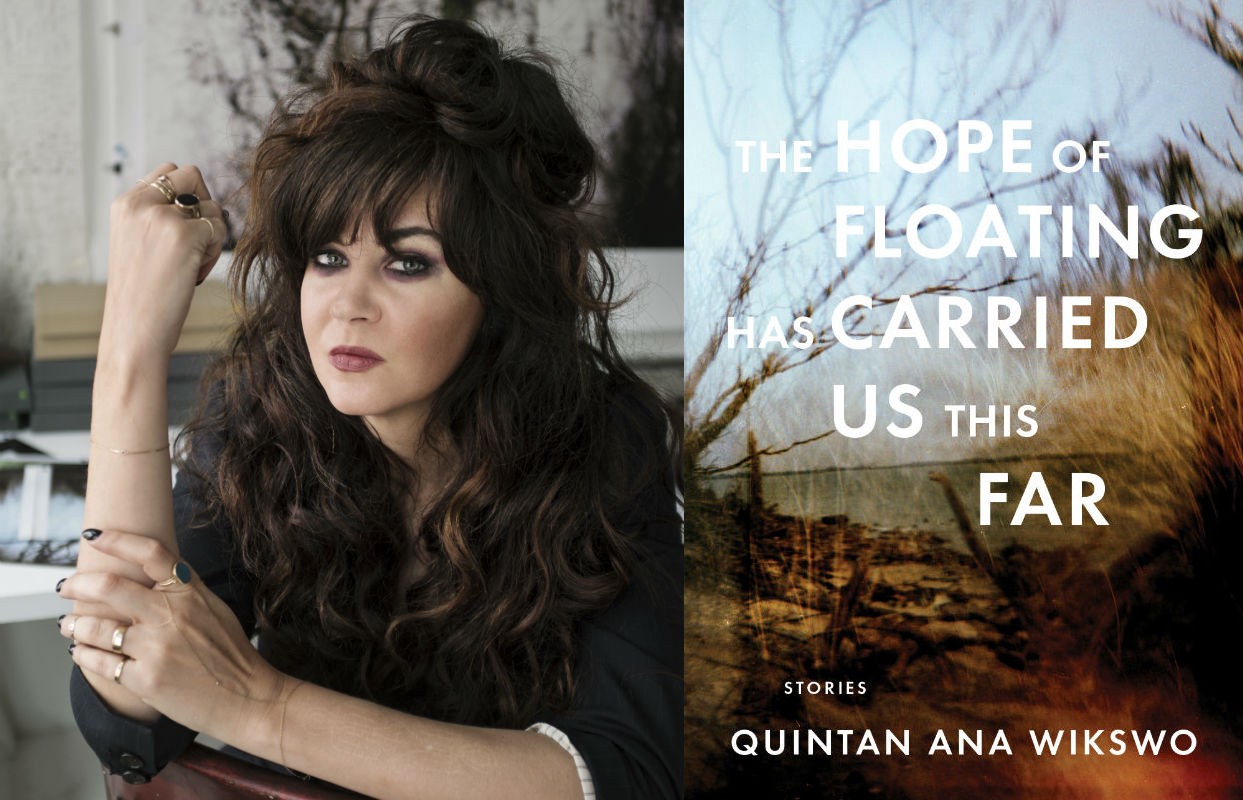
Falling Into the Unknown: An Interview With Quintan Ana Wikswo, Author Of The Hope of Floating Has…

Quintan Ana Wikswo’s debut book of stories and images, The Hope of Floating Has Carried Us This Far, is an intoxicating read that feels at once universal and personal, comforting and jarring, ethereal and earthy, and after reading it once I read it immediately again. And then I read it again. And then I couldn’t stop recommending it to everyone I know.

And then I wanted to talk with Wikswo about how she managed to do all that.

A former human rights worker, Wikswo now uses salvaged government typewriters and cameras to navigate unexpected corners of the world — often seemingly mundane or obscure places where she reveals a multilayered complexity of time, space, and emotional history. Many locations are forgotten or overlooked sites where crimes against humanity have taken place. Wikswo writes stories from these places, attempting to put words to the places themselves and the peoples who’ve inhabited them, bridging in her work the liminality of human experiences, making stories that read like poems with images that don’t serve to illustrate the text, but to deepen a reader’s feel of it.

The Hope of Floating Has Carried Us This Far is a successfully ambitious bending of form that takes the reader beyond the expected in both literature and art. There’s a lot of bending in Wikswo’s work — time, form, genre, narrative, historical record — which encourages the reader to explore the territories we may not have encountered in more familiar forms of story collection. As she says, a “disruption in the familiar invokes a questioning of the habitual.”

A month after the release of her new book, and after a busy season of launch events, Wikswo took a moment to answer my pressing questions about her work.

Sarah Dohrmann: The Hope of Floating Has Carried Us This Far is an intriguingly unconventional story collection — in all ways, these stories defy the classification of a standard fiction text. There are painterly, abstract photographs, and the fiction often reads and looks more like poetry, with sometimes only one line or fragment of text on a page. The narrators and characters of the stories are nameless and their genders are undefined. This slipperiness conjures the reader into a dreamlike, abstract space that nonetheless grabs us with the conventional aspects of stories, like narrative, plot, emotion.

Quintan Ana Wikswo: I’m fundamentally obsessed with the way we humans actually experience story — the narrative of existence. This is a slightly different focus than priorities of “the craft of fiction.” For me, writing is the desire to convey the kinetic beauty of visceral, messy passions of our lives and experiences — the shifting abstractions of memory, the contradictions and disharmonies of shared reality, the awkward internal juxtapositions of trauma — where beliefs and feelings and perceptions are a tangle that defies the story arc.

Arguably, the conventional aspects of story are an attempt to organize the human psyche, to combat the disorganization of it that I find so compelling. Narrative, plot, and emotion are present when we walk to the corner bodega. But the rest is almost a secret lodged inside the mind that we will never adequately convey to another living being, and perhaps not even to ourselves. These secrets are fragments and wholes, fantasies and fears, and we might spend the rest of our day trying to make sense of what we felt on the way to the bodega. That’s the unconventional aspects of story — trying to accommodate all the messy bits that don’t fit into what’s expected.

Most of all, I find it rather horrifying to think of forcing a reader to perceive something — a place, an event, a person, a feeling — exactly as I see it. I’m devoted to the niceties within the art of writing, but can’t seem to bring myself to pin down the wings of the psyche.

SD: The forms of the stories themselves look different from most short stories, too — they look more like poems. In “Holdfast Crowbiter,” for example, the young woman is learning to bite the heads off birds as she stands alone hungry at a seashore without fish. Rather than approaching it as a traditional narrative, you’ve left wide empty spaces in between sets of lines. This is typical for all the pieces, and meanwhile images are interwoven throughout that create additional breaks and pauses in the narrative. What surrounds your choices to actively disrupt the expected structure and form?

Quintan Ana Wikswo

QAW: I am intrigued by artwork of any kind that leaves the participant ample space to create an idiosyncratic, intimate relationship to the conjured world. Not so much to step into a pair of shoes that are waiting for me at the lintel of the artwork, but to tread through it barefoot and unsure of the path. There’s something of mythos to that — to go into the unexpected without a map. Empty space does that. Disorientation forces us to orient ourselves. I think we are all capable of that, once we get over the surprise.

The Crowbiter is hungry, and yet there are no fish. She must orient herself to a disconcerting reality and locate new abilities within herself. And so she grows. She acquires a skill — a gory skill perhaps, but one which feeds her family which otherwise would have starved.

As she stands there on the shore, her mind goes blank at the lack of fish. At the failure of the expected. At the consequence of starvation if she does not go off her map of the known. There is an internal pause in the psyche when we must re-conjure a world. We hesitate with the choices and absences of choices when we must occupy an unexpected gap in our comfort or knowledge. I am curious about those internal moments of psychological arrest. These are pivot points where choices are made. Where we feel the ache of our ignorance, or the excitement of unforeseen possibility. The use of photographs are intentional pauses in the pace of the narrative, exactly so the one holding the book can be released from my language and have a personal adventure in the space left open.

Nowadays, much of human written expression is not so dissimilar to taking the nine hundredth trip to Disneyland. Maybe there’s a new ride? They changed the formula for the funnel cakes?

As for the rest of my choice — much accessible and lucrative literature has become codified by iterative commodification. We read the same forms and structures over and over again, forgetting that once upon a time the short story was scandalous. Poetry was reserved for oracles and prophets. Nowadays, much of human written expression is not so dissimilar to taking the nine hundredth trip to Disneyland. Maybe there’s a new ride? They changed the formula for the funnel cakes? Snow White has a different scarlet dye in the fabric of her costume? With all due respect to the sensory rewards of tradition, we can’t grow — either as a discipline or as people — without pushing beyond them. I’m not sure my book pushes beyond as much as reaches out towards a wider tradition that calls upon ancient forms of human expression. A handprint on a cave wall. These kinds of adventurous enigmas that we can ponder — the fertile liminal space between communication and perception.

SD: There’s a universality to the work, and yet the voices feel deeply personal and resonant. It’s a bit eerie, because the universal and the intimate are often places where we struggle to reconcile our reality with a broader one. These feel like your experiences and your stories, and yet they feel somehow mythic and parabalistic. I don’t know how else to phrase it, but to ask: How’d you do that? Was that intentional and if so, to what purpose?

QAW: In my list of fundamental obsessions, I believe in something I can only call speculative nonfiction. For years, I worked with conflicting testimonies and oral histories of survivors of genocide and crimes against humanity — they might each speak of the same event, and yet there was an intimacy to their own voice that challenged the universality of what they’d all experienced. Sometimes authorities would begin to question the “truthiness” of an oral history when this line between universality and individuality became too prominent. But I care deeply about how the private psyche navigates a common experience.

These stories are drawn from historical events — behind each allegedly fictional story is an event that truly occurred in time and space. “The Double Nautilus” was drawn from my own time spent in the early days of the building of the Hadron Particle Collider. This construction exists as fact and history, but it was also an experience in which I had my own idiosyncratic tragedies and triumphs. In between the commonality of history and the individual specificity of experiencing history is a huge mystery. I love that space. The individual within the machine, each snowflake melting into invisibility.

In the first story, “The Cartographer’s Khorovod,” I was interested in how to make a nonfiction story sound like fiction. I can tell you that everything in it is true. But it still reads like make-believe. I don’t support the lines drawn between genres in literature, or disciplines. We are simply not that tidy, nor are our lives.

If someone asks a combat veteran, “what was it like to kill someone in battle?” the soldier’s official answer is nonfiction. But the words that go through the soldier’s brain, if decanted, might seem more like a poem, or a dream, or a story. Remembered through fracture, through metaphor, through the language of dreams, or prismatic internal processing. That’s my territory. That’s what I care about.

SD: There’s also a stream-of-consciousness feel to the work, yet it feels highly controlled, too. What’s the relationship between these two elements — one that feels associative, even free, and the other that keeps time and place and historical record in order?

Our society has privileged the coherent as a means of establishing authority.

QAW: This is probably where my decades working in the field of human rights trauma probably comes into view. Our society has privileged the coherent as a means of establishing authority. Even on a more mundane, everyday level, when we talk to an emergency room nurse after an accident, or a police officer after a dispute, we experience simultaneously the immense difficulty of placing our perceptions into a coherent form, and the immense pressure to do so quickly and convincingly. Most of us are familiar with the look of distrust when our coherent story changes. We can identify with those split-second moments when we must adjust and calibrate our psyches to quickly fill in the right bubble on the standardized question of, “what happened?”

This is a cognitive, and a biological, and a social codification that begins in childhood. We are taught not to leave cause for confusion or contradiction. We are to be coherent at all times. People who cannot speak coherently are assumed drunk, or mentally ill, and are promptly placed in institutions of one kind or another. Yet each of us, every night, experiences dreams that defy coherence. Then we wake up, and button it up with our workday uniform.

Quintan Ana Wikswo

I’m interested in those buttons. The ones that we fasten without thinking, and the ones that we force ourselves to fasten. What happens to us when the buttons fall off. In The Hope of Floating, each character has come to the end of the line of what makes sense. All the characters are scientists who experience the failure of their map to describe their territory. I think scientists, like preachers, are fundamentally fascinating in their obsession with trying to explain and order the profound mysteries of existence.

A crisis of faith, or a failure of a hypothesis, is this breakdown in order versus conceptual association, or even chaos. Why did my child die? Why is the earth not flat? These points represent a schism of comfort and trust in the human psyche that I want to address in every way possible. What happens when we fall into the unknown? What lives in the fissure between the known and the unknown?

SD: I feel like a lot of noise is made about clever art — art that comments on itself or points and laughs at life’s idiosyncrasies, or it’s so abstract and intellectualized that it’s clever because it’s insider in some way. To my mind, this is an act of intellectualizing. Your stories are deeply emotional, touching on subjects that many readers would rather avoid: femicide, genocide, erotic exploitation, etc.. What’s it like to make work that challenges a reader to feel? What responsibilities are inherent to that task, if any? Can you talk a little about emotionality in art-making?

QAW: I don’t set out to make emotional art. I sally forth into the areas of our psyches that nobody wants to talk about, and in that terrain I stumble upon emotion. It has led me to suspect that I was wrong in thinking nobody wants to talk about these things — it’s that over thousands of years we’ve constructed a constrictive society in which the forums for vulnerability are dangerous places to inhabit. We spend huge parts of our limited incomes telling our secret suffering to a paid professional therapist — even that tiny opportunity has only existed for a hundred years or so, and still faces stigma. Before that, we told our priests, and were often rewarded by being told that we would burn in the hellfire of eternal damnation.

How public must we become in order to receive justice? Immensely public.

There are huge repositories of individual and collective pain in human society — something we are forced to acknowledge in situations such as Ferguson, or Emma Sulkowicz dragging her mattress through NYU for months on end. Where, exactly, are we supposed to take this kind of pain? How public must we become in order to receive justice? Immensely public. And yet it is in public that witch pyres were built, and lynch trees roped up. We have been conditioned to hide anything that might disrupt, dismay, disconcert, or discomfort. Us, them, whomever.

My first two solo museum shows were surprising to me because the work was so personal I was astonished that major public institutions would create space for it. Then I began making friends with museum guards, who would tell me that people would sit on the benches and cry. I was dismayed, and then the guards would say, “oh no, they come multiple times to cry there. They say it’s the place they feel comfortable doing it.”

Quintan Ana Wikswo

We need more opportunities in which we are able to express a broader range of human experience besides obedience, shopping, and escapism. I don’t know what those look like, or how they operate, but I know that it goes hand in hand with making changes to the brutality and punitive nature of our states. Is prison the best place for an emotionally devastated heroin addict to experience emotion? Should we all die with only our psychologists knowing who we truly are?

Perhaps my artwork is emotional because I create it in places where emotions were punitively destroyed. I sit for months at an execution range in rural Czech Republic and then I write, and I make pictures. I sit for weeks at a site where my neighbor was raped in the desert. I don’t go there looking for emotion — I go there looking to understand. And since these things are beyond understanding, beyond rationality, all that’s left is the inchoate presence of emotion. And that, perhaps, is what makes it onto the page.

SD: There’s a lot bending here — time, form, genre, narrative, historical record. What say you of all this bendiness? What do you hope the reader to get out of it?

QAW: I hope the reader is encouraged to take a vacation from familiar constraints. It may or may not be enjoyable, but I hope that a disruption in the familiar invokes a questioning of the habitual, and perhaps some encouragement to those who cannot find a place for themselves within the boxes built for our containment.

SD: In the back of the book are notes on the methodology behind each story, which is unusual for a work of fiction. Why did you decide to include these notes?

QAW: That brings us back to the situation in which the family is in the emergency room, and the nurse wants to know about the suspicious bruise, but there’s only room on the form to say, “accident.” Or when someone says, “I go shopping at Barney’s all the time and security never checks my bag on the way out.” Or “why can’t I sit on the subway with my legs open?”

Storytelling, like emotions, like trauma, like love, is rhizomatic. These are uncontained stories.

I create my work through an intricate process of fieldwork that involves hundreds of bystanders, each with their own stories, each contributing to the context of the site or the situation that has drawn me in. The methodology is for them. It’s also for me. In “The Kholodnaya Voina Club,” the story tells about cold war test pilots who have crashed into the ocean and died, and live as ghosts underwater. This is a perfectly self-contained story that has its own satisfactions. But my context was my grief over someone I loved who was a cold war test pilot, and crashed and died, and still lives as a ghost within me. That’s my context. Behind each story is another story. Behind each consequence is another consequence. Storytelling, like emotions, like trauma, like love, is rhizomatic. These are uncontained stories. The methodology is a testimony that all stories carry on their lives without us, beyond us — they allude and invoke qualities that are extend infinitely over time and space and inhabit the human psyche in ways that cannot be contained.

As a child, I remember white people going to the beautiful grounds and gardens of plantations to have picnics and get married. Context lives in its own terrain, often wrapped up in secrets and stigmas and silences. There are many silences in the book which I placed there to suggest that something is missing, something is unsaid. Because that’s how our lives operate. And yet I felt a responsibility to provide context, to provide a few clues for the pretty trees. For the gaps within the gaps between the spoken and unspoken.

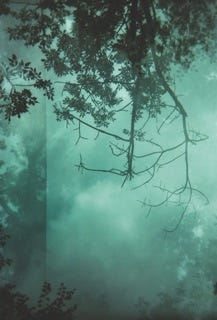
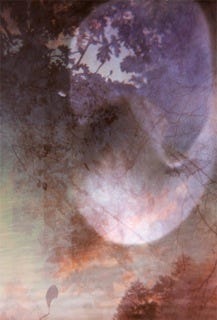
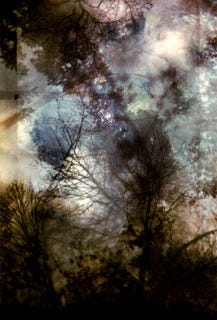
The images accompanying this interview are original artwork by Quintan Ana Wikswo and appear in The Hope of Floating Has Carried Us This Far (Coffee House Press).

Elena Ferrante Explains Why She Publishes Anonymously: “Books, Once They Are Written, Have No Need…

Hemingway did beer advertisements. Virginia Woolf spent a day puttering around London’s fashion houses for a spread in British Vogue. Legions of writers have held forth on Oprah Winfrey’s couch or Jon Stewart’s interviewee chair. But not Elena Ferrante, the pseudonymous Italian writer whom the NYTRB called “one of the greatest novelists of our time,” but who, since her first book was published in 1992, has clung stalwartly to her anonymity.

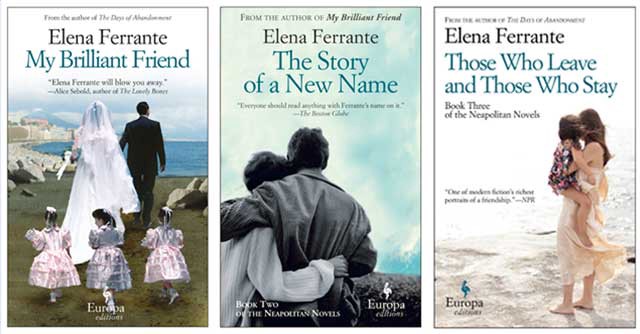
With the fourth and last of her acclaimed Neapolitan Novels due for release this September, Ferrante fever is at an all-time high. The jury remains hopelessly out on the author’s true identity, but, in a brilliant feat of anti-publicity publicity, Ferrante’s publisher Europa has released a letter to the London Review of Books written by the author in 1991 — prior to the publication of her debut novel Troubling Love— explaining her choice to shun the limelight.

Ferrante tells her publisher, Sandra Ozzola, that she will not do any publicity: “I’ve already done enough for this long story: I wrote it. If the book is worth anything, that should be sufficient.” She elaborates:

To explain all the reasons for my decision, is, as you know, hard for me. I will only tell you that it’s a small bet with myself, with my convictions. I believe that books, once they are written, have no need of their authors. If they have something to say, they will sooner or later find readers; if not, they won’t.

Tough luck for those kept up at night by Ferrante’s elusiveness. But in an age when the publicity campaigns for highly anticipated novels routinely reach onslaught proportions, and Man Booker Prize nominated novels boast their own Twitter accounts, it’s refreshing to see a writer committed to dodging the bandwagon at every turn.

You can read the entire letter on the Bookshop blog of the London Review of Books.

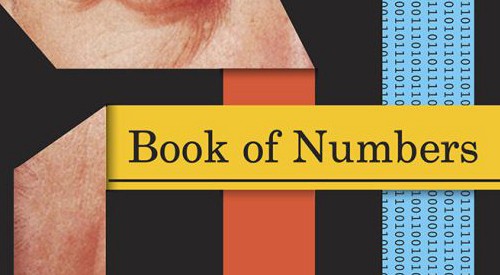
Voids and Fortunes: Book of Numbers by Joshua Cohen

by Zack Hatfield

We are all made of ones and zeroes; not atoms, viscera or memories, but assembled from differing yarns of binary code. Or so explains the narrator early on in Joshua Cohen’s latest novel, Book of Numbers (Random House), a sweeping opus concerning identity in the cyber era. “The ones our fortunes, the zeroes our voids, our blacker lacking places,” our narrator explains. It’s a poetic, if deeply nihilistic outlook that apotheosizes the book’s theme of how rooted modern technology has become in our lives.

The landscape of the Internet, like the mind, is complicated to map in fiction, its parameters immeasurable, its horizons always broadening. Its vast networks mirror the cerebral avenues Cohen sends us through in this story, which revolves around a novelist manqué ghostwriting a memoir for a “googlionaire” tech tycoon who shares his name (the book dubs him Principal, making confusion less likely). This doppelgänger — who may remind readers of Steve Jobs or other tech moguls — owns Tetration, a corporation comparable to Google and Apple. We follow the firm from its origins in programming counterculture as it moves from producing hardware to computers to phones, eventually creating surveillance technologies to monitor Americans. Fortunately, Book of Numbers refrains from full-blown Silicon Valley satire (too easy) or a type of Brave New Novel for our generation (too uninspired — see: The Circle), though the farcical gears gyrate throughout. Instead, Cohen evokes a panorama of everything leading up to the present with a constellation of topics that include the history of the search engine, the publishing industry, religion and art. It’s a work that, like much contemporary literary fiction, can be considered as much cultural criticism as a product of the imagination.

The extravagant altitude of Cohen’s authorial voice is one that requires acclimation. His language teems with digital argot, the sentences frequently run-ons, his paragraphs overflown and referential. At times the fictional data Cohen shoehorns into the novel threatens to freeze the bandwidth of the human cerebrum processing it. The salvo of neologisms, the jarring lyricism, the well-cadenced language steeped in self-indulgence all make comparisons to Pynchon and Wallace inescapable. Yet there’s also a humor in the vein of Phillip Roth or even Woody Allen. The distracted neurosis of the narrator reflects the paranoia and work ethic we’ve inherited in the digital age (“just completed an email, nonfiction,” he says when asked if he’s working on any writing). But just when one is beginning to become fluent in the rhythms of the ghostwriter’s thought pattern, his point of view is traded for hundreds of pages to the less interesting character Principal, who refers to himself in the first person plural and indulges in startup zen-speak while revealing his life story. Partly told in emails, code and transcripts between the two Cohens, the middle section lags. Following the liveliness of the first fifth of the novel, it feels like shifting down a few gears on Cohen’s information superhighway.

The thematic pursuit of Book of Numbers unravels when we consider its similarities to the Internet itself. Both testify to our vanishing attention spans, the paradoxes of communication made easier. They yield to the grammar of chaos. But throughout the weaker parts of the novel it can feel like there are too many tabs open. In the recent book Where I’m Reading From, critic and novelist Tim Parks writes that one flaw of the novel in the digital age “is not that it doesn’t participate in modern technology, can’t talk about it or isn’t involved with it,” but that there is a “slow weakening of the sense of being inside a society with related and competing visions of the world.” Culture is forsaken for accessibility. Parks’s diagnosis, that novels invest too much in universality, is reversed in Book of Numbers, whose broad cultural themes are made possible with prose that couldn’t care less about being accessible. A sacrifice is made as Cohen’s gratuitous language — simultaneously unreadable and virtuosic — is what imparts the disorder of the Digital Age so effectively. In a world where almost everything is at one’s fingertips, Cohen makes sure his writing isn’t.

Like many postmodernist and post-postmodernist endeavors, Book of Numbers struggles at times to find convincing pathos, both hamstrung and propelled by its tangle of pragmatisms and synaptic imagery. But as fictional Cohen’s cannabalistic ego is revealed (he blames the failure of his novel on 9/11, which occurred a day after his publication date) an emotional cavity in the book feels only necessary to reveal the vanishing humanity in an era avalanched with algorithms, of so many usernames and passwords, of endless pixels. As the reader wades through the narrator’s experiences across several timezones and mental states, it becomes painfully clear that in a technological world where it is impossible to be “plausibly alone,” as he claims, loneliness still abounds.

Book of Numbers alludes to the friction between the online world and the art of the novel; consider its opening line: “If you’re reading this on a screen, fuck off” (despite the sheer weight of the book’s nearly 600 pages, I felt guilty and got the physical copy). Although it could be understandably placed next to, say, Ben Lerner’s 10:04 on the shelf — both are bracingly of-their-time metanarratives that concern NYC novelists prone to self-conscious digressions — Cohen’s novel has much less poetic chemistry than Lerner’s, more complacent as a screed that helps unpack the post-9/11 world. Though it might prove a convincing time capsule, the book redeems because it’s ahead of its time. Cohen would probably scoff at those who call this an “Internet Novel,” and he’d be right to. With its acrobatic diction and ambition, it indicates that the Internet has infiltrated the matrix of our psychology, our culture and everyday lives. And what is the novel supposed to do if not provide insight into our minds and everyday existence? Despite its glitches, Book of Numbers earns its applause through a magisterial attempt to solve life’s grand equation, one that storytellers have been and will most likely be computing in every eon, with or without wifi.

Book of Numbers

by Joshua Cohen

Powells.com

PopSlate’s Nifty New Gadget: iPhone Case with E-Ink Screen

PopSlate has created the ultimate iPhone case: one that not only protects your precious phone, but also includes an E-ink screen on the back of the case.

E-Ink is known to have advantages over LCD displays when reading. It’s ideal for black and white text, and it also more closely resembles paper. Perhaps if we choose E-Ink over LCD when reading electronically, we can pretend we’re holding a real book made of real paper.

Plus, Gizmodo reports that E-Ink screens don’t need power to keep their images. Problem solved! We all know how terrifying it can be when our phones die — especially when we’re relying on it for one pertinent, timely piece of information. (Such as exact directions to a new neighborhood, or a short poem to impress a first date.)

You Should Never Go Home: Fiction and the Suburbs in Judy Blume and Karolina Waclawiak

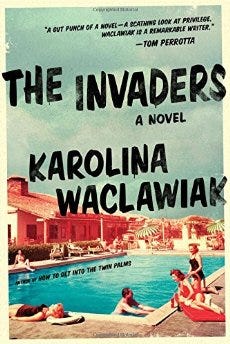
Recently I found myself driving around the suburbs I grew up in between reading Judy Blume’s 1978 “stunning debut in the world of adult fiction,” Wifey, and Karolina Waclawiak’s new novel, The Invaders. Cruising past my old high school and other places I have had no reason to revisit in over a decade between reading those two books seemed appropriate since both novels focus on female protagonists who’ve placed their faith in shoddy husbands and the faulty cure-all of suburban living. Passing streets I’d tried to forget reminded me just how bleak the suburbs can be when you feel like you don’t belong in them, something both Waclawiak and Blume explore in their books.

The Invaders book

“The less thinking you do the better off you’ll be,” Blume’s Sandy Pressman is told by her husband, Norman. 37 years later, the husband in Waclawiak’s book is sexually alienated from his wife, Cheryl; he doesn’t repeat what Norman says, but he and the rest of the people in the couple’s Connecticut neighborhood adhere to that train of thought. While Cheryl’s sex life is nonexistent, Sandy’s is regimented and boring. It happens on the same night every week (“unless I have my period”), it lacks passion, and Norman finds the idea of performing oral sex on his wife absolutely revolting.

Blume’s Emma Bovary-ish protagonist Sandy is a woman bored with her lackluster marriage — in need of an escape if only in the arms of other men; everything is falling apart around Waclawiak’s Cheryl, but she is paralyzed by it, and her lack of action could spell her downfall. Like the neighbors in Blume’s book, Cheryl’s neighbors in Little Neck Cove live with blinders on, in a way that sits perfectly between Shirley Jackson ominous and David Lynch askew — like you’re waiting for something bad to happen but don’t know exactly what.

Even though Blume’s book came out before Waclawiak was born, it feels just as contemporary. Reading both at the same time has me thinking it’s time for authors to get out of the city and start exploring the suburbs again. There’s real darkness out there just waiting to be mined for fictional gold.

Wifey Blume

The American suburbs as we know them, once considered the “borderlands” outside major cities, started to develop towards the middle of the 19th century before the beginning of the Civil War. They were suited to people who could find jobs outside of the metropolitan area, or who had money to make the commute back into places like Manhattan, Chicago, or Philadelphia. The places where Blume and Waclawiak’s characters live in the 20th and 21st century aren’t all that much different. They are filled with mostly white people who can afford to live somewhere picturesque and quiet. They don’t like outsiders: people of color aren’t welcome, are instead eyed suspiciously and called coded names when they come to clean the houses in Blume’s New Jersey neighborhood. They’re all trying to achieve that the American Dream, and a big part of attaining that it is by being as ignorant as possible. This is slyly skewered perfectly in The Invaders: When an old Mexican fisherman is caught urinating in the streets of Waclawiak’s town, it’s a sign of how supposedly unsafe things have become, and the neighbors decide to erect a physical wall to block out what they’ve already restricted in their minds.

I passed through one of the gated neighborhoods that I lived in as a child. The neighborhood association said gates kept non-members from using the pool, but everybody knew better. I had dinner with an old friend from high school and she told me that the place was like a ghost town following the 2008 financial crisis. People moved out, families broke apart, jobs were lost, and the housing market crumbled. Things have since picked up, but I wondered what happened to all the families I knew, the ones you smiled at and who smiled back at you, but who you always heard secrets whispered about when they weren’t around. Things are supposedly better now, a little more stable. But as I drove north to another neighborhood I also once lived in just outside of Chicago, one that was supposed to be the “next up-and-coming city” but had seen its best chances dry up when the businesses didn’t follow the housing developments, things felt darker. If I was a fiction writer, I thought to myself, this would make the perfect setting for a story or book with the closed chain stores, at-risk mom and pop businesses barely hanging on, and abandoned half-built townhouses that look like they’d been given up on a few years earlier. I passed my childhood movie theatre that was now shuttered, and empty storefronts where I had bought gym clothes. This emptiness is what will always be underneath the shiny façade of the suburbs.

This emptiness is what will always be underneath the shiny façade of the suburbs.

The suburbs were built to crumble. They’re places built on lies and kept up by blind eyes. Some fiction writers have explored this; maybe the most notable being John Cheever, who sometimes gets the tag “Chekhov of the suburbs.” But books like Wifey and The Invaders, although written and published with a few decades between them, don’t shy away from looking at what goes on behind closed doors. The suburbs are very dark, very real, and very indicative of contemporary American ennui. And although the big cities hold a million stories, authors who go to little towns where everything is supposed to be perfect but ultimately fall short return with unforgettable stories. Wifey is one of the truly underrated novels of the 1970s (although it sold well upon release, it has taken a backseat to Blume’s classics), and The Invaders is easily one of the best novels of 2015. Those two books alone prove that writers should make it out to the ‘burbs more often.

photo of Chicago suburbs via Flickr