Where The Story Starts: An Interview with Annie McGreevy

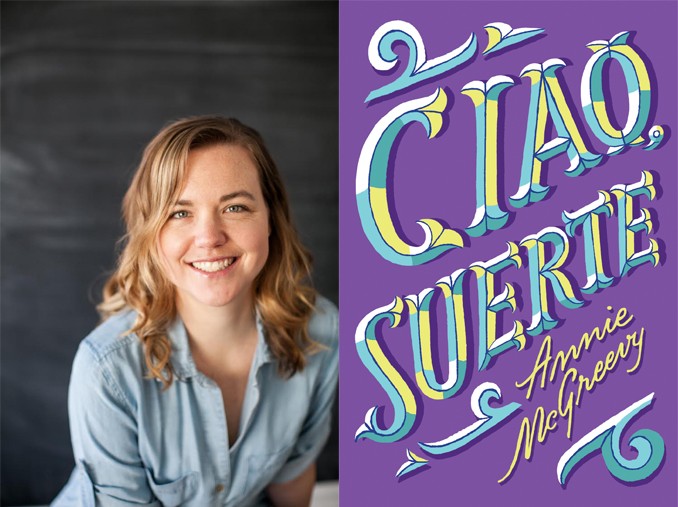
Annie McGreevy’s debut novella Ciao, Suerte is excerpted in the newest issue of Recommended Reading. In the interview below, McGreevy discusses her interest in the subjects broached by the novel, and the process by which the work came to fruition.

Emma Adler: According to Deena Drewis, who wrote the introduction to the excerpt, you started out writing your novella, thinking you were “doing it wrong” and that no one would ever see it. Is this an attitude that persisted until you finished the book, or did you reach a point, during the writing process, when you realized that you had something of potential value on your hands?

Annie McGreevy: The attitude that it was “just for me” and “just for fun” definitely persisted through the first real draft of it, until I showed it to anybody, yes. I’m part of a really supportive writing group where it’s easy to show up with a vulnerable draft, and once I workshopped it there and got some positive feedback, I realized it was workable.

I guess, on some level, I felt that it could get good at some point even in the early stages. I think this is a big part of what draws me to the writing process — feeling that something could go either way, get pretty good or fail really hard. I’ve got an embarrassing number of stories in drawers that have failed really hard.

Adler: Ciao, Suerte does not just span continents and decades, but also age groups, focusing on multiple generations of a family blown apart by war. How did your approach change, writing from the close-third perspective of an old woman, as compared to that of a young man in his twenties? As a young writer, what are the challenges of attempting to channel a character who is much older than yourself?

McGreevy: Beatriz, Giancarlo and Eduardo are the first elderly characters I’ve ever written seriously, and they did present real challenges. Beatriz has such clear goals, though, so I focused on those in order to manage her. Giancarlo was trickier, and I wrote tons of pages from his perspective that ended up getting cut.

The main difference in my approach to characters of different ages really had to do with time. Beatriz’s mission is on a timer; she wants to find her grandchild before she dies. Miguel and Inés are very young and carefree. I think this is reflected in the way the story is written and the things they do: hang out with no plans at all and blow off important things like final exams. Miguel is spending an entire year doing nothing at all.

Beatriz, Giancarlo, and Eduardo are all very in touch with their mortality and on missions to accomplish certain things during their lifetime, and I think that fact was ultimately driving their individual narratives: Beatriz wants to find the child, Giancarlo wants to get over the heartbreak of losing the child, and Eduardo wants to convince himself that he did the right thing. They’re all old enough that death creates an urgency for them. Miguel and Inés, because they’re in their early twenties, live their lives as though they’re immortal.

Adler: Ciao, Suerte is set against the historical background of the Dirty War in Argentina. How did you first become interested in this period of Argentinian history? Have you spent much time there?

McGreevy: I lived in Madrid from 2003–2007 and knew lots of Argentine people there. They have this really distinct way of speaking that’s lovely to listen to. Julio Cortazar was already one of my favorite authors and I quickly became a huge fan of Argentinean music, the yerba mate tea, and interested in the culture generally. In 2012, I read an article in The New Yorker that detailed the story of many of the illicitly adopted children of the Dirty War who were found through DNA tests and the efforts of Las Madres y Abuelas de La Plaza de Mayo, and reunited with their grandparents. The story was fascinating on a personal and political level.

I’ve never actually been to Argentina! I keep trying to go, and then life keeps getting in the way. Which is a problem I’d like to rectify ASAP.

Adler: The opening chapter of Ciao, Suerte (included in the Recommended Reading excerpt) describes the gradual breakdown of Beatriz and Giancarlo’s marriage following the death of their son. In a sense this is the tragedy after the tragedy, which includes the struggle to recover, move on, and achieve closure. How did you decide to begin the story at this point?

McGreevy: Well, there’s that old question about where to begin any story, using the example of the couple on the eve of their wedding: the guy has his bachelor party and orders a stripper, and both he and the stripper are extremely drunk. When they wake up in the morning, on the wedding day, he realizes that the stripper is the woman he’s about to marry. He, of course, had no idea that she was a stripper. This example is used to discuss the question of “When should this story start?” When they wake up, because that’s the most exciting part? Or the night before, so we can get to know the characters, and then be devastated when we realize they’re not who their partner thought they were?

I’m definitely of the opinion that we need to know the character before they lose something big. I wanted to start the story with Beatriz and her struggle, so that, when she finally meets Miguel later on, it would have more context and meaning.

During the editing process with Deena at Nouvella, Giancarlo worked his way into the story with more strength. I realized that couples are often not on the same page about the way to deal with a tragedy, and this was an opportunity to explore something more personal and less political.

TED WILSON REVIEWS THE WORLD: CLIFF HUXTABLE

★★★☆☆

Hello, and welcome to my week-by-week review of the world. Today I am reviewing Cliff Huxtable.

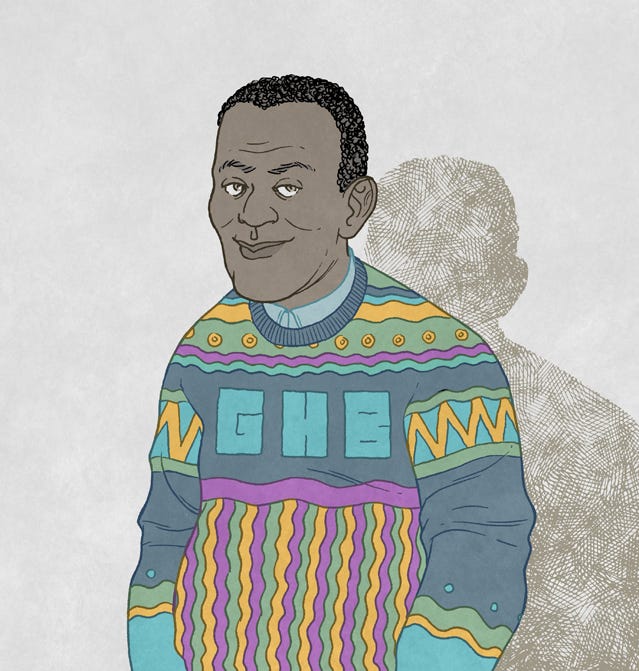
Cliff Huxtable was a fictional character in an old sitcom. He was a loving father, husband, and son, with a friendly disposition and thoughtful approach to life. The name ‘Huxtable’ sounds like ‘huggable’ and makes me feel warm and safe. He had no enemies. He would bring women into his basement to look at their vaginas.

One of his most notable traits was the amazingly large sweater collection he owned. Most people didn’t care much for the style of his sweaters, but he wasn’t swayed by popular opinion. He did whatever he wanted and no one could stop him. He had dozens and dozens of sweaters, dating back decades. In fact, he had so many sweaters that he could wear a different one each week for years on end without repeating any. That’s a guy who really loves sweaters.

Some might say his sweater collection bordered on obsession. Why did he need so many sweaters? Why couldn’t one sweater be enough? What drove him to buy sweater after sweater? In a way, it’s almost like he didn’t care about the sweaters, the way he would wear one and then discard it, immediately searching for his next sweater. What a complicated guy.

He probably needed a second closet devoted just to his sweaters. Most likely a secret closet or something hard to get to, to keep the sweaters safe. You can’t have that many sweaters without your wife finding out though, so she must have been okay with it. I don’t know if she ever tried to get him to quit it already with the sweaters, or if she was resigned to the whole thing.

cliff

If you want to watch videos of Cliff and his sweaters, you can find a lot online. When I watch the videos I can’t concentrate on the jokes. I get too distracted wondering where he is now. The show went off the air so does he still exist? He could be brought to life at any moment if they reboot the show. And because he’s just a character, anyone can play him. Like how different guys play Batman all the time. I’d like to see someone more comical in the role of Cliff Huxtable. Someone like Mike Tyson.

BEST FEATURE: Cliff is really funny from the neck up.
WORST FEATURE: At the heart of it all, something about him seems really passionless. As if he’s just going through the motions and is dead inside.

Please join me next week when I’ll be reviewing a race car.

Illustration by Jon Adams.

AUGUST MIXTAPE by Sarah Gerard

They Don’t Love You Like I Love You

My new chapbook “BFF” dissects my 17-year best friendship with someone who has since slipped into another life. Each of the songs in this playlist holds some significance in that context — these are not songs I was listening to while writing the book, but songs we listened to together or, importantly, didn’t. “BFF” is written as a direct-address to its subject, so this playlist is written in the same style. I hope you enjoy it.

1. No Doubt — Don’t Speak

“Tragic Kingdom” came out when we were in middle school and Gwen Stefani was the coolest woman in the world. She possessed all the confidence and style we wished we had. You came over to my house in the afternoons and we made music videos for every song on this album with my dad’s Sony camcorder.

2. Thee Oh Sees — Carrion Crawler

Time has passed. This is a song I’ve heard you like but we’ve never listened to it together. It’s a really good song — you’ve always had good taste in music. We used to share recommendations all the time. I spent entire nights making you mix CD’s with the cases and sleeves collaged. We drove around aimlessly for hours introducing each other to new bands. I miss it.

3. Johnny Cash — Ring of Fire

On the day I lied to you about being a fan of Johnny Cash when I had only just begun to familiarize myself with his work, you asked if I liked this song and I didn’t know which song you were talking about. You tried to sing it to me but you’re kind of a bad singer — sorry, it’s true. I didn’t recognize it.

4. Yeah Yeah Yeahs — Maps

The Yeah Yeah Yeahs were your favorite band for maybe too long. Maybe they still are. You would talk about Karen O like she was a personal friend of yours. I think you met her backstage at a show or two. You loved saying, “They don’t love you like I love you.” You started collecting maps.

5. Get Up Kids — Don’t Hate Me

We were the perfect age for emo when it was a thing. I bought the Get Up Kids’ “Something to Write Home About” and you got “Four Minute Mile” and we debated about which was better. I still think mine was better. But yours is grittier, and I think that’s appropriate.

GLT9-cover

6. Bob Marley — No Woman No Cry

You always loved Bob Marley, had a totally Jamaican-themed mind (you also loved Bad Brains), and not just because of the weed, but because Bob Marley sings about hardship, and you identified with hardship. In Bob Marley, you saw that despite your hardship, you could also live chill. Like “Your blues ain’t like my blues” — your tattoo, which you’ve since covered up — which contains the relaxation of the contraction in the midst of its strife. You told me you dated a Marley.

7. Car Bomb Driver — Brookwood Girls

Car Bomb Driver was our town’s punk band so you befriended Car Bomb Dave and talked about him whenever you saw the chance. This song was special to you, like he’d been thinking about you as a Brookwood girl, which you were. The chorus made you feel cool because you, too, were a rebellious teenage girl who couldn’t be controlled.

8. Gogol Bordello — Wonderlust King

This was the last show we went to together, at the Emerald. My hair was still short and I wore a cardigan and pants, and was so hot I was sweating. You took a picture of me from above, touching noses with our other friend, who didn’t speak to me for a year after you and I stopped speaking. You said, “I’d like to do a series of photos like these. I think it’d be swell.”

9. Joni Mitchell — A Case of You

I never knew Joni Mitchell meant anything to you. You liked this song somewhere on the Internet and I noticed and felt tricked. This was the song I played for my ex right before we broke up, and you and I stopped talking a few months later. It’s like you knew and were sending me a secret message, or a secret slap in the face.

10. MGMT — Kids

This was the era when you lived in the little gypsy boat apartment on the south side of downtown. You wore a long, grey, empire-cut cardigan with most everything, and you and your daughter shared a bed — you’d shared a bed for some time already. Once, you guilted me into coming to Ladies’ Craft Nite and I didn’t want to come. I was mad at you and pouted the whole time, and you said I’d disappointed you.

11. Blink 182 — Lemmings

When I bought “Enema of the State”, you’d already been listening to Blink 182 for two years. You told me “Dude Ranch” was better and it is, undeniably. It’s hard to choose which song on this album reminds me most of you, but I seem to remember this being the first song from it that you played for me, and I can imagine what it sounds like when you say the word lemming.

12. Goo Goo Dolls — Black Balloon

You fell in love with the Goo Goo Dolls the year we lost our virginity. I’m back in your bedroom listening to this song: the window overlooking the kitchen, your walk-in closet, your vanity mirror. You telling me you’d done whip-its with a group of kids whose names I’d never heard. By the end of that year, you were put in the girls’ home.

13. Beach House — Zebra

You’ve always been on the edge of cool. It’s scared me at times; I could never keep up with you, but never knew it until after the fact. Your taste was better than I gave you credit for. Better than mine. You knew hip, but I didn’t know you knew hip because you never made it work for you; you were always sabotaging yourself, always failing. To me it all sounded like bullshit. I should have listened better.

***

— Sarah Gerard is the author of the novel Binary Star (Two Dollar Radio), which NPR calls “a hard, harrowing look into inner space,” and two chapbooks, most recently BFF (Guillotine). Her short fiction, essays, interviews and criticism have appeared in the New York Times, New York Magazine’s “The Cut”, Joyland, the Paris Review Daily, BOMB Magazine, and elsewhere. She teaches writing and writes a monthly column on artists’ notebooks for Hazlitt.

The Novel as Self: The Small Backs of Children by Lidia Yuknavitch

“Every self is a novel in progress. Every novel a lie that hides the self,” the unnamed writer central to Lidia Yuknavitch’s The Small Backs of Children tells us after cataloging a litany of personal traumas, disasters, and loves. The writer is conscious of the act of writing and aware of the reader, at times directly addressing us: “This, reader, is a mother-daughter story.”

But to simplify Yuknavitch’s novel to the writer’s prescription is to miss the wider picture. It’s important to remember how she speaks of the self: we are novels en media res, and this construction hides us, even as we create.

This is not what stood out initially when I read The Small Backs of Children earlier this month. My inability to fully understand what I had read weighed on me first. What seems like a straightforward, if not unusual, story based on the cover’s description is far more convoluted than any summary can explain. To start: there is a young girl — “no longer a child” — age six who walks into the snow a year “after the blast that has atomized her entire family in front of her eyes.” The girl observes a wolf chew off its own leg to free itself from a trap, and then “pisses” on the trap and the bloodied leg.

“This is how the sexuality of a girl is formed — an image at a time — against white; taboo, thoughtless, corporeal.”

And with this sentence, and the alarming image of an orphan creating and forming her perception of image, later art, at a site of violence, Yuknavitch lays out the thesis of her novel: life, sex, and violence collide to form something larger: art.

The nameless young girl isn’t the only practitioner. There is the photographer who takes the photo of the young girl escaping from her burning home: the photographer, an American, feels intrusive in a place where “none of this has made the news,” a stand-in for any number of recent conflicts in Eastern Europe. The photo will pass hands and gain the photographer recognition and awards, and fall into the hands of the unnamed writer — a former lover of the photographer. The photo resurfaces and unlocks the pain the writer keeps just below the surface — the birth of a stillborn child — dooming her to a hospital bed, lying depressed while she rests in the “vast whiteness” of memory and time.

The Small Backs of Children requires the reader to let go and give into the prose and story. Why do the writer’s friends so determinedly latch onto the idea of saving the young girl and bringing her to the writer? Once I had finished the book, I knew I had read something brilliant; I just could not quantify it, which is perhaps the wrong impulse. I read interviews with Yuknavitch, trying to read between the lines, and found something direct instead: Yuknavitch had had a stillborn daughter, which she addresses in her 2011 memoir The Chronology of Water. I read it, and the plot lines began to converge, so that I questioned who was the writer of The Small Backs of Children and who was the writer of The Chronology of Water?

While it’s an assumption to say that the writer is a stand-in for Yuknavitch, recall the writer’s lines: “Every self is a novel in progress. Every novel a lie that hides the self.” In that sense, Yuknavitch’s novel reads as the creative proof of her memoir: while she shies away from redemption narratives, she ends The Chronology of Water with this instruction: “Make up stories until you find one you can live with.” Yuknavitch’s personal journey towards that story — filled with “rituals of pain and pleasure” and art — is mirrored in her novel. The story of the writer’s friends uplifting her needs and caring for her in such a radical way is a brave act of family making. Yuknavitch notes at the end of her memoir that these families do not need to prescribe to any set heteronormative standards. It’s a serendipitous literary echo found in Maggie Nelson’s hybrid memoir The Argonauts, published this year by Graywolf press.

The Small Backs of Children is ultimately an examination of the spectrum of creation — whether of self or art — and how often creation can uneasily exist along with destruction.

The Small Backs of Children

by Lidia Yuknavitch

Powells.com

The Internal Adventures Of Urban Man As Murder Squad Detective: An Interview With John Burdett…

John Burdett is a British author whose vastly entertaining series of novels feature Sonchai Jitpleecheep, a half-Thai, half-American detective who bears the notable distinction of being the only honest cop in Bangkok. Featuring sardonic insight into both Thai and Western culture aplenty and plots which refuse to play by detective story rules, Burdett maneuvers us behind the eyes of Detective Jitpleecheep through Thailand’s City of Angels in all its durian-scented, haze-choked wonder.

The Jitpleecheep books are your antidote to the dumb Bangkok of Hangover II, the idealistic haze of backpacker legend, and the Orientalist exoticizing of a thousand forgettable pulps.

The latest Jitpleecheep book, The Bangkok Asset, was released this week by Knopf.

Court Merrigan: How accurate do you think your portrayal of the Thai milieu is? Is verisimilitude part of your aim? The language Jitpleecheep uses — I’m thinking of the numerous asides to “you, farang” — lend a certain authority to his view of Thai culture, cuisine, religion, etc. And then Jitpleecheep is himself half-farang. Would a Westerner debarking in Bangkok discover anything like Jitpleecheep’s world?

John Burdett: On the one hand I’ve been much encouraged by Westerners debarking in Bangkok and congratulating me on the accuracy of my descriptions. On the other hand, as a resident of the city with a Thai partner I am constantly reminded that my learning curve has not stopped climbing. Also, of course, Thai society is changing all the time. We tend to think of Western societies in a constant state of change, which is true to some extent but often exaggerated. On the other hand, the emergence from a Southeast Asian Buddhist Kingdom of the old kind into a modern state is dramatic and occasionally awesome. Then again there is the personality of Sonchai himself. He has one foot in both cultures and tends to describe one from the point of view of the other. This is deliberate. When asked I tend to describe him as Urban Man: he knows a great deal about the world from the Internet, is very smart, but has no political power himself and is at the mercy of forces — often criminal — beyond his control.

CM: So would you say you write “about” Thailand, the way Flannery O’Connor wrote “about” the American South, Ed Abbey the American West, Dickens London? Have many Thais read your work, and commented on your accuracy, as have Westerners?

I believe what I have done is adapt a stream of consciousness technique so that the city, the country and the man in the middle are all part of the same thing.

JB: I would not say I write ‘about’ Thailand — or anywhere else. To write ‘about’ somewhere is to use the very familiar subject/object approach. I believe what I have done is adapt a stream of consciousness technique so that the city, the country and the man in the middle are all part of the same thing. This is the inestimable advantage of first person narrative. Bangkok, in this context, is whatever is inside Sonchai’s head as he moves around. A literary type will immediately recognise a debt to James Joyce, which no doubt is true, but for myself I see this technique as a natural evolution from my interest in Buddhism, which, long before Joyce, pointed out that subject and object are an illusion created for the necessity of communication and survival. It is interesting, by the way, that this idea was first broached in the West by Ludwig Wittgenstein, a contemporary of Joyce, who was much influenced by Schopenhauer who was the first to bring Buddhist philosophy to the attention of the West.

Those Thais who read my books are of necessity fluent in English and therefore constitute a special class. They tend to fall into two categories: Thai women with long-term western partners, and Thai men who have been educated abroad. The first category tend to find my portrayals of Thai woman/Western man hilarious. The second are delighted by the extreme personalities of characters like Vikorn, whom they seem to recognise.

CM: Do you think Jitpleecheep’s ability to see into the past lives of others is a superpower? I mean, it makes sense in a Thai context where many are presumed to have the ability, but to the Western reader such a power seems quite otherworldly. If it’s not a superpower … what is it?

JB: In Buddhism there are no superpowers, there is simply an underlying reality to which we are largely blind. Because of his intensity and honesty Sonchai is able to lift the veil a little from time to time. He is certainly not fully enlightened but belongs to that category the Buddha called ‘enlightening beings.’ That is to say he is in the grip of an internal dynamic which reveals unexpected truths from time to time — at a cost, for he has still to survive in a humdrum and corrupt world ruled by the likes of Vikorn.

CM: I could pick out any one of dozens of Jitpleecheep’s asides, some of which have made me guffaw right into my coffee or bourbon (depending on the time of day), but this one has always stood out to me, from the first Jitpleecheep book, Bangkok 8:

There will be a massive shift of power from West to East in the middle of the twenty-first century, caused not by war or economics but by a subtle alteration in consciousness. The new age of biotechnology will require a highly developed intuition which operates outside of logic, anyway the internal destruction of Western society will have reached such a pass that most of your resources will be concentrated on managing loonies. There will TV news pictures of people fleeing from supermarkets and pressing their hands to their heads, unable to take the banality anymore. The peoples of Southeast Asia, who have never been poisoned by logical thought, will find themselves in the driver’s seat. It will be like old times, if your time line stretches back a few thousand years.

Anyone who’s ever stepped foot in a Whole Foods understands, I think! How literally are we take this aside? Clearly Jitpleecheep believes it, but should your reader?

In some ancient Buddhist traditions the fate of the small-minded was rebirth as insects.

JB: This is an amusing outburst by Urban Man as described above. Sonchai’s great resource is his humour and I think he keeps his tongue in his cheek during this harangue. But that does not mean he is not right in his analysis. With respect, I think you may have answered your own question here: Anyone who’s ever stepped foot in a Whole Foods understands. What will be the fate of a society committed to petty detail in the absence of any uplifting quest of the kind that drove our ancestors? What happens longer term when the great alluring horizons of yesterday have all shrunk to a shelf in a Wal-Mart? Surely nobody knows as yet. Like Sonchai, I would suggest the augurs are not good. In some ancient Buddhist traditions the fate of the small-minded was rebirth as insects. Or, one might support Sonchai’s reasoning by reference to history. Prior to modern times the best example of an empire governed exclusively by written law was the Roman. It was eventually superceded by the extremely fanciful, intuitive and organic medieval period best represented by St Francis of Assisi, who talked to birds and befriended wolves — and the troubadours of Aquitane.

CM: Thailand has certainly undergone massive changes since the Vietnam War; even since I first stepped foot in the Land of Smiles in 1998, the pace of change beggars belief. And yet, a core of “Thai-ness” seems to remain, from the ever-present scent of incense to the durian hawkers to the utter disregard for road safety. Is this because people who recall the old days just haven’t died out yet?

You still find Thai essence driving under the surface, even at the most sophisticated levels of society.

JB: Like any ancient society, including European ones, there is an essence at the center of the national character. A lot of the issues currently straining the European experiment can be understood as a conflict between national identity and the pressures of internationalism. Most Thais are not natives of Bangkok, even though they may work there, and come from a countryside where there has as yet been only minimal alterations in consciousness (despite that with social media and the Internet the pressure to change is high and despite the disruptions referred to in my first answer). You still find Thai essence driving under the surface, even at the most sophisticated levels of society. Also, Thais set great store by a feeling of well being (sabai) as opposed to the theoretical Western notion that: If I have a high enough standard of living I must be happy — right? Thais, still steeped in Buddhism, are likely to answer: Not necessarily, farang. My hope is that they will follow the Italian model by taking what they need from the new on an a la carte basis and keep the best of their traditions, especially the ones that make them feel good in the existential sense of the phrase, i.e. sabai.

CM: One of the best features of the Jitpleecheep books is the way concrete descriptions of Bangkok and environs stand side-by-side with Sonchai’s mystical experiences, such as his “superpower.” Seems to mirror the experience of being in Thailand to me. It also lifts your books out of strictly realist territory. How do you classify your Jitpleecheep books? Thrillers? Mysteries? Something else entirely? Or would you prefer to sidestep such classification?

JB: I don’t much like classifications simply because it seems to mislead people. From time to time a critic will complain that my plots do not follow the strict police procedural blueprint — there was one in the Washington Post years ago who seemed quite dogmatic about it and could not forgive my transgression. I need hardly say that to me this is incomprehensible nonsense and arises from the need to classify. If I had to put a label on the Sonchai series I would have to say something like “The Internal Adventures of Urban Man as Murder Squad Detective” — far too clumsy for a label I suppose but a tad more accurate that ‘police procedural’.

CM: I’ve often heard it said that books set in locales outside the United States stand little chance of gaining traction, yet each of the Jitpleecheep books have sold very well. To what do you attribute Jitpleecheep’s success?

JB: I have to return to my Urban Man theme. Sonchai reads the same news, follows the same stories, is interested in the same issues as so many other educated people today, all over the world. A struggling young person living alone or with a partner in a walkup in Brooklyn will have more in common with his counterparts in Bangkok or Buenos Aires than he does with a farmer in Arkansas or a millionaire in California. He also suffers from the same sense of ‘information without power’. I have received emails form readers in Latin America who say: Replace the Buddhism with Catholicism and you have my own home town, pollution and police corruption, overcrowding and heat included. I also believe there is a universalism in Buddhism that makes its central perceptions true and recognisable for everyone who takes the trouble to think about being alive.

CM: One of the critiques leveled at books featuring a recurring character is that the readers know that character will survive as long as the series does. What’s your method of building suspense and forward momentum in spite of this?

Maybe I transmit this schizoid tension.

JB: I think the critique is wrong. Readers demand that the central character live on to endure another trauma. Sherlock Holmes is a good example. Of course, he died in the end, but that was not the best episode. I think the whole point of this kind of series is the question in the Reader’s mind from the start of the book: How is he going to get out of this new jam? My technique is to make each jam very different, and probably more threatening. To be honest, as author I never know how I will extricate myself from the narrative headache I tend to give myself from the first chapter. I watch in disbelief as the subconscious comes up with the most amazing answers that, so to speak, I would never have thought of myself. Maybe I transmit this schizoid tension.

CM: At one point the movie rights for Bangkok 8 and other Jitpleecheep books were sold, but a world that could sorely use more Sonchai remains without a film version. Does the recent success of the radically unconventional MAD MAX movie give you any hope that Bangkok 8, very unconventional itself, will get made? Surely there’s room for more movies set in Bangkok besides the slapstick of HANGOVER II or the austere auteur’s vision of the city of ONLY GOD FORGIVES?

JB: The world of movies is a greater mystery to me than anything that happens to Sonchai. The options have been sold continuously for over ten years, presumably to people who intend to make a movie, but so far no one has managed it. I prefer to answer the question by confessing I keep my fingers crossed.

CM: How many more Jitpleecheep books can we look forward to?

JB: That would be telling.

Should Go Set a Watchman Readers Get a Refund? One Bookstore Thinks So

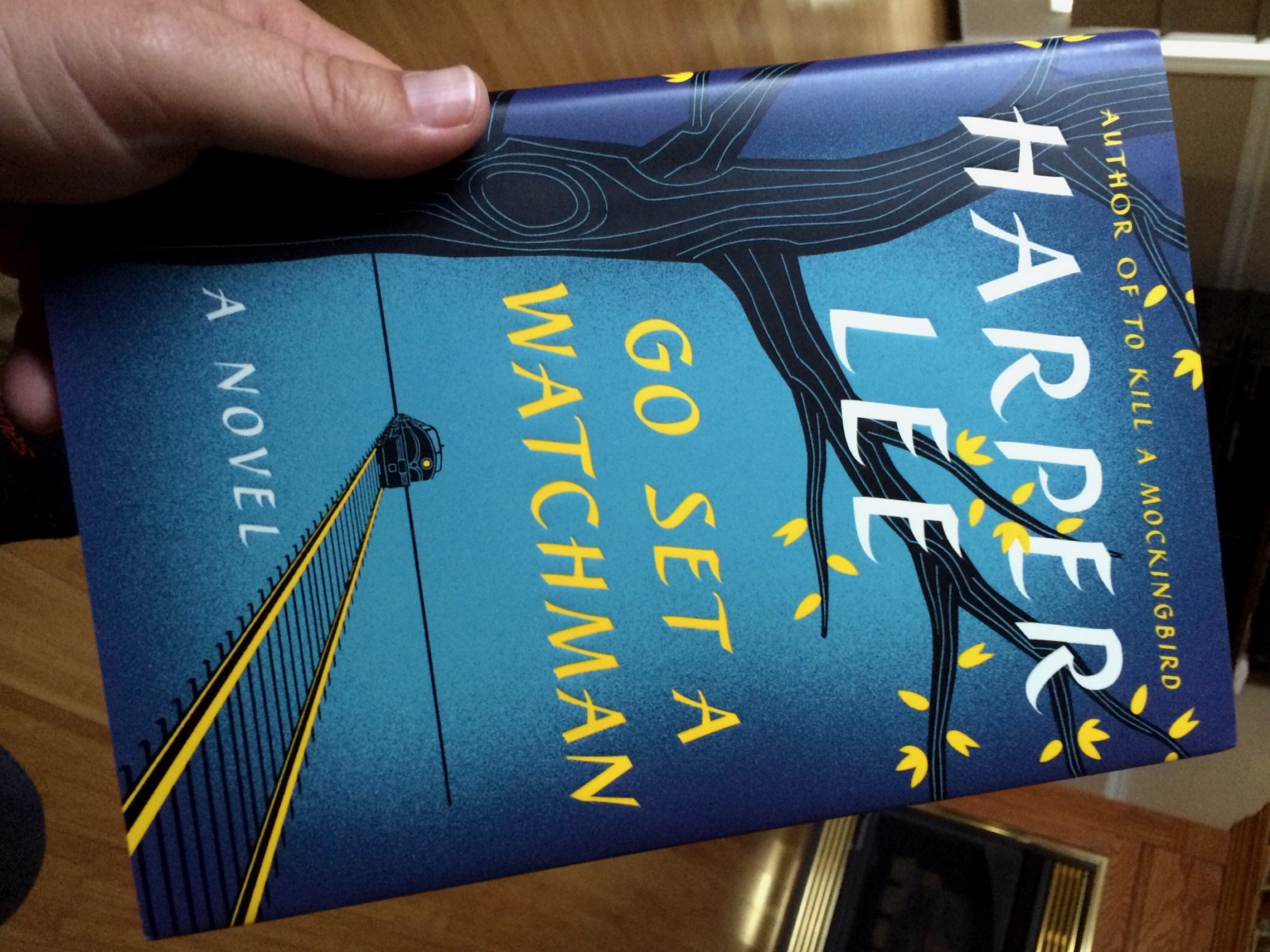
In a move that other proprietors of independent bookstores might consider unthinkable, Peter Makin, the owner of Brilliant Books in Traverse City, Michigan, is offering refunds to customers disappointed with Harper Lee’s Go Set a Watchman.

The decision stems from Makin’s belief that, by marketing the book as “a nice summer novel” as opposed to an “academic insight,” he misrepresented the product and deceived his clientele. He writes, in a statement posted on the Brilliant Books website:

It is disappointing and frankly shameful to see our noble industry parade and celebrate this as ‘Harper Lee’s New Novel.’ This is pure exploitation of both literary fans and a beloved American classic (which we hope has not been irrevocably tainted). We therefore encourage you to view Go Set a Watchman with intellectual curiosity and careful consideration; a rough beginning for a classic, but only that.

Makin maintains that he and his team had been disappointed from the beginning with the way Watchman was marketed. He told Melville House, “We knew the history of Go Set A Watchman and it wasn’t congruent with the marketing: ‘Harper Lee’s New Novel’ ‘with many of your favorite characters from To Kill A Mockingbird’ … Maybe we’re cynical, but it all pointed to a desperate attempt to get folks to buy the book before they realized what it actually was.”

Some have taken issue with Makin’s argument. The Guardian’s Michelle Dean rejects the idea that a reader’s choice to buy Watchman was hampered by improper marketing:

[Watchman] always presented as a first draft of Mockingbird … The fact is that people wanted to read a new Harper Lee novel no matter what its provenance and no one truly wanted to get in the way of that … Readers bear some responsibility for that, I think. After all, the customers who now report being unhappy with the book still went into the store and bought it. And I can’t help but feel the reason they are wanting to return it has nothing, really, to do with a concern about exploitation or first drafts or literary merit at all … how many of these dissatisfied customers, I wonder, are especially angry or disappointed because of the unflattering portrait of an elderly, racist Atticus this book contained?”

Alex Heimbach, writing for Bustle, supports Makin’s logic:

Makin is hardly the first to point out the book’s complicated place in the literary canon, but his stand against ‘exploitation of both literary fans and a beloved American classic’ is impressive nonetheless. Although publishers are unlikely to stop putting out these kinds of lost books, perhaps Makin, and others like him, can convince publishers to be a bit more honest in marketing them.

Maybe so. But one can’t help but speculate that this news story, yet another log in the fire for the Watchman publicity maelstrom, will ultimately result in many more additional receipts issued than refunds given. Maybe even at Brilliant Books (now the subject of dozens of articles), which continues to sell the novel — albeit, with a disclaimer: “We do explain to folks what it is, so that they buy it with their eyes open.”

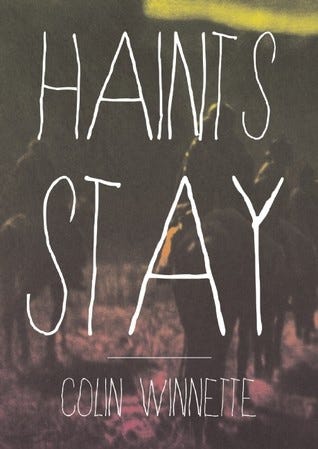
A Terrarium For The Imagination: A Conversation With Colin Winnette, Author Of Haints Stay

haints stay

The myth of the Old West still exerts an outsize pull on the American imagination, to both sublime and pernicious consequence. In Haints Stay, his fifth book of fiction, Colin Winnette doesn’t so much revise as remix the traditional Western, muting some elements while amplifying others to sometimes startling effect. He and I corresponded by email over the course of a few weeks about the new book, the tricky relationship between fiction and history, the compositional value of self-imposed restrictions, and the surprisingly astute depiction of our home state in Pee-wee’s Big Adventure.

Martin Seay: Your new novel, Haints Stay, is a Western. This seems beyond dispute — right from the first page we’re in a world defined by guns and gunmen, horses and the lack of horses, and wilderness scattered with outposts of human settlement — and yet its engagement with the tradition is idiosyncratic to say the least. It isn’t overtly hostile or reverential, but instead seems to use only what it needs; it doesn’t evince much interest in checking off genre boxes. The result is a pretty fundamental disruption of assumptions. In a weird way it reminded me of Sonic Youth’s approach to three-chord rock: We’ve heard this before, but not in this, um, tuning. So I’ll start by asking: Why a Western? Did you know it was a Western when (or before) you started writing it? The novel — like probably all worth-a-damn novels — has certain abiding concerns, and they seem well-matched to its genre, but which came first, the genre or the concerns?

CW: My best guess is that the concerns came first. There are a few things in this book that have appeared in every book I’ve written so far, in one way or another, so I guess I’ve been carrying around some of this stuff for a while. But all kinds of new questions and concerns cropped up while I was working on Haints Stay.

When I started writing, it was just Brooke and Sugar in the woods. I knew they were headed to a town, and my first thought was that the book would just follow these two characters as they were forced from one town to the next — and that’s what the book ultimately does. When I start a book, I’m looking for a setup that feels open. Fiction is one of the few places where I feel like my imagination can just take off and do whatever it wants to do, and I think my imagination is most articulate when it’s interacting with something, a set of rules maybe. Something other than itself. Any writer is working against or with a predetermined set of rules, whether we realize it or not, so I’ve always actively tried to set as many of the rules as I can on my own. I’ve talked about it elsewhere, but it’s an approach I pinched from the Oulipo, and from Jesse Ball.

Familiar touchstones inspire trust too, which makes it easier to play with expectations and get weird without losing folks.

I also have this idea that if you’re a reader or a listener or an audience member, it’s more engaging to watch someone else’s imagination interact with something familiar. Dreams are more interesting to hear about if you or some part of you is in them. It’s an easy trick to get people’s attention and part of why most movies and books are full of stock characters. Also why dialogue so rarely feels original or honest. Familiar touchstones inspire trust too, which makes it easier to play with expectations and get weird without losing folks. Which I like doing. This can be used to nightmarishly boring and depressing effect (Jurassic World), but not always (Twin Peaks, Jurassic Park). The Western genre gave me a set of rules to interact with that were interesting to me for a number of reasons, and familiar enough (without being culturally exhausted by the fashions of the decade, yet) to engage readers and keep them engaged when things got weird, hopefully. I also just thought it would be fun.

MS: It IS fun! And a bit harrowing at times! But it’s fun to be harrowed, right? It’s interesting that the Oulipo was an influence; I wouldn’t have guessed, but in retrospect I can see it. To the extent that the book seems to proceed according to its own inexorable, oblique, possibly non-human logic, Haints Stay has a vibe not unlike those of constraint-generated novels: Harry Mathews’ Cigarettes, e.g., or even Invisible Cities. What Haints Stay does NOT convey, at least for this reader, is the sense of moving amid clockwork that I get from a lot of Oulipian novels; it seems more fractal than circular, curving back but also spiraling outward in surprising ways. I think that’s cool. Can you say any more about the rules that shape Haints Stay? (I believe one of the precepts of the Oulipo is that one shouldn’t reveal too much about one’s restrictions, so “no” is an acceptable answer here.)

The Western is my instrument of choice for this bizarre concert.

CW: I can say this about the rules that govern Haints Stay: the majority of them are rules that many could argue go without saying. For me, though, it was important to think of them as rules. In my mind, it’s not a Oulipian novel, but it’s a novel that’s influenced by a Oulipian way of thinking. There’s an enjoyable tension, to me, in the novel taking place in a limited world. This isn’t sci-fi. This isn’t flarf. There are characters moving in a relatively set space, with comparatively few options as to how they might conduct themselves. And yet there’s a kind of chaotic energy behind all of that, pushing against the walls, sometimes breaking them down. If I’m interested in rules, it’s because I enjoy seeing them stressed, not because I enjoy seeing them articulated without interruption. I get very little satisfaction from that. It’s interesting you brought up Sonic Youth earlier. I was a musician for a long time, and when I was in college I was extremely interested in extended technique and noise. They opened a lot of doors for me, as far as how I thought about the world and art, etc. I hadn’t thought of it before, but now I think it’s fairly apparent in the book. The Western is my instrument of choice for this bizarre concert.

MS: Regarding the use of genre conventions to grab (and then mess with) readers, that is a great point. While I didn’t immediately pick up the Oulipo signal, Haints Stay DID remind me of a different set of mostly-European mid-century novels that use genre conventions to take readers into a kind of mythic or elemental space: nouveau roman takeoffs on thrillers — Duras’ L’Amante Anglaise, or Robbe-Grillet’s The Erasers — as well as Bataille’s even earlier Story of the Eye, which uses the rigid structure of pornography to explore the intrinsic hidden metaphorical weirdness of common objects and images. In Haints Stay, certain nouns (tooth, dirt, fabric, creature, etc.) recur, accrue significance, and almost seem to become characters in their own right. Am I way off-base in assuming that this framework of atavistic images is pretty closely related to the fundamental concerns that got you started?

CW: You’re not off base at all.

MS: Cool! That’s satisfying. You grew up in Texas (as did I), and when a writer from Texas publishes a Western, she or he can probably expect to field a bunch of questions about Texas. So let’s do this! You’re from Denton, which always struck me as simultaneously one of the most and least Texan of cities. (On one hand, it’s on the northern edge of the DFW metroplex — Larry McMurtry territory, the main locus of big-hair, big-oil, hat-and-boot culture — while on the other, it’s somewhat politically progressive, and home to UNT’s world-class jazz program, as well as a ton of mushroom-gobbling indie-rock bands.) Do you have deep roots in the state? Do you think the experience of growing up somewhere that (last time I checked) actually builds a bunch of Old West mythology into its public school curriculum made you any more likely to engage at some point with the Western genre? Now that you’ve been gone a while, what (if anything) about Texas stays with you, for better or worse?

CW: I was born and raised in Denton, like you said. My parents moved around a lot as kids, but eventually wound up in Texas, although I can’t remember when exactly. They met at UT in Austin; I know that. And they moved north some time after. That’s about as deep as my Texas roots go. Because they moved around a lot as kids, it was important to them that my sister and I stay put.

Like the Denton you describe, I was somehow both Texan and not at all Texan growing up. I was really ready to be done with Texas when I left for college, but it’s started creeping back into things slowly over time. But this book is really nothing like the Texas I knew. If anyone was concerned with verisimilitude, they’d be way better off looking at my other books, at least for anything coming close to my actual life in Texas. Even then, it’s a pretty warped representation.

Still, a lot stuck with me from growing up in Denton, but most of it was particular to Denton. I have the sort of small town smile-and-wave way about me, for better or worse. I grew up playing in bands because there were only about six things to do in Denton, like you said. I have the sort of Pee-wee’s Big Adventure sense of the rest of Texas. That scene when he shows up at the Alamo after all that time and it’s just a big piece of set dressing? That’s most of Texas to me.

MS: Yes! In a sense, Texas really CAN be a big piece of set dressing: a test case of where 180 years of believing your own bullshit will get you. The near-total lack of a verisimilar representation of the American West in Haints Stay was what struck me as MOST Texan about the book: the iconic blankness of its landscape, and the sense that everything can be erased and written over. (The few things that aren’t, like the spiral stairs in the burnt ruin of Jenny’s tavern in the opening pages, swiftly have their provenance forgotten.) There’s a great exchange early in the novel between Sugar, who identifies himself as “a student of history,” and his unnamed employer/adversary, who demurs that history is “slippery.” Without giving too much away, it’s the latter’s view that seems to prevail within the world of the book. Prior to reading it, I had assumed that the Western is always and inevitably a subset of the historical novel; Haints Stay — which, unless I’m mistaken, makes no reference to any real-world events or figures, even in passing — demonstrates not only that that’s not the case, but also that the desire to escape from history and into wildernesses of various sorts might be a MORE intrinsic aspect of the genre. (This goes for personal history as well as national history, of course.) Am I correct in taking history as one of the novel’s major concerns, expressed mostly through its conspicuous absence? Or am I looking through the wrong end of the telescope?

CW: We watched the Lonesome Dove mini-series for a week in my US History class. History has always been a fiction to me. Or maybe it’s more correct to say that I’m suspicious of anything that makes too strong a claim on historical accuracy, particularly in a novel, unless they’re using it to undo the very idea of even managing such a thing.

Typically, when I’m setting out to write something, I’m thinking more of what I don’t want to do than what I want to do. And I think “historical” novels are a little suspect. I’m drawn to works like Impressions of Africa that practically assault the idea of ever really being able to “know” anything, while both celebrating and stressing the imagination. By the same coin, I think it’s extremely important for us not to lose track of the past — of what we’ve done and how we got to be where we are. It’s not something I’ve fully settled within myself: my belief that what’s come before is an essential part of where we are and the fact that I’ve always felt completely dissatisfied with the way we think about and communicate history.

The world in this book is not the world we live in or have ever lived in.

What I do know is, the novel can be a terrarium for the imagination. The world in this book is not the world we live in or have ever lived in. I knew I wanted it to be similarly appealing, it needed to feel like our world at times… Or, more accurately, I wanted it to make readers feel — in the way that things in our world and stories of our world make people feel. I wanted people emotionally engaged in a real way. But any novel that claims to be “accurate” or close to what life might have been like during XYZ, any novel that claims to be anything other than an artful manipulation, is suspect.

MS: I found Haints Stay surprisingly moving, particularly as its characters stumble on these slippery questions of what to do with the past. The emotional impact is often ironic in the Greek-tragic sense: People get snared by their own blind spots, and certain silences become more and more deafening. One of the big ones is race: While the actual history of the American West is largely one of genocide, ethnic difference doesn’t seem to feature in the world of Haints Stay. I don’t believe that anyone’s ethnicity is ever specified in the book — its various communities are more concerned with the blurry divides between humans and “creatures,” civilization and wilderness — but there are hints that the reader ought to be thinking about such things, and maybe considering how patterns of ethnic violence are driven by individual impulses and confusions like those the book depicts. One such hint that I’m not sure how much weight to assign is the book’s eerie cover image, a 1904 photo of Navaho riders by Edward S. Curtis. Recognizing that authors typically get just about zero say in the design of their book covers, do you think that Two Dollar Radio’s design is a helpful interpretive aide, in addition to looking cool?

CW: I think if it helped you come to the thoughts you’ve just shared, it is an incredibly helpful interpretive aide.

MS: Speaking of Two Dollar Radio, they are — unless I’m mistaken — the fifth press you’ve worked with in your brief and productive career. Your previous books have been with Mutable Sound (Revelation, a 2011 apocalypse novel), Spork Press (Animal Collection, a 2012 bestiary), Atticus Books (Fondly, a 2013 pair of novellas), and Les Figues Press (Coyote, a sort of cubist domestic psychological thriller from earlier this year). The thriving indie-lit ecosystem seems to present a lot of prospects for building communities and working with a bunch of creative and committed people. How has this experience been for you? Have you found anybody’s editorial process to be particularly inspiring and/or nutty? Are there any presses out there that you haven’t worked with that are particularly impressing you with their output?

CW: Working with indie presses has been great. Like you said, they’re helmed by creative and committed people, and every book has been handled differently but with equal passion and care. For the most part, the editorial process was similar with each press. Les Figues stands out as being remarkably thorough. I couldn’t even tell you how many different people read Coyote and offered really attentive feedback during the proofreading process. It was interesting to have such attentive and engaged readers poking at every sentence, especially when the book is so full of ambiguity and strangeness and exaggeration and confusion. I had to defend every inconsistency or reality blur not only to myself but to a team of thoughtful readers ready to call me on my bullshit. It was really wonderful. As for other impressive indie presses, there are so many! There’s a relatively new press based in Dallas called Deep Vellum that’s putting out some really interesting (and beautiful) translations. Also, I’ve always loved Wave. Civil Coping Mechanisms has put out an astonishing number of solid books recently. I can’t imagine how hard they must be working. Coffee House has been killing it for the last couple of years too. Same with Graywolf. They’re both publishing some of the most important contemporary authors out there, and they’ve both managed to get a substantial national audience, which is extra impressive. They’re bridging a lot of gaps, and making room for translations and hybridity too. I could go on and on.

MS: And speaking of being productive… I have to ask, if you’re willing to answer: Have you been able to find homes for all of your finished manuscripts, or are there more of these still circling the runway, waiting for clearance to land? What does your writing/revising routine look like? What does your My Documents folder look like?

I spent way too much time picking at corpses when I was younger. These days, I try to go where the life is.

CW: Ooh, there are so many questions in this question! As far as manuscripts go, I’ve been lucky enough to find a home for every book-length work of literary fiction I’ve sent out — but I’ve thrown away a few book-length works as well without sending them out. If I get to the end of one and I don’t like it, I don’t really bother going back through it and trying to resuscitate it. I spent way too much time picking at corpses when I was younger. These days, I try to go where the life is.

My writing/revising routine is different with each book, but it involves writing a draft out to the end then making a list of things I might need to smooth out or make consistent. I read books aloud to myself. I share manuscripts with a friend or two, then I show them to my wife. She always gets the final read.

My Writing folder is an orderly mess of finished, unfinished, and broken work of different kinds. Lots of poetry I’ll never show you. Some that I will. A couple of kids’ books that kids will probably hate. A few longer works of fiction I’m picking away at right now. A bunch of ideas for nonfiction projects. I’m just… trying to keep myself interested.

MS: Finally, although you’ve already provided some great suggestions for further reading, is there anybody’s writing — or, hell, anybody’s work in any form or genre — that you’ve lately been obsessed with, envious of, or freaked out by?

CW: I’ll be honest, Martin. I’m having some trouble right now. I go through lulls… not for lack of incredible work out there. It could just be a mood thing, how receptive I am at a given time. I haven’t been hit, like really hit hard, by anything in a little while. I just finished Margarita Karapanou’s Rien Ne Va Plus, which I liked quite a bit, and I’ve talked elsewhere about a few books that excited me earlier in the year. But right now, at this very moment, I’m hungry for something I haven’t found yet. Ask me again tomorrow?

Midweek Links: Literary Links from Around the Web (August 5th)

Looking for some interesting reading to get you through the week? Here are some literary links from around the web to check out:

This will probably be baaaaahhhd, but someone is putting on a production of King Lear with sheep

A long lost F. Scott Fitzgerald short story has been found and published

Can writers write about ethnicities other than their own?

Ta-Nehisi Coates writes about 10 books he couldn’t live without

Jeff VanderMeer argues that Brazil’s Clarice Lispector is as much a genius as Vladimir Nabokov

Horror is still struggling under the dark shadow of H.P. Lovecraft

How women writers struggle for shelf space

Ten books you should stop pretending you’v read and actually finish!

How literary sexy talk has changed over the decades

Does the publishing world require too much socializing? One “introvert” writer thinks so

An Animal in Winter

by Annie McGreevy, recommended by Nouvella

Excerpted from Ciao, Suerte

Children on the street in Rosario with Alejandro’s white skin and floppy hair. A pre-adolescent volunteer at the hospital with Sabina’s languid gait; a girl on television, competing in Odol Pregunta, with her posture. Sometimes Beatriz spends hours watching boys play soccer to see if any of them have her son’s wooden legs or if their little faces redden with as much intensity as his did.

Children all over Argentina, it seems, who might be Beatriz’s grandchild. There are hundreds, maybe thousands.

In 1990, she is at the Monumento de la Bandera when she sees a group of schoolchildren playing and a teacher trying to wrangle them into line to return to school. Out of habit, she scans them quickly with her eyes, but none of them remind her of her son or daughter-in-law. Then from behind her she hears Alejandro’s voice as it was when he was a child — throaty, high, full of urgency and mischief.

Espera!” the voice calls. Wait up!

Beatriz spins around. A girl with dirty blonde hair is yanking her sagging knee socks and jogging to catch up to the group. She has an overconfident smile like the one Alejandro wore on his face until the day he was killed, probably, and the resemblance is so arresting that Beatriz actually reaches out and grabs the girl’s arm.

“What is your name?” she demands. The name won’t do her much good, Beatriz knows — she just wants to hear the girl’s voice again. The girl looks startled, but otherwise unafraid. She eyes Beatriz with an air of conspiracy, as though she likes this old woman’s boldness, and this — the fact that the girl seems begging for danger — is further reason to believe she could be Alejandro and Sabina’s daughter.

She sticks her tongue out at Beatriz. A teacher appears.

“What do you think you’re doing?” the teacher says as she pulls the girl free of Beatriz’s grip.

Beatriz opens her mouth to respond, but the teacher interrupts.

“Go with your sister,” she hisses to the girl. The girl slinks off and falls into line with another nearly identical to her; taller though, with the awkward hips and lumpy sweater of a body already playing a game of give and take with puberty. Impossible that she is Beatriz’s granddaughter then, as Sabina’s pregnancy when she was abducted was her first. And only. Beatriz mumbles an apology to the teacher and walks away.

There were other incidents before the girl at Monumento de la Bandera.

1984: Beatriz reads an article in Clarín in which General Ramón Camps tells the newspaper that he orchestrated thousands of murders and kidnappings. About the appropriation of newborns, he says: Subversive parents raise subversive children. Beatriz’s hands shake as she reads it, rage filling her. A system that she has never respected has killed her son for using his brain. For joining a group. For learning. All things Beatriz had encouraged him to do; things her own father had encouraged her to do. And now here was Camps talking — no, bragging about it on TV and in the newspaper. Alejandro and Sabina never killed anyone. They weren’t criminals. All they’d done was join a group. After reading the article, Beatriz gets into bed and doesn’t get out for over a week except to use the bathroom. The only other time she was still for so long was when she’d had her wisdom teeth removed as a teenager and her father said, Think of it like four separate gunshot wounds inside your mouth. That’s what you’re recovering from. Then he smiled. Time to take a break from talking, he’d teased. This is the same, Beatriz thinks now, thirty-five years later — it’s like bleeding inside my own head. But this will never end.

1985: Beatriz submits a blood sample to the Grandparents’ Index. The Madres y Abuelas de la Plaza de Mayo have support from abroad. They have powerful lawyers. Geneticists have taken an interest in their cause. They have found some adopted children of the disappeared and returned them to their biological grandparents. Beatriz is hopeful, and the hope pulses through her veins like a drug.

1986: Beatriz’s husband Giancarlo increases his campaign to try to convince her that their grandchild was never born. The man who never gets angry loses his temper with Beatriz one night after dinner. “You were a nurse!” he booms. “Don’t you know? They tortured her before they killed her. Pregnancy can’t withstand that!”

Beatriz knows he’s trying to spare her more pain. She knows he could certainly be right. But she can feel the slightest whisper of intuition telling her the opposite.

1988: Alejandro and Sabina are officially declared dead. Tell me something I don’t know, Beatriz thinks.

One more low after the incident in the art museum:

1992: Giancarlo leaves Argentina for Italy, something he’s been threatening to do for nearly thirty years. He tells her he’s going one night as they lie in bed. “I can’t stay here anymore,” he says. “I’ll die.”

“We’re dying anyway,” Beatriz says, though they’re not very old and have no real health problems. A cruel trick of nature, she thinks after their annual doctors’ visits. Maybe we’ll live forever. Maybe we’ll outlive the grandchild and its grandchild and the next generation of holocausts.

“Don’t you want to at least stay in our country?” Beatriz thinks that if their neighbors overheard them, they would think the two of them were discussing the weather, so drained of energy are their voices.

“It’s not a country anymore. It’s nothing.”

Beatriz stares at the ceiling. She has been living in this house for almost forty years, since she married Giancarlo. On so many nights, she has watched him sleep soundly beside her while she stayed up fretting: when Alejandro was just a baby, colicky and scrawny and refusing her milk (he had to do things his way even then); when she miscarried their second and third and fourth babies; when Alejandro met Sabina and would disappear with her for weeks at a time, coming back skinnier and skinnier and spouting off Che Guevara and Marxist-Leninist ideology; when the two of them took up with the Montoneros. And tonight, too, her husband is warm beside her, with this decision he clearly made some time ago. He can see a life for himself across the ocean, Beatriz thinks. A life of safety and forgetting. A life in which Alejandro’s picture is not on the mantle, in which he’ll never hear his wife wake up in the night saying his dead son’s name. The beginning of a new life for Giancarlo, and surely the end of something, but of what?

They’d first seen each other at the hospital when Giancarlo was finishing his residency. He’d been doing a round of night shifts in the pediatric ward, and there, too, was Beatriz, a nurse from a fine family. The rumor was that her father had raised his daughters like boys, had allowed them to go to university, taught them to shoot rifles in the country, and had even gotten Beatriz a job at this hospital. She was tall, handsome. Not exactly beautiful. A strange femininity that he couldn’t put his finger on. He got into the habit of watching her study her charts, which she did with as much concentration and consideration as if she were the doctor. She was a conscientious assistant, her movements swift, exact. One day she assisted him when he performed an appendectomy on a teenage girl, and her presence had made him more nervous than the director’s had. But it wasn’t until they ran into each other at the tennis courts one morning that he formally introduced himself. The jacarandas were in bloom, everything smelling of lilac, and fallen purple petals had been swept to the sides of the courts. They’d make a good match, he knew, but as he began courting her, the intensity of his attraction surprised him. She seemed older than she was, like she had made her peace with the complexities of life, and he liked talking to her and listening to her. Best of all, in those first months, there would be times when he would forget what she looked like; he would search and search in his mind, but not be able to put together a face for her, not exactly, so every time she appeared it was like seeing her for the first time, each occasion a new pleasure.

Their engagement had been short and their wedding formal. Soon after, even before they found their rhythm as lovers, Giancarlo began to feel that Beatriz was an extension of his body, like there was something inside of her, just underneath her skin, that he needed every day. He could get it from standing next to her or looking her in the eye, hearing her voice. And her laugh — she laughed so loud when they were alone.

Giancarlo is thinking about that laugh now, how he hasn’t heard it in decades, as they lay silently next to each other. He approaches it intellectually, because that’s how he approaches everything. Sure, she still laughs. It just isn’t like it used to be. When did he hear it last? Maybe when Alejandro was a teenager, comedic in his angst and over-seriousness? Maybe when Ale had met Sabina and joined the group and they would make jokes about it all to mitigate their worries? Giancarlo would like to put his finger on a date, an event, but he can’t. He looks over at Beatriz, but she’s closed her eyes.

They’d gotten pregnant right away, and her pregnancy with Alejandro had gone smoothly. He’d been a cranky baby, but by the time he was two they were ready to try again. Getting pregnant didn’t seem to be their problem. They’d always conceived within two or three months of trying. But when, six weeks into her second pregnancy, Beatriz bled so much she thought she was surely dying, she was devastated. They knew this happened all the time, that it was normal, even, but it still undid her. Giancarlo was there to soothe her. Half of being a good doctor, his mentor had told him, was having an organized mind. He’d arranged for his mother to take Ale (as they were calling him then) and he stayed home with Beatriz for three straight days, doing the cooking, holding her, all the while delivering kind, authoritative reminders that there was nothing wrong with her, that they would try again, that Ale would be a big brother soon enough.

The second time had been similar. Six weeks, the bleeding starting in the middle of the night, Giancarlo calm and Beatriz in pieces. She was twenty-nine and Ale was in school.

But the third one. It was something out of a horror movie. She was five months pregnant and it was at a doctor’s appointment that they realized there was no heartbeat, and that even though her belly was continuing to swell, the child inside her had been dead for days, maybe even weeks. Giancarlo had been devastated, but the humiliation he felt at not noticing the absence of movement when he put his hand to Beatriz’s belly three, four times day, was worse. They’d had to induce labor to extract the fetus, and while Beatriz was under anesthesia, Giancarlo had stayed in the room. He saw the fetus, half the size of a newborn baby, but fully formed, with purple bloated skin. A girl. She wore an expression that was half anguish, half disgust, as though she had fought whatever force that had tried to end her short life and died disappointed he had not done his part, that he had not understood how to save her.

The gynecologist who performed the procedure asked him if he wanted to hold the dead child, and he’d accepted only because he was speechless. The moment he spent with her in his arms was the most alarming of his life. It drove his own mortality into him worse than the death of his father would a decade later, and for months afterwards he directed his life with the intuition of an animal in winter.

It took Beatriz much longer to recover. By then, Ale was a chatterbox, a know-it-all with weak hand-eye coordination, exercise-induced asthma, and a penchant for memorizing things. For Beatriz he would perform the list of all the dinosaurs he knew, for Giancarlo every major city in Italy, all the bones of the body, the periodic table of elements, the names and statistics of every football player from Rosario, from Milan, from Saõ Paolo, and on and on and on. Giancarlo poured his energy into the boy, helping him with his homework, teaching him tennis, developing exercises for him to improve his athleticism and to alleviate his asthma. A year after the miscarriage he knew they would not have another child, and his love for Ale grew wilder. He became overprotective, proud of things that were not achievements. His only heir. The tragedy stripped him of his reason. He was more in love with his son than he had ever been with his wife.

Soon Beatriz was ready to try again, but by then Giancarlo had a plan. He learned her menstruation and tracked it on a calendar he kept in his locker at the hospital. It was simple. He didn’t initiate lovemaking, and gently rejected her advances when it was possible for her to get pregnant.

Soon, Giancarlo was attending conferences in Europe two, three times a year, and Ale had grown into a surly teenager who talked relentlessly about national politics, a topic Giancarlo found distasteful and fit only for dilettantes and armchair intellectuals.

The boy kept changing, growing angrier and less and less like himself. Giancarlo wanted to be mad at him, to be disappointed even, to threaten him. But he never could. He turned into one of those men he used to pity, hopelessly in unrequited love with a careless person. But Giancarlo never gave up hope that all of it — Sabina, dropping out of school, joining the group — was just a phase, and that soon enough he’d grow out of it and into the man Giancarlo wanted him to be.

The problem, Giancarlo thinks now, as he turns off the lamp on his nightstand and turns his back to Beatriz, is this country. With its dictators worse than those his parents had left Italy to escape. It made scrambling fools of even the best men. It turned women like Beatriz into — what did she think she was? A private investigator?

Once you knew the problem, the solution was never far behind, and the exactness of the solution to the problem of Argentina and Beatriz finally relaxes him: Valentina, Italy. A distant cousin of his he’d first made love to at fifteen. A trail of embarrassing divorces and dysfunctional children had unraveled behind her in the fifty years since. He’d gone back to her every now and then out of curiosity or stress or pity. He used to regard her as desperate, even pathetic. But sometime after her final divorce, the same time he retired and found himself staring across the table into Beatriz’s intensity far more often than he cared for, he began to see her as a way out. There was something comforting about her vulnerability, her self-deprecation. A peace to the low stakes of her life. She had been making room for him in her place in Bergamo for the past year, since they began making serious plans for him to leave.

He closes his eyes. Valentina, he says in his head, like a prayer. It will be good; it will be fine. He has come to the end of the line with Beatriz, with Argentina. But now everything must rearrange itself inside his imagination. Now it will be Valentina he lives with, sleeps with, touches every day, sees with her hair wet. And it will be Beatriz who exists only in his mind. It was a painful adjustment to relegate Alejandro to that space. The most difficult thing he ever had to do. But there is no room in his imagination for this mythical grandchild. Now, at the very least, Beatriz’s obsession with finding it will cease to infect the last years of his life. Giancarlo doesn’t want there to be a child — he hasn’t wanted there to be one for years. He just wants to start over.

“I want you to come with me,” Giancarlo says. But he doesn’t turn to face her. The invitation is a gesture. He knows that she’ll never leave Argentina until she finds the child.

And then — unexpectedly, miraculously — she does. It’s 2003. Beatriz is seventy-two years old. She is aging slowly, to her disappointment. She is sitting in her apartment when the phone call comes. It’s Mariela, the head of the Madres y Abuelas. A boy in Patagonia has been tested, and he is a match for Beatriz. They’ve found her grandson.

Un niño,” Beatriz says. All this time, she’d never been able to guess the child’s sex with any certainty. Imagining a girl, imagining a boy, always felt wrong.

Un niño?” Mariela’s voice sounds harsh over the phone. “He’s twenty-three years old.”

“I know how old he is,” Beatriz says hastily. “Where is he? When can I see him?”

Tranquila,” Mariela says. “We have his information, and we’re going to give it to you. But you have to be patient.”

“I’ve been patient for the last two decades. I want to see him.”

“It’s complicated. He didn’t consent to being tested — he didn’t even know he was being tested for anything besides steroids — and his parents have no idea. He’s an amateur athlete.” Mariela sighs from her desk in Buenos Aires and Beatriz presses her.

“What? How did you find out then? How can you be sure?”

“An Abuela working here at headquarters was sure a boy on the National Polo team was hers. She was wrong. But the entire team’s samples were tested and run against the Grandparents’ Index. That’s how.”

Beatriz can’t catch her breath. She stops pacing around her apartment and sits down at the dining room table. “What does this mean? Can I meet him?”

“I can’t tell you any more over the phone. Can you come to Buenos Aires?”

A few hours later, Beatriz is in Mariela’s office, a bag packed. She plans to leave Buenos Aires for wherever the boy — man, she corrects herself — is.

What they did was illegal, Mariela begins. They had to pay their way out of it. Luckily, the assistant coach, whom the Abuela had bribed in the first place, was able to be bribed again, this time for Beatriz’s sake. The organization was, of course, committed to the justice of reuniting grandparents with their biological grandchildren. But if Beatriz wanted to show her gratitude, a donation would certainly be appreciated.

For more, read Electric Literature’s interview with Annie McGreevy.