Suppression, Solidarity & Language In the Ukraine

Translated from the Ukrainian by Jennifer Croft

There’s a café in downtown Lviv near the Armenian church that takes its customers back to the 1980s: little tables on wobbly legs, cakes covered in bright buttercream frosting flowers, then-fashionable liqueurs lined up above the bar — not to mention the unusual way they have of brewing coffee. The woman at the bar taps out sugar and organic coffee into a special little long-handled pot to which she then adds water. Next she sets the pot atop a very anachronistic-looking contraption, a box in which tiny iron filings are heated up on a very low current. Paying absolute attention, she keeps the pot on the device until exactly the right moment, when she stirs its contents with a thin wooden stick. She meticulously monitors her clientele’s movements once the coffee’s served, delivering well-timed instructions to stir again or to pick up the little pot, or, finally to pour it into the little cup. The coffee’s foam must increase threefold before it can be considered ready.

It was here, in “the Armenian,” that the city’s bohemians would gather in the ’70s, ’80s, and part of the ’90s.

The particular flavor of this coffee is held dear by several generations of Lvivians. It was here, in “the Armenian,” that the city’s bohemians would gather in the ’70s, ’80s, and part of the ’90s. In those internetless days it was important to have a meeting point where you could regularly cross paths with key people — every day, if you wanted — and inform them of something, discuss something with them, or just sit and have coffee with them.

Just a little further down on the same street you’ll find Dziga, the first and still the most successful Lviv institution engaging in the business of culture. Every day Dziga hosts concerts, readings, exhibits, or just the regular get-togethers of book clubs and writing groups. It’s all so much more civilized now, deprived of its former wild Soviet charm, today only extant in the reminiscences of old-timers over coffee or a glass of wine.

Back then, too, at “the Armenian,” the little pot was delicately placed in iron filings, and the coffee was stirred with a little wooden stick and poured inside tiny white porcelain cups customers would take outside, setting them on the broad sills of the sturdy medieval buildings as they smoked and talked. Accustomed to this ritual, the waitresses would eventually come out to collect the empty cups and noiselessly ferry them back inside.
Sniadanko 4

The women behind the bar were always very important people here. They’ve been written about in novels, turned into TV shows, and had gigabytes upon gigabytes dedicated to them online. Now “the Armenian” has long since lost its role as social framework, frequented today by pot-bellied sexagenarian granddads who come to drink coffee with cognac, as was the fashion in their youth, and by ladies of the same age who chat over coffee and pieces of highly calorific, and similarly nostalgic, cake — and by tourists and TV crews. The women at the bar don’t allow anyone to take their picture — they’re famous enough as it is among tourists and on Facebook and Twitter. Their contemplative process of brewing coffee, on the other hand, may be filmed ad infinitum — though there always comes a point where the women can’t stand it anymore, breaking up the cameras as though their presence might interfere with their beverage preparation technology, which they will not have damaged for the sake of a pretty picture. “The Armenian” is said to be the last café of this style.

Sniadanko coffee

Ukrainian literature — or Ukrainian culture more broadly — employs the words “last” quite often: last territory, last bastion, the last issue of a magazine, the last books of a bankrupt publisher, the last Ukrainian-speaking readers, writers, translators. There is a well-known contemporary classic, a collection of essays by one of Ukraine’s best-known authors, Yuri Andrukhovych, called My Last Territory; there is an art management agency called Last Bastion. Because Ukrainian literature has been aware of being in a sort of intellectual ghetto at least since the 1920s, for a long time there was a program on local radio called “Music from the Ghetto.” Ukrainian literature had kept pace with all the European trends and traditions, arriving at modernism right on time in the early ’20s, but with the advent of Soviet rule in eastern Ukraine, intellectuals began to be shot and then slaughtered en masse, particularly writers, many of whom actually lived on the same street in a kind of cozy little writers’ colony in what was then the capital city, Kharkiv — a city now located just a few dozen kilometers from the Russian border, so that these days its residents wake up every morning and flip on the news to find out if the Russian invasion is underway yet or not.

With Russification, the Ukrainian language was reduced in the popular imagination to a “dialect” of Russian, unable to function on its own in the cultural sphere.

But in the ’20s, while Ukrainian intellectuals in the east were being murdered outright, Ukrainian intellectuals in Galicia — in western Ukraine, belonging to Poland at that time — were suffering from Polish persecution. Bans on the use of the Ukrainian language — both spoken and written — had been in effect for some time in territories annexed by the Russian Empire. In western Ukraine there had been no such prohibitions, but nor did the Ukrainian language ever have a chance to become a language of education and culture, or politics, or business. It was, nonetheless, the mass exterminations of Ukrainians, first and foremost of Ukrainian artists, that dealt the biggest blow to Ukrainian culture, along with forced Russification throughout the twentieth century and continuing into the twenty-first. With Russification, the Ukrainian language was reduced in the popular imagination to a “dialect” of Russian, unable to function on its own in the cultural sphere. An impoverished, ignorant, provincial discourse was artificially cultivated in Ukrainian literature, while more contemporary or cosmopolitan topics were condemned or banned. Even today the same false principles determine the selection of which Ukrainian books are to be read in schools. The field of Ukrainian linguistics was totally destroyed in the Soviet era, Ukrainian dictionaries undermined as words that had no direct equivalent in or obvious etymological similarity to Russian were simply discarded, replaced by blatant calques.

Sadly, this suppression of Ukrainian culture is still ongoing. The Soviet tradition of labeling all things Ukrainian as “nationalistic” is deeply rooted, and even now it is employed by Russian propaganda. Any attempt to protect the rights of the Ukrainian-speaking population is automatically seen as an infringement upon the rights of the dominant, Russian-speaking population. Such efforts, then, are dismissed out of hand. This creates a bizarre situation in which on the one hand Ukrainian men are being mobilized to fight a war against Russia, while on the other Ukraine continues to be dominated by Russian and Russophone culture. Russian and Ukrainian are used seemingly interchangeably on television that is officially Ukrainian; the apparently indiscriminate use of Russian without the provision of translations requires that Ukrainian audiences be at least bilingual.


The first Ukrainian publishing houses came into being right after Ukraine gained independence in 1991, but they mostly published classics of world literature that had been banned in the USSR, and mostly in Russian. Very occasionally they’d do a classic of Ukrainian literature taken from the school curriculum. Contemporary Ukrainian literature was barely published at all during this period. Any volume of new Ukrainian poetry or prose that did get published became a big event — not only because these works were of astonishing quality, but also because of how infrequently even amazing books were getting printed.

Many publishers are going out of business, and those that linger are still unable to permit themselves to publish debut authors…

After the Orange Revolution of 2004 there was a brief thaw, and a fashion for contemporary Ukrainian literature. The publishing industry picked up, and dozens of new names appeared. Aside from the biggest — although let’s face it: the only — Ukrainian book fair in Lviv, other, similar events were established in other cities. But the last few years, unfortunately, have seen a return to the harsh literary realities of the ’90s. Many publishers are going out of business, and those that linger are still unable to permit themselves to publish debut authors, opting instead and exclusively for famous names that can guarantee them sales.

To the above particularities of the Ukrainian book market we should also add the very high rate of piracy. Within a few weeks of its arrival in stores, any even moderately famous Ukrainian author’s book will turn up online, its contents available in their entirety for free. Pirate sites actually claim to support the Ukrainian language, and the vast majority of people who download these books really do believe that they are supporting Ukrainian. The rest do it because they have no other option: bookstores exist only in big cities, and even then, their selection is often considerably more limited than that of pirate sites.

And despite the military operations in eastern Ukraine, it is an essentially Russian cultural product, most often openly anti-Ukrainian, that continues to dominate the Ukrainian cultural market. Thus far, the Ukrainian government has also failed to make any even remotely convincing attempts at defending its own culture, despite the fact that a special Ministry of Information Policy was even created expressly for this purpose.

Sniadanko 2

Ukrainian media outlets — and not only the Russophone ones — are mostly Russian-owned, which results in the domination of their content by Ukrainophobic propaganda. The lion’s share of books sold in Ukraine are produced in Russia and imported into Ukraine duty-free, but most of these are also in Russian, especially commercial titles. The exceptions to this system — few, highly intellectual — merely prove the rule. Yet it is this intellectual niche and its intellectual production that earn recognition outside of Ukraine. This typically occurs without the participation of the state, on the initiative of foreign partners. Ukrainian writers are the people foreign commentators turn to first when Ukrainian politics become bewildering, and Ukrainian writers frequently take place in various roundtables abroad as provisional experts on everything, since, as opposed to Ukrainian officials, these writers are educated, speak foreign languages, and are able to articulate their own ideas and paint an informative picture of the state.

Sniadanko 5

Writers in Ukraine are usually political — often passionately so. When on November 30 of last year the first battles began on Kiev’s Maidan, I heard about it from the Facebook page of a friend, the writer Svitlana Povalyeva. Her post appeared barely thirty minutes after students were first beaten at 4:00 am. Only later did journalists’ and politicians’ posts begin to flood the internet. Svitlana and her husband and their two sons remained on the Maidan for all three of the ensuing months, from the first to the last day. Her son immediately volunteered for the army; he is now fighting in eastern Ukraine. Svitlana’s is not a unique, or even atypical, story.

Writers collect money for the army, for displaced persons, and for the wounded, organizing charitable reading tours in the eastern territories and in the ATO zone, as well as signing up for the army themselves. Whether they volunteer or are drafted, there are a number of writers in the east now writing very good literature inspired by their experiences, which they often publish in fragments over social media. I would love for them to come home and become the Ukrainian Remarques, Dos Passos, Hemingways.


Ukrainian literature is not only divided into Ukrainian-language and Russian-language, pro-west and pro-Russian, but also into official and independent. Official literature is produced by a sizeable state-sponsored Writers’ Union, which has central and regional offices with different facilities, staff, their own media channels — even resorts of their own for their summer vacations. But the literature of its members often exists more hypothetically than it does in actual fact. As a rule, its aesthetics are those of socialist realism — a holdover from Soviet times. These writers periodically receive government awards — officially for books that can’t be found in any bookstore, unofficially for being somebody’s relatives, colleagues, friends. They run the regional Writers’ Unions, get together for conventions, even publish the occasional newspaper — every so often, even a book. These papers and books rarely reach any readers: print runs are miniscule, and the books are essentially intended to serve as gifts for the same government officials who give out the awards.

Independent Ukrainian literature, meanwhile, makes do without any state support — no grants, no official organizations, no conferences, no awards, and no subsidized publications. There are no public or private programs to support independent Ukrainian writers and operating according to fair and transparent criteria; there is no program to represent Ukrainian literature abroad (as there is in most European nations); there is no institution for the protection of copyright. If a Ukrainian author is translated into a foreign language, it is usually the result of a happy coincidence, and of the efforts of self-driven, enthusiastic individual translators.

‘Professional’ writers who live solely off the work they publish in Ukraine simply do not exist.

I am often asked abroad how Ukrainian writers earn a living, given that there are no grants or awards or honorariums for readings or participating in festivals, and that payment for books with print runs in the tens of thousands is a few hundred dollars at best — payment for newspaper columns often comes out to less than fifteen dollars, if they pay at all — and I honestly never really know how to answer this question, except to say that somehow everything always ends up working out. For now, at any rate. Of course there are exceptions, and many people do give up on writing. Many emigrate. “Professional” writers who live solely off the work they publish in Ukraine simply do not exist. The lucky few not forced to earn their living through means other than writing do so thanks to foreign fellowships, residencies, and honorarium.


Really not having any way out seems to have a strange effect on literature. For the most part, it results in the pessimism you might expect. But sometimes unexpected things occur. For example, the remarkably active participation in literary events by the general public. Especially in the Russophone eastern regions of Ukraine — especially, in other words, in places where Ukrainian books are scarce. There is an unexpectedly high level of interest in Ukrainian culture on the front. Books often show up on army requisitions, and in fact writers often finance the acquisition of books for troops themselves.

I recently heard from one of those few publishers still in business that there is a new “trend” in Ukrainian publishing, namely, the translation into Ukrainian of world literature. This same publisher had previously claimed — like most of his colleagues — that translations into Ukrainian would simply never sell. And even more amazingly, publishers have become interested in contemporary — rather than classic — world literature. Most surprising of all is the fact that these translations appear to be immune to piracy. Although perhaps it’s not that surprising after all when you consider the low level of erudition on the part of the pirates.

Ours is a form of proletarian solidarity, but it is powerful and reliable.

The objective absence of a literary market, and with it the absence of any commercial motives, has had a surprisingly positive impact on Ukraine’s literary scene. For the most part, Ukrainian writers not only know each other, but are also genuinely friends, actively promoting and supporting one another. The infrequent conflicts between them are generally over political differences, unlike in other countries where petty jealousy can sometimes run amok. Ours is a form of proletarian solidarity, but it is powerful and reliable.

The number of women in Ukrainian literature is also steadily on the rise, although I’m not exactly sure why this is the case, whether because there are fewer literary prospects (in the Soviet era, being a writer was not only prestigious, but also lucrative, thanks to the state funding provided to those “loyal” to the regime), or because Ukraine is gradually shedding the vestiges of its old patriarchal system. This is happening very gradually, however: the word “feminist,” for example, is only used as an insult, whether it’s applied to men or to women. Successful women, including writers, are usually afraid of being labeled feminists, so they tend to try not to publicize their own successes. Writing remains incompatible with the personal lives of most women. Successful female authors are expected to be young and unwed: women in general have to choose between writing and having a family, as the equitable distribution of domestic responsibilities remains rare among Ukrainian families (not only literary ones).

Sniadanko 6

The landscape of Ukrainian literature is changing in unexpected ways. If in the ’90s the critical mass of writers was concentrated in the less Russified western territories of the country, now the majority of writers live in Kiev (though few are from there) or even further east. Ukraine is a country with considerable regional diversity, with a so-called “Kiev school of poetry,” “the Zhytomyr school” after the city in western Ukraine, or the “Stanyslaviv phenomenon,” named for the city of Ivano-Frankivsk, also in western Ukraine, and formerly known as Stanyslaviv. But today when writers (and others) move, it is almost always to Kiev — almost never, that is, from periphery to periphery. Instances of students from Kharkiv, for example, going to school somewhere other than in Kiev (or occasionally Lviv, which is closer to the west) are practically non-existent. Meanwhile, the largest publishers are concentrated in eastern Ukraine, almost at the Russian border — in Kharkiv, in fact, the very city where almost all Ukraine’s most famous writers lived during the 1920s, and the place where they were killed en masse. There is a term in Ukrainian literary criticism for this: “the Executed Renaissance.” The Ukrainians have been waiting for almost a century for a new kind of renaissance, which would encompass literature and more. But until that happens, we seek safety in literature as a kind of last bastion.


About the Author

Natalka Sniadanko has published eight books of fiction and numerous short stories, essays, and poems in newspapers and literary journals. She has appeared in English translation in The New York Times, The New Republic, Two Lines, and The Brooklyn Rail. She has translated Polish writers including Czesław Miłosz and Zbigniew Herbert and German writers including Franz Kafka, Günter Grass, Judith Hermann, and Stefan Zweig. She co-edits the trilingual online magazine RADAR. Her most recent novel, Frau Müller Does Not Wish to Pay More, was nominated for BBC Ukraine’s Book of the Year. In 2011, she was awarded the Joseph Conrad Literary Prize by the Polish Institute in Kiev.

About the Translator

This essay was translated from the Ukrainian by Jennifer Croft, to whom we owe a special thanks for her assistance in assembling The Writing Life Around The World. Croft is the recipient of Fulbright, PEN, and National Endowment for the Arts grants, as well as the Michael Henry Heim Prize, and her translations from Polish, Spanish, and Ukrainian have appeared in The New York Times, n+1, BOMB, Asymptote, Words Without Borders, and elsewhere. She holds a PhD from Northwestern University and an MFA from the University of Iowa. She lives in Buenos Aires and is a Founding Editor of The Buenos Aires Review. Her evolving novel, available in several languages, can be found at www.secretlanguagesoflight.com. Follow her @jenniferlcroft.

You can find all the essays from The Writing Life Around the World at Electric Literature.

Writing Life Around the World

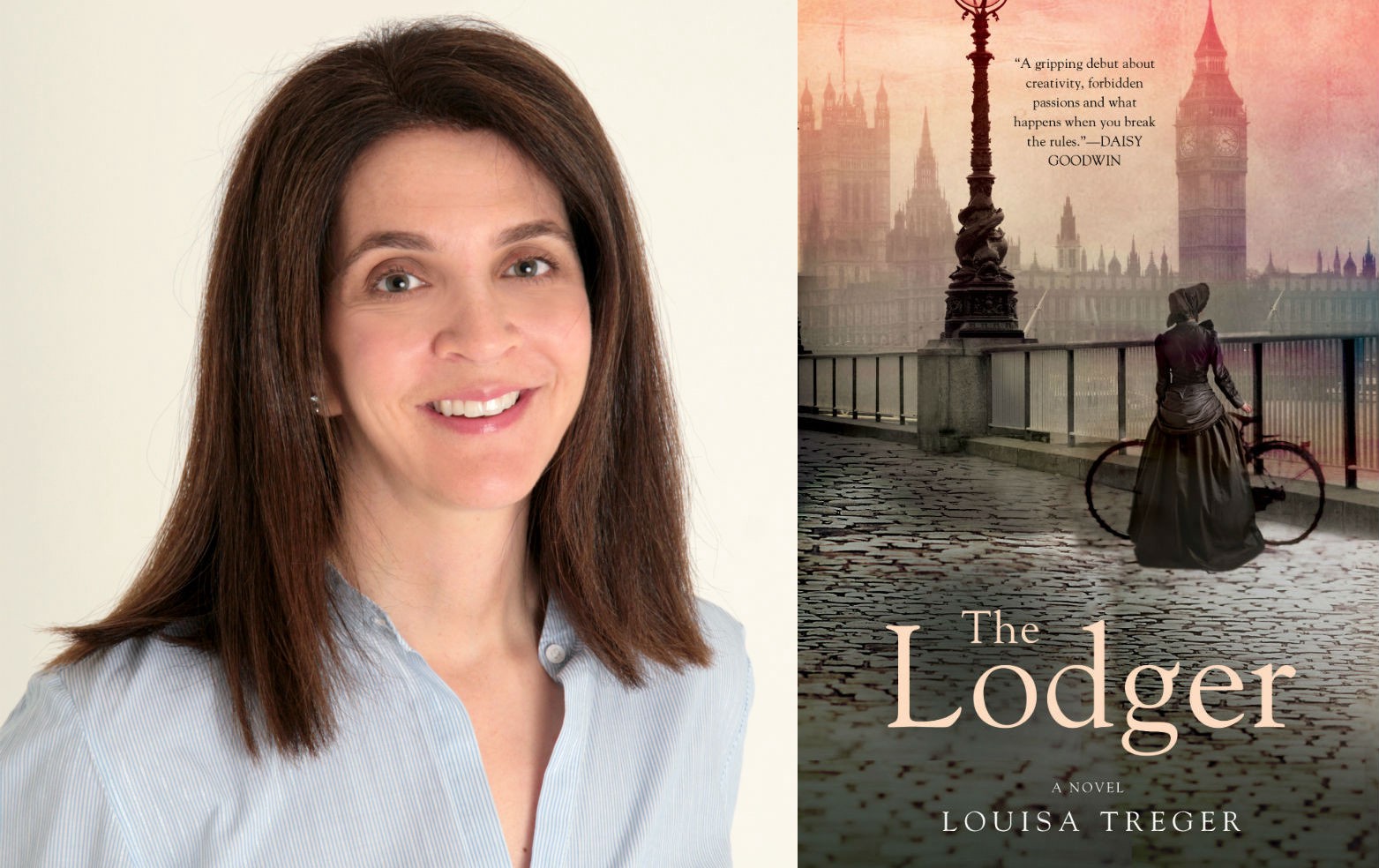
Rendering The Texture Of A Woman’s Consciousness: A Conversation With Louisa Treger, Author Of The…

Virginia Woolf credited her with creating “the psychological sentence of the feminine gender.” According to May Sinclair, she invented “stream of consciousness” in her groundbreaking, critically-lauded 12-volume novel Pilgrimage, which is essentially about a young woman’s thoughts (published just before A Remembrance of Things Past). And yet the writer Dorothy Richardson died obscure and in poverty, Pilgrimage forgotten by all but about 14 Modernist academics.

I discovered the contemporary novelist Louisa Treger, one of these 14 other Richardson fans, via Twitter of all places. I’d written an essay about Dorothy Richardson and a few of my more Modernist Tweeps pointed out that Treger was publishing a novel about her. (See, Twitter is good for something other than procrastinating novel revisions!) Treger’s novel, The Lodger, is a sensitive, sensual, and beautifully-written reimagining of Dorothy’s overlapping affairs with the married writer HG Wells and the young suffragist Veronica Leslie-Jones. After reading this stunning debut novel I was dying to meet Treger and to talk Richardson over tea. But as she lives in London, and I live New York, this Q&A had to suffice.

Amy Shearn: I’m always curious about novelized biographies — it seems like such a challenging form. What made you want to write a novelization of Dorothy Richardson’s life, rather than a straight biography or a novel inspired by her work?

Louisa Treger: I love biographical fiction, because there is an interesting framework of facts on which to hang the story, yet enough wiggle room to imagine and create. I was particularly interested in the emotional lives of these characters, and to explore this aspect, I wanted to make use of the extra licence fiction affords. What did Dorothy feel like betraying her oldest friend (HG Wells’s wife, Jane) by sleeping with her husband? What turmoil accompanied the realisation she was bisexual at a time when homosexual acts were punishable by law and by social ostracism?

AS: Like me, you first discovered Dorothy Richardson while researching Virginia Woolf, who considered the now-forgotten Richardson an innovator of modernism. What made you actually seek out her novel Pilgrimage, and what struck you most about her writing?

Her aim, in her words, was to “produce a feminine equivalent of the current masculine realism.”

LT: I sought out Pilgrimage because it seemed Dorothy Richardson was someone little-known, who had tried to do something extraordinary. It was her originality and courage that struck me the most. Her aim, in her words, was to “produce a feminine equivalent of the current masculine realism.” She was fearless about smashing narrative conventions like plot, structure and narrator, and she created a new, fluid way of writing that rendered the texture of a woman’s consciousness as it records life’s impressions; life’s minute to minute quality.

Dorothy’s desire to fix experience in words as vividly as it is lived particularly resonated with me. As she says in The Lodger: ‘How could she catch that moment; how to make the words come alive on paper, exactly as they were lived, directly from the center of consciousness?’ That’s what I am striving for all the time.

AS: Real talk: Did you read all of Pilgrimage, and how long did it take you? (My confession is that I’ve been reading it for like ten years, because while I love it so much, I can only take so much at a time, particularly when my reading time is at night and I’m tired.)

LT: I did get to the end of Pilgrimage! I read it while I was writing a PhD on Dorothy; it probably took me a year! I too love her writing, but am only able to digest it in small bites. The later volumes, in particular, are challenging. The writing becomes increasingly introspective, complex and experimental.

AS: Occasionally this novel nods to Dorothy’s introspective, revelatory way of writing, like in the line “Dorothy was beginning to realize that one’s inmost self was lost and not found through close relationships.” But for the most part your prose is a lot more traditional than Dorothy’s. What was behind that decision? Do you feel like you understand why she wrote the way she did?

LT: I do feel I understand Dorothy’s desire to create a new way of writing that would imitate the movement of the female mind. However, while this was brave and original, it also makes for challenging reading. Pilgrimage is deliberately plotless, because plot was one of the narrative conventions Dorothy rejected. None of the usual threads of structure or characterization are given; we aren’t told anything that happens outside the protagonist’s mind. And it seemed to me these challenges are part of the reason Dorothy’s work isn’t better known. I wanted to tell her story, but it seemed important to write it in a way that was more accessible than Pilgrimage. And so I rejected stylistic innovations in favor of traditional storytelling.

AS: Why did you choose to write about this particular episode in her life? And: how did you give yourself permission to take such liberties with her story? For example, her love affair with Veronica is written in such a lush, erotic, and detailed way (they were some of my favorite passages of the book — you managed to make modernists really sexy!), but as you note in your afterword in Dorothy’s own writing the sexual nature of this relationship was only hinted at.

I was intrigued by the way Wells helped Dorothy find her voice as a writer — partly in opposition to his views.

LT: Perhaps, before I answer this question, I should describe the episode! My novel covers a brief, dramatic period in Dorothy’s life, during which she falls in love with HG Wells, explores her sexuality and independence, rejecting the conventions and restrictions of the age, and finds her voice as a writer. I chose it because it was one of the most eventful periods in Dorothy’s life. It was full of pivotal encounters that shaped everything that came after. I became particularly absorbed by her affair with H.G. Wells. He was such a complex and compelling man, not conventionally handsome, yet irresistible to women because of his intellect and the way he made them feel he was interested in all of them — their thoughts as well as their bodies. I was intrigued by the way Wells helped Dorothy find her voice as a writer — partly in opposition to his views.

As for taking liberties with Dorothy’s story, I thought of it as imagining and coloring in episodes that Dorothy was reticent about. This is where the extra license afforded by biographical fiction came in: I gave full reign to my imagination! For me, it was the most engrossing part of depicting Dorothy’s life.

AS: Do you think Dorothy would have fared better in today’s literary world? Given the love and patience people seem to have for writers like Karl Ove Knausgaard and Elena Ferrante?

LT: I don’t think any of the big publishing imprints would take Dorothy on today! I hope that a small literary imprint would fall in love with her writing and publish her. I still don’t think she has mainstream appeal: I can see her attracting a small band of devoted followers, which is pretty much what she did in her day.

AS: At one point in the book, Dorothy and HG Wells are having a discussion about literature. She says, “You know the huge difference between you and me?…To me, literature is an end in itself, a thing of beauty and wonder. To you, it’s a vehicle, a tool. It has a purpose.” Wells responds, “Of course it does. A book without a purpose is simply the writer’s impertinence.” Which side of this argument is Louisa Treger on?

LT: I am somewhere in the middle, but closer to Dorothy. It’s fine for a book to have a message, so long as it isn’t at the expense of a great story and strong, breathing characters one can identify with.

AS: Later in the book, Dorothy muses, “The reason women didn’t produce much ‘art’ was because they were pulled in different directions, torn and scattered by the unending multiplicity of their preoccupations and tasks, unable to do any one thing properly. It was a state of being unknown to men. Art demands what present-day society won’t give to women, she decided.” Do you think this has changed in the 100 years since? Will it ever?

…I do think there’s a physiological thread binding women to children that does not exist in men — mothers are rarely entirely free from their multiplicity of preoccupations.

LT: Women’s lot has improved in certain ways: we have more freedom now, more choices. But the pressures Dorothy describes certainly resonate with my life! This is partly a question of economics: we wouldn’t survive on what I earn from writing. For this reason, my husband’s work comes first, and I am the one who holds everything together on the home front. I don’t always have as much time as I’d like for writing, and there is a certain amount of fitting my work in around the family’s schedule. Although I wouldn’t trade places with anyone, there are parallels between my life and Dorothy’s. I believe that if a woman is the breadwinner in the family, she will focus more on her work, and either have a partner or paid help to take care of domestic life. However, I do think there’s a physiological thread binding women to children that does not exist in men — mothers are rarely entirely free from their multiplicity of preoccupations.

AS: Some time after this bohemian episode in the real Dorothy Richardson’s life, despite carefully constructing an independent life of her own (a topic explored in Pilgrimage), she married a man she ended up taking care of and supporting financially. Why do you think she would have done this? Did their partnership make her creative life easier or more difficult?

LT: When Dorothy and Alan met, he was desperately ill with tuberculosis. Dorothy married him reluctantly, believing he had only six months to live.

Ironically, Alan survived for many years and the marriage seems to have been a success. Alan was a strange combination of dependence and independence. In practical matters, he was as helpless as an infant. But in every other respect, he was a self-contained being, content to work single-mindedly on his stark black and white drawings and to lead his own interior life, which left Dorothy’s untouched.

Although Dorothy was able to retain her independent creative life, she took on the practical burden of looking after Alan. Not only was his health poor, but she had to manage all their expenditure and practical planning, as Alan was incapable of dealing with this side of life. She did all the housework and cooking as well. Alan’s drawings brought in a pittance, so Dorothy supported them both by taking on extra journalism. She blamed her failure to gain lasting recognition on the fact she couldn’t give her fiction single-minded attention. There is some truth in this, and it certainly gave Dorothy a convenient reason for rationalizing her lack of success. However, I do not believe it was the whole story, as I explained earlier when discussing the challenges Dorothy’s work poses.

AS: You are so diplomatic about how boring her writing can be! I love it. You’re very nice. I mean, I love her too, but I do know what you mean about the “challenges.”

One more question, mostly because I have young children and am always seeking this answer: You have three children. How do you manage to write? How does parenthood affect your writing?

LT: I was unable to write when my children were young — I admire anyone who does! I was working on a novel during my first pregnancy, and I could feel my brain turning to mush and the prose drying up as the pregnancy progressed. It was a strange and rather alarming sensation, but I guess my creative energies were being diverted in a different direction! I had twins and then a third child in quick succession, so their early years were fairly chaotic and everything revolved around them.

Once the children were in school and I had an allocated span of free hours every day, I went back to writing. Of course, there are still days when everything falls apart, like when a child is ill.

When writing takes over, I am scared of missing something important in the real world.

The fact there is finite time to write probably makes me more focused during working hours. While immersed in a story, I often feel guilty because I become preoccupied with it, and it takes me away from my family. Sometimes, my characters talk in my head so loudly that I don’t hear what my children are saying to me. When writing takes over, I am scared of missing something important in the real world. I might leave a child uncollected at school, or — worse still — not see the emotional needs of my nearest and dearest. I haven’t burnt the house down — yet — but I make scores of silly slips, like letting baths overflow, or forgetting to put dinner in the oven.

Being a parent changes your consciousness, so my writing has probably changed. I would like to say it’s richer and deeper now, but it may be scattered and woolly!

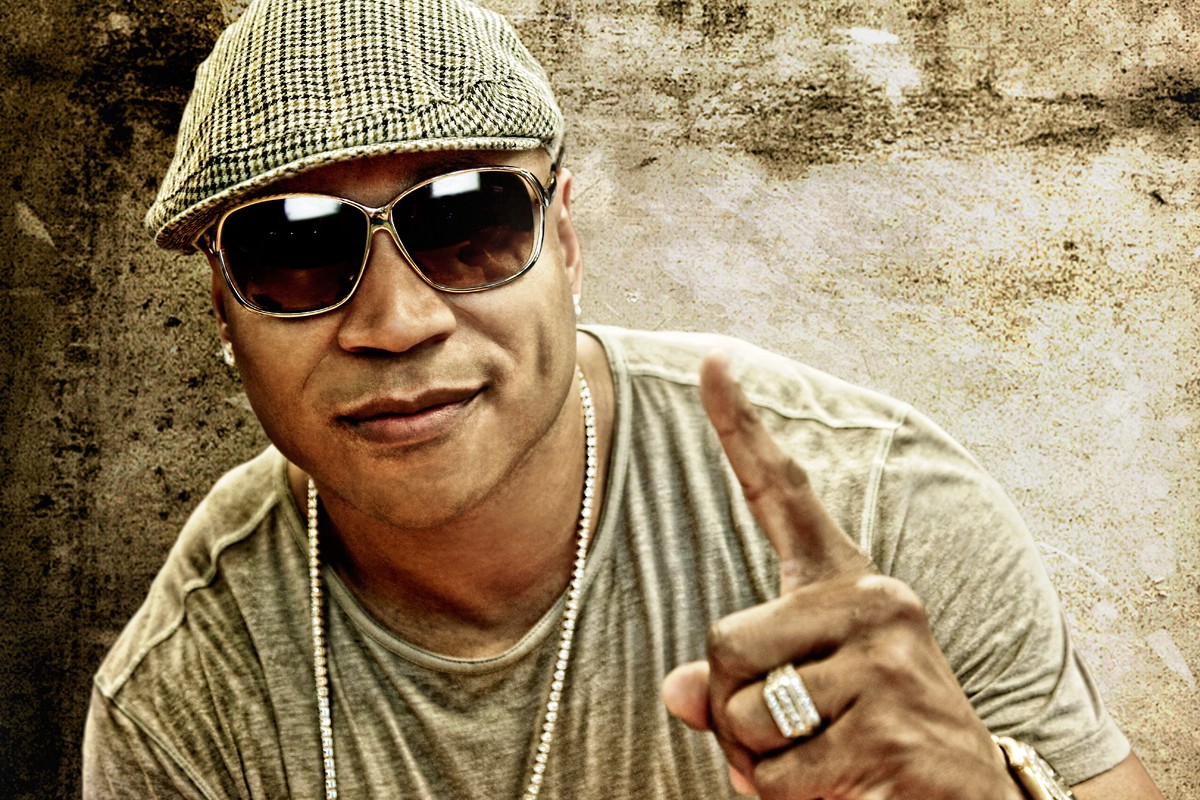
Around the Way Girl: A Personal History of Being Hit on by LL Cool J

The first time LL Cool J kicked it to me was at The Shark Bar on Amsterdam Avenue on the Upper West Side. It was my junior year in college and Lynai and I had driven down from Poughkeepsie to spend the night in “The City.” We were tired of the keg parties and dearth of eligible men on campus and wanted sophistication.

We were halfway through our meal when I saw him.

The Shark Bar had fancy soul food, strong cocktails, and a lenient carding policy. The restaurant was popular with the music industry crowd who would often turn it into a dance party after hours. We were halfway through our meal when I saw him. He sat at a table in the back, in a private section reserved for the better-known diners.

A lot of celebrities don’t look like their screen self when you see them in real life, but LL was instantly recognizable. A fitted charcoal sweater showed off his broad shoulders and muscular arms. Below the rim of his black Kangol hat, his sexy eyes made contact with mine. I gave a small smile and spent the rest of dinner doing my best to appear animated, fascinating, and thoroughly engaged in the conversation at my table.

He left his table before we did and as he approached ours, I let myself look up.

“How you doin’?” he asked.

“I’m alright,” I said.

“Would you and your friend like to join me at the bar when you’re finished with your dinner?”

Lynai kept her distance at the bar while LL and I talked. My hair was slicked back tight in a low bun and I was wearing platform heels, wide-legged, cream-colored slacks, and a gold tank top. I was hoping to look like I could have been cast in a music video, but had chosen to be a music executive. Eventually, one of LL’s friends came up and told him the car was outside. I was hoping we’d be invited to join them at whatever party they were headed to, but LL just asked for my number, said goodbye, and left.

He told me his real name — James Todd Smith — and that he had a Porsche, a BMW, an Audi, and a Benz. I had a silver Nissan Sentra hatchback.

LL called me the next night. I pitched my voice a little higher while also trying to sound sleepy — my attempt at sensuality. LL talked about his upcoming tour and answered my questions about what it was like to make Toys with Barry Levinson and Robin Williams. He told me his real name — James Todd Smith — and that he had a Porsche, a BMW, an Audi, and a Benz. I had a silver Nissan Sentra hatchback. We talked about how we both felt a kinship with Africa. I had grown up in Kenya and Zambia and he’d been crowned a chief in Ivory Coast. We talked for over an hour and then he said he had to go into the studio. Would I like to go out sometime? I said yes and he said he’d call me the next day.

He didn’t. But he did call three days later and this time we talked for 45 minutes, mostly about Baltimore, where I’d gone to high school, and Queens, where he was from, and Eddie Murphy’s Coming to America, the movie that had introduced me to Queens. Finally, he said he had to go see his grandmother, but that he’d call me the next day and we’d go out. I never heard from him.

Finally, he said he had to go see his grandmother, but that he’d call me the next day and we’d go out.

The second time LL Cool J kicked it to me was two years later. I was just out of college and living in Los Angeles. My home was a cockroach-infested studio apartment on Sepulveda and Venice with a landlord who used my bathroom when I wasn’t home, but I felt like I’d made it. I was writing script coverage and was an assistant to a filmmaker. My job mostly consisted of hanging out with him, forcing him to go to the gym, reading books that he might want to adapt, and making his actress girlfriend jealous, since she was sure there was something going on between the filmmaker and me. I tried to assure her that our relationship was professional and platonic, unable to tell her the one thing that would have convinced her — which was that when the filmmaker and I hung out, we were often joined by his boyfriend.

It was Grammys week. The filmmaker and his friend took me to the Four Seasons, Chateau Marmont, The Argyle, and the Mondrian. We sat at the bar and they’d flirt with each other while I sipped cocktails that cost as much as the bottles of vodka I’d buy at the corner liquor store. I was in my Michael Kors dress, a red, blue, and black print that I kept recycling. I was hoping to look like I could have been in movies, but had instead chosen to be a film executive.

I was doing a loop around the pool, pretending not to look for Madonna, when he and a group walked in.

I saw him at the Mondrian. I was doing a loop around the pool, pretending not to look for Madonna, when he and a group walked in. Our eyes met and I waited for the glimmer of recognition to cross his face. It didn’t. I returned to my seat at the bar and he had a dirty martini sent over. I raised it to him in thanks.

He came over to talk to me and I played along for a few minutes before reminding him that we actually had met before.

“Oh, yeah, yeah,” he said. “I knew I knew you from somewhere.”

I feigned hurt that he’d never called me back and he said, “Well, why don’t we fix that now?” He said he would call me that week.

I watched him on the Grammys the next night and felt special, as though I had somehow played a role in his fame.

LL called me a few days later and we talked for about half an hour, our conversation consisting mostly of me reminding him of everything we’d talked about last time. He suggested we go to the beach in Malibu that weekend. He’d take me to a little shack that sold the best fish tacos I would ever eat. He didn’t know if he could do Saturday or Sunday; he’d call me on Friday to let me know. I never heard from him.

He’d take me to a little shack that sold the best fish tacos I would ever eat.

The third time LL kicked it to me was a few years later, back in New York, in the Halcyon Lounge of the Rihga Royal Hotel on West 54th Street, across the street from my office at the William Morris Agency. I was wearing a black suit from Zara with a cornflower blue blouse underneath and Nine West flats — the uniform of the New York entertainment agency world. I was an assistant to a literary agent, and dressed, I hoped, to look like I was an agent.

Some fellow assistants and I were sharing a bottle of wine after another thirteen-hour day when LL walked into the lobby. He wore jeans and an un-tucked polo shirt and talked with a couple of guys while glancing around the room. Even behind his dark sunglasses, I could tell that we had caught eyes and I smiled and waved. He smiled and tilted his head and I knew that he had no idea who I was. Embarrassed, I put my hand down and turned back to my friends.

Even behind his dark sunglasses, I could tell that we had caught eyes and I smiled and waved. He smiled and tilted his head and I knew that he had no idea who I was.

In my peripheral vision, I saw him and the guys sit at a nearby table. They ordered drinks and I could sense his glance at me every now and then. A couple hours later, they had joined our table and I was, again, reminding him of the times we had met before. When my friends and I got up to leave, he asked for my number and, with great restraint, I said no. I had a boyfriend and, anyway, this back and forth felt too ridiculous to perpetuate.

The last time I saw LL Cool J was in LA in 2012. Austin Film Festival was hosting a panel with Buck Henry and it was the last event I would program for them before leaving my position as director and starting my MFA. The day after the event, I was eating lunch in a café at The Grove, jotting down changes I wanted to make in the next draft of my screenplay. I looked up and saw LL walking towards me. He was also by himself. I didn’t smile or wave, just watched him approach. He glanced at me, nodded, and walked on. I can’t say I was surprised. Almost ten years had passed since we’d last seen each other. Still…

As ego-rattling as it was to never be remembered by him, it had been flattering to be found flirt-worthy every time we’d seen each other. Had I aged out of the market? I’d recently seen him and his wife — turned out he’d been married all those years — interviewed on a talk show. Perhaps he had renewed his commitment to his marriage. Or maybe I had misinterpreted his gestures of friendship as flirtations. Either way, LL Cool J looked at me and kept walking.

What was he wearing? Some kind of pants and shirt combination, I assume. I remember what I was wearing, because it’s been my uniform for the past three years — jeans, a T-shirt, and Birkenstock sandals. I was a writer who just wanted to be a writer.

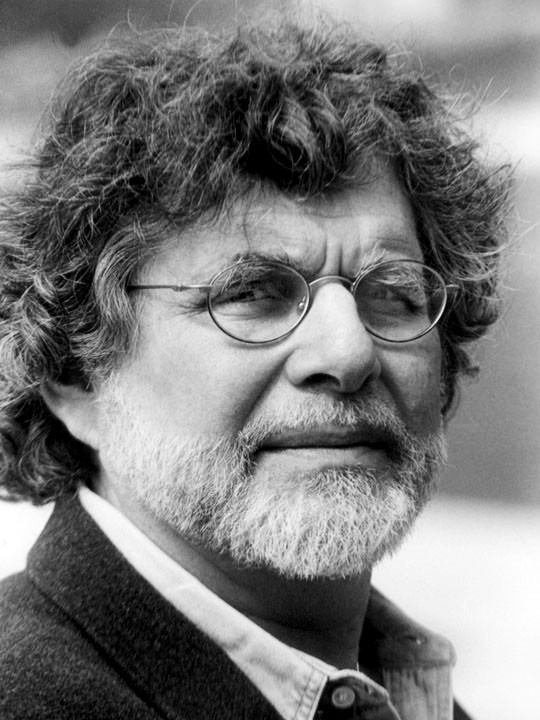
Remembering Alan Cheuse, Novelist, Critic, and Lifelong Literary Advocate

Alan Cheuse, beloved teacher, novelist, and longtime book reviewer for NPR’s All Things Considered, passed away at the age of 75 on July 31, 2015, from complications sustained from a car accident two weeks prior. Alan was surrounded by his family and treated with excellent care at the Santa Clara Medical Center.

Alan was driving from Squaw Valley, where he taught for several years, to Santa Cruz when he was in his car accident. He had been spending the past 30 summers at Santa Cruz writing; his daughter Sonya says that the Pacific Ocean was his muse.

He had published more than a dozen books, including fiction, nonfiction, and memoir, and his most recent novel, Prayers for the Living, was published by Fig Tree Books in March 2015. His short fiction appears in publications such as The New Yorker, The Antioch Review, Ploughshares, and The Southern Review.

In much of his fiction, Alan Cheuse incorporated real-life American historical figures. Talking about the process of writing fiction about figures out of history, Alan explained in a 2009 interview with Fiction Writers Review:

It’s a tricky business…You don’t want to betray any of the known truth about them, but at the same time you know, from living your own life, that so much of the deepest truths about life stay hidden from the eyes of researchers and historians…It’s that part of the life of the actual figure that you can build fiction upon, based on what you know about what they have written, or painted, or photographed, and what they said on the record about such matters. And in the blank spaces that make up the majority of the space even in the most public of lives — call it life’s dark matter — you can, given what you learn about them, imagine what should have or what, as the first critic, Aristotle said about the difference between history and poetry, what should have happened.

Alan was very close to his family, including his wife Kris O’Shee, son Josh Cheuse, and daughters Emma Cheuse and Sonya Cheuse, a dear friend of mine who spoke many times over the years about her father’s love of teaching. In addition to his teaching at Squaw Valley, Alan taught writing and literature at George Mason in Fairfax, VA since 1987.

The Cheuse family has been receiving an enormous number of emails and notes from former and current students, a testament to the number of lives he touched and the essence of who he was as a person. Teaching was one of the things Alan loved to do the most, and he never planned to retire. Recent Squaw Valley student Shelly King explained, “With his challenging questions, he helped me bring to the surface thoughts and feelings about the story I couldn’t get to on my own. He ended our workshop on a joyful note, asking all of us about the writers we loved, which reminded us why we go through what we go through to be better writers.”

Alan was a teacher outside of the classroom as well. In addition to sharing his love of books since the 1980s on All Things Considered, where he reviewed an estimated 1,600 books, Alan brought books to share everywhere he went, giving them away to friends, at dinner parties, and especially to his grandchildren, who received books from their grandfather every time he visited them.

Writing and reading is known in the Cheuse household as the “family business,” and Sonya’s earliest childhood memories are of waking up to the sound of her father typing on the typewriter. “My dad is the reason I love reading,” she says. “I can’t imagine the literary world without him.”

His family will hold a memorial in Washington, D.C. this fall and will share details with the public when they are available. For now, they have placed a statement on Alan Cheuse’s website that asks you to remember Alan Cheuse by raising a glass, telling a joke, and hugging someone that you love, continuing his legacy by living your life the way you want to, being good to your family, and reading a lot.

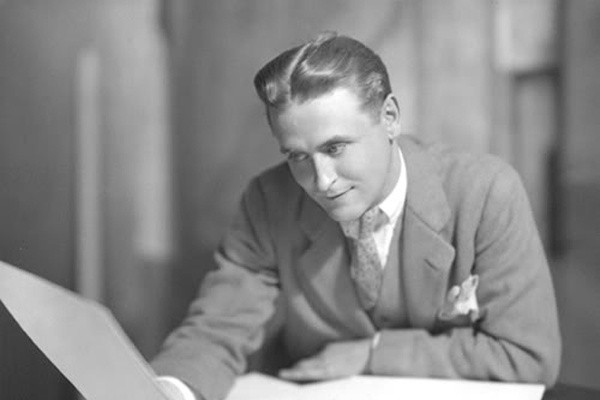
Long Lost Story by F. Scott Fitzgerald Published in the Strand Magazine

Meet Emmet Monsen: 31 years old, “slender and darkly handsome,” dogged by an “estranged lover who gets more estranged all the time,” and the protagonist of “Temperature,” a newly released short story by none other than F. Scott Fitzgerald.

Andrew Gulli, the managing editor of the Strand Magazine, discovered the story while rifling through the Fitzgerald archives at Princeton. It is dated July 1939, just a year before Fitzgerald’s death — a time when the author was grappling with alcoholism and a flagging career. And, in fact, Mr. Monson is a very thinly veiled version of his creator: a struggling writer who is diagnosed with cardiac disease. Fitzgerald acknowledges as much; one line reads, “And as for that current dodge ‘No reference to any living character is intended’ — no use even trying that.”

Gulli’s description of the tale is surprising, given its unhappy premise. He told NPR, “There’s some madcap comedy, some Wodehousian dialogue, some romance, even a little bit of some tragedy in it. I just was struck by how funny, how interesting it was. And I said to myself, ‘I really have to have this story.’”

So why the 75-year delay in publication? By 1939, Fitzgerald’s relationship with his longtime agent, Harold Ober, had soured. Rather than run the story by Ober, Fitzgerald elected to send it directly to the Post, which rejected it.

“Temperature” appears in the latest issue of Strand, but will not be posted online for several months. Those unwilling to part with $11.95 can content themselves with another Fitzgerald reject: “Thank You for the Light,” deemed “really too fantastic” by the New Yorker in 1936, but published in the magazine in 2012.

[Insert Go Set a Watchman joke here.]

POETRY: Three by Rich Smith

Keeping Up

I look dumb looking down
at a smartphone,
but that’s where you live.

It’s a little troubling to see us
evolving into human resources darlings,
careful to be seen saying

work is work in fact I work to work.
As if our clean shirts were laundry.
As if the trees were firewood and not large

sturdy flowers. The sun skips across
the painted land, tossing gold and silver everywhere,
and that’s all I’m ever trying to do. Sure it’s insane

to repeat the same process and expect a living wage
but nothing feels saner than sitting here
and writing to you on my phone,

accusing loose leaves of drunkenness
and happiness, doing no work
except for hoping you might join me

with news of a cloud.

Underscore

My mind’s suspended in a song
that shuffled on. I think solemn
of the town I tacked the tune to,
drink blue from the day in it.

The chorus tells me to return
even as it returns to its progression,
but I high-tail it back home anyway.
The squirrels look the same but they don’t

remember me. Months of tossing thoughts
at the refrigerator. Beers with dad.
Never in a rush. Winter. No place to be
without a child. So I low-road it back to the coast,

dismissing the waves of grain as water’s carbon copy.

Along the way I see the oldest man in the world
shouldering a bulk pack of toilet paper.
I need to see him as a figure
for not hope but not not hope.

So I make the small joke, privately
name him Germain,
French from the old French
from the Latin for brother

from the root for shoot, bud.
Evidence here, that repetition
dissolves a name enough to change
but still mean the same thing.

I think of friends from the old fields

with whom I sifted sand for weird stones.
Looking at them I don’t know
wherefrom they came, wherefore they now lie
in an ashtray beside a crab claw.

But they excite me there, as if they are always
just about to say something.

Needled into Everyday

At every crossing I picture the bridge dissolving,
my body stripped to its barest contingency.
Finally I’ve allowed it a moment to explode

like every time the subway halts between stops
and look! even in death we all keep reading. I read once
a butterfly remembers the leaves it kissed

as a caterpillar. I never know what will make it across
so I kiss everything, even if I’m bound to get hung up
on its huge necklace. To link is to make a thing

*

kiss another thing. A poem chaperones
two breaths. Once a memory was
the only thing carrying me across a river:

She pulls me toward her by my coat sleeves.
Her icicle sunflower melts. Dawn kisses
my cheek as I leave. I kiss back,

but I kiss everything. The scene tore

*

me from bank to bank
of the Columbia. The bridge gone,
I tried to read into the surrounding

gray a figure for anything.
The passenger side seatbelt light blinked
at my suitcase’s weight in the front seat.

Image via Clinton and Charles Robertson

Introducing Our Newest Column: New Suns by Monica Byrne

Monica Byrne

Electric Literature is excited to announce our newest column: New Suns by Monica Byrne. New Suns will be a culture column focused on expanding our understanding of pop culture. The column grew out of Byrne’s dissatisfaction with the narrow focus of mainstream culture coverage, as she details in a post on her website titled “I had a culture column at WIRED. And then I didn’t. Here’s what happened.

Monica Byrne is the author of New Suns, the first Patreon-funded culture column. She’s also the author of the novel The Girl in the Road and a playwright in residence at Little Green Pig Theatrical Concern in Durham, NC. You can find her on Twitter, Facebook, Instagram, and WordPress.

We talked with Byrne about the importance of pop culture, the future of crowd funding, and what readers can expect to find in New Suns. New Suns will debut this month.

Electric Literature: The other day, I saw you tweet that “pop culture isn’t trivial, it changes lives,” and mention how a pop song convinced you to first have sex.

Monica Byrne: Yes. “Sexual Revolution” by Macy Gray, on my Discman, on the bus ride from Boston back to Wellesley. Pop culture sets new norms, and it was precisely the new norm represented in “Sexual Revolution” — the generosity toward all kinds of people, all kinds of bodies — that convinced me there was nothing to be afraid of.

EL: When Wired changed their mind about your column, their reasoning was “we only do pop culture.” What do mainstream magazines like Wired get wrong about pop culture and its importance?

MB: I should first say that the editor at Wired said that to me very nicely, and even apologized for being “boring.” But when I came back with more ideas, I just got silence. Others in the industry have told me is common — and I know it is — but also, it’s the response that women and people of color disproportionately get. And I’d just had enough.

What mainstream magazines get wrong is that there was a time when telling one dominant cultural narrative was profitable, and now that time is coming to an end. The entire industry is hanging on by its fingernails now because the Internet offers so much more accessibility to the conversation to so much more of the population. Sometimes it’s hard to remember how young the Internet is. But that trend of access is only going to continue. Hiring and covering women and people of color proportionate to their presence in the human race is not only the moral thing for a magazine to do, but is in its best long-term financial interest. How that’s not the most obvious thing in the world, I don’t know.

Hiring and covering women and people of color proportionate to their populations in the human race is not only the moral thing for a magazine to do, but is in its best long-term financial interest. How that’s not the most obvious thing in the world, I don’t know.

EL: You’re primarily a playwright and novelist, but you got your start in journalism. How did that transition happen?

MB: My first job in Durham was producing The Story with Dick Gordon at WUNC. I loved the people there, and some are still dear friends, but I quit after four months. I hated the daily ritual of having to justify that my story ideas were important. I was like, “Important to whom? They’re important to me. That should be enough.”

I started writing stories, and liked that better. But I still write essays, too, and come up against “this isn’t newsworthy” all the time. I think “newsworthy” is often just code for “that which reinforces the dominant narratives.” My first column is probably going to be about artists in Belize who haven’t shown work anywhere but Belize. Why? Because it’s important to me. Because I choose, for a moment, to center the world around them. Because there’s no reason not to.

EL: One thing that really drew us to your column was how you said you wanted to help decide what counts as pop culture. It seems like so much of the current cultural conversation is about defining the same handful of films/books/shows — the “Is [Popular TV Character] a Feminist Icon?” and “10 Things [Popular Film] Gets Wrong about Science” kind of think pieces — instead of redefining what cultural products we should be talking about. What are you looking to change about the cultural conversation?

MB: You know, ever since I launched the Patreon with its manifesto, the more I try to interrogate the category “U.S. pop culture,” the more it comes up empty. The closest I can come to a definition is, “Art made in the U.S. that has the biggest money behind it.” There are exceptions, sure; but like with the sole woman in a superhero lineup, they function as tokens that make the existing structure more defensible[1].

And whose U.S., anyway? A bhangra party is as American as a bluegrass festival. Whose pop culture? Art moves freely across borders, and always has. (“Nation state” is also an empty category, but hey, I guess we’re still pretending they’re real.)

And whose U.S., anyway? A bhangra party is as American as a bluegrass festival. Whose pop culture? Art moves freely across borders, and always has.

What I want to change about the cultural conversation is the variety of voices speaking. This is already well underway. There are already so many brilliant cultural critics in particular — Roxane Gay, Janet Mock, Jenna Wortham, Ayesha Siddiqi, Britni Danielle — and I’m just following their lead.

But I’m also hoping to pioneer crowdfunding as an option for journalists, so we don’t have to sacrifice our ideals to be able to eat.

[1] Language and concept, Ayesha Siddiqi.

EL: Often it seems that the internet is great at expanding the conversation, but horrible at paying artists. However, you are funding the column through Patreon, where you’ve already racked up nearly 200 patrons. What role do you think crowdfunding can play in producing culture?

MB: Oh, I think it’ll be the new norm. I also think it’s the only way to replace the old power structure referred to above. Money is a driver, and will be, for as long as we have money; but to redistribute that power into the hands of millions? That’s the answer. Barack Obama changed the game with microdonations. Amanda Palmer changed the game with her Kickstarter and Patreon. (What I know about crowdfunding, I know from watching her.)

But it’s not a silver bullet. You have to lay groundwork. I’ve been writing, blogging, and networking for years up until this point, and that’s why I had a successful campaign. People knew and trusted me. This model isn’t free of prejudice — I’m privileged because of how I look, and because of my socioeducational background — but I sincerely believe crowdfunding will produce the culture of the 21st century. It already is. And ya know? Maybe that’ll lead us to a future of no mainstream culture at all. Just many streams, weaving and intertwining, like in a delta on its way to the sea.

EL: When it comes to the narrow scope of mainstream coverage, do you get the sense of how much it’s caused by the unwillingness of editors and critics to change, and how much is caused by financial pressures? Do you think editors would like to cover more diverse things but are too afraid of losing subscribers and clicks if they do?

MB: I honestly don’t know. I wish we had more data, and then we wouldn’t have to speculate.

I do know what passes for fact often melts away to “conventional wisdom,” which, itself, melts away to reveal plain prejudice. Like that people of color don’t read. (Daniel José Older calls bullshit here). Or that men won’t go see movies starring women. (Brooks Barnes covers that myth here).

I can’t imagine that there are still many editors who sit around saying aloud, “Women only write about soft fuzzy things and not even as well,” but I know they sit around saying “Financial pressures blah blah blah,” which is a mask for the bias they don’t want to face in themselves. They don’t have the vision or the will to change. So they need to be replaced. (Though sometimes you get a Francis, and sometimes you get a Benedict…)

EL: You’ve said that your Catholicism shapes how you see the world. Can you elaborate on that, and how it shapes the way you see culture?

MB: There’s that Bible verse, “The last shall be first and the first shall be last,” which my Dad always loves to quote to me. Catholicism instills a habit of radical inversion. That nothing is what you think it is, that love is stronger than death, that the most neglected people are actually the center of humanity. That’s why I hate language like “marginalized people.” According to whom? They’re at the center of their universe. And that’s how I want to approach all artists I talk with: they make their own world, on their own terms, under their own sun.

EL: In your Patreon, you tell your patrons that you’re committing to one year of the column. Why that specific time frame?

MB: First, because it’s less scary for patrons to commit to a finite time frame. Second, because this column is an experiment, and like any experiment worth doing, I don’t know if it’ll work.

Third, I worry about my relationship with power. Power corrupts. If my aim is really to redistribute power away from people who look like me, then I have to be prepared to give it up. A year seems like a good point to reevaluate my own usefulness.

If my aim is really to redistribute power away from people who look like me, then I have to be prepared to give it up. A year seems like a good point to reevaluate my own usefulness.

EL: What can we expect from the first few columns?

MB: Self-taught artists in Belize. Whether arts institutions should have auto-destruct sequences in their charters and “wills” for after their deaths. How to live with “split mind,” the dual awareness that living in colorist and sexist societies requires. Stendhal Syndrome. Prison abolition. Designer genders. Freelance temple whores. The circle gaze. Protest choreography. Open borders. Invented languages.

Watch this space.

The Unyielding Sea: Genoa by Paul Metcalf

Though first published fifty years ago, Paul Metcalf’s Genoa: A Telling of Wonders can fit easily into a genre conversation that feels very current. If we’re going by traditional genre constraints and definitions, it is one of those experimental texts that’s both everything and nothing — called a novel, written with the first person voice of a fictional narrator, yet hardly telling a story at all; instead, it wrestles with a constant barrage of references and quotes, a Montagnian display of a mind searching on the page. Through the first couple of chapters, I was content to read it as a genre exercise, analyzing it’s hybridity, trying to trace the moments where the narrator’s back story shifts into a riff on a literary quote, decipher the ratio of imagined to autobiographical to researched. What’s the game here? Thankfully, the desire to define or quantify what was happening on the page soon slipped away.

Any great book — and yes, Genoa is emphatically great — transcends the tricks in how it was made. It’s hard to explain the unique power of what Metcalf has written; better, perhaps, to simply acknowledge that something powerful is happening. Case in point: I seem to have settled on writing whoa in the margins of many pages. And then, once: this is like Gilead on bad acid. Truth be told, though it wears its influences proudly, Genoa is unlike anything I’ve ever read, Metcalf was the great-grandson of Herman Melville, and that lineage, the weight of Melville’s ghost, is all over the narrative, along with many other literary and historical references, until the book becomes something of a modern Greek chorus.

Almost all of the present-tense action of the story takes place in the attic of an old house in Indianapolis where Michael Mills, the narrator, sits at his desk, reads, paces, remembers. That’s it. His children are downstairs. At a certain point his wife comes home. The narrative builds through fragmented memories to tell the story of Michael’s deeply troubled brother Carl. But as much as it is about Carl’s life and Michael’s relationship to it, it’s about Herman Melville’s life and writing, the diaries and letters of Columbus, and what it all means to Michael. It is also about the wonders, pleasures, and terrors of the human body, Michael often quoting from an anatomy textbook. How do these strands relate? Only in that Metcalf smashes them together. They are all born from one mind attempting to understand something about what it means to be alive in this world. Above all, Genoa is a reckoning.

Metcalf doesn’t lean on one central metaphor. Instead, everything is metaphor; each image in each book Michael’s reads can be a portal to new meaning. A quote from Moby Dick about the anatomy of a sperm whale — “Oh man! Admire and model thyself after the whale!” — transitions without explanation into a memory of Carl’s body — “Carl the wrestler fades, and his huge head approaches, blocking the sun” — and so Carl becomes Michael’s white whale: taunting, giant, submerged. Pages later, Michael’s act of thinking in his attic becomes a ship’s voyage, becomes an ejaculation as described in a textbook:

“I step back from the desk, gaining my sea-legs. I am braced, with one hand on the chimney. The house arches and shudders — an inverted hull, with kelson aloft against the weather. and the human sperm enters a reservoir, low in oxygen — an thence to the vas deferens, in the lowest, coolest scrotal area…”

At first, it’s difficult to find steady footing in Michael’s story when Metcalf will up and leave it, sometimes mid-sentence, to drop into a comparison of Melville and Columbus as fathers, or a riff on cannibalism and the nature of torture. I don’t think it’s an accident that a book so obsessed with voyages and storms, a book so tied to a customs inspector who remembered his own journeys and conjured up a character like Ahab, mimics a crashing, unyielding sea. As Metcalf himself would put it, the reader needs to get her sea-legs. But once you reconcile yourself to the waves, there is magic to be found. It’s a story about everything — life, death, fear, danger, fatherhood, legacy, the margins of America and the heart of it, too. A man in an old house in Indianapolis thinking, reading and remembering his way through a storm, can take us back centuries, to the lives of voyagers both historical and fictional, while also honing in on the significance of every tiniest motion, every bone in a body.

Early in the book, Metcalf writes:

“…for Melville, space and time are one. Later, he writes: Fusing with the amnion, becoming the amnion, turning all to gray and white, I am no longer Michael, but everyone — a particle in an explosion — all time and space — and therefore nothing.”

As much as any, these two sentences stick out as potential fragments of mission statement, giving a nod toward how to read the book without being prescriptive. This is a place where beginnings and endings are permeable, where what is read, what is imagined, and what is lived weave into a writer’s consciousness and can be channeled into something ineffable yet undeniably greater than the sum of its parts. Genoa is, indeed, a world of wonder.

Genoa

by Paul Metcalf

Powells.com

The CW is Developing a “Gritty” Adaptation of Little Women

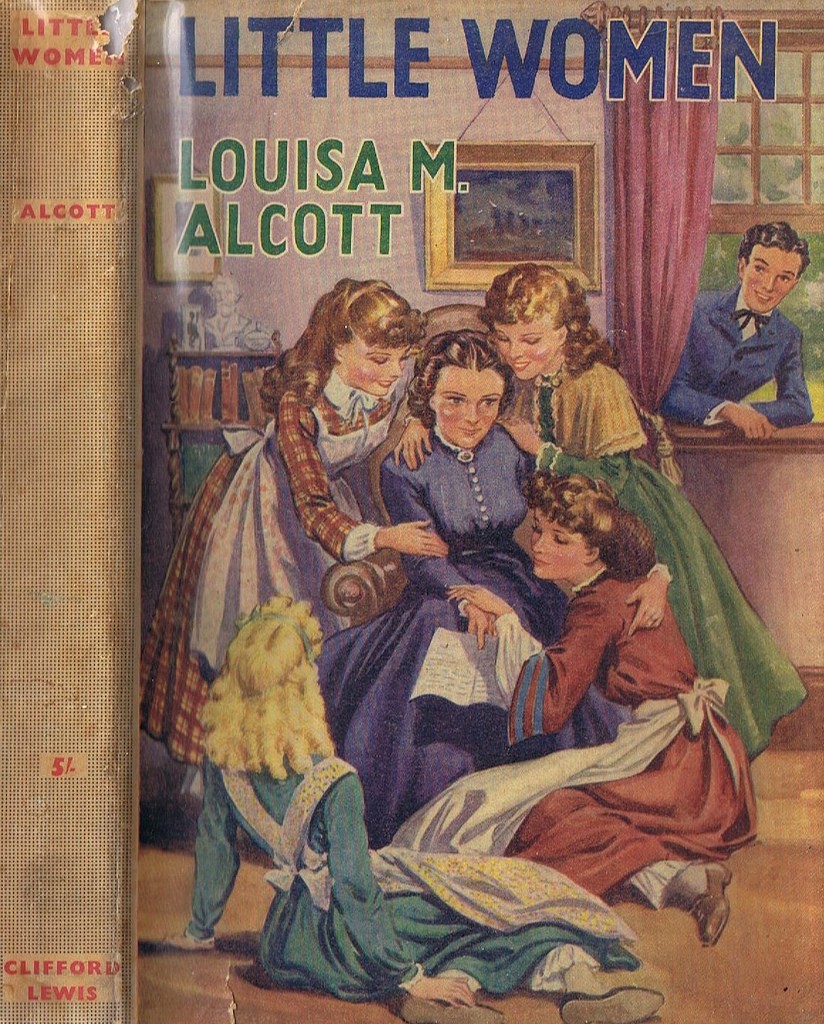
Louisa May Alcott’s 1868 novel Little Women has been enchanting readers for decades. Multiple screen adaptations have been made, such as the 2004 film starring Winona Ryder, Kirsten Dunst, and Susan Sarandon. Although the March sisters — Jo, Beth, Meg, and Amy — certainly have their fair share of disagreements (including the famously horrifying scene where Amy burns Jo’s writing), one might not envision them duking it out Hunger Games style.

The CW, however, has other ideas. According to Deadline, the television network known for Gossip Girl and Jane the Virgin has begun to develop a new series based on Little Women.

Written by Alexis Jolly, the series is described as a “hyper-stylized, gritty adaptation” of the novel, in which “disparate half-sisters Jo, Meg, Beth, and Amy band together in order to survive the dystopic streets of Philadelphia and unravel a conspiracy that stretches far beyond anything they have ever imagined — all while trying not to kill each other in the process.”

Little Women, then, will soon join the ever-popular league of dystopian narratives. If this news excites you, Flavorwire recently compiled their dream-cast for the “millennial generation.”

Who else would you like to see take on the role of Jo or Amy as they navigate Philly’s “gritty” dystopian streets?

TED WILSON REVIEWS THE WORLD: MY MASCOT

★★★★☆

Hello, and welcome to my week-by-week review of the world. Today I am reviewing my mascot.

With the line between corporations and people becoming increasingly blurred, it’s difficult to tell where Walt Disney’s life ended and where it began. Did his corporeal being morph into a bunch of paperwork worth millions? If Disney the corporation is in fact Disney the man, that would make him/it the first person to have his own mascot — Mickey Mouse.

With over 7 billion corporations (people) in the world, it’s now more necessary than ever to stand out, and there’s only so much one can do with fonts and color palettes. That’s why I hired a branding agency to create a mascot that reflects my brand. Unfortunately, their Creative Director didn’t see me the way I see myself and none of the anthropomorphized cartoons they proposed were appropriate. Does a talking refrigerator say “Ted WIlson” to you?

I wanted something real — as real as me — so it made sense that my mascot should be a real person, just like how Scientology has Tom Cruise as their mascot. My mascot’s name is Jeffrey Sobieraj — a name that is sure to become synonymous with Ted Wilson. I don’t know anything about Jeffrey’s personal life, but if he has any loved ones, when they look at him they will only see me. In a way, it’s like his family will become mine and Jeffrey will cease to exist.

Jeffrey signed over all rights to his name and likeness, so if he wants to do anything I haven’t approved of, he’ll need to change his name and get plastic surgery. That is unless I rebrand myself, in which case the rights to Jeffrey’s face will revert to him.

Here’s a trailer for an upcoming Ted Wilson ad campaign featuring the Ted Wilson mascot.

I think it’s a pretty good mascot. It smiles, which is something I do a lot of. It’s also young, which I was once. It’s everything I am and never anything I’m not. Can you imagine Jeffrey wrapping his hands around the throat of a drifter and slowly strangling him to death? Because that’s something I would never do.

What do you think? Does it represent my brand well? Let me know your thoughts! I’ve invested a lot of money in this.

BEST FEATURE: Such clear skin!
WORST FEATURE: According to preliminary market research, it doesn’t appeal to women because of its neck.

Please join me next week when I’ll be reviewing a poodle.

Video filmed by Aralyn Beaumont.