In the age of social media, interacting with our favorite authors has gotten much easier. Using platforms such as Twitter or Facebook, fans can pose direct questions, “like” recent status announcements, and even track where and when authors will hold their next public reading. And yet, even with all these new ways to connect, most fans still aren’t able to sit down at the dinner table with their literary idols.
Amazon, however, is being accused of determining through some sort of mysterious algorithm who is actually well-acquainted in real life. If we’ve interacted with authors online, the Guardian warns us that “Amazon might decide that you’re “friends” and ban you from leaving a review of their latest book.”
In a blog post, indie author Imy Santiago writes of being prevented from leaving a book review on the site because Amazon decided her “account activity indicates that you know the author.” In reality, Santiago only ever interacted with the author online; she considers Amazon’s decision “censorship at its finest.”
In response to the controversy, romance author Jas Ward created a petition which has already garnered 11,000 signatures as of Thursday morning.
Ward acknowledges that social media plays a critical part in promoting the latest works of emerging as well as established authors, and further states: “Your current process of removing reviews that a reader has created to show their honest and sincere opinion on a book is not fair and cripples the review process more than assists.”
Although Amazon’s customer review guidelines understandably ban family members from writing reviews (thanks anyway, Mom and Dad), their process of determining actual friendships is a bit shady. In a response email to Santiago, Amazon wrote: “Due to the proprietary nature of our business, we do not provide detailed information on how we determine that accounts are related.”
The nominees for the World Fantasy Awards have officially been announced! Established in 1975, the World Fantasy Awards are presented annually to writers, editors, or artists. The Award is known as one of the three most prestigious speculative fiction awards, alongside the Hugo and the Nebula.
This year’s nominees include some familiar faces, including Electric Literature contributor Jeff VanderMeer, Jo Walton, and Kelly Link, among others.
NOVEL • Katherine Addison, The Goblin Emperor (Tor Books) • Robert Jackson Bennett, City of Stairs (Broadway Books/Jo Fletcher Books) • David Mitchell, The Bone Clocks (Random House/Sceptre UK) • Jeff VanderMeer, Area X: The Southern Reach Trilogy (Farrar, Straus and Giroux Originals) • Jo Walton, My Real Children (Tor Books US/Corsair UK)
NOVELLA • Daryl Gregory, We Are All Completely Fine (Tachyon Publications) • Pasi Ilmari Jääskeläinen, “Where the Trains Turn” (Tor.com, Nov. 19, 2014) • Michael Libling, “Hollywood North” (The Magazine of Fantasy & Science Fiction, Nov./Dec. 2014) • Mary Rickert, “The Mothers of Voorhisville” (Tor.com, Apr. 30, 2014) • Rachel Swirsky, “Grand Jeté (The Great Leap)” (Subterranean Press magazine, Summer 2014) • Kai Ashante Wilson, “The Devil in America” (Tor.com, April 2, 2014)
SHORT FICTION • Kelly Link, “I Can See Right Through You” (McSweeney’s 48) • Scott Nicolay, Do You Like to Look at Monsters? (Fedogan & Bremer, chapbook) • Kaaron Warren, “Death’s Door Café” (Shadows & Tall Trees 2014) • Alyssa Wong, “The Fisher Queen,” (The Magazine of Fantasy & Science Fiction, May/June 2014)
ANTHOLOGY • Ellen Datlow, ed., Fearful Symmetries (ChiZine Publications) • George R. R. Martin and Gardner Dozois, eds., Rogues (Bantam Books/Titan Books) • Rose Fox and Daniel José Older, eds., Long Hidden: Speculative Fiction from the Margins of History (Crossed Genres) • Michael Kelly, ed. Shadows & Tall Trees 2014 (Undertow Publications) • Kelly Link and Gavin J. Grant, eds., Monstrous Affections: An Anthology of Beastly Tales (Candlewick Press)
COLLECTION • Rebecca Lloyd, Mercy and Other Stories (Tartarus Press) • Helen Marshall, Gifts for the One Who Comes After (ChiZine Publications) • Robert Shearman, They Do the Same Things Different There (ChiZine Publications) • Angela Slatter, The Bitterwood Bible and Other Recountings (Tartarus Press) • Janeen Webb, Death at the Blue Elephant (Ticonderoga Publications)
ARTIST • Samuel Araya • Galen Dara • Jeffrey Alan Love • Erik Mohr • John Picacio
SPECIAL AWARD — -PROFESSIONAL • John Joseph Adams, for editing anthologies and Lightspeed and Fantasy magazines • Jeanne Cavelos, for Odyssey Writing workshops • Sandra Kasturi and Brett Alexander Savory, for ChiZine Publications • Gordon Van Gelder, for The Magazine of Fantasy & Science Fiction • Jerad Walters, for Centipede Press
SPECIAL AWARD — -NON-PROFESSIONAL • Scott H. Andrews, for Beneath Ceaseless Skies: Literary Adventure Fantasy • Matt Cardin, for Born to Fear: Interviews with Thomas Ligotti (Subterranean Press) • Stefan Fergus, for Civilian Reader • Ray B. Russell and Rosalie Parker, for Tartarus Press • Patrick Swenson, for Fairwood Press
The awards will be presented at the World Fantasy Convention Banquet on the Sunday afternoon.
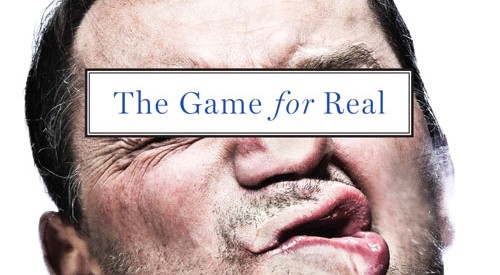
According to Benjamin Paloff, translator of Richard Weiner’s The Game for Real, “anyone who claims not to be a bit bewildered by writers like Richard Weiner is inherently untrustworthy.” Weiner, an early twentieth century Czech writer who spent the majority of his writing career in Paris, is a demanding stylist. His prose is densely imagistic, glutted with long sentences sutured together by flights into surreal dreamscapes. He uses this byzantine style to replicate interiority and explore our assumptions about the nature of identity. The Game for Real is filled with doppelgangers and strangers, with false accusations and staged conversations, and with characters who ceaselessly and vainly chase reality.
The book is split into two novellas. The first, “The Game for Quartering,” is a close-first person account of paranoia and inauthenticity. An unnamed bachelor and “hack” leaves a Paris Metro station and is followed home by the train’s only other passenger. This passenger might be an acclaimed Spanish dancer — or, he might merely resemble that dancer. It might be the narrator’s friend, Fuld. At home, things get even weirder: an unidentified woman waits at the narrator’s door. The ambiguities mount when the novella shifts to an earlier episode at a café, where the narrator and three friends sit at a table surrounded by “supernumeraries” watching them talk:
The supernumeraries — that is, the guests of this sanctuary, which is both a tavern and a knightly hall — won’t let us out of their sight for a moment . . . as far as I was concerned, that circumstance contributed decisively to the impression that we were acting before what one calls fate, which also likes to pretend that it’s a disinterested observer.
This short passage displays Weiner’s commitment to minutia. As the narrator qualifies his assertions about the venue — supernumeraries are generalized back to guests; the “sanctuary,” in the course of a clause, becomes a tavern and knightly hall — we feel the mind trying to make sense of the unfamiliar. Description, here, is an attempt to explain the inexplicable.
The presence of fate, at the café, contributes to the narrator’s growing sense of paranoia. The other characters all know more than he does, but what they know, exactly, remains unclear. Weiner uses playwriting techniques in these café scenes to further enhance the narrator’s feeling that they are acting before an audience, living up to preordained roles. The text adopts the look of script, and the repeated use of personal direction forces us to wonder who, exactly, is directing the characters. Is it Weiner, the writer? Or is that falsely disinterested observer, Fate, shaping the plot?
“The Game for the Honor of Payback,” the book’s second section, is an equally elliptical exploration of identity and psychology. Whereas “The Game for Quartering” progresses into the dreamlike world of the café, “The Game for the Honor of Payback” begins in a dream in which the protagonist swims through a “subterranean tunnel and against a foul current.” Things don’t get much better when he awakens. Staying at a small inn, the protagonist — the closest thing we get to a name is “Shame” — is accused of stealing a bracelet belonging to innkeeper’s wife.
After the innkeepers ask him to leave, what follows is an impressionistic account of an outsider’s excursion through Paris. As the novella progresses, it becomes increasingly difficult to parse out what is real and what is imagined. Like the narrator in “The Game for Quartering,” “Shame” is obsessively self-conscious:
Why does he [protagonist] say, “If I had pinched it,” “If I had chucked it” . . .? Why does he say this when he knows that in order for him to pinch, in order for him to chuck, he would have to be . . . precisely: not himself, but rather a fundamentally different person.
Weiner deconstructs language to question identity. How can we use language flexibly, hypothetically, when doing so puts language at odds with identity? In Weiner’s work, no phrase is taken for granted. Every image, every particle, every thought, and every shift in personality. Characters are split into temporary selves: “the sinister Zinaida; The Zinaida of early evening; the Zinaida shuffling toward the table . . . the Zinaida carrying a writing pad.” His world demands our attention: “Look! Don’t you hear the heads of their unfurled offensive lines twist suddenly, charmingly, skirting a kind of magnetic focal point, languidly and in vain?”
Though Weiner was highly influenced by the surrealists, his close readings of Marcel Proust, as a reviewer living in Paris, seems to have had a major impact on his depiction of life. Weiner understood, like many of the Moderns, that the future direction of literature was the fluctuation of thought. It is a testament to Weiner’s skill that the impressionistic dreamscapes of 1930s Paris remain as fresh today as they were when he wrote these novellas. And Paloff deserves a great deal of credit, too, for preserving the wit, complexity, and beauty of Weiner’s sentences: the nights are so dark they “stain clothes;” skies “crackle” with stars. It’s unfortunate that English readers had to wait eighty years for The Game for Real to appear. These novellas are intense, funny, and vivid explorations of selfhood and identity. Their publication was long overdue.
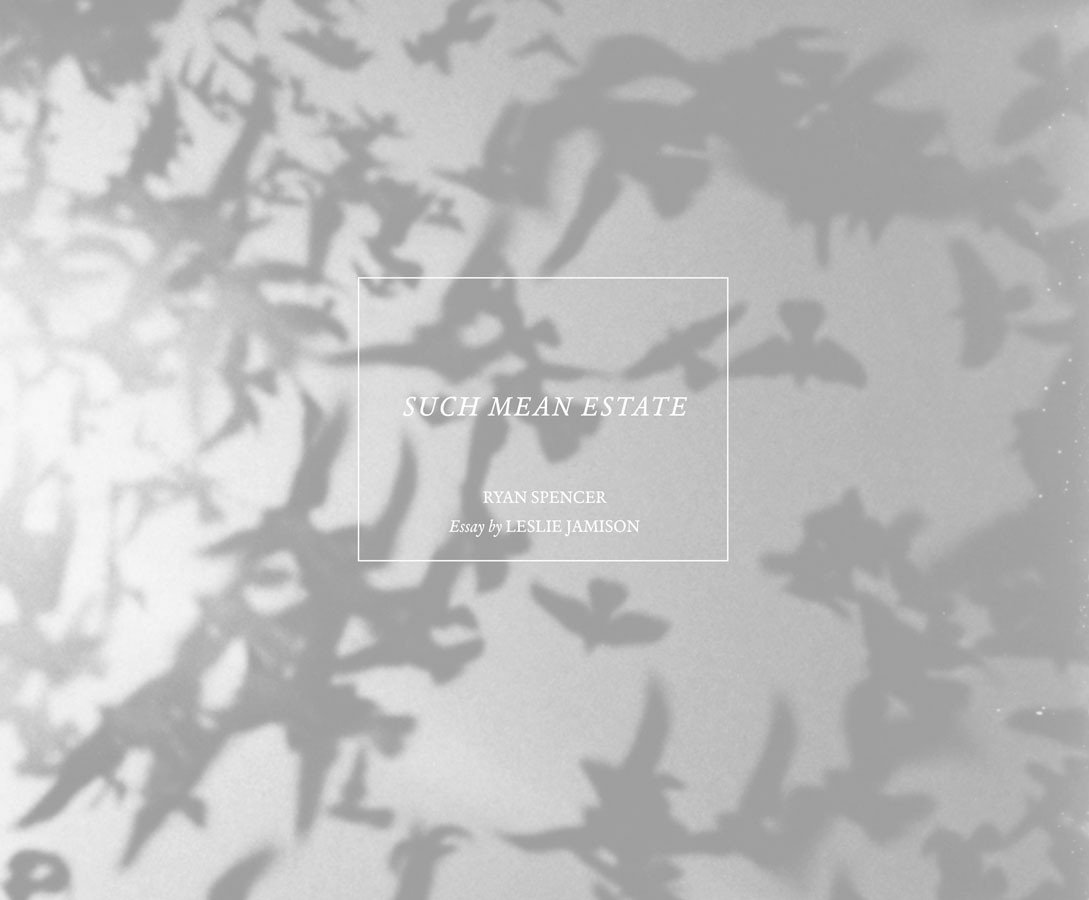
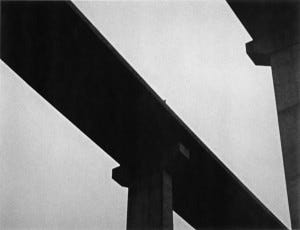
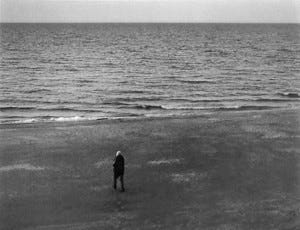
The end of the world as we know it isn’t just a popular topic for Margaret Atwood novels or Michael Stipe lyrics; there’s a whole film genre devoted to it too! From Dawn of the Dead, to Southland Tales, to 2012, to all the various Resident Evil flicks, cinema has long been obsessed with worst case scenarios. But are these movies high art? Or more compellingly, is there high art contained within these films? Photographer Ryan Spencer thinks so. His new photo-book — Such Mean Estate — consists of various self-captured Polaroid images; each taken from one frame of a disaster film. Accompanying this book-length photo essay on cinematic apocalypses is a prose essay by Leslie Jamison called “Catechism.” Both the images and the text combine to create unique experience not only in how we think about the end of times, but how we look at it, too.
For the launch of the book, I talked to both Spencer and Jamison about this unique project.
Ryan Britt: Thinking about the images contained in both the photographs and in the book; I wanted to talk to you guys about “cli-fi.” That type of science fiction that is about climate change. What are some influential cli-fi narratives for both of you?
Ryan Spencer:The quintessential — as far as entertainment value — would have to be The Day After Tomorrow. In that, you have family drama and every bad thing you can think of happening. And that is a film that I looked through a lot when I was doing this project. There are a few images from that film [in the book]. That’s a great one. I think 12 Monkeys is a good one too; a great film. It deals a lot with this issue of what would our response be if the climate were altered in a certain way. And when we look at these films that are kind of over the top and absurd, there’s still something terrifying in them. Something I was trying to do with these photos is to take images from these films and to make them terrifying again.
Britt: Because these films have to be consumed by mass culture, they might actually back off on some of the terror.
Leslie Jamison: I want to say a few more words about The Day After Tomorrow. I feel like it was one of the signs of early bonding [between us]. I mean, I don’t go around telling lots of people about my fascination with The Day After Tomorrow because there’s a weird shame associated with loving that film. There’s a line [in my essay] about sending L.A. to hell, and to me that film epitomizes that aesthetic. In these kinds of movies L.A. is always opening up with tiny fire chasms! I’m from L.A. so I feel defensive on L.A.’s behalf and when it comes to disaster movies there’s this weird fixation with just punishing L.A.! So that was one of those things I’ve just been waiting for a chance to talk about.
And I too feel like there is a way in which some of these genre films get sanitized. There’s a way we kind of use them to punish ourselves a little bit, but it’s a kind of inculcation. But this project I think takes away from that safety. I mean, there’s nothing safe about the world we live in right now.
Spencer: Right.And in looking at all of these films — science fiction films — inherently shows the future or some version of the future. For me, it’s interesting to look at the histories of past futures. What does looking at what we thought was going to happen to us twenty years ago feel like? Or what did 2010 look like in 1970? But yes. When this kind of thing is made into a film, there is a feeling of safety: this is the worst thing that could happen; all of the things people may have joked about — superstorms — when you see it actually happening in a movie, it’s somehow more real. For example: during hurricane Sandy, my girlfriend and I actually watched The Day After Tomorrow, not knowing how bad the real storm was going to turn out.
Britt: Ha! Meta. Let’s talk a little bit about the images themselves. Now, which Resident Evil film is the cover photo from? Full Throttle? Electric Boogaloo?
Spencer: Not sure. Resident Evil: Apocalypse? I don’t always remember which photos everything is from. [laughs]
Britt: This brings me to the shame Leslie mentioned earlier. There’s shame in loving the idea that the world is ending, but there’s also shame in loving cheesy disaster movies. What’s so interesting about this, is that here I’ve got a beautiful image from a film that I would have never known as the kind of movie that probably has like a 20% rating on Rotten Tomatoes.
Spencer:That’s a generous rating for a Resident Evil film.
Britt: Can you both talk about moving different aspects of creative art into different contexts? Has the respectability of these films been increased?
Spencer: There’s a lot of images of course here that are taken from movies that aren’t great films. I shouldn’t say that; it’s not that they’re not great films — they’re just not films that are easy to defend. Maybe I did this whole project to give myself some reason to sit and watch all of this garbage! But even when the script is horrible or there’s not a lot going for a movie, I found something — even once or twice — that is actually beautiful. But, you know I had to comb through to find some of that. A lot of these things happen so quickly. I had to look for some of the best frames in slow motion.
Britt: Is there an example of one of the photos that typifies what you’re talking about? In an instant, we wouldn’t have seen it in a regular viewing of the film, but when you slowed it down, there was then this amazing moment?
Spencer: I think a lot of the Resident Evil movies are like that. They have a video game pace. So you have to slow it down to find the good stuff. And there are great artisans working on those kinds of movies.
Britt: They’re not phoning it in!
So, let’s talk a little bit about some of the images in the photographs that pop up in Leslie’s essay. My takeaway of all of this — if I were to describe the book in one sentence — it would be to say “you know when people are looking at the horizon and it’s all about to go down.” That, to me is what this book is about. Can we speak a little bit about what kinds of people [protagonists] we see in this? What limitations were imposed on the human figures in these photographs?
Spencer: Most of these films have very recognizable actors in them, so a lot of times I purposely didn’t include their faces. Because then I’m looking at a picture of The Rock! But when you show part of their face or a profile, and they’re looking toward something, then you become a spectator to what they’re looking at. And for me, that was important.
Jamison: One thing that kept me drawn to the images when I was responding [writing the essay] was the moment when figures in the images are looking outside the frame, looking at what’s about to go down, what’s just beyond the doorway. What’s the basic mystery of the narrative? What is this character seeing? What is about to happen? I think what happens is that when you re-contextualize these images out of a familiar situation — half the world gets saved, or only the two character we care about get saved — but once you get out of those familiar areas, it makes it scary again, but there’s also a lot more narrative mystery. And I loved that. I didn’t get one story about who these characters were and what was happening. In each frame there were like a thousand stories that could have been. And I loved that. This refused to be fixed into a single storyline.
Britt: In these kinds of movies, we’re dealing with the people in charge, or the people who are trying to fix it. Or at least half the time we are. It seemed like you were both thinking “what would a regular person” do in if the apocalypse were to occur? Is the love you both have of these kinds of narratives tied to thinking about it personally? Which kind of protagonist would you be in these narratives? The scientists in the lab trying to fix everything? Or the person grabbing enough baked beans to get by?
Jamison: I can confess one thing. I don’t think I’ve ever told anybody this. I did have a fantasy about this. Another seminal film for me was Deep Impact. While this may sound sick or petty…A trope you see in these films is that people are “the chosen” or the “saved ones.” And in a film like Deep Impact they had these arks, out in the middle of nowhere. And a certain number of people were going to be given space on these arks. Most of it was determined by lottery but other people were sort of declared to be a “living nation treasure.” I never thought I could be any kind of scientist, but I did have some fantasies that I’d been given a spot on the ark for other reason. “Oh, we really like your essays,” you can have a spot on the ark! (Laughs)
Britt: So, the main motivation to become a writer of any note is to get selected to live through the apocalypse. (Laughs)
I think there’s a million theories as to why these kinds of [disaster] narratives appeal to us generally, but Leslie just revealed why it appeals to her personally. [To Ryan Spencer] What you your role be?
Spencer: (laughs) I don’t really know what I would do. Haven’t really thought that far ahead!
This conversation occurred live on 6.22.155 at the powerHouse Arena in front of an audience for the launch of Such Mean Estate. It has been edited and condensed by the interviewer.
All photographs copyright Ryan Spencer, from Such Mean Estate, unique panchromatic instant prints, 2.9 x 3.7 inches.
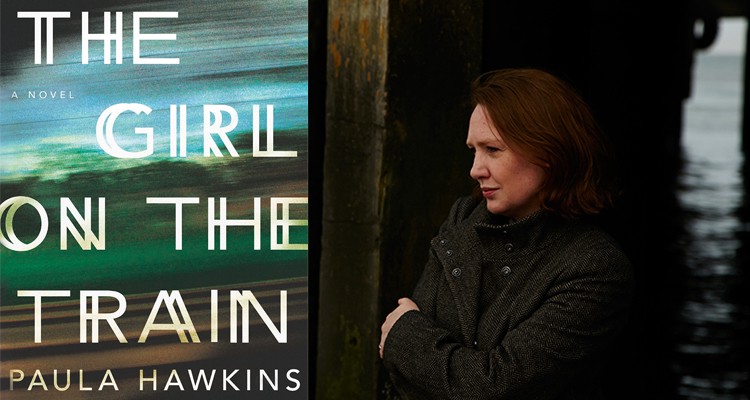
Brace yourselves, Dan Brown fans (we know you’re out there somewhere). After 20 weeks in the number one slot, Paula Hawkins’s thriller The Girl on the Train has broken the record for most weeks spent atop the UK hardback book chart — a record previously held by Brown’s The Lost Symbol.
Back in 2009, the follow up to The Da Vinci Code basked in #1 glory for 19 weeks. But Hawkins’s unprecedented run has ousted the sequel, solidifying claims that The Girl on the Train is indeed the spiritual successor to Gone Girl we’ve all been waiting for.
Train focuses on Rachel, an on-the-outs woman that takes comfort in admiring a seemingly perfect couple, whose idyllic breakfasts she witnesses daily while taking the train to work. When the wife vanishes, Rachel finds herself entangled in the mystery of her disappearance.
The book marks Hawkins’s first foray into the haute sub-genre of the literary thriller. Before writing Train, the Zimbabwe-born writer published a spate of romantic novels under a pseudonym. Hawkins told The Guardian, “The last one has loads of terrible things happening in it and ended up being rather tragic in a lot of ways. Nobody bought it.”
Lucky for us, Hawkins took that as her cue to change things up. Commuters of both genders, take heed: this might be the subway/train/bus read you’ve been waiting for.
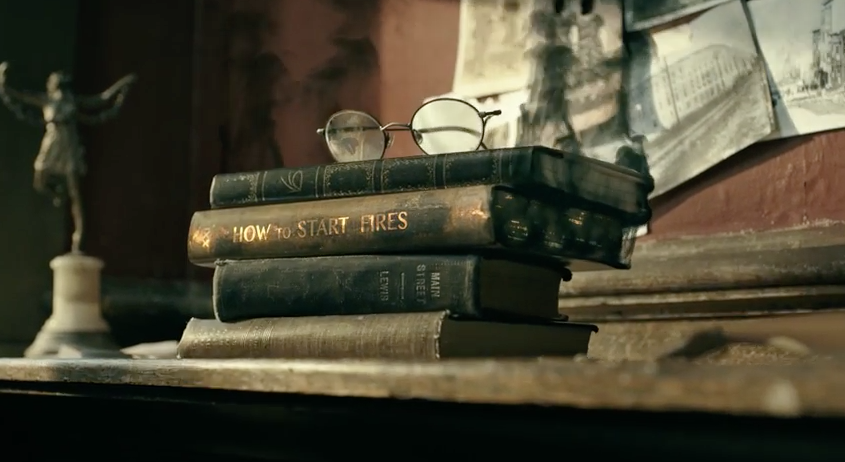
This new infographic from Rayburn Tours walks us through the hallowed halls of fiction, television, and film’s most famous schools. Many of our favorite stories feature friendly classmates, challenging teachers, and flirtatious newcomers — offering both social and academic educations — all before the final bell rings!
A swan’s foot, like a duck’s, is a webbed claw. In traversing swan shit and mud, these claws naturally gunk up and reek. Nobody in the history of the world, save another swan, has licked a swan’s foot while that foot was still attached to the swan. The feet resemble rabid bats in their sickly color and texture.
Moving north on the swan’s undercarriage, one will find an eroded civilization of swan shit and pond scum. This is a banal phrase, “pond scum,” one that is easily ignored, but look closer. Swans eat grasses, sedges, and pondweed, each teeming with murk. They will also eat insects, snails, and a fresh shrimp if they’re near one.
Pond scum is more of the same: swan shit, fish shit, frog shit, half a can of beer from some fuck teenager, plastic, photosynthetic residue, algae, permanent bubble, hexagon patch freed from its soccer ball, arthropod corpse. All attached to the swan in its idiot float through its stagnant little inland sea.
Swans eat tadpoles. A swan will slurp up entire schools of larval amphibians, process them, and shit them out, and then sometimes it will sit in the shit or walk through it, and here we are. Anyone who claims that a swan is a majestic and noble creature has never seen a swan up close.
Swans will attack you if you are nearing their young or their nest, if you are trying to have a conversation with their mate. They have jagged points on their beaks, which resemble teeth but more closely resemble a plumber’s saw, which plumbers call a Tiny Tim. If you try to take a swan’s picture he will strike you with his beak. Too much attention enrages a swan. The swan has a long neck and will strike at you. The swan will bite you and tear your flesh.
Swans mate for life, which is maybe ten or fifteen years. Someone found a swan once that was twenty-four years old and probably it was mating for life, which everyone made a big deal out of even though the swan was not even old enough to rent a car. The swan wasn’t yet acquainted with life enough to silently hyperventilate in its bed. The swan didn’t have a bed. The swan was too stupid to have a bed and if it did it would fill the bed with swan shit.
Starting in 2016, the Man Booker International Prize will merge with the Independent Foreign Fiction Prize, thus creating an annual “super-prize” rewarding both the writers and translators of foreign-language fiction. (The Man Booker International Prize was previously biennial, recognizing an author’s body of work published in English).
Novels as well as short story collections will be eligible. The prize money of £50,000 will be divided equally between the writer and the translator.
The last three winners of the Independent Foreign Fiction Prize were Jenny Erpenbeck, Hassan Blasim, and Gerbrand Bakker. The last three winners of the Man Booker International Prize were László Krasznahorkai, Lydia Davis, and Philip Roth.
Publishers Weekly quotes Jonathan Taylor, Chair of the Booker Prize Foundation: “We very much hope that this reconfiguration of the prize will encourage a greater interest and investment in translation.”
All too often, magnificent works of literature are lost in translation. Hopefully, with the introduction of this new prize, works of translated fiction will be published more often and read more widely.
Lemony Snicket’s A Series of Unfortunate Events — beloved by children and adults alike — will soon be developed into a Netflix original series. As if Netflix wasn’t already addicting enough, this will be yet another reason to plop down in front of your screen for hours on end.
As Entertainment Weeklyreports, Lemony Snicket released a statement in his famously ironic humor: “I can’t believe it. After years of providing top-quality entertainment on demand, Netflix is risking its reputation and its success by associating itself with my dismaying and upsetting books.”
Fans, upon hearing the news, were thrown into a frenzy of anticipation. But instead of just tweeting madly about the exciting announcement, The Guardian reports that a fan created an unauthorized and wholly convincing teaser trailer (watch it above) under the YouTube account Eleanora Poe, which has garnered over one million views (and counting!)
Netflix recently broke the news to disappointed fans that the YouTube trailer was a fake, but has not yet disclosed a premiere date for the series. The book series, which sold more than 65 million copies worldwide, was previously adapted into the 2004 film starring Jim Carrey, Jude Law, and Meryl Streep.
Over a decade later, it comes as no surprise that fans are itching for any hint, any preview, of the upcoming Netflix series — even if it’s a fake teaser trailer.
DON’T MISS OUT
Sign up for our newsletter to get submission announcements and stay on top of our best work.
YOUR INBOX IS LIT
Enjoy strange, diverting work from The Commuter on Mondays, absorbing fiction from Recommended Reading on Wednesdays, and a roundup of our best work of the week on Fridays. Personalize your subscription preferences here.