The Bodyguard

by Tom Cho, recommended by the Asian American Writers’ Workshop
Someone is stalking Whitney Houston and I have been hired to be her bodyguard. However, I soon discover that guarding Whitney Houston is not as easy a job as I might have thought. It turns out that she and I do not get along very well. She complains that my protection of her is too strict and that she cannot do what she wants to anymore. As a result, even as she becomes more and more frightened of the stalker, she begins acting up. I do not take very well to her acting up so I start acting more aloof. This behavior soon becomes a pattern for us. Interestingly, even in times when strong emotions are present, I have a tendency–perhaps mechanistically–to call on my sense of logic. Thus, I express to Whitney Houston the following either/or statement: either she will continue to refuse my protection and end up being gruesomely killed by the stalker whom I will eventually track down and apprehend and then and only then will I write a bittersweet yet poignant song about my love for her such that her sister will become very jealous of my talent, or she will allow me to protect her and this will create a better dynamic between us and we will fall in love and one night we will end up having sex at my place and then and only then will I modify my body such that I will be able to defeat her stalker. Presented with these options, Whitney Houston decides that the latter scenario is best. Thus, we end up sleeping together the following night. Later that night, as we lie together on my bed, I hold her and she rests her head upon my chest and tells me that she has never felt this safe before. This makes me feel proud. Although I have never been the strongest or even the most fearless of my peers, I have always had romantic ideas about being the protector of all the girls. On the other hand, I cannot help feeling that, by sleeping with my client, I have breached the limits of acceptable bodyguard-client relations. So, the next morning, I tell Whitney Houston that we should not have slept together and that we must revert to a proper bodyguard-client relationship. Whitney Houston is very upset about this and we begin to argue and Whitney Houston soon begins acting up and so I start acting more aloof. Eventually, Whitney Houston falls silent for a moment and then she tells me that she is in love with me and that she wants to be with me. I do not know how to respond to this, so I say nothing.

Over the next few weeks, the tension between Whitney Houston and me worsens. She is hurt and angry, and she becomes increasingly uncooperative about receiving my protection. One night, she holds a party at a hotel after one of her performances. At the party, I stand in a corner drinking a vanilla protein shake as I watch her mingling with her guests. She looks truly beautiful, as always. It is then that I notice that Greg Portman is at the party. Portman is a bodyguard I have worked with before. I walk over to Portman and greet him. He says hello in return, and he tells me that he is guarding another one of the guests at the party. We begin chatting. As always, Portman starts talking about some of the recent technological innovations that have been changing the face of bodyguarding. He tells me that, thanks to major advances in the development of force fields, bionic limbs and cybernetic exoskeletons, his job as a bodyguard has become so much easier. I give Portman’s brawny bionic arms a sideways glance before launching into my usual response that I am not interested in adopting any of these technological advances into my bodyguarding work. Portman looks at my biceps and then he laughs at me and tells me that I am still the same old-fashioned guy with my bodyguard fantasies of being chivalrous and protecting women. Sometimes I regret having told Portman about my fantasies of chivalry. Just as Portman begins telling me that going bionic is the best thing that ever happened to him, Whitney Houston comes up to us. I smile at her but she ignores me and smiles at Portman instead. She places her hand on his arm and asks him to tell her all about bionics. As Portman begins to tell her about his very first experience with a neurostimulation implant, I walk away from them and head out to the balcony. On the balcony, I look out at the cityscape. As always, I find myself wishing that I was a stronger and tougher man&emdash;a man who is indestructible. After a while, I come to a decision: it is time for me to seek expert advice about my situation.

So, a few days later, I meet up with someone who has a special place in my life. I have always thought of him as a strong and tough man. He is also someone who has had many sexual adventures with women over the years. This person is my Uncle Shen. Uncle Shen has always projected a very physical and confident kind of masculinity. It is a type of masculinity that attracts many women to him and, as a result, I suspect that he is an expert on matters relating to women and desire. Over beers at a pub, I tell Uncle Shen about what has been happening between Whitney Houston and me. I then mention to him that I have always admired his masculinity and the way it attracts women. Upon hearing this, Uncle Shen confesses that he has modeled aspects of his masculinity on Marlon Brando’s animalistic, swaggering portrayal of Stanley Kowalski in the film A Streetcar Named Desire. He says that he saw the film as a teenager and was struck by the sexual power of Brando’s Kowalski. He adds that he loves the power of having women want him, and he begins talking about his experiences of having flings with girls he meets in bars. Smiling, he tells me that his favorite line from A Streetcar Named Desire is “I have always depended on the vaginas of strangers.” He says that he has adopted this line as his life philosophy. I do not have the heart to tell Uncle Shen that he has based his life philosophy on misquoting Tennessee Williams, so I simply nod and tell him that I understand. Uncle Shen then winks and tells me that he has had many pleasurable journeys on “the streetcar named desire.” Me, I can only think about how some of my deepest desires are unattainable, so I say nothing. Uncle Shen notices that I have gone quiet. He tells me that there are too many good things about desire for one to get too sad about it. He adds that the opposite situation–a life without desire–would be far worse. In spite of my mood, I can’t help seeing some truth in what he is saying. So, as Uncle Shen begins talking about some of the things he finds attractive in women, I smile and join in, and we spend the rest of the evening discussing our interest in “a streetcar named lingerie”.

After saying goodbye to Uncle Shen, I head back to Whitney Houston’s mansion. She is waiting up for me and wants to talk. She apologizes for her behavior towards me. As I look at her in surprise, she confesses that she is very scared of the stalker and that she wants my protection now more than ever. She also mentions that she has been nominated for an Oscar and that, even though it may be dangerous, she wants to go to the awards ceremony. I congratulate her on her nomination. She blushes and thanks me. I look at her and I realize that, tonight, among my many desires, I want to continue protecting her and being her bodyguard. I tell her that she can go to the awards ceremony and that I will look after her. She smiles and thanks me again. As she walks away in her baby pink satin slip with its lace detail, side split, and embroidered contrast trim, I also make a silent vow to myself that I will do whatever is necessary to ensure that she is safe.

On Oscars night, Whitney Houston is understandably nervous about her safety. Cameras and lights and crowds of fans and actors and technicians are everywhere, and she looks almost ill with worry. I look at her with concern and I realize that it was a mistake for me to have told her my theory that the stalker was going to strike tonight. Fortunately, the night gets much better for her when, four and a half hours later, it is announced that she has won her award. When the announcement is made, she raises her hands to her face in shock. The orchestra begins playing and everyone applauds as she makes her way to the stage. As she walks up to the podium to accept her award, I turn around and am surprised to see Portman standing near me. I greet him but he looks a little awkward as he says hello in return. It is then that I realize the truth: Portman is the stalker and he is at the Oscars to launch his ultimate attack on Whitney Houston. Sure enough, just as Whitney Houston is about to make her acceptance speech, I notice that Portman’s left bionic eye has begun to glow red. I immediately run out onto the stage and make a flying leap in front of Whitney Houston and push her out of the way. A laser beam from Portman’s eye hits me in the shoulder. Everyone in the auditorium screams. I stand up and face Portman, my shoulder wound closing in a matter of seconds. He is shocked to see my wound heal so quickly. I inform him that I have changed since we last met at the party and that, while I am still not the strongest or even the most fearless of my peers, I too have embraced some of the more recent technological innovations that have been changing the face of bodyguarding. I explain that I have always wanted to be indestructible and I have now acquired super-fast healing powers and had my entire skeleton laced with an alloy that is designed to withstand extreme pressures. Portman suddenly activates his personal force field and tells me that, as long as I can never land a hit on him, he will be undefeatable. In response, I flex my bionic hands into fists and I unsheathe three foot-long super-sharp metal claws from each fist. Everyone in the auditorium screams again as Portman and I begin to fight. However, it is not long before I have Portman on the defensive. Once he realizes how powerful I have become, his confidence begins to fade. Eventually, I am able to corner him and slash through his force field with my claws. Yet, just as I deliver the final blow to defeat Portman, he fires one last blast from his bionic eye into my chest. This blast is delivered from virtually point-blank range. As Portman sinks to the ground, I fall backwards, blood pouring from my chest. Whitney Houston screams and rushes over to cradle me in her arms. She cries and begs me not to die on her. Crowds of people are surrounding us as Whitney Houston holds my body. My blood spills onto her clothes and she pleads with me to hold on and stay with her. But, once again, my wound heals in a matter of seconds, and Whitney Houston and I look at each other and we smile.

A week later, Whitney Houston and I are saying our farewells on an airport tarmac. She is doing her best to not cry. We talk briefly but soon it is time for us to part so I kiss her on the cheek and we hug each other and tell each other goodbye. She walks away from me and enters her private plane. The plane’s engine starts and she sits and looks at me from her seat at the window. As I watch the plane slowly turn away and begin taxiing down the runway, I find myself feeling very sad. It seems that I am not indestructible after all. However, I also suddenly realize that there is something else that I desire more than pure indestructibility. Thus, I formulate the following either/or statement: either I will stoically watch the plane depart and Whitney Houston will get the pilot to stop the plane so that she can run out to kiss me and then and only then will I resume my life as a bodyguard without her such that she will end up singing a song about our relationship, or I will decide that there is no logical reason why I cannot be her bodyguard as well as her lover so I will make a flying leap onto one of the plane’s wings and unsheathe my claws and use them to rip a hole in the side of the plane so that I can climb in and grab Whitney Houston and we can kiss and then and only then will I tell her that I have come to realize that being a bodyguard who can also be her lover&emdash;and being a bionic man who can also be human&emdash;is ultimately what I desire such that she will let herself be held by me and she will offer me an ongoing contract to work as both her bodyguard and her lover. Presented with these options, I decide that the latter scenario is best. Thus, Whitney Houston ends up in my arms, smiling at me, and offering to discuss the terms of my contract.

Ursula K. Le Guin: “I Keep Asking You Not to Buy Books from Amazon”

SF&F legend and literary rabble rouser Ursula K. Le Guin has been speaking out directly and indirectly about Amazon and the state of publishing for some time. At last year’s National Book Awards, Le Guin was given a Medal for Distinguished Contribution to American Letters and bemoaned the state of publishing in her speech:

The profit motive often is in conflict with the aims of art. We live in capitalism. Its power seems inescapable. So did the divine right of kings. Any human power can be resisted and changed by human beings. Resistance and change often begin in art, and very often in our art — the art of words.

I have had a long career and a good one. In good company. Now here, at the end of it, I really don’t want to watch American literature get sold down the river. We who live by writing and publishing want — and should demand — our fair share of the proceeds. But the name of our beautiful reward is not profit. Its name is freedom.

(full speech in video above)

In an interview with Laura Miller last year, she repeated her worry about books being turned into commodity:

I think corporate ownership and management of the big commercial publishers has grown steadily more misguided, to the point of allowing commodity marketers such as Amazon control over what they publish, which means what writers write and what people read. Dictatorship/censorship by the market or by government is equally dangerous, and crippling to any art.

Today, Le Guin spelled out her issues with Amazon in her most explicit terms yet. In a blog post titled “Up the Amazon with the BS Machine or Why I keep Asking You Not to Buy Books from Amazon,” she says she doesn’t have a problem with buying household goods or even self-publishing through Amazon. However, she is troubled by “how they market books and how they use their success in marketing to control not only bookselling.” She elaborates:

The readability of many best sellers is much like the edibility of junk food. Agribusiness and the food packagers sell us sweetened fat to live on, so we come to think that’s what food is. Amazon uses the BS Machine to sell us sweetened fat to live on, so we begin to think that’s what literature is.

I believe that reading only packaged microwavable fiction ruins the taste, destabilizes the moral blood pressure, and makes the mind obese. Fortunately, I also know that many human beings have an innate resistance to baloney and a taste for quality rooted deeper than even marketing can reach.

Le Guin echoes many of the fears that publishers big and small have had with Amazon in recent years. Although Hachette and other major publishers ended their public feuding, many authors and publishers still worry publicly and privately about the perceived damage the corporation is doing to literature and publishing. Can literature be healthy if a single corporation controls so much of the market? For Le Guin, at least, “Every book purchase made from Amazon is a vote for a culture without content and without contentment.”

Read Le Guin’s entire essay here.

Every Speck of Curiosity, Fear, and Gloom: a conversation with Richard Sala

Richard Sala’s books may feel out of place in the modern world of comics and graphic novels, and there’s a reason for that. His storytelling sensibilities come from a mixture of influences ranging from surrealist filmmakers to gothic artists to campy heroines like Emma Peel and Barbarella. If Sala is reinventing his childhood fascinations, he may be no different than many artists, but set his work next to any other comic and you will see it stands out from the crowd.

I have been a fan of Sala’s visual style and entertaining mystery romps for a long time, going so far as to track down a copy of the out of print Doctor Sax and the Great World Snake, by Jack Kerouac published by Gallery Six and illustrated by Sala. His work feels both vintage and fresh, a nod to its influences while managing to stand on its own. His work is instantly recognizable as his, perhaps the greatest benchmark of an artist.

Ryan W. Bradley: Your work is a cross-section of fairy tales and classic mystery cinema, the obvious comparison being Franju’s Judex (with a splash of The Avengers’ Emma Peel), which itself was a remake (the second, in fact). This melting pot echoes the interwoven nature of visual and textual storytelling inherent to the comic/graphic novel form. What interests you in this pairing of influences, what do you look for in telling these stories that have become the hallmark of your career so far?

Richard Sala: The element that appeals to me in a lot of what has influenced me over the years is kind of a willful sense of the absurd. It’s certainly on display in The Avengers TV show, but also, more subtly, in Judex, which flirts with surrealism (bird head masks, for example). It’s an element that might be variously described as “tongue-in-cheek,” “over the top,” “delirious,” “surreal,” “expressionistic,” “bizarre,” or even “campy.” What it is, most of all, is a lack of interest in realism or the mundane. From a very early age, I only related to the world with a sense of the absurd and black humor. For example, I suppose I can understand the impulse in so many people to want to make a story about a guy who dresses up like a bat to be dead serious and heavy — but that’s just not for me. It only makes sense to me if there is an embracing of the ridiculousness of the concept. I love mystery and horror — — all kinds — but when I sit down to write it always tends to veer toward a kind of silly fun — but silly fun with a dark side and a mean streak and a sense of the unreal. I think that’s because my formative years were the late 60s and early 70s — and that kind of humor (black comedy, spy spoofs, Barbarella) was everywhere. A good example of that kind of thing is the recent rerelease of Jodelle from Fantagraphics Books.

RWB: Absurdism gets discredited sometimes or dismissed as being over the top or ridiculous, but as a style it has been forgotten by many that its roots are in philosophy, that its cousins are existentialism and nihilism. Absurdism can be just as effective at examining the world as realism. For instance, you mention looking at the world only making sense in regard to this black humor, whereas for some people it’s purely escapism. Do you think that early predilection led you toward creativity, toward a more artistic path in life?

RS: Oh, yeah. The desire to create often comes from yearning for something that you can’t find — or longing to recapture a feeling you once felt. I wanted to be either an artist or writer early on, and in my teenage years I was interested in all kinds of genre stuff, so that’s what I tried to do. But I struggled to find my individual voice in that world. I just couldn’t do it with a completely straight face. I did these deadpan stories inspired by affection for old time thrillers and serials — tongue-in-cheek, but without any real parody or mockery. Some people would scratch their heads. I just wanted them to be fun! If anyone read my early Dark Horse comic “Thirteen O’Clock” or saw my MTV cartoon “Invisible Hands” — that’s what I mean. It’s similar to the way the 1966 Batman show was written, if it had been a lot darker, with words that could have come out an old comic book verbatim but presented in such a way that lets you enjoy it on an entirely different level. I guess that’s why I feel a kinship with “camp” humor, because it was everywhere when I was a kid.

RWB: Do you find yourself drawn into stories or characters first when creating a new comic or book? I wonder how this differs (or stays the same) from writers who work only in words. I imagine there has to be more forethought and planning, less stream of consciousness in creation, which seems like it would lend well to character development early on.

Logic, research? — I’ll worry about that later.

RS: I’m actually a great believer in letting my stream of consciousness take the wheel — at least initially, to get the thing flowing. I’ll often just start with some situation or set piece that has occurred to me in some flight of fancy. Then I’ll worry about building a plot and characters around it later. Logic, research? — I’ll worry about that later. The initial inspiration is usually a purely visual thing. I think creating comics is more analogous to making movies than writing books, so I often think in terms of a sequence of events, and concocting a set piece.

Drawing can be a lot of work, so it’s important to keep yourself interested and entertained, too, if you want your audience to be. I like the idea of creating bizarre circumstances just by combining elements that aren’t often combined. Like, what if a bunch of assassins had a confrontation in a closed zoo after midnight? Or, what if you were at the botanical garden and all the plants turned out to be carnivorous? Then I’ll build a section of a story around that. None of those kinds of things are necessary to the plot, but they keep things lively — and for me they keep the fun of creating alive.

RWB: I love the idea of stream of consciousness playing a role in your work. And as a reader I would most definitely think cinematically before connecting comics to written work in terms of creation. I think I tend to approach my written work similarly though, which leads to very concise prose and a focus on moving through the plot. How much of the story do you have in place before you start diving into the work of drawing and writing, or do you allow for the story to evolve as you begin working sequentially, as a writer might? What kind of evolution in your plots and characters helps spur the project along?

RS: I follow the outline of the plot I’ve written out which is pretty linear but also kind of sketchy and flexible, so I can allow the story to evolve along the way. I’m usually only certain of the very beginning (the words or images that kick off the story), the very end (though that can change) and one or two set pieces I want to incorporate into the story. And that’s all. I like to be able to let everything else develop as I go along.

With comics, you have to pay attention to the rhythm and flow of the panels on each page. Each page should feel self-contained and also move the reader along so they’re turning the page before they even know it. In my longer books I try to alternate the pacing — moving from slow, atmospheric, shadowy scenes to sudden bursts of craziness or delirium.

RWB: I’m interested in how this intuitive form of development translates to your characters. Many of your characters are female; in fact you have a folio book forthcoming that is all portraits of “dangerous” female characters, each of whom would be a natural fit in one of your stories. Do you make conscious decisions about your characters in terms of gender? What makes you gravitate toward female protagonists? It’s one of the aspects of your work that really stands out, that is unique in comparison to a lot of other comics out there, which is an increasingly important debate in the comic community as a whole.

RS: Yeah, long before it was an “issue” of any kind, I was baffled about the lack of interesting female characters. Maybe it goes back to my love of the Avengers TV show again where Emma Peel was such a strong and compelling character, who could be equally violent and witty, often at the same time. And I mentioned being influenced by the concept of Barbarella, too. Beyond the “sexiness” of the character, I liked the idea of a woman on a series of episodic adventures. She’d often be out of her depth, but always prevailed.

…I’m baffled when I watch a movie and in the cast there is only one major female character — I mean, literally, one single woman.

Then there was the influence of horror movies, where women are often the focus and plenty of times they emerge as the only survivor, due to cleverness and summoning a strength they didn’t know they had. I like the underdog aspect of that — overcoming the odds that are stacked against you. It’s weird — to this day I’m baffled when I watch a movie and in the cast there is only one major female character — I mean, literally, one single woman. Whose life has only one woman in it?

Besides horror, the other genre with multiple female characters who could be clever and ruthless or anything else were the many spy movies that came out of the 1960s. Those women were just as capable and dangerous as any of the men. So, yeah, I’ve had many lead female characters in my books. When I see all those ubiquitous articles asking why there aren’t strong female characters in comics, I have to remind myself that to most of the comics community and journalists, alternative comics are still mostly invisible or just unfathomable (although maybe it’s just mine!).

At least five years before the TV character Veronica Mars, I had my own updated version of Nancy Drew, named Judy Drood. Her story was originally serialized then released as the book Mad Night. She was also in a later book called The Grave Robber’s Daughter. Unlike the kind of bland TV character, Judy is extremely angry, slightly crazy and obsessive — I figured, why else would she pursue some maniac killer against all odds and common sense? She was a really fun character to write, but if I did a new book with her now, thanks to Veronica Mars, that whole concept seems played out.

I did a young adult book with First Second about a teenage girl cat burglar with kind of a grim back story and a few years later there was a similar character being published by another mainstream publisher to all kinds of awards and acclaim. It’s the same idea — a teenage girl cat burglar — but done “cute” with all the interesting, darker edges sanded off. Fine, but I can’t do another story with that character now because it will seem like I’m copying them. I realize that it’s all just pop culture, and it’s all out there for the taking. And I know that my work might be kindly called “an acquired taste” for many people, so I’m never surprised to see ideas I’ve already done being used by others with much more success. I’ve taken plenty of things from pop culture, myself — but I always credit my influences, because I love them. I’m still a fan at heart.

RWB: It definitely seems like the lack of female characters is a much bigger problem in superhero comics than in the more independent comic world, but even there, a lot of that growth has seemed to come in the last decade. I know when I was an undergrad and in grad school there was a lot of talk about men writing female characters, etc., and when men say, “well, I can’t be in a woman’s head,” my thought was always, we all have mothers, lots of us have sisters, and all of us have known plenty of girls and women in our lives, why not start there. Do pieces of people you know and have known find their way into your characters, do autobiographical tidbits factor in, as they often do for fiction writers, even though you’re telling stories that aren’t “realist”?

For me, it’s more of an exorcism of personal demons than an attempt to empathize with fictional characters.

RS: For better or worse, I’m not one of those writers who say “my characters take on a life of their own and do whatever they want and I just listen to them until I slowly understand who they are” and so on. I don’t write those kinds of stories. Sadly, my characters are pretty much all me. Every story I write and draw has the same “voice” and it’s mine. Every speck of curiosity, fear, fortitude, nastiness and gloom is conjured up out of some corner of my own brain, some darker than others. For me, it’s more of an exorcism of personal demons than an attempt to empathize with fictional characters.

My characters are all little psychological self-portraits to some degree, men and women. But, yes, it was certainly helpful to have had a mother and sister and many women friends in my life. I’m glad I went to art school where I met some of the most complicated and interesting women in my life. In art school, everyone lets their boundaries down a little, and, in those pre-internet days, it was one of the places I’d hear really personal stories about what women have to face on a daily basis in their lives. So, yeah, that helped. The personality of Judy Drood (my short-tempered girl detective) in particular is based on this wonderful, hilarious, strong, angry woman I knew who was a grand contrarian. She was like that Groucho Marx saying of not wanting to be a member of any club that would have her. She always “flipped” the script and surprised people. She simply couldn’t stand anyone agreeing with her about anything. So I used that in writing Judy, who never reacts the way any cliché damsel in distress is “supposed” to act.

RWB: People tend to think less about autobiographical influence when they aren’t reading something that is packaged like a memoir or realist fiction, even poetry. This makes me want to go back and re-read your books. Another thing people tend to analyze less with comics is the writer/artist’s relationship with place. You are from California, but grew up in Chicago and Arizona, right? How have the different locales where you’ve spent portions of your life influenced your work, whether directly or indirectly?

RS: Oh yeah, “place” has been a very important factor for me in my work. I was born in Northern California, very near to where I live now, but my family moved to Chicago when I was three. I think of myself as a Chicago kid because those really were my formative years. I was pretty happy. Then we moved to Scottsdale, Arizona when I was in the 6th grade — in the middle of a school year — and I never felt like I fit in there. It was complete culture shock. It was like moving to Mars. I think that was the beginning of my (since) lifelong feeling like an outsider, feeling like I didn’t belong. I had friends, but it took a long time to adjust. Meanwhile, I’d always heard my parents talk about the Bay Area and I’d see pictures of when I was a toddler there, and I felt a strong connection. So, when I got the chance to move back in my twenties, I did. Moving from the Phoenix area to Berkeley/Oakland was like culture shock all over again — but in reverse of the first move. I felt like I wasn’t always struggling to fit in, like I had found where I belonged. So here I was able to look back and start to make sense of the alienation I’d been feeling for years and years, of always feeling like a stranger in my own town — and use them in my work. So I probably have my years in Arizona to thank for all the existential dread and anxiety in my work! I mean, I have good friends who love living there — but it just wasn’t for me. I even wrote one of my few semi-autobiographical stories based on living in the desert there: Here Lies RICHARD SALA: Desert Night Drive.

RWB: I had a similar experience, growing up in Alaska, then going back and forth between Alaska and Oregon, even little bits of time in upstate New York, Pennsylvania, New Mexico, and northern California. I have always felt closest to Alaska, though, and I probably spend way too much time thinking about it. As a result it becomes the focal point of my writing. However, your work feels almost place-less, as in it exists outside of a place we “know.” When I read your work, I’m not reading a California or Arizona story, similar to the way your stories feel timeless, they have a throwback vibe, but there is no need for a defined era. Is that natural or contrived when you set out to create a story? Do you think of your characters, places, etc. as existing in a particular universe or universes?

It’s one gigantic psychological self-portrait.

RS: Yes, and that’s because, once again, it’s all inside my head — the whole world of my comics and all the characters in them. It’s one gigantic psychological self-portrait. It probably sounds trite for a writer to say this, but the places in my comics are based on my experience with dreams. In my dreams (and it’s probably not like this for everyone), there are very specific places that I return to again and again — places that don’t exist in real life. But they aren’t fanciful places or surrealistic landscapes like a Dali painting. They’re rather mundane. I know the layout of a large sprawling town, many of the individual shops and a certain college campus and its various buildings, none of which actually exist. I’ve tried making maps — but I can only get so far because it’s always kind of elusive. The places in my comics are like that, though it wasn’t intentional at first. But, for example, throughout various titles there are references to certain places. It started kind of whimsically. I think “Dr. Erdling’s Crime Museum” may have been the first place I made references to in different books. There are a lot of little “in jokes” (I guess what they now call “Easter eggs”) throughout my books, threads that connect things in various ways. The book I’m finishing up right now, called Violenzia and Other Deadly Amusements, has a reference in it to a place mentioned in another book, which, if you spot it, gives a little more background to a character.

Also, I did put together an online reference guide to some of the cast of characters in my stories. It’s called SKELETON KEY. Each entry contains a portrait of the character and “biographical” information. It barely scratches the surface of all the characters that have appeared in my books, but most main characters are included (at least the ones who existed at the time I did the guide a couple years back) along with minor ones and others that haven’t actually appeared in any published stories yet. It came out of a time when I was looking back, taking inventory of my accomplishments, good and bad, and decided to put together a readers’ guide before I left the planet — in case anyone might be interested after I’m gone! Of course, it contains more than anyone would probably ever want to know, but, if nothing else, it was fun for me to put together. You can find it here or here.

RWB: I’m probably going to get lost in the art again looking for hidden meanings! I used to have a hard time reading comics, because I would focus so much on the art I’d forget to read the text.

I think writing can be like acting. There are the method writers who really delve into the characters, who know them inside out, could tell you their birth-dates, etc. And then there are writers who get a feel for the characters as they go along, and don’t feel the need to know what each particular character got for his or her fifth birthday. I’m in the latter camp, but oddly when I thought for a brief time that I was going to go into acting, I was very much into the method side of things. This is all to say, does all this character development come naturally with the writing process for you or is it part of a preparation that goes into it? Do you learn more about a character’s backstory as a story you are telling progresses?

RS: Yeah, I think you embody the character while writing the story. That is, you’re inside them, like an actor, so when they face a certain situation, you know instinctively how that individual character will react. I tend to write my characters broadly and with tongue in cheek, so the way they react is where the humor comes from often. They don’t react in any kind of realistically believable way — there’s no entertainment in that, if everyone is always reacting to danger by calling 911 and waiting for the cops to show up. On the other hand, who needs another character reacting like a clichéd superhero or hard-boiled detective? Everyone’s already seen that a million times. I try to find some new direction to go in — but that’s more to keep myself from getting bored. Because I get it that people like reading traditional superhero or hard-boiled crime stories — I like them myself. But I’d get so bored if I had to write my stories straight, if I took them too seriously. I have to have fun writing the stories, or else, why bother? At this point in my career, I’m not winning any major awards for my work — and I couldn’t be less interested in that. So, I may as well just continue writing the kinds of stories my readers have told me they like.

CELEBRITY BOOK REVIEW: Martin Amis on Jim Shepard’s “The Book of Aron”

Editor’s note: Any resemblances to actual celebrities — alive or dead — are miraculously coincidental. Celebrity voices channeled by Courtney Maum.

The Book of Aron

I have heard tell that Jim Shepard is the greatest living short story writer in the United States. Given the uncommon amount of print and airtime afforded him, I’d been operating under the impression that this particular honor was the burden of David Sedaris. Either I was misinformed (unlikely, as I don’t frequent the ignorami), or Mr. Sedaris is dead. In either case, Jim Shepard’s name comes with some renown. It is for this reason that I deigned to salvage his particular manuscript (the just-out The Book of Aron) from the pyre of Holocaust literature that gathers on my key table since I published The Zone of Interest in the fall of 2014.

There is a particular perversion among writers who eschew adverbs — such literary minimalism always makes me think of those ductile South Indian beggars who don’t have body fat. I’ve never had the occasion to converse with this Jim Shepard, but I imagine he is the type of man who doesn’t own a lot of clothes. I also surmise that he traversed what was either a very rich or very troubling coming-of-age period as he frequently adopts the first person point of view of pre-adolescent brutes.

No matter — a paucity of adverbs and adjectives, first person narrators who aren’t grown — not everyone can have the breadth of mind necessary to pen a three-hundred page tragicomedy between two Nazi officers, a death camp prisoner, and an SS commandant’s wife.

Listen — I’ve heard all about the new attention span so I know no one is actually reading this online. It’s something that happens when one moves to Brooklyn — one starts to blog. I would not even be writing this if I weren’t trying to get away from the near planetary responsibility of having six offspring.

In any case: review. Jim Shepard’s writing makes me sick. Yes — physically ill. To see him accomplish in a ten-word sentence what I budget a paragraph for is belletristic S&M. So compelling, so convincing, so utterly space-taking is his voice that it only took three pages for me to move my ego to a corner with a little cap. Rather incredulously, given the schlock of filth that’s come my recent way, I took an immense pleasure in the reading of this accomplished book.

By way of summary (which you could easily outfit via a “hyperlink”, but extraneous typing is judicious as I get seven dollars a word), The Book of Aron tells the story of the young, eponymous Aron who is forced to relocate into the Warsaw ghetto with his family from the Polish countryside during the German occupation. Already something of a disappointment to his persevering parents, Aron begins to both sustain and endanger them by trafficking contraband with a band of feral fighters. Now, this is the Holocaust. Most of these children end up dead. Aron’s chances at survival, however, will eventually be bolstered by the efforts of a certain Janusz Korczak who was a celebrated children’s rights advocate before fate (and irony, n’est-ce pas?) made him the warden of a Warsaw orphanage in 1940.

I’ve become somewhat bedeviled by this Shepard, and begun to read his press. I hope Shepard doesn’t indulge in this same rabbit holing brummagem because what I found available is both preposterous and inane. He’s heralded — yes, heralded, I tell you — as the greatest living writer you’ve never heard of. In one instance, his lack of financial acumen was chalked up to the misfortune of his not being me. When was it, exactly, that journalists ceased all attempts to write?

Let us go then, as it were, into the good night of Shepard’s newest novel. Let us serve up several examples of his art for the buffoons who “haven’t heard” of him. On page 180 of the hardcover (which is the only thing now out), we have the sniveling, two-faced Lejkin, head of the Jewish police, who has been blackmailing the small Aron for some time:

He followed me out onto the sidewalk. It had begun to snow and he pulled up his collar and then pulled up mine. Then he cleaned off his seat and got on his bicycle and rode away. Because of the snow it slipped and slid all over on the cobblestones and he had to put his foot out every so often for balance.

Name me a writer who would have thought to add the gesture of Lejkin adjusting his prey’s collar, or to illustrate duplicity with a bicycle slipping about the street. Richard Bausch? Perhaps, fine. Now name me an author who could have done this in sixty-three words.

And here again, on page 190, near the end of the book and thus of these Jewish lives, Korczak enlists the young orphans to write outside the ghetto for help:

He said to write that peaceably they run around and play, these children who so recently arrived wounded, frozen, abused, hungry, and hunted. Some of the kids asked how to spell peaceably and he told them it didn’t matter. He said to write that there was no food for them and a lot of the smaller children had stopped growing.

Stopped growing. This detail actually — quite actually — took my breath away. For I have six children, as I have mentioned, and have watched my various wives and mistresses distress over the way in which they do or do not grow. For a child to stop growing…it means everything, you see? In another scene, a visitor shows up with something more precious than bread, even: tablets of Vitamin C. In my latest book, (The Zone of Interest, which I repeat the title of solely for the benefit of your dulled attention spans) I focused on the periphery of dying bodies: in particular, the smells. Jim Shepard focuses on the innards, the softening muscles, the metabolic faults.

Janusz Korczak, by the way, might just be the most tremendous man you’ve never heard of, too. He actually did all of the things Shepard accords him in this, his eleventh book. In addition to refusing freedom in order to stay with his young charges, Korczak was hailed for creating the first bill of children’s rights.

Listen in once more: I am not a “fun” man. I am not “carefree”. But having children run about, careening, as it were — it causes even a stern man to have lighter thoughts. I cannot — it would be somewhat antagonistic of me to not divulge that this great book, did indeed, cause me to cry. Friends, fans, my enemies, I am sixty-five. The author of over twenty books to date. An expatriate, to date. A homeowner in Brooklyn, so help me, potential God. I am not, as has been suggested, exempt from being moved. In the end of The Book of Aron, Korczak whispers into Aron’s terrified ear his childrens’ bill of rights. After I had composed myself post-reading, I contemplated calling my youngest son to my side to share these rights myself. Contemplated telling him how much it used to please me to see him staring off into the woods, sizing up whether or not he was big enough to climb the alder tree that jutted out of our property in Wales. How much I enjoyed it when he was a child.

But I am not that kind of father, nor that kind of man. And so, by way of altruism, or maybe it’s contrition, I offer those words here:

“The child has the right to respect. The child has the right to develop. The child has the right to be. The child has the right to grieve. The child has the right to learn. And the child has the right to make mistakes.”

Should White Men Stop Writing? The Blunt Instrument on Publishing and Privilege

The Blunt Instrument is a monthly advice column for writers. If you need tough advice for a writing problem, send your question to blunt@electricliterature.com.

I am a white, male poet — a white, male poet who is aware of his privilege and sensitive to inequalities facing women, POC, and LGBTQ individuals in and out of the writing community — but despite this awareness and sensitivity, I am still white and still male. Sometimes I feel like the time to write from my experience has passed, that the need for poems from a white, male perspective just isn’t there anymore, and that the torch has passed to writers of other communities whose voices have too long been silenced or suppressed. I feel terrible about feeling terrible about this, since I also know that for so long, white men made other people feel terrible about who they were. Sometimes I write from other perspectives via persona poems in order to understand and empathize with the so-called “other”; but I fear that this could be construed as yet another example of my privilege — that I am appropriating another person’s experience, violating that person by telling his or her story. It feels like a Catch-22. Write what you know and risk denying voices whose stories are more urgent; write to learn what you don’t know and risk colonizing someone else’s story. I genuinely am troubled by this. I want to listen but I also want to write — yet at times these impulses feel at odds with one another. How can I reconcile the two?

— Anonymous

Dear Anonymous,

I have thought a lot about your letter. I know that you’re not the only white male writer asking these questions. As a white writer myself, I’m not necessarily the best person to answer. But this is my column, so I’m going to do my best, because I think it’s an important issue.

I want to come at your question from a different angle though. You ask whether the time to write from your experience — the “white, male perspective” — has passed. I think this is the wrong question. The white male experience was not more important in the past than it is now. In Western culture, the white male experience has been overexposed, at the expense of other experiences, for centuries. The only difference is that the culture — at least the subculture that’s important to you — no longer accepts the white male perspective as default. You can and should respond to this shift, but I don’t think the answer is to stop writing.

Instead, you should do what you can to make sure your own perspective is not getting more exposure than it deserves — that you’re not taking up more than your fair share of space. Many people have been angered, rightfully, by recent stunts in conceptual poetry that exploit real tragedies, like the death of Michael Brown, for the benefit of white artists. So I think you’re right to be concerned that persona poems could come off as a form of exploitation and appropriation; there’s also a risk of self-congratulation and unexamined complicity. Even if your goal is to learn and to empathize, one wonders why your act of inhabiting a woman’s or POC’s perspective would be more deserving of readership than writing by someone who has lived that experience? And the problem is, because of your status as a white male, whatever you do write is easier to publish, all other things being equal. Whether or not you or your editors and readers are aware of it, you get automatic bonus points. You’re at the lowest difficulty setting in the video game of life.

When the VIDA counts come out and multiple publications are shown to publish far more men than women (with the numbers for POC writers looking even worse), editors make excuses about their submission pools — they get far more submissions and pitches from men than women. Then people inevitably respond by telling women to write more, submit more, and pitch more. I think this is exactly the wrong response: Instead we should tell men to submit less. Pitch less. Especially white men. You are already over-represented. Most literary magazines are drowning in submissions. Instead of making things even harder for overworked, underpaid editors, let’s improve the ratios in the submission pool by reducing the number of inappropriate, firebombed submissions from men. You — white men — have all the advantages here, so you should work to solve the problem of imbalance, instead of putting all the burden on women, POC, and LGBTQ to fix it themselves. (And I’m suspicious in any case that perfectly balanced submission queues would always lead to gender parity on the other side.)

So here are my suggestions for things you can do — so you can “listen” while also writing, so you can write your own experience without denying anyone else’s or colonizing their stories:

Read more books by women, POC, and LGBTQ writers. Make their experience a bigger proportion of your reading, and learn that way instead of by appropriating their voices. Then amplify what you love — recommend those books to friends, teach them if you teach, give them away as presents. If you edit a magazine, make sure you’re not overexposing white male authors, giving them too much space because it’s what you relate to. Even if you don’t edit or teach anything, you can promote more diverse authors to editors and teachers you know.

Don’t be a problem submitter. When I edited a magazine, we got far more submissions from men, and men were far more likely to submit work that was sloppy and/or inappropriate for the magazine; they were also far more likely to submit more work immediately after being rejected. When you submit writing, you’re taking up other people’s time. Be respectful of that. I said in my last column that getting published takes a lot of work, which is true — but most of that work should take the form of writing, and revising, and engaging with people in the writing world, not just constantly sending out new work, which starts to look like boredom and entitlement.

Think of this as something like carbon offsets. You are not going to solve the greater problem this way, on your own, but you might mitigate the damage.

I’m sure some people would tell you to stop writing; I’m not going to. There is already more writing produced every day than anyone could ever be expected to read, and producing writing is not necessarily an imposition, since people have the option not to read it. I’m not even going to tell you not to write about race or gender; you might even be obligated to. There are surely non-exploitative ways to do so; I wish I knew the formula for how. The best approach is likely to work toward good writing regardless of your subject matter; to me that means choosing complexity over obvious, trite sentiments, and avoiding self-flattery — don’t cast yourself as the white savior.

The Blunt Instrument

E.L. James to Write New “Fifty Shades” Novel from Christian’s Perspective

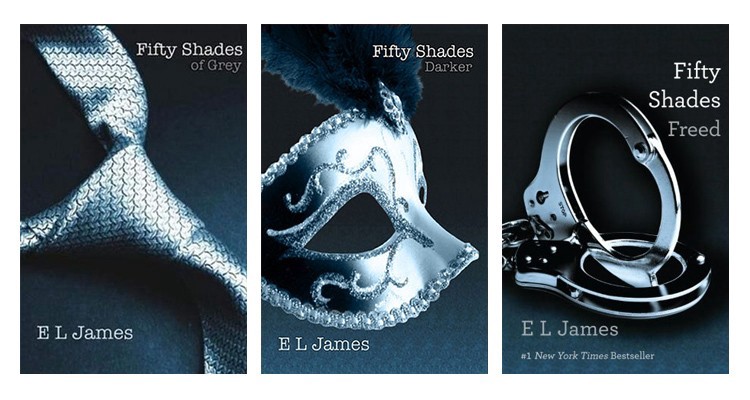
E.L. James has once again tied herself to her desk chair to write a new Fifty Shades of Grey novel, this time from Christian Grey’s perspective. Variety reports that according to E.L. James, we the public have “asked…and asked…and asked for this.” Who asked for this? Please raise your hand.

Well, perhaps some of you asked for it. The original book trilogy sold 125 million copies worldwide, and the film adaptation starring Jamie Dornan and Dakota Johnson has made $569.7 million worldwide.

How will the film sequels possibly incorporate the fascinating motivations and desires of literature’s most complex stud muffin? Cartoon speech bubbles blossoming from Christian’s finely coiffed head, perhaps? We’ll have to wait patiently.

The new book, titled “Grey,” will be published June 18th (which, adorably, is Christian’s birthday.)

What Went Missing: My Documents by Alejandro Zambra

Chilean writer Alejandro Zambra was a boy during most of Pinochet’s dictatorship — a 17-year reign during which thousands of suspected leftists were tortured and killed, and thousands more were “disappeared.” In Zambra’s 2011 novel, Ways of Going Home, a young woman remembers attending a comedy show at the National Stadium, one of Pinochet’s makeshift prisons during his 1973 coup:

“Her parents refused to take her at first, but finally they gave in… Many years later Claudia found out that for her parents that day had been torture. They had spent every moment thinking how absurd it was to see the stadium filled with laughing people. Throughout the entire show they had thought only, obsessively, about the dead.”

The stories in My Documents, Zambra’s first short story collection, tend to be haunted by the destruction of Pinochet’s regime, by friends and relatives who were silent, complicit, went missing, or left. In the story “Camilo”, for example, the title character’s father has been living in exile in Europe for most of the young man’s life. Midway through the story, Camilo announces to the nine-year-old narrator that he’s going to go to France to see his dad. He visibly buzzes with excitement.

The story then vaults ahead 22 years — jumping over the night in ’94 when Camilo was hit by a car and killed — and the narrator runs into Camilo’s dad in Amsterdam. They sit down together to watch a soccer match in a restaurant. The narrator asks about Camilo’s last visit. He listens to how the complicated resentment over the dad’s exile boiled over. Camilo’s father says, “He said horrible things to me. I said horrible things to him. And it became a contest, a competition of who could say the most horrible things. And I ended up feeling that he had won. He ended up feeling that I had won.”

Zambra’s stories are disarmingly casual in their delivery. Similar to Chilean predecessor Roberto Bolaño, Zambra has enormous skill for conveying lush emotional landscapes with stripped and distant language. Zambra’s characters tend to be sensitive, brooding, and sharp witnesses, and they navigate the interior landscapes of their situations in ways that are fluid and impressionistic. As Camilo — stretched out by the pool in “full-on photosynthesis” — says to his young friend, “The important thing is to express your feelings, to show yourself as a passionate, interesting man, maybe a bit fragile, someone who isn’t afraid of anything, someone who accepts his feminine side.”

My Documents consists of stories that hit the sweet spot between meandering and meticulous. In many stories, Zambra delays and complicates the slow-building tension — past opportunities for traditional endings — to arrive in uncharted territory. In “Family Life”, for example, the protagonist, Martin, takes on an extended housesitting gig at his cousin’s place in the country. Martin soon loses the family’s cat, and he has a shared lost-pet interaction with Paz, a neighborhood single mom. He slips into a long-con relationship with Paz — encouraging her to believe that his cousin’s house is his house, and that the pictures on the fridge are of his daughter, and his wife who left him.

Martin’s sadistically compelled to keep doing what he’s doing, yet he also hates that he’s doing it. “There are hours, maybe entire days, when Martin forgets who he really is,” Zambra writes, “He forgets he is pretending, that he’s lying, that he’s guilty. On two occasions, however, he almost lets the truth slip out. But the truth is long. Telling the truth would require many words. And there are only two weeks left. No! One week.” Martin soon stops answering Paz’s calls and a few days later she shows up on the doorstep of the house. “What do you want?” the cousin’s wife answers the door. Paz looks at this woman — the one from the photographs — with understanding and sadness. “Nothing,” Paz says, and the door swings shut.

Zambra’s protagonists are lost and faulted men, sometimes even thieves and philanderers. One of them seduces a student in his college class. One of them surprises his ex-girlfriend by showing up in her town, in Leuven, Belgium, with no forewarning. In “I Smoked Very Well”, the narrator struggles with quitting his cigarette-habit. “Another relapse,” he says in one vignette. “The details aren’t important. I was desperate and smoking didn’t solve the problem (because the problem doesn’t have a solution).” The characters in My Documents are terrible at finding solutions, even when they do exist. Instead they tend to wander off to unexpected places in terms of their thoughts and decisions. In that manner they’re incredibly familiar, and it feels comfortable to keep them company, to sit with them as they think and speak. As Zambra says in the final story of the collection, “…this was the way people get to know each other, by telling each other things that aren’t relevant. By letting words fly happily, irresponsibly, until they reach dangerous territories.”

Zambra’s stories are reflective and indolent, brash and quiet. In “National Institute”, our narrator describes one of his teachers as a “total son of a bitch” and the other as “a real motherfucker.” He says of them both: “They were cruel and mediocre. Frustrated and stupid people.” Yet when a dangerous gag against Pinochet is scribbled across the board during gym-class, we see the manner in which every character is involved with the perilous political situation in Chile, every brute subservient to another brute.

Late in the story, the narrator risks serious trouble, risks his future, when he tells a beast of a teacher to shut up. The teacher reprimands him with the same words over and over again, telling the narrator that he’s not going to expel him, he’s not going to keep him from graduating, but he’s going to tell him something that he will never forget in his entire life. He repeats these words three times.

“I don’t remember what he told me,” says the narrator. “I forgot it immediately. I sincerely don’t know what Musa told me then. I remember that I looked him in the face, bravely or indolently, but I didn’t retain a single one of his words.” Everything in this book is political — even trying to forget.

My Documents

Homer’s The Odyssey to Be Adapted by The Hunger Games Director

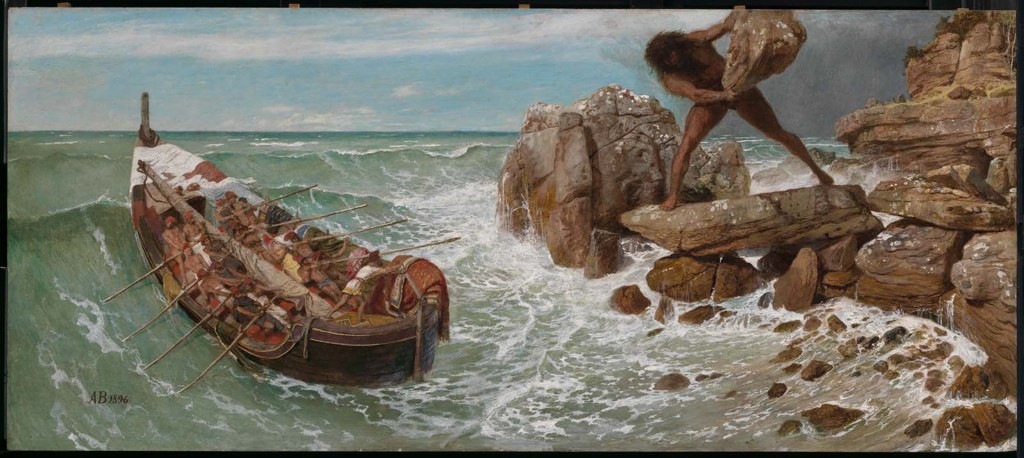
After the success of mutli-film adaptations of Lord of the Rings and Harry Potter, Hollywood is turning to a more ancient fantasy text: Homer’s The Odyssey.

Lionsgate is currently developing a multi-part adaptation of Homer’s epic poem with several Hunger Games alum: director Francis Lawrence, producer Nina Jacobson, and writer Peter Craig. According to Variety, Lionsgate is “heavily focused on franchises.” Deadline reports:

The epic has been done several times by Hollywood in films and TV, either directly or indirectly. Kirk Douglas starred in the 1954 film Ulysses, and films from Tim Burton’s Big Fish to Joel and Ethan Coen’s O Brother, Where Are Thou, were said to be inspired by Homer’s famed poem…

Homer is believed to have composed “The Odyssey” in the 8th century B.C. The poem follows Odysseus’s journey home following the fall of Troy, while his wife Penelope wards off suitors competing for her hand in marriage.

While there is no release date set quite yet, Lionsgate’s newest adaptation will be eagerly anticipated.

FICTION: Two by Padgett Powell

Gluing Wood

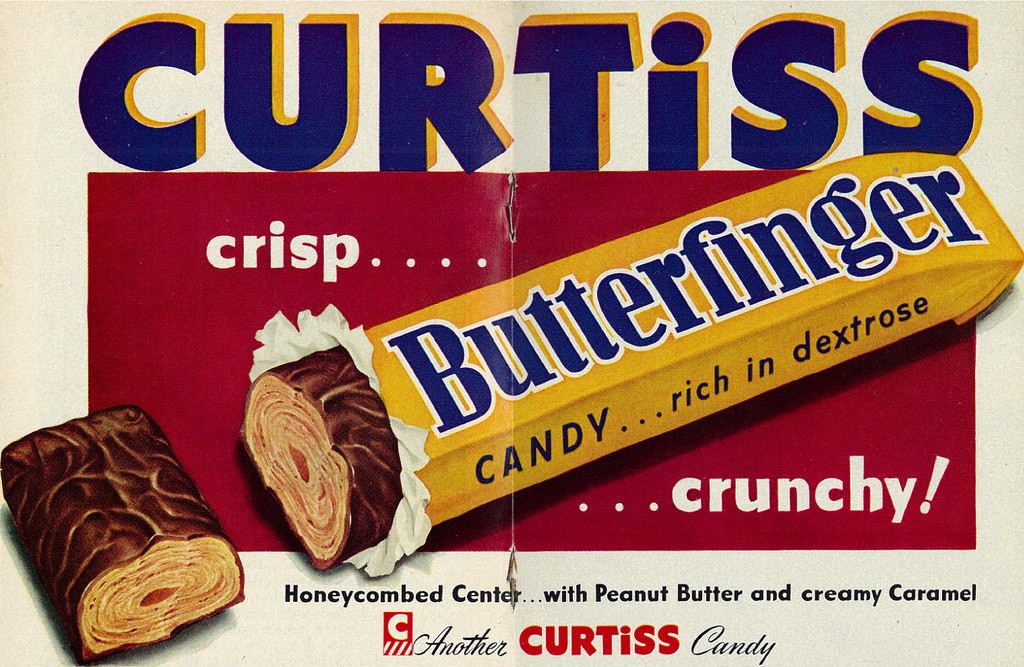
Today we want to glue some wood to some wood. We will get all the surfaces clean with sanding and then by wiping the wood with our coarse brown paper toweling, which itself is limp wood. We will apply the good wood glue, which is the color of banana pudding, to both surfaces, liberally, and align the pieces and press them together. Before the final fit it is important to slide the pieces back and forth just a bit, or twist them a bit, depending on the configuration of the pieces; this lateral friction, as it were, is to displace small pockets of air that may be trapped in the glue if the pieces of wood merely come together head-on. Once we have a good airless fit with plenty of squeezeout we should wipe the excess glue with more paper and clamp the pieces firmly together or effect a clamping by means of weight upon the pieces. Clamping can also be effected by tying the pieces together, often with bungies. The pressure should be that of a very firm handshake. Wood being married to wood likes a good handshake. If there is more squeezeout it may be addressed after this clamping or the dried excess glue may be sanded off later. You can use your anytime minutes on small squeezeout. If one of you would go get me a Musketeers the morning would be better. Some of you know how I put a Musketeers in a Dr. Pepper and how the acid in the Dr. Pepper will make the Musketeers into something like a very tasty sea slug. Which if it goes too long though it can be difficult to lift it out in one piece. I call that the Drooping Musketeer and I don’t really like it, I don’t. At a certain point you have to just stir the Musketeer into the Dr. Pepper. A Baby Ruth looks like a turd. A Butterfinger is wont to explode. Never recap your Dr. Pepper if you are using Butterfinger. I must tell you that because the Surgeon General won’t. The cleaning industry tells you not to combine its stuff but the candy industry does not. If there is no caution statement on a candy bar telling you that it is bad for your health in several ways, chief among them obesity and type II diabetes, it is not finally surprising that they not tell you that under certain conditions the candy unit will explode and perhaps blow your pop bottle apart and blind you, or worse. The good wood glue we use here is pretty set up in an hour. Tomorrow we will start in on the router. The router is essential but many a one thinks it is just some kind of dangerous cosmetic tool. It is not. Get your wood and get to gluing and stop wasting time.


Not Much Is Known

There are people one wants to know, and people one does not want to know, and of course people one would want to know and people one would not want to know if one met them. A few people know a lot of people, many people know a few people, and some people know just some people. It comes down to the impulse to know everyone or to know no one. It’s a distillation column. At the top are the gregarious everyone knowers, at the bottom the hermits. At the top the saints, at the bottom the killers. Some killers just want to kill one person, some want to kill hundreds or thousands. At the very bottom is a man who knows no one but himself, not well, and wants to kill himself.

He has one pair of shoes and once had a dog. The dog liked to eat ice cream from a bowl, and its impeccable house habits and grooming habits deteriorated after it was struck by a car. After that it was accidentally closed in a car in the sun and died of heat prostration and the man found the dog with its collar improbably caught in the seat springs under the car seat. He, the man, was about twelve. The dog was not, as the expression goes, still warm; the dog was very hot. The man, or boy, pulled the dog out by the collar once he got him free of the undercarriage of the seat and laid him on a patch of green grass to cool down. He went inside and reported to his mother and father that Mac was dead.

Mac was a wire-haired terrier and looked handsome there cooling in the grass. His life had been hard after the accident with the car: a pin in his hip, the shitting on the patio, the no longer having a festive taste for ice cream from a bowl. The father freshened a hole in the backyard that had been begun by the boy for an underground fort and buried Mac in it. When later he could not find his reading glasses it was theorized that they had slipped from his pocket into Mac’s grave, and the mother asked the boy to dig Mac up and look for the glasses. What? the boy asked, and the mother then suggested it was not after all a good idea and desisted in the request that the boy dig the dog back up before the boy asked, as he later felt he would have, why he and not his father–who had alone conducted the burial and alone selected the depression left by the boy’s abandoned fort– why he and not the father was to dig the dog up, looking for the father’s, not his, glasses. The dog died trapped in a salmon-colored Renault. It was not known who closed him in it.

Not much else is known. It is not known why we become more frightened or saddened by things as we age rather than less.


Sunday Sundries: Literary Links from Around the Web (May 31st)

Looking for some Sunday reading? Here are some literary links from around the web that you might have missed:

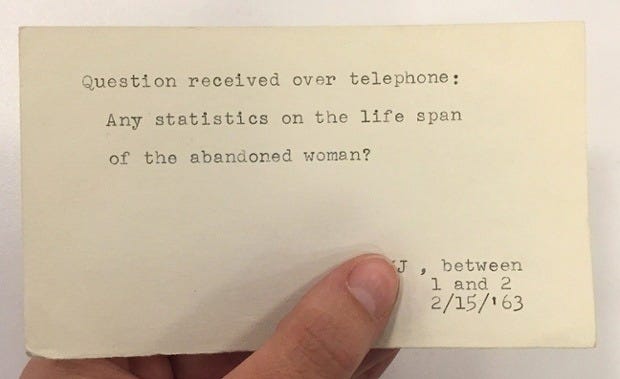
librarian question

The quirkiest questions for librarians from the NYPL vault

Peeking into the lives of writers through their letters

Daniel Clowes might want to do a Ghost World sequel

The End of the Tour trailer is here, featuring Jason Segel as David Foster Wallace

A new Neil Gaiman story online: “Click-clack the Rattlebag”

“The idea of writing the same story over and over again is a miserable one” — an interview with Kelly Link (our own interview with Link here)

Some good news for independent bookstore fans!

Why are so many apocalyptic stories set in Florida these days?

“What I do is not magical realism. I do realistic magic.” — an interview with Alejandro Jodorowsky

Is it time to end competitive book list making?