Noir or Sci-Fi? Thriller or Literature? Defying Categories with Lev AC Rosen

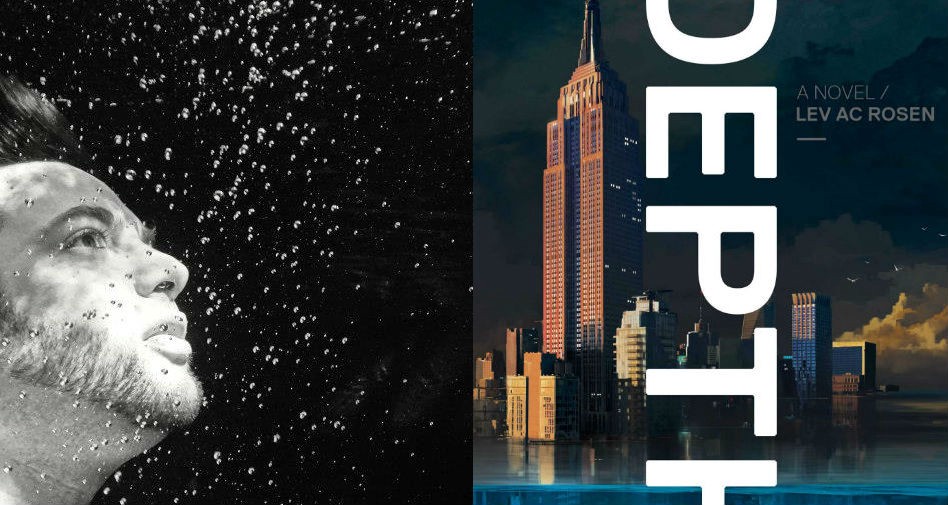
Vacillating between wry observations and insightful truths about all aspects of the writing craft, Lev AC Rosen is someone you should feel lucky to meet at a cocktail party. He’s also a brilliant writer of seemingly any genre he feels like delving into. Now, he’s just published his second novel, Depth (Regan Arts), a near-future thriller set in a Manhattan partially submerged underwater. (Think regular New York + Venice.) It’s a great whodunit, but it’s also a brilliant literary meditation on big cities. And once you get to know Lev — either in person or through his prose — you’ll get used to how funny his work is, too.

Recently, I chatted with Rosen about spoilers, mashing up mystery with sci-fi and the skills required to spin a crackerjack whodunit.

Ryan Britt: The book has been called Heinlein meets Hammett in terms of being a mash-up of science fiction and noir mystery. Were those influences? Or to put it another way: how much of this is science fiction novel versus a page-turning whodunit?

Lev AC Rosen: Hammett is definitely a huge influence on Depth — I re-read the Maltese Falcon while writing it to absorb as much flavor as I could. The sci-fi influences though, are more Blade Runner — which is to say, more Ridley Scott than Philip K. Dick. It’s definitely a classic noir at heart, but the location, the time — those are the science fictional elements. So yeah, a sci-fi world makes it a sci-fi; the mystery, the motives, the suspects, all are influenced by the science fiction of the world — many are impossible without it — but it’s still a noir skeleton under there. I think it still feels more like Hammett. Or maybe like Hammett writing science fiction.

Britt: You’ve got a partially submerged future-Manhattan as your setting, which has allowed for all sorts of great commentary not only on environmental concerns (polar ice caps melting) but concerns of urban life, too. Can you speak a little bit to the world building for Depth? How much of this concept existed before you had the characters?

I may be here to watch the city drown. And that moment — that sort of para-apocalyptic setting of the world towards the end of its life — is a gritty place.

Rosen: The concept was really the starting point. I grew up in New York, lived here my whole life, and I always wanted to write a noir set here, but so much of New York is shiny new real estate developments now — the grit of noir is harder to find. So I thought about how to get that back and what kept coming to mind was what it would look like in the future. Because, honestly, there’s not much of a future for the city right now. Some estimates put us at a crisis point in ten years, though most are more around 50. That’s potentially in my lifetime. I may be here to watch the city drown. And that moment — that sort of para-apocalyptic setting of the world towards the end of its life — is a gritty place. Plus, I got to selectively save a lot of the beautiful old real New York buildings and drown all those awful new real estate developments. But back to your question, concept definitely came first. New York with just the building tops and bridges. I worked out from there.

Britt: What are the essential components of a good mystery and how do you go about making sure your plotting isn’t too by-the-numbers?

Rosen: I think it probably varies book to book, but the real requirement for a mystery is a lot of suspects, each with good motives and opportunity, which you can then whittle down bit by bit. I think noir also calls for a strong sense of being trapped in something larger than yourself — whether that be a conspiracy or something else. As for not making it “by-the-numbers,” I think you have to be aware of whatever devices you’re working with and then try bending them in ways they’re not supposed to work. It’s about looking into the mystery toolbox that every author is using and not discarding it outright, but finding new ways to use the tools, which can be difficult, of course. Is a femme fatale still “fatale” if it turns out she didn’t kill anyone or lead them to their death?

Britt: Were there any twists or plot points you abandoned in earlier drafts?

Rosen: Oh yeah. I mean it’s a pretty spoiler heavy one, though — am I allowed to say it? Okay, okay, if you haven’t read the book yet, SKIP TO THE NEXT QUESTION!

Okay, so yeah, at the end of the first draft of the book, Simone died. She drowned in the water because she’s kinda suicidal anyway, and she just didn’t get out. The rest of the book was told from a distant perspective, focused mostly on Caroline, as she figured it out. But the bad guy got away in that version, too.

Britt: Why did you change it?

Rosen: See now we have to tell people to skip again if they haven’t read it. Seriously. Big spoiler. SO SKIP AGAIN!

Anyway, as to why I changed it — it was feedback from my writing group and my agent. My agent, I think, was hoping for more of a series angle — she talked about exploring the world more, more cases, and that was very enticing. But more importantly, my writing group pointed out aspects of the original ending that just weren’t working. Caroline, incidental detective, only half-worked. She essentially had to guess and accuse until someone is like “yeah, I did it, what are you going to do about it?” and that was pretty much it. Though the moments at Simone’s funeral were nice — especially Peter’s. The bits about Caroline’s parents, and about Simone’s parents, weren’t there. It was just wasn’t a very full ending. Which makes sense if a protagonist dies before really wrapping stuff up. Anyway, so it wasn’t great and I tried this other ending where Caroline pulls her out, and after that it just worked better. I got to the end and it was feeling a bit too cheerful, though, and suddenly I realized this last moment with Kluren could sink Simone again, because her dad — she really doesn’t know what happened there, why he killed himself. Plus, the idea of Simone and Kluren sharing this secret felt really intense and important to their relationship. So I went with that. It let me do more.

Britt: You’re a very entertaining writer, but there’s a great sense of literary heft to this book and your previous novel, too. What’s the ratio you think a writer should work for in terms of “importance” versus “entertainment”?

Rosen: So much flattery, Ryan, you’ll give people ideas.

If you set out to write a story with a specific moral or something, you often end up with propaganda, rather than a book.

I guess I think story comes first — which is maybe an emphasis on entertainment — but meaning, or importance, should follow. Ideally you can put meaning into any sort of good story… but you can’t always apply a good story to a meaning. If you set out to write a story with a specific moral or something, you often end up with propaganda, rather than a book. In this case, I figure out my setting, my story, my characters, and the more serious themes — of suicide, or trust — flow out of them. As long as your characters are dealing with things that are important to them, though, I think the book will feel important to your readers. I hope. I kind of don’t feel qualified to answer that one, to be honest.

Britt: Do you prefer exciting, plot-driven books to more “literary” ones?

Rosen: Depends on my mood. I read a lot of different fiction, kids books, sci-fi, literary, some blend thereof. And I try to write what I want to read, so I write a lot of different stuff, too. Stuff that blends. The book I have coming out next year is both a high fantasy and a contemporary story about a kid whose mother has early-onset Alzheimer’s. It’s two stories, sort of, but one is more the frame for the other — it’s not like the kid goes through a wardrobe or anything. And I wrote it because it was something I think I’d enjoy reading. Which is really me plugging another book than answering your question. Sorry. I don’t have a preference. I read everything. Although I do also reject the premise of your question, as plenty of exciting, plot driven books are literary. At least to me. I don’t care so much how the marketing people divide them.

Britt: Favorite mystery novel or story?

Rosen: One of my favorite movies ever is The Big Sleep. Just love it. The mood, the dialogue, the silent moments. It may not make much sense, but it conveys the idea of noir so perfectly. Love it. The book is a bit different, of course, but it’s a top one, too. I’m actually currently rereading all of Chandler’s novels, so I’m falling in love with all of them again. Right now, I’m on The Lady in the Lake. I love the way he writes about the victim’s body after they pull it out of the lake. It’s so cold and so sympathetic and upsetting at the same time. Another favorite noir movie is Laura. Sort of a romance/noir hybrid, but it’s so perfectly put together. I’d love to put Simone in a situation like that where she starts to feel something for someone she’s never met.

Britt: Is there still a danger of being called a “science fiction writer,” and not being taken seriously?

Rosen: Probably, but only by people whose opinions I don’t care about.

If a person can’t take a book seriously because of the part of the bookstore they find it, that’s more about them than about the book.

Britt: Genre-mashups are something of your specialty. Your first book All Men of Genius was essentially a Steampunk/Shakespeare situation. How do you approach this kind of genre blending?

Rosen: I like to think of All Men of Genius as a Steampunk/Sex-comedy mashup, actually, though I guess using Wilde and Shakespeare is also a mashup. I didn’t really think of Depth as being that much of a mix until we were sending it out to editors, honestly. It’s just… a book, y’know? It’s a mystery, sure, in a sci-fi world, sure, but lots of science fiction books are mysteries. I mean, these divisions — I understand how they help. You like a thing, you want to find other things like it. Sure. Genre divisions help with that. But as a writer, I don’t like the idea of having to be beholden to them.

I’m off topic again, aren’t I? Okay, so how do I approach blending stuff — I think it’s just about figuring out what the unifying thing is — like in Depth, the central idea is the mystery. The science fiction of the world doesn’t fight with the mystery, it just supports it. I wasn’t trying to write a science fiction mystery mash up. I was writing a mystery. That just happened to take place in this science fictional world I came up with. The world supported the plot, so the science fiction supported the mystery. They didn’t fight. So I think it’s important to figure out what the real story is first. Then any sort of mash-up stuff just follows that.

Britt: What’s next?

Rosen: Well, I have a middle-grade book coming out at the end of June called Woundabout. Continuing with our mashup theme, I think I could describe it as American Tall Tale meets Steampunk with some contemporary stuff too, though I think a lot of folks are comparing it to Lemony Snickett, too, so maybe we should get that in there? I may have over complicated this. Its heavily illustrated by my brother, too, which is really cool — we had fun working together on it. I can’t remember what age range they’re selling it for, but I think it’s 8–10? Maybe 12. But it’s about two kids whose parents die and they go live with their aunt in Woundabout, a town where change essentially no longer happens. So there’s some mystery in there, too. There are gears and personified elements and winged hippos and a pet capybara. I think it’s a pretty cool book. And next fall I have my other middle-grade (although this one is slightly older, I think), The Memory Wall, and that’s the epic fantasy meets contemporary realism about a kid who’s mother has early onset Alzheimer’s. It’s structured in that he plays this video game — which is told as a fantasy story — and he starts to think his mother, who’s just gone off to a home — is contacting him through the game’s online features, and telling him she’s not actually that sick and wants to come home. It makes my editor cry a lot. But it’s sort of a mystery, too — who is reaching out to him through the game, what are they really saying? But it requires some reading between the lines since we never see him playing the game — we only see his character in the game experiencing his story. There’s also stuff about East Berlin and some exploration of race, too. Which may make it sound more complicated than it is, but I’m really proud of it. I think it balances a lot of elements, and balances them well. And aside from that, I’m working on a Dollhouse/Alias-like YA about super-spies and I have an outline and first chapter of the Depth sequel, though I think that happening depends on sales. I hope that happens. It’s a fun world to keep exploring. So yeah, I have a lot of balls in the air. Good to keep busy.

TED WILSON REVIEWS THE WORLD: MEGAMILLIONZ INSTABUX

★★☆☆☆

Hello, and welcome to my week-by-week review of everything in the world. Today I am reviewing Megamillionz Instabux.

Each morning starts with a milk and a Megamillionz Instabux scratch ticket at the corner store. The possible prizes range from a free ticket to I guess a magamillionz dollars. I’m not sure how many zeros are in that.

My hope is to win the Big Prize so I no longer need to fear for anything. With that much money I could be safe forever. I could buy an impenetrable house no criminals or wildlife could enter. If I fell ill, I could pay for doctors so unaffordable that hundreds of poor people succumb to the same illness as me every year.

And when my fears disappear, so too would all inhibition. I would be free to discover and become the real me — whoever that is. So when I scratch the foil off the ticket, it’s not dollar signs I’m hoping to see staring back, but rather my own face, transformed; a new and improved Ted Wilson. One I can barely recognize.

The ticket has some wonderful artwork on the front of it. There’s a cartoon leprechaun struggling to hold onto his pot of gold while someone yanks it away from him. That’s what he gets for being so greedy. Although the imperialist undertones of stripping a culture bare does get me down a little.

I saw a lady in front of me win $25 once. I was disappointed I didn’t leave my house 20 seconds earlier to get to be her, but I was glad to see so much joy brought into her life. She was so happy that she screamed and jumped up and down. The cashier had no response whatsoever and continued reading his phone. I didn’t want the woman to feel alone so I started screaming and jumping up and down, too. Subconsciously I think I was hoping she’d split the money with me, like we’d both somehow won it.

I’ve never won but I guess I can sort of imagine how Charlie felt when he opened that chocolate bar and found his golden ticket. I can also imagine how he felt as he watched several children potentially perish in front of him, because that happened to me once. I wish it had been at a chocolate factory.

BEST FEATURE: The cartoon leprechaun looks like my old uncle Walt who was a real nice guy.
WORST FEATURE: Uncle Walt died many years ago and I sometimes wonder if he wasn’t reincarnated in that cartoon and if his life essence is trapped inside it, frozen, and unable to communicate.

Please join me next week when I’ll be reviewing Telly Savalas.

“Anya” by Karen Smyte, 2015 Stella Kupferberg Memorial Prize Winner

Selected Shorts

The following story was chosen by Karen Russell as the winner of the 2015 Stella Kupferberg Memorial Short Story Prize. The prize is awarded annually by Selected Shorts and a guest author judge. The winning entry receives $1000 and their work is performed live at a Selected Shorts show in Manhattan. “Anya” by Karen Smyte will be read on closing night of Selected Shorts, along with stories by Simon Rich and Elizabeth Spencer, on June 10th at Symphony Space. Find out more about the event here.

Anya by Karen Smyte

She could feather the blade with a subtle push down of her middle finger on the oarhandle. Loose, liquid. Can’t coach something like that. She studied piano, years. A weaver of rugs or surgeon or shooter, in a different life.

This ease allowed her to feel the water and unlock her power early. In rowing, the hands are the first to respond to fear. Anya was sure with her hands. From the start, she suspended all her weight on the oarhandle, unafraid, trusting her fingers to link her to the water, pure connection, as if the oar was an extension of her hands, an appendage she was born with. Natural, some say, but it’s the kind of intelligence that unnerves because it’s unusual. I ask my women to hang on the blade, backs firm against the leg jump. I share similes, hoping ‘like a child hanging on monkey bars’ will illuminate. I manipulate bodies, show video. Eventually, most learn. A handful are like Anya.

Practice that day five 1500’s. The crew, while capable of concentration, distracted easily by other boats or birds alighting close to us. My girls were slow bringing their blades down, sleepwalked to the back of the boathouse bay to take the shell out. I allowed this dreamlike motion, never sure if this was kindness. I claimed not to know the names of their favorite musicians, pretended to be older than I was, closer to their parents. I talked about lifting the hands as they approached the catch so their blades entered at their long point and they could suspend properly. Four weeks Anya had been missing. What else could we do?

“Relax as you come up the slide,” I told them when we stopped on the water between intervals, desperate for them to balance their bodies and feel the boat run under them. Only Bridgette released the blade quietly from a dark, tight swirl: the others ripped their blades out, splashing wash up, loudly, like buckets of water thrown on the floor. “You’re tearing the water,” I told them. “It isn’t only about power. It’s how you control it.” They bloomed the last piece, rowed lighter to the dock. When they put their boat away, their laughter made the boys’ team skittish, like dogs on the street waiting on scraps of meat and bones.

After work, I walked through my door and played my messages. “Call me,” Sue said. I brought the chimes that hung on my balcony into the living room, directed a small fan on low for a constant wind to push the metal pieces randomly together. The tinkling reminded me of the sound small bits of canal ice make with the spring thaw, when water gently laps and pushes the pieces against the shore and one another. I wanted some kind of auditory cover, but the voices of the children playing baseball in the courtyard of the building, their admonishments and trash talk and hilarity, the crack, crack of the bat, noise. I closed the window. The radio and stereo ridiculous, too, with vocals and melodies and harmonies, attempts at control but none of it would change a thing. The ringing of the chimes I could believe in.

Our fears realized.

We’d hoped Anya was different, unusual in her disappearance. But after days of dredging the canal, divers, policemen more familiar with breaking up fights between best friends at junior hockey games, pulled up Anya’s body. One of them had talked with her mother only two days earlier, had slipped into magical thinking despite intimate knowledge of statistics, of Anya’s chances this long disappeared. But girls disappear every day.

Bridgette dropped by. She’d been before to watch rowing videos, to talk about her job, to eat and avoid home. “The secretary mispronounced her name in announcements,” she told me. I didn’t ask how the sounds were twisted. Did the secretary say Anna? Anu? Anneke? Polyanski? “How could she mess it up, coach?” I made tea and put cookies on a plate, having absorbed the rituals I witnessed my mother perform for years. Feed people. I was thankful for Bridgette and her vitality, would have let her stay as long as she wanted, but her mother phoned and called B home.

Her name was Anya Polyanskaya. I loved to watch her row. And her hands. She feathered the blade with a gentle push down of her middle finger on the oarhandle, loose, relaxed. A dentist, a seamstress, a jeweler, in another life.

***

Karen Smyte is a fiction student in the Warren Wilson MFA Program and the founder of Red Beard Press, a youth-driven publishing press based out of Ann Arbor’s teen center, The Neutral Zone. A former Canadian national team rower, newspaper reporter, and collegiate rowing coach, she now records incarcerated mothers and grandmothers reading bedtime stories to their children. Her favorite readers reside in Michigan’s Huron Valley Correctional Facility.

Watch Jason Segel as David Foster Wallace in The End of the Tour Trailer

The late great David Foster Wallace, author of such groundbreaking books as Infinite Jest, Brief Interviews with Hideous Men, and A Supposedly Fun Thing I’ll Never Do Again, passed away in 2008, but he’ll be the subject of James Ponsoldt’s upcoming film The End of the Tour. The film, adapted from David Lipsky’s book, Although Of Course You End Up Becoming Yourself, follows David Lipsky’s and David Foster Wallace’s five-day road trip around the United States on DFW’s promotional book tour for Infinite Jest.

In the film’s trailer, David Lipsky (the fast-talking Jesse Eisenberg) asks David Foster Wallace (a meditative Jason Segel): “What’s it like being the most talked about writer in the country?” David Foster Wallace, with his famous self-consciousness, later wonders: “What’s so American about what I’m doing?”

The End of the Tour will be released July 31st, 2015.

Dear Reader, Live: A Night of Bedside Letters Shared with an Audience

Unconventional writers’ residencies seem to be proliferating, with programs offering unusual workspaces such as Amtrak trains and the homes of famous writers. Joining the mix is Dear Reader, a series of overnight stays in New York’s Ace Hotel curated by writer Alexander Chee (who also helped start the aforementioned Amtrak residency).

While writing residencies in hotels isn’t an entirely new concept (The Standard in the East Village has paired up with The Paris Review to offer a three-week stay to a writer), the Dear Reader program is unique in that it gives the writer-in-residence a task: write a letter to hotel guests, to be placed in each of the hotel’s 300 rooms for one unannounced night the following month. The only restriction on the writer is that the letter can be no more than 400 words. The results vary wildly in content and style, as was made evident in a reading by the first six writers-in-residence in the Ace Hotel’s Liberty Hall last night.

Atticus Lish, Saeed Jones, Chelsea Hodson, Dale Peck, Sigrid Nunez, and Lucas Mann read from recent work and shared their Ace Hotel letters with a packed audience. Each writer had spent (or was about to spend, in the case of Lucas Mann, whose residency was that very evening) one night at the hotel. Six more writers have been chosen for the residency for the second half of 2015, one per month.

The mood of the letters ranged from contemplative to humorous. Atticus Lish wrote a letter to animal lovers based on a nature video about sloths he had watched, while Chelsea Hodson penned a series of “Dear John” letters (“I loved the idea of someone named John finding this letter in his hotel room,” she explained). All of the writers I spoke with said that they had no idea what they were going to write until they arrived at the hotel, letting the environment speak to them.

An Ace Hotel staff member talked with me about how the letters have been received by hotel guests. “Some people have written to us and really loved the letters, and some people have called the front desk confused, thinking someone has left it behind,” he said. “The hope is that it jars people out of what they’re expecting, but in a way that is not confrontationally transgressive. Like, yes, it’s a hotel room, but it’s also a place to encounter art.”

I asked Atticus Lish how he approached writing a letter that was going to be placed in a hotel room, for guests he would never meet, and he said, “I think with the hotel room, you gotta assume people are reading it in their underwear.” This is a fair point and made me wonder, how does our clothing choice affect our reading experience?

Lish had never been to the Ace Hotel before, and neither had audience member Nick Mancusi, who referred to the décor affectionately as “A hipster ate a beard and barfed all over the place — but it’s cool!” He added, “I’m actually a fan, no bullshit, of every one of these writers — how could I miss this?”

Indeed, the consensus in the room seemed to be that the writing, and the reading, was stellar, with every single one of the participants hitting it out of the ballpark. Alexander Chee said he had two criteria when he selected the writers: “they told me a story I couldn’t forget” and “it came out of some kind of New York City situation.” Chee is a “big fan of the Ace Hotel”, which he believes encapsulates a certain New York City spirit. He has been involved in events there before, including co-hosting informal “Meet Your Twitter Feed” parties, “basically reminding people it’s good to hang out with people and not just be alone in front of your device.”

In that spirit, the Liberty Hall stayed open after the reading, and most of the large crowd stayed to do some face-to-face mingling. I chatted with Saeed Jones for a bit, who had stayed at the Ace Hotel when he interviewed for his position at BuzzFeed, and asked him how staying in the hotel for the Dear Reader residency was a different experience than staying for an interview. He replied, “The space is transformed. When I was here for Dear Reader and the task was ‘just write,’ it was the gift to calm down and pay attention to the space. Whereas when you are using a hotel room for work, the space is much more transient.”

Jones was also inspired by the inhabitants of the hotel. “You get curious [about the guests]…part of it is you wonder what’s going on in all these different rooms. Are they here for business, for an affair, to visit family? It mirrors the city, this hotel that encases all these stories at once. It was a moment to contemplate all of the New York we miss when we’re running from task to task.”

The event was inspiring to several writers who were in attendance as listeners, including Mark Doten, who said, “I don’t think I’ve ever written in any hotels, but I’d love to!” The Dear Reader series continues for the rest of 2015, and there will be another reading by the next six writers sometime in December.

Photos by Catherine Lasota

On the Outside Looking In: The Invaders by Karolina Waclawiak

by Jenna Leigh Evans

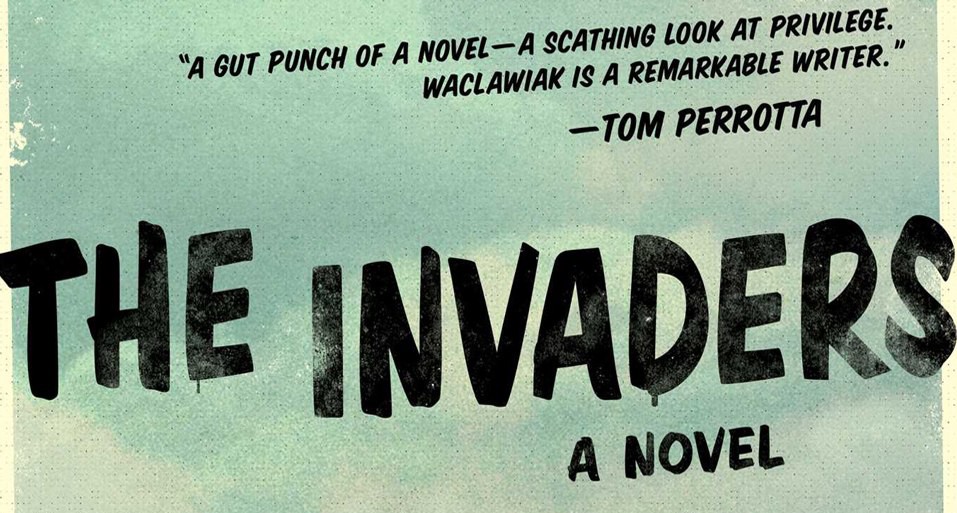
Readers with a beef about representations of race and class in literature would do well to exercise patience during the opening chapter of Karolina Waclawiak’s novel The Invaders. After all, the novel’s setting of Little Neck Cove, Connecticut — its old Congregational church, the town green at its center, its tasteful shops on Main Street — gives us no hint of the savage evisceration of white privilege that follows. “And along the water were hidden coves and snug blocks of beachside cottages,” concludes Cheryl, our protagonist. But just beyond the story’s gates lies a rank nest of cruelty, racism, addiction, and sexual perversion.

In the same way, it might appear initially as though Cheryl’s preoccupations — being frozen out of the cliques at the country club, wondering whether she should wear a certain shade of melon — are going to be standard-issue “White People Problems.” Ditto her stepson, Teddy, who resists his father’s desire for him to join the rat race by way of pills, pot, and hookups. So we’re all the more unprepared for the barbarism that follows after a Latino fisherman urinates between two parked cars in their beach town, setting off a frenzy of fear and loathing.

Within days, a border fence is erected on the seawall — built by migrant labor. “I watched the workers build the white picket fence blocking access to the ocean and knew that once they were finished they wouldn’t be allowed in, either,” Cheryl observes. “Everyone was on high alert […] the neighborhood had never felt more unsafe and we were all eyeing one another as potential threats.”

As fence and tensions alike rise, we learn that Cheryl wasn’t to the manor born; in fact she was desperately poor until she met her husband, Jeffrey, and nobody has any intention of letting her forget it. “I’m not new,” she chides a fellow denizen of Little Neck Cove. The reply: “Some people always feel a bit new, don’t you think?”

She copes with the inner turmoil this engenders by making anonymous obscene phone calls and, around seventy pages in, smashing somebody’s face to a pulp with a rock (spoiler alert: that’s not the darkest thing she does in this little parable). But she’s prone to go numb when it comes time for accountability, so she allows the grotesque incident to be blamed on what the town has come to call “the Mexicans.”

We might expect Cheryl’s dismay at the lawless hysteria she causes to shepherd her along a well-trodden narrative arc to redemption — but Waclawiak understands the corrupting influence of dissociation, so instead Cheryl drifts directly into the path of her stepson in a manner that marks him for life, cancels his career prospects, and makes him a permanent outsider in his community. Well, she never really fit in herself, anyway.

Her more emotionally-present husband, however, is so enraged that he pauses his kiddie porn long enough to kick her out of their house, unmoved that she has nowhere to go. After delivering this edict, he steps outside, drink in hand, to go for a stroll upon the seawall, the very picture of patriarchal wealth and belonging. Seconds later, he’s apprehended by a security guard for trespassing. When the police arrive, his response might be characterized as the town’s rallying cry, not to mention the central metaphor of the novel: “I’ll kill you if you come near me. I was here before you bastards were even born!” True to the trajectory of fascism (first they came for my neighbor, and so forth), the police take him away, for safety reasons, of course, as Cheryl watches on in silence. Meanwhile a hurricane is rolling in. And then the tale gets really dark.

The Invaders

by Karolina Waclawiak

Powells.com

Opening a World, an interview with Karl Ove Knausgaard

You might think international celebrity would help conquer his demons, but Karl Ove Knausgaard says he’s still “full of self-loathing.” Recently, Steve Paulson spoke with Knausgaard, the Norwegian author whose six-volume autobiographical novel, My Struggle, must be counted amongst the biggest and most provocative literary sensations in recent memory. Their conversation — which will air in the coming weeks on Public Radio International’s To The Best Of Our Knowledge (subscribe to the TTBOOK podcast here) — tackled the humiliations of youth, finding suspense in the everyday, imperfect memories, and Knausgaard’s plans for his new project.

Steve Paulson: This book begins when you are 18, just out of high school and headed for your first job. You drink too much and you’re obsessed with losing your virginity. In some ways, the life you’re describing isn’t that unusual, but you seem to be full of angst. Did you feel tormented back then?

Karl Ove Knausgaard: Yeah, I think so, but I wasn’t aware of many aspects of this because you are not that aware of yourself when you are 18. You’re full of yourself but you’re not aware of yourself. So this book is basically about the conflict between the 18-year-old young man being full of himself, full of ambition, full of desire, full of longings and wanting, and the outer world and all the people he meets. He has no idea at all of who he is.

SP: Your project is so interesting because you are now extremely self-conscious, and yet you’re trying to get inside the head of what you were like when you were 18.

KOK: Yeah, that’s really the interesting part of it. When I was writing, it felt like I was very close to that age. That age was the part of my life that I’m closest to, so it was really easy to write about. You know, in a way, I haven’t improved much since I was 18. Of course, I have in other ways, but the core is the same as when I was 18.

SP: What are those core areas where you haven’t changed?

And it’s so raw when you are 18. We get much better at hiding it when we’re in our forties or fifties.

KOK: That has to do with emotions, feelings, desires, everything that you don’t verbalize, everything that drives you. I’ve spent my life trying to understand those forces, not because I’m that interested in myself, but because I’m a writer and I’m interested in identity and those forces are so powerful. And it’s so raw when you are 18. We get much better at hiding it when we’re in our forties or fifties.

SP: Was it still raw for you to go back and relive those adolescent years?

KOK: Yeah, especially the relations that I had at that time, that I didn’t see as clearly as I do now — for instance, my relationship to my father, which is a big part of this book.

SP: Which was very troubled. He was a difficult father. He drank too much and sometimes beat you.

KOK: When I was growing up, he didn’t drink and he had kind of a normal life, but he was unpredictable, and that’s always a problem for a child. But then when I was 16, he started to drink and he left the family. He became an alcoholic and disappeared from my life. He got a new family and a new child but something is still very wrong in his life. I saw some of that then but I didn’t see it all. You know, when you’re that age, there is a very one-sided relationship with your parents, and you try to get away from them. You try to make your own life and that also makes this period interesting to write about.

SP: Was it painful to remember the difficulty with your father, not to mention all the embarrassing episodes from your adolescence?

KOK: The embarrassing episodes were a pleasure to write. It was just fun.

SP: Were you nostalgic for that period of your life?

KOK: No, not at all. There is one bit in there, though, that’s about my sexual shortcomings, and I have never said that to anyone in my life. I still don’t talk about it to anyone, but I wrote it down. It’s in the book, and when I think about how much I’m giving away, that’s kind of hard. When I wrote it, I read it to a friend, and that was a terrible moment. He was the first person I was telling this to, but he just laughed. You know, he laughed and laughed, and that made it easier because it is funny. I think the recognition about sexuality when you are that age and the insecurity you have…. you don’t know, really. There’s no manual.

SP: You also talk about how not much happens in life. You write, “How did we manage to be so patient? Because nothing ever happened! It’s always the same, day in and day out.” You go on to say, “The waiting — that was life.” I remember feeling that way.

KOK: Yeah. There is a strange element of hope. You think something will happen and it could happen at any moment. I saw that when I wrote the first book in the series. When I am 16 and going to a party, I have to hide beer in the snow. It takes 100 pages just to get to the party. And we are rejected, so there is no party and we just go back home. That should be a crucial blow to your self-confidence, but then you get up again and try something new. And that’s just youth to go on and on, you know? There’s so much energy in life.

SP: Well, what’s astonishing is that you’ve written thousands of pages about a life where, frankly, not much happens. There are long stretches where there’s not much drama, and yet it’s often riveting. I don’t know how you do that.

KOK: This book came out of a great frustration in my life. When I started to write, I didn’t have any reader in mind, and I thought to myself, this is boring. This is of no interest to anyone. I was surprised when my editor wanted to publish it. And when the book became kind of a success, it was completely unexpected to me. But I think there is a certain feeling of real life in it, and as a result, lots of possibilities for identification.

You know, suspense could be when you go to the refrigerator and open it and wonder what’s in it, and you go there and there’s nothing.

And there is a certain narrative structure in ordinary life. You know, suspense could be when you go to the refrigerator and open it and wonder what’s in it, and you go there and there’s nothing. What shall I do? Should I go down and buy something, or should I be hungry? Something like that has suspense in it, and it’s the same structure as in any Hitchcock film, but just on a miniature scale. When I was a child and a teenager, I read a million books which had one thing in common — a very strong narrative. I mean, Wilbur Smith or Alistair MacLean or Ken Follett — all those thriller writers. The narrative is out of this world. It’s so strong. I think some of this got into my blood, so I use it on very, very small things.

SP: It does feel like real life. Was it a conscious decision not to be too “literary” as you wrote these books?

KOK: Yeah, very much so. That was the major idea in these books.

SP: How do you avoid being too literary?

My ambition is to get away from being clever.

KOK: I try to write as fast as possible. You know, when I try to write something really good, I spend a lot of time writing and rewriting drafts. I polish the sentences and make them look good. But I didn’t do that at all in this book. I did in the opening — maybe the first 15 pages. I really worked through it again and again, and I think that’s the best thing I’ve written. It is clever and beautiful. My editor suggested we take out the beginning because it’s so different from the rest, and then you just dive into something much simpler and more direct. But I disagreed with him because I needed to have something in these books that was well written. So I had the opening only so you can see that I’m doing this on purpose. I know how to write, but it’s not my ambition here to show you that I can write. My ambition is to get away from being clever. I try to connect to something else inside of me, which is much more unsophisticated, much more banal…. sometimes idiotic, you know? Because that’s a good representation of life — at least my life.

SP: So good writing can get in the way of representing real life?

KOK: Yeah, maybe that’s good writing. But I’m confused when it comes to a concept like quality. I don’t really know what it is. What I’m trying to do is get away from all the concepts we have — the concept of identity, the concept of quality, of what a novel is, of what a day looks like, you know? Just try to write through all those conceptions. I don’t succeed but that’s my aim.

SP: This sounds like stream of consciousness writing — following wherever your mind takes you.

KOK: Yeah, but in a kind of narrative frame, so it’s not completely loose. There’s always a context. It’s always in a room. It’s always with other people or doing something by yourself. It’s not like it’s all stream of consciousness. Of course, all the things in these books are related to other books I’ve been reading. People talk about the amount of details in the book, but have you read “Ulysses” by Joyce? It’s nothing but details. I’m not comparing it to Joyce, but everything comes from a place.

SP: The amount of detail you recount is astonishing. As you’ve said, you spent 100 pages describing just getting to a party, and you have long stretches of dialogue with friends and relatives. Supposedly, this is all stuff that really happened to you. How accurate are these memories?

KOK: They’re accurate in the way that I capture the way I remember them. It’s not accurate in the way they really happened because that’s impossible. I mean, if you write about something that happened four minutes ago, someone will say, “No, it didn’t happen like that.” So it’s a book about my memories and what’s in my head. It’s the memory I’m writing about, not the real events, and the dialogues are made up. I can’t remember who said what 20 years ago. That’s impossible.

SP: Did you ever check with friends or family members to see if you were getting the details right?

KOK: I never did that. That was another thing with this project. I wouldn’t do any research. It should be all about what’s in my head when I started writing. I sent the manuscript to many people before it was published, and some of them said, “No, it didn’t happen this way,” but I still kept it that way because I wanted to be true to my memory more than to the real events.

SP: Do you have a really good memory?

KOK: I thought I didn’t before I started this project, but I think I do. But it’s hidden. It’s like a place you have to get access to — for instance, through reading or writing. Everything is there; it’s just a matter of getting at it.

SP: So these memories come flooding back through the act of writing?

KOK: Yeah, it’s exactly like that. It is amazing, especially with Book Three, which deals with childhood, because it seemed like my childhood was inaccessible to me when I started. I had some memories but not enough to fill a book. But it was like something opened up when I started to focus on the physicality of being seven or eight — you know, running and climbing trees and all that stuff. There wasn’t much thinking. It was a lot of doing. When I started to write about that, everything started to come back to me, like how things smelled and images of landscapes. Some of them are exact and true, and from there you go onto something completely different. A world opened up and that was only because I was writing about it.

SP: This six-volume autobiographical series that you’ve written is called fiction, not memoir. Is that distinction important to you?

KOK: I didn’t really give it a thought when I was doing it. But it is a novel because I’m not interested in just retelling stories from my life. This is a search for identity. I use my life as raw material, and I use all the tools of a novel. There is a narrative structure. You could call it a nonfiction novel.

SP: Were these books fun to write?

KOK: No, it was like a daily torture to write because I felt all the time that this is below my aesthetic standard. I have an idea of what it is to write well, and these books are not fulfilling that ambition. That’s hard. I am also a person full of self-loathing. It’s kind of a negative narcissism. I’ve very occupied with myself but in a negative way. Everything I do is to try to get away from myself, but in this book I’m writing about myself and trying to stay in that, and that was hard. Of course, knowing that this is going to hurt a lot of people is very hard, too.

SP: Because you’re revealing so many personal details that make other people look bad.

KOK: Yes, and what gave me the right to do that? Who do I think I am using other people, taking things from other people for my own purposes? So that’s why I was reading it on the phone every day to my friend because I needed someone to support me, to say, “This is good. Keep going.” And also my editor, who said the same thing. Without those people helping me, I wouldn’t be able to do it.

SP: Do you still have that self-loathing?

If I say what I really think about these books in public, then people come to me afterwards and say, “You can’t say that! These books are so important for me.”

KOK: Yeah. But I also have these grand ideas of myself, you know? I mean, self-loving and self-hating. It’s like I’m faking something, but it’s hard to talk about. If I say what I really think about these books in public, then people come to me afterwards and say, “You can’t say that! These books are so important for me.” So I try not to talk about it. And this feeling of self-loathing, self-hatred — they are the core of the book, and I also want to find out why. I mean, I wake up in the morning and I’m not happy, you know? It takes me three, four hours every day to get into a functional mood and then it’s okay. I don’t know why it’s like that, but something must have been broken. I think to be safe in yourself is the most important thing in childhood. And as a father, that’s the one thing I try to give my children — that they can believe in themselves and be safe. I never felt like that, so there’s a basic insecurity in me.

SP: Yet these books have been extraordinarily successful. You are a celebrated writer around the world. That hasn’t made you happier?

KOK: There’s ambivalence. Yes, I’m extremely happy. I think this is a miracle. I never thought this would happen. I never thought I would do an interview in the U.S. about my books. I was happy being a Norwegian writer and being able to publish books, so this is like a dream for a writer. And all the reaction from readers who really connect to it — that’s why you write. So that’s immensely pleasing, but it doesn’t help, you know? It’s a good thing but it doesn’t do anything, if you know what I mean.

SP: So where do you go from here? Do you have a new writing project?

KOK: At the moment, I want to get out of everything about “My Struggle.” I want to get out of the psychology of it, the style of it, the tone of it. Now I’m just writing one text every day about one subject, so it’s going to be 365 texts. There’s a lot written about toilet seats, vomit, trees, the sun, cups, cars — all the things that I’m surrounded by, the materiality of the world. I’m going to publish them in Norway, like in four books. The first is out in September. It’s a world view without people, without psychology. So every morning, I pick a word. And the challenge is, is it possible to say anything meaningful about this object? And it is. Everything is meaningful if you start to do this. So it’s just something I do almost before the day starts. It’s a way of getting away from what I’ve been doing these last years.

SP: It sounds wonderful!

KOK: Then I’m going to write a nov​el.

May Fiction Prompts Culled from the News

Each month we gather some news headlines that are strange enough to be fiction. Here’s yet another batch of headlines to get your creative juices flowing along with suggested genres:

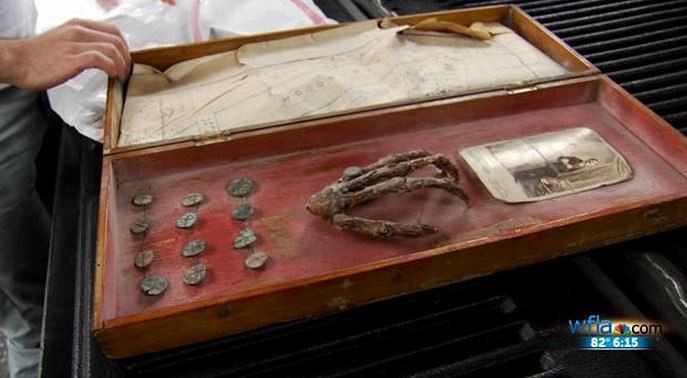
Treasure Hunt Horror: Desiccated (and surely haunted) hand found in attic with treasure map

Science Fiction Noir: Robot arrested for buying drugs online

Black Comedy: Agoraphobic grandmother ventures outside and falls down open manhole

Erotic Carnivore Crime: Couple stuff hundreds of dollars worth of meat in pants

Science-Litter Fiction: (Mad?) scientist throws preserved animal brains from moving train

Party Pooper YA: Raining human feces ruin sweet 16 party

Magical Realist Legal Thriller: Man hires stuffed toy owl with law degrees as his lawyer

Cat Fancy Romance: Woman and cat go on romantic Manhattan dinner date

Man vs. Nature vs. Nature Again: Man catches fish, then gets pulled into sea by hungry sea lion

Game of Thrones Casting Call Hints at New Characters

The casting call for season six of Game of Thrones, HBO’s much loved (and hated) adaptation of George R. R. Martin’s epic fantasy series A Song of Ice and Fire, has gone out and some of the descriptions hint at some major characters being introduced. As fan site Watchers on the Wall notes, HBO has stopped naming the characters they are casting, but the descriptions can still give the characters away. Here are three notable ones via Watchers on the Wall:

(SPOILERS, obviously)

Pirate, man in his 40’s to late 50’s. He’s “an infamous pirate who has terrorized seas all around the world. Cunning, ruthless, with a touch of madness.”He’s a dangerous-looking man. A very good part this season.”

This is almost certainly Euron Greyjoy, Theon’s uncle, who in the books has been exiled and travels the world as a pirate before coming back after Balon dies. (Many believe Euron hires someone to kill Balon.) His “dangerous” appearance includes an eyepatch that covers a “black eye shining with malice.” In the books, he arrives with a dragon-binding horn and gets the Iron Islanders to start raiding the rest of Westeros.

Father. Aged 50’s to 60’s, he’s one of the greatest soldiers in Westeros- a humorless martinet, severe and intimidating. He demands martial discipline in the field and in his home. It’s described as “a very good part” for next year and that he’s “centrally involved” in a protagonist’s storyline.

Watchers on the Wall suspect this is Sam’s abusive and awful father, Randyll Tarly. Randyll Tarly is not a huge figure in the books, but he has been mentioned a lot on the show, including by Stannis this season. It would make sense that the show would involve Sam’s family, since he is such a central character.

Priest, in his 40’s or 50’s. A gruff ex-soldier who found religion. Now a no-nonsense rural priest who ministers to the poor of the countryside. He’s salt-of-the-earth man who has weathered many battles.

This is very likely to be Septon Meribald, a fairly minor character who is a huge fan favorite. He’s also involved with a character who seems to be the Hound. He gives this fan-loved speech:

Read the rest of the casting call at Watchers on the Wall. (h/t io9.)

Expanding the Detroit Literary Community by Giving Free Houses to Writers

Home ownership is a distant dream for many, especially writers who couldn’t think of getting together a down payment from lit mag contributor copies, let alone the employment stability to make regular mortgage payments. Enter Detroit fairy godmother Write a House, a nonprofit that thinks dedicated writers deserve not only a room of their own, but an entire home.

Write a House was founded in 2012 by Detroit residents Sarah Cox and Toby Barlow with, as their website states, “the intent of providing vocational training to local youth who would renovate vacant foreclosed homes. Then the homes would be given away to writers.” The organization held its first call for applications from writers last year, and in September of 2014, they awarded their first home to poet and historian Casey Rocheteau.

The second application round is now open, with another house (or maybe two, depending on funding and renovation schedules) soon ready to be given away to a needy writer. You just need to get your compelling application submitted no later than midnight on June 5, 2015. To apply, you need to be at least 18 years old and a low or moderate-income writer with some history of publication (though writing need not be your full-time occupation). Accepted writers only pay property taxes and bills such as electricity, water, and internet — they are expected to maintain and live in the house for two years, and then the house becomes theirs.

Write a House

Where do these homes come from? you may ask. I had the same question and asked Write a House Director Sarah Cox, who told me, “The first two we bought in a Wayne County foreclosure auction, and the third one came from the Land Bank, which is sort of a quasi-government branch that is tasked with turning over foreclosed properties back to private ownership. We’re probably getting the rest of the houses through the Land Bank as well.”

I asked how Write a House has been received in Detroit so far, especially considering the touchy issue of dealing in foreclosed homes. Sarah admits, “There’s been some skepticism and there’s been a little bit of that general concern over what does it mean to be dealing with a foreclosed house, but generally we’ve been well-received. We’ve been really fortunate in making people understand our intentions behind what we are trying to do. The foreclosure process has happened, and unfortunately we can’t go back and give those people their homes back. So we’re either stuck with them being empty, or we can put a writer in it.”

The idea behind Write a House, says Sarah, is “about wanting a stronger literary community, but also about wanting stronger neighborhoods with less boarded up houses.”

Write a House is working to build the city in other ways via its local partnerships. For example, the homes are refurbished with the help of the nonprofit Detroiters Working for Environmental Justice, which does training to make underemployed people employable in the construction industry. As Sarah tells me, “We’re just trying to partner with people to create more job stability within the construction field.” So not only is Write a House offering permanent space to writers, but they are also offering training and job opportunities to workers who can theoretically use those skills for revitalization projects around Detroit.

insidehouse copy

I asked inaugural Write a House homeowner Casey Rocheteau if she has any advice for applicants in the current cycle. She replied, “Do you want to live in Detroit? If you’re not sure, or haven’t been to Detroit, you really have to consider it.” Casey, who relocated from Brooklyn, had visited Detroit herself prior to applying only once, very briefly in 2007. “I was looking for a different pace of life than NYC when I applied. I have always been intrigued by Detroit’s history and culture. To me, Detroit was a kind of African American mecca. All that has been said or could be said about it had a pull for me.“

Sarah Cox assured me that they take the answer to the application question “Why do you want to move to Detroit?” very seriously. “If the answer is ‘I like free houses,’ that’s great, but you might get here and have a complete meltdown, and I don’t want that. You kind of have to know what you’re getting yourself into, and it’s not just a free house, it’s a whole city you have to engage with.”

I asked Casey if there was anything that surprised her about her new hometown, and she said, “Even though I was aware of how big the city is, I was surprised at how difficult it is to easily get around without a car. You can spend hours waiting on buses. I was also surprised by how friendly people are overall. It’s very different from the Northeast in that way.”

Casey added, “I think it’s important that people grasp that while after two years you have a house in your name, it’s about more than that. I think the opportunity alone is worth at least applying, especially for folks who are already in Detroit. Also, it’s not as if Write A House is leaning over your shoulder trying to check your page count every week. There’s a lot of freedom in it, which I love.”

As far as Casey’s involvement with Write a House in the past year, she’s taken on the task of contributing to the organization’s blog, but this was borne out of her own interest and was not a requirement of her award. Her incredibly informative posts contain a lot of great links for information in Detroit, as well as some tips for potential applicants.

detroitwriters copy

Casey has been connecting with the vibrant poetry scene in Detroit. When I asked her how she would describe the Detroit literary scene, she replied, “Eclectic. I have seen a wide range of voices in the literary scene — experimental, beatnik old-school, hip hop influenced, lyric, futuristic, graphic fairy tales, boisterous and quiet. Some of the best writers I know are in and around Detroit, so it’s been exciting seeing folks read and hearing voices that are new to me.”

As Sarah explains, Write a House is “trying to make people aware there is an existing writing community in Detroit. We’re not creating a writing community out of scratch, we’re trying to add to the outstanding voices that are already here.”

Write a House received 350 applications last year and expects a smaller number of applications this year, in part because they have instituted a minimal $25 application fee to help subsidize the organization’s costs (the fee was $15 for the first two weeks of the cycle, and there was debate amongst the board about instituting an application fee at all). As of my conversation with Sarah on May 22nd, Write a House had received 84 applications in the current submission period.

So get those applications together and apply by the June 5th deadline. While the overwhelming majority of applications submitted so far have been fiction applications, Write a House is seeking applications in not just fiction, but poetry and nonfiction as well. You must be a US citizen or otherwise legally able to reside in the US to apply, as unfortunately Write a House does not currently have the resources to assist with immigration issues. If you would like to assist in the renovation of the second home to be awarded, Write a House is accepting donations on Fundly.