Midweek Links: Literary Links from Around the Web (May 27th)

Looking for some interesting reading to get you through hump day? Here are some literary links from around the web to check out:

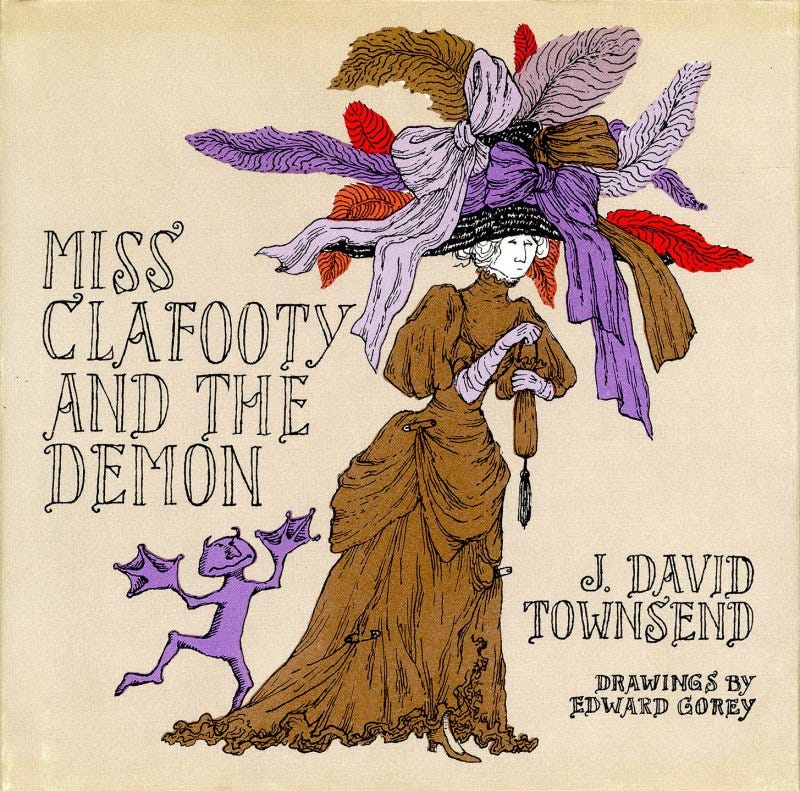
Edward Gorey

A look at the best cover art of Edward Gorey

Kelly Link explains how horror stories are love stories

The great SF&F writer Tanith Lee passed away this week

Why do writers go out of their way to disguise real life locations?

The USPS is putting out a Flannery O’Connor stamp

John Scalzi signs a massive 10-year, 13-book, 3.4-million dollar deal with Tor

Neil Gaiman has new Sandman comics in the works

A list of “unrepentantly trashy beach reads” for your summer literary slumming

Hooray! The number of independent bookstores is growing

Kelly Link Recommends a Short Story by Angela Carter

“The Lady of the House of Love”
by Angela Carter

At last the revenants became so troublesome the peasants abandoned the village and it fell solely into the possession of subtle and vindictive inhabitants who manifest their presences by shadows that fall almost imperceptibly awry, too many shadows, even at midday, shadows that have no source in anything visible; by the sound, sometimes, of sobbing in a derelict bedroom where a cracked mirror suspended from a wall does not reflect a presence; by a sense of unease that will afflict the traveler unwise enough to pause to drink from the fountain in the square that still gushes spring water from a faucet stuck in a stone lion’s mouth. A cat prowls in a weedy garden; he grins and spits, arches his back, bounces away from an intangible on four fear-stiffened legs. Now all shun the village below the château in which the beautiful somnambulist helplessly perpetuates her ancestral crimes.

Wearing an antique bridal gown, the beautiful queen of the vampires sits all alone in her dark, high house under the eyes of the portraits of her demented and atrocious ancestors, each one of whom, through her, projects a baleful posthumous existence; she counts out the Tarot cards, ceaselessly construing a constellation of possibilities as if the random fall of the cards on the red plush tablecloth before her could precipitate her from her chill, shuttered room into a country of perpetual summer and obliterate the perennial sadness of a girl who is both death and the maiden.

Her voice is filled with distant sonorities, like reverberations in a cave: now you are at the place of annihilation, now you are at the place of annihilation. And she is herself a cave full of echoes, she is a system of repetitions, she is a closed circuit. “Can a bird sing only the song it knows or can it learn a new song?” She draws her long, sharp fingernail across the bars of the cage in which her pet lark sings, striking a plangent twang like that of the plucked heartstrings of a woman of metal. Her hair falls down like tears.

The castle is mostly given over to ghostly occupants but she herself has her own suite of drawing room and bedroom. Closely barred shutters and heavy velvet curtains keep out every leak of natural light. There is a round table on a single leg covered with a red plush cloth on which she lays out her inevitable Tarot; this room is never more than faintly illuminated by a heavily shaded lamp on the mantelpiece and the dark red figured wallpaper is obscurely, distressingly patterned by the rain that drives in through the neglected roof and leaves behind it random areas of staining, ominous marks like those left on the sheets by dead lovers. Depredations of rot and fungus everywhere. The unlit chandelier is so heavy with dust the individual prisms no longer show any shapes; industrious spiders have woven canopies in the corners of this ornate and rotting place, have trapped the porcelain vases on the mantelpiece in soft grey nets. But the mistress of all this disintegration notices nothing.

She sits in a chair covered in moth-ravaged burgundy velvet at the low, round table and distributes the cards; sometimes the lark sings, but more often remains a sullen mound of drab feathers. Sometimes the Countess will wake it for a brief cadenza by strumming the bars of its cage; she likes to hear it announce how it cannot escape.

She rises when the sun sets and goes immediately to her table where she plays her game of patience until she grows hungry, until she becomes ravenous. She is so beautiful she is unnatural; her beauty is an abnormality, a deformity, for none of her features exhibit any of those touching imperfections that reconcile us to the imperfection of the human condition. Her beauty is a symptom of her disorder, of her soullessness.

The white hands of the tenebrous belle deal the hand of destiny. Her fingernails are longer than those of the mandarins of ancient China and each is pared to a fine point. These and teeth as fine and white as spikes of spun sugar are the visible signs of the destiny she wistfully attempts to evade via the arcana; her claws and teeth have been sharpened on centuries of corpses, she is the last bud of the poison tree that sprang from the loins of Vlad the Impaler who picnicked on corpses in the forests of Transylvania.

The walls of her bedroom are hung with black satin, embroidered with tears of pearl. At the room’s four corners are funerary urns and bowls which emit slumbrous, pungent fumes of incense. In the center is an elaborate catafalque, in ebony, surrounded by long candles in enormous silver candlesticks. In a white lace négligé stained a little with blood, the Countess climbs up on her catafalque at dawn each morning and lies down in an open coffin.

A chignoned priest of the Orthodox faith staked out her wicked father at a Carpathian crossroad before her milk teeth grew. Just as they staked him out, the fatal Count cried: “Nosferatu is dead; long live Nosferatu!” Now she possesses all the haunted forests and mysterious habitations of his vast domain; she is the hereditary commandant of the army of shadows who camp in the village below her château, who penetrate the woods in the form of owls, bats and foxes, who make the milk curdle and the butter refuse to come, who ride the horses all night on a wild hunt so they are sacks of skin and bone in the morning, who milk the cows dry and, especially, torment pubescent girls with fainting fits, disorders of the blood, diseases of the imagination.

But the Countess herself is indifferent to her own weird authority, as if she were dreaming it. In her dream, she would like to be human; but she does not know if that is possible. The Tarot always shows the same configuration: always she turns up La Papesse, La Mort, La Tour Abolie, wisdom, death, dissolution.

On moonless nights, her keeper lets her out into the garden. This garden, an exceedingly somber place, bears a strong resemblance to a burial ground and all the roses her dead mother planted have grown up into a huge, spiked wall that incarcerates her in the castle of her inheritance. When the back door opens, the Countess will sniff the air and howl. She drops, now, on all fours. Crouching, quivering, she catches the scent of her prey. Delicious crunch of the fragile bones of rabbits and small, furry things she pursues with fleet, four-footed speed; she will creep home, whimpering, with blood smeared on her cheeks. She pours water from the ewer in her bedroom into the bowl, she washes her face with the wincing, fastidious gestures of a cat.

The voracious margin of huntress’s nights in the gloomy garden, crouch and pounce, surrounds her habitual tormented somnambulism, her life or imitation of life. The eyes of this nocturnal creature enlarge and glow. All claws and teeth, she strikes, she gorges; but nothing can console her for the ghastliness of her condition, nothing. She resorts to the magic comfort of the Tarot pack and shuffles the cards, lays them out, reads them, gathers them up with a sigh, shuffles them again, constantly constructing hypotheses about a future which is irreversible.

An old mute looks after her, to make sure she never sees the sun, that all day she stays in her coffin, to keep mirrors and all reflective surfaces away from her — in short, to perform all the functions of the servants of vampires. Everything about this beautiful and ghastly lady is as it should be, queen of night, queen of terror — except her horrible reluctance for the role.

Nevertheless, if an unwise adventurer pauses in the square of the deserted village to refresh himself at the fountain, a crone in a black dress and white apron presently emerges from a house. She will invite you with smiles and gestures; you will follow her. The Countess wants fresh meat. When she was a little girl, she was like a fox and contented herself entirely with baby rabbits that squeaked piteously as she bit into their necks with a nauseated voluptuousness, with voles and field-mice that palpitated for a bare moment between her embroideress’s fingers. But now she is a woman, she must have men. If you stop too long beside the giggling fountain, you will be led by the hand to the Countess’s larder.

All day, she lies in her coffin in her négligé of blood-stained lace. When the sun drops behind the mountain, she yawns and stirs and puts on the only dress she has, her mother’s wedding dress, to sit and read her cards until she grows hungry. She loathes the food she eats; she would have liked to take the rabbits home with her, feed them on lettuce, pet them and make them a nest in her red-and-black chinoiserie escritoire, but hunger always overcomes her. She sinks her teeth into the neck where an artery throbs with fear; she will drop the deflated skin from which she has extracted all the nourishment with a small cry of both pain and disgust. And it is the same with the shepherd boys and gypsy lads who, ignorant or foolhardy, come to wash the dust from their feet in the water of the fountain; the Countess’s governess brings them into the drawing room where the cards on the table always show the Grim Reaper. The Countess herself will serve them coffee in tiny cracked, precious cups, and little sugar cakes. The hobbledehoys sit with a spilling cup in one hand and a biscuit in the other, gaping at the Countess in her satin finery as she pours from a silver pot and chatters distractedly to put them at their fatal ease. A certain desolate stillness of her eyes indicates she is inconsolable. She would like to caress their lean brown cheeks and stroke their ragged hair. When she takes them by the hand and leads them to her bedroom, they can scarcely believe their luck.

Afterwards, her governess will tidy the remains into a neat pile and wrap it in its own discarded clothes. This mortal parcel she then discreetly buries in the garden. The blood on the Countess’s cheeks will be mixed with tears; her keeper probes her fingernails for her with a little silver toothpick, to get rid of the fragments of skin and bone that have lodged there.

Fee fie fo fum

I smell the blood of an Englishman.

One hot, ripe summer in the pubescent years of the present century, a young officer in the British army, blond, blue-eyed, heavy-muscled, visiting friends in Vienna, decided to spend the remainder of his furlough exploring the little-known uplands of Romania. When he quixotically decided to travel the rutted cart-tracks by bicycle, he saw all the humor of it: “on two wheels in the land of the vampires.” So, laughing, he sets out on his adventure.

He has the special quality of virginity, most and least ambiguous of states: ignorance, yet at the same time, power in potentia, and, furthermore, unknowingness, which is not the same as ignorance. He is more than he knows — and has about him, besides, the special glamour of that generation for whom history has already prepared a special, exemplary fate in the trenches of France. This being, rooted in change and time, is about to collide with the timeless Gothic eternity of the vampires, for whom all is as it has always been and will be, whose cards always fall in the same pattern.

Although so young, he is also rational. He has chosen the most rational mode of transport in the world for his trip round the Carpathians. To ride a bicycle is in itself some protection against superstitious fears, since the bicycle is the product of pure reason applied to motion. Geometry at the service of man! Give me two spheres and a straight line and I will show you how far I can take them. Voltaire himself might have invented the bicycle, since it contributes so much to man’s welfare and nothing at all to his bane. Beneficial to the health, it emits no harmful fumes and permits only the most decorous speeds. How can a bicycle ever be an implement of harm?

A single kiss woke up the Sleeping Beauty in the Wood.

The waxen fingers of the Countess, fingers of a holy image, turn up the card called Les Amoureux. Never, never before… never before has the Countess cast herself a fate involving love. She shakes, she trembles, her great eyes close beneath her finely veined, nervously fluttering eyelids; the lovely cartomancer has, this time, the first time, dealt herself a hand of love and death.

Be he alive or be he dead

I’ll grind his bones to make my bread.

At the mauvish beginnings of evening, the English m’sieu toils up the hill to the village he glimpsed from a great way off; he must dismount and push his bicycle before him, the path too steep to ride. He hopes to find a friendly inn to rest the night; he’s hot, hungry, thirsty, weary, dusty… At first, such disappointment, to discover the roofs of all the cottages caved in and tall weeds thrusting through the piles of fallen tiles, shutters hanging disconsolately from their hinges, an entirely uninhabited place. And the rank vegetation whispers, as if foul secrets, here, where, if one were sufficiently imaginative, one could almost imagine twisted faces appearing momentarily beneath the crumbling eaves… but the adventure of it all, and the consolation of the poignant brightness of the hollyhocks still bravely blooming in the shaggy gardens, and the beauty of the flaming sunset, all these considerations soon overcame his disappointment, even assuaged the faint unease he’d felt. And the fountain where the village women used to wash their clothes still gushed out bright, clear water; he gratefully washed his feet and hands, applied his mouth to the faucet, then let the icy stream run over his face.

When he raised his dripping, gratified head from the lion’s mouth, he saw, silently arrived beside him in the square, an old woman who smiled eagerly, almost conciliatorily at him. She wore a black dress and a white apron, with a housekeeper’s key ring at the waist; her grey hair was neatly coiled in a chignon beneath the white linen headdress worn by elderly women of that region. She bobbed a curtsy at the young man and beckoned him to follow her. When he hesitated, she pointed towards the great bulk of the mansion above them, whose façade loured over the village, rubbed her stomach, pointed to her mouth, rubbed her stomach again, clearly miming an invitation to supper. Then she beckoned him again, this time turning determinedly upon her heel as though she would brook no opposition.

A great, intoxicated surge of the heavy scent of red roses blew into his face as soon as they left the village, inducing a sensuous vertigo; a blast of rich, faintly corrupt sweetness strong enough almost, to fell him. Too many roses. Too many roses bloomed on enormous thickets that lined the path, thickets bristling with thorns, and the flowers themselves were almost too luxuriant, their huge congregations of plush petals somehow obscene in their excess, their whorled, tightly budded cores outrageous in their implications. The mansion emerged grudgingly out of this jungle.

In the subtle and haunting light of the setting sun, that golden light rich with nostalgia for the day that is just past, the somber visage of the place, part manor house, part fortified farmhouse, immense, rambling, a dilapidated eagle’s nest atop the crag down which its attendant village meandered, reminded him of childhood tales on winter evenings, when he and his brothers and sisters scared themselves half out of their wits with ghost stories set in just such places and then had to have candles to light them up newly terrifying stairs to bed. He could almost have regretted accepting the crone’s unspoken invitation; but now, standing before the door of time-eroded oak while she selected a huge iron key from the clanking ringful at her waist, he knew it was too late to turn back and brusquely reminded himself he was no child, now, to be frightened of his own fancies.

The old lady unlocked the door, which swung back on melodramatically creaking hinges, and fussily took charge of his bicycle, in spite of his protests. He felt a certain involuntary sinking of the heart to see his beautiful two-wheeled symbol of rationality vanish into the dark entrails of the mansion, to, no doubt, some damp outhouse where they would not oil it or check its tires. But, in for a penny, in for a pound — in his youth and strength and blond beauty, in the invisible, even unacknowledged pentacle of his virginity, the young man stepped over the threshold of Nosferatu’s castle and did not shiver in the blast of cold air, as from the mouth of a grave, that emanated from the lightless, cavernous interior.

The crone took him to a little chamber where there was a black oak table spread with a clean white cloth and this cloth was carefully laid with heavy silverware, a little tarnished, as if someone with foul breath had breathed on it, but laid with one place only. Curiouser and curiouser; invited to the castle for dinner, now he must dine alone. All the same, he sat down as she had bid him. Although it was not yet dark outside, the curtains were closely drawn and only the sparing light trickling from a single oil lamp showed him how dismal his surroundings were. The crone bustled about to get him a bottle of wine and a glass from an ancient cabinet of wormy oak; while he bemusedly drank his wine, she disappeared but soon returned bearing a steaming platter of the local spiced meat stew with dumplings, and a shank of black bread. He was hungry after his long day’s ride, he ate heartily and polished his plate with the crust, but this coarse food was hardly the entertainment he’d expected from the gentry and he was puzzled by the assessing glint in the dumb woman’s eyes as she watched him eating.

But she darted off to get him a second helping as soon as he’d finished the first one and she seemed so friendly and helpful, besides, that he knew he could count on a bed for the night in the castle, as well as his supper, so he sharply reprimanded himself for his own childish lack of enthusiasm for the eerie silence, the clammy chill of the place.

When he’d put away the second plateful, the old woman came and gestured he should leave the table and follow her once again. She made a pantomime of drinking; he deduced he was now invited to take after-dinner coffee in another room with some more elevated member of the household who had not wished to dine with him but, all the same, wanted to make his acquaintance. An honor, no doubt; in deference to his host’s opinion of himself, he straightened his tie, brushed the crumbs from his tweed jacket.

He was surprised to find how ruinous the interior of the house was — cobwebs, worm-eaten beams, crumbling plaster; but the mute crone resolutely wound him on the reel of her lantern down endless corridors, up winding staircases, through the galleries where the painted eyes of family portraits briefly flickered as they passed, eyes that belonged, he noticed, to faces, one and all, of a quite memorable beastliness. At last she paused and, behind the door where they’d halted, he heard a faint, metallic twang as of, perhaps, a chord struck on a harpsichord. And then, wonderfully, the liquid cascade of the song of a lark, bringing to him, in the heart — had he but known it — of Juliet’s tomb, all the freshness of morning.

The crone rapped with her knuckles on the panels; the most seductively caressing voice he had ever heard in his life softly called out, in heavily accented French, the adopted language of the Romanian aristocracy: “Entrez.”

First of all, he saw only a shape, a shape imbued with a faint luminosity since it caught and reflected in its yellowed surfaces what little light there was in the ill-lit room; this shape resolved itself into that of, of all things, a hoop-skirted dress of white satin draped here and there with lace, a dress fifty or sixty years out of fashion but once, obviously, intended for a wedding. And then he saw the girl who wore the dress, a girl with the fragility of the skeleton of a moth, so thin, so frail that her dress seemed to him to hang suspended, as if untenanted in the dank air, a fabulous lending, a self-articulated garment in which she lived like a ghost in a machine. All the light in the room came from a low-burning lamp with a thick greenish shade on a distant mantelpiece; the crone who accompanied him shielded her lantern with her hand, as if to protect her mistress from too suddenly seeing, or their guest from too suddenly seeing her.

So that it was little by little, as his eyes grew accustomed to the half-dark, that he saw how beautiful and how very young the bedizened scarecrow was, and he thought of a child dressing up in her mother’s clothes, perhaps a child putting on the clothes of a dead mother in order to bring her, however briefly, to life again.

The Countess stood behind a low table, beside a pretty, silly, gilt-and-wire birdcage, hands outstretched in a distracted attitude that was almost one of light; she looked as startled by their entry as if she had not requested it. With her stark white face, her lovely death’s head surrounded by long dark hair that fell down as straight as if it were soaking wet, she looked like a shipwrecked bride. Her huge dark eyes almost broke his heart with their waiflike, lost look; yet he was disturbed, almost repelled, by her extraordinarily fleshy mouth, a mouth with wide, full, prominent lips of a vibrant purplish-crimson, a morbid mouth. Even — but he put the thought away from him immediately — a whore’s mouth. She shivered all the time, a starveling chill, a malarial agitation of the bones. He thought she must be only sixteen or seventeen years old, no more, with the hectic, unhealthy beauty of a consumptive. She was the châtelaine of all this decay.

With many tender precautions, the crone now raised the light she held to show his hostess her guest’s face. At that, the Countess let out a faint, mewing cry and made a blind, appalled gesture with her hands, as if pushing him away, so that she knocked against the table and a butterfly dazzle of painted cards fell to the floor. Her mouth formed a round “o” of woe, she swayed a little and then sank into her chair, where she lay as if now scarcely capable of moving. A bewildering reception. Tsk’ing under her breath, the crone busily poked about on the table until she found an enormous pair of dark green glasses, such as blind beggars wear, and perched them on the Countess’s nose.

He went forward to pick up her cards for her from a carpet that, he saw to his surprise, was part rotted away, partly encroached upon by all kinds of virulent-looking fungi. He retrieved the cards and shuffled them carelessly together, for they meant nothing to him, though they seemed strange playthings for a young girl. What a grisly picture of a capering skeleton! He covered it up with a happier one — of two young lovers, smiling at one another, and put her toys back into a hand so slender you could almost see the frail net of bone beneath the translucent skin, a hand with fingernails as long, as finely pointed, as banjo picks.

At his touch, she seemed to revive a little and almost smiled, raising herself upright.

“Coffee,” she said. “You must have coffee.” And scooped up her cards into a pile so that the crone could set before her a silver spirit kettle, a silver coffee pot, cream jug, sugar basin, cups ready on a silver tray, a strange touch of elegance, even if discolored, in this devastated interior whose mistress ethereally shone as if with her own blighted, submarine radiance.

The crone found him a chair and, tittering noiselessly, departed, leaving the room a little darker.

While the young lady attended to the coffee-making, he had time to contemplate with some distaste a further series of family portraits which decorated the stained and peeling walls of the room; these livid faces all seemed contorted with a febrile madness and the blubber lips, the huge, demented eyes that all had in common bore a disquieting resemblance to those of the hapless victim of inbreeding now patiently filtering her fragrant brew, even if some rare grace has so finely transformed those features when it came to her case. The lark, its chorus done, had long ago fallen silent; no sound but the chink of silver on china. Soon, she held out to him a tiny cup of rose-painted china.

“Welcome,” she said in her voice with the rushing sonorities of the ocean in it, a voice that seemed to come elsewhere than from her white, still throat. “Welcome to my château. I rarely receive visitors and that’s a misfortune since nothing animates me half as much as the presence of a stranger… This place is so lonely, now the village is deserted, and my one companion, alas, she cannot speak. Often I am so silent that I think I, too, will soon forget how to do so and nobody here will ever talk any more.”

She offered him a sugar biscuit from a Limoges plate; her fingernails struck carillons from the antique china. Her voice, issuing from those red lips like the obese roses in her garden, lips that do not move — her voice is curiously disembodied; she is like a doll, he thought, a ventriloquist’s doll, or, more, like a great, ingenious piece of clockwork. For she seemed inadequately powered by some slow energy of which she was not in control; as if she had been wound up years ago, when she was born, and now the mechanism was inexorably running down and would leave her lifeless. This idea that she might be an automaton, made of white velvet and black fur, that could not move of its own accord, never quite deserted him; indeed, it deeply moved his heart. The carnival air of her white dress emphasized her unreality, like a sad Columbine who lost her way in the wood a long time ago and never reached the fair.

“And the light. I must apologize for the lack of light… a hereditary affliction of the eyes . . .”

Her blind spectacles gave him his handsome face back to himself twice over; if he presented himself to her naked face, he would dazzle her like the sun she is forbidden to look at because it would shrivel her up at once, poor night bird, poor butcher bird.

Vous serez ma proie.

You have such a fine throat, m’sieu, like a column of marble. When you came through the door retaining about you all the golden light of the summer’s day of which I know nothing, nothing, the card called “Les Amoureux” had just emerged from the tumbling chaos of imagery before me; it seemed to me you had stepped off the card into my darkness and, for a moment, I thought, perhaps, you might irradiate it.

I do not mean to hurt you. I shall wait for you in my bride’s dress in the dark.

The bridegroom is come, he will go into the chamber which has been prepared for him.

I am condemned to solitude and dark; I do not mean to hurt you. I will be very gentle.

(And could love free me from the shadows? Can a bird sing only the song it knows, or can it learn a new song?)

See, how I’m ready for you. I’ve always been ready for you; I’ve been waiting for you in my wedding dress, why have you delayed for so long… it will all be over very quickly.

You will feel no pain, my darling.

She herself is a haunted house. She does not possess herself; her ancestors sometimes come and peer out of the windows of her eyes and that is very frightening. She has the mysterious solitude of ambiguous states; she hovers in a no-man’s land between life and death, sleeping and waking, behind the hedge of spiked flowers, Nosferatu’s sanguinary rosebud. The beastly forebears on the walls condemn her to a perpetual repetition of their passions.

(One kiss, however, and only one, woke up the Sleeping Beauty in the Wood.)

Nervously, to conceal her inner voices, she keeps up a front of inconsequential chatter in French while her ancestors leer and grimace on the walls; however hard she tries to think of any other, she only knows of one kind of consummation.

He was struck, once again, by the birdlike, predatory claws which tipped her marvelous hands; the sense of strangeness that had been growing on him since he buried his head under the streaming water in the village, since he entered the dark portals of the fatal castle, now fully overcame him. Had he been a cat, he would have bounced backwards from her hands on four fear-stiffened legs, but he is not a cat: he is a hero.

A fundamental disbelief in what he sees before him sustains him, even in the boudoir of Countess Nosferatu herself; he would have said, perhaps, that there are some things which, even if they are true, we should not believe possible. He might have said: it is folly to believe one’s eyes. Not so much that he does not believe in her; he can see her, she is real. If she takes off her dark glasses, from her eyes will stream all the images that populate this vampire-haunted land, but, since he himself is immune to shadow, due to his virginity — he does not yet know what there is to be afraid of — and due to his heroism, which makes him like the sun, he sees before him, first and foremost, an inbred, highly strung girl child, fatherless, motherless, kept in the dark too long and pale as a plant that never sees the light, half-blinded by some hereditary condition of the eyes. And though he feels unease, he cannot feel terror; so he is like the boy in the fairy tale, who does not know how to shudder, and not spooks, ghouls, beasties, the Devil himself and all his retinue could do the trick.

This lack of imagination gives his heroism to the hero.

He will learn to shudder in the trenches. But this girl cannot make him shudder.

Now it is dark. Bats swoop and squeak outside the tightly shuttered windows. The coffee is all drunk, the sugar biscuits eaten. Her chatter comes trickling and diminishing to a stop; she twists her fingers together, picks at the lace of her dress, shifts nervously in her chair. Owls shriek; the impedimenta of her condition squeak and gibber all around us. Now you are at the place of annihilation, now you are at the place of annihilation. She turns her head away from the blue beams of his eyes; she knows no other consummation than the only one she can offer him. She has not eaten for three days. It is dinner-time. It is bedtime.

Suivez-moi.

Je vous attendais.

Vous serez ma proie.

The raven caws on the accursed roof. “Dinnertime, dinnertime,” clang the portraits on the walls. A ghastly hunger gnaws her entrails; she has waited for him all her life without knowing it.

The handsome bicyclist, scarcely believing his luck, will follow her into her bedroom; the candles around her sacrificial altar burn a low, clear flame, light catches on the silver tears stitched to the wall. She will assure him, in the very voice of temptation: “My clothes have but to fall and you will see before you a succession of mysteries.”

She has no mouth with which to kiss, no hands with which to caress, only the fangs and talons of a beast of prey. To touch the mineral sheen of the flesh revealed in the cool candle gleam is to invite her fatal embrace; in her low, sweet voice, she will croon the lullaby of the House of Nosferatu.

Embraces, kisses; your golden head, of a lion, although I have never seen a lion, only imagined one, of the sun, even if I’ve only seen the picture of the sun on the Tarot card, your golden head of the lover whom I dreamed would one day free me, this head will fall back, its eyes roll upwards in a spasm you will mistake for that of love and not of death. The bridegroom bleeds on my inverted marriage bed. Stark and dead, poor bicyclist; he has paid the price of a night with the Countess and some think it too high a fee while some do not.

Tomorrow, her keeper will bury his bones under her roses. The food her roses feed on gives them their rich color, their swooning, that breathes lasciviously of forbidden pleasures.

Suivez-moi.

“Suivez-moi!”

The handsome bicyclist, fearful for his hostess’s health, her sanity, gingerly follows her hysterical imperiousness into the other room; he would like to take her into his arms and protect her from the ancestors who leer down from the walls.

What a macabre bedroom!

His colonel, an old goat with jaded appetites, had given him the visiting card of a brothel in Paris where, the satyr assured him, ten louis would buy just such a lugubrious bedroom, with a naked girl upon a coffin; offstage, the brothel pianist played the Dies Irae on a harmonium and, amidst all the perfumes of the embalming parlor, the customer took his necrophiliac pleasure of a pretended corpse. He had good-naturedly refused the old man’s offer of such an initiation; how can he now take criminal advantage of the disordered girl with fever-hot, bone-dry, taloned hands and eyes that deny all the erotic promises of her body with their terror, their sadness, their dreadful, balked tenderness?

So delicate and damned, poor thing. Quite damned.

Yet I do believe she scarcely knows what she is doing.

She is shaking as if her limbs were not efficiently joined together, as if she might shake into pieces. She raises her hands to unfasten the neck of her dress and her eyes well with tears, they trickle down beneath the rim of her dark glasses. She can’t take off her mother’s wedding dress unless she takes off her dark glasses; she has fumbled the ritual, it is no longer inexorable. The mechanism within her fails her, now, when she needs it most. When she takes off the dark glasses, they slip from her fingers and smash to pieces on the tiled floor. There is no room in her drama for improvisation; and this unexpected, mundane noise of breaking glass breaks the wicked spell in the room, entirely. She gapes blindly down at the splinters and ineffectively smears the tears across her face with her fist. What is she to do now?

When she kneels to try to gather the fragments of glass together, a sharp sliver pierces deeply into the pad of her thumb; she cries out, sharp, real. She kneels among the broken glass and watches the bright bead of blood form a drop. She has never seen her own blood before, not her own blood. It exercises upon her an awed fascination.

Into this vile and murderous room, the handsome bicyclist brings the innocent remedies of the nursery; in himself, by his presence, he is an exorcism. He gently takes her hand away from her and dabs the blood with his own handkerchief, but still it spurts out. And so he puts his mouth to the wound. He will kiss it better for her, as her mother, had she lived, would have done.

All the silver tears fall from the wall with a flimsy tinkle. Her painted ancestors turn away their eyes and grind their fangs.

How can she bear the pain of becoming human?

The end of exile is the end of being.

He was awakened by larksong. The shutters, the curtains, even the long-sealed windows of the horrid bedroom were all opened up and light and air streamed in; now you could see how tawdry it all was, how thin and cheap the satin, the catafalque not ebony at all but black-painted paper stretched on struts of wood, as in the theater. The wind had blown droves of petals from the roses outside into the room and this crimson residue swirled fragrantly about the floor. The candles had burnt out and she must have set her pet lark free because it perched on the edge of the silly coffin to sing him its ecstatic morning song. His bones were stiff and aching, he’d slept on the floor with his bundled-up jacket for a pillow, after he’d put her to bed.

But now there was no trace of her to be seen, except, lightly tossed across the crumpled black satin bedcover, a lace négligé lightly soiled with blood, as it might be from a woman’s menses, and a rose that must have come from the fierce bushes nodding through the window. The air was heavy with incense and roses and made him cough. The Countess must have got up early to enjoy the sunshine, slipped outside to gather him a rose. He got to his feet, coaxed the lark on to his wrist and took it to the window. At first, it exhibited the reluctance for the sky of a long-caged thing, but, when he tossed it up on to the currents of the air, it spread its wings and was up and away into the clear blue bowl of the heavens; he watched its trajectory with a lift of joy in his heart.

Then he padded into the boudoir, his mind busy with plans. We shall take her to Zurich, to a clinic; she will be treated for nervous hysteria. Then to an eye specialist, for her photophobia, and to a dentist to put her teeth into better shape. Any competent manicurist will deal with her claws. We shall turn her into the lovely girl she is; I shall cure her of all these nightmares.

The heavy curtains are pulled back, to let in brilliant fusillades of early morning light; in the desolation of the boudoir, she sits at her round table in her white dress, with the cards laid out before her. She has dropped off to sleep over the cards of destiny that are so fingered, so soiled, so worn by constant shuffling that you can no longer make the image out on any single one of them.

She is not sleeping.

In death, she looked far older, less beautiful and so, for the first time, fully human.

I will vanish in the morning light; I was only an invention of darkness.

And I leave you as a souvenir the dark, fanged rose I plucked from between my thighs, like a flower laid on a grave. On a grave.

My keeper will attend to everything.

Nosferatu always attends his own obsequies; she will not go to the graveyard unattended. And now the crone materialized, weeping, and roughly gestured him to begone. After a search in some foul-smelling outhouses, he discovered his bicycle and, abandoning his holiday, rode directly to Bucharest where, at the poste restante, he found a telegram summoning him to rejoin his regiment at once. Much later, when he changed back into uniform in his quarters, he discovered he still had the Countess’s rose, he must have tucked it into the breast pocket of his cycling jacket after he had found her body. Curiously enough, although he had brought it so far away from Romania, the flower did not seem to be quite dead and, on impulse, because the girl had been so lovely and her death so unexpected and pathetic, he decided to try and resurrect her rose. He filled his tooth glass with water from the carafe on his locker and popped the rose into it, so that its withered head floated on the surface.

When he returned from the mess that evening, the heavy fragrance of Count Nosferatu’s roses drifted down the stone corridor of the barracks to greet him, and his spartan quarters brimmed with the reeling of a glowing, velvet, monstrous flower whose petals had regained all their former bloom and elasticity, their corrupt, brilliant, baleful splendor.

Next day, his regiment embarked for France.

Flannery O’Connor Stamp for Your Southern Gothic Missives

The United States Postal Office is going Southern Gothic next month with a new Flannery O’Connor stamp. The stamp will be the 30th entry in the USPS’s Literary Arts series. Past entries have included Herman Melville, Dorothy Parker, F. Scott Fitzgerald, James Baldwin, and many more literary luminaries from American letters. The “three ounce” label means the stamp is worth 93¢, or the rate of a three-ounce mailing. The stamp will debut 5th at the Napex stamp show in McLean, Virginia.

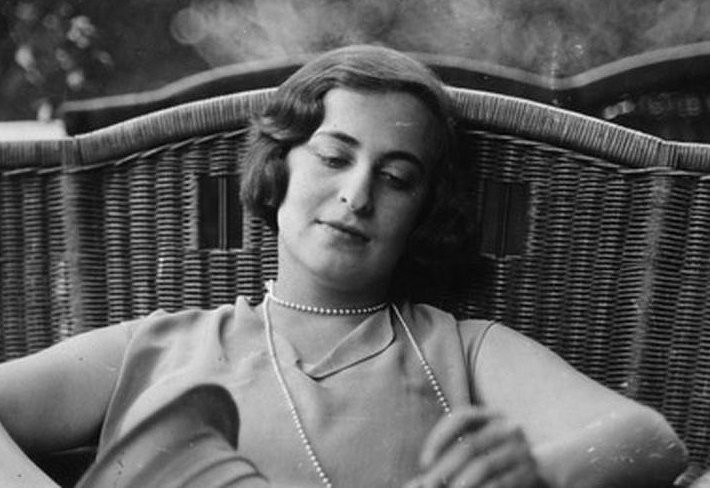
Dangers, Dreams, and Doubles: The Revelations of Silvina Ocampo

Before 2013, finding a copy of anything written by the Argentinian writer Silvina Ocampo in an English translation wasn’t easy. Although her contemporary Jorge Luis Borges wrote admiringly of her writing, Ocampo’s own contributions to the world of fiction weren’t widely recognized in international circles. That’s a shame: whether overtly weird or focusing more on her characters’ tortured, surreal inner lives, Ocampo’s work inhabits a singular space: dense and haunting, and dangerously unpredictable. In 2013, Melville House released a translation of Where There’s Love, There’s Hate as part of their Neversink series of short books. While the book is a compelling, often surreal read, it may not be the best indication of Ocampo’s work as a whole. First and foremost, it’s a collaboration with her husband, Adolfo Bioy Casares; second, it’s a kind of detective-novel pastiche, albeit one that bent and twisted the tropes of the genre in an assortment of memorable ways. It’s an impressive demonstration of the abilities of both writers, but it isn’t necessarily the ideal starting point for either. NYRB Classics has taken steps to rectify this, releasing two books (one collection of stories, and one of poems) earlier this year to provide a good survey of Ocampo’s work.

Ocampo book

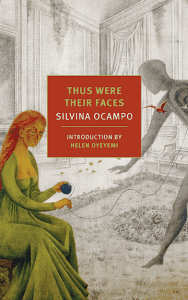
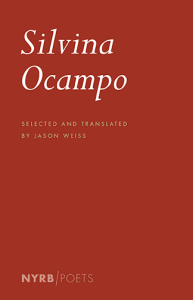
“Like William Blake, Ocampo’s first voice was that of a visual artist; in her writing she retains the will to unveil the immaterial so that we might at least look at it if not touch it,” wrote Helen Oyeyemi (a writer who knows a thing or two about work that eludes easy classification) in her introduction to Thus Were Their Faces, a collection of Ocampo’s short fiction released by NYRB Classics earlier this year. It was released alongside a volume of her poetry translated by Jason Weiss. (Thus Were Their Faces was translated by Daniel Balderston.) Weiss’s introduction to the poetry collection, part of which appeared in Granta, also provides a good overview of Ocampo’s life. He’s also part of an impressive lineage of translators of Ocampo’s poetry into English: William Carlos Williams translated one of her poems in 1958. Weiss began translating Ocampo’s poetry in the 1970s, and hoped to find a publisher a collection of her poems and a collection of her stories, a task at which he was initially unsuccessful. He noted in his introduction to the current poetry collection that “by the late 1970s three editions of her stories were available in Italian and French.” English-language publishers proved harder to convince of Ocampo’s merits as a writer.

When asked about the selection process for the new collection, Weiss described a broad approach. “I figured if it was going to be a book of her selected poems, I should choose some from each of her books, of course,” he wrote in an email. “The criteria then and since was, first, which poems I most responded to and thought I could do some justice to in translating, and second, which poems seemed like there were particularly important to her, in the context of her work and her own history. So, in terms of my own tastes, that included all the epitaph poems, some of the sonnets that treated personal history, emotions, and even classical themes, and some of the animal & metaphysical poems of later books.”

The poetry in the collection is wide-ranging, from the same surreal and dream-like imagery that populates her fiction to more straightforward and evocative passages. Her early poem “Irremissable Memory” has the dedication “for no one,” and veers from the cosmic–”Within me dwells that infinite impenetrable space”–to the everyday. But its closing lines, in Weiss’s translation, are haunting in their terse uncertainty, holding any potential for joy at a distance.

…Perhaps

in that place I could love you still,

passing through barely glimpsed hallways,

among streets stained by time and without travails,

among pale garlands of uncertain joy.

Ocampo poetry

Along with Blake, Ocampo’s writing shares a number of qualities with surrealist painter and author Leonora Carrington. It’s not coincidental that both worked with both visual art and with words. In the work of both, the underlying logic within a given story is malleable, dreams taking on their own reality, mythological conditions suddenly becoming all too tangible. Her 1968 novella The Topless Tower, in particular, moves along the lines of a subconscious logic, from the tangible to the imaginary and back again. Its opening line, in James Womack’s translation, gets to some of the inherent narrative contradictions early, along with images that are both pastoral and slightly off. “A long time ago, or else not so very long ago, I couldn’t say, summer held out its green leaves, its mirrors of sky-blue water, the fruits in the trees.”

Elsewhere in Ocampo’s fiction, borders between categories shift mercilessly; the delineations that many readers come to rely on are rendered ineffective. In “Icera,” the title character seeks out the life of a doll she observes in a store window: “Icera considered the dolls as rivals; she wouldn’t accept them even as presents; she only wanted to occupy their places.” Doubles and shifts in identity play a significant role in her early story “The Imposter,” in which mental and physical maladies in increasingly delirious ways. And one character in the brief “Carl Herst” appears to dissolve into a collection of aphorisms hanging from a wall. It’s memorably evocative stuff; one can see why critic José Teodoro, writing in the National Post, posited her as a literary forebear to writers like Julio Cortázar and César Aira.

The question of Ocampo’s work not receiving its due isn’t quite as cut-and-dried as the familiar “international author is under-appreciated in the United States” narrative leads us to believe. Though that does seem to be the case here as well. Weiss recalled that “one well-known American translator told me by letter, erroneously, in the late ’70s, that Silvina was [her sister] Victoria’s daughter.” Though there was also resistance to her work closer to home. Oyeyemi’s introduction begins with a trip into literary history: in 1979, her work did not receive the National Prize for Literature in Argentina, on the grounds of perceived cruelty in her work.

There’s also a dig at her in Witold Gombrowicz’s Diary: “Sylvina was a ‘poetess,’ and published a volume every so often.” He describes a dinner with Ocampo and Bioy Casares, using it as emblematic of his daily interactions in Argentina. “This is how the supper at the Casareses’s: nowhere. Like all suppers consumed by me with Argentine literature.” It’s certainly an observation that can be taken with many grains of salt: to read Diary is to grapple with the intimate life of a particularly thorny international literary figure. But it’s also a frustrating experience, reading a withering opinion of one cult writer delivered by the other.

Thankfully, Ocampo’s memorably disorienting fiction has aged well–or perhaps, like some of her landscapes, it exists in its own mesmerizingly timeless place.

Weiss commented, “By now, I think she is considered fairly important and rather unique in Argentine literature. In the past decade or so, her collected poems and collected stories have been reissued in two volumes each, plus all the unpublished work that has appeared posthumously, some half a dozen books.” He added that, in recent years, she has become more widely read, and has been the subject of numerous dissertations. “The US, or the anglophone world in general, just got the news last, as usual,” he said. Thankfully, Ocampo’s memorably disorienting fiction has aged well–or perhaps, like some of her landscapes, it exists in its own mesmerizingly timeless place.

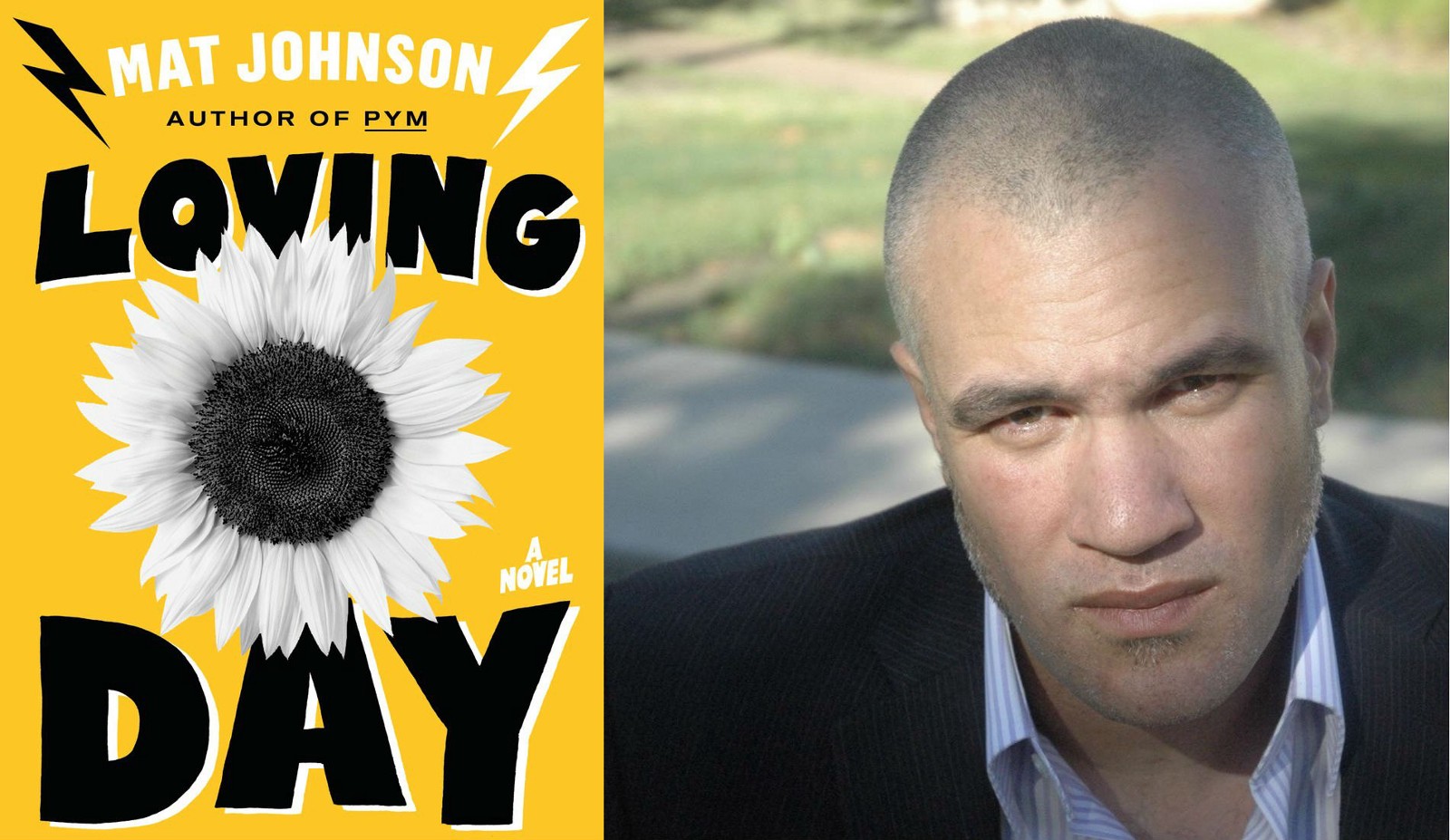
Pitching Chaos, an interview with Mat Johnson, author of Loving Day

This week marks the release of Loving Day, the new novel from Mat Johnson, author of Pym, Drop, Hunting in Harlem, Incognegro, and others. Johnson and I spoke last week on Skype. I caught him in his car, heading home from a school tour, and we continued our chat as he walked across the campus of the University of Houston, where he’s a faculty member in the creative writing program. Johnson has an energetic, incisive way of speaking. He works historical analysis, social observation, literary critique and wicked one-liners into the span of a sentence or two, always with the kind of conversational ease that makes you feel like he’s been mulling things over for a while and you were just the person he was hoping to see. We talked about race and culture in Philadelphia, prioritizing entertainment in literature, fatherhood, the book community on Twitter, and “the idea of being a straight male interacting with the feminine” (yes — sex — but other stuff, too…).

Dwyer Murphy: Over the course of your career, you’ve shifted between novels, graphic novels, comics, and non-fiction. With Loving Day, you’re back to the novel. How do you decide which medium to work with? Does the story dictate the format?

Mat Johnson: Usually it starts with the idea. I would say I’m a novelist first, but if the idea doesn’t fit into a novel, then I look for other ways to tell it. The graphic novel is kind of my way of doing a short story. I don’t usually write short stories, but I’ve found that pieces that are about the length of a story and have a strong visual aspect tend to work really well as graphic novels, so that’s how I’ll tell those particular stories.

DM: So with a Loving Day, you knew from the beginning you had a novel?

MJ: I did. I started with a line: “In the ghetto there is a mansion and it is my father’s house.” I’ve heard people talk about starting with a line and not knowing where it would lead, and I wanted to try that. So I had that line, and I started writing about Germantown, where I grew up. Germantown is this former colonial suburb in North Philly, a country estate that ended up becoming a black working class / middle class liberal neighborhood in the 1960’s, after the white flight. I realized that this neighborhood — with its big European architecture and a predominantly black population — had stuck with me not just because it was my own place, but because it was a representation of my own self. It’s a mixture of African American and European American culture. The first chapter — talking about the house — is pretty much the first thing I wrote. And once I wrote that, I started to realize what the story was about.

DM: It sounds like your first priority is the story, as opposed to, say, the voice. That’s not necessarily the case for a lot of contemporary literary fiction.

MJ: The story is very important to me. I want to entertain. I want to do something more, but I want to entertain, too. That’s one of the reasons I love 19th century literature — Frankenstein, Mark Twain, Henry James, Melville. The best of it entertains and does more. That carried into the 20th century, too, but then somewhere in the 1970s there was a kind of split. It’s funny, if you look at the history of the Pulitzer, before the 1970s, many of the prizewinners were also well read. But then there was this odd shift in the 1970s — a division started growing. Literature wasn’t so interested in entertaining anymore. I see it as a professor, too. I read a lot of manuscripts and books whose primary concern is showing the world that the author is a genius, and there’s no real thought given to entertainment.

If prose is to continue to be vibrant, it has to entertain as well as do other interesting things.

If prose is to continue to be vibrant, it has to entertain as well as do other interesting things. That’s what you see television doing — Mad Men and Breaking Bad and shows like those. The work is brilliant and it makes you think about the world. There are scenes from Breaking Bad that I saw four years ago and I’m still thinking about them now. So what I’m looking at with literature is to reproduce that trend — to have work that’s compelling and interesting and fun, but also something more.

DM: While we’re talking about entertainment, I’ll say that I was struck — reading reviews and reader commentary on your older work — by how surprised people seem to be, finding genuine, intentional humor in literary fiction. We don’t really know how to approach that kind of writing, do we? Americans, I mean. The British have it somewhat figured out — probably lots of other cultures, too, but the British come to mind — they love the stuff.

MJ: We really do have this notion with literature that we’re eating our vegetables. If we enjoy it too much, something must be wrong. You see it with our books and with our readings. Oh my God do you see at the readings. People come and don’t expect to be entertained. They don’t expect to laugh. That’s not the goal. And it’s not the writers’ goal, either. Writers are there to show people what geniuses they are. But that’s a larger American art thing. The point is not the work itself. The point is the artist. The point of Warhol’s Campbell’s Soup cans is as much Warhol as the paintings. I think it’s fucking disastrous. If people don’t enjoy themselves, they’re not gonna keeping coming out.

DM: You started telling me a little about Germantown and what it was like when you were growing up. What’s it like now? It’s different, I assume.

It forced me into this dichotomy of blackness and whiteness that I’ve been rejecting ever since.

MJ: The neighborhood in this book, to be honest, is the place of my imagination. It’s an older version. There was diversity in Philly, but not real diversity, the kind you have in a place like Houston, where I live now, where there were all these immigrant groups have come in waves. In Philly, it was black and white, for the most part. There were small Puerto Rican and Filipino populations, but otherwise it was black and white. That affected the way I saw the world. It forced me into this dichotomy of blackness and whiteness that I’ve been rejecting ever since. In some ways it was a more extreme version of what happened in the country when I was growing up.

But the truth is, the Germantown that exists now is a bit different. I tried to hit on that in the book through the narrator’s daughter, who tells her father this is not the neighborhood he thinks. His version is frozen in 1993. Now, Germantown is starting to gentrify like a lot of places. It’s actually a really great neighborhood. My wife and I thought about moving back there for a while, until we settled in Houston.

DM: Your narrator starts the book with this dichotomy — black and white — and something akin to the one-drop rule — if you have a black parent or grandparent or ancestor, you’re black. I’m wondering, how does that worldview get imposed? Does it come from both ends of the community?

MJ: That was the way most people in America looked at blackness up until the late 1980’s. Philly was more extreme. It had this very low immigration rate, so the historic population is what remained. Actually the book I’m working on now is set in the 1800s and, ethnically it’s pretty much the same. So that was the understanding — if you had a black parent, you were black. It didn’t matter how light skinned you were. You were black. One thing to remember is that the African-American community is not ethnically monolithic. The average African-American has 25% European heritage. So it’s a mixed race community. Historically, when there was a child born between a white person and a black person, the child was automatically African-American, because the child fit into that larger mixed race community. (Often, those children were born into slavery, and there was also a denial about the father being white, which supported that same cultural cutoff.) So that system continued — you’re black or you’re white, even though racial purity is, of course, a false notion. We’re all mixed at some point.

DM: Loving v. Virginia (the Supreme Court’s decision striking down anti-miscegenation laws, referenced in the title of your book) didn’t come until 1967, shortly before you were born. Growing up, were you aware of the history of discrimination — legal and cultural — against those marriages?

MJ: Pennsylvania hadn’t had those laws in a long time, but I was aware that there were people who were upset about my parents being married. I was aware that we went out and got funny looks. And it was for different reasons. It wasn’t a blanket reaction against interracial marriages. People in the black community looked at my Mom and thought she was rejecting blackness and thought that’s why she had a white husband. People in the white community looked at my dad like he was crazy or a mad liberal trying to prove a point. So it was more of a cultural thing.

When I was a kid, I didn’t hear the word biracial. It wasn’t until I went to college in 1990 that biracial identity hit the mainstream. It started with the census and built from there. And the push was so dramatic and so overnight, that younger people now don’t even remember the time before. It’ll be the same way with gay marriage. In ten years, kids will think it was absurd that there was a time when gay people couldn’t be married.

DM: Is that how you think of yourself now? Biracial?

The thing is, the words we use to talk about race are not really sufficient.

MJ: The thing is, the words we use to talk about race are not really sufficient. We have black as a legal term defining your race, and then black as a reference to your ethnicity. My parents divorced when I was about four. I grew up with my black mother in a black neighborhood. I had access to European-American identity every other weekend through my father, but I grew up with my Mom in my neighborhood, so my normative place was an African-American identity. The conflict came up because I don’t look African-American. I have a ton of mixed friends who had similar experience, where they grew up in the black community, but they look black, so being mixed isn’t an issue at all. They don’t even like to talk about it, because it takes away from their blackness. For me, the conflict was in how I looked. That’s often the issue — how you identify and how you’re perceived by the world. I honestly wouldn’t be bothering about this except that it’s something that comes up for me all the time.

DM: I’ve read about you using more provocative terms — mulatto, octaroon — to describe yourself.

MJ: Octaroon was a joke. Mulatto wasn’t. I’ve got a piece coming out for Buzzfeed about the word mulatto. I think that’s a good word to start using more often. People don’t like the word, but they can’t point to why, or they think it’s a reference to a mule. But the word is actually an Arabic word referencing people of mixed heritage. It predates the word for mule. Historically, it’s the word we used for people of mixed race in this country. And the thing about words like mixed and biracial is that they’re completely vague. They don’t make much sense. Most black and white people who consider themselves biracial, their race is listed legally and socially as black. Plus bi- doesn’t work because there are other races mixed in there, too. Part of the thing that worries me about the biracial movement is that it can be ahistoric. And as I said the vast majority of African-Americans are of mixed racial descent. So by the definitions they’re using, every African-American is pretty much biracial. It would be a miracle if they did a test and there weren’t some European poking in. In my view, mulatto acknowledges that there’s a larger history. And for me, the black and white mixed experience is part of my African-American experience. I still consider myself African-American, just mixed African-American. It’s like, if you have a Dad whose Irish, you’d be Irish, and nobody would debate that just because your Mom was Italian. But for African-Americans, we have these rigid ways of looking at the issue. We’ve inherited these preconceived notions.

DM: When your narrator, Warren, goes to work at a charter school — the mélange center for multiracial life — he learns about different mixed race communities throughout American history. Is that history something you’ve been interested in researching?

MJ: It was actually my wife who started researching them. In these enclaves, kids grew up knowing their fathers and identifying with both their fathers’ and their mothers’ cultures. And because of that, they came up with different identities. Throughout the Americas, you have people who are a mixture of African, European and Native-American heritage. The difference biologically is just the percentage. That’s from here down to Brazil. But the way people identify in these places is cultural. You have people who identify as black here in the States, and they could go to Jamaica and be considered white. I remember, during my mandatory Bob Marley phase, hearing Marley talk about Michael Manley as the white politician, and I saw a picture of Manley and I thought, Oh my God, he’s black. It was the same thing when I lived in West Africa. In Ghana, a cab driver told me they had a white president, and he meant JJ Rawlings. Over there, the norm is black, and any deviation becomes white. Over here, it’s the opposite — the norm is white, and any deviation is black. That’s a complicated issue. As soon as I put that stuff into my book, I thought, there goes my overseas sales — these identities are not going to make any sense outside the US.

DM: I know you’re joking, at least in part, but do you feel like publishers have trouble figuring out how to market your books, because of these identity issues? The book industry still relies on a lot on old categories — especially the identity of the author — and I wonder if that gives you a hard time.

MJ: First let me say I’m really happy somebody is publishing me. I don’t want to bite the hand that feeds me. And my editor Chris Jackson is one of the best in publishing and one of the few black editors in publishing. But it’s weird, when I did my second book, Hunting in Harlem, it was a satire with an oddball humor and some intense moments and absurdity, and the book did nothing. Then when Pym came out, it did well, and all the reviews acted like that was a new thing, and I was thinking I’ve been out here selling these same tacos for years, and nobody took a bite. But part of that is what we were talking about before — humor in general is undervalued. One thing that surprised me is that I got a lot of Vonnegut comparisons. I hadn’t actually read Vonnegut, so I went and read everything he did. My inspiration was Joseph Heller and Catch-22. And if you look at Vonnegut and Heller, they didn’t get a lot of accolades. People care about them long term, but this isn’t a country that gets lots of satire. I mean, Pym was on a bunch of best-of lists at the end of the year, but two or three felt the need to mention ‘books like this don’t usually get named to these lists.’

I know what I do: I throw knuckle balls. I’m not a fastball pitcher, I’m not a finesse pitcher. I know how to throw chaos in a way that has a higher than normal percentage of landing.

My work just doesn’t fit in that well in the literary discussion. I think my strength as a writer is also my weakness. The work is different than a lot of stuff that’s being done. I don’t mean that as a humblebrag. I’m off on my own tangent. Every time I try to write a non-offensive bestseller — because seriously, I could use some of that money — I just can’t do it. I start a project and it always gets weird. The book wants to go in its own direction, and if I don’t follow, the book will suck. So I follow it — I write about crackheads who are ghosts and I know I can say goodbye to Oprah’s book club. It’s never a conscious decision. It’s so hard to write a book that’s just basically good, not even great, just good enough. I just can’t do it if I’m tying one arm behind my back. I’m not good enough to be mediocre. I’m good enough to roll the dice. My projects have been hit-or-miss. I put myself out there, in an uncomfortable position on the page, then I have a panic attack for three or four years trying to pull it off, and I just really hope the book doesn’t suck. (Pym took about nine years to write. Loving Day took eight, believe it or not.) I know what I do: I throw knuckle balls. I’m not a fastball pitcher, I’m not a finesse pitcher. I know how to throw chaos in a way that has a higher than normal percentage of landing.

DM: You were in on Twitter pretty early, at least for the book community. And you’ve been pretty active over the years. It seems like Twitter has helped your career, and I was wondering if that was luck or design or something else.

MJ: I was kind of stuck between the old publishing promotion model and the new. Honestly, Twitter worked way better for me than anything had before. I’d never gotten big ad budgets or a big publisher push, so Twitter was an interesting way to work around the publishing industry. I found so many people there. That was completely unexpected. I got on Twitter just to goof off. It was 2008, and a few of my friends were on, and it was just an intimate little cocktail party. Later it turned into something dramatically different. I was able to kind of rise with the tide, which helped my book — Pym. It was a strange experience: Pym came out and people were suddenly paying attention. I was a little freaked out. I was used to my books failing.

DM: Are you still feeling positive about Twitter? Any personal backlash?

MJ: I can’t stand it right now. All these social networks ultimately become doomed by the fact that they serve humanity. Everything you hate about people, that’s what happens on the site. The same thing happened with Facebook. In happened in part because Twitter just got so big, and in part because of tweaks to the site, like adding the retweet function. It’s become a broadcast yelling machine. It seems like there’s a competition to see who can be the most righteous. I’m just not enjoying it much.

DM: Fatherhood seems like a relatively new subject for you, at least as a focus. I imagine the racial themes will get more attention with this book, but it’s also a coming-of-age story that looks at relationships between fathers and kids.

MJ: It’s funny. The racial stuff in the end becomes just the setting. Ultimately it’s a story about the transition from being a guy to being a man, and about learning to become a father. That fatherhood relationship is really at the center of the book.

You still see a lot of old school macho bullshit in contemporary literary fiction.

I also wanted to deal with the idea of being a straight male interacting with the feminine. That’s been done, but honestly I don’t like the way it’s done. You still see a lot of old school macho bullshit in contemporary literary fiction. You see it perpetrated by people I know in person are complete fucking wimps. They’re compensating for their minor castration by putting this male bravado on the page.

DM: In terms of interacting with the feminine as a straight male, this novel also delves into sex. I’m not sure if that’s a departure, but it seems notable. American literary fiction tends to steer clear of sex these days.

MJ: Sex is one of the scariest things to write about. It’s so easy to have it fall into the pornographic or into the absurd. The safest method is to make sex seem absurd. That lets you and the reader off the hook. But most sex is not absurd. And it’s not pornographic. Most is in the middle — there’s absurdity and difficulty and passion. That’s really hard to nail. I did some in Loving Day, and I’d like to explore it more, because it’s such a central part of our lives. It’s interesting — I was looking at that worst sex award the other day. People were picking on Franzen. But that shit is hard. Part of it is the insanely problematic history of hetero male existence and sexual dominance and rape and what we now call rape culture. It’s just got all that baggage. But part of our artistic job is to figure that stuff out, to add nuance and understanding. That’s what I’m trying to do. I mean, I had sex once, and it was fantastic, so I figure I’ll just write about that for a while and see what happens.

Telegraphing Coherence: Selected Tweets by Mira Gonzalez and Tao Lin

by Andrea Longini

Tao Lin and Mira Gonzalez have introduced a new genre to the literary canon in Selected Tweets, their collection of Twitter output published in a tête-bêche volume for paperback consumption. The curious binding practice — where a book features two separate covers and must be flipped over halfway through — dates back to at least 19th century, yet it is not the only characteristic of the double-billed volume that hearkens back decades. In using Twitter, a contemporary medium for expression limited to 140 characters at a time, Lin and Gonzalez leverage technology to transmit modern-day proverbs on the lasting subjects of precision versus coherence, meaning, and despair.

Selected Tweets announces it will not be a collection of tweets in the conventional sense by purposefully being devoid of @-headed shout-outs and retweets; likewise, nearly every trace of an ongoing conversation has been scraped away. The result is a stripped-down chronological window into thought-making and recording that takes place over a combined ten years under nine different Twitter handles owned by the authors. Although Twitter in name implies a kind of chatter or “twittering,” Tao Lin and Mira Gonzalez have elevated the medium into an art form with the power to transmit authentic observations. Which is not to say the collection doesn’t have its thorns.

Tao Lin grapples with a lack of meaning so pronounced it visits him in the form of depression and violent urges: “Feel insanely, almost completely nonhumorously depressed I think”; “imagined myself strangling someone i’ve never met while loudly asking ‘what is wrong with me?’ really wanting to know.”For her part, Gonzalez struggles with profound rolls and pitches throughout the timespan covered by the book, which is recorded chronologically: “you’re only as depressed as you feel” and “’Living’ is just the longest and most painful form of suicide.” It is also important to note that at the inception of her Twitter usage, dated in 2010, Gonzalez was 17 years old. Gonzalez emerges as a distinct voice that touches without restraint on subjects such as menstruation, children, motherhood, and self-loathing (with those topics occasionally interspersed in the same tweet, as in: “tonights the night (for a semi-unwanted pregnancy).” Her dark humor, killer honesty, and refusal to censor herself result in brazen aphorisms that are to be taken with a grain of salt: “What I lack in skill I make up for in denial.”

The abbreviated format and sentiment have antecedents in 20th century art; most strikingly, they bring to mind an artist who also telegraphed his own search for coherence through brief and irregular spurts in the passage of time. From 1970 to2000, the artist On Kawara sent telegrams to his curator, art collectors, and other recipients. They read: I AM NOT GOING TO COMMIT SUICIDE DON’T WORRY, I AM NOT GOING TO COMMIT SUICIDE WORRY, and I AM STILL ALIVE. Jeffrey Weiss, in On Kawara — Silence, the 2015 Guggenheim exhibition catalog, notes, “Upon the receipt of art-world requests and inquiries, Kawara responded with only a telegram reading I AM STILL ALIVE, a terse statement that conveyed nothing more than the persistent fact of his existence.” Kawara’s proto-Twitter usage of the telegram as a simplistic expression of existence and existentialism was novel and innovative, as is Lin’s and Gonzalez’s use of Twitter in their work.

Lin’s and Gonzalez’s real world narratives on Twitter intersect with each other on the matter of bleakness, a field in which they both frolic — Lin: “If I teach again I’m renaming my class ‘bleak literature.’” Gonzalez: “The unbearable bleakness of being.” Other than brief incidents in which Lin loses his computer causing Gonzales to expresses sympathy towards him and in which Lin questions whether or not to extort Gonzalez “in her time of need,” the only place the two narratives converge is in a back and forth (and probably what was a large conversation, in fact) of absurdly false, invented “factoids” about the Dalai Lama.

Lin’s willingness to experiment with Twitter as a medium for deeper reflection allows him to chronicle over time, in short bursts, his hunger: for occasional carbs, for organic food, for a highly curated selection of media, and, mostly importantly, to parse out and make sense of his life: “feel like i’m vaguely on some kind of mission to spread a messageless form of information that i feel disinterested in editing to coherence,” he intones. He questions: “distracted from doing anything because i keep thinking ‘why…am i here…’ in reference to both [the universe] and [specific location].”

Gonzalez and Lin are absorbed in an ongoing process of reflection and recording, a format which Twitter excels at displaying in the right hands. The medium’s brevity would seemingly call for spontaneity, but this is not the case in Selected Tweets. Both writers reference their drafting and editing processes, revealing a deep-seated loyalty to the maniacal precision of recordkeeping. This pursuit is in danger of swinging like a pendulum away from coherence, however. Lin notes in a kind of epilogue, “I just want to record my life as it happens as closely as it’s happening right now, but not so close that it becomes incoherent, or too incoherent, for readers.” What does the microscope focus on? The organic, ongoing process of life, for better or worse, as Lin and Gonzalez transmit. Life marches inexorably onwards, only onwards, much like a Twitter feed only goes in one direction. Perhaps the briefest summary of this ethos is best encapsulated in a tweet:

“Reminder to self: view life like it’s an already-written book that I’m allowed to read once without stopping from beginning to end.” –Tao Lin

To preorder this book, click here to be redirected to the publisher’s website.

ESSAY: Mandatory Date Night by Molly Laich

It was October in Seattle and I had a date in the university district with a man from the internet. He was a writer and we agreed to meet in a bar to “talk about writing” and more to the point, see if we wanted to fuck. For me, though, it was either that or sleep in my car, so I’d already made up my mind.

He said he’d text me the name of the bar we were meeting at “around 9,” so I killed the time by driving around cramped college streets, smoking bowl after bowl of brown, dry marijuana I’d bought from a kid in front of McDonalds.

Just when the drugs had finally done their job and I was beginning to feel okay, even thrilled about an evening spent curled up alone in the back seat of my car, Jared finally came through with the text. He said, “Sorry, I got distracted drinking beers with my neighbor,” and I felt glad, because a drunk person wouldn’t have the wits to see me coming.

He walked up and I knew it was him by the DIY haircut and lost expression. “Do you want to go inside?” I wondered, but he wanted to buy a cigarette from one of the many sidewalk bums first, all of whom he seemed to know by name. We stood together unhappily outside the bar for several minutes, and he was so sullen that I wondered why he had wanted to go out with me in the first place.

Finally he said, “Sorry if I’m being weird. I got drunk.”

He was mean and had showed up to our first date smashed. “It’s cool,” I said. “I smoked the rest of my weed while I was waiting for you.”

“Thanks for not smoking it with me,” he said. Sarcastically.

It was a date, so I did that thing where you get the fella talking until he falls in love with himself and maybe throws you a bone in the glow. He’d moved here from somewhere in the Midwest ten years ago and never wanted to go back. He was all “Fuck paying for the bus,” and “Fuck going to college when you can learn everything yourself.”

“Your apartment,” I asked him. “Is it close by?”

“I’m working on a chapbook,” he said. He told me all the writers in Seattle were bullshit. He loved Charles Bukowski and the feeling of dirt under his fingernails. He didn’t ask what I liked to write about and I didn’t want to tell him. I told good jokes he didn’t laugh at. Once he looked at me hard and said, “Was that supposed to be funny?”

I turned my stool around and touched my knee against his. “My life is sort of complicated right now,” I said.

Jared picked up my drink and spit into it, set the glass down and then grinned at me. “You see that?” the action seemed to say. “This is what I think of women.”

In a flash, I realized what was happening. He was the belligerent asshole in my short story and I was the disappointing woman in his.

“I was going to finish that,” I said.

He said, “Let’s go back to my place. I have whiskey, we can drink for free.”

It was dark and raining. The streets were nothing but lights and wet blocks, but I felt good. I felt like my life was an adventure and here I was living it. He told me his apartment was only $400 a month and I said without thinking, “Give me the name of your landlord, I’m homeless.”

He took me up to the fourth floor and opened the door into a room the size of a utility closet with nothing inside but a typewriter, a pile of clothes and the half gone bottle of whiskey.

“You’re too drunk to drive home now,” he said. This was the part of his story where he tricked the girl into staying over. I imagined him so pleased with himself while he banged out the scene on his typewriter. He pulled me down onto the carpet and stuck his tongue in my mouth. We drank the whiskey. He said, “Let’s scrape your bowl for resin and go sit on the roof and smoke it.” We climbed onto the roof from his window. It was cold and wet. He lifted up my dress, pulled my underwear down and licked between my legs. It was clumsy and erotic. He seemed sweet for the first time and we fell asleep together on the hard floor with no penetration.

I woke up at dawn with a stiff back and didn’t recognize the boy lying next to me. He looked younger and crazier in the light of day. I saw his beer belly and it made me feel good.

The truth is that I had a boyfriend named Daniel, but we’d had a fight and I didn’t know if we were still together. He’d texted a wilted apology in the night — enough of one anyway that I decided it would be okay to come in through the broken side door early that morning and wait for him in his apartment.

Daniel was an older, shorter man with a good job and a nice wardrobe he hung meticulously on hangers: all of it gray, gray, gray. He loved himself a lot and thought other people were really nice. He wouldn’t let me move in and he didn’t care where I slept at night. There was so much not to like, but to be without him, I don’t know. I felt like the world might end.

I climbed into his bed with nothing but my dress on, my bra and underwear still balled up in my purse, and I slept under that sweet Egyptian cotton until he turned on the light and found me. We made up, with the understanding that I would still find my own place and not move in with him the way I’d been angling to.

“Blah blah blah,” he said. “We’ve only been dating for two months, after all.” Daniel crept his hand under my whore dress and slipped his cock inside of me before I had a chance to take a shower and wash the Jared off.

The next day I took the bus back to the U. District to look for apartments, but then I looked out the bus’s window and saw Jared standing on a street corner. I cursed my heart’s sick psychic gift for honing in on men who are better left lost. It didn’t stop me from getting off the bus and running after him.

“Oh, it’s you,” he said. He really was very mean.

“I texted you for your landlord’s number. You didn’t answer back.”

“Right,” he said. Then he thought of something that seemed to make him really happy. “Look at this,” he said, and pulled away his sweater at the neck to reveal a series of red welts along his collarbone. They looked like nerves painted on the skin with red dots. The welts made my heart beat fast. He said, “My building has bedbugs.” He showed me more bites on his belly and under his ribcage. He seemed super proud of them, and I couldn’t help but agree that it was a rich detail for our respective stories.

“You’re probably going to want to wash everything that came into contact with my place in scalding hot water,” he said. “Twice.”

I knew it was good advice but I didn’t want to do it. Daniel and I slept in the dirty sheets all week. I felt their tiny legs crawling up and down my skin, but when I touched them they were gone. A week later, I moved into a shitty basement studio where I slept next to the refrigerator on a mattress on the floor. There was no place for anything. My stuff piled on top of me like a bad dream; it was an impossible place to be happy. Not long after that, Daniel said my sadness weighed him down and we broke up for good.

The thing about bedbugs is, they don’t hibernate in pillows or burrow under your skin in waiting. They don’t do your bidding and they don’t mean anything. I had to face the facts: If the bugs hadn’t gotten Daniel yet, they never would.

Sunday Sundries: Literary Links from Around the Web (May 24th)

Looking for some Sunday reading? Here are some literary links from around the web that you might have missed:

The Millions takes a look at “sheep lit” (books about sheep and shepherds)

Planning a literary road trip? Use this Google map of famous novels

Vulture wonders when books got so freaking enormous

Alexander Chee discusses the problems with wunderkinds and why it isn’t bad to be a late bloomer

Michael Moorcock calls The Vorrh “one of the most original works of visionary fiction since Mervyn Peake” (see our interview with The Vorrh author B. Catling here)

Has Mulan Kundera’s reputation been irreparably damaged?

VICE talks to master crime author James Ellroy “about the bygone days of the LAPD”

A comparison of the bookshelves of Bill Gates and Osama Bin Laden… for some reason

Need a quick read? 24 books you can read in under an hour each

Lastly, Flavorwire has a great list of “22 Thrilling, Imaginative, and Twisted Genre Books By Women”

INFOGRAPHIC: 24 Books You Can Read In Under An Hour

You think you don’t have time to read? Think again. There are plenty of awesome stories you can read in the time it takes to wait for the doctor or take the subway to work. This infographic, created by Ebook Friendly, lists 24 that you could literally read in 24 hours. Admittedly, many of these are closer to short stories than novellas or novels, but they are well worth your time. We can especially recommend Jim Shepard’s “Safety Tips for Living Alone” which was originally published here, in Electric Literature’s Recommended Reading!

And for more great short book recommendations, check out our list of 17 amazing books you can read in a sitting.

24 books to read in under an hour (infographic) | Ebook Friendly

Via Ebook Friendly

TED WILSON REVIEWS THE WORLD: MARRIAGE

★★★★☆

Hello, and welcome to my week-by-week review of everything in the world. Today I am reviewing marriage.

Marriage is defined as when two people agree they love each other so much that they want to live in a house together, and probably don’t want to have sex with anyone else, at least not for a while. Some people practice what is called an open marriage, where they do get to have sex with other people. This arrangement is typically for people who have so much love to give, it can’t be contained to just one person. Examples include Bill Murray, Bill Cosby, Whoopi Goldberg, Princess Diana, and my neighbor Doug Vogelsang.

I only ever had a regular amount of love, so when I was married I practiced a more traditional marriage; the kind where we spent so much time with each other that our personalities began to bleed together and I couldn’t tell where I ended and where my wife began. She would finish my sentences before I even started speaking. A plate of food would arrive in front of me without me even knowing I was hungry. It was like there were two of me, but one was much more attentive to my needs than the other. It made kissing my wife kind of weird because it was like kissing myself. I was a pretty good kisser, it turns out.

Of course any marriage has good and bad times. In an ideal scenario they balance each other out, but sometimes the bad times are so bad that the couple needs to stop being married. When things are really good, nothing changes. The couple remains married and can’t get more married than before. Not unless before all the couple had was a Wicca ceremony.

Fortunately my wife and I only separated because she died, and they have laws against being married to a dead person. I spent a lot of my marriage secretly wondering who would go first. On the one hand, I hoped it was me, so I wouldn’t have to feel the pain of losing her. But at the same time, I wanted to spare her the pain of losing me by letting her go first. That’s the advantage of divorce — it makes marriage more like a TV show with a finite ending instead of getting cancelled without warning.

All in all, if you find the right partner, marriage is pretty great. Especially if that person is willing to clean your ears for you.

BEST FEATURE: Having someone to pluck the hairs from parts of your body you can’t reach.
WORST FEATURE: Growing so close that you’re willing to fight over things you don’t even care about.

Please join me next week when I’ll be reviewing Mad Max.