Where We Must Be

“Where We Must Be”
by Laura van den Berg

Some people dream of being chased by Bigfoot. I found it hard to believe at first, but it’s true. I was driving back from Los Angeles in late August, after a summer of waiting tables and failed casting calls, when I saw a huge wooden arrow that pointed down a dirt road, “actors wanted” painted across it in white letters. I was in Northern California and still a long way from Washington — which wasn’t really home, just where I had come from. I followed the sign down the road and parked in front of a silver Airstream trailer. It was dark inside and I felt the breeze of a fan. The fat man behind the desk said he’d never hired a woman before. And then he went on to describe exactly what happens at the Bigfoot Recreation Park. People come here to have an encounter with Bigfoot. Most of their customers have been wanting this moment for years. I would have to lumber and roar with convincing masculinity. I can do that, I said, no problem. And I proved it in my audition. After putting on the costume and staggering around the trailer for a few minutes, bellowing and shaking my arms, I stopped and removed the Bigfoot mask. The fat man was smiling. He said I would always be paid in cash.

Today I’m going after a woman from Chicago. She’s small and sharp-shouldered, dressed in khaki slacks and a pink sweatshirt, her auburn hair held back with a tortoise-shell clip. I’d be willing to bet no one knows she’s here. For a brief time, this woman will be living in another world, where all that matters is escaping Bigfoot. People say the park is great for realigning their priorities, for reminding them that survival is an active choice. I’m watching her from behind a dense cluster of bushes. The fat man has informed me that she wants to be ambushed. This isn’t surprising. Most people crave the shock.

My breath is warm inside the costume. The rubber has a faintly sweet smell. I like to stroke my arms and listen to the swishing sound of the fake fur. The mask has eyeholes, but blocks my peripheral vision. I can only see straight ahead. The fat man says this is an unexpected benefit of not having more advanced masks. According to him, Bigfoot is a primitive creature, not wily like extraterrestrials or the Loch Ness Monster, and only responds to what’s directly in front of him. Two other people work at the park, Jeffrey and Mack, but our shifts never overlap. The fat man thinks it’s important for us not to see our counterparts in person, to believe we are the only Bigfoot.

I wait for the woman to relax, watching for the instant when she begins to think: maybe there won’t be a monster after all. I can always tell when this thought arrives. First their posture goes soft. Then their expression changes from confused to relieved to disappointed. More than anything, the ambush is about waiting the customer out. I struggle to stay in character during these quiet moments; it’s tempting to consider my own life and worries, but when the time comes to attack, it will only be believable if I’ve been living with Bigfoot’s loneliness and desires for at least an hour.

The woman yawns and rubs her face. She bends over and scratches her knee. She’s stopped looking around the forest. Her expectations are changing. She checks her watch. I start counting backwards from ten. When I reach zero, I pound into the clearing and release the first roar: a piercing animal sound still foreign to my ears.
Jimmy and I are sprawled out in his backyard, staring through the branches of a pear tree. Earlier I found him sitting on the front porch, trying to stop a nosebleed. I told him to tilt his head back and then pressed the tissue against his nostrils and watched the white bloom into crimson. It’s not love. Or at least not what I thought love would feel like. It hurts to be near him and it hurts to be away.

“What do you dream of?” I ask.

“Of a time when the world was nothing but cool, blue water.”

I spread my legs and arms and imagine floating in an enormous pool. Jimmy lives across the street from the one-bedroom bungalow I’ve been renting since early September, a long structure with low ceilings, the paint a chipped turquoise. When I first moved into the neighborhood, he dropped by and offered to give me a hand. I told him I didn’t really have anything to unpack, but invited him inside anyway. He grew up in Oregon and drifted over to California after high school and took a job as a postman. He was willowy and pale, dark hair and electric blue eyes. He didn’t look like anyone else I knew. I pulled a bottle of Jim Beam out of my suitcase and he ended up staying the night.

He rolls toward me, leaving a silhouette of flattened grass. “What about you?”

“I dream of a room with empty white walls,” I say. “Someplace quiet and clean.”

He tickles my nose with a blade of grass. I laugh and try to snatch it from his hand, but he drops the grass and returns to lying on his back. He has a slightly crooked nose and long eyelashes.

A hawk with white-tipped wings crosses the sky; I wonder where the bird is headed. It’s mid-October. The weather is cool and breezy. “I wish we could keep winter from coming,” I tell him.

“Yeah,” he says. “It’s a real shame.”

Jimmy told me he was sick the morning after we met. We were sitting on the floor of my living room, drinking water to ease the hangover. I raised my glass and pointed at the grit pooled in the bottom. He shrugged and said the water has always looked that way. And then he told me about the cold that lasted for three months and the clicking sound of the X-ray machine and the spot on his lungs. When I asked if he had help, he said he’d lost touch with his friends in Oregon and hadn’t made any new ones in the Postal Service. His father was dead and his mother had re-married a carpet salesman that drank too much and smoked Dunhills, and moved east a few years back. His mother tried to arrange a nurse once Jimmy’s outcome became definite, but he refused, saying he didn’t want a stranger in the house. He stopped delivering mail months ago and was collecting disability checks. He told me all of this and then said he’d understand if I minded and we could go back to just being neighbors. But I told him I didn’t mind at all. When I was young, my mother worked in a hospice center, although I didn’t mention that to Jimmy. Most of the people who worked at the center got depressed from being close to so much death, but it never seemed to bother her. Sometimes, out of nowhere, I remember the scent of rubbing alcohol and ointment on her hands, a strong sage smell that made my skin itch.

“How was work?” he asks.

“Not bad.” I stretch my legs and bump against a browning pear. At the end of the summer, the branches were heavy with fruit. We picked as many as we could and made huge bowls of fruit salad, but eventually the pears began to rot and fall onto the ground. “I gave a woman from Chicago a good scare.”

“You can practice your roar today if you want,” he says. “Since we’re already outside.”

“I can only do it when I’m in costume.” I kick the pear and listen to it roll through the grass. “It’s impossible to get into character if I’m not wearing it.”

He moves closer and smushes his face into my neck. “You would have made a wonderful actress,” he mumbles into my skin.

He often asks about my months in Los Angeles. I tell him how difficult it was to make enough money, how alien I felt carrying trays through a chic bistro that boasted a fifteen-page wine list and thirty dollar desserts. And when he wants to know about the acting, I tell him the casting directors said I wasn’t talented enough. I don’t tell him how they often praised my poise and personality, but in the end all said the same thing: you just aren’t what we’re looking for. I don’t tell him this felt worse than having them say I wasn’t pretty or gifted, because it gave me a dangerous amount of hope.

I touch the back of Jimmy’s head. His dark hair feels damp. In my mind, I list the things I need to help him with over the weekend: wash the sheets, mop the floors, gather all the rotten pears. Just when I think he has gone to sleep, he looks up and asks me to stay with him tonight. I tell him that I will. He lowers his head and we both close our eyes. The late afternoon sun burns against us.
I wake to the boom of a loudspeaker. We are running tests. Please don’t be alarmed if your water is rusty. I glance out the window and see a truck from the water company inching down the street. The water has never looked right here. People complain and the company comes out for an inspection, but it never seems to get any better.

Jimmy is still asleep, one spindly arm draped above his head. I don’t wake him before I go, even though I know he’d like me to. I want to be alone now, although as soon as I’m on my own, I’ll only want to be back with him. I leave a glass of murky water and his pills on the bedside table. He doesn’t stir when I kiss the side of his face and whisper a goodbye.

I walk across the street to my house, where I undress and take a shower. The water is a cloudy red. The color makes me uneasy and I get out before rinsing all the shampoo from my hair. I wrap a towel around my body and stand at the mirror above the sink. My hair is light without really being blond and the dry climate has made the skin on my knees and elbows rough. I have an hour before work, although I wish I could go in early. I’m starting to realize I can’t stand to be anywhere, except stomping through the forest in my Bigfoot costume. That’s the reason I always wanted to be an actress: when I’m in character, everything real about my life blacks out.

In my living room, which is still more or less unfurnished, I do lunges and Pilates in preparation for my role. It’s essential my muscles stay long and supple, so I can skulk with persuasive simianess. The little furniture I do have came from the Salvation Army across town and since I spend most of my time with Jimmy, I haven’t had the incentive to acquire more than the necessities. The place could be nice, I sometimes think, walking through the sparsely decorated rooms and observing the patterns the sunlight makes on the wood floors, abstract and pointed shapes that remind me of origami.

The phone rings and it’s Jimmy. He wants me to come over for breakfast. I tell him I’m late for work, which is about thirty minutes away from being true.

“And I have to finish rehearsing,” I add.

“I thought you just do stretching exercises.” The connection is bad and his voice pops with static.

“It’s more complicated than that,” I reply. “And any actor will tell you that it pays to do your homework.”

He relents and makes me promise to come over after work. When I ask what he has planned for today, he says he’s going through the jazz records in his closet.

“There’s a guy from high school I’d like to mail some of them to.”

“Don’t you want to talk to him or try to visit?” I ask. “If you’ve already gone to the trouble of getting his address.”

“No,” he says. “I really do not.”

I walk over to the window and look across the street. Jimmy is standing in his living room window, waving and holding the phone against his ear. He’s still only wearing his boxers, and through the glass his figure is pale and wavy.

“I was wondering how long it was going to take you,” he says.

“Doesn’t it feel weird to see the person you’re talking to?” I ask. “The whole point of the phone is long distance communication.”

“Talking to you isn’t the same when I can’t see your face,” he says. “It’s impossible to tell what you’re thinking.”

“Do I give away that much in person?”

“More than you know.” He presses his face against the pane, so his features look even more sallow and distorted. I giggle into the phone and stick out my tongue.

“Okay,” I tell him. “Now I’m really going to be late for work.”

“All right.” He pulls away from the window. “Go if you must.”

After we hang up, we stand at our windows for a little longer. His hair is disheveled and sticking up in the back like dark straw. He gives me one last wave, then disappears into the shadows of the house. I wait to see if he’ll come back, but the sun has shifted and the glare now blocks my view. I imagine him watching me from another part of the house, through some secret window. I return his wave to let him know I’m still here.
The fat man says my client wants to kill Bigfoot. The customer is a man from Wisconsin who came equipped with his own paintball gun. He tells me not to ambush, but to let the man sneak up on me and then moan and collapse after he fires.

“I didn’t know killing Bigfoot was part of the deal,” I tell him.

As always, the fat man is sitting behind his desk. He leans back in his chair and picks something out of his teeth with the corner of a matchbook. “It’s a recreation park,” he says. “They get to do whatever they want.”

“How do people even find this place?”

“I take out ads in magazines for Bigfoot enthusiasts,” he says. “It was important to open the park in this part of California, since there have been lots of sightings around here. My cousin saw Bigfoot behind his house, just a few miles down the road. He was standing in the backyard, going through garbage cans.” He flips open the matchbook and rubs his thumb against the rough strip. “Some shit, I’ll tell you.”

I open the closet and take out my costume. “So this guy is going to shoot me with paintballs?”

“To be honest, you might feel a little sting,” he says. “But I’ve banned any other kind of weapon after an old Bigfoot got shot in the face with a pellet gun.”

“Ouch.”

“It was at close range too. He was covered in welts and bruises for days.” He runs a hand across the few brown wisps on his bald head. “If the weapon doesn’t look like a paintball gun, then shout your safe word.”

I step into the costume. “I have a safe word?”

“I don’t like to tell people when they first start the job,” he says. “In case they scare easily.”

“I don’t.” I seal myself inside the rubber skin. “So what’s my safe word?”

Jesus,” he says. “It’s really more for the customers, but this is a different kind of situation.”

“How’d you come up with Jesus?”

“You’d be surprised at how religious some of these people are,” he says. “I always thought screaming Jesus would get their attention.”

I lower the Bigfoot mask onto my head and inhale the sweet scent of the rubber. Through the eyeholes, I can only see the fat man and his desk.

“And what if this guy doesn’t believe in God?”

“Then you’ve still got the element of surprise.”
I’ve been pretending to not see the man from Wisconsin for over an hour. He’s positioned in the branches of a cedar: back pressed against the tree trunk, nose of the paint ball gun angled towards the ground. He’s wearing sunglasses and a baseball cap, so I can’t see his face or eyes. He paid for two hours and I can tell most of our time has passed. He must be saving the killing for the very end.

While waiting, I’ve been trying to do all the things Bigfoot might actually do. I ambled around, rubbed my back against a tree, ripped up some wildflowers. I sniffed the air and gave two magnificent roars. But the whole time I felt myself slipping out of character and soon I was only a person in the woods, waiting for something painful to happen. I wonder if this is how Jimmy feels when he wakes in the morning — alone and waiting to be hit.

One night we had a long talk about the days when he was first diagnosed and receiving treatment. He was in a hospital with a cancer center, two hours away from our houses and the Bigfoot park. He’s young — twenty-nine, only two years older than me — and says he’s never even held a cigarette; it wasn’t until the hospital that he began to overcome the shock, to look ahead and weigh all that did and did not await him. He would sit around with the other patients and talk about what they would do if the chemotherapy and radiation and surgeries failed — if their hand was called, as he put it. Some wanted to travel to exotic places, islands for the most part, while others wanted to find lovers they had let go or to make amends with children they had neglected. Jimmy said he wanted to drive to the Grand Canyon and stay until he was no longer impressed with the view. He couldn’t say why he chose that destination, only that it was the first thing that came to him. But he didn’t go to the Grand Canyon and he couldn’t say why that happened either. It wouldn’t have been so hard, he told me, only a long car ride and a little money. After that night, I thought a lot about why he never went out to Arizona and finally decided it was fear — of having the experience fall short, of realizing too late that he should have made a different choice. For him, it was better to not know for sure what the Grand Canyon looked like, to retain the splendor of his dreams.

I’m so caught up in my waiting and thinking and not being Bigfoot that the shots come as a terrible shock. Two red splats in the center of my brown chest. I fall on my back, my furry legs and arms rising and then hitting the ground with a thump. Air rushes out of my lungs; I gasp underneath the mask. I feel the point of a rock digging into my back, and a sharp pain in my forehead. I hear branches snapping and footsteps. Soon the man is standing over me, still holding the gun. He’s shorter than he looked in the tree, with pasty skin and knobby elbows, a white smudge of sunscreen on the tip of his nose. He’s wearing a T-shirt with a bull’s eye on the front and camouflage pants.

He nudges me with the toe of his boot and, forgetting I’m supposed to be dead, I squirm to the side. He frowns and raises the gun. I remember my safe word, but I’m able to stop myself. I want this to be as good as he hoped. If this man is dying, I want him to walk away feeling satisfied with his life.

He shoots me once in the neck and again in the shoulder. I shriek and press my rubber paw against my arm. I hear quick footsteps, then nothing at all. When my breathing steadies and I’m able to stand, I take off the mask and touch the hard lump on my neck. The ground is speckled with red paint. The man is gone.
“I was always one of those people who assumed I had my whole life to do whatever I wanted,” Jimmy says without any prompting. He talks like this all the time now. I call them philosophy spells.

“Like what?” I’m sitting at his kitchen table, drinking a whiskey and Coke. The welt on my neck has swollen to the size of a date. The bumps on my chest and arm are smaller, but still bright pink. Jimmy has yet to notice my wounds — or perhaps he has and just decided not to comment.

“I don’t know,” he says. “See the Great Wall of China. Climb a mountain. Get married. Have a kid.” He opens a beer and joins me at the table. “The point is I never felt much urgency.”

“The last two aren’t exactly the kind of things you’d want to rush into.”

“I guess,” he replies. “But maybe the only reason we tell ourselves that is because we think we have all this time.” He spreads his arms and turns his palms upwards; the skin on his wrists is as translucent as tracing paper. I remember him telling me about his last day of work, how the weight of the mailbag bruised his shoulder, and he carried it until he couldn’t anymore, how he dumped all the envelopes onto the sidewalk and began tearing them open: bills, love letters, subscription renewal notices, credit card offers. He told me that even though he’d never become close with anyone on his route, he was suddenly overcome with a desire to know what their lives contained. Because of his condition, he didn’t get into much trouble, but was talked into resigning with a year of disability compensation. They only agreed to the disability because they knew the payments would outlive me, he says whenever the checks come, but I take them to the bank and make his deposits all the same.

We’re quiet for a while. I finish my drink and make myself another. When I offer to get Jimmy a second beer, he shakes his head and squeezes the can until the metal dents. I stand behind him and rest a hand on his shoulder. The ceiling light flickers for a moment. Earlier in the evening, I washed all the dishes and scrubbed the floor. The room looks dull and empty. He lets me do what I know best: acquiesce, accommodate, allow my desires to melt like wax around someone else’s life.

“It’s almost a relief to not consider the future,” he says. “To not wonder how my life will turn out, if I’ll find what I was looking for or just be disappointed. Everything falls away in the face of this.” He tips his head back and looks at me. His eyes are bloodshot. “So it doesn’t really matter if you love me or not, does it?”

“Of course it does,” I tell him, because I think it’s the right thing to say. With Jimmy it seems more important to say the right thing than to be honest. Or maybe I have it backwards. But it does matter in a way, although not in the sense that it could change what’s going to happen to him.

“What did you do at work today?” I can tell he wants to change the subject.

“I got killed.”

“They can do that?”

“Apparently.”

“Is that why you’ve got that lump on your neck?”

“Yep.” I brush a clump of hair from his forehead. “Shot dead with a paintball gun.”

“There was a woman in the hospital who had cancer in her lymph nodes and when they swelled, it kind of looked like that,” he says. “We kept in touch for a while after leaving the center. She died last winter.”

He hunches over the table and hangs his head. I prepare myself to comfort. He surprises me with laughter.

At two in the morning, I’m woken by a barking dog. I kick away the covers and sit up, but the sound has already faded. Jimmy is curled underneath the sheets, his breathing nearly imperceptible. I watch him until my eyes adjust to the darkness and I can make out the rising and falling of his chest. His face is pressed into the pillow, his lips parted so I can see the wet bulge of his tongue.

I get out of bed and wander through the kitchen. I can still smell the cleaning products I used on the floor. The house seems much smaller in the night and I suddenly want to be outside. I go out the back door and sit on the concrete steps. The sky is black and starless. I’m wearing a pair of Jimmy’s boxers and one of his T-shirts. Both fit me perfectly. Before we went to bed tonight, he came into the bathroom while I was brushing my teeth. He didn’t say anything for a while, just stood in the doorway and stared. And then, as I was rinsing the spearmint toothpaste from my mouth, he asked if I would like to have some of his clothes. It was the first time he’d mentioned anything about his belongings, and I’d been happy to avoid the subject altogether. I spit green liquid into the sink and watched it swirl into the drain. I mean when we’re not doing this anymore, he continued. After it’s all over. I turned from the sink and told him I’d take whatever he wanted me to have. He didn’t say anything else, just nodded and walked into the bedroom.

I notice a rotten pear sitting on the bottom step. I reach down and pick it up. This one is really far gone, dark and sticky in my hand like an exposed organ. A kidney, perhaps. Or some kind of decayed heart. When I look ahead, I see the trunk of the tree. I throw the pear and it smacks the bark, exploding with a sound like a muffled gunshot. I sit in the stillness of the yard for a moment longer, then wipe my palm on the steps and go inside.

“You don’t have to stay here,” Jimmy says when I return to bed. “If you’re having trouble sleeping.”

“I’ve been sleeping fine,” I reply. “Something just woke me. That’s all.”

“What were you doing in the backyard?”

I tell him about finding the pear and the noise it made when it splattered against the tree. I tell him how I’ve always had good aim, ever since I played in my first softball game as a kid. I flex my arm and he squeezes the small swell of muscle, pretending to be impressed.

“Maybe that’s what I’ll do tomorrow,” he says. “Smash the rest of the pears against the tree.” He takes my hand and places it on his chest. “Pop, pop, pop.”

“That’s one way to get rid of them.” I swing my legs over his and ask if he finished sorting the records in his closet, which ones he ended up sending to his friend.

“I mailed him both my Django Reinhardt’s.”

“Why did you pick those?”

“Because Django has the most interesting story,” he replies. “Do you know it?”

I shake my head, my hair rustling against the pillow.

“Django’s first wife made paper flowers for a living and one night they all caught on fire. It’s said Django knocked over a candle, but of course no one knows for sure. Half his body was badly burned, including his left hand, his guitar hand. His doctors thought he would never play again. But he did. And he became the greatest.”

“What does that have to do with your friend?”

“Nothing, really.” He brings my hand to his mouth and kisses my fingertips. “I just wanted to share the story with someone. And he lives too far away to drop by for one of those final visits. All the way out in Hawaii, if you can believe it.”

A light rain begins to fall. We both turn quiet. I hear the barking dog again. I can’t tell which end of the street it’s coming from, the noise all at once distant and immediate. Soon Jimmy’s breathing becomes hushed, and I know he’s drifted off. I keep my hand on his chest. His bones shift beneath his skin.
When I get to work the next day, the fat man says we need to talk. I stand in front of his desk, since there are no other chairs in the trailer. The welt on my neck is still large, and the color has deepened into a purplish red. I wonder if he’s giving me another customer with a special request.

“Jean,” he begins, and I realize it’s the first time he’s ever said my name. I know then that this isn’t about a new assignment. It’s always a bad sign when someone who never says your name suddenly starts. “Your last customer wasn’t satisfied with his Bigfoot experience.”

I tell him how difficult it was to wait for so long, how I kept dipping in and out of character, how I was so used to being the attacker, I couldn’t keep the same momentum while pretending to be prey. I promise to work on this angle, to stand in my backyard and practice waiting.

He shakes his head, round and pale as a cantaloupe. “No,” he says. “That’s not the problem.”

“What did the man say?”

“He said you fell like a girl.”

I tell him that’s impossible. I explain how I deliberately let my torso hit the ground first, the way Bigfoot would, and refrained from shoving out an arm to lessen the impact. “I know how to fall,” I tell him.

“The man said you flailed your arms and squealed.”

“I did not squeal. Screamed maybe, but definitely didn’t squeal.”

“He said the moment you fell, he knew it was a woman in costume, not Bigfoot. And the dream was broken.”

I point at the welt on my neck. “He shot me two more times while I was on the ground.”

The fat man shrugs. “Maybe he doesn’t like women.”

I open the closet and push through the other Bigfoot costumes, looking for mine. It’s smaller than the rest and has my initials written on the tag. The fat man had it specially made for me, with lifts in the feet and extra padding sewn into the body. When I don’t find it, I shut the door and press my lips together.

“I almost had to give him a refund.” He rises from his chair. “Sorry, Jean.”

He’s being nice enough to not fire me directly, to let me figure it out for myself, so I don’t give him a hard time. I don’t yank the other costumes from the hangers. I don’t swipe my arm across his desk. I don’t strike a match and set the whole place on fire. I nod and thank him for giving me a chance, then open the door and go outside. The sky is a deep, cloudless blue. The winds are high and grey dust rises around me, as though I’m standing in the quiet center of a storm.
I’ve been walking for twenty minutes and haven’t seen a single person on the road. It’s three miles from the park to my house. The wind keeps blowing specks of dirt into my eyes. Normally I drive, but today I felt like being outside. And after getting fired, I’m glad I have to walk; parts of my body feel so heavy, I worry if I sat down for too long, I’d never get up.

I find myself thinking of things that haven’t come into my mind for months. Like how I was married once, to a guy who lived in my neighborhood in Tacoma. We eloped to Las Vegas and were married in a tiny white chapel, like every other couple that gets together for the wrong reasons. It lasted for less than a year. I always knew he was seeing another woman. When I would ask why he was late or who was on the phone and he began laughing uncontrollably and tugging the collar of his shirt. He had such a terrible game face, it was almost charming. He kept a stack of pornography underneath our bed and one time I sat on the carpeted floor and looked at the magazines, nothing but pages and pages of women kissing each other. I tried to not let his collection bother me, but, of course, it always did. Once I asked him to explain why he insisted on keeping all those magazines, but he wasn’t able to give a reason that made sense. It’s just what we do, he told me.

I worked in a bottle factory back then and painted houses on the weekends, so I know there are other things I can do for money. Maybe I can get a job at the local fairgrounds, transform myself into one of the clowns or magicians I’ve seen roaming the weekend carnivals, paint stars around my eyes and drape a black cape across my shoulders. What I really want is someplace balmy and hillless. Someplace where it never rains and the dirt smells like salt and seagrass. That is, of course, if it weren’t for Jimmy.

It’s occurred to me that part of his appeal is the guarantee — as much as anything can be guaranteed — that he will love me, and only me, for the rest of his life. He will die loving me. By default, of course — he doesn’t have the time or energy to find someone else. But if I could grant him more years, enough time to make it likely that he would abandon me for another woman, or at least have a brief dalliance, probably with the college girl that lives down the street and likes to ride her bike in shorts and a bikini top, I would do it. I said this to him one night, when we were in the backyard, underneath the tree, telling the truth for once. Then you do love me after all, he replied, a smile spreading across his hollowed face. And I wondered if he might be right.

A red truck passes on the road, flecking my skin with gravel. The wind has settled. The sky is still a clear blue, the brightness of the sun muted by some transparent sheet of cloud. It isn’t long before I see the low peak of Jimmy’s house in the distance.
“I need to get in the water,” he tells me when I turn up at his door. His eyes are wild and determined. I worry he’s beginning to get delirious, which the doctors told him might happen towards the end.

“You’re cracked,” I say. “You get tired after picking up a few pears in the backyard.”

“There’s a lake twenty minutes down the road,” he says. “I need you to drive me.” He steps onto the porch and closes the door behind him.

“But you could get a cold,” I protest. A cold for Jimmy could be deadly. “And then you’ll be back in the hospital, which is exactly where you don’t want to be.”

“I had that dream again,” he says, glossing over my practical concerns. “Where the world is a pool of cool water. I woke knowing I had to go to the lake today.” He looks longingly across the street, at my dented gray car. “And anyway, my body is where I don’t want to be, but there’s no changing that, now is there?”

“I’m really low on gas.”

He steps off the porch. “There’s a station on the way.”

“Remember when you told me you never learned to swim?”

“I don’t know how to swim,” he says. “But you do.”

He walks across the street and, knowing I usually leave my car unlocked, opens the door and eases himself into the passenger seat. When I hesitate, he honks the horn. I wonder if he’s just trying to make everything go more quickly and has decided to enlist my help. Today it’s swimming, tomorrow skydiving. The thought paralyses me. It’s an effort for him to sit at the kitchen table or on the porch for a few hours. After we make love, which we’re doing less and less, he rolls onto his side and plunges into a deep sleep, as though he’s been drugged. I hear the engine start, which means he’s found the keys in the cupholder. I consider telling him I’ve just been fired and don’t feel like swimming, but he wouldn’t care. And he shouldn’t. He honks the horn again. I sprint across the street and join him.
I park underneath a sequoia and toss the keys into the glove compartment. I watch Jimmy get out of the car and walk to the edge of the lake, moving with all the speed he can muster. The late afternoon sunlight pours through the windshield, illuminating the ridge of dust on the dashboard. I lean forward and blow; the particles scatter and hang in the air like the petals of a molting dandelion.

I leave the car and stand with Jimmy on the bank of the lake. He removes his shoes and T-shirt, then begins to unbutton his jeans. He asks me to take off my clothes. The lake is half a mile from the main road and surrounded by trees and dark green bushes. I feel emboldened by the enclosure and slip out of my shorts and blouse. I fold our clothes and place them on the knotted roots of a tree, align our shoes so they’re side by side. Once he’s naked, Jimmy slowly wades into the lake, extending his arms for balance. I wait until his knees disappear into the water, then follow. It’s cold at first and my skin goes numb after just a few minutes.

“This is too shallow,” he says. “Let’s go out there.” He points to the thick darkness in the center of the lake.

“That will be too deep,” I tell him. “You won’t be able to stand.”

“I don’t want to feel anything underneath me.” He tucks a loose strand of hair behind my ear. His wet hand slides down my throat and rests against my collarbone. “Will you teach me to float?”

“I’ll do my best,” I say, meaning it. “But we have to start in the shallow water.”

He nods. I tell him to let his body go slack. He relaxes a little, but it’s not enough. I tell him to let himself sink and when the water rises over his shoulders, I place my hands underneath his back and turn his body horizontal. We manage this in one graceful movement, like synchronized swimmers rehearsing a number.

“The trick is to let your arms and legs dangle, but keep your back firm.”

“I can do that,” he says.

I take away my hands, and after he’s floated on his own for a while, I grip his upper arms and swim into the deep water. I tell him to close his eyes, to not think about trying to stay above water, to pretend my hands are still pressing against his spine. The muscles in my thighs burn from treading and holding onto Jimmy. His hair is glossy and black, his eyelashes long and curved. I can see the teardrop shape of his cheekbones, the green and purple veins in his face. He looks so delicate I almost consider dragging him back to shore, but I know that’s simply not possible now. After we reach the center of the lake, I release his arms. His position in the water doesn’t change, a good sign. I drift backwards and tell him to open his eyes.

“The sky is spinning,” he says.

I tilt my head back and the water swallows the ends of my hair. I see a huge cloud that resembles a mountain range and recall his wish to visit the Grand Canyon. Perhaps the failure to make that journey explains his persistence today, his refusal to grant himself the opportunity to be dissuaded. Maybe he has grown tired of seeing things only in dreams.

“How far out are we?”

“All the way in the center,” I reply. “But don’t look. It will break your focus.” For once, he listens to me.

The sun is beginning to drop, a brilliant orange disc with liquid borders. Jimmy is floating on his back, staring up at the sky. His lips are turning blue, but I don’t say anything. I’ve never seen anyone learn to float so quickly before, but maybe people learn faster when they don’t have much time. Time. I’ve grown to hate that word. I think of it often, how much is wasted, how freeing it would be if we weren’t always counting. I look at Jimmy, his skin excruciatingly white against the dark water, and wonder if he’s stopped paying attention to time, if he’s resigned himself to allowing the days to pass until they don’t anymore. I think of what he said back at the house, about how his body is where he doesn’t want to be, how neither of us are where we want to be, yet somehow, at this moment, we are.

“Will you roar for me?” he asks.

I shift in the water, creating small ripples that push his body farther away.

“Your Bigfoot roar,” he continues. “I want to hear an echo.”

“I can’t.”

“Why not?”

“I was fired today.” I touch the bump on my neck; it’s down to the size of a grape.

He’s quiet for a minute. He doesn’t move in the water, and I’m proud of him for maintaining his concentration. “That doesn’t matter,” he finally says. “You can still be Bigfoot.”

“It’s not as convincing without the costume. I’ve told you this before.”

“Then imagine it,” he says.

“You’re supposed to be an actress, right?”

I shut my eyes and picture Bigfoot lumbering through the forest, more alone than any human could grasp. I imagine the weight of his solitude. I open my mouth and fill my lungs with air, then arch my back and push it all out. The noise that comes from my body is unlike anything I’ve ever heard before. It beats against the thinning branches and the fall air, shoots towards the clouds like smoke. The echoes last for a long time, the vibrations moving across my skin like electrical currents. When I open my eyes, the lake and treetops are washed in a blue darkness.

Jimmy has floated out of my reach, but I don’t swim after him. When the crescent moon turns luminous, he asks to be taken back to the car. I guide him to the shore, and once he’s on dry land, he crouches and begins to shiver violently. I scold myself for not bringing a blanket, or even towels, and try to get him to at least put on his clothes. But he shakes his head and asks me to help him wait it out. It will pass, he tells me. I’m being tested, I realize, to see how long I can endure suffering in another person. I bend over and press my hand between his shoulder blades, feeling all the slender ligaments and bones a healthy body conceals. The moonlight makes the lake glow like an enormous black pearl. The soft skin on my stomach hardens with goosebumps. The night is quiet, save for the sound of Jimmy’s rapid breath. I kneel next to him, the damp leaves sticking to my knees. I look down at Jimmy’s thigh, at the dirt smudged across the pale stretch of skin; I brush it away, the grit damp and cool on my fingers. I bring my hand to my lips and let the dirt melt off my fingertips, tasting the bitterness and metal. The moon shifts and the grass in front of us catches silver, the light passing over us and away.
Jeff VanderMeer Explains How to Wash a Mouse in the Southern Reach

Area X

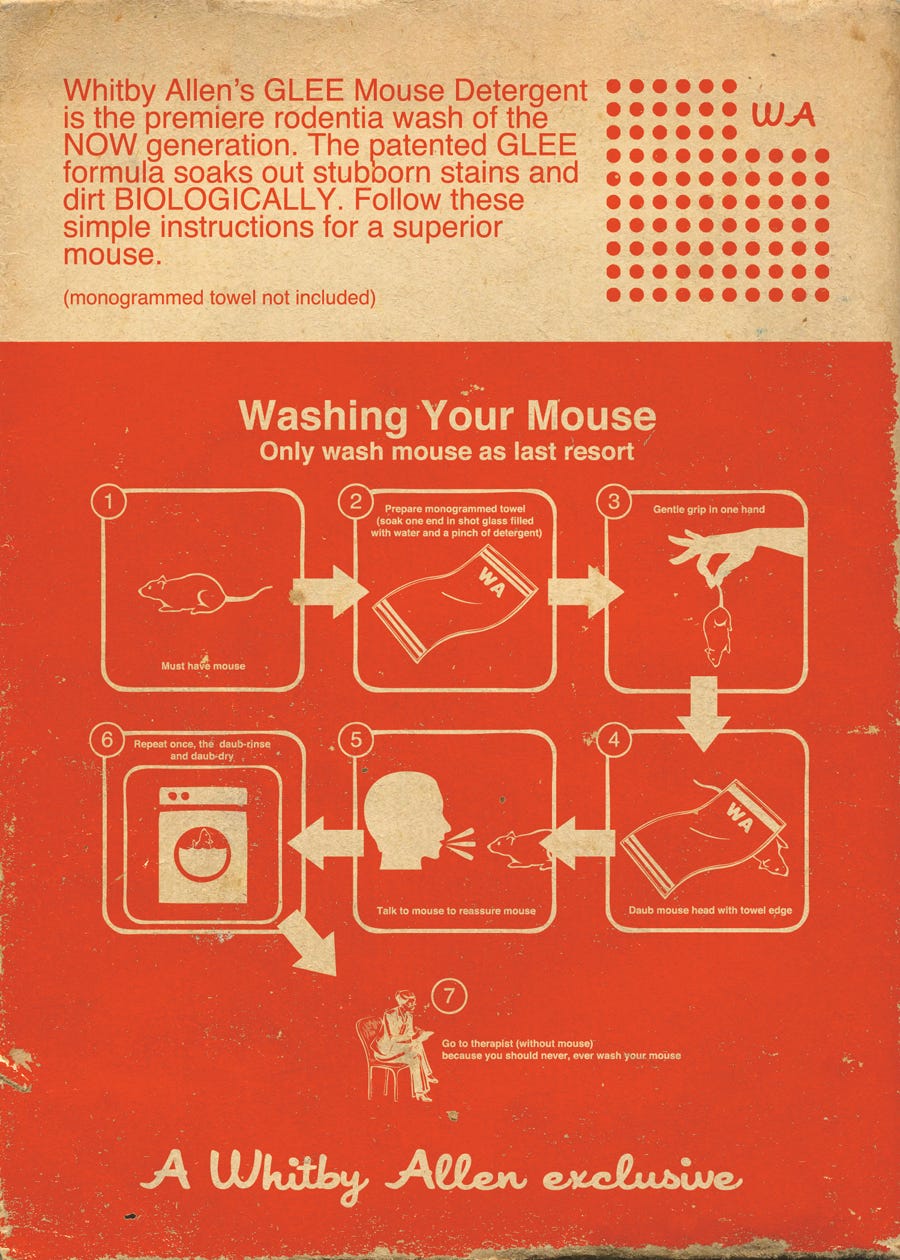
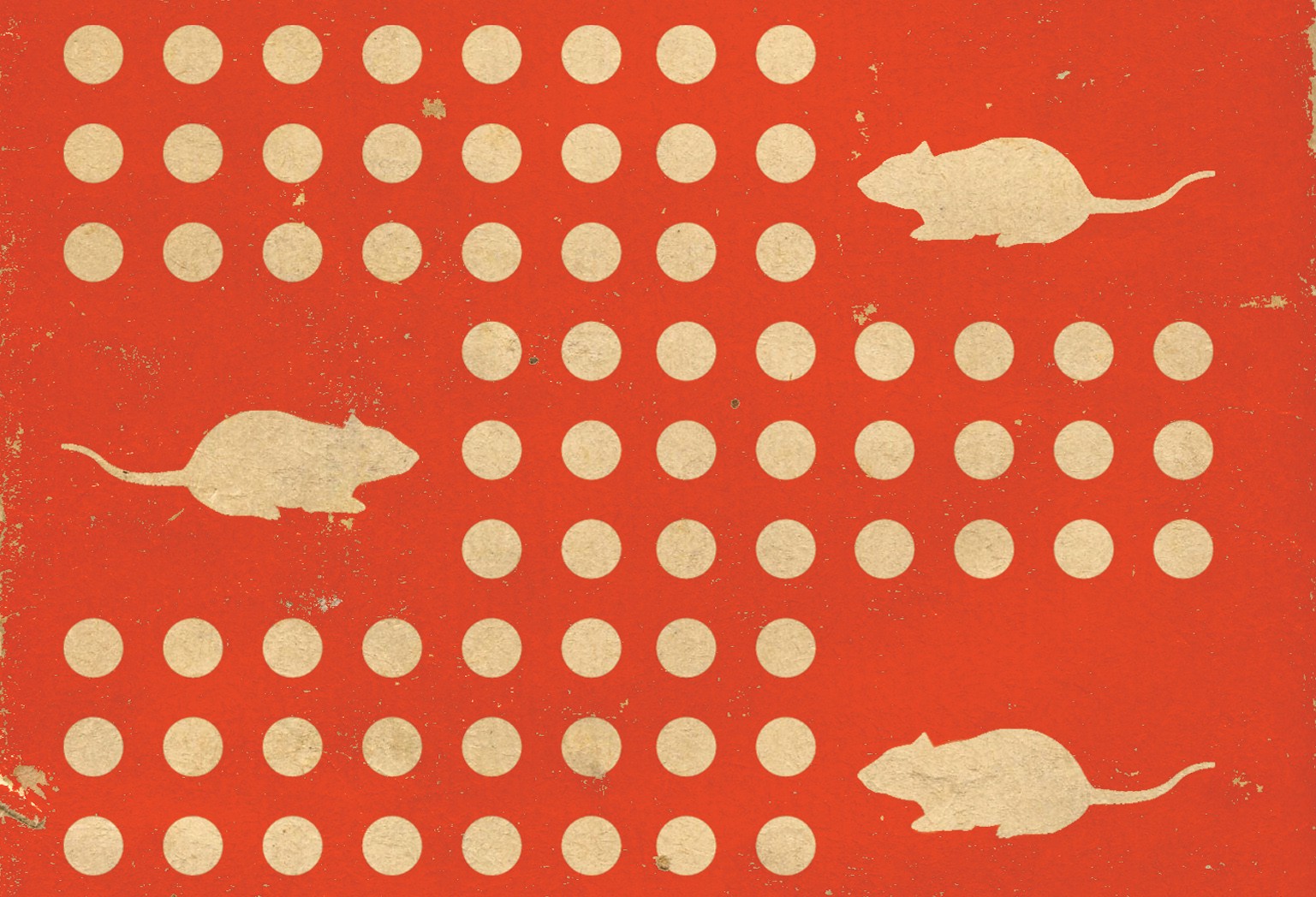
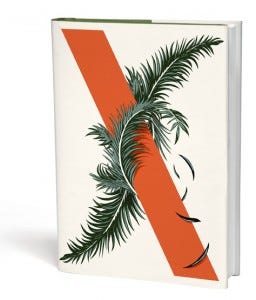
Today is the release date for Area X, the hardcover omnibus of Jeff VanderMeer’s best-selling Southern Reach Trilogy. All three novels (Annihilation, Authority, and Acceptance) are now collected in the single hardcover volume. To celebrate, VanderMeer has written about what one of the most uncanny scenes in the book: Whitby’s mouse washing. Below you will also find exclusive illustrations of Whitby Allen Mouse-Washing Detergent and an excerpt of the mouse-washing scene from book three, Acceptance.
One of the more intriguing characters featured in the Southern Reach Trilogy is Whitby Allen. At least, from my point of view in writing about him. Whitby’s a perpetual assistant to others at the Southern Reach secret agency. He’s obsessed with figuring out what’s going on in the mysterious Area X, like a lot of people at the S.R. But in his case, obsession has colonized him in ways it hasn’t the others. When readers first meet him in the second novel, Authority, it’s hard to get a bead on him. Someone once called him the “Smeagol of the Southern Reach,” and I can see that — in that you don’t know whether or not to find him sympathetic. As Authority progresses, the reaction from readers varies. Some find him pathetic. Others find him creepy. But once readers encounter him again in Acceptance, the final novel, it’s clear that he’s a good case for re-evaluation. If the novels have a recurring motion or sense of action, it comes from the idea of characters coming into contact with Area X, either for real or on an abstract level, and how that changes them.

A pivotal part of our understanding of Whitby, in my humble opinion, comes from a scene in Acceptance where Whitby washes a mouse. This is a mouse previously encountered in
Authority, and as with most elements of the first two novels, the mouse also gets re-cast in a different light by Acceptance.

How does one write a mouse-washing scene? There aren’t a lot of examples in literature, and in any event I didn’t want my mouse-washing scene to be contaminated by the work of other fiction writers.

How does one write a mouse-washing scene? There aren’t a lot of examples in literature, and in any event I didn’t want my mouse-washing scene to be contaminated by the work of other fiction writers. Especially since Whitby’s not exactly a standard character. But I knew props were important — the monogrammed towel fits with what we know of Whitby being both kind of finicky and coming from old Southern money. He might not be rich now, but the accoutrements of the rich would still surround him. Second, he’d be meticulous about washing the mouse. Third, washing the mouse would be hiding some other anxiety, would be a way of focusing that would, temporarily, wash away his stress. But also, hopefully, it would be a scene that would restore Whitby’s basic humanity — that would make the reader go back to Authority and read some scenes (like ones in strange rooms) a little differently. There are some other underlying thematic resonance to tidal pool scenes elsewhere in the novel and a few other things I wanted to accomplish, but I don’t want to tell anyone how to read the scene any more than I already have…

That said, there’s one problem with washing a mouse: You’re never supposed to wash your mouse. So when the brilliant designer Matthew Revert came up with a Whitby Allen Mouse-Washing Detergent after reading the novels, we had to add several disclaimers to the final images (unveiled here for the first time). So if there’s one thing I’d like you to take from this unveiling of the mouse-washing scene, it would be to please not wash your mouse. Never. No-how.

Whitby Allen: purveyor of strange rooms, the comic yet tragic Smeagol of the Southern Reach, and amateur mouse-washer. Enjoy.

– Jeff Vandermeer

Jeff VanderMeer mouse washing
Jeff VanderMeer mouse washing back

An exclusive excerpt from Acceptance: the mouse-washing scene

One spring day at the Southern Reach, you’re taking a break, pacing across the courtyard tiles as you worry at a problem in your head, and you see something strange out by the swamp lake. At the edge of the black water, a figure squats, hunched over, hands you cannot see busy at some mysterious task. Your first impulse is to call security, but then you recognize the slight frame, the tuft of dark hair: It’s Whitby, in his brown blazer, his navy slacks, his dress shoes.

Whitby, playing in the mud. Washing something? Strangling something? The level of concentration he displays, even at this distance, is of working on something that requires a jeweler’s precision.

Instinct tells you to be silent, to walk slow, to take care with fallen branches and dead leaves. Whitby has been startled enough in the past, by the past, and you want your presence known by degrees. Halfway there, though, he turns long enough to acknowledge you and go back to what he’s doing, and you walk faster after that.

The trees are as sullen as ever, looking like hunched-over priests with long beards of moss, or as Grace says, less respectfully, “Like a line of used-up old drug addicts.” The water carries only the small, patient ripples made by Whitby, and your reflection as you come close and lean over his shoulder is distorted by widening rings and wavery gray light.

Whitby is washing a small brown mouse.

He holds the mouse, careful but firm, between the thumb and index finger of his left hand, the mouse’s head and front legs circled by this fleshy restraint, the pale belly, back legs, and tail splayed out across his palm. The mouse seems hypnotized or for some other reason preternaturally calm while Whitby with his cupped right hand ladles water onto the mouse, then extends his little finger and rubs the water into the fur of the underbelly, the sides, then the furry cheeks, followed by anointment of the top of the head.

Whitby has draped a little white towel across his left forearm; it is monogrammed with a large cursive W in gold thread. Brought from home? He pinches the towel from his forearm and, using a single corner, delicately daubs the top of the mouse’s head while its tiny black eyes stare off into the distance. There’s a kind of febrile extremity of care here, as Whitby proceeds to wipe off one pink-clawed paw and then the other, before moving to the back paws and the thin tail. Whitby’s hand is so pale and small that there is a sort of symmetry on display, an absurd yet somehow touching suggestion of a shared ancestry.

It has been four months since the last member of the last eleventh expedition died of cancer, six weeks since you had them exhumed. It has been more than two years since you came back across the border with Whitby. Over the past seven or eight months, you have had a sense of Whitby recovering — fewer transfer requests, more engagement in status meetings, a revival of self-interest in his “combined theories document,” which he now calls “a thesis on terroir,” evoking a “comprehensive ecosystem” approach based on an advanced theory of wine production. There has been nothing in the execution of his duties to indicate anything more than his usual eccentricity. Even Cheney has, grudgingly, admitted this, and you don’t care that the man often uses Whitby as a wedge against you now. You don’t care about reasons so long as it brings Whitby back closer to the center of things.

“What do you have there, Whitby?” Breaking the silence is sudden and intrusive. Nothing you say will sound like anything other than an adult talking to a child, but Whitby’s put you in that position.

Whitby stops washing and drying the mouse, throws the towel over his left shoulder, stares at the mouse, examining it as if there might still be a spot of dirt here or there.

“A mouse,” he says, as if it should be obvious.

“Where did you find her?”

Him. In the attic. I found him in the attic.” His tone like someone about to be reprimanded, but defiant, too.

“Oh — at home?” Bringing the safety of home to the dangerous place, the workplace, in physical form. You’re trying to suppress the psychologist in you, not over analyze, but it’s difficult.

“In the attic.”

“Why did you bring him out here?”

“To wash him.”

You don’t mean for it to seem like an interrogation, but you’re sure it does. Is this a bad thing or a good thing in the progression of Whitby’s recovery? There is no base score assigned to owning a mouse or washing a mouse that can confer an automatic rating of fit or unfit for duty.

“You couldn’t wash him inside?”

Whitby gives you an upturned sideways glance. You’re still stooping. He’s still hunched. “That water’s contaminated.”

“Contaminated.” An interesting choice of words. “But you use it, don’t you?”

“Yes, I do . . .” Relenting, giving in a little, relaxing so that you’re less concerned he’s going to strangle the mouse by accident. “But I thought maybe he’d like to be outside for a while. It’s a nice day.”

Translation: Whitby needed a break. Just like you needed a break, pacing the courtyard tiles.

“What’s his name?”

“He doesn’t have a name.”

“No.”

Somehow this bothers you more than the washing, but it’s an unease you can’t put into words. “Well, he’s a handsome mouse.” Which sounds stupid even as you say it, but you’re at a loss.

“Don’t talk to me like I’m an idiot,” he says. “I’m aware this looks strange, but think about some of the things you do for stress.”

Jeff VanderMeer author photo

photo by Kyle Cassidy

Jeff VanderMeer’s most recent fiction is the NYT-bestselling Southern Reach trilogy (Annihilation, Authority, and Acceptance), all released in 2014 by FSG Originals and also acquired by publishers in 17 countries. The movie rights to the series, which features strong ecological themes, were acquired by Paramount Pictures/Scott Rudin Productions. His Wonderbook: The Illustrated Guide to Creating Imaginative Fiction (Abrams Image) is taught widely. His nonfiction, much of which pertains either to the environment or to weird fiction, has appeared in the New York Times, the Guardian, the Washington Post, Atlantic.com, and the Los Angeles Times.

REVIEW: I Will Love You For the Rest of My Life by Michael Czyzniejewski

There is a moment in every relationship — be it intimate or platonic — when the equal parties realize that they’re not so equal. In lasting relationships, those inequalities are quickly rationalized as endearing, and to a certain extent, this is how life works: co-workers, parents and bartenders are all judging you based on the cut of your jib. The problem is that because we are human beings, who learn and grow and become the people we wished we could have been, it can be a little ridiculous to assume that a jib is only a jib. Often it can be the expectation of an ideology that feeds on upward mobility and all those things that seem too simple to actually be true and, as the title of Michael Czyzniejewski’s new collection, I Will Love You the Rest of My Life, suggests, there is a looming finality behind all those aphorisms.

In this collection, a woman can’t find love, so settles for a monkey with five legs. A town becomes jealous when a gang of superheroes starts protecting them from evil. A man avoids a banquet being held in his honor by listening to a baseball game that won’t end. A couple campaigns instead of getting married. A metal band disbands. An astronaut catches her husband cheating. All of these stories rest easily in the wheelhouse of Donald Barthelme or George Saunders, but Czyzniejewski also takes his cues from fellow Chicago authors like Stuart Dybek and Peter Orner by infusing a Midwestern sense of mythology into his stories and not being afraid to wallow in it.

The story “Bullfighting,” for instance, proves this with an odd sort of grit. The protagonist’s son imagines a friend after the death of his father and soon the mother begins to believe in the friend too. She spends afternoons with him while the son is at school, sleeping with him and, without much awareness of what she’s doing, asking him for advice about her son. After realizing how useful the imaginary friend could be, she considers using his immigration status (he is a fugitive from Spain) as an excuse to get married, a line of reasoning that Czyzniejewski follows to the extreme. The result is heartbreaking and, to Czyzniejewski’s credit, seemingly within the realm of possibility. It would be easy for a less talented writer to slip into the absurd and miss the true texture of the story, but Czyzniejewski juggles grief and whimsy with a side story of espionage to reveal a mother’s inherent reluctance to be a parent.

This reveal and others like it re-occur throughout the collection to create a kind of non-theme that could be called Loved Ones Do Unexpected Things. The true charm of the collection is that while we’ve come to expect unpredictability from the ones we love, it never fails to surprise us. In the story “Space”, the protagonist reacts in a crushing and unpredictable way when he learns that his wife got a job they were both vying for:

When Meg came outside with the news, Miller feigned surprise, lifting her up in the air, twirling her around. He kept her up there a long time, just staring at her above him. “I can’t wait for you to go. It’s going to be awesome.”

The job they’re talking about is a mission to outer space — they’re both astronauts. And the language Czyzniejewski uses plays on the elevation of her status as well as the elevation of being in orbit, which is the beauty of this scene, but it also flips the roles of their relationship. The husband hides his true emotions because he feels emasculated, which drives the rest of the story. Once his wife leaves for her mission, he brings home a one-night-stand, and almost immediately, his marriage is ruined. The interesting part of all this is that the protagonist is aware of his mistake as he is making it, and yet, he can’t stop himself. Instead, he rationalizes his behavior with small lies, telling himself that if anyone sees the woman, he will simply say that she was his sister, who had been visiting for the shuttle liftoff.

It’s only when Czyzniejewski’s characters begin to lack this sense of self-awareness that his stories begin to suffer. The story “Hot Lettuce” follows a metal band (whose name lends itself to the title of the story) as they near the end of what might be their last tour together. In a scene toward the end of the story, the only female member of the band meets a fan who sees her as a musician rather than the sexual object she is repeatedly treated as by her band mates and fans throughout the story, but what might have seemed like a redeeming moment is thwarted when the fan eventually reveals himself to be just like the others, unable to discern truth from band myth. In the scene, the fan pulls down his pants and says:

You’re sex mistress to Thourgar the Castrator and his minions, Gudalla the Pulverizer and Demonico the Defibulator. You relieve them of purity and spray their seed across the universe so the gods will keep them rocking for ten thousand years.

The scene is genuinely funny — and Czyzniejewski is going for the laugh — but this is one of the rare moments in the collection where he leans too hard into the farce of the situation and forgets to acknowledge that this fan is a person with a life outside the ideology of Hot Lettuce, and no matter how familiar he may be with her music, he is still an adult talking to another adult, whom he has never meet outside his fantasies. Here the level of self-awareness, which is so powerful in the rest of the collection, is lost, and leaves the moment feeling flat and anti-climactic.

That said, the collection weathers these moments well — as seldom as they may be — because it shows that Czyzniejewski is not afraid to test the limits of his stories. In a way the experience of reading this collection is like walking through the laboratory of a scientist, mad at work, trying to cure the abominable with wit and guile. Overall, it’s a hell of a collection, one that I’m sure I’ll be returning to again and again.

I Will Love You for the Rest of My Life: Breakup Stories

by Michael Czyzniejewski

Powells.com

Sunday Sundries: Literary Links from Around the Web (Nov. 16th)

Looking for some Sunday reading? Here are some literary links from around the web that you might have missed:

Here’s what we learn when Philip Roth, Don DeLilo, Lydia Davis, and other famous writers revisit their early work

“People don’t actually like creativity,” Slate sadly informs us

Describing the indescribable with Jeff Vandermeer

Buzzfeed lists 20 under 40 debut writers you need to be reading

Margaret Atwood talks to Vulture about genetic engineering and her new HBO adaptation (our story on the latter here)

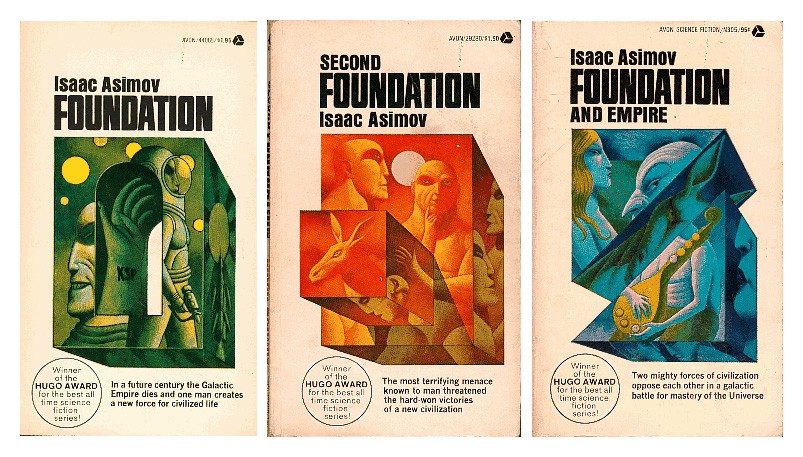
Speaking of HBO science fiction adaptations, did you hear the network is planning to adapt Asimov’s Foundation series?

More SF linkage: Strange Horizons posted a long interview with the late Iain Banks about the Culture

Readpolitik: Rob Spillman on Claudia Rankine’s polemical poetry

Grimm brothers’ fairytales have blood and horror restored in new translation

And the Guardian takes a look at “a medieval Fifty Shades of Grey

REVIEW: Does Not Love by James Tadd Adcox

James Tadd Adcox’s Does Not Love is a novel of pharmaceutical oligarchies run amuck. It’s set in an alternate Indianapolis, an Indianapolis much like our own Indianapolis — except it’s teetering on the precipice of a vague apocalypse. Philosophical mariachi bandleaders, militant experimental test subjects, and a fur-coated and be-goggled assassin roam the night streets. There’s a secret law enforced by a sinister FBI agent born somewhere deep within Kafka’s feverish nightmares. An instructional DVD on rough sex is there too. But all of this is background, a strange, enthralling, looming background that seems not unlike how I’d imagine the endgame of a Fritz Lang/Wes Anderson collaboration scripted by Donald Barthelme. But it’s still background to the foreground, an even more compelling story about Robert and Viola, a young couple sifting through the sprawling emotional wreckage of three miscarriages.

Robert is a milquetoast lawyer bent on repairing their relationship without doing anything drastic, or sometimes, without doing anything at all. On his best days, Robert is an even-keeled, stable, and dependable partner — a grounding force, a ship’s ballast, the anchor amidst a tempest, the cement base tether of a tetherball pole, and so on. On other, lesser, days he’s emotionally stunted and numb, struggling, in his unfailingly polite way, to reach the escape velocity on the nightmarish tedium that is his life. Yet, Robert remains an oddly compelling character. He longs for reconciliation for reasons he doesn’t seem to understand — and stays reliably Robert, even as he finds himself offering tepid assistance to an underground rebellion.

Viola is more decisive of the two, where Robert is the one that dithers, searching rather than hoping to find. She begins an affair with the gruffly authoritarian FBI agent, longs for rough sex — enthralled by its capacity for titillation, but also for the break from monotony it offers, and grapples with her feelings for Robert, and whether these feelings even exist. Viola is an archivist by occupation (she works at a library), and she serves this role in their relationship — she’s a repository of their shared history, her every waking moment lived in constant juxtaposition to the past and the alternate present it failed to produce.

But the propulsive force of Does Not Love is the voice. Sentences are short and direct, and adverbs are thrown around like manhole covers — characters do not do things adverbially; they are done or not done. The brevity of Adcox’s prose can be heartbreaking — the only two sentences on an otherwise desolate page describing the aftermath of their latest miscarriage:

“They give the child a name. There is a small ceremony.”

Or humorous, like Robert’s fond reminisces of his halcyon college days:

“Conversations about me often mentioned my level-headedness in celebratory terms.”

Like Donald Barthelme or George Saunders, there is a surreal uniformity of dialogue. Protagonists and unnamed hoodlums are governed by the same wistful self-reflexivity, paralyzed by the same incessant rumination. The effect is hypnotic, setting Does Not Love in a universe of inescapable homogeneity.

There’s a moment in the first half of the book when Robert and Viola watch Akira Kurosawa’s Throne of Blood and, during the appearance of the ghost in the banquet scene, the ghost of her mother visits Viola. It’s a dream sequence, one of many, but it signifies the thematic triumph of the novel — how the private and the external bleed into each other. In doing so Adcox assembles a world that reverses one of the foundational tropes of narrative conflict, characters internalizing external conflict; in Does Not Love, they externalize it — projecting it outward onto their Indianapolis home, which becomes increasingly aberrant and dystopic as their relationship frays.

Does Not Love is funny, surreal, satiric, pensive, and strangely haunting. It’s a novel that comments incisively and acerbically on the world as it is, as it could be, and as it almost was. It’s a novel of the very real and the very not real, of loss, absence, and the quixotic ways we attempt to fill the vacuity inside. It’s a novel where the world might sort of end and a troubled couple may reconcile and they both feel equally important. But more than anything, it’s a novel where you can receive sage advice from literal emptiness without completely misusing the word literal. I leave you with the following exchange, one where Robert finds a vast space hidden behind the bathroom sink:

“This is the space reserved in every house for emptiness. It is a space that cannot be filled.”

“Once I patch up this wall, this space will continue to exist,” Robert says.

“Correct,” says the emptiness.

“And this is the space that consumes all of our efforts to fix things, to make them right?”

“You will be consumed in the emptiness. You will become part of it. This is already beginning to happen, as you have noticed. There is a yawning emptiness inside you at this very moment.”

Does Not Love

by James Tadd Adcox

Powells.com

Nicholas Rombes on Joan Didion’s Play It As It Lays

Colin Winnette admires the writer Nicholas Rombes, so he asked Nicholas to suggest a book. Nicholas suggested Play It As It Lays by Joan Didion. Then they talked about it.

Nick Rombes Two dollar radio

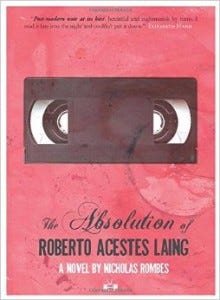
Nicholas Rombes is the author of the novel The Absolution of Roberto Acestes Laing, out from Two Dollar Radio. His work has appeared in The Believer, The Los Angeles Review of Books, and Filmmaker Magazine, where he serves as a contributing editor. He is also the author of Ramones, from Bloomsbury’s 33 1/3 series. He works in Detroit, Michigan.

Colin Winnette: Will you provide a brief description (3 sentences or less) of this book? Something to ground anyone who hasn’t read it.

Nicholas Rombes: The novel is about 31-year old Maria Wyeth, who is confined in a psychiatric hospital. It is from her point of view, mostly, that we learn in fragments the details of the journey that led her here: her divorce from her filmmaker husband Carter Lang, the fragility of her four-year old daughter Kate, the abortion Carter forces her to have. While these plot details (and others) are important, it’s the incredibly glinty way the book unfolds, sentence by sentence, that makes it something you just can’t shrug off after reading.

CW: What caused you to pick up Play It As It Lays for the first time, and what was that initial read like for you?

Play It As It Lays

NR: So, my introduction to Didion had been through her essays, especially those in Slouching Towards Bethlehem (1968). Stupidly, I assumed her fiction was second-tier, and would be a sort of pale reflection of the strong, distanced, cutting voice that I and so many others admired in her “new journalism” writing. It just so happens that several years ago I was asked to teach a class at my university that I had not taught before: “Post-1945 Literature.” This is a huge and unwieldy time frame, not really bounded by anything other than years, and I struggled long and hard with how to frame and approach the period for the undergraduate students who would be enrolled. Beginning around a year before I taught the class I began some heavy-duty reading of fiction, poetry, and drama that I had missed in my undergrad and grad school days. Filling in the gaps, so to speak.

That’s how I came across Didion’s novel, published in 1970. How could this be, I wondered? Such a fantastically strange book, so alienating and warm at the same time. So full of excess truth that it shoots across the page more as a prophecy than a novel. And it seemed — and still seems — to do that thing that feels impossible: it speaks to readers who are not of the ilk of the characters. Here’s me, for instance, a guy born in the mid-1960s in the American Midwest, having never been far beyond my flat, black earth, corn field borders, and I’m feeling a very true and deep affinity with the California, late-1960s character Maria. How is this possible? For any of us? To transcend all the well-intentioned, stupid categories that we erect between ourselves?

So this book, this unexpected miracle, comes into my life and messes it up. The flatness of the prose: “’The word on Carter’s dailies is sensational,”’ the agent said.” Lines like this — true and cold and direct — alongside such intense moments of introspection and vulnerable truth: “He would say something and she would say something and before either of them knew it they would be playing out a dialogue so familiar that it drained the imagination.”

CW: How did it mess up your life?

NR: I should say, rather than messed up, the novel reflected, in a distorted way the messed-up-ness of my life at that time. I don’t want to get too personal, but the foundations of what I valued and believed in came under some serious and real assault and I had that feeling of free falling, like you do as a kid when you stand straight, shut your eyes, and then fall back into someone’s arms, trusting that they will catch you. What caught me at the end of that fall happened to be this novel. I fell into its arms, as corny as that may sound, and found there a distorted reflection of my own disordered world. Most of the time I turn to novels or poetry or movie to escape the tyranny of my own habits of thought, but Play It As It Lays was different. Here was something that seemed to be a secret blueprint of another person’s — Maria’s — panic. Her efforts to suppress and disguise that panic are, for me, the heart of the book.

CW: How do you go about teaching a book that’s had this effect on you? Or even one that’s so new to you?

NR: It’s definitely an act of collaboration with the class, and when it’s working right the spirit of the class is one of almost secret collaboration. How does this happen? I’m not sure. If I could bottle it, I would. When the class clicks and feels right teaching is effortless and the classroom becomes a space where the meaning of the novel is scaffolded and constructed right there before our eyes. It’s a strange and frightening and thrilling vibe, to create with students, through discussion and conversation, something brand new: a way of talking about the novel that didn’t come into existence until the class discussion. It’s like that moment in Raymond Carver’s story “Cathedral,” when the narrator and the blind man put their hands together to draw the cathedral, and something happens. An act of shared creation, pure creation. I’m sorry if this sounds a little melodramatic.

In the case of Play It As It Lays I was very open with the students and told them that I selected it not because I had anything profound to say about it, but the opposite: it left me baffled. The most difficult part of teaching for me is striking that balance between interpretation and the demystification that comes with that, and trying to preserve the essential aura and mystery of whatever text it is that we’re studying. Freud wrote about the “navel” of a dream — the unplumbable, unknowable part that eludes all efforts at interpretation. How to hold onto that mystery while at the same time honoring the duty, as a professor, to guide students through the process of dismantling a text so as to interpret it?

CW: This book has (at least) four narrators (Maria, Carter, Helenne, and an omniscient close-third that follows Maria), but formally it’s incredibly a-symmetrical. So much so that the first person chapters could almost be considered a kind of overture. What did you make of this front-loading of narrative voices? How does it affect your reading/experience of the book?

NR: There’s a Paris Review interview from 1978 where Didion addresses the multiple narrative voices. In part, she says:

Suddenly one night I realized that I had some first person and some third person and that I was going to have to go with both, or just not write a book at all. I was scared. Actually, I don’t mind the way it worked out. The juxtaposition of first and third turned out to be very useful toward the ending, when I wanted to accelerate the whole thing. I don’t think I’d do it again, but it was a solution to that particular set of problems. There’s a point when you go with what you’ve got. Or you don’t go.

I love how she says, “you go with what you’ve got,” which echoes the book’s Play It As It Lays title. And just her openness and honesty about that moment of terror you experience as a writer, when suddenly you see something in the manuscript you hadn’t seen and you’re confronted with a choice: to continue or to quit, to “not write a book at all.” It’s stark and true and frightening, the way she puts it.

Part of the pleasure of the book lies in figuring out how to navigate through these narrative voices. The first three sections are each narrated by a different character, beginning with Maria, and clearly titled as so. But then, suddenly, about 15 pages in, we’re met with a new voice, in the third person: “In the first hot month of the fall after the summer she left Carter (the summer Carter left her, the summer Carter stopped living in the house in Beverly Hills), Maria drove the freeway.” It’s shocking, the abruptness of this switch from first to third person, and it forces you to rearrange the novel as you go. In a way, now thinking about it with the book open before me, what we do as readers is what we see Maria doing in that third person section, where she drives the same intricate stretch of freeway again and again where “successful passage from the Hollywood onto the Harbor required a diagonal move across four lanes of traffic. On the afternoon she finally did it without once breaking or losing the beat on the radio she was exhilarated, and that night she slept dreamlessly.”

That’s how I felt — and still feel — reading the novel. Like there’s a way to access it just right, seamlessly, and it’s on those occasions that the novel reads not jaggedly or roughly, but smoothly.

CW: What relates to that smooth access? How does a reader prepare for it? Or can you?

NR: I take my cue from the novel’s opening lines: “What makes Iago evil? some people ask. I never ask.” Right there, right off the bat, is that jaggedness, that roughness, that contradiction. In disavowing the question about Iago and evil, Maria in fact has to ask it. She has to put the question out there. So the book begins with the very thing Maria says she “never” does: asks a question about Iago and evil. And that sets up the entire book, really. There are no reasons, there are no answers, Maria says. The first few times I read the book I ignored that and all I looked for was reasons, and those were the times that it seemed jagged.

But if you set that aside (and for me that’s really hard) and read the book following Maria’s method — that is, if you read it as it lays, so to speak, rather than as a book of reasons for Maria’s actions — then it clicks, somehow, like it does for Maria when she smoothly merges her car through four lanes of L.A. traffic without a glitch.

CW: For me, reading this book for the first time was like having a bad dream. Not a nightmare, necessarily, but one of those dreams where everything just feels kind of haunted and tender. There are graphic moments, but for the most part the brutality of it is much more subtle, dull, like someone pushing into a bruise on your arm.

NR: That’s a beautiful way to put it. There’s a line in the book that goes: “By the end of the week she was thinking constantly about where her body stopped and the air began, about the exact point in space and time that was the difference between Maria and other.” I don’t know of any other novel that captures with such low-grade intensity the worrying wonder of this boundary. Your phrase “haunted and tender” feels exactly right, and I think part of this goes back to the book’s structural cadence and rhythm, the way that it glides us in and out of Maria’s head, because Maria is haunted. Near the very end of the novel, right before his overdose/suicide, BZ tells Maria that “we’ve been out there where nothing is.” Maria seems to be haunted by that sense of nothing, the fact that we’re always rubbing up against it.

And yet that nothingness is also a comfort. At several points throughout the book we’re told that Maria has slept without dreaming. This seems — in the moral universe of the book — to be a good thing, a relief almost. A relief from the constant drive to make meaning, to square things up, to find patterns in everything, to structure reality so that it suggests the opposite of nothing. When Maria sleeps without dreaming she’s finally free from the burdens of all that.

CW: Maria says, “I know what nothing means, and I keep on playing.” The idea of “you go with what you’ve got” takes on a whole new meaning when “what you’ve got” is…nothing. It complicates the gambling analogy mixed into the idea of “play it as it lays,” because when you’re gambling you can’t play with nothing. In life, that’s not the case.

NR: Yes, and I think the answer in response to Maria’s call of nothingness is her daughter Kate. “The only problem is Kate. I want Kate,” she says near the end, and it’s interesting that she calls Kate a “problem.” But it’s the sort of problem you want to have. Maria says she used to ask questions, and the answer to them is “nothing” and that now that she knows that’s the answer, she can look towards a future with Kate. It’s really amazing to me how large Kate looms in the book even though she’s entirely off screen, so to speak. She’s not there (nothing) and yet she is, around the edges of all of Maria’s thought. She’s like a magnet at the end of the book, and all the words are metal, and they’re all pulled toward her.

And I also think the text layout and design of the book works around this nothingness, too. The enormous amount of white space on some pages. The blankness of the pages, they way it assembles itself around the block prose. Several of the chapters or sections are only a few lines long, isolated, surrounded by nothing. And that encourages a certain way of reading, maybe.

CW: Maybe part of what’s being highlighted is the distinction between absence and nothing. Kate’s absent, which has a certain kind of presence embedded within it (the magnet). Whereas, Maria’s other child is truly gone (I’m willing to make an assumption about the book’s attitude toward the afterlife here). Where that child once was, there is nothing.

NR: This is weird, but one of the epigraphs for the Laing novel (The Absolution of Roberto Acestes Laing, Two Dollar Radio 2014) comes from Julia Kristeva’s book Powers of Horror: “On the edge of non-existence and hallucination, of a reality that, if I acknowledge it, annihilates me. There, abject and abjection are my safeguards. The primers of my culture.” Not to get all theory-ish, but Kristeva says that the abject draws us “toward the place where meaning collapses.” I’d say that the abject — along with absence and nothing — is the third leg of Play It As It Lays, and yet here is the paradox, the beautiful paradox: in both Kristeva’s and Didion’s text, the horror of the abject is rendered in such electric, astonishing prose that it achieves a level of real glory. In other words, the aestheticization of the abject (in all its horror) transforms it into something of beauty. I love that contradiction, and it keeps me up sometimes at night.

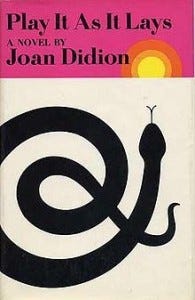
CW: I checked out the 2005 FSG paperback version from the library, which has a kind of Bret Easton Ellis-ish cover with a female’s torso supine on a window sill of what might be a hotel room or other equally non-descript, impersonal space. The original cover had the coiled black snake. These are slightly different, though related, takes on the “Lays” in the title, I think. Let’s talk about rattlesnakes in the book. Are they a reminder that the “roll with the punches” undertone of “Play as it Lays” (as a phrase) is a complicated, even dangerous way of living? It involves real risk. To mess with a rattlesnake at rest is potentially deadly. A hummingbird, however…

NR: That hummingbird! “Everything goes,” Maria says, “I am working very hard at not thinking about how everything goes. I watch a hummingbird, throw the I Ching but never read the coins, keep my mind in the now.” A hummingbird’s wings move so fast they appear to be still; so much energy, so much motion just to stay in one place, perfectly still. I obsess over book covers and as a class we researched different versions. The 2005 edition — which was the one we read as a class — features a cover photograph, the one you describe, by Julia Fullerton-Batten. This was my first introduction to her work, which reminds me of the cinematic photographs of Gregory Crewdson, although now when I look at his work it’s the other way around: his images remind me of hers. I think we discovered that that photograph (cropped for the book cover) was from her series Teenage Stories.

To keep with the gambling analogy, a book cover is such a tell. The 2005 cover reminds me somehow of that sort of sad, post 9–11, Sofia Coppola feel, especially the vibe of Lost in Translation, which came out in 2003. Then there’s the starkness of the black coiled snake on the white background of the 1970 first edition, as you mention. I can’t help but wonder how the novel would read differently based on which of the multiple editions you’ve got. It’s her hands that get me in cover photograph of the 2005 edition, what they’re covering on the implied Maria, the space where her loss is.

CW: Can you leave us with a quote from the book? Something that feels either emblematic of the book as a whole, or that holds particular meaning for you?

NR: For all the seriousness of what the book’s about — loneliness, suicide, moral panic, and just the general feeling of blank desperation — it’s also a very funny novel. Maria’s ex-husband, Carter Lang, is a film director, and there’s a scene where she’s in an elevator with an actor and his agent, who smiles at Maria and says, “The word on Carter’s dailies is sensational.” As if, right? Like what’s she supposed to say? “Sensational.” What a word! Who talks like that? We’re with Maria in that moment, completely with her. I don’t think I’ve ever felt so pressed-in-close to a character as I feel with Maria.

Amazon and Hachette End Dispute

The contract negotiation that spawned 1,000 think pieces ended today as Hachette and Amazon came to terms. Basically no details have been confirmed yet; however, The New York Times reports the contract is for several years and that Amazon has said: “it includes specific financial incentives for Hachette to deliver lower prices.” The price and revenue share of ebooks were thought to be the major sticking points.

The deal comes just a few weeks after Simon & Schuster reached a surprisingly quick agreement with Amazon. Many pundits wondered if the S&S template would provide a quick resolution to the long Hachette/Amazon feud. It looks like it did.

Hopefully everyone can get back to the important business at hand now: writing, publishing, and reading books.

Science Fiction Novels to Help With Your Interstellar Hangover

By now, all your friends and favorite bloggers have inundated your brain with their opinions of Interstellar. It was confusing. It was beautiful. It was beautifully confusing. It was a tribute to science. It was the worst science thing ever. It was a very long commercial for Lincoln Town Car. But while everyone debates the science and the filmmaking, what about the science fiction? Here’s a clutch of contemporary and classic science fiction either referenced or conceptually related to Interstellar.

Mild spoilers for Interstellar and a bunch of science fiction novels ahead.

A Wrinkle in Time

A Wrinkle in Time by Madeline L’Engle

In describing time travel shortcuts, the character of Romilly (David Gyasi) pokes a hole with a pencil through a folded piece of paper to depict the curvature of spacetime. This diagram is very similar to how Mrs. Who, Mrs. Which, and Mrs. Whasit, describe a “tesseract,” or a “wrinkle in time,” in Madeline L’Engle’s novel A Wrinkle in Time. Later in Interstellar, Cooper’s robot TARS tells him he’s inside of a “tesseract.” Plus, the ultimate spoiler: Love saves the day in both A Wrinkle in Time and Interstellar.

Contact

Contact by Carl Sagan

If Interstellar seemed like a sequel to another Matthew McConaughey movie, you’re not going crazy. (Or at least not because of that.) Matthew McConaughey was in Contact, the film version of Sagan’s novel of the same name. The romantic version of McConaughey’s character doesn’t exist in the book, making a sane person wonder if Matthew McConaughey is using real time travel to incept himself in books and movies throughout all of time. In any case, if the wormholes in Interstellar made no sense to you, or you need them explained fictionally for about 400 pages, this is your book. Carl Sagan consulted friend and physicist Kip Thorne for the wormholes in Contact. Interstellar references Kip Thorne (an advisor and producer on the film) by naming Matt Damon’s broke robot Kip. As a novel, Contact doesn’t have the sweetness of Sagan’s non-fiction like Cosmos or Pale Blue Dot, but it does have something Interstellar sometimes lacks: the air-tight science chops.

When You Reach Me

When You Reach Me by Rebecca Stead

Published in 2009, and a certified Newberry Award Winner, Rebecca Stead’s big novel weaves time travel paradoxes into everyday life. When You Reach Me revolves around the central mystery as how “the laughing man” is giving Miranda information about the future. If an old person seems to have all the answers, there’s a chance they do, and not just because they’ve been around for awhile, but maybe because of time travel. In Interstellar, Jessica Chastain’s character Murphy is portrayed in multiple timelines, and thanks to some black hole/relativity action, out-ages her own father. Messages from the future that are really from the past help to construct sci-fi mysteries all the time, even if we don’t always “get” them in the end.

The Accidental Time Machine

The Accidental Time Machine by Joe Haldeman

Joe Handelman is probably most famous for his science fiction novel The Forever War, which is, for most of us, the kind of text that “fixes,” some of the confusing jingoist tendencies of Robert A. Heinlein’s Starship Troopers. But, some of his more underrated novels play around with time travel and alternate universes in fairly down-to-earth ways. Published in 2007, The Accidental Time Machine deals with a research assistant at MIT named Matt who, indeed time travels by accident. Matt ends up becoming his own ancestor through some insane shenanigans, but avoids creating an information paradox by keeping quiet about Einstein’s theory of relativity, even when he’s hanging out with Einstein. The apparent rapid aging of characters in Interstellar is similar to emotional impact of The Accidental Time Machine. People “suddenly” seem old or young in both of these narratives, but it’s all relative, baby.

The Sirens of Titan

The Sirens of Titan by Kurt Vonnegut

Featuring a journey to one of the moons of Saturn (Titan!) and tons of time-travel, this early Kurt Vonnegut novel is probably the one that takes place in space the most. While the characters in Interstellar explored a planet right near a black hole, and time traveled because of it, Vonnegut’s characters are moved through time and space by a kind of roving wormhole called a chrono-synclastic infundibulum. Effectively, this isn’t too dissimilar from Interstellar’s spherical wormhole (also located near Saturn), though Vonnegut did manage to cram Martian invasion into his story, which was weirdly missing from Interstellar.

The Time Traveler's Wife

The Time Traveler’s Wife by Audrey Niffenegger

If you saw the movie, then you know for some reason Eric Bana has been a time traveler twice (Time Traveler’s Wife and 2009’s Star Trek) and that poor Rachel McAdams has been a time-traveler’s girlfriend THREE times (Time Traveler’s Wife, Midnight in Paris, and About Time). The novel, however, is tear-jerker time-travel dynamite. It’s true there’s no explanation, really, for why Henry randomly time travels, but then again, Interstellar doesn’t totally explain what Murphy created in the “future,” nor why exactly Cooper traveled to the particular spot he did. But, both manage to make us have a lot of complicated feelings thanks to time travel.

2001

2001, 2010, 2061, 3001 by Arthur C. Clarke

Since paradoxes are the name-of-the-game here, the novel 2001 upon which the film 2001 was based was not actually written before the film. This isn’t to say it’s a novelization of the film (it isn’t,) but rather that it was developed by Arthur C. Clarke simultaneous and in conjunction with the famous Stanley Kubrick movie. The connections between Interstellar and 2001 are so obvious, it’s almost like that giant baby at the end of 2001 actually just grows up to be Matthew McConaughey (or Christopher Nolan?) There are a lot of differences between the novel series and the film series (there is a 2010 movie) but the most jarring one is probably the assertion from Clarke himself that each novel takes place in a slightly different alternate universe from the previous novel. This, more than anything allows for continuity “errors,” just to be different universes. You can either see this as a cop-out or totally brilliant. Thematically, Arthur C. Clarke was very interested in the representation of technologies which were beyond our present comprehension. He famously said “…any sufficiently advanced technology is indistinguishable from magic…” which is why Murphy thinks there’s a ghost in her bedroom, but it’s really just her time traveling astronaut Dad.

The Magician's Land

The Magician’s Land by Lev Grossman

Lev would kill me for calling his novels “science fiction,” and not “fantasy,” but one notion in his latest — The Magician’s Land — is very reminiscent of Interstellar. In this novel, we learn that Alice — presumed dead in the first book — is actually alive and has been living as a sort-of ghost in another dimension. When Alice tells the other characters about this, she talks about having the ability to move back across her own timeline; just like Cooper does in Interstellar. Alice doesn’t interfere with it, but she did help out here and there, which is exactly what Cooper is doing by knocking over the books.

Insterstellar screenshot

Interstellar may not have been the perfect science fiction movie, but it did depict a science fiction conflict which drove its central plot. True, there was a Hollywood blockbuster-style fistfight in the movie, but most of the “action,” was a little more meditative, science-positive, and bookish. With the existence of Interstellar and the news that co-writer Jonathan Nolan is set to adapt Isaac Asimov’s Foundation series, it appears literary science fiction is making a huge comeback. And since we already live in the future anyway, it’s about time.

Listen Up Philip and the Asshole Author

In Listen Up Philip (Directed by Alex Ross Perry), Jason Schwartzman stars as Philip Lewis Friedman, an amazing jerk who is about to publish his second novel. He’s jealous and self absorbed to the point of delusion: he yells at his friends, takes loved-ones for granted, and is even pleased when a rival commits suicide. Unlike Michael Douglas in Wonder Boys or Nicholas Cage in Adaptation, who manage to engender some affection in their audiences, Philip inspires only contempt.

First, I’ll say that I enjoyed this film. It’s funny, often poignant, and very well acted. The occasional appearance of an omniscient voice-over (“Philip returned to his pitiful life at the college”) pokes fun at novelistic prose, and the book covers of fictive novels are one of the film’s greatest pleasures. Though Philip Lewis Friedman shares a first name with Philip Roth, it’s his mentor, Ike Zimmerman, who bears an aesthetic, if not terribly substantive, resemblance to the author. To say that Zimmerman is “based on” Roth is an over statement — the name Zimmerman evokes Roth’s fictional alter-ego, Nathan Zuckerman, and the covers of their novels use the same font. But these references are not strictly to Roth: the jacket of one Zimmerman novel, the title of which adorns his vanity license plate, is a direct imitation of Martin Amis’s Money. Other than teaching at a prestigious University, Zimmerman’s biography does not line-up with Roth’s; the allusions instead build a familiar type of writer — masculine and prolific — and give the audience the (false) sense that they encountered Zimmerman, or at least his pages, before.

Listen Up Philip is quite enjoyable, but it is also blunt and redundant. Jason Schwartzman’s character is a pastiche of former roles — Max Fisher, grown up, wearing Jonathan Ames’ tweed blazer from Bored To Death — only meaner. (In one of the funniest moments, Philip’s girlfriend, brilliantly portrayed by Elizabeth Moss, chides Philip for wearing that tweed blazer in 80-degree heat. “It looks like you don’t own a more seasonally appropriate jacket,” she says.)

The basic story is this: Zimmerman has read Philip’s novels and decides on their merit to mentor him. Philip accepts Zimmerman’s offer to stay at his country house (“The city has a creative energy, but not a productive one,” Zimmerman says), leaving behind his estranged girlfriend, Ashley. At the country house he encounters Zimmerman’s daughter (Krysten Ritter), who is damaged by the routine neglect of her famous father. Over the course of the film, Philip visits one ex-girlfriend, makes a new girlfriend, and half-heartedly tries to win back his old girlfriend. All the while palling around with Zimmerman, who regularly insults him under the guise of “advice.” Philip either doesn’t notice the insults or is so enamored with Zimmerman he is flattered even by condescension. Eventually the special combination of female rejection and male encouragement calcify Philip into the asshole he was always meant to be.

While there are surely selfish women writers (and female writers who aspire to be selfish, as the narrator in Jenny Offill’s Dept. of Speculation hopes to become an “art monster”), as well as female assholes, the subject of the asshole author is intertwined — through the content of its case studies — with the subject misogyny. Take Norman Mailer, the most obvious example, who routinely made derisive remarks about women and, if anyone needed further convincing of his brutishness, stabbed his second wife. There’s the famous anecdote of Faulkner screaming at his tearful child (“No one remembers Shakespeare’s daughter!”), or, for a more nuanced case, the memoirs of Susan Cheever, Janna Malamud Smith, or Alexandra Styron. (Incidentally, Ike’s daughter Melanie Zimmerman has also written a memoir, A Daughter’s Point of View.)

But Listen Up Philip has little more to say about misogyny than to point out obvious examples, as when Zimmerman tells Philip, “Don’t make yourself too miserable. That’s what the women are for, in my experience.” Whether the women make the men miserable or the men make the women miserable is up for interpretation — it’s probably both — but lines like this remind me that Listen Up Philip isn’t The Love Affairs of Nathaniel P. It’s a take-down of an easy target, not Adele Waldman’s subtly observed investigation of a misogynist mind. It’s worth pointing out that, though there are interesting female characters — Ashley has rising career as a photographer and is strong and clear-minded even when emotionally vulnerable — unless you count a two-line exchange she has with a model about a kitten, this film does not pass the Bechdel test. The women speak exclusively about either Philip or Zimmerman, even when they are speaking to Philip or Zimmerman. (Philip and Zimmerman are, respectively, Philip and Zimmerman’s favorite subjects.)

The concept of the Asshole Author is nothing new, and to what degree selfishness is necessary to artistic and intellectual achievement remains an open question. Many of the great American writers of the 19th century were notoriously selfish, and yet, even when reading the memoirs of their mistreated children, its impossible to overlook the contribution their work has made to the world of letters. At best their flaws of character are absolved by their works of art; at worst, their flaws are softened by their achievements.

Ike Zimmerman and Philip Lewis Friedman, however, have no such chance for absolution. Their novels do not exist on Kindles or on the shelves of independent bookstores, and so the assholes cannot be redeemed through their art. If I were compelled to come to the defense of these men, I would say there is an essential unfairness in that. But I’m not compelled. It’s fun to join in making fun of people who deserve it. Still, a fictional film about a writer, by definition, presents an incomplete picture. As I sat in the theater, I couldn’t help but wonder, what’s between these clever jackets? What would those pages actually contain? How can a man who cannot read people, write them? Is it possible for a person to understand themselves, but not others? Do shitty men write shitty novels? But without books to turn to for answers, the questions led only to dead-ends.