Searching for the Headless Horseman

Every culture has its monsters: the Slavs have the witch Baba Yaga who flies around forests with a pestle in hand, Amazonian tribes say sea creatures with supernatural powers swim in the river, and the Jews of Prague have the golem, a monster made out of clay and brought to life in the late-16th century to help protect them from anti-Semitic attacks. Of course, people move, cultures expand to different cities, countries, and continents, and the myths twist and grow. The monsters take on characteristics of their new homeland and eventually you go from the golem to Frankenstein’s monster.

In America, our most famous monsters tend to be more recent Hollywood creations who wield instruments of destruction, like Jason with his machete or Leatherface with his chainsaw. There are local myths and legends of Jersey Devils, the Mothman of Point Pleasant, and various UFOs, haunted houses, and regional spirits that go bump in the night, but American evil tends toward psychopathy tinged with otherworldly powers (think Freddy Krueger, a child molester serial killer who is killed but continues to murder through dreams).

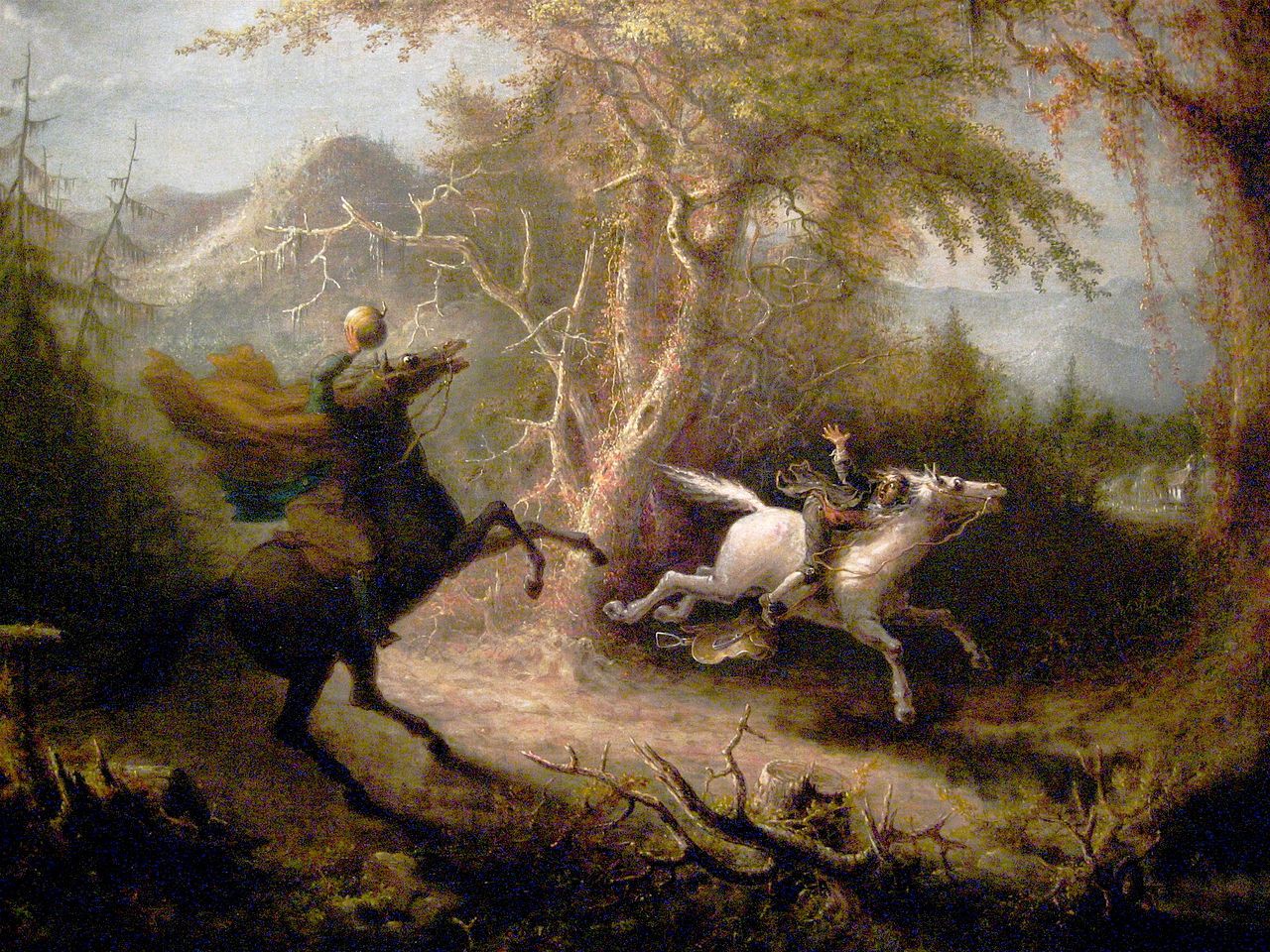
Washington Irving, under the pseudonym Geoffrey Crayon, gave America one of its earliest monsters in his 1820 short story “The Legend of Sleepy Hollow.” Although the Headless Horseman doesn’t show up until the very end, he has nonetheless become a part of our culture. Children know about the Horseman chasing Ichabod Crane on horseback, and the story has been used through the years, most recently in the Fox TV drama, Sleepy Hollow. When you take a ride up to the quaint village of Sleep Hollow in Westchester County — a short trip from New York City — the locals have no problem celebrating their tie to Irving’s famous story. Yet the Horseman, maybe not too surprisingly, is not American in either his own background or the story itself.

The Headless Horseman may have become one of America’s oldest ghosts, but his story was born in Europe and variations of him have long existed in Irish and German folklore. Even in Irving’s story, he is a Hessian soldier whose head is taken clean off during the Revolutionary War, leaving him to rides around at night in search of it. We’ve taken a monster that is foreign in all regards and we’ve kept telling his story for over 200 years.

I took my trip up to Sleepy Hollow on a Sunday morning. Early enough to beat the traffic, I made it there in a shorter amount of time than Google Maps had predicted it would take. I beat the crowds that flock to the area throughout most of October to take the Sleepy Hollow Cemetery tours, or to see the Great Jack O’Lantern Blaze. It could be said that no city in America does Halloween quite like Sleepy Hollow. It’s a place that doesn’t necessarily look like it depends on the Season of the Witch tourist dollars, but it embraces the tag as a famously haunted city nonetheless.

To prepare for my trek, I read Irving’s famous story, collected along with some of his most famous works in a new Penguin Classics edition with a foreword by Irving expert Elizabeth L. Bradley, who supplies some interesting insight into Irving’s infamous villain. Bradley points out that the Horseman “has a touch of kitsch,” which is something that we’ve maybe lost in our contemporary obsession with blood and gore. I was pretty familiar with the story after reading it in high school English, as well as watching not just the 1949 Disney cartoon version narrated by Bing Crosby (my own introduction to the story, by way of a VHS tape rented for me when I was 4-years-old), and a YouTube version of the 1980 made-for-television version starring Jeff Goldblum as Ichabod and football star Dick Butkus as Brahm Bones, but also the episode of Are You Afraid of the Dark? based off the story, the 1999 Tim Burton version with Christopher Walken as the Horseman, and by playing a villager with no lines in my high school’s stage adaptation. I don’t consider myself an expert, but I’ve seen my share of Headless Horsemen.

What I realized as I made my way through the Old Dutch Cemetery, looking at the 18th century tombstones the Horseman was said to tie his horse to at night, was how much the story has evolved over time. There’s hardly any of the kitsch factor Bradley alluded to (far more noticeable in the now-rare Disney cartoon) in the snobby and elitist schoolmaster Ichabod Crane’s reaction to New York bumpkins. They were simple people who could really care less about education, and just wanted to go about their lives in peace. Crane, meanwhile, is fixated on the daughter of a wealthy farmer, which leads to his eventual undoing — whether by malice or exile. Gossip or not, Irving tells us that, “an old farmer, who had been down to New York on a visit several years after,” came back and told everybody that he’d seen the teacher alive and in the flesh. Of course, Irving points out in the last paragraph that, “The old country wives, however, who are the best judges of these matters, maintain to this day, that Ichabod was spirited away by supernatural means.”

There’s a bridge in Sleepy Hollow that’s supposed to be the one Ichabod believed he needed to cross to get away from the horseman, only to find that his hunter can actually get over it after all. The village installed one over a creek that, while not the original, makes it easy to put oneself in the character’s riding boots even today. It’s walking over that bridge where you can not only contemplate Ichabod’s fate, but also wonder if “The Legend of Sleepy Hollow” is a story about a German ghost and one particularly famous victim, or if it’s simply a tale of a of brainless jerk playing a prank on the smartypants from Connecticut. Ichabod’s body is never found, and the only other person who actually saw the ghost of the soldier, Brahm Bones, also happens to be chasing after the hand of the same girl as Crane. As he’s making his horse gallop faster through the graveyard, Ichabod Crane is trying to get away from a haunting — either of the ghost or his own inadequacy.

Irving’s vagueness is exactly what makes “The Legend of Sleepy Hollow” endure. Irving was smart enough to leave what exactly happened to Ichabod that fateful night unclear, and that is the opposite of contemporary horror, which is so fixated on seeing the deed and its bloody aftermath. With the Headless Horseman, we’re not entirely sure what happened, let alone if there ever was a haunting in the first place. Maybe he was just a lone rider mistaken for a phantom in the dark; but in Irving’s story — one of America’s truly great stories, passed on through time — he’s whatever we want him to be.

Victor LaValle talks monsters, myths, and a Grand Unified Theory of Fear

The Devil in Silver

While listening to Victor LaValle read a short piece on trick-or-treating in Queens, I was transported back to the Halloween nights in Washington Heights when the working class kids from my tenement headed to the building across the street — where the gentrifying middle class families and good candy were — and smashed our fists into the buzzers until someone let us into the building.

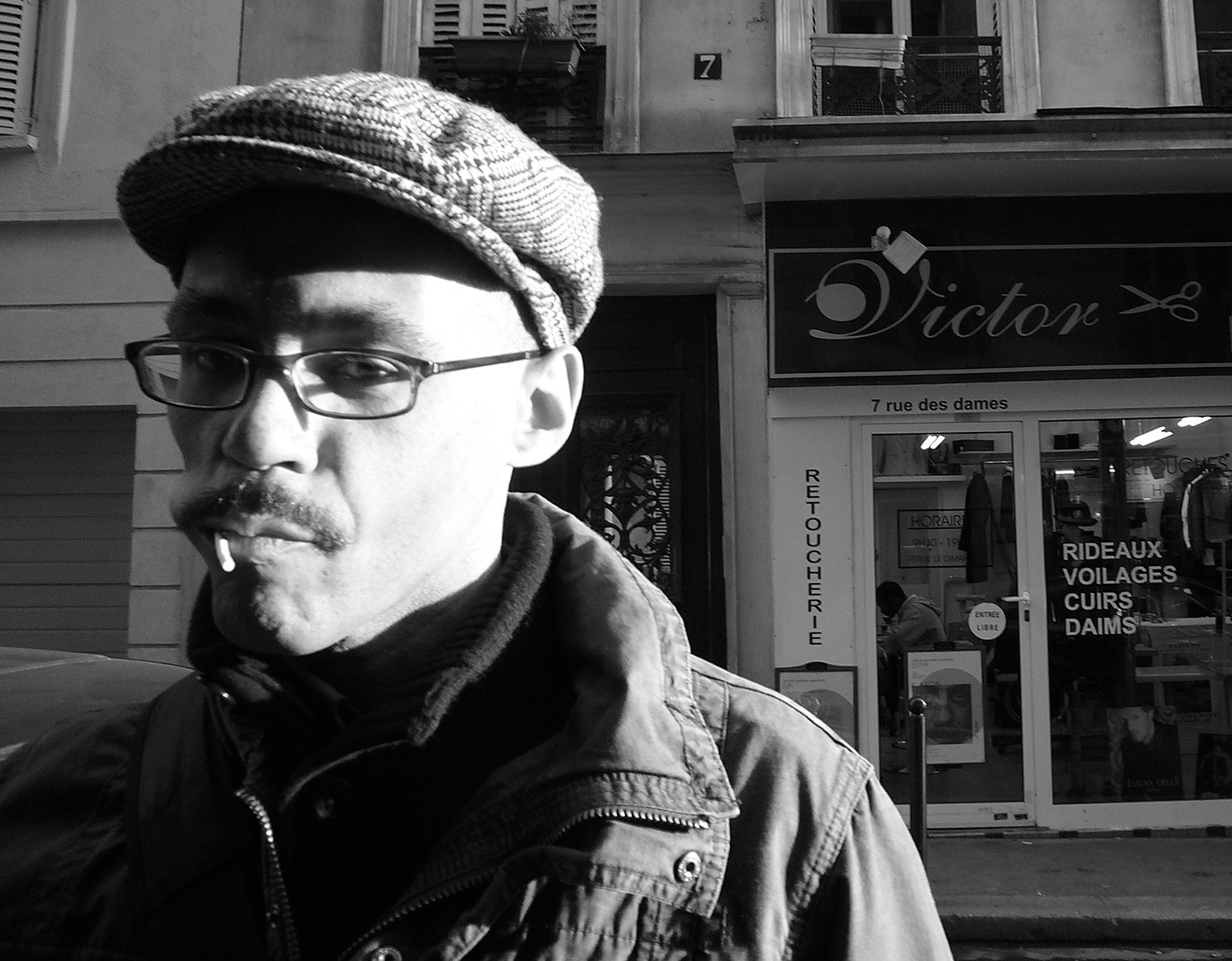
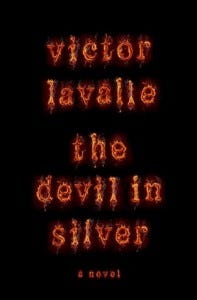
Victor LaValle grew up in Queens, New York and is the author of one story collection and three novels. His most recent novel, The Devil in Silver — a horror story set in a New York City mental hospital — was a New York Times Notable Book of 2012. He has been the recipient of numerous awards including a Guggenheim Fellowship, an American Book Award, and the Key to Southeast Queens. He teaches creative writing in Columbia University’s MFA program.

I asked LaValle about his horror obsessions, what he feared as a kid growing up in the bad old days of New York City, and what he’s going to do when the monsters come.

Adalena Kavanagh: After hearing you read a story about celebrating Halloween night I felt a kinship with you because it sounded like we both grew up in similar New York City neighborhoods. Where did you grow up in Queens? What were your neighborhood bogeymen? I grew up in Washington Heights and didn’t leave until 2009 so I saw the whole arc of the crack epidemic and later gentrification. Growing up in a “rough” neighborhood you’re taught to be careful or street smart and thinking back my bogey men were crack heads, drug dealers, the police and sexual perverts. Though I grew up near crime, in a city known for crime, I’m probably most spooked out in the country where it’s too quiet and nothing is likely to happen. I like to say that when the sun sets, the wind chime becomes the soundtrack to your murder.

What were you scared of when you were a kid? What are you scared of now? How do you think living near crime affects your perception of fear and danger?

Victor LaValle: I grew up in Queens in the late seventies and early eighties. I lived in Jackson Heights and Flushing, neighborhoods that really weren’t too bad or at least didn’t seem bad to me. I think I’d only get perspective on the place, on the city as a whole, when family friends visited from places like Maryland or Virginia. In a way their fear communicated to me the idea that there was anything to fear. Before that I mostly thought of my neighborhoods like, I’m guessing, almost anyone does: home. And the things to deal with were just the things to deal with. I’d totally agree that nothing spooked me more than the idea of the countryside. I read a lot of Stephen King, H. P. Lovecraft, Shirley Jackson and there were all bad advertisements for life outside of cities. All the bad shit happens in the small towns and rural areas. They get otherworldly monsters and demons and whole towns that stone poor girls to death. My biggest childhood fear, really, was just getting beat up by older boys. That’s pure cake comparatively.

All the bad shit happens in the small towns and rural areas. They get otherworldly monsters and demons and whole towns that stone poor girls to death.

I will admit though that at a certain age I became more aware of the idea that New York City, as a whole, was dangerous. I was probably ten or so. But my concerns weren’t really about me they were about my mother. There were two movies I remember seeing that caused my fear. The first was a terrible made-for-TV movie based on the Guardian Angels. The other is this terrifically bad movie called Fighting Back from 1982. It starred Tom Skerritt, it’s just a Death Wish rip-off, but there’s this one scene that I just shouldn’t have scene when I was that age. And it left me afraid the same thing was going to happen to my mother. The whole clip is silly, but the rough part comes about 2:15. It really gave me a shock. This movie took place in Philly but I felt it was a fine picture of the anxiety running through the “gritty” New York of the era, too.

AK: At first I thought that I wasn’t well versed in horror, but that’s mostly because I don’t like the gory type of stuff like the Saw movies. But I think at the heart of it, the monsters in horror or the supernatural are symbolic manifestations of our psychological fears. What do you think horror is? What draws you to horror?

VL: There’s a certain definition for the word monster that I love. It derives, in part from the Latin word monstrum, and can be translated as an omen or a message from the divine. To me this comes closest to explaining the appeal of horror, at least for me. All the best horror, the best monsters, terrify in their embodied state but also in the idea of what they represent. They have to do both. That’s why, for me, something like a dragon doesn’t qualify as horror. It’s fantasy not because it’s unreal (so are Dracula and Jason Voorhees), but the dragon doesn’t speak to any kind of idea or wisdom that causes me to tremble. The dragon doesn’t seem like a message from the divine, it’s just a really big lizard. (Though of course Godzilla does seem like a message, but of course he’s a dinosaur not a dragon.)

In a way I’d say our psychological fears then are actually manifestations of far older wisdom and not the other way round, from long before the idea of the human psyche became codified. I like the idea that part of what terrifies us is the feeling that there’s a world far past what our own minds can come up with. Certainly there are fears we generate but even these, potentially, can be tamed. More frightening is the sense that there are things we can’t tame, can’t even reckon with, and so we tell horror stories to try and reconcile this fact.

AK: I’m most drawn to psychological suspense and the supernatural. I love Shirley Jackson and one of her scariest stories is “The Summer People.” She’s a master of suspense but she might not be the first person that comes to mind because she grounds her suspense in the horrors of the domestic. What are your favorite horror movies, and books? Why?

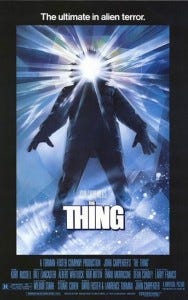
The Thing film poster

VL: My favorite horror movie — both because of its quality and because of when I first saw it — is without a doubt John Carpenter’s The Thing. I have a vague recollection that I saw it on TV but I’m completely sure that’s wrong. The gore alone would’ve made that impossible in the 1983 or 1984. But I do remember watching it on a TV which must mean someone had it on VHS. Most likely this was one my childhood best friends, Glenn Roth, whose father was a source of horror movies, HBO semi-porn flicks, and actual porn flicks. (He didn’t know he was our source, but that’s beside the point.) Here’s a clip of John Carpenter talking about how and why he made his version and why his monster is simply one of the best ever brought to the screen. (Considering that almost all movie monsters suck terribly once you see them.)

I love this movie for many reasons, but most of all the “moral” of the story was, in the end, about self-sacrifice. At least that’s how I saw it, even as a 13 year old kid. By the end the film becomes a kind of debate about the drive to live no matter the cost versus the willingness to die so that others might live. I’d really never seen a movie tackle this issue and I haven’t seen many do it since. The fact that it did so while showing a man’s head crawl away from its body on legs that sprouted from its scalp was really just gravy.

That said, and on entirely different chord, I’d count Robert Altman’s 3 Women as another brilliant horror movie. Haunting and dream-like, this movie just straight up baffled me the first time I watched it. It still does, but I’ve watched a half-dozen times since.

AK: I’m obsessed with the psychologically unreliable narrator or narrative (think of all the characters in Shirley Jackson’s The Haunting of Hill House) and the supernatural, particularly Chinese ghosts and spirits, Daoist shaman, and Daoist exorcisms. What are some of your horror related obsessions?

VL: Being raised a Christian, I think my initial feelings/reaction to the supernatural were undoubtedly filtered through that lens. Good and evil, the Devil versus the Lord. But in a way this filter demanded that I not actually be all that conversant with the Bible in order to think of it that way. To actually read that book is to confront the confounding, conflicted nature of both the Hebrew Bible and the New Testament and to marvel at the ways that book is more of anthology of many old faiths from the Middle East, incorporating the old gods and demons in order to assimilate them. Once I began to understand my tradition in this light it was easier to sort of leaf backward to Babylonian myths, which were no doubt once Babylonian religious doctrine, Sumerian and all the rest.

And yet it’s not, strictly speaking, my tradition. What I mean is that my Ugandan mother (and even more so my grandmother) were devout Episcopalians because the British ruled Uganda and brought their faith with them. Unlike many other parts of the world, Ugandans didn’t hide their old faiths inside the new one. Most of them cast off the old ways and took on the new and the nation is still overwhelmingly Christian. Weirdly, it’s that absence before Christianity that also interests me. Like a phantom limb of faith. As a result I find myself interested in the idea that there’s a face behind the face, a god behind the gods. Maybe this is just my way of saying that gods or demons or ghosts or werewolves all seem like versions of a newer faith that’s taken place of the older one and that older one, in a sense, is defined by its emptiness. Is this getting foolishly esoteric? I like to think there’s a Master Key to reality, a Grand Unified Theory of Fear. At least some of my reading, and a lot of my writing, is an attempt to track it down. I can’t think of a better way to segue into a Black Sabbath song than that.

AK: “More frightening is the sense that there are things we can’t tame, can’t even reckon with, and so we tell horror stories to try and reconcile this fact.” How does writing horror relieve us of our fears or provide comfort? Is it like the vaccine that’s made from the thing that will make you sick?

VL: I feel like it’s just a pressure release valve, one that not everybody needs or even welcomes. The same way, I guess, that not everyone finds roller coaster rides thrilling. The old, but I think true, take on horror is that it lets us feel the fear without risking true pain. The part I find most interesting is that so many of us need to feel that fear. I think it’s because we understand, on various levels, that existence can be tremendously difficult and downright horrifying. Literature and film and art that acknowledges this fact confirms the feeling and that confirmation alone can be a gift.

AK: In horror movies there’s always a moment where you’re shouting at the screen, “Get out! Get out!” I’d like to think that I’d stay and fight, but I’d probably only do so if the monster, demon, or whatever was about to get my mom, sister, or niece. Anyone else, I’d probably run or just lie down and die. What are you going to do when the monsters come? Are you going to fight? Why?

VL: One of the things I hate most about the modern horror film/television is that neither seems to take into account the sophistication of its audience. I recently reread a story by the wonderfully named Oliver Onions called “The Beckoning Fair One.” (This is a link to an ebook download of the collection from which it comes Widdershins) This story has every now hokey horror movie cliche, even the cat that jumps out from nowhere for a cheap thrill. The story was published in 1911! In other words most horror movie makers haven’t updated their shit in over one hundred years.

In other words most horror movie makers haven’t updated their shit in over one hundred years.

I bring all that up to say that I think it’s an artificial device to have the people stay and fight. Nobody with an ounce of sense would. People get angry when people shout “Get out!” at the screen, but they are doing this because they are protesting an insult to the audience’s collective intelligence. I’d say it was a courageous move to high tail it out of there because if you were faced with a monster or demon your entire understanding of the known universe would have to suddenly be thrown into question! When the monsters come I’m going to open my third eye and obliterate them with my ultra-wisdom beam because if they’re real then my magic will be too.

AK: There’s this idea that horror movies are actually meant to maintain the status quo. That this is why women and people of color suffer the most in horror films. What do you think?

VL: Horror and porn both work to reveal the hidden urges of a society. This isn’t the fault of the genres though, it’s the fault of the people who create them. One of the reasons I’d love to see more women and people of color making films is just so we’d get a much broader spectrum of bizarre, and deeply biased, perspectives on screen. The only thing I really object to is blatant stupidity. Take, for instance, this opening scene from Jurassic Park.

A no doubt multi-billion dollar enterprise has built an island paradise/dinosaur park (not to mention brought dinosaurs back to life) but they haven’t created a cage with a door that can rise automatically? And then, amongst the all-white team helping to get the raptor loaded, the guy who must raise the gate manually is black? Get the fuck out of here. Again, this isn’t the fault of the genre (science fiction) this is the fault of a series of guys — from the director on down — who thought nothing of not only the scene but the life sacrificed. That’s a bigger problem than a genre.

AK: “Once I began to understand my tradition in this light it was easier to sort of leaf backward to Babylonian myths, which were no doubt once Babylonian religious doctrine, Sumerian and all the rest.”

It’s so interesting to me to think about mythology because the way we study myths today we look at them as these superstitious stories but you’re probably right in that at one time they were religious doctrine. Why do you think horror writers or movie makers reach back to archaic religious practice to hang their stories on?

VL: There needs to be a certain amount of distance from a practice or a belief before it can be turned into entertainment. The Da Vinci Code was an event, in part, because it turned a fairly recent and world-dominating faith into mere fodder for a romp. Some people protested I guess, but not enough to suggest it was “too soon.” But the farther back you go the more readers and viewers are willing to buy into all kinds of supernatural stuff they’d scoff at if based on things now.

Many of the Gothic novels of the 18th century are actually set hundreds of years earlier. This was because those authors also knew that human beings are more willing to enjoy a book about the superstitious past rather than the superstitious present, especially if our modern day superstitions have yet be disproven, even the scientific ones. (String theory, I’m looking at you.)

human beings are more willing to enjoy a book about the superstitious past rather than the superstitious present, especially if our modern day superstitions have yet be disproven, even the scientific ones. (String theory, I’m looking at you.)

AK: “Weirdly, it’s that absence before Christianity that also interests me. Like a phantom limb of faith As a result I find myself interested in the idea that there’s a face behind the face, a god behind the gods. Maybe this is just my way of saying that gods or demons or ghosts or werewolves all seem like versions of a newer faith that’s taken place of the older one and that older one, in a sense, is defined by its emptiness.”

Monsters are scary until you kill them, but what seems scarier is that emptiness you talk about here. What are some of your favorite examples of the faceless monster, or the scary thing that cannot be seen or named?

VL: The greatest “emptiness” monster from my childhood comes straight out of The NeverEnding Story. The Nothing!

“Who are you really?”

“I am the servant of the power behind the Nothing.”

Gmork

That’s great horror. My only issue with the Gmork’s explanation is that he labels the Nothing as despair, but this strikes me as still too optimistic. There is a God and it’s not there. To me that’s terrifying to contemplate. By comparison, even H. P. Lovecraft’s Old Gods mythos is too optimistic. After all Cthulu is there in a coma (or something) at the bottom of the South Pacific. Even Lovecraft still wanted to be able to point, in some general direction, at something.

AK: What are some examples of a Grand Unified Theory of Fear? Or if not that, what are the elements you’re looking for in a great horror story or movie?

VL: I do like the stuff that makes you come away thinking a bit. Whether you’re thinking about what happened in the story or about its grander implications doesn’t really matter to me but I don’t want to be entertained alone. Believe me, entertainment is hard enough but the best stuff offers more. Even if I disagree with the idea or the philosophy at the heart of book or a movie I want to feel as if there was a philosophy in play. Be interesting, I suppose that’s the only thing I’m asking. And that’s the case for book, movies, music, and people.

REVIEW: Sherwood Nation by Benjamin Parzybok

At the onset of Benjamin Parzybok’s Sherwood Nation, the entire West Coast is suffering from a severe drought. Chaos reigns: Southern California is largely abandoned and gangs of dehydrated desperados rule the area between every city-state. Massive migrations east, where conditions are marginally better, have caused the US government to blockade the Rockies, sending only basic humanitarian aid further west.

Portland, Oregon, is becoming a desert. Mountains once capped in snow year-round have become brown heaps on the horizon. Summer stretches long into what were once winter months. Rivers have dried and the greenery is gone. Once towering, moss-covered trees are clumps of fire prone bones reaching into the sky. Water rations are down to one unit gallon a day. Every industry has dwindled. Youth unemployment is in the ninetieth percentile. The mayor, whose tenuous control is in constant jeopardy with his own unpopularity, City Council and the National Guard, proposes building a near-hundred-mile trench to the Pacific.

Amidst this dying city is Renee, a 20-something part-time student and out-of-work barista with a mind for water activism. When her first heist goes wrong — the intention is to steal a truck of black market water heading to the wealthy West Hills — Renee finds herself handing out unmarked gallons in the fog of shock. It is a selfless act in grave times caught on tape and aired by the news. Instantly a heroine and criminal at once, she is dubbed Maid Marian.

A fugitive with her face broadcast citywide, Renee flees to the poor and largely lawless neighborhoods of the Northeast. Here, the persona of Maid Marian takes over. She realizes that she has the means to make a change. Supporters first trickle and then pour in. Eventually, under her leadership, a select bloc of the city cedes, forming the tiny, community-run nation of Sherwood.

The country of Sherwood achieves idealistic goals. People bolstered on hope are happy to perform mandatory volunteerism: clearing the debris from many aggravated riots, banding together to create safe streets, saving tax rations to build small farms and reopen schools. But Renee, as Maid Marian, finds herself a dictator. It interferes with her love life and causes constant questioning of her sense of self. The mayor of Portland, desperate to regain control, is spiteful of her bike-riding Rangers, celebrity status and success, and the National Guard plays both sides.

Though the book is action-driven, Maid Marian’s merry band is equally compelling. Characters remain true to themselves as the heat of summer claims lives and sanity, but, as the plot requires, do not remain completely static. Her boyfriend, Zach, the brain, begins as one of the few employed, a creative at the ad agency in charge of the mayor’s campaign. Bea, Renee’s roommate and loyal friend, acts as Little John. Jamal, son of Gregor, a drug lord and longstanding neighborhood kingpin, is her leading soldier. Nevel, Zach’s coworker, digs a tunnel beneath his house to no apparent purpose beside the vague fantasy of saving his family from the plight of end-times within its subterranean walls. And Christopher is the mayor’s partner, backbone and confidante.

Rich with haunting descriptions of a place once wild and now starved and poignant human dilemmas of basic survival, Sherwood Nation is a manifesto on how communities can work together to improve the greater good that does not shy from, sugarcoat, or exaggerate the corruptions of power and outcomes of rebellion. For a political treatise set in an imaginable apocalypse, Parzybok’s second novel is refreshing in its lack of heavy-handed allegory or pedantic utopian preaching. Maid Marian reaches beyond herself to create peace and solidarity in hopeless times. Threatened, others desire her demise and position. It is a clever, if cautionary tale.

Sherwood Nation

by Benjamin Parzybok

Powells.com

MEDIA FRANKENSTEIN: Halloween Special

A Monstrous Primer: That horror is often perceived as a boys’ club, most fans of the genre would never deny. Horror fiction is home to more Misters than Misses, and those who are active are underexposed. H.P. Lovecraft, E.A. Poe, Stephen King, Clive Barker, Peter Straub and the gang are trotted out as horror’s vanguards, Edith Wharton, Ann Radcliffe and Yoko Ogawa affectionately claimed as dabblers. Not unduly long ago the gendering was not so subtle; Flannery O’Connor’s tales of “mystery and misery and horror” in the South were disparaged by critics as “ highly unladylike,” O’Connor herself for “[slamming] down direct sentence after direct sentence of growing outrage…” As much to say: a woman shouldn’t. The Bram Stoker Awards, selected and presented by the Horror Writer’s Association since 1988, go overwhelmingly to men (the Shirley Jackson Awards, “established for outstanding achievement in the literature of psychological suspense, horror, and the dark fantastic,” boasts a more diverse roster.) Such privileging extends to film. Among 26 horror auteurs who were chosen to helm an hour-long episode of Showtime’s 2005 anthology series Masters of Horror not one — not one! — was a female director. Ditto among the three bigwigs summarily crowned as the genre’s elite — Tobe Hooper, Wes Craven and John Carpenter, with nary a mention of Jennifer Lynch, Claire Denis or Mary Lambert. Editorial titan Ellen Datlow says it best in her prelude to Nightmare Magazine’s “Women Destroy Horror!” issue: “For almost fifty years, hundreds of stories by women in the early years of horror, and their authors, were mostly forgotten. “

In dual honor of Halloween and #ReadWomen2014, Electric Literature’s “Media Frankenstein” column is hereby recommending 5 sublimely horrific media pairings to take with you into the week leading up to October 31st in ascending order off freakiness, all 10 (a combination of literature and film) directed or written by women. In the interest of keeping things listicle-like, the music limb has been lopped off.

1ST Creature

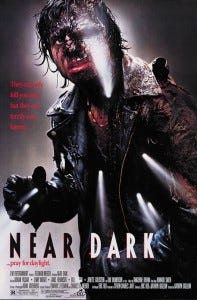
TOP HALF: Near Dark dir. Kathryn Bigelow (1987)

Near Dark

Near Dark is a Kathryn Bigelow film and it shows. Probably the only “hillbilly vampire road western” in existence, Bigelow’s movie is gorgeously shot, not least when it comes to the graphic bloodletting. From the death-by-spur scene in the honky-tonk bar to the hotel shootout with the cops, the action is the centerpiece, as twanging with tension and expertly staged as anything from Bigelow (Point Break, The Hurt Locker, Zero Dark Thirty). The plot is elegant and spare. Near Dark’s bloodthirsty undead — a nomadic family unit that calls to mind the members of an 80’s death-rock outfit (think Bauhaus or Christian Death) and that showcases performances from character-actor greats such as Lance Henricksen, Jenette Goldstein and Bill Paxton — roam the dust-blown highways and lonely truck stops of the rural Midwest, making snacks of mortal souls. They come upon Caleb (Adrian Pasdar), a farm-boy who falls in love with one of their minion (Jenny Wright) and whom they subsequently seek to induct into the gang, teaching him their vampire ways; although the word itself (“vampire”) remains unuttered start to finish, a subtle technique of Bigelow’s that estranges the story from bloodsucker tropes, making the mythos seem urgently scary. Yet the movie is more than just cold atmospherics; it also has a beating heart in the plight of the lovers (Wright and Pasdar), not to mention the plights of the other vampires except, maybe, for Paxton’s Severen, who he channels with shrill homicidal aplomb. The role is a companion piece to hysterical milquetoast Private Hudson, who Paxton played in Aliens two years before, a film that boasts Goldstein and Henriksen, too. (Bigelow and Cameron were married at the time, which people frustratingly like to bring up to explain why the former has gotten so famous).

If the supporting cast of Aliens isn’t enough to make you watch Near Dark right now, then look to the film’s grime-washed chiaroscuro, its aura of seedy roadhouses at night, its aimlessness and nihilism, and formal innovations sundry. Bigelow redefined vampire horror in the same way that Danny Boyle did it with zombies (28 Days Later) but nearly two decades before.

BOTTOM HALF: The Orange Eats Creeps by Grace Krilanovich (2010)

Orange Eats Creeps book

I’m not the first writer to reference Bigelow’s Near Dark and Grace Krilanovich’s debut novel The Orange Eats Creeps in the same grave-corrupted breath; critic Tobias Carroll used the crossover as a touching off-point in his 2010 review. Nor am I the first to be taken aback at the aggressive independence of the novel from the film, in spite of what strike me as purposeful nods. The Orange Eats Creeps bills its crusty-punk denizens of the Pacific Northwest as “hobo vampire junkies” hopped up on “crank, cough syrup and blood.” The novel itself reads like a freaky gene-splice of Charles Burns’ Black Hole and Lynda Barry’s Cruddy by way of 90’s hardcore zine culture, with a splash of Blake Butler and Poppy Z. Brite. Its nameless narrator, a vague teenage girl, describes her deathless cohort thus: “We’re blood-hungry teenagers; our rage knows no bounds and coagulates the pulse of our victims on contact… I can’t remember being a child, maybe I never was one. But I’m sure I’ll never die; I get older, my body stays the same. My spine breaks and then gets back together. I have the Hepatitis, I give it to everyone, but it never will actually get me. Our kind doesn’t die from anything, all we do is die all the time.” Just like in Bigelow’s film, the narrator and her band of “immoral shitheads” stalk the lonelier quadrants of the American West with nihilistic heedlessness, raiding drugstores, fornicating in public. Just like Near Dark, The Orange Eats Creeps revels in the flickering menace of quintessentially American roadside spaces after the circuits have gone on the fritz and normal folk are safe in bed. “Safeway at sunrise…” Krilanovich writes. “We storm through the doors… What would happen if you harnessed the sexual energy of hobo junkie teens?” Yet where Near Dark is about actual, if de-familiarized vampires, Krilanovich’s vampires are ambiguously realized; it isn’t altogether clear if they’re supernatural figures who live off of blood or if they’re just so whacked on drugs that their impressions of existence are de facto supernatural. In The Orange Eats Creeps there are no star-crossed lovers, just the reeking trash-scape of the self without end. What both of these bracing portrayals agree on: vampires are existential beings. They tell us as much about life beyond death as they do about life when the heart has stopped beating.

2nd Creature

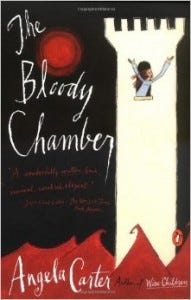
TOP HALF: The Bloody Chamber: And Other Stories by Angela Carter (1979)

The Bloody Chamber

Angela Carter has always struck me as one of the most criminally underrated horror writers — writers, period! — of the 20th century. That said if you have heard of Carter, it’s probably in connection with her story collection The Bloody Chamber, a company of fairy tale re-imaginings as feminist as they are phantasmal. And yet, when she wrote The Bloody Chamber, Carter never intended for her stories to be read as retellings. In Carter’s own words: “My intention was not to do ‘versions’ or, as the American edition of the book said, horribly, ‘adult’ fairy tales, but to extract the latent content from the traditional stories and to use it as the beginnings of new stories.” These phantasmagoric allegories, then, were baroque, and loaded up with sex and murder.Director Neil Jordan (Interview with the Vampire, Byzantium) adapted one of the stories from The Bloody Chamber (“The Company of Wolves”) starring Angela Lansbury and Stephen Rea in 1984; Carter co-wrote the screenplay. In that story, a re-imagining of the Little Red Riding Hood fable, the wolf — here a Huntsman turned werewolf and described by Carter in the overture as a “grey [member] of a congregation of nightmare” — kills the apron-clad, bible-toting Granny and lies in wait for Little Red. In the original story, Little Red Riding Hood gets eaten herself and must rely on the Huntsman to perform a life-saving autopsy on her devourer to save her and her Granny; in Carter, Little Red seduces the werewolf, engaging in “a savage marriage ceremony” with him to the howling of lupine familiars surrounding Granny’s cabin. The anti-myth is clear enough; Little Red has come into her sexual nature, by her own agency, not a moment too early. Carter’s gory re-appropriation of female sexuality as a supernatural force in The Bloody Chamber would go on to spawn other reinventions of popular myths and genres into the late 20th and early 21st centuries — for example, the excellent werewolf film Ginger Snaps (2000), written by Karen Walton, in which female puberty is likened to lycanthropy, and the immeasurably less excellent Twilight, in which Bela, a descendant of Carter’s Little Red, takes the feminist movement a century backwards. Without Angela Carter, we’d have no Brian Evenson, no Aimee Bender and no Kelly Link; we’d certainly have no Kate Bernheimer. Elsewhere in The Bloody Chamber, Beauty brings about a transfiguration in the Beast (“When her lips touched the meathook claws, they drew back into their pads…”), and Sleeping Beauty is refashioned as queen of the vampires, “the last bud of the poison tree that sprang from the loins of Vlad the Impaler who picnicked on corpses in the forests of Transylvania,” her Prince Charming a blithe young fool on R&R from WWI. In the latter (“The Lady of the House of Love”), Carter writes: “The Countess stood behind a low table… With her stark white face, her lovely death’s head surrounded by long dark hair that fell down straight as if it were soaking wet, she looked like a shipwrecked bride. Her huge dark eyes almost broke his heart with their waiflike, lost look; yet he was disturbed, almost repelled, by her extraordinarily fleshy mouth, a mouth with wide, full, prominent lips of a vibrant purplish-crimson, a morbid mouth. Even — but he put the thought away from him immediately — a whore’s mouth. She shivered all the time, a starveling chill, a malarial agitation of the bones. He thought she must be only sixteen or seventeen years old, no more, with the hectic, unhealthy beauty of a consumptive. She was the chatelaine of all this decay.” Here is Carter to a T. There’s the post-modern privilege of insight conveyed through Gothic, 19th-century prose, the warm trickle-down of the faintly profane, the hint of screwball comedy, the hyper-real imagery, bursting with fluids. Carter made fairy tales scary again by making them stories we haven’t been told.

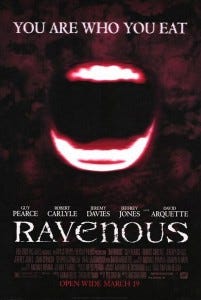
BOTTOM HALF: Ravenous dir. Antonia Bird (1999)

Ravenous

Antonia Bird’s Ravenous engages in a similar reconsideration of popular folklore, this time in the period setting of a remote California military outpost just after the Mexican-American War. Enter Boyd, played with spooky stoicism by Guy Pearce, a Lieutenant in the Army of the Republic of Texas who has been banished to Fort Spencer at the foot of the Sierra Nevadas for cowardice in the line of battle (a discharge that we learn, ere long, is far more nuanced than it seems). Amidst the gallery of misfits that Boyd encounters when he gets there, including an opium-addled private (David Arquette) and a schlubby colonel (pre-kiddie-porn-scandal Jeffrey Jones), comes another visitor to the Fort, the feral, malnourished Colqhoun (Robert Carlyle) — pronounced “Calhoun” — who regales the company with a hideous tale of wagon trains lost and survival gone savage. Robert Carlyle is magnetic; he and Bird have worked together in the past, and it shows. Carlyle exudes a stately menace that vows to come flying apart any second, recalling his turn as soccer hooligan Begbie in 1996’s Trainspotting; in Ravenous, he’s the perfectfoil for Guy Pearce’s more understated Lieutenant Boyd (in what film, I ask you, is Guy pierce not awesome?!). When things go south, they really do. The myth is question is Wendigo, a flesh-addicted man-beast of Algonquian derivation, which here manifests as a virus of sorts, and travels among the ranks of men, pitting them against each other. It’s this reinvention of popular myth that renders Bird’s film a companion to Carter — not to mention its wryness, its screwball bloodletting, its archetypal characters in moral upheaval. But where Carter’s collection explores femininity, Bird’s movie does the same for men — their ready grasp of evil, sure, but also their humanity. The movie had a mixed reception, probably because it’s extremely bizarre. It’s not quite a comedy, not quite a western and not quite a straight-ahead horror film, either; a blurred quality that could come off as tone-deaf. The soundtrack is a co-production between classical composer Michael Nyman and Blur-front-man Damon Albarn. The banjo, concertina and chorus of strings that usher Boyd onto the grounds of Fort Spencer are distinctly at odds with the period setting, the pastoral landscape, the horrors to come (the vibe is not dissimilar from Johnny Greenwood’s soundtrack to There Will Be Blood). Quirks infuse the script as well, such as when Colqhoun glibly quotes Benjamin Franklin at Boyd, “Eat to live. Don’t live to eat,” or when Jones’ Colonel Hart confesses: “It’s lonely being a cannibal. Tough making friends.” The colonel’s lament is not lost on the viewer. Ravenous is, at its core, a sad movie, more about the redemption of Lieutenant Boyd than Wendigo-fever or Calqhoun’s bloody crimes, and the ending delivers a punch to the heart. As much of a hybrid as Ravenous is, The Bloody Chamber, too, tricked readers, who were broadly uncertain how they should digest it — how its potent admixtures should cause them to feel. And that is the thing about legends, I guess: a good one always lives or dies on the strength of becoming a legend all over.

3rd Creature

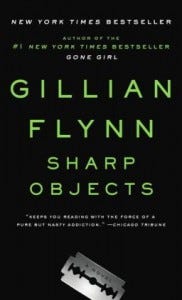
TOP HALF: Sharp Objects by Gillian Flynn (2007)

Gillian Flynn, Sharp Objects

Gone Girl was good, but Sharp Objects is better. Badly if stylishly misunderstood by Mary Gaitskill in her Bookforum takedown, Gillian Flynn has done for families what H.P. Lovecraft did for space; the menace comes not from the galaxy’s reaches but rather from inside the home. Home is where the heart is, sure, but only once mommy or daddy or hubby has cut it, still beating, from out of your chest. Home is also Missouri, when you’re reading Flynn, in this case the fictional town of Wind Gap, where reporter Camille, who grew up there, returns to investigate the murders of two local girls. The girls have been strangled, their teeth taken out; one of the girls, I’ve had trouble forgetting, is stuffed in the crawlspace dividing two buildings. Sharp Objects, as with other Flynn, is intensely, disturbingly violent, yet not; there are no murder-scenes and no Hostel-style torture, but violence, nonetheless, is there, like blood blooming up through a cocktail napkin. Case in point with Camille, the book’s anti-hero, a term the author has made sure can be liberally placed onto women as well (Walter White and Don Draper both pale to Camille). Fresh from the psych ward, Camille is a mess — she’s got some urgent mommy issues (Southern Gothic belle, Adora); her sister died when she was young and she hasn’t exactly had what you’d call closure; her living half-sister she’s deeply estranged from (the over-developed and uncanny Amma); while the woman herself is a certified cutter, her body a map of her failures and ills — “Whore” on her ankle, “Nasty” on her kneecap, “Girl” on the space above her heart. You know what someone like this needs? An extended return to the site of her trauma, a Victorian mansion with all of the trappings and Flynn isn’t scared to deliver her there so we can watch her world implode. Genre-wise, Sharp Objects is a mixture of Southern Gothic whodunit (think: The Little Friend by Donna Tartt), the family saga of psychological unease (think: We Have Always Lived in the Castle by Shirley Jackson) and the serial killer thriller (think: Red Dragon by Thomas Harris). Stephen King blurbed it: “An admirably nasty piece of work…” And though it holds plenty of gruesome surprises — more murders uncovered, both present and past, a gangbang in a slaughterhouse — the novel’s true horror comes not from its filth but the filth that its players inflict on each other, the grim psychological scarring and torture. In many ways, this wouldn’t work were Flynn’s abusers not so real: Adora, the dark queen of bless-your-heart-manners “like a girl’s very best doll, the kind you don’t play with;” step-father Alan, “the opposite of moist,” reading equestrian books in the parlor; Amma, the preening and virginal whore, who Camille feels as much of a need to impress as recoil from in horror and run for the hills. Sharp Objects isn’t existential; you do find out who killed the girls, which fulfills the novel’s promise of a stomach-churning mystery. That pleasure, however, is nothing but plot. Camille’s demons, the people who reared and destroyed her, commit and recommit their crimes. Flynn’s view of the species is as bleak as Lovecraft’s, the signal difference being this: Flynn’s malign intelligences aren’t dressed up as humans and they’re not going to whisk you away to their planet. They are human beings — they’re your parents, your siblings. Relax: they’re here to take you home.

BOTTOM HALF: Surveillance dir. Jennifer Lynch (2008)

We’re all so hot on David Lynch (especially now with the Twin Peaks revival) , but nobody talks about Jennifer, really. That’s probably because she’s a far more transgressive and far less pretentious filmmaker than her father. Where David Lynch defaults to gleeful illogic and robo-tripping tracking shots, Jennifer Lynch maintains control, doling out tension by hot, bloody spoonfuls. Nowhere is this more apparent than in 2008’s horror-thriller Surveillance, for which Jennifer Lynch would become the first woman to receive the New York City Horror Film Festival’s Best Director award the year the movie was released. And none too soon for her career after the ruin of Boxing Helena (1993) — Lynch made her first movie at only 19 — about a wunderkind surgeon (Julian Sands) who turns the object of his affection (Sherilyn Fenn) into a quadruple amputee to prevent her from leaving him. The film wasn’t only hacked up by reviewers; the National Organization of Women said of it: “Nothing has come out in the past two years that reaches this level of misogyny. If Jennifer Lynch thinks this is what love is all about, I sincerely hope no one ever falls in love with her.’’ Some reviewers, however, had warmer opinions — of all reviewers, Janet Maslin, who wrote: “Ultimately, Ms. Lynch has nowhere to take her erotic parable except to a dead end, but she makes the unfolding of the story a spooky, engrossing process. There’s a lot more emotion to Ms. Lynch’s work than there is to her father’s… ‘Boxing Helena,’ while not the work of a Girl Scout, could also not be mistaken for a film made by a man.” So you can see why 15 years elapsed before she tried again, this time with a tale of two serial killers on a brutal rampage across rural Nebraska. The killers are pursued by Feds (Bill Pullman and Julia Ormond), who are keen to unravel their most recent killing through the shaky accounts of that killing’s survivors — a cop, a girl, a tweaker woman. How the film gets its title? The video feed that shows the survivors recalling their trauma, which Pullman and Ormond are watching off-stage in their government suits with an eerie detachment. Much like Flynn’s Sharp Objects, Surveillance also borrows heavily from the trope-cache of the serial killer thriller, albeit in a different setting — Surveillance pastoral, Sharp Objects domestic. The former’s a whodunit, too. Lynch’s villains, thrill-killers in burn-victim masks, are not who you don’t think they are. The violence they wreak at the start of the film is queasy-making and compelling while the origins of it — the trauma that drives it — are hidden by the killers’ masks. Sharp Objects, conversely, showcases the trauma, the violence born out of that trauma suppressed. Of Surveillance’s killers and their masks director Lynch had this to say: “People who hurt people more often than not have been hurt themselves… [The masks that the killers wear] sort of represented the monsters that hurt each of these characters when they were younger… I wanted to have [the masks] be something distorted and [look] as though two people might have applied [them] to each other in an erotic and lost state.” The pessimistic verdict of Sharp Objects and Surveillance:violence is our natural state,as foreordained as your next breath.

4th Creature

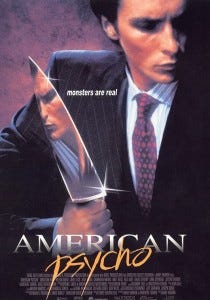
TOP HALF: American Psycho dir. Mary Harron (2000)

American Psycho

There’s a special schadenfreude in pointing out just how much better Mary Harron’s adaptation of Brett Easton Ellis’ novel is than the source material, primarily because of how much it would likely piss him off. Where Easton Ellis’ 1991 book is a paean to literary excess — too violent, too graphic, too long, too much — Harron’s adaptation of the life of Patrick Bateman, stock-trader by day, mass-killer by night, from a screenplay co-written by Harron herself and Guinevere Turner (who acts in the film) is a masterpiece of subtlety and narrative restraint. Take this stellar early scene: Bateman, played by Christian Bale with a faintly bewildered barely-thereness, takes a turn of his gorgeous Manhattan apartment while narrating in voice-over: “I believe in taking care of myself, and a balanced diet, and a rigorous exercise routine. In the morning, if my face is a little puffy, I’ll put on an icepack while doing my stomach crunches…” Follows then a scene of Bateman’s backside in the shower, the water streaming off of him as he soaps up his gluts and his shimmering flanks, hinting at the female gaze in a story that’s routinely horrid to women. “Then I apply an herb-mint facial mask,” Bateman tells us, “which I leave on for ten minutes while I prepare the rest of my routine. I always use an after-shave lotion with little or no alcohol because alcohol dries your face out and makes you look older…” And so do the cosmetic exertions continue until, finally, wiping stream from the mirror, Bale removes the gel-mask slowly. “There is an idea of a Patrick Bateman, some kind of abstraction, but there is no real me, only an entity, something illusory. And though I can hide my cold gaze and you can shake my hand and feel flesh gripping yours and maybe you can even sense our lifestyle are probably comparable, I simply am not there.” This scene sets the tone for the rest of the film as Bateman’s mask of sanity progressively slips. When Bateman kills a finance rival (Jared Leto) in an axe-murder scene that is loud-out-loud funny, his numerous blood-crimes begin to catch up in the form of a poker-faced private detective (Willem Dafoe). But Bateman can’t control himself. As he confesses to his fiance (Reese Witherspoon) during a lunch-date whose objective reality Harron later calls into question: “My need to engage in homicidal behavior on a massive scale cannot be corrected but I have no other way to fulfill my needs.” Those “needs” that Bateman talks about aren’t limited to those he hates. He kills homeless men, doormen, policemen and women — a great many women, we’re led to believe, many of whom he abuses pre-mortem. Herein lies a subtle yet crucial distinction that recommends the movie in relation to the book: while Bateman’s sex-crimes in the novel are such that they part with critique of misogynist systems and enter the realm of those systems themselves — he feeds his fiancé a urinal cake, he funnels a rat up a woman’s vagina — Mary Harron’s femicides are subtler and more frightening. Horror 101? Perhaps. And yet you can’t deny the chops of a scene in which Bateman abuses two call girls, largely because you don’t see the abuse, just the shaken call-girls as they leave his apartment; the way one of them rips down the money he offers on her way out the door with an obvious limp is worse than any torture scene that Easton Ellis slavered over. The same could be said for a subsequent scene, which is probably the movie’s most graphically violent: running naked with a chainsaw and covered in blood, Bateman chases a girl down a dark hallway, howling. It’s a pointed contrast to that first naked scene where Bateman does crunches, laves off in the shower, in perfect proportion, in perfect control, an object of the female gaze. Here, he’s stripped of everything but what drives him to hunt and make meat of his quarry. She lands a kick in self-defense. “Not the face,” he screams. “Not the fucking face you piece of bitch trash!” Harron succeeds in American Psycho where many men have tried and failed: to reckon with misogyny without voyeurism; not to preach or indict but to show us: this is. And you’re a person, too. So, feel.

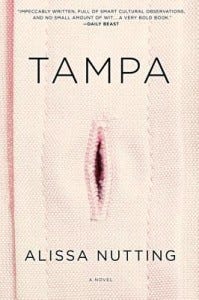
BOTTOM HALF: Tampa by Alissa Nutting (2013)

Tampa, Alissa Nutting

Alissa Nutting’s novel Tampa fulfills the promise of Harron’s film by letting the female gaze run amuck in a woman akin to Patrick Batemen. Yet the book is devoid of ra-ra vindication; Nutting’s portrait is vivid and highly disturbing. The offender in question is called Celeste Price — or anyway she goes by name. She’s as much of an “entity,” finally, as Bateman, this time in the guise of a svelte 8th grade teacher (of English, of course) in the suburbs of Tampa. Yet instead of abusing and murdering women, Celeste seduces pre-teen boys — but not just any boy will do; Celeste requires one “at the very last link of androgyny that puberty would permit him: undeniably male but not man… [not yet wrestled] into a fixed shape.” Enter Jack Patrick, the hapless love object, whom Celeste wastes no time requisitioning wholly. A lot of uncomfortable trysting ensues, and emotional Russian roulette, and dark scheming, all of it done so Celeste can pursue her attraction to underage schoolboys unheeded. So where does the horror come in, you might ask? And that is partially the point. By immersing the reader sans hope of escape in the mind of boy-hungry sociopath — at one point, she dreams of a super-size boy band crushing her with their genitalia — Nutting makes us come to terms with a lot of our ass-backwards cultural values; older man + younger girl = sex offense, while older woman + younger boy = rite of passage. A social pathology starts to emerge, a tacit hebephillia (see the recent alt lit scandal) , and we are forced to reckon with what turns us on in startling ways. Yet that isn’t what most links Tampa with horror. Celeste Price, a mixture of Nosferatu, the Countess of Bathory and Patrick Bateman’s long lost sister, slathers on the facial creams (like virgin’s blood) to foil old age, and seems to draw vigor from those she corrupts. She also drugs her husband, Ford, from a stash of crushed-up Ambien to keep him submissive — and all this time you thought Gone Girl was the ultimate story of marital horror? Indeed, Tampa might find better company among straight-ahead horror novels such as Stephen King’s Doctor Sleep (2013)or Joe Hill’s NOS4A2 (2013)than Nabokov’s Lolita, to which it has been unbecomingly likened. More than Patrick Bateman, even, Nutting’s Price seems supernatural, in spite of being rooted in a hyper-mundane world. This might be because of the signature fact that Bateman in some sense can see that he’s mad, while in Celeste the need for tweens has crowded out pretty much everything else. Tampa, as well, has its own naked scene when Celeste’s inmost self is revealed to the reader. It’s as shocking as Bateman manhandling his chainsaw, chasing that girl down a dimly lit hall. What both portrayals share in common are darkly existential endings — though calling them “endings” might be to belie both Harron and Nutting’s artistic intent. In Harron’s take on Easton Ellis, Bateman’s privilege shields him from a moral accounting; in the film’s final sequence, he breaks it down for us: “My pain is constant and sharp and I do not hope for a better world for anyone. In fact, I want my pain to be inflicted on others. I want no one to escape. But even after admitting this, there is no catharsis. My punishment continues to elude me, and I gain no deeper knowledge of myself… This confession has meant nothing.” Celeste, too, is a prisoner inside her own skin, though she comes to the knowledge less cleanly than Bateman. The title of the book speaks volumes; though Celeste may not know where she’s going, we do. Tampa, the town where the novel takes place, is one among a legion like it. When Celeste Price has sapped it, she’ll move to the next, the “entity” of her — her punishing need — adopting new, infernal shapes. Harron’s and Nutting’s are stories of horror — or terror, more rightly — because they don’t end. The monster never gets its due, forever to wander the whorls of its maze.

5th Creature

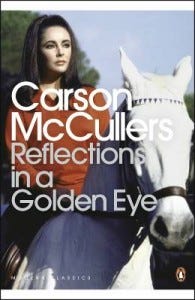
TOP HALF: Reflections in a Golden Eye by Carson McCullers (1941)

Reflections in a Golden Eye

Carson McCullers’ novel Reflections in a Golden Eye has got to have one of the best beginnings in literature: “There is a fort in the south where a few years ago a murder was committed. The participants in this tragedy were: two officers, a soldier, two women, a Filipino, and a horse.” And in a way that’s all you need to understand the book’s M.O. Facts are presented, affect is repressed — the prose is sharply uninflected — and Reflections, like all of our best horror stories, is a story of repression and destruction at its heart. McCullers’ fiction had always been dark — along with O’Connor, Capote and Welty she got lumped in as Southern Gothic — but Reflections is so unremittingly dark that it tips her, I think, into horror’s dominion. On the surface, the novel tells the tale of two marriages crumbling in on each other: the Pendertons — Weldon, a cuckolded Captain, and his gorgeous and castrating wife Leonora, who McCullers describes as a bit “feeble-minded”; and the Langdons — shattered Alison and happy-go-lucky Major Langdon with whom, as McCullers’ novel begins, Leonora is having a prolonged affair. The soldier is Private Elgee Williams — spooky, abstracted, obsessed with Leonora — the Filipino Anacleto, Alison Langdon’s domestic companion, and the horse Firebird, who belongs to Leonora. In among these charged relations — a soap opera cast, if there ever was one — are disorders, perversions, pathologies sundry, and attendant upon them the grotesque set-pieces that shocked the book’s readers when it was released; bestial sadomasochism, morbid exhibitionism, autogenous obsession and self-mutilation — enough grown-people issues with bad consequences to overflow the DSM. The Private covets Leonora and the Captain develops a thing for the Private while Leonora and the Major carry on with their affair with little thought to what it does to Alison Langdon, holed up by the fire, a garden shears held to her tenderest organs. And yet for all its luridness, the book is smoky and obscure. The Filipino Anacleto — one of Gothic’s most jaunty and memorable oddballs — illuminates the book’s obliqueness in the weird watercolors he makes for his mistress: “ ‘Look!’ Anacleto said suddenly. He crumpled up the paper he had been painting on and threw it aside. Then he sat in a meditative gesture with his chin in his hands, staring at the embers of the fire. ‘A peacock of a sort of ghastly green. With one immense golden eye. And in it these reflections of something tiny and — ‘ In his effort to find just the right word he held up his hand with the thumb and forefinger touched together. His hand made a great shadow on the wall behind him. ‘Tiny and — ‘ ‘Grotesque,’ [Alison] finished for him. He nodded shortly. ‘Exactly.’” The book is so disquieting because so much of it lies hidden. In her essay “The Grotesque in Southern Fiction,” Flannery O’Connor — who cared little for McCullers — explains this inclination in the following way: “…if the writer believes that our life is and will remain essentially mysterious, if he looks upon us as beings existing in a created order to whose laws we freely respond, then what he sees on the surface will be of interest to him only as he can go through it into an experience of mystery itself… Such a writer will be interested in what we don’t understand rather than in what we do… He will be interested in characters who are forced out to meet evil and grace and who act on a trust beyond themselves — whether they know very clearly what it is they act upon or not.” Reflections’ morbid subject matter renders it grotesque, of course, but also, too, O’Connor’s “mystery,” what drives the novel’s characters to “meet evil and grace and [act on trust] beyond themselves.” In Reflections, that “evil and grace” leads to murder. That, and nipple mutilation. Oh yeah, and riding horses naked. Too much dirty linen to ever get clean. And that, for the people involved, is a problem. The secrets they keep and that drive them to ill are secrets they can never tell.

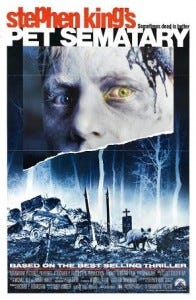
BOTTOM HALF: Pet Sematary dir. Mary Lambert (1989)

Pet Sematary

Talk about repression — sheesh. The book that Lambert would adapt by horror maestro Stephen King was, according to him, the only one that King at first refused to publish. “If I had my way about it, I still would not have published Pet Sematary,” commented King. “I don’t like it. It’s a terrible book — not in terms of the writing, but it just spirals down into darkness. It seems to be saying that nothing works and nothing is worth it, and I don’t really believe that.” Stephen King has been known to exaggerate some — indeed-y-do, as King might say, he rakes in nine figures for doing just that — but given what the book contains, moreover what Lambert would do with the movie, the story is without a doubt the most heinous nightmare he ever dredged up. It follows the hugely unlucky Creed family, who move to a new town in (you guessed it) Maine so that Louis, the dad and a medical doctor (played by Dale Midkiff with glassy-eyed stiffness) can work saving lives at the college in town. The Creeds’ misfortunes first begin when the family maid hangs herself in their basement. After having a half-assed death talk with their kids — apropos of which Rachel, the good doctor’s wife (Denise Crosby), recounts her sister’s dwindling from spinal meningitis in a scene in the film that reduced me to tears of abject primal terror the first time I watched it — the Creeds assume that all is well until the family cat goes missing. Louis finds him later on, pancaked by a passing truck. But because he was crappy at giving the death talk (not wanting an even worse reprise, I guess) buries him not as a pet should be buried, in holy ground for hounds and goldfish, but in a sacred place “beyond” which a neighbor reveals to the doctor, ere long, was a mystical hotspot for Micmac interment. (Always count on Stephen King for political/cultural/racial tone-deafness) But the cat comes back/ the very next day/ yeah, the cat comes back/ they thought he was a goner — etc. Needless to say, he is no longer cuddly. And so begins the film’s descent into supernatural hard knocks never-ending for the Creeds, the more so when the viewer learns that the burial ground, in fact, is “evil” and is drawing the family one by one into its orbit of decay. This sounds like fairly silly stuff, but Mary Lambert manages to make it resoundingly, viscerally scary. To certain horror geeks like me, Lambert’s an intriguing figure; she directed this movie, its terrible sequel and from there made it onto the B-list full-time (Urban Legends: Bloody Mary and Mega-Python vs. Gatoroid are two of her newest artistic forays) Which strikes me as an honest shame. There’s a funhouse overripe-ness, an uncanny fuzz, to the way that the movie was shot and directed. Nothing could be worse to watch in my twelve-year-old mind than that dwindling sister, and the scenes with the foul, resurrected tot Gage (Miko Hughes) are enough to make anyone never have kids — not to mention the gory dream-revenant Pascow, and the satanic cat, and the shin-slicing scene. To someone who understands how hard it is to chill the blood of someone else, Lambert’s film succeeds in spades. The film is a companion piece to Carson McCullers’ subtler creation in the sense that the latter makes good on the former. The travails of the Creeds are the Pendertons’ and Langdons’ liberated from the prison of tasteful restraint. Zombification, family trauma, the death instinct and, worst of all, the act of harming those you love are buried deep down in McCullers’ novel; in Pet Sematary, Lambert resurrects them, parades them around, gives them teeth and a scalpel. If Freud’s das Unheimlich is partly defined by a long-dormant yet nascent belief in the “old, animistic conception of the universe,” which includes “the omnipotence of thoughts, instantaneous wish fulfillments, secret power to do harm and the return of the dead,” then Pet Sematary could be defined, too, as the latent content that Reflections represses. If McCullers wrote the eulogy, then Lambert says the incantation.

A Social Media Horror Film

“The tweets are coming from inside the house!” The above is a short horror film about one of the most frighteningly pervasive terrors of modern life: social media. Give it a watch and if you like it, Tweet about it! Then Facebook it! Then Ello, Pinterest, Tumblr, Snapchat, Instagram (oh, God, it never ends!)

Credits:

Directed by Grier Dill
Written by Lincoln Michel
Featuring Cale Hughes, Jarrod Zayas, and Tessa Greenberg
Sound by Joseph Colmenero
Filmed and edited by Grier Dill

Twelve Haunting American Short Stories to Read This Halloween

by Rebecca Meacham

What makes a ghost story “American”? Let’s ask a ghost: “An American ghost does something quite different, because the people of the present are very mobile, the executives are constantly thrown from city to city, dragging their families with them.” In other words, says the narrator of Anne Sexton’s “The Ghost,” American ghosts belong to people, not places.

It’s a theory, anyway. It’s hard to argue with a ghost.

What’s certain is the power of these short stories, which fret the strings of human connection. Some tales are terrifying, others absurd. And like good (American?) ghosts, this devil’s dozen will stay with you long after you’ve turned the page.

Our Spirits, Ourselves. “We are here to prepare for not being here.”

“Po’ Sandy” by Charles Chesnutt (from The Conjure Woman and Other Conjure Tales)

Sandy and Tenie yearn to stay together like any married couple. But they’re slaves, and Master Marrabo “lends” Sandy to other plantations and sells off his family. So, Conjure Woman Tenie turns Sandy into a tree. Then Master Marrabo wants lumber. Sandy is chopped and built into a kitchen, where the grief-wracked Tenie dies. Harrowing, yes — but this story is subversive, too: Uncle Julius, a former slave, is telling Sandy’s story to a Northern couple who’ve bought the crumbling plantation. And while “Po’ Sandy” looks like an “Uncle Remus” story, its message is chilling: no one can dwell in a house that slavery has built.

“The Farm. The Gold. The Lily-White Hands” by Dan Chaon (from Stay Awake)

Chaon is the master of modern unease. His characters chafe against domestic duty until they detach, lash out, or vanish. In this story, even words disappear from the page as three sisters wonder about the night their father tried to kill them. Are they ghosts? Are they dreaming their future as they wait for the gunshot? “Reader, do not ask me who at this very moment is dreaming you,” Chaon writes, tightening the clench.

“The Country” by Joy Williams (from Tin House Volume 15, No. 3, “Memory”)

Why Are We Here? This is the topic of the group meetings Williams’ lonely, irritable narrator attends, but comprehension lies beyond him. He returns to his young son, Colson, who channels the voices of the narrator’s dead parents. The streets overspill with garbage; at home, Colson is unwashed, the stove is dusty. This world needs looking after.Is the narrator here or not here? Like the narrator, all we want, most urgently, is to know.

The Dead Wives Club. “He saw me — at last, at last, he saw me!”

“The Moonlit Road” by Ambrose Bierce (from The Complete Short Stories of Ambrose Bierce)

Three testimonies converge in this suspenseful murder-mystery-ghost-story: a college-aged son, a murderer, and a dead woman whose statement is made through a medium. Strangled by an intruder, the woman tells of a night when she finally reunites with her husband and son — and they flee her ghostly arms. Why? Who killed her? Bierce lets us play detective, judge, and jury.

“Pomegranate Seed” by Edith Wharton (from The Ghost Stories of Edith Wharton)

You’ve removed the portrait of your new husband’s (dead) first wife. Now, he’s receiving letters penned in a feminine hand — and he won’t show them to you. What can you do? If you’re Charlotte, a middle-class woman who frets formalities, you pretend not to worry — even when your husband disappears. Wharton claimed ghosts lurk in “the silent hours” of daily life; what silence is richer than unspoken fear?

“The Great Divorce” by Kelly Link (from Magic For Beginners)

“There once was a man whose wife was dead. She was dead when he fell in love with her, and dead for the twelve years they all lived together, during which time she bore him three children, all of them dead as well…” So begins Link’s hilarious take on a “mixed” marriage now as “dead as a doorknob.”

Harrowing Returns. You ever been in the grave? It sucks so bad!”

“Sometimes They Come Back” by Stephen King (from Night Shift)

This is the ultimate teacher-anxiety nightmare. As a child, Jim Norman watched a gang of bullies murder his brother. Twenty years later, students in Jim’s high school class are dying, and the empty seats fill with…the ghosts of his brothers’ killers. Like Jim, we’ve all felt defenseless; we recognize his desperation as he takes gruesome measures. As King says, fear is shaped like a body under a sheet, and that body is our own.

“The Ghost” by Anne Sexton (from The Literary Ghost, edited by Larry Dark)

“I bother the living,” says the ghost of a Victorian lady who haunts her unfortunate descendent by breaking her hip, giving her fevers, sabotaging her birth control — and humming a little song into her head during sex. But the story turns sinister when the ghost lays claim to her descendant’s writing: “How the song of the mistletoe rips through the metal of death and plays on, singing from two mouths, making me a loyal ghost.”

“Sea Oak” by George Saunders (from Pastoralia)

We begin in a male strip club called Joysticks, where our narrator worries about his Cute Rating. The family he supports lazes around eating beenie-weenies and watching How My Child Died Violently. Then sweet Aunt Bernie dies, and the real absurdity begins. “We gotta eat right to look our best,” the rotting corpse of Bernie says, declaring her plans. “Because I am getting me so many lovers.”

Freaky Kids. “He might try to help you, in his way. And that could be horrible.”

“It’s a Good Life” by Jerome Bixby (from Masters of Science Fiction, Vol. 2: Jerome Bixby)

What if a three year-old ruled the world? Little Anthony does in this classic short story, which you may remember it as an iconic episode of The Twilight Zone. When Little Anthony plays with a rat, he makes it eat itself. When Little Anthony “hears” your bad thoughts, he puts you in the graveyard — although once in a while, he brings you back. Everything and everyone around Little Anthony must be good and wonderful — or else.

“The Cold Boy” by Benjamin Percy (from Gulf Coast 23.1, Winter/Spring 2011)

Ray doesn’t know much about the boy he’s babysitting — is he 6? 7? — except that he’s just fallen into an icy pond. Thankfully, the boy’s body floats up — and the he spits out water, awakes. But something is wrong. The boy wants to eat nothing but ice cream. His footprints are puddles. He won’t speak. And all the while, crows watch from the trees, waiting for the next cold snap.

“Haunting Olivia” by Karen Russell (from St. Lucy’s Home For Girls Raised By Wolves)

Stuck with loss, Russell’s young characters often try to get themselves haunted. In this sad but charming story, two brothers try to find the body of their little sister, who disappeared into the ocean two years before. Timothy would settle for a glimpse of her ghost. Goaded by his brother, weary of searching, he finds himself in a glowing cave, ready to drown in its grief and wonder.

Halloween Fiction Prompts Culled from the News

Each month we gather some news headlines that are strange enough to be fiction. Here’s a horrific batch of Halloween headlines to get your creative juices bubbling:

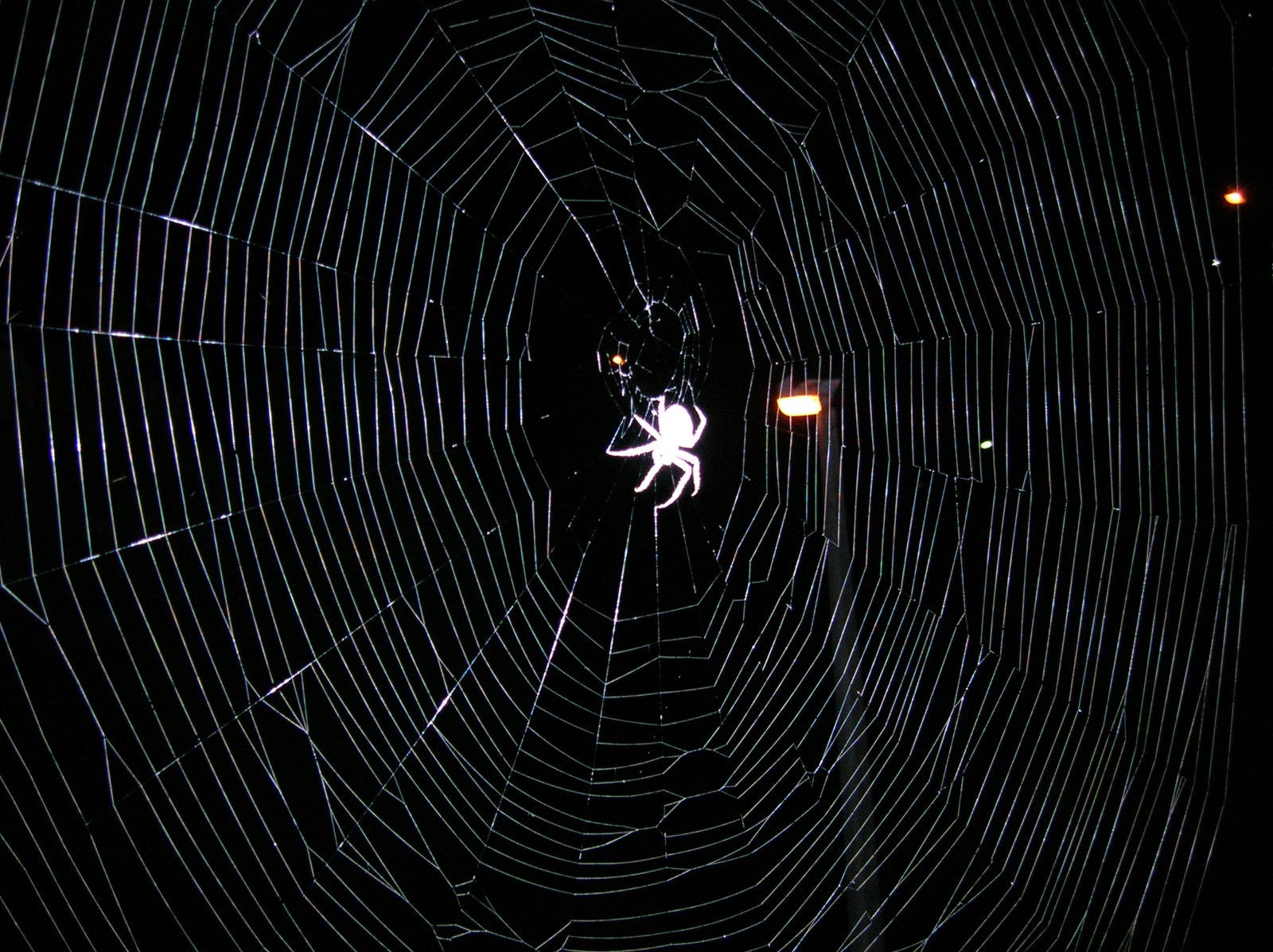
Family flees 6,000 deadly spiders “bleeding out of the walls” of home

Woman buried alive, funeral goers hear screams from the grave

Teenage girl cuts off her playmate’s fingers with an axe for sacrifice to Satan

Man finds free dead mouse in his McDonald’s coffee

Nurse accused of killing 38 patients she found annoying, taking selfies with the bodies

Illinois driver finds coyote stuck in car’s bumper once arriving to work

Man crawls up from subway hatch to throw smoke bomb at New York diners

Grieving parents find supposedly dead son at door

Thieves toss chainsaws at cops

Man grows gigantic, likely evil, pumpkins in backyard

Woman finds three-inch leech living inside her nose

Gigantic crabzilla monster gets ready to attack Britain

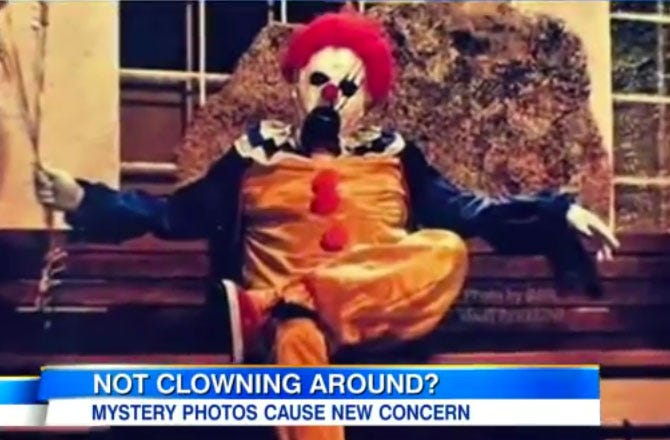
Scary clowns plague California towns

Clown frown

French Embassy Opens Albertine Bookstore with Star-Studded Gala

by Ben Apatoff

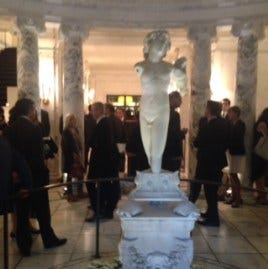
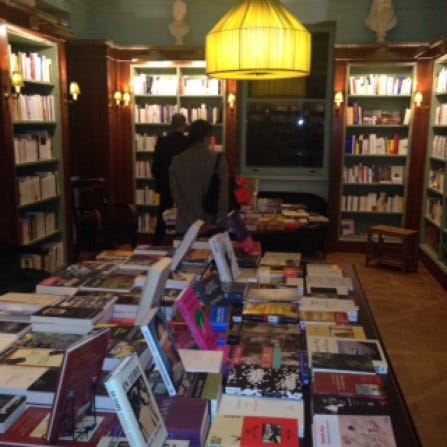
A gorgeous marble entrance, complete with statues and columns, greeted attendees of the French Embassy’s opening gala for Albertine: the only bookstore in New York City devoted to French literature, both translated and in the native language.The space, located in the Stanford White townhouse on Fifth Avenue at 79th Street, also hosts an impressive reading room and a lecture space. Yet dedicated readers might find Albertine’s greatest treasures on its shelves.

“I had an idea to create a unique bookshop in New York that would invite New Yorkers to peruse books the old way again — not just digital, but paperback and hardcover too,” states Antonin Baudry, the French Embassy’s cultural counselor and the author of the graphic novel Weapons of Mass Diplomacy, tells me via e-mail. “Plus, I didn’t want to live in a city without great bookstores. I fell in love with literature when I was in school, studying Proust, and I’ve been hooked ever since.”

Albertine kicks off its opening.

Albertine kicks off its opening.

Albertine opens its doors.

Albertine opens its doors.

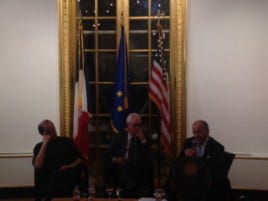
L-R: Charles Ferguson, Greil Marcus and Laurent Fabius.

L-R: Ferguson, Marcus, Fabius.

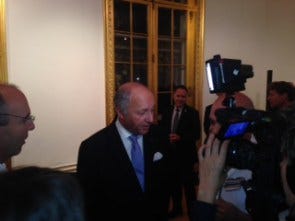
Fabius answers questions.

Fabius answers questions.

Guests enjoy the selection.

Guests enjoy the selection.

Visitors browse the shelves.

Visitors browse the shelves.

Proust scholars will have already noted Baudry’s fandom from the bookstore’s name, taken from a prominent character in Proust’s À la recherche du temps perdu (In Search of Lost Time). “Albertine is the name of my favorite female character in my favorite book,” states Baudry. “Albertine has a complex identity, she’s an emblem of mystery and representative of the fact that one can never really know another person, who they are fully. In a similar way, Albertine the bookstore symbolizes a quest for knowledge and understanding. Stepping into a bookshop is opening the door to a world of ideas and possibilities. There is some mystery. One has to open the book to see what’s inside. Albertine is unknowable, and you never fully get to know what’s in the bookshop because the selection is always growing and changing. That’s what I love about it. “

Baudry adds, “Albertine is a place for everyone, whether you’re French or American; a scholar, or a novice; older or younger. You don’t have to speak French to come to Albertine. This is why we called the space Albertine. Proust’s character was a mix of a bunch of different identities. She was kind of Jewish, kind of a lesbian, kind of pretty — a mix of things. And usually somewhere between sleeping and awake.”

At Albertine’s inaugural ceremony, legendary author and culture critic Greil Marcus moderated a panel with French Foreign Minister Laurent Fabius and Academy Award-winning filmmaker Charles Ferguson (Inside Job, No End in Sight). The panel focused primarily on climate destruction (“The term ‘climate change’ is not enough, because change can be positive,” stated Ferguson), debuting Albertine as a venue for a diverse range of topics and discussions.

“(Baudry) had read my books The Shape of Things to Come — in France, L’amerique et ses prophètes — and Lipstick Traces, and thought I might have some sense of the cultural imperatives of both the U. S. and France,” said Marcus. “He told me about plans for Albertine — which went through a very long permitting process before any thing even began to go forward — and the idea of a festival to mark its opening. Originally we were planning on September 2013. So it all had a long time to develop, for us to get a sense of what we wanted to do and who we most wanted to be part of it.”

“That Laurent Fabius could and would take time for this event — in the midst not only of the UN conference on climate change but the crises in Iraq and Algeria and the looming threat of terrorist activity in France — was remarkable,” added Marcus. “He had only a short time to work with and he quite clearly didn’t want to leave.”

Baudry noted that the opening coincided with U.N. Climate Week 2014, and he specifically invited guests who were relevant to the summit, stating, “Charles Ferguson is a very intelligent and accomplished filmmaker who we knew would shed light on our climate and represent the importance of representing our world through creative means, like films and books.”

Readers had a chance to see what the bookstore offers last week at Festival Albertine, a free, six-day program which ran October 14–19 and was curated by Marcus, with panels featuring guests as varied as Mad Men creator Matthew Weiner, Nobel Prize-winning economist Joseph Stiglitz, filmmaker Olivier Assayas, author Mary Gaitskill, graphic novelist Marjane Satrapi, Nobel Prize-winning mathematician John Nash, and Fields Medal-winning mathematician Cédric Villani. Baudry plans on maintaining a busy schedule of events for Albertine.

“The Festival is a starting point,” says Baudry. “All year long we will host genuine debates, and our intention is for the Embassy to be a place to unite different voices from France and America that will spark a stimulating discourse of thinkers.”

Albertine’s current schedule includes a promising roster of panels and discussions with prominent French writers, from Laurent Seksik discussing his bestseller The Last Days on October 25 to an evening with The Goddess of Small Victories author Yannick Grannec on November 3. And appropriately enough, Proust scholar and Columbia University professor Antoine Compagnon will be presenting his newest book, Un été avec Proust, November 13 at Albertine.

Even with its high profile events and distinguished visitors, Baudry and Marcus acknowledge the daunting task of opening Albertine in the struggling bookstore industry. “I think the store will be less part of the industry and more part of the cultural conversation of the city, like the Swiss Institute, which has built a great following over the years for any event it puts on,” says Marcus. “The bookstore has room for small audiences for interesting appearances, readings, debates, and special exhibitions — a lot will be happening.”

“We have a unique opportunity at the Embassy that allows us to let visitors really explore books at their leisure,” adds Baudry. “They can stay here for hours and read books. Nobody is going to push them to buy anything. Albertine grew from the idea that books are a living, essential part of life. I believe that philosophy is shared by many people in New York and around the world and will sustain Albertine for years to come. Plus, the good bookshops are even more than bookshops — they are places for cultural exchange and debate, places of ideas. And that is the model that inspired Albertine.”

“Melville Never Wrote Me A Choose Your Own Adventure Book”

Like most writers, I have a mental list of literary influences that I can, robot-like, regurgitate during any roundtable, interview, or conversation: StevensWoolfCalvinoNabokovBeckettDickinsonShakespeare. I’ve got the top five list, the top ten list, the top twenty list, and beyond that I could drone on for ages if anyone was bored enough to listen to a verbal card catalog.

But here’s the thing — if you’re asking about my influences to get at why I write, or what makes my writing different, you’re asking the wrong question. Sure — since I started reading what I’d call “literature,” the highbrow stuff — those writers have been instrumental in shaping my style. But I have a theory: the thing that makes you a unique writer hasn’t got so much to do with your influences as it does with how you became a writer in the first place. I think your preferences — your obsessions — come just as much from the first sorts of things you consumed and were passionate about. Whether that’s pop music, comics, “lowbrow” fiction, soap operas, or anything else, the thing that matters most is what started you writing stories. And so to dismiss the lowbrow is to dismiss the entry point, the gates that opened for so many of us at some magical place and time and drew us or dragged us or danced us into this ridiculous passion for making stuff up.

For me, that was horror fiction — those puffy shiny paperbacks where the authors’ names were way bigger than their titles. DEAN KOONTZ! STEPHEN KING! CHRISTOPHER PIKE! I devoured this stuff, staying up late reading under the covers and giving myself delicious mini-heart attacks before going to bed at night. Before I read horror, I never knew one could be so absolutely consumed by something so scary, so dark — and suddenly, I had permission to write about the things that everybody fears.

For me, that was horror fiction — those puffy shiny paperbacks where the authors’ names were way bigger than their titles. DEAN KOONTZ! STEPHEN KING! CHRISTOPHER PIKE!

But this could just be me, right? So I talked to some fellow writers to try out my theory on them. And I was surprised to find how many writers had strong opinions on this topic. Jamie Iredell, author of I Was a Fat Drunk Catholic School Insomniac, approached writing along the same genre trail I did. “I was also a huge Stephen King fan,” he says. “I loved the Dark Tower series, and those are a big influence on this trilogy of novels I’ve written/am writing.” Matt Bell, author of In the House Upon the Dirt Between the Lake and the Woods, says, “I was a writer-in-residence at a private high school a few years ago, and they asked me to give a talk about how I became a writer. For forty-five minutes, I told students about the Choose Your Own Adventure books, about Dungeons and Dragons, and about computer games, especially the old text adventures from twenty years ago. Those were the things that made me realize that stories were not set down in the stone of ink on paper: They were malleable, retellable, able to be shaped by both the teller and the reader or participant, and I would not be a writer without those experiences.”

Laura van den Berg, author of The Isle of Youth, is known for creating absolutely immersive, living worlds in her short stories. So I was fascinated when she told me, “I did not really read at all until I was 19 or 20, when I discovered ‘contemporary fiction.’ I did, however, love watching TV and reading The National Enquirer and making up elaborate imaginative worlds about all the tiny people living inside my computer… And all of that was as influential as anything else.” And for Erika Wurth, whose Crazy Horse’s Girlfriend was recently published, that lowbrow reading wasn’t just a gateway, it was an escape. “You know how there are all kinds of kids in different social strata in high school and there are like three or four kids that are completely weirdo dorks, and nobody will talk to them? I was one of those guys, and so I read under the display case because it was harder for people to find me there and try to hurt me. My favorite author at that time was Piers Anthony because his books had dragons, and everyone had a special talent and it was all about escaping from this earth.”

The idea of escape also resonates with Molly Gaudry, author of We Take Me Apart, a verse novel filled with references to fairy tales and folk tales. “In high school and college,” she says, “I began to turn toward more ‘literary’ novels, of course, but I have a serious soft spot for those stories and writers that took me away, got me away from where I was, and gave me somewhere else to be. I think, really, this is all I want to do, too, as a writer — to give readers somewhere else to be, if they need it, even if only for a little while.”

Sometimes what we choose to consume when we’re young is all about finding out who we are — about shaping ourselves, and learning to see the ways we fit or don’t fit into the world. Chris Terry writes, “I came of age in the early ’90s, a golden age for black pop culture. Hip-hop was huge and new and commercially and artistically viable. Multiple movies and even some TV shows depicted the black experience. I’m half white, and spent most of my adolescence in a predominately white suburb. So, ‘In Living Color,’ Juice, A Tribe Called Quest and The Pharcyde were a way for me to access a part of my own culture that I didn’t have ready exposure to. In some ways, I learned to be a black man by watching Boomerang and listening to Ice Cube.” And this in turn shaped Terry’s writing, including his debut novel, Zero Fade. “It’s about a thirteen year old boy named Kevin, who is assembling his idea of masculinity through pop culture…I wanted my young character to see pop culture as a chance to form an identity by aligning himself with something that is pre-approved and already in place.”

“I aspire to write ‘great books,’ but great books are not at all what made me want to write,” says Mike Meginnis, author of Fat Man and Little Boy. “Some of my most formative early reading experiences were apocalyptic Christian YA fiction from my church’s lending library.”

It seems ridiculous, on the face of it, that writers could learn their craft at the doorstep of writing or culture that might appear inartful, inelegant, or lack complexity. And yet it makes perfect sense. These books are popular not because of their sentences, but because of their storytelling. And isn’t that the first thing every writer has to learn, regardless of medium or genre? “I think that stuff has more useful lessons for most writers than, say, Joyce,” notes Meginnis. “Popular ‘garbage’ can show you how to offer an audience a pleasurable, sometimes even satisfying interaction — can even provide the foundations necessary to earn more experimental styles and structures.”

These books are popular not because of their sentences, but because of their storytelling. And isn’t that the first thing every writer has to learn, regardless of medium or genre?

Erin Fitzgerald, co-author of Shut Up/Look Pretty, agrees. “I’ve learned so much from soap operas. The balance of plot and character and presentation, every single weekday, for an audience that’s one of the most easily bored. Everyone should have to write a Friday cliffhanger at least once.”

“Romance novels, horror novels, thrillers. Psycho, Rosemary’s Baby, everything V.C. Andrews wrote, Danielle Steel: I devoured it all,” says Julia Fierro, author of Cutting Teeth. “Those ‘trashy’ books taught me how to write story, character, and created my lifelong need for drama, conflict, and my belief that every story, no matter what genre or style, needs to make the reader feel as if a lot is ‘at stake.’” And Peter Tieryas, author of Bald New World, says, “I devour and gorge on lowbrow entertainment, from the maligned Waterworld and the original Dawn of the Dead, to comics like Legends of the Dark Knight and X-Force, to K-pop and Tupac, and of course video games. They play with the tropes, or establish all new ones, and being unhinged from traditional restrictions, push the medium, teaching me that I can do the same.”

Matthew Salesses, who wrote I’m Not Saying, I’m Just Saying, points out how he’s used Korean soap operas as a teaching tool. “A couple of years ago, I was asked to write a serialized novel. I was watching a lot of Korean dramas at the time — these are romantic melodrama mini-series — and I said I could try to write something playing off of the structure and themes of a typical K drama. That is, 16 illustrated “episodes” of romantic intrigue and magic (this meant I could also claim “research” while watching). I learned a ton about structure, plot, symbolic action, melodrama in the original sense of the word, and so on. I recently taught a class on ‘symbolic action’ where I had my students write down every action and its significance in a 5-minute segment.”

Consuming lowbrow cultural products can even prime us for the later literary influences we admire and emulate. Certainly, my early fascination with horror writers led me to a lifelong obsession with the darker side of human nature explored in much of literature. It’s not a terribly long leap (in my mind) from Carrie to Kafka’s The Metamorphosis, or from The Stand to Slaughterhouse Five. Andrea Kneeland, author of the forthcoming How to Pose for Hustler, agrees. “I found Lydia Millet’s Omnivores by chance when I was around twenty, and it remains one of my all time favorites and maybe the most influential book that I ever read,” she says. “But I feel like those books before — that mix of King and Joyce Carol Oates and classic European fairy tales, they primed me for it. The same elements were there in Omnivores, just put together in a different, fascinating way.”

Robert Kloss, author of The Alligators of Abraham, says the same was true for him. “I grew up on monster movies and horror films, and I’m still drawn to narrative works elevated from pulp origins. It’s clear to me my aesthetic was shaped by the grotesques in Touch of Evil and the language and horror of Blood Meridian and the menace and confusion of Kubrick’s The Shining or Bergman’s Hour of the Wolf.” And Matt Bell says, “I love Melville but Melville never wrote me a Choose Your Own Adventure book. And I needed that experience first if I was ever going to get to Melville.”

Matt Bell says, “I love Melville but Melville never wrote me a Choose Your Own Adventure book. And I needed that experience first if I was ever going to get to Melville.”

Not every writer I spoke to felt that so-called “lowbrow” culture had been an influence on their work. Some writers simply told me they didn’t have anything to add because they’d never really read or consumed much they considered lowbrow, or pop culture just didn’t have a place in the work they produce. But Porochista Khakpour, author of The Last Illusion, had a particularly fascinating ambivalence toward the lowbrow, reflecting her own experiences as an immigrant. “I was a young Iranian immigrant wanting to become an American writer at age four! I remember begging my parents to send me to private school, which they could not afford, and I found my education at my public school to be insufficient, so I decided to become self-taught. In elementary school I’d go to the library and check out stacks of Shakespeare. In junior high, I tried to read Sartre and all the existentialists. By high school I became obsessed with Faulkner and read everything he wrote. In my social circle people read Sweet Valley High, Babysitters Club, Stephen King, and all this stuff I would pretend to also like but secretly hated. I regarded them with a lot of suspicion — felt very wary of them, as if they would hold me back. I had my own path and agenda.”

I discovered, as I talked to lots of writers, that the vocabulary of the lowbrow almost universally reflects a kind of throwaway culture: garbage, disposable, trash. Yet it’s clear many of us have never tossed out these first and primary influences — they are anything but disposable when we look back at where it all began. Whether we writers actively avoided, sought out, or just plain knew nothing else, it seems what we consumed of the lowbrow world of literature, television, films, video games, and other pop culture has had significant influence on an awful lot of us. When we were young, many of us sought pleasure in the simplest kinds of stories, wherever we found them. And we still seek to tell the best stories, though now perhaps through the influence filters of Faulkner, of Hemingway, of Kafka or Calvino or Alice Munro. But at the end of the day, we’re all of us storytellers, trying to retell that first and perfect tale that started it all.

Night Music

by Joe Fassler, recommended by Electric Literature

A few days after my old friend Erick Engman went to jail — for the awful thing he did to that poor woman’s mouth — Violet and I invited guests for dinner. Frank Keck, who’d done his dental residency with Erick and me, came over with his lovely wife Maureen. We talked about Engman, how sad it was, how weird, him of all people. Frank saw a picture of him on the local news — haggard and old in his mug shot, his hair wild, his eyes dark buttons, uneven stubble caked like wet sand across his face.

“It didn’t look like him at all,” Frank said, shaking his head, holding his wine glass by the globe. “More like his homeless evil twin. But then, it was so — him. The same guy we knew. I have to believe he’s still in there somewhere.”

Next to me, Violet wrapped her fork up in a corner of the tablecloth, a bad habit she slips into when she’s nervous. I touched her leg under the table. It was like my fingers hit a latch, and her trapped words flew out:

“How does someone like Erick,” her voice shrill with anguish, “go so bad?”

No one could answer. For a brief, terrible minute, we sat and chewed in silence, a bleak note hanging in the air. I got another liter of sparkling wine and popped the cork, started filling everyone’s flutes, and somehow the good, old chatter flew up from the bottom again, like the bubbles in our glasses. We spoke about our children, their big, wide-open plans, and the hopes we dared for them. By desert, I’d had four more glasses of wine, poured by Frank’s heavy hand. Drunk heat beamed in my cheeks. I got nostalgic for the old days.

“And the big, black fly kept buzzing around the OR,” I said, laughing. “The patient, who’s about to go under, says, ‘can’t you do something?’ — but with her mouth all set with clamps — ‘ken shoe hew humping?’ So Erick gives this big sigh — and without blinking — ha ha — without blinking, he zips the fly out of the air with the suction hose!”

My face glowed warm, and I over-talked. At the end of the night, I hugged them both too close, too tight, with sloppy wistful words streaming from my mouth.

“We’ve let it go too long,” I said. “Let’s promise, let’s keep in better touch.”

Frank put on the Oliver Twist cap he uses to cover his bald head. I handed him his coat and took him by both shoulders.

“A promise?” I said.

“A promise,” he said, but his smile was hung on fraying strings, and his eyes were sad and dim.

We said goodnight and closed the door. Violet collapsed on the couch.

“Dr. Lee,” she said, and this is how she chides me. That was when I started crying. I held my palms over my eyes, stumbling blindly to her. This surprised us both — there was no need, really. I hadn’t seen Erick in years. But I thought he’d been a good man, and I knew him, and the strangeness of it took away my breath. I fit myself into the cradle of her arms and wept.
I woke in the night, in that terrible zone between drunkenness and consequences, my mouth dry and sticky as Scotch Tape. Through our arched window, a full moon cast a bright, blank cuspid on the wall. And then I heard a sound: a soft, whispery drone, like flutes.

I sat up in bed, squinting at the dark in wine-stunned peevishness. Violet didn’t wake. It was there — two fluted tones, holding notes in an endless chord. A round sound, a blown sound, like breath across the lips of two deep bottles. I plugged my ears and the music dimmed — it wasn’t in my head. It was somewhere out there in the world.

I fit my feet into my slippers and padded across the hall to the bathroom. Raising the window screen, I stuck my head out in the night and peered down at the curbside bins. The street was empty, ash-bright in the moon. The music, if you could call it music, wasn’t loud — but it was there.

I moved through each of the rooms of our house, tilting my ear towards the floor and ceiling. Downstairs, the music held its volume. In the hallway, I quietly plucked about for the root note on our Yamaha upright. Violet likes to play Debussy on it sometimes in the evening. The heavy low note was two octaves below middle C, paired with the G above it. A perfect fifth.

I wandered out into the street in my pajamas, the night warm and murky all around. As I walked down the middle of the road, the sound grew louder, harder to miss — playing from speakers, surely, somewhere in the neighborhood. I looked down the hill out and out over the city, suddenly nursing a strange urge to venture out, to see the dark alleys flooded with shadow, the crouching black forms of lurking bums. The pinhole stars shone bright, and an odd magnet tugged at my heart, beckoning me forward out and down the hill. But I had no idea where to go.

I sighed and walked back to my stoop, closing the door behind me. I generally sleep well and own no earplugs, but all dentists keep plenty of cotton balls on hand. I stuffed the little cloud-wads in my ears, and then I stumbled back to bed.
Through the news, through other dentists that I knew, I learned Engman turned to drugs. I saw him on local television in garish prison robes, scruffy and haggard, his eyes dancing twin pools of dark ink. The clip they played and replayed showed Erick before the judge, claiming that he suffered from terrible migraines and that only straight nitrous oxide gas helped. “The drugs put me to sleep,” he said, gaunt on the stand, laving his hands. “Nothing else could.”

Gradually, I learned more. Once his assistant found him on his lunch break, unresponsive and drooling in his chair, with the mask on. Another time, he chased a terrified kid across the waiting room with his arms outstretched like some huge winged bird, sounding a high squeal with a crazy grin on his face.

“What are you doing?” a terrified mother screamed, using her arms to shield her wailing child.

“We’re only playing!” Engman exclaimed, and, grinning, and he stopped to cheerfully flutter his fingers on her knee, as if to sprinkle dust. Whistling, he swept himself back to his office. In addition to the N20, he was downing Vicodin and Diazepam. He gave his patients unneeded fillings on healthy teeth, and pocketed the cash.

I wince to think I missed a chance to intervene. Even though Engman and I had fallen out of touch years before, sometimes, as a kind of professional courtesy and a funny way of saying hello, I referred endodontal patients to his practice. Once, to my surprise, a woman I’d set up for a root canal called my secretary, Val, asking for another recommendation.

“What’s wrong with Erick?” I snapped.

“I don’t know,” Val said, cupping the receiver. “She only tells me he’s too weird.”

I was stunned. My Engman? I knew him to be a skilled doctor, honest and scrupulous. Quite frankly, I envied his skill throughout our time in school — he that precise with the scraper and drill. He wired braces like he was born to do it. I thought of him as a kind of dentist MacGyver whose veins ran with icy Viking blood.

I chalked up these first few reports to the weird enmity the world has for our field. Everyone’s suspicious of dentists. Our masks scare people. We look at parts of you that you yourself can’t see. And when our fingers play with things inside your mouth, we violate a dark, stone-age taboo that still lurks somewhere within us. The civilized mind thinks: “It’s okay, I’m only at the dentist.” But the caveman brain hisses, “Don’t fuck with my teeth.”

This must be why dentists commit more suicide than any other kind of doctor. Violet says its because we spend all day staring into people’s mouths, “a vicious orifice that reeks of death,” she calls it. No. It’s because our work makes people snappy and anxious, and they treat us like torturers, and project onto us all their nightmares. There’s a whole unhelpful section of the movie store for dentist slasher flicks. They don’t floss for months at a time, and they project their guilt on us. When you see dozens of people a day, as your very presence swells them full with hate, it starts to wear.

Then an old patient I’d sent to Engman returned to my office. She’d switched to him because his practice was closer to her home.

“You’ve come back to us,” I said, pulling my OR mask over my nose and mouth.

“Yeah,” she said. “Things got a little weird over at Dr. Engman’s.”

“Weird how?”

“I don’t know. He spoke too softly, then he spoke too loudly. He was always muttering to himself. And sometimes he’d buzz his lips,” she demonstrated, revving her lips once like an engine. “Just like that.”

I wound floss around my gloved index finger.

“I guess I just didn’t trust him with my mouth anymore,” she said.

“I’m so sorry to hear that,” I said. “Open up.”

And then I saw it: a sloppy filling between 7 and 8 that had clearly chipped her marginal ridge. The amalgam had fractured, likely at the time of setting. Bad, amateur work, like something one prisoner performs on another with a soldering iron.

“You’ve seen no one but Engman since you last came in?” I said, flossing her.

“Thass rah,” she said. Tiny tides of blood swelled from her gumline up washed up on her teeth.

That night I picked up the phone and held it against my ear, listening to the dial tone drone. I started to dial Engman. I hung up.

A few months later — was it a year? — he was on the news. A woman had called the police. Her mouth felt weird and after her procedure she went to check it out in the office bathroom. He’d plugged a filling right between her tooth and gumline. She was still numbed up, she couldn’t feel the messy silver starfish straddling the white and pink, but at the sight she screamed and screamed.
The strange music continued, ruining my nights. At first, I sprung from bed, maddened, determined to find the source. I looked under my kitchen table, opened drawers and cabinet doors, waded into the dense smoky jungle of my coat closet. I’d become the hero of a film, doomed night after night to play out the same taut scene, the ominous drone of perfect fifths spurring me towards my task. The music was distinctly there, like the movie moment when the hero is about to find a new clue in the night. I was supposed to lift the rug or open a drawer, and find — what? And what rug, and what drawer?

One night, I woke Violet.

“Honey,” I said, “do you hear that?”

She reared her head, her features jumbled with sleep.

“Do you? A noise, like music?”

She cocked one ear and listened.

“Nothing,” she said, “I hear absolutely nothing.”

She lunged back towards her pillow and slept.

And it went on that way, the open root and fifth, pulsing slightly, maybe with other low wandering notes right at the low threshold where I could no longer hear. It was music from a scene when the hero’s going to open a secret letter, or a nature documentary lets us watch the whole blue world glow from space, slowly zooming in. I began to slip into my clothes to wander the streets, walking in the middle of the road between the rows of two-story houses, each one lofted over its garage. Cats slunk behind car tires and trash scuttled along on the wind. Everywhere, the two low flutes droned on the air. Overhead in the swirly blue-black, the stars held themselves in clusters, salt spilled across a midnight table. Sometimes a crescendo swelled, louder and more urgent, as I turned a corner or crossed a street. And sometimes, just as quickly, the quavering drone dimmed. I remembered playing Marco Polo as a child, or endless blind games of “Warm and Cold.” The twin flutes seemed to call me towards the sea. I stood at the wharf and stared out at the wide ocean. There was nowhere else to go. It was only at dawn, while the sun came up at the edge of the world, that the music finally petered out. I straggled home in perfect silence.

“Thank you,” I thought, with every quiet step. “Thank you. Thank you.”

But the notes still droned the next night. And the night after that.

I’m a reasonable man.

I went to the doctor.

He looked inside my ears. There was nothing wrong.

I went for an MRI, spent an hour inside the buzzing, clucking tube, strange lights combing my skull. Nothing.

At brunch with Violet, I admitted that the noise had not gone away. She ran her hand along my arm.

“You’re so exhausted,” she said. “You’re haggard. I’ve never seen such circles around your eyes.”

My wife keeps her hair cut short and parted in the middle, so her head looks something like a button mushroom. When I look at her, I usually feel my chest fill with tenderness, the placid feeling that everything will be all right. But in that moment I could not feel a thing but panic, tightening like forceps against my throat.

“This is ruining my life,” I said. “I’m exhausted all day at work. I’m going to make a mistake. I haven’t had a real night’s sleep in weeks. I can’t see patients on no sleep, night after night after night.”

“You did it in dental school. We did it when we had Hal,” our son, she said. “This will pass, just like your studies did, just like his crying passed.”

But nothing changed. I stuffed the pillow over my ears, my temples pounding in frustration. When I looked at Violet’s peaceful slumbering form, I wanted to tear the sheets. I began to make a strong nightcap, two, to try to get me through the night. But then I just woke drunk, the wretched music swimming in the air, and me silently weeping with anguish and fright.

One exhausted evening, prowling the streets in the search, the sound seemed to lure me to a beaten-down all-night bodega. I aimlessly walked the aisles. In one ratty display, jutting with bare hanging hooks, I saw a single packet of children’s balloons. The festive packaging, the many-colored rubber grubs inside, were at perfect odds with all I felt. I bought them at the register, and I brought them home.

I took a gum-pink balloon to work with me and toyed with it in my pocket all through the day. The assistants changed into their street clothes and left.

“I’m going to catch up on some paperwork,” I told Val, our wonderful Russian secretary, who is built like an opera soprano, and calls everyone darling. “Go ahead home, I’ll lock up.”

“Ok, darling,” she said.

The office empty, I finally took the balloon from my pocket. I held it to the N20 nozzle and watched the pink rubber swell like a lung. I took it home in my briefcase.

That night, while Violet was flossing in the bathroom, I took the balloon from my briefcase and sucked it clean. I pattered up the stairs again, the walls burbling a little, and didn’t tell my wife. When she emerged from the bathroom in the lamplight her eyes were frighteningly white. I closed my eyes so I wouldn’t have to see her. The room felt womb-like, warm. For the first time in a month, I slept through the night.

But in the morning, when I saw the pink, deflated worm inside my briefcase, my stomach turned. I took the little balloon and drowned it in the toilet. I swore that I would never touch the drug again, no matter how many sleepless nights I suffered. And I haven’t.
I was on the final wisdom tooth when I heard a scuffle in the office.

“Go see what’s going on,” I told Annie. I pulled, and the molar came away with the wet sound of tearing roots and the crunch of bone. Annie stepped back into the room again, green about the gills.

“Oh my god, oh my god,” she whispered. “There’s someone with a gun. In the lobby.”

The patient, a young man, looked at me goggle-eyed with his bloody mouth agape, his face fattened with Lidocaine.

“Stay here,” I whispered, though I knew he couldn’t hear.

I crept down the hall to the window that looks out onto the waiting room. A ragged woman was brandishing a pistol at my secretary. Behind her stood a little boy, wearing a baseball tee-shirt and pants so short they almost looked like capris. His cheeks were smudged with grit and his hair was greasy and long. He had a gun too, and the bravest look he could muster on his face.

“Call the police,” I whispered to Annie, and she nodded, her eyes bright and scared.

We’d gone over; it was the end of the day. A stubbornly impacted molar had kept Annie and me longer, but the other techs had gone. There was only me and Annie — and Val, who stays until we close. I am not brave by nature, but I was so tired that my fingers had gone numb. I stepped into the room.

The first thing that hit me was the smell — like rot, like piss, like a hundred feral cats. I had to cough, and my eyes teared. The woman turned and looked at me, waved the gun in my direction. It was then I saw that her right cheek was badly swollen and painfully inflamed, like she was smuggling a golf ball inside her mouth.

“I need this tooth out,” she snarled at me. “My god, just take it out.”

“The guns aren’t necessary,” I said.

“Like hell.”

“Can I see?” I said.

“Don’t try anything,” she said. “I’ll blow your brains out.”

“I won’t.”

She nodded.

“Keep the gun on them, baby,” she told her son. ”And keep away from that phone,” she told Val, who was murmuring brisk prayers in Russian.

I approached her with my hands in the air, walking along an invisible tightrope on the rug, one step at a time. I caught a whiff of them, the homeless smell that burns like kerosene. When I was close enough to touch her, I waved at my own mouth, asking her to open hers. She gave a stubborn look and dropped her jaw. A wave of stench rolled out, the smell of pus and infected blood. Her gums were spoiled with rot.

“I’m going to look inside your mouth,” I said. “I may touch you.”

She nodded. When I gently pushed her chin down for a better look, her eyes went wet with pain. Her lower right second molar was terribly abscessed. The gum had swelled to the girth of a banana.

“You’re in rough shape,” I said. “You need this tooth out right away.”

She nodded, her mouth trembling.

“What’s your name,” I asked the boy.

“Don’t tell him nothing,” she said. “Don’t tell them not a thing. Just have a seat and aim your gun at the secretary.” It must have seared her jaw, but she laid a light kiss on the center of his head.

“I’m Dr. Lee,” I told the boy. “I’m going to help your mother in the back. You need anything, just come and knock.”

I gestured to the woman.

“Let’s go,” I said. We walked through the door. As soon as we were through she pushed me roughly against the hallway wall and began to back away, the gun aimed at my chest. “You stay right there,” she said.

She peeked into the second room.

“Get out here,” she said. Annie stepped into the hallways her hands in the air.

“Go stand with him,” the woman said. She came and joined me. We stood against the wall together.

“That guy can’t move, can he?” she said.

“He’s in surgery,” I said.

“No,” Annie agreed.

The woman walked backwards, looking into each of the rooms. Then she walked back to the door to the waiting room.

“You okay, honey?” she said.

“Yeah,” her son said. He still had a little boy’s voice.

“Okay,” she told me. “Get in there and let’s get this over with.” She gestured with her pistol. Annie and I walked into the Room #3.

“Lie down here and get comfortable,” I said. She kept the gun trained on us from the couch. The whole room filled up with her smell, a pent-in putrid smell, strong enough to burn the eyes.

“I’m going to ask my assistant to sit down,” I said. “Is that all right?”

“Yes,” she said.

“Annie, please have a seat,” I said. She sat.

“Let me see your mouth again,” I told the woman. She opened up and the rank smell hit my nose again. She had stage five gingivitis, and her gums were mottled with occlusions. Half a dozen cavities spread dark fingers along her ridges.

“This is going to take trust on both our parts,” I said. “I’m going to need to put you to sleep.”

“No way,” she said. “Just do it. Do it now and get me out of here.”

“Have you ever been to the dentist before?”

“Only once, when I was a little girl,” she said.

“Okay,” I told her. “First we need to do something for the pain. I’m going to turn around for supplies.” I went over to the N20 machine and readied it. I could feel the gun aimed steady at the center of my back.

“Turning around now,” I said.

I wheeled the chamber over to the bed.

“Put this over your nose,” I said, handing her the mask. “Breathe. It will help the pain.”

I helped her put the mask on. She closed her eyes, breathing eagerly.

“It’s not doing anything,” she said.

“It will. Just wait a minute.”

I readied the tools at my side table: a bridge, syringe with Lidocaine and epinephrine, elevator, cowhorn forceps.

“Oh,” the woman said. “I feel as light as air.”

“Yes,” I said.

“You’re a good doctor,” she said.

I turned around, and swiveled my tools over to her. She was getting woozy.

“I’m going to take good care of you,” I said. “What’s your name?”

“Jeanine,” she said.

Jeanine was loose and pliable.

“And what’s your boy’s name,” I said.

“He’s Mikey,” she said.

I started working the gun out of her grip.

“Here we go Jeanine,” I whispered. “Just like that.” I pulled the gun free.

“Thank god,” Annie whispered.

The weapon was light, not heavy and cool. I looked more closely. It was a police-caliber decoy, made of plastic, and spray-painted gun black.

“Did you reach the police?”

“No,” Annie said. She started crying. “I couldn’t do it. I couldn’t do it. I ran in the room and hid.”

“It’s okay,” I said. “It’s all going to be fine.”

“Are you crazy?” she said, pushing tears off her cheekbones with both hands. “A gun-toting tween is in our waiting room.”

“Everything’s okay,” I said. “This gun is made of plastic.” I let her feel it. “I bet the boy’s is, too.”

“What if it’s not?”

“We have to sneak next door and finish on Jacob,” I said.

The two of us crept along the hallway floor, below the window where the boy stood.

Jacob sat terrified in the chair, his open mouth full of blood, his eyes bugging out of his head.

“I’m so sorry,” I whispered. “I’m so terribly, terribly sorry. We’re going to fix you right away. Everything’s okay.”

“We’re being held up for dental services,” Annie said.

“But we’re going to be all right. Annie’s going to finish you up here,” I said. “Don’t worry. It’s just a kid in the other room with a fake gun.”

I stepped into the doorway to the waiting room.

“Mikey,” I said. “Don’t shoot.”

He was still standing in the center of the office, holding his pistol two-handed, the muzzle aimed at Val. As I opened the door, he swiveled his aim at me.

“Where’s my mom,” he said. “Don’t touch that phone!” he yelled at Val. He swiveled back and forth between us.

I raised my hands.

“Look,” I said. “The police are on the way already. You need to listen to me very closely.”

“Fuck!” he yelled, stamping his little foot. A strangled scream cut the air.

“If you give me that gun,” I said, “I’ll hide you where they won’t find you. And I’ll fix your mom’s tooth.”

“I’m not giving up the gun,” he said.

“The police are going to be here any second,” I said. “They won’t forgive you, but I will. I need you to listen to me. Give me the gun and everything’s going to be okay.”

“How do I know you’re going to fix her?”

“I promise,” I said.

He looked at Val.

“Give him the gun, honey,” she said, her voice cracking between two notes.

The boy put the gun on the floor, and stepped away from it. He burst into tears. I reached out my hand and he took it. I gently pulled him close and held him.

“Thank you,” I said.

Val started screaming, long screams of pent-up terror, her hands clasping both sides of her cheeks.

“Val,” I said. “Val. It’s ok. We’re ok.” I bent and picked up the gun — the same fake. I went over and put a hand on her shoulder. She put her hand over my hand.

“These guns aren’t real, are they?” I asked the kid.

He shrugged.

“Not real?” Val said.

“Not real,” I said.

“Oh,” she wept. “Oh, darling, oh, oh, oh.”

I reached my hand out to Mikey again. He took it.

“Let’s go on back,” I said, and pulled him through the door.

“Your mother’s in there,” I told him. I let him look in on her. “She’s asleep. She has to be asleep when we take her tooth out. So, you’re going to go sit in the room at the end of the hall.”

I walked him back to Room #1, set him up with Little Fly Fisher, a tiny LCD game with a winding reel that the kids seem to like best.

“Just sit right here,” I said. “I’ll be right back.”

I went in to look in on Val. She was sitting at her desk dumbfounded, staring at the wall with glazed eyes.

“Oh my goodness, Dr. Lee,” she said.

“I’m going to fix this poor woman’s mouth,” I said. “Take a minute. And then go home.”
I finished the surgery with Annie. We sewed Jacob up. I told him that if he promised to never to speak about the holdup, he could have free cleanings with us for life. I sent Annie home, and then I was alone with them. I opened the shades in #3 to let the light in. Then I strapped on clean gloves and gave her a full cleaning. Top and bottom. I scraped away years of hardened plaque, taking all the care I with the nooks and crannies of her ridges. Mikey’s glittery game music echoed in the hall. I took out the woman’s stricken tooth and let the pus drain. I also pulled another molar, and a ruined bicuspid. Then I sewed the gaps. Finally, I water-drilled eight cavities away and filled them in with amalgam. I did it all without an assistant, choosing my own tools, my nozzle in one hand and the drill in the other. When I looked up, the kid was standing in the door.

“Is she okay?” he said.

“Yeah,” I said. “Do you want to see her tooth?”

“Okay,” he told me.

“It’s kind of gory,” I said.

“That’s okay.”

The pulled teeth were lying on the table. I picked up the molar and held it out to him in my gloved hand.

“Why does it have those legs?” he said.

“Those are the roots,” I told him. “They attach the tooth to the jaw.”

He peered at the little molar in my hand. His face was as smooth and round as a filthy bean.

“You’re lucky,” I said. “I got it out all in one piece. If you want, I’ll put it in a little envelope, and you can keep it.”

“No,” he said. He shook his head so hard that his hair blew out like a skirt. “I don’t want it.”

“I always tell my patients to take their teeth,” I told him. “This is a part of your mom. She lived with this tooth for almost her whole life.”

“No,” he said.

I wiped the tooth down and put it envelope.

“It’s here if you want it,” I said. “Let’s wake your mom up.”

I switched on her oxygen.

“She’s going to be fine,” I told him. “But she’s going to be a little loopy. I’d like you two to stay here a while.”

“Okay,” he said.

“Have you been to the dentist before?” I said.

“No,” he said.

“It’s not so bad,” I told him.

“Oh,” his mother woke up. Then she screamed.

“It’s okay,” I said.

“I forget where I am,” she said. “I don’t know where I am.”

“You’re here, at the dentist,” I said.

“Dentist?” she said.

“Yes,” I said.

“Ha,” she said. “Haha. That’s right.”

“Your tooth is out,” I said.

She looked at me. She held her hand up lightly to her jaw, and smiled.

“Thank you,” she said. “Oh, it’s my baby. Hi, hi, baby.”

“Hi,” Mikey said.

“Come here, honey,” she said. She reached out for him and he came to her, and held him.

“I’m going to take off your mask,” I said. I lifted the nasal mask off her nose.

“Jeanine,” I said. “Do you mind if I clean your son’s teeth?”

“I can’t pay,” she said.

“Jeanine,” I said, “you tried to hold up my entire office.”

“I’m sorry,” she said. “It just hurt so bad.”

“I know,” I said. “I just mean — it’s all right. The money’s not an issue.”

I looked at the kid.

“Mikey?” I said. “Can I clean your teeth?”

“I guess,” he said.

“It would mean a lot to me if you would let me clean your teeth,” I said.

“Okay.”

“Stay here and rest,” I told Jeanine. “There’s a cup of mouthwash by your side. Swish with it when you feel ready, will you? You can spit into the sink.”

I took Mikey to the room next door. I worked over each tooth as carefully as I could. He had no cavities and a strong straight layout. Let him choose a fluoride flavor and he picked cherry.
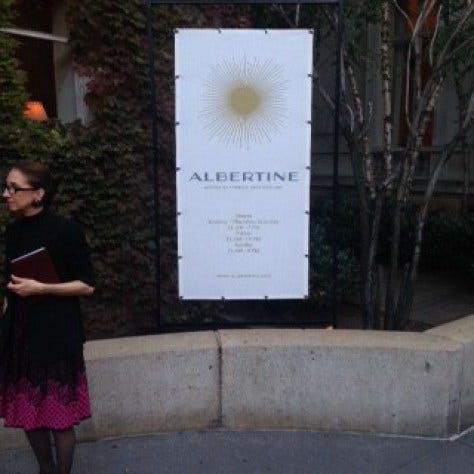
“Don’t swallow,” I told him.

As he sat there, the treatment in his mouth, his mother appeared in the doorway.

“Thank you,” she said.
“Wait with him here a minute,” I said. “I have something for you.”

I called in a prescription for amoxicillin and hydrocodone and had Sam bill it to my office. I took sixty dollars from my wallet, and put it in a letterhead envelope. I took two new brushes, two packs of floss, and several boxes of toothpaste and put them in a bag. Went back into the room and handed them to her.

“You have a bad infection,” I told her. You must go to the pharmacy on Valencia and 14th. Ask for Sam. He’ll give you antibiotics and you must take them every day.”

She nodded.

“Mikey,” I said. “Will you make sure she takes them every single day?”

Mikey nodded. I realized I forgotten to give them brochures, that would explain the daily responsibilities, what to do and not do to.

“Hold on a minute,” I said. I went back to my office for the info sheets. But when I returned into the room, the two of them were gone.
I still go to my office on working days. I meet suspicious patients who spread for me their angry mouths, the rank smell on their breath, their teeth streaked with plaque. I spend my hours wrenching on their molars, which cling with the stubbornness of life; my days hang heavy with the sound of crunching bone. They won’t floss, they guzzle soda by the liter, they smoke and barely brush, and pay for all their crimes — though they blame me for it. The mouth is a dank cathedral where the work is never done. But now I have something I never had before. Yanking at their damaged ones until I sweat, going after dark threads of rot with my whining drill, I know I had one tooth, one tooth in a lifetime of mouths, that was meant for me. I don’t know why, I don’t know how, but that fouled cuspid, blighted in its bed of blistering gums, called to me across the night. I’m thankful that they came to me, or I never would have found it. I don’t know what would have happened to me then. I don’t like to think about it anymore.

That evening I went home and collapsed onto the couch. Violet let me sleep through dinner — I lay so still, she said, she held a mirror to my mouth to check for breath. When she woke me for bed, and I stumbled up the stairs and fell to my pillow like a fainting victim. A deep, night-long dive into comfort, silence, blankness. For the first time, no music woke me. A blissful week passed with no trouble, another sweet one followed on its heels. The marigolds bloomed in their window boxes, a typed-up letter came from my son that he signed, “love.” At work, I’m alert and crisp, coffee quickening my veins. Annie wears a diamond ring her new fiancée bought her, which throws a tiny spray of light when she peels off her latex gloves. It’s only rarely, at the mirror before bed, as I floss, and brush, and rinse, that I catch a dark note in my eyes, and find my mind aiming its spotlight into the rank night alleys with their rows of garbage cans, wondering whether the infection spread inside her wounds, how far it went — but I don’t let it keep me up at night. I worry less and less now. I’ve always made my way with what I have. I did the best I could.