NOVEMBER MIX by Chelsea Martin

DEATH AND DYING

No mixtape can compare to the masterpiece of a mixtape I made at age eleven, perfect in both concept and execution. It was called “Oh Yeah,” and was a compilation of each and every oh, ooh, yeah, oh yeah, uhh, and uh huh from Hanson’s Middle Of Nowhere album. I made that mixtape at an age when I did not think about the term ‘art’ as I made it, and did not yet have the shame and ego and self-hatred that I now associate with the process of making art, which I can only assume, based on the slow increase of these feelings over time, becomes more intense with age.

1. Ready To Die — The Unicorns (Song wasn’t on Spotify so listen to the YouTube instead)

Feeling ready to die seems like a pretty good life goal, one I’ve felt fleetingly a couple of times, in a good way, just like this song makes it sound.

I’ve seen the world, I kissed all the pretty girls, I’ve said my goodbyes, and now I’m ready *cough* to die.

2. Who Could Win A Rabbit — Animal Collective

Animal Collective is one of the only bands I can write to, maybe because I’ve listened to them so much that I don’t even hear the lyrics anymore, though I feel like I listen to them so much because I can write while I listen. Either way, this shit rules.

Been hating on my new perspective, been hurrying along no meal is ever done / but you could win a rabbit!

3. Cool As Kim Deal — The Dandy Warhols

Hey, there’s nothing in my art / I’d rather be cool than be smart

4. My Life’s Alright Without You — No Age

I know I’m going to embarrass myself by trying to talk about “instrumental progression” and “drum fills” because I barely know what those terms mean and I only have the most tenuous grasp of what’s so great about them in this song but, uh, already losing track of my point, um… This song is two minutes long and has the same emotional effect of some of my favorite full-length movies and I think that has something to do with the “instrumental progression” and “drum fills” and maybe also these lyrics:

Of course you want me / of course you want me / of course you want me to feel the way you do

5. A Rose For Emily — The Zombies

I love The Zombies because all their songs sound like beautiful pop songs, but the lyrics are so fucking weird and dark. I like to sing this song to my cat, replacing ‘Emily’ with my cat’s name: Brenda can’t you see there’s nothing you can do? There’s loving everywhere but none for you.
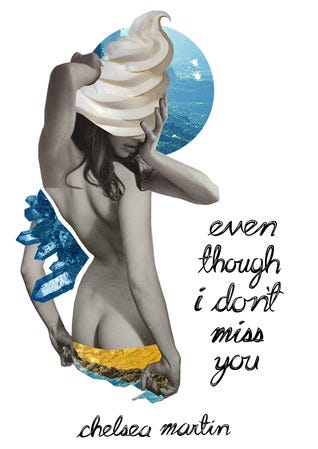
Even Though I Don't Miss You

6. Sister I’m A Poet — Morrissey

I love that “poet” is treated like a dirty word, implied but never spoken by Morrissey, who I imagine to be shaking his tits like a sexy middle-aged woman throughout the entire song.

7. I Want to Die — The Deadly Snakes

I’ve been playing this song at parties for ten years and nobody has ever asked me what it is. This song is awesome: I used to stand up in the face of my adversity / I used to think I had a woman that would care for me / I used to get up / when someone put me down/ I used to think I loved and cared about this spiteful town

8. This Blackest Purse — Why?

This is my number one most-played song in my iTunes library. I think the song has something to do with regret. I almost always want to cry when I hear this line: To listen up and send back a true echo of something forever felt but never heard but maybe only because it kinda sounds like Yoni is crying as he sings it.

9. I Don’t Wanna Die Anymore — New Radicals

I feel like New Radicals are one of the most underrated bands ever. This song is full of unsarcastically cheesy lyrics, which may be my favorite kind of lyrics.

10. Quantum Leap — John Maus

I listen to this song when I’m on public transportation and want to feel connected to everyone else but at the same time more intelligent than everyone else. My boyfriend told me he once cried while listening to this song and thinking about ancestry while stoned.

Chelsea Martin

11. Thunderpeel — Beck

I didn’t know I wanted to be an artist until I started listening to Beck. Before I found Beck, I had no idea you could get away with being a total weirdo. It really opened some doors for me.

12. So What — The Cure

This early Cure song is half bratty love ballad and half jumbled advertisement about a cake decorating set. I imagine Robert Smith wrote this when he was really drunk while watching infomercials and contemplating “the meaning of it all” directly after a somewhat immature breakup.

Each set includes / a turntable / a 9-inch icing bag with 6 high-definition nozzles, an adapter, and 15-inch food decorating bag with three piping nozzles / Please send off this leaflet! Post it today! / And if you knew nothing / Could replace you / If you were sane your heart wouldn’t ache / But so what? / SO WHAT?

13. I’m Straight — Jonathan Richman & The Modern Lovers

Don’t know how this preachy straight-edge love song comes off as so adorable but obviously it does because obviously everything Jojo has ever done is adorable.

14. Opium — Marcy Playground

The whole song rules, but shit gets real at about 1:50 when he starts singing “Mom” repeatedly for 30 seconds, which has kinda been my experience with certain drugs.

15. DON’T LET ME GO TO THE DOGS — R. Stevie Moore

I’m sorry I broke your heart when I said you were bad.

16. When The Fool Becomes A King — The Polyphonic Spree

Please play this song at my funeral/party/whatever you guys end up doing. It’s literally my only request.

***

— Chelsea Martin is the author of Even Though I Don’t Miss You (Short Flight/Long Drive, 2013). Her website is jerkethics.com


How George Saunders’ Lost his Cyncism

In a wonderful interview by Edan Lepucki, George Saunders discusses his collection The Tenth of December, which is a finalist for a 2013 National Book Award. When asked how this latest collection differs from his earlier work, Saunders says this book is “(maybe) a (somewhat) gentler thing than my previous collections. Still harsh, still dark — but within that dark offset there’s some light getting thrown off, I think.”

He explains that this change, this little bit of light, might come from changes in his own life.

When I was younger, I found myself kind of shocked at the harshness of life. We had our kids and not much money, and were both working harder (and with more at stake) than we ever had (and we had worked pretty hard before) and although we were doing fine, it really opened my eyes to how harsh our culture (and, well, life) can be, especially under the auspices of capitalism. I thought: ‘Wow, if life is this hard for us — two relatively bright and privileged college graduates — there must be so much submerged suffering out there.’ So that revelation (and why that should have been a revelation, I have no idea) felt very urgent. And it was that revelation (and the resulting outrage and clarity — the strange beauty of the world when seen through that lens) that I was trying to get into those early collections.

Now, the urgent revelation is more along the lines of: ‘Though all of that is still true, please note that life is not all chaos and cruelty; it is possible to live a life that is loving and dignified (if you’re lucky) and, what’s more, you do not get to live that kind of life unless someone along the way has sacrificed for you and cared for you and intervened on your behalf — and people are doing that all over the place, all the time.’ So positive human action is not only possible, but pervasive; human beings can improve and choose light and so on. And this is all happening in the midst of the aforementioned harshness. So in this book I felt like I was taking the first steps to be able to accommodate that new (to me) vision of the world.

Read the rest of the interview here, and read Fiona Maazel’s review of The Tenth of December here.

Field Notes from a Fulbright Scholar: H.P. Lovecraft’s Québec

On a Fulbright to Montréal, fiction writer Cam Terwilliger will be reporting, expounding, fulminating, and otherwise commenting on his adventures in Canada. While he’s there, he’ll be writing a novel set on the border between the warring colonies of Québec and New York in the year 1757.

Don’t let the Fulbright program know, but I keep getting sidetracked by research that has nothing to do with my project. Mostly, I’m writing a novel set in the mid-1700’s, following a doctor who travels with a band of Iroquois natives through the Adirondacks and up to Montréal. But with so much rich history in the province of Québec, it’s hard not to get swept away by tangents.

My favorite pet project is compiling a list of famous American visitors who came before me. John Wilkes Booth frequented the province and planned to escape here once he killed Abe Lincoln. Willa Cather was inspired to write her Québec-themed novel, Shadows on the Rock, after a stopover of just a few days. And Frederick Law Olmstead, designer of central park, engineered the precipitous landscape of Parc du Mont-Royal, at the center of Montréal. Yet lately I’ve been wondering about someone else, a creepier American sojourner to Québec. Maybe it’s because autumn is here and the shadows are crawling over the old row houses on my street a little earlier every night, but I keep thinking of Québec’s encounter with H.P. Lovecraft, the pulp horror writer from the early 20th century.

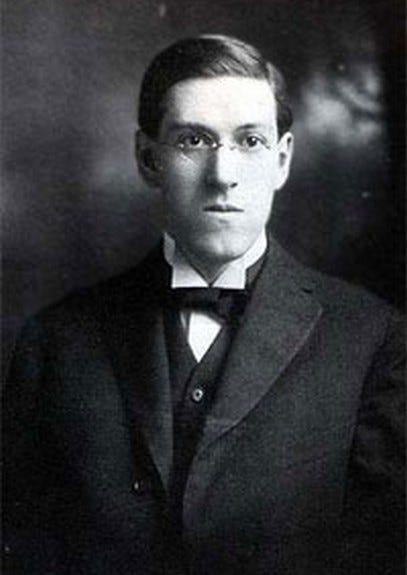
Howard_Phillips_Lovecraft

Even if you haven’t read Lovecraft you probably know his bizarre handiwork. Famous for stories from the magazine Weird Tales, his work runs the gamut from a familiar Poe-like macabre to what he dubbed “Cosmic Horror,” a genre focused on insanity-inducing God-Monsters from other dimensions. These horrific creatures — such as the “squid-dragon” Cthulhu — hide in the most ancient places on earth, no surprise since Lovecraft himself tended to fixate on cities with a strong sense of history. He loved colonial New England, and the decaying towns around his home in Providence often furnished the setting for his stories. Given these predilections, Lovecraft’s pilgrimage to the mecca of North American antiquity, Québec City, was inevitable. A walled settlement dating to 1608, the town was a perfect match for a man who fetishized the past. Stonework. Cathedrals. Sweeping views of the Saint Lawrence valley from atop a cliff-lined plateau. For Lovecraft, the place was nothing less than high-octane narcotic.

Lovecraft’s three visits to Québec City actually inspired his longest published work, “A Description of the Town of Quebeck in New France, Lately Added to His Britannick Majesty’s Dominions.” It’s a 130 page travel essay about a city overflowing with “the beauty inherent in all ancient and wonder-making things.”

In short, this essay is as weird as Lovecraft himself.

The first half is an amateur history of New France, narrated in a bombastic style that unabashedly flings out baseless Anglo-Saxon value judgments. For example, Lovecraft repeatedly condemns the province as “priest ridden,” and when describing the exploits of Samuel de Champlain, he remarks “’tis a pity he could not have been an Englishman and a Protestant.” Still, despite these laughable barbs, the underlying tone of Lovecraft’s work is swooning, a fact that grows obvious in the second half of the essay: a guidebook for Americans visiting Québec.

In hyperventilating prose, Lovecraft’s guide describes every block of the city in fastidious detail — every cottage, every row house, every terrace, every silver church spire, every “dog drawn cart used to deliver milk.” (Uh… yeah. Dog drawn carts.). Lovecraft’s description is nearly photographic and his obsession with the visual is only underscored by the fact that he constantly recommends certain neighborhoods purely for their “vistas.” Lovecraft extols one such vista in the lower town for being particularly spooky, a crumbling neighborhood overshadowed by Québec’s Citadel, creating a “malign and terrifying aspect” that leads Lovecraft to believe it must be haunted by the ghosts of fallen soldiers.

Reading all this is fun for a while. I can get down with petticoats and stone fortifications more than most. Still, by the end, even I felt exhausted. After Lovecraft’s lengthy “General Orientation Tour,” he then describes 12 more “Pedestrian Expeditions” in similarly exhaustive detail. It all starts to feel like a Lonely Planet where the writer intends to take every step of the way with you, forcing you to ruminate on the provenance of every brick in the city.

Yet Lovecraft’s obsession with antiquity runs even deeper than this. Not only was he obsessed with witnessing old places, he wanted to literally return to the past. As he writes in many of his letters,

Lovecraft felt an intense displacement in the contemporary world

. In one of these, he writes:

I think I am probably the only living person to whom the ancient 18th century idiom is actually a prose & poetic mother-tongue. . . . I would actually feel more at home in a silver-button’d coat, velvet small-cloaths, [and a] three-corner’d hat. . . . I’ve always had [the] subconscious feeling that everything since the 18th century is unreal and illusory. . . .

As a result, throughout his essay, he insists on archaic spelling (scientifick, phantasy, antient). He also bemoans the American Revolution (or “rebellion” as he calls it), longing to restore the good old days of monarchy — even shouting out “GOD SAVE THE KING” every time he mentions a British military victory. For somebody that was a contemporary of the modernists, Lovecraft was flagrantly — almost subversively — un-modern. I suppose being in Québec, surrounded by the century he yearned for, he must have at last felt some sense of peace. In a way, he’d come home.

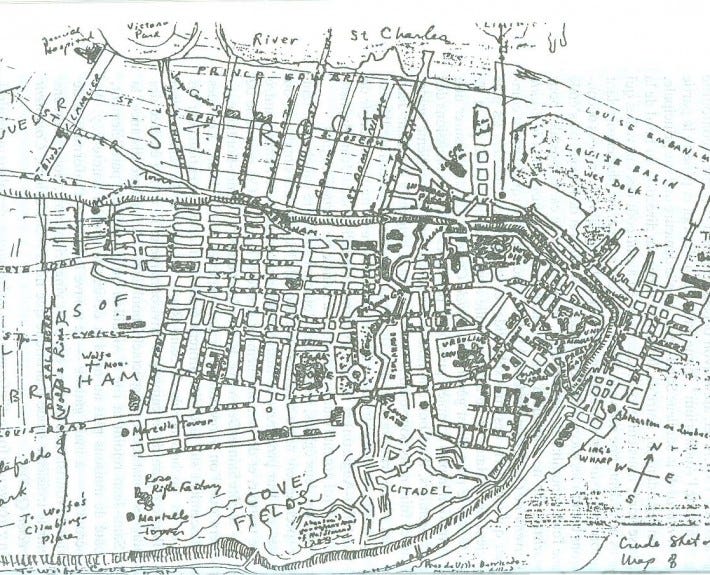
SF_croquis Lovecraft

A sketch of Québec City, drawn by H.P. Lovecraft

Last summer, I traveled to Québec City to do some preliminary Fulbright research and it’s stunning how much Lovecraft’s 1933 description matches what’s there today. This preservation might have something to do with the old town’s enshrinement as a National Historic Site of Canada in 1948 (and a United Nations World Heritage Site in 1985). Of course, even before this, there was an overwhelming monetary incentive to keep the atmosphere “antient,” since the city only draws tourists because of its historic authenticity. This economic truth is something that would have driven Lovecraft crazy if he paused to think about it. One of the things he hated about the 20th century was its overweening insistence on commerce.

Even in Lovecraft’s essay, it’s clear that the tourism industry had already rooted itself in the city by the 1930’s. He describes places to find the best guides, the best English-speaking hotels, and even a phalanx of old fashioned horse drawn carriages waiting to take foreigners around the city.

For all his swooning about antiquity, it’s hardly as though Lovecraft discovered a civilization in a time capsule.

And so, once I finished his essay, I started to wonder if Québec City was really as antique as Lovecraft asserted, or whether he was simply seeing what he wanted to see (or being sold what he wanted to buy). After all, Québec City was one of Canada’s most industrialized cities in the 1930’s, manufacturing an endless supply of shoes, corsets, furniture, and even boasting a new paper mill. But apparently Lovecraft wasn’t shown these things. Or if he was, he ignored them.

The city’s emphasis on tourism would grow still more intense in the last half of the 20th century, as industrial and financial power moved elsewhere in Canada. An object lesson is the reconstruction of the city’s lower town, the neighborhood at the foot of Québec City’s cliff. Ever since the fur trade collapsed in the mid-1800s, the lower town had been a slum filled with whorehouses, frequented by no one but gamblers, sailors, and lumberjacks. However, in the 1960’s millions were spent to demolish and rebuild the neighborhood, the new version made to resemble its ancient 1700’s self, the same era preserved within the ramparts of the city. Naturally, this reconstruction doesn’t house fur merchants as it once did. Instead it contains a shopping area filled with chic cafes, boutiques, and art galleries. If you didn’t think about it, you might assume the reconstructed buildings were centuries old — like everything else. But no. These buildings were designed explicitly for tourism. They are a sanitization of the city’s true past — the crumpled pages of history smoothed flat.

It’s impossible to deny that the reconstruction is an improvement — even if it destroyed that spooky lower town vista Lovecraft admired. What sane person wouldn’t want cheery visitors over a seedy red-light district? Yet the artist in me wonders how to navigate situations like this.

As a historical novelist, how does one separate authentic history from manufactured history?

I don’t have any satisfying answers. But, unlike Lovecraft, I feel suspicious of everything. I’ve been to enough reenactments, historical tours, and museums to realize the quality of these things varies tremendously. I recall visiting one Seven Years War reenactment in upstate New York where it seemed that the reenactors knew surprisingly little about the conflict — most unable to relate more than a few romantic anecdotes.

Still, like Lovecraft, I can’t help but long for some magic door to the past, a way to experience history as it was. This is one reason I feel primary sources are so important. They are the closest you can get to literally reliving the past. For my project, the most useful by far have been the so-called “captivity narratives” — true tales written by colonists taken captive by natives. These narratives render the past in vivid detail, in the very words of those who lived through it. However, as much as I love them, even captivity narratives can be polluted by commerce. Since they were popular entertainment in their day, the stories are often sensationalized, a disingenuous effort to sell as many copies as possible. It seems there’s no way around it. Money will always bend the truth.

So, though Lovecraft felt everything after the 18th century was “unreal and illusory,” I’m left feeling just the opposite. To me, the past is what is illusory, a pastiche of traces we do our best to understand, a story each generation has to remake from a new vantage point. And even though I eschew the manufactured history of tourist traps, my novel is — in the end — just another manufactured version of the past. Even if I strive for accuracy, it will be shaped by my own perspectives. Even if I am skeptical of sources, it will carry forward the assumptions of those I rely on. No matter what: the full truth of the past is lost. The best we can do is a leap of the imagination.

Watch Our Latest Animation

If you’re sorry to see the baseball season end, we’ve got good news for you. Next week’s issue of Recommended Reading is a remarkable story called “Home Run” by Steven Millhauser.

Watch our new Single Sentence Animation below and spend some time with your favorite pastime.

app-slide

10 Scary Stories for Grown-Ups

There’s been a lot of talk lately of literature’s power to increase our capacity for empathy. When we read a story, we’re living another life, and that helps us practice the skill of putting-yourself-in-someone-else’s-shoes. But what happens when you read a story that already resembles your reality?

These 10 free stories from Electric Literature’s Recommended Reading will remind you of the horrors of failed relationships, house-hunting, and dysfunctional families, proving that nothing is as scary as real life.

1. “Wintering Over” by Jason Brown — A writer and his wife retreat to a quiet town in Maine. It’s like The Shining except without kids.

2. “The Monster” by Ali Simpson — A lonely young woman finds herself cohabitating with a narcissistic monster — just like any normal relationship.

3. “The Cottage on the Hill” by J. Robert Lennon — Here, J. Robert Lennon captures the trauma of spending time with your family.

4. “The Knowers” by Helen Phillips — In this philosophical horror story, Helen Phillips considers how knowledge of your mortality affects your marriage.

5. “The Unraveling” by A.N. Devers — If apartment hunting wasn’t scary enough already, this story of an eccentric and domineering real estate agent takes the process to a psychologically disturbing extreme.

app-slide

6. “Orange” by Tarah Scalzo — If you’re considering living a nice quiet life in the suburbs, this story will make you think again.

7. “Birds in the Mouth” by Samanta Schweblin — In this story, a father learns of his daughter’s peculiar eating habits, and shows how far we’re willing to go to please our children.

8. “Valentine” by Alexander Yates — A woman in a small town is pursued by a stalker who sends her romantic messages, some in the form of cow organs.

9. “Firewood” by J. Robert Lennon — After a devastating relationship, a man searches desperately for his wife and sobriety.

10. “The Sub-Leaser” by Adrian Van Young — The only thing scarier about living with a stranger is what they leave behind.

Bonus! Here are 6 more (less domestic) stories to keep you up at night.

“The Devil’s Treasure” by Mary Gaitskill — A little girl wanders into her backyard and then into the bowels of Hell.

“The Adventure of the Space Traveler” by Seth Fried — You know that movie Gravity? Seth Fried did it first. And he didn’t need 3-D to make it good.

“The Graveless Doll of Eric Mutis” by Karen Russell — From her new collection, Vampires in the Lemon Grove, Karen Russell proves that even bullies are creeped out by scarecrows.

“A Questionable Shape” by Bennett Sims — This excerpt from Bennett Sims award-winning novel takes a look at life in the post-zombie apocalypse.

“Godzilla Versus the Smog Monster” by Lucy Corin — From Lucy Corin’s collection of apocalypse stories, California is inexplicably reduced to an inferno.

Our Education” by Lincoln Michel — Nothing is scarier than unsupervised children.

Photo by Christoph Geilen

The Healing Center

Sylvia put her hands on her belly and she put her hands on her hips and she faced the mirror and she turned sideways to the mirror and she faced it again. I lowered my hands from my chest and put them on my hips too, and looked into the mirror at the opposite of Sylvia and at the opposite of me, at all the flesh and hair and shapes we were living in.

Why do we look like this? Sylvia asked, so I asked Sylvia, Why do we look like what? and Sylvia said, Like women? Why are we women?

I looked at Sylvia’s body in the mirror and I looked at my body in the mirror and I remembered that my skin is the color that pantyhose companies mean when they say nude and Sylvia’s skin is not that color. Sylvia is an ample woman and she is the right kind of ample-ness, by which I mean she has been strategically engineered by God or whatever to cause earth-shaking want in people, the kind of want that leads a person to stay up all night, hostage to desire.

I don’t know, Sylvia says. Never mind.

Sylvia was doing a lot of never minding back then, so much never minding that it became unclear if she minded anything anymore, or if she minded her own mind or even my mind, or anything that was mine. She’d spent the week cutting her bangs slanted and balancing grapes on her belly button and letting pots of porridge cook to soot on the stovetop.

That’s ok, I told her as the apartment filled with smoke, people become forgetful when they are happy or worried or thinking about the airplanes of soon and all you need to do is tell me which one you’re doing.

I already knew the answer, but I was the kind of person back then who sometimes asked people to say aloud what I already knew — it was obvious that Sylvia was thinking about the airplanes of soon and which one she’d be on and where it would go and what she might do when she got there.

I knew she’d do this from the first day she moved in, so it is true that I let myself break myself or, maybe, I let herself let myself break my self and by self I mean heart except I take issue with using that word that way, because I don’t think we have any reason to pile such a responsibility on that organ, the word of that organ. Everyone knows a heart is just responsible for filling a thing with blood, except it never fills love with blood because no one can do that because love comes when it wants and it leaves when it wants and it gets on an airplane and goes wherever it wants, and no one can ever ask love not to do that, because that is part of the risk of love, the worthwhile risk of it, that it will leave if it feels like leaving and that is the cost of it and it is worth it, worth it, worth it. This is the mantra of Sylvia and this is the way she is.

Sylvia found me at my own never mind moment, back when the acupuncturist was the only person who would listen anymore. Doctor one, two, three all said I was bluffing; doctor four said nothing, left me cold-toed in my paper gown. The acupuncturist wanted me to talk about my mother. How did I feel about her? Did she sing to me when I was a child?

Sylvia was the receptionist for the acupuncturist, but all she did was point to a sheet of paper that said, SIGN ME, and I would come in and she wouldn’t look at me, until one day she did look at me, and when she looked at me, I also looked at me and I also looked at her and she also looked at herself and we both found we liked what we were looking at.

And so we found ourselves months later waking up in the same place all the time, going to sleep in the same place all the time, walking link-armed to the acupuncturist, the healing center.

But one day in my living room Sylvia stirred a spoon in her teacup and there wasn’t anything in it, so it just went clank-clank, and I knew, for some reason, we weren’t going anywhere link-armed anymore.

Do you ever get the feeling, Sylvia asked, that you’re a lab rat?

That I’m a lab rat? That I’m a lab rat or that you’re a lab rat? Which of us?

Sylvia didn’t say anything for a minute. She kept stirring no tea in her tea cup.

Who is the lab rat?

Who indeed, she said and I said, Fuck you Sylvia this isn’t a fairy tale, Sylvia. You can’t just say stupid things like that to real people.

I’ll say it, she said.

You won’t, I said, but she said, I will, just watch me.

Monsters of Modern Literature

Who wants candy for Halloween when you can get trading cards of your favorite un-dead writers? From the spooky mind of Lincoln Michel, these pun-filled portraits show literary heavyweights in their most monstrous form, like Thomas Python, Roboto Bolaño, and Bone Didion.

They’re just $5 on Etsy and make a perfect halloween treat for you boyfriend or ghoulfriend. Collect them all!

monsters

REVIEW: Petrichor by David Scott Ewer

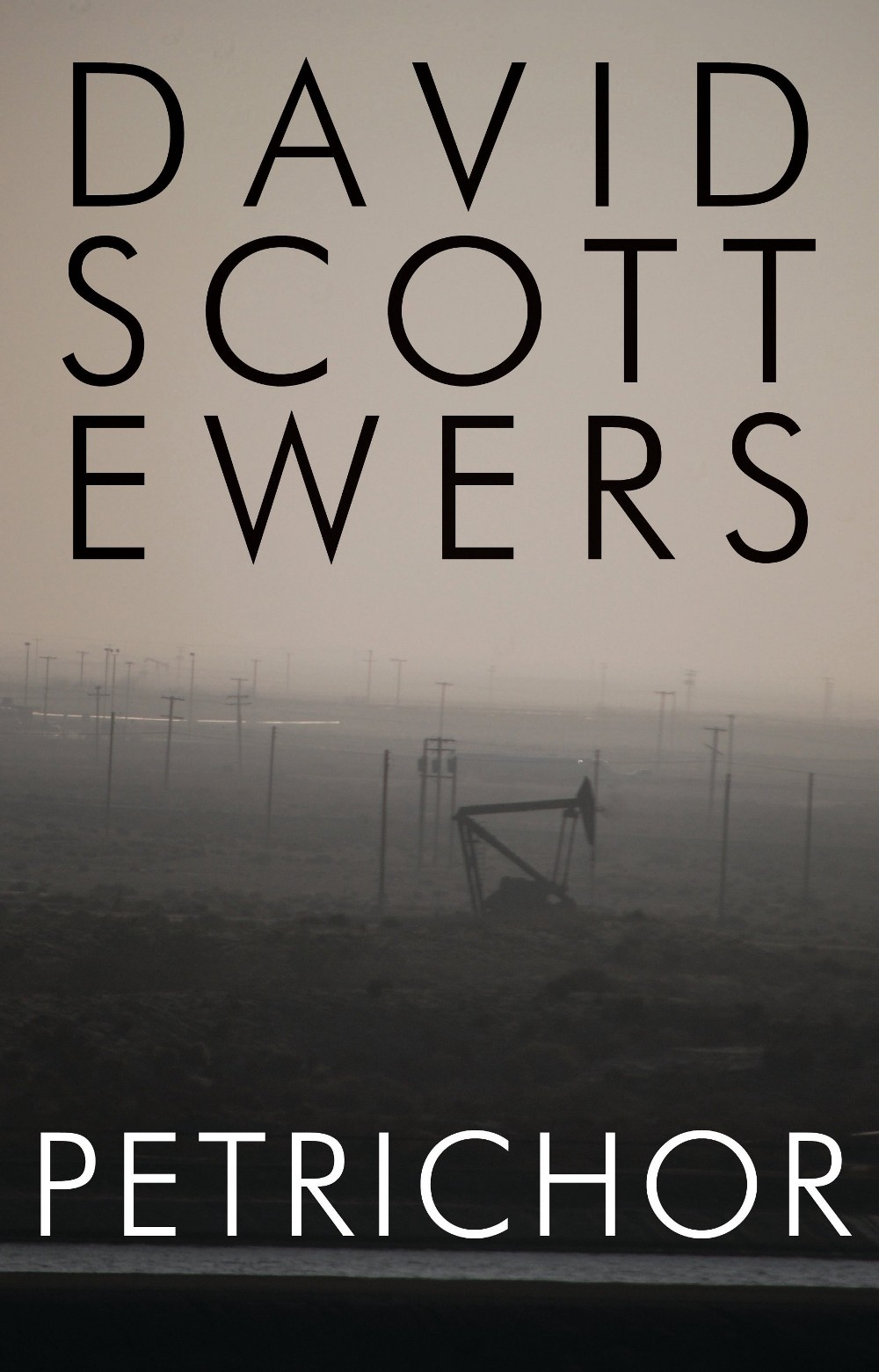
David Scott Ewers’ Petrichor is a novel about a man in the clutches of a mysterious and omniscient corporation. It is a novel about the same man writing a memoir about his experiences with that corporation, only instead of typing his words he scratches them into the ground of a California desert. It is a Pynchonian book about an aspiring but shiftless writer, Stevie, stumbling upon this memoir’s words and the charred remains of a corpse that lies nearby in a tidy little pile.

Steve is tasked by the local police to narrate the story into a Dictaphone. It’s Stevie’s first job in a while as he’s spent most of his time since high school taking amphetamines with his friends. He finds an acute pleasure in the work, especially when he realizes that David Edwards, the apparent author of the words, has experienced some pretty nutty things. David’s tale focuses on his involvement in a mysterious corporation with the sufficiently innocuous name of Paradigm. His “handsomely paid” job there requires little more than his physical presence and the occasional signature on the odd document. He apparently spends the rest of his time writing about Paradigm. As Stevie reads through the memoir, we learn of David’s first interview with Paradigm, during which accounts of his personal history — such as his drinking habits, reviews of his substitute teaching from students, and a first hand account of how David would deal out free coffee for robust tips when he was a barista — are read aloud. The further David goes into the corporation, the more he realizes that Paradigm is everywhere in his life and that their knowledge is both exquisitely accurate and meticulously complete.

In the foreground of the novel, Stevie tries to parse his own romantic feelings for a high school crush and the purpose of his life. His world is seemingly untouched by David’s knowledge of Paradigm and the ensuing paranoia. Stevie can still dabble in half-hearted poetry and debate with himself about whether or not signing a note to a crush “Love, Stevie” is creepy or not because he’s spent so much time thinking about whether it’s creepy or not. It’s easy to see Stevie accepting the Terms of Service every time he updates iTunes without reading what it says. Though he lacks David’s suspicions, we know that Stevie, like the rest of us, is clearly within the scope of someone’s surveillance.

Ewers has managed to create a document that is extremely unsettling. Although its ending is mopey — not unlike a conclusion tacked on by a Hollywood producer worried about an overly traumatic denoument — it creates a mental state that few intellectual thrillers can achieve. This state, which comes from the deft layering of narratives featuring characters in various states of creeping paranoia, is one of extreme equilibrium that is also a whirling vortex of insecurity and dread. While reading, I had the feeling that everything is connected to everything else in a pleasant, Taoist kind of way. But that connection slowly becomes more sinister as I begin to suspect that someone, somewhere, right now, who I do not know, is furtively watching me watch the Young and the Restless naked, eating a peanut butter and jelly sandwich, all while writing this review. Or that there is someone who can extrapolate that fact from my internet traffic, cable TV subscription, and FreshDirect invoice.

Petrichor is an investigation of that oh-so-modern feeling that nothing is private anymore. Ewers has created many of those weird literary moments where the brain becomes a perspectival vortex that is constantly looking at itself through itself. The recent revelations of the surveillance state courtesy of Edward Snowden only heighten this effect. And did I mention that Petrichor also features a hilarious ex-pat Frenchman trying to bring Ambrose Bierce back from the dead? I love these types of books. And based on your browsing and shopping history, I think you’ll like this book, too.

Petrichor

by David Scott Ewers

Powells.com

David Abrams Reviews Saguaro

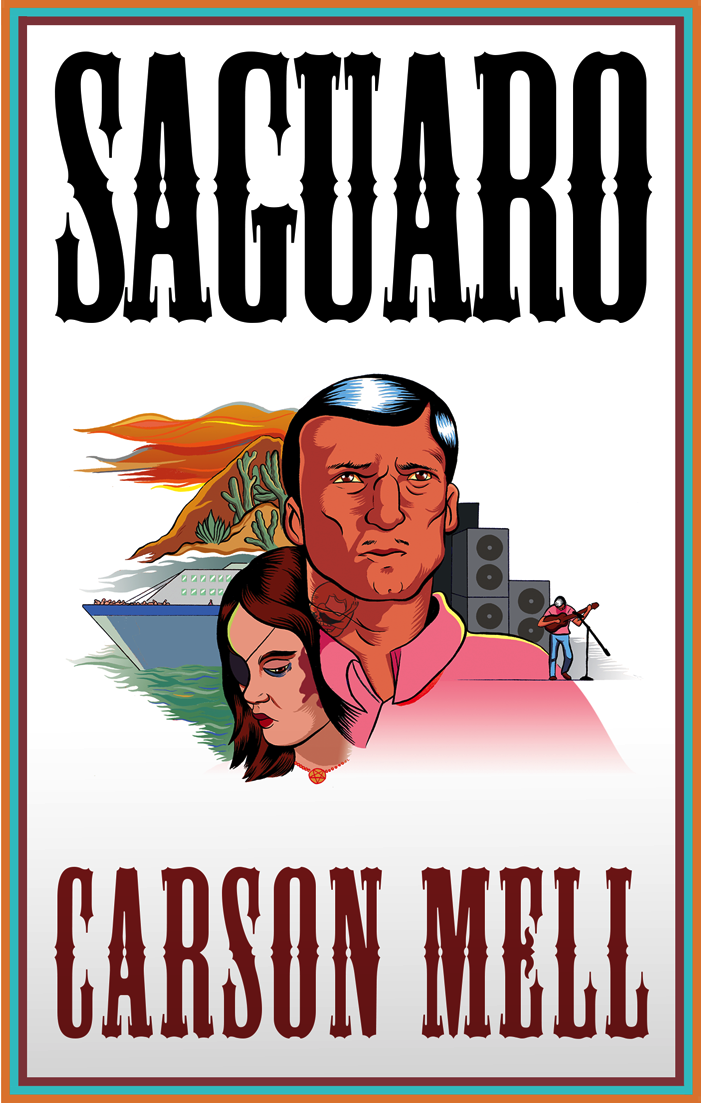
As part of his Front Porch Book series at The Quivering Pen, author David Abrams recently reviewed Carson Mell’s Saguaro:

Knowing a good thing when they read it, the smart folks at Electric Literature snatched up Saguaro and released Mell’s weird, short novel as an ebook earlier this month…I grabbed a copy of the novel, downloaded it, and started reading. It took me .001 of a second to get sucked into that numbing vortex we call A Good Read. Judge for yourself.

Get your copy of Saguaro, the second novel from Electric Literature, for just $7.99