Wintering Over

They were going to Maine because Nathan had recently walked out on a book contract and returned the modest advance after declaring that he had nothing left to say. His editor and longtime friend had seen part of the new manuscript and had told Nathan that he had betrayed his own vision (and integrity), a statement that Nathan felt betrayed their friendship. He began to talk of how New York had betrayed itself since the heyday of Greenwich Village (before he was born) and how even Westchester had betrayed itself since the time of Cheever. “I mean, it was awful back then, I’m sure, to be among those people who cared so much about propriety, but at least it was what it was.” He said he needed to make some changes, get back to the foundation. They had decided, he reminded her, to wait a few more years before having children (though she wasn’t sure now she even wanted children), so he could more firmly establish his career. They had time for an adventure.

When he first mentioned spending the winter in Maine, Charlotte had been excited, picturing the rough coast, fir trees, mountains, and clear rivers of the northern landscape she had seen in the Travel section of The New York Times and read about in scenes from Nathan’s own fiction, mined from his boyhood trips to summer camp. She had hoped the beauty would inspire her own work in new directions and had planned to bring her potter’s wheel. She was feeling optimistic, so it was a disappointment to hear Nathan say that he was no longer interested in beauty — this, apparently, was one of the many changes he was making in response to the failure of his last project, which had ended not so much with his walking out on a contract as with his book walking out on him.

“Beauty like that is dangerous,” he said when she suggested they consider one of the places she had heard about, Bar Harbor or Boothbay, with grand old houses and sweeping views. “It’s made me complacent, aesthetically lazy.”

Having grown up on military bases around the country and lived until she was eighteen in the squat, drab houses Nathan had once described in a story as “toad-like,” Charlotte felt she would never be surrounded by enough beauty.

In addition to being too beautiful, Nathan felt that the coast and the ski slopes would be filled, even in winter, with what he called yachthoos and day-trippers, not to mention refugees from the saccharine beaches of the Vineyard and the Hamptons. In fact, he was pretty sure he never wanted to see another beach or ski hill for the rest of his life. That much he knew, he said, and that wasn’t much, he added, which was the trouble, and the real reason for the trip: he didn’t know who he was anymore, as a writer, and therefore as a person.

“I’m not sure this town Vaughn is a nice place — in fact, I am pretty sure it isn’t — but that’s the point, you see? It’s an old defunct mill town — also an ice and granite town — that hasn’t seen prosperity since they made shoes for Union soldiers in the Civil War. But it has an incredible history. I’ve been reading about it. In the seventeen hundreds it was one of the richest towns in New England. Logs driven down from up north were milled on the banks and loaded on ships along with granite cut out of the hills. In the eighteen hundreds they cut up the actual river with huge saw blades and shipped the ice to Calcutta and China. Benedict Arnold camped there on his way to attack Quebec. It does have old houses, and it is an old town, it just isn’t a tourist destination.” He finished the sentence with one of his thin-lipped sneers.

Okay, she agreed. She didn’t need a tourist destination, though she did want to point out that sometimes places were destinations because they were nice places to visit.

“Fine,” she said. “We’ll go to a real town.”

“Are you sure it’s fine?” He looked at her pleadingly, and she kissed him on the head.

“I just want you to start working again,” she said, offering one true statement.

Charlotte had hoped to arrive in Maine before the leaves had fallen, but she and Nathan didn’t descend into the Kennebec Valley until late fall, long after the trees this far north had shed their colors. As they followed the river inland from the sea, they passed, every five to ten miles, a small collection of soporific storefronts and old three-story brick and clapboard captain’s houses built when the country was just beginning. As they entered the town, Vaughn, Charlotte felt relieved by signs of civilization: several antique shops on Water Street, two small country stores, and a restaurant. The houses were in fact beautiful, if scraggly, and there was the river.

The real-estate agent arranged through Nathan’s friend met them at a fantastic colonial with marble fireplaces in every room. Charlotte could set up her wheel in any of these rooms. She ran her fingers over the ripple of a leaded glass window and turned to watch Nathan step into the next room, rubbing the layers of his recently cut hair above the nape of his neck. From the back and except for his gray hair, she could imagine what he must have looked like when he was a college senior. His jaw was as smooth and narrow as in the photos of his years on the college newspaper, though his skin, like his hair, had grayed early, lending a certain gravity to a man who would otherwise remain a boy. In the eight years she had been with Nathan, she had noticed her body aging: the lines around her eyes and mouth, a slight settling around her hips. It seemed now as if Nathan might stay just as he was forever, out of stubbornness, allowing her to catch up and pass him by.

She asked the realtor how much the house rented for and was surprised to hear it was a fraction of what a one-bedroom would cost in their neighborhood in Hastings.

Nathan stopped in the hallway and seemed unsure of where to go next.

“God, there are a lot of rooms in this house,” he said.

“So you two are going to winter over?” the realtor said in his Maine accent, and Charlotte found herself involuntarily shaking her head. Nathan tended to absorb regional expressions, and, whether on purpose or without realizing it, mimic them.

“Yes, yes, we’ll be wintering over,” Nathan answered with a smile.

They visited two other houses that were just as wonderful, though not in as pristine condition. The fourth house they saw was twenty feet from the railroad tracks and across the street from an abandoned warehouse and a Methodist church. The backyard was overgrown with raspberry and strawberry bushes, reaching through wild grass to what had been a vegetable garden. This house was sparsely furnished and heated by a wood-burning furnace, in addition to a wood stove in the kitchen and a Franklin stove in the parlor. In what must have been the dining room, the floor sloped, and at a point where one of the foot-wide pine floorboards had split, Charlotte could see into and smell the dark basement.

“The house was used in the Underground Railroad,” the real-estate agent said. “In the basement you can see where there was a tunnel that used to lead from here down to the factory.”

“Can we see that?” Nathan asked eagerly.

The man had to go to his trunk for a flashlight.

Nathan was already doing what she had asked him not to do: dropping the r’s, lengthening the a’s, and generally picking up the local accent. He claimed it was something writers did, but it embarrassed her, reminding her of when she and her family first moved to a new town and kids teased her until she could rid herself of her old accent. Down in the basement, the agent swept the light over an arch in the wall that had been filled with cinder blocks.

“The train jumped its tracks in 1890, collapsing the tunnel.”

The agent swung the light over to the wood-burning furnace, which reminded Charlotte of something she had seen on a tour of a naval destroyer in San Francisco.

“How many cords of wood does it burn in the winter?” Nathan asked.

“Fifteen or so. Depending on the winter.”

Charlotte climbed the stairs to wait for him in the kitchen. It frustrated her that he could be happy here when they could easily afford one of the stately, more comfortable houses in town. As she tried to picture Nathan rising at five in the morning to descend those basement stairs to feed the furnace, she studied the cracked yellow linoleum that curled at the edge of the kitchen and seemed attached to the floor by little more than its own saturated weight. She often thought of the torture he put himself through for his writing as picking at a scab. In fact, she had once wanted to be a writer herself, and had read about and listened to gossip about writers with a level of eagerness that could only be sustained by not knowing any.

The truth was that she had known about Nathan from his books before she had seen him, and when she first saw him, it was from a distance. She had no regrets about this now. It was the same with anything you ever thought of as beautiful, or anything about which you could be nostalgic. Nathan had been criticized for being nostalgic in his work, but she had always loved the nostalgia in him, in his ability to find certain ordinary things (hammers or saws in junk shops; farmland) not just beautiful but fascinating because he had known them in his boyhood. She wasn’t ashamed that she had once imagined meeting the man she would marry by first seeing him from across a room as she had that summer evening in Saratoga Springs when Nathan gave a reading. She would always see him in this way, which was not so much a romantic fantasy as a part of what everyone called love. She was sure Nathan felt the same way, even if he didn’t understand it in exactly the same terms.

That Nathan had recently identified any kind of boyishness, idealism and sentimentality, nostalgia, or beauty as characteristics he would have to do without when he remade himself in this town, a place that seemed to have been forgotten even by the people who still lived there, did not worry her too much. Nathan was prone to sudden enthusiasms and sudden lows — neither too extreme — and he would always more or less return to where he had started from if she waited and was patient. He liked to talk about the transformation of their relationship, his transformation as a writer and a person, and particularly the transformation of his characters, but as far as she could tell, their relationship, Nathan himself, and his characters were basically the same now as they had been eight years before.

Of course he wanted to take this last house, the run-down one, and she was in no mood to deny him his transformation. She made sure the arrangement was month-to-month, and as he talked with the realtor about the rent and the delivery of firewood (he kept using the phrase, “Do you know a good man?” when asking about carpenters and mechanics), she decided to take a walk up the street.

Charlotte was having a feeling that she had often experienced when she was young and she and her parents arrived in a new place. She had gone from dreading those moves to anticipating them, in no small part, she knew, because her skinny frame had filled out and her round face had thinned. Her skin pricked under the gaze of a whole lunchroom or classroom drawn in her wake. She knew how to hold herself apart, eating alone with her chin held high and waiting for them to come to her, just as Nathan, not that many years later, eventually crossed the room after the rest of the audience had gone home. He wanted to know if she had enjoyed the reading. She listened to his eyes, watched his lips. That night he asked her dozens of questions, but he never asked her who she had come to the reading with. In fact, she had gone to meet a boy she had been dating who didn’t show up, a fan of Nathan’s who had been raving for weeks about his writing. This boy wanted to be a writer, presumably one like Nathan. Now the boy was a lawyer, and she was with the writer he’d wanted to become.

Charlotte thought she knew what Nathan’s real problem was: he was forty-eight years old and no one read his books. Not literally no one, of course, but virtually no one. Aside from grants and fellowships that he seemed to almost resent, he had never made real money from his work, and even though he sometimes took teaching jobs, he had always disdained teaching as an undignified way for writers to earn a living. Nathan was respected, he was reviewed, he went to Yaddo, he gave readings at universities where his friends taught, but he had, she suspected, come to the conclusion (either consciously or unconsciously) that his life’s pursuit was a little bit empty. This was not a bad thing in her mind. Did barbers, dentists, lawyers, realtors, accountants, and carpenters feel that their life’s pursuits were somehow grand or vital? No. Why should Nathan be an exception? She didn’t want him to get depressed, but she wouldn’t mind if he gained a little perspective. So what if he realized he was a cliché? So was everyone. She was a cliché. No need to dwell on it, no need to deny. It was a decent starting point. A bit of honesty. Only he was going to have to come to this conclusion on his own.

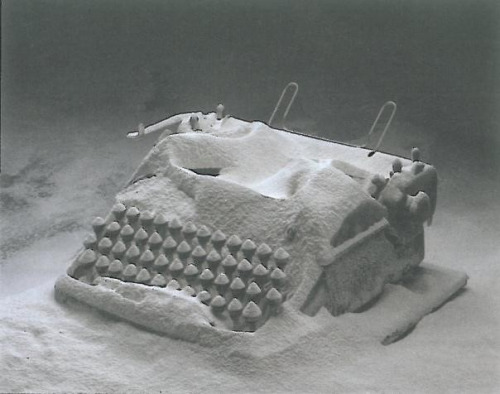
It snowed for the first time two and a half weeks after they moved in. Nathan went downstairs to feed the furnace as he did every morning at five thirty so she could have a hot bath (no shower in this bathroom, only the cast-iron tub). By the time she heard him coming back up, the road sloping down to Water Street was covered in a clear white blanket. She walked outside in her bare feet while the bath filled. The snow didn’t even seem cold melting under her soles. She left black prints over the pavement as she walked down the road, stopping just beyond the tracks and turning to see him in the window of the second floor, watching her from his writing room with a smile on his face. She had the familiar feeling that in his eyes she was a character who had the right appearance for tragic resonance. She gave him the finger, but even this seemed scripted; he laughed and ducked back into the shadow of the room where he’d set up his typewriter, which was tapping away when she came back inside.

Her feet ached in the hot water of the tub. She didn’t linger, but dried off, dressed in the cold bedroom, and headed downstairs with a sense of vigor to her workroom, her “studio,” in what had been the dining room. She started the electric wheel, listened to the whir of the engine, and watched the grooves of the metal disk spin. For some reason, she was hesitant to get started, but finally she dug her hands into the bag of wet clay. Outside, the snow fell pleasantly though the gray air. Her fingers slid down through the clay and squeezed what felt like a knotted muscle she was meant to disentangle into a bowl. The sun broke through the low-lying clouds over the river, and she was just starting to fall into a rhythm when she heard a thundering crash from the back of the house. At first she thought the train had ground to a halt in the middle of town, as it had the other day for some reason, but the noise had come from the opposite direction, and when she looked out the back window she saw an enormous dump truck pulling away from a pile of unsplit wood covering the car lot. The pile stood at least nine feet tall. She hadn’t quite recovered from this shock when the back of an even bigger truck came in around by the old vegetable garden and left what seemed to her enough wood to build a fort. Nathan walked outside and stood between the piles with his hands on his narrow hips.

After handing one of the men a check, Nathan tried to slap him on the back as he looked at the woodpile, but the man had already turned to his truck and Nathan’s hand swept through the air. The trucks rumbled up the hill, leaving Nathan standing there in his flannel shirt, the tops of his bare hands turning purple. She thought about bringing his hat and jacket out to him but remembered that he had proposed that they not speak to each other before one o’clock, before each had done their significant work of the day. Then they would have a full lunch. She could eat whatever she wanted but he was going to fast until one — not to lose weight but to sharpen his edge, he said.

He vanished from sight into the attached barn and reappeared carrying an enormous maul, a tool Charlotte knew well from when her father used to split wood at their cabin up in Minnesota. Nathan set one of the twenty-inch logs on end, stood back, swung the ax over his head, and slammed it into the grain, where it stuck, of course, and resisted his attempts to free it.

Watching was too much to bear; she supposed he would eventually figure out he needed a wedge, and that splitting thirteen cords of wood might take him the rest of his life. She removed her first attempt at a bowl from the wheel and threw on another clump of clay. It was a good throw, near the center, and she pressed her hands together, forcing the clay into shape.

Nathan rose at dawn every day and went to work on the woodpile instead of hammering away at his old typewriter. Often she didn’t know he had left the bed until she woke to the thud of the maul against an iron wedge. He had also decided to chop in nothing but a long-sleeve underwear shirt and blue jeans. From her workroom she could hear a lot of grunting and cursing. He would be lucky, she thought, if he didn’t swing the axhead into his own shin.

One day at lunch he asked if she had noticed the kids waiting for the bus down the street. They stood with their hands in their pockets, wearing nothing but t-shirts as steam poured out of their mouths. “It’s ten degrees outside, and they’re not just pretending not to be cold, they’re not cold,” he said. He put down his sandwich and immediately set out to acclimatize himself by walking to Dawson’s Variety in nothing but a v-neck t-shirt. She was perversely happy when he turned around after ten minutes and immediately plunged himself into a hot bath.

After another week of throwing failed pots and listening to the maul strike the wedge unevenly (in one out of four swings, she heard him hit dead-on), she packed up her clay and the stack of unsatisfying prototypes and pushed it all into a closet. She had purposely avoided the firewood, but now she went out through the attached barn to the largest of the woodpiles. Nathan was somewhere else; just as well because it was before one o’clock. He had managed, she calculated, to split maybe half a cord, though she supposed he might have fed some of what he’d split into the fire already, supplementing the cord and a half that the previous tenants had left in the basement. She picked up the maul by the neck, tapped a wedge into a split in the grain of one of the big logs, and swung down, hitting the wedge squarely in the middle. You couldn’t split cordwood this size with one wedge, and you had to slice at the outer rings before going for the crack in the center. Apparently, Nathan had discovered the same thing, because she found two additional wedges to the left of the pile. One with a flattened splitting edge had been used to pound against another wedge that was probably jammed deep inside the center of one of these behemoths. She backed up, swung again, and split off the edge of the log. Now she could work her way around, making use of the cracks that fanned out from the core. It was good dry oak that would burn hot. When she had split the whole log, she looked up and tasted sweat. Her breath steamed in front of her face, and there was Nathan standing in the kitchen window with a cup of coffee just lowered from his lips. He smiled, though not quite with the same satisfaction as when he had seen her outside in bare feet weeks before. She called out to him, asking if there was any more coffee in the pot. At first she thought he hadn’t heard, but then he raised a finger in front of his lips. No speaking before one.

At lunch he offered her information from his latest reading, a book about the Kennebec by someone named Coffin.

“The Kennebec River is one hundred and fifty miles long,” he said.

“I didn’t know that,” she replied.

“Raleigh Gilbert and George Popham were here from 1607 to 1608!” he said, and resumed reading.

So the writing was not going well, or not going at all. She hadn’t heard his typewriter in a week. When it wasn’t going at all, his mind sometimes latched onto ideas or interests and chewed on them until he was exhausted. She left the room without his noticing and went into her studio, made a fire in the fireplace, and settled in on the dusty sofa to take a nap.

In the morning, she took her clay out of the closet and tried to form a simple bowl she had sketched in her mind, but each time she built up the sides, she squeezed too tightly and the clay came apart in her fingers. A novice mistake. She turned off the wheel, rested her hands on the remaining clay stuck to the spinning wheel and listened for the clicking sounds of Nathan’s fingers on the keyboard. Nothing. She sat there for what felt like a long time and had just started to wonder if he was even in his room when his chair scraped back. His slippered feet scuffed across the floors into the kitchen to pause, she thought, in front of the refrigerator or the cupboard.

She packed her clay and this time pushed the heavy wheel itself into the corner of the room, lay down on the pine floor in her thick sweater, crossed her arms over her chest like a person laid to rest, and closed her eyes. She imagined she could hear her father swinging the maul against the wedge, though of course it wasn’t her father but Nathan. Her father had always worked at the woodpile in his dark blue sweatshirt with the hood pulled low over his brow, steam pouring out of the opening for his face as if from the mouth of a cave.

Both she and her mother knew that her father had professional secrets — his job had been in military intelligence, training people in deception, and he was often guarded. They also knew — and she couldn’t remember when she first realized this — that he had personal secrets, and allowed only part of himself to be known to them. The private life inside him occasionally flickered in his green eyes.

After her father’s death, Charlotte’s mother claimed she had known about the other women from the very beginning. She’d never found any proof and he had never said anything to her, but she had known, she said, because in the end there were no secrets in a marriage. “Your father made himself into two people, one he hid from us and showed to others, and one he showed just to us,” her mother said to her. “One side did not cancel the other out. But you can’t tell them you see through them, you can’t let on that you know, because it’s all they have.”

Charlotte didn’t believe her mother at first, but evidence did eventually emerge: her father had a child with another woman in Florida. She showed up in Minnesota one day and demanded to know what had happened to the father of her child, as if Charlotte and her mother had hidden him somewhere. The woman, whose name was Maria, was half her mother’s age and had a daughter half Charlotte’s age, and insisted that the four of them sit together for part of an afternoon. Charlotte watched the woman’s eyes move from the pictures of her father on the wall to a painting of an old ship that had been in her father’s family. Maria scrutinized the painting before glancing around at the fake wood furniture and the old couch. They had been able to take so little with them over the years as they moved from place to place.

Nathan knew her father had died when she was young, but he didn’t know the rest of it. If Nathan found out about this part of her life, he would want to know everything — he would want more and more and more until he was convinced that she had made all of herself visible to him. Only then would he relax. Sometimes she thought Nathan loved her as he did one of his books that had been typed, set, and bound — he didn’t want to think there was more to the story — and she loved him not because his work was mysterious, which it was when it was good, but because he was not her father, who had burned painfully under the surface with a mysterious longing she never understood. Nathan longed to burn under the surface, but he didn’t. Nathan was smarter and far more sophisticated than her father had been, but fundamentally he was more baffled than passionate.

There was a yell from outside, followed by a grumble. Presently Nathan limped through the back door and into the kitchen with a blood mark soaking through a gash in his chinos. He had finally nicked his shin. She rushed to the bathroom for a bandage and peroxide. When she came back, he was sitting with his elbows on the table, still shaking his head. She pulled up his pant leg and dabbed the bleeding cut with the paper towel.

When she looked up at his unshaven face, his expression startled her. There were dark circles under his eyes.

“You don’t look so good,” she said.

“I haven’t been sleeping,” he snapped irritably.

Several minutes went by as they both waited for the tension to diffuse.

“You know, I was thinking about you out there,” he said, pursing his lips and nodding his head like a colonel who had just ordered an attack on a hillside stronghold. “I was thinking that if you don’t like it here, we can go, we can go back anytime you want.”

She pressed the disinfectant against his leg again, making him wince. “I would hate to see you quit so early on,” she said. “We haven’t even been here that long.” She didn’t know what on earth she was doing. Her heart had jumped at the idea of leaving this place.

“I know, I know, you’re right. Something might come out of me yet, but I think I’m through for good.”

“That’s what you always say.”

“No, I don’t — do I? Well, I know you’re right, but it doesn’t feel…I can’t get rid of this feeling,” he said, and studied her while she pretended not to see him looking and stretched the bandage across his wound.

The next morning, Nathan was out chopping again, and though it was cold he soon worked up enough of a sweat to strip down to his undershirt. Her breath caught at the sight of the wings of his shoulder blades and the knobs of his collarbone. She thought of her father standing in front of the lake in Minnesota on one of their summer visits, spreading his arms like wings and diving into the water as the morning sun sifting though the maple leaves sparked off the ripples.

Ever since she was a few years old, she and her mother had gone to the lake every summer for a month. If her father wasn’t working, he came with them. Rolling hills abutted the lake, and in one place a cliff rose forty feet above the water. Nearby was a village where she met a boy the summer she turned sixteen. The boy was the son of the man who ran the village store. He was tall and narrow with pale skin and freckles. His name was David Munro, and she pictured his face, his long, pale arms paddling the canoe, the tight brown curls of his hair and the way his smile would just appear, like a starling landing on the feeder outside their cabin. David himself was as nervous as a bird and often stuttered in front of her mother, but never when he was just with her. When they first started spending time together and he asked about her father, she told him she didn’t have a father, that she had never met her father, and just as she hoped, he never brought it up again.

David didn’t have a car, so on Sundays, when he didn’t have to work, he walked all the way around the lake, six miles, to see her, and they made their way through the woods to the cliff. She was careful now to remember the details: the sunlight through the maples, the sound of their feet on the soft forest floor. He brought two bottles of soda and cookies taken from the store and she brought an old blanket. What she remembered most clearly was how the coolness of the air in the shade of the forest made her anticipate both the warmth of the sun on her skin when they reached the clearing at the edge of the cliff, and the touch of his long fingers on her naked hip. This was where they went every Sunday, this was their spot, on a soft grassy slope high above the lake. She spread the blanket while he used his jackknife to open the bottles of soda and laid out the cookies on a piece of wax paper. They took off their clothes — they couldn’t wait — and then later, with the sweat drying on their skin, they drank the sodas and went swimming. Usually, they climbed down the trail to the left of the cliff, but the last time they were together before she went back home with her mother, David Munro walked up to the edge of the cliff, stood there until she joined him, and then he dove straight down forty feet into water so clear she could see all the way to the bottom. His long, pale body knifed under, curved through the water, and rose gently to the surface.

She regretted not taking Nathan up on his offer for them to go home. If she brought it up now he would make her responsible for the idea.

Nathan stopped sleeping in their bedroom, and she heard him pacing downstairs at night. He chopped wood every morning and then left the house and came back in the afternoons with armfuls of books from the library, which he took to his room. One of the books, she saw, was a biography of Arnold.

At lunch every day he told her about Arnold, who, according to Coffin, had started off with eleven hundred men and marched three hundred and fifty miles through the middle of the state in November, upriver, with hardly any food and bad maps.

“‘They came up the river in bateaux,’” he read out loud. “It’s ridiculous, Charlotte, what happened here — these terrible boats made of green pine. They didn’t get very far north of Augusta before the boats just started to come apart. It rained, sleeted, snowed, their supplies spoiled, half his men either died or deserted, taking most of the food with them. When the river narrowed, they had to drag what was left of their boats against the current through the freezing water, and when they reached the headwaters, they pushed up the side of the mountains through the spruce and pine woods, which were as thick as wire mesh, until their clothes were shredded. They ate bark to survive and dressed in animal skins. When the remainder of his force did reach the Saint Lawrence, there were only six hundred of them and they couldn’t attack because of sheeting rain — it turned their camp into a pool of mud. More of his troops deserted, more died of small pox. What were they thinking, what drove them on?” Pointing out the window, Nathan said, “During the worst season of the year, they were dressed the way we would dress for a walk in Central Park.” He looked at her, shaking his head. “And do you realize that some argue it was Arnold’s defeat of Burgoyne — in a battle which he fought on his own initiative after General Gates stripped him of his command — that led to the French joining the war, and yet he was betrayed in every possible way by this country.”

At first he seemed excited to talk about his reading, but as the week dragged on he grew quieter, and on two occasions during their one p.m. lunches didn’t even answer her questions about his morning. At night he read by the fire and went to bed in his study without saying a word to her.

By the end of the month they had gone ten straight days without seeing the sun. When it finally erupted one morning through a break in the clouds, even the ground seemed to squint under the light. She moved her stool closer to the window of her studio and closed her eyes, feeling the light and warmth on her face. Nathan didn’t appear in the kitchen at one. She waited fifteen minutes and went to stand by his door. She wasn’t supposed to knock when he was in his writing room, no matter what the hour, but she did. He didn’t answer. She forced herself to open the door. Nathan sat at his desk with his head in his hands. When he didn’t move or speak, she called out his name softly.

“I have been a good husband,” he said finally.

“Yes?” she said, confused.

“Why don’t you just go back to Hastings if it’s so hard for you to be here?” he asked.

“What are you talking about? I want to be here.” This was a lie, of course, but he couldn’t know that.

“I know what you were up to back there,” he said quietly. “It must be very hard for you to be away from him.”

“What are you talking about?” she said again. She felt her stomach sink, as if she had been caught in a crime, though she couldn’t fathom what she was guilty of.

“I should have known this would happen. I won’t say I was waiting for it, but I guess I should have been. I mean, look at me. Can you at least look at me?”

She did, reluctantly, afraid he would be different somehow, but he was the same, only with deeper circles under his eyes. He had lost weight. She started to speak, though she didn’t know what would come out. He waved her off. He obviously assumed she was offering an excuse.

“I don’t understand how you can stand in front of me as if nothing has happened. I see now I must have sensed it, probably the first day you were with him. No wonder you were reluctant to come up here.”

“But I was happy to come here. And what do you mean ‘him’?”

“It must be hard being separated from him,” he said calmly.

“Who? Who?” she said, her voice hysterical in her own ears. She was trying to sound rational but it wasn’t coming out that way. She wondered who he could be thinking about. His friends Jerry and Michael? Most of her friends were women, except for Henry, who weighed over two hundred and fifty pounds.

“Yes, who,” he said calmly, looking at the floor. “Who are we talking about?”

There seemed no point in trying to defend herself when there was nothing to defend. She took a deep breath and tried to remember that he sometimes worked himself up over small things when his writing wasn’t going well, though it had never been this bad before.

“I don’t know,” he said. “Why would I know? You tell me.” He gazed around his writing room. “But please,” he said, closing his eyes and shaking his head. “It’s hard enough for me in here without the details.”

What details?” she said.

With a final, defeated shake of his head, he got up, walked past her, and quietly closed the door.

She pulled on her jacket with shaking hands and went out to the driveway, where she immediately felt the bite of the air on her cheeks. There was no defense against this cold except to hurry down to the store where the two women standing at the counter stopped talking and leaned forward over the cookstove that burned all day long. She envied them terribly for each other’s company. Surely, they knew each other in a way Charlotte would never know anyone. They comforted each other, they had no secrets. She couldn’t imagine what they thought of her.

“Is there anything we can help you with, dear?” the woman behind the counter asked, but Charlotte just stood there with her mouth open, staring at the woman’s face, which was soft on the surface, where her skin sagged into jowls, and hard underneath, her small unwavering blue eyes seeming already to have judged her.

“It’s so nice and warm in here. I was just walking,” Charlotte said finally.

“Where were you walking to?” the woman said.

Charlotte turned around and pointed in the direction of their house, realized that wasn’t right, and pointed in the opposite direction. “I was just out walking,” she said again.

The woman looked at her friend and back to Charlotte. “If I was you, I wouldn’t be out walking in this weather unless I had somewhere I had to get to,” the woman said. “It’s below zero out there.”

“You’re probably right,” Charlotte said, and then without warning tears streamed down her cheeks and dripped off her chin into her mittens. The woman came out from behind the counter and pushed a stool under her and told her to sit down.

“Now, you’re renting the Davidson house,” the woman said. “You’re with the writer. Have a seat and I’ll get you some coffee. Pour her some coffee, Nancy.”

This Nancy had been staring at Charlotte with narrowed eyes. Now she reluctantly reached around and poured coffee into a Styrofoam cup.

“I’m Helen and this is Nancy. You and the writer came up here from New York to stay the winter.”

“From Hastings,” Nancy said.

“Did Nathan tell you all this?” Charlotte asked.

“The writer? No, he didn’t tell us much about himself. Nancy mentioned to him once that the winter was an odd time of year to come up here if you had your choice.”

“I would go to Florida,” Nancy said.

“And this seemed to please him for some reason, that we thought he was so odd,” Helen said.

“He’s writing about us,” Nancy said.

“Stop it, Nancy.”

“Jack thinks so, too.”

Helen gave Nancy a long look before asking Charlotte if she wanted any cream in her coffee. She didn’t, but she wanted them to keep talking. It felt as if she hadn’t spoken to other people in months. Helen’s hand still rested on Charlotte’s shoulder, and as long as it stayed there, she could keep from crying more.

“We’ve seen you in here and down at Dawson’s and walking around town down by the river, but you don’t know anyone.”

Charlotte wrapped her arms around her stomach and looked out the window and across the street, where the river looked frozen solid between frosted banks, though she was sure a current still flowed under the ice. Her father had talked to her about ice fishing. When he was young in Minnesota, they had drilled a hole in the lake ice with a hand drill and sat out there on milk crates. It was one of the few things she knew about his growing up.

The summer she turned nine her father took her alone up to their lake camp. He had fought with her mother the whole previous year, and that summer was meant to be a trial separation. The night they arrived, he started talking about grace and dignity as they sat in front of the fireplace. You have to make both for yourself, he told her, and there were two kinds of grace: the kind that came to you free and the kind you had to put together from scratch. He had no respect for the former, just as he had no respect for the kind of dignity acquired without great difficulty.

They set out in the canoe in the morning and anchored not far from shore. They both had fishing poles, but he lay in the bottom of the canoe with his hat low over his eyes while she let the line drift without bait. On the third day, he curled up in the bottom of the canoe and did not stir as she sat in the bow listening to the waves lap against the side of the boat. Again, he said nothing all day. She was dizzy and weak and the sky darkened with a cold drizzle. She was afraid to speak to him, to break the silence. His stillness was a threat she didn’t understand. Finally, just before dusk, he sat up from the bottom of the canoe without a word and picked up his paddle. She was too hungry to help, and she just leaned over her knees in the bow as the canoe surged forward with the power of his strokes.

Charlotte stood with a smile for Helen and Nancy and left the store. Walking up the hill toward the house, she tried to think what would happen if she kept going past the old houses and streets and into the wide, snow-covered fields. She couldn’t walk far, not in this cold, and she felt now as she had then, when she was nine with her father, as if she would always be among strangers.

In the kitchen Nathan sat hunched over his dinner and didn’t look up when she shut the door behind her and stood above him. She said his name in a voice calculated to avoid the kind of hysterics he abhorred, especially in other people’s fiction. But he didn’t answer, he had finally stopped talking to her. After a while, he slid back his chair with exaggerated composure and took his plate upstairs.

The next day she removed her wheel and the clay from the closet, wet her hands, and smoothed a lump into the wheel’s center. She wanted to make something completely different than the cups and bowls she had sold to the handful of shops in Hastings. She wanted to make something that had no use at all, not even as a beautiful object, but she knew her ideas on this subject were unformed — without these qualities, utility or beauty, how could an object have value? Utility and beauty — both felt to her false. False how, she didn’t know, but she was sick of making things that people used for their food or things that they would think looked pretty on their kitchen tables. There had to be something more than pleasing people.

She stood in her workroom staring down at her wheel and bag of clay and tried to recall the person who had once been interested in making pots. That person — her for eight years now — was not only gone, it was as if she had never existed. She closed her eyes and listened. She could identify every sound: the noon whistle echoing down the valley from the firehouse, the faint vibration passing into her fingers minutes before the train passed through, and the sound of trucks driving up the street. And Nathan. Finally, she heard the door slam as Nathan returned from his walk.

Now she could begin her own walk. She chose north, setting out with a brisk pace, almost a march. She hadn’t gone more than a mile, leaning her head into the wind that funneled down the river from Quebec, before she realized someone was watching her. She turned around several times to make sure and once even waited behind a tree to see if anyone would appear, but no one did.

It started to snow in light flurries, as it had every afternoon that week, obscuring her view of the river. She was on a march, she realized — the march Arnold took not so much against the English but against the miles standing between him and the English. She stopped short at the Augusta Bridge and watched cars pass through the snow.

Over the next three days, the snow only let up for brief periods before coming down again. Nathan had been avoiding her, only coming out of his room when she went upstairs. Every day when she went out, he watched from the front window, she noticed. Whenever she woke at night, she heard him walking about the house, so he wasn’t sleeping.

On Sunday, she went up to the mute door of Nathan’s room. She could hear the pages of his Benedict Arnold book flutter inside, and she realized that in the many moments of stopping outside his door over the years she had learned to detect his moods from the force of a page ruffling flat or the tempo and rhythm of the barking keys. If only the typewriter would start barking again they could go back to their lives, she allowed herself to think briefly. She knew, though, that there was no going back.

She pounded her fist on the panel so hard she thought at first the whole doorframe might collapse.

“Come out of there!” she yelled. “I can’t just sit out here by myself with no one to talk to!”

He appeared in the doorway. The sight of his oxford tucked into his khakis and his salt-and-pepper hair made her feel disheveled and slightly crazy.

“You have no idea what it feels like, do you? If you did, then you would have never…” he said. He looked oddly calm.

“Nathan, I have no idea what you’re talking about.” She tried to keep control of her voice.

“I can’t think. I can’t work. It’s not the sex part of it that upsets me. It’s that you love him. That’s what I can’t bear.”

“But I’m in love with you,” she said helplessly.

“You saw me from across the room that night at my reading. I was up on stage. You were telling yourself a story, only it wasn’t the story I was reading.”

“What are you talking about?” Her voice had a slight whine to it, like a child’s, and she took a step back.

“I knew you would take everything from me,” he said.

“Take what?” she said, finally raising her voice, realizing too late she was yelling. “What have I taken? You have everything.”

“All I’ve ever wanted was dignity, and I gave it away for you, and now I’ve lost you.”

“But Nathan, I’m right here.”

“You’re not,” he said. “You came up here thinking you could forget him, but you can’t, can you? On your walks, in passing cars, in the window of the barbershop, in Dawson’s or Nason’s station. You know it’s not him when you stare at people but you keep staring.” He shook his head sadly at her and when she didn’t speak, instead stood there trembling, he closed the door.

The next morning she woke up and couldn’t seem to get out of bed. She was hungry but she couldn’t eat; she couldn’t think but she couldn’t stop thinking. She began to run a fever. The heat boiled up through her legs, blushing the pale skin of her belly and face until she broke out in a cold sweat.

The winter light cut like a blade as her skin steamed the air, and she began to sense someone lingering at the edge of her thoughts, drawing her back into sleep, and then he was in the room with her standing over her bed. She couldn’t see his face but could sense that he was familiar. Finally, he drew so close to her that his features were clear in every detail, his thin nose and pale, almost translucent skin. He wasn’t there, but he wasn’t not there. Convinced it was the man Nathan accused her of loving, she rushed downstairs and searched through the kitchen drawers for a pad of paper and a pencil to draw him; but by the time she sat down at the table and leaned forward, her hand shaking from hunger and heat, he had vanished. Her stomach squeezed the air out of her lungs. She loved this other man, just as Nathan had said, and she couldn’t live without the smell of his skin and the touch of his hand, sensations she somehow knew exactly but had never experienced. The tip of the pencil rested on the lined paper, leaving nothing but a small gray dot; the image of the man’s face had already faded in her memory. She couldn’t hear his voice but she knew the feeling it gave her, and she knew its absence was more than she could bear. Somehow she managed to climb back into bed, too exhausted to cry but wanting to sob with frustration and despair.

By evening her fever had started to break, and the man reappeared, this time off in the distance in her thoughts, walking down a street away from her. He wasn’t walking fast, but somehow she still couldn’t catch up. When she finally saw him one last time, just before dawn, he was sitting on the other side of the frozen river, looking across at her, three hundred yards of ice between them.

The understanding that he was gone for good came to her with a wave of nausea. The blue ink of this inexplicable loss spread through her thoughts. After hours of lying still in the dark, the sun rose above the hill on the opposite side of the valley, filling her room with a sheer white light. Another day. How long had she been in bed? She fell back asleep and woke sometime in the afternoon. Starving, she went down to the kitchen, poured a glass of milk, and drank it in gulps until her stomach unclenched and she was hungry for more. She cracked six eggs and dropped them in the iron skillet with a hunk of cheddar. Stuffing one piece of bread in her mouth with a slice of butter, she cut up the rest and tossed the slices on the grate in the oven. The heat from the stove flushed her face as the pepper, crackling with the eggs, stung her nose. She ate everything and was still hungry.

Nathan came into the kitchen and she tried not to notice his ashen cheeks, his bony shoulders under his frayed button-down. He sat down opposite her at the table and rested his forehead in his palm. The low winter sun moved to the west, submerging the kitchen in a heavy gloom.

And then he reached out and took her hand. He squeezed so hard the knuckles of her fingers pinched together.

“I am sorry. I am so sorry. I don’t know what’s been wrong with me. Can you forgive me?” he said, his voice faltering. He sounded like a boy. “I don’t know what came over me.”

She didn’t know what to say and for several moments she couldn’t speak. She laid her hand over his and thought, at first, of telling him that he need not worry, that his writing was not going well and she understood that he had lost perspective. But the room, the house, and the town were dark around her, and there was only one way forward: through his pleading blue eyes.

“There are things I haven’t told you,” she said finally, and she was as surprised by what she said as he must have been: his eyes widened and she felt his hand begin to pull away. She was desperate, suddenly, to hold his attention, and she pulled him closer. “When I was young,” she said, “nine, my father and I went up to a cabin on a lake in Minnesota, where he grew up.” She described to him the size of the lake and the color of the sky in the summer, the pine smell of their cabin, the old metal Grumman canoe they pulled up on the beach. She told him about the village on the opposite side of the lake, smaller than Vaughn, a ghost town except in the summer.

“Where was your mother?” Nathan asked, his brow furrowing.

“It was just the two of us,” she said, knowing she had to move forward, to say what she was going to say: “and it rained most of the month.” Nathan leaned in closer. “We were there for five weeks that summer, five long weeks in the rain with nothing to do.” She told Nathan about going out in the canoe with him to fish and how her father would just lay there in the bottom of the boat, and how back in the cabin there was little food. And he wouldn’t speak; he sat at the table, fed the wood stove, and drank Scotch. How he left her for days at a time alone.

“I want you to know this,” she said. “He wasn’t violent.” And it was true, he had never raised his voice, not once that she could remember. “But I was afraid of him,” she said, and this was true as well. “Afraid,” she said, “of his stillness. And then one night,” she continued, not knowing what she would say next but looking Nathan right in the eyes, “he waited for me to go to bed and he took out his revolver.” Nathan’s face was so close to hers she felt his breath on her lashes.

“After I turned out the light in my bedroom he put the barrel in his mouth and held it there. I don’t know how long. I waited for it to go off, but it didn’t, and finally he took the gun out of his mouth. He did the same thing the next night,” she said, “and the next night, and the next.”

She held her quaking voice steady by tightening her grip on Nathan’s hand, and she had the distinct sense as her thoughts moved forward that she was relating a story she had heard from someone else, a story that could only be made up. “Every night that week he held the gun in his mouth, and you have to understand,” she said, her voice rising as she lifted her chin into the air, “that I was afraid of what he would do.” Nathan nodded quickly, impatiently, afraid, it seemed, that she wouldn’t go on. “One night after he fell asleep in the chair I walked into the living room, picked the gun off the table,” she said, “and I shot him in the face.”

Nathan’s eyes froze, unblinking. The vein in his temple pounded and she watched impassively as tears filled his eyes and he drew her to him, wrapping his arms around her and stroking the back of her head, presumably to comfort her. She felt nothing at all, though. She was empty except for her desire to finish the story. She let him comfort her, kiss her neck and wipe his tears, and then she finished: after she shot him she did nothing. She set the gun down next to him. She didn’t know how long she stayed there unmoving. She remembered thinking, Now it is finished. The sun came up. The air hung still and heavy over the lake, as humid and fetid that morning as the breath of a dog. There was no one for miles, no close neighbors, and every direction she could think of running led nowhere. She started walking through the woods and then down the dirt road. Her footsteps were accompanied only by the rain pattering through the maples. It was six miles to the village on the other side of the lake, and as she walked down the corridor of pines some part of her kept thinking her father might drive around the corner. Maybe he had been shopping, to buy a new fishing rod, or buy lumber, or food. He would drive up alongside her and push open the passenger door and tell her to hop inside. From the village, she called her mother, who drove over and picked her up. Her mother asked where her father was, and she could only say that he was gone. So her mother drove them downstate to their home and they waited, but her father never came. For months everyone assumed he had simply vanished, until hunters found the body at the cabin. It was possible, until now, that none of this had ever happened because she had never told anyone. It had lingered in the back of her thoughts, like the memory of a childhood nightmare.

Nathan looked away for a moment, shook his head, and looked back at her. He couldn’t believe, he said, that she had kept this from him for all these years. But he did believe her, she could tell from the way his eyes had widened, pupils dilated. He believed her, and that was all that mattered.

The house was cold, and even though she was still hungry and he probably was, too, she took him by the hand and led him up the stairs to the bedroom. She undressed him as he stood in the dark with his arms at his side. He had lost so much weight. She took his flannel pajamas out of the pine chest and helped him dress, first one arm and then the other. She lay him down in the bed and, too tired to find her nightgown in the dark, stripped to her underwear and lay down next to him under the comforter.

“It’s awful,” he whispered. “It’s an awful story.” She put her hand over his lips. Within moments he fell sound asleep, his hand cradled against her chest and his mouth slack against the pillow.

She wondered what she would say to him when they woke to the morning light. He’d have so many questions, so many doubts, and she would have to go over what had happened again and again. She would have to start right from the beginning, reshaping the whole story of her life, telling it and retelling it, until, from exhaustion more than conviction, they both believed it was real.

She propped herself up on one elbow and gazed through the window and down the hill to the dark colonial houses on Second Street. The town was asleep except for the street lamps stationed every half a block like sentries. Without waking, Nathan stirred and grabbed for her hand as if afraid she wouldn’t be there. She was here, though, wide awake, vigilant. The winter moon covered Nathan with silver light, revealing what he would look like in twenty years, an old man, washed of all color like a weathered bone, and she saw, with relief, that he would give up anything for her, even the truth. When they woke in the morning, they would pack the car and head east along the river and then south toward home. He wouldn’t ask her a single question, and she would not have to say another word.
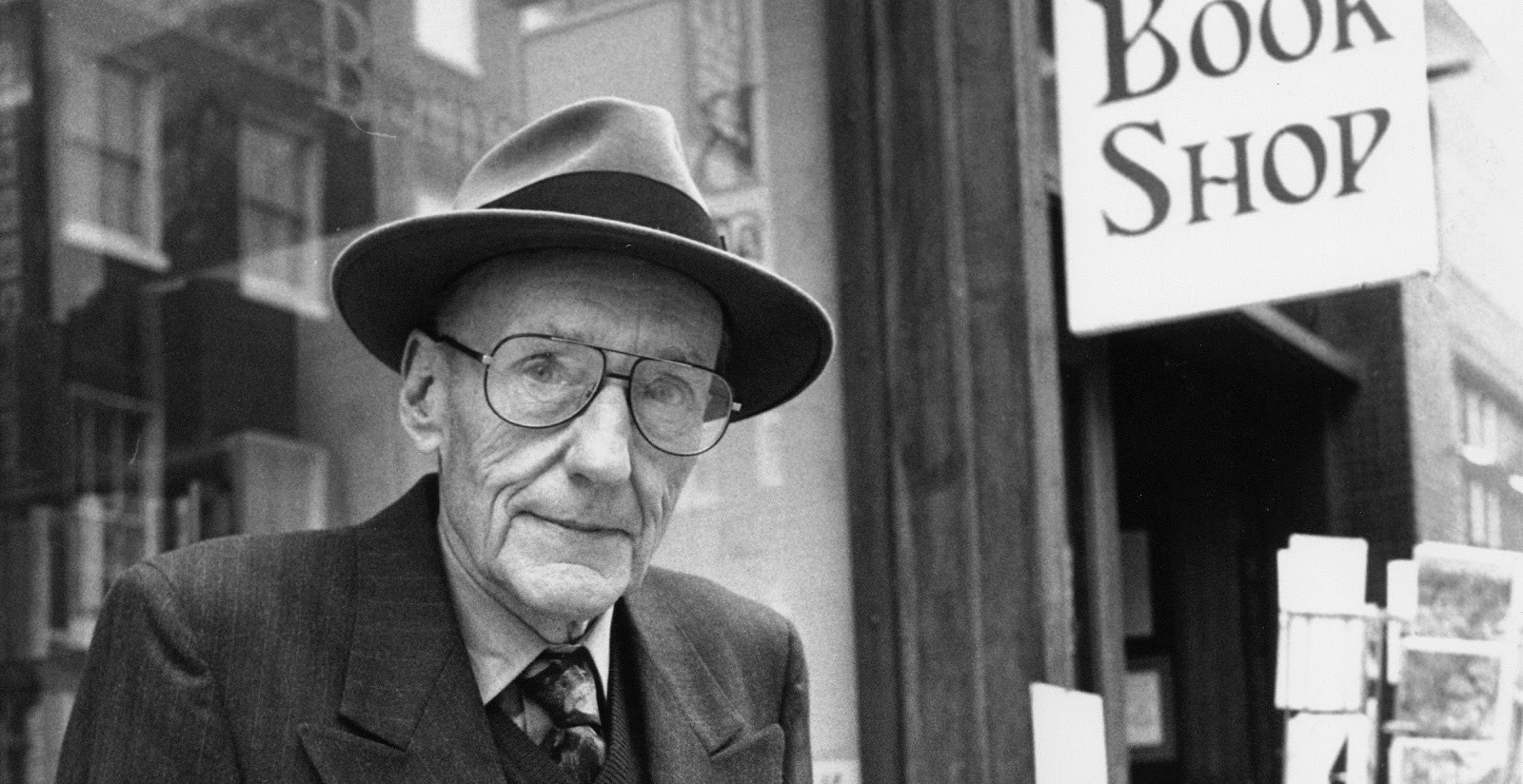
Where is Williams S. Burroughs?

In addition to job prospects, a working economy, and fiscal responsibility, you can now add “an accurate understanding of the Beat Generation” to the list of things the Millennials will never have. The Atlantic takes a look at how Kerouac and co. have been misrepresented in a recent crop of films in order to appeal to younger audiences:

Given what the Beats meant to young people of the 1950s, perhaps it isn’t so surprising that their culture has been revived for millennial consumption. What teenager or 20-something doesn’t long to drop everything and take a road trip to wherever, with friends and booze and drugs and sex? And in an age when many young people are discovering that young adulthood isn’t all it’s cracked up to be, we could use some fun, right? But the current Beat revival arguably goes too far with its re-imagination of the Beat writers’ livelihoods as simple adolescent goofing around — its most prominent writers were, after all, well into their grown-up years when they wrote many of their most notable writings.

Hollywood portraying people as younger and more attractive, e.g. James Franco as Allen Ginsberg, isn’t much of a surprise, though. But writing out a major figure history because he doesn’t fit the part does a disservice to audiences. Jordan Larson observes that Williams S. Burroughs, the heroin addicted writer who shot his wife in the head during a game of “William Tell,” is absent from the Beats’ revival, because “his legacy would likely be a bit harder to spin as one of harmless and youthful adventure.”

It’s a shame, because portraying the ways the Kerouac and his fellow Beats lived as “some sort of consequence-free dream not only does a disservice to viewers, but to the Beats, as well,”

The conspiracy only gets deeper, though. Read the article here and discover the truth.

Here Are Your 2013 National Book Award Finalists

The National Book Foundation announced it’s 2013 finalists this morning. The fiction list is:

  • Rachel Kushner, The Flamethrowers
  • Jhumpa Lahiri, The Lowland
  • James McBride, The Good Lord Bird
  • Thomas Pynchon, Bleeding Edge
  • George Saunders, Tenth of December

You can read Fiona Maazel’s review of Tenth of December here, and Bonnie Altucher’s review of The Flamethrowers here.

Find out the finalists in other genres here.

“Amorometer” by Kelly Luce

The letter arrived in a handmade envelope sealed with red wax. Flipping through the bills and junk mail, Aya Kawaguchi saw her name penned in perfectly shaped characters, tore open the seal, and read:

Dear Kawaguchi-sama,

I feel I must bypass the convention of commenting on the weather as I begin this letter because a more pressing matter is probably concerning you, that of my identity and purpose. I write in the spirit of greatest hope, and am aiming to reach the Ms. Aya Kawaguchi who was a student of Keio University in 1969. If this is not she, please ignore this letter.

My name is Shinji Oeda, Professor of Psychology at Keio from 1960 until my retirement in 1991. From 1969 to 1970, I ran a series of experiments, the goal of which was to design and perfect a device — dubbed the Amorometer — capable of measuring one’s capacity to love. (Amor, of course, being the Latin root of the word “love.”)

In 1969 there were no departmental regulations regarding the debriefing of experimental subjects. I assume you had no understanding of our research, let alone the extraordinary gifts these tests revealed: of all the subjects (439 in total), yours was the highest score in lovingcapacity. In the empathy measure you scored an astounding 32 points — more than two standard deviations above the mean.

I must come to my point: I would very much like to meet you. As a widower of two years, I have found the companionship available to me (my tomcat and my memories) to be inadequate. The cat is unreliable and cantankerous, the memories often the same.

It may be true that regardless of a man’s age, there remains inside him a kernel of youth. As I have aged, my curiosity has not lessened, but has migrated from my brain to my heart. It is not such a bad thing.

With much hope,
Shinji Oeda

P.S. This letter has taken me many years to write; the hypothetical results of my test on a Cordometer (cord the Latin root for “heart,” or “courage”) would likely be dismally low. I urge your quick reply, if possible.

Aya raised the letter up to the lamp at her desk, revealing the watermark. The thick paper, and the surprising space it created between her fingertips, made her feel somehow important.

She had never been a student at Keio University. Since marrying Hisao all those years ago, she’d hardly visited Tokyo at all.

She ran a fingertip over the seal. She imagined the professor dropping the thick wax onto the envelope’s flap and pressing his stamp there. She imagined the wool of his jacket and the creased leather of his shoes as he slipped out of the house, and the long, slim fingers with which he carried the letter to the postbox in his tasteful Tokyo neighborhood. Now that envelope was here, its wax like an exotic fruit, cut with a stranger’s name.

A stranger who believed her to be — what had been his word? — extraordinary.

She glanced at the clock above the stove. Hisao would be another hour, and dinner was already prepared. There was still some ironing to be done, but it could go another day. She brought the stepstool to the closet and brought down the box with the good stationery.

She set to work:

Dear Oeda-sama,

How nice it was to receive your letter, and quite a surprise! For the record, the rainy season has begun here, but I will spare you the details of the weather since, as you say, our correspondence is a strange one.

She reread her opening, then pulled out a fresh pink sheet and rewrote it, replacing “nice” with “lovely” and “strange” with “most unusual.” She continued, I have not thought of Keio in a long time, and I am delighted that you had the courage to find me.

She thought a second, then added, I’d think your readings on the cordometer would be quite high!

She sat up, aware of Hisao’s arrival. After all these years, the ritual of his entry was well-known to her: the yawn of hinges, the slam of the metal door like a detonation, her husband’s gravelly call of “I’m home,” not to her but to himself. The only missing element was the punctuation of his briefcase hitting the floor.

She tucked the letter in a drawer and sighed. It was just like Emiko had warned her: now that he’d retired, her husband was always underfoot. She’d had the run of the house from six in the morning to six at night for thirty-one years. Hisao was a good man, had provided a home to her and their son, but she never considered she’d have to spend this much time with him.

“You’re home early,” she said, standing to greet him.

“Driving range was packed,” Hisao grumbled. “Too many kids. This time of day, kids ought to be in school, or at work.”

“Mm,” she said. “Would you like dinner now? Or how about a cold drink?”

She glided toward the kitchen as he fell into his blue recliner. For as long as they’d been together, he’d come home from work, collapsed in this chair, requested food or drink. Now, however, he often wasn’t tired upon returning, and though he was still drawn by habit to the chair, he no longer looked comfortable there.

She put the finishing touches on her letter that night while Hisao slept, ears defended against his own snoring by green foam plugs.

I am flattered that you should recall me and would love to meet you, she wrote, and took another sip from the heavy glass into which she’d poured some of Hisao’s good whiskey.

She printed the name “Aya Kawaguchi” at the bottom of the letter, marveling at how much nicer this woman’s handwriting was than her own.

His short response arrived three days later.

I’ll open this letter with the weather in my heart, and tell you that the sky is clear and warm, and the quality of light is thick and sweet like honey! I am pleased and surprised (good news does not often come my way these days) that you are in a position to meet me. I could travel to your town, or, if you like, we can meet here in the “neon jungle.”

Thick and sweet like honey! Aya smiled, amazed that there were such people in the world. It was time, she thought, that she met them.

She told only Emiko, who’d divorced young and never remarried, about her plans.

“I’m not going to cheat on Hisao,” Aya said. “I just want to… bask. This man thinks I’m extraordinary. I want to know how that feels.”

“Oh, shut it! You’re a lovely woman.”

“Lovely, schmovely. I want to be extraordinary.”

Emiko rolled her eyes.

“Besides, the timing of it, with Hisao retired now and Ryo just moved out — it’s like a chance to reinvent. See what I’ve missed.”

“What if he’s rich and handsome?”

“He could be poor and crazy,” Aya said, but did not believe it.

“An amorometer! Whoever heard of such a thing? Wonder how I’d score.”

“Me too,” Aya said, recalling every selfish, unloving act of her lifetime. The time, as a teenager, she’d stolen an umbrella; the gossip sessions with Emiko that often turned catty; the way she’d stopped breastfeeding Ryo after two weeks because she couldn’t stand her raw, chapped nipples.

“Exactly — what if he can tell it’s not you?”

“I’ll come home,” she said.

“Only if he’s poor and crazy. If he’s rich and handsome, stick around.”

Their meeting had been set for noon on a Sunday on the top floor of Tokyo Station, in a restaurant famous for its view of the city. Though Shinji had repeated his offer to travel to her small town, Aya had insisted on coming to Tokyo. The person she was hoping to become could not exist in Iida; she could only transform with distance. And though it terrified her to think of herself lost on the streets of an unfamiliar place, she felt certain that once she arrived, she could be anyone she wanted. Anyone she might have been, had her life gone differently. She’d read enough books. She felt a long line of Ayas inside of her, ready to be called upon. The thought made her feel like an adventurer, and while Hisao was out golfing, she spent half the morning pawing through her closet, trying on clothes she hadn’t worn in years.

“Well, let me know what you find,” Emiko said as Aya went out. “And see if he has any single friends.”

She told Hisao she was joining a string quartet organized by an acquaintance of Emiko’s.

“Do you even remember how to play that thing?” he asked from behind his newspaper.

“Of course,” she replied, pairing a batch of socks she’d just brought in from the line. “It was practically attached to my hand in high school.”

“I see. Are you going to practice now?”

She couldn’t tell if he wanted to her to bring out the old viola, or if he was checking to see whether his newspaper reading would be disturbed. “Maybe,” she said.

He nodded, mumbling to himself as he read. Then he said, “But in Tokyo? Couldn’t you find a group closer to home?”

She continued matching and rolling the socks, never losing the rhythm of the work. “I don’t think so.” Then she paused and asked, “Do you think I’m extraordinary?”

He didn’t glance up from his paper. “You’re lovely, dear.”

The night before her trip, she went to her bookshelf. She never left the house without something to read, but her choice this time seemed of real importance. Finally her eyes fell on the dog-eared copy of Anna Karenina she had not read since Ryo was a baby. She slipped it from the shelf into her bag. The weight of the story on her shoulder felt significant; this was a long journey and required a long tale, but more than that, she felt the characters themselves would be good company for this other Aya Kawaguchi.

But if anyone’s hit by a train while I’m waiting, I’m turning around, Aya thought.

It took her a long time to fall asleep that night and she woke up twice, certain she had missed her train. At five o’clock she gave up and took a bath. At seven Hisao drove her to the local train station, where she caught a two-car train to Nishiyama, her connection for the Tokyo bullet.

Safely onboard the bullet train, she shifted in her carpeted seat and let Anna Karenina fall open to random pages. “There are no customs to which a person cannot grow accustomed, especially if he sees that everyone around him lives in the same way.”

“He liked fishing and seemed to take pride in being able to like such a stupid occupation.”

She read:

Anna hardly knew at times what it was she feared, and what she hoped for. Whether she feared or desired what had happened, or what was going to happen, and exactly what she longed for, she could not have said.

She looked out the window. She took off her wedding ring, put it back on. The scenery flew by. She found she could relax her eyes and let the images blur together, or she could focus and pick out the elements: futons lolling from windows like tongues, cascades of electrical wiring, a rooftop rice paddy, a Coca-Cola billboard. Each thing was gone, replaced by something new, before there was time to reflect. No need to think on a train this fast, she thought. If I could stay on this train forever, I’d never have to think about anything again, and life would just be an exciting show of what’s passing by on the outside. It was a comforting idea.

Stepping off the train was like jumping into a river. She wandered through surging crowds in search of a place to store her viola, the case of which suddenly seemed unnecessarily bulky. Couldn’t I have said I was coming for a book club? she thought.

So many people. She was struck by the purpose with which all of them seemed to be moving. A ribbon of song caught her ear, and she turned toward a group of musicians performing next to a bank of ticket machines. They were college students, most likely — two violinists and a cellist. She laughed aloud at the coincidence, she arriving with the missing piece to the quartet and no intention of playing it. The tiny girl on cello caught sight of the instrument and tilted her head in an invitation to join them. Aya blushed and hurried past.

With the help of a young man who looked like Hisao in his younger, slimmer days, she located the day storage lockers and stowed the instrument. Then she headed for the escalators.

She wanted to arrive at the restaurant early. She’d read her book, drink some tea to calm her nerves. She looked at her watch: 10:03, one minute later than the last time she’d looked.

The escalator carried her out of the subway and into a multistory mall arranged in circles that reached all the way up to a huge skylight. The sky beyond the glass was gray yet still bright enough to be cheerful. On the seventh floor she spotted a cosmetics store and stepped off the escalator.

After consulting with the heavy-lashed girl behind the counter, who assured her the color was not too suggestive but rather “elegant and age-repelling,” she purchased a tube of red lipstick in a shade called “Shhh” that cost as much as a hardback book. The makeup glittered like a ball gown and felt like satin on her lips. This reminded her of bed sheets, and she pushed the thought away. Afterward, in the department store’s bathroom, she applied and removed the lipstick four times before reaching a compromise between herself and the other Aya Kawaguchi (who no doubt would have worn “Shhh” without compunction) and blended the shade with her functional chapstick. As a concession for toning down the lipstick, she removed her wedding ring. Then she washed her hands.

At the restaurant, she took a seat along the wall of windows and ordered a pot of tea. A light rain fell over the city, and in response the buildings and roads took on a fresh sheen and the colors of signs and cars brightened.

A moth on the glass caught her eye. It was unlike any moth she’d ever seen, its wings rounded at the top and pointed at the bottom. An indigo spot decorated each orange-rimmed wing.

She shifted uneasily. The spots on its wings made her feel she was being watched. Her mother said that deceased ancestors came to visit disguised as moths, and she didn’t want anyone she knew, living or dead, to witness her activity today. She shooed at the insect with her napkin, but it did not move.

She tried to ignore it and focus on Anna Karenina, but it was no use. She watched the action in the restaurant instead. The place was beginning to fill up. At eleven-thirty, half an hour early, Shigeo Oeda walked in — a dandelion springing from his lapel as promised. He was not as tall as she’d imagined, but his clothes were professionally pressed and fit him well. Emiko would have found him handsome.

But what do you think, Aya thought. Good-looking? Yes. His face was wide and mild, with gold-rimmed glasses riding atop a nose so flat it seemed a miracle the glasses stayed up at all. He sat across the restaurant, facing away from her. She admired his observation of table manners despite his lack of company, the way he placed his napkin in his lap immediately and sat straight in his chair, the warm smile with which he greeted the waiter.

She looked back to the moth. Its black, crooked legs moved slightly. A wing angled itself toward her. Abruptly she stood, cupped her hands over the thing, and closed them. She would carry it out into the mall, let its eerie eye-wings rest elsewhere.

The waiter had brought Shinji Oeda a small drink, which he threw back in one gulp, handing the empty glass back to the waiter. Emboldened by his nervous act, Aya walked toward the entrance, and him, the moth cupped in her hands. Its papery wings beat furiously against her palms. She would pass near his table, but since he didn’t know what she looked like, she would not be discovered.

As she approached, Aya watched his back, certain he could feel her eyes. His hair was cut very short, in an almost military style, and shimmered silver under the restaurant’s low-hanging lamps. His hair was like the rain, she thought.

She passed him, careful to walk neither too fast nor too slow, and went out into the mall. She shook the moth free. It flew toward the skylight. When she returned to the restaurant, she glanced automatically at Shinji Oeda and found his eyes on her.

Aya blushed. There was nothing to do but approach him. As she drew near, he stood, a smile spreading across his face as he took her in. “Oeda-san?” she asked.

“Please, call me Shinji. And you — you are the legendary Aya Kawaguchi.” He bowed deeply.

She bowed as well, holding the position so that she might catch her breath. His cologne reminded her of the forest behind her house.

His mouth was large, his smile a deep cradle. Up close, his gentle eyes and flat nose gave him the appearance of a woodblock print. “I saw what you did with that moth,” he said, and clasped her hands in his. “This is a great honor.”

Embarrassment washed over her. “The honor is mine. And please forget about the moth; it was quite silly of me.”

“Forget? Never! I suspected your identity just from that gesture — such a compassionate act, freeing an insect others would ignore, or even worse, kill!”

Aya was unsure what to say to this; luckily the waiter returned and pulled a chair out for her. “A drink, miss?” he asked as they sat.

“Yes, please,” she said. “I’ll have — ” She thought about Anna, and Russian aristocracy. “Vodka,” she said.

The waiter’s eyebrows twitched. “Rocks?”

“A few,” she said, certain that her order had been inappropriate.

Shinji slapped the table. “Vodka. Who’d have thought?” He grinned. “Make it two.”

Shinji leaned back in his seat, his second vodka nearly finished. They had chatted about a number of meaningless topics — the weather, food, and train travel.

“I have to say, I never thought I’d be having a drink — a vodka — with Aya Kawaguchi. For so many years you were just a set of data… my imagination was forced to extrapolate from there.”

Aya did her best to sound well educated. “Life takes all kinds of strange turns,” she said, finishing her vodka and enjoying the warmth it brought to her cheeks. “If you let it,” she added.

He leaned in and whispered. “Forgive me, but — how is it you never married?”

Aya had managed to sidestep this topic but knew it would come up and had prepared her answer. “I just never found the right man.”

He nodded as if he’d expected as much. “Extraordinary people have extraordinarily hard times.”

He went on, “I’ve wondered for so long… I know now that my imagination is a feeble mechanism. You’re so different from what I imagined — ” She glanced at him. “So much better,” he quickly added.

She began to relax. “You haven’t told me about your research. I have a right to a debriefing, I think.”

“Simply put, we found a way to quantify a person’s ability to love. Their potential. It turns out that not all people are capable of loving to the same capacity. The idea was revolutionary.” He leaned forward, touched her hand. “Imagine being married to a person whose ability to love — whose lovingcapacity — is far below your own.”

As he spoke the word lovingcapacity, he tapped out the syllables with two fingers on the place her wedding ring had recently been.

“From their perspective, a person may be loving to their fullest extent,” Shinji continued. “However, this isn’t good enough for the partner with the higher LC. It will never be good enough. This causes the lower-capacity partner to feel inadequate, unappreciated, and their partner feels the same because, to their mind, everyone should love as they do.”

“Can’t people be made to understand, to accept their differences?”

“Perhaps. But it is very hard for people to truly understand. We have, it turns out, a tremendous blind spot when it comes to being loved.”

“And people can’t improve?”

“Our research generally showed lovingcapacity to be a fixed and immovable trait, much like eye color or IQ. Of course, when it comes to the mind, one can never be sure.”

“I can’t believe I did so well,” she said, and just then the waiter arrived, balancing two large lunch boxes and a platter of drinks. As he set Aya’s box in front her, a glass of cola slid from his tray and crashed onto the table, splashing Aya and dousing her pork cutlet.

The waiter fumbled, apologizing, and promised to bring a new lunch. Aya grimaced at the idea of wasting so much food.

“There’s no need,” she said, dabbing at her shirt with her napkin. “I’ll eat it as it is.”

“Please, ma’am — ”

“Really. Maybe you could discount the bill a bit instead.”

The waiter bowed, his face as red as “Shhh,” and hurried away.

Aya took a bite of her cola-flavored cutlet; she was starving and the vodka had unloosed her appetite. Not bad, she thought. When she looked up, Shinji was looking her, his face shining. His food was untouched.

“Amazing,” he said.

“Oh, it’s nothing,” she said, secretly pleased. “So tell me, what became of your findings?”

“In the autumn of 1970, we lost our funding. The government classified our work as ‘unscientific and possibly dangerous.’”

“Dangerous!”

“Some people felt we were meddling in a place science ought not to meddle. A real shame, since long-term research is by far the most robust in fields like this.” He made a small motion with his hand, and a minute later two more drinks appeared.

“Well, I’ve prattled on long enough,” he said, raising his glass. “Let’s hear about you. From the beginning. What did you study at Keio?”

She clinked her glass to his and took a long sip of her vodka. Aya Kawaguchi was a woman who could hold her liquor. “Literature,” she said. “My first love was Soseki.”

Kokoro,” he replied, naming the author’s first novel. As he said it, he placed his hand over his heart. “Maybe that is why your kokoro is so big.”

“Or maybe my big heart is what drew me to Soseki.” She was feeling more and more comfortable, as if lying about her identity had rolled out the red carpet for other untruths to follow.

He sighed and sat back in his chair, smiling. “I’ve forgotten what it’s like to be around a Keio girl. Don’t you miss city life?”

He focused on her completely as she spoke, his eyes wide, like a child watching a fireworks display. She felt — interesting. Extraordinary. “Well, college was a wild time,” she said, as if admitting something. “I didn’t always make it to class, let’s just say that.”

“Well now, do tell!”

“Oh, no. Well, for one thing there was the band — ”

“The marching band?”

“No, a rock band. Punk, really. I was the singer.”

“Ah — I played clarinet, myself.”

She nodded, slipping inside this invented life like a pair of old pajamas. “We were called Shards of Black, and we wore only white, to be ironic.”

While he was laughing, she excused herself and went to the bathroom. Hisao had left a voicemail, a habit he’d acquired recently.

She returned his call, explained to him the significance of the toaster oven sitting on the kitchen counter, what each knob did, and how long to leave the bread inside. He didn’t mention her quartet practice, which she found annoying, but when he asked whether she would be home for dinner, his voice stirred pity in her. She imagined him eating burnt toast — plain because he did not know where to locate the butter and jam — and she could not say no.

Upon her return she found Hisao sitting on the kitchen floor, surrounded by a mess of bottles, boxes, and cans.

“What are you doing?”

“Rearranging,” he said, examining a box of fish stock.

Why?

He looked up, irritated. “For greater efficiency.”

“You don’t even cook.”

He shrugged. She stepped over him and picked up the whiskey.

“Since when do you drink?”

“Since now. Why do you seem to think life is over, that it’s too late to try new things?”

He motioned at the mess around him. “I am trying new things.”

A letter from Shinji arrived two days later. He must have mailed it while I was on the train ride back, Aya thought. In the letter he thanked her for coming to Tokyo and expressed his excitement for their next meeting, the next Sunday in Ueno Park. He closed with a line from Kokoro, the Soseki novel they had discussed:

Words uttered in passion contain a greater living truth than do those expressing thoughts rationally conceived …

She reread his letters each morning and began the day feeling like a plant just watered.

Autumn had set the trees in the park aflame, and Aya felt she’d never experienced such richness of color, even in the rural forests of her hometown.

He had bowed to her upon their meeting, a good sign, she thought, since a hug would have meant something she was not quite ready for. His face searched hers in a way it had not upon their first encounter, like a connoisseur reevaluating a painting that’s been placed in new light. She thought it might be her lipstick: after locking up her viola, she’d applied “Shhh” without blotting it afterward.

His unsure manner disappeared quickly, and Aya wrote it off to nerves. Her suspicion was confirmed when, after just a few minutes of walking, he grabbed her hand. “I want to show you something,” he said.

He led her out of the park, through a shopping area, and into a quiet neighborhood of old houses and narrow lanes. “This is my house,” he said, and they stopped in the street. “Don’t worry,” he said, seeing her expression, “I’m not indecent. After all, we hardly know each other!”

She followed him down a narrow path behind the house. He kept glancing back, as if to make sure she was still there. A tiny shed stood in the yard, and when they reached it, he began unlocking it. There were four locks in all.

“Here we are,” he said, pushing open the door.

Aya stepped inside the dim little room, which smelled of wet wood and plastic. A large table, which held a device resembling a seismograph, took up most of the space. It was not a room built for company.

“This,” he said, throwing out his arm like a magician, “is the amorometer.”

The central component of the contraption was a metal case painted red. Inside the case, a needle hung poised over a thick roll of paper. Two leather cuffs, one large, like a belt, and one smaller, the size of a blood-pressure cuff, dangled from the left side of the box. Rising behind the box like a crown was a clothes hanger — also painted red — that had been forced into an awkward heart shape. It looked like something Ryo would have built with scraps from the neighbor’s trash.

“I was hoping you’d be willing to, well, provide some new data. A longitudinal study, if you will!” He set his hand lightly on her arm.

“Ah!” She imagined herself cuffed to the device, the evidence of her fakery pouring forth, and shuddered. She sat down.

“Are you all right? Is there something you need?”

“I’m just not — ”

“You see,” he said, opening and closing a clamp full of tiny metal teeth, “this way I can be sure … we can be sure …”

She thought of her lipstick, and touched a finger to her mouth, as if testing a wall one had regretfully painted.

“I think I should go,” she said.

Her train wasn’t due for over an hour. She wandered the fluorescent underground corridors of the station, passing shops advertising souvenirs for places elsewhere — blackened eggs from Hakone, tiny limes from Shikoku, habu liquor from Okinawa. She wondered how many of the gifts she’d received over the years had come from places like this. Was everything so false?

She heard the music long before she saw the players; it came from nearly the same place as the first time, next to the ticket machine for the Hibiya subway line, which, she’d learned from Shinji, was the deepest subway in the world. If you stood at the bottom of the Hibiya escalator, it was said, you could feel the heat of hell and see the light from heaven.

She looked at the spot the quartet-minus-one had been a week before but found it empty. She followed the melody with her ear. It was coming, she realized, from beyond the ticket gates, rising up the escalator.

She made her decision at once; or rather, she reflected later, her heart had made it for her — a luxury she had not allowed herself in many years. Inside the stall of a nearby bathroom, Aya flipped the latches on her viola case. She lifted the instrument from its bed and, drawing the ancient bow across the strings, began to play.

The strings were old; the A and G were frayed along the bowline and she worked the tuning pegs, cradling the wooden body to her chest. Shoes clattered on the disinfected floors, doors slammed, and hands were washed, and for once in her life, Aya did not care who observed her. These women were strangers, yet they shared this city; maybe some had been students at Keio University, maybe the other Aya Kawaguchi was in the stall next to her, pants down. The thought made her laugh, and without realizing what she was doing, she began playing the solo she’d performed her last year of high school, the first movement of Shubert’s Arpeggione. Heady, she watched her fingers land on the strings, and though the B was falling out of tune already, her rhythm was dead on.

It wasn’t perfect, but she felt it was good, and if she practiced, it could be marvelous, better than it had been in school because everything she had lived through would go into the music. She was no longer a girl. Her fears and desires were known and did not bind her. She hit the final notes with this in mind, standing alone in the corner stall of the women’s bathroom near the Hibiya Line in Tokyo Station, and when she was finished, a small clap echoed against the tile walls, and a second later more applause joined it. Aya lifted her head. She bowed to no one, then started from the beginning, thinking how the beady-eyed judge had nodded, even smiled, and said: “That was good, but let’s hear it again.”

The Last Person in the World to Read 50 Shades of Grey

Actor Charlie Hunman was slated to play the lead role of BDSM aficionado Christian Grey in the film adaptation of 50 Shades of Grey, a series that’s sold 70 million copies worldwide. Then he reportedly read the book and backed out. While it might be embarrassing and troubling for the filmmakers, Hunman may have unwittingly revealed himself to be the last person on the planet to have read the book.

But now Humnan is one of us… One of us… One of us…

Via Neatorama.

Discover a New Way to Read

Our new app is the easiest way to read Recommended Reading: one great short story selected by literary rock stars, delivered automatically to your iPad or iPhone every Wednesday.

Download the Recommended Reading app for just 99¢ and get a free story by A.M. Homes, plus a companion animation. Then subscribe for as little as 38¢ an issue!

Proceeds will support Electric Literature and all the good stuff you care about: paying writers, discovering great fiction, and keeping the short story alive.

Get it today!

Avaialble_in_app_store

Supernova

Shenkman pushes back with his legs, smooth and hard. Thinks of his old coach’s word: fluid. Hinges his upper body, then slides forward, arms extended. The briefest pause of recovery as the flywheel spins. Drive, recovery. Drive, recovery. He counts. One, two. Full lungs at the catch, empty at the finish. He gives the RowPro a quick glance. Fuck. 6K into this race and two sculls are ahead of him. On the wall, the flat screen displays the deep twilight blue of a lake. He is there, gliding along Lake Winnipesaukee, the ripples cast by his blades cutting down into the depths.

Alice is on the other side of the house, and Shenkman knows she’s lonely and slightly pissed off. These are the hours of the day when she expects him to be with her. To endlessly go over the only two or three subjects they ever seem to talk about any more: there’s her father’s macular degeneration and the question of who among her siblings will take on the job of getting his driver’s license revoked before he kills someone. Then there’s the onset of Shenkman’s mother’s dementia and its likely effect on their plans to travel over spring break. And finally, always, there’s Waldo, and the indecipherable results of one full day and three-grand worth of psychiatric testing to determine whether their son has a) the same strain of ADHD which seems to be going around the fourth grade like a virulent flu, or b) something else, something more, something for which Shenkman does not yet know the acronym, and for which he is unprepared.

One, two. His trapezius muscles burn.

It’s been almost an hour since he tucked Waldo in, but he knows his son isn’t sleeping. Every night, while Shenkman wails on the RowPro, while Alice sits in the kitchen sipping chardonnay, Waldo has been slipping out the back door. Shenkman knows this because he can see every open door and window on the burglar alarm monitor. The first time it happened (and the second, and third) he went to the window and watched Waldo tiptoe into the backyard with his iPad tucked under his arm. His dark hair, still wet from a post-dinner shower, shone in the moonlight as he settled himself on the ground against a fence post and tilted the iPad to the sky. He had begged Shenkman for an app called StarWalk, and now it’s all he’ll talk about. Instead of good morning, now Shenkman and Alice are greeted with reports of the day’s planetary action, complete with full description of the constellations visible in that night’s sky. Shenkman is hoping — God, he is hoping — that this is just a phase. He and Alice talk about it in a never-ending loop of parental, fear-induced justification. Remember the thing with the clocks? Waldo taught himself to tell time before he could even speak in sentences. Shenkman and Alice try not to notice the deepening furrows of worry, slowly becoming permanent in the face of the other, as if in time-lapse photography. What about the church bells? At this, they cannot help but laugh. When Waldo was three, they couldn’t drive past a church at five minutes before the hour, for fear that the bells would chime. Waldo would shakes his head no, no, no and bury his face in his arms like a little old man. It seemed cute, if a bit eccentric, at the time. From the RowPro, Shenkman sees the alarm pad blink.

Just-a-phase, just-a-phase, just-a-phase. His mantra on the machine. He has his nightly talk with himself. He promises himself he’ll be easier on Waldo. He hears the tone of his own voice, criticizing his son. What he really wants to say, what he means, is I love you and want the world for you. Instead, what comes out is more like Jesus will you stop picking at your fingers, or How many times must I tell you to stop humming at the dinner table? He finds his son unreadable, unreachable. This elusiveness, now at the center, the very heartbeat of his life, has begun to seep into everything. Shenkman wakes up in the morning with the feeling that the bed is tilted, the world slightly off its axis. He showers, eats breakfast, drives to work — but he’s not really present. The closest he ever gets is right here, in his mechanical scull, on his virtual lake. One, two.

Three hundred meters to go. On his RowPro screen, he’s now only four meters behind the leader. Lindgren, of course. Lindgren is edging him out, and eight others are trailing. Shenkman trained hard yesterday, sprinting and resting for a solid forty minutes. He overdid it, maybe. One, two. On the screen, it’s always a beautiful day, the sky a preternatural blue. A stand of trees shine like emeralds. His heart rate is higher than he likes, but he steps it up a notch. Pulls a hair’s breadth ahead of Lindgren. Fuck you, Lindgren. Fifty-eight meters left. Shenkman goes back to Winnipesaukee. Behind him, he pictures the buoys of the finish line, neon in the distance. In front of him, Lindgren, his wheat-colored hair whipping in the breeze. He hears the slap of his blades as they flatten against the water’s surface, then go vertical and slice silently down. He tells himself not to look at the monitor, think only of the finish.

He crosses it, panting. Sweat pours down his back. His heart hammers. Shenkman gives the screen a quick glance. The last remaining scull — that guy from New Zealand — slides to the finish line, and now all the sculls are lined up like perfect little soldiers. He rubs his stinging eyes with a towel, then squints at the bottom of the screen to see the winner. Lindgren. By an eighth of a second. Downstairs, the back door creaks open, then closes with an efficient click. Even if Shenkman didn’t have the twitching ears of a Labrador when it comes to Waldo, he would know from the alarm pad, which blinks once more. What nine-year-old leaves his own house late at night? His nine-year-old, that’s who. In his Red Sox pajamas, he is making his solitary climb back to bed. He will fall asleep with the iPad next to his head on the pillow.

The gym was completed last winter, three months behind schedule. Shenkman spent twice his bonus, maxing out a couple of credit cards in a shameful frenzy about which Alice is still in the dark. Shenkman figures, he pays the bills and what she doesn’t know won’t hurt her. He thought he’d have made up the difference by now, and though it hasn’t exactly worked out that way, he doesn’t regret one dollar spent on the sprung hardwood floors, the mirrored wall, the flat screen, the recessed lighting on dimmer switches. A man needs his sanctuary.

Except now there’s Lindgren. A lot of the guys have handles on RowPro. Names like oarsman291, or scullandbones. Shenkman himself is crewdude9. But Lindgren is just Lindgren. Shenkman had only been training for a few months when Lindgren popped up on the screen. The list of names, until then, had been an anonymized, digital blur. But then, late one night, as Shenkman was squeezing in a quick, ill-advised, post-prandial workout, a scull slid ahead of his, eased past as if on a different frequency altogether. Lindgren. Shenkman stared at the name. He started rowing harder. He gave it everything he had, his chicken lasagna dinner roiling in his gut. One, two. But he couldn’t catch up. When the race was over, Shenkman climbed off the RowPro, shaking, then vomited neatly into the wastepaper basket.

Since that night, he has been shaving seconds, then minutes, off his time. He’s almost there. Any day now, Lindgren is going to look down at his own screen and see that he has been surpassed. In fact, surpassing Lindgren has become Shenkman’s only goal. Not Shenkman winning, but Lindgren losing. He knows this isn’t a good way to be. That Alice wouldn’t approve. He himself doesn’t approve. But he has spent some time researching all things Lindgren — the reflexive Google fishing expedition has become something of a daily habit — and he feels that it is his responsibility to bring the guy down a notch.

He is in the process of stripping off his damp t-shirt and compression shorts when he hears a knock at the gym door.

“Hold on a minute!”

He grabs the thick, hooded terrycloth robe which hangs from its hook on the wall, like a prize fighter’s. No one ever bothers him in here. Alice boycotts the place; she sends in Esmerelda once a week to gather up his stinky clothes for the wash.

“Dad?”

Waldo stands in the doorway, his thin arms wrapped around himself. The iPad is nowhere to be seen.

“Wally, what’s the matter?” Shenkman still short of breath, and he hasn’t stopped sweating.

“Bad dream.”

Shenkman doesn’t point out that in the five minutes which have elapsed since Waldo’s let himself back into the house, there hasn’t been enough time to fall asleep, let alone dream a bad dream.

Be patient with the boy.

“Come.” He lowers himself onto a weight lifting bench, then taps the space next to him. Waldo approaches tentatively — Shenkman blames himself for his son’s reticence — then sits. Waldo picks at the edge of his thumb, already puckered and raw. He seems to be focused on a spot on the floor where the rubber mat has become dislodged, its edge curling up. The color in his pale cheeks is feverishly bright.

“What is it, Wally? What’d you dream?”

He shrugs his skinny shoulders. “Nothing.”

“Well, it can’t be nothing. You’re here now, aren’t you?”

The poor thumb makes its way to Waldo’s mouth. He has bitten the tortured skin nearly to the point of bleeding.

“You can tell me.”

“Hey, Dad?”

“Yeah, buddy?”

“Did you know — ” Waldo starts.

Shenkman steels himself. Any sentence from his son beginning with Did you know usually swerves far from the subject at hand.

“ — that Betelgeuse is a semi-regular variable star located approximately 640 light years from the Earth?”

“No,” Shenkman responds, a familiar heaviness settling over him. “I didn’t know that.”

“Yeah, and my app says it’s a red supergiant — one of the biggest stars known to — ”

Shenkman’s skin feels clammy. He’s getting chilled. All he wants to do is take a shower. “Listen, Wally — can we just — ”

“How about this?” The muscle beneath Waldo’s left eye twitches. “Astronomers believe that Betelgeuse is only a few million years old, and — ”

“Waldo!”

His tone — goddamnit, he’s been working on regulating his tone — comes out sharper than intended, and Waldo flinches a little, as if Shenkman had raised a hand to him. As if Shenkman would ever do such a thing.

Shenkman’s temper floats somewhere below his ribcage, a small boat on a stormy sea. He tries to breathe into it, meditates, almost, the way he has been training himself to do. He’s been reading up on this. He knows that his rage is just fear in disguise. That just beneath these sudden outbursts exists a love for his son so tender he can hardly bear it.

“I’m sorry.” He puts a hand on Waldo’s knee. “I’m sorry, buddy.”

“All I was going to say is that it may go supernova,” Waldo finishes dully. “Within the next millennium. That’s what the astronomers say.“

“I didn’t mean to startle you,” Shenkman says. “I only want to have a conversation. Can’t we just talk about something normal?”

Waldo turns and looks at him squarely. His eyes latch onto Shenkman’s and don’t let go. It’s my normal, those eyes say.

Back-to-bed-time. The digital clock reads 9:46, Shenkman notes with despair. The hours during which the pilot light in Shenkman’s brain, always burning, can finally be extinguished for the night — the hours in which Waldo is actually sleeping, gone under, arms flung wide, cheek pressed deep into the pillow, lips parted, nothing left to say or think or do — those hours are shrinking fast. Before he knows it, dawn’s thin light will creep through his bedroom window. Alice will be facing him, her eyes covered by a black sleep mask, small balls of wax stuffed deep into her ears. His feet will hit the tilted ground, and he will once again begin his day. He’ll get to the office early, scan the markets, initiate buys of stocks that got hammered the day before, looking for short-term bounce. Before lunch rolls around, he’ll check in with his half-dozen big clients, whose moods will reflect their portfolios. He will be battered or buoyant. Confident that he’s one centimeter further up the invisible ladder he always seems to be climbing, or worried that he’s in a slow motion free fall. He will send emails, reply to all, show up for the three o’clock teleconference with their satellite office in San Francisco, all the while carrying an awareness, wedged like a razor in his solar plexus, that if his son cannot grow up to have a successful life (not that the doctors have said this, as Alice keeps reminding him) then none of it matters.

“Come on, buddy, let’s give this sleep thing another try.” Shenkman slings an arm around Waldo.

“But I’m not tired.”

“Sure, you’re tired. You’re so tired you don’t even know you’re tired.”

He ushers Waldo out of the gym. It isn’t right, having his son here, as if something adult, something male and illicit takes place in this mirrored room. He leaves the lights on. After he tucks Waldo in, he’ll come back up here, shut down the equipment for the night.

The boy is snug beneath his American League quilt, his small body finally limp, as if someone had come along and flipped his off switch. Shenkman quietly makes his way down the hall, doing his damnedest to avoid any creaking floorboards. He’d rather not negotiate with Alice now, who is still in the kitchen, watching the ten o’clock news. In the morning, that bottle of chardonnay will likely be empty, deposited next to the trash for him to take out on his way to work.

He lets himself back into the gym, breathing in the sharp, familiar scent of his own rankness. His workout isn’t complete until he enters his time into the log, along with the name of the victor. Lindgren, he writes in ink, at the top of a column built entirely of only one name: Lindgren stacked upon Lindgren. A tower of Lindgrens. The symmetry is weirdly satisfying. Once again Shenkman is back on Winnipesaukee, rowing the Meredith Bay course. Lindgren in front of him, their movements as precise and aligned as a corps de ballet. Lindgren, for whom winning always came so easily that it meant nothing at all.

Shenkman hadn’t laid eyes on Lindgren since graduation. He skipped the big twenty-fifth reunion last May, though he did pore over the ensuing alumni magazine one Sunday morning on the can, examining the array of glossy pictures: balding men wearing madras ties, their guts spilling softly over the tops of their khakis; women with tamed blonde hair and tanned, leathery arms. Was it all going south from here? My god. What was their thirtieth going to look like? Or their thirty-fifth? He skimmed the class news: promotions, second marriages, cancers, late-in-life babies, career changes. It seemed this — this early midlife into which they had all been thrust — was the last possible moment for a course correction. Greg Adams had left his lucrative law practice in New York, and opened a fair trade coffee importing business in Burlington. Marshall Hughes and his second wife had just adopted a baby girl from China and set about getting her cleft palate fixed. Shenkman had been about to toss the magazine when he noticed a photo in the bottom right-hand corner. Lindgren on the beach. Lindgren, looking handsome, buffly prosperous in his faded t-shirt and Ray Bans. He was flanked by his undeniably hot wife and their two wheat-headed kids. Lindgren hadn’t provided his own class note, of course. The accompanying bit of information had been shared by Mindy Sessums, who had recently run into the Lindgren family in Westport, where Lindgren was planning to open the twelfth restaurant in his tapas empire.

Ever since that Sunday morning on the can, Lindgren grinning up at him from the magazine resting open between his knees, something had shifted inside Shenkman. If life was a race, then Lindgren was winning; he had pulled ahead of the pack, with his perfect progeny and his fortune built on $16 quartinos of Tempranillo and $20 small plates of jambon. He, Shenkman, had fallen somewhere into the baggy middle. Everything about him was mid: midlife, mid-career, middling marriage. It had happened slowly, but it was unmistakable. He hadn’t made good choices, he now understood. He’d like to slap his own, placid, stupid fucking face. His logic — if had he even employed logic — had been ass-backward. He’s made the grave error of being satisfied by the small stuff. The bonus check. The nice car. The right preschool. He’d thought he was moving forward, but he had been standing still. He had slipped behind without noticing.

Before he shuts down the gym for the night, Shenkman opens his laptop — he knows he shouldn’t, that no good can come of it, but he can’t help himself — and does a quick scan of Lindgren’s life. Nothing is really new. The same photos on Google images of Lindgren and his wife at black tie events that manage to look both expensive and bohemian. The same maximum contributions to Obama’s campaign. The same Facebook fan page with 7568 friends for an empire which extends from Scarsdale to Armonk to Greenwich to West Hartford. The newest addition — Palermo Soho Westport — is opening the very next night. According to Zagat’s, Lindgren has single-handedly brought the culture and flavor of Buenos Aires to New York City’s suburbs. There is hardly a neighborhood in Westchester or Connecticut from which one can’t make an easy drive to Palermo Soho. The restaurant group’s website displays a tasteful slideshow of Argentinian street life, accompanied by Gato Barbieri-esque saxophone. A perusal of Yelp turns up mostly positive feedback. Great service! Amazing wine selection! Five stars!

Shenkman lowers himself to the mat he keeps on the floor for the stretching exercises he’s supposed to do, then hunches over the keyboard. Leave a comment? Sure, he’d be delighted to leave a comment. He gives one star to Palermo Soho Scarsdale. He’d give zero stars, but that isn’t an option. Mediocre, he writes, then deletes. He can do better. Very disappointing, he types into the comment box. My wife and I expected better. This restaurant has a great hype machine — here he pauses, stopping to think of what might wound Lindgren, should Lindgren himself actually be scrolling through his own customer reviews — but it has no substance. He stops, pleased with himself. No substance. But before he hits the send button, he hesitates. He catches his own reflection in the gym’s mirror: a pale, slightly balding middle-aged guy sitting on the floor like a child in his thick white terrycloth robe; he looks away, ashamed. Is there any way — any possible way — that Lindgren can find out that he’s behind the comment? No, he decides. It’s impossible. Shenkman presses send, and nothing happens. Sign in and create an account? No, thanks. He presses send again. Nothing. This — even this anonymous bit of petty subterfuge — is beyond him.

The following evening, Shenkman flies out of work early. He’s been in a fog all day, finding the simplest transactions taxing, unable to keep up with the trading floor banter. He feels under the weather, almost. Like maybe he needs to go home and just get into bed. But once he’s in his car, dodging in and out of traffic on the FDR, his energy returns in a great wave, surging, uncontainable. He needs to keep moving. Smooth sailing up the Major Deegan. He tenses his thighs against the seat of his car, then releases. Rolls his shoulders. Grips the steering wheel so tightly his knuckles go white.

By the time he passes his usual exit on I-95, Shenkman’s mind has gone all buzzy. He tries to calm himself by listening to NPR, but there’s an interview of some kid he’s never heard of who’s just won the jury prize at Cannes for directing his first film. He switches stations, and now there’s an expert on celiac disease opining about the merits of a gluten-free diet. He pictures Lindgren at his grand opening. Judging from the picture in the alumni magazine, the guy looks even better than he did in college. Like life hasn’t touched him. He doesn’t have mounting credit card debt, or a blind but still-driving father-in-law, or a mother with dementia, or a disappointed wife, or a son whose future is uncertain. Shenkman cracks his knuckles. He’s not going to get home in time to take Waldo to his Jujitsu class. Not even close. He should probably pull over and call Alice, but he can’t stop. If he stops, he’ll lose momentum. If he stops, he’ll have to consider what he’s doing and where he’s going. Instead, he guns it.

Hey, Lindgren. How’s it going, Lindgren. Long time, Lindgren. His pulse races along with the car. He doesn’t know Westport well. It’s about forty minutes north. In fact, he isn’t really sure how to get there, and he can’t plug it into his nav system, not while the car is moving. Alice is going to be pissed. But she can take Waldo, just this once. On a straightaway, he steers with his knees and texts her. Working late. U ok to take W to Jujitsu?

The whooshy little blip of his outgoing text lifts his spirits. The highway unfurls like a black velvet ribbon wrapped around an unexpected gift. No Jujitsu. No standing with the other parents — he has nothing to say to them — while they watch their kids tumble and spar like a litter of preppy puppies. Waldo, the runt. Always on the margins. Waldo, who makes jokes the other boys don’t understand. It kills Shenkman, when the boys turn away from his son. He takes some small comfort in the fact that Waldo doesn’t seem to mind. But Shenkman minds. On the way home, he coaches Waldo: don’t stare at the ceiling like that. Stop pulling at your bottom lip. Don’t do that weird thing with your tongue.

By the time Shenkman gets off the highway and finds the Post Road in what he hopes is Westport, it’s dark. The downtown, such as it is, is deserted. Luxury chain stores closed for the night. He drives ten minutes — all the way to Norwalk — before he realizes he’s going in the wrong direction. Doubling back, he nearly rear-ends the car in front of him. Finally — just as he’s about to give up — he spots a tasteful sign for Palermo Soho Westport in an upscale strip mall off the main drag. It’s next to a cheese shop and salumeria, presumably also owned by Lindgren, with dried sausages, prosciutto and wheels of manchego sweating in the window. The ornate wooden doors of the restaurant are propped open with enormous ceramic planters. A few revelers in cocktail dresses and sports coats are sneaking smokes on the sidewalk.

Shenkman makes his approach. Each tall, fair-haired man he passes morphs for an instant into Lindgren. Shenkman’s heart thrums irregularly in his chest. He would know Lindgren better from behind. For two years, they were on the same boat. Lindgren, the stroke, was closest to the coxswain. His stroke set the pace. And Shenkman, rowing in the seven position, focused solely on Lindgren’s damp white t-shirt clinging to his back, those thick muscles, his ropey arms, hair whipping in the Winnipesaukee wind. Drive, release. Drive, release. Intent on the coxswain’s commands: Bow four, back it down! Number three, hands down and away! Timing his every stroke to Lindgren’s.

He wants only to say hello, he tells himself. To see up close the tangible result of a lifetime of good fortune. Because that’s what it is, he’s decided. Certain people — namely, Lindgren — get more than their fair share. Somewhere along the way, luck — or the lack thereof — becomes immutable. It hardens and calcifies like a diseased artery. He, Shenkman, is not lucky. Oh, he can work hard, do all right. He can eke something decent out of this life of his. But he’s not Lindgren. He can’t alter his position. It’s as fixed as the cosmos, and as predictable. He’s not, as Waldo would put it, ever going to go supernova. He’s just a garden variety bit of space rock.

He scans the crowd. A photographer is darting about, stopping certain people who pose and smile: a woman with excellent teeth; a man in a pink, open necked shirt with a white collar. In the cavernous dark of the restaurant, the camera flashes. The music is loud, heavy on the drumbeat. The banquettes are covered in faded red velvet, low tables scarred with candle drippings. Ornate chandeliers and sconces. The effect is of a place that already has a history, not one that is just opening today.

Shenkman’s heart knocks against his chest. His breath is labored. He finds a waiter, downs a glass of wine in three gulps, then takes another from the tray. He hasn’t eaten much today, and his gut instantly burns. He grabs a handful of marcona almonds from a small dish on the long, polished bar. The green glass chandeliers cast the party-goers faces in a ghoulish light. Behind the bar, the glassware sparkles.

The photographer’s flash is now lighting up a banquette in the far corner of the restaurant, and Shenkman knows — before even seeing, he knows — that it must Lindgren, who would never circulate at his own party. Of course he wouldn’t. It was the same way in college. Lindgren, his arm carelessly around some girl, who basked in her own chosenness. He always seemed to be laughing, a shark’s tooth dangling on a string around his neck.

His blackberry vibrates in his pocket. Alice has sent him a text: No worries. At dojo with boy. She has attached a photo to the text. He taps on it and Waldo fills the screen, tiny and barefoot in his stiff white uniform, flanked by two beefy kids. A yellow belt, the color of French’s Mustard, is wrapped twice around his narrow waist, marked with vertical black lines signifying progress towards the next color — orange, he thinks. These kids look like big, galoomphing oafs, their reddish faces offset Waldo’s pale visage like two garish bookends holding up an elegant pamphlet.

Something inside Shenkman swells. He pictures his boy, his old-man brow creased as he shouts the Japanese numerals: Ich Ni San Chi Go! The sensei has taken a liking to Waldo, who — despite his lack of coordination and general spaciness — has mastered an intricate set of Jujitsu commands. Shenkman takes another sip of his drink and tries to breathe. What the fuck is he doing? His boy deserves a father who can take measure of his life. A father who can grasp it all — the complexity, the failure, the imperfection — without ducking or feinting. Drive, recovery. Drive, recovery. All there is to it.

Fortified, he begins to snake his way through the tables and banquettes, until he arrives at the back of a very familiar head. Lindgren is sitting with his wife and kids. The shoulders still wide, longish hair curling against his soft, strong neck. The cuffs of his blue oxford shirt rolled up, exposing an athlete’s forearms. Snatches of conversation all around him: tomorrow at the beach; leather trench coat, if you can believe it; sitter’s day off.

He stands by the table and clears his throat. The banquette is U-shaped, and Lindgren’s back is still to him. He’s next to his very pretty wife, a hand resting on her knee. It’s she who looks up at Shenkman with the cool, practiced glance of a woman who’s used to people wanting things from her. She nudges her husband under the table, points her chin in Shenkman’s direction. On her other side, a girl and a boy, around Waldo’s age, are bent over an iPhone.

Lindgren turns around. The face is the same. A few crow’s feet at the corners of his eyes, but otherwise he is unchanged. Not so Shenkman, who is acutely aware of his balding temples, his sagging jowls, the permanent lines running across his forehead. Does he even look like the same person?

“Lindgren! It’s me!”

The wife leans over. “Hi, I’m Laurie Lindgren. And you are?”

Shenkman blurts out his own name. He watches as he comes into focus for Lindgren.

“Oh my god, buddy. I rowed crew with this guy,” Lindgren tells his wife and kids.

“Long time,” he manages.

“Come sit with us.”

“I don’t want to intrude — ”

“Don’t be silly.”

Shenkman lowers himself to the banquette next to Lindgren.

“Congratulations. You know, on your restaurants and all.”

“Thanks, dude.” Lindgren just keeps looking at him with a big grin. “God, I just can’t believe it! How the hell are you?”

“Good,” Shenkman gives a little shrug. He tries to smile. His face feels rubbery.

“So what are you up to? Married? Kids?”

Shenkman pulls his Blackberry out of his pocket and shows the screen to Lindgren.

“The one in the middle is my son, Waldo. He’s nine.”

“Hey, look at this, guys.”

Lindgren passes the Blackberry to his kids. They put down the game boy and look at the photo of Waldo. Ich Ni San Chi Go! The boy has Lindgren’s eyes, and is wearing a frayed rope bracelet — the kind of thing Lindgren might have once worn. These kids, who weren’t even specks of dust in the universe back when Shenkman stared enviously at their future father’s muscled back, his impressive arms, the aura of his own rightness glowing all around him. These kids — his too — whose future selves are as mysterious as distant galaxies. Anything can happen. Anything, right? Isn’t that what he used to believe?

Late last night, after his botched attempt at online restaurant criticism, Shenkman had stood for a long time in the doorway to Waldo’s room. Then he rearranged the quilt over his son’s sleeping body, bent down and brushed his lips against Waldo’s cheek. He lowered himself to a bean bag chair on the floor. His mind was full of a thousand questions: Why do you measure doorknobs? Why do you track hurricanes? Why do you check the clock every ten seconds? Why do you talk about constellations? Why? Why?

“Adorable. What’s he into?” Lindgren’s wife is asking.

“Jujitsu,” Shenkman says. “Astronomy. Time travel.”

“Sounds brilliant,” Lindgren says. “No surprise there. This guy — ”

Shenkman waves him off.

“No seriously — this guy was the wicked smart one. Always figured you’d be doing some crazy-ass thing with numbers, man.”

Lindgren’s daughter hands the Blackberry back to Shenkman. She’s a pretty girl, with an uncomplicated face. It would be easy to imagine her path through life. Its simple, burnished ease. For some reason, Shenkman sees arugula, watermelon, a martini glass with a single olive. His vision is fracturing, the room suddenly kaleidoscopic. Who knows? He knows nothing. Wicked smart. Waldo — of this much he is certain — Waldo breaks every mold. He may surprise them all with his strange, agile mind, his kinetic, unstoppable energy. He takes after nobody. Betelgeuse, he hears that soft voice. Red supergiant.

“You know, I’ve been rowing again,” Lindgren is saying. He leans forward, elbows on the table. “Got this machine called RowPro.”

“Yeah?”

“You might want to look into it.”

“I’ll do that.”

Shenkman pushes himself up from the table. He needs to go. Voices speak as if from a distance. Good to see you, buddy. Hey, thanks for stopping by. He’s moving swiftly now. He belongs in the dojo with his wife and son, cheering from the sidelines. The sensei is teaching Waldo throws and kicks and hold-downs. But there’s so much more he needs to learn. So much to prepare for. How to stand his ground. How to anticipate an incoming punch. How to bow to another with dignity, even grace. How to break a fall.

Our Second Novel Is Here!

“It’s time for Bobby Bird, my friend. It’s time for pink cotton.”

And it’s time for Electric Literature’s new novel. Saguaro by Carson Mell chronicles the life of singer Bobby Bird — a legend in pink cotton, a living history in tattoos, the very embodiment of rock and roll — as he finds himself rolled up in barbiturates, at sea with Satanic cults, finding true love, selling out, and coming back.

VICE Magazine says, “[Bobby Bird] has lived enough lives and wild times for a couple Willie Nelsons and maybe one Mick Jagger.”

Carson originally self-published Saguaro and sold out of 1,000 copies, and the only way to get your hands on one was to pay $60 for a used copy on Amazon. Until now.
The Saguaro eBook will take you deeper into the world of Bobby Bird with illustrations, album covers, and animations from Carson Mell.

Get your copy today for just $7.99!

Also available on Nook and Kobo!

OCTOBER MIX — Gigantic Talk

GIGANTIC TALK MIX

Dear listeners,

To celebrate the release of our latest print issue, Gigantic Talk, we thought we’d put together a mixtape of our songs exploring some idea of “talking.”

One of our first thoughts was to include a song by the Velvet Underground, one of the greatest and most original groups of “talkers” ever. We also wanted to include “Institutionalized,” by Suicidal Tendencies — a song with talking about talking — and something, really anything, by Bob Dylan. The Kinks appear twice: once, as performers, for their song “Big Sky,” and the second time as the authors of “Lola,” as brilliantly performed — transformed — by the Raincoats.

Some of the more unexpected tracks, perhaps, include Mogwai’s “Punk Rock,” featuring an interview with Iggy Pop for Canadian television; DOOM’s “Cellz,” a menacing beat built around a menacing poem by Charles Bukowski; a cover of the Motown classic “I Heard It Through the Grapevine” by British punk rockers the Slits; and the Replacements’ ultimate answering machine complaint. These are all songs with or about talking — or, in the case of two songs by the Beach Boys and Brian Eno: not talking.

We hope you enjoy.

The Editors of Gigantic

++

1. “Everybody’s Talkin’” (1969) — Harry Nilsson

Dreamy, beautiful, sad. This video shows a 28-year-old Nilsson swaying and sashaying with himself in front of a large, illuminated sign that says “Beat Club.”

2. “Institutionalized” (1983) — Suicidal Tendencies

Has there ever been a better song written about wanting “a Pepsi, just one Pepsi”? The music video features a stack on a skateboard and top-button buttoning.

3. “Gotta Keep On Talkin’” (rec. 1967–70, rel. 2004) — Maurice Rodgers (Listen here; not available on Spotify)

A great song with an insistent, vaguely threatening message. I’m reminded of a sign I once saw at IKEA (I’m paraphrasing): “We will never, ever stop bringing you and your family quality furniture at low prices.” As in, even if you don’t want them to, they’re still going to keep doing it. Still, this song is great. — James

4. “The Leader of the Pack” (1964) — The Shangri-Las

A favorite girl group doing a song about girl talk and gossip, featuring lyrics — and skits! — about girl talk and gossip.

5. “Getting Over” (1982) — Kool Kyle (Listen here; not available on Spotify)

Speaking of skits, here’s another great one, this time from one of the Bronx’s finest.

6. “Dead Finks Don’t Talk” (1974) — Brian Eno

This one has it all: spoken verses, thematic engagement, the word “talk” in the title — there’s even a multitude of very different, very weird voices throughout (perhaps the “finks” alluded to in the title?).

7. “I Heard It Through the Grapevine” (1979) — The Slits

The Marvin Gaye version is, of course, fantastic too, but there is a great oddness to the angular style of this cover version.

8. “All My Little Words” (1999) — The Magnetic Fields

I was once stood in front of Stephin Merritt at a Vic Chesnutt show in Williamsburg. Stephin Merritt’s already a fairly small guy and he was standing by himself, wearing a baseball cap, looking attentive, and vaguely lonely, as you might imagine a guy who sings “You are a splendid butterfly” to look. — James

9. “Big Sky” (1968) — The Kinks (Listen here; not available on Spotify)

Even after repeated listens over the years, the intro of this one is still so quietly, but singularly strange: “Big Sky looked down on all the people looking up at the big sky.” Where did the “the” come from?

10. “Talking World War III Blues” (1963) — Bob Dylan

This song closes with some of the best lines from Dylan: “Half the people can be part right all of the time. Some of the people can be all right part of the time. But all the people can’t be all right, all the time — I think Abraham Lincoln said that. I’ll let you be in my dream if I can be in yours — I said that.”

To EL mixtape

11. “Calling Out of Context” (rec. 1985/early ’90s, rel. 2004) — Arthur Russell

The past few times Lincoln and I played this while DJing, somebody has come up to us, asking us to “play something more upbeat.” I suppose I can see their point, but still. To me, this song is a jam. — James

12. “Punk Rock” (1999) — Mogwai

The highlight of this has to be when Iggy compares Johnny Rotten to Freud. No, actually, it’s when Iggy explains, “See, what sounds to you like a big load of trashy old noise is, in fact, the brilliant music of a genius: myself.”

13. “Your Phone’s Off the Hook, But You’re Not” (1980) — X

And here’s an actual punk rock song from a criminally underrated ’80s punk band.

14. “The Black Angel’s Death Song” (1967) — The Velvet Underground

This was easily my favorite VU song in high school. In fact, I think I think the first poem I ever published took its title from a distortion of the line “leave the colors of mouse trails.” — Lincoln

15. “Lola” (1979) — The Raincoats

The review on Allmusic.com calls this cover of the Kinks’ classic “great, skewed, and obtuse.”

16. “Try to Leave Me If You Can” (1974) — Bessie Banks (Listen here; not available on Spotify)

An oldie/goodie from the Stax-Volt vault.

17. “Hello, Hi, Goodbye” (2011) — The-Dream (Listen here: not available on Spotify)

I love The-Dream and also love that his name is The-Dream. Why don’t writers have hyphens in their names? — Lincoln

18. “Cellz” (2009) — DOOM

A menacing beat set to a menacing Bukowski poem as read by Bukowski himself.

19. “(Marie’s the Name) His Latest Flame” (1961) — Elvis Presley

My favorite Elvis song. Someone should do an updated cover version where the narrator hears his friend tweet about his latest flame. — Lincoln

20. “Don’t Talk (Put Your Head on My Shoulder)” (1966) — The Beach Boys

Just like the title says: talking here will only ruin it. The various a capella and instrumental versions of this song, found on the Pet Sounds Sessions, are also worth a listen (or many more).

21. “Answering Machine” (1984) — The Replacements

Stripped-down and raw, the last song from my favorite ’Mats album is a fitting one to end with here. “How do you say ‘I’m lonely’ to an answering machine?” Exactly. — James

***

Lincoln Michel and James Yeh are both coeditors of Gigantic, writers, and occasional DJs.