Interviews
A Debut Novel That Writes Magic Into a Difficult History
Jiyoung Han’s “Honey in the Wound” follows a magical Korean family surviving Japanese occupation
The first and only time I’ve visited Korea was in November 2019, with my father. Although we are Korean American, neither of us speak the language; he is third-generation American-born, I am fourth. As I spent a week surrounded by people with my shared heritage, I wondered: What was the Korea that my great-grandparents knew? What collective histories did they not experience because they immigrated? Who might I have become if my family had never left the homeland?
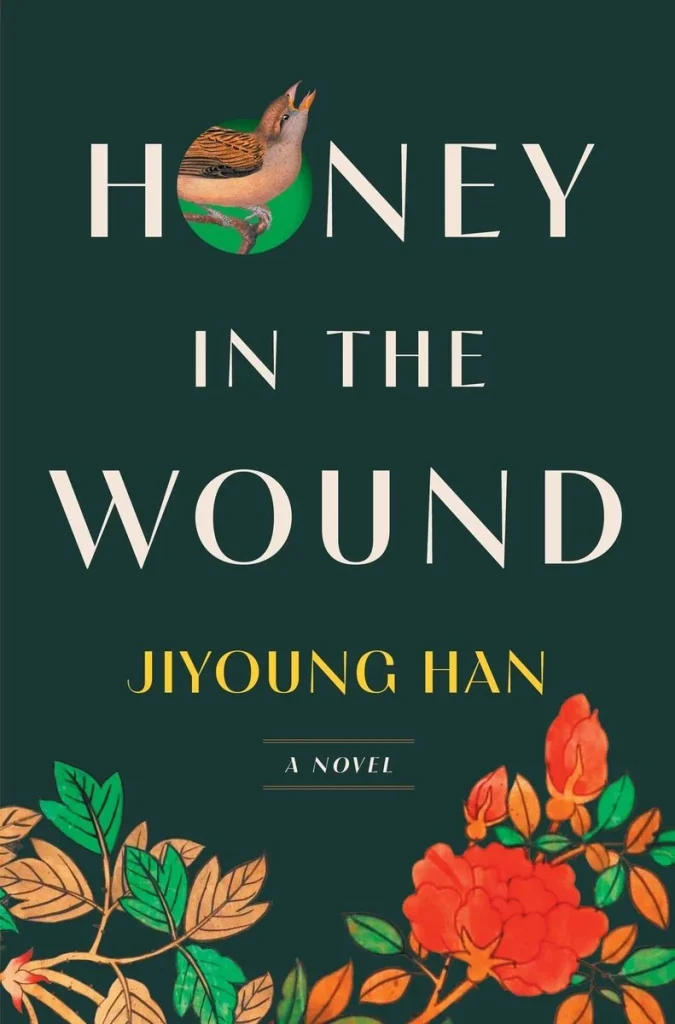
These questions resurfaced as I read Jiyoung Han’s debut novel, Honey in the Wound, which begins in Korea in 1902, the year before my own great-grandparents left Korea for Hawaii. Moving across time, borders, and generations, the novel chronicles one Korean family’s story of survival against the violence of the Japanese empire. The narrative revolves around Song Young-Ja, who is one among thousands of women forced into sexual slavery by the Japanese military during the 1930s (euphemistically known as “comfort women”). Young-Ja, along with her ancestors, and her descendants, are blessed with magical abilities that allow them to persist—and resist. Power is not merely a blunt-force tool of the oppressor, but is found in information-sharing networks that women create through gossip; feeling and expressing rage; and symbiosis with the natural world.
Blending magical realism and historical fiction throughout the novel, Han illuminates the dark chapter of Japanese occupation in Korea spanning five generations and 90 years. As Han’s novel suggests, the aftermath of Japanese colonial rule during the 20th century continues to ripple into contemporary life. Even during my 2019 trip, many Koreans were boycotting Japanese goods, in part to protest Japan’s wartime atrocities.
Over Zoom in January, Han and I discussed her folkloric inspirations, learning about the legacy of comfort women, and the subversive possibilities of magical realism.
Morgan Ome: I was really moved by the letter of introduction you include in the advanced copies of your novel. You explain that you were compelled to write this story after reading about the nine surviving comfort women in Korea. Can you tell me more about this inspiration?
Jiyoung Han: I started writing this book because I was so upset about comfort women. Part of the reason I’m so angry about comfort women is the contemporary aspect: how they’re treated by the far right and the Japanese government. But you also have to go back and understand the spread of Japanese imperialism in East Asia from before the comfort women system was established in the ’30s. So it ballooned from that initial moment of inspiration and urgency.
Comfort women have not felt like they’ve gotten a sufficient apology that was meaningful from the Japanese government, and there still are acts of historical erasure happening today.
Around when I moved to California, San Francisco put up the Comfort Women Memorial in Saint Mary’s Square [in 2017]. It’s this lovely statue that symbolizes comfort women from all different nationalities, including Korean and Chinese. There’s also an older woman looking up at the three girls who’s supposed to be in the image of Kim Hak-Sun, the first Korean comfort woman to come out with [public testimony]. She’s the only real person in my book. Osaka actually ended ties with San Francisco, which was its sister city, because this Comfort Women Memorial went up.
MO: What drew you to magic and folklore when writing into this history?
JH: Magical realism is one of my absolute favorite genres. I read Midnight’s Children by Salman Rushdie and Beloved by Toni Morrison, One Hundred Years of Solitude—all of these big works before my prefrontal cortex had even fully developed. I really love the genre and what it’s able to achieve.
What I particularly like for my approach to this novel is that magical realism offered a tonal counterbalance, because the history itself is so brutal. I wanted to be able to fold in elements of magic to not make it more palatable per se but make it something that people could hold on to with elements of hope. The magical realism in the book gives a lot of the female characters, especially, agency in ways that they might not necessarily have always had. So it was very intentional on my part to be this countervailing force with these atrocious truths. I don’t want to say that magic was the only way that they were able to survive and overcome. But it’s a way to amplify the existing agency, strength, and resilience of the people that were in situations like this.
MO: Can you talk about how you came up with the different magical abilities? I particularly loved Young-Ja’s ability to imbue emotions into her food.
JH: With Young-Ja, I thought it could be really powerful to subvert qualities like being emotional, or domestic duties such as cooking—things that are seen as liabilities or too feminine—and turn them into an asset for her. Her ability allows her to bring comfort to those around her, as a balm for colonial wounds, but also as a literal weapon that she can wield against people that might otherwise wish her harm.
MO: And Jung-Soon has the ability to force people to tell the truth so she can gather intel. We often see gossip as women chatting in their communities, but gossip ends up being this powerful information sharing network.
Her ability allows her to bring comfort to those around her, as a balm for colonial wounds, but also as a literal weapon.
JH: With Jung-Soon, I wanted her to be someone that was otherwise set up to be completely underestimated. She had horrific scarring on her face. She was a second child, a daughter, and kind of quiet and shy. Because everyone else underestimates her so much, it allows her to extract truth from people without necessarily bringing attention onto herself, which is a great asset for her, especially as she’s engaging more in resistance against these colonial forces.
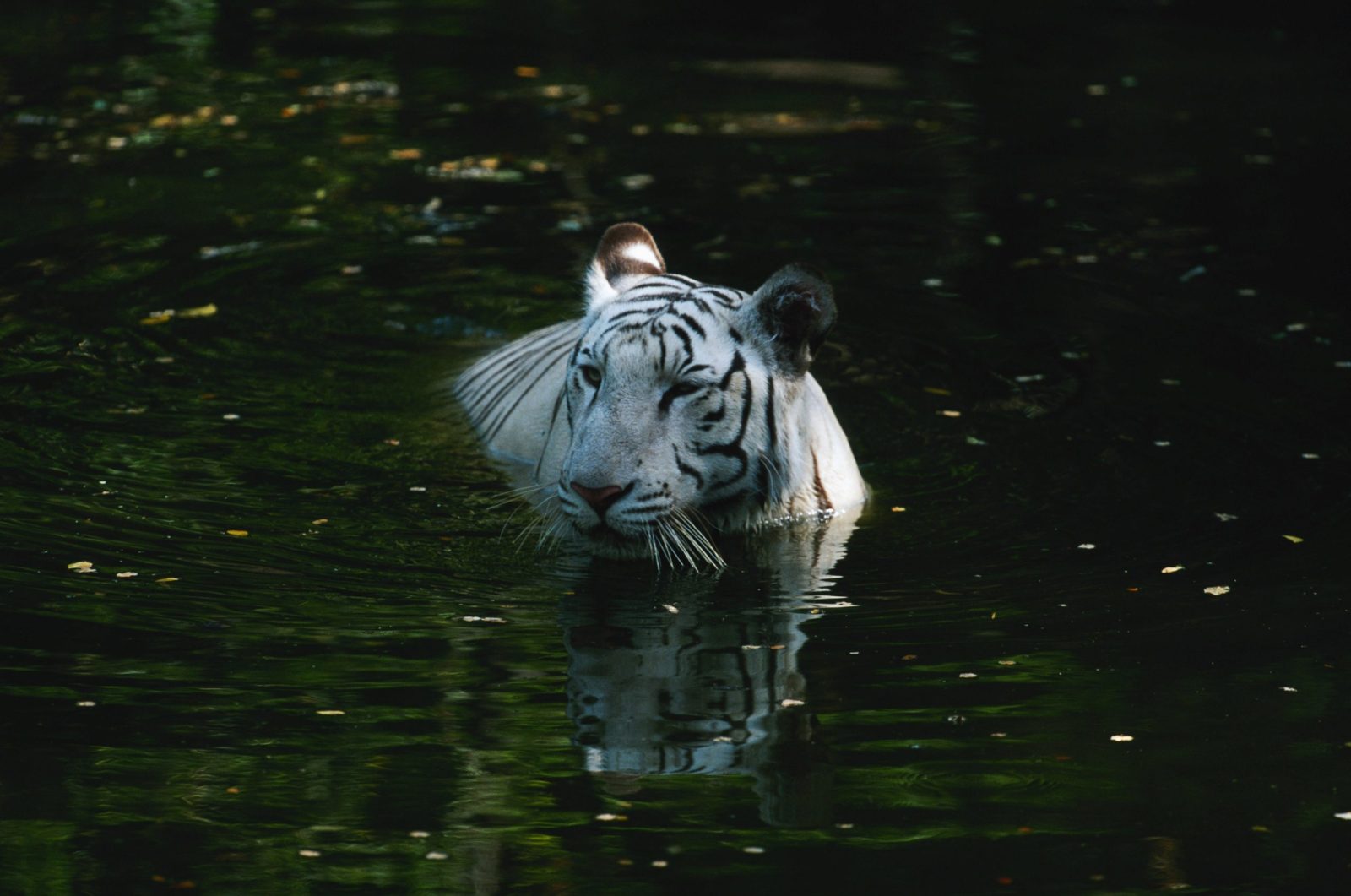
MO: I don’t want to spoil too much for readers, but in the beginning of the book, one character, Geum-Ja, turns into a tiger. In Korean folklore, the tiger is a symbol of courage, strength, and national identity. Why was that symbol important for you to include in your novel?
JH: Tigers have a funny role in Korean folklore. All the things that you said are true. If you look at the Korean peninsula, Koreans will often say it’s in the shape of a tiger. But in folklore, tigers are also a buffoonish villain that’s often tricked by children or the noble farmer, whenever it’s trying to eat people. I love that duality.
The reason I wanted to specifically have tigers is that it was yet another element in which colonial oppression was wiping out Korean culture. Tigers were essentially hunted to extinction under Japanese colonial rule. A lot of them migrated up north and then eventually out of the peninsula. I wanted to incorporate that historical fact as something that was both poignant but could speak to this natural folkloric magic that was in Korea at the time.
MO: The novel concludes in the ‘90s with a character named Rinako, who is Young-Ja’s granddaughter. She feels like a bridge between Young-Ja and the reader, as if she’s calling us to continue the work of remembering and memorializing. Did you plan for Rinako to function in this way?
JH: Absolutely. Rinako has the ability to look into others’ dreams, which is a way for her to commune and connect with the past and all of these hidden truths. The huge theme in that section is about people trying to hide their truths. And not just the Japanese government doing historical erasure, but Young-Ja trying to hide her experience as a comfort woman from her family, or Rinako being conditioned from a very young age that she needs to keep quiet in order to preserve the peace.
Rinako has the ability to look into others’ dreams, which is a way for her to commune and connect with the past and all of these hidden truths.
It was also really important for me to make Rinako Japanese. I want to make sure that people don’t look at [the novel] as condemning all Japanese people. I’m an American. I love Americans, but I don’t always agree with what my government is doing, and in a similar way, I wanted to show that there are tons of Japanese scholars and activists that have been really instrumental in getting some of these stories and histories and research to come out.
MO: Rinako gave me a lot to think about. I’m Japanese American on my mom’s side, and a lot of the children of incarcerees didn’t talk to their parents about the internment camp history, but the grandchildren were the ones who talked to their grandparents. Maybe in the time that grandchildren come of age, there’s more discussion about resurfacing histories.
JH: I was really moved by what you said about grandchildren in general being better equipped or better able to talk about the trauma that their grandparents face versus the children of the grandparents. That’s absolutely true for Joon [Young-Ja’s son and Rinako’s father]. He’s actually quite a tragic character, because for obvious reasons, Young-Ja had such horrible PTSD that she was just not able to be a good parent at all. That’s the element of intergenerational trauma that affects him. And even though he turned out in this really flawed way, it’s not necessarily his fault, and I have a lot of sympathy for him. He’s perhaps a little too close to the trauma that was inflicted on him by his mother’s PTSD for him to have engaged in good conversation with her, or resolved it.
MO: What was your research process like?
JH: I immigrated to the U.S. when I was seven and went through the public education system here. I grew up in the Midwest, which probably contributed to the fact that if Asia was ever mentioned in any of my classes, it was around three historical events that were all connected to American imperialism: the Vietnam War, the atomic bombs in Japan, and the Korean War. I actually don’t think I even knew Korea was colonized by the Japanese until I was a teenager or in college. And that’s around when I learned about comfort women.
It wasn’t until I started writing this book that I started reading academic texts about the different systems at play, the way that women were recruited, the way their day-to-day life was in these comfort stations. I found lots of oral histories and testimonies from comfort women themselves and I ended up watching YouTube videos of comfort women talking about their experiences. That was a wake-up moment for me when I realized just how horrifying it was, in graphic and granular detail.
It was really important for me to depict moments of joy and even humor or levity.
We talk about this as history, but sexual violence is still happening every day. Perhaps not in this systematized state endorsed kind of way, but in many of the conflict zones that are active now across the world, there’s rampant acts of sexual violence.
MO: The section where Young-Ja and other women are experiencing sexual slavery is so disturbing. But I also felt like it was important for the reader to actually understand what they had gone through. The comfort women are given Japanese names and many of the names end in “ko.” You highlight that “ko” is the Japanese word for child.
JH: A lot of the comfort women were really young. In Korean, “ja” has the same connotation as “ko” in Japanese names. A lot of young women born in those decades have names ending with “ja.” Young-Ja is a really common Korean name for women born in the 20s and 30s. I chose that name for her simply because I wanted her to be the every woman of that era.
MO: One part of the book that has stuck with me, especially in the historical moment we’re living through, is where you write: “Their capacity to experience joy, no matter how fleeting, was a sign of the inextinguishable spirit of their people. Something they swore would never be taken from them.” This line seems specific to your book and to Korean identity, but it could also be interpreted universally.
JH: It was really important for me to depict moments of joy and even humor or levity. I wanted to make sure that these women weren’t just getting together to be super serious all the time and engage in acts of resistance. Of course they still felt fear, they still felt panicked, they were anxious. But having the solidarity of that community enabled them to laugh about the fact that they put dog shit in the rice cakes for the cops.
Joy as an act of resistance may be a little bit more contemporary and could feel potentially anachronistic in the book, but I think that’s just true. People go through atrocities, but in the little folds and corners, you still have people laughing or finding moments of solace or relief, and that’s what we as humans are wired to seek out.