Electric Lit’s Most Popular Articles of 2022

One of our favorite things to do around the holidays is take a closer look at the writing we’ve published over the course of the year. We’re coping with difficult, tumultuous times, and inevitably, EL’s content reflects our larger context. In a year that began with a nearly rabid Covid variant, it was difficult to believe that 2022 held anything but more bad news. It was nearly impossible to see that, in fact, by the end of the year, we might be somewhere on the road to recovery. Our most popular list pushes the boundaries of horror, just as it seemed life was. Our most read essay is about the rarely spoken risk of working as a public librarian, addressing the bigger question of latent danger in spaces that are generally understood as safe. Our most popular interview centers on the collective decline of health, and a health care system that operates on a crisis care model. But what’s become abundantly clear is that some measure of optimism has survived, and even trickled its way into our writing. Hope touches so many of the essays, lists, and conversations we’ve published, and our wish, as we review the most popular posts of the year, is that each piece, in some way, amplifies that hope. 

Here are the most popular interviews, book lists, and essays, starting with the most read:

Interviews: 

Sooner or Later, We’ll All Belong to the Kingdom of Sick” by Carli Cutchin

In our most popular interview of the year, Carli Cutchin spoke with Megan O’Rourke about her timely and critically-acclaimed memoir, The Invisible Kingdom, in which she deftly portrays the loneliness of chronic illness, the onslaught of Long Covid and its impact on an already overstretched health care system, as well as the author’s beautifully rendered quest to find healing. 

“When you are looking at patients whose bodies are at the edge of medical knowledge, we need a more flexible kind of medicine.”

Elif Batuman on the Tragedy of Heterosexual Dating” by Halimah Marcus

Halimah Marcus, EL’s Executive Director, spoke with Elif Batuman about Either/Or, the highly anticipated sequel to her debut novel, The Idiot. In Either/Or, Selin continues to forge a connection to her now-graduated crush, Ivan, by analyzing their past interactions. She blooms—sexually and otherwise—while engaged in this process, ultimately emerging from his shadow and growing into an impulsive, more curious, more ambitious Selin—a fully-realized young woman “dazzling in her flaws and contradictions.” 

“The temptation is to think of yourself as having been really stupid, and yourself now as knowing a lot more. I’m just as stupid now, I just have better information.”

Just Let Women be Horny Monsters” by Chelsea Davis

Chelsea Davis begins her interview with Kathleen J. Woods about her recent novel, White Wedding, by asking Woods what attracted her to writing porn. What becomes clear is the sense of reading as a sensual, and sensuous experience, placing the reader more erotically in their own body, as well as rethinking more traditional representations of gender, sexuality, race, ethnicity, and more. 

“To enact confusion on the bodily level of the reader; to engage in a way so that their senses are actually engaged and immersed; to make them discomfited by their own responses to what they’re reading.”

A Handbook for Creating a Literary Life in Prison” by Deirdre Suguichi

In Deirdre Suguichi’s interview with Caits Meissner, author of The Sentences That Create Us, PEN America’s new writing handbook, she specifically and intentionally asks Meissner about the challenges and complexities that are unique to writing while incarcerated. We learn that chief among them are finding privacy, quiet, and personal and physical safety, and are reminded that for some, getting the writing done is harrowing, dangerous work. 

“I had a great deal of anxiety when the book came out about some of the authors being targeted by their administrations, being put into solitary confinement, being seen as a threat for exposing harm, being dropped from jobs or programs.”

Alice Elliott Dark Writes Women in Their 80s Like Men in Their 30s” by Halimah Marcus

An intimate portrait of a lifelong friendship, this conversation between Halimah Marcus and Alice Elliott Dark about her new novel, Fellowship Point, illuminates the ongoing evolution of two old women with different worldviews, different personalities and lived experience, but intense love for each other. In close proximity as the last remaining caretakers of a small community of summer homes established by wealthy Quaker families decades ago, their lives are distinct, and yet tightly woven,  

“I think there’s always an erotic element of friendship, but I didn’t want to explicitly bring that out because they wouldn’t have explicitly brought it out. They just didn’t grow up that way.”

Lists:
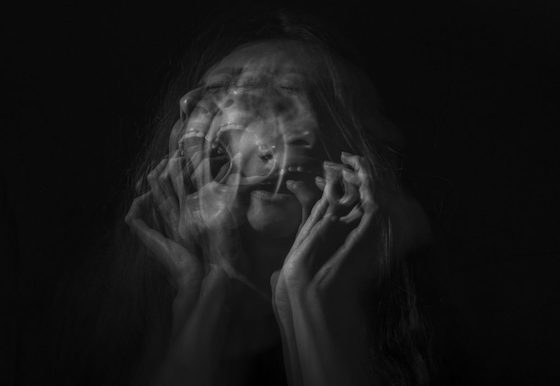
7 Contemporary Horror Novels That Push Boundaries by Brian James Gage

In our most popular list of the year, Brian James Gage recommends stories that will terrify you. These books abound with bold, daring new voices and paradigm shifting terror while calling upon the traditional—monster scares, psychological horror, and Gothic tales—to ground them in their chosen arena. Check out Gage’s latest novel, The Nosferatu Conspiracy: Book Two, The Sommelier.

“My young mind was convinced whatever horrors lurked behind those monolithic and terrifying covers would surely emerge from the pages.”
The Most Anticipated LGBTQ Books of 2022 by Michelle Hart

This year EL had the opportunity to publish this much-anticipated list, written and researched by Michelle Hart, and we couldn’t be happier. Updated by season, our readers proved yet again that Electric Literature is a home for authors, and most importantly readers, who are writing, and looking for, diverse, groundbreaking stories. In addition to all the books on this list, be sure you read Hart’s debut novel, We Do What We Do In The Dark

“His work was rejected for being both too explicit and too subtle; stating that ‘the familiar is more threatening than the exotic’”.
62 Books By Women of Color to Read in 2022 by R.O. Kwon

A mainstay in our digital pages, R.O. Kwon’s much-loved list elevates the most anticipated forthcoming books written by women of color. It’s become a favorite among legions of EL readers, as well as the larger literary community, its reach informing syllabi, criticism, and even consideration for book prizes. By highlighting women of color, we have the opportunity to help more readers find increasingly more vast books and voices to love; simultaneously, the necessity for such a list is a powerful statement about the book industry’s shortcomings. 

“I continue to hope that publishing and American Letters will become so fully inclusive as to render this effort obsolete. We’re not there yet.”      
7 Novels About Women Who Refuse to Fit In by Anne Heltzel

Not every woman is capable of being the woman her community expects her to be. Anne Heltzel, author of Just Like Mother, recommends seven wondrous novels about women who are doomed to be the black sheep in their families, but must carry on.

“As an adult she cobbles together a flimsy existence that appears normal on the outside but conceals her profound loneliness and inability to connect.”

7 Historical Novels Set in The Pacific Northwest by Keyna Krow

The damp mossy woods of the coast, the high desert, and the snow jagged mountain ranges dividing the two—these are part of what makes the pacific northwest big and messy, and fertile ground for literary work. Leyna Krow, author of Fire Season, recommends novels that take place in Oregon, Washington, and Canada because she, like many readers, appreciates a different kind of Western novel. 

“I like the surprise of it, and the thought of people buying the book assuming it is about rugged men on the range with their guns and instead getting a future-seeing woman in a city, armed with only her considerable wits.”   

Essays:
“Being a Public Librarian Can Be Dangerous Work, Why Don’t We Acknowledge That?” by Amanda Oliver

In the year’s most popular essay, Oliver, a former librarian, debunks the romanticization of libraries—both what they are, and whom they serve. While public libraries are culturally understood to be warm, safe spaces for intellectual and artistic exploration, many have become safe havens for marginalized, and often unhoused communities—reflecting the larger cultural neglect that vulnerable populations feel across America.

“How many times had I been called a bitch that week? Five times? Ten? I knew meeting aggression with aggression rarely ended well, but here I was.”

“One of the Earliest Science Fiction Utopias Was a Protest Against Patriarchy” by Tanya Agathocleous

Over 100 years ago, Bengali Muslim writer Rokeya Hossain wrote about a world run by women and fueled by solar power. In this essay, Tanya Agathocleous examines both the personal circumstances that shaped Hossain’s worldview, and the contemporary socio-political context. 

“Her father had four wives, favored education for his sons but not his daughters, and imposed  purdah: a Muslim practice, also employed in some Hindu communities, where womenlive in separate quarters to conceal themselves from men.”
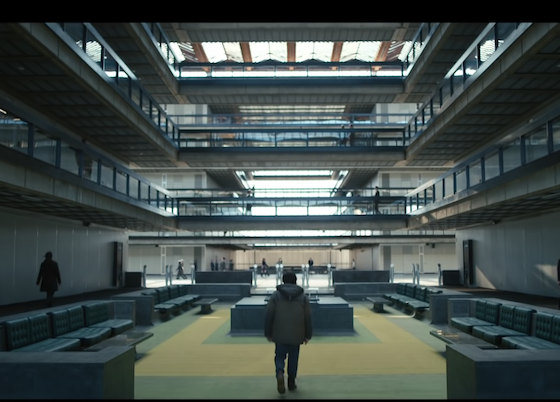
“‘Severance,’ ‘Severance’, and the Dissociative Demands of Office Labor” by Rebecca Ackermann

A novel and a TV series bearing the same name also happen to tell similar stories about capitalism. It’s a tale as old as time as Rebecca Ackermann weaves her personal journey moving beyond life as an overworked, underappreciated dead-eyed corporate worker. Such is life for so many, under capitalism, but it’s imperative that we remember that life is better when we manage to make work work for us—not the other way around.

“There are infinite reasons to leave a job, but I remember the collective turning point as the day my coworkers and I stepped out of our friendly work personas and into our full humanity.”
“Taylor Swift’s ‘All Too Well’ Helped Me See the Full Story of My Relationship” by Lauren Hutton

When Taylor Swift’s re-recorded Red (Taylor’s Version) came out only 3 weeks after Lauren Hutton’s boyfriend broke up with her, blindsiding her after four years, Hutton found solace in the lyrics—darker, angrier, more scathing—and in the new understanding Swift seemed to carry about a relationship that was never really healthy. 

“This original version, before it was made palatable for radio playtimes and social discourse, contained all of Taylor’s hurt. It let her lay the blame in the open and present a fuller story, one that’s more complicated than a singular disappointment or the sting of goodbye.”

My Family’s Failures Took Center Stage in Everything Everywhere All at Once” by Brian Lin

Like Everything Everywhere All at Once, Brian Lin plumes the pain of lifelong silence before putting words to unspeakable things between family members. Equal parts love letter to the film and part family portrait, this essay asks both its writer and its reader to confront the limitations of what it means to be known and loved by family. 

“Thanks to Everything, my sadness about Ma, pooling in me for years, has taken the form of questions, things I can ask her one day.” 
10 New Poetry Collections by Latinx and Caribbean Writers

This has been a particularly powerful year for Latinx and Caribbean poetry. While perusing these ten collections, two vital things made themselves abundantly clear: this first is just how strongly interwoven our community truly is. Many of the poets in this list reference each other, whether through poem dedications or in the acknowledgements pages or forewords, which makes absolute sense since they are editors and teachers and have created spaces to amplify and shelter us, while simultaneously producing their own groundbreaking work. 

The next is that for those of us from Latinx and Caribbean diasporas in the United States, our bodies are so often oppressed, repressed, and used as political tools (or pawns), it makes it impossible to separate our individuality from politics, thus rendering all our poetry “political.” There can be no more room for the white-supremacist diminishment or separation of the “political poem” in contemporary poetry. Let us banish the idea that any poem, written by any poet, is not political. Silence from anyone, but especially from those who hold the most privilege and have the most proximity to whiteness within the Latinx and Caribbean communites, is no longer an option. June Jordan’s poem “Calling on All Silent Minorities” encapsulates this perfectly, calling us to action: “HEY/C’MON OUT/WHEREVER YOU ARE/WE NEED TO HAVE THIS/MEETING/AT THIS TREE/AIN’ EVEN BEEN/PLANTED YET”

Mi gente, we must plant the tree. Now let us celebrate these poets who are planting right now.

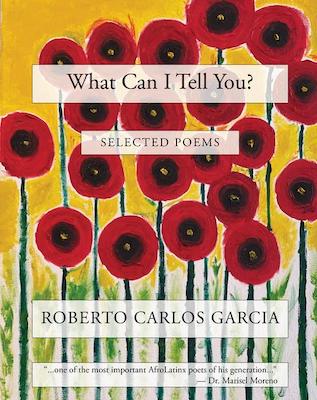
What Can I Tell You?: Selected Poems by Roberto Carlos Garcia 

Roberto Carlos Garcia is a force in contemporary poetics whose influence in the Latinx and Caribbean poetry community is pivotal. From his own writing to anything he feels the need to highlight for his social media followers, his is a voice we all should heed. Garcia is the publisher of Get Fresh Books, which has given many talented BIPOC poets a home for their own books, and his poetry is, as far as I’m concerned, Latinx/Caribbean diaspora canon, so when I heard FlowerSong Press was publishing his collected works, I rejoiced. Key selections from each of Garcia’s three collections are compiled together and whether he’s unpacking the concept of melancholia in the most beautifully devastating ways and paying homage to the revolutionary Spanish poet Federico Garcia Lorca or interweaving James Baldwin through his examination of anti-Blackness within his Dominican family and culture, Garcia’s words wrap themselves around your mind and soul, changing you in the most fundamental ways.

City Without Altar by Jasminne Mendez

Jasminne Mendez has been a writer to watch since her 2018 debut book Night Blooming Jasmin(n)e: Essays and Poems. I’m always comforted to find fellow Caribbean diaspora writers in the Southwest (Mendez resides in San Antonio) because we are a whole culture unto ourselves, only made even more special when delve into specific islands. I knew her latest book would be good but City Without Altar made my jaw drop to the floor in awe. The heart of the book is a lyric play based on the 1937 “Parsley massacre,” where Dominican dictator Rafael Trujillo in an evil act of anti-Blackness, ordered the army to use machetes to butcher Haitians in and around the northwestern frontier, leaving thousands dead and those who survived were brutally dismembered. Wrapped within this horrifying and heartbreaking narrative is the narrator’s traumatic journey of her own finger amputation due to a chronic illness. 

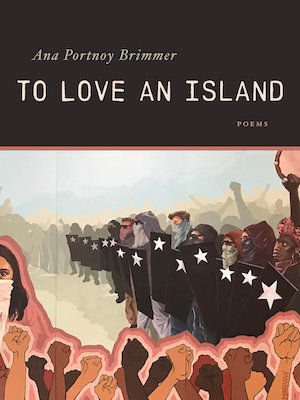
To Love An Island by Ana Portnoy Brimmer

For Boricuas on the archipelago, the devastation of Hurricane Maria has now been eclipsed by Hurricane Fiona, which recently ripped through our isla, which has been crippled by the United States’ callous colonization and the Jones Act for decades. My people have overthrown one corrupt governor and I, like many in diaspora on the “mainland,” echo Ana Portnoy Brimmer’s fierce call for independence. To Love An Island is both balm and trumpet call for our people to take up the cause and unshackle our isla from the brutal grasp of our colonizers. Every poem shakes with fury and love but I cannot get the very first one out of my head because it cuts straight to the heart of the lie of colonization, that our isla cannot do for itself, we cannot grow our own gardens and crops and we must be at the mercy of imports from the U.S. In “Strawberries,” the speaker asserts they had been told strawberries couldn’t grow on the island because they didn’t have the climate, then a farmer shows her the sweetest little strawberries. “I’d always been told freedom would never come/for Puerto Rico. We didn’t have the climate,” Brimmer writes. “I ask the farmer about the strawberries. Son silvestres,/he responds, and points to their beautiful excess.” 

black god mother this body by Raina J. León 

If you’re sensing a Caribbean theme, you’re right—2022 has given us collections from some of our most beloved and talented Caribbean diaspora poets such as Raina León, founder of the formative Latinx literary journal The Acentos Review, never disappoints. León, who is who is Black and Afro-Boricua, is la madrina of Latinx creative writing, she has published and nurtured so many of us who publish today. Like Garcia, I consider her work canon, and her latest collection, black god mother this body is stunning. An experimental dive into the insidiousness of anti-Black patriarchy enacted through close family members, the harrowing process of conceiving to term, followed by a Black mother’s love and deep fear for her son in this country. León’s use of language and the physical page are always affective and powerful but she also includes a series of mesmerizing art collages that I cannot stop looking into, like falling down into several worlds at once. 

Desgraciado: The Collected Letters by Angel Dominguez 

It’s been awhile since I’ve read a poetry collection where the intention and form are perfectly clear but somehow still makes me wonder what the hell is going on—in the best way, of course. Angel Dominguez has penned a series of imaginary epistolary poems (letters, y’all) to Diego de Landa, Spain’s bishop of Yucatán in the 16th century, who Raquel Salas Rivera perfectly describes in the book’s foreword as the “murderer, pillager, and rapist” and to which I will add only enslaver and sadistic torturer. De Landa was almost fully responsible for destroying the Mayan culture and language and leaving behind only his colonized account. Dominguez, who is of Yucatec Maya descent, pours their howling gales of grief, rage, desire, and despair of being an Indigenous person whose inherited cultural and ancestral legacy is one of theft, violent suppression, and disappearance. If ever a book reads like the poetry version of Rage Against the Machine, it is Desgraciado, Rage Against the Colonizer. Dominguez is provocative, evocative, rebellious, and defiant. I thank them for birthing this insurgent text into the world.

Rotura by José Angel Araguz

The river that runs through José Angel Araguz’s Rotura is deep, long, and profound. Araguz is the editor-in-chief of Salamander, from Corpus Christi, Texas. He has an elegant touch with his language as he writes about the broken promises of safety in a country that continues to hunt down those of Latinx heritage and break our bodies, break apart our languages, break our hearts again and again. But it’s the haunting image and metaphor of that river that tantalizes me, it is the same river I live so close to in my hometown of Albuquerque, the Rio Grande, which looms large for all of us in the Borderlands. I particularly love Araguz’s “Four Dirges,” which is in conversation with T.S. Eliot’s Four Quartets, where he writes, “Mr. Eliot, before I was born/you wrote about a strong brown god/but what are gods when there is water/in rivers who have nothing to do/with what isn’t already part of them?/If the river is within us, then why/did I fear it killing those I cared for?”

Muse Found in a Colonized Body by Yesenia Montilla

I first opened Yesenia Montilla’s Muse Found in a Colonized Body to a random page and laughed to find myself looking at her poem “Chasing Duende,” which I certainly took as a good omen. If you follow Latinx poetry Twitter at all, you’ll know Montilla’s second collection was incredibly well received by the community and I’d been keen to get my hands on a copy. Montilla’s voice is singular and explosive and she gives us a manifesto against whiteness and the anti-Black colonizer in all their seductive and violent forms, from racism to physical desire. Her Muse poem series is twofold, both unfolding as the title poem in a series revolving around the Afro-Latina speaker and then individual Muse poems such as “To Pimp a Butterfly as Muse” and “Muse Found on Tinder,” where Montilla wields language as a whipsmart and witty weapon. 

Fighting Is Like a Wife by Eloisa Amezcua 

Once upon a time, I did a stint as a beat sports reporter for a newspaper in northern New Mexico, which since I find both sports and people’s stories fascinating, was a fun learning experience. I even covered a local boxing match, which was sweaty and breathless and weird. I grew up with Johnny Tapia and Danny Romero, boxing is fairly deeply engrained in New Mexican culture, so I was more than intrigued by Eloisa Amezcua’s new collection, Fighting Is Like a Wife, centers the relationship between 1980s boxer Bobby “Schoolboy” Chacon and his first wife, Valorie Ginn. Ginn eventually committed suicide after asking Chacon multiple times to quit boxing and Amezcua writes poems from each point of view. What I found most interesting was how Valerie in the poems becomes more and more a ghostly figure, less substantive, throughout her poems while Chacon is a bit beastly in his desperate and self-centered earthiness. This is definitely a fascinating, haunting collection.

More Salt Than Diamond by Aline Mello

Aline Mello’s More Salt Than Diamond is a beautiful lament of the double life of the immigrant in her new country, in this case the U.S., and how displacement carries over no matter how long you are in a new culture. The longing for the familiar is an incredibly powerful thing, it brings a sense of nothing fitting quite right around you, like too-tight or too-loose clothes. Speaking Portuguese rather than Spanish is another barrier for Mello along with English, but while she writes hungrily for her Brazil, she also creates an ideal new country for us all in her poem “And So Let Us Imagine a New Country”, one without borders and instead where “We will meet where everyone drinks lakes of juice,/sit by blossoms, watch the/sun sink low. The moon returns/and reminds us there is still time.”

We Borrowed Gentleness by J. Estanislao Lopez

In his debut collection, J. Estanislao Lopez writes stirringly about growing up in Texas in a migrant family with the Latinx patriarchal expectations of machismo and heterosexuality locked like shackles around his wrists and also the seemingly small, but reverberating, humiliations immigrant men often endure, such as in “The Contract,” where the speaker’s father completes a day of hard labor on a handshake agreement and the employer refused to pay. Lopez also probes larger topics such as God and faith, the science of space in tandem with nature’s smallest creatures, and the clever tricks and intricacies of language, which Lopez delights in playing with so very adeptly. This is a deceptively quiet collection with its interiority and big concepts but you’ll be surprised many of these poems will stay with you.

The Commuter’s 10 Most Popular Issues of 2022

From reanimated skeletons to the manic dispatches of a roofing association president, The Commuter is our home to bite-sized and experimental flash fiction, poetry, and graphic narratives. Sign up for The Commuter’s newsletter to receive our latest burst of awe-inspiring poetry and prose every Monday, and read below for our top ten issues of the year, starting with the most read.


12 Essential Makeup Tips for the Aging Ghost” by Emma Brousseau

Written in the form of a beauty tutorial, our most popular story of the year follows an aging celebrity, who, following her murder at the hands of her husband, applies foundation, blush, eyeshadow, eyeliner, and mascara to her incorporeal form as she prepares to attend a gender reveal party with the man who killed her.

The Complex” by Scott Limbrick

Surreal, existential, and utterly transfixing, “The Complex” follows a woman who realizes that, one by one, alternate versions of her and her family have begun moving into the neighboring units of her apartment building. Our protagonist becomes obsessed with observing these look-a-likes from their balcony, a hobby which she cannot convince her husband to partake in, as, “for [him], we are people to avoid.”

Make Yourself Into a House” by Grace Shuyi Liew

Exploring the contours of a Manhattan break-up, this deeply felt short story was chosen by Min Jin Lee as the winner of the 2022 Stella Kupferberg Memorial Short Story Prize, and was performed live as part of the 2021-2022 edition of Tales of Fatherhood with Denis O’Hare. Each sentence exploding with ideas and teeming with life, this story questions the impossibility of truly building a home with another person.

God Joins a Writing Workshop and the Old Testament Critique Doesn’t Go Well” by R.L. Maizes

Featuring critiques and archetypes that will be familiar to anyone who’s ever stepped foot in a creative writing workshop, this comedic flash piece explores what happens when God themself attempts to workshop the Old Testament. The results? Performative one-upmanship, complaints about a narratively redundant number of plagues, and a whole lot of smiting. 

The Bone Friend” by Zebbie Watson

“I don’t know how long I had been dead when the girl found me,” opens “The Bone Friend,” an adolescent love story with a supernatural twist. Unable to remember anything about his previous life, our protagonist falls in love with the girl who finds him, and, in doing so, risks an entirely different sort of death. 

Excerpts from “After the Rapture” by Nancy Stohlman

Taking place shortly before the titular rapture, these three excerpts from Stohlman’s novel eerily evoke what it feels like to be alive in 2022. “In the end, we did it to ourselves,” reflects our narrator, exhausted by tragedy and flummoxed by the absurd indignities of modern life. 

“Shadow on the Moon” by Brenna Hosman

Taking place in the not-too-distant future, this haunting flash story follows a couple who plan a trip to the moon. Our narrator thinks that her partner might be getting ready to pop the question, but his actual intentions prove to be far more sinister. 

Two Poems by Laura Villareal

“You don’t know I know / you’re trying to arrange memories / into an order that makes them disappear,” says the speaker of Laura Villareal’s “Tetris,” a line that captures the melancholy and wit of these two devastating poems.   

“The Roof Is Not on Fire: Dispatches from the Roofing Association of America” by Thomas Rowley

Pushing back against the perceived anti-roofing sentiment expressed by Pharrell, Macklemore, and other musicians, the Roofing Association of America attempts to change the narrative by writing and distributing pop songs of their own in this wildly funny epistolary story. 

Two Poems by Qiang Meng

These two poems by Qiang Meng aren’t afraid to ask the big questions—even if the individual posing them happens to be a philosopher iguana. “Desolation echoes. My porch light / long broken. Mailbox unchecked, / and I bike to work,” Meng writes in “The Frond,” reflecting on a rundown coconut leaf. “Summer is eternal.”

Can You Be an Outsider Artist If You Crave Mainstream Recognition?

David Leo Rice’s newest novel paints an unlikely and often uncanny portrait of the artist as a young man. In The New House, that young man is Jakob, the only child of promise in a family of Jewish outsider artists living in isolation in a surrealist approximation of rural New England. When they’re not taking Jakob on blindfolded trips to Trader Joe’s or lecturing him over Wheaties on the Jewish visionary tradition (Bruno Schulz, Kafka, Chagall, etc.), Jakob’s parents are engaged in elaborate, iconoclastic projects of their own: his mother constructs a neon “graveyard of dead futures” on the outskirts of town, while his father tinkers in the basement on a sprawling, undefined masterwork that recalls the maniacal patriarch from Schulz’s Street of Crocodiles. Soon, Jakob embarks upon an artistic career all his own involving found sculptures made out of roadkill and anthropomorphic miniature replicas of the town where he lives. The “Art World” welcomes Jakob as one of its own.

But when Jakob comes under the influence of his reclusive and possibly homicidal grandfather Wieland, whose unorthodox artistic techniques have done as much to lionize as ostracize him in the town’s mythos, he begins on a path into the soul of his own creativity that strikes at the heart of all he loves. Written in the tradition of Schulz and Kafka, with a visual aesthetic that recalls David Cronenberg and the Quay Brothers, The New House is a singular, disquieting novel that explores the fringes of Jewish diaspora and the limits of artistic transgression.

Over the course of several weeks, Rice and I talked virtually about Judaism’s shadow-side, the outsider artists of the literary world, and how writing is the act of “gambling with repression.”


Adrian Van Young: The New House, which is about a family seeking an intangible paradise they call the “New Jerusalem” through the intensity of their art pairs moments of extreme Jewishness with moments of extreme uncanny-ness and terror. You aren’t the first Jewish artist to recognize or explore this relationship. In your view, what is the connection between Jewishness and the uncanny? 

David Leo Rice: The uncanny, as defined by Freud in his 1919 essay, centers on the discomfort of the past coming back into the present, whether it’s one’s personal past—the perspective of childhood filtering into that of adulthood—or humanity’s past—the ancient, superstitious world filtering into whatever we call disenchanted modernity. This is extremely compelling to me, both as an artistic approach and as a description of how I observe my life playing out. Many experiences are uncanny to me, so much so that it forms the bedrock of my spirituality with the sense that there’s always something haunted or supernatural afoot, but rarely in a clear enough way to form any dogma about it. I distrust formal dogmas for this reason, but that includes the dogma of atheism. I see the job of the writer being to flesh out these intimations and entertain various forms of “what if all that I sensed abstractly were concretely real?”

The Jewish condition is always that of something from the past that has neither been absorbed nor annihilated by history. Jews exist therefore in a permanently “un-dealt-with” state, never vanishing altogether nor reaching full harmony with the larger world. This is uncanny in that we’re haunting the places we inhabit, whether in a cultural sense in Europe and America, or a military sense in Israel. We’re always everywhere and nowhere, a crucial voice in what it means to be, say, Polish or American, yet also a voice that is seen as undermining those identities.

AVY: I love what you say about Jews throughout history “haunting the spaces they inhabit,” which I think speaks equally to the way Jews view themselves (as ghosts in their own historical narrative) and how Jews are viewed (as a wandering people, as social outsiders). Interestingly, what you say also harkens to the Jewish notion of the afterlife itself, Sheol, which usually manifests in Jewish holy texts as a sort of in-between state or limbo. Can you talk a little about the family of Jewish outsider artists at the center of The New House in this same context? How do they haunt the faux-New England town they inhabit? 

DLR: I’ve always been drawn to searchers, so my characters, whether in the Dodge City books, the Angel House universe, the stories in Drifter, or here, roam a blighted but also enchanted landscape, often an American one, in search of some form of deliverance. Here it’s the “New Jerusalem,” the fabled “end of wandering” that spurs the wandering onward.

It’s important that this deliverance feel possible but never quite within reach—that’s the beauty and tragedy of America, whether in the early days of pilgrims coming to the East Coast, or in the later days of setting out for the West. The possibility of deliverance, whether in the material terms of “striking it rich” or the spiritual terms of being born again, has to be real in order for the American Dream to continue, yet it also has to be denied in order for it to remain a dream.

The family in this book are looking for an afterlife within this life. They don’t believe in the Christian idea of a life of suffering followed by a life of bliss, but they also don’t accept that “this life is all you get.” They’re determined to seek something transcendent within this world, and to bring it to light and, for better or worse, take credit for it in the eyes of others. Their artistic ambition is infused with a messianic ambition.

AVY: I’m interested in the way you approach the topic of Jewish spirituality in The New House. Did you conceive of the characters as being spiritual in an institutionally religious sense, or only as it relates to their art? Are they practicing Jews or “cultural” Jews?

DLR: They chart a middle path between practicing and cultural Judaism. This middle path is that of the “visionary Jew,” which does tend to manifest through art—Pinter, Jodorowsky, Cronenberg, all my heroes —but it doesn’t have to. It can manifest through any practice that involves making it up as you go along, rather than signing up for an extant program, like being a member of a synagogue, or putting it behind you entirely and saying “my Jewishness is irrelevant.” The visionary path is by necessity a solitary one—the family is thus doubly exiled, both from Gentile and from Jewish society—but it can also be an extremely productive one, because there’s no way to “be” in the Good Book . . . you have to constantly “do.”

AVY: The family at the center of the novel is certainly up to some transgressive mayhem all their own. It’s not unlike you in your own career, maybe. You’re an experimental writer. You could be called transgressive. (I remember you telling me once that Jack Ketchum, the late “extreme” horror writer, was an early mentor of yours.) Do you consider yourself to be an outsider artist of sorts in the literary world? Is that a designation of necessity or choice?

DLR: I used Jakob’s conundrum as a form of self-reflection. He’s torn between the committed outsiderness of his father (whose rejection of all dogma becomes a dogma of its own), and the worldly ambitions of his mother, who secretly instills in him the desire to “take the Lincoln Tunnel into New York City.” I feel just like that—torn between wanting to truly do my own thing, to an aggressively anti-mainstream degree, and craving mainstream recognition in a way that is perhaps shameful, but is therefore necessary to admit. It’s the condition of wanting to have your cake and eat it too, of wanting to be, like the Quay Bros., or the Chapman Bros., or Joseph Cornell, both genuinely immersed in your own obsessions and also feted by the fancy powers that be.

Jack Ketchum was an incredibly important mentor for me early in my NYC years. He nurtured the strangest and most depraved aspects of my early work, but also helped me infuse it with humanism. He stressed the importance of what he called “real” characters, people who truly lived and breathed on the page, rather than ciphers in a parable. He also taught me to have fun with my work. 

In terms of publishing, there’s an exciting movement afoot today with many new independent presses starting up to promote the kind of work that is being ignored by the consolidating mainstream houses. I feel “saved” to have discovered this world, and its readers, and thus to see that it isn’t necessary—as I once deeply feared it would be—to force myself to become a different kind of writer in order to play a role in the public square. I almost can’t believe my good luck at having received the message from the world that I can and should go ever deeper into my own obsessions, rather than needing to “put childish things behind me” and learn to write for Netflix or whatever. If a larger press is ever interested in that, I’d certainly be interested too, but it’s not something I’m actively courting the way it once was.

AVY: That notion of going “ever deeper into [your own] obsessions” seems particularly apropos, not only in terms of your work as a writer but also when it comes to the protagonist of The New House, who in the novel’s climax, under the dissociative posthumous influence of his grandfather, goes off on a kind of maniacal vision quest. It’s vivid and disturbing. Not to mention the fact that this neurotic creative obsessiveness seems to me ubiquitous to the Jewish artistic psyche more generally–you see this same tendency in a lot of Roth’s artist characters, Grace Paley’s, Zach Lazar’s. Famously, Bruno Schulz’s. How do you view this tendency in your characters—in your own life as a writer? Is it an unhealthy yet necessary part of their/your craft? Or is it the kind of thing where in order to realize your vision, you have to sacrifice yourself to it on the altar of your own relentlessness?

The Jewish condition is always that of something from the past that has neither been absorbed nor annihilated by history.

DLR: I made a note recently, in a massive doc called “Goals for Art” that I’ve been keeping since I was a teenager, that said, “Writing is gambling with repression.” What I meant is that you have to be a somewhat repressed person to be a writer—you have to be conscious of tamping a lot down, and feeling it stewing in the center of your own earth—but then you also have to be cognizant of “unsealing” those tamped-down reserves when you’re writing. You hope that you can engender controlled chaos, blasting out these toxic chemicals onto the page in a way that, if successful, is doubly successful because it both relieves the toxic buildup in you and creates something dynamic and alive for the reader. If you fail at this, you either repress too much and become sickened with it (unproductively neurotic), or else you unseal too much and find that you can’t render what you’ve dredged up into a coherent piece.

AVY: You recently became a father. Like, a few weeks ago recently. To what degree are you able to feel parenthood beginning to work on the “humaneness,” as you call it, of your craft? What form do you feel your “gambling with repression” taking even at this early stage of balancing the artist’s life with Dad life?

DLR: I have indeed felt my recent fatherhood impacting my writing. The stakes in the gamble with repression are higher now, as the goal has to be to find a balance between my relation to my child and my relation to my work, hoping to mystically overcome the inevitable tension, on the level of hours in the day, between the two, to say nothing of the third axis of going out into the world to make a living.

Ideally, my developing relation with my daughter will enrich the ways in which I’m woven into the human fabric, while my relation with my writing will in turn continue to make me a more fulfilled and actualized person, which will make me a better father, even if it will also use up some of the time that I might otherwise spend with her.

It’s totally coincidental that The New House, my only book so far to deal with fatherhood on a literal level, came out the same summer my child was born, but it’s hard not to feel like the coincidence has deeper meaning. The book—written before we even considered having a child—is definitely a reflection on how not to be a father, though it’s also an examination of psychic inheritance in ways that aren’t all bad. It’s a story about how to grow up in the world, accepting that your parentage is what it is.

AVY: The father in The New House is uniquely terrible! In fact, as I was reading his sections in the novel, I kept thinking about how the book frames him, with self-awareness, as this “great man.” He subordinates his wife’s promising artistic career to his own endless tinkering and, in certain non-traditional ways, rules the house with an iron fist, but he also manages to cloak some of his more patriarchal tendencies with divinely inspired neuroticism and self-pity. I sensed a bit more modern purpose in how you frame the character and wondered to what extent you intended to push back against the “great man” trope ? How do ideas of Jewish patriarchy and masculinity present themselves and lend themselves for critique, today?

DLR: I’m so glad you brought this up, as it’s an aspect of the book that I thought a lot about but haven’t discussed before. It goes back to the idea of humanizing the surreal. I don’t want to write in a purely realist vein, but I also don’t want the figures or events in my books to feel weightless. I want there to be real terror and pathos, and to consider the unstable nature of masculinity in a serious way.

In 2022, the archetype of the Jewish man is doubly different than he was in the 1920s—he has both endured and caused unimaginable suffering to such a degree that he is irrevocably “in the world,” no longer ensconced in his own neuroses. Maybe this is the essence of our moment today, as Jewish writers: to look back at the last century and begin to see all this clearly, while, as Americans, also standing outside of it.

How permanently have we dodged the bullets that defined Jewish life in both Europe and Israel in the 20th century?

I wanted to play with the Americanness of the father’s self-pity as well, insofar as he’s the only one who experiences the direct impact of what he calls Nazism: the son is taunted by local bullies, but only in the father’s tales do Nazis continue to haunt America, leaving both mother and son to decide whether these warnings are true or if they’re yet another facet of the father’s egomania. This leads to the son’s own metaphysical flirtation with Nazism down the line, like an awful self-fulfilling prophecy.

In America in the 2020s, this feels like a salient question: how permanently have we dodged the bullets that defined Jewish life in both Europe and Israel in the twentieth century? On the one hand, I’ve never experienced direct anti-Semitism here, so it would be glib of me to refuse to give America credit for that. On the other hand, there’s an undeniably dark mood afoot—the question now is whether it will “blow over” or make contact in a more consequential form.

Overall, I’m interested in the question of what masculinity is today, and how (and if) it can continue to exist in a healthy fashion. This gets at the “Great Man” notion you mentioned, and the ways that Jakob and his father variously subscribe to and question it. Father and son represent opposite forms of Jewish masculinity here, but part of the work of the novel was to draw them together in the figure of the grandfather, since sons always realize, usually too late, how much like their fathers they really are.

AVY: Well, at the risk of spoiling anything, I will say that the “unstable nature of masculinity” certainly goes ass-off-the-rails in the book’s final moments! Yet The New House is also one of those novels whose ending felt like a beginning to me in many ways; there’s a sense of uncanny repetition and/or eternal return there, and throughout, that propels the reader’s imagination beyond the novel’s close, into new uncertain territory. Did you envision a future for Jakob beyond the story’s conclusion? Any plans to return to the world of The New House in a subsequent book?

DLR: I hadn’t thought about it, but I’d love to do a Jakob in the City novel that covers his years between where we’ve left him and where he “ends up,” even though, as you say, The New House has an uncanny repetition structure where the ending is already prefigured and in some ways surpassed at the beginning. I’d have to think about how to get the next round of time loops to function, but that would definitely be a worthwhile challenge.

I also want to write my first urban novel, as all my novels so far have taken place in small towns, with mythic reference to distant cities, as in “The Art World” here. I’d like to add a major city to the map on which I see all my books as being connected, so sending Jakob as a young man to make his way in that city would be the perfect occasion to do so.

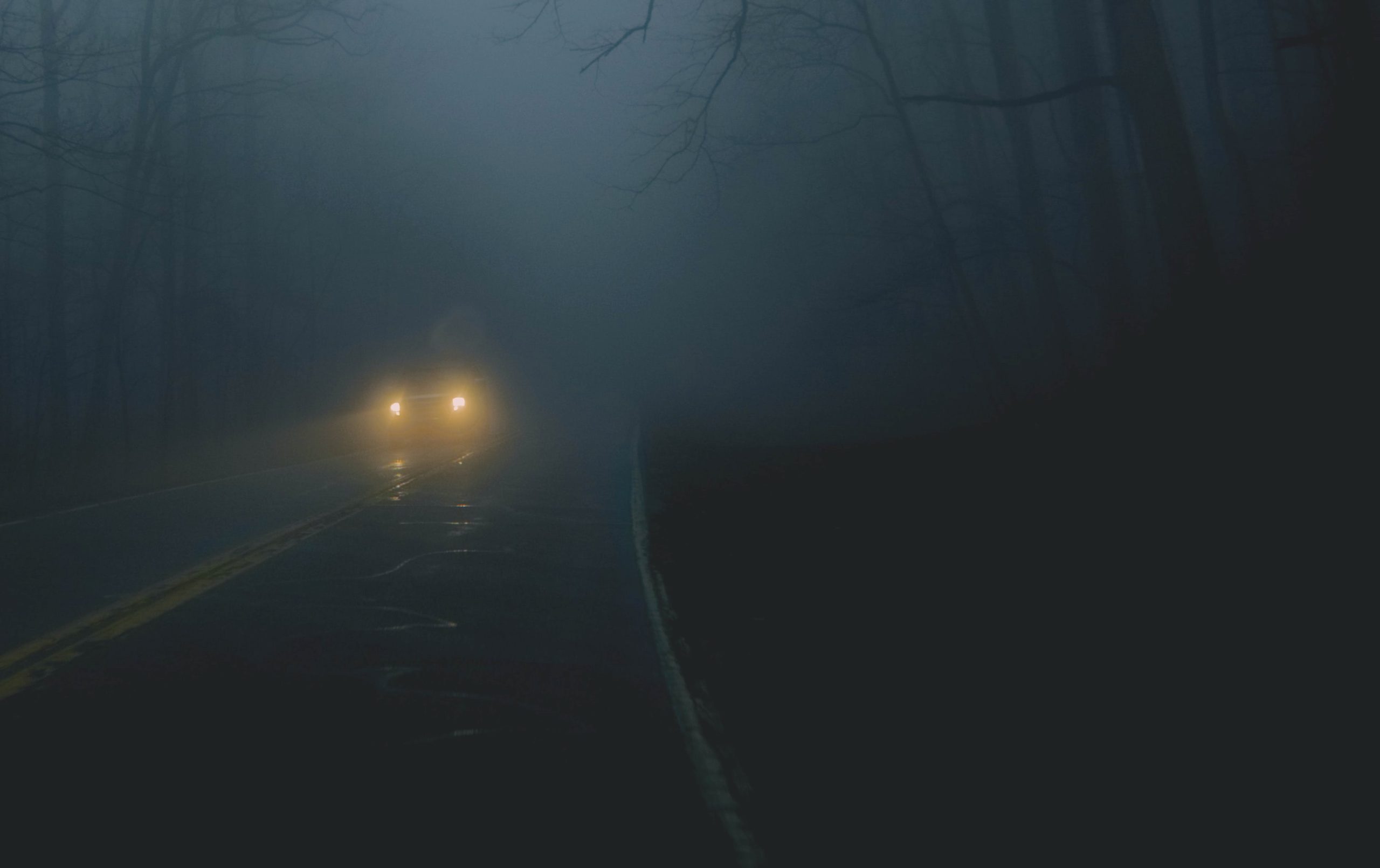
If On a Country Road a Car Crash

“The Frozen Finger” by Bora Chung, translated by Anton Hur

She opens her eyes.

Darkness. Pitch black. Like someone has dropped a thick veil of black over her eyes. Not even a pinpoint of light to be seen.

Has she gone blind?

She tries moving a hand in front of her face. There does seem to be a faint object there. But nothing she can clearly discern.

After a few more attempts at this, she gives up. The darkness is simply too dense.

What hour could be so dark? And where in the world . . .

She extends her arm and probes the space before her.

A round thing. Solid.

A steering wheel.

She slips her right hand behind the wheel. The ignition. Her keys are still in it. She turns them. No response. The engine is dead.

Her left hand prods the left side of the wheel. It grips something that feels like a hard stick. She pulls it down. The left-arrow on the dashboard should have lit up. No light to be seen. She pushes it down. Still no light. She feels her way to the tip of the lever and turns the headlight switch. And of course, the lights do not turn on.

What has happened?

She tries to remember. But her memories are as dark as the scene before her.

“—eacher.”

A woman’s voice, thin and frail. She looks up. The voice calls for her again.

“Teacher.”

Craning her head toward the voice, she strains her ears attempting to determine where it’s coming from. But the voice is so thin that its direction is unclear.

“Teacher Lee.”

“Yes?” she answers. She can’t make out where the voice is coming from, who is speaking—or whether the voice is in fact calling for her. But the sound of another person’s voice in the darkness is such a relief that she finds herself answering before she can stop herself.

“Are you there? Who are you? I’m over here!”

“Teacher Lee, are you all right?” The voice is coming from the left. “Teacher Lee, are you hurt?”

She tries moving her arms and legs. No pain anywhere in particular. “No.”

The thin voice, still coming from the left, says, “Then come out of the car, quickly.”

“Why? What happened? Where am I?”

“We’re in a swamp,” the thin voice patiently explains, “and the car is sinking, little by little. I think you better come out of there.”

She tries to get up. The safety belt presses down on her torso. Tracing the belt to her waist, she presses the release and the safety belt disengages. She turns to the left and gropes around for the door handle. There, the glass pane of the window. More prodding, downward.

“Teacher, you must hurry.”

The door handle. She pulls it. The door doesn’t move. She pushes it.

“Teacher Lee, hurry!”

“The door won’t open.”

She doesn’t know what to do.

The thin voice commands, “It’s locked from the inside. You must unlock it.”

Feeling around the door handle again, she can feel the protrusions of buttons; she presses them, one by one. At the third button, she hears a clunk. The brief vibration felt through the door is as welcome as the Savior Himself.

She pulls at the door handle again. The door seems to open little by little. But it’s blocked by something.

“The door won’t open,” she says, pushing it with her shoulder.

From right beside her, the thin voice says, “That’s because the car is lodged in mud. Let me help you.”

Someone’s finger brushes against her hand that’s pushing the door. The door opens a little more.

“Quickly. Get out of there,” says the thin voice.

Doing as the voice commands, she brings her left leg out of the car first before suddenly remembering something.

“Wait . . . wait a second.”

She crouches down in the seat and starts to grope around beneath the steering wheel. The long thing on the right is the accelerator, the wide thing on the left is the brake. She stretches her right hand into the space below the pedals. She can feel the scratchy mat and the mud smeared on it. Of the thing she is searching for, nothing.

“What are you doing? You must get out of there immediately!” The thin voice is getting anxious.

“Just wait . . .”

Extending her hand even further beneath the seat, she feels a long, thin steel rod. It’s probably the lever that adjusts the driver’s seat, moving it back and forth. She feels underneath it. Again, just the mat and mud, plus a little dust.

She can feel her left leg, the one that made it outside the car, slowly start to rise. The car door begins to close with it, putting pressure on her left leg.

The voice shouts, “Teacher Lee, hurry! I don’t know what you’re looking for, but just leave it and come out!”

“But . . . but . . .” She can’t bring herself to say it.

“But what? What is it?”

“Something very important . . .” Her voice trails off.

She touches her left hand with her right. There’s no ring on her left ring finger. Her hands feel about the driver’s seat where she’s sitting, then the passenger side.

“What could be so important? What is it?” the thin voice asks again.

Her left hand grabbing the frame of the car, she stretches her right arm as far as she can to beneath the passenger-side seat.

“A ring . . .”

Her hand can’t reach as far as the other seat; all she can grasp are the gearshift and handbrake. She manages to stretch her arm a little further. There’s no one in the passenger-side seat. Perhaps because of her odd posture, her hand can’t quite reach the bottom of the other seat.

The finger from before touches her left hand again.

“This. Is this what you’re talking about?”

A small, round, and hard object against her skin. Someone’s fingers slip it onto the ring finger of her left hand.

She sits up and touches her left hand with her right. It’s still impossible to see, but the smooth touch and the slightly uncomfortable thickness pressing against her fingers feels familiar.

“Is this it?” asks the thin voice.

“Yes. How did you—”

“This is it, right? Come out, quick. It’s dangerous,” says the thin voice urgently.

With her right hand, she pushes the slowly closing door. She barely manages to squeeze the left side of her body out the door.

“Be careful,” warns the thin voice. “The ground outside isn’t solid.”

Her left foot lands on the ground with a plop. She shoves the car door with her left hand and the car frame with her right, slowly getting out of the car.

With every step, her feet sink into the ground. It’s hard to keep her balance. Just as she’s about to stumble, the frozen fingers grab onto her left hand.

“Be careful. One step at a time, slowly.”

Doing as the voice instructs, she takes one tentative step at a time, moving further and further away from the car.

Suddenly, she stops.

“What’s wrong?” asks the voice. “Did you . . . hear something?”

“Hear what?” the voice asks again.

“Someone . . . I thought there was someone there.”

The thin voice is silent, as if pausing to listen. Then, it says,

“You’re mistaken. There’s only the two of us here.”

She listens again.

The sound is vague. Somewhat far away in the distance, or right by her ear, something like a human voice, or the wind . . .

The sound withers into silence.

“I’m so sure there was someone there—”

“There’s no one here except us,” the voice says adamantly. “If you think you heard something, it might have been wild animals.” The fingers gripping her left hand give a squeeze. “I think . . . we should run away from here.” The voice sounds afraid.

Fear seeps from her fingers through her hand, moving up her arm and into her heart.

Fear seeps from her fingers through her hand, moving up her arm and into her heart.

Wordlessly, she begins to walk.

Her feet occasionally sink into the unstable ground, almost making her fall. Whenever that happens, the fingers, gripping her left hand so hard that it hurts, hold her steady and help her find her balance.

There is no way of knowing where they are going. Nor of determining where they are. But the thin voice sounds as frightened as she feels, and the fingers that grasp her left hand feel dependable. And so, she decides to believe in the voice and fingers as they walk together over the pitch-black ground into which their feet sink, going further into the unknown.

“Ah, here we go,” the voice says, reassured. “The ground is firmer here.”

That moment, her left foot lands on firm ground. Then, her right.

“It’s so much easier to walk,” says the voice, delighted.

“Shall we rest a bit?” she suggests. Walking endlessly through mud into which her feet keep sinking was exhausting for both the body and soul.

Without waiting for an answer, she sits down on the road. The owner of the thin voice sits down next to her. She can’t see her, but she can sense her sitting down.

“That ring. It must be very important?” the thin voice asks carefully.

She fondles the round, hard, and smooth object on the ring finger of her left hand.

“Well . . . yes.”

The thin voice asks again, still careful. “Is it . . . really that important?”

“Well . . . I mean . . .”

Her hand keeps touching the ring finger.

A large, warm hand, memories of that hand wrapped around her own, a familiar face she was always glad to see, such pleasure, such happiness . . . Something like that. An important, precious something, like . . .

But the more she tries to recall these memories the fainter they become, and like the last rays of the setting sun, they disappear leaving just a trace of their warmth behind. The only thing left in her mind is that which has ruled her and surrounded her since the moment she opened her eyes: the darkness.

As she keeps silent, the thin voice apologizes.

“I’m sorry, I didn’t mean to pry—”

“Oh . . . it’s fine.”

She is beginning to feel like something is wrong.

“I just . . . I can’t remember . . . My mind is so dark—”

“Oh no. Are you hurt?” The thin voice sounds worried.

“But . . . I’m not sick at all.”

“Let me see.”

She can feel the fingers touch her forehead and scalp.

“Does this hurt?” asks the thin voice.

“No.”

The fingers tap her temples. “What about here?”

“It’s fine—”

“Oh no . . .” The voice sighs lightly. “We should get out of here quick and go to a hospital as soon as possible.”

She touches her own head and face. There doesn’t seem to be any wounds, and she doesn’t feel any bleeding. There is only the darkness that permeates her mind.

“Um . . . excuse me,” she says after touching her face and head for a bit. “Where . . . where are we? What happened to us?”

“Oh my, you don’t remember?” The voice seems surprised.

“Not a thing,” she answers listlessly.

“We went to Teacher Choi and her new husband’s housewarming party and got into an accident on the way back . . . You really don’t remember?”

“No.”

Nothing, she remembers nothing. She turns the inside of her head upside down, looking for something. All she finds is darkness and yet more darkness.

“Uh, Teacher . . .” The thin voice sounds uncertain. “Then you . . . you don’t remember who I am, do you?”

She hesitates. She wants to cry. “I don’t.”

“Oh my, what are we to do . . .” The thin voice becomes even thinner, as if sapped of strength. “I’m Teacher Kim . . . in the class next to yours, Grade 6 Class 2 . . . You don’t remember?”

“I’m not sure.” So “Teacher” meant elementary school teacher, she thinks to herself.

The thin voice becomes urgent. “Teacher Choi, she taught Grade 5 with us, and then quit after getting married . . . She followed her husband out of Seoul. You were invited to their housewarming, so you came along. . . You really don’t remember?”

“I don’t know.”

“This really is serious.” The fingers touch her left hand again. Like before, their grip is firm. “We should get up.”

“What?” She is up on her feet before she knows it.

The thin voice is adamant. “Teacher Lee, I think your injuries are more serious than we realize. We shouldn’t waste any more time—we should get up and find a hospital.”

“Oh.”

“Are you very tired?”

“What? Oh, no, not—”

“Then let’s go.” The fingers gently tug at her left hand.

She begins to follow.

As she walks, she asks, “So, how did we get into this accident?”

The thin voice sighs. “I don’t know either . . . I drank too much, which is why you were driving.”

“Oh.” Her guilt blocks her words for a while. After a pause, she asks again. “Then that . . . that car. Is it yours, Teacher Kim?”

The voice doesn’t answer.

Feeling rebuffed, she stops asking questions.

But after walking in silence for a moment, she can’t help asking again. “Where . . . where can we be, do you think?”

“Well . . .” The voice seems reluctant to answer.

She persists. “Teacher Choi’s house, where is it exactly? Is it close to here?”

“Well, the thing is, I don’t know either . . . I fell asleep as soon as we left . . .” The voice’s answer trails off.

She thinks a bit more.

She asks, “Do you happen to have a phone?”

The voice does not answer for a moment. Then, “A phone? No. Do you have one, Teacher Lee?”

“I don’t either.”

The voice asks, “Did you not look for it when you were searching for your ring?”

Sensing a shade of reproach, she answers, “There was nothing in the front seats . . . What about the back?”

“It was too dark to look. It could’ve flown out the window.” But the voice seems uncertain.

The conversation stops again.

She has no idea how long they’ve been walking since leaving the car behind. All around them, it is still complete darkness. No risen moon, no stars. How long do we have to wait until daybreak, she wonders.

“Where . . . where exactly are we going?” she tentatively asks.

The voice doesn’t answer.

She asks again. “Do you. . . do you even know where we’re headed?”

For a moment, the voice doesn’t speak. Then, instead of answering her question: “Teacher Choi, I feel sorry for her.”

“Excuse me?” She’s taken aback.

The thin voice mumbles as if it isn’t meant for her to hear. “So happy when she got married, like the whole world belonged to her, but then divorced within a year, quitting her job at the school . . .”

She waits. But the voice does not continue.

So she asks again. “Um . . . what are you talking about?”

The thin voice mumbles again. “It’s not her fault that her husband had an affair . . . Don’t you think it’s unfair? They say a teacher must always set an example, but she’s a woman, after all. A divorced woman, at that . . .”

“What are you talking about . . . Didn’t you just say Teacher Choi was a newlywed?”

The thin voice laughed a thin laugh. “I suppose she is, if it was only a year ago she got married—”

“But, just now, you said Teacher Choi just got married, we were at their housewarming party . . .”

“Oh Teacher Lee, you must’ve hit your head rather hard.” Patiently, the thin voice explains. “Teacher Choi got divorced, went alone down to the countryside, and we were visiting her in her new room, as both a housewarming and consolation. . .”

After a moment of silence, the thin voice starts mumbling again. “Living alone turned her into such a lush, all that drinking she did . . .”

She is flummoxed. “But, but—”

“You really don’t remember anything?” says the thin voice. Then, muttering, “Oh my goodness, we really ought to take you to the hospital, quick.”

The words make her shut her mouth.

There are no more words as they keep on walking.

She stares at the sky as she walks. It is so dark that she has no idea whether what she is looking at is, indeed, the sky. She thinks of how she has never known such a darkness before in her life. If she has indeed been in a car crash, that would mean she’d been on a road, but how can there not be a single streetlamp?

Where is she? And where is she walking to?

“Teacher Choi, such a shame . . .” The thin voice, walking in front of her, is speaking again.

She doesn’t answer.

“Her mother, she kept crying . . . She was so young, and to die so horrifically—”

Interrupting sharply, “What are you talking about?”

The thin voice sighs. “You saw it, too, Teacher Lee, at the funeral . . . Oh, right, you said you don’t remember.”

Hearing a mocking tone at the trailing end of the voice’s reply, she fiercely counters with, “Why are you talking about a funeral? You said it was a housewarming, earlier—”

“You really must have hit your head hard.” The thin voice tsk-tsked. “I understand if you like someone for a long time, but to kill yourself over a crush . . . So young at that, the poor family—”

“Didn’t you. . . didn’t you say Teacher Choi was married?” she says, forcing her trembling voice to sound firm. “That her husband had an affair, that she got divorced . . . Isn’t that what you said?”

The thin voice lets out a thin breath.

“Whew . . . What on earth are you going on about . . . You should know better by now.”

“But you said so earlier. You said it was Teacher Choi’s housewarming as a newlywed, then it was her room . . . You said she was married, then she was divorced . . .”

“Teacher Lee, you’re talking in circles. Does your head hurt a lot?”

She shuts her mouth.

“Teacher Choi . . . such a pathetic tale, don’t you think?” mumbles the thin voice after a pause. “Even with those rose-colored glasses of hers, you would think she’d seen how blatantly her man was getting it on with the teacher in the next class. The whole school knew about it, but she was really stubborn in her denial . . . Then when that other woman stole her man, she quit teaching and kicked up that whole fuss about killing herself . . .” The thin voice briefly pauses.

She waits.

“Then she really killed herself . . .”

She can’t tell whether the thin voice is suppressing a sob or a laugh.

She feels a sharp pain as the brief but intense trust she felt for the thin voice is torn in two. Fear digs into her heart. Carefully, she steps aside a little to the right. The thin voice from her left keeps mumbling as if she isn’t there.

“Life, really, is so unfair. Everyone is born the same way, but some steal husbands, others are sucked dry and spat out like used chewing gum . . .” She doesn’t answer.

The thin voice keeps talking. “Isn’t it funny? Two people are in the same car accident, but one lives to tell the tale, the other dies on the spot—”

“You. Who are you?” She cannot suppress the shaking in her voice anymore.

The thin voice casually goes on. “Don’t you think it’s so unfair? Alone when alive, and still alone when dead.”

“Where is this place?” she shrieks. “What’s happened to me?!”

The thin voice on her left gives a thin cackle. “People, you know, they’re so funny. Don’t you think? Just because they’re afraid, they go about trusting in any old voice they hear around them, even when they can’t see for the life of them.”

“What are you?” She is shouting now. “Wh-where is this? Where are you taking me?”

The thin voice continues to cackle. “Following a strange voice around in a strange place, just because it pretends to be kind . . .”

She cannot stand it anymore. She begins to run.

The voice keeps cackling behind her and mumbling. “She doesn’t even know who she is, or where she’s going . . .”

She runs. She doesn’t know where she’s going but feels some relief at how the voice seems to be getting farther away, and so she keeps blindly running.

She runs. She doesn’t know where she’s going but feels some relief at how the voice seems to be getting farther away, and so she keeps blindly running.

The ground beneath her feet suddenly caves in. She stumbles momentarily. After a bit of flailing she rights herself, and a bright light suddenly fills her vision. Her eyes, so used to the dark, lose all their function in the sudden glare. She freezes in the flood of light.

For a brief second, she sees clearly straight ahead—her own self sitting in a car that’s lost control, barreling toward her, her expression frozen in fear, her hands ineffectually grasping the steering wheel where a third set of five fingers, mockingly casual, are holding the wheel between her two hands.

Then, darkness again.

“—eacher.”

A woman’s voice, thin and frail. She opens her eyes. The voice calls for her again.

“Teacher.”

It’s the voice again. She tries to turn her head to the direction the voice is coming from. Her neck, however, doesn’t move.

“Teacher Lee.”

Before she can speak, a familiar voice answers.

“Yes?”

Hearing her own voice answer the thin voice, she feels like her whole body is convulsing underneath the car. But her body doesn’t move. A slimy mud, or something that is like mud but nothing she can ever know for sure, is making its sticky, stubborn, and ominous way over her ankles to her knees, thighs, stomach, slowly but ceaselessly crawling up the rest of her body.

She can hear conversation from afar.

“Are you there? Who are you? I’m over here!”

“Teacher Lee, are you all right?”

She tries with all of her might. Her right arm is pinned down beneath a wheel. She just about manages to free her left hand. It grips the bumper. Trying to pull herself from underneath the car, she puts all her strength into her left arm.

Suddenly, cold fingers touch her left hand. She makes a fist. But it’s too late. The cold fingers have wrested the round, hard, and smooth ring from her hand.

“No . . .” She tries to shout it. But her voice has crawled down her throat.

The thin voice whispers into her ear, “You’ve been hurt badly, you really shouldn’t move. Tea. Cher. Lee.” It cackles softly as it moves away from her ear.

She feels slight vibrations from the car that covers her. “Be careful. One step at a time, slowly.” It’s the thin voice, from a distance.

She opens her mouth. With all her strength, with all the fear and rage and despair pooled in her heart, she screams.

“What’s wrong?” she can hear the voice ask. “Did you . . . hear something?”

“Hear what?” the voice asks again.

“Someone . . . I thought there was someone there . . .”

She can just about hear heavy footsteps coming down on soft ground. The conversation becomes more and more distant.

The car sinks. She hears the sound of bones breaking somewhere in her body. Strangely enough, the sound makes her realize she no longer feels pain.

All she can feel is the enormous weight of the car as it drags her down into the unknown abyss.

Recommended Reading’s 10 Most Popular Issues of 2022

From weightloss pills and ghosts of preachers past, to trespassing and difficult mothers-in-law, Recommended Reading is EL’s acclaimed home to a wide array of masterful short fiction. We’re proud to be one of the largest free digital archives of short fiction featuring many of today’s (and tomorrow’s) most important literary voices. Today we are sharing our 10 most popular stories of the year, starting with the most read.    


“Ghosting” by Wendy Wimmer, recommended by Kristen Arnett

“Ghosting”, which comes from Wendy Wimmer’s new short story collection Entry Level, is Electric Lit’s most read story of the year! The story follows Grace as she deals with the process of hiring an at-home care nurse for her mother Evelyn, who is experiencing unexplainable onset dementia. At the same time, Grace is also trying out new weight loss pills. Wimmer’s writing is funny and unflinching in its portrayal of bodies and the people who reside in them. As Kristen Arnett astutely writes in her introduction, “Grace cracks jokes to deal with her pain—her rage at her mother, the world, and at her frustrations with her own body—and that is where we glimpse the light of vulnerability.” 

“The Sin Eater” by Jane Flett, recommended by Halimah Marcus 

“In this story, sin is salt, sin is sweetness, sin is umami—the flavor of life,” Halimah Marcus writes in her introduction for this deeply sensory story by Jane Flett, and she is certainly right. The narrator is a professional Sin Eater, a person who helps absolve the dead of sins by consuming bread placed on their corpse, which absorbs the evils they’ve committed. The hope is that by doing so, the dead will be let into the afterworld. After eating the sins of a client named Bat, the narrator starts to experience involuntary dark thoughts and cravings. Flett’s story is wildly original, suspenseful, and full of rich writing that feels like feasting on the pleasures of language. 

“Here Preached His Last” by Gwen E. Kirby, recommended by Rachel Yoder 

“Here Preached His Last,” which appears in Kirby’s vibrant debut collection Shit Cassandra Saw, is narrated by a woman who is having a loveless affair when she starts seeing the ghost of preacher George Whitefield, who has some, um, choice words about her behavior. In her introduction, Rachel Yoder praises Kirby for creating refreshing stories that “undo how a woman should be and instead articulate how women are, in all their greedy, horny, callous, messy, exuberant glory.” Kirby’s masterful story draws readers into the rich interiority of a woman who, more than anything, just wants to be.

“The Replacement” by Alexandra Wuest, recommended by Alyssa Songsiridej

A woman is at her office job when she opens her email to find a message written in all caps: YOU’RE BEING REPLACED. So begins Wuest’s “The Replacement,” a quirky story about a woman dealing with the fallout of being officially replaced in every realm of her life. Wuest’s writing is funny, surprising, and ultimately a bit destabilizing, leaving readers with a feeling akin to what the narrator experiences on a train ride home: “I stare out the train window and watch the landscape become more familiar and stranger at the same time.”

“None of That” by Samanta Schweblin, recommended by Lynn Steger Strong 

In her introduction, Lynn Steger Strong writes that “None of That” from Seven Empty Houses is “a masterclass in the many micro beats of subversion that makes Schweblin’s fiction so electric to be inside.” Narrated by the daughter of a woman who likes to orchestrate reasons to enter strangers’ homes, this story is certainly full of electricity. From the moment the mother’s car gets stuck in the mud in a wealthy neighborhood, there is a quiet eeriness vibrating beneath each sentence. Schweblin’s writing expertly tiptoes the line of normalcy and strangeness until this line becomes so blurred that what is left is Schweblin’s characters at the forefront, their deepest desires and startling impulses laid bare. 

“You Have A Friend in 10A” by Maggie Shipstead, recommended by Stephanie Danler

“Is it an accident that the same soil that fertilizes the fantasy machine of Hollywood is the home to so many religions that border on cults?” asks Stephanie Danler in her introduction, and as Danler goes on to answer, no, Maggie Shipstead knows there are no accidents. The titular story from Shipstead’s collection You Have A Friend in 10A vividly explores the connections between Hollywood and religion, belief and the desire to create the illusion of meaning. Narrated by Karr Alison, a movie star who recently left her Scientology-esque church, this story pulls readers into the world of the rich and famous while also exploring the deep hooks powerful institutions can sink into a person. 

“Smokes Last” by Morgan Talty, recommended by Isaac Fitzgerald 

Morgan Talty’s debut short story collection Night of the Living Rez created quite the buzz this year, and reading “Smokes Last” certainly answers why. As Isaac Fitzgerald notes in his introduction, this story “gives you a sense of the dynamism and fabulous sense of place you’ll find throughout the entire collection.” The story follows David and his friends as they hang out in the woods, smoke cigs, and later have an encounter with men in town that raises tensions. By the end of this story, Talty’s characters will feel so alive, their dynamics so real, you’ll want to pick up the whole collection to spend more time with them. 

“Xífù” by K-Ming Chang, recommended by Bryan Washington 

“I don’t mean I want her to die. I’m just saying, what woman pretends to kill herself six times?” These are the opening lines of K-Ming Chang’s story “Xífù”, which explores the relationship between the brash, hilarious narrator and her judgmental mother-in-law. K-Ming Chang stories are difficult to summarize because one must experience a K-Ming Chang story to truly understand the scope of its brilliance. In his introduction, Bryan Washington speaks to Chang’s immense talent seen throughout her collection Gods of Want: “Chang not only accomplishes narrative reinvention in her writing—she builds upon what feels achievable on the page.” No two K-Ming Chang stories are the same except in this regard: they will surely awe you. 

“Moist House” by Kate Folk, recommended by Isle McElroy 

Perfect for fans of strange horror, “Moist House” from Folk’s collection Out There tells the story of Karl, a middle-aged man who signs a lease for a house that must remain moist via its tenant regularly applying lotion to its walls. You know, one of those houses. Isle McElroy wonderfully sums up the many strengths of Folk’s strange story in the introduction: “For all the surreal qualities, though, the terror of ‘Moist House’ exists firmly in its human elements. This is a tale of obsession, stubbornness, love, and regret: the hard feelings that make up our lives.”

“Sandman” by Kim Fu, recommended by Kevin Brockmeier

Kelly, who has a long history of insomnia, is visited one night by a faceless figure who pours sand from his mouth into hers, ushering Kelly into a rare night of refreshing sleep. So begins “Sandman” by Kim Fu, a story that beautifully blends the mundane with the magical. As Kevin Brockmeier writes, Fu “has an eye and a gift for phrasing that seems to kindle a light inside everything she describes, not transforming it so much as revealing it, so that it glows with its own exact oddity, the oddity it has always possessed.” If you love this story, read the entire collection, Lesser Known Monsters of the 21st Century.

The Hardest Part of Writing My Memoir Was Telling My Family About It

You should watch Euphoria, a friend told me while we were on a walk during our young daughters’ dance class. I wasn’t sure why she would suggest this. Particularly in the context of our conversation: I was confiding in her about the anxiety that felt like it had been boiling inside of me for weeks, as I started to realize time was running out to tell my family about Souvenirs from Paradise, my essay collection that was being published several months later. The book is about confronting the unspoken narratives of my life, most of which stem from the grief surrounding my mother’s death when I was young. My family knew I had been writing something for a while but had stopped asking about the book years ago, until I finally mentioned it was being published by a small press. I knew they wouldn’t expect it to include the details of their lives—particularly my father, who is an important part of the book and among the most private people I know.

Although I’d heard about Euphoria before my friend brought it up, I’d been hesitant to watch the HBO series currently in its second season. I knew it was a glittery, hyper-stylized portrayal of a group of high school students, much of the time centered on the narratives of its female characters as they navigate the expected high school fare: relationships, identity, drugs, and sex. Our daughters off in dance class were only four years old, but the show’s much-warned about content—brutal portrayals of drug addiction and sexual violence—held me back, not so much for the inherent explicitness, as for the fear that I would have to endure whatever those images might surface in me, in terms of what my own daughter’s future might look like, and how honest she would be with me about it.

Several weeks after this conversation, I came down with Covid. I thought, this is it. It was time to watch Euphoria. I also still hadn’t told my family about my book, but in the interest of my health, I told myself that the added stress of sending my essays to them could complicate my recovery as my body tried to heal from the virus. So, I decided to put off telling them until I tested negative.

Sending my essays to them could complicate my recovery as my body tried to heal from the virus.

I didn’t know the origins of the word “euphoria” when I began watching the show. According to Merriam-Webster, it derives from euphoros, a Greek term that means “healthy.” Its first English uses were in the realm of medicine, to convey the feeling of relief a sick person experiences following a successful treatment. If someone had told me this while I was simultaneously deep in Euphoria and Covid, I would not have believed them. Watching the show for hours in my bedroom, where I spent thirteen days alone while my spouse and daughter isolated, I found myself fully immersed in the show’s jewel-toned, emotionally wrought storylines revolving around Rue Bennett (played by Zendaya), a character living with a drug addiction tied to her grief surrounding her father’s death from cancer, the same disease that had taken my mother’s life. While I hadn’t become involved with drugs during my own childhood, there were echoes of a familiar loneliness that evoked a similarly difficult period in my past; at first, I thought this was why my friend had recommended the show.

But it turned out that another character would be the one that resonated with me most: Lexi Howard, played by Maude Apatow, who is Rue’s former close friend. While Lexi was mostly a demure, secondary character in season one, her story becomes a central plot point for the culmination of season two. She creates a memoir-like play for the school, which is slowly revealed through conversations with the compassionate drug dealer Fezco (played by Angus Cloud), as Lexi worries over how her family will react. Lexi asks, “But, what if they think my intentions aren’t good, when in reality they are good?” in a conversation that felt similar to the one I had with my friend on our walk.  Fezco aptly responds, “That’s what I call a quandary.”

I maintained a false sense of comfort that I had already accomplished the largest challenge—the writing.

The question of how to tell people something you’ve written about them is going to be published comes up all the time in relation to writing creative nonfiction. Since my book tackled what many would deem “difficult” subjects, such as dealing with death during childhood, and trying to understand the ways it affected many of the other relationships in my life, for a while, I maintained a false sense of comfort that I had already accomplished the largest challenge—the writing, especially after growing up in a family where we tended to avoid difficult conversations. But once the book was finished, having to initiate discussions in relation to what I’d written quickly became the most anxiety-inducing moment of all, and one I was far less confident I could accomplish. As my publication date came closer, instead of looking forward to it, there was a veil of dread shrouded over my experience. Could I really feel proud of a book about talking about difficult subjects if I was still hiding its contents? One of the reasons I had written it was to prove to myself that families can confront the hardest parts of our lives, and perhaps even come out better on the other side. And yet, I was shying away from that task.

I had tried sifting through what others had written for months, in search of advice that would make telling my family about the book feel easier. I found that the writers who had prioritized empathy over the artist’s vision sounded the most ethical. Melissa Febos discussed what she terms “the narrative truth” in the Kenyon Review (and included in her recent book Body Work) writing, “…I picture a prism, with as many facets as there are people affected. When a writer chooses to publish their version, that facet becomes the one visible beyond the scope of the people involved.”  I wanted to believe that I was absolved of this concern because my book was being published by a small press and my family likely wouldn’t stumble upon it on a table at Barnes and Noble, but that perspective misses the point of Febos’s analogy; my writing is still on a printed page in a way that takes it out of the conversational realm and into a “truth,” regardless of its specific readers. Reading this made it clear that I should tell them. But I still couldn’t do it.

Neither could Lexi, whose play is performed in the final two episodes of season two, “The Theater and Its Double” and “All My Life, My Heart Has Yearned for A Thing I Cannot Name.” The drama of the play’s reveal is maximized as all of its characters unknowingly file into the high school auditorium to see it, as well as Lexi’s mom. The episode is filmed in a way that the “real” footage of Euphoria fades into scenes of actors being directed by Lexi, creating visual movements between the “facts” of the television show and Lexi’s screenplay that felt exquisitely representative of the way memory and storytelling blend together to create the potent “narrative truth” described by Febos. 

Everyone in Euphoria reacts to the play’s characterizations predictably, with one notable exception. Lexi’s mother, who is often shown with a bottle of wine beside her as she engages in gossip with her daughters and their friends. In the play, she is flamboyantly performed by a boy in drag who plays up her alcoholism, which is met by much laughter by the audience.  Unlike many of the other characters, who cringe and balk at the unflattering moments the play captures from their lives, Lexi’s mother laughs along at her darkest moments, her shrieks of delight overtaking the laughter that fills the room. When others respond by calling out Lexi for hiding quietly in the background, only to suddenly unleash how she truly feels about everyone in her life through the performance, it’s her mother who gets on stage to support her.  As I watched this unfold from my bed, I felt a familiar tear at my chest, as I wished I could find such an ending upon the reveal of my book; I wanted to believe that my mother would have played the part of Lexi’s mom, were she alive, and protect me from the inevitable fallout I expected my book to cause, even if I didn’t do my revealing the right way, just as it was clear to me, as an onlooker, that Lexi had not.

I felt a familiar tear at my chest, as I wished I could find such an ending upon the reveal of my book.

The truth is, I don’t know if my mother would have reacted as Lexi’s mom had, or if she would have defended me, because I didn’t ever know her with that level of nuance. I can’t even say if I would respond so well, were my daughter to write about me; in many ways, that felt like an ending crafted for TV. Lexi was also in high school, and I’m an adult with my own kid. One of my intentions for writing my book was to create an avenue towards a more honest family life; wanting for an idealized savior is hardly a way to do that. But I also recalled Sari Botton’s writing on this subject, as something she also agonized about in her work—for a long time. In an essay for Catapult, she discussed her father’s upset response to an essay she published in the New York Times, and the way that experience caused her to change her approach to writing about her family; she wrote, “This shift, which greatly informed my memoir writing and revising, has been occurring in slow motion over the fifteen years since I published that essay…” She also references a similar change in Melissa Febos’s ethos that ultimately led to the insights I read in “A Big Shitty Party”. For both writers, there had been an initial approach to writing about others that changed over time into a better one.

The day I finally tested negative for Covid, I sent an email to my father that included the book, even though I knew this wasn’t a very good way to tell him. And, as expected, he responded upset and hurt, in the ways I feared he would. While I don’t have the excuse of being in high school, I’ve come to terms with the reality that this was my first book. Although I know I should have started the process of involving the people I wrote about much sooner, getting through this experience was, in some ways, necessary to my understanding it. I wouldn’t say the relief I’ve obtained is the preeminent feeling I have now, regarding my book, nor have I fully succeeded in finding an avenue to a more honest family. But I’m closer to a healthier way of being than I was before the book and everything it involved—and I’m determined to move closer to that desired euphoric state as I work on writing the next one.

A Queer Pakistani Teenager Forges Her Own Path in 1980s New York City

Bushra Rehman’s newest novel Roses, in the Mouth of a Lion  follows Razia, a young Pakistani Muslim girl growing up in 1980s Corona, a neighborhood in Queens, New York. Razia’s world consists of her family, her close friends, who are also Pakistani Muslim girls from her neighborhood, and her deep desire to have bigger experiences through the spiritual traditions of her religion, through the maze of New York City, and through her fascination with pop music—and her crush on George Michael. 

It is this desire for bigger experiences and a search for identity that opens her up to questioning aspects of her culture and faith, especially the expectations placed on young girls and women of early marriage and restrictions on career ambitions, and to questioning her own sexuality. But even as Razia blooms with each new experience she pursues, she risks losing her newfound freedom and queer identity if her community and family find out. In the world she comes from, there is a prescribed path and the question this novel asks and seeks to answer is, what happens when Razia, a young, queer Muslim girl, deviates from this path to pursue her own?


Kavita Das: As a South Asian American woman who grew up in Queens, New York in the 1980s as the child of immigrant parents, Roses, in the Mouth of a Lion feels like a love letter to South Asian American kids—and in particular, South Asian American queer kids. It also feels like a love letter to Corona, Queens and New York City in the 1980s. What was the experience like of evoking a childhood in 1980s Corona, Queens—how much did you draw on your own experience and how much did you draw on research?

Bushra Rehman: I grew up in Corona and it lives in me, imprinted in my deepest code. Most days it feels like a Technicolor dream that plays over and over in my mind. Roses is a work of fiction though, not memoir. When I was writing, the world of Roses was so much more real than my day-to-day life. 

The research mostly took place in my own brain, trying to remember what it felt like to be a child and then a teenager in NYC. Luckily, I was raising a child in the city at the same time I was writing, so I spent a lot of time in public parks and exploring the wilderness that does pop up in the outer boroughs. I was also working with young people in schools in Queens and throughout the city so I was aware that some things change, but much still stays the same when you’re an immigrant child in the city. 

Sometimes I’d take breaks to research Corona, itself. This wasn’t to put in the novel, but just as a reminder of its rich artistic history. Corona is where Louis Armstrong lived (that’s why one of his trumpets was in the hallway of my middle school!), where Ella Fitzgerald lived, Cyndi Lauper, Niki Minaj, Tribe Called Quest, Nas, Simon and Garfunkel. . .. Even Madonna lived in Corona where she had a harrowing experience that changed her life and made her decide she would never be disempowered again. That’s what Queens will do to you.

KD: This book is also a love letter to 1980s music, from Paul Simon’s musical homage to Corona, Queens, “Me and Julio Down by the Schoolyard” to George Michael, who embodied so many “schoolgirls’ pride and joy” and crush (and some schoolboys’ too), not to mention songs from iconic 1980s Bollywood movies, like “Silsila.” Why was the music key to evoking the childhood of Razia and her friends? Did delving into the music of that era help you evoke that time or did delving into that time send you into a wormhole of 1980s music?

BR: It definitely sent me into a wormhole. Especially watching the videos! There was a strange parental policy around music when I was growing up and I wanted this to be an aspect of the novel—Western music on the radio was forbidden (because of all the sex, love and drugs) but Bollywood was always playing in the background, even though there were also references to sex, love and drugs. I will be the first to say Bollywood is highly problematic, the misogyny, patriarchy, etc, but if I was just watching American TV, I would have been fed the same junk where Muslim people were only portrayed as terrorists. (Yes, even back then… all of this didn’t start on 9/11! Read Edward Said!) 

Being queer is not just about sex, it’s about who we choose to spend our lives with, who we make family and community with.

As terrible as Bollywood movies can be, we are the heroes, the villains and the lovers. When I revisit American movies from the ’80s, even a classic like Back to the Future (Michael J Fox, how could you betray me?), I realize how insidious these portrayals of Muslims are. Why is it that Marty McFly jumps in the DeLorean in the first place? It’s because he’s being chased by Muslim terrorists (speaking in gibberish and acting foolish). 

In Roses, I also wanted to place queer cultural icons front and the center. I love that you quote George Michael’s “Freedom.” George Michael was also an immigrant kid in London. His family was from Cyprus and he was teased and bullied. I mean this is England right? The OG of white purity, colonialism and racism. The whole time George Michael was super famous, he was hiding his sexuality from the public. Razia is drawn to him and she doesn’t even know how much they have in common.  

KD: As someone who is half Bengali and half Tamilian, when people talk generically about the Indian experience, I usually want to ask, “which one?” So, I appreciate the way the Pakistani community of Corona is depicted not as monolithic but with nuance and diversity. We see families that are more liberal than Razia’s family, like Taslima’s family and we see other families who are more conservative, like Bahar’s and Shahnaaz’s families. While Razia and Taslima are sneaking off trying to be typical American teenagers, Saima, her first childhood best friend, becomes more religious and her nemesis Shahnaaz gets married off and drops out of high school. Were you deliberate in wanting to create a narrative that showed the diversity within this community and its ripple effect on the next generation?

BR: Each of Razia’s friends makes a different choice, although choice may not be the right word. There’s not only one path to follow, contrary to belief.  

So much of my writing comes from simply honoring what I have witnessed, the complexity of the diaspora. In Razia’s world, I wanted to share the wide range of what being Pakistani meant even in this small community. The Pakistani families I knew created community across languages and even differing spiritual practices. They made community with people from all over the world, their neighbors in Queens. 

KD: This book also revolves around the complicated relationships between immigrant mothers and their American-born daughters embodied by Razia and her mother. There’s so much tension because they are at cross purposes—Razia is hungry for the experiences of American teen-dom while her mother wants to shield her from anything that goes against their Pakistani cultural traditions and Muslim beliefs. At the same time, Razia and her mother share a strong bond and even shared loves, like climbing cherry trees. There’s a poignant passage in the book that captures this underlying rift: “My birth had been only the beginning of our separation, the first time I was cut loose. From that moment until now, I’d just been going farther and farther away, my body a lifeboat pushing into the ocean.” Can you talk about this mother daughter relationship that is so central to this story?

BR: Razia loves her mother, and like all children is observing her mother’s every move. Razia’s mother is a fierce survivor, the aunty in the community who is beautiful and often cutting in her commentary. She’s protective of Razia and at the same time overwhelmed by her life as an immigrant. She thought she had left a life of poverty behind, only to find it replaced with a new form of poverty in NYC, one filled with danger and bugs such as cockroaches she had never experienced before. 

As terrible as Bollywood movies can be, we are the heroes, the villains and the lovers.

Trying to figure out the way to describe this relationship is what took me so long to write this book. So much of my feminism as a woman of color comes from trying to understand the mothers and aunties in our communities. To understand the ways patriarchy wounded them and how these wounds are passed down to their children. I wanted to create a story that contained this powerful and difficult dynamic but held it with compassion and care. 

KD: In this narrative, culture and religion are the foundation of the strong ties in Corona’s Pakistani community. But they also are restrictive to Razia and the other girls of her community. The tension of this duality is seen in Razia, herself. She finds solace in prayer and spiritual practice yet she finds herself in conflict with what her culture and religion demand of her when it comes to her gender and her sexuality. As she leans into her American and queer identities, she faces the constant risk of being caught and married off before she’s had a chance to finish high school, her life and ambitions curtailed. How did you walk this line when it comes to depicting the many facets of influence Pakistani culture and Islam have on the lives of these communities and their American-born/raised children?

BR: Razia is a character I’ve always wanted to see in literature: a young Muslim woman experiencing both her Muslim spirituality and her queer desires.

Like many Queer people before her, Razia is faced with a difficult choice: to stay in her childhood world and integrate or to strike out on her own. This isn’t something specific to Muslim communities. It’s important for me to say this because this book isn’t meant to fuel Islamophobia. I wanted to make it clear that she is not leaving an oppressive religious situation to enter the La La Land of freedom that the United States thinks it is. It’s not. 

In Roses, I wanted to share a loving and complicated portrait of Muslim-American families and communities. I’ve rarely seen three-dimensional portrayals of our families: our love, resilience and humor. Razia’s culture and religion form her being. She can no more reject them than reject her physical body. In Roses, I wanted to write of the early wound of breaking away from a religious, loving family and community and how difficult this decision can be.

I know not all families practice arranged marriage the way Razia’s family and community did, and many of these practices have changed over the last few decades, but I personally know there are still many young women who deal with this pressure and it’s for them especially that I’m writing this story. 

KD: Relatedly, as Razia falls in love with her Stuyvesant High School friend, Angela and begins coming to terms with her queer identity, she struggles with feeling like there is no precedence or reference for queerness in her Pakistani community. But through her conversations with her Pakistani aunties, who are the daily enforcers of culture and faith, she finally hears whispers of what is never talked about—that queerness exists amongst Pakistani women even if it is suppressed. This seems to give Razia strength to embrace her own queerness and resist the patriarchal expectations placed on her. But it also seems significant to me as a South Asian American reader that Razia learns about queerness not just from Western influences, like Angela and Western literature, but also from her own community, even as they seek to suppress it. Can you talk about your decision to include this corrective cultural queer history as part of this story?

BR: This is something we used to joke about in our queer desi circles. When some of us would come out to our parents, the response was often, “Well everyone does that!” It was just such a different spin than any of us expected and of course we found it hilarious. Our elders simply had a rule that at some point, we, like them, had to grow up and become straight.  

Humor is how we deal with the intensity of our pain and our desire to simply breathe free as we are, love who we want to love.

I remember one Pakistani friend, a fluidly gendered immigrant in the U.S, telling me, and I paraphrase: “Here, in the U.S. people are always talking about being gay, but they’re not having as much sex. Back home, we don’t talk about it, but we have way more sex.” Humor of course is how we deal with the intensity of our pain and our desire to simply breathe free as we are, love who we want to love. 

Of course, being queer is not just about sex, it’s about who we choose to spend our lives with, who we make family and community with. The truth is the reality of being a queer person is dangerous when our lives, our safety and our rights aren’t legally protected, both here in the United States or anywhere in the world. 

KD: I’ve lived across the iconic Strand bookstore for 15 years and it’s been a beacon to me as a reader and later as a writer, just as it is for Razia, an avid reader and budding writer. You used to work at The Strand and there seems to be a character in Roses, in the Mouth of a Lion who is an homage to Strand’s legendary bookseller Ben McFall, who passed away last year. Can you talk about your time working at the Strand, your impression of Ben McFall, and what the Strand meant to you? 

BR: It is truly impossible to fully explain what it meant to be in the vicinity of Ben McFall. Like everyone who loved him, I miss him. I was lucky to be loved by him, to be one of his Strand children. I worked at the Strand in the late ‘90s. With my shaved head, ripped clothes, and a clearly haunted look, no one else would hire me. I was lucky enough to be placed in the fiction section with Ben. 

It was a wild time in my life and I loved working there. I used to talk to Ben about my fears of hurting my family or offending people with my writing. The gist of what he always said to me was to not let the limitations of the imaginations of others limit my imagination. 

When I left the Strand, Ben and I kept in touch. I asked if I could write a character inspired by him. His response was: “I would be honored for you to use me or the idea of me anyway my darling Bear chooses.” That was his nickname for me Bear. 

I had plans for a long time to interview him, to record all of his amazing stories. I regret so much not doing so. In the way it is sometimes with incredible people like Ben, we just don’t believe they are ever going to die. When Ben passed away, his obituary took up as much space in the New York Times as Betty White’s  and I think he would’ve been tickled by that. 

The Roses book launch is taking place in the same room where his memorial was held. This reading is of course dedicated to him. I’m going to try not to cry, but I probably will. 

Drowning Under the Perfect Wave

Waves of the California Coast

Mavericks, where surfers compete to slide 
 	        inside the emerald room of the largest tube. 
Pescadero, where girls drip tinctures under 
 	        their tongues to sleep awhile, while boys 
hide bottles in glove boxes. San Onofre, 
 	        where a hushed shore conceals riptides, 
a low current counting down to danger. 
 
 	 	* 
 
What to collect at the ocean's edge: 
 
 	        the foam of the tide's lip; a cut that stings, then scars;
 	        brainless hour of surrender; a stone for skipping 
 
 	 	* 
 
I float the afternoon away,
a net the length of California
traps my tongue.  
 	        My crowned teeth
catch like metal fishhooks. I think
of the man, his veiny touch
in a room where ice melts.
A wave  
       breaks across my back hard 
as a sheet of glass. I'm not a surfer
or a swimmer, my skin uncaught
of rapture, 
 	        his wet mouth inside 
some grocery store, some elsewhere
orchard. Here, bubbles are briny 
flowers. Here, the current leads home. 


Surfing at Night

Midnight, into the sea, I paddle, divisions 
       between water and sky blurry
             as I navigate without horizon
shivering, searching for a heavy wave to surf
       before it breaks into whitecaps. 
 
I am scared of sharks, rip currents
       that threaten the night like thieves,
             and that breath could be my coffin
inside the naive sleep of the sea. I strip off
       my wetsuit, skin prickling in the cool.  
 
A wave curls me under. All the drowned
       before me spin, their voices gagged,
             airless bubbles that break  
without sound. They hold the quick tide
       like a rein in their hands, threatening  
 
to rush me to the sea floor. Above me, shadows
       vibrate, my legs twist in the spin cycle,
             the hour disappears, reappears.
At last, my head breaches, life unsunk. I hear
       my own voice trembling, and unashamed.


A Man on the Run Escapes His Life, but Not His Identity

Jonathan Dee’s new novel, Sugar Street, is a fantastic subversion of an old American story. The nameless white man, sinful, remorseful, arrives in a new town with a hope to start again—except in Dee’s version, rather than westward, the man has gone east. He avoids the freeways—“full of libertarian possibility”—because he’s worried about cameras. He lacks the practical bravado of a Hollywood drifter, suffers various humiliations from his landlord, a physically imposing and ambiguously employed woman who refers to our hero as a cuck and laughs at his attempt to grow a beard, and his new moral life initially involves talking to himself in the library, eating candy bars in his room, and imagining the lives of children who pass beneath his window on their way to school. 

Most notable, though, is that rather than calculated silence, Dee’s narrator engages in a spectacular linguistic event: the rant. It is a form that seems tailored to the enraged white man. Because this is also the thing about Dee’s version: our narrator is a man of privilege who is spottily self-aware, but his increasing anger at the state of a Trumpian America—his anger toward what he perceives as colonial American military efforts, his anger at protestors who, despite being sympathetic toward their views, he finds presumptuous for their faith in their efforts—delivers him to a logical and radical conclusion.  

Just as satire can critique through its comedic exaggeration in representing systems of power, misanthropy in the novel can critique contemporary injustices through its ecstatic delivery of its barbs. This is what Dee has tapped into with Sugar Street: an entertaining and enlivening cynicism that belongs to the tradition of Celine, Bernhard, Gaddis, Williams. As a former student of Dee’s, I was eager for the chance to talk with him about his eighth novel, which is an aesthetic shift from his earlier books, such as his last, The Locals, and the Pulitzer Prize finalist, The Privileges


Alexander Sammartino: This book is different for you in a lot of ways. What inspired the change? 

Jonathan Dee: In my case, after you’ve been doing this for a while, some of your aesthetic choices are reactive. You wonder what would happen if you tried to do something you’ve never done. So that was part of it. But honestly, the other part is that these have been bad years. Bad years to be alive in a lot of ways. And it seemed to me that my usual approach—the panoramic, multiple POVs surrounding a single problem—seemed less and less representative of the current moment. One angry guy alone in a room, feeling trapped in that perspective, this felt like the way to go. 

The book started out as a point of view experiment. I wanted to begin with a first-person narrator who was on the run from something. Then I wanted that “I” to disappear from the book, to morph into something like a straight up objective third-person, and then you would have to keep reminding yourself that, no, there’s nothing objective about this. But I couldn’t get as interested in what this figure was supposed to be narrating as I was in the figure himself. 

AS: What about the character interested you so much?

JD: He’s a self-identified liberal white man, a right-thinking guy who thinks he’s evolved away from the worst aspects of his own demographic peer group, in terms of knee-jerk responses touching on masculinity and especially on race. He thinks he can step outside the aspects of his own identity that were historically bequeathed to him, so to speak. He discovers that he can’t, or at any rate that he hasn’t. He sees some disadvantaged, non-white children (surveils them, by the way, in exactly the way he objects to being surveilled himself), and he wants to “help” them, with the aid of an envelope full of money; what that money represents, where it came from, by what stretch of the imagination it is, or should be, his to be “generous” with at all: these are all classic white-liberal ideas that are more or less trampled by his excitement at the opportunity to feel good about himself. What it comes down to, mostly, is that, as a white man, he considers himself to be at the center of his own story, in the driver’s seat in terms of what’s happening to him, always. When he learns definitively that he is not—when the thing that he flattered himself he had “accepted” actually happens to him—he snaps.

As a white man, he considers himself to be at the center of his own story, in the driver’s seat of what’s happening to him.

Of course, if you want your likely reader to identify with a character like this, to find points of sympathetic contact with what he says or what he believes, you have to start with yourself. All such examinations, for a contemporary white writer, have to begin with self-examination, or else you’re just indulging in a kind of morally simplistic self-soothing, in what amounts to fan-fiction about yourself. There are plenty of heinous white people already running around in the world, you don’t need to invent fictional ones just so you and your readers will have someone to feel superior to. That’s artistic child’s play—worse than that, really. You have to lure the reader (and yourself) in the direction of a mirror, and then let them look into it. This is where the distinction between “craft” and “theme” becomes meaningless, by the way, because first-person narration is inseparable from the process I’m describing. Reader and writer have to cohabit, consciousness-wise, with this guy. The moment you let them examine him from the outside, you’ve given them a moral parachute.

AS: I’m curious: what initially brought you to these themes of whiteness, maleness, and extremism?

JD: There’s a lot of preaching to the choir in contemporary fiction. I don’t want to do it. You have to think about whom you’re writing for—I don’t mean in an abstract, ideal-reader way, I mean literally, who’s reading your stuff—and you particularly have to think about that if you’re a middle-aged cis-het white male novelist named Jonathan, for Christ’s sake. I wanted to write about white anger, that panicked white pushback, and I wanted to write a story about a somewhat ordinary man becoming radicalized. It’s so easy to other a character like that, to write an origin story about some Trump supporter that pretends to empathize with him while really manufacturing—and sharing with the reader—a sense of superiority to him, a sense of heroically overcoming one’s own revulsion. A book that confirms the biases (mostly correct biases, don’t get me wrong) of the reader most likely to pick up a book by me in the first place. No thanks.

AS: I remember back in your class on realism, we talked about the novel’s relationship to the moment in which it is written, and you mentioned the shitty times we’re currently living through. Do you feel there’s an unavoidable connection between the content of a novel and the state of affairs at the time it’s written? Like you as an author exist in a certain context, in a certain place and a certain time, so there’s something metaphysically impossible about removing yourself from that? Or do you think that, like, the responsibility of the novel is to capture what its current moment feels like? 

JD: The novel or novelist has no such obligations. In terms of myself, I’ve occasionally thought about writing something that steps outside of the moment in which I’m living. But it’s not me. I can’t do it. And that’s only gotten truer as things have gotten more, you know, horrible. For me, the reason to spend my life writing has always been that it’s a way to try to make sense of what it means to be alive in this time and place. 

AS: The narrator riffs on the line “silence equals violence.” He says: “Politically, I guess you could say that I’m a progressive. I firmly believe that everything about human society is progressing toward its end.” There’s a breakdown in the language that ultimately brings the narrator toward extremism. What does a distrust of language ultimately mean as the narrator becomes increasingly radicalized? 

You have to lure the reader (and yourself) in the direction of a mirror, and then let them look into it.

JD: Well, that was one formative, early idea I had for the book: to write about someone being radicalized. But most of the paths to that end, narratively speaking, are so simple or familiar as to not be worth pursuing. I wanted to find a different but still convincing way to get there.

Unsurprisingly, this narrator is full of contradictory impulses, if not outright hypocrisy. He talks a lot about the importance of being silent, but he continues to talk. He thinks he’s visualizing the world without him in it, but he actually can’t do that. Until the end, when he finally accomplishes what he sort of thought he was doing, or maybe just lacked the courage to do, all along. He embraces the idea of subtraction. 

AS: In removing himself from the Internet, which is the more likely route, as you said, toward radicalization, there’s this suggestion of something internal that can bring us toward the same sort of extremism. 

JD: The narrator thinks he’s decentralizing himself, but he still has a bunch of money, and he wants to give that money away. There’s an instinct, a reflex, toward control. It makes him feel good to give his power away. He can decide who gets it, and when, and how much; he’s still at the center, even though he imagines that he’s disappearing. This is where the book, I think, connects specifically to the idea of a certain kind of whiteness. The narration in the beginning of the book is self-flattering, right? He acts like he’s an outlaw, he thinks that he’s the mystery. But in the end, it’s the mystery that destroys him. 

Part of his inability to give up his centrality is embodied in the existence of the book itself. He says right at the beginning that he’s not making any written record of what he’s doing. So it’s a kind of real time self-narration for him. It’s him talking to himself. Even at the end, his “manifesto”—I imagine him just muttering that manifesto to himself as he walks through the parking lot. Given the fact that no one will ever know what he’s saying, his choice to withhold names—his own name, the name of the city he travels to, the last name of a child he meets—the withholding of information, as if he’s still being pursued, as if he’s still eluding people, that’s just narcissism. There’s no reason why he shouldn’t confess everything, because it’s never going to exist anywhere outside his head anyway. But even in his head, he depends upon the idea of an audience. 

AS: I want to ask about Celine. I don’t know if that was someone you had in mind, but I just couldn’t help but think of the comedy and the anger in Celine’s work. In Celine, that anger is more political compared to someone like Bernhard, I think, where the anger is more personal. I’m interested to hear what sort of aesthetic traditions you had in mind as you were working on Sugar Street. 

JD: Those Celine books were important to me a long time ago. The difference here is that Celine was fundamentally writing as Celine. I’m definitely not writing as this guy. I might use him occasionally to smuggle in critical attitudes toward things I don’t like. But in the end, I’m critical mostly of him. So there’s a little bit more of a divide. A far as the anger goes, Celine’s narrators are never in any real doubt about why they’re angry. One of the things I wanted to capture about my narrator is the sense that he doesn’t always know what triggers it or where it comes from. It often makes no sense. It’s stupid. And yet, it can’t be denied, that masculine anger. This guy has a residual reactionary pride that he insists he doesn’t have. But then when he’s put under duress, he’s shocked to discover that it’s still there. At first by choice, then later against his will, the layers of him get peeled back and these received notions of masculinity, these received notions of whiteness, etc., that he thought he had shed himself of, turn out to still be there inside him. 

An essential American idea is that you have the license to invent yourself, that you are not bound by what you inherit.

An essential American idea—maybe the essential American idea, particularly as it pertains to literature—is that you have the license to invent yourself, that you are not bound by what you inherit. In the world, say, that Balzac was born into, what you possessed was what your parents and grandparents had possessed, and to a significant extent, your fate, your very nature, was predetermined. The circumstances you were born into were exceptionally hard to escape. So the radical, new-world idea was that you weren’t necessarily defined by things that happened before you were born. This represented freedom and possibility: escaping your heritage, your legacy, leaving all that behind and deciding for yourself who you are. So suddenly, post 2016 or so, I felt like I was hearing that classic American idea expressed a lot—not in a classroom, but out in the world, only it was the other side of the coin: same language, same idea, but it had curdled into a reactionary, white idea. It was defensive. “I’m not to blame,” right? “It’s not fair to blame me for what came before me. You can’t blame me for my privilege, my inheritance, my legacy. I didn’t do any of that. That wasn’t me. I get to decide who I am.” Suddenly the idea is not forward-looking or freedom-embracing. It’s angry and self-pitying and divisive. 

 Writers—maybe other kind of artists, too—but for writers there’s this knee-jerk sense that hope is our brand. That we might be writing critically about the world, but in the end you have to wind up on a note of love, of optimism and belief in human nature. “I believe that man will not merely endure, he will prevail,” right? And you know what? I’m not feeling it. Maybe that will change. But I wanted to embrace the dark with this book. I didn’t want to write another book that circled back reflexively to faith in human nature, because I feel like we’re demonstrating that human nature is kind of the issue in most ways. Novels are anthropocentric., that’s pretty hard to escape. Maybe, if we fancy ourselves the solution, we can at least sit for a bit with the idea that we’re the problem.