In 1937, on the bank of the river Ravi in Lahore, the 10-year-old protagonist of my novel realizes that he is affected by smell in a way that others are not. On that day, he is inducted as an apprentice to his uncle at the family’s perfume shop, and so begins the formal education of Samir Vij. Set against the backdrop of the 1947 Partition, he falls in love with Firdaus Khan, an illuminator of manuscripts; their days filled with perfume and paper, olfactory and amorous impulses.
The Book of Everlasting Things is at its heart a love story, but it’s also very much about characters who continue to practice traditional crafts—perfumery, distillation, calligraphy and illumination, paper-making, Ayurvedic medicine, carpet weaving, leatherwork and tanning—in a changing world. Perhaps it is my own training as a traditional printmaker that inevitably directs my attention to these now-rare, highly intricate, labor-intensive disciplines that have sadly been swallowed by the modern and automated. And so, in an effort to celebrate underappreciated art forms, ancient traditions, and unique occupations, I present a list of books that have informed the texture of my writing.
The Earthspinner deftly revisits the themes that Roy’s novels are well known for—history, memory, myth, and love. Elango is a Hindu rickshaw driver and potter whose dream is to create a terracotta horse, and whose crime is falling in love with Zohra, the granddaughter of a blind, Muslim calligrapher. A neighbor, Sara, becomes both witness and chronicler of his days, as she entwines herself into his life as his apprentice. One day, a lost dog, Chinna, appears, adopting the potter. With the completion of the terracotta horse, a community is enraged, and the pair of lovers flee into exile. Told in alternating first and third person, moving between India and England, the novel harnesses the elemental power of rain and fire, the strength of the earth, and the bodily nature of craftsmanship.
British ceramicist Edmund de Waal inherits his late uncle Iggy’s collection of two hundred sixty-four nestuke, Japanese wood and ivory carvings used as kimono ornaments, none bigger than a matchbox. It is a “very big collection of very small objects,” comprising, among other creatures, a hare with amber eyes, a tiger turning to snarl, a seated man holding a gourd between his feet, rats with sinuous tails, some with signatures or bits of paper glued to the bottom, others with fading patina and dulling details. This inheritance leads de Waal from Odessa to Paris, Vienna to Tokyo. Part memoir, part detective story, it absorbs centuries of art history, state and family archive, memory and secret, as de Waal unearths how and why these ornaments came to be acquired by his ancestor, the French art historian Charles Ephrussi, in the nineteenth century, and their tumultuous journey thereafter.
This was the first book I read when I moved to Montreal, a city enveloped in bitter cold for the better part of the year. Despite the seemingly morbid subject of the novel, I found the deliberate quiet of its prose resonated with me enormously. In the city of Bombay, there is a near-invisible community of Parsi corpse bearers called Khandias, whose job it is to collect the bodies of the deceased from across the city on foot, perform the final rites, and carry them to the Towers of Silence. Phiroze Elchidana, son of a Parsi priest, falls in love with Sepideh, the daughter of an aging corpse bearer, and makes the decision to adopt the profession. This is one of the most noble services a Parsi can perform for his faith, an ancient profession, and yet it renders them untouchable, often ostracized, for their contact with the dead. Bringing together the landscape of pre-Independence Bombay and the lesser represented stories of priests and corpse bearers of the Zorastrian faith, Mistry’s narrative is one of intimacy and tenderness, which, on more than occasion, led me to close the book and reflect on its melancholy.
In Japan’s nineteenth-century Edo period, when artists and writers were suppressed by the shogunate, Kastushika Hokusai, a printmaker, lives with his daughter, Oei, working on pieces like The Great Wave that will one day become legend. However, in their time, they live in poverty, traveling often to avoid arrests. Through research, Govier imagines the life of Oei, who reveres her father above all else. She works in his studio for her whole life, and may well have been the hand behind some of his most famous works. This is a novel about artistry and the ukiyo-e tradition of woodblock printing and painting, but is as much about family and loyalty, and the place of women. In the final chapters, Oei says, “I am the brush. I am the line. I am the color”—and yet this is weighed down by one final admission: “I am she, Hokusai’s daughter.”
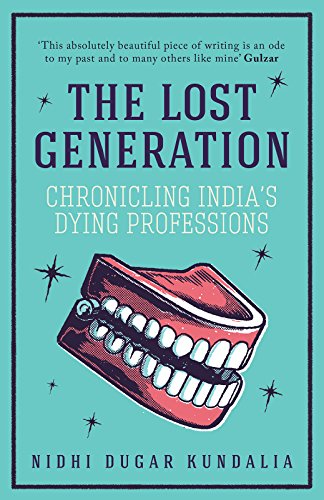
The Lost Generation: Chronicling India’s Dying Professions by Nidhi Dugar Kundalia
From the women of the Baiga tribe in the jungles of Jharkhand who have intricate godna tattoos etched upon their bodies to the professional mourners called rudaalis deep in the deserts of Rajasthan, from the Hindu priests on the banks of the river Ganga in Hairdwar who maintain genealogical records, rolled up to resemble resplendent tree barks, to the Urdu scribes or kaatibs of Old Delhi, Nidhi Dugar Kundalia’s book chronicles 11 of India’s dying professions. Though the book is by no means exhaustive—as there are many more such professions across the country—it is a splendid starting point for any reader, written with an atmospheric delight that restores a world on the verge of extinction.
Élisabeth de Feydeau, a professor at the Versaille School of Perfumers, draws on the papers of Jean-Louis Fargeon, tracing his life from 1748, when he is born into a family of perfumers in Montpellier, to his becoming perfumer to the young queen, Mary Antoinette. He serves her for fourteen years until the Revolution sweeps the nation, composing luxurious and bespoke fragrances and pomades, and chronicling her extravagant expenditures. Rather than providing broad historical context, the book speaks to an intimate court life and relationship between perfumer and queen. It spends considerable time on fascinating beauty secrets, ingredients, luxury goods, and articles for grooming—lemon pomade, carnation powder, perfume sachets, and a selection of beauty spots and creams to purify and whiten the queen’s complexion. The back of the book contains notes on Fargeon’s palette and his methods of ingredient extraction. Interestingly, one of his floral formulas survived the revolution and is now called “Black Jade.”
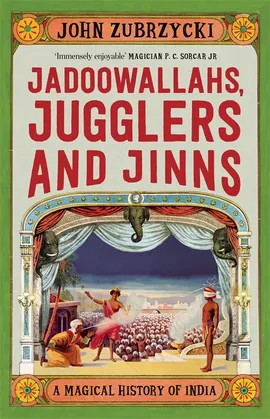
One of my early childhood memories in India is of the magicians, puppeteers, and snake-charmers that attended our birthday parties. There are photographs of them making eggs appear and disappear in our hands, pulling doves from top hats, finding coins behind a cousin’s ear. India’s association with magic goes back centuries, and in this magnificent book, Australian writer, John Zubrzycki explores how “magic descended from the domain of the gods to become part of daily ritual and popular entertainment.” Highly imaginative and rich in detail, the book draws on archival records, newspaper articles, interviews, and memoirs of Western and Indian magicians and illusionists to culminate in an extraordinary cultural history of oddities.
After fifteen years of vegetarianism, I recently gave into despair and started eating meat. I’m also trying to quit smoking again, which means I’ve gained a bit of weight. It isn’t much—only five or ten pounds—and anyway, since I was so skinny before, I just seem healthy, like I’ve filled out. In my one concession to self-respect, I’ve been shaving every day, so my cheeks are soft and smooth, plump and pink. People tell me I look good, a decade younger. I’ve never felt worse.
A few months ago, I told my best friend, Ezra, that I was in love with him. I hadn’t meant to. I was at a used bookstore in Madison when he called me, as he had many times before, to gripe about his girlfriend, a nervous, wide-eyed woman of whom I happened to be rather fond. This time, though, the prospect of coaching Ezra through another breakup just made me tired. I wanted to lie down, right there on the floor of the bookstore, between the Greek myths and the fairy tales, and sleep forever in a glass coffin. It also didn’t seem fair to the girlfriend.
“I don’t think I’m the person you should be talking to about this,” I said, finally, and when Ezra asked why, the implicit answer hanging in the dead air of our phones, I understood that my years of silence, of gritting my teeth, were gone. For what? In the world of my dreams, things were supposed to remain unspoken until we were older. Maybe we would be in our late forties, both freshly divorced, cleaning up after a dinner party in his too-bright kitchen, the other guests out the door. Maybe we would open an extraneous bottle of wine and, in a moment of revelation, share a kiss. Instead, we’re no longer speaking. At thirty-five, I’ve started graduate school in Wisconsin, where I don’t know anyone, and I can’t even call Ezra up to complain.
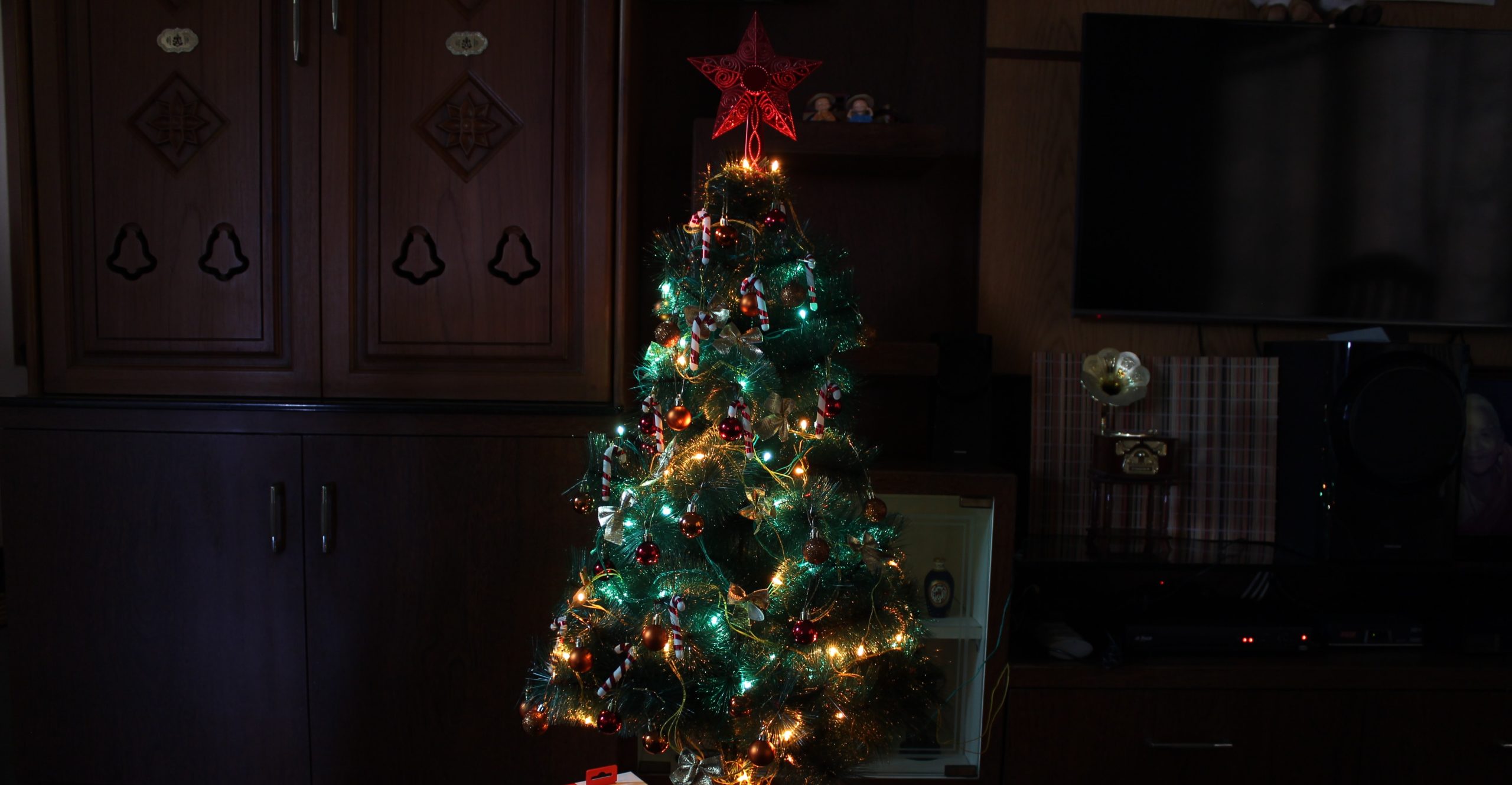
So: home to Jersey City for the holidays. Christmas has come and gone. It’s that strange week before the New Year, when time moves according to its own inscrutable logic and everyone is anxious for something to begin. I’ll go back to Wisconsin in January—back to cold pizza from the departmental fridge, back to color and selfhood in Sir Gawain and the Green Knight. For now, I have nowhere else to be. My father and sister and I lurch around the house, weighed down by sloth and gluttony. When my mother was alive, holidays were loud, with mortifying singalongs and arcane Christmas-morning rituals, but these days they’re muted. There are no husbands or wives, no children or grandchildren. Just the three of us, all adults now, in the little house we once shared. We give each other modest presents: packets of seeds for my father, something black and leather for my sister, a book about books for me. The Christmas tree is artificial, with built-in lights.
Now I have to drive my sister to the airport. She’s flying to Reykjavik to spend New Year’s Eve with her boyfriend, the first man she’s dated since her divorce. He’s quiet, with a musical Icelandic accent; I assume he believes in elves or fairies. A world away from her unnervingly chipper ex-husband. I’m happy for her, even if there’s some part of me that wonders whether she and I can be happy at the same time—if one of us has to be down for the other to be up. We get into my father’s car and head for the I-78.
“Do you think Dad’s okay?” she asks. I shrug. Like most selfish children, I find it hard to imagine that my father has an existence independent of my own.
It’s dark out. When we were kids, Christmases had always been white, or at least they were in my memory. Now winter arrives in a torrent of mud. Fog rolls through like tear gas. Then, without warning, the days plunge into bitter cold. It feels like divine punishment—all those wonderful years, squandered. The planet trying to buck us off. I can’t blame it.
Then, without warning, the days plunge into bitter cold. It feels like divine punishment—all those wonderful years, squandered.
“This trip is a bad idea,” my sister says. “It’s too soon. I barely know Gunnar.”
“I think it’ll be interesting,” I say. “Apparently Iceland uses one hundred percent renewable energy.”
“They eat fermented shark there. They bury the shark in the ground and let it rot. Then they cut it up into little cubes and serve it on toothpicks, like fucking cheese or something. Gunnar says it smells like bleach and piss. He says I should give it a try.”
“I’d like to go to Iceland someday. While there are still planes in the sky.”
“Maybe you should go instead of me,” my sister says. “Maybe you should eat the piss shark.”
We drive past one of those trucks that transports livestock. It’s crammed with pigs, their flanks heaving against the sides. Some stick their intelligent snouts through the holes, nostrils flexing, getting a first and last taste of winter air. Even with the windows closed, I can smell them—that doomed barnyard funk.
“I guess they eat a lot of hot dogs in Iceland too,” my sister says. “But they’re made of lamb.”
The sole addition to the flock this year is my father’s miniature labradoodle, Ferdinand. I once read an article in which the creator of the labradoodle said that the breed is his life’s great regret, that he made a monster. He may have had a point. Ferdinand is odd. He hunts ghosts in the walls. His eyes are insectile. If I try to read or watch television, he sits nearby and stares at me. I don’t like animals; I’d been a vegetarian for the sake of the environment. The wasted water and grain and land, the methane clouds of cow farts, the lagoons of pig shit in which farm workers periodically drown. But Ferdinand, for all his supernatural intuition, doesn’t seem to pick up on this. At night, as I lie in bed, he whines at my door.
I’m sitting at the kitchen table, trying to do a puzzle, trying not to think about smoking. My dad wanders in, Ferdinand at his heels, and puts the kettle on. He’s sixty-seven, bespectacled and reduced. My sister and I—his alien progeny—tower over him. (We take after our mother, who stood five-foot-eleven.) A few years ago, after three decades as a public-library administrator, my father retired. He spends his days reading, gardening, sketching. At Christmas, he makes an effort, hanging wreaths on the doors and filling the house with blazing-red poinsettias. Ezra and I once tried to set our dads up as friends; they met in the city, halfway between Jersey and Connecticut, where Ezra’s father ran a hedge fund. It didn’t go well. Later Ezra told me that his father found mine sad. He added, with a meaningful look, “He’s not wrong.” Anyway, my dad has Ferdinand now.
The puzzle is an idyllic scene of New York in the winter. There are people bustling around with gifts under their arms, shops and apartments with glowing windows, snow falling on elevated subway tracks. It makes me miss New York. I’ve pieced together the puzzle’s edges but not much else. I’m no good at puzzles.
“Your sister texted,” my father says. “She’s still on her layover in Copenhagen.”
Ferdinand puts a paw on my leg.
“I think there’s something wrong with Ferdinand,” my father says.
“Understatement.”
“Don’t you think he’s acting strange?”
“I don’t know,” I say. “He’s always strange.”
I step onto the front porch and crack my knuckles in the cold. In my jacket pocket there’s a pack of American Spirit Yellows. I’ve been keeping one cigarette in there, as a reminder or a punishment. When I open the pack, though, it’s empty.
My father follows me outside, and Ferdinand follows him. The dog sniffs the half-frozen grass, searching for the best place to pee.
“I thought you quit,” my dad says, tugging at his mustache.
“I did,” I say. “I did.” The vapor from my breath looks like cigarette smoke.
Across the street, the neighbors have an absurd Christmas display: gigantic blow-up decorations of Santa, the Grinch, Frosty the Snowman. At night, they sway menacingly, illuminated by a row of multicolored spotlights. During the day, they slump on the lawn, deflated and spent.
Inside, the kettle whistles. I worry that if I stay in the house a moment longer, I’ll do something I’ll regret, like call Ezra or strangle Ferdinand. Maybe I need a task.
“I’m going to get some Nicorette,” I say.
After my mother died, everyone in the family responded in their own unhealthy ways. My sister, three years older than me, partied in the city every weekend while still, somehow, maintaining straight As. My father filled every practical void left by my mother’s absence—he had always done the cleaning, and now, in addition to cooking, he redoubled his efforts around pickups and drop-offs and homework help—without ever actually talking about her death. My coping mechanism was this: I started breaking into houses.
I never stole anything. Not out of principle—I was just too scared. (It’s true that I sometimes raided the fridge, but I did my dishes after.) I was thirteen. I figured—accurately, as it turned out—that trespassing might be a lower-level offense than burglary. The houses in my neighborhood were simple enough to get into. People kept their front doors locked, but sometimes they left keys under fake rocks, or forgot about their back entrances. I left school during lunch time so that I could enter in broad daylight, when I wouldn’t look suspicious, and it was less likely that someone might be home. All in all, this was easier than you’d think.
Once I was inside, if I was hungry, I’d make myself a sandwich. It was disturbing, almost, how every house had some combination of the same ingredients: white bread and processed cheese and cold cuts and mayonnaise, the kind of stuff my mother never allowed us when she was alive. But now I could eat my fill. Then I would drift around, testing out the furniture, reading the spines of the books and the movies. In one house, I found a pack of Kools; when I tried one, lighting it off the gas range, it made me want to puke. In another, I discovered a cache of pornographic magazines under a bed. We didn’t have a computer at home then, so I’d never really seen that kind of thing. The magazines were full of astonishing hues of pink and white. There were winking anuses, pyramidal layers of labia, rivulets of pale semen on tanned buttocks. The women on all fours, surgical scars under their breasts, faces frozen in rictus. The men’s clean-shaven genitals. I put the magazines back under the bed; they weren’t quite what I was looking for. Mostly I just liked to touch things, to imagine other people’s lives.
At last I got caught. I was sitting in a La-Z-Boy, watching Face/Off, one of my favorite movies. Just as Nicolas Cage said, “I’d like to take his face…off,” somebody walked in.
I was arrested, handcuffs and all, and charged with breaking and entering. My father hired a lawyer for more than he could afford. I had to make a court appearance, wearing the best clothes I owned: corduroy pants, a wool sweater over a collared shirt, black sneakers that could, in the right light, pass for dress shoes. In the courtroom, trembling before the judge, it was all I could do not to cry. But later—after the judge let me off with community service and said my record would be expunged when I turned eighteen—I felt strangely disappointed. Was that it?
As we left the courthouse, my father said I could take the rest of the day off school. But I wanted to go back and be normal again.
Now dusk is falling, and I’m driving my father’s Toyota Avalon through the streets I used to prowl. The houses are mostly dark, although here and there are Christmas lights strung along the gutters, the blue-green flicker of a television, the warmth of a kitchen chandelier. I don’t feel any kinship with my old self, but, confronted with the fact of his existence, I find him hard to escape. I also want a cigarette.
I drive to the 7/11, in the sad plaza with the dentist’s office and the McDonald’s, and park out front. Through the window, I can see the rows of cigarettes behind the counter. Somewhere in there are my American Spirit Yellows, on a gradient between the Oranges and the Greens. The objectionable Native mascot will be smoking his pipe next to a warning about cancer or emphysema. At NYU, Ezra’s brand was Pall Malls. Whenever we would step out of a party or a bar for a cigarette, he would complain that I was too slow—that it took too long to smoke my American Spirits. He always wanted to get back inside, to rejoin the others, but I was never in any rush. Eventually Ezra quit, at the highly responsible age of twenty-four, and I had to smoke by myself.
My phone rings. “I hope you have a roaming plan,” I say.
“A vacation is a roaming plan,” my sister says. “If you think about it literally. Christ, I’m bored.”
“How’s Iceland?”
“We’re still stuck in Copenhagen. You wouldn’t believe how clean this airport is. It makes Newark look like—well, like Newark. What are you up to?”
I stare into the 7/11, as blindingly white as a laboratory. “Out for a drive.”
“That’s nice. Gunnar has gone to get us another round of Scandinavian pour-overs. Seriously, airports shouldn’t be like this. It’s deranged.”
An elderly woman, plush reindeer antlers on her head, shuffles to the register with her purchases: a Slim Jim, a two-liter bottle of Coke Zero. She gestures at something behind the counter.
“I’m thinking of making a run for it,” my sister says. “Maybe I should go to the red-light district and legally purchase intercourse.”
“I’m pretty sure that’s Amsterdam.”
“Whatever. If these people didn’t want us to mix them up, they shouldn’t all be so slim and attractive. Listen, Gunnar’s back. Take care of Dad, okay?”
The woman with the antlers comes out of the 7/11 and rifles through her plastic bag. I hope whatever she pulls out will be a sign that I should buy cigarettes—a pack of Camels, a can of Skoal, even a Juul—but it’s just her Slim Jim. With shaking hands, a junkie preparing a fix, she unpeels it and takes a bite. Her mouth has the caved-in appearance of the infirm.
I turn my phone off. Then I back out of the 7/11 and drive across the plaza to the McDonald’s.
My first post-vegetarian meal was easy: a few strips of bacon with breakfast. Later I had tuna fish, chicken Pad Thai, even some goat from a friend’s organic-farm basket. For Christmas dinner I indulged my father and ate a massive, Mesozoic turkey drumstick. But I haven’t done this—idled a car in a fast-food drive-thru— since I was a teenager. I try to make it feel like the forbidden luxury it once was: the golden arches glowing above me, the backlit menu glowing too, everything looking so good, so bright and so brown. Brown buns, brown meat, brown fries, brown cola. The occasional colorful pop of lettuce or ketchup. Variations on a theme. When I arrive at the tinny speaker, though, the only thing I want is a Big Mac combo.
I find a parking spot. The Big Mac tastes nothing like I remember, which makes me feel like I have no memory of it at all. The burger is oddly sweet. The patties are thin and grey, neither warm nor cold. It’s hard to believe there’s any meat in them; maybe there isn’t. The French fries are exquisite.
What can I tell you about Ezra? He’s the smartest man I’ve ever known, and also the dumbest. You should hear him defend Houellebecq or dismiss Ashbery. You should see his hands, the size of them; you should feel the mountain of his body as he envelops you in a hug. He comes from old coal money, and, although he isn’t quite proud of that fact, he seems to relish its wrongness, the discomfort it inspires in others. He used to write poetry, pretty traditional stuff, although he gave up on it before I did. He’s beautiful when he loses his temper, and when he grew his beard it gave him a look of perpetual umbrage. He has a fondness for conversational simile. A girl who won’t leave him alone is—he will say—“like Spanish moss on a live oak.” A professional quandary is like King Minos refusing to sacrifice the divine bull. When Ezra talks, nothing is ever what it is. It’s always something else.
I drive home from the McDonald’s, the tang of special sauce on my tongue, listening to a radio report about air pollution in New Delhi. The report says that dense winter air causes something called inversion, an atmospheric layer that traps particulate matter close to the ground. This means pollution has nowhere to go. Right now, it’s as if the entire city is in a dome of smog—from gasoline mixed with kerosene, from burning dung and rice straw. The skies in Delhi are gray. People walk in the haze like ships sailing through mist. This is the worst winter on record. “We’re practically smoking the air,” a Delhi resident says.
When I arrive, my dad is hovering in the doorway. “Where have you been?” he asks. “I tried calling you, but your phone is off.”
“My phone is off,” I say, pointlessly.
“Ferdinand is sick,” he says. The dog limps over and hacks at the ground, but no vomit comes.
At the veterinarian’s, my father holds Ferdinand as the dog whimpers and twitches, trying to wriggle from his lap into mine. The waiting room is full. There’s a listless Saint Bernard with red eyes and ropes of drool hanging from its jowls. A jewel-like parakeet in a tiny cage, flitting from one perch to the other. A cat—or what I assume is a cat—invisible in the darkness of its plastic carrier. On the reception desk is a little battery-operated candle and a sign. If this candle is lit, the sign says, someone is saying goodbye to their beloved pet. Please keep your voice down during this difficult time. The candle isn’t lit. Still, when my father speaks, it’s in a whisper. His voice is shaky.
“Do you think Ferdinand will be okay?” he asks.
A technician calls us into one of the examination rooms. As I pat my father on the shoulder, I imagine moving in with him, caring for him in his old age, watching police procedurals every night until I am also old. It occurs to me that this is probably the best use of my time. I might never do or be or create anything of note. Ezra might never love me back; in fact, he absolutely will not. But I can take care of my father. That has to mean something.
It occurs to me that this is probably the best use of my time. I might never do or be or create anything of note.
When the veterinarian comes in, she apologizes for the delay. There are always a lot of problems around Christmas, she says—pets getting into things they shouldn’t. She’s blunt and efficient, her hair in a practical ponytail. “I’m sure Ferdinand will be fine,” she says. She pops a tablet of apomorphine out of a blister pack and slips it into a Greenies pill pocket. Ferdinand sniffs it suspiciously but eats it anyway.
He vomits almost immediately. In my mind, I look down into the neon slime of his mess and see, bent but unbroken, a single American Spirit. The veterinarian, leaning in close, sees it too.
“One of you a smoker?” she says.
But that isn’t what happens. Instead, the veterinarian, examining Ferdinand’s vomit, asks, “Do you have any poinsettias in the house?”
The next day is New Year’s Eve. In the morning, I sit at the kitchen table, eating a bowl of Cheerios, the unfinished puzzle of New York in front of me. Soon I’ll go back to Wisconsin; I’ll reckon, once again, with the Green Knight, his disembodied head rolling on Camelot’s floor over and over. In the meantime, Ferdinand, still recovering from his brush with death, has left me alone. He’s asleep in the living room, beneath the artificial Christmas tree, and through the doorway I watch him dream. His legs jerk, his eyes flutter open and then close. Sometimes he yelps. I assume that, in his dreams, he is no longer a miniature Frankenstein’s monster but an apex predator like his ancestors, bringing down the megafauna my own forebears hunted to extinction during the last great Ice Age. In real life, though, he’s still Ferdinand. When we got home last night, my father threw out all the poinsettias.
My phone dings; it’s my sister. She’s sent me a message, a video accompanied by a single word: “Iceland.” The black screen fills with eerie glowing curtains of green and blue. Then come reds and purples and pinks, shifting against the stars and the night sky. It’s the aurora borealis, of course. The lights are both beautiful and extraterrestrial, radioactive, like something the government wouldn’t want us to see, and I almost find it hard to believe that my sister is there, observing this with her own eyes—that this video is not part of some elaborate deception, one designed to fool me into thinking such a phenomenon were actually possible. In the background Gunnar is talking, with his funny accent, about solar wind, coronal mass ejections, the excitation of atmospheric constituents. But it’s hard to catch what he’s saying because my sister keeps repeating the same thing. “Holy fucking fuck,” she keeps saying. “Holy fucking fuck.”
My father comes into the kitchen and sits at the table. “How’s Ezra doing these days?” he asks.
I look up from my phone. My dad is blinking behind his glasses.
“I don’t know,” I say, as steadily as I can manage. “We haven’t been in touch for a while.”
“Oh,” my dad says, pulling at his moustache. “That’s a shame. So—you’re not going out tonight? You’re not going into the city?”
“It’s just New Year’s.”
My dad keeps tugging at his mustache. “You don’t want to go out with some friends?”
“It’s not a big deal,” I say. “I guess I figured I’d stay in. We can watch the ball drop.”
“Right,” my father says. “Well. I’m just asking because—because I was planning to go to a little party.”
“A party?”
“Yes, a party. I’m sure that’s hard to believe.”
“I’m sorry,” I say. “No, that’s great. A party with who?”
“With some friends,” my father says. “With a friend.” He stands up, suddenly regal. “Maybe you can keep an eye on Ferdinand for me.”
That night, a sensible green Volvo pulls up in front of the house. In a spasm of formality, I walk my father out the door, into the winter air, and, as if to reciprocate, he does something just as unusual: he tugs me down to his level and gives me a kiss on the cheek through the bristle of his moustache. Then he holds me and takes a deep breath. For a second, I feel a primordial sense of belonging, as if I were a newborn baby who smelled of milk and yeast, and the two of us stand there, in our awkward half-embrace, both slightly off-balance, until Ferdinand skips out the door, at which point my father leans down to scoop him up, and the moment passes. He deposits Ferdinand in my arms and heads across the lawn, shoulders hunched in his peacoat.
It’s only when my father reaches the passenger door of the Volvo that I realize he was checking me for the smell of cigarette smoke. By then, though, he’s lowering himself into the car, Cinderella heading to the ball. The driver—a woman I’ve never met before, with elegant silver hair and a patterned scarf—waves at me shyly through the car window. She’s trying, if nothing else. Standing in the doorway, the light from the house pooling out behind me, I try to wave back, but Ferdinand is in my arms, straining to follow my father, and so all I can manage is an awkward flick of my hand.
This past summer, an auntie of mine dusted off an old cardboard box of books from a cluttered storage unit, and handed me a slim blue and gold paperback with soft, slightly frayed corners and a creased spine by Octavia E. Butler. I had never read science fiction that featured a Black girl being so undoubtedly Black while simultaneously doing things completely unrelated to her oppression. I had little context for Black literature outside of racial trauma. Like many young Black bookworms, I grew up on YA full of descriptions of fair blonde elves and moonlight-colored vampires, and avoided Black fiction to save myself from traumatic lessons in historical fiction.
While recent contributions to Afrofuturism have inspired a new age of artists to look to the future rather than the past, the role of Black writers, especially Black women writers and characters within the sci-fi genre, is almost as old as the genre itself. The term “Afrofuturism” has been around since 1994, when it was coined in Mark Dery’s essay, Black to the Future. While Black Panther was a wonderful introduction to Afrofuturism and to Black sci-fi, I’d like to point out the work of our foremothers who pioneered concepts of not only Black science fiction, but science fiction as a whole in order to build the foundation for what we see today. Here are ten sci-fi novels by Black women from the past five decades:
It would be impossible to have a list of Black sci-fi authors without including Octavia E. Butler. By 1976 she was the most prolific Black woman novelist in North America. She started writing science fiction after watching a movie called “Devil Girl from Mars,” and realizing that she could contribute more to the sci-fi genre than that. Mind of My Mind pits 21-year-old Mary against a millennia-old immortal with the power to steal anyone’s body. This immortal, Doro, cannot be killed, and commands a network of telepaths who have no choice but to serve him or die. Mary is one of these telepaths, and has been raised knowing Doro would decide the course of her life. When her telepathic ability reaches maturity, she is expected to marry and produce offspring who will hopefully also be successful telepaths. But there is only so much that someone can obey.
With a little less than 200 pages, Butler weaves together a powerful story at a thrillingly swift pace. The world of the novel is complicated, yet is artfully explained with thorough imagery to allow the sci-fi concepts to sink in.
Bloodchild is regarded as one of Butler’s greatest works, and is an exemplary piece of science fiction. This short piece published in 1984 is about the threatened extinction of an alien race, incorporates graphic body horror. The humans are sold to the aliens so that they can inhabit and eventually consume their bodies for survival. In an interview, Butler dismisses the idea of her story being an analogy to chattel slavery, saying she wrote Bloodchild as a deviation from the usual alien colonization story, where humans either violently overcome aliens or submit and become servants.
The horror and sci-fi queen, Tananarive Due, once commented in an interview that the Black writers that she admired were writing only urban or rural fiction. She had no way to know if there was a market for writing about Black people in suburban settings like herself. Like a true pioneer, she began writing My Soul to Keep on hope and faith that this new material would be received well. Now, as the author of the African Immortals, Due’s reputation is that of a master in unpredictable horror/thrillers.
The story begins with a woman named Jessica who meets the perfect partner named David, who happens to be immortal after he participated in a ritual 400 years ago where he traded his humanity for eternal life. Jessica and David start a life together, raising a daughter named Kira. However, the Ethiopian coven he originates from is demanding he return and leave his comfortable new life with a woman he loves deeply. This leaves it up to Jessica to survive the lengths that David will go to maintain his life with her.
If anyone is going to be the expert in how human beings can so badly mistreat each other to the point of creating a dystopia, it would be a Black woman. Brown Girl in the Ring follows Ti-Jeanne, a young woman living in a future inner-city Toronto that the wealthy left to crumble: “…investors, commerce, and government withdrew into the suburban cities, leaving the rotten core to decay. Those who stayed were the ones who couldn’t or wouldn’t leave. The street people. The poor people.”
Ti-Jeanne and the other inner-city inhabitants must learn to survive the way people did in simpler times—farming and bartering. But the inner-city dwellers are not alone in their challenges of post-apocalypse life; the wealthy return to harvest the bodies of the poor as well, to ensure their own survival. Hopkinson includes elements of Caribbean magical realism as Ti-Jeanne taps into an ancient power to take her fate into her own hands.
Published in 1998, Brown Girl in the Ring still reflects current realities of gentrification and run down infrastructure in majority Black neighborhoods, like Flint, Michigan and more recently, Jackson, Mississippi. It is certainly one of those science fiction narratives that is spookily close to becoming reality.
Midnight Robber is a tale of Caribbean magical realism set on a high tech planet that centers a mysterious Black woman as a Robin Hood figure. Tan-tan is the young daughter of a corrupt politician on the Carribean planet Toussaint, but once her father’s reign comes to a violent end, she is forced into less developed and dangerous lands. While she used to dress up as the robber queen during carnival, Tan-tan is now forced to don the disguise for more than just festive pageantry. Hopkinson tests the depths of the human capacity for evil in an unforgiving setting, while also illuminating the capacity for love and healing.
Published at the turn of the millennium, as the world was looking to the future more than ever, Sheree Renée Thomas created Dark Matter with expectation that it will be the age of Black fiction. In her introduction, she explains the parallels between the African diaspora’s artistic contributions to literature and the scientific phenomena called dark matter. After the 1998 Hubble Space Telescope discovered that the expansion of the universe was accelerating rather than slowing, the mysterious invisible substance inflicting gravity on its surroundings called dark matter became a topic of discussion. While dark matter can’t be seen, its gravity betrays its existence and scientists have found that it is what is keeping our galaxy intact. However, its influence on our galaxy has still, twenty years later, not been fully explored and understood. Thomas asserts that the African diaspora’s contribution to science fiction is the same way; its presence is known, but its influence has not been studied. At the time, Octavia E. Butler was the leader of Black science fiction, but the contributions of other Black authors had yet to rise to the mainstream. Thomas’s hope was that this would shed light on the mysterious forces of Black literature.
Dark Matter contains short stories from Black authors such as W.E.B DuBois’s The Comet and Henry Dumas’s Ark of Bones. It begins with Sister Lilith by Honoree Fanonne Jeffers, which reimagines on the Adam and Eve story from the point of view of Lilith, Adam’s first partner who was rejected for complaining too much. This collection of short stories is a great jumping off point down the rabbit hole of Black sci-fi authors.
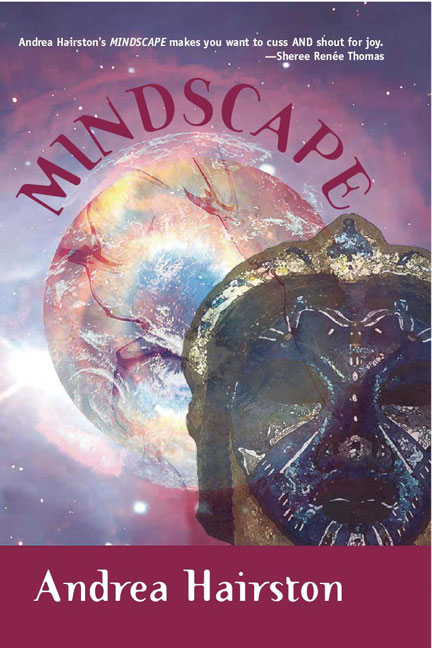
Mindscape by Andrea Hairston
In the sci-fi spirit of forward thinking, Andrea Hairston creates a different take on alien invasion tropes. While many sci-fi alien narratives use the physical presence of alien beings, Mindscape is centered around a barrier that slams down onto earth, dividing regions and throwing the world into chaos. The world comes to be dictated by gang-run states. People called Vermittler are the only ones who can safely cross the barrier, and allow others to do so as well. One Vermittler named Celestina creates a treaty to unite the divided realms, but is assassinated on the same day that it is signed, leaving her apprentice, Ellina to finish what was started.
Mindscape is a blend of magical fantasy and paranormal sci-fi told from the perspective of several characters. For a novel published in 2006, it is unapologetic in its inclusion of queer characters, however it does take a bit of an outdated outlook at transgender identity.
Onyesonwu was born as the result of her mother’s brutal assault during a time when her people were experiencing a genocide in post-nuclear-holocaust Sudan. The Nuru have decided to destroy the Okeke in order to carry out the goddess Ani’s divine punishment for the Okeke’s hubris in their technological advancement. But Onyesonwu is given her name lovingly by her mother, its meaning a fierce challenge in the face of their eradication: “Who fears death?” As the last living member of the Okeke people after the genocide, it is up to Onyesonwu to end the violence against her people. She is brought up by a mysterious shaman who introduces her to magic.
With a name that challenges death itself, it’s clear from the start that Onyesonwu is not a protagonist who is going to bend easily. She won’t accept the fate that the Nuru attempt to force upon her, nor that of their goddess. Nnendi Okorafor gives us an incredibly strong young African woman to root for. My caution for readers is that because Who Fears Death is honest about the brutal nature about violence against women in during times of intense conflict, there are uncomfortable scenes depicting graphic sexual violence.
Published in 2014, Love is the Drug almost seems to predict the COVID-19 pandemic six years in advance. Emily Bird, who is called “Bird” by most, is an affluent Black high schooler at a prestigious private school in Washington, D.C. She has a fabulous life with the perfect boyfriend, and a beautiful future at an Ivy League university. But after a mysterious encounter with a homeland security agent named David, she finds herself waking up in the hospital missing her memories from her evening. Even more disturbing, martial law has been instituted as a deadly virus rages on, forcing quarantines and curfews. Bird’s parents are involved in secret scientific work, which puts Bird under David’s suspicion. Pursued by the titans of the U.S. government, young Bird only has her conspiracy-loving classmate, Coffee, to rely upon.
Bird and Coffee remind me a lot of Chiamaka and Devon from Faridah Àbíké-Íyímídé’s Ace of Spades, being two Black kids from different sides of the socioeconomic fence forced to work together against a seemingly unbeatable oppressive force. Similar themes of mistrust and betrayal arise in this mystery thriller, and Alaya Dawn Johnson’s use of a science fiction plague brings the story in a unique direction.
As an English and biology teacher, as well as an advocate for diverse literature, N.E Davenport blends sci-fi and fantasy beautifully, with a Black girl with eyes set to kill at the helm of the narrative. The Blood Trials takes place in the fictional Republic of Mareen, where Ikenna, granddaughter of the former military leader Verne Amari, is training to be an elite fighter. But Verne taught her more than the martial skills she would need to fight—he taught her how to use the magical gift that flows within her blood, and the importance of keeping it secret. When Verne is murdered, Ikenna knows it was someone of the Praetorian guard who ordered it, and she becomes set on vengeance. She joins the Praetorian guard to uncover the truth of his murder, knowing she will face racism and misogyny because of her mixed heritage. In the long-held tradition of Black women around the world, Ikenna sets forth to disturb the peace within a corrupt system.
Heads emerge from toilets, constructed from our own debris. Birth control pills lead to pregnancy. Foxes bleed gold. People connect over ghost-watching. In Cursed Bunny,Bora Chung takes us on an unforgettable journey through folkloric caves and modern-day apartments, unearthing the horror and injustice that are engrained in the fabric of human civilization.
I refused to read Cursed Bunny while I was alone. Translated by Anton Hur, the South Korean short story collection melds together speculative fiction, horror, absurdism, folklore, and bitingly-acute observations of contemporary Korean society. Anticipating that I would be too scared if I read it by myself, I sought out public reading spaces. But after finishing the ten stories, I wasn’t certain that reading Cursed Bunny amidst other people provided any comfort. Chung has a way of revealing humanity’s deep cruelty with an absurd twist, tweaking the ordinary and destabilizing the setting around me. She highlights the struggles of the oppressed, using fantastical elements to expose systems of patriarchy, capitalism, and corruption. Hur expertly captures the tone of Chung’s prose, which is deceptively simple; some stories almost sound like the ones you read in childhood—making them all the more haunting.
Chung’s wry, dark humor and passion for activism shone in our Zoom conversation, where we (surprisingly) laughed our way through topics such as the absurdity of misogyny, urban legends, and why a cursed fetish can’t be ugly.
Jaeyon Yoo: What drew you to the fantastic and surreal elements in this collection, especially in addressing the horrors and cruelties of modern society?
Bora Chung: Especially for the minority or the marginalized, I think the fantastic or the unreal is a better approach for telling their stories. It will vary, according to people’s experiences, but if you try to criticize current society and the state of things in a realistic manner, it runs the risk of turning into a statement—not fiction. And the situation is absurd and illogical [already]. Why should a certain type of human be considered “lesser” than another, because this first type of human has functioning ovaries and a uterus? There’s no logic to it. When you’re confronted with this type of absurdity, it’s very natural to respond with absurd, illogical, and unreal narratives. That’s what fits best.
I never learned creative writing, so I learned everything I know about writing from reading other people’s words. I studied Slavic literature in graduate school, [which] has a very rich tradition of blending genres and defying the order between the fantastic and the real. Do you know Nikolai Gogol’s The Overcoat? The poor guy becomes a ghost to get the overcoat. And in “The Nose,” a man sees his nose in a uniform that is a higher rank than himself. How does a nose wear a uniform? This is considered one of the canonical works in Russian literature. It’s ridiculous! But this is one of the best writers of the Russian literary tradition. In every single Russian literature class, you read him and people fall in love with him. This opened my eyes to the fact that you can incorporate the fantastic and still make really good stories, that people will enjoy it. It doesn’t have to be realistic. I was fascinated, and thought, “If they can do it, maybe I can do it. I might never be as good as Dostoyevsky, but a girl can dream!”
JY: The story that resonated with me the most was “The Embodiment,” probably because I’ve had my share of traumatizing experiences at a Seoul gynecologist. Your fiction made me think about body as a process and a verb, one that is constantly fragmented and broken… Can you talk more about your depictions of the female body?
BC: The first part of “The Embodiment” is what I went through. When I first went to the U.S. to study, you say in Korean that you “change waters.” You’re trying to adjust to the new environment, and you have to go through this adjustment period. When I came back to Korea, my period wouldn’t stop for two weeks. I was 28 and unmarried at the time. I told my mom that I needed to go see the gynecologist. And the first thing she said was, “You’re not going to a gynecologist yourself!” If I had broken a finger, nobody would have told me I could not go see a doctor because I was unmarried. My mom eventually went with me to the gynecologist. I was not eight or 18-years-old—I was 28. By the way, my mom’s a dentist. She’s a highly educated woman and a very exceptional 1% of her generation. But the conventions, traditions, and ideology she grew up with was so strong that it prevented her from going beyond that and seeing it from a medical point of view. Around that same time, I discovered the Korean verb, “to body.” I really liked that verb. It’s an outdated term. Koreans don’t use that particular word anymore for that meaning, but it’s in the dictionary. I thought, this fits my experience perfectly. Because menstruation is something you do with your body; it’s a sign that one’s body is functioning, or a sign that one’s body is not functioning. And then all the weird guys that appear later in the story, some of them are actually from my aunts’ and mom’s stories—the weirdos that they encountered during their younger years. The guy that recites Shakespeare? That guy really existed. There are so many weird people in the world, and that makes me hyper-realistic. I wanted to be an absurdist, but there are so many people that are weirder than my imagination.
JY: Absolutely—the most horrifying or absurd moments seem to be the ones pulled from reality! You’ve talked about the influence of Slavic literature, but another reference I picked up was folklore.
BC: I think it’s common in every culture to tell children folk tales. I grew up reading a lot of folk tales, and I still love folklore and urban legends. Back in the ’70s and ’80s in Korea, there was this boom of children’s books that were 50 or 100 volumes. Usually, middle-aged women would knock on your door and try to sell you this multiple-volume children’s book series. It was a status symbol. My mom bought me this 100-volume series, and it had all kinds of fairy tales. Arabian, Japanese, European, Chinese folk tales—I loved them all. I also love Samguk yosa and Samguk sagi, two of the oldest Korean history books. They fuse seemingly realistic historic events with most certainly unrealistic events and mythical creatures. There are a lot of dragons in Samguk yosa. People are obsessed with dragons—there are dragons in every single entry. When something important happens, there has to be a dragon. There are so many various forms of folktale, and they are wild and very creative—unimaginatively imaginative.
[As for] urban legends, they’re still alive and kicking. I love Japanese urban legends—they have so many good horror stories. It constantly reminds us that what we think we know is not the entire world. Human beings are so small. We only have five senses. Some people claim to have a sixth, but it’s not empirically provable. We are so limited; there is a whole universe out there that we will never understand or never feel in a concrete way. It’s a mistake to be arrogant and think, “I am the human being. I am the superior being and I know everything.” I think there is an element of the unknown and horror living with us all the time. Urban legends remind us, in a very modern and mundane way, that the unknown is with us. I like that feeling, that there is something more to this world than what we see and hear. It’s scary, but it’s also very interesting—there will be something more than what I know and what I have now. It’s a grand statement, but that’s what makes life worth living: there will always be something more.
JY: I was really struck by was this boundary—and blurring of that boundary—between the animal and the human. (Although there are no dragons in your book.) I came away questioning what we, as a society, define as “natural.” Could you talk more about these themes of the natural/feral, juxtaposed against the human/civilized?
BC: That concept is very cultural, and it is probably very different in the West than in Asia. And it will depend on specific cultures in Asia as well—Asia is very large! As I said, I love folklore. I saw so many similarities in Slavic history books and Samguk sagi and Samguk yosa, for example. If you go back to the roughly 13th century or before, people live with mythical creatures, become mythical creatures. And these are history books! They record these fantastical phenomena and are just living among other non-human beings. That was considered natural. That is something very important, and we lost it. I can see why we lost it, too. Nature is not good to humans. If we lived in a feral environment, I would have died in three seconds. Human beings are so weak in wildlife and nature, so we have to protect ourselves with this bubble of civilization, but that is not because we’re superior. It’s because we’re so weak.
JY: And yet the society you depict in Cursed Bunny is one filled with violence and revenge; it doesn’t necessarily protect us, either. Ultimately, I thought your collection meditated on what it means to survive in our modern-day society, and how to find meaning within survival. Do you have thoughts on the connection between societal violence, survival, and literature?
BC: These stories are now rather old, and my perspective has changed a lot, especially since the Sewol Ferry disaster. I began to protest after that. Up until 2014, I was your typical couch potato intellectual who criticized society but did nothing. But when children died in front of me, and the TV stations broadcasted everything real-time, for three days, how people died and were stuck on the boat for three days—it was pure hell. The stories in Cursed Bunny are mostly from before 2014, so they are more abstract and vaguely fantastical. I didn’t know how to formulate my opinion on society. After [the Sewol Ferry disaster], I’m like, “Go protest!” and “I’m gonna kill you all!” [Laughs.]No, not everyone—I love my readers. I want to kill the bad guys. I think that is consistent in all of my work. I want the bad guys to die. That is my response to society and violence.
Urban legends remind us, in a very modern and mundane way, that the unknown is with us.
When I was sitting at home and thinking about fantastical stories, I didn’t really know how [society’s] structures worked. When I went to all these protests and met people, the one thing I experienced was solidarity. With the Sewol Ferry Disaster, the entire world came to sign the petition. They all came and listened to us and signed the petition, because they understood people should not die that way. Just a few days ago, the workers from SsangYong Motors won at the Supreme Court. It was ruled that the workers had the right to defend themselves. It took them 13 years and 33 people’s lives, but they won. And the people from SsangYong Motors came to the Sewol protest site and sat with us. We go to their protests, too. That’s where I met what became my entire world right now. I think my perspective has changed a lot, from “I want the bad guys to die” to “I love these people, and I want other people to die.”
I guess this solidarity ties back to what I just said earlier, about there being something more to life [beyond the human senses]. With my SsangYong Motors men, I was prepared to cry with them when we all went to the Supreme Court. They came out crying. But then they were glad to see me, which means something good happened. I was so terrified—all the people who went there in solidarity were terrified, and then we were all very pleasantly shocked. We cannot know the future. I guess change is possible. People suck, but they can change and suck less.
JY: Speaking of protests, could you talk about how you address capitalism, which I see as another theme in your writing?
BC: I can’t really say it’s all purely “capitalism” that I address. Capitalism is doing a lot of horrible things, but there are always some other elements that make things worse. In “Cursed Bunny,” it was corporations that colluded with power, dictatorship and totalitarianism. In “Home Sweet Home,” it’s patriarchy, that part of Korean culture that is very oppressive to young women specifically. So, it’s patriarchy, in the worst form, with capitalism. There is always some other thing.
JY: And, as you said, you turned to fiction as a way to kill these bad guys, creating this intersectionally-terrifying world that’s not so different from reality.
BC: But in reality, bad guys won’t die. Why won’t they die?
JY: In that sense, the world of Cursed Bunny (where the bad guys die) is less scary than reality!
BC: I guess…
JY: In “Cursed Bunny,” the cursed fetish-maker is obsessed with crafting something pretty—and there’s an alluring element to your prose, even as the material it depicts is often horrifying or twisted. Do you see the horrific and beautiful as intertwined?
BC: I actually never thought about it that way. I like pretty things. When I was writing “Cursed Bunny,” I belonged to this writing group called Mirror Zine. At the end of 2015, we were talking about what to write for the new year. Somebody suggested the Asian Zodiac [with 12 animals]. I was late. The fast people took all the glamorous animals—like the dragon, the tiger. The second people took all the familiar animals—the dog, the rooster, the horse. When I read the web board, there were only the bunny and the sheep left. I know nothing about sheep. We had two bunnies when I was in elementary school, and I have a very vague memory of taking care of bunnies. This was better than nothing, so I took the bunnies. Bunnies are pretty, but they are the weakest animals in the entire food chain. They don’t have any claws or sharp teeth—they have nothing to defend themselves with. I thought, “I’ll need to make them scary. If I go with the fuzzy, cute bunny, it’s going to be ordinary and boring.” But I wanted to keep the cute element, and then make them scary. That was my thought process. I wasn’t really thinking about the theme of beauty. I just wanted to write scary, fuzzy bunnies. And if cursed fetishes were ugly, nobody would touch the cursed fetish and it’s going to fail as a fetish.
JY: Something I’m struck by in your writing process is its logic! You think through the logical steps, such as, “Would I touch an ugly fetish? No.”
BC: I write about weird things, so the underlying thinking and emotion have to be understandable, come naturally. Otherwise, it will be an incomprehensible story.
JY: Do you have anything else you’d like to share with Anglophone readers of Cursed Bunny?
BC: You can go to the bathroom and you won’t die. There are no bunny curse traditions in Korea. Contraceptive pills do not make you pregnant. Do not give this book to your children.
Human beings are so weak in wildlife and nature, so we have to protect ourselves with this bubble of civilization.
In an interview I did with the BBC, the anchor very seriously asked me about the curse tradition of using bunnies in Korea. I told her that I lied: that everything is made up, and there is no curse tradition with bunnies. We do have curse traditions, but we use dolls. We don’t use live or magic or killer bunnies. She seemed very disappointed. I apologized profusely, but there is no such tradition. This made me think that people like these folk tale elements, and the specificity of my stories is something new and interesting. I specifically made sure that my stories don’t contain anything really traditionally shamanistic. Because people might try it at home!
JY: I will say, I was very careful for a few days after reading around toilets and bunnies…
BC: I’m so sorry! People complained to me a lot that they can’t go to the bathroom after reading “The Head.” Nothing will happen, it’s all made-up. I’m a professional liar and I lie very well, but these are all lies.
JY: Do you have an object you’d choose as your cursed fetish, if you weren’t last in your writing group and stuck with the bunny?
BC: Now, I kind of like the bunny. I do like cats. I want a cat—actually, I want to be a cat. [Our interview concludes with a cat show-and-tell, in which Bora meets my cat.]
In our series “Can Writing Be Taught?” we partner with Catapult to ask their course instructors all our burning questions about the process of teaching writing. This month we feature Ruth Joffre, author of the short story collection Night Beast, whose fiction appears or is forthcoming in The Florida Review Online, Lightspeed, Nightmare, and Wigleaf as well as the anthologies Best Microfiction 2021 & 2022. Check out her 4-week online fiction seminar on worldbuilding for speculative writers. We chatted with Joffre about shrimp shumai, sleeping, and the writer’s never-ending hustle.
What’s the best thing you’ve ever gotten out of a writing class or workshop as a student?
A first reader who understands my work and vision. Ultimately, the community we build as writers is more important than any assigned reading, writing feedback, or element of craft you could learn in a classroom.
What’s the worst thing you’ve ever gotten out of a writing class or workshop as a student?
As a queer Latinx woman, it’s hard not to think of all the casual misogyny, homophobia, racism, and other hate people have thrown around in critique. It’s always hard when you have classmates like that, but a good instructor can help define what constructive criticism is and shield students from such hate by establishing guardrails and community agreements.
What is the lesson or piece of writing advice you return to most as an instructor?
More and more, I think about something my instructor Benjamin Percy teaches, which is that we need to think about our characters’ jobs. Especially now, with increasing efforts to unionize at mega-corporations and the fight for workers’ rights, the question of how a character makes money—and what that does to them/what they do to others in the process—seems all the more important.
Does everyone “have a novel in them”?
Everyone could have a story of some length in them—whether that’s a novel, novella, novelette, short story, or flash. The trick is figuring out the right length and shape for that story and telling it in the best possible way. And then, of course, doing it again.
Would you ever encourage a student to give up writing? Under what circumstances?
I could only imagine doing this under some extreme circumstance, like someone turning in alt-right fascist propaganda. Otherwise, I try to be encouraging and supportive. It’s not my job to be the arbiter of what’s good writing or what could sell; it’s to help my students achieve their goals.
It’s not my job to be the arbiter of what’s good writing or what could sell; it’s to help my students achieve their goals.
What’s more valuable in a workshop, praise or criticism?
It depends on the student and their needs. I deploy alternative workshop models in my class, inspired by Matthew Salesses and Felicia Rose Chavez, and some students have said they want more praise just to give them motivation to keep going. If that’s what a student needs, far be it from me to stand in their way.
Should students write with publication in mind? Why or why not?
In general, no—unless they’re using specific calls for submissions as inspiration to get words on the page. I often encourage students to collects calls like prompts. Forget the deadline. Just sit down and write something, even if it’s a little outside your usual. You never know what it could unlock.
In one or two sentences, what’s your opinion of these writing maxims?
Kill your darlings: A clever phrase, but don’t get too obsessed with it.
Show don’t tell: Sometimes show and sometimes tell. Not every story requires the same tactics; you should learn how to modulate between them depending on the narrative.
Write what you know: Up to a point. Don’t use this as an excuse to stop learning or to avoid difficult subjects, but do make sure that you understand the emotional core of what you’re writing about and the cultural context.
Character is plot: It can be—but, then again, so can setting. It depends on what kind of story you’re telling.
What’s the best hobby for writers?
Here’s where I have to resist pushing my birding obsession on others! These days, people tend to want to monetize their hobbies or cross-pollinate in order to learn transferable skills, but I think we need to be doing less hustling and more resting. Sleep in! Learn how to make Eggs Benedict! Take up cross stitch! Whatever feels like a real break and allows you to come back to the page refreshed instead of frustrated.
I think we need to be doing less hustling and more resting. Sleep in!
What’s the best workshop snack?
Somehow this is the hardest question of all! Of late, I’ve been obsessed with the shrimp shumai from my local Asian market, but honestly anything goes in my class.
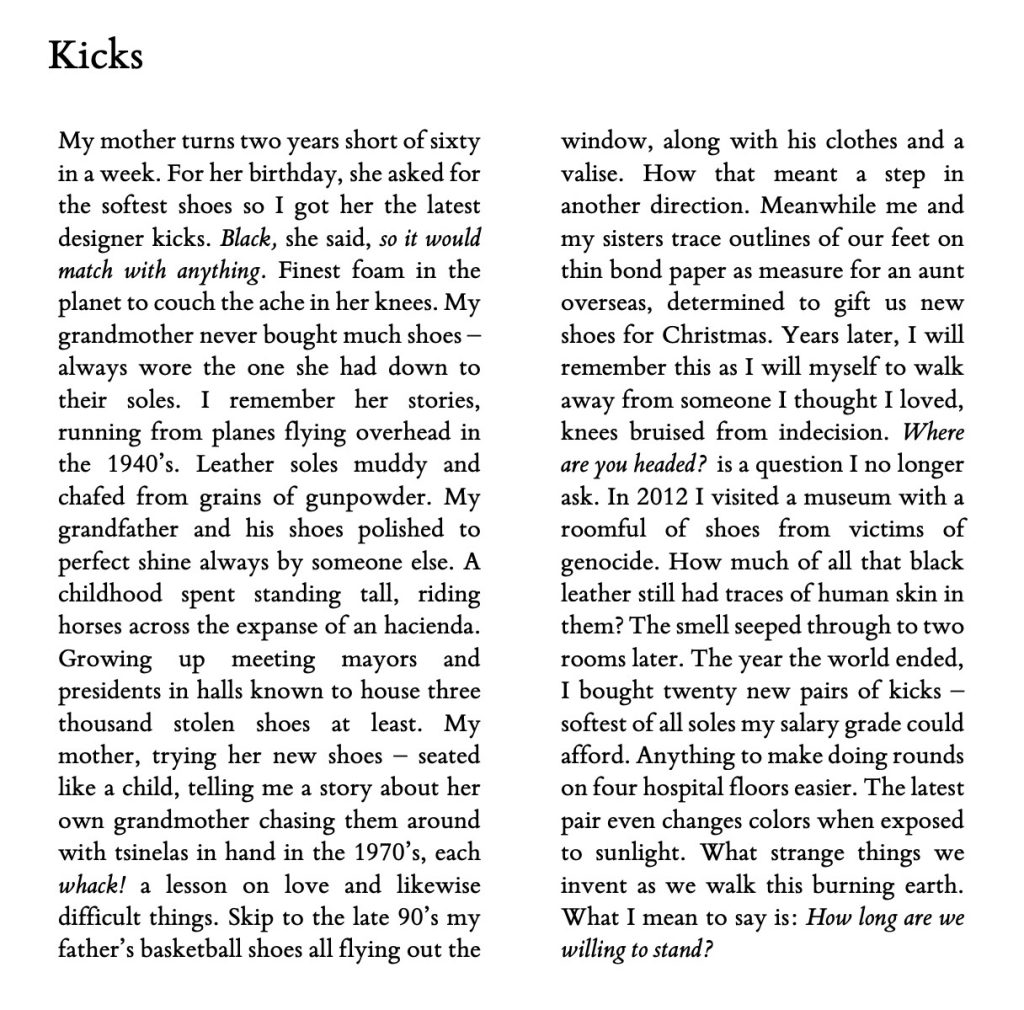
No one is allowed to speak
of the dictator’s wife
in ways not flattering. This information was procured
by our best agents and shoe-shine boys. How, in the mid-seventies, she fell
and fractured her right hip – only slightly so – non-
displaced, the orthopedic surgeon called it, needing
no direct intervention. But causing enough crack
of bone that the devil himself managed to sneak in – tendrils
and black soup, mixing itself with her marrow. How else
do you explain all the atrocities committed hereafter?
All those bare-footed workers buried alive
in scaffolding as though in sacrifice to some hungry creature
and its three-thousand feet. Steadfast in making its way
to hell. Even the ghosts refuse to whisper
through their concrete coffins.
Dear Sugar Plum Fairy, Snow King and Queen, Dewdrop Fairy, Dewdrops, Turkish Twirlers, Mother Ginger, Mother Ginger’s Bébés, Dancing Flowers, Spanish Dancers, Arabian Dancers, Chinese Dancers, Soldiers, Dolls, Rats, Producers, Nutcracker Stans, and beloved Mice:
I’m Angelina Jeanette Mouseling from Chipping Cheddar, UK, born in 1983. Better known as Angelina Ballerina, I’ve danced ballet my whole life. My life story has been made into an award winning set of childrens’ books and TV series. I have a nut to crack with The Nutcracker Ballet.
I’m a mouse. The Nutcracker has always been set against mice. Why? I have no idea. Without us there’s no conflict, no tension, and yet all anyone ever talks about is Clara and the Prince.
The plot itself is completely unbelievable. In Act One the mice attack the Nutcracker (who turns into a Prince???) for absolutely no reason. I’ve never seen a mouse attack a human in my entire life, let alone attempt to eat royalty. Are you aware of our diminutive size?
Once the mice are defeated, we’re never seen, or heard from, again. There isn’t a single mouse in the entire second half of the ballet. Whatever…
I thought MAYBE the Sugar Plum Fairy was within reach.
Then there’s the tiny problem of typecasting. At first I set my sights on landing the part of Clara, but after years without a callback, I moved on. I thought MAYBE the Sugar Plum Fairy was within reach. But no, I kept getting feedback that I was too little.
And it’s not just me! Do you know how many of my mouse friends have worked their whole lives, climbing up the ranks through the corps de ballet, only to be cast as Mouse #3 over and over again?
I’ve advocated for mice in starring roles throughout my career with no success outside of productions for mice by mice. For example my best friend Alice Nimbletoes, the talented gymnast, has never been a lead for a human audience. My rivals, the twins Priscilla and Penelope Pinkpaws, despite being Miss Lilly’s favorites, haven’t made it into leading roles either. Alice is a mouse of color, and the Pinkpaws twins aren’t always the nicest but still, none of us have ever been able to cross over.
The only time we’ve been given a human audience is in my books and TV shows, because children, unlike adults, are able to appreciate us. I mean, look at our ingrained flexibility! Whiskers provide balance and our miniscule mouse skates are perfect for dancing on point! But God forbid we take a role from a human.
The Nutcracker is the perfect ballet for mice to have our first big break, especially since we are so crucial to the storyline, but alas, we’ve never been cast.
Meanwhile, Billy Elliot gets a starring role as a swan—but then again, haven’t you heard about the mythical white man? He can shapeshift into anything, all it takes is imagination!
No, I’m not bitter or anything. Absolutely not bitter.
And we need to talk about the treatment of women in The Nutcracker. Has anyone but me realized that Clara is a minor when she’s sent off to the Land of Sweets with a man twice her age???
Have you heard of consent? Herr Drosselmeyer’s doesn’t count.
I can’t think of a single thing Clara learns.
Also there’s a real lack of character development. At least in my books I have a goal, face obstacles, and always learn a lesson at the end. I can’t think of a single thing Clara learns, except how to marry a Prince (which isn’t even that hard—look at Megan Markle.) Let’s not even consider the idea that the Prince—a man!—has anything to learn from all this.
And another thing! The Nutcracker is rife with cultural appropriation. Turkish twirlers, Spanish dancers, lots of turbans. Where’s the credit? Where’s the authenticity? I’m surprised the ACLU isn’t involved. Where’s your cancel culture now, GOP?
And someone needs to inform PETA about the treatment of animals onstage. In the Dance of the Phoenix, the bird is kept in a cage and only let out for a five minute solo. I’ve heard there’s even a Seattle-area production with a tiger on a leash.
The Nutcracker was invented in 1892 and in 130 years nothing has changed! Even the music is the same, and it was taken from Tchaikovsky! I’m going to ask an honest question here: is there anything original in The Nutcracker that wasn’t stolen from someone else?
Don’t get me wrong, The Nutcracker Ballet was, and always will be, my first love. That’s why I’ve finally had it. I’ve danced my heart out for decades, and now it’s time to say something.
As a memoirist whose audience has always been children, a lot has changed since my books were written. The time has come for us to reckon with our anti-rodent past and address the corresponding inequities in ballet. If only we could treat all animals, oppressed people, and minors with the same amount of respect and autonomy, The Nutcracker might actually deliver on its vision of a land filled with goodness, where everyone has the chance to achieve their dreams. Personally, I believe audiences would eat it up.
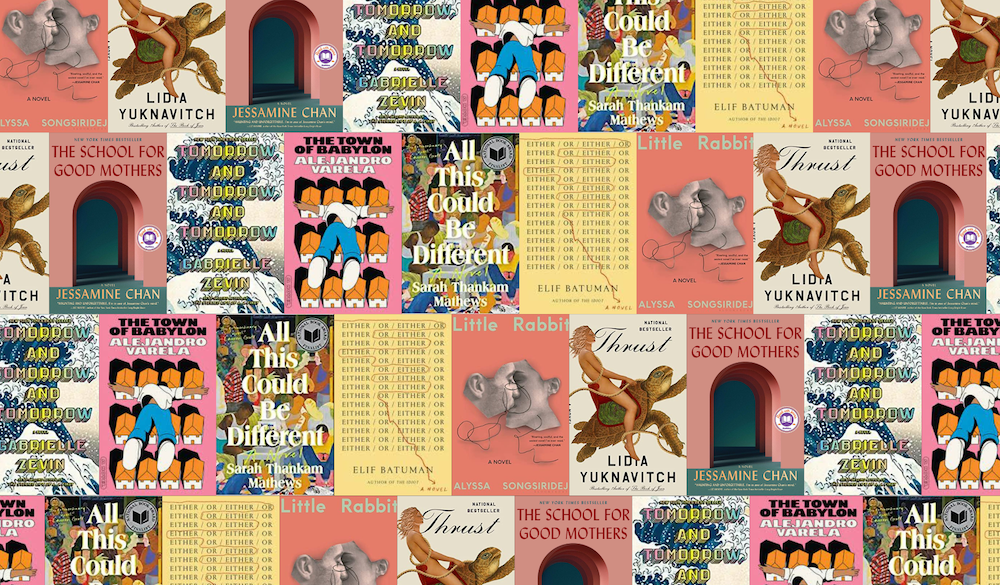
In a time of great collective precarity—both political and economic—long-held literary greats came through with novels that asked the burning questions of this era. Searing debuts pierced the literary establishment, extraordinary novels explored desire and ambition, yearning and loss. They featured protagonists with the intelligence and integrity to examine their former selves alongside their current selves, to ask more of each other and the world they inhabit. They fell in love, and into lust; they were ambitious, and they made mistakes. Most importantly, these novels gave us a mirror back into our past, and a tunnel toward our future, inevitable and damaged though it surely is. The best of this year’s novels reminded us that we must persist, that we are survivors only when we move forward together, and that our greatest gift is our collective humanity.
Here are Electric Lit’s top three novels of the year, followed by additional favorites listed in alphabetical order.
In Little Rabbit, short-listed for the Center for Fiction’s First Novel Prize, a queer woman becomes sexually entangled with the choreographer, an older cisgender man. As she navigates the heteronormative-conforming presentation of her new relationship, she grapples with questions about its dynamics: Is she more empowered with the choreographer—or less? Does he have power over her, or simply more power than her? Is a balance of power even what she wants? For discussion of these questions and more, check out this conversation between former EL staffer Preety Sidhu and current EL staffer Alyssa Songsiridej. (Note: Alyssa Songsiridej is the managing editor for Electric Literature.)
The release of Jessamine Chan’s debut garnered her comparisons to contemporary literary titans like Margaret Atwood and Kazuo Ishiguro, as well as classic greats like Orwell and Vonnegut—and from major outlets (Vogue) and writers (Diane Cook, Robert Jones, Jr.) no less. The School for Good Mothers follows Frida Liu as she finds herself in a government-run facility for bad mothers, ie, women like Frida who fail to meet the state-defined standards for appropriate parenting. The facility is less school and more, to borrow phrasing from Diane Cook, who interviewed Chan for Electric Lit in January, “dystopian apparatus.” We won’t spoil anything by saying more, but suffice say, Good Mothers is what the reviewers say it is: excellent, provocative, horrifying.
Either/Or, Elif Batuman’s much-anticipated follow-up to The Idiot, delivers more of what every Idiot fan wants: more Selin. The story picks up where the first installment left off; Selin is back from her summer abroad, a sophomore at Harvard, and as introspective as ever. Ivan, the subject of Selin’s unrequited infatuation in The Idiot has graduated from college but not from Selin’s thoughts. The novel is less plot and more meander through a fascinating mind—smart but inexperienced, ambitious but insecure, curious but oblivious. If you loved The Idiot, you’ll love Either/Or—and if you’re already hoping for a third installment, EL’s interview with Batuman is perfect reading material while you wait.
Sarah Thankam Mathews’ debut is a bildungsroman for the present moment. Its protagonist, Sneha, is a 22-year-old college graduate who has managed, miraculously, to land a corporate job in Milwaukee despite the economic recession. Like everyone else, she is desperately in search of that classic castle in the air, The American Dream. She is also brown and queer, both deeply tied to her family in India and deeply interested in forging her own future. She is, in short, complicated—and gloriously so. In an interview with EL, Mathews said she wanted her novel to “advocate for a certain kind of large-hearted, generous, and honest relational style between people.” All This Could Be Different does that—and it does it without shying away from messy topics. Sex and gender, capitalism and labor, immigration and assimilation, love and belonging—it’s all here.
Can something be both a love letter and a take-down? Big Girl is that: a love letter to 90s culture (shout-out to Biggie Smalls and Aaliyah) and a take-down of 90s culture (looking at you, Weight Watchers). In Big Girl, Malaya is a girl swimming against the current of her family’s, and the culture’s, expectations. She’s smart and curious and artistic, but those qualities seem to matter less than the fact that she is also fat. Mecca Jamilah Sullivan’s novel is a coming-of-age story with a capacious lens. For readers interested in a sharp look at Black womanhood, 90s Harlem, and the toxicity of body shame, Big Girl is a sure bet.
The conceit of Briefly, a Delicious Life is bold: Blanca is fourteen and desperately in love with George, a married woman. Frédéric Chopin (yes, that Frédéric Chopin) is her husband. Oh, and, Blanca is dead. In lesser hands, this triangle might be rendered absurd, but in Stevens’ assured prose, it’s captivating. Blanca is a charming if bizarre protagonist, and the gender politics of the 1800s are, even from a ghost’s perspective, ghastly. If historical fiction (with an emphasis on the fiction) is your genre, Nell Stevens’ debut novel is the ghost story/queer romance for you.
You may believe you’ve already read all of the choral novels you need to read. You did The Virgin Suicides in the 90s, We the Animals ten years later. You may think there are only so many times the collective “we” can be used before it becomes less of a perspective and more of a gimmick. But whatever misguided thoughts or beliefs you may be harboring, Brown Girls is proof that the first-person plural can still deliver a wallop of emotional punch. Nadira, Gabby, Naz, Trish, and Angelique are young women of color growing up in the dregs of Queens, New York. They are vibrant, beautiful, bursting with life—a collective of diverse stories buttressed and emboldened by the author’s craft decisions. As Palasi Andreades told Electric Lit: “By using the ‘we’ point-of-view, I definitely wanted to capture the sisterhood, solidarity, and diversity of Queens. . . . there’s a hybridity to the text that reflects the hybrid identities of these characters.”
The protagonist of Lydia Millet’s latest novel is a fan-favorite in today’s climate: a white cis male living off a family fortune made in Big Oil. (I’m kidding.) The setting is also the stuff blockbuster hits are made of: a quiet neighborhood on the outskirts of Phoenix. (Is this joke getting old yet?) But in Millet’s hands, Gil (the aforementioned white guy) is also something that it is very difficult to be—let alone write—without cynicism: he’s nice. And however domestic the setting, Millet is, as ever, committed to asking the Big Questions. Is it possible to do good in a world hell-bent toward bad? Is it even worth trying? Dinosaurs is the kind of novel that leaves the reader in a reflective (dare we say, hopeful?) mood. And during those fifteen minutes of afterglow, before you check your phone, dip into this interview with Lydia Millet—the world will still be teetering on the brink of catastrophe when you’re done.
The best writers defy easy categorization. Was Jane Austen a domestic author or a scathing political satirist? (I’m a Jane Austen fan, the correct answer is: both.) Elaine Hsieh Chou is like that. Disorientation, her debut novel, isn’t one thing. Instead, to borrow words from the EL interviewer who chatted with Chou earlier this year: it’s a whirlwind romp that combines academic satire with a who-dunnit mystery thriller. Honestly, that’s probably all you need to know—but I’ll also add that the protagonist is a disillusioned doctoral student mired in her dissertation and struggling with her sense of identity, until an unexpected discovery forces her into forward motion. If you’ve ever been stuck in academic hell or had a moment within which you questioned everything, this book is for you. Which is really only another way of saying this book is for everyone.
Named one of the top 50 novels published in the twenty-first century by The Times, Foster is a novella I recommend to anyone who hears “Irish writer” and thinks only “Sally Rooney.” Claire Keegan is decidedly not Sally Rooney; what she is, instead, is timeless. Much as Rooney nails the contemporary, Keegan revitalizes the classic. Her prose is spare, her tone attentive, her atmosphere quiet. The protagonist of Foster is a little girl who is left with distant relatives by her impoverished parents. As she steps into the life of a new family, readers glimpse the world, in all its beauty and failings, through her earnest eyes.
Greenland is the story of Kip Starling, a writer writing about a man (Mohammed el Adl, the young Egyptian lover of British author E. M. Forster) who lived a hundred years ago but who nonetheless resembles Kip greatly. They’re both Black, both romantically attached to white partners, both queer, both educated, both othered by the dominant culture. As Kip immerses himself in Mohammed’s story, the borders between them begin to blur, bringing Kip to new understandings about himself and the world. For more books like Greenland, check out Santos Donaldson’s reading list of novels about being a queer immigrant here.
Written in vivid imagery and breathtaking prose, Noor Naga’s If an Egyptian Cannot Speak English, winner of the 2022 Center For Fiction First Novel Prize, begins at the meeting point for two people who change each other’s lives forever. This is a novel that asks big questions—of itself and its readers—ranging from the personal to the political to the philosophical, but it asks them while having fun, too. Check out EL’s conversation between Naga and Doma Mahmoud as a preview of this extraordinary novel.
In Less is Lost, Andrew Sean Greer’s highly-anticipated follow up to his Pulitzer Prize-winning novel Less, Greer spins a wandering tale of a writer whose problems propel him through a string of nationwide literary gigs. Greer probes what it means to be an American, to be in love, and to earn the moniker of “bad gay.” The spirit of adventure, and of finding one’s way back to who one really is, permeates every page of this book.
Lucy by the Sea is Strout’s third installment in the trilogy that centers one of her most beloved characters, the writer Lucy Barton. In the early days of the Covid-19 lockdown, Lucy’s ex-husband brings her to a small town on the coast of Maine. For the next several months, Lucy, William, and their intricate past braid themselves more tightly together than ever, even as the world seems, almost daily, to irrevocably evolve into something else.
Birdsong’s captivating debut novel, written in three parts, follows three Black women coping with albinism in Shreveport, Louisiana. Suzette finds independence in her budding romance; Maple continues to mourn her mother’s murder; and Agnes is on the verge of discovering the magic within, propelling her to face her destiny. Part grief meditation, part self-affirming discovery, Nobody’s Magic balances yearning and loss with searing hope for the future. Read Darise JeanBaptiste’s essay on the role of threes and Black friendship in Nobody’s Magic and Insecure.
On the outside, the life of Olga Dies Dreaming‘s titular character seems perfect. Set against the backdrop of a bustling New York City, Olga, an in-demand wedding planner, and her brother Pietro are at the center of a romantic, comedic, intelligent novel. Both have picture-perfect public lives (Pietro is a beloved Brooklyn Congressman), yet both harbor greater challenges behind closed doors. When Olga and Pietro are forced to confront a mother who returns to their lives after her abandonment of them for a militant political cause, they are forced to reckon with the far-reaching impact of long-held family secrets.
Chantal V. Johnson’s electrifying debut, Post-Traumatic, follows Vivian, a lawyer who advocates for mentally ill patients in New York City. While successful, Vivian contends daily with the aftereffects of a troublingly violent childhood, all while living with the everyday stresses of being a Black Latinx woman in America. When a family reunion prompts Vivian to make a bold move, she begins to unravel.
Rehamn’s latest novel follows Razia, a young Pakistani Muslim girl growing up in 1980s Queens, New York. Razia’s proximity to a world that is so much bigger than her triggers a desire to experience everything—the spiritual traditions of her religion, the city she lives in, and further exploration of her obsession with pop music. Her growth engenders questions about her faith, her family, and the expectations placed upon the girl in her various and intersecting communities. As Razia grows, and deviates from the prescribed path, readers of Roses, in the Mouth of a Lion won’t be able to help but wonder what will become of her.
Towada’s first in a trilogy of novels, Scattered All Over The Earthfinds Hiruko teaching immigrant children in near-future Denmark, Japan having vanished from the earth amid a climate disaster and a refugee crisis. In search of someone who speaks her mother tongue, Hiruko travels across Europe, each destination yielding a cast of characters more vivid than the last. A sweeping masterwork, Scattered All Over The Earth will astonish and entertain every reader in its path.
Spectacularly imaginative and thought-provoking, The Candy Housefollows a number of characters (several previously seen in the fantastic A Visit From the Goon Squad) as they grapple with tech-tycoon Bix Bouton’s revolutionary technology “Own Your Unconscious.” The shiny new tech allows users to upload and share their memories, creating a sort of cloud-based collective memory that, inevitably, leads to questions and conflict surrounding ethics, privacy, and power. Egan’s writing is experimental, unnerving, and deeply captivating. If you are a fan of Black Mirror or other art that engages with the many dystopian possibilities of social media, The Candy House is right up your alley.
One of our most anticipated LGBTQ+ books of 2022, Alejandro Valera’s debut novel is a modern coming-of-age story that follows Andrés, a gay professor who returns to his parents in his suburban hometown following the betrayal of husband’s infidelity. Back home, he attends a high school reunion, which thrusts him into weeks of reconnecting with people from his past. A finalist for the 2022 National Book Award, The Town of Babylonis a beautiful story about love, family, class, and the difficult endeavor of reckoning with the past.
Yuknavitch’s latest novel follows Laisvė, a motherless girl who has the powers of a carrier, a person who can travel through time by harnessing the power of meaningful objects. Composed of intricately braided storylines, Thrustis a magical and daring story exploring the surveillance state, climate change, agency, and the power of storytelling. Learn more about this epic novel by reading EL’s interview with Yuknavitch, in which she discusses, among many smart things, the boringness of linearity.
Spanning three decades, Tomorrow, and Tomorrow, and Tomorrow tells the tender yet tumultuous story of Sam Masur and Sadie Green, childhood friends turned successful video game designers and artistic collaborators after the release of their first game, Ichigo. With a vibrant cast of characters and niche insight into the world of game creation, Zevin’s ambitious novel explores the power of love and friendship in the face of loss, disability, failure, and self-doubt. This novel is so easy to love and perfect for readers who are looking for a little kindness in their lives.
In American Sign Language, “true biz” means really, seriously, definitely, real-talk. True biz, True Biz is a must read. Set at the River Valley School for the Deaf, Nović’s novel follows the characters Charlie, Austin, and February as they face a series of crises both personal and political. Charlie is a transfer student who has never met another deaf person. Austin is a golden boy whose life becomes complicated when his baby sister is born with the ability to hear. February is the school’s hearing headmistress and the child of deaf adults (CODA). Learn more about this beautiful and kaleidoscopic novel by reading the interview between Sarah Nović and Ross Showalter, published in EL.
Aside from being a contender for one of the best book covers of 2022, Julia May Jonas’ Vladimir is a razor-sharp and provocative campus novel about obsession, scandal, and power. The narrator is a beloved English professor whose husband, who teaches at the same small liberal arts college as her, is under investigation for inappropriate relationships with former students. Yikes. At the same time, Vladimir, a young and celebrated novelist arrives on campus, and the narrator falls into some questionable behavior of her own. Bold, edgy, and modern, this novel is a page turner that will lead readers through the gray areas of desire and morality.
Whether it’s urging fellow essayists to reject conventional writing wisdom or subverting the expected emotional responses to the death of a parent, much of 2022’s best nonfiction has been about reclaiming narratives: of the body, of the self, of religion and sex and popular culture. Exploring everything from the murky depths of the ocean floor to the oil fields of Alberta, this year’s creative nonfiction is at once achingly vulnerable and bitingly incisive, reflecting serious consideration of the systems that shape our daily lives and the individual choices we make within them. All these ideas and more are reflected in our list of the best nonfiction of 2022, voted on by Electric Literature staff and contributors. Here are the top three, followed by additional favorites (there were many ties!) in alphabetical order.
Appearing at the top of our nonfiction list for the second year in a row, Melissa Febos returns with Body Work, an invigorating blend of memoir and literary masterclass. “It’s often been taboo to talk about craft in terms of the personal,” Febos told Electric Literature earlier this year. “Our psychology, our wounds, our politics, and perhaps most of all, our bodies.” Pushing back against familiar craft advice to avoid “self-indulgence” and “navel-gazing,” Body Work celebrates the liberatory nature of autobiographical writing, calling for writers to reject the notion that their experiences aren’t worth committing to the page.
Known for starring in the teen sitcoms iCarly and Sam and Cat, former child star Jeanette McCurdy made headlines and topped bestseller lists this past summer with her memoir, I’m Glad My Mom Died. As unflinchingly honest and devastatingly funny as the intentionally provocative title and cover image of the book itself, McCurdy interrogates her relationship to addiction, eating disorders, and, of course, the controlling mother who thrust her into the limelight to begin with.
Written by Teen Vogue sex and love columnist Nona Willis-Aronowitz, Bad Sexexplores, well, bad sex. Part memoir, part history, and part cultural criticism, Willis-Aronowitz traces the lineage of sexual inequities from the nineteenth century to the present, pairing a historical deep-dive into misogyny, feminism, and consent, with the author’s own journey toward sexual and romantic liberation amid the backdrop of patriarchy, capitalism, and white supremacy.
“I found myself drawn to essays told with and through the information we take in through our bodies,” Alexander Chee writes in the forward to this year’s anthology of creative nonfiction, explaining his selection process. “If I wanted safety, it was the safety the truth provides.” Featuring work from Anthony Veasna So, Vauhini Vara, Elissa Washuta, and many, many more, this year’s anthology is an essential addition to the Best American canon.
Gritty, funny, and bittersweet, Isaac Fitzgerald’s memoir in essays, Dirtbag, Massachusetts, recounts the author’s journey through many different phases of his life: coming of age in a Boston homeless shelter, bartending in the bay area, and even smuggling medical supplies abroad. Noted on TIME’s Must-Read Books of the Year List, saints and dirtbags alike won’t want to miss this stunner.
In an attempt to pay off her student loan debt as quickly as possible, future New Yorker cartoonist Kate Beaton spent two years in Alberta working in the oil industry. Tacking labor, sexual violence, and the harm inflicted on the environment and on First Nations land, Beaton’s autobiographical comic, Ducks, tells a personal story of homesickness and loneliness while reflecting on the ethics of the oil industry.
Featuring essays centered around her experiences with pop culture artifacts like Game of Thrones, Orange is the New Black, and Entourage, Jill Gutowitz’s essay collection, Girls Can Kiss Now, blends memoir with cultural analysis to explore the recent mainstreaming of lesbian culture. Sharp, funny, and timely, Girls Can Kiss Now offers a vulnerable, kaleidoscopic look at our pop culture past, present, and future.
In her follow-up to her Booker Prize-winning novel, Girl, Woman, Other, Bernadine Evaristo returns with Manifesto: On Never Giving Up.Part memoir on her life and career and part manifesto on activism and creativity, Evaristo’s book will resonate with anyone who has felt counted out before they’ve even had a chance to begin.
In Javier Zamora’s gripping memoir, Solito, the author recounts his three-thousand-mile odyssey from El Salvador to the United States as a nine-year-old child. Communicating a journey marked by danger as well as by unexpected moments of grace and kindness, Solito is a powerful, intimate account of migration.
After being diagnosed with endometriosis at a young age, the essay writer Emma Bolden found herself struggling for decades to convince doctors and medical professionals to believe and take seriously her account of her pain and symptoms. In her memoir, The Tiger and The Cage, Bolden shares a powerful, poetic narrative of her journey with her illness and her attempts to receive adequate medical support. “I’m not super uncomfortable about [my experience with endometriosis] being out there,” Bolden told Electric Literature. “I’m just like: This happened. It happened to me. It happens to other women.”
One of Electric Literature’s most anticipated books of 2022, this compendium of Zora Neale Hurston’s essays, articles, and criticism spans thirty-five years of the beloved author’s work. Featuring an introduction by Henry Louis Gates Jr., this long-overdue collection represents the first comprehensive compendium of Hurston’s nonfiction output, showcasing her intelligence, style, and breadth as an archivist and thinker.
The first graphic novelist to be nominated for the Booker Prize, Nick Drnaso possesses an uncanny ability to tap into the bleak, nihilistic undercurrents of American culture, and to depict these undercurrents just before they swirl to the surface. Zadie Smith called Sabrina, Drnaso’s Booker Prize-nominated novel, about the distressed, grieving boyfriend of a murdered woman, “the best book—in any medium—I have read about our current moment.” In the wake of his girlfriend, Sabrina’s, killing, Teddy falls prey to the lies of an Infowars-style radio personality. Drnaso has long lurked in the darker corners of the internet, listening to, and discerning the appeal, of figures like Alex Jones before most knew who he was. Since its publication in 2019, Sabrina has only become more relevant.
Acting Classis Drnaso’s third book. Less overtly political than Sabrina, Acting Class nonetheless resumes Sabrina’s preoccupation with the unnerving appeal of charlatanism in a nihilistic, alienated age. The ten characters, who enroll in the same evening acting class, are loners adrift in a bleak, colorless world: Drnaso’s drawings exhibit a dull, flat sameness that bespeaks internal landscapes of emotional numbness.
The class, led by a dynamic, seemingly compassionate man named John Smith, jolts the participants out of their listlessness. The method-style acting exercises are spontaneous and cathartic. Thomas, a ponytailed man who works as a nude model for figure-drawing classes, reenacts a crushing experienced of being fired from a job. Rayanne, an anxious single mother, assumes the role of a woman who’s just had her young child taken away by child protective services. Rendered vulnerable by these off-the-cuff performances, the participants begin to bond.
But John and his class are not what they appear. Bit by bit, we sense something is amiss. Angel, a lonely young woman, disappears for days, then turns up disoriented. Beth, another young participant, suffers a psychotic break. Slowly, the characters descend into a world from which they will not emerge.
I spoke with Drnaso, who is soft-spoken and self-deprecating, about the ways in which Acting Class captures our present moment, the dangerous appeal of gurus like John, and whether Drnaso would ever take an acting class.
Carli Cutchin: Acting Class reminded me at first of the HBO show Barry, where a hitman takes an acting class that leads him to want to reform. Then, as I read on, it reminded me of the Hulu series Nine Perfect Strangers, where Nicole Kidman plays a retreat center guru who drugs her unwitting subjects and pushes them to the edge in the name of self-awareness and personal growth. In both shows, the characters do walk away having experienced a kind of catharsis. Even while it leads to dangerous places, I thought there was a lot in John’s class that was pretty appealing; it almost made me want to take a similar class. I’m not sure what that says about me! Let’s talk about that appeal.
Nick Drnaso: I think I was trying to keep things in that gray area. That seemed like the best route, as opposed to clocking John as clearly as a bad person, or the villain of the story. I rode that line throughout the entirety of the book. John is acting in bad faith at times, but there’s not a moment where the mask comes off and he gives away the game.
Also, I wanted there to be some air of believability to these ten random people who have no [professional] stake in this class. They’re not interested in pursuing acting professionally. They’re just directionless and bored. And if things were pushed too far into something that’s explicitly abusive, they would probably all get up and leave. As you said, I tried to put in these [elements] that suggest that John is actually good at reading these people very quickly and sizing them up and pinpointing what they need, or what they think they need. Which is probably a skill that gurus and cult leaders and charlatans and con men have.
CC: D. T. Max, who profiled you in 2019 for the New Yorker, pointed out that while most young cartoonists focus on either the intimate (memoir) or the faraway (fantasy), your work has much in common with the traditional realist novel: “imaginary people experiencing the small conflicts and successes of ordinary life.” As with the 19th-century realist novel, Acting Class portrays a plethora of characters moving through what at least looks like ordinary life. But, as we discover, in this acting class, little is as it appears. It’s as if you’re interrogating the Real—what is authenticity, what is a mask?
You’re mirroring the behavior of your peers, or what’s socially acceptable.
ND:Acting Class was rooted in different circumstances I’ve found myself in. That kind of tweaking of your true personality or leaving your true personality at the door and assuming some kind of role in the group. I’ve always been interested in how that happens. Where I grew up [in suburban Chicago], and the kinds of people I grew up, that shaped my behavior. Once I moved out on my own and found a more like-minded group of people, I was able to express things that weren’t acceptable [growing up]. Those themes started to come out in Acting Class.
CC: When you were growing up, you were acting a lot of times?
ND: You’re mirroring the behavior of your peers, or what’s socially acceptable. Being casually religious, and going to mass, going to catechism, and really not feeling the Spirit so to speak. Knowing I’m not absorbing this. But you can’t express that yet. Feeling like everyone else seems to be on board, or relatively content, and feeling like I’m the problem in this equation.
CC: So then there’s a scrutiny of your own place in the social world?
ND: Yeah.
CC: I can relate to the sense of being frustrated that interactions stay on the surface a lot. Growing up, I was an only child and homeschooled; I was a little bit more isolated than the average kid. I’ve always longed to go deeper with people. I’m not as good at small talk. Sometimes it’s necessary to remain superficial, obviously. But there is this level of superficiality and artifice that happens especially in American social interactions. In America, you’re supposed to be authentic, but things remain shallow.
ND: That was pretty much my upbringing and the cultural norms of suburban Chicago. I felt like it was performative; the topics of conversation were narrow. I can think of instances where I would relate something to somebody and just get a blank stare. That kind of crushing, lonely feeling. In Acting Class, I imagined there being a thrill in making yourself vulnerable. Maybe that’s the appeal of performing for a lot of people.
CC: You told Grantathat you have not, and never will, take an acting class. But if, in an alternate universe, you were to take one, what do you think you might discover about yourself?
The core of the storyline [is the theme] of moving toward something that alleviates pain, or displaces pain onto something else, or temporarily puts a band-aid over it.
ND: It would take a lot [to get me to take a class]. I would have to strip away layers and layers—a lifetime of self-criticism and pure self-loathing. I imagine [there’s a] thrill of being an entertainer, using your voice and your body and your emotions to entertain somebody and transport them. I love seeing somebody who’s transcending and giving a truly great performance. It’s inconceivable to me, [that I would] be that person. If I was forced at gunpoint to go to an acting class, I don’t know what I would bring to that.
CC: I get that. Is there, though, a character in Acting Class that you most relate to?
ND: Angel, the character who is maybe least comfortable in her own skin, and vaguely stumbles into the class, and has a lot of baggage of self-consciousness. John recognizes [her baggage] pretty quickly. She’s maybe the most willing participant in the class; I’d like to think I’d be more skeptical or more of an outsider like Rosie, who’s watching [the class] with the reader’s sense of skepticism. But I kind of wonder, if I was in a situation like that, where a guru or leader was able to alleviate some of my personal problems or mood disorders, if that would feel so great I would get completely sucked in—[would I] just go along with the person who’s making me temporarily feel better?
CC: It’s a frightening thought, right? And that reminds me of radio personality in Sabrina, this kind of Alex Jones character who appeals to grieving Teddy. Teddy is looking to have his overwhelming grief and rootlessness in the world alleviated. And he hears this radio personality and believes his conspiracy theories. In fact, this happens all the time on a socio-political scale.
Since 2019, Sabrina’s themes have become increasingly, unnervingly relevant. For example, I’d never heard of Alex Jones until the recent trial, where a jury found he must pay nearly $1 billion in damages to Sandy Hook families for falsely claiming they were actors who staged the tragedy. And here he—or someone who resembles him—is in this book you began writing many years ago. Since Sabrina’s publication we’ve also had the Covid-19 pandemic; we’ve seen increasing social unrest and a growing number of mass shootings. Have you sort of looked at everything going on and said to yourself, Yep, I was on to that?
ND: It’s a bad sign if the world is starting to seem more closely linked to my comics.
I’m preoccupied with the negative side of things, with bleak subject matter. When I started Sabrina, in 2014, Alex Jones was a pretty marginal figure; Trump hadn’t even announced his candidacy. As far as the broader theme of moving toward something that alleviates pain, or displaces pain onto something else, or temporarily puts a band-aid over it—it’s at the core of the storyline in Sabrina and a big part of the storyline in Acting Class. There’s an appeal in that kind of story—the idea of some kind of supernatural transformation that I haven’t been able to figure out in my life. [For me] it’s more of a matter of dealing with things, and maybe seeking out things to help. But it’s fun to play with a storyline where that transformation is surreal, like the way Angel has an almost spiritual awakening.
As we’re talking, it reminds me of talking to a friend years ago. He went to a Trump rally leading up to the 2016 election. He described the almost primal release in the crowd. People almost seemed high, like they were in a daze of excitement. The promise of something. There was a visceral feeling [at the rally] that he said was disturbing.
CC: I honestly found it a little difficult to distinguish the characters in Acting Class from one another, since, in your characteristic style, there’s a kind of uniformity and flatness to the figures. As a reader, there’s a certain amount of labor required to tell everyone apart. But this labor strikes me as deeply connected to the themes of Acting Class. It’s as if you’re reminding us that everyone wears a mask. Was this convergence of form and theme deliberate?
ND: When I’m writing I’m thinking creatively and narratively, but once I get to the drawing and plotting out the pages it’s just purely practical and pragmatic. My drawing style always tends toward what you described as expressionless sameness. The characters look kind of dull-like. And for this book maybe it did require a bit more than I put into it. Sometimes you can get lost when you’re not getting that immediate feedback from a reader that the characters look too similar, and that they need just a few more small markers, facial hair or a different body type.
CC: I don’t mean it as a criticism—from a formal perspective, it’s really interesting! Your drawing style raises questions of, “What is a mask?” “What is authenticity?”
We’ve talked about catharsis, about how John’s class seems cathartic at first. I’m wondering if drawing and writing play this role for you. In creating these books, are you able to work out the issues of loneliness or alienation you mentioned?
ND: I sometimes lose sight of that, because [making art] is an automatic routine that’s constant. At this point in my life, I’m constantly working on comics and art. The daily process of working is therapeutic in its own way. Working in fiction and trying to find an outlet for thoughts that are bouncing around makes [the thoughts] slightly more manageable. It doesn’t make them go away completely. Unfortunately, having the book out isn’t very cathartic. It’s nice when I hear someone say something about enjoying the book. But it’s hard to internalize those things. By the time a book comes out, I’m mostly just panicking about what the next [project] is going to be.
DON’T MISS OUT
Sign up for our newsletter to get submission announcements and stay on top of our best work.
YOUR INBOX IS LIT
Enjoy strange, diverting work from The Commuter on Mondays, absorbing fiction from Recommended Reading on Wednesdays, and a roundup of our best work of the week on Fridays. Personalize your subscription preferences here.