When it comes to short fiction, the past year has been filled to the brim with stellar collections that have opened our eyes and hearts to worlds beyond the one we inhabit. These stories are liminal, surreal, and global. They celebrate families—both chosen and biological—as well as ambition, desire, myths, and the bodies that house and protect us. Broken hearts are portrayed with compassion and care, even when they aren’t mended. Characters time travel, both forward and backward, and friendship is held in the highest esteem. You’ll race through these stories, unable to put them down, and you’ll be smarter, more imaginative, for having read them.
Here are Electric Literature’s top four short story collections, all of which tied with the same number of votes, followed by additional favorites listed in alphabetical order.
Bliss Montageexplores the surreal and uncanny in true Ling Ma fashion with its brilliant, striking prose and memorable characters. While cohesive in voice and vision, the eight stories that make up this collection are wildly distinct, ranging from the messy ethics of storytelling as a young Chinese American pursues an M.F.A. to a tale about a woman who lives in Los Angeles with one hundred of her ex-boyfriends. As Ma discussed in her interview with EL’s Alyssa Songsiridej, the story premises were largely inspired by dreams: “I was trying to combine the swampy intelligence of dreams with narrative logic and see where that took me.”
Centering myth, memories, bodies, desire, and relationships between Asian women, Gods of Wantis an astonishing debut story collection. Chang’s writing, as seen in her highly acclaimed debut novel Bestiary, is whip-smart, funny, and continually surprising and enthralling at the sentence level. The sixteen stories explore themes of hunger, family, queerness, transformation, and diaspora with vividness and delicate nuance. Get a taste of this brilliant collection by reading “Xífù”, published in Recommended Reading.
Jonathan Escoffery’s vibrant debut collection of linked stories (longlisted for the National Book Award!) follows a Jamaican American family in Miami in the 1970s as they deal with the aftermath of hurricane Andrew and the many other obstacles and heartache life throws their way. The stories beautifully explore relationships between fathers and sons and questions of identity, social mobility, belonging, and forgiveness. In “Pestilence” , brothers Trelawny and Delano take it upon themselves to exterminate the pests in their neighborhood of Cutler Ridge only to have the neighborhood, and their family, be plagued by much bigger problems. Read more about this wonderful collection in EL’s interview with Escoffery here.
Set on the Penobscot Indian Nation in Maine, Night of the Living Rez is composed of twelve incredibly crafted stories that explore the particularities of boyhood, intergenerational trauma, and grief with a voice that feels both fresh and deeply truthful. The stories are linked through the character of David, a Penobscot boy living on the reservation, and his brazen and loving voice that illuminates life and death in this changing community. Experience the brilliant tenderness of this collection by reading “Smokes Last”, which was one of Recommended Reading’s most-read stories of the year!
Electric Lit’s Other Favorite Short Story Collections
A Calm and Normal Heartis a sharp and often-surprising debut story collection that illuminates the lives and desires of contemporary Native women. The twelve stories that make up this collection reckon with questions of belonging and home, asking what these promises hold, especially when one is of an identity that is constantly pigeonholed or overlooked. In an EL conversation between Chelsea T. Hicks and Morgan Talty, Hicks discusses her process and intentions behind writing her debut. Riveting and full of imagination, this collection is full of smart wit and deeply tender characters who pull the reader in from the first page.
Translated from Korean by Anton Hur, this genre-defying collection by Bora Chung blurs the lines between magical realism, horror, and science fiction. The strange and thought-provoking stories in Cursed Bunny explore the cruelties of capitalism, patriarchy, and other modern injustices in prose that is both chilling and absurdly funny. Experience the originality of Chung’s style by reading “The Frozen Finger” recently published in Recommended Reading!
First published in Japan in 2003 and translated into English by Asa Yoneda, Dead-End Memoriestells the story of five women who each have experienced unexpected, painful events and are working their way towards healing and recovery. Yoshimoto gracefully explores the beauties and sorrows of everyday life, offering an overall feeling of hope and gentleness that is refreshing in our current times. In 2018, Recommended Reading published Yoshimoto’s story “A Strange Tale From Down by the River.”
Wendy Wimmer’s debut story collection is composed of fifteen stories centered around everyday characters just trying to navigate life’s everyday obstacles and cruelties. Both hilarious and heartfelt, Entry Level explores the real and surreal in prose that is surprising, vivid, and unafraid to engage with big topics such as class, gender, and race with delicacy and emotional precision. The story “Ghosting” from this collection was Recommended Reading’smost read story of the year!
Following two friends Fiona Lin and Jane Shen from childhood to womanhood, Jean Chen Ho’s debut linked story collection is an intimate portrait of friendship, sexuality, identity, and heartache spanning two decades. The stories are told nonlinearly and occupy a wide array of points of view, creating a full and nuanced portrait of the main characters. All of Chen’s characters are so real and complex that readers will be thinking about them long after the collection concludes. Recommended Reading was thrilled to publish “Kenji’s Notebook” from Fiona and Janeback in January. Read the story here.
Set in California’s Central Valley, Heartbrokeis a moving short story collection that balances heartache and humor in understated yet lively prose. The characters in this collection are brimming with desire—to be loved, to be seen, and to be on better footing than they currently are. Bieker’s compassion for her characters is felt on the page, even though she may not mend their broken hearts. Read the stunning story “Fact of Body” from the collection, published in Recommended Reading.
New work by George Saunders is always cause for celebration, and Liberation Dayis no different. Saunders’ newest story collection is made up of nine stories written in the trademark Saunders style we’ve come to know and love—hilarious, weird, morally complex, and deeply heartfelt. The stories explore ideas of power, ethics, and justice while taking readers to unexpected places: a Hell-themed underground amusement park, the middle of a hailstorm, a years-long brainwashing scheme. Fiercely funny and compassionate, Saunders remains one of the best in the game.
Morgan Thomas’s debut collection Manywhere features nine dazzling short stories that center the experiences of Southern queer and genderqueer characters. Thomas’s writing is elegant and kaleidoscopic, exploring themes of desire and belonging through vibrant interiority and stories that delve into the past, present, and future. Recommended Reading had the pleasure of publishing two of their stories, “Alta’s Place”, and “The Daring Life of Phillipa Cook”, from the collection.
Longlisted for the National Book Award, Nobody Gets Out Aliveis an exhilarating collection set in Alaska that features women struggling to survive. Newman’s characters face the natural world, but also the wildness of interpersonal relationships that make up a marriage, a family, and everyday life. Psychologically rich and well-crafted, this collection is perfect for lovers of adventure and complex realism. Experience the elegance and electricity of this collection by reading “Valley of the Moon”, and “An Extravaganza in Two Acts”, both published in Recommended Reading.
A highly anticipated debut, Rainbow Rainbowis a vibrant, heartfelt, and incredibly crafted collection about queer people navigating the the rocky terrain of growing up, seeking connection, and merely existing in the modern world. Ranging from middle school to adulthood, Conklin’s characters are endearingly awkward, misguided, funny, and intelligent, their interiority beautifully rendered. In an EL interview with Jessika Bovier, Conklin discusses their work and the multiplicity of queerness and transness. You can also read “Laramie Time”, the first story in their collection, in Recommended Reading.
This rich debut collection of short stories by Sindya Bhanoo explores the complex and diverse experiences of South Asian immigrants in prose that is beautifully detailed and full of emotional truth. Spanning many geographical settings, from Pittsburgh to Eastern Washington to Tamil Nadu, Seeking Fortune Elsewhereconsiders diaspora and displacement and how characters grapple with what is missing or left behind. Recommended Reading published the beautifully wrenching “Nature Exchange” from the collection in February.
Moving between San Francisco and China, realism and the surreal, the ten stories in Self-Portrait With Ghostare page turning and thought provoking. Jin’s writing is intoxicating and elegant, exploring the lives of women who are complex and often contradictory, capturing the richness of their interiority with precision and pathos. Read “Phillip is Dead” from the collection, published in Recommended Reading.
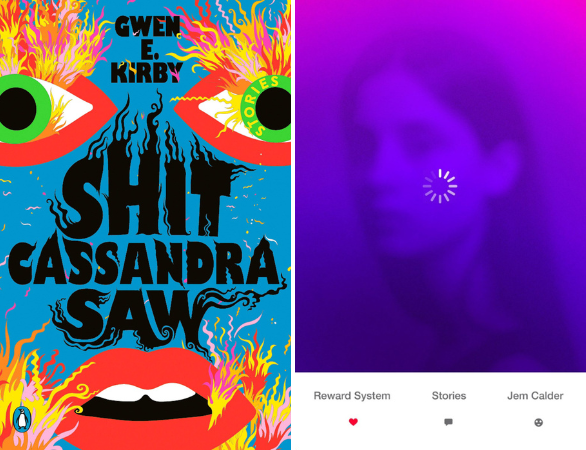
As Rachel Yoder wrote her in introduction to Gwen Kirby’s story “Here Preached His Last” (one of Recommended Reading’s most popular stories of 2022), Kirby writes vibrant and refreshing stories that “undo how a woman should be and instead articulate how women are, in all their greedy, horny, callous, messy, exuberant glory.” Shit Cassandra Sawexplores the lives of mythic women from the past and present in stories that are smart, playful, expected, and a true delight to experience. Learn more about the collection by reading EL’s interview with Kirby in which she discusses her process and the stupidity of the patriarchy.
Set in a Harlem high rise, this collection explores the tangled lives of Banneker Terrace tenants in eight interconnected stories. The characters in this collection are under pressure, whether emotionally, financially, or socially, and Fofana inhabits each character with equal vibrancy and compassion. In turns humorous and heartfelt, Stories From the Tenants Downstairs takes the idea of a linked story collection to new and deeply enjoyable places. Read “Tumble” from the collection, published in Recommended Reading.
Primarily set in the 1980s in small towns surrounding Fresno, The Consequencesexplores the lives of Mexican and Mexican American farmworkers and the struggles and tenderness that make up their everyday lives. Full of nuance and heart, Muñoz’s writing is honest and unforgettable, marking him as a master storyteller. Read Muñoz’s beautiful story “Compromisos” about family, desire, and sacrifice.
In vibrant and illuminating prose, Tomorrow in Shanghaiexplores the Chinese diaspora and the complexity of family, belonging, and yearning. In one story, a doctor harvests organs to fund a wedding and a promising future for a family. In another, a white mother and her biracial daughter visit France and struggle to connect due to their fraught relationship. The characters in these stories are complex and vivid, Chai’s collection a testament to the multi-faceted experiences of characters living in an increasingly globalized world.
Teresa saw him out of the corner of her eye first, her usual lunchtime walk off the Bahnhofstrasse bringing her past a glittering section of the lake. Just a touch of the lake every afternoon to get her through the day, accounting for a transnational consulting firm, updates from her stay-at-home sister about her niece whom she loved very much. Some afternoons she hardly even looked all the way at the view to drink it, that would have been too much sugar, but this time she was interrupted by what she’d seen out of the corner of her eye. Or who.
Bill, she asked? Then shouted. Bill!
He was lounging on the edge of the grass, t-shirt tied around his neck. A JanSport backpack beside him. Could it be—the same JanSport? All these years later? His blond hair was thinner now, his cheekbones still unnaturally high.
Bill, she repeated, coming closer, the native Swiss sitting on picnic benches between them looking up disapprovingly from smartphones and espressos, their white legs so much longer than hers and crossed in a sensation of effortless grace. She had spent essentially her whole life in Switzerland ever since her father moved the family there when she was little, his chemistry professorship beckoning, but still she felt off kilter.
The man turned away from the lake, his face smiling already. As if he’d known she’d come by, as if he’d been waiting for her, just a decade and a half later.
Hey now, he said. Teresa the Great!
He had been hardly a year older than her when he arrived, a teenager. This was the reason for all the tension, the commotion. Teresa’s mother was not sure at all that it was a good idea to accept a boarder, even if it was the son of Teresa’s father’s best friend from college. The old friends had lost physical touch but still wrote letters. Teresa’s younger, sly sister Casey was as excited as Teresa. We have two daughters, Teresa’s mother implored, then added: And I’ll be left to take care of him!
Back then, Teresa herself was dreamy and full of expectations, already feeling a little stuffy in Heninger, their adopted practically medieval town. She imagined things and lived on small moments, and could make a big deal about nothing, and cried over tiny coincidences: the barking of a ragged sheepdog, a tree falling across the wanderweg. She hadn’t had much else to occupy her, she was a little (she understood this now) strange or immature even at seventeen; some of her peers had started apprenticeships at the auto parts factory on the highway towards Geneva, but she was stuck in her domestic pace apart from her love of mathematics. And so Teresa’s mother had worried (rightly) about the insertion of a young man into the equation, chaos and claustrophobia, flushes and anger and swiftness and heat, even in their capacious farmhouse a short commute from the university and Zurich.
Teresa, Bill said by the lake. You look healthy and awesome.
He had rarely said much during that summer but she had always hung on whatever he did. There were not many young men who could have stood that feminine house and all the women in it, Teresa knew—her father was often in Zurich late fussing over his experiments, in his closed-door study working. He loved his family, her father did, but he was an absent presence. Thus Bill (no other way to put it) loomed large.
Bill, Teresa shouted. She was startled and flushed already. I didn’t know you were in Europe. I didn’t know you were here.
He stood up and nudged his shoes on—sockless, she noticed. I’m taking a little journey this summer, he said. Got some work lined up at a boarding school in Arizona in September, and nothing keeping me in the States until then.
Why didn’t you write? she asked. Why didn’t you call? Or let us know? We haven’t heard from you since . . . Mother’s Day I guess. Or was that last year?
Bill smiled. He had continued writing a formal Mother’s Day letter to Teresa’s mother for years after his months-long visit. Teresa knew that they had formed a nice bond, very sweet.
I wanted to leave something to chance, see where the winds would take me. If it was right that me and your family would meet, then we’d meet. Something like that.
The old fluttering romantic impulses in her bubbled.
I see, she said.
She had to go back to the office but would love to see him for dinner or a drink. Well how about that night? Yes that was workable. They met at a small pizzeria near the Altstadt, the old town, a place Bill insisted he’d been to that summer years ago, though Teresa knew for a fact it had been refinanced and renamed multiple times over (she had always had a head for numbers, figures, and dates). Yet she didn’t argue with him. He ordered a bottle of red wine he said was a good vintage, it was Italian, he’d actually worked six months for a natural wine vintner out in California. The wine went to her feet. He told her stories about Greyhound buses, forged Amtrak passes, a wild weekend boat from Miami to Cuba he’d been a chef on once. You have such an interesting life, Teresa said. She regretted it instantly, regretted the way it made her sound small and parochial, in fact she didn’t feel small and parochial, she was a very good accountant, she’d moved her way up in the office expeditiously, recently they’d sent her to a business conference in Dubai. The airport alone had been astonishing, she’d arrived during Ramadan, the way that you couldn’t eat food in public, what a thing. Bill’s eyes widened. I’ve always wanted to go to Dubai. Then he looked at her closely. You’ve changed, haven’t you? She was filled with memories of that summer, it was like they were back in it. Although that summer had ended without sexual incident. She didn’t ask what he meant. She screwed up her courage. She kissed the corner of his mouth.
It was what she thought, it was nothing like what she thought, she was flying and bemused (she was older now). She danced away from his arm which was deliciously pulling her back for more. See me tomorrow, she said. He did.
Every day for two weeks they met on her lunch break, near the lake. One time she found him shirtless and already ankle deep in the water, again it was in a grassy area that Swiss natives didn’t really swim from, they were too fastidious. Oh don’t, she said. Come on, he beckoned. She found herself changing. She dropped her work bag next to his carefully laid out clothes and kicked off her sensible sandals, hiked up her skirt, hopped in. It was deeper than she thought and she went almost to her knees, her skirt got wet, she laughed hysterically. Yes, he yelled, yes! He dove in (he was wearing only a tight pair of underpants, the small convexity of his belly) and swam out towards the center and while he yelled back at her to come join him she begged him to be careful about the boats which sometimes went by after four along this very route. It was thrilling. She didn’t tell her mother or her harried sister, but they were dating.
It was a summer romance, maybe that’s all it was, though to be clear Teresa hadn’t had enough of those of any season. It wasn’t her physicality or her nature—she had a very becoming small beauty spot in the center of her left cheek and the kind of dimples that curl up into a crouch, marking bemusement. She had always felt, however, that men were so snide about everything: the drinks they tried to ply her with, the heavy advances of their thick-knuckled hands. Picture her at a summer festival in Kanton Zurich, all the Swiss girls dressed in “traditional” clothing and the men in dumb lederhosen, they drank so much that they couldn’t articulate full sentences in any of their multiple languages or even count the right amount of change for a bratwurst, and she was one who was always able to be counting.
For example: that summer when Bill was staying with them. Indeed she was bursting with every chance encounter. She recorded them in an absolutely secret she-would-die-if-her-mother-found-it diary, forget about her younger sister Casey with whom she had only a few years before stopped sharing a room. The diary was a star map of her days. In the morning when she had already finished breakfast and was just coming back up the stairs to change into something flowy and gorgeous, she caught a glimpse of him trudging almost groaning to the bathroom, hand on his head, shuffling his feet. The cracked open door revealed a bag of empty HB beer cans. She asked if he was ok but he didn’t answer, slammed the door. “Hungover,” she wrote.
Some lines down, Encounter Ten (she started back at zero each week), her mother had asked her to set the table for them all out in the garden, use the nice plates because she had the sense that Bill was lonely that evening, it was after all his birthday. Teresa hadn’t known this and it stabbed at her, the fact that her mother knew something about Bill that she didn’t, but she leapt to the plate cabinet because she knew that Bill was outside at the very table she’d be setting. He was reading. She didn’t say anything as she went around carefully setting down the plates, heart hammering, absolutely hammering. The black hair on his arms, the rolled up sleeves. When she came to his place at the table she said “excuse me” and “happy birthday” almost at the same time, and she regretted for days that he seemed only to hear the “excuse me.”
Encounter Fifteen: she was working on a way to ask him to do something with her, anything really. Not a “date.” There was a town about a mile down the valley but up on the side of a hill that was surrounded by medieval walls and you could make the steep bike ride up there for, at the top, a café with Diet Coke and strudel. Perhaps Bill, as a more mature individual, would have coffee. This was as far as she could imagine about a “date” with him, she had rarely tried alcohol, her peers in their apprenticeships were always drinking and (she saw now) sexually experimenting down by the train station. That was a horrid, other world to her then, small-town nonsense. She would have been mortified. Just a nice walk after a bike ride, he might reach for her hand—her mind jumped.
What she did (and this was July) was knock on his door one morning. She had been ostensibly studying for summer exams and her father was at work and her sister was out and about in the neighborhood running around and her mother was in the kitchen speaking to her own mother soulfully back in America about how lonely she was here. Teresa rolled her eyes. Though she’d prepared she blanked when Bill answered the door, the shaggy mane of his hair, his crooked nose, the tank top he was wearing so that she could see (she shivered) the smooth curve his shoulders made into his thin neck. What’s up Ter, he said. And this is what she said: Is there anything you’d like to do today?
It worked because there was something.
I really want to go swimming, you know?
Oh so do I, Teresa lied. She hated swimming. The dirty chlorine stink, the shouting of children, the way that all the other teenagers left her alone at the village pool, wide and gleaming.
Let’s go to the pool, she said.
Right on, said Bill.
He never seemed to be busy that summer but he also didn’t seem bored. He was supposed to be on a quiet period before college. His family didn’t really have money, but Bill’s father called in the favor with Teresa’s, and (it was whispered one evening before Bill arrived) even contributed a little to the plane fare because Bill’s family was on hardish times (we must be generous with our friends, Teresa’s patient father counseled). Teresa’s mother said frankly she liked having it be a feminine house but her father laughed. He’s a hot-blooded kid. He’ll hardly be here.
He was though. He didn’t appear to take much interest in the other villages of their kanton, let alone Zurich or Geneva or Paris, France. They had assumed he would use their house as a base of operations, cheap flights and trains, Euro tour, but for those first weeks all he did was sit in their garden, read books of American science fiction, doodle in a notebook, do pushups and sit-ups, sweat gathering in an inverted triangle below his neck. In the evening when Teresa’s father was home he’d disappear in the summer dusk, wandering the wanderwegs, into the forest which Teresa had always been a little afraid of above their cozy farmhouse, as if he was trying to stay out of Teresa’s father’s hair. Let him go, Teresa’s father said if Bill skipped dinner: He’s adjusting. During the night he was often in his room, from which if you tiptoed past it slowly and quietly (as Teresa did) you could smell the musk of early manhood, doors and windows closed.
But he agreed to the pool that day for Encounter Sixteen, which began in earnest when they left the farmhouse and made tracks down the dusty road. Quite honestly it was the best encounter that summer, the most enjoyable, the longest in duration. Teresa chose her sundress endlessly. Ter you ready, Bill shouted from down below. Her mother stopped them at the door. Where are you two going, she said sharply. Swim, swim, swim, Teresa chanted. She knew she could be too childish sometimes.
When they arrived Bill visibly relaxed. The pool was almost empty, it was wide and shimmering. He placed his old JanSport down next to her. Do you mind if I do some laps, he said, even as she was about to suggest they sit and chat. She hadn’t known what they’d chat about, so she was relieved. She sat with her sundress on and applied and reapplied sunscreen and watched as his thin back crossed and crisscrossed the pool.
When he came back he was beaming. His small bathing suit might as well have been underwear. She felt faint. She offered him a towel. She patted the chair next to hers, but he perched on the edge of her own. He was inches from her knees.
That’s better, he said. He arched his shoulders and flexed his arms. I was getting kind of claustrophobic, you know? I really want to get out and see something.
She cocked her head.
Why don’t you, she asked. She saw now that she understood nothing about men.
He looked down and his voice was small and low.
I don’t have enough money, he said.
Money, she trilled. Money? Oh that’s so silly. We have money, Daddy has plenty of it. You know his experiments at the university led to a patent the year we came here and beyond his salary we’ve had that for years as well.
Bill looked at her, a coldness in his eyes.
I’ve heard, he said. My dad told me about that. We don’t really have much savings. I’ve got to go back and work in August, start saving up for school.
It occurred to her, like an arithmetic answer—My parents keep money at home. It’s for my sister and I to take from whenever we need. I can give you some of it.
He didn’t look at her.
She reached out, a finger on his knee, the only time she touched him that summer, the only time.
I’ll take it for you, she said. No one will know.
She reached out, a finger on his knee, the only time she touched him that summer, the only time.
She did it the next morning, heart stammering, her mother in her bedroom working on sewing, her sister having slammed her own door, angry, in a funk. She opened the orange coffee tin from its place in the bottom cabinet of the kitchen, pulled out two hundred Swiss francs from the bottom. There were many, many more.
She knocked on Bill’s door (technically of course this was Encounter Seventeen) and looked both ways dramatically. Passed him the bills. The smell from his room of deodorant and body spray was almost overwhelming. He accepted it and grinned wildly at her and granted her her nickname. Teresa the Great! You really are!
Unfortunately the unforeseen consequence (on Teresa’s side) of the money was that Bill used half of it to buy a rail pass. Now he could ride second class anywhere in the country as far as he wanted, and he went to Zurich all the time, and Geneva, he went to Lake Como and slept on the public beach rather than making the long trip back (Teresa’s mother was very concerned), he edged up to Basel for its art festival and went to places Teresa herself had never been to: Weil, Lausanne, Lucerne, Montreux (Jazz, he reported back, amazing), St. Gallen, Zermatt, where he splurged for a bunk bed in a hostel and also stayed overnight. Teresa waited in vain, of course, to be asked to join.
Teresa the Great, he’d say as he left in the morning, tossing his JanSport backpack over a shoulder. She loved him. She watched his long elegant fingers clasp his day bag off one shoulder as he went down the road.
Reacquainting herself with Bill now, as an adult, these short weeks, Teresa noticed new things, and she might almost list them (she no longer did anything as silly as a diary). Number one: he had become a bit portly, or at least his shoulders were rounder and there was the dawn of a pot on his belly. Number two: the thinning hair, his old wavy blonde locks now swept in just such a way that you wouldn’t notice it unless the wind blew or you were staring all the time. Number three: he was not as interesting as he had once been. There was a strange emptiness at the heart of his stories. Was it that he was not changed by events? Perhaps. He was loose and ragged, always smiling wanly and shrugging, saying things like “c’est la vie.” But compared to the Swiss men she had dabbled with, who were either effete city workers or droll countryside men, like her sister Casey’s husband, there was a certain benefit to indecision. Bill seemed to drift.
It happened even in their evenings after consummation (Teresa had a habit of whispering, even in her head, the words “had sex”). He was casual with keeping a shirt on still, even in these later years, though it was hardly as attractive as it had been, the way his stomach puddled on her now, rather than being (what she’d always imagined) hard and taut. One night in her apartment (sensible modern furniture, a calculator on the dining room table) she was thrusting her way back into her nightgown when she made the same mistake she’d made all those years ago.
Is there anything you’d like to do, Bill? she asked. While you’re here? While you stay?
She had been trying to gauge a timeline, a conversation, what comes next. For them.
He looked around the room and her heart sank just slightly when the answer came. Perhaps because she had accounted for its heartache in her mental calculator already.
Boy, he said, I’d love to see the old farmhouse. The garden. That was my best summer, you know that right?
Even as she nodded she felt her ardor dampened. It wasn’t that she had fallen out with her family members, it was just that they led different lives. Not really her father, who she met sometimes for luncheons at white table-cloth restaurants in the business district, discussing mildly her spreadsheets, his experiments, which she alone of the family had the mathematical background to comprehend. She called home once a week on Sundays and cycled through the members, her mother briefly, updates on baking, her sister putting Teresa’s gurgling niece up to the phone, she would babysit twice a month usually in her own apartment in the city, and then thank god her father would get on the line, they’d trade news of the day, the coming canton elections, issues of immigration, and the refugee crisis. She would hang up and imagine her mother in her rocking chair just off the kitchen, listening, uncomprehending, already settling into that older age that would contain her until her end.
That house and the stagnancy of it these days depressed her, but the youthful impulse to make Bill happy returned. I don’t see why not, she said. I owe them a visit. You can meet my niece.
The whole train ride there Bill couldn’t get the idea out of his head, that Casey was a mother and Elle was a GRANDmother. It’s mind-blowing, he said. Y’know?
Not really, Teresa said. (She had enough of her younger sister making snide remarks about her advancing and countable years of fertility.)
Though perhaps if you considered it from the moment Bill had left that summer, it was more understandable. Casey was only two years younger than Teresa, but in those adolescent years, so far ahead. The two-year difference had meant that she learned Swiss German like a native, not a visitor, and that meant something in the end. She had been smaller and more wiry than Teresa, skin that didn’t sunburn as easily, always went down to the schoolyard and played soccer with the girls (and boys!) down there, though she was only, say, eleven. Village life agreed with her. Teresa had felt stymied all through childhood, lived for her silent tortured bedroom reveries and the times her father would take her to his office in Zurich to see the glass skyscrapers and they’d count the stories, one by one.
Casey’s husband Herman was solid and pleasant and owned the tractor that all the farmers around Heninger used to take their crops in twice a year; this meant little work but a lot of necessary business. Sometimes Switzerland could be small that way. The two of them rarely went into Zurich other than to have Teresa babysit. Herman spent his days fixing things around the old farmhouse, which Teresa’s father never had time for, and her mother was grateful.
They were all there as a welcome party at the train station, Teresa bristled at that, it felt so old-fashioned. Her father, on his head a bizarre workers’ cap he’d taken to wearing to “fit in,” her brother-in-law, her sister, working to contain a squirming Zadie, Teresa’s frantic mother looking pale and flustered. Her mother was under an umbrella just because of the sun, she and Teresa shared obnoxiously sunburn-ready skin. Teresa almost wondered if they were about to join hands and break out into song. The train shushed away to Baden, and Bill put his arms in the air like a victory celebration.
I’ve returned, he shouted.
Teresa noticed that her sister’s eyes lingered on her even as Bill was making the rounds. Her sister could be shrewd and a little evil. They had almost nothing in common during adulthood, but they understood every particle of each other’s being. The way, for example, that Casey’s feet were angled at that moment in a little T, almost ballet—this had been the way she positioned herself whenever she was in observational mode or concentrating, struggling to recite her times tables in kindergarten, which Teresa, of course, had never had an issue completing. Teresa considered her sister’s outfit. Loose sweatpants, a worn-to-softness plain green t-shirt that somehow suggested both I-don’t-care-about-my-appearance and also fell nicely on her becoming curves. It annoyed Teresa, who had dressed up a little for the occasion.
You two look good together, Casey whispered mildly, comprehending immediately, when Teresa got close.
Bill went one by one down the line, shaking Teresa’s father’s hand warmly (her father awkwardly pulled Bill in for a hug-grasp, he had never been particularly touchy-feely), another hug for Herman who had stuck out his hand at first (aw I’m almost family, said Bill, and they laughed), and a lone bony finger offered to Zadie, who gripped it with her whole fist. She’s wonderful, said Bill.
Teresa did her own hello hugs as Bill continued to her mother.
Hello Daddy, she said, I brought the croissants you like from the Bahnhofstrasse.
Wonderful, he said, just wonderful, echoing (unconsciously, she was sure) the effusiveness of Bill.
It was still morning, eleven AM almost exactly, the train had been a minute or two late coming out of Zurich, time that it would make up, Teresa knew, farther down the open line. A small calendar of sightseeing activities had been prepared for Bill, all the little local things he used to do (mostly, though she didn’t say this, in the period before she’d stolen him the Swiss francs and let him loose upon the country). First they walked all together to the swimming pool, which annoyed Teresa slightly as this had so clearly been her activity with Bill, or at least she had introduced him to it, but perhaps her family wasn’t fully aware. There were not really any sidewalks in Heninger so they all stuck in a pack on the left side of the street, and Teresa found herself next to Herman while her parents trailed behind quietly and Bill made Zadie laugh and coo up front with Casey.
He is a very nice man, yes? Herman asked. Sometimes Teresa tried to speak Swiss German with him out of politeness, make him feel at home, but this was no time for confused words.
Yes, Teresa said, it’s been fun reconnecting.
I understand this, said Herman. Casey has been very nervous all morning.
This surprised Teresa. She had never really talked with Casey about Bill that summer or in the years after, or rather she had simply monologued to her about her concerns, as was their way in those years. Casey would be out all day with the local boys and girls, but when she came home she became Teresa’s captive in Teresa’s bedroom, to hear all Teresa’s hopes, fears, and observations of the domestic day. Outside that room Casey would pretend to smirk about their evening discussions, which they called “the conversation,” but clearly Casey loved them because she kept coming back. She, sweaty and sun-kissed, lying on the floor looking up at Teresa, who sat very formally on the edge of the bed exhibiting the good posture she was always practicing. With Bill there, her calculations were all about when she and Bill would get married.
Teresa felt a jolt of embarrassment now. Young Teresa had been so over her skis, so flushed and silly, missing everything. She and Bill had never shared anything beyond the touch at the pool and, if this counted, the warm hug he gave her when he left, late that August at the international airport, their mother crying. But she was also embarrassed now because she had never considered her sister’s feelings about those Bill conversations. Their role had always been: Teresa talk, Casey listen.
She asked Herman an inane question about the distribution of barley in the too-green fields they were passing, and his sturdy attempt at an answer allowed her to simply observe her sister and Bill. There was a familiarity to their steps, the way he dipped a shoulder in her direction when he had to avoid an overhanging branch, the protective way he held out his arm when a car passed on the right. Most tellingly, Teresa saw that though Zadie was in the harness on Casey’s chest, neither of the adults were paying much attention to little Zadie at all.
They arrived at the pool which sadly was closed for the next hour for cleaning. They stood at the edge and Bill marveled at its sweep and blue. Man I loved this pool. It looks exactly the way I remembered it. The snack canteen, the high dive . . . he reached up at his shoulder as if for the phantom omnipresent JanSport.
Remember that first day I brought you over here? Teresa asked. You didn’t wait a moment, you just jumped right in.
Yeah, Bill said. Totally. And every other time I came I didn’t even have to flash the village badge to the concession lady, she knew me that well in the afternoons and she just waved me in.
Teresa didn’t remember coming to the pool with him much in subsequent afternoons.
But weren’t you always traveling that summer, she asked, a little too sharply.
Bill turned. Yeah, he said. I’d stop by right before I came back to your guys’ house. Cleanse the mind and body. It was like my daily ritual.
She hadn’t known this.
Casey pointed up at the hills above the pool. And that’s the path to the observatory tower we used to take, do you remember that?
Bill grinned. Do I ever. We must have done that hike what, one hundred times?
Really? Teresa asked. Again too sharply.
Casey cocked her head.
Yeah it was me and Bill’s dog-walking routine. Remember Lucky, Bill? She was a good dog . . .
It seemed to Teresa a too-convenient way to change the subject. Her mother however, took it up and started babbling about Lucky the German shepherd, some inconsequential fluff, she was always a little babbly, Teresa’s father chimed in that he’d bought Lucky for Teresa’s mother because she was sometimes lonely out here during the day, with him (he knew) consumed with his work and in his study, Teresa’s mother needed company, remember the way Lucky had . . .
On the walk back from the pool to her parents’ house, Teresa tried to remember what Casey’s reaction had been to her teenage monologues about Bill-romance. Could Casey herself have harbored similar feelings, and even acted upon them? The math came to Teresa quickly. If Bill had been just eighteen and Teresa seventeen, then Casey was fifteen. That would be disgusting on Bill’s part. But somehow she was madder at Casey.
Her father was beside her as they began the last incline to the family farmhouse. And what do you think about the monsoon in India? he asked. My colleagues in Geneva are putting together an aid package. I will send you the link, it’s one of the better causes and our money goes further this way as direct aid than through the Red Cross . . .
But Teresa wasn’t paying attention. They were making a stop at the soccer fields where apparently Bill had one time joined Casey and her friends and played goalie for them. Teresa also hadn’t remembered that.
Daddy, Teresa said. That summer. Was there . . . something between Casey and Bill?
Her father pulled back with a reserved smile. The field was parallel to the train tracks and Bill was running heavily across it, laughing, as if the air could make him youthful again.
Now, her father said, don’t be crass. No no, nothing like that. She was too young. You all loved Bill though, that was humorous to see. He was just like his father, bright and intoxicating.
But Teresa did not trust this assumption.
When they arrived at the house Bill gushed and let out a wooooey, in a way that dispiritingly seemed more earnest than even their intimate relations had been.
Look, the driveway here, and your living room’s just the same, do you still have that drawer with chocolate in it on the bottom right—of course you do, bonkers, I’m stoked.
He went from room to room.
They followed him like a welcome parade up the stairs where he found everything as it was. Teresa’s mother was usually a stickler for shoes off in the house but she said nothing. Teresa noticed that Casey had handed Zadie over to poor Herman, as if the baby was from a different timeline and abandoned now. Teresa went to coo over her niece but they were all still following the parade.
The sewing room, Bill exclaimed, I remember sitting in here when it was raining and looking out at the church there and the hills and having melancholy thoughts man, melancholy thoughts.
You weren’t so unhappy, Casey said, hands on her hips.
Bill grinned at her. No, that’s true.
Teresa’s eyes opened wide.
They went downstairs and Teresa felt the sensation she often felt when she came home, that nothing had changed here, it was stuck in mud rather than even amber, it all felt kitschy and youthful and reminded her of her most fluttery days, days she was embarrassed by, now that she was an independent woman and could put her dreams into reality, see example: modern Bill. Reality wasn’t the same as the dreams, it was a little flabbier and less clean, but it was something that she made happen, not something that happened to her, and the old weight of the wooden beams of the house pounded her down. When Herman offered to give Bill a ride in the tractor around some of the farm roads before dinner—absolutamente, Bill said, grasping Herman’s shoulder—Teresa retired to the garden out back, in need already of the fresh air.
Reality wasn’t the same as the dreams, it was a little flabbier and less clean, but it was something that she made happen, not something that happened to her.
It had always been a pleasant garden, and she couldn’t help but remember that summer sitting in one particular place next to a patch of basil and thyme her mother had planted. There was a wrought iron bench there with a view of the guest bedroom window, and Teresa could pretend to be reading or preparing for summer session assignments but really gazing up at the window whenever it was appropriate. One time (just once) she saw the bend of Bill’s bare hip before it was covered by a towel. Now the bench made her shudder and she was furious when her sister followed her outside, their mother as usual re-cleaning the kitchen inanely, their father retiring to his home office to answer emails from former students and research colleagues.
You didn’t say you were fucking, Casey said.
The little terror.
You’re crude, Teresa said, glancing for Zadie. But Zadie was picking up dirt and dropping it near a stand of sunflowers.
She’s heard worse, Casey said. Well, you always get what you want.
Indeed, Teresa said.
Casey lay down on the grass and kicked up her leg. Teresa was annoyed to see that she still looked skinny despite Zadie.
So how is he, Casey asked. I mean, really.
If you’re going to be mean I’ll go inside.
And help Mom re-clean something? Because you two get along so well.
Teresa paused. It was true, she had an easier way with their father, her mother for years had seemed distant and occupied with uninteresting things, though they had been very close, perhaps unnaturally close, when she was a girl and interested in dolls and papier mache and then later dresses and shampoos, close until perhaps even around the year that Bill arrived.
Bill’s return was bringing up the old bad things, which Teresa had perhaps anticipated, and why she hadn’t wanted really to come home.
Did you hook up with Bill that summer? she asked. Held her sister’s gaze bravely.
Casey looked at her. Wow, she said. Wow you’re really a psycho. The answer is no by the way, though obviously I could have. I was hooking up with Domino and Bill caught us once by the train station, you could tell he hadn’t thought of me that way before but then he suddenly did. But no, he’s not a creeper.
Teresa breathed again.
I’m sorry, she said. I don’t know what’s gotten over me. I’m liking him though, that’s all. I’m happy. Even though it’s not the same as back then. I dunno, maybe . . .
Casey smiled. Well look at you, she said. I’m glad to hear you’re thinking about someone, Ter. Sometimes I worry about you.
The idea that Casey worried about her sometimes was both heartwarming and surprising, and again it brought the old fluttery side back up within her, a side she had very well tamped down. Why had she run from this idyllic childhood place really, it wasn’t all that bad. The sun on the stones, the sounds of the sheep baaing in old man Hesse’s farm up the hill. She had slept through those sheep in her dreams until she was eighteen, when she left for university and Zurich. Now on the rare occasions when she stayed over at the farmhouse, Christmas or a snowstorm, they woke her at five am but it was pleasant, she could fall back to sleep.
Do you remember Bill’s last week here? Casey asked. She smiled and shook her head.
Of course, Teresa said.
It had been about that blue JanSport. Maybe even it was indeed the same one that she had seen him with at the lake in Zurich, worn out and weathered with years. He took it with him everywhere, it was almost what for years she had remembered him by other than that vision (briefly) of the bare hip. He had a pair of crappy plastic sunglasses he used to wear and his earnest smile and the way he would turn back at the door and wave, the JanSport slung off one shoulder. There never seemed to be much in it, she didn’t even know if he carried a book in there—he honestly wasn’t much of a reader. But the JanSport represented freedom, day-tripping, a water bottle and little sandwich or piece of fruit that Teresa’s mother had prepared for him, wrapped up in cheesecloth and set out on the table of a morning, all set to go.
Except during that last week he couldn’t find the backpack. Their house wasn’t all that big but from time to time things did disappear in it, it was that kind of place. Bill was frantic. It has the train pass in it, he hissed at Teresa as she followed him around one morning as usual. And—he said meaningfully and quietly, as her father flitted absentmindedly through the room—the rest of the cash you got for me.
She was sad but it became an event for her, and Casey got involved too. Look For Bill’s Bag. They marched around the house tossing cushions and blankets, as if it might have fallen through a slot. When haphazard didn’t work she suggested they try a systematic solution, and she drew up a grid of every room in the house and she and her sister and Bill split up the grids, walked across each one in two-foot columns, back and forth once you got to the end. Teresa’s logical mind had assumed this would turn it up since they really did go over everywhere, but—and this was a little disturbing to her—no luck.
Are you very sure you didn’t leave it on the train one day? Teresa asked.
He was disdainful. You sound like your mother, he said.
She withdrew.
For days he was frantic and grouchy, he had had big plans for the last week, he was supposed to return to Geneva to visit a friend he’d made there (Teresa figured now, a girl), there was a street fair in Basel, he wanted to get everything out of Switzerland before his dull kitchen job started back in Northern California and then college, something he wasn’t particularly motivated to enjoy. He moped around the house and didn’t even seem to have a good afternoon at the pool when Teresa coaxed him to do that with her. He jumped in and swam two laps and then asked if they could go home. She’d been watching, and hadn’t even put on sunscreen.
When she tried to talk to her mother about the bag and Bill’s departure her mother was curt and sudden: Oh stop, she said. Maybe it was stolen you know, her mother said. The way money gets stolen sometimes. Teresa ran away guiltily. It didn’t seem like her mother would punish her.
He’s sad to leave, her father told her fondly and privately, when she came to say goodnight to him one evening in his office down at the other end of the house. In her father’s study it was quiet and peaceful, her father had made it so, so that he could wall himself off from events of domesticity, click through his newspapers of America and chemical compounds, let his mind roam. But he always did have time for Teresa.
It’s nice that he loves us actually, her father said. He’ll be back.
The morning before Bill’s departure the bag was waiting for him on the breakfast table when he stumbled down the stairs, his open door leaking the old musk of beer cans again, Teresa following after him (as usual, she waited). My bag, he shouted.
Teresa’s mother spoke with her back to him, over the sink.
I don’t know how it happened, it ended up with my night things, she said, hands full of suds. I must have swept it up with the laundry. She didn’t turn around.
I better go then, there’s still one more day, he said. And he grabbed the bag from the table and walked out the door, Teresa’s mother watching him. Teresa was crying, perhaps audibly.
Teresa don’t be silly, her mother said. Had said.
I remember, Casey said in the garden, the present, their current world. That it was a lot of moping around that summer. For you. Mom too.
Yes, Teresa admitted. I guess so. I’m sorry.
Come on, said Casey, reaching her hands up for Teresa to pull her from the grass. It was an intimate warm feeling when Casey bounced into her arms. They both giggled a little. Let’s get ready for dinner.
The garden felt full and cheerful with all seven of them, the sun going down over the hills, the sheep quiet and baaing, the citronella candles Teresa’s mother had laid out in concentric circles keeping the mosquitos at bay, the smell of that orangey rind and the hot pesto pasta she made mixing in a strange and intoxicating glare—she was, it must be said, a very good cook. Teresa’s father had brought up four bottles of wine that had been squirreled in his office. These are a good vintage, he said, the same year you were here Bill.
They laughed and reminisced and talked about that summer, the way everything seemed possible and impermanent then, how they were all under one roof, how Herman and Zadie were distant premonitions in the future (Herman chortled, Zadie dribbled) and summer really was the season for Switzerland, wasn’t it, Teresa’s father said with the zeal of the immigrant. I mean just look at this, he said, sweeping his hand toward the hills. At that moment the church bells rang, it was perhaps eight or nine, they’d had all the wine so who could say or want to. Yes, Bill said, it has always been a special place in my heart, one place from a lot I’ve been to. You know I’ve gotten around. But there’s a treasure here that I’ve never been able to forget.
He looked down at his plate.
It was what Teresa had been waiting all along to hear him say. She was, she knew, that treasure. Joy flooded through her. It allowed her to give credence to her wonderings about the possibility of continuing their romance when he left the country. She had, despite herself, been logging out costs and flight times. Her firm had an office in Los Angeles. Many of the upper-level management went back and forth. It would be an unconventional relationship, but in reality, she had always considered herself an unconventional sort.
I remember, Bill said after a period of quiet, this time of night was kind of mine in the house, if you don’t mind me being a little rude—he inclined his head towards Teresa’s father, who just looked puzzled. You were working in the office and sometimes fell asleep there, haha, the girls were in bed, and you could hear every creaking thing on the floorboards, I always thought you’d know if I . . . snuck down to the kitchen for a little bite out of the chocolate drawer, or went outside for a nighttime walk, but it never disturbed you so I got less afraid of going for the chocolate. But mostly I went up to that sewing room and watched TV on my laptop, with headphones. Me and Lucky were friends then, she never even barked if I moved around.
It was a strange remembrance, and Teresa felt that there were missing pieces to it. She had slept terribly that whole summer of course, dreams of Bill that she tried to clutch onto, even before sleep. She had always tried to listen for his footsteps, in case he was tiptoeing towards her room.
Well, said Bill, as if releasing them, it’s great to be back.
We should be getting back to the city, Teresa said. The last train.
Oh, her mother said, surprised and anxious: you’re not staying?
There was much laughing and side-talking and speaking louder and everyone saying what a good idea that would be, just like old times, a packed house—Bill can have the old guest room again, Casey said snidely—Teresa glared at her.
I have to go back, she said loudly. Unfortunately. I have a work call in the morning, and I didn’t bring my laptop or my headset with me.
Everyone turned to Bill.
I should go too, he said. I didn’t bring a change of clothes.
Teresa rose and began cleaning up and her father helped her. There were so many dishes to stack, so many to wash, for some reason they’d never gotten a dishwasher out here, washing was something her mother always did—it kept her busy. But there really was a stack. She started washing a few herself just to be nice. She imagined the train ride back with Bill. He would slip her into his arms. Herman had Zadie on his lap in the living room, humming some Swiss farm melody. Teresa’s father asked for their pardon just one moment, an email, an email. He went to his office. Casey was scrubbing the stove alongside Teresa.
Sorry, she said, grinning, about the guest room. Just a joke.
It’s fine, Teresa said. I’m ready to go home now, though.
She turned defiant: My real home. It feels claustrophobic here, Bill was right all those years ago. I’ll see if there’s anything else outside.
She wiped her hands on the dish cloth, left her sister working on the stove, walked through the maze of the farmhouse to the back and the garden door, pushed it open. The garden seemed empty. There on the edge next to the basil plants she saw her mother and Bill clutched together, embracing.
There’s no denying that this has been an exceptional year for poetry. Throughout 2022, we’ve read intimate, lyrical, political poetry that has experimented in all areas of craft, most notably form. But what has been, perhaps, most exciting, has been the return of many of our most well-loved masters, all of whom have managed to reinvent themselves for an ever-shifting world. Exploring themes like grief, the apocalypse, and crossing over into the spirit realm, this year’s poetry collections transported and transformed us, and we will never again be the same.
Chen Chen’s much-lauded second collection is precise and timely, exploring what family means as a queer Asian American living through a pandemic, a rise in anti-Asian hate crimes, and the legacy of Donald Trump through the inventive figure of a switchboard operator, picking up calls. In Chen’s hands, grief ripples with anger and humor, carving space for an intertwining of emotions that matches his formal versatility. Read his conversation with Austin Nguyen about the politics of grief and making angry art here.
Current U.S. poet laureate Ada Limón’s highly-anticipated sixth poetry collection is about the connectedness of everything—past and present, human and animal, self and other. A cry for coming together in dark times, Limón frames this not as new knowledge, but as something deep we’ve known all along. As Limón said in her conversation with Angela María Spring, “I think so much of our lives are spent searching. I think if this book is saying anything, if it’s saying anything to me and saying anything to my readers, it’s that: we don’t need to look, it’s already there.”
Grief is both form and content in Ocean Vuong’s second poetry collection, Time is a Mother, which follows his success as both a poet and novelist. Vuong’s poems search for meaning, wondering what poems can offer in the waves of grief after his mother’s death, and aren’t afraid to go to the limit of meaning. These poems are raw and dark, following the aftershocks of loss, but still offer snatches of light: beauty, sex, humor, and joy all emerge within the darkness, part of not just grief, but life.
Saeed Jones’ newest collection, Alive At the End of the World, centers on the danger and ordinariness in the white supremacy and time of precarity we are living in. The grief he writes is intimate and personal, but Jones also insists that there’s a collective grief, one he marks with pop culture allusions and a keen attention to the artifice of America. His poems remind us that we live in the apocalypse, but they force us to remember—at least we’re alive.
Balladz showcases the range of Sharon Olds, from her distinct long sentence rhythm to a central section of poems called “Amherst Balladz,” a tribute to Emily Dickinson. She opens with a section of quarantine poems, a song of collective grief, but the whole collection follows the fragility of life, the acceptance of aging, and the reckoning of America.
Novelist and memoirist Akwaeke Emezi’s debut poetry collection, Content Warning: Everything, centers a bold and spiritfirst perspective on the world. Emezi’s poems center the irreducible essence of the self that survives, morphs, and above all, desires.
Customs centers the bureaucratic checkpoints of America, the strictures of both the nation state and the English language. Sharif’s collection asks what it means to exist in the liminality of the arrivals terminal, to find yourself limited by the space and its imaginative possibilities, and writing towards freedom.
Safia Elhillo’s poems explore Muslim girlhood and shame, exploring her own history alongside the larger cultural legacy of violence against women. Girls That Never Die looks at the violence and trauma of growing up as a girl in patriarchal society, but Elhillo imagines a world of rebellion and autonomy right alongside these pains.
In the Hands of the River, a debut collection by Lucien Darjeun Meadows, shows the wildness of growing up in Appalachia and subverting our dominant narratives of the region. Meadows plays with poetic forms to show a queer boy of Cherokee and European heritage coming of age, reckoning with personal and collective trauma, and showing how interconnected both human and environmental identities can be. Check out Meadows’ list of writers who find queer kin in the natural world.
Nina Mingya Powles’ debut collection Magnolia pushes the limit of poetry to explore the memories and experiences of a mixed-race girlhood. Powles draws from a wide archive, from movies like Mulan or In the Mood for Love to theories of translation, showing the many facets of a person, and the nuance needed in language to preserve that complexity. Read Powles’ reading list of books about multiracial experience, written by biracial Asian writers.
Elisa Gabbert’s fifth poetry collective is playful and perceptive. Her poems have fun with language, juxtaposing the ordinary and the metaphysical, interrogating a phrase until its meaning completely changes. Normal Distance is delightful, surprising, and totally thought-provoking.
In her third poetry collection, Lynn Melnick reckons with a legacy of anti-Semitism and misogyny, writing with her signature wit and candor. Refusenik highlights pain and beauty together, showing the collectivity of grief and the need for fiercely feminist narratives. Refusenik was featured in our reading list of 7 Feminist Poetry Collections About Gender and Identity.
InSmoking the Bible, Chris Abani moves between his Igbo ancestry and his migration to the United States through poems that show the personal story of two brothers, one memorializing the other through writing. Abani’s poems are arresting and commanding, showing a spiritual reckoning and the story of a man in exile.
Cat Fitzpatrick’s genre-bending “novel in verse” about queer (mostly trans) women is an homage to the Pushkin’s Eugene Onegin, but set in contemporary Brooklyn. The weapon at these women’s disposal is a charged one–the internet call out, a symptom of cancel culture. At stake is the precarity of a marginalized community, a picture developed in dark and hilarious rhyming form.
Jenny Xie’s latest collection showcases the bleed of memory, what traumatic and joyful experiences cross the boundaries between past and present. The Rupture Tense begins with poems that respond to photos of the Chinese Cultural Revolution, and the collection ends with an elegy to Xie’s grandmother, who died after the end of the revolution. In deft and formally ambitious poems, Xie shows us the ruptures and aftershocks of history that continue to affect us.
Su Cho’s debut poetry collection follows a coming-of-age in the middle of America. The lyrical and vivid poems in The Symmetry of Fish examine the inheritance of language, particularly in immigrant families. In Cho’s collection, language and memory never get lost, but continually remade—dwelling in the details we might otherwise brush aside.
In her latest collection, The Trees Witness Everything, Victoria Chang plays with form, mostly the Japanese form of “wakas,” shaping each poem by pattern and count, and borrowing titles from W.S. Merwin’s poems. But the strict constraints of these poems point to more than Chang’s inventiveness. Despite the forms and structures of these poems, what emerges is an appreciation for the wildness of the mind, the freedom of a wandering mind and memory.
Franny Choi’s third collection, The World Keeps Ending, and the World Goes On, begins with the proposition that for people of color, the apocalypse has already happened. These poems interrogate and imagine how to live in this ceaseless dystopia, spinning backwards and forwards in time to imagine opportunities for connection in the midst of grief and distance.
This highly praised debut collection from nonbinary poet and drag performer Wo Chan highlights moments of queer childhood and adolescence. Togetherness centers on Chan’s memories from the kitchen of a Chinese restaurant to a family deportation battle against the State, weaving in letters in support of their family’s immigration effort. Chan’s daring and original poems show the necessity of survival, even when confronted with the precarious and destructive powers of the nation-state.
We haven’t gotten new Sandra Cisneros poems in almost 28 years, and Cisneros’ return to the genre with the collectionWoman Without Shame makes it worth the wait. These reflective poems are candid and unapologetic. Cisernos blends English and Spanish to reflect on aging, sex, and politics with precise and lyrical attention.
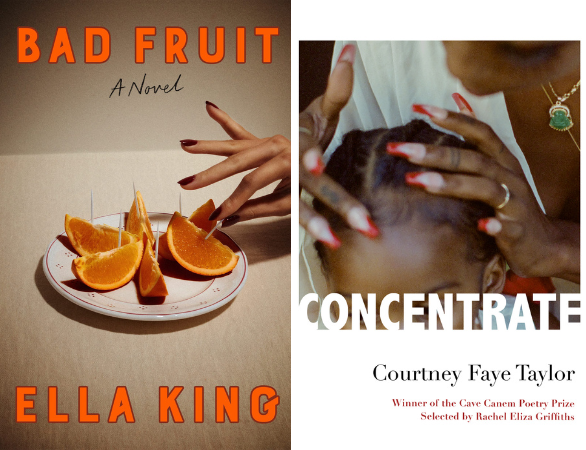
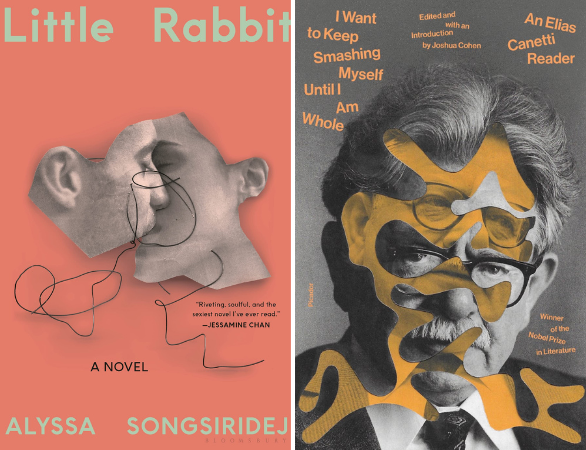
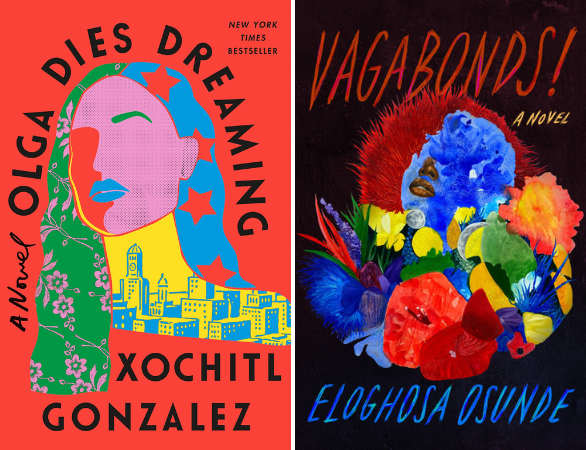
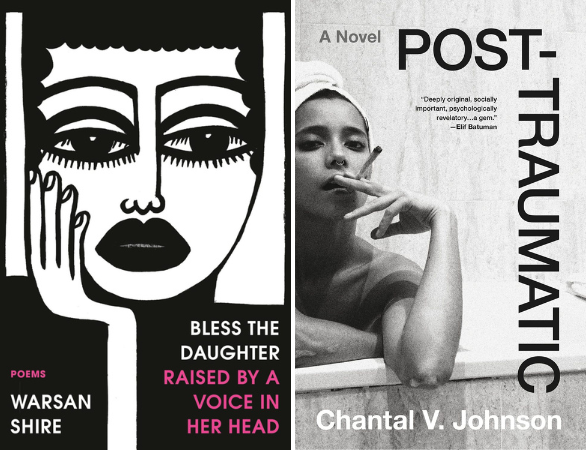
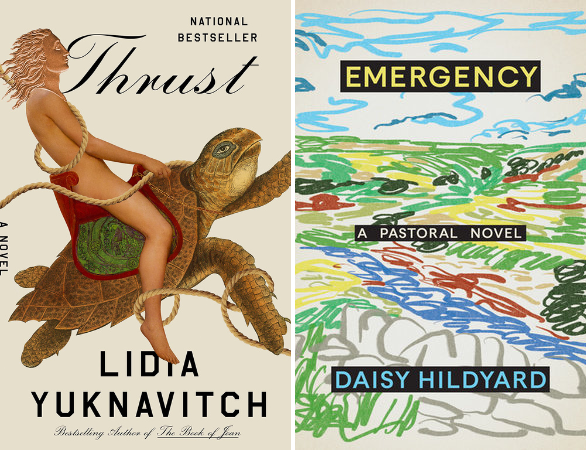
Tis the season for some literary pageantry and Electric Literature is hosting our third annual “Best Book Cover of the Year” tournament. You, our beloved readers, will decide a winner amidst a sea of book covers that published in 2022 via an interactive poll on our Twitter and Instagram stories starting today. We encourage you to embrace the competitive spirit by downloading the full bracket and fill out your predictions for the tournament.
Click to enlarge
The following details all 32 designs in 16 pairs for the first round, and you can vote for each of your favorites on our Twitter and Instagram stories throughout the week, with round two on Wednesday, quarterfinals Thursday, semifinals Friday, and the final face-off Saturday.
Now that the World Cup is over, the true competition begins!
Left: Cover design by Anna Kochman Right: Cover design by Katie Tooke
As a poet, Hafizah Augustus Geter understands the power of language to shape places, lives, and possibilities.
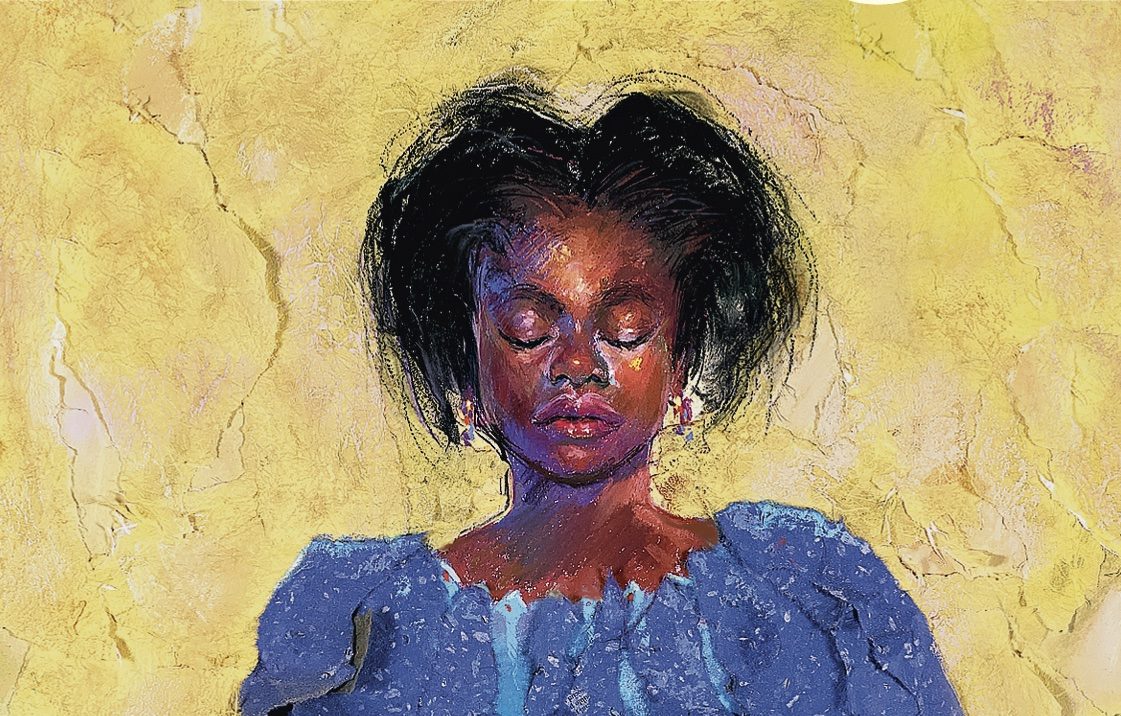
In her debut memoir, The Black Period: On Personhood, Race, and Origin, she stands on a precipice, gazing out on the story she lives inside of—a “story begotten by White America.” That story, of course, is painted over another people’s history, and is rife with obscurations, lies, and erasures which threaten Geter’s survival as a Black queer woman. But, she writes, “scrape the picture back with one of my father’s palette knives, and the world becomes splashed in color again.”
Through her father’s artistic example, her mother’s love, the care and nurturing of her communities, and lessons drawn from history, Geter is on a mission to resurface, revise, and reimagine her world. The result is a work of aching beauty, formal innovation, and radical vision. Geter and I spoke about beginnings, abolition, the Afro-future, and the practice of hope.
Nadia Owusu: I wanted to start with a question which throbs throughout the book—the question of origins. You ask, where does a history start? What is the origin story of this book, and how does that story connect with the spiritual and political journey it chronicles?
Hafizah Augustus Geter: My first book was a book of poetry called Un-American and it was also about grief and origins. When I came to nonfiction, I was trying to do things I couldn’t do in poetry because they required more space. I was asking what else I could do with language. I wanted this new book to be a hybrid, collaged, kind of thing because no one, but especially not Black people, can live in memoir alone. Our lives are political historical, spiritual. My book talks about being raised by a Muslim Nigerian woman and a Black man from the South. I wanted to understand the way disability runs through Black and African families. I was trying to understand my own queerness. We all have many complex stories, but we’re often told that we have to pick just one, and that leaves us in a position of alienation. In reality, we’re constantly simultaneously in the present moment, remembering the past, and thinking about the future
When I came to this book, I was tired of being sad. My mother had been dead for over a decade. I’m out of the closet. I’m married. I’m at an age where I have no choice but to confront things—about my body, the past, my grief. There’s a chapter in the book that examines the way Islamophobia impacted my beliefs about grief.
My mother died two years after 9/11. The hysteria that followed made it feel like you couldn’t grieve a Muslim life without being a traitor. And it made it complicated for me, especially living in South Carolina and going to high school near the largest military training base in the country. And so finding space to grieve was hard. Even people who loved me would say, “Well, your mother’s not going to go to heaven.” So I came to understand that grief is a political condition. Now, with COVID, I think more people understand what that means. But it doesn’t have to be like this.
Prison abolitionist organizer Mariame Kaba talks about how one of the purposes of organizing is to show us who we’re supposed to be mad at, and part of writing this book was me asking, where did all this shame come from? Shame is one of the tools of white supremacy.
NO: The book opens at the Grand Canyon, with you contemplating the bonds between Native and Black American people. This starting point seemed to be a gesture against historical erasure, against further theft and separation. And you build on these themes throughout the book, shedding light on systems of inequity and how they impact communities of color, queer people, and differently abled people. You write about how our liberation stories are connected.
HAG: This book is very concerned with the idea of time. At the Grand Canyon, you’re looking at time. You can see the beginning of the earth and that is fantastical to me. It’s one of the most miraculous things. But, widen the aperture, and you see that part of why it’s so beautiful is because the government protects it from pollution. But, who is being protected and who is not being protected? How wide can your aperture go?
I’m at an age where I have no choice but to confront things—about my body, the past, my grief.
The community that lives at the bottom of the Grand Canyon—the Havsuw ‘Baaja—are the first people documented in North America. If you allow yourself to see, there are all these layers of stories. But we live in a country where people say, that’s not my story, what happened here is not my fault, not my problem. I don’t see connection as a burden, though. Being obligated to something isn’t a burden. I wanted to really grapple my own complicity as someone who lives on stolen land.
Behold: Beauty and violence. Let’s hold both. We seem to be so afraid of history. The more I looked back, the more violence I found, yes. But also, with every step of that violence, you see people pushing back and working towards a different world.
NO: This seems connected to your notion of the “Black Period.” You describe it as a “a state of mind, a position, a duration.” Can you speak about what a “Black Period” is, and how it relates to Afrofuturism?
HAG: One of the books’ preoccupations is naming. In order to tackle anything, you have to give it a name. So, in search of an alternate origin story, I needed to name what I was searching for. I came to the name through Goya’s Black Paintings, which my father loves. They’re terrifying, but my father said, “Do you know how hard it is to paint in blacks?” So he sees something miraculous in the series of paintings that are, essentially, an exploration of the dark heart of man and the things that plague us. For my father, there was light in that darkness. And that’s what I’m looking for. That’s how, not just Black people but communities of color, raise their kids. You eventually have to make sure that your child knows that the world is trying to kill us. But, what communities of color have in common is the way we attend to our loved ones, our elders, and our history. And so, what can we do with that?
The Black Period is where we live in possibility. It’s where we keep creating new futures. I definitely see my work as Afro-futurist. I see my father’s work as Afro-futurist in so many ways.
NO: Throughout the book, you give examples of how you saw the Black Period modeled by the people in your communities, and particularly by your parents, who I really loved getting to know through the book. You write movingly about how their dreams, love, and imagination gave you and your sister possibilities that America tried to deny you. And, your father’s art is featured in the book.
HAG: This book allowed me to see my parents as people, to see how radical they were. I grew up in the 1990s, 30 years after the Civil Rights Act. My sister and I were the first generation that that could participate in a world with white people and not have to clean it or be subservient to it. My parents didn’t have a roadmap, but we celebrated Kwanzaa. They used art. They gave us community. I think this also speaks to the ingenuity of Black people—just constantly making it work.
Shame is America essentially testing how long its history can last.
The book contains 66 of my father’s artworks. I knew they had to be there from the beginning. I grew up with art everywhere because of him. I don’t even know how to begin to tell a true story of my life without including the art because I can look at certain of his paintings or drawings and remember what house we lived in, what my mother’s hair cut was. I can remember so much of the quality of my life through his work.
NO: In addition to your parents’ example, you argue that creating a world without violence requires police and prison abolition. What does abolition mean to you, and how do abolitionist ideas inform your vision of the Black Period?
HAG: Everyone should read Mariame Kaba’s We Do This ‘Til We Free Us. It’s absolutely amazing. Abolition is rooted in building. We all want to feel safe, but right now, the only option we’re given for safety is a hammer, and that’s the police. But a hammer breaks everything. And abolition is saying that instead of a hammer, we want health care, we want education, we want food security. Those things make us safer than the police do because the police create violence. We don’t have all the solutions yet. The point is to try everything because we know that what we have isn’t working. What abolition asks of us is to work in community to understand all the things that are possible.
NO: I want to return to what you said about shame. You write about how trauma accelerates the biological clock, and how shame contributes to that. Part of your journey toward the Black Period is claiming the fullness of yourself including your queerness and you write, “It was near impossible to fight for anyone from inside a closet, especially myself.” I thought that was such a powerful way of phrasing it and then you also quote Angela Davis” “We oftentimes do the work of the state in and through our interior lives.”
HAG: We are constantly being surveilled and policed, by our phones, our jobs, people in our lives, the state. Shame becomes a self-surveillance. Shame is America essentially testing how long its history can last.
Around queerness, shame is tied to a patriarchal heteronormative agenda to promote capitalism. Because when you police people’s sexuality, you get to decide how people participate in the workforce. It’s all connected. So, we have to ask, Who is my shame in service of? Do I feel shame because I did something or because I just feel wrong?
One of the tenets of abolition is creating a world where people have everything they need, including beauty and the conditions for beauty.
Internalized homophobia and anti-Blackness, for example, can be deadly. Through shame, you’re essentially allowing yourself to be deputized by the state for policing, and you’re policing yourself, so they can essentially run this machine on automatic. And then, when you have so much shame, you’re also willing to punish others. And so, part of writing the book was trying to see how shame is a political condition too.
NO: To me, the work you’re doing in this book—the undoing, the revising—is profoundly hopeful. You write that Black hope is deadly to racist capitalism.
HAG: Yeah, it’s so easy to just say that this is the end of time and there’s nothing we can do. But that’s not true because the fact that the world is not over already—that we’re still standing—is a testament to the work people of color are always doing. When you look at all these oppressions, it seems overwhelming. There are just so many things coming for us, but they are all tentacles of the same head. And so that means that every little action we take is chopping away at that same monster. I think that is a very hopeful space.
One of the tenets of abolition is creating a world where people have everything they need, including beauty and the conditions for beauty. And, when you think about, for example, the period in which Black people were enslaved: From the very first day to the day we were freed, every single day someone believed we would get free. I mean, that is just a wild sense of hope. That kind of hope is a map because, when you hope in community, it forces you into action, and then it starts changing the world. And so, I try to use my writing to help communicate the messages that are coming from activists. I try to be a mouthpiece for the movements.
At the beginning of her reading, this lifestyle memoirist announced that she was struggling to quit vaping and, thus, would be chewing nicotine gum that evening. It was clear that her efforts were not going well, however, and during the presentation she fondled her blister pack of Nicorette like it was an opium pipe. When she began chewing her fourth piece, she also lit a yellowing cigarette she said she found beneath a couch cushion. Her final act of transcendence, however, came during the Q&A when a participant asked a question about her mother’s storied political career. The author stood up, disappeared from view, returned with her vaping device, and then smashed it to pieces with a bronze statuette of the Eiffel Tower.
In an astounding example of online disorientation, this so-called language poet forgot that his monitor was not, in fact, a mirror, and picked his teeth on screen for ten minutes as an author discussed her new biography of Gerard Manley Hopkins. Interestingly, three months later, the Hopkins scholar published a somewhat influential article advancing an idea she was labeling “Obligational Privacy,” or the notion that readers have a fundamental right not to know about the personal lives of poets.
This poet surprised everyone by giving himself a manicure during his lecture on enjambments. His fastidious nail care was mesmerizing to all of us, but the bigger surprise came at the end when he swept the clippings off his desk and onto the rug below. There was a clear gasp from the invitees and, remarkably, when he realized the origins of the reaction, he attended to the problem by stepping on the clippings and rubbing them deeper into the rug with his foot.
At the book-talk of a colleague, this YA novelist spent the entire hour lighting things on fire. He seemed extremely curious about the flammability of the objects on his desk and tested everything from his computer keyboard to a Saul Bellow novel. After he ran out of objects, he turned to his body, performing what seemed to be a meticulous examination of pain thresholds of different parts of his hand. His upper wrists, just where they met the hand, couldn’t endure a second of the flame. His fingers, however, seemed impervious to the pain of fire, even when, at one, point, one of his fingers began to smoke.
For fifteen minutes, this writer of historical novels poked an unknown object floating in her mug. There was speculation in the side chat about what the drink and object were. “Marshmallow/hot-chocolate” and “ice-cube/bourbon” were the most popular choices, although several people suggested “insect.” Amazingly, “insect” was the correct choice. It was a mayfly, which we discovered when she pulled it out, discarded it, then swallowed the mug’s remaining contents. It was agreed by everybody that this last act was clear confirmation of the bourbon theory.
This anthropologist was most famous for a book that advocated “knife games” as one of many ways for young thrill seekers to avoid the dangerous enticements of the online world. He was hated by almost everybody, and his behavior during a Zoom panel seemed to be a kind of visual rebuttal to his critics. Near the end of the hour, he stopped playing his so-called knife game, unmuted himself, and said, “See, totally fucking fine, so fuck you.” He then abruptly logged off the meeting, which was a great relief to everyone.
The poems in Michael Chang’s latest collection, Almanac of Useless Talents, are punk jazz or noise hip hop—avant-garde and anarchist. Intertextual and reality. Surreal and real. Ugly and pretty. Crystal-clear and obscure. Confident and confessional. Serious and absurd. I speak in binaries, but Chang’s poems are anything but. They deconstruct binaries. Poetry is often the art of containment. Chang’s poems cannot be contained. They bust through barriers and borders, defiantly.
After reading Almanac of Useless Talents, readers will want to be friends with Michael Chang. While many will initially be drawn in by Chang’s witty and daring critiques and comebacks, they’ll stay for what Chang calls “radical candor.” But with Chang’s poems, honesty doesn’t sacrifice complexity. They use an array of techniques—fragmentation, disparate forms (confession, list, anecdote, observation, manifesto), sampling, multiple languages (English, Chinese, French, and all of the languages of their everyday life via text, social media, and interactions with friends, lovers, and haters)—to display a complex, authentic self that readers feel connected to and curious about.
With their juxtaposition of high art and pop culture, confidence and vulnerability, reading Almanac of Useless Talents is a communal experience. Chang may invite you into their club, but they reject the cultural capital that comes with being in the know, which keeps readers on the hook and keeps them from getting too comfortable. Chang’s maximalist, rhythmic phraseology creates mystery, resists defining, resists a solitary takeaway, which teaches readers that a lot more homework, multiple readings must be done to fully “get it.” With each reading, something new is discovered, a hidden vulnerability juxtaposed with an unapologetic declaration. Yet, they resist the idea that everything we say is supposed to have meaning, is supposed to follow an arc. This is, after all, an almanac of useless talents. It isn’t a forecast for the future, but a record of the range of human emotions, the ways we hurt each other, and the ways we get to know each other better. From what those in power may deem useless and disregard, comes Chang’s “gutter poetry / for dirty minds.” I invite you to giddily bask in the grit.
Always an air of performance, always a good time, ultimately, Chang’s speakers seek connection and meaningful relationships. I met Chang in a workshop with Hanif Abdurraqib. We’ve been friends since. It’s been a pleasure seeing their speakers evolve with each collection of campy literary magic. I anxiously await their next rendition in their upcoming collection Synthetic Jungle. We reunited over Zoom to discuss Almanac of Useless Talents.
Kate Carmody: I love the cover! Could you just tell me a little bit about it? You’ve mentioned before that you’re involved in the art direction of the covers of your collections.
Michael Chang: The press works with a really good illustrator who lives in Spain and does all of their covers. I wanted a departure from his usual style, which is kind of a heavy, darker, more gothic vibe. I wanted something lighter and refreshing. I wanted something with a fox that wasn’t just a straightforward animal situation. With my last collection, Boyfriend Perspective, the cover is a play on perspectives using fish imagery. With this one, I wanted something that had levity, but was also visually interesting that you can look at again and again because that’s the way I think about my poetry—you read it and whatever you need to get from it, you get. If you come back half a year later, you take something different away.
In terms of the cover, I said the palette I wanted, and then we jointly decided on the image from Asian mythology of the fox spirit holding the fox, but they’re also a fox. So, it’s a play on identity and how you have the speaker, but then you have all these other layers.
KC: Something that people might say doesn’t belong in poems is gossip. What role does gossip play in this collection? And what makes gossip so pleasurable?
Poetry is an interesting medium to work in because it’s very insular.
MC: Poetry is an interesting medium to work in because it’s very insular. With the mass market fiction titles, you get almost a sanded-down version of what an author’s true representation would be. But with poetry, if you’re working in this medium, you have the advantage of knowing that most of the people reading it are going to be poets. That’s a limitation on the commercial stuff, but on the artistic side, there is a vast amount of freedom because you can talk in a way that’s clubby and clique in a good way, but also tell people what you’re about. It’s a balance of knowing that this world is very small and we know each other—that cliqueness—but also having your own independent voice, brand, and personality that’s unique, so you’re not writing the same poems as other people in your friend group.
What makes desire a subject that you are continually interested in exploring and what aspects of desire or maybe questions about desire were you interested in tackling in Almanac of Useless Talents?
MC: Desire, whether you’re a writer or not, is very common in the sense of we understand it or try to understand it. But I think of it like making a perfect pant. There’s no one perfect khaki. Right? We can talk about the color, the cut, the inseam, the details. It’s this amalgamation of what makes a good khaki. Part of the fun is that there’s no right answer. The other part of the fun is that it’s always shifting. It’s a constant refinement with the times. What is a good khaki now is not what’s going to be a good khaki five years from now. I think it’s constantly working at this thing and really trying to get a handle on how we think about romance and desire to make it feel timely, of the moment, and something we should look at so it never feels tired or stale.
It’s an evolution of how I feel about desire and how other people feel about it. I was at a reading with a colleague of mine and they said that the highest honor is being a love poet. In many ways, that’s true because you can write about political issues, but at the end of the day, I think what really speaks to people is the romance, the storytelling, and how these different pieces fit together.
KC: Your poems showcase and celebrate queer love.
MC: I think that’s true. I also think my poems make it such that queerness isn’t really a thing. Queerness is kind of like the default. It’s not: Hey, look at this thing on this podium. It’s just a given. I guess is the easiest way to put it.
KC: It’s your everyday life.
MC: Yeah. These assumptions that we have going into it as a reader or as a poet are almost erased. In my poems, at least in the world that I try to develop in these poems, queerness is just there rather than some kind of spectacle. A lot of queer poets feel the need to make a big deal out of something that I think the speakers in my poems take for granted. Queerness is almost taken for granted. It’s very fluid. Everyone in my poems seems to be happy, tries to be, or is getting there. And I think there’s this overwhelming sense that this is the world.
My poems make it such that queerness isn’t really a thing. Queerness is kind of like the default.
Recently, there have been a lot of titles about the end of the world. I’m not interested in apocalyptic narratives. When I read those poems, I think, Okay, it’s the end of the world and there’s this rage. Great. But what are you doing about it? Why do we care? My poems have a tone of celebration versus defeat. I think that’s a difference. Another difference is, like I’ve said before, other people’s poems are getting angry, but mine are about getting even. My poems are very clear-eyed and honest about what we’re facing, but we’re also very optimistic about the gains that we’re going to make and where things are going. I’m never about the end of the world; that doesn’t even factor in.
KC: Your poems are conversational and confessional—we know what the speaker wants, who they want, who they’ve slept with, who they love, who they hate, who’s broken their heart, et cetera—yet they find a way to still be mysterious.
MC: It’s like the veil, right? Like I’ll show you a little ankle. How that plays out practically is that you feel in the clique, you feel invested, and you’re involved. But there’s also more to figure out, more to suss out. And the mystery comes from our natural complexity as people. But I also think the overt coyness and this I could tell you what I’m about, but why would I do that? And why would I do that all at once? which creates tension or this push-pull. I’m very honest and vulnerable and I can be very forthright, but I also want you to be into it. I want you to be interested and open the box. There’s that calculation going on—this balancing between radical candor and the desire to be elusive and hard to grasp, almost like a gas.
KC: In “Internet Boyfriend,” the speaker says, “rob me / steal from me / take all my money / sell all my possessions,” so in some ways, they use capitalism as kink. How does capitalism affect love?
MC: In a lot of modern permutations of how relationships go, especially in New York City, lurking in the background is always this question of do I just want somebody to share rent with? And this kind of thin dom, sugar baby situation. I think it’s just a reality of modern life. We know we don’t like it, but this is the world, this is the system that we’re dealing with.
How do we situate ourselves in a way that makes the most sense to us and the people around us so we come out okay? How do you bridge some of these differences between class and social hierarchies and the kinds of jobs that you’re in and your partner’s in? When it comes to this reliance on somebody’s financial security, is being with this person going to allow me to work on these projects, or does it mean I have to work two or three jobs just to survive? It’s ever-present—this unholy connection between commerce and romance.
KC: You use a lot of food imagery. What about consumption interests you?
MC: I think for a long time, I felt this enormous sense of guilt about using food for imagery because it’s often used in poetry by both the dominant class and the people being dominated to other and exoticize. It took some time to figure out how to use food in a way that doesn’t do that. I landed on using food imagery as an anchor. Many of my references may be obscure or out there depending on the circles you travel in, but everybody, hopefully, knows what meatloaf is or mac and cheese. I use food regardless of “where it’s from” to serve as these lights that can guide you someplace. Obviously, there’s a bias that’s baked into using Western food (you know we just have to say it), but I also talk about Asian food. Readers might not get the obscure movie reference or lyric, but if I’m talking about these food-related memories or images, there is some sense of logic which allows them to feel comfortable and grounded. And then, of course, the next line will disrupt that and make them feel very uneasy and lost.
KC: In “SORRY IN ADVANCE,” you write, “that is how they want me to write / instead i write about timothée chalamet.” What kind of pressure is there on BIPOC writers, queer writers, or writers in general to write a certain way, and how do you resist it?
MC: Regardless of who you are, there is always an impulse of wanting to be accepted or part of the crew. What I was talking about in the poem is that poets of color, queer poets, et cetera, are supposed to write about their immigrant journey or how they were subjected to racism or the unfairness of institutions. These systems are terrible, obviously, but there is a reflexive demand on the part of editors and even casual readers to make poets who identify with these groups talk about their trauma all the time and how they were victims of these oppressive regimes.
We have legitimate claims and complaints of varying degrees of severity. But many poets fall into this trap where they think that to be successful, they need to write about political oppression in their home country when they maybe have never even been to their home country. They fall into this vicious cycle of thinking, Okay, we’re going to churn out the Tiananmen poems, we’re going to do the censorship poems, and then we’re going to do this strand of Uyghur camp poems. It’s important to call attention to these issues, and I’m not minimizing the importance of these issues, but I think that when you play into what they want you to be doing, that doesn’t serve your purposes. By doing that, you’re perpetuating these racist views of your “backward country” in China or wherever.
In terms of my work, because I understand that impulse, I’ve always written against that, kind of like what I was saying about queerness being taken for granted in a positive way. I don’t play up to stereotypes, and I try to do it in a way that’s palatable to “the majority” reading populous. It starts from a conversation more than, for example, telling readers about all these people that died. In politics, you don’t want to repeat your opponent’s critiques of you. I’m going to be honest about my portrayal of China or some of the human rights abuses, but I’m not going to perpetuate stereotypes. I’m not here to play into those racist talking points and propaganda in order to be published. I want the freedom that other people feel that they can write about whatever. I want people to feel that they can write about whatever. Ultimately, that’s the takeaway, regardless of what you identify as, you should feel like you can write about what you want to write about.
KC: I feel like I can share your poems with my writer friends, but I also can share them with my non-writer friends.
MC: I don’t write my poems to be hard to understand. I’m about meeting people where they are, but I’m also about my point of view. If you’re not getting through to people, you should rethink your approach. A lot of poets talk at folks, but I’m very interested in talking with them. Even if you haven’t been to these places or you have no idea how New Yorkers live, you’re interested and curious. I think most people are curious. I think the vast majority of people are willing to have a conversation. That’s the beauty of it; people are willing to talk to you if you approach it the right way. And I spent literally all my time in my professional life and in my personal life thinking about how to approach these sometimes thorny issues in a way that gets the best results. I’m not interested in preaching. My politics are clear. I don’t think anybody is questioning my politics. In terms of the work and how the art is conveyed, I’m very interested in having a conversation and broadening the types of people that read poetry. Poetry is for everyone. I’m not interested in academia necessarily, which is not everybody else’s approach, but that’s my approach. If I wanted to talk to New York City poetry crew who have at least a master’s degree, I could easily do that, but I’m not interested in doing that. I’m more interested in talking to people who casually pick up a poetry book, attend a reading, or see something online.
One of our favorite things to do around the holidays is take a closer look at the writing we’ve published over the course of the year. We’re coping with difficult, tumultuous times, and inevitably, EL’s content reflects our larger context. In a year that began with a nearly rabid Covid variant, it was difficult to believe that 2022 held anything but more bad news. It was nearly impossible to see that, in fact, by the end of the year, we might be somewhere on the road to recovery. Our most popular list pushes the boundaries of horror, just as it seemed life was. Our most read essay is about the rarely spoken risk of working as a public librarian, addressing the bigger question of latent danger in spaces that are generally understood as safe. Our most popular interview centers on the collective decline of health, and a health care system that operates on a crisis care model. But what’s become abundantly clear is that some measure of optimism has survived, and even trickled its way into our writing. Hope touches so many of the essays, lists, and conversations we’ve published, and our wish, as we review the most popular posts of the year, is that each piece, in some way, amplifies that hope.
Here are the most popular interviews, book lists, and essays, starting with the most read:
In our most popular interview of the year, Carli Cutchin spoke with Megan O’Rourke about her timely and critically-acclaimed memoir, The Invisible Kingdom, in which she deftly portrays the loneliness of chronic illness, the onslaught of Long Covid and its impact on an already overstretched health care system, as well as the author’s beautifully rendered quest to find healing.
“When you are looking at patients whose bodies are at the edge of medical knowledge, we need a more flexible kind of medicine.”
Halimah Marcus, EL’s Executive Director, spoke with Elif Batuman about Either/Or, the highly anticipated sequel to her debut novel, The Idiot. In Either/Or, Selin continues to forge a connection to her now-graduated crush, Ivan, by analyzing their past interactions. She blooms—sexually and otherwise—while engaged in this process, ultimately emerging from his shadow and growing into an impulsive, more curious, more ambitious Selin—a fully-realized young woman “dazzling in her flaws and contradictions.”
“The temptation is to think of yourself as having been really stupid, and yourself now as knowing a lot more. I’m just as stupid now, I just have better information.”
Chelsea Davis begins her interview with Kathleen J. Woods about her recent novel, White Wedding, by asking Woods what attracted her to writing porn. What becomes clear is the sense of reading as a sensual, and sensuous experience, placing the reader more erotically in their own body, as well as rethinking more traditional representations of gender, sexuality, race, ethnicity, and more.
“To enact confusion on the bodily level of the reader; to engage in a way so that their senses are actually engaged and immersed; to make them discomfited by their own responses to what they’re reading.”
In Deirdre Suguichi’s interview with Caits Meissner, author of The Sentences That Create Us, PEN America’s new writing handbook, she specifically and intentionally asks Meissner about the challenges and complexities that are unique to writing while incarcerated. We learn that chief among them are finding privacy, quiet, and personal and physical safety, and are reminded that for some, getting the writing done is harrowing, dangerous work.
“I had a great deal of anxiety when the book came out about some of the authors being targeted by their administrations, being put into solitary confinement, being seen as a threat for exposing harm, being dropped from jobs or programs.”
An intimate portrait of a lifelong friendship, this conversation between Halimah Marcus and Alice Elliott Dark about her new novel, Fellowship Point, illuminates the ongoing evolution of two old women with different worldviews, different personalities and lived experience, but intense love for each other. In close proximity as the last remaining caretakers of a small community of summer homes established by wealthy Quaker families decades ago, their lives are distinct, and yet tightly woven,
“I think there’s always an erotic element of friendship, but I didn’t want to explicitly bring that out because they wouldn’t have explicitly brought it out. They just didn’t grow up that way.”
In our most popular list of the year, Brian James Gage recommends stories that will terrify you. These books abound with bold, daring new voices and paradigm shifting terror while calling upon the traditional—monster scares, psychological horror, and Gothic tales—to ground them in their chosen arena. Check out Gage’s latest novel, The Nosferatu Conspiracy: Book Two, The Sommelier.
“My young mind was convinced whatever horrors lurked behind those monolithic and terrifying covers would surely emerge from the pages.”
This year EL had the opportunity to publish this much-anticipated list, written and researched by Michelle Hart, and we couldn’t be happier. Updated by season, our readers proved yet again that Electric Literature is a home for authors, and most importantly readers, who are writing, and looking for, diverse, groundbreaking stories. In addition to all the books on this list, be sure you read Hart’s debut novel, We Do What We Do In The Dark.
“His work was rejected for being both too explicit and too subtle; stating that ‘the familiar is more threatening than the exotic’”.
A mainstay in our digital pages, R.O. Kwon’s much-loved list elevates the most anticipated forthcoming books written by women of color. It’s become a favorite among legions of EL readers, as well as the larger literary community, its reach informing syllabi, criticism, and even consideration for book prizes. By highlighting women of color, we have the opportunity to help more readers find increasingly more vast books and voices to love; simultaneously, the necessity for such a list is a powerful statement about the book industry’s shortcomings.
“I continue to hope that publishing and American Letters will become so fully inclusive as to render this effort obsolete. We’re not there yet.”
Not every woman is capable of being the woman her community expects her to be. Anne Heltzel, author of Just Like Mother, recommends seven wondrous novels about women who are doomed to be the black sheep in their families, but must carry on.
“As an adult she cobbles together a flimsy existence that appears normal on the outside but conceals her profound loneliness and inability to connect.”
The damp mossy woods of the coast, the high desert, and the snow jagged mountain ranges dividing the two—these are part of what makes the pacific northwest big and messy, and fertile ground for literary work. Leyna Krow, author of Fire Season, recommends novels that take place in Oregon, Washington, and Canada because she, like many readers, appreciates a different kind of Western novel.
“I like the surprise of it, and the thought of people buying the book assuming it is about rugged men on the range with their guns and instead getting a future-seeing woman in a city, armed with only her considerable wits.”
In the year’s most popular essay, Oliver, a former librarian, debunks the romanticization of libraries—both what they are, and whom they serve. While public libraries are culturally understood to be warm, safe spaces for intellectual and artistic exploration, many have become safe havens for marginalized, and often unhoused communities—reflecting the larger cultural neglect that vulnerable populations feel across America.
“How many times had I been called a bitch that week? Five times? Ten? I knew meeting aggression with aggression rarely ended well, but here I was.”
Over 100 years ago, Bengali Muslim writer Rokeya Hossain wrote about a world run by women and fueled by solar power. In this essay, Tanya Agathocleous examines both the personal circumstances that shaped Hossain’s worldview, and the contemporary socio-political context.
“Her father had four wives, favored education for his sons but not his daughters, and imposed purdah: a Muslim practice, also employed in some Hindu communities, where womenlive in separate quarters to conceal themselves from men.”
A novel and a TV series bearing the same name also happen to tell similar stories about capitalism. It’s a tale as old as time as Rebecca Ackermann weaves her personal journey moving beyond life as an overworked, underappreciated dead-eyed corporate worker. Such is life for so many, under capitalism, but it’s imperative that we remember that life is better when we manage to make work work for us—not the other way around.
“There are infinite reasons to leave a job, but I remember the collective turning point as the day my coworkers and I stepped out of our friendly work personas and into our full humanity.”
When Taylor Swift’s re-recorded Red (Taylor’s Version) came out only 3 weeks after Lauren Hutton’s boyfriend broke up with her, blindsiding her after four years, Hutton found solace in the lyrics—darker, angrier, more scathing—and in the new understanding Swift seemed to carry about a relationship that was never really healthy.
“This original version, before it was made palatable for radio playtimes and social discourse, contained all of Taylor’s hurt. It let her lay the blame in the open and present a fuller story, one that’s more complicated than a singular disappointment or the sting of goodbye.”
Like Everything Everywhere All at Once, Brian Lin plumes the pain of lifelong silence before putting words to unspeakable things between family members. Equal parts love letter to the film and part family portrait, this essay asks both its writer and its reader to confront the limitations of what it means to be known and loved by family.
“Thanks to Everything, my sadness about Ma, pooling in me for years, has taken the form of questions, things I can ask her one day.”
This has been a particularly powerful year for Latinx and Caribbean poetry. While perusing these ten collections, two vital things made themselves abundantly clear: this first is just how strongly interwoven our community truly is. Many of the poets in this list reference each other, whether through poem dedications or in the acknowledgements pages or forewords, which makes absolute sense since they are editors and teachers and have created spaces to amplify and shelter us, while simultaneously producing their own groundbreaking work.
The next is that for those of us from Latinx and Caribbean diasporas in the United States, our bodies are so often oppressed, repressed, and used as political tools (or pawns), it makes it impossible to separate our individuality from politics, thus rendering all our poetry “political.” There can be no more room for the white-supremacist diminishment or separation of the “political poem” in contemporary poetry. Let us banish the idea that any poem, written by any poet, is not political. Silence from anyone, but especially from those who hold the most privilege and have the most proximity to whiteness within the Latinx and Caribbean communites, is no longer an option. June Jordan’s poem “Calling on All Silent Minorities” encapsulates this perfectly, calling us to action: “HEY/C’MON OUT/WHEREVER YOU ARE/WE NEED TO HAVE THIS/MEETING/AT THIS TREE/AIN’ EVEN BEEN/PLANTED YET”
Mi gente, we must plant the tree. Now let us celebrate these poets who are planting right now.
Roberto Carlos Garcia is a force in contemporary poetics whose influence in the Latinx and Caribbean poetry community is pivotal. From his own writing to anything he feels the need to highlight for his social media followers, his is a voice we all should heed. Garcia is the publisher of Get Fresh Books, which has given many talented BIPOC poets a home for their own books, and his poetry is, as far as I’m concerned, Latinx/Caribbean diaspora canon, so when I heard FlowerSong Press was publishing his collected works, I rejoiced. Key selections from each of Garcia’s three collections are compiled together and whether he’s unpacking the concept of melancholia in the most beautifully devastating ways and paying homage to the revolutionary Spanish poet Federico Garcia Lorca or interweaving James Baldwin through his examination of anti-Blackness within his Dominican family and culture, Garcia’s words wrap themselves around your mind and soul, changing you in the most fundamental ways.
Jasminne Mendez has been a writer to watch since her 2018 debut book Night Blooming Jasmin(n)e: Essays and Poems. I’m always comforted to find fellow Caribbean diaspora writers in the Southwest (Mendez resides in San Antonio) because we are a whole culture unto ourselves, only made even more special when delve into specific islands. I knew her latest book would be good but City Without Altar made my jaw drop to the floor in awe. The heart of the book is a lyric play based on the 1937 “Parsley massacre,” where Dominican dictator Rafael Trujillo in an evil act of anti-Blackness, ordered the army to use machetes to butcher Haitians in and around the northwestern frontier, leaving thousands dead and those who survived were brutally dismembered. Wrapped within this horrifying and heartbreaking narrative is the narrator’s traumatic journey of her own finger amputation due to a chronic illness.
For Boricuas on the archipelago, the devastation of Hurricane Maria has now been eclipsed by Hurricane Fiona, which recently ripped through our isla, which has been crippled by the United States’ callous colonization and the Jones Act for decades. My people have overthrown one corrupt governor and I, like many in diaspora on the “mainland,” echo Ana Portnoy Brimmer’s fierce call for independence. To Love An Island is both balm and trumpet call for our people to take up the cause and unshackle our isla from the brutal grasp of our colonizers. Every poem shakes with fury and love but I cannot get the very first one out of my head because it cuts straight to the heart of the lie of colonization, that our isla cannot do for itself, we cannot grow our own gardens and crops and we must be at the mercy of imports from the U.S. In “Strawberries,” the speaker asserts they had been told strawberries couldn’t grow on the island because they didn’t have the climate, then a farmer shows her the sweetest little strawberries. “I’d always been told freedom would never come/for Puerto Rico. We didn’t have the climate,” Brimmer writes. “I ask the farmer about the strawberries. Son silvestres,/he responds, and points to their beautiful excess.”
If you’re sensing a Caribbean theme, you’re right—2022 has given us collections from some of our most beloved and talented Caribbean diaspora poets such as Raina León, founder of the formative Latinx literary journal The Acentos Review, never disappoints. León, who is who is Black and Afro-Boricua, is la madrina of Latinx creative writing, she has published and nurtured so many of us who publish today. Like Garcia, I consider her work canon, and her latest collection, black god mother this body is stunning. An experimental dive into the insidiousness of anti-Black patriarchy enacted through close family members, the harrowing process of conceiving to term, followed by a Black mother’s love and deep fear for her son in this country. León’s use of language and the physical page are always affective and powerful but she also includes a series of mesmerizing art collages that I cannot stop looking into, like falling down into several worlds at once.
It’s been awhile since I’ve read a poetry collection where the intention and form are perfectly clear but somehow still makes me wonder what the hell is going on—in the best way, of course. Angel Dominguez has penned a series of imaginary epistolary poems (letters, y’all) to Diego de Landa, Spain’s bishop of Yucatán in the 16th century, who Raquel Salas Rivera perfectly describes in the book’s foreword as the “murderer, pillager, and rapist” and to which I will add only enslaver and sadistic torturer. De Landa was almost fully responsible for destroying the Mayan culture and language and leaving behind only his colonized account. Dominguez, who is of Yucatec Maya descent, pours their howling gales of grief, rage, desire, and despair of being an Indigenous person whose inherited cultural and ancestral legacy is one of theft, violent suppression, and disappearance. If ever a book reads like the poetry version of Rage Against the Machine, it is Desgraciado, Rage Against the Colonizer. Dominguez is provocative, evocative, rebellious, and defiant. I thank them for birthing this insurgent text into the world.
The river that runs through José Angel Araguz’s Rotura is deep, long, and profound. Araguz is the editor-in-chief of Salamander, from Corpus Christi, Texas. He has an elegant touch with his language as he writes about the broken promises of safety in a country that continues to hunt down those of Latinx heritage and break our bodies, break apart our languages, break our hearts again and again. But it’s the haunting image and metaphor of that river that tantalizes me, it is the same river I live so close to in my hometown of Albuquerque, the Rio Grande, which looms large for all of us in the Borderlands. I particularly love Araguz’s “Four Dirges,” which is in conversation with T.S. Eliot’s Four Quartets, where he writes, “Mr. Eliot, before I was born/you wrote about a strong brown god/but what are gods when there is water/in rivers who have nothing to do/with what isn’t already part of them?/If the river is within us, then why/did I fear it killing those I cared for?”
I first opened Yesenia Montilla’s Muse Found in a Colonized Body to a random page and laughed to find myself looking at her poem “Chasing Duende,” which I certainly took as a good omen. If you follow Latinx poetry Twitter at all, you’ll know Montilla’s second collection was incredibly well received by the community and I’d been keen to get my hands on a copy. Montilla’s voice is singular and explosive and she gives us a manifesto against whiteness and the anti-Black colonizer in all their seductive and violent forms, from racism to physical desire. Her Muse poem series is twofold, both unfolding as the title poem in a series revolving around the Afro-Latina speaker and then individual Muse poems such as “To Pimp a Butterfly as Muse” and “Muse Found on Tinder,” where Montilla wields language as a whipsmart and witty weapon.
Once upon a time, I did a stint as a beat sports reporter for a newspaper in northern New Mexico, which since I find both sports and people’s stories fascinating, was a fun learning experience. I even covered a local boxing match, which was sweaty and breathless and weird. I grew up with Johnny Tapia and Danny Romero, boxing is fairly deeply engrained in New Mexican culture, so I was more than intrigued by Eloisa Amezcua’s new collection, Fighting Is Like a Wife, centers the relationship between 1980s boxer Bobby “Schoolboy” Chacon and his first wife, Valorie Ginn. Ginn eventually committed suicide after asking Chacon multiple times to quit boxing and Amezcua writes poems from each point of view. What I found most interesting was how Valerie in the poems becomes more and more a ghostly figure, less substantive, throughout her poems while Chacon is a bit beastly in his desperate and self-centered earthiness. This is definitely a fascinating, haunting collection.
Aline Mello’s More Salt Than Diamond is a beautiful lament of the double life of the immigrant in her new country, in this case the U.S., and how displacement carries over no matter how long you are in a new culture. The longing for the familiar is an incredibly powerful thing, it brings a sense of nothing fitting quite right around you, like too-tight or too-loose clothes. Speaking Portuguese rather than Spanish is another barrier for Mello along with English, but while she writes hungrily for her Brazil, she also creates an ideal new country for us all in her poem “And So Let Us Imagine a New Country”, one without borders and instead where “We will meet where everyone drinks lakes of juice,/sit by blossoms, watch the/sun sink low. The moon returns/and reminds us there is still time.”
In his debut collection, J. Estanislao Lopez writes stirringly about growing up in Texas in a migrant family with the Latinx patriarchal expectations of machismo and heterosexuality locked like shackles around his wrists and also the seemingly small, but reverberating, humiliations immigrant men often endure, such as in “The Contract,” where the speaker’s father completes a day of hard labor on a handshake agreement and the employer refused to pay. Lopez also probes larger topics such as God and faith, the science of space in tandem with nature’s smallest creatures, and the clever tricks and intricacies of language, which Lopez delights in playing with so very adeptly. This is a deceptively quiet collection with its interiority and big concepts but you’ll be surprised many of these poems will stay with you.
From reanimated skeletons to the manic dispatches of a roofing association president, The Commuter is our home to bite-sized and experimental flash fiction, poetry, and graphic narratives. Sign up for The Commuter’s newsletter to receive our latest burst of awe-inspiring poetry and prose every Monday, and read below for our top ten issues of the year, starting with the most read.
Written in the form of a beauty tutorial, our most popular story of the year follows an aging celebrity, who, following her murder at the hands of her husband, applies foundation, blush, eyeshadow, eyeliner, and mascara to her incorporeal form as she prepares to attend a gender reveal party with the man who killed her.
Surreal, existential, and utterly transfixing, “The Complex” follows a woman who realizes that, one by one, alternate versions of her and her family have begun moving into the neighboring units of her apartment building. Our protagonist becomes obsessed with observing these look-a-likes from their balcony, a hobby which she cannot convince her husband to partake in, as, “for [him], we are people to avoid.”
Exploring the contours of a Manhattan break-up, this deeply felt short story was chosen by Min Jin Lee as the winner of the 2022 Stella Kupferberg Memorial Short Story Prize, and was performed live as part of the 2021-2022 edition of Tales of Fatherhood with Denis O’Hare. Each sentence exploding with ideas and teeming with life, this story questions the impossibility of truly building a home with another person.
Featuring critiques and archetypes that will be familiar to anyone who’s ever stepped foot in a creative writing workshop, this comedic flash piece explores what happens when God themself attempts to workshop the Old Testament. The results? Performative one-upmanship, complaints about a narratively redundant number of plagues, and a whole lot of smiting.
“I don’t know how long I had been dead when the girl found me,” opens “The Bone Friend,” an adolescent love story with a supernatural twist. Unable to remember anything about his previous life, our protagonist falls in love with the girl who finds him, and, in doing so, risks an entirely different sort of death.
Taking place shortly before the titular rapture, these three excerpts from Stohlman’s noveleerily evoke what it feels like to be alive in 2022. “In the end, we did it to ourselves,” reflects our narrator, exhausted by tragedy and flummoxed by the absurd indignities of modern life.
Taking place in the not-too-distant future, this haunting flash story follows a couple who plan a trip to the moon. Our narrator thinks that her partner might be getting ready to pop the question, but his actual intentions prove to be far more sinister.
“You don’t know I know / you’re trying to arrange memories / into an order that makes them disappear,” says the speaker of Laura Villareal’s “Tetris,” a line that captures the melancholy and wit of these two devastating poems.
Pushing back against the perceived anti-roofing sentiment expressed by Pharrell, Macklemore, and other musicians, the Roofing Association of America attempts to change the narrative by writing and distributing pop songs of their own in this wildly funny epistolary story.
These two poems by Qiang Meng aren’t afraid to ask the big questions—even if the individual posing them happens to be a philosopher iguana. “Desolation echoes. My porch light / long broken. Mailbox unchecked, / and I bike to work,” Meng writes in “The Frond,” reflecting on a rundown coconut leaf. “Summer is eternal.”
DON’T MISS OUT
Sign up for our newsletter to get submission announcements and stay on top of our best work.
YOUR INBOX IS LIT
Enjoy strange, diverting work from The Commuter on Mondays, absorbing fiction from Recommended Reading on Wednesdays, and a roundup of our best work of the week on Fridays. Personalize your subscription preferences here.