I was there in the cheap seats when the man with Boston
on his back tackled the giant bug. A shaded skyline that enfolded

his shoulders, revealed when he frenzied his shirt over his head
after Nathan Horton scored in the second—the Ontarian

dispatching the puck so absolutely the net was compelled
to take it in. As if to make something belong, you hack hard as you can.

From the terrace level I cheered too—not for the goal but to make
myself known. Displaced New Englanders never stop needing

to tell you where they’re from. The bug was from Tampa—a woman
named Kelly in a 10-foot foam exoskeleton who silly-stringed a man

when his team was down and away from home. So fervent for a city
he needled it under his skin. As security walked him out, he spiked

a finger in her face—not Kelly’s but the bug’s, with the unwatching
eyes—and snarled as the crowd cheered his ejection. Hockey

gets violent. Players brawl. The refs allow it, the us-and-them-ing,
and we take it for camaraderie: the refs, and the fans, and even me,

indifferent to the game but not the need. Even Kelly, though it cost her
the job. Now she lives in Chicago, custom-crafting mascot costumes

designed to ride light on one's frame, and all machine washable.
Horton eventually got traded to Toronto, never leaving

the injured list, but I hope Canada consoled him. The Bruins took
their loss and headed north, same as we would later that year,

in a U-Haul heavy with everything. The tattooed man lives forever
in a video online. In my memory, I’m right across the aisle, close enough

to hear him scream Stanley Cup into the bug’s meshed mouth.
But I’ve watched the clip a dozen times and I’m nowhere to be found.
Self-Portrait with Vermont Forge’s Heirloom Weeder
that I bought online one night, unable to sleep
and again intent on wresting order
from the mess. On uprooting
clover—even the four-leaf. I don’t believe

in luck, maybe because I’ve mostly had it. I do
believe in knuckling down.
Yesterday, I potted the sprouted pit of a stone
fruit I pulled from the compost.

I’ll overwinter it in the basement
where I can fret about its chances every time
I run on the treadmill.
Exercise is supposed to be good for sleep.

And lavender, though I cut mine back
too hard and it’s not pulling
through. I wish the garden gave me more
time to make good. Five months if I’m lucky—

not that luck exists. Episcopalians
have prayers for the Natural Order,
praising the God who fills all living things
with plenteousness

and I consider my plenty and if I’d make a good
Episcopalian and what else might be available
at Vermont Forge,
what other instruments they make

that could help me. Because in order
to endure, clover can’t be anything
but persistent—
like the faithful, reciting the words of St. Francis,

who is said to have left his garden
wild at the edges and who begged of his God:
Make me an instrument
of peace.
Small towns and cities mean different things to different people. To a big-city dweller visiting for the weekend, it can be a place to lose—or find—oneself; a place to rejuvenate and invigorate. For someone who hails from a small town, it can mean getting in touch with one’s roots. To those who inhabit these spaces permanently, they signify something still more different. A small town might mean warmth and safety, but it can just as easily be a stifling presence to escape.
Whatever their effect, there’s no doubt that these in-between spaces make perfect breeding ground for stories. The term “mofussil,” used for places outside the major metropolitan cities in India, expresses the intricacies of these locations perfectly. These mofussil spaces can be small towns where everyone knows everyone’s business, where anonymity is impossible and the bonds of community are still strong. On the other hand, it can also refer to the tier-2and tier-3 cities—once smaller, they now sprawl in all directions, rapidly re-inventing themselves. None of these spaces are silent backgrounds. They are active presences that shape the lives and histories of their people, particularly in a country like India. Perhaps this is why stories set away from the major Indian cities are becoming popular with global audiences. The latest example of this subtle shift is the success of the film Homebound, which was on the shortlist for Best International Feature Film at the 2026 Oscars.
The following seven novels are set in these twilight places spread across the length and breadth of the country. Whether it’s the Himalayas looming in the background or the sea on the edge of the town, a place in the terai or a dusty town hard to find on the map—these places make for stories worth telling, sometimes acting as catalysts, sometimes as accomplices.
Upamanyu Chatterjee’s English, August is the story of Agastya Sen, who has been posted to Madna after joining the elite civil service. This hot, dusty town is far removed from Kolkata and Delhi, where Agastya has spent most of his life, and the contrast between his life so far and the life he is expected to lead in this outpost lies at the center of this darkly humorous novel. Chatterjee brings the quintessential small town of the ’80s to life through descriptions of slow-moving bureaucracy and the portrait of a place where cattle camp in the corridors of government offices and the walls of buildings are splotched “maroon with paan spittle.” As Agastya’s existential crisis intensifies, Madna refuses to stay in the background, gradually becoming the catalyst to his struggles and driving the novel towards its conclusion.
Kiran Desai’s novel moves between New York and Kalimpong, a small town in the Eastern Himalayan region, weaving the stories of multiple characters. There’s a retired, Cambridge-educated judge clinging to colonial ways; his granddaughter, Sai; and their cook’s son, Biju, an undocumented immigrant struggling in New York. The action unfolds during a tumultuous period in the region’s history as the Nepali-speaking majority demands its own state, turning the quiet, misty town into a “ghost town.” With the mighty Kanchenjunga looming over its treacherous terrain, a sharp class divide and political tensions on the rise, Kalimpong becomes an active presence shaping the trajectory of its characters’ lives.
Set in an unnamed small town where the sea is a living, breathing presence, The Small-Town Sea is narrated by an unnamed 13-year-old boy. The boy has moved to this “small, depressing town” from a “big, overcrowded city” to fulfil the wish of his dying father. This mofussil town thus becomes the space where he must draw the map of his many griefs, including the life he has left behind. Written in sparse prose in the form of a letter addressed to a literary agent who had rejected his father’s manuscripts, The Small-Town Sea captures the claustrophobic feeling of growing up surrounded by the anxieties of childhood.
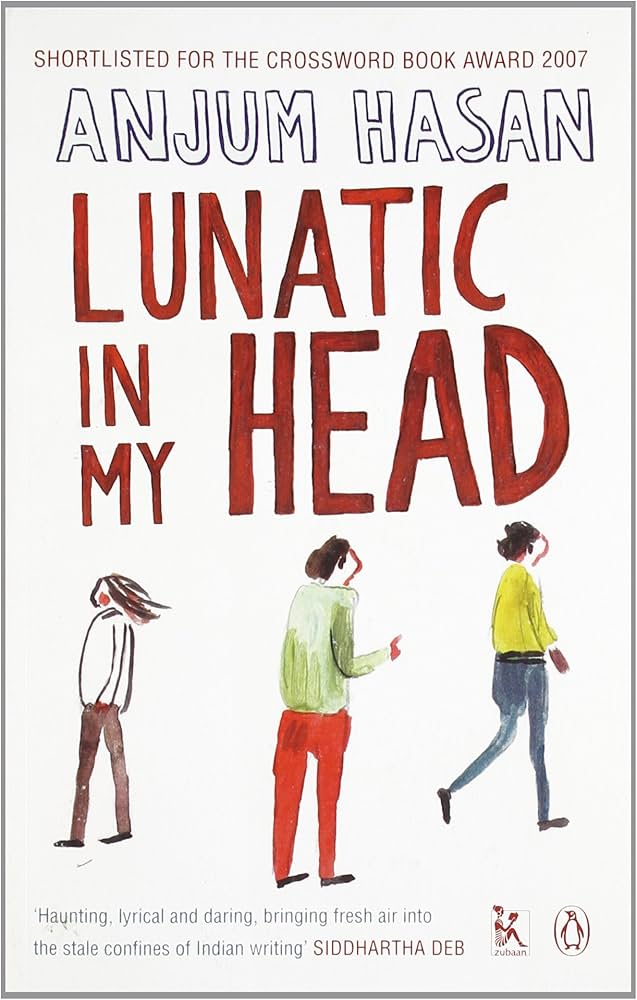
Hasan’s Lunatic in My Head is set in ’90s Shillong and tells the story of three characters who live most of their lives in their heads. Eight-year-old Sophie Das, aspiring civil servant Aman Moondy, and college lecturer Firdaus Ansari are all “dkhars”—outsiders—whose identities become closely intertwined with their feelings for their city. Shillong, with its hilly terrain and rain-soaked streets where “pine trees dripped slow tears,” charms while also making the characters long to leave it all behind. That push-and-pull is at the heart of this novel in which nothing grand happens, nevertheless offering insight into a space that is irrevocably tangled with the lives of the people who inhabit it.
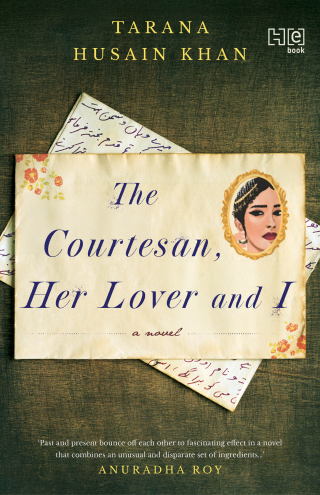
The Courtesan, Her Lover and I is set in Rampur and narrates the story of Rukmini, who returns to her hometown with her husband after a few years in Dubai. Unhappy with her teaching, she almost unwillingly begins researching the cultural history of Rampur, which leads her to the nineteenth century courtesan Munni Bai Hijab, a poet herself and muse of the famous Urdu poet Dagh Dehlvi. As we move in time, Rampur stays in the background as a powerful force. It’s a city in flux, a city where “the circle of life is transcribed within the mohallas,” but which is also turning into a “smart city” even as its men—however well-meaning—tend to define the trajectory of a woman’s ambition. This in-betweenness shapes the life of Rukmini, weaving Rampur closely into the stories of both women.
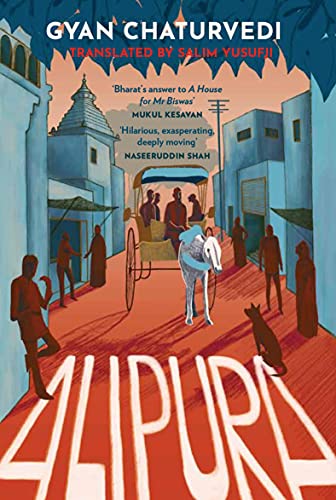
Alipura by Gyan Chaturvedi, translated by Salim Yusufji
Gyan Chaturvedi’s Alipura is set in the Hindi heartland of the late 1960s. The novel takes readers to a typical village to meet the Dube family, who are low on money but high on dreams and struggling to fulfill their ambitions, however small. Chaturvedi uses humor and satire to bring out the bleak realities of life in a small village riddled with casteism, corruption, outdated beliefs, and a deeply patriarchal mindset. Alipura is a place where women are supposed to stay away from cosmetics because they tend to bring “dishonour to the family” while masculinity and muscle-power go hand-in-hand. A site of colorful characters with bleak futures, Alipura defines as well as confines its characters. It is a place where dreamers thrive but dreams refuse to come true.
Set in Ranikhet, a small town in the foothills of Northern Himalayas, The Folded Earth is the story of Maya, a young widow. She has come in search of sanctuary, and The Folded Earth shows a small town becoming a safe haven. At the same time, it reveals the fragility of such peace and tranquillity when faced with powerful local forces that thrive on conflict. Roy gives local color in descriptions of this charming town as well as through characters like the aristocratic Diwan Sahib and the young Charu—people who can only be found in India’s mofussils. Never in a hurry to reach its destination, The Folded Earth moves at a languid pace, capturing the feeling of strolling along winding, hilly roads of the town it describes.
The phrase “teenage girl” tends to conjure up images of hormonal bodies and see-sawing emotions—not focused and powerful brains. And yet, some of the most famous girls in literature gain exceptional mental gifts when they hit adolescence. Carrie White, for example, Stephen King’s telekinetic teenager, develops her cognitive power when she gets her period and experiences what King calls “mental puberty.” She takes revenge on her bullying classmates and burns down the whole prom using only her mind.
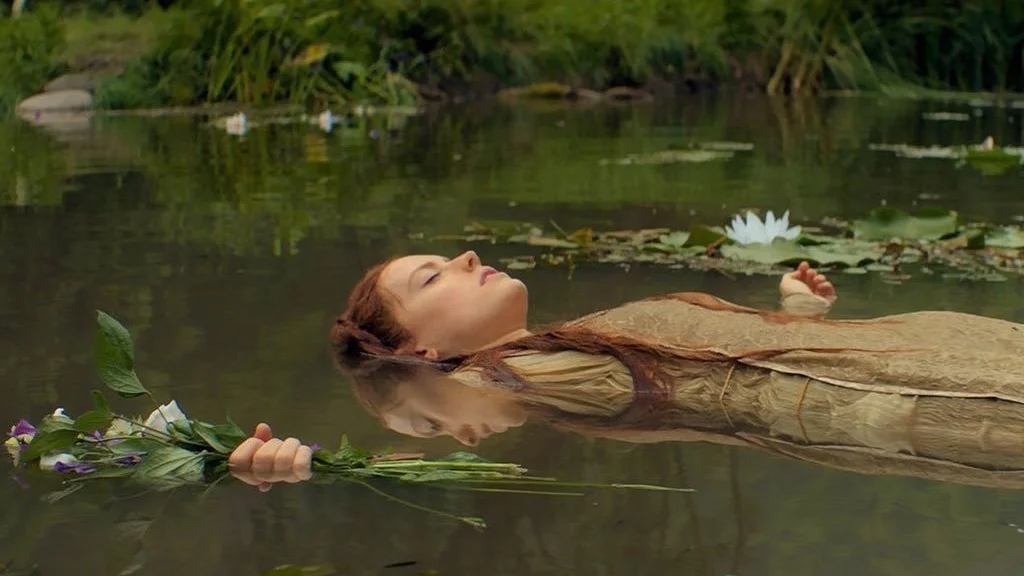
These formidable female brains aren’t a modern phenomenon. As a Shakespearean, I’ve studied how the teenage girls in his plays use their newly sharpened cognitive abilities to challenge the status quo and craft their own fates. Juliet Capulet is nearing “the change of fourteen years” when she imagines, orchestrates, and almost achieves her forever future with Romeo—against the tyrannical will of her father and Verona law. And while popular images of Ophelia cast her as a vulnerable, hysterical girl waiting for the perfect guy to save her, she actually spends most of Hamletobserving, remembering, and speaking out about the rotten Danish history that the corrupt court seems intent on forgetting.
My book, Monsters in the Archives, chronicles what I discovered when Stephen King granted me what Shakespeare couldn’t: unprecedented access to early drafts of his iconic works, with all of his handwritten margin notes and edits. In one of our conversations, I asked King about the changes I saw him making to an early, very inhuman version of Carrie. He told me why and how he rewrote her as “an All-American girl,” a bullied teenager that readers could root for on some level as she harnesses her mental powers to flip the script. What he (like Shakespeare) understood was that girls who use their brains aren’t pathological exceptions, but rather everyday agents of change that audiences and readers recognize.
The following seven stories feature girls who use their cognitive abilities to challenge social norms and imagine their own destinies. They don’t always succeed in the ways they hope—and, in one case, girl power threatens to destroy all of humanity, not just the prom—but they all turn their minds toward making better futures.
McCullers’ novel, set in a 1930s mill town, tracks multiple interconnected characters over the course of one year; but it’s Mick Kelly’s heart and mind that power the story’s lonely hunt for meaning. Mick begins as a 12-year-old tomboy with dreams of becoming an inventor and famous musician; by the end, she’s almost 14 and leaving school to work at Woolworth’s so that she can help her struggling family. McCullers poignantly captures the disjunction between a pubescent girl’s rapid physical growth and the simultaneous restrictions society puts on her future. But she also describes Mick moving her big ideas to the “inside room” of her mind—they aren’t gone, they’re just more private. And in the end, Mick’s still connected to that earlier expressive dreamer: “Maybe it would be true about the piano,” she thinks, as she saves a few dollars each week toward buying one, “and turn out O.K.”
“Why is the measure of love loss?” This question drives Winterson’s memoir about growing up with an abusive adoptive mother, searching for her past, and making her future. The elder Winterson locks Jeannette outside in the winter and forbids all books except for the Bible. When she discovers that 14-year-old Jeanette is sleeping with her girlfriend, she has a Pentecostal minister force her daughter through three brutal (and unsuccessful) days of conversion therapy. Eventually, Jeanette saves herself by escaping into fiction. She works her way through every work of literature, A-Z, in her local library; and, after Mrs. Winterson evicts her at 16, gets herself into Oxford where she becomes a fiction writer. Here, she writes about how stories give words to those who have been silenced: “We get our language back through the language of others.” Fiction “isn’t a hiding place. It’s a finding place.”
Trisha isn’t a teenager (she’s “nine going on ten”), but she quickly starts thinking like one when she gets lost on the Appalachian Trail for nine days: During that time, she goes from being “the invisible girl” trying to glue the broken parts of her divorced family together to a self-reliant survivor. King focuses on Trisha’s mental gymnastics as she staves off the “no-brain roar of terror” with wilderness lessons she’s learned in science class and Little House on the Prairie. The only supernatural horrors are the ones she hallucinates, but she’s able to mute them with the intentional powers of her imagination: She conjures her favorite Red Sox player, pitcher Tim Gordon, to walk alongside her and offer advice on how to establish dominance over the opposing player. She channels the “ice water in his veins,” and his stance and decisive throw as she battles one last predator.
Published in 1666, Cavendish’s Blazing World is one of the first examples of science fiction. It begins when a young lady, kidnapped by a lecherous merchant, washes up on the shore of a strange new world after the crew freezes to death. The Emperor grants her absolute power, which she uses to create new, female-friendly laws and customs. She also summons her animal-human hybrid subjects to debate their observations of the natural world with her. Cavendish, the first woman granted a visit to the exclusive Royal Society (a scientific academy), was later mocked by member Samuel Pepys: “I did not hear her say any thing that was worth hearing.” No wonder she turned to utopian fiction to find her inner girl boss. “I have made a world of my own,” she tells her readers, “for which no body, I hope, will blame me, since it is in everyone’s power to do the like.”
Ijames transports Shakespeare’s Hamlet to a southern backyard BBQ in his hilarious, Pulitzer Prize-winning play. He reimagines all of the young characters as queer and Black, including Opal/Ophelia (who loves girls and wants to run a shooting range), and Juicy/Hamlet. Opal speaks for them both when she says, “we on the verge of gaining our powers but there’s something that’s like holding us back.” She’s the one who imagines a different future for Juicy where he doesn’t have to become the hard, avenging killer his father’s ghost wants him to be, or feel badly about the “softness” that his stepfather relentlessly bullies him about: “What he thinks is your weakness gonna save you Juicy.” But Opal’s also looking out for herself. Rather than go mad or drown, she refuses to enable the tragic ending that Shakespeare first staged. In Fat Ham’s jubilant climax, she announces: “I ain’t dying for nobody.”
Ng imagines a not-too-distant American dystopia where children are taken from their parents to “protect” them from unpatriotic ideas—namely, challenges to the anti-Asian narrative the government has manufactured to justify its authoritarian takeover. The main character, Bird, hasn’t seen his Chinese-American mom for years: rather than risk her son being “re-placed,” she disappears. He’s almost forgotten her when he meets Sadie, a 13-year-old who’s been taken from her family and bounced between foster homes. She’s a fearless truth seeker, asking the teachers where all the missing books are and secretly researching the history of Bird’s mom. When she discovers that her parents have moved with no forwarding address, she runs away and gets herself to New York City, where she helps reunite Bird with his mother. By the end, she still hasn’t found her parents, but she won’t stop searching for them, or for “a way out of all this.”
What would happen if girls had all the power? Naomi Alderman brings this thought experiment to life by imagining an alternate history of the world: Across the globe, adolescent girls suddenly develop the ability to shoot deadly electricity through their fingertips and to awaken it in the “skeins” of adult women. Initially, the results are exhilarating: females from Riyadh to Moldova remake the world by toppling tyrants and killing sex-traffickers. The novel’s teenage protagonists also use the Power to fight their male oppressors: Allie kills her sexually abusive foster father, and Roxy executes the man who killed her mother. But then Allie, like matriarchs around the world, starts rewriting scripture and law to justify oppressing males. It isn’t until Roxy’s skein is cut out and stolen that she realizes the corruptive effects of power on the mind, and the toll it takes on humanity, regardless of who wields it.
In December 2024 (adjusted for the present rate of dystopic acceleration, several eons ago), T. M. Brown published an essay in The Atlantic whose title “You Might Be Worried About the Wrong Algorithms,” could double as a subtitle for William Lessard’s /face. Therein, Brown argues that our tendency to depersonalize the algorithms feeding us recommendations—that is, regard them as inherently abstract and abstracted from human influence—prevents us from resisting the actual people laboring to transform their personal preferences, prejudices, and profit motives into institutions. But how are we to tear the veil of corporatization and identify the individual actors who so carefully preserve their facelessness?
Via a lyrical and grotesque collage of patent drawings, PowerPoint templates, tables, corporate jargon that feels less appropriated than leaned into, flash fiction, and Barthesian semiotics, /face proposes that first we first need to look in the mirror, then stop conflating looking inward with knowledge of ourselves. For instance, given that every smart phone camera and photo app is now a weapon of surveillance, self-portraiture no longer means what it has long meant in the realms of art, history, and global culture.
Happily, /face’s hybridity doesn’t feel like the product of a project or a dissertated hypothesis. The more one reads, the more /face reveals itself to be a piece of speculative software neither wholly analog nor digital in origin. Like any work of literature, it requires input from readers to make meaning. That /face asks for so much input, and that it activates routines and protocols that feel very different from those employed by other hybrid forms is the most tangible innovation it risks.
Using our own personal modern-day memexes, William Lessard and I spoke via email, Zoom and DMs about day jobs, MAGA plastic surgery disasters, barn poems, predictive algorithms, Billie Holiday, and the architecture of /face.
Joe Milazzo: /face opens with a dedication that also serves as a gentle, maybe even affectionate, provocation: “To Judith and all the readers and poets that know what century this is.” How would you define this century, and how would you say some readers and writers are failing to recognize the times we’re inhabiting?
William Lessard: I think we’re living in a very retrograde time. I don’t think anybody wants the future. While we’ve embraced the efficiencies of technology for the past 30 years, we have resisted the deeper implications. You have people saying, “I don’t want any AI in anything I consume.” But the truth of the matter is that we’ve all been using AI for years; we just haven’t thought of it as such. Spell check, autocomplete, automatic login when you’re buying something online in the middle of the night (or when you’re half in the bag). This is all AI.
I don’t think anybody wants the future.
When it comes to poetry, as I’ve discussed in a series of essays I’ve written for Jacket2, I don’t see poets giving much thought to the materials they’re using. Even if they’re typing on a laptop, they might as well be composing with a quill by candlelight. And so much poetry gives no thought to experiences or occasions like: “I spent my entire day bouncing between, you know, X/Twitter updates and text messages and all this hypermediated hybrid content.” But, if you have any type of algorithmic intelligence responding to what you’re doing, you’re collaborating with technology. And even if you are the most analog, crunchy, academic poet and you’re writing poems about barns, you’re going to want to show it off. So what do you do? You take a screenshot of it, and you post it on Instagram or Facebook, and guess what? As soon as you do that, your barn poem or your erasure or your Matthew Arnold poem becomes part of the monster that you supposedly hate.
JM: I’d wager that most people who open to the first page of /face would say to themselves, “I am in the presence of an experimental text.” But do you believe the kind of 21st century poetry you’re describing is necessarily experimental? And is that experimentation necessarily self-reflexive?
WL: The impulse for the book comes out of my day job. For most of my career, I’ve worked as a technology publicist. Anybody who’s ever worked as a publicist, anybody who has been in media knows something about the sixth “w.” On top of who, what, where, when, why, why now. How and why do we continue writing poetry in the age of surveillance capitalism? Experimentation is one way to answer that question. But here’s how I think about experimentation: it just means that I’m going to do something even though I’m not sure it’s going to work out. I don’t see a lot of enthusiasm for experimentation in that sense because of all the precarity in the poetry world—in publishing, in getting acclaim, in landing a teaching job. Creativity seems to be sublimated to those careerist impulses rather than the kind of defiance you find in experimental work.
JM: I feel that defiance most in how visceral /face’s language is. On page 14 alone, we encounter knuckles, fists, chin, cheek, eyes, lips. All of which makes sense from a narrative perspective, as the book is a kind of gloss on the synecdochical violence (and violation) that is facial recognition technology. Can you talk about where the book’s language comes from?
With AI, language is being disrupted more than any other technology or medium.
WL: The language in the book is an attempt to capture the texture of contemporary life in a realistic way. And I think the reality that we’re dealing with here is that language isn’t expression in the poetic sense so much as it’s a mediated object. Language is something that inhabits us rather than we inhabit it. With AI, language is being disrupted more than any other technology or medium right now.
As Americans and people who grew up on democracy, we tend to view speech as sacred. But I don’t think speech is necessarily sacred. I think speech likes to be commodified, and that’s been true for a long time. Take search engine optimization (SEO). Certain words are worth more than other words. Certain words will appear at the top of this algorithm and others won’t. Now we have AI summaries and GEO, which is generative engine optimization which, in a lot of ways, feels like a further advancement or devolution if you will of that concept. Certain language is privileged over other language, and when you see that privilege you understand that language is outside of us. We borrow it for a little while, maybe we move it around a little bit. But how do we make the language matter? I think keeping the language concrete is essential to it mattering.
JM: In a strange way, you see this in the technical documentation that supplies much of the language that creates friction with /face’s visceral, embodied language. What was the poetic potential you saw in that technical documentation?
WL: I’ve been obsessed with documents and technology for a long time. Back in the Web 1.0 era, when you had all of these dot coms that were exaggerating their value, I would read S-1 filings on the SEC website. Because in those documents, companies were legally compelled to tell the truth. And, in so many words, that’s where you would find companies confessing that they had no business model and didn’t foresee making any kind of profit anytime soon. Similarly, later in my career, I was working with a company that was doing real-time animation software. The idea was you would hold your cell phone to your face and it would capture your expressions. So I started looking up all of the Google patents related to facial surveillance. And in those documents, just like in those S-1 filings, the companies would plainly state their intentions: that breaking facial expressions down to micro-expressions is a way of monetizing human subjectivity. The whole idea that we’re each just a series of preferences and behaviors looks really nice if you’re doing some sort of analytics presentation. But the reality is that we are still people. And there are people attached to all of this technology.
JM: /face is, in part, a sampling of the text and imagery from patent documents. How would you describe the different formal elements of /face, and how did they help you make a book out of the themes and concerns you wanted to address?
WL: The book is structured in three parts. There’s the first part, “techniques for creating facial animation using a face mesh,” which is the documentation. Then there’s this hybrid section, “do we have a plan B?(*),” that I wrote during the pandemic. Here, I took PowerPoint templates and improvised language around them. Then there’s a final section, “head template,” where I took a single PowerPoint slide that I worked variations on, changing the colors and tag lines. The idea is that you start with the theoretical, but you always end with the individual.
Lately, everybody’s been talking about looksmaxxing. To me, this situation exposes just how much the romantic self no longer exists.
JM: That’s also a journey from the face—which we believe gives us insight into what someone is feeling and thinking—to the mind, which we view as the seat of thinking and feeling.
WL: We start with the front of the head and end at the back. That’s the path of the book. But in terms of form, /face is also meant as a satire of how blind we are to our social vigilance. So many of us can’t live without taking pictures of ourselves. We take those selfies without thinking about how much damage that does to the environment. And it doesn’t matter how socially vigilant we are. All we care about is our personal brand.
JM: Yet, at the same time, what is a self these days? Is it, to build on the title of a recent essay by Oxana Timofeeva, “The Soul: A Vintage Concept”?
WL: The “Subject Comments” in the book speak to that. If you think of this book as reimagining a social media feed where there’s received language and ads and algorithmic language, the “Subject Comments” were intended to give it some personal heat and show the physical consequences of using technology.
JM: Right. The “mesh” in “facial mesh” isn’t diaphanous or easily escaped. And, even though it’s surgical, this mesh doesn’t heal. This is what the machine is using to analyze people so the people who operate it can predict behaviors and therefore guide those behaviors more efficiently.
WL: I was drawn to “mesh” because, of all the technology buzzwords, it seemed the most organic. You could create a virtual version of yourself or you could compile every one of your preferences into some sort of agentic AI or bot, but it would never really capture the perversity of who you are. At the same time, there’s this impulse of wanting to get beyond the limitations of subjectivity driving technology like this. We now have the monetization of the face down to micro-expressions. We can turn ourselves into revenue streams in ways never before possible. But that only exaggerates every insecurity that we have.
Lately, everybody’s been talking about looksmaxxing and Scott Galloway’s new nose and Jim Carrey’s new face. To me, this situation exposes just how much the romantic self no longer exists. You could make the argument that it hasn’t existed for at least 60 or 70 years. Meanwhile, people have always wanted to change into something other than human that somehow feels more like themselves.
JM: It seems to me that /face understands that. It’s poetic in that it’s smart enough to allow a reader to do what readers do: occupy an imaginative space where languages (theirs, the book’s) can meld into something I’d call an intelligence, even if it’s ephemeral. But the artificial intelligence /face defies can’t understand it. It can’t really read the personal stories in those “Subject Comments” and know how life experience shapes a face.
WL: Your face is something that you earn and the whole idea that you should erase it in order to make it more monetizable—or in the case of MAGA face, in order make it more appealing to some great leader—is a bad deal. It utterly destroys your face’s value. I was watching a video of Billie Holiday recently. It’s from near the end of her life, and she’s singing some really sad stuff. When she stops singing, you get to watch her listen to the other musicians: Ben Webster, Roy Eldridge, Lester Young. You see her smiling and bobbing her head. And you can’t help but think about her face, her ruined face, like the ruined face of Chet Baker. I think that’s the whole story right there. The human truth is far more complicated and beautiful and joyously inexplicable if you only accept it.
Yuchen sat in the back of the taxi as it turned onto Chang’an Avenue. Seventeen years ago, she had biked to high school on this ten-lane boulevard every day. So, so wide, she thought then. It had made her feel small.
She rolled down her window and let the breeze carry her hair into a frenzy. Tiananmen Square dark on the left, Tiananmen Tower lit up on the right. Chairman Mao’s Mona Lisa smile had looked benign to Yuchen as a child, the look of a gentle grandfather, but now the portrait seemed menacing, as if it could, any second, turn into a scowl. There were many situations in which Yuchen couldn’t be sure if or how she had changed, but in this moment, she was confident that neither Tiananmen Square nor Chairman Mao’s painted face had been altered; it was that she was no longer as Chinese as she used to be. But what did she mean by Chinese? It was a categorical adjective one would only use from the outside looking in: This was Chinese, that was not so Chinese. There was no such distinction from the inside. Perhaps that was what Yuchen meant: not less Chinese (how could she be less Chinese if she was, immutably, Chinese?), but outside Chinese.
Spring was Beijing’s shortest season and Yuchen favored it for its transience. The heat and humidity were timid in the air. Something smelled nostalgic. Was it possible that the air was scented with the past because she was headed to see old friends? After two IVF cycles, Yuchen no longer trusted her emotions, but analyzed them in therapy-speak and hormonal mumbo jumbo. She craned her neck out the window, getting a stronger whiff of the fragrance.
Guniang, don’t stick your head out, the taxi driver said into the rearview mirror.
No one had called her guniang in a long time. The gendered form of address was respectful but familiar, not infantilizing, not remotely flirtatious in this context, a state of relating that was missing in English, in which most of her present life unfolded.
She did as she was told. When she was growing up, Beijing taxi drivers were infamous for regarding themselves as all-knowing. Maybe he would know the air’s peculiar ingredients.
Do you smell that, shifu? Something floral?
The taxi driver loved yulan flowers. A Beijing native, he had spent his childhood in hutongs not far from Tiananmen, and when the hutongs were demolished, his family moved to the South Fourth Ring Road, where yulan trees did not grow. He knew that the ones on Chang’an Avenue blossomed first every spring, followed by those in the Summer Palace, then in the Sculpture Park on the west side, and Buddhist temples in the surrounding mountains. He, and most municipal taxi drivers, took pride in their hometown, the great capital of their great country.
See those white flowers by the redbrick walls? the taxi driver said. That’s yulan.
Yulan, of course. Yuchen closed her eyes to focus on the subtle aroma. It swirled in her nose, continued toward her brain—Yuchen did know this smell, this flower, but she couldn’t remember from when or where, her familiarity with it completely strange.
You’re not from Beijing, are you? the taxi driver said, interrupting her reverie.
Sure I am, Yuchen said, defending herself in an exaggerated Beijing accent, opening her eyes eagerly. I just haven’t been back in a few years.
Before she left China at eighteen, Yuchen had thought her Beijing accent equaled standard Mandarin, until she realized that her college friends from southern China couldn’t understand her excessively rhotic vowels and the way she liaised words together like she was speaking French. Over the years, she took care to tone it down, straightening her tongue and enunciating every character. Now Yuchen spoke both her mother tongue, Mandarin, and her second language, English, with no particular geographical association—so blandly she bored herself.
I couldn’t tell from your accent but I hear it now, the taxi driver said with a chuckle. Where do you live these days?
United States.
Where in the US? New York? Los Angeles?
Seattle.
I know Seattle! Sleepless in Seattle! And that Tang Wei movie—Beijing Meets Seattle. What do you do in Seattle?
I’m a photographer.
Like for weddings?
Yuchen debated the answer. She could lie and say yes, or she could throw a rock into the lake and see how it would ripple.
For art. I’m an artist.
You make art!
The taxi driver nodded, glancing into the rearview mirror with a newfound sense of intrigue. He thought his artist passenger looked old enough to be married, or even to be a mother. His own daughter was thirty-one; her son would turn two next month. He knew that artist types might lead unconventional lives, but he thought he could do a good deed for her parents.
You have kids?
No.
Married though?
Yuchen nodded. She averted her eyes from the reflection of the taxi driver’s scrutinizing look and feigned contemplation of whatever was outside the window. They turned off Chang’an Avenue. A brief silence that Yuchen wished would last.
You look my daughter’s age, the taxi driver continued. It’s better for women to have kids while young.
Yuchen offered no response, hoping if she neither agreed nor disagreed, their conversation would end here.
Your husband is us Chinese or a laowai?
He is American, but his parents emigrated from Hangzhou years ago.
So he speaks Chinese?
He can understand some.
That must be difficult for your parents. You are an only child, too, right?
Yuchen told him that she was born in 1987. The taxi driver said, with sincerity, that he would never let his only daughter marry a foreigner, lamenting again how inconvenient it must be for Yuchen’s parents. Yuchen tried a smile.
So which one do you like better: the US or China? the taxi driver asked.
It always came down to the same ultimatum. Yuchen used to attempt an honest answer, which varied depending on current affairs, context, or mood. But by now she had learned that there was only one correct answer.
Has to be our own country, she said. No doubt about it.
Yuchen followed a lanky boy through the KTV’s maze of hallways. He walked ungracefully, as if his limbs were trying to break free from his oddly formal uniform: a white dress shirt, a black waistcoat, and a maroon bow tie. He walked so fast, almost running, and Yuchen imagined that the boy hurried everywhere and still fell behind all the time. She wanted to tell him that he could slow down, she was not in a rush, but she stayed quiet and quickened her steps. Anything she said might make the boy feel worse, adding to the things he already thought he was doing wrong in life.
Before Yuchen realized that they had arrived at Room C10, the boy was already pushing the door open. First the music, a melancholy Faye Wong song, then the collective exclamation from her old friends, whose faces she hadn’t seen in so long that she couldn’t immediately remember their names. Some were standing up, one walking toward her. In an instant, memories of countless karaoke parties during their high school years coalesced into reality, washing over her like an ocean wave crashing onto the shore, unstoppable. She turned around to thank the boy, but he already had his back to her, whispering into his earpiece, hurrying away.
Yuchen—we were just talking about you! Xiaohan, a short woman with a fashionable bob, swung her arm around Yuchen, leading her into the room.
What were you saying behind my back? Yuchen teased.
Without a word, the crowd on the couch parted to make space for her in the center. She looked around the room—he was not here. Thanks to the atmospheric lighting, no one noticed that Yuchen’s eyes had just dimmed. In a way, she was relieved. As much as she wished to see him tonight—who wouldn’t be curious to find out how your first love had turned out?—she had also been nervous about the possibility, at the thought of how she might be reflected in his eyes.
We were saying that you were the class flower! All the boys had a crush on you, Xiaohan said.
Even at thirty-six, Xiaohan could register her body’s involuntary response when Yuchen was in the same room: Her insides twisted and twinged, a tangle of jealousy and admiration. She knew objectively that as an adult, Yuchen no longer stood out, not in any way that mattered: She wasn’t the richest or the most famous, her face was not the fairest or the smoothest, her edges were rounded, her husband was not particularly handsome in her pictures, and she remained the only woman in this room who was not yet a mother. Was Yuchen possibly infertile? She herself was a mother of two and she loved her kids most days. But look at the way everyone shifted places just so Yuchen could sit right in the middle, despite her arriving late—what Yuchen was to the people in this room was never going to change. The same was true for all of them. To be who they had been to each other, even for a few hours, was the essence of these high school reunions.
Someone asked Yuchen whether she wanted whiskey or beer.
I’m not drinking tonight, Yuchen answered. Just tea, please.
Are you preparing for pregnancy? Xiaohan asked.
Yuchen hesitated. She couldn’t manage any follow-up questions if she answered honestly, that yes, she had come home at her mother’s request to undergo a Chinese medicine fertility treatment; and yes, she had had two miscarriages, which made her feel like a failure, even though her husband had been kind and she knew her femininity wasn’t defined by motherhood; and yes, she was trying for pregnancy even though she was not sure if she wanted children at all.
No, Yuchen said. Alcohol gives me headaches. Getting old, you know.
Yuchen is an artist, Xiaohan, not a housewife like you! another classmate said.
In Xiaohan’s opinion, an artist was a glorified housewife anyway; art was not real work. Xiaohan wedged in next to Yuchen, keeping her mouth shut.
Housewife is the hardest job in the world, Yuchen said, giving Xiaohan’s shoulder a gentle squeeze. Xiaohan, thanks for inviting me. I haven’t seen you guys in forever.
Did you come for work this time? Xiaohan asked.
Both her Chinese and American friends often questioned the purpose of her trips to Beijing, as though the logic of an adult life could not accommodate such a sentimental luxury as simply going home.
I haven’t seen my family in a while, Yuchen answered. But maybe I’ll do some work, too, while I’m here.
The logic of an adult life could not accommodate such a sentimental luxury as simply going home.
An artist’s life is so free! Xiaohan exclaimed. When will you show your work in Beijing? Give us an opportunity to show up for you.
I’m working on a project about the idea of borders and border-crossing, not only geographical but in the most expansive sense, even including trespassing, but Chinese galleries are very cautious these days—I’m not sure if they would be interested.
Easier to blame the system for the lack of interest, Xiaohan thought. She’d seen Yuchen’s WeChat posts about her exhibitions abroad. From the name of the venue to her photos, everything seemed intentionally obscure, just like the way she was speaking now, what with the idea of borders and trespassing.
Well, just don’t forget your old classmates when you have a homecoming show, Xiaohan said.
Yuchen felt relieved when the intro to Xiaohan’s song started playing. She knew that Xiaohan’s interest did not lie in her work but in finding a fathomable way to measure its success. The truth was that she hadn’t been able to focus on creating anything in a while. The doubt and frustration from those cold and costly procedures spread surreptitiously inside her like a virus. When she could not contain those feelings any longer, they spilled out of her body, into the air she breathed, infecting everything she touched—her furniture, her camera, her husband.
Once the initial attention to her waned, Yuchen participated in the conversation as much as she could. The women talked about men, children, gossip, and anti-aging skin care, while the men talked about everything else. No one talked about politics. Yuchen used to be interested in how these friends, some of whom had never left China, thought about what she could only watch from across the ocean. She worried that her idea of home was becoming imaginary, skewed by Western media, drifting away from reality. On occasions like tonight, she used to try to find out what was actually going on in China, but she had stopped bothering since a few trips ago. The Chinese news was so censored that most people didn’t even know what she knew. Or if they did, they didn’t care—what was actually going on in China was exactly this: regular people drinking, singing, having a great time, without giving a shit about what the outside world fixated on. In her friends, she saw what her life could have been if she had never left: Though stress-filled and never satisfied, they lived in a comfortable, insulated cocoon where the idea of unadulterated happiness, though small and evanescent, was easily attainable—eating at a favorite restaurant, getting drunk with old friends, or singing that one special song at karaoke. The China she would have lived in and the China she watched from afar existed simultaneously. Only she was outside of both.
Yuchen’s karaoke go to finally came on, her favorite Karen Mok. A friend handed her the mic. She hadn’t heard or even thought of the song for years, but its lyrics poured out of her lips without her looking at the prompter. Instead, her eyes were drawn to the singer’s face in the music video. While Yuchen aged in front of the screen, Karen Mok stayed twenty-seven. It was as if years had gone by in a second, while time also stood still. In 1999, the year the song was released, Karen Mok hadn’t yet known that she would end up marrying her first love, whom she met at seventeen, the age when Yuchen, too, first loved a boy. Unbeknownst to the boy then, Yuchen had already decided to attend an American college, not understanding that she could never truly return again. After the murmuring verse came the melodic chorus, a ballad that everyone swayed their bodies to, joining in to sing, opening and closing their mouths in unison. Yuchen heard her own voice disappearing into the group. For a moment she was seventeen once more, the class flower who safely, effortlessly, belonged.
As she walked back from the bathroom, Yuchen saw the boy who guided her earlier in the hallway, marching around the corner and coming to a stop in front of Room C10. He put his hand on the doorknob and turned around, searching for his lost guest with an impatient frown. His bow tie was now loose and crooked, and Yuchen thought she would help him fix it if she could ever get a word in with him, but she forgot all about his bow tie when she realized who the boy was waiting for.
It was difficult to say if she saw Lichuan first or the other way around. She was already replaying this moment in her head, like Wong Kar-Wai in In the Mood for Love, repeating and varying the sequence of Maggie Cheung and Tony Leung, pacing to the rhythm of pensive beats and a crying violin, making their way toward each other in cramped alleys and narrow pathways. As Lichuan approached the boy, Yuchen watched herself walking toward Lichuan at the speed of sixty frames per second as if for an eternity. Lichuan’s hand replaced the boy’s and held the door to Room C10 closed. He said something to the boy and the boy turned away in haste, tightening his bow tie as he ran past Yuchen without noticing her.
But this wasn’t a movie, and Yuchen hadn’t rehearsed what to say in this scene. As much as she was curious to see Lichuan tonight, a part of her knew that perhaps it was better not to spoil their memory of each other. She wouldn’t mind if he remembered her always as the confident, careless, colorful seventeen-year-old, and not who she was today, a person she could barely describe. Before she could stop herself, her arms opened, reaching toward him for an embrace. Her head landed on his shoulder, lightly. He smelled faintly like the boy she had loved but also completely unrecognizable. There was a pause before Lichuan put his arms around her, hugging her meekly, like she was a fragile plant. She awkwardly patted him on the back and stepped away, standing just a centimeter closer than her usual friendly remove.
Guess that’s how people greet each other in the US? Lichuan spoke first, amused.
I wasn’t thinking, Yuchen said, laughing at herself. We hug every one, like people you meet for the first time. It’s pretty weird. Well, not we—Americans do. A lot of hugging.
I’m glad you didn’t end up in France—I’m not doing that double-kiss stuff.
They shared another laugh. Lichuan’s features looked individually familiar, but unfamiliar when put together. Yuchen wondered if he was thinking the same about her.
Should we go in? he suggested.
Yuchen didn’t want to.
How do you think everyone will react if we walk in together? she asked.
I only came tonight because Xiaohan said you were coming, Lichuan said.
You think she was trying to set us up?
You’re still married, no?
Yuchen waited a beat too long before answering.
I am. You? Seeing anyone?
Neither of them posted frequently on social media. Without having seen a wedding photo or marriage certificate, Yuchen assumed Lichuan was, at least, not yet legally bound.
Xiaohan did try to set me up with someone, he said. Nice of her.
How did it go?
I’m pretty sure the woman was allergic to me.
What happened to us? Every girl in this room probably had a crush on you in high school. Yuchen counted in her head. Three of them I know for a fact.
Everyone at that age just liked who everyone else did, Lichuan said. Noticing the change in Yuchen’s expression, he revised, You and I were different, I think.
Everyone at that age thought they were different, Yuchen said.
Lichuan was quiet for a moment. Yuchen couldn’t tell what he was thinking, but she liked the way he was looking at her, so she welcomed his gaze, wishing he could read her mind.
How about we ditch this reunion? Lichuan finally proposed.
As if answering a magic spell, the door to Room C10 opened from the inside. Xiaohan materialized within the frame, startling them both.
Here you are, Yuchen! Xiaohan cheered. I was going to look for you but I see that someone else found you first.
She held the door agape, inviting Yuchen and Lichuan to cross the threshold together. As they made their entrance, someone whistled, and Yuchen thought she saw the roots of Lichuan’s ears turning rosy.
The night ended at half past midnight, when half the group was inappropriately hammered, and the other half barely able to chaperone their friends to their respective partners, who would help their spouses into the apartment with complaints but care for them all the same. Ten years ago, these old friends would have continued on to a nightclub on Workers’ Stadium West Road. Even five years ago, they’d feast at a twenty-four-hour barbecue restaurant or clear their heads at a teahouse by discussing matters they could only speak of in the darkest hours of the night. Miserably sober, Yuchen took charge of typing everyone’s addresses into their car service apps. As she shoved slurring friends into back seats, she imagined them, like the ghosts in a Pac-Man game, dispersing in all directions within Beijing’s six thousand square miles.
After a series of long, soul-baring, yet restrained and occasionally maudlin goodbyes, Lichuan and Yuchen were finally left on their own, standing side by side in a warm pool of street light. Beyond meeting the adult Lichuan, Yuchen hadn’t imagined the night any further, how they might spend the slow and mercurial hours between the previous day and the next, a period that was usually expended in dreams and didn’t require any planning. Neither of them was the person the other had once known, nor could they neatly fit into each other’s current life. What she wanted from him she did not know. But having him close made Yuchen smile, which she rarely did these days. The night was permissive, much less unforgiving than the daylight that was, surely and shortly, to come.
Yuchen started walking, and Lichuan followed. The street leading to the Third Ring Road was empty apart from cars occasionally whooshing by, clouds passing over, and trees and buildings quietly standing. They walked without aim but each step felt deliberate. 轧马路 (pressing the road), Yuchen thought of the Chinese idiom that meant walking without a destination in mind, as if the walk’s sole purpose were to iron out the sidewalk’s unevenness, to undo, to press against time. Years ago, pressing the road had been their favorite activity as young lovers, which allowed them privacy at no cost. Now it felt almost unnatural not to hold hands. Yuchen tucked hers into the pockets of her trench coat.
You said that you came to see me tonight. Why? she asked.
I wanted to see who you’ve grown to be.
Here I am. What do you think?
All night I was wondering if you’d be the same person if you’d stayed like the rest of us.
I’ve wondered that, too. But do I really seem that different?
In video games, you have multiple choices at any given juncture. You pick one, follow it through, but you can always go back to the same point and try another path.
Do you always get to a different ending, though?
Not always.
When did you get into game design?
At my first job after college. What does your husband do?
He’s a curator. For a small art museum.
What is a curator?
As Yuchen explained, she kept using English words, mostly nouns, whose Chinese translations, which she added for Lichuan’s sake, sounded nothing like what she meant. The more she talked about the world that she and her husband orbited, the farther away it felt from where she stood in this moment. She had felt the same way when she tried to explain to her husband what her childhood was like: the pressure-cooker school system, the mandatory political education, the forbidden teenage dating scene. She diligently translated herself back and forth, but the truest things about her always fell through the cracks. Lichuan nodded along, apologizing for his ignorance about all this art stuff.
What kind of photos do you take? he asked.
Yuchen trusted that Lichuan, unlike Xiaohan, asked out of genuine curiosity, but it was a question she never knew how to answer and that thus always annoyed her. How does an artist articulate or summarize their art when it is the very creation that fills the void of the inarticulable, the unsummarizable? One’s art is always changing, too, evolving with time, its maker, and the world. She considered telling Lichuan every project she’d ever done since grad school and every one of her inspirations and aspirations for the future. If only they had all the time in the world.
In art school, I chose photography because I found the space between what is objectively perceivable and what is not so fascinating. How one sees and is seen, Yuchen said. I was working on a project about border-crossing and trespassing, but I haven’t been able to make anything since we started IVF.
I chose photography because I found the space between what is objectively perceivable and what is not so fascinating.
Isn’t there a lot of border-crossing and trespassing—so to speak—happening during the process of IVF?
Yuchen contemplated Lichuan’s question while he waited patiently, looking ahead at the freeway in the distance.
Right, we have borders within, Yuchen said, finally. And trespassing can happen there, too.
Trespassing can also be visible and invisible, Lichuan said. Like what you were saying.
You’ve always been a very good listener.
Your life must be good, Lichuan said, after a moment. Good enough for you two to want kids.
You don’t?
Did you see that video where a Shanghainese guy said, We are the last generation? It might sound extreme to say we shouldn’t have kids, but I could see his point.
My husband wants kids. I’m more ambivalent, but I think I’d be happy to have his kids. Our kids, Yuchen corrected herself. Is that un-feminist of me?
I think it means that you love him, Lichuan said. And that’s a good thing, no? Feminist or not.
In the American context, the theories and identity labels Yuchen constantly navigated tired and, in many cases, confused her. It was not that she doubted them; it was that she believed in them so firmly that she was unable to admit her own feelings, unable to stop performing for herself and others, unable to reconcile her own life with what she believed to be true. In front of Lichuan, she felt that she could strip off her costume and step out of that theater. To him, her feelings didn’t have to be right or wrong. They were just feelings.
With silence, she answered him in the affirmative. The quiet between them was delicate but comfortable—comforting. They carried it gingerly as they pressed another stretch of the street. At the end of the block sat the freeway bridge, which, as they approached, loomed larger and larger in an extraterrestrial way, and Yuchen felt so wonderfully small, that she was a small human with small problems.
When they reached the intersection, Yuchen followed Lichuan into a convenience store, where Lichuan remembered her favorite ice cream flavor and she picked out his favorite cigarettes. The soda they had both loved had been discontinued, and they spent five minutes comparing and discussing which drink in the fridge would have the most similar taste.
After they exited the convenience store, the cashier, who worked a much more demanding job during the day, roused himself from the sleepiness that shrouded the register. He watched Yuchen and Lichuan sit down on the curb outside, Lichuan smoking Jiaozi, Yuchen scooping rum-flavored Baxy, then swapping. He noticed a shy distance between them and deduced that they were only early in what would soon be an ardent and enduring romance, which had yet to come by in his own twenty-four years of loving and unloving. They shared things that made them happy, glanced at each other when the other wasn’t paying attention, and periodically laughed without being self-conscious of the unflattering shapes their faces contorted into. The young cashier wished to love and be loved as such. He kept observing Yuchen and Lichuan, standing in the loneliness of an empty store, until the next customer came through the automatic door, the chime dinging, startling him as though the light in the cinema had been switched on in the middle of a movie.
The next morning, Yuchen opened her eyes to blinding sunlight. She sat up and caught herself in the mirror on the opposite wall. She didn’t recognize the room or the side of her body. The reflection looked like a painting—yes, that Edward Hopper she first saw at the old Whitney, in which a lady in pink sits in bed, facing a luminous window. She had admired how the bright patches made the shadows appear darker by contrast, which was the case for what she was seeing in Lichuan’s mirror now, the curtains carelessly drawn, leaving an opening of unwavering light on her. She pointed her phone at the mirror and took a photo. Zooming in on the picture, she noticed Lichuan’s sleeping face in the corner of the mirror. Yuchen repositioned herself to crop him out, and took a few more shots.
His bedroom smelled like fabric softener and the dust in Beijing’s air. On the modest bedside couch, a closed-eyed Lichuan turned onto his side, his hands touching in front of his chest as if for a prayer. Yuchen tiptoed away from the bed and crouched down next to him. She pressed the shutter to take close-ups of his stubbled chin, his fingers curling toward his heart, his legs hugging a checkered blanket, and his feet, exposed and pressing into each other for warmth. She hovered her hand above his hair and traced its shape in the air, remembering last night, the embrace they lingered in, neither of them speaking, standing in the middle of this room, which had been dark but was now disquietingly bright, the night on the cusp of seeing a new day. In each other’s arms, a wordless exchange took place. Together they had pondered the many things they could have done, and concluded that they needed none of it to spoil what they already had. Yuchen couldn’t exactly recollect who let go of whom first, who made the bed, and how she ended up sleeping in Lichuan’s faded Abbey Road t-shirt.
She did remember that when she wasn’t able to fall asleep right away, she listened to the silence intently, searching for clues of Lichuan’s breaths growing slower and heavier, rising and falling like ocean waves. The Sound of Waves—the name of a Yukio Mishima novel came to her. Yuchen had read it at the age when she and Lichuan would have done anything to spend a night consumed by their desires. She remembered being baffled by the climactic scene in the book, in which the man and the woman, who were deeply in love, chose not to consummate their relationship despite having the opportunity. Lying in Lichuan’s bed without him, Yuchen felt that, nearly two decades later, she, too, could begin to swim toward that expanse beyond physical union, toward that uncharted territory, uncertain of what waited for her on the other shore.
Her phone rang and she hurried out to the hallway to answer.
Hey, baby, she said in English. It’s fine. I’m up already.
She paused to listen. When she turned around, Lichuan was standing by the bedroom door.
Yeah, my mom is taking me to the acupuncturist today, she said into the phone.
Yuchen looked at Lichuan and looked away, turning her back to him.
Which spicy sauce? she said. Oh, it’s in a ziplock bag, probably somewhere toward the back of the fridge.
She could hear glass jars knocking against each other and imagined her husband at their kitchen counter, attempting to solve the puzzle created by her absence.
I have to go get ready, she said. Okay, love you, too. Bye, Harry.
Yuchen turned around, demure despite not wanting to be. She faced Lichuan like an actor at an audition, awaiting the verdict from the director.
Your husband’s name is Harry, Lichuan said.
Yes. Have I never said his name before?
Love you—Lichuan echoed, and then switched back to Mandarin—is so much easier to say in English. We never say it like that in Chinese.
But there are many more ways to mean it without saying those exact words. Think ancient poetry.
When you talk in English, you sound so . . . He paused to look for words. So grown-up.
They stood opposite each other in the narrow space between the bedroom and the living room, a transitional corridor that was neither here nor there. The light from the bedroom backlit a halo around Lichuan. He was right, Yuchen thought. English was the language of her adulthood, just as the US was the country she had only known as a grown-up. She had left who she used to be where it belonged, in Beijing, in her mother tongue, with her first love, her high school friends. But which one of her was with Lichuan now? Whoever she would become, why couldn’t she carry that old self, whom Lichuan had generously returned to her, forward? In the days and nights that had yet to pass through her, in the words that were yet to be spoken, she was free—free to choose, free to fail, free to no longer be who she was supposed to be.
I saw these yulan flowers on Chang’an Avenue yesterday. Do you remember them from somewhere? she asked.
Yulan . . . there are a lot of them in Beijing.
Lichuan walked to the bedroom window and cracked it open. A gust of air caressed his hair. Yuchen followed him back into the sun. Lichuan faced her suddenly.
Yes, our high school’s little garden had yulan flowers, he said. We used to sit there after a day of classes.
Yuchen’s lost memory resurfaced. Lichuan didn’t know that before they were together, Yuchen had often sat in the garden alone. She had liked it the most in the winter, when she felt that the bare branches and dry soil waited faithfully for Earth to travel closer to the sun again. When she sat there, she felt that she was waiting with them. At that age, she had thought she had endless hours to wait, waste. Every day was endless, time was endless.
I really like the smell of them, Yuchen said. It softens me somehow.
I think you said the exact same thing when we were seventeen.
On the cab ride home, Chang’an Avenue looked different in the cloudless morning. Without the lights that contoured the architecture in the night, Tiananmen Square, formidably huge and meticulously surveilled, displayed the kind of human power that should have only belonged to nature. Landmarks were made to withstand time, an atemporal creation, the opposite of the living. Yuchen opened the window like she had the night before. When the wind grazed her face, she felt a pulsing at the center of her forehead, where Lichuan had kissed her before they said goodbye. As she rubbed the spot with her fingertips, she saw the yulan flowers again, blooming against the redbrick walls. She couldn’t smell them across the sprawling boulevard, only the unpleasant odor of car exhaust.
Shifu, can we stop for a second?
The taxi driver glanced at Yuchen in the rearview mirror, alarmed.
Are you kidding me? Guniang, this is Chang’an Avenue, he said dismissively in his Beijing accent. Can’t park here.
What about the side street? Just around the corner.
The taxi driver sighed, signaling for a right turn.
Just half a minute, I promise, Yuchen said.
Right after making the turn, the taxi driver stepped on the brake. As she bolted out of the car, Yuchen heard the driver scolding her, irritated, telling her to make it quick. She ran in the direction they came from, unmade the turn back onto Chang’an Avenue, and kept running until she reached the edge of the yulan trees.
She stepped under the branches as if before a threshold. The flowers shielded the sun overhead, the white petals trembling like the wings of idling butterflies. She had run here on an impulse, but now that she was so close to the flowers, she didn’t know what else she was to do. Yuchen took a long breath, inhaling a distant memory. For as long as yulan’s fragrance stayed within her, she was seventeen and thirty-six at the same time, her heart spacious enough for both Harry and Lichuan, and she, dissolving like water, in flux between being Chinese and outside Chinese. She exhaled. At the beginning of the next inhale, she started walking.
Halfway back to the taxi, Yuchen made an abrupt U-turn. Despite the taxi driver yelling behind her, she started running again. When she returned to the yulan trees, she first looked around and instantly identified a few plain clothes police officers. She waited until no one was watching. Then Yuchen rose onto the balls of her feet, extended her arms upward as if reaching for a hug, and broke the tip of a branch that split into two flowers. Holding it close to her in one hand and covering it with the other, she hurried back to the taxi.
In the car, she repeated a string of apologetic and grateful expressions.
No need, guniang, the taxi driver said. It’s not like I would leave without being paid first.
Yuchen smiled, appreciating the taxi driver’s candor. She looked at the stolen yulan flowers in her lap, raised them to her nose, sniffed, and put them back down, then looked at them some more, twisting the branch, brushing the petals. When she had done enough looking, she moved her eyes to the outside, her people, her city, beginning another day. Today she was one of them, participating in their cycle of living.
While Yuchen gazed outward, the yulan flowers remained looking at her. Among all the people they had greeted on Chang’an Avenue, Yuchen was the first to claim them, but they had chosen her as much as she them. They had recognized the longing in her eyes when she had bared herself in the shade they created. Knowing that leaving with Yuchen would cut short their already brief lives, and that they would meet their end far from where they were born, they accepted, nonetheless, Yuchen’s intimate invitation to a fleeting union. As they traveled down Chang’an Avenue for the first time, they became her, as she became them, the border between them disintegrating, and, slowly, disappearing.
Both Mahreen Sohail and Dur e Aziz Amna’s work reflects a turning point in Pakistani literature: a move toward portraying lives as they are, unburdened by Pakistan as an ontological subject. Together, they represent a new guard of writers probing ambition, morality, and selfhood with nuance and precision. Sohail’s debut novel, Small Scale Sinners, is a kaleidoscopic story collection that interrogates what it means to be good across moments of intimacy, betrayal, and quiet rupture. Amna’s latest novel, A Splintering, follows Tara, a woman navigating class, ambition, and desire as she moves from a rural village to the capital, pushing against the limits of the life she’s been given.
Amna describes Tara as someone who can “put on the face that she needs” depending on who she is with. Sohail immediately recognizes that elasticity—the same reaching, adapting instinct—in the women who populate her stories. The two writers found a shared preoccupation: how women reshape themselves within relationships, adapting, recalibrating, and becoming different versions of themselves depending on who they are with. It felt like a key to both of their books, and, in some ways, to the conversation itself.
When I pitched this interview, I imagined the three of us discussing their books through craft: voice, structure, the mechanics of building a character. But questions about narrative choices gave way to something more personal: how writing changes across time, across responsibility, across motherhood. This interview embodies the beauty of the dialogic format. I was honored to take on the role of guide, of prodder and gatherer, and to be a reason for these two writers to speak plainly about ambition, identity, and the selves that shift in the telling of stories.
Basmah Sakrani:If you think about the protagonists in your books—Tara in Dure’s, and any one of the women from Mahreen’s stories—what would they recognize in each other? What would feel familiar or unfamiliar?
Dur e Aziz Amna: I can go first. In full disclosure, I read Mahreen’s book a long time ago, so apologies if my memory is murky. But the one line that really stuck with me in “The Newlyweds” is that what really makes a woman is the flexible way in which she is able to change the nature of who she is, depending on her relationships. I am paraphrasing, but it struck me so much that I remember highlighting it.
I feel like that is also Tara, putting on the face she needs with every new person, being flexible in her idea of who she is, adapting based on who she is with.
Mahreen Sohail: Dure, I was looking through your book again this morning. Something that felt very familiar to me was that Tara is always reaching. And I think the women in my stories are also reaching, either for love or for something else.
Another thing I noticed was this disappointment with men, a slow, creeping disillusionment. I think that would feel familiar to many of the characters in my stories as well.
I fear that anytime you put in too much specificity, it detracts from the experience.
BS:Both of your books feature characters who commit transgressive acts. As you are writing your characters and they become more real to you, how do you both decide where that moral line lies? What are you thinking when you decide to push something further or ignore that line?
MS: I am not sure that when I was writing, I was thinking about moral lines. Maybe that comes later, in the editing process, and certainly now, as I’m talking about the book.
Overall, there is this idea of women just living their lives. When you are in the midst of living, you are not thinking, this is the line I am crossing. And if the characters are well-rounded enough, it feels believable that they cross those lines, even in the context of a culture or a society like ours.
I am thinking about the story with the child soldiers, which is ambiguous. The sisters in it commit this act of kidnapping a girl. But I am hoping that the sisters’ backstory and their grief over their mother are enough to show how those choices could come about. So, it is not necessarily about crossing the moral line as much as it is about what kind of situation would allow someone to cross it. And often that happens organically. The characters do take over.
DAA: It’s funny you say that it’s in talking about the book when you realize these things. With Tara, she’s telling the story in retrospect, right? We start off with her saying, hey, I’ve done something really bad, hear me out. But it’s the fact that she can see those moral lines more clearly because she’s looking back at them.
In the moment, as Mahreen said, she’s very much just living her life and making the choices that she needs to, to survive or thrive or get ahead or whatever we would like to call it.
BS:I want to talk about being Pakistani writers. Pakistan appears differently in both your books, and I think both of you make this decision of kind of not naming the thing. Dure, you made up the village where Tara comes from, and Mahreen, you don’t name Pakistan at all, but it’s very evident in the description. How consciously do you think about that when you are creating something?
DAA: Yeah, that’s such a great question. I feel like I either have nothing to say about this or way too much.
With American Fever, it was a book very cognizant of the fact that it’s about this girl who’s from Pakistan just by the nature of what she’s doing, which is this exchange program. She feels like she’s representing the place, and then she feels the oppressiveness of that expectation.
With A Splintering, I wanted to leave all of that behind, which is why a lot of things are not named. Even the city that ends up being named, Mazinagar, is fictional, mostly because there’s so much vitriol in Tara’s language about the place that I didn’t want any small town in Pakistan to receive that.
I would have really liked to just completely strip away the proper nouns of places and markers. I also didn’t want there to be any Urdu in the book and sometimes that puzzles people, but I think I’m still trying to figure it out.
I fear that anytime you put in too much specificity, it detracts from the experience because the book can become this anthropological text versus just the story of the people who the story is about. But I’m not convinced that’s the exact solution.
MS: Yeah, I feel you, Dure. I found when I named places, they became associated with all of my specific feelings and attachments to a place. So not naming gave me this way of writing a range of experiences, a range of women who can do whatever they want, whereas otherwise, I feel like if I had named Pakistan, specifically Islamabad, I would have pigeonholed these stories into my version of it.
I find that if I plan something, it takes the magic out of it.
In some ways, it also feels like a lack. Would I be able to write a story that is very specifically Pakistani and named as such, and would it be good? So I don’t know if it’s me putting a Band-Aid on something or if it’s a good narrative choice. This one is tough for me as well.
DAA: I love that. I think naming things can also be a bit of a block for the writer.
BS:I loved how you both approached the answer to this question because in your responses, there’s this element of protection of Pakistan. Dure, you’re protecting the place from other people projecting things because of how you describe it. And Mahreen, you’re also very protective of your own ability to write beyond the place and write bigger than just the place.
DAA: Post 9/11, there was a lot of literature, some of it very good, which dealt so consciously with Pakistan as this place that either had to be explained or defended. Pakistan with a very capital P. Perhaps I was working against that. Just a small-p pakistan where it’s just a place, the way any place is a place where people live their ordinary lives.
BS:I want to transition to a question about form. Dure, you’ve written two very distinct novels. And Mahreen, you’ve got this collection, and you’re playing around a lot with form inside it. Does the form come first? Do you find relief or comfort in the conventions of the form you’re writing in?
MS: For some of the stories, the form does come first, and it helps contain the story. It defines the nature of what the story can be. But for a lot of them, it was the voice, and I don’t always know what’s going to come first.
“The Sisters” was written as a very traditional short story with a beginning, middle, and end, but it felt a little bit boring to me, so I went in and picked the lines I liked and was like, what if I just had this?
DAA: With both the novels, the voice emerged first and then the form followed.
But I’ve also learned to leave a lot of the certainties of writing by the wayside. You are always surprised and changed by your understanding of who you are as a writer. With the first book, there was an emphasis on language, culture, and cultural assimilation. That completely went by the wayside with the second. And with this third book, it doesn’t feel as voice driven, it feels more like a book about ideas.
BS: So, with that, I’m curious to understand something about how you both create. And I’ll preface this by saying I hate the word process. It just feels so erudite. But in terms of your writing style, are you outliners and planners, or are you feelers? Or is it a mix of both?
DAA: I’m not a planner at all. I still try to make notes, but then those notes get lost and they’re always, for some reason, loose leaf. So, I never know where they are. They’re never in a diary assigned for that project.
At some point you realize that’s the kind of person you are, and you live with it. But at least with the first two books, I knew what would happen at the end. I always know how the book will end, but the way we’re going to get there is very much a discovery.
MS: Yeah, I am so not a planner as well. I also do not even know how the thing will end. I find that if I plan something, it takes the magic out of it.
BS:That is very reassuring and validating, I have to admit. I’ve tried, and I’m now at the point [of] realizing I’m not one of these people. I can’t maintain this thing in a spreadsheet.
What is something in your books or your stories, a small detail, that you’re like, oh my God, I’m so proud of this?
DAA: I wish I had something I could turn to, something to hold onto in my moments of low self-esteem. This will be my homework. I will go back and find something to be proud of.
MS: I will tell you, Dure, one of the things in A Splintering that I thought was amazing was our relationship with Hamad, the husband. It was so nuanced, so well done, both his characterization and Tara’s evolving feelings towards him. It’s hard to believe you are not a planner.
For me, it’s the title. My editor came up with the title for the book, and I do quite like it. So maybe this is a moment for low self-esteem, I couldn’t even come up with a title.
BS:But you had the phrase in your story, so it was there. Who came up with your title, Dure?
DAA: The book initially sold as Farewell, Province. I came up with it and was still somewhat attached to it, but every single person hated it. It was a resounding failure, and the title we ended up with was one of 10 I’d sent in an email. It’s so funny, because I had to reverse engineer the part where it’s mentioned in the book.
BS:What are you reading right now?
MS: Just last night, I think I finished it in a day, wasMy Name is Lucy Barton by Elizabeth Strout. I had preconceptions going in because the books are everywhere, but I loved it. I thought it was beautiful, calming, steadying. It was like reading someone’s diary.
DAA: I’m thinking of Elena Ferrante’s interviews where she says that all books she grew up reading as a child were by men. Thankfully, I never had that problem. I’ve actually placed a moratorium on myself after getting so saturated with thinking about women while writing A Splintering. So now I’ve vowed to read books by men. I’ve been toying with the idea of writing a novel with a fully male protagonist. So part of it is subconscious research, an anthropological interest in what are men exactly.
BS:How about you, Mahreen? What are you trying to do next?
Motherhood was really the first time where I truly felt a full abdication of the person I used to be.
MS: I am not writing much. I have a two-year-old, and I just do not know where the time goes. I do have another book I finished while I was pregnant that I’m hoping to send out. I have the ideas of a novel, but you never know where that goes.
BS:Are you both early morning writing people?
DAA: Sometimes people who don’t have kids ask me this question. I’m like, do you understand what it’s like to have this little thing that can entirely disrupt your day? This is what decides what my routine is for the day. Truly, my routine is at the mercy of the kids, but when things are working smoothly, I write in the mornings after breakfast and tap out by the afternoon.
The one thing I know is that it comes in spurts. There are times when I really, really want to write, and then I have to get all of that done, it becomes a distraction, a thing hanging over my head if I don’t do it.
MS: Before I had a baby, I could write at night. Now, after I get home from work and do bedtime, my brain is done.
Something strange also happened to me after having a kid: It’s become harder to write because the stakes for my characters don’t seem high enough. And in my life, they suddenly seem very high: I have this thing to keep alive.
DAA: So what exactly does that mean? Did you mean your work as a writer feels like it has to now compete with your role as a mother? Or are you saying that what your characters are going through seems minuscule compared to your role as a mother?
MS: It seems terrible to do things to my characters, to do terrible things to them in a world that my son is growing up in. You know what I mean? That’s what it feels like to me. And it’s a very strange feeling.
BS:Last question. Mahreen, I was going through your other interviews, and in your interview in The Offing, you said this:
The women in these stories, and in some way many of us in real life, are wrestling with the question of how to be the best version of ourselves in our relationships—as sisters, brothers, wives, husbands, aunts, mothers—while still maintaining our independence. How do you keep some of yourself for yourself, and what is lost in the process?
So, with the discussion we’ve had today about womanhood and motherhood and being writers and having relationships and jobs and dreams and ambitions, how do you both keep some of yourself? And what do you feel like you lose in the process?
DAA: There’s this line by David Brooks, about how growing up, becoming an adult, is just how well you give up your individual freedoms and take on responsibilities.
Motherhood was really the first time where I truly felt a full abdication of the person I used to be. It was irrevocable. More than marriage, more than anything else. Now, I can’t even think of myself as anything else. The person that you are, there has to be a new person who comes in and takes that form of you.
I will stop talking now because I think I’m trying to say something, but it’s not coming out the way I want it to.
BS:It’s making sense to me.
MS: You are both further along the journey than I am. I think I have struggled to come to terms with the fact that I am fully this new person because of the small being that is co-opting me completely.
I am always finding ways to see, how can I get this part of my mental space back? It was useful to hear you say you have to just fully embrace who you are now, because I have been seeing it almost as a failing that I haven’t been able to get that version of my brain back. It is good to hear that you can’t go back to who you used to be.
We all have that person in our life, the one who combines ambitious intentions with crippling self-sabotage. Often, they are unaware of this and perceive themselves as perfect, if only external circumstances didn’t prevent them from reaching their potential. A bad boss takes credit for their work; a realtor costs them a deal that would’ve made them instantly rich. Unsupportive partners, parents, and ungrateful children—everyone else has stood in the way of their destiny and deserved success. In reality, the only thing standing in the way of these individuals is themselves and their inability to accept responsibility for their actions and inactions. These individuals are the creators of their own unfortunate fates.
Bookshelves are full of stories featuring characters that stumble through self-sabotage. Literature thrives on readers’ rooted interest in such flawed heroes and anti-heroes. My upcoming linked short story collection, Hands, features a main character, Hans, a blue-collar Indian immigrant seeking shortcuts and working odd jobs to make ends meet. Ultimately, when he gets in the way of his own success, Hans blames everyone but himself for his misfortune: The bullies at school; his best friend Kanti; an Indian girlfriend who isn’t Indian enough for him; and his sister’s endless nagging and superstition. Hans’s immigrant journey doesn’t crystallize into the American Dream because of his own misgivings, ill-timed decisions, and crooked thinking—but he doesn’t believe that. Everyone else is always to blame. When there’s nowhere left to point his finger at, does he finally point it toward himself? Negative. There are always customers who don’t tip enough on his pizza deliveries.
The following reading list gathers stories of characters who can’t get out of their own way. These characters are both the aggressors and victims of their circumstances. They are hard to love, but it’s still painful to read about their collapses. In the end, readers are left feeling queasy, hoping for the best while realizing that the worst is inevitable.
I don’t know if I’d be a writer without Denis Johnson. There’s no Hans without Fuckhead. These loosely linked stories explore the blue-collar underbelly of desperate labor—all clouded in intoxication and the search for the next high. Fuckhead and his cast of acquaintances stumble through odd jobs, petty theft, and toxic relationships. The characters consider honesty, but ultimately reject it in favor of shortcuts and a quick buck. Drugs and the pursuit of drugs are often the crux of Fuckhead’s self-sabotage. As he hunts for the next high, Fuckhead and his grab bag of friends end each story in more trouble than they began with. The collection’s brevity makes its complexity that much more astounding. How can so few words reveal so much of who we are when the odds are stacked against us and there appears to be no way out?
The prospect of madness smothers every page of Doshi’s novel as Antara attempts to care for her ailing mother, Tara, suffering from dementia. Part mother-daughter drama, part psychological thriller, Burnt Sugar turns the mirror on readers and asks: who do you believe? Antara’s self-doubt stunts her ability to care for her mother. She is caged by the paralysis of her own thoughts. She questions her mother’s diagnosis, re-writes her childhood, and ultimately is unsure about who is really losing their mind. I’ve gifted this book too many times to count. It’s the most important book on Indian motherhood that I’ve ever read.
Obsessive tendencies in Darma’s comedic collection drive characters to absurd behavior and trap them in their circumstances. In “Yorrick,” a man spits and pisses on his roommate’s clothes so he will stop leaving them on the bathroom floor. In “The Family M,” the first-person narrator’s car gets scratched and he becomes single-mindedly focused on getting revenge on the kid who he thinks damaged his car. The narrator in “The Old Man With No Name” literally becomes obsessed with an old man in an apartment complex and starts stalking him. These seven stories are told in first-person and feature obsessive narrators who are willingly derailed by the smallest details of everyday life.
Somebody Loves You centers on Ruby, a teenager who stops speaking and becomes a self-proclaimed “expert in the art of solitude and quietness.” Ruby and her older sister, Rania, are navigating adolescence without their mother after she suffers a mental breakdown. Like Burnt Sugar, the Indian mother plays a central role in the trauma on the page. However, unlike the books on this list, Ruby’s imprisonment—embodied by her choice not to speak—is a conscious decision and an attempt to free herself from her past troubles rather than drowning in them. The result is a short, challenging, and violent novel that will force the reader to grapple with the imagined and actual threats in the world.
The setup: Ant returns home to Chicago to attend the funeral of his friend’s cousin, who was killed by a neighborhood dog. It’s a complicated setup that is enriched by childhood memories sprinkled throughout the short novel. All Whiteout Conditions’s characters are drunk, high, and unhinged as they mourn the sudden loss in their family. But it’s not Ant’s family. So what is he even doing there? Ant’s unexpected and often unwanted arrival causes drug-induced chaos at the funeral as a family tries to move forward while Ant pulls them back and drowns them in the past. But of course, Ant doesn’t realize his own part in the oxy-laced toxicity of this emotionally and physically violent novel.
Oksana is selfish and self-destructive. She sleeps with a married man at her grandmother’s funeral. She drinks a lot and is generally unlikeable. But she’s funny. Is that enough? It is in Oksana, Behave!, which follows a family’s immigration journey to the United States through Oksana’s engaging and brutally honest perspective. She recalls the story of her family moving from Kiev to Florida, and describes her education in middle and high school, college, and then graduate school. The immigrant themes of losing social status, language, and homeland are integrated within this coming-of-age story. Oksana’s comedic charm makes her likeable and hateable at the same time. Ultimately, her hurtful antics induce a guilty laugh—even though she should know better.
The characters in Gilb’s collection are stuck in the mud and not trying very hard to get out. They want the reader to believe that they’re doing their best, but their actions suggest otherwise. In “The Last Time I Saw Junior,” the narrator finds himself in a compromised situation, as usual, chasing the next high with an old friend in an obscure location, which is only aggravated when he slips into a drug-induced rage. In “Blessing,” a character drives hours north from El Paso to visit his ex-girlfriend who is now married with a baby. He stays in her house, falls into the same patterns that led to their breakup, and departs as lost and broken as when he arrived for the visit. Gilb’s characters hope for the best while acting on their cheap and easy desires. Their failures are internal, but the blame always lies “outside their control.”
Two years ago, I decided to end my career as a teacher to pursue an MFA in Creative Writing full-time. I was suddenly thirty-five in a kindergartner’s shoes again, fearful in anticipation of the first day of school. I sharpened my pencils, prepped my new notebook, and nervously registered for classes. Then, just before the semester began, students received an email that a new professor would be joining the staff to lead a workshop: Nana Kwame Adjei-Brenyah.
When I read Nana’s name, I skidded cartoonishly across the floor to tell my husband and then responded to the email as quickly and coherently as possible that I needed to switch into his class. I had a deep admiration for his words and how he chose to bare them to the world. My gut is always loud and demanding, but I had just started to try this new thing called “listening to it.” It was the right choice. During the semester, Nana and I found common ground over our very millennial memories and growing up in New York. We were both also dissed for having Android phones and being born in the 1900s. But most importantly, I discovered that we were united by the belief that genre is a prison.
Nana Kwame Adjei-Brenyah has defied conventions his whole career. His writing blends surrealism with radical portraiture and horror with hope, often providing social commentary on the world around him. His short story collection, Friday Black, and debut novel, Chain Gang All-Stars, both received awards and critical acclaim. Nana’s also hell-bent on pursuing new creative challenges. So, when I learned that he was releasing a debut album,The Pisces Sciatica, I was curious about how music as a medium would evolve his work. I couldn’t wait to hear how installing new wings allowed him to fly again.
Ashley Leone: What about music liberates you to write more autobiographically?
Nana Kwame Adjei-Brenyah: People consider me a prose artist. But The Pisces Sciatica was gonna be a look at my life, and I didn’t want to do that in the same medium. In some ways, the things that I fear about music made it very attractive to me. I’m so craft-focused as a writer, but there’s a rawness in my naivete as a rapper. And I’m not saying that craft makes you a liar, but I can curate the truth into oblivion if I really want to. There was something powerful to speaking about these last couple years of my life with my actual lived-in voice, which is a less finely tuned instrument. It just felt more honest.
AL: What is meaningful to you about rap as a genre for storytelling?
NKAB: I’m from a place called Spring Valley, Rockland County, and even before I ever wrote for real, people were sitting in cars and freestyling. Music is the medium I take in most, probably, because it’s so easily embedded into your day. The artists whose work is closest to my heart are musicians.
For me, making music has a lot to do with needing something for my mind to do when I’m stressed or scared. I think on a loop. So, I listen to instrumentals and write raps to them. I have some obsessive tendencies, anyone with anxiety can connect to that. But with music, it feels natural and kind of fun to be in these repetitive loops.
AL: Is there a specific track on the album that felt most vulnerable for you to write?
NKAB: “The Pisces Sciatica” is a song about my father and his passing, and me working with him through his cancer. The end of that first verse is “I hate it half the time, because I’m the one who signed Do Not Resuscitate.” Even saying it right now, it’s hard. It’s not something I really talk about, but for me, that was one of those moments that justified the entire project. It’s almost like I have to scream the truth in a forest where no one’s there before I go on with writing it. The music felt like this kind of empty forest for me. I’m slowly getting myself ready to write about those things in some way, shape, or form. But I am scared of it. I have so much admiration for memoirists.
AL: Have you written any fiction that’s felt just as raw and intimate to write?
NKAB: In my first book, there’s a story called “Things My Mother Said.” I think if you’re an artist, you feel this often: I just gotta say this thing. Then “The Hospital Where” is my first version of meta-analysis about writing. You could see I was already getting critical about the pursuit of an artistic existence. Those stories are like the prequel to The Pisces Sciatica.
AL: On this album, there are various references to arts, artists, and culture, like Icarus, Smokey Robinson, Emperor’s New Groove,“making weight” in sports . . . What are the mediums that influenced this album but maybe didn’t make it in as a reference? What are the artforms this album couldn’t exist without?
NKAB: Some of the important ones are the ones you named. I like big, mythic, well-known stories that have a universal lesson, that you can interpret differently if you want to. Like Icarus—the album pretty much starts on that idea, which is kind of dark.
AL: But Icarus gets off the ground. He’s figured out how!
NKAB: Exactly. My best friend messaged me, “People forget he can fly.”
I’m so craft-focused as a writer, but there’s a rawness in my naivete as a rapper.
The album wouldn’t exist if I didn’t have exposure to rap artists like J. Cole or Kendrick, especially their deep-cut, soul-sampling songs. I couldn’t make this without a project like The Water[s] by Mick Jenkins. And I would never in another context name my own stuff, but I just know that I couldn’t make this without writing “Things My Mother Said” or “The Hospital Where” first. They helped me feel brave enough that I could.
AL: Something that I love about hybrid art is that it can only exist because of the artist who makes it. Because you’re coming from your own context, all your positionalities and intersectionalities, whatever makes you you, including your artforms. How do you feel this album specifically contextualizes you in the world? What are you representing of yourself? I heard that Goku reference, and I was like, 12-year-old Nana is so pumped that he could put this in a song.
NKAB: I actually got chills when you said that because I just did therapy before this, and we were talking about that kind of stuff. Doing inner child work has been a big breakthrough for me in general.
The front cover of The Pisces Sciatica is a place I lived in when I was young, and the back cover is of the place I lived in when I was even younger than that. So, it’s absolutely teen/adolescent Nana who’s been trapped in this context because he’s decided he has to fix this thing, and he’s been killing himself trying to become an author.
I wouldn’t say I’m a super happy person, but the people pleaser in me, with the people I’m codependent with, that part of me really likes presenting in a certain kind of heroic way. It’s savior complex stuff. My professional life also really likes that part of me, too. I’m not the most zodiac-y person, but my rising sign is Leo, and I think that part of me is the part that people see.
There’s [a] little bit of hype and cool on the album, but the inner sad boy is powering everything else.
AL: In fiction, some of the most compelling characters are the ones that live in their contradictions. “Best Right Now,” which is a more vulnerable, “sad boy” track, is juxtaposed with “And The Miracles,” which is a confident, boastful song. That tension is a good example of how to build a character. So, I wondered how your experience writing fiction informed how you compiled your album. How did you order your track list? How does that compare to assembling a short story collection?
NKAB: I feel like a huge part of being a writer is being able to oscillate between a macro and micro attention to whatever it is you’re doing. I would say macro is more like the structure of a song or a story, and then mega macro is the order. In [ordering] the short story collection, I was imagining it like it was a playlist.
Revision is even more of a discovery in rap.
Now I’m actually making a playlist. The album intro is “Faith and the King.” The vibe is melancholic, the BPM is less, it’s serious. Then “Best Right Now” right after that is a really sad song. In terms of vibes, I can’t just depress everybody. So, then, “And The Miracles” is a fun moment. I do rapper shade. It’s braggadocious. I’m trying to be cool, like, “I’ve been catching bodies” but in the alley of work. You gotta keep some playfulness. I’m always thinking about that.
The micro-level is the thing I pay most attention to. In this project, I am interested in how I can tell the truth but still be vigilant. Like, being aware of syllables, keeping the rhyme, double entendres. I am thinking with that same level of acuity. I hope.
AL: Revision is an important part of your practice as a prose writer. I know a bit about how that works for you on the page, but how does it work for you when making music? You’re considering many layers—writing lyrics, making beats, working on tone and BPM—lots of elements to be revised.
NKAB: For me, the first stage of revision is somewhere written down, and I just keep doing it until it feels perfect. It’s not that dissimilar to [prose] writing on some level. I have to be able to say it in my head without tripping once. If I trip, it means some syllable’s off, something’s a little weird.
Then, I get to the stage where I start singing out loud to myself, and it changes again. I start moving this word or that word, I look for additional meanings, see if I can get some double, triple entendres. Revision is even more of a discovery in rap.
In “Ellison,” I said something about medaling, but I was like, wait, medaling sounds like meddling, like meddling kids. So, “Mystery Machine or Team USA, we meddling/medaling.”
Then, one of my favorite bars in this whole album: “In this life, you could be Vince or Frédéric Weis.” Frédéric Weis is the guy Vince Carter jumped over on the USA basketball team, that famous dunk. “And if I’m offered the choice, always gonna write/right,” like right-handed dunk over him. Then I said, “going straight over your head, black boy flying, they prefer if he was dead.” Black Boy, Richard Wright. Wright like “write/right” from before.
You start digging, you find a little gold, and then you keep going. I wrote that in a hotel when I was working on Chain Gang on a four-day staycation, and I remember being like, wait, am I the best? Revision in rap is crazy because you find explosive gems, which is maybe as, or more, satisfying than revision in fiction.
AL: This goes back to being a hybrid artist and having your hybrid interests inform all your work. Because every reference you make and all the wordplay is so specific that it could only be from you.
NKAB: Yeah, what you reference creates a portrait of who you are. I don’t know how many NBA fans also know Richard Wright, but you could tell I wasn’t worried about other people getting it.
AL: You’re just bringing every part of you, and then when someone understands it or recognizes it—
NKAB: That’s a cool feeling. I feel very grateful for a moment where someone’s caring and they’re being attentive. But even with book stuff, it’s somewhat rare. There’s not enough specificity in general. Maybe it’s just inherently easier with music.
AL: How has collaborating in music inspired you to shift your fiction writing practices, if at all?
NKAB: I think I’m less afraid of collaboration in general now. I just wrote and directed a short film that we shot a little bit ago, and it’s one of the most gratifying artistic experiences I’ve ever had, actually. And that’s all collaboration. With writing, it’s just us.
Maybe what music has helped me remember is that I trust my vision enough that a wayward eye won’t destroy the project.
Getting edited is a very intimate experience, you know? I’ve obviously read your work. You can tell when someone cares and puts effort and thinks about it deeply in a serious way. And it’s a special kind of thing. Getting engineered is almost more intimate than that.
My experience was particular because Mike Mitch is a rapper’s-rapper and the engineer on the entire project. I look up to him. He’s one of my best friends and I’m getting his mentorship. It took us several years to do this, and over the course of the project, his dad was alive and then he wasn’t. So, to your point previously, he understands The Pisces Sciatica more now.
And talk about being obsessive, engineers have to listen to the thing a million times.
My regular writing process is still very solitary. I need to be a little bit alone sometimes. But you know what? I’ve sent some stuff to my agent earlier than I ever have, and maybe that’s influenced by the music. I’m trying to get a little less precious about everything. Sometimes I take a really long time. I’ve had stories for 10 or 12 years that no one has seen. And I like them!
But conversely, I finished a story yesterday that I started probably three months ago that I’ll send her. I’m trying to be more open to the idea that collaboration is not a thing that taints something, but that grows something. Whereas music is different for me—I share unmixed demos with people. Maybe what music has helped me remember is that I trust my vision enough that a wayward eye won’t destroy the project.
AL: To quote S.A.A.M: “What’s the point of dropping gems just to leave it in the vault?” The novel you wrote in college—will it ever see the light of day?
NKAB: No, no, no. That’s not a gem. I’m gonna try . . . you know what? I’m gonna completely redo it.
AL: Well, there’s something that inspired you to make it, and whatever kernel of truth exists in that is worth holding onto.
NKAB: There is a cool kernel. Everything else is not good. I just didn’t have the craft. I didn’t have the ability.
AL: Are there any other modes of artistic expression that you feel drawn to do or that you want to venture into next?
NKAB: I’ve been into photography and film, but I’ve stepped into the short film stuff right now, and it’s really sickening. It’s my whole personality. I’m sorry to my students because we screened like four short films in our last class.
AL: Any last thoughts to share?
NKAB: I’m really grateful for every single person that listens to this. I’m really grateful that you listened to it. Even one person enjoying [it] is really nice for me.
I also want to highlight the mix. Mike Mitch did so much cool shit in the mix. It’s just very impressive. That’s another thing about collaboration. You feel better about saying how good your shit is, because it’s not just you.
The Gauntlet: Observations from Immigration Court by Laurie Lathem
“Aquí estoy,” reads the text from the man I am supposed to meet. I am here.
All I know of him is that his name is Dani, he is from Ecuador, and he is scared. It is a cold, damp morning in November, and we have arranged to meet in front of a coffee shop near the immigration court at 26 Federal Plaza for his asylum hearing. But I don’t see him, and I’m worried that he is in the wrong place. If he misses his hearing, the judge will issue an expedited deportation order. The night before, Dani texted me that he was “aterrada.” Between my phone set to English and my less-than-excellent Spanish, the text conversation was so full of typos and mistakes that I didn’t notice the feminine form of the word terrified. With cold fingers, I am texting back, “Donde esta?” when I am approached by a woman in black leggings and long false eyelashes. “Hola,” she says with a deeper than average voice, and I understand why Dani has double the reason to be afraid of being detained by ICE.
The security line to get into the massive building is unusually long, and Dani has no coat, though the wind is biting. I offer her mine, my scarf at least. She declines, bouncing up and down in her high heeled boots. She tells me that she lives in Corona. She works as a home health aide during the day and cleans office buildings at night. On the way through security, we are barked at several times by overwhelmed security guards, and when we arrive on the 14th floor, we don’t know which way to go. The floors that house the immigration courts are labyrinthine and confusing. Turns lead to dead ends or else go around in circles. Adding to the disorientation, the directional signs pointing to the numbered courtrooms have recently been taken down.
I ask a guard for help, and we head down the narrow hallway. We make a sharp turn and directly in front of us is what Dani has been fearing: a group of masked and armed ICE agents. They stand around an open doorway to one of the courtrooms, leaning casually against the walls on both sides of the hallway, making the space tighter than it already is. We have no choice but to walk through them. Dani’s boots click on the floor as she walks in front of me and between the ICE agents on either side of us, their gaiters and balaclavas tight across their faces. Standing among the ICE agents is the woman that some people call “Icicle.” She is under five feet tall, small-boned and thin. She is known to taunt photographers and brag about the number of people detained in court. As a supervisor here on the floor, she is the tiny boss to these men who tower over her. She looks like a child, with large brown eyes and hair pulled back in a tight bun. Sometimes she sucks on a lollipop. She is the only one who is maskless.
Inside the courtroom, Dani and I take a seat, and as the judge hears other cases, we wait. ICE lingers in the hallway. Dani notices my tattoo and shows me hers in the same place on the inner forearm, a butterfly. She leans her head back on the wall and closes her eyes.
As a court observer with New Sanctuary Coalition, I volunteer several times a month to accompany people to their routine asylum hearings when they need moral support. They know that having someone with them is no protection against being detained, and yet it is at least something, a small kindness. I often text with the person ahead of meeting them on the day of their hearing. We are total strangers. Sometimes they share something of their stories with me. Invariably, they tell me how scared they are. One man asks if he should bring along his medication in case he is detained, and I have to tell him that ICE confiscates medications but he should bring it anyway.
People leave the courts jubilant that a judge has granted them more time to make their cases, only to be taken by ICE in the hallway.
There have always been observers in immigration court. These hearings are by law open to the public, the idea being that deciding matters of liberty and family unity should not take place behind closed doors. But since ICE began abducting people in these buildings, the job of a court observer is more consequential. Among other things we do is to make sure to have the person’s information, including emergency contacts, in case they are detained. Some days, the security guards are helpful. Other days they seem especially anxious, even hostile, and they keep us from talking to people in the waiting rooms. On these days, all we do is stay and be seen. It is enough to be visible, to send a message to ICE that we are here, watching. There is a kind of tribalism in the courts, ICE agents on one side, and court observers, lawyers, advocates on the other. Even the press, though avowedly unbiased by nature, is there for a reason. Each of us knows where the other stands.
This is the new reality of the immigration courts. They are traps for those who arrive papers in hand for their court appointed hearings, faces tight with fear, often with young children in tow. If they fail to show up, the judges will issue immediate removal orders. But showing up is a game of Russian Roulette. ICE regularly detains people in these very hallways, often violently separating children from their parents. It doesn’t matter if the judge has granted a continuance, or if there is no history of arrest—according to official records, more than 70% of those held by ICE nationwide have no criminal record. People leave the courts jubilant that a judge has granted them more time to make their cases, only to be taken by ICE in the hallway.
On any given weekday, the waiting rooms begin to fill at 8AM. People from Ecuador, Venezuela, Senegal, Haiti, Dominican Republic, Guatemala take their seats and wait to be called. They are parents with young children and teenagers, couples, single men, single women. They live in the Bronx, Corona, Yonkers. They carry backpacks, file folders, baby blankets, and toys. Most do not have lawyers. Their faces register anything from mild anxiety to dread, and in some cases outright panic. The fear in these halls is like a stench, like smoke from a fire that everyone is breathing.
Only the children seem unaware of the danger. Dressed in their Sunday best—girls in dresses and pigtails with bows, boys in crisp pants and button-down shirts—they run and play in the halls, oblivious. The parents admonish their children to stay close, to be quiet.
I check the accompaniment group’s Signal chat, which we use to monitor ICE’s whereabouts. It stays active with updates. None on 20. Heavy ICE presence on 14. A murder of ICE agents on 22. We never know where ICE will gather, but it becomes obvious when they are about to detain someone. A couple of agents will be joined by a few more, and a few more after that, until there are eight or ten of them pacing and peering into an open courtroom door. Photographers, if they are not already on the floor, will arrive and take their places against a wall, close but not too close to the ICE agents. Since summer, there have been photographers in the courts every day. They document scenes of family separation, of terror and anguish that otherwise would be impossible to fathom. As disbelief begins to register on the face of a person being surrounded by ICE agents, as the disbelief turns to panic, shutters click away and the knot of people moves down the hallway—photographers, advocates and lawyers, ICE agents, friends and family of the detained all moving in a tight scrum through the narrow space until the detainee is disappeared behind a door and is gone. The photographers turn to those left behind, the spouses and partners, sisters, husbands, the now traumatized children as they head for the elevators. Keeping abreast of ICE’s movements through the building is all we can do to try to anticipate their actions and to support those in danger. We are relieved on the days when, unaccountably, they are nowhere to be found.
Much of my time in court is spent in this waiting room: witnessing, talking with people, trying to help where I can. I speak with a lawyer who sits with a stack of files on her lap, looking distraught and exhausted. She knows that her clients, a couple from Ecuador with three young children, are not going to show up for the hearing they are already late for and now they will be getting deportation orders. More and more of her clients are no-shows these days, she says, no matter how hard she begs them not to give up on the process.
A mother from Honduras eyes the agents with fear as her kids play a game on her phone. A young couple arrives; the mother pushes a baby in a carriage, the father carries a toddler. They make their way between two lines of ICE agents, single file, eyes straight ahead, pigtails bobbing over the father’s shoulder. There is no way to know which families will remain intact at the end of the day.
A man from Ecuador sitting nearby looks nervous. When I ask if he is afraid, he says God will protect him. A young man from Peru leaving his hearing asks if I can walk him out of the building. We don’t see any ICE agents, but he is so scared that he asks if I can escort him all the way to the subway. He is 23 years old, the same age as my son.
On the day of Dani’s hearing, she and I sit in the crowded courtroom and wait for her name to be called. She asks if I think it’s OK if she goes to the bathroom. I say yes if she goes quickly. I worry about her being in the hallway alone, but I feel I should stay behind in case the judge calls her.
Dani leaves her purse with me on the bench and steps out. I peek out into the hallway where ICE agents are amassing in front of a different courtroom, wondering whether they have a target in mind or are there for sheer intimidation. Some wear tactical vests, mirrored sunglasses and baseball caps in addition to the masks. They look like soldiers going into combat in the Zombie apocalypse. Others wear casual street clothing and pull their gaiters up around their noses, leaving their eyes visible. Not only do the agents not identify themselves, they hide their faces and oftentimes their badges as well.
There is no way to know which families will remain intact at the end of the day.
ICE says masks are used to protect the agents from doxing, to protect their families, the irony of which cannot be lost on anyone. But besides creating an accountability void, what does the masking do? There is a kind of performativity to it, a thuggishness meant to threaten and bully—and it works. I try to imagine them at home, those linebacker-sized arms tucking a child into bed. Whenever I look directly into the eyes of an ICE agent, I am hoping to glean something of humanity, of reason. But I don’t see anything that can illuminate the cleaving they must do in order to do their jobs.
As usual, “Icicle” is the only agent on the floor who’s not wearing a mask. This somehow makes her the scariest one of them all. That “Icicle” doesn’t feel she has to hide her face tells us that she dares us to challenge her. That she stands by what she is doing.
The Ku Klux Klan wore masks to shield the identity of their members who were bankers, lawyers, and leaders of their communities. But it was no accident that their elaborate costumes—conical hats, white robes—became instruments of terror all on their own. On the other hand, perpetrators of state-sponsored terror campaigns such as in Nazi Germany and Argentina’s “Dirty War” didn’t hide their identities at all, presumably because they didn’t think they would ever be held accountable. They were following the orders of the state, just as ICE officers say they are doing now. Do the laws of the state override personal accountability? At this moment in the United States, we are living inside this question. International human rights law rejects the doctrine of “due obedience,” so what kind of reckoning awaits those who enable DHS and ICE? If they believe they are only following orders, then why the masks?
It is because of the activities of the KKK that eighteen states have anti-mask laws, though they have been challenged in the courts on First Amendment grounds. In New York State, a mask ban was recently defeated by the ACLU which argued that it stifled dissent. Both sides of the political divide have fought for the right to wear masks and also for mask bans. Since COVID and the attempts to suppress pro-Palestine protests, the issue of masks has only become more fraught, a political yo-yo to say the least. But in the halls of immigration court and elsewhere, masks allow ICE to engage in cruel abductions and family separations without due process and with no accountability. As an inevitable and predictable fallout, ICE impersonators are now preying on women in immigrant communities, and according to a recent FBI bulletin, kidnapping and sexually assaulting them.
Dani comes back from the bathroom, and soon after, the judge calls her. She smiles at me nervously, goes through the little swinging gate and takes her seat in front of the judge.
One day, I help a woman from Honduras fill out the emergency contact form before her hearing. Her name is Noemi, and she has two boys with her, Jeremy and Justin, in third and fifth grade. They are dressed in shirts and ties, and they interpret for me when my Spanish fails. Inside the small and airless courtroom for Noemi’s hearing, the judge is weary but not unkind. He drones on about “advisals,” then one by one attends to the cases, first in Kréyol and then in Spanish, with interpreters appearing on a screen. In every case, he states the government’s assertion that the respondent is in the country illegally. In every case, he sets the next hearing for August 2026.
These courtrooms scenes can feel like another universe, one completely detached from what is happening in the hallways. One gets the sense that the courts are operating the way they are supposed to, with judges fairly deciding whether a case has merit and giving the respondents time to get a lawyer and to gather evidence for their cases. At least, that’s how it feels for now. Many judges considered favorable to asylum claims are being fired, and ones with DHS prosecution backgrounds are replacing them.
When it is Noemi’s turn, she and her boys sit at the table in front of the judge. Her back is to the room and to the doorway, where I see ICE agents beginning to arrive and gather, “Icicle” among them. I am sitting next to the NYC Comptroller, Brad Lander, who is often here, and we share a concerned look. Whenever ICE agents converge in various states of agitation, it becomes nerve racking and necessary to try to determine who their target might be. I stare at Noemi’s back. The judge asks if she would like to terminate her case. She must decide right away. To terminate or dismiss a case should mean that the government no longer seeks to deport the respondent, but ICE has been asking judges to dismiss cases precisely so that respondents no longer have an active case before the court and are therefore technically subject to expedited removal—which means that ICE can snatch them as soon as they leave the courtroom.
ICE says masks are used to protect the agents from doxing, to protect their families, the irony of which cannot be lost on anyone.
The judge repeats that Noemi must decide right now, and I don’t know if it is good news or a trick or how much she understands. Noemi responds, “Si,” deciding to terminate her case. Her hearing is quickly adjourned, and I meet her at the door. My heart is pounding. We walk out into the hallway right past the ICE agents. I ride the elevator down with Noemi and her boys. In the lobby, she smiles and we say goodbye as her boys skip ahead of her towards the revolving doors.
I go back upstairs and a little later, I sit with two sisters from Venezuela, Nelsy and Astrid, and Nelsy’s son who is about seven or eight. They have had their hearings and are waiting for their brother, Luís, to leave the same courtroom where his hearing is now occurring.
ICE agents begin to gather and hover. They seem a little more agitated than usual. They adjust their gaiters, peer inside the courtroom and back out again. We learn that this judge is new, another reason for concern. The sisters are scared. I am taking down their emergency contact information in a hurry when Nelsy whispers something to me. “No entiendo,” I say, and she repeats it, slower and a little louder but not much. “I have my next hearing in August of 2026,” she says. “Will ICE be here then?”
“Desculpe,” I say, and the word doesn’t do nearly enough to convey how sorry I am that she has to ask me this. I tell her we never know when they will be here. The little boy gets up and runs in the direction of the ICE agents; Nelsy calls him back.
Our accompaniment group quickly arranges to surround Luís when he comes out of the courtroom. Sometimes this helps, although most of the time it doesn’t do anything and the person is detained anyway. Nevertheless, it is all we can do. He comes out. He is young and looks very tired and worried. He says he has to go down to the 15th floor to attend to some paperwork, so we post people around him and walk toward the elevators. The ICE agents do not approach, which is some kind of miracle except that we know someone else will be taken. On the 15th floor, Luís looks dazed. He puts his head on the wall and closes his eyes.
We go back up to the courtroom where ICE is still hovering by the door. The press is there now, a small bank of photographers. All this activity tells us a detainment is imminent. ICE agents keep looking inside the courtroom where there are only two respondents left. We hear from another court observer that one of them has been here less than two years, which means he is the likely target, as the current rules state that unless a person can prove they have been in the country for at least two years, they are subject to expedited removal. Our group meets the man at the door. He is with his wife, an American citizen. They give their information to one of the observers, and then we make a circle around them and make our way through the small waiting room where the ICE agents are. They swoop in and push the man against the wall. The cameras are click-clicking. The man looks surprised. He makes no sound. It is the wife who yells, “Why are you taking him? This is stupid! This is so stupid!” As our observers go to her, hold her hand, speak quietly to her, she breaks down. The agents hustle the man, who has not uttered a sound, down an ill-lit hallway. It is only when he is out of sight that we can hear shouting and scuffling from around the dark corner. The wife sobs. A priest walks with her to the elevator. I go with them. She keeps saying, “I knew it! I knew it!”
We ride down the elevator together, the priest’s hand on her shoulder. They are headed to Representative Dan Goldman’s office for help with tracking her husband through ICE’s system. There is no way to comfort her as she cries. I say goodbye, tell her I’m sorry and that I hope her husband is freed very soon. Then I take the subway home, unable to shake the image of the woman crying, of her husband’s stunned silence as he was hustled down the hallway. I am afraid for her and for him, afraid that one day I will have grown accustomed to walking the gauntlet of ICE agents.
The judge verifies Dani’s basic information, and, as she looks over Dani’s filings, something in her tone changes. She appears to be choosing her words carefully to protect Dani’s privacy. That the judge seems sympathetic bodes well for Dani going forward because this is the same judge who will eventually decide her case. She sets a date for Dani’s individual, and final, hearing for late in 2026. Dani says, “Grácias.” She comes through the little gate, and we head out to the hallway. ICE agents lean against the wall and watch us pass.
We take the elevator down. Dani is eager to get to work. As we pass through the lobby, her steps get lighter and quicker. The revolving doors deliver us onto the sidewalk where there is a rush of fresh air, people hustling past on their way to do normal everyday things, a blue sky. We have spent four hours on high alert in the stifling, airless rooms of 26 Federal Plaza, rooms steeped in fear. Out here, the weather is blustery and brisk. Dani smiles. She hugs me and says, “Grácias por todo.” I want to say something more than “De nada,” but she turns quickly, heads for the subway, and is gone.
Electric Literature is pleased to reveal the cover of Blow Yourself Upby Ankur Thakkar, which will be published on September 15th, 2026 by Triquarterly Books. You can pre-order your copyhere.
Blow Yourself Up is a story of first love across cities, spanning the decade that transformed the internet.
In the halls of an elite East Coast high school, Arjun and Payal fall in love as the world begins to tilt toward the digital. Over the next eight years, their trajectories diverge as sharply as the fractured internet itself. Payal ascends to the dizzying, dopamine-fueled heights of New York’s influencer economy, finding fame on Boost, a looping video app that is as rewarding as it is demanding. Meanwhile, in a cavernous office in Chicago, Arjun, a musician whose dreams have quieted, now cleans up the same platform’s debris, moderating the internet’s darkest videos. When a brutal act of political violence against a beloved musician goes viral, this rip in reality forces the pair to confront the motivations of the platforms they inhabit. A sharp exploration of creative ambition and the multifarious nature of identity, this is a story of love in the time of infinite scroll and a look at what we sacrifice to be seen.
Here is the cover, designed by Matt Avery:
Ankur Thakkar: This novel is a love story (and so, a ghost story), told from both characters’ perspectives, a will-they-won’t-they narrative spanning from the era of the first smartphones to when the internet scrambled our brains. It’s about making a creative life as the internet changed what creativity means. There aren’t obvious visuals for this story—rather, there are, but I wasn’t interested in them. The designer provided several great directions, but this figure immediately stood out. I couldn’t have dreamt it up myself, but it felt so right. There’s the tension between digital and analog life, of identities coming into being, and the undercurrent of yearning that guides both characters. I would have been equally drawn to the figure if it were stenciled on a wall, used as an album cover, or as a posthumous symbol. I’m so grateful to have this horny emo book reflected through Matt Avery’s palette.
Matt Avery: For this cover, we wanted to convey a few themes. The novel has two main characters that are very much online. But we didn’t want any overt references to social media or the internet. Another question was how to channel or play off the main title (without actually illustrating a “blow up”). The author and publisher provided a lot of promising suggestions and I was able to create or find a good number of options that felt like they resonated with the text. During that process, I remembered a couple figures I had drawn previously that I might be able to work with to suggest the characters’s grappling with identity—as well as their online experience. However, an expressed preference at the outset was for “no people/figures.” I understood why—and at the same time felt that by layering the drawings we wouldn’t depict a fixed identity and would provide a sufficiently open-ended reading. Are we seeing two people? One person transmogrifying? Or a digital will-o’-the-wisp? You’ll have to read the novel to (not) find out.
DON’T MISS OUT
Sign up for our newsletter to get submission announcements and stay on top of our best work.
YOUR INBOX IS LIT
Enjoy strange, diverting work from The Commuter on Mondays, absorbing fiction from Recommended Reading on Wednesdays, and a roundup of our best work of the week on Fridays. Personalize your subscription preferences here.