The thing about being from Queens is that when you leave Queens you realize there’s no other place in the world like it. It lives in your imagination like a wild-flower-weed, its roots deep in the hard rock soil of Queens.
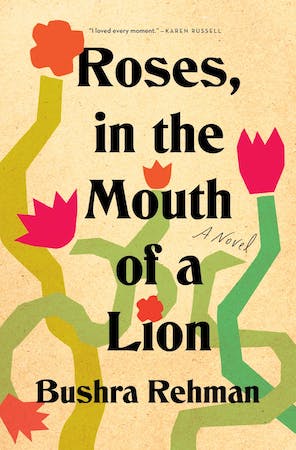
My novel, Roses in the Mouth of a Lion, takes place in my home neighborhood of Corona, Queens. The main character Razia is a young Pakistani woman growing up in a tight-knit Muslim community. She prays five times a day, reads Quran and goes to extra religious service on the weekends, all the while wearing skin-tight acid wash jeans, feathering her hair and wanting to date boys break-dancing in the schoolyard.
Razia’s father owns a butcher shop, Corona Halal Meats. It’s on the same block as a Jehovah’s Witness Kingdom Hall, an Episcopalian church and a masjid Razia’s father and uncles are building. Razia’s closest friends are from the neighborhood and they tend to find trouble everywhere they go. When Razia is accepted to a high school in Manhattan and leaves Queens and her childhood friends behind, she makes a new friend, a young woman she is deeply attracted to, and she realizes why she’s always felt different from her community, even her best friends.
Roses, in the Mouth of a Lion is a book for anyone who’s ever had to leave the world they grew up in to be who they needed to be. It’s a book for those who remember what it was like to be queer and not have the words to express it, those who struggled to reconcile their religious faith with their desires. It’s a book for anyone who wants to feel the pure sensory experience of living in Queens in the ‘80s.
Here are 7 books about living and loving in Queens by writers of color:
There can be no list about Queens that doesn’t include Ishle Yi Park, the first woman and first Asian American poet laureate of Queens. In Angel & Hannah, her gorgeous novel-in-verse, we follow the story of Hannah, a Korean American girl from Queens and Angel, a Nuyorican boy from Brooklyn who fall in love. They fend for themselves, dealing with addiction, disownment, and poverty. Their love’s song is beautiful to witness. Did I mention the entire book is written in incredible hip-hop sonnets?
This beautiful memoir, a mix of poetry, song and passion, tells the story of Rajiv, an Indo-Caribbean poet growing up in the United States. Young Rajiv longs to know more about his family’s history in India and the legacy of his ancestors who were indentured laborers working on sugar plantations in Guyana. When he comes to New York City to stay with relatives in Queens, he discovers a community of queer brown activists who share his longing for the past but are also looking towards the future. But even here, Rajiv feels like an outsider. When his cousin outs him as an “antiman”—a Caribbean slur for gay men—Rajiv is disowned by his family. Healing this pain through music and poetry, he embraces his identity and claims his status as an antiman—forging a new way of being entirely his own.
In Mama Phife Represents Cheryl Boyce-Taylor pays tribute to her departed son Malik “Phife Dawg” Taylor of the legendary hip-hop trio A Tribe Called Quest. This book is a gorgeous tapestry of narrative poems, dreams, anecdotes, and treasured fragments including journal entries, letters, drawings, hip-hop lyrics, and notes Malik wrote to his parents. Boyce-Taylor’s incredible gift for poetry and the depth of this mother-son relationship is a treasure for fans of both artists. In this moving collection, we follow the journey of a mother’s grieving heart.
The Girls in Queens is a skillful novel about female friendship, the secrets we keep, the loyalties we hold, and the reality that we may all know a sexual predator, whether or not we want to admit it. The girls in Queens in this book are Brisma and Kelly, best friends who protect each other. They are each other’s mirrors, at times kind, at times cruel. When they discover a friend and former boyfriend from their community is a sexual predator, their loyalties are divided and they make drastically different choices on how to move forward. An essential book in this time of reckoning.
Ly Tran is a child when she immigrates from a small town in Vietnam to Queens. As Ly navigates the landscape of her new home in New York City, she works long hours as a manicurist alongside her mother and tries to do well in school. When her eyesight weakens and her father forbids her from getting glasses, calling her diagnosis of poor vision a government conspiracy, Ly struggles to know how to move forward. Her father spent nearly a decade as a prisoner of war in Vietnam and his trauma is held by the family with compassion, even when it wounds them. Ly is a brilliant writer and the deep honesty of this memoir reminded me so much of the vulnerability and pain that is often part of being a girl from Queens.
This creative and energetic novel brings readers into the lives of a group of friends—young women of color growing up in Queens. It’s a collective portrait, written in the second person, a record of the forces that bind friends, families, and communities. As the friends in Brown Girls navigate schools, marriages, motherhood and professional accomplishments, they return again and again to the circle of their friendship and to their hometown of Queens.The passion of their friendship beats at the heart of this book.
This book is laugh-out-loud funny, compelling and heart-wrenching. Alejandra Kim’s family is from the Korean diaspora in Argentina and it’s not easy for her to fit into any box, whether it’s in her fancy Manhattan private school where she is a scholarship student or her Jackson Heights neighborhood. Alejandra has just lost her father, and she feels she must hide this deep pain, even from her closest friends and especially from her mother who is numb from overwork and grief. When a microaggression at school thrusts Alejandra into the spotlight, she must make a difficult decision and decide who she can trust and who she must be for herself and her family.
Hi everyone! Dorian here, back with another vlog. You all were absolutely blowing up the comments section on my last video with things like, “Dorian! How do you look so young?”, “What’s your secret??”, and “It is not humanly possible to look this good for this long.” So flattering! I wanted to give you guys a thank you for being such dedicated subscribers, so today let’s dive into my skincare routine!
You have to start off with a clean face, so to begin I usually go in with gel cleanser first to get all the dirt and grime, and then a micellar water as a softer way to clean up any residual gunk. Next, have your friend Basil paint a portrait of you.
Now I know, I know, this part is a splurge. Not everyone has an artistically talented friend who idolizes you so much that their adoration practically spills out of the painting, and even the ones that do may have to cough up some dough for a really good portrait. But trust me, I’ve tried a lot of different things to keep my face looking fresh, and this is the one part of my routine that is non-negotiable. You won’t believe the results.
While you apply the toner, pledge your immortal soul to the painting.
Ok, moving on! After I cleanse my skin I use a nice moisturizing toner. This is great for hydration which is important to me because I have very dry skin. While you apply the toner, pledge your immortal soul to the painting. Beg it to absorb any sign of age or sin so that you, yourself, can remain youthful and untouched by the wrinkly, gnarled hand of your own wicked nature. Once you’re done with that, you can fan your face a bit to help the toner dry. I know I look soooo silly right now but just trust me!
So now your face is clean and toned and it’s serum time! A lot of people skip this step, but finding a good serum works wonders! I love this peptide serum in particular because it’s great for anti-aging and making the skin feel plump and springy. By now, you have no doubt done something terrible, like ruefully scorned a lover or acted in a selfish manner—I know because I have! If you look closely, you’ll notice that the painting has changed expressions and now mocks you with a sneer. At this point, I typically pop that baby in the attic so that no one else can be horrified by its transformation. Again, people sometimes want to just skip this step, but I find it’s really important to hide the proof of your iniquity from your friends and family.
Now that your skin has gotten all its vitamins and nutrients, you should be feeling fresh and clean. For makeup, I’m going to start with a foundation base, and I use this long-lasting one for full coverage. The long-lasting part is really important for me because I need my makeup to stay put all throughout the night. If you’ve seen any of my other videos, you know that when I go out, I go out, so I need a foundation that can keep up, ya know? If you can’t get this particular foundation, a drugstore foundation is also totally fine because, again, your painting in the attic is going to be taking most of the damage anyway.
Is putting my soul in a painting safe? Does my insurance cover it?
A lot of people ask, is putting my soul in a painting safe? Does my insurance cover it? Will people be able to tell I’ve had work done? And the answers to that are yes, no, and you won’t even care because you’re going to be looking like an absolute snack and they’re just jealous.
Finally, I like to finish my routine with a little powder foundation just to give my skin that matte look. Don’t want to be out and about with my face looking all oily! Now, if you’ve been engaging in a lot of hedonistic activities, just one bacchanal after another of carnal delights, you’ll notice that your picture looks pretty hideous. This is totally normal! You’ve been fucking and sucking your way through London, and all that action is bound to take a toll.
At this point you should be feeling pretty guilty and wanting all the proof of your atrocities to disappear. So you’re just going to grab a knife and lunge, blade-first, at the painting that now mocks you and your hypocrisy. Be careful you don’t have any leftover toner on your fingers, or else the blade could slip and you could accidentally stab yourself in the chest. If this happens and you are suddenly made into the crumpled, horrid being you have always known yourself to be, take solace in the fact that you’ll soon be dead and therefore will not have to suffer being ugly for long.
Thanks so much to Superficiality for sponsoring my video today, be sure to check out some of their other great products like sexism and The Kardashians!
When I first started dating my partner, I mentioned to his family that I was from Fort Wayne, Indiana, a town famous for having a mayor named Harry Baals (pronounced the dirty way) and for being, according to Men’s Health magazine, the third most sexually satisfied city in America, three years running. Despite being armed with such noteworthy trivia, my boyfriend’s parents still insisted on telling their friends I was from somewhere in Nebraska. Maybe Illinois or Iowa, they said. One of those flat, forgettable states with a lot of corn and a vaguely backward population that seemed to subsist solely on a diet of mayonnaise-based casseroles and basketball. My almost in-laws are lovely people, by the way. Not a bit snobby or inattentive as a rule, but they were born and have lived most of their lives in Oregon. Until I came around, they hadn’t mingled much with Midwesterners, so to them, one flyover state was as good as another.
That kind of casual dismissal used to bother me, used to rankle, and I would go to great lengths to prove my individuality and defend my home state against any perceived slight-slash-indifference. Now, though? I mostly let it go. I’m older, I’ve mellowed, and I’ve also come to believe that being written off by whole swaths of one’s countrymen can actually be a boon, particularly if you’re a writer. There is no more fertile territory than the unknown. The writer Michael Martone, also from Fort Wayne, often puts it this way: most readers know more about India than they do about Indiana. That means Hoosier writers have the chance to introduce the wider world to the state’s northern lakes, central plains, and rugged, southern hills and to the complex, fascinating, and funny people who live there. What a privilege.
Stories set in Indiana have a special place in my heart and on my bookshelf. Here are just a few of my favorites.
The words “heart-wrenching” and “wondrous” and “powerful” and “richly observed” have all been used to describe this award-winning memoir of family, Black girlhood and Black joy, racial strife, and self-actualization, and they all apply. All of those words and then some. Ford, a Fort Wayne native, writes of growing up without her father—during her formative years, he was serving time in a local prison—and of working tirelessly to earn her mother’s love. When Ford is sexually assaulted by a boy from her school, she learns the truth behind her father’s imprisonment: he is in jail for rape. Rather than allowing this realization to tear her world apart, Ford makes herself whole through the act of writing. This book is as inspiring and enthralling as it gets.
Read enough books set in Indiana, by Indiana writers, and you’ll start to notice the rust. The rust and rot and despair at the center of things, and that’s because the state used to be one of America’s most productive industrial hubs. Well-paid manufacturing jobs were everywhere… until they weren’t.
In this luminous National Book Award-winning debut, Tess Gunty takes us to the fictional town of Vacca Vale and the affordable housing complex, La Lapinière, commonly referred to as the Rabbit Hutch, where a smart and ambitious young woman named Blandine ruminates on Christian female mystics and ponders an act of eco-terrorism. Without resorting to spoilers, I’ll just say that a picture is worth a thousand words, and if you’ve noticed this book’s title being bandied about for some of the top awards in publishing, that’s no coincidence. It manages to achieve that much-sought after but rarely realized goal of an ending that is both surprising and inevitable. I can’t wait to see what Gunty writes next.
If you thought Sherwood Anderson’s Winesburg, Ohio was a smoldering study in Midwestern dreams deferred, imagine a larger cast of characters transplanted to a post-industrial Indiana town where everyone’s lives are thrown into disarray—and often discontentment—by the closure of the local eraser factory. Then you have some idea of the unique magic of Michael Martone’s Plain Air: Sketches from Winesburg, Indiana. Martone has become one of Indiana’s most beloved writers, next to Kurt Vonnegut and Gene Stratton-Porter, thanks in no small part to his intimate knowledge of the workings of the human—and Hoosier—heart. Plain Air is soulful and funny and deft and anything but plain. It crackles and sparkles like fireworks over knee-high corn and then falls back down to earth in embers to burn there in secret.
Hoosiers often refer to their capital city as “India-no-place.” It’s a gentle dig at its modest nightlife and overall mild vibes, but anyone who’s read Maurice Broaddus’s take on the town might beg to differ. In his hands, Indianapolis is unrecognizable, but for a few familiar place names. Set in a vague, dystopian future after America lost the Revolutionary War, Pimp My Airship follows the misadventures of the poet Sleepy, his sidekick, (120 Degrees of) Knowledge Allah, and a privileged young woman named Sophine awakened to the politics of oppression when her father is murdered. Broaddus brings his characters and all the disparate, shining threads of the story together in a big and beautiful masterstroke at the end. Never has Indianapolis seemed more steampunky.
The dolls on your great aunt’s guest bed are creepy, sure, but they can’t hold a candle to the roaming— and headless—dolls that haunt this beautiful and strange collection from Indianapolis native Susan Neville. Neville, a professor of creative writing at Butler University and the author of The Invention of Flight, Indiana Winter, and the Flannery O’Connor Short Fiction Award-winning In the House of Blue Lights, imbues these stories with just the right amount of magic realism and lyricism, as well as righteous anger and no-nonsense grit. In “Here,” one of the book’s standout pieces, a grieving mother lashes out at war plane flying overhead. In another, “Plume,” a politician skips town, poisoning the place in his wake. Neville’s world of ghostly robots and misunderstood marionettes pining for a different life would almost defy description if it weren’t somehow so viscerally familiar.
First things first, it doesn’t get any more Midwestern, any more Hoosier, than insisting that your town is full to the brim with good people. We’ve all heard the shopworn line, “things like that just don’t happen here, not in our nice, tight-knit community.” Ashley Flowers, known to her legions of fans as the host of popular podcast Crime Junkie, is more than happy to set the record straight in this transporting, fast-paced novel about murder and memory set in the small town of Wakarusa.
Margot Davies, a Wakarusa native and a successful journalist, returns to Indiana to take care of her ailing uncle. Soon, she’s swept up in the investigation of two murders, one of which took place when she was still a young girl. Spoiler alert: the ending’s ambiguous, but it’s clear that Margot learns some hard lessons about herself and the pleasures and perils of going home again.
In my humblest of opinions, no list of noteworthy authors writing in or about Indiana is complete without Jean Shepherd, the Hoosier humorist best known these days for being the narrator of the perennial holiday favorite, “The Christmas Story.” You know, that wacky comedy about Ralphie and his tireless— some might say problematic and unhealthily obsessive—quest for a Red Rider air rifle? The movie is based on a handful of linked narratives that form the heart of this zany, sweetly observed novel based on Shepherd’s Hammond, Indiana childhood. Framed as a very long conversation with a very patient barkeep, In God We Trust is a hilarious and tender sendup of family, home, and the seductive powers of nostalgia.
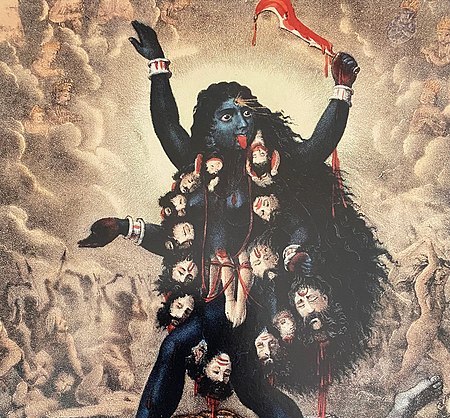
Nivedita, a mixed-race graduate student in Dusseldorf, has it (kind of) figured out. She runs a popular online blog about being a mixed-race German woman and has a staunch support system in her cousin Priti and an ok boyfriend. Most importantly, she studies with Saraswati—a hot, hotshot, woman-of-color professor who teaches her everything she needs to know about postcolonial studies. Saraswati is the glamorous professor we all dream of studying with, the type who “stare[s] straight at the camera lens, her lips pursed like she was about to blow a kiss, as if she’d just said Foucault.” But Saraswati turns out to be white, not South Asian. Identitti, translated from German by Alta L. Price, follows the chaotic unraveling after Saraswati is outed, complete with unexpected alliances, cultural theory rabbit holes, and goddess hallucinations.
Sanyal, who received a PhD in cultural history and is the author of two academic books (Vulva and Rape), is an expert at upending assumptions about race or identity politics. Weaving in Twitter replies, blog posts, and childhood memories amidst the Saraswati chaos, Identitti is a hilarious and polyphonic roller-coaster ride.
It was a joy to connect with Mithu Sanyal over Zoom, where we talked about the German language for ethnic identities, collaboration within social media platforms, and writing about the mixed-race German experience.
Jaeyeon Yoo: What is this novel about for you?
Mithu Sanyal: Everybody always thinks it’s a book about cultural appropriation, and it’s actually a book about being mixed race. I needed the cultural appropriation story as a catalyst to tell the story of being mixed race. My first draft was just Nivedita and Priti, and their relationship. I was kind of running in circles, but once there was this thing on the outside (of the Saraswati case), it was so easy to tell the story. In Germany, we just haven’t got any literature about being mixed race or post-migrational literature. Rather, of course we have it, but not in the mainstream.
In Germany, we had this law that you could only become German if you were of German blood, if you had a German father, originally. When I was born, I couldn’t get German citizenship because my mum had a German passport but my father did not. My mum was one of the feminists who fought for the right to give their children their nationality. The idea was that being German was something inherent, and that these [non-German] people go away again, these people don’t exist.
When I was born, I couldn’t get German citizenship because my mum had a German passport but my father did not.
In the last twenty years, we’ve changed the laws about nationality and how you can get a German passport—you can get one by being born, and by living here, what else? But the idea that these [mixed race narratives] are German stories, they’re just as much our stories as well: that didn’t exist for such a long time. When I was writing the novel, I found out that Thomas Mann [a canonical German author] is mixed race as well. His mum is from Brazil, but nobody tells you; so, he is seen as this incredibly white German guy. But in all his novels, he writes about it—for example, his father gets the mum from “the bottom of the map.” Thomas’s brother Heinrich, he wrote a story called “Between the Races” about his mother. It’s a novel in plain view, but you’re not taught it. Being misled is a part of Germany’s history, but also of German literature, and we don’t see it immediately. It’s like: what you don’t know, you can’t see.
JY: Given this context, I found it fascinating in that you make us question our assumptions about what “mixed race” even means, especially the “race” part. What was it like, to write a work that was so self-reflexive—constantly deconstructing these concepts that it focuses on?
MS: Right now, everybody is talking about identity politics. But when I was writing the novel in Germany, that was a year or two before, it was just one of those terms nobody used. It was like taking something really dusty. In a way, this gave me a freedom because I was not so afraid about any backlash. It was still quite a cozy niche to write, and asking those questions [about identity politics] were easy because I wasn’t afraid of being canceled or anything back then. And that has changed, really has changed. But by now, I’ve got a kind of a name that people don’t think I’m just [writing Identitti]as a subterfuge to get rid of these discussions. Because I really think the discussions about cultural appropriation are incredibly important. Even with my nonfiction books, the themes were always part of a left wing or feminist or anti-racist group. But, at the same time, it is incredibly important for me to challenge our own assumptions. Not from the outside, not saying “Oh, aren’t you crazy? Stop doing what you’re doing.” From the inside, because I believe if we want to do what we’re doing better, we’ve got to constantly question ourselves.
I’m genuinely interested in how the book is going to be received [by Anglophone readers]. I’m not condemning Saraswati: that is the whole point. That until the end you stay unsure where you want to jump. I do know people who have read the novel and really hated her, but I also know people who read the novel and really loved her. And that’s important to me. I really didn’t want to judge her.
JY: Thinking more about the Anglophone reception: Identitti so effectively pointed out how race doesn’t work the same way globally, yet so much of the global language around critical race theory is English. Do you have more to say about the role of English in contemporary racial identity formation?
MS: In Germany, we didn’t speak about race at all after the Second World War. We basically had this idea, “This is what the Nazis did, and I’m not going to touch the subject.” Even the word “race” in German, Rasse, has never undergone this change; in the English language, “race” now means a sociological construct. It doesn’t mean that everybody who uses it knows or means that, but it is a part of the word. If you say Rasse, it just refers to the biological elements. And, sure, there are different human races, of course. So, we’ve had this big debate, because it’s in our constitution that nobody should be discriminated against because of gender, et cetera, and Rasse. But if you take [the term Rasse] down, then you’ve got a problem: you’ve got to pinpoint it. What can you put in instead? It’s really difficult because when you say racism, then you’ve got to prove intent—prove legal injustice in legal terms.
There is a lot of bad sex in German literature, not often good sex. I wanted to have at least one orgasm in a book, just because life isn’t like that—without orgasms or sex
Anyways, we didn’t speak about [race in Germany]. Even in the ‘90s when I wanted to speak about race, people said, “Yeah, but there are no human races, so there can’t be any racism.” And that was the end of the conversation. If I want to talk about it, then I’m racist, because I’m referring to racial constructs like the Nazis. So, you didn’t have a language at all. Then we imported the English language. It was very liberating. With a word like race, we could speak about things. Saying POC was liberating—but POC doesn’t mean the same in Germany. For example, quite a lot of people from Eastern Europe came in the ‘60s and ‘70s. They were called guest workers and so [many conditions] that apply to POCs in America absolutely applied to them, but in America, they would be considered white. I was on a podium once, and the American activist said that there are not enough POCs. But although we were all POC on the podium, she couldn’t recognize us as such because of the cultural differences. [For another example,] in England, I’m Asian—but in Germany, Asian doesn’t mean people from India. It only means people from Eastern Asia and people from Southeast Asia. Even those words don’t overlap. When I was born, the term for people like me was foreigner [Ausländer]. Which is bullshit, because I was born in Germany. I’m not a foreigner. We didn’t have a word for it; we didn’t have the idea that you could be brown and German. It just didn’t exist.
JY: What you’ve just said and some of the passages in Identitti have me questioning: do you think we need to express ourselves through language, in order for identity to exist at all? Put differently: do we need to “narrativize” ourselves, in order to “be” any identity?
MS: I’m not sure whether I’ve got the ultimate answer to that, but I know that I need narratives. When I grew up, I didn’t have a language for people like me. I always had to invent the language and the narrative for myself. Now there’s a lot of language about it, but it also means that we draw new borders. I’m glad that we’re starting the conversations I would like us to have as a society, but to do so in a more loving and friendly way. I’m so glad we can talk about these experiences, but now the experiences have become identities. Being mixed race is part of my experiences, but is it really an identity? Yeah, sure. It is, in a way, but what is an identity? We are starting to have new divisions but, at the same time, it is so nice to not to have explain yourself completely—which is like a burden being taken away. John McWhorter says in The Language Hoax that we overestimate the value of language, that it can’t really change that much. I agree to a certain extent: we’ve got to change laws and realities and working realities and all this—not just with language, to do something. What my job as a novelist is that I create narrative. I create stories. I’m trying to help change laws, but I haven’t been very successful. I have been quite successful in creating stories, and I always think that we need both narratives: the narrative of what’s special about certain groups, but also the narrative about what we all share as humans.
I also thought Identitti also really probed at our ideas of desire: what we find attractive, what we find erotic. I wonder if you see this theme being in conversation with your other books [which focus on depictions of vulva and rape]?
MS: Definitely. Sexuality is an integral part of life. And it’s so weird that it doesn’t play the same role in literature very often, especially in German literature. There is a lot of bad sex in German literature, not often good sex. I wanted to have at least one orgasm in a book, just because life isn’t like that—without orgasms or sex—and also because that’s the kind of person that Nivedita is. She’s young; she’s an intellectual but she receives the world very much through her body. So, it was important that this aspect was in the narrative. For readings, I’ve noticed I usually read the one scene where she finds Saraswati’s speed vibrator and masturbates. I also like the idea of [emphasizing] masturbation because I still hear people say, “Oh, women don’t masturbate.” The scene also shows their relationship, because there is a lot of crossing of borders that Saraswati does. On the other hand, it was very important that they never had sex with each other and have some borders that were not crossed.
JY: I loved how you solicited your friends for essays on a (fictional) scenario within the book. I made a mental note—if I want to include smart writing, coax my friends to write smart insights for me! I wondered if you could speak more about the role of collaboration in your writing?
MS: I don’t believe in the idea that we as authors are writing a novel on our own. I’ve been trying to write this novel for years and years now, and it never worked because the discussion, the discourse wasn’t that around. The internet was one of the characters in the book, and I can’t write the internet. It’s this many-headed monster in a way or a great choir. So, I just thought, “I’ll ask people and then I don’t have to write it. This is brilliant.” And it was initially the other way around. Because the book hadn’t been written, they didn’t understand me at first, [asking,] “So you want me to tweet about something that hasn’t happened?” So then, how can I log on to the internet in the book? Basically, all these two-liners [of fictional internet] took me an hour on the telephone or longer to explain. But after I started getting the ball rolling, I wanted to do loads of different things. I wanted to have all these different voices, and also to test: would this be an issue in Germany?
So, I asked them to write in the way they would write without thinking much about it—how would you react to it emotionally, at night, if you just read it quickly? Then I started asking people I didn’t know or my friends I knew via the internet. And that was so amazing. Very many people just donated tweets to the book, even though they didn’t know me personally—they knew of me from the internet or from my books and articles. This trust in me, that was so lovely and added new things; the tweets enhance the reading experience. Some of them are incredibly funny! I couldn’t have written that—not just the content, but also the style. They’re all written in their own way. The first reviews on Amazon, for example, people were saying, “Mithu is so good at mimicking the words and recognizing the way people write on the internet.” But obviously I wasn’t mimicking them, they’d written them.
JY: Do you have other thoughts you’d like to share about Identitti?
MS: I hope it will be different with the English translation than how it was received in Germany. Basically, the book has been received as autobiographical here, which is weird. This really is a novel. I don’t write autofiction, although I do appreciate it, and it’s a different genre. If people expect autofiction, they will be disappointed. And who am I? I mean, I’m not twenty-five. I’m basically Saraswati’s age, but I’m definitely not a white professor passing as a POC, so who do you want me to be?
JY: At least in the US, I’ve found that—generally speaking—if someone is not white and/or marginalized in some manner, then writes about that issue, people are going to automatically assume that it’s autofiction. It sounds like German audiences had a similar reaction to your book.
MS: Absolutely. I think there’s still this idea that being white equals being universal. That if you tell a white story, it’s a universal story; if you’re marked in any way, then you’re talking about yourself. When I started reading, all the books I was reading were about people who are really not like me, so I was bridging that gap and that was good. But then, when I read the Buddha of Suburbia for the first time—even though it’s such a different book from my life—it was like reading yourself for the first time and thinking, “This is so close to me.” And that was a relief. I think we need to do both in reading and in any other intellectual endeavor: we need to find ourselves and we also need to understand how others project themselves into the world. Once you understand and learn from yourself, it is a lot easier to look at the world.
“Is This How You Eat a Watermelon?” by Zein El-Amine
The kidney was secured and the doctors were ready to operate on Ghassan the following morning. But right now not one, not two, but three doctors stand at the foot of his bed. Ghassan is tired and nauseous but the sight of them amuses him. When they begin to talk, he narrows his eyes and melds the triplets into one body. The fact that their speech was rehearsed and sequenced for maximum effect, as if coordinated by one body and communicated by three heads, helps enhance the illusion. The doctors are channeling his older brother Kamal, the Minister of Labor. He can see Kamal sitting in their office, knee over knee, his bodyguard stoic beside him, giving the three-headed hydra stern instructions on how to approach Ghassan. “You have to handle him like an adolescent, he is in his forties but he is a child,” he might have said. Each doctor has dealt with Ghassan at one point or another in the past few years because of his various health crises: kidney failure, liver problems, diabetes, and high blood pressure. So they knew how to deal with him, but they would have been obliged to sit and listen and pretend to take notes out of fear of the minister.
Ghassan loves his food, his drink, and his family, or shall we say, families. His first wife was a Lebanese woman, Souad, a childhood friend who was always amused by Ghassan’s carpe diem attitude that infuriated his family. She saw this as innocence, not immaturity, nor recklessness, and adored him for it. She gave him three kids, two boys, and a girl. Ghassan was in his element when he was with his children. It allowed him to roll on the carpet, play in the mud, be a ravenous eater, and liberate his inner Tasmanian devil. This caused problems sometimes, especially during weekends spent in the south, in their home village of Assawane. Having the wilderness nearby, with its climbable fig-trees, abandoned forts, hidden wells, renegade beehives, scorpions, and snakes, raised the risk of Ghassan’s antics. However, he did not need to leave the house and put himself at risk, he can do wild all by himself.
Take for example the watermelon incident. One day Ghassan was sitting playing checkers with his youngest daughter Huda, who was seven at the time. They were in the courtyard of Ghassan’s ancestral village home and were using the backside of the backgammon box to play. Souad brought out a tray of watermelon slices. It was a June afternoon of bearable dry heat, so they sat in the cool shade of an old lemon tree that arced over them, laden with lemons. Ghassan looked up and saw Huda nibbling along the top of this red semi-circle of a slice that dwarfed her face.
“Is this how you eat watermelon?” he asked. She looked at him puzzled and waited for clarification.
“Is this how you eat watermelon?” he repeated. She started to worry, as he was not using his usual terms of endearment.
Then he added, “Do you eat it like this?” and imitated her nibbling. Huda looked back at her mother for help and caught her stifling a laugh.
“Do you eat a big slice of watermelon like a bird, like this, nm nm nm?” he pecked at his slice with his nose, pinkies raised.
Huda broke out in a smile that prompted Ghassan to explain. “You eat it like this, like a goat,” and Ghassan went into typewriter mode, chomping wildly at the slice from one end to another, watermelon seeds flying left and right. So daddy’s girl took the tip and ran with it, imitating him, putting her whole face into her slice of watermelon, filling her mouth and nostrils with it, digging in deeper until the rind curved up around her face. She looked up at her father with a long red smile that extended up to her ears, watermelon seeds entangled in her curls. He rewarded her with a pat on the back and kiss on the top of her head.
Two days later the family was back in Beirut. They arrived late at night and Souad put the kids to bed. She returned to check in on them and noticed that Huda was snoring. She joked about it with Ghassan, “She is even taking on your snore, God help us.” A week later Huda was feverish and was having difficulties breathing at night. They called the family doctor and he diagnosed her with asthma and prescribed some holistic treatments including weekends in the mountains.
But two weeks later Huda was still laboring with her breath, day and night, so they took her back to the doctor. This time, the doctor located the problem with a cursory examination.
“There is a seed lodged up her left nostril,” he told Ghassan with a smile and a shake of his head, “The damn thing is sprouting!” The doctor anticipated Ghassan’s accustomed hearty laugh, but Ghassan just stood there with a look of terror on his face. “I can take it out right now without putting her under,” the doctor added.
Ghassan crouched in front of Huda, pinched her cheek, and said, “It won’t hurt habibti.” The procedure took less than half an hour. The doctor put the extracted seed in a jar and told Ghassan that he should keep it to preserve this memory for her. Years later, when Huda will leave home to attend Lebanese American University, she will take the jar with her.
One night, as Ghassan was plowing his way through a mezze table at the Barometre, the owner introduced a Palestinian debke troupe and announced that they will be a regular Friday gig. One of the dancers caught his eye—a woman dressed in a traditional black dress with red and green tatreez embroidery. He noticed how serious and focused she was as she waited to get in the circle and how she came alive as soon as she entered the fray and led the troupe. Ghassan’s cousin Ali noticed his attentiveness and introduced them after the performance. The woman, Rana, did not take to him right away, mainly because Ghassan was uncharacteristically uptight in her presence, and partially because Rana was not putting up with any posturing from strangers that night. Nevertheless, Ghassan was smitten and he woke up thinking about her the next morning. He started to keep track of her through Ali, turning every topic of conversation between them into an inquiry about her. Beirut being Beirut allowed him to have many “chance encounters” with Rana: at movie festivals (although Ghassan did not have the patience to sit through foreign films), book fairs (although Ghassan was not a reader), and benefits for the refugee camps. Eventually, after several of these “accidental” encounters, she started to notice him and warm up to him. His humor began to flow easily and she responded with her mode of flirtation—merciless sarcasm that whittled away at his charm.
Several months later, after one of her performances, Rana sidled up to Ghassan at the bar after changing.
“What can I get you?” he asked.
“Tonight is not an Almaza beer night nor is it a Johnny Walker night, tonight is an Arak kind of night.”
“Oh really?” Ghassan replied.
“Yes, definitely an Arak kind of night,” Rana asserted, slapping the bar with every word for emphasis.
“And why is that?”
“I don’t know, maybe because the world doesn’t matter to me tonight.”
They drank Arak and snacked on mixed nuts. He kept his ego in check, she tempered her acidic critiques, and they were connecting for the first time. At a pause in the conversation, she looked up at him in silence, closed her eyes for a second and looked down at her drink, and up at him again. She asked him for a cigarette. They stepped out in the courtyard, which was under renovation at the time, and into the blaring horns of Beirut. She went through the cigarette so fast that Ghassan had a hard time keeping up with her. She dropped the butt to the ground and stepped on it with the force of a dabke stomp. He followed suit, assuming she wanted to go back inside, but when he looked up from putting out his cigarette her face was inches away from his. She cradled his head with both hands and kissed him. What stayed with him from that night is not so much the kiss itself but the way she held his head. She stepped away as violently as she had surged at him, a strand of sweat-swept hair across her brow, her V-neck linen shirt askew, olive skin twinkling in the streetlights. She told him that she was in the mood for “the village,” for the rural South. It was past midnight on a weeknight so he assumed that she was hinting at a weekend trip and offered to take her on one during the coming weekend. She fixed him with a serious look and said, “No, I mean now, I am in the mood for the village now.” It took him a minute to understand what she was proposing but when he did he put down his drink, took away hers, and headed for the door. She was behind him, pretending that she was not following, stepping on people’s feet while apologizing left and right.
They drove on the coastal road with the Mediterranean to their right, the flash of the moon panning the ocean, riveted by their reverie. They went through Sidon then skirted Tyre in a record hour and headed southeast from there. The car hugged the hills, the valley close enough to make one dizzy, no guardrails, no markers, and no lights. The sea breeze—cooled by the limestone cradles in the foothills—moved through the car. They drove through the villages of Jouaiya and Deir Kifa until there was nothing but the narrow ribbon of road laid across rolling hills. As they rounded an arid stone-pocked hill, a moonlit cornfield opened up in yellow glory. Even before the car came to a full stop, Rana bolted out and ran into the field. Ghassan ran after her. She kept disappearing and reappearing in his path, black hair moving among the blonde silk-tufted cobs. Then the clothes started coming off. Ghassan lost sight of her but followed a trail of garments: a tossed white linen shirt rendered fluorescent in the moonlight, a bra snagged on a stalk. A shed shoe almost nailed him in the head, and a pair of deflated jeans served as the last marker on her trail. Ghassan started stripping too, tripping over himself with every item, shedding clothes that he had bought that same week: pointed-toe cowboy boots from Red Shoe, a Pierre Cardin linen shirt, and charcoal Guess jeans from the GS store. He found himself naked and disoriented for a moment, the stealth rustle of her flight gone. Then he heard her singing a lullaby: “Tick tick tick, yam Slaiman . . . tick tick tick zawjik wane can?”
He found himself naked and disoriented for a moment, the stealth rustle of her flight gone.
He moved towards the source of the song and then stopped as the singing stopped, then it started again: “tick tick tick can bilHa’li‘am yuqtuf jawz wrimaan . . .”
He almost tripped over her laying in the fold of the field, parted corn stalks like an open book on both sides of her. Her skin shimmered with sweat, hips wider than he imagined, breasts gently jiggling as she labored with her breath through laughter. They were voracious in their lovemaking and they were at home with it, nothing orderly about it, nothing graceful, comfortable in its clumsiness, but well punctuated with the synchronicity of its completion. He laughed as she wailed a combination of nonsensical curses that involved God, the Prophet, and Ghassan’s mother; no one left untainted, desecration all around. They lay, in their fuck-flattened clearing and looked up at the sky in silence. Ghassan crawled on all fours looking for his pants, disappeared into the thicket, located the cigarettes, crawled back into the clearing, and jutted his head between her bent knees, two lit cigarettes in his mouth. She laughed and he sat cross-legged like a pudgy little Buddha, the cigarettes sticking out at angles from his puffing lips, waiting for her to stop so he could give her one.
Within months of that encounter in the fields Ghassan left his wife. Although he could afford an apartment in a prime neighborhood anywhere in Beirut, Rana refused to leave the camp where she lived most of her life. Much to everyone’s shock Ghassan moved in with her. So instead of living on the very cosmopolitan Al Hamra street, within reach of his favorite cafe du jour (t-marbouta), his favorite beach club (The Officer’s Swim Club), and the restaurants he loves, he made a home of a second-floor built-up apartment. The place was of questionable structural integrity, precariously balanced atop a general store, entangled on all sides with a spaghetti mesh of illegally installed electric and cable TV wires, a back porch with a view of an open sewer. A small place but a sunny one lit up with Moroccan pastels that Rana had painted with the help of a friend.
Many people thought that this move would force a change in Ghassan’s lifestyle, that Rana would be the one that would tame him and get him to settle. But it took less than a year for him to get back to his old habits. He went back to his daily dips in the pubs and bars, and a diet that consisted of charbroiled meats, raw kibbeh, and dairy-heavy sweets soaked in rose water syrups. He was soon diagnosed with diabetes and started having fainting spells that landed him in the hospital. In the year that followed his diagnosis, Ghassan was rushed to the hospital three different times for various reasons: asthma issues tied to his smoking, liver problems tied to his drinking, and dizziness brought on by exasperated diabetes. Repent, repent, the doctors begged and he just smiled and nodded in his hospital bed. Days after his release he went back to his habits. Relatives would spot him on the streets at night, shake their heads, and mutter to each other, “God help his family.”
Now he sits here facing the multi-headed medics. One doctor—a tanned man, full head of gray, the type that spends his afternoons at The St. George’s Hotel pool-side, playing backgammon—conjures up a look of concern and demands, “We need to know that you are on board.” In return, Ghassan gives a sorrowful nod, pretending to play along.
“Very well, here is what is going to happen after tomorrow’s operation—for at least the next six months you have to refrain from alcohol and smoking. You will be placed on a strict diet for the next year. The list of prohibited foods and suggested meals is here, and I will give it to your family. Lastly, and this is the most challenging bit, you will have to wear a mask over your mouth and nose for the next three months.”
All three doctors wait for a reaction, but Ghassan does not flinch; his pleasant demeanor does not turn murky as expected.
“Are you still with us?” the doctor asks.
“We have to do what we have to do, God help us,” Ghassan answers with a shrug. The doctors leave and, on cue, Kamal calls to say how happy he is that Ghassan has been so cooperative, but turns stern at the end of the conversation with a warning. “The time for playing is over, Habibi. This is serious. Think about Ziad, think about Abdullah, think about Huda, and you will get through it.”
The call from his brother came at six in the evening. At midnight Ghassan goes to the bathroom, gets dressed, walks down the hallway without looking around. By now he is familiar with all the off-the-beaten-path corridors, stairwells, and exits. Additionally, as a resident smoker, he knows that there is a back exit to the hospital that would put him out on the side of the Corniche and that there is a guard there that he must get past. He knows the guard by name, so he salutes him and asks him for a cigarette. They smoke and chat for a bit and then Ghassan hands the guard a roll of twenties in dollars because he knows that he has been paid extra to watch him and call if he were to leave the hospital.
“What is this for?” the guard asks.
Ghassan winces as he sucks down his cigarette and answers, “For your memory loss,” in an exhale of smoke that wafts over the guard’s face. The guard hesitates, but Ghassan signals at the rolls of dollars to help him decide. The guard nods at Ghassan and opens the back gate.
Apparently fear of the minister trumped the sum of the bribe because the guard ends up calling Kamal anyway. The minister’s personal bodyguard, Mimo, is dispatched to locate Ghassan and get him back to the hospital. Mimo was a childhood friend of Ghassan who had actually given the bodyguard that nickname when they were teenagers. Mimo’s real name is Muhammad, a man with such a massive body that he carries his own climate. He has the brawn of a bouncer and the brains of a sleuth. It takes him three days to locate Ghassan. A tip from a bartender at the B-018 bar comes at five in the morning and Mimo puts in a call to Kamal and then to Rana. It is Rana who gets to the location first but cannot figure out where the bar is. She scans the buildings for signs of commercial stores but they are all residential. As she crosses a clearing between the buildings, she spots Ghassan emerging from the B-018. When one says, “emerging from the B-018” it literally means rising out of it, as the hip bar is a converted underground bomb shelter with a concrete roof that is flush with the ground. Its roof is equipped with hydraulic pistons that tilt up the massive slab to allow for a view of the sky and the stars. It was not unusual to see people staggering out of the B-018 in the early hours of the morning but this was way past closing time. Ghassan walks in her direction but does not recognize her until he is a few feet from her. There is no exchange of words, just a look of exasperation branded on her face. He puts his arm around her for support. They walk towards the car quietly, she holds him around the waist and he leans heavily on her. She opens the door for him but he stands there looking at her. For a moment, he is focused, and asks, “Where are we going?”
“Home,” she says.
“Home, home?” he asks.
“Yes, home home,” she answers.
“Not home hospital?” he asks.
“No, home home,” she repeats in resignation.
Rana starts up the car and Ghassan slumps against the passenger door. “I am in the mood for the village,” he mumbles.
“Really,” Rana answers, stopping the car.
“Yes really, let’s go now. I don’t want to go into the city.”
Rana turns around and heads to the coastal highway. Ghassan rolls down the window and manages to heave himself high enough to prop his chin on the door and let the wind run through his curly hair. Just past the airport, south of the city, they pass a mountainous pile of concrete rubble. “What is that?” Ghassan asks, nodding towards the pile that blocks his view of the sea.
“You don’t know?” asks Rana.
Ghassan narrows his eyes as if trying to recall something.
“How many times have you passed this in the last five years?” Rana asks.
Ghassan doesn’t answer and tracks the dumpsite as they clear it.
“It’s the rubble from the 2006 war. They hauled it out here when they were rebuilding and haven’t done anything with it yet,” explains Rana, ”you’ve passed it every weekend since then and you never noticed it?”
“Pull over,” Ghassan says, yanking on the door handle.
“What is it?” Rana asks.
“Pull over, I am not feeling well,” Ghassan yells as he opens the door and waits for the car to stop.
He runs down to the sandy beach and stoops over, hands propped on knees. Rana looks at him through the open door then turns her sight to the Mediterranean as he starts to retch.
Nov 1: Maybe I’ll just get some bad first drafting done, and that’s okay! Happy to be focusing on my writing this November.
Nov 2: Realized I have no plot. It needs more vampires . . . ? Sign up for acupuncture, cupping, and salt therapy to tap into my source energy.
Nov 4: Order five new journals to “help with the process.”
Nov 5: This is definitely harder than having a newborn. Canceled all my freelance projects so I can focus. Read a listicle on RealSimple about brain foods and decided to eat only blueberries and bananas.
Nov 8: Twitter tells me vampire sex sells so I’m marathoning True Blood for the fourth time.
Nov 9: Going deeper on research. The piles of books are making it hard to walk through the house. Hubby refuses to eat only fruit but I have to for mental acuity. Earmarked for our couples therapist in December when I have time to attend sessions.
Nov 12: Researching romance, rom coms, and true crime has led me to believe I should consider becoming the literary Tinder swindler to flesh out my plot.
Nov 13: 1,667 words a day is too much. Foraging for mushrooms has got to be easier, at least if I found some I could micro-dose.
Nov 15: Abandoned plot and decided to write an experimental novel. Cranked out 2,000 words today on my sensual dreams about eating chowder with Alexander Skarsgård. Suck it, Melville.
Nov 16: Call parents to discuss my masterpiece. They say the check is in the mail and hang up.
Nov 19: My border collie was accidentally crushed today when he ran under the pyramid of books in the living room. Going to try cats.
Nov 20: Spent day at the animal shelter but all cats have already been rescued. Just my luck, three other aspiring novelists got here first.
Nov 23: EMDR session to relive childhood trauma and mine my own psyche for unimpeachable content. I will NOT be canceled by YA Twitter.
Nov 24: Revisit email list of 200 from wedding to solicit beta readers. Queried every agent in Writer’s Digest. My novel might not be finished yet but they are going to want to get in on this early.
Nov 26: Forgot I left the stove on and lightly burned down the house.
Nov 27: Left son at the fire department after preschool to figure out my ending today. CPS coming tomorrow, but I have a vision now . . . Worth it.
Nov 29: Today a divorce attorney served me. He mentioned my hour-long livestream bragging about finishing a novel but that’s absurd. It’s not even the last day yet, how could I be finished?
Nov 30: Came out of a fugue state after winning NaNoWriMo. When I looked back at my laptop to read my masterpiece, there was only one usable sentence. It’s Anne Rice, but who can tell?
Dec 1: Now that the fumes have worn off, it’s clear I need more time. Writing a novel in 30 days isn’t really possible, you know? Ordered The 90-Day Novel on Prime. If it worked for Moshfegh, it can work for me.
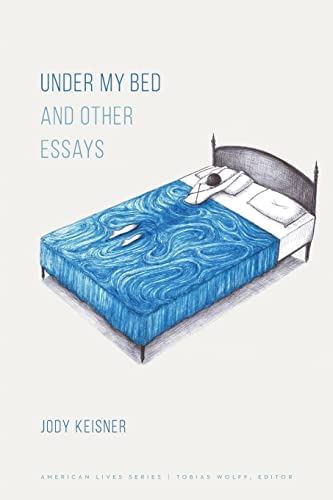
In her debut collection, Under My Bed and Other Essays, Jody Keisner meticulously unpacks her fears, revealing their complex interiors. Her subject matter is diverse, ranging from 1980s horror films to parenting to adoption to wildfires to reincarnation to autoimmune disease to murder. She weaves research throughout her personal stories, which has the effect of ensuring that readers learn something about themselves and what it means to be human.
The collection is set primarily in Nebraska, but Keisner’s observations move beyond the general sense of the Midwest. She brings us murky man-made lakes as places of refuge and homes made of earth that look like bunkers. The location that most reverberates is that of the family unit. Keisner has many identities—daughter, granddaughter, wife, and mother—and each role requires something different from her; as a mother, she finds that she is best equipped to contend with the question of fear and what to do with it.
I spoke with Keisner over a series of emails about the genesis of her book, adoption conversations and what they are missing, and how she turns fear into action.
Sari Fordham: I loved this book and was so taken by your candor throughout. The collection is about fear, but it takes a lot of bravery to write so honestly about such a disdained topic. Was there a story that you had to talk yourself into writing?
Jody Keisner: I had to talk myself into writing the first chapter, which eventually became the title of the book. I was ashamed of my seemingly irrational fear of intruders and my compulsive nighttime “checking” of locks, behind furniture, under my bed, etc. Before I began writing about my fear and better understood where my bizarre behavior came from, I viewed both as a weakness, a childish preoccupation. I didn’t want to expose this particular weakness to the public, and I also feared that writing about it would become a self-fulfilling prophecy, as if my essay would manifest as an intruder. (I know. I know.) Of course writing about it helped me to see that my fear and other women’s fears of being alone at night aren’t all that irrational or childlike. While our reasons are as varied and complex as our experiences, they are also largely related to our awareness of the threat of violence from men.
A couple of months ago, I read this tweet asking how people made themselves feel safe at night if they lived alone. About a hundred people replied–mostly women–with answers ranging from knives under beds, chairs barring doors, dogs, guns, alarms, etc. I was surprised there were so many of us. For so long I had been ashamed of my “weakness.” Maybe my fear is more common than I realize.
SF: Oh, absolutely! I read the last chapter alone and in a sketchy Airbnb and I actually turned on a light before going to bed. While I knew driving to the Airbnb was statistically much more dangerous than staying in one alone, the idea of someone coming into the apartment felt much more tangible. You write: “Upward of 80 percent of American women will experience sexual harassment or assault during their lifetime.” How do you think this fact shapes female experiences?
JK: Statistically speaking, we women are unlikely to be murdered in our homes at night or while out for a solo jog, two examples I explore in my book. But also statistically speaking, we are likely to be sexually harassed and assaulted during our lifetimes. Too many of us will be raped or suffer domestic violence. Women–and especially BIPOC and trans folks–grow up under the ever-looming threat of violence from men. Frankly, our society doesn’t seem as perplexed by this fact as it should be. To put it bluntly: if white boys and men endured as much violence or the threat of violence as girls, women, BIPOC, and trans folk do, would our patriarchal society do as little as they are currently doing to stop it? Women grow up surrounded by images of real and imagined violence against the female body, which can certainly make us feel as if the threat is greater than it actually is. Not that some amount of threat isn’t all too real, especially the threat of sexual assault. I really hope this changes, but right now, I’m teaching my two daughters to be resilient and aware.
SF: Thank you! When a woman is afraid of violence, that fear is so often used to minimize women collectively. Meanwhile, male violence is viewed through the lens of the individual and we miss the opportunity to notice that something is broken in society. Throughout your book, you refuse to be minimized, which I found empowering. I came to see you as an expert on resilience in the face of fear. So I wanted to ask you, with so much terrifying stuff on the news, how can we respond without being overwhelmed?
JK: Wow. Thank you. I certainly don’t see myself as an expert on resilience! But I am a person of action, which is how my mother taught me to be. These days when I’m overwhelmed, which feels like a lot of the time, I know I must do something. Let’s say I’m overwhelmed at the gun violence we continue to endure as Americans, as but one example. I write a ranty Facebook message to connect with others or call them to action, too. I write to my representatives. I donate to support gun control reform. I write essays because I refuse meaninglessness. I practice self-care and go on long walks when my day allows it. I live in the now with my two daughters. But also: a good friend reminded me that none of us has to do all of these things at once. Just doing a little bit each day or each week helps. I can’t change our nation’s gun policies by myself or today, but I can do something small to help today. Humans have this amazing ability to thrive and go about their ordinary lives despite the horrible things that are happening all around us and all over the world. Yes, it’s resilience. We must be resilient in the face of adversity, trauma, and change. We just shouldn’t be complacent.
SF: I like that, particularly the value of small actions and how they can add up.
One of my favorite essays in this collection was the braided essay, “Fractured.” In it, you write about being adopted and your longing for reconnection. Later, you write about adopting your second daughter and the anger you feel at your friend who suggests your adopted daughter is somehow less yours. After Dobbs, adoption has come roaring to the edge of public consciousness. What are your thoughts about anti-choice politicians pointing to adoption as a solution for unwanted pregnancies?
JK: So, let me back up by saying it already troubles me that adoption is often viewed as a last resort for people who haven’t had luck with other reproductive avenues or medical interventions (if they can afford them). The common refrain goes, “Well, you can always adopt.” Adoption is a thing unto itself and it’s a very fraught, complicated thing. It certainly shouldn’t be viewed as a safety net for folks who have exhausted other options and are somewhat “resigned” to adopt. Adoption and the intricate, lengthy, and lifelong process of raising an adopted child has to be a priority and something you are committed to and fully invested in. An adopted child is an adoptee their entire life; the adoption component doesn’t disappear after the adoption is finalized in court. Families who are adopting should understand their adopted child will have different needs and likely have different struggles than a biological child would. This is even more complicated with interracial adoptions.
Those who propose adoption as an alternative to abortion are betraying their utter lack of knowledge about the psychological complexities of adoption and the reverberating and lifelong effects on the adoptee, the birth parents, and the adoptive parents. They are essentially saying to pregnant women: “Well, you can always surrender your baby after birth!” From what I understand, many women who place their children up for adoption do so because they don’t believe they have the financial means to raise a child, or an additional child. I’ve been fortunate enough to meet many birth mothers, including my own. They talk about the trauma of relinquishing their children and the lifelong grief and depression that sometimes follows. Adoption is traumatic for both the baby and mother. Framing adoption as the solution to abortion grossly under simplifies the reality of both.
Free and accessible birth control, comprehensive sex education in school, paid maternity and paternity leave—and for all employees and not just those in white collar jobs—affordable daycare, more services for children with disabilities, improved insurance plans to support family planning, access to emergency contraception, more financial support for programs that reduce domestic abuse, affordable housing. These are a few solutions to unwanted pregnancies. Medical intervention is also a solution to unwanted pregnancy and pregnancy that endangers the woman’s life. There is so much we should be doing to support women and children!
SF: Something I admired in this memoir is how you were able to place so many different stories in the same book, and how they all clicked together into a cohesive narrative. Could you talk a little bit about your writing process?
JK: I write about what is on my mind at the time, what I’m obsessing over. Which is to say, in terms of structure and unity, the book was all over the place when I had a first draft. I printed out each chapter and laid them out on the floor and looked for thematic connections. I probably re-ordered the book a dozen times, which also meant I had to revise as much, so that certain narrative threads carried throughout the book. For instance, the Pain-Thing appears in the second chapter, “Recreationally Terrified,” and also appears in a few of the other later chapters. That is the result of revision and my realization that I kept returning to my fear of pain and my fear of my loved ones being in pain. Connecting themes and metaphors helps create a sense of cohesion, and so does making sure important characters – like my Grandma Grace – make appearances in chapters even when they aren’t the central focus. I was also told by an early reader that I had a big hole in my narrative, and eventually filled that hole with “Haunted,” which more thoroughly explored my childhood relationship with my father.
SF: What advice do you have for someone who wants to write a memoir, but is having a difficult time finding a structure?
JK: I classify Under My Bed and Other Essays as a memoir-in-essays. I organized my book by theme: Origins (I seek out the origin stories of my greatest fears); Under the Skin (I examine the scientific reasons for humans’ experiences of love and fear); Risings (I explore the ways I overcome or learn to live with my fears). Within the themes, I mostly organized chapters chronologically, but not always. I move in and out of time a lot. I think “structure” is very personal to each book and the author’s writing style and preferences. There are so many possibilities!
One recent evening, I brought to a simmer a pint of dry, hazy cider, then draped into the pan a whole glistening trout. I diced an onion, having torn off the papery outer layers; having peeled back the thin, translucent membrane still clinging to the pearlescent surface of the bulb, and browned it in a foaming bath of salted butter. Once the onion had browned, I folded in a pound of chopped fresh spinach. I lifted away the skin of the poached fish and layered my greens into its belly; I boiled down the cider, ambrosial with the addition of a leafy sprig of tarragon, and whisked in heavy cream, all of it commingling into a silky almond-colored sauce, which I poured into a deep dish and, afterward, laid my trout to rest in the center until it was time for dinner.
It had been a buttery day already. I’d spent my past few meals eating through recipes from Dining With Marcel Proust: A Practical Guide to French Cuisine of the Belle Époque, a cookbook and quasi-encyclopedia by English chef and writer Shirley King. I’d griddled up a croque-monsieur for breakfast (no crusts in the Belle Époque!) followed by a lunch of unctuous leek-and-potato soup, and was excited for my triumphal truite farcie aux espinards, which seemed to me an Escoffier special, as Continental as could possibly be.
I’d been hoping for a Proustian moment, even knowing full well that these things are famously involuntary.
When I took my first bite,a shudder ran through my whole body. After a few more tastes, suddenly, the memory returned: the taste was that of the trout which on Sunday mornings at Combray—
I’m kidding. Maybe I’d been hoping for a Proustian moment, even knowing full well that these things are famously involuntary.
When I’d picked up the first volume of In Search of Lost Time, I was not particularly expecting to enjoy it. It was more of a personal challenge, a desire to know what all the fuss was about. I vaguely suspected that I (having read neither Deleuze nor Barthes) would not actually understand it. But I quickly realized I’d been hoodwinked by the legend and literary theory; this is not an impenetrable book at all. Once I felt welcomed into the world of the narrator, Marcel—which didn’t take long—I did not want to leave it.
King, the cookbook author, described a similar experience with Proust in a 1979interview ahead of the publication: “I read it morning and night, and it suddenly occurred to me that Proust was as much obsessed with fine food as I had been.” She elaborates on this in the introduction to Dining With Marcel Proust: “Within the first few pages, one becomes aware of the brilliantly told, minute observances of food which Proust weaves into his story.”
In King’s hands, Proust’s “minute observances” are translated into hundreds of recipes, from the simple (creamed carrots, baked eggs, shortbread) to the elaborate, all referenced some way or another in his work. It’s an atlas of the “bourgeois cuisine” of Proust’s lifetime, which prioritized seasonality and quality of ingredients, but also appreciated comfort and deliciousness over style—a luscious world of lobster à l’Américaine, pike quenelles with prawn sauce, mushroom-and-liver-stuffed pheasant, and gâteau St. Honoré. It’s unmistakably the same world that the author has built on his own, albeit over the course of many, many more pages.
Food in Swann’s Way is a load-bearing image, a prop and a pleasure, a thing that families, cliques, and towns are built around. It not only enriches the world but in some cases holds the key to it. It is there in the routines of young Marcel’s family in the town of Combray, and in the rituals of Paris high society as Swann, a well-connected family friend and object of Marcel’s fascination, meanders through it. The story seems strung together by the hosting of salons and suppers, the arguing over wines and unfinished plates, the ordering of pears from Chevet and strawberries from Jauret. Most deliciously, to me, the culinary prowess of the capable family cook Françoise, “under whose careful eye,” the French literature scholar Hollie Markland Harder has written, “food preparation seems to be elevated to one of the fine arts.” Soon enough, I found myself instinctively interpreting cooking-and-eating as one of those arts (like music, painting, and skilled conversation) around which these characters’ lives revolve.
I could not shake the impression that Proust loved not only food, but also writing food.
But after traversing those first 600 pages—I have read only the opening slice of Proust’s million-word novel, a small, small sample, I admit—I could not shake the impression that Proust loved not only food, but also writing food. The cookery runs deep into the language. Food is a truth of its own: young Marcel feels his mother’s love “like a ripe fruit which bursts through its skin,” and later, preparing for his first trip to the theater, finds he is “as little capable of deciding which play I should prefer to see as if, at the dinner table, [someone] had obliged me to choose between rice à l’Impératrice, and the famous cream of chocolate.” (How better to convey cravings than with something sweet?) At one point, a frantically lovesick Swann approaches a window he believes to be that of his then-mistress, Odette, and peers jealously “between the slats of its shutters, closed like a wine-press over its mysterious golden juice.” Eating and loving intermingle, with many characters seeming to conflate one with the other. Later, in a moment of jealousy that interrupts his enjoyment of a glass of Odette’s orangeade, Swann works himself up imagining that someone else would ever taste her recipe.
The Proust scholar James P. Gilroy has described this author’s tendency toward “gastronomical synesthesia”—sensations blend together and gastronomy comes in when other words fail, evoking feelings that sometimes don’t quite make sense, but also, deeply, do. In one of my favorite passages, Marcel recalls walking in Combray in winter, watching the sun set with “a fiery glow which, accompanied often by a cold that burned and stung, would associate itself in my mind with the glow of the fire over which, at that very moment, was roasting the chicken that was to furnish me, in place of the poetic pleasure I had found in my walk, with the sensual pleasures of good feeding, warmth and rest.” The sunset is not so separate from the fire is not so separate from the chicken is not so separate from home, and Combray would not be Combray without any of it.
Here are a few of the foods that Marcel, the man, enjoyed in his non-novelized life: red mullet from Marseilles, fried smelt, ravioli, chocolate soufflé, Russian salad, beef with chicken gizzards, Gruyère and beer, eggs and Béchamel. As James Beard notes in the introduction to Dining, “It is well known that he loved sitting at table with a circle of friends.” Proust even loved food when he hardly had an appetite. We’ve learned from Céleste Albaret, his housekeeper and biographer, that the author’s poor health eventually robbed him of his beloved hunger; still, Albaret remembers running to the market, quickly frying up a fish, and serving it with wedges of lemon. “Sole were about the only food he could eat at the end of his life.”
Before reading Proust I’d had no inkling that I would find in him a kindred spirit.
I, too, would like to eat a whole fried sole on my deathbed. But before reading Proust I’d had no inkling that I would find in him a kindred spirit in this particular regard; maybe the hushed and reverent tones concerning his work had obscured for me the Béchamel and beer of it all. Or maybe the many flavors of Proust’s writing and writing life have been overpowered by his own masterstroke.
I first learned about Proust’s madeleine, arguably the most famous food in Western literature, in a high school history class, 15 years before I would actually pick up the book in question; at the time I had heard of neither Proust nor madeleines, and was subsequently taught to never think of one without the other long before I understood what was actually happening between them. This is probably true for many people: Proust makes a prominent appearance, naturally, on the “madeleine” page of Wikipedia, and the page for “involuntary memory” opens with a picture of madeleines.
Famously, all it takes is a teacake to slingshot Marcel back to his childhood. Specifically, to a visit to family in Combray, and even more specifically, to the house of his Aunt Léonie, who had a habit on Sunday mornings of letting a young Marcel dip a madeleine into her cup of lime-flower tea. Once that door opens, everything else comes rushing in: the village, the church steeple, the flowers and trees, the people of Combray, the people in the house, the people who made Marcel who he is. This is the real beginning of the story Marcel wants to tell, and the power of the madeleine is one of Proust’s sweetest legacies.
But I was not prepared for how evocative I would find the actual description: I could see the “squat, plump little cakes” in my mind, “which look as though they had been moulded in the fluted valve of a scallop shell.” I could nearly taste one, “so richly sensual under its severe, religious folds.” I was unexpectedly moved by how tenderly the author describes soggy crumbs at the bottom of a teacup, and felt my own memories of warm tea and crumbs and home and winter in my peripheral vision—understanding, intuitively, all that could be contained within a teacake.
I followed Proust in imagining food as a portal, an invitation; not just associated with memory but often wrapped up in it.
Could Proust have gotten the reader there with anything other than food? I doubt it. Marcel doesn’t seem to think so, either, with his famous observation that “taste and smell alone,” fleeting senses so difficult to share with others, “bear unflinchingly, in the tiny and almost impalpable drop of their essence, the vast structure of recollection.” It’s one of many places where I followed Proust in imagining food as a portal, an invitation; not just associated with memory but often wrapped up in it, the container for memory, or memory itself. “Proust constructed his book as a vast sphere of signs, of experiences to be tasted,” Carol Mavor observes in Reading Boyishly—“perhaps resulting in a madeleine or two for ourselves.”
I remember the first time I realized I was allowed to like food: I was 23 years old, which is not that many years but also more than anyone should ever spend without truly being present during a meal. It was fall. I was in a restaurant on a foreign harbor with white-washed walls and white-clothed tables. The sun beamed through the warped pane of an old window, through my wine glass, and onto a mother-of-pearl spoon bearing a small hill of luminous salmon roe. I have written this scene what feels like a hundred times over, but I still feel I haven’t even scratched the surface. I could write a hundred pages and still have more to see.
A few months later, I got it into my head that I wanted to be a food writer. Some knot had untangled in me, or something had been knocked loose—I think, in a previous iteration of this scene written by a younger me, I claimed to have seen God. I guess I do feel a shimmer of the divine when I look back on it. In my family, food was cooked with efficiency and eaten without feeling; nobody had told me it could do a thing like that. I was thrilled to find something I wanted only more of, and thrilled by letting myself ask for more. I was beginning to understand that some things live more in the body than the brain.
Something I had been taught to see as a minor character was actually everywhere, all around me. It was ahead of me and behind me, before me and after me. Food was an active thing: it could tap into my depths, release chemicals into my cells, beckon something just out of reach, transmit me across time and space, and set me off in search of what I could learn, about my world and about myself, by paying attention.
Proust certainly was a master of paying attention. It’s one of the reasons his autobiographical novel is sometimes a reference point for writers of memoir, a demonstration of how a writer can find meaning in the mundane and transmit a version of themself on the page. I see traces of Proust, too, in the explosion of the food memoir and the popularity of food-centric personal essays; In Proust, Gilroy writes, “even the most profound revelations of essential truth can be inspired by activities associated with the consumption of food.” Food writing today recognizes our connections to food as legitimate, and recognizes food for all the varying things it can be—an exercise of zooming into something sensory and turning it over and over until we see it differently.
In some ways food writing relies on recreating the madeleine moment: memories unlocked, formative experiences revealed. But the best of it doesn’t just reiterate this potential but jumps off from it, writing through the steam and smoke until something emerges. In eating his tea-soaked crumb, Marcel notices “the effect, which love has, of filling me with a precious essence; or rather this essence was not in me, it was me.” Food feels like love, and it feels like us. Still, it’s even more when we make meaning of it; Marcel realizes “that the truth I am seeking lies not in the cup but in myself.”
The Guardian reported in 2015 on a set of recently published drafts, dating to 1907, in which Proust’s seeking is clearly underway. Turns out that the writer played around with the madeleine section. Maybe he knew what an epiphany he had on his hands and wanted to land it exactly right: before Proust arrived at a teacake, Marcel had found Combray spreading over a snack of toast with honey, and later, hard biscotti, both of which don’t seem quite right to me, either. I’d been tempted to think the madeleine was a real and vivid memory; in reality it was just a literary device, but Proust knew enough about food to make it true. And as I continue through the rest of In Search of Lost Time—a task to be savored—I find myself looking forward to the next time he will welcome me to his table.
I call my book, Weird Girls: Writing the Art Monster, a book-length essay or set of interconnected essays but, really, this is a failure of language. Trouble is I simply don’t have words yet for what I’m trying to do, and for what the sui generis women on this list have already done. I long to explode notions such as genre, category, and book. But I don’t just want to destroy stuff. My whole project is to take all those exploded pieces and build a whole new art form. If this process sounds Frankenstein-like that’s because it is. Mary Shelley’s monster is a sort of patron saint of Weird Girls, which is itself a monster sewn together from the various “bodies” of all I was grappling with as I wrote it: motherhood, writing and how the former often tried, monster-like, to devour the latter.
My book explores the topic of the “art monster,” an ancient notion but one named by Jenny Offill in her 2016 novel Dept of Speculation—when the protagonist shares that she wanted to be this kind of artist who gets to focus solely on the art (often a man who achieves this dedication because some woman handles everything else) but then she became a wife and mother. Weird Girls asks what happens when that art monsteris also the wife and mother. But it also asks why we need to be limited by all these categories in the first place. I wanted my book to leave you with questions like, What if we’re all something more hybrid and audacious that lives outside the borders of definition?
As I have tried to do, the writers in this list create a whole new kind of literature by breaking every rule and busting down the walls of genre, blowing up such outdated notions as gender, race, genre, and ultimately notion itself. Read them and be thrilled and transformed but, please, whatever you do, don’t you dare categorize them.
Where to even begin when it comes to how Rankine’s book is impossible to categorize? Moving fluidly between what was once called “poetry” and “prose” (but also through “scripts for situation videos,” among other innovative approaches), Citizen unearths what Cathy Park Hong will later call the “minor feelings” of living in a highly racialized America. Even the fact that Citizen is usually (reductively) categorized as poetry reflects on the very questions of borders and boundaries Rankine calls into question in the first place. Through images, prose poetry, scripts for videos, and more, Rankine looks at everything from art and poetry to Serena Williams’ tennis matches to tell a story of race in America. Throughout the book, Rankine telegraphs Zora Neale Hurston’s adage, “I feel most colored when I am thrown against a sharp white background,” in theory and in practice—as in the case when Rankine dedicates consecutive pages to Glenn Ligon’s artwork that features these very words. In Citizen, Rankine drags poetics (a field often associated with, well, literal fields) into the flawed urban details of a racist modern world, but without losing any of the sublime.
There is something downright mesmerizing about Hong’s chronicling how binge-watching Richard Pryor’s stand-up comedy enabled her to understand a whole set of emotions concerning race in America and her experience as the child of Korean immigrants. She labels these sentiments that Pryor unearths for her “minor feelings,” or the toxic experience of being forced to question any negative racial emotions under the regime of the so-called American dream. She touches, too, on the doubled sense of debt carried by Asian immigrants both to America—with all its false promises of dreams and equality—and to their parents, who gave up everything so that they may supposedly attain said dreams. By connecting her revelation concerning “minor feelings” to Pryor’s work, Hong also elevates the often-undermined genre of stand-up comedy, offering it up as a mode with much truth-telling potential when it comes to sociopolitical matters.
In this genre-defying memoir, Mailhot examines personal and collective trauma through the lens of Native culture. She covers her struggle with the specters of mental illness, abuse, and racism, to name just a few. In a memorable section, she checks herself into a mental hospital with one key caveat: that she be allowed to keep on writing. And keep on writing she does. A key insight comes when she muses on the problem of seeking help from the apparatus (the mental hospital, etc.) of a nation that has always excluded people like her. This leads to a remarkable sequence in which she contrasts the mental health mechanics of the U.S. with the Native practice of healing pain through ceremony. In Heart Berries, Mailhot invites readers to transcend any previous notions of “pain,” “ceremony,” and even “motherhood,” “mental illness,” and “womanhood,” and our brains become so much more expansive for it.
Incubation: A Space for Monsters by Bhanu Kapil
In this book, indeed a space for monsters, Kapil considers monstrosity as a metaphor for all sorts or creative and boundary-breaking potentiality. In this ode to hybridity, a presence called Laloo makes her way through various cultural landscapes, shedding light on each but very purposefully never imprisoning any given one in definition or category. Instead, the spirit of this book is one of shifting perspectives and modalities, which reminds us of our own creative potential as we encounter the lovely stuff of the world but also the more unsettling aspects. In this way, Kapil raises the following question: how can all of it—the world, our texts, our identities—be remade in any given moment? This poetic odyssey is neither for the categorizer nor the faint of heart, but it welcomes all who dare venture down its genre-breaking path.
Machado explores abuse, and the creativity that can help to combat and process it, via different genres in this beguiling book. For instance, there are chapters such as “Dream House as Inciting Incident” and “Dream House as Romance Novel.” Though this book covers traumatic territory, it’s important to note that it’s actually a blast to read. Fun though it might be, it’s built on weighty ideas, and this gives it a paradoxical flare as we zoom through “Dream House as Stoner Comedy” but all against the backdrop of deeper narrative and cultural theories. For instance, Machado draws on such work as Saidiya Hartman’s concept of the “violence of the archive.” And, let’s just say, if this doesn’t sound fun, this is simply not the book for you.
In this audacious book, Boully asks what the body would be if it literally were an essay… made up only of footnotes. In this way, she somehow creates a text simultaneously about presence and absence, love and loss. Boully plays knowingly with such often-debated forms as the “lyric essay” and even postmodernism itself; case in point: when Boully herself surfaces in a tongue-and-cheek manner in the spiderweb of footnotes to a text that never existed in the first place. Boully has spoken in interviews about having written this text after a breakup, which places it alongside such genre-exploding break-up books as Maggie Nelson’s Bluets as far as breaking forms to discuss breaks between people. Ultimately, if you are not a fan of linguistic and ontological rule-breaking, proceed at your own risk.
Chew-Bose’s virtuosic and hilarious book explores being a brown girl in a white world by disavowing the very thing that creates this contrast between “brown” and “white” in the first place: any clear-cut notion of category. Chew-Bose is having none of it, and you will feel lucky for this; she will take you on a journey to the far reaches of the mind when it’s let off its categorical leash. Though the trope of a heartbeat as linguistic punctuation officially appears in the first essay (“Heart Museum”) only, this insistent beat-beat-beat punctuates the whole collection, reminding us of the human at the center of all these identity politics. In the end, Too Much and Not the Mood is versatile enough to cover both matters of identity and matters of the heart while remaining innovative throughout.
On my birthday, Otto takes me to the moon. I’ve never been before. In my twenty-five years I’ve seen it glowing above me, the Man’s face on the moon pockmarked with the cities we built long ago. There are pictures, of course, from when it was a barren world, when it only shone bright white in the sky by the light of the sun. I have never known the dark of a new moon. When that time of month comes, the neon bathes the moon’s surface in a rainbowscape. Up there, the lights never turn off.
“Trust me, you’re gonna love it there,” Otto says. “You may never want to leave.”
We cruise in the ship with the window shades drawn. Otto had rented a private space taxi, just the two of us and the pilot. A playlist of old Bowie tunes streams from our helmets’ radios. Strapped in my seat, I feel the floating of my stomach, indicating we are in zero-gravity.
“You take all your girlfriends to the moon?” I ask.
“Only the serious ones.” He winks.
I was unsure when Otto first suggested the moon. The capital, Voluptas, stands on the near side in view of Earth, a once-glamorous getaway of riches and promise. My grandmother told me it was a luxury to go when she was young. It’s since lost its shine under dust, full of crime too distant to bother with: illegal gambling, prostitution, drugs. It’s basically a ghost town; the tourists turn to far nicer resorts. I think of my friends who have visited the outer worlds. Last year, Lana got engaged on a trip to Mars. My cousin is on her honeymoon on Titan. But those worlds are expensive, and the moon is cheap. Besides, Otto reassured me that the moon has revived in recent years. He hasn’t told me how. He said it will be a surprise.
I knew a girl who went to the moon, back when its reputation was at its worst. A rebellious schoolmate named Uma ran off with an older boy when we were teens. Photos came out of her at a lunar casino. Then, nothing. Uma disappeared. Rumors spread that the boy dumped her and left her to fend for herself on the wasteland of the moon as a hooker or beggar. But no one ever learned what happened. She was just another lost girl.
Back then, I wasn’t surprised that she ran away like she did. She always got into trouble—smoking at school, skipping classes for weeks at a time. I rolled my eyes with the rest of my classmates, like she deserved it. But now, a decade later, I look up at the moon and think about her for the first time in ages and hope that Otto is right. That the moon really has changed for the better.
Otto and I have been dating nine months. Our first date, we met up at the oxygen bar after work. I had just started my job in the temperature control department at the climate regulation facility; he’s a water engineer. At the bar, we swapped cannulas and sampled each other’s flavored air—extinct tastes, honey, banana. Sweetness hung on our breaths.
Now in the ship, I hold Otto’s hand through our thick gloves. He gives me a smile, and I give his hand a squeeze. I think I love Otto. I like that he says that I’m good at my job. I like that he calls me Shadow for keeping the planet cool. I like that, on a whim, he messaged me to say he booked a flight to the moon. I like not knowing what to expect from him.
A few months after we met, at the endangered species reserve, we looked out on sleeping baby pandas and he asked me if I planned on having kids.
“I used to think it wouldn’t ever be a possibility,” I said. “But now I think I do want kids. I really do.” The Earth was more stable and habitable than it had been in nearly a century. Work like mine and Otto’s meant we could put a pause on climate change. The future, for now, felt like something to chase.
But I could feel Otto bristle beside me. “I don’t feel the same.” He sighed. “The planet’s overpopulated enough as it is. More babies should be the last thing on everyone’s mind.”
I understood. The stigma of having children hadn’t yet disappeared with our generation. I’d had my own reservations in the past, but lately, I questioned why I even do my job if not for the future people who would live as a result of my work.
I rubbed his back and said, “We don’t have to think about that right now.” And we didn’t.
Still, I can see a future with Otto. I’ve hinted at getting engaged to him before, but he remains tight-lipped. Though I think he has a secret; I think he might propose on the moon.
A chime sounds in the ship. The window shades rise with a whir, and the surface of the moon comes into view. We have not reached the city; outside is crater plains and distant mountains. Barren in the way a quiet moment feels, but its emptiness is peace. I am awed. I could swim in the Sea of Tranquility. I could stamp its valleys with my footprint. The moon is bright gray against the black of space, and I see the shadow of our ship gliding across the surface as a dark spot on the moon. We are so small.
“See?” Otto tells me. “The moon isn’t the dump you think it is.”
We’re kilometers from land, yet I feel like I could punch through the glass and touch the lunar soil. I imagine dipping an ungloved hand into the ground. I imagine the texture of broken chalk.
We make our landing in Voluptas; the bubble-shaped buildings block any view of Earth. I disembark and am overcome with a sink-or-swim feeling as I adjust to the gravity. I leap ahead, far away from the ship. The glare of the city’s neon almost blinds me. I blink, and there are others I see, dozens and dozens of people semi-floating in their suits.
“I didn’t know the moon was this populated,” I call to Otto with my mic.
I look back. In the distance, he stands in the threshold of the ship’s door. I can’t see his face through his helmet’s shield.
“Otto?” I ask. “Are you coming?”
He doesn’t reply. Everything is so quiet. Then, in pops of static, I hear the humming of his voice tickle my ear with a rendition of that old Sinatra song about flying to the moon.Off-key and slow, it’s more eerie than romantic.
I feel so heavy where I should be weightless. “Otto,” I say again. “Let’s go.”
“Shadow?” his voice crackles in my ear. “I don’t see things working out between us. I’m just not looking for anything serious, you know?”
I feel like the floating suits are staring at me. “Otto, I don’t understand.” I try to run toward him, but I move in slow motion. “You’re scaring me.”
“I’ll still remember you, Shadow, every time I peer up at the sky. I mean, look!” He gestures to the Earth I cannot see. “The moon isn’t that far at all.”
Otto turns away. The doors of the ship close on him. A rumble tosses up rocks as the engine groans. I search for a reaction from the other people, the dozens of suits that congregate this crater. They do nothing, and I only see my face reflected back in their shields as I beg for help. Behind me, the ship blasts off in a cloud of moondust.
I start to hyperventilate, yet I know I’m wasting my precious oxygen. I rack my brain for a clue to what went wrong. Was this because I mentioned having kids? Hinted at engagement?
I remember my coworkers’ girlfriends, women who came to work events clinging to their partners until they broke up, and I never saw or heard from them again. I remember missing persons reports with an urgency that faded when bodies were never found. I remember Uma. Is she here? Is she in one of these suits stranded on the moon?
In high school biology class we did a lesson on decomposition. We learned that if you died in a spacesuit, bacteria surviving off the body’s last exhalations would start to break you down. Then, the corpse would ferment from the solar radiation. Over time, micro-meteoroids and debris would tear open the suit, and the dust of you would leak out into space. No body to be found.
I grab the shoulders of the person nearest me, shake them, scream to them. But it is a hollow sound, and the suit in my hands is a hollow thing.
DON’T MISS OUT
Sign up for our newsletter to get submission announcements and stay on top of our best work.
YOUR INBOX IS LIT
Enjoy absorbing fiction from Recommended Reading on Mondays, strange, diverting work from The Commuter on Wednesdays, and a roundup of our best work of the week on Fridays. Personalize your subscription preferences here.