Mom Has Her Boyfriend, I Have Her Cigarettes

“Smokes Last” by Morgan Talty

At the kitchen table, Frick fidgeted with a bag of pork rinds. Mom scrubbed dishes while the oiled pan on the stove got hot enough for her to lay down spoonfuls of batter in it. The sideboard was caked white. The house smelled like the empty sweet-corn can that sat upright next to the sink. 

“Back west, when the Minnechaduza Creek froze over,” Frick said, sitting perpendicular to the table, “we used to go and wait for the white kids to try and cross. Once they made it halfway,” he raised his arms and looked down the barrel of an imaginary rifle, “—pop!—and we’d shoot. I guess our battles were for a different time.” He reached into the bag and pulled out a pork rind. 

I got up from the table. 

“Don’t come home blind,” Mom said, examining a glass cup and then placing it to dry. “And bring the mail in before you go, gwus. Your father said he finally sent some money up.” 

Sure he did. The last money we’d seen from him was on my last birthday, when I turned fourteen. 

Frick chewed a pork rind and then paused. “That’s how I lost most of my vision in my right eye. Rock wars, we called them.” He dug in the pork-rinds bag again, feeling for something other than rind dustings and crumbs. 

“Well,” I said. “If I lose my vision I won’t come home.” Frick wiped his hands on his jeans, and Mom slammed a plate down in the sink. “Stop that!” 

Frick and I looked at her. 

“Wipe your hands on them one more time,” she said, pointing at him with a soapy finger. “I gave you a napkin. Use it.” 

Since Paige had gone to rehab six weeks back, Mom didn’t have anyone to snap at, so that left Frick and me. I went for the door. 

“Don’t forget the mail, David.” 

I turned the cold doorknob and the November air nipped my fingers. Everywhere, bare tree branches reached at a gray sky. With the ground covered in leaves, it was harder to find good sticks for a battle. I walked down the road past all the same long rectangular homes, the only difference being color. I smelled ash and chalk—somewhere a fire burned. Crows cawed in the distance and the road came to an end. Through the high grass and into the woods, I set off along the riverbank. The river was moving fast, but the cold moved faster. Soon, all would be frozen again. 

I trekked along the riverbank until I came to the fallen tree where JP and Tyson said they’d meet me. In rapid bursts a woodpecker drilled on a tree in the distance and the river carried the sound. I unzipped my jacket and reached in my hidden pocket and pulled out a Winston 100 and a red Bic. The cigarette sizzled in the flame.

Smoke clung to the cold air like it clung to my lungs. Exhale. The wind off the river was chilled. The crispy fallen leaves crackled behind me. I faced the sound. Tyson was wearing his bright orange jacket. 

“You going hunting?” I asked. 

He laughed. “It’s the only jacket I got.” 

“Puff?” 

He grabbed the cigarette and pulled off it. “Where’s JP?”

“Thought he’d come with you,” I said. 

Tyson looked out at the water. 

“What, you want to swim?” I asked. 

He looked at me like I was stupid and then pointed with the cigarette to his feet. “I’m not getting my new shoes wet.”

“You know you’re going to ruin those shoes before today’s over.” 

“Nah.” He blew smoke. “My mom will kill me.”

“Whatever you say.” I took the cigarette and turned back toward the river. “So when’s JP getting here?” 

Tyson looked at me, startled, and then he laughed. “Oh yeah, he said head down to the spot and he’d meet us there.”

“So if I didn’t ask, then we’d be waiting here for no one?” I poked him in the chest. “I’m telling JP you forgot what he said. He’s going to go after you during battle.” 

“He’s going to go after me no matter what.” 

Tyson followed me into the deep woods, bending and twisting through tree limbs. “Well, now he’s going to go after you even harder.” 

We had spots all over the Island. Dry spots. Wet spots. Lonely, unvisited spots. Where we were going had been someone else’s spot years ago: a rope swing hung from a high branch off a tree that had an old rotting tree house in it. Nothing grew within fifty feet of there. 

When we arrived, JP was on the rope swing, one foot stuck in the knothole, the other dangling. The tree branch bent and creaked under his weight. 

“I been waiting long enough,” JP said. 

I pulled another cigarette from my pocket and lit it. “Tyson said you’re too heavy to be on that.” 

“What?” JP struggled to free his foot from the knothole.

“No I didn’t,” Tyson said. 

I said it again. “Tyson said you were too heavy to be on that.” 

“Heavy? You wait, Tyson. I got a heavy fucking stick com ing your way.” 

Tyson’s voice cracked. “I didn’t say that!” 

“Don’t matter if you said it or not.” JP freed his foot. “What matters is it was said. And you’re done for.” We walked closer and JP met us. He then plunged two fingers into Tyson’s chest and laughed. “Just messing with you. Let me get a puff, David.” 

I handed it to him. In between drags JP watched Tyson. JP kept shaking his head. 

“What?” Tyson said. 

JP ignored him and exhaled. “Here.” He passed the cigarette to me. JP walked away from us, and he glanced over his shoulder. “You best get running, Tyson. You got twenty seconds.” JP bent over and picked up the first stick. 

I took one last rip on the Winston, handed crack-drag to Tyson, and ran, scanning the ground for ammunition. 

Sometimes, we had twelve people play and sticks flew from every direction and people quickly got bored; sometimes— most of the time—it was us three playing, and those games lasted hours. Once, Tyson hid so well in the woods that JP and I gave up and left him. He thought the game was on for hours after we had quit. 

There was only one rule in battle: submission meant game over for the person submitting. It was a generous rule, but JP never acknowledged it, especially when Tyson said he surrendered. 

I picked up some small sticks, and I saw Tyson was following me. “Get the fuck away from me,” I told him, and I ran as fast as I could. When I looked back, there was only the gentle rocking of the woods behind me. 

I had run toward the riverbank and was trapped against it. While I stopped to catch my breath I searched the ground for better sticks and found a few long and short ones. I walked cautiously, avoiding any twigs that might snap or dried leaves that might crunch. Progress was slow; it seemed as though hours had passed before I made it fifty feet. Crows cawed loudly and the river smelled damp. Off in the distance, a treetop rustled and birds flapped their wings and flew away. Someone was walking. 

A row of pine trees blocked the view, but I approached slowly and crouched down behind them. Smells of pine and sap filled my nose. A branch snapped. 

He was there, bright orange appearing from behind trees and getting closer. I ducked down and watched with my ears. If Tyson’s here, I thought, JP isn’t far behind. 

I stood, cocked back a thick stick, squinted my eyes, and barreled through the pine tree branches, needles pricking at my face. 

SMACK. I crashed into a body and fell over. 

“Jesus Christ!” JP said. 

I lay on the ground looking up at him. He stared back at me, a look of both confusion and wonder at how he hadn’t heard me. Then he lowered his brown brows, battle-mode. 

He poked my chest with a long stick. “You’re done for,” he said. As he pulled the stick back to swing at me, I was about ready to surrender when something smashed into JP’s back. 

JP jumped and swung around. “You little shit,” he said. “You’re dead!” 

Tyson’s laugh filled the air while JP chased him. I rolled over and stood, and then I snatched up my sticks and ran after them. Tyson was leading JP back toward the spot with the rope swing. 

JP only slowed down enough to wing a stick at Tyson, who looked like an orange peel running through the woods. When they broke through brush and came to a clearing, Tyson turned, and in one last effort to save himself from JP’s wrath, flung a stick hard at him. 

JP dodged it. 

I dropped to my knees and grabbed my eye. 

“I submit!” Tyson screamed. 

One final loud crack hit my ears and Tyson wailed.

“I guess I win,” JP said, laughing. 

“I submitted!” Tyson said. 

I opened my eye and I could see, but blood ran down my face and covered my hands. Tyson lay on the ground rubbing his back. JP hurried over to me. 

“You all right?” he said. 

“Where am I cut?” 

JP bent down and looked. “Between your eye and your nose. Man, that’s a deep gash. Nice battle wound.”

“It need stitches?” 

“No, let’s go to Tyson’s and clean it up and get lunch.”

“Fuck you, you can’t have lunch.” Tyson stood and rubbed his back. 

“I can have whatever I want. I’m the winner.” JP raised his fist.

“Fucking hell,” Tyson said. “Look at my shoes.”

Thick mud covered his new sneakers. 


Tyson stood in front of the bathroom mirror lifting his shirt as he examined his lower back. He held his muddy shoe in one hand.

“Would you move?” I said. “Your back’s fine.” 

“It hurts. And I have to clean my shoe.” 

“There’s no scar and you can clean your shoe after. Move so I can clean this blood.” 

“Where’s your mayonnaise?” JP yelled from the kitchen.

Tyson set his shoe in the tub and went to the kitchen.

I looked at my face. Pale skin. Dark bags under my eyes. A thin, tear-like layer of blood streaked down my face. The blood from the gash between my eye and nose had hardened like dried red paint. I turned on the sink. Blood stained my hands and seemed to belong there. I scrubbed my hands hard with a bar of soap and then scrubbed the line of blood off my face. The area around the cut was beginning to bruise. 

With a cloth, I dabbed the gash, gently scraping away small bits of crusted blood. It bled again and was watery. I pressed a Q-tip soaked in peroxide against the wound and winced. I dried the area and put Neosporin on it. Behind the mirror I found a box of assorted Band-Aids and stuck a medium-small one vertically between my eye and nose. 

Tyson’s parents were working so I lit a cigarette and walked into the living room. I plopped down on the couch.

“Nice Band-Aid,” JP said. “It matches your vagina.”

I laughed. “Shut up.” 

JP finished his sandwich. “You going to make one?”

“I’m not hungry.” I flicked my cigarette. 

“I call David’s sandwich.” JP went back to the kitchen.

Tyson stood. “Don’t, you’ve used most of the bologna.”

“Relax, you have an unopened package of it in the fridge drawer.” 

Tyson could do nothing but watch while JP piled on the fixings. 

“Sorry about your face, David,” Tyson said. 

“No worries.” I passed him the cigarette. 

JP sat in the rocking chair in the living room. “See this, skeejins.” He pointed to his sandwich. “This is an Indian sandwich. We got some nice thick white bread, a thin layer of mayonnaise, a dab of ketchup, some shredded cheddar cheese, and then three slices of bologna.” He took a bite. 

“How does that make it an Indian sandwich?” I said.

JP looked at me and then at his sandwich. “Because I’m eating it, that’s why. Don’t ask stupid questions, David.”

Tyson and I laughed. 

I split one more cigarette with Tyson and JP before I decided to go home. When the smoke was butted I went to Tyson’s bathroom and peeled the Band-Aid from my face. In front of the mirror, the cut looked worse than earlier, but better without the Band-Aid. The chance my mother noticed the cut was less without the Band-Aid, but if she did notice it, I preferred that she see it for what it was: a wound. 

Frick’s truck was gone from the driveway when I got home. The wind blew, and yellow and orange leaves twirled in the road. I opened the mailbox at the beginning of the driveway. Nothing but a dead hornet that had been there for months. 

Mom was sitting in her rocking chair with the TV remote in her hand. “Where’s the mail?” 

I unzipped my jacket. “There was nothing.” 

Mom stood, and she walked with a limp. Arthritis. She was as hot as the woodstove. “Where’s the phone,” she said, but it wasn’t a question. 

I made it down the hallway to my room before she spoke: “Come back and call your father.” 

I tossed my jacket on my bed. 

“Here.” She handed me the phone and I dialed his number. It rang. Mom hovered not too close, but close enough. I turned my bruised and split face the other direction. The phone rang. Mom looked in the cabinet under the sink where she kept all the poisonous fluids. I wondered how many times she had checked under there today. The phone rang. I hoped he’d answer, an end for today. Like undone chores, these missed calls piled up. 

It rang. The kitchen table was clean: not a pork rind in sight. I dug my finger into the small dent in the table, formed when Mom and Dad and Paige and I had all lived together. It was one of the few memories I had of that time, and the memory was as sharp as glass. On top of our fridge, Mom had kept a heavy jar filled with nothing, and it had fallen onto the table and left a perfect, smooth indentation. The jar never broke.

The phone rang and rang. Mom slammed the cabinet shut, and the voice on Dad’s automated voice mail said his inbox was full. I pretended to leave a message, to please her, and then I hung up. 

“Your father.” Mom took the phone and dialed his number again and again, each time hanging up before the automated voice said the machine was full. I turned my face away from her and smelled for the first time the corn fritters she’d made. Not a trace of their preparation or their cooking remained—she had cleaned everything. The only dirty dish was the one upon which the fritters sat, cooling. The garbage bin was empty too, the bag white like fresh snow. 

Frick’s truck groaned up the road, and Mom set the phone down and watched him pull in. He got out of the truck, and he kicked shut the driver’s door. He cradled in one hand a large brown paper bag—the bag wet, the chilled bottle having heated and sweated in the hot truck—and in the other hand he carried a bag of pork rinds. 


Dad called later in the evening, but Mom and Frick were out back of the house around the fire. 

“Hey, buddy,” Dad said. He was fully awake. “Whatcha doing?”

“Just got done eating.” 

“What’d you have?” 

Dad loved all food. Even if it were a can of tomato soup, he’d spend all day with it on the stove at a simmer, struggling against his weight to get up from his chair every thirty minutes to stir it and add dashes of salt and pepper. 

“Corn fritters.” 

“The ones your mother makes? Those are good. What’d you have with them?” 

Peace and quiet, I felt like saying. When Frick had come back, he and Mom went straight outside and I had brought six corn fritters back to my room, shut my window so as not to hear them, and ate. 

“Mom made some soup.” 

“What kind?” 

For fuck’s sake. “Chicken noodle from a can.” 

“She’s cheap.” 

“Mom said you were supposed to send money up in the mail.”

“What?” He groaned, and I could tell he was trying to sit straighter. “I sent her money two days ago. Did you get any of it?”

Did I get any of it? “No.” 

He started to cough. “Hold on, David.” 

I moved the phone away from my ear until he was done with his coughing fit. 

“Shit,” he said. “You there?” 

I told him I was. 

“I sent her monthly money and then some.” 

“Mom said you haven’t sent anything since my birthday.”

“That fucking liar. I did too. I sent four hundred.” 

“Earlier this month?” I said. 

“Yeah!” 

I didn’t know what to say, but Dad always said something when I was quiet. 

“I can Western Union a hundred dollars tonight,” he said. “But I’m sending it in your name.” 

“Just send it in her name.” 

“You don’t want any of it?” 

Frick passed by my bedroom window, and he carried an armful of wood. “Fine,” I said. “Send it in my name. You will send it tonight, won’t you?” 

“Yeah, yeah. I’m going right now.” 

I put the phone on the hook and looked at the clock. Seven thirty. 

Mom came in the front door without Frick and I turned to hide my gash. 

“Kwey, gwus,” she said. “It’s chilly outdoors, but the fire’s nice. Come sit outside with us.” The last thing I wanted to do was sit outside with the two of them. It was awkward when they started to bicker; I had nothing to do but sit there and listen. If I moved, my mother would say to Frick, You’ve upset my boy

“I’m all set,” I said. She looked hurt. “I mean I would, but Dad called. He’s Western Unioning some money.” “Oh? What happened to the money coming in the mail?” She walked to the sideboard, picked up a cold corn fritter, and bit into it. 

“I didn’t ask,” I said. “But he said he sent four hundred at the beginning of the month.” 

Mom thought that was funny.

“That’s what he said,” I told her. 

“When’s he sending it?” she asked. 

“Right now.” 

Mom took another bite of the corn fritter. “I think I can drive,” she said. 

“No need,” I said. “He’s sending it up in my name.”

She stopped chewing. “Your name?” 

I shouldn’t have even told her. “I offered to go and get it.”

“How much is he sending?” 

“Eighty.” 

She turned away in disgust and threw the rest of her corn fritter away. 

“Better than nothing,” I said. 

“Sounds about right for us.” 

I went to my room and grabbed my jacket. The back door slammed shut behind Mom and I pulled my cigarettes out. One left. In the kitchen, I looked through the window above the sink at the fire. Mom and Frick were sitting there, guzzling whatever had been in that paper bag. I hurried to Paige’s dusty room and turned on the light. I opened drawer after drawer, searching for a loose cigarette. I found one way under her bed, right next to a blue pill and several bobby pins. 

Before leaving I wrapped two corn fritters in a paper towel and tucked them in my pocket. Outside, the sky was clear and my breath mingled with the stars. I didn’t want to make the walk to Overtown by myself, so I walked down the road to Tyson’s and knocked on his door. He was all for it. He didn’t even put his shoes on inside—he grabbed them and started walking and put them on as we walked down his driveway. 

The Island was quiet and dark. Houses were awake if their outside lights were on; houses were asleep if you didn’t see them in the dark, if all they seemed to be were masses of dense black pulsing between the surrounding trees. 

We passed the church, and the sign under a white light read “Sunday ass.” I pointed to it and we laughed. When we crossed the bridge and were in Overtown I pulled Tyson down a path to the riverbank, and we stood under the cold belly of the bridge. I flicked my lighter, flame casting shadows over steel, and the flame sizzled against the tobacco. I let go of the gas and I wondered what all the shadows were. 

I took a drag. “I found this under my sister’s bed.” I passed it to Tyson. “It’s a Newport. Tread carefully.” 

When we finished the cigarette and were back on the road, I pulled the corn fritters from my pocket. 

“Want one?” 

Tyson took it in his hand and inspected it under the street light. He bit into it. “What is it?” 

“A corn fritter.” 

“It’s pretty good.” He swallowed hard. “Little dry.”

Main Street came into view, and people floated like dust outside the bar. We crossed the street to avoid them and continued the road to Rite Aid. The parking lot was empty except for the dull orange light from the streetlamps beating down on the concrete. Tyson stayed outside. I squinted in the bright light of the store and leaned on the counter while I filled out the Western Union form. The only ID I had was a tribal one and the cashiers never accepted it, but there was an option to set a security question-and-answer system to verify who you were. If whoever sent the money asked the same question and gave the same answer as whoever received the money, then that was valid enough proof.

What is your favorite color? I wrote. Dad always put blue, but I didn’t know if that was his favorite color. Blue, I scribbled. Well, maybe he was asking what my favorite color was?

The cash register cha-chinged and the attendant handed me five twenties. Three stiff, fresh bills and two floppy, smooth ones. No matter the condition, I knew each bill smelled of a million dirty hands. I thanked her and before I got outside I slid one twenty in the pocket with my pack of one cigarette.

On our way back to the rez, people were outside the bar smoking. We passed by on the other side of the road and Tyson and I felt them staring. 

“Hey,” a fat guy said. “You got a cigarette?” 

Tyson yelled back. “Look in your hand!” 

“I’m holding this for someone! Come on, you got a cigarette?” He walked out from under the streetlight and into the dark of the road. “Come back.” 

Tyson and I kept walking toward the bridge. 

“Greedy fucking Indians!” He yelled. A roar of laughter came from all the men. “Can’t spare one lick of tobacco!”

We stopped. 

“Let’s tie our shoes,” I said. 

We knelt down. I checked my laces and they were knotted tight. I searched the ground for rocks. When I stood, I had a handful. 

“Ready?” 

We turned back toward them. 

“Atta’ girls!” Jabba the Hut said. “Bring me a cigarette.”

We got as close as we needed. 

“What are you dicking around for?” His voice was calm, and he held out his hand. “Come on,” he said. “I won’t bite.”

I leaned toward Tyson. “Throw that rock like you threw that stick at my face.” 

“I’ll throw it harder,” he said. 

I counted to three and we let them fly. The fat man was the first to duck and the others closest to the bar door tried to go inside. 

“You dirty fucking Indians!” 

Glass shattered, sprinkled all over the sidewalk. Men rushed out from the bar and the fat man stood. “You’re fucked now, girls!”

Tyson turned first and then I followed, sprinting ahead of him. I didn’t look back but it sounded like footsteps.

“The swamp, head to the horse bridge!” 

I ran so fast across the bridge to the Island that everything was a blur. I passed the church, I knew that much, and soon I found myself near the swamp. I veered off the road and into the woods, twigs snapping and leaves crunching underfoot. I stuck my hands out to protect my face from tree limbs. The moonlight lit the swamp and I avoided the pools of murky water, hopping from one small patch of mossy ground to the other, until those patches got fewer and fewer the closer I came to the river that crept inland and formed the swamp. 

A fallen tree closed the gap between the swamp and the path along the riverbank that led to the horse bridge. I was out of breath when I stepped carefully on top of the fallen tree and wobbled across to the other side. Even, flat ground. I took one deep breath and floored it toward the horse bridge. 

With hands on my knees, I tried to listen. All I heard was ringing in my ears and my heavy breathing. 

I waited. My breath slowly came back to me and my ears stopped ringing. Five minutes passed, then another, and Tyson didn’t show up. 

I wondered what time it was. Panic crept over me. But soon I heard footsteps coming down the opposite way of the path. It sounded like feet were sliding, dragging across ground. 

I hid under the horse bridge and the feet scuffed against the wood above my head. 

“David?” A voice whispered. 

“Below.” 

He was breathing hard and the moon off the river divided his face. We stared at each other until we erupted with laughter.

“Oh, man.” I wiped the tears away from my eyes. I had laughed so hard I cried. 

“I gotta get home,” Tyson said, still laughing. 

“Me too.” I reached in my pocket. “Let’s smoke this last cigarette while we walk.” 

Tyson told me that he couldn’t go into the swamp. Someone was chasing him and was too close, so he led them farther up the road before turning down a path. He ran until he was sure he shook whoever it was and then cut through the woods. He’d already overshot the horse bridge and so he found the riverbank and came back toward it. 

“I thought you were done for,” I said. “My heart was pounding.” 

“You think we’ll get caught?” 

“For what?” I asked. 

“Breaking that window.” 

“When did we do that?” 

Tyson laughed. He took one last drag on the cigarette and put it out. We came out onto our road and we split off in opposite directions, his feet dragging farther and farther away. 

Frick’s truck was gone. I looked out back of the house at a dwindling fire. Coals popped and little red sparks died in the cold air. Inside, the clock read ten. It felt later than that. Mom was in her rocking chair, sleeping, her head crooked sideways. 

I shook her arm. “Hey,” I said. She jumped awake.

“You scared me, gwus,” she said, slurring her words. She shut her eyes again. “What time is it?” 

“Ten.” 

She rocked forward and tried to stand. I grabbed her by the elbow and helped her up. I guided her down the hallway to her room. 

I gave her a good-night kiss and she shut her door. I went around the house turning off all the lights. On the cedar chest in the living room, Mom had left her pack of Winston 100s and I stole three. I put one in my mouth but didn’t light it. In the kitchen, I spread the four twenties out on the table so they covered the small dent. Before I went to bed, I went around the house collecting ashtrays. I dumped them into the garbage, and ashes and filters sifted down over Mom’s half-eaten corn fritter. 


The morning was cold, and my heart thumped. The sunlight lit my room, the trees outside too bare to shield this side of the house. Shivering, I pulled my blanket tight around my body and thought of the bar window and all the ways we would not get caught.

I sat up. I had to tell Tyson not to wear his orange jacket today. With the blanket wrapped around my shoulders I dragged myself to the kitchen. The floor was cold through my socks. I looked out the kitchen window at the oil-tank meter. Less than an eighth of a tank. The woodstove wasn’t burning, so I filled the base of it with crumpled newspaper and then wrapped kindling in some more, lighting it all up with a grill lighter. When it was ready, I fed logs into the fire. 

It was quarter to eight. We were out of coffee filters, so I stuffed a paper towel into the coffeemaker and filled it with grounds, and then I poured eight cups water into the back part. I plugged in the coffeemaker, and it screamed and gurgled. 

I heard a quiet voice over the sound of the coffeemaker and the popping of the woodstove. “Gwus?” 

Mom was up. 

I opened her door and peered into the darkness. Her curtains were blacker than mine and the sun didn’t rise toward her windows. “Yeah?” 

“Bring me some juice?” She didn’t open her eyes.

“You want coffee too?” 

“No, just juice. I’m going to rest some more.” 

I got her juice and set the cup on her nightstand.

She picked it up and took a sip. “Thank you.” Her voice was grateful, as it usually was when she needed something.

I poured a cup of coffee and set it on the cedar chest in the living room and while it cooled I went to my room and made my bed, straightened the corners of the red comforter, and when I finished I went back to the living room and sat on the couch and picked up the coffee and blew on it. I wanted a smoke. I didn’t know if Mom would get up to use the bathroom, but after tapping my foot on the floor for a long time, I went to my room, shut my door behind me, and cracked the window. 

The sun was bright on my face and the first drag brought me to myself. Smoke filled the air and showed the sunrays. I remembered the cut on my face. It was tender, coarse, hard. I picked at it the way my father picked at the sores on his legs. It wasn’t ready to peel. Fresh blood dotted the tip of my finger. 

By ten thirty Mom wasn’t up. I crept in her room, and I shook her arm. 

“Hm?” 

“I’m going out for a bit,” I said. 

“What time is it?” 

I told her. 

“You want to bring me coffee?” 

I poured her coffee and put five sugars in it. 

She grabbed the cup and sipped with shaky hands. “Thank you, honey.” 

I inched toward the door, had my body turned sideways so she couldn’t see the cut. 

“Where you going?” she said. 

“To Tyson’s.” 

“You eat?” 

“No, but I’ll take a few corn fritters with me.” I wasn’t hungry.

“Come home for lunch, I’ll fix you something. What do you want?” 

“Grilled cheese?” I said. 

“We don’t have any bread.” Mom laughed. “I’ll ask next door.”

I dressed, grabbed a corn fritter, and went outside. Out back, frost sparkled on the tips of grass around the fire pit. An open tin coffee can filled with sand and cigarette butts held down an empty pork-rind bag in the wet grass. I took some long-butted Winstons, and then I found the lid to the can and snapped it on. I cut through the woods to Tyson’s.

When I showed up to his house, he was eating a bowl of Lucky Charms, and when he finished and brought his bowl to the sink and came back to the couch he turned on his Xbox and handed me a controller and we played three matches of Halo until his dad left, and we tried to play a fourth match but we grew sick of it, and so we went on his mother’s computer and tried to watch porn, but the videos wouldn’t buffer.

“You have Lucky Charms cereal, yet you have shitty internet?”

Tyson laughed as he cleared the browser history.

“Let’s go smoke,” I said, and he was saying his dad might be back soon. 

“Boiler room,” he said. 

We smoked in the boiler room, yet it was so hot we didn’t even finish our cigarettes and went back inside. Tyson put on jeans and a fresh black shirt. He asked if I wanted to go to the social, the powwow at the football field. I told him my mom was making lunch, and right then I remembered the bread, remembered his jacket. I persuaded him to wear a different one.

At noon, before I left Tyson’s, I stole four pieces of white bread and put them into a sandwich baggie. It had gotten much warmer outside. I carried my jacket over my arm and rolled up my sleeves. I rounded the corner of our road. Smoke rolled out of our chimney and into the sky. The door creaked shut behind me, and Mom’s hair dryer was whistling from the bathroom. I rolled my sleeves down. 

“Ma?” I yelled. 

“Be right there.” She turned off the hair dryer. 

I sat at the table and the money that had covered the small dent was gone. Mom came out. “Oh, shoot,” she said. “I forgot to go ask for bread.” 

I held up the baggie with four slices and smiled.

“David,” she said. “What happened to your face?”

Shit. 

She took the bread from my hands but didn’t take her eyes from the cut. 

“A stick,” I said. 

She put the bread down next to the sink. “I told you. You fucking kids don’t listen.” She meant Paige and me.

“It’s fine,” I said. “Relax.” 

“It won’t be fine when one day you’re blind. You already lucked out once bef—.” 

“I know,” I said. Don’t bring it up, I thought, and she said no more. 

She sprayed a frying pan and turned the burner on medium. We were quiet. When the pan was hot she buttered one side of each slice and lay one down in the pan. It sizzled. She put two slices of cheese on top and then lay the other slice down, buttered side up. She flipped the sandwich over and it sizzled, hotter and louder. She turned the burner lower. 

While the other side cooked she went in the bathroom and put on makeup. After a while, she hollered at me. “Check your sandwich, David.” With the spatula I peeked under the sandwich. It was black. I lifted it out of the pan, set it on my plate, and carried it to the table. The phone rang. 

“Pew, you burn that sandwich?” Mom said. She picked up the phone. “What?” 

The sandwich crunched between my teeth. Here we go, I thought. 

“Why haven’t you called?” Mom took the phone to the bathroom with her and on the way she moved the phone from one ear to the other. “What do you mean they only let you use the phone once in a while? You can use the phone all the time there.” 

Mom listened. “I don’t know,” she said. “How are you? How’s the program?” 

“What’d you say?” Mom paused, and she leaned out the bathroom and looked at me. “He’s fine. Listen . . .” She was serious. “Hold on.” Mom left the bathroom and shut herself in her bedroom. 

The house was quiet except for the hum of the fridge. I leaned in my seat toward the hallway, trying to listen. Nothing. I took a bite of my sandwich, set it down, and chewed and tiptoed to the hallway. 

I heard words, sentence fragments, incoherent and jumbled. There was no context unless I gave them some. Eventually, I heard all I needed to: “He’s stealing my cigarettes.” 

My stomach dropped and I wanted to puke. Mom had this way to make you want to die. I brought my plate to the sink and then sat in the living room. I looked at Mom’s pack and didn’t even want one. 

Soon, Mom came out of the room and put the phone on the hook. She didn’t ask how the sandwich was. “I’m heading to Overtown soon,” she said, returning to the bathroom, and in time Mom’s makeup container snapped shut, and when she came out of the bathroom she said nothing to me and left. I could do no wrong when Paige was around, but the moment she was gone, the world in which we lived became my fault. I scraped the black burn off my grilled cheese. 


The house was quiet when Mom left, except for the crows cawing outside. I put on my jacket and went out to find JP and Tyson. Crows cawed louder; they were in the trees and on the power lines. Through the woods I walked and smoked. The trees were bare, and the sky above was a piercing blue. The smoke made my eyes water, and it was like I was drowning. 

My stomach growled. I hopped over a fallen tree and continued down the path until I heard cars passing on the road. I finished my cigarette and walked onto the street toward Tyson’s, but he wasn’t home, was at the Social with JP probably. I cut through more paths until I came out on the other side of the Island, where the football field pressed against the river. 

No one was drumming and not too many people were left at the Social. People clumped together in small groups that speckled a third of the field. JP and Tyson were sitting on the side of the field tossing rocks into the river. Tyson was wearing a black jacket. I walked over and sat next to them. 

“You missed some good burgers,” JP said. 

“They’re all gone?” I wanted one. 

He nodded. “A lot of people showed up.” 

“I’m surprised they’re not drumming,” I said. 

“Only one drum group came. There’s a powwow up north. You got a ciggie?” JP said. 

“Just butts. They’re good length though.” 

He wiped his hands together to get the dirt off and stood. “Better than nothing.” 

“You want to go now?” I said. 

“Everyone’s leaving.” 

I didn’t want to move, didn’t want everyone to leave, didn’t want the food to be gone. But it was over. We left, and in the woods away from everyone we huddled together and I gave them each a half-smoked cigarette. 

“Damn,” JP said. “Butted Winstons are strong.”

I nodded and lit mine. JP didn’t mention the bar window, so I knew Tyson hadn’t told him. 

“Let’s go down to the river and watch the sun set,” JP said.

“That’s way on the other side of the Island,” Tyson said. “And it’s getting cold.” 

“Shut up,” JP said. “If you’re cold why’d you wear a windbreaker? Going jogging?” 

I laughed. 

“Yeah,” I said, “Why aren’t you wearing your good jacket?”

Tyson shook his head and smiled. Then we were laughing. Really laughing! 

“What?” JP said. 

I caught my breath. “Let’s walk and we’ll tell you.” 


The river drained into the setting sun. 

“I would’ve smashed that guy’s head,” JP said. “At least you broke the window. That counts for something.”

I lit another butt. “I feel so much lighter now that we told someone.” 

Tyson nodded. “Yeah, my dad asked this morning if I saw anything.” 

“Wait, what?” I asked. “Before I came over?” 

“Yeah.” 

“And you’re just now telling me that?” I shook my head. “You’re ridiculous.” 

JP poked Tyson’s rib cage. “Why didn’t you tell David earlier?” 

“I forgot!” 

“What’d you tell him?” I said. 

“Who?” 

“Poke him again, JP.” 

“Stop!” Tyson scooted over some. “Who?” 

“Your dad, dumbass. Who you think I’m talking about?”

“Oh, yeah. I said we didn’t see anything. Then he didn’t ask me anything else.” 

“That’s the most anticlimactic story I’ve ever heard,” JP said.

We were quiet and smoked our butts. After those, I had none left. The sun was setting fast and a few bright stars dotted the sky. 

“I wish I’d been there,” JP said.


It was dark when I got home. Frick’s truck was parked behind Mom’s car. No lights were on in the house. Mom’s laughter poured out from behind our neighbor’s backyard, where a fire burned hot and fast, and her and Frick’s shadows pressed against the edge of the woods, swaying. 

The house was cold. I turned on the kitchen light, went over to the woodstove, and touched the icy steel.

I dug in the wood box for newspaper but there wasn’t any. On the kitchen table some bills lay sprawled as if they were thrown, an empty brown paper bag upright as if set down gently, and a pile of that day’s local paper was neatly stacked. Mom always brought them back from the store for the woodstove.

I put the local papers in the wood box but kept one out, and I glanced at each page before I crumpled and stuffed them in the woodstove. A story about a 5K fundraiser, accompanied by a large picture of a woman running, covered most of the front page. Another story came below, something about a bill for higher taxes, and continued on to a later page. Stories of animal shelters overflowing and grand openings of stores that never lasted and the governor’s new plan for more jobs seemed to compose in no order the paper. There were stories on retirement homes and even a story of a car salesman’s journey to sales titled “Transformer.” They all had stupid titles.

I continued to glance at, crinkle, and toss each page into the woodstove until my eyes fixed on “Crime and Court.”

I froze, fingers clenching the paper. 

Rock ’n’ Roll 

Police say that last night a local bar had its windows smashed out in what they’re calling vandalism. According to the police report, at 8:45 PM, patrons of the local Overtown Bar stood outside smoking when two teenage boys approached them and asked for cigarettes. When the patrons refused, the teenagers became infuriated and began to harass them, eventually picking up rocks and throwing them toward the establishment. 

The two boys have not been identified, but the report suggests that they are from the Panawahpskek Nation. According to the patrons, the boys ran toward the reservation. Overtown police are working closely with Island officers on the matter. 

If you have any information about this crime, please contact the Overtown Police Department or the Office of Tribal Corrections. 

I laughed, but I was angry, too. I ripped the story out, folded it up, and slid it in my pocket. I reached in the wood box and pulled out every local paper. One by one I crinkled up the “Crime and Court” page and put it in the woodstove and then neatly reorganized each newspaper and set them in the wood box. I took a front page and wrapped it around some kindling. I lit a match and touched it to the paper, and the fire crept and crept over the woman running on the front page, and I watched her disappear in the woodstove’s twisting flame. I took the fire poker and prodded the fire, which whooshed. I opened the damper and touched the warm cast iron. 

I flicked on my bedroom light, and when I sat on the bed I saw it. 

I got up. On top of my dresser stood a pack of cigarettes on top of a note. I held them. Winston 100s. I picked up the note. Mom’s handwriting. 

Make them last, it read. 

I folded the note and put it in my pocket with the news article. I undressed, turned my light off, and crawled under the covers. A small breeze slipped under the cracked window behind me and carried with it the sound of my mother’s laughter. 

My Drag Masculinity Steals the Show in “Everything Everywhere All At Once”

To all the versions of myself who haven’t made it to a bathhouse, here’s what to expect. Start with the obscured visibility of a club. Add the purposeful disorientation of a haunted house. Multiply all of that by the atmospheric arousal of scrolling through Pornhub, as most everyone is wearing just a towel. Divide everything by a heightened fear of germs, and the result is what it feels like to gallivant through a bathhouse.

And to anyone like myself who feels universally undesirable—thirsty and nobody’s cup of tea—the most painful part of bathhouses might be the constant, visible acts of evaluation. I’ve been four times—the famous one in Chicago. Whenever I sat down, in front of a TV playing porn or in the psychedelic steam room, I was submitting myself to judgment. Even when I was just trying to watch porn, playing the role of my own fluffer before cruising through the glory hole, I knew that people were watching whenever they wandered by. They were deciding on my worth.

I’m not used to thinking that people might want me. Even the possibility of sight and understanding feels a little hard to name. Speculative, almost, like my worthiness is out of this world. 

In Everything Everywhere All At Once, the characters do unlikely things to jump into other universes. Alpha Waymond gives himself four consecutive paper cuts. Deirdre staples a receipt to her forehead. Evelyn pees her pants. Anomalous, these acts read as absurd.

By this logic, the pair of Asian American henchmen who Verse Jump with butt plugs would never, ever bottom. When the security guard catapults across the room, crotch blurred and legs kicked, his enthusiasm for penetration is supposed to be absurd.

When it comes to gay sex, hetero-patriarchy denigrates bottoming because it positions “the man” as “the woman”—the receptive orifice, the site of vulnerability. Put bluntly, bottoming makes men into pussies, gays into faggots, and Asian American men into—well—nothing.

By default, Asian American men are ineligible for masculinity. At best, our access is conditional—the right body, the right hair, the right voice, the right style. By bottoming, we forfeit an already precarious claim to masculinity.

In the view of Everything, an Asian American man forgoing masculinity is as unlikely and ridiculous as pissing on yourself, as breaking your own arm. Queerness for the film is an unequivocal abnormality. 

Asian American men are undesirable. We are ghostly and illegible. Our undesirability gives us reason to re-invent ourselves in other images, Black or white, masc or femme. In the nowhere of neither-nor, our ghostliness leads us to learn the power of personal style. Presenting as anyone and everyone, we get lost in illegibility. 

Asian American masculinities, failing, are forms of queerness. One way or another, to whatever extent we’re aware of it, Asian American men are doing drag. 

This can be our power. This can be our gift. 


My first time at the bathhouse, I started at the hot tub. Before I knew it, in the midst of so much froth, a Midwestern Oscar Isaac, unambiguously white and unconcerned with skin care, was reaching out to me. Feeling unworthy of touch for most my life, I felt obligated to reciprocate. We were just starting to kiss when he invited me to his room. In that instant, I asked myself whether I was attracted to this person or only caught up in the moment. Thanks to therapy and a loving partner, I was making a decision on the premise of my own desirability. 

I told White Oscar I’m good. I felt bad for leading him on and got my brown ass out of the hot tub. 

Waymond is an icon of kindness. He tolerates Evelyn’s constant derision and disregard. He bakes cookies for Deirdre every time the family goes to the IRS office. And, sticking googly eyes everywhere, he treasures the cute. Through Waymond, the cute, the soft, the weak—all the qualities that render Asian American men worthless in the U.S. sexual economy—transform into such sweet tenderness. Tenderness, at the end, is the family’s saving grace. 

Waymond is who I try to be on my best days.

After the hot tub, I retreated to my comfort zone, or rather, the porn-set equivalent of it on the third floor: the gym. A light-skinned Black man, bald, was working out in the buff. In the middle of reverse lunges, he watched himself in the mirror with the seriousness of a SAT proctor. This rigor might account for his physique—toned arms, thick legs. He stood almost too tall, as if reaching for some desired height. I held my towel at the waist, afraid it would fall off. I approached him like a loser in the lunchroom, deciding whether to stay and, if so, where to stand and how overt to make my watching. Guided by the honorable principle of explicit consent, I walked up to the very naked man. 

Is it okay if I hang out here?

All the spaces here are for public use, so you can do whatever you want.

I felt shamed and put in my place. I went back down to the first floor, floating into the steam room.

Fuck kindness. Waymond—at least, the version of him we see the most—dresses like a little boy. He relies on glasses and a fanny pack. He talks like a strung-out duck. Waymond knows it too, his undesirability. When Evelyn tells him about Alpha Waymond, describing the alter ego as a macho man, regular Waymond squeals, Ooh, I want that!

I felt shamed and put in my place. I went back down to the first floor, floating into the steam room.

Waymond is who I’m terrified of being on my worst days.

The obvious thing to say is that Asian American men are discarded as “feminine” or “effeminate,” and sure, that’s all true enough. Why am I getting a full-sleeve tattoo if not to appear “hard”? (Way more expensive than a breast plate. Permanent too.) Why did I make my Grindr display name “Masc ⬆️ looking” if not to override the assumption that Asian American men are all twinks with tiny dicks and high-pitched voices? 

Reducing our disposability to a hatred of femininity leaves out something key: our particular condition of undesirability. According to NPR, in 2014, OkCupid polled its users and found that Asian American men “fell at the bottom of the preference list for most women.” For the Grindr veterans out there, you’ve likely come across “no fats, no femmes, no Asians.” In season 8’s Drag Race finale, Kim Chi turns the normalized rejection into a lip-sync extravaganza. In the chorus of her song, Kim flips the reasons for her supposed undesirability into a source of power. “Beyoncé, Madonna got nothing on this triple threat,” she sings. “Do the fat, femme, and Asian.”

I’ve been all three at different points in my life—#intersectionality. I was fat until college. As a squishy, Asian adolescent, I often looked to myself like a child. The common denominator between boyishness and sissiness is a soft, almost sexless presence. To achieve the opposite, I’ve hit the gym three times a week for eight dedicated years. Living with all my bodies and so much self-loathing, I message Asian American men now with the fear they won’t respond. In my head, at the least, few of us find each other attractive. It’s hard to hold this assumption and bypass a conclusion of self-hatred. 

On the first floor, in the steam room, I found a corner where two white guys were making out, an Asian American man standing by. He caressed one of them on the back. Knowing better now than to speak, I put my hand on the Asian American. He shook me off and looked at me with disbelief and revulsion. I had crossed a line, obvious and unspeakable. To this day, I feel his rebuke in my body still: a shrinking and a skinning, leaving me tender-bodied like mud.

Putting myself up for an Asian American man’s judgment is like barking up the wrong tree. The tree is the kind growing beside a building’s façade. The tree is a spectacular deformity.


Ghostliness is the condition of Asian American men’s bodies. People see through us as if we were not there—within space without taking any of it up. When it comes to most Asian American contestants on Drag Race, the judges accuse them of lacking personality, as if the queens were all surface and no depth. Elsewhere in Los Angeles, the only people I see eating out alone are my fellow Asian American men. It’s no shade. I notice us as one among us. 

Some Asian American men feel so far from desirability that I fear they’re worse than worthless. I find them immeasurable for value. The ones with the bad haircuts who wear clothes instead of outfits. The ones who are chubby, the ones who are scrawny. The ones who look like I did growing up in the Chicago suburbs. My eyes curve around these men like roadkill. I see them; I don’t want to. I see them, but it hurts to. It’s easier on my ego to refuse these men sight. 

To this day, I feel his rebuke in my body still: a shrinking and a skinning, leaving me tender-bodied like mud.

Knowing how I view my own so-called brothers, I never leave the house looking any less than my best. Clothing has the power to make my body available for sight. Almost compulsively, I’ll change whatever I’m wearing until I get the outfit just right. I dare not dress badly. That would cut me off from worth—from what it is to be in this merciless American world.

From the disproportionate number of Asian American men who appear dressed by professional stylists, I know I’m not alone. Our abjection also explains why some of us get swole to the point of absurdity—even of monstrosity. These men’s bodies look like they have something to prove. And they do: the validity of our claim to value.

An icon of transformation, Jobu is a drag queen. Her wigs, her make-up, her larger-than-life outfits—all of it’s so gorg, all of it’s so stupid, stupid in the best way possible. Recall her club-kid teddy-bear number in the final fighting extravaganza. Rewind to her first appearance in the film. She’s masked and in different patterns of plaid. Insert Valentina joke here. The all-white costume with the bagel hair is precisely what you’d get on Night of a Thousand Beyoncés if a queen did Black Is King. @RuPaulsDragRace.

Jobu Tupaki is supposed to threaten the integrity of the multiverse. On a cis woman, the beautiful costumes read as fashion. On a man, though, they would be drag: a disruption to the gender binary and the heterosexual family it undergirds.

Everything leaves room for Jobu to be a son. It barely genders the character of Evelyn’s child. Yes, much of the story’s pathos comes from the mother-daughter parallel. Still, most of the dialogue would make good sense if the child identified as a man. After all, we know very little about Joy. She’s dropped out of college. She likes pigs. She wears plaid, so maybe she likes Nirvana?

In another universe, the Daniels made this deeply felt movie about a mother and a son. In our universe, though, Asian American men are undesirable, ghostly and illegible. With hot-dog fingers, talking rocks, and an Asian American family to boot, Everything is already a monumental gamble.

To center it on a queer Asian American man? One absurdity too many, that would cross the line.

With hot-dog fingers, talking rocks, and an Asian American family to boot, “Everything” is already a monumental gamble.

After the white Oscar Isaac, the Black bodybuilder, and the Asian American tree, I found a gaggle of guys on the second floor. One was a ginger. Another was Asian, bald and an otter. The ginger came soon after I arrived. Before the ginger left the group, he said something to the Asian American, who said something back and smiled.

Knowing it was safe to talk to the Asian American in the insistently non-verbal space, I told him it was my first time at the bathhouse. He took me on a tour. Eventually, we parted ways. I spotted him later, dressed at his locker. I said hi in my towel, told him I was visiting Chicago. He said he was too. He came for work often, he was leaving again that weekend.
Now we know for next time, he said. Don’t come to Steamworks on a Wednesday night.

Hey, you want to take down my number? In case, you know.

He did, and the following night, I ended up at his hotel. Nothing fancy, just one off the freeway. He was on Outlook when I made it to his room. We talked on his bed for a little, lying close enough to resemble a pair of confidantes. When we held each other, it was with something approaching fierceness. Fierceness and desperation, which is to say, longing.

I’ve longed for a man who saw in me the thing most worth holding: himself.


Once, on a plane, because my hair was past my shoulders, the white-woman flight attendant asked if I was an island boy. Once, as I was leaving a Target, a Black fashion designer messaged me on Grindr, saying my asymmetrical, clashing-plaid puffer jacket had caught his eye, and when I said I was from LA, he said he’d known it—was sure I was from either coast. Once, in line at a different Target, because I was wearing a denim skirt, a white woman carrying kitty litter asked for my pronouns. Once, at the nudity-required Korean spa, after I joined the circle jerk in the sauna, I was sexting with the Black man who initiated it, the one I was making eyes at the week before, then to no avail, and he said he’d assumed I was straight. Once, in a circle of queer writers, including a white dude who looked straight out of a J. Crew catalogue, people were passing around poppers, and when the bottle got to me, I handed it to the next person, and the writer who just hours ago had given a talk about radical inclusivity asked if I was even gay. So when I say that Asian American men are illegible, what I mean is this: people aren’t sure how to read us. 

When I say that Asian American men are illegible, what I mean is this: people aren’t sure how to read us. 

On Drag Race, it goes all the way back to season three when Manila Luzon made herself hyperlegible in an improv challenge by basically performing yellowface—and won to the consternation of Black and Latinx queens. (#ShangelaWasRight. #Mostly.) Jump to season twelve. Kahmora Hall, a classic case of “just a fashion queen,” revised Manila’s stereotypical affect for 2020 standards by walking the runway as a literal dragon lady—and received praise for celebrating her heritage. What happens when you don’t make yourself painfully easy to read? In Rock M. Sakura’s case, people said to her face it must be so easy for Asian queens to do drag—because Asian men already look like women. 

My own illegibility started in elementary school with Abercrombie & Fitch. My siblings and I, three fat Asians, clogged the check-out line while whitegirls filled our shopping bags with clothes in the largest sizes. In middle school, I pivoted to Quiksilver. A different image of whiteness—edgier, riskier; an act of dress-up nonetheless. All these years, I put on clothes to fit in, to hide.
In high school, as I got into the habit of running on the treadmill while watching Six Feet Under and Buffy on DVD, I switched to Hot Topic—band tees, mostly. The deeper shift: I was seeking sight for my body. Urban Outfitters came in college. After my sister and my ma moved me into my dorm, they took me shopping on Thayer Street. I tried on skinny jeans for the first time, tugging onto my body what was never meant to fit me.

My post-college years as a high-school teacher, when I started working out with a trainer, began with the classic cool of J Crew and ended with the loud colors and prints of Scotch & Soda. Since then, John Elliott has gotten me into over-sized, Ivy Park into sneakers and women’s wear, and both into the world of streetwear. 

After dressing like other people all my life, I’ve begun to create my own style. I care less now about making sense to other people. I need to be true to myself, a cliché complicated by the fact that who I am keeps changing, always and forever.

I’ve begun to create my own style. I care less now about making sense to other people.

Evelyn’s visual signature centers her in the frame, universes flashing around her. In contrast, Jobu’s makes her the thing changing, kaleidoscoping from look to look. Her enemies frame this mercurial temperament as a sign of chaos, but I know better. People change their style when they struggle to feel at home in their bodies. It can be hard to feel at home in queer Asian bodies.

Jobu can’t stop changing because the world won’t stop questioning. What are you? Who are you? Where are you from? 

In the U.S. racial imaginary, Asian American men can never be “real” men. We are, at best, copies of other performances of masculinity. Playing the part of frat bros or hypebeasts, on the arm of a whitegirl either way, we never quite sink into the role. When we try so hard to be real, getting every detail down to a T, everyone can tell that we’re faking.

Whereas Black men represent hypermasculinity, a threat to white women that white men must neutralize; whereas Asian American women represent the Orient, a fantasy ripe for domination; Asian American men represent a failure of masculinity. Scrambling the gender spectrum with our big legs and hairless arms, furry chests and tiny waists, we fuck gender up.  

We are doing drag.

Neither masc nor femme, neither Black nor white, we don’t make sense within the order of things. 

Not even in Everything Everywhere. Waymond is a joke, even to himself, right down to his name. We’ve also discussed the henchmen, punchlines about taking dick. Gong Gong looks incapacitated for the first third of the movie. When Alpha Gong Gong shows up, he’s knocking out Jobu like Mario Kart. Even sex icon Harry Shum Jr. turns out to be a live-action Disney-Pixar character. All of these men, all of whom are Asian, end up on the receiving end of ongoing humiliation. 

When I’m understood as a failure of a man, I struggle to access desire, the engine of storytelling. When we find ourselves outside the parameters of narrative and value—TBH, of discourse—we’re picking up on something deep: our disqualification from selfhood and community. 

However hard we try, we not only don’t matter but can’t—like fog, like ether. This explains the paucity of narratives centering us in the recent wave of Asian American storytelling. It’s hard to tell stories about the undesirable, the ghostly, and the illegible. 


I wonder how the gag would land if the Jobu whacking a cop with dildos were a queer Asian American man. What it would mean if mother were standing up to patriarch for the dignity of her queer son. How Gong Gong, left alone with his grandson’s partner of three years, would deliver the line boyfriend.

Maybe if the mother’s mission were to save her queer son, the movie would treat us with some kindness instead.

When I’m understood as a failure of a man, I struggle to access desire, the engine of storytelling.

At the bathhouse, the one man who didn’t think twice about holding on to me was an Asian twink. 

Asian, not Asian American. As an immigrant to the Midwest, far from any ocean, I might always loathe Asian foreignness. Usually, my kneejerk reaction is taking a step back, creating distance and therefore difference.

When I define myself as the negation of something—not fat, not femme, not fobby—I’m doomed to police its presence. Hatred is knowing a thing well enough to lash out at its first appearance. Hatred is fucking exhausting.

The Asian twink closed the gap. He gave me head tirelessly; I made a show of all my pleasure. Any time people walked by, even in the pin-prick thrall of a blow job, I thought about the illegibility of our pairing—how the conjoinment of our bodies made a thing newly undesirable. 

I thanked him before we parted ways. I wanted him to know how good he had made me feel. Pleasure and, grounding that effervescence, worthiness.

Introducing Both/And: Trans and GNC Writers Tell Their Own Stories

Dear Readers,

Happy Pride! It’s been a minute since I’ve written an editorial letter, but I’m doing so now to bring your attention to a special project that I’ve been working on at EL. I’m writing to introduce Both/And, a new limited essay series by trans and gender nonconforming writers of color—the first of its kind—and to ask for your support.

Support Both/And

I first had the idea for this series last fall, in the wake of Dave Chappelle’s latest comedy special. Chappelle infuriated me; the widespread support he received infuriated me even more. But what incensed me most was how rarely trans people, and especially Black trans people, were given space to contribute to a cultural conversation that targeted us. We were the existential center of a cultural boiling point—and our voices were almost nowhere to be found. 

We were the existential center of a cultural boiling point—and our voices were almost nowhere to be found.

Everywhere I turned, allies spoke up for us. Though vocal allies hold a crucial place in any fight for equality, I quickly realized that many allies are ill-equipped to speak on our behalf. Giving voice to our perspective, our history, what transness is, and what it isn’t—this is work that we must do. And we must be the loudest, most visible ones doing it. 

As a Black woman, I can say with certainty that the Black community would never stand for a cultural conversation about us, that wasn’t also led by us. And yet so few people with powerful platforms—who happily discussed Chappelle and his transphobic rhetoric—invited a trans person of color to their proverbial table to join the discussion.

I quickly tired of what I was seeing, hearing, and reading. I realized that in my position, I have the ability and the responsibility to identify, mentor, and publish trans writers of color. I can ensure that the most vital writing about us comes from us.       

In my position, I have the ability and the responsibility to identify, mentor, and publish trans writers of color.

This year, more than 300 anti-LGBTQ bills have been introduced in 42 states, and thus far, two dozen of those bills have been passed into law in 13 states. A massive wave of copycat measures based on Florida’s “Don’t Say Gay” bill have been introduced, all of which ban classroom instruction around sexual orientation and gender identity. The majority of these efforts target the transgender community, specifically criminalizing access to gender-affirming education and medical care for young people. 

It’s also worth noting that while these bills focus primarily on young people, any rollback of legal protections for the LGBTQ community will disproportionately impact the most vulnerable people in that community: young people and transgender women of color. Right-wing anti-LGBTQ activists have designed these bills with the goal of long-term marginalization. It seems their hope is that by criminalizing transgender identity, they will eventually erase the transgender community writ large.

To paraphrase Michael Chabon when he introduced the 2005 Best American Short Stories anthology, a story is the shortest distance between two brains. In a decade when the transgender community has gained unprecedented visibility in both pop culture and socio-political contexts, the publishing industry lags behind. Books published by trans authors are few and far between, and largely limited to white trans people and celebrity memoirs. 

Both/And will elevate the stories of those at the forefront of the fight for racial and transgender equality

In the 10 months since I became the editor-in-chief of Electric Literature, it’s become increasingly clear to me just how much work publishing must do when it comes to elevating the most marginalized voices in our society. According to the 2019 Vida Count, only 6% of literary magazine contributors identify as non-binary, and according to the 2019 Lee and Low Books Diversity Survey, fewer than 1% of publishing professionals identify as gender nonconforming or transgender. 

As the first Black, openly trans editor of a major American literary publication, I know that it’s not enough to be included in the conversation. Both/And will elevate the stories of those at the forefront of the fight for racial and transgender equality, while employing EL’s significant literary platform to uplift transgressive writing. I’m honored to be able to offer the unique opportunity for a dozen trans and gender nonconforming writers of color to be edited and published by a fellow trans writer of color. 

Apart from the editorial work, what I’m most excited about is our commitment to paying each writer $500 per essay—5x our standard rate—and to a hire trans or non-binary editor in a supporting role. 

This is a significant undertaking, one that falls outside our previously allocated budget. Please donate whatever you can today to support this effort. Our goal is to raise $15,000 by the end of Pride Month, and every amount helps. 

Donate Now

On Wednesday, June 15th, President Biden signed an executive order that aims to combat the 300+ anti-LGBTQ+ bills that have been introduced across various state legislatures. There’s no doubt that in some way, this measure of progress is the result of diverse people, voices, and stories. In his speech, he reiterated one of his frequent talking points, saying “We’re in a battle for the soul of the nation.” At Electric Literature, we believe that literature has the power to shape public consciousness. Storytelling breaks down barriers in numerous ways; perhaps the most powerful being the building of empathy, an essential tool in such a battle. Help Electric Literature support trans and gender nonconforming writers of color in this fight.

Yours,

Denne Michele Norris

Editor-in-Chief

Putting the Ethics of a Messy Threesome on Trial

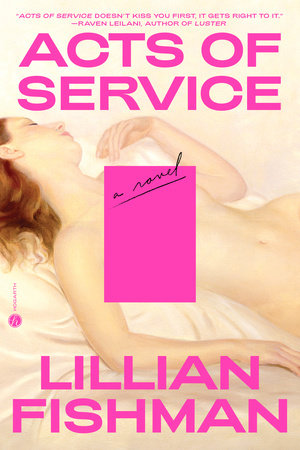
In Lillian Fishman’s debut novel, Acts of Service, a queer barista is struggling to craft a meaningful, real life that balances her ethics with her desires. Despite being in love with her long-term girlfriend, Romi, Eve ends up in a sexual relationship with Nathan and Olivia. She is equal parts compelled and disturbed: Olivia is in love with Nathan. Nathan is Olivia’s boss. And yet, Eve can’t quite condemn the two—the obvious pleasure they provide one another, the attention to which Nathan caters to Olivia, and their total disinterest in the morality of the arrangement challenges her every belief system.

As Eve works to appease the couple, making herself easy, unobjectionable, desirable, a self-critical stream of consciousness begins to haunt her every hook-up. She feels deeply concerned for Olivia, and her newfound role in facilitating this dangerous dynamic. She feels ashamed of the both of them, two queer women who struggle to conceal their indifference towards one another and total absorption in Nathan’s sexual power. And mostly she feels disgusted with the absolute pleasure succumbing to compulsive heterosexuality and the male gaze affords her.

In a community of women she loves and respects, Eve cheats on Romi, tunes her roommate’s concerns out, and undermines her own anxieties over Olivia’s vulnerability. What is it about Nathan that’s so intoxicating? And how can her desire for him coexist with her politics, her belief that cold, educated white men in well-appointed rooms are “out of style,” and knowledge that he manipulates without consequence? Does being aware of power dynamics mean anything if you still succumb to them? Does knowingly entering a trap make a difference?

The novel unfolds as a kind of disquieting trial, cerebral and emotionally honest. Eve is prosecuting Nathan and Olivia’s relationship and thus implicating herself. In turn, she must defend her ongoing decision to follow her feelings, to allow herself pleasure. Ultimately standing trial, in her own mind, before the queer community—to which she owes her sense of place and sense of morality—the experience proves as uncomfortable as it is insightful. 

It stands then, that we readers might be the jury. In bearing witness to the psyche of a woman cracked open before us, her every shame, doubt, and secretly harbored longing empathetically exposed, and balancing it alongside nuanced philosophical and political interrogations of desire, I can only imagine the verdict will be split. 


Lauren Hutton: At the very start of the book, we find out that Eve is looking to believe in something “unimpeachable,” and queerness becomes a kind of faith for her. Could you talk about what it means for queerness to not just be an identity, but for it to also be a kind of ethos or a governing logic for a life? 

Lillian Fishman: The set of anxieties that I had about the social world must have emerged from coming of age as a queer person and it manifested as Acts of Service. But to me, it wasn’t really a story about sexuality or sexual desire or female sexual agency at all. Those things aren’t really central to my worldview. It’s more that I think for me and a lot of my peers, you’re coming up in a society that really emphasizes individuality and freedom. It’s hard when you don’t have a religious background and, for someone like me, you don’t even have—which a lot of people in our culture do—a structure that’s given to you by your family of achievement, or purpose, or family loyalty. I grew up in a lovely family where the emphasis was on pursuing whatever interested you and having this total freedom and independence, which I really appreciate, but it did feel as though there was no structuring ethos in how to approach the world. And I think what Acts of Service is really about is being in that vacuum and encountering this very strong ethos about how to live, which actually isn’t about sexuality at all. It’s just come out of a marginalized sexual community. Frankly because there’s this marginalization of sexual identity, it becomes a community that has values that go far beyond sex; it has to create its own laws. I think Acts of Service was really just about responding to that. It is, of course, about sex, but less so to me somehow.  

LH: No, I think that makes a lot of sense because there was a line that was really interesting to me about how our generation uses complexity as the paradigm through which we live. We’re sort of trying to think intersectionally about everything and I definitely relate to that, that almost choice paralysis you’re describing. And I think in Eve, one of the ways that manifested is that she’s so attracted to certainty. So whether that’s the total goodness she at least perceives in Romi or whether it’s the obviousness of the power dynamics in a heterosexual interaction, she’s very attracted to absolutes. Do you think that’s a product of a generation that is living with so much uncertainty and a way to kind of seek a reprieve from that constant state of doubt and anxiety?

I think when we encounter a really firm, uncompromised certainty in a person, or a society, or a cult, or a wellness community, we know that it’s false.

LF: Yeah, of course. I think when we encounter a really firm, uncompromised certainty in a person, or a society, or a cult, or a wellness community, we know that it’s false. I have an automatic suspicion where I’m like, I know that this sort of completist approach to the world has holes in it, but it is really a relief to accept it for some amount of time; to just relax and ask yourself, what would I do if this was something that I accepted wholeheartedly and I didn’t have to question my decisions or think about whether or not I, the only guiding principle in my life, approve of them, you know?  

LH: Definitely. I was in Costa Rica a few months ago and had this slow sinking realization that I was walking through a cult and I hadn’t realized it at first. It was like this very vegan, white, wealthy, fake empathy, wellness community, and their certainty was such a weird, surreal thing—definitely something you’re suspicious of. But you’re also watching people take such pleasure in it that you wonder, maybe they are thriving. 

LF: No, I know. I’m always resistant to this type of thing, but I’m always intoxicated by it. I think in a way where people around me are wiser to it than I am. The most recent iteration of this is that I’ve been reading a lot of stuff not about crypto and NFT use, but about people who are deeply committed to crypto and NFTs. And it’s a very extreme version of it where when I listen and read about this, no part of me ever says to myself, I should get into this. It’s clear to me that I’m not interested in that and that, in fact, I think it’s very flawed. And yet I look at these people and I know that they’re worshiping a false God, but I’m jealous. I wish that I had your belief and that I could be you. And Eve feels that way about Nathan deeply. She knows that it’s a false God scenario, but she’s like that would be so freeing and exciting and relaxing all at once.  

LH: Yeah, I see that a lot in her relationship to ambition, too. I think we’re used to seeing characters and people who are either ambitious in an idealistic sort of way. I want to be an artist. I want to do something meaningful. Or, a sort of totally bought into the mechanics of capitalism kind of way.  I want to be a crypto bro. I want to be rich. And Eve at least says of herself that she doesn’t have ambitions. Why was it important to her character that she wasn’t traditionally ambitious?  

LF: I think when you read the novel through to the end and you consider it, it is pretty clear that she is ambitious in her own ways. There’s a hunger for an experience. There’s an ambition to be a charismatic, intelligent force. But I think she has so much guilt about the position that she occupies as someone white who comes from privilege. All of the avenues for ambition which are so justifiable and even admirable in people who are making a life for themselves from less are, when applied to her, sort of shameful and greedy. She’s really aware of that. And of course, there are plenty of people who have her exact identity or aren’t gay even, or come from more money, for whom there’s no shame in that at all. But based on her community and her politics, there’s a lot of shame in that. And so I think she needs to separate herself from the identity she was given in that gesture of rejecting traditional ambition. 

Her story is about being released from her anxieties and also from her politics, for better or for worse, by falling in love… because an emotional experience overtakes it.

But I also think for me as a writer, it was really important to distinguish her project and Olivia’s project, because they’re in comparable positions, right? They’re foils to each other in their relationship with Nathan and as queer people who are engaging with the same problem. For Olivia, there’s so much justification in her making art. Her relationship with Nathan, even when it’s potentially unethical, is given a sort of purpose and generosity by the fact that she’s turning it into art. Olivia doesn’t feel that she needs a justification, but Eve views the art as a justification for Olivia’s behavior. And by the end of the book, I needed Eve to come to believe that she doesn’t need to be transforming the experience or offering it to anyone else in order for it to be justifiable and valuable.  

LH: Yeah, I definitely was very intrigued by that dynamic in which being given an identity and economic status that asserts that her life and body are inherently valuable, she’s kind of working to compensate for that in an ethical way. Thinking more about morality, because that’s what’s guiding those choices, I found Eve so earnest and such a likable character. I am thinking specifically about her concern with being good to Olivia, even when Olivia doesn’t necessarily return those concerns and isn’t fixated on Eve’s comfort and happiness in the situation. I was wondering if you could speak to what’s fueling that inner monologue? What shapes her desire to be good, especially to women?  

LF: It’s really interesting that you perceive Eve as earnest and even likable, because a lot of people are having the opposite response to her. They’re like, Eve is so difficult to relate to and her vanity and the way that she responds to Nathan and cheats on Romi, all of these things make her really unlikable. Of course, I believe she’s a flawed character, but I also see her as deeply earnest and not at all jaded. She’s not functioning from a place of cynicism; she’s functioning from a place of genuine searching even when she makes mistakes. 

LH: So what’s driving that desire to be good? Is that an offshoot of a post #MeToo world where we’re so concerned with workplace dynamics in particular? Is it the historic and societal policing of women’s morality that’s conditioned us?

LF: I think that it’s the internal foil of the training we’re given to compete with other women. Eve’s vanity is emerging from that very early socialization. In the scene where she has the fantasy of being in the line up and being chosen among the naked women—that’s sort of her deepest shame point of being cognizant that at an innermost level, she wants to be compared with other women, received favorably, and have other women be—this isn’t the primary goal, but the inevitable consequence of that fantasy—devalued in comparison to her. That impulse in her to constantly be anxious about other women, especially Olivia, is a strong desire to compensate for that gut level socialization. A strong desire to prove not even to them, but to herself, that in her real self that she’s thought about and constructed and her values that weren’t just given to her against her will, that she really does prioritize people’s well-being. Her concrete articulable goal isn’t to live in a world of men who worship her and shit on other women. Of course, that’s related to #MeToo and socialization; it’s her trying to be the person that she wants to be but doesn’t believe that she is.  

Her story is, in a way, one about being released from her anxieties and also from her politics, for better or for worse, by falling in love. Not in a traditional sense and in a very intentionally mediated sense, but it is a story about being released from an idea she has about herself because an emotional experience overtakes it.

LH: See, this is also why I find her so earnest and why I would object to people who think she’s unlikable. It’s that interrogation and desire to reject misogynistic narratives that she’s been given. It feels like people don’t like her because people don’t like women. 

LF: I think people don’t like her because she is so honest about those qualities of internalized misogyny. She allows those qualities to emerge with frankness, even though she’s so ashamed of them and trying to escape them. Whereas the relatable thing in a novel is for a woman to be sexually insecure and self-critical about her body and to think that other women are more valuable than she is. We expect that even exceptionally beautiful women who other people envy, which Eve isn’t, feel self-critical and insecure in comparison to others. It’s not even just that that’s what we expect, because there is a version of the sexually free agentive woman that we really admire. We’re like, isn’t it so amazing this woman isn’t insecure about herself? But that can only exist without comparison to other women. We only admire that woman if she’s like I love myself because of my flaws. And I love other women for their flaws. And I’d never even thought to compare myself to another woman because I’m so secure.  

LH: Which is a falsity.  

LF: Of course. And that’s one of the biggest pieces of pushback that I got from queer readers, was that that comparative framework Eve has about herself sexually is very unqueer by nature. And it is. When you have relationships with women as a woman, you do have to put aside or overcome or reject or radicalize the urge to compare yourselves because you can’t exist sexually in that space where comparison isn’t possible in the way it is in heterosexual relationships. But that doesn’t mean that there isn’t something to be overcome there. 

LH: I thought it was genius to structure this book as kind of a metaphorical and then potential literal trial. Eve feels at once witness, defendant, and prosecution within this relationship. Was it inevitable for you that this ended in a legal dispute? When did that idea solidify?  

LF: No, it was an idea that I had later on, but I immediately knew it was right. I had been looking for a way that Eve would be forced to reckon with these arguments she’s having internally, and the arguments she’s having with [her roommate] Fatima, and the arguments she’s having with Nathan and Olivia in a context in which it wasn’t a friendly argument. It wasn’t personal. It wasn’t private. I needed there to be a venue where she had to actually engage with her role socially and in a larger context.  

The 14 Literary Newsletters You Need in Your Inbox

I get more email in a day than I can keep up with, let alone respond to. 

Most of us do. Collectively, we sent an estimated 319 billion emails each day in 2021. I’d love to know the breakdown of these messages. How many chains of rambling updates between old friends? How many are notes to confirm a long-awaited trip to visit family? My bet is these are in the minority, dwarfed by the vast number of promotions and automations. And I’m basing this on my own inbox. 

That’s one of the reasons why I love subscribing to newsletters. It isn’t the same as a note from a friend, but it also doesn’t require more time than reading—no input, no decisions, and no feeling guilty for inevitably getting behind on responding. Just a prompt to take a few minutes and read about whatever the topic.

Here are 14 of my favorite literary newsletters, the ones that I love seeing in my inbox as an excuse to sit for a minute and think about books, writing, and reading. 

FictionMatters Newsletter Logo

Fiction Matters

I first found Sara Hildreth’s Fiction Matters newsletter through the former English teacher’s Instagram account, which has a similar literary focus, and it’s become one of my favorites. Each Sunday, Hildreth shares smart, quick reviews of books she’s read, comments on literary news, as well as a round-up of what she’s loving, making, listening, or watching. The content is great, but the tone is wonderful—kind, warm, and relaxed, the perfect way to jump back into your inbox at the end of the weekend.

Also, the title here isn’t misleading. The newsletter features mostly fiction, with occasional nonfiction reads and recommendations. Most titles are literary fiction, but Hildreth does read across genres, as well.

Cost: The Fiction Matters newsletter is free, but there is a Fiction Matters patreon community if you’re looking for more.

sweater weather Logo

sweater weather

Electric Lit’s editor-at-large Brandon Taylor’s newsletter contains literary criticism that feels like a thought process, like his explaining an idea or unpacking a reaction and teasing it out to see how it works. 

Besides being a pleasure to sit with, these newsletters motivate me to read more carefully, to consider the media I consume in conversation, to stop breaking my brain scrolling—though if you, like me, aren’t always successful at this, Taylor is an amazing Twitter follow. 

In short: Must subscribe.

Cost: Free.

Electric Literature Newsletters

Electric Literature has three weekly newsletters, each arriving on a different day of the week. The Commuter, which goes out on Monday mornings, is a literary magazine with poetry, flash fiction, and graphic narratives. Each email includes one piece, as well as links to essays related to the broader topic, whether that’s aquatic drama or artistic influence. (Also, I can confirm, this email is a perfectly timed transition into the workweek even when you’re not commuting.)

Recommended Reading, which arrives on Wednesdays, features short fiction recommended by another author. It’s simple, but the personalized introduction to a story—explaining why it resonates, why the writer admires it—is lovely. I don’t know about you, but I tend to pay more attention, to engage more when someone recommends a piece to me.

Finally, the Friday round-up hits inboxes at the end of each workweek. This newsletter contains the best of Electric Literature’s essays, reading lists, and interviews, so you don’t have to worry about missing anything.

Life With Kat

Life With Kat is another newsletter that I found through Instagram. Kat Scrivener’s Instagram account is top-notch bookstagram—snaps stacked shelves, cozy mugs, a cute dog, and new books all the time. Scrivener’s commentary on books is thoughtful and engaging, and as a person living with cystic fibrosis, her perspective on disability representation in both fiction and nonfiction reads is important.

For her Life With Kat, Scrivener has a few monthly series: reading roundups, spotlights on new releases, and reflections on backlist reading. In these emails, Scrivener shares likes, dislikes, hype, and misses. 

Cost: The monthly new release roundups are free, but the rest of the regular newsletters, featuring deep dives into recent reads, are for paid subscribers only, $5/month or $50 annually.

Memoir Monday

Memoir Mondays

This is—surprise, surprise—a weekly newsletter. Every Monday, the email includes a curated list of personal essays from Narratively, The Rumpus, Catapult, Granta, Guernica, Oldster Magazine, Literary Hub, as well as other publications. 

Memoir Mondays was founded by Lilly Dancyger, and it’s currently run by Sari Botton. In addition to the newsletter, Memoir Mondays hosts a quarterly reading series in New York City. Not in your inbox, but a nice IRL option.

Cost: The newsletter is free, but the original Memoir Monday essay publications are for paid Substack subscribers only, $5/month or $50 annually.

BuzzFeed Books

Buzzfeed Books

The Buzzfeed Books newsletter sends out two emails each week. The Tuesday emails round up the best new books out each week. The list is usually broken up by genre—including nonfiction, romance, sci-fi, and more—with descriptions from members of the Buzzfeed team or Buzzfeed Books contributors. 

On Sundays, the Buzzfeed Books newsletter highlights reading lists from the week, like must-reads by AAPI author and audio fiction podcasts for every kind of reader.

Cost: Free.

Lit Hub Daily

Lit Hub Daily features links to essays across the Lit Hub website, including author interviews, podcast episodes, reading lists, cultural criticism, and more. Plus, the email includes links to external literary content, so it’s an excellent one-stop-shop for literary news of the day if you’re trying to stay off Twitter.

Cost: Free.

Dear Reader

Dear Reader

Dear Reader is run by Mumbai-based author and journalist Deepanjana Pal. Each month (or so), Pal shares thoughtful, essay-like reflections on the book she’s been reading over the last few weeks.

One of my favorite things about Dear Reader is that these reflections include not only content and criticism, but also the process of reading these books. In the most recent, for instance, Pal describes her expectations for The Mere Wife by Maria Dahvana Headley based on the title, and her surprise reading the first few lines. 

Cost: Free.

bitches gotta eat!

bitches gotta eat!

Writer Samantha Irby’s bitches gotta eat! contains recaps and reactions to articles and essays, shows, movies, and (of course) books. And because it’s Samantha Irby, the writing is energetic and hilarious.

Cost: Free for occasional public posts, and access to all content is $5 per month or $50 annually.

A Writer’s Notebook

In this newsletter, author Summer Brennan shares stories from her work-in-progress research or what she’s been reading, occasionally commenting on literary news, and often writing about living in Paris (“Cough Like a French Girl” is an interesting read, and an unbeatable title). The newsletter includes Essay Camp, writing prompts and encouragement in a community “write-along.” 

The schedule for this A Writer’s Notebook isn’t set, but Brennan sends it out at least twice each week. 

Cost: Free for occasional posts, but access to all the newsletter content is $6 per month or $60 annually.

The Marginalian

Formerly Brain Pickings, The Marginalian is Maria Popova’s newsletter that catalogs, as Popova explains, “a record of my ongoing becoming as a person—intellectually, creatively, spiritually, poetically—drawn from my extended marginalia on the search for meaning across literature, science, art, philosophy, and the various other tendrils of human thought and feeling.” 

Heavy for a newsletter, sure. But Popova’s essays about classic literature, theory, art, and science are sharp and consuming, which calls for deep reading, the best kind of break from the incessant din of emails and notifications.

The Marginalian has two subscription options, Sundays or mid-week.

Cost: Free, with the encouragement to donate.

Read More Books

Read More Books is mostly a weekly round up of what Jeremy Anderberg, a book reviewer, has been reading, with brief descriptions and reviews. But the newsletter also includes reading lists for various topics, including presidential biographies for each of our nation’s leaders and reads to better understand Elon Musk’s Twitter takeover.

If that wasn’t enough, Read More Books also features author interviews a few times a month. 

Cost: Free weekly Friday newsletter, and $5 per month or $52 per year for bi-weekly book review emails, personalized recommendations, and access to the Read More Books slack.

The Austen Connection

The Austen Connection

The Austen Connection is about critical writing about books, literary zeitgeist, application of theory to general media, and, of course, a touchstone of Austen classics. The newsletter that considers connections between Austen’s body of work and modern-day media, including everything from reality romance TV to Michelle Obama’s memoir. 

The Austen Connection goes out a few times each month, and the archive has a backlog of the essay-like email. One of my favorites explores the sexual tension in Austen’s writing, particularly Pride and Prejudice, and Sally Rooney’s three novels.

Cost: Free for posts, and $5 per month or $50 per year for early access to podcast episodes and subscriber-only posts.

Reading Habits

I’ll start with a disclaimer here: Arianna Rebolini’s newsletter Reading Habits is currently paused. But if you haven’t subscribed, I’d recommend making sure you’re on the list when she starts sending it out again.

Previously, Rebolini was an editor at BuzzFeed Books. Her newsletter features brief reflections on current reads, including backlist and new releases, with smart observations and frank assessments. Plus, it contains links to book round ups, author events, essays, and more.

Cost: Free and currently not accepting paid subscriptions.

A Hoagie by Any Other Name Makes Me Just as Hungry

Tonya 

We want a hoagie. We want a fucking hoagie as soon as we wake up. Danny’s has the best in town. Right down the street. So here’s what we do. We drop Barb off down the T so she can ride into town for work. 

Then, okay. Tony Jr. has to get to school. We drive back, pick him up, ignore the harsh rays of teen misery emanating from him like an oppressive light. Then, well shit. We look at our watch. It’s only eight. Danny’s doesn’t open till noon. Fuck. 

We go home. We make some coffee. We catch the news. But something’s grabbing at the edge of our mind. Coffee’s in hand. What could be wrong? We are uneasy. Then, the propulsion to clean. 

We are in the bedroom. The window’s a sky. The air a lemon. 

A hoagie goes by many names. Submarine. Sub. Hero. Grinder. Spukie. Italian sandwich. All the same fucking thing, we think. 

We open the closet doors wide. We enter the sartorial forest. 

Our arms open and close as we pull fronds from the closet onto the bed, building mounds of cotton, polyester, elastic, and silk.

We’ve been unemployed since the boss went bankrupt. The labor exhilarates. As do Barb’s blouses. Her skirts. Her dresses. Her stockings.

Barb has a lot of shit, we realize. Our items are a measly pile of worn cotton boxers. Stiff work pants. Thick denim and plaid. Flat, heavy boots. 

The blouses are smooth. We run our fingers across them, cutting through ripples of fabric that feel like Barb’s newly shaven shins. Tingles slide across our spine. 

The cotton skirt is light, flexible. Its stretch is a soft meow. Imagine ourselves, we laugh, wearing this blouse, this skirt to the job site, our yellow safety hat in hand. We spot Barb’s heels. We smile. We imagine ourselves in skirt, blouse, heels, and hat. We’re holding a hammer. The boys are next to us. We form a straight line, hammering nails one by one in song. 

A hoagie goes by many names. Each one feels different as it rolls off our tongue. We say hoagie because that’s what our father and our father’s father said. But there’s hero. And grinder. And spukie. And then, we remember. Po’ boy. Gatsby. Blimpie. Cosmo. Zeppelin. Each with its own history. We love saying them all. 

Hell, okay, we think. First, our jeans tumble off. Our white tee falls to the ground. We slither into the blouse, admiring the deep burgundy—no, we see in the light, it is oxblood—the tiny buttons disappear between our thick fingers. It barely fits. We cannot button it. The smooth fabric sliding against our skin is a deep breath. 

We zip the skirt. The elastic expands to accommodate our waist. We feel the same as we felt the first time we saw the never-ending blue of the ocean. An incomprehensible expanse suddenly in view. 

We shake our head. What are we doing? We are still, timid. We are afraid but happy.

We tilt our head, only slightly, toward the mirror hanging on the wall. What do we see?

A full beard, neatly trimmed. Intact. Yes, the hairline is, sadly, still receding.

We laugh a little. Then, the tears are a hot sweat, caught by the thick brush of our face.

We say, Tony, you’re beautiful. You’re beautiful! 

Bread. Meat. Cheese. Vegetables. Condiments. 

A hoagie has many names. Every one is delicious. We are hungry for them all.

Chest covered in matted swirls. Blouse pinched beneath the arms. We see ourselves clearly. The garments do not fit. Yet, we are a vision. 

Have you ever seen your wife from afar, we wonder to ourselves, surrounded by strangers across a wide room? Do you know the feeling of your heart opening whole when you spot her, a beautiful, unexpected planet in your orbit suddenly made new by distance? 

That’s how we feel as we glimpse ourselves in the mirror. We are softness. We are stretch. We are hero. We are grinder. We are po’ boy. We are zeppelin. We are spukie. We are sub. We are blimpie. We are cosmo. We are chocolate melting on your tongue.

Our Favorite Essays by Black Writers About Race and Identity

It’s fitting that two of the first three essays in this roundup are centered on examining the Black American experience as one of horror. In a year when radical right-wing activists are truly leaning in, we’ve already seen record numbers of anti-LGBTQ legislation, the very real possibility of the end of Roe v. Wade, and more fervent redlining measures to keep Black people (and other marginalized communities) from voting. Gun violence is at an all time high, in particular mass shootings.

Since the success of Jordan Peele’s runaway hit film Get Out, there has been a steady rise in films depicting the Black American experience for the fraught, nuanced, dangerous life that it can be. This narrative isn’t entirely new, but this is the first time these films have gained critical acclaim and commercial attention. The reason is simple. Whatever the cause—social media, an increasingly diverse population—America can’t run from itself anymore. Our entertainment is finally asking the question that Black people have been asking for generations: In America, who is the real boogeyman?

Naturally, the discourse and critical analyses must follow suit. But it doesn’t stop there: the essays on this list span far and wide when it comes to subject matter, critical lens, and personal narrative. There are essays about Black friendship, the radical nature of Black people taking rest, and the affirmation of Black women writing for themselves, telling their own stories. Icons like Michelle Obama, Toni Morrison, and Gayle Jones get a deep dive, and we learn that we should always have been listening to Octavia Butler. This Juneteenth, I hope you’re taking a moment to reflect, on America’s troubled legacy, and to celebrate the ways that Black people continue to thrive.

Modern Horror Is the Perfect Genre for Capturing the Black Experience

Cree Myles writes about the contemporary Black creators rewriting the horror genre and growing the canon:

“Racism is a horror and should be explored as such. White folks have made it clear that they don’t think that’s true. Someone else needs to tell the story.”

Modern Narratives of Black Love and Friendship Are Centering Iconic Trios

Darise Jeanbaptiste writes about how Insecure and Nobody’s Magic illustrate the intricacy of evolving Black relationships:

“The power of the triptych is that it offers three experiences in addition to the fourth, which emerges when all three are viewed or read together.”

I Was Surrounded by “Final Girls” in School, Knowing I’d Never Be One

Whitney Washington writes that the erasure of Black women in slasher films has larger implications about race in America:

“Long before the realities of American life, it was slasher movies that taught me how invisible, ignored, and ultimately expendable Black women are. There was no list of rules long enough to keep me safe from the insidiousness of white supremacy… More than anything, slasher movies showed me that my role was to always be a supporting character, risking my life to be the voice of reason ensuring that the white girl makes it to the finish line.”

“Palmares” Is An Example of What Grows When Black Women Choose Silence

Deesha Philyaw, author of The Secret Lives of Church Ladies, writes that Gayl Jones’ decades-long absence from public life illuminates the power of restorative quiet:

“These women’s silences should not be interpreted as a lack of understanding or awareness, but rather as an abundance of both, most especially the knowledge of what to keep close to the vest, and the implications for failing to do so. They know better than to explain themselves, their powers and their origins, their beliefs and reasons, their magic. These women are silent not because they don’t know anything. They are silent because they know better.”

Toni Morrison’s “The Bluest Eye” Showed Me How Race and Gender Are Intertwined

For the 50th anniversary of Toni Morrison’s The Bluest Eye, Koritha Mitchell writes how the novel taught her that being a Black woman is more than just Blackness or womanhood:

“I didn’t have the gift of Kimberlé Crenshaw’s concept of ‘intersectionality,’ but The Bluest Eye revealed how, in my presence, racism and sexism would always collide to produce negative experiences that others could dodge. It was not simply being Black or being dark-skinned that mattered; it was being those things while also being female.”

The Delicate Balancing Act of Black Women’s Memoir

Koritha Mitchell writes about how Michelle Obama’s Becoming illustrates larger tensions for Black women writing about themselves:

“In other words, when Black women remain enigmas while seeming to share so much, they create proxies at a distance from their psychic and spiritual realities because they are so rarely safe in public. Despite the release of her memoir, audiences will never be privy to who Michelle Obama actually knows herself to be, and that is more than appropriate.”

50 Years Later, the Demands of “The Black Manifesto” Are Still Unmet

Carla Bell writes about James Forman’s famous 1969 address, The Black Manifesto, and its contemporary resonances:

“But the Manifesto is as vital a roadmap in our marches and protests today as the day it was first delivered. We, black people in America, remain compelled by the power and purpose of The Black Manifesto, and we continue to demand our full rights as a people of this decadent society.”

You Should Have Been Listening to Octavia Butler This Whole Time

Alicia A. Wallace writes that Octavia Butler’s Parable of the Sower isn’t just a prescient dystopia—it’s a monument to the wisdom of Black women and girls:

Through her protagonist Lauren Olamina, Butler has been telling the world for decades that it was not going to last in its capitalist, racist, sexist, homophobic form for much longer. She showed us the way injustice would cause the earth to burn, and the importance of community building for survival and revolution. Through Parable of the Sower, we had a better future in our hands, but we did not listen.

The Book You Need to Fully Understand How Racism Operates in America

Darryl Robertson writes about Ibram X. Kendi’s Stamped from the Beginning and its examination of the history of overt and covert bigotry:

“While How to Be an Antiracist is an informative and necessary read, it is his National Book Award-winning, Stamped from the Beginning: The Definitive History of Racist Ideas in America that deserves extra attention. If we want to uproot the current racist system, it’s mandatory that we understand how racism was constructed. Stamped does just that.”

I Reject the Imaginary White Man Judging My Work

Tracey Michae’l Lewis-Giggetts turns to Black writers as inspiration for resisting white expectations:

“…it doesn’t only matter that I’m a Black woman telling my story. What matters is the lens through which I’m telling it. And sometimes, many times, that lens, if we’re not careful, can be tainted by the ever-present consciousness of Whiteness as the default.”

Toni Morrison Gave My Own Story Back to Me

The incomparable literary powerhouse showed Brandon Taylor how to stop letting white people dictate the shape of his narrative:

“That’s the magic of Toni Morrison. Once you read her, the world is never the same. It’s deeper, brighter, darker, more beautiful and terrible than you could ever imagine. Her work opens the world and ushers you out into it. She resurfaced the very texture and nature of my imagination and what I could conceive of as possible for writing and for art, for life.”

Art Must Engage With Black Vitality, Not Just Black Pain

Jennifer Baker writes that books like The Fire This Time give depth and nuance to a reflection of Blackness in America:

“These essays provided a deeper connection because Black pain was part of the story; Black identity, self-recognition, our own awareness brokered every page. Black pain was not the sole criterion for the anthology’s existence.”

When Black Characters Wear White Masks

Jennifer Baker writes that whiteface in literature isn’t a disavowal of Blackness, but a commentary on privilege:

“Whiteface stories interrogate the mentality that it’s better to be white while examining how societal gains as well as societal “norms” inflict this way of thinking on Black people. Being white isn’t better, but, for some of these characters, it seems a hell of a lot easier, or at least preferable to dealing with racism.”

Traveling South to Understand the Soul of America

In South to America: A Journey Below the Mason Dixon to Understand the Soul of a Nation, Imani Perry, an Alabama native, returns to the South and meets with Southerners to chronicle their stories, past and present—from Henry Bibb, an enslaved man from New Orleans forced to rub salt brine into the bleeding back of a whipped woman, to a white civil war re-enactor at Harpers Ferry, to Brittany Howard of the Alabama Shakes.

Perry describes how from its founding the United States was “experimental and innovative as well as invasive. Resourceful even. But any virtues were distorted by a greater driver: unapologetic greed, which legitimized violent conquest and captivity,” stratifying the nation into a caste structure of “citizens, second-class citizens, non-citizens, and those who are cast so far beneath every other category it as though they are seen as non-persons.” She argues that our collective understanding of what it means to be an American is intertwined with the South—when we pay attention to the South and its history, we are better able to understand America.

Perry is the Hughes-Rogers Professor of African-American Studies at Princeton University and author of seven books, including Breathe: A Letter to My Sons and Looking for Lorraine: The Radiant and Radical Life of Lorraine Hansberry.

We spoke about how viewing racism as a Southern problem keeps our society from progressing, recognizing the targeting of trans kids as a pattern of oppression, and how Gen Z brings her hope.


Deirdre Sugiuchi: In the opening chapter, you say, “Race is at the heart of the South and at the heart of the nation…yet racism is described as belonging to the South, a region that is viewed as backwards.” How does this view that racism, that backwardness, is inherently of the South, keep us from progressing as a society?

Imani Perry: It’s strange because it’s almost like the South is that bad place down there, like an absolution for the other regions. The ways of doing—the exploitation, working people to death, the enclosures, the holding people captive—all that starts with trans-Atlantic slavery and and the colonial project. It is mastered in some ways in the South, but it flourishes everywhere. As a consequence, if you just say, well, that’s a Southern thing, then there’s no obligation to respond elsewhere. It also then becomes this defensive posture—the South is racist. And in some ways it becomes this détente of different parties, none of whom adequately address the issue of white supremacist practices.

DS: In this book you unearth myths of the founding fathers. Can you discuss why it’s important to expose the racism of our founding fathers, especially in this present moment?

It’s almost like the South is that bad place down there, like an absolution for the other regions.

IP: I’m at a moment in my life where I’m very skeptical of national myths. All nations have national myths, told to encourage patriotism and loyalty, but also to create for people a sense of themselves. Even the environmental crisis is fed by mythologies. Like this idea of a shining city on the hill, nothing could destroy it.  Some of the founding fathers are deployed for this myth, and they were people who were deeply involved in a profoundly unjust order.

If we actually, instead of mythology, turn to truth and the complexity of these stories and the tragedy in the building of the nation, then we actually have the possibility of building something closer to being in right relation with each other. 

Even though we don’t have slavery and Jim Crow, we have the residual effects, the practices where we are willing to actually treat large numbers of people in our world as though they are not fully human, whether they’re incarcerated, whether they are undocumented, whether they’re houseless all of these ways of being comes from that foundation. We tell the story fully because it helps us look at who we are now. Maybe this is why we’re okay with this, with completely excluding people, because this is the way that founding fathers behaved.

DS: You noted that the Moral Majority was born in Virginia and you said that’s not incidental, later noting how whiteness became an article of faith and that lynching burning, beating, raping and humiliating all became matters of faith in the white evangelical church. How do you see this reflected currently?

IP: Part of the moment we’re in, the book burning and banning, the idea of cutting off the moral imaginations of children, specifically white children, is an effort to destroy the possibility for white children to identify with anybody who’s not born in a very particular white Christian genealogy, which is an ethical matter. We want people to have the capacity to find inspiration for how to be in the world for everyone, but there’s an effort to shut that down. The targeting of trans kids and their families feels very similar to me to the trajectory from the anti-civil rights movement to the anti-choice movement—there’s a pattern of treating people as a kind of threat that has to be destroyed at all costs and to build an upset of laws around that destruction. It’s really important to understand the pattern.

One of the things I always bring up is Protestants didn’t really care about abortion until the waning civil rights movement. That was a Catholic thing. Abortion protests were actually drummed up to create a moral panic.

DS: You visited Parchman, a prison located on the site of a former Mississippi plantation. You discussed how the labor there is akin to slavery, but that the cruelty is not slavery, but being caught up in a system like slavery when you were by law free. Can you discuss how prisons are constant reminders of the past in the present?

IP: In the South, it’s really apparent because so many prisons are on plantations. I’ve been going to them in one way or another all my life. The landscape is the same. So much of the labor, and the conditions, the sweltering heat and the bugs and the inadequate nutrition—it’s like a repetition of that relationship to the land, but it’s also the composition of who is in prison. On the one hand, the prison farm looks like a plantation. On the other hand, pre-civil war, the prison population was not Black, but Black people were enslaved. It’s a feature of emancipation that prisons become Black spaces. There’s also the Jim Crow echo in incarceration and then there’s a couple of pieces. One is that often prisoners are doing labor that is essential for so many institutions, but is essentially unpaid. I work at a university—I assume like many universities, our chairs come from prison labor. We are taking advantage of this labor that we don’t have to see. That’s classically part of the structure of the transatlantic slave trade and slave plantation culture. Then there’s the injustice, the intensity of the correlation between illness and trauma and who winds up incarcerated. The fact that there’s not a direct connection between wrongdoing and punishment and who gets punished is based upon who is subject to surveillance—that’s totally racialized.

DS: You explore whiteness, how it is not a monolith, how whiteness as an identity can be fickle, how it is policed carefully, how white folks in the South are exploited by other whites, how white Americans were taught that if they expressed solidarity with exploited Black people, they would lose what DuBois termed as the “wages of whiteness.” Did your thinking about whiteness change as you wrote this book? If so, how or how not?

I don’t think that literature is organizing, but that literature can do the work of inspiring organizing or providing information that is meaningful for organizers.

IP: It didn’t change as much. What I had to struggle with is that I’m a movement baby. I was socialized on the left. I was always taught to think about exploitation of white labor alongside the logic of white supremacy, to understand white supremacy is dividing the labor force politically and alienating oppressed people from each other. But in working on the book, I had to bring together my emotional account with white Southerners, which has a wide range—there’s moments of terror, moments of rage. And then there’s moments of absolute tenderness. The intimacy piece is just real, there’s just a closeness, even in places where Black and white people don’t talk to each other much. There are parts of the South where we’re so similar, there’s an ease. That is part of the story that is harder to get to, but it’s really important to understand, because there’s potential there too. 

DS: You interacted with Bob Zellner and Tom Gardner, who worked alongside your parents during the civil rights movement.

IP:  The stories of white people in the movement were really important for me to include. It was interesting just to talk to them, because they also were people who were punished for their decisions and they sort of had to remake their lives. 

DS: When you’re talking about the wages of whiteness—I’ve been thinking about this for years—part of the code of whiteness is to be silent. Because if you speak out, you will be punished.

IP: It’s a thing that doesn’t get talked about because there’s so much critique— appropriate, right?—of white saviorism. But that’s a different thing. But because of it, any discussion of what it means for a white American to decide “I don’t want to be part of the project of white supremacy” is silenced. Not to say it’s worse if white people are punished than when Black people are punished. But to say that’s part of how whiteness actually functions, is it makes it not okay to identify with non-white people at a deep level. We have to be able to identify that. 

DS: When you were in Montgomery, you took part in this day long workshop on #MeTooHBCU with Tarana Burke and Yaya Blay and you asked the question, what do we do with #MeToo on the grounds of the lynching tree?

IP: One of the things that I have grown to understand is that there’s this sexualized racial violence—both the sort of mythologies of the Black male rapist, but also the sort of institutionalized rape of Black women on the plantation that continues in the context of Jim Crow and domestic labor. It’s also important to understand that the habits of sexual violence and secrecy and lies have expanded beyond what we think of as the larger racial logic, and are part of our lives at an intimate level in our families and our communities, so to be there and understand that the sexual violence that happens on an HBCU campus is hard to talk about because of the protection of Black cis men from these longstanding stereotypes.

There’s generations of sexual violence. That is part of what the structure of Southern living was, that has shaped people, that wounds people. That is something that we all have to unlearn collectively. We have to open up those conversations. Part of what I’ve learned is that race is present even when it’s not present, white supremacy is present, even when it’s not present, in terms of how human beings have learned to be with one another, at the most intimate level, and that makes it really hard to talk about, but we have to figure out how to have this conversation despite all of our completely reasonable skepticism of policing and prisons and regimes of punishment.

DS: You note that folks want to act as though Black power started in New York and Oakland before listing how so many people came from the South, which led to a discussion of how in Misssissippi Chokwe Antar Lumumba is the mayor of Jackson, and you now have a state with the most extensive Black political representation in America. Can you discuss?

IP: Part of the turn towards the end of the ’60s, is some members of SNCC become Black nationalists. Some folks are really focused on the development of local political power, in Lowndes County, Alabama, but also in Mississippi, and then there are folks who go international, like Bob Moses and his family. They were trying to figure out not just the relationship to Jim Crow and trying to dismantle it, but were also thinking about colonialism and economic exploitation. 

Often young people don’t get the turn to political representation. It wasn’t, as some people think, this deeply assimilationist thing—it was actually having a stake. Particularly in a place like Mississippi where dispossession could be complete disenfranchisement. The NAACP was part of the building of political infrastructure. People tend to think the NAACP is a more mainstream organization, which it is, but it was also really involved in these local councils and the development of Head Start, and this vision of what having some autonomy in one’s community would mean, and also wanting some land and some control over the land—that’s a radical conception in the South that people don’t necessarily see. 

DS: Your book concludes in the aftermath of the death of George Floyd when protests were occurring worldwide.

Even though we’re all wounded, and after the trauma of the past two years, against all odds, you do the work that moves us into doing better.

IP: These moments of reckoning happen and they seem quite fleeting, but they still matter. If they’re not transformative, they’re at least warnings for us collectively to pay attention to what’s happening. Even if it doesn’t yet push us all into gear, there’s something about sort of the past horror and the ongoing horror that is important to confront. I started early in the book, talking about Puritans and Jeremiad sermons and the end of the book is in a sense a Jeremiad sermon too, which is if we don’t do something, this thing is gonna be over in a more devastating way than we can even contemplate. Environmentally, but I also mean the violence, right? We have more guns, the Klannishness, the hatefulness, and the desire to undo the transformations of the 20th century that got us a little bit more humane. 

I don’t think that literature is organizing, but that literature can do the work of inspiring organizing or providing information that is meaningful for organizers. That it can be the work of moral witnessing, which is what I hope to do with everything that I write. It’s hard to be hopeful, but you gotta try. Because it’s better than the alternative.

DS: That was my question. I have a hard time feeling hopeful. What brings you hope, or does anything?

IP: Young people, like these Gen Z people, the ones who are politically engaged—I feel so admiring of how unflinching they are. They are going to call out every injustice and unfairness. They’re not willing to make concessions on ethical matters and I find that incredibly moving. It’s courageous—the kind of courage I don’t know that I have seen. 

I often don’t feel hopeful or experience hope as a feeling but I experience it as a responsibility, as a doing. My mother used to say this to me—”You have to act as though society is free even though it isn’t.” Even though we’re all wounded, and after the trauma of the past two years, against all odds, you do the work that moves us into doing better. 

8 Books about the Delights of Delusion

Delusion, when used as a literary device, is just another word for truth-seeking. Facts are not truth. Characters with irrational thinking have usually given the facts a try, and are frankly unimpressed. Instead, they develop an extreme conviction that, held up against the traditionally accepted facts or reality, seems ludicrous. Even dangerous. 

Yet I would argue that most of us, in real life, labor under one delusion or another. The belief that hard work leads to success. The faith that so-and-so loves us. Even when proven wrong—even when we are ruined by such things—we stubbornly believe. We want to believe. Nursing a myth can keep us alive.

Delusion, especially the obsessive variety, may lead one to certain doom, but often a delicious doom, full of discovery. My list concerns books with characters who, for better or worse, sink into their own world to find something beyond the narrow existential experience society has deemed acceptable. Bonnie, the main character of my book, One’s Company, attempts the same by submerging herself into the alternate reality of a vintage sitcom to escape her own past. She wants to be other people, live other lives. Whether she knows it or not, she is trying to heal herself. For her, delusion is necessary. Maybe it is for all of us. Perhaps it is only through transcendence, or escape from this human trap, that we will ever approach happiness.  

Comemadre by Roque Larraquy, translated by Heather Cleary

This book is brief and life-changing. Broken into two parts, we meet a doctor in the first half who is intent on finding the exact moment of death and in the second half, an artist quests to achieve total artistic transcendence. Both seek to understand this human bag we’re living in in shocking and farcical ways. This book understands that the only way a person can seek reason and rationality is to go beyond all reason and rationality.

Treasure Island!!! by Sara Levine

The main character of this book is obsessed with the Robert Louis Stevenson classic, Treasure Island, and when she ends up living back with her parents after some parrot-related hijinx, her obsession ripens into delusion. Her voice is strong and relentless, and she is very! Serious! About it! Some people find this book funny, which it is, but it’s also a risky book that’s full of domestic minutiae amid the madness, which I wholeheartedly admire.

Earthlings by Sayaka Murata, translated by Ginny Tapley Takemori 

Like many breezy-sounding songs from the 1970s that are actually about suicide and societal unrest, Earthlings has a very conversational tone that belies the out-there plot. Two children are convicted in their belief that they are literal aliens not of this earth. It gets weird.

The Driver’s Seat by Muriel Spark

“You’re not my type!” Lise, the main character, screams this phrase at other people as she hunts for someone to assist in her own annihilation. The plot of this book unfolds over the span of a couple days in an unnamed European country, and follows erratic Lise as she searches for The One.

The Invention of Morel by Adolfo Bioy Casares, translated by Ruth L.C. Simms

Untold crimes! Bizarre sightings! Inhospitable landscapes! Romantic delusions! Fear delusions! Islands! Really, everything a reader could want in a novel about a fugitive on an uninhabited island that is suddenly overrun with tourists. It’s best to know as little as possible going into this book so you can be completely taken in by the fever dream.

Mrs. March by Virginia Feito

This book concerns those quiet, small lies we tell ourselves every day that can shape an entire life. Written in third-person, this book has a timeless quality that feels refreshing in the current first-person-obsessed literary landscape. The title character goes on a mission to understand her writer husband’s, um, creative licenses with her life and character. We get a peek into the day-to-day happenings of a woman deep in denial.

One, No One, and One Hundred Thousand by Luigi Pirandello

This story starts with a man realizing that his self-perception differs from how others perceive him, and he spends the rest of the book deeply disturbed by this knowledge, fixated on what one’s “true” identity is. His circular arguments are the building blocks of the plot, if you can call it that. This story also has, in my opinion, the best book title ever conceived.

Sea of Hooks by Lindsay Hill

This novel is strange and beautiful, written by a poet, and I think more people should read it. The main character is not delusional, but his mother is, as well as his father, and they are the two people who shaped his life.  Set between two timelines, his childhood in San Francisco with his mother and the present day during a pilgrimage to Bhutan, Sea Hooks is about a man trying to find peace and closure.

If you read it, please contact me. I have been waiting to talk with someone about it for a few years now. 

I Found Creative Inspiration in Bridezilla Wedding Stories

A few years ago, the internet lit up with a story about a bride nicknamed “Canadian Susan,” who demanded her guests fork over $1,500 each to help bankroll her wedding to her childhood sweetheart. The details were exquisite: A psychic had convinced her to choose the more expensive venue. Her role models were the Kardashians. When her GoFundMe raised just $250, she canceled the wedding, dumped her fiancé, and threatened to leave her young son for two months to go backpacking in South America.


Did the pandemic change me? Or have I always been obsessed with “news” about family fights? I’ve read more about messy weddings—from proposal to nuptials to dismemberment—than any human should. I’d like to think it’s because as a novelist, I seek out the far reaches of human behavior, the wildest possibilities for interpersonal drama. That’s what novels can do, push characters to the extreme so that readers can feel the consequences of risky decisions without ruining their lives. I’m naturally shy and conflict-averse, but rubbernecking at others’ train wrecks, I learn how to live in this world.


A few weeks after Canadian Susan’s story made the rounds, my editors at St. Martin’s Press emailed to ask if I’d be interested in writing a novel about Facebook groups devoted to “wedding shaming.” Susan’s rant might not have gone viral had it not been posted in one of these private groups, where wedding guests convened to complain. From there it was leaked to Twitter, where Chrissy Teigen shared it, at which point every news outlet in the Western world joined the fray.

My work was to understand the plight of others, not project myself onto the page in a variety of disguises.

I took a few days to think about this. I’d been a journalist for almost 20 years, so getting an assignment was not new to me. But being assigned a novel? I hadn’t realized that was a thing. I’d thought a novel was supposed to be a pure expression of the heart, a singular and sacrosanct opus. Or could I find inspiration within a topic offered to me, the way I do with magazine features?

Reader, I said yes.


I have not written about my life, either in fiction or nonfiction. I still harbor the belief that I am not special, my story not interesting enough for fiction. That my voice does not matter. As a child and teen, I had to believe that, because if I had tried to cultivate personhood, it would have been extinguished.

My father was a successful man who imposed his way of living on me and my brothers. Work was noble, self-expression was self-indulgent, and feelings were weakness. I had to protect my sensitivity to keep it alive.

Writing, therefore, became an attic where I could stow my real, vulnerable self, as my body blundered blind through the world. But my stories were disguised, even from me. They have always been about other people.

Instead of writing about my experiences coming out of the closet at 22, for example, my gay characters dated and married women until their forties or fifties. Another came out and, after a terrible heartbreak, went back in.

My undernourished self extended to all my relationships. I censored myself to be palatable, didn’t challenge others or put my needs first. I ended up attracting more than my share of emotional vampires who saw what they wanted in my silence and used me to prop up their egos.


My first published novel, Carnegie Hill, was inspired by a friend who served on the board of his Upper East Side co-op. I was intrigued by the idea of an apartment building as a container for a novel and by the structure of a co-op, that unique living situation in which everyone has financial and emotional stakes in everyone else’s home. 

Then my friend received a terminal diagnosis, and he became demanding and embittered. I recognized the profound horror of his situation, but we couldn’t talk about it, or anything, without fighting. I had cleaved to him because of his sensitivity and insight, but now he used his intellectual heft to flatten me. Beneath the weight of his need, I could no longer exist. I had unwittingly recapitulated my childhood, with an understudy playing the role of the father.

When his personality changed, so did the novel. I imagined characters whose privilege hindered their ability to cope with the vicissitudes of life.

Though the idea had come from my friend, every emotional challenge the characters faced was something I too had been wrestling with—most notably, how to get one’s needs met in relationships. The finished book was a map of my psyche that only I could decode. I was present in the story, just hidden.


The most common question I’m asked at readings is what in my life inspired the book. Which character is me? That’s like handing me a smoothie and asking me to point out the strawberries.

But I don’t think inspiration must come from within, which is to say that the well-worn rule of thumb “write what you know” is just one way to go about it. “Write what you don’t know” can make for some fascinating literature. Toni Morrison told her students not to write what they knew because they didn’t know anything. Kazuo Ishiguro, Meg Wolitzer, Richard Ford, Philip Pullman, and many others don’t believe that well-worn advice, either.

“Write what you don’t know” is also conveniently easy for someone afraid to put himself on the page.


In a fiction-writing workshop I teach at NYU, we examine and write from three kinds of inspiration. The syllabus begins with personal stories, work that reads like autobiography, even though it’s not. Then we move to works that draw from other works of literature, because books gather a literary patina rubbed off by contact with the canon. The third and final section of the course spotlights inspiration from the news—for example, Emma Donoghue’s Room and Colson Whitehead’s The Nickel Boys.

In my case, I was trying to understand Canadian Susan and other brides who behaved badly.

Countless novels have been inspired by tragedies, and the novelist’s work is to infuse these terrible and incredible events with humanity. In my case, I was trying to understand Canadian Susan and other brides who behaved badly. The hero of the story, I realized, had to be a bridesmaid who put up with them.


Of course, I have never been a bridesmaid. The few times I’ve been a groomsman, my worst pain point was getting fitted for a tuxedo.

But I research obsessively. Rarely do I write a sentence without confirming details or definitions—and, as I’ve mentioned, I devour all the tawdry wedding stories that grace my feed. I spoke with dozens of former bridesmaids and read every bridal guide I could find.

I quickly realized that I had been shielded from a LOT. 

I knew that signing up for bridesmaid duties often meant buying and wearing a satin dress that can never be worn again. And that it might require a couple dozen hours of crafting. I didn’t know that women have to give an extra gift at the bridal shower. Or that bridesmaids usually pay for their own hair and makeup, mani/pedi, jewelry, shoes, and special undergarments. Or that they often plan multiple gatherings, a parade of celebrations for the bride. And that more parties are being invented all the time: the bridesmaid proposal, for example. All to satisfy the evolving American fantasy of the perfect wedding.


In the novel that resulted, The Bridesmaids Union, Iris Hagarty creates a secret support group for bridesmaids on Facebook and dishes about her spoiled sister’s bridal antics to her new online friends. I filled the book with wedding horror stories, both from online “news” and those many interviews with friends and family. 

One bride asked some of her bridesmaids to sit during the ceremony, to balance out the sides. Another asked a friend to be a backup bridesmaid in case someone dropped out. Multiple brides requested weight loss from their entourage; one had a meltdown because a bridesmaid got the wrong haircut. I heard the baffling “no kids” rule again and again. Bridesmaids were conscripted to provide professional services like graphic design and hairstyling for free. A tyrannical groom insulted his fiancée and the wedding vendors on his wedding day. A bride never forgave her bridesmaid for skipping the wedding because her father had a heart attack.

Canadian Susan and her $1,500 admission fee didn’t make the cut: Everyone had read that story already.


I thought this new novel would be a different enterprise from Carnegie Hill, one in which I assembled others’ stories as a journalist would, like a puzzle. My work was to understand the plight of others, not project myself onto the page in a variety of disguises.

But here’s the surprise—though in retrospect, it’s not surprising at all—the book is fully me, no matter how much material I found from other sources. My feelings osmosed into the characters, via a literary possession I suppose I can’t help practicing. Every conflict is shot through with my own struggle to inhabit my life. Iris vents on the internet because she doesn’t think her friends want to hear her true feelings. She fails to stand up to her parents, who believe they know what’s right for her and her son. She can’t set boundaries with brides and boyfriends and ends up feeling drained and flattened by connection. Through the novel, she learns how to claim her power and speak her mind. In other words, how to exist.

Day by day, I’m learning that too.