Sleeplessness is the Insomniac’s Only Friend

“Sandman” by Kim Fu

The person sitting at the end of Kelly’s bed wore a gray, hooded cloak. The hood hung over his forehead and drooped across his shoulders in an elongated oval, his unseen face recessed in the depths of the fabric. The hem covered his feet, even in his seated position, and wide bell sleeves covered his hands to the fingertips. One shrouded hand rested on her shin. Kelly was not afraid. The way he sat—his knees and hips facing out over the side of the bed, his torso turned toward her, his hand low on her leg—seemed parental, benevolent.

Monsters rarely figured in Kelly’s dreams. In her most frequently recurring dream, she was lost in a large building, looking for a specific room among hallways of endless doors. For most of her life, it had been an infinite, shifting school; recently it had become an infinite, shifting hotel, hosting a conference.

The figure climbed onto Kelly’s bed on his hands and knees. He traveled up her body until his face—where his face would be—hovered over hers, holding himself up with his hands by her head, every inch of him covered by the puddling fabric. In the darkened room, she stared into the featureless hole at the center of his hood. He carried the metallic scent of someone who had just come in from outside in the winter.

A trickle of sand touched her lower lip. Sand poured out from within his hood, in a thin, continuous stream. She parted her lips, opened her throat as if to sing. She still couldn’t see his face, but she sensed that the sand was traveling from his mouth and into hers, the matte gold dust glowing dully, catching the faint light that leaked around her drawn curtains.

The sand flowed faster. She felt the grains coursing down her throat, entering her abdomen, entering a cavity she hadn’t known was there, a cathedral emptiness where her organs should have been. She swallowed without gagging, almost without breathing. The sand filled her, weighing her down. She could feel the sand spreading, swelling her belly and traveling into her limbs, pinning her body slowly to the mattress, too heavy to lift under her own power. She had never felt so full, so satisfied.


The longest Kelly had ever gone without sleeping was four days and three nights, when she was thirteen. The details were fuzzy to her now. She remembered that she had begun to hallucinate bugs at the periphery of her vision, white moths and sparkling, winged beetles dancing along her hairline and jaw, and she knew that the streak ended with a visit to the pediatrician. Yet she couldn’t recall talking to her parents about her insomnia—not then, not ever. She remembered the doctor saying she wasn’t getting enough exercise and stimulation during the day; she must be sitting around idle, watching too much TV, eating too much sugar. A friend of Kelly’s, a doctor herself, later told her that sleeping pills were almost never prescribed to children, then or now, but Kelly vividly remembered the pills she took: round and yellow, with a rectangular notch across the middle, as though to fit a very fine screwdriver.

Kelly no longer thought of her insomnia as remarkable or pathological. Her friends who had children often complained of their “problem sleepers”—the elaborate bedtime routines, the seven-year-olds still in their parents’ beds, the songs and books and glasses of water and white-noise-producing, vibrating, oscillating gadgets. Kelly’s parents had locked their bedroom door at night. As a child, Kelly had frequently climbed out of bed to wait for morning in the hallway outside her parents’ room. She’d start out sitting or kneeling and eventually slide to the floor, lying on her side with the cool linoleum against her cheek. She’d wake there, the narrow windows framing gray predawn light, her neck kinked from the hard floor, and hurry back to her room before her parents got up.

In college, everyone stayed up all night to party or to cram. She’d look up from her library carrel in the small hours of the morning and see her fellow students wandering by in pajamas. She’d spent the nights before a project was due in a twenty-four-hour café, ordering a double espresso every two hours, watching the barista wilt and disappear into the back for covert naps, his eyes reddened and shadowed in tandem with hers. She was often the last one awake at the end of a house party, alone with the full force of daylight on a fire escape.

Now, in adulthood, everyone complained about not sleeping enough, not sleeping well. They stayed up to work, they stayed up to worry, the baby kept them up, they got caught up in a TV show or fell down an internet rabbit hole, who could rest in these troubled times? In her twenties, Kelly had had bursts of middle-of-the-night productivity, where she scrubbed the overlooked crevices of her apartment—the tops of the baseboards, the ice trays, the overflow drain in the bathroom sink—or cooked large batches of soup, reorganized her closets. In her thirties, these spikes of energy faded, but sleep didn’t replace them. She just rolled over to the side of the bed and reached for her phone, the portal of light that made the room around her disappear, the articles and videos and jokey, self-deprecating reassurance that millions of others were doing the same. When she went to the doctor, she ticked off “trouble falling asleep” and “trouble staying asleep” on the check-in form, but it was never the reason she’d come, and her doctor never mentioned it.

These unbroken stretches of consciousness, days sometimes blurring into one another, seemed just a feature of modern life, not worth complaining about.


A week before her first visit from the man in the cloak, as Kelly was getting coffee from the break room, her coworker Thibault came in and asked, “Did you sleep well?” as a greeting. Thibault was originally from Belgium and retained an accent. His job title was one level below hers, on a team that worked with the one Kelly managed. Not her direct subordinate. Technically. He had wispy blond hair and large, shallow-set blue eyes, and the broad-boned, sunken, two-dimensional look of someone too lean for his frame. In a vague, lackadaisical way, Kelly wanted to sleep with him.

She answered honestly, in her calibrated office-small-talk voice. “No, not really. But that’s not unusual. I’m not a great sleeper.”

Thibault lit up. “How’s your sleep hygiene?”

Everyone else in the office found him tedious. They dreaded hearing why he was putting butter in his coffee or why his latest cleanse had lent him a sickly, herbaceous smell. His schemes and diets seemed, to Kelly, driven by a misguided belief in the perfectibility of the human body. His dumb optimism made it impossible to imagine him fucking, to imagine a shadow of brutality crossing his face, that any part of him wanted to split another person in half. It felt like a challenge.

“My what?” She stirred her coffee longer than necessary.

“The things you do to improve your sleep quality.” He sounded pleased she didn’t know the term. He reeled off a list of prescriptions: sunlight, an empty bedroom used only for sleep, no caffeine past noon. “Like everything else,” he concluded, “it’s about trying to live the way we were evolved to, back in our caveman days. I’ll send you some links!”

When she next saw Thibault that week, he asked if she’d read the articles he’d emailed her, and she lied that she hadn’t yet. Showering at night, trying to find time during the day to go outside, eating an earlier dinner, not bringing her phone and laptop and snacks into bed with her, removing all traces of work and clutter from her bedroom, laundering her gritty sheets, hanging blackout curtains, giving up her afternoon coffee—it seemed like a lot. Thibault’s manager overheard, and later, when they crossed paths in the ladies’ room, asked if Kelly wanted her to intervene. “You can’t give that health nut an in,” she said, in a tone that was only half-teasing. “He’ll never let up.”

Kelly was slow to answer. “I am tired, though.”

“We’re all tired.”

That Saturday, Kelly sat in one of the dented, unused chairs in the overgrown courtyard of her apartment complex, her head throbbing with caffeine withdrawal. She closed her eyes as the sun hit her face, forcing herself to stay awake—no naps allowed. In the evening, she took a picture of her emptied bedroom from the perspective of her clean, neatly made bed, one of her bare and freshly showered legs at the edge of the frame. She’d done everything except the blackout curtains. She texted the picture to Thibault, hoping it came off as flirty but indistinct.

He texted back, “Good for you!!! Sleep well!!!”

She plugged in her phone in the kitchen, out of reach. As usual, once she turned off the light and crawled under the covers, she felt the muscles in her face and back tightening, snapping alert. As usual, the room felt bright, the snow-white duvet cover aglow, and she longed for her phone. She tucked her fingers into the boxer shorts she slept in and got herself off in a few minutes, her mind blank, unable to fantasize about anything in particular, and felt no more relaxed. She closed her eyes, counting the seconds, her thoughts interrupting and jumbling the numbers.

When she opened her eyes, the man in the cloak was there.

Afterward, after he’d filled her, after he’d rearranged her internal workings and made her swell and buried her from the inside, she discovered that it was late the next morning. She’d been in bed for fourteen hours straight.


For the first few hours of her day, Kelly felt both sharpened and dazed, her spine lengthened, her eyelids pulled back, the contrast on the world turned up, black shadows and startling edges to every surface. Her feet felt in looser contact with the floor, a floating ballerina brush-step as she walked, her neck a loose, springy tether on her head’s helium drift. Her face looked different in the mirror—younger, wide-eyed. Credulous and undamaged.

She had lunch with Gillian, a friend from college she rarely saw, as they lived in different boroughs with an infrequent bus between them. She showed Gillian the picture of Thibault from her company’s online directory. Gillian’s nose squished up in distaste. Kelly expected Gillian to say that she didn’t think he was cute, but a more disturbing phrasing rolled out: “Is this really your best option? Is this the best of the men you know?”

“I’m not marrying him,” Kelly said. “I’m not even dating him. It’s just a work crush.”

“It’s a waste of energy,” Gillian said. She looked closer at the photo on Kelly’s phone. “He kind of looks like Brendon.”

Brendon had been Kelly’s college boyfriend. He could be described in the same broad strokes as Thibault: slim, sandy-haired, blue-eyed. But unlike Thibault, Brendon had been unequivocally, conventionally beautiful, in the manner of a teen idol—delicate features, long eyelashes, large white teeth.

When Kelly thought of Brendon, she pictured him asleep. He’d slept deeply and easily, snoring the moment the lights went out. Asleep through fire engine sirens, through jackhammers and leaf blowers, through neighbors’ radios and drum kits and dogs. Through heat waves, as Kelly sweated and thrashed beside him, as Kelly got up and left the room, as she jangled her keys and clomped around in her shoes and banged shut the front door and went to wander the empty streets. His jaw slack and a small, tender smile on his lips. Kelly had spent many hours watching him sleep, directing the fury of her wakefulness in his direction, willing him to join her in the hot, noisy, agitating realm of the conscious.

Kelly virtuously refused the end-of-meal coffee she wanted and parted ways with Gillian. On the way home, she bought cheap polyester blackout curtains and a pair of fabric shears. After she’d cut them to size and attached them to her existing curtains, she stood back to admire her efforts. She considered sending another picture to Thibault. Gillian’s question troubled her. The best of the men you know. Like Kelly should put all the single men she knew into bracketed tiers until only one remained, worthy of her love. More distressing was the thought that Thibault might actually be the best of them. He meant well, he took care of himself, he had that accent. She didn’t text.

She slept in the nude that night, moving quickly from the warm steam of another nighttime shower through her bedroom to slide under the weight of the duvet. She had almost forgotten about the new curtains, and when she tugged the pull-cord on her bedside lamp, the purity of the darkness startled her. She couldn’t see her own arms as she extended them in front of her. She had to trust a kinesthetic sense of where they were, that they remained attached to her. Her palms and the pads of her fingers tingled, as though she were standing on a high cliff and looking down. The dark seemed to have substance, a pudding-like resistance that slowed the movement of her invisible arms. When she pulled the duvet back, the darkness seemed to descend upon her, cool to the touch, making her conscious of the highest peaks of her body: the tip of her nose, her toes, her upturned nipples.

Lying dead center on the mattress, Kelly could neither see nor reach any edge of the bed, like it went on forever. She lay surrounded by empty, eternal, starless space.

She felt him in the room with her.

The skirt of the cloak brushed against her bare legs, the fabric heavy but soft. As he had the previous night, he hovered above her, his hands out to the side, not touching her. There was a long, suspended moment where he might have been observing her, except there was nothing to see and nothing to do the seeing—no eyes shone in the cavernous hood, both of their forms submerged in the dark.

She parted her lips and exhaled a purposeful stream, like she was trying to cool a cup of tea. It was the only way she could think to ask for what she wanted. This time, he lowered his face onto hers, the hood coming down around her ears and the top of her head, enclosing her in a smaller, closer, even richer darkness. A kiss, at first not unlike any other good kiss. Then she opened, as she had the night before, widening inside her throat, her chest, her gut, her pelvis. That sensation of being enormous and hollow on the inside, as though she contained acres of open field under a prairie sky, as though she contained a cenote that descended to the center of the earth.

Deep in their kiss, the sand flowed from his throat and down hers. She moved around experimentally, as more and more of her body became immobilized: first her core grew leaden, then she could no longer move her limbs, then her twiddling fingers and toes ceased. Lastly her mind. The sweep of sand like a veil draped over her mind, her thoughts dissolving into wordlessness, an inner silence as total as the darkness of the room.


The spritely, elongated feeling lasted longer the next day, until almost two p.m. When she felt it fading, she went to buy a coffee from the cart downstairs, in the office lobby, breaking the rule against afternoon caffeine. She was determined to finish the documentation she’d been working on. She brought her work laptop home and gave up around midnight. She hadn’t bothered to turn on the lights as the daylight had faded, and her living room was now illuminated only by the computer screen. She rubbed her strained eyes and the afterimage of text and figures swam across her vision.

She streamed reruns of a 1980s sitcom on her TV. As she lay on her side on the couch, the speckled image and spackled makeup and canned laughter were like landscape passing through a car window. She thought of the man in the cloak, imagined her body heavy and powerless, and under her strumming fingers she came as she hadn’t in years, ropes of electricity whip-cracking through her.

She returned to the report and wrapped it up quickly, a little shoddily, emailing it to her team at three in the morning. Some of them would be awoken by the vibration of their phones, the demanding growl as the devices convulsed in place. They would mutter about it to their partners, in bed beside them, and to one another the next day: Kelly is always working, Kelly doesn’t sleep, Kelly doesn’t have a life, does she expect the same of us? Kelly hit the send button and sent a ripple of anxiety and spite out into the city, into the night. She felt better. She put the TV show back on and dozed, the volume low, so familiar she could almost see it through her eyelids. Morning light replaced it, penetrating the thin layer of flesh, the backlit blood vessels glowing pink.


The next night—Tuesday—Kelly went to her twenty-four-hour gym at two a.m., empty save for a janitor pushing his vacuum between the machines. She slept on a recumbent bicycle while still pedaling, the resistance at zero, her legs spinning free and her head lolling. A cable news anchor barked from a hanging TV overhead.

On Wednesday, after work, she napped in her apartment building’s courtyard, sleep with the texture of tattered lace, frayed threads of dream woven into reality’s edge. She noticed a neighbor watching her from his window. She waved.

On Thursday evening, she gathered all the food wrappers and papers and mostly empty bottles and unread books and dirty clothes that had gathered in and around her bed, as though they’d washed up there in the tide, and tossed them onto the kitchen table for later sorting. She re-tucked the sheet corner that had come loose, shook the dust and crumbs out of the duvet, changed the pillowcases. She vacuumed. She drank a chamomile tea. She left her phone in the kitchen again, facedown. She did a series of stretches on the floor. She took a hot shower. She drew the blackout curtains and tucked herself in.

The man in the cloak didn’t come.

Once Friday morning had firmly arrived, Kelly went to an all-night diner. She ordered fried eggs, bacon, sausage, hash browns, white toast. She curled up in the booth, her feet tucked under her on the bench and her head pushed into the corner between the booth and the wall. Her eyes closed, she listened to the scrape of cutlery on plates, the hiss of the flattop grill. The waitress shook her shoulder, not unkindly. “You can’t sleep here,” she said. Kelly nodded. She ate everything, cutting it into small cubes, chewing each one at length, drawing out the meal as it consumed the last of the night, the bites turned lukewarm and rubbery. Her dozen refills of coffee seared in her gut as she left for work. By the diner wall clock, shaped like a sunburst, it wasn’t quite seven.

Thibault stood alone at the bank of elevators as she came in, still in his comical-looking biking gear: helmet, fingerless gloves, skintight jersey and shorts, the melon-bulge of his calves and crotch. They hadn’t spoken since the week before. She steeled herself for another cheery conversation about her sleep habits, the text she’d sent.

Thibault looked uncommonly lost in thought, and he didn’t notice her until she was right beside him. They both said hello, the o’s drooping and lost, like there wasn’t enough air in the room. He was visibly sweaty, but her own smell was stronger, the diner coffee gone even more acrid.

“You’re still not sleeping well,” he said.

She shook her head.

“And you tried . . .” He went through all the things she’d done the day before and she confirmed each one, until he reached things she hadn’t. Giving up caffeine entirely. Giving up sugar, meat, dairy, alcohol. Meditation, hypnosis, acupuncture, massage, nasal rinsing, tinted lenses, melanin. How much cardiovascular exercise did she get in a week? There was a conscious relaxation app he could send her. And she shouldn’t expect it to work all the time, right away. It might take weeks or months of consistent—

“Fucking ridiculous,” Kelly said. Her voice was low and clipped, almost a whisper.

“What?”

“Working this hard at relaxing. Turning rest into work. Making it stressful, making it a competition, another way you can feel like you’re better than everyone else. Can’t you see how absurd that is?”

Thibault rubbed his hand along the side of his bike shorts, a seemingly unconscious gesture, the slick spandex stretched over his sinewy thigh. “I don’t think I’m better than you,” he said. “I was just trying to help.”

The elevator pinged, opened, swallowed them. In the brushed steel of the elevator doors, she could see their warped, impressionistic reflections, two smudges of color.

Moving slowly, as though through water, Thibault reached toward her. He cupped her face with one hand, turning it toward him. His thumb stroked the curve of bone at the bottom of her eye socket, slid down over the puffy, bruise-violet skin, his gaze following.

The elevator pinged their arrival. He stepped back. She waited for him to speak. When he didn’t, she strode out the elevator doors, already starting to close.


The following week, Kelly, the other managers, and a selection of senior employees went to a two-day seminar at their corporate headquarters in Indianapolis. Her hotel room, otherwise unremarkable, was freezing, cold air blasting from an unidentified source despite the tepid weather. She fiddled with the digital thermostat, turning it up and changing the modes to no effect. No one answered the phone at the front desk. She took all the extra bedding out of the closet, piled it onto the bed, and burrowed underneath, her socks still on, her knees curled into her chest.

She alternated between tucking her head under the heap to warm her nose and cheeks and coming up again for air. She’d arrived at the airport too early for the short flight and had had to endure hours of chitchat with her colleagues. Then a group dinner, where she’d nursed a single glass of white wine and maintained a bland, thin-lipped smile. The beige furniture and beige walls of her hotel room, punctuated only by a single two-toned color-block painting, were a relief.

Her fingers caught at fabric that differed from the rough coverlet and scratchy sheets and spongy, fire-retardant blankets. She pulled the fabric toward herself. She knew by feel that it was the cloak. He was lying behind and beside her, one arm wrapped around her waist.

She reached into the sleeve and felt for his hand and forearm, surprised to find it was just that—five fingers, a veiny wrist, and the tender depression at the inside of his elbow. She wasn’t sure what she had expected. A skeleton, a claw, the featureless flipper of a dolphin. She realized then what she’d hoped for: an empty cloak, held up by spectral magic. A bodiless force. She drew her hands back.

They lay together in a bubble of space, the blankets tented overhead by unseen supports, a dome-like roof she could sense but not see. Without touching her skin, he lifted off her loose nightshirt. She rolled and settled on her back. She opened and closed her eyes and found there was no difference. She couldn’t see anything at all, no shadows or the suggestion of motion, no variations in the darkness.

She felt sand trickling across her right arm, accumulating slowly, each pinpoint as barely perceptible as a snowflake. This was new: he was burying her arm from the outside, an increasing mound of sand that left her hand and shoulder exposed. The sand had a nighttime cool, the faintest suggestion of damp. He moved to the other arm. He was precise, few grains straying from the tight pack around her arms.

More sand, poured at a faster clip, blanketed her feet and her shins. A heavy collar of sand pressed down on her throat. She was like an animal with markings that show where it’s the most vulnerable, her face and underbelly left exposed to the air as the rest of her disappeared.

The hotel bed was no longer at her back, the pillow no longer cradling her head. She was lying on a stretch of sand, a midnight desert. She was sinking. She let her hands fall, slip under. She relaxed her shoulders and felt them vanish. The sand made a soft, shushing sound as it gathered, as hillocks formed and collapsed. Soon she was craning her head back, just her face floating above the surface of the dunes. His kiss descended on her, the same comforting, crushing pressure of the sand that surrounded her, and she was gone.


Kelly sat up in bed. Past her hotel window, dawn rose over the clustered skyline, the sun doubled on the canal running through downtown. She could hear stirring in a neighboring room, water in pipes, twittering birds on the concrete sill. She looked at the bulky armoire in the corner, stern-looking wood with a reddish finish, and felt a sudden conviction that she could lift it. She could lift anything in the room. She felt superhuman.

In the T-shirt and sweatpants she’d slept in, her card key tucked in the waistband and her feet bare, she stepped into the hallway. She knocked on the door she knew was Thibault’s. With the same heightened clarity, like it was a movie she’d seen many times before, she envisioned herself pushing past him and into the room, crowding him to the edge of the bed, shoving him onto his back, stripping them both while he gaped, straddling him and fucking him senseless, not a word exchanged.

It was a long time before she heard footfalls on his side of the door. A pause while he must have been looking at her through the peephole. He opened the door a crack, then pulled it back and stepped into the gap so they could face each other.

She started forward and he held out a hand, level with her shoulder, stopping her. He shook his head, his eyes downcast and his lips slightly curled, an expression of pity, politeness, gratitude-but. He held the handle as he let the door shut again, slowing its swing so the closure was almost soundless.

Kelly stood there, stunned. A door opening down the hall finally sprung her into motion and she scurried back to her room.


The man in the cloak didn’t return for nearly a month. Day bled into night into day. She slept in a bathroom stall at work. She slept on the bus. She slept while getting her hair cut. She slept during conversations. She slept upright with her eyes open at her desk. At best, she slept for the first or last couple hours of the night. None of it was sleep, exactly—she could perceive how much time was passing or when the bus was nearing her stop; she could appear to be listening and catch the gist of what was being said. She lost small shards of time, a few seconds or less, the film reel of the world stuttering forward.

One night, she walked to a movie theater across town that had midnight showings of old movies on weekdays. She settled into a seat at the back, upholstered in worn green velvet, her feet sore from the hour-long walk in flats. The movie that night was Singin’ in the Rain, and before the opening credits were over, the loud, jaunty orchestration and yellow typeface over umbrellas, her eyes fluttered shut.

When she opened them, the theater was empty, and her first thought was that she’d slept through the whole film. Except the house lights remained off, and the screen was still glowing without a picture, just a lit gray rectangle.

The man in the cloak sat in the seat beside her, his sleeve spilling over the armrest.

She spoke directly into the sagging, empty hood. “Why am I like this?” she said. “Why don’t you come to me every night, like you do everyone else?”

She reached inside his sleeve to take his hand. Her fingers found only a loose configuration of sand. She recoiled. A thin, anemic stream of sand ran out onto the floor.

Above them, the glass of the projection booth shattered, an explosive change in pressure. The booth had been filled with sand, now gushing down onto their heads through the hole. Sand burst open all the theater doors, front and back.

Waves of sand as high as the doorframes cascaded down the aisles, piled up over the seats, higher and higher. She jumped out of her seat. The sand was up to her knees, too yielding to run on, making her stumble as she tried to escape. Up to her waist in an instant, the theater filling fast, corner to corner.

The empty cloak floated by on a current of incoming sand, flat as a paper doll.

She clawed and fought and tried to stay above it, in the vanishing air, trying to protect her stinging eyes, the sand coating her mouth, sucking the moisture from her. The doorframes burst, the walls caved in. The world beyond the theater was made entirely of sand, eager to occupy the void. A torrent of sand knocked her sideways. She was quickly covered under a choking, scraping blanket of darkness.


Kelly opened her eyes. Everything was quiet and still. She was back in the desert, but this time she could see: undulating dunes stretched in all directions, curves snaking to the horizon. The sky was an unnatural color, a collision of blues, indigo and electric, emanating a flat light absent sun, moon, or stars. She was sitting upright and naked in a wide, high-backed chair sculpted from sand. A throne, decorated in an intricate pattern of whorls. She picked up a handful of sand and let it run through her fingers, the texture unnervingly different from before—powdery as flour, no grit.

She realized the man in the cloak was sitting at her feet, facing away from her, his back against the base of the throne. His head—through the hood—leaned lightly against her knee. When he spoke, his voice seemed to come from all around her, from nowhere in particular, directly into her mind.

Do you think, he said, I come to everyone the way I come to you?

He rose to his feet, turning around, like a column of sand rising out of the ground before her. The cloak sleeves settled over her hands and arms, facing up on the armrests of her throne. His hidden hands cinched around her wrists and locked them in place.

He leaned forward. A pinch of sand sprinkled across her brow, sparkly as craft-store glitter. She blinked it away. He released her wrists and stood upright again, turned as if to leave. And she understood, though he was silent: There, now you’re like everyone else.

The hood was angled over his shoulder, as though he were looking back at her, expecting her to call him back, to beg for his occasional, ecstatic visits between long seasons of wakefulness. To keep her secret knowledge of the workings of the universe, of every hour of the night, the changing shadows across the sleep-softened faces of friends and lovers. She said nothing. She craned her head back and rolled it side to side across the top of the throne’s backrest, to carve out a cradle for her skull in the soft-packed sand. At the edges of her vision, the desert blew away, curling in the wind like ocean surf, dissipating into the air. She closed her eyes and slept the dreamless, nourishing, ungrateful sleep of the innocent.

Don’t Conflate Courageous Writing With The Courage of Bearing a Difficult Life

Before I was interested in poetry, I was interested in courage. It seemed to me a noiseless thing, an almost secret thing. It wore patched clothing and cloth slippers, it kept its wedding jewelry in folded paper boxes, and it walked to the factory, or to the school, or to the market. Only rarely did it show its sharp intensity, a searing shape—during nights that ground salt into the skin, or days in which a thing, or a body, was burned. For much of the time, it remained indistinguishable from the very shape of the days. Only later, when I put together the pieces between what I had seen and what I had only heard of, could I point to all those bright tracks it left in the fields of history, and name it for the thing it was. Courage.

When courage is felt in poetry, it often carries with it the profound, overarching politics of witness, subversion, or transgression. Anna Akhmatova’s stark I can. Audre Lorde’s I have been woman / for a long time. Courage rivets around the I, flattening the self out into a realm of sights, experiences, consequences. Roused with the moralism of truth-seeking and truth-saying, our lauding of this performance stems from a fear of misery, of suffering; the love of bravery is the rejection of one’s own fallibility. We use the testament of another to confirm an idea of what it could mean to survive, to fortify the ranges of human capability. Summoned to define the most vividly realized texts of living, courage is transportive—a mirror that, as was once feared, could capture one’s soul. 

Moonlight Rests on My Left Palm by Yu Xiuhua

Though we speak of it often with awe, there is a dissonance when courage is made into accolade for individuals who speak openly and undauntedly: courage in writing being conflated with the courage of being able to bear a difficult life. When the brief, diaristic verses of Chinese poet 余秀华 Yu Xiuhua first rose to staggering virality, comment after comment lauded her courage, her ability to strip herself seemingly nude, to take a scalpel to flesh, and cut. The poet 刘年 Liu Nian compared her arrival in poetry to that of “a murderer entering a group of damsels.” Her poems were unsparing with emotion, and steeled with attention. They sharpened speech to a serrated edge, then tempered it with dewy romance. She spoke of violence, of lust, of loneliness in formless, almost placid lines that could be read in a sigh. Though Chinese poetics is long familiar with the brutal, Yu’s work sent an immense reverb through the country—this seemingly effortless coalescing of classic poetic tenets and contemporary recklessness, which dragged womanhood, and all its distinct desires, to face. What amplified this sense of reverence in the public scheme, however, was that these poems—by the supposed “Emily Dickinson of China”—were written by an uneducated woman with cerebral palsy, amongst a rurality silent with grains and camphors, deep in the Jianghan plain. 

wheat-stalks silent in the moonlight, the slight grazes between them

is the lovemaking of all living things

. . .

I am very happy to land here

like a sparrow crossing the sky through its blue

Say between the bars of the world, we reach one another by the solid and liquid of recognition. Touches are solid, and impressions are liquid. Features—lips, breasts, hands—are solid, and voices are liquid. Eyes are solid, and vision is liquid. When someone sees you, their sight lands on something solid. When someone opens to be moved by you—this is the quality of water.

She spoke of violence, of lust, of loneliness in formless, almost placid lines that could be read in a sigh.

Yu’s poems veer at times towards the pointedly confessional, the urge to tell, breaking away from the refinements of metaphor. In this, she tells us about her loveless marriage (let me leave, give me freedom), her body (all these parts exchanging pain), her frustration at being unloved (I sense that what he has with everyone else is love / only with me it is not). “I chose poetry because of my cerebral palsy. Writing a word is strenuous. . . poetry uses the least words,” she reveals. In interviews and prose, she continually grounds her craft down to the habitual and the platitudinous, to “daily thoughts” and a “literary hobby.” Despite this humility, however, it has become clear from their spectacular reception that her readers have not met her poems on such simple terms, but look upon them as if encountering something oceanic.

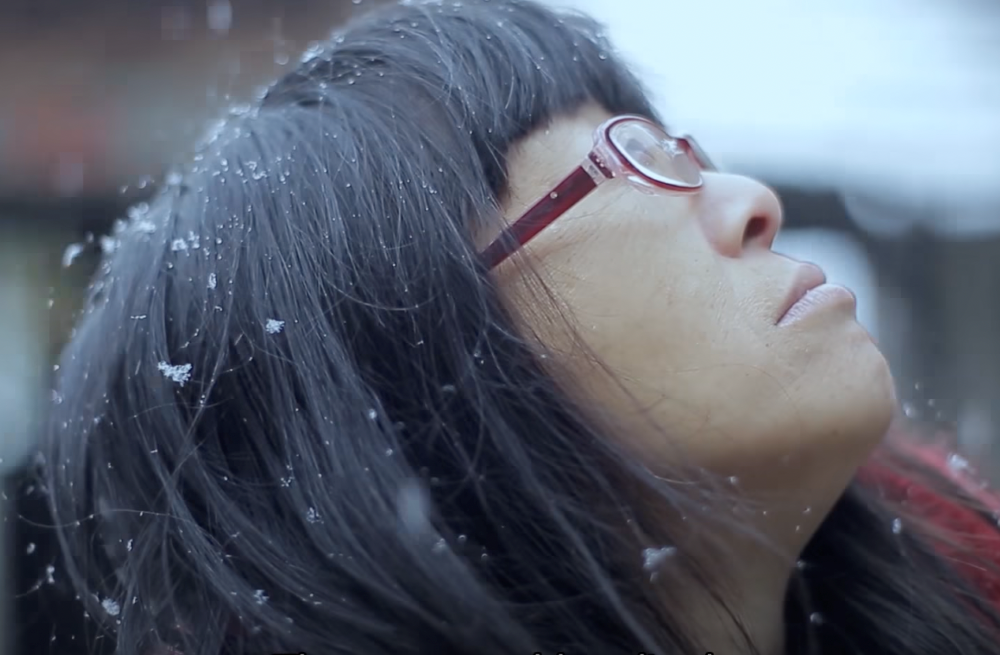
In the documentary Still Tomorrow, Yu arrives at Peking University to talk with a crowded lecture hall of admiring students. During the Q&A portion, a young woman stands up and asks, with a genuine, almost desperate urgency: “How do you accept yourself? How can you be a happy woman?” One knows—can intuit from this tone which is on the brink of tears—that though her interrogations carry with them the strain of pity, she is truly in need of an answer. Yu listens, the apples of her cheeks softly red, her mouth holding, and responds: “I have not yet accepted myself. . . And as for how to be a happy woman, I don’t have any experience, so I cannot tell you.”

still what I know more of is

why a tree that no longer flowers

still greens

Poetry is a craft of mutual confidences. The page, a vehicle by which the hidden tumult of thinking travels to the broad meters of the world, is the solution to secrecy’s fallibility—that something concealed in the mind can never become certainty. The impetus behind the writing is many, but all such motivations share the understanding that one’s life does not belong to anyone alone, that trueness occurs in the meeting between minds. To give over to language any semblances we have of truth or destiny, the corpus of our beliefs and our fantasies—it is the pouring into a vessel to see the liquid’s shape. As such, poems are autobiographies not from the materiality of history, but from the convictions of knowledge. They wring, from the solid facts of being, the waters of experience. Navigating the multiplicities of language, the poet creates her own arena for words to enact: a place where they, as Wittgenstein said, are “not used in the language-game of giving information”—where they serve not utility but imagination. Poetic language looks ahead at a world in which the thing it speaks of is already true. 

Poems are autobiographies not from the materiality of history, but from the convictions of knowledge.

The distance carved between Yu Xiuhua—the woman—and the entity of her poems is the same distance that occurs between the music and the instrument, yet the fact remains that music contains within its very form the body that produced it. The woman that asked how do you accept yourself, how do you live is not asking Yu because she thinks the poet has unearthed some universal formula; she asks because she has discovered an intelligence in the existence of the poems, the poems which hold the shape of the poet’s body, realised. For what stood out to me in her question, posed shakingly in the static of a crowded room, is how to be a happy woman. Perhaps she could have better asked, how do I realise my body like that, too? In an essay on feminine writing, Hélène Cixous claimed: “If women were to set themselves to transform History, it can safely be said that every aspect of History would be completely altered. Instead of being made by man, History’s task would be to make woman, to produce her.” The specificity of writing about a body that moves through the world, that receives sensations and translates them into words, is a determination to contribute to the remaking of woman. Yu Xiuhua does not bring up a distinct politics of feminism in her work—she generates it. She cannot answer the question because the answer is contained in the act of writing, not in the act of living.

I also think of rain, always letting the hour glow brighter

coming down like that

tearing the sadness to pieces, settling them on the surfaces of leaves

In poetry the emphasis is to never resemble anything, and that is always political. New recognitions can only take place when a subject comes to be disassociated with its assumed presences: when one can witness what they have not seen before, and at the same time understand that it has always been there—the yellow in the green, the electricity in the air. Atwood’s fish hook and open eye. Adrienne Rich’s trees. Lyn Hejinian said, “The incapacity of language to match the world permits us to distinguish our ideas and ourselves from the world and things in it from each other.” That the word woman so little resembles a woman, and that the word disability is so apart from its actual condition, is something that poetry builds into a politics of liminality, wherein one thing—as harnessed by idea—can metamorphose indefinitely from their objective reality, throwing open the concrete cell of a singular definition.

Suffering is one such cell. It initiates a visceral aversion in those who confront it, and simultaneously creates a system by which one can differentiate oneself—via indignance, or compassion, or admiration. None of these reactions are necessarily harmful, but they serve to reaffirm our predetermined beliefs about pain and the people who bear it. When we pity or commend someone for enduring a condition that we ourselves do not meet, we are essentially asserting that we understand what suffering is—the catastrophic dimensions, the terrifying closeness. Suffering becomes a flat, incomparable fact; its edges are too rigid to be breached, and we can only approach it with lingering fear and self-preservation. And because it is undefinable and unmeasurable by anything other than itself, it cannot change. 

When suffering is given a place in letters, it gains fullness not by exacerbating the distance between those who feel it and those who do not, but by divorcing suffering from being an affliction of the body (another body), to engage with it as a dynamic substance, a direction of the mind. Writing is the only place where pain and rage can be suffered in a way in which they do not hurt, do not constrict, but can speak to their greater elucidation of humanity. To give suffering a poetics is to distill agony into an essentiality of human existence, to give lucidity to the oblivion. It is a rejection of pain’s barren, lonely insistence of domination, and to affirm its residence as a mere component of the world. 

One of my favourite Yu Xiuhua poems is entitled “the details of life light me from afar.” It begins:

in speaking of distance, one attains vastness: the flat northern plains

the damp southern towns

one dazzling detail: a woman in a large red dress has a reason

to bring water up from the deepest well, pouring it from dawn until dusk

In poetry the emphasis is to never resemble anything, and that is always political.

To be bound by a single compartment is to understand oneself as a subject in someone else’s vision—vision that aims to teach us about ourselves, to instruct so that we do not fail to receive the perceptions of others when they are presented to us. The psychic weight of definition is always borne by she who is looked at; the one who looks merely imparts. It seems to me that Yu’s work was able to capture the greater consciousness of her readers because of a gentle—and perhaps unintended—inversion of perspective. Within the viewfinder of presumptive types and renderings, her poems express an ability to see herself from a distance, to become a subject of her own findings and impressions. I say unintended not to minimize her skill, but because this shift between writer and subject is an in-between state of intimations and flickers; there is no wholeness in either occupation. Only when the reader approaches the poem and bestows on it a recognition, is the subject made firm—when the public has met and understood the knowledge of the private. W. J. T. Mitchell once said of paintings that they desire “to change places with the beholder, transfix or paralyze the beholder, turning him into an image for the gaze of the picture…” There seems to me a similar exchange in poems. To be moved by a text is to be moved along with it. So the poet is not only looking at herself but looking at the reader. So the reader is not only looking at the poet but looking at herself. My pain fits into the contours of your pain. To be unfixed, yet recognised.

Still, we know that poetry is not salvation. “The book I wrote with such violent feeling to relieve that immense pressure will not dimple the surface. That is my fear,” wrote Virginia Woolf. It is from this admittance, this is my fear, that we can begin to understand the appearances of courage. 

The psychic weight of definition is always borne by she who is looked at; the one who looks merely imparts.

There is a sense that indefatigable strength is something that lies outside of the body—one summons courage, one gathers courage. Yet, from what I have seen, this sense of receiving something from the beyond misguides the actualities of courage. For it is not an act that is intentionally performed, but something that we imbue onto the situation to understand it. Only when standing outside of an experience can we celebrate the courage it must’ve taken. “I suppose when others praise us as strong,” Yu said, “we should acknowledge them with silence.” Poetry, no matter how arduous the conditions of its writing, does not present model emblems of fortitude, nor simple answers to insistent questions. Instead, it gives us the opportunity to contact something far more generous: the mutable borders between self and other, the incommensurability between things and definitions. We name this gift courage. When this notion was just a word—a forthright commendation—I believed it to be a choice, something boldly selected in the face of peril. Now I see it as a reading. 

To connect, to commune, to conversate—the confessional is a radical act of transformation. This is my fear, says the poet, opening up the passage for us to say no—this is your courage.

“Crazy Ex-Girlfriend” and “Wuthering Heights” Have Horny Wind in Common

The gloomy moors of Wuthering Heights are famously vulnerable to the wind—so, too, are the unfortunate families who call them “home.” It’s basically Emily Brontë’s whole deal, right? From the first pages of her only novel, we’re introduced to a home beleaguered by “pure, bracing ventilation … at all times.” And it shows! Trees slant against the titular homestead, contributing to a super moody landscape. Characters get sick—and sometimes die—after bouts of bad weather. All the while, they mirror the violent weather in impulsive, lashing actions against each other.

Wuthering Heights by Emily Bronte

Naturally, this kind of gusty, Gothic setup is good terrain for dramatic angst. So it’s no wonder that shades of Wuthering Heights can be seen in contemporary media, from music (“There were nights when the wind was so cold,” croons Celine Dion) to film (hi, Crimson Peak). Though the creators of both works have acknowledged a direct Wuthering influence, one of the novel’s more surprising scions is a little less direct (and, OK, maybe completely accidental): Crazy Ex-Girlfriend. Specifically, Season 2, Episode 11—“Josh is the Man of My Dreams, Right?”

If you haven’t watched the CW musical dramedy—co-created by Rachel Bloom (who also stars) and Aline Brosh McKenna—this episode follows protagonist Rebecca Bunch as she fends off intense feelings for her too-hot, too-tall, too-corporate snob of a new boss, Nathaniel. She’s newly engaged to Josh, the very sweet guy she’s liked since they were teenagers—and finally, for once, her life seems perfect. So the new crush is pretty inconvenient, to say the least.

Rebecca’s attraction to Nathaniel is so wrong that she can’t even admit it’s happening, much less that she’s behind it. How convenient, then, that the Santa Ana winds roll in and provide the perfect scapegoat for her ill-placed passion? After all, as relayed by a Frankie Valli-esque meteorologist (who also plays the literal wind), the Santa Anas “make things weeeeird.”

The Santa Anas’ power has been documented throughout pop culture—I’m thinking of The Holiday, where Jack Black’s lovable Miles says that “all bets are off” when the winds blow into town every winter. Joan Didion also wrote about the Santa Anas’ “violent extremes,” and how the winds “show us how close to the edge we are.” These are definitely not the same winds that plague Brontë’s moors (the Santa Anas are hot and SoCal-specific, for starter) but they serve a similar purpose: chaos.

In Crazy Ex-Girlfriend, a gust of wind cracks Rebecca’s shirt open, revealing her bra underneath, and Nathaniel’s interest in her spikes.

First, there’s the physical impact of the wind blowing events into place. In Crazy Ex-Girlfriend, a gust of wind cracks Rebecca’s shirt open, revealing her bra underneath, and Nathaniel’s interest in her spikes. She rushes home for a desperate attempt to rekindle her passion with Josh, but he’s knocked out on allergy meds, at which point she delivers a particularly Brontë-ish line: “Damn you, winds of the devil.” The Santa Anas cause a power outage that traps Rebecca and Nathaniel in an elevator, forcing them to spend time together and realize they actually have a lot in common. And chemistry—they share a pretty passionate kiss, too.

It’s like nature is conspiring to make this very wrong relationship happen, a point driven home by the fact that this personified iteration of the wind laughs as he wreaks his havoc:

“You might say don’t do it, wind

Leave these poor people alone!

But I’m a prankster

Tee-hee-hee-heeee!”

In Wuthering Heights, bad, blustery weather manifests its own brand of misfortune. The night that Heathcliff runs away after overhearing Nelly and Catherine talk about him, “there was a violent wind … a huge bough fell across the roof, and knocked down a portion of the east chimney-stack.” To further complicate things, Catherine gets sick from spending all that time outside looking for Heathcliff—so sick that she’s sent to recuperate at Thrushcross Grange, and infects the Lintons with her fever, killing both of her future in-laws. She marries Edgar three years later, permanently ruling out any future with Heathcliff.

Sure, the wind here is not a gleeful, anthropomorphic trickster. But all the same, the people in its path are powerless—victims of forces they can’t control. Or at least, maybe it’s easier to see things that way.

Those stormy winds from the night Heathcliff leaves? They happen at the height of Catherine’s heartbreak.

In addition to using wind as a physical plot device—the way it damages people and things—the women behind Wuthering Heights and Crazy Ex-Girlfriend both play it as a sort of stand-in for emotions too thorny to own up to. Those stormy winds from the night Heathcliff leaves? They happen at the height of Catherine’s heartbreak. Her love for Heathcliff is so complicated that she can’t extricate him from her own identity—so the wind has to take on some of the work of expressing that pent-up passion.

Sure, 170 years later, fictional heroines are a little freer to make questionable choices in their love lives—but Rebecca still faces her share of inhibitions. She’s spent most of her life believing she was not normal, and desperately wishing she were (Bloom’s debut essay collection, I Want to Be Where the Normal People Are, further explores the concern). And by this point in the show, Rebecca’s still one season away from receiving a diagnosis for borderline personality disorder, and the tools to help manage it. So right now, her feelings for Nathaniel represent something worse than a workplace crush. Rather, it’s a perceived moral failing she takes as yet another confirmation of her not-normalcy. It’s easier for her to blame the wind when she kisses Nathaniel in that tiny elevator, than confront the ambivalence of her current relationship. But the windy metaphor isn’t having any of it. “I just reveal your deepest wishes and fears,” he reminds her after the smooch. “So it’s you, Rebecca, it’s not me / Who is super weird.”

In both Crazy Ex-Girlfriend and Wuthering Heights, the windy weather kicks up at times of great personal turbulence for each woman—as much as they might like to think otherwise, the violent wind isn’t really happening to them. It is them. Lord David Cecil, who approached Wuthering Heights as an exploration into the principles of “storm” and “calm,” said that for Brontë, “an angry man and angry sky are not just metaphorically alike, they are actually alike in kind; different manifestations of a single spiritual reality.” Sure enough, when Rebecca’s wind tells her “You ruined everything, you stupid bitch,” he’s not being excessively harsh for no reason—he’s simply parroting her own self-talk from Season 1 back at her. Like Cecil said, Catherine and Heathcliff weren’t hapless victims of the wind. Neither is Rebecca. They’re all agents in their own undoing.

But hey, it’s not all gloom! Even within the rigors of network TV standards and practices, Crazy Ex-Girlfriend makes explicit something Wuthering Heights could only ever gesture at: horniness. Specifically, the kind when you’re attracted to someone you have zero business being attracted to. As Mark Kinkead-Weekes said of Brontë’s novel, Catherine and Heathcliff’s relationship “looks as much like hate as love,”—an observation that just as easily fits Rebecca and Nathaniel nearly two centuries later. As the couple dances to an Ed Sheeran-y “Let’s Have Intercourse,” the lyrics speak to that exact kind of confused crush: “Sometimes my body wants things that my mind does not / My body wants things that make my mind go, ‘uh, body what?’”

For Kinkead-Weekes, the tension between Catherine and Heathcliff goes beyond mere physical lust. It’s a matter of “breaking beyond the self, metaphysical and impersonal.” Now, Nathaniel and Heathcliff both give their respective love interests plenty of reason to run away. But as Catherine says, “Whatever our souls are made of, his and mine are the same.” He gets her on a fundamental level. Is it really that different from Rebecca finding out her mean boss has a soft spot for Harry Potter, too, and considers the books modern classics?

Is it really that different from Rebecca finding out her mean boss has a soft spot for Harry Potter, too, and considers the books modern classics?

None of this is to say that Crazy Ex-Girlfriend is directly inspired by Wuthering Heights although, why not? In an earlier episode, Rebecca lists a hardcover copy of the book as one of the many things that can fit under her breasts (in a song aptly named “Heavy Boobs”). And Brosh McKenna also penned Jane, a modern graphic-novel retelling of the elder Brontë’s Jane Eyre. So even if the pair weren’t actively thinking about Gothic romance when writing this episode, we know Brontë could have been floating around somewhere in their collective, creative psyche. As she does.

Even beyond this one very windy entry, Crazy Ex-Girlfriend sometimes feels like a modern, musical companion to Wuthering Heights. In an earlier episode, Rebecca reflects on scratch marks she left on a living room table as a kid—and though they were born from a place of anxiety, she acknowledges them with a small kind of pride. “I was a strong, feral little girl,” she says. In Wuthering Heights, Catherine has her own reminiscence. “I wish I were a girl again, half savage and hardy, and free,” she says on her sickbed, “and laughing at injuries, not maddening under them! Why am I so changed? why does my blood rush into a hell of tumult at a few words?”

Like her literary predecessor, Rebecca spends a lot of Crazy Ex-Girlfriend preoccupied with that kind of question. Fortunately, over the course of four seasons and more than 150 original songs, she starts to figure it out.

What You Lose as a Daughter of the Iranian Revolution

In They Said They Wanted Revolution: A Memoir of My Parents, Iranian American author and Vice journalist Neda Toloui-Semnani reconstructed the story of her parents as young, leftist Iranian activists radicalized at Berkeley in the late ’60s and who came to see communism as the political answer to Iran’s monarchy.

Her parents supported the 1979 revolution that brought down Iran’s Shah. What they wanted was a democratic government. What they got was a takeover of power by Ayatollah Ruhollah Khomeini and his religious followers, and a purging of the opposition. Toloui-Semnani’s father was arrested, and her pregnant mother flees across the border to Turkey along with some family members and the author then aged three. 

The adage “the revolution devours its children” is particularly well suited to Toloui-Semnani’s story. Beyond politics though, this book to me is about the choices made by a generation of Iranians—including my own parents—whose lives collided with the revolution. Choices which would mark and define the lives of their children for decades to come. 

This book is “not only an interrogation of history, it’s also my own record of it,” writes Toloui-Semnani. It’s a reflection “on how we continue like threads stitched across decades, connecting generations.” In scenes taking place across countries and decades, from San Francisco to Tehran; from Washington DC to Van, Turkey; from Rolla, Missouri to Semnan, Iran; she weaves together US-Iran history with her family’s stories. They Said They Wanted Revolution blends hard facts and emotional truths and is as much a work of journalism as it is literary.  

Toloui-Semnani and I convened in a video call late December. We spoke about the loss of father and fatherland, the redeemable power of storytelling and her reflections on what she inherited as a daughter of revolutionaries.


Ladane Nasseri: Growing up you heard your mother tell stories like taking over the Statue of Liberty as an activist or fleeing Iran after the revolution. Certain stories are part of the family narrative and with time they become myths. What made you want to revisit and research these stories? What did you feel was left unaddressed? 

Neda Toloui-Semnani: All families have these mythologies to them. As a child you get used to hearing these stories again and again, the same way the person gets used to telling it, and it becomes almost like a bedtime story. It feels comforting, part of the fabric of who are, of the family that you understand. There isn’t any reason to interrogate them. But being a journalist, I always found that every story changes as soon as you start asking questions—I’m sure it’s similar for you. You think you understand a pretty basic story and then you ask basic questions and the texture and the flavor of the story changes. I decided to try to tell the story of my parents, how we ended up back in the US, why my dad was executed, why we escaped. Once I started asking basic questions, they led me to other questions. I realized the stories I had in my head growing up were not always accurate. 

LN: In an oral history interview with your mom on StoryCorps, which you listened to after her death, she tells the interviewer that you are “haunted” by your father. As a child, you always knew that he had been killed. Later, as an adult, you write in a journal entry that by paying tribute to him repeatedly you had “trapped” your father. What was it like growing up knowing he had been killed, and to have him absent from your life and yet so present in your mind? 

NTS: I lost my dad in a violent way. Violence for a young person does not make sense. I was not able to let it go: Why did it happen? Why my dad? Why me? Why my family? I remember vividly as a child thinking that they had gotten it wrong, that he had managed to escape. I remember, a small part of me thinking other people escape from prison, maybe he did. I spent a lot of time writing short stories where the daughter would lose the father, and he was not really gone, he was trying to get to her. Part of that was because we were in the States and this all happened in Iran, which felt very far away when I was growing up. It almost felt like he was trapped in another world. It all sounds crazy saying it out loud. 

LN: It makes sense to me. Have you heard the term ambiguous loss? It’s coined by social scientist Pauline Boss who studied families with a missing member. It’s a complex form of grieving when someone goes missing or in cases like dementia when the person is physical present but emotionally absent.

NTS: Yes, and the other thing is Dad died six months after his arrest, and we had escaped. So tied up with losing my father was losing Iran, losing my family—we are such a tight family culture. Only now do I realize that losing your language, family, home and also your father as a toddler is very destabilizing. 

As I grew older, I started realizing that this version of my father that I had created for myself had stayed static. I kept obsessing over how he died, why he died, what kind of a person he was because good people aren’t killed, and he is a good person. By my mid 20s, I realized in that journal entry, I had trapped him in one version of him. This book is my best effort to free him, to let him be as complicated a person that he was, and to mourn the fact that he was only 39 when he died. You change as you grow. The best way I can help him change and mature was for my understanding of him to change and grow, and to have a lot of compassion for him, which meant interrogating some of his choices, treating him like any other adult, where you might have empathy, but you can also sit with the fact that maybe sometimes they didn’t make great choices.

LN: I’d like to address choice, because it’s a theme I have been exploring in my own writing about the choices a generation of Iranians had to make at the turn of the revolution. Choice is a theme that runs explicitly and implicitly in your book. How did you settle on opening your book with your mother’s dilemma of staying or leaving Iran, which in some ways was also a choice between being a loyal spouse or a responsible mother? 

NTS: My aunt had given me a recording of my mother and my aunt talking about the escape. The interview was done 9-10 years after the escape. The most interesting thing to me was Mom’s ambivalence. It was something she expressed to her sister, how ambivalent she felt about leaving my father. Mom always said when I asked, “why didn’t you leave earlier?,” she said, “your dad needed to come to his own decision in his own time to escape Iran or not, he wasn’t there yet.” In my mind I thought, “that’s crazy why wouldn’t you just force him to go? You were pregnant, he was in danger for crying out loud, our family was in danger.”

The other thing is that my mom loved my father so profoundly up, until the end of her life, in a way that was hard for her to articulate. If she hadn’t had kids, she would have stayed in Iran—that’s my sense that she would have wanted to be as close to him as possible, even if that meant risking her own life. I opened the book with this because these choices that would seem obvious to some people were so difficult to her. 

LN: How did she talk about her life as a political activist? 

NTS: She was very proud of some of the things they did. Mom could hold so many things at once. She could hold being proud and regretful. She wasn’t somebody who had a simple emotional vocabulary. I don’t think she ever regretted being part of the Confederation. She believed that the Shah and his government were for the most part corrupt. Mom and Dad both recruited a lot of young people during their many years working for the movement. They recruited people who lost a lot and I think the regrets, the sadness, the guilt maybe stemmed from that. 

As a child you get used to hearing these stories again and again, and it becomes almost like a bedtime story. It feels comforting, part of the fabric of who you are.

I hear people scream revolution, “let’s burn it down,” but one of the things that I know to be true—I’m sure you know to be true, any child of the revolution knows to be true—is what comes up in its place is always going to be flawed. She wished that they had more of a plan in place, that they did not trust and take a risk on Khomeini and his people. Mom never went in for certainty after that. If anyone was too certain about a thing, she called bullshit. That comes from the fact that they brought down one monarch and helped bring in a demagogue, whether or not that was their intent, it happened.

LN: One of the most interesting things to me is how closely intertwined the US and Iran were at certain stages in history. The US intervened in Iran’s politics with the 1953 coup that overthrew the democratically elected Prime Minister of the time, but also had an indirect influence. A wave of students came from Iran and studied in the US at a time that coincided with the anti-war movement in the US. This nourished them with idealism and gave them revolutionary zeal. What surprised you in your research or would be surprising to American readers?

NTS: I don’t think I realized how young the CIA was as an agency when the 1953 Coup happened. How the Iran Coup was kind of its coming out party. The other part is Kermit Roosevelt with the CIA. He had this fictionalized, heroic vision of himself, which was very much a colonialist, orientalist vision of how he was going to approach the Middle East. He was one of the people who started the American Friends of the Middle East. The CIA helped fund it. The American Friends of the Middle East started the Iranian student association, which in turn grew to become one of the umbrella organizations for these smaller political cells that helped overthrow the Shah, or at least helped foment the dissatisfaction abroad. 

When we think about revolutionary movements, we think homegrown, coming from inside, a bursting forward of dissatisfaction and idealism. What I found fascinating about the Iranian student movement is that it was a transnational movement. Because dissent was pushed so far underground, part of the consequences was that these students were sent abroad in the 60s and most of them came to the US, to Europe as these bigger movements were happening. It became this really sophisticated anti-establishment movement. Those who left Iran in the mid 50s or 60s were not necessarily radical. They might have been against the Shah and a significant number of people were not pro Shah, but timing is everything in love and I guess in revolution too. That to me is so fascinating. The US has tried in so many ways to win hearts and minds and part of that was to bring students over and teach them how great America is, the mythos of America. In this situation, it ultimately did not pay off for America. 

LN: Your mom was a revolutionary and her sister was a minister of women’s affairs under the Shah. It’s as if the chasm at the national level also existed within your family. How do you explain that two sisters from the same generation had such diverging beliefs?

NTS: My aunt is a reformist rather than a revolutionary. During the late ’60s and ’70s, reform hadn’t worked. You could argue that things were changing, but it seemed like the government had other priorities than justice, whether in the US or in Iran. In Mom’s case, I think timing had everything to do with it. She found her people. She was smart, a passionate communicator. Being generally pro justice and coming up during the anti-war movement… you’re young and you’re changing the world, that’s an alluring thing. Also, compromise isn’t pretty and if you govern, you compromise. The sisters didn’t talk for years. My aunt had a maternal relationship with my mom, so that fissure was painful for my aunt certainly and for my mom as well. It took a long time to heal. 

LN: You traveled back to Iran in 2003. How did that impact your understanding of your story and your family’s? 

NTS: It was a trip that made things fall into place for me.

LN: How so?

There was a profound realization that I come from somewhere, that I am not just from DC, not just from America… There is a whole history, a whole different version of myself that I don’t know.

NTS: It took me a while to realize all the different ways it did. I thought it was going to be like when my mom went back to Iran when she was in her late teens, early 20s. She felt at home, like a hand in a glove. When I went back to Iran, I felt very unsettled. Obviously, Mom and I went back to two very different Irans. She went back to the Shah’s Iran, and I went back to Iran 25 years after the revolution. But also, Iranians kept calling me do-rageh, two-blooded. That was really painful for me, and I couldn’t figure out why it was painful because I kept calling myself an American. I didn’t feel completely embraced by the country. 

Part of that is for obvious reasons: I felt contained in Iran. I don’t wear the hijab and so being told that I had to was hard. Paying for a bus ticket at the front and having to go sit in the back—putting aside the fact that the women’s section of the bus was always smaller, and you’re smooshed up together—there is something deeply uncomfortable especially growing up in America about being told you have to go to the back of the bus.

At the same time, I was with family I hadn’t seen since we had left, I was seeing places in real life that I had only seen in pictures. There was a profound realization that I come from somewhere, that I am not just from DC, not just from America. I am from this other place and that means that there is a whole history, a whole different version of myself that I don’t know. That’s still true. One of the sad things for me is the distance between myself and modern Iranian culture. Sometimes, it doesn’t come easy to me, it’s not instinctive. That speaks to loss.

LN: In the section where you address your son, you write: “I want to show you that loss is only part of the story, not the whole of our story.” Your need to retell that story by bringing in the meaning you found while writing this book is clear.

NTS: There are times that this story of my family felt sad and hard to hold. There was a time when all I could see was that darkness, the absence that was left. I do think that stories are living things, history is a living thing, and we decide which version we’re going to hold. I worked hard to see the beauty and the hope and the light in it. 

Popsicles Can’t Fix This New Heat

Heat Dome

We are slicing fruit and fixing cold sandwiches, swiping mayonnaise on slices of multigrain bread and tearing leafy greens into salads for supper. Of course we aren’t cooking, we’re under a heat dome. It’s nearly 100-degrees in our kitchens, even with the windows wide open and every fan blowing. Our bare feet stick to linoleum floors. 

Outside, the fruit trees are motionless; not a leaf twitches on the dogwood that didn’t bloom this year, its leaves already gone brown. The neighbor’s weathervane, a sailboat with an aged patina and a post that creaks during windstorms, is dead in the water. 

We move slowly, especially Cori who is pregnant, and pause our meal preparations to wipe the backs of our necks with dishtowels, to hold glasses of ice water to our foreheads. 

Around six o’clock, just as we’re about to call the kids to eat, it’s Alex in the group chat who texts that she’s going to lose her shit. Em says she’s already lost it and sends the smiling poop emoji. Alex types back, “Sea Otter Cove? 8?” Cori texts, “I’ll drive.” So now we just have to make it to bedtime. 

We knew it was coming. We checked the forecast and sent our husbands into attics for dusty box fans. They leaned step stools against our houses and secured AC units to bedroom windows, holding screws between their teeth and balancing cold beers on windowsills. We bought popsicles and sports drinks and filled our coolers with gas station bags of ice. When temperatures first broke triple digits, we made shakes with frozen bananas and sipped them while soaking our feet in kiddie pools, ignoring the dirt and grass and dog hair gathering at our ankles. 

We took the kids to the lake and waded in after them, splashing cool water on our arms and legs, skimming the toddlers across the surface and sprinkling plastic watering cans on their heads. When the fire department showed up to spray a truck’s hose into the air, showering the roped off swimming area in cold water, we laughed and shook our heads that there weren’t more urgent matters. Wasn’t this a state of emergency? 

Yesterday, we still had the energy to make things fun. We filled water bottles with electrolyte tablets and ice cubes and left the strollers and bikes in our garages and instead drove, air conditioning on high, to the splash pad at the city park. While the children shrieked and skinned their knees running too quickly across slick concrete, we worried about the weather. “Did you see the melted power cables?” asked Em. “Even the asphalt is buckling in this heat.” 

There are headlines about elders dying, so today, we checked in on our neighbors, especially the ones who live alone. We brought along our kids, who squirmed on front porches and handed over scribbled drawings and sports drinks. We donated cartons of bottled water to the homeless shelter. Cori gave the mail carrier a can of bubbly water. 

All day we were thirsty, and there are quarter-empty drinks on the counters, the tables, the arms of lawn chairs. Em’s youngest keeps grabbing for her breast and the constant nursing has increased her milk supply. She sent us a photo of the milk she pumped yesterday before her shift. Three, four ounce freezer bags of breastmilk, captioned 11 fucking ounces. She’s soaked through her second bra of the day, and she’s not sure whether it’s due to sweat or milk. 

Meteorologists are calling it a once-in-a-millennia heat wave. Each day we’ve broken record temperatures set the day before. And we are starting to break. 

It’s impossible to eat indoors, so we ask our husbands to haul picnic tables into whatever shade we can find. At supper, the toddlers in their high chairs pull apart sandwiches and lick the mayonnaise from the bread. They peel chilled hardboiled eggs and make faces as they crunch down on tiny flecks of stuck-on eggshell. 

The older kids refuse to sit still. All day they have subsisted on water and sugar—popsicles, juice pouches, melon slices—and now they’re wired. They spray each other with garden hoses until someone starts crying, comes back to the picnic table to pout while picking at food from their mother’s plate. Alex’s kids have worn their swimsuits for three days straights and are refusing to bathe. Em’s have foregone clothing altogether and are stuffing their mouths with handfuls of potato chips, then sprinting to the slip and slide still chewing. We call out warnings halfheartedly, unable to muster the energy to shout. We’re worn out just by sitting, by breathing; even our nostrils feel swollen, stuffy with heat.

Shortly after seven we herd the children indoors. They flop to the floor as if their bones have melted or dart into other rooms, contorting themselves into corners and under beds, anywhere but the bathroom. Cori muscles her toddler upstairs, prying his hands from the spindles and nudging the back of his head down the hallway with her pregnant belly. Em’s toddler refuses the little potty and instead throws it across the bathroom, laughing as hours-old warm pee sprinkles the walls. Em yells, “No!” Then bites her tongue to keep from cussing and instead narrates a script from Instagram: “Mama is feeling frustrated. Mama needs to take a big, deep breath.” The older kids lie about brushing their teeth and we let them. 

We can hear the youngest kids still crying in their cribs while we stuff our tote bags with beach towels and swimsuits. Alex packs her son’s insulated lunch box with mochi ice cream and canned rosé. In parting, we say, “love you,” to our husbands in the way that means, I need this, don’t ask when I’ll be home. And Cori picks us up in her CR-V, air conditioning so loud we can barely hear her pool party x goop (tropical drink emoji) playlist. The bank sign flashes the time and temperature on our way out of town. 8:27 PM. 94 degrees. 

We take the old two-lane highway down the coast and it curves along sandstone cliffs that slope to shore. Cori opens the sunroof and we look up as golden light flashes through moss-draped trees. She shoulder parks and we descend a trail through redcedar, fir, and madrona. Even the forest smells sun warmed.

At sea level, we cross the railroad track that cuts a line between forest and cove. A sandstone bluff separates two beaches. Voices echo on the western beach, so we follow the point around to the other beach, and find it empty. We unfold a cotton blanket over sand and crushed shells, slide out of our sandals and lean back on driftwood to watch the sunset. 

We are sweaty, but together. Alex offers mochi, and we let the rice flour and ice cream melt in our mouths, cold and sweet. Em passes around a can of rosé. When the sun sinks below the islands, darkness falls without its usual reprieve. 

Cori gulps from her water bottle and finally says it. “I hate that this is our new normal.” She leans her head on Em’s shoulder and wipes at a hot tear. We sigh with our mother tongues. Alex scratches Cori’s back. “I know, sweetie. Me, too.” 

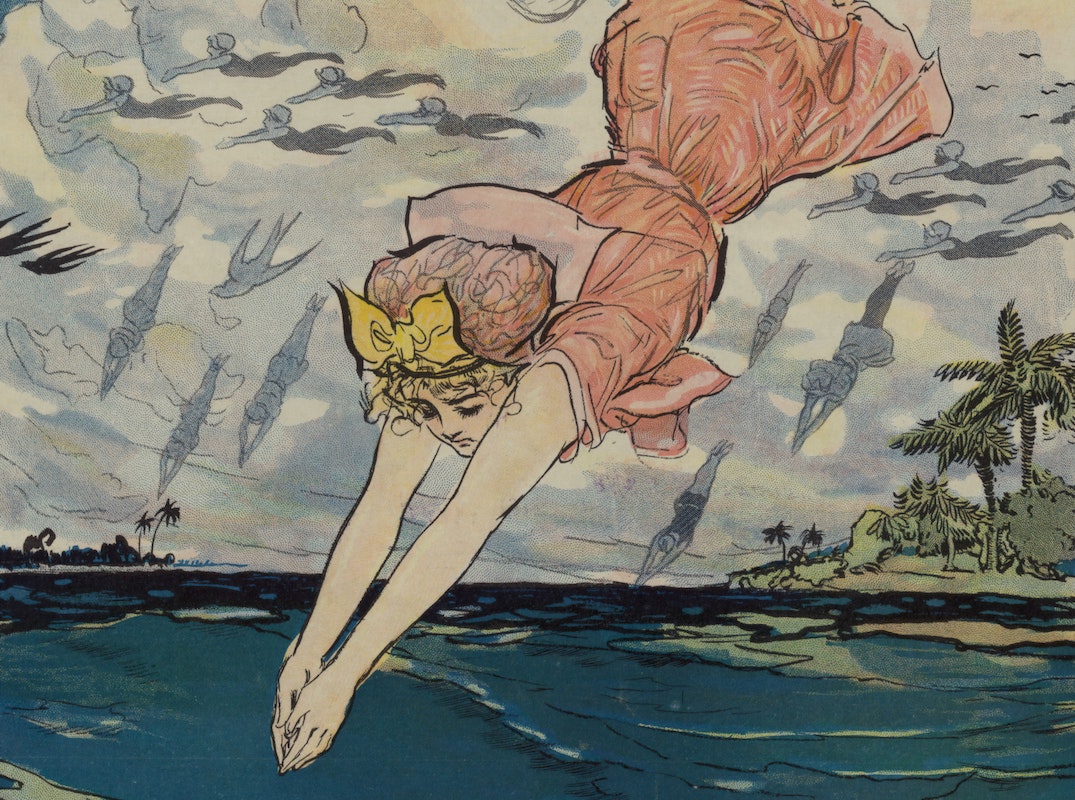
And then, Cori is running toward the bay. She lifts her tank top and lets it fall behind her to the beach. She wriggles out of her maternity shorts and plunges into the waves. She goes under. When her head reappears she howls, a cry so feral it scares us. It calls beneath our skin. We are burning up and running naked into the waves, and howling. 

Cori is floating on her back, belly raised to the moonless sky, when we see that her rage glows. Faint blue lightning crackles through the waves with each stroke of her hand. She is cupping fire. 

It’s too early in the season for bioluminescent plankton, but they flicker at our fingertips. We are charged. Em splashes to shore and returns with two mussel shells held to her swollen breasts. “I’m a goddamn mermaid,” she yells before diving into the next wave, her whole body aglow. 

She surfaces beside Cori and floats beside her. She slips her hand into Cori’s and the water sparkles. “Like sea otters,” Em says. We wade over and join them on our backs as the littlest lights flare above and below us and we hold hands to keep from drifting apart. 

7 Short Novels About Characters Who Make Transgressive Choices

What is it like to break with convention? To go against expectations? To slip out of the mainstream?

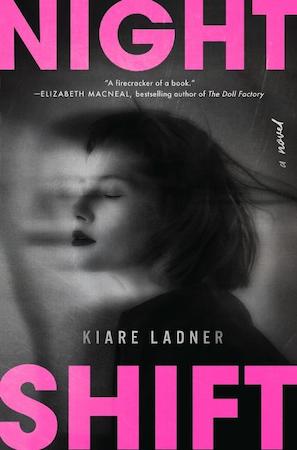
In my 20s what I wanted most was to write. What I needed most was time. So I took a nightshift job summarizing crime articles. Though I relished escape from the nine-to-five drudge, the inverted perspective of being nocturnal, and the nonconformist people I met, my body clock never adjusted. Constantly sleep deprived, my writing stalled. 

Years on, I used this setting for my debut novel, Nightshift. Meggie, the protagonist, gives up a “normal” daytime existence for a different reason. She meets Sabine and recognizes in her the person she wants to be. As Meggie’s obsessive attraction grows, she follows Sabine into the liminal world of London’s night workers…

Writing the book, I was interested how far from societal expectations someone will go to explore who they are. Meggie questions even basic assumptions, asking, “Why was it such a great thing to respect yourself? If you let go of vapid ideas like that, of that kind of preciousness, you could explore so much else. If you swept your precious self out of the way a bit.”

Unsurprisingly, as a reader, I am drawn to outsiders who make choices that swim against the tide of dominant narratives. Here are a few of my favorites, new and old, in which I find inspiration, comfort and hope:

Assembly by Natasha Brown

A Black British woman has a high-powered finance job. But she is exhausted by the obligation to ascend, and the impossibility of escaping white narratives. Outwardly, she appears to fit in and achieve worldly success, while inwardly she finds relief in contemplating a choice that may cost her life. Brown’s incisive debut shows the limits of words and story when even they are tainted by racial injustice. 

These words, symbols arranged on the page (itself a pure, unblemished vehicle for objective elucidation of thought), these basic units of civilization – how could they harbour ill intent?

Cleanness by Garth Greenwell

The narrator of Greenwell’s debut What Belongs to You holds together the linked stories of this novel, which is also set in Sofia, Bulgaria. We follow his love affair with R., his interactions with his students, his BDSM sexual encounters and his social/political involvements. The book is infused with sexual desire, which is explicitly, viscerally, and tenderly described. The narrator makes boldly expressive choices that don’t spare him or leave any place to hide. 

“You can call out for anything you desire, however aberrant or unlikely, and nearly always there comes an answer, it’s a large world, we’re never as solitary as we think, as unique or unprecedented, what we feel has always already been felt, again and again, without beginning or end.”

The Bitch by Pilar Quintana, translated by Lisa Dillman

Quintana’s intense allegory is set on Colombia’s Pacific coast where daily life is harsh and merciless. Damaris, childless at an age “when women dry up” as her uncle puts it, lives in a shack surrounded by jungle with her husband, Rogelio and his three dogs. One day Damaris brings home a puppy that she gives the name intended for her daughter. She cares lovingly for the pup, but it has a will of its own. As its disregard for her increases, infringing on her most difficult memories, Damaris makes choices that diverge from common expectations for pet or maternal narratives. 

“She wanted to run away, get lost, say nothing to anyone, be swallowed up by the jungle. She started to run, tripped and fell, got up and ran again.”

Vacuum in the Dark by Jen Beagin

Mona is a cleaner with a secret photographic project that involves dressing up in her clients’ clothes. Following her dead junkie boyfriend brought her to Taos, New Mexico, where she gets involved with the married Dark, which brings its own set of problems. She has imaginary conversations with Bob (God) or more productively Terry (her fantasy version of the real-life talk show host on NPR). Her way of dealing with past trauma is raw, idiosyncratic, and darkly humorous: an anti-heroine who isn’t fazed by taboos and embraces transgression of many kinds.

“In some ways, they reminded her of John and Yoko, but, as they were both terrible musicians, she called them Yoko and Yoko.”

Mirror, Shoulder, Signal by Dorthe Nors, translated by Misha Hoekstra

Sonja is over 40, single, and living in Copenhagen. Unsuccessfully, she is trying to learn how to drive, keep her positional vertigo under control, and reconnect with her sister. In her mind, she constantly escapes back to the vast, rural landscapes of her childhood. Though lonely, she finds solace in being alone. Quietly she begins to defy expectations, slipping out of confined social situations to try to find her own way, forward or back… 

“She’s grown up and playing the part, but she’s also a child who doesn’t want to learn her lesson, who won’t adapt, won’t be like the others and think what the others think, whatever that might be.”

Convenience Store Woman by Sayaka Murata, translated by Ginny Tapley Takemori

Keiko Furukura, with her blunt, literal, and unique outlook, has never fitted in. Her parents gave her a loving childhood, and she accepted her aloneness without drama or self-pity. Yet after 18 happy years of being single and stacking shelves in a convenience store, she caves in to societal pressures. She hooks up with loner Shihara. Though neither is interested in sexual intimacy, they pretend to be a couple. But when Keiko quits the store to try for a more ambitious job, has she taken her experiment in conformity a step too far?

“She’s far happier thinking her sister is normal, even if she has a lot of problems, than she is having an abnormal sister for whom everything is fine.” 

Too Loud a Solitude by Bohumil Hrabal, translated by Michael Henry Heim

Haňťa has been compacting books for 35 years under the communist regime in Prague. But he has also been saving those he can from destruction and hoarding them in his home. Every inch of his apartment is so piled with books that they threaten “to fall and kill or at least maim” him. Yet in a society increasingly given over to bland efficiency and the forces of progress, Haňťa finds solace in retreating further into the world of memory, literature, and dreams. This is a novel into which I myself retreat, again and again.  

“I am a jug filled with water both magic and plain; I have only to lean over and a stream of beautiful thoughts flows out of me. My education has been so unwitting I can’t quite tell which of my thoughts come from me and which from books, but that’s how I’ve stayed attuned to myself and the world around me for the past thirty-five years. Because when I read, I don’t really read; I pop a beautiful sentence into my mouth and suck it like a fruit drop, or I sip it like a liqueur until the thought dissolves in me like alcohol, infusing brain and heart and coursing on through the veins to the root of each blood vessel.”

Taylor Swift’s “All Too Well” Helped Me See The Full Story of My Relationship

When my partner of four years blindsided me with a breakup over the phone, I couldn’t help but turn to my favorite singer, the serially-burned-by-men-via-too-brief-phone calls Taylor Swift. My boyfriend was no Jake Gyllenhaal-esque male manipulator, but when Swift’s re-recording of her classic breakup album, Red (Taylor’s Version), came out three weeks later, it felt like a fated lifeline. 

Fans of Swift know the album’s “All Too Well,” purportedly about her relationship with Jake Gyllenhaal, is frequently lauded as her best song. The infamous ten-minute version, something of a legend within the fan base, would finally see the light of day with Swift re-recording her old work. When the album dropped, I had just arrived in LA for the weekend, a ridiculous amount of time for a cross-country trip. I needed my two best friends; I couldn’t bear to be alone. Two weekends earlier I’d been in Manhattan and two weekends after I would fly to England. I wanted to be anywhere but home. I wanted to be anywhere other than my own body. That night, in my best friend’s twin-sized bed, I listened to the new version of the song for the first time. 

I found myself surprised by the new lyrics, by the bite to the lines. This new version was more scathing, more honest, more angry than the ballad’s original ache. Swift was mad here, furious that her partner put her in a new hell, that his remarks made her want to die, that the patriarchy allowed for their dynamic, one in which her youth translated into neediness and his resulting cruelties went unchecked. In some ways the first version had protected Gyllenhaal, and, more importantly, protected the romance of their story. It allowed the end of their relationship to be sorrowful. But this original version, before it was made palatable for both radio playtimes and social discourse, contained all of Taylor’s hurt. It let her lay the blame in the open and present a fuller story, one that’s more complicated than a singular disappointment or the sting of goodbye.

My ex-boyfriend and I loved to tell the story of how we met: how teenage backpackers staying in the same hostel in Budapest for three nights could turn into a sustained long-distance relationship. We told it to friends while visiting one another on fall breaks at our respective campuses, mine in Upstate New York and his in the mountains in Tennessee. We told it differently, his version messier and funnier, mine offering a romantic haze to an evening between strangers that could only be applied in hindsight. We told it to each other, no one more surprised than us that we turned into something real and lasting, that we became each other’s family.

Peripheral family involvement in Swift and Gyllenhaal’s relationship is a through line in the original “All Too Well.” The opening verse places her infamously unreturned scarf at “his sister’s house.” The way his mom welcomed Swift into Gyllenhaal’s past portrays a kind of collective intimacy, an endorsement for the arc of their relationship by those who knew them best.

“Photo album on the counter, your cheeks were turnin’ red

You used to be a little kid with glasses in a twin-sized bed

And your mother’s tellin’ stories ’bout you on the tee-ball team

You taught me ’bout your past, thinkin’ your future was me.”

The new version amplifies this theme, emphasizing her father’s affinity to feel both charmed by and frustrated with her partner. In some ways, these repeated ties to her partner’s family allow Swift to convey the seriousness of the relationship in brushstrokes, suggesting that she and Gyllenhaal weren’t isolated in their mutual affection.

In this house, I had shared countless conversations with his family and pictured our own kids in the room designed for grandbabies.

On one of the last trips my ex and I took together, we were visiting his parents in Tennessee. In a house of glass and wood overlooking a summer-soaked forest, I watched him sort through the childhood belongings he was storing there. The embroidered baby clothes and beloved construction-themed picture books filled an afternoon with his mom. Her stories and laughter were something tangible, something I could hold onto. In this house, we had gotten ready for his sister’s wedding, and babysat his nephew. We escaped a nearby summer camp job that drove us half crazy, and hosted a dinner party for friends. In this house, I had shared countless conversations with his family and pictured our own kids in the room designed for grandbabies. 

Despite my ex moving to Florida for the last year of our relationship, we never had a shared space of our own—but we had all the right ingredients to tell a good story, about who we were to one another and what it would mean for the future. Dating him was a larger-than-life experience. It was tearful goodbyes, surprise visits, and meals that showed up on my doorstep when I’d had a rough day. It was a romance that wrote itself because the ache was ever-present. It was a constant reassurance that the trials of distance were what you endured for your family. I got used to my relationship feeling somewhat bad all the time because I missed my person, and when it began to feel bad because of my person, it was easy to miss the differentiation.

On the final call, I was expecting to plan how I was going to move in with my partner in the coming months. He had asked me to, and my initial hesitation was presented as a threat to our longevity. But after I had spent a month thinking everything through, sorting out the logistics, making peace with the difficulties, it seemed the problem had somehow shifted; it was no longer my absence, but my presence that proved burdensome for him. He didn’t believe we would get married, and that newly realized truth meant he couldn’t bring himself to be a good partner to me. 

The thing about long-distance relationships is that they fundamentally rely on a shared story. The story of your relationship is, in some ways, more important than the reality. From day one, there has to be an end goal, a way out of the distance that makes the difficulties of the present tense worthwhile. And for us, that was a life we had imagined together: fiercely debated kids’ names, furniture configurations for a tiny apartment in France, careers that fulfilled us both. It was a vision of life together that had felt promised to me. 

The thing about long-distance relationships is that they fundamentally rely on a shared story.

Swift sings, “And you call me up again just to break me like a promise / So casually cruel in the name of being honest.” She perfectly captures how the truth sometimes feels like a betrayal, if for nothing other than its delivery. My partner saying he didn’t think we would end in marriage might not sound cruel when talking about a 22-year-old’s relationship. But it was the harshest way our relationship could’ve ended—he attacked the future we had been shaping for years. It was a truthful remark, perhaps, but it was casually cruel, too. 

And with that cruelness came a kind of unwanted reckoning. I thought back to how I had felt in those prior months, the space between his performed normalcy and my increasing anxiety. How I packed all of the things he left behind in Florida and trekked them up to him on what would become our final trip together. How he landed his dream job in his dream location while I struggled with a post-graduation malaise, living in a hometown devoid of hometown friends, watching the support I’d offered him for years go quietly unreturned. A break-up that blindsides a years-long relationship erodes the narrative of that relationship: that it was good and special and safe. That it was worth fighting for, even when the fight had been so hard for so long. 

A few weeks after that phone call, I heard Melissa Febos talk at the Miami Book Fair about her new book Girlhood, and how she approached the project. She sought to interrogate the stories she told herself about her childhood in order to survive. For instance, she had long maintained a narrative that she had never been bullied, and proceeded to read from an essay in which a boy terrorized and spat on her day after day. Febos was after the truth, after living for so long with a comforting lie. 

The reality of how my relationship came to an end feels, even now, like that wad of spit hitting my face. It will dry clear. I may act as if that is the same as if it had never been there, but I know the difference. A memory cannot be erased when the body has lived it. A body remembers hurt all too well. 

A memory cannot be erased when the body has lived it. A body remembers hurt all too well. 

On the last night of the trip to LA, we stayed up chatting with my best friend’s parents. Their balcony looks out over the hills, the glitter of the city peeking through the valleys, and the conversation grew increasingly honest with each glass of wine. Her mom turned and asked me whether I respected myself, having stayed with someone capable of ending things how he did, someone who, it seemed to her, had never respected me at all. In the months spent grieving this relationship, I’ve felt incredible rage toward my ex. I have also not stopped loving him. It is a terrible thing to sit in that space, to wonder whether loving someone in spite of their cruelties is to lose respect for oneself. Who is responsible for maintaining the level of respect they deserve in a relationship?

I often think back to his final comment, about how losing his faith in our longevity meant that he could no longer bring himself to treat me well. I don’t buy this logic—to make someone feel small is a choice. Looking back, the signs were there. His increasing inattention, unwillingness to prioritize me, the infinitesimal betrayals. And it is easy to blame myself for feeling so blindsided when it was all right in front of me; someone doesn’t fall out of love overnight. I chose to look away, day after day. 

But in listening to “All Too Well” on repeat, one of the most important layers to the new version is that even in acknowledging all of the big and small ways she was repeatedly hurt by Gyllenhaal, Swift places the blame squarely on his shoulders. The extended lyrics reveal new details about him missing her 21st birthday party, and the mismatched levels of their affection. He kept her “like a secret, while she kept [him] like an oath.” And yet, he was the one who purportedly ended things. She stayed, and even had the audacity to grieve him when he left. Remarkably, there’s no narrative about her being young and naive, even in retrospect. Ten years later, she’s holding him accountable, now more than ever. 

I was 22 for my breakup, the same age as Swift when the album first came out. I feel so young, so foolish to have stayed, to have looked away, to have had the audacity to be shocked by his departure. For Swift to re-record this song, setting the record straight, is to stand up for her 22-year-old self. To say, at 31, the way Gyllenhaal made her feel still matters. To be disrespected in a relationship is not a trapping of youth, it’s a question of how we treat the people we claim to care about. The repercussions matter as much now as they ever will. Swift gives permission to remember the full story, and not blame oneself for not seeing it clearly in the moment. 

Swift gives permission to remember the full story, and not blame oneself for not seeing it clearly in the moment.

The last time I told the story of how we met was also the last time I saw my ex. He had accepted a job at his old university, and I made the familiar journey up to the mountains to visit him. We headed to a local watering hole one evening, a dock that stretched out into the cool of a lake. Students he vaguely knew lounged around us, a few years younger than him. They were still in school, and they asked about us. 

I told the story, and he chimed in. It was charming. But it was more of a myth, by then. That weekend, he had wanted to spend time with his friends up there instead of me. I was left out of conversations, sitting on the sidelines, sitting in my silence. All weekend I wanted to disappear, to be anywhere else. I listened to the way he talked about me, like he admired me more than he loved me. Like he had already said goodbye. 

Swift sings: “I reached for you / But all I felt was shame,” and in the aftermath of my breakup, I have been forced to confront my endless reaching. There is so much shame hiding in my hurt. That I clung to so little, that I didn’t demand more for myself, that I mourn the loss of this relationship in spite of it all. That even now, this isn’t how I wanted the story to end. 

I think he mishandled our breakup without malicious intent. He grew out of the promises he made at 19 and I didn’t, and for him closure came in the form of a conversation where six months of bottled-up truths spilled out and he could choose to hang up, put it all down, and look away. My friends will tell you I have a problem with forgiveness, in that, I don’t. But how do you forgive something like that without erasing yourself completely? Can it not be an act of self-love to recognize that you were let down in unforgivable ways? Is it not an assertion of self-worth to decide that being passively lied to for months is unacceptable? Forgiving someone supposedly makes you the bigger person, but forgiving him would make me feel small.

Forgiving someone supposedly makes you the bigger person, but forgiving him would make me feel small.

Some folks have come to Gyllenhaal’s defense in the wake of “All Too Well,” especially given the fanfare over an accompanying short film Swift directed and it becoming the longest song in history to hit number one on the Billboard Hot 100. They have asked why she dragged his reputation back into the trenches, so many years later. Why won’t she let it go? But if Swift has taught us anything, it is that our stories are our own. She is not writing about Jake’s motives, but of her own feelings—something no one can dispute.

On our last anniversary, I wrote a card about how in the weeks after graduating I hadn’t known how to create a home for myself, but that I considered him my home. When you make a person your home, a breakup feels like homelessness. I was terrified to write this essay, not wanting my anger to produce something ugly, or unnecessary. Not wanting to hurt my ex or tear something down I had constructed with so much love. But I have realized that I am not writing to or about him. I’m writing to let go of the story of us. I’m writing to start living in my own body for the first time in a long time. 

The 10-minute version of “All Too Well” is an anthem to memory and perception. This song allowed me to revisit a familiar story, and ask myself how much of it was an act of self-delusion. It was a belted nudge to look more closely at the details, to stop editing out the ones that made me feel small, to rewrite something closer to the truth. In retelling her story, Swift gave me something my partner couldn’t. And when my breakup was anything but generous or communicative or honest, her words were.

How Do You Live With a Chronic Illness For the Rest of Your Life?

Living with chronic illness, whether you are still searching for a diagnosis or long into your own treatment journey, can be a difficult story to chart because there are often complex beginnings and no endings. Every new symptom, doctor’s visit, new medication, and dead-end can feel like false starts and little progress as one learns what their life will be like living with an illness that won’t necessarily kill you, but from which you may never be cured. 

What Doesn't Kill You

In What Doesn’t Kill You: A Life With Chronic Illness—Lessons from a Body in Revolt, Tessa Miller tells the story of her journey with Crohn’s disease and the knowledge that she has gathered along the way that she hopes to pass on to readers on their own chronic illness journey. As someone with a chronic headache disorder, I considered myself informed about navigating chronic illness, but each chapter challenged me to consider what kind of care I should be seeking from doctors and the many places to seek out community with other people who shared the same diagnosis. There were several points in the book where it was difficult to keep reading, not only because it was difficult to read about Miller’s own pain and vulnerability, but also because she holds up a mirror to the reader and asks us to confront our pain and our own inner dialogues about our bodies that can be so very cruel.

Miller challenges readers to see how medical racism, gender discrimination, poverty and lack of resources for care have made being chronically ill and disabled so much more difficult, but she is sure to leave us with the understanding that it is these systems that are unsustainable, not us and not our bodies. 


Leticia Urieta: What was it like tracing the artifacts and origins of your illness for yourself, and then for an audience? What surprised you? 

Tessa Miller: It was interesting, to say the least, to use my investigative journalism skills with myself as the subject. I started with a giant dry erase board that I wrote the rough story timeline on, starting with my first hospitalization in 2012. I filled it in as best I could by memory first, and then kept adding as I went through journals, old social media posts, my medical records (which were hundreds of pages I had to request from several different hospitals and doctors), and interviews with my family and my doctors. I was surprised by how much I remembered (especially given the massive amount of opiates I was on during my hospitalizations!), but I was surprised, too, but how much my brain had buried, I think, in an attempt to protect me from painful memories. This was especially clear when I went through my medical records and got to read nurses’ and doctors’ notes about just how sick I was from their point of view, and when I interviewed my mom and realized how close she thought I was to dying. 

LU: One thing that really struck me as I read your book was how it made me reflect on my own experiences and how far I still had to go towards advocating for myself. Even five years after being on the path to diagnosis and treatment for my chronic headaches and pain, I still find myself putting up with bad medical treatment because sometimes it is easier than self-advocacy. Do you think that our abilities to self-advocate are recurrent or always developing? 

TM: Always, always developing. It’s hard enough to advocate for yourself when you feel well, and it is incredibly hard when you’re sick and in pain and tired and hopeless. There will be times when you don’t speak up when you’re being treated poorly and you’ll beat yourself up for it later. It’s really difficult to not see the failings of the system as your own personal failings (but I want to remind you that they aren’t. No one teaches you how to be good at being sick!). I try to share as much as I can about what I’ve learned about self-advocacy over a decade of illness, and I do think these skills are important, but I also want to highlight that being ill incurably or long-term also requires community care and community advocacy. I always encourage people to bring a trusted friend or family member or someone from your support group along as a partner-advocate. They can act as a second brain to help you ask questions, take notes, and document any negligent or discriminatory behavior. And chronic illness is fucking lonely! Sometimes having someone else there, just there, makes it all feel a bit easier. Survival is a community event, as Viktor Frankl said. 

LU: In several chapters, but especially in “The Brain and the Self,” you discuss how having chronic illness can cause trauma, but can also be compounded by other past traumas. What are things that you are still learning about trauma’s connection to the body? 

TM: I’ve barely scratched the surface of what I know about trauma’s connection to the body! Research in this area is just now getting taken seriously (meaning: money is finally getting thrown behind it), so we’re going to learn a lot more in the coming years and that’s exciting for me since so much of my disability justice work focuses on the intersections of physical and mental health. 

It’s hard enough to advocate for yourself when you feel well, and it is incredibly hard when you’re sick and in pain and tired and hopeless.

But from a more personal, anecdotal perspective, my own body is always reminding me of past physical and mental traumas; for example, I live with tons of scar tissue in my guts from years of severe flare ups, so even though I’m in remission now thanks to infusions of a biologic medication, the pain from the scar tissue (which causes intestinal narrowing, blockages, and other unpleasant stuff) is a reminder. Physical pain, even when it seems acute, is often a reminder of bigger, more complex traumas for chronically ill people.

Another personal example is a kidney infection I had last December. It kicked off a major medical PTSD response; just the thought of going to the emergency room triggered the worst panic attack and series of medical flashbacks that I’ve had in years. And then that response upset me because I thought I had “gotten over” or “moved past” that sort of severe trauma response, and I felt like all my years of hard work in therapy was for naught! I was thinking about it in very black and white terms when so much of physical and mental health (and the overlap of the two) lives in gray. 

I try to think about trauma like I think about grief: it’s going to ebb and flow forever. Forever! As I wrote in the book, my dad has been dead for almost 13 years, and when he first died I spent weeks staring at the ceiling, wondering if I should kill myself to make the pain of losing him go away. As time has gone on, I have some days when I don’t think about him at all, or I latch on to a memory of him and smile or laugh. But every so often it creeps up on me, and thinking about him still hurts so much that I can’t get out of bed. Does that, then, negate all the work I’ve done to carry my grief in a way I can live with? Of course not. Living with any trauma is like that. Some days are going to hurt a lot and some days less. Some days you’ll need to scream and cry and shake your fists at the sky and other days not. 

LU: In the book, you address the pandemic, saying “The COVID-19 pandemic revealed all of the cracks in our healthcare and social systems; even the slightest stress resulted in wide-spread failure for the most vulnerable.

As more people are vaccinated and politicians and individuals declare that the pandemic is “over,” despite all evidence to the contrary, what do you hope that people learn from this experience? 

Physical pain, even when it seems acute, is often a reminder of bigger, more complex traumas for chronically ill people.

TM: It was difficult seeing a lot of changes being made by governments and employers because non-disabled people needed them to maintain productivity when chronically ill and disabled people have been demanding these changes for decades (example: remote work on a mass scale). But even those changes are already being rolled back as employers demand a return to the office, and when people are pushing back, they’re being fired instead of granted accommodations. I wish I could say I was surprised, but not even a mass-casualty pandemic can change American capitalism. 

LU: You offer as many nuanced resources and research as possible in each chapter and in the footnotes and appendix, but you also acknowledge that this book is ultimately your unique experience that can’t be everything to everyone. What do you hope that chronically ill readers leave this book with? 

TM: I hope they feel seen, mostly. I hope they feel less alone, even a little. I hope it helps them wade through the grief and feelings of self-loss. I hope that after reading the book they know that their lives are worth living (maybe even more so!) with chronic illness and disability, even when their governments, cultures, employers, friends, and families make them feel otherwise. I hope they come away knowing that they belong to a community of radically empathetic, helpful people. I hope they understand that it’s okay to be angry, and that their anger can be righteous. I hope it helps them to see joy as a necessary act of survival. 

It’s really difficult to not see the failings of the system as your own personal failings, but I want to remind you that they aren’t. No one teaches you how to be good at being sick!

Because I’ve been writing about chronic illness for so many years, I get a lot of emails and DMs from other chronically ill and disabled people as well as their caregivers. A lot of the people who reach out to me are newly diagnosed, and they aren’t sure that their lives are worth living now that they’re sick forever. Some of them have contemplated suicide or self-harm. So when I wrote the book, I was always thinking of them. I needed to give them something that, when they finished it, they felt like they wanted to stick around. I wanted them to know that they are wanted and needed here. 

LU: If your book represents one person’s experience, what other books or authors have you read by other chronically-ill and/or disabled writers that you feel might form a canon of sorts for people to learn more about the nuances of living with chronic conditions?

TM: Off the top of my head, here are some that inform my own work that I think everyone should read: 

Everyone’s Sins Taste Delicious Except My Own

“The Sin Eater” by Jane Flett

Everyone is silent as we stand around the corpse. Galina—the wife, the one who hired me today—is perched by the head. Her hands are folded like bird wings against her ribcage and I can hear the rub of papery skin as she takes one hand in the other, then the other in the first. It’s the only sound in the dark room and I want to tell her not to worry, but I don’t say anything. After all, who am I to know whether worrying’s in order? He may get to heaven, he may not, and none us will know until we’re there too. 

Bat—that’s his name, a hollow sounding name, like a loaf tapped on the bottom—hasn’t lived a particularly evil life, by all accounts. But then again, these people wouldn’t know if he did. One thing I’ve learned, from all the corpses I’ve attended, is when it comes to the bad acts, folk keep their lips buttoned. You can live a whole life by someone’s side and never know what evils they’ve indulged in. Today, when the ceremony’s over, I’ll be the one with all his secrets. Every last frippery. Of course, I won’t tell. That’s one of our rules: what comes from the bread, stays in the belly.

Galina removes the bundle from the wooden box, unwraps the linen, and presents it to the mourners for inspection. She holds it with her bird hands, and everyone nods sagely.

“A good loaf,” says one of the men, the one with milky cataracts in his pigeon-egg blue eyes. 

“Plenty of heft to soak them up,” sniffles the woman next to Galina, who I suspect is her sister. They have the same sunken cheeks, the same small bones. Wrists like fork tines. Next to them, I’m a whole spilling mountain of woman. Still, I haven’t been introduced to anyone. They’d prefer not to know my name—would rather not think of me at all. My presence, after all, is proof he’s got something to atone for. 

Inspection passed, Galina places the loaf on a table next to the one with the body. The table with Bat. Bat and the loaf lie side by side, each as wan and dusty as the other. She takes out the knife and starts to saw. Crumbs billow like a shaken snow globe. I think about snaffling some—to see what it tastes like, as pure unsullied bread—but I don’t. 

The slice is cut. The slice is huge, the crumbs gather in drifts. It stands up all on its own like a battle ship, the crust a prow that will break the crest of a hundred waves. I imagine they were up all night baking, striving for the perfect loaf, the perfect density to carry its load. Everyone wants to get this part right, though there’s endless disagreement on what makes for the most sublime vessel. Cooks are hired, widows fling themselves against the penance of kitchen ovens. Too hot, too cold. Just right. The truth is, the very best bread is white sliced supermarket loaf. The square kind that turns to a gummy paste when ground between molars or slathered with mayonnaise. 

That’s the one that soaks up sin the best. As anyone who’s ever sopped a gravy could tell you.  

Galina unbuttons the white shirt the undertaker has so carefully done up to Bat’s chin and peels it open, so we can all take a good look at the scar from the heart surgery that couldn’t quite save him. It’s silver and oily, sardine skin packed into his chest. She places the bread on it with trembling fingers. 

Then we wait.

We wait, as all the sins this man has ever committed rise up and are absorbed into dough. The old ladies hold hands. The old men stare to the ceiling, lamentations fluttering from their lips like moths. 

We wait until he is made good and the bread is made bad. 

One of the men glances down for a moment, meeting my eye, and I very slowly and deliberately run my tongue across my lip. I’m wearing blood red lipstick and the effect of the pale, glistening pink is obscene. I know. I’ve watched my tongue’s gesture in the mirror many times before, and it always pleases me.

The man’s face turns purple. I twitch my lip and he looks desperately around to see if anyone has noticed. No one has. He shuffles from foot to the other, holding his hands in front of the bulge in his trousers, and I swallow my snort. 

I am bad. I can’t help it. Of course I am bad.

I am a Sin Eater. 


Once thirty minutes have passed, Galina takes the bread off his chest and presents it to me. She places a jug of water by my side. Now that the loaf’s full, it’ll take some chewing to swallow. Lesser Eaters than I have choked upon this part, and what a humiliation that must be—to gag a spray of crumbs over the corpse! 

The gift of consuming the sins is something we’re born with, of course, but it takes a lifetime of practice to perfect. I take great pride in devouring them the right way.  

I look at the bread, at the others not meeting my eyes, and I place the first morsel in my mouth. I chew thoughtfully. I pretend I’m alone with Bat; I let the room dissolve. The dearly beloved are silent. And then I catch a delicious snarl of flavor deep in the dough. My stomach roars. The hunger comes upon me like always, a rabid fever of wolf claws clattering against concrete. A charge into battle. And then it’s just me and him, alone at last.  

I eat faster. Mush up wodges between my fingers, let them slide in fists down my throat. It’s almost painful, this sharp and sudden ache. But I’m far past the point of stopping. 

I chew a stolen wristwatch with shiny gold hands, bursting between my teeth in salted crystals of parmesan. Ribbons of blue-green paint keyed from a car door, the throb of sour plum about their curls. And a dozen lazy Sunday afternoons, lost to a fishing rod that wasn’t even slung with a hook. Their airy lavender batter permeates my whole mouth.

After each mouthful, I swallow hard. My stomach takes on the density of concrete, but I persist. It’s impossible to stop once the ritual’s begun. 

The hunger comes upon me like always, a rabid fever of wolf claws clattering against concrete. A charge into battle.

What really delights my tongue is the women. So many women! Lilac scarves and perfume samples, coral lipstick, hotel registers with the wrong surname scrawled in a hurried pen. And, too, that young man who runs the radio repair store, his passion gathered in a snarl behind his pectoral muscles. All of this is a warm purr of cream and wine and garlic butter. I gulp it down. It slithers wetly. Fishnet stockings get caught in my gums. 

I take a cleansing swig from the jug of water propped by my side. 

“Delicious.” 

Then I notice one last bite. A small mouthful that’s rolled beneath his chin. I lift it from him and present it to my tongue. There’s a brief flash of something bitter, something I can’t quite grasp. As I chew to mush and gump, my saliva ducts explode. It’s the most umami I’ve ever tasted, a gush of fermentation curdling.  

They come to me, images spitting past in high definition. Galina forty years younger in a red polka dot sundress, eyes shining. The butcher wrapping a quivering slab of liver in paper, presenting it with a wink and blown kiss. Bat, observing and stewing from the doorway; Bat, pickling his fury over an endless succession of large gins; Bat, stumbling home to provoke a fight, his words finding the spots where things get twisted, his thick grasp finding its fit around her neck.

My own throat tightens in affinity, the bread swelling in my gullet, sending out spurts of kimchi and Marmite and Worcestershire sauce. For a moment I am gagged by drool, barely able to breathe. Then, just at the moment I think I might choke, he lets her go. The last of the bread slithers down my throat, my prickling gums the only reminder it was ever there.

The mourners turn to Bat, murmuring their final goodbyes. Surely, they say, he will get to heaven now. Surely, his heart is light. 

“It wasn’t much,” I lie, but Galina doesn’t respond. Already, there’s a gulf—a river I’ve crossed—and I’m trapped with her husband on one side, in the dark tangled forest of his histories. 

I look at the body he’s left behind. His cheeks are mottled. All of a sudden, the bread repeats on me. I burp into my fist, where the sin dregs taste like stale bile. There’s nowhere to put them, so I swallow them down. 

“Thank you.” Galina hands me the envelope, thick with scrabbled bills. Small denominations, gathered from those determined to see Bat make it in the afterworld. 

There’s a thrill of pink in her cheekbones, a spray of broken veins. She doesn’t catch my eye, so I glance over my right shoulder, where she’s looking. The man with the purple cheeks twinkles back at her.

I turn away. I gather my things, and I leave. 


“This round’s on me.” I pull the envelope from my coat and thud it down on the pub table. 

Farlane, Bellope and Carl nod heartily. 

“Mine’s a stout,” says Farlane, and the others agree, so I fetch them—four black frothing mugs, slopping over the sides. We can afford it tonight, to wet the table and gush the floor. I take a long slurp, laughing as the froth soaks into my cleavage, the folds of my flesh. Carl runs one sausage finger along my neckline and offers me a dollop of foam, which I accept eagerly.

The hunger is constant: a delirious background hum that permeates everything. I once met a woman who refused to Sin Eat for the overweight, lest she became one of them. The horror! But the four of us have eaten the bread of gluttonous men, and it was delicious, and—let’s be honest—so is every wicked deed. The worse they get, the more flavor on the tongue. So together we eat, and together we are thick, powerful and utterly triumphant. We are fat. We drink late in the bar, our table stacked high with snacks from the mart next door, the place of sugared vegetables and salted candy. We take each other home and do things the Lord God in Heaven would rather not sign off on. Things you’d never believe you could learn from a single slice of bread. In the morning, sometimes—often—we sleep late, no thought at all for what is supposed to be done that day. 

Bellope gathers her hair in a snake, winding two coils into one another, and wraps it around her neck. “Did you hear?” She leans forward conspiratorially, cheeks glistening and dimple-deep. “Olive-Anne got a big client, a murderer, they say.”

“Drinks on her next week,” says Farlane, and we all roar.  

There’s always a surcharge for a known big sin, a hazard pay we insist is necessary. After all (as we like to bring up in the negotiations, accompanied by a regretful sigh)—who’s to say whether this won’t be the one that gets past all our barriers? 

It’s an old Sin Eater myth, a threat our mothers warned us of. Eat for too long and eventually you start to carry the sins in your body: acidic misery in each kidney, pebbles of pure fury in the gallbladder, bitterness forever churning in your spleen.

Personally, I don’t believe a word of it. The reason any of us got into Sin Eating in the first place was because we’re not like other people. We were born to compartmentalize, to set aside the anger and the hatred. Jealousy is nothing but a scary bedtime story we repeat with all the lights still burning. We take on the good sins, like delighting in a feast and relishing skin, and the bad ones pass through us like high fiber and are flushed away. 

I look around my friends with a squidge of love in my heart. Their laughter is the size and texture of a vat of soup, and Carl places his thick hand on Bellope’s shoulder. And then, as if fate has been listening and wishes to laugh along too, something uncoils within me. The feeling is black and shifts around quickly, and I look at Bellope, her beautiful flesh and meaty lips. All of a sudden, I want nothing more than to drape a starched cloth over her, so that no one else may glance upon her skin. Drag her by the hand to a place far from here, shut her up in a tall tower until I arrive and she can let her hair down. 

I take a swig of my beer, press my eyes tight. It’s impossible. A trick of the brain—I’m thinking of it only because such things were just on my mind. Such feelings have never been a problem, and never will be. I have eaten of arson and extortion and assault, witnessed each from a laughing distance. For any darkness that crept close, I knew exactly how to capture it in a jar and screw the lid on tight.

So, as I say, it’s impossible. The feeling flickers in my stomach like an antacid, fizzes up and disappears.

“C’mere,” I say to Bellope, my throat thick. She turns to me, lips open and gorgeous. I grin lasciviously. We fall upon each other with grabby hands, and I collapse into the wonder of her mouth.

The next morning, we wake late and tangled. There’s a shaft of sunlight spearing her sheets, highlighting the crumbs and streaks of menstrual blood. I smooth it out lazily.

“I had a strange dream,” Bellope says. 

“Oh?” My own sleep was fast and full of car chases. A single explosion sent skyscrapers crashing into the sea. 

“You were in it.” She presses the flesh of my breasts together, and we watch a drip of sweat run down my cleavage and onto the bed. “You kept screaming.” She shakes her head twice as if trying to erase the image. “There was something in your throat, it was rising.”

I swallow, feeling that thickening again. “Bile?” 

She shakes her head. “Dough.” A hand at her own neck, as if by doing so she could keep whatever is in there down. “It kept getting bigger and bigger.”

There’s that fable about the fisherman’s wife, the one whose jealousy grew so fat it choked her.

“But of course you’re not like that.” Bellope’s smile is dripping from her lips. “Of course, you’re not like ordinary people.” 

I cannot tell if the twitch in her brows is a test, but I shake my head anyway. 

I agree. 


Waving off Bellope’s offer to loll for another hour or three, I peel myself from the bed. There’s still a goodly amount in my envelope, and I intend to spend it on something delightful, something to prise this weight from my neck. 

Before I go to the feather boa store, I pause at Maria’s Carnival of Cakes, where she offers me a platter of cream-filled donuts. “These,” she says, “are the cure for whatever ails you.” I settle into a chair in the midst of all these people, high and happy on sugar. All around me is the world’s sweet bright chatter, a glorious thrum of sated desire.

I take the donuts one by one and squeeze, cream splurting out the hole in a fat white ooze. Spots on a lover’s back who lets you liberate them, the most satisfying thing of all universes. First I eat the cream and then, when the cream is done, the chewy, sugary shell. My teeth grind it to pulp; the granules scritch against my molars. Then I swallow. Or I start to swallow, but somewhere, somehow, it sticks. 

Bad things flicker into three dimensions. A sudden lurch of fury for the people around me, their pleasure from their own donuts. A pounce of hate for that baby’s gurgled laughter.

“Y’alright?” Miss Maria’s face is sudden before me, a harvest moon. 

When I push my table back, the teacup clatters off the saucer. My feet slap on the fancy tiled floor. Before I know what I’m doing, I’m hands and knees at the toilet bowl. What comes out is black and thrashing, bright things floating in it. Pink and yellow sprinkles bob to the surface. 

I start flushing the toilet and don’t stop. I flush as I retch, so what pours out of me is removed fast. So it can’t change its mind and come back inside. 


That eve, I skip our regular trip to the pub. An early bed, that’s what I need. A night to seep out the bad blood caught inside me. I lie, sheet to my chin. I count things that don’t have names. But it’s impossible. The covers bind my legs with dank sweat while every clock in the house ticks obnoxiously. Sleep can smell me and keeps it distance, and I lie here alone. What I need is to hear her voice, solicitous as a bedtime story, so I rise from the hot nest to grab the phone and drag it back to my lair. 

Its plastic mass is already a comfort. My fingers tangle in the black cord, stretching and releasing its curls. They dial the number I know so well and in my heart’s silence it rings out once, twice, anticipation pulsing in my veins. 

I need to hear her voice, that’s all. A small reminder I am beloved to tamp this roiling darkness down. 

When the barkeep lifts the phone, I hear the whole room spring into warm light at the end of the line. He knows us well from a hundred spilled nights and is happy to summon Bellope, roaring out for her in a voice that choruses with the jukebox and ruckus. In a moment, she is there on the line.

“Hello?”

“It’s me.”

“Darling! We’ve missed you tonight.” The words fall out of her with a shaft of golden laughter and I feel the fangs on my heart slacken. “Is everything okay?”

“It’s fine. Well, I’ve had an odd day. I threw up actually, at Maria’s and—”

“Oooh, get off!” Her sudden, giddy shriek dissolves into giggles. “Behave, before I set the dogs on you!” 

I am silent. Whatever foul emotion I thought I had swallowed is back, twice as bitter. There’s the muffled sound of the receiver pressed against her breast, a mumble to someone in the distance, before she returns to the line.

“Sorry love, what were you—” 

Her sentence is once again broken. The phone pans through the cacophony, delivering snatches of clattered glasses and high hilarity. A distant night in jump cuts, leaving my foul heart to fill in the gaps. And then a new voice in the receiver, Carl, his eager brogue grasping out for what the night has to offer.  

“Sorry to interrupt, my love! It’s this one’s round, I’m going to have to borrow her back.”

Fine, fine, says the laughter in the background, without ever asking me whether I am or not. Then—

“I have to go!” Bellope calls in my ear. “I love you!”

The line is severed. A sudden blackout, all the lights in the pub plunged to dark. And what will happen in that blackness? Well, hands pawing out for soft body parts, of course. Carl reaching out to Bellope and her welcoming him, opening herself, cackling. Laughing at me, even, laughing at the fool who thought she could satisfy a woman like her! Who could compete with the rough hewn hands of a man like Carl. It is him I blame, really, that greedy contemptible shit, always reaching and grabbing and wanting and…

I need to hear her voice, that’s all. A small reminder I am beloved to tamp this roiling darkness down. 

I fling the dead phone to the sheets, my palms drenched in sweat. It is impossible. Impossible! Between my heart and the darkness I built a wall: I can eat and eat and still be left with laughter. Without that wall, who would I even be? I would be ostracized, surely, from the very community that keeps me whole.

“Why are you doing this?” I say to the empty room. 

The room doesn’t respond. 

And then something else lights up in me, a glance of red spatter. I could do it now. I could go find Carl at the bar—take his palm, soft in mine, and whisper for forgiveness in his ear. My voice sugar-sweet and gentle, apologies sifting down. I could tell him I don’t mean what is about to happen next. Beg a pardon before the act. 

Then take my knife and slash down through his wrist, cleave that grasping hand from its bone. 

Why not? A hacked limb has no way to grab a lover, after all. It may hurt, but it will be over quick, and I am certain that cut will lance my own abscess, drain the bad feelings curdling inside. Before I’ve thought about it too hard my body is in the kitchen again, my fingers close around a heavy silver handle. The blade glints malevolently when I slip it from the block. In my mouth, saliva spurts. I taste something pungent, a thin dark drool.

This new feeling is a rudder through a night with a sinister moon. 


Out in the world, my heartbeat hasn’t caught up with me yet. My feet are fast for one who moves without thinking; they hit the ground soundlessly. The only noise is the hubbub from the bar, snaking through the air as musical notes in a cartoon. 

The hubbub is laughing. I wonder what a hubbub sounds like when you slice it in two. Will it scream? Or will it just be hub and bub, soft round things, gently bleeding into the night? 

Will it be as thick as the thing in my throat?

Finally, I reach the pub. Light spills from the windows, butter-yellow, projecting a stain across the hem of my dress. They are inside, talking and holding and kissing. I am here in the other place, alone. In my bag, I feel the metallic comfort of the contents.   

One cut, and I will feel better. My heart will be light. 

I am about to push the burnished gold handle when I hear the beep-boop from the mart next door, the place of sugared vegetables and salted candy. It snaps me out of the trance that had swallowed me. Things click into clarity in my muddled skull. I know what it is I must do. 


Back home, I sit with the bag between my thighs. I pull out a plastic-wrapped loaf of Wonder Bread and remove every slice. They transform into a huge clot between my scrabbling fists. I work fast, mold them into what I need. 

It makes for a strange pillow. But that’s okay. I exhale, I breathe out everything. Take it, take it. Don’t think about morning.

Just sleep, sleep for now.


This time, my dreams are quieter. Seas the exact temperature of my skin lap my calves. Galina is on a boat, raising a martini glass filled with bright pink liquid. I swim closer; she’s laughing. A velvet curtain drapes from the mast. When it pulls back in a dramatic flourish, it reveals the man with purple cheeks.

He takes Galina in his arms and they kiss like movie stars from the nineteen forties. The old seize and freeze: their lips meet, but they barely move their heads. In the water, Bat is just beneath the surface. His hands are in fists, his mouth open in an endless parody of a scream. 

Seagulls screech, and I sink back down. 


When I wake, I take the squishy white loaf and put it in a black bin bag, which I hike over my shoulder. A child running away with my every possession tied to a stick. 

I walk quickly to the park. It’s a beautiful day, the air heavy with pink flowers. I think about scattering a trail, breadcrumbs to follow, but it’s too late for that now. 

Down by the pond, it’s quiet. The weeping willows drape the water, plump tadpoles scatter and gather. I read once that tadpoles make the best scientific subjects because they change so quickly, and it is something I have never understood. Surely the truest lesson is learned from things that stay themselves? Give me an elephant, born ancient and into wrinkles. 

Let me be who I was now and forever.

I reach into the bag and shred a handful of bread, scatter the chunks in the lake. Immediately, the ducks are upon it, making the small wet noises of duck mouths in water. 

While they eat, I test my heart to find its heft. Am I getting lighter with every swallowed mouthful? Is the darkness gone to those deep feathered bellies? 

No. It is not. My heart is weighted with lead bells and regret. Heavy as a curse in January. Something is lodged there that won’t budge. I should have listened—there are always rumors, and I never listened. They say you can’t do this work forever: eventually it catches up with you. But people say so many things and so few of them are true. 

I sink into a squat and then, when the effort of holding myself up feels too much, I collapse back. There I sit, my knees drawn to my chin, inhaling the scent of my body. 

There’s a cough behind me. 

I turn, and it’s Bellope. She smiles, and I try to smile back. Move my mouth in the way that means friend. 

Bellope comes and spreads a checked cloth on the grass. She motions for me, so I shuffle over, and we sit side by side, watching the ducks and the water. A trail of ants walks to my foot, start the long trek up and over. 

“I brought cake,” she says.

From her bag, things materialize: a china plate printed with polka dots; two tiny silver forks; a huge daud of cake, noble and quivering. She places them beside me, but doesn’t make any movement to eat. The ants halt in their procession, sensing new information on the breeze. 

“So what’s going on?” 

I shrug. “I don’t know if I can do this anymore. I felt things. The wrong things.” 

“Ah! It happens.” Her gaze is steady but there’s a dimple deepening in her cheek. 

“I mean it.” I spread my palms to the sprawled blue sky in supplication. “I was jealous of you, of Carl. I thought about hurting him. I was so, so mad.”  

“And?” 

I look at her, all that dazzle and flesh. “You don’t judge me?” 

“I would never.” Her voice is soft as churned butter. “It happens. You can always quit. Tend to your feelings. In time, perhaps you’ll learn how to tame them.” 

At this, I almost laugh. The feelings are rabid animals—I could no more make them my soft pets than I could hold back the vomit at the toilet bowl. Besides, what would my life be if I quit? Who would I be, if not an Eater? 

“What’s the other option?” 

“You keep eating.” The dimple in her cheek becomes a crater. Whole civilizations could lurk inside that dent. “Knowing this won’t be the last one that gets lodged in you. Knowing your own crust is soft now and can’t keep out what you don’t want to let inside.”

I shiver. Keep eating! Sure, I could. And the impulses would keep breeding, doubling and doubling inside of me. Frantic little dervishes, opening up fathoms and whirling out of my control.

“What would you do?” I ask at last. Bellope puts her hand on my knee and something rustles inside me, like my heart’s trying to beat quickly enough to get away from us both.

She grabs at the chub of my leg, pinching my flesh. Her grin is a sudden, sharp thing. Her coppery eyes glitter; they make me think of pennies on the eyes of the dead. Bellope—my friend, my love, forever the hungriest of all of us—lets out a laugh.

“I think you know,” she says.

Do I?

“I think you do.” 

At her words, I feel the lick of danger in my mouth. As if I’m balancing a dead wasp on my tongue: its body papery, its sting still a threat. 

I hold myself very still. I should tell her no. I should pluck the wasp from my mouth. To continue Sin Eating in this state would mean leaving myself vulnerable to every dark fury that crossed my lips. The recklessness! Like stumbling drunk through a petrol station, cigarette dangling from my lips. My guts doused with gasoline, my stomach stocked with such dry tinder.

It would take so little for my violence to explode. And yet, and yet. It’s tempting too. I could eat on for a little longer, couldn’t I? Just to see what other tastes the world has to offer. Just to fill the craving that yawns open inside. 

The flavor is seeping back behind my molars. It tastes like all the world on the turn. And in an instant, I am ravenous: for life, for cake, for all the things that need to be devoured.

Bellope catches me staring at the picnic and grins. “Eat it,” she whispers. 

So just before the first ant lands, I snatch the plate. I forsake the fork, grabbing an entire handful. Glowing purple cherries and glossy cream and dense, crumbling chocolate. On my tongue it is rich and thick, sour and sweet all at once. The sour making the sweet more, the sweet making the sour. My teeth tingle. I shovel fist after fist, giddy with this assault of sensation, slurping clots of cream from my fingertips.

Before I can gorge it all on my own, Bellope leans over and snatches the final mouthful. Our cheeks pouch. We masticate; we gulp in unison. Then Bellope smiles gleefully. Gums slick with cherry juice, all crimson and drippy. Black crumbs stud her teeth. 

She smiles and the future chasms open ahead of me like a house with dark corners and secrets beneath the bed. Anything could happen there. The house would let it—would welcome it, in fact. To step into that house means admitting the dark corners as part of me. Knowing sooner or later I’ll peer inside them. 

I smile back.