I Was Surrounded by “Final Girls” in School, Knowing I’d Never Be One

I watched Scream for the first time when I was not quite 10 years old. I can date it so precisely because my parents and I were living in a townhouse that we rented for six months after moving from St. Louis, Missouri, to Huntsville, Alabama, where my father worked as a systems analyst for the US Department of Defense.

We’d watched the now-classic film on VHS, which means we almost certainly rented it from “Hollywood Video and Tan,” the closest video store. The place had everything you’d expect from a generic late 90s video store, with row upon row of blockbusters in the main part of the store, a side room for “adult” films, and two additional rooms for tanning bed clients. Our move from St. Louis to Huntsville had yanked me from an entirely Black community, thrusting me into a new, unfamiliar world of whiteness. The abundance of tanning beds was one example of this; slasher films proved to be the next. 

My parents had never shied away from showing me horror movies, especially not my mom, who enjoys action and gore more than my father. The most censorship I received was my mother’s hand covering my eyes during a sex scene. I’d seen Candyman and The Shining by the time I was 8. But Scream was different—there was no supernatural boogeyman battling you for your soul. The killer was just a regular person, someone the protagonist had known intimately, suddenly willing to end her life. The three of us settled in our small living room, my mom and I on the couch and my dad on the floor. We passed a bowl of popcorn between us as the movie began with Drew Barrymore alone in a kitchen. 

Scream not only showed me a new kind of horror movie, it also showed me a glimpse into the lives of white teenagers.

I’m not sure it holds the same impact today, but as anyone who saw Scream when it was initially released can attest, the first ten minutes were shocking. Surely, there was no way Drew Barrymore would be killed, and certainly not this soon. And yet, America’s sweetheart was brutally gored in front of her parents before the opening credits. What followed was murder after murder, suspicion upon suspicion, all mixed up with typical (white) teenage fare: difficult relationships with parents and boyfriends and complaining about homework. It was fun and scary and even at 10, I knew it was an incredibly clever film. Scream not only showed me a new kind of horror movie, it also showed me a glimpse into the lives of white teenagers. It prepared me for my adolescence. Throughout that time, I gleaned a little more from each slasher movie I watched: Scream 2, Scream 3, I Know What You Did Last Summer, I Still Know What You Did Last Summer, Halloween: H20, Urban Legend, and others

Horror movies are some of our most politically charged popular films, whether that’s the government mismanagement seen in zombie movies like 28 Days Later or the racism depicted in Get Out. But slasher movies, in particular, say so much about race, especially white womanhood, simply by having no or few characters of color.


After moving to Alabama, I went from attending a primarily Black elementary school in 1996 to a majority white middle school in 1997. Not only was my body changing with the onset of puberty, but I needed to adapt while surviving the hellscape that is middle school. I had been surrounded by Black girls with laid edges and oiled skin who listened to Xscape and Aaliyah. The white girls at my new school wore pastel skorts from the Limited Too, were allowed to wear makeup at 10, and sang along to their mother’s Faith Hill CDs. I started begging my parents to buy me overpriced tween clothes from the American Girl catalog, then from Delia’s that I spent my weekends trying to squeeze into. I hoped my classmates wouldn’t know that although my hair was straight and long like theirs, it did not naturally grow that way out of my head. 

Just like Michael Meyers or Ghostface, white supremacy kills. It slaughters Black women in delivery rooms. It hunts Black men at police stops. It cruelly tricks thousands of young adults every year into disordered eating and terrorizes with unchecked gun violence. White supremacy and whiteness are closely tied, but to me, they mean two entirely different things. I consider whiteness to mean the mainstream culture dictated by the majority of the population, while white supremacy uses whiteness to oppress others for the sake of power. Whiteness values civility; white supremacy uses that civility to keep bad faith actors in power. 

I knew what white supremacy begged of little Black girls who were eager to please.

As soon as I was dropped into this new world, I did everything I could to escape the murderous clutches of white supremacy. I followed every rule. Sucked up to every teacher. Participated fully in every task I was assigned. Mostly, I just kept quiet. Even when a menacing white boy put a “Kick Me” sign on my back in the 6th grade, I just took it off and didn’t tell the teacher. I certainly didn’t bring it up, because I didn’t want to be accused of causing a scene. Despite the school being majority white, the students sent to detention or facing behavioral repercussions were mostly Black. Even if I didn’t have the language, I intrinsically knew what white supremacy begged of little Black girls who were eager to please. And as much as possible, I thrived. I made the honor roll. I received exemplary comments at parent-teacher conferences. “She’s so polite.” “A joy to have in class.” “She speaks so well.” I thought I’d successfully gamed the system. They’d never send me to detention. More than wanting praise, though, I sought to slip by unseen and unscathed. In and out with a clean “permanent record.” I’d been taking notes and had learned from Laurie Strode (Jamie Lee Curtis, Halloween), Sidney Prescott (Neve Campbell, Scream), and Julie James (Jennifer Love Hewitt, I Know What You Did Last Summer) how to become a “Final Girl.”

A term coined by UC Berkeley American Film Studies Professor Carol J. Clover and adapted by mainstream horror fans and critics, a Final Girl is the surviving heroine at the end of the movie and almost always the star of the film. This is the girl who so delicately balances desirability and virtue that she makes it to the credits. She is brave but gentle, funny but not brash, cute but never overtly sexy, and most importantly, she is always white. By the end of the film, she has crawled her way through the corpses of her peers to rise on top. She is a survivor who carries significant trauma, yes. But she is alive and has plenty of time to squash that trauma by the end of the sequel. 

In fact, Randy Meeks (the movie fanatic character played by Jamie Kennedy who is secretly in love with Neve Campbell’s Sidney ) conveniently lays out the quintessential rules for surviving a horror movie a little more than halfway through Scream. They are as follows:

  1. You can never have sex.
  2. You can never drink or do drugs.
  3. Never (ever, under any circumstances) say “I’ll be right back.” 

Supposedly, those are the rules of surviving a horror movie, but there’s a lot left unsaid. White women trying to make it to adulthood with their reputations and power intact have even more to live up to: 

  1. You can never have sex, but men must want to have sex with you.
  2. You can never drink or do drugs, but you must be fun to be around.
  3. Never (ever, under any circumstances) say “I’ll be right back” because you can’t pretend to have any control or awareness about your future

I grew up surrounded by Final Girls like Sidney and Laurie who knew how to walk the tightrope between enticing and noble. They ended up with the careers, partners, and lives they wanted. But I also knew lots of Tatums (Rose McGowan, crushed by a garage door in Scream), direct foils to the Final Girls who were humiliated because they expressed a little too much satisfaction in their bodies, and I certainly knew many Helens (Sarah Michelle Gellar, slaughtered in her parents’ store and dumped in ice in I Know What You Did Last Summer), who were yanked back to their hometowns after showing a small bit of ambition and daring to use their looks to their advantage. Their stories often included divorces or precarious financial situations. 

She’d broken the cardinal rule of a Final Girl: she enjoyed sex just a little too much.

My best friend in 6th grade was a “Tatum.” We spent almost every weekend together, moving between each other’s houses, our parents trading driving duties. We submerged ourselves in late 90s youth culture: listening to NSYNC, Britney Spears, our parents renting American Pie and I Know What You Did Last Summer for us. But over time we parted ways, she hopping from boyfriend to boyfriend, while I froze around boys, especially avoiding those who seemed eager to talk to me. And by high school, dating had evolved into sex, and gossip spread like wildfire. She’d broken the cardinal rule of a Final Girl: she enjoyed sex just a little too much. Eventually, the gossip and bullying escalated, and she dropped out by 11th grade. 

No amount of whiteness erases the indignity of liking sex. I knew if she could be erased by a bad reputation, I wouldn’t stand a chance. White supremacy and misogyny are linked so inextricably that it’s hard to identify which menace is which. But the combination of the two forces white women to maintain some version of purity for the sake of white men. Looking at this from an intersectional lens, it’s necessary to note that white women also benefit from this arrangement in that they are able to share in the capital and stability possessed by the white men who demand purity. 

The success of most teen movies hinges on a lack of parental interference. Can’t Hardly Wait, She’s All That, and 10 Things I Hate About You all feature epic house parties in McMansions with nary a parent in sight. Newly licensed teenagers drive around their cities, hopping parties, and finding hideaways. Slasher movies operate with even less screen time from parental figures. We briefly see Sidney’s father in two scenes, and Julie’s mother seems mildly concerned about her daughter’s reclusive behavior, while Laurie’s parents are only named in the second film. There are a few other parents scattered about with a line here or there, but they’re entirely unnecessary to the plot. 

Meanwhile, there are no Black people in Scream. There are almost no Black people in I Know What You Did Last Summer. And there are no Black people in Halloween. The latter franchise waited decades to give substantial lines to a Black character, but the former two remedied the lack of color in their immediate sequels. Replacing Drew Barrymore as a (relatively) big name killed at the beginning is Jada Pinkett Smith playing Maureen Evans. She dies a humiliating and brutal death, kneeling in front of a celluloid image of her killer, bleeding in front of a theater audience of raucous white people cheering her death while they ignore her cries (they believe it to be part of the show). 

Scream 2 also gives a supporting role to Elise Neal as Hallie McDaniel (a name so similar to the first Black woman nominated for an Oscar, Hattie McDaniel that it must be an homage), Sidney’s new best friend at Windsor College. The audience doesn’t learn much about Hallie. She’s eager to join a sorority and hopes Sidney can leverage her popularity to get her in, and she has a mild flirtation with the boy who (most likely) kills her. Hallie sticks by Sidney’s side as she’s hunted again by an unknown killer, and as the two of them are being escorted to safety by two armed bodyguards, they’re ambushed. Just when there seems to be a chance of escape, Hallie pleads with Sidney to run, but she’s ignored. Sidney defies logic by attempting to discover the identity of the murderer, and Hallie ends up gutted for her friend to see. 

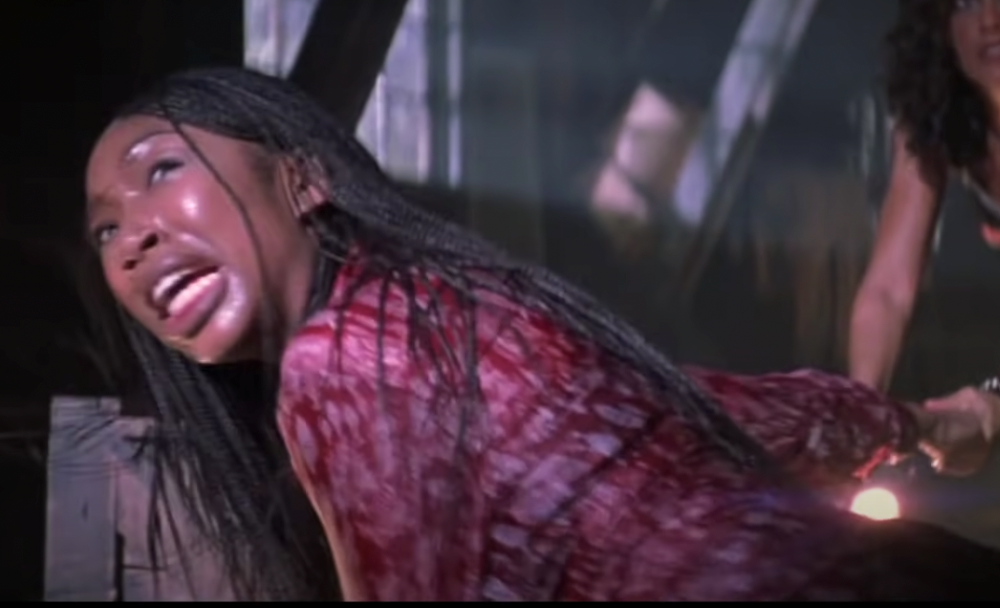
I Still Know What You Did Last Summer added Brandy and Mekhi Pfeiffer to the cast. Brandy’s Karla Wilson is Julie’s roommate and new best friend. Brandy’s star power keeps her alive, but this can’t save Mekhi Pfeiffer’s Tyrell. Karla still pays her dues by being tricked into a trip to a deserted island where she witnesses half-a-dozen murders, including that of her boyfriend, all because of her friendship with Julie. 

Long before the realities of American life, it was slasher movies that taught me how invisible, ignored, and ultimately expendable Black women are. There was no list of rules long enough to keep me safe from the insidiousness of white supremacy. Whether a teacher who wouldn’t move me on to the honors class despite my making the qualifying grades, or a white friend explicitly telling me that I was undateable, good behavior only takes Black women like me so far. More than anything, slasher movies showed me that my role was to always be a supporting character, risking my life to be the voice of reason ensuring that the white girl makes it to the finish line. 

It was slasher movies that taught me how invisible, ignored, and ultimately expendable Black women are.

Melissa and I met when I was 18 and she was 21, both studying journalism at the same liberal arts college. We spent hours watching documentaries and independent movies rented from the school library. Melissa violated all the basic rules of horror movie survival. She drank, had sex, and attempted to take control of her life, but she did so with a deep shame that resulted in verbally abusive outbursts while drunk. 

One night she invited three floppy-haired hipsters back to her cozy one-bedroom apartment that was right next to mine. The five of us listened to the newest Deerhunter album and passed a bowl for maybe an hour before her alter ego emerged. She started insulting the guys’ taste in music and their clothes. And then, in what she must have thought would be a compliment to me, and an attack on their characters said, “Just because Whitney’s not conventionally attractive, doesn’t mean she’s not cool.” A cloud fell over the room. She’d said the quiet part out loud. No matter what rules I tried to follow or music I listened to, I would never belong. I wasn’t ready to face how white supremacy warped people’s ideas of attractiveness, so I continued to joke with the guys until they left. Then I helped Melissa to bed and straightened up. 

I endured years of feeling like a disposable side character before I started thrashing against the box white supremacy had put me in. By my mid-20s, I’d started learning about intersectionality and anti-racism. Reading work by women like bell hooks and Mikki Kendall, helped me find myself beautiful, and worthy of life and love—regardless of the approval of white people. I became active in social justice and anti-racist causes and organizations. I began to forgive myself for trying so hard to squeeze myself into the only safe spaces white supremacy offered me. As a young Black girl, slasher movies taught me so much about the world ahead of me. A world that would try to erase, diminish, and sometimes kill me. They taught me that white women’s comfort would always be prioritized over my safety. They taught me that our killers, of mind, soul, or body, usually come from within our communities. Slasher movies gave me what I needed to make it to adulthood. The Final Girl is the one who gets shit done no matter the obstacle. I’m a Final Girl at the end of a white supremacist slaughter, standing on the other side. I’m grateful, and yet beautifully aware that the sequel is coming.  

Jubi Arriola-Headley Wants Poets To Conjure Up What Doesn’t Exist

In our series “Can Writing Be Taught?”, we partner with Catapult to ask their course instructors all our burning questions about the process of teaching writing. This month, we’re featuring Jubi Arriola-Headley a Blacqueer poet, author of original kink (Sibling Rivalry Press), and winner of the 2021 Housatonic Book Award. Check out the 6-week generative workshop that Arriola-Headley is teaching that focuses on poetic forms and creative collaboration. We talked to him about taking up space, the criminality of encouraging writers to stop writing, and the best snacks for poets. 


What’s the best thing you’ve ever gotten out of a writing class or workshop as a student?

Once, in one of my early workshop experiences, a fellow poet – let’s call them Poet A – snapped at me for interrupting them, even though I was certain that what I was saying was affirming and in praise of their work. (I know, I know, I hear myself – it works out in the end, I promise.) I was quite hurt by the level of vitriol I perceived that poet as aiming my way, and during a break I sought out another workshop participant – let’s call them Poet B – to ascertain whether I was, in fact, the asshole I felt I’d been made out to be. “Sometimes,” Poet B said, taking a drag off their cigarette, “you have to be aware of how much space you take up.” I was, I’m embarrassed to say, stunned to hear this. I’m the fat black queer kid – don’t I deserve all the space? In that workshop – I had not noticed this until my conversation with Poet B – I was the only cisgender male, and was, sadly, perhaps (probably) toxically, performing as such. I’ve never entered a workshop space the same way again, and I believe that’s been to my own and my fellow workshop participants’ and students’ benefit. 

What’s the worst thing you’ve ever gotten out of a writing class or workshop as a student?

I feel blessed in that any challenging workshop experiences I can remember having had have largely been moments of growth for me. This tiny little thing sticks with me, though: once in a workshop a poet read a poem which included the line “sharp as rock” and the workshop leader said “but rocks aren’t sharp.” What? It taught me something about perspective for one (where is this world where obsidian or flint doesn’t exist?) but also – even if there were no sharp rocks in this world, we’re poets – can’t we imagine or conjure up what doesn’t exist? I sure hope so.

The poet Willie Perdomo told me once in a workshop “write the hard poem.” And I take that shit as gospel.

What is the lesson or piece of writing advice you return to most as an instructor?

The poet Willie Perdomo told me once in a workshop “write the hard poem.” And I take that shit as gospel. Whether you read it as angry or heartbreaking or gutting or funny or silly, every poem I write is high-stakes, at least in my own mind.

Does everyone “have a novel in them”?

I believe that everyone has one or more stories in them that deserves documenting/writing down. I also believe that sometimes that “novel” is a memoir. Or an essay. Or a film, or a song, or a canvas, or a poetry collection. Or a single poem. Beyond this – there’s thousands of miles of white space between having a story that’ deserves a novel/canvas/poem and having the will or desire or drive to create that novel/canvas/poem.  

Would you ever encourage a student to give up writing? Under what circumstances?

This question only makes sense to me in the context of capitalism. It’s the “circumstances” for me. If a person loves to write, if the process of writing brings them joy or enlightenment or any little sense of value in their life, why would they ever stop? Why would anyone ever encourage them to? It feels like the question presumes that the student has a set of expectations about what tangibles their writing will afford them – awards? recognition? financial compensation? – and that I, if I’m encouraging them to stop, have made some judgment about what I believe their chances of achieving those tangibles are. Encouraging someone under any circumstances to not write, when they want to – that feels borderline criminal to me. It feels like a silencing. 

What’s more valuable in a workshop, praise or criticism?

Praise. Periodt. 

Should students write with publication in mind? Why or why not?

I can’t imagine considering publication before I write, or while I’m writing.

For me, thoughts of publication come after the writing. Once I have a poem or manuscript that I perceive as approaching some sense of completeness, or at least finality, then is the time I think about publication. I can’t imagine considering publication before I write, or while I’m writing. How do I think about where something will be published or read, or by whom, without it affecting what I write? I want to be unencumbered by anyone else’s expectations when I write and if I’m thinking about publication as I write that feels difficult, if not impossible. 

In one or two sentences, what’s your opinion of these writing maxims?

  • Kill your darlings: First off, the language sucks. (I’d rather not kill, thank you very much.) Also – I often find a use for the “darlings” I end up excising from my poems. Maybe we could change the language to “recycle your darlings?” Or “save your darlings for another day?”
  • Show don’t tell: Show AND tell, I say. 
  • Write what you know: There’s this lovely film from 2018, José, about a young queer Guatemalan man who tries escape his culture and circumstances to find what we like to think of as true love. The film was directed and co-written by Li Cheng, a man who was born in China and moved to the United States as an adult. I had the pleasure of meeting and talking with Li Cheng at a showing of the film in Fort Lauderdale in 2019. Li Cheng lived for a year in Guatemala and conducted interviews with, by his count, some 300-plus young men he met through his Grindr profile (in which he offered to buy coffee for anyone who would sit down with him for an interview about their queer Guatemalan lives) before he ever put pen to paper to write the screenplay. Be like Li Cheng.  
  • Character is plot: Yes and also no and also do you. (I feel like I need to add a fifth maxim: Rules were made to be broken.)

What’s the best hobby for writers?

Whatever takes us out of the literal process of writing. It’ll end up feeding our writing, anyhow, but we writers ought all to every so often engage in some pastime that looks not at all like a series of letters or words or lines or paragraphs on a page. In this moment I’m partial to gardening, like, say, a Ross Gay or an Aimee Nezhukumatathil – but that might be because I’m partial to those poets, as poets and as humans. Or because my mother somehow has somehow made bountiful offerings of cucumbers and tomatoes and green peppers and greens (is Swiss Chard not a wonderful thing?) to dozens of her neighbors, all summer, every year, for as many years as I can remember, out of maybe a fifteen-foot-square plot of dirt in her back yard. And her produce always tastes better than anything I’ve ever purchased in a supermarket. Or a farmers’ market. And don’t get me started on her profusion of sunflowers and Black Eyed Susans. I stay surprised that folks don’t pick them at will. (I’m playing. No one who knows my mama would mess with her like that.)

What’s the best workshop snack?

I was reading Abeer Hoque’s response to this question from last January and she mentioned that she sometimes brings samosas and empanadas to workshop and no workshop I lead going forward will ever be the same. Also now I know what I’m having for lunch.

Translating the In-Betweenness of the Immigrant Experience

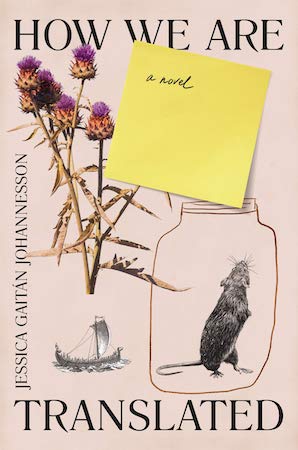
“Surprising … Rising from the surp. What is a surp anyways?” The narrator of How We Are Translated by Jessica Gaitán Johannesson questions. The Swedish word for “surprising,” on the other hand, translates to “överraskning”—which, when taken apart into “över” and “raska”—literally translates back to English as “to trod over something.” Word games like this are scattered throughout this debut novel; How We Are Translated formats its many Swedish-English translations into columns, comparing them side by side and using them to illuminate quirks about the narrator’s headspace. Johannesson nimbly plays a game of linguistic telephone, breaking words apart and filtering them through different languages. 

A 24-year-old Swede who recently immigrated to Edinburgh, Kristin can’t stop thinking about language. Johannesson’s introspective and rambling narrator certainly has a lot else on her plate (and Kristin might question here: is this an idiom that exists only in English?). Her partner Ciaran wants to immerse himself in Swedish and refuses to speak English. Her workplace, the National Museum of Immigration, is going through a series of bizarre changes—as if working as a Viking reenactor at a tourist attraction wasn’t surreal enough; Kristin spends her days milking unhappy cows and pretending not to understand English, so that the tourists can have an authentic experience. And, sooner or later, she has to decide what to do about her potential pregnancy. 

Johannesson’s novel acutely points out how “translation” isn’t simply about carrying one language over to another; it’s about how we are constantly translating one another’s words to communicate with each other, and translating our own desires to make sense to ourselves. Taking place through just one eventful week in Kristin’s life, How We Are Translated probes at the messy intersections between immigration, language, reproduction, and our constructions of home. 


Jaeyeon Yoo: How did you decide on the structure of this novel (particularly the columns!), and this way of presenting translations?

Jessica Gaitán Johannesson: I think it sort of comes from, more than anything else, my own multilingualism. I grew up speaking both Spanish and Swedish. So I can’t remember a time when I wasn’t bilingual in Spanish and Swedish; English is technically my third language. For a long time, when I was transitioning to writing creatively in English—about a decade ago, when I moved to the UK—there was this sense of imposter syndrome, basically, and a lot of [asking] was I allowed to write in English? What would that look like? With the novel, I eventually decided to lean into that in-between-ness by arriving at the character of Kristin, who is bilingual and, I suppose, really wants to belong. But, at the same time, she’s both outside and inside of a culture and a group of people in this place. So the structure itself came from that in-between-ness that came from: what would it look like to sort of inhabit my Swedish-speaking brain and my English-speaking brain at the same time? I think it’s fairly impossible to do it completely, but the columns and the literal translations and the hybrid view on language came from wanting to explore what it really means to live in several languages at the same time. 

JY: You mentioned that you started creative writing in English around ten years ago. Were you writing in Swedish or Spanish before that? How was the process of choosing or beginning to write in English? 

JGJ: I find it really fascinating to talk to other people about this. At least for me, there’s no straightforward answer, and it’s been fairly—I don’t want to say fraught—but definitely conflicted. I used to write in Swedish mainly. I was writing a lot in my 20s in Swedish and the first couple of poems and things I published were in Swedish. Then, when I moved to the UK, I ended up just staying. I did an MA at Edinburgh University called Literature and Transatlanticism, which is a program that doesn’t exist anymore. But it was totally fascinating because it was about looking at literature in terms of migration and connection, rather than studying American literature or English literature. So I’ve always sort of been interested in these [cross-lingual connections]. Then, I ended up living in English and breathing English and I met a partner who only speaks English. At some point, it just didn’t feel natural. It wasn’t possible to stay with both feet in Swedish. I had to at least try and write in the language that I was living in. That’s kind of the simple answer. 

It’s such an interesting question because I’m just very aware and probably increasingly aware, as time goes by, of English being this all-consuming thing—as a colonial language and as a language of empire. I had to make the active choice to write in English. What does that mean, to leave a smaller language behind in order to write in English? That brings up a lot of different questions and there’s a loss to it, this sense of giving up on our responsibility. But, at the same time, we all own English; immigrants make English, people who speak English as a second or third language also own it. So I think there’s also a sense of diversity to English.

JY: RIght, there’s also a political question throughout, as your narrator notes, of what kind of language you can speak. I loved Ciaran’s quote in the novel about how “People don’t choose to learn English. It’s like smog.”

We live in a colonial world in which English has a very unique position to create insiders and outsiders and hierarchies.

JGJ: Absolutely. I mentioned responsibility and sort of asking oneself, what does it mean to leave a smaller language and to choose this all-consuming “smog” language? But at the same time, it isn’t necessarily a choice. You know, we all make choices within systems and within larger parameters. Weirdly, that kind of connects to a lot of what I’m writing about at the moment for my second book, which is climate justice, and this idea that all comes down to individual choice. And that’s essentially consumerism and individualism; we want to think that we all make choices, and that’s sort of the end of the story. But actually, the context is always different. We all have to make different choices within different contexts, and we make the choice to write in English—like, why English? Well, because we live in a colonial world in which English has a very unique position to create insiders and outsiders and hierarchies.

JY: Speaking of consumerism, I was intrigued by the performance of “authenticity” at Kristin’s workplace, this overt commodification of “foreign” cultures (like fika and IKEA). I wondered if you could speak more about these ideas that crystallize at the National Museum of Immigration? 

JGJ: I’m so glad that those are the things that came up for you. On a superficial level, I’ve worked in tourism, places where multilingualism is commodified and a good thing to have. Those questions have always been there for a long time, like, yes, on the surface this looks like it’s celebrating a kind of internationalism and lack of borders and people communicating across cultures. But, at the same time, it’s very exclusive and commercial; it’s also got this idea of essentially the “good” and the “bad” immigrant. In order to belong here or to be able to stay, you have to contribute certain things. That’s the idea I ran with, which just kept snowballing and becoming more and more extreme—like now we have to do a parade [in the novel] to prove our cultural heritage. 

JY: There’s a beautiful tenderness to this book that I found really special, particularly in depicting Kristin and Ciaran’s relationship. What does this relationship in the book mean for you?

JGJ: It means lots of things and the book certainly started with the relationship. The very core of the book for me is the idea of the future and of change, as in change of identity and change as anchored in our ideas of pregnancy. If you have the choice to become or not become a parent, in order to [give birth] there has to be a fundamental trust in the world and future—a sense of safety, you know, the world isn’t on fire sort of thing.

I just didn’t ever want to say, it is wrong or right to give birth… as if the very act of giving birth were tied to right or wrong for the climate.

For the main character, her safety is the small safety of having carved out home, having chosen a place to live, having this one person that speaks her language-beyond-language, if that makes any sense. They might not share a first language, but they have created a language together. They have all of these words that they use, like a lot of inside jokes and rituals, the way that intimate relationships work. So when her partner then takes control over the situation by saying, “I’m going to stop speaking to you in our language, but I’m going to somehow override you and and learn your language because I think that’s going to help,” that, for her, is him saying, “I don’t see you; I reject us and what is us.” One of the things that I find with moving between countries, being multilingual from the very beginning, and coming from an international family is that you’re never fully at home. You’re never fully a stranger, but you’re also never fully at home. So for him to say, “I’m gonna just speak Swedish to you.” She’s like, “But that’s not me, that’s not home” So, yeah, there’s a lot in there about what it means to know someone or what it means to see someone.

JY: I really resonated with what you said, of what it means to find a home in someone and make our own sense of belonging, within these larger systems of immigration and border control we’ve talked about. What little things we can do to keep our sense of agency or comfort, I guess. 

JGJ: Yeah, yeah—and I think something that puzzles me and what I’m thinking about a lot in my second book is: where does community come into this? Because with characters like these—if your sense of belonging is solely tied to a small group of people in a private sphere, and also to a relationship that’s very heteronormative, where does community come into it? While writing [How We Are Translated], it partly also became an exploration of community. I wanted her world to expand, little by little, when she’s forced to look outside of her nest. So it’s like, there are these other people that I spend my days with—not just the Norse people [at work], but everyone else. She gets these little snippets from other kinds of lives, from people who have come to Scotland who are a lot less privileged than she is, and. So then she’s like, “well, do we all belong here? And do I have a sense of responsibility to this community, even though we’re not from the same place?” It wasn’t something that I set out with, but the idea of community became really key as I was finishing the book.

JY: You’ve alluded to this a few times throughout our chat and the novel, about the dilemma of creating life as the world is burning around us. I know you’re also a climate activist, so I wanted to know: how are climate activism and novel writing related for you? 

A lot of people in the Global North are in a privileged position to not feel climate collapse yet.

JGJ: Oh, that’s such a great question. Which I don’t have an answer to. [Laughs.] But I can also talk about it for a very long time. It’s interesting you said novel-writing, because what I started writing straight after I finished How We Are Translated is a collection of personal essays, non-fiction, coming out in the UK in August. And the timing of those two books was quite weird. I’d finished the first draft of How We Are Translated by the time of the 2018 IPCC report—the Intergovernmental Panel on Climate Change report, the one that made all the headlines saying we have 12 years left and all of this stuff. I’d been involved with environmental activism a little bit before, but that report for me and my partner was what kind of threw us into climate activism, like headfirst. And I’d written this book about hesitancy concerning the future. What became quite important for me in the rewrites and editing was that I just didn’t ever want to say, it is wrong or right to give birth. I didn’t want to come out on any side and make it into a debate, as if the very act of giving birth were tied to right or wrong for the climate. As a climate activist, I’ve come across a really toxic narrative around birth and choice, one that sees non-birth as a strategy in limiting climate change, regardless of context and structural issues. [So] even though I’ve had huge debates with myself about parenthood in the face of climate collapse, I didn’t ever want to be prescriptive in the book. I didn’t want it to be a message about right and wrong, but rather that the way forward lies in community, of caring about where you are in the present and for people who might not be part of your immediate community. 

JY: Yeah, for sure. This also really reminds me of another book I read by Julietta Singh, called The Breaks.

JGJ: Oh god, I love it so much. I was so inspired to read Julietta Singh’s book, because it dares to be actively hopeful about breakdown. She sees the breakdown as letting go of toxic narratives and embracing what comes after, you know? I was also deeply influenced by a book by an American scholar called Jade Sasser. She wrote a book called On Infertile Ground, which is about women’s rights and population control in the age of climate crisis. 

I think a lot of people in the Global North are in a privileged position to not feel climate collapse yet. So, the idea of climate activism here is you go straight to bringing down emissions and CO2; it’s the science that comes first to mind. But if you look at things from a climate justice perspective, then you start to see that things like migrants’ rights and anti-racism and all of these things—and also reproductive justice—all these things are ways in which we tackle the climate crisis. Once I was thinking more along these lines, I realized that these are the things that form the very basis of [How We Are Translated]; the ideas of immigration and belonging are actually tied to the climate crisis. So, I sort of went on a bit of a circle and came back to [the novel] like, oh, yes, of course migration is about climate.

What You Call Your Territory I Call My Home

What is another word for colony?

The internet tells me my country
has a dependency. Without being 

a possession of the United States, 
how could we have survived? Our 
veins 

needing the high of first 
world blood money. Maybe 
being 

a territory is not so bad, like 
some grown-ups say. Maybe 

we deserve dominion. 
Guttural without the 
protectorate. In  

settlement communities, you 
know, in Dorado or Condado 
                          (or anywhere— 

you can find beautiful 
outposts fenced and feudal 
             holding 
                   clearing 

for a new mandate, an offshoot 
swarm: this new land will 
become 

our satellite state. Our 
domain. The antecedent for 

speckless regions around 
the world. Shiny with 

virtual gold. In this patch 
of tributary, we can reverse 

the subject state dilemma 
of the locals and build 

a district the crypto gods 
would be proud of. This 

vessel will make a statement 
in the millions. How 

could the natives not 
be into the idea?  
                      Blows my mind.


What if

my country’s people brought the 
hurricane with us wherever we 
went. Every time 

a gringo would do 
something shitty, we could 
gift them 
a slice of this storm. One where 

the eye gives you time 
to pray for redemption, 
look around and think My 
life 

was pretty good up to this. And 
we would know that God was 
never looking out for us. We 

had to shove our ocean mouths up 
the colonizer’s throat to realize 
we were indeed stray mutts. After 

the upheaval exclaim 
We catapulted to survive.  
These skies are not for you 

to dream, to build on. This 
is our sky. We breathe 
in peace, finally, here.

7 Novels About Family Curses

I have always held a keen interest toward the processes of myth formation and how beliefs about family identity are handed down through generations. My debut novel Defenestrate tells the story of a family in the midst of reckoning with superstition and inheritance, the long-held beliefs that can shape both the collective identity of a family unit and the individual identities of its members. While working on my novel, I was drawn to books that embark on a similar exploration of what characters inherit as individuals through the traditions, superstitions, and beliefs that get handed down through generations, and how those beliefs get shaped through each new inheritance.

In Defenestrate, the narrator’s family believes that their ancestors are particularly susceptible to death and injury by falling, tracing this legacy back to the great-great-grandfather who pushed a man to his death through the window of a cathedral. The narrator investigates this tradition of vulnerability in her family by closely examining histories of falls and survival through the years, and her understanding of the family “curse” shapes her relationships and her path through the world. 

The characters in the books on this reading list are frequently caught up in a journey of trying to parse what aspects of their identity belong only to them and which are inherited, and how these threads are often heavily knotted and tangled. The “curse” of inheritance that these characters tend to encounter is sometimes figurative or imagined, but not any less real to their understandings of self and belonging. 

Beloved by Toni Morrison 

Beloved intimately lays out the costs and repercussions of the generational curse of slavery, illustrating how the haunting of the past can manifest as completely tangible and real for the survivors of a trauma that is both lived and inherited. Sethe’s past actions in choosing to sever the inherited curse of slavery for her child are made vividly present on every page, as they shape each daily task in the ongoing struggle for survival. Morrison’s language creates a web of fiercely vocal ghosts for the reader, demonstrating a loud and vibrant aftermath that is heavily populated at every turn with Sethe’s reckonings with her refusal to let the family curse of enslavement persist. 

Train Dreams by Denis Johnson

Another novel that depicts the tidal wave of history through its impact on the individual, Train Dreams illustrates the struggle to make sense of insurmountable loss against the shifting background of the final days of the Old West. After the protagonist, Robert Grainier, loses his home and family in a wildfire, he seeks to attribute some root cause to the destruction, suspecting that his passive participation in a collective act of violence against an innocent man resulted in a curse that brought on the collapse of everything he held dear. The curse that Grainier comes to believe in has a long-reaching impact that the novel subtly traces throughout Grainier’s life, interweaving a larger portrait of westward expansion with the story of an individual’s grappling with the brutality of survival. 

The Seas by Samantha Hunt

This wonderfully rich and imaginative novel blurs the lines between reality and fantasy at every turn. In The Seas, the narrator makes use of a family myth claiming mermaid ancestry in order to process the pain of abandonment and unrequited love. The narrator’s steadfast belief that she is a mermaid doomed to return to the sea is, at times, so convincing, that the reader is forced to question whether the novel is depicting a world where magic is real or a world glimpsed through the lens of insanity. This unreliable first-person narration is brilliantly handled on every page and vividly demonstrates the power of inherited belief to transform perception.  

A Thousand Acres by Jane Smiley

In this modern retelling of Shakespeare’s King Lear, set on a vast Iowa farm, the family “curse” takes the form of duty, responsibility, and the burden of literal inheritance as the family patriarch wields his power by determining which of his three daughters will be granted a portion of his thousand-acre farm upon his death. This brilliantly told family drama investigates the complicated web of loyalties that arise within a network of family relationships, as well as how the inherited curse of silence in the face of abuse can shape a legacy of guilt and estrangement. 

The Brief Wondrous Life of Oscar Wao by Junot Díaz

It would be difficult to construct a reading list about family curses without including this one. Díaz is meticulous about shaping the origins and path of the generational curse that wreaks havoc on Oscar’s chances of finding love and success. At turns playful and heartbreaking, this novel’s scope is frequently epic in feeling, illustrating the power of storytelling to shape an inherited sense of self even across decades and nations. 

One Hundred Years of Solitude by Gabriel Garcia Marquez

This novel sets a high bar for stories about generational curses, oscillating throughout its telling between a Biblical vastness of scope and an intimate portrait of family dailiness. This book is unique on this list in that the reader sees the curse finally reach ultimate fruition and fulfillment as we realize that the legend passed down through generations was actually a displacement of the fear of the family’s ultimate dissolution and demise. 

Sing, Unburied, Sing by Jesmyn Ward 

This gorgeously lyrical novel explores one family’s fate being shaped by decades of poverty, crime, and systematic oppression. Like Beloved, we are given intimate glimpses of the ghosts that persist tangibly for the characters that encounter them. As one character, Jojo observes:

“The branches are full. They are full with ghosts, two or three, all the way up to the top, to the feathered leaves.”

This family tree is indeed full of ghosts, but it also echoes the larger ghost-filled tree that is the South, where the challenge of reckoning with a legacy of injustice is a persistent constant for rural Black families. 

7 Books Set in Bookstores

I’m the type of person that plans their travels around bookstores. A new city to explore means a route through bookish haunts: a walking tour of shops dedicated to words, my maps app aglitter with saved spots waiting to be discovered. I went to Maastricht once just to see a gorgeous 13th-century church converted into a bookstore, planned an Austrian trip around abbey libraries, and packed every visit to London with a lengthy itinerary that weaves from shop to shop (and calls for extra baggage. And after, a spending freeze!). My closet suffers from bookstore tote bag overload. 

Few things compare to the joy and exhilaration of a good bookstore browse. That smell of crisp paper and wooden shelves, getting lost in stacks and pages, touching spines and palming stories, the delight of discovering a new author or title… entering a bookshop feels like leaving the world behind in the best possible way. Give me that papery perfume, that soundtrack of rustles and creaks, perhaps a windowpane streaked with rain, and endless tomes of words and worlds to rummage through! 

If you plan your travels around good bookstores like I do, if few things excite you as much as hours lost among shelves, if eau de bookshop is your favorite scent, then this reading list is for you.

[Editor’s note: We link to our affiliate partner Bookshop which supports independent bookstores, but we also encourage you to order directly from the stores featured below: Birchbark BooksThe Bookshop, and Shakespeare and Company.]

84, Charing Cross Road by Helene Hanff

When the joys of snail mail and bibliomania combine! This short, sweet, epistolary tome about book lovers is a classic to drink up in an afternoon. A true tale told through letters between a New York City writer and a London-based antiquarian book dealer, 84, Charing Cross Road is a charmer. Spanning a heartwarming 20-year-old friendship, the transatlantic correspondence delights with its varied discussions, surprises (Christmas gifts and food packages), and the ongoing suspense of will-they/won’t-they finally meet. Put the kettle on, pop a crumpet in the toaster, and savor these bookish dispatches as you daydream about British bookstores and the lost art of letter writing.

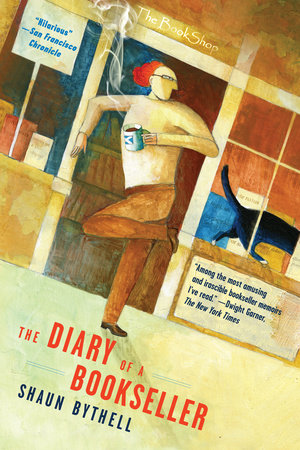
The Diary of a Bookseller by Shaun Bythell

The Diary of a Bookseller by Shaun Bythell

What would it be like to work in a bookstore in a wee Scottish town? Cold, for one. But reading Shaun Bythell’s descriptions of bookshop life is nothing but warm and cozy, with plenty of chuckles along the way. The curmudgeonly owner of Scotland’s largest used bookshop relays daily tales of customers (the cherished ones, the crotchety ones, and the fools), books read, books acquired, tasks and chores completed, conversations overheard, complaints raised, and stupid questions asked by book seekers. There always seems to be a kettle on, a fire stoked, a great big stack to sort through, a warming dram to sip with a visitor, a cat slinking around… If you can’t get to a bookstore, but you’re pining away for a good browse and a good steep in that wooden-shelved aura, read this. A warning, however: may result in a deepening desire to book a flight to Scotland!

The Bookshop by Penelope Fitzgerald

A widow opens the only bookshop in a small seaside English town, and problems ensue. The other shopkeepers are not too happy with her, she incites the wrath of the local arts patroness, and her dilapidated store creaks, leaks, and is haunted by a ghost. Take away the pesky problems, and the premise has the makings of a dream many of us bibliophiles may have—a sweeping coastline, a quaint town full of quirky characters, a charming bookshop, and a passion to inspire others by way of literature. But this is a melancholy tale, a slim tome about a kind, determined optimist who tries, despite the ugliness of the world, society, and people. Exquisitely crafted sentences and characters, powerful observations, and a bibliophilic bend: read it and weep.

The Storied Life of A.J. Fikry by Gabrielle Zevin

Another widower with a bookstore, another curmudgeonly bookish soul, another small town inhabited by quirky types… add a bit of mystery, a dash of romance, and you have the recipe for an enticing, escapist read (if it’s a bookstore that you want to escape to). A.J. Fikry is a depressed bookstore owner, a grieving grump with a drinking problem and a bookstore in a slump. There’s too much opportunity for spoilers here, so let’s just say that everything changes when he receives an unexpected package. If you favor grouchy, persnickety book nerds, you’ll get along swimmingly with A.J. Fikry.

The Sentence by Louise Erdrich

Louise Erdrich’s latest is a romp: an ex-convict works in a bookstore that’s haunted by the ghost of a former customer. Boisterous, poignant, powerful, stippled with richly colored characters… even on the sentence level, this book bristles with color and electric energy, building an absorbing flow that keeps you flipping the pages. This is a ghost story, a Native American story, and a mystery for the present day that touches on the pandemic and Black Lives Matter protests. At its core though, The Sentence is an ode to bookishness that name drops titles and authors galore, details the minutiae of operating a bookstore, and even features cameos from the author herself (who really does own a bookstore!). 

Shakespeare and Company, Paris: A History of the Rag & Bone Shop of the Heart, edited by Krista Halverson

One of the world’s most famous bookstores distilled into book form. This gorgeous volume is a must for any fan of the Parisian haunt or for those wishing to visit. A history of the shop that delves into its rich archives, resulting in a collage of memories and mementos, rare photos, essays and poems from the luminaries that stepped through its doors or even slept in the beds tucked between bookshelves, like Allen Ginsberg, Anaïs Nin, and Lawrence Ferlinghetti. Rifling through this tome feels a bit like walking through the shop’s hallowed book-lined halls, full of treasures and surprises, inspiring words emblazoned across stair steps and doorways, corners of poetry and handwritten notes, a magic well, a typewriter hidden away in a nook, someone plinking away at a piano somewhere… it is enchanting.

Mr. Penumbra’s 24-Hour Bookstore by Robin Sloan

A dusty old San Francisco bookstore is the setting for a rollicking adventure complete with teetering shelves lined with mysterious books, bizarre customers, and a 500-year-old secret society. Books and computers clash but ultimately co-exist in this love letter to bookishness and technology alike, an ode to both analog and high-tech, print and digital. A mystery to get lost in and a bookstore you won’t want to leave!

Unlike Miss Havisham, I Chose To End My Marriage

On Halloween morning when I was fourteen, I got up extra early and padded into my mom’s room, where she had left her wedding dress hanging for me on the closet door: Victorian-style, head-to-toe lace, with a high collar and a tidy line of buttons all the way to the small of the back. It felt out of place in the cold master bedroom of our house in central New Jersey, a relic from my mom’s previous life. She never talked about her wedding, but I had seen pictures: the ceremony on the broad deck of her and my dad’s house in Golden, Colorado, the steep mountainside sloping in the background. My mom beaming under a crown of wildflowers, my dad in a corduroy coat and aviator sunglasses. 

The rare times she talked about that life, her stories left a hazy gap where he might have been. It was as if she had been alone that whole time, in that other, more beautiful life she had before I was born. I imagined that had things turned out differently, I would have lived that life with her—where I truly belonged. It seemed a better fit than our lackluster suburb, where my mom referred to our neighbors’ houses as “McMansions” and the nearby Sourdough Mountains as “pimples.” Here, everyone thought I was a freak for preferring summer reading to Shark Week.

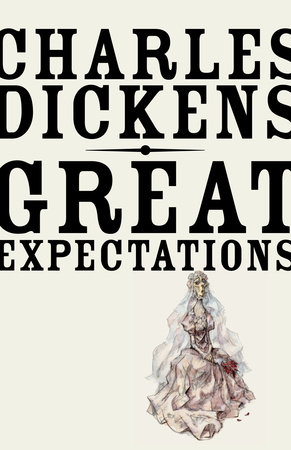
Great Expectations by Charles Dickens

I fastened the buttons, and the dress molded to my form. With my mom’s eyeshadow, I carved dark circles under my eyes. I powdered my hair white, pulled on opaque white stockings, and slipped into one white shoe. I hobbled back and forth in front of the mirror, the perfect Miss Havisham from Great Expectations. I was a little obsessed with her. The morning of her wedding, she received a note from her swindling fiancé informing her that he would not go through with it, so she chose to quit moving through time. She stopped all her clocks, refused to dispose of the food that had already been laid, and never removed her wedding dress or donned her other shoe. For the rest of her life, she wandered her cavernous mansion, her back crooked from wearing a single high heel for decades, the lavish dining room stinking of rotten cake buried under a thick coat of dust. 

Dickens framed Miss Havisham as a harbinger of revenge, raising her adopted daughter Estelle to settle the score by breaking men’s hearts. In my melodramatic fourteen-year-old mind, I interpreted her as a symbol of endless love—something deeply romantic, even if tragic. But I also felt a strange kinship with her.

At nineteen, I shared a fleeting exchange of emails with my father after a lifelong silence. For the first hour of my life, he told me, my mom was under anesthesia from a traumatic C-section. He stood over me, feeling empty, like I was his but he wasn’t mine. So he left and broke a year of sobriety. Later, my mom admitted that before she was fully conscious, she heard the nurses saying, “We have to kick him out, he’s going to hurt the baby.” She came to while he stumbled around, veering dangerously close to me before collapsing on the floor. It took her four months to pack me up and leave him, but their marriage was over as soon as she opened her eyes. 

I’ve spent much of my life trying to untangle why my father did what he did that day, but the reasons we lose things are often murkier, and less telling of who we are, than how we respond. No matter how much a situation might have gotten away from us, the choice to leave it behind is a choice to take control. We call it “change”; we applaud ourselves for growing, for making the difficult decision. On the other hand, the transitions that feel the most violent are the ones that aren’t our choice, the sucker punches that leave us gasping: Miss Havisham crushed on her wedding day, my mom waking to a new baby and a drunk husband on the hospital floor. That’s what we call “loss.”

No matter how much a situation might have gotten away from us, the choice to leave it behind is a choice to take control.

Few things are farther from our control than what happens to us in infancy. We are completely beholden to the people around us—for survival, yes, but more importantly, for love. The way we are loved shapes our understanding of what the world is: a safe place, where we will be wanted and comforted, or an unstable one, where we might be abandoned at any moment. My first experience of the world was the sorrow of abandonment by the person who is supposed to love you. I didn’t just lose my father or the life I might have had if we had stayed in Colorado. I lost my sense that the world was a safe place.

It’s not surprising, then, that for as long as I can remember, fear has followed me like a ravenous shadow at the edges of my vision. As a child, I developed the sense that the way someone arranged objects held their feelings in that moment. More importantly, I believed, it aligned the world’s cosmic order, preserving the good and keeping things stable. When I was eleven, my obsession with hawkishly guarding the placement of objects in my room led to an OCD diagnosis. But therapy never helped me shake the feeling that if I could keep everything around me in balance, I would keep the shadow at bay.

When I was 14, right before reading Great Expectations, I got dumped for the first time. For weeks after, I kept the half-full mug of tea I’d been drinking during our last good conversation on my desk, feeling that if I could just keep it there long enough, he’d call and tell me he’d changed his mind (he didn’t, and after a raucous power struggle with my mother, she dumped the tea and washed the stinking mug).

When I read Great Expectations, I was transfixed as Miss Havisham kept one shoe on her dressing table, exactly where it had been before she got her fiancé’s letter. As she made Estelle sit at her feet and patch together the tears in her dress because she refused to remove it even for repairs. In her, I saw the darkest part of me—never wanting to change anything, preferring to create living mausoleums of the moments when I had been happy. 

In Miss Havisham, I saw the darkest part of me—never wanting to change anything, preferring to create living mausoleums of the moments when I had been happy.

Perhaps more than that, I saw the fear of what happens after the moment when you think you have lost everything: as terrible as it is, there’s an instant when you think, I’ll just stop here. You keep the shoe on the dressing table, the mug on the desk, and you let yourself believe that, even if it doesn’t bring the good back, maybe you won’t have to figure out how to weather what happens next.

Though most people don’t go to Miss Havisham’s lengths, I do think that the urge to preserve the feeling of what it was like to live before loss is relatable. In that terrible moment after loss, some of us fall into one of two extremes: we cling, like Miss Havisham, or we discard the past. My mother chose the latter. She had a divorce to file, a home to find, a child to raise. She moved me to New Jersey to be close to her family, discarded the trappings of her old life – my father among them – and barreled forward, telling me stories that excised him out. 

On that Halloween, when a neighbor commented that she couldn’t believe my mom was letting me wear her wedding dress as a costume, my mom laughed and said, “It’s a divorce dress, it might as well get some use.” I grew up grateful for my mom’s sacrifices. She left everything – her home, her relationship, even her dog – because that’s what was better for me. But I resented her silence around my father because it left me few tools to piece together my origin story. At twenty-nine, however, I began to understand the power of discarding old lives when I realized that I, too, needed to get divorced. 

For years, I had whittled myself smaller and smaller to fit the whims of my own alcoholic husband, putting off his anger by becoming the person he wanted me to be. I had little control over the volatility of his addiction—and therefore, over my life. But, like keeping an old mug of tea on the desk despite the smell, keeping the marriage intact by keeping everything – even myself – the same felt like something I could do. At a certain point, my life felt like a prison.

In a toxic situation, your marital status sometimes begins to replace your identity.

People often ask me why I didn’t leave sooner. I try to explain that in a toxic situation, your marital status sometimes begins to replace your identity. Without it, who would you be? What shape would your life take? Losing it can mean losing everything that makes your life recognizable to yourself. The prospect of losing that structure is terrifying. 

Miss Havisham likely felt similarly. When her fiancé backed out of the wedding, she no longer had the option of becoming a wife, but the prospect of it had come to structure her entire existence. Who would she have been, if not for a bride? She even insisted that, when she died, she would be laid on the dining table in her gown: a bride for eternity in death—and that, nobody could take from her.

Leaving my marriage felt like jumping straight into the shadowy maw of uncertainty I’d been running from my whole life. But as my mom learned on the day of my birth, once you’ve looked the end of a marriage in the eye, you can’t unsee it. Instead of taking Miss Havisham’s path as I might have in my youth, I adopted my mom’s strategy. I discarded the life I was losing, and did  my damndest not to look back.

I moved into a ramshackle Brooklyn apartment lovingly dubbed “The Folk Hotel” because of its coterie of musician roommates who time-shared the back bedroom when they weren’t on tour. It was bedecked with a chaotic jumble of items left by previous residents: when I moved into my room, I was greeted by a mannequin wearing a rubber eagle mask and a tiny painting of a bulldog with a Jack of Hearts card wedged in the frame. I fell into an accidental stewardship of the place, ferrying subletters in and out, each of whom added something when they left: a purple handkerchief from the French girls on holiday, sheet music from the British modern dancer who I shared pots of coffee with on brief, radiant fall mornings. It felt like home in a way that no place had in a very long time. Every time I walked in, it was like the apartment whispered to me, this is your reward for taking back your life.

I adopted my mom’s strategy: I discarded the life I was losing, and did  my damndest not to look back.

I wasn’t used to this kind of chaos. Good chaos, where people left trails of objects ripe to be shared, nothing ever stayed in the same place for very long, and everything changed all the time. Change itself became familiar. I was living Miss Havisham’s nightmare. 

It had once been my nightmare, too. But despite my OCD, and my instinct to keep everything around me the same, lest the world spin out of control, it was a relief to be unable to control all the change around me. People moved in and out, left and took and moved things, and I felt liberated. Perhaps, I realized, I was less afraid of change than I was of loss. I decorated my room with tiny mirrors so I could watch myself change: I lost weight from biking in and out of Manhattan every day. I wore crop-tops my ex-husband would never have let me wear, dyed the tips of my hair purple. I spent long nights biking the city’s bridges, every stroke of my pedals reminding me that my body, my movement, my life were mine, mine, mine

To say this was easy would be to lie. That first winter, I spent most nights sitting in my windowsill, my legs dangling over the avenue, long after the laundromat across the street had closed. It was the only time of day when the world was empty and quiet enough to match how alone I felt. Constantly, achingly. I had never been so terrified. I had never felt so powerful. No time in my life had felt so thrilling, so precious as those nights I spent sitting in that window, relishing that I was there but for my own grace. In leaving my old life behind, I had chosen myself. Even the loneliness was precious because it was mine.

In leaving my old life behind, I had chosen myself. Even the loneliness was precious because it was mine.

I was about the same age my mother was when she packed me up and left my father. I couldn’t imagine doing it with a baby. I found myself more grateful and more in awe of her than ever. I began to understand how discarding the life she had before I was born was the only way she could get through. By leaving everything behind, my mother and I created new worlds for ourselves. We became powerful in the aftermath of gutting loss. 

I wondered if Miss Havisham felt the same way. She had slipped into a horror of her own making, but it belonged to her in a way that nothing else could.

I thought that my mother’s approach and Miss Havisham’s were opposed. But, just as clinging to the past wasn’t an option for my mother, starting anew wasn’t an option for a woman in Miss Havisham’s era. Perhaps stopping time was the only thing she could control, and she and my mom weren’t so different after all. Miss Havisham hadn’t just clung to the past, she had made a world in her own image when the world around her wouldn’t comply—a radical act for a woman then, a radical act for a woman now.


When the pandemic hit, I was on vacation out west. I felt like the rug had been pulled on a life I was just learning to own. This was true for everyone: whatever lives we were living before were gone in an instant. And, unlike other losses, where we could feel some power by putting one foot in front of the other and slowly building new lives, this time, we were caught in suspended animation. 

While she paced her rooms, her wedding dress caught fire. Miss Havisham died a victim of her own obsessions.

Hunkered down at my mom’s in New Mexico, I wrote obsessively about my life at The Folk Hotel. In my dreams, I grasped at things I couldn’t see and couldn’t reach, my fists curling around air over and over again. I couldn’t face The Folk Hotel the way I’d left it, when I thought I was off for a quick jaunt and would come home to the same old wild life. I was afraid I’d go full Havisham if I went back. The possibility of stopping time and pretending the world was not upended was just too tempting. But I ended up going the Havisham route regardless: I kept paying rent in Brooklyn even though I had no idea when I would return. I felt that if I could just keep The Folk Hotel the way it was, even from afar, maybe the life that had been so precious to me there would still exist. 

But there is only so much suspended animation a person can take. Six months into the pandemic, I found myself building a new life in Los Angeles, one that I was starting to realize made me even happier than I was before. Before I could accept that I was moving on, though, I needed to go back, even if just to pack my things.

It felt even more like walking back in time than I’d expected. A part of me was tempted to burrow in it. Then, as I sorted through my books, I found my high school copy of Great Expectations and spent one last evening sitting in the windowsill, skipping through to read all the Miss Havisham parts. 

Though I’d thought about her so much, it had been years since I’d read the book. I’d always known she was unstable and, though I didn’t think of her as a true model for how life should be lived, I had respected her as a badass who took control where she could. But I was shocked to find that the control was what killed her. She kept the curtains drawn to block the light (and, thus, the passage of time), so she always had candles burning. While she paced her rooms, her wedding dress caught fire. She died a victim of her own obsessions.

How had I forgotten that? 

I closed the book and looked down at my feet, dangling out the window like they always had. I had thought that, whether you cling to the past or discard it, any control in the aftermath of loss was a good thing. That’s what made Miss Havisham a legend, enabled my mom to give me a good life, and made me happy at The Folk Hotel. 

But it also killed Miss Havisham, draped a heavy silence around my mom’s former life, and turned out to be an illusion when the pandemic yanked any control from my life I thought I’d held. At all the times when I had tried to cling to the past or discard it, all I had really done was keep myself from facing the fact that I had lost something. All I had done was forebear grief.

If we’re not careful, the illusion of control can drive us crazy. There will always be losses where we least expect them, moments that leave us before we are ready to grow out of them. Perhaps the only control we have is in choosing how we grow from loss. Grieve, preserve what you can, and begin to build again.

In Los Angeles, I unpacked my things from The Folk Hotel and realized that they looked good in the Southern California light. That they hadn’t lost any of their magic in new arrangements.

Genderqueer Short Stories About the Ways We Mythologize Our Identities

A nonbinary teenager on their way home from an eating -disorder treatment center who tries to convince a stranger she is not a vampire, an aspiring fashion designer/dry-cleaning worker who develops an obsession with a customer, a community of people with Hansen’s disease that welcome and attempt to coexist with a newly arrived group of people displaced by natural disaster—these are only some of the inimitable characters Morgan Thomas follows in their stunning debut collection, Manywhere. These characters move through and navigate the complexities of their communities with immense precision and stayed with me long after the first time I read these stories. 

Manywhere interrogates the complications of constructing a personal narrative, especially those faced by queer and genderqueer people—How does our relationship to others affect our own identity-making? How have our own identities and history benefitted from the marginalization of others? What have we inherited from our ancestors, and what do we owe to them in how we live our lives?  

I spoke with Thomas over Zoom about using historical records in fiction, navigating inherited narratives, and the relationships people build not only with each other but with their environments. 


Matthew Mastricova: There’s a line in that story that served as a lodestar for me in reading this collection. It’s when the narrator Taylor says, “But I haven’t come looking for family. I’ve come to meet you, lightning man.” It signaled to me a repeating theme throughout this collection: the tension between inherited narratives and self-determined narratives. I was wondering if you could talk a bit more about how your stories manifest or are guided by that tension.

Morgan Thomas: All of the driving impulse behind the collection as a whole was a search for ancestry and lineage. It began as a search for a specific type of queer and genderqueer ancestry. I was in a space where I was trying to understand my own identities—my own gender, my own sexuality. I felt like I lacked language and models for identity on both of those axes, and I wasn’t really in a place where I could look around immediate contemporary environment for those models, and so I found myself increasingly looking toward history. And as I looked at historical figures and models, I realized both that they were abundant and also that those queer and genderqueer ancestors were really complicated. I think that Manywhere, is in large part, my attempt to wrestle with those complicated histories. By complicated, I mean that as a white settler who is genderqueer, it’s appropriative for me to claim as an ancestor an indigenous historical figure who had a gender identity that didn’t conform to settler colonial ideas of a binary gender. It’s appropriative for me to claim a Black gender-diverse individual in history, so I’m working with white lineages that are queer and genderqueer, and that means that these people are also often, I think actually without exception, complicit in projects of settler colonization and structures of racism. It’s wrestling with these lineages that I had searched for and these stories that I wanted to claim said something about myself, but together with those I was also inheriting more complicated and complex legacies.

MM: As we’re talking about looking through the archives for historical models of queerness, I was wondering how you navigated using the archive when so many of these historical figures are not identified as queer.  How does an author responsibly incorporate those models and narratives into their work?

MT: That was something I thought a lot about as I was writing. I think partially it’s why the collection has to be fiction. There are a lot of gaps in historical record. So, for example, the story “The Daring Life of Philippa Cook” is based on the life of Thomas/ine Hall, but all I know of Hall’s life is the earliest piece of it, up until the trial transcripts that served as the seed of that story. After that there’s nothing. In fiction, I’m able to write into and extend that story and that life. I also think that fiction allows me to avoid saying anything definite about the gender or sexuality of the historical figures that the stories are thinking about and writing toward. For instance, I deliberately used “you and I” in “Taylor Johnson’s Lightning Man” instead of any pronouns that would inscribe gender or suggest that I had a firm sense of what pronouns Frank Woodhull would have used if Frank Woodhull existed in 2021, and that was really important to me. I don’t want to take contemporary notions of what it is to be queer or genderqueer and force those upon a historical figure or insist that those applied equally a century ago, or four centuries ago.

I like the idea that the ways that we think about queer and genderqueer identities are fluid throughout time. That feels really hopeful to me, because I think it suggests the possibility for different ideas of queerness and genderqueerness in the future.

MM: So you have these stories that are based that are based on archival figures, and then you have “Taylor Johnson’s Lightning Man” where it’s explicitly Frank Woodhull. There is archival information about that person explicitly in the text. Is the Woodhull that Taylor talks to in the story the historical Woodhull or a characterized version of that person?

MT: I want the story to have space for both. I mean, clearly I think it’s fictional and that’s the benefit again of being able to have this narrator who, I think, is seeking something from Frank Woodhull, and so is creating a Frank Woodhull that satisfies their own needs and desires in that moment. Also, much of the dialogue spoken by Woodhull at the end of that story is taken from newspaper articles from the time and from interviews that Frank Woodhull actually gave. So it’s a blend of a Frank Woodhull that Taylor Johnson has created for themself and of Frank Woodhull in the past, and I think that blend is also filtered itself through Taylor Johnson’s experience. 

I don’t want to take contemporary notions of what it is to be queer or genderqueer and force those upon a historical figure or insist that those applied equally centuries ago.

That’s where I think fiction can get really interesting, because then there’s a second layer where there’s this blended character who is a Frank Woodhull historical and non-historical character and then there’s also Taylor Johnson, who has created that character, and then there is myself, the writer, who has created the character Taylor Johnson who created the character Frank Woodhull, and when I start to see that telescoping process of creation and narration, that’s when I get really interested in story and what stories mean to us, why we create the stories that we do and what they say about us.

MM: Do you think that process of blending fictionalization and research is also similar to how we relate to the people who raise us?

MT: Oh, I don’t know, possibly. I think all of all of the stories in Manywhere, both those that deal more with folks seeking ancestors that they are not descended from by blood and those that deal more with inheritance on the level of like grandparents and parents, are interested in constructed narratives and in the flimsiness and fluidity of the stories that we tell about our ancestors, whether we have sought and chosen those ancestors or whether we are descended from them by blood. 

I’m not sure, to be honest with you, whether the process itself, though, is the same. This makes me think again about being a settler and a white writer from the South and the fact that so much of what I inherit from the ancestors from whom I am descended by blood are legacies of Southern colonization and slavery and racial violence. In that regard specifically, the responsibility feels different to me. It feels somehow less about constructing narratives and filling in gaps and more about holding myself accountable for the narratives and beliefs that I’ve inherited. Thinking critically about those and trying to dismantle any aspect of those inherited narratives that is inherently racist or white supremacist or colonial in nature.

MM: Something that I kept thinking about while reading your book was the relationship between the healthcare industry and marginalized individuals, especially during “That Drowning Place” and “The Expectation of Cooper Hill.” I was hoping you could talk a bit more about that relationship and how it manifests in your stories.

MT: Manywhere is deeply concerned with our relationships with our environment and with the health effects of the places where we live, whether that be the fracking in “Surrogate” or how in “That Drowning Place” we’re seeing individuals have to leave their homes because of rising sea levels and then sort of come up against other communities.

So much of what I inherit from the ancestors from whom I am descended by blood are legacies of Southern colonization and slavery and racial violence.

Manywhere is really concerned with the body, and when I think about health care, I just know that current healthcare systems are not designed for queer or genderqueer people, and I think about myself, my partner, the many people in my community who have had to act as self-advocates. They’ve had to figure out how to navigate systems that are deliberately attempting to inhibit their access to care that they need from gender-affirming care to lifesaving care. I think that that is not something that I deliberately included in the stories, but I think that it’s a thread that is present.

MM: You’ve written about your history of attempting to write genderqueer embodiment and grappling with what it means to be a white genderqueer person. I was wondering if your relationship to that has changed it all in the process of writing this collection, because the physicality of these characters was one of the things I really loved.

MT: I think that what that essay highlights is how indebted I am to the writers who have come before me. I think about Rivers Solomon’s An Unkindness of Ghosts, which I think is one of several books that taught me how to write genderqueer embodiment. I think, also, about Freshwater by Akwaeke Emezi. I think about Joshua Whitehead’s work. I think about Abbey Mei Otis and I think about Billy Ray Belcourt’s memoir, which came out much more recently, but which has been a real guiding light for me. These are permission-giving books: they expand the ways that I feel able to think and write about both gender and sexuality.

I think it answer your question, yes, my ability to think through on the page and to write genderqueer characters who are fully realized as physical beings in the world has shifted since I began Manywhere. I understand now better how to inscribe bodies and complex relationships to bodies for my characters, and I think that that’s in large part due to the foundational and courageous work of those other writers, and I’m really grateful to them.

MM: You spoke about how humanity’s relationship to the environment was a major factor in Manywhere. I love the ways in which queerness and the environment were put into conversation here. There’s two questions I want to ask—One is what led you to explore this relationship, and two, what are the types of relationships you hope people see in this collection?

MT: One thing that is important to me as a writer when I’m thinking about ecology and environments is to remember that ecology is, just at its most basic definition, a word that we use to describe how we relate to each other as beings, and also how we relate to our physical environments. So it’s important to me that when I think about Manywhere as a book that’s engaging with ecology or a book that’s engaging with the environment, that’s different, I think, from saying that it’s a book that’s engaging with “nature”, as though it’s something that’s different from the places where people are living or congregating or from cities. 

The current healthcare systems are not designed for queer or genderqueer people.

When you’re asking like what relationships I’m hoping people see in the work, I’m hoping that people recognize that ecological and environmental relationships are happening everywhere and anywhere that people are interacting with one another and the people are interacting with their environment. I think there are ways in which the study of ecology and my own approaches to and study of queerness are very similar in that they both feel like they’re centered on relationships, and I’m trying to describe, understand, and expand the ways that we’re thinking about about relationships.

I hope that people see in Manywhere a few threads of environmental lineage. “Surrogates,” I think, is the clearest example where the embodiment is used in part to explore the effects of fracking on the health of people who give birth and infants, and it was sparked by an article I read in Rolling Stone about a midwife in Vernal, Utah, who had been speaking out about the health effects of fracking on infants in that town and received a lot of pressure from other people in the town as a result of those comments. So I was thinking a lot about the often binary and transphobic big ways we think about like childbirth and parenthood. I was also thinking about the ways that individuals and towns that are right up against industries that are polluting engage with those industries. And I was also thinking about, within that story, the many different ways that we can have intimacy with other people. So Brighton is in a sort of monogamous and to-some-extent heteronormative relationship with her husband and also has this different sort of intimacy with the other surrogates and with Doc Lacher. I think all of those questions and all of those relationships are ecological in nature, and in that regard, I think that Manywhere is a deeply ecological book.

MM: There’s a healthy tinge of fabulism throughout Manywhere. I’m thinking particularly of “Manywhere” where we have the other daughter and “The Expectation of Cooper Hill” with Sylvia falling into the bag. How did you come to fabulism as a storytelling tool, specifically in this deeply ecological and embodied collection?

MT: There are two things that are coming to mind, for me. The first is that, again, as a writer interested specifically in thinking about and writing into historical gaps that have to do with queer and gender-diverse ancestors, speculation feels like a necessary tool, and fiction feels like it offers a lot more space for speculation than, say, nonfiction. I think there’s a natural logical leap from that type of speculation that is necessary to fill gaps in historical records to what we think of now as speculative fiction. There’s something really interesting to me as a writer about blending deeply researched fiction with elements that are fabulous or speculative in nature.

I think the other thing that comes to mind for me is that when I have tried to approach queer joy on the pages as an author, or when I think about the way that the narrator of Manywhere at the end of that story feels this ephemeral sense of liberation from their father, and of joy, I realized pretty early on that I didn’t have in my life at the time many actual models of that type of queer or genderqueer joy, and I think that attempting to end up at that space required these leaps and moments of invention which I think also lend themselves directly to the fabulous elements that you see in the stories.

MM: I love that. I think queer joy is something that is largely missing from received cultural narratives surrounding genderqueerness and queerness in general. Which is another thing I loved about this collection, I felt like it inverted that received narrative of like, “Oh, when a child is queer they’re rejected by their families,” but so many queer people actively seek out joy and liberation. Was this a relationship you aimed to capture?

MT: I think probably the most honest answer is that often on the page I’m writing towards the place that I’m hoping to get in my life, and I think that place is not always a place of joy. It might be that space of full accountability, or it might be a space of deeper understanding of myself and my identities, and it also might be a space of joy. I think that I write narratives that I want to read and maybe aspects of the emotional tones of Manywhere, especially around joy, are things that I was writing into because maybe I had not, when I was writing the stories, experienced them and I wanted to.

The Daring Life of Philippa Cook the Rogue

“The Daring Life of Philippa Cook the Rogue” by Morgan Thomas

Wherein is treated how they came to be a Rogue, and by being so what happened to them. 

Deposition taken before John Pott, Esquire, Governor, James Town, on this 2nd day of April, 1629

I am Philippa Cook, and yes, I know something of devils. I am twenty years old, or thereabout. I am both a man and a woman, as I said already to the Captain Clayborne when he did ask, and as the three ladies sitting among you in the court might also attest, having after some bickering and contention amongst themselves come to a consensus of my sex based on three independent inspections. 

The court charges that I, on the Feast of St. Nicholas in the house of Captain John Clayborne, did lie with the maid of John Clayborne, the woman known as Great Bessie. As I, before and during this unfortunate lay, was attired as a man, the court proposes to charge me, as a man, with lewd misconduct before the jury, an unmarried servant being unfit to lie with any woman. 

I do not contest the charge that I, on the Feast of St. Nicholas in the house of Captain John Clayborne, lay with his maid, a woman named Bethany. I have loved in my life both women and men, and I have known the Goodwoman Bethany. However, I fail to acknowledge the court’s ability to try me as a man simply because I was clothed as one. I currently live so attired, because the Claybornes hired me as a man to work their tobacco fields. I still venture out on occasion in women’s garb to get a bit for my catt.

After this testimony, the court ordered that it shall be published in the plantation where Cook liveth that he is a man and a woman, that all the inhabitants may take note thereof, and that he shall go clothed in man’s apparel, only his head in a woman’s coyfe and crofcloth with an apron before him, and that he shall give sureties to the court of his good behavior from quarter court to quarter court until the court release him.

From: Shoo Caddick [shooflyshoo@gmail.com] 
To: Mo Silver [nomo4u@hotmail.com] 
Fri 12/5/2018 7:46:42 PM 

I received the scans of Philippa Cook’s letters and can’t wait to read them. To think they’ve been in the Netherlands all this time. Yesterday, I booked passage to Amsterdam on a cargo ship. I’d like to see the original letters in person and, if we can agree on a fair price, purchase them. I’ve wanted to visit Amsterdam for years now. I’ve heard it’s a great place to be queer. 

A bit about me: I’m an actor, not a historian, by training. I came across Philippa’s story while playing the servant in a manor home in historic Jamestown. Philippa fascinates me. My girlfriend, Reed, says I’m possessed by them, and I do think of myself sometimes as a sort of reincarnation. I’m not connected to them like you are, not an actual descendant, but I left home at sixteen, like Philippa did. I’ve worked half a dozen odd jobs, and I’ve left very one of them. Like Philippa I understand it’s impossible to make a life in Virginia. Philippa left Virginia and never looked back. That’s my plan, too. 

I booked passage without asking Reed. I don’t think you need to ask your girlfriend every time you decide to cross the Atlantic. Reed, apparently, does. When I told her you had two letters written by Philippa, and I was going to Amsterdam to get them, she said, Did you consider me while making this plan? I had. I’d considered her, and I’d considered the timing was shitty. Reed defends her thesis next month. Still, I thought she’d be excited. Philippa brought us together, once. Reed liked to remind me they were a colonist and had probably raided the Mattaponi and the Pamunkey. I liked to remind Reed they were indentured, so if they’d raided anybody, it was only because they’d been ordered to. Reed liked to remind me that didn’t absolve them. We agreed on one thing—we both loved a Rogue. 

Your letters didn’t interest Reed. Most likely forgeries, she said, which is just like an academic, so skeptical. I don’t understand why you want to be like Philippa, she said. Their life was a tragedy.

Tragedy. That’s a big word. You don’t see me going around saying whose life is or isn’t a tragedy. 

You need Philippa, Reed said to me. You need to believe you’re from somewhere. She’d said that before. She’d said that a hundred times, and I think we were both a little surprised to find ourselves, at the end of her saying it, uncoupled, facing each other across the threshold of her apartment. Me in the hall outside. Her with her hand on the door, closing the door, which was her right. She paid for that door. It was her right to close it and leave me to figure out my own shit in the cold. 

Before she shut that door, Reed said, I knew you’d take off. Like Philippa did. Like a man. Like the worst sort of man. I should have argued with her, but I didn’t, because when she said, Like Philippa, I felt a surge of pride. 

I should arrive in Amsterdam on December 20, assuming no delays. Hold the letters for me, would you? 

From Governor John Pott, James Town, to Peter Minnewit, Director, Dutch West India Company, on this 8th of May 1629 

Please be aware of the probable arrival of a servant of this colony by the name of Phillip Cook, who was judged by the quarter court of James Town to be guilty of misconduct with a maidservant, which did result in a child, and so sentenced to a probation with regular presentations at the quarter court. He has disregarded the presentations, the contract of his indenture, and the responsibility of his fatherhood, fleeing across the Chesapeack. We believe he intends to evade the law by taking up residence in your colony. 

Given his departure, it was thought fit by the general assembly here in James Town—the Governor himself giving sentence in Cook’s absence—that Cook should be branded a Rogue and stand four days with his ears nailed to the pillory, and I do ask that you make haste to return him that he might stand this penalty. 

I warn you also that this person Cook does wield his sex and clothes as another man wields a sword, striking with first one blade then the other, as is most convenient for him. Though I’ve not had the opportunity of inspecting him myself, I’ve heard from sources I trust not only that his sex is aberrant, but that at knee, where the leg joins the thigh, he hosts a pair of lidless eyes, and his feet are like the talons of a bird, which is the reason he avoids the bath. I trust you will undeceive him of the notion that your colony offers respite for the criminals of James Town and send him back at once. 

Jan Braeman, Secretary of Isaack de Rasieres, Provincial Secretary, dwelling upon the Heerengracht, not far from the West India House, to Governor John Pott, James Town, 18 June 1629 

Philippa Cook did arrive in this colony not three days after your letter. I appreciated the forewarning, as it saved us much confusion. Soon after she arrived, she presented herself at the church. She looked not unwell but weary from her travels, which she’d made without ample food or companionship. She denies the crime of which you accuse her, and she denies fathering any child—this latter point comes as no surprise, as she is such the woman in face and dress. 

I fear the days of the Director and members of his Council are much taken up with the managing of this colony. It’s been left to me, then, to translate your letter and determine how best to handle this matter. I hope you’ll give me leave here to unburden myself of a sorrowful circumstance. It pleased the Lord, seven weeks after we arrived in this country, to take from me my good partner, who had been to me, for more than sixteen years, a virtuous, faithful, and altogether amiable yoke-fellow; and I now find myself alone with three children, very much discommoded, without her society and assistance. 

I must see, then, this Philippa’s arrival as a blessing of the Lord. I have two small daughters, and there are no maidservants here to be had, which makes Philippa’s service invaluable and greatly decreases any concern she’d take up with one. She’s a fine seamstress and a good nurse to the children. They especially enjoy her tales of the Battle of Rhé, which she recounts with the blunt and bluster of a seasoned army man. She has determined to start a garden come spring and is planning the rows and the vegetables, which she calls by the queerest names: Sea Flower and Muske Melon. It’s a quiet life for her here, which helps an excitable woman. 

Whatever her guilt, I cannot recommend that she be returned, nor can I ensure that if you send men into this colony after her they will be welcomed. We at the Manhattoes have no men to escort back to James Town those pitiable servants which slip through the fingers of the English. 

From: Shoo Caddick [shooflyshoo@gmail.com] 
To: Mo Silver [nomo4u@hotmail.com] 
Fri 12/13/2018 2:24:07 AM 

I hope my last email didn’t put you off, as my writing was fueled not only by my excitement but also by a box of cheap wine. 

Philippa’s letters aren’t what I expected. Not bad, just unfamiliar. It’s like the sag I feel after I have sex with someone for the first time and realize we’re not perfectly matched, not two halves of the same whole. 

It hasn’t changed my plans to come to the Netherlands, though my ship’s delayed. Stuck in its port of departure. It might arrive three days or ten days from now. When I told Reed about the delay, she said I might have flown for twice the money and a tenth the time, which I think she could have kept to herself. I asked if I could stay with her until the ship came. She said she didn’t think that would be healthy. Unhealthy. Like I was the grease soaking into her gluten-free pizza. So I’m crashing with my friend Nina. 

It didn’t take as long as I expected to undo my life. In a few hours, I’d pawned my things worth pawning and packed the rest into a duffel I carry slung over my shoulder. With the rest of my time, before the ship arrives, I’ll busk as Philippa outside historic Jamestown, where Reed volunteers on the weekends. I’ve made myself a bonnet from a linen napkin. It was easier to make than I expected, almost like someone else was moving my hands. Like Philippa was moving them. Then Philippa moved them right over this dress of Nina’s, the front panel of which has become my apron. If Nina misses it, there’ll be the devil to pay. That’s what Philippa would say. 

Philippa Cook to Rupert Cook, 7th October 1629, Newcastle-Upon-Tyne, Westgate, third house on the left, use the side door, watch the top step, give my mother a kiss from me. 

Brother, I write to you from the colonies to describe the circumstances of my departure from my indenture, about which perhaps you have heard. This is the truth of it, whatever other tales you might encounter. I have seen the devil, brother. The devil is a babe. 

When Bethany came with it in a sack, I thought it was currants. She said it’s a baby. I thought it must have come stillborn, which would have been a blessing, given it’s not cheap to bring up a child in the colonies. She, being indentured, would remain indentured all her life for that child, then the child indentured also. Then I saw it move. It thrust one arm against the cloth. 

I asked to see it, which she allowed. There was nothing of me in the face or in the sex. Satisfying myself on that account, I handed it back to her. She said she wanted me to sew something for it to be baptized. Doesn’t have to be big, she said. I could have sewed her a swaddle from two handkerchiefs, that’s how big it was. I agreed. 

I asked her was it Clayborne’s babe. She said I had no business asking questions like that, which I contested given the nature of our relationship. It’s a devil, she said. I said it wasn’t, but now I think she had the right of it. Devilish, it was. Maybe it’s yours, she said, as if teasing me, but I heard the trick behind her teasing, and I said it couldn’t be. She said it had to be somebody’s, considering the natural laws of these things and the cost of a child, which she couldn’t bear alone. Somebody has to help me with it, she said, looking at me. I couldn’t do that. I couldn’t help her, and I said that. I wouldn’t allow her to put on me half the burden of this babe, tether me to the child and to this cursed place and to my indenture for all of this life and into the next one. 

I offered her another solution. I know how it’s done. You can use a rock or you can use a pillow or you can swing it against a post. No need for Clayborne nor any person of the house to know. She looked at me like I was suggesting an impossible thing. Do you remember the uniformed devils at Rhé, who knew the ladders were too short for the castle walls, but ordered us boys up them anyway? Do you remember how we set them up against the wall, and the boys went up one after another, climbing climbing like they didn’t know they’d end at a face of white stone? Her face was like theirs when I suggested ridding her of the babe. Like I was calling upon her to climb and climb, knowing it would lead nowhere. 

She said she’d bring the babe to Clayborne if I refused to help her. I said she should do as she wanted, as it was not my affair. I should have known by then the game she meant to play. She went before Clayborne with the child, and she told him it was mine. He agreed with her. He had reason enough to agree. He’s married with four sturdy children still in England. Clayborne is a man like a bull who once locked and charging must charge on until his horns meet some wood or flesh, and he locked those horns on me. He insisted the babe was mine, insisted I go before the quarter court to answer for it. The court made me a fool in all but name, so I left. 

The morning I left, I went to Bethany’s room, but the child was there beside her, its eyes open and watching me, old old eyes, no babe’s eyes those. I knew the way you know a thing in your bones if I took a step closer it would wail for Clayborne, call him down on me and watch with no pity as he swung the bully club into the backs of my knees. Bethany was peaceful, sleeping. Loath was I to disturb her. Loath was I to stay. 

Do not worry the family about me. They are kind enough here. Still, I’d give any limb to be home with you. If you have the coin, buy return passage on the next ship bound for the colonies and send word to me. I’ll await her at port. 

Give my love to mother, to father, to sister &c. 

From: Shoo Caddick [shooflyshoo@gmail.com] 
To: Mo Silver [nomo4u@hotmail.com] 
Wed 12/17/2018 11:45:14 AM 

Are you receiving my emails? Let me know as soon as possible, immediately if possible. My ship has come. We shove off in an hour’s time, and I can’t afford to pay for internet on board. 

I’ve made enough, busking, to buy the letters at the posted price. Raising that money took some doing. At the start, I kept to Philippa’s script. I recited the court transcript and the letters, which I’ve memorized. I improvised only when a boy tried to join me on my milk crate or a man tried to strip me of my apron. But the people walked right past me, turned their backs on me any time a carriage rolled by, so I elaborated. I hiked up my apron and jigged. I peppered in jokes from Philippa’s time, like the one about the captain who had his arm shot off and, as the wound was being dressed, started laughing. When asked what was the matter, he said, I’ve always wanted my penis to be longer than my arm, and now it is. Then, I had a crowd. Then, the bills dropped into my bonnet. One man left a hundred-dollar bill clipped to a note that said, Nice show, kid. Buy a corset. 

Yesterday, Reed came past right as I told that joke to a crowd off a Philly tour bus. Reed stopped in front of my miniature audience. Reed had once loved my jokes, had once laughed so hard she pulled a muscle. Now, she was serious, disapproving. She said, loudly, What are you doing, Shoo? The bus crowd, sensing a domestic altercation, fled without dropping so much as a dime into my bonnet. 

I stood there in front of Reed, a little out of breath from the routine. You ruined the show, I said. 

She said, You look ridiculous. I did, I’m sure. The Jamestown court ridiculed Philippa. That was the point. Still, just like that she punctured that warm feeling I had, that puffed-up feeling of performing for an audience that’s on your side, that feeling you could make them laugh or scream with a word, with a twitch of your shoulder. You look like a boy, Reed said. Reed doesn’t like boys. What are they good for? she’s asked me more than once. Why do we need them? 

I am a boy, I said, which was one of my Philippa lines. 

Philippa never dressed that way, Reed said. Philippa left Jamestown so they wouldn’t have to dress that way. 

What’s your point? I said. 

Are you making fun of them? 

I’m making money. I’m trying to get to Amsterdam. I pointed roughly east, to emphasize this. Reed knocked my hand away, and right there something glinted. She had started something, touching me that way, roughly. 

She said, There are other ways to make money. 

Are those my earrings? I said, pointing to her ears, and they were. A pair of silver hoops. 

Reed’s hand went to one earring. No, she said. 

I said, Bullshit, and a woman walking by paused to ask Reed if she was all right, like I was bothering her. Maybe I was. Bothering her. The earrings were mine, even if Reed wouldn’t cop to it. She stood there, the nerve of her, with her research grant and her downtown apartment and everything a person could want, refusing me a pair of plated silver hoops. I felt not anger but a ruthless sense of injustice. I walked right up to her, and she froze, startled. You’re scaring me, she said. This made me sad, but not sad enough to stop me reaching out when I got close and taking the earrings, quick but gentle, from her ears. She caught my wrist, and we hovered there for a moment, wondering would she twist my wrist, would I pull back, would we hurt each other? We didn’t. She let go. 

People think it’s brave, Reed said, picking up and leaving. It’s not brave. It’s the easiest thing to run away like that. 

I hadn’t found it easy—the delays, no place to stay. I hadn’t found it easy at all, I said. I couldn’t live all my life in Richmond, Virginia, and I said that, too. 

It’s a fine place to live, Reed said. That’s the problem with Reed, the real maddening thing about Reed—she’s content. She said, We’re not living in 1629. 

You’re not, I said. 

You’re not, either. 

I told her my ship was waiting for me, though it wasn’t my ship and it wasn’t waiting for me but for a load of cereal grain coming by train from Iowa. Still, I loved the sound of it. My ship. I could see it—the waiting ship, which in my mind was wooden and rigged for sailing. I walked away. 

They’re laughing at you, Reed called after me. Don’t you see that? 

That’s the point. 

You’re humiliating yourself, she said. She sounded so satisfied, like naming what I was doing solved something. Shoo, she called. I didn’t turn. You don’t have to answer when a person calls you, not even if they call you by name. Philippa taught me that. 

I rode the train back to Richmond. There was one baby on the train, and I tried to flirt with the baby. I made little faces, puckered my lips, wrinkled my nose. Usually, babies like me. I made a whir I thought it would like, a noise like a fire alarm. It started to cry, at which point the man holding it gave me a look like I’d ruined something that wasn’t mine to begin with. 

Let me know when you get this email. I don’t need any lengthy reply, just a note that you’ve still got the letters, that you’ll be there when I arrive. 

Mrs. Hendrina Demkis, New York, to Mr. Edward Gant, College of William and Mary, 22nd April 1710 

Yes, I am the Miss Demkis that Minerva Clayborne remembers visiting her estate in fall of 1665. I was just fourteen. I was there with my nursemaid, Philippa Cook. It’s astounding Mrs. Clay borne has any memory of that day at all, though I suppose it’s true that as the lanterns darken yesterday, they brighten yesteryear. I’ll share what I remember to help with your history, though I hardly see how Philippa Cook could feature in a history of Jamestonian indenture. Our servants are paid for their work, their every comfort seen to. I can’t say the same of our neighbors to the south. 

Jan Braeman was my great-grandfather. He was never a friend of the Claybornes, not that I knew. We’d actually gone that day to visit the home of an esquire, John Pott. Papa Braeman had some need to see him and some business at the courthouse as well. 

Papa Braeman always kept characters in his employ, found them at the courthouse or the church house or on the run from an indenturor. A better Calvinist you never saw, but he got airs, Papa Braeman, funny ideas, and when he got them there was nothing to do but go along. For instance, he was in the habit, when he wanted a diversion, of taking his employees out about the town or to prayer meetings, showing them off. That’s the reason I ended up traveling with Nurse Philippa down to Newtowne, Virginia. 

When I knew Philippa, she was well advanced in years, and it was difficult to get her to focus on a conversation or a sewing job long enough to finish it, but I have it from my grandmother she made the finest bone lace in all New York, and if the samples she showed are any proof, it’s true. 

My grandmother was brought up by Philippa, her mother dying not long after she arrived in the colonies, and her father busy at the council or at his books. She remembered Philippa as something of a fool, a jester, despite being always dour of countenance. Philippa had a habit of tossing her apron over her shoulder when she walked a distance, which gave her a man’s manner and caused my grandmother no end of embarrassment. She set a strange example for the Braeman girls. My grandmother had to learn the hard way not to bunch and tie her petticoat when crossing a muddy road. Philippa thought nothing of things like that. 

Philippa had the attic room, from which she would climb sometimes out onto the eaves. Aside from this perch, she rarely left the house. The ones in town did tease her mercilessly and I, knowing some of them from church or school, heard tales of her you wouldn’t believe—that she was on the run from the law in Virginia, that she killed babies and ate them, that beneath her coiffe her skull was broken in three places, and so she wore the coiffe always tied very tightly to keep her brain from spilling, that where a person should have feet, she had the claws of a bird. This last one I believed for a time, given the way she perched on our roof and the size of her shoes. To satisfy my curiosity I convinced her once to let me wash her feet in a salt bath, and though they were wide as a man’s and misshapen with corns, such that her boots had to be three sizes too large, they were human feet. 

Philippa herself told stories scarcely more credible—that she fought against the French on the Isle of Rhé and had gotten a silver medal, as did every man who survived the fight, that her brother went up the ladders to breach the wall, but the ladders were too short for the wall. All around her, she said, boys shouted to pull back the ladders, and the boys on the ladders tried to get down off them, leaping from the tops of the ladders to their death. She says her brother alone made it over the wall. She saw him make it. There was a great lot of smoke from the cannon fire, and when it cleared he’d disappeared into the castle of Rhé or into the sky. 

I told her that can’t have been, because only boys went to war, and she said, “Well, I was a boy,” which made me laugh. Sometimes I think she wanted to make us laugh. Other times she frightened me. If I’d been her child, she said, she’d have dashed my brains out against a rock. When I was little, she threatened to do so anytime I misbehaved, and this terrified me. When I was older, I told her it was a horrid thing to say. 

The visit Mrs. Clayborne remembers began when Papa Braeman promised Philippa a trip home to Virginia. She didn’t want to go. The whole day before, she was a flurry of nerves. She told Papa Braeman the Claybornes would expect her in men’s clothes. She’d been ordered to dress so, she said, by the Jamestown court. I told her that must have been ages ago and surely didn’t matter now, but she insisted. She said she didn’t want to chance it. Papa Braeman didn’t question it. He let her clothe herself from his own wardrobe, which I resented. I’d asked a dozen times to play that way and always been refused. 

When we got out to the Pott estate, the Master Pott said his father wasn’t able to speak with us, that he’d taken sick. It greatly disappointed Papa Braeman, I can tell you. I think he’d been quite looking forward to reuniting Philippa and Esquire Pott. From what he said they knew each other many years ago. Philippa, I think, was relieved. 

But here’s the part that will interest you. Later, Papa Braeman had business to attend to, so he left us—Philippa and me—at the old tobacco farm where she had worked, the Clayborne estate. “I worked in the fields,” Philippa said, which I suppose was another fib. The Claybornes would not let us inside. They said they had a child sleeping and asked if we could come another time. I said we’d walk the grounds, which we did. Philippa leaned rather hard on my arm, unused at her age to walking a great distance. We went out a little ways, but she tired quickly, so we turned back to the house. 

We found on the back porch a servant woman, with whom we passed the remaining time until my great-grandfather came to pick us up. Her name, she said, was Becca, but Philippa insisted on calling her Bethany, which was enough in itself to make me blush. Then what’s worse, Philippa started speaking to her as if they were the best of friends, saying, “Bethany it’s been such a long while since I’ve seen you, and so many things have happened in my life.” She went on, listing them. She said, “Do you remember the blouse I sewed for you?” The woman was no older than I and couldn’t have known the first thing about Philippa. She said she didn’t remember and was sorry. She said she never knew anyone named Bethany. She was perfectly polite, but you could see she had work to be doing, and Philippa was keeping her from it. Then Philippa asked her what she was going to do when she was finished with the Claybornes, and I blushed red as beetroot, but Becca only said she’d be singing with the angels then. She said she’d better get tea set on the table and escaped into the house. 

When I apologized to Philippa that Becca hadn’t remembered, Philippa said, “Well, I remember. I remember all of it.” Then Philippa took a small, well-crafted sack from a hook on the house wall. She folded it carefully and slipped it down the front of her pants. I told her she’d get us in trouble, stealing like that. She shook her head. “It’s not stealing. I made it.” 

“It’s not yours,” I told her. I thought of all the bone lace, all the dresses she’d sewn for us over the years, wondering if she thought herself the owner of every one. “It’s stealing all the same.” 

“They were never nice,” Philippa said, and in her face something surfaced bright and vindictive and terrible cruel, so that I thought she would have taken more than the cloth if there’d been more left out for the taking. I thought the Claybornes were right to keep us on the porch, to fear her. But a second passed, and the look was gone. 

I wish you the best with your history. The Clayborne place was lovely enough to my eyes. Philippa, I’m afraid, was none too fond of Newtowne as it is now. Too built up for her, too populated. 

It must be a quality of age, and I’m sure my grandchildren will say the same of me, but Philippa had a number of peculiar ideas. She once told me of a man shot in the thigh, who complained of unbearable pain. When they looked to see what was the matter—beyond his being shot—they found the bud-leaf of a Sea Stocke Gillowflower poking its green head up from his wound. They removed it, taking enough flesh they would not bare the roots, because the Gillowflower is a rare plant. They bound him up again and carried both man and plant home on the Rochel, where on arrival the one was buried in the potter’s field, the other in the Lord’s Garden at Canterbury. 

I told her that can’t have happened. It was a nightmare, probably. 

“We put them in the ground, and we left them there,” she said. “Not a nightmare, no, it’s just something I remember.” 

From: Reed Turner [rturner@virginia.edu] 
To: Shoo Caddick [shooflyshoo@gmail.com] 
Wed 12/17/2018 6:23:04 PM 

I don’t think we should talk anymore. 

I shouldn’t write any more than that, but here I am, hoping this reaches you before you reach the Netherlands. 

First, every historian with an interest in Philippa Cook agrees they were intersex and incapable of having children. Second, only one in thirty indentured servants could read; fewer still could write. Philippa Cook left behind no letters and no descendants. You’re crossing the ocean for a fake, Shoo. You have to know that. 

Shoo Caddick, SS Argus, Atlantic Ocean, to Mo Silver, Amsterdam, on this 31st December 2018 

20 December 

Reed and I are kaput. I’m sad, but I can’t say I’m devastated. I anticipate my recovery has been aided in large part by the air here, by that line where the sea meets the sky, which blurs in the early mornings; even by the smell of the ship, which is by no means pleasant, and the roar of the propellers on the A deck, which keeps me up at night. 

It’s a quiet life. I’m writing this by hand. Yesterday, I tried to spot a group of islands, but there were clouds. Today, I pocketed six biscuits in the mess hall and scattered the crumbs on the A deck for gulls. Even out here there are gulls. We take our meals on rubber place mats, in case the ship rolls while we eat. Yesterday, it was stew. Today, it was southwest chicken. Yesterday, the ship rolled fore to aft. Today, it’s rolling side to side. I’m nearly through the antacids I brought, which I expected to last the trip. 

31 December 

We pull into the harbor today. 

I know you might not be there at all. You might have traveled to London for work. You might have moved. You might have had a sudden death in the family. You might not be of Philippa’s lineage. You might have sold the letters. They might have been penned by another Philippa Cook altogether. I might have left Virginia, have left Reed, all for nothing. I lay awake last night, bedeviled by these concerns. 

I comforted myself with this thought: Philippa Cook lived a daring life, and I must be at least as daring. And here is another thing Philippa would understand. This morning, standing on the top deck in a light drizzle, watching the rain and wave spray darken the metal of the cereal containers, I was filled with a peace that lasted hours, hours before I could muster any sense of fear at all. 

Philippa Cook to Rupert Cook, 2nd April 1630, Newcastle-Upon-Tyne, Westgate 

Brother, I have had no reply to my last letter to you. I think they didn’t send it. I’ve given this one to the eldest girl in the house, who has promised to post it for me. I trust her more than her father, but I can’t trust her entirely, of course. 

Yesterday, I was sitting on the eaves just outside my window. I often sit there, looking out over the harbor. I thought I saw you. I saw a boy who looked just like you, and for a moment I thought it was your specter. There’s plague, I’ve been told, in Newcastle, and I wondered if you had taken ill and had come to visit me before trundling on to the stony vaults of Paradise. I called to you, brother, thinking you might rise up beside me, the pull of the Earth no obstacle for a haunt. Instead, the boy turned his face to me and went very still, and I recognized the eldest Braeman girl, dressed like a lad, headed off into town. 

I went after her, of course, dragged her home by her collar and paddled her. The nerve of the girl. If her father had seen, I’d be cast out for certain. He’d think it my example. The girl’s face after her punishment, streaked with mucus and wailing, was the face of a babe, and for a moment I thought of Bethany’s babe, of the life I’d fled. I never escaped it, is what I thought. I will die in this house a servant and a woman, a woman for all the rest of my days. A terrific thought, but I know the terror will pass, as terror does, into something sweeter, almost a comfort. 

I write to relieve you of any responsibility you may feel to find return passage for me. These days the salt burns my nose, and the wet aches my bones, and my stomach is none too fond of the upset of the sea. I’ll remain here, always your sibling and your friend, Philippa. 

I Needed to Know if My Favorite Books Were Products of Cultural Appropriation

Growing up in Manila, my idea of certain countries was shaped primarily by novels. I equated John Steinbeck’s California novels with the United States, Pearl S. Buck (The Good Earth) with China, and E.M. Forster (A Passage to India) with India. The only “Mexican book” I could remember was Steinbeck’s The Pearl. What’s wrong with this picture?

It took a recent visit to Steinbeck’s hometown of Salinas, California, to make me realize that the novels I cherish for depicting the struggles of “the other” were all written by white authors. At the National Steinbeck Center, a display on The Pearl highlighted the fact that it was based on a Mexican folktale the author heard about while visiting La Paz in northwestern Mexico. From Tortilla Flat to Of Mice and Men to The Grapes of Wrath, Steinbeck wrote about Mexican and Italian immigrants, laborers, and the downtrodden. An exhibit at the museum even featured pictures of Filipino field workers in Salinas.

On the one hand, I blame my limited literary exposure for my choice of books. On the other hand, it can also be attributed to the sheer global dominance of white literature then and now. I was a bookish girl born into a family of nonreaders in the Philippines, a former U.S. colony. What were the chances at the time that someone like me would have access to books written by authors such as Carlos Fuentes, Eileen Chang (also known as Zhang Ailing), and Khushwant Singh? Zero.

This is not to diminish the considerable talents and significant accomplishments of Steinbeck, Buck, and Forster. Steinbeck and Buck were winners of the Nobel Prize in Literature, while Forster was nominated for the prize thirteen times. They were such great writers that they succeeded in portraying characters outside of their culture and class. Indeed, they were lauded for writing characters who were not like them.

Evaluating classic books wasn’t just an intellectual exercise to satisfy my curiosity.

And yet the question nagged at me: Are my beloved books products of cultural appreciation or appropriation? To find an answer, I explored the concept of cultural appropriation. The term gets thrown around a lot, but what does it really mean? 

Evaluating classic books wasn’t just an intellectual exercise to satisfy my curiosity. I needed an answer as a writer of color living in America. I needed to understand what the boundaries are in my own writing. I want to be able to contribute to the Filipino American narrative, and that’s why my stories focus on my own culture. But am I supposed to write only about Filipinos and the Philippines?

Culture itself is arguably a result of all kinds of appropriation. Every culture is an amalgamation of various practices and influences that evolve as surely as life does. Who’s to say that the traditional Filipino lumpia isn’t an appropriation of the Chinese spring roll? Chinese people have immigrated to the Philippines throughout history, hence their cuisine and culture are ingrained in Filipino life. 

In terms of literature, the question typically centers on whether it’s acceptable to write “outside the lane” of the author’s own ethnicity and culture. As a writer, I say yes without hesitation. I agree with Toni Morrison when she defended William Styron’s “right” to fictionalize the life of Black preacher and rebel Nat Turner. But she qualified her comment with an important caveat.

In an interview with the Paris Review, Morrison shared her thoughts on Styron’s 1967 novel The Confessions of Nat Turner. “He has a right to write about whatever he wants. To suggest otherwise is outrageous,” said Morrison in the article published in 1993. However, Morrison criticized how Styron portrayed Turner as someone who felt superior to other Blacks. She questioned its accuracy because why would other Blacks follow a leader who displayed such a disdain for them?

“What kind of leader is this who has a fundamentally racist contempt that seems unreal to any Black person reading it? Any white leader would have some interest and identification with the people he was asking to die,” said Morrison.

Racism and cultural appropriation aside, every fiction writer aims to write a believable story.

Fiction writing requires the exercise of imagination. Writers should be able to write about anything—but they should depict people, places, and cultures with sensitivity and empathy. Racism and cultural appropriation aside, every fiction writer aims to write a believable story, and empathy is the one crucial ingredient in great storytelling.

So, are The Pearl (1947), The Good Earth (1931), and A Passage to India (1924) works of cultural appropriation? In an article published by Everyday Feminism, Maisha Z. Johnson defines cultural appropriation as “when somebody adopts aspects of a culture that’s not their own.” That’s only half the story.

Johnson lists nine things that make cultural appropriation so wrong. In addition to using the Morrison standard as a guide, I also used Johnson’s framework to assess the three classic novels in question. Did they perpetuate racist stereotypes? Did they trivialize historical oppression? Did the works show appreciation for a culture but remain prejudiced against the people represented by such culture? Did the white authors profit from marginalized people’s works?

Context always matters, so answering those questions required a closer look at the careers of Steinbeck, Buck, and Forster, especially as they relate to the three books in question. Did they write those books for gain or because they genuinely cared about the cultures represented in their novels?


Steinbeck was born on Feb. 27, 1902, to a middle-class family. He went to Stanford University but didn’t earn a degree. He worked different jobs as a laborer, which exposed him to immigrant workers. He was not affiliated with any leftist group, but he was known as a radical writer for his depiction of the oppression of the working class in his books. 

The Grapes of Wrath (1939), an instant bestseller and considered his finest work, offended many people. The board of supervisors in Kern County, California, banned the book for its portrayal of its citizens as “low, ignorant, profane, and blasphemous,” according to William Souder in Mad at the World: A Life of John Steinbeck. The novel was banned in some libraries in California, New Jersey, and Kansas. There were incidents of book burning in California and Missouri.

I’m convinced Steinbeck didn’t write The Pearl to add to his already established fame and fortune but out of a genuine affinity for the story.

The Pearl, like other Steinbeck books, focuses on marginalized people. But unlike his other stories, it’s told from a Mexican point of view. It’s about a Mexican pearl diver who can’t believe his luck when he finds the most perfect pearl. But instead of bringing him riches, the pearl causes envy and violence. The short novel was not as popular as Steinbeck’s other works. And yet he adapted it into a film (1948) featuring a Mexican director and cast. It was the first Mexican film to be distributed widely in the U.S.

Steinbeck traveled to Mexico many times, including a six-week, specimen-collection trip that became the basis of The Log from the Sea of Cortez (1951), a nonfiction book. He cowrote it with his friend, Ed Ricketts, a marine biologist. I’m convinced Steinbeck didn’t write The Pearl to add to his already established fame and fortune but out of a genuine affinity for the story.

I’m apt to say that in both novels and in A Passage to India, Forster was writing about ‘the other place’ more than ‘the other.’

Like The Pearl, Buck’s The Good Earth was written from the point of view of a person of color, a Chinese farmer named Wang Lung. The novel follows Lung’s struggles from rags to riches. Buck blazed a trail for writing a book from a Chinese perspective and for her portrayal of an Asian protagonist as a full human being with strengths and desires, but also many flaws. Buck didn’t romanticize concubines or trivialize slavery and opium addiction, but wrote about them in a detached third-person voice. Other books at the time portrayed nonwhite foreigners as “the other,” typically inferior or someone to be feared and generally less than human. 

Buck was born on June 26, 1892, in Hillsboro, West Virginia, but she grew up in China where her Presbyterian missionary parents worked. As an adult, she returned to China to take care of her ailing mother. She met her first husband, John Lossing Buck, in China. They lived there in the early part of their marriage. 

The Good Earth clearly stemmed from the author’s lifelong connection with China. Indeed, it was the setting for most of her work, including nonfiction books. She directed her humanitarian work toward helping disadvantaged children around the world, which the Pearl S. Buck Foundation continues to do today.

A Passage to India is unlike the first two books, which were written from a nonwhite character’s POV. Forster’s book presents the perspective of Dr. Aziz, a young Indian, alongside the POVs of white characters. Adela Quested, a young Englishwoman, accuses charming Dr. Aziz of attempted rape during their excursion to a cave. At the trial of Aziz, she ultimately admits her uncertainty of what really happened and withdraws the charges. 

Forster was born on Jan. 1, 1879, in London, to an upper middle-class family. His father was an architect who died when Forster was a baby, but he and his mother each had the advantage of an inheritance. He was educated at King’s College in Cambridge. Forster visited India twice and worked as a secretary of a maharaja for six months. I have no doubt that his long-standing interest in India was sincere.

Before A Passage to India, the author was known for his novels set in Italy (Where Angels Fear to Tread, published in 1905, and A Room with a View, published in 1908). I’m apt to say that in both novels and in A Passage to India, Forster was writing about “the other place” more than “the other.” Indeed, he didn’t write the latter solely from Dr. Aziz’s POV.

Like his “Italian novels,” Forster focused more on how the foreign landscape affects white characters in A Passage to India. The book’s title itself implies the perspective of an outsider, someone like Forster who’s just passing through the country. It was the last novel he wrote. 

Going back to white authors on the slippery slope of writing about “the other,” I have to ask: Did Steinbeck, Buck, and Forster have the right to write the three books in question? Yes, absolutely. 

Did they appropriate? Yes, they did. Did they show empathy for people of color in their novels? Yes, they did. Empathy is part of the reason the three novels, all of which have been adapted into movies, are popular. Putting the books within the context of their careers, the three authors showed a deep appreciation for the people and cultures depicted in their works. 

To gain a better understanding of those countries and their cultures, it’s best to read books written by native authors.

Did they profit from the works of marginalized people? No, the books arose from their own travels and experiences. They were not casual tourists either. Even The Pearl can’t be attributed to a single Mexican creator, just as you can’t attribute the sombrero to a particular Mexican designer. 

After my own assessment of The Pearl, The Good Earth, and A Passage to India, I still like them. There’s nothing wrong with enjoying books like them. But I no longer think of them as representative of the cultures of Mexico, China, and India respectively. To gain a better understanding of those countries and their cultures, it’s best to read books written by native authors. I’ll take this a step further by saying it’s only right to read the works of native authors.

As readers we’re lucky to have access to books from around the world today. Unlike the time of my adolescence in Manila, there’s no dearth of great books from far and near. We can borrow books from the library or buy them with just a few clicks on the computer or a smartphone. 

As readers we want to read all kinds of stories. For that to happen, we can all agree that writers should be able to write whatever they want. Period. As a writer, I will add that such freedom is ultimately a privilege that readers grant us. So, we should hold ourselves accountable for what we write, especially when we’re writing about people and cultures that are not our own.

It will probably take a long time for Filipino American stories to become part of mainstream American literature. Most likely, I will be writing inside my lane for the rest of my career, hoping to contribute to that effort. But I would like to think that if I can earn readers’ trust enough to suspend disbelief, I can also enjoy the privilege of writing something other than the Filipino experience.