Living with chronic illness, whether you are still searching for a diagnosis or long into your own treatment journey, can be a difficult story to chart because there are often complex beginnings and no endings. Every new symptom, doctor’s visit, new medication, and dead-end can feel like false starts and little progress as one learns what their life will be like living with an illness that won’t necessarily kill you, but from which you may never be cured.
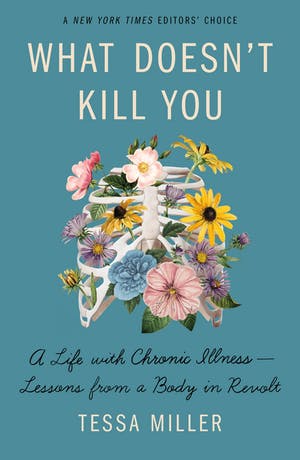
In What Doesn’t Kill You: A Life With Chronic Illness—Lessons from a Body in Revolt, Tessa Miller tells the story of her journey with Crohn’s disease and the knowledge that she has gathered along the way that she hopes to pass on to readers on their own chronic illness journey. As someone with a chronic headache disorder, I considered myself informed about navigating chronic illness, but each chapter challenged me to consider what kind of care I should be seeking from doctors and the many places to seek out community with other people who shared the same diagnosis. There were several points in the book where it was difficult to keep reading, not only because it was difficult to read about Miller’s own pain and vulnerability, but also because she holds up a mirror to the reader and asks us to confront our pain and our own inner dialogues about our bodies that can be so very cruel.
Miller challenges readers to see how medical racism, gender discrimination, poverty and lack of resources for care have made being chronically ill and disabled so much more difficult, but she is sure to leave us with the understanding that it is these systems that are unsustainable, not us and not our bodies.
Leticia Urieta: What was it like tracing the artifacts and origins of your illness for yourself, and then for an audience? What surprised you?
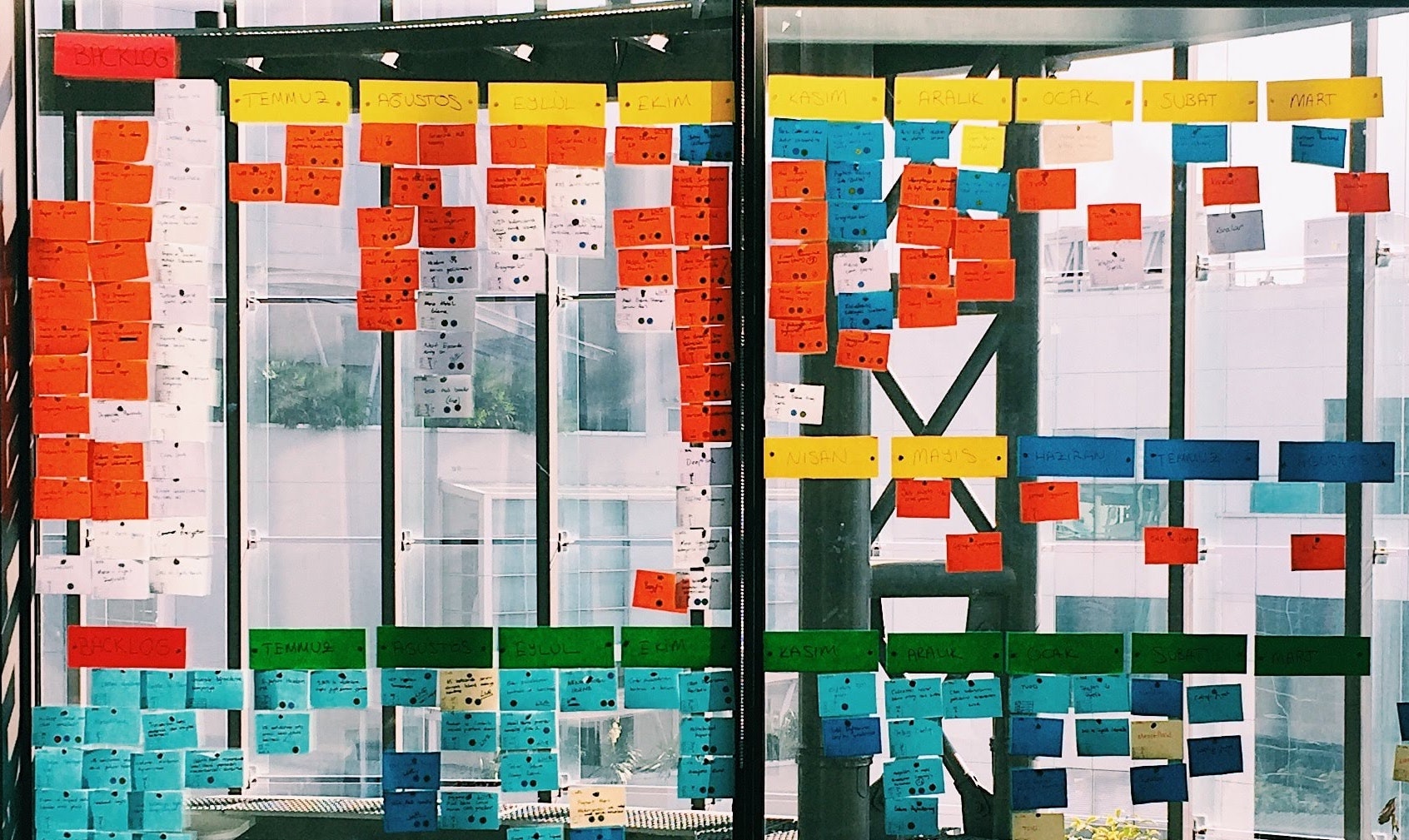
Tessa Miller: It was interesting, to say the least, to use my investigative journalism skills with myself as the subject. I started with a giant dry erase board that I wrote the rough story timeline on, starting with my first hospitalization in 2012. I filled it in as best I could by memory first, and then kept adding as I went through journals, old social media posts, my medical records (which were hundreds of pages I had to request from several different hospitals and doctors), and interviews with my family and my doctors. I was surprised by how much I remembered (especially given the massive amount of opiates I was on during my hospitalizations!), but I was surprised, too, but how much my brain had buried, I think, in an attempt to protect me from painful memories. This was especially clear when I went through my medical records and got to read nurses’ and doctors’ notes about just how sick I was from their point of view, and when I interviewed my mom and realized how close she thought I was to dying.
LU: One thing that really struck me as I read your book was how it made me reflect on my own experiences and how far I still had to go towards advocating for myself. Even five years after being on the path to diagnosis and treatment for my chronic headaches and pain, I still find myself putting up with bad medical treatment because sometimes it is easier than self-advocacy. Do you think that our abilities to self-advocate are recurrent or always developing?
TM: Always, always developing. It’s hard enough to advocate for yourself when you feel well, and it is incredibly hard when you’re sick and in pain and tired and hopeless. There will be times when you don’t speak up when you’re being treated poorly and you’ll beat yourself up for it later. It’s really difficult to not see the failings of the system as your own personal failings (but I want to remind you that they aren’t. No one teaches you how to be good at being sick!). I try to share as much as I can about what I’ve learned about self-advocacy over a decade of illness, and I do think these skills are important, but I also want to highlight that being ill incurably or long-term also requires community care and community advocacy. I always encourage people to bring a trusted friend or family member or someone from your support group along as a partner-advocate. They can act as a second brain to help you ask questions, take notes, and document any negligent or discriminatory behavior. And chronic illness is fucking lonely! Sometimes having someone else there, just there, makes it all feel a bit easier. Survival is a community event, as Viktor Frankl said.
LU: In several chapters, but especially in “The Brain and the Self,” you discuss how having chronic illness can cause trauma, but can also be compounded by other past traumas. What are things that you are still learning about trauma’s connection to the body?
TM: I’ve barely scratched the surface of what I know about trauma’s connection to the body! Research in this area is just now getting taken seriously (meaning: money is finally getting thrown behind it), so we’re going to learn a lot more in the coming years and that’s exciting for me since so much of my disability justice work focuses on the intersections of physical and mental health.
It’s hard enough to advocate for yourself when you feel well, and it is incredibly hard when you’re sick and in pain and tired and hopeless.
But from a more personal, anecdotal perspective, my own body is always reminding me of past physical and mental traumas; for example, I live with tons of scar tissue in my guts from years of severe flare ups, so even though I’m in remission now thanks to infusions of a biologic medication, the pain from the scar tissue (which causes intestinal narrowing, blockages, and other unpleasant stuff) is a reminder. Physical pain, even when it seems acute, is often a reminder of bigger, more complex traumas for chronically ill people.
Another personal example is a kidney infection I had last December. It kicked off a major medical PTSD response; just the thought of going to the emergency room triggered the worst panic attack and series of medical flashbacks that I’ve had in years. And then that response upset me because I thought I had “gotten over” or “moved past” that sort of severe trauma response, and I felt like all my years of hard work in therapy was for naught! I was thinking about it in very black and white terms when so much of physical and mental health (and the overlap of the two) lives in gray.
I try to think about trauma like I think about grief: it’s going to ebb and flow forever. Forever! As I wrote in the book, my dad has been dead for almost 13 years, and when he first died I spent weeks staring at the ceiling, wondering if I should kill myself to make the pain of losing him go away. As time has gone on, I have some days when I don’t think about him at all, or I latch on to a memory of him and smile or laugh. But every so often it creeps up on me, and thinking about him still hurts so much that I can’t get out of bed. Does that, then, negate all the work I’ve done to carry my grief in a way I can live with? Of course not. Living with any trauma is like that. Some days are going to hurt a lot and some days less. Some days you’ll need to scream and cry and shake your fists at the sky and other days not.
LU: In the book, you address the pandemic, saying “The COVID-19 pandemic revealed all of the cracks in our healthcare and social systems; even the slightest stress resulted in wide-spread failure for the most vulnerable.“
As more people are vaccinated and politicians and individuals declare that the pandemic is “over,” despite all evidence to the contrary, what do you hope that people learn from this experience?
Physical pain, even when it seems acute, is often a reminder of bigger, more complex traumas for chronically ill people.
TM: It was difficult seeing a lot of changes being made by governments and employers because non-disabled people needed them to maintain productivity when chronically ill and disabled people have been demanding these changes for decades (example: remote work on a mass scale). But even those changes are already being rolled back as employers demand a return to the office, and when people are pushing back, they’re being fired instead of granted accommodations. I wish I could say I was surprised, but not even a mass-casualty pandemic can change American capitalism.
LU: You offer as many nuanced resources and research as possible in each chapter and in the footnotes and appendix, but you also acknowledge that this book is ultimately your unique experience that can’t be everything to everyone. What do you hope that chronically ill readers leave this book with?
TM: I hope they feel seen, mostly. I hope they feel less alone, even a little. I hope it helps them wade through the grief and feelings of self-loss. I hope that after reading the book they know that their lives are worth living (maybe even more so!) with chronic illness and disability, even when their governments, cultures, employers, friends, and families make them feel otherwise. I hope they come away knowing that they belong to a community of radically empathetic, helpful people. I hope they understand that it’s okay to be angry, and that their anger can be righteous. I hope it helps them to see joy as a necessary act of survival.
It’s really difficult to not see the failings of the system as your own personal failings, but I want to remind you that they aren’t. No one teaches you how to be good at being sick!
Because I’ve been writing about chronic illness for so many years, I get a lot of emails and DMs from other chronically ill and disabled people as well as their caregivers. A lot of the people who reach out to me are newly diagnosed, and they aren’t sure that their lives are worth living now that they’re sick forever. Some of them have contemplated suicide or self-harm. So when I wrote the book, I was always thinking of them. I needed to give them something that, when they finished it, they felt like they wanted to stick around. I wanted them to know that they are wanted and needed here.
LU: If your book represents one person’s experience, what other books or authors have you read by other chronically-ill and/or disabled writers that you feel might form a canon of sorts for people to learn more about the nuances of living with chronic conditions?
TM: Off the top of my head, here are some that inform my own work that I think everyone should read:
Everyone is silent as we stand around the corpse. Galina—the wife, the one who hired me today—is perched by the head. Her hands are folded like bird wings against her ribcage and I can hear the rub of papery skin as she takes one hand in the other, then the other in the first. It’s the only sound in the dark room and I want to tell her not to worry, but I don’t say anything. After all, who am I to know whether worrying’s in order? He may get to heaven, he may not, and none us will know until we’re there too.
Bat—that’s his name, a hollow sounding name, like a loaf tapped on the bottom—hasn’t lived a particularly evil life, by all accounts. But then again, these people wouldn’t know if he did. One thing I’ve learned, from all the corpses I’ve attended, is when it comes to the bad acts, folk keep their lips buttoned. You can live a whole life by someone’s side and never know what evils they’ve indulged in. Today, when the ceremony’s over, I’ll be the one with all his secrets. Every last frippery. Of course, I won’t tell. That’s one of our rules: what comes from the bread, stays in the belly.
Galina removes the bundle from the wooden box, unwraps the linen, and presents it to the mourners for inspection. She holds it with her bird hands, and everyone nods sagely.
“A good loaf,” says one of the men, the one with milky cataracts in his pigeon-egg blue eyes.
“Plenty of heft to soak them up,” sniffles the woman next to Galina, who I suspect is her sister. They have the same sunken cheeks, the same small bones. Wrists like fork tines. Next to them, I’m a whole spilling mountain of woman. Still, I haven’t been introduced to anyone. They’d prefer not to know my name—would rather not think of me at all. My presence, after all, is proof he’s got something to atone for.
Inspection passed, Galina places the loaf on a table next to the one with the body. The table with Bat. Bat and the loaf lie side by side, each as wan and dusty as the other. She takes out the knife and starts to saw. Crumbs billow like a shaken snow globe. I think about snaffling some—to see what it tastes like, as pure unsullied bread—but I don’t.
The slice is cut. The slice is huge, the crumbs gather in drifts. It stands up all on its own like a battle ship, the crust a prow that will break the crest of a hundred waves. I imagine they were up all night baking, striving for the perfect loaf, the perfect density to carry its load. Everyone wants to get this part right, though there’s endless disagreement on what makes for the most sublimevessel. Cooks are hired, widows fling themselves against the penance of kitchen ovens. Too hot, too cold. Just right. The truth is, the very best bread is white sliced supermarket loaf. The square kind that turns to a gummy paste when ground between molars or slathered with mayonnaise.
That’s the one that soaks up sin the best. As anyone who’s ever sopped a gravy could tell you.
Galina unbuttons the white shirt the undertaker has so carefully done up to Bat’s chin and peels it open, so we can all take a good look at the scar from the heart surgery that couldn’t quite save him. It’s silver and oily, sardine skin packed into his chest. She places the bread on it with trembling fingers.
Then we wait.
We wait, as all the sins this man has ever committed rise up and are absorbed into dough. The old ladies hold hands. The old men stare to the ceiling, lamentations fluttering from their lips like moths.
We wait until he is made good and the bread is made bad.
One of the men glances down for a moment, meeting my eye, and I very slowly and deliberately run my tongue across my lip. I’m wearing blood red lipstick and the effect of the pale, glistening pink is obscene. I know. I’ve watched my tongue’s gesture in the mirror many times before, and it always pleases me.
The man’s face turns purple. I twitch my lip and he looks desperately around to see if anyone has noticed. No one has. He shuffles from foot to the other, holding his hands in front of the bulge in his trousers, and I swallow my snort.
I am bad. I can’t help it. Of course I am bad.
I am a Sin Eater.
Once thirty minutes have passed, Galina takes the bread off his chest and presents it to me. She places a jug of water by my side. Now that the loaf’s full, it’ll take some chewing to swallow. Lesser Eaters than I have choked upon this part, and what a humiliation that must be—to gag a spray of crumbs over the corpse!
The gift of consuming the sins is something we’re born with, of course, but it takes a lifetime of practice to perfect. I take great pride in devouring them the right way.
I look at the bread, at the others not meeting my eyes, and I place the first morsel in my mouth. I chew thoughtfully. I pretend I’m alone with Bat; I let the room dissolve. The dearly beloved are silent. And then I catch a delicious snarl of flavor deep in the dough. My stomach roars. The hunger comes upon me like always, a rabid fever of wolf claws clattering against concrete. A charge into battle. And then it’s just me and him, alone at last.
I eat faster. Mush up wodges between my fingers, let them slide in fists down my throat. It’s almost painful, this sharp and sudden ache. But I’m far past the point of stopping.
I chew a stolen wristwatch with shiny gold hands, bursting between my teeth in salted crystals of parmesan. Ribbons of blue-green paint keyed from a car door, thethrobof sour plum about their curls. And a dozen lazy Sunday afternoons, lost to a fishing rod that wasn’t even slung with a hook. Their airy lavender batter permeates my whole mouth.
After each mouthful, I swallow hard. My stomach takes on the density of concrete, but I persist. It’s impossible to stop once the ritual’s begun.
The hunger comes upon me like always, a rabid fever of wolf claws clattering against concrete. A charge into battle.
What really delights my tongue is the women. So many women! Lilac scarves and perfume samples, coral lipstick, hotel registers with the wrong surname scrawled in a hurried pen. And, too, that young man who runs the radio repair store, his passion gathered in a snarl behind his pectoral muscles. All of this is a warm purr of cream and wine and garlic butter. I gulp it down. It slithers wetly. Fishnet stockings get caught in my gums.
I take a cleansing swig from the jug of water propped by my side.
“Delicious.”
Then I notice one last bite. A small mouthful that’s rolled beneath his chin. I lift it from him and present it to my tongue. There’s a brief flash of something bitter, something I can’t quite grasp. As I chew to mush and gump, my saliva ducts explode. It’s the most umami I’ve ever tasted, a gush of fermentation curdling.
They come to me, images spitting past in high definition. Galina forty years younger in a red polka dot sundress, eyes shining. The butcher wrapping a quivering slab of liver in paper, presenting it with a wink and blown kiss. Bat, observing and stewing from the doorway; Bat, pickling his fury over an endless succession of large gins; Bat, stumbling home to provoke a fight, his words finding the spots where things get twisted, his thick grasp finding its fit around her neck.
My own throat tightens in affinity, the bread swelling in my gullet, sending out spurts of kimchi and Marmite and Worcestershire sauce. For a moment I am gagged by drool, barely able to breathe. Then, just at the moment I think I might choke, he lets her go. The last of the bread slithers down my throat, my prickling gums the only reminder it was ever there.
The mourners turn to Bat, murmuring their final goodbyes. Surely, they say, he will get to heaven now. Surely, his heart is light.
“It wasn’t much,” I lie, but Galina doesn’t respond. Already, there’s a gulf—a river I’ve crossed—and I’m trapped with her husband on one side, in the dark tangled forest of his histories.
I look at the body he’s left behind. His cheeks are mottled. All of a sudden, the bread repeats on me. I burp into my fist, where the sin dregs taste like stale bile. There’s nowhere to put them, so I swallow them down.
“Thank you.” Galina hands me the envelope, thick with scrabbled bills. Small denominations, gathered from those determined to see Bat make it in the afterworld.
There’s a thrill of pink in her cheekbones, a spray of broken veins. She doesn’t catch my eye, so I glance over my right shoulder, where she’s looking. The man with the purple cheeks twinkles back at her.
I turn away. I gather my things, and I leave.
“This round’s on me.” I pull the envelope from my coat and thud it down on the pub table.
Farlane, Bellope and Carl nod heartily.
“Mine’s a stout,” says Farlane, and the others agree, so I fetch them—four black frothing mugs, slopping over the sides. We can afford it tonight, to wet the table and gush the floor. I take a long slurp, laughing as the froth soaks into my cleavage, the folds of my flesh. Carl runs one sausage finger along my neckline and offers me a dollop of foam, which I accept eagerly.
The hunger is constant: a delirious background hum that permeates everything. I once met a woman who refused to Sin Eat for the overweight, lest she became one of them. The horror! But the four of us have eaten the bread of gluttonous men, and it was delicious, and—let’s be honest—so is every wicked deed. The worse they get, the more flavor on the tongue. So together we eat, and together we are thick, powerful and utterly triumphant. We are fat. We drink late in the bar, our table stacked high with snacks from the mart next door, the place of sugared vegetables and salted candy. We take each other home and do things the Lord God in Heaven would rather not sign off on. Things you’d never believe you could learn from a single slice of bread. In the morning, sometimes—often—we sleep late, no thought at all for what is supposed to be done that day.
Bellope gathers her hair in a snake, winding two coils into one another, and wraps it around her neck. “Did you hear?” She leans forward conspiratorially, cheeks glistening and dimple-deep.“Olive-Anne got a big client, a murderer, they say.”
“Drinks on her next week,” says Farlane, and we all roar.
There’s always a surcharge for a known big sin, a hazard pay we insist is necessary. After all (as we like to bring up in the negotiations, accompanied by a regretful sigh)—who’s to say whether this won’t be the one that gets past all our barriers?
It’s an old Sin Eater myth, a threat our mothers warned us of. Eat for too long and eventually you start to carry the sins in your body: acidic misery in each kidney, pebbles of pure fury in the gallbladder, bitterness forever churning in your spleen.
Personally, I don’t believe a word of it. The reason any of us got into Sin Eating in the first place was because we’re not like other people. We were born to compartmentalize, to set aside the anger and the hatred. Jealousy is nothing but a scary bedtime story we repeat with all the lights still burning. We take on the good sins, like delighting in a feast and relishing skin, and the bad ones pass through us like high fiber and are flushed away.
I look around my friends with a squidge of love in my heart. Their laughter is the size and texture of a vat of soup, and Carl places his thick hand on Bellope’s shoulder. And then, as if fate has been listening and wishes to laugh along too, something uncoils within me. The feeling is black and shifts around quickly, and I look at Bellope, her beautiful flesh and meaty lips. All of a sudden, I want nothing more than to drape a starched cloth over her, so that no one else may glance upon her skin. Drag her by the hand to a place far from here, shut her up in a tall tower until I arrive and she can let her hair down.
I take a swig of my beer, press my eyes tight. It’s impossible. A trick of the brain—I’m thinking of it only because such things were just on my mind. Such feelings have never been a problem, and never will be. I have eaten of arson and extortion and assault, witnessed each from a laughing distance. For any darkness that crept close, I knew exactly how to capture it in a jar and screw the lid on tight.
So, as I say, it’s impossible. The feeling flickers in my stomach like an antacid, fizzes up and disappears.
“C’mere,” I say to Bellope, my throat thick. She turns to me, lips open and gorgeous. I grin lasciviously. We fall upon each other with grabby hands, and I collapse into the wonder of her mouth.
The next morning, we wake late and tangled. There’s a shaft of sunlight spearing her sheets, highlighting the crumbs and streaks of menstrual blood. I smooth it out lazily.
“I had a strange dream,” Bellope says.
“Oh?” My own sleep was fast and full of car chases. A single explosion sent skyscrapers crashing into the sea.
“You were in it.” She presses the flesh of my breasts together, and we watch a drip of sweat run down my cleavage and onto the bed. “You kept screaming.” She shakes her head twice as if trying to erase the image. “There was something in your throat, it was rising.”
I swallow, feeling that thickening again. “Bile?”
She shakes her head. “Dough.” A hand at her own neck, as if by doing so she could keep whatever is in there down. “It kept getting bigger and bigger.”
There’s that fable about the fisherman’s wife, the one whose jealousy grew so fat it choked her.
“But of course you’re not like that.” Bellope’s smile is dripping from her lips. “Of course, you’re not like ordinary people.”
I cannot tell if the twitch in her brows is a test, but I shake my head anyway.
I agree.
Waving off Bellope’s offer to loll for another hour or three, I peel myself from the bed. There’s still a goodly amount in my envelope, and I intend to spend it on something delightful, something to prise this weight from my neck.
Before I go to the feather boa store, I pause at Maria’s Carnival of Cakes, where she offers me a platter of cream-filled donuts. “These,” she says, “are the cure for whatever ails you.” I settle into a chair in the midst of all these people, high and happy on sugar. All around me is the world’s sweet bright chatter, a glorious thrum of sated desire.
I take the donuts one by one and squeeze, cream splurting out the hole in a fat white ooze. Spots on a lover’s back who lets you liberate them, the most satisfying thing of all universes. First I eat the cream and then, when the cream is done, the chewy, sugary shell. My teeth grind it to pulp; the granules scritch against my molars. Then I swallow. Or I start to swallow, but somewhere, somehow, it sticks.
Bad things flicker into three dimensions. A sudden lurch of fury for the people around me, their pleasure from their own donuts. A pounce of hate for that baby’s gurgled laughter.
“Y’alright?” Miss Maria’s face is sudden before me, a harvest moon.
When I push my table back, the teacup clatters off the saucer. My feet slap on the fancy tiled floor. Before I know what I’m doing, I’m hands and knees at the toilet bowl. What comes out is black and thrashing, bright things floating in it. Pink and yellow sprinkles bob to the surface.
I start flushing the toilet and don’t stop. I flush as I retch, so what pours out of me is removed fast. So it can’t change its mind and come back inside.
That eve, I skip our regular trip to the pub. An early bed, that’s what I need. A night to seep out the bad blood caught inside me. I lie, sheet to my chin. I count things that don’t have names. But it’s impossible. The covers bind my legs with dank sweat while every clock in the house ticks obnoxiously. Sleep can smell me and keeps it distance, and I lie here alone. What I need is to hear her voice, solicitous as a bedtime story, so I rise from the hot nest to grab the phone and drag it back to my lair.
Its plastic mass is already a comfort. My fingers tangle in the black cord, stretching and releasing its curls. They dial the number I know so well and in my heart’s silence it rings out once, twice, anticipation pulsing in my veins.
I need to hear her voice, that’s all. A small reminder I am beloved to tamp this roiling darkness down.
When the barkeep lifts the phone, I hear the whole room spring into warm light at the end of the line. He knows us well from a hundred spilled nights and is happy to summon Bellope, roaring out for her in a voice that choruses with the jukebox and ruckus. In a moment, she is there on the line.
“Hello?”
“It’s me.”
“Darling! We’ve missed you tonight.” The words fall out of her with a shaft of golden laughter and I feel the fangs on my heart slacken. “Is everything okay?”
“It’s fine.Well, I’ve had an odd day. I threw up actually, at Maria’s and—”
“Oooh, get off!” Her sudden, giddy shriek dissolves into giggles. “Behave, before I set the dogs on you!”
I am silent. Whatever foul emotion I thought I had swallowed is back, twice as bitter. There’s the muffled sound of the receiver pressed against her breast, a mumble to someone in the distance, before she returns to the line.
“Sorry love, what were you—”
Her sentence is once again broken. The phone pans through the cacophony, delivering snatches of clattered glasses and high hilarity. A distant night in jump cuts, leaving my foul heart to fill in the gaps. And then a new voice in the receiver, Carl, his eager brogue grasping out for what the night has to offer.
“Sorry to interrupt, my love! It’s this one’s round, I’m going to have to borrow her back.”
Fine, fine, says the laughter in the background, without ever asking me whether I am or not. Then—
“I have to go!” Bellope calls in my ear. “I love you!”
The line is severed. A sudden blackout, all the lights in the pub plunged to dark. And what will happen in that blackness? Well, hands pawing out for soft body parts, of course. Carl reaching out to Bellope and her welcoming him, opening herself, cackling. Laughing at me, even, laughing at the fool who thought she could satisfy a woman like her! Who could compete with the rough hewn hands of a man like Carl. It is him I blame, really, that greedy contemptible shit, always reaching and grabbing and wanting and…
I need to hear her voice, that’s all. A small reminder I am beloved to tamp this roiling darkness down.
I fling the dead phone to the sheets, my palms drenched in sweat. It is impossible. Impossible! Between my heart and the darkness I built a wall: I can eat and eat and still be left with laughter. Without that wall, who would I even be? I would be ostracized, surely, from the very community that keeps me whole.
“Why are you doing this?” I say to the empty room.
The room doesn’t respond.
And then something else lights up in me, a glance of red spatter. I could do it now. I could go find Carl at the bar—take his palm, soft in mine, and whisper for forgiveness in his ear. My voice sugar-sweet and gentle, apologies sifting down. I could tell him I don’t mean what is about to happen next. Beg a pardon before the act.
Then take my knife and slash down through his wrist, cleave that grasping hand from its bone.
Why not? A hacked limb has no way to grab a lover, after all. It may hurt, but it will be over quick, and I am certain that cut will lance my own abscess, drain the bad feelings curdling inside. Before I’ve thought about it too hard my body is in the kitchen again, my fingers close around a heavy silver handle. The blade glints malevolently when I slip it from the block. In my mouth, saliva spurts. I taste something pungent, a thin dark drool.
This new feeling is a rudder through a night with a sinister moon.
Out in the world, my heartbeat hasn’t caught up with me yet. My feet are fast for one who moves without thinking; they hit the ground soundlessly. The only noise is the hubbub from the bar, snaking through the air as musical notes in a cartoon.
The hubbub is laughing. I wonder what a hubbub sounds like when you slice it in two. Will it scream? Or will it just be hub and bub, soft round things, gently bleeding into the night?
Will it be as thick as the thing in my throat?
Finally, I reach the pub. Light spills from the windows, butter-yellow, projecting a stain across the hem of my dress. They are inside, talking and holding and kissing. I am here in the other place, alone. In my bag, I feel the metallic comfort of the contents.
One cut, and I will feel better. My heart will be light.
I am about to push the burnished gold handle when I hear the beep-boop from the mart next door, the place of sugared vegetables and salted candy. It snaps me out of the trance that had swallowed me. Things click into clarity in my muddled skull. I know what it is I must do.
Back home, I sit with the bag between my thighs. I pull out a plastic-wrapped loaf of Wonder Bread and remove every slice. They transform into a huge clot between my scrabbling fists. I work fast, mold them into what I need.
It makes for a strange pillow. But that’s okay. I exhale, I breathe out everything. Take it, take it. Don’t think about morning.
Just sleep, sleep for now.
This time, my dreams are quieter. Seas the exact temperature of my skin lap my calves. Galina is on a boat, raising a martini glass filled with bright pink liquid. I swim closer; she’s laughing. A velvet curtain drapes from the mast. When it pulls back in a dramatic flourish, it reveals the man with purple cheeks.
He takes Galina in his arms and they kiss like movie stars from the nineteen forties. The old seize and freeze: their lips meet, but they barely move their heads. In the water, Bat is just beneath the surface. His hands are in fists, his mouth open in an endless parody of a scream.
Seagulls screech, and I sink back down.
When I wake, I take the squishy white loaf and put it in a black bin bag, which I hike over my shoulder. A child running away with my every possession tied to a stick.
I walk quickly to the park. It’s a beautiful day, the air heavy with pink flowers. I think about scattering a trail, breadcrumbs to follow, but it’s too late for that now.
Down by the pond, it’s quiet. The weeping willows drape the water, plump tadpoles scatter and gather. I read once that tadpoles make the best scientific subjects because they change so quickly, and it is something I have never understood. Surely the truest lesson is learned from things that stay themselves? Give me an elephant, born ancient and into wrinkles.
Let me be who I was now and forever.
I reach into the bag and shred a handful of bread, scatter the chunks in the lake. Immediately, the ducks are upon it, making the small wet noises of duck mouths in water.
While they eat, I test my heart to find its heft. Am I getting lighter with every swallowed mouthful? Is the darkness gone to those deep feathered bellies?
No. It is not. My heart is weighted with lead bells and regret. Heavy as a curse in January. Something is lodged there that won’t budge. I should have listened—there are always rumors, and I never listened. They say you can’t do this work forever: eventually it catches up with you. But people say so many things and so few of them are true.
I sink into a squat and then, when the effort of holding myself up feels too much, I collapse back. There I sit, my knees drawn to my chin, inhaling the scent of my body.
There’s a cough behind me.
I turn, and it’s Bellope. She smiles, and I try to smile back. Move my mouth in the way that means friend.
Bellope comes and spreads a checked cloth on the grass. She motions for me, so I shuffle over, and we sit side by side, watching the ducks and the water. A trail of ants walks to my foot, start the long trek up and over.
“I brought cake,” she says.
From her bag, things materialize: a china plate printed with polka dots; two tiny silver forks; a huge daud of cake, noble and quivering. She places them beside me, but doesn’t make any movement to eat. The ants halt in their procession, sensing new information on the breeze.
“So what’s going on?”
I shrug. “I don’t know if I can do this anymore. I felt things. The wrong things.”
“Ah! It happens.” Her gaze is steady but there’s a dimple deepening in her cheek.
“I mean it.” I spread my palms to the sprawled blue sky in supplication. “I was jealous of you, of Carl. I thought about hurting him. I was so, so mad.”
“And?”
I look at her, all that dazzle and flesh. “You don’t judge me?”
“I would never.” Her voice is soft as churned butter. “It happens. You can always quit. Tend to your feelings. In time, perhaps you’ll learn how to tame them.”
At this, I almost laugh. The feelings are rabid animals—I could no more make them my soft pets than I could hold back the vomit at the toilet bowl. Besides, what would my life be if I quit? Who would I be, if not an Eater?
“What’s the other option?”
“You keep eating.” The dimple in her cheek becomes a crater. Whole civilizations could lurk inside that dent. “Knowing this won’t be the last one that gets lodged in you. Knowing your own crust is soft now and can’t keep out what you don’t want to let inside.”
I shiver. Keep eating! Sure, I could. And the impulses would keep breeding, doubling and doubling inside of me. Frantic little dervishes, opening up fathoms and whirling out of my control.
“What would you do?” I ask at last. Bellope puts her hand on my knee and something rustles inside me, like my heart’s trying to beat quickly enough to get away from us both.
She grabs at the chub of my leg, pinching my flesh. Her grin is a sudden, sharp thing. Her coppery eyes glitter; they make me think of pennies on the eyes of the dead. Bellope—my friend, my love, forever the hungriest of all of us—lets out a laugh.
“I think you know,” she says.
Do I?
“I think you do.”
At her words, I feel the lick of danger in my mouth. As if I’m balancing a dead wasp on my tongue: its body papery, its sting still a threat.
I hold myself very still. I should tell her no. I should pluck the wasp from my mouth. To continue Sin Eating in this state would mean leaving myself vulnerable to every dark fury that crossed my lips. The recklessness! Like stumbling drunk through a petrol station, cigarette dangling from my lips. My guts doused with gasoline, my stomach stocked with such dry tinder.
It would take so little for my violence to explode. And yet, and yet. It’s tempting too. I could eat on for a little longer, couldn’t I? Just to see what other tastes the world has to offer. Just to fill the craving that yawns open inside.
The flavor is seeping back behind my molars. It tastes like all the world on the turn. And in an instant, I am ravenous: for life, for cake, for all the things that need to be devoured.
Bellope catches me staring at the picnic and grins. “Eat it,” she whispers.
So just before the first ant lands, I snatch the plate. I forsake the fork, grabbing an entire handful. Glowing purple cherries and glossy cream and dense, crumbling chocolate. On my tongue it is rich and thick, sour and sweet all at once. The sour making the sweet more, the sweet making the sour. My teeth tingle. I shovel fist after fist, giddy with this assault of sensation, slurping clots of cream from my fingertips.
Before I can gorge it all on my own, Bellope leans over and snatches the final mouthful. Our cheeks pouch. We masticate; we gulp in unison. Then Bellope smiles gleefully. Gums slick with cherry juice, all crimson and drippy. Black crumbs stud her teeth.
She smiles and the future chasms open ahead of me like a house with dark corners and secrets beneath the bed. Anything could happen there. The house would let it—would welcome it, in fact. To step into that house means admitting the dark corners as part of me. Knowing sooner or later I’ll peer inside them.
I watched Scream for the first time when I was not quite 10 years old. I can date it so precisely because my parents and I were living in a townhouse that we rented for six months after moving from St. Louis, Missouri, to Huntsville, Alabama, where my father worked as a systems analyst for the US Department of Defense.
We’d watched the now-classic film on VHS, which means we almost certainly rented it from “Hollywood Video and Tan,” the closest video store. The place had everything you’d expect from a generic late 90s video store, with row upon row of blockbusters in the main part of the store, a side room for “adult” films, and two additional rooms for tanning bed clients. Our move from St. Louis to Huntsville had yanked me from an entirely Black community, thrusting me into a new, unfamiliar world of whiteness. The abundance of tanning beds was one example of this; slasher films proved to be the next.
My parents had never shied away from showing me horror movies, especially not my mom, who enjoys action and gore more than my father. The most censorship I received was my mother’s hand covering my eyes during a sex scene. I’d seen Candyman and The Shining by the time I was 8. But Scream was different—there was no supernatural boogeyman battling you for your soul. The killer was just a regular person, someone the protagonist had known intimately, suddenly willing to end her life. The three of us settled in our small living room, my mom and I on the couch and my dad on the floor. We passed a bowl of popcorn between us as the movie began with Drew Barrymore alone in a kitchen.
Scream not only showed me a new kind of horror movie, it also showed me a glimpse into the lives of white teenagers.
I’m not sure it holds the same impact today, but as anyone who saw Scream when it was initially released can attest, the first ten minutes were shocking. Surely, there was no way Drew Barrymore would be killed, and certainly not this soon. And yet, America’s sweetheart was brutally gored in front of her parents before the opening credits. What followed was murder after murder, suspicion upon suspicion, all mixed up with typical (white) teenage fare: difficult relationships with parents and boyfriends and complaining about homework. It was fun and scary and even at 10, I knew it was an incredibly clever film. Scream not only showed me a new kind of horror movie, it also showed me a glimpse into the lives of white teenagers. It prepared me for my adolescence. Throughout that time, I gleaned a little more from each slasher movie I watched: Scream 2, Scream 3, I Know What You Did Last Summer, I Still Know What You Did Last Summer, Halloween: H20, Urban Legend, and others.
Horror movies are some of our most politically charged popular films, whether that’s the government mismanagement seen in zombie movies like 28 Days Later or the racism depicted in Get Out. But slasher movies, in particular, say so much about race, especially white womanhood, simply by having no or few characters of color.
After moving to Alabama, I went from attending a primarily Black elementary school in 1996 to a majority white middle school in 1997. Not only was my body changing with the onset of puberty, but I needed to adapt while surviving the hellscape that is middle school. I had been surrounded by Black girls with laid edges and oiled skin who listened to Xscape and Aaliyah. The white girls at my new school wore pastel skorts from the Limited Too, were allowed to wear makeup at 10, and sang along to their mother’s Faith Hill CDs. I started begging my parents to buy me overpriced tween clothes from the American Girl catalog, then from Delia’s that I spent my weekends trying to squeeze into. I hoped my classmates wouldn’t know that although my hair was straight and long like theirs, it did not naturally grow that way out of my head.
Just like Michael Meyers or Ghostface, white supremacy kills. It slaughters Black women in delivery rooms. It hunts Black men at police stops. It cruelly tricks thousands of young adults every year into disordered eating and terrorizes with unchecked gun violence. White supremacy and whiteness are closely tied, but to me, they mean two entirely different things. I consider whiteness to mean the mainstream culture dictated by the majority of the population, while white supremacy uses whiteness to oppress others for the sake of power. Whiteness values civility; white supremacy uses that civility to keep bad faith actors in power.
I knew what white supremacy begged of little Black girls who were eager to please.
As soon as I was dropped into this new world, I did everything I could to escape the murderous clutches of white supremacy. I followed every rule. Sucked up to every teacher. Participated fully in every task I was assigned. Mostly, I just kept quiet. Even when a menacing white boy put a “Kick Me” sign on my back in the 6th grade, I just took it off and didn’t tell the teacher. I certainly didn’t bring it up, because I didn’t want to be accused of causing a scene. Despite the school being majority white, the students sent to detention or facing behavioral repercussions were mostly Black. Even if I didn’t have the language, I intrinsically knew what white supremacy begged of little Black girls who were eager to please. And as much as possible, I thrived. I made the honor roll. I received exemplary comments at parent-teacher conferences. “She’s so polite.” “A joy to have in class.” “She speaks so well.” I thought I’d successfully gamed the system. They’d never send me to detention. More than wanting praise, though, I sought to slip by unseen and unscathed. In and out with a clean “permanent record.” I’d been taking notes and had learned from Laurie Strode (Jamie Lee Curtis, Halloween), Sidney Prescott (Neve Campbell, Scream), and Julie James (Jennifer Love Hewitt, I Know What You Did Last Summer) how to become a “Final Girl.”
A term coined by UC Berkeley American Film Studies Professor Carol J. Clover and adapted by mainstream horror fans and critics, a Final Girl is the surviving heroine at the end of the movie and almost always the star of the film. This is the girl who so delicately balances desirability and virtue that she makes it to the credits. She is brave but gentle, funny but not brash, cute but never overtly sexy, and most importantly, she is always white. By the end of the film, she has crawled her way through the corpses of her peers to rise on top. She is a survivor who carries significant trauma, yes. But she is alive and has plenty of time to squash that trauma by the end of the sequel.
In fact, Randy Meeks (the movie fanatic character played by Jamie Kennedy who is secretly in love with Neve Campbell’s Sidney ) conveniently lays out the quintessential rules for surviving a horror movie a little more than halfway through Scream. They are as follows:
You can never have sex.
You can never drink or do drugs.
Never (ever, under any circumstances) say “I’ll be right back.”
Supposedly, those are the rules of surviving a horror movie, but there’s a lot left unsaid. White women trying to make it to adulthood with their reputations and power intact have even more to live up to:
You can never have sex, but men must want to have sex with you.
You can never drink or do drugs, but you must be fun to be around.
Never (ever, under any circumstances) say “I’ll be right back” because you can’t pretend to have any control or awareness about your future.
I grew up surrounded by Final Girls like Sidney and Laurie who knew how to walk the tightrope between enticing and noble. They ended up with the careers, partners, and lives they wanted. But I also knew lots of Tatums (Rose McGowan, crushed by a garage door in Scream), direct foils to the Final Girls who were humiliated because they expressed a little too much satisfaction in their bodies, and I certainly knew many Helens (Sarah Michelle Gellar, slaughtered in her parents’ store and dumped in ice in I Know What You Did Last Summer), who were yanked back to their hometowns after showing a small bit of ambition and daring to use their looks to their advantage. Their stories often included divorces or precarious financial situations.
She’d broken the cardinal rule of a Final Girl: she enjoyed sex just a little too much.
My best friend in 6th grade was a “Tatum.” We spent almost every weekend together, moving between each other’s houses, our parents trading driving duties. We submerged ourselves in late 90s youth culture: listening to NSYNC, Britney Spears, our parents renting American Pie and I Know What You Did Last Summer for us. But over time we parted ways, she hopping from boyfriend to boyfriend, while I froze around boys, especially avoiding those who seemed eager to talk to me. And by high school, dating had evolved into sex, and gossip spread like wildfire. She’d broken the cardinal rule of a Final Girl: she enjoyed sex just a little too much. Eventually, the gossip and bullying escalated, and she dropped out by 11th grade.
No amount of whiteness erases the indignity of liking sex. I knew if she could be erased by a bad reputation, I wouldn’t stand a chance. White supremacy and misogyny are linked so inextricably that it’s hard to identify which menace is which. But the combination of the two forces white women to maintain some version of purity for the sake of white men. Looking at this from an intersectional lens, it’s necessary to note that white women also benefit from this arrangement in that they are able to share in the capital and stability possessed by the white men who demand purity.
The success of most teen movies hinges on a lack of parental interference. Can’t Hardly Wait, She’s All That, and 10 Things I Hate About You all feature epic house parties in McMansions with nary a parent in sight. Newly licensed teenagers drive around their cities, hopping parties, and finding hideaways. Slasher movies operate with even less screen time from parental figures. We briefly see Sidney’s father in two scenes, and Julie’s mother seems mildly concerned about her daughter’s reclusive behavior, while Laurie’s parents are only named in the second film. There are a few other parents scattered about with a line here or there, but they’re entirely unnecessary to the plot.
Meanwhile, there are no Black people in Scream. There are almost no Black people in I Know What You Did Last Summer. And there are no Black people in Halloween. The latter franchise waited decades to give substantial lines to a Black character, but the former two remedied the lack of color in their immediate sequels. Replacing Drew Barrymore as a (relatively) big name killed at the beginning is Jada Pinkett Smith playing Maureen Evans. She dies a humiliating and brutal death, kneeling in front of a celluloid image of her killer, bleeding in front of a theater audience of raucous white people cheering her death while they ignore her cries (they believe it to be part of the show).
Scream 2 also gives a supporting role to Elise Neal as Hallie McDaniel (a name so similar to the first Black woman nominated for an Oscar, Hattie McDaniel that it must be an homage), Sidney’s new best friend at Windsor College. The audience doesn’t learn much about Hallie. She’s eager to join a sorority and hopes Sidney can leverage her popularity to get her in, and she has a mild flirtation with the boy who (most likely) kills her. Hallie sticks by Sidney’s side as she’s hunted again by an unknown killer, and as the two of them are being escorted to safety by two armed bodyguards, they’re ambushed. Just when there seems to be a chance of escape, Hallie pleads with Sidney to run, but she’s ignored. Sidney defies logic by attempting to discover the identity of the murderer, and Hallie ends up gutted for her friend to see.
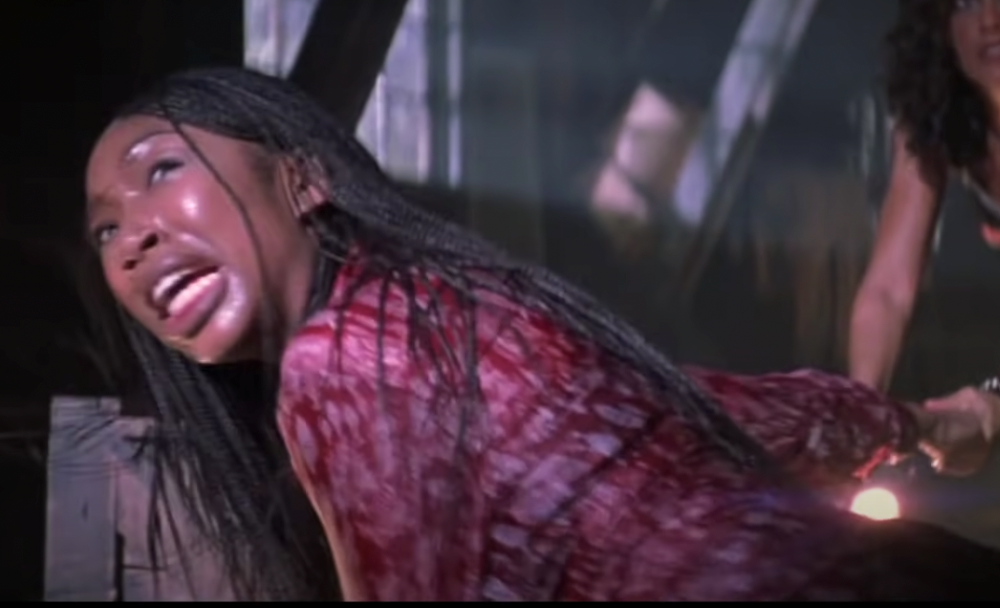
I Still Know What You Did Last Summer added Brandy and Mekhi Pfeiffer to the cast. Brandy’s Karla Wilson is Julie’s roommate and new best friend. Brandy’s star power keeps her alive, but this can’t save Mekhi Pfeiffer’s Tyrell. Karla still pays her dues by being tricked into a trip to a deserted island where she witnesses half-a-dozen murders, including that of her boyfriend, all because of her friendship with Julie.
Long before the realities of American life, it was slasher movies that taught me how invisible, ignored, and ultimately expendable Black women are. There was no list of rules long enough to keep me safe from the insidiousness of white supremacy. Whether a teacher who wouldn’t move me on to the honors class despite my making the qualifying grades, or a white friend explicitly telling me that I was undateable, good behavior only takes Black women like me so far. More than anything, slasher movies showed me that my role was to always be a supporting character, risking my life to be the voice of reason ensuring that the white girl makes it to the finish line.
It was slasher movies that taught me how invisible, ignored, and ultimately expendable Black women are.
Melissa and I met when I was 18 and she was 21, both studying journalism at the same liberal arts college. We spent hours watching documentaries and independent movies rented from the school library. Melissa violated all the basic rules of horror movie survival. She drank, had sex, and attempted to take control of her life, but she did so with a deep shame that resulted in verbally abusive outbursts while drunk.
One night she invited three floppy-haired hipsters back to her cozy one-bedroom apartment that was right next to mine. The five of us listened to the newest Deerhunter album and passed a bowl for maybe an hour before her alter ego emerged. She started insulting the guys’ taste in music and their clothes. And then, in what she must have thought would be a compliment to me, and an attack on their characters said, “Just because Whitney’s not conventionally attractive, doesn’t mean she’s not cool.” A cloud fell over the room. She’d said the quiet part out loud. No matter what rules I tried to follow or music I listened to, I would never belong. I wasn’t ready to face how white supremacy warped people’s ideas of attractiveness, so I continued to joke with the guys until they left. Then I helped Melissa to bed and straightened up.
I endured years of feeling like a disposable side character before I started thrashing against the box white supremacy had put me in. By my mid-20s, I’d started learning about intersectionality and anti-racism. Reading work by women like bell hooks and Mikki Kendall, helped me find myself beautiful, and worthy of life and love—regardless of the approval of white people. I became active in social justice and anti-racist causes and organizations. I began to forgive myself for trying so hard to squeeze myself into the only safe spaces white supremacy offered me. As a young Black girl, slasher movies taught me so much about the world ahead of me. A world that would try to erase, diminish, and sometimes kill me. They taught me that white women’s comfort would always be prioritized over my safety. They taught me that our killers, of mind, soul, or body, usually come from within our communities. Slasher movies gave me what I needed to make it to adulthood. The Final Girl is the one who gets shit done no matter the obstacle. I’m a Final Girl at the end of a white supremacist slaughter, standing on the other side. I’m grateful, and yet beautifully aware that the sequel is coming.
In our series “Can Writing Be Taught?”, we partner with Catapult to ask their course instructors all our burning questions about the process of teaching writing. This month, we’re featuring Jubi Arriola-Headley a Blacqueer poet, author of original kink (Sibling Rivalry Press), and winner of the 2021 Housatonic Book Award. Check out the 6-week generative workshop that Arriola-Headley is teaching that focuses on poetic forms and creative collaboration. We talked to him about taking up space, the criminality of encouraging writers to stop writing, and the best snacks for poets.
What’s the best thing you’ve ever gotten out of a writing class or workshop as a student?
Once, in one of my early workshop experiences, a fellow poet – let’s call them Poet A – snapped at me for interrupting them, even though I was certain that what I was saying was affirming and in praise of their work. (I know, I know, I hear myself – it works out in the end, I promise.) I was quite hurt by the level of vitriol I perceived that poet as aiming my way, and during a break I sought out another workshop participant – let’s call them Poet B – to ascertain whether I was, in fact, the asshole I felt I’d been made out to be. “Sometimes,” Poet B said, taking a drag off their cigarette, “you have to be aware of how much space you take up.” I was, I’m embarrassed to say, stunned to hear this. I’m the fat black queer kid – don’t I deserve all the space? In that workshop – I had not noticed this until my conversation with Poet B – I was the only cisgender male, and was, sadly, perhaps (probably) toxically, performing as such. I’ve never entered a workshop space the same way again, and I believe that’s been to my own and my fellow workshop participants’ and students’ benefit.
What’s the worst thing you’ve ever gotten out of a writing class or workshop as a student?
I feel blessed in that any challenging workshop experiences I can remember having had have largely been moments of growth for me. This tiny little thing sticks with me, though: once in a workshop a poet read a poem which included the line “sharp as rock” and the workshop leader said “but rocks aren’t sharp.” What? It taught me something about perspective for one (where is this world where obsidian or flint doesn’t exist?) but also – even if there were no sharp rocks in this world, we’re poets– can’t we imagine or conjure up what doesn’t exist? I sure hope so.
The poet Willie Perdomo told me once in a workshop “write the hard poem.” And I take that shit as gospel.
What is the lesson or piece of writing advice you return to most as an instructor?
The poet Willie Perdomo told me once in a workshop “write the hard poem.” And I take that shit as gospel. Whether you read it as angry or heartbreaking or gutting or funny or silly, every poem I write is high-stakes, at least in my own mind.
Does everyone “have a novel in them”?
I believe that everyone has one or more stories in them that deserves documenting/writing down. I also believe that sometimes that “novel” is a memoir. Or an essay. Or a film, or a song, or a canvas, or a poetry collection. Or a single poem. Beyond this – there’s thousands of miles of white space between having a story that’ deserves a novel/canvas/poem and having the will or desire or drive to create that novel/canvas/poem.
Would you ever encourage a student to give up writing? Under what circumstances?
This question only makes sense to me in the context of capitalism. It’s the “circumstances” for me. If a person loves to write, if the process of writing brings them joy or enlightenment or any little sense of value in their life, why would they ever stop? Why would anyone ever encourage them to? It feels like the question presumes that the student has a set of expectations about what tangibles their writing will afford them – awards? recognition? financial compensation? – and that I, if I’m encouraging them to stop, have made some judgment about what I believe their chances of achieving those tangibles are. Encouraging someone under any circumstances to not write, when they want to – that feels borderline criminal to me. It feels like a silencing.
What’s more valuable in a workshop, praise or criticism?
Praise. Periodt.
Should students write with publication in mind? Why or why not?
I can’t imagine considering publication before I write, or while I’m writing.
For me, thoughts of publication come after the writing. Once I have a poem or manuscript that I perceive as approaching some sense of completeness, or at least finality, then is the time I think about publication. I can’t imagine considering publication before I write, or while I’m writing. How do I think about where something will be published or read, or by whom, without it affecting what I write? I want to be unencumbered by anyone else’s expectations when I write and if I’m thinking about publication as I write that feels difficult, if not impossible.
In one or two sentences, what’s your opinion of these writing maxims?
Kill your darlings: First off, the language sucks. (I’d rather not kill, thank you very much.) Also – I often find a use for the “darlings” I end up excising from my poems. Maybe we could change the language to “recycle your darlings?” Or “save your darlings for another day?”
Show don’t tell: Show AND tell, I say.
Write what you know: There’s this lovely film from 2018, José, about a young queer Guatemalan man who tries escape his culture and circumstances to find what we like to think of as true love. The film was directed and co-written by Li Cheng, a man who was born in China and moved to the United States as an adult. I had the pleasure of meeting and talking with Li Cheng at a showing of the film in Fort Lauderdale in 2019. Li Cheng lived for a year in Guatemala and conducted interviews with, by his count, some 300-plus young men he met through his Grindr profile (in which he offered to buy coffee for anyone who would sit down with him for an interview about their queer Guatemalan lives) before he ever put pen to paper to write the screenplay. Be like Li Cheng.
Character is plot: Yes and also no and also do you. (I feel like I need to add a fifth maxim: Rules were made to be broken.)
What’s the best hobby for writers?
Whatever takes us out of the literal process of writing. It’ll end up feeding our writing, anyhow, but we writers ought all to every so often engage in some pastime that looks not at all like a series of letters or words or lines or paragraphs on a page. In this moment I’m partial to gardening, like, say, a Ross Gay or an Aimee Nezhukumatathil – but that might be because I’m partial to those poets, as poets and as humans. Or because my mother somehow has somehow made bountiful offerings of cucumbers and tomatoes and green peppers and greens (is Swiss Chard not a wonderful thing?) to dozens of her neighbors, all summer, every year, for as many years as I can remember, out of maybe a fifteen-foot-square plot of dirt in her back yard. And her produce always tastes better than anything I’ve ever purchased in a supermarket. Or a farmers’ market. And don’t get me started on her profusion of sunflowers and Black Eyed Susans. I stay surprised that folks don’t pick them at will. (I’m playing. No one who knows my mama would mess with her like that.)
What’s the best workshop snack?
I was reading Abeer Hoque’s response to this question from last January and she mentioned that she sometimes brings samosas and empanadas to workshop and no workshop I lead going forward will ever be the same. Also now I know what I’m having for lunch.
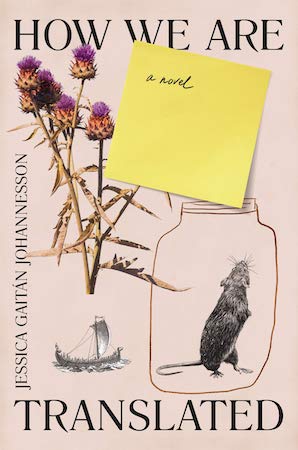
“Surprising … Rising from the surp. What is a surp anyways?” The narrator of How We Are Translated by Jessica Gaitán Johannesson questions. The Swedish word for “surprising,” on the other hand, translates to “överraskning”—which, when taken apart into “över” and “raska”—literally translates back to English as “to trod over something.” Word games like this are scattered throughout this debut novel; How We Are Translated formats its many Swedish-English translations into columns, comparing them side by side and using them to illuminate quirks about the narrator’s headspace. Johannesson nimbly plays a game of linguistic telephone, breaking words apart and filtering them through different languages.
A 24-year-old Swede who recently immigrated to Edinburgh, Kristin can’t stop thinking about language. Johannesson’s introspective and rambling narrator certainly has a lot else on her plate (and Kristin might question here: is this an idiom that exists only in English?). Her partner Ciaran wants to immerse himself in Swedish and refuses to speak English. Her workplace, the National Museum of Immigration, is going through a series of bizarre changes—as if working as a Viking reenactor at a tourist attraction wasn’t surreal enough; Kristin spends her days milking unhappy cows and pretending not to understand English, so that the tourists can have an authentic experience. And, sooner or later, she has to decide what to do about her potential pregnancy.
Johannesson’s novel acutely points out how “translation” isn’t simply about carrying one language over to another; it’s about how we are constantly translating one another’s words to communicate with each other, and translating our own desires to make sense to ourselves. Taking place through just one eventful week in Kristin’s life, How We Are Translated probes at the messy intersections between immigration, language, reproduction, and our constructions of home.
Jaeyeon Yoo: How did you decide on the structure of this novel (particularly the columns!), and this way of presenting translations?
Jessica Gaitán Johannesson: I think it sort of comes from, more than anything else, my own multilingualism. I grew up speaking both Spanish and Swedish. So I can’t remember a time when I wasn’t bilingual in Spanish and Swedish; English is technically my third language. For a long time, when I was transitioning to writing creatively in English—about a decade ago, when I moved to the UK—there was this sense of imposter syndrome, basically, and a lot of [asking] was I allowed to write in English? What would that look like? With the novel, I eventually decided to lean into that in-between-ness by arriving at the character of Kristin, who is bilingual and, I suppose, really wants to belong. But, at the same time, she’s both outside and inside of a culture and a group of people in this place. So the structure itself came from that in-between-ness that came from: what would it look like to sort of inhabit my Swedish-speaking brain and my English-speaking brain at the same time? I think it’s fairly impossible to do it completely, but the columns and the literal translations and the hybrid view on language came from wanting to explore what it really means to live in several languages at the same time.
JY: You mentioned that you started creative writing in English around ten years ago. Were you writing in Swedish or Spanish before that? How was the process of choosing or beginning to write in English?
JGJ: I find it really fascinating to talk to other people about this. At least for me, there’s no straightforward answer, and it’s been fairly—I don’t want to say fraught—but definitely conflicted. I used to write in Swedish mainly. I was writing a lot in my 20s in Swedish and the first couple of poems and things I published were in Swedish. Then, when I moved to the UK, I ended up just staying. I did an MA at Edinburgh University called Literature and Transatlanticism, which is a program that doesn’t exist anymore. But it was totally fascinating because it was about looking at literature in terms of migration and connection, rather than studying American literature or English literature. So I’ve always sort of been interested in these [cross-lingual connections]. Then, I ended up living in English and breathing English and I met a partner who only speaks English. At some point, it just didn’t feel natural. It wasn’t possible to stay with both feet in Swedish. I had to at least try and write in the language that I was living in. That’s kind of the simple answer.
It’s such an interesting question because I’m just very aware and probably increasingly aware, as time goes by, of English being this all-consuming thing—as a colonial language and as a language of empire. I had to make the active choice to write in English. What does that mean, to leave a smaller language behind in order to write in English? That brings up a lot of different questions and there’s a loss to it, this sense of giving up on our responsibility. But, at the same time, we all own English; immigrants make English, people who speak English as a second or third language also own it. So I think there’s also a sense of diversity to English.
JY: RIght, there’s also a political question throughout, as your narrator notes, of what kind of language you can speak. I loved Ciaran’s quote in the novel about how “People don’t choose to learn English. It’s like smog.”
We live in a colonial world in which English has a very unique position to create insiders and outsiders and hierarchies.
JGJ: Absolutely. I mentioned responsibility and sort of asking oneself, what does it mean to leave a smaller language and to choose this all-consuming “smog” language? But at the same time, it isn’t necessarily a choice. You know, we all make choices within systems and within larger parameters. Weirdly, that kind of connects to a lot of what I’m writing about at the moment for my second book, which is climate justice, and this idea that all comes down to individual choice. And that’s essentially consumerism and individualism; we want to think that we all make choices, and that’s sort of the end of the story. But actually, the context is always different. We all have to make different choices within different contexts, and we make the choice to write in English—like, why English? Well, because we live in a colonial world in which English has a very unique position to create insiders and outsiders and hierarchies.
JY: Speaking of consumerism, I was intrigued by the performance of “authenticity” at Kristin’s workplace, this overt commodification of “foreign” cultures (like fika and IKEA). I wondered if you could speak more about these ideas that crystallize at the National Museum of Immigration?
JGJ: I’m so glad that those are the things that came up for you. On a superficial level, I’ve worked in tourism, places where multilingualism is commodified and a good thing to have. Those questions have always been there for a long time, like, yes, on the surface this looks like it’s celebrating a kind of internationalism and lack of borders and people communicating across cultures. But, at the same time, it’s very exclusive and commercial; it’s also got this idea of essentially the “good” and the “bad” immigrant. In order to belong here or to be able to stay, you have to contribute certain things. That’s the idea I ran with, which just kept snowballing and becoming more and more extreme—like now we have to do a parade [in the novel] to prove our cultural heritage.
JY: There’s a beautiful tenderness to this book that I found really special, particularly in depicting Kristin and Ciaran’s relationship. What does this relationship in the book mean for you?
JGJ: It means lots of things and the book certainly started with the relationship. The very core of the book for me is the idea of the future and of change, as in change of identity and change as anchored in our ideas of pregnancy. If you have the choice to become or not become a parent, in order to [give birth] there has to be a fundamental trust in the world and future—a sense of safety, you know, the world isn’t on fire sort of thing.
I just didn’t ever want to say, it is wrong or right to give birth… as if the very act of giving birth were tied to right or wrong for the climate.
For the main character, her safety is the small safety of having carved out home, having chosen a place to live, having this one person that speaks her language-beyond-language, if that makes any sense. They might not share a first language, but they have created a language together. They have all of these words that they use, like a lot of inside jokes and rituals, the way that intimate relationships work. So when her partner then takes control over the situation by saying, “I’m going to stop speaking to you in our language, but I’m going to somehow override you and and learn your language because I think that’s going to help,” that, for her, is him saying, “I don’t see you; I reject us and what is us.” One of the things that I find with moving between countries, being multilingual from the very beginning, and coming from an international family is that you’re never fully at home. You’re never fully a stranger, but you’re also never fully at home. So for him to say, “I’m gonna just speak Swedish to you.” She’s like, “But that’s not me, that’s not home” So, yeah, there’s a lot in there about what it means to know someone or what it means to see someone.
JY: I really resonated with what you said, of what it means to find a home in someone and make our own sense of belonging, within these larger systems of immigration and border control we’ve talked about. What little things we can do to keep our sense of agency or comfort, I guess.
JGJ: Yeah, yeah—and I think something that puzzles me and what I’m thinking about a lot in my second book is: where does community come into this? Because with characters like these—if your sense of belonging is solely tied to a small group of people in a private sphere, and also to a relationship that’s very heteronormative, where does community come into it? While writing [How We Are Translated], it partly also became an exploration of community. I wanted her world to expand, little by little, when she’s forced to look outside of her nest. So it’s like, there are these other people that I spend my days with—not just the Norse people [at work], but everyone else. She gets these little snippets from other kinds of lives, from people who have come to Scotland who are a lot less privileged than she is, and. So then she’s like, “well, do we all belong here? And do I have a sense of responsibility to this community, even though we’re not from the same place?” It wasn’t something that I set out with, but the idea of community became really key as I was finishing the book.
JY: You’ve alluded to this a few times throughout our chat and the novel, about the dilemma of creating life as the world is burning around us. I know you’re also a climate activist, so I wanted to know: how are climate activism and novel writing related for you?
A lot of people in the Global North are in a privileged position to not feel climate collapse yet.
JGJ: Oh, that’s such a great question. Which I don’t have an answer to. [Laughs.] But I can also talk about it for a very long time. It’s interesting you said novel-writing, because what I started writing straight after I finished How We Are Translated is a collection of personal essays, non-fiction, coming out in the UK in August. And the timing of those two books was quite weird. I’d finished the first draft of How We Are Translated by the time of the 2018 IPCC report—the Intergovernmental Panel on Climate Change report, the one that made all the headlines saying we have 12 years left and all of this stuff. I’d been involved with environmental activism a little bit before, but that report for me and my partner was what kind of threw us into climate activism, like headfirst. And I’d written this book about hesitancy concerning the future. What became quite important for me in the rewrites and editing was that I just didn’t ever want to say, it is wrong or right to give birth. I didn’t want to come out on any side and make it into a debate, as if the very act of giving birth were tied to right or wrong for the climate. As a climate activist, I’ve come across a really toxic narrative around birth and choice, one that sees non-birth as a strategy in limiting climate change, regardless of context and structural issues. [So] even though I’ve had huge debates with myself about parenthood in the face of climate collapse, I didn’t ever want to be prescriptive in the book. I didn’t want it to be a message about right and wrong, but rather that the way forward lies in community, of caring about where you are in the present and for people who might not be part of your immediate community.
JY: Yeah, for sure. This also really reminds me of another book I read by Julietta Singh, called The Breaks.
JGJ: Oh god, I love it so much. I was so inspired to read Julietta Singh’s book, because it dares to be actively hopeful about breakdown. She sees the breakdown as letting go of toxic narratives and embracing what comes after, you know? I was also deeply influenced by a book by an American scholar called Jade Sasser. She wrote a book called On Infertile Ground, which is about women’s rights and population control in the age of climate crisis.
I think a lot of people in the Global North are in a privileged position to not feel climate collapse yet. So, the idea of climate activism here is you go straight to bringing down emissions and CO2; it’s the science that comes first to mind. But if you look at things from a climate justice perspective, then you start to see that things like migrants’ rights and anti-racism and all of these things—and also reproductive justice—all these things are ways in which we tackle the climate crisis. Once I was thinking more along these lines, I realized that these are the things that form the very basis of [How We Are Translated]; the ideas of immigration and belonging are actually tied to the climate crisis. So, I sort of went on a bit of a circle and came back to [the novel] like, oh, yes, of course migration is about climate.
The internet tells me my country
has a dependency. Without being
a possession of the United States,
how could we have survived? Our
veins
needing the high of first
world blood money. Maybe
being
a territory is not so bad, like
some grown-ups say. Maybe
we deserve dominion.
Guttural without the
protectorate. In
settlement communities, you
know, in Dorado or Condado
(or anywhere—
you can find beautiful
outposts fenced and feudal
holdingclearing
for a new mandate, an offshootswarm: this new land will
become
our satellite state. Our
domain. The antecedent for
speckless regions around
the world. Shiny with
virtual gold. In this patch
of tributary, we can reverse
the subjectstate dilemma
of the locals and build
a district the crypto gods
would be proud of. This
vessel will make a statement
in the millions. How
could the natives not
be into the idea?
Blows my mind.
What if
my country’s people brought the
hurricane with us wherever we
went. Every time

a gringo would do
something shitty, we could
gift them
a slice of this storm. One where

the eye gives you time
to pray for redemption,
look around and think My
life

was pretty good up to this. And
we would know that God was
never looking out for us. We

had to shove our ocean mouths up
the colonizer’s throat to realize
we were indeed stray mutts. After

the upheaval exclaim
We catapulted to survive.
These skies are not for you

to dream, to build on. This
is our sky. We breathe
in peace, finally, here.
I have always held a keen interest toward the processes of myth formation and how beliefs about family identity are handed down through generations. My debut novel Defenestratetells the story of a family in the midst of reckoning with superstition and inheritance, the long-held beliefs that can shape both the collective identity of a family unit and the individual identities of its members. While working on my novel, I was drawn to books that embark on a similar exploration of what characters inherit as individuals through the traditions, superstitions, and beliefs that get handed down through generations, and how those beliefs get shaped through each new inheritance.
In Defenestrate, the narrator’s family believes that their ancestors are particularly susceptible to death and injury by falling, tracing this legacy back to the great-great-grandfather who pushed a man to his death through the window of a cathedral. The narrator investigates this tradition of vulnerability in her family by closely examining histories of falls and survival through the years, and her understanding of the family “curse” shapes her relationships and her path through the world.
The characters in the books on this reading list are frequently caught up in a journey of trying to parse what aspects of their identity belong only to them and which are inherited, and how these threads are often heavily knotted and tangled. The “curse” of inheritance that these characters tend to encounter is sometimes figurative or imagined, but not any less real to their understandings of self and belonging.
Beloved intimately lays out the costs and repercussions of the generational curse of slavery, illustrating how the haunting of the past can manifest as completely tangible and real for the survivors of a trauma that is both lived and inherited. Sethe’s past actions in choosing to sever the inherited curse of slavery for her child are made vividly present on every page, as they shape each daily task in the ongoing struggle for survival. Morrison’s language creates a web of fiercely vocal ghosts for the reader, demonstrating a loud and vibrant aftermath that is heavily populated at every turn with Sethe’s reckonings with her refusal to let the family curse of enslavement persist.
Another novel that depicts the tidal wave of history through its impact on the individual, Train Dreams illustrates the struggle to make sense of insurmountable loss against the shifting background of the final days of the Old West. After the protagonist, Robert Grainier, loses his home and family in a wildfire, he seeks to attribute some root cause to the destruction, suspecting that his passive participation in a collective act of violence against an innocent man resulted in a curse that brought on the collapse of everything he held dear. The curse that Grainier comes to believe in has a long-reaching impact that the novel subtly traces throughout Grainier’s life, interweaving a larger portrait of westward expansion with the story of an individual’s grappling with the brutality of survival.
This wonderfully rich and imaginative novel blurs the lines between reality and fantasy at every turn. In The Seas, the narrator makes use of a family myth claiming mermaid ancestry in order to process the pain of abandonment and unrequited love. The narrator’s steadfast belief that she is a mermaid doomed to return to the sea is, at times, so convincing, that the reader is forced to question whether the novel is depicting a world where magic is real or a world glimpsed through the lens of insanity. This unreliable first-person narration is brilliantly handled on every page and vividly demonstrates the power of inherited belief to transform perception.
In this modern retelling of Shakespeare’s King Lear, set on a vast Iowa farm, the family “curse” takes the form of duty, responsibility, and the burden of literal inheritance as the family patriarch wields his power by determining which of his three daughters will be granted a portion of his thousand-acre farm upon his death. This brilliantly told family drama investigates the complicated web of loyalties that arise within a network of family relationships, as well as how the inherited curse of silence in the face of abuse can shape a legacy of guilt and estrangement.
It would be difficult to construct a reading list about family curses without including this one. Díaz is meticulous about shaping the origins and path of the generational curse that wreaks havoc on Oscar’s chances of finding love and success. At turns playful and heartbreaking, this novel’s scope is frequently epic in feeling, illustrating the power of storytelling to shape an inherited sense of self even across decades and nations.
This novel sets a high bar for stories about generational curses, oscillating throughout its telling between a Biblical vastness of scope and an intimate portrait of family dailiness. This book is unique on this list in that the reader sees the curse finally reach ultimate fruition and fulfillment as we realize that the legend passed down through generations was actually a displacement of the fear of the family’s ultimate dissolution and demise.
This gorgeously lyrical novel explores one family’s fate being shaped by decades of poverty, crime, and systematic oppression. Like Beloved, we are given intimate glimpses of the ghosts that persist tangibly for the characters that encounter them. As one character, Jojo observes:
“The branches are full. They are full with ghosts, two or three, all the way up to the top, to the feathered leaves.”
This family tree is indeed full of ghosts, but it also echoes the larger ghost-filled tree that is the South, where the challenge of reckoning with a legacy of injustice is a persistent constant for rural Black families.
I’m the type of person that plans their travels around bookstores. A new city to explore means a route through bookish haunts: a walking tour of shops dedicated to words, my maps app aglitter with saved spots waiting to be discovered. I went to Maastricht once just to see a gorgeous 13th-century church converted into a bookstore, planned an Austrian trip around abbey libraries, and packed every visit to London with a lengthy itinerary that weaves from shop to shop (and calls for extra baggage. And after, a spending freeze!). My closet suffers from bookstore tote bag overload.
Few things compare to the joy and exhilaration of a good bookstore browse. That smell of crisp paper and wooden shelves, getting lost in stacks and pages, touching spines and palming stories, the delight of discovering a new author or title… entering a bookshop feels like leaving the world behind in the best possible way. Give me that papery perfume, that soundtrack of rustles and creaks, perhaps a windowpane streaked with rain, and endless tomes of words and worlds to rummage through!
If you plan your travels around good bookstores like I do, if few things excite you as much as hours lost among shelves, if eau de bookshop is your favorite scent, then this reading list is for you.
[Editor’s note: We link to our affiliate partner Bookshop which supports independent bookstores, but we also encourage you to order directly from the stores featured below: Birchbark Books, The Bookshop, and Shakespeare and Company.]
When the joys of snail mail and bibliomania combine! This short, sweet, epistolary tome about book lovers is a classic to drink up in an afternoon. A true tale told through letters between a New York City writer and a London-based antiquarian book dealer, 84, Charing Cross Road is a charmer. Spanning a heartwarming 20-year-old friendship, the transatlantic correspondence delights with its varied discussions, surprises (Christmas gifts and food packages), and the ongoing suspense of will-they/won’t-they finally meet. Put the kettle on, pop a crumpet in the toaster, and savor these bookish dispatches as you daydream about British bookstores and the lost art of letter writing.
What would it be like to work in a bookstore in a wee Scottish town? Cold, for one. But reading Shaun Bythell’s descriptions of bookshop life is nothing but warm and cozy, with plenty of chuckles along the way. The curmudgeonly owner of Scotland’s largest used bookshop relays daily tales of customers (the cherished ones, the crotchety ones, and the fools), books read, books acquired, tasks and chores completed, conversations overheard, complaints raised, and stupid questions asked by book seekers. There always seems to be a kettle on, a fire stoked, a great big stack to sort through, a warming dram to sip with a visitor, a cat slinking around… If you can’t get to a bookstore, but you’re pining away for a good browse and a good steep in that wooden-shelved aura, read this. A warning, however: may result in a deepening desire to book a flight to Scotland!
A widow opens the only bookshop in a small seaside English town, and problems ensue. The other shopkeepers are not too happy with her, she incites the wrath of the local arts patroness, and her dilapidated store creaks, leaks, and is haunted by a ghost. Take away the pesky problems, and the premise has the makings of a dream many of us bibliophiles may have—a sweeping coastline, a quaint town full of quirky characters, a charming bookshop, and a passion to inspire others by way of literature. But this is a melancholy tale, a slim tome about a kind, determined optimist who tries, despite the ugliness of the world, society, and people. Exquisitely crafted sentences and characters, powerful observations, and a bibliophilic bend: read it and weep.
Another widower with a bookstore, another curmudgeonly bookish soul, another small town inhabited by quirky types… add a bit of mystery, a dash of romance, and you have the recipe for an enticing, escapist read (if it’s a bookstore that you want to escape to). A.J. Fikry is a depressed bookstore owner, a grieving grump with a drinking problem and a bookstore in a slump. There’s too much opportunity for spoilers here, so let’s just say that everything changes when he receives an unexpected package. If you favor grouchy, persnickety book nerds, you’ll get along swimmingly with A.J. Fikry.
Louise Erdrich’s latest is a romp: an ex-convict works in a bookstore that’s haunted by the ghost of a former customer. Boisterous, poignant, powerful, stippled with richly colored characters… even on the sentence level, this book bristles with color and electric energy, building an absorbing flow that keeps you flipping the pages. This is a ghost story, a Native American story, and a mystery for the present day that touches on the pandemic and Black Lives Matter protests. At its core though, The Sentence is an ode to bookishness that name drops titles and authors galore, details the minutiae of operating a bookstore, and even features cameos from the author herself (who really does own a bookstore!).
One of the world’s most famous bookstores distilled into book form. This gorgeous volume is a must for any fan of the Parisian haunt or for those wishing to visit. A history of the shop that delves into its rich archives, resulting in a collage of memories and mementos, rare photos, essays and poems from the luminaries that stepped through its doors or even slept in the beds tucked between bookshelves, like Allen Ginsberg, Anaïs Nin, and Lawrence Ferlinghetti. Rifling through this tome feels a bit like walking through the shop’s hallowed book-lined halls, full of treasures and surprises, inspiring words emblazoned across stair steps and doorways, corners of poetry and handwritten notes, a magic well, a typewriter hidden away in a nook, someone plinking away at a piano somewhere… it is enchanting.
A dusty old San Francisco bookstore is the setting for a rollicking adventure complete with teetering shelves lined with mysterious books, bizarre customers, and a 500-year-old secret society. Books and computers clash but ultimately co-exist in this love letter to bookishness and technology alike, an ode to both analog and high-tech, print and digital. A mystery to get lost in and a bookstore you won’t want to leave!
On Halloween morning when I was fourteen, I got up extra early and padded into my mom’s room, where she had left her wedding dress hanging for me on the closet door: Victorian-style, head-to-toe lace, with a high collar and a tidy line of buttons all the way to the small of the back. It felt out of place in the cold master bedroom of our house in central New Jersey, a relic from my mom’s previous life. She never talked about her wedding, but I had seen pictures: the ceremony on the broad deck of her and my dad’s house in Golden, Colorado, the steep mountainside sloping in the background. My mom beaming under a crown of wildflowers, my dad in a corduroy coat and aviator sunglasses.
The rare times she talked about that life, her stories left a hazy gap where he might have been. It was as if she had been alone that whole time, in that other, more beautiful life she had before I was born. I imagined that had things turned out differently, I would have lived that life with her—where I truly belonged. It seemed a better fit than our lackluster suburb, where my mom referred to our neighbors’ houses as “McMansions” and the nearby Sourdough Mountains as “pimples.” Here, everyone thought I was a freak for preferring summer reading to Shark Week.
I fastened the buttons, and the dress molded to my form. With my mom’s eyeshadow, I carved dark circles under my eyes. I powdered my hair white, pulled on opaque white stockings, and slipped into one white shoe. I hobbled back and forth in front of the mirror, the perfect Miss Havisham from Great Expectations. I was a little obsessed with her. The morning of her wedding, she received a note from her swindling fiancé informing her that he would not go through with it, so she chose to quit moving through time. She stopped all her clocks, refused to dispose of the food that had already been laid, and never removed her wedding dress or donned her other shoe. For the rest of her life, she wandered her cavernous mansion, her back crooked from wearing a single high heel for decades, the lavish dining room stinking of rotten cake buried under a thick coat of dust.
Dickens framed Miss Havisham as a harbinger of revenge, raising her adopted daughter Estelle to settle the score by breaking men’s hearts. In my melodramatic fourteen-year-old mind, I interpreted her as a symbol of endless love—something deeply romantic, even if tragic. But I also felt a strange kinship with her.
At nineteen, I shared a fleeting exchange of emails with my father after a lifelong silence. For the first hour of my life, he told me, my mom was under anesthesia from a traumatic C-section. He stood over me, feeling empty, like I was his but he wasn’t mine. So he left and broke a year of sobriety. Later, my mom admitted that before she was fully conscious, she heard the nurses saying, “We have to kick him out, he’s going to hurt the baby.” She came to while he stumbled around, veering dangerously close to me before collapsing on the floor. It took her four months to pack me up and leave him, but their marriage was over as soon as she opened her eyes.
I’ve spent much of my life trying to untangle why my father did what he did that day, but the reasons we lose things are often murkier, and less telling of who we are, than how we respond. No matter how much a situation might have gotten away from us, the choice to leave it behind is a choice to take control. We call it “change”; we applaud ourselves for growing, for making the difficult decision. On the other hand, the transitions that feel the most violent are the ones that aren’t our choice, the sucker punches that leave us gasping: Miss Havisham crushed on her wedding day, my mom waking to a new baby and a drunk husband on the hospital floor. That’s what we call “loss.”
No matter how much a situation might have gotten away from us, the choice to leave it behind is a choice to take control.
Few things are farther from our control than what happens to us in infancy. We are completely beholden to the people around us—for survival, yes, but more importantly, for love. The way we are loved shapes our understanding of what the world is: a safe place, where we will be wanted and comforted, or an unstable one, where we might be abandoned at any moment. My first experience of the world was the sorrow of abandonment by the person who is supposed to love you. I didn’t just lose my father or the life I might have had if we had stayed in Colorado. I lost my sense that the world was a safe place.
It’s not surprising, then, that for as long as I can remember, fear has followed me like a ravenous shadow at the edges of my vision. As a child, I developed the sense that the way someone arranged objects held their feelings in that moment. More importantly, I believed, it aligned the world’s cosmic order, preserving the good and keeping things stable. When I was eleven, my obsession with hawkishly guarding the placement of objects in my room led to an OCD diagnosis. But therapy never helped me shake the feeling that if I could keep everything around me in balance, I would keep the shadow at bay.
When I was 14, right before reading Great Expectations, I got dumped for the first time. For weeks after, I kept the half-full mug of tea I’d been drinking during our last good conversation on my desk, feeling that if I could just keep it there long enough, he’d call and tell me he’d changed his mind (he didn’t, and after a raucous power struggle with my mother, she dumped the tea and washed the stinking mug).
When I read Great Expectations, I was transfixed as Miss Havisham kept one shoe on her dressing table, exactly where it had been before she got her fiancé’s letter. As she made Estelle sit at her feet and patch together the tears in her dress because she refused to remove it even for repairs. In her, I saw the darkest part of me—never wanting to change anything, preferring to create living mausoleums of the moments when I had been happy.
In Miss Havisham, I saw the darkest part of me—never wanting to change anything, preferring to create living mausoleums of the moments when I had been happy.
Perhaps more than that, I saw the fear of what happens after the moment when you think you have lost everything: as terrible as it is, there’s an instant when you think, I’ll just stop here. You keep the shoe on the dressing table, the mug on the desk, and you let yourself believe that, even if it doesn’t bring the good back, maybe you won’t have to figure out how to weather what happens next.
Though most people don’t go to Miss Havisham’s lengths, I do think that the urge to preserve the feeling of what it was like to live before loss is relatable. In that terrible moment after loss, some of us fall into one of two extremes: we cling, like Miss Havisham, or we discard the past. My mother chose the latter. She had a divorce to file, a home to find, a child to raise. She moved me to New Jersey to be close to her family, discarded the trappings of her old life – my father among them – and barreled forward, telling me stories that excised him out.
On that Halloween, when a neighbor commented that she couldn’t believe my mom was letting me wear her wedding dress as a costume, my mom laughed and said, “It’s a divorce dress, it might as well get some use.” I grew up grateful for my mom’s sacrifices. She left everything – her home, her relationship, even her dog – because that’s what was better for me. But I resented her silence around my father because it left me few tools to piece together my origin story. At twenty-nine, however, I began to understand the power of discarding old lives when I realized that I, too, needed to get divorced.
For years, I had whittled myself smaller and smaller to fit the whims of my own alcoholic husband, putting off his anger by becoming the person he wanted me to be. I had little control over the volatility of his addiction—and therefore, over my life. But, like keeping an old mug of tea on the desk despite the smell, keeping the marriage intact by keeping everything – even myself – the same felt like something I could do. At a certain point, my life felt like a prison.
In a toxic situation, your marital status sometimes begins to replace your identity.
People often ask me why I didn’t leave sooner. I try to explain that in a toxic situation, your marital status sometimes begins to replace your identity. Without it, who would you be? What shape would your life take? Losing it can mean losing everything that makes your life recognizable to yourself. The prospect of losing that structure is terrifying.
Miss Havisham likely felt similarly. When her fiancé backed out of the wedding, she no longer had the option of becoming a wife, but the prospect of it had come to structure her entire existence. Who would she have been, if not for a bride? She even insisted that, when she died, she would be laid on the dining table in her gown: a bride for eternity in death—and that, nobody could take from her.
Leaving my marriage felt like jumping straight into the shadowy maw of uncertainty I’d been running from my whole life. But as my mom learned on the day of my birth, once you’ve looked the end of a marriage in the eye, you can’t unsee it. Instead of taking Miss Havisham’s path as I might have in my youth, I adopted my mom’s strategy. I discarded the life I was losing, and did my damndest not to look back.
I moved into a ramshackle Brooklyn apartment lovingly dubbed “The Folk Hotel” because of its coterie of musician roommates who time-shared the back bedroom when they weren’t on tour. It was bedecked with a chaotic jumble of items left by previous residents: when I moved into my room, I was greeted by a mannequin wearing a rubber eagle mask and a tiny painting of a bulldog with a Jack of Hearts card wedged in the frame. I fell into an accidental stewardship of the place, ferrying subletters in and out, each of whom added something when they left: a purple handkerchief from the French girls on holiday, sheet music from the British modern dancer who I shared pots of coffee with on brief, radiant fall mornings. It felt like home in a way that no place had in a very long time. Every time I walked in, it was like the apartment whispered to me, this is your reward for taking back your life.
I adopted my mom’s strategy: I discarded the life I was losing, and did my damndest not to look back.
I wasn’t used to this kind of chaos. Good chaos, where people left trails of objects ripe to be shared, nothing ever stayed in the same place for very long, and everything changed all the time. Change itself became familiar. I was living Miss Havisham’s nightmare.
It had once been my nightmare, too. But despite my OCD, and my instinct to keep everything around me the same, lest the world spin out of control, it was a relief to be unable to control all the change around me. People moved in and out, left and took and moved things, and I felt liberated. Perhaps, I realized, I was less afraid of change than I was of loss. I decorated my room with tiny mirrors so I could watch myself change: I lost weight from biking in and out of Manhattan every day. I wore crop-tops my ex-husband would never have let me wear, dyed the tips of my hair purple. I spent long nights biking the city’s bridges, every stroke of my pedals reminding me that my body, my movement, my life were mine, mine, mine.
To say this was easy would be to lie. That first winter, I spent most nights sitting in my windowsill, my legs dangling over the avenue, long after the laundromat across the street had closed. It was the only time of day when the world was empty and quiet enough to match how alone I felt. Constantly, achingly. I had never been so terrified. I had never felt so powerful. No time in my life had felt so thrilling, so precious as those nights I spent sitting in that window, relishing that I was there but for my own grace. In leaving my old life behind, I had chosen myself. Even the loneliness was precious because it was mine.
In leaving my old life behind, I had chosen myself. Even the loneliness was precious because it was mine.
I was about the same age my mother was when she packed me up and left my father. I couldn’t imagine doing it with a baby. I found myself more grateful and more in awe of her than ever. I began to understand how discarding the life she had before I was born was the only way she could get through. By leaving everything behind, my mother and I created new worlds for ourselves. We became powerful in the aftermath of gutting loss.
I wondered if Miss Havisham felt the same way. She had slipped into a horror of her own making, but it belonged to her in a way that nothing else could.
I thought that my mother’s approach and Miss Havisham’s were opposed. But, just as clinging to the past wasn’t an option for my mother, starting anew wasn’t an option for a woman in Miss Havisham’s era. Perhaps stopping time was the only thing she could control, and she and my mom weren’t so different after all. Miss Havisham hadn’t just clung to the past, she had made a world in her own image when the world around her wouldn’t comply—a radical act for a woman then, a radical act for a woman now.
When the pandemic hit, I was on vacation out west. I felt like the rug had been pulled on a life I was just learning to own. This was true for everyone: whatever lives we were living before were gone in an instant. And, unlike other losses, where we could feel some power by putting one foot in front of the other and slowly building new lives, this time, we were caught in suspended animation.
While she paced her rooms, her wedding dress caught fire. Miss Havisham died a victim of her own obsessions.
Hunkered down at my mom’s in New Mexico, I wrote obsessively about my life at The Folk Hotel. In my dreams, I grasped at things I couldn’t see and couldn’t reach, my fists curling around air over and over again. I couldn’t face The Folk Hotel the way I’d left it, when I thought I was off for a quick jaunt and would come home to the same old wild life. I was afraid I’d go full Havisham if I went back. The possibility of stopping time and pretending the world was not upended was just too tempting. But I ended up going the Havisham route regardless: I kept paying rent in Brooklyn even though I had no idea when I would return. I felt that if I could just keep The Folk Hotel the way it was, even from afar, maybe the life that had been so precious to me there would still exist.
But there is only so much suspended animation a person can take. Six months into the pandemic, I found myself building a new life in Los Angeles, one that I was starting to realize made me even happier than I was before. Before I could accept that I was moving on, though, I needed to go back, even if just to pack my things.
It felt even more like walking back in time than I’d expected. A part of me was tempted to burrow in it. Then, as I sorted through my books, I found my high school copy of Great Expectations and spent one last evening sitting in the windowsill, skipping through to read all the Miss Havisham parts.
Though I’d thought about her so much, it had been years since I’d read the book. I’d always known she was unstable and, though I didn’t think of her as a true model for how life should be lived, I had respected her as a badass who took control where she could. But I was shocked to find that the control was what killed her. She kept the curtains drawn to block the light (and, thus, the passage of time), so she always had candles burning. While she paced her rooms, her wedding dress caught fire. She died a victim of her own obsessions.
How had I forgotten that?
I closed the book and looked down at my feet, dangling out the window like they always had. I had thought that, whether you cling to the past or discard it, any control in the aftermath of loss was a good thing. That’s what made Miss Havisham a legend, enabled my mom to give me a good life, and made me happy at The Folk Hotel.
But it also killed Miss Havisham, draped a heavy silence around my mom’s former life, and turned out to be an illusion when the pandemic yanked any control from my life I thought I’d held. At all the times when I had tried to cling to the past or discard it, all I had really done was keep myself from facing the fact that I had lost something. All I had done was forebear grief.
If we’re not careful, the illusion of control can drive us crazy. There will always be losses where we least expect them, moments that leave us before we are ready to grow out of them. Perhaps the only control we have is in choosing how we grow from loss. Grieve, preserve what you can, and begin to build again.
In Los Angeles, I unpacked my things from The Folk Hotel and realized that they looked good in the Southern California light. That they hadn’t lost any of their magic in new arrangements.
A nonbinary teenager on their way home from an eating -disorder treatment center who tries to convince a stranger she is not a vampire, an aspiring fashion designer/dry-cleaning worker who develops an obsession with a customer, a community of people with Hansen’s disease that welcome and attempt to coexist with a newly arrived group of people displaced by natural disaster—these are only some of the inimitable characters Morgan Thomas follows in their stunning debut collection, Manywhere. These characters move through and navigate the complexities of their communities with immense precision and stayed with me long after the first time I read these stories.
Manywhere interrogates the complications of constructing a personal narrative, especially those faced by queer and genderqueer people—How does our relationship to others affect our own identity-making? How have our own identities and history benefitted from the marginalization of others? What have we inherited from our ancestors, and what do we owe to them in how we live our lives?
I spoke with Thomas over Zoom about using historical records in fiction, navigating inherited narratives, and the relationships people build not only with each other but with their environments.
Matthew Mastricova:There’s a line in that story that served as a lodestar for me in reading this collection. It’s when the narrator Taylor says, “But I haven’t come looking for family. I’ve come to meet you, lightning man.” It signaled to me a repeating theme throughout this collection: the tension between inherited narratives and self-determined narratives. I was wondering if you could talk a bit more about how your stories manifest or are guided by that tension.
Morgan Thomas: All of the driving impulse behind the collection as a whole was a search for ancestry and lineage. It began as a search for a specific type of queer and genderqueer ancestry. I was in a space where I was trying to understand my own identities—my own gender, my own sexuality. I felt like I lacked language and models for identity on both of those axes, and I wasn’t really in a place where I could look around immediate contemporary environment for those models, and so I found myself increasingly looking toward history. And as I looked at historical figures and models, I realized both that they were abundant and also that those queer and genderqueer ancestors were really complicated. I think that Manywhere, is in large part, my attempt to wrestle with those complicated histories. By complicated, I mean that as a white settler who is genderqueer, it’s appropriative for me to claim as an ancestor an indigenous historical figure who had a gender identity that didn’t conform to settler colonial ideas of a binary gender. It’s appropriative for me to claim a Black gender-diverse individual in history, so I’m working with white lineages that are queer and genderqueer, and that means that these people are alsooften, I think actually without exception, complicit in projects of settler colonization and structures of racism. It’s wrestling with these lineages that I had searched for and these stories that I wanted to claim said something about myself, but together with those I was also inheriting more complicated and complex legacies.
MM: As we’re talking about looking through the archives for historical models of queerness, I was wondering how you navigated using the archive when so many of these historical figures are not identified as queer. How does an author responsibly incorporate those models and narratives into their work?
MT: That was something I thought a lot about as I was writing. I think partially it’s why the collection has to be fiction. There are a lot of gaps in historical record. So, for example, the story “The Daring Life of Philippa Cook” is based on the life of Thomas/ine Hall, but all I know of Hall’s life is the earliest piece of it, up until the trial transcripts that served as the seed of that story. After that there’s nothing. In fiction, I’m able to write into and extend that story and that life. I also think that fiction allows me to avoid saying anything definite about the gender or sexuality of the historical figures that the stories are thinking about and writing toward. For instance, I deliberately used “you and I” in “Taylor Johnson’s Lightning Man” instead of any pronouns that would inscribe gender or suggest that I had a firm sense of what pronouns Frank Woodhull would have used if Frank Woodhull existed in 2021, and that was really important to me. I don’t want to take contemporary notions of what it is to be queer or genderqueer and force those upon a historical figure or insist that those applied equally a century ago, or four centuries ago.
I like the idea that the ways that we think about queer and genderqueer identities are fluid throughout time. That feels really hopeful to me, because I think it suggests the possibility for different ideas of queerness and genderqueerness in the future.
MM: So you have these stories that are based that are based on archival figures, and then you have “Taylor Johnson’s Lightning Man” where it’s explicitly Frank Woodhull. There is archival information about that person explicitly in the text. Is the Woodhull that Taylor talks to in the story the historical Woodhull or a characterized version of that person?
MT: I want the story to have space for both. I mean, clearly I think it’s fictional and that’s the benefit again of being able to have this narrator who, I think, is seeking something from Frank Woodhull, and so is creating a Frank Woodhull that satisfies their own needs and desires in that moment. Also, much of the dialogue spoken by Woodhull at the end of that story is taken from newspaper articles from the time and from interviews that Frank Woodhull actually gave. So it’s a blend of a Frank Woodhull that Taylor Johnson has created for themself and of Frank Woodhull in the past, and I think that blend is also filtered itself through Taylor Johnson’s experience.
I don’t want to take contemporary notions of what it is to be queer or genderqueer and force those upon a historical figure or insist that those applied equally centuries ago.
That’s where I think fiction can get really interesting, because then there’s a second layer where there’s this blended character who is a Frank Woodhull historical and non-historical character and then there’s also Taylor Johnson, who has created that character, and then there is myself, the writer, who has created the character Taylor Johnson who created the character Frank Woodhull, and when I start to see that telescoping process of creation and narration, that’s when I get really interested in story and what stories mean to us, why we create the stories that we do and what they say about us.
MM: Do you think that process of blending fictionalization and researchis also similar to how we relate to the people who raise us?
MT: Oh, I don’t know, possibly. I think all of all of the stories in Manywhere, both those that deal more with folks seeking ancestors that they are not descended from by blood and those that deal more with inheritance on the level of like grandparents and parents, are interested in constructed narratives and in the flimsiness and fluidity of the stories that we tell about our ancestors, whether we have sought and chosen those ancestors or whether we are descended from them by blood.
I’m not sure, to be honest with you, whether the process itself, though, is the same. This makes me think again about being a settler and a white writer from the South and the fact that so much of what I inherit from the ancestors from whom I am descended by blood are legacies of Southern colonization and slavery and racial violence. In that regard specifically, the responsibility feels different to me. It feels somehow less about constructing narratives and filling in gaps and more about holding myself accountable for the narratives and beliefs that I’ve inherited. Thinking critically about those and trying to dismantle any aspect of those inherited narratives that is inherently racist or white supremacist or colonial in nature.
MM: Something that I kept thinking about while reading your book was the relationship between the healthcare industry and marginalized individuals, especially during “That Drowning Place” and “The Expectation of Cooper Hill.” I was hoping you could talk a bit more about that relationship and how it manifests in your stories.
MT:Manywhere is deeply concerned with our relationships with our environment and with the health effects of the places where we live, whether that be the fracking in “Surrogate” or how in “That Drowning Place” we’re seeing individuals have to leave their homes because of rising sea levels and then sort of come up against other communities.
So much of what I inherit from the ancestors from whom I am descended by blood are legacies of Southern colonization and slavery and racial violence.
Manywhere is really concerned with the body, and when I think about health care, I just know that current healthcare systems are not designed for queer or genderqueer people, and I think about myself, my partner, the many people in my community who have had to act as self-advocates. They’ve had to figure out how to navigate systems that are deliberately attempting to inhibit their access to care that they need from gender-affirming care to lifesaving care. I think that that is not something that I deliberately included in the stories, but I think that it’s a thread that is present.
MM: You’ve written about your history of attempting to write genderqueer embodiment and grappling with what it means to be a white genderqueer person. I was wondering if your relationship to that has changed it all in the process of writing this collection, because the physicality of these characters was one of the things I really loved.
MT: I think that what that essay highlights is how indebted I am to the writers who have come before me. I think about Rivers Solomon’s An Unkindness of Ghosts, which I think is one of several books that taught me how to write genderqueer embodiment. I think, also, about Freshwater by Akwaeke Emezi. I think about Joshua Whitehead’s work. I think about Abbey Mei Otis and I think about Billy Ray Belcourt’s memoir, which came out much more recently, but which has been a real guiding light for me. These are permission-giving books: they expand the ways that I feel able to think and write about both gender and sexuality.
I think it answer your question, yes, my ability to think through on the page and to write genderqueer characters who are fully realized as physical beings in the world has shifted since I began Manywhere. I understand now better how to inscribe bodies and complex relationships to bodies for my characters, and I think that that’s in large part due to the foundational and courageous work of those other writers, and I’m really grateful to them.
MM: You spoke about how humanity’s relationship to the environment was a major factor in Manywhere. I love the ways in which queerness and the environment were put into conversation here. There’s two questions I want to ask—One is what led you to explore this relationship, and two, what are the types of relationships you hope people see in this collection?
MT: One thing that is important to me as a writer when I’m thinking about ecology and environments is to remember that ecology is, just at its most basic definition, a word that we use to describe how we relate to each other as beings, and also how we relate to our physical environments. So it’s important to me that when I think about Manywhere as a book that’s engaging with ecology or a book that’s engaging with the environment, that’s different, I think, from saying that it’s a book that’s engaging with “nature”, as though it’s something that’s different from the places where people are living or congregating or from cities.
The current healthcare systems are not designed for queer or genderqueer people.
When you’re asking like what relationships I’m hoping people see in the work, I’m hoping that people recognize that ecological and environmental relationships are happening everywhere and anywhere that people are interacting with one another and the people are interacting with their environment. I think there are ways in which the study of ecology and my own approaches to and study of queerness are very similar in that they both feel like they’re centered on relationships, and I’m trying to describe, understand, and expand the ways that we’re thinking about about relationships.
I hope that people see in Manywhere a few threads of environmental lineage. “Surrogates,” I think, is the clearest example where the embodiment is used in part to explore the effects of fracking on the health of people who give birth and infants, and it was sparked by an article I read in Rolling Stone about a midwife in Vernal, Utah, who had been speaking out about the health effects of fracking on infants in that town and received a lot of pressure from other people in the town as a result of those comments. So I was thinking a lot about the often binary and transphobic big ways we think about like childbirth and parenthood. I was also thinking about the ways that individuals and towns that are right up against industries that are polluting engage with those industries. And I was also thinking about, within that story, the many different ways that we can have intimacy with other people. So Brighton is in a sort of monogamous and to-some-extent heteronormative relationship with her husband and also has this different sort of intimacy with the other surrogates and with Doc Lacher. I think all of those questions and all of those relationships are ecological in nature, and in that regard, I think that Manywhere is a deeply ecological book.
MM: There’s a healthy tinge of fabulism throughout Manywhere. I’m thinking particularly of “Manywhere” where we have the other daughter and “The Expectation of Cooper Hill” with Sylvia falling into the bag. How did you come to fabulism as a storytelling tool, specifically in this deeply ecological and embodied collection?
MT: There are two things that are coming to mind, for me. The first is that, again, as a writer interested specifically in thinking about and writing into historical gaps that have to do with queer and gender-diverse ancestors, speculation feels like a necessary tool, and fiction feels like it offers a lot more space for speculation than, say, nonfiction. I think there’s a natural logical leap from that type of speculation that is necessary to fill gaps in historical records to what we think of now as speculative fiction. There’s something really interesting to me as a writer about blending deeply researched fiction with elements that are fabulous or speculative in nature.
I think the other thing that comes to mind for me is that when I have tried to approach queer joy on the pages as an author, or when I think about the way that the narrator of Manywhere at the end of that story feels this ephemeral sense of liberation from their father, and of joy, I realized pretty early on that I didn’t have in my life at the time many actual models of that type of queer or genderqueer joy, and I think that attempting to end up at that space required these leaps and moments of invention which I think also lend themselves directly to the fabulous elements that you see in the stories.
MM: I love that. I think queer joy is something that is largely missing from received cultural narratives surrounding genderqueerness and queerness in general. Which is another thing I loved about this collection, I felt like it inverted that received narrative of like, “Oh, when a child is queer they’re rejected by their families,” but so many queer people actively seek out joy and liberation. Was this a relationship you aimed to capture?
MT: I think probably the most honest answer is that often on the page I’m writing towards the place that I’m hoping to get in my life, and I think that place is not always a place of joy. It might be that space of full accountability, or it might be a space of deeper understanding of myself and my identities, and it also might be a space of joy. I think that I write narratives that I want to read and maybe aspects of the emotional tones of Manywhere, especially around joy, are things that I was writing into because maybe I had not, when I was writing the stories, experienced them and I wanted to.
DON’T MISS OUT
Sign up for our newsletter to get submission announcements and stay on top of our best work.
YOUR INBOX IS LIT
Enjoy strange, diverting work from The Commuter on Mondays, absorbing fiction from Recommended Reading on Wednesdays, and a roundup of our best work of the week on Fridays. Personalize your subscription preferences here.