In Cairo Circles, Doma Mahmoud lures the reader on a voyeuristic tour of the Egyptian capital’s wildly differing class spheres. On the lowest circle is Zeina, the daughter of a housekeeper to an upper-class Egyptian family. Starting on a New Year’s Eve in the early 2000s, Mahmoud absorbs us with Zeina’s yearning soul and entitled voice. He follows up with Sheero, who comes from a mixed class background but is sufficiently middle class—through the efforts of his single mother—to be friends with Taymour, who is unambiguously upper crust though himself suffers from the neglect of his glamorous, drunk mother.
Then there’s Amir, Sheero’s cousin who comes to America, ends up radicalized, and commits a tragic bombing that shadows Sheero’s existence in New York and in Cairo. Mahmoud doesn’t avert our gaze from the contradictions of family, religion, and secularity in his characters, and as it plays out in the country’s changing society. And ultimately, we have again Zeina, who is impossible to speak of without giving away the book’s plot—and its thrill—and who closes out the novel. I certainly raced to the end with a longing for Zeina, who delivers the final overlapping of the social circles.
I spoke to Doma Mahmoud, who lives in Cairo, about class nuances, Cairenes who might recognize themselves in the novel, and his favorite literary works about the city.
J.R. Ramakrishnan: Where did this book start for you? How did you come to Zeina’s voice? Her voice is so incredibly compelling, as is her determination to be a singer.
Doma Mahmoud: Growing up, I would sometimes be at a friend’s house and his full-time nanny would bring their child to work for the day. And I would watch this kid, that was my age, my height, my skin color, be endlessly curious about how they felt about the insane disparity of wealth and privilege at play, about the fact that part of their mother’s job was to pick up my spoiled friend’s candy wrappers from his bedroom floor. I carried this curiosity through my childhood and adolescence and decided to write this character to try and find answers, both from my own personal experience and imagination and from conversations I had over the years.
I would watch this kid be endlessly curious about the insane disparity of wealth and privilege, that part of their mother’s job was to pick up my spoiled friend’s candy wrappers.
Some people do not see their relative poverty as a burden, but others are deeply bothered and sometimes disturbed by it. At least half of the main characters in this book are like this. People who are restless to move up the ladder, or maintain their position on it, or just can’t stand the existence of such a ruthlessly segregative ladder in the first place.
The very first idea from which this entire book sprung was this: As a consequence of her mother’s job, working-class Zeina has to endure the sight of immense privilege and wealth every day, and for better or worse, she feels entitled to it. She is told by authorities on the matter that her singing could help her attain it, and so she becomes almost hysterical with desire. From the first day, I knew that the book would begin and end with Zeina.
JRR: “Fathers are the ruin of this country” is quite a line from Madame Alia! This seems to ring true in the case of Zeina, Amir, Mustafa, Omar, and perhaps Sheero too. I wonder if you could talk about this line in the context of your characters’ trajectories.
DM: In the second half of the 20th century, free-market capitalism arrived in Egypt with a bang and consumed pretty much millions of men and a good share of the women. They worked so hard and built so much wealth and value, it’s impressive, but for a lot of them, even some of those that only managed to make ends meet, the first sacrifice made was time and closeness with their children.
At some point in my late adolescence, I thought of all the people I knew who struggled in their relationships with their fathers and was shocked to realize that it was a strong majority. And it adds up. When you stop to consider the long working hours, hyper-competitive work environments, and relentless forces of consumerism and classism that these men were subject to, it isn’t all that surprising that a lot of them became perpetually absent, or neglectful, or stressed, or angry, or exhausted, or violent, or all of the above. Maybe I’m being too forgiving, and they could’ve done a better job. Some did. The point is that it had serious effects on a lot of people from my generation. And it was impossible to tell the story of these six characters without exploring that aspect of their lives.
What’s ironic is that Madame Alia says that line but is doing a horrible job of being a parent herself. With the emergence of self-help and mental health awareness, we millennials are so good at describing all the ways our parents disappointed or negatively affected us; I hope that means we’re going to do a better job ourselves. I like to think we will, but my parents mock me when I tell them this, which scares me. “Sure,” they say. “Inshallah.”
JRR: The violence is quite intense from Amir’s beatings (and everyone’s complicity), Amir’s own acts with Farida and then as a grown-up, to the more casual acts of aggression. Sheero reflects that beatings were “part of our culture,” but even he draws the line at what Amir experiences. Could you meditate a little on your thinking behind the seemingly circular nature of violence in the book?
Religion and class have always been closely intertwined in Egypt and beyond.
DM: When I was growing up, it was pretty common for kids to be smacked by their parents when they misbehaved. Especially in the lower and middle classes. This might confuse some readers, but it is possible to be smacked as a child and not be emotionally disturbed because it feels controlled and safe. Sometimes, it can even be funny. But then here’s the problem: what can happen is that an adult will be smacking their child, and suddenly, it will go from controlled and non-threatening to malicious and scary. The parent will become possessed with anger or frustration or stress from work and will channel it into this physical violence they are inflicting on their kid. It’s a line that gets crossed abruptly and it’s difficult to define for anyone who hasn’t witnessed it. But what happens beyond it—that is the sort of true compulsive violence that can traumatize and get circular. Different personalities are affected differently. Some people are subject to violence as kids and go on to make sure they never lay a finger on anyone. In Amir’s case, the violence has seeped into his being and become a primary mode of interacting with others and reacting to the world.
JRR: I was intrigued by the ways in which class and religion intersect. In particular, Sheero being bothered that his mother has decided to wear a veil, and choosing to do so for the first time for the wedding of Tamara and Taymour. This line was striking: “But why? But is it necessary?” I am assuming none of the more upper class attendees would be veiled? Would you talk a little about how perhaps religion has entered into the middle and/or upper classes (in the ways, it perhaps would not have when these characters were younger at the start of the book in the early 2000s)?
DM: Religion and class have always been closely intertwined in Egypt and beyond. Most of the women at a middle-class wedding in Egypt today, or even as far back as the ’90s, would be veiled, whereas most at an upper-class wedding would not. That isn’t to say that one social class is more religious or devout than another, but the practice certainly looks different across different social classes. But as you mentioned, things have changed. There is a new class of self-made financially wealthy people who embrace the veil and wear it and who are in general a little more conservative. What will be interesting to see is how their practice of religion changes, if at all, over the next couple of generations, as their wealth multiplies and gets passed on.
JRR: How do you feel this book will be received in Egypt, perhaps by some of the Cairenes who might see themselves in your characters?
DM: I think most of the people who recognize qualities of themselves or their friends/families in the characters will be happy to see their lives written about. At least that’s been the reaction thus far. Maybe some people will feel I did not paint an accurate picture, that I was too dramatic or negative, or even, on the other end of the spectrum, that I pulled too many punches. What I would say to that is that I couldn’t possibly paint an accurate or nuanced enough picture of an entire demographic or generation or class.
Ultimately, this is a book about six Cairenes born in the ’90s, two of whom move to the US for college and struggle to reconcile their Egyptian roots with American liberal culture, which is a specific experience. It’s also meant to be dramatic. I can only hope that readers enjoy the drama and feel touched by some of the scenes.
JRR: Your book offers a very evocative picture of Cairo (certainly the domestic intimacies of all the families involved). Would you share with us your favorite novels of Cairo?
DM: Thank you! It almost goes without saying but Naguib Mahfouz’s Cairo Trilogy is the place to start. It’s 20th-century Cairo in a nutshell. Midaq Alley and The Thief and the Dogs are shorter but also great novels by Mahfouz for those who can’t delve into the trilogy. Essam Youssef’s A 1/4 Gram is a great novel centered around drug addiction in modern Cairo which has been translated to English. Nawal El Saadawi and Alaa El Aswany are literary giants whose work have also been translated. Woman at Point Zero and Yacoubian Building are the ones to check out first, respectively. Finally, everyone should look out for Noor Naga’s If an Egyptian Cannot Speak English, which will be published by Graywolf Press in April 2022.
I think a lot of us believe in ghosts. In fact, many of us are likely haunted by them. I’m talking about emotional ghosts, of course.
My debut short story collection, Those Fantastic Lives: And Other Strange Stories, has a particular fascination with ghosts. In my stories, there are certainly the kind of transparent, traditional apparitions that float around, but there are also light-craving monsters and boy-aiding talking dolls that do their share of haunting. As physically present as these otherworldly spirits and beings might be, it’s the emotional ghosts surrounding them that serve as the true guides of my stories. My characters are people who need to escape the monsters in their pasts and, in some cases, their presents—people who need to transform so they can try again. For them, ghosts are everywhere.
I began thinking about how emotional ghosts are oftentimes more frightening than physical ones and how it’s these kinds of internalized hauntings that shape the magical, weird stories I love so much.
Here are seven stories that beautifully explore the deeply-felt emotional ghosts that plague so many of us:
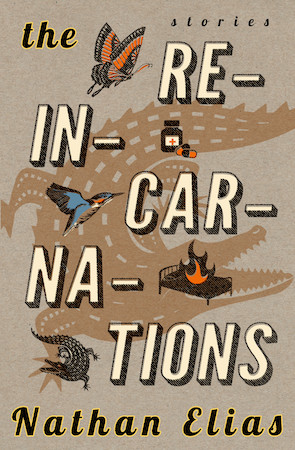
A filmmaker loses his daughter in Elias’ “The Alligator Theory.” Cayman, the father, believes his daughter, Tina, isn’t really gone, however. Not for forever. He thinks she’s back but in the form of an alligator. Loss, acceptance, and reality work as a terribly cruel ghost in this devastating yet tender story.
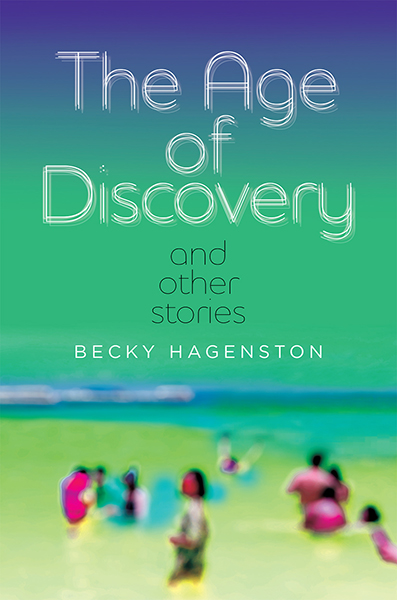
Set in “the only artisan bakery in this north Mississippi town,” Hagenston’s “Rise” tells the story of a baker who begins having very bad luck. Things like a rabbit and a tooth start appearing in his bread. The objects are certainly troublesome, but the story is about what is causing them to appear—what exactly is haunting him and his shop. And why.
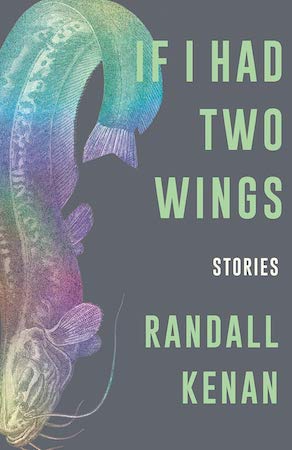
This Kenan story from his final collection, If I Had Two Wings, is among his very best works of fiction. Here, we follow a character named Randall Kenan who returns to the author’s familiar setting of Tims Creek after purchasing a 200-year-old house, which he plans to renovate. However, there’s a problem. Ghosts begin appearing. As the story unfolds, we find our narrator is haunted by things bigger than ghosts. He must reckon with his home, his past, and his path going forward.
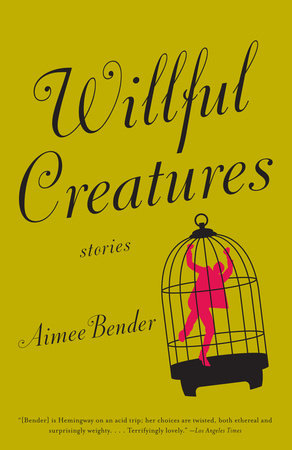
In Aimee Bender’s “The Leading Man,” a young boy is born with keys as fingers. He can open all kinds of locks, including the one to his house. But, even if he does have key fingers, he can’t get access to the very thing he wants the most: the secrets of his father. It’s a haunting the boy struggles to shake.
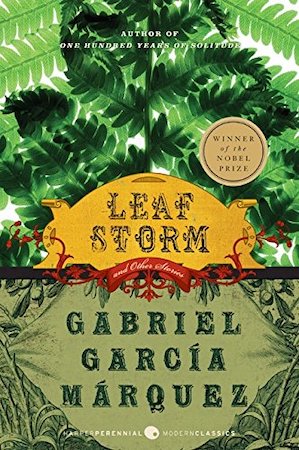
No magical realism list can be complete without an appearance from the father of the genre, Gabriel Garcia Marquez. Marquez’s “The Handsomest Drowned Man in the World” is full of emotional ghosts. When the body of a handsome, strong, tall man washes up on the shore of a small, isolated town, the community begins to wonder who the man could have been, giving him stories and a name. The man’s presence haunts them so much that they begin to transform their own lives and their community.
Balthazar’s mother calls on Judith to care for her sick son at his seaside home in this magical, beautifully melancholic story from Silvia Moreno-Garcia. There are emotional hauntings aplenty here, and “On the Lonely Shore” explores how the feeling of impossible-to-escape loneliness is, perhaps, the most haunting ghost of all.
“Town of Birds” by Heather Monley from Kenyon Review
Set in a town where children begin transforming into birds, this affecting story from Heather Monley looks at what it’s like to not be like so many of the others around us—what it’s like to be an outsider and to want (and want and want) to fit in. The story is rich with vivid descriptions, but it’s the emotionally haunted young narrator that makes it soar.
On the last night of my first spring break home from NYU, I dropped acid with my best friend, Dom. The week had largely been a bust: Grace wouldn’t get back with me; my mother was a ghost; and none of my niggas had changed. Still, the familiarity of walks to the gas station and old ladies calling my name and trees growing everywhere freely brought some comfort, some recollection of a home I’d once had, or would like to have had. The mixture of nostalgia and alienation made me feel—unrequited? And that feeling had been driving me crazy. I wanted to fuck all my exes and shake friends by the collar and get back on the bus a day early. Instead, I settled for LSD and a plan to watch the sun rise over the city, taking in the panorama—from projects to uptown—that pops up when you google Washington, Pennsylvania.
I’d done acid a couple times with the melting pot I fell into at college—a Russian, two Dominicans, a Pakistani, some Koreans—even a girl from Nigeria with an intense Boston accent. (Pretty different from Washington, where you were either Black, white, mixed, or ran a restaurant.) Dom had dropped acid before, too. He got super into psychedelics before abandoning his basketball scholarship at Slippery Rock and returning home. No one knew why he dropped out, but when he decided he was finished, that was it.
We headed to Dom’s house around sunset, after a long day of bullshitting, to pick up the tabs we paid his older brother Charles to get us from one of his white friends. I had white friends, too, but since college I stuck to the Black bodies in black hoodies I grew up with when I came home—I didn’t see enough of them on campus and when I did, they were usually serving me food. I tried Gentleman of Quality for a minute, NYU’s excuse for a Black frat, but those were the kind of dudes who taught themselves how to tie ties and discussed inclusivity. At college, I found myself quite lonesome.
Dom still lived on Houston Street, a potholed gray lick between the Advanced Auto parking lot and Catfish Creek, right where I’d left it. His mom was already at work, night shift at the mental hospital, and Eric—Dom’s younger brother and my other best friend—was out watching his kid because his baby mom had work. The house, which was eerily empty and dark, seemed to drink the dusk as we crept inside; even the family dogs, Rambo and Gunshot, did not rise to greet us.
“You hungry?” Dom asked, leading me through the narrow hallway and into the kitchen. Tile tore like Velcro beneath his feet.
“I’m good,” I said.
He poured a bowl of cereal, but only a small puddle remained at the base of the milk jug. Dom cursed, adding a bit of water from the faucet.
“Eric and Charles move back in, and don’t pay a goddamn cent in rent,” he said, mouth full of Reese’s Puffs. “But ole Dom been home ten minutes and there ain’t milk unless I buy it.” He shook his head. “Fucking fucks.”
He’d had his own apartment for a while, thanks to earning a decent wage down at the hardware store. Then the building that housed the shop got condemned and poof! Dom was back in his old room with Charles, who would never leave, while Eric slept across the hall in what could rightly be called a closet.
“Don’t bring that into the trip,” I said.
“I know,” Dom said. Then, “Don’t you start with me, too.”
We made our way upstairs, to Dom’s bedroom. Charles sat on a mattress on the floor, rolling a blunt and listening to Jadakiss’s “By Your Side.” It was my first time seeing Charles since being back. He looked skinny. He had gone to college, too, when I was still in elementary school. Dropped out halfway through and knew about all kinds of drugs.
“Here you go,” Charles said.
He handed us each a tiny square of white paper, thick as those perforated strips that seal mailed checks. We sat down on Dom’s bed and placed the tabs on our tongues straight away. They were flavorless. Mine dissolved into wet, soft bits I eventually swallowed.
We smoked with Charles to help the trip settle—it was like waiting for a game to load, pale ellipses flashing across a blank screen then disappearing, flashing again. Char could be stingy when the mood took him, or deeply generous. When I left Washington for New York the year before, he handed me a whole ounce of kill and said, “Good luck.”
The room had white stucco walls so rough they could make you bleed, dingy beige carpet, and plastic bins full of clothes in place of a dresser. Some posters had been replaced, but Nas and Spiderman remained on either side of Aaliyah (Dom still joked about jerking off to her). A tall shelf housed all types of oddities: an ashtray shaped like a naked woman; a magic eight-ball that told dirty jokes; stacks of fantasy novels, including my copy of Goblet of Fire that I never got back and now had a torn corner; a few knives; a deck of playing cards; and an old Ironman action figure that had also once belonged to me, before I traded it to Dom for his Captain America.
These were the kinds of kids we used to be. As we grew older, however, we kept all that soft shit to ourselves.
Charles, Dom and I watched Year One on Dom’s tiny TV. In the movie, God chooses Jack Black, who plays a fur-clad caveman, to bear witness to the destruction of Sodom and Gomorrah—which to me made total sense. Artist as prophet, you know? Time stretched thin across film. Jazz, baby, but for keeps.
I was tripping.
Instinctively, I turned to Dom. He grinned.
“Yep,” he said.
The first time I dropped acid, our whole gang of degenerates entered this hive, a sort of corporate mentality marked by synaptic suggestibility that made each of us agreeable to the simplest ideas. You want to smoke a cigarette? Sure! Want to listen to music? You bet! The second time, by myself, I tried my hand at a graphic rendition of Prometheus Bound which, upon discovering the next afternoon, I deleted, emptying my trash to obliterate any evidence it had existed. As the trip set in this time, however, I felt coolly subdued, like the universe owed me a favor and might finally pay. My phone read 9:52pm, which meant I’d just be coming down in time to catch the sunrise sober, or mostly so. Perfect.
“Let’s go get something to drink,” I said.
I waved goodbye to Jack Black, laughing at myself on my way out the door.
One night first semester, after a long call with Grace, I climbed the Empire State Building with my new friend, Gupta. He was a film student I’d met at this warehouse party and he needed a body for his black-and-white. He wanted me to walk through some alleys he’d passed where smoke billowed up through the sewage grates. Said he had this image of me in a black jacket, obscured by a plume, stuck in his head since the moment he read the assignment.
“Sewer smoke?” I said. “That’s some 9/11 shit.”
“Nah, bruv.” He fancied himself the next James Dean, but Bengali. “It’s ventilation shit. For the metro.”
We were somewhere near 29th and 5th, the Times Square neons just out of sight. I must admit I felt cool. I had arrived in this city on an art scholarship for my paintings, had dabbled in writing, but being on the front side of a camera was one of those quiet dreams I carried around like all vain creatures. Whatever. Gupta got good shots. And the smoke wasn’t the kind that made you cough, so no cancer. When I came out on the other side of the cloud, I saw the Empire State Building, one big fuck you to whoever knocked down Babel. I didn’t know it changed colors every now and then. Tonight, it burned opium blue.
“Want to go up?” Gupta asked.
“They let you do that?”
He smiled.
“Till the bars close.”
The lobby occupied its own plane: an empty, golden heaven. Blocky murals lined the corridor and ceiling, all gleaming, burnished by unseen hands. One in particular, a radiant image of the Empire State building itself, reminded me of this film Metropolis—both for the art deco influence and the pure decadence of having an image of yourself inside yourself. I stared at the mural a long time, the saint’s circle of sunrays crowning the tower all pointing up, up.
Eventually, we floated to the 86th floor and made our way out to the open-air observatory, where we were barred from suicide by thin steel crossbeams, yet remained unprotected from the savaging wind. The city looked like the inside of an infinite computer at this angle, an unending circuit board, each light connected to the next in some distinct but unseen way. This was before Grace found out I had cheated, but I knew then what our end would be. The distance in her voice during our call that evening told us both that she knew, too. I took a picture of the skyline and sent it to her.
“It’s mad,” Gupta said. The wind bullied his thick mop into a quaff. “You never really know a city till you see it like this.”
I spent the next several weeks trying to recreate the image with colors, only to discard a stipend’s worth of knockoff Basquiats at the end of term.
Back home, night settled thick, a pale gray sky full of shadows. As Dom and I made our way to the Unimart, an erratic bat stumbled drunk overhead. A homeless man watched us from an upturned bucket of paint; he coddled a silver-furred rabbit whose sleek coat made its handler appear the perfect gentleman, if a mangy one. I stared hard. They refused to disappear.
I texted Grace. It was important that I watched the sunrise with her for some reason. Tonight, I decided, she’d either forgive or condemn me for good. All I hoped was that she’d look me in the eyes while she did it. I needed to see for myself what she meant.
“Anyway,” Dom said, as we entered the store. I hadn’t realized he’d been talking. “My teeth are glowing.”
The linoleum did not ripple, and the lights did not swallow us whole. In fact, the store seemed extremely orderly, as if all the shelves had been recently stocked, all the coolers replenished. I did have a warm, cozy feeling in my chest, but my mental faculties were crisp.
“You figure out if y’all are coming?” I asked, settling on a pint of peach tea.
“Yeah,” Dom said. “Can’t.”
My first big art show was in April and I had invited Dom and Eric to New York on a whim. I knew money would be tight, what with Eric’s newborn and Dom saving up for a new place, but I figured one weekend would be good for all of us. We had slowly started to drift since I left for school, started to settle differently, like dust on opposite ends of the same windowsill. I figured them seeing some of the world that I saw might reconnect us.
Dom grabbed a small bottle of chocolate milk. On the label, a cow chewed her cud before daybreak—like, literally chewed. Beyond her, the sun hung low in unerring, eternal dawn.
“Sorry,” Dom said, finally. “Next time.”
Walking back to Dom’s house, I got a text about a party. But before I could ask if he wanted to go, a dark green Chrysler caught us in its headlights. I didn’t recognize the vehicle. They inched forward, flashing their high beams, and my chest went hot with the fear that precedes a fight. If you’re regular high and some shit goes down, you snap back to reality quick, willing and able. I didn’t know the protocol for hallucinogens. Could I even make a fist?
The car cut a sharp turn and pulled up beside us. My body froze, then erupted with praise.
“Bug?” I said, laughing.
Bug leaned out the window, a bleach white grin cut through the tar of his round face. On his head: a feathery auburn wig that you might find on a Supercuts’ manikin.
“Why you wearing a wig?” I asked.
“Warrants,” he said. “Want to ride?”
The city looked like the inside of an infinite computer at this angle, an unending circuit board, each light connected to the next in some distinct but unseen way.
Bug and I went way back, to when we all used to rap in his cousin’s bedroom and record diss tracks on pirated versions of Cool Edit Pro we got off LimeWire. He’d been in and out of placement all growing up. From what I could tell, he was just trying to live his best life until he got that first big boy sentence to land him upstate for too long to count. Yet for a kid who sold heroin while everyone else was still stuck on crack, he was incredibly lighthearted. The kind of crook who would compliment your shoes before he took them.
We went on a smoke ride through the swollen hills and woody backroads that connect all those small towns outside Pittsburgh. Dom and I sat in the back, this white girl named Lily up front. Her and Bug went off and on since grade school, and she ran in the same circles as Grace. Her hair smelled like hairspray. Someone had scratched the word gypsy across the back of her neck in black ink.
“You still be rapping?” Bug asked, passing the blunt over his shoulder to Dom.
“Sometimes,” I said.
“That’s what’s up. I bet them New York niggas think you sound country.”
“Nah, but like, when you say yes ma’am to a lady at the grocery store, she’ll ask if you served in the Army.”
“Nuh-uh,” Bug said, eyebrows arching.
“Yeah. And instead of saying, that’s what’s up, they say, word.”
“What they call thirsty?” Bug asked.
“Thirsty? They just say thirsty,” I said.
Bug snorted, nodded his head all solemn.
“Word.”
We got quiet for a while, the syncopated rhyme scheme of “Juicy” carrying us till it didn’t. Out the window, the trees would cut away all of a sudden for a rolling farm or some ancient, antebellum house, then reappear for miles and miles.
“You seen Grace?” I asked.
Lily’s eyes avoided me in the passenger side mirror.
“I don’t even know,” she said. Then she clutched the grab handle above her door and shouted: “Don’t!”
The car lurched to a sudden halt near the top of a hill and Bug jumped out, some sort of thick black pipe in his hand. He cut a brief, hulking figure in the headlights, a gorilla in drag, then disappeared down the hill. A second later came one big boom, then another.
“Every fucking time,” Dom said.
Bug reemerged, wig askew. The pipe that he held was a sawn-off shotgun. He looked disappointed.
“Deer,” he said. He climbed back into the car, which groaned beneath his weight. “I been trying to get one.”
Bug dropped us off at the party. Eric would be here soon. Grace had yet to respond.
The house sat half an acre back from the road, a Wolfsdale mansion my friend Matty’s dad had built with his bare hands over the course of a decade. Cars lined the driveway, which stretched like a dog’s black tongue from road to garage. “Black and Yellow” emptied the speakers and filled the sky, but no neighbors lived near enough to complain. A golden glow emanated from the garage windows, which somehow transported me to the Empire State Building. Radiance was the word. Aurora, Zora, Dawn.
I leave tomorrow, I texted Grace right then. I fucking leave.
I had been accepted to study abroad at NYU’s Florence campus and for some reason the trip felt final. I had no plans to ever come back—at least, not to Washington. I didn’t know if I would ever see Grace again.
Inside, we found a bunch of white kids playing beer pong and talking loudly in tight circles. A few worn couches sat against the wall, liquor bottles lined the workbench, and the stench of old oil stung the air. I began to sweat.
These were all the kids to whom I once sold weed, from schools with only a handful of Black bodies among them. Sometimes we got their girls—the quiet nasty ones—but more often than not we were accoutrements, accidents. A friend of a friend. I wouldn’t say they were racist—at least, most weren’t. They just didn’t know how to explain us.
Matty shimmied his way through the tightly packed bodies and hugged me. He smelled like Pac Sun.
“You want a drink?” he said. “Come drink.”
I followed Matty into the kitchen. He pulled me a Yuengling from the fridge, knocked the top off on the edge of the butcherblock island. The windmill blades of the ceiling fan made me dizzy. It was midnight.
“I saw that little movie you made with the Indian dude,” Matty said. “That shit was dope.”
After the silent film, me, Gupta, and the Nigerian girl from Boston, Ifedi, teamed up for a forty-eight-hour short film competition in which you had two days to create art from a handful of nouns drawn out of a mason jar. We got tiger, shoestring, and baseball bat. I designed, Gupta directed, and Ifedi, who changed her voice like magic when the lights went on, was our leading lady. The whole affair had some real Wes Anderson vibes. We won second place.
“A paper tiger,” Matty said, smiling. “Who the fuck would keep that on a leash?”
After a while Matty disappeared, off to another conversation no one would remember. I wandered around the house in search of a bathroom.
“Oh, shit,” I said, upon opening a door down the end of the hall. This girl Megan, whom I once loved but had never fucked, was bent over the sink snorting a line.
“What are you doing here?” she asked. “I thought you were, like, in Hollywood.”
“New York,” I said.
“Oh.” She stared at me for a moment, as if deciding. She shrugged. “Close the door.”
Getting your dick sucked on acid is unreal. I came colors. Afterwards, however, a different kind of energy took over. A sad, squishy one that made me miss Grace. I wanted nothing more than to get out of the room, out of the house, into fresh air. I’d had a bad moment during one of my trips at school, where I thought too hard about Ma’s boyfriend and he transformed into King Kong and started eating everybody I loved—joints cracking between his teeth, marrow dribbling down his chin—until Ifedi, who was babysitting us, took my cheeks in her hands and said, “Just imagine a big stuffed monkey. Nobody should be scared of a beanie baby.” But Ifedi was not here with her soft palms and precious gap and I was starting to panic.
I left Megan to clean herself up and stumbled outside through the wobbling back door, so I didn’t have to see anybody. A porchlight came on and gave life to a family of moths. I pitched the rest of my beer, which I should never have drank, over the wooden bannister. The trees were dancing, attempting to seduce me, but I knew if I obeyed them, I would surely die. The sky began to arc and streak like a star-trail photo.
I took one deep breath, then another. I would never get Grace back. I wasn’t sure I even wanted to. There was something unexplainable inside of me, something tremendous, yet I knew it wasn’t far from Bug chasing that deer. I looked down at my hands, found them empty.
My eyes fluttered open at the soft slap of headlights. Dom’s truck pulled into the driveway, where I leaned against someone’s car with half a burned-out cigarette in my mouth. Eric stepped out, smile white as bones in the darkness, and said, “Bro.”
In New York, I read Kafka and discussed communism with bisexuals who wore gloves with cutout fingers. I drank espresso for the first time, smoked hookah, and tried sushi. I also called Grace some nights when I got drunk.
Usually, she wouldn’t answer. I’d leave voicemails, sometimes two or three. When I checked my phone in the morning, I’d text her, apologizing profusely, then take a hit from the Gatorade bong I kept bedside to calm my nerves. She understood: I was lonely, in an unfamiliar place, and needed some semblance of home. She knew this intuitively, even before I did. Said she forgave me. The first time I tripped acid, however, things changed.
We had all dropped tabs and sloshed around Gupta’s dorm like a roiling sea of youth, eating pizza in closets, blaring Arcade Fire, and hiding ourselves from ourselves. As the night dwindled, I wandered, wound up on the Red Steps beneath the neons, a few rows down from a bum belting showtunes and a few rows up from two dudes making out. Friends texted but I ignored them, too absorbed in the flashes and peals all around me, the promise of connection to everyone at once. I thought, in my stupor, that I could tap into all that energy, become one with it and thereby extend myself to Grace in such a way as to make her feel warm, like in the beginning.
I sat there a long time before I called her, the billboard directly above me a giant Coke can spinning slowly, slowly. That night, she answered.
“Grace,” I had said. “I figured it out.”
“What?” she responded, voice thick with sleep.
“All this! These golden cities! They mean nothing!”
“Michael,” she said.
I imagine she propped herself up on an elbow, rubbing rheum from her eyes. I imagined the molecules of her, perfect circles expanding and contrasting with each heartbeat, sparse then dense, dense then sparse.
“Michael. This needs to stop.”
Dom, Eric and I left the party a little after two. My trip was in full swing. One moment, I’d be totally chill, and the next, my thoughts unspooled themselves like a silk origami girih. (What does a city with no sun actually look like? Was the invention of gears an inevitable transmutation of the immaterial human mind expressed in physical metaphor? Who the fuck framed Roger Rabbit?) Eric was cool, though. He kept the trunk rattling and laughed at me and Dom’s alternating nonsense.
“White boy shit,” he said. “I told y’all: weed and liquor. Cocaine, if the bitch is lucky.”
We pulled into the McDonald’s drive thru on Jefferson, the only 24/7 game in town. Semis barreled down the overhead bridge across the way, whose pillars gleamed graffiti in the streetlights. We’d had our phase of that, too, but not like the skateboarders. Mostly we just tagged the empty lot we used to drink in behind the power plant.
“Welcome to McDonald’s,” a girl’s voice said over the static. “What can I get you?”
“A double Mc-Dick with two big Black balls,” Eric said, pronouncing that last word more like crying.
“The fuck?” the voice said. Then: “Eric?”
“Who else,” he said, laughing.
I climbed atop a rock and faced the sky, unleashing my most doleful cry.
Giddily, we ordered more food than we could eat. Eric ensured the girl threw in a bagful of extra fries. He spent so long macking at the window that the car behind us beeped. We all flipped them the bird and cursed out the window, but we rarely got too rowdy when we were at fault.
“I’m a slide through when you get off,” Eric said.
The girl smiled, caramel cheeks tinting rose.
“Okay,” she said. “Now get out my line before these people make me cuss them out.”
We were just going to sit in the parking lot and destroy our food, but something about us three being all together and the silver moon and the sudden wild west wind so out of place in the spring made me billow, made a sail of me, and I just knew what we needed to do.
“Let’s go to the power plant,” I said.
“Yeah,” Dom said. “Let’s do that.”
The power plant was sacred. Home to laughs, fights, fucks, and everything in between: we grew up there. Or rather, we did grown-up things there as boys that shaped the kinds of men we’d become. Four green electrical towers overshadowed the trees behind Dom and Eric’s old house, connected by sagging wires and spaceship antennae. Left of the towers stood a few small generators and turbines, growing from the gravel like stout metal potatoes. To the right, a perfectly cubical redbrick building with boarded windows and one door that I’d never seen anyone enter or exit. To us, it was holier than Kaaba.
We staggered through the narrow footpath between the trees and the barbed-wire fence to the small fallow lot behind the building, mud squishing beneath our boots and jaggers sticking to the hems of our pants. You could see Dom and Eric’s old house over your shoulder, until you rounded the bend. Then it was just the old sitting stones, left there like Stonehenge, and a low-hanging moon above the towers.
I bought two spicy McChickens but ate only the fries, each granule of salt sliding itself across my tongue, down my throat. Eric sat smoking a cigarette, a Steel Reserve in his hand. Dom, having devoured his meal, lay flat on his back on the largest rock, staring up at the sky.
They looked alike, the Barnes brothers, with their father’s receding hairline and their mother’s strong chin. Only Eric was meatier and closer to my height, while Dom was tall and skinny. It was something to watch Dom play basketball, back in the day. Read the court like a book. Sure, Slippery Rock was Division II, but he had made it out this place despite un-great grades and a severe case of dysgraphia. Nobody understood why he left college after one year, especially when Charles had told him, in a rare moment of older brothering, that dropping out was his only regret. No one except me.
The summer before junior year. Ma and her latest man were at their worst and so were me and Eric, robbing whoever we found behind the Unimart and selling a pound or two of weed each week. Dom had returned from college different, eyes that carried a brightness through boyhood calcified at last. He often disappeared in the midst of a party, took solo trips to West Virginia or Pittsburgh chasing girls we’d never met. When he was around, he looked sad—in a day-drinker sort of way. I knew he’d broke up with his girlfriend, some white girl he met up there, but nigga smile.
Dom had always been less prone to violence than Eric, who popped off at the sound of a breath, but in the fights we got into that summer he went haywire, scraping dudes’ faces off concrete and ripping out teeth. One time, outside this house party gone wrong, he tried to run somebody over with his truck.
It was that night, long after everyone else went to bed or found lovers, that he told me. Why he had been breaking everything that could break without remorse: His girl got an abortion, and he had imagined being able to raise the child by himself.
I looked at Dom now, stretched out like a lemur in the shadow of the power plant, a silly little smile on his face, then up at the moon, which was always full, and got the sudden urge to howl. I climbed atop a rock and faced the sky, unleashing my most doleful cry. Silence followed, after the echo, so I tried it again. Dom joined me. Sat up as if out of a coffin and just yowled, yowled, yowled. I thought Eric would tell us both to shut the fuck up, that the cops might come, but he stood, too. His cry was the saddest of all.
When we were done, I was damn near stone sober. Out of breath. Throat raw. Dom pulled out the little journal that he kept to practice his writing and started scratching his awkward sigils. Eric sat next to me, clearly exhilarated, and lit another cigarette.
“You really gone to Italy?” he asked me.
“Yeah,” I said.
“If I was you, I wouldn’t never come back,” he said. “New York ain’t far enough. If I was you? I couldn’t get far enough away.”
5:00am. Eric had walked off to that McDonald’s girl’s house. Dom had gone through Char’s stuff while he slept and ingested another tab. I sat on their front porch, scrolling through old photos of me and Grace.
She was a beautiful girl. Honey butter skin, eyes like brown sugar. In every picture we took, I held her. She leaned against me as if I was some sound, sturdy structure, her curls tightly bound or overflowing, her smile in turns childish and unsure. Of all the girls since—and during—no one fit into my arms quite like her. And I had felt then that to fit properly into my arms was the only way to know me.
“What you doing?” Dom asked.
He sat on the bench beside me, a box of cereal in his hands.
“Being sad,” I said.
“I don’t want to be sad,” Dom said.
“Me either.”
We sat there for a moment, staring out at the empty street.
“Do you remember everything we used to do here?” Dom asked. “Like when you married that fat girl with a rubber band ring? Or the time the cops set them two German shepherds loose on Rome over a handful of dime-bags? Do you remember how long it took for the smell of burning rubber to go away after the tire factory burnt down? Ain’t that shit take ages?”
I stood, tucked my phone in my pocket. “I’m gone go see Grace.”
“Mike-Mike,” he said, and we were boys again, children. “You ain’t the only one who gets sad.”
I never had a trip hold me longer than eight hours, and it had been nine or so since we dropped. I felt residue—certain trees looked the way an old song sounds in the back of your head, and the stars didn’t twinkle, they whorled—but walking through my city by myself, wearing a black hoody, fingertips brushing old bollards and bushes and buildings, I felt a certain freedom wash over me. A pure breeze. A staying presence.
That which we call home is simply that. It may change, as we all change, and may never even be named, yet it remains inescapably familiar. And in that recognition lies the hope that a piece of you is unchanged, too.
I arrived at Grace’s house unscathed. She lived, like almost everyone, in a cut between the road and some trees. I threw a pebble at her window, then another, until she answered. She appeared, long hair draped to one side, eyes more awake than asleep. I gathered every mote of softness I could find and said, “Want to watch the sunrise?”
Grace stared at me. A long time. Then she let out a breath I had not heard her hold.
“Wait there,” she said.
A couple minutes later she tiptoed down the rickety wooden steps of her second-floor apartment. She came around the corner in my old football hoody and sweatpants, hands stuffed in her pockets against the predawn chill.
“From the train tracks?” she asked.
“No,” I said, “but we can take them there.”
The soft wood of the ties bent beneath my feet, as old things do, and I eventually took to walking only on the gravel scattered between them. Grace walked along the rail, as she always did, with the ease of a gymnast. We were only a mile out from the hill that held the view.
We didn’t speak. Not with words, anyway. We brushed arms once, accidentally, and when our elbows touched again, I understood Grace was soothing me. My heartbeat boomed in the space between us. There was nothing really to say. She’d finish senior year and head off to college, somewhere far enough away to cut her hair and become someone new. I’d spend the semester in Italy, weekends in random European hostels, and then head back to New York, where some friends and I had just signed a lease on a Williamsburg loft. The next time we saw each other, Grace and I, we might not even notice. Only a feeling inside an airport, a vague second glance on passing trains.
Or maybe there’d be more. Grab a drink, try again. That would be okay, too.
We made it to the top of the hill overlooking the city. We sat down on the cold, wet grass. I couldn’t see everything from here, but what I did see—the handful of buildings that made up our skyline; my old bus stop by the bakery; a radio mast like a giant candy cane in the distance—was enough, once it caught the sunlight. A painter’s purple first, then nipple pink, then flagrant red.
I tried to map the scene onto New York, fit this entire city between the dingy side streets in Brooklyn. And Florence? How would the cracked cobble I once ran from cops on compare to stones preserved for centuries? How would words like terracotta and chiesa sound in my profane mouth?
“You know what a gypsy is?” I asked Grace.
“Like Esmerelda?”
“No,” I said.
She frowned.
“You know, tomorrow, daylight savings time ends,” she said.
“So?”
“So, tomorrow, time speeds up. If you would’ve come then instead of now, my dad would’ve been awake, and he might’ve shot you. Or I could’ve fallen asleep, when they take that hour.”
“Who?” I asked.
“Whoever takes anything,” she said. She nodded to a stream of birds painting a black mass against the burgeoning sun. “Them.”
Eventually, the birds disappeared in the distance. Grace glanced at her phone, said she should probably go.
Like the complex Philippine history the book aims to depict, there is no single sentence that can sum up Albert Samaha’s Concepcion, especially when he renders that history through the lens of his own diasporic family, dating back to his ancestors’ first encounter with Europeans. Though nominally a memoir in the sense that it tracks Samaha’s life as a second-generation immigrant child in Northern California, his search for a stable identity as a teenage football player caught between cultures, his fraught relationship with his Trump-supporter mother as an adult, Concepcion uses these moments from the recent past to jump across centuries and explore the imperialist circumstances that brought them into being, a history that the United States continues to ignore because of its role as the Philippines’ former colonizer.
Samaha’s primary strategy for getting an American readership to face this history is to tell it through his own family members, which renders it both intimate and urgent. Writing about his great-aunt Caridad, an informant for the Americans during the Japanese occupations whose quick thinking prevented her death by sword, Samaha writes: “Her fate was one of countless breaks to swing our way, unearthing reminders that before a moment hardens into the past, it exists in a suspended fragility of the present.” Caridad was the first person from Samaha’s family to immigrate to the United States, and without her, neither Samaha nor Concepcion would exist in their current form.
Samaha and I spoke a week before Concepcion’s publication in a room at the Bowery Hotel overlooking the New York skyline. It was an appropriate location not only because a sizable portion of the hotel’s staff is Filipino, but because one of the book’s main questions is how to balance current prosperity against the sacrifices of previous generations, on familial, diasporic, and existential scales.
[Editor’s note: Meredith Talusan and Albert Samaha were briefly colleagues at BuzzFeed.]
Meredith Talusan: It really struck me reading the book how it’s simultaneously epic because it covers hundreds of years of history, but also generous in the sense that including your whole family in a memoir, which is usually thought of as an individual act of putting one’s perspective onto paper. Was that your vision from the beginning? How did it evolve?
Albert Samaha: The structure was the hardest part. But eventually, I came around to this idea that a central theme in the book is the way the past imposes itself upon the present, that we can’t escape the past, that we are still entrapped in its ripple effects. And so, to sort of jump back and forth in time, in sometimes vast distances of time, to me, offered an opportunity to show how true that is, and to show how that actually works.
The other thing in my mind was I wanted the book to be a bit disorienting in time and space, because that’s the experience of being an immigrant, of coming into a new country. You come in and you have to figure it out. “Where am I? What’s the restaurant? Do I tip? Do I not tip? Where do I get a job?” All these little discomforts of being an immigrant, where I feel like people like me who is not an immigrant oftentimes will, I think, think of the challenge of immigration in kind of very macro terms, which is that you’ve got to learn the language and get a job and get a visa. But what I hear from many of my immigrant friends and immigrant relatives, the stories they tell, it’s always like the little things, like the first time my grandfather had stepped into an elevator, and what buttons to press, or the time that my mom first went to Paris and was struck that you could try out all the perfumes. They’ve got these little aspects of experience that stand out in their mind.
MT: You’re talking about how the past illuminates the present, but then I feel like also one of the effects is that it makes the past feel more like the present, right?
I was wondering to what degree you were aware, or did you want to make what people perceive as history come alive? Especially, I think, in an American context where there’s a lot of denial and a lot of avoidance around specifically this history and specifically the ways in which America and the United States have behaved towards its major former colony.
AS: Totally. And I intend to apply that even broader in the sense that I think history, on its face, can feel inevitable, especially what we learn about in history books, where it’s like “Oh, of course, when you have a general as capable as George Washington and a legislative mind as brilliant as Thomas Jefferson, you’re going to create an exceptional nation such as America.” And that inevitability washes away the arbitrariness of history, and the fact that oftentimes the people who win win by chance just as much as by merit, like Cortez did not know that he was carrying on his boat the germs that would defeat his enemies.
And so, I think a theme I really wanted to unpack in the book is all those inflection points where things could have gone a different direction. And I think this was one of the central questions in the book where I asked if my mom’s sacrifice was worth it, if she should have come. But that begs the question: what other paths were there along the way that we might have missed?
I ultimately realized that the only way to get across the idea of how fragile the present is one hundred years ago is to make one hundred years ago feel present, and to try to bring the reader into that world as much as possible, and see the figures not as historical epic figures, not as like myths, but as human beings, whether that’s Magellan or Lapu Lapu or Rajah Humabon.
MT: One of the other aspects of the book that really struck me is your engagement both at a historical and at a personal level with you and your family coming into an American culture that has this entire history, especially around white supremacy and Black slavery and anti-Black racism. How do you feel about the book in terms of intervention into this entire history while at the same time, we still live in an America that is so deeply oppressive to Black people? How do we as Filipino people situate ourselves within that racial paradigm?
AS: It’s an ongoing question for all of us immigrant diasporists who are newcomers to this centuries-old struggle for America’s soul that Black Americans and white supremacists have been waging. The reason colonialism works is because it makes the colonized aspire to assimilate to colonists, right? And I think to the colonized, it’s like, “We could either die or starve, or do what the colonizers say.” And over time, it creates the colonial mentality, which many brilliant minds have written about in many different ways.
But when we think of colonial mentality, I think the term E.J.R. David has used is internalized oppression. The way that my mom didn’t teach me how to speak Tagalog, and the way we revere white culture, and want to assimilate white culture, want to talk like white people and dress like white people, all that, have the same jobs as white people. I think what that often leaves out is what that means to side with them, with white people. What it means is to side with the people who have oppressed Black people and Indigenous people and a lot of other people. And I think we only think about it as how we’re internally oppressing ourselves, and not often enough about how we’re actually externally oppressing others by helping to uphold the imperial caste system that has kept Black people at the bottom and many other Brown people close to the bottom for many years.
What other paths were there along the way that we might have missed?
So what I hope to accomplish in the book is to reframe what it means to be colonized in a way. And I’m still grappling with it myself, you know? What are our responsibilities as Americans? I feel like the idea of asking about what you can do for your country is often framed from the right-wing perspective, where it’s almost this idea of “What can we do for our country?” is a taboo question, rightfully so in some ways because, no, we don’t owe anything to the country, right? It’s a country, and we are people who live here, and it’s not some loved one that we need to bestow any sort of reverence upon. It is a government institution. We owe it nothing. It owes us fair recompense for the taxes we pay. It is a transactional relationship, so let’s not try to make it bigger than that.
But I kind of want to rephrase the question of “What do we owe to the country?” in a different way. It’s not like “What do we owe to the U.S. government?” What do we owe to Black people? They are the reason that you and I have voting rights in America, because however Black folks are treated in America historically has been the bare minimum for how every other non-white group would be treated. None of us get treated as poorly as Black Americans, from a self-interested perspective even. Forget the morals of it. From a self-interested perspective, the worse Black Americans are treated, the worse that Filipino Americans can be treated. Ideally, everyone gets treated well, right?
So, for me, it was about honoring what it means to come to this country and to honor the country’s history. It’s not about, say, the Pledge of Allegiance. It’s not about knowing about Paul Revere’s Ride and George Washington’s cherry tree and about who signed the Declaration of Independence. It’s about looking at the history about who were the people whose blood and toil built the country? Who were the people who have suffered in order to push the country towards democracy?
MT: It’s fascinating how we’re talking about this in broad geopolitical terms, but the book coalesces this difference in perspective in terms of the relationship between you and your mom, who is a Trump supporter and believes in right-wing conspiracies, etc. Do you think of the book as a sort of template for figuring all of that stuff out?
AS: The first chapter of the book where my mom was getting scammed, I wrote that as it was happening. This book was an ongoing process. I was living it as I was writing it. One of the narrative arcs of the story is my own personal journey of understanding.
One of the quotes I have, the epigraph, was Maya Angelou who said, “Without willing it, I had gone from being ignorant of being ignorant to being aware of being aware. And the worst part of my awareness was that I didn’t know what I was aware of.” And I love that quote because it’s so true, man. Before you know what racism is, you’ve experienced it. And you’re just like, “Huh, that was weird. Why did that happen to me?” You know? And so I think the book is my effort to understand things that I needed to understand for myself. Even the way the book, I think, is structured subconsciously traces to the order in which I learned things, where we start in pre-colonial times.
A lot of the animating questions of the book stem from a reckoning with my own privilege, which is that I’m lucky enough to write this book in the first place, to be in a position where I had the education to write a book like this and have the time to work on a book like this. And it stems from this privilege that I did not necessarily see in the generation above me. So it’s like, “Okay, they sacrificed so I could have comfort.” Very classic immigrant story. But why is that the case? Why is it that they had to sacrifice to begin with, for my comfort? You know what I mean? When my friends’ parents didn’t have to sacrifice for their comfort, you know? And so it was sort of reckoning with my privilege. Like what was it over the course of all time, or at least as far back as I can trace, that led to me being born into the circumstances I was born into and allowed me to have these things.
And in a way, I sort of saw myself and every individual person as a sort of metaphor for America, which is that “Yeah, okay, richest nation, most powerful nation. What were the sacrifices made along the way?” To me, the real story of any empire’s rise is the sacrifice and suffering and toil that allowed it to happen. America would not span from a major continent between the two largest oceans and have all these natural resources if they didn’t genocide Native Americans. The wealth that the cotton industry was able to generate because of all the enslaved people who were purchased, bred, shipped in here, contributed largely to America’s original economic rise. So, America would not have the power it has if not for those oppressions. So that creates a natural guilt that I related to very much because I would not be able to benefit from the fruits from that bloody tree if my mom and my family didn’t come here and withstand the setbacks that the migrant generation experiences for the benefit of the second generation.
The real story of any empire’s rise is the sacrifice and suffering and toil that allowed it to happen.
A lot of the book, and also a lot of the sort of divergence between my perspective and the perspective of my elders, is from my position of privilege. I have the privilege to sit down in a lounge chair and think, “Hmm. How did I get all these luxuries?” You know what I mean? While if you’re the migrating generation, you ain’t got time for that shit. You’ve got kids to feed. You’ve got jobs to apply for. You’ve got so much happening. And that’s why I think in the first chapter, I had a line about how there’s something about being in the second generation that makes it easier to look at this, because I’m not the one who lived the sacrifice. I’m not the one that made the migration. I’m the one on the front row who benefited from inside, up close. And I think that’s sort of at the root of it. It’s a lot easier to care about other people of oppression when you’re not the one at the heart of the oppression. But if you feel you’re being oppressed, it makes it a lot harder to care about somebody else being oppressed before anyone deals with your oppression.
And that’s part of the reason why my mom and I have diverged, because I’ve had the luxury of a very specific experience growing up and going to good schools in Northern California, being around a diverse collection of students, going to Columbia for journalism school, having jobs in these places that allow me to pursue my dreams and pay the bills and live the life that my mom dreamt for me. And so, for her, it’s like, yeah, this country is amazing. It all worked out. I’m happy. I could take care of her now. But for me, it’s something that I feel complicated feelings about, because these are successes that she worked for and wanted more than anything and sacrificed for. To her, they’re like unequivocable wins. But for me, as the person living it and benefiting from it, the natural question is like “Who had to sacrifice for these benefits? And how do I feel about that?”
MT: And is it worth it?
AS: And is it worth it?
MT: It’s interesting that being both writers, we both have this privilege that you describe, being paid in the ways that we are. But also, I can’t help but think of the meta-question that this book obviously involved extensive amounts of labor on your part. Speaking of toil and hardship, it might be a different form, but still. And it’s your second book. And I was wondering, as I was reading about the history of Filipino labor and the way in which Filipino identity is so tied to labor, that that’s one of the ways that we get ahead is that we work more than other people. Is that something that was present for you, and continues to be present for you, as you work in your life as an editor and an author? How do you contend with engaging with cultural reproduction, engaging with labor? And do you still feel like that’s still our path as Filipinos towards success in a country where our position is fragile?
AS: I’ve been told I have an unhealthy relationship with labor. You can interview any of my exes for that. I mean, I joke about it. It’s very easy for me to say I’m a workaholic because my work entails typing on a computer. You know what I mean? I can sort of romanticize working long hours because my long hours are sitting on a computer. So, that said, and maybe because of that, maybe because it’s a job that I consider much easier than the jobs any of my elders or ancestors had over the years, I’ve always sort of felt a duty to make sure that I squeezed every drop of juice from that fruit. I mean, I’ve always sort of been raised to really see the virtue of work ethic. My dad and I share that similar flaw (I probably got it from him) of just this idea that you get ahead by working harder than everybody else. So, ironically, I might have gotten it from the Lebanese side of me.
I mean, it’s almost cliché to say that being part of an immigrant family involves thinking and caring deeply about working hard to prove your worth. And I do think that, at least subconsciously, and maybe even consciously sometimes, there was always that driving force of proving yourself worthy of the opportunities, of the sacrifices. I always knew. Even before I knew the details, I knew generally that my elders sacrificed for me. I didn’t know the scope of that sacrifice or the depth of it, but I knew that they had left their country to come here so that I would have more opportunities, whatever that meant. So there was always that impulse to not squander those opportunities. Even within my family, I was the spoiled one, I was the privileged one, because my dad had a lot of money. And even though my parents separated very young, his child support was able to ensure that she didn’t have to work all the time for many years until I was ten. She didn’t have to work. And no problem going to Catholic school in grade school, elementary school. So I had more toys than my cousins.
So I always had this sense that I was more fortunate than even other people in my own generation, my own family. And I wanted to make sure I didn’t waste that. And I think, psychologically, perhaps what that did to me was to create this sense of value in putting in the hours. Not even a value. Like a reverence to it. I really do revere it in a way that my mom wishes I revered the Bible. Even before I was a writer, when I was a football player, I’d come in at 6:00 a.m. before school to lift weights and do some drills on the field by myself afterwards. And I think it was because I had opportunities that some of my closest friends and cousins didn’t have. I didn’t want to let people down. I didn’t want to let them down. I didn’t want to let my parents down. And I think that’s just sort of carried over. It’s like a mix of all those things, the sort of inherent Filipino work ethic, kind of immigrant “prove your worth,” and then also there’s like “Don’t squander the privilege that you have,” all sort of combined together, I think, to create the psyche I have now. I mean, two books in, I still haven’t taken a book leave.
Schools have their own set of rules and morality, rituals and language. What makes sense in an elite private Manhattan school—good grades, fancy clothes, the competitive sports of the wealthy (squash and tennis) can be entirely anathema in a progressive school where cooperation, eschewing of labels, and creativity are valued. In a small community, an outsider can never fit in or understand what goes on in the center. Sometimes the most ordinary school can be rendered creepy. The inhabitants—students and teachers—are stuck there after all until they graduate or retire. Throw in a charismatic leader, secret society, or strange ideology, and what you have is a cult.
In my novel The Pessimists, six couples wrestle with what it means to raise and educate children in a new century that seems destined to leave them behind. The Petra School promises a back-to-nuts-and-bolts education, but what it offers instead are elitist and poorly conceived ideas about children not firmly based in reality. Almost every parent struggles with their children’s schools at some point or another, whether the school is private or public, and educating children at times feels like wild speculation. One child thrives in an environment that is to another child’s detriment.
Many of us remember our high school years with the intensity as if they happened yesterday. I can barely remember anything that happened the year before the pandemic, but I can still smell my high school cafeteria at noontime. Bewildering things happen in schools all the time and there are often no other adult witnesses. The wildest things happen in schools: violence, sex, breakdowns and breakups, abusive teachers, bullying, tragedy, but comedy also. Boarding schools are especially ripe settings for novels and I’ve included four novels that take place in them. Carrie is the most American, most John Hughes of all the high schools on the list and Curtis Sittenfeld’s is perhaps the most benign. Ishiguro the most heartbreaking—the students are doomed from the start.
Here are the seven weirdest high schools in literature:
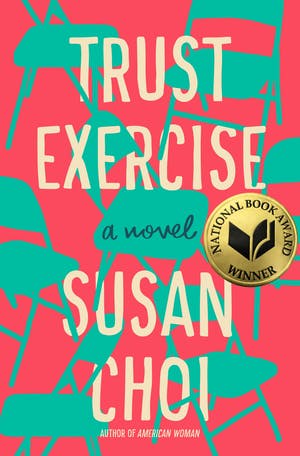
The Citywide Academy for the Performing Arts (CAPA) in Trust Exercise by Susan Choi
As grownups, we look back on our school years with bewilderment and sometimes bewitchment. Susan Choi’s Trust Exercise has all the culty elements I appreciate in a novel: an ’80s school culture I recognize, teenage romance, artistic ambition, unreliable narrators, surprise twists, and a dangerously charismatic leader. The Citywide Academy for the Performing Arts (CAPA) is a high school for talented drama students. The first third of Trust Exercise, features Mr. Kingsley, a charismatic teacher with an arbitrary set of rules and criteria for succeeding:
“His very way of gazing told them plainly how far they fell short….they felt their deficit all the more sharply because the unit of measure was wholly unknown.”
The last two-thirds spin the entire book on its head; the author pulling us through the high school gauntlet experientially: elliptical, circuitous, gaslighting.
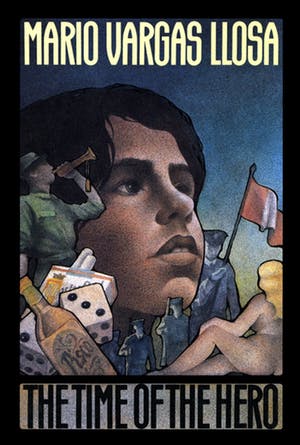
The Leoncio Prado Military Academy in The Time of the Hero by Mario Vargos Llosa, translated by Lysander Kemp
Originally titled La Ciudad y Los Perros, “The City and the Dogs”, this 1963 novel is set at the military academy in Lima that Llosa himself attended as a teenager and deals with the death of a student and the school’s subsequent cover up. This nonlinear story is told from multiple perspectives and was influenced by Faulkner who Vargas Llosa said he read with pencil and paper in hand trying to attempt to distill Faulkner’s style. The abuse and violence described was directly related to Vargas Llosa’s own 1950s experience as a student there in the 1950s and the publication of the novel so angered the administration that they went on to publicly burn 1,000 copies.
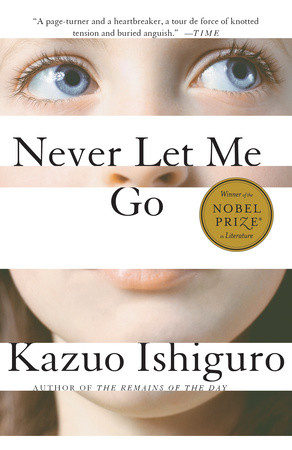
Hailsham Boarding School in Never Let Me Goby Kazuo Ishiguro
I love books where the slow reveal of the reality of a place is the central mystery. Indoctrination is the central theme of Ishiguro’s dystopian novel Never Let Me Go where young students reside unwittingly at a boarding school for future organ donors. The writing is gorgeous and gripping and as both a love story and a mystery, it also manages to explore questions of science decoupled from ethics.
“Do I dare disturb the universe?” reads the T.S. Eliot quote in Jerry Renault’s locker. If the main goal of a school is education, the second is to conform: to rules, to tasks, to groups, to an identity. Set at a fictional Catholic high school, The Chocolate War depicts a secret student organization’s manipulation of the students that sets a mob mentality against Jerry who is coping with depression after the death of his mother. When Jerry refuses to sell chocolates for the school’s annual fundraiser, the ire of the headmaster and the secret society are set upon him. For any non-conformist, The Chocolate War strikes fear in the heart while imparting one note of comfort: you are not alone.
Upper-class waspy prep schools are something I can’t get enough of. A club so elite they’d never accept me? Please, tell me more. I devoured this book when it came out. Being a Midwesterner myself, I also pined for the J Crew catalog-looking East Coast boarding schools and begged my mother to attend one. However, because we were not rich and I was a fairly terrible student, it was never going to happen. Prep is the quintessential fish out of water story: Lee is Midwestern, not rich, not schooled in the ways of the monied East Coast elite, but she wants desperately to fit in. She finds herself, at least initially, with the outsiders on the margins, but rejects them as she moves closer to the center. Ault School is full of the sort of arcane rituals one expects: names like Tig and Cross and Gates, summers in Nantucket, and the game of Assassin played throughout campus.
Barker Street Grammar School in Carrie by Stephen King
As a preteen, I read all of Stephen King but there was one book my mother would not let me read: Carrie. As kind of a skinny girl, scrappy and ugly, and one of the only kids in my school who did not attend a church or synagogue, she was concerned I would relate too much to Carrie’s loner status. By the time I did finally read it, I was solidly ensconced in a fairly normal teenage experience. It was no less horrifying. Carrie’s school is utterly ordinary and what’s terrifying in the end about the book is not Carrie’s retributive fury, it’s the cult of the ordinary: the horrors ordinary students will inflict on anyone who is different from them.
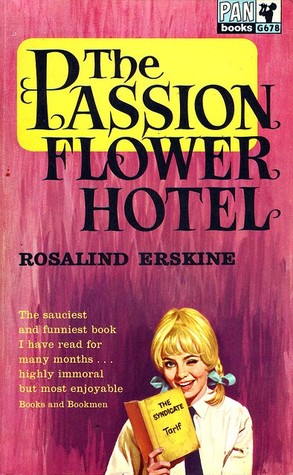
St. Clara’s Boarding School in The Passion Flower Hotel by Roger Erskine Longrigg (writing as Rosalind Erskine)
I found this book on my father’s bookshelf when I was a kid and couldn’t resist this dusty ancient paperback. It’s wildly inappropriate and at the time felt irresistibly naughty. It’s the early 1960s and a group of girls are obsessed with losing their virginity. One of the girls reads a sociological study on prostitution and they are inspired to turn their English boarding school into a brothel for the boys across the lake. They call themselves “The Syndicate” and offer three services: Vision Only, Touch, and Nothing Barred. Other activities include a striptease and burlesque. Although funny and Woudhousian at times, the book is dated with racist elements and 1960s mores on gender and sex. Best read as a time capsule.
In 2015, Casey Plett wrote about the rise of a particular kind of novel in Canada: ‘Call them the Gender Novels – books about Gender with a capital G.’ She describes the rise of non-trans authors writing sympathetic books about trans characters, exemplified by books like Jeffrey Eugenides’ Middlesex(2002) and Shani Mootoo’s Moving Forward Sideways Like a Crab(2014), and how they almost inevitably produce identikit main characters: flat, stereotypical sketches of trans people with no inner lives, who exist mainly to make cis readers feel edified.
If the only alternative were a return to The 40-Year-Old Virgin or CSI—using the trans character as a punchline or serial killer—then perhaps the Gender Novel, for all its literary deficiencies, would still have political merit. But that is not the only alternative. There are people out there writing good trans characters; many of those writers happen to be trans.
We are people of interest! We are the topic du jour. So, to ask bluntly: where are the thinkpieces? Usually, a common trend in fiction by cis people merits comment: I’ve read a lot of articles about novels where straight millennial women have mildly humiliating sex. In fact, seeing another one makes me emit the kind of high, keening sound a chicken might produce seconds before laying an egg. But for years, I’ve been watching the same cycle. A cis author produces a work full of rich and strange ideas about transness (often bad ideas, but compelling nonetheless); I wait for cis reviewers to say anything interesting about its use of transness; I get nothing. Well, I get something: avoidance, discomfort, transphobia, and a firm implication that transness is not for genteel literary discussion, even as all these lauded authors keep writing about it.
Usually, a common trend in fiction by cis people merits comment: I’ve read a lot of articles about novels where straight millennial women have mildly humiliating sex.
Now, not everyone has the good taste to care about trans people as much as I do, and I know from personal experience that word counts are tight. I’m not demanding every trans cameo be documented in print. But there are multiple prominent reviews of Booker-winning novel Girl, Woman, Other that don’t mention the book’s nonbinary character, despite their existence being referenced in the book’s title, and despite their crucial dissenting role in a book about modern Black British womanhood. Or take Jeff VanderMeer’s review of Everything Under, a retelling of Oedipus with two trans main characters, where the tragic prophecy is fulfilled through the main character’s gender transition; the incredibly central importance of transness and transition is considered an afterthought – ‘The novel also explores gender roles and gender fluidity.’
The first two of those Girl, Woman, Other reviews incorrectly describe the twelve characters as all ‘women’ and ‘female’, which is also a mistake its author, Bernardine Evaristo, has made in interviews. Slips in terminology are common in reviews of books with trans themes, when they would easily be caught by a trans staff member, sensitivity reader, or robust style guide. It doesn’t take a degree in trans studies to learn not to call a trans woman of color a ‘sassy transvestite,’ or to avoid using terms like ‘female’ for trans men and nonbinary people. Nor does it take incredible reading skills to know that Conan, a character in The Mars Room, is a trans man, not a ‘trans woman’. (Some other reviewers call him a ‘female-to-male trans’, which was already an outdated term by the novel’s 2018 publication.)
These slips are irritating, infuriating, even upsetting at times, but they’re impactful mainly because of how they betray a deeper lack of care and empathy. There’s a fundamental incuriousness here about why transness is in this book, and what it is doing or failing to do.
There’s a fundamental incuriousness here about why transness is in this book, and what it is doing or failing to do.
If you read the newspaper reviews of Frankissstein (2019), Jeanette Winterson’s Booker-nominated reinterpretation of Frankenstein, you might get a similar initial sense that I did: a zany, imaginative, weird, comic novel that tackles cyborgs, feminism and AI. “Jeanette Winterson’s Playful New Novel Offers Thoughts on Mad Science and Sexbots,” reads the NYT’s headline; they describe the novel as ‘talky, smart, anarchic and quite sexy.’ The Independentcalls it ‘light and comic’, full of ‘zany fun’, while various outlets focus on its hilariously loathsome sex doll seller and treatment of hot-button topics. When they mention Ry – the trans protagonist of one of the novel’s two narratives – it’s mostly casual, basic descriptions of their character: ‘The narrator is a trans man named Ry Shelley’ is the simple (and arguably inaccurate) summation in the Washington Post. Ry’s transness is of interest but is implied to be a simple fact rather than a driver of the novel’s events. There’s only a rare, slight glimpse of trouble, such as a throwaway comment in the LA Review of Books review about Victor, Ry’s sexual partner, ‘repeatedly assert[ing] that he is not gay.’
Forgive my shock when I actually read the book and found that Ry is subjected to an exhaustive array of minor and major harassments, culminating in a sickeningly graphic scene where they are clocked as trans in a men’s bathroom and viciously sexually assaulted. It felt like Ry was a martyr archetype who existed to experience pain, rather than a human person. Ry’s characterisation is flat and passive: they inexplicably answer invasive and threatening questions, they put up with fetishization and objectification from almost everyone they meet, and they talk like a cyborg. (They self-describe as ‘I am a hybrid’, which is admittedly pretty metal but is also more suggestive of a Toyota Corolla than any trans person I’ve ever met.) And it is irritating to see a novel treat trans bodies as freakish and newfangled.
But what obsessed me after reading Frankissstein was going back to those reviews, trying to fathom the gulf between their descriptions and the novel itself. For whom is this fun? For whom is this light? What do cis people see when they read this?
In Lian Konemann’s book The Appendix: Transmasculine Joy in a Transphobic Culture, Konemann describes keeping a list of transphobic things he encounters for a few months in 2019. Coincidentally, the first thing he mentions is a review of Frankissstein in the London Evening Standard:
You flit in this narrative between Shelley in the 19th century and our contemporary narrator, Dr Shelley, a transgender – of course! – medical doctor. S/he is called Ry, short for Mary (as in Mary Shelley), which makes you wonder why s/he isn’t called Ree, so as not to sound like Ryan. S/he started out female and has XY chromosomes but has had upper body surgery, no prosthetics and testosterone supplements which gives Ry an elongated clitoris – two centimetres, I think – and a satisfactory sex life.
‘Of course!’. For once, it’s clear enough what the reviewer sees when she looks at Ry: a mixture of obvious disdain (hence her ostentatious avoidance of their pronouns) and anatomical, objectifying interest. She sounds like a zoologist describing an abnormally developed frog. These are reviews of trans themes at their worst: they become a fun way for the reviewer to promote dehumanizing and hostile attitudes toward trans people. Regrettably, these are often the only reviewers who engage sustainedly with a book’s trans themes, but only out of voyeuristic delight at having an object to poke at. Specifically an ‘elongated clitoris,’ which plenty of cis women also have, by the way.
These are reviews of trans themes at their worst: they become a fun way for the reviewer to promote dehumanizing and hostile attitudes toward trans people.
It’s clear that most reviewers don’t want to talk like this. However, lack of interest in trans people, anxiety about pissing people off, and lack of knowledge of trans subject matter tends to produce unsatisfying reviews. Avoidance is disappointing, as is an uncritical, magnanimous ‘oh, how lovely’ attitude towards the mere existence of trans representation. Transness has the curious capacity to turn off cis reviewers’ critical capacities. Part of this could likely be solved by having a robust style guide (which the Trans Journalists Association has), but part of it comes, I believe, from a desire not to poke the bear. I live in the UK, where most of our papers are openly trans-exclusionary, and even in the US there are almost no trans journalists stably employed in journalism. If reviewers talked more explicitly and seriously about transness, it might be more difficult to pivot to trans scare propaganda for your Sunday feature, or to blithely ignore trans people when we’re inconvenient. And wouldn’t that be a shame.
In dangerous times, I would like to suggest a riskier approach to trans criticism, given that I have little to lose: what if we asked about why cis people are so interested in transness, and what function characters serve in cis novels? What if we admitted that, at least some of the time, trans characters are used as a way for cis authors to talk to other cis people, and asked about the messages they’re sending? What if we looked at the anxieties and prejudices folded into some portrayals of trans people, the genuine interest and desire for connection that come in others, and work backwards towards a trans criticism where cis people might, just might, be allowed to admit that they find us interesting and scary? What if we broke the awkward silence?
Once, I followed the snow, watched as it blinked.
In this language, to ask is to bury. In this language,

eyes are less than mirrors. What is lost in translation: a bird
is a beginning that sings; a horse is an untamed tongue.

Pears are as good as boats are as good as stomachs
in the bearing of rot. How they can only sink.

In this language, the names that follow us are castles
of memory. In this language, I am waiting to be built

& to be seen. Do you remember what was asked?
That is to say, do you remember how we were buried?

How raindrops fell like stones. How they were only stones
until we felt them. How we were only bodies

until we fell.
Iteration
I am told again & again: there was light once,
        in small motions. This is before my mouth

was a bullet, rusting. Before my spine was a road to be
        worn. All the ways to begin unwound. Here,

floating in a mother’s stomach: the remains of typhoon
        uncut. The sun is only an open wound if you stare

too long. The sky is only a vault if you let it
        hold you. Consider if the world was built

on a Sunday. If it is still beginning. If we are still
        beginning. Another telling, & I am reminded

that the earth has teeth. That bodies are softness & the
        shadows that follow. There was light once,

& nothing to drown in it. Again & again, we are only as bright
        as our stars. How quiet, this irreversible reaction,

these small tragedies. How terrible it is to be
        the home of so much light.
In our youth-obsessed culture, we want older women to disappear. But what happens when they refuse?
In my new story collection, Dig Me Out, I focus on women filled with anger. And often, that’s older women. When women reach forty, our culture tells us we’re no longer sexy or fertile, not as sweet and pliable. We’re worthless. It’s maddening and infuriating.
Books so often fall prey to this cultural bias by centering young characters. The older women that are featured are minimized, made cute, feisty, or harmless. They accept the imperative of our culture, swallow any anger they might have, and push themselves to the sidelines.
But these seven books celebrate the older woman that defies logic and bias. They won’t go quietly into oblivion. They won’t disappear, and in fact, insist on being seen. Even if that involves letting their anger out. Even if it involves violence.
A gruesome story with a beautifully self-aware narrator, one who knows the violence and cruelty behind men, and haute cuisine. And she will use her knowledge to make her true mark.
On the first night we meet Dorothy, a renowned food critic in her 50s, she’s picking up a younger man at a bar. After a few wild weeks together, she brutally kills him. But not just that: she slices off pieces of him and makes him the centerpiece of her fancy dinner. The rest of the story is spectacularly visceral prose charting the evolution of a truly wild and dangerous woman.
A graphic novel set in the future, this book creates a world of our biases turned fascist. “Non-compliant” women in this story are sent to the Auxiliary Compliance Outpost—a distant Bitch Planet. These are women who are deemed too old, too worthless, too crazy, too dark, too much by the ruling group called the Fathers. On Bitch Planet, overseers require the inmates to participate in an insanely violent game called Megaton for their enrichment. But the older women, the weirdos, the incorrigible, and the deviant will team up, break the rules, and take down the system. Funny, campy, and gloriously gratuitous, this quick read is filled with beautiful, badly-behaved bitches to celebrate.
A young Chinese trans girl runs away to a magical city and finds her chosen family: a group of femmes living and working in the Street of Miracles. The family is led by older women: Kimaya, spreading love to her girls and teaching the lessons of age, and Valaria, the goddess of war, pissed off by years of men behaving badly, and ready for revenge. When one of the young girls is murdered, the group forms a vigilante gang, fighting back against the corrupt cops, violent johns, and transphobic assholes that frequent the Street. Is the violence justified and sustainable? What is it doing to them? Can they ask for a better future? The older women will lead the way.
One night Chris and her husband meet Dick. Unexpectedly, desperately, she falls in love. So begins an obsession, with Chris inundating Dick with her affection, initiating disastrous rendezvous, and otherwise blowing up her life. As the men around her cry “crazy,” Chris follows her unfathomable desire to where it will lead. That may be called behaving badly. It may be crazy. But it’s real.
This graphic novel features The Pantheon, a group of 12 young people who discover they’re actually very old reincarnated gods. And now, in new and youthful bodies, the older women will take full advantage, creating fame as rock gods and modern uber-celebrities. They’ll be dead again soon; why not behave badly? The older women reincarnated as young women are selfish, mean, and domineering. And they fascinate in their sheer audacity to live boldly.
Miranda was once a budding actress with an adoring husband. But an injury gave her chronic pain that no doctors could fix (and most didn’t believe). Now in middle age, she’s teaching in a mediocre theater program, miserable and desperate. Until she meets three men at a Scottish bar who teach her a neat trick: the ability to transfer her pain to others. A woman in pain won’t be believed, so why not act out? Why not hurt others to free yourself? The book embraces these ideas in a wonderfully witchy (and Shakespeare-infused) way.
After losing her parents at a young age, Joan has spent her life pursuing men. Especially the married, rich men that serve as father figures. She trades her youthful looks, her body, her emotional labor, for a sense of protection and care. But as she ages, things grow desperate.
When one of the delusional married men kills himself in front of her, she flees. And in California, she discovers her dormant, lifelong rage at men is demanding to come out. This is an intensely deep and nuanced look at a woman who defines herself with men and against women. But with age, with the withering of all her tools of youth, she accesses both a murderous anger and a shocking capacity to love. And with both, she’ll never cede the floor.
The 1999 Video Music Awards were operatic by design: In honor of the burgeoning new millennium, MTV rented out the grandest of all possible venues, the Metropolitan Opera. Under the sputnik chandeliers, host Chris Rock joked (presciently) that he was the first Black man to be onstage at the Met without a mop. An opening number featured the mashup of Carl Orff’s Carmina Burana and Kid Rock’s Moonman-nominated “Bawitdaba.”
And, of course, there was Britney.
Had she been a debutante in lieu of a pop star, 1999 would have been Britney Spears’s coming-out season. Her maiden single, “…Baby One More Time,” debuted at the end of 1998 to near-instantaneous media saturation. Her pigtails—secured in fuzzy pink, chastity-belt scrunchies—bounced in time to the music. Her midriff-baring Catholic schoolgirl skirt swayed lasciviously in the music video. When she sang that her loneliness was killing her, it came off as coyly ironic, even smug, in the face of her ubiquity. At least, that’s how it seemed to me, a cynical teenager cast more in the mould of Daria than TRL.
Still, I remember those VMAs. I’d grown up with opera. I loved its grand gestures and sweeping emotions. I also still had one foot in the world of Billboard 100, even though my tastes ran more towards Beastie Boys and Hole.
Underneath my black hair dye and oversized turtlenecks, I saw Britney for who she was: she was no Violetta.
I remember the ad campaign that MTV ran in advance of the broadcast. The glossy photos, scattered between pages of Entertainment Weekly, Rolling Stone, Twist, and YM featured a baby-faced Britney alongside legends like Janet Jackson, David Bowie, and Madonna. Paying homage to that year’s venue, each star was photographed in costumes that recreated the look and feel of an opera. Jackson was Cleopatra in Handel’s Giulio Cesare; Bowie was Mephistopheles in Gounod’s Faust; Madonna, that most Italianate of all divas, was Bellini’s Norma.
Britney had been dressed up to look like Violetta, the synonymous heroine of Verdi’s La Traviata and a character oft-recycled in pop culture (see: Julia Roberts in Pretty Woman and Nicole Kidman in Moulin Rouge). Here was her narrative: Despite being a courtesan, Violetta was a “good girl.” A romantic, just doing her best in one of the two roles available to women in 19th-century Paris. Underneath my black hair dye and oversized turtlenecks, I saw Britney for who she was: she was no Violetta. She was a Carmen, the titular seductress of Bizet’s opera who gyrated her hips and might feign innocence but in actuality knew exactly what she was doing.
The photo itself gave it away: Britney looked out of place, a plastic deer caught in the headlights of a more sophisticated art form. Her face was overly made up, thick rims of black eyeliner that shouted “anachronism!” against the rest of the set pieces, all meant to evoke a 19th-century Parisian salon. In a pair of lace gloves, fingers cut off, she held an oversized handkerchief, the must-have accessory for all tuberculosis-ridden courtesans of the era. It was clear to me that she had no idea what she was doing. She was a black hole cinched into a corset and crinolines.
Perhaps Spears was more consumed with surviving the opera than merely seeing it. For all of its grand gestures, and sweeping emotions, opera’s ability to sting, subjugate, shatter, and smother women is far more inconspicuous—and insidious. For an art form that is often criticized for being nothing like real life, the way that opera undoes women (as feminist philosopher Catherine Clément once described it) is surprisingly true to lived experience. Take Spears: in the span of a year, she shaved her head in a Tarzana beauty salon, attacked a paparazzo’s car with an umbrella, and initiated a custody dispute that resulted in six police cars, a helicopter, and a fire truck descending upon her house and an involuntary hospitalization.
Traviata is one of the best examples of this invisible hand doing artisan-level work. As a girl, I watched the action play out on a set of velvet fainting couches and crystal candelabras. I romanticized Violetta, wanted to be Violetta—the courtesan who lived a life of pleasure and excess, trading it for true love, only to die tragically of tuberculosis in the end. I was around the same age when, sick one night at my grandparents’ house, I asked my grandmother if I “had what Violetta had.” (I’d thought that my stomach bug was consumption.)
To some, they were toxic. To others, they were lucky. To everyone, they were stars.
Everyone romanticized Violetta. Courtesans were the highest rung on the ladder of sex work in their time; mistresses to dukes, generals, and (in the case of Madame de Pompadour) kings. They were worldly and beautiful, refined yet unabashed. Rather than abandon the traditional role of womanhood in that time, they subverted it. They traded on their sex according to its market value, sure, but they did it for liberty rather than security. To some, they were toxic. To others, they were lucky. To everyone, they were stars.
Still, as Verdi intimates in the opening act of Traviata, Violetta could still cry, cry, cry in her lonely heart. A great lover, she had yet to know great love. At the end of that first act, her party guests dispersing as dawn breaks, she sings that she is a poor, lonely woman abandoned to the wasteland of Paris, fated to the vortex of fame and pleasure until her last breath. But then she meets Alfredo, a bourgeois, naïve young man who is new to Paris and in love with Violetta beyond commercial interest. Perhaps she can, in fact, escape the vortex.
Verdi became interested in the plight of the “fallen woman” (a literal Traviata) after scandalously taking up with soprano Giuseppina Strepponi out of wedlock. However, he didn’t invent the story entirely on his own; it was based on the novel and subsequent stage play by Alexandre Dumas (the younger), La dame aux Camélias. Dumas, in turn, based the story on his affair with real-life courtesan Marie Duplessis, though the term “based on” does a lot of work here, turning Dumas’s alter-ego into the selfless hero for trying to rescue a fallen woman (while being part of the same system that issued the push). Nearly 170 years later, Alexander Chee would restore some balance to this story with his subversive, antiheroic Prussian tenor in The Queen of the Night, whose attempted proto-conservatorship of the novel’s heroine, Lilliet Berne, backfires—quite literally.
Her father gave her the news that he had accepted this recommendation on Britney’s behalf. She cried for an hour.
The Mickey Mouse Club is about as far away from the Parisian demimonde as you can get, and yet Britney’s own trajectory is not so different from that of Violetta’s—or Duplessis. Spears was 16 when she signed her contract with Jive records, roughly the same age that Duplessis was when she reached the upper echelons of Paris’s sex industry (two years after her father first began prostituting her to older men). The way Duplessis was financially “kept” and overtly sexualized by men many times her age isn’t that far off from the way male record executives marketed Spears and her music career: equal parts spun-sugar and sex. Both women also saw their abusive, alcoholic fathers take active roles in their careers: In reading Spears’s testimony of her father’s conservatorship abuse, my mind immediately went to Marin Duplessis selling his 14-year-old daughter to an octogenarian man in their village and eventually abandoning her in Paris.
In her testimony this summer before a Los Angeles probate judge, Spears likened the cycle of nonstop work, which was orchestrated by her father, to sex trafficking: “Making anyone work against their will, taking all their possessions away—credit card, cash, phone, passport—and placing them in a home where they work with the people who live with them.” She testified that she had worked nonstop between 2014 and 2018, first in a Las Vegas concert residency, then on a three-month, 31-show US tour. She had been forced on pain of legal action to go back to Las Vegas for another residency. When she said she needed a break, her psychiatrist put her on lithium and recommended a custom, private rehabilitation program in Beverly Hills that would cost Spears $60,000 a month. Her father gave her the news that he had accepted this recommendation on Britney’s behalf. She cried for an hour. He “loved every minute of it.”
A father factors into Traviata as well, though it’s not Violetta’s. Instead, it’s Alfredo’s father, Giorgio Germont, who meets Violetta at the cottagecore arcadia the pair have run off to. They’re in love—real, non-transactional love. But Alfredo’s father needs her to abandon the relationship: It’s all well and good for a man of his standing to have a dalliance or two. But this affair, held out in the open, masking itself as a respectable, loving relationship, had begun to threaten the family’s social status. Violetta, without much of a choice, relented, weeping over the loss.
“Cry, go on and cry,” Germont consoles her. “I know I’m asking you to make the greatest sacrifice.” The words are sad, perhaps contrite, even. But the cloying melody he sings is a different tune: Germont is happy and satisfied. He gets exactly what he wants, and loves every minute of it.
Much like Alfredo’s own vindication at Violetta’s downfall, we were, in 2003, thrilled to see an over-hyped starlet get hers on primetime TV.
Alfredo is unaware of this exchange that takes place between his father and his lover. Violetta leaves him a note, explaining that she’s returning to her old way of life, hoping that this will deter him from trying to win her back. Instead, Alfredo tracks her down at a friend’s party. Calling all of Violetta’s friends and admirers into the salon, he says that, as her former lover, it’s time for him to pay his debts, and asks everyone to be witnesses as he pays her back. He throws a fistful of francs into Violetta’s face, a symbolic insistence that their love was nothing more than economics and that she was nothing more than a prostitute. Violetta crumples.
In Britney Spears’s 2003 interview with Diane Sawyer, which was excerpted in this year’s documentary Framing Britney Spears, Sawyer gravely informs Spears that she must ask her about her 2002 breakup with Justin Timberlake. Spears accepts this with the demeanor of a penitent at confession.
“You did something that caused him so much pain, so much suffering,” Sawyer says with a slightly pained expression. “What did you do?”
When the 22-year-old Spears demurs, visible tears in her eyes, Sawyer presses on: “But you said, ‘I’ve only slept with one person in my whole life, two years into my relationship with Justin.’ And yet, he left the impression that you weren’t faithful, that you betrayed the relationship.” Britney, her chin resting in her right hand, responds: “I’m not technically saying he’s wrong, but I’m not technically saying he’s right, either.” She then turns to the camera with the same doe-eyed daze on her face that is seen in her Violetta portrait. “This was really awkward,” she says, without a trace of humor.
To paraphrase John Berger, we’re rarely, if ever, able to reconcile what we see with what we know. Much like Alfredo’s own vindication at Violetta’s downfall, we were, in 2003, thrilled to see an over-hyped starlet get hers on primetime TV. It was a similar gleeful schadenfreude that made her very public breakdown just four years later as compulsively watchable as Dynasty. As Variety executive editor Ramin Setoodeh told the New York Times, it was an era in which it “was almost like a sport to watch a woman self-destruct.”
It was an opera.
It’s easy to forget the humanity in that girl, and to think of her more as another role.
Years after watching Britney sing “…Baby One More Time” onstage at the Metropolitan Opera, I heard director Jonathan Miller speak about Traviata. He had just helmed a production for the Glimmerglass Festival in upstate New York: a staging that featured Violetta almost completely immobile in the final act. It’s there, on her deathbed, that she reunites with Alfredo in a swell of romantic crescendo. Their eyes lock and they cry out to each other. Yet Miller didn’t play this for romance, didn’t give in to the music video cinematography or caramelized sentiment. I asked him about this choice.
“Have you ever seen a late-stage tuberculosis patient?” Miller, who had also been a physician, asked in return.
I had not.
“They aren’t running halfway across a stage,” he explained. “She’d be lucky if she could get out of bed. And when Alfredo enters, he probably would have been shocked by the state of her room. It would have stank. She’d probably shat herself.” I think of all the times I’ve been in hospitals, even the nicest ones. There are still colostomy bags and biohazard bins. Little about death is dazzling. Little about watching women self-destruct is entertaining, especially in 2021.
At 14, it’s easy to think that a 17-year-old knows exactly what she’s doing. It’s easy to see her squeezed into a corset, hair full of ostrich feathers, and feel more protective of the ostrich feathers than the 17-year-old girl wearing them. It’s easy to forget the humanity in that girl, and to think of her more as another role. It’s only now, half a life later, that I realize how powerless all 17-year-old girls are. How such powerlessness obfuscates the adult men hidden behind the curtain.
Like Alfredo, we’re now realizing what has transpired offstage. The punishing work schedule Jamie Spears forced on his own daughter has been revealed. That Spears was forced onto birth control by her conservatorship is now public knowledge. As she said in her July 14 hearing, she thought they were trying to kill her.
Of all the songs in the Britney canon that resonate a bit differently in light of her recent court testimonies, I’m most struck by the operatics of 2009’s “Everytime.” Spears plays a version of herself in a storyline that feels heightened, baroque, and grotesque. She arrives at a hotel in a limo mobbed by fans and photographers, bathed in a sickly, acidic green light. She makes it through the crowd, though not without a few bumps and scratches, and moves through the bowels of the hotel’s back-channels in order to make it up to her room, fighting with her boyfriend the whole way.
Once in her suite, she gets into the hot tub, and notices the blood running through her hair — one of the blows from a rogue paparazzi camera. Her eyes roll shut as she slips under the water. Cut to her boyfriend discovering her unconscious body. Cut to the paramedics wheeling her out, fans still brandishing glossy magazines in hopes of an autograph. Cut to the doctors trying, and failing, to revive her. No glamour, no glitter. You can almost smell the latex and rubbing alcohol.
And then, in the final seconds of the video, we see Britney emerge from under the jacuzzi water, smiling with the carefree joy of an Herbal Essences ad. No blood, no hospital. Had the entire thing been a fantasy? If so, for whom? A public clamoring for women to come undone for their own entertainment? Or a woman sick of being the entertainer?
Well before the plague of 2020 and what would turn into the loneliest years ever in America and elsewhere, Kristen Radtke began working on her graphic nonfiction meditation, Seek You: A Journey into American Loneliness. There is perhaps no book that is more perfect reading for this time—and the post-pandemic one on the horizon somewhere out there. You might be familiar with Radtke’s delightfully intimate and public visual-prose takes on New York life from TheNew Yorker’s Page Turner dating back to 2017, as well as from her previous stint as art director of The Believer magazine’s singular look.
In Seek You, Radtke draws readers raw into loneliness, and all its various individual and public facets, and dives us into a sizable chunk of scientific research about the topic of disconnection. Amongst the latter, include her imaginings of the terrifyingly cruel experiments of Harry Harlow, the psychologist who studied isolation and maternal deprivation using monkeys. Radtke wonders: “Did he take some pleasure in watching their suffering?” This thread had, for me, the echo of a (much lighter) observation that Radtke makes earlier in the book. She notes that having observed “companionless strangers,” loneliness might exist mostly in the eye of the beholder. “Perhaps we see loneliness in others to feel less lonely ourselves.”
I spoke to Radtke about her the very Americanness of being lonely, the special brand of pandemic loneliness, and her buoyant hopes for the world’s reconnection post-pandemic.
J.R. Ramakrishnan: You have great titles (Radtke’s first book Imagine Wanting Only This). You explain the first part in the book but I’d love to hear about the “American” specificity in the second half of the title.
[Americans] are more likely to be suspicious of variables or of people they don’t know. They don’t recognize themselves as a part of a community.
Kristen Radtke: For a long time, I had a working title of Essays on Loneliness. I knew I needed “loneliness” in the title but I didn’t know what it was going to be. One of the opening anecdotes in the book was about amateur radio operators who make a “CQ call,” which is a call outwards over the airwaves to make a connection with basically anybody. Just like, “Hey, a call for anyone who wants to talk to me!” I think we all need to make that sort of antidote for our loneliness.
On the American part, I felt like there was a specific way I wanted to address the problem of American loneliness, of how we feel so much separateness. We don’t have a lot of community centers or gatherings anymore, but we do have our big yards and so on. I’m actually arguing that this separation is one of America’s downfalls.
JRR: You hit upon two things that quite define America, guns and driving, and how these things relate to loneliness.
KR: Loneliness is a very difficult way to quantify. There are ways in which scientists determine whether or not a person is lonely. There are surveys where you answer these questions where you rate how you feel and so on to see if you are certifiably lonely or not. Of course, not everyone is taking these surveys so it’s hard to say where loneliness rates are. But we can say that a lot of people live alone and they’re less likely to involve themselves in communities. And then, in places where you need to drive, we are very separate from one another since we spend most of our time in our cars. And then, gun violence is part of that kind of separation that we feel in America in that there are different value systems around guns. It’s such a dividing line: us versus them, which is a very dangerous thing.
JRR: You also speak about the community that incidents of gun violence create. In the book, you reflect on the 2017 shooting in Las Vegas and how the community came together, and how this happens with mass shootings in general.
KR: Yeah, we do. We come together to comfort one another, very obvious, but it’s also about creating this sense of [feeling like] we are separate from this tragedy. We’re kind of like a warm bath.
JRR: The line where you say that guns are the ultimate separation was so powerful. You also talk about your husband being a gun owner. From the outside, guns seem foundational to America. Going from that, can we also say that loneliness is foundational to America too?
One of the difficulties with loneliness and one of the reasons it is so painful is because it can feel like a personal failing.
KR: I think you’re exactly right. There’s this idea of you must protect your lands and that kind of thinking about separation by definition and expression. In America, people are more likely to be suspicious of variables or suspicious of people that they don’t know. They don’t recognize themselves as a part of a community. The bad analogy is like they talk about with garbage removal, you want to create a pathway for the truck to go all through the neighborhood. Also when you’re planting flowers in your yard, you should think of all the other yards. But we don’t do that. I think it’s true for a lot of wealthy countries that you have to stand on your own two feet. You’re not really standing on your own two feet. You are part of a network. Everyone needs one another to survive, and not just that, but to be happy and thrive.
JRR: I thought it was very cool to see loneliness and your different explorations in images. This book is so deeply reported, and I am curious if you ever considered writing a regular prose book?
KR: Yeah, I mean basically I’ve never written anything particularly long in prose. I might write a script that I’ll later illustrate. I think any graphic novel could be in prose. I don’t think that the graphic novel is a superior form in any way. It’s the form that makes the most sense to me as an artist.
JRR: When were you loneliest in 2020?
KR: Well, 2020 was, of course, it was probably the longest loneliness. To me, this felt like a kind of a different kind of loneliness because it was imposed upon all of us. One of the difficulties with loneliness and one of the reasons it is so painful is because it can feel like a personal failing. Why didn’t I do a good enough job of finding a family or building up a network of friends, becoming popular, or whatever?
However, during the pandemic, we have been all alone or in our little isolated pods. I think, especially at the beginning there was something of a solidarity or a sense of camaraderie, which started to change the idea of loneliness for a lot of people. That wore off as time went on and people got worn out. What I think is valuable about this time of loneliness is that it has been exposed as a problem. But it’s not like there’s a solution to be had during a pandemic when the solution is something that could kill you.
JRR: What do you do when you feel lonely?
KR: I try to deal with it by doing something different. Like I will send 700 text messages to see who wants to go do something. Loneliness, though, can sometimes be hard to distinguish between like a regular kind of listlessness, or like, what are they saying that we’re gonna experience after the pandemic: languishing. That’s the thing for 2021, we are all languishing. When I feel a twinge of dissatisfaction, it feels a lot like loneliness. Then, I’ll try and do something that will be a guilty pleasure. But generally, I try to reach out to another person.
JRR: I thought it was interesting the part where you cite an MIT study about mice going into overdrive after isolation. Is this what maybe the rest of 2021 and perhaps more likely 2022 in America (at least) is going to look like? There’s a lot of people talking also about post-Pandemic awkwardness.
KR: Yes, I keep seeing articles about people fearing or having social anxiety. And that is really emblematic of what it’s like to be isolated. Socializing isn’t awful. You’re just out of practice.
The thing about the pandemic, it’s maybe trickling out. It’s not like there’s going to be one day where we all throw open our doors together, and know it’s done. But yes, when this is over, I am hopeful for the idea of a new Roaring Twenties. I want us to go all out! I want us to be together all the time!
DON’T MISS OUT
Sign up for our newsletter to get submission announcements and stay on top of our best work.
YOUR INBOX IS LIT
Enjoy strange, diverting work from The Commuter on Mondays, absorbing fiction from Recommended Reading on Wednesdays, and a roundup of our best work of the week on Fridays. Personalize your subscription preferences here.