In our youth-obsessed culture, we want older women to disappear. But what happens when they refuse?
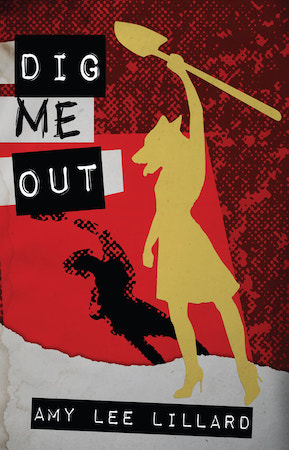
In my new story collection, Dig Me Out, I focus on women filled with anger. And often, that’s older women. When women reach forty, our culture tells us we’re no longer sexy or fertile, not as sweet and pliable. We’re worthless. It’s maddening and infuriating.
Books so often fall prey to this cultural bias by centering young characters. The older women that are featured are minimized, made cute, feisty, or harmless. They accept the imperative of our culture, swallow any anger they might have, and push themselves to the sidelines.
But these seven books celebrate the older woman that defies logic and bias. They won’t go quietly into oblivion. They won’t disappear, and in fact, insist on being seen. Even if that involves letting their anger out. Even if it involves violence.
A gruesome story with a beautifully self-aware narrator, one who knows the violence and cruelty behind men, and haute cuisine. And she will use her knowledge to make her true mark.
On the first night we meet Dorothy, a renowned food critic in her 50s, she’s picking up a younger man at a bar. After a few wild weeks together, she brutally kills him. But not just that: she slices off pieces of him and makes him the centerpiece of her fancy dinner. The rest of the story is spectacularly visceral prose charting the evolution of a truly wild and dangerous woman.
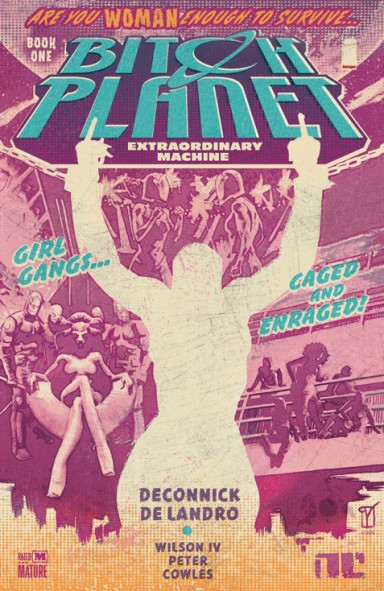
A graphic novel set in the future, this book creates a world of our biases turned fascist. “Non-compliant” women in this story are sent to the Auxiliary Compliance Outpost—a distant Bitch Planet. These are women who are deemed too old, too worthless, too crazy, too dark, too much by the ruling group called the Fathers. On Bitch Planet, overseers require the inmates to participate in an insanely violent game called Megaton for their enrichment. But the older women, the weirdos, the incorrigible, and the deviant will team up, break the rules, and take down the system. Funny, campy, and gloriously gratuitous, this quick read is filled with beautiful, badly-behaved bitches to celebrate.
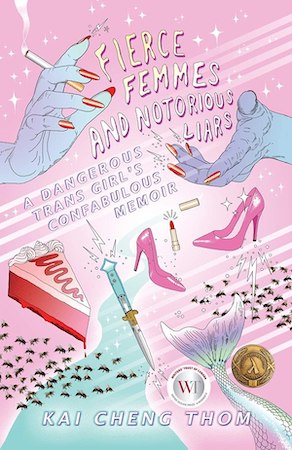
A young Chinese trans girl runs away to a magical city and finds her chosen family: a group of femmes living and working in the Street of Miracles. The family is led by older women: Kimaya, spreading love to her girls and teaching the lessons of age, and Valaria, the goddess of war, pissed off by years of men behaving badly, and ready for revenge. When one of the young girls is murdered, the group forms a vigilante gang, fighting back against the corrupt cops, violent johns, and transphobic assholes that frequent the Street. Is the violence justified and sustainable? What is it doing to them? Can they ask for a better future? The older women will lead the way.
One night Chris and her husband meet Dick. Unexpectedly, desperately, she falls in love. So begins an obsession, with Chris inundating Dick with her affection, initiating disastrous rendezvous, and otherwise blowing up her life. As the men around her cry “crazy,” Chris follows her unfathomable desire to where it will lead. That may be called behaving badly. It may be crazy. But it’s real.
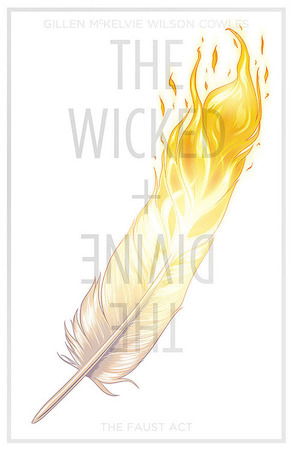
This graphic novel features The Pantheon, a group of 12 young people who discover they’re actually very old reincarnated gods. And now, in new and youthful bodies, the older women will take full advantage, creating fame as rock gods and modern uber-celebrities. They’ll be dead again soon; why not behave badly? The older women reincarnated as young women are selfish, mean, and domineering. And they fascinate in their sheer audacity to live boldly.
Miranda was once a budding actress with an adoring husband. But an injury gave her chronic pain that no doctors could fix (and most didn’t believe). Now in middle age, she’s teaching in a mediocre theater program, miserable and desperate. Until she meets three men at a Scottish bar who teach her a neat trick: the ability to transfer her pain to others. A woman in pain won’t be believed, so why not act out? Why not hurt others to free yourself? The book embraces these ideas in a wonderfully witchy (and Shakespeare-infused) way.
After losing her parents at a young age, Joan has spent her life pursuing men. Especially the married, rich men that serve as father figures. She trades her youthful looks, her body, her emotional labor, for a sense of protection and care. But as she ages, things grow desperate.
When one of the delusional married men kills himself in front of her, she flees. And in California, she discovers her dormant, lifelong rage at men is demanding to come out. This is an intensely deep and nuanced look at a woman who defines herself with men and against women. But with age, with the withering of all her tools of youth, she accesses both a murderous anger and a shocking capacity to love. And with both, she’ll never cede the floor.
The 1999 Video Music Awards were operatic by design: In honor of the burgeoning new millennium, MTV rented out the grandest of all possible venues, the Metropolitan Opera. Under the sputnik chandeliers, host Chris Rock joked (presciently) that he was the first Black man to be onstage at the Met without a mop. An opening number featured the mashup of Carl Orff’s Carmina Burana and Kid Rock’s Moonman-nominated “Bawitdaba.”
And, of course, there was Britney.
Had she been a debutante in lieu of a pop star, 1999 would have been Britney Spears’s coming-out season. Her maiden single, “…Baby One More Time,” debuted at the end of 1998 to near-instantaneous media saturation. Her pigtails—secured in fuzzy pink, chastity-belt scrunchies—bounced in time to the music. Her midriff-baring Catholic schoolgirl skirt swayed lasciviously in the music video. When she sang that her loneliness was killing her, it came off as coyly ironic, even smug, in the face of her ubiquity. At least, that’s how it seemed to me, a cynical teenager cast more in the mould of Daria than TRL.
Still, I remember those VMAs. I’d grown up with opera. I loved its grand gestures and sweeping emotions. I also still had one foot in the world of Billboard 100, even though my tastes ran more towards Beastie Boys and Hole.
Underneath my black hair dye and oversized turtlenecks, I saw Britney for who she was: she was no Violetta.
I remember the ad campaign that MTV ran in advance of the broadcast. The glossy photos, scattered between pages of Entertainment Weekly, Rolling Stone, Twist, and YM featured a baby-faced Britney alongside legends like Janet Jackson, David Bowie, and Madonna. Paying homage to that year’s venue, each star was photographed in costumes that recreated the look and feel of an opera. Jackson was Cleopatra in Handel’s Giulio Cesare; Bowie was Mephistopheles in Gounod’s Faust; Madonna, that most Italianate of all divas, was Bellini’s Norma.
Britney had been dressed up to look like Violetta, the synonymous heroine of Verdi’s La Traviata and a character oft-recycled in pop culture (see: Julia Roberts in Pretty Woman and Nicole Kidman in Moulin Rouge). Here was her narrative: Despite being a courtesan, Violetta was a “good girl.” A romantic, just doing her best in one of the two roles available to women in 19th-century Paris. Underneath my black hair dye and oversized turtlenecks, I saw Britney for who she was: she was no Violetta. She was a Carmen, the titular seductress of Bizet’s opera who gyrated her hips and might feign innocence but in actuality knew exactly what she was doing.
The photo itself gave it away: Britney looked out of place, a plastic deer caught in the headlights of a more sophisticated art form. Her face was overly made up, thick rims of black eyeliner that shouted “anachronism!” against the rest of the set pieces, all meant to evoke a 19th-century Parisian salon. In a pair of lace gloves, fingers cut off, she held an oversized handkerchief, the must-have accessory for all tuberculosis-ridden courtesans of the era. It was clear to me that she had no idea what she was doing. She was a black hole cinched into a corset and crinolines.
Perhaps Spears was more consumed with surviving the opera than merely seeing it. For all of its grand gestures, and sweeping emotions, opera’s ability to sting, subjugate, shatter, and smother women is far more inconspicuous—and insidious. For an art form that is often criticized for being nothing like real life, the way that opera undoes women (as feminist philosopher Catherine Clément once described it) is surprisingly true to lived experience. Take Spears: in the span of a year, she shaved her head in a Tarzana beauty salon, attacked a paparazzo’s car with an umbrella, and initiated a custody dispute that resulted in six police cars, a helicopter, and a fire truck descending upon her house and an involuntary hospitalization.
Traviata is one of the best examples of this invisible hand doing artisan-level work. As a girl, I watched the action play out on a set of velvet fainting couches and crystal candelabras. I romanticized Violetta, wanted to be Violetta—the courtesan who lived a life of pleasure and excess, trading it for true love, only to die tragically of tuberculosis in the end. I was around the same age when, sick one night at my grandparents’ house, I asked my grandmother if I “had what Violetta had.” (I’d thought that my stomach bug was consumption.)
To some, they were toxic. To others, they were lucky. To everyone, they were stars.
Everyone romanticized Violetta. Courtesans were the highest rung on the ladder of sex work in their time; mistresses to dukes, generals, and (in the case of Madame de Pompadour) kings. They were worldly and beautiful, refined yet unabashed. Rather than abandon the traditional role of womanhood in that time, they subverted it. They traded on their sex according to its market value, sure, but they did it for liberty rather than security. To some, they were toxic. To others, they were lucky. To everyone, they were stars.
Still, as Verdi intimates in the opening act of Traviata, Violetta could still cry, cry, cry in her lonely heart. A great lover, she had yet to know great love. At the end of that first act, her party guests dispersing as dawn breaks, she sings that she is a poor, lonely woman abandoned to the wasteland of Paris, fated to the vortex of fame and pleasure until her last breath. But then she meets Alfredo, a bourgeois, naïve young man who is new to Paris and in love with Violetta beyond commercial interest. Perhaps she can, in fact, escape the vortex.
Verdi became interested in the plight of the “fallen woman” (a literal Traviata) after scandalously taking up with soprano Giuseppina Strepponi out of wedlock. However, he didn’t invent the story entirely on his own; it was based on the novel and subsequent stage play by Alexandre Dumas (the younger), La dame aux Camélias. Dumas, in turn, based the story on his affair with real-life courtesan Marie Duplessis, though the term “based on” does a lot of work here, turning Dumas’s alter-ego into the selfless hero for trying to rescue a fallen woman (while being part of the same system that issued the push). Nearly 170 years later, Alexander Chee would restore some balance to this story with his subversive, antiheroic Prussian tenor in The Queen of the Night, whose attempted proto-conservatorship of the novel’s heroine, Lilliet Berne, backfires—quite literally.
Her father gave her the news that he had accepted this recommendation on Britney’s behalf. She cried for an hour.
The Mickey Mouse Club is about as far away from the Parisian demimonde as you can get, and yet Britney’s own trajectory is not so different from that of Violetta’s—or Duplessis. Spears was 16 when she signed her contract with Jive records, roughly the same age that Duplessis was when she reached the upper echelons of Paris’s sex industry (two years after her father first began prostituting her to older men). The way Duplessis was financially “kept” and overtly sexualized by men many times her age isn’t that far off from the way male record executives marketed Spears and her music career: equal parts spun-sugar and sex. Both women also saw their abusive, alcoholic fathers take active roles in their careers: In reading Spears’s testimony of her father’s conservatorship abuse, my mind immediately went to Marin Duplessis selling his 14-year-old daughter to an octogenarian man in their village and eventually abandoning her in Paris.
In her testimony this summer before a Los Angeles probate judge, Spears likened the cycle of nonstop work, which was orchestrated by her father, to sex trafficking: “Making anyone work against their will, taking all their possessions away—credit card, cash, phone, passport—and placing them in a home where they work with the people who live with them.” She testified that she had worked nonstop between 2014 and 2018, first in a Las Vegas concert residency, then on a three-month, 31-show US tour. She had been forced on pain of legal action to go back to Las Vegas for another residency. When she said she needed a break, her psychiatrist put her on lithium and recommended a custom, private rehabilitation program in Beverly Hills that would cost Spears $60,000 a month. Her father gave her the news that he had accepted this recommendation on Britney’s behalf. She cried for an hour. He “loved every minute of it.”
A father factors into Traviata as well, though it’s not Violetta’s. Instead, it’s Alfredo’s father, Giorgio Germont, who meets Violetta at the cottagecore arcadia the pair have run off to. They’re in love—real, non-transactional love. But Alfredo’s father needs her to abandon the relationship: It’s all well and good for a man of his standing to have a dalliance or two. But this affair, held out in the open, masking itself as a respectable, loving relationship, had begun to threaten the family’s social status. Violetta, without much of a choice, relented, weeping over the loss.
“Cry, go on and cry,” Germont consoles her. “I know I’m asking you to make the greatest sacrifice.” The words are sad, perhaps contrite, even. But the cloying melody he sings is a different tune: Germont is happy and satisfied. He gets exactly what he wants, and loves every minute of it.
Much like Alfredo’s own vindication at Violetta’s downfall, we were, in 2003, thrilled to see an over-hyped starlet get hers on primetime TV.
Alfredo is unaware of this exchange that takes place between his father and his lover. Violetta leaves him a note, explaining that she’s returning to her old way of life, hoping that this will deter him from trying to win her back. Instead, Alfredo tracks her down at a friend’s party. Calling all of Violetta’s friends and admirers into the salon, he says that, as her former lover, it’s time for him to pay his debts, and asks everyone to be witnesses as he pays her back. He throws a fistful of francs into Violetta’s face, a symbolic insistence that their love was nothing more than economics and that she was nothing more than a prostitute. Violetta crumples.
In Britney Spears’s 2003 interview with Diane Sawyer, which was excerpted in this year’s documentary Framing Britney Spears, Sawyer gravely informs Spears that she must ask her about her 2002 breakup with Justin Timberlake. Spears accepts this with the demeanor of a penitent at confession.
“You did something that caused him so much pain, so much suffering,” Sawyer says with a slightly pained expression. “What did you do?”
When the 22-year-old Spears demurs, visible tears in her eyes, Sawyer presses on: “But you said, ‘I’ve only slept with one person in my whole life, two years into my relationship with Justin.’ And yet, he left the impression that you weren’t faithful, that you betrayed the relationship.” Britney, her chin resting in her right hand, responds: “I’m not technically saying he’s wrong, but I’m not technically saying he’s right, either.” She then turns to the camera with the same doe-eyed daze on her face that is seen in her Violetta portrait. “This was really awkward,” she says, without a trace of humor.
To paraphrase John Berger, we’re rarely, if ever, able to reconcile what we see with what we know. Much like Alfredo’s own vindication at Violetta’s downfall, we were, in 2003, thrilled to see an over-hyped starlet get hers on primetime TV. It was a similar gleeful schadenfreude that made her very public breakdown just four years later as compulsively watchable as Dynasty. As Variety executive editor Ramin Setoodeh told the New York Times, it was an era in which it “was almost like a sport to watch a woman self-destruct.”
It was an opera.
It’s easy to forget the humanity in that girl, and to think of her more as another role.
Years after watching Britney sing “…Baby One More Time” onstage at the Metropolitan Opera, I heard director Jonathan Miller speak about Traviata. He had just helmed a production for the Glimmerglass Festival in upstate New York: a staging that featured Violetta almost completely immobile in the final act. It’s there, on her deathbed, that she reunites with Alfredo in a swell of romantic crescendo. Their eyes lock and they cry out to each other. Yet Miller didn’t play this for romance, didn’t give in to the music video cinematography or caramelized sentiment. I asked him about this choice.
“Have you ever seen a late-stage tuberculosis patient?” Miller, who had also been a physician, asked in return.
I had not.
“They aren’t running halfway across a stage,” he explained. “She’d be lucky if she could get out of bed. And when Alfredo enters, he probably would have been shocked by the state of her room. It would have stank. She’d probably shat herself.” I think of all the times I’ve been in hospitals, even the nicest ones. There are still colostomy bags and biohazard bins. Little about death is dazzling. Little about watching women self-destruct is entertaining, especially in 2021.
At 14, it’s easy to think that a 17-year-old knows exactly what she’s doing. It’s easy to see her squeezed into a corset, hair full of ostrich feathers, and feel more protective of the ostrich feathers than the 17-year-old girl wearing them. It’s easy to forget the humanity in that girl, and to think of her more as another role. It’s only now, half a life later, that I realize how powerless all 17-year-old girls are. How such powerlessness obfuscates the adult men hidden behind the curtain.
Like Alfredo, we’re now realizing what has transpired offstage. The punishing work schedule Jamie Spears forced on his own daughter has been revealed. That Spears was forced onto birth control by her conservatorship is now public knowledge. As she said in her July 14 hearing, she thought they were trying to kill her.
Of all the songs in the Britney canon that resonate a bit differently in light of her recent court testimonies, I’m most struck by the operatics of 2009’s “Everytime.” Spears plays a version of herself in a storyline that feels heightened, baroque, and grotesque. She arrives at a hotel in a limo mobbed by fans and photographers, bathed in a sickly, acidic green light. She makes it through the crowd, though not without a few bumps and scratches, and moves through the bowels of the hotel’s back-channels in order to make it up to her room, fighting with her boyfriend the whole way.
Once in her suite, she gets into the hot tub, and notices the blood running through her hair — one of the blows from a rogue paparazzi camera. Her eyes roll shut as she slips under the water. Cut to her boyfriend discovering her unconscious body. Cut to the paramedics wheeling her out, fans still brandishing glossy magazines in hopes of an autograph. Cut to the doctors trying, and failing, to revive her. No glamour, no glitter. You can almost smell the latex and rubbing alcohol.
And then, in the final seconds of the video, we see Britney emerge from under the jacuzzi water, smiling with the carefree joy of an Herbal Essences ad. No blood, no hospital. Had the entire thing been a fantasy? If so, for whom? A public clamoring for women to come undone for their own entertainment? Or a woman sick of being the entertainer?
Well before the plague of 2020 and what would turn into the loneliest years ever in America and elsewhere, Kristen Radtke began working on her graphic nonfiction meditation, Seek You: A Journey into American Loneliness. There is perhaps no book that is more perfect reading for this time—and the post-pandemic one on the horizon somewhere out there. You might be familiar with Radtke’s delightfully intimate and public visual-prose takes on New York life from TheNew Yorker’s Page Turner dating back to 2017, as well as from her previous stint as art director of The Believer magazine’s singular look.
In Seek You, Radtke draws readers raw into loneliness, and all its various individual and public facets, and dives us into a sizable chunk of scientific research about the topic of disconnection. Amongst the latter, include her imaginings of the terrifyingly cruel experiments of Harry Harlow, the psychologist who studied isolation and maternal deprivation using monkeys. Radtke wonders: “Did he take some pleasure in watching their suffering?” This thread had, for me, the echo of a (much lighter) observation that Radtke makes earlier in the book. She notes that having observed “companionless strangers,” loneliness might exist mostly in the eye of the beholder. “Perhaps we see loneliness in others to feel less lonely ourselves.”
I spoke to Radtke about her the very Americanness of being lonely, the special brand of pandemic loneliness, and her buoyant hopes for the world’s reconnection post-pandemic.
J.R. Ramakrishnan: You have great titles (Radtke’s first book Imagine Wanting Only This). You explain the first part in the book but I’d love to hear about the “American” specificity in the second half of the title.
[Americans] are more likely to be suspicious of variables or of people they don’t know. They don’t recognize themselves as a part of a community.
Kristen Radtke: For a long time, I had a working title of Essays on Loneliness. I knew I needed “loneliness” in the title but I didn’t know what it was going to be. One of the opening anecdotes in the book was about amateur radio operators who make a “CQ call,” which is a call outwards over the airwaves to make a connection with basically anybody. Just like, “Hey, a call for anyone who wants to talk to me!” I think we all need to make that sort of antidote for our loneliness.
On the American part, I felt like there was a specific way I wanted to address the problem of American loneliness, of how we feel so much separateness. We don’t have a lot of community centers or gatherings anymore, but we do have our big yards and so on. I’m actually arguing that this separation is one of America’s downfalls.
JRR: You hit upon two things that quite define America, guns and driving, and how these things relate to loneliness.
KR: Loneliness is a very difficult way to quantify. There are ways in which scientists determine whether or not a person is lonely. There are surveys where you answer these questions where you rate how you feel and so on to see if you are certifiably lonely or not. Of course, not everyone is taking these surveys so it’s hard to say where loneliness rates are. But we can say that a lot of people live alone and they’re less likely to involve themselves in communities. And then, in places where you need to drive, we are very separate from one another since we spend most of our time in our cars. And then, gun violence is part of that kind of separation that we feel in America in that there are different value systems around guns. It’s such a dividing line: us versus them, which is a very dangerous thing.
JRR: You also speak about the community that incidents of gun violence create. In the book, you reflect on the 2017 shooting in Las Vegas and how the community came together, and how this happens with mass shootings in general.
KR: Yeah, we do. We come together to comfort one another, very obvious, but it’s also about creating this sense of [feeling like] we are separate from this tragedy. We’re kind of like a warm bath.
JRR: The line where you say that guns are the ultimate separation was so powerful. You also talk about your husband being a gun owner. From the outside, guns seem foundational to America. Going from that, can we also say that loneliness is foundational to America too?
One of the difficulties with loneliness and one of the reasons it is so painful is because it can feel like a personal failing.
KR: I think you’re exactly right. There’s this idea of you must protect your lands and that kind of thinking about separation by definition and expression. In America, people are more likely to be suspicious of variables or suspicious of people that they don’t know. They don’t recognize themselves as a part of a community. The bad analogy is like they talk about with garbage removal, you want to create a pathway for the truck to go all through the neighborhood. Also when you’re planting flowers in your yard, you should think of all the other yards. But we don’t do that. I think it’s true for a lot of wealthy countries that you have to stand on your own two feet. You’re not really standing on your own two feet. You are part of a network. Everyone needs one another to survive, and not just that, but to be happy and thrive.
JRR: I thought it was very cool to see loneliness and your different explorations in images. This book is so deeply reported, and I am curious if you ever considered writing a regular prose book?
KR: Yeah, I mean basically I’ve never written anything particularly long in prose. I might write a script that I’ll later illustrate. I think any graphic novel could be in prose. I don’t think that the graphic novel is a superior form in any way. It’s the form that makes the most sense to me as an artist.
JRR: When were you loneliest in 2020?
KR: Well, 2020 was, of course, it was probably the longest loneliness. To me, this felt like a kind of a different kind of loneliness because it was imposed upon all of us. One of the difficulties with loneliness and one of the reasons it is so painful is because it can feel like a personal failing. Why didn’t I do a good enough job of finding a family or building up a network of friends, becoming popular, or whatever?
However, during the pandemic, we have been all alone or in our little isolated pods. I think, especially at the beginning there was something of a solidarity or a sense of camaraderie, which started to change the idea of loneliness for a lot of people. That wore off as time went on and people got worn out. What I think is valuable about this time of loneliness is that it has been exposed as a problem. But it’s not like there’s a solution to be had during a pandemic when the solution is something that could kill you.
JRR: What do you do when you feel lonely?
KR: I try to deal with it by doing something different. Like I will send 700 text messages to see who wants to go do something. Loneliness, though, can sometimes be hard to distinguish between like a regular kind of listlessness, or like, what are they saying that we’re gonna experience after the pandemic: languishing. That’s the thing for 2021, we are all languishing. When I feel a twinge of dissatisfaction, it feels a lot like loneliness. Then, I’ll try and do something that will be a guilty pleasure. But generally, I try to reach out to another person.
JRR: I thought it was interesting the part where you cite an MIT study about mice going into overdrive after isolation. Is this what maybe the rest of 2021 and perhaps more likely 2022 in America (at least) is going to look like? There’s a lot of people talking also about post-Pandemic awkwardness.
KR: Yes, I keep seeing articles about people fearing or having social anxiety. And that is really emblematic of what it’s like to be isolated. Socializing isn’t awful. You’re just out of practice.
The thing about the pandemic, it’s maybe trickling out. It’s not like there’s going to be one day where we all throw open our doors together, and know it’s done. But yes, when this is over, I am hopeful for the idea of a new Roaring Twenties. I want us to go all out! I want us to be together all the time!
To grant Mercedes’s wish, we had to find this old priest in a cheap resort town called Tecolutla; if I was okay with it, the we should include me. Or anyway, that’s what Manuel told me over the phone that morning. “She wants you to be there,” he added. He told me how things had gone the night before when they all got back to his apartment from our final planning session at the Hotel California. The argument started innocently enough. He and Tommy had needled Mercedes about this baptism business. Why expose Tita to anyone official in Mexico, they argued. The fewer to know about her before she crosses, the better. Wouldn’t there be a document certifying the rite? Couldn’t the certificate of baptism later be used against them? Or, might it not work the other way? Wouldn’t a priest require a birth certificate to perform the ceremony? And in that case, how would it be possible to find a priest willing to baptize the child on such short notice?
This had all sounded like bullshit to Mercedes. She felt ganged up on. She told them flatly that she didn’t care what the rules were, and she didn’t care about anything so petty as the bureaucracy behind a birth certificate. What was that in the face of a child’s soul? What was that in the face of performing a rite that that been performed on every single member of every single child in her family, going back as far as the time of the mixed-race great-grandchildren of Cortés? “Híjole,” she had said, “my mother and father would have wanted this!”
This, the trump card.
Tommy and Manuel let it drop. Tommy explained to his father: the only reason she’d ever gone to America—Louisiana, at that—in the first place was that her mother had been murdered when she was a girl. “At the Acteal massacre,” he said. “The one at the church in the jungle. The day her husband disappeared. Her parents, they were churchgoing people. Very devout.” And so, on Mercedes’s behalf, at Tommy’s begrudging behest, Manuel was calling to see if I would come.
“Where is Tecolutla?” I asked. “And why there? Why not here, in Poza Rica?”
“An hour away. My mother had me baptized at the church there. The same old priest still runs that diocese,” he said. It was the only religious place in the world, he reasoned, where his name might have any pull, where he could ask a priest to do something like this. He’d made a few calls and arranged for the old man to perform the ceremony.
What was that in the face of a child’s soul?
We took off late that morning, scrunched together in Manuel’s truck, four of us in a row with the baby on Mercedes’s lap. The truck’s cabin jostled us about as we rolled over uneven roads with holes from where the rain had washed them out. The road cut through tiny towns carved out of the jungle that surrounded us. Every few miles, a street side vendor sold something preposterous—pickled chicken necks, Batman action figures, always Coca-Cola—at the spots where the traffic had to slow to pass over earthen speed humps. Tommy asked Manuel about Tecolutla. As Manuel responded, Mercedes asked Tommy to take the baby, but he paid such close attention to his father that he didn’t notice her. She turned to me then. Gladly, I accepted the child.
We came out of the jungle on a road that ran along the Gulf. Suddenly we were in a dreamworld version of Mexico where the sea sparkled as the sun rose high in the sky. Where the paper flags hung over the streets promised cheap fun. Where even the fun didn’t need to be taken seriously. Souvenir vendors populated street corners, holding up PVC piping from which hung luchador masks and huaraches, plastic skeleton dolls and crucifixes with the puncture wound in Jesus’s side bleeding down his ribs. Manuel fended them off with waves of his index finger. We turned on a road that went up a hill away from the sea. As we climbed it, banana leaves brushed against the chassis. At the top, an adobe church looked down on the hill from its perch, its coral window treatments and white bell tower pristine in the sun. To the side of the church stood a small office painted the same colors. The town looked nothing like the wasteland of Poza Rica, where I’d arrived the week before from Cameron, Louisiana, to consult with Manuel on his waste oil treatment business. He pulled his truck into a parking spot and we got out.
“This is some place,” Tommy said. “You sure you don’t want to just stay and live here, sweetie?”
Mercedes looked at him like a petulant child.
“My mother used to take me here from Veracruz once a year, on my saint’s day,” Manuel said.
As Manuel reminisced, Tommy listened like the son he was. Mercedes glanced around, pleased with the look of the church. We walked in a motley caravan through the portico and into the rectory’s lobby. There, a woman in a blue blouse and jeans welcomed us and spoke to Manuel. I looked around at the pictures of Juan Diego and la Virgen de Guadalupe on the walls. Eventually, an old priest donned in black emerged from the hallway and waved us to the back with a kind smile. As he led us down a hall, he put his arm around Manuel and spoke to him fondly. I couldn’t understand their words, but it seemed like the old man was asking about Manuel’s mother and father. The priest put his arm gently on Manuel’s shoulder as they reminisced. We came to a conference room, not unlike the one at the Hotel California, except for its bookshelves, which housed endless volumes of hymnals, stacks of musty missals, framed photos of priests posing with important-looking people. The priest asked us to take a seat. At that point, he recognized me for the gringo I was: “I see we have an American, yes?”
I nodded.
“Welcome,” he offered. “My name is Father Antonio.”
“Keith,” I said, and extended my hand.
“Where are you from, Keith?” Despite his brown skin, he had no trace of an accent.
“Denver.”
“Ah, Denver. I was there once, in 1993. Do you know the Cathedral Basilica of the Immaculate Conception? The one on Colfax Avenue?”
What could I say? “Yes. My parents were parishioners there.”
“Ah!” he said. “And so, did they baptize you there?”
“I don’t know,” I said.
“Well, you might remember that in 1993, Pope John Paul came to Denver. Our bishop granted me a dispensation for the travel. Lovely city, Denver.”
“Yes, it is,” I said.
“And we have a little one here, yes?” He turned to Mercedes to decipher whether she was following his English. Seeing she wasn’t, he returned to Spanish. Because I couldn’t understand his words, I focused on his continental air. With his shock of white hair and gnarled hands, he looked feeble, but judging by his smooth face, it seemed impossible that he was old enough to have baptized Manuel. Tommy and Manuel and Mercedes took turns speaking to him, and he acknowledged them with soft nods. Despite my lack of Spanish, he made eye contact with me as much as the others as he spoke. He rose when he finished, and we all took his cue. He led us back out into the portico, and as he made for the door, he spoke to me again: “We’ll see you in just a minute,” he said, and then he was gone.
Are you ready to help the parents of this child in their duty as Christian parents?
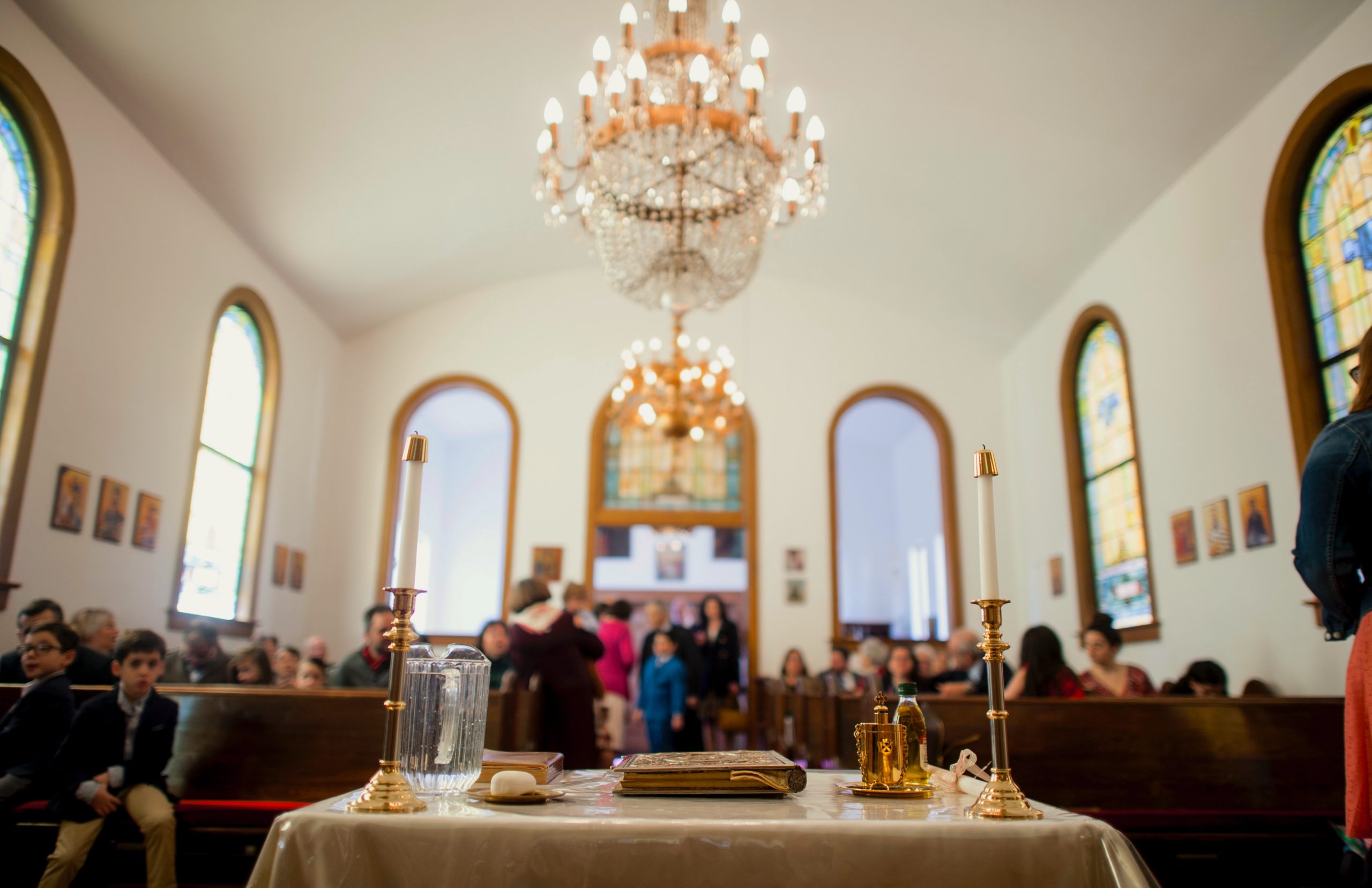
As we entered the church, its size and quiet signified its holiness. Up in front, an old woman knelt before a votive she’d lit to the side of the nave. When she heard us close the massive wooden door with a creak, she didn’t move. We walked down the center aisle, my hard-sole shoes clicking and echoing in the vast, high-ceilinged space. The midday sun shone brilliantly through the stained glass mural behind the altar. Shafts of dust swirled in the sunbeams and made the shadowed portions of the church seem darker than they were, the votives’ red holders more reverent.
As we reached the front pews, Manuel genuflected and made the sign of the cross, a begrudging nod to old childhood traditions. Tommy did the same, with all the tactlessness of youth. Mercedes made the gesture in the manner of a believer, even as she held the child in her arms. I awkwardly imitated her and took my seat. We sat in silence, waiting. The old woman kneeling in front of the candles arose and crossed herself. As she turned, I saw that she held a rosary. She walked past us on her way out, and as she did, she smiled at me and patted me on the shoulder.
Mercedes knelt beside me and mouthed the words to a prayer in Spanish. Tommy and Manuel both held the same seated posture— slumped, hands in their laps, heads tilted up, both staring straight ahead at the engravings etched into the stone pulpit before them. I marveled then at the art’s detail: human figures gestured to each other and upward at heaven, signs and symbols aplenty in the smooth stone firmament above. The stained glass windows featured on every wall revealed that same level of embellishment. Each one had a mural with a story on it: Jesus at the well with the Samaritan woman, a flock of sheep and their shepherd, John the Baptist visiting Mary and Joseph for the first time since the Savior’s birth—each of them, I imagined, the work of an artist or a believer, a penitent or a craftsman, or anyway someone who wouldn’t have considered the role that oil might have played in its construction.
The massive wooden door squeaked open behind us and I turned to see. Father Antonio stood at the precipice, donning a green vestment that covered his collar and his black shirt. He held the same expression as before, but the garments transformed him. His walk exuded authority. When he extended his arm high to wave at us, the cloth came with it and created the illusion of a wing running from his wrists to his hip. He no longer appeared as a man Manuel had called for a favor. Master of this space, he acknowledged me. I bowed in his presence.
As he approached us in the first pew, Mercedes stood up with her child. The rest of us followed suit. Father exchanged whispered words with Mercedes, and she nodded her head at his explanations. After draping a folded white cloth over his forearm, Father Antonio turned to me.
“So, you will be the godfather?”
I’d been dense enough not to fathom my official role in the ceremony.
What else could I say? “Yes, Father,” I replied.
“All right then. Are you ready?”
We walked up to the baptismal font on the right of the altar, a marble monolith filled with holy water. As Father Antonio crossed in front of the tabernacle, he bowed deeply. Not wanting to mess anything up, I followed suit. We gathered round the font. Father Antonio lit the paschal candle beside it and started to recite a prayer from a book held in his hands. Occasionally, he looked up to prompt Mercedes and Tommy for a response, and they gave it. Entranced by the rhythm of his speech and my own remove from the Spanish he spoke, I didn’t recognize when he was talking to me. At least not until he paused, and the silence held long enough for me to look up and see that he was smiling at me patiently.
“I’m sorry, Keith. The question was, ‘Are you ready to help the parents of this child in their duty as Christian parents?’”
“Uh, yeah. Sí,” I said.
He went back to Spanish, continuing the rite. When he paused for a response, Tommy and Mercedes echoed my words: sí. And later again: sí. Soon enough, because I kept thinking of the word I was embodying—godfather—I thought of the scene in the church whereMichael Corleone’s niece is baptized, and only because of that could I decipher the words that Father Antonio must have been asking us all: Did I reject Satan and all of his works? Sí. I thought of a movie thug pulling the trigger on courthouse steps. Did I reject all of his empty promises? Sí. I thought of migrants crossing the border even in that moment. Did I believe in God, the father almighty, creator of heaven and earth? Sí. I thought of my uncle, who raised me. Did I believe in Jesus Christ, his only Son, our Lord, who was born of the Virgin Mary, was crucified, died, and was buried, rose from the dead, and is now seated at the right hand of the Father? Sí. I thought of my own dead father, the picture of his kind face in Uncle Stock’s house. Did I believe in the Holy Spirit, the holy Catholic Church, the forgiveness of sins, the resurrection of the body, and life everlasting? Sí. And I thought, finally, of Tita, the child cradled in the priests’ arms, the American ita of Poza Rica, the fragile soul whose body I would ferry across the Rio Grande and on to New Orleans in the coming days like some kind of fucked-up saint.
Remember last year, when everyone suddenly got really into baking sourdough bread and sewing their own clothes and making so much jam that there was a national jar shortage? Those were the days of cottagecore, a romantic aesthetic that valued pastorals and strawberries and wicker picnic basics. The popularity of the cutesy cottagecore has since given rise to a similar but opposite aesthetic: goblincore.
Goblincore is like cottagecore’s grimey, grungy little sibling who won’t stop flipping over rocks in the backyard to find cool bugs. Some of the tenets of goblincore include: embracing the parts of nature that aren’t traditionally beautiful, like moss, fungi, and toads, reframing clutter as curated collections, living a more sustainable life, and being anti-capitalist. Basically, goblincore is a big middle finger to a lot of modern society’s ideas about what makes a good life. If any of this sounds good to you, then you might just be a goblin—and, as a goblin, you’re sure to love these goblincore books.
This slim fiction volume is what I like to refer to as “sci-fi goblincore.” The book is set in a world very similar to earth, which used to be highly industrialized and relied on robots for manufacturing—until one day, the robots suddenly gain consciousness and leave human society to live in the wilds. Hundreds of years later, a monk named Sibling Dex is struggling with a quarter-life crisis and decides to explore the wilds, where they almost immediately meet a robot who wants to learn about humans. Wild Built is anti-capitalist, anti-gender, and beyond charming. Read it if you want your goblin heart to be warmed.
Braiding Sweetgrass author Robin Wall Kimmerer has also written this goblin-friendly book that tells a personal and scientific history of mosses through a series of linked essays. Moss may not always be traditionally beautiful in the way flowers are, but in this book Kimmerer explores the ways that mosses can teach us how to live better lives, and how mosses, like us, are at their best when they’re tangled in the lives of others.
This intimate, aesthetic graphic novel probably isn’t like any fantasy you’ve read before, because it’s focused more on the relationships between the characters and quiet moments of growth than it is about conquering heroes and epic battles. When Sanja, a peasant girl with a talent for sword fighting, is kidnapped by Lelek the witch, she’s frightened at first. But as time goes on and the two search for the missing half of Lelek’s soul, they begin to fall in love. An emotional, queer fantasy story about witches, swordswomen, and love—what could be more goblincore than that?
In this novel-cum-beastiary, the fictional Chinese city of Yong’an is a place where humans coexist with spirits and monsters. The narrator is a cryptozoologist who takes up the dangerous task of indexing all the different types of beasts that live in the city, some of whom live happily beside humans, while others are more hostile. As the narrator learns more about the creatures that inhabit her world, she also learns about herself—and what’s more goblincore than finding yourself in the strange and unexpected?
We live in a society that highly values the capitalist ideals of productivity positivity above personal care and mental health. That’s why Wintering is such a relief, and why it’s a wonderful goblincore book. In her book, May encourages readers to embrace the periods of sadness and quiet that often punctuate our lives. Rather than arguing for positivity and telling readers to work through the pain, May takes the radical stance that sometimes we just need to rest and lean into our fallow times in order to learn about ourselves, which is a message goblins can get behind.
This lyrical essay collection written by poet Nina Mingya Powles explores grief, growth, and the ways water binds us together. Small Bodies of Water is about Powles’ childhood spent between New Zealand, New York, and Shanghai, and the search for nature in a time of climate loss and increasing urbanization. What does it mean to connect to nature while living in a big city? How much nature do you need to be around in order to be “in” nature? From ponds and pools to food and family, water offers us so much, and it’s always at our fingertips. This book embraces the goblincore idea that nature is everywhere, even if we don’t always recognize it.
A young witch, Nova Huang, works in her lesbian grandmothers’ magical bookshop and spends her days learning about magic and hanging out with friends (so, basically the dream). That is, until she finds out that her childhood crush, Tam Lang, a nonbinary werewolf, is back in town. The two must work together to understand Tam’s werewolf magic and get them out of the trouble that’s been chasing them—while also falling in love, of course. With a fun, diverse cast of characters, this graphic novel celebrates differences and uplifts the stories that don’t always get told. That’s goblincore as hell.
Every goblincore reading list worth its salt must have a mushroom book, and Entangled Life is a great mushroom book. This book really explores the question “What the hell is going on with fungi?”, a question we should be asking ourselves every day, since fungi can both digest rocks and survive in space. Mushrooms don’t typically get a lot of love unless they’re Disney-fied amanitas, but Sheldrake explains that nearly all life on earth relies on fungi in one way or another. Basically, without fungus, there would be no us. Embrace your goblin nature and dig into some fungus literature.
This book needs to be included because Howl is truly the goblincore prototype: A weird guy who collects all kinds of strange objects, does questionable magic, loves spiders, and hates cleaning. It’s a lovely book about friendship and the importance of human connection, but mostly it’s a book about how goblins are really good at finding each other and bad at tidying up (Sophie being the exception that proves the rule). If you’re a fan of the romantic Studio Ghibli movie adaptation, be sure to read this novel, where Howl is not a dope bird-creature in his spare time, but rather a Welsh rugby thug.
I first discovered Sally Rooney’s novels at a time in my life that felt practically written by her. I was nineteen years old, out of college due to Covid-19, and living in a house with my two closest, most complicated female friends. When we weren’t talking in circles about life, politics, sex, and the world, I was exchanging long emails with my highly articulate, highly confusing college crush, rekindled after months of separation—at whose recommendation I purchased Normal People. I read it, and then Conversations With Friends, and like seemingly every twenty-something on BookTok, I faithfully ordered Rooney’s internet-breaking new novel Beautiful World, Where Are You.
As a college student, Sally Rooney’s novels about women my age growing up and falling in love often speak to me on a spiritual level. I find her work enjoyable and relatable, if not groundbreaking. Rooney writes exclusively about white, pointedly thin, elite-educated women with miraculously attractive lovers; I’m not like them, but I’m invested in them nonetheless, which is due in part to Rooney’s storytelling gift, as well as the fact of my limited media options. I don’t expect Sally Rooney to write an experience closer to mine; she knows her niche, and she’s nailed it. But when I witness Rooney’s massive hype across the media and internet, I can’t help but chafe against her literary empire’s assumption of relatability and universality—one that is only afforded to white narratives. The way that Rooney is often celebrated, or at least discussed, as the voice of her generation, has never existed in the same way for readers and writers of color.
When I witness Rooney’s massive hype across the media and Internet, I can’t help but chafe against her literary empire’s assumption of relatability and universality.
To me, Rooney’s novels belong firmly in a contemporary female coming-of-age canon that spans artistic mediums, from films like Lady Bird to shows like Fleabag and musical artists like Lorde. A refreshing departure from traditional male coming-of-age stories, this canon centers female sensibilities, sexuality, and even social awareness. It’s so popular that it’s spawned its own archetype of TikTokgirls who listen to Taylor Swift and carry Normal People in their tote bags. If you are an angsty white girl seeking media representation, there’s never been a better time to be alive. But if you are a girl of color like me, you’re more pressed for options—while authors like Akwaeke Emezi, Carmen Maria Machado, and Jacqueline Woodson are writing us gloriously into narratives, few of them receive Rooney levels of hype or status. For a time I wondered: Where are theNormal People of Color? But after seeing Rooney recently break the Internet (again) with her third novel, I realized we might never be permitted to do the same—and this is by design.
Much of Rooney’s winning literary formula simply isn’t available to writers of color. White writers are permitted to use social justice as an intellectual experiment and aesthetic element in their novels, to a degree that writers of color could (and would) never. Rooney is a self-proclaimed Marxist, a fact that sits uncomfortably beside her literary empire, and her characters loudly debate inequalities in class and gender, and more rarely race. Other critics have derided the “self-awareness” that plagues the politically earnest characters of the Rooneyverse, or else defended the ironic juxtaposition of the characters’ sweeping ideologies and trivial lives. Self-awareness is a particularly prominent trait in the emerging genre of “internet novels,” a genre synonymous with white women novels such as Lauren Oyler’s Fake Accountsand Patricia Lockwood’s Nobody Is Talking About This. While novels written by authors of color, such as Kiley Reid’s Such a Fun Age, also comment on the thorny nature of communication and identity formation online, theirs are less likely to be recognized and labeled as groundbreaking. Meanwhile the fictional renditions of internet discourse populated by Rooney’s characters, and others like them, feels particularly pessimistic and whitewashed, detached from the digital ecosystem innovated by Black people, queer people, and people of color. The literary world doesn’t seem ready for those perspectives—at least not yet. Further missing from this discourse is an acknowledgement that writers of color have written self-aware protagonists for far longer, with far less fanfare—self-aware in that their narrators are conscious they are living as marginalized selves, regardless of whether they speak it aloud, on every single page.
Fiction by younger writers is increasingly confronting our society’s impending doom; “general systems collapse,” as Beautiful World, Where Are You protagonist Eileen puts it, is a lauded theme of Rooney’s work. But the indulgent hand-wringing embodied by Rooney’s solipsistic young scholars is reserved only for privileged, urban white characters—similar to the protagonists of Oyler and Lockwoods’ novels, as well as of Jenny Offill’s Weather. I think of why white women flock to dystopian novels like The Handmaid’s Tale, featuring horrors, such as enslaved conditions or deprivation of reproductive autonomy, that have actually, historically been inflicted on women of color: for them, existential threat still remains firmly in the domain of fictional imagination. Characters of color don’t spend the same time nursing existential malaise, because they’re more likely to be on the front lines, with less time to wax poetic. Of course, Rooney’s characters are self-aware enough to know that. “Of course in the midst of everything, the state of the world being what it is, humanity on the cusp of extinction, here I am writing another email about sex and friendship,” says protagonist Alice in Beautiful World, Where are You. (Movingly, rightfully, she adds, “What else is there to live for?”) Still, for white women only recently made aware of injustice through the internet, social issues are mere fodder for conversations with friends. For characters of color, they are reality.
Characters of color don’t spend the same time nursing existential malaise, because they’re more likely to be on the front lines, with less time to wax poetic.
Writers of color have long been aware of how universality is granted automatically to our white counterparts. It’s a miraculous, contradictory blessing—white characters are viewed as individuals, rather than representatives of an entire community, and yet their experiences are meant to speak for us all. Rooney writes about experiences that I suspect many readers will only believe if the characters are white, such as chronic miscommunication, glamorous self-sabotage, and endless navel-gazing, passing it off as a universal experience. As a reader of color, her characters’ moments of self-absorption and privilege are jarring reminders to me that we are not the same. Rooney’s characters pursue affairs and break hearts, while attending elite schools, working prestigious internships, publishing bestselling novels, scoring magazine features. It’s not that girls of color don’t get into messy situationships, pity ourselves amid our success, or string one another along—I can personally attest that we do—but it’s hard to imagine white readers suspending their belief to stick around and see themselves in us. Novels like Elif Batuman’s The Idiot, Ling Ma’s Severance, Jean Kyoung Frazier’s Pizza Girl, Raven Leilani’s Luster, and Candice Carty-Williams’ Queenieare all excellent, complicated coming-of-age or millennial narratives that hold their own against Rooney’s in terms of content and craft. The Idiot even contains miscommunication, pining, and emails at an elite university. But objectively speaking, none of these have gotten the same levels of attention.
While Rooney’s characters insist on their normalcy, girls of color are not treated with the mundanity that makes us appealing to mainstream audiences. The double standard is particularly thorny when considering how authors of color are also assumed to be writing from real life. The reality remains that coming-of-age narratives by people of color are considered racialized works first, and coming-of-age narratives second. The writer Brandon Taylor, reflecting on why there are no Black existentialist novels, or novels of consciousness, or internet novels, posits: “If such a thing existed, would we even be able to point our finger to it? Would we even be able to recognize it as such?” At the moment, the answer seems to be no. Identity is self-directed performance art for Rooney’s protagonists, but it’s an impassable burden on characters of color. Our works become must-reads during ethnic history months, windows into specific communities, but very rarely more.
Since it’s rare that I find stories with protagonists exactly like me, I’ve learned to find elements of belonging in a wide range of narratives.
Relatability is a tricky concept for me, given the politics of who is assumed to be universally relatable and who is not. While I do read novels to expand my worldview—fiction is a brilliant tool for building empathy and understanding with people with different backgrounds—more often I’m looking for relatability and representation in my reading lists. As a first-generation American, as well as a young queer woman, I often turn to fiction for much-needed guidance on how to exist, which is why I adore coming-of-age novels in the first place. When I’m older I’d love to write an accumulative, indulgent, listless coming-of-age story of my own where the girls are smart and earnest girls of color, and readers relate to and root for them even when they don’t save the world, when all they do is think and hurt and love. To me, relatability is a necessary and valid metric to help decide which books to read, love, gift to all my friends. It is also a fluid, elastic metric. Since it’s rare that I find stories with protagonists exactly like me, I’ve learned to find elements of belonging in a wide range of narratives. I still read more white authors than any other race. This flexibility towards representation is expected from readers of color, but never demanded of white readers. And this expansive, inclusive approach towards relatability is what I’m still seeking from white people with cultural power. I love reading about sad white girls, but will sad white girls ever love reading about me?
I adore Rooney’s earnest, unsparing female gaze, how she writes with a seriousness that young women’s intellectual and romantic lives are rarely afforded. But I reserve the right to critique the literary ecosystem that nourishes her at the expense of others. I am still awaiting the day that girls of color get mainstream coming-of-age stories that sell a million copies; when we’re finally viewed as normal people, and we get to take the lead.
Look at the Edinburgh Postnatal Depression Scale and you’ll find statements like “I have looked forward with enjoyment to things” followed by four multiple-choice options: “As much as I ever did,” “Rather less than I used to,” “Definitely less than I used to,” or “Hardly at all.”
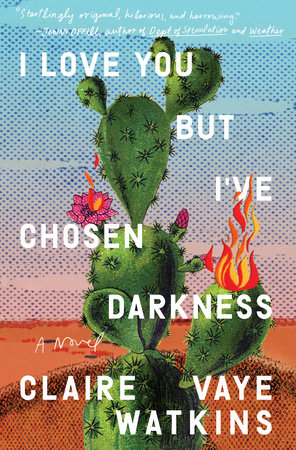
When the narrator, Claire, of Claire VayeWatkins’ newest novel I Love You But I’ve Chosen Darkness takes the quiz after giving birth to her first child, she and her husband ruminate on how reductive the questionnaire is. Where is there an option for more enjoyment than ever? Why is there no room for participants to express complicated feelings? Theo, the narrator’s husband, suggests she should write a short-answer response. And so, she breaks the form of the survey open.
This leaving-behind of multiple choice answers and prescribed narratives does not only apply to the narrator Claire’s response to the postpartum questionnaire. Instead, it’s a fitting way to describe the novel. Claire Vaye Watkins uses transcriptions of her deceased mother’s letters, excerpts from her deceased father’s memoir and voice recordings, and a fictionalized account of narrator Claire leaving her daughter and husband behind for a romp out West. There, her alter-ego Claire confronts parts of the past that continue to haunt her: the ghosts of her parents, her past, and what the land once was.
Over the phone, Claire Vaye Watkins and I spoke about the cultural expectations that come along with motherhood, surreal landscapes, the power—and limitations—of witnessing, and what it means to feel joyful even while tortoises are being bulldozed in the desert.
Jacqueline Alnes: I’ve read many books where male narrators abandon their responsibilities and pursue pleasure, it is rarer to find a novel where a woman permits herself to do the same. What was it like imagining these sort of transgressive possibilities?
Claire Vaye Watkins: It was extremely freeing, a real libertine exercise, and completely pleasure-driven—eventually. Once I figured out that the narrator is me and she is not me, and I was not going to punish her or drown her, then things started getting really interesting.
I started having really great conversations with other women writers. I remember talking to Jill McCorkle at Bennington about how she had, decades before, written a little piece for the Times about an alternate ending for The Awakening. I found that and I realized that’s what this book is. It’s using the refusal as a form. I think it’s interesting to write a character like Edna today, without the powers or limits that held her.
JA: That opening toward freedom seems to come from motherhood itself. Claire writes:
“Motherhood had cracked me in half. My self as a mother and my self as not were two different people, distinct.”
This book, to me, was in part about the expectations placed on women to be good mothers or desire to mother, as well as what it looks like to resist that. Even thinking about the postpartum quiz that opens the book, I started to think, maybe this is a normal reaction to giving birth? Like who’s to say what’s “normal” in this completely body-opening, life-changing experience?
CVW: Yes. The questionnaire is the first thing I wrote and it’s based on a form I was given when I was a few weeks postpartum. I know enough about the history of mental illness in my family to know that I should expect to be met by depression at major life changes. But I noted in the postpartum questionnaire that there’s no option “Better than ever!” or “I am more alive now than ever,” or “No big deal, I just split my body in two and part of it is breathing and eating food that I’m making with my breasts!” It’s insane. There isn’t room in our cultural context for it to be profound and transformative in a very real way.
We don’t get to develop bodily knowledge because our bodily realities are denied, or ignored at best.
I was thinking about Joy Williams, The Changeling, which got panned early on because it’s about pregnancy and birth and magic. Karen Russell wrote an introduction when Tin House re-published it, and she shared a story about how, after giving birth, she was having visions. I was like oh yeah, definitely. Russell’s introduction and Williams’ book gave me permission to name things really plainly rather than relying on language like what’s in the postpartum depression questionnaire.
JA: I loved the way you capture the postpartum experience through surreal elements that started to feel real, like the teeth in the vagina. I read them and started thinking, well maybe they are real. And I liked doubting myself, as it made me think about why I care whether things are “real” or not.
CVW: I love that you experienced it that way. I’m obsessed with the surreal, and what’s real, and what counts as real. It helps that I read a lot of Louise Erdrich really early, and think about what she has said about being described as a surrealist or a magical realist when she’s actually just depicting her version of reality.
Surreal things happen all the time. You can grow a cyst that has hair and teeth while you’re pregnant, which is bonkers, and we don’t pay much attention to it. We only mapped the clitoris a couple years ago. All of those rationalists, they cut open bodies, and they never found the clitoris. There were theaters where people watched bodies get opened, and everyone was like, “This is science.” But no women are allowed in the Royal Society. They don’t get to say, “When I do this, this feels tremendous.” We don’t get to develop bodily knowledge because our bodily realities are denied, or ignored at best.
JA: I read an interview between you and Megan Culhane Galbraith where you describe her work as “genre-fluid.” While reading I Love You But I’ve Chosen Darkness, I thought a lot about genre and the truths we might be able to access by imagining slightly alternate realities. How would you describe your novel in terms of genre, and what did this form allow you to access that you might not have otherwise?
CVW: I think of it as using the truth as a form. I was thinking about stuff I read as a young reader, like Kurt Vonnegut. The first line of Slaughterhouse Five is “All this really happened.” It’s the oldest trick in the book, saying things like this book washed ashore or I found this book in a bottle. It was fun to explicitly invite that confusion, in a playful way.
That line you brought up about motherhood splitting Claire open into two people, I hope, indicates that there are multiple selves and that Claire keeps multiplying. That corresponds with different formal decisions. This is a long way of saying that the form and the function have an important relationship to each other. The story of a self in a culture of avatar-ing yourself all the time and confessing publicly all the time to no real audience, it’s an interesting wrinkle. I think the internet means that we are all much more interested in autofiction.
JA: You mention that you felt like you co-wrote the book with your parents because of the time you spent with their materials. The novel features letters written by your mother, Martha Claire Watkins, from the 1970s, and you include excerpts and references to your father’s memoir, which he wrote about his time with the Manson Family. What did that process look like for you, and were there parts of them you were able to access through reimagining their lives in fiction?
The process of witnessing is medicinal, but I don’t know if it costs Exxon any money for me to write a beautiful sentence. Direct action is important too.
CVW: It was a long, long process and it was different for each of them. For my dad, it was a lifelong process. He died when I was six. I have hardly any memories of him, but I have a lot of material culture that features him. I came of age with the internet, so I had a lot of weird, amateur websites and different spooky recordings I would download and I read Helter Skelter way too young. I could sense that it was an inadequate portrayal of him, like it was the shadow of the thing I wanted. I have been polishing that wound my whole life. I wanted for my dad to get to live beyond 40. I’m 37 now, and I think that’s very chilling. Zooming out on his life in the book allowed me to see that his death was because of what was in the rocks, and environmental injustice, and the fact that we have dropped over a thousand nuclear bombs over our own country. Talk about surreal.
My mom’s was a shorter thing. Just like in the book, someone did mail me her letters. It happened to coincide with a residency I had in Marfa. I was just going to try to read them and build a character from her voice, but I started writing down choice lines and realized it was every line. I started dictating them. I would wake up really early and sit in this beautiful office and do the talk-to-type speech reader a couple times and then I would write it, too. It might have been boring except these were my dead mother’s letters. She died when I was 22, so I have a lot more life to be complicated about than I do with my dad. The letters helped remind me that she was once a girl and I was once a girl. I was an egg in my grandma’s ovary when she was working at Caesar’s Palace and watching the nuclear bombs. Bless her.
JA: In terms of paying attention, we have to talk about the descriptions of landscape in your novel. I just read a profile of Alexandra Kleeman where she’s talking about how nothing can really be more surreal than California. There’s nothing you could write that’s wilder than reality. How did you approach writing about the landscape, the ecological horrors, the beauty out West?
CVW: Kleeman is totally right. Our stories are from the land. These conditions that are changing right now have never changed before in the history of our storytelling. Like when we say we have new weather, that’s really a new everything. If you believe in renewal and rebirth and then the desert stops getting rain, what does that do to your philosophical approach to healing? If you’ve been trained to honor the landscape with your attention, you notice when a landscape is not well. Right now, I’m looking out from my bedroom. I have five acres of creosote and then much more beyond. The creosote forest is my first landscape and I just can feel that it’s not healthy. The bushes are shrunken and brown. The Royal Society confirms; instead of dying off like trees, they shrink. They make themselves small. There’s something really sad in it. New weather needs a new way of writing about place.
I’ve read a lot of placeless fiction. One way to cope with the collapse of the ecosystem is just to not see it and look at your phone instead or to say that a story happens anywhere. But that’s impossible. It’s crazy how much so-called “realism” doesn’t have a landscape, a weather. Instead of being ahistorical, a story becomes alocational. It makes it so you don’t have to think about the history of place or what is currently happening.
JA: Do you feel like paying attention and writing notes down is an act of resistance to what’s happening in our climate?
CVW: I think most of us have something we can do—writing is one of mine. But writing doesn’t feel adequate enough. I spent the morning working on an op-ed and that feels a lot more like actively resisting than literary fiction. The process of witnessing is medicinal, but I don’t know if it costs Exxon any money for me to write a beautiful sentence. Direct action is important too.
JA: The environment shapes the lives of everyone in the book, in both terrible and joyful ways. There are references to pollution from corporations, unusable water, and ecocide. There are also moments of tenderness: Claire bathing her body in the springs, or Martha tending to her gardens. How do you conceive of the relationship between people and the earth?
CVW: The sadder and more grief-stricken I feel, the more triumphant I think it is when you love someone or love yourself. The moments you mentioned are perfect examples, but also all of the masturbating and the sex, that’s all happening while tortoises are being bulldozed down the road. That’s not a metaphor. There is a big population problem so wide swathes of desert are just getting bulldozed and monocrops of my favorite crops—that puts me in a pickle—are getting put in, along with pesticides. The water table is dropping. It’s not a subtle landscape. The reason my stuff is so cranked up is because it feels to me like the land is sort of screaming.
You know that thing Joan Didion wrote about Georgia O’Keefe? About how gallerists in New York would look at O’Keefe’s landscapes and say that she didn’t have a good grasp of color until someone finally came out to Ghost Ranch and said, “Oh you do know color. It’s just that we do not know color.” A lot of the writers I like are doing the language equivalent of that.
JA: And it brings us back to motherhood: who have historically been the people giving language to the experience of birth? Who has had the power to name and diagnose and categorize experience? It hasn’t been women.
CVW: It was literally illegal to talk to each other about birth and people were literally burned for it. What replaces it today is the market—babycenter.com advice or books or blogs or memes, rather than a human woman-to-woman ancient wisdom passed down. It’s not unlike loving stolen land. It’s a complicated legacy and it’s difficult to sit with it, but when you do, everything makes more sense. I feel less insane when I’m watching the bulldozers somehow. And then, of course, I always have the dream of putting sugar in the gas tank.
I originally just started writing this book for myself, like diaries, and then I expanded who I envisioned who would read it to my two siblings. I thought maybe I’d answer the question: What happened to us?
Outside the Piggly Wiggly, I spotted my mother by the cart corral. It had been a long time since we’d seen each other, and when she called to me, she couldn’t remember my name. “Kate,” I reminded her, but maybe I went by Katie or Katya. Even I wasn’t certain. Even then, parts of myself had started to fall away. I was surprised to see my mother had already lost parts of herself: an arm , an ear, and a breast, all on her left side. Her nose had started to peel, and the tip of it hung loosely from her face, fluttering. I couldn’t help but stare. My mother said, “Go ahead.” She laughed as I took her nose between my thumb and forefinger and tugged. It felt like peeling a label from a sweaty bottle without leaving behind any residue. In other words, it felt immensely gratifying.
My mother’s nose drifted like feathery paper to the ground and turned to ash. There remained only a slash of nothing from her right temple to her left upper canine, and I recoiled.
“This is the way of things between mothers and daughters,” my mother assured me, but she looked at me as though I were a stranger promising violence. Careful not to step in the voids in the pavement or through the black portals hung aloft in space, she retreated into the disappearing lot. I never saw her again.
Years later, I ran into an ex-boyfriend at a house party in Winston-Salem. Most of the roof had been torn away, letting in the starlight. The pendulum of a grandfather clock swung in a blank upon the wall.
“Hey,” I said, cornering him by the fireplace, willing my heart to cease fluttering so cruelly, so visibly through the gap in my chest.
“Kathy?” he said squinting. “Kathleen?”
Once the polite type who would have pretended not to see that thumping, exposed muscle, he now reached for it and tore right through my center. My hip and groin fell to the floor and turned to ash. My remaining leg was attached by my slivered left side.
“I’m so sorry!” he said, surprised. “I couldn’t help it!”
Before I departed that night—tipsier than I ought to have been, as I hadn’t yet learned to rebalance—I kissed him lightly on the cheek.
“I forgive you,” I said. “Isn’t this how it goes between ex-lovers? Exactly this?”
I turned forty-five, and the bitterness of still filing my taxes, still ticking that box—single—had only just begun to fade. I couldn’t find a job because most office buildings had been entirely stripped away. I left North Carolina to range the countryside on a single leg, across farmland and prairie, where there were fewer people to tear apart the world. But I wasn’t the only one who’d headed west. There’d been many before me, an endless parade, the scrub kicked into clumps with darkness gaping between the footfalls. Even out here the sunset hung in tatters like wallpaper in an abandoned house. Flags snapped in the peevish wind. Pumpjacks rocked into the voided earth and unglimmered tailings snaked along unrivered canyons. I’d staggered across a thousand blanked miles when at last I met a bird undirectioned by the weakening pole. It chittered accusingly at me from above: Look at how it is. Look at how it always has been.
Still I wandered.
I wandered until I was ancient and hardscrabbled, and at first I thought I was dreaming the young girl, who danced in a field of blank.
“Karlee!” I called to her, but the name felt wrong in my mouth. Was it my name? I tried to raise my hand, but I didn’t have one. I tried to stumble her way, but I no longer had any legs. By this time, I was only an eye, an ear, a lip, a furrow of brow.
“Katrina!” I tried. The girl looked my way and ambled over. Unlike the other people I had seen in recent years she was whole, with full, ruddy cheeks and a sprinkle of freckles across the bridge of her nose. She was so new.
“Hi, Mom,” she said shyly. She waved me closer and so I tipped my brow, eager to gaze upon this odd girl, desperate for the shine of faded sunlight on her hair. She cupped both hands around my ear and whispered something into it. I couldn’t make sense of the words although I knew she told me something both strange and amazing about this world that had nearly gone blank, for in it she bore witness to things I could no longer see.
When she hushed, I looked into her eyes. I smiled with my half-lips and told her the way of things between mothers and daughters.
She took the edge of my face in her fingers—and pulled.
When most people think of the Caribbean, they think of paradise or of poverty. One goes to vacation there or one donates to charities in the aftermath of hurricanes, earthquakes, fallen governments. It’s often difficult to entertain the notion that nations of the Caribbean contain more nuanced histories and communities than these two monikers suggest.
Haiti, for one, was the first independent nation in the region, the result of a long-waged war against French colonial powers from the end of the 18th-century into the early years of the 19th: Napoleon Bonaparte’s only other military defeat aside from Waterloo. The Haitian Revolution served as inspiration for many enslaved and colonized people throughout the Caribbean, the Southern United States, and Latin America. In Trinidad & Tobago, it fueled the “70s Revolution” as Black and South Asian citizens of the newly independent nation sought to affirm themselves. When I was born in Port-au-Prince in 1970, this illustrious history was obscured by the terror-filled reign of the Duvaliers, and has been made even more obscure today, after military interventions, assassinations, and two devastating earthquakes eleven years apart that have shaken Haiti’s fragile infrastructures to their core.
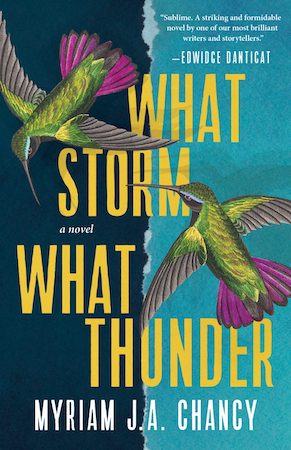
Like other Caribbean writers before me, when I wrote What Storm, What Thunder, a fictionalized account of the 2010 Haiti earthquake, in which over 250,000 people died, it was with the intent of creating a space within which the aftereffects of a long and complex history of both triumph and mismanagement could be peeled back to reveal its human pulse. My goal—through the voices of ten distinct characters and their very human response to calamity—was to illustrate both the beauty and the pain of what it might mean to be Haitian, especially in the shadow of a national catastrophe. My novel seeks to draw from Haiti’s contemporary history as much as it does from principles of vodou spirituality and community, like the konbit, or concept of collective good.
I also draw inspiration from other Caribbean writers, especially Caribbean women writers, who also seek to illustrate the wide range of human experience from perspectives particular to their home islands. The Caribbean writers I love to turn to, for escape, to learn, offer more than postcard versions of the Caribbean—they polish their memories like precious gemstones to reveal the multihued perspectives of Caribbean people in all aspects of their lives as they weather loss and love and strive for belonging within their home islands or in exile from them.
Paule Marshall’s classic tackles themes of lost love, ideals, and spirituality in the journey of her African American protagonist, Avey (short for Avatara) who finds herself compelled to leave a cruise ship in the middle of the Caribbean. Disembarked in the small island of Carriacou, Avey recovers her African roots through local traditions like the “drum dance” and recalls traditions from her childhood in Ibo Landing in Georgia. Fleeting references through sub-headings and epigraphs to Haitian vodou relate the story to a wider web of African retentions through the Francophone Caribbean.
Heading South by Dany Laferrière, translated by Wayne Grady
In a series of interrelated stories, Haitian Canadian writer Dany Laferrière chronicles the transactional and parasitical nature of relationships between local Haitians eking out a living in service industries and foreigners coming into Haiti during the Duvalier régime. The stories were made into a film starring Charlotte Rampling, focusing on relationships between foreign women who, while on vacation in Haiti, take Haitian male lovers without concern for their tenuous lives beyond the enclave of resort hotels.
In a series of interrelated short stories, Reid-Benta tells the story of Kara, a Jamaican Canadian girl, torn between her desire to escape the authoritarianism of her grandmother’s household and wanting to still belong to the Jamaica of her mother and aunt, to which she only returns periodically.
Told in multiple voices, Condé’s tour de force novel re-imagines the entire history of the Caribbean through a wake given for a Cuban man, Francis Sancher who landed in a small village in Guadeloupe where he takes on many lovers as well as enemies. Haunting them all is Xantippe, the Haitian, who lives at the crossroads, where life and death come together and split apart.
In this novel, Douglass weaves an indelible tale of Jamaican life from a deeply spiritual perspective, as she fictionalizes Rastafarian history into a tale for the ages. Bob Marley is reincarnated as a homeless man, Fall Down, who might be a Jamaican Everyman. An unknown deaf woman, Leenah, once Marley’s lover, is a seer who extrapolates the meaning of unexplored spaces between life and death. Told through multiple perspectives, including those of children, and what Douglass calls “bass riddim,” the author brings to life the rhythms of reggae through its many incarnations through her very prose.
Much of Caribbean fiction attempts to retell effaced aspects of the history of the region; Haitian American author Edwidge Danticat does just this in a tale of an orphaned Haitian girl, Amabelle, living in the Dominican Republic at the time of the Trujillo regime and who must return to Haiti as a young adult in order to flee the 1937 massacre ordered by Trujillo in the border region between the two countries. Though a fictionalized account, the novel brought the massacre, which wiped out thousands of Haitians in the border zone, to broader light.
Moonbath by Yanick Lahens, translated by Emily Gogolak
Yanick Lahens—perhaps the best known Haitian female writer writing in French today—won the 2014 Femina Award for this experimentally voiced novel which introduces readers to aspects of Haiti’s colonial and postcolonial history by following the life of Cétoute Olmène Thérèse and that of other women in her family through three generations.
Winner of the 1997 Commonwealth Book Prize, Earl Lovelace’s Salt is the story of two Trinidadian men, one educated and the other not, both striving for the freedom of their people through very different avenues: education and sports. Told through the lenses of community members surrounding both men, the novel weaves a sonic tapestry of shifting narrative voices and linguistic registers that illustrates a world coming into its own within the context of Caribbean postcoloniality.
Blue by Emmelie Prophète, translated by Tina Kover
Haitian writer Emmelie Prophète’s Blue tells the story of a young woman who reflects on her life story and those of her mother and aunts as she leaves behind Haiti for parts unknown as she transits through Miami. Her memories are saturated with impressions of blue, from the color of the waters surrounding Port-au-Prince to the poignant nostalgia of her memories of a country and community she loves but must leave in order to have a better future.
The long-awaited prequel to The Sopranos,The Many Saints Of Newark, will be released in theaters and on HBO Max (where it will be available for 31 days) on October 1, 2021. This news has made fans rejoice; despite the fact that The Sopranos ended its run over 14 years ago, this television show about the deterioration of America, mental health, strained and extremely difficult family relationships, trust, betrayal, and the decline of organized crime, has retained its cultural relevance, especially considering the current state of the world.
Tony Soprano, the show’s star, is a lazy, depressed sociopath who always gets what he wants. Tony’s litany of sins is too extensive to recount, but his therapist summed it up best as: “You’re not respectful of women. You’re not really respectful of people.”
No one seems able to escape Tony’s orbit; characters repeatedly double down on organized crime rather than disrupt their cozy lives.
No one seems able to escape Tony’s orbit; characters repeatedly double down on organized crime rather than disrupt their cozy lives. See for example Christopher Moltisanti’s decision to turn on Adriana rather than follow her into witness protection. Recall Vito Spatafore’s decision to return to mob life rather than work a nine-to-five. Consider Carmela’s entire marriage.
The psychological burden of bearing this moral rot is akin to the misery the average person experiences every day under late capitalism’s brutality. Like the characters in the Sopranos, we are all negotiating ways to survive a soul-crushing economic system from which there seems to be no escape.
Here’s what your favorite character says about the deal you’ve made with capital and the depression that comes with it.
Carmela Soprano
Carmela resents Tony for controlling the money and therefore her. This chiefly manifests in her rage at Tony’s affairs. In objecting to his adultery, Carmela displaces her disgust with Tony’s lifestyle onto something at least loosely within her control. Tony’s failure to meet Carmela’s emotional needs is a real problem, but it’s also the only problem she’s willing to tackle because it doesn’t seriously threaten her livelihood.
You don’t like it, but you can’t break free from your patriarch, boss, or other wealthy benefactor.
If you’re Carmela, capitalism has provided you with a privileged life, but one with many strings attached and little emotional fulfillment. You don’t like it, but you can’t break free from your patriarch, boss, or other wealthy benefactor. So, you release your anger through small acts of rebellion and emotional outbursts.
Meadow Soprano
Meadow’s well aware of the ethical problems with Tony’s income, and this recognition manifests as embarrassment and defensiveness. When her boyfriend Finn tells her he’s afraid of Vito, Meadow offers a bizarre pseudo-intellectual justification of the mobster’s aggressive behavior. She deploys a similar smokescreen after Jackie Jr’s funeral when his sister coldly declares that Jackie’s fixation on joining the mafia was what cost him his life. This open acknowledgment of organized crime, in front of an “outsider” no less, causes Meadow to snap, although Meadow is surely aware that Tony was involved in Jackie’s execution.
Meadow chooses petulance when confronted with the truth about her family, which is particularly tragic because she clearly knows better. In the end, she marries a mobster’s son, binding herself more tightly to the world she seems ashamed of.
If you’re Meadow Soprano, you’re an ambitious, capable PMC striver who’s embraced the random good fortune of being born in the imperial core. Any real challenge or criticism feels like a personal attack, and so you stick close to those who understand.
AJ Soprano
Anthony Soprano Jr. is the spoiled, lazy, exceedingly sensitive breakout star of the show. The relatability of his melancholy, his difficulties finding and keeping work, his estrangement from his father, and his overall inability to function has made him popular among young people discovering the show today.
After an agonizing breakup, AJ develops a hazy countercultural politics. He frets about Israel/Palestine, United States wars in Iraq and Afghanistan, fossil fuel dependence, and the poems of “Yeets”, becoming politically engaged in a way that is emotionally paralyzing and unconstructive. His only option is to criticize his family’s indifference to issues that have little influence on their affluent lives.
AJ is the spitting image of today’s moderately politicized millennial, born into a collapsing empire with little motivation to organize for a better world. If you like AJ, you’re a disorganized radical, someone dismissed and ignored by friends and family despite being correct regarding how fucked up it all is. You cope by looking at Twitter, endlessly doom scrolling, incapacitated by the horror of it all.
Dr. Jennifer Melfi
Week after week, Dr. Melfi helps Tony improve his craft by making him more emotionally stable and strategic, allowing him to become a better mobster. Tony’s life of crime, the true source of his turmoil, is irrelevant to his treatment, and in fact, therapy allows him to justify and legitimate his choices. Only seeing Tony from afar, Melfi has the fewest reservations about working with him. For her, he’s a thrilling case study of a dangerous, troubled man.
Melfi is a comfortable, bourgeois cosmopolitan who is materially funded by organized crime. If the good doctor is your favorite, then you’re like a comfortable western academic, so abstracted from the actual struggle that criticizing society is a purely intellectual exercise.
Christopher Moltisanti
Christopher, Tony’s “nephew,” is Tony’s hand-picked successor—something both men come to regret as their relationship deteriorates. Christopher has dreams beyond mob life, dreams of working in the movie business, but he’s a made man, and once you’re in, you’re in all the way. In season six he films his first movie. It’s a supernatural revenge slasher with a staggeringly heavy-handed dig at Tony Soprano, who is so oblivious to Christopher’s feelings that he doesn’t see the parallels until Carmela spells them out.
Unlike many other characters, Christopher can’t passively benefit from Tony’s brutality while looking the other way. He actually carries out the violence that fills the boss’s pockets, then waits for the spoils to trickle back down. And it’s no bed of roses. Christopher visibly suffers in his career as a mobster, constantly enduring abuse, mockery, and exploitation even as he works his way up the ranks while developing serious problems with substance abuse. Nevertheless, Christopher never actually gives up on the mob, fantasizing about leaving but systematically sacrificing everything good in his life to stay in.
You might empathize with Christopher because you yourself are cracking the whip for capitalism, and it’s killing you.
No one respects or understands his attempts at sobriety, and it’s a lapse in that sobriety—provoked by other mobsters’ constant taunting—that gives Tony the opportunity to kill Christopher outright, for no other reason than that Christopher has become a liability.
You might empathize with Christopher because you yourself are cracking the whip for capitalism, and it’s killing you. Maybe you’re a manager or corporate executive, or maybe you’re a cop or soldier; either way, as little as you’re happy with your station and as much as it’s ruining your life, you can’t quite give up the power it brings you.
Paulie Gaultieri
Paulie “Walnuts” Gaultieri is probably the most reliable member of Tony’s crew, widely respected for his physical fitness and sense of humor. Throughout the series, things pretty much go okay for him.
If you’re like Paulie, you’re a pretty cool person who knows how to take it easy. You’ve basically got things figured out for yourself, so keep on keeping on.
So, What Now?
We’ve been pretty harsh to Tony’s entourage (and maybe to you), but it’s not like this shitty situation is their (or your) fault. Each character’s coping strategy is very relatable because coping is all they’ve been taught to do. CulturaltheoristMark Fischer argues that capitalism not only causes political instability but also psychological breakdowns and crises. Our entire political-economic system is designed to cause alienation, stress, and precarity while telling us our depression is as natural as the weather. None of us can extract ourselves from this psychic quagmire on our own – just when we think we’re out, it pulls us back in, because as awful as Tony is he also happens to be family.
The characters of the Sopranos are certainly flawed, but those flaws aren’t why they’re trapped in Tony’s orbit.
The characters of the Sopranos are certainly flawed, but those flaws aren’t why they’re trapped in Tony’s orbit. A more principled Carmela might lash out more or less or be a more conscientious realtor, but she’s still got to take care of her kids. A better-read AJ might have a sharper analysis of world events but not simply bootstrap his way out of financial dependence or mental illness. The bottom line is that all these characters are acting rationally because if any of them stood up for themselves they’d be standing alone. The same is true for most of us; if you spoke up against your shitty boss, wouldn’t you just get fired? If you tried to stop your neighbor’s eviction, wouldn’t you just be jailed? You know it’s bad, and you can see it fucking you up, but it could be even worse, so shouldn’t you keep your head down?
The problem isn’t that any of them, or any of us, are too dumb or weak or callous to escape their dependence on Tony. The problem is that none of them talk about it, build bridges to each other despite it, organize against it.
What if they did?
What the resources of someone like Carmela were channeled into mutual aid? What if the institutional expertise of someone like Meadow was utilized in a union drive? What if the AJs of the world shared their consciousness with comrades who could help them act on it? What if the theoretical knowledge of our Doctors Melfi was channeled into a movement that could act on it? What if every Chris you know just, well, quit, and put his skills and wealth to work for the good guys for once?
All of these people need each other because escaping exploitation—from either end—can only be a collective effort. None of the Sopranos’ characters could take out the boss on their own, but they all could if they worked together.
DON’T MISS OUT
Sign up for our newsletter to get submission announcements and stay on top of our best work.
YOUR INBOX IS LIT
Enjoy strange, diverting work from The Commuter on Mondays, absorbing fiction from Recommended Reading on Wednesdays, and a roundup of our best work of the week on Fridays. Personalize your subscription preferences here.