Lolita, Fashion Icon

From LOLITA IN THE AFTERLIFE, edited by Jenny Minton Quigley. Reprinted by permission of Vintage Books, an imprint of the Knopf Doubleday Publishing Group, a division of Penguin Random House LLC. Essay copyright © 2021 by Robin Givhan. Compilation copyright © 2021 by Jenny Minton Quigley.

The image of Lolita embedded in our memory is not the Lolita of Humbert Humbert, but the idea of her as etched by a fashion industry obsessed with nubile femininity.

When we think of Lolita, we see baby doll dresses, Peter Pan collars, tartan skirts, and insouciant pouts. We see long-legged, gangly young girls in short skater skirts who are a wind gust away from indecency. We see adolescents costumed in billowing evening gowns sashaying down international catwalks—rosy-cheeked representatives of an industry engaged in a billion-dollar game of dress-up and make-believe.

Lolita in the Afterlife by

Lolita is both a noun and an adjective. Lolita is both oppressive and freeing, exploitative and exploited. Lolita is complicated.

With the rise of the Youthquake movement in the 1960s, the modern fashion industry first embraced Lolita as a style icon. Youthquake, coined by editor Diana Vreeland and defined by miniskirts, model Jean Shrimpton, and the music of the Beatles, originated in England but was of a piece with the hippies and the don’t-trust-anyone-over-thirty ethos that took hold in the United States. Fashion turned its attention to the massive impact of a generation of fresh-faced baby boomers, with their cultural influence and their buying power. Before then, youth was not so much an exalted state as it was a rite of passage.

Before Youthquake, there really wasn’t much of an adolescent style—not a codified one, at least. A girl went from childhood, through a brief period of teenage angst, before turning into a miniature version of her mother.

Lolita is both oppressive and freeing, exploitative and exploited. Lolita is complicated.

In fact, the baby doll dress, which has come to represent impish sexuality, was popularized in the 1950s by Cristóbal Balenciaga—that most sophisticated of Paris’s couturiers. At the time, it was hailed as an empowering frock, one that freed women from the constraints of girdles and corsets. But the 1960s turned the baby doll dress into something else entirely. When it was worn by the era’s iconic model Twiggy, with her scrawny frame and doe-like eyes, the dress’s message became more complex. It was feminine freedom enmeshed in youthful rebellion and the sexual revolution. Young women were laying claim to their personal agency, and that included the pleasures
of sex.

In the ’90s, young women used the baby doll dress for subversive purposes. Alternative rock performers such as Courtney Love embraced it as a counterpoint to the accepted narrative about women, power, propriety, and sexuality. If the culture insisted on infantilizing women, on treating them like lesser humans, performers would turn the symbols of girliness upside down. They took to wearing all manner of babyish gear while spewing profanities and declarations of strength into a microphone.

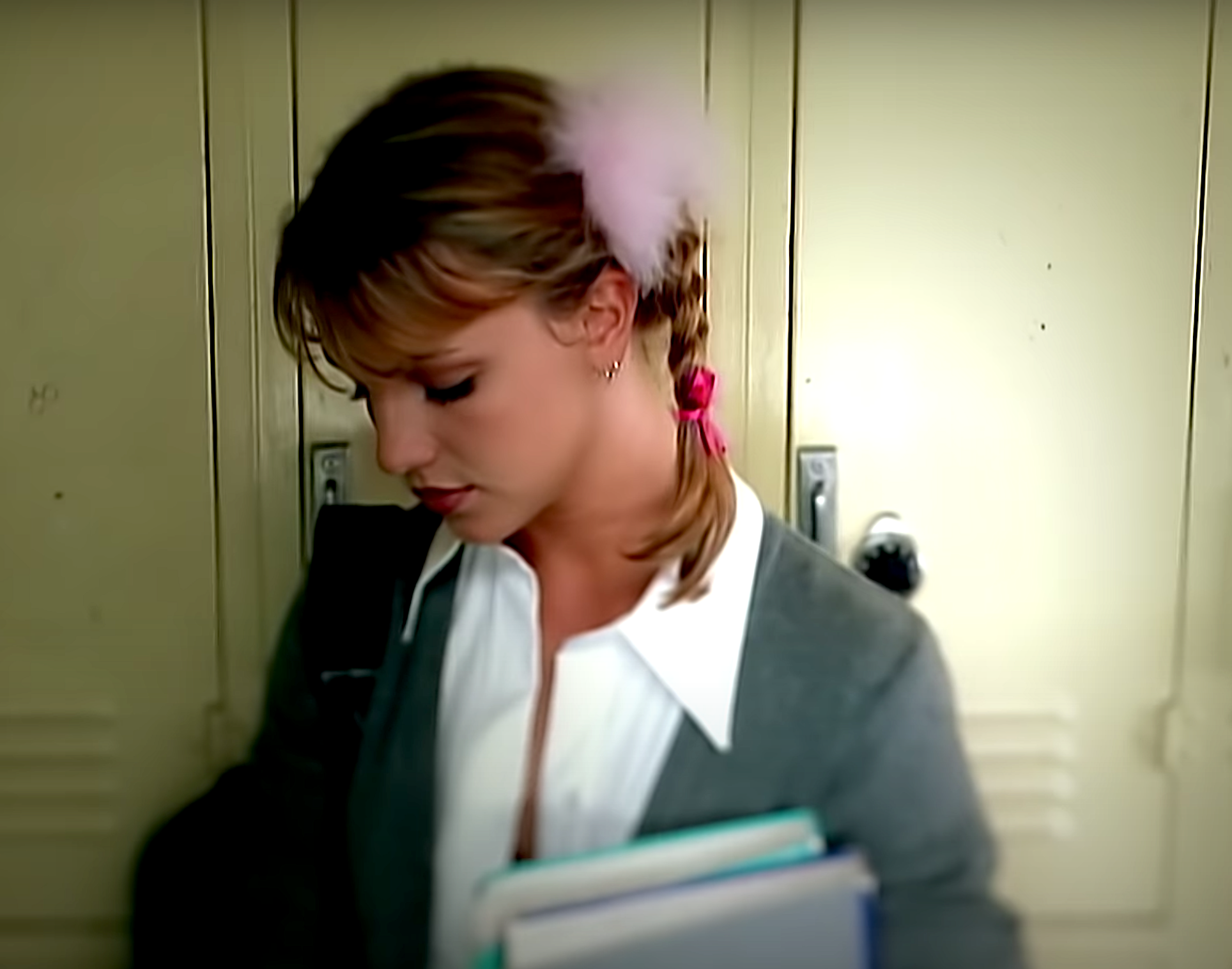
The popular culture of the ’90s painted Lolita as knowing, as self-aware—rather than as a victim. Lolita the feminist. She is not the innocent schoolgirl; she is the manipulative one. She is Britney Spears in a modified school uniform—mid-thigh pleated skirts, midriff-baring white shirt, gray cardigan, blond pigtails, and more makeup than a drag queen—wielding an invisible whip in a dance video as she sings the yearning lyrics from “. . . Baby One More Time.”

My loneliness is killing me (and I)
I must confess I still believe (still believe)
When I’m not with you, I lose my mind
Give me a sign
Hit me, baby, one more time.

If Madonna used her adult sexuality as a powerful, feminist provocation, then this early version of Spears announced that young girls have sexual yearnings that are both natural and volatile. If we consider a young girl as a full person, those desires should be addressed head-on instead of covered up, dismissed, or admonished. Spears was speaking to her young fans in a way that they understood and appreciated, but she was also exploiting the stereotypes promulgated by the male gaze. Lolita, when taken up by adult women as a public identity, can be a declaration of strength. The fascinations, frivolities, and lusts of girls deserve consideration and respect.

In Japan, Lolita girls costume themselves like Victorian dolls—like hyper-feminized children. Their play on identity
comes out of a fascination with cute culture. They eschew grown-up sexuality and the way it demands that most every aspect of their physical being be sexualized. Japan’s Lolitas situate themselves outside the realm of adulthood, using giddy girlishness as armor. When they take on this identity, it’s hard not to view them as hiding in plain sight, as hiding from the complex beauty of their own sexuality. They have ensconced themselves in another time, another age. They are giving themselves an opportunity to simply be.

Lolita, when taken up by adult women as a public identity, can be a declaration of strength.

We can’t see ourselves in a vacuum; it’s always juxtaposed with the way in which we are seen by the world. And so there is a powerlessness in the Lolita archetype, too. She is the naive child stalked by a predator, the child whose innocence has been snatched away. Recall the Calvin Klein Jeans advertisements from the mid-1990s, when adolescents were sprawled on the floor of a wood-paneled rec room. The models stared glumly into the camera, their legs akimbo—giving the viewer a glimpse of their underpants. What separated a scene of child pornography from the so-called artistic depiction of the rebelliousness of youth? Answer: A Justice Department investigation that found all the models were of age.

I have always viewed the Lolita archetype from a distance. I didn’t envy her preternatural body confidence. I didn’t wring my hands over the sexualization of her ruined innocence. I certainly never dressed up like Lolita for a Halloween party or attempted to channel her luminescence during the years when I was feeling my way toward maturity. Lolita was never a part of me mostly because she was not portrayed as Black or brown—like me. She was pale with knobby knees and rosebud lips. She was a character as disconnected from me as Snow White.

A young woman in a long blonde wig, floppy red hair bow, and a very flouncy and lacy red and white dress, doing a small curtsey
An example of Japanese “Loli” fashion. (Photo by Red Envelope Photos)

Lolita was verboten. She was not written within the context of what it meant to be a young Black girl. The culture does not see Black girls as having a fragile, dangerously irresistible beauty. And if a nymphet of color is boldly manipulative with her sensuality, willing to flaunt it with a devil-may-care attitude, she is seen as liberating herself as much as playing into historical tropes about oversexualized Black bodies. She isn’t viewed as an icon; she is a scourge.

Race is intertwined with the cultural interpretation of Lolita. She is debated and dissected because her particular beauty is valued. And the greater the value placed on it, the more I am reminded of how brown-skinned girls are discounted.

Lolita is an expression of whiteness just as surely as she speaks of youth, gender, and sexuality.

Fashion’s iterations of Lolita force a conversation not just about the way in which we treat children, allowing them—
impelling them—to grow up more engaged with a salacious world. We fetishize their immature physiques: their hipless silhouettes, breasts that are mere buds, tummies so flat as to be nearly concave. That is the shape that defines womanhood, and to grow beyond that is to grow beyond desire.

Lolita is the vehicle by which fashion truncates childhood.

Lolita is the vehicle by which fashion truncates childhood; it’s how fashion feeds off the loose-limbed lightness of youth, hollowing it out. And yet, fashion’s obsession with Lolita is detrimental to adulthood, too. It transforms adulthood into a state of stultifying obsolescence.

Lolita has 30-year-old women considering cosmetic surgery and 20-year-old women relying on social media filters to make their self-portraits more palatable. Adulthood is a kind of purgatory. Youth is a fleeting marvel.

Lolita is the emblem of one of the many style tribes that connect us around the globe. She shape-shifts based on context and consciousness. She is a reclamation of girlhood in all its complexities. She is a destroyer of innocence. She slays. She is a victim. She is fashion.

The Problem with Pop Culture’s Love of Wrongful Conviction Narratives

Wrongful convictions are a particularly American horror story. In no other country is the possibility that you might one day be incarcerated for a crime you did not commit such a pervasive and deeply entrenched part of the criminal justice system. In the United States, such convictions are not only possible but frequent. According to data from the National Registry of Exonerations, there have been more than 2,750 exonerations in the United States since 1989, adding up to a startling 24,596 years of life lost to wrongful imprisonment. In the past decade, 1,447 men and women have been released from prison on the grounds that their conviction was false, reaching a peak of 181 exonerations in the year 2016 alone. 

In recent years, countless television shows, movies, and podcasts have taken on the problem of wrongful convictions. Shows like For Life on ABC, Proven Innocent on Fox, and the Innocence Files on Netflix all center around the stories of men and women serving time for crimes they did not commit. Films like Just Mercy and Trial by Fire, as well as the popular podcast In the Dark, also focus on wrongful convictions. As more and more people begin to grapple with the crisis of mass incarceration in the United States, it makes sense that stories of wrongful conviction would capture the lion’s share of our national attention. Wrongful convictions are perhaps the most blatant example of the cruel, unreliable, and racist nature of our broken criminal justice system. They also make for unquestionably good entertainment, offering readymade narrative arcs filled with all the drama, suffering, and human redemption that audiences crave. These stories provoke necessary outrage in viewers as much as they inspire hope. At their center is the innocent hero who stoically endures unimaginable hardship only to emerge, often decades later, resilient, triumphant, and free. 

Stories of innocence and exoneration are undeniably important. But they are not the only stories that need to be told.

At a time when many Americans are coming to see policing and prisons as pressing social ills that must be seriously reformed and reimagined (if not outright abolished), stories of innocence and exoneration are essential. Exoneration narratives shed light on the startling number of false convictions plaguing our criminal justice system and bring renewed attention to the junk forensic science, institutional racism, and rampant prosecutorial misconduct that allow a wrongful conviction to happen in the first place. They can even build public momentum behind high-profile cases that might one day result in exoneration and release. Exoneration narratives encourage viewers to question the long-held belief that our criminal justice system is a finely tuned machine that functions without bias, discrepancy, or flaw. They are undeniably important. But they are not the only stories that need to be told. 


Starting with the podcast Serial in 2014 and the Netflix series Making a Murderer the following year, exoneration narratives have perhaps been the dominant story we’ve told about the criminal justice system for over half a decade. The popularity of Serial and Making a Murderer paved the way for an impressive number of other shows, films, and podcasts centering on wrongful convictions. The 50-Cent produced ABC drama For Life, which premiered in February of 2020, is based on the true story of Isaac Wright, a Black man who was sentenced to life in prison under New Jersey’s punitive drug kingpin laws. While incarcerated, Wright became a prison paralegal, representing many of his fellow prisoners and eventually getting his own sentence overturned, a reversal that rested largely on the testimony from a police officer who admitted to misconduct. The podcast In the Dark explores how racism in jury selection and the highly questionable conduct of District Attorney Doug Evans and lead investigator John Johnson kept Curtis Flowers on death row at Parchman Prison for 22 years. Ava DuVernay’s 2019 Netflix limited series When They See Us focuses on the Central Park 5, paying special attention to the infamous prosecutor Linda Fairstein, whose tough-on-crime carceral feminism helped send five innocent young Black boys to prison. Documentaries like The Innocence Files, also on Netflix, have helped to counter the prevalent “CSI effect,” or the misguided belief created by popular TV shows and movies that police officers solve rapes and murders swiftly, easily, and without error. Produced by esteemed documentarian Alex Gibney, this nine-part series slowly dispels that myth, showing the ways that debunked forensic science, unreliable witness testimonies, and deeply entrenched prosecutorial misconduct have been sending innocent people to prison for decades. 

Insidiously built into the exoneration narrative is the argument that while the innocent person clearly should not be in prison, everyone else should be.

There is a problem, however, with framing mass incarceration solely as a matter of guilt versus innocence. Mass incarceration didn’t happen because the United States imprisons too many innocent people. One wrongfully convicted person is, of course, too many. But the real problem is that the United States incarcerates far too many people, period, and incarcerates them for far too long. The truth is that most people incarcerated in the United States today have indeed committed crimes, often very serious ones. This does not make their incarceration just. Even if the United States released every person with a valid innocence claim from prison today, we would likely still be the most carceral country in the entire world. 

Most mainstream exoneration narratives, especially those on cable TV, seem progressive but are in fact only progressive up to a point. In reality, these shows, movies, and podcasts do not question the whole system of mass incarceration but rather focus on the obviously broken part of that system that allows the innocent to languish in prison while the guilty go free. Insidiously built into the exoneration narrative is the argument that while the innocent person clearly should not be in prison, everyone else should be. While vindicating the innocence of the wrongfully convicted, these narratives can also work to reaffirm the inherent guilt and badness of the incarcerated men and women who did indeed commit the crimes they are incarcerated for. 

Exoneration narratives often do very little to question the overall efficacy of extreme prison sentences or explore the various societal factors, including lack of access to meaningful employment, education, or mental health services, that might lead someone to commit a crime in the first place. Stories like For Life, In the Dark, and the Innocence Files seldom reckon with any of the major drivers of mass incarceration, such as the omnipresence of tough-on-crime political rhetoric or the rise of harsh sentencing legislation. While these stories succeed in portraying the daily brutality and inhumanity of prison life, their critique is often limited. In many popular exoneration narratives, the horrors of incarceration are portrayed as horrors only for those we have been deemed innocent of their crimes, not for all people who must suffer behind bars. Mass incarceration will continue in this country until the United States rolls back its discriminatory and excessively punitive sentencing regime and begins to see incarcerated people not as intrinsically dangerous criminals who should be condemned to perpetual punishment and suffering but as human beings who deserve a shot at redemption. 

What new stories can we tell about how and why our country punishes both the innocent and the guilty? How can we start to trouble the concept of ‘guilt’ itself?

Adnan Khan, an activist for Re:Store Justice, has denounced the presence of true crime stories in pop culture. On the night of Brandon Bernard’s execution in December, Khan tweeted, “I swear these crime shows and podcasts have perverted the hell out of society’s mind and worse, their hearts. The death penalty isn’t about the intricacies [of a] person’s case or even what they’ve done. It’s about the morality of society and our heartless need to kill people.” Khan served sixteen years in prison under the felony murder rule and has since become a vocal advocate for all incarcerated men and women through his work at Re:Store Justice. As Khan notes, podcasts like Serial take a purely procedural approach to their stories, turning listeners into investigators who can use the carefully presented evidence to decide for themselves who committed the crime.  By viewing crime through a solely procedural lens—did they or didn’t they do it?—these stories all too often fail to reckon with the morality of excessive punishment itself. 

We have always consumed stories of innocence with fascination and rage, especially when the innocent person is white. Think about Amanda Knox, or Andy Dufresne from the Shawshank Redemption. As we continue to watch, listen to, and read about wrongful convictions, it is important to ask ourselves whether this new wave of stories represents an evolution in our thinking about the criminal justice system or is simply maintaining the status quo. How can we further expand our understanding of mass incarceration in ways that work to dismantle the system as a whole? What new stories can we tell about how and why our country punishes, confines, and all too often kills both the innocent and the guilty? How can we start to trouble the concept of “guilt” itself? 


While there has always been at least some necessary fear and outrage about wrongful convictions, we have yet to see many mainstream stories where a truly “guilty” person is given the complexity and deep humanity that exoneration narratives give the innocent. Individuals who have committed serious crimes should obviously be held accountable for the harm they have caused, but society is doing itself a grave disservice when we continue to portray these individuals as irredeemable monsters who can only be stopped by a life sentence or worse. Shows like Orange is the New Black and The Wire, documentaries like The 13th, movies like Claire Denis’s death-row-in-space drama High Life, poetry collections like Felon by Dwayne Reginald Betts, and novels like the Mars Room and Riots I Have Known are a great start, but we can go further. We need more movies, television shows, documentaries, and podcasts showing that the “criminals” our country has long taught us to hate and fear are in fact complex human beings with the capacity to grow, change, and make amends. One does not surrender their humanity at the prison door. Furthermore, we must make space for more directly impacted people to tell their own stories about the criminal justice system, regardless of their crime. Elevating  these kinds of stories will complicate our understanding of violence and help us to view crime in a more complex and morally nuanced way, not as the result of some intrinsic evil or corruption but often as the result of larger societal problems—economic deregulation, generational poverty, systemic racism, the shrinking social safety net, toxic masculinity, the legacy of trauma and abuse, and so on—that a prison sentence will never cure. We might even learn that we are culpable too. 

Mass incarceration is of course a problem of policy, but it is also a problem of storytelling.

If ever we have needed a reckoning with our system of punishment in the United States, it is now. More than 380,000 incarcerated men and women have been infected with the coronavirus since the start of the pandemic. Over 2,300 of those people have died, as have more than 190 prison staff members. What’s more, thanks to harsh sentencing laws and ineffective clemency processes, our prisons are filled with men and women over the age of 55, the demographic most vulnerable to the coronavirus. Though most of these men and women no longer pose a threat to society, they remain behind bars. More of them will die before the pandemic ends.  

Mass incarceration is of course a problem of policy, but it is also a problem of storytelling. We desperately need more stories that counteract our deep-seated collective belief in the value of punishment and that show the humanity and complexity of all incarcerated people. By focusing so much of our recent storytelling on wrongful convictions, we have neglected many larger questions. This isn’t to dismiss or discredit the incredible value of exoneration narratives but rather to encourage more writers, filmmakers, and creators to expand beyond this limited framework. Our entire criminal justice system is broken, for the innocent and for the guilty. Let’s start telling that story too. 

Correction: This piece originally conflated activist Adnan Khan with Serial subject Adnan Syed.

Healthcare Workers Are Not Okay

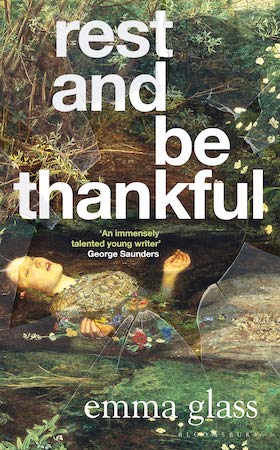
One day, when we are finally back to normal life, the Covid-19 epidemic will stay with us as a mosaic of images pieced together from things lived and things seen. For me, that will include a photograph of a nurse taken in March 2020, her face rubbed raw from constant contact with the personal protection equipment (PPE), which she was nevertheless lucky to have. The pandemic has shined a light on the intense, relentless, herculean efforts of the healthcare workers too many of us have taken for granted. It is this overlooked labor that Emma Glass asks us to consider in her new novel, Rest and Be Thankful

The narrator of this slim and haunting work is Laura, a pediatric nurse at a historic children’s hospital in London who is suffering from insomnia and the emotional strain of her job.  As time goes on, Laura becomes so worn down that doctor’s instructions mingle with Victorian ghost stories in her sleep-deprived mind. While it may be clear to the reader that Laura is burnt out, she doesn’t consider taking a break and presses on, dutifully showing up for work and caring for patients even as her grip on reality frays. 

Glass—whose first novel Peach was long-listed for the International Dylan Thomas Prize—is a practicing nurse, and she describes life at the hospital in rich, almost palpable detail. Such intimacy creates empathy for Laura and her fellow nurses, ultimately leaving the reader to ask if they falter, who is to blame?


Carrie Mullins: In Rest and Be Thankful, Laura is a pediatric nurse in London. Her job is intense, her relationship is breaking down, she’s sleep-deprived, and she starts to see weird things. I read that you were inspired by a ghost story?

There’s always somebody in the comments that says quit your whining, you are paid to do that job, get on with it.

Emma Glass: Yeah, the inspiration for the story came from a ghost story that I was told as a newly qualified nurse. My first job was in a children’s hospital in central London, which is where I’m working again now, actually. For the first day or two, you sit in a big lecture theater with all the newly qualified nurses and they tell you about the kind of the kinds of treatments that are done at the hospital and the history of the hospital, which is really interesting. During that presentation they told us a story about a nurse who worked at the hospital in Victorian times. She was on a night shift feeding a baby, she fell asleep and dropped the baby. The baby died and she wasn’t ever able to forgive herself, so she threw herself off the top of the stairwell of the old nurses’ home and committed suicide. The story goes that she is on patrol and if she ever encounters a nurse who’s falling asleep on a night shift, she pinches them on the shoulder to prevent them from making the same mistake that she made. There’s been lots of sightings of this Victorian nurse ghost who wanders through the hospital at night, with all the ruffling of skirts. 

CM: That’s a really intense story to tell new employees on day one.

EG: Yeah, it really struck me as odd and I had to go back and speak to some other people, just to make sure that I hadn’t imagined it because it was sort of a strange time to tell this story. But nurses are very superstitious and hospitals are very atmospheric. So that’s kind of where it started, and it shaped the book. 

I set out to write a ghost story. But of course, it never just turns out to be one thing, it turns out to be a hundred, and you sort of go along with it. And so yes, I really was intending to write a feminist perspective on emotional labor in the workplace.

CM: It’s funny you say that because I did think Rest and Be Thankful dealt with feminist themes. I actually just interviewed Avni Doshi about her novel, Burnt Sugar, in which the protagonist is also a woman who also sees things that may or may not be real.

Reading both books back-to-back made me think about how it tends to be women who question our own sanity. I think it comes from the practice of telling women they’re unstable; there is a lot of gaslighting —oh you’re just being crazy, you’re just being emotional, you’re not seeing this rationally—and that leads women to question their very sanity.  

EG: Absolutely.

CM: I felt like it was also part of your exploration of the nature of perception. For example, when Laura is on the subway, and people are looking at her, and she’s looking at them, and there’s this very poignant moment of “we can see each other but we have no idea what the other person is really going through.”

EG: One of the things that I was taught when I was training was that you’re supposed to have this professional front, you’re supposed to have very clear boundaries between yourself and the patient. It’s to protect us, but it’s never that clear-cut. How can you look after a family for twelve hours a day, five days a week, and not show them glimpses of yourself as a person? You have to look at them as more than just the illness they present with. So there’s inevitably this crossover. And yet women are still often blamed for that intensity of emotion. 

In the U.K., there is still this perception that nursing is a vocational role and you really don’t need much intelligence or learning to be a nurse.

Something that I really like to explore in writing is how can you possibly have that kind of feeling over a career and not have some sort of impact or some sort of damage? When you go home, you’ve got to put that somewhere. And we do not get free psychology appointments or spaces or counseling to be able to deal with that. It’s just kind of a done deal, that that’s what we sign up to, and we have to deal with it in our own way. That’s something Laura doesn’t do very well, she doesn’t put it anywhere—it’s ever-present, to the point where she’s on the brink of madness, essentially, because there’s no room left for anything else. It’s not a healthy way to live or be and yet, particularly in the NHS, they want 30 to 40 years out of their nurses. 

CM: That line strikes me as incredibly difficult to maintain. My younger son had neurosurgery at ten weeks old and when I was staying overnight in the PICU, I relied on the nurses so heavily for emotional support. Like every time I had to use the bathroom, I’d turn to the nurse stationed in the room and say, “I’m just going to go to the bathroom, okay?” in this kind of desperate way. I really needed her to say, no problem, in other words, you’re okay to go for five minutes, he’s okay, it’s all okay.  To be a receptacle for that kind of emotional intensity every day must be incredibly difficult.

EG: It is and it’s part of the job, and it’s actually part of the joy, having those glimpses into other people’s life. There’s an inherent trust when someone comes in and says, I’m taking care of you and your child today.

Where Laura is working is based a little bit on my experience of nursing children who were immunocompromised and had very, very serious illnesses. One patient was nursed in a single room for eight months and the parents were there all of the time. And, you know, it’s that whole thing about reassuring someone going to the bathroom, even saying to the parents, we’re here if you guys want to go out for dinner.

In Rest and Be Thankful, I go to the very dark places where things don’t always work out so well, but often it’s happy stories: we treat illnesses, we make people better, they get to go home, and you get to share in that joy. When you say you’ve been discharged today, and the kid’s so excited because they get to go home and see their brothers and sisters, and the parents are grateful, because if it wasn’t for something that you have done, their situation would be really different. To be in the room when a doctor says your child is disease-free, there’s nothing that beats that. So with all of the sadness and the pain, there is a happy side of things as well

CM: I really appreciated how the book pushed the reader to consider those two sides of the coin, like the chapter heading: “It was better than I thought/It was worse than I thought”—I loved that. In fact, the whole exercise of putting myself inside the life of a nurse was refreshing because we don’t often see those jobs represented in literature. When you consider what literature can do—invite us into lives that we haven’t experienced and imagine what they would be like—it’s actually kind of shocking how many books are about a writer dicking around versus people doing essential jobs.

EG: Ha, yes. I wanted to show the real skill that goes into nursing work.  I’m not sure how nurses are perceived in America, but in the U.K., there is still this perception that it’s a vocational role and you really don’t need much intelligence or learning to be a nurse. Often that perspective comes from, dare I say, male doctors. I wanted to shed some light on the fact that it’s really hard work, and you have to have a level of expert knowledge.

CM: It’s crazy because if you’ve ever stayed in a hospital, you realize you interact with nurses 90% of the time and doctors about 10% of the time. The nurses are doing all this technical work, and you show it well in the book: how physical it is, the smells, the textures. Your writing is almost tactile. You know, when a mother in her grief vomits on Laura, and she just stands there, and it’s in her pockets. And that leads back to the question of how long can someone handle such an intense job?

EG: When people started talking about it being a novel about burnout, I really didn’t realize that that’s what I had written until I found myself in a position where I was burnt out. I just started a new job back at my old hospital, and I’ve had four weeks to kind of think about what we’ve just all been through and what we’re all still going through, but I genuinely do not know how I coped doing the work that I was doing in the middle of the pandemic. Plus, you know, life doesn’t stop, people still get hit by cars, children are still at risk of different things.

I genuinely do not know how I coped doing the nursing work that I was doing in the middle of the pandemic.

It’s only now I can see burnout as something that is terrifying. It’s something that we need to have an awareness of, to prevent people from getting to a point where they’re not able to function any longer. And of course, it’s not just nurses suffering from burnout, it’s everyone, it’s everywhere, because we don’t have the same opportunities to free ourselves from our situations, we don’t have the diversions, and that’s really hard.

I think what I’m showing is that burnout is an everyday scenario for people working in those highly pressurized environments, and what I hope it will do is to open people’s eyes, and perhaps people will be a little kinder now. We still get shouted at by angry parents and angry family members and we have to just stand there and, to an extent, take it because we know that the person is in a highly emotive situation, but it wears people down.

I think there are more nurses leaving the profession now, which is really sad. That’s something that I have also thought about more than once, that perhaps there is not enough support, and certainly not enough understanding of what it’s like. One of the heartbreaking things that I’ve seen through the pandemic is how there was a lot of support in the first days for the NHS [National Health Services, Great Britain’s public healthcare system] and for nurses and lots of outpourings on social media—you know, thank you to heroes, although I don’t really agree with that term—the thank yous and the donations and the kind thoughts that have gone to health care workers, and then there’s always somebody in the comments that says, quit your whining, you are paid to do that job, get on with it. And that’s true, we are paid to do it, we’re not forced to be there. But at the same time, I hope that there’s a little more understanding and kindness towards people who are in these kinds of positions.

CM: Absolutely, and to me that’s part of what a book like yours can do—open people’s eyes and generate sympathy. And to that person in the comments, I would hope if they end up in the hospital, they don’t get a nurse who’s just doing the job for the income. 

EG: Me neither.

Spring’s a Love Note and I’m Lonely as Hell

Bouquet #1

Violets bloomed from sidewalk cracks on my walk
west this morning and I thought of you, how
if you were here too I’d pick one slim stalk,
touch it to your face, then mine. The blooms bow

to the passing of each hour, held aloft
briefly by their beauty, an offering -
spring’s reward after hard frost, earth’s softer
lines returning in greens and blues, bright wings

that winter kept still and secret, each one
a tiny flight suppressed by storms and black
nights, until some wheel began to turn, sun
burning overhead again, taking back.

There is joy in all of this, and pure need -
spring’s a love note, a glance we gladly read.

What I Have Tried to Say to You

The streets are foreign now, the sidewalks wet
with autumn rain, the lake with its thousand
thousand green eyes holding onto the edge
of summer. Nothing has been as it was.
That Sunday night, I went outside to look
for my hands in the mist. I could drop a rock
and almost hear it sinking. In the garden,
I saw a cloudburst had beaten down the stalks,
savaged the fruits. There was the threat of a thunderstorm.
I faced west, taking it all very seriously. In someone’s
tiny book, this all made sense. It meant people should
live miles or years apart, that distance is best
measured by silence or the swiftness of rivers
or how far one can pitch a stick across a canyon. 
You walk through one door and then another. I can
see your back, the way you hold your head. I see you
and cannot imagine ever seeing the last of you.
It is the farthest shore, the one that no map ever shows.
Still, there is a way to know what’s coming,
to understand why some people collect stones
or write in block print or suddenly become happy
after a long time of barely getting by.

10 Novels That Revolve Around Paintings

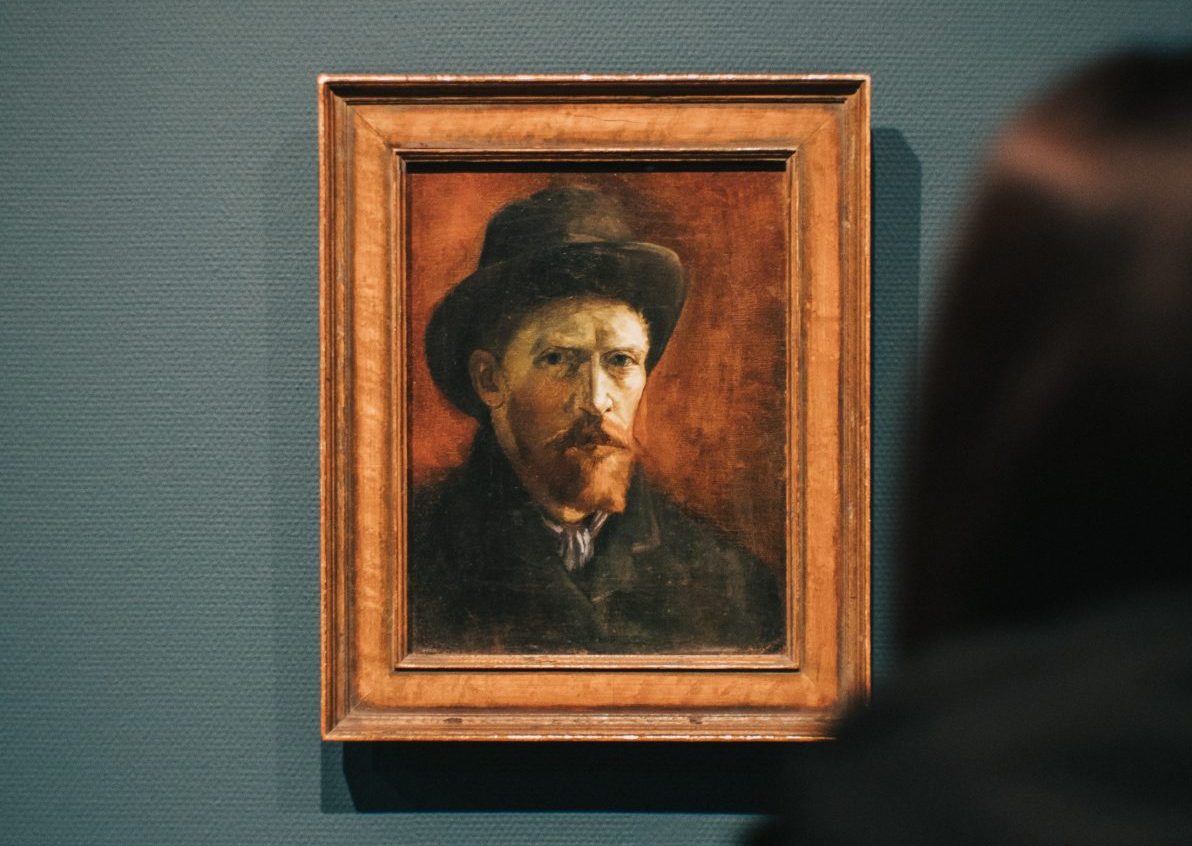
The portrait has long been fertile ground for novelists, offering insights into the characters of artist, subject and viewer, not to mention the power-play unfolding between all three.

What can a portrait tell us? What can’t it tell? Is there any such thing as a “true” portrait, and who is entitled to judge? How far may the artist him/herself remain invisible? How is it possible for a man-made object to be so demonstrably inert, and yet so uncanny?

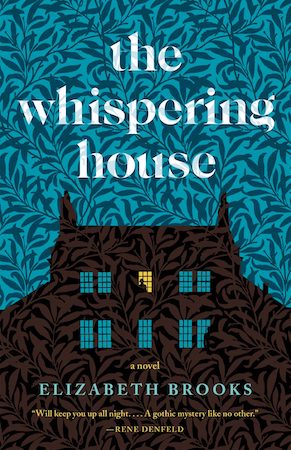
My new novel, The Whispering House, begins with a twist on that old gothic trope: the discovery of a framed portrait hanging on the wall of an old house. Portraits, and portrait making, are central to the development of the story, in which an aspiring artist’s desire to capture his female models on canvas and put them on display teeters over into obsession. 

Here are ten novels that revolve around portraits:

Amazon.com: People Like Us (9781789545005): Fein, Louise: Books

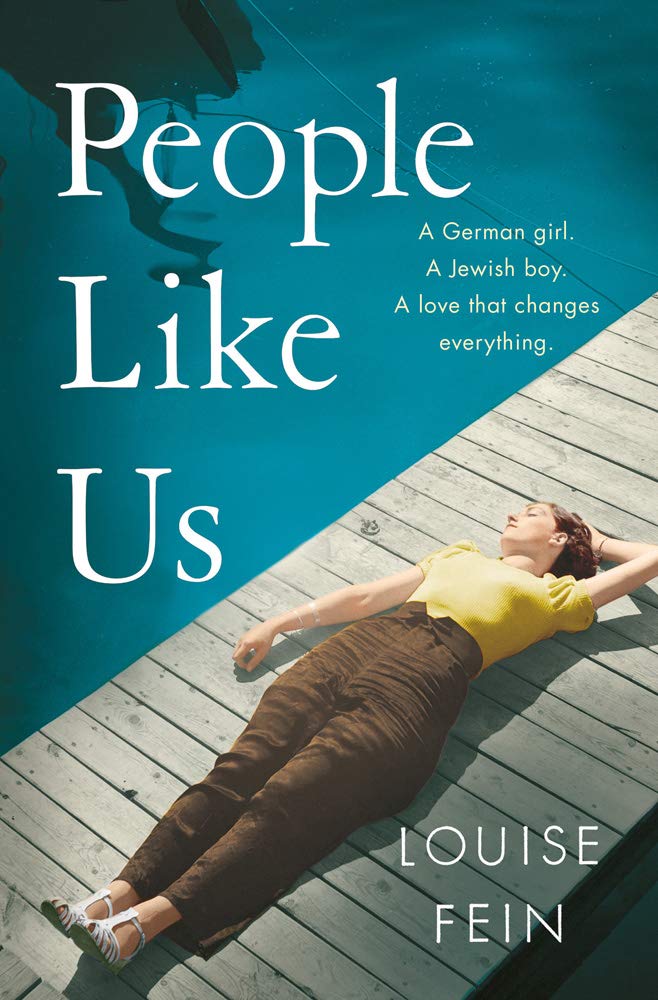
People Like Us by Louise Fein

When the novel opens Hetty is a child and—as the daughter of a high-ranking official in Hitler’s Third Reich—a committed Nazi. By the end of the novel, she is a young woman, deeply in love with a Jewish man named Walter and deeply out of love with Nazism. Throughout much of the book a portrait of the Führer hangs on Hetty’s wall, and her changing perception of the picture provides a neat way of charting the internal revolution of her ideas. At the start, it’s all gushing hero-worship (“He gives me courage!”), but as Hetty’s understanding matures, adoration turns to disgust (“We stare at each other, eyeball to eyeball. I loved you once”). It’s proof, if proof were needed, that reading a portrait is a complicated business. What we see depends, to a large extent, on who we are. 

On Beauty by Zadie Smith

On Beauty by Zadie Smith

This comedy of manners, about the awkward integration of two conflicting families, is a re-imagining of E.M.Forster’s Howards End. In both novels an item of great value is handed over from one side to the other, giving rise to anger and embarrassment: in Forster’s novel, it’s a house and in Smith’s novel, it’s a painting by Hector Hyppolite of Maîtresse Erzulie—the Haitian-African spirit of love, beauty and dancing. In a novel that sets out to explore ideas around value and identity, the portrait of the Afro-Caribbean spirit stands as a powerful witness to the strength and beauty of the Black, female body.    

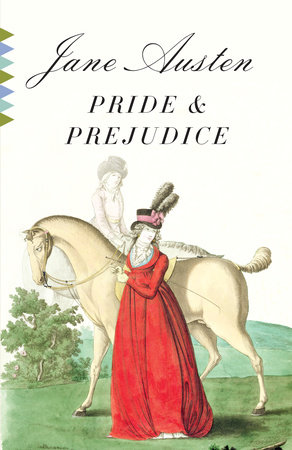
Pride and Prejudice by Jane Austen

Pride and Prejudice by Jane Austen

Elizabeth Bennet comes across Mr. Darcy’s portrait when she is being shown around his beautiful house, Pemberley. Both Elizabeth and the reader are acutely aware that the last time she and Darcy met, she curtly refused his proposal of marriage. The portrait bears a “striking resemblance” to its handsome subject, and looks back at Elizabeth “with such a smile over the face, as she remembered to have sometimes seen when he looked at her.” No wonder she gazes at it earnestly for several minutes and returns to it before leaving the room. This is the pivotal moment of the novel. Towards the end of the book, Jane asks her sister how long she has loved Mr. Darcy, whom she used to hate so fiercely, and Lizzy replies—humorously, but truthfully—that it began on that visit to Pemberley. 

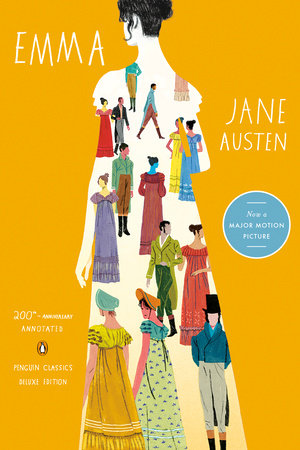
Emma

Emma by Jane Austen

In this novel, Jane Austen employs a portrait-painting scene for sly, comic effect. Emma Woodhouse persuades Mr. Elton that he would like her to paint Harriet Smith, but, as ever, our heroine’s intentions are hilariously wide of the mark. Emma believes that she is drawing Mr. Elton’s attention to Harriet’s marriageable charms; Mr. Elton believes that he is engaging in a mutually-agreeable flirtation with the artist herself. The pair’s arch exchanges on the subject of poor Harriet’s portrait—how very lovely it is, with what great care it must be taken to London for framing—mean one thing to Emma, and quite another to Mr. Elton. Cringe! 

Jane Eyre

Jane Eyre by Charlotte Brontë

There is a poignant scene, towards the middle of the novel, where Jane decides to get tough with herself. She is in love with Mr. Rochester but believes he is attached to Blanche Ingram, and by way of a cure, she draws two portraits: one of herself (“Portrait of a Governess, disconnected, poor and plain”) and one of the lovely Blanche. Once they’re finished, she tells herself sternly, “Whenever, in future, you should chance to fancy Mr. Rochester thinks well of you, take out these two pictures and compare them…” As the reader suspects, however, and as the best fairy-tales teach us, true beauty lies within. The comparison favors soulful Jane over soulless Blanche—if only she knew it.

The Picture of Dorian Gray by Oscar Wilde

The Picture of Dorian Gray by Oscar Wilde

In this sinister novella, Wilde plays with the ever-debatable notion that the face is the mirror of the soul. Beautiful Dorian wallows in a life of cruel sensuality, year upon year, whilst retaining all his boyish charm and good-looks. Impossible? Ah, but Dorian Gray is the subject of an enchanted portrait, which bears the scars on his behalf. The more horrors he commits, the more repulsive his portrait grows, until “the rotting of a corpse in a watery grave was not so fearful.” No wonder he hides it behind a curtain in the attic.

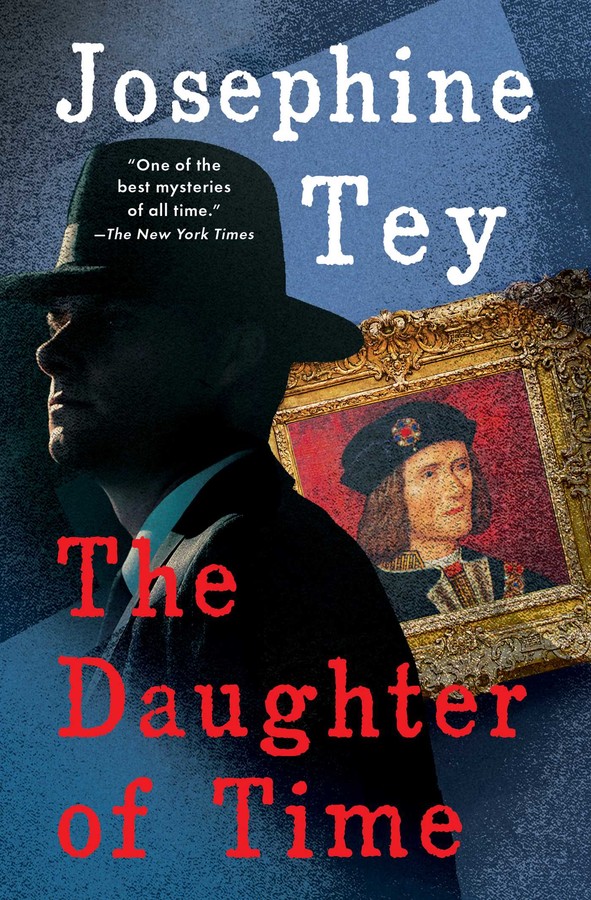
Daughter of Time

The Daughter of Time by Josephine Tey

I think of this novel as a sort of reverse Dorian Gray because, like Oscar Wilde’s story, it relies on the (dubious) notion that the face is a reliable mirror of the soul. Scotland Yard’s Inspector Alan Grant, who prides himself on his skill at reading faces, puzzles over a portrait of the 15th-century English King Richard III. How could such a notorious villain—best known for having murdered his own young nephews—have such an anxious, sensitive, likeable countenance? Grant proceeds to prove history wrong, in what is—despite its dodgy premise—an enjoyable and erudite take on the detective story.  

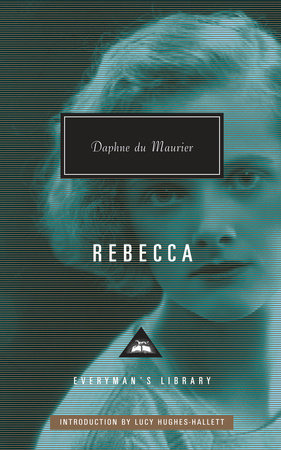
Rebecca by Daphne du Maurier

Rebecca by Daphne du Maurier

A fancy dress ball is to be held at Manderley, and the new Mrs. de Winter yearns to stun her husband with the beauty and originality of her costume. At Mrs. Danvers’ suggestion (cue a sense of impending doom), she takes one of Manderley’s ancestral portraits as her inspiration, and orders an outfit to match the 18th-century painting of Caroline de Winter. When the evening arrives, she appears at the top of the stairs in her flouncy white dress, curled wig and wide hat… and a horrible silence falls over the gathering. “What is it?” she demands, understandably. “What have I done?” Later on she finds out: Rebecca wore an identical costume to the last fancy dress ball, “the same picture, the same dress.” Everyone thought they’d seen a ghost.  

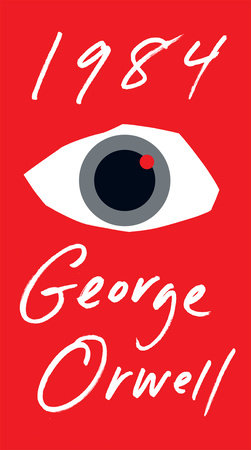
1984 by George Orwell

1984 by George Orwell

In Orwell’s dystopian novel, the gaze becomes a symbol of total, brutal state control. In the crumbling London of Airstrip One, Big Brother’s image appears on screens and posters at every turn, and Winston describes how his dark eyes seem to follow you around, searching deep inside your mind and soul. In 1984, the power-play between subject and object, viewer and viewed, is chillingly reversed. You’re not watching Big Brother. Big Brother is watching you.  

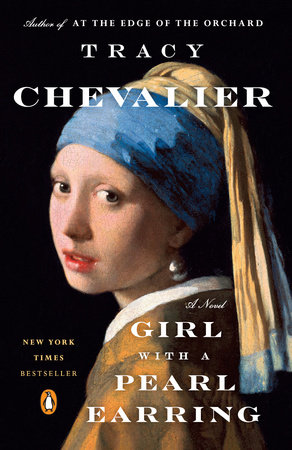
Girl with a Pearl Earring by Tracy Chevalier

Girl with a Pearl Earring by Tracy Chevalier

Griet is a Protestant, and a mere servant, in the busy Catholic household of the 17th-century Dutch artist Johannes Vermeer. The two belong in different spheres, but a shared understanding of color, form and beauty threatens to unite them. The love affair at the heart of this novel is conducted, not via physical or verbal intimacies, but via mutual observation. Vermeer portrays Griet as the peerless “Girl with a Pearl Earring.” The model holds the artist’s eye, and vice versa, and their silent communion is recorded on canvas, in all its tension, sadness and longing.

Teen Writers Deserve Better Than the Teen Writing Scene

A few weeks ago, I spoke on a virtual panel at Phillips Academy Andover called “Life After Teen Writing.” This title might seem confusing—how can there be an after to a life that has barely begun? But for many ambitious young writers, it can be hard to imagine what comes next after you age out of the circuit of high school writing contests.

This wasn’t the first time I’ve spoken on a panel like this—these discussions of what comes next after teen writing are more common than you’d think, given the nicheness of the subject. High school students ask if writers are just as competitive in college, and if the pressure to constantly produce award-worthy work will subside at all. I’m 24 now, but when I speak on these panels, I still feel a sense of urgency, like I’m talking to a past version of myself. I tell the Past Mes that yes, I didn’t win that one competition, and as a high schooler I thought this meant I could never make it as a writer, but I was wrong. I tell them that I, too, was once like them, but then I wasn’t a teen anymore. Now I’m just another writer in her mid-20s, still working to unlearn the harmful habits I developed when I was a high school poet, conditioned to see other writers as competition, convinced that my rejections were a referendum on my self-worth. 


I came of age on the internet, so there’s an embarrassingly long digital paper trail of my youth: sappy Arctic Monkeys album reviews, angsty poems, half-baked Twitter hot takes. I wrote an essay called “The Call” seven years ago, soon after I had learned that I didn’t win any awards from the National YoungArts Foundation, the ultimate badge of approval for high school writers. The essay still resurfaces like clockwork when the yearly phone calls go out to notify the handful of winners. I wrote that I was “begging the seemingly impenetrable literary world for validation.” 

I discovered other young writers online out of necessity—I didn’t have a high school creative writing class or literary magazine, and when I tried attending local writing workshops, I was the youngest person there by half a century (I grew up in Boca Raton, Florida, a retirement hotspot, so I’m not exaggerating). The internet was the only place I could find a community of writers my age, and when I did, I was horrified to learn that they had all been winning national awards and publishing poems before I even knew that these opportunities for teens existed. With persistence, I wedged myself into the clique.

In these circles, we forgot why we cultivated this community of writers to begin with. We wrote with the purpose of winning teen writing competitions.

In this teen writing world, we founded our own literary magazines like The Adroit Journal and Winter Tangerine Review, which are still reputable publications today. We competed for validation from YoungArts and the Scholastic Art & Writing Awards like it was the Hunger Games, and when we didn’t win, it felt like the world was ending. In these circles, we forgot why we cultivated this community of writers to begin with. We wrote with the purpose of winning teen writing competitions and, again and again, I just wasn’t winning.

I treasured the community of young poets I found online—it made me feel less alone to gush with other teenagers about how much we loved poetry collections like Crush by Richard Siken, or Slow Lightning by Eduardo C. Corral. I learned about writing from my peers as we sent writing back and forth over Facebook messenger, creating a surrogate for the creative writing classes I didn’t have. But I felt as though my inclusion in these circles was conditional. I was experiencing what it’s like to be part of a literary community for the first time, and I didn’t want to go back into isolation. I felt like I had to publish my work and win contests to maintain my place in this selective clique. But as my fellow teen writers continued to earn impressive accolades—like Pushcart Prizes, or publication in The Kenyon Review and Poetry Magazine—I felt like their success was my own failure. I was watching my friends live my dreams, and I was left behind. 

The only way to keep up was to change the way I wrote. In high school, I published a poem called “Self-Portrait as a Shard of Glass” in Crab Orchard Review. It’s still one of my most conventionally impressive poetry publications, but to this day, I couldn’t tell you what that poem was supposed to mean. I just wrote down some images that seemed poetic—broken mirrors, featherless birds, restitching a broken seam—and put them into unrhymed couplets, each line approximately the same length. Perhaps the editors who selected the poem saw something in it that I didn’t, but I couldn’t help but feel like a fraud, like I was conforming to a style that wasn’t true to who I was. It was a time when I should’ve been exploring my poetic voice, but instead, I was stifling it. 

It was a time when I should’ve been exploring my poetic voice, but instead, I was stifling it.

I couldn’t have sustained this achievement-driven relationship to my writing for long. Sometimes, I feel like my rejection from YoungArts was the best thing that ever happened to me. It forced me to reevaluate why I write in the first place. I remembered why I sought out a community of young writers in the first place: I wanted to feel less alone, to connect with other people my age who loved poetry and stories as much as I did. But I became so obsessed with fitting into a conventional model of success that writing became a burden, rather than a joy. I realized that no prize or publication ever brought me the same joy as being in supportive, collaborative communities with other writers.   

My teenage self would be horrified to learn that I still haven’t published a chapbook at age 24, and that I haven’t even published many poems in the last few years. But right now, submitting to publications just isn’t a priority for me. I’m still relearning how to find joy in writing poetry, and I know that there’s no rush to get my work into the world. As a teenager, I spent too much time trying to be good enough, and not enough time trying to be me. But even as I rehabilitate my own relationship to writing, I can’t help but feel uneasy when I see what the teen writing world looks like now, years after I’ve aged out.In the seven years that have passed since I was in high school, the culture we helped create has only gotten worse. Sometimes, teen writers feel so much pressure to succeed that they deem their own work unworthy, opting instead to copy other writers’ work. This is a violation of those writers, but it’s also a troubling abandonment of their own voice. I catch glimpses on Twitter of this new generation of teen writers: a new plagiarism scandal emerges every week, it seems, anonymous accounts leaking detailed documents of undeniable theft from the most decorated teen writers. I wonder if my friends and I are responsible for the monster we built.

In 2015, teacher Jen Karetnick wrote an article called “Behind the Scenes of Teenage Writing Competitions” in The Atlantic. As she put it, “Previously, just a select few, often identified by AP English teachers, would enter these competitions [..] But organizers [of competitions like YoungArts and Scholastic] say teens have been showing much greater interest in the past several years—and the quality of competition is on the rise.”

Some of these contests offer scholarship money, but most winners matriculate at prestigious universities that can cost upwards of $200,000 over four years; a $1,500 prize would be either unnecessary (for the wealthiest students) or not much help (for the rest). For many young, privileged writers, the prestige is more important than the money—and the writers who could use the money usually don’t have the resources to catch a judge’s attention with the delicate prose they crafted at the Iowa Young Writers’ Studio.

The only way to participate in these teen writing circles is to be privileged enough to have either the time or the money to devote to it. I wasn’t a wealthy private school kid who could pay for a creative writing tutor, but I had the time to coach myself—my parents didn’t need me to contribute to family bills by working an after-school job, for example. So, I was able to pour all of my spare time into the intensive study of online literary magazines, decoding how I could emulate certain aesthetics to get published—removing capital letters at the beginning of a line, reformatting poems into Garamond size 11, deleting cliche words like “ribcage” and “wanderlust.” This was how you got people to take you seriously. I lost the genuine spark of raw, teenage emotion that made my writing interesting, but I gained the approval of poetry editors who didn’t know how young I was, or how formulaic my writing had become.


YoungArts charges a submission fee of $35 per entry. With 7,000 entrants, assuming that the majority do not receive fee waivers, this provides the National YoungArts Foundation with at least over $200,000 to operate their program—and that’s without considering the financial contributions of corporate sponsors and individual donors. Scholastic charges $7 per submission and $25 to submit a senior portfolio. There were 320,000 submissions in 2020; depending on how many entrants used fee waivers, the organization is likely raking in over $2 million dollars from teenagers’ submission fees alone.

Now that I’ve worked in administrative roles at arts nonprofits, I agonize over the amazing things that these organizations could be doing with such exorbitant amounts of money. I dream of a teen writing world where these submission fees—or fee waivers—guarantee access to a writing workshop in your state, or even online. I yearn for these organizations to offer support to all creative teens, not just the wealthy and/or especially talented. Instead, only the most elite, and often the most privileged teenagers make it to YoungArts Week in Miami, where they compete against each other for scholarship money that they often don’t need. Or, in Scholastic’s case, national gold medalists can attend a weekend of celebration in New York City, complete with a ceremony at Carnegie Hall featuring guests like Usher and Sarah Jessica Parker. I can’t say I know what the budgets of these organizations look like, and these profit numbers are educated guesses, but I wish they understood the danger of turning writing into an elite sport among young people who are still finding their voice. Most high schools have scant resources for arts education, but with so many thousands of students submitting to these competitions each year, it’s clear that they’re eager for opportunities. But for the 90-something percent of students whose work won’t win these awards, it’s easy to get left behind and lose interest in the arts altogether. Worse, these contests train teenagers to write what they think will win, not what they truly want to write. It’s like learning to write a five-paragraph expository essay for the SAT, except you’re learning to impress one set of judges for one particular poetry or short story contest. 

These contests train teenagers to write what they think will win, not what they truly want to write.

I’d love to pin all the blame on these faceless organizations, but even in our own insular communities, we’ve also made everything a competition. We started our own lit mags, which created even more opportunities for teens to face constant rejection. In a blog post published in July 2020, one teen writer reported that 32 youth-run literary magazines had cropped up since the beginning of the pandemic. 

I complained to my friend Alexa Derman, also a recovering teen writer, about how frustrating it is that these kids just keep creating new ways to reject each other. Why can’t they just form a workshop group on Zoom? Why is our first instinct always to exclude others? Do these lit mags only exist so the founders have something to put on their college apps?

“I mean, the competitions made us feel powerless,” she told me. “The magazines made us feel powerful. Now you’re in charge, you’re the editor, you get to choose who’s in or out.”

She’s right. I do remember the sensation of being a sixteen-year-old poetry editor, receiving packets on Submittable addressed to “Ms. Silberling.” It was a fleeting sense of control in a time when everything felt unstable—outside of our secret online literary lives, we were all just teenagers trying to figure out who we were and who we wanted to be. I wonder, though, how it would’ve felt to build something that invited writers in, instead of keeping them out.


While writing this, I learned that one of the younger writers who was on the Andover panel with me was outed for plagiarizing other teen writers. To make matters worse, this writer’s success had yielded a six-figure book deal. I know I should be angry, but I’m not. I feel mournful—for the writers whose work was stolen, but also, that this writer felt so much pressure to be prodigious beyond their years that they stole from their peers.

There are still parts of me that are bitter, but the bitterness is no longer directed at other writers—rather, I’m bitter that my most formative years making art were so full of dread and self-hatred.

There will never be a world where literary contests don’t exist. It’s a fact of our circumstances: there’s only so much NEA money to go around. There are only so many spots at each MFA program. There are only so many Ruth Lilly Fellows. But the intensity of the competition and back-stabbing in the teen writing world was unlike anything I’ve experienced since, and that’s a scary foundation on which to build the next generation of writers. As we get older, we realize that there are so many different ways to live a fulfilling life as a writer—that advanced degrees and academic jobs are only one way to make a living. But for isolated high school writers, it feels like winning contests is the only way to gain access to a community. It’s like going to the AWP conference, except you can only attend if you are in the top 1% of writers who bought a ticket.

I wrote in “The Call” seven years ago that “I don’t want to let myself become bitter. I want to continue to be happy for my friend who’s publishing a chapbook, or my friend whose script is being performed in Hollywood.” 

There are still parts of me that are bitter, but the bitterness is no longer directed at other writers—rather, I’m bitter that my most formative years making art were so full of dread and self-hatred. But with each year that passes, I become a bit less bitter, and a bit more hopeful. 

Last summer, I had the opportunity to teach at a 10-day program for high school writers at the University of Pennsylvania. I read their applications, and I knew that some of the students were just as preoccupied with awards and publications as I had been when I was their age. Others were just teens who wanted to tell stories and had a knack for it. I feel fiercely protective of these students, all of whom I have only met via Zoom. 

I hope that they know that their writing matters, regardless of how many Scholastic medals they earn or whether YoungArts takes notice. I hope they know that there is a more joyful relationship with our writing ahead of us, if only we choose it. 

7 Books That Show the Full Breadth of the Adoption Experience

The literature I loved as a child was full of orphans: Ballet Shoes, Oliver Twist, The Boxcar Children, Anne of Green Gables, The Secret Garden, Daddy Long Legs. But the parents in these stories were dead or permanently lost. While I knew that my mother had been adopted from a Catholic orphanage by loving parents when she was more than a year old, it didn’t occur to me to wonder about her birth family. At the time, the norm was “closed adoption,” in which records were sealed and adopted children had no access to information about their families of origin. I didn’t know about my mother’s birth family until I stumbled across her biological half-sister on 23andMe. My mother had passed away years before and would never meet her, or know she existed. 

Projects — Nectar Literary

In the decades since my mother’s adoption, closed adoption has given way to open adoption, in which adopted children are able to learn their origins and even have contact with their birth families. Open adoption moves away from the secrecy and isolation of past adoption models. Not only is it time for this model of adoption that recognizes and honors both families, but it is also time for stories about adoption that show the experience in all its complexity.

Fortunately, increasing openness about adoption in our public discourse has made it to the bookshelves, moving us beyond the limits of my childhood library. The landscape of adoption literature for adults continues to expand: open adoption and transracial adoption are represented and explored in novels and memoirs from varying perspectives, and books and documentaries further uncover America’s troubled past with closed adoption and coercion. In a time when genetic testing disrupts the long history of secrecy in closed adoptions while the for-profit adoption industry continues to thrive, the following books offer much-needed perspectives and narratives to the conversation. On the page, we have finally moved away from the literary trope of the orphan who needs to be saved by rich benefactors.

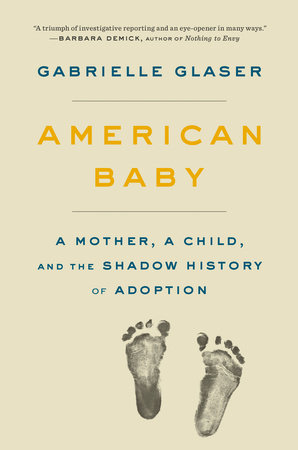
American Baby by Gabrielle Glaser

American Baby: A Mother, A Child, and the Shadow History of Adoption by Gabrielle Glaser

If you streamed Taken at Birth on Hulu, you caught a glimpse of one of the appalling adoption rackets of the mid-20th century. Gabrielle Glaser’s book uncovers the larger landscape of 20th century America’s coercive closed adoptions, steeped in secrecy and populated by homes for unwed mothers, cruel experiments on infants, and corrupt agencies.

At the center of the book is the story of David Rosenberg and his birth mother, Margaret Erle, who, as a teenager, was forced to sign away her rights to her baby born “out of wedlock.” There’s a twist in this story:  the father was the man Margaret Erle loved and married and raised other children with. Of course, their family model doesn’t make their loss at the center of the story any more or less significant than that of the other 3 million women that Glaser estimates were pushed through a system that forced adoption and sealed the records in the decade post-World War II.

Glaser uses this compelling story of separation, and reunion, to dig into American attitudes about family and sexuality, as well as the economic forces that shaped a country and an exploitive adoption system that carries on, complete with the continuation of closed records in many states and situations. Unlike my mother, who never had the opportunity to meet her half-siblings who I discovered after her death from cancer, David Rosenberg was able to meet his birth family weeks before his death. This compelling narrative brings awareness to the devastating ramifications of the American adoption system.

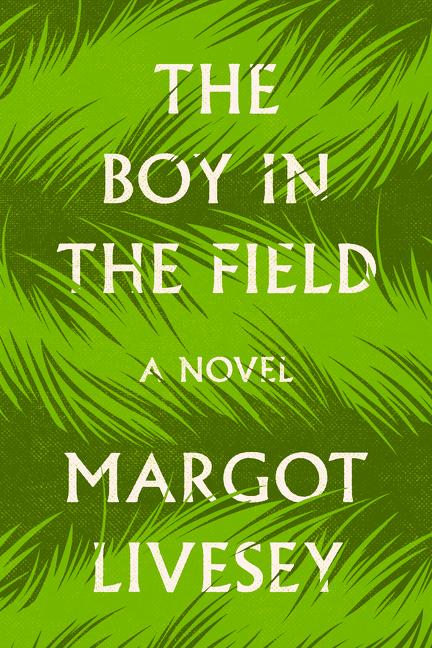
The Boy in the Field by Margot Livesey

Livesey’s latest novel opens with three siblings finding a dead body. Wearing matching school uniforms, they move together through the scene almost as if they were protagonists of an early children’s adventure novel. These are not, however, parentless children. As the novel moves between their three perspectives we learn how they observe, and eventually process, this scene of death.

In this triptych of a bildungsroman, the adolescent siblings discover their sexuality, origins, and selves in different ways: the youngest, Duncan, who is adopted, sets out on a quest to find and meet his birth mother. We move between their perspectives seamlessly from chapter to chapter with the unity of siblings whose external daily worlds are united. When Duncan states his attention to find his birth mother, his sister asks if they will still be his family, and she, his sister. Duncan responds, “How could that change? You’re the people I can draw in my sleep.” Duncan’s quest does not displace his sense of family, but expands it. This corner of the novel reflects complex realities of adoption as part of coming of age, and depicts relationships between siblings of built families. Duncan’s journey is distinctly his own even as he is surrounded by his family. 

Luster

Luster by Raven Leilani

A white woman is so at a loss as to how to raise her newly adopted Black daughter that she allows her husband’s lover, who he met over the internet, to move in. Of course, that’s not the whole story, but this angle of the narrative is part of the underlying sharp humor in Leilani’s brilliant first novel.

At the center of the novel is Edie, a 23-year-old aspiring Black artist working in publishing and having an affair with Eric. Edie ends up in Eric’s family’s household in a strange turn of events, but part of what holds her there is pre-teen Akila, whose needs she recognizes. The heart of this novel is not the triad of man, wife, lover, nor is it what is called the adoption triad of birth parents, adoptive parents, and child. It does, however, develop the complex relationship between the two adult women, both of whom Akila needs in some way.

As we follow Edie through her emergence as an artist, we also see a brutal view of transracial adoption from the distinctive angle of a Black woman entering a household in which the white mother, Rebecca, is struggling to know how to care for her Black daughter; the daughter is fighting to survive and maintain the stability of her new home; and, most tellingly, the husband engages in tender sex with his wife while he is violent with his Black lover as he raises a Black daughter. Leilani’s debut is astoundingly unique and unflinching.

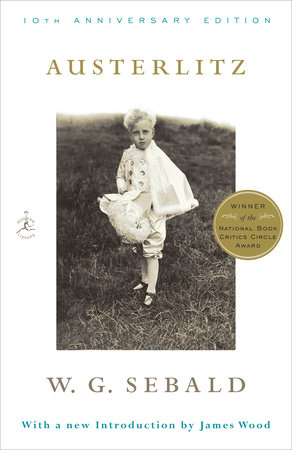
Austerlitz by W.G. Sebald

Austerlitz by W.G. Sebald

One of the discoveries I made through 23andMe was that my mother—who the nuns at the orphanage said was the child of two Irish Catholics—was of Ashkenazi Jewish origin. My mother had always suspected that she was of Eastern European heritage, despite the narrative she was told. I think of this when returning to W.G. Sebald’s beloved novel of searching, Austerlitz, with its grainy photographs and travelogue feel.

What does it mean to have some deep knowledge of who you are, some early memories, conscious or more embodied, that no one can confirm or explain to you? In Sebald’s novel, the narrator tells us the story of Austerlitz, an architect who, at the age of four, was evacuated in 1939 from then Czechoslovakia to the U.K. by Kindertransport to live with a preacher and his wife in Wales. Austerlitz tells the narrator:

“Sometimes it was as if I were in a dream and trying to perceive reality; then again I felt as if an invisible twin brother were walking beside me, the reverse of a shadow, so to speak.”

He learns of his adoption, and his original identity, not from his adoptive parents, but from a schoolmaster revealing his original name, which he is told he must use on his exams. The name, like everything about his past, is strange to him. Austerlitz’s long search for his own history and origins opens doors to larger questions of identity and the impact of buried histories and memories. Note: at least 10,000 children escaped the Holocaust in the Kindertransport program.

Why Be Happy When You Can Be Normal? by Jeanette Winterson

“The Devil lead us to the wrong crib.” Jeanette Winterson’s adoptive mother’s angry words open her 2012 memoir, which echoes and expands upon Winterson’s 1985 debut novel Oranges Are Not the Only Fruit. In the novel, we were first introduced to the character of Jeanette, a girl adopted into an English Pentecostal family; this coming out and coming of age story made room for a curious and funny protagonist, an adoptee whose coming out leads to exorcisms and beatings via her adoptive mother.

Winterson’s memoir addresses her own story directly and jumps to her adult search for her birth mother, complete with infuriating red tape and unsympathetic judges and surprising turns that leave her considering the realities for both mothers. It is hard not to think of Austerlitz when reading the following line from Winterson: “where you are born—what you are born into, the place, the history of the place, how that history mates with your own—stamps who you are.”

This story of a closed adoption provides some answers, including the discovery that it was only “Mrs. Winterson,” not Winterson’s birth mother, who kept things a secret. Like with Sebald and his fictional Austerlitz, Winterson shows the power of the small details of discovery, such as when she learns her birth parents’ names:

“I read the names. Tears then. I don’t know why. Why do we cry? The Names read like runes. Written on the body is a code only visible in certain lights.” This book tells the story of one of many adoptees who have gone searching and decoding.

All You Can Ever Know by Nicole Chung

Chung’s popular memoir brings to the surface another major shift in approaches to adoption: the shifting conversations about transracial adoption. Or perhaps I should say the shift toward conversations about transracial adoption. Through her own story, Chung demonstrates the harmful impact of the “race blind” approach to parenting that adoptive parents were given over generations. Her parents follow the advice of professionals and ignore her Korean heritage; in return, she protects them by not revealing to them the racism she experiences.

Her story, told from the vantage point of Chung’s own entry into motherhood, makes room for the complexity of the adoption triad. There are no easy answers or relationships. She tracks down her divorced birth parents and her birth sister, who has been told she is dead, and she begins to piece together the history that led to her adoption, while she also grapples with the impact of dysfunctional models of transracial adoption. The result is a book that is moving and honest and that makes room for the humanity of all involved. Chung’s perspective as an expectant and new mother contributes another much-needed vantage, that of adoptees as they prepare for parenting while their own birth stories are unknown to them.

Detransition, Baby by Torrey Peters

Detransition, Baby by Torrey Peters

At the center of Torrey Peter’s novel are Reese, a trans woman who desperately wants to be a mother, Katrina, a pregnant cisgender woman who has lost a previous baby, and Ames, who has detransitioned after having previously transitioned and lived as Reese’s former girlfriend, Amy. While adoption only appears in the backstory of Ames and Reese’s relationship, it is integral to their story and highlights the barriers to adoption for trans women. Their trip to an informational meeting about adoption, inspired by the rumor that a couple of trans men have been able to adopt together, is a searing scene in the novel.

Throughout the novel, Peters shows the painful consequences—both psychological and quantifiable—when gender is falsely defined by fertility and when biological parenthood is prioritized while families are formed in many ways. What makes a parent? And what happens when others have the power to decide when and how you may become a parent? While some states and agencies clearly make space for cisgender single parents and cisgender gay and lesbian parents, Detransition, Baby serves as a reminder (to those who need it) that trans adoption is barely even part of the larger conversation about adoption yet. Hopefully this novel will help change that.

Canceling My Book Deal Was the Best Career Move I’ve Ever Made

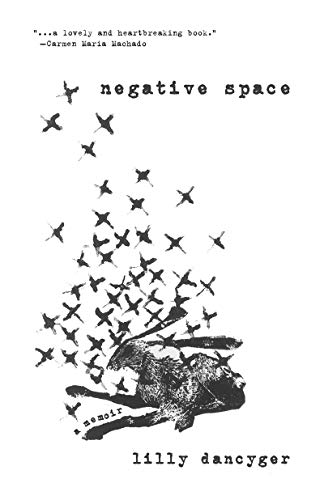
I started querying agents for my memoir, Negative Space, in 2012, after two years of writing and revising. I got a few rounds of passes, including several friendly rejections in which agents said they just didn’t “know how to sell” my book. I heard this refrain enough times that I started considering the small press route—my book was not the most commercial, and maybe these agents were right that it wasn’t destined for a major house. I was blending reporting and memoir and visual art, and I understood why my project might be hard to fit neatly into a marketing niche. But maybe there was a small press out there that would be excited about my weird little project. That’s what small presses are all about, after all—taking risks that the big houses aren’t nimble enough for—and that’s why they put out some of the freshest and most exciting books.

But that route wasn’t easy either. By the time I got an offer from a small press in 2016, I’d received almost 50 rejections from agents and small presses alike, and rewritten the entire manuscript four more times. I was in that headspace that I think every writer reaches at one point or another where I was starting to wonder if the whole endeavor had been a waste of time—if maybe this book would end up in a drawer and nobody would ever read it, and perhaps I should just cut my losses and move on to a new and more sellable project. 

I was so used to rejection that I had to read the offer email multiple times before it sunk in: this press really wanted to publish my book! I was so grateful to have finally received a “yes” after four years of “no” that I decided to overlook the fact that I’d never heard of this particular small press until I found them on Poets & Writers’ master list of small presses, and that I’d never heard of any of their books, either. The publisher was upfront with me that they were a small operation and didn’t offer much publicity support. But that was okay—I lived in New York City and felt well-connected enough to run my own publicity campaign. And if I started saving right away, I might even be able to hire an independent publicist. The publisher also told me that they didn’t have a distribution partner, and that if I wanted to get my book into stores I’d have to do the legwork myself. That gave me a little more pause, since distribution was further outside my wheelhouse than publicity, but I wasn’t going to let a logistical challenge like that keep me from my dream of seeing my book published. I accepted the offer, deciding I’d cross the distribution bridge when I got to it.

I was so used to getting the door slammed in my face, it seemed absurd that I might decline to walk through this one that was finally open to me.

All of that is to say: I settled. I won’t name the press here because the specific press is beside the point—the point is that not all small presses are created equal, and I should have gotten clearer on what exactly I expected and wanted from a publisher, and done the research to figure out which presses could and couldn’t provide those things. The arrangement this press was offering would have been fine if all I wanted was to have my book printed so I could say I’d published a book, and so copies would be available for my friends and family. But I had bigger ambitions than that—I wanted this to be the first book of many, and I wanted it to make at least a small mark. Still, I was so used to getting the door slammed in my face, it seemed absurd that I might decline to walk through this one that was finally open to me. I think this is a common author mindset: we get into a groove of asking to be let in, a groove so deep it becomes single-minded desperation. We become so fixated on getting the “yes” that we lose sight of the big picture, the real point: finding a publisher that will be a good steward for the work we’ve poured our heart and soul into. Someone we can trust with our life’s work. 

During the six months that I waited for edits from this publisher, I focused on building my platform. I pitched essays to high-profile outlets, I went to readings, I spent time interacting with writers I admired on Twitter. I convinced myself I could do my own publicity and marketing and distribution. I knew it wasn’t ideal, but, I figured, I was an unknown debut author with a hybrid memoir—I had to take what I could get.

Then, at the end of those six months, I discovered that my publisher wasn’t actually planning to send me edits, but was putting the version of the manuscript that I’d submitted directly into layout. That was the last straw. I felt like the book was in good shape, but I’d still been looking forward to some editorial guidance after so long on my own. And if they weren’t going to provide editorial feedback in addition to not helping with marketing and publicity, or handling distribution, what the hell were they doing for me, exactly? With what they were offering, I may as well have self-published, and if I was going to do that, why did I just spend four years getting rejected? 

The rationalizations I’d made to convince myself to take this deal crumbled under this latest development. I knew I couldn’t publish with this press—that if I did, my book would wither on the vine, fading into obscurity before it even launched. A bad book deal, I understood finally, was worse than no book deal at all. 

A bad book deal, I understood finally, was worse than no book deal at all.

The process of cancelling the deal wasn’t as logistically complex or fraught as I thought it would be—no money had changed hands yet, and an email saying I wished to void our contract was enough to do so. The publisher was understanding—it was clear I was looking for more than she could offer, and she didn’t want to go forward knowing I’d be frustrated and resentful any more than I did. But despite the lack of legal hoops to jump through, canceling the deal was one of the scariest things I’ve ever done in my life—professional or otherwise. I knew there was a real chance I’d never get another offer. That my book might end up in a drawer after all, that there was a version of the future in which I’d deeply regret this decision, and wish I’d taken a less-than-ideal deal and just made it work. I was so anxious I had trouble sleeping, constant heartburn, several new grey hairs, and a few uncontrollable crying jags. But I knew there was another version of the future in which I bided my time and eventually found a publisher that would do my book justice. I knew I had to do the scary thing and stand up for my book, because nobody else would if I didn’t.

I gave myself a little time to sulk and mourn, and then I went back to revising my manuscript. The horror I’d felt at the idea of the current version being put directly into layout was a sure sign that it wasn’t actually finished yet, so I dove back in to push it as far as I possibly could on my own. Then I took a writing workshop, paid for a manuscript review from an author I admire, and revised some more. And during the two more years I spent revising, I was also slowly and meticulously building a new list of small presses to submit to. 

Now I knew what to look for in a small press. This time, I was clear on the fact that while micro-presses are great for some writers and some books, I was looking for a more robust small press that could offer more support. This time, before adding a small press to my query list, I researched their three most recent titles in my genre, making sure they had at least a dozen or so reviews on Amazon (an imperfect indication of popularity, but still a sign that the books were actually being read) and at least a couple of trade reviews. I only submitted to presses that were part of SPD or IPG (national distributors that make books easy for bookstores to order). I prioritized presses with a robust social media presence, and presses that had published books I was familiar with. That last one was harder the first time around because I was newer to the literary world and figured that just because I hadn’t heard of a book didn’t mean it hadn’t made a mark—but the additional time spent revising and familiarizing myself with the small press landscape helped with that: I was way more plugged in now, and knew way more small press authors, so I had a clearer sense of who was who and which presses were able to generate buzz for their authors. I took my time researching and honing a list, and rather than submitting to every press I could find like I did the previous time, I submitted to a targeted list of about 20 small presses that I knew I would be proud to sign with. I also included on that list small presses that were running contests with well-known memoirists serving as guest judges—winning a contest adds a little extra publicity boost to a debut title, and if an author I respected had agreed to attach their name to a press, that was a major point in favor of the press’ credibility.

Three years after I canceled my first book deal, I ended up winning second place in one of those contests, which came with an offer of publication. This time around, I knew I wasn’t settling—I had found a press that has a distribution partner, and offers publicity support, and has a solid reputation and smart editors. And it turned out my book also needed those extra years to develop—the version I submitted to my eventual actual publisher was unrecognizable from the version that almost went straight into layout at the other press. 

If you put everything you’ve got into writing the best book you can, you can’t just hand it over to anyone.

I know now that it would have been worth waiting another decade if that’s what it took—that as desperate as we sometimes feel for a “yes” when all we’re hearing is “no,” at the end of the day we, the authors, are the ones bringing the goods to the table. If you put everything you’ve got into writing the best book you can, you can’t just hand it over to anyone. It will always be worth it to hold out for the publisher that will champion your work, send it out into the world with the best chance of success, and fight for its success alongside you. 

My book is finally on its way out into the world, nine years after I thought it was done and started querying that first time; eleven years after I started writing it. I don’t know what will happen—it could still be a flop, after all of this. But no matter what, I’ll know I gave it the best fighting chance of reaching readers who will cherish it, and that I made the right call holding out for the right deal.  

Viet Thanh Nguyen’s “The Committed” Is a Spy Thriller Where the Real Enemy Is Colonialism

The promise and problems of the protagonist of Viet Thanh Nguyen’s two novels—2015’s Pulitzer Prize-winning The Sympathizer and 2021’s sequel, The Committed—spring from his two faces. He is both a South Vietnamese communist spy and an American CIA operative, a nostalgic Vietnamese and a lover of Western culture, a loyal friend and a liar. 

After encountering and enacting violence in Vietnam and the United States in The Sympathizer as a dual agent, the protagonist gets a fresh start as a refugee in France, where he tells authorities his name is Vo Danh—or vô danh, “anonymous” in Vietnamese. It is a joke on gullible immigration authorities as well as a commentary on what it means to move through France as a person of Vietnamese descent, anonymized by a colonially inflected gaze. A family-less name is also appropriate for the unacknowledged child of a French priest; in Paris, the protagonist grapples with the memory of his missing father.

The protagonist’s “two minds” allow him to weigh theories of communism and revolution even while engaged in the rather bloody work of capitalism in his newly adopted role as a gangster, delivering drugs for a Vietnamese mafia that battles an Algerian one. The Vietnamese mafia’s goal is to prime privileged and empowered whites for blackmail—including a pretentious politician named BFD who Nguyen says was modeled, in part, on Dominique Strauss-Kahn, or DSK.

It turns out the protagonist’s tendency toward the dialectic is shared by his creator. Over Zoom, Nguyen gave a two-pronged take on subjects ranging from Frantz Fanon, whose theories fuel much of the novel, to the current uptick in violence against Asian Americans, a side effect of coronavirus discourse that continues a Western tradition of othering people of Asian descent.


April Yee: Reading The Committed, I got a picture of France as a place full of armchair liberals and microaggressions. Obviously it’s France in the ’80s, but reading The Committed didn’t make me immediately want to go to Paris. Why is this the place you’d like to be right now in real life?

Viet Thanh Nguyen: In writing The Committed, I wanted to set it in Paris because I wanted my narrator to confront French colonialism. What it means to confront French colonialism—for him and for me—is to acknowledge both the horrors and the atrocities of what the French did, but also to acknowledge the fact that we’ve been mentally colonized, many of us by the French, and seduced by French culture. The French have exported all kinds of romantic and nostalgic images, both of France itself but also French colonies. 

Now all that being said, I still enjoy being in France. It’s still for me an interesting and compelling place to be, even with its difficulties. In the 15 months or so total that I’ve spent there, I’ve been called more racial epithets to my face than I’ve ever been in the United States. That’s interesting. I don’t think that the French are perfect. I just think they’re people, which means we acknowledge both what is great and what is terrible about them, just as I can about the United States.

AY: Is that a relief that it’s to your face? In the U.S., we walk around and we think that everyone else has this monologue inside their head that we’re not hearing, that the epithets are there but unheard. What does it mean for you to hear those epithets?

VTN: Maybe it is kind of refreshing to be called chinois by both Black and white people in France. Because I think you’re right—especially during the Trump era—about the internal monologue. You bring up this idea that the people you encounter may actually be secretly thinking these things that Trump and his supporters are saying out loud. Maybe it’s liberating for some people who want to hear those things said or want to be able to say those things. But for me, when I would encounter white people, I’d be like, Are you one of the 50 percent that supports what Trump is doing? 

AY: It’s interesting to follow now that this unheard monologue is manifesting in a physical way that is suddenly apparent to people outside of the Asian American community. What is the route out for Asian Americans? How do Asian Americans maintain hope?

VTN: There is a sense, obviously, of pain and anger at what’s being done to Asian Americans and a lot of confusion about how to respond—but also an awareness that this is repetitive, that this is not new. If we go back a couple of decades, a century or more, we’ve seen this before. It’s affirmative to see that the Asian American mobilization on this issue has been pretty strong, even if the national response has been slow. 

We’re trying to articulate a complex analysis of this anti-Asian violence in a country that wants to reduce the complexities of race.

But we’re still caught somewhat flat-footed, because we’re trying to articulate a complex analysis of this anti-Asian violence in a country that wants to reduce the complexities of race. People want to reduce this violence to the question of perpetrator and victim. Of course, if you have a historical understanding of race and violence in this country, it’s never just about the perpetrator and the victim. It’s always about the system that puts these perpetrators and victims right next to each other so they can conduct or be the victims of this violence. I’m talking about this question of Black perpetrators and Asian victims. If you go back to the Los Angeles riots, that narrative of Blacks and Koreans had already been put into place, a narrative that was being rejected by many Korean Americans themselves. 

So on the one hand we have to have this complex historical and structural analysis that puts the blame on the histories of colonization and white supremacy that have created these racial conditions of division and conquering and self-hatred and all this to begin with. And on the other hand, it’s trying to acknowledge or articulate the visceral feelings of rage and fear that are there in both Asian American and Black communities, and are directed at the Other within reach.

AY: That’s a good segue to what I felt was the heart of your book, this multifaceted response to Fanon: the Fanon writing about the potential of Third World solidarities and revolutions before we saw what actually happened with them. When I came to the end of The Committed, I felt that these Third World relationships weren’t fruitful in the way that we want them to be when we read things like Fanon’s “Concerning Violence.” Can we still place hope in theory? Does theory lead to freedom?

VTN: I think we can place hope in theory, in ideas, in philosophy. Because when we look at the revolutions that have happened, they’ve been driven by people doing action, taking action, mobilizing themselves—but they’ve been driven also by ideas. Ideas that have given so many of us the language by which we understand our oppression, our anger, our hatred, our feelings, and how to direct those feelings into political action.

But, of course, everything is dialectical. When we look at theory and philosophy of revolution, it liberates––and it also has the potential to destroy. Looking at the Vietnamese communist revolution in my family (coming from the losing side, as we would see it), on one hand, communism liberated and unified the country, and on the other hand, it led to reeducation camps. 

How the longer history will judge all this is unclear. Maybe in 100 or 200 years, no one will care about reeducation camps, and Vietnam will become a completely different symbol, which is what we’ve seen in the aftermath of the American and French revolutions. 

So I don’t want to overprivilege what theory and ideas can do, but I don’t want to demonize them either. When we talk about, let’s say, communist revolutions, people automatically want to point to the aftermath and the excesses of those revolutions (which they should), but it invalidates the power of these ideas to mobilize literally millions of people to do something, and the conditions of injustice in which they were caught.

AY: I want to ask about another philosopher of sorts. I was intrigued by this character Said in your work, and I couldn’t help but think of Edward Said. He appears so little in the novel, but he has such a strong presence. Is he a mirror to the narrator, or is he something else?

VTN: The Committed is trying to respond not just to the 1980s in Paris, but to the present moment in France as well. In the 1980s in Paris, you have this moment in France where France is starting to confront some of its colonial legacies, because all of a sudden there are more visible people of color in France: the Algerians being brought to France in the aftermath of colonialism or as manual workers. Then the French had to confront the presence of the second generation, the French of Algerian descent. They’re still dealing with that legacy, and not just with the Algerians, but with other North Africans and West Africans as well. 

Oftentimes what colonialism produces is fracture and division.

So in writing this novel—and going back to the question about solidarity—I wanted to show that France is not just a country of white people and whatever minority I happen to be dealing with, but that it’s already a country with many different groups in it, and I want to acknowledge the presence of other people of colonial descent. 

But I didn’t want to write this as a novel of solidarity where everybody just gets along, and automatically says, Yes, we’ve been colonized, so therefore we should be brothers and sisters. Instead, oftentimes what colonialism produces is fracture and division. In this case, instead of Blacks and Koreans, I have Algerians and Vietnamese. They should have a shared colonial understanding, but oftentimes that’s not what happens. Here that’s rendered as a gangster conflict as Vietnamese and Algerian gangsters fight over their turf. 

I wanted to allude to what was happening in Afghanistan and Soviet Union—that this was the period of the rise of jihad, which the United States was partly responsible for. So this where Said comes in. I thought it would be important to allude to this paranoia that the French have that the Muslims in their midst are all secretly terrorists or potentially terrorists, but also to acknowledge that one person’s terrorist is another person’s freedom fighter. Said is a very intelligent person. He was a drug dealer, but he found another kind of cause in revolutionary ideology, and he comes back, armed and dangerous—not just with weapons, but with ideas. The name is obviously a gesture briefly to Edward Said, but also this idea that people are dangerous because of ideas.

AY: Names have such a significance in this work, with Bon and Man and all these names with huge resonances. In other ways, text itself is used to signal types of meaning and performance, like the chopsticks font in your novel. Could you speak about your textual choices? It’s quite unusual to see fonts used that way in a literary novel.

VTN: When I wrote The Sympathizer, I wanted it to be a universal novel that would be understood not just as a novel of the Vietnam War––which was how I knew it was going to be read. I wanted it to be understood as a novel of the critique of American power, of American imperialism, and of colonialism in general, and The Committed continues that in a way that I think would force people to acknowledge that what I’m writing about is not just Vietnam or the Vietnam War. 

One way to achieve this more universal effect was to think about the names. I knew that if I populated the novels with Vietnamese names, people who weren’t Vietnamese would have a hard time remembering these names and how to pronounce these names and then just get hung up on that. On the one hand, maybe it would be a defiantly positive gesture to force readers to deal with those names, as Nguyễn Phan Quế Mai does so wonderfully in The Mountains Sing

I wanted The Sympathizer to be a universal novel that would be understood not just as a novel of the Vietnam War, but as a critique of American power, American imperialism, and colonialism.

But this other strategy that I adopted was to be very selective about the use of Vietnamese names and just foreground a handful. And in the rest of the cases––not just for Vietnamese people but for everybody else––to turn the names into epithets. I was thinking about specifically what Homer was doing The Iliad. Characters are identified with a characteristic. So in The Committed we have “the eschatalogical muscle.” 

As for the fonts and the play with the text, I was deeply influenced by two things, one of which is poetry. Poets are not bound, unlike prose writers (or at least American prose writers), by certain kinds of conventions. I have a big beef with American literary realism, which I think is the dominant mode of American prose fiction today. There are all these rules and conventions that you’re supposed to follow, spoken and unspoken. Poets, in their playfulness with the look of their text, the fonts, all those kinds of things that you as a poet are familiar with––I just borrowed a lot of that energy from the poets that I was reading. 

And then children’s literature. My seven-year old-son and I, we read a lot, and children’s writers don’t care about conventions. Children don’t know what conventions are. 

AY: I want to pick up on this need/desire to universalize. Is there a point in the future when not just Vietnamese writers but all kinds of writers writing from various backgrounds no longer feel the need to do the universalizing project?

VTN: Universalism is a very contradictory thing. Is it possible to be universal? And when we say we’re universal, is that a mask for imperialism? The language of universalism has been used to marginalize people of color, women, anybody who’s basically not an elite white man, and so should we even aspire to that idea? 

Obviously I go back to Toni Morrison’s argument that there is no such thing as universal; there’s only the specific. In her case, she focused almost exclusively on Black people and mostly on Black women, and from that conjured up a set of experiences that are arguably universal, which is that anybody can read these books and understand, to some degree or another, what she’s talking about. 

That’s also partially the ambition of The Sympathizer and The Committed. This idea of the universal is completely caught up in the contradictions that Fanon already talks about in Black Skin, White Masks. There, he’s wavering back and forth between Blackness and humanity, acknowledging that he can’t escape being Black and wanting to be human, but acknowledging also that we can’t get to the human part unless we deal with being Black. 

And there’s no way out of this problem, except through these very difficult and problematic revolutions. Literature itself cannot solve the problem. We can only talk about the problem. So I’m deeply aware that I’m writing novels that are about these problems, and that I’m also an author who cannot escape from these problems.

And if I can’t escape from these problems, then I am going to have to confront them, which means that I don’t feel that I can just pretend that I’m not going to be read in the ways that I’ve been read as a Vietnamese American writer. I have to make a polemical point about universalism. Just as being a so-called minority is something that you cannot not choose to be, as Gayatri Spivak has said in another context, being a so-called universal writer is something that I feel that I cannot not want to be in this environment that is still saturated by the legacies of racism and colonialism.

AY: Fanon’s work makes me think of the masks that you include in the photo in your book. I really enjoyed having that sense of realism infused in the text, and I found it poetic how the masks (in the world of the novel) were originally yellow, but on the page they looked white. I thought that spoke to this idea of Asianness in its approach toward whiteness. Can you talk about your choices in including that photo?

VTN: I’m deeply influenced by W. G. Sebald. I think of myself as a failed novelist because my novels cannot do what he does in books like Austerlitz. Sebald is a very noble kind of writer. I’m crass. I want to write crime fiction and get into all these bodily functions and things like that. But obviously, photographs are a very important part of Sebald’s writing in the way that they gesture at memory and history and representation. 

The language of universalism has been used to marginalize people of color, women, anybody who’s basically not an elite white man, and so should we even aspire to that idea?

So I’ve always wanted to include photographs but couldn’t really find an aesthetic reason for doing so until this book. In the novel, I’d already written about the faceless man wearing a mask. Then I came across the photograph of these masked protesters, and I thought, This is perfect! I wanted to include the 1984 march in the novel.

I was fortunate to have also met some French of Vietnamese descent who were around during that time in Paris. When I was trying to track down the photo and its attribution and all of that, I must have mentioned the masks to one of them. And he said they were yellow masks. I thought, That’s even better! 

The presence of the photograph, if it introduces history into the book, is perfectly compatible with my vision for these novels, because the books are structured in a way to both acknowledge fiction and nonfiction. They’re clearly novels, but they’re both written as confessions, which means that they’re technically, in their own world, nonfiction. It makes perfect sense that you could do things like put in photographs or anything else from the real world.

Our Relationship is Doomed in Every Universe

“The Volunteer” by Lucy Ives

Some people employ a theory of parallel universes to explain time travel. Maybe I am one of them.

If you ask me, a science simpleton, what I mean by “parallel universe,” my answer may vary depending on the day, but usually I mean something like, a hypothetical plane of reality, coexisting with, yet distinct from, our own. The main difficulty here is that I do not know what I mean when I call something “hypothetical.” Maybe I mean that that hypothetical plane of existence (a.k.a. parallel universe) is elsewhere and unseen, yet actual. Maybe I mean that that plane is something I want to think about right now and sort of cherish, not a combo of time and space where I plan to attempt to exist but rather a pattern I have not yet perceived. It’s not, actually, actual. It’s a thought I’m mentally cuddling. 

I’m not sure that I believe in time travel, strictly speaking: certainly, not into the past. I don’t think “I” can go back to the Middle Ages and wander the reeking, pissed-upon hallways of a poorly illuminated castle. I wouldn’t want to do this, anyhow. People seem to forget how common murder used to be.

What I do believe in are coincidence and symmetry, even as I believe in movement (travel!) into the future. Events have a tendency to repeat, and often we can’t tell that they are repetitions, even when they are.

Take for example: me. It is morning and I have gone for a run. I haven’t gone back in time. I mean, I am running in a circle, so I will return to the original point in space from which I departed eventually, but meanwhile time will flow forward, onward, on, rippling along with the space I’ll cover, and soon I’ll be back at my hotel, and then I’ll be showered, staring confusedly at my naked self in a steamed-up mirror, and, then, eventually dressed and ready to depart. And there will be nothing unusual about my day. I won’t get “back” to anywhere.

I’ll only keep on going. I’ll move ahead, out of the present, even as the mirror displays to me an image of myself as I was a fraction of a second before the instant when I looked.

This is my general experience. I am this organism that is knit in space and time.

The one thing I have not told you yet, and that I have to suppose you therefore do not know, is that the place where I am in this instance is a small city in America where, many years ago, I used to live. Thus, I’m currently engaged in more than one type of spiral.

Let’s call this city “Iowatown” (not its real name).

Now imagine me running.

I am not a thin person, but I am strong and have biggish calves that carry me quickly. I’m bounding through all the new construction, listening to a song about female aggression. The singer is going to date your boyfriend. The singer can’t help it. Your boyfriend is extremely persistent and the singer is casual about her entanglements. You, addressee of this song, don’t stand a chance. I listen, running and panting, directing myself along my one-point-five-mile loop, and I identify with the singer, not with the person to whom the song is allegedly addressed. I believe myself to have the correct disposition toward these lyrics.

I’m far enough into town now, into the residential part of “Iowatown,” and I do regret my inability to drop the quotes, that I seem not merely to be moving in a standard fashion into space. This is the tricky part of my experience that I was attempting to intimate. I feel, in that cliché, like I am going back in time.

But I’m not, I think to myself, I’m not, I’m not, although here I am, planted in front of the old house, a warren of slapdash rentals, where we used to spend all our time together, and where your downstairs neighbor was a grinning monomaniac who claimed he’d been a professional boxer in his youth and told you about how he had gotten a certain well-known female memoirist “hooked on heroin” when she had come through town in the late 1990s. Maybe you said he said “horse.” I can’t remember. He was proud of it, though. “That bitch was wild for it,” you said he said. You claimed he made you call him “Greenie.” “Greenie” was not his actual name and bore no resemblance to the two suspiciously common Anglo-Saxon monikers taped to his mailbox. John Smith called you “Stud,” presumably because of sounds we made in your attic efficiency. “Hey, Stud!” John Smith cried after you, from out his open window. “I’m watching you, Stud!” he yelled. Sometimes I was there. John Smith had a high-pitched voice and was an otherwise nondescript middle-aged man who was never without a hooded sweatshirt, even in summer.

The house is still white, bluish. It still has that porch in front with the pattern of circles punched in the wood below the railing. There is still the elaborate fire escape, the one that touched your bathroom window. Someone else must live up there now. Someone may, even at this moment, be standing on that same police-blue wall-to-wall carpeting, gazing out the window at a pausing jogger.

Meanwhile, the prehistoric sun beats down upon the little sidewalk where I stand in my running attire. The sun warms me, although I feel extremely far from my skin. I may have begun running inside a narrative, but now that I am here, here before the residence where you used to live and where we lived together, I see that this is not merely my destination. It is a net or a kind of a mirage, and it has caught me.

And when we met, if you will recall, we were both walking on the street not far from here. I felt, that day, that I was being watched, as if from some point in the sky, a pinprick. You, meanwhile, didn’t look, not at first. You were engrossed in a copy of Kurt Cobain’s diary, which you had borrowed from the university’s library, and which I thought was an ingenious thing for a graduate student to be reading, although I did not tell you so at the time and, then, never told you later. Something started in that moment that was different from all other things that had begun in my life thus far. That tiny piercing in the heavens stayed there, unblinking. You lifted your hand from the page you were reading; eyes previously cast down went up. You seemed to hear a voice: you were being notified. You recognized me from somewhere, from some hallway or classroom. You beckoned. There was no pause in this, no flinch. You were not shy. You seemed to have practiced for this encounter for months. And when, in the subsequent one point five decades, I thought of it and you, I sometimes wondered if everything had indeed been rehearsed, if not predetermined.

I approached you willingly and we walked and saw a miraculous sight: a tree filled with small yellow birds, in the branches of which there was also an abandoned cell phone charger, the kind you plug into the cylindrical cigarette-lighter cavity in a car. The charger had a long, coiled cord, of the sort you never see these days. It was elaborately tangled. And I never saw any of those small yellow birds in Iowa ever again. Yet, they were there on this day. They twittered piteously, as if the air was being squeezed out of them by unseen human hands, and I remember the sound as deafening, but that may only have been an internal tectonic shift, the squealing of heavy stone against heavy stone as forgotten hope was released from the spiritual prison I still did not realize I had inherited from certain of my ancestors.

We would retrace this route many times. Nothing about this was remarkable, except that it began. It felt to me, if not like the will of god or the CIA, then like a glitch. We had gained access to a parallel timeline. I had stepped out of my previous path, whatever that had been.

You told me a story early on, and I sometimes think it could have helped, if only I’d understood you. You were warning me, but neither of us knew how to decode your narrative, which appeared, erroneously, to be mostly a story about you. You told me that when you were in college you had fallen in love with an older woman.

“How much older?” I asked. I didn’t know you well at this time.

“She was five years older,” you said. You said it would have been less than that if things had, if I could understand, gone as normal.

“Normal, how?”

You explained that this woman, whose name was hazily tattooed, stick and poke, into the flesh of your upper right arm, had several years before you met her been hitchhiking with her then-boyfriend in the desert in New Mexico.

“What was she doing there?”

“They were just there. Camping or something. Like they’d try to do crazy things for free.” And you said that they had gotten a ride one afternoon that was going to take them pretty far back across the country, something insane, like all the way to Chicago. “You have to watch your luck,” you told me.
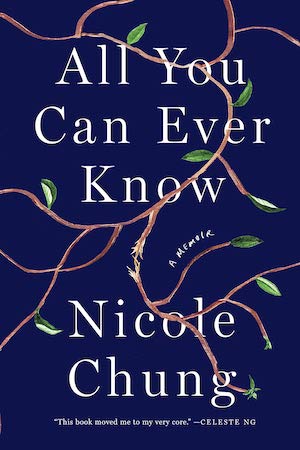
I must have nodded. We were up in your apartment and maybe it was a month after we’d first met.

You said that they were driving with the people who picked them up in a Jeep and this woman, whom you later loved, fell asleep in the backseat with her boyfriend. They were sleeping with their heads on each other, you said. I never knew how you would have known this detail or why it was important. It had nothing to do with what happened next, either in the story or, I don’t think, in our lives. But I did have the thought that this woman you loved was amazingly lucky and liberated. She could hitchhike and she could fall asleep.

She had a boyfriend who did these things with her. Her head rested on him. She would be carried back across the country, essentially for free, because she willed it.

“Later,” you said, “they woke up and the car was going really fast. They turned around and looked behind them and they could see lights.”

I wanted to know how fast.

“They were going over a hundred miles an hour.”

I didn’t ask you why. I let you explain about the Jeep rolling. I had never been in a serious car accident, but somehow I could imagine that period of time, how images yawn before the passengers, outside of any temporality. And you said that she had described it to you, solemnly; how the only way to survive is to go limp. How she knew about that somehow. How she credited her survival to this particular information gleaned, I guessed, from film.

The couple who had picked them up had drugs in the car. Not an insignificant amount. They were inexperienced professionals, apparently. Rather than be pulled over, they’d decided to make a run for it.

No one survived except for the woman you loved. And she was in the hospital for a long time and it was several years before she could return to school. She moved back to Iowa to be close to her parents. This was where she met you. You said you were pretty sure she understood how you felt about her, but it was like something in her was bent and couldn’t catch. Not that she couldn’t form new memories, but that people were, at some deep level, nothing more than animate sacks to her. And there was a whole year after the crash that she could not remember, a substantial portion of which she had spent in a medically induced coma.

When you told your father you wanted to marry her, he threatened to disown you. You never told me if it was because of the accident or something else. You said you locked yourself into the non-working sauna at your parents’ home outside Chicago for a full day, on Christmas no less, but they wouldn’t budge.

Later, when she eloped to Ecuador, you were glad, you said. You still despised your father, but you recognized that he had saved you from certain humiliation. It was unclear what role your mother may have played.

You said that none of it mattered and how you’d been stupid. You hadn’t known anything. You said that sleeping around was part of her condition. You claimed that this was common when it came to traumatic brain injury.

“I’m sorry,” I told you.

“Don’t be.” You were embracing me. You were saying that your younger self was very, very dumb.

One might have thought that because I had never been in love before I would not have had an analogous story, but I was a reader and because of this I was seldom without something to say, at least when it came to plot.

I told you then that I thought a lot about going back  in time. I had recently learned of Hugh Everett’s so-called many worlds interpretation, broached in his 1957 dissertation and entirely disbelieved until the 1970s. I was probably mostly misunderstanding, but I had become obsessed with the idea that by regressing, temporally speaking, one travels down the limb of a metaphorical decision tree. One moves in the opposite direction to time’s arrow and therefore against the grain of the increasing entropy that pulses inexorably into the future of our universe, according to the second law of thermodynamics. Even as I was saying this to you, I said, given quantum events, there were worlds coming into being in which I changed the subject, or a bat flew in through the unscreened window, or you interrupted me to insist that we should head to the bar.

“Wait, what time is it?” you wanted to know.

If we could go back, I said, to the first word of my first sentence, these worlds would not exist.

You were digging around your desk, in search of the cordless phone.

“I’m not done!” I called from the kitchen.

“Hey, man,” you were telling somebody. You covered the receiver and asked if I wanted to join.

“I want,” I said, “to talk about the time traveler’s dilemma.”

You said more things, re-buried the device.

“At your service,” you told me, reappearing. “What’s this about brains in vats?”

This was before you knew, I think, that you hated ambiguity. You idolized Robert Frost, not Borges. Where paths diverged, you’d squeeze out a token tear for the road not taken and move amiably on. What wasn’t or didn’t or couldn’t, for you, simply disappeared. You liked to pare things down, is what I’m saying. I do remember all your folding knives, inherited from your grandfather, an engineer, or purchased secondhand—how you kept them in a yogurt container as if they were a kind of art supply.

“The time traveler’s dilemma. Because once you go, you can’t go back.”

“Haha,” you said. “Back to the future!”

“Well, except you can,” I clarified. “I think. Sort of.” And I started recounting the plot of an old sci-fi story that had really impressed me, embellishing as I went:

Once upon a time in the late twenty-first century there is a research corporation that has a bunch of agents who are able to make use of time-travel vehicles to go into the past. They’ve noticed the tree of entropy; in fact, it’s a major reason for their interest in the past at all. Since quantum events in the present always double the world, and since what happens is composed of many quantum events, everything that can possibly happen is happening in some world unconnected to ours. We live in one world, but there are many others. The alternate worlds are full of interesting things: the predictable victorious Nazis, among other historical mutations; speaking cats. But if you go back in time, you follow, as I was saying, what amounts to a coalescing, unifying stem. You slide back away from those moments of doubling.

“Sounds complicated,” you said.

“Not really,” I assured you.

For an obvious problem arises when you want to move forward again: How will you be able to recognize the world-strand you came from, particularly when it closely resembles a number of others?

Here I grew enthusiastic, leaning across the table. I felt sure you had to get on board with this: The time-traveling agents solve this problem by leaving a signal on in the garage where their time machines are kept. The signal has a specific frequency, so they know in which strand to dock. The signal matches, of course, in a range of original-esque worlds, worlds with an identical time-machine garage, with identical devices to make a signal, with near-identical events around the programming of the signal. They’re all similar enough to one another that who really cares if things are a little off. This is still late capitalism, after all, and risk accrues to the freelancer.

But speaking of risk, there’s another problem. (This was my grand turn and I really tried to bring it home.) The research co. has lost a ship. There’s nothing but charred remains outside one dock. HR, ever thrifty and enterprising, offers a reward and finds a volunteer to loiter in local time lines, keeping an eye out. The volunteer follows past versions of the dead man and discovers: This pilot, anxious over the maintenance of his precious personal identity, tried so hard to return to the exact thread and exact moment he had left that he fatefully overstepped. He met himself on the way out of the garage in a catastrophic accident! I guess future fuel is highly combustible.

But this is only the first in a series of accidents, deaths, and disturbances. The fear of losing one’s original narrative proves contagious. It troubles some, while others succumb to many-worldly nihilism. Some pilots elect to return to a world that precedes their departure by several hours. They park their time vehicle behind a bush, stalk themselves, commit murder. Meanwhile, others, less confident types, live in constant fear of self-slaughter and destroy their time machines or preemptively end their own lives. Still others don’t return. And others still, recognizing that it doesn’t matter, for in a parallel world they will decide differently, walk out of windows or—

You interrupted. “I don’t get it,” you said. “What’s the dilemma?”

“Don’t you see,” I told you, “how time has changed?” 

“Not really.” You were scrubbing your face with your hands, as if to ward off sleep.

And so I did not say that it’s not being out of time that’s weird for the time traveler but the retreating uniqueness of the self of the time traveler, the rise of a nonsensical style of interpersonal competition. That in this universe the time traveler’s dilemma is whether to kill themselves or die, although in truth the two options are hardly very different.

But here came you again, brushing aside the web of slumber and characteristically in search of a protagonist: “What happens to the volunteer?”

“I don’t know,” I said. I felt defeated. “They’re just a plot device.” In this I was wrong, but it wasn’t until much later that I knew why.

Maybe now you informed me cutely how I made you nervous. I can’t recall. Maybe you laughed and squeezed the top of my knee; maybe my knee jumped. Perhaps you frowned and licked me.

At night you would jerk around like a windsock and you talked to yourself, nattering on about presences and tasks. Sometimes you got up and paced, wailing incoherently. I’d find you on the floor in the bathroom and you wouldn’t know where you were or how you’d got there.
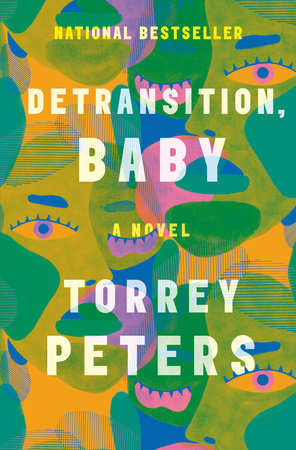
On my run, I could not have been stopped for more than ten seconds, fifteen at most. On I pounded, and the white house and its spectral signal fell away.

I used to like to think, what if I could go back in time, back to that year and day and meet us on the narrow side walk in the grass, perhaps at the very moment when you’re showing me the page on which Kurt Cobain begins waxing melancholic about his alter ego, “Kurd.” What if old me snatches the book out of your hands and starts beating you savagely about the head until you are either incapacitated or fully dead? Or, what if old me walks up to young me and uses impeccable logic, along with what I’ve since learned about human psychology plus epigenetics, in order to convince young me that I can do better? I’ve thought about transforming myself into a sort of speaking particle and somehow journeying into my own naïve mind, to beg myself to reconsider. I’ve also thought about the time traveler’s dilemma and the fact that I am living. And therefore wasn’t there.