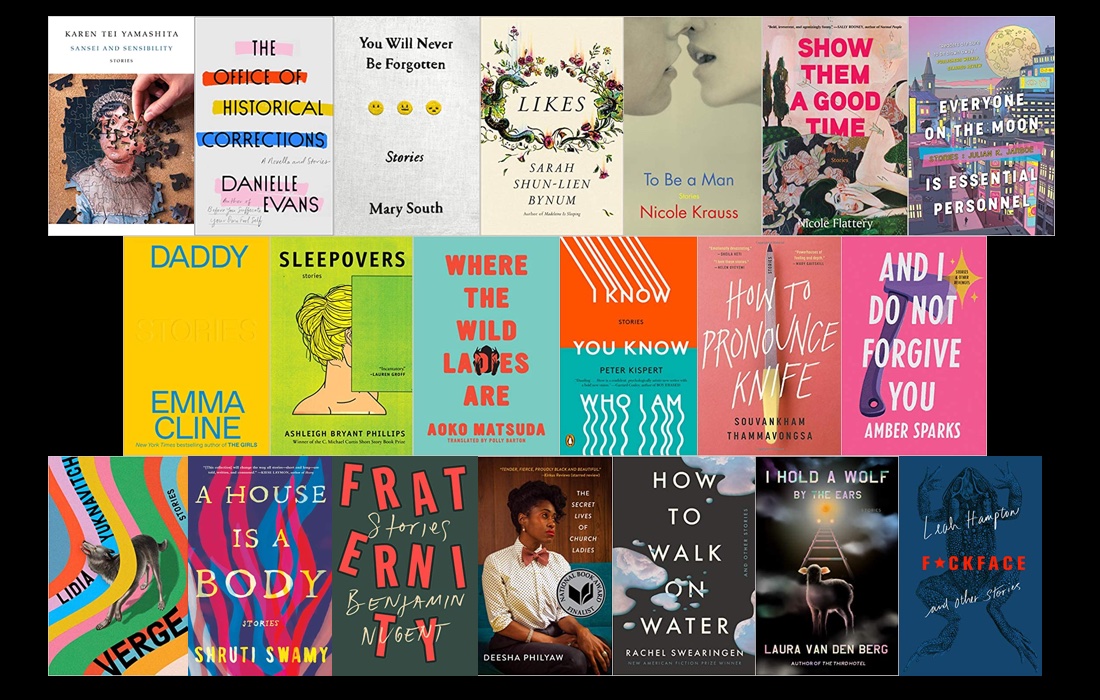
Did everyone else notice that the New York Times list of 100 notable books from 2020 only included one short story collection? Weird, right? There were actually so many great collections this year—but with the help of votes from Electric Lit staff, former staff, and contributors, we’ve narrowed it down to 20. In roughly ascending order (we had a lot of ties), here are our favorites of the year. (When you’re done, check out our picks for nonfiction books and novels.)
Recommending Julian K. Jarboe’s satirical queer science fiction collection in Recommended Reading, Casey Plett writes that “Jarboe’s writing makes me weepy and laugh deliriously at the same time.” Read the title story, “Everyone on the Moon Is Essential Personnel.”
Leah Hampton brings rage but also a sense of humor to stories about life, death, sex, and sadness in Appalachia. Read “Twitchell,” about a chemical company that may or may not be giving generations of people cancer (recommender Deb Olin Unferth called it “gut-wrenching”), and “Meat,” about interning at a slaughterhouse, in Recommended Reading.
Fraternity is a set of linked stories about the Delta Zeta Chi brothers, and how their toxic performative masculinity affects their lives. Read an interview between Nugent and Genevieve Sly Crane, author of Sorority, about taking inspiration from Greek life.
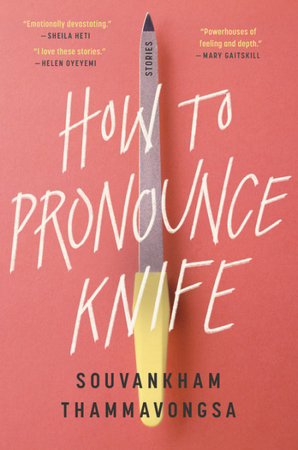
Thammavongsa’s tautly-written collection focuses on the stories of Laotian refugees who have made it to the United States. Read an interview with the author, or read the story “Randy Travis” in Recommended Reading, where Vinh Nguyen praised her “heartbreak, humor, and defiance all condensed in the most crystalline language and imagery.”
Sansei and Sensibility blends the stories of third-generation Japanese Americans with the characters of Jane Austen. Borders and realities collide in this beautiful collection, which deals with everything from class dynamics to what we really inherit from our ancestors.
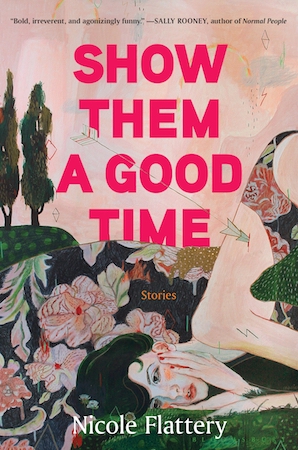
Recommending a story about a woman trying to date during the apocalypse, Colin Barrett writes: “‘Not the End Yet,’ like all the stories in Show Them A Good Time, is a story that is both funny peculiar and funny haha. The world is ending, but there is still time.” These are strange stories that upend the familiar.
Sleepovers focuses on stories set in rural North Carolina. In these bold, frank stories, characters navigate friendships and relationships, shedding light on a part of the forgotten South without being afraid to dig deep into its darkness.
The stories in this spiky, magnetic collection deal with characters about to go over the edge, whether that means the edge of their bodies (as in a story about searching for organs on the black market) or the edge of reality.
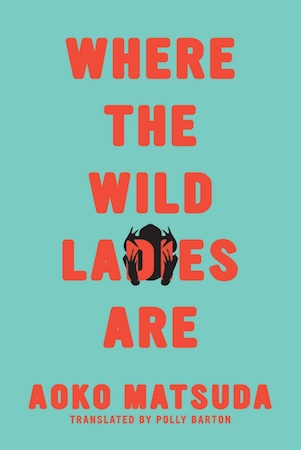
“If there is a specific subgenre of ghost story of which I am inordinately fond, it is the one in which the protagonist has sex with a ghost,” writes Carmen Maria Machado, recommending Aoko Matsuda’s story “Peony Lanterns.” Matsuda’s spirited (in a few senses) collection is inspired by traditional Japanese ghosts, and she also curated a list for us of female ghosts from folklore.
Kispert’s debut collection is all about lies and the (queer) liars who tell them. Recommending one of these stories, Kristen Arnett summed up Kispert’s work: “Peter Kispert is a funny writer, but he’s also ready to sucker punch you with feeling.” Read “In the Palm of His Hand,” about a man pretending to be Catholic for love, in Recommended Reading.
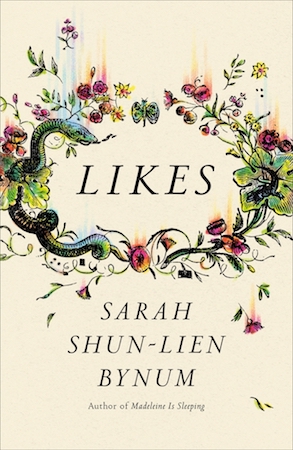
This fantastical collection Likes marries fairy tales the and modern world, illuminating the experiences of girls and women by pairing them with the strangeness of fable—or simply highlighting the strangeness of real life.
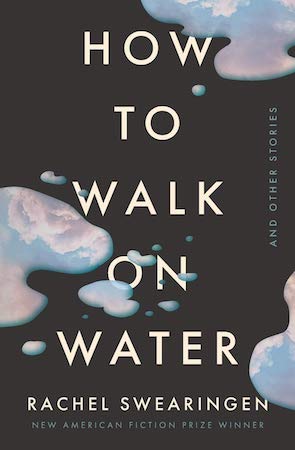
Caitlin Horrocks praised the “delicious mystery” of Swearingen’s story “Advice for the Haunted” in Recommended Reading. The rest of this debut collection likewise balances eeriness, danger, and uncertainty with minutely-observed descriptions of everyday life.
“Through Shruti Swamy’s collection, A House Is a Body, her varied characters share a singular quality—their painful desire to reach the reader with the secrets, shame, and truths they can share with no one else,” writes Laura Furman, recommending “The Neighbors” from this intense and groundbreaking book. Swamy also curated a list of books that take women’s bodies seriously.
The surreal, funny, genre-bending stories in And I Do Not Forgive You combine history, ghosts, fables, urban legends, time travel, and video games in perfect magical realist alchemy. Read an interview with Sparks about reimagining happily-ever-after.
Krauss is well-known as a novelist, and she brings the same deftness with literary fiction about flawed, conflicted characters to her first short story collection. The characters in To Be a Man aren’t all men, but the collection does wrestle with ideas about masculinity and what it means for individuals and society.
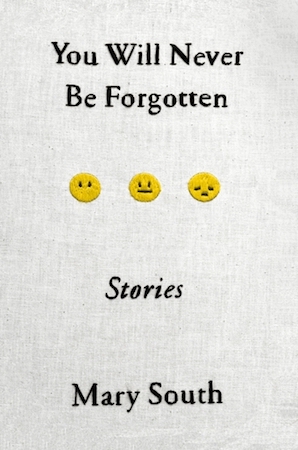
Mary South’s stories are dark and funny, both absurd and way too real—Karen Russell meets Black Mirror. “I don’t feel like I have to invent much or stretch the world too far past recognition in my stories—our current reality is often a horrifying dystopia,” she said in her Electric Lit interview.
This provocative collectionis fascinated with bad guys who don’t know that they’re bad. In her interview with Electric Lit, Cline said she wanted to investigate “that distance between how people think of themselves and how they actually are in the world.”
Recommending Philyaw’s story “When Eddie Levert Comes,” about a mother with dementia who is infatuated with the soul singer she believes to be her lover, Rion Amilcar Scott suggests that the reader brace for an emotional walloping. Philyaw’s National Book Award–nominated collection pulls no punches as it deals with the complex relationships and desires of Black women in a conservative church. Read an interview with the author about church ladies and secret sex.
The stories in this collection are about violence, desperation, dark secrets, and attempted escapes, but mostly they’re about death—imminent death, actual death, the fear of death. “I want to tell you about the night I got hit by a train and died,” begins “Last Night,” which you can read in Recommended Reading. This book is as insightful as it is unsettling, and you can’t look away. Read an interview with van den Berg about which of her characters is the biggest Karen.
The characters in these stories, writes recommender Kelly Link, “are not submerged in or extinguished by loss. They are, in fact, so urgent, so bright, so compelling that they linger long after I close the book.” Evans deftly weaves race, love, grief, and history in this rich and remarkable collection. Read the recommended story “Anything Could Disappear,” or read our interview with the author.
(This essay contains almost immediate spoilers for The Undoing, as well as discussion of birth trauma)
At the end of HBO’s prestige drama The Undoing, we watch, in a flashback, the murder that has been the central driving mystery of the show. We find out the perpetrator by seeing that person commit the crime. And yet, even as I watched this scene, I couldn’t believe it. I had immediately ascribed guilt to one of the women, and I could not believe that the murderer was a man.
The Undoing tells the story of a white, middle-aged, married couple, Grace and Jonathan Fraser (Nicole Kidman and Hugh Grant), affluent New York doctors, and their lovely, violin-playing son who goes to an expensive private school. Elena Alves (Matilda De Angelis) is a younger, poorer woman, presented as non-specifically nonwhite in the vague manner of TV, whose son attends the same private school on scholarship. Elena is found bludgeoned to death after a school fundraiser. At the same time, Jonathan mysteriously disappears. It’s likely that I should have suspected Jonathan from the beginning—everyone in the show did. But I immediately pinned the crime on Grace.
Before her death, Elena had seemed to be mystically or sexually drawn to Grace; we see her gazing at Grace while she breastfeeds, or standing naked before Grace in a gym locker room. Grace finds her crying in the bathroom at the school fundraiser, and Elena kisses Grace on the mouth as a thank you for her kindness. But in fact, we discover upon Jonathan’s return, Elena was having an affair with Jonathan. Her son was his cancer patient, and they became involved while Jonathan was saving the boy’s life. He did sleep with her, he confesses, but he did not kill her.
We are meant to wonder if she’s imagining or remembering. We’re meant to wonder if she knows the difference.
As viewers, we are closest to Grace, able to see the scenes that crowd her head: images of her husband and Elena together, images of Elena painting her portrait. We are meant to wonder if she’s imagining or remembering. We’re meant to wonder if she knows the difference. After these visions, Grace comes back to the present visibly shaken. These scenes in her mind are repetitive and intrusive, so detailed we imagine she really posed for Elena to paint her, or watched Jonathan and Elena have sex. Doing these things, or even imagining them, wouldn’t necessarily make her a murderer—but the dissociation itself, the perception that she doesn’t know the difference between past and present or between imagination and memory, raises our suspicion. At least, it raised mine.
I’ve been thinking a lot about dissociation and blame lately, how they can earn each other. I had a baby four months ago, and while we’re both okay now, the beginning of her life was very scary. The labor, so quick and violent, didn’t allow her to clear the fluid from her lungs and for the first 24 hours, she needed compressed air. Right after she was born, they let me hold her for a moment while they sewed me up and then a team of NICU staff took her away. My husband went with her, and when the doctors were done sewing, they left, too. The labor and delivery nurse, too, needed to do something elsewhere. And for a few minutes after Leah’s birth, when I was newly empty and totally alone, I had the sensation of being outside my body and observing myself from above. I mentioned this to a trauma therapist and she suggested I take the dissociation scale questionnaire, a series of 28 scenarios to which you answer what percent of the time you experience them. We all dissociate a little, she explained; it’s common, for instance, to be driving and realize you don’t remember part of the trip. But dissociation can also become more serious: you look down and don’t recognize the clothes you’re wearing, or you’re approached by someone who clearly knows you but whom you don’t remember.
One of the items on the questionnaire is the ability to ignore pain. I did not feel pain a few hours after Leah’s birth when I had a hemorrhage and the doctors were clearing blood clots from my uterus with their hands. “Do you want morphine?” they asked, and I said I thought I was okay. “You’re remarkably calm,” they complimented me.
Another of the scenarios is finding yourself somewhere and not knowing how you got there. The detectives show Grace footage of herself a block away from Elena’s studio where she was murdered. “What is this?” Grace asks. She looks as though she’s not sure what’s real and what isn’t (dissociation scenario 12). “I was walking. I take walks.” She squeezes her eyes shut as if to try to remember whether or not she had murdered someone. “That’s how I ground myself; I walk.” So, we think suspiciously, she needs to be grounded.
From the birth and the hemorrhage I had lost enough blood that I was light-headed even sitting up. I didn’t feel confident sitting in a wheelchair the length of time it would take to go up to the NICU to see Leah. They had a webcam pointed at the top of her head, so I watched her all day while I pumped, trying to simulate the time we would normally be spending together, hoping my milk would come in. It felt a bit like masturbation, watching a screen and jostling my body. Through the angle of the camera I could see gloved hands come in and out of the frame, adjust Leah’s tubes, but I couldn’t see her face. I didn’t really know what she looked like.
The doctor picked up on my dissociation but not my internal bleeding. You can have both.
A doctor came in to check on me that afternoon. I cried easily. I asked how we would know if I was going to have another hemorrhage. She said my hemorrhage occurred in the window where they’re common, and I was now outside of that window. Then she looked at me suspiciously. “Why aren’t you in the NICU with your baby?” she asked. And I thought, why AM I not in the NICU with my baby? Am I crazy? Am I a bad mom? I told her I still felt too light-headed to sit up for very long. She looked at my file and said, “I see you used to take Zoloft.” She asked if I thought it was time to start it again.
I was dissociated, certainly. I was separated from my baby. We had both almost died, and we both still could. The doctor picked up on my dissociation but not my internal bleeding. You can have both. In fact, it seems like they might go together pretty commonly, that they may both stem from the same circumstances.
It turned out I didn’t stop bleeding, even outside “the window where it’s common,” and seven days later I fainted in my home. One day after that, blood poured out of me in front of my three-year-old son, and I was taken by ambulance back to the hospital where they did a D&C and a blood transfusion. So it wasn’t Zoloft I needed, after all, or the suggestion that I was a bad mother, or the invitation to blame myself. I wasn’t hysterical or disinterested in my baby. I was bleeding to death, and showing signs of bleeding to death. The doctor, a woman, looked at my file and my tears and thought, anxious woman. I didn’t need her blame, I needed her to insert a balloon into my uterus to put pressure on the blood vessels and stop them from bleeding. But the blame was what I got.
Grace was not a murderer. Her husband was. And my husband could believe it, and it seemed from Twitter that men in general could believe it, and I could not. How could she be blameless? She seemed too much like me.
Twice a year for the first 22 years of my life, my family rented a cottage on a lake in Western Michigan. The families who rented cottages on either side of ours were always the same and we grew up together in a magical summer camp sort of way. One year we discovered one of the families had a sex criminal in it. He was caught molesting their exchange student, and then it was revealed he’d also been molesting his daughter. “How could she not have known?” I remember hearing my mother ask. She meant, how could his wife not have known he was a molester? It seemed like more outrageous behavior to her than the molestation itself.
When you go to your six-week check-up after having a baby, they give you a questionnaire to assess your level of postpartum depression and see if your stitches have healed enough to have sex. Scenario 3 on the Edinburgh Postnatal Depression Scale is “I have blamed myself unnecessarily when things went wrong.” The word “unnecessarily” itself feels lightly blaming to me; the question both assumes that there is a correct level of blame, and suggests that you are making a fuss out of nothing. Like me, this question is trying to clarify when women do not need to blame themselves. But it is also, like I am, blaming women for blaming women.
What’s wrong with me, I wonder, that this is my instinct? To blame a woman for no reason other than she seems confused?
Towards the end of The Undoing, when Grace testifies against Jonathan, I thought, my god, it’s her crime and she’s putting him away for life! Hell has no fury like a woman scorned, a saying we’re taught before we’re old enough to think for ourselves. When we finally see the murder scene, it’s interspersed throughout a scene where Jonathan is kidnapping his son, unraveling, fleeing from the cops who are chasing him. We cut back and forth between Jonathan smashing Elena’s head against a wall and him in the car with his son, singing a terrifyingly cheerful rhyme. Yes, I thought, but that doesn’t mean he did it. The mental gymnastics I went through to assign blame to Grace as the scene progressed were astonishing. We see Jonathan leave Elena in a heap on the floor and move toward the door. And then he leaves and Grace comes in in a fugue state and bludgeons her to death, I thought. But he doesn’t leave. Jonathan turns around and kills Elena with her sculpting hammer, just like every shred of evidence in the whole show suggested.
What’s wrong with me, I wonder, that this is my instinct? To blame a woman for no reason other than she seems confused? She goes for walks? Is it that I see myself in her? Or that I don’t? After my mom watches my son for an afternoon, I hear him repeating things she says. “What’s wrong with me? What’s wrong with me?” says my three-year-old boy, and from his mouth it is the first time it sounds unusual, the refrain I’ve heard women sing in the background my whole life.
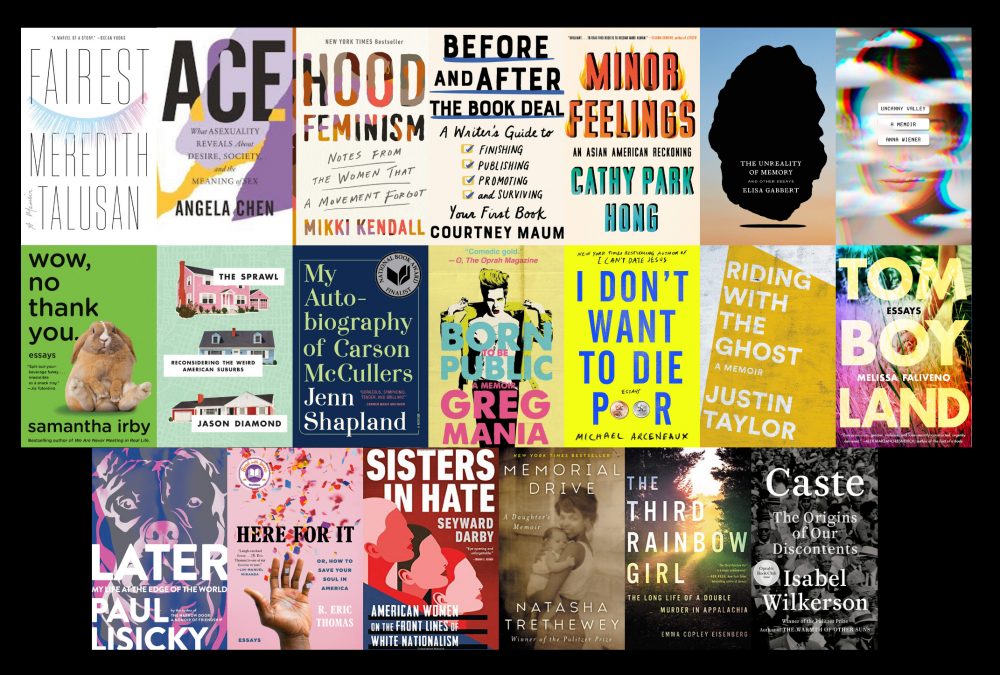
If you can’t go out in the real world, why not at least read about it? These memoirs, essay collections, and deeply-researched reported works kept our panel of Electric Lit staff, former staff, and contributors engaged with the people and places outside our apartments throughout this singularly isolated year. In roughly ascending order (we had a lot of ties), here are the voters’ top 20 picks for the year’s best nonfiction. (You can also read our picks for short story collections and novels.)
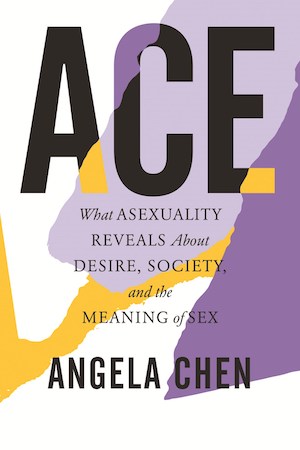
There are very few non-scholarly resources on asexuality, and though it’s impossible for one book to cover every experience—there are as many kinds of asexuality as there are asexuals—Chen sets a thoughtful, rigorous, personally generous tone for what will hopefully be an expanding area of study. Read an interview with the author or her essay on why we need books without romance.
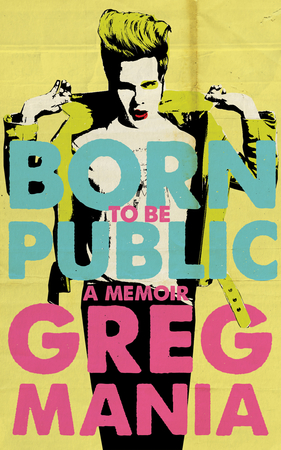
You might intuit from his name that Greg Mania is flamboyant and funny, and he is—but this memoir of gay nightlife, mental and physical illness, sex, relationships, and internet fame also showcases his more thoughtful and tender side. Mania curated a book list for us about coming of age in New York City.
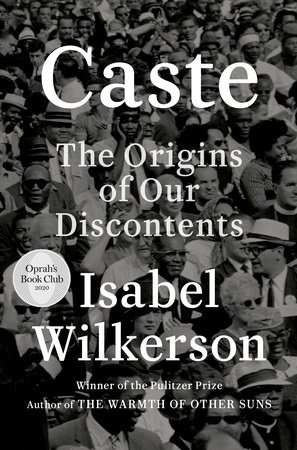
Isabel Wilkerson is known for her in-depth reporting—she has won a Pulitzer Prize, among many other awards. In Caste: The Origins of Our Discontents, Wilkerson compares the caste systems of the United States, India, and Nazi Germany, and formulates eight pillars on which these systems are built. You can find Caste on our list of books that celebrate Black lives.
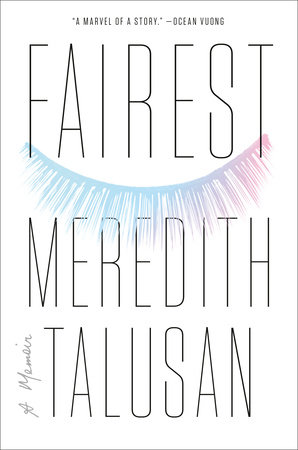
Talusan is an Electric Literature board member, but that’s only the cherry on top of her fascinating life. Her memoir takes readers from her childhood in the Philippines through her experience as a gay man at Harvard and finally her gender transition, analyzing throughout what it means to be seen as male, as female, as Asian, and (because of her albinism) as white. Read an interview with Talusan.
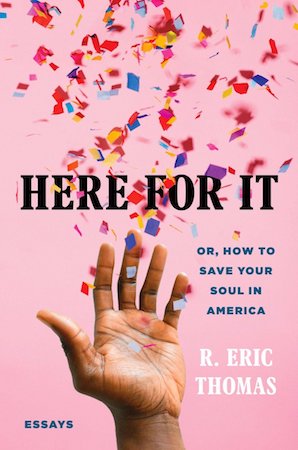
You may know R. Eric Thomas for his hysterically funny takes on politics and pop culture in his Elle column, but this memoir in essays proves that he can make you cry too. (Don’t worry, it’s still very funny.) Read an interview with the author.
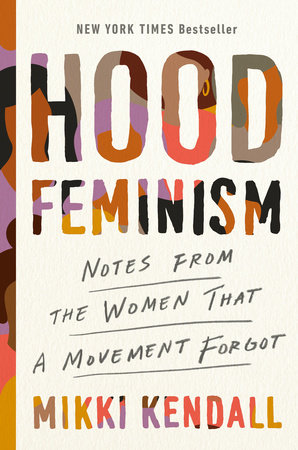
Mikki Kendall centers the conversation on feminism around the often-forgotten/looked over peoples within mainstream feminism. Kendall has a knack for conveying her experience, and the experience of many Women of Color, as they try to make themselves heard within the mainstream feminist movements.
Student loan debt lurks at the center of many people’s lives, coloring every plan and decision they make, but we don’t talk about it enough. Arceneaux’s book of essays about the burdens of debt is painfully urgent.
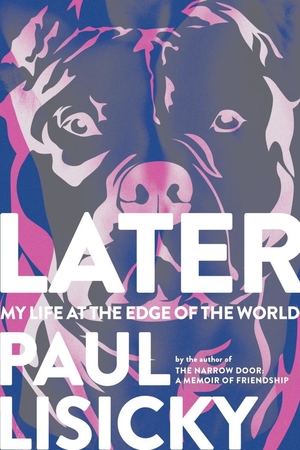
Lisicky writes about moving to gay haven Provincetown, Massachusetts in the early ‘90s, when AIDS was rapidly consuming the community. The contrast between the queer idyll he lives in and the pandemic disease that stalks them makes this memoir tense, poignant, and cathartic. Read our interview with Lisicky here.
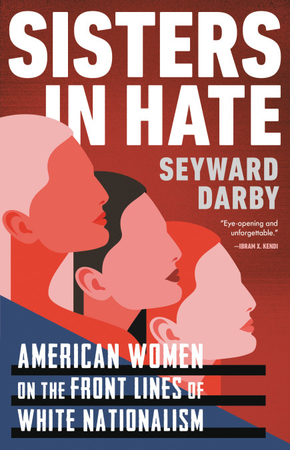
Women’s role in white nationalism is complex—it’s not exactly a bastion of female empowerment—but we need to understand how the concept of white womanhood props up the ugliest elements of American society. Darby goes deep on three women connected to hate movements. Read an interview with the author.
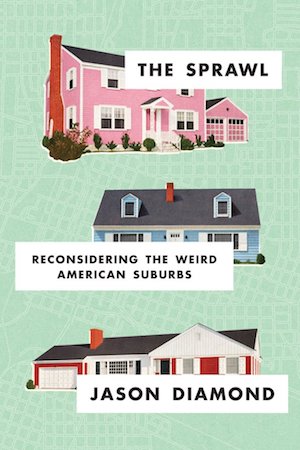
During the campaign, Donald Trump insisted that “suburban women” would support him because he was saving “the suburbs”—meaning, of course, that white people would support him because he was keeping their neighborhoods white. But the conflation of suburbs and whiteness goes back way further. Diamond examines the history of suburbia and what it means to us culturally, including as a marker for racial homogeneity.
You probably could have guessed that Silicon Valley’s startup world was highly toxic. But Uncanny Valley, an insider’s memoir from a woman who stumbled into a tech culture that was more sociopathic than she’d dreamed, makes it clear just how bad it was and how easy it was for certain kinds of people to choose not to notice. Read an essay about how Wiener reveals the corniness of the tech world.
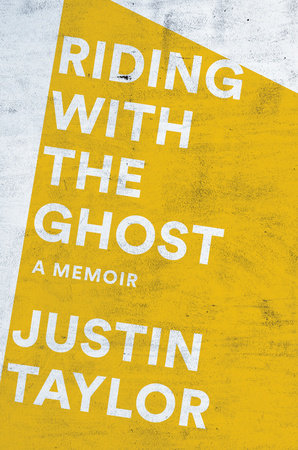
In this reflective memoir, Taylor reckons with his father’s life and eventual death—and, in between, his attempted suicide. What does it mean to love a father who doesn’t want to live?
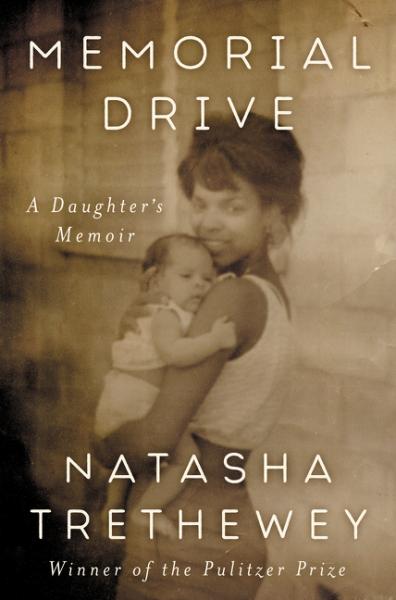
Pulitzer winner and former poet laureate Trethewey unearths a childhood marred by violence in this wrenching memoir about her mother’s abuse and murder. Simultaneously a memorial to her mother and an indictment of the man and the system that killed her, Trethewey’s book traces trauma through her mother’s life and her own.
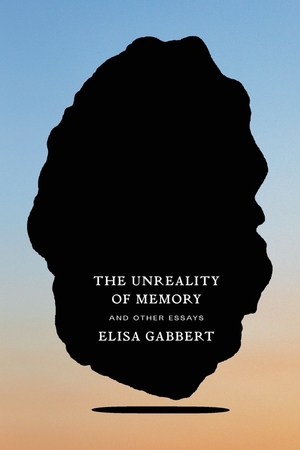
Electric Lit’s Blunt Instrument columnist Elisa Gabbert surely never expected to be quite so timely, but sometimes the stars align and you put out an essay collection about doom, anxiety, and disaster in a year like 2020. If we’re going to live through a slow-motion catastrophe, at least we have beautiful writing about it. Read an interview with Gabbert.
From the title it sounds like this essay collection will be about gender and sports, and it is—including a deeply personal story about Faliveno’s manipulative relationship with her high school softball coach. But it’s also about queerness, class, and what it means to try to find your place. Read our interview with the author.
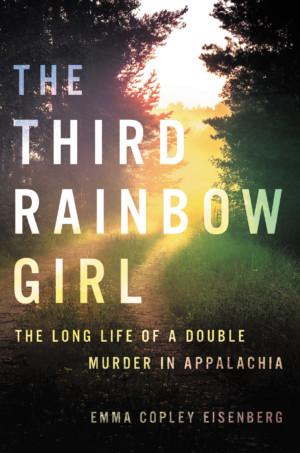
Eisenberg’s true crime story circles around a case that is many years cold: the 1980 murder of two women hitchhiking through West Virginia. But as Eisenberg finds when teaching summer camp in the area, the murders reverberated through the whole community—and in some ways, girls are still disappearing.
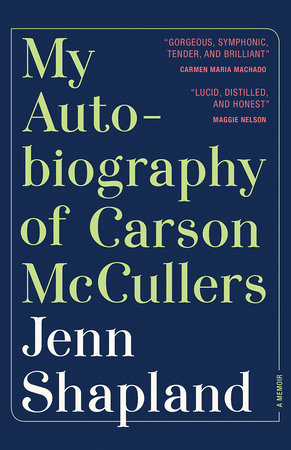
Jenn Shapland’s hybrid memoir/biography started with deep immersion into the undiscovered love letters celebrated author Carson McCullers wrote to another woman. Finding those letters also awoke Shapland to her own queerness, and she weaves her own story into her subject’s in a way that is illuminating and boundary-breaking (and earned her a National Book Award nomination). Shapland wrote a list for us of other biographies that are secretly memoirs.
In her third collection of essays, frank and funny bestselling author Irby, who is also the preeminent Judge Mathis chronicler of our time, takes on topics like bills, sex, periods, and the internet in a way that makes you actually want to think about them. Read our interview with Samantha Irby.
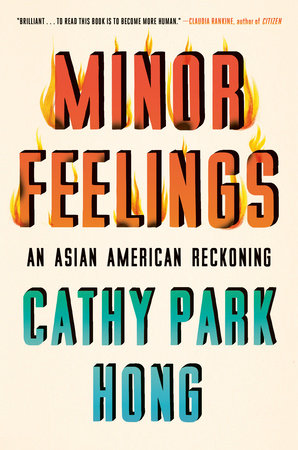
Poet Cathy Park Hong’s Minor Feelings calls itself “a reckoning,” and that’s how it reads: not just a memoir, not quite a manifesto, but a clear-eyed history and articulation of the Asian American experience that precisely diagnoses the cognitive dissonance of being racialized in America. Read our interview with the author.
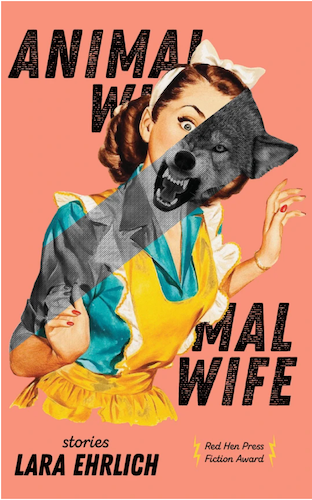
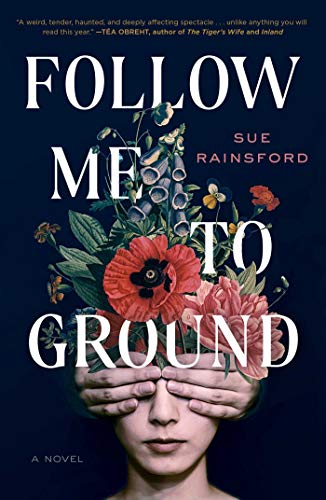
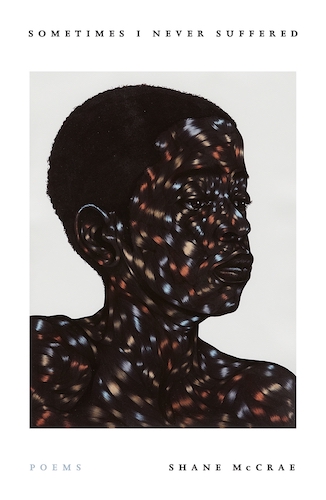
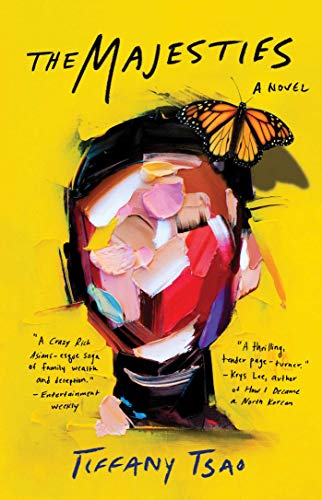
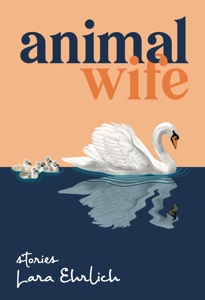
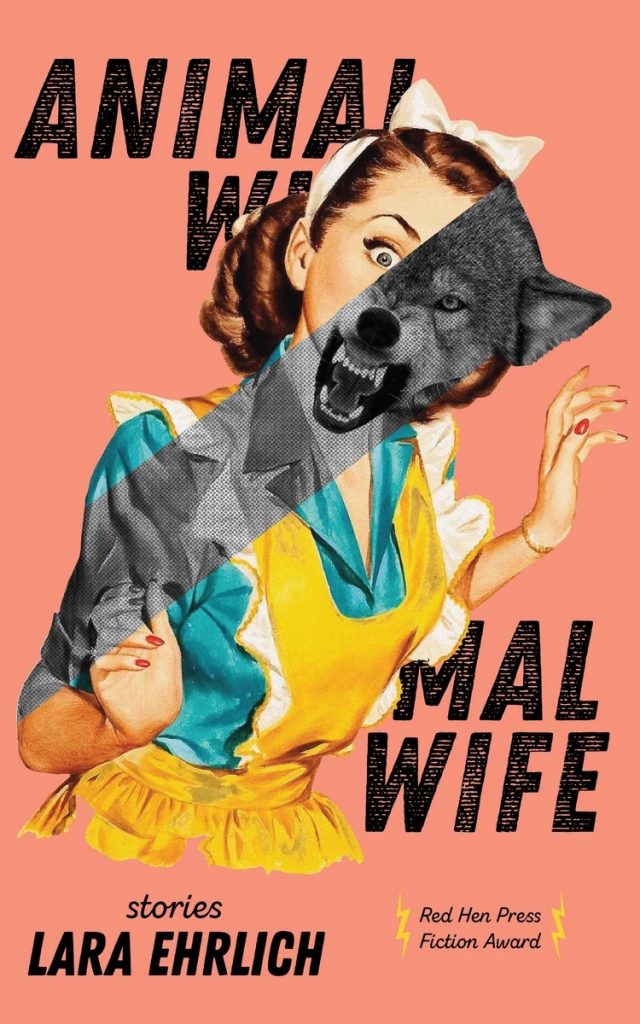
This week, readers on Electric Literature’s Twitter and Instagram voted to narrow a field of 32 beautiful book covers down to their favorite of the year. Some of the margins were razor-thin—in particular, both Sin Eater vs. The Exhibition of Persephone Q in round one and Animal Wife vs. Follow Me to Ground in the quarterfinals were decided by fewer than 10 votes. But in the end, one cover prevailed.
From these four contenders, each of which had already knocked out three other hopefuls on their way to the quarterfinals, a vivid ultimate pairing emerged:
We spoke to the designers of the final two about the process of designing their eye-catching covers.
James Iacobelli, designer of The Majesties
What was the most important thing for you to convey about the book? How did you use the design to get that across? I wanted to find the right simple image that would portray the luxuriousness, complexity and destruction of this novel. It had to have menace but remain beautiful. Having been a fan of Joseph Lee’s art, I knew it was a perfect match.
Did you have any interesting false starts or first drafts you can tell us about? All along, I had been interested in the concept of deconstruction. I was working with silhouettes and butterflies. None had the impact I was looking for.
What’s your favorite book cover of 2020, besides your own? I’m obsessed with Howdunit.
Caitlin Sacks, designer of Animal Wife
What was the most important thing for you to convey about the book? How did you use the design to get that across?
The author, Lara, really guided me with the direction for the cover. We wanted to emphasize the duality of the title Animal Wife. Is she the human wife of an animal? Or is she the animal? The answer changes between stories.
I think there’s this idea so many women have, that once you get married and have kids, you’re trapped. Your life isn’t your own anymore. The cover wolf/housewife can be seen as a wild animal that’s been domesticated, or she’s a wife with a growing resentment for her family. Either way, those animal instincts are bound to kick in for self preservation eventually.
Did you have any interesting false starts or first drafts you can tell us about?
Two key phrases I used as my starting point were motherhood and abandonment. The title-story “Animal Wife” is a reimagined tale of the swan maiden, where the swan transforms into an unhappy wife and mother. So my original idea was a swan swimming in a lake with a gaggle of cygnets following close behind. The swan is reflected in the water, without her children; a life where she is free from familial responsibility. We ultimately agreed that it felt too tame a cover for this book.
What’s your favorite book cover of 2020, besides your own?
Wave If You Can See Me by Susan Ludvigson. My dear friend and jaw-droppingly talented designer, Vivian Rowe, created it. She and I met at Red Hen Press, an indie non-profit publisher, where we both became lead designers. I’m in constant awe of her work. She’s a fantastic illustrator, hand letterer, and graphic designer. She’s a triple threat! Hopefully you’ll be interviewing her next year for Best Cover 2021.
I’m so thankful to Red Hen for allowing me to create book covers and distract the staff with my incessant talking. I used to get in trouble for it in fourth grade, but everyone at the press seems to like it.
And finally, here’s your 2020 Book Cover Tournament winner:
Animal Wife by Lara Ehrlich! Congratulations to Lara, Caitlin, and Red Hen Press.
In her debut novel, Braised Pork, An Yu explores a widow’s journey to self-realization and the mysteries of the people we think we know best. The story begins when a woman finds her husband crouched awkwardly in a bathtub, dead of indeterminate cause. On a stack of towels, she finds a piece of paper with a crude drawing of a fish’s body with a man’s head attached. Jia Jia can’t fathom what it means. She had been married to Chen Hang for years, but they never really knew one another. Theirs had been a marriage of intention, not love. What could the fish-man mean?
So begins a quest. Spurred by vivid dreams of a world of water, it takes Jia Jia on a journey both emotional and physical. For years, she had submerged herself as a woman and as an artist in domesticity, and now, without Chen Hang to anchor her, she was free to inhabit a larger world of her own making. She begins painting again. She tries on a love affair with Leo, a tender-mannered bartender. She reaches out to her father to try to reconcile with the grief of losing her mother. Finally, she leaves Beijing and travels to Tibet, following in the exact footsteps of her dead husband to seek answers to his death. Along the way, she meets people who have found, or who are also searching for, their own world of water.
At heart, this novel is about our universal need for human connection, and how fraught that desire can be, since we can never really know the heart of another. The characters seem sometimes to be motivated by contrasting impulses, and the sense of alienation from each other, from their surroundings, is palpable. We don’t always know ourselves, or others—even those we’ve known all our lives. How can we when, as Ja Jia says in the book, “we explain things we don’t understand by using other things we don’t understand”? It’s a sense that’s heightened by the blurred lines between the real and the mythical in this book.
In the end, a quest may prove elusive. It may or may not yield the sort of resolution one hopes for. But sometimes, perhaps the resolution itself is less important than the willingness to let go of the need for one.
Emily Ding: Your novel is braided together by incredibly strong images and motifs, like the fish-man. What was the spark for your story?
An Yu: It began with a very vague plot that involved a woman going through trauma with a failed marriage and going on a journey in search of herself and her past. I started experimenting with different stories and characters in the short-story format at first. Then, I had a dream about a fish-man, which is very similar to the dream that Jia Jia’s husband had.
ED: What struck me reading your book was the essential unknowability of people, even if we spend every day with them. Was this something you were trying to explore in your book?
AY: It’s definitely a running theme.I think it’s exactly like you said. Oftentimes we can spend our whole lives with someone, and we can think that we know certain people who are the closest to us. And yet, there is always a disconnect, especially in times of trauma. Those are the times when you find out it’s impossible to completely empathize 100% with another person.
There’s the relationship between Jia Jia and her husband, Chen Hang. Later on, there’s the relationship between her and Leo, who she feels far more emotionally connected to. And yet, there are still moments when she finds that all the pain she is going through, she has to go through alone. Leo won’t be able to understand her fully.
ED: What reinforces this sense of indefinability for me, in part, is the seamlessness between the cold, concrete, everyday reality of Beijing, and the underlying mythical world that the characters slip into. How do you see your characters, Jia Jia especially, navigating both these worlds?
AY: I was born and raised in Beijing and left for New York at the age of 18 and didn’t move back until recently. So I’ve been away for the past ten years or so. On the more surface level, every time I’ve been back I’ve seen the city change, like a monster constantly evolving by nature, morphing into something else. And there is something unsettling about that. Often, I had this feeling in tiny tiny moments that would last just a split second—like I was being thrown into something that was like a dream, or a parallel sense of reality.
In the context of urban Beijing, oftentimes you do need a sense of the surreal to make sense of the real. I think charging headlong into reality and trying to look for answers there doesn’t always work. There are certain answers you’ll neer be able to find. And these might not be concrete answers; the answers might be questions that are answers to your questions.
I think there are many characters in this novel who are, in some way or another, searching for the world of water. Or rather, they have different experiences of it—whether it’s been foisted upon them; or whether they go out of their way to search for it, even if it might be fruitless. I never intended the world of water to symbolise or mean one thing to all the characters, though there may be overlaps.
ED: In your novel, people seem stilted in their interactions with each other, finding it hard to make a connection. And with Jia Jia, I got the feeling in the beginning that, though sometimes it seems the domestic part of her was the real Jia Jia, the flashes of boldness she exhibited in Leo’s bar that felt like acting came across sometimes like the real her. What drives this alienation, this dislocation, in your book?
AY: Well, there is this preoccupation with the self, so much that it’s impossible to even try to understand another person. Then there’s the alienation of living in a city where you don’t have much time to even think about others.
It’s not necessarily true that the people you’re closest to are the people you can connect to the most.
That feeling is also often, in the context of this book, how people feel like when they can’t really connect or fully heal another person’s wounds or completely be there for another person. You realise there is nothing you can do to help them feel differently. There is a sense of helplessness.
So it’s this feeling of being alienated from the people closest to you and finding connection with people who might be strangers. I think that is something I’m trying to explore not just in this novel, but also in my other writing. It’s not necessarily true that the people you’re closest to are the people you can connect to the most. There might be very small moments with strangers that could have much more emotional impact.
ED: You talked about wanting to explore the idea of a woman going through the trauma of a failed marriage searching for herself. And many of the women in your novel end up in failed marriages, for different reasons. But they all yearn for a larger existence, where they are more central to their own lives and stories. What underlined your explorations of love and marriage in this book?
AY: I suppose I’m not trying to say anything about marriage per se, but more this feeling of never being able to correctly know what marriage should be, what love should be, in the context of human nature and the evolution of society towards a more globalised, modern, American-influenced one. And, at the same time, how we try to hold on to the cultures and traditions of the past, and navigate between the two; and trying to decide for yourself what would be best for you going forward, but never really being able to know. Also, having to constantly recast your life plan as well as your beliefs according to what’s happening to you and work on your own emotional response to it.
ED: What you just said makes me think of one line in the book that kind of stood out to me. I think Jia Jia and Leo are talking, and he says, “Don’t you think that sometimes we just need to love in the simplest way possible?”
AY: I think for Jia Jia, she has been struggling with the concept of marriage and love ever since she was a child because of her parents’ marriage, and she was set on marrying for reasons more rational than love. She married the man that she didn’t quite understand, and after he dies, she begins to get a more distant view and see who Chen Hang was in real life: that he was, in fact, a simple man and she could see all his faults more clearly.
Leo, he’s a bartender who watches people every day and he’s met a lot of people. And after all that, he’s looking to go back to what is the most simple. He doesn’t have or want a very complicated life, or an ambitious life. He sees a relationship as something stripped down to the core of love. You love someone, you want to be with them.
For Jia Jia, she’s had years of turmoil, of not being able to understand her parents and her own marriage. She still has to go on this emotional and physical journey by herself. Towards the end of the novel, she perhaps feels like there is a change in her view towards what simplicity is and what marriage is. But again, that answer lies in all the new questions that she has.
ED: Despite Jia Jia having seen Chen Hang more clearly, and seen the faults of their marriage, after his death, she continues to hang on to Chen Hang’s memory and follows exactly his itinerary when he had gone on a pilgrimage once to Tibet. What compells her?
AY: I think that doesn’t apply just to Jia Jia and her husband but also Jia Jia and her mother and her father, where she’s consistently being torn between pain and love and a sense of attachment, and how these people have made her the person she is and how she can never fully reject them. They are the people who are closest to her.
So even though she wasn’t in a loving relationship with Chen Hang, it was nonetheless a legitimate relationship. And, you know, she spent every day with him, she gave her life to him. It’s not so easy for him to just walk out of her life psychologically. Essentially, that’s what kicks off her journey to look for the fish-man. To her, it was the only choice going forward, to find answers. But the answers she find are certainly unique to her and not the answers her husband was looking for.
It’s impossible for Jia Jia to remove herself from the pain of the past. It’s impossible for her to look for hope without looking into that pain.
I have to explain that Colette was the kind of girl to invent her own words and think they would stick. Her new one was “denny.” Denny was a feeling. If she felt her jeans fit over her butt just right and her song was playing? “I don’t know, I’m just denny right now,” she would say, running her hands over herself, snapping her fingers, smiling a private smile meant for display. “Aren’t you denny right now?”
She wanted assent. I could validate her word by agreeing that I was in a good mood, but her word took me right out of my good mood. I suppose I should have self-examined, but instead, I agreed to crocodile-sit for her.
Colette kept a pair of crocodiles in her pool. It sounds cruel, I know. But she really loved these things. She’d researched every detail; they had the right water quality, temperature, vegetation. It looked like a swamp in her family’s previously pristine square of a pool. Her whole home was a monument to the once-stately and so, in a way, was she.
Colette’s skin was clear, her hair shiny, her thighs thick. But she’d found herself, as do we all, in that fragile canoe where you teeter between youth and age. One quick move to the left or the right and Colette would wash right up in the waters of the no longer desired. Come on in, the water’s fine, she’d say. It’s denny in here. But of course it isn’t. Crocodiles paddle below.
No matter, Colette had fallen in love again. This was why the crocs were in my charge. She planned to “pop off” on a boat with him. Her words. That was another thing. Colette didn’t honor the definitions culture had already settled on for words. But she honored her own and committed to the boat ride.
It was more of a yacht. As it glided up to her harbor I saw that it spelled a shiny brand of trouble, but Colette smile-danced her way aboard, ever herself. The journey was long. It had four parts. In the long version there are intricacies that capture the fleeting poem of being a human and a once-young and an almost-not. But like most, I’ve lost grip of the intricacies. The short version goes something like this:
Part one:
Denny denny dancing and hot plastic cushion sex with the wind in Colette’s long healthy hair. Shrimp. Strawberries.
Part two:
The yacht owner picks up some friends. Now the yacht is a party. Who are these people? Confusing but pleasant drunken conversations off the prow, night after night.
Part three:
Trouble arrives in the form of Colette’s somewhat controlling family. Colette decides the open sea is for her. They are sullying her denny. She shuts her phone off and braids a new friend’s hair. Refuses to deboard.
Part four:
She catches the yacht owner on a plastic cushion with her new friend, yanking her time-consuming braid. She phones her mother.
The end:
As I said, there are missing moments. They have to do with time and how Colette’s heart slicked itself to Yacht Guy like a snail on siding. She loved him.
She returns heartbroken. She’s been gone for months. As this time has passed, I’ve begun, more and more, to leave the crocodiles to fend for themselves. They seem strong. By the time Colette scoots up on the schooner she caught a ride with, they seem, to me, quite capable. Or this is what I tell myself.
Sometime in the middle of Colette’s sojourn, the crocs started bullying me with menacing tail whips whenever I arrived with food. The house conspired to transfix me, so much bigger and more luxurious than my overstuffed one-bedroom. It was so predator-free in there. So I stayed in. Avoided them. Now I understand the crocs were starving. Tail whips are about hunger. I didn’t have Colette’s precious frequencies right. Not even close.
To make it worse, the crocodiles were the first beings Colette wanted to see. She didn’t look as suffused with health as she had when she embarked. My gut sank. It was the sight of my friend and her lost canoe, I reasoned. But it was also hitting me just how long I’d been hiding from the crocodiles.
“Where are my babies?” Colette said, smiling a bit. “I need to see my little dinosaurs.”
“Come on in first,” I said. “Have a cup of tea.” I needed to think.
“Definitely! As soon as I see my nuggets.”
We walked around the side of the house. I gripped her hand as we trudged through the shabby tall grass and I could speak of the rocks that stung my feet, or the crow yelling at us from the tree, or the sweet smell of mint, but there’s no point in extending this, you’ve probably guessed it—they were dead.
Colette stared down for a long time at their serene bodies, dark gray against a swampy green. She didn’t move a muscle. My whole body shivered with apology.
When she looked up I understood what the word devastated meant. Its full meaning.
I tried to comfort her. I tried to apologize. I tried to explain. I wiggled in my shame like a child.
It was of no use. Her eyes had gone dead and soon mine died doing the doggy paddle to stay afloat in hers. I realized too late that your friend’s crocodiles are your own. Take care of them.
There should be a word for this, but it will never be invented. The Colettes of the world go quiet.
The Colettes and their betraying friends alike, they sit upon the beach. They crack pistachios and fluff and prune, and you’d never know the yachts they’ve cruised or words they’ve coined to look at their graying bodies, so long left to fend for themselves in a box they didn’t know or make.
Life these past months has sucked everywhere and for everyone–from rising COVID cases to the terrible election that loomed over our shoulders to the seemingly endless advent of strange, terrible, bittersweet news. But here in Philadelphia, life has sucked uniquely—and also offered unique triumphs.
From the massive and organized uprising for Black life after the murder of George Floyd which lead the Philadelphia Police Department to trap and teargas protestors, to Trump’s fearmongering false claims that Philly’s poll centers were part of a stolen election (“bad things happen in Philadelphia!”) to the murder of one of our own, a Black mentally ill citizen named Walter Wallace Jr., and the unrest that followed, to the whole world watching Philadelphia’s slow and steady vote counting process in a tally that would ultimately call the election for Biden to the exceptionally raucous jubilation that once again put Philly faces on screens worldwide to the stranger-than-fiction botched press conference held here at Four Seasons Total Landscaping, Philly has been the epicenter of this whole wretched and rich pandemic era. Our skies have been filled with police and press helicopters, our friends and comrades have become sick or died or been header photos for global news stories about disease and dissent, and our neighbors were the ones unwrapping and sorting those fateful ballots.
We are all going through it this year, but Philadelphians have found a way to dig deep into our values and take care of each other.
But through it all, and as time passes in slow, quick, meandering ways, the resiliency of Philadelphia has been a warm blanket over my shoulders, at times the only thing keeping me going. As my personal life took many ups and downs through the pandemic, Philadelphia has been a constant for me, a friend in collective healing and refuge, a muse for my writing. Much of my writing ventures into loneliness, Blackness, and the mundane and much of this year has tackled all of these themes. I ask myself when I write, “What does it mean to be Black in America? What does it mean to be lonely this year? And how do I write during such excitedly unexciting times?” Walking through different neighborhoods has helped, falling in and out of love has helped, and re-discovering and re-prioritizing not only my words, but my values have helped in all of this. We are all going through it this year, but Philadelphians have found a way to dig deep into our values and socially-distant hold space and take care of each other.
I asked other Philadelphia writers about the moments that have defined this era for them, the moments they’ll never forget, and why they think the whole world has lately been watching Philadelphia, a city that deserves the limelight all the time but is so often overlooked. Their answers are dispatches from a place and time we are still living through, yet one that must not be forgotten, months when one of the poorest and most gritty cities in the world clashed with fascism and despair and emerged proud and united.
West Philadelphia, where the Philadelphia Police Department brought in tanks and weapons to use against protestors on 52nd street and where Walter Wallace Jr. was murdered, has also been a site of warmth, community and action. Fiction writer Asali Solomon writes about her West Philly quarantine:
Though I still have my health and my livelihood, each day of the last eight months have managed to bring some new kind of terrible. Yet, each of those days confirmed something I suspected, but did not know, which was that there is no place I would rather live than West Philadelphia.
I live within walking distance of my parents, in whose yard I’ve been able to safely celebrate birthdays and holidays, on a block that immediately offered itself up as a place where I would never starve or be without toilet paper. When my gym closed, I took up long walks, mainly to the scenic Woodlands Cemetery, where I’ve been able to reflect calmly on time, disease (more than a few victims of the 1918 flu rest there) and death, while staying in shape.
There has been, of course an increase in all manners of desperate violence in West Philadelphia, as in other parts of the city. Some of it highlights the brutal inequality that rapid gentrification engenders. But at this moment, the community remains a wildly diverse neighborhood of African American, Caribbean and African, Trans, Muslim, Queer, Latinx , Asian and Asian American, Christian and atheist and heathen people, mostly wearing masks, trying not to kill each other, trying to stay alive. In fliers threatening to march here, the hate group the Proud Boys called our community “the belly of the beast.”
West Philadelphia and its community members have remained a space for joy and pleasure and has been such an anchor during these times, As a community, West Philadelphians were defiant and they took care of each other. Fellow neighbor and nonfiction writer Cate McLaughlin writes:
I find my friends in the gathering crowd at Malcolm X Park. There is the vibration of reverence and fury each time his name, Walter Wallace, is spoken and passed gently from person to person. As the sun lowers, the police begin to close in along a deliberate perimeter around the vigil. I can’t stop thinking about Walter Wallace’s mother, about what it is to watch the sun go down on the last day your child is alive, to plead for his life, and then to wake another day. There are activists and neighbors with snacks and medic bags, the exhaustion visible above the top seams of their masks. We smile grimly to see a kid writing TRUMP PENCE OUT NOW in yellow chalk on the pavement. The first speaker is a student who has to yell to be heard over the intimidation of the helicopters, who says what she wants is to be able to spend a day learning instead of grieving.
By the time we begin to move, the crowd surges toward Market street and people come to stand and watch us pass from their stoops. We clog the intersections and folks in SUVs sound obnoxious honks of encouragement. Improbably, a beautiful man in a turtleneck is weaving among the protest mayhem narrating the events in what might be French to some streaming platform on his phone with the ease and confidence of a cooking show host. The cops standing guard over the big chain sneaker stores on 52nd won’t make eye contact. We ask, Who do you serve? Who do you protect? but the questions bounce off the armor meant to make each officer appear more carapace than person. Later, on the news, the newscaster will lose composure at the footage of burning cars and broken glass, his face a green screen of disbelief. All night long the helicopters dog West Philly, a sound that will stay, like gravel sewn into the wound of my sleep
This spirit of defiance and resiliency has always been in Philadelphia, as has a history of violent anti-Black policing. But for a new generation of activists and thinkers here, their christening came earlier this year, back in June.
On June 1, Philadelphia Police officers trapped us on 676, firing multiple rounds of tear gas and pepper spray at thousands of protestors. On June 2, I began receiving Facebook messages from those who had had to flee, many of them stunned and angry, some of them in bad shape. One person dislocated his shoulder trying to climb a fence: he now needed surgery. Someone who had been deployed with Operation Enduring Freedom/Operation Iraqi Freedom lamented that the police always seemed to get away with things that would get you jailed in the military. A young woman who grew up in the Richard Allen Projects before they were torn down, said, “They call our movement hostile but this is the same city that thought it was ok to bomb a Black neighborhood—my family’s neighborhood.”
In writing about what happened on 676, which was ultimately published with NPR-WHYY, I was sent photos, shaky cell phone videos that proved that there had only been PG-13 shouting and chanting before police moved in. Until authorities ambushed protestors entering the highway’s long overpass, cars had been honking in support, people were getting out of their cars to applaud. After, I watched officers point-blank assault people who were on their knees with their heads bowed. I watched hundreds of people scrambling up a steep bank, remembering how I had had to stop to wipe my sunglasses of the residue of tear gas, how I had called out “Don’t run, don’t run,” to two teenagers, the danger of a stampede being not that we will knock each other over but that with nowhere to go, we will all suffocate.
Not until the New York Times conducted its own investigation, with shiny infographics, did Philadelphia Mayor Jim Kenney and Police Commissioner Danielle Outlaw acknowledge that they had turned chemical weapons banned by the 1993 Chemical Weapons Convention against peaceful protestors. But the people who had been out on 676, who demanded to be heard by the city that had betrayed them—the very next day, they were back out on the streets.
From these events in Center City, the stories expand in every direction, east to the river, and into South, and North Philadelphia. Citizens have not only found kinship in the greater city, but a greater sense of appreciation for the everyday, the mundane. Much of early quarantine rhetoric was the question of productivity–Will you write the next great American novel? As time went on, much of that went by the wayside, replaced by a focus on the home, self-care and family. Then we moved on to the anticipation of what November would bring. Instead of sitting idly by, some Philadelphians threw themselves into political organizing full throttle. Some decided enough was enough, and ran for election themselves, like writer and now elected Pennsylvania state senator Nikil Saval.
In February 2019, someone posed the question: “Why not you?” I wasn’t horrified. We launched our campaign at Hawthorne Park. There had once been around five hundred units of public housing here; they were replaced by half that much. A placard marked the place where Martin Luther King, Jr., had spoken in 1965. A hundred people had shown up, dragooned by my campaign manager. Someone cajoled the crowd into chanting, “SA-VAL FOR ALL,” to my embarrassment; a slogan we had coined as a joke had become the actual one.
A few months later, daycares were closed. I walked around with my toddler, in a determined circle around the block, as was his preference, dramatically avoiding the few people whose paths we crossed. I talked on the phone with another candidate about whether we should cancel upcoming events. We circled the seriousness of what was taking place. That afternoon, while my son napped, I called people to ask them for money. No one had money. Some of them needed groceries and medication delivered. We began to arrange those deliveries.
On Election Day for the primary, we all emerged from our houses, masked. The hundreds of volunteers I had never met were in front of polling places, in orange T-shirts, with giant poster-boards of my son, me somewhat blurred behind him. A baby—running for State Senate! I nabbed voters on the way in, shoved literature into their hands. I talked—to people! It was the best day of my life. That night, early results put us up by 34 percent. A City Councilperson drove to my house. “Bro, you won,” he cried. “Get drunk.” I collapsed into his arms.
In November, following the general election, I was called up to the Convention Center, again, and again, to give speeches. I screamed versions of a stump I had written for one occasion that, in a pinch, I repurposed and revised, something to the effect of: millions of us had voted, nothing will turn us back, we will fight to count every vote. The day the news networks called it was clear and hot. We marched down Market Street. Someone hit a gong, and organizers lifted a large, yellow banner to remind us that we needed to take action on climate change—that the future was not guaranteed.
As the election loomed, everyday Philadelphians came into action to help others in voting lines, to help count the thousands of mail-in ballots, or to simply reach out to others for love or support to vote. Writer and professor Elizabeth Greenspan shares her story of election day:
The day after the election, we trekked across town to the convention center, where ballots were being counted and DJs were playing. I wasn’t sure what to call it: a party, a protest, a counterprotest, an exorcism? There’s dancing in the streets, I told the kids. You can have a piece of candy, I added. They grabbed their coats and masks.
We had spent the past months talking about the election, and about living in something called a “swing state.” They had many questions. How did voting work? Why did people like Trump? Who’s going to win? We drove out to Reading, PA to canvass; we dialed into phone banks. But the dance party downtown was unlike these previous activities. There was a swaying mailbox and a frolicking city hall, countless balloons and dozens of people dancing in lines, possessed by exhaustion, determination, maybe even a kind of magical thinking. If we keep moving, we will win.
A sense of foreboding threaded through the music and play. Three days later, Pennsylvania would deliver the election for Biden, but on that day after the polls closed we didn’t yet know the outcome. That we needed to be at the convention center with a sign reading “count every vote” was frightening. Nearby, a small group of mostly men wearing MAGA hats shouted in their own little area, surrounded by a disproportionate number of camera crews and curious onlookers. The kids wanted to see them, and I told them that this is why we came, too. All of us. To make our voices heard. To be present. As we watched the angry men, I took solace in the fact that we outnumbered them—at least here, in our beloved Philadelphia. Before we headed back home, we returned once more to the dancing, which now felt less like an exercise in diversion or anxiety management and more like the creation of a necessary, fortified barrier. A manifestation of our will to prevail. We raised our hands and sang out loud and filled a bit of the street. There was nothing magical about it.
Philadelphia lit up after election news, a city and its outer suburbs helping to cement a win and a move forward. Upon hearing the news of Biden’s win, Solomon embraced with her fellow West Philadelphians:
[. . .] that Saturday when news outlets called Pennsylvania for Biden, which was basically calling Philadelphia for Biden, which was definitely a massive West Philadelphia effort, not so much on behalf of Joe Biden but as a concerted effort to rebuke the anti-human agenda of the Republican party, we celebrated like our lives depended on it. We took to the streets banging on pots and pans, emitting mask-muffled cheers, dancing. Two bands played in Clark Park, the Black cowboys showed up and champagne flowed. The party continued later, even when the streets were dark and silent, and a thick cloud of marijuana smoke drifted into my passing car. It is true that during the pandemic, I’ve had my head turned by Canada, by Jacinda Arden and by the beautiful Black country of Botswana (check their remarkably low Covid stats), but most of these days confirm that, there’s no corner of this terrible world where I’d rather live or die than this one.
Not only did the spirit of community, the warmth of rediscovering home, and the elation and resistance of the election lift Philadelphians, but also the ways we connected and reconnected to others and our writing—through the random, the whimsical, and often the pure fun. Writer Amanda Silberling found enlightenment through poetry and reality TV. She writes:
Sometimes it can be hard to remember how to find the joy in writing, but it gets even harder during a global pandemic, especially if your income is even partially tied to your creative output. So, as part of Blue Stoop‘s Wednesdays on the Stoop series, my friend and fellow writer Maya Arthur and I started a series of workshops on Zoom about “Reality TV Poetry.” Reality TV Poetry is exactly what it sounds like—you watch Love is Blind, or Chopped, or House Hunters and write poems about it. If this sounds silly, that’s because it is. But there’s something intriguing about combining these supposedly “low-brow” and “high-brow” genres—some of the writers who came to our workshops didn’t even watch reality TV, but just thought the concept of the workshop was funny (which was as good a reason as any to be there).
We wrote poems about Tyra Banks shaving our heads on America’s Next Top Model, how we’d get voted off the island on Survivor, or how it felt to watch Giannina become a runaway bride on Love is Blind. It’s refreshing to write about a fantasy, but more often than not, reality TV offers us a new angle to think through our own experiences. Scenes from Queer Eye and House Hunters moved our group of Philadelphia writers to talk about gentrification in our city, while other times, we playfully debated whether football is actually just reality TV marketed toward old men. It was healing to get at least a little bit of writing done, but more than anything, it was necessary to take time to laugh and think about something aside from the scary, isolating months that waited ahead. Being a writer doesn’t always have to be about producing something that other people want to read. In times like these, finding joy and community in being a writer is just as important as the literal writing.
I am so proud to call myself a writer and a Philadelphian. Through all this, layered upon its history of struggle, leadership and disinvestment, Philadelphia has remained a consistent and formidable force. Recently, I walked from my home in West Philadelphia on 46th Street to Penn’s Landing. It was a brisk fall day and after cocooning in my room, I decided I needed to breathe some fresh air through my mask. I walked through Clark Park, passing friends’ socially distant hangs and bocce ball players. I walked through Penn’s campus with only a handful of students and employees into Rittenhouse Square and the retail corridor on Walnut Street. The shops were quiet with few customers but the park bustled with people on benches, soaking in some of the last days of good weather. I walked by the restaurants of the Gayborhood, open and ready for pick-up and delivery, and the cobble streets of Society Hill into South Street, and finally came to Penn’s Landing. I sat down between the hum of the highway and the small crowds forming along the shops and restaurants of South Street, picked up my journal, took a deep breath and wrote.
By now, you’re probably at least passingly familiar with the Christmas Krampus — the demonic figure from Alpine folklore who accompanies Saint Nicholas on December 5, the eve of the saint’s feast day. While St. Nick gives out presents to all the good children, Krampus torments the naughty ones with birch rods and rusty chains. In Austria and Germany (in a normal year), revelers attend krampuslauf or “krampus run” parades with upwards of a thousand krampusse, not to mention all sorts of other folkloric characters like witches and angels and gremlins and scythe-wielding figures of death. Even before coronavirus, these parades were fraught with peril: attendees risked beatings and theft of personal belongings by krampusse who may have had a little too much schnapps to drink.
Krampus has gained in popularity around the world in recent years, with a starring role in a Hollywood movie in 2015 and krampuslauf scenes popping up in cities like Los Angeles and New Orleans. Since celebrating Krampusnacht in large crowds or by traveling is obviously unwise in 2020, consider getting into the Krampus spirit, or just reveling in the grim darkness inherent in the yuletide season, with one of the following books instead.
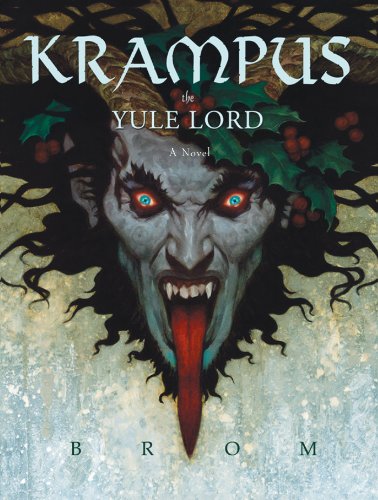
On Christmas Eve in Boone County, West Virginia, down-on-his-luck songwriter Jesse witnesses a group of devilish figures chasing Santa Claus to his sleigh. The whole crew then gets jerked into the sky by his startled reindeer, his sack dropping to the ground to the sounds of screams. When Jesse picks up the sack, he becomes embroiled in a centuries-old feud, with the ancient Yule Lord Krampus determined to wrest yuletide back from a Saint Nicholas who may have stolen his magic to begin with.
Once again it’s Christmas Eve, this time on a lonely highway where a snowplow driver is killed by something mysterious hiding in the vents of his plow. The motorists stranded on the unplowed road gather to tell stories and pass the time, eventually realizing that there are connections between them and it might not be an accident that they are all on this highway on this night. Ghosts, sentient snowmen, and even a Krampus from their grisly stories begin to appear through the storm, and a toymaker with an enchanted snow globe in a nearby cabin in the woods seems to have no interest in helping them get home.
In this collection of six dark holiday-themed stories, elves try a murder case in Santa’s Candy Court at the North Pole, a well-off wolf’s holiday season is interrupted when they are bitten by a wild human, and demons visit a saintly woman who will die on Christmas morning to convince her to choose an afterlife of damnation. Though Krampus does not explicitly appear in these tales, we think he would appreciate their vibe.
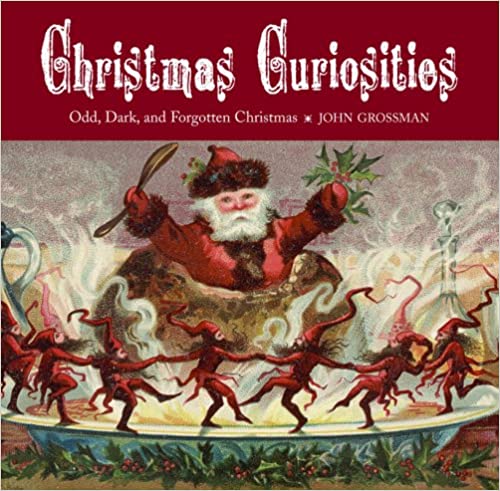
Through this collection of 19th century ephemera, John Grossman introduces us to a Christmas of the past that looks an awful lot like Halloween. From a slender Saint Nicholas in bishop’s robes accompanied by his demon henchman Krampus, to fairies dressed in fur roasting a huge rat for their Christmas dinner, to broomstick-riding witches and bats delivering New Year’s greetings, this book shows that yuletide has long been a season of darkness, weirdness, and danger.
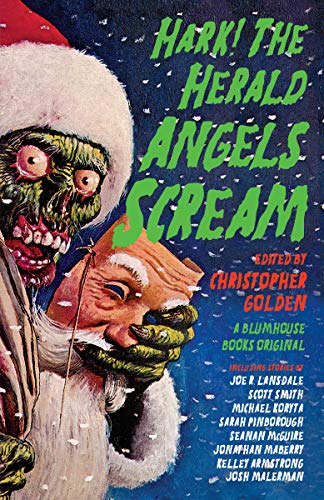
This anthology brings together 18 contemporary horror writers to explore the darker side of the holiday season. With tales ranging from subtly terrifying to delightfully pulpy, they offer up a disturbing gentleman hangman and a chimney sweep who discovers what’s in his home, a twisted take on the tale of the three wise men, a gift of a genetically modified puppy that goes terribly awry, and much more.
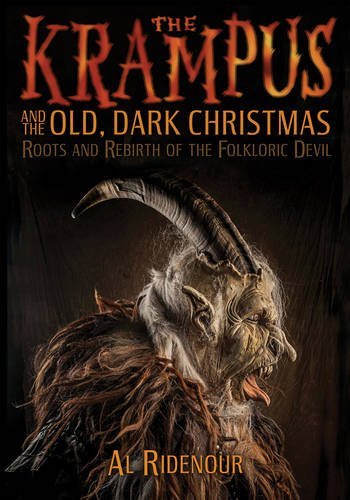
Though the longest-running krampuslauf in Austria dates back to 1898, in this book Al Ridenour traces the history and folkloric roots of the Krampus legend back much farther than that — to church morality plays, Alpine pagan witches, and other devilish spirits of northern Europe. Ridenour weaves in his own personal journey following the Krampus as well as an account of how the internet and popular culture have driven a recent resurgence of interest in the Christmas devil.
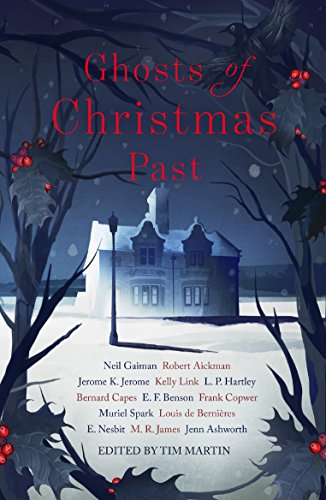
Featuring chilling tales by contemporary masters of the genre like Neil Gaiman and classic ones like E. Nesbit, this collection takes a look at the world of ghosts and horrors beneath the usual veneer of festive Christmas cheer — from monstrous presents to uninvited guests who haunt and celebrations that end in darkness and screams.
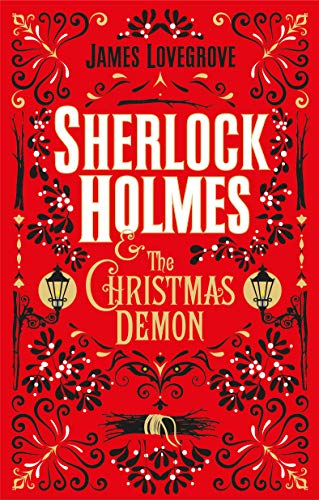
Who wouldn’t love a good Christmas demon-themed Sherlock Holmes pastiche for the holidays? In December of 1890, Holmes and Watson are visited at Baker Street by a young Yorkshire heiress who is set to inherit a fortune if she is of sound mind on her 21st birthday. However, her sanity is threatened by sightings of her mother’s ghost and a Christmas devil figure her mother told her about, a dark inversion of Father Christmas who might be leaving her bundles of birch rods, the allotment of naughty children who do not deserve gifts. Holmes and Watson travel to her family’s estate to investigate and discover there is more to this case than first met the eye.
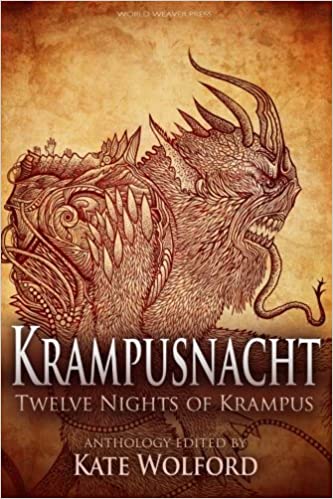
The stories in this collection offer twelve fresh takes on the Krampus legend. Follow Krampus from the Europe of the past to the North Pole to contemporary America as he doles out punishments to evil children and adults with St. Nick’s approval, makes new friends, gets tricked, and much more.
I’m an extrovert. I’ve always been fascinated with parties and group dynamics. Maybe it’s because I have a soft spot for things that are sensitive and alive, that can change at any moment. I’ve spent a lot of my life in kitchens and bathrooms with women at parties, and I’m telling you, there’s always something in precarious balance: a secret bubbling up, a reckoning on the horizon, the last straw. Plus my main life hobby is trying to discover new and previously unknown sides of people, beyond the version we both know. In high school, I relished the rare moment when a well-behaved, rule-following friend would trust me to take them to a party, and I’d get to see who they could be after two beers.
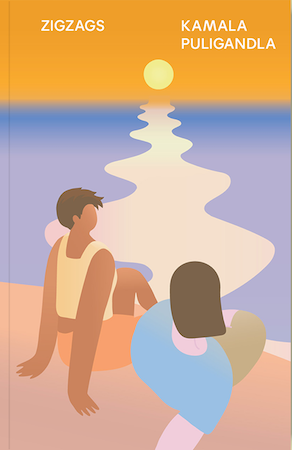
So, of course, I love reading books about a group of friends. When I follow a pod of people whose emotions and motivations are intertwined, it means I’m headed somewhere extra wonderful and extra devastating. That’s what I like to think I wrote into my novel Zigzags. It’s a book that follows Aneehsa, who is a queer, Asian American woman in her mid-20s (yes, she is a past version of me), and a group of her close friends, who all met at a bar in Rogers Park in Chicago. After Aneesha moves away for grad school, she comes back for the summer to see if she can hold on to these relationships that have felt like home. As you might expect, it’s a little complicated.
My favorite part of writing this book, for all of the reasons above, were the party scenes. I like that even though the premise of a gathering is simple—to have fun together—it’s really a much taller order than people expect. Even when it works out, it’s always through some compromise. This year, when I know we’re all hungry for fun and drama, I’m collecting a few books, like mine, that can deliver you a little taste of complex togetherness.
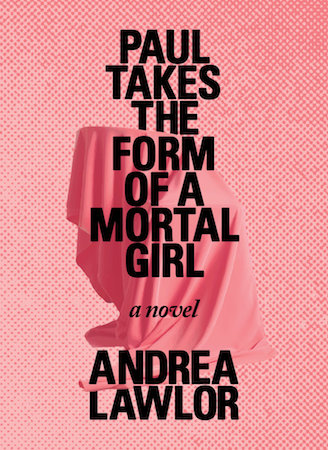
PaulTakes The Form Of A Mortal Girl is an incredible mix of fantasy and hard reality that make the party scenes in this book even juicer. The premise is that Paul has the power to essentially meditate himself into the form of a girl and follow his lust around. There’s a section at the Michigan Womyn’s Festival (where Paul does, in fact, fear the transphobia), where Paul goes from planning to slut it up to suddenly finding himself lesbian u-hauling with a hot dyke, which I really feel shows how transformative a queer party can be.
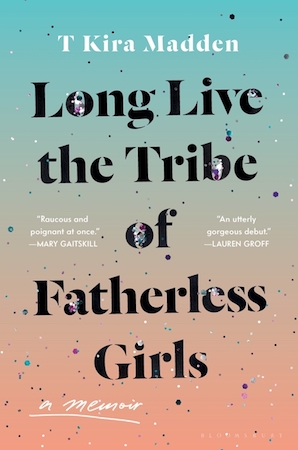
What I love about this memoir is the ease with which Madden describes reading a room and figuring out where she fits into it. She’s constantly hanging out in close, precarious groups, where there is always fun, but at a price. There are so many teen girl moments of deciding to be okay with, and even finding a lot of joy within really trying relationships—with her mom, with her dad, with the popular girls. I find the hard-won moments of bliss, when everything does come together, so beautiful.
When I think about what is so satisfying about a group dynamic, I’m always taken back to The Secret History because it’s such a great example of how far the limits can get pushed in a close group or how skewed a version of normalcy can become. Donna Tartt is a master of reeling you into an intimate dynamic, and then slapping you with your complicity in it.
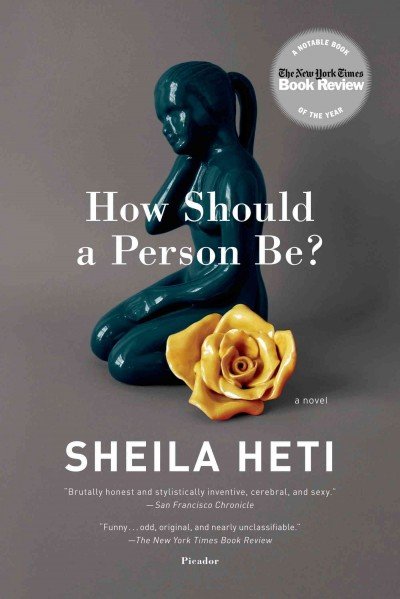
When this book came out in 2012, critics at the time were very concerned with whether or not anything was happening in a book if the majority of it were dialogue, and if the action were primarily that people’s feelings changed. I personally can’t imagine more thrilling action. I won’t disagree that Sheila and Margaux, the primary friends in this novel, can be annoying, but I was rapt by their group of artist friends, who necessarily spend a lot of their time at events or in conversations. They’re constantly moving through conflict to find a new balance, and that’s really fun!
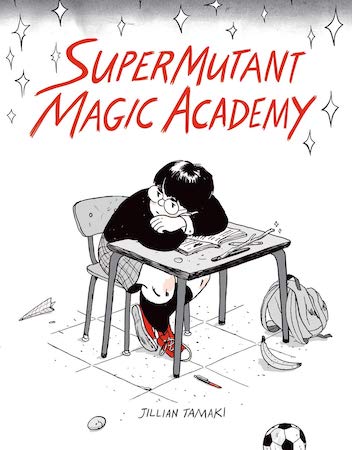
I’m not an avid reader of graphic novels, but this collection of high schoolers who all are at boarding school and practicing some kind of power or magic ability is so gentle, thoughtful and funny. Additionally, it’s gorgeously and whimsically illustrated. I would say that this one is a little less about parties, it’s mostly dorm room and lunch room interactions, whose subtleties make and break these kids’ hearts. I eat that shit up.
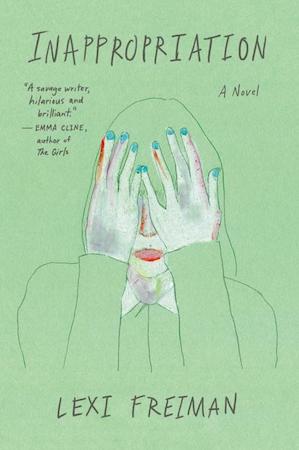
This is a sharp, witty piece of satire on what I might venture to call Zoomers. The delight in this book is in the absurdly logical—in the fictional sense—way that this group of three prep school teens try to navigate their identities and privileges in order to live “woke,” radical lives. The prom is the ultimate party in this book and it truly delivers, but the main character Ziggy’s family also serves up the same level of drama as any entertaining friend group.
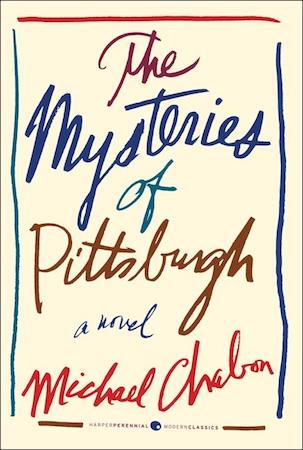
I got into this book when I was in grad school and it turned out to be a guide for how I wanted to structure my own novel. I was thrilled when this early-20s narrator finds himself exploring his unexpected gayness. It’s an attraction that gets him enveloped into a friend group, where he both does and doesn’t belong, and this tension, along with his strong desire to want to know himself and prove himself, makes every single party such a deliciously risky endeavor.
To imagine an island is to picture water; the land not defined unto itself, but in relation to what surrounds it. It’s water that renders islands objects of mythic fascination, cut off by reams of blue from mainland and mainstream knowledge. An island feels unknowable because the ocean makes it hard to reach—Ithaca, Atlantis, Te Fiti whose heart Moana tries to restore—and by the time (if ever) we arrive on its shores, we’ve already mapped our imaginaries on to the land.
Nine million years ago, the Eurasian and Philippines sea plates collided, bringing the island of Taiwan into being. Somewhere between six and ten thousand years ago, the first indigenous settlements on Taiwan were established. But for a very long time, the way in which the island was understood had little to do with these rich geological and human histories; instead, it was tied to the mythologies of those who sought to rule, categorize, and control it. Jessica J. Lee writes:
“Today, maps continue to show Taiwan tangled in mystery. The nation occasionally wears a veil of grey; unrecognized by so much of the world…But it is as real a place as any…a living world on a fault-ridden terrain.”
In her new memoir Two Trees Make a Forest: In Search of My Family’s Past Among Taiwan’s Mountains and Coasts, Lee threads together environmental, political and family histories to create a textured account of migration, exile, and place. Beginning with a chance discovery of her grandfather’s unsent letters following his death, Lee embarks on a search for relatives in Taiwan who were long since believed lost over the course of numerous displacements and upheavals. Lee’sjourney takes her throughTaiwan’s rich ecosystems, its changing colonial rulers, and the various erasures that marked its history:
“I moved from the human timescale of my family’s story through green and unfurling dendrological time, to that which far exceeds the scope of my understanding: the deep and fathomless span of geological time.”
Two Trees Make a Forest is a story of these intersecting movements in time, of the hope and the limits of understanding an island as a real, embodied place.
Richa Kaul Padte: I’d love to start by asking about “the brambled path of memory.” You use this phrase to describe your grandfather’s letters—written after his Alzheimer’s diagnosis and discovered only after he passed away—in which “[t]he past appeared out of context and out of order.” Simultaneously, as you trace your family’s history through places you haven’t lived in yourself, you experience “a longing to remember the things I had not known.” Without in any way diminishing the real and devastating effects of Alzheimer’s on a person’s mind and life, I wonder if there is a sort of parallel between your grandfather’s unsent letters and the memoir you go on to write — a search for a past that feels, for different reasons, out of reach?
Jessica J. Lee: I think that’s right—this notion of the unrememberable or out of reach as undercurrent to the text. One of my biggest fears while writing this book centered on not being “Taiwanese” enough to write it; that I didn’t have claim to my own family’s story. I guess I sort of leaned into that feeling, and the gaps in my family’s story. And then of course, while I was writing it, I was constantly confronted with roadblocks: my grandfather’s records remain classified, journeys into the mountains coincided with storms, I’d find language barriers and other obstacles. All of that, at a certain point, just became a driving force in the story. The idea that answers or clear memories or a perfect scene may not be achievable, but that needn’t hamper the narrative. Those gaps sort of became the story, in a way. I guess this would be very dissatisfying if you are hoping for a clear, happy ending!
RKP: One of my favorite things about Two Trees Make a Forest is how you explore the ways we carry places inside us. You write of your mum, who left China as a child and Taiwan as a young woman, that “in forty years of life in Canada, she had never rooted to the place and got lost easily…[But] in Taiwan, my mother became a person with a topographic history.” This really struck me deeply; I grew up on a mountain in South India with a very specific ecological system, and eight months into the pandemic, I feel an intensely deep longing for it, in a way that I perhaps haven’t before. If, as you write, “[p]lace-memories…work their way into the body,” is there a sort of physical, bodily cost to being unable to reunite with a place?
JJL: I think there is. My mother, for most of my childhood, talked about heat and humidity with a kind of longing I couldn’t quite understand. Then, we began to spend a lot of time in Florida, which though it is not at all like Taiwan culturally, at least had a quality of climate that my mother craved: afternoon rainstorms, heat, sun. It is something so visceral, but hard to qualify or value. I think also of my grandparents who were never able to return to China. The loss involved in this seems, to me, to be so embodied, so impossible to articulate, perhaps in the way muscle memory can be hard to put into words.
RKP:You write “names are rarely uncomplicated markers,” and I’m so interested in how naming works (or doesn’t) as a tool for understanding the natural world. You turn often to scientific classifications as you navigate Taiwan’s mountains, coasts, and forests; names that, as you write, “give me something tangible to keep track of.” But there’s this moment on a long, difficult, humid trail on Shuishe mountain, when, feeling defeated by the unpredictable landscape, you wonder: “What exactly was I hoping to find?… I cannot encircle the forest with learned words and then claim to understand it.” Does the work of truly understanding a place involve letting go of the conceptual framework of language—something we as writers tend to heavily rely on?
JJL: I remain somewhat torn between my impulse to name, to research, to surround myself with language as a way of knowing the world, and the simultaneous need to encounter a place physically, viscerally. I think both are valuable and necessary. But what I really struggled with in writing this book is this thought in the back of my head that I wished the past had been different: that I could know Taiwan as a local, as someone who “belonged” in a conventional sense. This, for me, was a kind of dark thought, because I certainly wouldn’t want my life to have been different than it was! But I admit to having been preoccupied with the inability—whether through language or research or excursions in the land—to make up for what I hadn’t experienced, for what I couldn’t know first-hand.
RKP:That’s one of the things I loved about your book: the way you position firsthand experience against not only research and science, but also against imagination. When you’re hiking up Black Qilai mountain in the pouring rain you reflect: “I am guilty of idealizing the trip, imagining…a sense of intimacy with the mountain. Instead, I feel alienated by it.”
There’s this idea that when we’re “in nature” everything will miraculously fall into place—except this experience usually exists in imagination more than it does in embodied reality. Is the romanticization of nature something you actively set out to resist, or an understanding that emerged from your journey?
I think of my grandparents who were never able to return to China. The loss involved seems so embodied, so impossible to articulate, perhaps in the way muscle memory can be hard to put into words.
JJL: The impulse against romanticization is part of my training: I spent most of my education contextualizing modes of framing non-human nature, particularly as it’s been understood as beautiful, sublime, an escape—especially since the 18th century. So much of how nature writing as a genre thinks about the natural world is still rooted in those ideas, the dichotomies of domestication and wildness, culture and nature. So when I am working, I feel that I’m continually pulled in two directions: by my own intellectual beliefs and that very real, very common impulse to find beauty and pleasure and some ideal form of redemption in the natural world. Of course, in truth, experience always falls somewhere in between, and I find myself encountering all those registers at once, from the critical to the nostalgic.
RKP: You write: “to speak of Taiwanese literature is often to speak of the landscape,” in which “the minutiae of the mountains dwell in words.” But unlike “the sweetened prose [of] British nature writing,” Taiwan’s modern literary works are tied deeply to activism and resistance to colonial rule. This also made me think about how the sweetness of the English countryside has often been set in literature against its hot, untamable colonies—and what growing up in the latter while reading about the former has meant for my own relationship to the land (When I moved to the U.K. as a teenager, for example, it almost felt like I was coming home). If Taiwanese nature writing resists colonial oppression, what, conversely, might British or Japanese environmental literature look like if they were to actually acknowledge their own imperial inheritance?
JJL: This is a great question, and one I have spent years thinking about without a clear answer. I like to imagine that it would be nature writing as written by diasporic voices. I think, in Britain at least, we are beginning to see that quite strongly with writers like Elizabeth-Jane Burnett, Nina Mingya Powles, Zakiya Mckenzie, and Jini Reddy, among many others. A kind of nature writing that doesn’t take belonging for granted, that doesn’t take English as a language for granted, and takes the question of borders to be a core question of what it means to write about land.
RKP: You begin Two Trees Make a Forest with a physical map of Taiwan and you go on to write: “The story of a place—lithic, living, and forgotten—can be found in maps and what they leave out.” As Taiwan changed ruling hands several times throughout its history, mapmaking served as “a tool for colonial governance”; acts of power exercised on and against Indigenous lands and people. Is the map you provide us at the start a frame for your journey (one that I often turned back to while reading the book), or a sort of anti-frame, a reminder of everything that not only the map, but perhaps your memoir too, leaves out?
JJL: I drew the maps for both my books—Turning and Two Trees Make a Forest—with great intention to show as much as they leave out, if that makes sense. In my first book, the map of Berlin is map only of water—nothing of the city is shown on the map. And likewise, with the map in Two Trees, I centered on the vaguest of sketches, marking only the spots I’ve visited: a way of making visible what I had concretely encountered, and leaving the rest quite blank. And of course, the map is just one register through which the place is articulated: I make the same attempt via a timeline and via a slew of names. None of those pictures will be complete, nor should they, but I hope each enriches a kind of multitudinous picture of Taiwan—and the range of possible stories that could be told—for the reader.
DON’T MISS OUT
Sign up for our newsletter to get submission announcements and stay on top of our best work.
YOUR INBOX IS LIT
Enjoy strange, diverting work from The Commuter on Mondays, absorbing fiction from Recommended Reading on Wednesdays, and a roundup of our best work of the week on Fridays. Personalize your subscription preferences here.