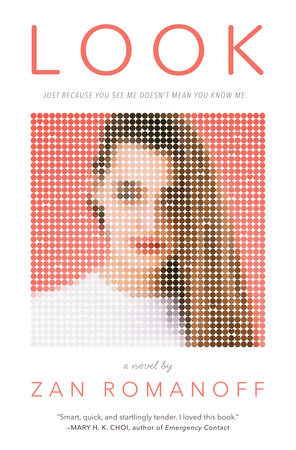
Why Did a Closeted Gay Republican Receive A Taxidermied Aardvark?

At the beginning of Enter the Aardvark, Alexander Paine Wilson (R), a congressman so obsessed with Ronald Wilson Reagan that he purchases the same denim cowboy shirt and canary-yellow couch as the former president, is thinking about how he needs to “Find A Wife” in order to win his reelection campaign. The doorbell rings over and over again, interrupting Wilson’s reverie, and FedEx man drops off a large box on his porch. Inside is an enormous taxidermied aardvark.
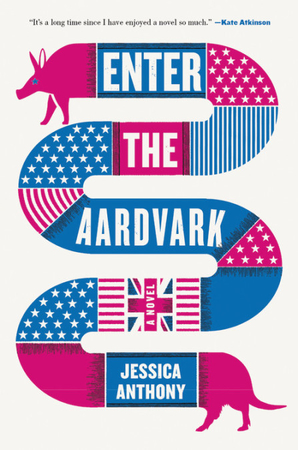
The aardvark itself––a strange and somehow beguiling creature––serves as connective tissue for alternating storylines set in present-day Washington DC and 19th century England. In incisive and entertaining prose, Jessica Anthony satirizes wildly egotistical, hypocritical politicians, explores the ways in which repressing our true desires can cause harm, and illuminates the danger that stems from a dearth of empathy. 

In 2015, while writing the first draft of this novel in a feverish six-week period, Anthony couldn’t have known just how prescient her work would be in our current climate, one in which we are isolated from one another physically, one in which politicians are limiting essential services like abortion, and one in which the president of the United States, when asked during a press conference what he would say to Americans scared of COVID-19, would respond, “I say you’re a terrible reporter.”  

From our separate social isolation spaces, I spoke with Jessica Anthony on Zoom about engaging politically through writing, the strangeness of writing (and reading) satire in our current climate, and the ways in which isolation has fostered unexpected connection. 


Jacqueline Danielle Alnes: I have to ask why the aardvark? 

Jessica Anthony: The founder of surrealism, André Breton, has a concept called the “waking sentence,” just a gathering of words which can awaken in a writer or artist a sense of the dream that you want to pursue. Back in 2012, I had this phrase, “enter the aardvark,” that felt somehow weirdly alive. I sat with it for about three years. Finally, in 2015, in the run-up to the election, I thought I might write some kind of political fiction. I started with this scrap of poetry, this little waking sentence. So that’s how the novel began to be born––purely through language.

JDA: I love that. I had my own suspicions––or maybe not suspicions, more like curiosities––about how you chose the aardvark. Within the book itself, there are hints as to why. The aardvark is a funny animal and the prose itself is absurd in some ways. The language you spoke about of course makes sense, but as you were writing into it, what sort of things did the aardvark lend itself to? 

JA: The aardvark, the animal, is one of the most evolutionary distinct creatures on earth. Their physiognomy really hasn’t changed that much since the Miocene. There’s something that felt quite eternal about this beast, the more I read about them. But it was really just their irrational visage that I became interested in. They’re very sweet looking. I don’t know if you’ve ever really looked at aardvarks ––

JDA: I did. After reading the book, I couldn’t stop scrolling through pictures.

JA: They have wonderful elongated snouts and those rabbity or donkey ears, and long whiskers underneath their eyes. There’s something truly marvelous about the irrationality of their appearance that just began to lend itself metaphorically to a fiction that was examining the everlasting irrational politician. There are, in my mind, elephants, and there are donkeys, and then there are aardvarks, these men who walk among us who vote one way in public and live another way in private. They’ve been part of our political sphere for as long as America has been around. 

JDA: I have to admit, it was strange to read this book during these past few weeks. I feel like everything has been so heightened and surreal, that to read satire in the midst of it was like “Oh my god, this is actually happening.” I had to remind myself of where I was, and then also where the book was. 

JA: Yes, yes.

JDA: The main character Alexander Paine Wilson, who is highly hypocritical in his political policies versus personal practices, almost rang too true to reality to feel like satire. Of course you wrote this, like you mentioned, in 2016, but what is it like releasing this book in our current climate? 

It’s a real problem that Americans are not communicating with one another as human beings, but as political entities.

JA: I began writing in a time when it was still assumed that Hillary Clinton would be president. That’s when the first draft of the novel was written––I wrote it in six weeks. I was paying attention to a number of different aspects of the political sphere but also spheres of media that felt new to me and which I wanted to open the fiction up to –– cancel culture, for example, and the way that we are managing huge influxes of information through phone technology, emails, etc., and this constant sense of building and racing. Now, under the coronavirus, we’re all on pause. 

But the novel does investigate the psyche of the contemporary GOP. Alex Paine Wilson is in many ways endemic of the young, modern, ambitious, and vain, fairly radicalized, GOP politician. He exists on Earth to please Mitch McConnell. When you think of that psyche in this particular moment, I’m seeing it play out in all kinds of terrifying ways. We just saw one of Trump’s press conferences where he used the chilling language “goals of community mitigation” to announce the likely death of over a hundred thousand Americans. I’m reminded of George Orwell: “The enemy of clarity is insincerity.” There’s something woefully muddled and threatening about political speech already, but when it’s used to communicate about the loss of human life, the threat of insincerity feels worse.

These subterranean dangers of the insincere GOP psyche that I was investigating in the novel really have risen to the surface during the coronavirus. I’m seeing all kinds of ways in which this particular mentality is destructive, not only to the people who live it, but to the rest of us. 

JDA: Alexander Paine Wilson runs for reelection for the First Congressional District in Virginia on a platform of “DIVIDE TO UNITE.”

JA: Yes.

JDA: Other characters he encounters are severely divided by political party. These oppositions, ultimately, seem harmful to everyone in the novel, and stymie people both personally and politically. What interests you about these divisions? 

JA: It bothers me because I’m paying attention. Most people I know are paying attention. I want fiction to pay attention. It’s a real problem that Americans are not communicating with one another as human beings, but as political entities. We are making assumptions about our neighbors based on whatever ridiculous ephemera we are coming up with about their possible political representation. This is the toxicity that the novel engages with.  Political affiliation is the major defining personal characteristic for most Americans nowadays. If novelists aren’t interested in creatively engaging that divisiveness then what we aren’t writing about in the United States is going to be felt by the writer as much as what we are. 

JDA: You guarded the Maria Valeria Bridge between Štúrovo, Slovakia and Eztergom, Hungary and that allowed you to “escape U.S. politics.” I wondered –– this novel is steeped in politics; how did getting away from the U.S. help you to find your way in the writing of it? 

JA: The bridge guarding was particularly timely, because this was the summer of 2017. I think all of us were feeling the heavy weight of all kinds of nonsensical, threatening and/or dangerous rhetoric. You reach a point as a novelist where you really do need to disappear into the dream of your story. You need vast stretches of silence. The bridge guarding was a residency for three months on the Danube River that was filled with long, slow days where everyone around me either spoke Slovak or Hungarian. I rarely went online. So it was this marvelous quiet time to drop myself into the book and to ask myself the tougher questions you have to ask yourself when you’re finishing a novel.

JDA: Early in the book, Titus Downing, a taxidermist who believes that “the art of the taxidermist if not all that different from the art of a magician,” says, “The secret lies only in displaying beauty truthfully to life. The beauty must be recognized for its own sake, even by the unscientific.” 

After reading that line, I couldn’t help but think about the idea of writing fiction –– that there are truths, sometimes uncomfortable, that emerge from artifice. In this current political climate, one that you satirize in this novel, what do you hope fiction can do?

These subterranean dangers of the insincere GOP psyche have risen to the surface during the coronavirus.

JA: James Baldwin has a great quote about this, that only poets can tell the truth. And by poets he means all writers and artists. I don’t think any of us sits down to write a novel for the purpose of being didactic or polemic.  A novel is not a lesson in how to be. It’s not so polite. But there is some investigation into human desire that I think unites all of us as writers and readers, an investigation that is maybe unique to novelists. It’s oddly through the act of immersing yourself in another person’s psyche, or the psyches of a number of characters who create community, that you are creating a discourse, a way of communicating to your readers’ subconscious without perhaps even realizing what the “message” is. Maybe you will never know, as how the reader feels and understands your fiction is wholly dependent upon them, and their own relationships with their memories, what they know of this shared world.

I’m not interested in delivering a lesson to my reader. I’m interested in entertainment. Primarily my love of fiction comes from my need to be an entertainer and to share with my reader a little of my own sense of how I see the truth of our everyday life. It’s my own helpless desire to tell the truth as I see it, which I’ve found most comfortable through the veil of fiction. I feel much more at ease when I feel like I’m speaking to the reader dreaming, to what they maybe don’t even realize they know. The subconscious has always been more logical to me.

JDA: In Enter the Aardvark, we have these two plot lines that run parallel to one another. As the novel goes on, there are these moments that echo each other ––

JA: Yes.

JDA: Everything is repeating or slowly unraveling in ways you didn’t see or mirroring one another or juxtaposing one another in ways that help illuminate what is different and what remains the same. I wondered how you reckon with history –– or histories –– as ways of understanding the present.

JA: What I’m interested in the ways the contemporary post-modern, post-humanist, however you want to define it –– our modern moment –– how that psychology butts up against who we used to be. Which is to say, writing history is possible for me through the sense of an exaggerated, contemporary voice. When I’m writing history, it’s largely farcical: revised, reimagined stories that are blown up and hyperbolized. Writing history this way gives me a sense of the universal. 

So Titus Downing, the taxidermist who stuffs the aardvark, he is in voice like Henry James, Jane Austen, but he is also kind of like Don DeLillo a little bit. There’s a kind of modern cynicism in there, a modern attitude as you follow Titus Downing. I think for me as a novelist it’s rewarding to place this contemporary doubt upon historical fictions. Some funny and profound truths emerge. 

JDA: There are ways where either of these plot lines without the other would just flounder a little bit or not be as poignant or funny with the relief that they give each other.

JA: There’s something about the emotional resonance that occurs reading Alex Wilson which actually comes through Titus Downing’s passages, and his stuffing of the aardvark and his love for the aardvark. When we read Titus Downing, there’s an earnestness to his character that, arguably, you could say is the heart that Alex Wilson. Potentially. If he were a little kinder, a little bit more forgiving, and a little more accepting of the diversity of human experience, which he isn’t.

But also these men all share some pretty radical and profound struggles with their sexual identities. The fact that Alex Wilson belongs to a party that doesn’t support his sexual preference is a cruelty imposed upon this character, and it’s one that hasn’t changed since 1875, Downing’s time. There’s quite a lot that binds these characters in my mind beyond their sexual identity: notions of reincarnation and rebirth and reimagining life through taxidermy are there. The aardvark, of course, is there. 

JDA: These kind of surprising connections between characters has me thinking again about the current situation we are in, one where we are all isolated but forging connections in new ways. I’m sorry that your book tour has been cancelled like so many others right now. I wondered if in some way, you’ve found unexpected sources of community during all of this. 

JA: At first, I was pretty nervous about losing the book tour. It was quite devastating. I’ve been likening it to finishing a five-year marathon and then you’re tackled by a surprise football team that comes out of nowhere ten feet before the finish line. Full confession: I’ve spent the last ten years trash talking social media, and I’m not sure that my general attitude towards it has dramatically changed. I’ve never been inspired by a text message. But it’s rather amazing that we are able to communicate through these technologies in the way that we are, when the chips are down. All the junk that I was really cynical about, like the little hearts that trickle up on the side of the screen on Instagram, I find myself now thinking, “Aw, that’s really nice.” 

I find myself in this makeshift TV station in my office having all kinds of marvelous conversations with people who maybe I wouldn’t have been able to connect to otherwise. My first couple of book events, we have seen a hundred people or more joining in. I’ve seen bookstores really rallying behind authors. It’s like we are all realizing the degree to which we rely upon each other. Readers, booksellers, publishers, and writers –– we all occupy the same collective space. 
Grandmother Is Gone but at Least She’s a Bird Now

“What Is the Internet?” excerpted from Parakeet
by Marie Helene Bertino

One week before my wedding day, upon returning to my hotel room with a tube of borrowed toothpaste, I find a small bird waiting inside the area called the antechamber and know within moments it is my grandmother. I recognize the glittering, hematite eyes, the expression of cunning disapproval. The odor of a gym at close of day encircles her.

What is the Internet? the bird says, does not say.

Her head is the color of warning: sharp curve, yield-yellow. The eyes on either side of the Cro-Magnon crown are lined the way hers were in shoddy cornflower pencil as if to say, Really look, here. Her hair, that had throughout her life hurled silvery messages skyward, has been replaced by orderly, navy stripes that emanate down her pate like ripples in silk. Under the beak where her unpronounced chin would have been, four regal feathers pose, each marked by an ebony dot. She hovers inches above the sofa’s back, chastened and restless by her new form.

The toothpaste lands with a dull thud on the carpet. I’m silent when stunned. No getting me to talk.

What is the Internet? my grandmother the bird insists, speaking as if we are in the middle of a conversation, which, in a way, we are.

She had called to ask this question ten years before. At the time I considered explaining the technological phenomenon, but she was so old. What would be the point, I reasoned, of telling her about the show priming to begin after her exit? There have been many times in my life when, encountering an opportunity to do good, for reasons of shyness or shock, an unwillingness to leave a safe perch has made me balk. I told my grandmother the Internet was solely for engineers and that its effect on society would be nominal.

The following day she climbed a ladder poised against her house, meaning to hammer a warped shingle. Something like a phone call—we were never certain—summoned her. She misremembered the ladder, fell from the roof, and lay unconscious until a neighbor found her. For a month we attempted to will her out of a coma with the music of Lawrence Welk. She preferred to stay asleep.

After she was gone, every room was a nothing room.

I don’t regret letting others rush forward to care for strangers in need. I don’t regret calling my brother a shit on his wedding day. However, lying to my grandmother about the Internet placed a painful pebble at the bottom of my stomach that would not go away. Now, my second chance claws the rim of a water glass in present, Internet-rich day, as alive as the rest of us, trying to sip through her beak and failing.

“It turned out to be more influential than I led you to believe,” I say.

No shit.

Tasked with explaining it, I realize how little I know about the Internet. “It began as numbers on a screen.” I make a blurping sound to signify dial up and explain that it grew from a device only a few people had, to Wi-Fi, which I think is in the air? I gesture to indicate: exploding. Network names showcase a defining feature of the user. Biscottiworshipper. Sadoboegirl. “People use it to promote themselves like brands.” This is deep and rich information. My cheeks heat, I’m proud of myself. I extrapolate: “Because everyone is famous, no one is.” I deepen, reverse: “Which is, like everything else, a good and bad thing.” I say, “Link, blog, router, spam.”

Even as a bird my grandmother’s dubiousness is unmistakable. The cocked avian focus, doubting me. When she was alive, she preferred staying in her slippers all day and the term “shove it up your ass” to anything, maybe even to my grandfather who over time became a scudding, booted shadow in the house’s secondary rooms. In the garage, winding a clock. In the spare bedroom, repairing an outlet. Shove the clock. Shove the outlet. If my grandmother ever regretted slicing into another’s feelings like fondant, she never admitted it. Any room containing her was merry. This was a big deal for me, since most of my childhood felt panicked and serious. She’d listen and move her eyebrows in a way that corrected my perspective. With a gaze, she could lift me older.

Offended on behalf of the product I’ve just begun to understand, I sell. “There’s almost no living being you can’t connect with.”

At “no living being” I think of her, legs tucked into her plumage, “sitting” above the cushions. How does it feel to be connected to every living thing?

“Sad,” I admit, and she says, Sad?

“When you can see anyone at any hour, it collapses perspective and time. Add to that the isolation and distance from which most people observe, and the Internet gives the impression that one person is simultaneously having a party, turning fifty, scuba diving, baking with a great aunt.”

Sounds like a giant panic attack.

“That’s not technology’s fault,” I say. “The Internet is indifferent. It’s the people who ruin it, posting only highlights, like every night is Saturday night. But most of life is Wednesday afternoon, and no one thinks that’s meaningful. They omit loneliness and tedium. The people who do post honestly are considered whiners.” The bird huffs, nods. No one should bother anyone else with their problems. This had been a phrase she used in life and one of the fueling philosophies of our family. What a waste of time.

“It is, but there are beautiful aspects to it.” I press a few buttons on my phone to conjure a picture.

Goodie, she says. A wall.

“The Great Wall of China,” I correct her. “Everyone can visit faraway places. Kind of. It’s a grand leveler in terms of class.”

If you can afford a phone, I guess.

I change the screen option and a grid of photographs appears. “People have their own page on their preferred platform.” I scroll so she can see:

A frosted cake. Dog on a forest path. Woman smiling over macaroni. Page of a book. Pulled taffy. Boy mussed from a nap. Lit pool. Selfie of a woman balancing a cat on either shoulder. A dog eats Cheez-Its off pink linoleum. A sign: DO NOT SHELVE ITEMS IN AISLE THREE WITHOUT ASKING JOANNA. Bunting in a desert town. Aproned gelato server hovering over delicate, pastel vats.

“A good way to connect with what are called ‘friends,’” I say. “Not regular friends, usually it’s like the guy who plays softball with your coworker.”

Who wants to be more connected? the bird says, does not say.

Everyone is friends now?

“I think people dislike other people at the ratio they did before you—”

We’re not going to get very far if you can’t say died.

“It’s called virtual.” I frown. “I’m not describing this correctly.”

You’re describing it fine.

“How would you know?” I say at the same time as she says,

But how would I know?


I’ve come a week early to this inn on the shaft of Long Island to prepare for the transition from woman to wife, to do what the groom calls “decompress” because “of late” I’ve become a bit of a “nightmare.” To break apart if necessary, but to do so properly, amid slatted pool chairs and conference coffee. I’m thirty-six, ethnically ambiguous, and hold an intense job I do not like, biographer of people with traumatic brain injury. I present their lives in court, using storyboards and dioramas. Everyone is thrilled I’m getting married. No one can believe I’ve found such a sweet man. Everyone adores the treats sold in this town that are hybrids of bagels and flatbread. Flagels.

The Inn’s website boasts a recent remodel, yet the old design has only been reinforced with fresh paint so it looks newly out of date. Above the mud-colored carpets, wallpaper vines strangle the walls, here and there resulting in a salmon-colored tulip. There are fleets of staircases and elevators and floors large enough to simultaneously host several cathartic events. In another banquet hall, another wedding will run alongside ours. The plural of catharsis is catharses. The turnover is quick. Already, a lobby poster welcomes attendees of the following week’s conference that seems to be about technology and clouds.

The Inn is buckled to a famous lake that features prominently on the town’s signage. None of my people are from this area so the lake is not famous to us. It is akin to pointing to an actor and saying, That’s so and so, from a show we’ve never watched. A gazebo sits in an exultation of cattails. A ruffle of trash by the edge of one of the lake’s many inlets. I prefer the ocean because it is ugly and secretive and moody and can growl. Mind you, I’m “awful” and “rarely satisfied.”

So far, my relaxation has manifested in inventing needs so I can have lingering conversations with the staff. I was finishing the place cards earlier when I thought, toothpaste, and wandered downstairs to inquire about the photograph taped to the concierge’s computer screen.

“I’m not sure if you’re aware what day you’ve landed on.” I speak to the bird in the grated voice you employ for a guest who’s arrived too early. “It’s Sunday. I’m getting married in six days.” I gesture to the migration of folded cards that cover the carpet in ecru Vs, anointed with all I can recall from high school calligraphy. “I have a work appointment tomorrow, a meeting with the florist, then I host our families for the groom’s dinner. Mom, stepfather, friends arrive later this week. Et cetera. Have you come to wish me well?” I say, but knowing her, my tone contains no hope.

Of course I know you’re getting married. The edges of her projection spit and haw. Do you think I’m here to ask about wires in a box? She goes transparent and her skeleton shows blinding bright, then whatever debatably divine force is conjuring her regains composure and she is opaque again. There’s something I want you to do.

A rap on the door startles me and the bird, who fwips from the glass to the table like traveling from one thought to the next.

Through the peephole, I see a bellboy standing above a rolling table holding a metal-covered plate. “Ma’am?”

“I didn’t order anything,” I say.

Several feet behind him, the elevator dings. He says, “It’s a surprise.”

My grandmother warbles.

“Surprise!” He is faux cheerful.

I open the door. He glides in, activates the brakes on each table leg, flips the plate’s cover to reveal a cake that says, Congrat­ulations! bats a napkin he pulls from an unseen compartment against the air then folds it into a triangle. His expression grows concerned, echoing mine.

I have what people call an out-loud face, one that others mimic without realizing. It may be the generous, peat-colored eyebrows, or the phrase they make with my conversation-piece nose. Strangers ask, Are you confused? Or, comment: You’re having fun. What they mean is, I’m less good than others at hiding.

The bellboy follows my gaze to the grandmother now roosted on the pillow and shrieks, drops the napkin. “A bird!” He heads to the door. “I’ll get the manager.”

“No need to call anyone,” I say. “It’s handled.”

“I hate birds,” he says. “Like, really hate.”

My grandmother’s feathers shiver with laughter.

“She’s very small,” I bargain.

“Doesn’t matter,” he says. “Small, big. Hate them and always have.”

My grandmother flies across the room and clings to the frame of a painting with one mirthful claw. This enjoyment of other people’s discomfort was true in life. She is at once wholly grandmother and wholly bird, as she produces a multigarble that sounds like bland women kvetching. Louder, then louder.

“Oh god,” he says. “What’s it doing?” His fear is so antic it must be a put-on. He cowers in a crescent shape against the wall.

Tack, tack, my grandmother threatens cheerfully.

“I’m calling the concierge,” he whispers.

“Stop,” I tell her. Then to him, “We don’t need the concierge. This is my bird. We were talking.”

“‘My’?” he says. “‘Talking’?”

“Birds talk,” I say.

My grandmother seems to chitchat with herself then produces a showy, wooden, Hello.

I imagine the room from his perspective. Bride talking to bird. He looks like a kid who muscles through situations in which women want him to leave with what he thinks is charm. But he’s probably never met women like us. Critical, exuding a very taken vibe, hawkish (on certain evenings literally). Even in bird form my grandmother is all of these things, you can tell by the way she’s needling him with gleeful, haughty eyes.

“Money.” I hand him a twenty. “Don’t tell the concierge I have a bird in here.”

He winces, consults the bill in his hand.

“Secret,” I say. And, in case it’s the kind of thing that matters to him: “I’m the bride.”

I guide him out. “Thank you for the surprise,” I say. “I do like sweets.”

“Raspberry.” His voice is sad.

I want to seal the transaction with a compliment. “This is one of the nicest places I’ve ever stayed in Long Island.” Not technically a lie. I’ve never stayed anywhere else.

“On.” He snaps to attention. “Long Island. We say on.”

“On Long Island?” I test. “Does that make sense?”

He nods. “On.”

I close the door and return to the antechamber where the bird is sitting mid-cake. Give an old lady a break, she says, does not say. I can’t have any fun?

She tries for a raspberry but neither berry nor beak will allow her to eat. She exists in this world but can exert no physical influence, which is news to someone like her.


Her mother, my great-grandmother, was banished from the Basque Country for getting pregnant with a Romany’s child.

She missed the banishing ship she was supposed to take from France to America. I like to think it was because she lost track of time while doing her hair. You never know what worse luck your bad luck saved you from. It was 1912. The ship she was supposed to take was the Titanic. Fig, I missed my ship. Sound of ship hitting an iceberg. Sound of ship cracking in half. Sound of cello. The scuffle of drowning. Safely on another vessel two days behind the Titanic, my great-grandmother gazed across the icy churn, my grandmother growing in her like an amniotic orchid, an accidental immigrant. My grandmother was tormented in her white neighborhood for her dark skin, and carried that pain into adulthood, where it bloomed into benevolent disgust. She gave birth to an ice chip, my mother.

Years later on the pale disk of Lake Champlain, my mother missed a ferry. In the hour she spent waiting for the next one she drank a Seven and Seven and met my father, a dockworker from the mountains who was the first in his family to cross a state line. He died of heart failure when my brother and I were young, leaving us alone with her temper, a line of crystal in igneous rock. A secret to everyone except those who lived with her.

Missing boats is a family trait.


Fun with the bellboy abandoned, the bird turns to business.

Is he tall?

I know she means the groom. “No.”

Does he have all his hair?

“It is in fact his distinguishing characteristic.” I tell her he is an elementary school principal who coaches basketball, plays guitar, and sings to second graders about the solar system. Everyone loves the planet song.

Show me a picture.

I scroll down my personal web page, but there is only one picture of a tree at dusk. “I keep meaning to add more.” Searching my phone, I find a picture of him holding three basketballs, the straps of several duffels hoisted over his shoulder. Oh, she says. He’s white.

“We’re white,” I say.

She says, Kind of.

“We’re considered white now,” I say, insulted that she hasn’t mentioned his clear green eyes, or, like, his ability to carry several things at once. “. . . the world is run by computers, and you’re a bird. Not to beat a dead horse.”

She is frustrated with me but will say what she has come to say. More of an understanding with space than movement, she intuits from table edge to sofa back. She lifts her beak as to achieve a silent auditorium a composer raises his wand.

What I want you to do is find your brother.

Of course, I already know. Knew before she asked about the Internet, knew before rounding the corner to the antechamber and finding a judgmental budgie, perhaps even before, when I— balancing my room key, wallet, phone, and toothpaste—reached the door and realized I had no way of opening it and had to place each item on the ground, turn the knob, collect them again, all the while a turbulence spreading beneath my breastplate, which contained the maddening carbonation that could signal only one person. Tom. The thrilling dread that precedes his presence perhaps his only reliable quality. As kids, we slept pressed together like deer. The type of brother who will be your plus one to the play party or log roll, extol the virtues of heroin so lovingly you cry, clear dawn’s crust from your windshield, but will not have brunch with you, or meet your best friend, or join you on the errand, or even answer his phone. The image I summon when thinking of him is akin to a certain laughing trouble. Any conflict I’ve ever encountered—and any alchemy—the tendency the world has to upend: unexpected money, a pretty line of stray cats, a bird-shaped grandmother, holds him as an ingredient.

Even the bird’s timing is pure brother, right before a wedding, what most people would regard as a joyful event. This is typical for my family, who treat happiness with suspicion. That very morning, I congratulated myself on completing the transition into normalcy without their destruction.

The bird and I both know he has been the silent member of our conversation all along.

If it helps, she says, you won’t find him.

“I won’t find him,” I agree. “Because I’m not going to look.”

Do you know where he is?

“I assume in the city somewhere, hiding in a theater.”

How long has it been since you’ve seen him?

“Seven years?”

The last time I saw Tom was at his own wedding, where he lay bloody on a gurney, asking me to hold his hand. It’s just that I’m so deeply unhappy, he says, in memory. I remember the taste of vanilla and his anemic, furtive fiancée, Sara Something.

You’re not going to find him, but it’s important that you try, she says. You’ll do it.

“I won’t.”

Her narrow eyes narrow further, narrow more. Where are we?

What’s this murky room with only a couch? It’s like we’re in a stew.

“It’s called an antechamber. A room before a room.”

A room before a room, she says in that way she has, that cuts through our tense and familiar squalls. And what is your job? The non sequitur means to stall until she can figure out another way to get what she wants.

“I work with people who have traumatic brain injury. Normally they’ve been hurt in car accidents or on the job. I tell their life stories in court. Like my client Danny. He drove a big-rig dessert truck and was injured while filling it with gas.”

I guess somebody doesn’t like Sara Lee. The room’s grip releases. She performs inventory of what on her hurts. Pain is different now, she concludes. It’s more like sound in another part of the house. But I still hate my ass. Asses like ours never leave, even in the afterlife.

“You don’t have an ass,” I remind her. “You’re a bird.”

A bird today. Myself again tomorrow. We could disagree for eternity but there’s no one I’d rather sit with. I spread jam onto a scone and hold it out for her. Where does it come from—beat a dead horse?

“Probably from people who like horses.”

Or hate them. Her beak cannot find purchase on the pastry. The afterlife is truly cruel. Being a bird is exhausting. I’m obsessed with cleaning these. She runs her beak through her tail feathers.

I ask what she’s learned about humans by being dead and she says, They ask for signs a lot. They’re always looking for proof like, If you exist, rattle the mailboxes. But you never asked for a sign. She quiets. You never reached out. Why?

“I asked once and it didn’t happen.”

And you never asked again. It’s like a song.

“A song,” I say, and she says, A sad one.

“What is it like?” I say. “To age and die?”

A sigh flutters through her corduroy belly. Aging is easy, like falling down a hill. No choice involved. It’s reconciling yourself to loss that’s hard. I was eighty­five when I died. But I felt nineteen. I used to forget how old I was. I’d talk to you for long enough I’d think I was you. Then I’d look in the mirror and think, ack, who’s that old woman? A burst of shivering compels her from one cushion to another. Had I been anything other than a sheltered fool I wouldn’t have worried at all. I had the slut gene. I should have used it more. It’s in the family. You walk across the room, people pay attention. It’s not because we’re beauti­ful. We’re gnarled things who look like we’ve been pulled from the earth. Root vegetables: potatoes or turnips. Half of us miserable, the other half deluded. You’ve seen pictures of your cousins. However, we are possessed of the self. All arrows point toward us. A blessing and a curse. Not your mother, she was born complaining. Believe me, I was there. No fun at all. That will always be her fault because I made life nice for her. She married a man who couldn’t summon up enough juice to break a glass and lives her life doing cross­stitch, the only thing she’s ever liked. She’s rich enough now that she can afford to be good at only one thing. You kids don’t like your mother and I can’t blame you. But it’s a mistake to assume she doesn’t feel pain.

The bird warbles, a mournful sound. As a girl, I liked to press her supple lavender cigarette case against my cheek. She was a real bummer, your mother.

“She still is,” I say.

How’d we get talking about her? Let’s get back to the main event. Me. And how I didn’t use my body enough. Those of us with able bodies have a responsibility to use them as much as we can. Given another chance, you wouldn’t believe how I’d use it. Threesomes. Foursomes. More­ somes. Smoking is a joy of life. Good lord, why did I ever give it up? My teachers called me disruptive. I should have disrupted more. In 1975 the most stunning man I’d seen up close approached me at a convenience store and asked if I’d go to his hotel room to make love. I’m holding a soup can and a bag of oranges and am not a woman men cross streets for. I say no, because I was married. What a waste of a waistline. What a disappointment life is most of the time. Divinity opened itself up to me in aisle four and I said, nah, I’ll just be taking these oranges. If it came around again, boy, I’d meet it. And I’d smoke like a house on fire. Disrupt! Disrupt! What fucking else are we here for?

She is a rueful bird endowed with death’s clarity, but she is misremembering her life. It is my mother no one crosses streets for. My grandmother caused car accidents.

In short, the bird concludes. With regard to aging. Compared to the alternative, I recommend it. But you! Thin eyebrows. Pressed hair. You’ve been trimming yourself like a hedge. Do you realize you’re still alive? Would you recognize yourself if you met you on the street? She flits from cushion to cushion as in life she’d shift from foot to foot. So! You’re getting married! Et cetera! Blood-colored sparks flare from her tufted neck and fade. She burns and spits. You’re thinking there’s no harm to it. There’s no philosophical right or wrong about making bad decisions. You’re correct. Lie, be a shitty friend. No one’s keeping score. Be as much of a dick as you like. Shitheads get as far as the nice. You can wait for justice. She pauses as a hack of shivering overtakes her. It’s not coming. Where it lands is your ability to hear music. You can’t tame yourself over and over and expect your self­worth to keep its shape.

Her rebukes hammer a tender place only she can access.  “Stop,” I say.

Morning sun emerges through the curtains. Outside, an Inn worker shakes a trash bag into a breeze. I can’t imagine searching for my tornado brother during a regular week, let alone the one in which I marry.

“I’ve made my choices, Granny. And I’m grateful you’re here,” I say. “Have you ever missed someone so much that the missing gains form, becomes an extra thing welded to you, like a cumbersome limb you must carry?”

She tacks. Dramatic.

“I can’t do what you’re asking.”

Do it, she says, and I say, “I’m sorry. Anything else.”

She rises from her perch into an eruption of flapping feathers. The commotion grows violent. A loud, clutching whistle. The outline of the beak and feathers wobbles and expands.

The bird disappears.

Replacing it is my grandmother-shaped grandmother, frowning with a human mouth, legs crossed at the ankles. Her skin is dewy and hair neat, as if instead of being interred for ten years she’s been at the salon having her hair reaffirmed metal gray. Death has not been a good diet. She is still barrel-shaped due to a lifetime of keeping a chocolate drawer in the refrigerator where others store cold cuts. However, her affectation is gentler, out of focus, as if whatever light is illuminating her is losing wattage. Like the bird, her eyes are lined in blue. Zaftig from sweets. Except for the sour smell, it’s her, undeniably.

I understand the reasoning of whatever force sent her as a flying thing because when I see the unmistakable thickness of her thighs, the ashiness of her November calves, her herness overwhelms the strand tethering me to calm. Now that she is present I miss her intensely. My throat constricts and issues a sorrowful coughing spasm.

Emotionless, she waits for me to settle.

There is no anything else, she says. If you can’t respect a dead woman’s wishes you’re a disgrace. Mark my words. If you defy me, shit’s going to get fucked up. After it gets fucked up, it’s gonna stay fucked up. And after you can no longer bear it, it’s gonna get more fucked up. The things you do to make it less fucked up are going to fuck it up even more.

She dims. I hold out my hand. She doesn’t accept but clucks (still bird) in disappointment. Affection, like crying, is a bother and a waste of time. I don’t want you to suffer. Find your brother. Her body vanishes, her neck fades. Dress short or long?

“Long,” I croak.

I would have gone short. You have my gams. I always got com­pliments.

Her hairline rewinds over her scalp. The painting behind her comes in and out of focus. A pastoral scene of a carriage in a field of corn.

“Don’t leave,” I say.

She’s gone. I experience her death a second time. The birdless room carries on with the climbing sun, Band-Aid-colored carpet, carriage and the corn, seeming so undisturbed even I wouldn’t believe there’s been a specter sitting in it. The woman brightening the world has left it again, without ceremony or sound. Not one feather remains. Even the stench is gone.

Rose doesn’t answer her phone. I consult my face in the mirror to see if it has registered any change but see only the flat cheeks of a woman late for an appointment. I dress. My suitcase is still packed because the honeymoon suite is currently being occupied by another bride and groom. The Inn overbooked and regrets the error in the form of a free bottle of champagne and occasional check-in phone calls that please no one.

In the main room, I find my wedding dress, strewn across the tablelette, covered in bird dirt. That troublemaker grandmother bird has disseminated her business evenly from its sweetheart neckline to its hem. The piles of gauze are thick with shit, the destruction so complete I marvel. When did she do it? I was with her every moment. No dry cleaner would be able to re- pair it in time.

I take the elevator but when I reach the lobby, the doors do not open. The lit panel near the ceiling confirms: lobby. I check the panel, the door again. Stuck. I call the front desk.

“This has been happening since the renovation,” the concierge says. “Still a few kinks. The new generator doesn’t have the same lid. A bird flew into it. James said it was fixed, but then.”

James, I think. I think, Joyce, Stewart, Baldwin. “A bird?”

“Like it had a death wish,” she says. “The weirdest thing.”

The elevator’s walls are composed of mirrors. I watch myself wait. The box makes a triumphant ding! The doors fly open as if the issue had been only mine.

In the lobby, the concierge notices my grief-stricken pallor and apologizes. “Getting stuck in an elevator can be so scary.”

“It’s not that,” I say. “My grandmother died.”

“I’m so sorry.” She is immediately sorrowful. “When?”

“Ten years ago.” I cling to the banister for support. The landing knob comes off in my grip. I hand it to her.

She slides it into her cardigan pocket. “We’re falling apart,” she says. There are still good people living on the Earth. She bears witness to my tears, rests her hand near mine on the banister I’m positive in a month will be garlanded in tinsel because it’s a perfect banister for that. I remember dancing with my brother to the Cars in our socks and one of my clients who was hit by a truck while walking and now doesn’t understand the idea of a face.

The concierge’s kindness emboldens me to confess. “And she shit on my wedding dress.”

“Yes.” She whispers, like it’s a password: “Family.”

Meredith Talusan Has Seen White Male Privilege From Both Sides

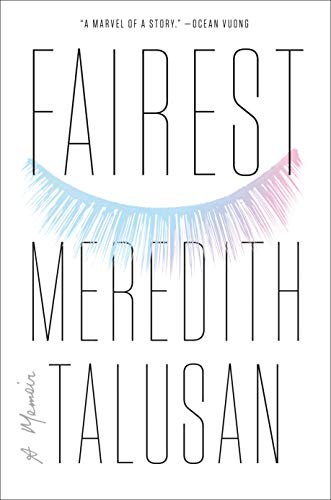
Meredith Talusan’s coming-of-age memoir, Fairest, is about her life as an albino Filipino child assigned male at birth. Talusan grows up in a rural village, then immigrates to America where she’s perceived as white. In America, she is able to navigate spaces like Harvard and the queer community with privilege. After reflecting on her ability to navigate life with ease and realizing she no longer wants to be restricted to a prescribed role of a man, Talusan embarks on a gender transition, with the threat of losing her lover looming. Fairest interrogates what it means to live honestly in the shadows of privilege, and what it means to let that all go. 

Meredith Talusan is an award-winning author and journalist. She has received awards from GLAAD, the Society of Professional Journalists, and the National Lesbian and Gay Journalists Association. She is also the founding executive editor and a contributing editor of them—and, full disclosure, a board member of Electric Literature.

I chatted with Talusan about imagining herself into being, navigating complicated family dynamics, and her relationship to the idea of desirability. 


Arriel Vinson: At the beginning of Fairest, you’re reckoning with your appearance as a woman—how others say you haven’t changed much. You also discuss being fair-skinned in your Filipino family and how you’re noticed in your hometown. When did you realize your skin gave you privilege?

Meredith Talusan: The privilege of having white skin is so embedded in my consciousness that it feels like I knew about its effects even before I had any concrete memories. My awareness that I was favored, that my family considered me special, that people in my village paid a lot more attention to me than other kids, precedes any specific incident or event. But my first absolutely clear memory of how special I was perceived was when I went to the village haircutter as a really young child, maybe 4 or 5, and I remember her finding an envelope afterward and putting my blond hair inside, then hugging the envelope against her chest like it was a valued keepsake. Somehow I’ll always remember that, how where I’m from, something that just grows out of my head is precious to other people.

AV: Mirrors appear in Fairest as a portal to the self, used for talking about your blurry vision in relation to your albinism, as well as your skin tone and body. Tell me more about that. 

It was important for me to write a book that shows the entire span of my life, not just the period where I’m in transition.

MT: I had some hesitations about relying too much on the mirror because of the stereotype that trans women are always looking at ourselves, but as I came to investigate the role mirrors have played in my life, I came to realize that the problem wasn’t that trans women are looking at mirrors all the time, because it’s entirely understandable that we look at mirrors a lot while we’re undergoing major changes in our appearance and self-perception. The real problem is that mainstream media at least until very recently only represented us as we’re transitioning, and just to shout out that HBO’s Euphoria does an amazing job of not doing that, aside from the fact that Hunter Schafer is brilliant. That’s why it was important for me to write a book that shows the entire span of my life, not just the period where I’m in transition, which really only occupies a third of the book, if that. Fairest also discusses how I went through a similar process of looking at myself in the mirror a lot as a kid, during a period when I was trying to reconcile how different I looked compared to other people with my family’s anticipation that we would live in the States someday and that I would be perceived as white. So I hope that people who read Fairest can come to understand that the mirror isn’t just an object vanity, but one of deep self-reflection.

AV: Fairest touches on imagination often, such as imagining that you were a white American. Why was the theme of imagination so important?

MT: Imagination is a key part of my emotional makeup because I am literally a product of my imagination, someone who no one would have anticipated becoming who I am except that I imagined myself into being, whether as a trans woman or a person who came from poverty and ended up graduating from America’s most prestigious school then becoming successful in the eyes of others. But what I also challenge readers of my book to imagine are the many sacrifices it took to bring myself into being, and what I’ve lost along the way, because as much as I’ve gained having imagined then actualized my current existence, that experience also entailed a lot more loss than someone who didn’t have to engage the deepest resources of their imagination to become who they wanted to be.

AV: You’re interrogating your privilege in Fairest–how you learned English, were a childhood celebrity, attended Harvard, had access to dating an upper-class white man. Tell me about your decision to work through your own privilege, and how Fairest became a vehicle for that.

I am literally a product of my imagination. I imagined myself into being.

MT: It wasn’t really a conscious decision as much as an outgrowth of my need to be completely honest with myself about my life as I rendered it on the page. As hero’s journeys go, I wasn’t interested in turning myself into someone who doesn’t have major flaws or got to where I am purely because of my personal qualities. I may be a constitutionally hardworking (some would say obsessive) person who has a certain amount of innate intelligence, which, by the way, is also assigned through birth lottery. So it’s not like so it’s not something I deserve as much as something I’m just lucky enough to have, but it’s self-evident that I would have run into many more obstacles had I been born dark and if I wasn’t consistently mistaken for cisgender after I transitioned. To somehow avoid the extent of my privilege would have just meant being dishonest about my life in a fundamental way, and maybe there are memoirists who have done that but I cannot imagine it for myself.

AV: We see the differences in the relationships between you and your grandmother and you  with your mother, who was abusive and struggled with addiction. Why was it important to showcase these two relationships side by side?

MT: So many narratives both fictional and nonfictional feature singular parental figures and cast them as either good or bad. In part because we as people often end up thinking of our parents as summations of the many actions they’ve performed throughout our lives. As a person who is estranged from both my parents I have certainly done that in my lived experience. But on the page, it was important for me to be precise and honest with myself in terms of the ways my grandmother’s unconditional love ballasted me as a child, and how much having an abusive and addicted mother damaged me, but that both of those people were complicated figures. As good as my grandmother was, I knew she was better to me than her other grandchildren because she was brainwashed by colorism, and she became obsessed with money as a way of symbolizing her power. And as terrible as my mom was, she was forced to have me when she didn’t want to in a country where divorce is illegal even now. So I wanted to portray the complications of having such wildly divergent parental influences, but also the further complication that the “good” one wasn’t as good as I had initially thought as a child, just as the “bad” one had understandable reasons for why she couldn’t be a mother to me.

AV: During your time at Harvard, you learn more about your sexuality and gender, both inside and outside of the classroom. How did learning about desirability help you understand yourself and who you’d be most happy being?

MT: Desirability is so fascinating to me because I so rarely see people, whether in life or art, being really frank about their degree of desirability unless they’re being (often falsely) modest, because it risks them being accused of arrogance and vanity, which people have accused me of both in life and in reader reviews of the book. And yes, maybe I’m being vain when I say that I discovered I was desirable as a young gay man, or that seeing myself as a beautiful woman catalyzed and propelled my transition. But maybe in part because I also spent time at an MIT cognitive science lab studying physical beauty, I just think it’s important to query one’s own relationship to desirability because it is such a fundamental part of so many of our interactions, whether or not we want to admit it. It’s clear to me that I wouldn’t have transitioned if I hadn’t been beautiful, and it’s important to say and unpack that because it’s just true even if it’s an inconvenient thing to say. I’m tired of having to sanitize my life according to cisgender expectations of the kind of person a trans person should be, someone who felt trapped in her body, which I never have, and someone who is ugly and unhappy either before or after transition, or both, which I was not and am not, even if I’ve gone through periods of crisis like every other human being.

I’m tired of having to sanitize my life according to cisgender expectations of the kind of person a trans person should be.

AV: After going to your hometown in the Philippines once more, you notice that you spent a lot of your time as a “white, gay man.” How did interrogating your privilege in the queer community make you more honest with yourself in Fairest?

MT: I just feel like intersectional queer experience is so rarely represented whether in memoir or fiction. In terms of gay male writers, for every Samuel Delany or Alexander Chee, then more recently Ocean Vuong and Brandon Taylor and Matt Ortile, you have a slew of white gay authors and characters, which is not the fault of the authors themselves but is perhaps the fault of a publishing industry and American public that still prioritizes white experience over others. I feel like my own experiences around being seen as a white gay man even though I wasn’t actually white (or a man, as it turned out) can illuminate how stratified the gay community is. The “gay experience” looks vastly different if you’re not white, even though I’ve been in so many situations where “gay man” is used as a marker for opulence, sophistication, and excess wealth. This is so much more likely to be true if you’re white, while I as the queer Filipino first-gen immigrant gay man only got access to those cultural circles because of my proximity to whiteness.

AV: In Fairest, you’re also navigating what you want as far as your gender and gender expression are concerned. There’s a moment where you ask yourself what you want here. Tell me more about that. 

MT: One of the hardest parts about being trans is that for the most part, no one in your life actively wants you to be trans even if that’s what you want. They might tolerate you being trans but it’s rare for me to see families and friends be actively happy when someone transitions, except maybe for the trans person’s queer and trans friends. So as a result, transition is so often framed as selfishness, as you prioritizing your wants over [others]. But gender is such a fundamental part of how we move through the world, which I wish weren’t true but it unfortunately is, so I realized over time that even if I didn’t need to be a woman in the sense that I wasn’t suicidal or I couldn’t envision the possibility of me not transitioning, I realized how unfair it would be to me to sacrifice myself and my desires over other people’s expectations, even the people in the world I love most. And yes, I still agonize over that decision because human consciousness is dynamic and ever-changing, but an overwhelming amount of the time, I know that sacrificing a special relationship with someone I deeply loved was what I needed to do so that I could grow to more fully love myself.

9 Books About the Burden of Female Beauty Standards

We believe that beauty for women is a source of power and privilege. A kind of currency. But is it truly attainable? What is the flip side of beauty—when does beauty cause suffering? What happens when someone who identifies as beautiful gets stripped of it, whether by age or accident? And in the end, who decides what—and more to the point, who—is beautiful? 

My debut novel Beauty is about Amy Wong, a Chinese American woman who goes into the fashion industry. She’s a gifted, up-and-coming designer; she’s young, beautiful, and seemingly has it all. And yet, life circumstances not unlike what many women face—chauvinism, prejudice, marriage, motherhood—result in a deep loss of self. The narrative arc of Beauty encompasses most of Amy’s life. Her ideas around beauty, family, and power evolve throughout the course of the novel. In Maya Angelou’s memoir, I Know Why the Caged Bird Sings, we see how “the caged bird” is kept from flying and freedom. Societal conventions about beauty are like cages. They often keep women from reaching their full potential. In literature and books, we see a range of characters. Some buck and transcend expectations. Others remain stuck.

Here is a list of books that speak to questions about beauty, identity, and the impossible standards for which women are expected to live to this day.

The Bluest Eye by Toni Morrison

The Bluest Eye by Toni Morrison

This novel made me realize I could be a writer; that I, a Chinese American woman, had something to say. It is the story of an 11-year-old girl named Pecola. She’s black, growing up in an America that worships blond hair and blue eyes, and so, wishing she could be beautiful and that her life could be different, she does too. Morrison revealed how race factors into identity and how racism can distort one’s self-perception.

The Beauty Myth by Naomi Wolf

Published in 2002, this nonfiction book revolutionized how we think about beauty and its effect on women’s identity. Her point is that despite the women’s movement and the power women have gained in terms of professional success and legal recognition, societal ideas about beauty keep women trapped in a cycle of reaching for ideals that are, in fact, unattainable.

Pride and Prejudice by Jane Austen

Pride and Prejudice by Jane Austen

A lot rides on beauty for the Bennet sisters, as their mother makes it her mission in life to see her two older daughters married to men of both means and class. Beauty is the road that she knows will get them there. Mrs. Bennet is an irritating nag, and yet, considering the circumstances, she’s being reasonable and practical. She has five daughters, none of whom can inherit their father’s estate by law. If beauty can’t catch a husband, the girls face poverty and homelessness. (Mrs. Bennet seems to exist in many mothers, and perhaps for the same reason: they desire economic security for their daughters.)

The Color Purple by Alice Walker

The Color Purple by Alice Walker

Similar to The Bluest Eye, but written as an epistolary, the protagonist, a teen named Celie, has grown up poor in rural Georgia. As a poor black girl, she is despised both inside and outside her home, and is sexually abused by her father. Later, she is physically abused by her much older husband she calls “Mister.” No one considers Celie beautiful and neither does she. In fact, she’s told she’s worthless and ugly and she believes it; her journey to self-discovery starts after meeting several strong women. She becomes friendly with Shug Avery, her husband’s mistress, and their relationship develops into something more.

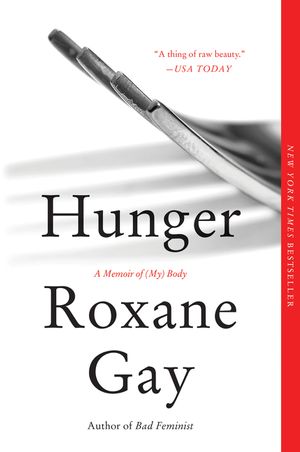
Hunger: A Memoir of (My) Body by Roxane Gay

What happens when beauty is dangerous for a young girl? In this searing memoir, Gay speaks honestly about her relationship with food, weight, self-image, and beauty. As a girl, she’d been sexually assaulted. She blamed herself, and as a result, turned her pain inward, hiding the truth and feeling self-loathing for herself. She buried the young girl she’d been with food, feeling that she would be safe if she made herself invisible to boys like the ones who attacked her.

Americanah

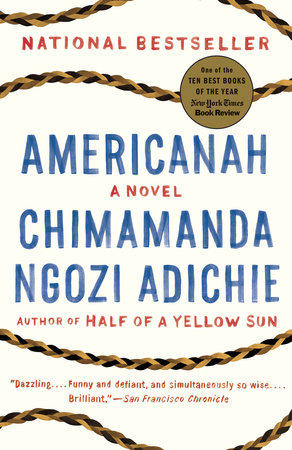
Americanah by Chimamanda Ngozi Adichie

Ifemelu is a beautiful, confident Nigerian woman, but when she immigrates to America, she finds herself questioning and redefining what beauty means for a black woman, and in particular, how it plays out with her hair.  Back home, she had her hair braided. Her hair was celebrated. Here, to be beautiful and professional, she is suddenly expected to have her hair straightened to be more “white” and acceptable. After doing so, and reaching this kind of “beauty,” however, Ifemelu is overcome by a deeper sense of loss. 

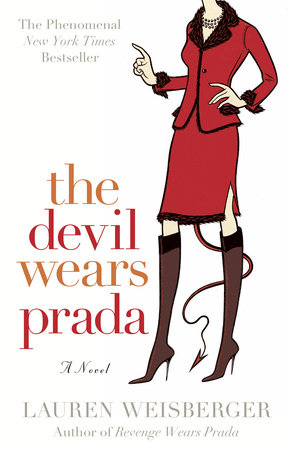
The Devil Wears Prada by Lauren Weisberger

Devil Wears Prada by Lauren Weisberger

Hired as the personal assistant to one of the most powerful fashion editors, a young woman finds herself in the most unglamorous position of hop-skip-and-jumping to the beat of her tyrannical, unpredictable, and impossible boss. In this work environment, appearances mean everything, and for this particular protagonist, it requires a total makeover. She trades in her hiking boots for four-inch Manolos, $100 skirts for Armani, and her briefcase for Prada. Welcome to a world in which “trivial” matters like manicure and pedicures, hair, and the evenness of one’s tan, are not so trivial anymore. Beauty can determine one’s future and fate in the industry. It’s a job a million girls would die for. But is it worth selling one’s soul? 

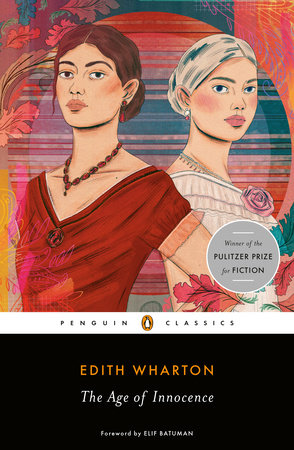
The Age of Innocence

Age of Innocence by Edith Wharton

The novel is set during the late 1800s, a period of American prosperity and growth referred to as the Gilded Age. The protagonist, Newland Archer (a name that pretty much says it all), is a lawyer from one of the most prominent “old money” families in New York City. Newland is ready to marry the perfectly beautiful and well-bred May Welland and is unhappy when his fiancé’s cousin arrives from abroad, shrouded in scandal, thus threatening to tarnish his nuptials. But Newland soon discovers that as beautiful as May may be, she is innocent and ignorant. Newland’s idea of beauty begins to shift and he soon finds himself in love with the Countess Olenska. Age of Innocence won the 1921 Pulitzer Prize, making Edith Wharton the first woman to win the award. A truly beautiful thing.

Look at Me by Jennifer Egan

Look at Me by Jennifer Egan

This story opens with a Manhattan-based model, Charlotte, who is only 35, but struggling to look younger in an industry in which she is already considered past her prime. Charlotte is in a car crash that crushes her face, and though it is totally reconstructed, she doesn’t look the same. What is it like to be a recognized beauty that people look at to becoming virtually a stranger to everyone? 

Choose Your Own Dystopia

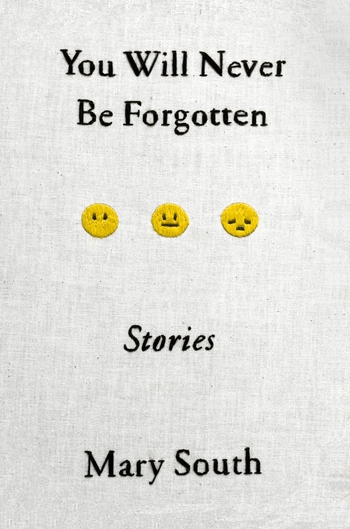
Outrageous, intelligent, and darkly hilarious, You Will Never Be Forgotten includes characters who are harvested for their body parts, cloned, and surveilled, existing in worlds not-too-distant, or perhaps already identical, to our own.

You Will Never Be Forgotten

Mary South’s debut collection draws upon the genre of dystopia (think: Friday Black by Nana Kwame Adjei-Brenyah and TV shows like Black Mirror) in order to defamiliarize received notions about the world we live in—specifically relating to capitalism, technology, and gender—as well as pointing to the absurdity that lies at the heart of many of these accepted beliefs. But don’t be fooled: beneath each of South’s seemingly absurd premises are characters who struggle to move past trauma, all the while grappling with shame, despair, and sadness, in order to heal. 

This spring, we spoke about the origin of her stories, the effects of using humor and surrealism in one’s work, and art’s powerful ability to help “deprogram” destructive ways of thinking and existing in today’s troubled times. 


Daphne Palasi Andreades: Many of the stories in You Will Never Be Forgotten feature premises that feel wildly imaginative and, yet, not far off from our own reality: for instance, a camp dedicated to rehabilitating teenage cyberbullies in “Camp Jabberwocky for Recovering Internet Trolls,” a mother who “rebirths” a clone of her deceased daughter in “Not Setsuko,” assisted living patients who call sex hotlines in “The Age of Love,” and so on. How did these stories begin for you?

Mary South: I often begin by linking an emotion to a strong image. I got the idea for “Not Setsuko,” for example, by thinking a lot on grief and what it is that finally allows someone who is intensely grieving to move on. It’s actually rather mysterious. How do our minds and our bodies allow us to let go of excruciating pain? At one point, I asked myself the question, “What if someone who is grieving simply refused to move on?” That immediately prompted the image of a mother whose daughter has tragically died, and she just can’t bring herself to feel the loss. She believes it might destroy her. Around that image I was able to build the story of a mother who is trying to exactly duplicate her deceased daughter’s memories for her second daughter so she can live in the illusion that she had never really passed away. Her daughter, Setsuko, has just been “absent” for a while.

 Other stories began similarly. “Architecture for Monsters” began from imagining buildings that were designed to not just emulate the human form but to emulate the ruptured or damaged human form. I had so much fun coming up with imaginary designs; that was perhaps the most fun I had while drafting the collection. “Keith Prime” came almost fully realized at once, pairing grief again with late capitalism and a woman doing her best to survive in a job that values people only for how it can profit off them—literally, for their parts. I had this image of rows and rows of identical men sleeping in a warehouse.

DPA: I can’t help but admire the absurdist underpinnings to your work. I was reminded of Franz Kafka’s The Metamorphosis, as well as work by contemporary writers like Aimee Bender and Yukiko Motoya, where outrageous events are unquestioningly accepted as “the norm” within the world of their stories. And yet, beneath the absurd premises in your work, are characters who long for connection or are trying to heal from a trauma. Why begin a piece with a seemingly absurd, outlandish, or surreal proposition?

MS: A novel that I love and that’s been incredibly influential for me is Never Let Me Go by Kazuo Ishiguro. “Keith Prime” owes a lot to that novel, in that I wanted to explore another side of Never Let Me Go—the logistical or bureaucratic side and what it’s like for those who are doing the actual harvesting of clones and their body parts. One of the aspects of Ishiguro’s novel that so fascinates me is how, despite its outlandish premise, none of the characters question the validity of their basic reality. They never say, “It’s unfair that we’re raised for parts. We need to completely change the system.” They say, “I wonder if it’s possible for us to get an extended leave of absence before our donations.” We’re all indoctrinated into reality, and in the process of living we have to figure out the ways in which that indoctrination was for our benefit and survival and the ways in which that indoctrination was harmful or for someone else’s benefit. I think life is often a deep deprogramming in this manner. But by starting with an absurd premise that the characters just take for granted as “this is what life is like,” it strikingly reveals this kind of reality indoctrination that we all experience.

We’re all indoctrinated into reality, and we have to figure out the ways in which that indoctrination was for our benefit or for someone else’s.

Starting with an absurd or outlandish premise also allows me to get at genuine feeling more easily. I find “The Age of Love,” for example, to be a deeply sad story; the elderly men dialing phone sex hotlines often say humorously uncomfortable things, but there’s some weird catalyst in the laughter that makes their loneliness more palpable and affecting. My characters are also often unwilling to fully reckon with their trauma, which is what’s required to heal or become a better person. Humor lets them hide for a while but also ultimately exposes their wounds. The neurosurgeon recovering from her husband’s suicide in “Frequently Asked Questions About Your Craniotomy” can often be quite witty, yet that wit won’t soothe her sorrow. Only feeling her sorrow can do that. But I need to show them hiding first, eliding and making light of their pain through jokes, before I can break them open.

DPA: Simultaneously, your collection and its absurdist stories also made me think of events happening in today’s world that are indeed outrageous, but accepted by some as “the norm:” children in cages, the destruction of the earth, our current president who “grabs women by the pussy.” What, in your opinion, is the role of fiction and art in today’s social and political climate, if any?

MS: I was going to say in my last answer that I don’t feel like I have to invent much or stretch the world too far past recognition in my stories—our current reality is often a horrifying dystopia. When a family can lose their house due to an unexpected medical crisis, that is a nightmare reality. My bitterness over the injustice of the state of health care in this country incited me to write “Keith Prime.” And the traumatizing content moderation jobs featured in the title story are also upsettingly real.

It’s difficult—nigh impossible—to measure what effect fiction has on the human psyche, regardless of the studies that have attempted to quantify how it influences our capacity for empathy. And I don’t think anyone would posit that fiction in and of itself is able to mobilize policy change. I do know that art, fiction in particular, has always been what I’ve turned to in order to make sense the world and the people in it. Nowhere else have I found that same kind of deep, almost cellular-level understanding. After I read Mrs. Dalloway for the first time as a teenager in college, I felt I had gleaned something essential and true about life, despite not being able to articulate exactly what that was. I could spend my whole life trying to articulate what is essential and true about Mrs. Dalloway. The same goes for so many books.

Once, I heard therapy described as “releasing into the conscious mind what is unconscious.” The goal—or hope—is that revelation, of habits and traumas both major and minor, will over time fundamentally alter the self. I think fiction is capable of this, too, on both the individual and the collective level. 

DPA: An aspect of your work that I found extremely impressive was how you balanced the ostensibly dark subject matter of each story—suicide, rape, and other traumas, as well the despair, loneliness, and grief that the characters feel—with humor. I found myself laughing, and my jaw-dropping: Did Mary just write that!? Humor added levity, while also drawing attention to characters’ very human contradictions and inconsistencies, or the ridiculous worlds that they inhabit. Why use humor in your work?

MS: One of the strange things about devastating emotional pain is that while you’re experiencing the worst of it, you can also, surprisingly, have a completely unrelated thought—even one that is very funny. We all contain multiple voices, internal ways of talking to ourselves, voices that are snarky, tender, resentful, forgiving, etc. It can almost feel like a betrayal to the original feeling if, in the throes of grief, for example, you randomly recall a memory that is really humorous about a lost loved one. But that’s not a betrayal, that’s your mind’s way of letting light in through the darkness of loss, of helping you to heal.

So humor is a great provider of relief, but it’s also revealing of pain, as I mentioned earlier; at some point, you can no longer use humor to mitigate your less-than-pleasant feelings. In that sense, once the laughter subsides, I think it allows me, at least, to see these worlds and these characters even more clearly than I would otherwise—and for the characters to see themselves. It’s also just fun! I think the writer should have fun. If the writing is enjoyable and interesting to you, writer, then chances are it will be enjoyable and interesting to readers. 

DPA: If I’m remembering correctly, you mentioned to me once that you don’t begin writing a piece until you have a general idea of the end. This surprised me greatly, perhaps because I work the opposite way: unplanned, blindly feeling my way through. Can you speak more about your writing process; do you have any routines? What was the most challenging part of writing this collection?

The funny thing about writing a book is that you’ll likely become a different person by the time you’ve finished it.

MS: I have worked that way until now—knowing the general arc of a story from beginning to end before starting to write. That process will likely remain the same for me when working on short fiction. There’s a lot of pleasure in just having an idea for a story and developing it, slowly, with no urgency to begin until there’s a sensation of fullness about it. I enjoy taking long meditative walks, outlining, journaling about the plot, characters, themes etc. However, I’ve begun working on a novel as my next project, and I’m not sure I’ll be able to know as much about the overall arc as I do with stories just because there’s so much more information to hold inside one’s mind. I’m doing my best to let it be looser than I’m usually comfortable with, to be more a process of discovery.

The funny thing about writing a book is that you’ll likely become a different person by the time you’ve finished it. As much as I am still proud of all of the stories in my collection, I’m not sure I could sit down and draft some of them anymore. Yet that’s also liberating—who knows what this next book will be like? Or my next after that?

DPA: What writing advice has fueled or challenged you?

MS: There should be no moment in a story where the author is just laying out information. Information should always be filtered through point of view. If it’s really important that we know a character is tall or rich, you have to find a way to communicate that through voice.

In studying with Gordon Lish and working at NOON, I’ve also become preoccupied with the sonic qualities of the sentence. Can I end the sentence with the strongest, most interesting word? And if I’m not doing that, why not? How can I carry an initial set of sounds forward through the prose, from the beginning of the first line to the next and the next after that? Perhaps I want to work in short, staccato sentences. Or perhaps I want to luxuriate in parataxis, to list and digress and embellish coordinating conjunction upon coordinating conjunction.

I also think it’s fun to voice hop—to have a story that’s incredibly ribald and then to switch registers and have one that’s deeply mournful or in denial. Or one that’s a combination of all of those. You can then write in wildly different types of sentences in order to reflect the interior realities of those characters. It’s been absolutely fascinating to learn how to accomplish those turns of consciousness in fiction.

Creating a World in Which Everything That Dies Is Mourned

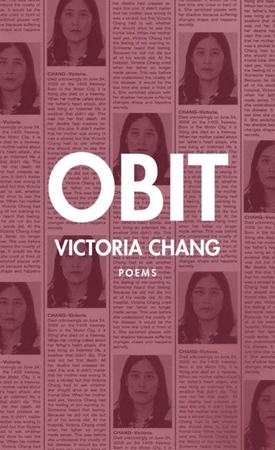
Victoria Chang’s Obit grapples with grief while recognizing how grief grapples us, how grief exceeds our grasp. It is a state that won’t stay still. As the end of one poem puts it, “memory gets up after someone has died and starts walking.” Or the end of another: “I always knew that grief was something I could smell. But I didn’t know that it’s not actually a noun but a verb. That it moves.”

Indeed, in grieving, the endings are endless. Yet, the book is not despairing. There’s play here and not exactly happiness but an openness to living’s ongoing mess—the ways in which life happens, alongside all the unhappening. 

When I talked with Victoria Chang over Zoom, her background was outer space—or more precisely, a view of the Earth from space. The planet looked shiny and beautiful from that distance. Our conversation, meanwhile, refused a beautifying distance in favor of a sometimes disorienting up-closeness. We talked about loss, family, the American ideals of self-improvement and moving on quickly, and the need for deeper engagement with the work of writers of color. 


Chen Chen: There’s such a range of people and things and concepts that die in this book, that receive obits. It starts with the core, the family—father’s frontal lobe, mother, and daughter/speaker who is a mother herself—and then moves to voicemail, language, the future, logic, memory, the Swedish poet Tomas Tranströmer, as well as other body parts or bodily functions of the parents and the speaker. The book feels expansive when building a world of grief, or transforming the world into one where everything must be grieved. How did you come to this series of transformations?

Victoria Chang: It’s always hard to talk about how one’s brain works. But I think the book is a lot like my brain—fragmented, disorganized, sloppy. In the depths of grief, I noticed how little things were dying every single day. Once I started writing about that, I couldn’t stop (at least for a few weeks). In terms of the order, I like to print things out and lay them on the ground like a lot of writers. I then read the first and last lines to see how a book might be made with some kind of arc, even if that arc is almost a flat line.

How I picked up these subjects was very much based on daily living. Sometimes they were objects, like the blue dress which is actually the dress I selected for my mother’s funeral. Other times, my mind went to more existential things and even I die because in some ways when someone dies, your whole relationship with them is gone, even the language you shared with them, the looks. There’s actually another poem, on Brigit Pegeen Kelly who died during this time but that never made it in the book.

CC: That makes me think about something Céline Sciamma, the director of Portrait of a Lady on Fire, says about relationships:

“A relationship is about inventing your own language… You’ve got the jokes, you’ve got the songs… It’s this language that you build. That’s what you mourn for when you’re losing someone you love. This language you’re not going to speak with anybody else.”

What did that Brigit Pegeen Kelly poem involve and why didn’t it make it into the book?

VC: That poem was about meeting her at Bread Loaf [Writers’ Conference] and for five minutes getting to talk to her all by myself when no one else was around. It was a dream to just spend that time with someone like that. As an Asian American writer, to this day, I don’t know a lot of older white poets I admire. I just don’t have that kind of relationship with people like that. I always envy one of my friends who gets emails from older white famous poets all the time. I treasure those few minutes I had with her. She was so humble.

CC: What would you like to see happen when it comes to engagement with the work of marginalized writers, maybe in particular Asian American writers?

VC: What I see currently sometimes is a kind of false engagement or engagement “lite” in the work of Asian American writers or marginalized writers. Tokenization has always been a problem. One Asian for this or that. But now, things have improved, but I still don’t see that kind of deep engagement that I often see with critics, for example, of white writers. It’s as if people are still checking off a box and then patting themselves on the back, versus really embodying the work of the Other. That also means getting to know the Other as real people, really engaging with us, befriending us, talking to us, socializing with us.

CC: Yes. Friendship. Conversation over transaction. I think of white writers and white editors who’re basically extracting resources from us—like, “send us work, teach this workshop” and then I never hear from them again. I’m rarely asked about my actual life. 

Back to the book—were there aspects of grief that you felt needed to be investigated that weren’t, that were missing in poetry, in art? On the back cover, it says you didn’t want to write elegies at first, because you wanted to avoid cliché. I’m struck by how the voice in these poems refuses a nostalgic view when it comes to grieving the parents. The poems treat them not as figures redeemed by deaths of various kinds, but further revealed—and compassionately—in all their complexities. Their aliveness as messy people has not died. 

VC: I’ve read a lot of poems and other works that were elegies and elegiac. I think that in American culture, there can be an idea of entrepreneurialism and self-help that permeates everything, even poetry. In some ways, I couldn’t relate to the elegy and found many of them to be unrelatable to my experience. So looking back, I think I just went my own way and did my own thing. If that meant being honest about how difficult my mother was after my father had a stroke and how much they argued, then so be it. There was/is nothing redeeming about death in my work. A lot of what I experienced and still do are negative and uglier emotions. Because dying, at least in my mother’s case, wasn’t pretty.

CC: I really appreciate how you allow for the uglier emotions in this work. When I was growing up, my parents often talked about things that couldn’t be fixed—which seems antithetical to an American mindset that demands everything have a solution and not only that, but everything be bettered, optimized. My parents insisted on what couldn’t be solved, which saddened me and I saw them as passive, but now that I’m older, I see their perspective as a sort of antidote to the hyper-optimism in the U.S. that can actually be crushing. 

Could you talk about how you experience/define agency or freedom and how your thinking on the extent to which control is possible—as a person and as a writer—informed the shaping of this book?

VC: My mother was always talking about “fate.” She used to tell me that my sister’s nose is big, therefore, she would be rich. I think about writing as freedom, the only thing I can have any say in. Which is interesting, because this whole book seems to be about the loss of control, of what’s familiar. The process of writing it was very freeing though. And once I started working on these poems, I felt the freedom of saying whatever I wanted however I wanted. When I finally sat down, I was ready to be honest, to be real.

CC: I’m noticing some thematic and formal commonalities with your previous book, Barbie Chang. The parents also appear there, though the grief seems more an anticipatory grief; there’s more dying than death, maybe. There’s a similar questioning of what it means to be losing one’s parents while parenting one’s own children. Could you talk about how you see Obit developing post-Barbie Chang? Or how the two books might be in dialogue, both thematically and formally? 

What I see sometimes is a false engagement or engagement ‘lite’ in the work of Asian American writers or marginalized writers.

VC: I think that books are artificial objects, meaning we as writers just write. And when they are supposed to be turned in, we turn them in, and then they go out into the world (if we’re lucky). But feelings, emotions, concerns, themes, our daily lives, don’t start and stop like that. My mother is still dead. I still grieve her every single day. My father still has dementia. I still have children and worry about them and the world. So I think I’m okay with the bleeding over that happens naturally. 

But I do think that transitioning from one work to the next, say from book to book is also a conscious part of being an artist. What is going to be different because you, the artist, has changed or grown? That change has to occur (for me) to maintain interest as an artist, to really engage in what I’m making. So for me, I have to let enough time pass so that I can grow as a person and as a writer.

CC: What are you interested in, in terms of growth as a writer?

VC: For me, I’m always attracted to inventive writers, artists, sculptors. I’m very enamored with the next new shiny thing and have a very slim attention span. This is how I imagine my work develops too. But once I am attracted to something, I’m all in, meaning my mind can work both expansively/horizontally, and also very vertically, which is the obsessive part of my personality that can be very annoying to be around personally, but actually allows me to focus very intensely on something.

CC: It was a fantastic surprise, to see the tankas between the obits. They look and sound very different from the obits, while sharing many themes and concerns. What made you decide to write, then include both of these kinds of poems? 

VC: I’m glad you used the word “surprise” because I think every single OBIT had been published in a literary journal by the time the book came out (to my surprise—people would ask for poems, I would send them, and they would take the whole batch a lot) or I would send five out, and they would take all of them. That cycle kept going and I was horrified that they were all out in the world. I was writing formal poems for fun, sonnets, sestinas, ghazals, and started writing tankas. 

I started adding some of these into the manuscript as a way for the reader to take a breath because all that grieving in the OBITs seemed a lot to take, almost suffocating. My friend told me to intersperse them throughout so I did. I also didn’t tell anyone that they were in the book for that reason, maybe to leave something new for the reader of the book to experience. Same for the middle sonnet sequence which was from an older manuscript that I pulled into this one.

The Tankas were written for all children and my children too. They seemed more hopeful, about the future, rather than about the past, which the OBITs are. They are shorter in line, they are more breathy to read, less like a coffin which the OBITs can seem like. They have a lot of air in them on the page physically too. The book seemed like it needed that; otherwise, it would be too heavy.

It’s so weird to feed children to help them grow, and also help someone die.

CC: How does “hope,” as a feeling and a concept, change for you, with being a poet with children? 

VC: I think I’ve become more hopeful but also less hopeful. Being someone who likes to make things (which takes a lot of space and time), it’s been challenging. I think of a block of 10 years as all black. I don’t recall anything when my children were young. I’ve also become more of a depressive since having children, punctuated with moments of unbelievable joy and laughter. It’s a hard thing being a poet and a mother simultaneously.

CC: One of my favorite poems in this collection is “The Blue Dress,” which ends with these stunning lines: “Imagination is having to live in a dead person’s future. Grief is wearing a dead person’s dress forever.” How did this poem start, then develop? And how does grief transform one’s definitions, understandings of everything else? 

Grief just happens to us. We can’t change it or fix it. There’s also a very American idea of ‘getting over it’ and I just couldn’t and can’t.

VC: My mother was a hoarder so I had a lot of cleaning to do when she died. She had lost a lot of weight before she died (which ironically she had always been trying to do her whole life). I had gone deep into the depths of her closet to find an old dress that seemed smaller, that might fit her. That dress had little blue flowers. I wanted that dress back and it only occurred to me after that I had to ask for it back. That they might have thrown it out or burned it. That was where the poem started, with that dress. And it just went from there. 

Something that happens a lot with me when writing (particularly with these poems) was that I had a nagging question in my mind, “who cares?” Why would anyone care an iota about me and my experiences? I imagined this while writing too at certain points and when that thought popped into my head, I tended to go larger, more philosophical, more existential, which is where the ending of this poem went.

In many ways, grief just happens to us. We can’t change it or fix it. There’s also a very American idea of “getting over it” and I just couldn’t and can’t.

CC: Language’s relationship to grief is central to this book’s movement, which tends to be cyclical, restlessly circling back to the parents, to the speaker’s own mortality. In some poems, language becomes physical and has an agency of its own—for example, “I got on all fours, tried to pick up the letters like a child at an egg hunt with a basket.” I’m also thinking of what John Yau wondered aloud in a review of Muriel Leung’s Bone Confetti, “Does grief exceed words, or is it the other way around?” In this book, is language found to be inadequate or too adequate for grief? Or how would you describe the relationship between language and grief here? 

VC: Interesting question and quote from Yau. The easy and more common response is that language is inadequate to describe anything, including grief. But thinking more about Yau’s quote, I wonder if language and grief are incompatible? The idea that language could even be too adequate for grief is really fascinating too. Maybe language and grief are like night and day, they pass each other mostly and if you can just get close so that the tips of morning and night touch even for a second, that would be incredible.

She’s Got the Whole World in Her Uterus

The Reveal Party

Goldust is a complicated woman.

On a Saturday morning, as we slipped coffee down our throats and listened to NPR, Goldust declared, “There will be crustless sandwiches and when we get bored, we can alphabetize their medicine cabinets and choose one item to take home with us.”

Goldust often started in the middle of sentences. I’ve learned to latch on and ask less questions, trusting that I’ll learn all I needed to know eventually. 

“You mean steal?” I asked.

“I mean, like an adult goody bag.”

“Where will we be?”

“Another reveal party,” she answered. “Can’t really escape them, can we? Walking outside, a reveal of weather. Food delivered to you, a reveal of whether or not it is good. Overpriced haircut and the mirror—because I like to close my eyes the whole time, don’t you?” 

“Not really, but… What’s being revealed?”

“Species,” she said, spitting each syllable into the air.

I stared at Goldust as though her entire mouth had been replaced with gold teeth, rather than just her bottom ones. 

“You mean, like boy or gi—”

Goldust exhaled loudly. Her lungs were opera singers. “We are way beyond pink and blue now. How boring. How patriarchal. How twenty-first century. How pre-feminist. No. What she is having. Like genus.”

“Are there other kinds of baby?”

Goldust looked at me as though I had cut a trap door into her body and hid stolen goods.

I tried to redeem myself. “I… I… I know there are other identities than boy or girl. I just… I just mean what else can it be other than human?” 

I stuffed a second triangle of crust-less sandwich into my mouth and even as I was chewing the first. I couldn’t really decipher what it was. Tuna? Chicken salad? Chopped liver? I drowned it with wine and attached imaginary strings to both sides of my mouth to smile my way across the room. Goldust sat beside me, sharing a story of her backpacking trip in Peru. Though I had heard this story at least twelve times, it never ended the same way twice.

When Goldust went to the bathroom—perhaps to choose an item for her adult goody bag—she left an imprint of glitter on the couch. I tried to angle my body to cover it up, but in doing so, spilled my glass of red wine, which left a far louder stain than the glitter. No one seemed to notice because the cake had been brought out and what else is there to look forward to at a party such as this.

“Well, I’d rather just not know,” said one guest whose hair matched the color of my underpants. 

“But how do you prepare? How do you decide what color to paint the room? How do you decide what clothes, what size of toe-nail clippers, the strength of diaper.”

To build anticipation, we played games:

Guess the texture of skin!

Guess the shape of teeth and how many elements they can bite through!

Guess their risk of endangerment!

Goldust emerged with a slurred walk. Her eyelids looked fatigued.

“You okay?” I whispered against her earlobe.

“Twisting the knob, I walked into the room. I thought I’d live a life where I only pronounced pomegranates but never ate one and then I did. It was bloody,” she garbled.

I grabbed her hand and squeezed. When Goldust drank or consumed drugs of any sort, she narrated her thoughts. Sometimes, of course, she narrated mine.

While Goldust waxed on in no particular order or point of view, I leaned over to Clancey, the soon-to-be mother of some soon-to-be-revealed species.

Clancey resembled a balloon: large head and gaunt body just dangling, swaying from side to side. I would not have known she was pregnant. 

“Great sandwiches,” I said to her.

“Oh, uh, thanks,” she said, sucking on the polish of her fingernails, which could not have been very good for the baby. “Ordered from the internet. You can really get anything from that place.”

“So, um, what do you… what do you think you’re having. Or what do you want? Or…” “We should cut the cake!” she announced, jumping to her feet.

“You think it’s vegan?” Goldust asked me. “If it’s not buttercream, we are leaving.”

“Don’t you want to know what she is having?”

“Oh, I already know. I peeked.”

“You… peeked? Into the cake?”

Goldust lifted her finger toward her eye and tapped. “I can see. Into her. Like X-ray vision. It’s from complications with an MRI I had when I was fifteen. I told you this. She’s having a—”

Clancey promenaded around her living room, touching each piece of furniture (couch, piano, arm chair, coffee table, wedding photo hung on wall, lamp). 

“We never stopped using protection,” Clancey said. “And of course, I am still on birth control. You know, they don’t talk about the double-pregnancy risk, but it’s there. The overlap, I like to call it. My good friend who moved to Montauk or Montana—I don’t remember—it happened to her. Twice. Two overlaps onto the first. It wasn’t triplets. No, that’s what the doctors wanted her to believe. But they were many months apart. So Brick and I… well, we certainly can’t be expected to abstain, but we’ve been ‘careful.’” She curled her fingers  into quotation marks. 

“Maybe Brick wants an overlap,” Clancey continued. “Maybe he wants to set some record. I read about a woman who had a squatter. Have you heard this? A squatter just stays in there. Some women don’t even know they are in there and then all of a sudden, all this liquid pours out and they learn it’s the amniotic fluid! A seventy-nine-year-old woman in Florence or Florida gave birth to a fifty-six-year-old… something or other. It made the news. All the shows, I think. I could have a squatter in me now. I refused an ultrasound. I was afraid to know, to tell you the truth. This pregnancy thing isn’t what it used to be. We can blame it on the milk or the acid rain or infomercials, but whatever, it’s real.”

Goldust was snoring against my shoulder to the tune of a Dolly Parton song. 

“Anyway, are we ready to learn what this is?” Clancey motioned to her belly, which looked so flat, I worried she was housing the baby somewhere else in her body.

Clancey grabbed the serrated knife that laid beside the cake. I licked my lips because it definitely looked like buttercream. 

I watched the knife sluggishly rise into the air, clutched by Clancey’s long fingers. The cake glistened. My belly crackled. What was in those sandwiches? Goldust fluttered her eyes open. Each lady, decorating the room with their poses of curiosity, gasped as the knife split open the cake. A guessing game of possible species rolodexed in my head. I could feel Goldust peel herself off of me. She looked around the room.

“You okay?” I whispered. “She’s about to announce what she’s—”

I watched as Goldust stood up and walked toward Clancey, who had her hands inside the cake, rummaging around for the piece of paper. “Where the fuck is it?” she kept mumbling.

Goldust grabbed the knife and began to saw away at Clancey’s belly. Clancey did not stop her, too focused on finding the answer baked inside the cake. I tried to lift my body off the couch, but I couldn’t move. All the other women sat with their ankles crossed, in their coordinated outfits, just staring. It was as if my tongue had been cut out, all our tongues, and they were flapping on the carpet, mocking our silence. What were in those sandwiches?

Back and forth and back and forth, blood covered the knife like human jelly. Thick, raspberry jam oozing out. Back and forth and back and forth, layers of skin peeling away. Clancey’s eviscerated belly was the earth, shedding layers flooding the room: water, wind, salt, organs, an overdue History of Western Civilization textbook, a fountain pen, a fountain, a library card, a bundle of index cards. I no longer worried about the stain of Goldust’s glitter and my spilt wine. Clancey was grunting and howling and I wondered if someone should call the police or grab a towel or put away the sandwiches before they spoiled. But all I could do—and all the women beside me—was stare. And wonder, what was she having?

Samantha Irby Thinks Most People Suck But She Still Wants to Be Your Friend

New York Times best-selling author Samantha Irby may have become a household name (in certain households, anyway) following the massive success of her 2017 essay collection, We Are Never Meeting in Real Life, but I fell in love with her hilariously funny and shamelessly honest work on her blog, Bitches Gotta Eat, back in 2013. Irby’s voice is unforgettable, whether she’s being blunt about chronic illness, cat ownership, 1990s nostalgia, or the near-impossibility of basic human interaction. 

Wow, No Thank You. by Samantha Irby

Irby’s follow-up essay collection, Wow, No Thank You, offers more of what I’ve come to expect—insights both hilarious and cutting on a diversity of topics—but it is also an eerily prescient collection that suits our current socially-isolated reality very well. Is Irby clairvoyant, or was some form of social collapse, pandemic-induced or otherwise, inevitable in our imminent future? Who can say for sure? I’m just glad Irby is here to talk us through it.

I spoke to Irby over Google Hangouts—as all the very highest-quality personal interactions are now conducted—about aging, friendship, filling a pool with fat people and making Hulu pay for it, and why it’s easy to socially distance when most people are awful and boring.


Lesley Kinzel: A running theme of Wow, No Thank You is that people, generally speaking, suck and are boring. I’m curious about whether extended social isolation has tempered your view on this, or strengthened it. 

Samantha Irby: Well, I will say that an incredibly painful part of social isolation is watching people who were never forced to be interesting, and who were never forced to entertain themselves because they were alone, spiral online. I’ve read so many threads by people where it’s like, wait a minute, are you really saying you’ve never been alone and unloved in your apartment for days at a time before? You don’t have a single book, or you don’t have any shows that you want to watch, or any movies that you want to catch up on? I don’t know if it’s real spiraling or if it’s just for show, that’s the tough thing about the internet. But as much as I think people are boring, it is weird to have it confirmed. It’s weird to see that our peers can’t entertain themselves. 

It is bonkers to me that people can admit in front of everyone that they don’t know how to be left with their own thoughts for more than 10 minutes.

And I don’t mean people who are freaking out about the state of things, because that, of course, I understand. But the people who are like, “I’m so bored”—how much were you going outside? How much social interaction were you doing that now that you are left to your own devices, you’re completely unraveled? And I’m talking about on like, day seven.

It is bonkers to me that people can admit in front of everyone that they don’t know how to be left with their own thoughts for more than 10 minutes. So yeah, it’s confirmed for me that people are as boring and unwilling to find ways to entertain themselves as I suspected.

LK: I read a bunch of your recent interviews, and pretty much all of them at least mentioned turning 40 as a major topic in Wow, No, Thank You. And I mean, turning 40 is in there, but it’s not like the whole book is about fortyness. Culturally, though, and especially for women, we still look at 40 as if a tree is going to fall on you, and from that traumatic moment onward you’re just slogging toward the grave. So I’m curious about your opinion on why we hang on to this particular number as a source of panic. 

SI: Culturally, we do hang so much on 40. When I was a kid, I always thought that—and don’t ask me where this number came from—but that 27 was the age you were supposed to have all your shit together. And then 26 came and I was like, “Oh, no, this is a joke. I’m still an unformed lump of clay that vaguely resembles a person.” 

I don’t know why 40 is such a big number. For me, a theme of the book is being 40 and how much I still don’t know, and how uncertain I feel about so many things that I would have hoped to have nailed by 40. Like, I would have hoped that I could buy clothes, bring them home and feel like “Yes, this is the right thing that I want to wear all the time.” Rather than saying, “Who did I buy this for? Why did I think this would work for me?” You know, things like that where I just am like, “Why can’t I pick a hairstyle? Why can I ever feel good about any single choice that I make?” 

There’s a sociologist somewhere who has data on why 40 is pivotal. Maybe because that’s when—and I know it’s different for everyone—but you know, your hair is turning gray and your egg production slows down? I never put any pressure on 40. I don’t even have an age at which I think things will be together. I don’t know that it’s possible. 

Culturally though, in America, 40 feels so monumental. You keep hearing that it’s a big deal. And then you get here and you’re like, it’s not a big deal. And you wonder, am I aging wrong? Why do I still feel the exact same way?

So now I’m like, okay, maybe 50 is the age that you start like, feeling yourself? 40 definitely is not it for me. 

Getting older is almost just like cosplaying for some of us.

I don’t think we really change much, at least not on the inside. Getting older is almost just like cosplaying for some of us. There’s definitely a woman who’s living a Nancy Meyers movie kind of life, with a beautiful kitchen, and she wears jeans inside with collared shirts, and that person may be confident and feeling good about her decisions and not feeling like a child. But the rest of us—on my deathbed, I’m gonna be like, “Oh, I still am so worried about this one dumb thing that I’ve been worried about since I was a kid.”

LK: In the book, you mention being a fan of iconic ‘90s alt-teen magazine, Sassy. As a person for whom Sassy was a huge personal influence, I’m always interested in hearing how it impacted other people. So I’m wondering if you remember finding it for the first time and what your reaction was.

SI: So, I have always been a magazine person, and I still am a magazine person. We still get print magazines delivered every month. So I was reading YM and Seventeen and all that stuff and not seeing myself reflected in it. And then Sassy came along. I can’t remember what my first issue was. But I just remember they were covering the kind of people that I was interested in. I was really into grunge and Juliana Hatfield, and that was the first time I had seen my tastes reflected, and I treasured every issue. I’m so sad that I didn’t save them. I had them for a long time but then you know, life gets in the way. 

I also remember— didn’t they used to have like a little section where you could send in poetry? 

LK: Yes! Yes! I forget what it was called.

SI: Yeah, so this girl I went to high school with, who I didn’t know very well, had a poem printed.

LK: Whoa!

SI:  Yes! And I remember going up to her in the locker room, which is such a fraught place for any teen girl, and I was like, I’m sorry, but did you send a poem to Sassy magazine? And she said yes. And like, hearts exploded from my eyes. She was like a celebrity to me. 

I was also very into My So-Called Life, and that kind of fit right into the Sassy vein. Sassy was my shit. And I read every issue of Jane magazine too, and I bought a bunch of them off eBay to try to relive that old Jane feeling. I’m a Jane Pratt devotee.

LK: Both of these examples, Sassy and My So-Called Life, capture this point in the ‘90s where outsider girls were having a moment. The weird kids on the margins were suddenly getting this light shined on them. It was incredibly validating. 

It truly can’t be overstated how much it means to see a part of your outsider self reflected in a pop culture thing.

SI: It meant so much, and it truly can’t be overstated, especially when we think of our young selves, how much it means to see a part of your marginalized or outsider self reflected in a pop culture thing. It’s like, “Oh, god, yes, that gives me hope. Like my existence is valid.  Yes, I am worthy of being reflected in a television show. This means a lot to me.” 

LK: This is a good segue to my next question. You spend a chapter in the book talking about the summer you spent working on Shrill, the brilliant Hulu series based on Lindy West’s book. ln my own limited experience with working on a TV show, the one thing that always blows me away about the whole process is how miraculous it is that anything ever gets made. There are so many tiny little fiddly pieces that must fall together in just the right way for a show to even happen. But it does, and sometimes it results in an episode that is truly culture-changing. 

The pool party episode of Shrill, which you wrote, is one of those moments that could have gone so wrong, given that it features dozens of fat people in swimsuits. And somehow it avoids every terrible possibility and comes out so right. I’ll be honest, as a person who has been doing fat politics for over 20 years, I was a wreck when I was watching it the first time, because I kept thinking, “Hollywood is gonna fuck this up. Something’s gonna go horribly wrong.” And it didn’t. It was just great. 

My question is, what is it like to be the force behind an episode that was just so powerful and so important for so many people just starving for that kind of story, and that kind of representation? 

SI: Well, first of all, that’s incredible of you to say and I’m still so humbled. Also, I love what you said, that putting a show together has so many little pieces, and so few of them are in your control as the writer. You write your thing, you put in all the things you want to happen, and then you just hope for the best. 

I was lucky, because I knew that Lindy, as executive producer, was not going to let it get fucked up between my writing it and them shooting it. I knew nothing horrific was going to happen. But also, in the script I was like, I want this place to look like Candyland. I want to see people eating and enjoying themselves, and the people at the party need to be real fat, not TV-fat. They must be actually fat. That’s the kind of thing I can put in the script. And I can nag Lindy about it, but ultimately, she’s not the casting person and she’s not the director. It is a collaboration. 

So when I got to Portland, the first two days we shot the office scene, and the scenes in the house. I kind of eased into the pool scene, which for me was the biggest thing. A friend of mine had seen the casting call for the people for the pool party, and the casting call said, you know, “fat babes.” I was like, okay, but what if the person doing the choosing is somebody who thinks a size 10 is the fattest you’re allowed to be? So I was worried those first couple of days. 

And I’m also thinking about taking care of the people who show up. Everyone’s going to be in bathing suits. Will they be comfortable? Will the crew be sensitive, or is somebody gonna oink when I walk by? There are all these things to worry about. Your brain does a number on you, and I was just buzzing with fear by the time we got there. 

We got to the country club and I walked out and saw the pool. No one was there, and it was truly like a dream. The water was the bluest blue, and all the floaties were perfect, and it’s clear that they had taken such care to make this look nice. They had all of the extras in a ballroom at this country club. Lindy and I snuck in the side, and I peeked around and I think the first person I saw was this woman in a wheelchair. I was like, yes. And then I saw all these fat, very fat, super fat bodies in bikinis. There was food available for everyone. They had a full wardrobe crew, like three or four people, and racks and racks of clothes, all sorts of things that people could choose from. I saw all of these people being treated like I imagine every other show treats people. 

And everybody just seemed happy. They were walking around, and I think they were all just as surprised. Because there’s that part where you wonder, “Am I going to be the only size 32 in a swimsuit?”  You could feel the energy of all these fat people looking at each other. At that moment I knew, “Oh my god, they’re gonna let us do this.”  I met the director, Shaka King, and I just knew that he was gonna do it right.

Not to overstate it, but it feels like a miracle that it worked. I am still in disbelief. 

We shot with a Portland crew, and these guys were all so sweet and nice. As I was leaving the second day, this crew member came up to me—a young white guy, dressed all in black. And he was like, “Hey, are you Sam?” And I thought, oh my god, what, did I clog the Porta Potty? I’m always like, what’s the worst possible thing I could have done? 

But he’s like, “Are you Sam Irby?” And he says, “I just wanted to say thank you for writing this episode.” It’s one thing to resonate with your target audience, right? If it had been like a fat girl in a cherry printed dress, I’d be like, well, of course. Of course you’re glad. But a young white dude who doesn’t have to care about fat liberation to come up and say, “Hey, working on this is incredible. Thank you for doing this,” that’s the moment.

You hear people being like, ‘Why preach to the choir?’ And it’s like, well, because I want a good response. Duh.

You know, I want to preach to the choir. You hear all the time people being like, “Oh, why do you want an echo chamber? Why preach to the choir?” And it’s like, well, because I want a good response. Duh. But that was the moment when I thought, maybe some people who are outside of the intended audience are gonna see this and be changed by it. 

LK: Yes! 

SI: Even if it’s just that one guy, saying “I worked on Shrill so I’m a zealot about fat liberation now.” Then it’s worth it. But I know that more people saw it and were changed by it. You never know, when you’re making a thing, what the impact is gonna be. You just grit your teeth and hope your intent is clear. 

LK: You have a wildly relatable and funny chapter about the difficulty of making friends as an adult. A few years ago I moved to a whole new city. The first new friend that I made, I had met for coffee to talk about a volunteering gig. But then we hung out for two hours. And towards the end of it, she actually said to me, very thoughtfully, “I feel like you and I could be really good friends if you’re interested in that.” And I was like, oh, how civilized! I feel like one reason we struggled to make friends in adulthood as we lose the knack of just making observations like that out loud because it feels so scary and vulnerable. How can we make that kind of blunt friendship overture like a normal adult social thing? 

SI: I feel like—I don’t know how to cure people of the fear of rejection. 

LK: True. 

SI: Right? You can’t. I guess the way to do it would be to normalize the asking for friendship, and being honest. First of all, people in general need to start giving more compliments, and telling people that they like them more. So I think we start by normalizing that, by being like, Hey, you look cool. You seem cool. Your car is cool? I mean, whatever it is that drew you to the person that made you think you could be friends. And then once we normalize that, we need to normalize the next step: Would you like to talk to me? It feels so much like dating, and dating is so loaded and fraught. If we could get the feels-like-dating element out of it, it would be so much easier. 

We’re so conditioned to not tell the truth and not be complimentary because you don’t want to look like a creep, but I really think it’ll feel less creepy the more we do it. You just got to start walking up to people—maybe it sounds a little formulaic—and saying, “You look like a cool person. I’ve seen enough of you to think that a friendship could work. Would you want to have a low stakes coffee with me?” Or drink or whatever. We just have to start like asking each other out on dates that aren’t dates. And then see if a friendship naturally blossoms out of that. 

We just have to start like asking each other out on dates that aren’t dates. And then see if a friendship naturally blossoms out of that.

And it’s hard. I mean, the thing is, it takes work. But I think we also are aided by our pocket computers, and by the fact that we have access to people’s social media, because that can tell you a lot, between the coffee and following people’s Instagram. You just have to get over it. Pursuing someone feels awkward. You don’t want to be annoying. You don’t want them to get the wrong idea. But if you’re just straight up like, “Listen, I think you’re dope. Let’s let’s try to cram 40 years of history into a coffee date, and see if a friendship sprouts from that.” It’ll connect and the roots will burrow and the flower will sprout. I don’t know why I’m doing this flower analogy. If it’s meant to work out, it’ll work. And if it doesn’t, then it’s like, it’s truly a low stakes thing. Maybe they’re too busy. Just try it with the next interesting person you meet. 

LK: Another interesting thing that I’ve noticed during this pandemic is, I’m having some really deep and meaningful conversations over text. I think many people are letting go of worries about rejection and reaching out more. Some of my friends who are not normally emotionally effusive people are now saying “I love you!” all the time. 

I’m hoping one of the lasting impacts of this experience, when we get on the other side of it, is that we learn to treat friendships with the same value that we do dating or romantic relationships. The friendships in my life are every bit as important and nourishing as romantic relationships. And we need to prioritize those just as much as we do any other relationship.

SI: Yeah, and I also hope that it confirms for more of us that the relationships and the bonds that you are forming through your computer, or your phone, or whatever, are as valid as the ones that you’re forming with people in real life. I feel like I know more about people I only know on the internet than I do about people who are my neighbors, and those relationships are just as real and valid as the in person ones. 

8 Killer Books About the Dark Side of Celebrity

I’m not sure why I’ve always been obsessed with novels about depressed famous people. 

Maybe it has something to do with growing up in Washington, DC, a city devoid of glamor. Or maybe it was that DC fancied itself powerful, which felt like a big sham. Maybe it had to do with being raised as a woman in a patriarchy, seeing fame as a grand metaphor for the ever-present male gaze. Maybe I’m drawn to these narratives because fame is elusive. I’m probably drawn to fame because it’s attention without the icky strings of intimacy. 

But of course, adoration without intimacy is a magic potion for emptiness. 

Growing up, books didn’t really interest me. They always seemed to star boy-crazy, frumpy girls with poor emotional regulation. They took place in New England or Old England or the past. Books were earnest and lacked humor and had nothing to do with me. I much preferred Saved By the Bell

Then I came across Bret Easton Ellis. Ok, fine, first I read Gossip Girl. The series didn’t blow my mind but I enjoyed it—something I didn’t think possible from a book. Then in college came BEE. His sentences were exciting but not gushy. His characters didn’t cry; they numbed out with drugs. He wrote about beautiful people and dark subject matter. I wanted to do what he did. 

My debut novel, Vagablonde, is about a young woman in Los Angeles who prefers dissociation to emotional expression. She’s a lawyer by trade, but she wants to be a rapper. She meets a producer and they make a track that goes viral. She gets everything she thought she wanted, but she’s miserable. That’s because she’s self-medicating to an unsustainable degree. Also, fame is fragile. 

Obviously, all art comes from other art. (Queue: The Life of Pablo.) I didn’t write my book out of thin air. I wrote it based on the thoughts in my head, partially, but also on reality TV and movies and conversations with friends and books I’ve read. And now, at 33, I read quite often! Some could call me a book nerd. In Southern California, where I live, I certainly qualify as a nerd. Anyway, here are 8 excellent books about the dark side of fame. 

The Informers by Bret Easton Ellis

The Informers by Bret Easton Ellis

The Informers is not Ellis’s most famous book by any means. In fact, it was pretty universally panned, mostly as an uninspired repeat of his previous books. But it was the first BEE I ever read, so it was fresh to me. I borrowed it from my college friend—a genetically blessed blond gay who looked like he had been plucked straight from Ellis’s universe. I enjoyed reading about characters who felt numb at glamorous Hollywood parties and in their psychiatrists’ offices. This reading started a long journey of me trying to copy him. (I have several repeat characters in my first few novels as an ode to BEE.) While a recent reread of Rules of Attraction failed to charm me as it did in my late teens, I will always respect BEE for opening my eyes to what literature can be. 

Play It As It Lays by Joan Didion

Play It As It Lays is an utterly perfect novel—sparse and haunting and darkly funny. It follows Maria Wyeth, 36-year-old actress in the midst of a mental breakdown, and my absolute hero of fiction. Maria renders glamorous so many traits of which I’m personally ashamed. She lives in her head, casually degrades her body, and can’t keep up her end of the dialogue with hairdressers. All her friends are gay men or people with whom she is sleeping. She tends towards dysthymia, her body crackles with sensitivity, and she really just wants to spend her time wandering around and looking at the way the light hits random objects.

Most feel compelled to play the game—that is participate in our uber-competitive, capitalist society—but Maria knows the game is ultimately meaningless. She instead finds solace in beautiful images, soothing her mind through sleep, wandering, and driving. Her vision may seem depressing on its face, but there is actually something Zen about it. Maria doesn’t overthink things. Most people ask why Iago is evil. Maria doesn’t ask.

Surveys by Natasha Stagg

While Didion and Ellis focus on Hollywood fame, Stagg’s debut novel deals with a more contemporary form of celebrity: Internet notoriety. While 23-year-old Colleen is mostly anonymous at her job at Arizona mall, she’s an online personality with tons of followers. Her fame increases when she begins a public online romance with another online celebrity. Colleen reflects on fame dryly:

“One day, I was not famous, the next day, I was almost famous and the temptation to go wide with that and reject my past was too great. When I was legit famous, it was hard to tell when the change occurred. It was traceable, sort of, because of the Internet, but it was very quick.”

The LA Review of Books wrote that Stagg’s “prose vaguely recalls the affectless monotone of the drug-addled rich kids who populated Bret Easton Ellis’s late-’80s novels.” Colleen begins to unravel when a girl named Lucinda arrives online and plays the game a bit better. She’s also wise. “In the future, no one will want to be famous,” Lucinda writes in an online essay. “We will aspire to be less and less known as we grow up.” Reading this again, I hope she’s right. 

Look by Zan Romanoff

Look by Zan Romanoff

Like Surveys, Romanoff’s third novel also deals with an internet influencer. Lulu Shapiro has 10,000 followers on the fictional app Flash (which I read as Snapchat meets Tik Tok). Throughout the novel, Lulu grapples with what it means to be looked at while also navigating her first lesbian relationship. I’ll admit I was nervous to read a lesbian romance written by a straight writer, but I was impressed with how it rang true to my own queer experiences. Particularly, the ways in which the male gaze both idealizes and cheapens lesbian relationships. And, yes, I cried!!! 

Taipei by Tao Lin

Taipei by Tao Lin

I firmly believe you CAN judge a book by its cover. And that’s exactly how I found this book, which is now one of my favorites. Taipei addresses a more niche type of fame than the others on this list: lit world fame. While Tao isn’t a household name, anyone who spends time in indie bookstores or on literary Tumblr knows him as the founder of the “alt lit” movement.

Taipei is semi-autobiographical. It’s about a famous writer on a book tour, self-medicating with drugs throughout. It’s also a love story. Upon its release, Brett Easton Ellis said Taipei rendered Tao Lin “the most interesting prose stylist of his generation.” He also called Taipei “boring.” Maybe he was jealous, I don’t know. I’ll admit it took me a minute to get into Taipei. But once I did, I was captivated. I was moved. I laughed, and I cried. And I’m still trying to copy his endearingly peculiar voice. What else do you want from a novel? 

Image result for murder your life a memoir

How to Murder Your Life by Cat Marnell

How to Murder Your Life was the type of book I had to read slowly because I didn’t want it to end. The memoir chronicles the writer’s life from childhood (in DC, where I grew up!) to boarding school to Conde Nast to becoming a famous Internet writer, the unifying thread being her addiction—first to stimulants, and eventually to essentially every other drug imaginable. In the final third of the book, Cat’s addiction hits its peak and her fame skyrockets. An essay she writes about Whitney Houston’s death while high on a potpourri of substances goes viral, and at that point the Internet begins to glorify her twisted brain (Jezebel wrote, “Cat Marnell is Both Fucked Up And Fabulous,” and Vice gave her a column called Amphetamine Logic).

Marnell wants to stop using—she’s exhausted and feels ill all the time—but she’s also being praised for her addiction, and making money off it. Sad for Cat but a killer conflict to keep the reader hooked. I also fell in love with Cat’s writing style. She writes such energy, using exclamation points with abandon (might be the speed!!!) and frequently addressing the reader. Her subject matter is dark but the narrative remains light. It’s not easy to make reading fun, and Cat is the Queen. 

The Ghost Network by Catie Disabato

Confession: the author of this novel is my ex-girlfriend. I read it before we started dating, and before I even met her. And I’ll admit I read it with a lot of envy. Catie was my age, 28, and her thoughtful novel about a pop star who goes missing landed a glowing review in The New York Times. I hated her a little. But I loved the novel, a structurally inventive and intricately-plotted ride filled with trenchant social commentary. My favorite were its asides on Situationist philosophy (the fictional pop star Molly Metropolis is obsessed with Situationist leader Guy Debord). Getting critical theory fed through a queer pop culture narrative is heaven to moi

The Love Song of Jonny Valentine by Teddy Wayne

Teddy Wayne tells this charming story from the perspective of an 11-year-old, Bieber-esque pop star named Johnny Valentine. Given that I don’t care about boys or anything boyish, I didn’t expect to enjoy this novel. But I fell in love with Jonny’s funny, sympathetic, and ultimately very sad voice. I didn’t even mind reading about Jonny’s masturbatory frustrations. After Jonny can’t make himself come, he imagines a groupie accusing him of getting her pregnant and then having to issue a public statement saying that would be impossible because he couldn’t even come on his own. “[A] policeman would have to watch me in private to see if it was true, and they’d give me an adult glossy to help, and we’d also have to bring in [my bodyguard] to make sure the policeman wasn’t a child predator.” It’s these sorts of darkly funny interior monologues that sucked me into the narrative. In the end, the book nails home how just lonely it is to be a super-star. 

How Swedish Immigration Law Condemned Jews During the Holocaust

“Write soon. We long for your lines, especially because the post from Sweden arrives as it should. Take care of yourself. May God protect you, a thousand kisses from Mutti and your loyal dad.”

So concludes the final letter written by Elsie and Josef Ullmann to their son Otto, posted from the concentration camp at Theresienstadt in August of 1944 to Otto’s newfound home in Småland, Sweden. The next month, September, Josef was sent to Auschwitz. The following month, October, so too was Elsie. Neither survived.

And in the Vienna Woods the Trees Remain

The tragic correspondence was thrust upon Elisabeth Åsbrink by Otto’s daughter, who believed that the award-winning Swedish journalist would be able to do something with the collection of more than 500 letters to Otto from his parents, two aunts, and an uncle. That something is And in the Vienna Woods the Trees Remain, a heartbreaking reconstruction of one family’s annihilation by anti-Semitism in both its most rabid and staid forms. Åsbrink complements the Ullmanns’ letters to Otto with archival material from state, church, and news sources, painting a complex picture of compassion and complicity, which stretches from Otto’s family home in Vienna to his adopted home in Smaland. On one hand, a kindertransport organized by the Swedish church following the Third Reich’s annexation of Austria rescues Otto from the Nazis; on the other hand, Swedish society at all levels conspires to keep Jewish adults, like Otto’s parents, from joining their children. On one hand, Otto’s adopted family, the Kamprads, come to regard him affectionately; on the other, Ingvar Kamprad, the future founder of IKEA, is all the while actively supporting the Swedish Nazi movement.

I had the pleasure of recently speaking with Åsbrink about And in the Vienna Woods the Trees Remain. We discussed the weight of such heavy material being entrusted to a writer, the surprising role that ABBA played in her research, how Otto’s family history resonates with her own, and more.


Arvind Dilawar: The letters from the Ullmanns to their son Otto, which form the foundation of your book, And in the Vienna Woods the Trees Remain, were thrust upon you by Otto’s daughter. Was it a difficult decision, deciding to pursue the story those letters tell?

Elizabeth Åsbrink: I really did not want to deal with the Holocaust. It’s a terrible subject. It’s something that’s been painful and I would say traumatic in my family. So I said no, I declined her offer. But then, every night when I was going to sleep, I kept thinking of this boy, this 13-year-old boy, alone in Sweden, and his parents all alone in Vienna, and these letters that went between them. And I just felt obligated.

To such a great extent, there are no graves, there are no bodies. This is one of the specifics with this genocide. OK, there are mass graves and we’ve seen the photos of the piles in the camps, but generally, six million people have just vanished, erased from the Earth. And I could, through this material, pick up five people, give them their names, their lives, their bad jokes, and I could research my way almost all the way to their deaths, so I could give them that as well. The family had no idea of the particular fates that these five people who wrote to Otto had met. I did something, at least, for these people.

AD: You mention that there’s this exchange of letters that’s happening. But you were only able to get the letters that Otto saved, so there’s no record of his replies back. Did you try to track that down? Was there any chance of getting it? Or are those permanently lost to history?

EA: The people he wrote to were murdered. I have no idea what happened to their personal belongings. The parents ended up in Theresienstadt and then were murdered in Auschwitz. One aunt and uncle were deported to this little Polish city that was overcrowded, and if they died by disease or if they were shot, I couldn’t say for sure. And the second aunt, she was taken to a woods in Ukraine and shot. So letters, if they’d kept them, if they’d taken them with them, they were not preserved. I looked in several archives for letters from Otto to other people, and I did find some of them. There was one letter that he had written that had been returned when his father was in this forced labor camp in this Eichmann project, the Nisko project. So I had one returned letter that he had written. That is all I had.

AD: An important subject that your book focuses on is Jewish immigration during World War II. Can you describe how restrictive immigration laws condemned Otto and his family in particular and Jews in general? Do you see any resonance with how immigration laws are used today?

EA: Each European country had their different twists on this, so I could briefly give you a picture of what Sweden stood for. Sweden had a very restrictive attitude towards Jews before the war as well. And, for instance, Roma people were not at all allowed into Sweden. That had been the case for some hundred years. So Sweden, nationally, their identity was very attached to ethnicity, very strongly so. I actually think it still is quite strong in that way, but it is changing, slowly. But if we talk about pre-war, it was very, very connected, ethnic identity and nationality. And they didn’t want foreign elements. This is a term that one can find in official documents, “foreign elements.” They didn’t want them in the country, so very few were let in. 

In November 1938, when the Jews in Germany realized they had to get out, there was this huge refugee wave. All the European countries met to try to solve it, but no one really wanted to take responsibility, and Sweden was no better. Actually, Sweden was worse. Sweden was so afraid of getting immigrants from this refugee wave that they made a deal with Nazi Germany. They said, if you want German nationals to be able to travel to Sweden without a visa, you have to put a stamp in the Jewish passports so we can say no to them by the border, because if we let them over the border, they have to be here for a couple of months and it’s more difficult to get them out again. So Sweden actuallly negotiated with Nazi Germany and put pressure on them and succeeded. German Jews had a J stamped in their passport and, therefore, were very easy to keep out of the country. Switzerland was also in on this dealing with Nazi Germany.

But in 1943, something happened which actually changed the whole scene, one could say. It begins in November ‘42, a year ahead, when the Germans deport the Norwegian Jews. They do just like they’ve done in all the other countries: They take them out of their homes, put them on a boat from Oslo, and it goes directly to Poland. And the Swedes, then they react, because Norway is so close. It’s a “brother country,” that’s what the Swedish term is. So this was shocking. I read comments in the papers from then saying, well, I don’t really like Jews, but this is unacceptable. So suddenly Sweden woke up when it came to the Norwegian Jews. And then a year after, in ‘43, it was the Danish Jews who were going to be deported. And at the time, the opinion towards Jewish refugees had turned. When the Danish resistance movement contacted the Swedish government, it said, now we have to do something. It said, let them in. Over two nights, 7,500 people came over a strait between Denmark and Sweden, with boats, small fishing boats, any boats. And they were allowed to be there for the whole war. Sweden took care of them, gave them places to stay and school, all that. The next miraculous thing is that a lot of the Danish people actually guarded the Jews’ homes, so when they returned, they had their homes, nothing was stolen or robbed. This is a complete anomaly in the history of the Holocaust in general.

If you want to connect it to today, I would say that Sweden is still quite deep into connecting ethnicity with nationality. We have a law of citizenship that is still based on the blood principle [jus sanguinis], whilst in the US you have the [birthright] territorial principle [jus soli]. Sweden has now received a huge amount of refugees from Syria, from Afghanistan, just from the last 10 years. Since 2015, Sweden has received 170,000 refugees from Syria. I think this huge change of society, where Arabic is the second biggest language within the Swedish borders, it must lead to a change of the citizenship laws and the way that we look at nationality. I would prefer the American way. I think that’s more democratic, but that’s my personal opinion, being the child of two immigrants.

AD: How were you able to investigate the history of Austria and Sweden in the 1940s? Germany is relatively open about that time period. Is the same true for Austria, which was annexed by Germany, and Sweden, which was officially neutral during World War II?

EA: I don’t think it’s got anything to do with neutrality, these things. I found material in Swedish archives, especially about the individuals. The book is very much based on material that I found in the Swedish church archives. All the papers concerning the priest that saved these children, they are from the church archive. And that was completely open, and it still is for anyone who wants to look at it. In Austria, I found the information I needed from the Jewish community archive, which was open, but actually they didn’t want to help me because they were out of staff and under such pressure. They don’t have any money. It’s a very poor congregation. There are hardly any Jewish people left there, so they’re struggling. 

Sweden came out from WWII with a sense of guilt. This sense of guilt has made Sweden welcoming to refugees to a certain extent.

There was a funny story: The guy I spoke to there, the historian, said, I can’t help you, I haven’t got the time to help you. And I insisted on going there anyway, and he said, alright, we’ll meet that day, OK. I showed up and he really didn’t want to help me, but he gave me this and that. And then I went out for lunch and he Googled me. He came to my website and he saw that I had been working on a radio show with Björn Ulvaeus, one of the guys in ABBA, the Swedish pop band. This historian loves ABBA, so when I came back from my lunch, it was a different situation. He helped me enormously. I could find out the things about Otto Ullmann’s parents, what they did in Vienna, how their life was. And that was absolutely invaluable. So thanks to ABBA, I did some good research.

AD: That’s amazing. It seems like a very Swedish story, at its heart. Ingvar Kamprad, the founder of IKEA, features prominently in your book. Now that you’re describing the changes that Sweden underwent during the Holocaust, it almost seems like he sort of captures, in one person, the two different sides of Swedish culture struggling against each other. Because on one hand, he was an active supporter of the Swedish Nazi movement and, on the other hand, he became a close friend of Otto. Is there a way to resolve that apparent contradiction?

EA: I think you’re right in that Ingvar Kamprad is a good symbol of the Swedish attitudes, but maybe not in that way, because I don’t think he changed and the Swedish attitudes actually changed. Some speculate that it was because of humanitarian reasons, others are more cynical and say that, when Hitler was defeated at Stalingrad, the Swedes saw that things were changing and also changed their policy. I think it’s probably a bit of this and a bit of that.

But Ingvar Kamprad, he was involved in the fascist movement very intensely, which was deeply anti-Semitic. And then I found that he had also been a member of the Swedish hardcore Nazi party. I don’t know when he left that party. I couldn’t find out and he himself wouldn’t comment on this information. But when I met him—which was before I found out about the Nazi party—I knew he had been involved in the fascist movement, and the fascist movement I knew for sure was very anti-Semitic. So, of course, I asked him: How did these things work together? Loving your friend, Otto, because he really did love his friend, and still being a member of this movement? And I pressured him, and finally he said, I see no contradiction.

How do you explain that? I think one explanation is that Ingvar Kamprad was not a person who reflected. He did not sit down and think over his ideas and his thoughts. He was a doer. He was a workaholic. He did amazing things, but he did not stop and think. I don’t think that was a part of his personality, and I don’t think maybe he would have created IKEA if he’d been someone who stopped and sat down and had a good think about who I am, what my ideals are. He just went on. And also you have to remember that he was born into a family where his grandmother was very dominant and she was a Nazi. She loved Hitler. And his father was also a Nazi, Ingvar Kamprad told me himself in this interview that I did. His mother was definitely not a Nazi, also important to remmber, but the democratic ideals weren’t something that was natural to him. So that’s one part of the answer.

The other is that all these totalitarian ideas need the exception. I think that any totalitarian ideology makes exceptions for the neighbor that you like, the nephew, or the bus driver or the woman in the shop. There’s always an individual that you like, because this is what’s human in us. And these ideologies can only work if you allow these exceptions. I think that’s what Ingvar Kamprad is a good example of: the exception going parallel with the ideas. And I think the Nazis were very aware of this. Himmler, when he held his famous speech in 1942 at Posen, he talked to his generals. It was time to implement the so-called “final solution,” and he said, we all know a decent Jew, but now we have to put that aside. So he was aware that personal relations and friendships were, to a certain extent, compatible with the ideology, but now, when it was time to go to the final step, he wanted them to cut off these personal feelings. That’s the closest to an answer I have.

AD: Despite some simmering xenophobia, the Scandinavian countries today are still considered relatively welcoming of refugees. Your book illustrates how this was not the case during World War II, when Jewish refugees were systematically turned away. Did something in Sweden change between now and then?

My father and Otto have similar backgrounds: assimilated big city children. And suddenly they were Jews and were supposed to be murdered. 

EA: I think Sweden came out from the Second World War with a sense of guilt. It had economic dealings with Nazi Germany, and when the rest of Europe was ruined and bombed, Sweden was in a quite good place. The welfare state thrived after the war. This sense of guilt has made Sweden welcoming to refugees to a certain extent. Because it’s also the case that, when, in the ‘90s, we had a recession, it suddenly became a much more racist society. That is also the time when the old fascist movement connected with new right-wing movements, like skinheads and others, and created a new right-wing, racist group, which developed actually into the right-wing populist party that we have today, the Sweden Democrats. So they are directly linked to this fascist movement that Ingvar Kamprad was a part of. The recession in the beginning of the 1990s opened space up, and since then, we have had them. They were small and violent, and now they have costumes and have changed the way they speak and the way they see the future, but they’re still in the same corner.

AD: Early on in this conversation you mentioned that, part of the reason that you were hesitant to follow Otto’s story was because it mirrored that of your own family. Could you describe how your family arrived in Sweden? And did completing this project help you come to terms with that?

EA: Otto’s story connects to my father’s story very much. My father is a Hungarian Jew. He grew up in Budapest, very close to Vienna. I mean, they were part of the same empire, they’re like sibling cities. Just like Otto, my father was assimilated. He was even baptized because his parents thought that would protect him. Hungary was one of the first countries with anti-Jewish laws. He didn’t know he was Jewish until someone said “stinking, filthy Jew” to him when he was a child, and he went to his mother and said, what is that? But then things happened very quickly in Hungary. He is a survivor of the Holocaust. It’s a miracle that he survived. Long story, but the background is very similar: big city children, assimilated with the rational, scientific ideas of the world, etc. And suddenly they were Jews and were supposed to be murdered. 

I grew up mainly with my mother, and she also has Jewish heritage. She told me never to tell anyone that I was Jewish. Never, ever tell anyone. It was like a shameful secret and if I exposed it, something very bad could happen. And this is something that she gave me without words. … It was scary to deal with this material, but I was also grown up and not under my mother’s influence anymore. But still, I had a sense of danger doing it, but I decided I wanted to. I decided it was so important and I also wanted to break this secrecy. I’m not a believer. I don’t believe in blood communities, like a folk of people, but I am Jewish. Hitler would have murdered me. That’s a terrible thing, but it’s true. Writing this book was, actually what my gay friend said, like coming out. They saw it as a coming out process, and I think they’re right, it was. I think it did change the way some people look at me, and it also changed the way I see myself.

I once went to a school and they had this book as a theme for a whole term. It was amazing. Young grown-ups—the art students had made art, and the music students had made music. And then there was quite a huge group of refugees, who were in this school to learn the basics about Sweden before they started their new life. So there were a lot of 20-year-olds, a lot of people from Iraq and Afghanistan, and we had a talk. One of these Kurdish Iraqi guys, he said it was the best book he’d ever read because everything Otto had experienced, he had experienced. He’d been sent away, by his Kurdish parents, to Sweden to find a new future and he was told to be decent, to learn the language, to get a good education, all these things. He completely identified with this Jewish fate. That blew me away, and it still does.