Regarding My Prolonged Absence from Church

Louisiana Bildungsroman

 Awake, asleep, I don’t know what I was
in childhood, feeling things deeply
or not at all. It was a bad time for secrets.
Kudzu laid hands but failed to cleanse me
of the cruelties I exacted and received.
When I asked to ride a horse on my birthday,
I did not mean tracing circles on an invisible lead.
I wanted my steed mean-spirited
and wild, scattering clamshells up the levee
to race cargo ships and rust-bottomed barges
the Mississippi shouldered above my head.
How can it be so easy to force water
to change its shape? The wicked girls next door
called through the fence, begging
for me to join them in the pool. As quick
as I could scuff down the driveway
I was there, frantically trying
the locked gate while they laughed.
Likewise, I followed my brother
to the skate ramp, well-aware that a broomstick
was coming for the spokes of my bike.
I remember braiding a ribbon
in my ever-damp ponytail for the occasion
and afterward recording the long sad tale
in my diary, which I then hid in plain sight.

Regarding My Prolonged Absence from Church

My leavetaking began with an Irish goodbye
that felt like a journey to the underworld.
The gimmicky sermons made me groan,
and I already had one foot out the door
since they voted to allow a horror movie
to film inside–altar, loft, pews stuffed
with imposters. So what if the money
went to organ repairs. Just like Christmas,
Easter–I couldn’t unsee the vicious faces.
When some Buddhists came to town
and taught my sons to paint with sand,
I loved that they never turned to see
who followed as they walked to the river.
Not one word was spoken. I blamed the devils
of sixth grade that time I left small change
for a waitress at the bottom of a water glass,
but it was me revealing the poverty
of my own soul. Try explaining that to the choir,
or singing with such a stone in your mouth.
It was much easier to recognize the pauses
between cypress trees as holy ground, and walk away.

There Is No Singular Immigrant Experience

There is no one immigrant experience. Nor is there only a handful to draw from, and yet, at a time when the immigration debate is inescapable in American politics, both sides still reach for their handful of tired narratives to argue either for or against the humanity of people without U.S. citizenship (and even then, the goal post can always shift). On both sides, immigrant stories are marionetted and exploited in ways that not only flatten real experiences but also flatten the real people who lived through them. 

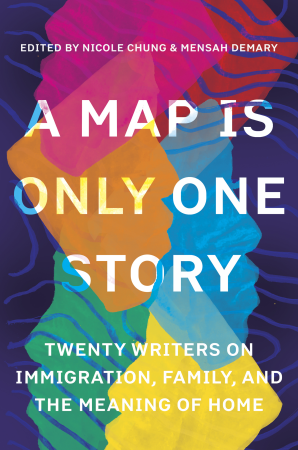
Image result for A Map Is Only One Story: Twenty Writers on Immigration, Family, and the Meaning of Home"

Enter A Map Is Only One Story, with twenty writers who assert the seemingly unfathomable truth that there can be as many experiences as there are people who experience them. In this stunning collection, the debut anthology from Catapult Magazine, each writer invites you alongside them as they contend with unnatural borders and their devastating consequences, which hide in plain sight in our daily lives in America. 

Without the necessity of an outside voice to translate their experiences for the public, the writers let their stories be complex, but even that word seems to do a disservice to their work. Refusing clean narratives, these stories dig deep and entangle themselves in ways that, once you walk through the mist of otherness that words like “immigrant” and “undocumented” inspire, you will find are deeply human, deeply relatable, and merely circumstantial. 

I spoke with editors Nicole Chung and Mensah Demary about the necessity and achievement of nuance in stories about immigration, and how these writers prove that the idea of the faceless, voiceless brown mass is the biggest lie yet.


Frances Nguyen: This is the first published anthology of writing from Catapult. Why did you choose immigration?

Mensah Demary: Since 2015, Catapult Magazine has published a wide-ranging collection of narrative nonfiction from writers all over the world. When we considered the possibility of a print anthology, we realized [it] should have a narrow focus, and it quickly became clear that immigration as a topic seemed, to us, one of extreme importance and urgency. 

Nicole Chung: Right, I remember we talked about a lot of different ideas, but migration was the one we kept coming back to. We knew we had a deep well of immigration stories to draw from, and we had them precisely because the subject is one of such pressing and ongoing importance that intersects with so many others.

FN: In the introduction to the anthology, you describe the intent to explore “the human side of immigration.” What does that look like? Is it exploring the consequences of policy, or the idea of borders and belonging—or, maybe, just the normalcy of movement to the human experience?

NC: All three, I think. I’m glad you raised the point about migration and movement being part of the human experience; these things are inevitable and always have been. Everyone should be able to recognize this as the most natural and human of motivations, to go where you think you can work and live and seek greater safety and security for your family. 

Early on, when Mensah and I were reading through the archives and considering pieces to add to this anthology, I was particularly struck by a paragraph from Jamila Osman’s beautiful essay “A Map of Lost Things”:

“When the colonists came, they committed our edges to paper; they tried to cage us with their borders. A country is impossible to contain; a people are impossible to boil to the silt of parchment. A map is only one story. It is not the most important story. The most important story is the one a people tell about themselves.”

Obviously we took the title of the anthology from this passage, but for me, personally, it also feels like a distillation of what we hoped this collection would do: focus (or refocus) readers on the fact that migration is always the story of people—of individuals, families, and communities—before it is anything else, and then let the writers in this collection speak to those truths and experiences with honesty and authority and nuance.

FN: What did you find most striking about this collection?

MD: The collection brings up the complicated nature of immigration, which might appear as a simple truism to shrug off but in actuality results in stories that upend any would-be assumptions and refuse to cater to easy, stereotypical labels. The contributors speak for themselves, sharing with readers deeply personal stories that refuse clean, simple resolutions. 

NC: I agree with Mensah. I think one of the strengths of this collection (and good narrative nonfiction in general) can be found in that tension or gray area, and for many of the writers in this anthology, that’s actually where some sense of belonging comes from, when it does. You see them resisting the pressure to go along with uncomplicated definitions or ideas—that you can only have one home, or that belonging is best defined or gate-kept by people who hate or fear you. 

FN: Many of the essays seem to encircle themes of shipwreck, the politics of their very bodies, and the trauma of not just code-switching but almost dismembering oneself to assimilate. Did you find the same?

Migration is always the story of people—of individuals, families, and communities—before it is anything else.

NC: You do see plenty of writers grappling with the insidious pressure to assimilate, but I think what has stayed with me, after repeat reads of all these pieces, is not just the fragility of our bodies but the fluidity and flexibility of our identities. Each one [of these twenty different writers] is trying to define self, home, and family in their own way, because in the end, they’re the only [ones] who can do that. But I don’t think any of them are looking for a better understanding of themselves completely independent of that experience.

MD: I would just point to how immigration politics provoke and fuel objectification of people and their complicated lives, made all the more fluid by their living and working in a foreign country. The awareness to this objectification stands out in my mind when I think about some of the writers’ works.

FN: I found that a deep, relational connection (or lack thereof) threads through the entire collection. What have these stories taught you about love, by its most expansive definition? 

MD: Love contains an element of visibility, of being seen, and it’s this visibility as a question and source of tension that cuts through each of the pieces, I think. Whether or not you’re sure if you’re seen fully for who you are, love, in this way, further complicates the meaning of home as a way of being and feeling rooted.

8 Female Mystics in Literature

I have long been interested in mysticism, and in the mystic, who resides as much in an ethereal world as a material one. In a way of life bound to societal expectations and heavily invested in logic, that there are those who dedicate themselves to what lies beyond that—transcendence and surrender to the ineffable—is comforting. I’m drawn also to the idea of religious ecstasy, and though I myself am not religious, I think I have experienced a hint of what it must feel like in chanting and meditation, and understand how one might place it above all else.   

Art too has the ability to transport us. In my novel Indelicacy, the narrator, Vitória, experiences a kind of rapture, and maybe even transcendence, while being in the presence of and looking at art, as well as listening to music and watching dance. It is then that she joins with something larger than herself, but remains very much in tune with her own self. It is her form of contemplation and study.    

Here is a list of female characters in literature that seem to exist within, or approach, self-surrender, negative capability, euphoria, or transcendence. Though not religious mystics, necessarily, they share something with that figure all the same, deeply absorbed into something beyond them. I love these characters and these books, and find within them signs of how to live.   

The Hour of the Star by Clarice Lispector, translated by Benjamin Moser

When those in poverty are depicted in literature, it is often through pity and a sense of lack. In the hands of Lispector, the reader is given something more. A portrait of a poor young woman in Rio de Janeiro, Brazil who is unloved and trodden upon, still Macabéa glows from within, connected to the secret currents of life. 

The Lady and the Little Fox Fur

The Lady and the Little Fox Fur by Violette Leduc, translated by Derek Coltman

This is the story of an elderly woman living in an attic who roams the streets of Paris in search of food and human connection. She finds kinship instead in objects, notably an old fox fur she finds in the trash. In the novel, there is a great awareness of pleasure and delight, as Leduc’s “lady” transforms her world through her warm and vivid imagination.

Ban en Banlieue by Bhanu Kapil

At once a book about an unwritten novel and a series of performance notes for an “auto-sacrifice,” Ban en Banlieue shows me what radical presence looks like. Ban is an absolute witness to the violence that has been done to brown and female bodies, from the race riots in London in 1979 when Blair Peach was killed, to the young woman from New Delhi who was gang raped and beaten to death on a bus in 2012. I’ve never read a book before that holds space in such a loving way, almost outside of time. 

Image result for hilda hilst obscene madame d

The Obscene Madame D by Hilda Hilst, translated by Nathanaël in collaboration with Rachel Gontijo Araujo

In this surreal novel, a sixty-year-old woman decides to live under the recess of her stairs after she has a revelation. Madame D is a philosopher extraordinaire of the crudest kind, and this catapults her into another category of living altogether. Her mysticism comes not from a purity of thought, but from excess. 

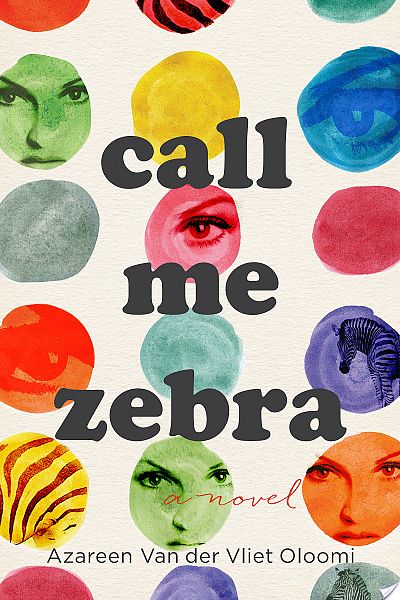
Image result for call me zebra by azareen van der vliet oloomi

Call Me Zebra by Azareen Van der Vliet Oloomi

After her father dies, Zebra sets off alone from New York to Barcelona to retrace the steps they took together when she was a child. Opinionated, funny, and whip smart, with the soul of an artist, Zebra reminds me of what living can look like when we are connected to our deepest selves. 

Image result for margaret the first danielle dutton

Margaret the First by Danielle Dutton

Margaret Cavendish was a real person, of course, a duchess from the 17th century who was also an important writer and thinker, penning one of the first science fiction novels in history, The Blazing World, and I am certain she was a mystic. In Dutton’s fictional portrait, which spans her childhood up until her death, we get to see how the eccentricities of Cavendish (both in her writing and life) might have played out against the normalcy and conservatism of England at that time.  

Image result for ice palace book

The Ice Palace by Tarjei Vesaas, translated by Elizabeth Rokkan

In The Ice Palace we meet two young mystics, Siss and Unn, who form a deep, almost unsettling, bond before one of them disappears. In this way, it is their friendship, perhaps, that serves as the true source of mysticism in the book, as well as their separate explorations of the ice palace.

Middlemarch by George Eliot

Middlemarch by George Eliot

Eliot’s epic novel of life in a fictitious town in Central England features one of my favorite characters in literature, Dorothea, and I’ve always thought of her as having the qualities of a mystic. Though she is very much grounded in the world, she also seems to float above it. I love her devotion to religion, and her unchanging desire for contemplation and study. 

Danny Lavery Wants to Be Your Goth Boyfriend

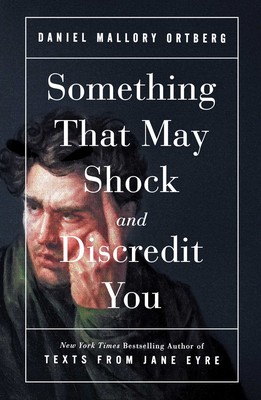
Trying to define Danny Lavery’s new release Something That May Shock and Discredit You is a little bit like trying to define what it means to be trans: simple on its face, outrageously complex once you dig into it.

Something That May Shock and Discredit You

Simple: It’s a collection of essays. Well, it’s sort of a memoir. Well, it’s a collection of essays about his transition. Well not like, about transition, it’s about, like, maleness, and masculinity, and identity and self-deception and recovery and gender and the nature of change and mythology and the Gospels and Arthurian legend and authenticity and Columbo. As for defining transness itself, if it were as simple as “identifying as a gender different than the one you were assigned at birth,” we probably wouldn’t need to write quite so many books on the topic. 

Because our friendship began shortly after he came out publicly—not all trans guys know each other, except when we do—it was a particular joy to sit with Danny to discuss Something That May Shock and Discredit You, the stories we feel internally and externally compelled to tell, the transmasculine resonance of ultimate Frisbee, and Big Wolf On Campus.


Calvin Kasulke: One of the earlier chapters in the book is called “Chapter Titles from the On the Nose, Po-Faced Transmasculine Memoir I Am Trying Not To Write.” And it’s very self-conscious that this is an entry in perhaps emergent genre, but a well-trod genre nonetheless. How did that inform what you wound up writing about and what you didn’t want to write about? 

Danny Lavery: I’m glad you started with that, because I feel like the one thing I was not able to communicate in that title is it’s not like “Here’s nine trans memoirs I’m giving shit to right now.” It was more like, what are the versions of these conversations I have had with some well-meaning-but-not-quite-there cis people where I have felt an internal pull to give them what they want: Which is to use the word “journey” a lot, to desexualize anything about transition, to make myself sound like I already know exactly where everything is going to end up and I have a good narrative where I promise to reintegrate myself into like legible masculinity so that they can feel good. 

So it’s not like, “Man oh man, these memoirs suck and I’m coming for them.” It’s very much that I’m trying not to write a shitty, dishonest version of my own life. And because I’ve just used the word “journey” so many times as shorthand that “I’m like, sure, call it a journey” and I’m also like, “No, don’t call it a journey.”

CK: So it’s mostly about not gearing this story towards a coherent and very neatly tied-up narrative, or more towards discomfort. 

DL: I think it’s probably more the latter than the former. I often have an impulse to try to guess what the person I’m talking to wants from me out of a story, and I will want to edit the story to give that to them. So it doesn’t even have to be from somebody well-intended but clueless. It may very well just have to do with my internal, anxious impression of what I think that person wants from me. So really it’s like I am my own clueless cis interlocutor. It’s really about my own impulse towards telling a version of a story that I think somebody else wants to hear, and making myself stop and not do that.

CK: There are a lot of pop culture characters in here—or I’ll just say characters, because some of them are Greek gods and the beautiful teenagers they accidentally maim, but also Columbo. How did you assemble this collection?

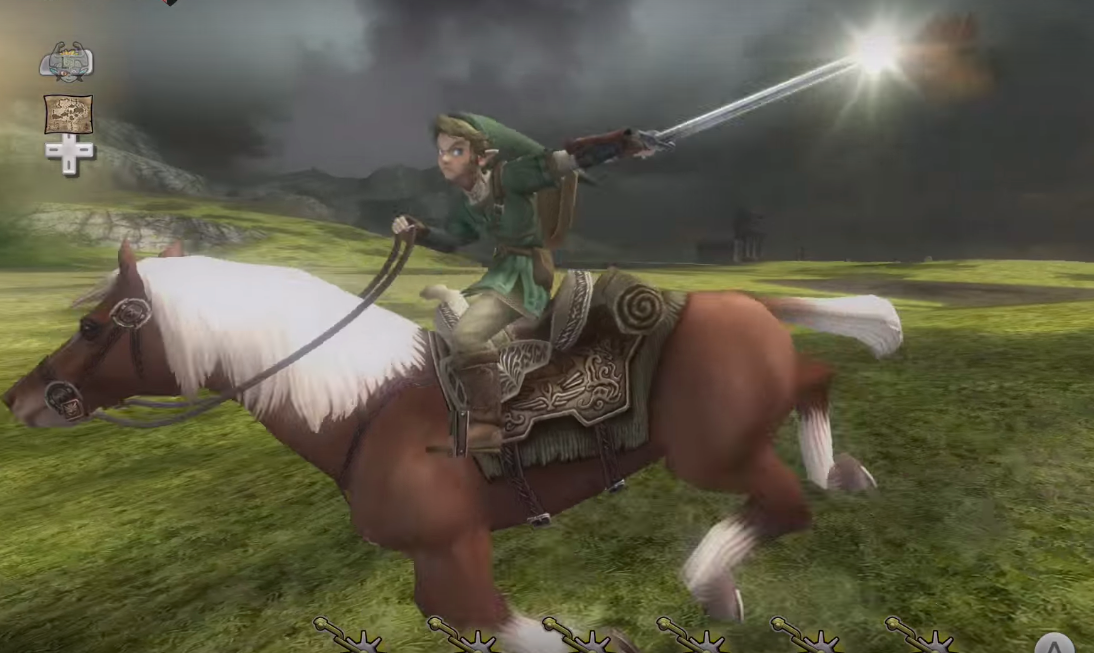
Twilight Princess is a very trans game. He’s always turning into a wolf, and all werewolves are transmasculine.

DL: I lived for 31 years as a very weird proto-trans person and had a lot of really intense relationships to the copy of Bullfinch’s Mythology that I got when I was in the sixth grade. I think part of it also was about who were the figures that I have written about the most that I keep coming back to, and do I want to try to figure out what it is that’s been compelling me there? Or, why does Bill Shatner make me want to cry and commit fellatio? So oftentimes it felt very intuitive.

CK: Is there anyone you feel like you left out?

DL: Oh, man. Probably Link from all the Zelda video games. He’s an important figure. I feel like many, many trans people who came of age in the 80s and 90s and aughts played their fair share of either Ocarina of Time or Link’s Awakening or Wind Waker or—what was the one where he could turn it into a wolf—Twilight Princess. Twilight Princess is a very trans game. He’s always turning into a wolf, and this imp turns out to be secretly a 10 foot tall goddess woman. All werewolves are transmasculine. I think we can agree on that. Somebody else said that, I don’t know who it was, but they were correct. 

CK: It lends itself to a lot of really on-the-nose descriptions. 

DL: Yeah. You don’t have to dig deep to figure out like the connections there. Big Wolf on Campus could have absolutely had its own chapter. It was like Canada’s half hour comedy about a male version of Buffy the Vampire Slayer, if she was a himbo. The main character is such a bimbo and I love him. He’s so pretty and stupid. His whole thing is like “gee whiz, why do I have to be a monster? This is complicated,” and his gay goth best friend is like, “This is awesome.”  That show could absolutely have made it in. Someday I’m sure I’ll dedicate a whole book to it. 

In the second season they added like a girl character because they were like “We need a girl.” And she’s very, “I’ll kick you in the face if you talk about a feeling! I love kickboxing!” in that way that like many 90s shows that did not want to spend too much time writing a female character would do. And also at that time in my life, do you remember slam books? It’s like in Mean Girls but not mean, you would pass it around to your friends and you would each answer “What’s your favorite music? What’re your favorite hobbies? Who do you think is cute?” And you’d all pass it around so it would fill up with everyone’s information, and I always listed that one of my hobbies was kickboxing. I’ve never kickboxed in my life. But at the time I thought it was cool because it seemed like this is what a cool girl might do, and I don’t really know what a girl would do, but like maybe it’s this. It just felt very resonant that this kind of hamfisted-ly written female character who felt shoehorned in was like me, who was also like a hastily written female character that was like, “I’m not sure what I’m doing here. Maybe I’m a kickboxer?” I really wanted to be the goth boyfriend. I just wanted to be a little pale guy with emo hair and have my best friend be a beautiful golden quarterback who maybe kissed me.

CK: Speaking of the goth boyfriends of beautiful golden jocks, Hyacinth and Apollo show up a lot in your book, often playing ultimate Frisbee. Why so many callbacks to them?

DL: They showed up more than I had anticipated. Before I had any sense of myself as a person who could transition, this “There’s a certain level of beautiful a man can be, a boy can be, a youth can be, that he has to die,” combined an attraction to maleness and impossibility in one, and I thought, yes, these things belong together and I don’t know why. Because it was this way of acknowledging-without-acknowledging I want this so much that I cannot imagine its continued existence. This fantasy has to end in death. 

I just wanted to be a little pale guy with emo hair and have my best friend be a beautiful golden quarterback who maybe kissed me.

And that’s part of why I think I also wrote about how I didn’t kiss anyone until I was 18. My one romantic fantasy was someone will shoot me at Oberweis Dairy when I’m with all my friends and one of their boyfriends—it does not matter which one—will take pity on me because I’ll say “Please, I’m dying. There’s not time before the ambulance comes, I need to be kissed.” And one boy would say, “Oh what a noble squire this was. He should have been a knight,” and he will kiss me passionately but chastely and then I’ll die. And that was as far as I could go with any kind of romantic, sexual, embodied fantasy.

CK: Writing about some of these pop culture characters was a way for you to figure out why you kept coming back to them—similarly, I think many of the essays in this book also have a feeling of you figuring something out on the page. 

DL: I agree. One thing I was struck by as I went back and I reread it to record the audiobook is that many of the chapters are dedicated to the things that I was thinking about when I was thinking about transitioning. There’s not a lot in terms of “here is what my transition looked like on a daily basis,” or even a ton about like, “Here’s what my transition has entailed,” aside from a couple of details. It is mostly about the sort of repetitive thought patterns that I would get into where I would think: I cannot make decisions unless I have such-and-such foundation or unless I can prove to myself that I am this-and-such type of person. So I think in a lot of ways it’s an attempt to reckon with thoughts that are designed to keep you going nowhere—repetitive thought patterns that you can use to make sure you never make a decision, or, rather, that you make the decision which is to stick with the status quo. 

I think that’s part of why it feels more memoir-adjacent than memoir, because it’s a catalog of mostly the thoughts in about a 20 to 24 month period of my life immediately preceding and then in the first year and a half or so of my transition, and then also every thought that ever led me to that point. 

CK: You have a line in the book about how in eight minutes you will want to disavow this writing completely. Are you feeling any of that anxiety on the eve of its release?

DL: Absolutely. I think some of my anxiety is that it will be taken as a final, permanent pronouncement. Obviously part of my worry is, oh fuck, is it going to look like one of those books that’s like “Other people have written trans memoirs but they didn’t get it right. But now here I am to rescue the genre!” And I worry about that because that was not my intention in writing the book. And I hope that that’s not how it comes across. But I think that’s always the fear with any book, like “Will anyone understand exactly what I intended to do?” I want to change everything now to make sure that I steer everyone toward exactly the right response to have to it. And you just kind of have to let that go. 

I’m also aware I released a book about my early transition during my early transition. It would be shocking if a year from now I didn’t feel very differently about a lot of these things. And I think one of the nice things about a book is while it’s slightly more permanent than other types of writing, it’s not that permanent. How many books from the 17th century can you name? It’s kind of comforting that, yes, it’s great sometimes to write a book where, later, everything changes and you can just say, “I don’t think that anymore.” That’s fine. Or upsetting. But what can you do? It’s fine and upsetting. 

That’s not to say “Don’t think about anything, just write a book and hope for the best,” as though it’s dumb to put thought and care into your work. I don’t mean that so much as, I try not to spend too much time worrying that this has to be some sort of testament to something. I think one of the things that’s really great about right now is like there are a number of great books coming out by other transmasculine people and we get to have a lot more of them now, and they can all speak to something different.

CK: On the topic of cyclical arguments, you talk about your sobriety in this one, which is not something you’ve written about at length.

DL: I did not want to write a book about recovery in part because I don’t know what I would have to say about it that would be especially new or interesting. But a lot of my drinking and using came from the fact that I wanted and needed a buffer all the time. And it also caused a lot of havoc in the sense that I would vacillate between being highly repressed, highly isolated, highly anxious, and then swing into like, “Oh, this is good because it enables me to say whatever I feel like,” and I would be like, “That’s good. That’s an antidote to my problem.” 

But in fact, then my friends would say “You said something really mean to me last night” and I’d be like, “I’m so sorry. I don’t remember.” That’s not the opposite of repression, or rather that’s not a useful response to repression. It actually is the escape valve that enables the conditions of repression to continue. So I think getting sober really—though I don’t think I knew it at the time—made transition possibly inevitable for me. I don’t know that it would have been inevitable before, but I do think when I look back on what I started moving towards when I got sober, I think it was moving towards this. 

I need to be able to sit in a room and feel a feeling and not do anything about it and see what happens. Because in many ways that had been the thing I had feared more than anything else in my whole life. And I have thrown a lot of things at it to make sure I never have to sit in a room and feel my feelings all the way from the beginning to end. So a lot of things that I did not give myself time to pay attention to squarely, I now had to in order to get through a day without drinking, because drinking really helped with that. 

In my first year or so of sobriety, I heard from somebody who was like “I got sober and then I transitioned. And then I thought, well, I’ve never been drunk as a guy before, so maybe I’m not really an alcoholic,” and gave it a go and they’re like, “It turns out for me, that is still a problem.” And I remember being so struck by that and I had no idea why, but I would just think about that a lot. I was like, “Oh, that’s really interesting. What an interesting anecdote!” 

In some ways, for me at least, it can be tempting to think of either sobriety or transition as, previously there was disorder, chaos, dishonesty. Now, your life begins today. And I think actually for me, both sobriety and transition haven’t really had a “my life begins today.” There’s not really a true self—or maybe there is, but not one permanent, true self that I had to chip away at like a sculptor. My true self is something that I make on a daily basis. 

Because recovery has to keep going every day, you kind of get to let go of the idea of “Ah, my great triumph. Now I stride boldly off in the direction of my future.” It’s like, oh fuck, I have to do this again today. And I have to figure out a way to do it in such a way that it doesn’t feel like a miserable, joyless existence where I’m not allowed to drink because that would be worse than drinking. It’s realizing you can’t keep subsisting off epiphanies.

CK: Okay. It’s time to talk about the biblical stuff. 

DL: Let’s do it. Let’s talk about the Bible. 

CK: There’s a lot of Bible in here. Is this the ecclesiastical equivalent of “I keep returning to these pop culture characters,” like “I keep chewing on these Bible verses, let’s see what that’s about?”

DL: From like the age of five until age of 22, anywhere between three and seven days a week, I was engaged in some form of formal Bible study for several hours a day. So it’s wallpapered in my brain. It’s just there, and I can’t un-wallpaper it. Actually, I’m sure you probably can remove wallpaper fairly easily. So maybe something that’s more durable than wallpaper—really old wallpaper.

I’ve had different times in my life where I’ve had a more optimistic idea of it, which is that I’m writing myself into these old stories and thereby making them new. Sometimes I have a very pessimistic sense, which is just like this stuff is indelibly inked into my brain and it just is how I process things, I don’t have a lot of choice in the matter.

CK: So for each essay, whatever comes to you first, a Columbo episode or a Bible verse—it’s a matter of, “What’s the better parable here?”

I’m trying not to write a shitty, dishonest version of my own life.

DL: Yeah, I think so. You think of Columbo and I just immediately think, “Cunning as serpents and gentle as doves.” I think probably the creators of Columbo had that verse in mind when they were coming up with him, that is his M.O. It’s not just me, right, lots of culture—please include the fact that I gestured kind of ironically —because not all of it, but a lot of it, has that stuff baked in as well. So it’s also a useful series of references, I think. Sometimes I wish I could donate some of that trivia. 

CK: I know it’s a reference to the Simpsons, but Something That May Shock and Discredit You. Why that title for this?

DL: There’s actually a couple of layers in that scene that I don’t really get into in the book. It’s Lionel Hutz, who’s this sweaty, fraudulent guy who’s always trying to pull a con. He always looks desperate. He always looks like he kind of hopes he’ll get caught. He wants someone to see through the shell game so he can just admit defeat and run away. And in that scene he’s interrogating Apu, who was for a very long time the show’s only Indian American character, and was voiced by a white guy doing a voice. 

Hari Kondabolu did a documentary about this a couple of years ago and asked why does this show, 25 years in, have a white guy doing like an incredibly broad stereotype for this role? Why is this character here? It’s not a scene that I read closely in the book, but it’s a very interesting scene having to do with men falling apart, men pretending, whiteness falling apart, whiteness pretending, in ways that I think are really uncomfortable. And that scene sticks with me years on. 

It has to do with whether or not Hutz is wearing a tie and he pretends he’s not, but he is, and it does not in fact discredit the person he’s talking to. It discredits himself. And the show’s response to Hari’s work has been very shambling, like “What, I don’t know, we didn’t know, but also it’s just a joke, but also we’ll do better, but also we’re going to keep doing it, but also please leave us alone,” and that kind of inability to figure out what am I doing, and why and how do I take into account what other people feel when I do these things, I think is really interesting. 

CK: I’m realizing a lot of these essays focus around wanting to admit defeat, wanting to get caught, and realizing only then are you free to actually do the thing that you wanted to do all along.

DL: One other thing that I’ve started writing about a little bit more since I finished the book is about various writers, usually women writers who wrote what I kind of understand to be essentially forced-masc fantasies. There’s a whole category of pornography around forced feminization and as far as I’m aware, no porn studio has ever released a forced masculinization fantasy. Although if any of them would like to, I hope they’ll let me know. But oftentimes I think especially in literature—Georgette Heyer and Daphne du Maurier come especially to mind— there’ll be a crossdressing heroine. Very much like in the vein of, “She’s just a spirited heroine. She’s just resisting gender stereotypes.” But a big part of the clearly erotic thrill is this very masterful, extremely confident, extremely powerful man who treats her kind of like a younger brother, kind of like a kid who’s always tagging along with his friends, and kind of like an object of sexual desire—in a way that’s like both totally dismissive and like “I own you.”  And like, “You’re going to be my valet and wear these clothes I’m going to ruffle your hair and act in a way that’s like very disorienting and confusing. You want to be treated like a boy, I’ll treat you like a boy.” And it’s like, yes please

So I think about that a lot, and I think there may actually be like a rich history there. And I hope that we can get some interesting conferences going about the conversations between forced masculinization and forced feminization pornography. That would be my dream.

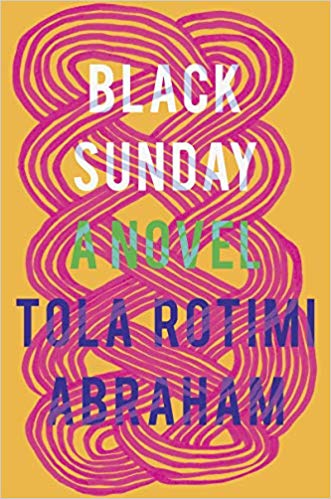
In “Black Sunday,” Four Siblings Lose Everything but Each Other

Tola Rotimi Abraham’s debut novel, Black Sunday, follows a Nigerian family after they lose almost everything. Once the mother loses her job and the father makes a “bet” that leaves them penniless, four siblings—twin girls and two boys—are sent to live with their Yoruba grandmother, and must learn to navigate life without their parents. This novel explores kinship, exploitation and making ends meet, love and loss, and what it means to be all alone even with siblings by your side. 

Tola Rotimi Abraham is from Lagos, Nigeria and is a graduate of the Iowa Writers’ Workshop, where she has also taught. Her fiction and nonfiction have appeared in Catapult, The Des Moines Register, The Nigerian Literary Magazine, and others.

I talked with Abraham about the curse of beauty, childhood poverty, and making choices based on religion. 


Arriel Vinson: In the beginning of Black Sunday, the siblings sing songs or tell stories to ignore their parents’ arguing. This is such a poignant moment. Tell me about the siblings’ use of avoidance throughout the novel.

Tola Rotimi Abraham: One of the first things I was thinking when writing this book is interrogating how children process trauma. I have found that even though child narrators are very common in African literature, it’s been easy to write these character-narrators without nuance. I was pushing back against using these characters as mouthpieces for my political ideologies, instead I wanted to examine the possibility that even within a family experiencing the same conditions, there’s no uniform response to trauma.

In that moment you describe, they are acknowledging their parents fighting by hiding, sitting in their “fort” and listening to them argue. They don’t talk to one another about the fighting; instead, the older sister narrates a folk tale. As the parents’ fight worsens, the stories they tell one another change. They begin to talk about these truly terrible, violent things happening in their city, things that frankly no children should experience that closely. They talk about those things freely because they need to express the deep sadness they are feeling. It’s not avoidance as much as it is masquerading.

I was pushing back against using these characters as mouthpieces for my political ideologies.

At the end of that chapter when the child narrator says she is sad and afraid, she admits it only because she has told us this terrible story about a child dying. However, we can tell that Bibike is also sad about her family. Sometimes what is left unsaid is even more important than what is being discussed. Another thing I should say is that I used dialogue mostly for characterization in that first chapter. Every time the kids or the parents speak, we learn a lot more about who they are as individuals. That foundation carries most of the novel’s plot.

AV: I’m interested in the mother as the breadwinner in the novel. Once the mother lost her job, the father wasn’t able to keep things afloat. What made you decide that the mother would be the one who worked while the father dreamed/pursued entrepreneurship?

TRA: This was something I did not have to think too hard about. I borrowed from life. Growing up in Lagos, most middle-class families I knew had mothers who stayed in the boring regular government jobs, whilst their fathers explored entrepreneurship. You have to understand that Nigeria was under military rule during this period. The military had no respect for the civil service, they were dead end jobs. In those days it was common for people to go months, even years without salaries or allowances. Men typically can’t endure in such situations. Purple Hibiscus by Chimanmanda Adichie captures some of this, especially about the situation in Nigerian universities. Those were really difficult times.

 AV: Religion plays such a large role in Black Sunday. The twins, Bibike and Ariyike, differ in belief and the parents go to church for fortune rather than a relationship with God—and all characters find the ways it can be corrupt. Why was religion important in this novel?

TRA: Religion is extremely important in any discussion about the postcolonial experience. Religion is also significant to discussions about feminism. Although Christianity is at the heart of the novel, the questions are not about Christianity in general, I specifically examine the current Christian experience of the African female. Are the spiritual needs of the African female person truly met in Christianity as it is practiced in this American-style evangelical form? Personally, I am a huge Bible nerd, so writing a character who is critically examining interpretation of scripture and its application to her life was such fun to write. It was a way of interrogating my own belief system. Although I do not have the same beliefs, or should I say similar religious conclusions that Ariyike develops throughout the novel, I can understand why she makes those choices.

Sometimes what is left unsaid is even more important than what is being discussed.

Another factor is that Nigerians are very religious people. Nigeria is a very populous country. What we have, then, is a great marketplace for religions. For Christians, there is a glut of choice when choosing a denomination, but is there any real or practical difference between them? It is a situation of abundance without variety.

AV: Both of the twins grapple with the function of beauty. Bibike asks, “But what is a girl’s beauty, but a man’s promise of reward?” That question reverberates throughout the novel. Tell me more about the themes of beauty and greed going hand-in-hand in Black Sunday.

TRA: A lot has been said about the curse of beauty in literature. Most cultures have stories and myths about tragic cursed beauties. Even in popular culture, we have these famous beauties who are completely ruined by their own attractiveness.

As a feminist, beauty is something I am always thinking about because it is important to the female experience. Personally, I think that in Nigeria, there is something rather consumerist about the way we talk about female beauty. It’s almost akin to deliciousness or flavor when describing food. Immediately when someone is described as beautiful there’s someone out there thinking about possessing her, enjoying her. In Black Sunday beauty is a tool and so is the desire for beauty.

AV: All of the siblings deal with abuse, whether sexual, emotional, physical or a combination of those—and each character tries to adapt through it all. Why is trauma so prominent in this novel, even after their parents left?

TRA: Black Sunday is a story about childhood poverty. That is the central idea, its pivot. These siblings are completely abandoned by their parents. Abandonment is traumatic. Childhood poverty is incredibly traumatic, there are studies that show this. As a matter of fact, there are not enough studies because we still have no idea the lasting impact of childhood trauma.  I find that often people seem to believe that children are resilient and forget these things. So, it was important to investigate these questions as I wrote this book.

Speaking specifically, there is something liberating about writing sad African children. Once, whilst shopping in a thrift store in Iowa City, I overheard a woman talking about the work her church was doing in Africa. She was telling this other woman how happy these Africans are in spite of how little they have and how it made her rethink all she takes for granted in her own life. Some people have an appetite for African pain because it makes them feel better about their lives. People, even the well-intentioned, can have this expectation of stoicism from people of color that they’d never demand from their own societies.

There is something liberating about writing sad African children.

I’m not denying that some people show tremendous grace under pressure but there is something colonialist about this constant expectation of it. This thinking is so pervasive in Western culture, it even shows up in medicine. Many people truly believe that Africans don’t feel pain or have a great tolerance for it. I wrote sad African children because sadness can be a colorful, multifaceted thing, because there are many sad African children, because it is important to write unflinchingly about why they are so sad.

AV: The grandmother’s house becomes a symbol of redemption and loss for the entire family. It’s the thing that brings them together but also tears them apart. Tell me more about why it was important for the grandmother to be present in the siblings’ lives.

TRA: I have thought about the symbolism of it and even though it was not deliberate, it’s important to have a physical representation of their experiences after they have been abandoned. The house is therefore a vehicle of plot. It grounds the novel very specifically in time and place.

I wrote about a house because Africans live in houses too. We live in urban areas and we have the urban poor as well. The grandmother’s house was a way to write against the strange timelessness I often encounter in African novels. Houses, especially family homes are a great vehicle in literature to describe the changes in community as the years go by. The grandmother is unlucky in the sense that she lives long enough for her house to become valuable, leading to her possible displacement.  This is urbanization and gentrification, something I expect that many people around the world can relate to. Within the last couple of decades housing prices in Lagos have increased astronomically and there have been many socio-economic consequences. In Black Sunday, I dealt with that in a very small way, of course being restricted by the plot.

AV: Aside from the dilemmas with their grandmother’s house, there’s other loss in Black Sunday—loss of lovers, loss of family members (both dead and alive), loss of dignity. Why was it necessary to explore loss/grief throughout the novel, and how did it allow growth for each sibling?

TRA: It is important to note that the process of writing a novel, at least this book, for me, is not an opportunity to explore themes or ideas. I began with characters, and in some way, plot. Themes, if any, emerged after the first draft. I looked over the book and questioned if I was comfortable with all the apparent themes. Actually, that was not the important consideration during revision, it was incidental to the question of “are these characters behaving realistically and convincingly?”

Loss is a plot point in this novel—grief is the aftermath of loss, isn’t it? Because I leaned heavily on the characters’ growth to drive this story, their emotions and interiority rise to the surface.

The Tech World Is So Embarrassing

Working the door at a San Francisco bar in the early 2010s, a friend of mine turned away a newly-transplanted tech entrepreneur for not having an I.D. Surprised but self-assured, the man proceeded to pull out a smartphone and show his Wikipedia page, which included his photo, date of birth, and net worth. Surely, he thought, that would get him in.

When I told this same friend about Anna Wiener’s Uncanny Valley, a first-hand account of Silicon Valley startup culture, he didn’t think he could read it. Too depressing, he said. He grew up in San Francisco—it was difficult enough seeing the city transformed by the presence of the tech industry. Like so many other people, he can longer afford to live there. His home has drastically changed and, for good reason, he didn’t really want to read a book about it.  

Wiener’s cautionary memoir does highlight the invasion and occupation of the Bay Area by tech startups and established giants, and it draws attention to the fundamental sociopathy of both the companies and the individuals involved. But Silicon Valley’s general evilness is a fact so well-established at this point that we have grown weary of grappling with it, collectively adopting a resigned sense of inevitability in exchange for convenience and connection. Where Uncanny Valley distinguishes itself is in providing an insider’s perspective of the cringiness of tech mores and the tacky sense of self-entitlement that pervades the milieu, casting light on a culture marked by a recurrent corniness and stupidity that often belies its pernicious nature.

A narrative of internet-as-nightmare that takes place largely in meatspace, in open-plan offices where hoverboards and sexual harassment go hand in hand, Wiener recounts her life as a twentysomething female working in the overwhelmingly male-dominated world of tech. The author details leaving Brooklyn—where she worked in the publishing industry—and relocating to San Francisco to work for an analytics startup. She describes a city overrun by young, freshly-minted millionaires—predominantly white and male—who proselytize on the merits of biohacking and unironically wear company t-shirts to parties. 

Silicon Valley’s evilness is so well-established that we’ve adopted a resigned sense of inevitability in exchange for convenience and connection.

As a chronicle of late capitalist absurdity, Uncanny Valley corroborates various accounts of the Bay Area’s transformation. Last year’s Super Pumped, Mike Isaac’s deep dive into the turbulent history of Uber, detailed the batshit world of Silicon Valley tech bros, venture capital, and reckless disruption. Popular films like Sorry To Bother You, Blindspotting, and The Last Black Man In San Francisco all speak to the gentrification brought on by the tech industry. This past November, a group of mothers took over a vacant investor owned property in West Oakland. “This came out of absolute desperation,” one of the group’s members said in an interview. “These are the times we’re living in where your only option is to occupy a house or live with your children on the street.” When they were recently evicted, a SWAT team broke through the front door with a battering ram before dawn and arrested four of the women. 

Wiener documents an entirely different way of life taking over the Bay Area, exclusive to young, upwardly mobile tech workers. It’s a world of open bar team-building meetups with carnival games, followed by citywide scavenger hunts that involve running through the streets and stumbling over homeless people. “We were our own worst representatives,” she writes.

“An entire culture had been seduced,” notes Wiener of her time in tech. “I understood my blind faith in ambitious, aggressive, arrogant young men from America’s soft suburbs as personal pathology, but it wasn’t personal at all. It had become a global affliction.”

Naive sentimentalism, whether feigned or genuine, is the preferred smokescreen of some of tech’s worst offenders. Think of Twitter’s CEO Jake Dorsey, a young, white man sitting at the helm of one of the world’s largest social media platforms, meditating in a cave while incidentally promoting a country actively engaged in ethnic cleansing. Consider the platform itself and others like it, the intentionally addictive, gamified design and the infinite scroll, creating what Wiener calls, “a cultural impulse to fill all spare with someone else’s thoughts.” 

“I know it sounds corny, but I’d love to improve people’s lives, especially socially,” Mark Zuckerberg said in the early days of Facebook. This disingenuous sentiment (Facebook’s predecessor was FaceMash, a website Zuckerberg created that placed two pictures of women side by side and allowed users to judge who they found more attractive) gave way to the “move fast and break things” era. Facebook, bitterly referred to by Wiener as “a social network everyone said they hated but no one could stop logging in to,” is now used by a quarter of the world’s population. Following the Cambridge Analytica data scandal, Zuckerberg said, “I started this place. I run it. And I am responsible for what happens here,” a statement that would implicate him not only in the harvesting of user’s personal data for political advertising, but also in destabilizing traditional news organizations and platforming Holocaust deniers, the latter of which he once excused by claiming, “I don’t believe that our platform should take that down because I think there are things that different people get wrong.” At the company’s annual F8 conference last year, Zuckerbeg tried (and failed) to deliver a joke about some of the company’s recent controversies, awkwardly smiling as he told the audience, “I know we don’t exactly have the strongest reputation on privacy right now, to put it lightly.” In another recent embarrassing moment, Zuckerberg responded to questioning from a congressional committee regarding whether he would allow fake political ads to appear on his platform by stating, “I think lying is bad.” 

Uncanny Valley provides an insider’s perspective on a culture marked by a recurrent corniness and stupidity that often belies its pernicious nature.

In a scene reminiscent of the heavily memed footage from the Windows 95 launch—where a young Bill Gates, at the very forefront of the consumer internet and on his way to becoming one of the richest people in the world, guilelessly claps and dances on stage—Wiener begins her book with Zuckerberg ringing the Nasdaq opening bell. It’s a moment that is now preserved on Youtube, showing the then 28-year-old Facebook CEO wearing a coprophagous grin while surrounded by a throng of credulous tech workers enthusiastically rooting him on as he does the deed over video chat from corporate headquarters in Menlo Park, California. That inane events mark major cultural and economic shifts in the era of tech suggests that the framework of late capitalism relies on a certain degree of nonsense to succeed. 

In an infamous round of layoffs last year, hundreds of WeWork staff members were fired and then regaled with tequila as one half of Run-DMC joined the all-hands meeting to perform the group’s 1980’s hit “It’s Tricky.” In another round of firings this past November, 2,400 employees were let go after a failed IPO and the resignation of Neumann, who co-founded the tech-adjacent real-estate company after his original idea to sell baby clothes with built-in kneepads failed. Miguel McKelvey, another WeWork co-founder, recently listed his $21 million Brooklyn townhouse for sale, including in his pictures of the home a large framed artwork that reads in a boldface font “I WANT TO CUM IN YOUR HEART.” McKelvey serves as chief culture officer of WeWork, which employs “Operationalize Love” as one of the company’s internal slogans.

The online lodging marketplace Airbnb was co-founded in San Francisco by Brian Cheskey, a bodybuilder-turned-billionaire entrepreneur. Cheskey likes to cite his company’s humble origins—air mattresses set up in his apartment and listed online because he “couldn’t pay rent.” He’s also recounted receiving $150 million from Peter Thiel, the billionaire venture capitalist and Facebook board member who bankrolled Hulk Hogan’s Gawker lawsuit and served on Trump’s transition team. Utilizing a type of facile idealism fueled by tech hubris, Cheskey wrote in 2018, “A company’s purpose is to advance its vision, and since a vision is a mountaintop you never quite get to, you should have an infinite time horizon.” Alas, jargon does not subvert disaster. Last year, a mass shooting occurred at an Airbnb in Orinda, California, leaving five people dead and drawing intense scrutiny of the company’s virtually nonexistent safety policies. The company has also been widely criticized for engendering fraud, racism, and discrimination against people with disabilities, as well as exacerbating affordable housing crises globally. “Belong Anywhere” is the company’s slogan.

Short of total fatalism, Uncanny Valley could encourage readers to take a hard look at technology and our relationships to it.

It’s a bit bewildering to consider the role popular digital platforms play in shaping our lives and the permateen megalomaniacs behind them. Uncanny Valley’s portrayal of a world where the work-life balance is so skewed that companies become major components of workers’ identities should sound the alarm for anyone hoping to stymie the technocapitalist onslaught aimed at monetizing every aspect of our lives. As a tech worker immersed in Silicon Valley culture, Wiener was a small part of the large push to further digital dependency and the myth of a better life lived through data. Her narrative is one of isolation, complicity, and guilt— of life lived within a relatively comfortable tech bubble by-and-large detached from the precarity it’s advancing. “I knew, even then, that I would regret it,” she admits.

“We didn’t think of ourselves as participating in the surveillance economy,” writes Wiener. “We certainly weren’t thinking about our role in facilitating and normalizing the creation of unregulated, privately held databases on human behavior… We were just helping developers make better apps.”

In the words of one privacy professor, “We’re all screwed.” But short of total fatalism, Uncanny Valley could encourage readers to take a hard look at technology and our relationships to it. Our experiences of the world and our understanding of our place in it has been indelibly altered, and we’re still trying to figure out what exactly that means for the future. A collective obsession with connectivity has worn away at the interstice between real life and online, making it increasingly difficult to argue that one is not the other. In an uncanny way, the world of tech has become interminable, and we’ve all become workers for it. 

Temp for Life

“First Work”
by Hilary Leichter

My mother arranged for me my very first job, just as her mother did for her.

“We work,” she said, “but then we leave.”

She unfolded the family tree of the temporary lives recorded before ours. My aunt with her stack of resumes. My grandmother with her dainty paper coffee cup. My great-grandmother behind a desk, and on the desk, a nameplate with someone else’s name. “Filling in!” she had written on the back of the photograph, in legible, steady script.

“I’m just filling in. You’re just filling in,” my mother explained. “See?”

She didn’t have to explain. I already knew it in my bones, in my knees, in the way you understand things about yourself even before you hear them spoken aloud. I knew I, too, would always find myself somewhere new, someone new, for the rest of my life, like my ancestors, like theirs, like theirs, like theirs. The top of my head measured just above the side of my mother’s full blue skirt, where the fabric emptied into a hidden pocket, where unbeknownst to anyone but me, my mother stored a bright set of inky pens.

She drove us for three hours, deep into the suburbs. We stopped along the way for sandwiches, and she said, “Why don’t you order for the both of us? I trust you.”

I ordered burgers instead, and she applauded my initiative.

“Nice improvisation,” she smiled, squeezing ketchup from a packet. We ate at a picnic table under a stately oak until the juice from the burgers soaked the buns, until the birds came to claim our soggy fries. The lake nearby was full of children in canoes, running their fingers through the water, wanting and not wanting to capsize, in equal measure. When I finished my food, I stretched out on the grass and looked up at the light that filtered through the branches of the tree, until my mother’s face encroached on the view, her head hovering above me like some newly built nest.

“Time to go.” She smiled, and we piled back into the car.

We sang along with the radio. Something about the seasons, something about eternal love, and then several songs with lengthy metaphors. She opened her window, then closed it, her short dark hair nicely whipped with wind. I pulled a single leaf from a single strand.

“Thanks, kid,” she said in a voice that felt too kind, too sweet, settling a score that hadn’t yet been unsettled.

I dozed off with my head tilted all the way forward, as if sleep were a somersault I couldn’t complete. When I woke, my mother had pulled over to the side of the road to check her directions.

“What’s wrong?” I asked.

“I think we’re lost,” she said, but I knew that she knew where she was going. She didn’t have the frantic flutter of confusion in her eyes. Her finger traced the map with an absent sort of attitude, and she looked straight through the paper to something just beyond the visible world. She was making a decision.

For a long moment, like a dimple in the day, I thought she might turn around and take me back to our living room, our kitchen. The particles of dust hung in midair over the dashboard, and the rear-view mirror was filled with homeward potential. Then the moment broke, the engine kicked, and she merged into traffic. Our car continued along its intended route.

When we arrived at my new job, she left me with a leather-bound planner. “To fill your days,” she said in the customary fashion, “until none are left.”

My mother had no other children, and she adjusted her hosiery as she walked away.


The job was in a lovely little house with a lovely little door. There were more doors inside the house, seven doors precisely, in total. My job was to open the doors, then close them, every forty minutes, every day, all day long, until otherwise notified. The instructions were laminated and taped to the inside of a kitchen cupboard, which, being a cupboard and not strictly a door, I never had to open or close again if I didn’t choose to do so.

My favorite door was blue and small. For a child, perhaps, or a pet. The door was at the far end of the house, and it was difficult to see what was on the other side. It only ever opened halfway, but it was important to make sure it was open when specified, even if only a crack, and, later, closed. I had a glorious, shiny wristwatch to keep track of time. But time kept no track of me, and soon, my arms and legs shot out and up, and I was grown.

I learned to do everything in forty minutes. Some tasks that were shorter I extended for the sake of clarity and precision. Brushing my teeth, for instance, or combing my hair. A forty-minute sneeze is something I know how to do, and it’s not even listed on my resume.

The doors, I imagined, opened to a city somewhere beyond the house, to a knowledge somewhere in the deepest pit of myself. Each squeaky swing closed still felt like an opening, over and over again. Or perhaps the doors kept the house alive, like valves to the atria of the heart, pumping whatever substance the house needed in the right amounts, at the appropriate rate. First the small blue door. Then the master bedroom, the second bedroom, and the third. The bathroom door and the door to the basement and the front door of the lovely little house.

Across the street sat another lovely little house, with a lovely little door surrounded by cream-colored hydrangea. One day, I opened my front door at the scheduled moment, and the front door opened across the street. There, behind the door, was another little girl like me, though neither of us was truly little any longer. She had a glorious, shiny watch like mine, with a tiny face and a skinny gold band.

Her name was Anna, and we met in the center of the road on our quiet street where it seemed no cars ever passed, except for the truck that came to drop off bread and cheese and eggs once a week. We waited at the ends of our driveways, sometimes mine, sometimes hers, and waved at the driver as he drove away.

“Friends?” I asked.

“Neighbors,” she said. Then later: “Yes, friends.”

We played the customary games. We found ropes and jumped them. We found coins and tossed them. We bet the coins on probable events.

“I bet my house will blow down.”

“I bet my house will fly away.”

We were two little girls with property, with nothing to our names. We drew straws for keeping track of time. We drew the scotch for which to hop. We drew doodles in our leather-bound planners, but only on the first page and the last. The days have only so much room for frivolity.

Anna’s house had a different regimen than mine. Instead of doors, she was instructed to open drawers every hour. Little drawers, big drawers, both deep and shallow.

“Some of the drawers are empty,” she explained, “and some are not.” She didn’t elaborate, and I didn’t ask for elaboration.

One morning, we were waiting for the food delivery at the end of Anna’s driveway. She sat on the back of the truck, pulled me up beside her, and the truck drove away. We drove past one street and then drove past another.

I realized we were leaving. My face started to burn.

“I promise we’ll be back in forty minutes,” Anna said.

We drove around the neighborhood and saw many houses like ours. We saw a shop that sold ice cream, and we hopped off the truck, and we dumped a pile of coins on the counter for two cones, walking back to our street with milky streams trickling down our arms. But the ice cream tasted wrong, and as we approached the end of the block, I dumped the cone on the curb and ran inside my house to close the doors on time.

First the small blue door. Then the master bedroom, the second bedroom, and the third. The bathroom door and the door to the basement and the front door of the lovely little house.


Anna’s hair was short, and it curled behind her ears in two tiny wings. In the summer, her bangs stuck to her forehead, like feathers glued to an art project. Her bangs were a source of pride and irritation, always needing the remedy of a clip or a pin. Anna owned a fashionable pin with a tiny rhinestone glued to the bend in the metal.

“I put my pin away in a drawer,” Anna explained, her bangs mingling with her eyelashes. “Old habit. Didn’t think it was a problem.”

“And?”

“Closed the drawer.” She mimed the action. “Opened the drawer an hour later, my pin was gone.” Her hands went poof, to signal the words disappeared and into thin air.

We walked down my driveway and up hers, then back again, pretending the street was a moat and the driveways were drawbridges and the houses were castles and we were queens. We bowed to each other, then curtsied and continued our promenade.

“What do your laminated instructions say?” I asked.

“Nothing about this.”

“Maybe give it a day or so,” I suggested. “Maybe your pin will boomerang back.” I did an exaggerated move that involved boomeranging myself away from and back to Anna’s side.

She laughed like royalty, or maybe she simpered. “OK,” she said. “OK, you’re right.”

The next day, I saw Anna sitting on the tree stump in her front yard. Her face was a sickly shade of gray.

“I did something bad,” she said.

I put an arm around her shoulders.

“I couldn’t find my pin, so I took something.”

“What did you take?”

“I took something precious,” she said, revealing a small set of inky pens identical to my mother’s. My eyes widened.

“Where did you get those?” I asked. I said it louder than I intended.

“From the kitchen drawer,” Anna said, pulling them away from me. “I thought we could use them to doodle in our planners.”

Why were my mother’s pens in one of Anna’s drawers? I ran back to my house to close the doors again. First the small blue door. Then the master bedroom, the second bedroom, and the third. The bathroom door and the door to the basement and the front door of the lovely little house. I searched everywhere for a set of pens of my own, for more of my mother’s things. Her stockings folded  in a dresser, or her car parked on the street behind my house. I watched Anna’s windows through my windows—a figure waltzed upstairs, then back down through the living room. Of course, the figure wasn’t my mother, only Anna. Of course, pens can belong to anyone. Of course, there were many pens in the world, I thought, sitting on the floor with my legs crossed. But I was tempted to give my mother a call. Tempted to go home, which of course, for a temp, is not an option.

Later I found Anna at the end of my driveway, her pens arranged neatly on the concrete.

“Can I draw with them?” I asked.

It looked as if all the color had drained from her face, her shirt, her pants, and into the inky pens. She had a translucent quality.

“Here,” she said faintly, and her hand barely registered as skin against my fingers. I tried the pens, but they were dry.

“They’re dead,” I said. Anna grabbed the red pen in a sudden burst of energy and pressed it to the paper so the felt pushed flat. She pulsed it several times, applying force and releasing, like squeezing a heart for a beat, until a small dribble of ink bubbled forth. The droplet sat atop the page in my planner, wet and wide, not sinking in or spreading out as ink is meant to do. When Anna couldn’t produce another drop, she pulsed the pen once more, then, with a slow shake of shoulders, she began to cry. I squeezed her shoulder once, twice, three times. I didn’t know what to do. After crying for just under sixty minutes, she lifted herself up and away, and floated inside her house to open the drawers.  The skies opened, and the rain fell.

First the small blue door. Then the master bedroom, the second bedroom, and the third. The bathroom door and the door to the basement and the front door of the lovely little house.


Anna took more things. She amassed a small pile of stuff. Hairbrushes, photographs, jigsaw puzzle pieces. Lone buttons. Lone items on loan from every single drawer.

“I’m worried,” I said. “Should we consult your laminated instructions?”

But Anna didn’t respond. She stacked her things in a small suitcase outside, which she had stolen from a deep drawer under the bed. She hid the suitcase under the hydrangea bushes.

“If I take enough from the house, maybe the house will give me back my pin.”

The house didn’t give back her pin. Anna was sitting in her driveway with me, writing with chalk, and she stood to go inside, to open the drawers on schedule. The house was locked. The back door was locked too. We didn’t have keys, and we weren’t the ones who locked the doors. Anna ran around the house in a frantic circle. She ran so fast it looked like she was flying.

In a moment of desperation, on behalf of my only friend, I removed my shoe and threw it against a low window. It bounced back, barely leaving a mark. I picked up a rock and tried the harder, jagged solution. The rock bounced back like rubber without a sound. Anna saw my attempts, and before I could grab her, she threw her fist through the window.

“No!” I yelled. But her fist didn’t go through. We both knew she had hit it hard enough to break her skin, to break glass. She tried it again and again, and then she used her head. But nothing broke, and nothing shattered, especially not the window.

Anna’s jaw hung open. Mine did too. We looked at each other for a moment in silence. Then she adjusted her shirt and dusted off her pants. “I think I’ve been released from my employment,” she said.

“You can stay with me.”

She could not stay with me. She tried to enter through the front door of my lovely little house, but her feet stuck to the welcome mat. Whether she couldn’t or wouldn’t cross, I was never completely sure.

Anna slept in her driveway, no longer concerned with the schedule of drawers. I brought her a slice of bread every morning, and she lined up the slices by the bushes, for the birds. She let her hair go wild and tangled and left her leather planner unattended. I searched my house for contact information, for a phone number or an emergency procedure, but there wasn’t a thing available to me.

I once spied the delivery truck parked in Anna’s driveway. Then I spied it again, and more times after that. I would wait and watch until the driver emerged from behind the hydrangea bushes. Then, in close pursuit, Anna would stumble through the bushes behind him. Oh Anna, I thought. But the driver is so very old! Then again, watching him, I changed my mind. No, he wasn’t very old at all, not much older than us. He might have even been younger, by a minute. And how handsome he was, how his shirt stretched against his chest.

“Anna, here,” I said, and I gave her my collection of found coins.

“For what?” she asked.

“For something, or for anything.”

“Thanks, really.” She smiled and tucked her shoeless feet into the long grass of the lawn.

Early on a Monday morning, Anna took her suitcase and boarded the back of the delivery truck. I watched from the window, too stuck in the midst of opening doors to come downstairs and say good-bye. I pressed my sweaty hand against the glass, and it didn’t leave a mark.

First the small blue door. Then the master bedroom, the second bedroom, and the third. The bathroom door and the door to the basement and the front door of the lovely little house.

Without Anna, I was sloppy. I almost missed the schedule by a minute one afternoon, busying myself with daydreams. I felt immaterial and light. I tried to make eggs sunny-side up and broke the yolks in the pan, then scrambled them instead until they formed a thin, papery layer underneath. Sitting with the plate of uneaten eggs, I realized I hadn’t been hungry in a very, very long time. The refrigerator, to my horror, was full of bread and eggs and cheese, untouched. I fell asleep at the counter and woke the next day having missed three separate door openings and closings. The smell of old egg filled the kitchen.

What should I do? I panicked. What should I do? What would Anna do? I tried to work backward and consulted my shiny watch. I figured out the doors, at that juncture, should have been closed. I went around as quickly as I could to close them. First the small blue door. Then the master bedroom, the second bedroom, and the third. Everything was going to be fine. The bathroom door and the door to the basement, but the door to the basement was somehow already shut.

I had never been in the house this way, with one of the doors arranged in a different state than the others. Something felt thick and horrible. I had failed. The room conspired and shifted against me, and my cheeks itched, and I could barely stand straight. I reached forward with a long, queasy arm and opened the basement door a crack to correct the inconsistency, then closed it once again. Success.

And there, in the corner of my eye, a shadow darted out of view. With the doors adjusted, I regained some composure. I could walk again. But the house wasn’t lovely anymore, or little. I felt it expand, though I had no proof. I felt the corners darken and deepen, like a drawing smudged with charcoal. My error had upset the house, and the house now upset me. With every opening and closing of the doors, I could see the edges of something leaving just as I arrived, the door a proscenium framing a departure, me witnessing the halo of an image exiting the room. First the small blue door. Then the master bedroom, the second bedroom, and the third. The bathroom door and the door to the basement and the front door of the large, haunted house.

I concocted a bowl of oatmeal and left it nestled in my lap, steaming hot, unconsumed. I sat on the floor outside the bathroom door and waited to see who or what was inside. I closed the door on cue, and at the moment it shut, I glimpsed a towel swinging back and forth. My nose filled with the fresh, damp smell of shampooed hair. Then later, to the master bedroom, where upon turning the knob and slowly pulling forward, two entangled figures scattered in opposite directions.

I leaned against the doors to the second bedroom and then the third, hoping to hear a creak or a scratch, a murmur of conversation, a clue. When it was time to pull the doors ajar, the bedrooms smelled messy and busy. A mug of tea and sour milk. A pile of books filled with book smells. The scent of a leather glove, the edge of an arm pumping the air in a cheer, or some other quick, half second of choreography. A single riff of music abandoned and lingering and stale.

Finally the small blue door at the other end of the house, opening only a smidge, revealing the leftover glow of a wet nose and shiny fur, floppy ears and marbled eyes. I ran to open the front door of the house and saw the flash of a completely different street, with cars, with fences, with a different house, not Anna’s house, just across the way. Then the flash subsided, and the street as I knew it returned.

I sat on the curb for what felt like hours, but it could only have been forty minutes. It took a few tries to get there, but once I arrived at the thought, it was inescapable, as inescapable as the coins that had cluttered the carpeting. Who dropped those coins for me and Anna to find, and later, who forgot to collect them?

The house was a house for a family, and I was filling in for a ghost.

Years later, I tried to describe the way I came to know my placement had ended. I was sitting on the sofa with my frugal boyfriend, and he had made me a microwaved brownie in a mug. I described the day in question, and he listened, eyes wide. But I knew my words were falling short. I couldn’t explain, for instance, how I had one foot in the door, and how one foot wasn’t enough. I couldn’t admit to having watched the family’s edges for so long that I was able to construct a collage of their true nature in my mind. I couldn’t, at the time, describe the slice of light that glowed between door and floor, how the promise of this light was actually a slim, dull weapon. I couldn’t admit my deepest hope: for the family to finally reveal themselves in full, and for me to join them. But the family wasn’t my family. At best, they were my neighbors. Every mother has a set of inky pens hidden in a pocket or a drawer for her daughter. Just because something is familiar does not mean it is mine.

The feeling of ending was the feeling of a new season. My complexion changed, and birthmarks that had gone into permanent hibernation once again rose to the surface. I was suddenly famished. The house unfolded around me like a paper swan laid flat, and the spring air came rushing across my shoulders, and I knew the job was complete. I know this isn’t how houses work, but this  is how it felt, and it’s the only way the memory exists for me now. I packed my leather planner, soon to overflow with meetings, interviews, endless interviews. I collected the envelope of payment from the mailbox at the end of the driveway, closed the front door one final time, and went off to claim my palimpsest career.

7 Stories About the Anxiety of Settling Down

After my mother bought a farmhouse in central Virginia, it took her nearly two years to decide on a color to paint the living room. Perhaps this is simply a reflection of an oversaturated schedule and mind—she is a practicing physician—but I like to think that this protracted period of consideration is reflective of a greater anxiety, one related directly to some unattainable standard we hold about our houses and homes.

Certainly our homes figure as spaces of comfort—places we retreat to at the end of our public days, comfort offered by the bath, the dog, the duvet—yet they are also places of expectation: the house is a place we should fill with a spouse and children and beautiful things, all three coexisting in some pseudo-mystical harmony. The house, in other words, can be a burden, a weight on the shoulders of the person trying to convert it into a home.

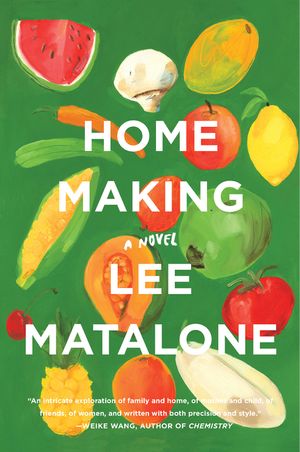
In my debut novel, Home Making, three characters attempt to put together their own homes, literally and figuratively. The following are other texts that fixate on our domestic anxieties, all those hopes and disappointments that fester within our own private spaces.

Chemistry by Weike Wang

Chemistry by Weike Wang

In this tightly constructed, fragmented narrative, a PhD candidate in chemistry is simultaneously trying to finish her degree and determine whether or not she wants to marry her partner. The pressure her parents place on her to succeed in academic matters collide with societal pressures to settle down. It is all more than she can manage. “For a moment, I let myself imagine it. Us in a big house in Ohio, a yard for the dog to run in. I can’t quite imagine it. It is too happy.” Wang’s writing is crisp and allows humor to creep in right when her narrator needs it the most. 

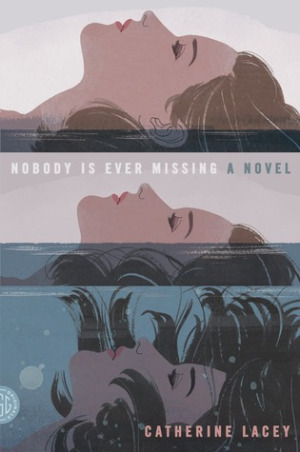
Image result for best book cover ever

Nobody is Ever Missing by Catherine Lacey

Every sentence Lacey writes is tinged with anxiety, which is why her work is so compelling. In her debut novel, she writes about a woman who flees the stability of her marriage and life in Manhattan for a solo meandering in New Zealand. The morning she leaves, when her husband does not yet know she is leaving, she thinks, “I would laugh. He would laugh. Inside our laughing we weren’t really laughing.” Beautiful lines abound.

“American Newness” in Loitering by Charles D’Ambrosio

In the middle of D’Ambrosio’s wonderful collection Loitering, this essay about manufactured homes stands out for what it rather darkly says about American values. The essay’s title refers to the “evocative odor” present in these manufactured houses, the “smell everyone knows but cannot name…like breaking the seal on a box and getting a whiff of— of what? — of exactly what you always wanted.” What do Americans want, D’Ambrosio implies? The potentiality of domestic bliss, not the real thing. “In the master bedroom down the hall the unwrinkled bed is empty, clean, without misery or past. Happy love has no history and this bed is its home.”

Little Labors by Rivka Galchen

Little Labors is a crystallization of maternal anxieties. In 130 pages, Galchen packages together the obsessions, paranoias, desires, etc. of a new mother. Perhaps aptly so, the narrator conveys the alien quality of this new lifeform, who she refers to alternately as the “puma” and the “chicken.” In one chapter titled “Orange” the narrator discusses how everything associated with the baby seems to be one color and how maybe that trendy orange hue could lead to future successes for the child.

“It eventually began to be difficult to not be bothered by how nice and how orange the baby’s objects were. And yet also it was difficult to not want to surround the baby with objects that had been deemed, by my wedge of the zeitgeist, nice. As if taste culture could keep the baby safe. Which in some ways it could: people would subconsciously recognize that the baby belonged to the class of people to whom good things come easily, and so they would subconsciously continue to easily hand over to her the good things, like interesting jobs and educational opportunities and appealing mates, that would seem the baby’s natural birthright, though of course this was an illusion.” 

The Bell Jar by Sylvia Plath

Plath’s classic novel is more or less about the conveyor belt into domesticity onto which women in Midcentury America were placed. We witness Plath’s protagonist, Esther transition from an independent life working a magazine internship in Manhattan to the confines of a mental hospital. The pressures to conform to standards of femininity are too much to handle. “So I began to think maybe it was true that when you were married and had children it was like being brainwashed, and afterward you went about numb as a slave in some private, totalitarian state.”

Medea by Euripides

Perhaps there is no narrative better than Euripides’ great tragedy that renders the home as powderkeg. Medea’s husband, Jason, abandons her and their two children to marry another woman, and, as we all know, violence ensues (She murders his new wife and her own children to punish him). What is striking about this story is the way in which Euripides, in the form of a speech by Medea to the Corinthian chorus, draws attention to the plight of women, an arguably radical commentary for 431 BCE. His Medea says, “And yet they say we live secure at home, while they are at the wars, with their sorry reasoning, for I would gladly take my stand in battle array three times o’er, than once give birth.”

Gwendolyn Brooks via Wikimedia Commons

The mother” by Gwendolyn Brooks

You could say that this is a poem about domestic potential. In it the speaker considers “the children you got that you did not get.” It is not that she regrets her abortions, not really. It is more about the dream of family we hold that we cannot always realize. The final stanza devastates. “Believe me, I loved you all./Believe me, I knew you, though faintly, and I loved, I loved you/All.”

R. Eric Thomas Wants to Save Your Capitalist Soul

R. Eric Thomas’ debut memoir Here for It: Or How to Save Your Soul in America challenges what it means to be “other.” Thomas delves into his experiences as a black, queer Christian—moving from his childhood in Baltimore to his struggles with private school and an Ivy League. This hilarious memoir-in-essays asks what it means to be queer and religious, black but perhaps not black enough for others, and how to define love. 

Here for It

Thomas writes a daily pop culture and politics humor column Eric Reads the News for Elle.com. His work has also appeared in The New York Times. Thomas’ plays have won the Barrymore Award and the Dramatists Guild Lanford Wilson Award, and he’s been a finalist for the Steinberg/American Theater Critics Association New Play Award. He is also the host of The Moth StorySlams in Washington, D.C. and Philadelphia.

I talked to him about surviving in America, reclaiming hurtful words, and how Moulin Rouge shapes his idea of love.


Arriel Vinson: Here for It, Or How to Save Your Soul in America strikes the balance between humor and seriousness around the themes of identity, race, and class. Why was it important to have a little bit of both? How did you shift gears from online writing to writing memoir?

R. Eric Thomas: I remember, in a low point just after college, stumbling upon David Rakoff’s book of essays Fraud in a library and devouring it in basically one sitting. I was so compelled by his use of humor to skewer the world and himself while also illuminating the darkness in his life. It felt deeply familiar to me, as the mix of laughter and tears and laughter through tears is a language my relatives spoke fluently. Whether around a dinner table, at a repast for a funeral, in church on Sunday, or out in the wider, complicated world, no part of life ever felt like just one thing—serious or comedic. And that was freeing to me. Seeing that perspective in essay form opened up new ways of talking about myself, but also reminded me of the work of Lorraine Hansberry—I’m thinking particularly of The Sign in Sidney Brustein’s Window—which I’d always found equally funny and heartbreaking. Later, I’d be introduced to Alice Childress, another black woman playwright using humor to interrogate serious issues of identity. And still later, when I started listening to The Moth, I’d discover storytellers like Shalom Auslander for whom comedy and tragedy are not two sides of a coin but two currents in a river. That’s where my voice lives because that’s where my life is. It’s never just one thing. But, as I talk about in the essay “The Past Smelled Terrible” in Here for It, I’m here—alive today, hopefully tomorrow—for joy. Joy and pain, joy through pain, yes, but ultimately joy. Even when talking about serious themes I’m reaching for it. 

There was a point in the writing of this book that I got really concerned that people who only knew me from online writing would be displeased that this book is written with a little more nuance than some of my humor columns and that the narratives have more space for quiet, introspection, and sometimes grief. I was especially glad, then, that I had the examples above to look back to. This is not to say that the internet isn’t a great space for mixing the serious and comedic; it’s actually ideal for it, in some contexts. But the trick is finding the right context. I wanted to write something that was true to myself and true to my influences—essay and storytelling and theater and spectacle, all in one. And I wanted to write something that had a slower speed than the internet, which can often lack nuance and be easily forgetful. I wanted to write for the libraries that I first discovered myself in, places that remember, and places that welcome the unresolved complexity that I wanted to explore.

AV: In some of the earlier essays in the collection, you explore the differences between poverty/urban life (noting that there are different kinds of poverty) and wealth/suburban life. Why was this one of the first themes explored in the collection? When did young Eric come to the understanding that there was a difference?  

America is the lens through which I see the world. That lens is smeared with capitalism, like Vaseline on the camera of Drag Race.

RET: Boon Jong-ho, the brilliant director of Parasite, among other films, recently called it his most universal film. He said, “while on the surface the film features very Korean characters and details, in the end it’s as if we’re all living in this one country of capitalism.” And although I read the quote years after I wrote the essays in the book, I felt very strongly that I was reaching for a similar idea with opening Here for It by talking about money and the lack thereof. The book is about blackness in America, and Christianity in America, and queerness in America—ultimately America is the lens through which I see the world and the world sees me. I think that’s inescapable. And the other components of my identity are inextricable from America. The lens of America is smeared with capitalism, like Vaseline on the camera on the early seasons of Drag Race. So, it was very important to me to begin the book by locating myself economically. To locate myself economically is, I think, to locate my Americanness—be it through the opportunities that I was afforded because of my parents’ sacrifice and the ones I didn’t have because of Redlining or a lack of generational wealth or a number of other factors. My mother’s grandfather was conceived in slavery; he was, until a few months before his birth, consigned to a life of being property. That’s one place where my American story begins. That’s the lens.

Additionally, I wanted to give people a sense of the specifics of my life and the way that, even as an adult, I am still unpacking how my life in America has been shaped by outside forces. But I also wanted to start off on a note of commonality. One of the aims of the book is to deconstruct the notion of “difference,” which is to say the idea that there is a standard and that there are deviations from standard. Having less money than, say, my classmates was one of my earliest notions that we might not be standard. And it took three decades to internalize the lesson my parents offered which is that we are our own standard. We are not the deviation and we are not less than, in any of the components that make up our lives, be they economic or racial or anything else.

This is also why I wanted to end the book talking about the National Anthem. The book, for me, is an act of reclaiming. I do live here, in America, and in the country of capitalism, as Boon Jong-ho put it. All the parts of me live here. And there are so many different ways, every day, that this country tells me that I don’t belong or that I’m a deviation. There was a bit that got cut (probably wisely) in which I said that the National Anthem should be changed to Taylor Swift’s “We Are Never Getting Back Together,” which I think is very funny but ultimately derailed my point. My point then, and now, is that I am not a deviation from the American story; I’m not on the outskirts or in a slum; I am in the center of my American story.

AV: You talk about both the n-word and the f-word in Here for It. Being called the n-word so young made you notice the world wasn’t just. You also called yourself the f-word to keep others from being the first to do so, but realized that didn’t create safe spaces for you or the queer community. Tell me more about these realizations. 

RET: We are born into labels, more labels than we even realize, and I think a lot of the work of becoming is identifying those labels and finding the label-maker and breaking it in half. Or, maybe not breaking it in half but at least being able to understand that the label is not the truth, it’s a construction. This, too, I think is an act of reclaiming but I wanted to spend some time in the period before reclaiming to look at the tough work of disentangling yourself from the labels, and the slurs, that others put on you. I feel like, sometimes, when we talk about taking back harmful words, like the n-word or the f-word (the gay slur), it’s like a movie montage has occured. At the beginning we’re having it hurled at us across a classroom or on the street, as has been my experience, and at the end of the montage they have no power over us. For me that montage took decades. I don’t know if it’s complete, to be honest.

It’s strange to go through life with a magic word that a person can affix to you as a way of reminding you of systemic oppression.

It’s such a strange experience to go through life with a magic word that a person can affix to you as a way of reminding you of systemic oppression. Can you believe this? Just walking around America with these curses that anybody can utter like this is Harry Potter or something. It’s really remarkable. I think—and I get this from Baldwin—that the majority of the reclaiming work isn’t mine to do. I can use them or not use them—indeed one of my favorite (definitely not for everyone’s taste) jokes in the book involves the n-word—but ultimately I’m just trying to break the label-maker.

AV: You make space for love in Here for It—navigating the possibility of crushes, sexuality’s spectrum, and even what love means. Why is love/desire so prominent in this collection? 

RET: Every time I try to answer this question, I realize I’m about to quote some lyric from Moulin Rouge, which perhaps does not reflect well on the depth of my understanding of love. Or perhaps it speaks to Moulin Rouge’s infinite wisdom. That’s something to chew on! Either way, I’m just going to do it: so in “Nature Boy” (featured in Moulin Rouge!) David Bowie sings “the greatest thing you’ll ever learn is just to love and be loved in return.” And I don’t want to sound like an inspirational Instagram post but that’s essentially what I believe. So much of the experience of feeling different, or trying to make space for myself in the world, is about feeling a lack of love or searching for those that would love me. And I don’t mean that just romantically. In fact—no shade to my husband—I feel like the larger constellation of love is even more vital for a person coming into their own. I think about the love of family of origin and the risk of losing that love that you navigate when you come out, the love of chosen family—friends who see you at your most raw or most unrealized, the love of and for community and for the work you put into the world and love for yourself. I adore romcoms but I learned a long time ago that you also have to look at the periphery of the screen to see the fullness of love—at the sidekicks and the jobs and the family dinners and all the rest that make life worth it. A vast constellation of love has kept me alive. In that sense, I think of this book as a romcom.

AV: There’s an essay where you talk about passively engaging with blackness by not joining exclusively black clubs and so on. Why was that your method? What did it take, if anything, for you to engage with it differently? 

My mother’s grandfather was conceived in slavery. That’s one place where my American story begins.

RET: That is a really good question and I appreciate it. The short answer is I love making terrible life choices. The real answer is that I was afraid of not being enough. And I don’t think that fear was coming from anything external; I don’t think that blackness has a litmus test embedded in it. But I think that some early experiences of difference within some black communities surprised me and set me on this path of othering myself inside of blackness. I think a lot of people have the experience of being told that they talk white or they don’t have rhythm (I do have rhythm; put that in print. I have rhythm). And I know now that that’s not blackness talking, that’s white supremacy seeping into blackness and poisoning it. But I didn’t know that then. And so I steered clear of places that I thought might be a home to me because I didn’t want them to reject me. A lot of that was happening in college, which was a fraught and weird time anyway, and so the freedom of adulthood and, frankly, the benefit of a strong education in African American Studies and Postcolonial Studies really helped me to readjust my understanding of the many black communities and how I could be in relationship with them. Or, I should say, how I was already in relationship with them. Blackness, whether you go to the meeting or not, isn’t something you just take off and thank God for that.

AV: One of my favorite essays in Here for It, the title essay, explores religion/church and queer love. You married a preacher, and wrote about creating your own declaration, defining love and church for yourself. How long have you interrogated religion and queerness? Have your ideals changed in any way since writing that essay? 

RET: Thank you so much for asking about that essay. It’s one of my favorites too and I particularly enjoyed reading it on the audiobook because I structured it like I would a sermon, were I a preacher, and I got to have a little bit of church—the performance, the emotion, the spirit-lifting—in the recording booth. In retrospect, I was always interrogating religion and queerness, even before I understood myself to be queer. I love the theatricality of church, the drama of praise and worship. I understood it to be sacred but also a kind of open-source spectacle and I always wondered why its boundaries were so guarded. I write in the essay “Eggquity” about the moment that my nascent understanding of queerness and the counterintuitive stringency of the church first collided for me with the excommunication of a gay church member. I experienced so many different emotions in that moment—confusion, rage, grief, shock, and kinship—and it pushed me into a more conscious critical relationship with religion and my own faith. 

The title essay was the last one for me to write—I basically wrote in order—but it was the one that I set out to write from the beginning. The first words I wrote were the last paragraph of that essay and they sat, in a notebook, like the promise of heaven, until I could reach them. I think I’m still trying to reach them in some ways. I wouldn’t say my ideals have changed; if anything I’ve become more committed to them even as I’ve come to understand that it’s constant work, internally and out in the world.

AV: What are you working on now?

RET: I’m also a playwright—I have a play called Safe Space opening in Baltimore in January and I’m working on two plays for next season. I’m in the beginning stages of working on two novels—one that’s like All About Eve but set at a high school involving two queer black people and the other about a black family exploring the ideas of inheritance and ownership by road-tripping to national parks. I continue to write my daily ELLE.com pop culture column, Eric Reads the News. Plus, I have a book about Rep. Maxine Waters coming out in September from Dey Street, co-authored with Helena Andrews-Dyer.

I Want to Speak for Myself, Not the Whole Latinx Community

It’s hard enough for memoir writers to figure out their relationship to “truth.” Our memories are faulty, and our real lives rarely offer tightly-plotted stories or clear lessons—so is your responsibility to the reader to be scrupulously accurate, or to give them some kind of insight into themselves, even if the details are blurry? (And can you really be scrupulously accurate, anyway?) This conversation gets even more complicated for memoir writers from underrepresented communities like Latinx folks. I’m not just trying to figure out how to tell my own truth. I also often feel responsible (or am made responsible) for representing my community. 

I’m currently working on a collection of essays about growing up in South Los Angeles. The essays touch on higher education, race relations, immigration and similar topics. Through my writing, I want to lend complexity to a neighborhood that often gets stereotyped. I hope to highlight the unique way broken sidewalks and swooping palm trees come together. 

I recently spoke with someone close to me about the fear of opening myself up to criticism through writing these essays. As a freelance writer and journalist, I’m more accustomed to telling the stories of other people, not my own. 

“Write what is true,” she said in response. “As long as what you write is true, no one can criticize you for that.” 

But I felt conflicted about this answer. Truth in memoir writing often gets murky, in the spaces where our recollection colors events in certain ways. And if I am going to tell the whole truth, I have to embrace my own flaws as well. The reader will decide whether or not they’ll take my story as the one that represents an entire community—that opinion is out of my hands. 

Through the process of writing these essays, I reflect a lot on my position in relation to my first-generation, Guatemalan-American roots, but also my place in America. Because Latinx people are talked about by the media and pundits so often, but we rarely get to tell our own narratives. 

Latinx people are often talked about by the media and pundits, but we rarely get to tell our own narratives. 

At a panel as part of the Latina Writers Conference in Los Angeles last year, author Lilliam Rivera remarked that she heard concerns about her YA novel, The Education of Margot Sanchez, overlapping with another book.

“The editor was worried about a book set in a bodega in Queens was too similar to mine set in a supermarket in the Bronx,” Rivera said. Both YA novels feature a Latina protagonist. 

The message comes across clearly: we already found a story with your protagonist and audiences won’t be interested in reading more than one. As a reader, I feel like I’ve read and seen  dozens of stories with white protagonists basically set in the same place (i.e. New York and Los Angeles). But apparently when it comes to publishing books about brown girls in certain neighborhoods, publishers only need one or two. The publishing world can often feel like it just wants to meet its diversity quotient. 

This is nothing new to anyone who follows this world, but when you’re a young writer looking for agent representation—and then an editor and a publicist and a team that believes in the importance of your story—it starts to morph into a different, more urgent message. Because so few Latinx writers get the chance to tell their story, you better not mess this up. Perhaps that’s just the anxiety talking, but it’s a very real concern if you think about how your book might be one of a handful of Latinx books picked up by a certain agent or publishing house for the year. 

If the publishing world feels like we only need so many Latinx characters in fiction, how much better can non-fiction fare?

Deciding to write your story in the face of publishing challenges is one thing, but in the midst of the current political climate, the writing feels more risky. For a while, I focused on what any aspiring writer does: scouting agents, reading up on recent acquisitions, trying my hardest to craft the best possible version of my writing. But for Latinx writers, there is often no separating the writing of your experiences from the news or current events. What you write could fuel hatred from certain groups already enmeshed in racist beliefs. I’ve often dreamed of publishing a book and going on a book tour to speak to others with similar experiences. Naively, though, I left out another type of audience member: the one who doesn’t want to hear my story. When I imagine myself at a town’s bookstore, standing in front of a crowd—the fear of violence, verbal or otherwise—can’t help but come up in my mind. Writing as an art form, when crafting your own narrative, often feels like a means of resistance. 

How do you write the story of your life in the face of violence?

Earlier this year, a shooter killed 22 people in an El Paso Walmart; the suspect told police he was specifically targeting Mexican people. An online post linked to him talks about the “invasion” of Mexican immigrants. This rhetoric surfaced again when a man allegedly threw acid at the face of Mahud Villalaz and asked: “Why did you come here and invade my country?” 

How do you write the story of your life in the face of violence? How, in particular, do you write it in a way that speaks from the vantage point of your community, while also wanting to stay true to your own flaws and the malleability of your life choices? 

If these examples seem too far removed from anything that could happen in response to a book, consider the experience of writer Jennine Capó Crucet earlier this year. In response to an exchange between the author and a student during Crucet’s lecture—the conversation hinging on the topic of white privilege—students burned a copy of her fiction book Make Your Home Among Strangers. The novel follows Lizet, a first-generation student who gets into a prestigious university and must reckon with a national conversation on immigration and her own cultural identity. The book won the International Latino Book Award for Best Latino-themed Fiction 2016 among other accolades. 

Crucet actually writes about a similar encounter before this incident in her collection of essays, My Time Amongst the Whites: Notes from an Unfinished Education. In the book, she explores her place as a writer and professor. She recalls conversations in which she’s expected to speak about what “her people”—read: all Cuban people—think about current events. 

As I write about my own story as a first-generation college student who attended an esteemed, predominantly white university near my childhood neighborhood, Crucet’s challenges come to mind. I often felt like my presence on the campus carried a certain weight—that if I didn’t seem as smart or as accomplished as the other students there, it would reflect badly on my family and my community. This might sound, on the surface, like insecurities that are personal and local. But Crucet’s experience shows that the feeling of being an outsider can remain even at a professorial level. Even when you’re talking about an award-winning book at a university. Even for a young writer, seeing the odds are not in your favor makes you feel like there’s little room to make mistakes. So it starts to feel like when you’re given a chance, you can’t squander it. As an outsider in the publishing world, in many ways, I feel an urgent need to represent my community wel,l because people will flatten and distort whatever stories I tell to define other people who share my cultural identity. My people. 

And with the 2020 election nearing, these anxieties feel global. When we hear the piercing noise of racist rhetoric in the media; when we leave our houses in fear of race-related violence; when we try our best to exceed in all our career goals in order to feel like we belong; there isn’t much room left for creating art.

If you’re part of a small group of Latinx writers getting book deals, the responsibility might seem overwhelming.

If you realize you’re the only Latinx writer at a reading; the only one on an end-of-the-year best books list; or part of a small group of Latinx writers getting book deals, the responsibility might seem overwhelming. 

I’m the subject of my own writing and that opens me up for an often overwhelming amount of vulnerability. This sparked another concern: of crafting a narrative of myself as the Latina girl growing up in a poor area who finally made it out. That would be simplifying  the richness of my neighborhood. I need to be honest about the challenges of coming from an immigrant family living in a poorer neighborhood, but I don’t want to do it in a way that makes me seem more like a statistic, less like a person. I want my family and community to feel proud of what I write, but I also don’t want to leave out the flawed parts of my upbringing and my personal choices. I want to unpack my personal history without feeling like I need to speak for everyone—something that’s impossible to begin with.   

Is there a way to write despite these stakes? Is it possible to write yourself as a less-than-perfect person, when you know that might be used as ammo for stereotypes against your community? It’s not that I think my memoir writing will be deeply confessional, it’s just that I want the space to be complex. Not perfect, but not demonized either. 

Author Stephanie Jimenez also reflects on the process of writing Latinx characters in fiction; during the process of crafting a coming-of-age novel with a Latina protagonist, she had a nightmare that someone called her out for writing something that was not “authentic to the community.” 

She writes: “Today, I wonder if white writers wake up panicked that their characters may not be authentic. I wonder if white writers question their authority to write their own books, to write their own representations of themselves in their own books …  I was told that diversity is what editors wanted, and that they specifically wanted to publish books from writers of color. Why is it then, when I submitted my manuscript, I was told to write something ‘high concept’ instead?” 

There’s a rawness to sharing memories and experiences with complexity—and it’s not always easy to take that leap. While writing her memoir Ordinary Girls, Jaquira Díaz initially wanted to tell the story of her life through fiction. But she eventually decided that felt too inauthentic. The book wasn’t easy to write, for a number of reasons, and Díaz often thinks about the place of Latinx writers within both the publishing industry and the country at large. It’s something that’s been on the minds of many Latinx writers, but the recent political events have put it in high relief. 

As a Latinx writer, it can often feel impossible to write just for yourself.

In 2017, she wrote in the Kenyon Review: “For some of us, the 2016 presidential election didn’t change a thing. For some of us, just existing in certain spaces, getting through the day, and surviving has been an act of resistance. While white America woke up on November 9, the rest of us have been waking up in this America every single day.” This includes the lack of Latinx names in elite publishing circles, a double invisibility. 

As a Latinx writer, it can often feel impossible to write just for yourself, when you recognize your position within a country that vilifies your community. But we need stories of all types: from neighborhoods around the country, from Afro-Latinx writers, from LGBTQIA+ writers, from people who are disabled. Because the Latinx community looks like all of these groups and more. We are not writing to fill your diversity quota, we are writing to tell our stories. We’re writing to sift through our histories and reflect on what they reveal about humanity, about politics, about genealogy. We need to talk about trauma, intergenerational abuse, immigrant narratives. But we also need joy, humor, grace. In Ordinary Girls, Díaz writes about her life’s challenges but also about the singularity of female friendship, the unbreakable bonds of girls who are now women living in a precarious moment. 

In a way, the words  “write what is true” have become a salve. Although a book might not seem like the first solution to bring about social change, I believe narrative influences the way we relate to each other — who we choose to see, who we choose to overlook. 

I want to tell my story. And that’s what I’ll continue to do.