How to Navigate Depression in a World That Polices Women’s Feelings

Told in poetic bursts, Heather Christle’s The Crying Book paints a complex, personal, and far-reaching picture of the universal and under-explored phenomenon of crying. Previously, she’d written four books of poetry, and she writes with the precision only a poet can achieve. 

Heather Christle and I talked on the phone about white women’s tears, how to navigate depression in a world that seeks to police women’s emotions, and why you should google that lump in your throat. 


Katie Simon: Your background is in poetry, but this is your first nonfiction book. On the first page of The Crying Book, you wrote that you wanted to map every place you cried. Was your decision to write about this map idea via a nonfiction book intentional? 
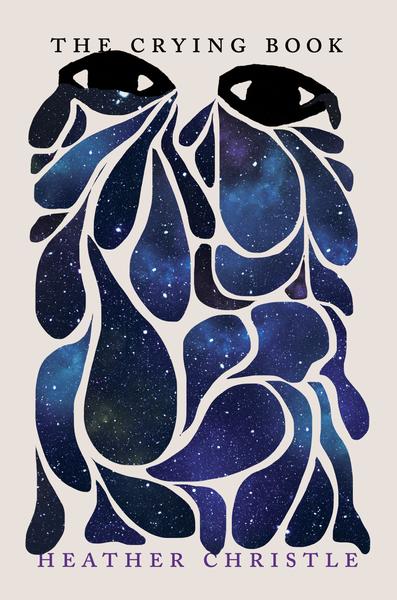
The Crying Book by Heather Christle


Heather Christle: No, it was a very different desire. What was really at the core was not so much a desire to actually map that out, because that wouldn’t reveal all that much—it would just show every place I’d ever cried. But what it did lead to a series of conversations with friends where I would bring up this idea, and we would begin talking about places that we had all cried. And people would start to sort of share their own experiences of crying and it made me realize that this was a conversation that felt rich and meaningful and like it connected to a lot of other things that I might be interested in thinking about. But I still didn’t know it was going to be a nonfiction book.

I sort of sat down one morning, and just started writing, thinking maybe it was a prose poem, maybe it was just getting some things down that wouldn’t be anything around crying. And it felt like there was more to say. It felt like I had more questions. And I started to do some research just for the sake of my own curiosity and began to incorporate some of that into what I was writing. And then I found myself with more questions and started to look into some databases and realized that you could put crying into any database, any subject, and something really interesting would come up and. It became apparent it was probably going to be a book. But it’s very much shaped by the material. It wasn’t that I said, I’m going to write a nonfiction book. What should I write a nonfiction book about? It was much more of a process as I think this the content revealing the form.

KS: Many of the themes of the book, like women with mental illness or women expressing emotion, and how women are perceived and judged, are in the zeitgeist. How do you think your book fits into the larger public discussion? And do you feel like our culture is changing in a direction that allowed you to write this book? 

There are forces that seek to limit our imagination and to hold it down into a white supremacist capitalist patriarchy space.

HC: Part of what I wanted to do in this book was to investigate patterns around crying, and around how people respond to it, in all kinds of contexts. But then, so many of those patterns are harmful—men dismissing the tears of women or white women’s tears being weaponized to incite racist violence. I wanted to note those patterns, but not to reinscribe them; to find ways of intersecting with them differently, of constellating behaviors differently, and noticing all of the many other possibilities that exist. I think that there’s a lot of beautiful work happening, and has been happening for a long time. But I think, particularly right now, it feels to me that there is an increasing urgency in the mood to shift these patterns and to imagine other possibilities. And for me, that’s not only in the case of looking at women crying, but it’s looking at access to mental healthcare. It’s looking at the possibilities of prison abolition. It’s looking at the possibilities of access to reproductive healthcare and justice. So I hope that my book can be a part of the shifting of those patterns. 

KS: Did you find that you were writing in defiance of expectations in some way, of how you’re “supposed” to write about these things? 

HC: So one of the things that I love about writing poems is the way that it feels possible for them to resist some of the forces that limit our imagination. They have this sort of anti-gravity to them that I think is exciting and full of possibility. It’s harder for me to maintain that kind of propulsive imagination through prose and through a book-length nonfiction project, because there are these forces that seek to limit our imagination and to hold it down into a space that can easily exist in white supremacist capitalist patriarchy. It is possible, but I had to work harder at it and there were many times where I would write and then I would notice that I was succumbing to those forces in one way or another. And then I would put that aside and I would try again. I think I found it. 

KS: When a woman writes a book in which there is a romantic relationship, there’s this pressure to categorize it as a “marriage” book or a “relationship” book, or a book exclusively about women’s feelings. That’s obviously not what this is, but I did find myself really connecting with your writing about your marriage, like when you write “One of the ways Chris loves me is that he waits while I cry. He tells me it will pass. He does not leave. And when the fog lifts, he makes space for me to write.” After reading those sentences I texted them to a friend because I was like, this is what I want for myself. Like please, Heather, write my dating profile! I’m curious how that relationship found its way into the book—was it always going to be there how you mentioned friendships were so central? 

HC: So much of this book is about relationships between people and between ideas, between texts that might want to speak to one another. Of course, my relationship with my partner Chris is tremendously significant to me, though I didn’t want to center it above the other relationships—I think it exists as one thread within this knotting work that I was doing. But I never really thought to write it out of the book. There were times when it was difficult, as any relationship is difficult, and the representation of any relationship is difficult, but I ended up feeling that it fit within the broader framework.

KS: Was there anything that came up in your research that you got really into, but didn’t actually manage to find its way into the final book? Something cool we should all be googling? 

One of the best things that I did was to stop writing. I had to periodically tell myself that it was okay if I didn’t publish the book.

HC: There is! There’s so much that could have gone into this book. But there came a point where I was like, I have to just stop now. There are only so many pages. It’s not meant to be exhaustive at all. So, you know, the sensation of a lump in your throat when you’re crying? It turns out that the reason for that is that when you’re in emotional distress, your body creates this physical physiological reaction where it tries to get as much oxygen from the air as possible because you may need it. And in order to do that the muscles of the throat hold themselves open. When you try to swallow, you feel the resistance of those muscles and you experience it as a lump—a lump that is, in fact, an opening.

KS: Whoa. So It’s like the opposite. I’m always worried my throat is going to close up, but there’s actually more room! You just reassured me and probably a lot of other people that we are not dying.

HC: Your body is actually taking care of you in that moment. 

KS: Like a form of self-care. I don’t think we discuss that enough in the literary world. There were a lot of heavy, personal threads in this book. How did you take care of yourself while writing? 

HC: I think one of the best things that I did was to stop writing. I had to periodically tell myself that it was okay if I didn’t publish the book, that it didn’t matter that I had spent five years, eventually six years, writing it, that it would be okay for me to not publish it. It was the only way I could get through. It served as a kind of safety net.

KS: It sounds like you figured it out—taking breaks and resting. Did you ever turn to a residency to get the work done? 

HC: I did do a sort of residency, though it wasn’t an official one. I went and stayed with a friend, a poet who was my professor at school. I went there to work on the second draft of the book. I had generated all this material, gotten all this feedback and then knew that I had some major cuts to make and some major rearranging to do and wanted to have the ability to be in another space to get that done. So she gave me her bedroom to stay in for a week. I woke up early every morning and drank coffee and chatted with her and then went upstairs and worked until the afternoon and then I napped. It was beautiful. I recommend it as a form of residency, to be with a friend. And I was near other friends that could go and have a drink with in the evening. So I was able to both have the separation and also the support. 

And I think also, sometimes we get so caught up in imagining that institutions are the only way we can get things done. I imagine at some point I would like to go to a residency for my next project. But we can make these things happen for each other. We can be there for each other, and we don’t necessarily need institutions to make writing happen.

Why Do Made-for-TV Christmas Movies Hate Working Women?

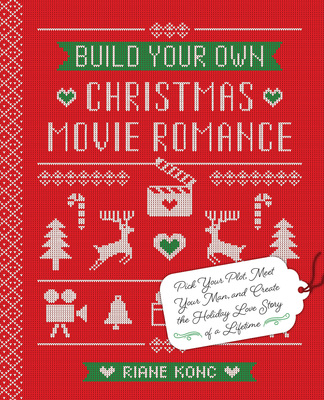
Riane Konc has done the impossible: written a book. Specifically the book Build Your Own Christmas Movie Romance, a choose-your-own-escapade that spoofs every Christmas rom-com ever made.

The book is not only funny, it’s actual fun. Readers pick their own plots and dramatic mix-ups, meet and settle for their own men, choose to throw wine or to avoid mom’s call, and “create the holiday love story of a lifetime.” Riane’s book gave me—if there is such a term—a reading boner.

Image result for Build Your Own Christmas Movie Romance: Pick Your Plot, Meet Your Man, and Create the Holiday Love Story of a Lifetime

In no way is Build Your Own Christmas Movie Romance a memoir about Konc, who’s a humor writer and essayist, frequent contributor to The New Yorker and The New York Times (though she lives somewhere in the middle of the country), and author of one viral tweet about the Winter Olympics. 

Riane and I “met” in 2014 when I rejected her submission “e.e. cummings, Email Spammer” to my humor column “Funny Women” on The Rumpus, then later accepted and published another piece and entered into the eternal editor-writer bond. So I’m a Konc early adopter and believe she’s best described as the hypothetical love child of Jack Handey and Mary Oliver. Which is to say, she writes extremely funny humor pieces and extremely poignant essays, and she’s the kind of writer whose writing makes you feel bad that you don’t write like her. 

I emailed back and forth with Riane (pronounced “Ryan,” it turns out) about “the writing process,” the Hallmark Channel, holidays and romance, and a lot more.  


Elissa Bassist: How, exactly, does one write a book? Please be specific and leave nothing to the imagination. 

Riane Konc: It is very simple. You simply must—and I cannot stress this enough—sign a contract. As far as my experience goes, this is the best and only way to force yourself to sit down in a chair and do it. I don’t know how else someone writes a book. I couldn’t do it until I was contractually obligated to do so. When I agreed to write the book (an editor reached out to writers in a private Facebook group to write this particular book), I was going through a period of severe writer’s block and then one day, in a total impulse, I signed a contract that stipulated I would have this book written within three months (to publish before the holidays). And then … I just had to do it. I would wake up in the morning like I had every morning—void of ideas and unable to write—and yet I had a signed contract. I didn’t know the consequences of breaking a contract, but I assumed jail or death penalty, and that is honestly, literally the only reason I completed a book. I cannot recommend contracts highly enough.

EB: Rolling chairs back, staring, and questioning what happened is among the best depictions of the writing process, including the sob-typing scene in Something’s Gotta Give starring Diane Keaton and the “Oh my god…writing is so hard” pantsless scene in Hamlet 2, starring Steve Coogan

You write the funniest short conceptual humor (that sometimes goes dark), and you write the saddest personal essays (that sometimes go light). For you, what do comedy and tragedy have in common that pulls you to both?

RK: I could say something about the obvious Venn diagram overlap between funny people and sad people—like, is it your personality quirk or your way of viewing the world that makes you funny and that also makes you sad? Or is it more than humor is a desperate coping mechanism for a certain sect of the—and pardon me for being scientific here—clinically bummed out? I don’t know. I do know the link isn’t absolute: I know a lot of people who are extremely funny and extremely happy, and I wish them nothing but the worst. (Just kidding.) 

(And here I want to give the disclaimer that believing sadness or mental unwellness is required for your comedy or your art is really toxic and dangerous and untrue, so … quit romanticizing that.)

I also could say that I think the two (sadness, humor) inform each other because whether you want your writing to make someone laugh or cry—underneath that you want the reader to feel a little off-balance. You never want the reader to settle in and get too comfortable, like, “Oh, I know exactly where this essay is going” or “I know the punchline that will follow this set-up.” The best way to experience a joke or a big feeling in writing, I think, is to have it appear out of nowhere and then slap the shit out of you. 

Finally, I could say that there’s a metaphor here about how a french fry dipped in a chocolate shake shouldn’t taste amazing, but it does.

But my real answer is that I write funny pieces and sad pieces for the same reason that anyone writes anything: I need to. There is something inside of me that really, really wants to write silly, short conceptual pieces about John Steinbeck using Snapchat, and there is also something inside of me that really, really wants to write overly sentimental essays about all of the feelings I get by seeing a single bird. So despite all the compelling reasons to quit, I keep doing it.

EB: Rumor is you watched a lot of Hallmark Christmas-themed rom-coms to spoof the genre and its tropes as expertly as you do. What are your thoughts on the Hallmark heroine? It seems she follows in the footsteps of most heroines: begins as unlikeable (busy, bitchy, moody, barren, flying off every possible handle), then she’s utterly disabled (fired, dumped, impaled somehow), everything is taken from her to make her likeable/relatable…oops, my question became a rage spiral…

RK: I’ll go out on a limb and say that, as in most media, the made-for-TV Christmas heroine is generally—if I may be so bold—not great. It’s not only this genre’s fault: the “made-for-TV Christmas movie heroine” is a very specific, festive iteration of the myriad ways to reduce real women to caricatures that exist nowhere outside the imaginations of lazy and misogynistic writers. My book is primarily a joke-delivery vehicle that ends up satirizing how women are portrayed in … well, most movies. I’m particularly obsessed with the way that rom-coms in general—and Christmas rom-coms especially—absolutely hate women who enjoy working. That’s why my book’s protagonist is a business-obsessed woman whose core characteristic is that she hates Christmas (in this world, these go hand-in-hand: it’s a character flaw that predicates another character flaw). Our heroine has also made the unforgivable moral error of choosing to live in a big city, and in the world of Christmas movies, being a big city businesswoman is the worst thing you can be or do. 

And yes, the rumors about my watching many made-for-TV Christmas movies for research are true. You probably heard these rumors from one of many librarians in Cincinnati, who, at different points in March and April, had to watch in horror as I stood all alone in line, checking out 10–15 Hallmark Christmas movies at a time. “I swear this is for work” is something that I said several times, though I am pretty certain that none of them believed me.

EB: Now I’ll ask a question that interviewers love to ask female novelists: is your novella in any way autobiographical?

I wrote it while on my period, clothed entirely in lace and whispers.

RK: “Novella” is such a masculine term. I prefer to call this book—as with all of my writing—a “public-facing diary entry.” I wrote it while on my period, clothed entirely in lace and whispers, and I took breaks from my lady scribbles to work on my other passion project: decoupaging ballerina music boxes in affirmations from Dove chocolate wrappers.

That being said, there is nothing autobiographical in this book except the feelings that Chrissy and her mom share for Sufjan Stevens, which only scratch the surface of how I feel about that gentle, magical singing man.

EB: Beyond bingeing Sufjan Stevens, it’s well-known by me that you watch a lot of TV. How do sitcoms help you write humor? Do you metabolize them in a special way? 

RK: Wow, well, first of all, I think what you mean to say is that I spend my evenings drinking fine teas and puffing on the Queen’s cigars while reading a variety of leatherbound literary classics. “Books,” I say each night. “Simply and only books.” And then I do a little cigar smoke puff in the shape of the Penguin Modern Classics logo.

But yes, when I’m not doing that, I squeeze in situational comedies. What I absorb when watching TV or movies is the structure. For a book like this—and for short conceptual pieces—I crave structure. It’s something solid to play around on. And it’s a bonus if part of the gimmick of your book is (as mine is) making fun of a particular type of plot structure, because you get to make jokes about it and straight-up use it. Which is perfect, because: free structure!

EB: Did you have any party tricks from high school that you want to tell us about that ultimately informed your writing as an adult?

RK: I’ve since gotten rusty, but I once had all of Jack Handey’s “Deep Thoughts” (I’d estimate there are between 1,500–2,000) so thoroughly memorized that any person could say one word to me—for example, “tree”—- and I could quote any “Deep Thought” that contained the word “tree.” I refer to this as a “party trick,” but the more accurate term is “trick,” because—as anyone reading this anecdote already suspects—I was absolutely not invited to parties.

EB: From experience I can tell you that you missed nothing at parties except fun and sex. Now here’s my favorite question to ask, especially on Tinder: what advice do you have for aspiring humor writers?

I now refuse to write any future books with fewer than seven separate endings.

RK: I don’t think most writers want to hear the truth: that the best advice is as boring as you feared, that you must read as much humor writing as you can, you must write as much humor writing as you can, that you must find people you trust to give you feedback, that you must learn when to take feedback and when to ignore it, that you must find a way to make peace with God (or your preferred God stand-in) about the inevitability of rejection, and that you must do this over and over until you die or get published in McSweeney’s Internet Tendency.

What’s good to remember about humor writing—any writing—is that it’s both a gift and a skill. Everyone has different starting points, and it’s okay—even important—to acknowledge the “gift” part of the equation (that it comes easier and faster to some writers, and that some writers are more natural idea-factories than others). I’m never going to write as much and as well as some writers, no matter what I do, and I have to just … find a way not to be paralyzed by that. You can’t do anything about what you start with, but you can become a more skilled writer (even more skilled than someone more naturally gifted) by reading a lot, writing a lot, paying attention, and having an editor’s direct email address.

EB: Since we’ve reached the end of this interview, do you have any tips on reaching/writing the best ending in your book?

RK: John Steinbeck closed one of the most popular books of the 20th century with [SPOILER] a young woman breastfeeding an old man in a barn—and yet, when I read it for the first time, I found it so beautiful that I don’t think I fully stopped crying for six months? So I feel like conventional wisdom falls apart when it comes to endings.

With Build Your Own Christmas Movie Romance, I had the luxury to include several endings—there are seven in the final chapter. I got to do “the cynical ending,” several “winking at the genre” endings, “the weird ending,” “the abrupt ending,” and I got to do “the romantic ending.” I now refuse to write any future books with fewer than seven separate endings.

But I think that there is one correct answer to your question: the best way to end a story, no matter the genre or medium, is to slowly pull back to reveal that actually, the entire story has been taking place inside of a giant snowglobe this whole time. Imagine how much better A Little Life would have been if Hanya Yanagihara had done this. Imagine how much better The Wire would have been. And how much better this interview would have been. This is the only real way to end any story, and deep down, I think everybody knows it.

Before you go: Electric Literature is campaigning to reach 1,000 members by 2020, and you can help us meet that goal. Having 1,000 members would allow Electric Literature to always pay writers on time (without worrying about overdrafting our bank accounts), improve benefits for staff members, pay off credit card debt, and stop relying on Amazon affiliate links. Members also get store discounts and year-round submissions. If we are going to survive long term, we need to think long term. Please support the future of Electric Literature by joining as a member today!

Electric Lit’s 15 Best Nonfiction Books of 2019

This was a year when a lot of us wanted to escape into fiction, but courageous nonfiction authors—and readers—still devoted themselves to looking reality full in the face. We asked Electric Literature staff and contributors to vote for their favorite books of the past year, and here, in ascending order, are their 15 top picks for essays, memoirs, and reporting. 

Things We Didn’t Talk About When I Was a Girl, Jeannie Vanasco

When Jeannie Vanasco was nineteen, her close friend raped her at a party; fourteen years later, she decides to interview him about that night. A necessary book in the #MeToo era, this memoir asks complex questions about sexual assault and accountability, and what trauma looks like. Jeannie Vanasco’s editor interviewed her about the book.

Image result for Ordinary Girls: A Memoir

Ordinary Girls, Jaquira Diaz

Diaz’s memoir tracks her childhood spent in both Puerto Rico and Florida, her mother’s struggle with schizophrenia, her friendships and depression and sexual assault, her time in the Marines and the breaking up of her family. Dynamic, moving, and full of life, this memoir is anything but ordinary. Read our interview with Jaquira Diaz about why she wanted to be “ordinary.”

How to Be an Antiracist by Ibram X. Kendi

How to Be an Antiracist, Ibram X. Kendi

This powerful book uncovers the way racism interacts with every facet of our society, and teaches readers to recognize and fight racism. Kendi uses history, ethics, law, and personal experience to expose the racism that is always present in our lives. Here’s our interview with Ibram X. Kendi.

Image result for tribe called quest hanif

Go Ahead in the Rain, Hanif Abdurraqib

In this self-proclaimed love letter to A Tribe Called Quest, Abdurraqib uses various genres to express what the rap group has meant to him throughout his life. While tracing the group’s career, Abdurraqib shows how the group affected both the musical and cultural scene of the 1990s, and how the group affected him personally. Find out more in our interview with Hanif Abdurraqib.

Know My Name by Chanel Miller

Know My Name, Chanel Miller

Miller’s memoir meditates on the nature of healing and the author’s quest to reclaim her life after a sexual assault. Although she was known as Emily Doe when she read her victim impact statement to Brock Turner, Chanel Miller uses this memoir to take back her name and shine a light on how victims of sexual assault are treated in America. Read an essay by Fiza Pirani about how Miller’s memoir teaches us about the value of staying in a traumatic moment instead of moving on right away.

What You Have Heard Is True by Carolyn Forché

What You Have Heard is True, Carolyn Forché

Short-listed for the National Book Award, Forché’s memoir follows her 27-year-old self as she travels to El Salvador with a mysterious man. Once there, Forché struggles to make sense of the horrors she sees in a country on the brink of war.

Furious Hours by Casey Cep

Furious Hours, Casey Cep

In the 1970s, Harper Lee returned to Alabama to watch and report on a criminal trial. Furious Hours combines the drama of true crime with the attentiveness of biography, and offers an analysis of both the Deep South and one of America’s most beloved authors.

How We Fight for Our Lives, Saeed Jones

Saeed Jones’ memoir ruminates on the intersections of race, sex, and sexuality as the author comes of age in the American south. With haunting prose and deep thoughtfulness, Jones reveals the ways we create ourselves over the course of our lives.

Good Talk by Mira Jacob

Good Talk, Mira Jacob

This graphic memoir recalls the tense conversations that Jacob has had throughout her life. From her own childhood to the 2016 election, Jacob uses both humor and honesty to answer her son’s questions about race. We interviewed Mira Jacob about the book and she also recommended five books for our Read More Women series.

Rough Magic, Lara Prior-Palmer

When Lara Prior-Palmer was nineteen, she entered the world’s longest, toughest horse race. With no formal training, Prior-Palmer spent ten days racing wild horses through the Mongolian grasslands, following a path carved out by Genghis Khan’s horse messengers, and became the first woman ever to win the Mongol Derby. Electric Lit executive director Halimah Marcus interviewed Lara Prior-Palmer.

Image result for long live the tribe of fatherless girls

Long Live the Tribe of Fatherless Girls, T Kira Madden

In her debut memoir, T Kira Madden describes her charged upbringing as a queer, biracial teen in Florida, the only child of parents struggling with addiction. This memoir spans years in Madden’s life and wrestles with the contradictions, complications, and powerful women that were central to the author’s life. Check out our interview with T Kira Madden

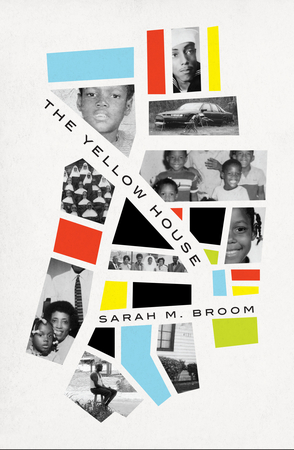
The Yellow House, Sarah M. Broom

Winner of the 2019 National Book Award for Nonfiction, this family memoir spans a hundred years and explores the lesser-known corners of New Orleans. In this book, Broom takes readers into her family’s home and shows them the magic, chaos, and power the house exerts over her and her history. Here’s our interview with Sarah M. Broom.

Image result for collected schizophrenias by esmé weijun wang

The Collected Schizophrenias, Esme Weijun Wang

In her essay collection, Wang writes and unwrites about mental illness and how her diagnoses have affected her life. Both a personal memoir and an analytical work, this collection shows readers what it’s really like to live with schizophrenia. We interviewed Esme Weijun Wang about mental illness and disability. 

Trick Mirror by Jia Tolentino

Trick Mirror, Jia Tolentino

This essay collection covers the big issues from the milieu of millennial malaise, such as reality TV, the internet, and the art of the scam. Tolentino dips into modern culture with humor and sharp insight, and returns with shards of wisdom. Read our interview with Jia Tolentino here.

Image result for dream house by carmen maria machado

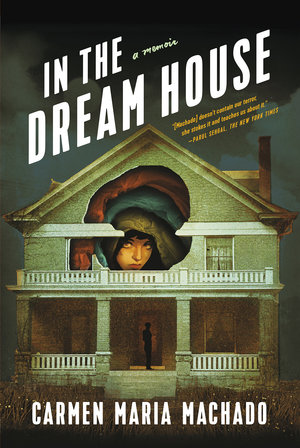
In the Dream House, Carmen Maria Machado

Machado’s genre-bending memoir tells the story of an abusive queer relationship through a collection of mini-essays, each adhering to a different genre. Reading this book is much like wandering through a haunted house and exploring its many strange rooms. For more, read our interview with Carmen Maria Machado, or Alice Lesperance’s essay about how In the Dream House pioneers the genre of gothic memoir


Before you go: Electric Literature is campaigning to reach 1,000 members by 2020, and you can help us meet that goal. Having 1,000 members would allow Electric Literature to always pay writers on time (without worrying about overdrafting our bank accounts), improve benefits for staff members, pay off credit card debt, and stop relying on Amazon affiliate links. Members also get store discounts and year-round submissions. If we are going to survive long term, we need to think long term. Please support the future of Electric Literature by joining as a member today!

Chanel Miller Reminds Us That to Heal, We Must Forage

At 4, Chanel Miller could not lift a gallon of milk. She needed two trembling little arms to wet her cereal with “that white sloshing boulder.” And spillage was inevitable.

When exactly she began to carry the gallon of milk with ease, “one-handed, on the phone, in a rush,” she doesn’t know, Miller writes in her new memoir, Know My Name. But to get there, she must have had to sit in the mess for a morning or two. 

Know My Name by Chanel Miller

“I believe the same rules apply,” she writes of the narrative the world will remember her by: her time as the Emily Doe of the infamous Stanford rape trial in which Brock Turner, found guilty of three counts of felony sexual assault, would serve only half of his meager six-month sentencing.

“One day I’ll be able to tell this story without it shaking my foundation,” Miller writes. “Each time will not require an entire production, a spilling, a sweating forehead, a mess to clean up, sopping paper towels. It will just be a part of my life, every day lighter to lift.”

We talk often about the rituals and societal expectations following the death of beloved people and animals: the anguish that accompanies physical loss, codified in curated stages of grief. But what of the intangible casualties? When we lose fragments of ourselves in trauma, what is the most appropriate bereavement treatment?

For months after the assault, Miller writes, it was too painful to be here, alive. Her mind preferred dissociation. The goal was to forget.

“It took me a long time to learn healing is not about advancing,” she writes. “It is about returning repeatedly to forage something.”

Foraging is a search in the wild for provisions, its etymology traced to the Anglo-French fuerre and the Old High German fuotar, both of which influenced the Old English term for fodder and later, food. When creatures forage, they make an effort to retrieve, collect and store the sources of energy and nutrients they find. The evolutionary purpose, scientists say, was to create a positive energy budget. Foraging theory states that to survive, we must balance out the energy we expend with the energy we gain.

But most of us are not actively foraging, at least not in the physical sense, not out in the wild. Instead, we forage for food more passively. We might experiment with new eateries and markets every now and then, but we ultimately do our surviving by retrieving prepackaged nutrients off grocery store shelves or assembly-line delis, mindlessly collecting the bounty in metal shopping carts and storing our earnings in kitchen pantries and refrigerators. Those of us in urban societies have evolved to expend little energy in our modern-day foraging, hoping to gain at least enough to get by. 

Research shows that the same molecular and neural mechanisms involved in physically foraging for nourishment in the savanna or sea for centuries have evolved to help regulate our attention and retention.

To gain, she must remember. And to remember, she’ll have to sit in this mess for a while.

Less persistent, more inattentive and more passive foraging––whether the provision we seek is a tangible meal or more abstract food for thought––has been linked to a decrease in brain dopamine, the “happy hormone” responsible for controlling our mental and emotional reactions.

Low levels of dopamine reduce motivation and enthusiasm and increase the risk of depression, anxiety and other behavioral disorders. In the aftermath of trauma, low levels of dopamine further impair our ability to make sound judgments. If taken as prescribed, stimulants can increase brain dopamine levels until they produce that happy, rewarding and attentive effect.

When Miller says, then, that healing has less to do about moving forward and more to do with foraging, perhaps she understands that healing involves her attention. That it involves a repetitive return to the past to produce a somewhat sensical timeline from fragmentary scenes. Perhaps Miller understands that to heal, she must gain something to make up for the depleted energy stolen by the assailer; she must gain back the energy she lost before and after each court hearing. But to gain, she must remember. And to remember, she’ll have to sit in this mess for a while.

The act of writing, Miller says, taught her “to stay in the hurt, to resist leaving.” It placed her in the driver’s seat, in control of the once uncontrollable past. The more often she returned to the scenes leading up to and the scenes following the moment she was reported unconscious behind a dumpster outside a Stanford fraternity party, the more power she ultimately accumulated in crafting the meticulous details of her truth.

Eventually, Miller writes, she could come and go as she pleased, “until one day I found there was nothing left to gather.” And when there’s nothing else left to gather, then it’s time to pack up and move on.

This idea of returning and foraging to heal––foraging willingly––gripped me as someone with an ambiguously fleeting desire to live, someone whose rumination has proven to be more dangerous than fruitful.

Successful foraging requires return and reflection. It forces us to ask ourselves: Is it time we move on? 

After reading Miller’s memoir, I understand the difference. To ruminate is to sit in the mess with no end in sight, no plan to return to the present and no real desire to find understanding. But successful foraging requires return and reflection. It demands an analysis of the environment and its resources. It forces us to ask ourselves: Is it time we move on from here? 

The only way I’ve been able to move forward is by time-traveling backward, turning the machine off for a while and just sitting in messy memories past, sometimes alone and sometimes on the weathered leather loveseat in my therapist’s office, foraging through the brush clouding my brain for some understanding of how exactly I wound up wanting the end. Each time I make the return trip back to my present, my basket feels a little lighter, hinting at the horizon ahead.

Sometimes, after a long afternoon of foraging, Miller regresses, as do I. Healing is no linear feat, after all. There will be forest fires and predators, more competition in the wild. But to survive, we must eat.

A Pixies Album in Short Story Form

There is a hymn on the first few pages of Shine of the Ever. Claire Rudy Foster writes in “The Pixies”: “When we’re together, we forget that we are hopeless. We are something else and we are part of each other. We will never fit. Why would we want to be like you?…My Velouria. The chorus comes and we are a mass of bliss and fury and love and pain and truth and sound. Finally through the roof. We are going to shake you loose.” This rebellious yet tender, frank yet lyrical yearning is what Shine of the Ever is. A collection of stories for the pixies, the punks, the lovers and the loveless. Shine of the Ever has the image of a mixed tape as its cover art but I want to call it a hymnal, a psalm, for those who have wanted to see themselves in fiction and felt ignored for way too long, for those who are ready to shake loose of the traditional constraints of society and literature.

Shine of the Ever (print edition)

In thirteen stories, Shine of the Ever is a collection of narratives with queer characters navigating Portland, Oregon—the city a character itself. Each character is searching for a sense of understanding and human connection while they continue the work of figuring their own selves out. What is special about this collection is that each story ends not on the stereotypical dreadful tone most stories about queer characters have. In Foster’s narratives, no one ends up punished for the way they live their lives. But rather, each story ends with a hint of hope, a sentiment very much needed in this era of Trump and the all out attack on LGBTQ+ civil rights.

Claire Rudy Foster is a queer, nonbinary trans writer who lives in Portland. Foster is the author of the short story collection I’ve Never Done This Before. Their writing has appeared in The New York Times, The Washington Post, The Rumpus, McSweeney’s, and elsewhere. Foster has been in recovery from alcoholism and addiction since 2007, and co-authored American Fix: Inside the Opioid Addiction Crisis and How to End It with activist Ryan Hampton. Their contributions to the recovery movement include speeches, letters, and articles and the recovery podcast “Addiction Unscripted.”

I spoke with Foster about why Portland is a popular place to write about, happy endings as a political act, longing and belonging, and if the world is ready for queer stories from people other than cis white men.


Tyrese L. Coleman: Of course, after reading your collection, I listened to the Pixies’ song “My Velouria,” which is where the line “shine of the ever” comes from. It’s funny, I never thought that a song could completely capture the feeling of a collection of stories in the way that this song does. 

Claire Rudy Foster: The collection takes place in grunge-era Portland, and the Pixies were so much part of the sound and texture of that time for me. I love their lyrics: “We will wade in the shine of the ever. We will wade in the tides of the summer.” For my characters, as well as the city where they live, it’s the last days of summer: the last days of youth, when everything seems so important and vital and new. They’re all on the cusp of massive, difficult changes, but for the moment—it’s easy living.

TLC: Is this collection a result of the vibe, the longing, in this Pixies song or of Portland or of a mix of it all or something completely different?

CRF: I’ve heard others characterize queerness as a yearning. I connect with that. I often have the feeling of being outside, observing how other people live. I guess voyeurism is a kind of secondhand fulfillment. In Shine of the Ever, I really didn’t want to create another monument to a time that has passed. Portland has enough of those: memorials to the wonderful, weird culture that was pushed out by rapid expansion and gentrification. The narrator in the book’s title story remarks, “I had that feeling I was in a movie set of my own living room, where every object looked exactly like my personal possession but nicer, cleaner, and more appealing. I hate it. These designers put in a lot of effort to make things seem natural, but I think the only people who believe it are the ones who never saw the original. They don’t understand that this isn’t Portland anymore: it’s Portlandia. A theme park of the places we used to love.” Throughout the book, characters experience a longing that isn’t necessarily for another person, but for a moment in time that can never be recaptured. It’s a nostalgia that ripples into the present and continues to inform the things my characters desire, long for, obsess over, and crave. 

TLC: You and Mitchell Jackson both write about Portland as this place that has been replaced with a fictional utopian veneer, though you talk about different communities within the city. It strikes me though that you both write about the city with a reminiscing tone—a love for the good bad old days. What is it about Portland that lends itself so well to characterization in the ways you and Jackson have written about it? 

CRF: Portland wasn’t really a “city” until 20 years ago. Maybe less: ten. The condos appeared in the early 2000s, followed by an infestation of ampersands. Portland wasn’t always one of New York’s outer boroughs, where people all wear charcoal grey merino wool and drink artisanal lattes. Twee boutiques obscured the existing DIY culture, the punk scene, and the grittier places. Portland’s “charm,” which was played up by travel writers, tourists, and people who’d been pushed out of their own cities by insane costs-of-living. The city’s rapid overdevelopment happened almost overnight: within only 2-3 years, we were overrun by new residents, huge buildings that are out of character with the rest of the architecture, corporate headquarters, more cars on small roads, all that stuff. Institutions protected by money stayed, but the day-to-day stuff vanished. Almost every mom-and-pop store is now a gleaming, white weed dispensary. The landscape here was altered. For most cities, these changes happen slowly, or they already happened a few decades ago. The invasion of Portland is something I’ll never forget. 

The “charm,” if you can call it that, is still more reminiscent of a town than a city. It’s a frontier town with a gory history and a lot of problems. There’s rich soil here for writers. Portland’s transformation features prominently in Shine of the Ever. Yet, in spite of these changes, the core parts of Portland remain the same. It’s a small city. The longer you live here, the smaller it seems. I think people write about it because it’s easy to fit it all into one book. It’s a fraction of the size of Los Angeles or New York or Dallas and significantly less socially complex.

TLC: You both also write about the drug epidemic in the city, but again, from different perspectives. You are not shy about writing and talking about your struggles with addiction. While I don’t want to make the assumption that any of the pieces are autofiction, can you talk about how your story influenced the pieces in Shine of the Ever, if they did at all? 

CRF: First, I think all writing in every genre is autofiction of some kind. Writers draw from their own experiences, impressions, and sensations. An apple tastes like an apple. An apple that tastes like a pear is invented using the linguistic concepts that define taste, fruit, and eating. I think that, even when someone is writing high fantasy or science fiction, they’re still working within the lines of human perception: the writer, like the reader, is still human. 

For Shine of the Ever, I was less concerned with historical accuracy than emotional precision. The book was born from my own attachment to a city that has been erased by time, and from my grief at watching its changes as it slipped away from me. This grief is selfish, of course. Many excellent things have come from these changes. But I think most people have felt displaced in one way or another, forced to start over, or disconnected from community. Displacement is part of Portland’s history: the ultra-white city is built on the traditional lands of the Multnomah, Kathlamet, Clackamas, Cowlitz bands of Chinook, Tualatin Kalapuya, Molalla, and many other tribes. I can complain about Portland changing, but I am not a victim. I am merely inconvenienced. The white presence in Oregon is the result of an ongoing cultural genocide against Native people. The invasion I write about in my book is commercial, not cultural; I think it’s important to acknowledge the larger implications of that.

Heteronormativity erases us. Why replicate a system that wasn’t designed for you?

Addiction is part of more contemporary, urban displacement. Addiction is commercialized; it turns a profit. In my recovery, I’ve had to accept that nostalgia, the chronic and insatiable desire to reexperience the past, can be just as addictive as cigarettes, wine, or opiates. Returning to the same place, song, person, or emotion is not that different from picking up a drink: both of them feel good for a while, and they enable the person to depart from the here and now. Shine of the Ever was an indulgence of my nostalgia. Having written it, I wonder if I’m ready to move on.

TLC: The fact that this book has no sad endings is a political act. A political act as a commentary on what people think a queer story needs to be about and also a literary political act because, as we know, capital “L” Literature means sad and depressing.

CRF: If literature is synonymous with sadness, we need to change what literature means! One of the things I love about other genres—because, let’s be real, literary fiction is a genre, just like romance is a genre—is the joy and playfulness I read in them. My favorite authors, like Richard Chiem, Katherine D. Morgan, and Sam Hooker can make me laugh. It’s not hard to make a reader cry, but laughter is so much more intimate. When I was writing Shine of the Ever, I could easily have fallen into tropes and stereotypes that enact violence on the queer and trans body, especially in communities of color. I didn’t want that. I don’t want that for my characters. I thought to myself, “Fuck it. This is my city, my book, and my story. I can do whatever I want.” 

The fact is, I’m a white nonbinary trans person who came out later in life. I’m 35, which is older than the average life expectancy of a black trans woman. I’m insulated by privilege in a liberal, predominantly white city. My transition, coming out as trans, all that stuff—it’s been hard. Devastating at times. But my problems weigh less than a grain of the struggle that many other people face. In my book, I give all my characters access to the same privileges I’ve had. Not all my characters are white. Not all of them are solidly middle class. They encounter issues with housing and income stability, access to medical care, real-world problems. But they are not in danger, as queer and trans people are often endangered in popular media. They have the luxury of making mistakes with minimal consequences. That’s freedom: to fuck up and be able to walk away intact. Or, as many white people do, fail up from their mistakes.

TLC: This book provides a counter narrative to the traditional queer “struggle story,” stories that are based on stereotypical struggles that marginalized groups face. A queer struggle story may involve some aspect of homophobia, self-hatred, tense family relationships, or the whole narrative would surround the protagonist coming out. Contemporary literature is shifting away from the struggle narrative—the kids have all come out if they want to, no one has time for homophobic people in their lives, etc… 

But though I feel like your stories did not contain the traditional struggle narrative, I did notice that many of your characters still suffered with insecurity associated with their identity or sexuality or love life, a sense of unease and lack of trust. Where does the insecurity come from once we’ve gotten past the “struggle?”

CRF: I don’t think the struggle has changed, but the way we’re centering the queer experience has. Our voices are being heard because so many people, primarily queer and trans people of color, have led the way for trans rights. We have the right to be human and the right to be heard. If I have a voice, if I’m able to name myself on the cover of this book, I owe it to these elders and activists. The courage I have is a gift from them, and I try to live up to their generosity in my work. 

Nobody’s safety should depend on whether we are lovable, appealing, or palatable. We are worthy of respect because we are human beings with equal rights.

Identity is a process of becoming, not of arriving. Practicing and experimenting with identity, gender expression and presentation, all those things—that’s a privilege. Coming out is always hard. Dealing with transphobic family members and friends will always be heartbreaking. There’s no way to eliminate those experiences, though I think we’re getting better at supporting people as they go through vulnerable transitions. I can’t speak for the entire community; in my experience, every challenge has another one after it. It’s heavy surf. You are never fully “safe,” and that insecurity can affect the happiness you have in the moment. The problems that LGBTQ people face can be blatant or they can be concealed in language or gestures. In either case, proximity to privilege determines how much systemic discrimination a person experiences. Struggle is relative: my writing attempts to dignify those struggles and weave them into daily life, which is how I encounter them.

TLC: There is also this theme of an “outsider” falling for someone who appears to be an “insider.” For example, in “Domestic Shorthair,” Amit, a nonbinary police tech deals with the unrequited love for a straight roommate. Amit is insecure, is not dealing with the trauma and sadness from their job, and is not able to maintain a relationship past dating whereas their roommate “knew how to work it.” 

I use these terms loosely, but I’ve used the word “longing” multiple times in this interview and for me this is really what a lot of this collection is about: a longing for understanding, a longing for love, a longing to be seen. And then I think about the queer community and the continued fight, or longing, for equal and basic rights. What are the parallels here? The longing of your characters who appear to be on the “outside” and the longing for a community who wants inclusivity?

CRF: I’ve been out as queer since I was 15. That’s not new. However, I often felt like my identity was obscured, or reflected back to me in a way that was distorting and cruel. For me, my shame around my queerness was expressed by that longing. Like you said, the longing to be known. The refrain of those earlier years was, “Am I good enough yet? Do you love me yet?” I felt like I would never belong and that part of me would always be unacceptable. When I got older, I learned to give that love to myself—and found a community that accepts me unconditionally, too. Outside those spaces, my safety, individuality, security, and agency are all entirely dependent on whether cisgendered people tolerate me, or heterosexual people choose not to hurt me. The longing I feel now is not for myself, but for social justice. My safety, nobody’s safety, should depend on whether or not we are lovable, appealing, or palatable. We are worthy of respect because we are human beings with equal rights. We shouldn’t have to translate ourselves to those in power in order to earn our humanity.

Amit is on the cusp of that discovery. They don’t have the language yet to describe themselves. They are afraid to name their desires. They seek security in invisibility and gather crumbs of love. They are not ready to take the lead in their own life, and they won’t be happy until they become brave enough to claim it. 

TLC: But it turns out that Amit’s roommate doesn’t have it all together, doesn’t know how to work it as well as Amit thought.

CRF: Yes, she’s a hot mess! Amit’s roommate is the closest person Amit has, but she’s not a model for how to live. She enjoys her relative social and sexual privilege. This juxtaposition demonstrates how ludicrous I think it is for queer and trans people to deliberately mimic cishet power structures—and why I think allies are important, but not an intrinsic part of our community. Heteronormativity erases us. Why replicate a system that wasn’t designed for you?

TLC: Do you feel as though the lit world is finally ready to embrace queer stories that are not by and about cis white men? What stories do you hope to see? Who are you reading?

CRF: I hope so, because there are plenty of us with things to say. Cis white men can be great, in their time and place, but the world is so much bigger and more interesting. I hope to see more work from queer and trans people of color, especially stories that center queer joy. I’m reading Everyday People: The Color of Life, an anthology by editor Jennifer Baker and really enjoying it. Trevor Ketner recently gifted me a beautiful copy of their chapbook White Combine: A Portrait of Robert Rauschenberg

TLC: Your next book is going to be a memoir. Please tell me about it. Will it intersect in any way with Shine of the Ever?

CRF: My memoir, Mom-Binary, is about transitioning through my second adolescence as my son goes through his first. It includes some of the themes, landscapes, and voices from Shine of the Ever and will have excerpts from some of the essays I’ve published in The New York Times, Narratively, and other places. In a way, this book is also about queer victories. I have survived so much, and I refuse to let that trauma define me. Fuck no. I’ll define myself. Mom-Binary is about the reckoning of identity and the process of falling in love with being who you are. I hope you’ll read it; it’s very close to my heart. 


Before you go: Electric Literature is campaigning to reach 1,000 members by 2020, and you can help us meet that goal. Having 1,000 members would allow Electric Literature to always pay writers on time (without worrying about overdrafting our bank accounts), improve benefits for staff members, pay off credit card debt, and stop relying on Amazon affiliate links. Members also get store discounts and year-round submissions. If we are going to survive long term, we need to think long term. Please support the future of Electric Literature by joining as a member today!

A Mattress That Will Muffle the Screams

A Consumer’s Guide to Shopping with PTSD

Last week at our annual condo meeting I was informed if I keep playing loud music at night it will become a legal issue so I’m on my way to Mattress Emporium. The line at the Chipotle in midtown slinks out the door and forces me to weave through a tangle of noontime professionals. I overhear one woman with expensively highlighted blonde hair say to another with expensively highlighted brown hair, “I swear to God I have PTSD from that time they ran out of guac,” which makes me consider how if all the people with actual PTSD went to war against all the people misusing the term this blonde-haired woman and her ilk would lose and yet we, the victors, still wouldn’t be able to enjoy a mediocre burrito. Lord I miss enjoyment.

The Mattress Emporium sign means I get to practice returning from a flashback. I understand the giant, stoplight-red block letters aren’t blood but somehow that’s the connection my mind makes. I focus on one particular spot of mashed pink gum on the sidewalk while identifying three current sounds so I can stay here and not go back there. If only I’d picked a mattress store with a blue logo. Eventually I enter and air conditioning blasts my face. Goose bumps rise on my arms and I stand very still while reminding myself these goose bumps are from cold, not terror. I take five breaths, inhaling on a four-count and exhaling on a six-count. As I finish doing this a short man with a thick mustache sidles up and asks if I prefer firm, medium or soft.

“Which one muffles the screams of haunting nightmares the most?” I say.

“Probably soft,” he replies, so that’s where we start. I fall face first onto the paper towel the salesman places on the mattress for hygienic purposes and then I scream. It turns out the advanced baffling techniques really do help muffle the sound and only a few people scramble out through Mattress Emporium’s sticky glass doors.

“Sorry,” I say.

The salesman shrugs. Then a few more people exit the store and I wince, regretting my actions, but the salesman just bobs his palms up in a gesture of resignation. “They didn’t seem like committed buyers anyway,” he says.

I explain that I am a super committed buyer because I haven’t had a good night’s sleep in eight months. Maybe if Brenda’s children in 3F didn’t spend two hours every night running up and down the hallway like chubby racehorses, I could properly relax before bedtime. Then maybe I wouldn’t get the nightmares. But Brenda doesn’t think that’s my problem. “Do you know what she said to me at the condo meeting?” I say to the salesman. She said, “Listen, the political climate is so terrible right now I think we all have PTSD. You’re just the only one making such a big deal about it.”

The salesman nods his jowly face and says, “That Brenda sounds like a real bitch.”

I’m really starting to like the salesman so I go ahead and ask about restraints. From the corner of my eye, the place where I catch all movement since the shooting, where I can now observe even whispers of potential movement, I see an old woman turn. Glasses slip halfway down her nose and she snorts with disgust before hobbling toward the exit. “I don’t mean in a sexual way,” I call after her, but it’s too late. She’s already opening the glass doors.

“Old people never buy mattresses anyway,” says the salesman. “Not a good investment that close to the end, you know?” Then he tells me about a sex shop up the way that sells rubber sheets. “If you tuck them in real tight, I bet they’ll keep you from jumping out of bed when you hear a noise.”

It seems like maybe the salesman also has PTSD and I hear myself myself start to ask this question aloud before abandoning the query for a ramble about the condo meeting when Charlotte in 5C stood up, actually stood up like the annual meeting we hold in the hallway of the converted-schoolhouse building that’s been parceled out into 47 versions of home was some kind of Oxford lecture hall, and said, in front of everyone, “On behalf of the Board, I just want to say we didn’t know you had PTSD when you applied and it might have been helpful to know because then we could have discussed whether this building would be the right fit for you.”

“Woo-boy,” squeals the salesman while tipping his head back in a kind of shocked excitement. “What did you say back? You said something back, right?”

“You bet! I said, ‘Well Charlotte, I didn’t have PTSD two years ago when I sent in my condo application, just like you didn’t have an Airedale named Thad who everyone knows is the one shitting in the begonias every morning when your husband walks him, and maybe if you stopped sending condo-wide emails about picking up dog shit and instead directed them at your husband, the begonias might still be alive.”

“That’s it my friend!” says the salesman. He throws his hand up for a high-five, but the motion is too quick and I flinch.

“Sorry,” I say. “That happens sometimes.”

The salesman goes quiet. He sits down on the edge of the bed and pinches the bridge of his nose for an uncomfortable amount of time. I scan the sales floor to see if anyone is watching. There are only three others still present, a couple and a tall angular saleswoman who’s reciting facts about foam and how hot it sleeps while the couple listens intently.

I take a seat on the mattress beside the salesman and to break the awkwardness I say, “They should make a hinged mattress, like an oyster. It’d be like Temple Grandin’s cow squeeze thing, but for humans. No way could I fight night terrors sandwiched between two twelve-inch layers of all-natural latex foam.”

“What about breathing?” says the salesman with alarming sincerity.

“It’d have to come with a mask, like a long snorkel kind of thing.”

The salesman nods his head. Then he says, in a tone slicked with so much kindness it makes me uncomfortable, “Why is it you think you need a new mattress?”

I take a deep breath before saying, “It’s an ineffectual loop, the not wanting to go to sleep because of the screaming I hear when I close my eyes—” I pause because I accidently said too much, because the explaining is always wrought with saying too much or too little or people getting scared or upset or having no reaction at all, and each of these responses only makes things worse.

“I understand,” says the salesman, surprising me. “Go on.”

“Okay, well I started playing the loud music to drown out the screaming, but now my neighbors are complaining and, honestly I wish I could just move, pack up and leave the city, but the whole not sleeping has kind of affected my job situation, so now’s not the right time.”

“And you think a new mattress will fix this?”

I shrug. “I heard those vibrating bases are really nice.”

“They are. If anything, you should get one that does heat. More expensive, but the warmth is nice.”

“Okay,” I say, rising. “Can you show me one of those?”

“But friend,” the salesman says as he begins to rise very slowly, something I realize he’s doing for me, which is a nice gesture, trying to keep me from flinching, but it also makes me frustrated, the need for such a gesture. “I don’t think what you need is a new mattress.”

My cheeks flush with frustration. This guy doesn’t understand how hard it was for me to drag my ass down to Mattress Emporium in the first place and I don’t have a back-up plan.

“I think what you need,” he continues briskly, seemingly wary of the way my eyes are darting about, “is headphones. Noise-canceling Bluetooth headphones. Expensive, yes, but cheaper than a mattress.” I don’t know how to reply and the salesman walks slowly to the glass doors. I follow and he points across the street to a Best Buy. I have to admit their blue and yellow logo is soothing.

I select the over-the-ear type and before I step back into the rushing streets of Manhattan I tear open the packaging. When I place the soft black foam over my ears the light compression against my skull feels like the kind of calming touch I’m not yet ready to accept from people. I hold down the noise-canceling button and the background hum of the world disappears. In its place arises a creek made of flowing static. All the way home, I wade.

Get Ready for the 20 Most Anticipated Debuts of Early 2020

For most of the world, a debut novel, memoir, or short story collection is an introduction to a writer. However, if you pay close enough attention to literary magazines, social media, or attend author events, you’ll begin to hear conversation about these debuts months or even years in advance.

These authors have remained relatively anonymous, but as 2019 ends and the new year begins, the buzz around their work begins to grow tenfold.

Here are 20 enticing debuts being released in the first half of 2020 that range from a genre-breaking true crime to timely essay collections and memoirs to heartbreaking fiction. These books are by writers whose names we suspect you’ll be reading for years.

January

Image result for third rainbow girl

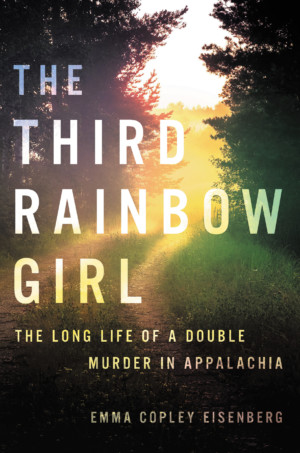
The Third Rainbow Girl by Emma Copley Eisenberg

In the tradition of Truman Capote’s In Cold Blood, Eisenberg investigates a double homicide in rural Appalachia while also meditating on how acts of violence can affect a community for decades. The murders went unsolved for thirteen years until someone was convicted. However, the conviction was overturned when a serial killer confessed to the 1980 murders. 

Image result for uncanny valley a memoir

Uncanny Valley by Anna Wiener

Wiener spent much of her 20s living and working in Silicon Valley where she immersed herself in the explosive male-dominated world of tech and start-ups that seemed too absurd to be true. All of the stories of the tech industry you heard but couldn’t believe happened? Well, they may have been worse than you ever imagined. Uncanny Valley is the perfect dirt-dishing memoir for anyone gleefully following the implosion of WeWork.

Little Gods by Meng Jin

American-raised Liya returns to her birth country to scatter her mother’s ashes and to search for the father she has never known. Weaving the past and present, Little Gods is a haunting tale of love, ambition, and family.

The Vanished Birds by Simon Jimenez

The Vanished Birds by Simon Jimenez

A great science-fiction novel pushes readers to question their reality and Jimenez does that through space and time in this fast-paced time-traveling debut. He leans into tropes and turns them on their head to create a thrilling story about an outsider whose life is changed when a child falls from the sky and into her care.

My Dark Vanessa by Kate Elizabeth Russell

In the wake of the #MeToo movement, Vanessa is forced to reevaluate her relationship with her English professor 17 years earlier. When a different girl accuses the same teacher of sexual harassment, Vanessa wonders whether she was a willing partner or a victim. 

Editor’s note: We temporarily removed this book due to claims that it was suspiciously similar to another author’s work. It appears that decision was hasty. As more information comes out, we’ve decided that it’s best to keep the book on the list.

February

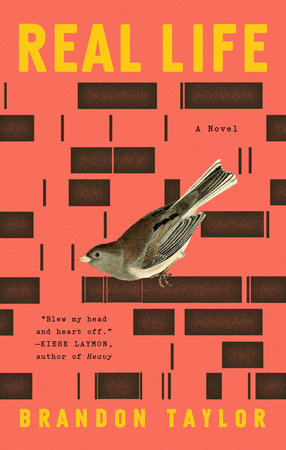
Real Life by Brandon Taylor

Real Life by Brandon Taylor

A story of sexuality and desire told through the experiences of an introverted grad student over the course of a single summer weekend. Recommended Reading senior editor Brandon Taylor’s previously published short stories have already proven he can write beautifully about the small moments in life, and this novel might prove he is a master. If you follow him on social media, you know he is an astute observer of everyday choices and actions.

Djinn Patrol on the Purple Line

Djinn Patrol on the Purple Line by Deepa Anappara

Three shanty-town dwelling children scour the vast and chaotic city of New Delhi to find their missing friend. The novel draws on real events of teenagers going missing in the cities of India.

The Girl with the Louding Voice by Abi Daré

The Girl With the Louding Voice by Abi Daré

Daré’s debut is about Adunni, a teenage girl in Nigeria who is sold by her father to become the third wife to a local man. She flees to the city, striving for something more than a life of servitude. The Girl With the Louding Voice has already won the Bath Novel Award, awarded to an unpublished novel from an emerging author.

My Autobiography of Carson McCullers

My Autobiography of Carson McCullers by Jenn Shapland

Decades after Carson McCullers’s death in 1967, Jenn Shapland discovered love letters that the author wrote to a woman named Annemarie, and decided that McCullers’s hidden life story needed to be told. This genre-defying book is an attempt to give a fuller picture of the writer, but also an account of Shepland’s own journey toward discovering herself.

March

You Will Never Be Forgotten by Mary South

The stories in Mary South’s collection range from uplifting to morbid, but all contain a sharp sense of humor and provide readers with an off-kilter lens to view the world through. From a camp for internet trolls to a women who moves from online stalking to the real thing, South shows the sometimes dark absurdity that technology brings to our lives.

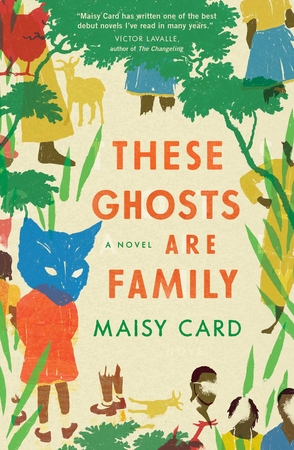
These Ghosts Are Family by Maisy Card

A dying man has kept a secret for three decades that will change the course of his family’s life and alter everything they thought they knew. The story sweeps across time and location, from Jamaica to Harlem, to reveal the background of his choice and the effects it has had on everyone he’s encountered.

This Town Sleeps by Dennis E. Staples

Two men, one Native American and one white, start a relationship in a small town in northern Minnesota where they must keep their love a secret. Their clandestine romance is made even more complicated when they encounter the spirit of a dog who leads them to investigate the death of a beloved teenager.

Days of Distraction by Alexandra Chang

Chang’s short stories have appeared in various outlets including Zoetrope: All-Story and Catapult. In Days of Distraction, she writes about a young woman coming into her own as she juggles an interracial relationship, sexist microaggressions, twentysomething rootlessness, and the intricacies of being Asian American in a racist society.

April

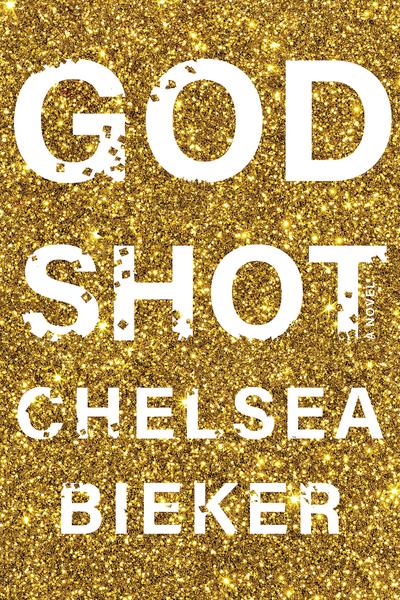
Godshot: A Novel by Chelsea Bieker

Godshot by Chelsea Bieker

A struggling town turns to a pastor cult leader for a sense of community. Fourteen-year-old Lacey begins questioning everything when her mother is exiled from the community and the pastor begins to push his views and goals in an even more extreme manner. Bieker’s novel is an explosive telling of girlhood, family bonds, and finding your place in the world.

Image result for How Much of These Hills Is Gold by C Pam Zhang

How Much of These Hills Is Gold by C Pam Zhang

Zhang’s novel is an intimate family story set against an epic backdrop. Set during the California Gold Rush, it follows newly orphaned siblings after their father dies in the middle of the night. They set out to bury him and bury their past to begin afresh live in the American West.

Image result for poster

How to Pronounce Knife by Souvankham Thammavongsa

Thammavongsa is an award-winning poet and short story writer from Canada. Her work has been heralded for its surreal portraits of tenderness and brutality. This collection features that same sentimentality as it focuses on characters outside of their comfort zone and navigating unfamiliar territory.

Take Me Apart by Sara Sligar

Sara Sligar’s dark novel situates readers in an idyllic community where former journalist Kate is archiving the life of a controversial artist. She falls for the painter’s son and slowly discovers secrets that were never meant to be uncovered. The plot is built to be explosive and it delivers on all fronts.  Each page shows us how obsession can pull us apart from the seams.

May

F*ckface by Leah Hampton

These twelve stories—including “Meat,” previously published in Recommended Reading—offer a tender, realistic portrait of life in modern rural Appalachia.

All My Mother's Lovers by Ilana Masad

All My Mother’s Lovers by Ilana Masad

Masad is the host of The Other Stories, a podcast about and for emerging writers. In her debut, Maggie’s mom dies suddenly, leaving five sealed letters addressed to unknown men. As Maggie traverses the country delivering the letters, she learns more about herself and the mother who never fully accepted her.

June

Image result for Catherine Deneuve

The Lightness by Emily Temple

As a senior editor of Literary Hub, Temple has written numerous essays and criticism of the literary landscape. She now directs her skills to her own novel to be released this summer. The Lightness is about a teen finding a group of close friends to help her navigate adolescence—and learn to levitate.

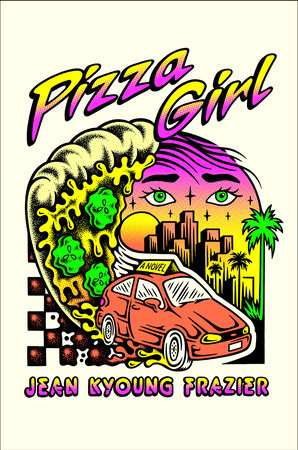
Pizza Girl by Jean Kyoung Frazier

Pizza Girl by Jean Kyoung Frazier

Described as a wryly funny novel in the same vein as The Idiot, this novel follows a pregnant 18-year-old pizza delivery girl who becomes obsessed with a customer. Frazier’s novel already has a lot of fans, including National Book Award finalist Julia Phillips, who said Frazier “will make you laugh with one sentence and break your heart with the next.”

Write the Perfect Personal Essay Pitch With Our Handy Chart

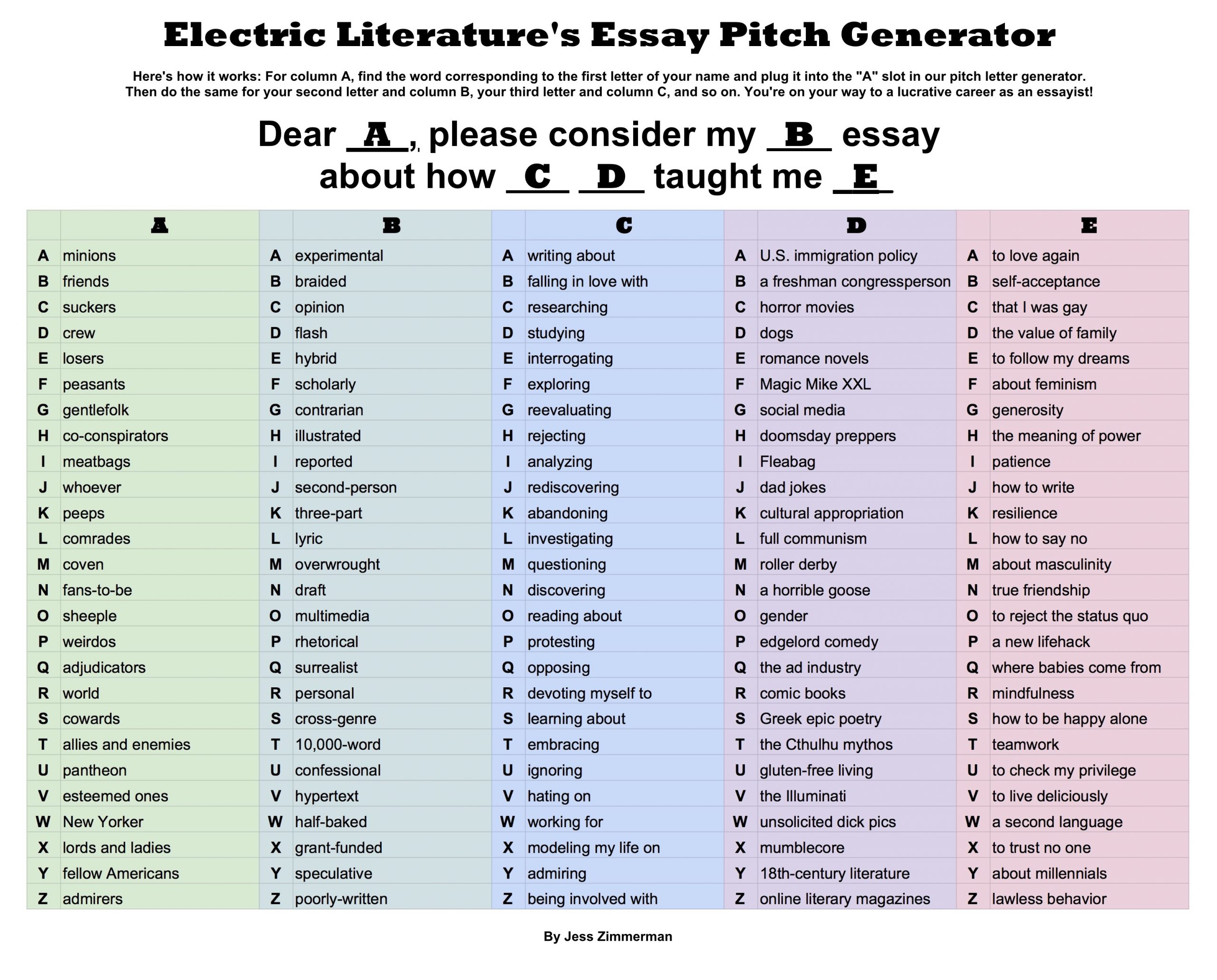
Whether you’re promoting a novel, shopping a memoir, or simply trying to get your first byline, it seems like everyone wants to write personal essays. The trouble is figuring out what to write about. Well, we have good news: the answer was in you all along. Specifically, it was hidden in the letters of your first name.

With our handy chart, you can finally figure out the personal essay you were born to write. Just find the first letter of your name in column A, the second letter in column B, and so on, and plug them into the pitch letter provided. (If you run out of letters in your first name, move on to your last—or throw your middle name in there, do what you want, we’re not your dad.) So for instance, if you’re Joan Didion, you’d look for J in column A, O in column B, A in C, N in D, and D (for Didion) in E—for the result “Dear whoever, please consider my multimedia essay about how writing about a horrible goose taught me the value of family.” Ms. Didion: we’ll take it.

Click to enlarge

Literary-Inspired Decoration Ideas for a Horrifying White House Christmas

This year, the White House continues its theme of horrifying holiday decor by imitating a hallway from The Shining. This follows the infamous 2018 hallway of blood-red trees, suggesting that the visitor has somehow wandered into a carnivorous forest. What ordinary citizens don’t know, however, is that this is part of a deliberate strategy! The White House is reviving the old tradition of telling spooky stories around Christmas, albeit through the medium of pine trees and strange ornaments. We’ve managed to get our hands on some proposals for next year’s decor.

Shirley Jackson

Focusing on Shirley Jackson will bring to the forefront what we really mean by asking for a return to the family values of the 1950s: a suffocating “us or them” mentality, undergirded by homophobia, anti-semitism, and misogyny, that can only be alleviated by murder.

Wander through New England pines decorated with ornaments from Faberge’s newest line of “American Poisonous Mushrooms.” The sense of creeping unease only continues the farther you go, and you begin to see, behind the trees, all the unfriendly faces of all the townspeople that hate and fear you. 

Visitors will initially complain that all tickets to see the White House Christmas display are now distributed through a lottery system, but when the tour ends in a locked room filled with large piles of rocks, the reasoning behind this will become abundantly clear.

The Crucible

Keep the witch hunt going all year round! Return to the values of our founders by turning the White House into an early Puritan settlement whose oppressive atmosphere terrifies visitors guilty of wrong-doing into flinging wild accusations at each other to deflect suspicion. There’s only the dark and undecorated woods, where witches may lurk, the devil is ever-present, and your fears of human sexuality twist these metaphysical terrors into real, physical forces of evil.  

Return to the values of our founders by turning the White House into an early Puritan settlement.

Children will love the Kids’ Corner, where they can pile rocks on top of a stuffed Giles Corey in a Santa hat until he breaks in two. It’s edutainment! 

Edgar Allen Poe

This year we’re exchanging “ho, ho, ho,” for “Poe, Poe, Poe!” The White House will be transformed into an ancient and crumbling mansion where the leaves on all the trees are crispéd and sere, large black cats dog your footsteps, and ravens sit croaking “Nevermore!” on pallid busts of Pallas above the chamber doors.

Pry up the floorboards to find your very own red sequined heart ornament to take home. Press the button to hear it beat! Visitors can also find excellent refreshments at the end of the tour by following tour guide Montresor into the wine cellar. For god’s sake, check it out! 

The Exorcist

Christmas is a religious holiday after all! Make it somber. Fill the White House with priests from the nearby Georgetown University. Nothing gets a Christmas party started like solemn chants in Latin to drive the devil out.

Plus, this will serve as a great reminder that if the Republican repeal of Obamacare goes through, an exorcism is the best and cheapest way to treat projectile vomiting. 

The Handmaid’s Tale

The Exorcist feel too Catholic? Keep religious fundamentalism at the heart of the season by repurposing the red trees from 2018! Add a white bonnet on top, in lieu of a bonnet, and boom, we’re in Gilead. 

Legislatively, this administration already wants to go there. Why not make it obvious? 

H.P. Lovecraft

This year, we won’t fight over saying, “Happy Holidays!” or “Merry Christmas!” We’ll say, “Cthulhu fhtagn!” In this H.P. (it stands for HapPy) Christmas extravaganza, visitors will be transported to the sunken city of R’lyeh. Deck the halls with ornaments of vile, mind-arresting creatures marked by their fearsome and unnatural malignancy, and banners full of undecipherable characters. 

Deck the halls with ornaments of vile, mind-arresting creatures marked by their fearsome and unnatural malignancy.

Visitors will love our crafts corner. (Get it?) The kids can make their own Deep Ones ornaments with sculpting clay. Combine together as many disparate animal parts as you like and take home your own eldritch horror as a fun souvenir!

Bonus: this author’s understanding of racial diversity perfectly fits this administration’s! No need to update anything for a modern audience.

Frankenstein

This novel’s framing device, a doomed arctic voyage, inspires our plan for the bleak and desolate foyer, where one sees only the smallness of man in the vast power of uncaring nature. Then, in the usual tree hall, we’ll get kids interested in STEM at a young age by seeing how you can put together great monstrous trees by combining bits and pieces of smaller dead ones! 

If they don’t want to take their awful new creations home with them, they’ll learn a valuable lesson: the sooner you can learn how to deny responsibility for your actions, the better. 

Shopping For a Boy? Give Him a Book About a Girl

My senior year of high school, I audited a contemporary literature class with one of my favorite teachers—the kind of teacher students hang around to talk to after class, the kind who has the deepest respect for his students and also the highest expectations. 

One day, after I’d been unusually quiet in class, he asked what I thought about the book we were reading; it was his first time teaching it. Truthfully, the book featured a lot of characters I had very little interest in reading about: extremely troubled anarchists. I told my teacher I wasn’t enjoying it, and I think I even went so far as to say that I didn’t think it should be on our syllabus. 

When he asked why, I said, “Because I can’t really relate to any of the characters.”

My teacher leaned back against his desk and smiled like he knew something I didn’t. “So, what?” he asked after a pause. “You only read books about yourself?” 

We laughed about it, and then probably had a meaningful discussion about different avenues for connecting to literature until the starting bell for the next period rang and I hurried off to math class. Internally, though, I was horrified. In part, it was cutting to take critique from a teacher whose respect I so badly wanted. But mostly, I feared he was right. At home that night, I sat in front of my bookshelves, privately confirming to myself that I did, in fact, read all kinds of books about people I’d never encounter in real life. But the question buzzed in the back of my mind for weeks, because, deep down, I knew I judged not just my enjoyment but the quality of books based on how much I could relate to the characters. 

My teacher’s question, perhaps more than anything else I learned in high school, has stayed with me. After that discussion, I started to value books based on how much they challenged and expanded my “theory of mind”—essentially, the ability to understand people’s desires and perspectives different from my own. 

Books give readers the opportunity to practice understanding and caring about the thoughts and feelings of others.

This probably won’t come as a surprise, but reading has been demonstrated to make people kinder, more empathetic, and more socially intuitive, among a host of other benefits. Cognitive psychologist Keith Oatley likens the act of reading to a pilot learning to fly in simulation. Books give readers the opportunity to practice understanding and caring about the thoughts and feelings of others.

This works better with fiction than nonfiction, because those books require more understanding of other minds. “The effectiveness with which literature improves social cognition may depend on how well it demands attention to others’ mental states,” writes Princeton Social Neuroscience Lab psychologist Diana Tamir. “Such high-quality practice in simulation—or the capacity to experience realities outside of the ‘here-and-now’, including hypothetical events, distant worlds, and other people’s subjective experience—then translates into real-world consequences for readers’ social cognition.” Being forced to put oneself in others’ shoes through literature—i.e. not just reading books about yourself—exercises the parts of the brain (like the medial prefrontal cortex and posterior cingulate cortex) that support our capacity for empathy. 

This is great news for teenage girls, who read books with boy protagonists all the time. Unfortunately, the reverse is almost universally untrue. 

With the exception of a few books like The Hunger Games series, boys almost never pick up books with a girl in the central role—nor are they asked to, which has everything to do with marketing and expectations. (I’ll also note here that The Hunger Games’ female protagonist, Katniss, fits decidedly traditional masculine stereotypes—unemotional, hunts with a bow and arrow, provides for the women in her family, etc.—perhaps making her more palatable to a male audience.) If reading about others makes us more empathetic and compassionate, is it any wonder that girls, who are constantly being asked to read about the opposite sex, have a reputation for being sensitive to the emotions of others, while the running joke is that boys have no idea what goes on in a girl’s head? 

Boys almost never pick up books with a girl in the central role—nor are they asked to.

There is no question that girls are expected to read books from viewpoints outside of their own experience more than are boys. My male friends recreationally devoured great books in middle and high school like Holes, The Giver, and Ender’s Game, all featuring male protagonists. Meanwhile, my female friends read all of those, as well as works by Laurie Halse Anderson, Jenny Han, Tahereh Mafi—great authors I’ve never seen in a boy’s hand. 

What would our world look like if boys were asked to read books about girls and their feelings and their unique struggles? Not necessarily girls saving the dystopian universe, although those books are important models too, but girls portrayed living their normal lives bravely? Girls facing problems many would consider fleeting or trivial? 

Of course, some boys do read these books—especially the books that have garnered wide respect as classics of the genre. I asked a male friend over coffee last week whether, as a child, he read any books featuring an everyday female protagonist. He had with him a copy of Kerouac’s On The Road, so my expectations were low. 

“You mean, like, Ramona Quimby books?” he asked. “Little House on the Prairie? Judy Blume?”

“Yes,” I said, “That’s exactly what I mean.” 

“Yeah, I read all of those.” 

“Did someone give them to you?” I asked. (He and I went to elementary school together and they certainly weren’t assigned reading.)

“I grew up with five sisters,” he said by way of explanation. No one had specifically given those books to him; those books were around, so that’s what he read. 

In other words, boys can and do enjoy books about girls—as long as they have access to them. But they’re rarely getting them in school, or as gifts from parents, or from other boys. And we demean boys by assuming they won’t be interested or that there is nothing to be gained by reading Anne Brashares or Rainbow Rowell. 

The idea that young women’s stories don’t matter is fundamentally disconnected from reality.

Author Jodi Picoult recently noted that the way we talk about YA literature about young women “suggests stories about young women matter less. That they are not as worthy or literary as those about anything but young women. That their concerns and hopes and fears are secondary or frivolous.” This idea that young women’s stories don’t matter is fundamentally disconnected from the reality that teenage girls are a powerful (though powerfully underestimated) group. For example, they happen to be currently leading the climate strikes and helping change the face of environmentalism—to say nothing of change brought about by young women like Malala Yousafzai, Emma Gonzalez, and Amika George.

Which means young boys aren’t the only ones missing out on a whole genre of literature when we market “teenage girl books” solely to teenage girls. Adults should be reading them too.

There’s a nearly ubiquitous snobbery towards young adult literature. Despite a long tradition of children’s/young adult books being folded into the adult literary canon (The Adventures of Tom Sawyer, Alice in Wonderland, The Hobbit, to name just a few), and despite the fact that we have no problem recognizing that films made for kids have merit for a wider audience (has anyone ever said “Toy Story is fine for kids, but…”?), YA literature — however thoughtfully written and deeply explored — is still categorized as something more trivial. And this is especially true of books about girls. 

If reading books about someone other than ourselves is important for building social-cognitive skills, we should more readily embrace the books meant for teenage girls, even make them the centerpiece of the young adult reading experience. And, perhaps, the adult reading experience too. 


Before you go: Electric Literature is campaigning to reach 1,000 members by 2020, and you can help us meet that goal. Having 1,000 members would allow Electric Literature to always pay writers on time (without worrying about overdrafting our bank accounts), improve benefits for staff members, pay off credit card debt, and stop relying on Amazon affiliate links. Members also get store discounts and year-round submissions. If we are going to survive long term, we need to think long term. Please support the future of Electric Literature by joining as a member today!