Are You a New York Writer or an LA Writer?

You go to a coffee shop in order to focus on your craft. What do you order? 

A. A black coffee. 

B. An almond milk matcha. 

What is your critically acclaimed debut novel about? 

A. A man getting stuck on a subway train and revisiting the weight of all of the mistakes he’s made in his twenty- four years of life. 

B. A sweeping family drama about migrants crossing the border and the brave white man who meets them and has the guts to tell their story. 

What do you eat for breakfast? 

A. I don’t, because I’m distracted by the hustle and bustle of the world outside me. I’m constantly on the move, engaging with strangers and enemies, friends and lovers. 

B. I don’t, because gluten before noon muddles the mind and destroys the body. Actually, gluten at any time. Actually, all food. 

How explicit are your sex scenes? 

A. I describe the curve of her breast. 

B. I describe the curve of her [CENSORED BY THE EDITOR FOR PUBLICATION]. 

What’s served at your local cocktail parties? 

A. Microbrews and cocaine. 

B. Cheese and cocaine. 

What are you dressing as for Halloween this year? 

A. I don’t dress up for Halloween because it’s a holiday for children and crass consumer- ists. So either that or Maxwell Perkins. 

B. A serial killer, but one who hasn’t been caught yet. 


If you answered mostly A’S 

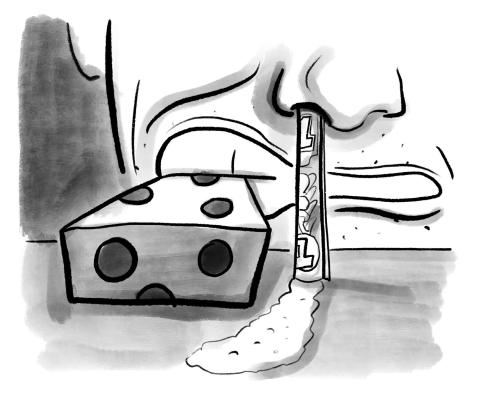
You are a New York writer. Your best work will be done in a notebook while standing on a subway platform, waiting for a train that may or may not ever arrive. The rats that have burrowed beneath your nonfunctional dish- washer are probably just a metaphor for your grandfather’s sins. 

If you answered mostly B’S 

You are an LA writer. Your best work will be done by dictation while you’re waiting in traffic. Your blog posts about the lighting in Tarantino films will one day have upwards of eighty views. Enjoy pretending to call yourself a novelist while you’re really just waiting for the right person to read your screenplay. 

(The above is an excerpt from The White Man’s Guide to White Male Writers of the Western Canon written by Dana Schwartz and illustrated by Jason Adam Katzenstein.)

20 Fiction Prompts Culled from Florida Man Headlines

The Sunshine State has been the inspiration for so much great literature; authors like Lauren Groff, Kristen Arnett, and Karen Russell have used the wild natural world of Florida’s swamps and beaches as inspiration for their fiction. But perhaps no one has captured the spirit of Florida quite like Florida Man. He alone is as untamed as the Everglades; he alone is as resilient as an alligator. Writers are students of life, and who but Florida Man can say they have truly lived? Use this list of Florida Man headlines to inspire some writing as weird as the state itself. 

  1. Missing Florida Man Says He Wants to Heal, Kill People (speculative fiction)
  2. Large, exotic bird that killed Florida man to be auctioned (detective novel)
  3. Florida Man Speeds Down Highway While Standing Out Of Sunroof, Says He’d Rather Go To Jail Than Home To His Wife (queer romance)
  4. Florida man rides manatee, dares police to arrest him, gets arrested (fable)
  5. Florida Man Shoves Foot-Long Sandwich Down His Pants, Sparks Manhunt (western)
  6. Florida man fighting for his life after chasing monkey (metafiction)
  7. Florida Man Allegedly Fooled Family Into Believing Murdered Wife Was Still Alive (psychological thriller)
  8. Florida Man Threatens to Kill Man With ‘Kindness,’ Uses Machete Named ‘Kindness’ (poetry collection)
  9. Florida Man Finds a WWII Grenade, Places It in His Truck, Drives to Taco Bell (picaresque novel)
  10. Florida man throws burrito in woman’s face, cops say. And this has happened before (bildungsroman)
  11. Rattlesnake-carrying Florida Man Claims to be ‘Agent of God’ (magical realism)
  12. Florida Man Who Allegedly Threatened Family with Coldplay Lyrics Ends Standoff After SWAT Promises Him Pizza (food memoir) 
  13. Florida Man Rescues Grandma Floating Away on Ice Throne (climate fiction)
  14. Florida Man Believes Wrestling Event Is Haunted by the Ghost of Macho Man Randy Savage (erotica)
  15. Florida Man’s Church Loses Tax-Exempt Status Because It’s Just a Nightclub (tragedy)
  16. Florida Man Covered in Pizza Arrested for Pizza Battery After Pizza Dispute (cookbook)
  17. Florida Man Drinks Goat Blood in Ritual Sacrifice, Runs for Senate (political thriller)
  18. Florida Man Found Asleep In Taylor Swift’s Bed Charged With Stalking (young adult thriller)
  19. Florida men, one dressed in bull onesie, attempt to burn down house with Ragu sauce, police say (surrealism)
  20. Florida Man claiming people were “eating his brains” leads police on insane golf course chase (zombie novel)

Our Favorite Essays and Stories About Horror Films

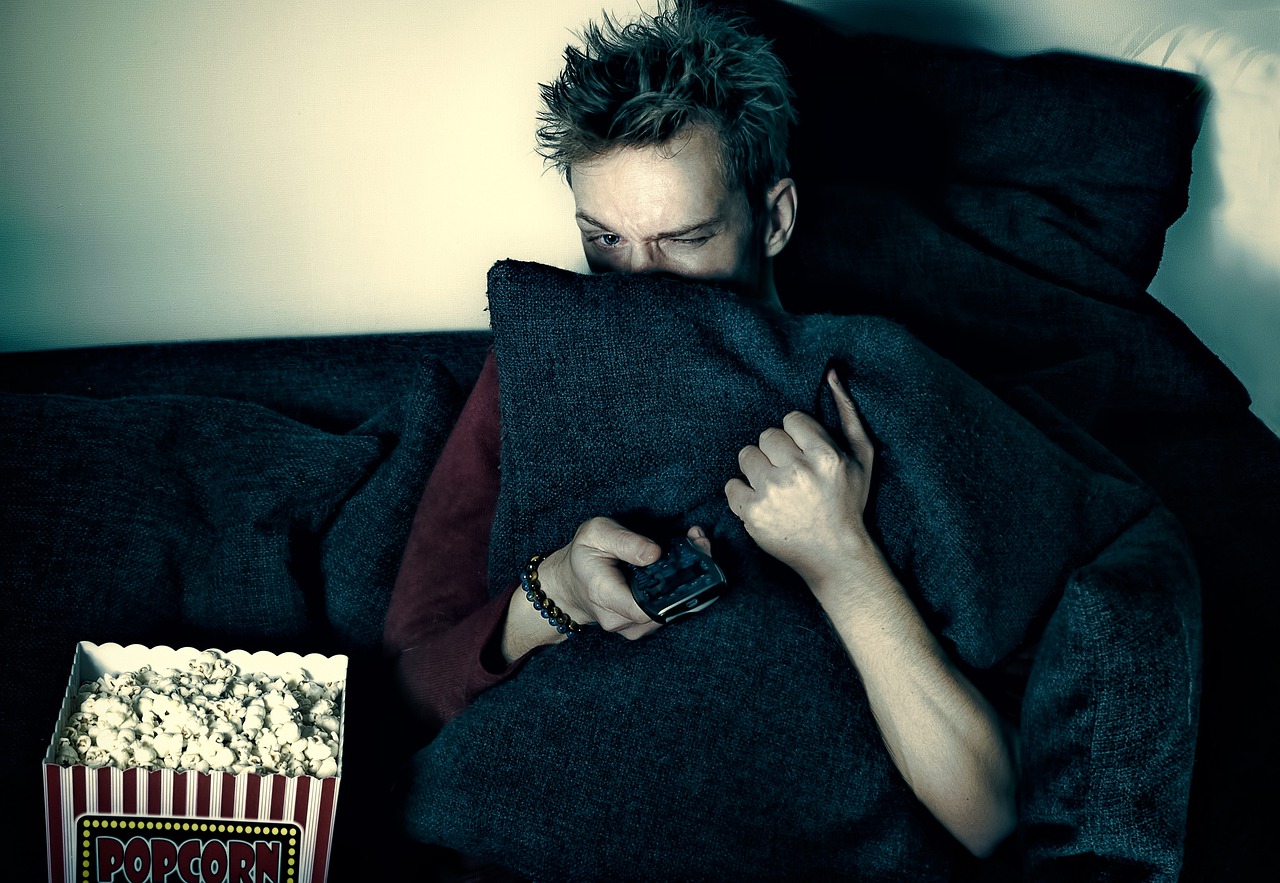
It’s the spookiest day of the spookiest season, but you already had your party last weekend, and now you have to stay home and either hand out candy to grabby children or turn out all lights visible from the street and pretend you’re not home. What makes a night in both fun and seasonally appropriate? Horror movies, of course! So while you’re waiting for, or hiding from, trick-or-treaters tonight, put on a Nightmare on Elm Street marathon and make your way through some of the best stuff we’ve published about scary films.

There’s Nothing Scarier Than a Hungry Woman” by Laura Maw

Maybe you haven’t noticed this, but horror movies contain a lot of scenes of women eating—and not only eating, but eating voraciously. Laura Maw has noticed, and she thinks she understands. This essay is both a sensitive cultural analysis of a horror movie trope and a beautiful personal narrative of coming to terms with both the threat and the banality of hunger.

As a woman, to say that you have found eating uncomfortable at times is not particularly groundbreaking. The anxiety has become mundane because it is so common for women, but isn’t that in itself noteworthy? Horror invites us to sit with this disgust, this anxiety, to acknowledge our appetite, to refuse to let us suppress it. There is something uncomfortable and enthralling about watching a woman devour what she likes with intent.

Horror Lives in the Body” by Meg Pillow Davis

This Best American Essays notable is about the physical experience of horror—both horror films, and the familiar horrors we encounter in our normal lives, the ways we brush up against mortality and violation and fear. Why do we seek out this physical experience—”the pupil dilation, the quickening heart, the sweat forming on your upper lip and the surface of your palms, and the nearly overwhelming urge to cover your eyes or run from the room”?

If those other viewers are anything like me, they watch horror movies because they recognize the horror, because its familiarity is strange and terrifying and unavoidable. It is the lure of the uncanny filtering into the cracks and crevices of the cinematic landscape and drawing us in.

What ‘Halloween’ Taught Me About Queerness” by Richard Scott Larson

Michael Myers wears a mask to hide his face while he kills—but is that the only mask he wears? Richard Scott Larson talks about watching Halloween obsessively as an adolescent, while he was starting to understand that his own desires were also considered monstrous.

The experience of adolescence as a closeted queer boy is one of constantly attempting to imitate the expression of a desire that you do not feel. Identification with a bogeyman, then, shouldn’t be so surprising when you imagine the bogeyman as unfit for society, his true nature having been rejected and deemed horrific.

If My Mother Was the Final Girl” by Michelle Ross

The “final girl” is the one who’s left standing at the end of the film, the one who survives the carnage. But what do you call someone who’s still standing after childhood trauma? This short story is about horror films, but more than that, it’s about mother-daughter relationships—a deeper and more mundane form of horror than the kind in slasher flicks.

The one thing my mother and I share is a love for slasher films. When the first girl gets hacked up or sawed in half or stabbed in the breast, my mother says, “Now there’s real life for you.” And I glance at her sideways and think, you can say that again.

A Love Letter to the Girls Who Die First in Horror Films” by Lindsay King-Miller

Unlike the “final girl,” the girl who dies first doesn’t have a catchy title. Lindsay King-Miller writes about the lost friend who taught her that we don’t all have it in us to be a final girl—and that we should celebrate the girl who dies first, because she’s not living in fear.

To survive a horror story you have to realize you’re in one. The girl who dies thinks she’s in a different kind of story, one that’s about her and what she wants: to dance, to party, to fuck, to feel good. She thinks she is the subject of this story, the one who watches, desires, sees, the one who acts upon the world. She does not feel the eyes on her, does not know she is being observed, that her fate is not to reshape the world but to be reshaped by it.

Nothing Has Prepared Me For The Reality of Womanhood Better Than ‘Texas Chainsaw Massacre 2’” by Sarah Kurchak

Yes, Texas Chainsaw Massacre 2 is a cheesy horror-comedy hybrid in which women are menaced and their bodies are treated as set dressing. But so is adolescence. Sarah Kurchak writes about the many ways in which this movie taught her what to expect from the world.

Sure, this was, on many levels, a schlocky B-movie with so many of the expected hallmarks of the time — women in hot pants and peril, over-the-top gore. But it was a schlocky B-movie in which a woman faced men’s threats, both implicit and explicit, and was left breathing but almost unrecognizable at the end of it. That felt familiar.

Loneliness Is a Ghost

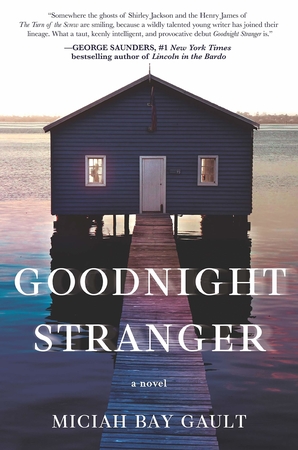
Do you ever have that feeling that you can trust a person you’ve never met before? You can’t quite explain this sensation to yourself, but this is a matter beyond language or rational thinking. Your whole body is somehow pulled to this alluring person, so much so that you would trust them with your love, and maybe even your life. How exhilarating and freeing it is to be totally immersed in that ungrounded attraction. However, be cautious as you are led into temptation, author Miciah Bay Gault reminds us: people are not always who you think they are.

In her novel, Goodnight Stranger, Gault weaves the tale of Lydia Moore, a young woman who lives with her pathologically shy twin brother, Lucas, on Wolf Island off the coast of Massachusetts. They are haunted daily by the loss of their baby brother, their triplet, and the mystery surrounding his death. When a handsome stranger arrives on the island, Lydia is instantly enamored with him, despite Lucas’s belief that this stranger is somehow the reincarnation of their dead brother. Gault’s gripping prose develops into a toe-curling blend of romance and literary suspense as Lydia discovers unsettling truths about the mysterious stranger, the ghostly inhabitants of Wolf Island, and her own family’s dark secrets.  

I spoke to Miciah Bay Gault about longing, belonging, and other desires of the human heart.


Cameron Finch: I’ve heard you say that your writing career really took off after an essay of yours was published in Tin House a few years ago. Could you tell us briefly about that essay and the impact that its publication has had on your work since? 

Miciah Bay Gault: Yes, that’s 100% true! The essay was about a student I encountered while teaching English Composition at the Community College of Vermont who’d spent two years in prison for grave-robbing. He was brilliant, and remarkably beautiful and engaging, and his story was just so strange and surprising. The essay told his story, and investigated other cultural and literary narratives about grave-robbing, focusing especially on skulls, and explored too my own obsession with this story, which I recognized as bizarre.

The essay was called “My Own Private Byron,” and its publication did lead to great things in my writing life. In my bio in Tin House, I mentioned that I was working on my first novel, and an agent who saw the essay contacted me to ask about it. I happened to be in labor when I got the email from the agent, Jenni Ferrari-Adler at Union Literary. Basically between contractions, I told my husband, “Do me a favor. Write her back, tell her I’m busy? But I’ll get back to her really soon.” I sent her the manuscript a few weeks later, and she replied within 24 hours, saying that the manuscript needed a lot of work, and she was willing if I was. Of course I was. I worked on the novel for the next four years with input from Jenni. 

CF: A real labor of love, you might say (if you’re into puns)? The novel that emerged from that fateful email with Jenni was, of course, Goodnight Stranger! What was the seedling for this mysterious and sexy and deeply emotional tale? 

MBG: First of all, thank you. I can’t imagine better praise than “mysterious and sexy and deeply emotional.” I read a New Yorker piece years ago about a couple’s struggle with infertility—which has nothing to do with Goodnight Stranger. The New Yorker essay ends with the birth of one daughter after years of heartache and lost pregnancies. I found myself wondering about the daughter—was she haunted all her life by the thought of those siblings she might have had? Was she lonely? Did she long to know them? 

The first concrete image I saw from Goodnight Stranger was two grown-up siblings standing in a doorway looking across the threshold at a stranger. I imagined the air charged like the air before a storm, crackling with hope and fear and desire. And one of the siblings says, “It’s him.” 

That’s all I had. I knew this was a story about siblings who had been haunted all their lives by a brother who’d died, and I knew a stranger would show up who was eerily familiar to them. At first I thought it might be a short story, but it ended up being too unruly and complicated for that.

CF: “Eerily familiar” is such a great way to describe how Lydia and Lucas feel toward “the stranger.” And yet, the siblings believe wildly different truths about the stranger’s past and present. So much of this novel hinges on people’s beliefs and intuitions about one another, which fascinates me. I’m reminded of Lydia’s mother, who believed that pieces of the soul could splinter off over time.

Beliefs are quite the concept to explore. As abstract as they may be, they certainly tell us a lot about a character based on the space they allow them to take up in their lives, the meaning they assign to those beliefs, and the identities they draw from them. How do your own beliefs, whether that’s your belief in other people or in another world beyond our own, influence your fiction?

MBG: To start, I’ll say that I’m not sure you can really know a person—or a character—without knowing what they believe. So thanks for noticing what a big role that plays in Goodnight Stranger

I think a lot about obsessions, and I like to let my characters obsess. I also think it’s a good idea for writers to notice, and even cultivate, their own obsessions. I guess I should clarify: I don’t mean creepy obsessions with other people (okay for characters, not great for writers), and I also don’t mean the small, needling quotidian worries that occupy so much real estate in our minds. What I think is good for writers to cultivate is preoccupations, fears, desires—because somewhere in the chemistry between the people we are and the things we obsess about is a kind of beautiful energy that gets a little nearer what’s primal, or at least primary, in our natures. 

So at the risk of sounding embarrassingly lofty, I believe we (writers) should chase our fears and delights, looking for what’s true about us. Am I answering the question? I might actually be dodging it.

I don’t have religious beliefs, so when you ask about beliefs, I think in terms of values. My third grader is doing this big project in school right now called “This is me and what I value.” The kids have to identify and present their values. It’s hard work for eight-year-olds, and it’s been forcing me to really articulate my own values in an effort to clarify for my kids exactly what values are. The best I can do when trying to explain things to my kids is that I believe in luck, kindness, and curiosity (the pursuit of obsessions). Those things sound so simple, but actually they’re giant concepts, and messy, and multi-faceted. I won’t delve into all the complexities here, but I will say that kindness, luck, and curiosity are the guiding principles of my writing practice, and my professional life.  

CF: Goodnight Stranger is set on a fictional island called Wolf Island, off the coast of Massachusetts, where the majority of people who come and go each day are tourists. The residents of the island rarely travel far from their homes. You write this brilliant line: “I was an expert on tourists. They didn’t know me, but I knew them. Some … tried to capture the island, fit it onto a scrapbook page. Some came because they loved beauty. Some came to remember the past, or to refuse the future.” Lydia, the novel’s narrator, goes on to list three types of people: the tourist, the returning visitor, and the islander. As the author of Lydia’s world, which are you? 

MBG: This question is making me laugh! I’ve always had a strong feeling that I don’t fit into any category, even though I (like Lydia) am inclined to categorize. Right now, for instance, I want to say that a lot of writers share this sense of not belonging in one category or another—but see how that creates another category (non-belonging)?  

The first image I saw was two grown-up siblings standing in a doorway looking at a stranger.

When I was a kid, I really wanted to belong, of course. I moved around a lot: Vermont, Sanibel Island, Indiana, Sanibel Island again, southern Maryland, all before I was thirteen. We moved to Cape Cod the summer before high school started, and the place immediately felt like home to me—love at first sight. Even though I felt like I belonged in that place, I was acutely aware that I wasn’t really a local like so many of the other kids who had gone to kindergarten or preschool together. I also didn’t have the same aura the summer kids brought—of being from somewhere more urbane. The summer kids in my town weren’t tourists, not just visiting—they came every summer, and often their parents were oceanographers or marine biologists teaching or researching at one of the science institutes. 

In Goodnight Stranger, Lydia identifies as an Islander, for sure, but she also so often feels like she’s an observer, not really part of the action. I think that’s how I felt growing up—still feel now—that I don’t belong in any categories, that I’m always just outside them. And of course I also know that categories aren’t permanent or even real; they’re just invisible filing systems, and they can shift and reorganize in an instant. They’re so comforting though, aren’t they? Lydia categorizes compulsively. I like the part where she’s drunkenly trying to categorize at the bar: 

‘There are three types of people in this world,’ I told Eliot Moniz when he brought me one more Glenmorangie. ‘The ones who are dangerous. The ones who love the ones who are dangerous. And the ones who protect the ones who love the ones who are dangerous.’

I always think that’s really funny—that grasping for labels, when really she’s just describing the very specific situation she’s in with Cole and Lucas. 

CF: In your Salon essay, “Let Us All Praise Loneliness,” you wisely state that both you and your characters need loneliness in order to grow and change. After many years of searching for “the opposite of loneliness” in Portland, the UK, and your college days at Syracuse, you now live with your family in Vermont, a state that is host to a number of haunted sites and stories. That ghostly imagery and regional folklore, such as the legend of Emily’s Bridge, features heavily in the plot of Goodnight Stranger. How do you see loneliness and the supernatural speaking to one another in your novel? 

MBG: Oh yes, I definitely see a connection between loneliness and the supernatural in the novel, and I’m happy you asked about it. The way I see it: for Lydia and Lucas, their loneliness, the intensity of their longing for this lost brother, for family, for a sense of belonging, is what makes them both so receptive to the stranger, and to believing the unbelievable. Loneliness is like a ghost in the room with them. 

CF: Were there any particular books/films/soundtracks you consumed while writing Goodnight Stranger?

MBG: The novel took fifteen years to finish, so there were a lot of books, films, and music during that time! But here’s what’s coming to mind: In the final stages of revision, I read Shirley Jackson’s We Have Always Lived in the Castle and Donna Tartt’s The Secret History, looking for ways to sustain suspense over hundreds of pages. During that time I also read The Hundred Year House by Rebecca Makkai and The Kept by James Scott, neither of which is a “suspense” book, and yet I flew through both of those novels, madly turning pages. 

You have to ask and answer questions throughout the book. You can’t leave all the questions unanswered until the end.

Creating a mood came easy to me, as did building the world of Wolf Island. The characters came easy to me; I could hear their voices and had a clear sense of their essence. But what didn’t come easy was making a fast-paced plot. I wrestled with that for years. So I was paying attention to books that were fast-paced, that created a sense of urgency, that sense of rolling down a hill, that feeling of momentum. One thing I realized from reading those books was that posing questions is only the first step in creating that sense of urgency. Answering questions regularly is just as important. You have to ask and answer questions throughout the book; you can’t leave all the questions unanswered until the end. I feel like this is so elementary, and basically the way any episode of Scooby Doo is structured, so I’m not sure why it took me so long to learn. To be honest, I don’t think I’ve fully learned it yet. I’m still trying.  

When I was writing the first draft of the book, I was in the MFA program at Syracuse, and I listened to a lot of Tom Waits, which is the music I always imagine playing in the bar on Wolf Island. Specifically, it was The Early Years, Volume Two. I have such a visceral memory of writing in my apartment on Westcott Street, probably wrapped up in a blanket, the snow coming down outside (it snowed every day of the winter), with that broody, Tom Waits carnival sound in the background. 

We Survived the Masquerade of the Red Death and All We Got Were These Beautiful Pictures

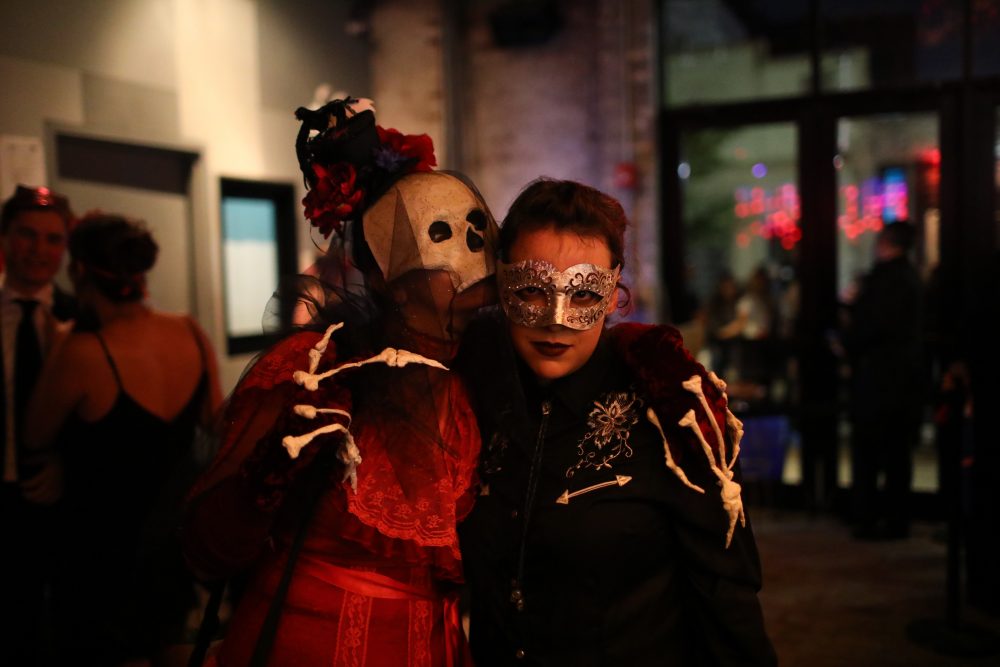
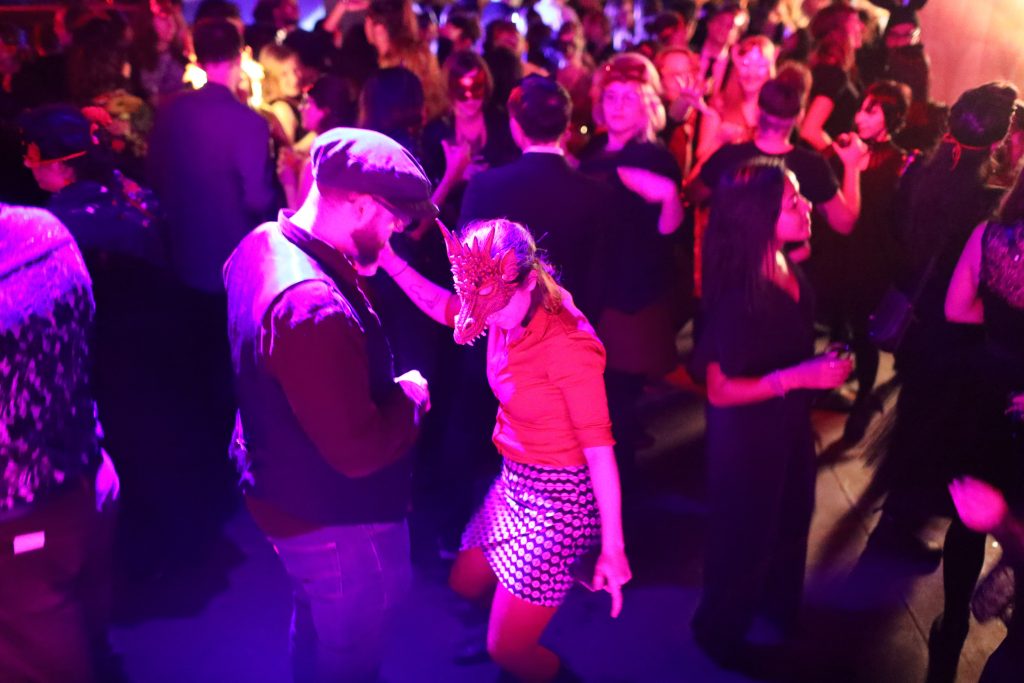
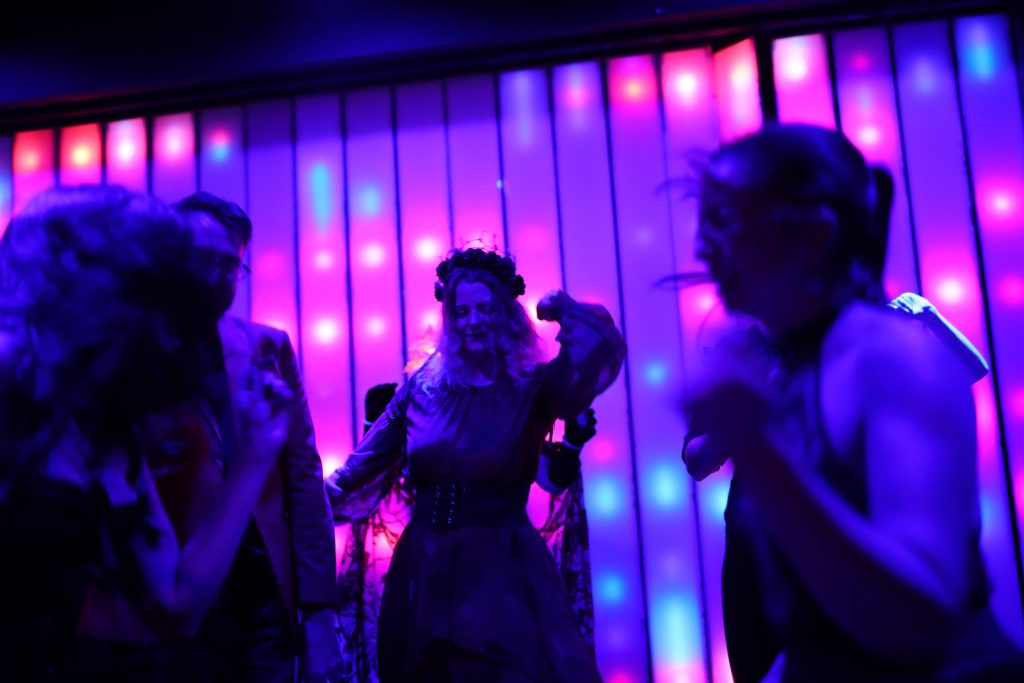
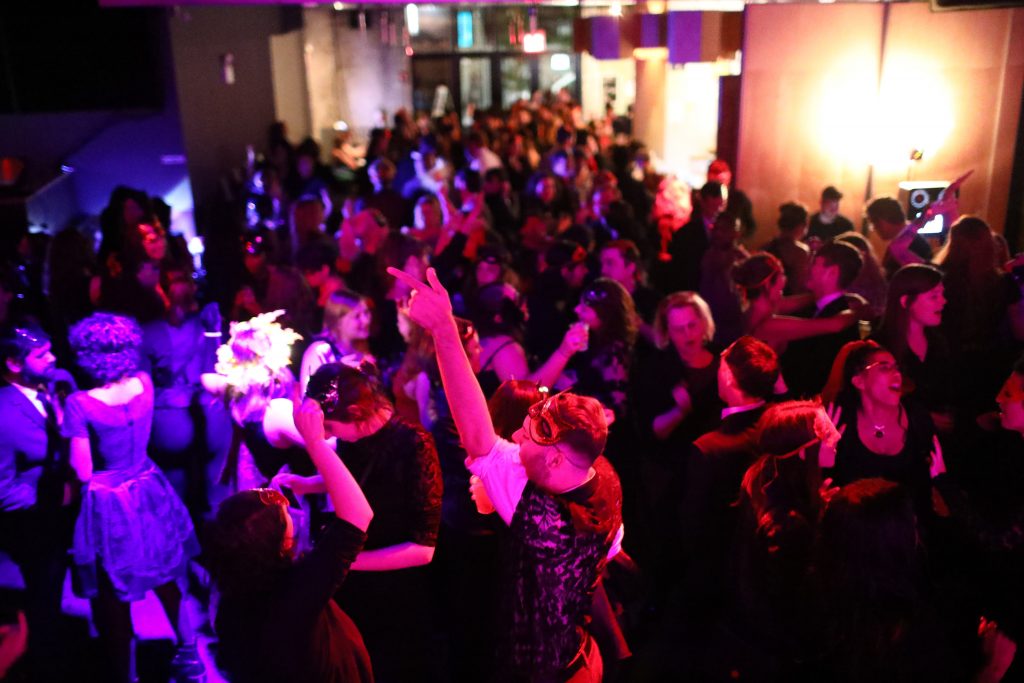
After last year’s Masquerade of the Red Death, we thought it couldn’t get any redder or any deader. Shows what we know! In fact, Brooklyn’s literary elite (and, more importantly, Brooklyn’s literary proletariat) showed up to Littlefield in their best red and black finery for a party that was truly 2 red and 2 dead. Here are some of our favorite shots from photographer Andrew Janke. There are even more on our Flickr page!

A treasure trove of books from our sponsors, all free for guests.

Tor Books employees enjoy the cocktail hour.

The hard-working Littlefield bartenders pouring Sloe Death Negronis from our beverage partner Sipsmith.

A mysterious dinosaur regards a negroni.

Catapult web editor (and former EL staffer!) Leah Johnson and EL contributor Arriel Vinson show off their masks.

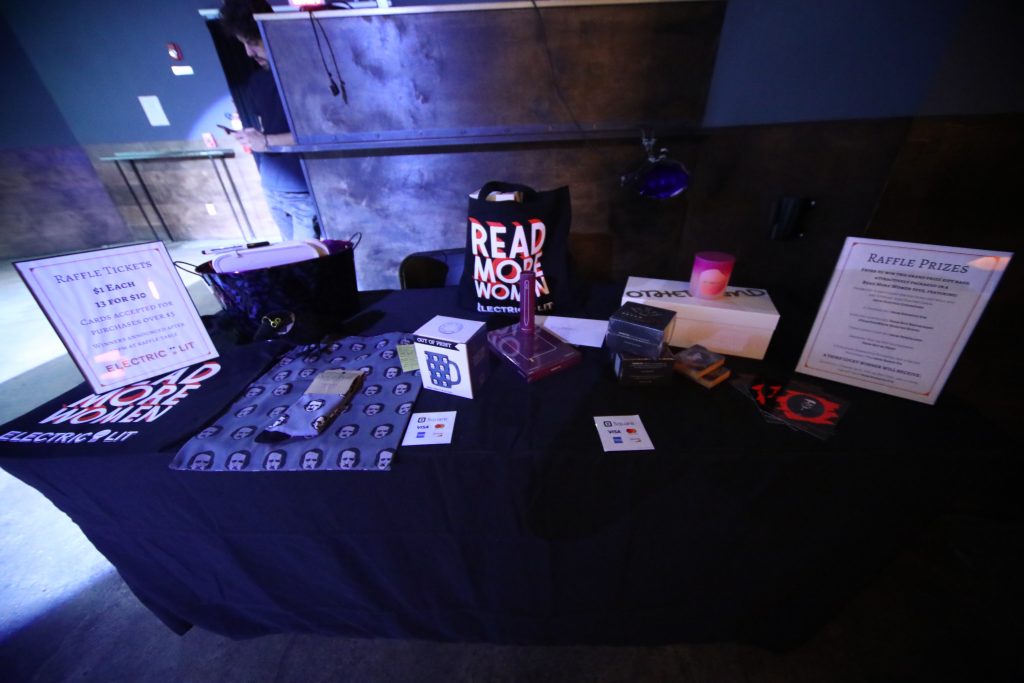
Our raffle table, featuring gifts from Out of Print, Otherland Candles, Bo’s Kitchen, Baron Fig, and Sipsmith, awaits lucky winners.

Marlena author Julie Buntin, writer and editor Sarah Lyn Rogers, and mysterious masked man.

Writers Libby Flores and Mel Toltz are positively glowing, and definitely NOT from a mysterious plague.

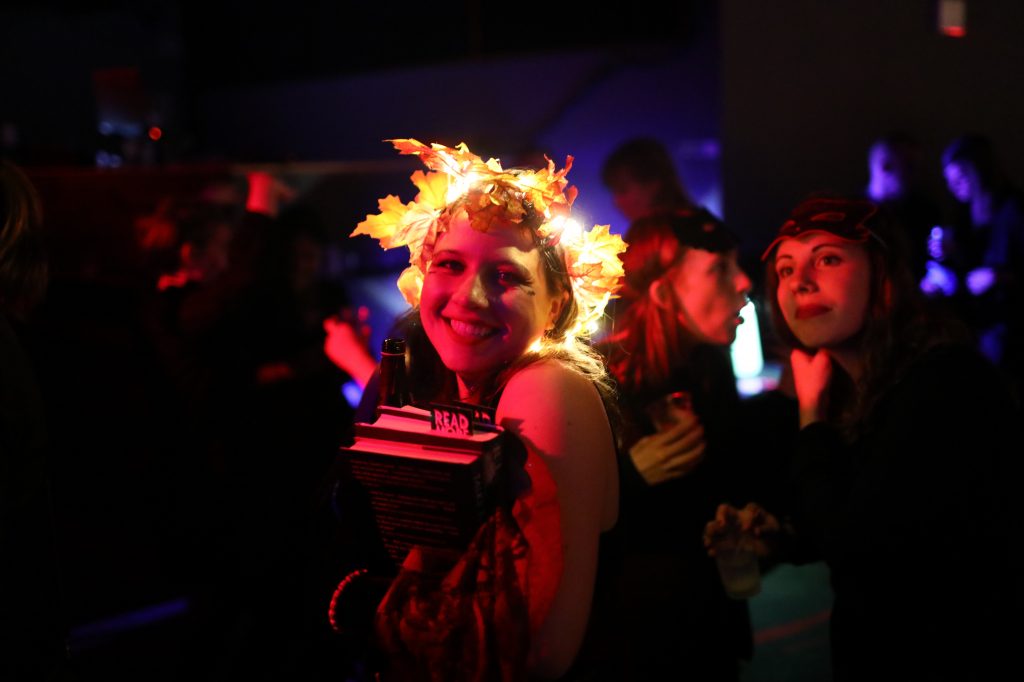
And this autumnal fairy is literally glowing (presumably with glee about her free books and Read More Women bookmark).

Friend of EL Emma Story with her trademark Thing on Head.

Executive editor of One Story Hannah Tinti whispering sweet, deadly nothings to managing editor Lena Valencia.

Writers Marie Helene Bertino and Anne Ray demonstrate the power of sartorial maximalism and minimalism, respectively.

A partygoer elegantly props up the bar.

EL executive director Halimah Marcus addresses the crowd.

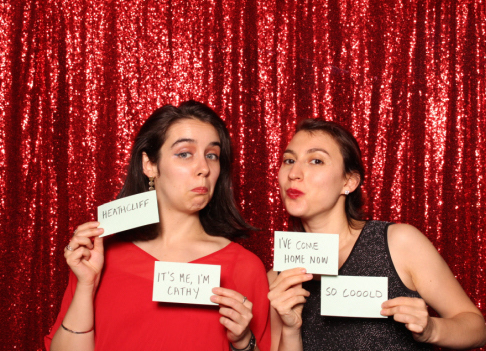
Please cue up “Call Your Girlfriend” now and continue listening to it for the next five pictures:

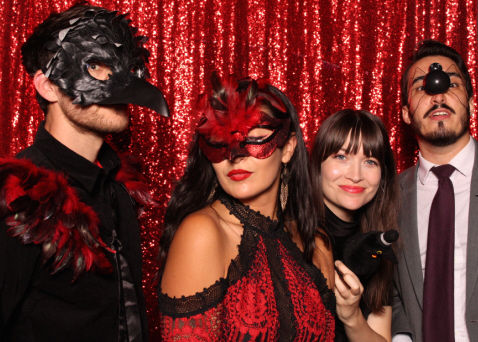
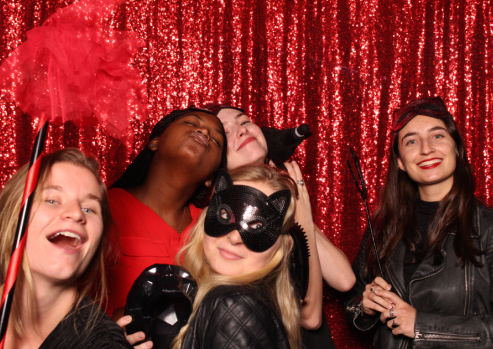
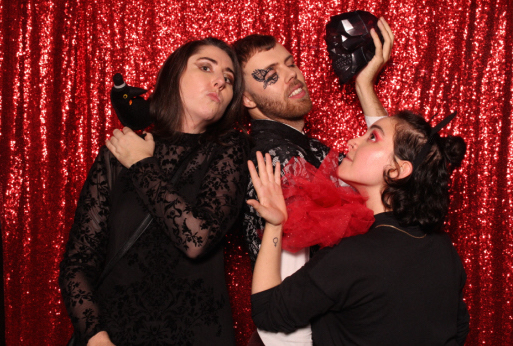
Of course, no Masquerade roundup would be complete without shots from our photo booth. Here are a few we loved—the rest are on Flickr, both as strips and animated gifs.

Current and former EL interns—intern McKayla Coyle, former intern and now associate editor Jo Lou, former intern Ruth Minah Buchwald, former intern Andrea Oh, and former intern Trina Estavillo.

EL staff: (front row) executive director Halimah Marcus, associate editor Erin Bartnett, former intern Trina Estavillo (middle row) intern McKayla Coyle, associate editor Jo Lou, former intern Andrea Oh (back row) marketing associate Calvin Kasulke, editor-in-chief Jess Zimmerman, former intern Ruth Minah Buchwald.

Thank you to our sponsors for making this party possible, and our guests for making it stylish and fun! See everyone next year!


Lead Sponsor


Marquee Sponsors


Benefactors


Supporting Sponsor


Beverage Partner


Media Partner


Writers’ Patrons

Nicole Cliffe
Jennifer Egan
Terry McDonell
Cynthia D’Aprix Sweeney

Mean Girls, a Horror Story

“Hannah-Beast”
by Jennifer McMahon

Halloween 1982 

Please, Hannah, please, come out with us tonight. 

It won’t be like before, we promise.

Please, please, please, please, say you’ll be our friend again and come with us. 

We’ll get candy. So much candy. Whole pillowcases stuffed full of KitKats, peanut butter cups, Mars bars. 

So much sugar, we won’t sleep for a week.

Trust us, Hannah.

Come with us, Hannah.

It’ll be a night you won’t ever forget. 

Halloween 2016 

“There’s no way you’re leaving the house like that.” Amanda spoke in her flat, level I’m-the-mom-here tone, doing her best to hide the shak- ing in her voice. Really, she wanted to scream. Scream not in fury, but horror. She wanted to run from the kitchen and hide in her bedroom, slamming the door maybe, like she was the teenager. Her skin prick- led with cold sweat. Her stomach churned. She worked to steady her breathing as she made herself look at her daughter, take in the whole grotesque costume. 

It was like some hole had been ripped in time, and Amanda was twelve years old again, dressed in her lame cat burglar costume with a striped shirt and pillowcase money bag, handing her mask over so that Hannah-beast’s costume would be complete. Thanks, Manda Panda! 

Erin’s face was painted blue with thick greasepaint. There was a black plastic eye mask held in place by elastic. A pink feather boa. A silver cape. Topping it all off was a rainbow clown wig. 

Jesus, how many rainbow clown wigs did the drugstore in town sell each Halloween? 

The costume was spot-on; a near-exact replica with the exception of the face paint—it was the wrong shade of blue and too thick. The real Hannah-beast had worn makeup that was thin, patchy, a dull pale blue that had made her look cyanotic. 

“That is totally unfair,” Erin said. 

“I thought you were going as a cat.”

“I’m a cat every fucking year, Mom.”

This was a new thing for Erin, the swearing all the time. She’d never done it back when Jim was here. He wouldn’t have stood for it. But Amanda had decided to ignore it. To ride it out and let Erin blow off steam by dropping a few f-bombs here and there. 

Pick your battles, Amanda told herself. And besides, didn’t letting the swearing slide make her the cool mom as opposed to the uptight dad? The dad who had walked out on them four months ago, claiming Amanda was too distant, too walled off, and he couldn’t live his life with a woman he didn’t know how to reach. 

“You know the rules,” Amanda said to her daughter. “You are not going out like that.” 

“Your rules suck and make no sense,” Erin said with disgust. “They’re totally arbitrary.” 

Erin always thought she could win an argument if she used big words. Jim had often let himself be distracted or amused. Not Amanda. Amanda said nothing. 

“It’s my last year of trick-or-treating,” Erin whined. Next year she’d be a freshman in high school. “Why do you have to ruin it?” Her voice broke a little bit, and Amanda thought Erin might start crying. 

She cried a lot lately, mostly while fighting with Amanda over per- ceived unfairnesses. It had been so much easier when she was younger, crying over a scraped knee or some hardship she’d endured at school— not getting enough turns on the big slide or her teacher saying she hadn’t shown her work properly on a math worksheet. Then, all prob- lems could be solved with a hug—Give me one of your boa constrictor hugs, Mommy, real tight like you’ll never let me go!—and a trip to the ice-cream shop, where they’d split a cookie-dough sundae with extra whipped cream. 

Now Amanda took in a breath, forced a smile. “That’s my job. Fun ruiner.” 

Erin stared at her through her mask, her eyes angry and a little desperate. They could have been the real Hannah-beast’s eyes. 

Manda, the eyes pleaded. Manda Panda, please. Don’t let them do this to me. 

Amanda had to look away, glancing over at the kitchen island, where the pumpkin they’d bought last week at the farmers market still sat, uncarved. Pumpkin carving had always been Jim’s job, a task he’d taken seriously, downloading templates from the internet, spending hours cutting out perfect cat faces, witches flying on brooms, and one year, a raven with intricate feathers and glowing eyes.

“Go change,” Amanda told her daughter. “Now.”

Erin sighed dramatically. “Can you just explain why? Can you be that fair?” 

Every year since she was in third grade, Erin had asked to go as Hannah-beast. She’d seen the older kids doing it, a handful each year, and she’d heard the stories. How the real Hannah-beast came back each year at Halloween, came back with a box of matches in her pocket, so you better look out, better be careful, better hope you didn’t run into her. She was a crazy ghost girl, Hannah-beast was. She’d killed in life and she’d kill again in death, given half a chance. 

But the stories were just that: stories. Myths with pieces of truth hidden inside. 

Over the years, Erin had seemed eager for these nuggets of truth.

“But Hannah-beast was a real girl, right?” Erin would ask.

“Yes,” Amanda would tell her.

“A girl who died a long time ago.”

“Yes.”

“And she set a fire?”

Amanda would nod, always having to look away. “Yes,” she’d say, the same reply she’d given hundreds of times, beginning back when she was Erin’s age and the police first questioned her about it. 

“And people died?” 

“Yes.”

“Did you know her, Mom?” Erin would ask, eyes wide and hopeful. “Did you know the real Hannah-beast?” 

“No,” Amanda would say, the lie so practiced it rolled off her tongue in a loose and natural way. “I didn’t know her at all.” 

She looked at her daughter now in her blue face paint—thirteen years old, gangly as a scarecrow. 

“Please, Mom,” Erin said, voice quiet and pleading now. “Seriously, it’s not fair. At least tell me why.” 

“Because,” Amanda said, pausing for a moment to breathe and keep her tone calm. “Because I said so.” 

Erin shook her head to express her utter contempt, the bright rainbow wig slipping slightly. She stomped off, out of the kitchen and up the stairs to her room, slamming the door with impressive force. Amanda went into the living room and sank down into the couch, eyes focused on the overflowing bowl of brightly wrapped candy in a plastic pumpkin bowl. 

Erin came downstairs half an hour later, face cleaned of blue makeup, replaced by cat whiskers drawn with eyeliner, cherry-red lip- stick. She wore black leggings, a black hoodie, and a headband with furry black ears gone mangy from one too many Halloweens. She had on her school backpack, which would soon be stuffed with candy, pop- corn balls, and glow sticks given out by the police officers who were out in full force each Halloween, as if by sheer numbers they could ward off what was coming: the small army of Hannah-beasts, the little fires all over town—dumpsters, trash cans, vacant buildings, the old salt shed. And somehow, they never managed to stop a stuffed effigy of Hannah- beast from being hung by a noose from the town gazebo each year, cloth body stuffed full of newspaper and rags, pillowcase face painted blue, rainbow wig stapled on, pink boa ruffling in the breeze as the creepy doll swung in circles from the thick rope. 

Erin went straight to the front door, passing Amanda in the living room without a word. There was a rapid-fire knocking, and she flung the door open. Her friends were gathered on the front porch — they must have texted Erin that they were there. Two Hannah-beasts, Wonder Woman, and a red devil in a too-tight, too-short dress. 

Erin walked out and slammed the door behind her, but not quickly enough to drown out the first words she spoke: “I fucking hate my mother.” 

1982 

“Please, Hannah, please, come out with us tonight,” the three girls cooed like sweet little doves, funny partridges, as they stood gathered outside her first-floor bedroom window. They knew better than to come to the front door, deal with Daddy and his fire-breathing bour- bon breath telling them they weren’t good girls, they were trash, little dipshit whores. 

Girls like that, they’re going straight to hell. That’s what Daddy said. You stay away from them unless you want to get burned. 

Their porch light was dark, no smiling jack-o’-lantern to greet trick- or-treaters, no bowl of candy waiting by the front door. 

Hannah bit her lip, looked through the screen at the girls gathered outside smiling in at her from the shadows, begging: “Please, please, pleeeeeaze.” 

“It won’t be like before, we promise.”

“Please say you’ll be our friend and come with us,” they begged.

Hannah shook her head. “I’m not supposed to.”

It was more than the fact that her daddy would skin her alive if he caught her going out with these girls. It was that she didn’t trust them. Not one bit. 

They’d given her dog biscuits, telling her they were oatmeal cookies, then barked out their own laughs, saying, “Hannah’s a dog! Bowwow, Dog-face! Bow-fucking-wow!” 

Then she’d cried, actually cried, and they’d said they were sorry, sorry, so, so sorry. It was a joke. Just having a little fun is all. 

Some days they took her lunch money, saying it was a tax she had to pay, and if she didn’t pay it, they wouldn’t be her friends anymore, wouldn’t let her sit with them, not ever. Not like they did all that much anyway. Mostly she was greeted with disgusted snarls of “Go away, Hannah.” 

The worst was the time they’d tried to turn her into a real girl. “Trust us,” Mel said. “We’ll make you pretty. You want to be pretty, don’t you, Hannah?” 

And they took her to Katie’s house, where they made her soak in a tub full of “pretty-girl bath salts” that made her break out in a hot rash all over her body. Then they coated her legs with shaving cream, and Mel shaved her with a pink razor, saying, “You’ve got quite the pelt going on here, Hannah. What are you, a wolf-girl?” 

And Hannah had bared her teeth, laughed, and said, “Maybe I am. Maybe I’m going to eat you up.” She gave them a growl, deep in her throat, and snapped her jaws at Mel, made like she was going to bite her. 

This had startled Mel. Or maybe she just pretended to be startled. Maybe she slipped on purpose. 

The next thing Hannah knew, she was dripping blood down her leg, not like little weeping dots, but like a spring stream that runneth over. “Fuck,” Mel said. “Sorry.” But then she smiled ever so slightly and shot a quick glance at Manda and Katie, and Hannah knew she wasn’t sorry. Not one bit.

Hannah still had the scar.

“It’s Halloween, Hannah,” Manda said now, pleading. She was dressed up like a cat burglar with a striped shirt and watch cap, a black mask, and a pillowcase with a huge dollar sign drawn on the outside. Katie was a girlie clown, a feather boa draped around her shoulders. And Mel, she was some kind of superhero space princess with a silver dress, tall black boots, a silver cape, a tiara, and a big plastic laser gun strapped to her back. 

“Don’t you want candy?” Katie asked as she stood shoulder to shoulder with Mel. “We’ll get candy. So much candy! Whole pillowcases stuffed full of KitKats, peanut butter cups, Mars bars.” 

“So much sugar we won’t sleep for a week,” Mel promised.

“Then we can swap,” Manda said. “I know you love peanut butter cups — I’ll give you all of mine.” 

Hannah let herself imagine it: roaming the streets, going door-to- door with these girls, opening her sack up, and watching the candy fill it until it was heavy, so heavy that it was hard to carry, bulging with chocolate, lollipops, wax lips, candy she’d never even heard of, never even tried. 

“Come with us,” Mel said.

“Come with us,” Katie begged, an echo of Mel. Which was how Hannah thought of her. Not a person all her own, just an echo. Whatever Mel said, Katie did. Whatever Mel wore, Katie wore. She even brought the same kind of sandwich as Mel to school each day— peanut butter and fluff, with the crust cut off. 

Hannah looked at Manda. The only one she half trusted. She’d been to Manda’s house before, spent the night once even. It had been during February break, and the other girls were away; Hannah knew this would never have happened if they’d been around, if there’d been even the slightest possibility that they’d find out. 

Manda’s house was big and beautiful. Her parents were real nice too. They took Hannah and Amanda to the video store, let them pick out whatever they wanted; then they stopped at the grocery store and bought a pan of popcorn that they cooked on the stovetop—pop, pop, pop—and the foil over it puffed up as it filled, turning it into a crinkly, metallic mushroom. She and Manda made pink cupcakes with purple sprinkles, and Manda’s mom wrapped the leftovers up for Hannah to take home. Hannah stayed in her clothes at bedtime, and Manda’s mom was all like, “Where’s your nightgown, sweetheart?” and Hannah said, “I forgot it,” when the truth was she didn’t own one at all. 

“Well, I’m sure Amanda has something you can borrow! Let’s go see.” Then Amanda’s mom was opening all the drawers in her dresser and going through the closet and making a whole pile of stuff that she said was either too small for Amanda or that Amanda never wore any- more. Not just nightgowns, but jeans and a dress and shirts and this pair of pink cowboy boots that Hannah tried on, and they fit perfect, like her feet and Manda’s were the same shape and everything. “Take them,” Manda’s mother said. “Take all these things. Amanda doesn’t wear any of it anymore.” Amanda looked kind of surprised, a little angry maybe even, so Hannah said, “No, thanks. I’ll just borrow the nightgown for tonight.” Manda’s mom gave Manda a look, and Manda smiled at Hannah and said, “No, you should take all this stuff. I was just gonna give it to the Salvation Army anyway.” 

Hannah went to sleep that night curled up against Manda, wearing her white nightgown, Manda’s heavy comforter on top of them, and it was the happiest she’d ever been. “I love you, Manda,” she said. “Manda Panda,” she added, giggling the new name into Manda’s shoulder. 

“Go to sleep,” Manda said.

She wore Manda’s pleated acid-washed jeans and lavender polo shirt (with the collar turned up, the way Manda always wore it) to school when they all came back from break the next Monday, and Mel had laughed, then got all angry, and asked, “Amanda, isn’t that your shirt? And your jeans?” and Manda turned bright red, and Hannah said, “Yeah, they are. I stole them. When I was at her house.” 

Mel glared at Manda. “When was Dog-face at your house?” And Manda—she looked all frantic, little drops of sweat dotting her forehead. 

“I broke in,” Hannah said quickly. “Broke in when no one was home.” 

“Thieving little bitch,” Mel said. “Give them back. Right now.”

“Yeah, go take them off, or we’ll do it for you,” Katie said. She took a step closer to Hannah like she was going to start ripping them off right in the hall. 

“It’s okay, really,” Manda had said. “They’re like a hundred years old, they don’t even fit, just let her—” 

“It is not fucking okay,” Mel snarled. Manda hadn’t said any more.

And Hannah had gone into the bathroom and taken off the clothes and put on her gym clothes and worn those all day instead—her stinky T-shirt and too-tight shorts. She’d folded Manda’s clothes up neatly and returned them to her during study hall. Manda slipped them into her book bag without saying anything, but she smiled apologetically at Hannah. When Hannah got home from school that day, she put the rest of the hand-me-downs in a kitchen garbage bag, sealed it tight, and hid them in the bottom of the trash bin in the garage. One of her chores was rolling the bin to the curb every Friday night, so she knew it’d be gone soon, and her daddy would never know. 

But the boots, those lovely pink boots, she kept those. She knew better than to wear them to school. She put them on every day when she got home and danced around in her bedroom, imagining she was Manda, and she lived in a big house with a big closet full of clothes she never wore and sweet pink cupcakes baking in the kitchen. 

The real Manda, just outside her bedroom window, smiled at her now, held out her hand. “Come on,” she said. “Come trick-or-treating with us. It’ll be so much fun. Promise.” 

“I . . . I don’t even have a costume.”

“It’s cool. We’ll make you one,” Mel said. “We’ll give you parts of ours.”

Then Mel reached up, untied her beautiful silver cape, and held it out.

It sparkled in the streetlights.

“Katie will give you her wig,” Mel said. 

“But the wig is—” Katie started to protest, then Mel shot her a glance. 

“The boa too,” Mel ordered.

Katie took off the wig and boa without question and held them out to Hannah. 

Hannah lifted up the screen, wiggled her way out the window.

It was only when she dropped to the ground that she realized she was wearing the pink boots, Manda’s boots, but no one said anything; no one seemed to notice, not even Manda. 

“Oh, Hannah,” they all said, putting their hands on her, patting her back, stroking her hair like she was something truly great, like their own pet unicorn. “We’re going to have so much fun. It’ll be a night you won’t ever forget.” 

2016 

Amanda stood looking out the living room window, watching Erin and her friends saunter off down the street. They moved so easily together, bumping against each other, moving the same way, the same direc- tion, like a school of fish. She’d walked that way once with Mel and Katie, like they were one being, a three-headed beast, finishing each other’s sentences, breaking into Journey songs: “Don’t Stop Believin’” and “Who’s Crying Now.” 

It was just past six now, already full dark. Amanda went out onto the porch, plugged in the plastic glowing witch, the strings of tiny orange lights wrapped around the porch railings. Putting up the lights had been Jim’s job too, but Amanda had gone out and bravely gotten up on a stepladder, wrapping them around the posts, but no matter how she’d tried, she couldn’t get them to come out even.

“Being honest? Looks like shit, Mom,” Erin had said with a shrug. And she’d been right.

Amanda didn’t even attempt to do the fake cobwebs and dangling plastic spiders Jim usually decorated the porch with. He loved Halloween. 

Amanda hated it.

She shivered now, looked down the street at a group of small ghosts and witches heading her way with their parents. Amanda went in, readied herself with the giant plastic bowl of chocolate bars and lollipops. 

Jim had dressed up every year, answering the door dressed as a zombie, a vampire, a mummy. Always a monster. Always something slightly frightening. 

The trick-or-treaters had loved it. Erin had always made a show of running from him as he chased her around the house, arms out- stretched, reaching for her as she screamed in mock horror. 

Amanda had hidden in the back of the house, claiming she had so much work to catch up on, or a migraine coming on. 

“Trick or treat!” the little crew gathered on her porch now called. She forced a smile, opened the door. 

“Oh my goodness, what do we have here?” she said, holding out the bowl. “A ghost, two witches, and—what are you, sweetie?” 

The girl in the back stepped forward, into the light. She looked about five or six years old. 

“I’m a chicken,” she said, showing off her cardboard wings with yellow feathers glued on. She wore a yellow shirt all splattered in red. 

“And what a fine chicken you are,” Amanda said.

“I’m a dead chicken,” the little girl said delightedly. “See my blood?”

“Oh my,” Amanda said. The woman with them (too young to be a mother, surely—must be an older sister, or a babysitter maybe) gave her an apologetic you-know-how-kids-are smile. 

Amanda spotted another group coming down the street. Older children. One of them wearing a rainbow wig. 

“Happy Halloween,” she said, closing the door on the small children, wanting to lock it. 

She went back into the kitchen, opened a bottle of merlot, and poured herself a full glass. The uncarved pumpkin sat on the island, taunting. She took a good swig of wine, caught a glimpse of her reflection in the dark window over the sink: a frazzled-looking woman in jeans and a black turtleneck, dark circles under her eyes. She took another long sip of wine, feeling it warming her from the inside out, and turned toward the pumpkin. 

She could do this. And wouldn’t Erin be surprised when she got home and saw the soft glow of a grinning jack-o’-lantern decorating their porch? 

See, your old mom’s not such a Halloween party pooper after all.

Amanda opened drawers and cabinets, pulled out a large carving knife and small paring knife, a big metal spoon, a plastic bowl for the guts, and a baking tray for the seeds because that’s another thing Jim had always done—roasted the seeds after sprinkling them with cinnamon and sugar. Erin loved them that way. “These,” she’d say, holding a handful of seeds, “are the epitome of fall.” Then she’d give a coy grin, clearly pleased with herself for showing off her vocabulary. 

There was a knock on the door. Amanda set her glass of wine down, picked up the bowl of candy, and opened the door. 

Not one but two Hannah-beasts greeted her, blue faces leering, smiling, rainbow wigs glowing. 

“Trick or treat,” they said.

Amanda took a step back. There was a third girl, wearing a white lab coat and big black- framed eyeglasses, just behind them. She said, “Dumbasses, you’re sup- posed to say boo! That’s what the real Hannah-beast said.” 

Amanda’s breath caught in her throat.

Say boo.

Say boo, Hannah. 

1982 

“Say boo, Hannah,” Mel instructed as they stood on their first porch, holding open their bags. 

Hannah’s face itched and felt tight from the blue makeup they’d put on, left over from Katie’s clown kit—she’d used up all the white and red on her own face, and blue was the only color she had left, so they’d coated Hannah’s face in it. At first it had been greasy, sticky as they rubbed it on. Now, as it dried, it itched. 

The old man passing out candy stared at her, taking in her rainbow clown wig, feather boa, and silver cape. He asked, “And what are you supposed to be?” 

“She’s a Hannah-beast!” Mel crowed. “Say boo, Hannah. Say boo and show the man how scary you can be.” 

“Boo,” Hannah said quietly.

The man shook his head, laughed. The girls laughed too.

Hannah stood up taller, rocked back on her heels, and lunged for- ward like a snake about to strike. “BOO!” she screamed. 

The old man jumped, startled. Then he frowned, muttered, “Crazy kid,” and closed the door in their faces. 

The girls squealed, squealed with joy, patted her on the back.

“Nice job, Hannah-beast.”

“Holy shit, did you see his face?”

“Hannah-beast is scary!” 

“Hannah-beast is crazy!”

“Hannah-beast is spectacular!”

They ran down the sidewalk, laughing. All the other groups of trick-or-treaters, all the adults on porches, turned to look their way. 

The soles of Hannah’s pink boots clapped as loud as a horse’s hooves along the sidewalk. “The boots look good on you,” Manda whispered in her ear, her breath sweet with sugar. 

They ran through the center of town, past the park where the Halloween party for the little kids had been earlier—the park where tiny ghosts and goblins and princesses had bobbed for apples, played pin the arm on the skeleton, and attacked a ghost piñata strung up with heavy rope from a beam in the center of the white gazebo. 

They ran and ran until Mel stopped them at a house with a porch decorated with Halloween lights, several happy jack-o’-lanterns, and a patchwork scarecrow slumped in a chair. 

They all crowded together on the tiny front porch with sloping floorboards, shoulder to shoulder, and it felt good, so good to be bump- ing against these girls, laughing with them under the Halloween wind chimes hung above the front door—little ghosts dancing, banging into each other, making music. They were like those ghosts, Hannah thought, smiling up at them. 

They knocked too loud on the door, sang out, “Trick or treat, trick or treat!” and a woman answered, held out a bowl of candy, said, “Happy Halloween!” A poodle danced around the lady’s feet, barking in that little yappy-dog kind of way, a pink collar with fake diamonds glittering around its neck. 

And the girls didn’t have to tell Hannah this time; she did it with- out being asked. She pressed forward, stood on her tiptoes to make herself taller. She held up her arms, cape flapping behind her, got right in this lady’s face, and screamed, “BOO!” which made the poor lady recoil and scream a little, and once she caught her breath, she asked, “What is wrong with you?” 

“She’s Hannah-beast,” Mel said, giggling. “That’s what’s wrong.”

“She can’t help it,” Katie said. “She’s crazy. I’d bring your puppy inside if I was you. She might just eat it up!” 

And Hannah bared her teeth and growled. The lady pulled her dog inside, slammed the door in their faces. 

The girls all laughed loud and shrieking laughs.

“You’re the real thing, Hannah-beast,” Katie said, twirling around her like Hannah was the sun and she was just a little planet trying to get warm. 

“I am spectacular!” Hannah crowed to the night as she flew down the steps, the others following her now, chasing her, calling after her: come back, slow down, don’t leave us, we love you, Hannah-beast

2016 

Amanda cut the top off the pumpkin in six quick slashes, lifted it off, a neat little cap with a curved stem. She went to work hollowing the thing out. She hated the cold, squishy feel of the pumpkin’s insides— “the guts,” as Erin called them. 

She thought of that long-ago Halloween, the week before, actually, when Mel had presented her carefully laid-out plan. 

“I think it’s totally brilliant, but are you sure it’ll work?” Katie asked.

“Of course I’m sure. She’ll come with us. She’ll do what we say.”

“But don’t you think it’s kind of . . .” Amanda hesitated.

“Kind of what?” Mel snapped, eyes daring Amanda to continue.

“I don’t know.” Amanda bit her lip. “Think of all the trouble she’s going to get in.” 

Mel looked at her, head cocked. “So? Come on, Amanda. It’s not like she doesn’t deserve it. Think about it. Always pestering us all the time. Being so fucking weird.” 

“And don’t forget, the bitch broke into your house and stole your old clothes!” Katie added. “She’s probably, like, all obsessed with you or some- thing. Gross. Plus, it will be hilarious and you know it.” 

Amanda frowned.

“What if she tells?” Amanda asked.

Mel laughed. “As if anyone would believe her.”

“As if,” Katie repeated, trying to copy Mel’s laugh. 

Mel smiled. “It’s the perfect plan.”

Now, Amanda topped off her wine, told herself to stop it. Stop thinking about that night, stop reliving every moment, every terrible decision she’d made, stop playing the “if only” game. She’d trained her- self well over the years. If you spend enough time blocking something out, built sturdy enough walls around it, then it’s almost like it didn’t happen. 

Except on Halloween. One night each year it all came back when the parade of Hannahs showed up at her door, when the life-size rag doll dressed as Hannah-beast was cut down from the gazebo in the center of town, a noose around its neck. 

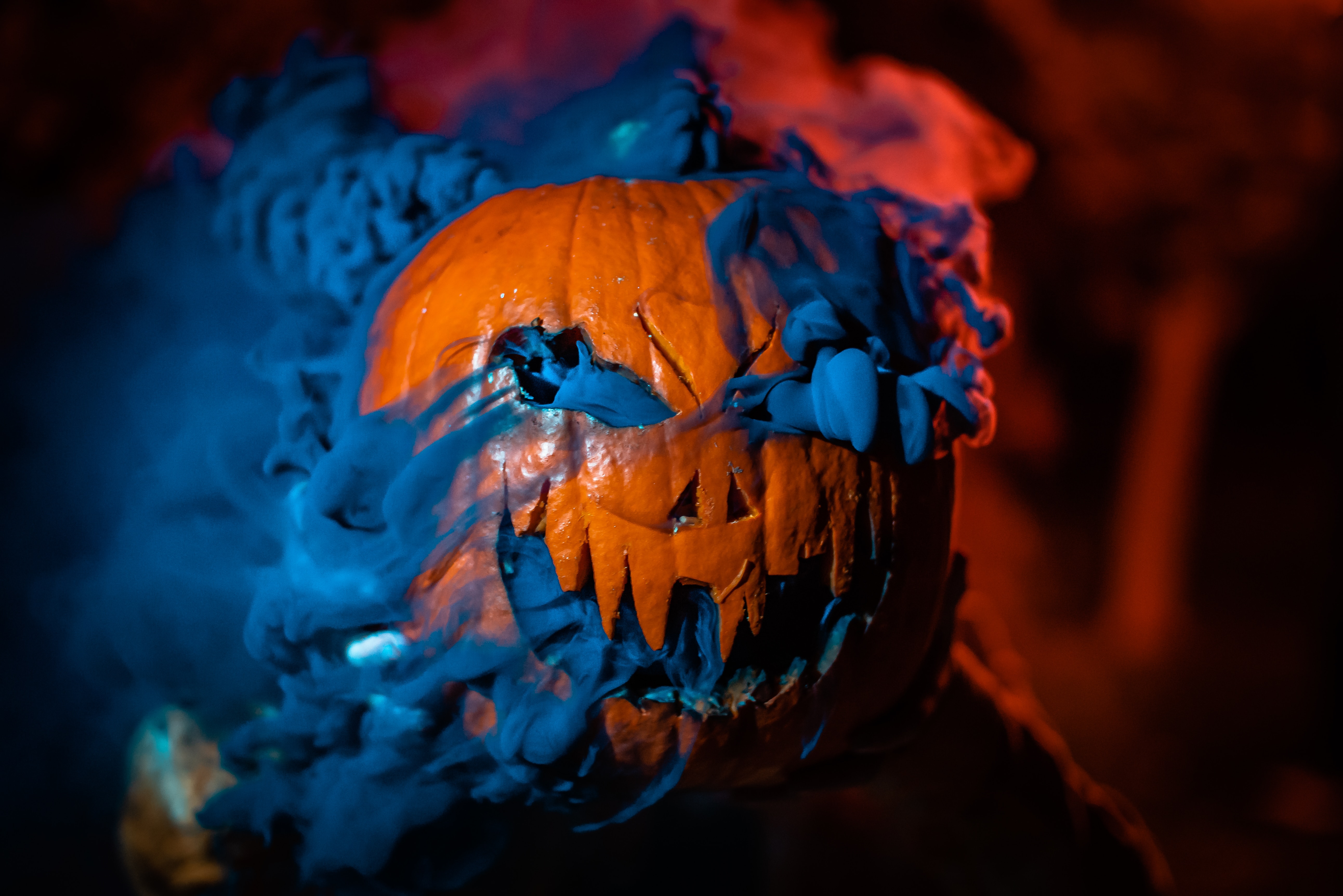
Say boo, Hannah. Now she picked up the knife and started on the eyes of the jack- o’-lantern. Round eyes, she decided. Jim had always done scary slit eyes with dramatic, angry arched eyebrows. A frowning mouth full of jagged, dangerous teeth. 

Her pumpkin was going to be happy. Cheerful.

She was finishing up the second eye when there was a knock at the door, another round of trick-or-treaters. Supergirl, a soldier, two zombies, and one Hannah-beast who made sure to say, “Boo!”

Amanda gritted her teeth and held out the bowl.

She’d just started on the nose when there was another knock. A Hannah-beast and a vampire.

Trick or treat.

Boo!

This Hannah-beast was collecting candy in a red plastic gas can with a hole cut in the top. Too goddamned much. Amanda stared at the gas can full of bright candy wrappers, thought of saying something, something adult, like “You’ve taken this too far” or “Don’t you think that’s in poor taste?” But before she got the chance, the girl was gone. 

Before she even got to close the door, another group was coming up the walkway toward the porch. 

Jesus. Why so many Hannah-beasts this year? It had to be a record.

This time it was a boy dressed as Hannah-beast. He was accompanied by a girl who looked to be dressed as a prostitute, and another boy in a long black trench coat and a ski mask. 

This Hannah-beast had visible stubble on his chin under the thin blue makeup. “Boo,” he said, voice bullfrog deep. 

Fuck you, Amanda said back to him in her head. She kept her lips tightly pursed so the words wouldn’t find their way out and thrust the bowl of candy in the boy’s direction. He took a whole handful, then was gone, the others trailing behind him. 

Come back, slow down, don’t leave us, we love you, Hannah-beast.

“You’re only supposed to take one!” Amanda shouted at him. He gave her the finger behind his back, not even bothering to look at her.

Amanda closed the door, refilled her wine (the bottle was almost empty now) and went back to the pumpkin. She was further along with it than she’d realized. The nose was done and had a delicate triangle shape. Now for the mouth. A happy pumpkin needed a big grin. Some chunky teeth maybe. Cheerful, but not too goofy. She picked up the paring knife and started at the left corner of the mouth, working her way down, doing a light line at first, just breaking the skin to get the design roughed out, then going in deeper. 

The pumpkin was soon smiling back at her.

“Hello, you,” she said to it, thinking, Won’t Erin be pleased? Job well done, Mom.

A shadow passed in front of the kitchen window. Amanda glanced up just in time to see a figure moving by the living room window—someone in a cape with a black eye mask and a rainbow wig. 

“Fuck!” Amanda jumped back off the kitchen stool, the knife slip- ping. She’d cut herself at the base of the thumb. There was blood on the mouth of the pumpkin, covering its lower teeth. “Fuck, fuck, fuck!” 

There was a knock at the door. 

“Trick or treat!” voices called. Amanda wrapped a kitchen towel around her hand, went to the door. A Hannah-beast and a slutty devil.

“You’re not supposed to cross the yard!” she scolded. “You’re supposed to stay on the walkway.” 

“Um. We did,” said the girl devil.

“You crossed the yard. I saw you from the kitchen.”

“It wasn’t us,” the devil said with a shrug.

“Boo?” the Hannah-beast behind her said, cautiously.

“Fuck off,” said Amanda, slamming the door in their faces, looking down to see the blood had soaked through the towel. 

1982 

They went from house to house until her pillowcase was heavy, heavy like she really did have a dead dog inside it, which was what the girls were telling everyone they met. 

Hannah-beast’s a real monster, that’s for sure! Be careful, or she’ll eat you up! She’s got a dead poodle inside her bag. She’s gonna snack on it later. Yum, yum, yum. 

You’re doing so good, Hannah. We love you, Hannah. You’re scaring the shit out of the whole town, Hannah. This is your night. The night of Hannah-beast. Say boo. Boo! Boo! Boo! 

They flew through town; Manda was holding her hand as they ran, and Hannah’s heartbeat pounded in her ears. Her face felt tight, her head itched under the rainbow wig, but she was happy, so happy, the feathers of the boa tickling her as she ran, the cape flying out behind her. Everyone in town, all the kids from school, they all saw her. They saw her with the other girls, and they knew . . . they knew she was something special. 

But now it was late. Nearly ten. The streets were clear of trick-or- treaters. Porch lights had been turned off. They sat on the wooden floor of the gazebo in the park, eating candy, trading favorites. Manda didn’t like anything with nuts. Mel hated Mounds bars (which meant Katie did too). They gave Hannah all their peanut butter cups, didn’t even make her trade for them. 

“I should go home,” Hannah said. Even though she knew Daddy would be sleeping his bourbon sleep until the alarm went off at seven tomorrow. 

“No way! Not yet!” Katie said, grabbing her arm.

“We’ve got one more special surprise, Hannah,” Mel said.

“What’s that?”

“It’s a scavenger hunt,” Katie explained.

“Do you know what that is?” Manda asked.

“Sure, I guess,” said Hannah, thinking it sounded like a thing from birthday parties, even though she hadn’t been invited to a birthday party since second grade. 

“It’s where you follow clues, gather objects, and find a prize.”

“Like a treasure hunt?” she asked. “Yeah, like a treasure hunt,” Katie said, smiling, bobbing her head.

“Well, what’s the prize?”

Mel laughed. “Think about the word prize, Hannah. It’s short for surprise, right? And it wouldn’t be a surprise if we told you.” 

“It’s gonna be good, Hannah,” Katie promised. “Something you’ll never forget.” 

“Are you ready?” Mel asked. “Ready for the first clue?”

“I don’t know,” Hannah said. “It’s late, and my dad—”

“If you don’t want to do it, you don’t have to,” Manda said.

“Of course she wants to do it,” Mel said, giving Manda a disgusted look.

“Yeah,” Katie said. “You want the surprise, don’t you, Hannah?”

Hannah hefted her sack, heavy with candy over shoulder. “BOO!” she howled at the top of her lungs, and the girls all laughed and patted her on the back, and she was the star of the show. It was the night of Hannah-beast. Hannah-beast unleashed, that’s what Mel said. 

“You can leave your candy with me,” Manda said. “It’ll be easier without it. And I’ll keep it safe, I promise.” 

Mel handed her a piece of paper, and Hannah squinted down at it through the eyeholes of her mask. “‘You’ll find me in Old Man Jarvis’s garage. I’m made of metal. I ring but I’m not a phone.’” 

Hannah looked up from the paper to the others.

“What are you waiting for?” Mel asked. “Go!”

Hannah started off running toward Old Man Jarvis’s place. She looked back and saw the girls standing in the gazebo, watching her. “Aren’t you coming?” she called. 

“We’ll meet you at the end.”

“But how will I know what to do?”

“Just follow the clues,” Katie said. “You can do it!”

“Yeah, you can do anything!” shouted Mel. “You’re Hannah-beast!” 

2016 

Amanda wrapped up her hand in gauze and surgical tape. The bleeding had finally stopped. 

“Fucking idiot,” she mumbled to herself. She went back out to the kitchen, poured the last swallows of wine into her glass. She lit the votive and dropped it inside the pumpkin, stepped back to admire her handiwork. 

The smiling face leered back at her—round eyes hopeful, expectant, a slack-jawed grin giving the thing a bewildered look. 

Her stomach twisted, the wine turning to acid.

Hannah. It was Hannah’s face.

Hello, Manda Panda.

Long time no see.

The air seemed to go out of her. The cut on the base of her thumb throbbed in time with her heartbeat. 

At that moment, the power went out, plunging the house into darkness and silence. 

The wineglass slipped out of her hand, crashing onto the tile floor. 

1982 

I ring but I’m not a phone. 

Hannah worked the clue around in her brain as she entered Mr. Jarvis’s garage through the open door. She squinted in the darkness as she walked around the old Plymouth parked there. There were tools hanging on the wall: rakes and hoes and shovels. And a workbench at the end. She walked over to it. 

I ring.

Ring around the Rosie.

She looked at the tools on the bench and the wall: hammer, saws, screwdrivers, wrenches. 

“None of you ring,” she said.

She bit her lip. She could do this. She had to do this. Show them that she wasn’t a dummy. Not like everyone thought she was.

“I’m Hannah-beast,” she whispered. “I can do anything.”

Then, like a miracle (the power of Hannah-beast brought miracles!), she saw it! There on the shelf above was what she’d come for: an old brass cowbell. It was sitting on top of a crowbar. She picked up the bell, saw it had a note tied to it. She moved closer to the window and read the note by the light coming in from Mr. Jarvis’s front porch. 

Ring me for one FULL minute. NO CHEATING. Then take the crowbar underneath and go to the Blakelys’. Use the crowbar to pry open the door to the shed. Inside, look for something red. Bring this note with you.

Hannah stuck the note in her pocket, held on to the bell, and started ringing it and counting, “One, two, three . . .” 

She was at fifty-five when the front door to the Jarvis house banged open, and Mr. Jarvis came walking stiffly toward the garage, calling, “Who’s there? What the hell is going on?” 

She started counting faster: “Fifty-five-fifty-six-fifty-seven-fifty- eight-fifty-nine-sixty!” She dropped the bell, grabbed the crowbar, and tore out of the garage, nearly running into Mr. Jarvis in the driveway. 

“Hey, come back here!” he yelled. But she did not slow. Did not turn. She zigzagged her way through backyards, across the Caldwells’ field, and over to the Blakelys’. The old wooden shed was in their back- yard along a split-rail fence. She tugged on the door handle, but it was locked, as the note had said, so she slid the chiseled end of the crowbar between the door and frame, pushing it in as far as it would go; then she pulled her full weight behind it. The old wood on the doorframe cracked and splintered and the door flew open. 

She laughed. She was Hannah-beast. No locks could stop her.

The red thing was waiting for her right in the middle of the shed: an old gas can with a note tied around the handle. 

Use the crowbar to smash out the window of the shed, then leave it behind. Take the gas can to the Caldwells’ old barn. Look for something small and brass. Keep all the notes with you. 

Without pausing to think, she smashed out the old single-pane windows with the crowbar, then threw it to the ground. As she sprinted across the yard, lights came on in the house. A man shouted, “Stop right there!” but she didn’t even turn around, just ran faster, harder, the wig bobbing around on the top of her head, the cape flying out behind her. 

“BOO!” she screamed as loud as she could. 

2016 

“What the fuck?” Amanda said, blinking in the darkness. All the back- ground noises of life were gone: the humming refrigerator, the ice maker, the furnace clicking on, and fans starting. 

She tried to remember where the breaker box was in the basement. What you were even supposed to do to try to get the power back on— flip a switch, change a fuse? This had always been Jim’s department. 

She stumbled forward, stepping over the broken glass and spilled wine, toward the window, saw it wasn’t just her house that was out. It was the whole street. The whole town, maybe. She didn’t see a hint of light anywhere. 

Amanda held still, watching, listening.

A siren whined far off. A girl screamed. Someone laughed.

Amanda thought she smelled smoke.

Her throat grew tight.

The grinning jack-o’-lantern, with the candle sputtering inside, was now the only light in the room, filling the kitchen with a fiery-orange glow. The flickering eyes were watching, following her, saying, I know who you are. I know what you’ve done. 

“I’m sorry,” she said out loud, the words tumbling out before she could stop them. “I didn’t know what would happen. I should have stopped it, but I had no idea. None of us did. I was young and scared and stupid.” 

Tears filled her eyes; her throat grew tight as she tried to keep down the sob she felt coming. 

“I’m sorry,” she said again. “Sorry for being such a fucking coward.”

The pumpkin only stared, the hideous grin seeming to grow wider, more taunting. 

She was not going to be forgiven.

Not this easily. 

1982 

Running, running, wind in her blue face, blowing the cape back, and the hair, oh the hair, the great rainbow happy clown wig. She’s a wild thing. Hannah-beast unleashed. The gas can bumped against her thigh, the gas in it sloshing around like water in an empty belly. Her brain buzzed from sugar, from the high being around those girls had given her, and now, now she was on a hunt, a scavenger hunt, and she was going to get a prize, a SURPRISE, something good, something wonder- ful, something that would make the girls love her even more. 

Love her more, more, more. Her heart pounded as she ran, felt like it was going to explode right out of her chest. The barn was in sight, a big old leaning thing—miracle it was still standing. The Caldwells were sleeping, tucked safe in their beds, the lights in the white farmhouse all turned off, too late for trick-or-treaters. Mr. and Mrs. Caldwell had two kids, little kids, still in elementary school, fourth and fifth grade, lucky little buggers. Elementary school wasn’t like middle school, where the halls were long and dark, and people jumped out at you, shoved you, kicked you; people left horrible stuff in your locker—dog shit in paper bags, notes that said “Why don’t you just curl up and die, Hannah?” 

She entered the barn, ducked into the shadows, pausing to catch her breath, trying to slow her racing heart. The barn was open at one end and had a hayloft with a wooden ladder leading up to it, and it was still full of old hay bales from back when there used to be cows and horses. There was a long row of windows, most with the glass busted out. The floor was dirt. There was a broken tractor. An old motorcycle. Engine parts. Kids’ bicycles. The barn smelled like old wood, grease, and gasoline. 

Something brass.

How was she going to find something brass in here? Needle in a haystack. 

But they’d made it easy for her.

So easy.

Too easy?

Did they think she was that dumb? Or were they just being nice? Nice, nice. Nice as spice. Manda Panda maybe, but not the others. Maybe Manda had left this for her, right where she could find it. Manda was on her side. Manda wanted her to win, to get the big surprise of a prize. 

At the other end of the barn, there was a dim glow. A flashlight turned on, left on the floor. And there, in the beam of the flashlight, was an old brass lighter with a note tucked underneath. 

She picked up the lighter, opened it up, and flicked it to see if it worked. The wheel struck the flint, and a flame came to life. Hannah knew how to work lighters. She sometimes lit Daddy’s cigarettes for him while he was driving. “Light me up, Hannah Banana,” he’d say. She’d pull a Camel out of his pack and get it going for him, take a few puffs herself first just ’cause it made Daddy smile. 

She picked up the note: 

You’re almost done! Take the three notes and burn them with the lighter. Leave the ashes in the barn. Take the lighter and gas can and bring them to the tallest oak tree at the edge of the yard. We’ll meet you there and give you your prize. 

Hannah scrabbled the notes out of her pocket, held them with this final one, and flicked the lighter, watched the flame swallow them up. She held them until her fingers were hot and she couldn’t stand it any longer; then she dropped them, watched what was left of the pages sink and flutter to the dirt floor like burning moths. Once they were down there and had burned out, she stomped on them to make sure—didn’t want to leave anything smoldering, not in this old barn. 

The wind blew hard outside, rattling the glass left in the windows. She thought she heard something up above her, coming from the hay- loft. A board creaking like a sigh. 

She pocketed the lighter, picked up the gas can, and headed out, scanning the tree line, looking for the tallest oak. She didn’t know her trees, didn’t know an oak from a maple from an ash, especially now that most of them had their leaves off. She headed for the tallest tree she could see, walking across the big yard, through grass that needed to be cut, so long it was like a hayfield. 

She got to the tree and looked around for the girls. Nothing.

“Manda?” she called, keeping her voice low, not wanting to wake up the Caldwells. “Mel? Katie?” 

She was there before them. She’d been faster than they’d thought she’d be. Wouldn’t they be impressed? Hannah-beast was fast. Hannah- beast was clever. 

She stood next to the tree, fidgeting with the lighter. It made her fingers smell tangy and metallic, like raw metal. She flicked it, watched the flame. They’d see her now as they came. See her and know she had the lighter. 

She was like the Statue of Liberty with her torch. She held it up high, her eye on the flame. 

I got it.

I found it.

I win.

The acrid lighter-fluid smell filled her nostrils. 

But there was something else. Another smell behind it. A campfire smell.

Smoke.

She smelled smoke.

She looked over at the barn and saw flames curling out through the windows, reaching up like long fingers, all the way to the roof. 

Her heart jackhammered in her chest.

Had she done this? Had the paper not been out?

No. It had been. She’d made sure. 

She stood, frozen. She thought of running, but then the girls would never find her. So she stood and watched from her safe place tucked behind the thick old tree. The lights from the house came on, and Mrs. Caldwell came out, screaming. She tried to run into the burning barn, but Mr. Caldwell was running now too, grabbed her from behind, stopped her. 

There was another sound too. Screaming. High pitched and hysteri- cal, from inside the barn. 

Animals, Hannah thought at first. There must have been animals in there after all—a horse or cow, a couple of pigs maybe tucked away in a dark corner. 

“Ben! Brian!” Mrs. Caldwell called. She fought against Mr. Caldwell, kicking, digging her nails into his arms. “Let me go!” 

“For God’s sake, Margaret,” he said. “You can’t go in there.” 

“Brian! Ben!” she howled.

The Langs came over from across the street. The barn was com- pletely engulfed in flames now—it seemed to have taken only a minute. Mrs. Caldwell was screaming, sobbing, hysterical, and Mr. Caldwell kept his arms wrapped tight around her. More people came, people from down the street. Sirens started in the distance. Too late now. The VFD boys with their pumper trucks and miles of hose could never save that old barn. 

Hannah watched from behind the tree, feeling like she was watch- ing some show on TV, not something from her very own life. The barn roof caved in with a terrible cracking, roaring sound, and Mrs. Caldwell sank to her knees, howling like she was the one on fire. 

Then Hannah saw the girls, her girls, coming down the street, twit- tering and bobbing like a flock of birds. They slowed, all three staring at the burning barn. Manda grabbed Mel’s shoulder, leaned in, said something Hannah couldn’t hear. Then they all ran to the sidewalk in front of the barn, to the group of neighbors gathered there. 

Hannah stepped out from behind the tree, waving, trying to get the girls’ attention, not sure if she should run to them or wait right where she was. That was what the note said, to wait. So that’s probably what she was supposed to do? 

Mr. Jarvis was there in the circle of men the girls were talking to. The fire was so loud she could make out only snippets. 

“I saw her,” she heard Mr. Jarvis say.

Mr. Blakely was there. She heard “Gasoline.”

A lady in a fluffy turquoise bathrobe—it might have been Mrs. Novak?—spoke to the girls grimly. Hannah heard every word this time. 

“Benjamin and Brian were sleeping in the hayloft. They do it every Halloween.” 

Hannah looked back at the fire, showers of sparks going up and up and away. 

It was like hell. Like what she’d imagined hell might be like. That hot. That smoky. That loud. 

Then Mel turned toward Hannah’s hiding place by the tree, pointed. Her eyes blazed with the reflection of the fire—devil eyes. “There she is!” she shouted. “She did this!” 

Everyone looked her way. Saw the gas can by her feet. The lighter in her hand. 

Katie stared, stunned, slack-jawed, but slowly, she reached up her hand and pointed too. 

Some of the men, they took a step in Hannah’s direction.

Hannah looked right at Manda, her eyes pleading: Please. Say something. Don’t let them do this to me. 

Manda was crying now, crying hard. “But she—” she began, and Mel clamped a hand down on Manda’s shoulder, held tight with a claw- like grip that would surely leave a bruise. Manda looked down at the ground, then back to Hannah. “Yes, that’s her,” she said through her tears. “That’s Hannah-beast.”

And Hannah, she turned and ran.

2016 

It had been Mel who’d set the fire. Amanda should have stopped her. She should have done something—actually fucking stood up to her for once. Now, as an adult, she couldn’t believe how much power Mel had had over her. What had she been so afraid of? Being shunned from the lunch table? Having nasty notes left in her locker? It all seemed so trivial compared to what had happened to those Caldwell boys, what had happened to Hannah. 

Over the years, Amanda had told herself that she didn’t think Mel would really do it, that she’d been sure it was just another of Mel’s grand schemes that would come to nothing. Like the way she said one day they’d go to the mall and hide in the bathroom with their feet up dur- ing closing time; then they’d sneak back out and have the whole mall to themselves, and they’d get skateboards from the sporting goods store and go up and down the mall, eating all the candy they wanted from the Sweet Spot, then play Ms. Pac-Man all night at the arcade. Mel would go on and on about everything they’d do that night at the mall, but Amanda knew it would never happen. Amanda had told herself the barn fire would be like that. 

So when Mel came sprinting out of the barn, grinning wildly, say- ing she’d done it, Amanda was sure she was just fooling around. Until she saw the smoke. 

She could have run in then, tried to put it out. Or gone and pounded on the Caldwells’ door and told them to call the fire depart- ment quick. She could have done something. 

Instead, she saw the smoke, the orange glow of fire from deep inside the barn, and she ran like the coward she was, the coward she would always be. 

She took off right behind Mel and Katie. They were laughing, giddy, and hadn’t Amanda laughed too? Sure she had. It was terrible, but it was also exciting and crazy, like nothing she’d ever done. Thrilling. They’d had no idea the Caldwell boys were sleeping up in the hay- loft. The plan was to make people think Hannah had burned down the barn. Get her in a little trouble. Not have the whole town think she was a murderer. Not to be murderers themselves. 

The pumpkin watched, smiling stupidly at her, looking more like Hannah than ever. 

I love you, Manda Panda.

Amanda remembered feeling Hannah’s warm breath on her neck the night she’d slept over, snuggled up against Amanda in her twin bed.

Go to sleep, Amanda had said that night, irritated that Hannah was there, that she was so pathetic and desperate, but also a little thrilled by the power she had over this girl, this girl who loved her so completely. Who called her Manda Panda, which was incredibly stupid but kind of sweet. 

Amanda had hated it and loved it all at the same time. Which was the way she’d felt about Hannah, wasn’t it? 

Amanda wondered for a moment if Katie or Mel ever thought about that night, about Hannah, about those boys in the barn—she hadn’t spoken to either in years, couldn’t even bear to keep up with them on social media. No, she thought. Neither of them ever under- stood the enormity of what they had done. Neither of them could. 

The candle flickered, making the pumpkin seem to open its eyes wider, looking frightened, desperate. 

Please, Manda. Don’t let them do this to me.

“Enough already,” Amanda said, picking up the carving knife, digging it into the pumpkin’s left eye, determined to change its shape, to make it look less Hannah-like. 

In the darkness and silence, she worked to make the eyes more triangular, angrier, more like one of Jim’s devil-faced pumpkins. 

When she finished with the eyes, she stepped back. It was no good. It just looked like a furious version of Hannah leering back at her. 

You can’t make me go away this time.

She picked up the knife again, thinking she’d fix it—change the nose and mouth, banish Hannah-beast once and for all. 

She froze, sure she’d heard a giggle from somewhere behind her, deep in the dark center of the house. 

She listened hard, and it was not laughter she heard this time but the clip-clap sound of boot heels moving across the floor. The sound of her old pink cowboy boots—the boots her mother had shamed her into giving to Hannah. 

The boots Hannah had been wearing that night.

The boots look good on you, Hannah.

“Hello?” she called. She waited, knife clutched in her hand, heart pounding in her ears. 

“Hannah?” she asked, choking out the name.

The jack-o’-lantern grinned, seemed to give her an evil wink. I’m right here. I have been all along. 

1982 

Sometimes the best place to hide was right in plain sight. 

She sat, cross-legged, in the dark gazebo right in the middle of town, the same spot where she’d been just hours before, trading candy with the girls, taking all their peanut butter cups. The floor of the gazebo was littered with the wrappers they’d left behind. 

She sat for so long her legs turned to pins and needles.

The sirens went on and on. It seemed everyone in town was up and awake, walking the streets, talking. They talked over each other, shouted across the street to friends and neighbors. 

Did you hear, did you hear? Bad fire at the Caldwells’ place. Both their boys dead. They were sleeping in the barn. It was that Hannah Talbott girl.

She came to my house tonight, dressed all crazy, acting like some kind of animal. Threatened my dog. Screamed right in my face. 

Mental, that one is.

What was that crazy costume she was wearing, anyway?

Said she was some kind of beast. She was all over town, wicked girl running wild. Broke into the Jarvises’ garage, stole a crowbar. Used it to get a gas can from the Blakelys’ shed. Busted up the shed while she was at it. Then she walked right on over to the Caldwells’ place, soaked that old barn in gasoline, torched it. Those poor boys never had a chance. 

She could tell, of course. She could tell, but who was going to believe her? Who ever believed a girl like Hannah? A girl who’d been caught with a gas can and a lighter. 

That’s her, Manda had said. That’s Hannah-beast.

She was still in her costume, now dirty, stinking of smoke and gasoline. 

Girls like that, they’re going straight to hell. You stay away from them unless you want to get burned. 

Her face itched, didn’t feel like her face at all. The wig was on crooked. The cape was torn. 

She looked up, saw a rope dangling down—an old piece of clothes- line maybe—looped around the overhead beam. The rope that had held the ghost piñata earlier. The little kids had swung at it with a stick, the ghost bobbing, dancing in circles until it was hit dead-on, torn open, candy flying out, the little kids all pushing each other, scrambling to collect the most pieces. 

Hannah stood, reaching for the rope, hands shaking a little. She gave it a tug like she was ringing an invisible bell. 

I ring but I’m not a phone.

The rope was looped over one of the rafters, tied tight with a string of knots. She gripped it with both hands and swung, feet drifting over the refuse of the evening—the clear cellophane of Manda’s Smarties, the bright scraps from Mel’s Tootsie Pops, the wrappers from all those Hershey’s bars Katie had eaten. 

She was her own piñata, swinging. The rope held her weight. She climbed up on the low wall of the gazebo, cape flapping in the breeze like she really was some kind of superhero about to take flight. The cowboy boots were slippery and she had to lean quite a bit to reach the center, but she kept her balance. She made a careful slipknot in the rope. Her hands didn’t feel like her hands at all. 

It was like it was some other girl. Like she was watching some other version of herself in some far-off place tie the knot. 

A ghost of a girl.

A beast of a girl.

Hannah-beast unleashed.

The real Hannah was home, tucked up all safe and warm in her bed like a good girl, right where she belonged, a girl who wasn’t going to hell. A girl who had a best friend named Manda who’d given her a pair of special pink boots, boots that fit so perfectly it was like she and Manda were one. 

The candy wrappers got caught in the breeze, skittered across the floor below her, empty and forgotten. 

Hannah looped the rope around her neck over the rainbow wig, over the pink boa. She heard the girls’ voices in her head as she jumped off the wall—Hannah-beast takes flight!—swinging, flying, legs dangling over the floor. 

Say boo! 

2016 

Amanda held her breath, listening to the footsteps come up behind her. They were real; she was sure of it. Not born of paranoia and too much wine, right? She glanced down at the pumpkin, her knife now turning the blocky teeth into pointed ones, giving it a vampire grin. 

Hannah-beast’s a real monster, that’s for sure. Be careful, or she’ll eat you up! 

Amanda looked up, out across the kitchen at the window over the sink, and saw the reflection in it: the dim kitchen lit only by the candle in the jack-o’-lantern; herself, hunched over before it, whittling away; and a figure behind her—a girl with a blue face, a bright clown wig, a pink feather boa, a silver cape. 

She blinked, but it did not go away, just came closer, closer still.

I love you, Manda Panda.

She could hear the creature breathing as it drew near, could smell smoke and gasoline. 

Amanda could not move, could not speak or scream.

She was twelve years old again, looking at Hannah as she stood with the gas can by her feet, the lighter in her hand, staring desperately at Amanda: Please. Don’t let them do this to me. 

But Amanda had only pointed. That’s her. That’s Hannah-beast.

“Boo!” Hannah roared in her ear, right behind her now. 

“Go away!” Amanda screamed as she spun. They were the words she and the other girls had said so many times to Hannah when she followed them around like some pathetic dog at school, when she sat down at their lunch table, when she showed up at Amanda’s house, wanting to ride bikes, wanting to sleep over again. Why can’t you just go away? 

Amanda plunged her carving knife deep into Hannah-beast’s belly, shouting, “Go the fuck away!” 

But the creature did not disappear like smoke, like the ghost she should have been. 

Amanda’s hands were warm and sticky with blood. Hannah-beast looked down at the knife in her belly, slack-jawed, stupid.

When she looked up, Amanda saw her, really saw her.

And in that moment, she realized Hannah had won.

“No!” Amanda cried, the word a wailing sob. “No, no, nooo!”

Erin looked so surprised, so puzzled, as she reached down and touched the knife, like she couldn’t believe it was real. Amanda could see traces of cat whiskers beneath the blue face paint. 

“Mom?” 

“The Future of Another Timeline” Pits Time-Traveling Riot Grrrls Against Time-Traveling MRAs

Nothing grabs my attention like an email featuring the words “time travel” and “riot grrrl.” I hadn’t realized I was dying to read a novel fusing those subjects, but I’m thrilled they were tackled by Annalee Newitz, a veteran of both science journalism and the riot grrrl scene.

The founder of io9—Gawker’s immensely popular science and sci-fi blog—Newitz also co-founded other magazine with Charlie Jane Anders, with whom they currently co-host the Hugo Award-winning podcast Our Opinions Are Correct. Newitz’s non-fiction has tackled everything from mass extinction survival strategies to capitalist monsters (the latter even has a riot grrl title, Pretend We’re Dead). Their Lambda Award-winning first novel, Autonomous, follows a drug pirate hacker scientist in a biotech-fueled future.

The Future of Another Timeline

Their latest, The Future of Another Timeline, imagines a parallel reality that feels uncomfortably familiar, despite time travel being an accepted academic strain of geology. Devices called “Machines” have been found in the earth, with “control interfaces embedded in rock that originated before life on land.” With the proper paperwork and credentials, scientists can travel to different periods in history by jumping in and out of wormholes contained by the Machines. In some cases, travelers can “edit” the timeline, and see the results of that edit in their own present. In 2022, one such geologist, Tess, embarks on a mission to stop a radical group of travelers—who, in this timeline, might be called Men’s Rights Activists—from permanently editing women’s rights out of the timeline.

In alternating chapters, we hear from Beth, a riot grrrl in 1992 who witnesses the murder of her friend’s abusive boyfriend. As the two women navigate questions of murder and morality across the timeline, their lives intertwine in unexpected ways.

Over the phone, Annalee Newitz and I discussed Harriet Tubman, Wonder Woman, Reconstruction, and, of course, riot grrrl.


Deirdre Coyle: The Future of Another Timeline seamlessly blends familiar and unfamiliar elements of our timeline in politics and pop culture, to the point where I kept second-guessing my own knowledge of history and having to check whether I was remembering our timeline correctly.

Annalee Newitz: So my scheme worked.

DC: It really worked. Did you ever start to second-guess our 2019 timeline while you were writing?

AN: The whole book is about second-guessing it, and I certainly was trying to imagine a world that’s basically a step away from ours, but one that felt lived-in, in the sense that certain things are worse, from a feminist perspective. Women have no access to abortion legally. But at the same time, there are things that are—again, from a feminist perspective—better. At various points, I just put stuff in that, from a feminist perspective, felt real, and almost like a timeline that I’ve lived.

I’ll give you an example: the whole set-up for this alternate timeline is that Harriet Tubman is elected a senator in 1880. That’s the result of universal suffrage being declared in 1870, so women get the vote and can run for office. Especially now, when we look back on the 19th century and we center the histories of women and people of color that haven’t been [centered] previously, there’s almost a way in which we’re able to install figures like Harriet Tubman back into their rightful place as heroes. Because at the time that she was alive, she was incredibly famous. She really was a Civil War hero, no one would have doubted that. Everyone would have known her name. It’s in the process of history being written that she’s been forgotten as really anything other than the woman who ran the Underground Railroad, or who was the popularizer of the Underground Railroad. People don’t know about her Civil War career, they don’t know about her legal battle to get a pension from the government. Because she was a woman, [the U.S. government] didn’t want to give her a pension, even though she risked her life millions of times. Because I think of Harriet Tubman as such a hero, and so many people now look back and see her that way, it’s almost like that history that I was writing is becoming more real. Even though she wasn’t actually a Senator, we’re starting to understand that she was perhaps more important than a Senator. She occupied this position that was so important for the course of 19th century history. Without her, we would be living in a very different world.

And of course, there’s stuff in the book that was just totally, like, alternate timeline Mary Sue stuff, like where Tim Burton makes Wonder Woman movies instead of Batman movies. That was my “I wish it happened.”

DC: I never knew I wanted those movies so badly until I read about them [“the Tim Burton Wonder Woman movies…with their badass heroine in fishnets and leather”].

AN: Not only do I want those movies, but I want them to have existed in the 1990s. So that now, when we get a Wonder Woman movie, we’re like, “Oh, we’ve already re-imagined Wonder Woman, and now we can do an even better job.” It makes me so annoyed that it’s only right now that we’re having to figure out what Wonder Woman looks like, because, you know, she could be better. I just want us to be on the second or third iteration of Wonder Woman movies.

DC: Like we are with Spider-Man.

AN: Exactly. Like we are with Spider-Man, like we are with Batman. We could argue about whether [Batman’s] getting better, but Spider-Man’s getting better, gosh. The Spider-Verse movie is the greatest ever.

DC: It’s so good.

AN: [Laughs] I know.

DC: A really important premise of this timeline is that women and freed slaves got the right to vote at the same time, and intersectionality seems to be a deeply ingrained tenet of 20th century feminism in the book’s timeline. Can you talk a little about how you re-imagined the ’90s riot grrrl scene with this in mind?

AN: That’s a great question. And actually, it was one of the very first thought experiments that I did when I was coming up with the premise of the book. I was part of the [’90s riot grrrl] scene, and I knew tons of women of color in the scene. There were lots of bands with women of color. But the bands that really achieved national recognition were almost exclusively white. Not entirely, but mostly fronted by white women. And I was like, what would have had to have changed in our culture for the riot grrrl scene to have big, internationally famous bands that were fronted by women of color? So because I’m a nerd, I was like, “Well actually, you’d have to go all the way back to the 1870s!” Because I was like, okay, what would be the things that we would have to edit historically? One thing would be, how do we undermine white feminism? There’s always going to be white feminism, because there’s always going to be sort of liberal, racist white ladies—that’s just life—but you could have less institutional support for it, and less of a long movement. I really do think that this toxic white feminism we have now grows partly out of the fact that the suffrage movement and the abolitionist movement, which had been so closely linked in the 1850s and ’60s, are driven apart when Congress decides that freed men will get the vote, but women won’t. And so then, white women who might have been enthusiastic about abolition—we actually see, in the literature and in things that they’re arguing, that they start to become more openly racist and questioning, “Well, why would Black people get the vote, when women couldn’t?” So it creates this rift, it creates this space for a really toxic form of white feminism, and it also means that feminist culture gets, I think, more heavily associated with white women than with a diverse group of women. So I was like, okay, we go back, we get rid of that rift, and we have a feminism developing that is completely still connected to the abolitionist movement. What does that look like? 

This toxic white feminism we have now grows partly out of the the suffrage movement and the abolitionist movement being driven apart.

I’ve read historians saying that Harriet Tubman very likely would have become a politician because of her fame, and because of her role in the Civil War. If we had a figure like that in women’s history being acknowledged and remembered in the history books, I think, again, that that would have this kind of orthogonal cultural effect where women who are involved in fighting for women’s rights don’t see their movement as being separate from movements for civil rights for people of color, and fighting for Jim Crow in the 20th century, for example. I can’t be sure. I wish that we could run an experiment and see if that would work. But it struck me as a good place to start an alternate history of feminism. 

I feel like alternate histories and time travel stories, they’re all obsessed with the Civil War for very different reasons. There are these historical turning points in the U.S., and if we start to center the experiences of women and people of color, the important parts of that time are not, “Did the North or the South win the war?” Of course that’s also important, but also, how does the vote shake out? How does suffrage work after that? How does Reconstruction work? There’s a whole other book that could have been written just about Reconstruction, and there is a character that we know has been going back and working with slaves in the 18th century. To me, ultimately, what was fun about it was thinking, “Well, what are the historical turning points that are actually important for people who aren’t white guys that lead battalions? All of the rest of the people, what’s important for them, historically?” It’s really this moment, when Congress decides who’s going to get the vote.

DC: I love that it brought us to a very different riot grrrl scene.

AN: Yeah, and so then the ultimate payoff, of course, is that we get way better music [laughs]. An unexpected benefit of having given women the vote early is that one hundred years later, we’re rocking out to women of color on a stage, and it’s not just white ladies yelling—which is great, everyone should be able to yell, it’s just—that’s the point. Everyone should be able to yell.

DC: You co-created a music video for the riot grrrl band in your book, Grape Ape, starring Desi López as the charismatic lead singer. What was it like to see one of your creations come to life and literally take the stage?

AN: It was amazing. It actually was intensely moving, and I think that was partly because when we did both the recording of the song, and then when we filmed the video, there were a number of people there, so it was the energy of the whole crowd participating in this alternate history where we got to dance to a different kind of music, or we got to scream with a different kind of singer. I’m a huge fan of Desi’s music, and I’ve been following her various bands for a while now. There was a little bit of a tiny, personal piece in this book, where I was like, “I want a world where she becomes really famous, and she’s onstage and yelling.” Especially the day that we filmed, there were a bunch of people there, who I invited, who were extras, and the energy was so great. When we all started screaming, “SLUT,” a lot of people afterwards were like, “That was so cathartic!” There was a little bit of crying. It was pretty rad. And we got to tie up the Comstocker, so that was fun.

DC: The video turned out amazing.

AN: I was super hyped. [Director] Fivestar did an amazing job. She’s a great videographer, a great director.

DC: In the scientific world of the book, the time travel methods are ancient and geological. They’re literally embedded in the earth. When you describe the way these Machines work, I could so clearly envision them and these wormholes that are part of them, despite the fact that even academics in this world don’t fully understand how they work. What kinds of research did you do to create the Machines and explain their functionality?

AN: There were two things. One was that when I started the book, because I am a science journalist, and my previous novel was—people described it as “hard science fiction,” even though that whole hard/soft dichotomy is kind of dumb, but—I still have the urge to always consult scientists, and I want the science in my books to be as realistic as possible, because I’m a science nerd. So I talked to a couple of physicists, and both of them said time travel is not possible. There’s no way to have scientifically accurate time travel because it just will never happen. So that was sad. One of them, Adam Becker, said, “You know, look, it’s not a scientific device, it’s a literary device.” That was a very freeing moment. Oh, and they did give me permission to use wormholes, even though that’s kind of silly, it was like, okay, the scientist said it was fine. So once I was thinking of time travel as a literary device, it allowed me to really explore what I wanted to, which was the cultural experience of watching history change in front of you—which happens all the time, it’s happening in the United States right now with our politics veering wildly to the right. We’ve had a lot of revisionist history, also coming from progressives who are uncovering new perspectives on history from people who’ve been ignored. 

On top of the literary conceit, I did want the science to feel real. One of the things that Sean Carroll, one of the physicists I talked to, said, was like, “Look, the science isn’t real, but you can make the scientists real. You can kind of give them a world where there’s time travel and imagine how they would go about studying it.” That was great because one of my favorite subjects to write about is geology, and also paleontology and archeology, which are fields where there is a bit of—especially in archaeology—there’s a bit of overlap with the humanities anyway, because we’re filling in cultural history, we’re discovering things that are out there and trying to put explanations on top of them, as opposed to things like computer science, where you build something yourself, so you essentially know how it works. You put it out into the world, as opposed to going out into the world and saying, well, why do we have time? Or, why do our cells divide the way they do? Or, how did this rock come to be in this shape, or have this piece of metal embedded in it? So, it gave me the opportunity to scratch that itch of wanting to talk about discovery science and what that feels like. And that’s the area of science where we have the greatest sense of wonder as well. I mean, that’s the feeling of looking up into the night sky and saying, “Wow.” We know that there are these other worlds out there; we can only speculate about what they would really be like. 

The other thing [that] was fun about it is that, because of how things like geology work, people have been engaging in the science of geology for a really long time, from before we had the scientific method. People have been banging on rocks and using rocks to do all kinds of stuff, and quarrying rocks, and investigating them, for thousands and thousands of years, I mean, for probably a million years, actually, because Homo erectus was, like, totally into geology. They were like inventing biface tools and stuff. So it’s just a fun way to get to describe how science works but then also have this crunchy cultural center to what’s going on where really you’re in the realm of thinking about society and culture and looking at it from a literary perspective, if that makes sense.

DC: Totally. So, when the characters are going back and forward in time and making edits, they’re adjusting the timeline. There are a few discussions between characters in the book about whether there’s only one timeline that’s just constantly being edited or if there are these parallel timelines. We have characters with memories that don’t match up as they’re editing, and it’s done really seamlessly in a way that makes sense within the story. But I was wondering, how did you avoid, for lack of a better phrase, breaking your brain while thinking about all this merging and splitting of the timeline?

AN: [Laughs] I had a big document where I was keeping track of everything, so that I would hopefully maintain continuity. I worried a lot about plot holes. When I had beta readers reading it, and my editor at Tor reading it, they would give me lists of, like, “Well, why isn’t this happening? Well, how are they able to do that?” Finally I got so frustrated that I actually just have a scene where a character goes to the office hours of a time traveler at UCLA—because all the time travelers are academics in this book—and so there’s just an office hours scene. Like, all right, let’s go to office hours and ask the questions that you have! It’s a little bit info-dumpy, but it’s also fun, because you get to know these characters better in the course of the conversation. But there are so many questions, because the scientists themselves don’t understand it. 

If I could travel back in time, James Watson would just get punched when he tried to steal a woman’s ideas.

Part of what I wanted to do was leave this space in the middle of the Machine where there really is just an unsolvable mystery. It really is possible that there might be multiple timelines. The characters are assuming that there’s one timeline. They have a lot of evidence that there’s one timeline, because when they make edits, they can go forward in time again and see the results of the edits. Whereas if you had a multiverse (they think), you would be able to jump between those multiverses and see one version of the universe where the edit didn’t happen, and another version where it did. But they don’t really know, because, as one of the characters points out, if you’re in a universe, it looks the same whether it’s a multiverse, or a monoverse, or whatever. So they might actually be spawning a whole bunch of other universes, and just creating a million versions of history. They just have to live with that uncertainty, in the same way that, today, when we’re doing, say, experimental medical therapies, we have to live with the uncertainty that they may not work, or they may cause unexpected side effects. It’s just a risk that they have to take because they want so badly to make these edits and make women’s lives better.

DC: Ambiguity is something that I, personally, could use more of in science fiction. I like a little mystery, I guess.

AN: Yeah, ambiguity is my favorite. I’m always going to throw in a lot of ambiguity.

DC: So if you got a time travel grant tomorrow, what’s the first edit you would make?

AN: Wow. That’s a good question. I mean, I have been thinking a lot about this question of suffrage. It’s a pretty tough edit. I wouldn’t be able to do it on my own; I’d have to have a lot of help. But I think having universal suffrage as early as possible would be great. That would be a good edit. 

I also have this fantasy of being able to go back in time and rescue Rosalind Franklin from her early death. I’m not sure how I would do that, because she wouldn’t have made her discoveries without exposing herself to radiation. But I wish I could just go back and prevent James Watson from snooping in the drawer and stealing her ideas. If I could have just, like, punched James Watson right at that moment! I really have a lot of feelings about that. So maybe that would be the edit that I would make, that he would just get punched really hard when he tried to steal a woman’s ideas, and that Rosalind Franklin could have been recognized as the discoverer of DNA instead of this sexist douchebag.

DC: That’s a great answer.

AN: Punch James Watson. Leave.

9 Spooky Graphic Novels for Halloween and Beyond

Is there really a chill in the air, or did you just walk through a ghost? Just in time for Halloween, these graphic novels will bring your fears to life with vivid, unforgettable images and spooky stories. Graphic novels can add an element of horror not present in text stories: there’s reading about a zombie, and then there’s seeing it right in front of you. These books are like pocket-sized horror movies that let readers dwell on each individual frame. From murder to monsters, this list is full of ghoulishly good reads that are sure to keep you up all night—for more than one reason. 

18659623

Through the Woods by Emily Carroll

In five spooky stories, Carroll explores possession, murder, and monsters in her trademark frightening-fable style of storytelling. The author doesn’t shy away from painting all the gory details, but she also knows when it would be scarier to keep a creature in the shadows. If you want a taste of Carroll’s style before diving into this book, check out “His Face All Red,” which is available for free online.

36140710. sy475

Archival Quality by Ivy Noelle Weir and Steenz

After Cel’s mental illness causes her to be fired from her previous job, she’s happy to find an archivist gig at the Logan Museum—even if she’s required to live in the spooky on-site apartment and do most of her work at night. While the job starts out okay, it soon becomes clear that someone is trying to get Cel’s attention: someone who used to live in the museum when it was still an asylum, someone who needs Cel to help her seek justice from beyond the grave.

Image result for uzumaki junji ito

Uzumaki by Junji Ito

Kurōzu-cho is a town cursed by spirals. First, a man is found dead, his body curled into a spiral. As matters progress, everyone in town is plagued by spirals that threaten to destroy them. Kirie and her boyfriend, Shuichi, are determined to escape the coil of their fate, but can they make it out alive?  

24778945. sx318

Sacred Heart by Liz Suburbia

Alexandria seems like a normal, American suburb—except for the serial killer prowling around, the absence of everyone’s parents, and the certainty of impending doom. Ben Schiller and her friends are just trying to chill and hookup and play music, but something dark is coming, and life is about to get weirder than anyone bargained for. 

Victor LaValle’s Destroyer by Victor LaValle, Dietrich Smith, Joana Lafuente, Jim Campbell, and Micaela Dawn

In this modern retelling of Frankenstein, the monster has returned to wipe humanity off the face of the earth. He’s joined by the last descendant of Victor Frankenstein, a scientist named Dr. Baker whose young son was a recent victim of police brutality. When Dr. Baker uses her scientific genius to bring her son back to life, a mysterious government agency begins pursuing the brilliant scientist without realizing how dangerous she can be.

17287069

Beautiful Darkness by Fabien Vehlmann & Kerascoët

Aurora’s life among her fairy friends seems perfect, until readers realize their beautiful home is really the corpse of a young girl. When Aurora and her friends are forced out of the corpse and into the woods, the horror intensifies as the fairies are preyed upon by insects, mice, birds, and—worst of all—each other. 

29069374. sx318

My Favorite Thing is Monsters by Emil Ferris

10-year-old Karen Reyes loves monsters. Growing up in 1960s Chicago, she spends much of her time watching B-horror movies and reading pulp-horror magazines. But the murder of Karen’s friend and upstairs neighbor, holocaust survivor Anka Silverberg, changes Karen’s understanding of monsters. In her quest to solve the murder, Karen begins to see the monsters that lurk all around her—and not all of them are good.

6136798

Miss Don’t Touch Me by Hubert and Kerascoët

It’s 1930s Paris, and a serial killer named the “Butcher of the Dance” is on the hunt for young, female sex workers. When Blanche’s sister turns up dead, everyone calls it a suicide. But Blanche knows it was a murder. In an effort to expose the Butcher, Blanche begins working at a famous and exclusive bordello. As she becomes a popular dominatrix, Blanche must keep her wits about her to stay alive, while also searching for her sister’s killer.  

3373234

Britten and Brülightly by Hannah Berry

In this graphic novel noir, burnt-out private investigator Fernández Britten has decided not to accept any new cases unless they’re murders. So when the publishing heiress Charlotte Maughton asks him to solve her fiance’s suicide, he’s not interested. Until, that is, she reveals that the suicide may have been a murder involving blackmail, family secrets, and revenge. Britten and his partner, Brülightly, must work to uncover the truth of what really happened to Charlotte’s fiance, but the truth becomes more twisted at every turn.

What Does It Mean to Be an Ordinary Girl?

In her nonfiction debut, Jaquira Díaz drops us into the life of an ordinary girl. An ordinary girl who spends a childhood in Puerto Rico and Miami, whose mother grapples with mental illness and addiction, “who spent hours climbing the tangled branches of the flamboyanes… barefoot, splashing in puddles, catching lizards…” An ordinary girl who speaks English with an accent, who fights in the streets, who joins the Marines, who becomes a writer. 

Image result for Ordinary Girls: A Memoir

Ordinary Girls is both lyrical and fearless, facing trauma head-on and with a candor that grapples with the identity-defining questions of girlhood. Do our families and home environments determine who are? Or are we worlds of our own making, filled with the joy, food, music, and friendship that carried us through? 

When I finished Ordinary Girls,  I had a deep wish that I could go back in time and hand it to my younger self. I had the pleasure of speaking to Jaquira Díaz over the phone about writing difficult material, time travel in memoir, and what it means to be an ordinary girl. 


Yohanca Delgado: You’ve written both fiction and nonfiction; what drew you to memoir?

Jaquira Diaz: I tried to avoid it. I wrote stories based on real life. I used myself as a character, I used people from my life as characters. I started thinking of this as a novel because I didn’t want to confront the truth. I wanted the authority to change things to suit the narrative. But the truth kept coming up and I couldn’t avoid it. The truth is that I was afraid of confronting real people in my real life, my experience with abuse, addiction, and other things. 

I had already written some essays that made it into the book. I went back to those very early essays and expanded them. I went back to those early stories and rewrote them as essays. I thought about what it was I was trying to say before I started making shit up. The book went through many, many versions until I finally decided that I was going to write a memoir. 

This book would not let me move on. I couldn’t write anything else until I got this out of the way. Until I started facing the past and thinking about who I was, and my place in the story. I also started addressing what I had been avoiding: writing about my mother. 

YD: So this was not… an enjoyable process?  

JD: It was torture! Everyone asks: Is it cathartic?  It was not an enjoyable process. It was very hard work. Especially when I was writing about sexual violence. I was re-traumatizing myself by reliving these events in order to write about them truthfully. I was interrogating my role and the reasons I did things, not just what would serve the narrative. 

It was torture! Everyone asks: Is it cathartic?  It was not an enjoyable process.

YD: Part of what makes this book extraordinary is that it grapples with a difficult mother–daughter relationship almost in real time. And in many ways, this story is part elegy, part love letter to your relationship with your mother. This memoir portrays her mental illness and descent into drug addiction with a vivid honesty, but it also insists on portraying what makes her human, her teaching you to love your body, her love. 

JD: The first draft didn’t have a single word about my mother. I was avoiding writing about my mother, but I was writing about other mothers. I wrote about all kinds of other mothers, obsessively. I wrote stories about La Llorona, Ana María Cardona. I wrote about my mother’s mother, my grandmother Mercy, who was racist and couldn’t accept that my mother had married a black man, that she’d had his children. 

I wrote about 100 pages of this book, gave it to a friend, and when she read it, she said, “Where’s your mother? Where was your mother during all this?” 

So I asked myself why I was avoiding even mentioning my mother, when all I wanted was to write about her. And then I started writing about who my mother was before her mental illness took over her life, the stories that my sister and I told at family gatherings. I wrote about who she actually was, who she might’ve been. 

I made an actual physical list of things: how she always told us she loved us. She would tell me she loved me, even after she kicked my ass. The way she was sex positive and never let anyone slut shame her. She’d say, “Fuck you— I love my body and you should love yours, too.” I wrote about who she might have been. There was joy and music. But she was not like other mothers. 

YD: You write about armed robbery and partner violence, homophobic harassment, physical and sexual assault. How did you approach these memories? How did you take care of yourself as you were writing them? 

JD: Writing this book, I realized, for the first time, that I hadn’t told a single person about my first time having sex, which was a sexual assault. Why was I keeping it a secret? It wasn’t for me. It definitely wasn’t helping me. So I decided to write it. I kept writing, and it was like reliving the trauma. I suffered from insomnia, I got very sick. I couldn’t sleep for four straight days at one point, and had to go to the hospital. I gained weight, I lost weight. My hair started falling out. I got very depressed. I don’t know if I could write another memoir. 

It helped to take breaks and write about something else. I wrote some essays about music. I wrote a profile on Kali Uchis. I started a novel and wrote stories. I started working on a YA novel with my friend Keith Wilson. I went to therapy, to talk about why I was even writing this book, and whether or not it was worth it to finish. I feel like it was, but I didn’t know that then. 

YD: I can’t barge in here and say it was worth it because I can’t fully grasp the sacrifices you made to write this book. But I can tell you that this book will change lives. I would have loved to have encountered Ordinary Girls growing up. There are so many girls and women who will feel seen and represented. You even dedicate the book  to the “ordinary girls.” How do you define “the ordinary girl”? 

JD: The way I define “ordinary girls” changed while I was writing. And I think the definition kind of evolves as the book progresses. 

I spent most of my adolescence hiding who I was. There were times when I thought what I wanted most was to be ordinary.

When I moved to Miami Beach from Puerto Rico, I didn’t fit in at all. I was a girl who looked like a boy. I only spoke Spanish. I didn’t feel seen. I didn’t look like my father’s black family or my mother’s white family. There were times when being queer and closeted and Black and Puerto Rican meant I felt hyper-visible and invisible all at once. I spent most of my adolescence hiding who I was, pretending to be someone else. There were times when I thought what I wanted most was to be ordinary. I just wanted to be some ordinary girl. 

As I got older and started fighting and getting arrested, as I fell deeper into depression, something shifted: I didn’t want to be an ordinary girl. I decided that that was probably the worst thing I could be. I was so depressed at times I wanted to die, but mostly, I wanted someone—my parents, especially—to listen, to see me.  

But then, all these years later, as I was writing the book, thinking about what I actually wanted, I realized that I just wanted a quiet life with my books and my music. I wanted to be ordinary. 

As the book ends, there’s a moment when you get to see who I am with my friends—who were the “ordinary girls” for most of the book, these ordinary women who live and love and go to work and raise children. These women who loved me and took care of me. Ironically, they are what saved me. 

YD: The structure of this book is really interesting: it’s divided into four parts: Madre Patria, Monstruo, Familia, and Regresando, and bookended by two short essays about girlhood. How did this structure come together and how does it reflect how you want the reader to move through this narrative? 

JD: The separation of parts came after the whole book was written. After it was written, I had to do a lot of rearranging to make it one cohesive narrative with several different arcs in each chapter, so that it felt like it had movement and momentum, but also that it was moving in a circular motion. I arranged the chapters thematically rather than chronologically, although some sections move chronologically as well. 

The one that came to me without even thinking too much about it was “Monstruo,” because [that section of the book] is asking the reader to think about monstrosity and how we label women who don’t fit into what our definition of womanhood, Some of the women I mention, such as Cardona, were immediately labeled as monsters. I’m implicating the reader, asking her to think about what this section is really talking about. 

In “Madre Patria,” I wanted for the reader to think about what the world patria means in Spanish. It’s a section about colonialism and identity. The “Familia” section is about a search for family and a search for self, all the different places I sought a sense of family and community. “Regresando,” the final section, is about returning again and again. “Returning” [a chapter in Regresando] does what the rest of the book was supposed to do. It asks the reader to think about what it means to return. Have we really lost something when we return and realize that everything we built is gone? 

YD: On a craft level, you do something really interesting with time. It kind of reminds me of a DJ record scratch, if that makes sense? The narrative will describe the present moment and then zip the narrative forward in time before returning to the present moment again. 

JD: You mean like a DJ cross-fader? 

YD: Yes! Is that what it’s called? 

JD:The poet John Murillo, whose poem I use as an epigraph for “Girls, Monsters,” was a huge influence. He has a poem called “Ode to the Crossfader.” The first time I heard him read, and I was reading along with the book, I realized he did this interesting thing, moving back and forth in the lines of the poem, almost like moving through time. Listening to him really made me think about my work and what my work was doing. 

I wanted to be able to have a narrator who sees the current moment and also sees the future.

I like to time travel in my work. To tether something to the present, or to the narrator’s present, and remind the reader that the narrator is an adult now, knows the past, present, and future, and has lived past that moment. This moment will affect the future. What our mothers do affect us in the future, as girls. I wanted to evoke the way that memory feels. How memory works, some things come of nowhere and some things are connected. I wanted to be able to do that, to have a narrator who sees the current moment and also sees the future. That’s something I’m really interested in, in speculative nonfiction. 

YD: Speaking of time, one of the things that’s most impressive to me is that the book ends in 2018, so close to now. Some of these relationships are still in play, still in development. How did you find the editorial distance to write about recent, raw events? 

JD: That’s a great question. I have no idea how I found editorial distance. Sometimes I had to sit with a sentence for weeks. Those later chapters were some of the most difficult to write. 

It took a lot of trial and error and writing and rewriting. I didn’t have a vision for those later chapters. I wrote diary entries and then tried to shape them into something.

Sometimes the words poured out. After Hurricane Maria, I was so angry and so hurt; I just kept thinking about Puerto Rico and my family and other Puerto Ricans. Around that time, my uncle was missing and it felt like no one was paying attention. There were so many things that didn’t make it into the book, too. There was so much I had to cut. 

YD: What did you cut?

JD: There were a lot of characters that didn’t make it into the book. A lot of people in my life that I didn’t include in order to protect their privacy. I wanted to be able to look people in the eye. I wanted to be able to hold up this book and have every person who knows me read it and if [including something] meant I couldn’t do that then I didn’t put it in. 

I also cut a lot of what happened when I was a runway. I have at least six or seven stories about running away that may or may not make it into another memoir. Stories about what happened on the road. Another one that people have asked me about—leaving the military—that was all cut. 

YD: Ordinary Girls explores individual histories like those of Ana Maria Cardona, who is serving life in prison for the death of her three-year-old son in 1990, and Lolita Lebrón, a Puerto Rican nationalist who led an armed attack on the U.S. House of Representatives in 1954. These stories are very different, yet they appear throughout the narrative with a frequency that feels both intentional and distinctive. What was it about using those stories that felt rich or inspiring to you? 

JD: I’m interested in different people at different times for very different reasons. For a while in college I was obsessed with Lolita Lebrón—because of the cultural moment. I loved Lebrón when I was younger. To me, she was a hero. But I kept thinking about it and going back, and I realized that it wasn’t just that. She was a normal person, divisive and human. An ordinary woman who inspired both tremendous love and hatred. Some Puerto Ricans see her as criminal and some see her as a hero. For me, she was a symbol of Puerto Rican freedom.

Part of what drew me to Cardona was that she was gay and I was a closeted queer kid. The media used her sexuality as part of what she had done wrong. She had dared to fall in love with a woman and dared to let this woman care for and abuse her child.  Baby Lollipops was also found close to our neighborhood and I couldn’t help but connect our stories. She was gay, Latina, her mother suffered from mental illness, she suffered from mental illness. There were so many ways that our stories overlapped. 

YD: How did this book surprise you? Is there anything that you set out to include that didn’t make it, or anything that found its way into the text unexpectedly? 

JD: My abuela and food. I didn’t know that I would actually enjoy writing about food. We cooked together—she taught me to cook. Writing that piece about cooking with my abuela made me realize how much I actually enjoyed writing about food. 

I was also surprised that I wrote about my best friend’s quinceañera—surprised I hadn’t written about it before. A moment when we felt invincible: we love each other and these are the best years of our lives. I was very surprised about how much I loved writing about teenagers. 

10 Contemporary Books of Poetry That Use Mythology

Why do poets turn and return to myth? Why do we find these stories compelling? So compelling that there is currently a Tony-award-winning rock opera, Hadestown, that retells the story of Persephone as a commentary on modern love, income disparity, racial division, and wall-building.

Maybe it is because, as Roberto Colasso says in his remarkable compellation of myth and story, The Marriage of Cadmus and Harmony: “Mythical figures live many lives, die many deaths….But in each of these lives and deaths all the others are present, and we can hear their echo.” Myths are beautiful muddles and wonderful mirrors in the tangled funhouse of literature where we might glimpse ourselves once more, again and again. 

When I was putting together the poems from my previous five books for Half/Life: New and Selected Poems, I noted the myths that I returned to again and again. I noticed the stories I value and echo: Achilles and Hector, Dionysus, Agamemnon, Penelope and Odysseus. These stories are a vector into something deep and complicated. They are a complicated tapestry woven with all the wonders of language and self. For me, each time I return to them I find a new thread in the weaving, a new entrance, a new song.

Here are a few books of poems that keep telling the stories we need to hear.

76544

Meadowlands by Louise Glück

Louise Glück is one of contemporary poetry’s most accomplished retellers of myth. She has examined Achilles and Patroclus, Dante, and much more. In Meadowlands, she casts her potent gaze on Odysseus and finds a one-man wrecking crew who leaves damage and distrust in his wake. Glück weaves the story of a contemporary (perhaps her own?) marriage into the weft of Odysseus trying to return to Penelope. In doing so, she shows us the heroic resilience of the ordinary and the ordinary damage of heroism.

Image result for The Great Fires

The Great Fires by Jack Gilbert

Jack Gilbert is Orpheus. Orpheus bereft, without Eurydice. Orpheus alone and singing. He is Orpheus who has seen the underworld and cannot stop seeing it. Loss is his subject and the songs he sings from the death of his beloved wife cannot be unheard. The great fires that fill our lives are at once desire and damage and, as Jack Gilbert tells us, there is no way to have one without the other.

1655539

In a Time of Violence by Eavan Boland

Boland puts myth inside the domestic pastoral. The stories of Ireland and Greece come to life inside her small suburban cul-de-sac, and thus the past becomes the present. Her teenage daughter on the floor with her magazines becomes Persephone—the child lost to the underworld—just as she was once, as an Irish child adrift in the mist of England. That means that, in turn, she must become Demeter, the mother bereft. So, the cycle continues, because as she asks, “what else / can a mother give her daughter but such / beautiful rifts in time?”

Native Guard by Natasha Trethewey

There are the myths we tell ourselves as storytellers, and then then are the myths we tell ourselves about ourselves as a country.  Those stories that make us feel better about who we are. And the stories we tell don’t. Because they don’t. An inventive formalist, Natasha Trethewey exposes the mythic tragedy of our common language and our shared history. In poems that make use of ancient stories and the newest forms of the American language—blues and jazz—she honors her own family and the forgotten history of the South.  

Autobiography of Red by Anne Carson

Autobiography of Red by Anne Carson

Reading Anne Carson makes me want to start my life over and become a classicist. Under her eye, the world of myth becomes as rich and real as any cinematic universe Marvel might invent. In this collection, Carson retells the story of a love-lorn Geryon (a damaged, lost boy/red-winged monster) who pines for release and finds it in photography and a young man named Herakles. Called a novel-in-verse, Autobiography of Red is really a critical study of a lost Greek myth from the ancient Greek poet Stesichoros combined with a contemporary gay-love-triangle—and because Anne Carson wrote it, it all makes sense. Perfect, beautiful sense.

13124956

When My Brother Was an Aztec by Natalie Díaz

Natalie Díaz knows that myths aren’t just stories we tell. They are ways of seeing. And being seen. What we see in her poems is a vast jamboree of mythic figures and voices—Persephone and Barbie, Huitizilopochtli and Jesus—who come and go and toss themselves into a juke-joint of poetic forms unleashed. In a book that is party elegy, part cornucopia of form and character, Diaz wanders the North American west, slipping between cultures and languages and finding the the convergence between seemingly incompatible worlds.

Unearth by Chad Davidson

Davidson is a new Odysseus. He’s a traveler and a wanderer who finds the stories of our damaged world—from the loss of his mother to the labyrinthian back-alleyways of Rome wet with black rain—and brings them back to our lonely Ithacas. He is the Odysseus who has heard the terrible and lovely songs of the sirens and lived to tell the tale. He brings us the spoils and the salvage—beautiful rage and elegant despair—because, as he tells us, “Disasters also tell us stories.” 

Duende by Tracy K. Smith

Duende is dark and mystery, according to Lorca. It is shadow-power of the artist who both creates and consumes. For Smith, duende lives in story and in myth. In the quiet language of the people. In resistance. Like a spare and modern Ovid, the voices of her characters blend and transform into one story of the unheard, the silenced, and the forgotten.  

19199

The Spirit Level by Seamus Heaney

Heaney is one of the great re-tellers of our age. He can take an old tale (like a house you thought you knew) and find a new window or even a whole new room in it, never noticed before. A secret life. Just as he did with his translations of Beowulf, he recreates the past so that it is clearly very much the present. In his long retelling of Aeschylus’ Orestia, he puts us in a walled city beset by trouble—a city that might as well be Derry, Northern Ireland—where there is “No such thing/ as innocent bystanding” and hate, love, and violence all blend as one.

135915

Sweet Ruin by Tony Hoagland

Tony Hoagland’s gift is to make myth as modern and contemporary as a trip to the mall. He is our Homer of irony and wit, cataloging the way the modern self—in its various forms—confronts its own losses and failures in stories large and small. He takes the Homeric simile—that long, drawn out comparison where Homer gets to talk about what is really important to him—and through it Hoagland shows us the hidden mythology at the thorny, mixed-up syncopated heart of ruined America.