Sunset Is the Best Time to Get High

“Pineapple Crush”
by Etgar Keret, translated by Jessica Cohen

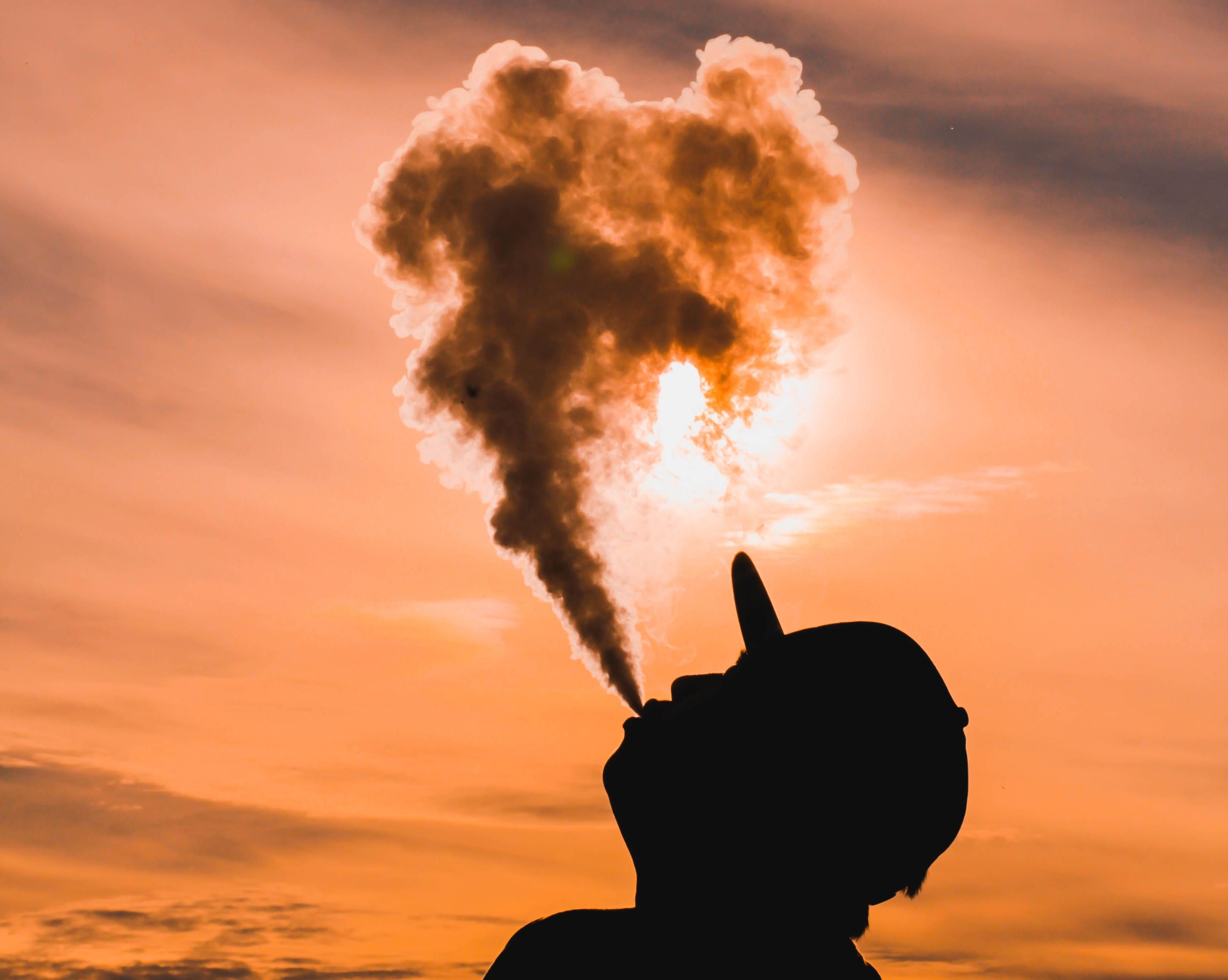
The first hit is the one that colors your world. Save it for the evening—and any piece of trash flickering across your TV screen will be riveting. Puff it at midday, before you get on your bike, and the world around you will feel like one big adventure. Smoke it as soon as you wake up in the morning, before your coffee, and it’ll give you the energy to crawl out of bed or dive back in for another few hours of sleep.

The first hit of the day is like a childhood friend, a first love, a commercial for life. But it’s different from life itself, which is something that, if I could have, I would have returned to the store ages ago. In the commercial it’s made-to-order, all inclusive, finger-licking, carefree living. After that first one, more hits will come along to help you soften reality and make the day tolerable, but they won’t feel the same.

I always take my first hit at sundown. The after-school program where I work is half a mile from the beach, and I finish at five, when Raviv’s sweaty mother, who always gets there last, finally comes to pick up her snot-nosed second-grader. That leaves me time to run errands, if I have any, then to grab a coffee on Ben Yehuda or HaYarkon, and mosey over to the promenade. That’s where I eagerly wait for the sun to kiss the sea, the way a kid waits for his good-night kiss, the way a pimply teenager slow-dancing at prom waits for his first French kiss, the way a wrinkly old man waits for a wet peck on the cheek from his grandchild. The second the sun starts reflecting off the water, I pull out the joint from my pack of Noblesse cigarettes and light up.

I smoke that joint quietly. I try to be in the moment, to feel the breeze on my face, to take pleasure in the colors of the sky and the way the sea sizzles in the red sunlight. I try, but I can’t really do it, because as soon as I take the first puff, my mind starts letting in all kinds of thoughts about how it was a mistake to call that first-grader Romi “poop face,” because the little snitch will tell her bitch of a mother about it, and she’ll go straight to the principal. And about how the tall, skinny second-grade teacher is nicer to me than the other teachers are, always smiling and asking how I am, so maybe something could happen there. And also about my rich asshole brother who keeps working over Mom to make her stop helping me out with my rent, like it’s any of his business. I always try to lose those thoughts and not waste the best hit of the day on them, and sometimes I can do it. But even when I can’t, I figure if you’re going to think bad thoughts about your brother, you may as well be high while you’re doing it.

Life is like an ugly low table left in your living room by the previous tenants. Most of the time you notice it and you’re careful, you remember it’s there, but sometimes you forget and then you get the pointy corner right in your shin or your kneecap, and it hurts. And it almost always leaves a scar. When you smoke, it doesn’t make that low table disappear. Nothing except death can make it disappear. But a good puff can file down the corners, round them off a little. And then when you get whacked, it hurts a lot less.

After I finish smoking, I get on my bike and take a little spin around town. I watch people. And if I see someone really interesting—and that someone is almost always a she—I follow her and make up a little story: the person who just got yelled at over the phone by the tanned woman I’m following is her younger sister who’s always making eyes at her husband at Friday-night dinners; the pint of ice cream she picked up at the corner store is for her spoiled brat of a son; and the drugstore stop is for the Pill, so she doesn’t accidentally have another spoiled brat. After that, if the weather’s decent, I plunk myself on a bench on Ben Gurion Boulevard and smoke a regular cigarette, and I sit there as long as the high or some bit of it is still going. When it completely fades, I jump on my bike and head back to my apartment to the TV, to Tinder, computer games, trance music.

For four years, I’ve been taking my first drag at sundown. Barely missed an evening. There were a few anomalous puffs that managed to convince me to light up earlier in the day, but  nothing major. And that is something that a suggestible, addictive personality like me can certainly be proud of. More than one thousand puffs on Frishman Beach at sunset. More than one thousand uninterrupted puffs until she came along. With her “Excuse me?” so soft and gentle that even before I turned around I knew she would be ugly, because pretty girls don’t have to try so hard to be gentle: people do whatever they want anyway.

She was older than me, about forty. White blouse, black skirt. Brown hair tied back. Smart eyes. Glistening complexion, a few wrinkles, mainly under the eyes, but they only made her sexier.

I wanted to ask if I could help, but because I was smoking, the only sound that came out was a slightly aggressive “What?” I think it sounded aggressive, because she took a step back and said, “I’m sorry, nothing.” I cleared my throat and said, “No, it’s okay, tell me. What did you want to ask?” She smiled shyly and half whispered: “I wanted to ask if that’s pot.” She didn’t look like someone who stopped people on the street to ask them a thing like that, and she definitely didn’t look like a cop. So I nodded. “Can I have some?” she asked, and held out two fingers. Her hand was shaking.

I handed it to her. She tried to inhale and say thanks at the same time. It ended with a splutter. We both grinned. Giving up on the thanks, she took a long drag and held it in, like someone diving underwater. I hadn’t seen anyone smoke that way for years, like a kid smoking a cigarette. She tried to give the joint back but I signaled for her to keep smoking. After another few puffs she tried to give it back again, and this time I took it. We smoked together. When the joint was done, the sun had already set. “Wow,” she said, “I haven’t smoked for so many years that I forgot how much fun it is.” I wanted to say something clever, but the only response I could come up with was that it was good stuff. She nodded and said thanks. I said she was welcome and she walked away.

That was it. It was supposed to end there. But like I already said, when I’m high I follow people, especially women, and so I followed her. She walked to Ben Yehuda, where she bought a bottle of mango-flavored “Island” juice. From Ben Yehuda she took a cab. I followed the cab and saw her get out at the Akirov Towers, walk into the lobby of one of them, and say hello to the doorman. Forty years old, pressed white blouse, Akirov—not exactly the kind of woman you’d expect to share a spliff with on the beach.

On the way home I told myself I should have hit on her. Asked for her phone number. My greedy brain kept scolding me for not trying to take advantage of the situation, to get something out of it, but then my heart said very clearly that it would have been not cool to do that. She asked me for a drag, that’s what she wanted, and, yes, I could have tried to get somewhere with her, but the fact that sometimes when a woman smiles at me on the street I can just smile back without trying to cash in on it actually says something good about me. Maybe about her, too, considering that’s what she brought out in me.


The day after I get high with Akirov, I finish work early. Raviv’s mom comes to pick him up at four fifteen because they have a doctor’s appointment with a specialist. In the thirty seconds it takes her to put a sweatshirt and backpack on her booger-smeared kid, she manages to say the word “specialist” five times. Except that not one of those five times does she say what he’s a specialist in. Maybe snot.

I hop on my bike and get to the beach earlier than usual. I grab a bench and sit there people watching to pass the time until sunset. There’s not much foot traffic. Tourists in T-shirts and sweatpants, gushing about how nice it is in February in Tel Aviv. Israelis on their cell phones, hurrying somewhere without even noticing that they’re by the sea. When the first ray of sun scratches the waves, I don’t light up yet. And even though I’m super-horny for that first puff, I wait another three or four minutes before I start. I don’t even know why.

While I smoke, I do what I always do: I look at the sea, try to live in the moment, let the beauty sink in. But thoughts fly around my head in all directions. I imagine Raviv at the specialist. Maybe he has something terminal. Poor kid. All the kids at after-school torment him. I do, too. I call him Snotface, and I’ve mimicked him wiping his nose on his sleeve. I promise myself I’m going to stop, and the thoughts go back to her again. Akirov. Some part of me was hoping she’d come again today, but it’s weird enough when someone you don’t know asks to smoke with you, just like that, right on the promenade—what are the chances of it happening two days in a row? I finish smoking and keep sitting there until the sun completely sinks into the sea. It’s not nice of me to call her Akirov. So what if she lives in a luxury building? That’s just stereotyping. Like calling an Arab “Arab,” or a Russian “Russian.” Although, when I think about it, that’s exactly what I always do. I’m getting cold now. It was hot in the afternoon so I didn’t bring a jacket.

I’ve already stood up and taken a step toward my bike when I see her coming. She hasn’t seen me yet. I turn my back to her and start digging through my pockets. I usually roll only one joint ahead of time, but today I have two, because I promised to bring one for Yuri, the Russian security guard who stands at the school gates. He never turned up for his shift, so I still have it in my pack. I pull out the second joint and light it, all casual, like I’m not already high as a kite from the first one. I take two quick drags, still with my back to her, and then I turn around. She’s really close now, maybe twenty steps away, but she hasn’t spotted me yet. She’s on the phone. It’s a grim conversation, I can tell. I’ve had enough of them in my life to recognize one. She hangs up right as she walks past me. It looks like she’s crying. I follow her. Fast. But I don’t run. I don’t want to look too eager. When I’m right next to her I say, “Excuse me?” but in an American accent. Like those old American Jews who always say “Shalom?” and when you stop to see what’s up, they speak to you in English. She looks at me. No recognition. “You dropped this,” I say, and hold out the joint. Now the lightbulb goes on. She smiles and takes it. When she’s right in front of me like that and I can see her eyes, I can tell for sure she’s been crying. “Wow,” she says, “you came just when I needed you. Like an angel.” “What do you mean, like?” I say, “I am an angel. God put me on the promenade today just for you.” She smiles again and blows out a little cloud of smoke: “The angel of weed?” “I’m the angel who makes wishes come true,” I tell her. “Five minutes ago a little girl wanted a Popsicle, and before that it was a blind guy who wanted to see. I can’t help it that I landed a pothead.” I manage to make her laugh. Or rather, the combination of the pot and me manages to make her laugh. She’s happy, Akirov. And I feel happy with her, briefly useful to humanity.

When the joint is finished, she says thanks and asks which direction I’m going in, and I realize that while we were smoking I kept walking with her and got far away from my bike. I consider lying, but then I decide to confess. I tell her my bike is tied up back where we met.

“Do you come here every day?” she asks.

I nod. “And you?”

“I have to.” She shrugs and points south to the corncob skyscraper. “I work there.”

I tell her I always come to the promenade after work, to light up a joint with the sunset. A girl once told me that watching the sunset opens up your heart, and my heart’s been closed for a long time, so I come here every day to try to open it up.

“But today you were late,” Akirov says, glancing at the time on her phone.

“Today I was late,” I concur, “which is a good thing. Otherwise we wouldn’t have met.”

“So if I come here tomorrow at sunset, will you share with me again?”

I pause for a second and scrutinize her. Maybe something’s there, maybe she’s hitting on me. But I can see she isn’t. It’s just the pot. Even today, when I stopped her, she only recognized me by the pot. “Sure. It’s more fun to smoke with someone nice than alone anyway.”


For five days me and Akirov have been smoking at sunset. Five days, and I still know almost nothing about her, not even her name. I know she’s vegetarian but sometimes eats sushi, and that she speaks good English, and French, too, because this pain-in-the-ass French tourist came up to us the day before yesterday and Akirov explained to her in fluent French how to get to the port. I also know she’s married, even though she doesn’t wear a ring, because on one of our first days she told me that her husband doesn’t let her smoke pot because it’s illegal and because it screws up your short-term memory. “And what do you say to that?” I asked. I wanted to see if I could get her to spill any dirt on her husband. “I don’t have a problem with it being illegal,” she said, shrugging. “And the short-term memory thing? To be honest, it’s not like I have such great short-term memories to preserve anyway.” Well, that was almost a complaint. Either way, it was obvious there was something weighing on her. Something she didn’t talk about even when she was stoned, which for me was the sign of a strong person. Strong and not a whiner. That—and the thing that happened with the fascist vice cop yesterday.

It was the first time a cop had ever come up to me while I was smoking, and this guy was an especially creepy one. Short but muscular, with a neck as thick as a utility pole and a tight plaid shirt with cut-off sleeves. He shoved his badge in my face and wondered in a cocky voice if he could ask what I was smoking. Akirov, without missing a beat, pulled the joint out of my mouth, took a drag, blew smoke right into his face and said, “Marlboro Lights.” She tossed the joint over the railing onto the sand below, and just as swiftly pulled out a pack of Marlboro Lights from her pocket, lit one, and held out the pack: “Want one?”

The cop flicked her hand away. “What do you think?” he screamed. “You think I’m retarded?”

“I’d rather not answer that,” she said with a sweet smile, “because I am a law-abiding citizen, and insulting an officer of the public is a crime.”

“ID! Show me your ID right now!”

Akirov pulled out her driver’s license and also handed the cop a business card. “Keep this,” she said, “I’m a lawyer. And, judging by your face, it’s only a matter of time before you beat the crap out of a Palestinian and need legal counsel.”

“I know your firm,” the cop said as he dropped her card on the path. “You guys’ll defend any shithead if he has enough money.”

“True,” said Akirov, jerking her head at the tossed card, “but once in a while we also defend shitheads pro bono.”

The cop didn’t answer. He went over to the railing and peered down at the sand strewn with trash. You could see from the look on his face that he was debating whether or not to jump down and try to find our roach among the dozens that littered the beach. “Don’t give up,” Akirov called out, “if you look carefully you’ll find it in an hour at most. And if you take it to forensics they may even be able to isolate my fingerprints, and then you can go to your commissioner and tell him you want to press charges for a marijuana roach. Which is maybe not quite the same as solving a double homicide, but hey . . .” “Bitch,” the cop muttered without thinking, and Akirov continued, “An officer of the law cursing at a lawyer, on the other hand, is a slightly more serious offense.” She winked at me when she said that. “Okay, get the hell outta here,” the cop snapped. I started moving toward my bike but Akirov grabbed my hand and held me back. “You get the hell out, Popeye,” she told him, “before I decide to ask for your details and report you to Internal Affairs.” The cop gave us a violent glare, and my instincts told me to make myself scarce, but Akirov’s hand around mine told me to stay put. Her clammy palm made me realize she was stressed. That was the only sign. The cop hissed something and walked off, and when he was far enough away, she leaned over and picked up the card. “Dumbass,” she murmured, “we lost half a joint because of him.” With an expert hand she tore off a strip of the card to use as a filter. “You have enough on you for another one?” she asked. I almost said that I didn’t but that I lived nearby and we could go over to my place, but something about her wouldn’t let me lie. So we rolled another one, sitting on a promenade bench. A third of her business card became a filter. The other two thirds, which said “Iris Kaisman, Attorney,” stayed in my pocket.

On Friday evening I’m at my mom’s for dinner. My older brother, Hagai, comes, too, with his daughter, Naomi. You can tell from the second they walk in that they’re half fighting. It’s not hard to fight with my brother. He’s one of those people who are always sure they know everything. He’s been that way since we were born, and the boatloads of money he made in the tech industry have only made things worse. Not even the wallop he got two years ago when Sandy, Naomi’s mother, died of cancer, did anything to soften it. Naomi’s seventeen now, a beautiful, tall girl, like her late mother, and even though she has braces, she doesn’t look or sound like a child for even a second. At dinner she tells us excitedly about a species of dwarf jellyfish that lives forever. This jellyfish matures, mates, then becomes a baby again, and it goes on like that ad infinitum. “It’ll never die!” Naomi gushes, and the mixture of enthusiasm and braces makes her spit on Hagai and me a little bit. “Think about it—if we can study its genetic composition thoroughly, then maybe we’ll be able to live forever, too.”

I grin at her. “To tell you the truth, even sixty or seventy years sounds like too long to me.”

My brother explains that Naomi wants to go to Stanford next year and get her degree in biology.

“Wonderful!” my mom exclaims. “You’ll be brilliant.”

“What do you mean, ‘wonderful’? I told her she can do her army service first, like everyone else, and when she’s done I’ll pay for her to study whatever she wants.”

“Not an option. The army has nothing to offer me,” Naomi says.

“It has nothing to offer you? It’s the army, it’s not a branch of Zara! No one goes there because of the selection or the styles. You think income tax has anything to offer me? No, but I still pay it every month. Isn’t that so?” Hagai glances at me, expecting me to intervene on his behalf. Not because he’s always been such a great brother and I owe him. He hasn’t. But because he’s so right.

“Nothing bad will happen if you skip the army,” I tell Naomi. “The world will be better off with you studying jellyfish than spending two years making coffee for some horny officer.”

“Yeah, take your uncle’s advice,” Hagai hisses, “he’s really gone far in life.”

After dinner, when Hagai and Naomi are gone, my mom gives me another slice of cake and asks if everything’s okay and if I’m seeing anyone. I tell her everything’s fine, that they’re pretty pleased with me at school, and I’m dating a lawyer. I almost never lie to my mom. She’s the only one who has to accept me as I am, so there’s no need, but this lie isn’t for her. It’s for me. It’s for those few minutes when I get to imagine I have a life different from the one I really have. When I warm up at night in bed with someone who isn’t “divorced, looking for a noncommitted relationship” whom I dug up on a dating app. At the door my mom says, “You know Hagai didn’t mean it,” and when she hugs me she puts some bills in my jeans pocket. Whenever Hagai lays into me, she gives me a few hundred shekels. It’s starting to feel like my side job.

I take a cab to the bodega next to my apartment and buy a cheap bottle of whiskey, which the Ethiopian checkout guy with the dyed-blond hair swears came from Scotland even though the label is in Russian. At home I finish off half the bottle. Then a slender forty-six-year-old from Tinder comes over. Before we fuck she tells me it’s important to her that she be honest and inform me that she has cancer and it might be terminal. Then she takes a deep breath and says, “That’s it. I’ve said it. If you’re not comfortable, we don’t have to do it.” “I’m totally comfortable,” I say, and when she comes she screams so loud that the upstairs neighbor bangs on my door. Afterward we smoke a cigarette together, a regular one, and she takes a cab home.


Sundays are usually my least favorite day of the week. It wasn’t always this way, only since I started working. Before the after-school program I did nothing for five years, and then I hated all days equally. Honestly, most of the time I couldn’t really tell the difference. When I got up at midday, I would look at my watch and wonder if I had any hash or weed or money left and if I remembered where I’d put my cell phone and keys. Questions like “what day is today” hardly ever came up, and other than Fridays, when I went to see my mom, the whole rest of the week felt like one big, sticky glob of sleep-wake-eat-shit-TV and the occasional fuck.

My job set things straight. It separated the days out. Mondays started to mean darbouka class and the pretty counselor with the tongue piercing, and Wednesdays meant meatballs in sweet tomato sauce in the cafeteria, which the kids hated but always reminded me of Grandma Geula’s cooking. And Thursdays were soccer in the yard and the kids looking at me like I was Cristiano Ronaldo and not just a tired grown-up who could barely outsmart a bunch of seven-year-olds. And then shitty Sundays with the quasi-Nazi roll call put on by Maor, the guy who runs the after-school program, who always had a bad word for each of the counselors before he disappeared from our lives for another week. After my chill Saturdays, that always rubbed me the wrong way.

But this week, for the first time since I started work, I was looking forward to Sunday. To the sunset, to the promenade, to getting high with Akirov. And it wasn’t out of horniness or anxiety about how maybe I’d say something and she’d come over to my place. It was that I genuinely missed her. I missed someone I didn’t even really know. And that was exciting and at the same time humiliating. Because that feeling of missing someone was mostly evidence of how vapid my life had become.

Except Akirov didn’t come on Sunday. I waited for her till it got dark—long after, in fact. She didn’t come on Monday or Tuesday, either. While I smoked alone, I reminded myself that she was just a random woman who’d shared a joint with me on the promenade a few times, not my fiancée or someone I’d donated a kidney to or anything. But it didn’t do any good.


On Wednesday, after the kids finish wrangling their lukewarm meatballs, I realize Raviv isn’t there. I never count them, even though Maor says we’re supposed to count them every hour. But when someone’s missing, I usually figure it out, so I ask Yuri, who says he saw a few kids go behind the gym. They’re not allowed to leave the classroom without permission, and by the time I get to the gym I’ve had time to think up the punishment I’ll give Raviv, feel sorry for him, and cancel it. Behind the gym, in the long-jump sand pit, I see Raviv crying, and not far away from him I see Liam, the meanest kid in my group, lying facedown in the sand while some fat redhead whose face I’ve seen before sits on top of him and punches him in the back. He’s punching the way a kid does: lots of anger, very little technique. Without even knowing how things got to this point, I’m with the redhead. I’ve felt like punching Liam myself a bunch of times. The kid doesn’t talk, he just gives orders, and even that he does in a shitty way. Every other line out of his mouth is  about how he’s going to tell Mom, or the teacher, or the principal.

The redhead keeps pounding on Liam, and I know I should run over and separate them. The fact that they disappeared from the classroom is my screwup, and now I’m really going to get in trouble, especially with Liam’s mom being on the parent council. But as I watch the redhead railing on him, a little voice inside me tells me to wait a while longer, just till he lands one really good punch.

This has not been a good week. Not good at all. All that embarrassing waiting around for Akirov. I didn’t even try to bring a single girl home. This fight is without a doubt the highlight of my tedious week, and another few seconds of enjoyment aren’t going to hurt anyone. While I think all this, the redhead gets off Liam’s back, and just when I think the whole thing has played itself out, he takes a step back and slams his foot on Liam’s head. As I start running, I realize Raviv is on to me. He saw me watching the fight that whole time without doing anything. I sprint the few feet between me and the redhead as fast as I can, both because I’m stressed and to confuse Raviv a little, so he’ll think afterward that he must have been wrong: it wasn’t possible that I was standing there watching instead of breaking them up and that I took off so fast.

When I get to the redhead I shove him hard enough to move him off Liam and I yell, “What are you doing? Are you out of your mind?” Then I bend over to check on Liam, and all that time out of the corner of my eye I can see Raviv watching me. Liam’s upper lip is bleeding and he looks unconscious. The redhead stands there wailing. He says Liam cheated him on Trashies and when he asked him to give back his cards, Liam told him he had poop-colored eyes and his dad was unemployed. From the way the redhead says it, I can tell he doesn’t even know what “unemployed” means. I try to talk to Liam and shake him gently, but he doesn’t respond, and I get really nervous. I tell the panicky redhead not to move and I run to the water fountain. On my way back I can hear Liam up and screaming, “You’re finished at this school, you fat-face loser! My mom’ll make sure of that!” Liam is sitting on the ground with his hands on his face, and the redhead stands next to him, shaking all over, really sobbing now. Suddenly Yuri turns up. I’d left the kids alone in the classroom and one of them found a lighter in my bag and set fire to a poster of Yitzhak Rabin in the hallway. Yuri’s account of how he put out the smoldering poster makes it sound like, at the very least, he’d saved a baby from a burning house. I splash water on Liam’s face. He looks all right now and his lip is hardly bleeding anymore. The redhead keeps blubbering, but I’m not interested in him. What I am interested in is that snot-faced Raviv, who doesn’t take his eyes off me even after we go back into the classroom. I call Liam’s dad, who works as a land surveyor and is usually at home, and he gets there in five minutes. Liam screams that he took too long and he’s going to tell on him to Mom, and then he tells him about the redhead. He embellishes a lot, and says the redhead hit him on the head with a rock, but I don’t intervene. As long as he doesn’t start in on me, I figure I’m better off keeping quiet. Then the mom of the twins with the unibrows arrives. She has a South American accent. She had the twins through IVF and, judging by the way they turned out, she must have used a caveman’s sperm.

Eventually it’s just me and Raviv. I let him play on my iPhone, even though I never do that, and while he annihilates entire species on a game I downloaded a few days ago, I try to talk to him about what happened. “It’s not okay that you and Liam ran away from class without permission,” I tell him, but I say it pretty gently, like a kind mother, so he’ll know I’m not against him but at the same time he’ll understand I have something on him. “I won’t tell your mom,” I continue, “but I want you to promise not to do that again.”

And this kid, without even looking up from the phone, says, “I saw you.”

“Saw me what?” I ask, like I have no clue what he’s talking about.

“I saw you while Gavri was beating up Liam. You were smiling.”

“No I wasn’t. I wasn’t smiling. I ran. I ran as fast as I could to break it up.”

But Raviv isn’t with me anymore, he’s in the game. Shooting lasers at anything that moves.

When his mom gets there, I don’t call her out for being late like I usually do. I just tell her, “You have a really good kid. He’s a sweetheart.” Right next to him, so he can hear.


In the five minutes it takes me to get to the promenade, I have two unanswered calls and a text message from Maor. The message is blank. The fucker was too lazy to write anything, but he wanted me to see it and call him back. I debate whether to have a smoke first and then call him, or the other way around. The pro of smoking first is that the reefer will soften the discussion, envelop the whole unpleasantness in styrofoam and bubble wrap. The con is that I’ll need to be sharp with him. I’ll have to answer fast, maybe make up a lie or two right on the spot. I go with the second option and call him cold sober.

Maor yells at me: Liam’s mother called and vowed to get all the other parents on board and make sure he loses the program next year. She’s been compiling a list of complaints on him all year and she’s going to make everything public, including the fact that the lunches are sometimes served frozen. Maor says that if she pulls it off, this whole episode could cost him two hundred thousand shekels and it’s all my fault. Her kid won’t be at school tomorrow because he has a concussion, and Maor wants me to go visit him before work and take him some candy or a toy, and suck up to his mom so she’ll get off his case. The whole phone call is a total drag. He repeats everything ten times. I wish I’d smoked first. Before he hangs up he threatens me again. He says if they take away his license, he’ll sue me. I tell him to calm down and I promise to go over tomorrow and kiss the mom’s ass. By the time the call is done I’ve missed the sunset. I sit there in the dark, staring out at the sea, fully sober. Once the sun has set, there’s nothing in that spot apart from ugly tourists and lousy music from the restaurants on the beach. And the next day I have to set my alarm clock and get up early so I’ll have time to buy a gift for my least-favorite kid in the world. This week started off lousy and it’s only gone downhill.

“I thought you left after sunset.” I hear her voice and I feel—or at least imagine—her breath on the back of my neck.

“Sunrise, sunset—I’ve been waiting for you since Sunday,” I reply with a smile, and then I get mad at myself because instead of saying something positive I managed to sound like a whiner and a doormat all at once.

“Sorry.” Akirov sits down next to me. “Work was a shit show this week. Not just work—life, too.”

I want to ask her what happened but I can sense she doesn’t want to talk about it. So instead of drilling on about it, I take out a joint. After one puff I pass it to her and she sucks it up like a junkie. “I’ve been thinking about this drag for five days,” she says, smiling, and hands it back to me. I don’t take it. “You smoke it,” I tell her, “smoke it to death.” She hesitates for a second and then takes another toke. “Tough week?” I ask. She nods and sniffles. I’m not sure if she has a cold or if she’s trying not to cry. “My week wasn’t so hot, either,” I say. “It’s bad for us to not see each other for so long. It throws a wrench in our karma.”

She smiles. “Listen, I want to ask you for a favor . . .” She digs through her bag while she talks, and I try to guess what she could possibly want from me. “I want to hire you.” She takes out her wallet.

“As what?” I give her a big grin. “Your bodyguard? Babysitter for your kid? Personal chef?”

“I don’t have a kid,” she says with a sigh, “I’m not into food, and I’m pretty good at taking care of myself. I want to hire you to keep doing exactly what you do: come here every day at sunset, and wait for me if I’m late. Not long. An hour at most. And then smoke with me.” While she talks, she counts out the money. “Here.” She hands me a stack of hundreds. “There’s two thousand here. Two thousand for three weeks. What do you say?”

“What do I say?” I repeat her question to buy time. “I say that I come here every sunset anyway, and smoking with you is more fun than smoking alone, so it’s great that you want to pay me for spending a pleasant fifteen minutes with you on the beach when you have time, but taking money for talking to a friend . . .”

“But that’s just it—we’re not friends. And three weeks from now I’m going to vanish from this place and you’ll never see me again. These three weeks are going to be the toughest ones of my life. The daily joint with you will help make them a little bit easier.” Her hand with the money is still held out. When she says we’re not friends, it hurts. It hurts because it’s true. I try to ignore it and focus only on the pragmatic stuff.

“If you want, I can buy you some weed for a couple of hundred shekels. At the rate you smoke, it’ll last you more than three weeks.”

“But I don’t want you to buy it for me. I want you to smoke it with me. I can’t keep weed around. I promised my husband I’d stop buying it.”

“You promised him you wouldn’t smoke,” I correct her.

“I know,” she says, and suddenly she starts crying, “But it’s different with you. Even if he finds out, it’ll be like I just met you on the street and you happened to be smoking so I had a drag, too. It’s not the same as buying . . .”

I take the money. I don’t want her to cry. “Okay, boss, we have a deal.” I give her a wink. “But the two grand only covers drugs. Sex and rock ’n’ roll are extra.”

She laughs, and the laughter and tears come out together. I don’t know what she’s going through, but it sounds like some serious drama, and even though there’s nothing going on between us, I really want to help her. “I only have one condition,” I add as I shove the money into my wallet, “I want you to tell me why you’re disappearing in three weeks. When you said that, the way you said it, it didn’t sound like a good kind of disappearance. And, speaking as . . . your employee, I have a right to know.”

“I’ll tell you,” she says, and wipes her face with her hand. “I promise. But not today.”


The alarm clock on my phone wakes me at eleven. I brush my teeth, shave, and roll a joint for the evening. I do everything fast. I still have to pick up something for Liam and go by his house, and I only have an hour and a half. It’s a good thing he lives near the school.

His mother opens the door wearing a pink tracksuit and a sour face. “I came to check on Liam,” I say, trying to sound like I care.

“It’s a pity you didn’t check on him yesterday, before he was brutally beaten,” she retorts in her low, sludgy voice. “I still don’t understand how a child can disappear from the classroom for almost an hour without anyone noticing.”

My instinct is to say something about how it’s easier to look after kids who respect other people than ones who keep lying and running away, but I remember my talk with Maor, so instead I explain apologetically that yesterday a child brought a lighter to school and tried to burn some posters in the hallway, and since I was busy taking care of this unusual incident, it took me a while to realize that Liam was gone. “I just want you to know, Mrs. Rosner, that I didn’t sleep all night because of what happened. It was a terrible mistake and I want to apologize to you.”

“I’m not the one you should apologize to,” she says in a voice that sounds slightly less furious. “I’m not the one who was beaten unconscious and is still suffering from aches all over my body. You should apologize to Liam.” She takes me to the little shit, who’s sitting up in his parents’ bed, watching a Japanese anime series—a soccer match between robots and aliens. Other than a slightly puffy lip, he looks totally fine. “Liam,” his mother says in a teacherly tone, “you have a visitor.”

“Not now,” Liam says without taking his eyes off the screen, “I’m in the middle.”

“He brought you a present,” she says, trying to tempt him. “Lego Space!”

“I hate Lego.”

“Hey, Liam,” I jump in, “I came to see how you’re feeling.”

“I’m in the middle,” he says, still not moving his eyes off the screen. “Did you get a gift receipt for the Lego?”

At the door, Liam’s mother thanks me for visiting and says she has a meeting with the principal and Maor tomorrow and that she’s not planning to let this slide. “Liam has three older brothers,” she says in a pathos-filled tone, “and as a parent, I have never come across such an extreme incident: a seven-year-old boy attacked with rocks and sticks without anyone intervening.”

I realize the last thing I should do is get into an argument with her, so I just nod. I tell her that if I were a parent I would react exactly the same way. “You have a lovely boy, Mrs. Rosner, and, thank God, he came through this whole thing without serious harm. That’s what really matters.” Walking down the steps, I text Maor to say I made the visit and the mom is still pissed, but I’m confident she’ll calm down before the meeting. He doesn’t answer, which is a good sign. When Maor texts or calls, it’s always bad.

The afternoon at work goes by without incident, but it’s tense. All the parents who come to pick up their kids throw out something: they’re worried, this is not okay. They’re not blaming me personally, but they’re unhappy with the program and the school. The twins’ mother says that in Buenos Aires they’d have at least two counselors for this number of children. Noya’s father, who is an officer in the navy and always wears his uniform when he comes to pick her up, says it all starts with education at home. I murmur agreement with everything they say, and try to look contrite. There’s obviously going to be loads of yelling and threats at the meeting tomorrow, but if I know this school, nothing serious will come of it. They’ll suspend the redhead for a few days, they may even expel him if his parents are weak or suckers, but it looks like I’ll survive—as long as Raviv doesn’t talk.

Raviv and I are the last ones there, as usual. I tell him I downloaded an upgrade for the game he likes and ask if he wants to play. He smiles and holds out his hand for my phone. Before I give it to him, I explain that it’s fine with me for him to play, but it has to be a secret, because if he tells the other kids they’ll want to play, too, and I can’t let everyone do it. Raviv thinks for a moment and then nods. I give him the iPhone and he starts the game. While he plays, I ask him if he’s good at keeping secrets. He doesn’t answer. I don’t know if it’s because of the question or because he’s absorbed in the game. After a few seconds the iPhone makes a happy tune—he must have leveled up.

“Way to go! You’re really good at this!” I exclaim.

“Why did you smile while Liam was getting beaten up?” He doesn’t even look up from the screen when he asks me that.

Now it’s my turn to keep quiet. My instinct tells me to make something up. My instinct always tells me to make something up. But just like with Akirov, I ignore it. “I did it because I don’t like him,” I finally say. “Lots of times he’s done bad things that I thought he should be punished for and he always gets away with it, and when I saw Gavri hitting him—I know this isn’t a nice thing to say, but I was glad.”

Raviv looks up and stares at me. The game keeps running and I hear him getting eliminated, but he doesn’t seem to care. “What did he do? What things did he do that you thought he should be punished for?”

“Lots of things. But mostly it bothers me that he picks on the weak kids.”

Raviv wipes his nose with the back of his hand without taking his eyes off me. “But he’s not the only one who picks on weak kids.” He doesn’t say it, but we both know he means me.

“That’s true, and it’s a horrible thing to do.”

“Then why do you do it?” He doesn’t look angry at all, just curious.

I shrug my shoulders. “I don’t know. Maybe because most of the time I feel weak myself, and when I pick on someone, I feel stronger.”

Raviv nods. He seems to understand me.


It’s cold on the promenade that evening, and there’s a gusty wind. The sky is completely black and it looks like it’s about to storm. I huddle in my coat and wait for Akirov. It’s my first day as her employee. She’s late, but not by very much. She’s wearing a wool hat. I don’t usually like girls with hats—it always makes them look like a character on a kids’ show. But on her the hat sits really well. It brings out the green in her eyes.

It’s too windy to light up, so I suggest we find a lobby somewhere. While we smoke together in the doorway of a decrepit building on HaYarkon Street, it starts raining, and I think about my bike getting wet on the promenade. “What a crappy day,” I say, and she nods, as though something that belongs to her is also getting wet out there. I tell her about my day, and the whole story with Liam and his mother. She asks if I like my job. I think for a moment—no one’s ever asked me that. “I don’t know if I’d use the word ‘like,’” I finally answer, “but I definitely prefer it to working with adults. With kids, you can take a bite out of their sandwich or you can tickle them. With adults it’s more complicated.”

She takes a sandwich wrapped in paper out of her bag. “Want some? I made it this morning. It’s tuna fish.”

I tell her I’m not hungry and ask if I can tickle her instead.

She smiles. “Do you think you’ll get fired?” She takes a bite out of her sandwich.

“I don’t know. I’ll find out after the meeting with Maor tomorrow.”

“I have a tough time with kids. It’s not that I don’t like them, I just don’t know how to get along with them. Oded hasn’t stopped talking about kids since the day we met, and I just keep trying to buy time.”

I ask if Oded is her husband, and I point out that she’s always referred to him only as “my husband.”

“I guess now I feel a little less sure that he’s my husband.”

“What do you mean?” I ask her.

All she says is, “It’s complicated.” Then she asks, “Do you think it’ll keep raining for a long time?” I remind her that she promised to tell me why she was going to disappear, and she nods and says she’ll keep her promise but not today. “I hope tomorrow goes well. I hope you don’t get fired,” she says, and a second before she steps out into the rain she gives me a kiss on the cheek and wishes me a good weekend.

I keep standing in the doorway for a few minutes, thinking about Raviv, about the meeting tomorrow, about Akirov’s husband, Oded, who is now a little less her husband, and about that kiss she gave me. It was a friendly sort of kiss, and it smelled like tuna fish. The rain is coming down harder, and when I get sick of waiting, I walk out into it.


I don’t wake up till four the next day. On days when I don’t have to be at work, I don’t set my alarm clock. On my phone I see a text message from Mom saying it’ll just be the two of us for dinner because my brother is going away for the weekend with a woman he got set up with at work. She puts three exclamation points at the end of the message, like a sixteen-year-old girl. She’s always dreaming about the day when my brother will remarry. Somehow she’s managed to convince herself that all the pissed-off bitterness that Hagai keeps vomiting on us comes from loneliness, and that the minute he finds someone who’s willing to put up with him, he’ll turn into a prince. The good news from my perspective is that I won’t have to see him this evening. Then there’s another blank message from Maor. I try to call him but his phone is off, so I leave a voice mail.

My mom makes an even more awesome dinner than usual— four courses, and for dessert, a layer cake from a recipe she found online. She’s happy because of Hagai, and her happiness is contagious. I drink a lot of wine and we talk about my dad, about missing him, but it’s still a cheerful sort of conversation. My mom says she’d always hoped to live to see grandchildren, and that even though she’s already been a grandmother for ages, her dream is for me to have a child. She asks how my lawyer girlfriend is, and I say everything’s going great, and that Iris actually likes kids, but she’s a little anxious that she won’t know how to manage them, just like I am. “I’m in no hurry,” Mom says with a smile, “I’ve been waiting for you for so long, I can wait a little longer.”

It rains all day on Saturday. I huddle under the covers, watching horror flicks and chain-smoking what’s left of the crappy pot Avri sold me a month ago. Maor’s cell phone is still off but he calls in the evening. He says the meeting didn’t go well. “You told Rosner that a kid brought a lighter to school and caused problems, and that was why you didn’t notice Liam was gone—why did you do that? She brought it up it at the meeting, and the principal talked to Yuri and started poking around. The kid said the lighter was yours, and Yuri told the principal he was the one who put out the fire. So, bottom line, now you’re a liar.” He pauses, waiting for me to say something in my defense. But I have nothing to say and I can’t be bothered anyway. “Rosner and the principal are both pissed off, and it turns out that Gavri, the redhead kid who was punching Liam, his grandfather’s something senior in the Ministry of Education, so they can’t kick him out of school. Rosner was raring to go, she wants blood. So, long story short, I told them you’re done. Don’t show up at work tomorrow. Call me in early March and I’ll leave you a check at the school office with however much I owe you for February. And, dude, next time you lie? Use your brains. So long.” Maor hangs up on me, and I feel pretty fine about that. I didn’t have anything smart to say on the occasion of my termination: it’s not like it was some toast where you have to make a speech and then they give you a watch. Tomorrow I’ll go look for another job. Maybe bartending. Night hours are better for me, and free liquor is just as good as meatballs in tomato sauce. It’s insulting to be fired, there’s no getting around that. To hear someone tell you you’re not good enough is never a good feeling. But doing that work for 2,800 shekels a month wasn’t something I could keep up for much longer anyway. I wonder if any of the kids will miss me when I don’t turn up on Sunday.


At three a.m., Avri texts me: “Awake?” Like I’m his fuck buddy or something. On the phone he tells me his friend just arrived from Amsterdam with some good stuff. “Primo fresh,” he says excitably, “he just shat it out. Should I run you over some?” By four he’s at my place, and I use what’s left from Akirov’s two grand to buy eight grams. Avri tells me it’s called Pineapple Crush, because this stuff is so strong that if you smoke enough of it, you can fall in love with a pineapple. After his passionate speech we smoke a bowl, and I don’t fall in love with anything, but I do fly far, far away in my mind: I think about Raviv, and about that little stinker Liam, and about Liam’s mom in her pink sweats who probably didn’t give birth to him but just shat him out like Avri’s friend shat out the Pineapple Crush for us. Then I think about Raviv some more, growing old and then becoming a baby again like that dwarf jellyfish; but mostly I think about Akirov and Oded, her slightly-less-so husband, and about how she’s pretty much the only ray of light in my life, and now that’s going to disappear, too. I’m so baked that I don’t even notice Avri leaving, and sometime after the garbage truck finishes its round on my block, I fall asleep.

I get up just in time to shower, roll a joint, and bike to the promenade. The rain and wind have stopped, and there’s finally going to be a real sunset. Akirov’s already waiting on our bench. She finished work early. The first thing she does is ask about Maor and the meeting on Friday, and I tell her I got fired, and that maybe it’s better that way. “Now you’re my only employer,” I say, as I pull a joint out of my Noblesse pack, “and that’s why I’ve decided to take this business a little more seriously from now on. Check out the sunset I arranged for you!” It really is a beautiful one, and Akirov sits there silently, probably trying to come up with something comforting to say. I tell her that not only is there a premium sunset today, but premium pot, too. I tell her about Avri and the Pineapple Crush, but I skip the shitting part. The truth is, I’ve been smoking pot for twenty years and I’ve never had anything this good. After a few tokes you’re absolutely flying.

We stay on the bench well after the sun has gone down, and I remind her again that she promised to tell me why she was disappearing. She looks at me with her clever green eyes. She’s stoned out of her mind but she’s still scrutinizing me. She smiles sadly and says she’s also leaving her job, and that it’s ending badly for her, too. Her law firm represents a few organized crime families, and with one of them, it wasn’t just legal advice—the firm was helping them launder money. We’re talking tens of millions, and lots of important people are involved. But she wasn’t. She found out by accident, and like an idiot she went to the police. When she did that, she didn’t realize the extent of it. She thought she’d discovered a onetime transaction, which only one of the partners was involved in. By the time they figured out how serious it was, she couldn’t back out. Now she’s a state witness. She goes to work every day like everything’s normal, eavesdrops and gathers material, and soon, when the whole thing blows up, she’ll be out of here— they’ll put her in the witness-protection program and give her a new identity overseas. Even she doesn’t know where. “Oded told me yesterday,” she said, attempting to sound calm, “that he’s not coming with me. He’s very close to his family and he’s not up for disappearing.”

“I’ll come with you,” I say, and I suddenly take her hand. “I’ll come with you, wherever it is. I love surprises.”

“This shit really is powerful,” she says, laughing.

“Yeah, but regardless, I’d be happy to come. You’re my only employer here, and when you leave, that’ll be over, too. A new place? A new beginning? I could really get behind that. Just imagine if they put us on a tropical island! Every morning I’ll climb up a tree and crack open a coconut for you.”

“You’re really into this!” She laughs some more. “It’s too bad we can’t switch.”

“I don’t want to switch.” I start getting a little choked up now. “I want you.”

She bites her lower lip and nods. Except it’s not an “I know” nod, but more of an “I want you too” nod. And then comes this long second that the world has cleared away for us so we can kiss. But I’m too worked up to just kiss her. My stoned brain is too busy imagining us together, with different names, in a different place.

The second is over faster than I thought it would be. She stands up and smiles awkwardly and says she came to say goodbye because the timeline has changed: they’re picking her up at ten tonight, and she has to say good-bye to her husband and her sister, who doesn’t know anything about all this. I stand up, too, still trying to comprehend how I could have let that second evaporate, and she gives me one of those ordinary American-type hugs and says I’m a special person, which is something almost all the girls who wouldn’t sleep with me said.

“Don’t tell anyone, okay?” she says while she hails a cab. “Even after it all comes out. Promise? That’ll only get me in trouble. And you.”

I nod quickly and a minute later she’s gone.

I bike home, still wicked high, and all the stoplights and the headlights and the cars honking mingle together in my head and it feels like a huge dance floor. The whole city looks happy—too happy. The munchies set in and I stop at the Yemeni falafel guy’s stand on Nordau. Tomorrow Akirov starts her new life in a faraway place, without a husband and with a different name. It sounds like the beginning—or maybe the end—of a fairy tale. I believe she’ll be happy there, wherever it may be, even if it’s without me. Someone else will pick coconuts for her. Or she’ll pick them herself. Wherever they send her, I hope it’s somewhere warm. Every time I passed her a joint and our hands touched, her fingers always felt cold. 

A Legal Thriller About a Magical Talking Lemur

Anita Felicelli spent eight years as a litigator in a law firm. It’s not surprising then that she so deftly recreates the combative atmosphere of a courtroom. “Every trial is made up of five billion moments, both dark and shining, scripted for years in advance during discovery,” Felicelli writes in her debut novel, Chimerica. “And what’s left, the fixed corpses of these moments, are trotted out at the right time for judgement.” 

Chimerica traces the journey of the down-and-out Tamil-American lawyer Maya Ramesh. After being unceremoniously fired by her law firm, Ramesh fights to save a painted lemur that’s come to life. Blending magical realism and a legal thriller, Felicelli creates a novel that showcases not only the violence of the courtroom, but the true centrality of art and nature in our lives. 

Anita Felicelli is the author of the short story collection, Love Songs for a Lost Continent, which won the 2016 Mary Roberts Rinehart Award. Her fiction has been published in journals such as Joyland, The Rumpus, The Normal School and her criticism has appeared in Slate, Salon, The San Francisco Chronicle, The Los Angeles Review of Books, and more. 

I spoke with Anita about technology, the violence of the law in American society, and the importance of art and nature in a culture that doesn’t value it.


Nishant Batsha: One thing I was really interested in when I first started the book was the way in which communication and technology is deployed in the background of this book. We can never escape from technology—especially in the Bay Area—but chatrooms, comments, Twitter, Tumblr, and emails play a big role in this book. What is your relationship to technology and fiction?

Anita Felicelli: I’m really fascinated by technology because I live where I live and because my parents migrated because of jobs in technology. For some people, technology is very much in the background of their lives, but I feel like our social interactions and our psychologies are so transformed by the degree of connection we have with other people online. 

I’m always fascinated by how few literary fiction authors use technology and the ways in which we behave are mediated by technology. I wonder if that’s a class thing. You can more readily shut off the world if you’re from some classes. But if you’re an immigrant, that’s how you keep in touch with your family in another country. There’s not really a likelihood that I’ll shut off my Facebook or Twitter because that’s the only way I can keep in touch with people I’m related to—I’m not surrounded by these people but I want to still have contact. There’s that aspect, but there’s also one of surveillance. 

There’s a connection between the performance we do online and the performance you would do in the courtroom.

NB: The point you make about surveillance is especially interesting because there’s a feeling (and reality) that we’re constantly being watched. In Chimerica, this takes the form of a doppelganger. It’s terrifying: what if everything that’s watching me online is forming a version of me that exists somewhere in the deep reaches of the internet?

AF: Social media is so performative. I have a billion thoughts in my head but I’m only ever sharing a couple of them online, which creates a performance of the self. That relates to trial law: a lawyer is creating a self that allows the jury to sympathize or feel something for the attorney, even if they think whatever the client did was despicable or don’t particularly like the client. The attorney stands in the client’s place as a performance. There’s a connection between the performance we do online and the performance you would do in the courtroom. 

There’s a sense of persuading people: this is who I really am or this is my real self. The fact is, we’re so many selves, but we choose to exploit some of our thoughts and suppress others.

NB: Thinking through the performativity of law and law in general: this novel, like a person, has many different facets and forms. I was really interested in Jonathan Lethem’s blurb. He pegged this as a legal thriller. Do you agree with that? 

AF: To be fair, he says it’s a surrealist legal thriller. “Surrealist” puts a completely different spin on it. It’s not meant to be Scott Turow or John Grisham. It definitely hits the surrealism harder than it hits the legal-thriller genre, but I also engage with noir, speculative fiction, existential drama. 

I was partially inspired by William Gaddis’ A Frolic of His Own. It’s satire about the law. Part of me thought, he gets to do that and he wasn’t a lawyer. How could I put my own spin on it? It’s that hysteria of litigation I’m aiming for. Genre-wise that’s a postmodernist novel.

NB: Chimerica  is meant to focus in on law as instrument of violence. Why use art to open up this story? 

AF: I’ve always been looking for something that stands outside of structures and systems of control. The only two places I’ve found that are nature and art. So I combined those two and made them the subject of this book. 

I’ve always been looking for something that stands outside of structures and systems of control. The only two places I’ve found that are nature and art.

Even so, I think that American capitalism tries to put structure around these two things that are spaces of freedom. How do people function together? People function together—this may be too dark—through violence. And yet people long for a deeper connection or something that’s unmitigated by other people. 

Art and nature are the places where there’s something wild that people want to protect. They want to protect the impulse that brings people towards those things. American capitalism is not set up to protect the particular freedoms that come from embracing art and nature. 

NB: Do you think people are ultimately able to connect to art and nature in a meaningful way? Your characters sometimes seem very self-interested. When confronted with art and nature, characters in Chimerica seem to make gestures towards wanting to connect with it, but don’t let themselves dissolve in a way that allows for a deeper connection. 

AF: Well I think that in children there is a meaningful connection to art and nature. I have three children and they seem very connected, but I’m sure as they get older—I found this in myself—that the interest is diminished. But I do think our most human impulse is toward art and nature, but we have to live together, and we find ourselves with these constraints and a desire to look for money, fame, and more material things. We ignore the soul in favor of the trappings or products associated with a soul. 

NB: Maya has elements of being an anti-hero. How did you envision her connection to the law and moving away from it?

AF: I don’t think she moves away from the law at all. I don’t think she learns anything about the law. I think she realizes that there is something mysterious in the world that she can’t quite get her hands around—that which should be treated as sacred. 

She’s intended to be an anti-heroine, but I don’t think she’s irredeemable.

NB: Why do you think you wrote her as an anti-heroine? I’m not that familiar with books that have a courtroom element, but it seems to me like the lawyer is often seen as a white male hero. Did you write Maya as an anti-heroine purposefully with that in the background?

AF: I made her an anti-heroine because the novel functions as a critique of the hysteria of litigation, and the traits that make her an anti-heroine are what it takes to succeed as a trial lawyer. The white male hero is a fantasy. That whole legal thriller genre is a fantasy of the American legal system, and I’m not interested in an escapist fantasy about society. 

That whole legal thriller genre is a fantasy of the American legal system, and I’m not interested in an escapist fantasy.

The very traits that are lionized in rich white American heroes in the legal thriller genre come across differently when a brown woman performs an exaggerated version of them in order to beat the system. And equally, in order to achieve the same outcome, a different psychological state is needed for a brown woman than for a white man. With Maya’s questionable choices, I wanted to unsettle the reader, I wanted to interrogate what a heroine or anti-heroine is, and more than that, I wanted to show the double-bind of what it takes to “succeed” within a system that’s not made with either fairness or you in mind.

NB: I love that phrase, “the hysteria of litigation.” Do you think you could unpack it a little bit?

AF: The hysteria of litigation is the way in which one action leads to a worsening of a situation rather than a resolution. You start out in litigation with problems, and my experience as an attorney was that the American legal mindset is one that encourages further litigation rather than stepping back from it. 

NB: This is mirrored in the book—lawsuits seem to come out of lawsuits, and I don’t want to give away too much, but the only way it seems like anyone can ever escape the cycle of lawsuits is to leave the country, with grave risk!

It’s like that movie from the ’80s—Wargames—“the only winning move is not to play.”

AF: Exactly. That’s been my experience. I’ve had good experiences too. I’ve loved all my clients, but that’s another piece of it: you’re trying to get money for your clients, and whatever strategy to get that is what you use. But there’s no real escape. Everything gets more intensified. 

NB: Were you ever worried that you’d bring your clients or your courtroom experiences into your work?

You can embed things in a magical creature that you can’t reveal about particulars of your real life.

AF: This is the benefit of magic realism. You can embed things in a magical creature that you can’t reveal about particulars of your real life.

When I set out to write this book, I had been through so many lawsuits. My work isn’t based on just one lawsuit that I’ve experienced, but it’s all of them over eight years of litigation coalesced into one viewpoint. 

NB: When you started to write this, did you set out to write a magical realist book?

AF: Yes! I knew right away that I was going to have a talking lemur, and it was always my intent to have that lemur. The lemur to me is more important than Maya, but Maya is from an earlier novel I wrote. I already knew her. 

NB: What was the genesis of the talking lemur?

AF: I went to Madagascar in 2007 or 2008. My cousin was getting married in South Africa and I went to Madagascar with my sibling. I fell in love with the indri. I had never heard a call like that at the wild. You can hear it on YouTube, but there’s something about hearing it in the rainforest. It’s so transcendent and strange, and it was so divorced from my life as a litigator at a firm. The character of the lemur came from my experience of being away from law firms. 

I knew I was going to write about the lemur. When I actually got to leave litigation, I knew I could write about that experience.

NB: The image of the lemur stuck with you for all those years?

AF: It was the sound of being in the rainforest with the indri and the way they move overhead. They had such a sense of freedom! 

I think a big part of it was that I didn’t feel like I was free as an attorney. The lemur spoke to me in that way too. I needed that escape. I needed that freedom for myself. 

NB: So many people in the book are paranoid about the dangers of the lemur, not as a part of a mural that’s come to life, but as an animal. But it’s the lawyers that are fixating on whether someone has a “killer instinct” in the courtroom. Maya focuses on whether she has it or not, and Spencer, her former boss, mentions it, as does her father. The killer instinct becomes an obsession for humans that’s not at all there for the lemur. Was that purposeful?

AF: Yes! That was very purposeful. The law is an instrument of violence and lawyers are hysterical conduits of that violence. They see themselves as noble and just, or whatever other positive attributes there are. The lemur is what is wild, pure, and what’s good in the world, but is constantly getting hunted by people.

8 Books to Help You Understand the Kashmir Conflict

The region of Kashmir has been in conflict for more than 70 years. The dispute began in began in 1947 when the partition of British-colonized India that created two newly independent countries along religious lines: India and Pakistan. The Maharaja of Kashmir, a Hindu who ruled over Muslim subjects, did not want to join India or Pakistan. He preferred to have an independent Kashmir. But soon after the partition, the Pakistani tribals invaded Kashmir. They declared that as a Muslim dominant state, Kashmir should have acceded to Muslim majority Pakistan. The Maharaja of Kashmir turned to India for help. India agreed but on the condition that Maharaja signed an instrument of accession. It was decided that after the intruders are cleared out, the people would be given the right to vote for a proper referendum. That referendum never took place.

Since 1947, India and Pakistan have waged three wars over Kashmir. The people of Kashmir have demanded a referendum to be held, but the Indian government has mercilessly crushed any dissent. Almost every year, the people of Kashmir revolt and start an uprising, demanding freedom from Indian rule. From the past month and a half, Kashmir is again on the edge and its population placed under lockdown. In early August 2019, the Indian government (the Hindu nationalist party, Bharatiya Janata Party) scrapped the Article 370 and Article 35A of the constitution. Those articles gave Kashmir a limited autonomy and conferred certain rights like to a separate constitution and flag, among others. The people of Kashmir saw this as a death of their fragile autonomy and a betrayal from India.

Here are 8 books to help you understand the conflict in Kashmir:

Image result for curfewed night by basharat peer

Curfewed Night by Basharat Peer

With Curfewed Night, Peer paved the way for Kashmiri writers to tell their own stories through literature. A searing memoir of growing up Kashmiri in the 1990s, the book sheds light on the young men who crossed the border for military training in Pakistan. In the second half of the book, Peer writes about how the Indian security forces oppressed the local population and how the freedom movement was crushed by state-sponsored terrorism. 

Image result for book of gold leaves

The Book of Gold Leaves by Mirza Waheed

In Mirza Waheed’s second novel The Book of Gold Leaves, we have a classic Shia-Sunni love story set against the backdrop of the conflict in Kashmir. Faiz, a Sunni papier-mâché artist, falls in love at first sight with Ruhi, a Shia girl. The turning point in Faiz comes when his god-mother is killed in a cross-fire by the Indian army. At that moment he decides to become a militant and go to Pakistan for training, leaving Ruhi alone in Kashmir. His love letters to Ruhi are smuggled to Kashmir via Nepal. “I couldn’t take it anymore,” writes Faiz in one of his letters to his beloved. 

Image result for kashmir we want freedom

Until My Freedom Has Come edited by Sanjay Kak

The summer of 2010 was the beginning of non-violent protests in Kashmir. Until My Freedom Has Come, edited by Sanjay Kak describes the 2010 Kashmir “intifada.” It is an anthology of essays, interviews, cartoons, poems, and songs. What makes it stand out is that almost all the contributors are Kashmiris, which was missing in the literature produced before. Here you read the first-hand account of street protests and the growing desire among Kashmiri youth for the Azaadi or freedom from the Indian rule.

Munnu: A Boy from Kashmir by Malik Sajad

Malik Sajad’s finely crafted Munnu: A Boy from Kashmir is the only graphic novel to come out from Kashmir. Inspired from German expressionist wood prints, Sajad paints a harrowing picture of what it’s like to come-of-age in Kashmir. The local characters are anthropomorphized as Kashmiri Stags, an endangered native species. Rather than viewing Kashmir as a geopolitical problem, he prefers to see the conflict through the lens of humanity. This brilliant piece of literature won the Verve Story Teller of The Year award in 2016.

Danger in Kashmir by Josef Korbel

Any discussion on Kashmir is incomplete without understanding the role United Nations played in the dispute. The book is written by Joseph Korbel, the Czech-American diplomat and father of the former U.S. secretary of state Madeleine Albright. Danger in Kashmir sheds light on the early U.N. interventions in solving Kashmir conflict. Korbel explains why Pakistani tribals invaded Kashmir and what made the Maharaja of Kashmir sign the instrument of accession and Lord Mountbatten’s role in it. The book delves into the work of United Nations representatives, their negotiations with the governments, and why they ultimately failed the solve Kashmir.

Do You Remember Kunan Poshpora? by Essar Batool, Ifrah Butt, Munaza Rashid, Natasha Rather and Samreena Mushtaq

One night in February, Indian security forces raided a village in Kupwara. They imprisoned all the men of the village and raped 31 women in two hamlets: Kunan and Poshpora. Do You Remember Kunan Poshpora? is a brave attempt to expose the war crimes committed by Indian security forces in Kashmir. 

Image result for Kashmir: A disputed legacy,

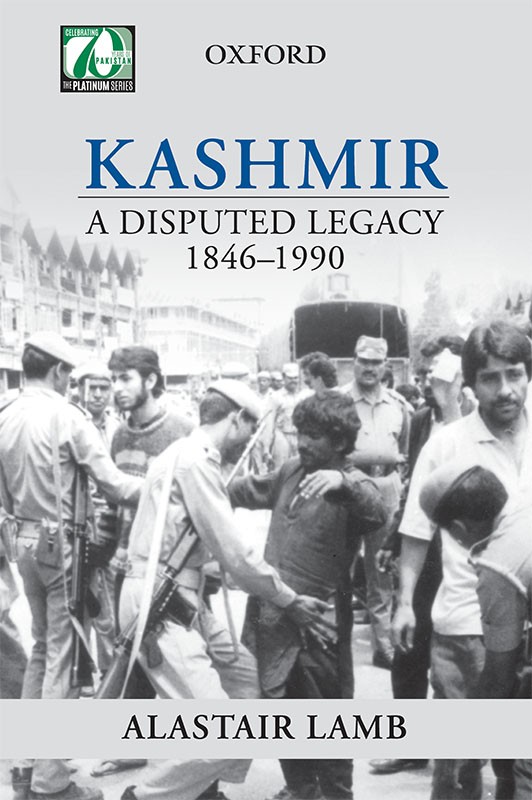
Kashmir: A Disputed Legacy by Alastair Lamb

In Kashmir: A Disputed Legacy, Alastair Lamb delves into the genesis of the conflict. Because of a 1994 order by the Indian home ministry that forbade the import of books about Kashmir written by foreigners, Kashmir: A Disputed Legacy is unavailable in India. In the book, Lamb argues that Kashmir’s accession to India in 1947 was invalid because the people of Kashmir were not consulted at the time and their desires were never take into consideration by the Maharaja. He maintains that the actions of the Indian army in Kashmir in 1947 were illegal on judicial grounds. Kashmir: A Disputed Legacy has been a favorite to all scholars who have challenged India’s claim on Kashmir. 

Image result for poster

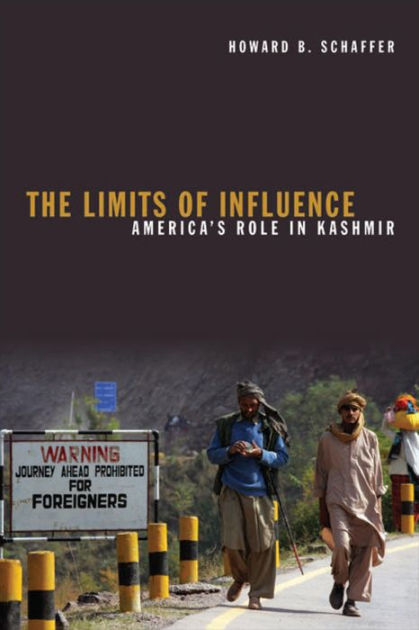
The Limits of Influence: America’s Role in Kashmir by Howard B. Schaffer

The Limits of Influence: America’s Role in Kashmir is an important read to understand America’s diplomatic attempts at solving the Kashmir conflict. Schaffer, a retired diplomat living in India, looks at Kashmir from 1948 until Obama’s presidency in 2008. He explains why John F. Kennedy took a different position from his predecessors on the conflict and how it helped America maintain good relations with both India and Pakistan.

Indiana’s Opioid Crisis Seen Through the Eyes of a Teenager

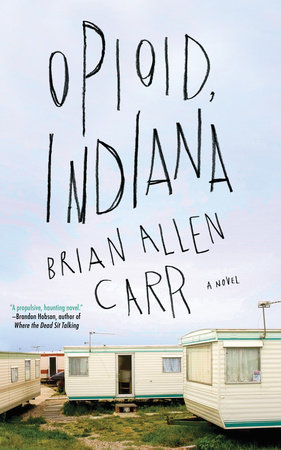
Brian Allen Carr is a writer known for his highly surrealistic fiction. His debut novel, Sip, was an allegory about addiction. The majority of his earlier books are the sorts of fables and myths that people might tell at the end of the world. In his latest novel, he takes a very distinct and bold new direction, writing from the perspective of a strong-willed teenager named Riggle. Opioid, Indiana is a parable of a different kind, the fervent realism Carr displays is a laser-eye lens at modern day American culture, modern day American struggle. In Riggle, we see how much everything has changed. We see it first in our children and it is why the story is entirely Riggle’s to tell. 

Brian Allen Carr and I discussed the book, the secret to happiness, borders, and more. 


MJS: This is your first book done in first person, right? Did you switch anything up in terms of the writing process and mind-mapping of writing as Riggle?

BAC: I’ve done some other works in first person, but outside short stuff, it’s been a while. I write fastest in first person. I think I just conjure a character and let them get mouthy. 

With third person, I think of the story being presented rather than told or written. In that regard, first and third person are sort of different genres, to me. 

Image result for opioid indiana brian allen carr
Buy the book

I think moving a novel from first to third person would be like adapting a novel into a screenplay.

MJS: Opioid, Indiana is a departure from your previous work—Sip, The Last Horror Novel in the History of the World, etc.—did you start the project desiring such a departure or did the book desire to be written?

BAC: Maybe it’s a blend of the style of my short stories and the style of my novels/novellas. My longer work is Weird. My shorter stuff Absurd. Who knows why? 

This one is both. I wrote it in six weeks. It bounced out of me. 

MJS: That being said, you embody an uncanny reverence for allegories and verbal storytelling; Riggle uses hand gestures to tell the stories of the days of the week. Same as his mom did when she was alive. How did you choose to layer elements of the surreal into a novel that skirts the realm of the real so well it could be a horror novel?

BAC: My father was a preacher. And preaching is taking myths, fables and parables, and comparing those stories to events in modern day life. 

In my art, I do the secular version of what my father did in his preaching. I don’t really remember my father’s sermons, but I paid attention to them at the time, and it made me super interested in juxtaposition and narrative, symbology and ritual. 

MJS: There’s a part towards the end where you reference Drake. In the context of a song, Drake claimed happiness is 1) sex 2) money and 3) luxury. You counter it with Epicurus’ philosophy on happiness 1) friends 2) a job you enjoy 3) time to think. It’s the sort of deft humor you slip into your prose so seamlessly it can catch a reader off guard. But now I want to know, what is Brian Allen Carr’s three steps to happiness?

BAC: Happy? I cry all the time. 

The other day my family and I went to McCormick’s Creek State Park in Indiana, and we visited this cave called Wolf Cave. I didn’t know shit about this cave. I thought it was, like, a cave like Clan of the Cave Bear, but it was a cave like Rambo First Blood. 

Preaching is taking myths, fables and parables, and comparing those stories to events in modern day life.

My wife, my 10-year-old daughter, my 5-year-old daughter, and my 3-year-old nephew all entered the cave with a single iPhone as a flashlight. I thought we were going to creep through like one little crag and that was it. But the shit kept going. For five minutes we snaked and crawled our way through these narrow and wet stone passages, and my nephew and I were in the back, and my wife and my daughters were in front with the light. Every so often, they would shine the light back at us, but for the most part, we were in the dark. 

I was losing my fucking shit. I thought I had died and entered a purgatory of my own design, because I am claustrophobic as fuck, and good stuff has been happening to me lately, and I don’t always trust by perception of reality. But my nephew and daughters kept me brave. I wanted to stay calm so that they would be calm. If I could always stay calm in order to help the people around me can stay calm, that would be happiness. 

MJS: There are a handful of interesting and odd characters lining Riggle’s week experience. One of them is “The Bicycle Confederate.” It gets a reader thinking about all the people they encounter but almost immediately forget. Who’s to say that if we met Riggle on the street, we’d remember him. Might it be that Opioid, Indiana is essentially a novel about one of those characters? 

BAC: Yeah. But I guess loads of stories could be considered that way. Like, all stories are either about a person or a SPECIAL PERSON. Like a saves-the-day kind of hero. 

It’s weird how we remember some people. Like, I ran out of gas in Louisville once, and this carpet cleaner/weed dealer gave me a lift to a gas station. When I was pumping gas into my gas can, he hung his head out of his window, looked me up and down and said, “Man, me and you would hang out at the beach together real nice.” I’m never going to forget that dude. 

MJS: The title works as a slight framing device for the novel’s place in the world. That is, to say, it’s highly informed on our modern-day human condition. Opioid, Indiana becomes a call-back of sorts, anchoring Riggle in his own fictional world yet also affixing his struggle to the struggles of Americans in every shade of grey. Could you talk more about how the title and ephemeral geographical place, “Opioid, Indiana,” works so well to capture a vertical slice of our political and social condition?

BAC: I think the opioid crisis, and all addiction issues in general, are impossible to understand. The recent court rulings that pin blame on aggressive misrepresentation by big pharma doesn’t help us fully understand why our bodies and brains can be given a greater master than our minds. 

The world is currently very emotional. But it is all very confusing, and we don’t even know how to talk about it. 

I, like the narrator of the book, recently moved from the Texas/Mexico border to central Indiana. These two places have such extremely different cultures, and yet both these places—the Border and the Midwest—are at the forefront of our national narratives. The opioid crisis and the border crisis. And Riggle muses on these two issues. Maybe that’s what does it.

As for the geographical place… yeah, it’s more of a mindset than a place. The place of the book is in Central Indiana, but that is secondary to the idea of the emotional space of the narrator. When you have a bad home life, it’s easy to talk about the world in a negative way. You don’t always see the world in a negative way, but you’re more comfortable talking about the negative aspects of life. 

MJS: A lot can happen in a week. What would have Riggle’s story been if it had been a month? A year? Can anyone really know the timeline of a life that far out? 

BAC: I’ve been real intrigued, as of late, with math. I can’t really do math, but I’ve been reading about math, and there’s this argument that any given line—whether it is a mile or a meter—contains an infinite amounts of points. It’s kind of like Zeno’s Paradox, right. Between any two points, there is an infinity. 

So maybe it would have been just the same. But longer. 

MJS: We can make plans, sure, but there’s just so many unknowns. Riggle is commendable in his effortlessness to tackle that despair; his uncle is missing. There’s no money. His parents are gone. School sucks. Opioid, Indiana is a half-step away from becoming a wasteland. Yet he’s there, surviving. Can you talk a bit about Riggle, his motivations or lack thereof, and how he transformed into the sort of stubborn, yet resourceful teenager one needs to be in order to survive in modern America?

My longer work is Weird. My shorter stuff Absurd. Who knows why? 

BAC: I think he is strong because he received attention young. His young childhood, up to six, was very happy, and his life gradually transitioned from good to amazingly bad. 

I went to the same university as Gloria Anzaldua, and I’ve spent almost half my life on the Texas/Mexico border, and I was born before the digital divide. I am fascinated by borders. Riggle exists casually on several borders.  

MJS: You know, it could very well be that Riggle doesn’t fear death. How could he? There’s this passage that hit me so hard:

“The whole world seemed to shift. Go crooked. Things were becoming things they never were, and I didn’t know if I’d ever felt that way. Like all of Opioid, Indiana, was shrieking to a close, and I started thinking my Mom was near me. Like I could smell her or feel her breath or something […] I couldn’t quite tell. There was a presence and it had intentions, but I couldn’t explain it. I buried my hands in my pockets, curious about the enormity of it all.”

He steps right into the mix without fear, or at least not the fear that keeps a person from trying. I’m not sure where I’m going with this, more so commenting on it. 

BAC: I think he’d be more reclusive than that. At a point in time in the book, he says he just wants to be good at something. He seems, to me, like a person who will always be more interested in the journey rather than the destination. 

MJS: If you had, say, $500 and a week, the last you’ll ever have and you lived in Opioid, Indiana (we all sort of live in Opioid, Indiana these days), how would you spend it? What would that novel look like?

BAC: If I knew for sure that I was living my last week. . .  I, honesty, don’t know how I would handle that. Bill W., the guy who founded AA, asked for whiskey on his death bed. I hope that my kids would be with me, and I could spend the $500 on them.

A Love Letter to the Girls Who Die First in Horror Films

In middle and high school, my best friend Heather and I would stay up until sunrise watching every slasher flick we could carry home from Blockbuster. We’d make each other laugh guessing which characters would die, how, and when. Scary movies are interactive. There are rules and formulas, pleasurably predictable, like line dancing with adrenaline. The same steps in the same order, but it feels good every time.

One of the rules: there has to be a last girl standing. It’s easy to pick out a film’s Final Girl, a term coined by Carol Clover in her brilliant work of horror theory Men, Women, and Chainsaws. She’s the one who will face the killer last, after he works his way through a gauntlet of her friends and classmates. She’s the only one who stands a chance of defeating him. If she dies, it will be face to face with her killer, as something close to equals. She begins as an ordinary girl but is transformed by loss and battle into a champion.

You can’t have a Final Girl without her counterpart. For one girl to be left standing, the others must fall.

But you can’t have a Final Girl without her counterpart. For one girl to be left standing, the others must fall.

The girls who die first don’t have a catchy title. We don’t tend to consider them as part of a group, as connected to each other. Each one is an individual point, so alike they are not worth connecting, so inseparable they are alone.

There is no grand unified theory of the girls who die first, but there are observable patterns. The rules for girls in horror movies are the same as the rules in the real world. Don’t fuck. Don’t drink. Don’t do drugs. Don’t go anywhere by yourself. A character who breaks those rules is doomed; a woman who breaks those rules is blamed.

There’s a morality play element to this, as countless film writers have explored: girls in horror movies are punished for doing things girls aren’t supposed to do, especially for having sex. But there’s an even simpler way of looking at it. In horror movies as in life, you’re supposed to direct your attention toward survival. Sex is a distraction. If you close your eyes for a kiss you won’t see the knife coming.

I’ve done the math. I am not a Final Girl. I’m loud and weird and queer and fat and tattooed. I can’t fit into a small hiding place, or climb out a window to safety without breaking my neck. I’m easily distracted by attractive people and shiny objects and good music and food. Put me in a horror movie and I won’t last an hour.

Heather was like me, only more so. In a movie, she’d die early. In real life, she died early too.


To survive a horror story you have to realize you’re in one. The girl who dies thinks she’s in a different kind of story, one that’s about her and what she wants: to dance, to party, to fuck, to feel good. She thinks she is the subject of this story, the one who watches, desires, sees, the one who acts upon the world. She does not feel the eyes on her, does not know she is being observed, that her fate is not to reshape the world but to be reshaped by it.

Recklessness is a coping mechanism, not a survival skill. In horror movies, if a girl is driving fast at night, there’s usually someone hiding in her backseat. Heather stomped on the gas in her platform boots, flew down the highway without looking over her shoulder, played her music loud enough to drown out whatever might have been trying to get her attention. She never got enough sleep, always either sneaking out of her room at night or sneaking boys in. She loved mosh pits and sugary drinks made with cotton candy vodka. We used to try to make each other laugh, shouting things at the top of a roller coaster right before the plummet: “What a lovely view!” She never stopped being afraid of heights, but there was no ride she wouldn’t go on.

The final girl is the one who perceives the threat. We know she’s the wisest because she is afraid. She looks over her shoulders. She hears the strange noise. She sees the footprint below the windowsill. She is on guard, and if she lives this is the reason. Because she’s looking for her death. She sees it coming.

When a woman is described as “asking for it,” for whatever trauma or violence has befallen her, what she’s really being accused of is not doing enough to prevent it. Harassment, assault, violence, death are supposed to be things women plan around as habitually as checking the weather forecast before getting dressed. We’re taught that someone wants to hurt us and our job is not to let them.

The final girl is the one who perceives the threat. We know she’s the wisest because she is afraid.

In Halloween (2018), Jamie Lee Curtis’s Laurie Strode, who survived Michael Meyers’s massacre in the first Halloween (1978), is forty years older, a mother and grandmother, but in some ways has never escaped her would-be killer. All these years, not dying has been her primary vocation. Her daughter is combat-trained, her house rigged with traps. The few people who maintain relationships with Laurie want her to move on, but when Michael escapes and goes on another killing spree, Laurie’s fixation is vindicated. Her obsession, her careful preparation, enables her to survive again. Everyone who disapproved of Laurie’s choices ends up either rescued by her or dead. Laurie was right, is the moral of the story.

You can live your life that way. It’s possible. It’s easier, even. But it’s less joyful. “Don’t die” is a demanding aspiration, but not a satisfying one.

But Laurie was miserable. Is that the life lesson—sacrifice everything, alienate your loved ones, be hard as a rock, but survive? I can’t imagine Laurie Strode on a roller coaster, or on the highway with the windows down and the music cranked up.


I don’t want to romanticize early death. Heather used to say “drive fast, die pretty,” but it wasn’t thrill-chasing that killed her. It was congenital heart disease, a vicious little fucker hunkered down in the backseat of her genetic code, waiting for its moment. 

In real life, playing it safe doesn’t save you. You can do everything right and still end up ashes.

When we were seventeen, Heather wrote a letter to her mother and her friends, explaining why she had to run away from home. She never went. We found the letter a decade later, after she was dead. I wonder where we’d all be if she had gone and never looked back. In real life, playing it safe doesn’t save you. You can do everything right and still end up ashes in a mountain river, cascading back down into the hometown you never got around to leaving.

The Final Girl is an empty promise. What it seems to offer women is the guarantee of survival if we do everything right. But what it actually ensures is that, if you are hurt, there will be a way to trace it back to a rule you broke. You become the Final Girl by attrition, not achievement. You can’t earn the title. You can only outlast everyone who didn’t get it.

Slasher movies satisfy because they impose a pattern on mortality, make it a puzzle you can solve. But in real life, there’s no way to game the system. There’s no system. I don’t deserve to have outlived my best friend, yet here I am. I still like my music loud enough to drown out approaching footsteps. I still sleep with my window open.

We Are Writing Against Our Own Erasure

On September 12, the Rona Jaffe Foundation Writers’ Awards celebrated its 25th anniversary. The program was created by novelist Rona Jaffe to identify and support women writers of unusual talent and promise in early career. Since its inception, the program has supported 158 outstanding emergent women writers for a total of $2.9 million. The 2019 winners Selena Anderson (fiction), Magogodi oaMphela Makhene (fiction), Sarah Passino (poetry), Nicolette Polek (fiction), Elizabeth Schambelan (nonfiction), and Debbie Urbanski (fiction/nonfiction) received awards of $40,000 at a private ceremony in New York City. Award-winning author Jacqueline Woodson delivered these remarks at the ceremony. Woodson’s newest novel, Red at the Bone, will be released on September 17.


When I was 10, I would lock myself into our tiny bathroom in the Bushwick section of Brooklyn and with a hairbrush as my microphone, I’d commence to giving my Pulitzer Prize acceptance speech. I’d thank my mom and my grandmother, my siblings for letting me tell my stories and my best friend, Maria, for always encouraging  me to be a writer. In these speeches, which happened regularly, I stared at myself in the mirror—me as audience, me a jury, me as winner.

What I knew about this prize was that it was given to writers. That’s it. Writers got the Pulitzer Prize. I didn’t know anything  else really. I didn’t know about the National Book Award or Nobel Prize or even the Newbery really—because the one Newbery Award winning book in my classroom was a novel I despised. And I won’t give the title of it because I truly don’t believe in censorship but believe that people should make their own judgments about a book but it was called Sounder. And I’ve forgotten who the author was. But it was a book about a Black family and a dog. And of course the dog dies. But that’s not why I hated it. I hated it because the only character in the whole book with a name was that dog. And I love dogs—I have two huge ones. But unlike that narrative, in my house, the dogs and the Black, brown, and white people have names. There’s my partner Juliet. And there are our children, Toshi and Jackson Leroi. Their names are thoughtful and deeply intentional. My dad was Jack, I’m Jacqueline, my son is Jackson Leroi. My daughter is Toshi. Named for her godmom, Toshi Reagon, who was named for her godmom, Toshi Seeger.

We gave our kids those names to show them our love, to show them their humanity, to show them their legacy. We gave them those names to let them know they are wholly human. They are here. And they matter.

I wanted the people I loved to have names.

In my books, when I leave a character unnamed, it is because he or she or they are just backdrop, just there to give the reader a sense of place, atmosphere. Those unnamed characters are not going to matter to the whole of the story. Not really. You’re not going to remember them, you’re going to remember the ones with names.

I wanted the people I loved to have names.

And as a child standing in front of that mirror, I already knew that my story had a right to exist in the world. That my characters would have  names and people would remember them and because I knew there was this prize thing going on in the world—that seemed to be the next obvious step!

I think often how lucky we are. How there are so many speed bumps on the way to  becoming. That [with] the everyday micro-aggressions and insidious messaging coming at us from our screens and our magazines and other people—how amazing it is that we are here telling our stories. 

This year I gave my first TED Talk—which actually went up on the site this morning, so the day  has been a tad distracting for me to say the least! TED talks didn’t exist when I was a kid. And the idea of a writer having to do this much public speaking—it wasn’t like that then either. Or maybe it was and I just wasn’t in those rooms. I swear that mirror speech was under five minutes. Even as a child I knew peeps didn’t want to hear me blathering on.

Wait—back to those rooms. I wasn’t in them. Not only because I was just a kid. The grown up versions of me weren’t in those rooms either. We weren’t getting those awards, we weren’t getting those meetings, we weren’t having those lunches or signing those big book deals.

But it didn’t stop me. Because for as long as I can remember, all I’ve ever really wanted to do is write. And write well. And push the boundaries of writing, literally change the narrative. 

And so while I was waiting on the Pulitzer, I grew up, went to college, worked jobs I hated, applied for grants to help me buy a computer, pay the rent, travel for research, go out for a fancy meal—and never got a single one.

And kept on writing.

And then in 1990, after years of getting rejected from an artist colony called Yaddo that was rumored to have a pool, which was exciting to me, the idea of staying at a place where they bring you a basket lunch and you get to write by a pool (you know that song, “Young, Dumb and Broke”—I swear it was written with the young me in mind)—I don’t even love swimming but that pool idea was intriguing and too, it was the only artist colony I’d ever heard of, so I applied again and again and again and again, and got rejected again…and again… and again—I was accepted to the MacDowell Colony.

When you look at my long list of awards, you don’t see the form letter rejections.

And literally, my life was changed forever. When you look at my long list of awards (which, in case you don’t know does NOT include a Pulitzer) you don’t see the white space where the cricket songs played. You don’t see the form letter rejections coming via the United Postal Service. You don’t see the bounced rent checks or the many times I had to say no when friends who  had weekly paychecks and/or trust funds were heading out to dinner and I had to decline the invites.

Yes—it was the crickets but the white space was also the journey, the hunger, the audacity to dream of a one day, of a world that is different and me still in it.  

This year I began work on Baldwin for the Arts, an artist colony I’m creating in Brewster, New York, for writers, visual artists and composers of color at the early stages of their careers. 

The MacDowell Colony, the Rona Jaffe Award, The Whiting Award, The Fine Arts Work Center, Baldwin for the Arts, this is what philanthropy looks like. When we can, we give back to the world—an offering, a thank you, a remembrance. When we can, if we can, we reach a hand to the artists coming up behind us—we blurb the books and read their manuscripts and introduce them to our agents and tell them they won’t always be hungry or afraid on this journey. 

This is what humanity looks like. Each day we remember that our work is our gift and our tool for creating change—that with this gift comes deep responsibility. Not to write what sells but to write what matters. To write against our own erasure.  To write so no one should ever feel like they’re walking through this world unseen.

And unnamed.

7 Novels About Women Getting Revenge

At the ages four and three, my sons are learning about retaliation. One steals the coveted fire engine from the other and soon someone has been smacked. Quickly it becomes about more than the fire engine: it becomes about power. Who can keep the fire engine the longest? Who can come out on top after a brief skirmish between two bodies, each not yet tall enough to reach the kitchen sink? 

Play nicely, I tell them, and it feels like asking a lion not to eat the antelope it just killed. Their passions and fears roil just beneath the surface, always ready to erupt. I try to teach them about managing their emotions, but sometimes it feels like I’m just imposing civility on them. 

Buy the book

While in parenting I tell my children to be peaceful and avoid power plays, I seek out stories of revenge in literature. In my debut novel, After The Flood, the protagonist has experienced violation and betrayal, and vengeance brews under the surface of her other motivations, a steady fire she can neither resist nor extinguish.  

Revenge literature revolves around obsession and how we cling to those who have wronged us, even when it may be better to push them away. It doesn’t shy away from how much hurt can become a hallowed memory, something we return to for reasons we can’t fully name. These stories are also inherently moral—they mine the limits of vigilante justice and question if it’s strength or weakness that makes us want to strike back. But beyond all that, these stories are primal and entertaining in the way tales around the campfire can be. 

I’ve loved revenge novels like Moby Dick and the Revenant, but revenge stories with a woman playing a pivotal role capture my imagination more. Perhaps it’s because a woman taking power through violence is a story I haven’t heard as often. This rebuttal to the nurturing, self-sacrificial depiction of women feels like the other side of the story, a side of the story that acknowledges not just a woman’s complexity, but her humanity. 

Here are seven novels that feature women and revenge—stretching from ancient Greek mythology to the American frontier.

Gunnar's Daughter by Sigrid Undset

Gunnar’s Daughter by Sigrid Undset

Written around the turn of the 20th century, Gunnar’s Daughter takes place several centuries before, at the beginning of the 11th century. Undset is a master of historical Scandinavian literature (for which she won a Nobel prize) and this novel is one of her slimmest: a taut book paced like a thriller, but written with the cadences of Icelandic sagas. It features Vigdis, a young woman who is raped by the man she wanted to love, leading her to embark on several vengeful missions that ultimately threaten to steal her own happiness. 

Carrie by Stephen King

Carrie by Stephen King

Where would horror literature be without this classic? Carrie is a target of bullying and ridicule at her local school. She is humiliated and taunted when she menstruates for the first time and afterward, she discovers she has telekinetic powers. Throughout the novel, Carrie experiences hurt upon hurt, both from classmates and her own mother, culminating in a bloody act of revenge in the climatic scene. 

Hag-Seed by Margaret Atwood

Hag-Seed by Margaret Atwood 

Atwood adapts Shakespeare’s The Tempest in this novel that follows Felix, a director seeking revenge after being fired and exiled from the theatrical elite. Felix speaks with his daughter’s ghost and obsesses over the ex-friend who betrayed him and brought about his downfall. When he begins to teach in a prison, he embarks on a plot to avenge himself against those who wronged him. While this novel doesn’t feature a female protagonist, the Miranda/Ariel character (Felix’s daughter) plays an active role in showing how Felix’s desire for revenge may be a literal prison. 

Wuthering Heights by Emily Bronte

Wuthering Heights by Emily Bronte

This classic novel examines the doomed love story of Catherine and Heathcliff, beginning when they were children and ending decades later with the story of their children. After Heathcliff is treated unfairly by Catherine’s brother, he harbors lifelong resentment, anger, and jealousy that brings havoc and ruin to both families. Catherine is both the recipient of Heathcliff’s hate and love and her responses to him further complicate this story that touches on vengeance, wealth, love, and power. 

Image result for circe madeline miller cover

Circe by Madeleine Miller

Another retelling on this list, Miller’s Circe reimagines the Greek goddess and witch in this epic story that covers centuries. Daughter of Helios, Circe has the ability to turn humans who offend her or threaten her into animals. While Miller’s novel does not focus exclusively on Circe’s vengeful magic, it does plumb the motivations and emotional wounds behind Circe’s darker magical acts. The novel humanizes this ancient character, all the while keeping her powerful, nonhuman abilities intact. 

The Girl with the Dragon Tattoo by Stieg Larsson

The Girl with the Dragon Tattoo by Stieg Larsson

This novel helped start the Scandinavian crime fiction trend for good reason. Lisbeth Salander is a captivating heroine who helps solve a family’s murder mystery. In a revenge subplot, Lisbeth is assaulted. With some forethought, she fights for her independence, security, and a sense of justice. It’s a disturbing vengeance, featuring a tattoo gun and blackmail, but it doesn’t feel unfairly won. 

10035073

True Grit by Charles Portis

This western novel is about a fourteen-year-old girl named Mattie Ross who embarks on a journey to avenge her father’s murder by the hands of a “coward going by the name of Tom Chaney.” Along the way, Mattie is joined by two sidekicks—a Marshal nicknamed “Rooster” and a Texas Ranger. Narrated by Mattie when she is an elderly spinster, she looks back on her adventurous quest, and reveals herself to be a woman of independence and fierce intelligence. 

The Seven Necessary Sins to Bring Down the Patriarchy

I first became acquainted with Egyptian American activist and author Mona Eltahawy’s work via Twitter, where she has a fabulously profane and informative presence. She pioneered hashtags like #MosqueMeToo and #IBeatMyAssaulter into movements, illustrating how women, people of color, and non-binary individuals are oppressed through misogyny, racism, and toxic masculinity. Born in Egypt and reared in England, Eltahawy’s family relocated to Saudi Arabia when she was 15, a move “which traumatized me into feminism,” she recently joked on the Global Crossroads podcast. She became a journalist, first reporting from Cairo and then worldwide, “until 9/11 rendered news reporting and so-called objectivity completely obsolete for me… My opinion writing became more front and center feminist and centered on the destruction of the patriarchy.

The Seven Necessary Sins for Women and Girls by Mona Eltahawy
Buy the book

Eltahawy first addressed this in 2016’s Headscarves and Hymens: Why the Middle East Needs a Sexual Revolution, condemning patriarchal authoritarianism, the political, cultural, and religious repression that reduces women to second class citizens in the Arab world, connecting that to the oppression faced by women worldwide. In her latest book, The Seven Necessary Sins for Women and Girls, Eltahawy is out to destroy the social construct that privileges male dominance by illustrating the seven sins women and girls need to defy, disobey, and disrupt the patriarchy: anger, attention, profanity, ambition, power, violence, and lust. It’s a searing manifesto, illustrated with stories of global activists, like Uganda’s Stella Nyanzi who uses incivility to fight for women’s rights, or Islamic scholar Amina Wadud, who led Muslim prayers in New York City (a ritual traditionally reserved for men). The Seven Necessary Sins for Women and Girls is a must-read for any individual who seeks to resist.

Mona Eltahawy and I spoke by Skype. We discussed how the patriarchy is connected to the rise of authoritarian governments worldwide, why it is imperative that the patriarchy must be overthrown, and how silence protects no one.


DS: Can you describe what patriarchy is and why it needs to be smashed?

ME: Patriarchy is a system of oppression that works to privilege male dominance and work against the interests of anyone who is not a heterosexual and largely conservative man. I try to get people to imagine patriarchy is as an octopus, and the head of the octopus is patriarchy and each of the eight tentacles represent various forms of oppression. Patriarchy is the head, which exists globally and universally. It doesn’t matter if you’re in a theocratic state, an authoritarian state, or a democratic state, patriarchy is universal. 

What does differ are the tentacles that patriarchy uses to privilege male dominance and to work against the interests of mostly women, people of color, and non-binary people. Those tentacles can be capitalism, racism, homophobia, ableism, classism, a whole host of oppressions, but I want people to focus on the head, which is patriarchy. 

We must destroy patriarchy because it’s the last thing that we often talk about. We talk about the specifics of China or the U.S. but we forget that the backdrop of these specifics is patriarchy. That’s why I begin and end everything I do, every talk I give, with “Fuck the patriarchy,” because whether I’m speaking in Mumbai or Lahore or New York, patriarchy exists.

DS: Why is it important that this disruption happen globally and why now?

ME: Another concept that I talk about in my book is the trifecta of misogyny. I think that the Trump regime, and that is the word that we must use to describe what is happening in the US right now, is the perfect example of the trifecta of misogyny. It’s not just Trump. It’s decades and decades of patriarchy and racism and capitalism and misogyny and homophobia and ableism, etc., and it’s not just in the United States or Egypt or Saudi Arabia or anywhere else. It’s also what happens in the public space, which is what I call the street and in intimate spaces, which is what I call the home. The trifecta of misogyny connects the state, the street, and the home. At the center of that is patriarchy.

Focusing on patriarchy is a way to fight the Trump regime. 

When people want to compartmentalize things, they will say, “You know you talked about feminism but this Trump regime fucks everyone over. Or the Egyptian regime is that for everyone. Or the Saudi regime oppresses men and women.” Yes, it’s true, but the state, the street, and the home together oppress women and non-binary people specifically and they work together. By tackling patriarchy, by tackling that head of the octopus, we recognize where the most power lies. 

bell hooks says “Feminism is for everybody.” When you tackle social issues and social inequities, oppressions, and horrors through a feminist angle and through a feminist lens that focuses on patriarchy, then you are bound to focus on what she has long called for, which is a focus on the destruction of white supremacist capitalist patriarchy. Focusing on patriarchy is a way to fight the Trump regime. 

DS: How is the rise of patriarchy connected to the rise of authoritarian governments worldwide?

ME: Whether you look at China where the Communist party has been in power for 70 years, or Saudi Arabia, where an absolute hereditary monarchy has been around for decades, or the United Kingdom, where you have a constitutional monarchy even though they don’t have a constitution, or the United States where they have a two party system, regardless of the political system—they all have patriarchy that lives and breathes through every system at play in those places.

People are finally beginning to look at it, because they see Mohammad bin Salman, who is the de facto leader of Saudi Arabia, and they see how close he is to Trump and how close he is to Brexit and Boris Johnson, and they see in Egypt, my country of birth, the fascist leader Sisi, a military ruler, and they see how Steve Bannon, the chief strategist for Trump, who has been going around Europe setting up a fascist movements, and now you have Jair Bolsonaro in Brazil, who they call the Trump of the Tropics, and now you see Modi in India, who could be the Trump of India, and now you see Netanyahu, the Trump of Israel, who just banned the entry of two [American] elected officials at the urging of Donald Trump.

When you see all of that, you see this thread called patriarchy, that ties all these patriarchal authoritarians together. Regardless of whatever political system they claim, inherently it is what is at play now and is on the rise. People prefer to say fascism is on the rise, or racism is on the rise, or white nationalism is on the rise, but what is on the rise is patriarchal authoritarianism. In some countries we call it fascism, in some countries we call it white supremacy. It’s the most dangerous ideology on the rise today.

DS: Recently you wrote an essay about Representatives Rashida Tlaib and Ilhan Omar being banned from visiting Israel. What is the import  of this event? What is the message being sent to authoritarian governments?

Women are told that if you’re good and if you behave and that if you don’t talk about uncomfortable things, you’ll eventually get what you want.

ME: The message is that patriarchal authoritarians like Trump and Netanyahu know how to appeal to their base through racist, misogynist actions. This is essentially a racist and misogynistic act by Israel, a violation of freedom of speech and freedom of expression and the right of all of us to boycott. Essentially what Trump and Netanyahu were doing is punishing political rivals who have been outspoken in their opposition. And who are these rivals? They are women of color who have taken on a progressive political platform. They are the first two women who are elected Muslims in Congress, and one of them is the first Palestinian American. It is imperative that we recognize how these patriarchal authoritarians work together and signal each other about the ways they can oppress their political rivals.

You see these patriarchal authoritarians all around the world. Mohammad Bin Salman in Saudi Arabia imprisoning 17 women’s rights activists, and Trump has not said a word and is very happy to do business with MBS. The same thing with Sisi. You look at the global map and see how these patriarchal authoritarians are working together to punish outspoken women of color wherever we are.

DS: If you were going to tell people how to resist, what would you say? 

ME: You must look for whatever candidates you can support, because we’re coming up to an election year, and not just for president, one that is pivotal for the Senate and House. We have to pay attention to the Senate races that are coming up. We flipped the House in 2018; we must flip the Senate. We have to take what happened to these two representatives and use that as fuel fodder for going out there and finding progressive candidates. If we want to stand up to the fascism of Trump, if we want to reverse his fascist policies, be they the concentration camps on the border, women’s rights, LGBTQ rights. We have to fight this in races that are not just presidency. We have to start electing more leftist and progressive candidates in every race possible. 

DS: You started this work in the wake of a sexual assault. Can you discuss the context of this and other sexual assaults and how they are connected to sexual violence against women enacted worldwide?

ME: I got the idea in February of 2018, in the space of a week, when I started a movement called #MosqueMeToo, because I learned that a young Pakistani woman called Sabica Khan had been sexually assaulted in Mecca, the holiest site for Muslims, while she was on pilgrimage. Now I was sexually assaulted twice while I was performing pilgrimage in 1982 when I was fifteen. At first I couldn’t speak about it at all. When I did begin to speak about it, I was told “You’re going to make Muslims look bad. Don’t talk about this.” I talked about it on Egyptian television in Arabic. I wrote about it on social media and in my first book. 

Even if you’re a white woman who doesn’t associate with white supremacy, you still benefit from racism.

I started #MosqueMeToo for Muslim women to talk about their experiences but also to carve out a space for us in #MeToo. Because although Tarana Burkes launched #MeToo in 2006, #MeToo really took off globally in 2018 and became associated with very white, privileged women’s experiences, and I wanted women who were not white or privileged to have a space. Over five days it was really heartening to see many Muslim women and men share their experiences, but it was also disheartening to see Muslim men attacking us, saying, “Shut up! You’re making Muslims look bad.You’re too ugly to be assaulted, etc.” 

Five days of this and I decided to go dancing. That’s my self care. I’m dancing and I feel a hand on my ass, and I’m like, “You are fucking kidding! How is this happening? I’m supposed to be here letting it out!”

This time I did not cry. Freezing and crying are perfectly acceptable reactions. Freezing is how many women react to sexual assault, because that’s how we survive. But at this stage of my life I did not freeze because I had built up a resistance, years of learning to yell at men and hit back at men. I found the man who sexually assaulted me. I grabbed him from the back of his shirt. He stumbled. I sat on him and I just began to punch. Every time I wanted to stop punching him I was like “Nope, I’m not done. I was yelling at him, “Don’t you ever touch a woman like that again.” It was glorious.

This guy from club management asked what happened and he says to me, “Why didn’t you tell security?” 

This is patriarchy. Patriarchy essentially says patriarchy will protect you, as long as you behave of course, and patriarchy will protect you from the other branch of patriarchy that gives another man the right to assault you. So essentially my body is a proxy battlefield between patriarchy and patriarchy. If I behave the good patriarchy will protect me from the bad patriarchy. Fuck patriarchy. I don’t want protection. I will fucking beat you and glorify over it if you touch me without my consent.

DS: You say the most subversive thing a woman can do is to talk about her life as if it really mattered. Can you expound upon this?

ME: You’ll see a lot of women who will put a lot of emphasis on fighting everything but misogyny. They will fight racism, they will fight against capitalism, they will hide fight against a whole bunch of oppressions, and yet their own life is the last thing they’ll fight for. We’re told, “Oh, that’s just your personal experience. It doesn’t matter… Go away until you find a school of thought that tells me that your personal life does count.” My point in saying that the most important thing a woman can do is talk about her life as if it matters is because it does.

For those of us who are women of color, it’s about more than class. It’s about more than race. It’s about the octopus, and the best way to talk about the octopus is to talk about our lives. So when I say that the most subversive thing a woman can do is talk about her life as if it matters, it’s because it does. That goes to the heart of The Seven Necessary Sins for Women and Girls. We must embrace those sins and act those sins out in our day to day.

DS: You refer to Audre Lorde’s famous statement: “Your silence will not protect you.” How does this tie into that?

ME: We are socialized to be self-sacrificing. We are constantly told to wait. Waiting gets us nothing, because when you’re told to wait, as Martin Luther King Jr. says in Letter from a Birmingham Jail, basically it’s never going to happen. Half of society is told to wait. It’s a fucking disgrace. What are we going to wait for? If we focus on patriarchy first and foremost, everything falls into place. We’re told to focus on the individual tentacles of the octopus instead of focusing on the head of the octopus. 

Defy, disobey, and disrupt the patriarchy because silence will not protect you.

Women are told that if you’re good and if you behave and that if you don’t talk about these really uncomfortable things, you’ll eventually get what you want. It’s never going to come. You have to make an incredible insurmountable fuss about what’s going on in your life for people to pay attention. You’re going to be caught attention-seeking. You’re going to be called a whore. If not an outright whore, an attention whore. People are going to tell you you’re too ambitious, too power hungry, too too much everything. 

Audre Lorde wrote that essay while she was waiting to get a diagnosis of cancer which she eventually died from, and she said everything that I’ve been silent about has not protected me from illness, has not protected me from misogyny and patriarchy, has not protected me from sexism, from racism, from zero.  Why be silent? Because silence protects you from nothing.

The reason that women especially are socialized into being silent is because it disturbs the status quo, because patriarchy would much rather us go about and preserve male dominance and the promise it gives to male dominance, that it’s entitled to our bodies, our time, our love, our affection, etc. That ties into what I call feminism in 3D: defy, disobey, and disrupt. Silence is the antithesis of all that. Defy, disobey, and disrupt the patriarchy because silence will not protect you.

DS: In  your chapter on anger you call white women the foot soldiers of patriarchy. Can you explain this further and can you discuss what white women (like me) need to be doing right now?

ME: White women understand misogyny very well because it affects them by and large on a day-to-day level. I think they don’t understand that for those of us who are not white it is much more than just misogyny. When I talk about patriarchy being the head of the octopus, I always explain that the tentacles include racism, capitalism, homophobia. It’s what Kimberle Crenshaw terms intersectionality, and we recognize that these many oppressions work together to keep us underfoot. 

I think that white women are much more comfortable talking about misogyny. They’re not comfortable about talking about more than that because it takes them into these uncomfortable places that reminds them that the majority of white women voters voted for Trump, that in Europe more white women than white men voted for right-wing parties in several elections, reminding white women that they have a privilege that does not extend to those who are not white and that privilege comes about through proximity to the privilege that white manhood gives them.

So what happens is this very dangerous and toxic exchange by which many white women accept crumbs that are thrown to them by the white supremacist patriarchy, that promise (white women) privilege, power, and protection in return for allowing their racial concerns to trump gender. You’ll see that in the women who are evangelical who submit to the man being head of the family, who fight reproductive rights, who fight women being more overt in their feminism and politics, but you’ll also find it in women who are not white evangelicals, women who do not associate with white supremacy, and those are women who do not see the insidious ways white power gives them a privilege that I don’t have.

Even if you’re a white woman who doesn’t associate with white supremacy, you still benefit from it. Unless you’re being overly and actively anti-racist, you benefit from racism. I want white women to know that unless you’re being overtly anti-white supremacist/capitalist/patriarchy, you actually benefit from white supremacy. I want white women to be very cognizant of that and to actively fight it. 

My Lover, and Other Summer Relics

Pre-Loved Bodies

Strange how much we find later.
Inside a dying river,

Good visibility.
The loss of silence we fear. And this:
Relics from June: I count in this pastoral the carcass of an orange,
An antropolise with its miniature chateaux

& water lilies overgrown;
Frail forts sprouting in the wild around us.

Even now I think of you as gentle
with some other lover —

How much walks out of a person through doors?
How much leaves
Through windows, the swell of incandescence

*

Or smoke, inverse river moving with the tenderness
Of people pedaling farm bicycles late evening
Piled high with woods for home fires.
This procession, instead of gospel
Slow as I want it to be.

The air smells like a thing in search of home
I suppose you could think of it this way
Pre-loved bodies touched by rain breeze.

And to sit in sunlight tender at this angle
Passing through a tree — a way to make myself penetrable
By things falling from the sky flapping against gravity.


Saunas for Our Lifelong Displacements

Here, I am made human by silence,
rationed food and walking.
I stand by doors, afraid to approach mirrors.
Any closer, it’ll show the shape of
the years.
Each life we have lived re-imaged

In soot, spiders write their web histories
Across a silence so infinite it makes parliament
between birdsong, cricket,
A decade's forest with its animals.
And the dead (un)accounted for.

These days, I only think of people as mountains.
Not for praying on summits
where sun beaten rocks warm our feet,
Saunas for our lifelong displacements.
But for making slow ascents.

I am pacified by strange signs of gardening
Emergent along our roads. Some days, the begonias float
Vivid with each daydream.
Behind us, the moon's appearance is perfect, final.
As if we'd imagined each crescent phase.
As if this is the only shape we’ll ever know.

As if we’d want to joke about this.
And the black gothics of our nail polish.
And a colour like gun-mental. Said again and again

Because more than blood this poem too can be a love note
Said in the presence of our decaying.

What Sofa Would Your Writing Project Be If It Were a Sofa?

Beloved slipstream writer Kelly Link has been publicly wrestling with a novel on Twitter for a while now (sample tweet: “gonna travel back in time and stop the baby who grew up to invent novels”). Link definitely knows what she’s doing when it comes to short stories—she’s gotten a MacArthur fellowship and one of her collections was a finalist for the Pulitzer Prize—but a novel is a whole other kind of animal. Or maybe a whole other kind of furniture?

Yesterday Link posted a metaphor about the Novel Problem that evoked the bit in Dirk Gently’s Holistic Detective Agency where the couch gets inextricably wedged in a stairwell in a way that’s not possible according to physics:

https://twitter.com/haszombiesinit/status/1172163603237154816

As a coda, she encouraged followers to describe their own writing projects in terms of sofas. The result is a charming tour through the discount furniture showroom of writerly despair and hope.

https://twitter.com/dd_toronto/status/1172171899503284224
https://twitter.com/lyrakuhn/status/1172179936926298112
https://twitter.com/krmecom/status/1172170123777585157
https://twitter.com/adam_kranz/status/1172181415129169920
https://twitter.com/jeffreyalanlove/status/1172172302449963010

“I am truly excited about these descriptions and would sit on every one while I continue to work on my novel,” Link told Electric Lit. We couldn’t agree more, although it might be challenging getting up into that tree.