A Political Love Story Teeming with the Sewage of a Soap Opera

Veeraporn Nitiprapha’s debut novel, The Blind Earthworm in the Labyrinth, provides a haunting dissection of contemporary Thai life and its inescapable repetitions. Throughout the novel’s 27 vignettes, the characters—two doomed sisters, an orphan turned aspiring singer, a jilted mother gone mad from mistrust, a father dying of lovesickness, a Marxist boyfriend turned right-wing politician, and a navel-gazing wannabe war reporter—find themselves drifting through the dizzying paradoxes of modern-day Bangkok and its lush environs. As they search for love, glory, or anything that might rescue them from the fog of their respective despairs, Nitiprapha delivers a sweeping indictment of a society continually finding itself constrained by a derivative cycle of warped logic and fantastical dreams.

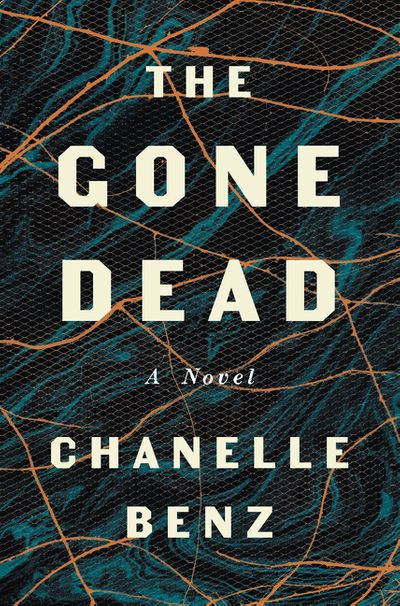
The Blind Earthworm in the Labyrinth won Southeast Asia’s most prominent literary award and became a domestic sensation in Thailand, due in part to its reverie-like vignettes designed to mimic the breeziness of Thai soap operas. Now, four years after the former jewelry designer and fashion-mag editor won her first of two S.E.A. Write Awards—making her the first woman to accomplish such a feat—Nitiprapha’s novel is available in English for the first time with a translation by the Bangkok Post’s film critic and lifestyle editor Kong Rithdee, who skillfully retains the poetics and absurdist nature of the original Thai edition.

Nitiprapha and I spoke about the “sewage-like” storylines of soap operas, how the toxicity of politics can make old friends vaporize, and how The Blind Earthworm became a laboratory for trying to make sense of the unsettling world around us.


Tillman Miller: The scope of The Blind Earthworm feels both intimate and epic, as if it’s one of the “Great Thai Novels” readers will continually revisit. How did the idea for the novel materialize?

Veeraporn Nitiprapha: Thailand has been going through significant political conflict since 2006, with street protests, rallies, and even domestic armed conflict, but it wasn’t until May 2010 that the right-wing government finally decided to crack down on a Red-Shirt rally in the middle of Bangkok, causing at least 2,000 injuries and 94 deaths, mostly at the hands of military snipers. These were unarmed people being killed by their own government, and frankly I was trying to cope with it. What bothered me deeply was how calm and even satisfied people were when supporters of opposing political parties were being killed.

During the seven-day crackdown in May, when the government declared a state of emergency, I met with this guy who I considered to be a moral and kind lifelong friend—a man who gave offerings to temples and donated to the poor, who adopted and fed stray dogs and cats—and I sort of unintentionally murmured to him, “They are killing people, bro,” and he replied, “It’s needed.”

The novel became a laboratory for making sense of the world, because it seemed as though everything had in some way stopped making sense.

I don’t know how to explain this, but right there in front of my eyes, this guy essentially vaporized into nothingness, vanished, became nonexistent. What had driven a good-hearted guy to become so heartless and cold-blooded? No one in this world should be killed for their beliefs—or their religion, their sexual preference, their taste in food or music, not to mention something as nonsensical as politics. So what was happening to us? What was happening to a country that I thought was so modest and nice and gentle-souled? I needed to understand this. I was 44 and already prior to the conflict I had an idea of writing a novel to impress my bookworm son—even if, ultimately, I didn’t write this book to impress anyone—I wrote it in order to survive mentally and to better understand the world around me. The novel became a laboratory for making sense of the world because it seemed as though every story I had ever known, and everything I had ever seen or heard had in some way stopped making sense. And so I felt forced to start writing this book.

TM: How can the larger themes—namely blindness to the truth and how people are trapped by personal beliefs from which they can never escape—say something about polarization in other parts of the world, including the United States?

VN: There is a blindness to one’s own self rather than a blindness to the truth. You never know which version of yourself is your true self, not to mention the truth of someone else. You can only know who you were before you become a nationalist, a martyr, an environmentalist, or a person protesting Tibetan massacres. You can only know who you were before you started wearing your pairs of designer shoes, before you got your degree from Yale and started driving a Porsche, before you bought a sleek condo and found the love of your life, before you started listening to Brahms and Beethoven or reading Kant and Marx or believing in gods. 

What is so frightening isn’t that you can’t escape from the person you’ve become, but that most people don’t want to escape. Life—even after all the “greatest things in life” have been experienced—is meaningless and boring and unsophisticated. I guess this blindness happens everywhere in the world and it happens to the youth, to people in their middle ages, to the rich, and to the poor. There is a universal need for us to become someone we need not be.

TM: Your descriptions of Bangkok in the novel include: a “loud, mad city,” a “city of broken dreams,” “a city he had never loved,” and a city constantly finding “itself cloaked in an impenetrable haze that prevent[s] it from knowing the truth of what had actually happened.” How important was it to write about Bangkok as a complicated, alienating city, specifically in contradiction to the Westernized image of Bangkok as a city of liberation and hedonistic fantasy?

VN: Bangkok is one of the great places any writer would love to use as a background—every scene in the city has thousands of unspeakable implications, especially when considering things like myths and illusions. I was born and raised here, and I’ve stayed in Bangkok all my life, so I know the city well, but like all big cities in the world, behind the Bangkokian façade of vivid lights and expensive, beautiful, modern buildings is a city hiding its ugliness and disgraces: the over-killed garbage, the crimes, the prostitutes, the drugs, the poorest of the poor—all kinds of inequalities. You must also consider the official name of Bangkok, which is Krung Thep and means the “City of Angels” or something like heaven—a higher virtue, a divine inhabitant. Then consider how the political massacre of May 2010 happened right there in the heart of heaven, and yet all of the “angels” in the city were so calm, so relieved, even happy to see thousands of strangers being shot and killed. It made me bitter. I was overcome with a deep, painful bitterness seeing the fashionable, well-educated, well-paid people of the city feeling content about the injuries inflicted upon the poorer, less educated people who were mostly from the upcountry. And it was important to write about that bitterness.

TM: Many observers have compared this novel to Thai soap operas, in particular to the show Club Friday. Was it your intention for the vignettes to be “attuned to the rhythm” of these shows? And how is the storytelling structure of the novel similar to the structure of Thai soap operas?

I wrote this book as a love story teeming with the sewage of soap opera.

VN: In Thai we have a word for “sewage” (น้ำเน่า or nam-nao) —although “sewage” may not be the exact translation—it means something like “the water that’s blocked in certain spaces,” such as a pool or a drain, where no new water is able to come in and there is no way for the old water to go out. So the stagnant water becomes rotten, black, and smelly. And often we use this word to describe soap operas because they have the same old toxic storylines that keep repeating themselves, which is also very similar to how the general public keeps becoming involved with politics in the streets of Thailand. People get involved with political movements the same way they get involved with watching their favorite soap operas: they become full of emotions, myths, illusions, impossibilities, tears, and melodramas. In first-world countries, it seems as though people consider what they will gain from a political party and its policies before supporting a party. Over here, throughout the years, we just keep talking about good-guy politicians and villainous politicians as if we’re electing high priests into parliament. For most people it’s like watching television or a movie. People take the sides of the characters they like and then they feel compelled to follow those characters into the street. That’s why I wrote this book as a love story teeming with the sewage of soap opera—but it is a hypothesis only.

TM: Your description of the stagnant water reminds me of the way you described the once-pastoral canal in Bangkok where you grew up. How did that setting influence the settings in the novel?

VN: I was a happy kid growing up on the bank of that canal. It was close to school and located away from the busy main streets. There were few people in the area and even fewer cars and it was never hectic, so in a lot of ways it felt very rural and upcountry—both in the small-town way of life and in the natural landscape. In that way, I used the novel’s river setting to reflect the simple, pure, modest, and kind-hearted Thais before the most recent political conflict.

TM: I enjoyed how the myth-like stories in one vignette could seemingly reveal themselves to be actual stories involving two characters in a future vignette. Was this transference of myth to everyday life a way of showing how—in the words of the novel—we’re “a civilization reduced to legends”?

VN: Perhaps I did mean for the vignettes to demonstrate how things are reflecting each other though, such as the love story and the political conflicts, and the twin stars, Chareeya and Pran, the meeting and parting again and again, the repeating story of soap-opera plots in different settings and vignettes, and then the repeating of political conflicts in different vignettes. I think I was also trying to say that politics in general should not be as big of a deal as they are today. In an ideal world we shouldn’t have to fight over politics.

Still, I did write a lot about the aimlessness, emptiness, meaninglessness, and loneliness of society. I think getting involved in politics is also driven by this lonely, modern life in the city. It’s usually the middle class in the city—mostly Bangkokians—that start the nationalist demonstrations to overthrow the elected government and, in the end, they support the military coup. But what could drive people to the point of being angry modern-day nationalists 80 years after the start of WWII? Perhaps they see themselves as becoming some sort of heroes, but really their nationalist views are so meaningless and powerless and aimless. Sorry, I don’t know what has happened to my country. That’s why I keep writing, because I still don’t know the answers.

I don’t know what has happened to my country. That’s why I keep writing, because I still don’t know the answers.

TM: You mention the nationalists seeing themselves as heroes. This reminds me of the character Natee and how he performs in front of the mirror, seeing himself as a Hollywood hero. This leads him to pathologically lie about being a war correspondent to impress women. On some level, could Natee be seen as an archetype of the nationalistic mindset in Thailand?

VN: Well, on a lighter level, Natee could represent people who pay too much for name-brand products, people who try so hard to get into Ivy League universities, people who patiently cope with bad bosses and colleagues in order to stay in the most well-known firms and be seen as the “normal people” of the world. And yes, Natee could represent nationalists, too. There are people in my country who protest against the elected government and support the coups to overthrow it when they could simply just vote to make their voices heard. Maybe they daydream of becoming martyrs who save the country from a monster politician or a bad immoral devil. Maybe that’s why some people can feel relieved when a hundred people are shot dead and several thousand people are injured. I really don’t know. I wish I knew, but I don’t and all I can do is write to save myself from losing faith in humanity.
These Middle-Grade Novels Are Some of the Most Formally Innovative Works of Our Time

When I took my copy of Lemony Snicket’s The Carnivorous Carnival up to the check-out line at Barnes and Noble, the cashier flipped through the book and paused. 

She was sorry, she said, after a couple more puzzled page flips. There appeared to be a misprint. She called an employee in the kid’s section to bring me another copy of the book. 

But almost immediately, the coworker called back—with the alarming news that all the copies had the same misprint. The bookseller became flustered. Was her colleague sure? Which page? The bookseller began reading it out loud. 

“If you have ever experienced something that feels strangely familiar, as if the exact same thing has happened to you before,” Daniel Handler— or rather, Lemony Snicket—  wrote, at the start of chapter five, “then you are experiencing what the French call ‘déja vu.’ Like most French expressions— ‘ennui,’ which is a fancy term for severe boredom, or ‘la petite mort,’ which describes a feeling that part of you has died— ‘déja vu’ refers to something that is usually not very pleasant, because it is curious to feel as if you have heard or seen something that you have heard or seen before.” 

The page after that begins with, “If you have ever experienced something that feels strangely familiar, as if the exact same thing has happened to you before, then you are experiencing what the French call ‘déja vu.’”

I was thirteen and hadn’t known authors could use the form of a book itself to convey meaning. 

Once she finished the line, the bookseller snorted. She got the joke, and I was privately delighted. I was thirteen and hadn’t known authors could do that—that they could use more than just the text, but the form of a book itself to convey meaning. 

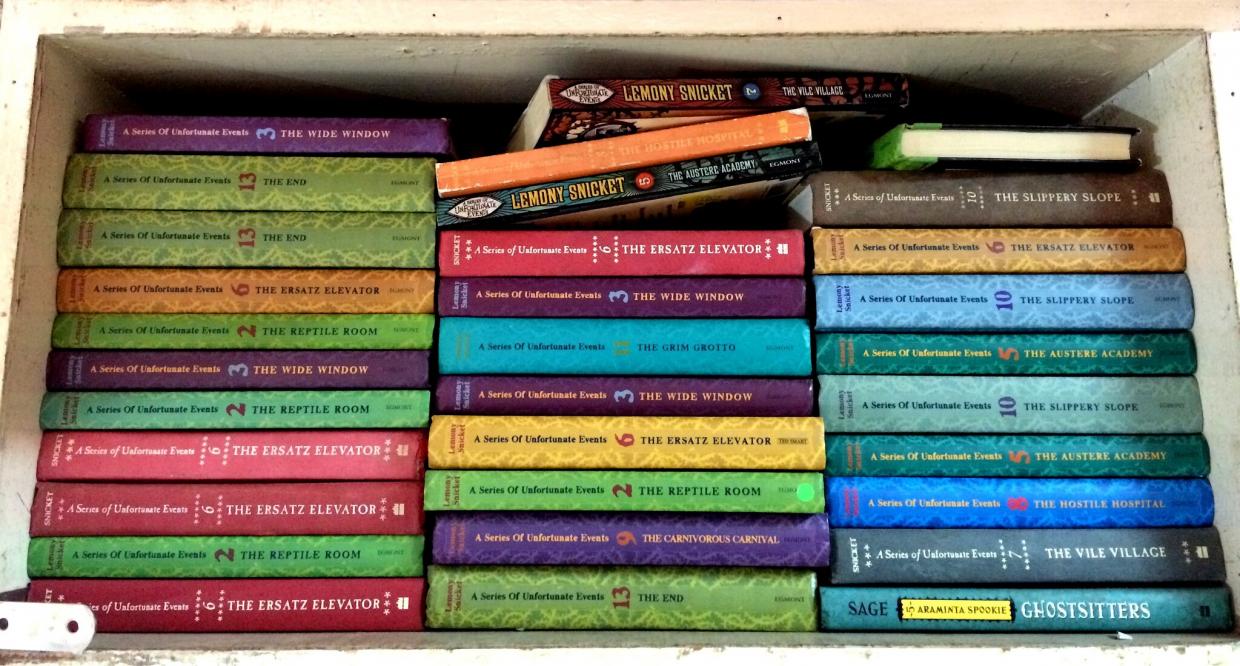
A Series of Unfortunate Events offers the kind of gloriously literate, intertextual experience that is a siren song to Nature’s Rare Book Librarians in their infancy. (Or at least to me— but my interest in rare books tends to be the weirdness of the object itself, and how the physical form of the book assisted in, or played with its function. Back when I worked at a rare books library, I used any excuse to send friends, colleagues, or Twitter followers pictures of a hunting manual bound in deerskin.) As objects, the books of A Series of Unfortunate Events seem primed to inculcate a love of the codex. Unlike say, the Goosebumps books, with their flimsy covers, they are substantial enough to bear up being shoved into backpacks, dropped onto asphalt, and loaned to friends, while still being a delight to look at and handle. The hard covers and ragged pages perfectly reflected my childish understanding of “old books” (one that, in my case, owed more to the Dear America book series than any interactions with actual old books). Each book ended with a letter, telegram, or other piece of ephemera from Lemony Snicket to his editors, hinting at the setting and plot of the next book in the series. For an added touch of verisimilitude, Snicket’s letters often list items, photographs, and other artifacts from the Baudelaires’ journeys, which he promises to send to illustrator Brett Helquist, so Helquist can study them for his quirky pencil drawings.

Helquist’s illustrations often creep into the text, or change it. In The Carnivorous Carnival, the book whose déja vu page caused such confusion, the unfortunate Baudelaire children nearly get thrown into a lion pit. These ferocious felines are menacing enough in the text, but Helquist adds another layer of danger that climbs right out of the page.  His lions swipe at the text itself, ripping off the “Ch” of “Chapter Ten,” and causing the two letters to tumble down the bottom of the page, and towards the huge gouges another lion’s paw has made through “Caligari”— the name of titular carnival. It’s a moment of delightfully absurdist extratextuality, echoing the precipitous drop awaiting the Baudelaires, and making the threat to our heroes all the more inescapable. 

The books play around with the knowledge that they are books, in a sort of Barthesian jouissance, exploring and exploding literary codes. They are writerly texts. By far the most ingenious moment of inter- and extratextuality comes in The Ersatz Elevator

“We’ll take the elevator,” says the Baudelaire children’s terrible guardian du jour (or du livre) Esmé Squalor. And they do. Sort of. As Snickett narrates, Esmé “swept her arm forward and pushed the Baudelaire orphans into the darkness of the elevator shaft.”

And then…

An all-black two-page spread in The Ersatz Elevator. (Photo by Elyse Martin)

These two pages are, I believe, the cleverest cliffhanger in children’s literature. As with the illustrated lions tearing at the chapter titles, the events of the novel are too grand to be confined by the text block. They leap from text to paratext. It’s a delightful innovation within the codex space— and also an allusion to perhaps the novel most aware of being a novel, Laurence Sterne’s Tristram Shandy

“Alas, poor YORICK!” exclaims the narrator of Tristram Shandy, two lines separate from the rest of the text block, when the character of Yorick dies. The next page is coated in black ink. The text itself is in mourning… quite literally.

The black page in Tristram Shandy. (Photo by Kat Sommers)

The black page, one of the most famous visuals from this precociously postmodern 18th-century novel (which also includes, in Volume III, an inserted sheet of marbled paper), plays with the reader’s expectations of what a codex ought to be and look like. It defies the expectation of continued text while, at the same time, revisiting historical print conventions. The mourning page, though unusual to a set of 21st-century eyes, is a literary tradition deeply rooted in the history of English printing. As Whitney Trettien writes in her blog post, “Tristram Shandy & the art of black mourning pages,” “mourning pages or all-black prints, sometimes with a coat of arms or other insignia etched out,” could be found “in printed funeral sermons and memorial verse” from the seventeenth century onward. It is a printing convention that calls attention to the book as object, sometimes even when the book itself has been digitized and put online. And, like Snicket’s déja vu page, Sterne’s contemporaries did not always understand the black page. Professor Whittney Trettien found this anecdote about the printing history of Tristram Shandy in William Coombe’s The Philosopher in Bristol (1775):

“The author of that celebrated work at the close of his matchless description of Yorick’s death, introduced a black or mourning page.—  I cannot conceive, how it was possible for his design to be mistaken’ — but so it was:—  and such whimsical and idle conjectures were made concerning it, —  that he resolved, since the leaf of one dead color, with a moral meaning, was so little understood, to exercise the ingenuity of his readers inventions and try how they would receive a fanciful page of various colours, which was inserted in a succeeding volume without any meaning at all.”

The latter is in reference to the marbled page, which, in the text, Sterne refers to as “the motly emblem of my work,” and which the Sterne Trust interprets as “a visual confirmation that his work is endlessly variable, endlessly open to chance.” No two hand-marbled pages are exactly alike, creating a unique page and thus making visible the subjective experience of the reader, making it an active part of the text. (Sterne does this even more specifically with a blank page, where he asks his reader to imagine an illustration in the blank spot, “as like your mistress as you can—as unlike your wife as your conscience will let you— ‘tis all one to me— please but your own fancy in it.”)

For me, marbled paper conjures up images of endpapers, the papers fixed to the inside cover of a book to hide all the strings and glue keeping the cover and the paper block together. That wouldn’t be the first association for Sterne’s contemporary readers—the marbled endpaper is a characteristic of 19th rather than 18th-century volumes, and in fact Sterne relied on the very unfamiliarity of marbling to catch his readers’ attention. But the marbled page has taken on even more extratextual significance in the 250 years since it first appeared, now seeming to end the volume in the middle. Where does the story end, one wonders when encountering this misplaced endpaper, and where does it begin? Purely with the written word, or with the codex, the book-as-object itself? 

What should we make of the fact that some of the most formally interesting books of the 20th and 21st centuries are meant for children?

Snicket posits the same question—but for children. What should we make of the fact that some of the most formally interesting books of the 20th and 21st centuries are meant for middle-grade readers? I personally think it’s a reflection of the modern notion that imagination, that playfulness, is for children, and that adults have more serious concerns. We adults, it is assumed, know what books are and how they should operate; our attention is supposed to be directed to the grim realities they contain. The interesting (and profitable) way of experimenting with the codex for adults is turning books into e-books. We still test the limitations of text blocks on pages, but it’s no longer a question of the physical object, but a question of translation: ink into pixels. 

I also find it fascinating that Snicket, like Sterne, does not allow the reader to be a passive subject. Middle school is about the age when one discovers the first limits of one’s personal subjectivity, when one begins to understand the rich and variegated nature of human experience, and that there may not be one right answer to a situation. It’s the time you begin to question if what you read in books is true, when before the fact that the books were books gave them all necessary authority. By calling attention to the book as object, and pulling his young readers into the text, Snicket furthers that subjective development. The last book of A Series of Unfortunate Events ends not with a bang, nor a whimper, or even a line, but an illustration of a giant question mark floating in the sea. When you turn the page you see another illustration, possibly of the same sea, with a man rowing away. 

Perhaps this is the fictional Snicket, leaving the reader to guess as to the real meaning, the real lesson of the series. After all, the reader has all they need to make a judgement. They have the books— and they have themselves. 

Sexual Assault Survivors Don’t Owe Anyone Their Stories

Part 1: fuck telling the truth

At some point in 2015, I began writing a story about rape that didn’t have a rape scene. 

Instead of describing the abuse that the protagonist experiences, I wanted to write about the boring everyday weirdness of the trauma that comes from sexual violence. The dullness and the silliness. The text offers no rape scene because it offers no “proof.” It’s full of silence and things that happen offstage because at the very center of my story is the assumption that you believe the protagonist. I was not writing to convince skeptical people that sexual violence happens or that sexual violence is bad. 

I was writing for survivors.


I was not writing to convince skeptical people that sexual violence happens or that sexual violence is bad. I was writing for survivors.

Two years later, in November 2017, I signed a book deal. The Harvey Weinstein story had just broken. 

Towards the end of the long months while we were searching for a publisher, #metoo statuses started going up. There were so many true stories to read, so much graphic detail. A lot of testimony and a lot of convincing. I didn’t post anything. I didn’t read all of them. 

I’d just written a whole novel about rape, so I was tired.


I’ve tried to write this essay several times. I’ve had a draft in my mind, and scattered across the notes app on my phone, for years. I was trying to put together a sort of theory of the case for why I hadn’t written explicit descriptions of sexual violence, and every time the #metoo discourse developed and unfolded I added to this hodgepodge collection of notes. I wrote a first draft in November last year after watching Christine Blasey Ford testify.

In her opening statement Blasey Ford said: 

“My responsibility is to tell you the truth.”

And this: 

“Sexual assault victims should be able to decide for themselves when and whether their private experience is made public.”

It struck me that Blasey Ford only said the name Brett Kavanaugh to her husband and her therapist in 2012. Thirty years after the assault happened, she needed to explain why she wanted a second, separate front door on their refurbished house. 

Blasey Ford did not want to share the story of her sexual assault publicly. She originally came forward when Kavanaugh was included on the Republican shortlist, then sharing her information confidentially. She had hoped that would be enough and that she could remain anonymous. 


Fuck telling the truth. Fuck telling the truth to people who already think you’re lying. Fuck having to read and relive that shit. Enough.


Public testimonies of traumatic and violent events serve an important function. They are appeals to perpetrators to stop, for justice within the courts (as far as this exists), for interpersonal and legislative protection, to be believed. 

Fuck telling the truth to people who already think you’re lying. Fuck having to read and relive that shit.

And recently there have been so many: Lizzette Martinez, Drea Kelly, Kitty Jones, who came forward in Surviving R Kelly; Wade Robson and James Safechuck who came forward in Leaving Neverland, as well as the women I have already mentioned. I find it hard to express in words how I feel I when I watch them speaking. These survivors deserve every single good thing. 

The question I ask myself is: how should we write for them? When they want to laugh, and show their teeth.

The answer I come to always, in some way, relates to joy. While I understand the strategic and personal importance that describing traumatic events can have, I see no joy there.


Tarana Burke, founder of the Me Too movement, gave an interview on the subject of telling what she calls “trauma stories” in February 2018. Burke emphasizes joy as a part of the healing process:

“Sometimes we have to tell our stories to help other people and give them permission to tell theirs, right? Sometimes we have to tell our stories for ourselves, or in service of other people. But just having them available? That’s not the solution. Once a book is written about a bunch of trauma stories, what happens then? I really do believe that this movement should be focused on places where we can cultivate joy and love as a means to progress the healing process.”

The question she was answering was: “What’s your big idea that other people aren’t thinking about or wouldn’t agree with? Why is it so important?”


I watched another kind of testimony last year: Hannah Gadsby’s Nanette. Towards the end of the stand up set, Gadsby returns to an anecdote she has told as part of a joke earlier in the show. She reveals that, actually, the real-life ending of the anecdote in question was not funny. In real-life, the man in the anecdote verbally abused her and beat her up. After telling us this, she describes other violence she has experienced, including rape. 

Gadsby tells us she is staging an intervention, invoking the imperative, “I must”: “I must quit comedy,” she says, in order to “tell my truth and put tension [back] in the room.”

If her aim was to stop making her audience laugh and make us cry instead, it worked. By the end of the Netflix special, I was bawling.

But I had, and have, reservations about the explanation Gadsby gives for her intervention. 

What is the effect of describing or showing a trauma-inducing event (this thing we are calling truth) and then giving your audience permission — the cue — to cry before closing their laptops, moving on with their lives, next up Friends? I am not sure it does create tension. Crying, after all, is a form of relief. For those who don’t share her experience, I worry it offers proof positive that they have empathized and may resume their normal lives. 

For many who share her experience, her disclosure has been cathartic, affirming. It is this that makes her invention important. If the experience was cathartic and affirming for Gadsby alone, that is enough. As Burke says— sometimes we have to tell our stories for ourselves, sometimes in service of others. 

As Burke also says, what happens then?

I don’t believe there is an artistic imperative to swap laughter for crying.

Survivors, presumably, might sometimes like to hear jokes. I don’t believe there is an artistic imperative to swap laughter for crying. Or “quit comedy” for “truth.” Laughter is not the opposite of the truth.

When we laugh at a bad thing, that can be a big fuck you. An exercise in power and control. A claiming of irony and bawdiness. Of being unlikeable, unbelievable, unpalatable. Evidence that we survived.

There can be joy in surviving and healing in joy. Like when Gadsby talks about how much she likes the sound of the tea cup hitting the saucer. That bit I really liked.


The weight of testimony is heavy.

Over the course of 2018, a Brazilian spiritual healer known as João de Deus (“John of God”) was accused of sexually abusing over 500 people, including his own daughter.

On February 2, 2019, Sabrina Bittencourt, the woman who led the campaign against him, killed herself. 

In 2016 Bittencourt began the hashtag #eusousobrevivente (“I am a survivor”) which went viral in Brazil. Bittencourt, who was from a Mormon family, spoke about her own experience having been sexually abused in her family’s church from the age of four. 

After #eusousobrevivente, Bittencourt founded “Combate ao Abuso no Meio Espiritual,” an organization focussing on exposing sexual abuse by religious and spiritual leaders. In 2018 she helped expose João de Deus and Prem Baba, another Brazilian spiritual healer. Bittencourt began receiving death threats and, fearing for her life, she fled Brazil for Spain, where she died. 


Can artists owe it to their audience to take the omission, the lying, out of the craft? To tell more truth? To give testimony, like Christine Blasey Ford and Anita Hill before her, like the people posting #metoo stories? Can anyone owe anyone that?

I don’t think so. Surely this should be a thing survivors do only if they want to, for themselves. It cannot be something an artist, or anyone, “must” do. Blasey Ford should have been allowed her secrecy, her privacy. As we know, visibility isn’t always safe. Sometimes it’s just not what a person wants.

Can artists owe it to their audience to take the omission, the lying, out of the craft? To tell more truth?

Plus, some people, maybe quite a lot of people, will still say that you are lying.


Meena Kandasamy has described her novel, When you hit me; Or the portrait of the author as a young wife, which was published in 2017, as informed by her own experience of an abusive marriage. She does not give the husband in the book a name, or the protagonist. Towards the end of the novel, she writes:

“Sometimes the shame is not in the beatings, the rapes. It is being asked to stand to judgement.” 


Fuck being asked to stand to judgement. Fuck giving proof to the people who already think you’re lying. Fuck having to give proof of your pain, or your humanity. Fuck appealing politely, respectably, earnestly. 

Part 2: in defense of masks

As an undergrad, I searched for books about dictatorship, colonialism. I knew from stuff my mum had said that this was the history of the Americas and Europe, although it was not what I was being taught. I loved a book by Edwidge Danticat called The Dew Breaker, a book in fragments about a sculptor whose parents are Haitian refugees in the United States. The middle chapters follow several different Haitian migrants to the U.S., most of whom never meet, who were tortured under the Duvalier regimes, perhaps by the same man. (And this man, we realize by the end of the book, may have been the sculptor’s father.)

I wrote about The Dew Breaker in my undergraduate thesis (for which I received an average mark: “The candidate writes about Latin American literature but neglects to mention magical realism”). I wrote in defense of tracing the spidery effects of trauma across generations, how it breathes in the mundane things (like where you put a door when refurbishing your home). I argued the case for bringing readers to an understanding of their own complicity, as Danticat does, without offering narrative relief or closure. Of not allowing them to tear up over a graphic scene—what an awful thing to have happened, there, then—and go on back to their lives. 

In my thesis, I also wrote about another writer. I loved the way he showed how pain passes through generations until you lose count. How oppressive structures shapeshift and survive. How he kept Anglophone readers out by doing jokes in Spanish. I wrote him an email which said, “Why does the U.K. edition of Drown have a glossary? Also I am a massive fan and your books have changed my life.” I didn’t believe in glossaries, I told him; he responded quickly that neither did he. I was thrilled. Fuck glossaries!

I proudly shared this victory of mine with my family. I was offended by my cousin Pedro’s response: “Ha well, I’m sure Junot Díaz found your Facebook profile picture before replying.”


In his lauded New Yorker article, before disclosing experiences of child sexual abuse, Junot Díaz writes about a woman who approached him at a reading, asking about sexual violence in his books. He explains that, after years of angst, he is writing this article for her. He calls her “you”:

“I wish I had told you the truth then, but I was too scared in those days to say anything. Too scared, too committed to my mask. I responded with some evasive bullshit.”

There is a lot I overlooked in Junot Díaz for so long. (A lot.) But those two sentences pissed me off immediately. It isn’t bullshit to be evasive when someone asks you to disclose experience of sexual violence on the spot. And it is okay to be scared. There’s nothing cowardly in this evasion or “mask.”


My mother used to tell me stories of the student newspaper at her university in Brazil during the dictatorship. When they were censored, they used to fill the space of the censored stories with recipes, or leave them blank. It was a coded way of saying, we cannot say what really happened. But something happened. Believe us.

By the same token, many popular Brazilian love songs from that era are not about romance at all, but a covert way of expressing longing for political freedom and home.

After all, the plain truth—the possibility giving testimony safely—is not always available to survivors. Christine Blasey Ford has said she cannot go home. Neither can Sabrina Bittencourt. 

This is something many of us know; it is why we deal in whispers. 


Chico Buraque’s’s song Cotidiano, which he wrote in 1971, during the military dictatorship, when his music was heavily censored, starts like this:

Todo dia ela faz tudo sempre igual
[Every day she does everything the same]
Me sacode às seis horas da manhã
[wakes me up at six in the morning]
Me sorri um sorriso pontual
[smiles a punctual smile]
E me beija com a boca de hortelã
[And kisses me with her mint mouth]

Todo dia ela diz que é pra eu me cuidar
[Every day she says I must take care]
E essas coisas que diz toda mulher
[and these things that all women say]
Diz que está me esperando pro jantar
[says she’s waiting for me for dinner]
E me beija com a boca de café
[and kisses me with her coffee mouth]

Evasion, it seems to me, has always been a part of the craft. Díaz, always at pains to demonstrate his knowledge of our Latin American history, knows this very well.


On “truth,” Díaz wrote —

“We both could have used that truth, I’m thinking. It could have saved me (and maybe you) from so much.”

Within three weeks of publishing the article, Díaz had been accused of sexual assault. And more stories of misogyny came later, nearly all from black and Latina women. One magazine editor told the Washington Post, “Everyone in the literary world/the media knew this, or suspected it.” 

Of course, Díaz’s testimony in the New Yorker was never about the woman in the bookshop.

Had the context of his disclosure been different, we might have speculated that Díaz wrote that article simply in service of his own healing, in which case the invocation of the woman in the bookshop would still have been self-aggrandizing and presumptuous, in particular his claim of “saving” her.

The plain truth—the possibility giving testimony safely—is not always available to survivors.

As it is, we might speculate that he made his disclosure in the hope of softening the blow of incoming accusations. In which case, the invocation of the woman in the bookshop is dehumanizing, as well as dishonest. Díaz isn’t writing for her; he’s using her as a prop. 

As for the accompanying metaphor —that of the bad mask—it works to distract us by locating a pathology where there was none. His original evasion was not the problem. Díaz never owed the woman in the bookshop “the truth,” even if we believe that she is real. 


In Díaz’s work, masks are often associated with physical deformation and ugliness, and used to symbolize violent repression—machismo covering up pain.

I see masks differently: a technology for survival, sometimes bound up with femininity. A full face of makeup, a deferential smile. Drag. A mask can be a performance, can be our craft; it can be full of joy, invisibility, abandon; a celebration as well as a holding back of information, a strategic deliberation.

In a world where masks keep us safe, where they help us heal, where they are the things that we have made for ourselves, there is nothing dishonest about a mask.

Part 3: in defense of fiction

I have had interesting encounters since the book came out in the U.K. earlier this year. Some reviewers have disclosed experiences of sexual violence to me in private, telling me that is why they related to the story. When they’ve asked me if the sexual violence in the novel is based on my own life I’ve declined to answer. Other reviewers, perhaps out of awkwardness, perhaps because the novel doesn’t contain graphic descriptions of rape, talk about the book as if it’s not about sexual violence at all.

Twice I have had my novel introduced as autobiographical during in person interviews, although nowhere do the promotional materials describe it in this way. Both times, while being recorded, I have corrected the interviewer. I have found it surprising that journalists do not understand what is at stake when they say that a book about sexual violence is autobiographical, when they present my fiction as my testimony.

Of course, I also google authors in the minutes after finishing their novels. I play the game of matching up dates, and hair color and cities of birth and figure out what I can, and more often than not it leaves me with more questions than I started with.

The reader doesn’t have a right to know, not really, not for sure, the secret ties between the story and the life of the author.

But that’s part of the deal with fiction, isn’t it? The reader doesn’t have a right to know, not really, not for sure, the location or quantity of the secret ties between the story in the fiction and the life of the author.

That’s the contract in fiction: the reader agrees to suspend their disbelief. The starting point is “you’re lying.” The starting point is also “I believe you.” This is what makes the writer of fiction free.

There is no jury, no trial, no evidence, no proof. 

It is, in my opinion, the most wonderful mask.


We are so often surrounded by testimony and by trauma stories but fiction, Netflix comedy specials, New Yorker articles even, can be spaces of relief, where we don’t have to relive and reread. Whether they tell stories about sexual violence or not. 

In an interview with the New York Times in October 2018, Tarana Burke said, “I want to teach people to not lean into their trauma. You can create the kind of joy in your life that allows you to lean into that instead.”

As a writer of fiction, I am interested in joy. 


I want to write in defense of laughing at
In defense of irony
In defense of faking it 
In defense of anonymity
In defense of not offering proof
In defense of not testifying
In defense of invisibility
In defense of secrets
In defense of masks
In defense of lying
In defense of fiction


In her book, The Promise of Happiness, feminist academic Sara Ahmed talks about, instead of happiness-as-goal, happenstance:

“When I think of what makes happiness ‘happy’ I think of moments. Moments of happiness create texture, shared impressions: a sense of lightness in possibility.”

I said I was writing for survivors. There’s no one way of doing this. And I don’t know if I am doing it right. For me, writing for survivors doesn’t mean saving or solving or going back in time. I know that healing isn’t a thing that can be done and dusted; it can’t be finished and shut and shelved like a book. 

When I write I think about healing not as a destination, but as a joy that comes and goes and that is felt.

10 Books By African Women Rewriting History

In recent years, I have been attracted to the work of writers creating communities. Whenever I think of novels I love, I think of the groups the stories revolve around. Sometimes, these books concern themselves with a single event that was momentous in the society’s history. A lot of the books we consider classics devote themselves to this task.

The foundation of the African novel was the African Writers’ Series. The AWS, which was almost exclusively male, concerned itself with the issues of colonization, post-colonization, and the place of the African in the world. In maintaining that focus, there were certain pitfalls it sank into, including the erasure of women.

“Writers of all kinds,” Bessie Head, one of the few women writers published by the AWS, said, “whether novelists, poets or dramatists, are mirrors of the times in which they live.” But what happens when, for the times before they lived, there were no reflections of their stories? What happens when the reflections that were available produced inaccurate, biased images, and new ones have to be constructed? In the past few years, there has been an explosion of African women writers engaging in this process of not only mirroring the times in which they lived, but also reimagining moments past with images that are more accurate than those that hitherto existed.

My observation of  African women writers redefining society in literature led me to compile this list. These authors have largely moved beyond Bessie Head’s remit of merely mirroring society, and are, instead, not only producing reflections, but also explaining what it took to arrive at these presentations and what’s been missing.

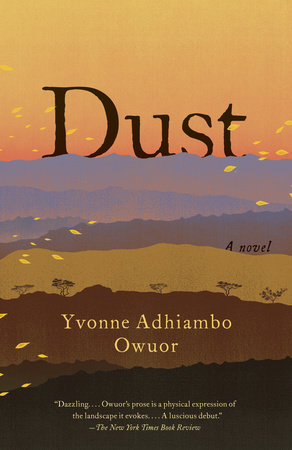
Dust by Yvonne Adhiambo Owuor

Dust by Yvonne Adhiambo Owuor

Owuor’s debut novel is set against the backdrop of the disputed 2008 Kenyan presidential elections. The story starts when Odidi Oganda, an engineer, is killed on December 27th, 2007, the day of the election. The foreground of the story shows his family’s struggles with the trauma of his death; in the background, Kenya struggles with the violence that arises from the elections. Owuor’s novel also goes back to 1950s and 1960s Kenya, where colonialism, and Odidi’s father’s past as a gun-runner and cattle-rustler in Northern Kenya dominate the story. “Kenya’s official languages: English, Kiswahili and Silence. But there was also memory,” Owuor writes. This line, more than any other, shows that while national traumas in Kenya are often not talked about, they are also remembered. 

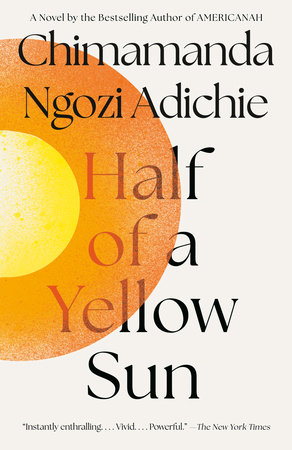
Half of a Yellow Sun by Chimamanda Ngozi Adichie

Half of a Yellow Sun by Chimamanda Ngozi Adichie

Adichie’s second novel, named after the symbol of the ill-fated Biafran republic, places readers in Biafra in 1967. A steady retinue of Igbo authors have written about the Biafra war, the most prominent of whom are Chinua Achebe, Buchi Emecheta, and Christopher Okigbo, who was killed during the conflict. Adichie adds her name to this pantheon, presenting Biafra through the eyes of Ugwu, Odenigbo, Olanna, Richard Churchill, and Kainene, and mapping out how the declaration of war affects their lives. Before the war, Odenigbo hosts an intellectualist circle in his home at the University of Nsukka. When the war begins, however, the characters get dragged into a world of violence and famine. Also, that ending made us cry.

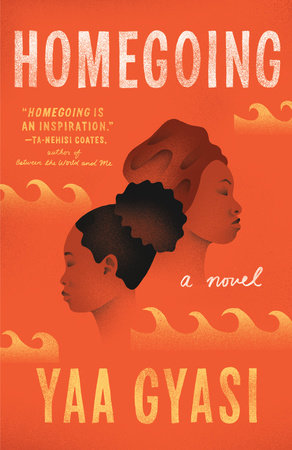
Homegoing by Yaa Gyasi

Homegoing by Yaa Gyasi

Yaa Gyasi’s only novel to date follows Effa Otcher—a girl sold by her father to a white man as a bride—and her half-sister, Esi, who is captured and enslaved some time in the 18th Century. The story is narrated by the families of these two women over seven generations. Important historical events that occur in the book include the development of cacao in Ghana, the Anglo-Asante wars, and slavery and segregation in America.

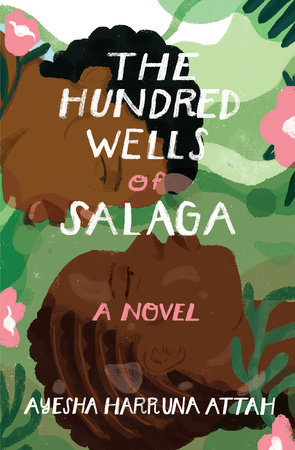
The Hundred Wells of Salaga by Ayesha Harruna Attah

The Hundred Wells of Salaga by Ayesha Harruna Attah

Set in Salaga, a town in Northern Ghana, during pre-colonial times, The Hundred Wells of Salaga initiates conversation around both the Trans-Saharan slave trade and the Trans-Atlantic slave trade. The story revolves around two strong female characters: Aminah, a slave, and Wurche, the daughter of a powerful chief. Wurche’s family has acquired a lot of wealth, and slaves, through the slave trade, whereas Aminah’s family has been ripped apart by it. When Wurche’s family buys Aminah as a personal slave for the daughter, the two girls’ emphasized distinctions of language, religion, and class are even more defined.

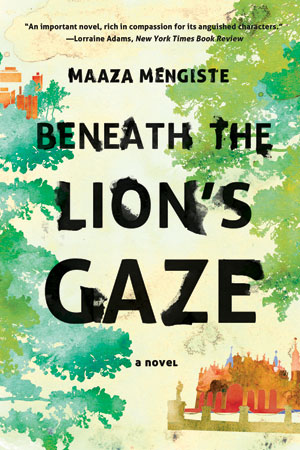
Image result for maaza mengiste beneath the lion

Beneath the Lion’s Gaze by Maaza Mengiste

Mengiste’s first novel is set in the last days of the reign of Haile Selassie, the King of Kings, the Conquering Lion of Judah. The story is told through three main characters: Hailu, a doctor, and his two sons, Dawit and Yonas. Some of the strongest sections of the books are the long vivid scenes like when Dawit collects dead bodies abandoned on the roadside for hyenas to eat. Or the 82-year-old emperor reflects on his loneliness with only his pet lions for company. While Mengiste chooses to name The Emperor, she provides only a pseudonym for Mengistu Haile Mariam, the man responsible for most of the violence post-Selassie. In lieu of his real name, she calls him Guddu, which is Amharic for “the extraordinary things he wrought” and a passing reference to Queen Guddit, who ushered in Ethiopia’s dark ages in AD960. Interestingly, The Shadow King, Mengiste’s next novel due in September, is also set in Ethiopia under Selassie, particularly the period around the invasion of Ethiopia by Italy.

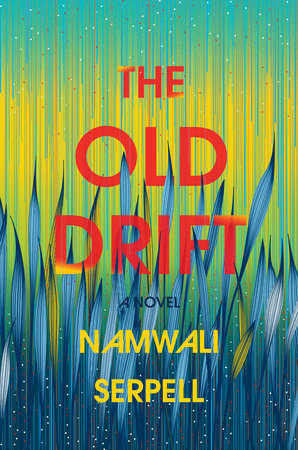
The Old Drift by Namwali Serpell

The Old Drift by Namwali Serpell

Serpell’s first novel, The Old Drift, published earlier this year, covers a lot of vistas, of which one of the most memorable is that of Edward Mukuka Nkoloso and the Zambian space program. One of the main characters, Matha, joins the Afronaut training program. Narrated in sections by a swarm of mosquitoes, the book moves across several generations, starting with the colonial explorer David Livingstone who is killed by malaria in the middle of his failed search for the source of the Nile. In The Old Drift, Zambia’s history includes colonialism, Zambian independence, the AIDS scourge, the Afronaut space program, and Kariba dam, before moving into the future, where government surveillance becomes the norm. 

Image result for kintu by jennifer nansubuga makumbi

Kintu by Jennifer Nansubuga Makumbi

In 1754, Kintu Kidda, the patriarch of his family, sets out to the capital of the Baganda kingdom to pay homage to the new Kabaka. On the way Kintu inadvertently kills his own son, setting in motion the curse that will afflict his family for generations to come. The name Kintu in itself brings to mind the Baganda myth that Kintu was the first man, but in Makumbi’s hands he is just a man who was responsible for a family curse. In her NYRB review of the book, Serpell called Kintu “The Great Africanstein Novel,” and it’s not hard to see why. The novel brings to mind Gabriel Garcia Marquez’s opus, A Hundred Years of Solitude in the way it narrates the history of this family across multiple generations.

House of Stone by Novuyo Rosa Tshuma

House of Stone follows Zamani, an orphan born in the aftermath of Zimbabwe’s war for independence. In Swahili, the word zamani means “a long time ago”, and is commonly used as a formulaic opening for stories a la “hapo zamani za kale”—a long time ago. The events that occur range from those that happened hapo zamani za kale to more recent ones. In the course of the story, Tshuma revisits the violence of the war for independence, of colonial Rhodesia, Gukurahundi —the ethnic cleansing initiated by Robert Mugabe—and the decades of cover-ups that follow.

Image result for happiness a novel aminatta forna

Multiple titles by Aminatta Forna

All of Aminatta Forna’s five books re-imagine history. Her 2002 memoir, The Devil That Danced on the Water is about her father, Mohammed Forna who was a Sierra Leonean politician and Sierra Leone’s finance minister who was declared an Amnesty Prisoner of Conscience, and hanged on trumped-up treason charges in 1975. Forna also has four novels: Ancestor Stones, set in a Sierra Leone-esque location, and is the story of four women, all members of the Kholifa family, all of whose mothers are married to the same man. The Memory of Love takes place in 2002 Freetown in the aftermath of the end of the Sierra Leone war. The novel questions if truth and reconciliation can take place in the immediate aftermath of a particularly violent and bloody war. The Hired Man illustrates  ethnic cleansing in Yugoslavia. And Happiness, a story about Attila Asare, a psychiatrist who has worked in different war zones around the world (Sierra Leone, Bosnia, and Iraq), who reminisces about these war zones.

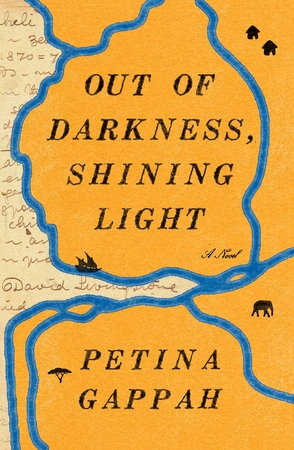
Out of Darkness, Shining Light by Petina Gappah

Gappah’s new novel comes out in September and is a retelling of David Livingstone’s misguided attempt at locating the source of the Nile in present-day Zambia, (his story opens Serpell’s The Old Drift), his subsequent death from malaria, and the transportation of his body back to England from Zambia. This novel allows the attendants’ voices to pierce through a journey of understanding reverence and one’s own choices in life. 

Rebecca Godfrey Investigates the Murder That Shook Her Hometown

In 1997, 14-year-old Reena Virk was found murdered in Victoria, British Columbia. The case shocked Canadians, especially when they learned how Virk had been violently bullied and beaten by a swarm of teenagers she was trying to befriend—two of whom were eventually convicted of her murder. After learning about the crime, Rebecca Godfrey, a New York City–based writer who grew up in Victoria, returned to her hometown to learn more about what happened there. 

The resulting book, based on six years of research, became a best-seller, and Godfrey was lauded for her wide-ranging vision and novelistic approach to true crime reporting. Originally published in 2005, Under the Bridge has just been reissued with a foreword by Mary Gaitskill and an afterword by the author.  

I spoke to Rebecca Godfrey about being a fiction writer working in the true crime genre.


Jenny Offill: How did you first hear about this story?

Under the Bridge
Buy the book

Rebecca Godfrey: I first heard about the murder of Reena Virk from an article in The New York Times. I was very surprised to read under the headline that the “grisly slaying” had happened in Victoria—the small town I grew up in, which is a very quiet, pastoral place. It’s very unusual to see Victoria mentioned in an American newspaper, and even more unusual for the mention to be in connection with a murder. It’s usually mentioned in articles about tourism or salmon.

At the time, I was finishing up my first novel, The Torn Skirt, which was about teenage girls who become involved in a crime in Victoria. My friends and family started calling me, saying, “Your novel has happened in real life.” I was curious about the case, and if there were parallels, who these girls were, if I knew anyone involved. 

So I went back to Victoria, and started asking around. I went into the youth prison, talked to some teenagers at the courthouse. The teenagers were really intriguing to me, right away, because they weren’t “Trenchcoat Mafia” types; they were the popular kids. No one could understand how they ended up involved in a murder.

JO: Were you at all hesitant to move from fiction to non-fiction?

RG: I was so compelled by the case that I didn’t think too much about it. I just wanted to learn more about these kids and what had happened, and to do so, I needed a press pass. I got an assignment from a women’s magazine so I could cover it. I was very naive; I didn’t realize how difficult it would be. I don’t think I would have done it if I’d known how frightening and tangled it would be. 

On the other hand, I found a lot of freedom in telling a story I didn’t have to invent. I never hit that wall that you do with fiction: What should happen next? This story was so dramatic, with a  natural narrative momentum provided by the real life events. And it had so much suspense, which as a novelist, I was grateful for. Who will confess? Will they get away with it?  Underneath that, there were more significant questions I could explore. The central one was: How does the death of a girl change the lives of others?

JO: Did you have any preconceptions about the true crime genre before your reporting began? What were the clichés you wanted to avoid?

RG: I wasn’t very interested in true crime. I associated it with those paperbacks with ripped wedding portraits dripping with red blood on the cover. I was more influenced by Crime and Punishment and In Cold Blood—works that looked closely at the consequences and character of a crime. In the book, I don’t directly depict the murder; I didn’t want to put the reader in the position of a voyeur watching a girl be killed. Structurally, I tried to give the act of killing a different weight, so it reverberates and haunts but it’s not there for entertainment.

JO: Do you think being a novelist as well as a reporter shaped the information you were looking for?

No one could understand how the popular kids ended up involved in a murder.

RG: Yes, definitely. I researched things like the weather on the evening of the murder, the items found in search warrants, the autopsy details. But I wanted to have a lot of other information that most journalists wouldn’t likely include. What did the curtains in a girl’s bedroom look like? What music was the police officer listening to? What was a mother thinking when the police arrested her daughter for murder? I had to kind of push myself and my sources to get details that were evocative or contained an emotion.

JO: What moment surprised you most during the interviews?

RG: I was surprised when the facade of the teenagers broke down. They all hid behind this attitude and defiance, using gangster or hip-hop lingo, acting very cool. This really pissed off the detectives and reporters, who would say, “They don’t get it at all. A girl is dead!” But when I spoke to them, after a while, they would reveal their grief or shame or regret. I think they constructed indifference publicly as a form of armor. But in truth, they were horrified and haunted by the fact that Reena Virk had died because of something they did or didn’t do one evening. 

JO: Reena Virk was the daughter of South Asian immigrants. The girl convicted of her murder was white as were many of the other teenagers involved in the beating. How did race and gender seem to intersect in these stories?

RG: Most people assume it was a case of seven white kids bullying and killing a girl of color. In fact, only three of the girls involved were white. This particular group of teenagers had a pretty sophisticated, modern racial dynamic. In my own reporting, I spent time with the teenagers involved and their friends and found them to be a very diverse group and I didn’t discover anything to establish racism as motive. Reena was certainly an “other” in this group – but that had more to do with beauty, religion (her parents were Jehovah’s Witness) and her gentle, fairly naïve character. 

Racism was absolutely present in the justice system. The killer was given all kinds of breaks and sympathy because she looked like a nice, white girl from a “good” family.  If Reena had been accused of the murder of a white girl, I don’t think she would have been given the same assumption of innocence. And the girls of color who were charged with assault were treated terribly on the stand; it was implied that one of them was the “real” killer — I assume lawyers thought that might stick with the jury because she was dark-skinned, tough-looking, and had been in foster care. 

It was interesting the way the case was written about by academics—they were very critical of the media’s erasure of race. But most of the academics didn’t actually speak to the kids involved.  I don’t know if you can apply theory to these teenagers who defied every stereotype. There was a blonde, pretty girl who wanted to be a gangster and had a group of minions shoplift for her. There was an Egyptian girl who was a kickboxer but stopped the initial attack on Reena. There was a trailer park kid whose mother concealed from him that he was part Metis. There was a soft-spoken, dark-skinned girl who was raised like a Dickens character, unwanted, moving from home to home. She turned out to be the most genuinely remorseful of all the girls. 

JO: Since this book was published, there’s been an explosion of interest in true crime stories as seen in shows like Making a Murderer and the podcast Serial. But you were ahead of the curve in telling the story of a brutal murder in a nuanced and emotionally complex way. What do you think makes for a good true crime narrative? 

How does the death of a girl change the lives of others?

RG: I have been really impressed with shows like The Wire, which isn’t true crime, but is based on real people and a historical moment, or the FX series about OJ Simpson. People are compelled by violence and crime—it’s almost primal—but it’s so easy to exploit that interest and just be prurient. So I think anytime the camera swoops and swivels around, when you get a wider perspective, our natural interest can be challenged in a meaningful way.

A lot of these more recent “prestige” shows are really quite radical in how they offer a dissection of social mores and values. Criminals aren’t presented as aberrant; we can see the forces acting on them. I think anytime you bring the scope of art to a crime story, you can bring offer some insight and meaning. Instead of just: “On July 11, Julie Jones head was bashed in.” But unfortunately, a lot of these true crime narratives still only feature women as the “dead girl.” Readers have really enjoyed learning about the real life women, prosecutor, the cop, the judge, the coroner, in Under the Bridge. They’re all really fascinating characters, more so because they exist.

JO: What are you working on now?

RG: I’m working on a novel called The Dilettante. It’s about the early life of Peggy Guggenheim, before she was a well-known collector, when she was starting her first gallery and trying to get out from under her family’s shadow and tragedies. It’s similar to Under the Bridge, in that it’s a novelistic rendering of very dramatic real events and characters. 

I’ve tried to establish and discover the facts from searching out the unknown—talking to people who knew Peggy, finding unpublished manuscripts and letters, going through some pretty obscure archives. I don’t want to rely on or add to the very misogynist, inaccurate portrait of her that’s been created by a lot of male art critics and films like Pollock, where she’s so often dismissed as this sex-crazed, eccentric, silly socialite.  

When she was in her thirties, she was involved in this moment where women really engaged in modernism.  She lived in a manor called Hayford Hall on the moors in London with Djuna Barnes and another writer named Emily Coleman. They called it “Hangover Hall” and it’s where Djuna Barnes wrote Nightwood

Peggy was sort of a Zelig character; she was always intertwined with these pivotal moments of history —from the Gilded Age to anarchism to modern art. The more I learned about her, the more I really fell in love with her, especially reading her letters which are so vulnerable and intelligent. She was an American trailblazer, wholly underestimated and mistreated, but very daring and reckless and enchanting.  There’s been a lot of historical novels about you know, “Mozart’s Wife” or “Abraham Lincoln’s Daughter”—those stories are great and important, but I also think we need more epic, adventure stories about strange and powerful women. 

Netflix’s “Tales of the City” Confronts the Queer Community’s Generational Divide

You can’t expect something called Tales of the City to be just one person’s story. For readers of Armistead Maupin’s weekly San Francisco Chronicle column, which became the book of the same name, that plurality was the heart of the charm: Maupin’s fictional housing complex on Barbary Lane, inhabited by a panoply of characters, seemed to be the city in miniature. The young naive Mary Ann Singleton was our guide in, but readers soon fell in love with her landlady Anna Madrigal, as well as dashing young gay man Michael “Mouse” Tolliver, straight lothario Brian Hawkins, and bisexual Mona Ramsey. Groundbreaking for their Dickensian take on life in San Francisco in the 1970s, Maupin’s columns—and the novels they subsequently became—have become an invaluable time capsule. But with its TV adaptations and particularly this latest Netflix limited series, Tales of the City has become something rarer: not just a portrait of a community but an intergenerational family album.

With the character of Anna Madrigal (played by Olympia Dukakis in four miniseries over the last 25 years), Maupin had always embedded a motherly figure in the world of Barbary Lane. As an older woman who took care of her tenants and who helped steer them in the right direction when needed, she was the center of the “logical” (as opposed to biological) family that Maupin sketched out for his readers. In this sense, Tales of the City was already looking to emulate a genre that until then had been largely heteronormative: the family epic. 

Tales of the City looked to emulate a genre that until then had been largely heteronormative: the family epic. 

Within queer circles, then and now, that remains unexplored territory. If coming out narratives, romantic tales, and later AIDS stories offered LGBTQ readers a window into their own community, they did so by looking squarely at the individual, the couple, and a budding young generation respectively. There was little in books by the likes of Gore Vidal, Truman Capote, Larry Kramer, and Andrew Holleran that aimed to speak across generations or that portrayed the way gay culture was passed down from one to the next in bookstores, at bars, in meetings, and at rallies. As Chicano writer John Rechy has noted, the “homosexual” is the one minority individual who’s not born into the same minority community, and thus needs to seek out education and likeminded people. Issues of lineage and legacy—so central to ideas of belonging—have long needed to be retraced and reframed by queer men and women who, for most of the 20th century, saw any ties to a past or future severed once they left their own family narratives.

Maupin’s talk of a “logical family” was one way in which his work tried to wrestle with what it meant to write a narrative for oneself that didn’t completely do away with the comfort of a family unit. Anna wasn’t merely a surrogate mother to many in Barbary Lane; she was also the keeper of a story that had started long before her tenants had arrived and which, presumably, would continue even after they’ve left. That sense of continuance is precisely what opens the latest on-screen adaptation of Maupin’s characters: Mary Ann (Laura Linney) returns to San Francisco and Barbary Lane after decades away to find it housing a new generation of queer individuals—including her daughter, Shawna (Ellen Page), whom she’s been estranged from ever since she left Brian (Paul Gross) behind all those years ago to pursue a career in broadcasting. If, structurally, the family epic reminds us that the lessons of the past endure in the present and will echo in the future, Tales of the City has always stressed the way such a process is much more fraught within the queer community.

This latest Netflix revival, wherein Linney and Dukakis reprise their roles from earlier Tales of the City miniseries, puts front and center the issue of what older generations can teach those coming up and coming out in a presumably more open world, while also suggesting that there’s plenty that Gen Z and Millennials can in turn teach those who came before them. Attempting to reconnect with Shawna, Mary Ann goes out of her way to meet her daughter at the feminist co-op bar where she bartends. There, she’s presented with a radical new feminist world that would have felt unimaginable to her when she first moved to San Francisco in the 1970s (the very incident that kicked off Maupin’s original Tales column). Upon seeing a young woman do a burlesque number, Mary Ann admits that she doesn’t get how that’s feminist, at least by the standards of her day. “My generation,” she explains, “was trying to liberate women from objectification. Not, you know, encourage it.” She then gets a quick lesson in 21st century queer feminism, learning that wresting female nudity from the male gaze and owning it does, in a way, speak to the large leaps female empowerment has undergone in the last few decades. Despite the potential for combative optics (it’s not lost on anyone that an older white woman is attempting to question a young woman of color’s feminism), Tales models instead a generative and generous intergenerational conversation between these women, who better understand one another once they sit down to discuss their own biopolitical sensibilities.

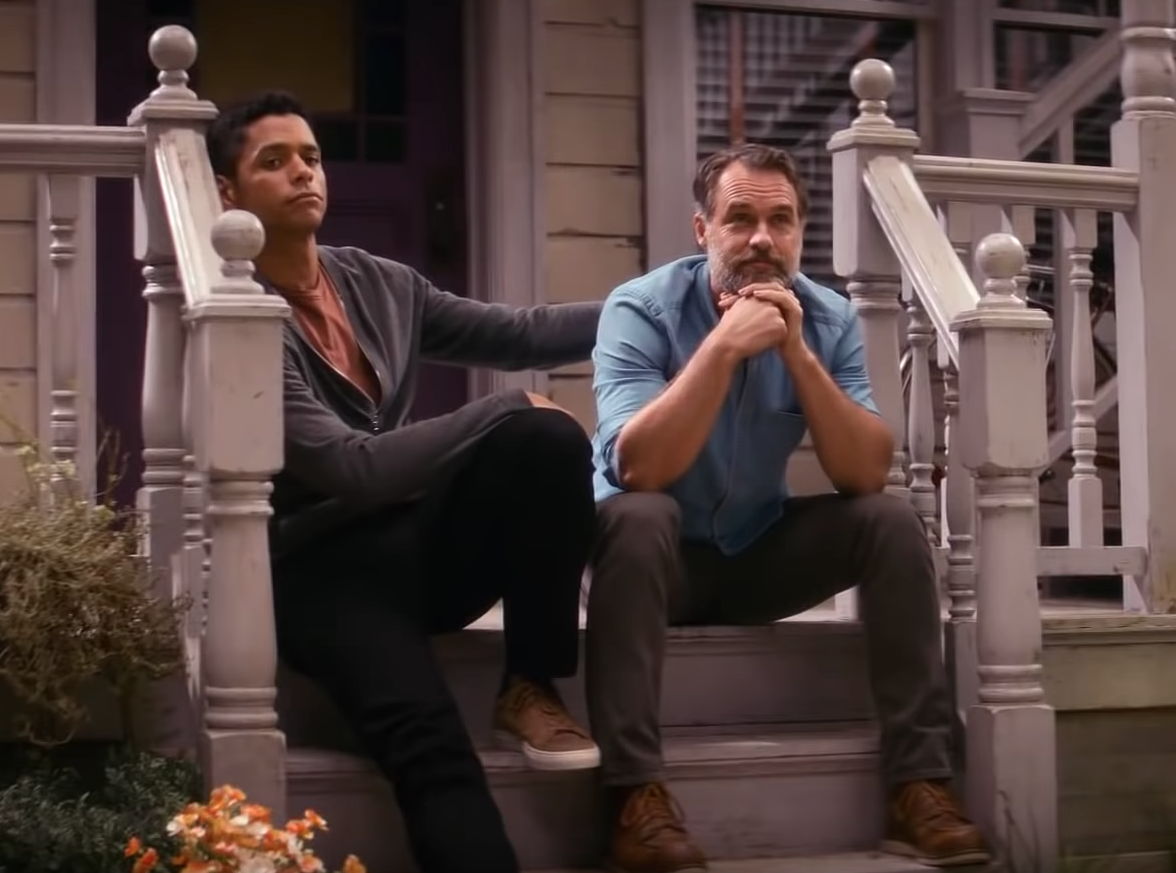
In stark contrast—and in that very same episode—Tales stages a much more explosive conversation between an older generation of (white) gay men and a young (black) gay man that is as enlightening as it is uncomfortable to watch. Michael (Looking’s Murray Bartlett, stepping into the iconic role for this 2019 iteration) and his much younger boyfriend, Ben (Charlie Barnett) are at a dinner party thrown by Michael’s ex. That alone puts Ben on the defensive, finding himself to be a minority in terms of age, race, and—to judge by the decor and dinner party conversation about sojourns to Peru (“Can you believe this one hasn’t been to Peru?” one asks, incredulously)—income as well. Talk of those trips down south quickly make Ben very uncomfortable: “The best thing about Machu Picchu? The Sherpas!” one shares, only for the rest of the crowd to join to say that ogling their beautiful legs and calves is arguably the best part about visiting such a landmark. But it’s only when the word “tranny” begins to be thrown around (amidst an anecdote about a “sketchy part of Mexico City”) that Ben chimes in, innocently pointing out that people don’t use that word anymore, especially not in the context of playfully offending one another. What follows is a hard-to-watch scene wherein Ben’s “woke” politics are at once dismissed and mocked: “I don’t appreciate that we have to be policed,” one attendee bemoans, “at a fucking dinner party,” another adds. Here, then, is a moment when the progressive viewpoints of a younger character of color are pitted against a group of gay white men who feel those notions to be almost comically naive. Self-serving, even. 

This scene tries to show just how difficult it can be to speak across the various schisms that divide the gay male community.

This tense dinner party scene initially looks to be an indictment of the other guests, with Ben as the lone voice of dissent. But with a cast that includes Stephen Spinella (the original Prior Walter in Tony Kushner’s landmark Angels in America), playwright and performance artist Taylor Mac, recent Tony nominee Brooks Ashmanskas, Mad Men star Bryan Batt, and other gay actors who’ve been out for decades like Malcolm Gets and Dan Butler, this Tales sequence is doing something much rarer. It’s trying instead to show just how difficult it can be to speak across the various schisms that divide the gay male community. “Why is your generation obsessed with labels?” Ben’s asked. “Because,” he answers, “what you call someone is important. It’s about dignity. It’s about visibility.” To a keyed-in 2019 audience, the line rings true and merely reinforces how out of touch these privileged older men are. But it’s not presented as the punchline of the scene, with Ben scoring points off the rich out-of-touch dinner guests. Instead, that accusation of privilege helps pivot the conversation into murkier territory. Spinella’s character, delivering a kind of monologue that’s bound to become as iconic as any he delivered on stage, hijacks the conversation to talk about how little Ben and his generation know about what he and other went through when they were his age. “When I was 28 I wasn’t going to fucking dinner parties,” he hisses in between gritted teeth. “I was going to funerals.” The world Ben is living with,  he rails, “with you safe spaces and intersectionalities,” was built by those sitting around that dinner table. “So if a bunch of queens want to sit around a table and use the word tranny…” he trails off, before capping off his argument with as blunt a line as he can muster: “I will not be told off by someone who wasn’t fucking there.” 

What’s thrilling (and unsettling) about this jaw-dropping exchange is the way it captures real-life sentiments from both sides of the generational divide. Ben protests that he knows what losing friends during the AIDS epidemic must have felt like, but his opponents are unmoved. In a way, invoking HIV/AIDS and the way it cleaved gay history in the late ‘80s and early ‘90s feels almost too cruel. It leaves Ben no chance to speak up or further make his case. But it also gets at the way any kind of historical continuance from the world of weekly funerals to PrEP-enabled safe sex practices can end up feeling like a political minefield. By the time Ben, utterly humiliated, lashes out at his boyfriend for not standing up for him, you almost get the sense that there might not be a way to easily suture these separate if complementary histories together. When a white gay man unironically tells a young black man that he knows nothing about living in a society that doesn’t care if you live or die, the chances of being able to have any kind of productive conversations within such separate parts of the community feel all but hopeless. Whereas Mary Ann opens herself up to learn about what new kinds of feminisms have made further inroads, that dinner party scene merely depicts the way some ruptures within gay culture that may well feel generational are in fact much more deep-seated and therefore harder to smooth over.

Despite its rainbow-hued marketing and its depiction of a vibrant young queer community, this newer Tales is intent on exploring what it means to tell LGBTQ stories that not only span generations but that speak across them. Ben and Michael’s friends may not come to an understanding—if anything both sides end up leaving much more convinced of their own righteous perspective. But the “fucking gay version of Get Out,” as Ben puts it, is enlightening to audiences watching. It’s a bold reminder of how siloed various segments of the LGBTQ community remain, yes. But also of how important it is to critically assess how history is passed down—and, more importantly, by and for whom. In bringing Maupin’s characters back and forcing them to reckon with the kinds of histories it helped tell and the ones it still needs to acknowledge, this new revival breaks ground in imagining what a truly diverse and intersectional version of gay history can look like.

The Allen Ginsberg-Charles Schulz Mashup You Didn’t Know You Needed

“Grief (For Linus Van Pelt)” Part I

I saw the children of my neighborhood destroyed by mangle comics, disease comics, and gory 
  comics, aggravating hysterical fussbudgets,
dragging themselves through the sarcastic streets at dawn looking for an angry plaid ice cream,
angelheaded blockheads obligated to play outside whenever the starry dynamo in the machinery of 
  night is shining, 
who spanking and roughnecked and hollow-eyed and high sat up smoking in the supernatural 
  darkness of second childhoods floating across the tops of suburbs contemplating the chromatic 
  fantasia,
who bared their brains to The Great Pumpkin under the El and saw goldfishes or horses or lambs or 
  chimpmunks staggering on suburban roofs illuminated,
who passed through kindergarten with a piece of candy hidden in their ear hallucinating caramel 
  and Beethoven among the scholars of income tax,
who were expelled from the nursery for crazy & publishing mud pies on the windowsills of the 
  skull, 
who cowered in toy rooms in diapers, leaving their candy bars on the sidewalk and listening to the
  test patterns through the wall,
who got busted in their sandboxes for putting their hand into a glass of milk,
who hit one another with a piece of sod or drank lemonade in Paradise Alley, or hit their balls in
  the rough and were accused of killing snakes,
every winter it’s the same thing, girls in stadium boots,
incomparable blind streets of shuddering cloud and lightning in the mind leaping toward kite-eating 
  trees, illuminating all the motionless world of Time between,
humiliation of bare soup, backyard green tree cemetery dawns, balloons supposed to be round, not
  square, storefront comic racks of joyride soda fountain blinking traffic light, oh, you dirty
  balloon, you better come back here, trash-can lid rantings, the hustle and bustle of the city,
to me there’s nothing more depressing than the sight of an empty old candy bag,
 until the noise of wheels and children brought them down shuddering mouth-wracked and battered
  bleak of brain all drained of brilliance in the drear light of Zoo,
who sat there trying to make people think the wind is blowing,
a lost battalion of platonic tricyclists rolling along the curbs, whose last pitches flew over 
  the backstop and rolled down the sewer, 
yacketayakking screaming vomiting whispering facts and memories and anecdotes and eyeball 
  kicks and shocks of taxes, theology, tadpoles, tamales, time-tables, tea and Tennessee Ernie,
who sat listening to the ocean roar, supposed be home taking a nap, scared of a piece of fuzz on the 
  sidewalk, 
suffering Eastern sweats and bubble gum-chewings and migraines of macaroni under candy-
  withdrawal on bleak curbs,   
who drew a line clear around the world wondering where to go, and went, leaving no broken hearts,
who just when you began to learn the technique your parents took away your blanket,
who studied muskrat or mole? Mackerel? Or maybe mouse? Magna charts? Mahler telepathy and 
  bop kabbalah because the cosmos instinctively vibrated at their feet,   
who loned it through the streets here on earth among millions of people, while that tiny star was out 
  there alone among millions of stars,
who thought they were only aggravating when thirty-three marshmallows gleamed in supernatural 
  ecstasy,
who was doomed to go through life with nothing but a face face,
who lounged, all nervous and tense, with nothing more relaxing than to lie with your head in your 
  water dish,
who put the girl in charge of the salt mines leaving behind nothing but the shadow of dungarees and 
  the lava and ash of poetry,
whose poem is supposed to have feeling, whose poem couldn’t touch anyone’s heart, whose poem 
  couldn’t make anyone cry,
who gets depressed because he doesn’t know how to turn the set on,
who while eating supper was fooling around and was told ‘try to act like a human being’ and 
  replied "define human being,"
who broke down crying in white gymnasiums naked and trembling before the machinery of other 
  skeletons,
who bit parents in the neck and shrieked with delight in cribs for committing no crime but their 
  own wild cooking pederasty and intoxication,
who was a mess when he ate and a mess when he played and a mess when just standing still, but was 
  at least consistent,
who let themselves be fucked in the ass by saintly motorcyclists, now what brought that on? Are 
  you out of your mind? What are you trying to do, disgrace our family? Oh, the humiliation of it 
  all, we’ll probably have to move out of the neighborhood,
who went untouched and unmarred by modern civilization,
who hiccuped endlessly trying to giggle but wound up with a sob handing out lists of people’s 
  faults,
who without your blanket would crack like a piece of old bamboo,
who is just about to starve to death when his grandma comes up with a baked-bean hot dish! The 
  little kid wonders where the beans came from… then he notices something! His bean-bag is 
  missing!
who if somebody likes you, he pats you on the head – if he doesn’t like you he kicks you,
who learned in medical circles the application of a spiritual tourniquet,
 who wept at the romance of Halloween with their paper bags full of rocks and bad music, who 
 said these rocks are especially groomed to be hurled in anger!
who sat in boxes breathing in the darkness, always felt sorry for amoebas, and in all the excitement 
  forgot to feed the dog,
who wasn’t sure whether he was going to end up in an orphanage or the humane society under the 
  tubercular sky surrounded by orange crate racers of theology,
sometimes I think I’m a kind of vacant lot myself!
who scribbled all night rocking and rolling over lofty incantations which in the yellow morning 
  were stanzas of gibberish, paypur, dore, howse, welkum, nice, spune!
awl this reeding is hard one mi eyes!
who cooked rotten animals lung heart feet tail dreaming of the pure vegetable kingdom, boy, I’m 
  glad I’m not a lizard! I wonder if there are any dogs on the moon?
who plunged themselves under meat trucks looking for an egg, whose stomach has matured early,
who last year was the only person you knew who had three hundred and sixty-five bad days,
who threw their watches off the roof to "see time fly," & alarm clocks fell on their heads every day 
  for the next decade,
in all the world there’s nothing more inspiring that the sight of someone who has just been taken off 
  the hook!
who shot him behind the Davenport this actually happened and if that isn’t fatal I don’t know what 
  is,
who had to erect some sort of mental fence to keep unpleasant news out of his mind,
and who therefore ran along the icy sidewalks obsessed with a sudden set of flashcards, only three 
  years old and forced to go commercial,
who barreled down the sidewalks of the past journeying to each other’s sandbox-Pigpen-solitude or 
  first-leaf-to-die watch,
who tricycled seventy-two hours to find out if I had a vision or you had a vision or he had a vision 
  to just to find out insults seem to travel farther when the air is thin, 
who nervous, lacking confidence, stupid and with poor taste and absolutely no sense of design,
  yet the type of personality that will probably inspire a heroic symphony, a personality so simple 
  that it defies analysis,
a fourteen-carat blockhead, a blockhead, a nitwit, a numbskull!
I’m only trying to give Charlie Brown a little destructive criticism! Did you ever see a thief with 
  such a round head?
I’ve been confused from the day I was born,
I have never pretended to be able to solve moral issues, I’m only human, I was an only dog, maybe 
  I could blame it on society!
ah, Linus, while you are not safe I am not safe, and now you’re really in the total animal soup of 
  time—
you’re the only one who will follow me wherever I go!
if I were the only girl on earth, would you like me?
when you’re a dog you don’t have to worry like that… everything is clear cut, they’re just imitation 
  people,
I’ve never really seen an eclipse, that lemonade is full of weeds, what would you do if the moon 
  fell right on your head?
can a person tear aside the veil of the future?
how about a pail of sand, old friend? to recreate the syntax of poor human prose and stand before 
  you aggravating and doomed and shaking with shame,
putting down here what might be left to say in time come after death, the life you save may be a 
  fussbudget,
and rising sort of tender-hearted, unable to bear to see the frightened faces of crazy salesmen,
with the absolute heart of the poem of life butchered out of their own bodies good to eat a thousand 
  years,
the wrong person fell off that tricycle! 

“The Gone Dead” Conjures the Restless Ghosts of the Deep South

There was a point while reading Chanelle Benz’s debut novel, The Gone Dead, where I realized I wasn’t going to bed until I finished it all. And, it wasn’t just a few chapters toward the end, either. No, I was so deep into this Southern Gothic mystery that I was completely wired at 1 in the morning, knowing that I had to see who killed Billie James’ father, renowned poet, and why she went missing moments after his death thirty years prior.

Buy the book

As we follow Billie, a grant writer from Philadelphia, return to the home she spent her childhood and where her father’s dead body was discovered, information is revealed to us in a slow, deliberate manner that is simultaneously heavy and dense with tension in the way I imagine the weather, and life in general, is the Mississippi Delta. Throughout the novel, Billie revisits her father’s and her family’s past through a cast of characters that reveal the complications of racism and slavery that continue through to the present, complications that also threaten Billie’s life in the same way they ended her father’s.

Benz is the author of the story collection The Man Who Shot Out My Eye Is Dead, published in 2017 by Ecco Press. Long-listed for the 2018 PEN/Robert Bingham Prize for Debut Fiction and the 2017 Story Prize, The Man Who Shot Out My Eye Is Dead was named a Best Book of 2017 by The San Francisco Chronicle and was one of Electric Literature’s 15 Best Short Story Collections of the same year. She teaches at Rhodes College in Memphis, Tennessee.

Chanelle Benz and I spoke about the Delta, Southern Gothic as a genre, and the ghosts of The South.


Tyrese L Coleman: What is your relationship to the Mississippi Delta and what made you want to write a book set in this part of America?

Chanelle Benz: I was living in Hattiesburg, Mississippi when I started to explore the state and found myself drawn in particular to the Delta. It was beautiful but desolate, strange, and its tangled history intrigued me. I had known I wanted to write about Mississippi because of the way my expectations had been overturned while teaching there. But when I started reading about civil rights era cold cases in Mississippi, I became obsessed. It felt important to be a witness to these buried stories, and in particular, to try and find out what happened to these families afterward—the victim’s and the suspect’s.  

TLC: Southern Gothic as a genre is intended to make real the consequences of slavery’s brutality via the grotesque and mysterious, the ghosts that haunt plantations and places like the Mississippi Delta. I described The Gone Dead to a friend as a ghost story with dead and living ghosts—dead being Cliff James, Billie’s father, and the living as all of the people Billie has to interact with to discover the truth about what happened to her father, and the ghost of the Klan, which is very much still alive. Would you define The Gone Dead as Southern Gothic?What writers or books in this genre have influenced your writing and this book in particular?

CB: I’m happy for the book to be included in the genre. I’m very much interested in the history and legacy of slavery and the mysterious, less so the grotesque. 

Zoom out, remove the self, and ask what makes life more difficult for black folks and work to end it.

When I was researching, one thing that I found intimidating and fascinating was how I kept having to go back in time to understand what had created present attitudes and circumstances in the Delta. To understand the torture and murder of Emmett Till, you have to understand the violent, white supremacist backlash that follows Reconstruction, or the rise in lynchings in response to black veterans returning from war, or the formation of White Citizen Councils after Brown v. Board. All of this has a direct line back to slavery. I mean, after the Civil War it’s not former enslaved people that end up being given land by the government, but former Confederates. And in some ways this history still feels secret, either mired in Lost Cause propaganda or conspiracy theories, or simply omitted. But the land has not forgotten; the dead feel very present.

As far as Southern Gothic influences, I would say William Faulkner and the poet Frank Stanford, but in terms of the book, the strange, haunting stories I’ve heard or read from the people of the Delta.

TLC: I love that your inspiration comes from the people themselves. And maybe that is what made me connect to the characters in this book so much that I wrote in the margins of one scene, “this is my world.” What about the people you met while in Mississippi arrested you the most? You mentioned that the place did not live up to your expectations. What were those expectations?

CB: I think it began with the students that I taught in Mississippi. Initially, they didn’t seem as sophisticated as my previous students, which I assumed was because many hadn’t really left the state, let alone the South. But it turns out that they had a maturity my other students didn’t because they’d experienced struggle, and not just hardship, but their family depended on them to help carry the weight, and their connection to their family was deep and gracious. 

I also met a few people who had weathered all sorts of trials and was struck by their incredible resilience—they knew their families, their communities needed them to do good in the world.

TLC: Billie James is a character that is unlike any other I’ve read. She felt very familiar to me being someone who was raised in the South and who now lives “up North.” I particularly love that she, in many ways, has not lived up to the legacy her parents created, especially her father. People often think that when you leave the South, suddenly you are a different person or “better off,” and I feel like The Gone Dead challenges that assumption with Billie. Did you intend to confront this myth or did the creation of an authentic character lead to this? What are you thoughts on this myth that life is better for Blacks outside the South?

CB: Certainly in Mississippi the jobs and opportunities are scarce and the rankings on infant mortality and education are bleak. But the idea that the rest of the country is less racist… well, surely that is debunked now under Trump. Rural communities can be more insular and the poverty in the Delta can feel stifling, but people stay and return because of family, because it feels like home, because they might not have a financial safety net but they have all these aunties and uncles and cousins and grandmomma’s who will do their best to catch them even with the most limited of means. I envy that. There’s also something powerful in staying and being the change from the inside since you have that unique insight. 

TLC: To switch to, honestly, one of my favorite characters ever, Dr. Melvin Hurley. He is an absolute delight to read. Dr Hurley, Cliff James’ biographer, is so self-centered and I was often afraid his personal interests, ultimately, would put Billie in danger when he decides to promote his biography. He is so perfect of a character, I have to ask whether he is based on someone and what you intended for his character to represent in all of the voices collected in this novel.

How do you love somebody, live with or next to somebody, and not understand that they want the dignity of equality?

CB: Ha! I’m so happy to hear he is your favorite! Few people have mentioned him so I love that you are asking this. In part, his language is based on a few academics I have encountered who actually talk in the erudite and baroque style in which they write, which can range from mesmerizing to hilarious. But also in thinking about those who have chosen some lone figure no one else is interested in and whose careers have been thwarted because of it. Their subject’s unrecognized brilliance becomes theirs. 

I wanted Billie to have a partner-in-crime, but also someone who knew more about the Black Arts Movement and might value her father’s writing even more than her. I also wanted another black character who is from the outside who sees Billie’s father not as a brother or friend, but as an artist.

TLC: I think Dr. Hurley stumbled upon a mystery rather than a biography in coming down to assist Billie. I kept thinking that in ten more years he would be on a podcast like Serial or This American Life recounting this entire story.

CB: Ha! He would be a perfect podcaster.

On the topic of voices, this book is told from multiple points of view. What made you want to approach it in this way instead of entirely through Billie’s lens?

CB: I realized that it’s not just her story. There are things she can’t know or tell because she wasn’t there at the time. And it wasn’t working to only see her and her father through her limited perspective.

TLC: People have this conception of the South that white and Black people live in two different worlds, which, yes, is true, but also not true. For example, the closeness between the McGee Family and the James Family. The almost familial type of existence between the two groups is a left-over from slavery that hardly anyone speaks about. As you started drafting this book, what was important to you in creating this relationship that you felt you had to get right? Why did you want to depict this type of relationship in The Gone Dead?

CB: It was one of the most powerful things I encountered. Not only historically, because so many of the people who are the perpetrators or suspects or witnesses know or have known the victims in the civil rights era cold cases/lynchings their whole lives; but also in the conversations I had with Black and white folks from the Delta about loving and losing these other families. It complicates what we may assume about race relations in the Deep South because how do you love somebody, live with or next to somebody, and not understand that they want the dignity of equality?  

TLC: Yes. And then the question is what is more important: love or race? Family or race? Would you say that the McGees choose race when down to the wire or that it isn’t so simple as such a dichotomy? Why and why not?

CB: Well, I want to say love, of course—love all the way. But then it makes me think of the people who have a black best friend, or black daughter or grandson, or work side by side with black people who insist because of this fact, and indeed this genuine love, that they cannot be racist. Or of a white family member of mine who loves me but has a hard time accepting, or doesn’t want to know the way in which the world can be hostile because of my race. I think that it’s less about love and more about fear—if I have to look at how these systems privilege and benefit me as a white person, then I have to admit that they hurt you, and I’m participating in that hurt, which isn’t about hurt feelings or 150-years-old wounds, it’s about hundreds of years of policies and laws that keep people in “their place” through violence and poverty. To right that is a radical kind of love because we’re asking them to zoom out, remove the self, the ego, and ask what makes life more difficult for black folks—from daily microaggressions, getting a loan, police brutality—and work to end it.       

The McGees chose not to question any deeper than they’d been forced to, to not want to know what the Jameses have to know.

It’s Time to Talk About Wolf Girls

The Wolf Girl somehow isn’t a cultural archetype, not the way Horse Girls are, and yet you knew what one was the moment you saw the words “Wolf Girl.” The Horse Girls are named Vanessa and have long shiny hair and square teeth and practice writing bubble letters and imagine themselves handing an apple to the gentle lips of a beautiful horse named Star (for the star on her forehead). The Wolf Girls are named Diana or Abigail-not-Abbie or Alizon (who used to be Alison), and they are the deeply weird girls whose stare makes others uncomfortable, the girls painting their nails and their purple Jansport backpacks with whiteout, girls with jagged edges and hair dyed to unsettle, the girls who can smell what you’ve got in your lunch, and maybe they want some. They tell you they can see at night. You’ve never seen them with a boy, but you also suspect they see a lot of boys, or girls, or whoever—or at least that they’d know exactly what to do with a boy or a girl or whoever, though it might not be anything you’ve heard about in school. They keep a lot of comics in their backpack, but not superhero comics. You suspect they might bite, figuratively and literally.

Wolf Girls love wolves because they are predators. They want to eat without being eaten.

Wolves, though unsolitary creatures, are shy around humans, and human wolves are similarly ill at ease in human company. They are fiercely loyal when their loyalty is earned, but it takes time to earn their trust, to avoid their snapping teeth and narrowed gaze. They are the subject of stares, but their own stare is controlling. 

Wolf Girls love wolves because they are predators. They want to eat without being eaten.


Perhaps it is surprising that there should be such a thing as a Wolf Girl at all. In our stilted patriarchal shorthand, all dogs are boys and all cats are girls, and even more so, all wild predators are men. Wolves in particular are men, so much so that the same word that describes a species in which only a bonded alpha pair will typically mate also describes a predatory ladies’ man. 

One controlling image of the wolf is a Tex Avery drawing of a human body with a wolf-like head. The creature wears a double-breasted blazer, red carnation in the buttonhole, and a bow tie. Although his head is shaped like that of a canid, he has a tiny, carefully-groomed mustache in place of whiskers. He looks almost civilized, until he sees a pretty woman and his eyes bulge out like orbital erections. His tongue unfurls. He has to howl. He is carnal appetite and his urge is to devour. As the sloppiest of erotic novels would have it, he’s hungry—but not for food.

We associate predators with hunger, and hunger is only allowable in men. 


The human/wolf boundary has long been porous. The word “werewolf” appears once in Old English, in a text from around 1000 CE, and by the sixteenth century, there was “lycanthropy,” a medical condition in which human beings thought themselves to be a wolf or dog. Although the term is more closely associated with fiction and literal transformation today, lycanthropy is still a psychological diagnosis, and people still occasionally suffer the delusion of caninity. But Wolf Girls are not delusional. Like Sheila, they know they are human beings, but spiritually, they are wolves. 

What does it mean that the concept of human wolves has been with us so long? Men change into wolves in Ancient Greek literature. Harald Fairhair of Norway had a company of fighting men called the Úlfhednar, or wolf-coated, men who wore wolf skins and were like Berserkers in battle. The werewolf appears in medieval romances. In the Lais of Marie de France, Bisclavret is a werewolf who bites off his cheating wife’s nose after she traps him in wolf form. (Bisclavret is one of the rare werewolves of literature who is portrayed as in control of himself and morally correct.) In the early modern era, there were werewolf witch trials primarily in German- and French-speaking countries. Peter Stumpp, the Werewolf of Bedburg, confessed under torture to cannibalism, including children and pregnant women, as well as to incest and black magic. His execution in 1589 was particularly brutal.

If the vampire is monstrous urbanity and sexuality, the human wolf is monstrous inhuman appetite. 

Our fascination with wolves and men and men who are wolves has remained with us into the present. Boys become men, men become wolves, and we get a new crop of Remus Lupins and Jacob Blacks and Ethan Chandlers and, and, and. There’s probably a new hot wolf guy making his debut as I write this. 

The recurring features of a human wolf that pervade our cultural tropes are insatiable hunger and lack of control. The human wolf becomes a wolf because he cannot help it. He eats his own, because he cannot help it. He chases women because he cannot help it. If the vampire is monstrous urbanity and sexuality, the human wolf is monstrous inhuman appetite. 

When girls show up in most human wolf stories, they do so as prey. Whatever girls want, it cannot be food or sex. They cannot embody appetite. And yet girls do want, and sometimes the Wolf Girl sneaks into view, however much the wolf trope may align with men.


Even if you didn’t have a Wolf Girl at your high school—and you did have a Wolf Girl at your high school, and maybe beyond, although what the Wolf Girl grows into is not always predictable—you have encountered her in fiction. She is San of Princess Mononoke, her face smeared in blood, her hair short and wild, fighting her own kind to protect the wilderness that nurtured her. She is Nightfall or Dewshine or another wolfrider of ElfQuest, shaggy-haired and pointy of ear, wrapped in furs and astride her bonded-wolf-companion, revenging herself on the humans who burned her home. When she is outgoing, you somehow still don’t know her, like Gina Linetti of Brooklyn Nine-Nine. If she’s white, like Gina (and she likely is; whiteness does make it feel safer to be feral by choice), she might make wince-worthy claims about “spirit animals.” She is Sheila the She-Wolf of GLOW, her eyes ringed in kohl, her hair a shaggy black wig suggesting wolf ears, her anger expressed in a dead squirrel laid across a bed. She fights fiercely, but her interactions with humans are stilted, uneasy. “I know that I’m a human,” she says, “but spiritually, I’m a wolf,” and when she says this, her black-ringed eyes are filled with tears.

Wolf Girls also show up in that murky mixture of fiction and fact that surrounds the occasional and usually tragic feral child. In 1926, an orphanage rector in Bengal named Joseph Amrito Lal Singh wrote a report to a local newspaper claiming to have found two girls living in a wolf den. He said he’d first heard rumors of the girls in 1920, and described, in a letter to an inquiring scholar from the University of Vermont, a scene that he’d heard about secondhand, in which 

Three wolves were observed to come out of a tunnel-like passage from their den, followed closely by two cubs; then there appeared a human head covered with bushy hair, with a ghastly look about the face. This head tarried for a little while looking to this side and that side, and then a human form came out of the den followed by another human being at its heels. The two children crawled on all fours.

Singh took the girls in to his orphanage and named them Amala and Kamala. Amala he estimated to be about two years old, and Kamala about eight. Amala died within a year of her arrival at the orphanage, but Kamala lived until 1929. In his 1926 letter, Singh describes Kamala’s human/wolf hybridity: “At the present time Kamala can utter about forty words. She is able to form a few sentences, each sentence containing two, or at the most three, words. She never talks unless spoken to; and when spoken to, she may or may not reply. She is obedient to myself and Mrs. Singh only.” Like the Wolf Girls of our adolescence, Singh describes Kamala as possessing “very acute hearing,” an “animal-like sense of smell,” and eyes that “possessed a peculiar glare” and could see “better at night than during the daytime.” He notes that Amala and Kamala “used to cry or howl in a peculiar voice, neither animal nor human.” The story of Amala and Kamala came from a single source, Singh, and a 2007 book by the French surgeon Serge Aroles, L’Enigme des enfants-loup, concludes that the story was a lie. The deception was aided by the credulity of an American anthropologist, Robert M. Zingg, who published a book on the wolf-children with the aid of Singh’s diary, many entries of which Aroles found to have been written long after the girls’ deaths. The girls were real, but their wolfishness was almost certainly not. Nonetheless, many details of the girls’ supposed behaviors matched the behaviors expected by readers of fiction, who were already well aware of the Wolf Girl, even if they didn’t know her name.


Wolves, pack animals, will occasionally exclude an individual wolf, or an individual wolf will exclude herself, and she (it’s usually a female wolf) will go on to search for or found a new pack. And yet, in human beings, the lone wolf is almost always male, and almost always violent. When we call someone a “lone wolf,” we mean he is staunchly, even toxically averse to the society of others. But we should be thinking of someone like Sheila the She-Wolf, an outcast who ultimately goes on to find a pack of her own.

Humans fear wolves, but our reasons are mixed. It is, on the one hand, utterly sensible to fear an unpredictable wild predator. On the other, wolf attacks are, and have always been, rare. Fictional stories of wolf attacks in English ramp up after the wolf has already been exterminated in England (by the 16th century), and the rise in anti-wolf stories and rhetoric accompany the rise of domesticated sheep and cattle. A 2002 report by the organization Norsk institutt for naturforskning (NINA) evaluated “existing literature and knowledge on wolf attacks on people from Scandanavia, continental Europe, Asia and North America” and looked for patterns in these stories. While “the result is not a summary of all wolf attacks on people,” it is one of the most complete examinations of these stories. The authors found that the majority of wolf attacks were by rabid wolves. Domesticated dogs have long been a greater danger to humans than wolves, and indeed, the worst European wolf attacks, in the Gévaudan region of France between 1764 and 1767, were thought to have been committed by wolf/dog hybrids, although they were perceived at the time as the work of a singular Beast. (A 2016 reevaluation of the evidence for National Geographic posits that the Beast was in fact a lion, but it has entered history and myth as a wolf.) Additionally, because humans fear wolves, when domesticated dogs attack, we sometimes read them as wolves, because we associate doggishness with good and wolfishness with bad.

Our claims that violent men are lone wolves seem to be a similar sort of misreading. Lone wolves might be desperate, but they mostly scavenge, because hunting is a pack activity⎯not one that is about violence in particular, but shared bonds and nourishment. Wolves will die if they don’t get meat. Human lone wolves hunt the pack, and solely for the violence and the pain it will cause, not for their own nourishment. It is a complete renunciation of the social bonding and cooperation that marks a pack hunt. The human wolves rarely expect to outlive the attack. Our lone wolves have weapons that allow them to kill many pack members alone and without assistance. 

This is not wolflike behavior. Animal predation has functional purposes that take life, but also set the grounds for the continuance of life. Ecosystems that lose their top predators are subject to a top-down trophic cascade, a catastrophic reordering of the ecosystem that can result in its destruction. A human population under attack from one of its own is nihilistic. Though the human population is destructive, destroying our own is not healing, nor does it fundamentally alter the crises caused by our population. These are not wolves, but domesticated animals, nurtured in our midst.

Wolf Girls, on the other hand, will fight their own to protect themselves and the fundamental necessity of the pack. Though San begins Princess Monoke in opposition to all humans and their destruction, it is through her identification with the human Ashitaka that she can help to heal the trophic cascade started by the human destruction. Sheila the She-Wolf opposes Ruth’s attempts to deny her identity by referring to it as a “costume” and a “character,” but when the pack is in danger, she is there, filling in in any way necessary to keep GLOW alive, even when it means putting up with her own personal discomfort around humans outside of her pack. 

We are more inclined, due to misunderstanding wolves and women, to see women in the victims of wolves than in wolves themselves.

We are more inclined, due to our misunderstandings of wolves and women, to see women in the victims of wolves than in wolves themselves. The werewolf preys on girls, turns them into something monstrous, destroys them. Dracula, in wolf form, attacks Lucy and her mother, and Mrs. Westenra, a good woman with a weak heart, dies of fright. The first victim of the Gévaudan Beast, a fourteen-year-old girl named Jeanne Boulet, a shepherdess watching her flock, was killed outright. Another victim of the Beast’s attack, Marie Jeanne Valet, though she survived the attack by fighting the animal off, is depicted in story and images as “the Maid of Gévaudan,” and in one eighteenth-century print, the Beast is shown tearing aside her bodice, exposing her breasts as he lunges, open-mouthed, at her head.

Little Red Riding Hood was a good girl, but the wolf ate her anyway. She was bringing a basket to her grandmother—such a good girl to bring a basket to her grandmother—but the wolf, seeing this good girl, wanting her, went ahead and ate her (and the grandmother, too). In some versions of the story, a woodcutter chops the wolf open and Little Red and the grandmother emerge, alive, but in Charles Perrault’s version it ends with her death, and Perrault tacks on the moral, in case you weren’t smart enough to pick up on it: 

Children, especially attractive, well bred young ladies, should never talk to strangers, for if they should do so, they may well provide dinner for a wolf. I say “wolf,” but there are various kinds of wolves. There are also those who are charming, quiet, polite, unassuming, complacent, and sweet, who pursue young women at home and in the streets. And unfortunately, it is these gentle wolves who are the most dangerous ones of all.

Little Red was Charles Dickens’ first crush. In one of his Christmas stories, “A Christmas Tree,” he wrote “She was my first love. I felt that if I could have married Little Red Riding–Hood, I should have known perfect bliss. But, it was not to be; and there was nothing for it but to look out the Wolf in the Noah’s Ark there, and put him late in the procession on the table, as a monster who was to be degraded.” He would go on to laud many other good girl victims who triumphed through their resistance to gentle wolves, and good girls who won by getting swallowed by the right wolf.

Wolf Girls resist this narrative. They are not invulnerable, nor are they wholly predatory. They are, by taking on their wolf selves, more complex and human than the wolf’s victim can ever be. They claim remarkable abilities and remarkable anxieties. They do not give up their femininity, but they remake femininity in their own image. They are not domestic. In being wolves, they give up the domesticity of dogs and cats. They are themselves, the most terrifying thing a girl can be. 

Thank You for Calling the Writer Envy Helpline

You’ve reached the Writer Envy Helpline, where we are happy to assist with all your jealousy emergencies. Our helpline is open 24 hours a day, seven days a week, and has extra staffing between midnight and 2 a.m., when we always see a surge of calls. Please note that this helpline is intended as a quick fix and is not a replacement for getting therapy or an MFA.   

If news of someone else’s literary fortune has caused you to fall and you can’t get up for emotional reasons, press #. If you can’t get up for physical reasons, please hang up and dial 9-1-1.

If this is your first time calling today, please listen carefully as our menu options have recently changed:  

  • If a friend just got an acceptance to the publication you have been unsuccessfully submitting to for ten years, press 1.
  • If another writer’s piece has 10,000 likes on Facebook and yours has 2 likes, one of which is your own, press 2.
  • To be transported to a period in history before social media when writer jealousy was less of a problem because it took months for your writing nemesis’s latest book to reach you via barge, close your eyes and click your clogs together three times.
  • If someone just signed with an agent and you can’t get your insurance agent to return your call about the hail damage to your Pontiac Aztek, press 3.
  • If a writer you know on Twitter has written an entire book in the time it’s taken you to call the hotline, press 4.
  • To hear a recording of your mom listing all the reasons why someone out there might actually be jealous of you, say “Replay middle school pep talk.”
  • If someone just won a literary award and you never even made employee of the month at the Taco Bell you worked at in high school, press 5.
  • To hear a list of all the publications your writing nemesis has been rejected from, press 6.
  • If someone else’s book just made the NYT bestseller list and yours is number 6218 in Literature & Fiction > Women’s Fiction > Domestic Life > Bedtime Stories > Books That Put People to Sleep, say “Category Emergency.”
  • If an author friend’s book is getting turned into a movie while yours is getting turned into a coaster at your second cousin’s yurt, press 7.
  • If you met a writer in person that you have been jealous of for years and they are actually really nice and you are unsure what to do with your conflicting emotions, press 8.
  • If you are pondering quitting writing to return to your old job making chalupas in hopes of finally achieving employee of the month, go directly to an animal shelter and adopt a pet.
  • To hear the list of publications your writing nemesis has been rejected from again, press 9.
  • If you were too distracted by searching #bookdeal on Twitter to hear all the options, please press * to repeat the menu.