The Cambodian American Writers Who Are Reimagining Cambodian Literature

When I was a kid, the school librarian chased me down the hall with a book in her hand: First They Killed My Father, a memoir by Loung Ung. Like many Cambodian Americans of the 1.5 and second generation, I read survival literature to piece together my history––an important turning point for me as I navigated familial silence around the Khmer Rouge regime. But what if the librarian ran after me to give me a graphic novel about a Khmer girl who lived on the moon? What if she handed me a book about a queer Khmer boy living in Phnom Penh whose dream was to dance? A book with a different story?  

The literature written by Cambodian diaspora often reflects the collective trauma rendered by the genocide that took place forty-four years ago, along with the urgency to heal. This storytelling is necessary. But sometimes I worry that the world reduces Cambodians, tokenizing my people inside a trauma narrative. How do we complicate our stories? How do we reimagine Cambodian American literature to include themes such as urbanism or sex or humor––themes that move away from the genocide?

By now, we are familiar with the image of the lotus which grows from mud. It is a metaphor we Cambodians use to empower ourselves and to hold onto our heritage. We may also be familiar with the image of shadows, which suggests the question, How do you escape the trauma of genocide? There is no way to undo history. We cannot outrun the genocide, even if we never lived through it ourselves. But we can dream and radically imagine the possibilities of our people beyond trauma. I believe the Cambodian narrative is ready to get out of the mud, to transmogrify the lotus into something as unexpected as snow. I believe there are Cambodian American writers, artists, and creators who are doing this now.

This past March, I was lucky to be part of an event called “How to (Not) Write About Genocide,” a reading and discussion that took place in Portland, Oregon with Angela So, Sokunthary Svay, Danny Thanh Nguyen, and Anthony Veasna So. It was the first time Cambodian American writers convened for a panel at an AWP Conference. With backgrounds in fiction, poetry, comics, and opera, we began with a discussion on craft, about breaking literary conventions––and even the expectations of our parents. We talked about how we resist a white publishing industry that eats up trauma, how to both honor the history we’ve inherited from our families and our own experiences in diaspora. What you can’t hear is how much we laughed while listening to one another talk about the growing imagination of Cambodian American literature.


Angela So: What literary conventions do you find yourself needing to break the most to write about Cambodian Americans? To what extent do you think you need to subvert conventional writing to tell our stories?

Individualistic notions are antithetical to the community I grew up in, so in my writing, I try to create new archetypes that represent people we can look toward.

Anthony Veasna So

Anthony Veasna So: The thing that I always find dumb in workshop is, “Oh we need to make this character more complex, blah blah blah…” I always try to not write individualistic characters from like, an individualistic place, if that makes sense. I very much think that it’s a trap to sort of try to do away with all stereotypes, which seems good because stereotypes are bad… but then there’s a way in which sometimes you do that to the point that it’s like, “Oh, I’m this pure individual and like, I’m so great” and that’s just not the way I grew up in Stockton. That’s why I write characters that are like the famous singer––in my community, everyone just goes by whatever family business and then whether they are the son or daughter, like I’m “West Lane Brake and Tune Son” and someone else is like “Superking Grocery Store Daughter” or something like that, right… so I don’t know, I feel like individualistic notions are antithetical to the type of community I grew up in, so when I’m writing, I try to create new archetypes that represent people we can look toward. I feel like everyone needs a famous singer that can come in and serenade everyone and is uplifting.

Monica Sok: I find that in workshop, for example–– that I don’t get the feedback I necessarily need, as a daughter of genocide survivors writing actively about the Cambodian American narrative. Maybe it’s just that I don’t trust spaces that have historically excluded us and still do, or maybe it’s just that I want to protect my work from the white gaze and whatever conventions that gaze reinforces. I realize that intergenerationality is very important in my poems and in a lot of our works, you know. “Intergenerational” not just in the sense of our inherited traumas––but also heartbreak or love or tenderness. Things like that. I’m constantly trying to break this “conventional” idea that we have no feelings or that people of color only write about trauma. Sometimes white people talk about Cambodians, reducing them to just the trauma––

AVS: Yeah, like we’re so stoic. [laughs]

MS: ––or just the killing fields. They say, “You’re so resilient.” And sometimes they say it in the cheapest sense of the word. We know our people are resilient, but there are so many dimensions of what it means to be Cambodian American. Intergenerationality apart from trauma is something I’ve been really thinking about a lot.
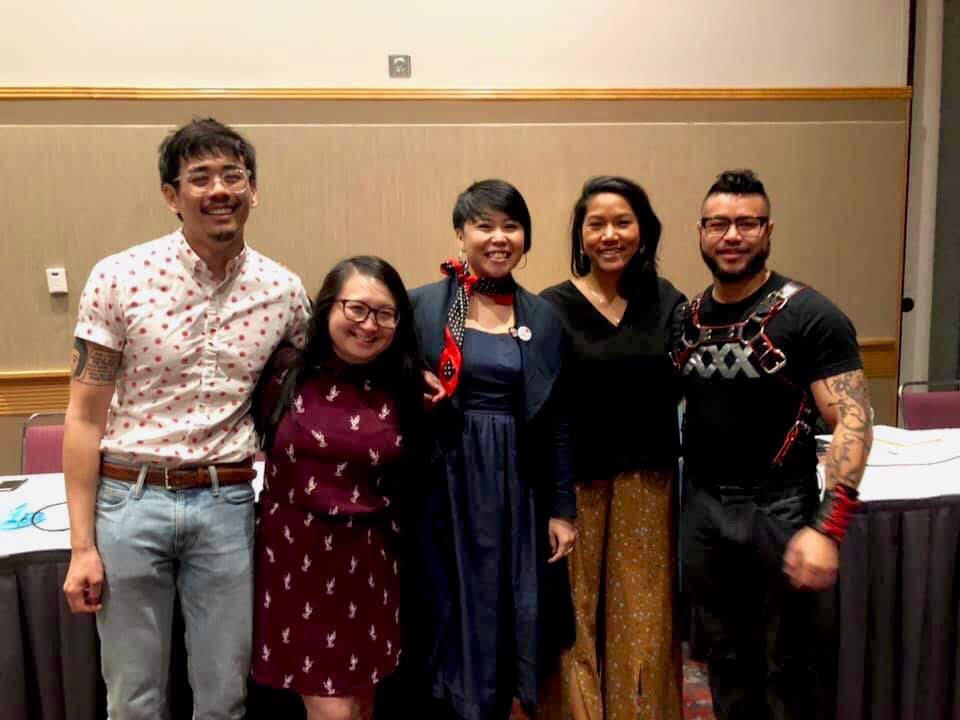
From left to right: Anthony Veasna So, Angela So, Sokunthary Svay, Monica Sok, Danny Thanh Nguyen 

Sokunthary Svay: I’m just trying to keep from being bored. I have a real big interest in audience since I have a background as a performer, as a musician and as a singer, so one: I want to make sure that people are able to understand, in whatever way that means. And then also to enjoy it because you don’t want to take advantage of an audience like when someone takes the time out, to sit there and listen to you, it’s such an honor… and I never ever want to abandon that. I don’t want to put my art above people; I’m trying to take it somewhere with whomever is listening. I’m not good with genres. I’m not good with boxes so that’s why I’m working in multiple genres, and I think my dream is just to write whatever I want for the next book. It recently occurred to me that I can put anything on the page that I want. And that’s a huge revelation for me, because I always felt that I had to––based on my parents––be a certain way if I wanted something. It’s that very strict causal relationship, right? You know like: “Do this, so you can _____.” You know? “Work this way so that you don’t have to stand up all the time like we do.” Or, “You should get a job. Go to school, so you can get a job where you can sit down.” That was their goal for me.

But now it’s like, how can I get opportunities that I would not otherwise have? That’s just the hustle. If I see some kind of opportunity that has money, I go and I apply for it. And that’s what you all should do. Don’t feel like you are above it. And I don’t believe in the straight path. I’m a PhD student now — I have a 12-year old daughter, and I’m gonna be 39 this year. I definitely did not take the straight path. And since I’m not good at the straight path, I think that’s the way I’m breaking out of it because my mom had an arranged marriage at 15. And she doesn’t know life outside of taking care of her family, and I vowed that I was gonna be the opposite of that. So for me, it’s about breaking away from what I’ve seen in the household.

AS: So I thought a really long time about what I wanted to read because I feel like it’s a conversation of who I am as a Cambodian American. And when I was in grad school it was a lot about, trying to see myself on the page, the things I didn’t see as a kid. And then this piece is kind of a dystopian speculative novel about the second Dust Bowl and it came because I wanted to ask myself the thing that I can’t really write about directly––which is why I write fiction––which is like writing about what it means to be a refugee, and so for me the dust storm lets me imagine what it means to be a refugee in your own country and that’s the question I want to investigate because it’s a question, and I do it in this way, because I can’t do it directly, because it’s too emotional and it’s not a place that I can access yet.

Growing up, my mom would say, ‘One day you’ll write my stories because I know you’re a writer.’

Angela So

Growing up, my mom would say, “One day you’ll write my stories because I know you’re a writer.” And I was like Oh and even sometimes just us talking, we don’t have a shared language so for her to say that is really––like I want to do that but I don’t know how and so I’m trying to write in this new so-called genre. And also as a person of color, living in a scary world full of anxiety all the time, I got to find the best way to talk about that because there’s not a lot of people of color in speculative work so that’s why I chose to read something that is very, very new which is scary for me because I don’t know if it’ll ever be finished but that’s how I feel right now.

DTN: So something that might be a little different about my experiences from other folks on the panel is that I’m mixed. My mother is Vietnamese and my dad is the mixed one, so he’s actually––so my paternal grandmother is from Châu Đốc which is a city on the border of what is modern-day Vietnam and Cambodia but what is traditionally called Khmer Krom, which is a southern region of what used to be Cambodia and has been annexed by the Vietnamese. And essentially the Khmer Krom were an indigenous river tribe. And so a lot of what I think of conventions… I actually do not know what conventional storytelling and narratives are, just because a lot of the ideas of genocide isn’t actually coming from… My paternal side isn’t related to the Khmer Rouge but rather how indigenous groups within Southeast Asia are colonized and occupied by other folks… And a lot of the literature that I find really inspiring and lean into and learn from, that I would think is staking out new conventions, are gonna be actually literature from authors who are also indigenous Southeast Asian. Folks I find kinship with are Hmong writers, Cham writers, folks who are incidentally like people that my mom’s side of the family raped and pillaged… so that’s something else. The Mien, the Hmong, the Khmer Krom are some of the smallest ethnic enclaves or ethnic groups within North America out of all the Asian ethnic groups. So it’s very small. It’s very unknown. And it’s just now that like, small celebrities are starting to pop up. Like Mai Der Vang obviously, who is a pretty established poet. Anyways, so there’s that.

A lot of the literature that I find inspiring is from authors who are also indigenous Southeast Asian.

Danny Thanh Nguyen

Other kinds of convention, and using my piece as a jumping off point, let’s just say I like talking about stuff that would make my parents really ashamed. And that includes sex and drugs and rock and roll. So yeah, but then that in itself has conventions, so I try to write about stuff that has sex or is sex-adjacent, but is not necessarily sexy? I don’t think anybody is gonna get off to anything that I write and I hope not just because I don’t really like writing about moist noises. That being said, I think that trying to write about something really dire and creepy and downright traumatic and trying to make it funny, that’s something that’s really important to me. I’m working on a collection of nonfiction essays right now and it’s all about trying to find parallels between Southeast Asian trauma with queer trauma and at the same time trying to make sure that it’s, like, comedic.

AS: Implicitly that question––especially when you talk about conventions––is it like conventions by whom? And constructed by whom? And it seems like it’s conventions constructed by a white publishing industry. But basically no one is trying to write into expectations in their own way, to create that sense of complexity in the way that we see it in our communities which is really amazing, and I personally think that all the humor that was in everyone’s reading was beautiful. Because I think the only narratives that are commonly known are like memoirs of what happened to people during the Khmer Rouge, which doesn’t allow a lot of laughter.

AVS: I mean my parents are constantly joking about the genocide. I was like 5 years old and they were like, “Well, at least Pol Pot’s not here you know.”

SS: Oh, I got one. I got one. My mom was like, “You know, your brother––he loves to eat rice. He was so fat during Pol Pot, he would cry and beg for rice––” and she was laughing about it.

AVS: Yeah, my mom came home from work one day and was like, “I hate my job. I always find myself in regimes. Why is this always happening to me?” Haha.

It took me many years of soul searching and reading all those tragic survival memoirs and then I thought Damn, I want to write my own damn story.

Sokunthary Svay

SS: I remember that particular afternoon my dad said, “One day, I tell you my story and you gonna write a book.” And I felt like, Oh f***, I have to dictate this book? And it took me many years of soul searching and reading all those very tragic, devastating memoirs, I call it survival memoirs or survival literature, and then I thought Damn, I want to write my own damn story. A story about how I relate to my parents. Like, that’s the contribution that I can make. And also, I was reflecting on what you said Angela, about using fiction as a way to explore the feelings around the issues of identity you otherwise would not want to deal with directly. And I know a Chinese American writer who feels the exact same way. She’s based in Queens but she’s like yeah, I can’t write nonfiction, fiction is my way of going around those very tough emotions.

AS: So the hard part for me in writing nonfiction is, I don’t know if any of you feel this way… is that it feels like secrets that I shouldn’t share. I have many feelings, and it’s strange because my parents can’t read English so it’s not like they’re going to be able to read it either so there’s a weird relationship. Like they’re so happy for me but they can’t really experience this with me, which makes it really tragic although my mom did say I need to write a screenplay so she can watch it and then make the Hollywood money.

MS: Are we talking about writing into expectations? I’ve talked to each of you at some point about how we might feel pressure to write and represent Cambodian people. We know we’re not the first Cambodian writers ever. There are so many. Our people are storytellers. There was so much Khmer literature and oral storytelling even before the Khmer Rouge, so we have to understand that and also speak about that. We’re not just reducing our community’s narrative to the killing fields, to the Khmer Rouge.

There are so many of us today who are just being who we are. There’s no one way to be Cambodian.

Monica Sok

And along survival memoirs or other writing around Cambodia, there’s so much out there labeled, “In the shadows of this, in the shadows of that…” Nostalgia. I think that nostalgia is something that our people are also obsessed with because when we think about the golden age, or the glory days we still think about the ‘60s and particularly, we think about Sinn Sisamouth or Ros Sereysothea… and these are things that many of us write about, you know, because it’s what we’ve grown up with. It’s also what we’ve inherited, but it doesn’t just stop there. I don’t know. I’ve had someone say to me, “There are no Khmer writers writing in the way they did back in the glory days…” and I’m like, What do you mean? You know? There are so many of us today who are just being who we are. There’s no one way to be Khmer either. And that’s another thing I was curious about. Danny, I would love to hear what you have to say to this question too… but just another thing: Sokunthary is from the Bronx, Anthony’s from Stockton, Angela is from Houston, I’m from Lancaster, Danny’s from the Bay Area. Diaspora: There’s this understanding that there’s no one way to be Cambodian.

DTN: So another thing I’m really inspired by with my writing is the community work that I do. So I currently work for an organization called the Asian & Pacific Islander American Health Forum, we are a national policy-based organization that does health advocacy for Asians, Pacific Islanders, and Native Hawaiians. I’ve been doing a lot of work within policy and health and wellness for Asian communities in the United States. And something to what Monica’s saying, “There’s no one way to be Khmer…” I think there’s absolutely no one way and at the same time, what makes Khmer folks and other Southeast Asian refugee communities so unique compared to other Asian American communities is that we have a higher poverty rate. We have higher incarceration rates. Right now we’re dealing with issues around fucking ICE with deportation. With folks who are straight up American but just don’t have the papers for it. These are consequences of what our migration patterns across the globe looks like. How did we end up in the United States? There’s a story there. And it’s stamped by a uniqueness that sets us apart from other Asian ethnic groups and all the kinds of pride and privileges and oppression that comes with that, that I think there’s a little bit of a pressure to write about that for me. And at the same time, I’m like, okay, I know luckily the pressure is kind of dispersed across other folks, and at the same time––again, we’re not the largest Asian ethnic enclave in the United States at all. And so, I don’t know how to end that but it’s somewhat concerning.

MS: I feel the pressure to continue to affirm our narrative. When I see a Khmer person, I just want to say, I see you. You know? The pressure to me––but it’s not really a pressure, it’s also a pleasure––is to build community, to recognize one another. I wore my sarong in the middle of nowhere in California at a farmer’s market. I wore it outside, because I was just gonna roll out of bed, go to the farmer’s market and get some things. And some Ming shouted, “Hey oun! I see you with your sarong!” And I thought, Oh my gosh. From her stand, she said, “It’s okay! Nobody knows!” But I just said, “But you know! You saw me!” And it’s this feeling of recognition. It just means so much to me. I mean, I grew up feeling very isolated as a Cambodian girl in Lancaster, and so this panel is special because anything that we shared, any of the stories, poems––you know, like I’m so excited for Sokunthary’s opera next year. And just navigating, what you said Angela, navigating what it’s like to be a refugee in your own country, which is part of what we’ve inherited. I feel like we’re refugees from our families. You know what I mean? Survival memoirs, the survival literature before us are by refugees from Cambodia’s killing fields. But the second generation, and 1.5 generation, right… we’re refugees from our families in a way.

AS: How do you negotiate that question of the audience and what’s a stereotype and what’s a complexity when in reality––especially in the publishing industry––it’s mostly white people. Anyone?

SS: Well, I do a lot of persona poems in various family members’ voices, and I realize that there’s some people, probably some East Asians who feel that’s a sort of minstrelism and I don’t really care, frankly. It’s taken me about twenty years to get to a place where I can say these are real experiences, and this is a real person so you know… you can come for me, and I’m ready. I’m just not going to apologize for that, you know. See my shoes? Hot red shoes, I will stomp on you.

MS: You don’t want her to stomp on you.

SS: Unfortunately, that’s the compromise, you know. Otherwise, you’re just writing in your journal and you’re gonna read it to yourself. That’s totally cool. But um, I think that there’s always going to be, for me, a performative aspect. And I really like that. Part of what I want is that I want to entertain. In addition to that, there are poems that I write that I won’t share with people that just take me to these places that I feel like… I can’t breathe, you know? And those are things that I won’t share.

There’s a way to push your work into a space that allows you to continue to be who you are no matter who’s in the audience. To value your own authenticity, but to not be tokenized in a space.

MONICA SOK

MS: There’s a way to be who you are and to push your work into a space that allows you to continue to be who you are no matter who’s in the audience. To continue to be the most authentic version of who you are as a Khmer person, you know. I think that’s really important: to value your own authenticity as a Cambodian person, but to not be tokenized in a space. You never want to play into tokenization. But there are so many ways in which I find myself in spaces where I’m always tokenized. But… I got boundaries and I try not to let these distractions get to me.

AVS: I mean, I think it’s also about learning to recognize when the audience asks a question and they really mean something else. You know what I’m saying?

Like there’s a genuine question where the audience wants to connect with you, and then there’s the question that’s like, “I don’t understand and that’s your fault.” And I’m like, No you’re just dumb. I don’t know. I feel like people are always just like: “Your characters are too smart.” And I’m like, my family came here as refugees and all my cousins still made it to colleges like UC Berkeley, and I’m like, I’m sorry. I just don’t know what dumb is. I’m sorry that you do. Right? But it’s also just more about recognizing what the actual question is that some people are asking of you. Like, “Oh I don’t understand this, please explain it to me.” Often times, that’s what they’re asking. I’m like just Google it. Or like, “You’re making me feel uncomfortable because I thought that I was oppressed.” I’m like, I don’t care about your problems. I don’t understand how your problems are in my story. But like, you get what I’m saying? Being a writer and stuff like that, you’re constantly seeing what people are actually asking when they come to you.


Danny Thanh Nguyen’s short stories and personal essays have appeared in The Journal, South Dakota Review, Entropy, Foglifter, New Delta Review, Gulf Coast, and other magazines. He is editor of AS IS, an anthology of Vietnamese American art and literature. Danny is currently a Kundiman Fellow, VONA, and Lambda Literary Fellow. He is working on a collection of short fiction, a memoir told in essays, and a social media persona project he calls “Sluterary Thirsterature” on Instagram: @engrishlessons.

Angela So is a Cambodian-American writer with an MFA in fiction from The Ohio State University. Her prose has been published in Glimmer TrainHouston Chronicle, Day One, and The Pinch. She has received fellowships from Kundiman and the Vermont Studio Center. Currently, she is the Communications Manager at Writers in the Schools and serves on the Kundiman Junior Board.

Anthony Veasna So is a queer boy, a Cambodian-American son of former refugees, and a graduate of Stanford University. His prose and comics have appeared in n+1, Hobart, Ninth Letter, and elsewhere. Currently, he is a Prose Editor for The Adroit Journal, a PD Soros Fellow, and an MFA Candidate in Fiction at Syracuse University, where he was awarded a University Fellowship and the Joyce Carol Oates Award for Fiction.

Monica Sok is a Cambodian American poet and the daughter of former refugees. She is the author of Year Zero, winner of a Poetry Society of America Chapbook Fellowship. Her work has been recognized with a “Discovery” Prize from 92Y. Other honors include fellowships from Hedgebrook, Elizabeth George Foundation, National Endowment for the Arts, Kundiman, Jerome Foundation, and others. Currently, Sok is a 2018-2020 Stegner Fellow at Stanford University and a Poet-in-Residence at Banteay Srei in Oakland. Her debut poetry collection A Nail the Evening Hangs On is forthcoming from Copper Canyon Press in 2020.

Sokunthary Svay was born in a refugee camp in Thailand shortly after her parents fled Cambodia after the fall of the Khmer Rouge regime. They resettled in the Bronx where she grew up. She is poetry editor for Newtown Literary, founding member of the Cambodian American Literary Arts Association (CALAA), the recipient of the American Opera Projects’ Composer and the Voice Fellowship for 2017-19, and the 2018 Emerging Poets Fellowship at Poets House. Her poetry collection, Apsara in New York, is available from Willow Books. She is currently a doctoral student in English at the The Graduate Center, CUNY and writing the libretto for an opera in collaboration with composer Liliya Ugay, to premiere at the Kennedy Center in January 2020.
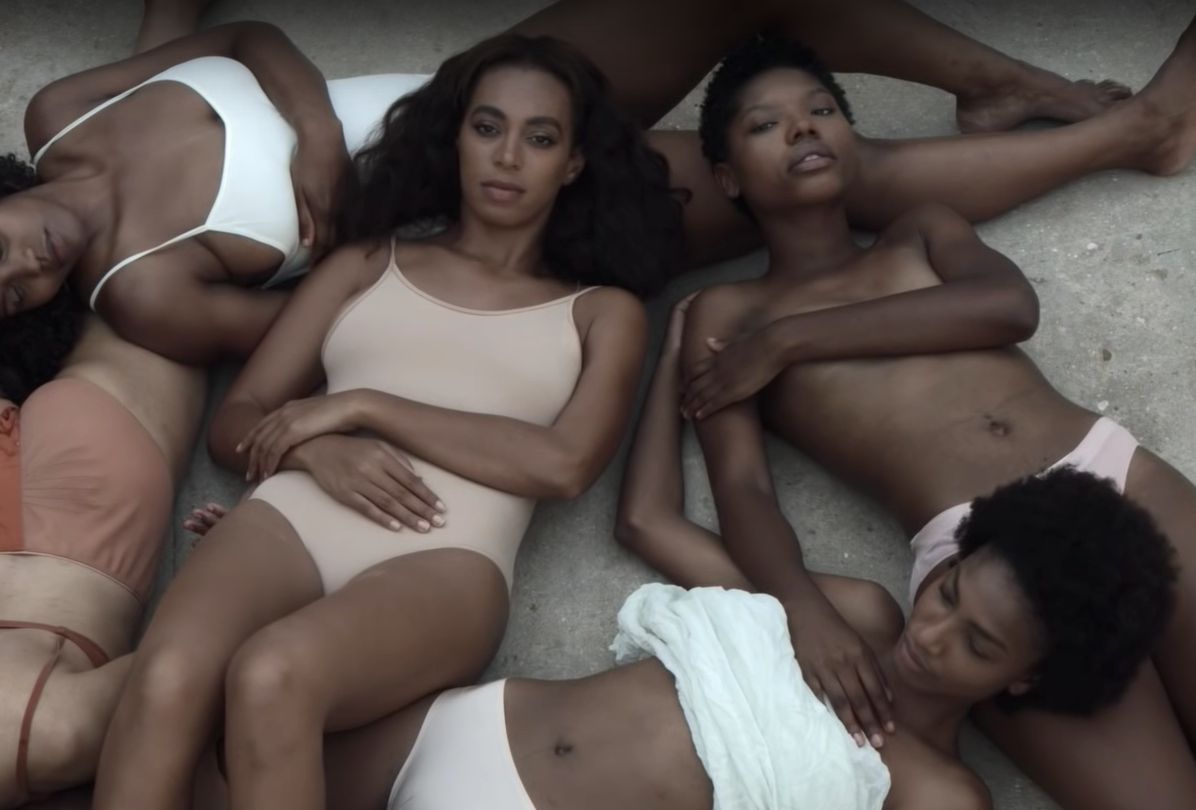
“Build Yourself a Boat” Explores the Heartbreak of Black Womanhood

Camonghne Felix’s debut poetry collection, Build Yourself a Boat, is about the trauma and pain of black womanhood. Felix explores what it means, politically to be a black woman in a world of Trump and personally, exploring the ways heartbreak and other points of pain change a person and their body. She uses memories, both her own and those close to her, to explore this trauma, allowing the reader to uncover more as they go along.
Buy the book

Felix a poet, political strategist, media junkie, and cultural worker. She received an MA in arts politics from NYU, an MFA from Bard College, and has received fellowships from Cave Canem, Callaloo, and Poets House. A Pushcart Prize nominee, she is the author of the chapbook Yolk and was listed by Black Youth Project as a “Black Girl from the Future You Should Know.”

Build Yourself a Boat was exactly what I needed to read, and revisit, this season as men decided what women should do with their bodies and as I learned to manage heartbreak. Felix and I spoke on the phone about being black women, working through generational trauma, and how black families tend to keep secrets as a way of healing.


Arriel Vinson: The epigraph for Build Yourself a Boat is from Solange’s A Seat at the Table: “ I’m going look for my body yeah—I’ll be back real soon…” From the beginning you set the tone for black women’s body being lost or not having control over one’s body. Can you tell me about the choice to have that epigraph but to focus on that theme in the collection?

Camonghne Felix: One of the first things I was thinking a lot about is the way that the literary world requires us to categorize ourselves in order to be legible or readable. Something I wanted to push back at really hard in this collection was using the word Black as a way to define Blackness. Among all of the other things happening in the book, I think what’s at its core is the trauma of being a woman and the trauma of being a black woman. I felt like Solange, that one message, that one lyric, almost signifies an anthem black women tend to own. Constantly going to look for our bodies, constantly discovering and rediscovering our bodies and re-building them. In service of also trying not to superimpose or hyper-impose the idea of blackness or something that is inherently black, I wanted to give it context more so than color. And Solange’s lyric was the context it needed.

AV: In the collection, it’s not just about blackness but black womanhood and what that looks like for you in particular. I also noticed that in the George Zimmerman Trials poems, you focus on Trayvon’s mother. While you talk about black boys and men in the collection, you continue to make black women the focus of those poems. How did you do that and were you thinking of that as you were writing, or was that something you tweaked as you revised?

It feels impossible to tell the story about Trayvon and all of the other men without telling the stories of the black women who champion them when they’re gone.

CF: It’s something I’m always thinking about. As black women, one of our first responsibilities is to take care of the men around us. So, if you are a young woman and you have brothers and you’re the oldest, your job is to make sure the boys are okay. In a lot of ways, especially over the last decade—I date cis men and I date women, too, and I try my best to date black men—a lot of our collective black trauma has been centered and contextualized within the black male body. Which is not necessarily something that is wrong or incorrect. Black men are absolutely under threat and have always been, and hopefully will not continue to be. But as it stands right now, they are. That’s just what it is. However, we also know that black women do not disappear in those narratives. That most of the time, they are the anchors to those stories, they’re the fighters behind those stories and the protectors. It’s important to me to not erase the very true fact that black men are under threat, but to add some color and add some texture that shows the way black women remain under threat under the foot that black men are already under.

It just felt like with the Zimmerman poems, Trayvon had died and in large part, depending on how you think about death, he wasn’t alive to see what his mother was going through. In the last decade, we see a lot of young men who have been killed by police or killed by vigilantes and their mothers are taking up the charge. There’s a cohort of those women called Mothers of the Movement. One woman ran for office in Georgia. Black women are constantly who pick up the mantle and it feels impossible to tell the story about Trayvon and all of the other men without telling the stories of the women who champion them when they’re gone.

AV: That’s important. I was reading it and I was like, “Here we go. This is how you do it.”

You mentioned your dating life, and some of the poems are about romantic relationships and heartbreak. I heard you talk about this a little on the VS podcast, but why was this type of pain, particularly for black women, also important to display in Build Yourself a Boat?

CF: People forget that black women bleed. And I know that’s really hyperbolic and of course people know we bleed, but at the same time, it’s so often that you talk to cis heterosexual men and you try to explain the way the behaviors they perpetuate romantically are the same behaviors that people who are not in romantic relationships with black women perpetuate. Whether that’s silencing them, abusing them, erasing them. It feels disingenuous and dishonest to tell the story about how black women come to who they are and how they do what they do in the world, without talking about the way their hearts get broken.

Even in this book, I had a hard time figuring out where to put it. I have another book that explores black women’s romance as resistance, but Build Yourself a Boat is a pretty big book in terms of scope. But it felt really critical to the story and to my folks to say, “hey, my heart’s broken and that’s just as important as the fact that I maybe can’t give birth or the fact that I’ve been raped because all of these things come from systematic ills and impact me systematically.”

AV: I see that in the placement of the poems and how the collection moves between motherhood, then your trauma, then Trayvon’s mother–how it continues to move and the way the black woman/person is connected or related to the government, and a variety of things. It is a big scope but it’s all personal.

But even though you’re talking about trauma and pain, there’s some avoidance of trauma and pain, too. In the poem, “The White House”, the speaker says, “but I had shit to do.” A lot of black people say that: “I wanted to feel these feelings but I had shit to do”. Tell me more about this theme of avoiding pain but also confronting it both in the collection and outside of it.

It feels disingenuous to tell the story about how black women come to who they are and how they do what they do in the world, without talking about the way their hearts get broken.

CF: The reasons why I put it in the book, even though I’m not all the way sure I understand why I do that, is because a big part of the book is me understanding myself as a caretaker. Of my mother, of my siblings, of my family and my friends and myself. A big part of being a black woman in general, as a whole, is being a caretaker. In order to be a good caretaker, in order to be present, I have to completely distance myself from my own pain and make it small in order for me to feel prepared or healthy enough to help other people. I’m not going to say that writing about it has helped me change it, I don’t necessarily know that that’s true, but I do think that it’s those little nuances that we find in our poems that show us–at our core–who we truly are.

I think in general I take on a very—and I don’t know if it’s because I’m a Capricorn or whatever-—but I tend to take on a very sacrificial lamb kind of position in the world. Like, “Okay, well if no one’s gonna do it, I’ll fucking do it. Whatever.” Which is literally the trope of being a black woman. But part of what I love about poetry is, even though it wasn’t necessarily intentional that I put that in there, poetry is one of those things where no matter how much you try to shape, edit, or curate yourself, those little things about you that you don’t want other people to know come out.

AV: I like that you said curate yourself. A writer will curate a speaker or a version of themselves.

CF: Right. One of my friends, Natasha Oladokun, she’s a poet as well, and she said the other day, “every narrator is unreliable.” And I was like, “bitch, yes!” That is exactly how I feel. And I’ve been trying to find the language to define that. There is not a narrator you can trust because nine times out of 10, the narrator does not have his/her/their pulse on everything that’s happening in the work. That’s the reason we are writers because to an extent, what we write does live a different life and it does have different expectations. This is a perfect moment of remembering no matter how educated we are, we’ll never be able to completely control the narrative or what we’re writing. Sometimes the work itself has to take control and do the thing. And that makes the narrator unreliable.

AV: Right, and I think that’s part of writing the poem is a narrator who doesn’t know everything.

Even in BYAB, some of the speakers were keeping secrets. For example, the poems titled “Cutting w/ JB”, exploring both of the definitions of cutting, and the poem “Contouring the Flattening”, exploring secrets with the speaker’s mother. What about secrecy was important to BYAB? I find that secrecy or keeping information under wraps is a common theme for some black families.

The idea of building yourself a boat means you get to choose what you go through, what you float over, what you navigate.

CF: Another thing that I wanted to push back at is the category of black poetry and the idea that we come to the page to unload our family secrets and troubles. While, on one hand, I do think there is that—truth telling does kind of necessitate an airing of laundry—but I don’t necessarily see my book as truth telling. There are no lies in the book, but I’m not trying to get to the nitty gritty of something. I’m just trying to tell you how it is and what it is.

Part of what makes black people black and black women black, especially black millennial women, is that natural interiority, that sort of fundamental understanding that yes, of course there are things we don’t talk about or are no one’s business. In black culture in particular, depending on the day or the context, that can either be harmful or liberating.

When it comes to sexual assault and trauma, it’s almost always harmful that we never say anything and never end the cycle. But I think when it comes to other things like the way me and my mom got the chance to grow together, I don’t think me writing the book necessitates me spelling out every part of that. There’s a part of me and my mom’s relationship that has to stay secret, that needs to retain that interiority so we can continue to grow together.

AV: You also did that in the footnotes you used. I was so intrigued by those and then got to the end of the book and saw what they were. I wanted to hear your process on those footnotes—which were about swimming and knowing/not knowing how. What about the relationship with you and your mother also made you save that for the last pages of the collection?

CF: Me and my mom—and I think this is true for a lot of people—are really, really, really close. And I think closeness also creates pockets of trauma that you may not be able to be in control of. Learning who my mother is and learning her as an individual—as a person, not just as my mother—really shows me just how many parallels she and I share. I was thinking me and my mother were super, super different and yes, we are, but also we aren’t. Through trying to unlearn my own trauma and trying to work through therapy and things like that, and just getting to know her as a person and hearing her own stories, as I got older I found so many parallels of continuous meaning that could trace back to my grandmother and then to my great grandmother.

In terms of curation, it was really important to me to write a book about my mother without writing a book about my mother. I do completely realize that that’s what I’m doing at the end, but my mom has never been raped. I’m the only one out of my mom and my sister, from what I know—fingers crossed—that has been raped in the way that can be categorically described as raped. So when I was younger, my mom kept trying to relate to me by being like, “Well, there was a time when it almost happened but I can’t remember it.” It wasn’t until I got older and I’d already left my home and was in grad school that she was able to recall the entire memory. She called me and she was going to tell me and I was like, “Wait, no. Don’t tell me, just write it. Type it out and send it to me.”

Reading it from her as a letter and reading it in her voice versus her telling me gave me so much room to really see her humanity as a woman and as a mom, and to see the little girl that my mom was at that time. All these little moments of parallels that I didn’t want to overstate, like how me and my mom are clearly both fighters, how me and my mom both really enjoy water but she’s afraid of water and I’m a little more liberal with water. It just felt like a really important way to double down on the fact that in black culture, black women come in and get the chance to edit our mother’s narratives but for the most part, we are continuing them. And we are the sum of our ancestors. We don’t always want to think that because we fear that that can be limiting. But for me, it was just really liberating and really freeing. I wanted to share with the world how free I feel being able to relate to my mom on that level and being able to see her recall her memory and pieces of herself she thought she lost.

AV: I’m wondering about the trauma that both of you are working through—in the collection, in these emails, and as you’re going through therapy—and how you were able to write this collection without reliving it, or did you relive it? What did it feel like to get those moments/traumatic things onto the page?

The thing I love the most about poetry is that you wind up writing the same poem over and over again your whole life.

CF: I won’t say I had to relive them. I think the cool thing about poetry, the thing I love the most about poetry, is that you wind up writing the same poem over and over again your whole life. So every poem in this book, I’ve written in some way, shape, or form, at some point. Part of why, in the disclaimer I say, “the body is not a sight for revelatory shame” is because I want to dispel the notion that in order to reclaim your body and reclaim your trauma, that you actually have to go through that or experience it, which is what I think the idea of building yourself a boat means. You get to choose what you go through, what you float over, what you navigate, and for me in this collection, it was not necessary to relive my trauma in order to tell the story of surviving trauma.

I think that decision is obvious in the poems in the sense that people always say, “These poems have a lot of trauma and have a lot of blood but they don’t feel that way.” That was really important to me. I did not want to write a book about trauma that re-traumatized people or that forced people to have to contend with trauma in a way that forced them to internalize it. I also understand that there is an inherent sacrifice there. That by not leaning in to the full violence of trauma and me not leaning in by re-experiencing it, that something may get lost. There’s a possibility for something to get lost but I’m okay with that. I much rather write poems that allow me to be free while still reclaiming myself. I don’t think that it’s necessary to make ourselves ill or hurt ourselves. I think there are some poems that require that, and when that happens, that’s okay.

And I have poems in Build Yourself a Boat that do that. There’s one poem in there, the abortion poem. That was the hardest poem I’ve written in a decade. That’s why I wrote it with all that spacing and distortion. Because it was a hard poem to write and a hard poem to read, and I wanted my readers to go through that with me. And that’s another thing I love about being a writer and learning how poetry works. You learn techniques that teach you how to bring people in and how to experience what you want them to experience. For me, the abortion poem was the only time that I was willing to subject my readers to the same pain that I had experienced because it felt like something I was not willing to carry by myself.

But the rest of the poems, ya know, it’s like everywhere people die, flowers grow. And to me the poems are where the flowers are growing. In the death and not really the death.

AV: I love that. Lastly, what are you working on now and what’s next for you?

CF: I am working on another collection called Dyscalculia. It’s still in its very infant stages. I have taken 6 or 7 months away from it and now I have to get back to it and I’m really nervous about it. But it’s very much about heartbreak, about centering heartbreak as its own world and not necessarily something that is a symptom of racism or a symptom of sexism. Of course, all of those things impact and affect the way you attempt to love and romance. The same way white women and white women poets get to write whole books about their breakups, I think black women deserve worlds where they can write about things that are banal as well. I want to tease out that banality of what it means for black women to be free and integrated enough to be able to write into that banality without it being seen as banal.

Back in the day, when Zora Neale Hurston was trying to write about some of this stuff, Baldwin wasn’t really into it. Neither were a couple of other black folks in the Black Arts Movement. They thought that it was, again, banal. They thought it was repetitive. They thought she was trying to imitate whiteness. Now, in 2019, I find that so offensive—the idea that talking about love and talking about romance is inherently white or Western.

So, that’s what I’m working on. I’m really excited about it and have no idea when I’m going to be anywhere near done, but God bless and Godspeed.

Shitty Boyfriends of Western Literature: The Card Game

Illustrated by Matt Lubchansky

What do we think about when we think about boyfriends?

As a bookish young person, my first experience of romance had a lot in common with the first experiences of other bookish young people: it was heterosexual, not entirely healthy, and above all, fictional. How about yours?

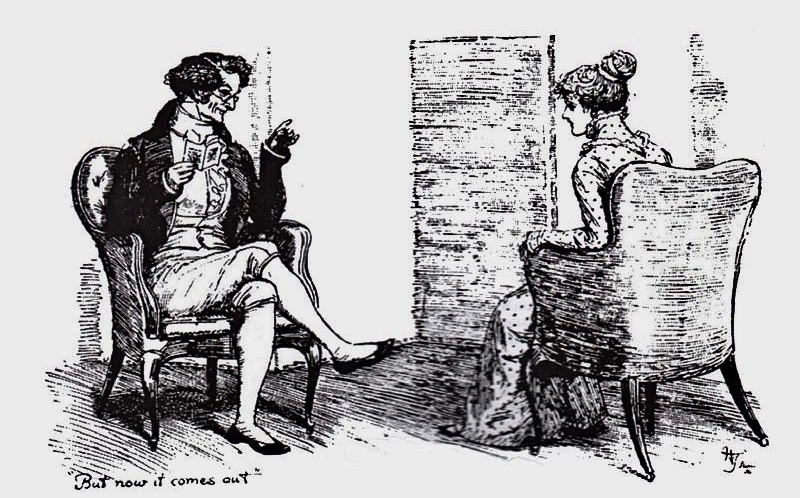
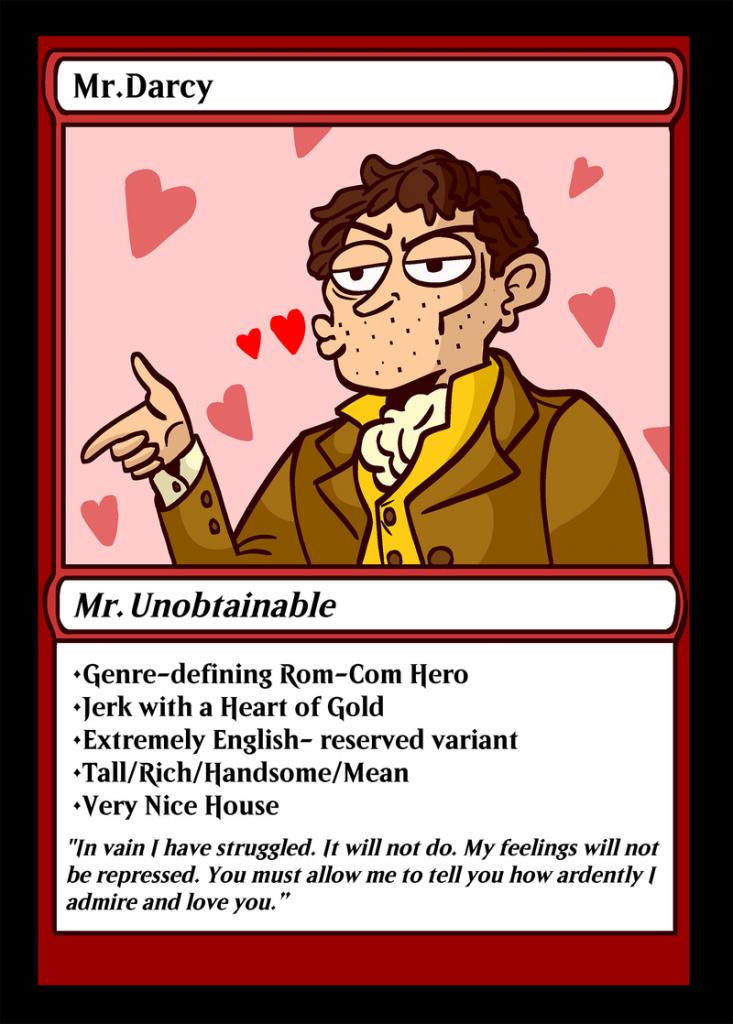
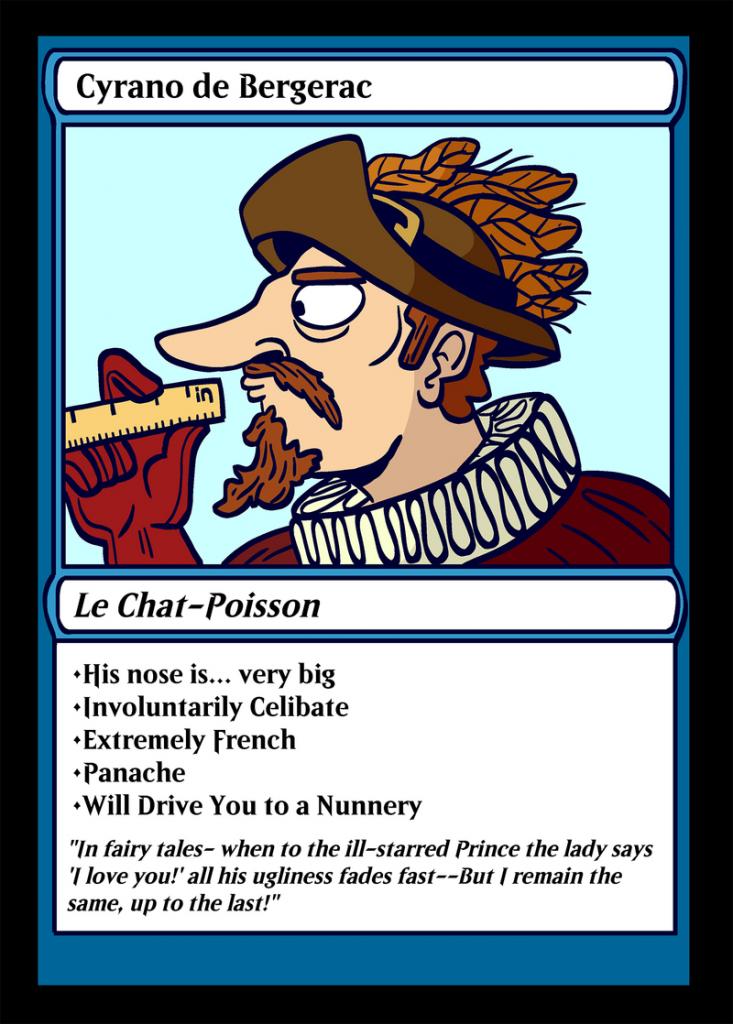
In this game, you get to inhabit some of the most famous boyfriends of western literature, men like Cyrano, Mr. Darcy, and the Phantom of the Opera. Play-tested with the young women of the Viola Project, it’s a way for people of all ages and genders to take the concepts of romance we’ve inherited from the classics out for a no-risks test drive.


Welcome! You are one of the great boyfriends of literature! You’re definitely interested in love but for some reason, the course just doesn’t run smoothly for you. Hoping for better luck, you’ve signed up for this speed dating event for fictional characters.

There’s just one problem: no women. It’s a fictional sausage-fest in here! But as a group of heroic/wily/determined imaginary males, you’re not about to waste that registration fee. So, you all decide to take this opportunity to practice… with each other.

RULES

I. PREPARATION

  • Each player randomly selects one boyfriend card. (You get one free mulligan. If you are unfamiliar with your selected boyfriend, you can redraw.)
  • Set up the Chairs of Heteronormativity. These are two ordinary chairs–just clearly indicate which one is “male” and which one is “female.” (You can do this with a sign, or perhaps by putting a pink bow on the female chair).
  • Determine a run order. You can do this by rolling dice, drawing playing cards, or simply by volunteering.

II. PLAY

  • The first player will sit in the lady chair, the second will sit in the man chair.
  • When sitting in the lady chair, you are pretending to be a woman. Let me be clear–even if you are a woman, you are pretending to be your assigned boyfriend pretending to be a woman. So, if you are Zeus, you are Zeus’s idea of a woman.
  • If sitting in the man chair, you are your assigned boyfriend. Try to impress the lady. You have five minutes.

III. SCORE

  • Each player has two tokens (you can use quarters, poker chips, Girl Scout cookies–whatever you have lying around).
  • The lady token, or token lady (which does not have to look different from the other token in any way) should be given by each player to the boyfriend who attempted to woo them, if, and only if, that player thinks that their assigned boyfriend would think that a woman would have responded positively. Accurate scoring here will require nuanced hypothetical thinking and perhaps a comparative literature degree.
  • The other token, or token token, is to be given by each player to whoever they thought did a good job.
  • The winner will receive a round of applause, the right to choose the running order for the next game, and will be allowed to eat their tokens if possible. They will also receive an enlightened understanding of romance that will allow them to transcend any problematic messages about love they may have received from fiction at any point, entering into any new relationships from a place of equity and power, and finding that their current relationships have become loving, free, reasonable and revolutionary. 
  • Alternately, they may marry a man who is slightly evil but who has a very large house.

Notes on boyfriends

Our cards focus on western literature in the public domain. Please feel free to make your own boyfriend cards. If playing in an educational setting, you may find it useful to incorporate boyfriends from your reading list, or boyfriends selected by students from their favorite books.

Notes on long games and house rules

The basic play method is for shorter games in learning environments, allows each player to go once, and ensures an audience for each date. You may wish to play a different way so that the game has less of a performance element, and every player gets multiple turns. In this case, make the following alterations.

I. PREPARATION

  • Instead of setting up one man chair and on lady chair, set up a row of each.

II. PLAY

  • Sit down at random and play as before. Every five minutes, each player will stand and rotate one chair to their right. Optional: take a shot every time you switch chairs.

III. SCORE

  • Each player will have a pool of tokens, and a pool of lady tokens (or token ladies). In this case, the token ladies SHOULD look different from the other tokens. (You can try to find Susan B. Anthony dollars if you are feeling ambitious, or use Thin Mints and Samosa if you are feeling cheeky.) Each pool will have a quarter as many tokens as there are players. Players will give out their tokens whenever they feel that their opponent has won them over. Did I say opponent? That’s weird.
  • At the end of the game, the player with the most tokens and the player with the most lady tokens will have a Flirt-to-the-Death rematch, winner by popular acclaim.

Note on play style

Many of these characters speak in Elizabethan English, or languages other than English, or with particular accents. We encourage players to focus on character, logic and intent, and to avoid attempting any quirks of speech that might make themselves or other players uncomfortable. So if you can do a flawless cut-glass RP for Mr. Darcy, we won’t stop you, but don’t kill yourself speaking in iambic pentameter or make things weird with anything stereotypical.

YOUR FIVE-CARD STARTER PACK

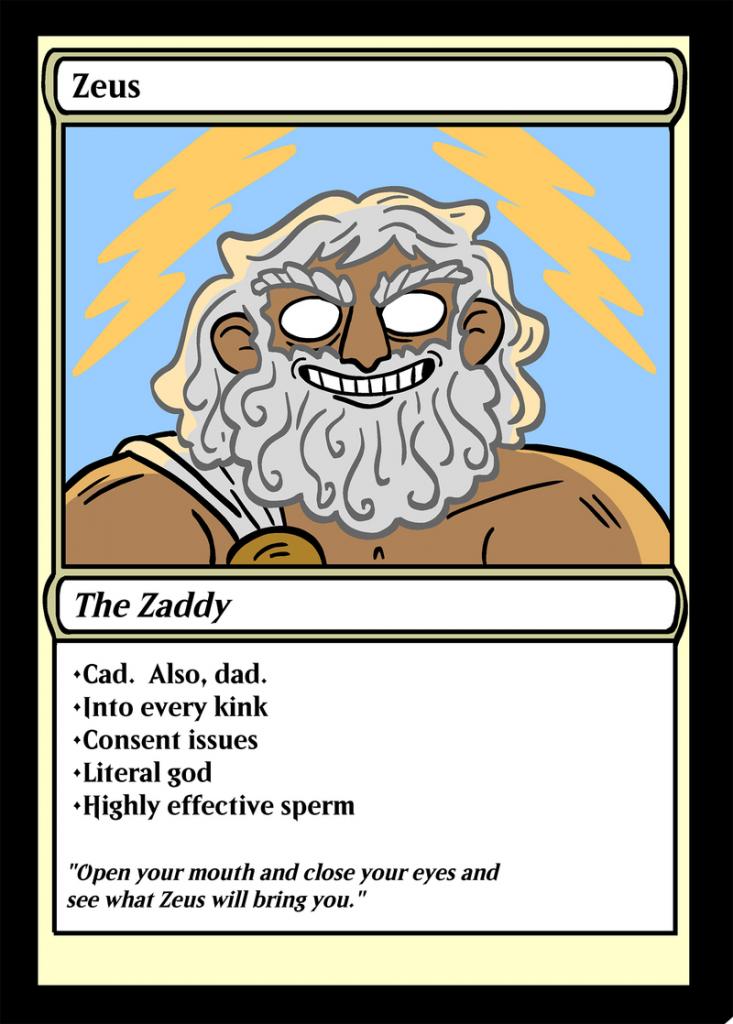
Zeus boyfriend card
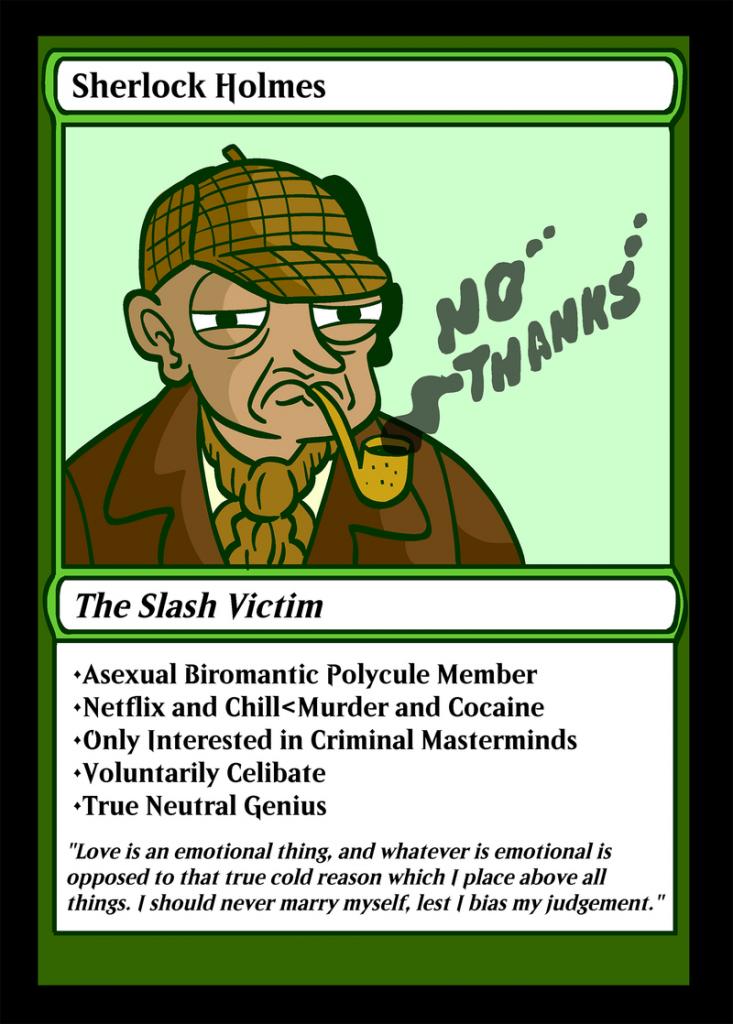
Holmes playing card
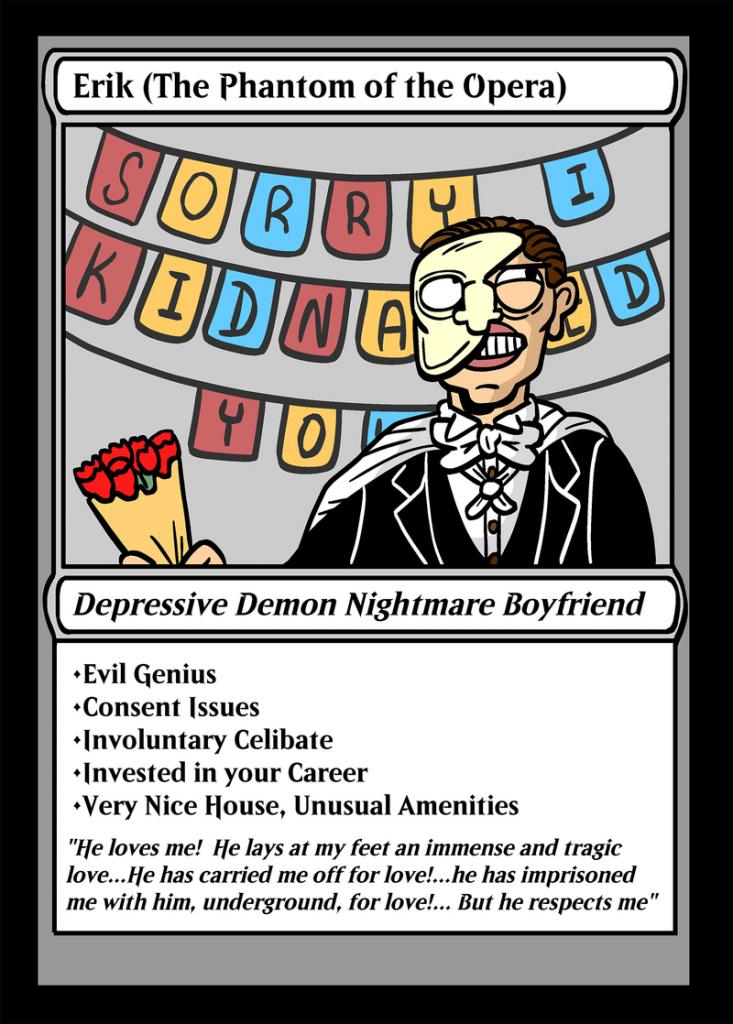
Erik (Phantom) playing card
Mr. Darcy playing card
Cyrano playing card

About the Illustrator

Matt Lubchansky is the Associate Editor of the Nib and a cartoonist and illustrator living in Queens, NY. Their work has appeared in New York Magazine, VICE, Eater, Mad Magazine, Gothamist, The Toast, The Hairpin, Brooklyn Magazine, and their long-running webcomic Please Listen to Me. They are the co-author of Dad Magazine (Quirk, 2016).

7 Novels That Take You Inside Truly Messed-Up Minds

Committing to write a novel with first-person narration is a bold choice for a writer. The scope, language, and tenor of the whole story must be in keeping with this one character’s life experience, education, and personality. The reader will be limited to the confines of a single person’s mind throughout the full course of the book, so this mind had better be an interesting place to be. That said, there’s great power in the first-person perspective. The reader is granted private access to the thoughts of another, their hidden desires, judgments, opinions, and plans. The experience of reading such a novel can be uniquely diverting, disturbing, and engrossing.

Buy the book

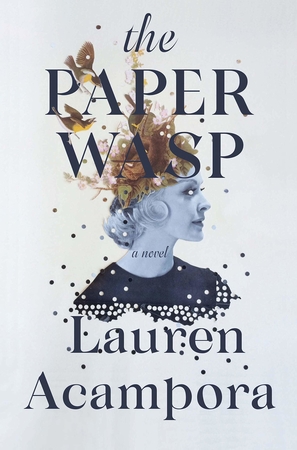
I chose first-person narration in order to capture the convoluted psychology of my troubled protagonist, Abby, in my novel The Paper Wasp. By allowing her to tell her own story, I empowered her to illustrate in full color her own jagged emotional landscape, the fierce drive of her artistic ambition and its dizzying alternation with self-doubt. The reader gains insight into her vacillating feelings of inferiority and superiority, and her complicated feelings for Elise, her childhood friend turned Hollywood actress.

Some of the most memorable and affecting works of fiction are told by outsiders like Abby, and by the whole gamut of desperate loners, eccentrics, misanthropes, and sociopaths. People we might never know—or want to know—in real life have guided us through their twisted mindscapes, acclimatized us to their weirdly elevated, alien vantage points, and cajoled us into the dark crevasses of their souls. It takes bravery to write such books and bravery to read them. They can be profoundly discomfiting. But a capable writer can play with this discomfort and transcend it. The best of these narrators may be off-putting or repellent, but they are also intelligent, sensitive, charismatic, even enchanting. More often than not, they’re fixated on personal ideals of beauty, love, or freedom. These are “enchanted hunters,” in a sense, enamored by a vision perceptible only to themselves. Following along, we begin to perceive the vision too. We may find ourselves in the position of confidante or accomplice. There’s a natural tendency to sympathize with a storyteller—any storyteller—and when we catch ourselves relating to our storyteller’s noxious or deviant thoughts, we’re forced to examine ourselves and confront our own dark complexities.

Lolita by Vladimir Nabokov

Lolita by Vladimir Nabokov

The Enchanted Hunters is the name of the hotel where Nabokov’s most indelible narrator, Humbert Humbert, stays with his pubescent captive, Lolita. No list of darkly captivating narrators can be complete without him: a wizard of words, intelligent, poetic, charming, sensitive. Humbert’s greatest seduction is that of the reader into his confidence as he squires Lolita across the country in literature’s most tragic road trip. As the ostensible author of the book’s introduction puts it, “…how magically his singing violin can conjure up a tendresse, a compassion for Lolita that makes us entranced with the book while abhorring its author!” Humbert is the enchanted hunter, spellbound by his quarry and by his vision of love and beauty—and in describing his hunt, he enchants the reader in turn.

What Was She Thinking?: Notes on a Scandal by Zoë Heller

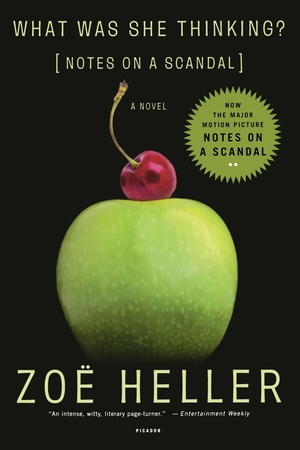
Barbara Covett is one of the most entertaining misanthropes in literature. Through her diary, we’re treated to this elder schoolteacher’s private and unsparing observations of those around her, in a voice that’s trenchantly intelligent and caustically funny. We also bear witness to the blooming of her complicated, obsessive feelings for the new, free-spirited younger teacher, Sheba. As the two women become unlikely friends, and Sheba becomes embroiled in the titular scandal—an extramarital affair with an underage student—Barbara plays the mild-mannered, supportive confidante. But we readers know her real nature, which she keeps carefully hidden. We understand how deeply insecure, lonely, and dangerous she is as we watch the unfolding drama through her focused, unforgiving eyes.

The Secret History by Donna Tartt

This brilliantly immersive novel is often described as a “why-dunnit” rather than a “who-dunnit.” We learn from the first line that the narrator, Richard Papen, has been involved in the murder of a fellow college student. He introduces the story from a future in which he is free, but imprisoned by the memory of the incident. “I suppose at one time in my life I might have had any number of stories, but now there is no other. This is the only story I will ever be able to tell.” He guides us into the world of Hampden College, and we see how he’s drawn to a charismatic group of classics students. Although he feels alien from their privileged backgrounds, he attempts to gain entry to their insular coven of aesthetic worship, and gradually becomes part of the group. We feel the thrill of acceptance, the intoxication with youth and beauty and style, and the deepening dread of the climax we know is coming—and the destructive guilt that follows and haunts Richard for the rest of his life.

The Collector by John Fowles

A lonely outsider named Frederick begins this novel’s narration, detailing his observations of a young woman named Miranda in London. His stalking gives rise to fantasizing about abducting her and keeping her captive in a house in a remote village, where she’ll get to know him, and they’ll fall in love and marry. The fantasy then becomes a plan that he carefully prepares and enacts. The term of her captivity, including his attempts to win her love through force, is presented from his point of view for the first hundred pages—then we abruptly shift to Miranda’s perspective. Through the pages of her secret diary, we see the ordeal through her eyes and gain knowledge of her plan for escape. We learn of her own thwarted romantic relationships and artistic ambitions, and we grow attached to her and to the hope of her eventual liberation. Lastly, in a dizzying reversion, we are yanked back to Frederick’s point of view for the last part of the book, from which we witness the chilling conclusion—and find ourselves sinking deeper into the consciousness of a disturbed man and his tragically delusional attempts at love.

YOU by Caroline Kepnes

Joe Goldberg is a reader and a thinker, a sensitive and funny bookstore clerk in Manhattan, through whose engaging voice we receive colorful observations and achingly accurate social commentary. When Beck, the girl of his dreams, enters the bookstore, we root for him, even as we begin to doubt the ethics of his courting techniques, which include snooping on her social media accounts, stealing her phone, and peeping into her apartment window. We feel our discomfort grow as he provides damning criticisms of Beck’s friends, and we begin to worry about how he’ll react to their disapproval of him. After our fears are confirmed, our worry transfers to Beck, who lacks our access to the inner workings of Joe’s mind. We’re trapped inside the head of the psycho stalker, and it’s an alarmingly enjoyable place to be.

We Have Always Lived in the Castle by Shirley Jackson

The narrator of this Gothic classic is eighteen-year-old Merricat, who lives a quiet life in an old ramshackle estate in a small Vermont town with her beloved sister and infirm uncle, isolated from and hated by the townspeople. She hates them in return and wants nothing but to be left alone. She has no interest in expanding her life beyond the radius of her own property, where she burrows into the grass and follows superstitious protective rituals. Her narration is opaquely evasive, but gradually we begin to understand the nature of her character and of the events that led to the family’s ostracism—and we learn that our narrator is far from the innocent protector she’s painted herself to be. As she fights against the intrusion of an unwelcome cousin, she brings tragedy down upon the family once again, but in the process reinstates peace and harmony for herself and her sister, so that they may continue live apart from the world in their own sacred castle.

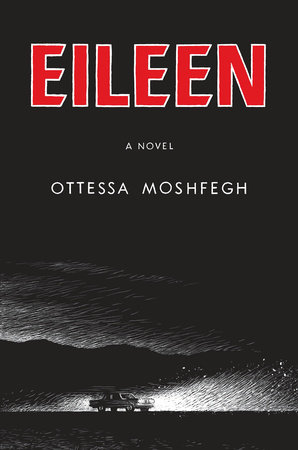
Eileen by Ottessa Moshfegh

Eileen by Ottessa Moshfegh

Our blunt narrator tells the story of a pivotal December in her life fifty years earlier. At that time, Eileen was a young woman trapped in her dreary hometown, living alone with her abusive alcoholic father and working at a youth correctional facility. Through her eyes, we bear witness to a disheveled, nihilistic world and as well as her violent and self-destructive fantasies. Her outlook is grim, sour, and angry. The unrelenting bitterness enters our own bones as we feel her mad hopelessness and want her to escape. She brings us to the basement of the house where the climactic event takes place, and we follow to the figurative basement of her psyche as we begin to understand the extreme measures she’s willing to take to save herself—and to disappear from this sad, cold town and her sad, cold life forever.

Plan Your Tony Award-Winning Musical With Our Handy Chart

A folk opera retelling of the myth of Orpheus and Eurydice got a whopping 14 nominations for this year’s Tony Awards, more than any other musical—but the hip-hop retelling of the life of Alexander Hamilton still holds the record. In other words, putting an unexpected genre on top of a work of history, literature, or folklore is guaranteed Tony gold. If you’re ready to get into the no-doubt-lucrative game of stage musicals, rejoice: we’ve got your plot and concept ready to go, and all you need to do is have a name.

Just find your first initial in column A, your middle initial in column B, and your last initial in column C, and plug the results into our musical-development format. If you’re Andrew Lloyd Webber, for instance—and really, who’s more in need of ideas—you would look up “A” in column A, “L” in column B, and “W” in column C, with the result “It’s an all-singing, all-dancing gender-bent retelling of Death in Venice that takes place in the Michigan Womyn’s Festival.” You’re welcome, Andrew, and don’t say we never did anything for you.

Click to enlarge

New and Classic Queer Literature to Read for Free Online

For pride month, we’re rounding up some of our favorite stories and novel excerpts by and about queer people from the Recommended Reading archives. These stories present a diverse cross-section of queer lives: an intersex woman who survived the bombing of Hiroshima, a black man in Nigeria who one day wakes up white, a man getting gender-confirmation surgery in Canada, a young girl in Brazil who learns, for the first time, a word that describes the way she feels. There are ends and beginnings of committed relationships, reliable and fraught friendships, painful affairs, and pleasant ones. Not all of the stories are about queer relationships or characters. One is about a hawk. The earliest work is from 1940, the most recent is from April 2019.

Recommended Reading is the weekly fiction magazine of Electric Literature, where we present short stories and novel excerpts every Wednesday, each with an original introduction. This list samples some of the most exciting new work in queer fiction, as well as forgotten classics. The recommendations, by writers including Chinelo Okparanta, Michael Cunningham, Alexander Chee, and Justin Torres, give space for peers to support one another and for the greats in that genre to support a new generation.

Together” by Jess Arndt

In “Together,” a story from Jess Arndt’s collection Large Animals, a couple contracts an unknown STD at the same time that large, monstrous weeds overrun their yard. As Justin Torres writes in his introduction to the story, it “is a story precisely about the churning going on beneath the surface — about the awful lot going on inside each of us. Arndt reminds us that physically, psychically, we are processes; we are happening all the time. The life of both mind and body is defined by an awesome and constant churning.”

Little Boy” by Marina Perezagua

“Little Boy,” named for the codename of the atomic bomb that was dropped on Hiroshima, tells the story of H., a intersex survivor of the explosion. In her introduction to the story, former Recommended Reading Senior Editor Lucie Shelly writes, “Drawing on the unexpected juxtaposition of WWII Japanese-American conflict and binary gender expectations, Perezagua explores the power of intangible indicators — feeling, legacy, and sensation — to uproot our logic, identities, and classifications.”

Alta’s Place” by Morgan Thomas

Cory grew up in DC, works in a dry cleaning business, and wants to work in fashion design someday. Alta grew up in Mongolia, married young, and is negotiating her request for asylum. While both identify as gay women, Recommended Reading editor-in-chief Halimah Marcus points out in her intro, that Cory is too quick to map their lives onto one another: “As gay women Alta and Cory have few experiences in common…When Cory came out to her family, her mother was pious and deflective. When Alta’s landlord in Sharyn Gol found her in bed with another woman, he kicked her out. For Alta, coming out was not a consideration. ‘Your mother didn’t ask if you were gay,’ she says to Cory. ‘No one asked you.’”

Pussy Hounds” by Sarah Gerard

“‘Pussy Hounds’ by Sarah Gerard is a story about four friends who take a trip to Maine for a self-imposed writing retreat. As it happens, not much writing gets done. One of them isn’t even a writer to begin with. They go for walks, watch movies, gossip over dinner. Their delicate social accord is threatened by a mysterious ‘back massage incident’ that occurred years-prior. Nina, the narrator, has recently escaped a toxic marriage. Filtered through her inner life, the story is also about making art, gender and sexual identity, self harm, and abuse. ‘Pussy Hounds’ is not, despite the title, a story about chasing pussy, though pussy does play a part.” —Halimah Marcus

Blackass by Igoni Barrett

“Despite its Lagosian setting, when reading the opening pages of Igoni Barrett’s witty, socially insightful novel, Blackass, I am reminded of Kafka’s The Metamorphosis: a young man wakes up to the realization that he is no longer who he once was, but has become a different kind of ‘being.’ In Barrett’s version, the young man goes to bed a black man and wakes up white. The family set-up is the same: the young man, his sister, his mother and father. A job on the line.” —Chinelo Okparanta

Hiddensee” by Michelle Hart

“Michelle Hart’s ‘Hiddensee’ is about a young woman’s affair with her college professor. Perhaps it’s worth noting the obvious: that this isn’t the story of a vulnerable girl and an older man. It’s the story of a girl and a woman, of a girl becoming a woman over time, and in moments, of a woman becoming a girl.” —Halimah Marcus

Two People by Donald Windham

Donald Windham’s novel about a Roman affair between two men is a classic to Brandon Taylor, Recommended Reading Senior Editor. He writes,“On its surface, Two People is a simple story. Forrest, a man unmoored in Rome by his wife’s sudden departure after a long period of dissatisfaction, takes up with a young Italian male prostitute. The writing is spare and lucid, with a kind of keen emotional intelligence that arrives with all the suddenness of a spring shower. Windham is a master of accumulating seemingly inconsequential details that crest into something true and deeply felt. There is great style in his pages, a quiet elegance. It’s easy to give yourself over to his storytelling.”

Flor” by Natalie Borges Poleso

Amora, the collection from which this piece is taken, contains narratives that remain mostly absent from Brazilian literature. Stories of women loving women, wanting women, having their hearts broken by women, getting into confusing amorous entanglements with women. There is a single definition for amora in the Portuguese dictionary: the fruit of a blackberry or mulberry bush. A berry in other words. But here, amora appears rather as the female form of amor, or love, in all its multiple manifestations.” —Julia Sanches

You Wouldn’t Have Known About Me” by Calvin Gimpelevich

This spare, lyrical story follows the narrator over a few days as he undergoes gender-confirmation surgery in a Canadian clinic. The story is attentive not only to all the ways a body is made and unmade, but also to discomfort and unease of shifting human relationships. It’s a taut story about bodies, healthcare, wealth, and the ways we look after ourselves and others.

Lot” by Bryan Washington

“The title story of Bryan Washington’s collection Lot is about one family’s negotiation with gentrification in Houston. The unnamed narrator, whose sister has married out and whose brother has gone to war, tries to keep the family restaurant alive, despite the memories that haunt him there. As Aja Gabel notes in her introduction to the story, “‘Lot’ is part of a constellation of connected stories that span this collection, a kind of epic in episodes. At this point in the narrator’s life, the explosive potential of change tremors under his surface, in both his body and mind. The consequences of acknowledging the slow cracks in his life are massive, but ‘Lot’ deals with those fissures with a high-wire combo of precision and tenderness.” —Aja Gabel

Sundays” by Emma Copley Eisenberg

“For a story that’s about sex six days a week, there’s something prayer-like, even Biblical, about Emma Copley Eisenberg’s “Sundays.” Jeffrey, a scientist, is Mondays and Thursdays, Lamya, a Muslim marine biologist, is Tuesdays and Wednesdays, and polyamorous Beth, who lives in North Carolina with her primary partner, is Fridays and Saturdays. Six days, three different people to love or desire.” —Halimah Marcus

The First Summer” by Matthew Griffin

For queer people, quite simple acts of intimacy and love (such as sleeping in a bed together or even casual physical affection) can carry heightened tension and fear. In his introduction to this excerpt from Matthew Griffin’s excellent debut novel, Stuart Nadler writes,It is exhausting to have to write that fiction like this should not feel as brave and important and transgressive as Matthew Griffin’s Hide feels, and that an honest, emotionally complicated, lushly beautiful depiction of two men who have spent their life together, and who are about to encounter death, should not feel so refreshing and so necessary. But the times, sadly, do not always dictate our literature. So, along comes a book like Hide — a first novel, a Southern novel, a novel about love and death and the terror of discovery — that does what all the best fiction seeks to do, which is that it shows its characters as humans.”

The Pilgrim Hawk by Glenway Wescott

Michael Cunningham calls The Pilgrim Hawk, originally published in 1940, an “invisible classic,” which hardly anyone had heard of when NYRB Classics reissued it in 2011. If The Pilgrim Hawk is an invisible classic, then Glenway Wescott is an overlooked legend—an openly gay man, born in 1901 in the midwest, who moved to Paris with his partner in the 1920s. In his introduction of The Pilgrim Hawk excerpted in Recommended Reading, Cunningham muses, “How did [Wescott] produce a book that encompasses fundamental human issues like domesticity’s capacity to be both life-saving and soul-destroying; the annihilating but animating powers of lust and jealousy; the secret war between social classes; and aging and mortality themselves, among many others?”

Hello Everybody” by AM Homes

With her many novels and short story collections including This Book Will Save Your Life, The End of Alice, May We Be Forgiven, and The Safety of Objects, AM Homes is one of the greatest writers working today. “Hello Everybody” was published in Recommended Reading in 2012 and was included in Homes’s 2018 collection Days of Awe. Like much of her work, this story examines capitalism’s effects on the family with her signature blend of satire and empathy. In her introduction, Halimah Marcus writes, “When you’re young, when your world is sheltered and your options for exploration limited, even a visit to a friend’s house becomes an anthropological expedition; each family, an as-yet unknown tribe. Here [that tribe is] the “pool people,” an L.A. family who lives for air-conditioning and calorie-counting, for whom a bathing suit is a uniform but who hate getting wet.”

Between Your Heart and the Fabric” by Mattilda Bernstein Sycamore

“In this excerpt [from the novel Sketchtasy], we find the protagonist Alexa reading a book, Rebecca Brown’s The Gifts of the Body, with a sometimes lover, Nate. As they read together, Alexa tells us, “I’m thinking about this shame we all carry, the shame that means we deserve to die.” Sketchstasy is a call to reject the norms dictated to us by those who would never care about us but insist on telling us how to live — or die — as a way of obtaining the approval that will never come. It’s also a call to reject even the imitation of those norms. As a writer, over three novels, a memoir and five anthologies, Sycamore is someone who has always wanted revolution more than acceptance, and dreams that maybe that could be the best party of all. And this novel is her grand masked ball.” —Alexander Chee

7 Weirdest Houses in Literature

My obsession with tiny houses began when I read about Dee Williams, who reassessed her life priorities after a medical emergency and built her own 84-square-foot home. She wanted to simplify, get rid of the clutter, focus on what really matters. This resonated with me, as someone who gets overwhelmed by all the stuff society tells me to want. I lingered on the question of what it would feel like to give up almost everything, and I kept thinking of that Janis Joplin lyric: Freedom is just another word for nothing left to lose.

I haven’t been brave enough to move into a tiny house myself. I have a husband, a toddler, 2 dogs, and 1.5 cats (1 cat just visits us for food occasionally; we have accepted his dislike of us). But, I did the next best thing by placing a character in a tiny house. This is one of the benefits of being a writer—telling your character, “You go first.”

In my novel Tiny, Nate and Annie Forester endure one of life’s cruelest tragedies when their 3-year-old daughter is hit by a car and killed. As time passes, Nate wants to move on and return to some version of normal, while Annie finds herself stuck in the quicksand of grief. Leaving a vague note for Nate, Annie disappears from her current life to live in a tiny house community, hoping that by containing herself in 100-square-feet, she can also contain her overwhelming sadness and find peace.

I love stories that involve characters in weird homes. I love the demands they make on my imagination. Here are some of my favorite books that feature unconventional homes that become characters in and of themselves.

The Light Between Oceans by M.L. Stedman

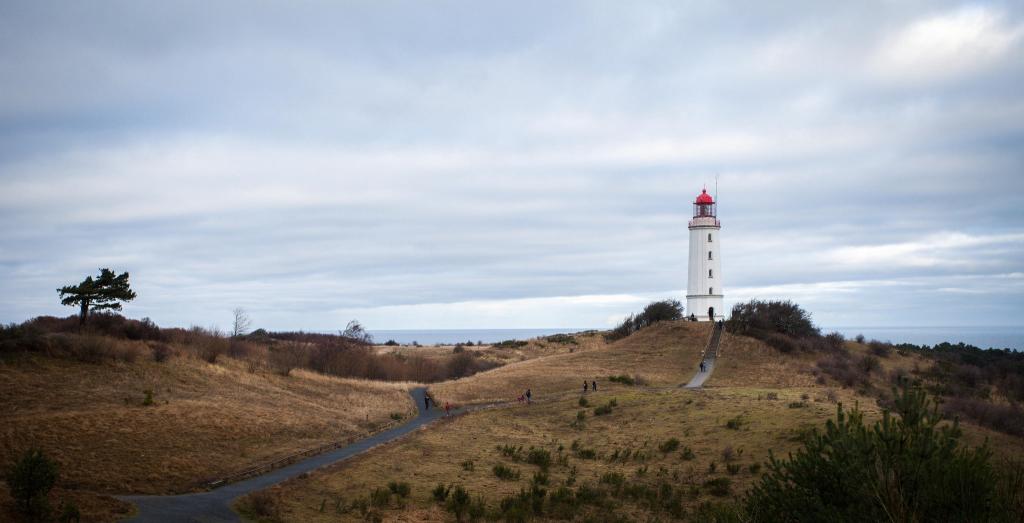
After fighting in WWI, Tom Sherbourne returns home and takes a job as the lighthouse keeper for Janus Rock, a small, desolate island off of Australia. He is alone on the island until he marries Isabel Graysmark, who comes to call the lighthouse home. Stedman writes:

“The isolation spins its mysterious cocoon, focusing the mind on one place, one time, one rhythm—the turning of the light.” It is in the midst of this isolation that Tom and Isabel endure misfortune and pain. You can almost feel the fog rolling in, right?

The Shining by Stephen King

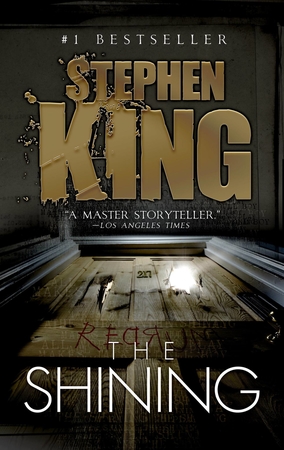
The Overlook Hotel is fictional, but that doesn’t stop it from appearing in my nightmares every now and then. In the book, Jack Torrance, his wife, and his kids move into the isolated resort in the Colorado Rockies after Jack accepts the position as winter caretaker. There are way too many hallways and mysterious doors in this place, along with creepy apparitions and a general sense of doom.

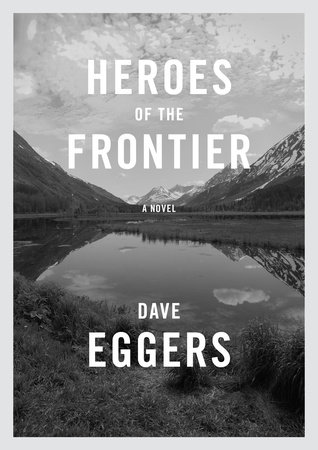
Heroes of the Frontier by Dave Eggers

Heroes of the Frontier by Dave Eggers

After losing her dental practice, Josie decides to leave everything behind and take her kids to Alaska. Home becomes a rattling, old RV: “The manufacturers had called the vehicle the Chateau, but that was thirty years ago, and now it was broken-down and dangerous to its passengers and all who shared the highway with it.” It’s hard not to develop fondness for The Chateau as Josie and her kids drive through the state, encountering various adventures—and wildfires.

California by Edan Lepucki

In this post-apocalyptic story, Cal and Frida flee Los Angeles, one of many cities that has fallen to shambles, and make their home in a shack in the wilderness of Northern California. Cal is quite content with their new life, away from civilization, but when Frida discovers she’s pregnant, she wants to seek out the support of a community. When they leave for the settlement they’ve heard about, their marriage and their lives are forever changed.

My Abandonment by Peter Rock

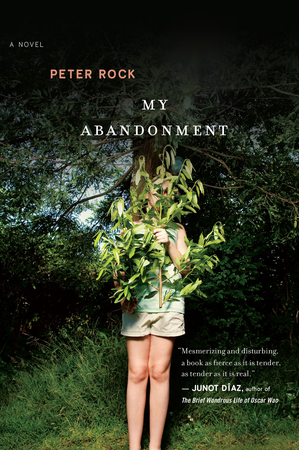
Based on a true story, this book (that became the movie Leave No Trace) is about a 13-year-old girl and her father, living in a dug-out cave deep inside Forest Park, a 5,000-acre nature preserve in Portland, Oregon. Their existence is simple—they wash in a nearby creek, they store perishables at the water’s edge, they tend a garden, they keep a library of sorts. This simplicity is changed forever when a jogger discovers them.

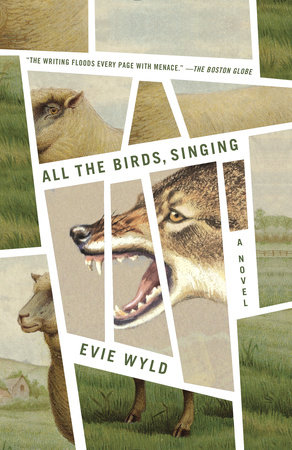
All the Birds, Singing by Evie Wyld

All the Birds, Singing by Evie Wyld

Jake Whyte is living on her own in an old farmhouse on a creepy, isolated island off the coast of Britain. Amidst the rain and wind, her sole companions are her dog (named Dog) and the 50 sheep she tends. The eerie setting of this book evokes so much feeling—a true testament to beautiful writing.

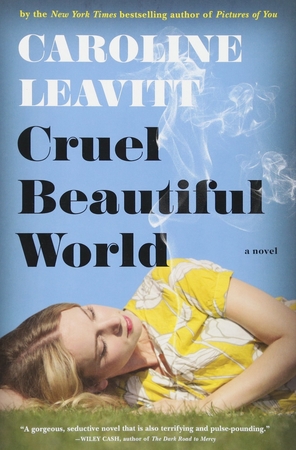
Cruel Beautiful World by Caroline Leavitt

Sixteen-year-old Lucy Gold runs away with her high-school teacher, William Lallo, thinking he is offering her freedom from her boring, unsatisfying life. Lucy’s romantic idea of freedom contrasts with the rundown one-story brown clapboard house that William offers as their home. Lucy has her doubts when she sees the house, but when William asks her, “Can you be happy here?” she can’t help but say, “Of course I can be happy.” Spoiler alert: The claimed happiness doesn’t last.

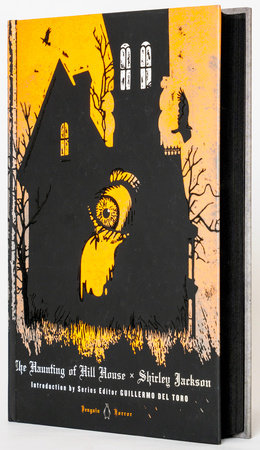
The Haunting of Hill House by Shirley Jackson

The Haunting of Hill House by Shirley Jackson

I agree with the critics who call this one of the best literary ghost stories of the 20th century. Hill House is literature’s classic haunted mansion, and Jackson’s description of it gives me chills every time I read it:

“Hill House, not sane, stood by itself against its hills, holding darkness within; it had stood for eighty years and might stand for eighty more. Within, walls continued upright, bricks met neatly, floors were firm, and doors were sensibly shut; silence lay steadily against the wood and stone of Hill House, and whatever walked there, walked alone.”

Karen Russell’s Oddly Hopeful Stories of Ghosts, Dead Bodies, Devils, and Disasters

Snowflakes, I’ve recently learned, are all born the same—every ice crystal starts out with the same hexagonal structure. The reason they wind up as one-of-a-kind masterpieces is because no two flakes fall alike: they accumulate different arms and spikes according to the unique stream of humidity and temperature combinations encountered in the descent. In other words, our most-cited metaphorical paragons of uniqueness are shaped by their (sometimes traumatic) experiences.

Orange World and Other Stories by Karen Russell

Orange World, Karen Russell’s latest short story collection, is keenly attuned to the way that our environments buffet and hurt us into beauty. These are stories interested in how humans might bloom out of the experiences we have in different possible places and times, from the peaks of a haunted Oregonian mountain to the swampland of a post-collapse Florida. Whether it focuses on a woman infected by a tree spirit while her relationship fades, two best friends trapped in a lodge filled with ghosts while the edges of their faith in one another grow teeth, or a mother negotiating with the devil for her child’s safety, each story in Orange World is a novel lesson in paying attention to both the human landscape and the physical world.

Russell’s stories have never shied away from the reality of the fall. Her previous collections, St. Lucy’s Home for Girls Raised by Wolves, and Vampires in the Lemon Grove along with her novel Swamplandia! have each offered a master class in how the fantastic gives us permission to imagine our way into the truth. But what is special about Orange World is the way the collection demands that we interrogate our most fundamental desires—more humanity, more survival, more love, more safety, more time. In Orange World Karen Russell’s stories show us how we can imagine our way into a relationship with the truth that activates hope.

Karen Russell and I talked over the phone about craft, climate change, hope in negotiation, and the things we forget in order to survive.


Erin Bartnett: There’s so much I want to talk about, but I’m hesitant to start off any conversation with an author by saying “oh, your book, to me, is about ‘X.’” So instead I wanted to start off by asking you about what this collection is about for you. What’s different or new in this collection for you? What are the perennial questions that continue to drive you to write short stories?

Karen Russell: It is so funny that you mention that because I was just thinking I haven’t done a ton of interviews for this collection yet. You can get to a place, unfortunately, where it’s a little bit like stepping on the automated walkway, where you just sort of have your elevator pitch down. I think especially with fiction writers, the danger is that you end up coming up with these post-hoc confabulations about how these stories came to be and what you were doing, after the fact. You romanticize a bit. I’m always a little skeptical when fiction writers are describing their process because we are the world’s biggest liars. It’s what we choose to do for a living!

It’s exciting to feel a collection start to come together. All of the stories in this book came out of a five-year period where I went from bouncing around continents and states, just putting new university stickers on my car, to when I met my now-husband and moved to Portland, made a home here and had our son. And this metamorphosis—which I think sounds pretty banal in paraphrase but felt shocking to me, and still does—happened to overlap with these years of extreme national and global uncertainty. The low sky of anxiety we’ve all been living under.  [Orange World] feels to me like my most coherent collection, in part because all of the stories arose from this same bedrock.

What started to seem like a ligature to me was the way that these stories seemed to want to map a psychological or emotional terrain. And not in a neat, one-to-one overlay of an external and an internal landscape. More like a collision of an idiosyncratic personality and a new territory. Often the plots of these stories seemed to arise from a bad graft of a character’s original plan to an unforgiving landscape. A sort of honeymoon period would begin to shade into a darker reckoning with the true reality of the new terrain, and with a character’s private limitations. Over and over again, it seemed, a story wanted to arrow towards that moment when interior and exterior forces merge—the intersection between some unyielding reality and a character’s private world. “Orange World” seemed like the right way to conclude the collection—to me it felt like a very different kind of landscape story to try. I thought of its setting as the extreme topography of pregnancy and the early months of new parenthood. The surreal landscape that you enter after giving birth. Or that I did, anyway.

EB: I’m excited to hear you bring up that collision between “real landscapes,” and “interior worlds,” because one of the things I love about your writing—in this collection in particular, but in your writing, generally, too—is the way you marry history and your own imaginative dig into that history. That collision brings about a whole new truth. There were stories in this collection that, once I finished them, I went to the internet hoping some fragment of those worlds was “real.” It’s a special kind of enchantment.

KR: I remember an editor telling me once that it was fascinating to discover what the “urgent pleasure” was for each writer—what compelled them put language on paper. She said that this really was as individual as a fingerprint. I was such a weird kid and I needed books to be portals to another world. To just envelop me. It felt safe, inside a book, to know what I knew, if that makes sense. It felt safe to know things and to feel things that would have overwhelmed me in ordinary time, I think. That was my chief pleasure as a reader and that’s what I was drawn to attempt to do as a writer, too.

Stories feel special to me because each can become a kind of universe-in-miniature.

Stories feel special to me because each can become a kind of universe-in-miniature. (As a kid I loved snow globes and museum dioramas, maybe for this same reason.) I thank you for that echo-back because I also think stories can haunt you in a very particular way. Their velocity and their compactness—I always have the sense, too, with my favorite stories, that the world of the story is still spinning somewhere, long after I finish the last page. Because of a story’s brevity, you can almost hold it in the palm of your hand, you can walk around its periphery. It stays with you in a different way, I think, than a novel. Even my very favorite novels, sometimes a few months out, I feel a little gluey on the details. The plot, or characters’ names—I mean basic facts. But a story can work on you almost like a poem. You read it in one sustained burst and it has a different kind of integrity inside you.

EB: So how do you do it? Where does the research “start” for you in a story, and when do you feel liberated from or intimate enough with the “facts” to write into the “truth” of the event? How do you know when to dip out? I always get stuck in that “research” phase.

KR: I also think that research is my favorite method of procrastinating. And the internet—I mean there are pros and cons to the Google search engine because you lose a lot of time. I also think it can become a little bit of a crutch, I find sometimes. You do want to be able to imagine a place out of your own raw material at some point.  

I guess for me, the research sometimes begins with real contact with a place, physically moving through it. Most of the locations in this collection are based on places that I visited. When I first moved to Oregon, I visited the Timberline Lodge and saw a ski lift, frozen in July, mobbed with dragonflies, and found it totally uncanny, and that was the kernel for “The Prospectors.” I went on a road trip with my husband to Joshua Tree and that landscape seduced me completely, and terrified me too—I had never been to the desert before. So I often had done a little exploring in these locations that inspired the stories in Orange World, but unlike Swamplandia!, these landscapes were foreign to me; a lot of my earlier work is set in a sort of mythical version of my own childhood backyard. So then I needed to do some supplemental research, and this ranged from re-reading Seamus Heaney’s bog poems to WPA diaries set during the time of Timberline’s construction to a scientific paper on the interdependency of the yucca moth and the Joshua tree.

For “The Tornado Auction,” I was inspired by this incredible photograph taken by Andrew Moore, and by his book Dirt Meridian. We have an enormous print of it hanging in our house—for a long time it was our only framed art.

EB: It’s exciting to hear you talk about the changes you notice in your own writing. Can you talk a little bit more about how your voice and style has developed over the course of your career?

KR: I can definitely try—although I suspect I am the least reliable narrator where my own work and its evolution is considered. In my earlier work, the focus is often on children and adolescents; many of them were told from the first person. In this collection, I found myself writing about couples falling in and out of love, adult friendships, adult siblings, mothers and fathers. “Orange World” felt like a very different kind of story to attempt, with an older narrator whose experience overlapped with the story I was living. “Bog Girl,” also, felt like a new challenge. Its narrator has a kind of floating, wry detachment from the human drama that unfolds; at certain points I felt like I was trying to conjure the ancient bog itself. “The Bad Graft” switches perspectives and features an omniscient narrator inspired by the old storytelling authority of Ovid and Shirley Hazzard.

And I felt more deliberate in some ways, in my approach to these stories. More aware of wanting to build a certain kind of architecture, particularly in revision. There’s a sort of metaphysical pivot that occurs in stories like “The Prospectors” and “The Bog Girl” and “The Gondoliers,” where the protagonists slide or float into a different kind of story entirely, and I spent a long time trying to tune up those moments of transition, to make sure they felt surprising but hopefully also inevitable somehow.  

You know, I do often feel like, for better or worse, “style” can be another word for “capitulation.” An acceptance of, or giving over to, one’s natural, inborn rhythms. The strange syntax of your particular mind. It’s funny, I’ll read my brother’s stuff—Kent Russell, he’s also a writer, my favorite essayist and journalist, and we’re very different writers in many ways—but I swear, every so often, we write the same damn sentence. I’ll hear the rhythms of our family inside his essay, not unlike the way I sometimes hear my mother’s intonations in my own voice, in real life. Often I’ll hear our dad in our descriptions—our dad shaped our sense of humor, and his voice was probably our ur-influence.  So it makes me wonder sometimes how much of what we call style is within one’s conscious control.

I do feel that I’ve developed quite a bit in this new collection. I felt more in control over my narrative effects, and more vulnerable in some ways too—it felt particularly scary to me to write “Orange World” and “The Bad Graft.” This time around, I also felt that I had more of a sense of the collection as a whole, how this archipelago of stories might work together. In the past, I think I have sometimes felt like a better sentence-writer than a storyteller. With Orange World, I can honestly say that I’m proud of the overall shape of these stories, and of the book. Each one felt quite distinct to me, a fresh challenge. But in revision, I was also conscious of trying to build connections across stories—the Tornado Auction and Black Corfu, for example, I think share some overlap in their portraiture of thwarted fathers and creators.   

It’s humbling to discover your pitfalls as a writer.

It’s humbling to discover your pitfalls as a writer. When I was a younger writer, I was such a metaphor fiend that I think I often tipped into excess of one kind or another.  I love figurative language still, and I have to be careful not to let it overwhelm the story’s action. I have a friend who teaches in an MFA program and is always reminding his students to stay in scene and out of the bushes: “Every time conflict arises on the page they just look to the foliage!”

As a reader, I am very aware of how hungry I am for action, for tension: “What? I don’t want your lyricism about the hydrangea. Is this guy going to kiss her? Are they going to fight?” As a reader you want things to stay in the heat of the moment, but as a writer, much as in life, sometimes I have this impulse to flee conflict and dive into the bushes.

EB: Across this collection you give voice to different generations. “The graying community” of Tornado Auction and the Gondoliers of the future New Florida, even the Old Moms and New Moms in “Orange World.” I feel like, maybe more than ever, we’re really aware of the yawning gap between different generations’ experiences of reality. What was it like to write across these generational perspectives? Did it give you any insight into our current moment?

KR: Oh I love that question. The narrator of the Tornado Auction, Robert Wurman, is a 74-year-old rancher who has retired from raising literal cyclones. It was definitely a new voice to attempt, and I wouldn’t have tried it if I hadn’t been fortunate enough to meet some farmers and ranchers around Robert’s age in the Sandhills.  You asked about research—a few years ago, I went to visit north-central Nebraska, and in some weird way I feel like it synced up with Florida’s Everglades, the flat landscape where you feel clairvoyant almost, because you can see the weather rolling in. Everyone is totally at the mercy of the weather, together. Politically, it was a very red place so that wasn’t something I had in common with a lot of the people that I was talking to. And yet, it did feel like there was this sort of shared sense that the world was changing very rapidly, that it was hard for all of us to get our bearings.  

I was really curious: What are the pressing concerns here and where is there overlap with where I live now in Portland Oregon? Nobody I met in Nebraska was denying that there was change in the air. Maybe we had a different vision of what an ideal future might look like, and how to get there, but certainly nobody wants to live on a flaming marble with no resources. The farmers I met really reverenced their landscape and understood that it was, on the one hand a resilient millennial ecosystem, and on the other hand, very fragile. They had an intimate understanding of how interdependent we are on nature. I mean these farmers were gamblers. Every season was a profound gamble. And so they were attuned to changes in climate in a way that I rarely am in my air-conditioned Prius.

EB:  In “The Gondoliers,” there’s this great generational clash. On the one hand there’s the old man who keeps trying to atone and apologize, saying, ”People my age are criminals. We ruined the world.” While the voice of the younger generation declares: “Our home is no afterlife, no wasteland…I doubt my voice can convince him that our world is newborn…life is flourishing in New Florida…it is our world now, not his any longer; that actually, he is the one who is dying.” So there’s another collision: what happens when generational perspectives clash on a future they each have different stakes in?

KR: That’s a great question. I’m so happy that it read that way to you, because I was really thinking about how to be honest about the fact that yes, on the one hand, this is not a future that anybody wants. I hope that we can pivot in time. That we can save our coastal cities. You see the younger generation pushing the older generation to respond to climate change as an emergency, and as you say, it does feel like a contest for the future. I’m really encouraged by the Sunrise Movement and the Green New Deal. For there to be that kind of mainstream support for a Green New Deal right now.

On the other hand, I’ve read so many of these dystopian worlds lately, and one thing I kept thinking about while drafting “The Gondoliers” is the danger of inadvertently confirming the worst possible vision of our natures. What might happen after a regional apocalypse? Is it really going to be this Hobbesian reality where we all eat other’s bones on a flaming marsh? Maybe. But there’s this really beautiful book by Rebecca Solnit called A Paradise Built in Hell where she pushes back against the idea that after a disaster, the thin veneer of civilization is ripped away and everyone reveals their true monstrosity. Solnit says, no, that’s not what happens after a disaster. She talks about the “somber joy” people feel when suddenly all hierarchies are suspended and they are permitted to be their best selves, actually. They’re helping one another and coming together to form these new kinds of communities.

So that’s all to say, with this story I was hoping to speak to some sense that we might be underestimating the regenerative powers of our own nature and nonhuman nature, too. I don’t know if I executed, but my hope for that ending was to signal that any transformation is also an extinction and that’s terrifying, but there might be another relationship that humans can author with other creatures, with the sky and the water here. We might actually evolve, and in our lifetimes. We might learn to think very differently about what it means to cohabit this planet with other societies, other species.

EB: I’m so glad you bring up Rebecca Solnit because that is something I see in this collection too. My favorite Solnit-ism is her definition of hope and how she describes three different relationships to history—the pessimistic view, the optimistic view, both passive. Hope is an active negotiating of the past and reckoning with everything that goes wrong but also recognizing our capacity to right what we’ve wronged. And there are plenty of examples we can learn from for the present and the future.

We might actually evolve, and in our lifetimes. We might learn to think very differently about what it means to cohabit this planet.

KR: Oh, I love that.

EB: I mean I think this story does that, and so many stories in this collection do that. “Orange World,” for example.

KR: Thank you, Erin. I hope that’s true. Even in the most dire stories, I feel like, if hope isn’t illuminating the sky, even a faint hope, then something is awry, something is false, single-note. Some of the stuff on TV where there’s a kind of glee, some sadistic joy in watching—I mean I really like Black Mirror, but it shades so dark that sometimes I think it feels as false to me as something that is very sentimental. That kind of monotone darkness doesn’t gibe with the complexity of people. Without being overly sunny about this, because I do think the news right now is relentlessly heartbreaking and grim, I also think that it’s not too late to imagine an alternate universe. One that is more just, greener, kinder. And to make it a real place.

And I love that you bring up the old man in “The Gondoliers,” because I think these apocalyptic nightmares can sometimes shade into fantasies, in a sly way. Because we sense that we are dying, and there is something strangely consoling about thinking that the ship will go down with us. It is difficult, I think, to imagine this world going on without us. The old man, a former marine engineer, apologizes to a much younger woman, saying “I ruined the world.” It’s meant to be an apology, but she can hear the boastful note inside it. This guy is not exactly unhappy that he had a hand in this devastation. Like those country songs where they sing, “I’m not proud of what I did,” but then they catalog everything they did…

EB: Can we shift gears to talk about another relationship in this collection? I was so fascinated by the parents in these stories, and the strange things love can make them do. It gives them this superhuman gift and curse, where they can see into the future and hold onto the past for the children in ways that go unseen. It made me think about parents as historians, thankless custodians of our past. And the final story in the collection, “Orange World,” made me think of that role in so many different ways. Can you talk about the way love, and in particular parental love functions in these stories?

KR: Growing up—what a betrayal! We all shake out the etch-a-sketch of all the memories of our dependency. I find that I keep compulsively thanking my parents these days, for keeping me alive from zero to three. How convenient that I have entirely forgotten this period where you had to meet all my needs around the clock!” I think, “Hmm I don’t remember that, but I remember this other time though where—”

EB: Where you forgot to dress me in pajamas for pajama day at school…

KR: Ha! Yes! My friend teaches a memoir class, and she told me the mothers get it so bad: “My father was a charming raconteur, I saw him every seven years! He was so charming! But my mother got sick once and left me with a babysitter. My mother loved me too much.” The blame always accrued to the mom. We probably have to forget this period of our abject dependency or how could we move forward?

But sometimes on planes, men will turn around and give me a disapproving look if my son’s wailing, and then I resent the general amnesia. I really just want to accuse them of having also once been babies. Just point at their navels and say, “You have a belly button. Do you think that you were just sitting with your hands folded in your lap when you were this age?”

EB: I just imagined one of those cartoon flag guns, loaded with a sign that says, “Do you have a belly button?” inside of it, and anytime someone gives you that look, you just maintain eye contact and flare that gun.

KR: [Laughs] Remember…  

EB: So the relationship between the new mom in “Orange World,” and her mother brings a whole new dynamic to the table.

KR: Yeah, that sort of crept up on me. I had a hard time figuring out where to land. There is, without giving it away, a sort of climactic scene that feels like it could potentially be an ending but it continued to feel like something was missing, to me, for a long time. Even though Rae’s mother doesn’t get a lot of real estate in the story she wound up feeling incredibly important to me. I have no idea what a reader’s experience is of the story, but something about these two women—on other sides of the parabola, and also, in this story, literally on other sides of the world—that felt right to me. A mother caring for her dying mother, a daughter caring for her newborn. It’s not like they can perfectly share this experience and it’s not an uncomplicated one. It’s not all joy.

But the idea that you can come to these new understandings of the people you are the closest to, that they’re not static figures in your life? What a surprise that really was, for me anyway, stepping into my own beginning as a mother and feeling, in a visceral way I now had the tools to understand something my mother had felt for us. And still feels for us. That was really powerful, I still don’t know quite how to talk about it. I take for granted my parents’ love for me a lot of the time. I certainly feel it and I believe in it but it was a different thing to have this new insight into what the love of a parent for a child feels like from this side of the equation.

The ending to this story is maybe the happiest one I’ve ever written, but it’s provisional, an ephemeral state. A beginning, really. Because I don’t really buy stable epiphanies. You were just talking about that beautiful Solnit quote on hope—it’s a continuous negotiation. It’s a continuous recalibration. But there’s some sense that something new wants to be born, and maybe there’s a new kind of relationship for these two women.

EB: So it’s a prayer for that world where joy is a familiar feeling, but not a promise.

KR: Yeah! Oh, I love that. Yeah, just that prayer; there’s a little pivot towards the light. She gets to inhabit a heaven for that moment. That kind of matter-of-fact joy was new to me, I think. I feel like this little baby has taught me how to live in time again.

Remember when you were a kid and everything was unprecedented? I was just re-reading Joy Williams’ The Changeling—it’s so good. It’s terrifying, not a sentimental book at all. The book follows a new mother who discovers what can often feel unbearable but what sometimes is really exquisite about being straightjacketed into the present moment with a baby. In the way that we all were when we were kids, not carting around too much of a past, not living in the imaginary future. Watching the bubbles bloom.

When I wrote the ending of “Orange World,” I was surprised to see that it felt like a happy one. This felt like perhaps the biggest leap of all, the biggest risk. In my earlier work, I found myself drawn to a different kind of open ending, much darker—in my first collection, I leave two children stranded on a glacier with no transponder and no hope of rescue.

Instead of stranding my protagonists on a literal precipice, now, every so often, they make it down the mountain.

I was excited to discover that now I can imagine a threshold that feels more hopeful, even happy—instead of stranding my protagonists on a literal precipice, now, every so often, they make it down the mountain. Sure, they’ve sustained damage that will no doubt haunt them for the rest of their lives…but I can see new possibilities for them, these women who survive their worst nights.

It’s a little bit of a cliche, but also not untrue, that in our adult literature the final notes can be quite melancholy—this makes sense, I think, given that we are all living inside a story where nobody gets out alive. I’ve been reading to my son, and there is no such thing as a dark or open ending in his literature. All children’s books end happily, it turns out. My friend was telling me she read her son Metamorphosis, the adult version, just to see how he would take it, when he was four or five. And when she got to the end, where Gregor dies, he burst out laughing. He was like “That’s it?! It doesn’t have a happy ending?” To his mind, Kafka had made the craziest literary innovation, a book with an unhappy ending. He was like, “How did he come up with that?”

Losing Faith and Finding Fantasy at Harry Potter World

I do not believe in magic. I don’t see a need for it. A belief in magic negates how complicated the world actually is. There is a universe full of wonder and terror that we are only just now beginning to understand, which makes it hard for me to put faith in ghosts or spells or other things we know not to be true.


In December of 2017, I drove with my family from Chicago to Florida, only a few days before New Year’s Eve. Although we would be staying on the Gulf Coast, my wife suggested that we take our kids to Harry Potter World at Universal Studios in Orlando on the way there. As any reasonable person might tell you, this was not on the way. It was several hundred miles out of the way and was also an additional expense—upwards of several hundred dollars. Both of our children are voracious readers and love Harry Potter. We had read the first two Harry Potter books aloud before my ten-year-old-daughter made her way through the remaining volumes on her own. But I still did not want to go to a theme park based on the books and movies.

“It’s a one time thing,” my wife argued.

I said going to Florida was special enough.

“But it’s for one day,” she countered. As a parent, one of my fears is that my children are growing up in a world that suggests just because you can imagine something, you can have it. They are good kids but extremely privileged. They have not gotten their hearts broken, they have not been disappointed nearly enough. I thought, perhaps, that driving to Harry Potter World, being confined to the backseat for twenty hours beside your sibling and then seeing adults dressed up as wizards, might be one such opportunity for disillusionment.


Once when I was four or five years old I found a small blue egg in my backyard and thought it might have been left there by an angel. I do not know why I imagined that. I told everyone at dinner that this was what I thought and no one bothered to correct me.


The way people talk about Harry Potter, their voices take on a quasi-religious quaver.

The books themselves are captivating. The characters are strong, especially Hermione, and the world J.K. Rowling builds is relentlessly layered. But you have to say this. You have to agree that you like the books or people on the internet will get angry, as if they are engaged in some political debate. The way people talk about Harry Potter, their voices take on a quasi-religious quaver. You have a feeling someone is talking about their culture, their identity. Which maybe they are.


The journey would be 22 hours in total, over a period of three days. Twelve hours to the Smoky Mountains where we would stop for the night, then seven hours to Savannah, Georgia, then a few more hours on to Orlando. We bought a map so the kids—ages ten and seven—could follow our progress. We left at 4:30 in the morning and began to drive through the cold blue Indiana light. On the road, they could watch cartoons on their iPads. At six am, we pulled over and had breakfast at McDonald’s, something our kids almost never got to do. Eating the Styrofoam-textured pancakes, seeing their sleep-deprived smiles, one could argue something otherworldly was already at play.


I have always believed—somewhat stupidly—in the majesty of America, or in the mystery of the physical landscape of the nation itself. It seems unconquerable. I had grown up in the ‘70s and ‘80s and witnessed the cosmic war between good and evil, right and wrong, and came to think that both the U.S. and Ronald Reagan were infallible. I still recalled the condemnation in that man’s voice as he accused the Soviet Union of being an “evil Empire.” All of that certainty remained in the land itself, the sturdy resolve of hills and valleys, the rising sun coming up over a rolling tree line in northern Kentucky.

There was also the almost indescribable uniformity—the same prairie, the same billboards, the same kind of cars, the same kind of houses—that gave you the sense America was endless and could not possibly be questioned. Every half hour or hour there was a sign for a Burger King, a Taco Bell, a Pizza Hut. It was impossible to ever get lost, to be uncertain in a land that repeated itself over and over again.

We stopped at a Chipotle for lunch, the second fast food of the day. Both kids looked at us like we had lost our minds; they could not believe their luck.


I do not have a belief structure of any kind of specificity. I grew up Catholic—my parents were Bosnian, Polish, and Italian—and each of those cultures possessed their own relationship to magic. Certainly the story of the empty tomb suggests the terrible possibility of magic in an uncertain world.

Once when I was eight and had trouble sleeping, my Polish grandmother gave me a St. Christopher medal to wear and said all my relatives who had passed away would also watch over me. As you can imagine, I had even more trouble sleeping that night.


The backseat began to smell the way humans do after only a few hours of driving. I caught sight of my son doing a book of Mad Libs. Then my son and daughter began to page through an illustrated version of the third Harry Potter book. Both he and his older sister were transfixed.


On the way through Kentucky into Tennessee, there was some kind of phenomenal accident on the highway. Flashing lights and road flares blocked our path. Google Maps suggested an alternate route. We left the highway and began the long circuitous drive along the backcountry of the lower Appalachians. My kids peered out the windows. The small hamlets of the Smoky Mountains had been hit hard by economic recession. In these perfectly secluded hollows and valleys, you could see homes on the verge of falling apart, a hand-painted sign warning off meth dealers, an American flag hanging above a charred motel, half-burned.


One year after one of the most contested and troubling elections in my lifetime, you could trace the shape of an entirely different country, how removed it was from the present we knew, and come to an understanding of why someone offering to support working class communities, someone with an isolationist worldview, could persuade so many voters to go against their own self-interests. If you never left the place where you had been born, the town you had grown up in, it would be all too easy to believe whatever you wanted about the world.

I worry that all these fantasy stories might suggest that, as a culture, we are in a prolonged state of arrested development.

What was this need then, to want to put your faith in something, on some basic level, you knew couldn’t possibly be true? To accept the impossible, lies upon lies, fiction upon fiction? What does it say about our capacity as humans to be fooled, how gullible we actually are, and our willingness to participate in that complete delusion?

I worry sometimes. I worry that all these fantasy stories, our never-ending quest for magic—Harry Potter, all the Marvel movies, Star Wars, Game of Thrones—might suggest that, as a culture, as a nation, we are in a prolonged state of arrested development. I worry we are unable to move past the duality, the magical thinking of adolescence, and that the books we read, the movies we watch, the television shows we love might be partially to blame.


We stopped in the town of Gatlinburg, Tennessee for the night. Everything in that town was lit-up, loud, noisy—a tourist destination surrounded by mountains. There was a wax museum which no one but me wanted to attend. So we got gigantic margaritas and then took the kids swimming at the motel pool which had a fake, indoor waterfall. There was still magic in that indoor man-made waterfall, regardless of how unrealistic the false rocks looked. We let them stay up late swimming, thinking it would tire them out. It did not. Back in the motel room with its stale-smelling air, they continued to joke and dance and wrestle until angry words were exchanged. Finally we read Harry Potter to get them to settle down. Soon they were quiet. I did not like how invested both children had become in the fates of these imaginary people.


I had seen a shift in the students I worked with as well. Twenty years ago, all the young writers I knew carried Naked Lunch around with them. The writers they admired were transgressive—Hubert Selby Jr., Jim Carroll, Mary Gaitskill. Their works questioned social and political institutions—Toni Morrison, Louise Erdrich, Dorothy Allison.

In one of my writing classes this year, an undergraduate said she did not want to read Bastard Out of Carolina because it was too sad, too real, which was why she preferred fantasy literature instead. I had assigned the novel after the recent Kavanaugh hearings.

In another class, two graduate students who were working on fantasy books said that they refused to write characters who were unlikable because they had to deal with people who were assholes in the real world all the time. For them, fiction was something else, a place to imagine, free from the constraints of reality. They did not want complex characters; they wanted characters they could root for. I have always thought of fiction as the opposite—as an in-between place, a space where you could engage with the liminal, the complex, the complicated things that could not be easily understood.


Over the mountains and down through the Carolinas to the sweeping coastal plains. I tried to talk to the kids the next day, but both of them were too busy reading or watching Harry Potter movies. But I think it was good for all of us to be silent together. It was like we were all sharing the same daydream.

Once again there was some other kind of tragedy out on the highway. We took several arcing rural roads, passing beneath the limbs of trees overcome by Spanish moss. In the motel pool that evening, a mother carried her daughter from a wheelchair to a mechanical lift so her girl could enjoy the water. It smelled a little too much like bleach. But the girl clapped, and moved her hands in the water, and splashed at her siblings, like nothing bad had ever happened to anybody.


We arrived in Orlando late the following afternoon. Apparently if you spend a night at one of Universal’s resort hotels, you can get free fast passes, which my wife discovered were essential to get on rides you wanted to. So we found ourselves staying in a nondescript fake Venetian hotel.

My son said he was too excited to sleep so we read a little more from the book.

I talked it over with my wife in murmurs after both kids finally fell asleep. I can only imagine what it would be like reading Harry Potter as a kid. I had a hard time with fantasy stories when I was younger. The covers, even the fonts, made me extremely self-conscious. Comic books were okay, but I read those in seclusion; science fiction as well. By the age of ten, the fear of being seen checking out a fantasy novel at the library was so severe that I refused to go down the aisle, as if there was some kind of negative force at play, some dark energy that would immediately nullify all my future prospects. The imaginary was one thing—if someone made the effort, you could try and explain time-travel, at least partially. The impossibility of a fantasy novel was something altogether different.

I assumed if I even touched one of those books I would be rendered both mute and invisible.

On some level, I also believe it had something to do with sex. Even at that age I was aware that certain books, certain movies, certain clothes could render you permanently sexless, and that others might see you as a less-than-ideal mate. I had a presentiment that reading fantasy novels would be an obstacle, an additional conflict to the many other problems I already had. I assumed if I even touched one of those books I would be rendered both mute and invisible.


On the morning of our day at Harry Potter World we overslept. You have to get there by 7:30am or the lines for the rides will be so long, you will never get to do them all, or so the internet told us. I was just happy everyone had eventually fallen asleep.

We went outside and took a motorized gondola down a swampy canal to the park’s entrance. We donned wristbands, got IDS made, put them around our necks. Then we waited in a long, long line. Both of our kids were more excited than I had ever seen them before. It was like seeing them on drugs. They did not know where to look, what to do with their eyes.

Universal Studios, Orlando is probably like a lot of other theme parks. I don’t know. I have not been to too many. We made our way past the front gates, practically running past the other movie-themed rides and attractions. In the distance was Harry Potter World with its gray and black castle, train station, and replica English shops and back alleys. I was dubious up until the very moment, and then when the moment arrived, an odd tranquility set over me.


I’m going to be honest now. I once got into an argument with a friend over Harry Potter, having never read any of the books. I accused her of liking a book that was made for children. I said she was afraid of adult literature. It was years before I had kids of my own; I think both my friend and I were in our late twenties. Like many writers I had a complicated opinion of any other author’s success. It was amazing to see so many adults line up at midnight to buy a book—a novel, at that. But wasn’t there something kind of off-putting, kind of odd about grown-ups being as invested in a novel as the young people it was marketed for? What did these adult readers of Harry Potter and the Hunger Games want? What was it they were running from?


I watched my kids race through Diagon Alley. We went on a ride that took us through a magical bank. A magical bank! It was cold for December in Florida and raining a little but no one seemed to notice. From store to store, we explored the replica town that had been built first in words, then onscreen. It was surreal, to stand in a place you had read about, and to see the totality of detail the world J.K. Rowling had imagined. Everyone—included the people hired to work at various points of contact—seemed enthusiastic to be there. You could not manufacture that kind of happiness.

How do you escape the idea that life is more than just good versus evil if all the most popular stories of the day suggest the opposite?

If you bought a certain kind of wand, you could point it things and those things would move. A fountain would spit water. A toy in a shop window would dance. I was apoplectic, shocked at the level of cleverness and invention. Both kids ran from spot to spot, engaged in reciting spells. Sometimes they worked, sometimes they didn’t, which I thought was perfect. Imagine if you could step into one of your favorite books and make things move around. It was implausibly and thoroughly enjoyable. We ate candy from the candy shop, drank the drinks. I turned and saw people—many, many adults dressed in black robes, many people in their twenties without children doing the very same things we were doing. I admit I was puzzled and a little saddened by this.


William Perry Jr., a psychologist and professor at Harvard, conducted a fifteen-year study of undergraduates and described the cognitive development of these students, beginning with dualism—good vs. evil and a reliance on magical thinking—and maturing to multiplicity, to relativism, to commitment. I wonder why it seems the majority of our nation is unable to move past basic duality? What if our culture, our politics, our social structures, all our entertainment only reinforces such beliefs? And what if those same stories—described in book series after book series, film series after film series—all the commercial narrative of the last thirty years only repeats the same thing? How do you ever escape the idea that life is more than just good versus evil if all the best-loved, most popular stories of the day suggest the opposite?

Moving amongst the theme park and all the people gathered there I realized I had lost faith.

The election had ruined some things for me. It had taken away a belief, my sense that, on some basic level, people could be good.

I want to believe that. I still do.


I have sometimes prayed, which is also a kind of magical thinking I have been guilty of. I have prayed for a number of ridiculous things over the years, some of which I am too embarrassed to put into writing. I believed, even at the time, that no one was listening and yet I still did it. Once my wife was pregnant and the doctors could not find the heartbeat. For several days I prayed for things to go the other way. I believed while I was praying that what I was doing might make some infinitesimal difference—which is the basis of any kind of belief, hope in the face of direct evidence to the contrary.


In the end, it was not the rides, or the millions of details translated from J.K. Rowling’s exhaustive literary imaginings. It was the people themselves. We were waiting in line to go into the Hogwarts castle and you could hear all the voices, all the languages being spoken. A Sikh family in black and green wizard robes—the father and sons also wearing turbans—waited a few feet in front. A group of noisy young Italians—all wearing robes—spoke excitedly behind. It seemed like some people had traveled hundreds, thousands of miles to come to this imaginary world, this place inspired by a book, by words, because they believed in something, as odd and fantastic as it was. Their enthusiasm did not answer any of the larger questions. Coming to a place built entirely on fantasy did not resolve the difficulty of a country’s reliance on dualism, but it was a start. It was a belief you could build on. It was an insistence in the possibility of impossibility, in the probability of improbability, which anyone could tell you is essential for any sort of change.

In the parking lot, loading up our luggage later that afternoon, I could see a number of Trump bumper stickers on the back of many minivans and SUVs, but decided not to count. I did not want to ruin the feeling, the quiet spell that had been cast.

5 Unclassifiable Books by Women, Recommended by Kathryn Scanlan

It’s hard to explain Kathryn Scanlan’s book Aug 9—Fog. It’s archival, reproducing text from a found diary. It’s transformative, rearranging lines from that diary like a collage. It’s… a book-length found poem? A remixed autobiography? Anyway, it’s cool. And Scanlan has suggested five other cool, poetic, transformative, or formally innovative books for our Read More Women project.

Read More Women is Electric Literature’s series, presented in collaboration with MCD Books, in which we feature prominent authors, of any gender, recommending their favorite books by women and non-binary writers. Twice a month, you’ll hear about the five non-male authors who most delight, inspire, and influence your favorite writers.


Mary Ruefle, A Little White Shadow

How I love this work, published by Wave Books in 2006. In its paperback form—small, slim, plain—the book is reminiscent of a religious pamphlet, which makes sense given that the original text (of the same name), made new here by Ruefle, was written by Emily Malbone Morgan, a Christian philanthropist. Morgan’s A Little White Shadow was published in 1889, and the proceeds were used to build a vacation home for the exhausted girls who worked in textile mills. Ruefle approached this text with white paint, redacting much and thereby revealing and creating a new poem. A critic in Found Poetry Review writes that in doing so, “Ruefle exposes Morgan’s voice not as author, but as figure to step out of time and address the modern,” which I think is an apt way to describe this work. The pages are archival photocopies of Ruefle’s original, preserving the texture and color of the antique, which contrast beautifully with Ruefle’s rough white. Though she is working with the text of another, the pleasure and surprise of Ruefle’s poetic genius nonetheless abounds: “very simply/It’s always noon with me/pale, and/deformed but very interesting.”

Claudia Rankine, Don’t Let Me Be Lonely

When I first read Don’t Let Me Be Lonely in a graduate class more than a decade ago, it forever changed my thoughts on form. Written in the years following 9/11 and published by Graywolf in 2004, it is a meditation on memory, loss, grief, anxiety, medication, the body, and the media, but that of course is a gross simplification of this profound masterwork. The book is sectioned into what might be called chapters by a reoccurring image, alone at the bottom of a page: a black-and-white picture of a television set, its screen full of static. Other images of television (and computer) screens appear throughout, as well as scans of prescription medication labels, a schematic for the torso and apparatus of Mr. Tools—for a while the only person in the world walking around with an artificial heart—and a diagram of the human digestive system where the intestines have been replaced by the dark mass of the United States. Rankine’s prose moves like a mind awake in the night, unable to shut off, unable to discontinue its incessant processing of images, of stories, of worry. The control with which she does this, and the depth of meaning achieved, are things to be studied, to be marveled at.

Lydia Davis, The Cows

Published as a chapbook by Sarabande in 2011, The Cows is a slim, 37-page volume wherein Davis observes the postures and movements of the cows who graze in a field opposite her home. The text—accompanied by photographs taken by Davis, Theo Cote, and Stephen Davis—is comprised of discrete, descriptive paragraphs told in the present tense. I get the sense Davis might’ve written these whenever she came into her kitchen for a glass of water or a snack—they have the daily, habitual feel of a weather journal, and in fact weather is sometimes described along with the cows: They seem expectant this morning, but it is a combination of two things: the strange yellow light before a storm and their alert expressions as they listen to a loud woodpecker. I am delighted by the endurance of this seemingly banal endeavor, by Davis’s tender humor, by her perfectly turned renderings of these animals whose positions mark her days like the hands of a clock. She describes the cows as though they are works of art—which, of course, they are.

Harryette Mullen, Sleeping with the Dictionary

The glee I experience when reading this book is something rare, and I can only imagine Mullen to have had a similarly joyful experience writing it. The poems, arranged alphabetically, are shaped by Mullen’s engagement with Roget’s Thesaurus and The American Heritage Dictionary, but also by the strategies of the Oulipo and word games like puns, anagrams, and homophones. I take particular delight in her liberal use of periphrasis (the Wikipedia example of this is the elongated yellow fruit in place of banana), which results in sentences like this one, from “European Folk Tale Variant” (her rewrite of Goldilocks and the Three Bears): The way the story goes, a trespassing towheaded pre-teen barged into the rustic country cottage of a nuclear family of anthropomorphic bruins. Yet her playfulness is ever tempered by—indeed seems to spring from—a formal rigor and investigatory purpose. I get the sense she is always listening to language and how we use it—always picking up scraps of it to contort and collage, always alive to both the shortcomings and the endless possibilities of speech.

Maggie Nelson, Jane: A Murder

I’d read—loved—other books by Maggie Nelson for years, but for some reason, I didn’t read Jane: A Murder until recently. I read it in one sitting and felt it spoke to so many things I’d been trying to figure out over the years about form, about literary collage, about possibility and meaning. Originally published in 2005 and recently reissued by Soft Skull Press, the book is a portrait of Nelson’s Aunt Jane—her life and death—built from myriad sources: Jane’s diaries and letters, accounts from family members, newspaper articles, and a pulpy book that sensationalized the murder of Jane and several other young woman in Michigan in the late 1960s. Nelson manipulates her material in a way that is cohered by her poetic vision yet also remains polyvocal. It is a restless, resistant book that refuses the treatment so often given to acts of violence—a type of lurid gawking—and instead creates a complex, unsettling, and ultimately unresolved (how could it be otherwise?) depiction of a life lived, ended, mourned, and imagined.