A History of the Wench

In 2010, Dolen Perkins-Valdez published the best-selling historical fiction novel Wench. According to the back cover, the novel’s setting is “an idyllic retreat for Southern white men who vacation there every summer with their enslaved black mistresses.” The book’s front matter includes a quotation from 1836 about a slave owner who “especially prided himself upon owning the swiftest horse, the handsomest wench, and the finest pack of hounds in all Virginia.”

This title caught my eye for a few reasons. First, the story has particular personal resonance for me: My great-great-great grandmother was an enslaved cook on a plantation in east Texas. Her master, who owned the plantation, raped her. She gave birth to my great-great grandmother as a result. I do not know my great-great-great-grandmother’s name, but I think about her, sometimes, when I’m making dinner.

What was this Middle English term doing in a novel about the sexual exploitation of enslaved black women?

But second, I am a medieval scholar who was, at the time, in the midst of researching the term wench’s sexualized associations in the Middle Ages. What was this Middle English term, “wench,” doing in a novel about the widespread sexual exploitation of enslaved black women in the United States?

As it turns out, the term’s medieval history paved the way for its later use as a gendered racial slur, evolving from a relatively neutral term designating youth or servitude to one signifying femininity, then transgressive feminine sexuality, and finally black feminine sexuality. This long history enabled “wench” to become a tool for dehumanizing black women, insisting on their sexual availability to white men, and facilitating their exploitation.

“Wench” has its earliest roots in the Old and early Middle English “wenc(h)el,” which designated a servant or slave of any gender, or a child. (A text from around 1200 refers to “An wennchell thatt iss iesu crist,” a child that is Jesus Christ.) In 890, the Old English noun “wencel” translates the Latin “mancipium,” which means “possession, property, servant, slave.” Wencel is a term designating subordinate status and a lack of power, but during this time period, that disempowered status was tied to youth and servitude rather than femininity or sexuality.

This changed in the later Middle Ages as “wench” became both gendered and sexualized. It signified (per the Middle English Dictionary), “a girl” or “young woman;–occasionally with disparaging overtones,” “a serving maid, bondwoman,” and “a concubine, paramour, mistress; a strumpet, harlot.” This multivalence, with its underlying connotations of youth, femininity, lower social status, servitude, and sexual transgression, invokes multiple grounds of disadvantage. The “wenche” is subservient to higher-ranked women—“ladies”—as well as to all men, and she is marked by the stain of illicit sexuality. The Book of Vices and Virtues, a comprehensive guide to recognizing the seven deadly sins, forbids complaining by “wenches ayens here ladies” [wenches against their ladies], setting up a relationship of inequality and subservience between “wenches” and “ladies.” When her jealous husband suspects her of adultery, the character May in Geoffrey Chaucer’s Merchant’s Tale insists, “I am a gentil womman and no wenche.” She sets up a stark class differential between the “gentil womman” on one hand and the “wenche” on the other, portraying the latter term as derogatory and linking it to sexual transgression. According to May, only “wenches” cheat on their husbands. William Langland’s Piers Plowman mentions “wenches of the stewes” [whores from the brothels] at multiple points. Bible translator John Wyclif uses “wenche” derisively six times, in addition to “strumpet” and “yong strumpet,” to name the dancing Salome in a sermon about the beheading of John the Baptist, setting up “wenche” and “strumpet” as synonyms. The female speaker of an erotic song recalls her early sexual experiences “when I was a wanton wench / Of twelve yere of age,” underscoring the term’s popular links to wantonness. Finally, in King Ponthus and the Fair Sidone, Guenelet uses the term after becoming angry when Sidone rejects his advances: “he thretened her sore and swore that he sholde take her by force and make her his wenche yf she wolde not be his wyfe.” Here, “wenche” functions in opposition to “wyfe” and is part of Guenelot’s threat to overpower and rape Sidone “by force.”

The implications of “wench” are most chilling in Chaucer’s Reeve’s Tale, which tells the story of two Cambridge students who spend the night at a miller’s house after the miller steals some of their grain. The miller has a 20-year-old daughter named Malyne. The tale introduces Malyne as a “wenche,” following the term with a sexualized description of her body: “This wenche thikke and wel ygrowen was…With buttokes brode and brestes rounde and hye” [This wench was thick and well-developed…With broad buttocks and round, high breasts]. Here the term “wenche” invites us to leer at Malyne, focusing on the shape of her buttocks and breasts. It guides audiences to view her as a gendered, lower-status, dehumanized body created as an object for others’ gratification. That night, the miller’s family and the two students enjoy a boozy dinner. The miller, his wife, and Malyne pass out afterward, and their drunken snoring keeps the students awake. “The wenche rowteth eek” [The wench snores too], we are told, the term here serving to emphasize Malyne’s unladylike snoring as well as the intoxication that causes it. As the two students lie awake in bed fuming over the miller’s theft of their grain, Aleyn crudely declares to John, “yon wenche wil I swyve” [I will fuck that wench]. Here, the term works to dehumanize Malyne and to position her as an acceptable target for assault. Finally, “wenche” is used two times in two lines to name Malyne just before Aleyn rapes her: “And up he rist, and by the wenche he crepte. / This wenche lay uprighte and faste slepte” [And up he rose, and by the wench he crept. / This wench lay flat on her back and fast slept.] By naming Malyne as “wenche” in these moments just before her rape, the text discourages empathy for her plight and sets her up as both naturally subordinate and as sexually available, the term working both to mark her as exploitable and to downplay her rape. In the Reeve’s Tale, the term “wenche” illustrates how Malyne is vulnerable to the students’ predatory actions due to her social status, gender, and age, while its sexual associations are insidiously marshaled to make her seem as though she is “asking for it,” to allow her rape to be read as not-rape.

The fact that the term already designated age, gender, subordinate social status, and sexual availability meant that it was ready-made for race to be mapped onto those other inequalities.

Three centuries later, the term “wench” proliferated in newspapers on the other side of the Atlantic. By now, in addition to connoting gender, social status, sexual availability, and age, it had become racialized to designate an enslaved black woman. In 1828, Noah Webster’s American Dictionary of the English Language defined “wench” as “In America, a black or colored female servant; a negress.”  John Russell Bartlett’s 1848 Dictionary of Americanisms contains the entry, “WENCH. In the United States, this word is only applied to black females.” The fact that the term already designated age, gender, subordinate social status, and sexual availability meant that it was ready-made for race to be mapped onto those other inequalities so that it could function as a pejorative term for black women that disparaged them and advertised their sexual availability to white men. Once again, the term’s derogatory connotations work to overshadow the very real and constant violence that black women suffered as a result of their intersecting disadvantages. When a woman is called a wench, we are prepped by centuries of connotation to see her as something intended for sexual use.

The phrase “Negro wench” appears repeatedly in slave advertisements and runaway slave reward posters from the eighteenth and nineteenth centuries. A 1735 issue of the Pennsylvania Gazette advertised “A likely young Negro Wench, who is a good Cook and can wash well, to be disposed of,” while a 1749 issue proclaimed, “To be SOLD, TO be sold cheap, a very likely young Negro wench, about 18 years of age: Also fine Palm oyl, by the half dozen pound, or lesser quantity.” This linking of the “cheap…Negro wench” with the “fine Palm oyl” emphasizes her status as a commodity to be sold. In these advertisements, the adjective “likely” means “good-looking” or “attractive” as well as “capable, vigorous, strong,” and almost always appears alongside “wench” as a rhetorical convention. In 1766, Pennsylvania botanist and explorer John Bartram wrote in a letter, “I have sent thee six likely young negroes amongst which is two young breeding wenches.” Bartram emphasizes the enslaved women’s age, race, gender, and sexuality, using the term “wench” to dehumanize them as reproductive commodities. In an interview about Wench, Dolen Perkins-Valdez discussed her choice to use the term as her novel’s title: “I felt that given the sexual servitude of my female characters, this word would most accurately evoke the set of cultural expectations they were tangled within,” she said. The novel features a reward poster for a runaway enslaved woman stating, “$100 REWARD for NI**ER WENCH.” This echoes historical posters such as the 1810 one proclaiming, “Runaway Wench. Absconded from Georgetown, Columbia…a mulatto wench named Lottie.”

In 1913, Julian Shakespeare Carr—a wealthy North Carolina white supremacist, Confederate war veteran, and outspoken Ku Klux Klan supporter who once referred to a massacre of 60 black citizens in Wilmington as “a grand and glorious event”—dedicated the Confederate soldier monument statue known as “Silent Sam” on the University of North Carolina-Chapel Hill’s campus. In his dedication speech, Carr shared a personal anecdote. He said,

One hundred yards from where we stand, less than ninety days perhaps after my return from Appomattox, I horse-whipped a negro wench until her skirts hung in shreds, because upon the streets of this quiet village she had publicly insulted and maligned a Southern lady, and then rushed for protection to these University buildings where was stationed a garrison of 100 Federal soldiers. I performed the pleasing duty in the immediate presence of the entire garrison…

Carr brags of brutally whipping a black woman seeking protection, calling his violent act a “pleasing duty” that he performs publicly for a group of one hundred men. Here, as in medieval texts, the “negro wench” is deliberately contrasted with the “Southern lady,” setting up a stark status differential. He uses the term “wench” to racialize and dehumanize the woman whom he attacks and to downplay his violence against her, illuminating the term’s cultural currency.

On February 12 of this year, antiracist activists in Chapel Hill erected a plaque dedicated to the woman. It read, “In honor of the Negro Wench. She ran to this University for safety and, for the color of her skin, was beaten at its gates. We fight in her name.” Three days later, the plaque was stolen. A video celebrating the theft was posted to Confederate 901’s Facebook page, titled “Antifa lost their first monument at Chapel Hill.” The plaque was reinstated on February 20, then broken and partially stolen before its pedestal and remaining portion were removed by town officials two days later due to “public safety concerns.”

When I did a Google image search looking for newspaper advertisements featuring the phrase “Negro wench,” something else came up as well. It was a still from a porn video someone had posted to YouTube, titled “Negro bed wench.” In the still, a naked white man is positioned behind a young black woman on a bed. With one hand, he holds her hair tightly. With the other, he digs his fingers into her mouth and pulls out her lips and cheeks. Her eyes are wide, her mouth yanked into a painful-looking grimace. Like Malyne’s rape in Chaucer’s Reeve’s Tale, this scene of racialized sexual violence illuminates how “wench” can operate: by bundling together different kinds of disempowerment and rendering its object always already sexually available, the term simultaneously makes “wenches” more vulnerable to violence and glosses over that violence by portraying them as “asking for it.”

The video’s title is also the name of a popular pornographic trope in which sexual violence by white men against black women is racialized and eroticized. It is meant to arouse desire, to get people off. In her study of black women in pornography, Mirielle Miller-Young analyzes how black women performers in early pornographic stag films from the 1930s, 40s, and 50s “often played sexually passive domestic servants in interracial encounters with white men.” She notes that “coercive sex, and the woman’s performed resistance, is part of the fantasy” that this trope entails.

The medieval paved the way for the later dehumanization and exploitation of black women.

It is imperative to understand this term’s medieval English and American racialized histories in order to grasp how the medieval, in this case, paved the way for the later dehumanization and exploitation of black women. The term initially designated age and social status in the early Middle Ages, then became gendered and sexualized in the later Middle Ages, functioning as a term of intersectional disadvantage. Once the Atlantic slave trade commenced, race was able to be seamlessly mapped onto “wench”’s web of preexisting associations with inequalities—gender, class, age, sexual availability—so that it came to signify a young enslaved black woman, its medieval pejorative sexual connotations enabling the “wench” to be viewed as hypersexualized and accessible to white men.

This is one of the many reasons why the medieval matters. It is the Middle Age’s derogatory linguistic freight that allowed this term to become a tool of misogynoir, a term coined by Moya Bailey and Trudy to name “the ways that anti-Blackness and misogyny combine to malign Black women in our world.” We are still reckoning with these attitudes today, as illustrated by the 6-part Lifetime documentary Surviving R. Kelly, which aired in January and detailed R&B singer R. Kelly’s decades-long sexual exploitation of black girls. This documentary starkly illustrated how our culture’s long history of viewing young, economically disadvantaged women as sexually available—specifically narrowing to black women in the eighteenth century—has devastating effects on those women. It just as clearly illuminated how our culture’s linking of these qualities together allows violence and abuse to go unrecognized and unaddressed. As writer Mikki Kendall states near the end of the documentary, “We still, socially, don’t perceive black women as innocent.” The history of the term “wench” can show us how those attitudes developed. And it is my hope that, armed with the knowledge of how those attitudes accrued and calcified until we took them for granted, we can begin to chisel away at them.

The Battle of the Book Cover: U.K. versus U.S.

Jacket covers are essential—the first line of attack to visually persuade you into purchasing a book, whether through a vibrant, pop-out typeface or a artfully draw illustration you can’t help but notice. Don’t think designing a cover is an easy decision, though. There are a lot of components that affect the process, and the considerations differ country by country. One thing to agree on: these choices make for beautiful books. (Well, when done right.)

We put together a poll on our Instagram of U.K. versus U.S. book covers and here are the results. (We’ve offered justifications, but the votes were all yours!) The left are book covers from our over-the-pond friends, while book covers from the good ol’ U.S. of A are situated on the right. This is a battle where there are no losers: only resigned, yet happy, people with another 20 books to add to the pile.

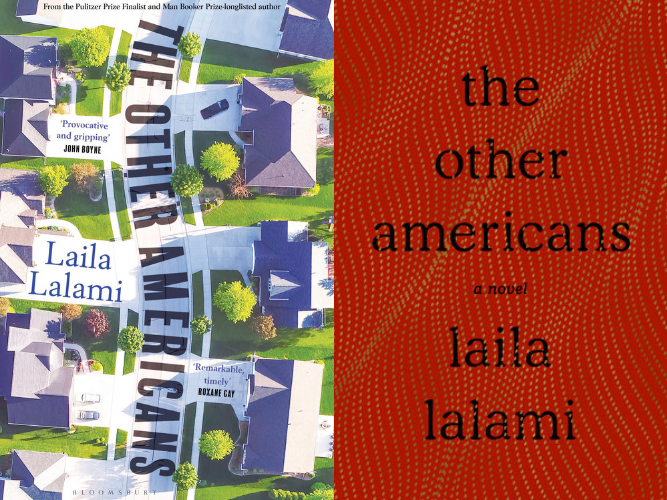
The Other Americans by Laila Lalami

With a bird’s-eye view of almost identical houses in the suburbs, this U.K. cover alludes to the story of The Other Americans: people brought together through the death of a Moroccan immigrant killed at an intersection. The billowing gold strands of the U.S. version may be beautiful, but ultimately it’s too abstract and doesn’t tell us anything about the book.

WINNER:

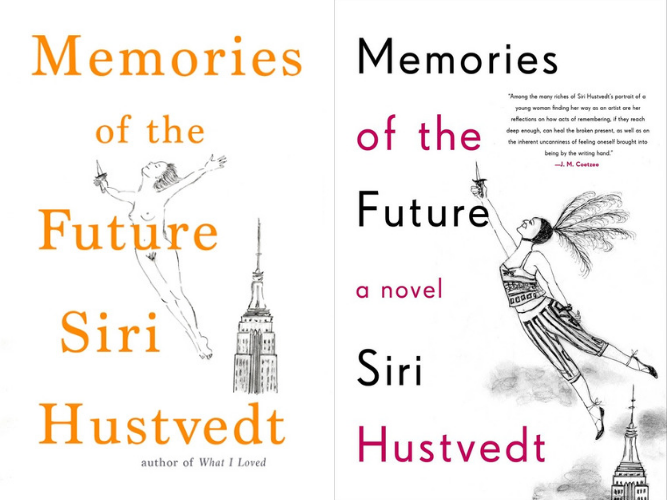
Memories of the Future by Siri Hustvedt

This novel is a work of autofiction about a Midwestern woman obsessed with her New York neighbor. The cover on the right might have more detail and flare (loving the feathered head-dress!), but this is a novel about the self, and I think the self is honest and bare. Let the body fly free, y’all. #FreeTheNipple (and the pubes).

WINNER:

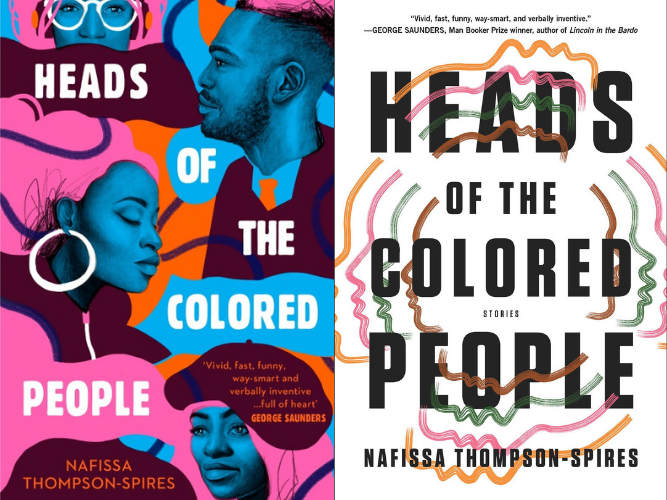
Heads of the Colored People by Nafissa Thompson-Spires

The cover on the left is beautiful, bold, and unapologetically colorful for this short story collection about blackness and middle-class America. This is not to say the right-side simplicity isn’t wonderful in its own way, but the U.K. has knocked it out of the park. (Pardon the American expression.)

WINNER:

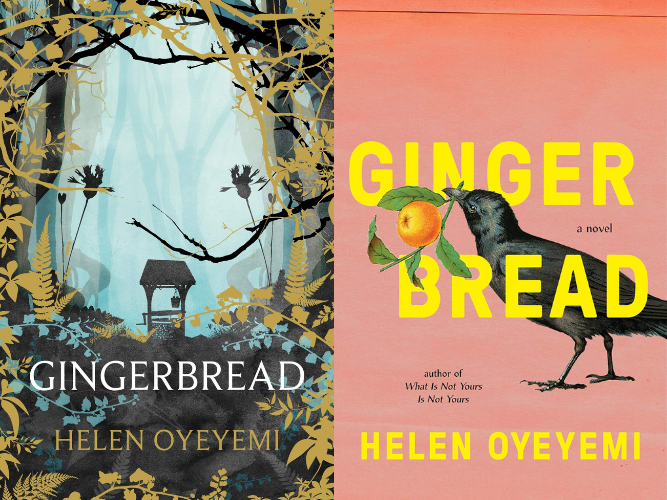
Gingerbread by Helen Oyeyemi

Helen Oyeyemi’s modern-day fairytale retelling of Hansel and Gretel is evocative and strange. While I love the emblematic lost-in-the-misted-woods illustration, I’ve seen it before. The American cover wins with its bright yellow font and a striking illustration of a raven holding a branch of orange and in our book, millennial pink always wins.

WINNER:

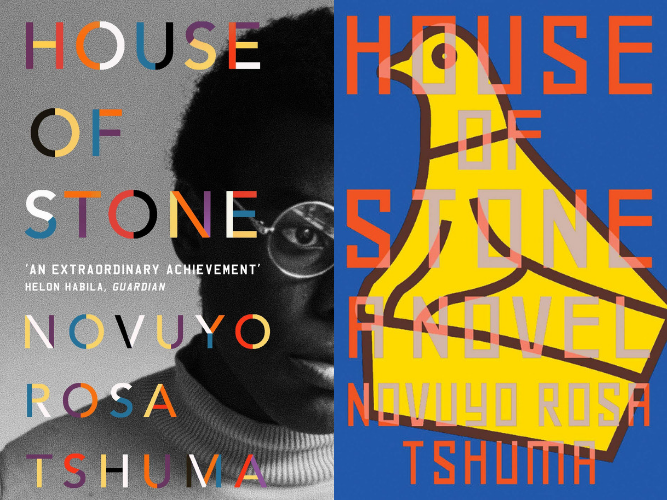
House of Stone by Novuyo Rosa Tshuma

This debut about a teenage boy’s disappearance in Zimbabwe is so stunning that I would be happy with any cover. If I had to choose, though? There is no question. The U.K. cover on the left looks like a photo hanging in an art gallery and the bright multi-colored typography has my complete attention.

WINNER:

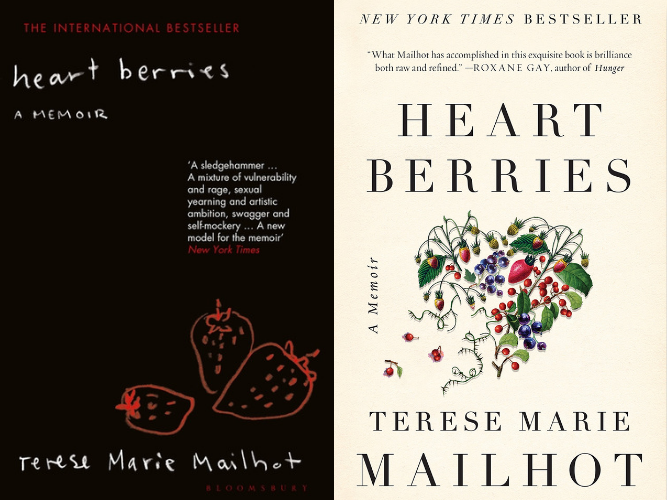
Heart Berries by Terese Marie Mailhot

Terese Mailhot’s memoir speaks poetic on growing up on the Seabird Island Indian Reservation and being diagnosed with Post Traumatic Stress Disorder and Bipolar II Disorder. While both images are stunning, there is something vulnerable about the hand-drawn quality of strawberries found in the dark.

WINNER:

The River by Peter Heller

Bold typography weaved with a psychedelic blue, red and white print? The U.S. version is as striking as the story it contains, about two college students who canoe down the Maskwa River before meeting a man in the midst of a wildfire. The British cover, on the other hand, looks like a cheap thriller sold in airports (right down to the cheesy tagline).

WINNER:

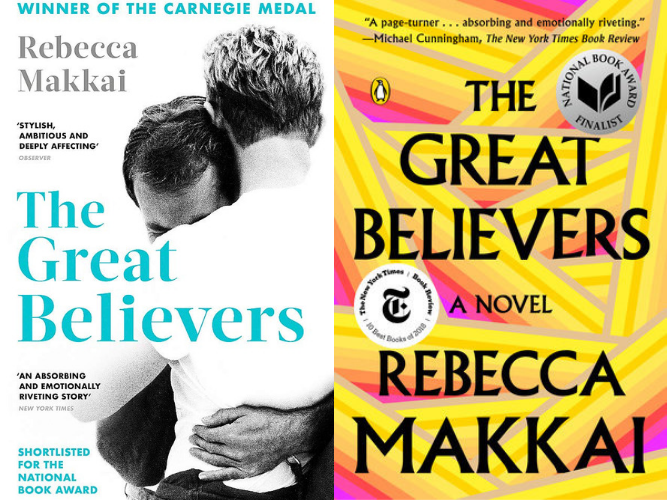
The Great Believers by Rebecca Makkai

A finalist for the Pulitzer Prize, this novel brings us Yale Tishman, a gay man in Chicago during the AIDS epidemic, and his friend’s sister Fiona, who is looking for her daughter in Paris 30 years later. If you’ve bought the U.S. copy already, you chose correctly. The pink and yellow looks stellar on the bookshelf. (I can attest.) The British cover conveys a lot of emotion with the image of two men embracing, but looks too much like a magazine cover.

WINNER:

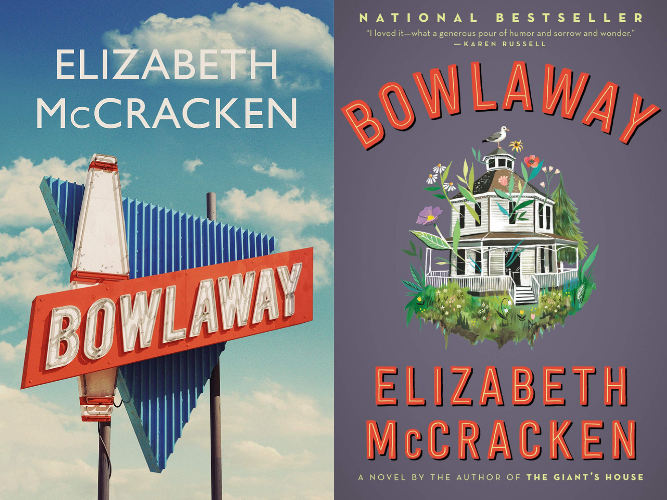
Bowlaway by Elizabeth McCracken

Beginning with Bertha Truitt, a mysterious woman found in a cemetery, Bowlaway features three generations of a family that owns a New England bowling alley. For a novel as curious as this, the U.S. cover is a touch too cute. The U.K. wins with its nostalgic neon signboard.

WINNER:

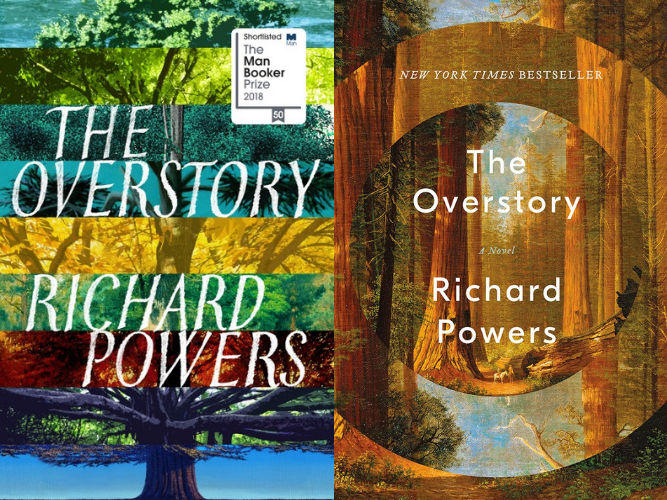
The Overstory by Richard Powers

A Pulitzer prize winner, this novel is a must-read, especially with such a rich, concentric cover from the U.S. that centers us deeper into the forest. This book interconnects the lives of people brought together by communicating trees to save one last, untouched landscape. The British cover, with the rainbow tree layers all screaming for your attention, gave us less of a sense of the book—and more of a headache.

WINNER:

The Confessions of Frannie Langton by Sara Collins

The embroidery on the left image is incredibly appealing. Its gilded thread and menacing imagery have my vote for this book about a former slave accused of murdering her employer. For a novel where Frannie Langton voices truth and condemns English society, do we need another picture of a headless woman?

WINNER:

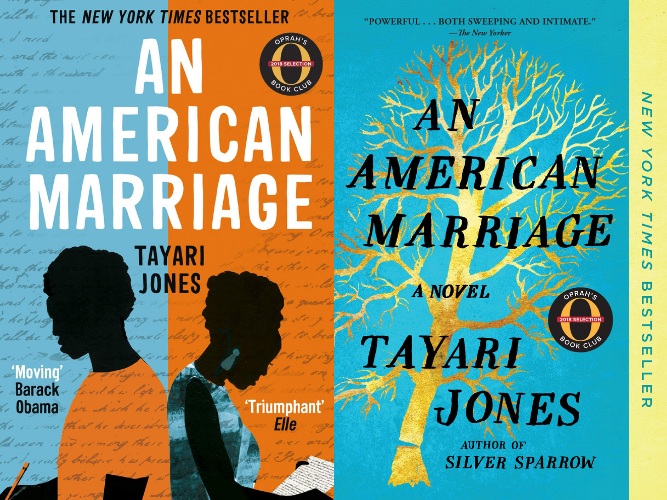
An American Marriage by Tayari Jones

An American Marriage portrays newlyweds Celestial and Roy after Roy is arrested on a fraudulent charge. Their relationship is shaken further when Celestial takes solace in their friend, but when Roy’s conviction is overturned, what will happen? The U.K. cover is as gripping as the novel, revealing both sides of a shaken marriage through the letters they write to each other.

WINNER:

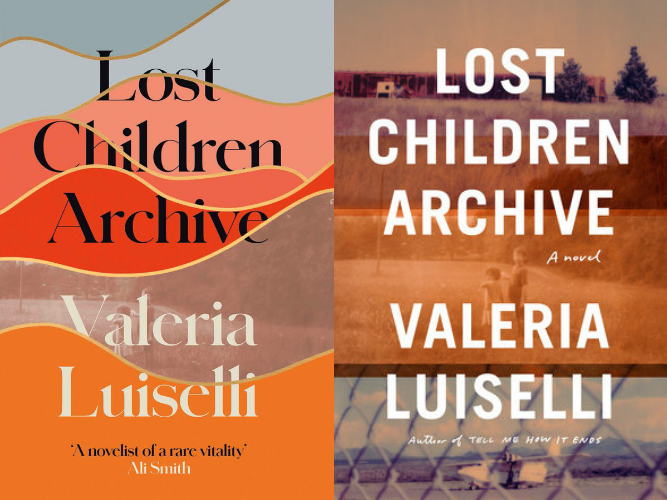
Lost Children Archive by Valeria Luiselli

Lost Children Archive winds down the Southwest as a family drives to Apacheria, the homeland of the Apaches, while hearing about the immigration crisis on the radio. Each cover filter glimpses of this compelling story, windowing an old photo of two children through orange and grey hues. The solution: buy both.

WINNER: Tie

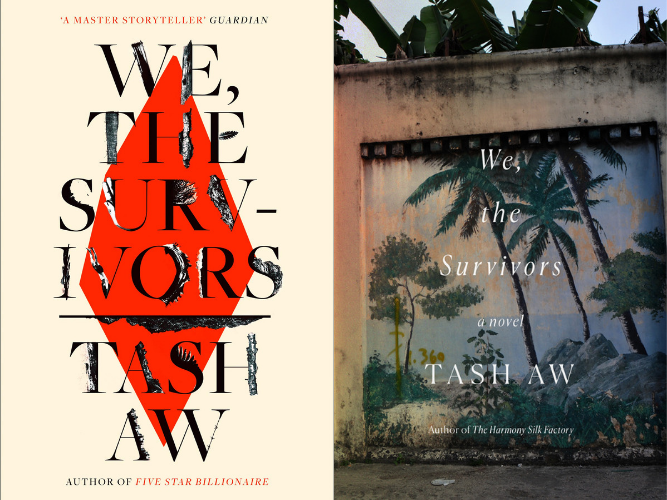
We, the Survivors by Tash Aw

These covers may be tonally different, but the U.K. version is just too remarkable to ignore, especially for a book like this. We, the Survivors opens to a Malaysian fishing town, where Ah Hock, an ordinary man in an unforgiving world, is lead to murder a Bangladeshi migrant worker. The choice is hard, but whichever jacket you like more, I’m the last to judge.

WINNER:

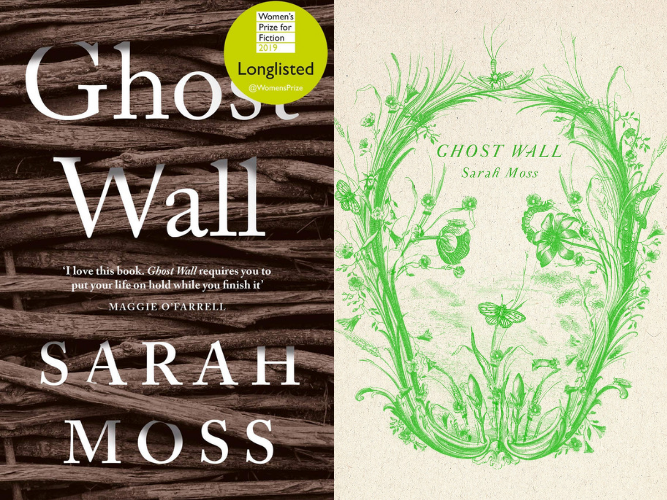
Ghost Wall by Sarah Moss

The green skull looks like a mouthless imprint that receives the reader in a story where Silvie and her family live like ancient Britons. After they join an anthropology course, Silvie confronts what life could be, while the class builds a ghost wall, a barricade with skulls to ward against enemies. It’s a haunting tale, and it needs an image to match. The winner is clear.

WINNER:

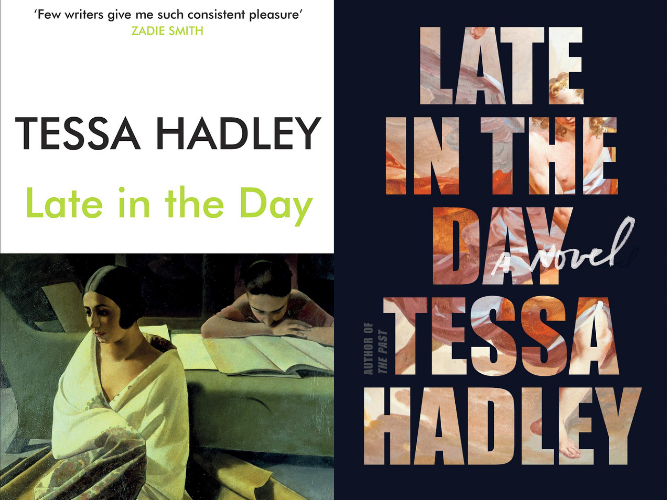
Late in the Day by Tessa Hadley

It was no surprise to us that the U.S. version was the winner. The cover is arresting with the Renaissance painting of an angel cleverly hidden in typography. This novel, about two couples whose relationships devolve when someone dies among them, deserves a cover as vivid as its story.

WINNER:

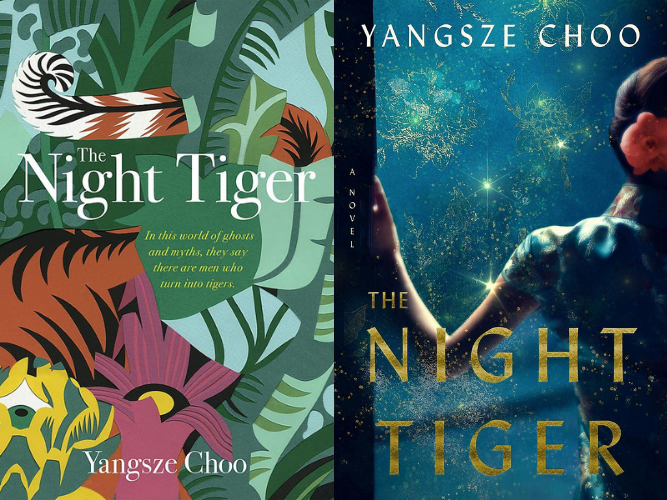
The Night Tiger by Yangsze Choo

The Night Tiger is about a young boy’s mission to find his dying master’s finger, a woman’s secret world as a dancehall girl, and men who transform as tigers in 1930s British Malaya. The British cover is playful and whimsical with its abstract cutouts. The American version, on the other hand, looks like a very stereotypical cover of books written by Asian women with the back of a (yet another faceless) woman dressed in what looks like a cheongsam with her hair in a bun.

WINNER:

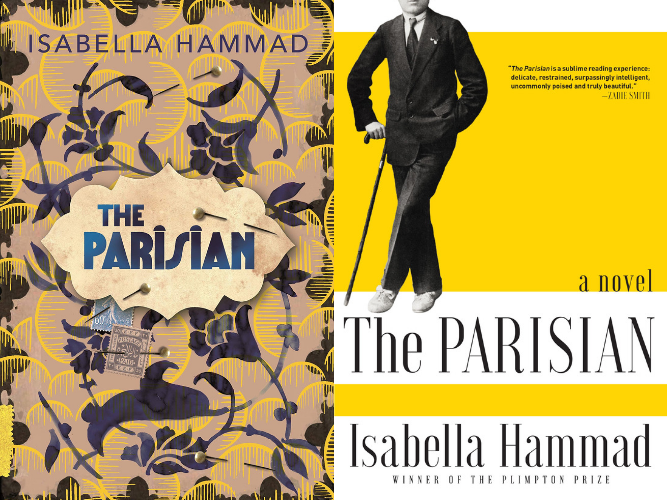
The Parisian by Isabella Hammad

Though the U.S. cover is eye-catching with its sharp lines, bright yellow background, and period figure of man in a suite and cane, the British cover, with its stamps pinned into a floral wallpaper, evokes this novel’s long journey. From France during WWI through British-occupied Palestine, a young man discovers what it means to fight for independence.

Winner:

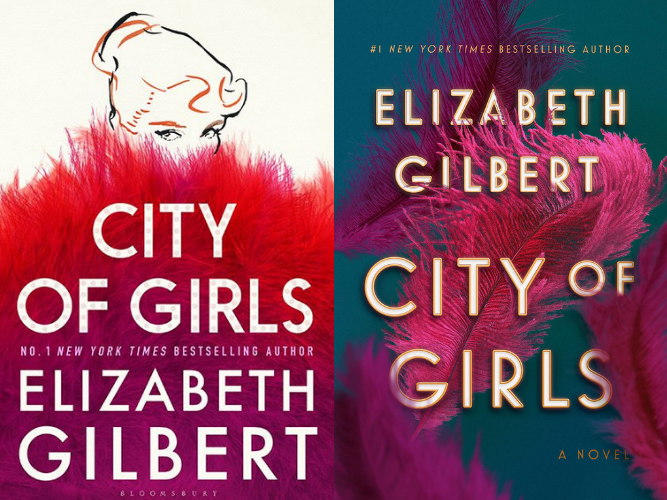
City of Girls by Elizabeth Gilbert

While the right side has the lovely dark teal background and flittering pink, the left side is playful and seductive with the line drawing of a woman, her face coyly hidden. This 1940s NYC love story is about nineteen-year-old Vivian Morris and the Lily Playhouse theater, where she finds freedom in her female self. What better way to show that than come-hither eyes shrouded in a feather boa?

Winner:

Sea Monsters by Chloe Aridjis

Sea Monsters tells the story of two teenagers in Mexico City who don’t know each other but run away together to look for escaped circus dwarfs along a beach town. These covers are oceanic treasures—as captivating as the story they encase.

WINNER: Tie

Kathleen Alcott on the Lie of American Meritocracy

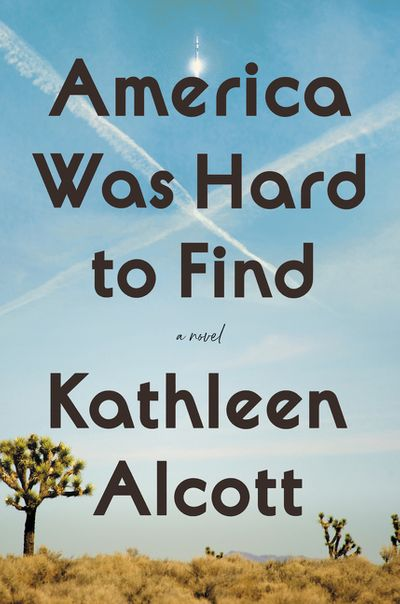
Kathleen Alcott’s third novel America Was Hard to Find is a multi-decade, multigenerational, national epic about arguably the three most definitive events of the second half of the 20th century—the moon landing, the Vietnam war, and the AIDS crisis. It is as broad in scope as it is limited by its small cast of characters, as lofty philosophically as it is intimate emotionally.

Buy the book

Alcott is a virtuoso of the significant detail. In her treatment we are not told that a rocket is faulty; we are shown the brilliant yellow lemon that one of the astronaut’s “lilac-jawed colleagues” placed upon the command module simulator, as a clever signal to his colleagues. Nor are we told that a woman is trampled by her horse; instead we are shown him galloping back toward “the line of chaparral [that] obscured the flat place where he’d lost her.” The effect is slow, elegant, cinematic, and absorbing.

Reading this novel was, for me, like panning for gold on the lip of a goldmine. Every paragraph or two I’d feel the need to stop, bend down, and examine a sentence more closely. I’d touch it. I’d weigh it in my hand. Only on standing up again, and taking in a broad view of the whole landscape, would it occur to me—first teasingly, and then in earnest—what Kathleen Alcott’s project might have been.


Rachel Lyon: Your other books are less ambitious in scope than this one (though the characters are just as deeply rendered, the stories as finely wrought). Did you know how ambitious this project would be when you started it? Was that part of the plan, from the beginning? Or did it grow larger—geographically, temporally—over the course of the writing process?

Kathleen Alcott: The concerns of the novel are always the concerns of the life, and the best answer to this question is probably more attuned to how my life changed, during the long time I spent on this book, or what understanding of that life—previously barred from my awareness—I began admitting, namely my identification with certain underclasses: that of the raised poor, that of the raised female.

In terms of the first, and not to be too heavy-handed and with the caveat that I don’t think the poverty of my childhood is at all akin to ancient Roman slavery, something that comes to mind is this half-remembered history lesson about slaves in Rome, who were not dressed by masters in clothing that set them apart (in the way that, for instance, royalty was set apart), so that they could not, in public, identify each other, and in so doing gain any kind of power through any kind of exchange. That is money in this country! By which I mean the barriers are invisible or deceptive to a certain point, and we all do such a good job pretending about being “equal,” furthering that illusion by painful and private debt.

It took me a very long time to realize how very few people I knew in the New York intellectual circles where I spent my twenties could at all relate to certain very charged and frightening memories I had, the year my father was living out of his car, the time as a flirty toddler in a free clinic I ran toward a person nodding off mid-heroin nap in a waiting room and my mother panicked and barked at me not to bother him. That’s a particularly American conception of inequality, its late arrival I mean—it’s such a nice lie, the American one, the staircase of merit to which everybody thinks she has access. My sense of being held back as a woman came similarly late, as I think it does for many women the moment we turn about 25 (I was 24-29 as I wrote this novel), coming off the false equalization of the liberal arts classroom, realizing how much of our power is soft.

RL: I’m always curious about how novels begin. Some start with an image, some with a dynamic between two or more characters, some with an anecdote the writer heard at a party, some with her curiosity about a certain concept, etcetera. I read that one particular piece of information caught your eye, during the research phase for America Was Hard to Find: that many Americans were deeply critical of our government for redirecting public attention from the atrocities of the Vietnam war to the “bread and circus” of space travel. Was that discovery, for you, the beginning of the book? Or was there some other guiding question or story, say, that set it in motion? Did you always know you wanted to write about the moon landing, for instance?

It’s such a nice lie, the American one, the staircase of merit to which everybody thinks she has access.

KA: Well, it was fucking crazy to write about the moon landing, and I expect to be sued. It’s true that when I began on my research about the Apollo program (which I just thought was just reading!) I kept tagging sections where an astronaut would be pelted by tomatoes, or otherwise met with vitriol, on a goodwill tour or some such. These sections were always very brief, a passing mention of a “smaller” strain of hatred or passion than many other protest movements. So I began with an image of two people not watching the moon landing, which felt like the way to begin answering the questions I had about the worth and virtue and public opinion of the Apollo program.

RL: There is an almost myopic quality to the descriptions in this book, as if all your characters’ sensations are experienced very close to the body, and very intensely. Sifting through the book for examples of what I mean, for the sake of this interview, is overwhelming; there are half a dozen examples of stunning, closely observed descriptions on every page. I wonder if you chose a kind of sensory, claustrophobic prose style in part to counterbalance the global expanse of the novel, or if that just happened naturally?

KA: I think and teach often about John Gardner’s idea of psychic distance, how closely/fully we are brought to any given character’s thinking but also sensoria. It’s an idea I’ve enjoyed expanding upon, and in the classroom I will sometimes put these (six sense distinctions, actually, to my mind) on a left to right scale that describes increasing intimacy, starting with the sonic, ending with the “organic”—literally the experience of the organs, the shivering of intestines, etc—and ask which seem crucial/justified in our look at any character, and identify any kind of sensorial bias. In [my novel], Wright and Fay are more often granted more sensorial “space” given the less institutionally protected—but also sexually liberated—natures of their lives. I wanted the Vincent sections a bit more flattened, at least in the long nadir of his life after the program.

I do think it should be said I live more in my body than some people might, people who are very lucky to be just in their minds—exercise, sex, the tactile experience of clothing and pillows, the way my home and car smell, are a semi-impractically crucial part of my happiness. It feels ridiculous to complain in the space one interview about class inequality and then hint at your fine feeling for linen and palo santo, but there you questionably have it.

RL: The limits of any historical novel—and of any novel at all, really—have to be delineated against the backdrop of reality. Your astronaut Vincent Kahn is a fictional character. Your fictional radical leftist domestic terrorist group Shelter is loosely based on the Weather Underground—but you say in your acknowledgements that “it feels important to clarify mimesis of their actions was not my intention.” What sorts of decisions did you make, in the process of adapting certain people, places, and facts into fiction, and why was it important to fictionalize to the extent that you did?

The rule I set was that all the white men at the very top of American power were the same, but those under them could be counterfacts.

KA: The rule I set for myself was that all the white men at the very top of American power were the same, but those under them (as well as the women who raged against both sets) could be counterfacts—when I started, some of the novelists in my life were very dubious about this choice, but my hope is it became a message of its own: that when masculinity is conceived of as it is, that when imperialism destroys as it does, etc, etc, etc, it is never the specifics of the individual that are valued. Anybody could have walked on the moon, almost anybody could have died building a bomb in Greenwich Village, and very little would have changed, because, in the first case, it was an order that came from a rarely unchecked top.

In the second, the message sent was that certain young Americans, in the face of what this country did to less powerful countries, no longer valued their own lives, and so to depart from the individual, to create a fictional sort of metonym of a character—Fay is not really only Fay, to me—felt right. The choice is an arc, and the choice is about what is ineluctable under hierarchy and American greed and American fear.

18 Inclusive Anthologies That Highlight Underrepresented Voices

When I think of anthologies I always consider how The Black Poets, edited by Dudley Randall, is one of the first of its kind. This is a book that helped define and assemble generations. While The Black Poets doesn’t encompass every Black poet known today, it serves as a steady guide of those who came before us, the poetic devices they utilized, and the ways that rhyme and language were molded to describe life at the time. Anthologies have often been a reference tool (see Norton’s Best or the Best American series), yet often their core pages have not been inclusive or reflective for many of us in marginalized communities.

Collections compiled by and for marginalized identities have been a source for writers and artists to find space for their work, whether in creative writing, visual arts, or personal stories about their backgrounds. When I edited Everyday People: The Color of Life—A Short Story Anthology, I thought a lot about the role of an anthology and the way that an editor’s vision plays into how the work unfolds for readers. I didn’t want to think of this collection as an “issue book,” but more so a text that took into account the different methods of storytelling. I thought of, and referenced, a few all-Black anthologies that had spoken to and given Black artists a place to be themselves, to experiment, to have fun. I used that as my guide along with my own preferences for full-fledged stories where characters of color didn’t suffer and had agency. For many of us the search continues to find stories, whether they’re organized around theme or identity, illustrating our existence, an existence that is multifaceted.

As I see more anthologies publishing, I wanted to compile a list of those out both traditionally published and crowd-funded, that have made space for inclusive stories in all their glory and range. Here are 18 titles to get you started.

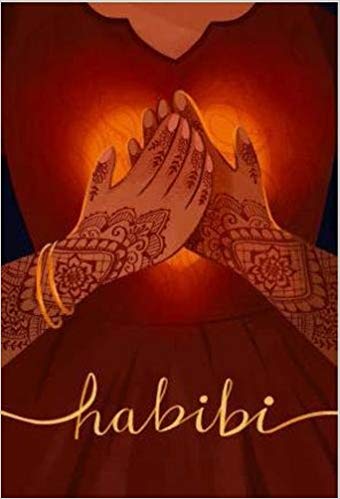
Habibi: A Muslim Love Story Anthology, edited by Hadeel al-Massari

This project got up and running on Kickstarter with full funding and beyond in 2017. The short fiction in Habibi range from the erotic to romantic comedy and LGBTQ couples putting Muslim characters center stage in their own love stories.

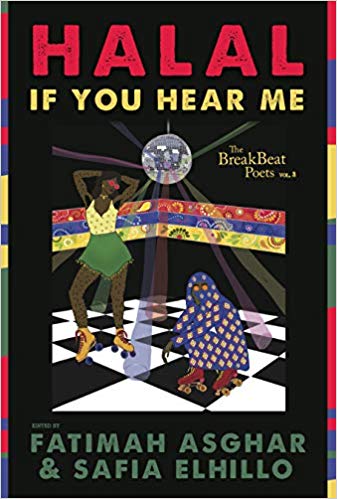
The BreakBeat Poets Volume 3: Halal If You Hear Me, edited by Fatimah Ashgar and Safia Elhillo

The Breakbeat Poets series from Haymarket Books has included work focusing on themes of identity (Black Girl Magic edited by Mahogany L. Browne, Idrissa Simmonds, and Jamila Woods) as well as musical influences (New American Poetry in the Age of Hip-Hop edited by Kevin Coval, Quraysh Ali Lansana, and Nate Marshall). This edition celebrates the multiplicity of Muslim identities through poetry.

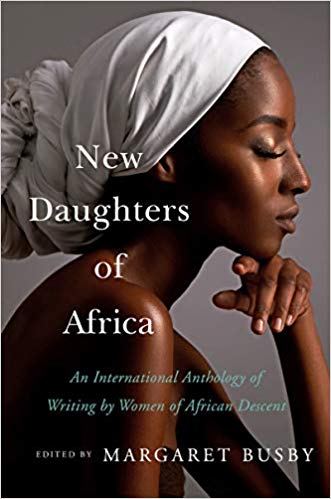
Daughters of Africa and New Daughters of Africa: An International Anthology of Writing By Women of African Descent, edited by Margaret Busby

New Daughters of Africa was recently published in America by Amistad and in the U.K. earlier and features over 200 artists ranging from those born 200 years ago to those born in the 1990s. This is an updated edition to Busby’s hefty Daughters of Africa originally published in 1992 with snippets of nonfiction, fiction, and poetry. The new edition includes more contemporary voices such as Nana Brew-Hammond, Jesmyn Ward, and Namwali Serpell to name a few. Both editions include excerpts from icons such as Maya Angelou, Toni Cade Bambara, and Audre Lorde.

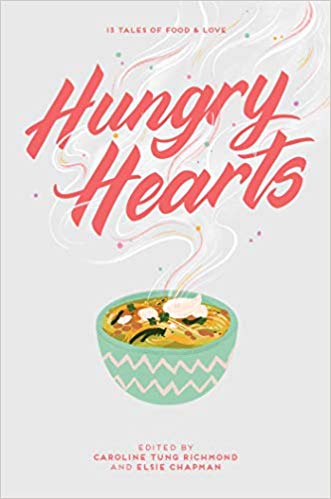
Hungry Hearts: 13 Tales of Food and Love, edited by Elsie Chapman and Caroline Tung Richmond

As the title proclaims, this new young adult anthology combines food and love, in some instances through romance and others through an actual love of food that brings characters together or to a firmer understanding of their background. An array of POC authors contribute their fiction to an anthology which may also boast an appetite.

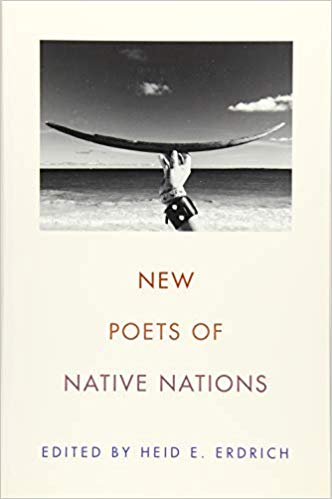
New Poets of Native Nations, edited by Heid E. Erdrich

Twenty-one Indigenous poets of varying styles and tribal affiliations are showcased in Erdrich’s anthology from Graywolf Press. From National Book Award finalist Layli Long Soldier to MacArthur Fellow Natalie Diaz, readers are treated to thought-provoking and experimental work of some of the most captivating poets of our time.

Can We All Be Feminists? Writing from Brit Bennet, Nicole Dennis-Benn, and 15 Others on Intersectionality, Identity, and a Way Forward for Feminism, edited by June Eric-Udorie

I loved the scope of Eric-Udorie’s anthology on feminism with essays touching on topics like the exclusion of trans identity and sex workers in feminism, the struggle for same-sex female couples seeking immigration, and the misogynistic judgment on women’s bodies. Where Can We All Be Feminists? title asks the question, the contributions provide positions many should think about when it comes to intersectional feminism.

In Other Words: Literature By Latinas of the United States, edited by Roberta Fernández

With work segmented by genre in drama, essay, fiction, and poetry, Fernández compiles a fairly hefty and focused text of work by Latinx women in varying styles. Writers engage on topics from feminism, culture, assimilation, and class among other themes.

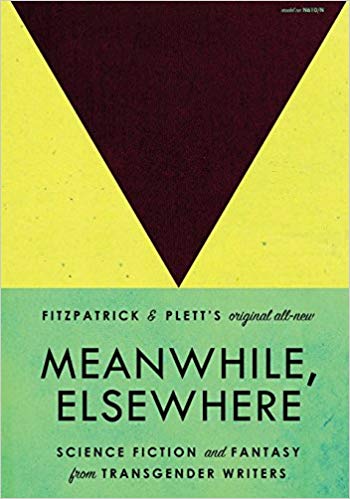
Meanwhile, Elsewhere: Science Fiction and Fantasy from Transgender Writers, edited by Cat Fitzpatrick and Casey Plett

Meanwhile, Elsewhere spans many areas of sci/fi fantasy from high fantasy, post-apocalyptic, and more with new work from writers Ryka Aoki, Jeanne Thornton, and Dane Figueroa Edidi. If you go to the Topside Press landing page for this title you can even buy themed post-reality swag along with the text itself.

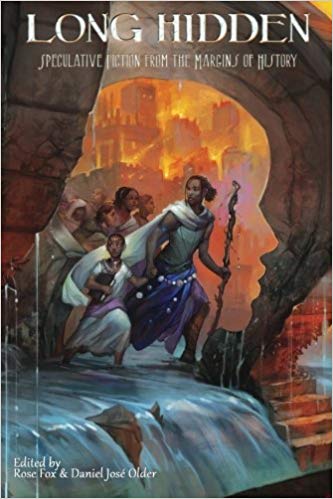
Long Hidden: Speculative Fiction From the Margins of History, edited by Rose Fox and Daniel José Older

With contributions from established names in speculative fiction  (Victor LaValle, Nnedi Okorafor) and rising voices at the time (Rion Amilcar Scott, Sofia Samatar), Long Hidden allowed oral tradition to play a key role in the presentation of marginalized voices from history and beyond. The follow-up anthology Hidden Youth, edited by Mikki Kendall and Chesya Burke, features teen characters.

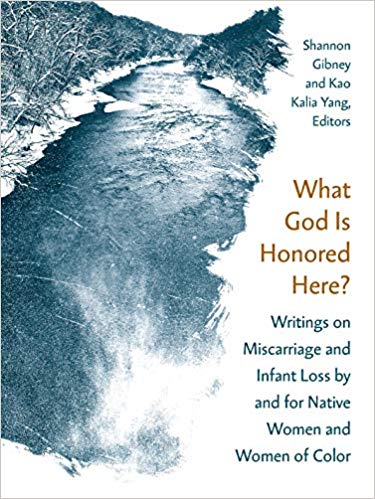
What God Is Honored Here? Writings on Miscarriage and Infant Loss by and for Native and Women of Color, edited by Shannon Gibney and Kao Kalia Yang

Combining poetry and prose, the pieces within What God Is Honored Here? discuss the pain of loss while also the perseverance of those who have experienced it either by choice or not. At a time when the regulation of bodies resurfaces throughout the country, this collection showcases how BIWOC are affected in personal and profound ways.

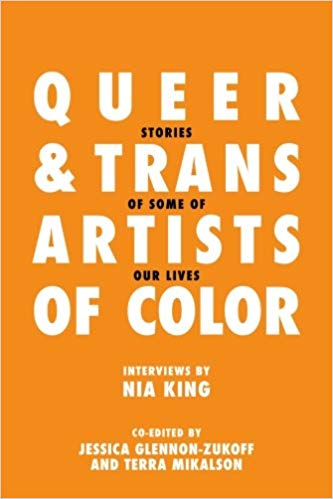
Queer and Trans Artists of Color: Stories of Some of Our Lives, interviews by Nia King, co-edited by Jessica Glennon-Zukoff and Terra Mikalson

Don’t stop at volume one King’s QTAOC series. These compilations feature candid conversations with POCs in the LGBTQ+ community. King’s books have received great visibility due to her passion and influence and for prioritizing the stories of trans and queer people directly from trans and queer people.

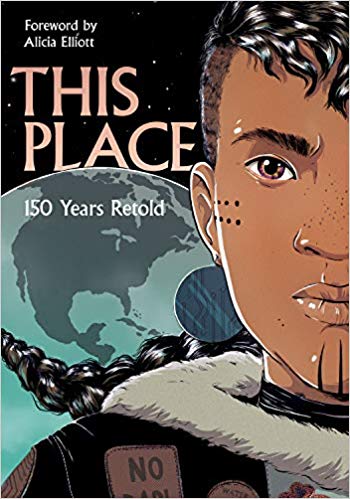
This Place: 150 Years Retold from High Water Press, foreword by Alicia Elliott

A graphic novel anthology published in Canada, This Place features the work of Indigenous creators like Brandon Mitchell, Kateri Akiwenzie-Damm, Katherena Vermette, Tara Audibert, Kyle Charles, Natasha Donovan. The stories encompass depictions taking place from the late 1800s to an anticipated future with vibrant illustrations and candid storytelling.

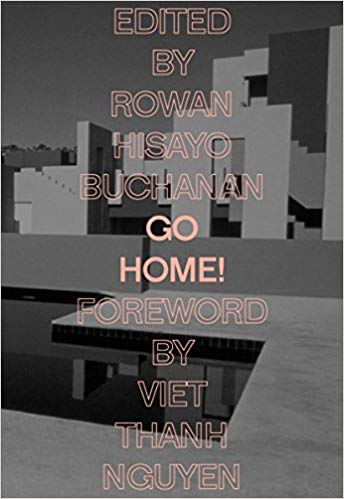
Go Home! by Rowan Hisayo Buchanan

A collaboration between Feminist Press and the Asian American Writers Workshop, the work featured in Go Home dispels a singular idea of home whether as a person of color or an immigrant/refugee. The Asian writers who contributed provide context and contrast in pieces spanning many explorations of place.

Love Beyond Body, Space, and Time: An Indigenous LGBT Sci-Fi Anthology, edited by Hope Nicholson

This anthology merges genre with heartfelt romance. Stories range across the Indigenous LGBT community and those focusing on two-spirit characters included tales that are intergalactic or include technology as a way to find love.

The Good Immigrant: 26 Writers Reflect on America, edited by Nikesh Shukla and Chimene Suleyman

Personal stories have often been at the forefront of what makes an anthology unique and The Good Immigrant adds to that roster. With stories of cultural appropriation, revisiting homelands, and seeking connection through food and fashion, the contributions in this collection go from country to country leaving readers with more to consider and a wider viewpoint on “belonging.”

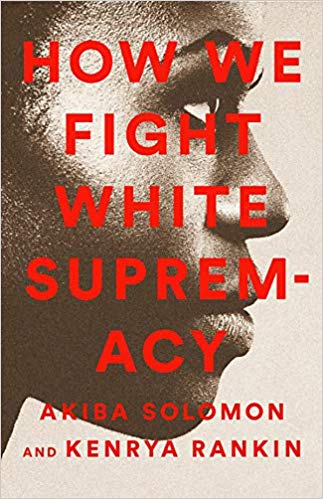
How We Fight White Supremacy: A Field Guide to Black Resistance, edited by Akiba Solomon and Kenrya Rankin

Contributions run the gamut in How We Fight White Supremacy, with words from freedom fighters and celebrities like Harry Belafonte to Insecure’s Amanda Seales as well as Kiese Laymon, Imani Perry, Hanif Abdurraqib, and Dr. Yaba Blay. Much of those featured have deep reflections on pushing against oppressive forces and joining together in a fight for a more inclusive and loving nation.

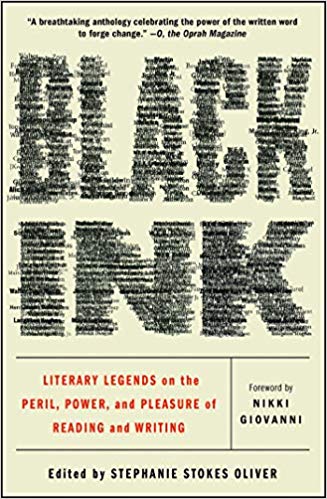
Black Ink: Literary Legends on the Peril, Power, and Pleasure of Reading and Writing, edited by Stephanie Stokes Oliver

Stokes Oliver compiles work as early as the writings of Frederick Douglass and Booker T. Washington to Roxane Gay and Edwidge Danticat on the work of writing as a Black person. Looking at the range of pursuits as well as the personalization of craft this anthology speaks to the positions Black writers have been in to speak a form of their truth for decades.

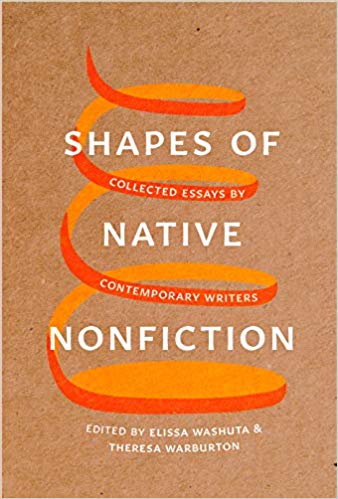
Shapes of Native Nonfiction: Collected Essays by Contemporary Writers, edited by Elissa Washuta and Theresa Warburton

Terese Marie Mailhot and Kim Tallbear are a couple of the contributors to Washuta and Warburton’s anthology. Shapes of Native Nonfiction takes lyric essays into account with the complexity of looking at how to literally weave and coil them together through the idea of basket weaving. This anthology publishes in July, so get your preorders in now.

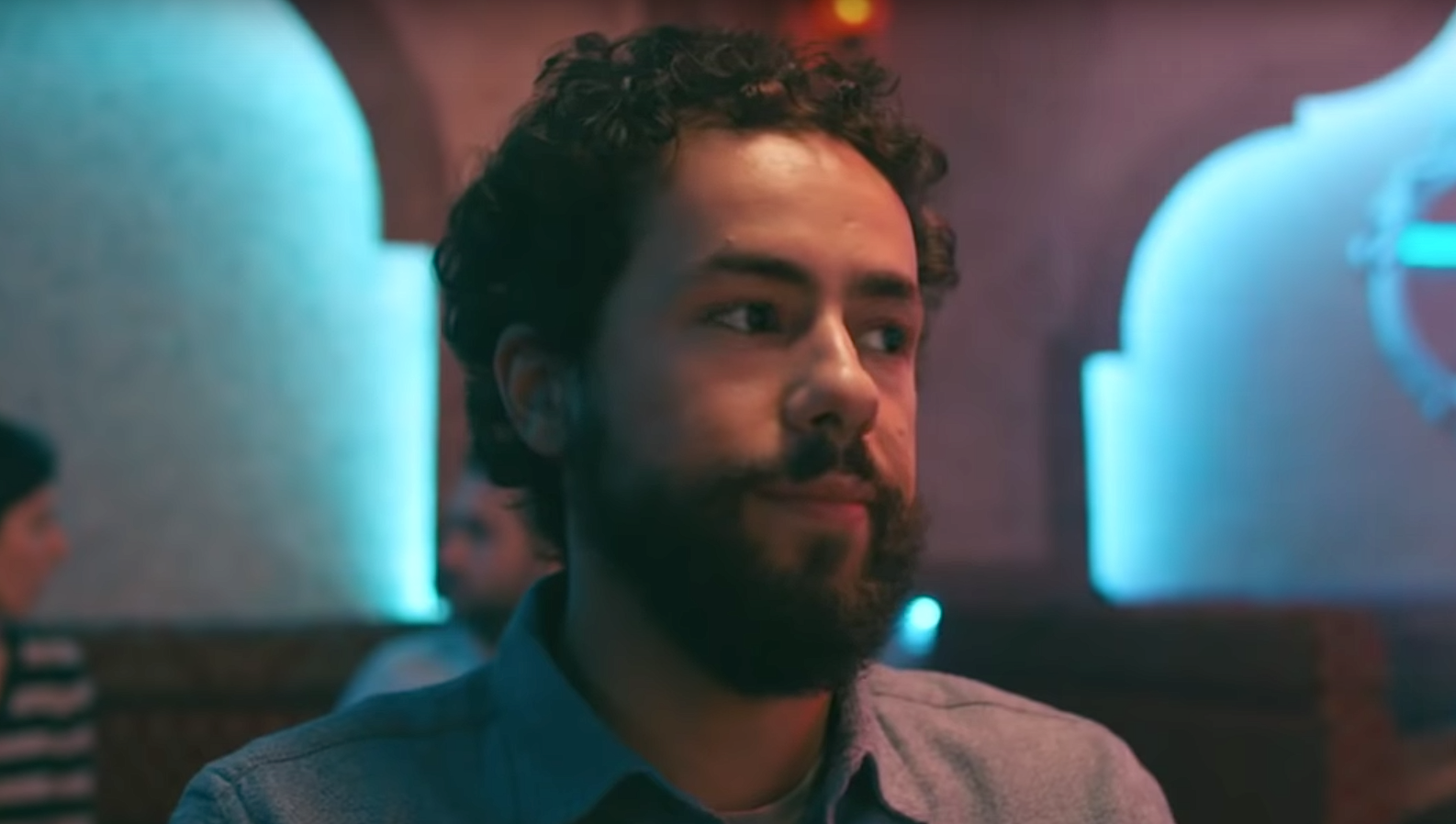
“Ramy” Reflects Muslim Millennial Anxiety Like Nothing Else on TV

The new Hulu series Ramy explores the complexities of life for an Egyptian, Muslim millennial born and raised in America. The show, a fictionalized version of creator Ramy Youssef’s life, follows his character, Ramy Hassan, as he navigates the everyday world with his immigrant parents, his sister, and his Muslim and non-Muslim friends. In many ways, the show is revolutionary; it’s the first sitcom focused on a modern Arab Muslim family, and it’s part of a rare breed of shows that present Muslims in a way that doesn’t blatantly offend or resort to stereotypes. For me, a millennial Egyptian-American raised Muslim just like Ramy, to see a family like my own on screen for the very first time was incredible—and vastly important for other first and second generation Arabs and Muslims, no doubt. But even more than Ramy’s family, the presentation of Ramy himself felt revolutionary: a young man who has not rejected the religion or culture of his family, who respects them, but who struggles to figure out what they mean in his generally secular, American life. While the show does not claim to speak for all Muslims or Arabs, it depicts a very common tension felt among first and second generation millennial Arab Muslims—the tension between the values and demands of our parents versus those of our peers, and the ways in which we remain in conflict between the two.

One common experience—both for myself and others I’ve encountered with a similar background—is the cognitive dissonance between the values we’re raised with and our actions.  Millennials who were raised Muslim and still identify as Muslim nevertheless often defy the rules of Islam, blatantly and habitually. We’re taught not to drink, smoke, have sex before marriage. We’re told to fast during the month of Ramadan. Our families are sometimes more strict, with more conservative values than the families of our American friends, and when we choose between their values and our peers’ behaviors we aren’t always following rules to the letter. This is not to generalize, but the experience does seem common—in my own family and others as well.

Ramy embodies the tension between behavior and belief.

Ramy embodies that tension between behavior and belief. While he does “sin”—having sex before marriage, taking an edible, sleeping with a married woman—one common thread throughout is his seemingly earnest desire to be religious. He says at one point, “I wish I never had sex,” recalling what he now thinks of as a happier past. It’s not that he feels guilty, exactly, for breaking a religious rule, but he misses a more innocent time in his life when choices were less complicated and he believed in a more rigid idea of right and wrong—an idea that his parents passed down. This nostalgia for simple childhood is common among millennials, but Ramy is the first time I’ve seen that struggle explicitly framed within the narrative of Islamic culture.

Similarly, when Ramy takes a weed gummy, he soon finds himself in a mosque looking for redemption and forgiveness. Even as he defies the rules his parents have taught him, a part of him still clings on to the culture and religion they hold dear: his transgressions are American and millennial, but the way he seeks to soothe his complex feelings about them is specifically Muslim. Ramy arrives at the mosque and sees a man—a white, Muslim convert—vacuuming the rugs. The two sit and speak, and Ramy says he feels less like himself and more like “another dude who does weed.” The man sitting next to him responds, “It’s not about adding up every good deed versus bad deed. ‘Cause if it was, none of us would have a chance. It’s about your heart.” The scene ends with Ramy cleaning the mosque in an attempt to clean the “black spots” on his heart.

Scenes like this encapsulate the tensions faced by first and second generation Arab Muslim millennials, and show that there’s more to Islam than following the rigid rules taught by our parents. As late as my early twenties, I felt that same pull on my conscience each time I broke a rule that my parents held sacred. I never wound up in a mosque, speaking to a wise convert before I cleaned the place as a metaphor for cleansing my soul, but I felt guilt nonetheless and sometimes found myself apologizing to God or perhaps no one at all for being a “bad” Muslim who defied my family’s values. Much like Ramy, I struggled with the tensions of breaking those rules and breaking away from the beliefs my parents instilled in me.

In an episode centered around Ramadan, Ramy fasts for the month and vows to give up sex and porn, as though that alone will make him wholesome and good. His friend accuses him of being a “Ramadan Muslim,” or a Muslim who is only devout during the month of Ramadan and hypocritically defies the religion for the rest of the year. But Ramy’s inconsistent observance is less an act of fundamental hypocrisy and more a kind of arrested development; he’s unable to break away from the structures his parents taught him, even as his life changes. He views Ramadan as a chance to start fresh and live a life free from sin and temptation. While the show itself complicates the idea of what it means to be Muslim, Ramy remains glued to the surface-level rules, something I very much relate to in my own upbringing. Like Ramy, I was taught to follow these rules without any real room for error, and the show does a good job of exemplifying that almost simplistic mode of thought many first and second generation Arab millennials are stuck in.

The show complicates this pull between the devout past and the Americanized present when Ramy goes to Egypt. His goal is to take time away from the temptations afforded to him in the U.S.—sex, drugs, parties—and he assumes Egypt will lend him the space to move closer to Islam and follow a more righteous path. Because his moral framework comes from his parents, Ramy assumes that a move towards his ancestral homeland will mean less temptation and more effortless morality. However, as soon as he arrives in Egypt, his cousin Shadi takes him to a party where people are drinking and snorting coke, and Ramy is plunged into a world with even more temptations than before. Shadi, though, is more complex than we’re first led to believe, as his partying is a result of the trauma he experienced seeing friends die during the protests in Tahrir Square. Through Shadi, the series debunks the myth that Muslims abroad are any more wholesome than Americans, but it also complicates the notion of Islam as a whole. Shadi is Muslim, but has found that in his struggle to get over his trauma, the rules of his religion don’t bring as much relief as the diversions of his peers.

Ramy, like myself and other Muslim millennials, has to figure out what Islam means to him beyond the rules he learned from his parents.

In speaking to his other cousin, Shadi’s sister Amani, Ramy says, “I feel like the problem’s really that I just don’t know what kind of Muslim I am.” “There’s Friday prayers, and then there’s Friday night,” he tells her, and he’s at both. He adds, “I’m breaking some rules, I’m following others, and I thought coming here would give me some clarity.” Ramy comes to the realization, though, that coming to Egypt to escape American temptation and American life is not the answer; he has to reconcile his beliefs on his own. Amani takes Ramy to a prayer group that consists of singing, chanting, drumming, and swaying, and in that moment, we see Ramy more moved than he’s been throughout the entire series. That scene seems to tell the viewers that his concerns—his preoccupation with rules—don’t matter. Nowhere is free from temptation, and the cognitive dissonance of living two lives with two different value systems almost seems to fade away as Ramy gets lost in the prayers and music. Ramy, like myself and other Muslim millennials, has to figure out what Islam means to him beyond the rules he learned from his parents—what Islam means in the context of a changed world.

Of course, the millennial Muslim experience varies greatly across cultures and families, and Ramy doesn’t aim to represent every Muslim American. In fact, in a Reddit thread about the show, many viewers find themselves unable to relate, while others call it “honest” and “unfiltered.” But the series hit home for me, exemplifying the often complicated experience of growing up Muslim in an American, non-Muslim society. Ramy, like myself and other Arab, Muslim millennials, is stuck between two worlds, belonging to neither.

13 Books by Pacific Islanders

May is Asian American and Pacific Islander Month, supposedly a time to celebrate Americans with roots in Asia or the Pacific Islands. But functionally, it winds up being Asian American Month, with people of Pacific Islander heritage shoved to the side or not recognized at all. There are articles and literature about Asian Americans aplenty, but no sign of Pacific Islanders—the other group that is allegedly meant to be celebrated. Sure, Hawaii and other Pacific islands like Samoa, Micronesia, Fiji, and the Marshall Islands have relatively small populations compared to the continent of Asia—but there are still over a million people with native Pacific Islander heritage in the U.S. alone!

By grouping these two very different communities together, we are inadvertently erasing Pacific Islanders from our collective consciousness and working against the very significance of the month itself. Despite the absence of Pacific Islanders from publications celebrating AAPI month, they are present in the creative world and we need to remember them. There are incredible artists, writers, and creators of Pacific Islander descent, with stories rich with history and mythology that deserve the spotlight.
To close Asian American and Pacific Islander Month, let’s begin the celebration that is due to these Pacific Islander authors. And then let’s continue to read them throughout the rest of the year.

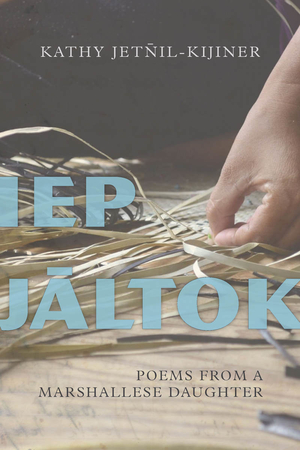
Iep Jaltok: Poems from a Marshallese Daughter by Kathy Jetn̄il-Kijiner  

As a poet and performer, Kathy Jetn̄il-Kijiner uses art and activism as a means to enlighten her readers and followers about her home, the Marshall Islands. In 2012, she co-founded Jo-Jikum, a nonprofit organization committed to helping the next generation of Marshallese to preserve their islands in the face of rising sea levels. Her book, Iep Jaltok: Poems from a Marshallese Daughter, pulls from personal and familial stories to create an illuminating collection of poetry about Marshallese politics, heritage, and climate change.

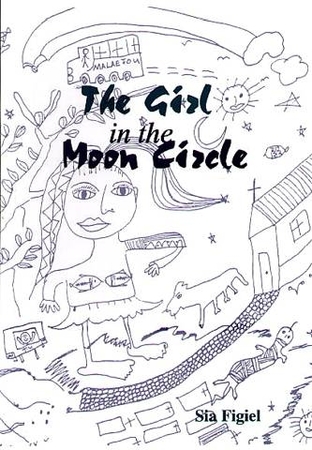
The Girl in the Moon Circle by Sia Figiel

The Girl in the Moon Circle takes a look at Samoan culture and society through the perspective of a ten-year-old girl. Figiel draws from her own experience with Samoan language and art to produce lyrical prose that immerses the reader in this young girl’s childhood, from crushes on boys at school to family violence at home.

Image result for poster

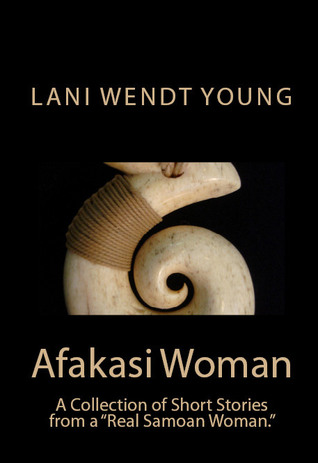
Afakasi Woman by Lani Wendt Young

Lani Wendt Young, known for her young adult novels set in Samoa, takes on the heavier facets of life as an afakasi woman in this collection of short stories. With prose that have cemented her place as a prominent South Pacific writer, Young puts forth 24 short stories that weave elegantly between the lighthearted, the humorous, and the arduous experiences of a “Real Samoan Woman.”

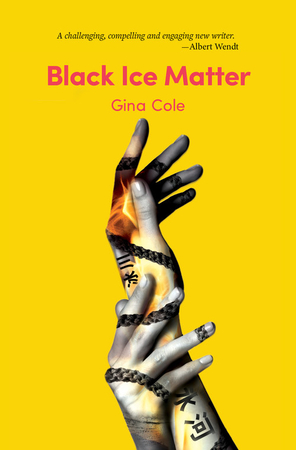
Black Ice Matter by Gina Cole

Fijian writer Gina Cole explores a theme of heat and coldness in this collection of short stories that follow an eclectic array of characters in the South Pacific; from a glaciology expert stuck in the crevasse of his research to a child working in a Barbie Doll sweatshop.  

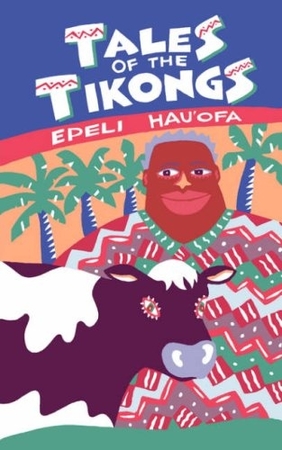
Tales of the Tikongs by Epeli Hau’ofa

In this collection of stories, Hau’ofa explores the importance of ancestors in the South Pacific, and the danger that colonialism poses to ancestral traditions. Hau’ofa sets the stories on a fictional island in Oceania called Tiko, where the culture, society, and politics can be likened to his home country, Tonga. Along with his contributions to the South Pacific literary canon, Hau’ofa made a large impact in the art scene in Oceania as the founder of Oceania Centre for Arts at the University of the South Pacific.

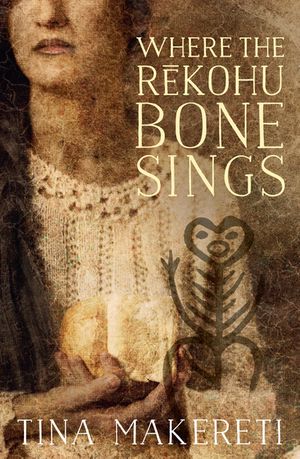
Where the Rēkohu Bone Sings by Tina Makereti

Where the Rēkohu Bone Sings by Tina Makereti

Tina Makereti, of Ngāti Tūwharetoa, Te Āti Awa, Ngāti Rangatahi, Pākehā, and Moriori descent, has garnered national and international awards for her novels and stories. Dedicated to promoting and maintaining representation of Maori and Pasifika authors in New Zealand, she convened the first Maori and Pasifika Writing Workshop in 2014 at Victoria University. The questions of identity and heritage that Makereti explores in her own life are posed in Where the Rēkohu Bone Sings, a novel set in New Zealand that follows several generations of characters with complex ancestries.

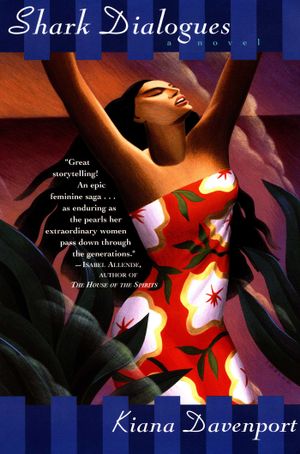
Image result for Shark dialogues

Shark Dialogues by Kiana Davenport

In Shark Dialogues, the matriarch of a native Hawaiian family recounts the complex history of her kin to her four granddaughters, beginning with a 19th-century romance between an American sailor and the daughter of a Tahitian chief and ending in present-day Hawaii. Like Davenport, who was born and raised in Hawaii by a native Hawaiian mother and a white father, the characters in her novel are all products of numerous love stories that cross oceans and generations.

Leaves of the Banyan Tree by Albert Wendt

A major literary figure in the South Pacific, Albert Wendt has gained national and international recognition for his work as a poet, novelist, editor, and anthologist. In 2018, Wendt was a recipient of the Icon Award, The Arts Foundation’s highest honor, given to New Zealand artists for their achievements in—as well as their impact on—the arts in New Zealand. His writing and his work as an educator has influenced the presence and study of Pacific indigenous cultures, particularly in Samoa, New Zealand, and Hawaii. Leaves of the Banyan Tree tells the story of three generations of a Western Samoan family as they struggle with the effects of colonialism in their home.  

This Is Paradise by Kristiana Kahakauwila

This is Paradise by Kristiana Kahakauwila

In her debut collection, native Hawaiian author Kristiana Kahakauwila intimately captures the reality of life in the Hawaiian islands in six related stories. Kahakauwila’s vivid characters navigate through stories about family, culture, tradition, and home. This is Paradise takes a searing look into modern island life, exploring the aspects that are not in harmony with the widely-held view of Hawaii as a paradise.

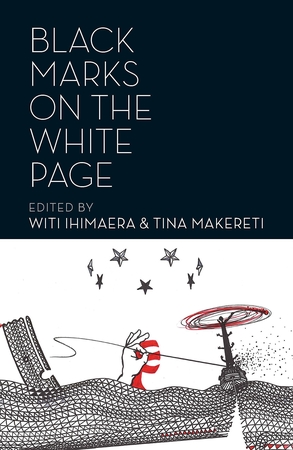
Black Marks on the White Page edited by Witi Ihimaera and Tina Makereti

Ihimaera and Makereti curated stories from the Maori and Pasifika canon to create an anthology that stretches the boundaries of the short story genre. Each indigenous Oceanic author selected for Black Marks on the White Page brings innovation to the way we view the art of storytelling, whether it comes in the form of verse or prose or even visual representations.

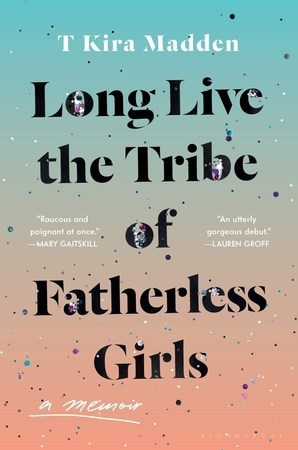
Image result for long live the tribe of fatherless girls

Long Live the Tribe of Fatherless Girls by T Kira Madden

Madden’s memoir is a raw and honest portrayal of her childhood in Florida. Of Chinese, Native Hawaiian and Jewish descent, her physical features set her apart from her peers and received ridicule. She forgoes the conventional story of redemption and recovery for an honest look into the mess and madness that surrounded her youth, the death of her father, and the absence of her mother.

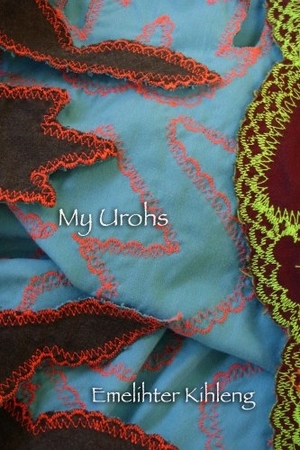
My Urohs by Emelihter Kihleng

With My Urohs, Kihleng was the first Pohnpeian poet to publish a book. The title, which is the word for the traditional dress of Pohnpeian women, alludes to the themes of colonization, indigenous culture, beauty, and tragedy that populate the poems in the collection. In her poems, Kihleng liricizes about everything from intimate moments, like snacking on Micronesian food, to contemporary issues in her community.

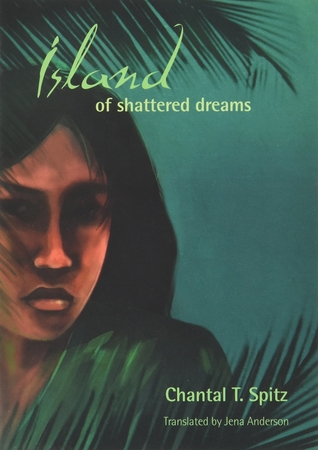
Island of Shattered Dreams by Chantal T. Spitz, translated by Jena Anderson

Island of Shattered Dreams, the first novel published by an indigenous Tahitian, is set in French Polynesia in the mid-1900s. In customary Polynesian style, the prose are interspersed with poetry and Tahitian vocabulary. As much a romance story as it is a political statement, this novel brings the reader along the journey of a Tahitian family as they live through the second world war and the disturbance of colonization in their peaceful homeland.

The Doomed Friendship That Helped Define African American Literature

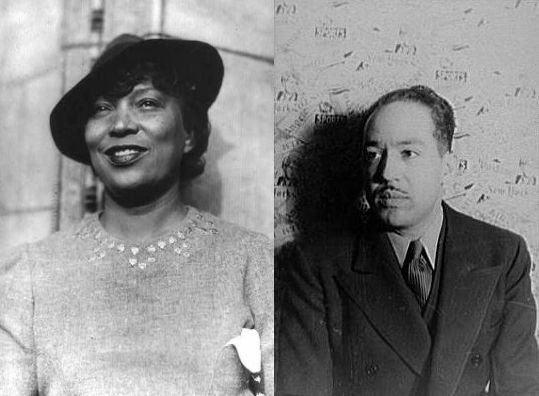
The subtitle of Yuval Taylor’s latest work of nonfiction, Zora and Langston: A Story of Friendship and Betrayal, may imply more dramatics than actually occurred. Nonetheless, it proves to be an engaging work that depicts the evolving friendship of two literary luminaries and, sadly, the demise of this friendship. Zora and Langston reflects the individual lives of Zora Neale Hurston and Langston Hughes as budding artists, including the road trip that solidified their friendship and the issues they both faced in sharing their art and viewpoints with the world. Well-known voices from this time period like Alain Locke, W. E. B. Du Bois, Wallace Thurman, Jessie Redmon Fauset, Gwendolyn Bennett, and Hurston and Hughes all had differing opinions on the role of art as a platform for one’s political or personal leanings. Hurston and Hughes’ similar thoughts on the role of their art, their respect for one another’s work, and their relationship with a shared White benefactor (Charlotte Osgood Mason), brought them together. The fall of Hurston and Hughes’ friendship over a theatrical collaboration of the play Mule Bone was rife with misunderstandings, egotism, and internal frustrations. The break is the driving force of Zora and Langston, but this moment speaks to the individuals involved as much as references the pressures of conformity and staying true to one’s developing voice and viewpoints.

Taylor’s previous books have also focused on American history including the slavery anthology series I Was Born a Slave, Dark America: Black Minstrelsy from Slavery to Hip Hop, and Faking It: The Quest for Authenticity In Popular Music. He and I discussed our mutual admiration of Zora Neale Hurston, what drew Taylor to this particular story, and how much tensions arose within the literary world at the time.


Jennifer Baker: I’m familiar with many of your books, several of which have been about Black history in America. But how did you gravitate to Zora and Langston?

Yuval Taylor: In Darkest America, which is about Black minstrelsy, I have a chapter devoted to Zora. Some magazine asked me if I might be interested in writing a short piece for them that tells a story that’s not in the book. And I thought the Langston and Zora story was a good one. So I suggested that but they didn’t follow up. Then I thought that would be a good book. I wanted to write a book that told a story, that told a good story about real people, and as I was writing it I had this idea that a good biography, or a good book about an event or a particular group of people, can be just as rewarding and rich as a really good book of fiction.

I had always loved Zora’s writing. Especially Their Eyes Were Watching God—it’s one of my favorite novels. And I find her such an interesting character. I wasn’t really so sure about Langston at first. The more I got into him and the more I explored his writing, the more I really appreciated what he was doing and saw him as a real American original and someone who really changed the way people wrote.

JB: Is there something that drives you to focus on African American history considering your work about Zora and the slave anthologies you edited and your book on minstrelsy?

YT: It may have been when I was in my teens and I discovered Ray Charles. I read his autobiography and I started reading more and more books by African American musicians, listening to their music. That’s how it all got started.

JB: Is it fair to say it seems as though those books really fed your interests?

Zora was very focused on not playing the victim but playing the hero instead.

YT: Yeah, yeah it did. I think part of it was I’ve always had a bit of a passion for justice and for fairness. And looking at the ways that Whites have mistreated Blacks and have patronized them or worshipped them like Charlotte Mason did while demeaning them at the same time. That’s also a theme in my book Faking It, which has a lot about White people trying to praise African Americans for how primitive they think they are. That’s always been something that’s angered me and frustrated me. And one of the things about the slave narratives that was so interesting to me was how African Americans did not play the victim. And that’s something that Zora was very focused on: not playing the victim but playing the hero instead and actually doing something [in her stories]. And writing is a way of doing that. And so all that kind of coheres.
JB: Speaking of Charlotte Osgood Mason, I don’t want to call her a character, but she is someone who really did have her tentacles in art and art being made. She can really be a puppeteer of sorts. There is the power dynamic but there’s also the need for Zora and Langston to have their own autonomy as artists. So how did you go about discussing the ways her influence implements people’s work?

YT: Yeah, there’s this weird power dynamic there. She was a difficult person to write about with sympathy because she just had such a terrible effect on both of their lives and their work. Although she did sustain them and she enabled Zora to do great folklore research and she ended up making Langston’s novel Not Without Laughter a better book. But who knows if he would have attempted a novel without Mason. I don’t know. It was difficult balancing my distaste for her with the fact that I really needed to tell her story. And there were a few good things that she did. My distaste also presented a difficulty because Zora and Langston loved her so much. And that love is so real in their letters to her. She had engendered that love in so many of the people that she met. It’s hard at this distance of 90 years to really make that charisma, that attraction that she had, real.

JB: How do you suggest creators go about utilizing research to actually build a character study?

YT: I guess I would advise one to try as hard as they can to put in details that establish scenes. Writers who think in scenes and can make a real particular event, a particular conversation, a particular place and time, I think is what makes for really good nonfiction. If you try to tell a story in broad terms and leave out those telling details it’s not going to be as rich. What I try to do in this book, as you saw in the chapter subtitles, is focus on those moments [Zora and Langston] were together. If I have to also cover some stuff before and after those moments that’s fine in passing, but I wanted to keep the focus on their friendship and the time they shared together. And that enabled my focus on these meetings with Charlotte Mason in her Park Avenue apartment, the Niggerati getting together in Harlem, or the Fifth Avenue restaurant that opens the book with the big Opportunity magazine dinner. I just wanted to make those moments come alive.

JB: The chapter that strikes me the most is Chapter 3, the summer of 1926. Very clear divisions are drawn within the Harlem Renaissance camps between the Black Bourgeoisie and the “Niggerati,” as Zora had termed her group. How did you go about that particular chapter to show these divisions without really picking a side?

YT: I think I did in a way take Zora and Langston’s side. They were really out to outrage people and they were trying to do something new and very different from what W. E. B. Du Bois and Countee Cullen were doing at the same time. The way I wrote the book was kind of a different approach than most authors take. I wrote a kind of skeleton, a 75-page outline, and then I would just keep adding to it as I did more reading. The structure was all there and I would just put more and more flesh on it as I did more reading and exploration. One of the things that was really fun about it was exploring Langston and Zora’s ideas in this chapter because they expressed them very clearly in their essays.

Langston’s essay “The Negro Artist and the Racial Mountain” and several essays by Zora deal with ideas of what African art is and who the African American people are. Reading other writers on these ideas—I mean David Levering Lewis has written very well on this—it made me think about what was new here and what they were trying to change and what they were reacting against. It was interesting for me to then look at how Langston’s and Zora’s ideas diverged as well as where they converged. And I felt like I was departing from the narrative at moments in that chapter when I was really talking much more about ideas than about the story that I was telling. But I wanted to do that. I think it made the book go deep into questions of race, literature, writing, and class.

JB: I feel a bit more sympathy for Zora because she’s an idol of mine, not to say Langston is not someone I highly admire. But there’s something about Zora, her zeal, her voice, her work that is so pervasive. It seems that there was a careful and protective element there because you mentioned earlier on that you’re such a fan of Zora.

YT: I felt keenly the hurt that she felt when all these people attacked her work, mostly African American men. And it comes across in her later work. She gets so angry at Alain Locke after he gives Their Eyes Were Watching God a bad review. The hurt there seemed palpable to me too. There were so many other things in her life that hurt, and it was mostly men who were treating her like a child.

JB: So did you know the history of minstrelsy when you read Zora? Or was it a snowball effect?

YT: I think I knew enough about minstrelsy to find it distasteful when I started reading Zora. But then years later I discovered there was this whole rich history of Blacks doing minstrelsy that was different from Whites doing minstrelsy. But in the beginning, I think with most people you encounter this dialect, and you associate it with Uncle Remus and you associate it with minstrel shows. You associate it with older ways in Hollywood or Stepin Fetchit. There’s a kind of language that was used by African American characters in movies in the 1930s and ‘40s. And you think this is all just so demeaning, but when you get past the use of dialect you see how Zora was using it in an entirely different way. You see how rich it was and how rich it made her storytelling. If you read her essays, she talks about how she’s using it totally differently from the way minstrel shows did.

At the end when I was writing Zora and Langston, I was reading Langston’s play Mulatto, which he wrote right after he helped write Mulebone. Mulatto uses dialect in a way that Zora would never use it. He says things like “I’s a gwine,” which is totally from the minstrel show. Langston was not as familiar with the way southern African Americans really speak as Zora was, so he just fell back on the way he thought they spoke, which he got from Broadway plays. I would never have known that if I hadn’t read Zora pointing out all the differences between dialect as she wrote it and how dialect had been done in minstrelsy.

JB: This is opinion, but do you think had the play and this potential collaboration not happened between Zora and Langston they would’ve potentially stayed friends considering their bond? It was more than just the collaboration, it’s what’s transpired from this collaboration: the misunderstanding, the miscommunication.

It seems almost inevitable that they would have to collaborate and then they would have to break up after that collaboration.

YT: They wanted to collaborate. And the theater was the thing that made the most sense. If Charlotte Mason hadn’t put them together in Westfield, New Jersey, they probably would have collaborated six months later on something, you know? It was all building toward that. Maybe once Zora had gotten her book of folklore together and Langston at that point had been rejected by Charlotte Mason maybe they would have come together and written something else. They wanted to collaborate together so much and that is because of the great respect they had for each other. I mean they loved each other’s writing. And I can’t imagine them souring on that writing. I suppose the only other thing I can think of is after Langston had become super Communist, if they hadn’t collaborated by then they wouldn’t have collaborated after that. But at the same time Zora would not have been able to put up with that very much. Her idea of what good art is excluded the kind of Communist writings Langston started doing in 1931. It seems almost inevitable that they would have to collaborate and then they would have to break up after that collaboration. Almost like a doomed friendship from the start. That’s with the benefit of hindsight.

JB: It seems so salvageable, I think. Of us being where we are looking back. The way communication works.

YT: But the history of [African American] literature is a history of quarrels. There’s so many great African American writers who quarreled with other great African American writers. Langston quarreling with Zora but Langston also quarreling with Alain Locke. Or Richard Wright quarreling with Zora Neale Hurston. Or James Baldwin quarreling with Richard Wright. It just goes on and on. It’s tough to find a friendship that really lasts.

Racially Profiled in the Deodorant Aisle

“Security” by Yvvette Edwards

Merle noticed the security guard the moment she stepped through the entrance of Penny World: a tall, heavy-set white man, mid-forties, who had positioned himself on top of a barstool at the front of the store to have an unobstructed view of customers entering; and she knew he’d clocked her, because he stood up straightaway, trying to make the action seem natural by generally surveying the store, as if that had been his intention all along, and it surprised her, the anger she felt—hot and rapid, erupting inside her chest like a volcano come to life—surprised her at a time when she was upset with so many other things, proper problems with longevity attached, that this incident, when she’d just popped out to pick up some Sure deodorant and a roll of clingfilm, was the blow that finally swept her over the edge.

Her flight was tomorrow morning at 11 and arrangements had been made to pick her up at 5 a.m. so she didn’t miss it. She’d bought the suitcase last week, had to, because the only one she’d ever owned was the one she’d brought with her when she made the six-week boat journey from Jamaica to England in June 1964, which had for years been reclining on top of her wardrobe, the metal handle broken, clasps defunct, reduced in status to a storage container, nothing more. She’d not been back to Jamaica since arriving here, had never gone on holiday abroad, never had need of a passport, and here she was, at the age of seventy-eight, making the journey back with a suitcase from Cheap Cheaper Cheapest that had a zip that kept catching when she tried to close it, and brittle wheels that clattered noisily behind her, after she’d paid for it and hauled the brand-new empty thing home.

She’d packed—probably overpacked—it, and it sat open on her bed, just waiting for the Sure deodorant to be put inside. Once she’d done that and wrestled again with the dodgy zip, the clingfilm would be wrapped around the suitcase to give her the greatest chance of making it to Kingston, on this, her first journey back, with her dignity and its contents intact. The security guard wore a dark clean-pressed uniform and a flat black army cap pulled so low on his head, it almost touched the thin-rimmed frame of his large mirrored glasses, and he had the restless air of the American coppers Merle had seen in Hollywood action movies, lounging on the bonnet of a police car, impatient to use their gun. Ordinarily, she would’ve picked up a basket to put her goods in as she walked around, held the basket high and visible, would’ve kept it on the opposite side of her body to her handbag, in the hope of conveying the fact that she was an honest person who’d never shoplifted a thing in her life; but today her anger prevented her doing that. A voice in her head whispered a sentence she was too polite to dream of saying aloud, but it so perfectly synchronized with her mood, she nearly smiled: Let him kiss out me backside.

She knew the deodorants were shelved on Aisle 4, and the clingfilm on Aisle 5. The most direct route was to cut across the front corridor between the tills and the aisles, but she decided against that. Instead, she began walking the length of Aisle 1, stopping in front of shelves filled with nuts and dried fruit, stealing furtive glances upwards in the direction of the store camera fixed to the ceiling, in a manner she hoped looked very suspicious. She picked up some pistachios, examined the package, turning it over as though reading the information on the back, even though what was written there was in another language. She didn’t check in the direction she had just come, didn’t need to, because she knew the security guard had followed her. She felt him the same way she had felt him watching and following her around on previous visits. She peered up again at the camera, then away, put the packet back on the shelf, and carried on walking.

Seventy-eight years of age, and with the neat and tidy way she always dressed and carried herself, were she a stranger trying to work out what kind of person she might be, the word that would have come to mind is church. Despite this, in the fifty-four years she’d been living in England and spending her money in shops with security guards, she’d regularly been followed around like a thief.

Forty-one of those fifty-four years she’d worked as a care assistant in homes for the elderly, spoon-feeding geriatrics, dressing and undressing them, giving herself back problems that plagued her to this day, from lifting them in and out of bed and bath, on and off seats, toilets, floors; cleaning their dirty behinds and infronts, their soiled bedding, while acting like it was just sticks and stones to have them tell her they didn’t want her black hands touching them, their food, their cutlery and medicine cups. She’d been watched with suspicion by those same people she’d looked after, watched as she mopped up all manner of nastiness, as if the only reason she dressed in the uniform her employers issued, wearing gloves and carrying a mop and bucket, was to rob them of the little shekels in purses and wallets they hid under mattresses and at the back of their drawers. And had she harboured any grudges against them? Nope. She had not. After all that, she’d still given them kind words on Mother’s Day and birthdays and Christmas, when no family or children or friends from old times arrived to share their special day; doled out comfort in their isolation, smiles to stony faces, and fellowship in their final hours when they would otherwise have been alone.

Merle dawdled as she approached the end of the aisle, handling products she had no intention of buying, touching everything she felt like, without a backward glance. Then, as she rounded the corner, out of the security guard’s sight, she began marching briskly, nearly but not quite running, careful not to slip or trip and mash up her seventy-eight-year-old body, hurrying only as fast as she could manage safely, because if she injured herself, they’d probably say she’d done it on purpose to avoid the flight, and God alone knew whether after all the years of paying National Insurance contributions from her wages, she’d be entitled to treatment from the National Health Service. She scurried determinedly down Aisle 2 and around the corner so she was back in Aisle 1, continued swiftly along it, then for the second time rounded the top, slowing only when she spotted the security guard a few feet ahead, facing away from her, body alert, his head pinging back and forth like a meerkat, no doubt wondering where the old lady had vanished. She stopped immediately behind him, and as he turned around in confusion, Merle picked up a column of fifty disposable cups and stared at it, trying to calm her breathing, while joyfully basking in the vibe of his astonishment at discovering the woman he’d been following was now behind him.


Coming to England had cost Merle her son. She hadn’t realized she was trading motherhood for the Motherland. George was only eight when she’d left him in the care of Uncle Backfoot, traveled on a ticket she’d begged and borrowed to pay for—then had to pay back—with no job or place to live, just the knowledge she was welcome and would have opportunities, the chance to make something of herself, earn a decent living, provide a future for George; security, hope. It was supposed to be for a couple of years, just long enough to save up, return home, and build a little house for them both, with a small store or rum shop or cooked food served out front. But she’d underestimated how hard it would be, how long it would take just to get her oneself on her feet, never realized till she arrived here, in her scanty island dress and thin jacket, that no provision had been made for them, that she’d be subjected to so much resentment, at job interviews, in council offices, on the doorsteps of houses with rooms to rent. She had moved home so frequently, it took nine years to fulfill the five-year residency requirement to apply for local council help with housing; and by then George had grown up without her, and full of resentment. They hadn’t spoken in years. He lived in the States with grandkids she’d never seen.


As the security guard began walking away, Merle put the disposable cups back on the shelf and followed. She knew he knew he was being followed; she could see the strip of neck back between his hat and his jacket collar getting redder with every step. When he paused for a moment, probably hoping she’d continue past him, she stopped too, picking up a tea towel that unfurled as she held it to reveal an image of the Houses of Parliament printed on cheap cloth. At the periphery of her field of vision, she saw the security guard turn towards her as if about to speak, but he said nothing, just spun on his heels and started walking again, and she did too. He went right at the bottom, towards Aisle 3, and she tailed him, coming to an abrupt halt as she almost collided with his stationary body waiting around the corner. He was almost two feet taller than she was. Merle glared up at him and saw herself reflected in his mirrored glasses as he stared back.

She said, “It doesn’t feel very nice, does it?”

The security guard’s voice was deep, bassy, tinged with a strong accent that Merle couldn’t narrow down further than Eastern European. He said, “My job, stop steal.”

The fact of his accent broke her; she didn’t know why. It made no difference to what had happened, to this latest affront. Was it because despite being new to the country, he’d been endowed with the authority to treat her like a criminal? Did she feel because he wasn’t British, he didn’t have the right? Or because until he opened his mouth he’d been able to pass, to silently position himself within the system like a native, whereas fifty-four years on, she was still being made to feel like a foreigner? Now a foreigner officially.

She said, “Well you won’t have to worry about this woman stealing ever again. You’ll be happy to know, I’m being deported.” She thrust the tea towel she was still holding into his hand. She stepped around him and walked directly to Aisle 4, fiercely concentrating as she willed herself not to fall apart. She was confident there’d be plenty of deodorant in Jamaica, just not that they’d have Sure, her brand of choice. She picked up four of the roll-ons, remembered how hot Jamaica was, then took two more. The eruption in her chest was relocating to her head, which throbbed now, but she knew would soon begin to pound. She made her way to Aisle 5 to find the clingfilm.

At the till, after she had paid for her items and packed them in the carrier bag she’d brought along, she noticed the security guard was sitting on his barstool again, and realized she’d have to pass him on her way to the exit. She’d decided to just ignore him, but as she approached his perch, he gave her a smile and she was unable to interpret what it was meant to convey. Solidarity? Pity? Glee? Her pace slowed, but she did not stop. Reflected in his glasses she saw a proud old lady, head held high. Her voice was steady as she spoke: “It’s me today, but tomorrow, they’ll be back for you.”

New Comics That Reboot Your Favorite Childhood Franchises

The past few years have seen a slew of retro reboots. Roseanne. Will & Grace. Queer Eye. Twin Peaks. Gilmore Girls. The Twilight Zone. I could keep going.

But while many publications have crowned this the era of the reboot, the practice is nothing new to comics. The medium has always taken what was old and beloved and made it new again.

Where some of the TV reboots rankle, however—I don’t need or want you, new Heathers!—comics publishing has been killing it lately by breathing new life into franchises I’d previously thought should remain untouched. As a 38-year-old woman who feels like she maybe, possibly, finally has her shit together, I’m surprised to say that these latest revivals make me feel young again in the best of ways.

Which comics are giving me new life? Below are the recent comics that are rebooting your favorite childhood franchises.

Nancy Drew: The Palace of Wisdom by Kelly Thompson, Jenn St-Onge, Triona Farrell, and Ariana Maher

Before I became obsessed with horror, I was Team Nancy Drew. I really dug the premise of a young girl using her smarts to outwit everyone else. There have been a number of attempts over the years to revive Nancy in comic form, but my favorite is this most recent iteration, from one of my favorite comic artists out there. In this arc, Nancy Drew is lured back to her hometown when she receives a mysterious message. There, she teams up with her old friends—including the Hardy Boys!—to solve an old murder. The story ended on a bit of a cliffhanger, so I have my fingers crossed that this won’t be the last we see of this creative team working on this franchise.

Misfit City by Kirsten “Kiwi” Smith, Kurt Lustgarten, Naomi Franquiz, Brittany Peer, and Jim Campbell

While this comic isn’t a straight reboot—and the first issues were published all the way back in 2017—I have to give it a nod for being the first comic to press all my nostalgia buttons. The book takes place in a town that has nothing much going for it—aside from the fact that a cult kids’ adventure movie was filmed there in the ’80s. But is there any truth behind the movie fiction? When a group of teens finds an old treasure map, we all get to find out. The comic is a direct nod to The Goonies (I mean, come on. The cult film in the comic is literally called The Gloomies), and it brought me right back to a time when hidden treasures and booby-trapped caves and kids saving the day seemed possible.

Heavy Vinyl by Carly Usdin, Nina Vakueva, Irene Flores, Rebecca Nalty, and Jim Campbell

Originally published as Hi-Fi Fight Club, Heavy Vinyl is another comic that is all its own—but which is also undeniably a throwback to a popular pop culture phenomenon. The series takes place in late-’90s New Jersey, where our young protagonist has recently landed her dream job at a local record store. But things are not quite what they seem—they’re actually even cooler. It turns out Vinyl Mayhem is a front for a teen girl vigilante fight club! This comic is a delight no matter your personal pop culture references, but what really endeared it to me were its strong Empire Records vibes.

Buffy the Vampire Slayer by Jordie Bellaire, Dan Mora, Raúl Angulo, and Ed Dukeshire

Buffy’s another badass from the past who’s been revisited many times in the pages of various comics. This latest series is actually being overseen by original Buffy creator Joss Whedon, which is not a first for this character. But there’s something about the artwork in this iteration that takes me right back to the days when I marathone’d the show as a new mom. (And for those who are into this corner of the Whedonverse, you’ll be pleased to know that BOOM! Studios is bringing back Angel, too.)

Firefly by Greg Pak and Dan McDaid

Speaking of the Whedonverse, BOOM! also recently revived Firefly, another show that has been reimagined in comic form many times over—perhaps because it ended so prematurely that our appetite for new iterations is boundless. I should note here that Whedon has come under heavy criticism over the years, especially after his ex-wife revealed back in 2017 that, all this time, he’d been a misogynist in faux-feminist clothing. This revelation led to feelings of deep betrayal among many of his fans. For that reason, I hesitated to even include these two entries. But when I first saw Firefly, I fell so deeply, fanatically in love that I’ve become incapable of turning away another chance of living in that world. In this arc, readers are shown the beginnings of Mal’s story, during the War of Unification.

Jim Henson’s Fraggle Rock by Jared Cullum and Jay P. Fosgitt

Going back to a more innocent time, how many of you also watched the original Fraggle Rock series and then dreamed of finding a hidden passageway in your home that would lead you to a cave system where the Fraggles resided? No? Only me? In rewatching the series recently (no, you shut up), I can’t deny that the show is like one huge drug trip (how the hell did I forget about Marjory the Trash Heap?), but still. This new comic series brings the show alive in a form I enjoy sharing with my daughter.

The Legend of the Fire Princess by Noelle Stevenson, Gigi D.G., Ganucheau Paulina, Betsy Peterschmidt, and Eva de la Cruz

In all the reboot madness of the past few years, there’s one reboot that has given me life, and that is She-Ra and the Princesses of Power, an animated series developed by Noelle Stevenson (of Nimona and Lumberjanes fame), produced by DreamWorks Animation Television, and aired on Netflix. I may or may not have dressed up as She-Ra multiple times over the course of my life, and this re-envisioning of the series is the most awesome thing to have happened lately. Which is why, as I was writing this post, I engaged in a lot of “If only…” daydreaming. After all, with Stevenson’s resume, how could there not be a comic to go along with the new show? Well everyone (or just me). Your prayers have been answered. An original graphic novel based upon the series is slated to release in February 2020. Which seems unbearably far away, but we’ll get there!

IDW 20/20

You may have noticed that I’m somewhat partial to the comics coming out of BOOM! Studios. I can’t help myself. They (and Image Comics) were my first exposure to comics, and they’ve been doing a lot of pop culture revivals lately. But nothing beats IDW’s back catalog where it comes to television reboots and, this year, the publisher is celebrating their 20th anniversary by bringing back a bunch of their fan favorites in a weekly event that sees the characters either 20 years into the future or 20 years into the past. Some of the shows making appearance during this event include Ghostbusters, My Little Pony, Star Trek, and Teenage Mutant Ninja Turtles. Who could resist?

If We Leave Earth, a Lot of Bullshit Will Fall Away

As Earthbound creatures, we might be forgiven for finding the universe—with its infinite distance, infinite space, infinite unknowability—a bit daunting. We are an explorer species, but exploration has historically proven to be dangerous work, both literally and morally so, provoking death, illness, and colonial bias in equal measures. If such perils can be found on Earth, what might we find in blackest space?

The wonderful thing about Erika Swyler’s new novel Light From Other Stars is the way it turns this question its head. What if, the novel dares to ask, a voyage into outer space was joyous? What if the things we found in space were liberty and equality?

Swyler’s book moves between two storylines, one set aboard the spacecraft Chawla, whose crew of four is on a mission to terraform a new planet in advance of settlers from the degrading Earth—and another that follows the young Nedda Pappas (also a Chawla crew member, as an adult) and her family in the town of Easter, Florida, over the course of a peculiar few days during which they become trapped in a bubble of time.

If that sounds far-flung, the story’s greatest success is how deeply human it is, no matter the setting—a hallmark of the best science fiction: it remembers that, no matter where we go, there we are. I read Light From Other Stars (hereafter LFOS) twice in preparation for this interview, and cried both times; I was therefore delighted to talk with Erika about science, family, and literary structure—all of them, for both of us, matters of the heart.


AC: Let me start with a question that may seem easy, but which sat with me often while I was reading LFOS. What is the genesis of the names in this book? From human names—Nedda, Betheen—to machine designations—Chawla, especially—everything feels precisely selected, very oriented in place and time. Was your process for this intuitive, or driven by specific goals?

ES: For me, naming is equal parts gut and design. There has to be something fun to a name because I’m a slow writer and I’m going to have to live with it for a few years. It also has to feel organic to the world. I think about Flannery O’Connor, and how her names are so deeply rooted in place: there’s no way anyone named June Star is from Greenwich, Connecticut. Betheen’s name had to conjure a particular type of woman, polished, but just about to fray, and it needed to have musicality. This applied to Nedda, though I was thinking more scientifically about her. When you get to small parts of the atom, you get all these fun names–quark, gluon, muon—and I wanted something that felt like it fit in that world. To me, Nedda sounds like both a girl and a subatomic particle. As for other people populating the world, well, you can’t write 1980s America without at least one Tiffany.

It’s important to me that when I consider space and the future, it’s not white and male. That’s not what’s in the universe.

When it comes to naming objects, on the other hand, it’s almost all logic. The bots and rovers had to reflect different languages because space exploration has always been multi-national. Chawla was an important choice for me. I needed to name against the whiteness of space exploration. Kalpana Chawla was an engineer who died when the shuttle Columbia broke apart. She was the first Indian-American woman in space. And while we name things for our heroes, we also name for ideals. It’s important to me that when I consider space and the future, it’s not white and male. That’s not what’s in the universe. The universe is beyond vast, and by our narrow definitions of gender and sexuality, it’s nonbinary and queer as hell.

AC: I love that. Let’s talk more about the science in this book, which is so vital—not just in the sense of being important to the plot, but in the sense of living and breathing alongside the characters, each of whom is a vehicle for a very different class of knowledge. Can you talk about how you approached the research for this book—what you knew going in, how you tailored your learning, etc.? I’m especially curious if you can talk to how you designed the Crucible, which is so vivid as a physical object, as well as its more, um, energetic qualities. 

ES:  I wanted to approach science in the way readers are accustomed to approaching magic. Most of us know a phrase or two of butchered Latin and what shouting it while holding a wand is supposed to do: fewer of us know why a strike-anywhere match works, even though we use it to literally carry fire with us. That lack of curiosity troubles me, not because we see magic as more interesting or fun than the sciences, but specifically because the physical world is magic. The less curious we are about it, the greater the likelihood that we lose it. I feel a responsibility to speak to curiosity, so that led to research, but nothing overly strenuous—novelists tend to fetishize research in a way that’s unhealthy for the form. Most of the work was reverse engineering. I’d write what I needed something to do, then find the science that did it. That’s no different from research for almost any other novel. We’ve been taught as a culture, wrongly, that science and math are extremely difficult and esoteric, but it’s more that so much science has been explained to us very, very badly. There’s almost no science in the book that’s outside the realm of a high school education, because most of it needed to be understandable to a smart preteen, and high school is, for many of us, when formal science education ends—myself included.

In designing Crucible, the entropy machine, it came down to how to represent chaos. I remember the day in physics when we learned about heat death, everyone left the class in silence. There is an “I just learned about entropy and heat death” face; it’s a mixture of wonder, horror, and the realization that you are incredibly small. I wanted that in Crucible. It needed to sound beautiful, but also a bit terrifying. For me that means glass, gold, and spiders. And I knew it had to spin because centrifugal force is one of those aspects of physics we all recognize. Spinning is physical, visceral. As for how it works—there’s a theory that spacetime behaves like a fluid, and when I’m writing about something as intangible as time, I jump on every way I can to physically represent it.

AC: Nedda is a young girl for much of the book, and I love how much she wants things: she wants the monkey she sees in the truck bed, she wants her dad’s attention, she wants all of Mr. Pete’s NASA memorabilia, she wants to go to space. She’s never afraid to name her wanting, at least to herself, and I found that to be a quietly magnificent portrayal of girlhood. 

In addition, we also see Annie’s desperation for a moment alone, and Betheen’s ambition (frustrated but palpable and deserved), and Marcanta’s casual sexuality…it all adds up to a fascinating portrait of women desiring things, and reckoning with the fallout from that desire. Not everyone gets what they want. Not everyone wants the same thing. But everyone is pushing and pulling against the boundaries of what they need and what their circumstances allow. Did you set out to portray that, or did it emerge naturally from your characters?

ES: We’re still at a point where we can’t write women without also writing what’s been forbidden to us. So while it may not have been my goal at the outset, it was unavoidable. When writing a young girl, you think and write about emotions much more intensely, because they haven’t had their edges dulled: each desire is totally novel and also seems possible, because managing expectations is one of aging’s coping mechanisms. Children’s wants are stronger. As I dug in, I got fixated on what dulled those edges and saw that so much of it was tied to gender, specifically what girls and boys are allowed to be excited about. Our desires and enthusiasm get gendered and directed during the preteen years. Yes, lots of people fight it, but rarely without repercussion. I got to thinking about widows and divorcees I’ve known, women who blossomed once they were on their own. It’s more complex than their husbands holding them back. Women typically have to push down one set of desires in order to pursue another. So it became important to juxtapose Nedda—who wants things and doesn’t understand compromise—with her mother, Betheen, who had enormous professional ambition but got forced into a different shape. Each form of desire has a cost.

In space, in the future chapters, the characters had to behave differently when it came to sex and affection. Not just because I’m hopeful that conventions will change, but because in a society of four there’s no hiding. For the same reason, it was important that the men in the crew, Amit and Evgeni, actually communicate emotion, that they’re affectionate in ways men haven’t been allowed. The four are entirely reliant on each other for happiness—for everything. I know it’s naïve, but I like to think that if we leave Earth, a lot of bullshit will fall away.

AC: That leads perfectly into my next question. LFOS is full of different kinds of families: Nedda’s immediate family, her “government of four” aboard Chawla, her near-sibling friendship with Denny. Can you talk about how you developed these different pictures of functional intimacy? The Chawla family, in particular, strikes me as nearly utopian—except that it only functions the way it does because it’s so very small. What does this say, for you, about how humans relate, especially at this point in time? Why does space seem like fertile ground for a utopian connection?

ES:  Functional intimacy means mutual reliance. I start there. Nedda needs someone who likes her intelligence, and doesn’t expect her to be anything other than who she is. Denny needs someone who is up for adventure, who doesn’t care who his dad is, and who is a safe person. These are basic needs that don’t change over time. Absent external forces, needs being met is the foundation of intimacy. Without mutual reliance, intimacy breaks, which is where Betheen and Theo are.

Large-scale utopias don’t work in part because of these same ideas of reliance and intimacy. Nations operating as individuals cause conflicts. Individuals operating without concern for group tank entire social systems. In the U.S., we’ve built this strange cult around self-reliance and it’s not working out well, because every glitch of personality becomes catastrophic when translated to a global scale.

Space seems like our best chance at creating utopias.

Space seems like our best chance at creating utopias, because we can only send so many people up, and we’re very careful about who we send. They can’t want to kill each other, they need to be able to cope with isolation, bad food, tight quarters, and the very real threat of death. They’ve got to have a strong sense of altruism. When you listen to astronauts speak, that hope is infectious, it’s the thing that makes utopias. We send people into space to live and work as a group, for the good of a group, and they’ll rely on each other or die. Manned space missions are examples of total human interdependence that exist outside the individualist bravado we’ve cooked up on Earth. There’s something profoundly hopeful in the thought of a tiny little society setting out to try to do this humanity thing right.

AC: I keep thinking about how, in the book, desire is so frequently an imperfect vehicle for success. For example, Betheen wants very sincerely to be a mother, to do science, for Nedda to love her—but her wanting is insufficient to achieve those ends, however noble they may be. Her desire only becomes clearer when viewed through the lens of responsibility—what Nedda needs; what will save the town—and I think this is true for Nedda, too, when she grows up. Her trip to outer space is not a joyride.

So here is my last question for you, which is as much a question about life as you see it as it is a question about the book: can we achieve anything when we achieve it just for ourselves? Or will we always be too perilously shortsighted, if we are not responsible for a little bit more?

ES: You’ve hit on my feelings about the razor edge of ambition. Ambition is important and we all have it, but it never leaves us where we expect, and we’re always struggling to reframe. That’s so much of Betheen as a character. I suppose I don’t believe there is any achievement that’s just for the self. Our egos are far too large and too fragile to do anything that’s just a personal achievement. When we can’t find a living person achieve something for, we haul up the dead and achieve things in memory of loved ones. We can’t escape our need to feel important, which is always in dialog with group and responsibility. Also, the ego isn’t strong enough to overcome the need for meaning, and meaning demands a world outside the self. Even with writing fiction, we tell ourselves it’s fine if no one reads it, that it’s something just for us. But it doesn’t feel that way, does it? We write to engage, to make people think. That is a kind of responsibility. Problems arise not necessarily from ambition or a desire to achieve things just for the self, but from the failure to realize the ways we are, and hunger to be, tied to the world. I need books and characters to confront that interconnectedness of things. We all start out perilously short-sighted. The human journey is finding responsibility, which is making meaning through finding group.