Dad’s Gone and the Lice Is Here to Stay

“Remedies”

by Kali Fajardo-Anstine

A dermatologist with a can of liquid nitrogen can remove a wart in four to five seconds. I can remove one overnight with a clove of garlic and a Band-Aid. Your fingers will stink for days, but the wart will never come back. You won’t have to bite or scratch at it until blood rushes over the spongy lining. You can hold someone’s hand without shame or embarrassment.

I learned how to do this from my great-grandmother Estrella. She taught me all the remedies she learned from her own grandma on their pueblo in northern New Mexico. If you have a stomachache, drink chamomile tea with honey at the hottest temperature possible without scalding your tongue. If you have a headache, put slices of potato at your temples and let them draw out the pain. If you have a cold or a broken heart, drink a warm cup of atole made only with blue corn.


Our lice came from Harrison, though Mama didn’t realize it was him the first time. She just tried washing my hair with mayonnaise. She heard about this trick from another hygienist at the dentist’s office and came home with a big jar of Kraft, the good stuff. She held my head over the kitchen sink, took a serving spoon, and plopped hunks of mayo across my scalp. With a Marlboro Light bumping up and down on her lip, she swirled the mess into my long brown hair until my entire head was soppy and warm. As she puffed smoke in and out of her lipstick mouth, I could see the missing tooth on her right side, the spot she always hid from everyone, including me. After she finished, she put a plastic bag over my hair, tying it at the middle of my neck with a rubber band.

“Here,” she said, pointing with her red nails to a chair at the kitchen table. “Sit for fifteen minutes, jita.”

She dashed out her cigarette on a saucer and parted her own dark hair, leaning over the countertop and examining her pale scalp with a teal Cover Girl compact mirror. Her gaze went up and down and back again. Mama then snapped shut the compact and looked at me.

“All right, baby girl. Put your head over the sink.”

With my face dropped into the sink’s chrome basin, Mama rinsed my hair as her large breasts pressed into my back. Hot water spilled over the front of my Tweety Bird T-shirt, soaking my neck and chest. I whined, fighting back nausea from the egg-smell of my own head.

“Mama,” I said. “Why can’t we just ask Grandma Estrella about lice?”

“Look at me.” She turned my body around and dried the water from my face with the bottom of her T-shirt. “You can never tell your grandma Estrella you have lice.”

I tried to ask her why, but Mama shoved my head back under the faucet and kneaded my hair with her strong hands the way I had seen Grandma Estrella knead masa on Christmas Eve. As my brown hair wetly twisted, water rushed into my eyes, blurring my vision, but I swore I saw white lice eggs against the drain’s black pit.

It was snowing the first time we picked up Harrison. Mama drove us to an apartment on Grant Street in downtown Denver and we huddled in our scarves and secondhand Sorels beneath the red-tarp awning at the front entrance.

Mama pushed a button on the intercom and a sleepy voice answered, “Who is it?”

“It’s us,” she said. “Millie and Clarisa.”

A quick buzz vibrated the brass speaker box and Mama pulled on the lobby’s door handle. Before we stepped inside, she hesitated, looking down at me.

“Now, this is your brother,” Mama said quietly. “I know you haven’t met him and I know that we never see Daddy anymore, but Harrison isn’t as fortunate as you are, so be kind to him.”

After I promised to be nice, we went inside, where the carpets were puke green and the ceiling was made of tin. We walked up a flight of creaking stairs while competing smells of garlic and mildew followed us. At the end of the second-floor hallway, Mama knocked hard on 13B.

Harrison’s mom answered the door. She wore an enormous pink sweatshirt with the neck cut away, showing a star tattoo on her upper left shoulder. Her thin blond hair was pulled high on her head in a sloppy bun, and when she smiled, her teeth were very crooked.

“Oh, hi,” she said. “Harrison, come here, Son.”

He appeared next to her, hunched over and skinny, looking downward at the floorboards.

“Have fun with your sister,” his mom said in her drowsy voice before handing him a backpack. She leaned over and kissed Harrison on the forehead. Behind her, I could see some of their apartment, a dusty living room with a sagging brown couch covered in laundry. There were pairs of crinkled and silky underpants beneath a grimy glass coffee table.

Harrison’s mom rubbed her eyes with both hands, smearing her makeup until a speck of mascara floated inside her left eye. “He never said you were such a nice lady.” She then blew a kiss to her son before closing the apartment door.

Mama flashed a warm smile. “Do you remember me? I met you when I came over to talk to your mom. You’re going to stay with us for a couple days.”

Harrison nodded and scratched his head. “You brought Tootsie Rolls.”

“Gross.That candy sucks,” I whispered.

Mama jabbed the back of my neck with her long red nails. “This is Clarisa. She’s your half-sister. You guys are almost the same age.”

“You’re ten?” Harrison asked.

“No,” I said. “I’m eleven. I’m short for my age.”

“I’m not,” he said. “My mom says I get that from my dad.” The three of us started down the hallway, and I was surprised when we walked past a bathroom built into the wall, like a lime-green coat closet. I peered inside at an old porcelain bathtub with claws at the bottom. Grandma Estrella had a tub like that in her upstairs bathroom. I asked Mama about it and she told me that in the old days people shared bathtubs. They shared everything, she explained. But later when I asked Grandma Estrella, she told me those hallway bathrooms were only in buildings where dirty people lived, people who did awful things for a living, people she prayed for each night before she rubbed cold cream on her face in slow upward strokes, because downward caused wrinkles.

Grandma Estrella lived in a red-brick Victorian house on the edge of a park named Benedict. She was a short, wide woman who wore long colorful skirts and carried on her skin the scent of rose oil and Airspun face powder. She lived alone, since my great-grandpa passed away before I was born and their only daughter died in a car crash when Mama was just four years old. Mama and I lived with Grandma Estrella after Daddy left, and even after we got our own townhouse in Northglenn, we visited her every weekend—except when Harrison came over. Mama said it was because we were busy, but I knew the truth. While Grandma Estrella hated all of Harrison, she only felt that way about half of me, my father’s half, the white half.

One weekend, while I was staying over Grandma Estrella’s, we baked cookies she called biscochitos. We were in her big kitchen with all the windows open, the yellow curtains rising and falling with a breeze. We watched Bewitchedon the countertop TV, and when the episode ended, Jerry Springer came on. “Ah, mija, I hate watching these hillbilly white people,” Grandma Estrella said. “Look at this man.” She was using a large wooden roller to point at the TV. “He was given every chance to make it in this world and what did he do? Threw it away on booze and drugs and can’t take care of his family. Just like your father.”

“I guess,” I said, licking my spoonful of raw cookie dough.

“Him leaving your life was the best thing that ever happened to you and your mother. If he wouldn’t have left on his own, I would have chased him off myself.”

I laughed. “You’d chase him, Grandma Estrella? With what?”

“A broom, or maybe a coat hanger. There are many tools. Now, my baby, switch the station. I want to watch my stories.” I wiped my flour-covered hands on the white-lace apron she had made especially for me and clicked the dial to channel seven. The picture was soft on purpose, part of the show. White people with diamonds and pretty eyelashes kissed or lied and cheated on each other. That’s how Grandma Estrella liked her people on TV—rich and scandalous.

Grandma Estrella said, “Doesn’t Tiffany look gorgeous this week? Why don’t you grow your hair like that, mija? A girl’s hair should always be long.”

I looked at the ends of my brown hair. “It quits growing after my shoulders.”

“Nonsense. I know some herbs you can make into a tea.”

Grandma Estrella closed her tiny eyes behind her large glasses and silently moved her lips as if she were reading different scraps of paper in her mind. After some time, she opened her mouth, the ridges in her face spreading wide and smoothing over, making her appear young again, if only for a second.

“I’ll tell you the recipe for long hair, mija, but you must be cautious with this tea.”

“Cautious?” I asked.

“Vanity is risky, my baby. Let me tell you, you had a great-great-aunt, Milagros, the same Milagros your mother is named after, and she used the herbs too often and her black hair grew so long and so beautiful that all the men in our pueblo and even from far away wanted to marry her, but she would not choose one because she believed the longer and more beautiful her hair grew, the better her choices of husbands would be until one night, when the rest of the children were sleeping soundly in the same bedroom, her hair coiled around her neck like a snake, squeezing all the life from her throat.”

“That really happened?”

“Of course! You’re calling me a liar?”

I pushed my dough scraps into the wastebasket and wondered what my own hair was capable of.

Whenever Harrison stayed over, Mama pulled out the extra comforter, the one with holes and all the cotton bunched together in the corners. She’d spread it over the couch, making up a little bedroom for him, where they’d sit for hours, watching movies and laughing. Mama often asked Harrison questions, and they were usually about our dad.

“Does Daddy ever send you presents?”

“One time he did. A Hot Wheels set.”

“Oh, wow,” Mama said, reaching out and stroking his neck. “What about your mama? Does he send her money to help out?”

“I don’t know. Maybe.”

“I hope so. He can afford it. You know, Harrison,” she added with a sincere smile, “you look so much like Daddy. It’s like you’re him but as a little boy.”

Each time I walked into the living room, I looked at Harrison’s slumped-over body on the couch and felt something like hot blacktop tar in my guts. I hated to be around him. I didn’t care that Mama said I should feel sorry for him because our dad was long gone and his mom had problems with drinking and taking pills. Imagine if I slept all day, Mama told me. You’d never get a warm meal.

With Harrison in our living room, the whole townhouse smelled as bad as his apartment building. He had dark bags under his eyes, like someone hit him real hard and never let him heal. His T-shirts had holes in the sleeves and his jeans were worn thin, covered in a fine layer of dirt at the butt and knees. The worst part, he smelled like pee.

“Hey, Harrison, why don’t you use that bathtub in the hallway at your crappy apartment?”

“No one uses that, Clarisa. It’s busted and old.”

“You probably should. You smell like a litter box.”

“No, I don’t. I took a shower today!”

“Why does my mom have to take care of you, anyway? What’s wrong with your own mom?”

“Nothing. She’s just my mom.”

Harrison never had a comeback and he never told on me for being mean. Instead, he acted crazy. In the middle of the afternoon, he’d open my dresser drawers, stick his face against my T-shirts and jeans, turn on and off our microwave, and ask annoying questions that made me wonder what his life was like at home.

“Do you get recess even when it snows real bad?”

“No, we have an inside day.”

“How about your teacher—is she nice? What color is her hair?”

“For your information, my teacher is a guy.”

“A guy, really?”

“Leave me alone. Don’t you go to school, too?”

“What about our dad? Why doesn’t he want to see any of us?”

“Maybe he doesn’t want lice.”

He was only a year younger, but even then I knew we were worlds apart. What I hated most about Harrison—besides that each time he came over, the lice came back—was that my mother was right. He looked like my dad. Even as a little boy, he looked like Daddy.

I was nine years old the last time we spent Christmas with Daddy. He was up unusually early, no black bags under his eyes or sour breath reeking of beer and cigarettes. He was happy, smiling and kissing Mama on the mouth. We played airplane and he whirled me around his one-bedroom apartment, giggling and cheering, my arms open like little wings. Mama cooked all day—ham, cranberry sauce, green bean casserole, cornbread. No Christmas tamales like at Grandma Estrella’s, though. He never liked that.

We were together, sitting at his fold-out card table in the corner of the living room, when Daddy started the prayer. I gazed at the creases around his dark eyes, wondering if I would get those someday. I loved being near him when I could—loved it when he cupped his hand on the back of my neck and I could feel his calluses coarse against my skin. He reminded me of work, of cars, that special orange soap he used to wash away grease.

“Millie,” he said. “You forgot the butter, honey.”

Mama glanced at me and asked if I would be nice enough to get Daddy some butter.  I hopped out of my chair and headed for the tiny kitchen. I walked by the overflowing garbage, where a sparkling green Christmas card was shoved beneath empty green bean cans and cracked eggshells. I don’t know why I did it, but I stuck my hand inside the trash, pulling out the mushy card. When I opened it, a picture fell out of a little boy with dark eyes and light brown hair swinging a baseball bat. I stared into his face for a long time.

“Clarisa,” Mama yelled from the table. “Did you find it?”

I shoved the Christmas card as far as I could back into the garbage. I grabbed the butter for the table and told my parents that I would be right back—that I needed to wash my hands before dinner.

In Social Studies, I scratched and scratched until a louse slid down the back of my neck and onto Chantel Sanchez’s desk. She screamed so loud that the principal heard it from his office, or that’s what the other kids claimed. It was the fourth time in a year that I had gotten lice from Harrison. I was sent home from school, indefinitely, until the issue was resolved. “Expelled due to health hazards” is what the official pink slip read. Mama was more upset than usual about the lice. She tried mayonnaise, then olive oil, then rubbing alcohol, then over-the-counter shampoos. By the time she had finished, I thought I would never go back to school.

The next Saturday, Mama took Harrison and me to a hair salon in a part of town called Wash Park. The salon was painted blue and white with mirrors in every direction. Techno music came out of the ceiling speakers and the floor was lightly scented with ammonia. The hairdressers were vibrant with colorful hair and face piercings. They had names like Celeste, Luna, and Sky. I flipped through a booklet with different hairstyles, showing Mama cuts I thought she might like.

“Look at her bangs,” I said, folding the page over for Mama to see.

“Those are nice, jita. You guys are also getting haircuts.”

“Here?” Harrison looked up from his seat, a surprised expression on his face.

“Yup. Don’t need to worry about picking out anything new. I told the ladies what to do.”

My hair had recently grown extra-long with the help of Grandma Estrella’s tea. Mama normally took me to Cost Cutters for a trim, but last time, we were refused service. No one gave a reason why, but I knew it must have been lice.

When a woman called my name, I jumped out of my seat and I stuck out my tongue to Harrison. He ignored me, scratching his head. Then another lady called his name. They brought us to a row of black spinning chairs, seating us side by side. My hairdresser snapped peppermint gum in her mouth. She had glitter across her eyelids and her teeth were the whitest and biggest I had ever seen, like those white ladies in Grandma Estrella’s stories. After she parted my hair with a black comb, she pointed beside me to Harrison, draped in a purple cape.

“Are you guys twins?” she asked. “What do they call that, paternal?”

“No,” said the lady cutting Harrison’s hair. “It’s fraternal.”

“That’s it,” my hairdresser said. “You sure do look about the same age.”

Harrison giggled. “I wish we were twins. That’d be cool.”

“He’s just my half-brother,” I said.

The hairdressers shared a knowing look and I glanced away, toward the front windows.

Outside, seagulls dived between street lamps. The sun was going down and the whole neighborhood was a shadowy pink. A family carrying pizza boxes walked together through the parking lot. It was a mom, a dad, and three little boys. The mom was laughing, pointing at her husband, who had grabbed a shopping cart and was riding the back like a scooter. His sons tried copying him. They wobbled everywhere, and the mom seemed worried. For just a second, I felt jealous of that family, their happiness and togetherness. Maybe if I had always known Harrison, we could have been friends. But instead, he reminded me of Daddy, the only person who had ever left me. The family then walked out of sight and I looked back at the mirror.

That’s when I burst into tears.

My long hair was gone, gathered across the floor like piles of dust. The hairdresser kept asking what was wrong, but all I could do was clutch my short hair, wetter in the front from all my tears.

“Don’t cry, Clarisa,” I heard Harrison say. He was whimpering quietly. His head had been shaved completely bald.

I stood up then and looked for Mama. She was behind us at another station, her expression downturned and sorrowful. Her long black hair had been trimmed into a spiky undercut with short bangs. When her eyes met mine, she mouthed something, maybe sorry.

On our way out, Mama handed the receptionist a check and one of the women tried selling her an antidandruff shampoo.

“You know, the kids both have it pretty bad,” the woman insisted. “This will help for sure.”

Mama shook her head, her short hair stationary against her scalp. “Thanks, but we’ll try some home remedies first.”

Mama was crying. Harrison and I heard her when we were fighting over whose turn it was for the only working Nintendo controller. At first it sounded like the neighbor’s dog yipping, but it grew louder and steadier. I threw down the controller and Harrison followed me. Sitting on the toilet with the lid closed, her head in her hands, Mama was itching and pulling at her short hair, red bumps all over her scalp and neck. Snot and tears dripped down her face, over her lips, and onto the front of her white shirt. I stood in the doorframe, afraid to go near her. I had only seen her like this one other time—when Daddy left for good.

“They won’t go away.” She sobbed into her hands, gargling  a bit.

“What, Mama?”

“They just won’t go away.”

Harrison stood behind me, his dark eyes filling with tears that lingered above his bottom lashes. I could see the bathroom reflected in his eyes—Mama, alone, on the toilet with hair in her lap and across the floor. I wanted to scream at him to leave, to walk home, take a bus, find some way to get out of our lives, but instead I just told him to watch Mama while I ran to the kitchen and did what I was never supposed to do—I called Grandma Estrella.

I told her what happened, and had been happening for months. She screamed so loud that when she finished, I heard true silence in our townhouse kitchen. Dust sifted through shoots of sunlight. Water dripped from the chrome faucet. The phone’s cord slowly rolled. Everything was calm until Mama’s sobs bumped throughout the hallway, interrupting the dead air. She didn’t hit me or scream at me when I told her Grandma Estrella was expecting us. Mama got up from the toilet lid, silent and red-faced, and walked to the car, as if she had been expecting this day from the beginning.

When we arrived, Grandma Estrella stood on her porch, one hand over her eyes, scanning the yard with a watchful, hawk-like gaze. She wore a wavering purple skirt, the brick house like a castle behind her. Mama parked and got out of her car, flicking a cigarette into the road as she walked us to the porch.

“Look at your hair,” Grandma Estrella said. “Every one of you.”

“It’ll grow back,” Mama said, quickly wiping tears from her face.

Grandma Estrella grunted some. She stepped aside and motioned with both hands for us to follow her. Before she opened the front door, she reached out to Harrison’s small hand and introduced herself as Mrs. Lopez. Harrison’s dark eyes grew wide and seemed to fill with wonder. It was like he didn’t have grandparents of his own, and I realized he probably didn’t.

“All of you, upstairs.”

We climbed the cherry-oak staircase to the upstairs bathroom. The long white porcelain basin of the claw-foot tub rested in the otherwise dark room. It was cold, though the windows were cloaked in fog from a steaming metal pot on the floor, the pot Grandma Estrella normally used for menudo. She told all of us to get on our knees and drape our heads, facedown, over the bathtub. The porcelain was chilly against my neck and arms. Grandma Estrella used to bathe me there when I was younger, working my knees and elbows with a washcloth and Ivory soap. Once, I asked her why she needed to scrub so hard it hurt. “Because we are not dirty people,” she had said. Later, when I asked Mama about it, she told me when Grandma Estrella was a little girl, her own teachers called her a dirty Mexican and it never left her, the shame of dirt.

Slowly, from behind me, I felt Grandma Estrella pour bitter water over my head, a liquid made from something called neem that had a thick rootlike stench. Grandma then combed my short hair, harsh and fast, pressing into my scalp. When she finished, she told me to stand up.

“Mija, take this. Make sure to get the backside of their necks to the front side above their foreheads.”

She placed the heavy pot in my hands. “But I don’t think I can lift it.”

“Don’t be such a malcriada.”

I braced myself, steadied my knees, and lifted the pot. My arms trembled as I poured the liquid over Harrison’s small neck, seeing for the first time how incredibly scabbed and bitten he was.

“Does it hurt?” I asked.

“No, Clarisa,” he said, muffled and soft. “I’m sorry they don’t go away.”

“Don’t worry. This time it’ll work.”

As I finished pouring the water over Harrison’s head, Grandma Estrella got on her knees and began rubbing his scalp with a white towel.

“Don’t get it down my back,” Mama said. She was tense against the tub, gripping the rim with white-knuckled hands. She kept looking back at me, squinting. That’s when I noticed she was shaking, her legs and wrists trembling. Grandma Estrella had put down her white towel and was leaned over Mama. She reached out, letting her hands lightly rest on Mama’s head, as if she was protecting her from the cold.

Grandma Estrella whispered, “That man and his choices are behind you now.”

Mama said, “I just wanted him to know he has a sister.”

“And now he does, my baby, but none of this is your place.”

She then danced her fingers over Mama’s neck, motioning for me to begin pouring, wetting her skin along with Mama’s.

The next day, Mama put on a full face of makeup, ran mousse through her lice-free hair, and dropped Harrison off at his apartment on Grant Street. I waited outside in the car, looking up at the window I knew was his. I wanted to catch a glimpse of him, my only brother in the world. I watched until he finally appeared. With his skinny arms, he reached up, and closed the blinds. It was the last time we dropped him off anywhere.

Before Grandma Estrella died, she gave me a booklet of all her remedies. Inside, with an unsteady hand she had drawn pictures of plants and, beneath them, their Spanish names, their scientific names, and just for me, their English names. I can cure head lice, stomach cramps, and bad breath with the right herbs. For the most part, I stick to over-the-counter remedies. They are cleaner and work faster and come in packages with childproof lids. But every once in a while, when I get a real bad headache and the aspirin isn’t cutting it, I take slices of potatoes and hold them to my temples, hoping the bad will seep out of me.

I see Harrison every now and then in the city at parties or shows. He’s a bass player in a punk band called the Roaches. He’s tall now with a serious yet hopeful face. Sometimes I wonder if my dad looked like him as a young man when both our mothers fell for his shit. Other times, I wonder if he’s still giving everyone lice. But I doubt it.

A couple months back, I was outside Lancer Lounge and through the windows I saw Harrison inside on the platform stage, bent over a microphone, a black cord rolled around his arm. When he stood up, we shared a look for a long time before I smiled, pointing to his blue Mohawk.

“Nice hair,” I mouthed, and Harrison smiled back, as if he could hear me through the glass.


About the Recommender 

Mat Johnson is the author of the novels Pym, Drop, and Hunting in Harlem, the nonfiction novella The Great Negro Plot, and the comic books Incognegro and Dark Rain. He is a recipient of the United States Artist James Baldwin Fellowship, the Hurston/Wright Legacy Award, and the John Dos Passos Prize for Literature. He is a faculty member at the University of Houston Creative Writing Program.


I Didn’t Manage to Publish a Book by 30, and That’s Okay

When I was younger, I was convinced that I would write my first book by 30. I thought this as a teenager, as a college student, and even in my mid-twenties. This wasn’t a prediction, but a prescription: I would write my first book by 30, but also, I must.

Where I got this idea, precisely, is uncertain; what I know is that it is shared by many of my peers who have also considered themselves “writers” since they were children. We seem to think of 30, specifically, as our last chance for a first book—regardless of how much work we’ve put in by that age. Culturally, 30 marks the end of adulthood as discovery, as a kind of prolonged exploratory youth: hence, the idea of young adults. Thirty isn’t young. Thirty is the mystical age by which things have to have happened for you—personally, professionally—or they just won’t.

The idea of 30 as the cutoff for “youth” isn’t new. But the idea of needing to produce a book during your youth, rather than as a culmination of your career, feels more recent. People used to scoff at 29-year-olds who wrote memoirs, saying “what does this person have to write about?” Mary Karr has counseled waiting years to write, to let the dust settle, that age and time are the best teachers. But now, we worry a little if we haven’t produced a memoir or a novel by 25. Where did this shift come from?


I grew up working class in rural farming communities in Iowa and Wisconsin. Neither of my parents were college graduates. My father was ex-military and was of a mind that hard work was the key to life’s success, the definition of success being home ownership, a steady job with health insurance, and being able to get by paycheck-to-paycheck in such a way that you provided for your family. In many ways, I get my now nearly-obsessive work ethic from him.

I also grew up wanting to be a writer in a family that was not creative, that did not understand how you could be a professional creative. I was encouraged in my talent, but also told to have a real job. I stepped into a different socioeconomic class the minute I set foot on a college campus, a chasm in my natal family many of my peers in media and publishing cannot begin to fathom. When I eventually went to an English PhD program in Boston (to be a professor, the “real job” I had chosen for myself), my father was supportive, if wary. He said what he had always said to me, since I was a little girl climbing awkwardly out of his truck when he dropped me off at school: “Show your worth, kiddo. Go get ‘em.”

When I left that graduate program and opened a small business using credit cards and money leftover from a student loan: Show your worth. Go get ‘em.

When I moved to New York and worked day jobs in the tech industry while, finally, working on my book and starting to regularly freelance: Show your worth. Go get ‘em.

The loving message has always been the same. My father’s exhortation means work hard, with the unwritten expectation that I should work harder than everyone else. Work hard, and be excellent: be so good that they don’t have a reason to fire you. Be good enough they have to pay attention to you. My father is not naive; he knows there are other forces involved in success besides hard work. But encouragement to apply myself is the extent of what he can provide me with.

I have put immense pressure on myself since a young age to have a tangible payoff for this intangible desire.

My parents never expected me to publish a book by 30; this was an arbitrary goalpost I set for myself. However, I can’t help but wonder if my family’s deeply rooted working class work ethic—show your worth—informed my own drive to publish a book as soon as possible. I have put immense pressure on myself since a young age to have a tangible payoff for this intangible desire, to prove to my parents that all of my wild life decisions, and thousands of miles of physical estrangement, have been worth it.

I want to show my worth. I want to be able to have a physical something that I have demonstrably produced, on my own.

But I had always understood “showing my worth” to be about hard work. In the writing world, I’ve found, it’s not so simple. This world, I have learned, is not just about writing well, or showing my worth, as my father would say, though you must do those things: always, and exceedingly well, especially if you are a woman, if you are a person of color, if you are LGBTQIA+. This world is about knowing people: is an invisible game of chutes and ladders, of different categories of publications and tiers within those categories, of who went to school with each other, of knowing which magazines open calls for submissions but actually only ever publish pieces they directly commission (so don’t waste your time trying to write for them), of which editors are quietly homophobic over cocktails, of who is in writing groups together, of who dated each other and is acrimonious now, of who, of who, of who. It is a game you can start to piece together if you spend enough time in the Acknowledgments section of books, at reading events in New York City, on Twitter. It takes patience. It takes time.

Time, that most precious of unrenewable resources.

What is writing a book? It’s living hard, working hard. It’s also learning the business. So many people don’t like that last bit, but it’s vital if you want the damn thing, and even more so if you want to stay in the game. And when you are starting at ground zero, there is a cost to the time spent learning the business, building relationships—especially real relationships that become real friendships. It just takes longer, for folks like us. I don’t want to say this is a bad thing (I am so deeply grateful for the people who are in this wild game with me, who I can go to when it feels too much), but it does mean we are starting later, taking longer to achieve the goals we set for ourselves. A book by 30, for example.


Millennials, the oldest of whom are well past 30, have been raised by Baby Boomers with a particular mind toward productivity and achievement. If Gen Z has been raised to perform to the test, our educations were designed around the question, “what are you going to do with your life?” The question of purpose, of career, pervaded every class choice, every college conversation. In a culture where media fed an onslaught of images of prodigy—young Oscar winners, young Olympians—it all fed the question: when was our chance to shine?

We have been raised to be good, productive workers, grateful to accept less in return for more work than generations before us: see Fiverr’s ad campaigns, see us working more jobs than our parents ever did, see our collective burnout. For millennials who graduated around and into the crash of 2008 and are now in our early 30s, we are, in many ways, just starting to accrue traditional markers of adulthood that our parents had long before 30. Saddled by student debt, we are also rejecting other traditional markers, such as home ownership. This is compounded by the fact that, oftentimes, no matter how much we may crave those markers of stability, they remain beyond our grasp—the job doesn’t exist, the gig will never be a career, the house is out of reach because of student debt. There is a tension between our economic reality and cultural expectations.

Millennials were raised in a culture that values production, but writing is not traditional production.

This impossible obligation of “productivity” is in many ways especially burdensome for writers. Millennials were raised in a culture that values production, but writing is not traditional production. It’s not work that comes off the factory line. It’s not a 9-5. You can’t rush the production of life experience, or the time it takes to process and sift. And yet we still feel like we need to have something to show for ourselves (what, precisely, is it that you do? a relative might ask at a holiday gathering). Hence the pressure to have something concrete you can point to: this is what I’ve made.

This is the American Dream: to create something out of nothing, to scale up the socioeconomic ladder with nothing other than your wits and your bootstraps. But we know that no work ethic is strong enough, no amount of hours worked in a week can possibly be enough to find “success” on its own. Our country is not a meritocracy, and the class entrenchment runs deep. To reach a certain level of success, you need to already have a certain amount of money, a certain social status, a certain kind of access.


Cultural achievement in youth is easier to obtain when there is a trampoline provided by parents and connections and the accompanying safety net of privilege. Think of the four characters on Girls who themselves struggled, while the actresses who played them were all in fact the children of fame and fortune. Lena Dunham, the creator of Girls, has been lauded as the voice of a generation; she was barely 25 when she got her first television show on the basis of one small film, a series of events that seems unlikely without her mother’s connections. Think of Christopher Paolini, the writer of the Eragon series, lauded as a child prodigy who had written a fantasy series at the tender age of sixteen—whose parents, unbeknownst to much of the general public, ran the publishing house that produced the series.

Because writing is not traditional production, it’s easy to think that we have a built-in workaround, that the rules that govern Wall Street do not apply to those of us whose offices are in Flatiron or Brooklyn or, hell, not in New York at all. We are artists, after all. Art is valuable for its own sake, outside of some capitalist system: this is a seductive line of thinking. But it’s faulty, of course. The same factors that give the privileged a leg up in other industries apply to publishing as well. It’s much easier to be a “self-made” billionaire at 21 years old when you are a Kardashian—and it’s a lot easier to have a book by 30 when you’re already in, or at least adjacent to, the room where it happens.

The same factors that give the privileged a leg up in other industries apply to publishing as well.

“Prodigy” is supported by access. This is not, of course, to say that people who find success at early ages are not themselves talented—merely that they are sitting in the front of the class, with far fewer barriers to “being discovered,” and with the guidance of elders who already understand the industries they are trying to navigate. When a guide has gone out ahead and scouted the terrain, found resources, and also connected with a few people who can help you along the way, the hike is a lot easier.


I didn’t have a book by 30. I’m 31 now, in the process of getting ready to take my book out on submission—I might have a book by 33, which, all things considered, is still quite early for this industry. But who knows: if I’ve learned anything, it’s that life rarely goes as expected.

What is important, to me, is that these last few years have seen that “book by 30” goal fall away in favor of a far richer goal: one of improving my craft, one that wants to have my first book be a good book, one I can really be proud of. Goals to achieve have become less a matter of if or by and more a matter of when and how. Maybe this is understanding the industry more. Maybe it’s just growing up. Things take time, and patience is a quality I have worked to cultivate.

I recently had a phone call with my dad in which I explained to him that even if my book sold this month (it won’t; the proposal isn’t ready), it would still be anywhere from one to two years before it came out in stores. He was surprised as I described the process, and laughed at how similar our industries are, in the end: all bound up in red tape.

In the end, it has, actually, become about showing my worth: not just to my family, or to my peers, but to myself. It’s become about craft, about applying myself continually against the slow pressure of time, about understanding just how long it takes to get even a little bit better. And, yeah, it’s also about being that working class dyke from the nowhere Midwest, who didn’t go to the right schools, who has a massive chip on her shoulder and everything and nothing to prove: that I can learn the game, and do it better, no matter how the deck was stacked.

13 Books About Women’s Pain

There are only two constant truths of me and both are to do with literature.

I’ve always looked to books to explain the world, and I’ve always needed to write things down to process my experience of and in it.

Buy the book

When I got sick, I went to a library long before I went to a hospital. I needed more than “something for the pain” I was looking for more than a diagnosis or a treatment plan. I was in search of humanity, which I had begun to feel illness was stripping from me.

I met many others along the way searching the stacks for the same thing. Having not found exactly what I felt I needed, I started writing the words I wanted to read. At first, I just wanted to distance myself from the pain and give myself the space to process it. I wasn’t hopeful for hope and that was never what I was looking for.

That was never going to be the book I would, or could, write. And no one story, or one person, should be expected to be a beacon of hope. Taken as part of a (growing!) body of work about the lived experience of pain and illness, truth holds more power for us than hope.

On the matter of hope, if I have any at all, it’s that more voices will feel empowered to join this conversation. The collection of voices in the discussion needs to be diversified and amplified.

These books, and their authors, have individual merit—but taken together they are creating a more complete picture of the human suffering, healing, and triumph. Literature has always been a study of life and death, but these books go beyond, boldly illuminating the space between.


Sick by Porochista Khakpour, Doing Harm by Maya Dusenbery, and Invisible by Michele Lent Hirsch

These recent additions to the chronic illness/pain canon are varied, as all three women are very different people and storytellers. But what’s remarkable, and truly a little unsettling, is what is similar. And what so many who read these stories will recognize from their own experiences — many of which they may have felt very alone in.

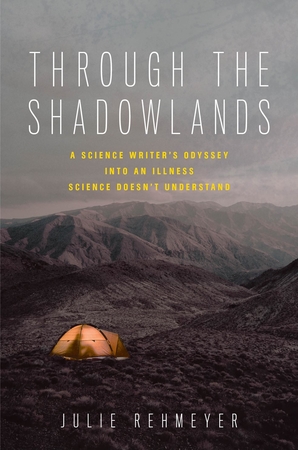
Through the Shadowlands by Julie Rehmeyer

Rehmeyer is one of the best science writers out there, and, when she turns the lens inward to her own experience, it’s really compelling. It’s also a volume that I think will become an integral addition to the growing canon of literature on chronic fatigue syndrome.

The Pain Chronicles by Melanie Thernstrom

Thernstrom’s was the first book that gave me permission to study and experience pain simultaneously. After I read it for the first time many years ago, I immediately started over again and took copious notes. I wanted to understand the broader cultural and historical record of human pain so I could distance myself from my own personal portion of it—but by the time I got through the book a second time, I felt unified rather than further fractured.

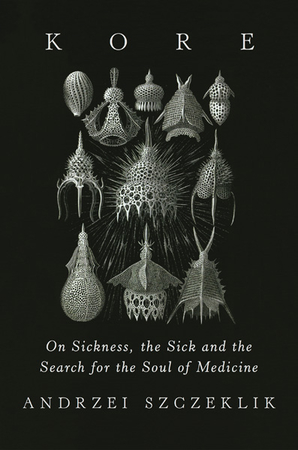
Kore by Andrzej Szczeklik and translated by Antonia Lloyd-Jones

I only just finished this and need to sit with it a bit longer, but if I can entice others to dive in with the quote that led me to it:

“The art of medicine depends on inter alia on exposing the symptoms of disease. Just as a magician summons up spirits at a small, spinning table, so the doctor summons up the symptoms of an illness. But can we force an illness to drop its guard by tickling its feet?”

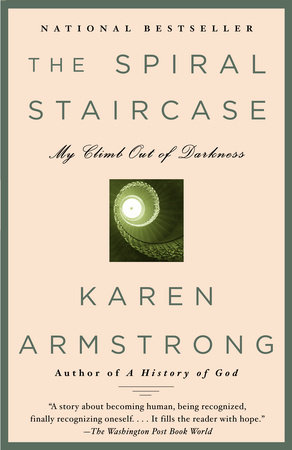
The Spiral Staircase by Karen Armstrong

The Spiral Staircase by Karen Armstrong

I initially read Armstrong’s memoir as a teenager (before I was mysteriously ill myself) because I’d been making my way through books about women who had reckoned with their faith. I was looking for a path to follow to find it myself. When I came back to it years later after I got sick, it was like reading a completely different book. On the first read, I’d come in expecting it to give me something. On the second, I only wanted to be comforted—and I was.

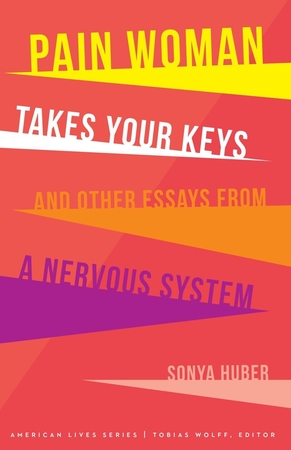
Pain Woman Takes Your Keys by Sonya Huber

Huber’s essays are among some of my favorites ever penned about pain, and this book is really unlike anything else you’ll read about chronic illness. Even for people who don’t have chronic pain or illness, this is a book that catches and stays with you long after you’ve finished it.

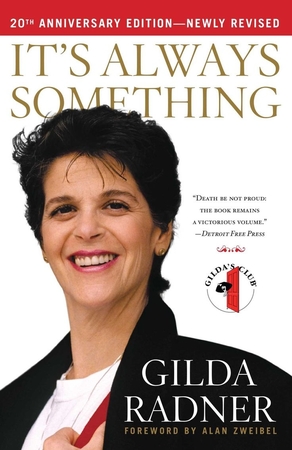
It’s Always Something by Gilda Radner

Radner’s tale is a cautionary one; her death from ovarian cancer was one of the first high profile instances where we can say even a beloved, well-known actress with access to the best levels of healthcare, the best doctors, the best treatments, was still disbelieved.

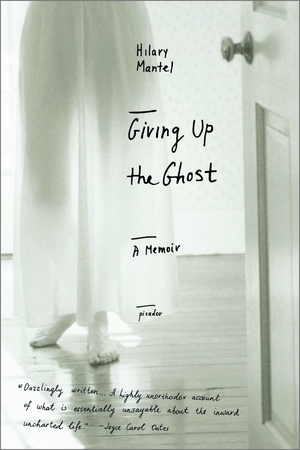
Giving Up The Ghost by Hilary Mantel

I quote Mantel’s memoir in my book quite a bit because it was one of the first accounts of endometriosis — and the quest for an explanation — that I ever read. Mantel is a phenomenal storyteller but writes about her own life with a kind of truth that feels even more resonant than the history she writes about in her fiction.

The Heavy Flow by Amanda Laird, Aroused by Randi Epstein, and Periods Gone Public by Jennifer Weiss-Wolf

Amanda Laird of the Heavy Flow podcast has a forthcoming book of the same name from Dundurn Press that you will absolutely want to pre-order. To round out your understanding of the power and politics of hormones and menstrual equality, add to it Randi Epstein’s Aroused and Jennifer Weiss-Wolf’s Periods Gone Public.

Notre Dame Is Never Lost

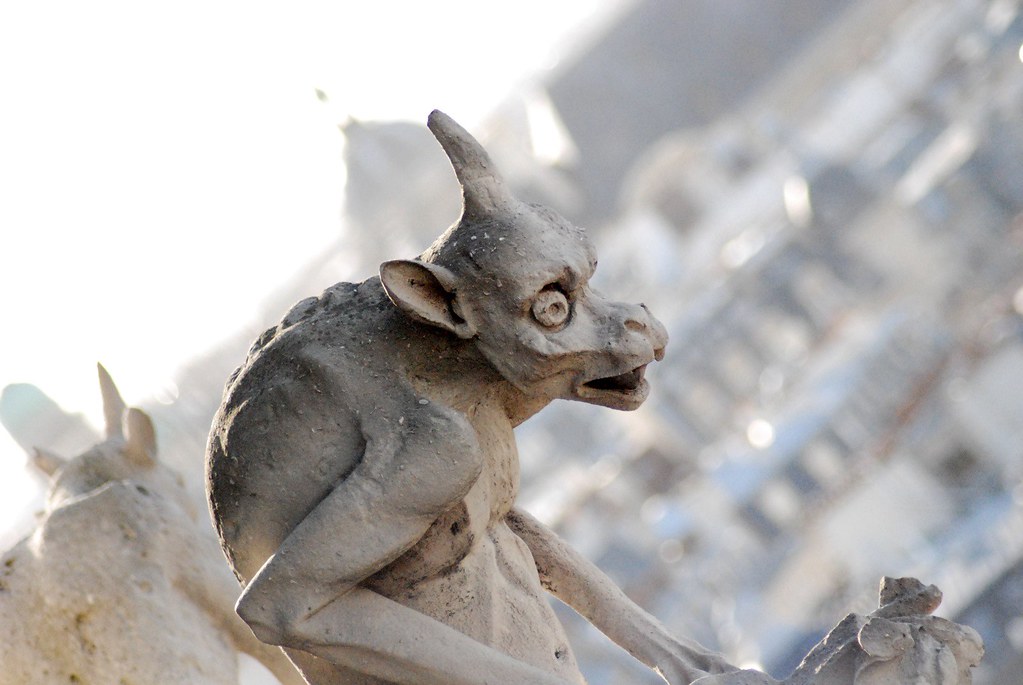
As any French Romantic knows, there is no love more profound, or more sacred, than that between man and a building. This was certainly true for Victor Hugo, whose novel, Notre Dame de Paris (often translated into English as The Hunchback of Notre Dame) inculcated a love of the cathedral of Notre Dame de Paris in his society, and to generations thereafter.

Yesterday’s cathedral fire drove me back to the novel, in search of the soul of Notre Dame when its physical form seemed so likely to disappear before my eyes. I went automatically to my favorite digression, Hugo’s long contemplation on how the printing press had replaced architecture as the principal means of conveying meaning to the masses.

“Ceci tuera cela,” wrote Hugo. “Le livre tuera l’édifice.”

It felt odd to translate this in my head: “This will kill that. The book will kill the building.”

I don’t think he could have predicted we would all watch the destruction of the cathedral in a Twitter livestream—nor that after seeing the spire break and fall into a red and smoking abyss, I would seek out his book to remind myself of the cathedral’s previous existence.

‘Le livre tuera l’édifice,’ wrote Hugo. The book will kill the building.

The cathedral of Notre Dame de Paris takes up such huge imaginative real estate not only in my mental map of Paris, but, I would guess, in the mind of any tourist who has seen it. How could it not? It bears the weight of generations of history and of fiction, its image is immortalized on postcards, tea towels, and key rings. It’s a featured stop on any tour, a monument every friend and family member back home asks about. For historians, architects, artists, Catholics, the cathedral of Notre Dame de Paris seemed an unshakably constant source of beauty and wonder. It was a helpful cultural touchstone. In conversation everyone could put their hand to the old stone first quarried centuries ago and understand what the other person was talking about. In personal reflection, one—or at least I—never got the sense I was alone with my hand literally or metaphorically on the cathedral stone.

I am always conscious of the hands before me that shaped the stone, the many hands that painted or repainted it, that passed by it, that touched it in reverence or curiosity or boredom in all the centuries following. I wonder if I’ve touched the spot where Hugo, while snooping around the cathedral, said he came across or an obscure corner, the word “Ananke,” engraved deeply in the stone. The Gothic calligraphy convinced him it was a hand from the Middle Ages, and the fatalistic, melancholy meaning of the word struck him deeply. “Ananke” is a Greek personification of inevitability. Who had been moved to write such a thing? When Hugo returned to the cathedral the word “Ananke” had disappeared. Someone had painted over it or scraped it off.

The cathedral of Notre Dame de Paris was a palimpsest of an edifice—something reused and rebuilt, showing traces of its past under the additional story of each new century. Each generation modified the cathedral according to its needs: a space for Catholic worship remodeled according to new trends and tastes, a storehouse during the French Revolution (with some statues of kings beheaded, according to the new prevailing ethos), an architectural marvel of the Romantic re-interpretation of the Gothic.

Hugo based upon that fragile memory of a vanished word perhaps the most popular story of the cathedral. The popularity of the novel helped cause the cathedral to be fully restored in 1844. It brought the cathedral of Notre Dame de Paris to public consciousness not just in France but across the world.

The cathedral, through the novel, lives in thousands of new contexts, bearing the weight of meanings its architects could not have envisioned.

It is amazing how widely traveled Notre Dame de Paris has become. You can find it translated into almost every language, in the conversations and imaginations of people all over the globe. The cathedral, through the novel, lives in thousands of new contexts, far from its original home on the Ile de la Cité, bearing the weight of meanings its original architects could not have envisioned.

Each time I look into the novel myself, I see not just the story Hugo wrote, but all the stories I have brought to it and built on top of it. I’m hesitant to loan out my copy, much underlined, with scribbled translations in the margins, for fear that people will read all I have brought to the text. In it I can trace my development not just in French comprehension, but as a thinker, as a writer. It was the first novel of Hugo’s I ever read, the first novel that lead me to think critically about adaptations, the novel that evokes all that I felt when I visited the cathedral every Sunday, when I was studying abroad.

That was the year I began to drift away from religion—but within the cathedral I still found the sacred. Perhaps the stories in the stained glass windows were not straightforwardly true, but were true the way Hugo’s novel was. I found myself drawn back to the cathedral at different times of the day, attuning my ear to the differences between French Catholic services, watching the differing plays of light from the widows onto the walls and floors of the cathedral. My belief in story grew; my wonder at the material culture of human history developed. The cathedral became a linchpin of my emotional life, a source of go-to metaphors for the moments where the divine touched upon the mundane. When I met the man who would become my husband in Paris that year, I told him that being with him was like sunbathing in the light of a stained glass window.

The novel stood in for the edifice when my year abroad came to an end. But looking at the book again today made me think, “Perhaps this is all there will be.”

Mutilations come to Gothic cathedrals from every quarter. The priest paints, the architect rebuilds, and the people follow and destroy it.

Even then I know I am giving into the strain of Romanticism that usually annoys me: the almost maudlin devastation over change, over the inevitable and inexorable deterioration of the physical. Hugo and his contemporaries were brought together over shared enthusiasm more than anything else, seeking to preserve what they loved in the amber of their fiction. And, as Hugo once again points out in the preface, “mutilations” come to Gothic cathedrals from every quarter. The priest paints, the architect rebuilds, and the people follow and destroy it. This isn’t even the first or most famous time the cathedral has badly needed repair.

In losing Notre Dame, it feels almost, as if we have lost all that we have graven into its stones in our own hand: all the memories we associate with it, all the realizations we came to in it or because of it, all the stories we love that let the light into its high vaulting interior. The cornerstone of many an interior world has been shaken. I cannot claim my interactions with the cathedral to be particularly unique, and I can only imagine the devastation felt by those to whom the cathedral was the center of their spiritual lives.

Hugo’s preface concludes, in a characteristic mix of despair and hope, that the man who wrote the word “Ananke” has vanished, as has the word—and perhaps, one day, the cathedral. But it is on that word, writes Hugo, that the he has made his book. It echoes a pun that Hugo returned to in other writings—that Peter (Pierre, also the French word for stone) was the rock upon which the church was built. The novel built on that forgotten word has given the cathedral new life, new cultural resonances with every edition printed, every adaptation staged or filmed. It gives the cathedral new life again, with every person who reads it. And here I offer a stone to the cathedral’s rebuilding, in our memories if not in fact: I offer all that I brought to Notre Dame de Paris and its fictional form, in thanks for all it has given me.

“Dear Scarlet” Is a Graphical Memoir of Postpartum Depression

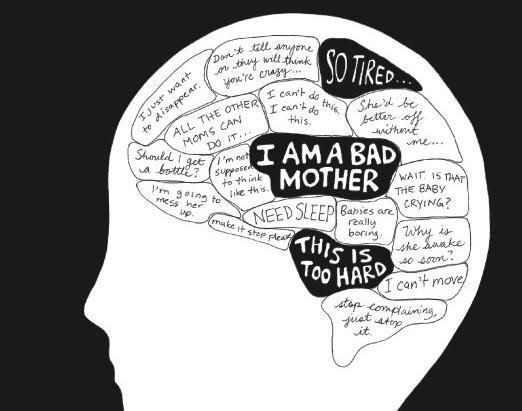
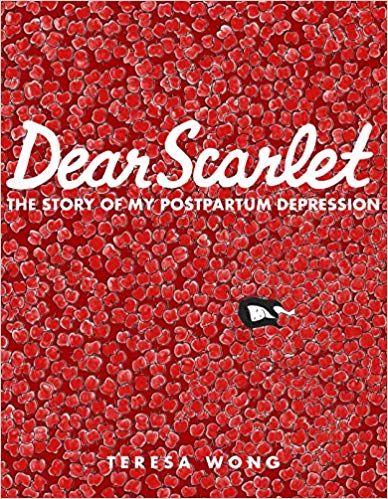
As someone who has written extensively about mothering and mental health in Asian America and in Asia, and the outsized impact of maternal mood disorders on immigrant parents and parents of color, Dear Scarlet: The Story of My Postpartum Depression a graphic memoir by Calgary-based writer Teresa Wong hit me hard. This slim, stark and powerful volume captures both the terrors of postpartum depression and the turning points to better health.

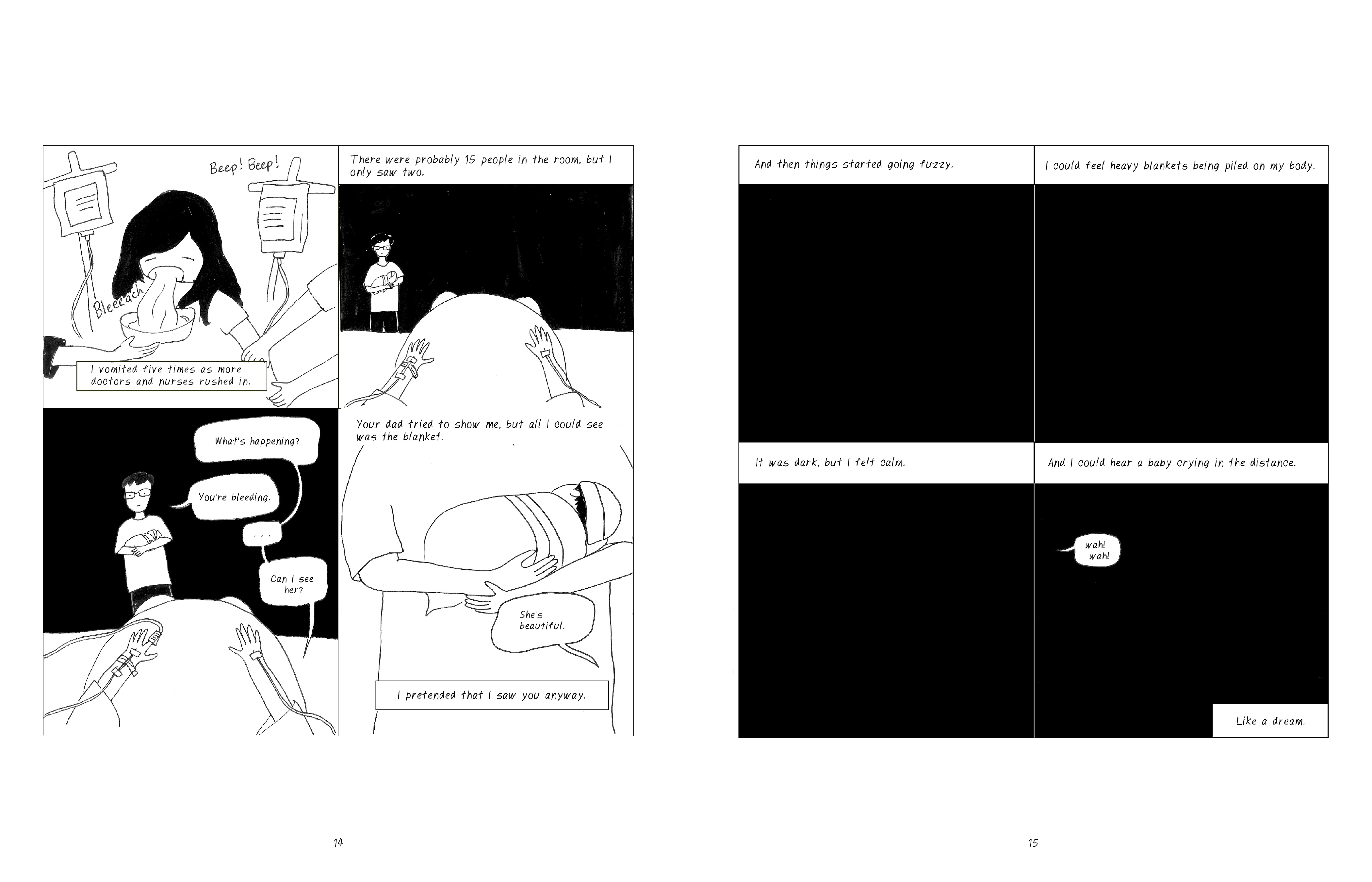
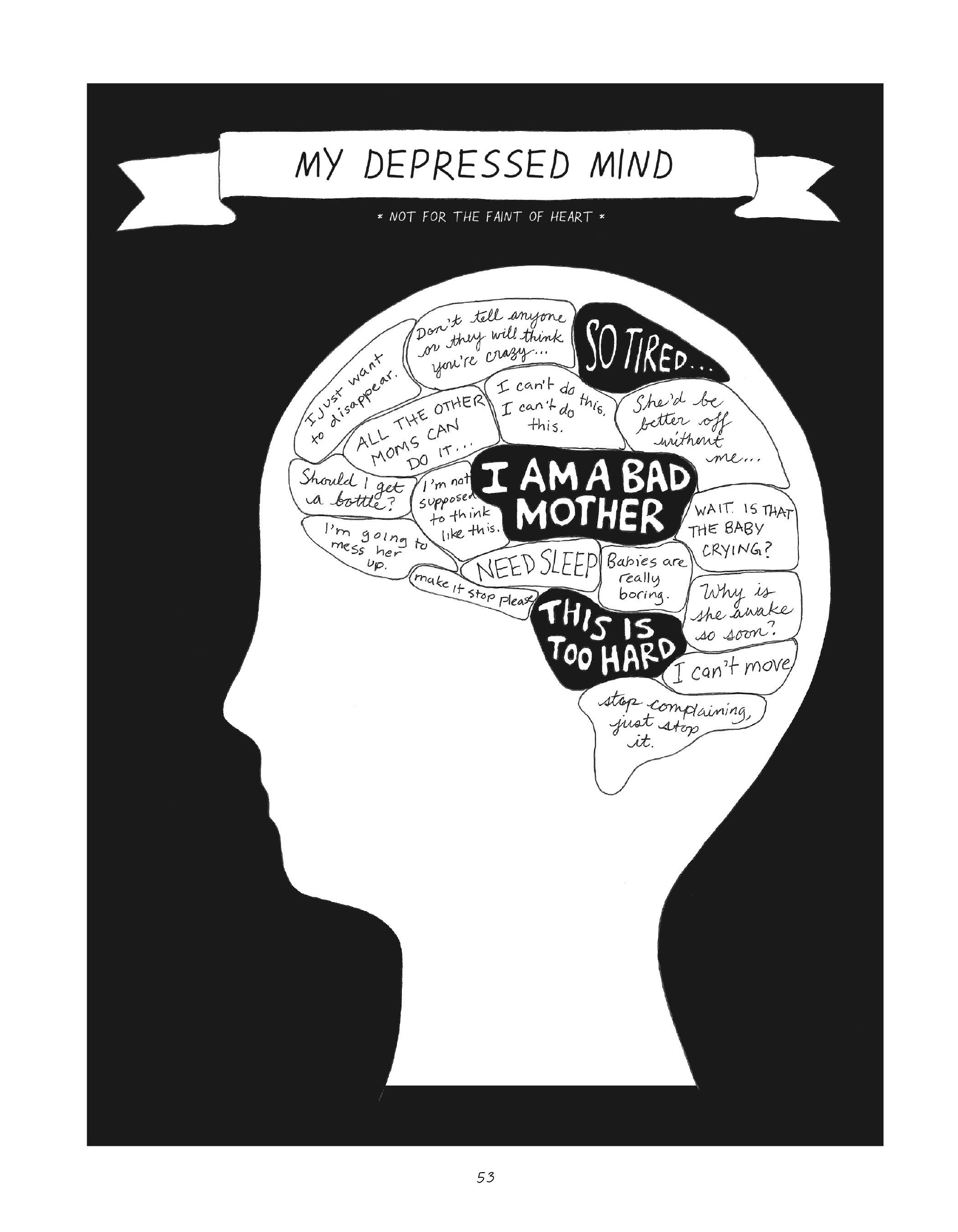
Wong’s high-contrast, black-and-white illustrations are atmospheric and touching, and are reflective of her own highs and lows. In a particularly arresting spread, Wong is undone by a Coldplay song, and her mind begins to spiral. Literally: Wong employs circular script as well.

Dear Scarlet: The Story of My Postpartum Depression by Teresa Wong
Buy the book

When I spoke to Wong we shared our experiences, and I mentioned that, as far as I knew, there were very few mainstream memoirs by Asian or Asian North American women in general — save for Amy Chua’s “Battle Hymn of the Tiger Mother  — and none about postpartum depression more specifically, and how much that might mean to readers like us.

“I just read an article on Electric Lit about the whiteness of motherhood memoirs,” she said. “I definitely didn’t set out to fill a void, but I’m happy that my experience is adding to the plurality of voices out there.”


Pooja Makhijani: Dear Scarlet explores motherhood, mental health and community. Why a graphic novel? Why is this story best told in comic form?

Teresa Wong: I don’t know if it’s best told in this form, but it seemed like a good way to me when I first started writing it! I was pregnant with my third baby at the time, and I kept having all these flashbacks to [my first child] Scarlet’s delivery. They came as random images, which stuck in my mind. As I started to envision what the book could be, I kept going back to those images and I decided to pursue that, even though I’m a writer not an illustrator. Caring for a newborn is such a “silent” time of life — there’s nobody to talk to — and it felt like images would be a good way to convey that.

Dear Scarlet by Teresa Wong (click to enlarge)

PM: Did you ever think of writing this story first, as opposed to illustrating it? You say you are not an illustrator; how did you develop the skills to tell this story in this form?

TW: I did write it first; I started with a script. I felt pretty confident that I didn’t have enough story to do a straight prose book.

I am definitely not an illustrator. I thought, for sure, I’d need to collaborate with someone to get the drawing part done. But I thought it would be helpful if I “storyboarded” the script so that I could discuss it with potential collaborators. I bought a sketchbook, cut up my script, and pasted it on the left side of each page, then sketched what I envisioned on the right side. I showed that first draft to some friends who had design and illustration backgrounds, to see what they thought. To my surprise, most of them liked my drawings! They said that the simplicity of my illustrations kind of added to the vulnerability of the story, and that it would be more powerful if I wrote and drew the book myself. I decided to do a second draft to the best of my drawing ability, and that became my manuscript.

After doing the book, I realized that I wanted to keep at it, so I started an Instagram account to continue practicing. I know I’ve gotten better, but I’m definitely not where I want to be with my art. Lynda Barry, a cartoonist, says that everyone should draw, whether they’re good at it or not. It’s a fundamental human activity, like singing or dancing.


Dear Scarlet by Teresa Wong (click to enlarge)

PM: In Dear Scarlet you reference your Chinese Canadian culture throughout. How did race and culture play into your postpartum experience, and in the writing of this memoir?

TW: I love the Chinese tradition of “sitting out the month” because it meant I had no obligation to do anything but eat and sleep and recover. It was isolating, but I’m pretty sure I needed it. It made it feel like a sacred time. I know that it’s de rigueur to say that pregnancy is not an illness, but labor and delivery can be pretty traumatic. Having the time to heal and adjust is wonderful.

What’s funny is that a Chinese friend suggested that I cut out the Chinese parts of the book; she wasn’t sure others would find it interesting or relatable. But in the end, I think it’s what caught my publisher’s attention.

Caring for a newborn is such a silent time of life — there’s nobody to talk to — and it felt like images would be a good way to convey that.

PM: Does how you feel about motherhood now changed from when you were writing about it?

TW: Writing about motherhood has given me a certain amount of perspective and distance that, I think, really helps with the day-to-day struggles. First, writing the book helped me work through my unresolved feelings about the postpartum experience. It made me see myself more compassionately, and it helped me understand that we are all just trying to do our best. It also reminded me of how far I’d come. I write and draw about motherhood now on Instagram and that has helped too.

The best thing that has come out of writing about my motherhood experience has been having people, sometimes strangers, reaching out to let me know they are encouraged by my work. So much of modern motherhood is done in isolation. It can be a very lonely time. It’s great to connect with others through words and drawings.


Dear Scarlet by Teresa Wong (click to enlarge)

PM: There’s this old debate about whether or not making art can be healing or therapeutic. I’m curious what you think.

TW: It has been therapeutic for me. I just read a book called The Secret Life of Pronouns. In it, [the author] talked about a study in which people wrote about a traumatic event, and how writing could change their feelings about that event. The key was not to simply ruminate over the details, though, obsessively going over everything that happened. I do believe that writing and drawing are helpful ways for me to work through things. When you place yourself and your experiences within a story framework, you gain perspective. I think doing this book was what I needed to really sort through what I’d lived through. I’d had a lot of therapy too, and taken medication, but there’s something altogether different about writing it.

PM: What are you working on now?

TW: I’m currently trying (and failing spectacularly) to start a second book. It’s about my parents, who both escaped from Chinese communes during the Cultural Revolution, and also about my fraught relationship with them. I have a structure in mind, but haven’t figured out whether I can draw the thing. I do want to do another graphic novel, but I feel the limitations of my talent pretty strongly these days.

7 Incendiary Books About Fires

My obsession with fires and burns comes from the accident that happened when I was 10, during our last winter in Korea. School had just let out, and I’d walked into the shed outside our one-room home that served as our kitchen. Standing on the uneven concrete floor, I caught a whiff of a broth cooking on the knee-high stove and crouched down to see what it was when my school bag caught the pot handle.

It was almost 40 years ago, but close my eyes, and I can still see it—the broth swishing around the pot like a tidal wave, the boiling bubbles popping as the pot tilts down, the liquid hitting my navy knit leggings. My mother dragging me to the water pump, the rising steam from my leggings dissipating into the air. Scissors cutting through the leggings, my mother’s hands shaking so badly she had to use both hands to cut. Bits of white fuzz—my skin—all over the knitted cloth.

Strangely, I don’t remember any pain at the moment of the incident itself. The pain came later, during the following month when I stayed in our room, taking all the medication my aunt could sneak out of the pharmacy where she worked (we were too poor to afford the hospital) and my mother changed the dressing six times a day, buttering my raw, red flesh with antibiotic ointment.

Purchase the book

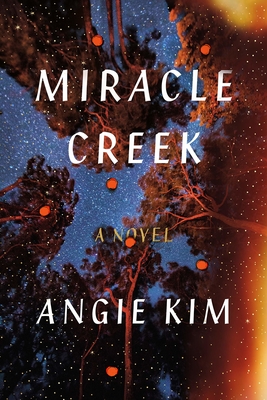
That was the most painful thing I’ve ever gone through, and the trauma stayed with me long after the burns healed. I’m no psychoanalyst, but I’m guessing that has something to do with my obsession with books about burning—fires, explosions, acid, scarred victims, all of it. In fact, my first novel, Miracle Creek, starts with a fire and an explosion, and that horrific incident gives rise to the murder trial that anchors the novel. But my real interest isn’t in the incident itself, but rather, in using it to explore the before and after—the history of the relationships between the characters, and the unexpected ways that their lives changed after the fire.

Here are seven stunning books in which fires/explosions/burnings give rise to the story, but are about much more, in which the fires are quasi-MacGuffins that the authors use to great effect to explore the lives of the people affected by them:

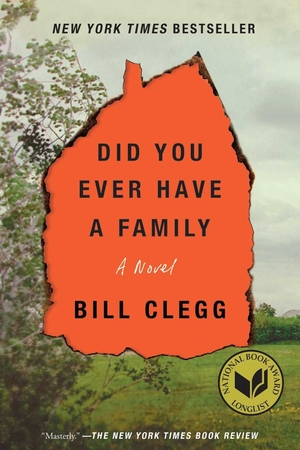
Did You Ever Have a Family by Bill Clegg

On the morning of June’s daughter’s wedding, a gas leak causes an explosion and fire in her house, killing her daughter, the daughter’s fiancé, her ex-husband, and her boyfriend. It’s devastating, not only for June (who leaves town and drives across the country) but for the other family members of the victims and other residents of the small Connecticut town. Bill Clegg masterfully delves into the aftermath in poignant, tender vignettes, and we learn, little by little, what led to the fire and glimpse the devastating consequences for the town.

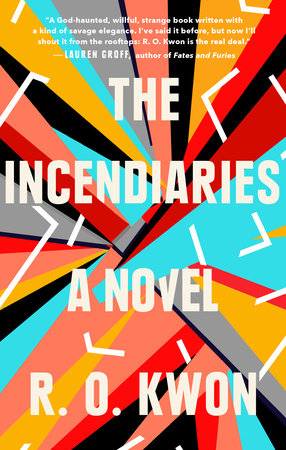
The Incendiaries by R. O. Kwon

The Incendiaries by R.O. Kwon

This dazzling novel begins with an explosion, a bomb that destroys a building as those responsible—Phoebe Lin, John Leal, and the other members of their religious cult—look on from a nearby rooftop and shout in triumph. Or so imagines Will, who wasn’t there but pictures the scene as it must have played out. Who are Phoebe, John, and Will, and what is this explosion all about? In sparkling prose, R.O. Kwon explores the forces of obsession, grief, and fundamentalism that led these characters to that moment. I can’t count how many times I paused to re-read a passage, marveling at its precision, its conciseness, and most of all, its rhythm. (Describing the explosion: “Three minutes to go, two, one. The Phipps building fell. Smoke plumed, the breath of God.”) You can tell that R.O. Kwon slaved over every word, every sentence, every paragraph. The result is a powerful must-read.

Image result for celeste ng little fires everywhere

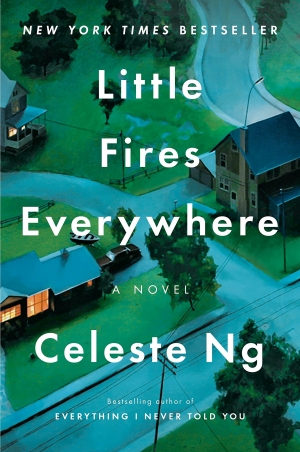
Little Fires Everywhere by Celeste Ng

“Everyone in Shaker Heights was talking about it that summer: how Isabelle, the last of the Richardson children, had finally gone around the bend and burned the house down.” So begins the opening chapter, which is centered around the fire, including the reactions of the Richardson family and their neighbors, the descriptions of the firefighting effort, and the discovery that the fire was the result of multiple fires deliberately set in the middle of all the beds in the house. Celeste Ng then takes us back in time to take us into the lives of the Richardsons and the other families in their planned community, as we uncover the secrets and complex dynamics that eventually led to those little fires everywhere.


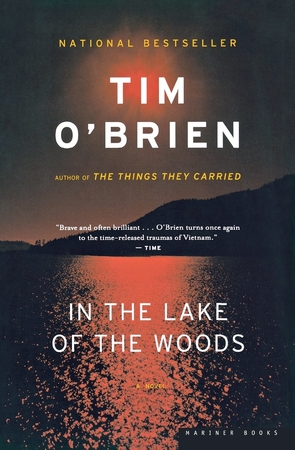
In the Lake of the Woods by Tim O’Brien

After a humiliating loss in an election for the US Senate, John Wade is hiding away in a remote lakeside cabin with his wife Kathy when he wakes up one morning to find her and their boat missing. His only memories of that night: boiling water in their iron tea kettle and pouring it on their potted plants, killing them. Through a series of Hypotheses chapters, Tim O’Brien tantalizes us with what could have happened—she could have run away, he could have killed her using the boiling water and thrown her body in the lake, she could have gone for a boat ride and gotten lost, or this whole thing could be an elaborate ruse for them to disappear and make a new life for themselves. Through interspersed flashbacks, we see what’s at the root of John’s traumatized life and his landslide election loss: his role in the My Lai Massacre in the Vietnam War. Trees on fire, smoke billowing around bodies and houses, explosions. It’s a powerful novel with a brilliantly unconventional structure. Easily one of my top five favorite books ever.

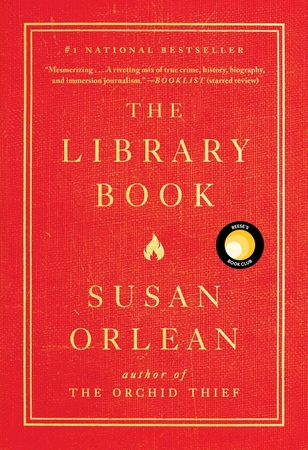
The Library Book by Susan Orlean

This isn’t a novel, but I’m making an exception because this is an exceptional book. The Library Book is a nonfiction account of the devastating 1986 fire of the Los Angeles Central Public Library, which burned for seven hours and destroyed 400,000 books. The fire was what initially hooked me—Orlean’s description of the fire itself (“feeding itself book after book, a monster snacking on crisps”) and the mystery of who or what caused the fire—but what made me fall in love with this book were the colorful, fascinating stories about libraries, librarians, and the people associated with them, from Susan Orlean’s own mother to Harry Peak, the chief suspect. It’s a gift to those of us who love books and reading.

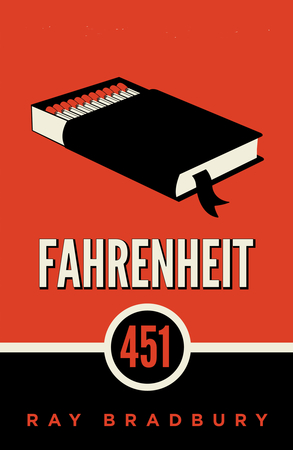
Fahrenheit 451 by Ray Bradbury

How can we talk about book burning without mentioning this great classic? Fahrenheit 451 is, as the book tells us, the temperature at which book paper catches fire and burns. In this dystopian “future” (in quotes because the book was published in 1953, and Ray Bradbury has said that the book takes place in 1999), books are outlawed and “firemen” burn any they find. The concept alone is striking, but the book is most chilling when it depicts the shocking consequences of this threat to our liberty, as when the firemen raid an old woman’s house, and she sets fire to her own house, killing herself rather than leave her books to be destroyed.

Firestarter by Stephen King

All right, fire is not a Trojan Horse for the real story in this sci-fi/horror/thriller from The King; fire is the real story. But I can’t have a list of books that start with fires and not include a book called Firestarter! Besides, it’s special to me for several reasons: 1) It was published in 1980, the year of my boiling-broth accident; 2) 1980 is also when I moved to America, learned to speak English, and started reading books in English; and 3) Firestarter was the first Stephen King book I ever read. Also, the film version starred Drew Barrymore, whom I idolized during that post-E.T. era.

Charlie has pyrokinesis, the ability to start fires. The Shop, a secret government unit (which, oh, by the way, performed experiments on her parents, which is what caused her extraordinary power), is after her, and she and her father are on the run. Pure suspenseful fun, with fires and explosions galore.

“The Left Hand of Darkness” Is the Anti-Nationalist Book We Need Right Now

This March, I borrowed a friend’s copy of Ursula K. Le Guin’s The Left Hand of Darkness, excited to finally remove the novel from my “To Read” list. On the title page of my friend’s 1999 paperback edition, there is a note scrawled from her college sweetheart who gave her the book as a birthday present in 2011. In scratchy script, he comments on the irony of writing a love letter in the front of “one of the most unromantic books ever written.” On this point, he and I disagree. Perhaps because of Le Guin’s careful, mechanical writing, and Left Hand’s arctic setting, the book has sometimes been characterized as cold. But it is with love that this novel interrogates the binaries that lord over human lives—female and male, pride (shifgrethor) and humility, love and hate. With tenderness, Le Guin attempts to stretch her readers’ minds and envisions a boundless, more cooperative future.

The book just celebrated its 50th anniversary of publication, but in 2019, The Left Hand of Darkness still resonates. Winner of both the Hugo and Nebula Awards for Best Novel, Le Guin’s opus is consistently ranked as one of the best works of science fiction ever written. In Donna R. White’s 1999 book, Dancing With Dragons: Ursula K. Le Guin and the Critics, she calls Left Hand “one of the seminal texts of science fiction, as important and influential as Mary Shelley’s Frankenstein.”

Set thousands of years from now, The Left Hand of Darkness follows human Genly Ai on his mission to Gethen, an icy, alien world. As an envoy of the Ekumen, a peaceful confederation of planets, his goal is to recruit Gethen to join the coalition. This proves to be a challenge; Genly struggles to navigate the harsh terrain and puzzling customs of the foreign world. Gethenians have no fixed sex, but enter kemmer—become either physiologically male or female—once a month to engage in sexual activity. This ambisexuality permeates the culture of the planet, and impedes Genly’s understanding of his hosts, and theirs of him.

The novel acts as a warning against xenophobia and a call for radical collaboration.

Acknowledged as one of the first works of feminist science fiction, Left Hand is often examined through the lens of gender. In a 1994 interview with writer Jonathan White, Le Guin herself calls the book a feminist thought experiment. She notes that in the 1960s, “everybody was asking, ‘What is it to be a man? What is it to be a woman?’” Left Hand is her attempt to answer those questions; she “eliminated gender to find out what would be left.” However, as author Becky Chambers writes for Lit Hub, “this book is both about gender and not about gender at all.” The novel acts not only as an examination of the gender binary, but also as a warning against xenophobia and a call for radical collaboration—powerful and timely messages in 2019.

Two years into Genly’s mission on Gethen, the planet is beginning to develop the concept of the nation-state. Intensifying territorial disputes between two of Gethen’s continents, Karhide and Orgoreyn, are pushing Gethenian society closer and closer toward nationalism. In many ways, Gethen is a more advanced world than our own: there is no gender-based privilege, no sexism, no rape, and no war. But, the planet is still young; given a little time, Gethen may establish some of the same structural evils that plague Earth today.

In The Left Hand of Darkness, Le Guin suggests that nationalism is a developmental milestone for any growing nation, a kind of transitional philosophy. Over time, it becomes obsolete, displaced by a more enlightened, more socialist ideology. (Le Guin notes that Genly comes “from a world that outgrew nations centuries ago.”) This “enlightenment” is part of what Genly offers the people of Gethen. As Charlie Jane Anders remarks in The Paris Review, “they could leapfrog over this drive toward nationalism by joining the Ekumen and becoming one unified world among many.” In Left Hand, the implication is that they should.

Throughout the book, readers are repeatedly reminded that patriotism is a double-edged sword. Le Guin’s progressive politics are no secret (she reviled “militant patriotism” and “self-interest”), and they inform the morality of the world she creates. Early on in the novel, Estraven, a Gethenian politician who becomes Genly’s ally and companion, asks the envoy if he knows what patriotism is. Genly responds, “I don’t think I do, if by patriotism you don’t mean the love of one’s homeland.” Most people (and dictionaries) would agree with Genly’s definition of the term. However, Estraven replies, “I don’t mean love, when I say patriotism. I mean fear. The fear of the other.”

Estraven later ponders aloud to Genly, “What is love of one’s country; is it hate of one’s uncountry?” He further asks, “I know towns, farms, hills and rivers and rocks…but what is the sense of giving a boundary to all that, of giving it a name and ceasing to love where the name ceases to apply?”

These questions are just as pertinent in 21st-century America as they are in fictional Gethen. In a nation where the President relentlessly pushes for a border wall, likens immigrants to animals, and spouts “America first” rhetoric, the “love of one’s country” looks a lot like “the hate of one’s uncountry.” In a nation that misrepresents peaceful protest as unpatriotism, that cages refugee families, whose politicians question why “white supremacy” is considered bad, the critical interpretation of patriotism that Le Guin offers seems particularly apt.

Globalism, Le Guin implies, is unpatriotic: To be a patriot is to love one’s country, and that country alone, unquestioningly.

In The Left Hand of Darkness, Le Guin also touches on what it means to be a patriot. When Estraven ultimately chooses to help Genly in his mission to convince Gethen to join the Ekumen, his country of Karhide labels him a traitor. Significantly, Estraven doesn’t dispute this label; he affirms it, noting that he “is not acting patriotically.” Although by aiding Genly, he is acting in the best interest of Karhide, he’s also acting in the best interest of the planet as a whole. This globalist attitude, Le Guin implies, is fundamentally unpatriotic: To be a patriot is to love one’s country, and that country alone, unquestioningly.

This is a profound sentiment in 2019: Just last week, Congress held a hearing on nationalism, and as experts have noted, the ideology is on the rise all around the world. The choice Gethen faces in The Left Hand of Darkness—to either join the Ekumen or veer toward isolationism—mirrors the crossroads that we find ourselves at today. What kind of society are we? And what will we become? Despite its fifty-year-old publication date, Left Hand shows us a path forward today.

Toward the end of the book, Genly reflects on his conversations with Estraven. He wonders “what the love of country truly consists of, how that yearning loyalty…arises, and how so real a love can become, too often, so foolish and vile a bigotry. Where does it go wrong?” In the final chapters of The Left Hand of Darkness, Le Guin suggests a cryptic answer to these questions in the form of a Gethenian poem:

Light is the left hand of darkness
and darkness the right hand of light.
Two are one, life and death, lying
Together like lovers in kemmer,
Like hands joined together,
Like the end and the way.

Like light and darkness, love of one’s country and fear of “the other” are yin and yang. One cannot exist without the other.

Genly shows Gethenians an entirely “new road,” a radically kind and cooperative way forward that looks very different from the world’s current trajectory toward nationalism. In The Left Hand of Darkness, Le Guin does the same for her readers by expanding what is possible and encouraging us to think beyond. In 2004, she remarks that “in an America where our reality may seem degraded to posturing patriotism and self-righteous brutality, imaginative literature continues…to examine the roots of power, and to offer moral alternatives.”

Within the pages of Le Guin’s masterpiece, there is indeed a simple, overarching moral: We are better, and can accomplish more together. If that isn’t romantic, I don’t know what is.

The Impossible Cost of the Sex Tax

Petar didn’t have enough money. All his friends had forgotten him. He couldn’t pay his sex tax and that meant that he could no longer be a man. He’d be processed into a stone, and he knew he’d be deaf and blind dust. Each particle of the dust he would turn into would be listening to her steps, Nia. How could he forget her? He’d been a stone several times for her.

Her family would never agree to pay his sex tax. They didn’t want him around; they were heaps of brown stones around her and he had to climb over them. He had to endure in order to reach her. They were endless hard sharp crags closing in on him, encircling Nia. When finally he managed to pay his tax, her father told him she had been processed into sand. Petar went looking for her. How could he be sure she was the gray rock jutting like a knife into the sky? He believed he’d know, he’d been dust, lowly powder without form of its own, and he’d been a rock, so he knew: a rock would recognize if another rock was Nia.

She used to be a small island lost in the sea, then she was a dune. She was a hillock of sand and he was the wind in the night that touched it gently, very carefully. He loved her so much he wanted to be dust all his days without her. Petar had been sandstone. He’d been patient. He’d been mud. And he had been a digger for years and years. Diggers were the sexless workers who cut the stones and carried the bags of sand with which other diggers built houses. He had been a heap of bricks and other diggers had built a house with him. He had remained a wall of a house forever, rubble in the base of a mausoleum, a tile on its roof, a chimney dead with smoke. He could not become a man until the house crumbled, until the roof disintegrated and the chimney melted away.

The diggers were losers, the despicable riff-raff that lived to grab money. They were happy when they stole small change or killed other diggers for small change. They were no men or women; they were bad eggs that had no embryos in them. After ages of building houses and making roads they could finally pay to be men or women for a day. Petar knew very well what it felt like to be a digger. He had built a garden amidst a desert for a newlywed couple. He watched as they kissed and he was there while they made love. His task was to bring them water and food. They liked his docility and paid him well.

Even while he was a digger he never forgot. He didn’t know where Nia was. He hoped she was not a digger like him. He hoped he could earn enough to buy her off, to pay her sex tax. Her parents could pay any price and she could remain a girl all her life. Her parents could find a different man for her every time she was a woman, but Nia…

Petar remembered…

“You are my bread and you are my hunger,” she had said. “I don’t want anybody else. I’d rather be a digger all my life… or a house that will never collapse if you are not with me.”

Petar didn’t want any other girl. He could afford to be a man an hour every year. There would be women for him. He could find a sweetheart and she’d love him; being a woman was a short-lived bliss and every second was a treasure. It was a common sight to see a man caressing a piece of stone. His woman had no more money to pay her sex tax and her time as a girl had passed. Sometimes a woman held a pebble in her hand; that was the man she had kissed a minute before.

Petar knew what happened after the kiss. Women threw the pebbles away and rushed to find other men. Every second counted. Every heartbeat was a reward. Men got rid of the stones that had been the love of their days. No one wasted time.

Nia was in his dreams. On the day he was a man, one short winter day in the endless year, he didn’t look for another girl. He wanted Nia. “You are my shore and my infinity,” Nia had said.

“He’s sick,” the diggers said. “He’s deranged. He’s a stone that has crumbled the wrong way.” But Petar was not a stone that had crumbled the wrong way. He hoped Nia was a pebble he could press to his heart.

“I’ll pay the digger to carve your name on me, after he processes me into a stone, Petar,” she had said. “And you’ll know where I am. You’ll find me.”
“Your parents won’t let you be a stone. They’ll find someone for you.”

“No,” she said. “I will not be a woman for anybody else!”

He could not find her.

He’d been an outcrop of syenite for all eternity before he made enough money to become a man again. He paid a digger to carve her name on the gray rough rock he had turned into. It cost him all he had earned while he was sand, and what he had saved up while he was dust and mud. The digger that had carved Nia’s name on him could afford to remain a man for an interminable week on Petar’s money.

Petar waited. He was a crag. Winds hit him and the mist slept on him making his surface slippery and freezing cold. Birds perched on him and moss grew on him, destroying his crystals. Petar made money by slowly dying. He hoped the moss had not covered Nia’s name. He prayed it remained cut deep and sharp into him.
One day Nia came. She touched the moss that grew on his surface. She cleared the leaves of the trees that had been falling onto him for years. “Petar,” she said. “Dearest Petar!”

A stone cannot feel, Petar had been told that many times. A stone is dead. A stone cannot love the summers and the winds. Petar knew all that. But that was not true. There she was, his Nia. You are my bread and my hunger. You are my eyes. You are my mist, and my birds, Nia. He understood her words. He could feel her touch. He had been a sexless digger so long, and he had loved her. He had been dust, the storms had scattered him all over the world, and he’d loved her. He had been a road of stones that her parents destroyed, and he’d loved her.

Something was happening. His surface broke. Deep crevices cut through his cold depth, the moss which grew on him caught fire. He had paid that digger to carve Nia’s name on him. Now, her name was no more. His crystals creaked and shrieked, his granite depth writhed and shook. There was no more strength in him. He was not a stone anymore. He was not sand, not even dust. He didn’t know what was happening to him.  Then he heard her voice.

“Look!”

“Yes, you were right, my child.”

That was her father speaking. Petar could understand. He recognized the man by his firm touch. Petar had been a stone and her father had kicked him and pushed him hundreds of times.

“Look at it. What a beautiful ruby!” another voice said, a man Petar had never seen before. “You wouldn’t imagine cheap granite could make such a splendid ruby!”

“Oh, they all do, James,” her father said. “The trick is to make them fall in love.”

“My fiancée is very good at that,” said the man Petar had never seen. “You are unbelievable, Nia. Congratulations.”

“Thank you, James.” 

There were no winds and there was no mist. Petar was not a man and had no heart. Something much more powerful than a heart broke in him.

“Let’s wrench that beautiful ruby from this rubbish heap,” her father said.

“That’s the best gem in your collection, dear,” the man she called James  remarked as he carefully placed Petar in a box. A dozen of other smaller rubies sparkled momentarily under the thick lid.

The thing that was more powerful than a heart screamed deep inside Petar, You are my bread and my hunger. You are my coast and my infinity. Perhaps Nia did not know that a ruby was a stone that would live longer than the wind.

7 Non-Fiction Books About Filipinx America by Pinoy Writers

“The supremacy of the United States must and will be enforced throughout every part of the archipelago, and those who resist it can accomplish no end other than their own ruin.”  

Issued to the Philippines in 1899, The Proclamation of the U.S. Commission Towards Conciliation and the Establishment of Peace is about as true to its name as Operation Enduring Freedom.  The sentence above was the commission’s first principle. Less than a month later, the Philippine-American War began, and that conflict—that insurrection—would irrevocably shape the future of both countries.  A definitive record of Filipinos killed during the war is difficult to ascertain; the number ranges anywhere between 200,000 to 1.4 million (the politics of the census are complicated when so many on one side of a war have been massacred).  Waterboarding was first used by American soldiers in the Philippines as a form of torture during this period. Even Mark Twain understood that American imperialism in the Philippines was a genocidal project: “There must be two Americas: one that sets the captive free, and one that takes a once-captive’s new freedom away from him, and picks a quarrel with him with nothing to found it on; then kills him to get his land.”

This was a war that established America as a global empire—the strategies used on Filipinos had already been implemented to devastating effect on Native American populations during the Plains Indians Wars—and yet somehow it remains a ghostly presence, a blip, in the annals of American history, not to mention mainstream contemporary American memory.  

America Is Not the Heart by Elaine Castillo
Buy the book

Fiction writers are often expected to address such absences. And while there are wonderful novels and fiction authors who do just that—most notably Gina Apostol in her most recent book, the searing and kaleidoscopic Insurrecto—I know that I’ve also had discussions with fellow fiction writers, especially writers of color and immigrant writers, who often point out the sometimes frustrating consequences of being expected to use your fiction as a platform to educate the wider American public about a historical lacuna.  

And I get it: there’s a particular vitality to fiction that makes the past come alive, when an author manages to turn a fact about war into flesh and blood. But sometimes the assumption that we should go to writers of color to learn about forgotten history can often mean we end up instrumentalizing those writers and their art for the ethnographic value they bring to us. The divide often then results in readers going to minority writers to learn the particular, and going to white writers to feel the universal. Certainly many of the literary panels I’ve seen or been on during the year I’ve been on tour have been organized thematically in just this way.

I don’t mean to suggest that writers of color be less politicized in their reception—we’re political, historical and emotional animals and those material facts of our being will inevitably find their way into our fictions. But that logic should be applied equally to all artists. I would love to see a panel about identity consisting of entirely middle-class writers, or a panel about women’s anger in fiction that doesn’t center white women. I would love for readers to expect more white American women writers to write fiction about why so many of them voted Trump into office. I would love a list of fiction recommendations about whiteness, for people who want to “learn more.” (I’d love to write that list, too: George Eliot’s The Mill on the Floss, one of my favorite books of all time, would definitely be on there, along with maybe Hemingway’s The Garden of Eden; obviously The Great Gatsby, or what about the entire oeuvre of Marguerite Duras?)

So below are a few of my favorite contemporary Filipinx American critics and historians from whom I, too, have gained a valuable education about the wonders and terrors of American statecraft and its rippling effects around the world, particularly the country my parents immigrated to California from—in the hopes that by expanding the list of people from whom we learn our history, we can also expand the list of people from whom we experience our art.

Suspended Apocalypse, Genocide, and the Filipino Condition by Dylan Rodriguez

This book should be required reading in American schools. It’s a rigorous and searing work of critical history, in which Rodriguez shows us how contemporary American identity and statecraft as we know it was constructed by its relationship to the Philippines—and vice versa. It connects American anti-blackness and indigenous genocide with its similar policies in the archipelago, and extrapolates that history to the modern day, with a virtuosic chapter on race and natural disaster that compares the aftermath of Hurricane Katrina to the eruption of Mt. Pinatubo in the Philippines. Often shocking, utterly indispensable.

Empire of Care: Nursing and Migration in Filipino American History by Catherine Ceniza Choy

Another absolute classic: chances are, if have ever been to a hospital of any kind, you’ve benefited from the care of a Filipinx nurse.  Maybe it was my mom, or one of my aunts or cousins. Catherine Ceniza Choy traces the long history of that labor back to, you guessed it, the American colonization of the Philippines, which makes this book a vital work of American history as much as it is a cornerstone of Filipinx history, labor history, and feminist history.

Global Divas: Filipino Gay Men in the Diaspora by Martin F. Manalansan IV

Growing up, I had a godfather who was also sometimes my godmother. The way he liked to be addressed—he usually used masculine pronouns even when referring to himself as a woman, in a way that was both true to him and also indicative of the fact that gendered pronouns do not exist in Tagalog, and thus he was dealing with both gender and grammar in a second, lesser language—was akin to calling someone Uncle Jessica. Queerness in my family was present, protected, often unremarkable, and yet went hand in hand with an underlying structure of patriarchal machismo, misogyny and homophobia. How those two things could live together, often in one person, I still find difficult to articulate, even (maybe especially) as a bi woman. Books like Manalansan IV’s book help: another long-time staple that delves into the lived specifics of a subset of Filipinx queerness (in particular bakla identity; the book doesn’t focus on queer women), while also thinking through the ways race and prejudice inform and deform our desires.

Puro Arte: Filipinos on the Stages of Empire by Lucy Mae San Pablo Burns

Chances are, if you’ve ever watched The Voice or American Idol, you’ve encountered a Filipinx performer—usually singing a pitch-perfect cover of a torch song, in the vein of Celine Dion or Boyz II Men or a classic musical.  Puro Arte explores the long history of Filipinx performance and connects it to the formation of Filipinx identity under U.S. imperialism—more specifically, what the book calls “imperial amnesia.” From white mobs chasing Filipino men in the 1920s era of taxi dance halls (and the accompanying fear-mongering around miscegenation and hypersexuality that historically differentiates the treatment of Filipinos from other Asian groups in America) to the phenomena of Filipina actresses starring as the Vietnamese character Kim in Miss Saigon, Puro Arte will deepen your understanding of the politics of performance—and maybe even ensure you never look at performers like Bruno Mars the same way again.

Transpacific Femininities: The Making of the Modern Filipina by Denise Cruz

A GOAT work of scholarship and criticism, with a staggeringly wide historical scope and a generous, approachable readability. Denise Cruz brings us from the colonial era to the Cold War, and gives us a much-needed feminist historicist approach to thinking about everything from national heroism, to class, colorism, and the ways in which the costs of war and empire are often borne on the bodies of women.

Little Manila Is in the Heart: The Making of the Filipina/o American Community in Stockton, California by Dawn Bohulano Mabalon

Mabalon’s sudden passing in 2018 dealt a tremendous blow to the Filipinx American community.  Little Manila Is in the Heart is a much-loved masterpiece of ethnography, history and activism all at once, centering on the titular Little Manila of downtown Stockton, California. Mabalon’s writing is as sharp as it is loving and accessible, and the way she traces the community’s origins to its contemporary struggles against gentrification could be fruitfully linked to similar struggles around the country, particularly the rapidly changing Bay Area.  Rest in power, Dawn.


Relocations: Queer Suburban Imaginaries (Sexual Cultures) by Karen Tongson

I’m a bi suburban kid of Filipinx immigrants, and though Tongson’s book mostly covers the queer suburban imaginaries of southern California, I still feel like I recognize traces of the Bay Area I grew out of in the pages of this deeply felt work of criticism as love letter.  The attention to and love for queer suburban life (and the particularities of, for example, suburban gentrification and displacement and its effects on queer lives) is what makes the work shine: it’s a much-needed antidote to both art and criticism’s focus on narratives of queer urbanity. The writing itself is elegant and singing with emotion, and Tongson understands beautifully that there is as much history (American, global, colonial, interethnic) in our strip malls as in our libraries; as much global epic drama in our garages as in our grandest theaters.

Predicting the 2019 Pulitzer Prize for Fiction

Music had its night in February at the Grammys. The film world followed closely behind with its Oscars. Now, in true saving-the-best-for-last fashion, it’s our time, book people, to celebrate American literature from the year that was. In just a few short days, on April 15th, the announcement of the 2019 Pulitzer Prize for Fiction—yes, contrary to recent tweets by a certain someone’s son, it’s a real award—will become the popular culture news event of the day.   

The Pulitzer Prize, of course, isn’t the only major literary award that gets people talking. It’s the oldest, though; Ernest Poole’s His Family claimed the inaugural award for fiction all the way back in 1918. And the Pulitzer Prize is the rare literary award that garners mainstream media attention and produces real sales. Reading through some of its past recipients sounds like a through-the-ages who’s who of American literature: Toni Morrison, Jhumpa Lahiri, Cormac McCarthy, Annie Proulx, Eudora Welty, William Faulkner, and Edith Wharton.

The announcement of the winner can provide pleasant surprises. Last year’s recognition of a comedic novel (Andrew Sean Greer’s Less) is one such example. But the Pulitzer Prize announcement can also come with confusion—and even anger. I’m thinking of the 1974 scandal involving Thomas Pynchon’s Gravity’s Rainbow. The three-person jury pushed for Pynchon to receive the honor, but the board rallied against the decision, resulting in no winner. And I won’t remind you of the near-unspeakable recent disaster from 2012. (Yes I will. Karen Russell was robbed!)

Guessing what title will win is a tough gig, but it’s a challenge I welcome. Truthfully, I’m up for just about anything that celebrates the written word. And what a celebration we should be having from the plethora of wonderful books released in 2018.   

Before getting to the ten most likely contenders, I have to mention a few of the many fantastic and acclaimed books that will likely just miss receiving the 2019 Pulitzer Prize for Fiction. These include memorable debut novels from Tommy Orange (There There) and Elaine Castillo (America Is Not the Heart); masterful collections from Kevin Wilson (Baby, You’re Gonna Be Mine), Nana Kwame Adjei-Brenyah (Friday Black), and Nick White (Sweet and Low); and (already) award-recognized titles from Luis Alberto Urrea (The House of Broken Angels), Lisa Halliday (Asymmetry) and the late Denis Johnson (The Largesse of the Sea Maiden).

For the record, I’m focusing on other awards, reviews, buzz, and good old-fashioned intuition in making these predictions. (I decided not to allow my own personal feelings about the best books of the year—shout out to Leesa Cross-Smith’s Whiskey & Ribbons and Jamel Brinkley’s A Lucky Man—to interfere too much with my judgment on what I think will happen.) Without further ado, here are the predictions, in order, for the ten books most likely to receive the honor of being the winner of the 2019 Pulitzer Prize for Fiction.

10: Heads of the Colored People by Nafissa Thompson-Spires

It’s hard to resist a debut collection of stories that is this good. And, really, who would want to? This collection received multiple awards citations. It was a finalist for the Kirkus Prize, a L.A. Times Book Prize finalist for first fiction, and longlisted for the National Book Award. In Heads of the Colored People, Thompson-Spires looks at issues of race and class in ways that are incredibly timely and darkly funny. If the jury wants to champion a short story collection by a new writer, watch out. This one is certainly worthy.  

9: The Wildlands by Abby Geni

Abby Geni’s first novel, The Lightkeepers, was longlisted for The Center for Fiction’s First Novel Prize, and her sophomore novel, The Wildlands, proves that honor was a sign of the things to come. In her latest novel, which begins after a deadly tornado tears apart the town of Mercy, Oklahoma, Geni explores humanity’s relationships with other humans, animals, and nature. It’s a remarkable achievement. Don’t just take my word for it. Buzzfeed and Kirkus both recognized the book as being one of the year’s very best, and it was selected as a fiction finalist for the L.A. Times Book Prize. The Wildlands comes from Counterpoint Press, which is an indie publishing house. Small press titles are surging, and Geni’s novel is a standout. This is a book to watch out for—and to read (if you haven’t).  

Waiting for Eden by Elliot Ackerman

8: Waiting for Eden by Elliot Ackerman

Ackerman is a past National Book Award finalist, which puts anything he writes on the radar of titles to watch. Waiting for Eden, a novel told from the perspective of a dead man who is waiting—on his marriage, on his friend, on understanding, on his life, on his afterlife—is Ackerman’s masterpiece. Clocking in at less than 200 pages, this slim novel is a meditation on the meaning of life. It’s quiet, tender, and absolutely haunting. It’s loved by critics and readers alike. All of these things make it perfect for awards season. Plus, the ALA listed it as one of its “2019 Notable Books,” which is a good Pulitzer indicator.

Gun Love by Jennifer Clement

7: Gun Love by Jennifer Clement

When this timely novel appeared on the longlist for National Book Award, it was a welcome surprise. It didn’t get a ton of press upon its release last March, but it still found a loyal readership. That, in itself, proves something. Since its NBA recognition, Time and Library Journal selected Gun Love as one of the best books of the year. It has momentum as we approach the Pulitzer finish line. Clement’s novel looks at issues of class and guns, and the focus on the mother-daughter relationship is orchestrated wonderfully. I wouldn’t be surprised at all to see it as a nominee (and maybe even the winner).

6: Severance by Ling Ma

Okay, so quirky, satirical apocalyptic novels aren’t typical Pulitzer bait. I get that. But hear me out. Severance continues to show up on lists that matter. The New York Times cited it as one of the “100 Notable Books of 2018.” That’s a big deal. It won the Kirkus Prize. Another big deal. And it was a finalist for the 2019 PEN/Hemingway Award. Big deal again. On top of all those accolades, it appeared on “best of” lists from, among many other publications, Electric Literature, Lit Hub, and Bustle. The book is charming, and it’s so original that it’s hard to forget.

The Friend by Sigrid Nunez

5: The Friend by Sigrid Nunez

Before The Friend won the National Book Award, I had it at the top of the predictions. But history works against NBA winners and Pulitzer winners matching up. In fact, there have only been seven times when both awards went to the same book (Faulkner’s A Fable, Cheever’s The Stories of John Cheever, Porter’s The Collected Stories of Katherine Anne Porter, Updike’s Rabbit is Rich, Walker’s The Color Purple, Proulx’s The Shipping News, and Whitehead’s The Underground Railroad). The Friend is a novel that could join this exclusive list. Everyone I talk to loves this book—I mean, folks emphatically love it. It’s hard to resist a novel about dog-human relationships. (Yeah, it’s also about grief and loss, but still. Dogs.) Plus, it has all kinds of accolades, including the important mention from The New York Times as being one of the “100 Notable Books of 2018.” While history works against it, don’t be surprised if Nunez wins.

4: The Mars Room by Rachel Kushner

Many people thought Kushner’s 2013 novel The Flamethrowers was going to win the Pulitzer in 2014. The fact that it didn’t helps The Mars Room, which has received equally rapturous reviews. Additionally, it was a finalist for the National Book Critics Circle Award and the Man Booker Prize. Time listed it as the top fiction release of 2018. It was longlisted for the Andrew Carnegie Medal, and it received acknowledgment from the ALA and The New York Times. Each of these mentions is major in predicting the Pulitzer Prize. The Morning New’s Tournament of Books, a literary March Madness matchup, isn’t really a predictor for the Pulitzer Prize, but for what it’s worth The Mars Room did really well there too. It lost to My Sister, the Serial Killer (the eventual winner) in the zombie round. Kushner’s novel about Romy Hall and her time at Stanville Women’s Correctional Facility is a front runner.

Florida by Lauren Groff

3: Florida by Lauren Groff

The Monsters of Templeton. Delicate Edible Birds. Arcadia. Fates and Furies. Florida. Those are Lauren Groff’s books, and somehow she doesn’t have a Pulitzer yet. Florida finds Groff back in her best form, the short story. These stories are haunting, oozing with humanity—both its horrors and its loves. Florida was a finalist for the Kirkus Prize and the National Book Award, and it won the Story Prize. It has a ton of buzz, and Groff has to eventually win a Pulitzer. Florida could be the book to do it.  

2: An American Marriage by Tayari Jones

There’ve been several winners of the Pulitzer Prize for Fiction in this decade that have also been the literary “it book” of the year. Tartt’s The Goldfinch, Doerr’s All the Light We Cannot See, and Whitehead’s The Underground Railroad are the ones the come to mind that fit this trend. If the jury is looking to continue on that same path, Jones’ An American Marriage would fit the bill. It’s a novel that people love, share, and discuss. Even Oprah loves it. An American Marriage is, simply put, a brilliant American novel. It’s rich in character and place. It’s full of love and hope and despair. It’s classic in how it explores the notion of the American Dream, and it’s timely in its dissection of wrongful incarceration. The story of Celestial and Roy is one for the books. Don’t just take my word for it: it was a finalist for the L.A. Times Book Prize and longlisted for the National Book Award. Additionally, it received ringing citations for The New York Times and the ALA. It would be a beloved winner.  

The Great Believers by Rebecca Makkai

1: The Great Believers by Rebecca Makkai

A 1980s-set novel about Chicago, the AIDS epidemic, and friendship is the most likely winner of the 2019 Pulitzer Prize for Fiction. It’s everywhere. Readers, writers, and bloggers can’t stop talking about it. It won the 2019 Andrew Carnegie Medal—just like recent Pulitzer winners The Underground Railroad, The Sympathizer, All the Light We Cannot See, and The Goldfinch. The Great Believers was a finalist for the L.A. Times Book Prize and the National Book Award. It made it onto the “100 Notable Books of 2018” by The New York Times, and it received an ALA citation. It also appeared on countless “best of” lists. The story is emotional and totally consuming, and it’s impossible to forget. Sometimes, a book is too big to ignore, and The Great Believers looks to be one of those books.

I did pretty well when I tried this prediction thing back in 2017. I got that Colson Whitehead’s The Underground Railroad would win, and I called Adam Haslett’s Imagine Me Gone as a nominee. I really do think Rebecca Makkai’s The Great Believers takes it, but the Pulitzer announcement usually comes with some surprises.

Here’s the thing to remember: April 15th is a day to celebrate literature. Whether a book you love or loathe wins, the public will be talking about books. And you know what? I think that makes us all winners.