To the Island, Once More

Island

by Mark Jacquemain

For a long time they barely saw the man who bought the island next door. He visited haphazardly, one or two weekends a month, and did repairs on the sagging sun porch on the far side of his cottage. The echo of hammering across the water was the only sign he was there. In August, he turned his attention to the dock and Joe and his mother could watch him work from the window above the kitchen sink. He wore just a pair of torn jeans — walked right into the lake in them — and his wide pale back reddened beneath the sun. Joe’s mother stood at the window long after she’d stacked the dishes. She mixed a can of pink lemonade, set the pitcher and two glasses on a tray, and — instead of bringing a glass to Joe — said, “I’m going to say hi.” Joe watched her row over in the tin boat; when he looked up from picking dried worm off the fish hook he’d found, his mother and the man were drinking lemonade together on the rock.

Later in the month, the man returned, in a new yellow cruiser. He waded across the shallow marshy channel that separated the islands and presented to Joe and his mother a bowl of just-picked blueberries. Up close, he smelled like Mr. Garfield, the vice-principal at Joe’s school, who smoked when on yard duty. He lowered the bowl to Joe and winked, said, “Poison,” and Joe, knowing better, mashed a handful into his mouth. Joe’s mother invited the man to dinner that evening and for the next several hours she was coiled in anticipation as if he were some big-shot celebrity. She dust-busted the couch, chopped a salad, shook a bag of cheezies into a bowl. She had a violent go at Joe’s hair, a towel-dried tangle this deep into the summer, and got him to restock the outhouse with toilet-paper rolls. He dumped them in a messy pile he knew would aggravate her. One of the rolls separated from its brothers and rolled into the hole, dropping onto the glistening mound of sludge. He peeked, staggered back coughing.

His mother had combed out her own hair and put on her bright orange sundress, but when the man arrived she was nearly as sombre as the time she made dinner for Henry, the Cree man who ran the taxi-boat service. She apologized about not having wine and seemed not to hear his offer to show her his new boat. Joe receded into that comfy zone where he ranked superpowers. (Tornado. Ice fingers. Jedi.) Until, to get them through the dinner silence, his mother shared the humiliating tale of the lemonade stand Joe had set up on the dock when he was little — “It was very sweet; my mom and I were his only customers” — as if lemonade was the only common subject between them.

The man — Stuart he’d said his name was — waded back to his place and returned with beer and a pack of du Maurier cigarettes and she cheered up enough to let him know she thought it a disgrace that he flew the emblem of the Buffalo Sabres from his flagpole, and not the maple leaf. “It’s so ugly,” she said, and he smirked and explained that he was the team’s equipment manager. “Have to stay loyal. They pay the bills.”

Joe didn’t like the way Stuart looked at his mother, but this new information raised the man somewhat in Joe’s eyes. He asked if Stuart got to travel with the club, if he’d been to Montreal. Stuart said sure.

“New York?”

“Uh-huh. I was at Madison Square Garden one time when the circus was in town. That place is immense.” He said he wandered through with some of the guys and got lost. “We might have had a few ‘pops,’” he winked. “I end up in this big dark warehouse-sort-of-room and I hear this breathing like there’s a monster in there with me. Turns out it’s one of the elephants from the show! Scared the living piss outta me.”

Joe laughed. And, though he could see his mother thought the story embellishment or showing off, she laughed, too, tolerantly. Stuart said, “Shit, Ellen, you have a nice smile.”

She looked not embarrassed but disappointed by his forwardness, and Stuart suddenly seemed much younger than her. He made a fumbling attempt to push past this — apologized for swearing in front of Joe. “What about your flag? RCAF? Your father fly in the war?”

“Yes.”

“Yeah? Mine was army — Italy. Did yours make it?”

She nodded. “But he came home with TB and never got better. He died up here, actually. My grandfather, too. Heart attack. Grandpa built this place in 1914 — that’s how long we’ve been here. They found him in his fishing boat in Lost Bay.”

“No shit. Lost Bay. You can’t make that up, can you?”

He apologized again for swearing but she didn’t notice. She’d had enough to drink — Joe could see this too — that she wanted to tell more. “I also had an uncle go through the ice near Minnicog. My mother loves to say that the men are cursed in this family, at least up here. I tell Joe, if he’s not very careful all the time, we’ll have to sell. He doesn’t like me saying that.”

It was true, but Joe was used to it. He was used to her talking of the men in the family and making no mention of his father.

“But so far he’s been invincible,” she said.

It was humid, the bay dead still. She suggested they swim and in the water she seemed a dozen years younger herself. Joe and Stuart dove for beer bottles while she floated nearby with that lazy breaststroke of hers. They watched Joe cannonball off the little rock face known as the Mountain — a name his mother and grandmother had used and he’d adopted. They awarded him scores out of ten like Olympic divers. Then they forgot about him and he imagined he was leaping from the cockpit of a burning-up snowspeeder.

When he woke the next morning, his mother wasn’t in the cottage or anywhere on the island. She rowed the tin boat back before noon and made pancakes.

Joe didn’t think of the man again until the following summer. A week into their first stay his boat appeared on the horizon, though Joe heard it before he saw it. He charged down the trail — pausing to crush in his palms the crowns of half a dozen goldenrod, smearing the pollen on a lawn chair — and clambered up the Mountain to look. The bay’s long fingers reached between the islands. There was no sign of a boat. Then, a speck of fluff. A toy with little figures on it. It veered between the shoals, and abruptly slowed, its bow rearing up like a bathing moose. A thin woman in the back lost her balance and wildly threw a rope toward the dock, which splashed in the lake and began to sink.

Joe watched them disembark. Stuart, in a plaid shirt, half-buttoned, flung two suitcases on the dock and helped the woman with the wobbly first step. Her hair was choppily cropped, like David Bowie’s. There was someone else with them — a girl, spindly inside the baggie Disneyland t-shirt she wore like a dress. She refused Stuart’s offered hand and climbed out of the boat herself.

They vanished inside the cottage and Joe sat, scraped the lichen off the rock with a stick. Flakey lime-green. Tough ochre stuff he couldn’t budge. After a while, the woman and the girl came out and wandered a little. The woman went back inside; the girl descended the humpback toward his island. He wandered that way, in roundabout fashion, behind the outhouse and over Egg Rock. She paused when she saw him and then continued to the water’s edge. Her utter lack of expression, her shielding blonde bob and military erectness, evoked the hard angry plastic of his G.I. Joes. “How do you get across?” she called to him. “Can you walk?”

“Yeah, it’s not that deep.”

She seemed uncertain so he took a few steps into the water toward her. Horsetails sagged. Bullfrogs burped at each other like old men. She raised her eyebrows as if annoyed, and tiptoed in. “Ugh, it’s slimy.” She stumbled and lifted her t-shirt, revealing purple bikini bottoms.

She made it to the bridge. The derelict wooden half-bridge built out from his island ten feet into the shallow marsh before ending abruptly, at the halfway point, overtop a carpet of lily pads. A pail stood at the close end and a net hung from a pole wedged in the planking. She climbed ashore — legs silvered and dripping — and peered in the pail. “There’s baby fish in here.”

“I catch them,” he indicated the net, “with that.”

She stepped carefully onto the bridge. “Why’s it only go halfway?”

He shrugged. “The ice took it out a couple years ago. We used to know the people over there real well, but there’s been a bunch of owners since then.”

He squatted where he was on the rock. She sat, feet reflected in the glassy water, and took hold of the planks beneath her, shook the bridge so it wobbled.

“Don’t do that, you’ll scare them off.” He walked out next to her so the bridge slouched to one side and pointed out the flashing swarm that hovered over the net. “Watch out,” he said, and tenderly gripped the pole, yanked the net up.

Dozens of minnows, shards of sunlight, flip-flapping frantically.

“See?” He carried the net to a flattish shelf of rock and set it down. He gathered dripping handfuls of the tiny fish and dropped them in the pail.

“Do you keep them?”

“Keep them? No, I use them as bait.”

A few of the minnows had wriggled free of the net. He brushed them toward the pond with his fingers. One, powdered with dirt, barely moving, he smushed into the rock with the knuckle of his thumb. She looked on with a displeased face.

“It’s hard to get them all,” he said.

Later that afternoon, Joe and his mother rowed over in the tin boat to say a proper hello. His mother had been abuzz since their arrival, curious about Stuart’s guests. She wondered if the woman was “a new one or an old one,” adding that it was nice that he had someone. “I think he gets lonely.” She took Joe’s hand on the path. “At least it looks like you’ll have someone to play with. Other than your mother.”

Halfway over they realized the yellow boat wasn’t there; a breeze was up and they mustn’t have heard it chug off. But they beached near the dock and climbed the humpback to the cottage. It was the first time Joe had been here in two summers, since Stuart bought the place, but it was familiar. The big deformed pine and scatter of juniper and blackened rock where bonfires were lit. The cluster of boulders like sentries along the path to the outhouse.

The cottage itself was dim and musty and not at all what he remembered. He loitered by the screen door while his mother and the thin woman talked. On hearing that Stuart had gone back to the marina to get firewood, Joe’s mother relaxed and made herself at home, helped open windows and sort the dishes. Joe snuck glances at the girl, who slouched in one of the kitchen chairs eying the floor with what seemed a grossed-out face.

“We have plenty of wood out back. He just likes to drive that stupid boat,” the woman said. Her name was Marlene. She was pretty up close, if not dramatically so, her hair less raggedy. (Maybe the boat trip had done that.) “If he’s not driving it, he’s polishing it. He washed it once in the driveway, already, and he was at it again today at the marina.”

“Sure,” Joe’s mother said, “men and their toys. But you must enjoy it.”

“Jesus, did you see when we got here? You notice my sea legs? I almost fell in the lake.”

Joe’s mother chuckled but leaned away. The grace of it made the other woman seem almost clownish.

“Well, we just came to say hi and invite you over for a drink.”

“Tonight?”

“Sure, whenever.” She turned to the girl and, in that matter-of-fact way she had with kids, said, “And if you like, Laura, you could row back with us and Joe could show you around.”

The girl popped up in her chair. “We’ll just walk over.”

“Hey,” Marlene said.

“What? I know the way.”

She rose, tossed a glance at her mother, banged outside. Joe and his mother exchanged a look of their own; she nodded to indicate that he should go. He joined the girl on the stoop, but she was off at once and he followed her down the path to the marsh, wildflowers swaying at the passage of her stick legs. At the water she hesitated again and he led the way across. He marched her past his cottage and up the Mountain and down the slope to the island’s eastern peninsula — a tiny horn of rock, separated now that the water was high by an ankle-deep canal — and waded out to it. Two haggard gulls flew off but a third, just a humped tuft of feathers, did not. He approached and nudged it with one of his toes. It was dead. He retrieved a wand of driftwood and used it to flip the carcass over, this way and that. It was stiff like shirts left to dry on the line, a dull black eye and yellow grin.

“Gross,” she said.

He hoisted the bird up and returned to the island proper, closing its perimeter — the territory of which he was king — and arriving at last at the nook beneath the Mountain’s overhang, and his driftwood lean-to. He knelt, threw the gull in ahead of him, beckoned her to follow. “Come on,” he said. There was really only room for one and she had to squeeze. “Careful,” he said, and made a little gesture to indicate his collection, neatly arranged in crannies: fish skulls, shells and knobs of bone, a broken lure still clinging to a bit of line, an intact crayfish, cattails puffed out to seed like marshmallow on a stick.

“What’s all this for?” she said. The question oozed disdain, but she stared at him, awaiting an answer.

He noticed in that softer light that she was pretty too. And this irritated him.

“Nothing,” he said, and, inspired, thrust the gull at her, squawking. She stared at him, thoughtfully, and crawled out.

Stuart returned and he and Marlene waded over in their bathing suits. He brought beer again; they all swam. (Joe noted the wisp of dark hair emanating from the edges of Marlene’s suit, and kept his eyes averted.) Then, while the adults drank and talked, Joe and Laura lay on their sides on the warm porch and played cards — or, rather, she submitted to the hands of Old Maid he relentlessly dealt on the damp towel between them. She was either woeful at the game or indifferent and ended up with the bitch every time.

Now and then Stuart came out to smoke. “Jesus, you’ve gotten bigger, haven’t you?” he said to Joe, the sort of adult small talk that could be humored only when no other kids were around. Joe merely nodded. Stuart went back inside and Laura mocked him, his unsteady gait and the perplexed look on his face as he paced with his cigarette when down at the shore. He was drunk, and as evening came on, a seamless grey smothering the sky, he grew drunker. They stayed for hamburgers and he took charge of the grill, managed not to burn anything. But he was surly during dinner, muttering under his breath. Ignoring this, the women talked like old friends.

“Stu thinks I should do my beautician training.”

“I just said that cause you like that stuff, Marlene,” the man sighed.

“What about you?” Marlene said, and Joe’s mother said she was between jobs, too. She told them about leaving the college where she’d taught history. “I was distracted by the divorce. I may go back or I may just use this break to finally start my PhD. If I do, though I’ll probably have to sell this place. I can’t afford it — Joe’s father gives me almost nothing. Sometimes I want to anyway. All the upkeep, you know. With the wind out here you need a new coat of paint every couple years, new shingles.”

“Well, Stu can help you with that stuff, can’t you, baby?”

“Sure,” Stuart said. He backed out his chair, stood, produced a cigarette. “Sure, you just go ahead and offer my services. Like we don’t have a shitload to do next door.”

He clattered out to the porch to smoke.

“Don’t worry about him,” Marlene said, “he’s wasted.”

The women cleared the table and Joe and Laura took their pudding cups to the couch, Laura luxuriating over the last bits she could get with her fingers. They heard Joe’s mother ask how long Marlene and Stuart had been together and Marlene reply, “Couple years. On and off.”

“Oh. I didn’t see you out here last summer.”

“No, last summer was bad.”

Laura met Joe’s gaze and stared back hard as if to say, Don’t you pity me.

From outside drifted the stink of cigarettes, the sound of waves licking the rock. She took a framed photograph from the end table, lay back on the arm of the couch, and held it to the light. “Who’s this?”

“My grandma,” he said. His grandmother as a child, in white shoes and a checkered dress holding aloft a pike nearly as long as she was. He meant to say more, recount the night his grandmother cudgeled a rattler with a rock on her way to the outhouse. But he was staring at the fine hairs on the line of her jaw.

He saw her again when the three of them returned in July for a longer stay. He schooled her on which berries were edible, which not. He took her snorkeling off Whale Island where a sailboat lay on the lake floor, pocked with mussels. They dragged an old sheet of plywood from under the cottage and erected a precarious addition to his lean-to.

When it rained they lay on the rug and listened to baseball on the radio. His mother was a fan and looked up from her Marx reader (always open in the same place) before pitches.

One hot afternoon, Stuart let Joe and Laura lie around on his boat, jump from the back platform. “Who needs a beer?” he’d joke. Or, “I’m not seeing any swabbing. Didn’t one of you promise to swab?” Laura, golden hair stuck to her shoulders, ankles hanging off the side, giggled unreservedly. Joe had to fake a laugh. He noticed for the first time how handsome Stuart was, in a wolfish way. Unshaven, shirtless, black hair slick with sweat. Though Joe hardly glanced in his direction.

Stuart returned to town and the women drank wine together and complained about him, about men in general. But he surprised them the next morning with cans of red paint and announced that he intended to put a couple coats on Joe’s cottage. He was in buoyant spirits. “Early Christmas present,” he said, winking at Joe’s mother. “We all pitch in, we could have her done in a day or two.”

Marlene didn’t help, but Joe and Laura did a little with the rollers. They made a race of it and messily stained the rock, as if with blood. He kept at it even after she left for lunch. He’d almost completed the west wall — he’d had to attach the roller to a broom handle to get the high corners — when he decided to demand lunch of his own. His mother was up on a ladder out front, grinning, and Stuart stood beneath her, a hand on her bare calf. He saw Joe and removed his hand — it left a red print. “Got you,” Stuart said, but sort of as an afterthought. Then he said it again to Joe, with a shrug, “Got her.”

Joe’s mother’s face had gone severe. Stuart sighed, brushed off his jeans, and sat on the steps. He glanced at Joe and a thought seemed to bubble up. “Hey, what do you say we take the boat out tomorrow, real early? Drop in a couple lines?”

Joe looked to his mother. She descended the ladder, saying, “We’re going in to eat, Stu.”

“So,” he said to Joe once she’d gone, “tomorrow.”

The next morning, they puttered over to Lost Bay, just the two of them. Stuart said just enough to create the mystique of great fishing prowess — said he did the bass derby and had won prizes. His tackle box unfolded in a series of miniature terraced shelves, each with four compartments, and each of these containing a marvelous lure. But they got few nibbles and within the hour he grew sleepy and gave up casting. “I’ll man the net,” he said, and lay back, cupped a beer in his lap, contented himself beguiling Joe with dirty limericks. One whose opening couplet featured a lass from Regina.

“But you’re not ready for any of that yet. You don’t have a girlfriend, right?”

“No.”

“But you like girls, don’t you. You like looking at them.” Joe felt a flush explode across his face. Stuart let out a cackle that echoed down the bay.

The see-saw call of an ovenbird in the bush paused, resumed.

“Don’t worry, they like looking at us too. Won’t admit it but they do — that’s how you know a chick’s into you.” He craned forward so the boat tipped and the beer in the neck of his bottle sloshed into the lake. “There’s other signs and whatnot you can pick up with a little practice, but this one’s sure-fire. You got to do like this,” he turned from Joe and turned back quickly, “and then you’ll catch them.”

As advice, it wasn’t much. But Joe was emboldened by it. That afternoon he dragged his inflatable rubber raft out from under the porch — it was fuzzed with a membrane of dust and old cobwebs — and washed it off, blew it up, took Laura out in it. A breeze was up, scarring the bay with white, and they rolled low in the water. The raft was too small for them and her legs got entangled in his. He was fervently disturbed by this. And by the spray of freckles on her nose, the way her hair curled about her brown neck. The purple triangle of cloth below her life jacket. She gazed solemnly over the water, so he could look.

He beached them on the south shore of a tiny island out in the bay and silently guided her over the sparkly black rock, hot underfoot, marred by globs of gull shit. His cottage wasn’t far off — just there, perched on his island’s ridge like a houseboat on a whale — but the lake was between them and the landscape here so foreign that he felt isolated and free. They sat together in a sparse stand of blueberries and he popped berry after berry in his mouth — then put his hand to his throat and tilted sideways. “Poison,” he gurgled, lying prone while she shook and kicked him, giggling as she had on Stuart’s boat.

When he opened his eyes she sat cross-legged across from him and was gazing at him serenely. “What?” he said.

“Nothing.”

He remembered what Stuart had told him and looked away, looked back quickly. She was still staring. But now her expression had changed to one of bemusement. “You have seaweed on your face,” she said. She screamed with laughter. She leapt to her feet and he ran after her.

Stuart dropped Laura and her mother at the marina the following morning, the yellow cruiser bearing the three of them off, without goodbyes. Later that same week, Joe and his mother took a taxi boat to town and got groceries and wine, a new bathing suit for her, Band-Aids for his scuffed ankles. They were late getting back and Henry, who ran the taxi boat, scolded them for cutting it so close. The boathouses dark out in the channel, the pines like hanged men pointing them home.

They had a feast of hot dogs, potato chips, and ginger ale — two cans each.

In the ensuing days, he rowed his raft out into the bay, pretending himself castaway, all alone, days at sea. But as the week wore on, he spent more time floating near the dock, dropping a mask over the raft’s bow and peering down at the lake bottom, glancing every now and then for the sign of a boat. He caught his mother doing it too, just standing at the window.

One morning, beneath a drizzly sky, they listened to the royal wedding on the radio, his mother frowning as Lady Di said her vows. “She’s too young,” she muttered, and peered at him quizzically. He thought about this — the look she gave him — as he struggled to sleep that night under the rain’s erratic patter. Then forgot it. Then a sound at the window: a soft tapping. He got up on his knees and shifted the curtains and Laura was there. Her face pebbled by raindrop shadows. She spoke but her voice was lost. He tried to open the window but couldn’t. Her hair was a dark cap, her lashes stuck together. She made an oval with her lips and pressed against the glass, pushed through, and her lips met his and their tongues touched. He woke to voices. Murmuring from the other room, the shifting of bodies. His mother said distinctly, “When do you have to get them?”

“Friday. They’ve gone to see Marlene’s parents in Windsor.”

The gusting rain blotted them out. Then his voice: “Not sure why you can’t admit it.”

“Admit what, Stu?”

“That you had fun.”

“Stuart.”

A taut silence fell between the gusts. His mother sighed, a noise of censure. She said, “You should go,” and Stuart muttered something, and the screen door clattered.

Stuart picked up Laura and her mother two days later. Laura had a new fishing rod and all week she and Joe caught sunfish off the bridge. They made a game of dropping toilet paper rolls into the outhouse (“stink shed,” she called it) until one wedged atop the shit-pile like an Oreo cookie in a scoop of ice cream. They hunkered down in the lean-to and did pencil sketches of his collection. Hers, accomplished, almost lifelike. His, alien beasts made of crayfish pincers and trout jaws.

One evening, they were listening to Monday Mysteries on the radio when Laura mentioned that Stuart and Marlene were fighting. The dented Chinese checkers board was between them on the couch and they played and whispered during lulls in the program. “She’s been crying a lot.” Then the radio began to muffle with static. They noticed the wind, the anxious lake. A bank of clouds had rolled in and the sky was a curdling green. Laura thought she should get home but Joe’s mother said she should wait it out. “We’re safe in here,” she said, and told the story of the three men crossing from Penetang in a storm. They ran up on a shoal, got stuck, and tried to pass the night, waves shattering against the side of the boat. “In the end they freed themselves and made it here. We’d all gone to bed. Joe, my mother, and I. Then we heard this knocking and I thought, ‘What on earth is that?’ I went to see and there were these three guys shivering on the porch.”

She laughed. She raised her head and listened. “Did you hear that?”

The windows moaned and hissed. Wails ran through the rafters. Then, to their great alarm, there was a knock at the door.

It was Stuart. He staggered inside, drenched. “I came to get her,” he announced, without looking at anyone in particular. “I’ve been sent. So,” he nodded at Laura, “let’s go.”

“God, that’s funny,” Joe’s mother said. “What is?”

“Well, we were just talking about how we never get knocks at the door and then here you come knocking.”

He glared at her. “Ha, ha.”

He was drunk. Joe’s mother made a comment under her breath and he stiffened. “What did you say?”

She sucked in a breath, about to answer. But something caught her attention. She cocked an ear and they all listened together. Beneath the percussion of rain came a distinct skittering across the roof. “There is it again,” she said.

“What?” he said, but she silenced him. She took a step toward the window, and gasped. There was a sharp thunderous whoomp and the radio and several books burst off the shelf. She fell two steps backward and she and Stuart swore together. Laura jumped, tipping the Chinese checkers board, scattering marbles everywhere.

“It’s okay, it’s fine,” Joe’s mother assured them. She stepped outside to investigate, letting the storm in as she went. Gusts riffled the pages of the dislodged books, rainwater puddled on the floor. Stuart cursed again and followed her out. Joe and Laura approached the window. She pointed, and Joe saw the big plywood sheet from the lean-to drenched on the porch. The wind had picked it up and flung it against the cottage.

Joe’s mother seemed not to have noticed it. She was shouting at Stuart, voice lost in the storm, hair ripped in all directions. Beyond them, as Joe and Laura watched, the rest of the lean-to was blown piece by piece from its perch: like a special effect in a B-movie, shadows hurtling in slow-motion out of the dark. Exposed, the dead gull fluttered on the rock. “Look,” said Laura, as it was snagged by a gust and sent skittering, a ball of feathers, toward the lake. They returned to the couch, but now she sat so close against him he could smell the sun on her skin.

The rain lasted two days. It fell like machine-gun fire across the bay. He played hands of Spite and Malice with his mother, disinterested. He lay in bed and carved his name in the wall with one of his father’s knives. His mother came in and spoke to him in a voice harsh with love and seriousness. “I don’t want you going over there for a little while. Not that you’d want to, in this.” She glanced out the window. “Promise me, okay?”

He nodded. She smoothed his hair against his head, and he let her. “I don’t know. Maybe it’s time for a change. A big change.”

He sat up on the pillow. “What does that mean?”

“I don’t know. I don’t know what it means. Maybe nothing. Maybe we just need a good night’s sleep and things will look different tomorrow.”

But the next day things looked the same. And when Laura came to the door he found himself saying stuff he didn’t want to say. She asked if he wanted to come out, eyes wide, as if suspicious of what his answer would be. “I can’t,” he said.

“Why?”

“I just can’t. It’s raining too hard.”

“Not really. Not hardly at all.”

“Well, I just don’t want to. Okay?”

With a sick gut he watched through the window as she dragged home in the drizzle. All afternoon, he imagined her over there, standing back from the window, nervous of it waking again into a storm.

The next morning he woke to a breathy crash of waves, sunlight on the quilt. He got himself a bowl of cereal and ate it on the porch. The sky was clear, the wind was up and rattled his pajama bottoms. Power lines twanged and gulls flew backward. He returned inside to change into his swim trunks and when he came out again he saw her descending the humpback, her loping steps. She reached the marsh and paused on the other side. He met her there.

“Hey,” he said, but she just nodded. The wind danced a loose strand of hair across her lips. He thought he should say something more but before he could get his voice she sighed.

“We’re leaving. God, I don’t even understand what’s happening. It’s like they hate each other. He’s making us take the taxi boat. I don’t know if we’ll be coming back.”

He squatted and picked at the lichen. He wanted to assure her that she was, that it was all going to be okay, and looked up with the words on his tongue. But she was staring at him with such ferocity that his breathing paused. For a moment all they did was look.

Then her mother came out on the porch and called for her. “I should go,” she said.

The boat arrived soon after. He stood at the kitchen window and saw Henry receive their suitcases and help them down from the dock. His mother came to his side. “What’s going on?” They watched together as Henry butted his cigarette on the dash and chugged off backward. Laura looked toward the window, turned away.

He wasn’t sure who to hate. His mother was the only one there. “Joe,” she said, but he pushed past her, banged outside. He dragged his raft from under the porch, carried it to the lake, shoved off into the frothy green surf. He dropped his head and leaned into the rowing, the oars striking little popcorn sprays of water. He was way out, bouncing into the troughs between the waves, when he heard the shouting. His mother, down at the shore, a miniature, wind-tousled version of her. The lake struck fierce and foamy before her. She waved, cried out again, her voice a distant animal peal. He dropped his head. His shipmates had all drowned; only he’d survived. A month of drifting. When he looked up, she was still there, shouting, but now there was no sound. Only then did he row back to her.

What Does Jim Morrison’s Epitaph Really Mean?

If you die young, you’re at the mercy of the friends and family who bury you. You weren’t thinking about the cemetery at the time you bit the dust. The plot where you’ll be laid out eternally isn’t even faintly visible in your remote imagined future. You’re not focused on that plot. You’re living it up and making a name for yourself in the career that chose you (concert pianist, stand-up comic, chef). Unless you’re truly exceptional, a prodigy of morbid foresight, you haven’t given a thought to the inscription on your tomb.

Case in point: James Douglas Morrison. The Doors frontman may have been a celebrated lyricist, but the notebooks he was filling with poetry didn’t include draft verses for his grave. When he died young, it fell to his survivors to choose the inscription that sums him up. The resulting text isn’t in the language that he spoke or sang, or a language that he had any special connection to. It’s not even in a living language.

The Doors frontman may have been a celebrated lyricist, but the notebooks he was filling with poetry didn’t include draft verses for his grave. When he died young, it fell to his survivors to choose the inscription that sums him up.

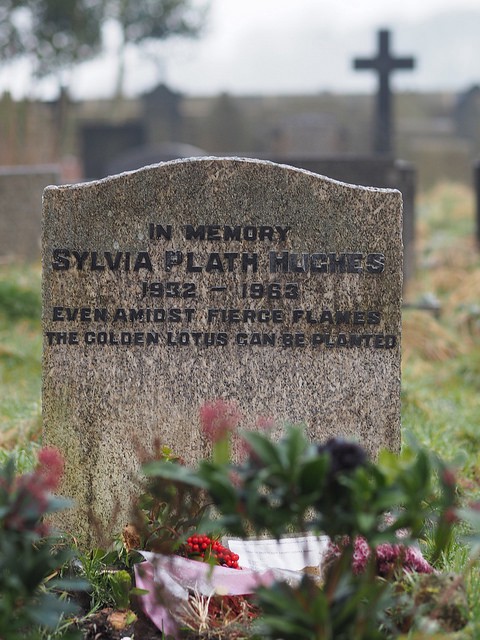
On the famous gravestone at Père-Lachaise cemetery in central Paris is a bronze plaque engraved with three lines: full name, dates, (“1943–1971”), then a four-word phrase in ancient Greek, “KATA TON DAIMONA EAUTOU” as it’s normally transliterated. The standard translation, found in Wallace Fowlie’s Rimbaud and Jim Morrison: The Rebel as Poet, as well as many guidebooks to the cemetery, and authoritative biographies such as Stephen Davis’ Jim Morrison: Life Death, Legend, is “True to his own spirit.” At first glance, a reasonably apt epitaph. But even a modestly well-read English reader will recognize, at the heart of the phrase, a problematic word which in English usage is essentially untranslatable: daimon. (“Daimona” is daimon in its accusative case.) Some guidebooks, following the lead of most literary criticism, balk at the prospect of translating the word, and render the epitaph as “True or faithful to his daimon.” Acknowledging the expansive field of meaning, however, opens its own can of (graveyard) worms. Daimon can mean spirit, or tutelary deity, or interior voice, or chance or fate—or it can also mean demon, as in the evil being from Hell. Which meaning — or meanings — did the author of the epitaph have in mind?

Complicating this question is the fact that the person who chose the epitaph was Jim Morrison’s father, Rear Admiral George Stephen Morrison. In one version of the epitaph’s origin, GSM (as I’ll refer to him) composed the phrase himself, having learned some Greek after his retirement from the U.S. Navy. In another, he consulted a professor of Classics who provided him with a quote from the canon of ancient Greek literature. As we’ll see, neither version is accurate. But understanding what really happened leaves us with a curious story: a military father, a disreputable son who died young, and a gravestone that broadly hints at demonic possession.

After leaving the Navy in 1975, four years after his son Jim’s death, GSM settled just outside of San Diego and took up, among other pursuits, the study of Greek. Why Greek? Maybe simply because the Admiral was interested in anything and everything, nautical and otherwise. Later in retirement, he would take up Italian. His daughter Anne remembers him bringing a calculus textbook to his chaise lounge by the pool, for recreational reading. He read all the time, as people say. When he left for a long cruise aboard the Bonnie Dick, the aircraft carrier he commanded during the Vietnam era, he packed Ulysses in his gear bag. You’d think that might explain the Admiral’s interest in ancient Greek; if you’d been through Vietnam with Ulysses at your side, and you finished Ulysses and were interested in languages and wanted to take a language path toward exploring Ulysses further, the obvious place to go would be Homer. You would enroll in an intro course in ancient Greek as the first step toward reading the Odyssey in Greek. If you were lucky enough to live close enough to a university that offered a variety of intro courses, you could accelerate your progress by enrolling in an intro course specifically in Homeric Greek.

This isn’t what GSM did. He found an intro course, at San Diego State University, but the course was in the Greek of the New Testament. That’s about as far away as possible, in the spectrum of intro ancient Greek, as you can get from Homer — a distance of six or seven centuries. An entirely different kind of Greek than Homeric Greek or even Classical Greek, and not an efficient path toward reading Homer, or Pindar, or the tragedians, or anything else, really, except the canonical texts of Christian scripture. GSM wasn’t, however, an especially religious man. He didn’t subscribe to a fundamentalist belief that one remove away from the original language of scripture is one very evil remove. According to his family, he didn’t regularly attend church. Yet he ended up in a classroom among seminary students. No one in that classroom was learning Greek as a comp lit approach to fathoming Ulysses.

Whatever GSM’s reasons for choosing to delve into the language of the Gospels — and maybe by then he simply wanted to put some space between himself and his stateroom reading — one consequence would have been the way he was introduced to the fraught word daimon, the word Fowlie translates as “spirit.” Of all the many words in the New Testament whose shadings or outright meanings differ from Classical Greek or Homeric Greek, daimon stands out as an example of extreme difference, possibly of the most extreme difference for any widely used word.

Of all the many words in the New Testament whose shadings or outright meanings differ from Classical Greek or Homeric Greek, daimon stands out as an example of extreme difference.

In authors like Homer and Hesiod and Euripides and Plato, daimon carries a variety of meanings (more on this later). In the New Testament, though, it means only one thing. It and its different forms invariably refer to spirits who are up to no good, demons in the sense of beings that inhabit and possess human hosts: the agents of demonic possession. Basically the same use of the word as in The Exorcist, or the Charmed episode “Exorcise Your Demons,” in which Angela is possessed and then (spoiler alert) ejects the demon in a stream of light from her mouth. That’s a daimon straight out of the New Testament. A similar ejection from the mouth can be seen in many medieval and Renaissance paintings, where the demons often have wings, their skin or hide is red or copper brown, their faces somewhere between reptilian and human. Little evil semi-human otherworldly beings that take up residence in humans and control their human hosts.

In terms of difficulty, the New Testament isn’t Aristotle’s Metaphysics; more like Le Petit Prince for a novice reader of French. I know one seminary student who boasted that after a semester of intro NT Greek, he could easily polish off a chapter of Gospel on his bus commute to class. So for GSM, making his way through the Gospels, it wouldn’t have been long before he encountered his first demonic daimon. The first instance of the word or its variants in the New Testament occurs in the first of the Gospels, at Matthew 4:24, where Jesus is preaching in the synagogues of Galilee, and his renown as a healer attracts throngs of afflicted Syrians, among them “those which were possessed with devils (daimonizomenous).” Interestingly (and I take note of this because it strikes me that GSM would have been interested as well), the verse makes a distinction between the possessed and “those which were lunatick (selēniazomenous).”

More of the possessed come along four chapters later in a passage that GSM, as an educated Navy officer, even if not a churchgoer, already must have known — but reading these familiar passages in the original dead language breathes new life into them. In Gadara, Jesus and his followers are waylaid by two Gadarenes possessed by demons (daimonizomenoi): so begins the famous “Gadarene swine” episode in Matthew 8. The demons menace Jesus, but also recognize Jesus as a threat, an exorcist who can cast them out. Okay, if we’re being cast out, say the demons (daimones), please don’t banish us to Hades, but at least grant us some other host. What about that herd of pigs grazing over there? Jesus laconically agrees: “And he said unto them, Go.” They went. “And behold, the whole herd of swine ran violently down a steep place into the sea, and perished in the waters.” The recently retired Admiral would then have read how the shepherds who witnessed the exorcism race back to town to report on the fate of the possessed (daimonizomenōn).

The word recurs abundantly throughout the other Gospels, including slightly different versions of the drowning of the swine as told by Luke (six variations on the word in just ten verses) and Mark (a lone possessed man, daimonizomenōi; two thousand swine). It’s in the Mark retelling that Jesus asks the demon inhabiting the possessed man to reveal its name, and the demon answers “My name is Legion; for we are many.”

Whenever I discussed these passages with friends who identified as Doors fans, they advised me to spend a night at the Alta Cienega. The Alta Cienega, a shabby motel at the corner of La Cienega and Santa Monica in West Hollywood, is where Jim Morrison lived from 1968–1970 while recording Waiting for the Sun and The Soft Parade and Morrison Hotel. Fans hold séances in Room 32, Morrison’s favorite. Anyone can book a night there. If I was interested in the spirit world, and visitation, and demons and ghosts, and inhabited spaces, I’d be remiss, so I was advised, if I didn’t at least give the fabled room a run for its money. Hole up for a week and hope for some chilling sensation of being visited.

As GSM pushed onward through the Gospels, his son’s grave at Père-Lachaise was falling into disrepair, the plot having become a hub for vandalism, partying, well-intended desecration, thefts, and mischief. The Office of Cemeteries for the City of Paris couldn’t actually exhume James Douglas Morrison, because the plot had been leased in perpetuity, but they leaned hard on the Morrison survivors to clean up the mess.

In the late 1980s, the Morrisons began work to make the gravesite more fan-resistant and to replace the original and now defaced headstone. They also seized the opportunity to add an epitaph, as the first stone gave away only name and dates. GSM took the lead in planning the new inscription. He knew that he wanted it to be in Greek.

In December of 1990 he sought the assistance of E. N. Genovese, Professor of Classics and Humanities in the Department of Classical and Oriental Languages and Literatures at San Diego State University.

Genovese explains his role in the inscription as stemming from pure chance: GSM stopped by the Department one afternoon, seeking guidance, and it just so happened that the right door was open. Genovese distinctly remembers GSM passing through the doorway of his office. Here, though, the facts become somewhat murky. In the account that follows, I’ll rely mainly on letters between Genovese and GSM (access to which was generously provided by Jim Morrison’s sister, Anne Chewning, and her daughter, Tristin Dillon), while also incorporating Genovese’s recollections to the extent that they agree with the evidence in the letters.

Did Translators of Sophocles Silence Ismene Because of Her Sexual History?

GSM had a rough idea of what he wanted the epitaph to say: something along the lines of his son remaining faithful to his spirit, a true believer in himself, constant and truthful and honest in his pursuit of an innermost ambition. GSM himself had been constant to his study of Greek for long enough that he could take a stab at composing a draft. He put the draft in a letter to Genovese, apparently shortly after his visit to the office. In the letter, the proposed epitaph leads off with the word alēthēs, which has meant more or less the same thing — unconcealed, truthful, genuine, real — from its early appearances in a slightly different form in Homer, all the way through Modern Greek. It occurs often in the Gospels, always translated in the King James Version as “true” or “truthful.” “Though I bear record of myself, yet my record is true (alēthēs)” in John 8:14 is an example (and possibly the verse that Elvis Costello, educated in Catholic schools, had in mind when titling his 1977 album that went platinum).

Evidently GSM wanted this word meaning “truthful” to lead toward some word meaning “spirit.” His sketch of an epitaph may have also included the word pistos, “faithful,” pairing it with alēthēs to yield “truthful and faithful” — pistos is another word very common in the New Testament. The exact phrasing of GSM’s draft is impossible to know, however, because the letter in which he proposes it to Genovese thwarts Doors historians with a blank space exactly where the drafted epitaph should be. GSM left the space blank so that he could fill in later, by hand, the Greek words. Only a photocopy of the letter without the blank filled in remains. But the handwritten phrase can be reconstructed from a letter that Genovese wrote back less than a week later. Genovese’s letter mirrors the words alēthēs and (with some certainty) pistos from GSM’s draft, as Genovese gently points out that they don’t quite work syntactically with the remainder of the phrase and, especially, with the word that GSM chose to convey the idea of “spirit,” as in “true and faithful to his spirit.”

That word, beyond any shadow of a doubt, could not possibly have been daimon or any form of daimon. By now, GSM had fifteen years of New Testament Greek under his belt. Anyone even casually versed in the Greek Gospels would not choose, wouldn’t remotely consider choosing, daimon to mean inner light, or guiding spirit, or deepest self; to such a reader, it would mean a possessing force of evil. Given that the letter that Genovese wrote back uses the English term “spirit” to translate the word GSM chose, GSM’s choice almost certainly was pneuma. When you learn the Greek New Testament, that’s one of the first words you learn; it’s ubiquitous in the Gospels. In the King James Version it’s nearly always translated as “spirit.”

GSM’s draft didn’t quite work, but Genovese felt confident that he could replace it with a quote. He believed, he says, that from the corpus of surviving Greek texts he could cull a phrase that captured the essence of GSM’s rough sketch. He estimated that it wouldn’t take long. He would dip into the authoritative Liddell-Scott-Jones Greek lexicon, the Big Liddell as the unabridged version is affectionately known. The Big Liddell would guide him to a quote fitting for the Lizard King.

But it didn’t.

When Genovese cracked open the Big Liddell, he already had a pretty good idea of where in the corpus he might cull a quote. He went straight to the entry for the word daimon. If you’re a pre-New Testament-oriented classicist in search of a Classical Greek equivalent for “inner guiding spirit,” daimon is a reasonable candidate. Daimon in early Greek has a variety of shadings, complex enough that any quick summary will inevitably oversimplify; in some authors the word is virtually a synonym for impersonal or unembodied chance, while in others it refers to actual deities, as for example in Plato’s Phaedo, where a daimon is a guardian deity assigned to each person at birth, and who, when they die, escorts their soul to the beyond where souls gather to be judged before then being transported further into the beyond for a long stay in Hades. (There are other shades of meaning, but this gives an idea of the range.)

Genovese was in fact thinking of Plato, he recounted later when explaining his approach to GSM’s request. He thought he might find a fitting quote from the Apology that referenced a particular kind of Platonic daimon, the “divine and spiritual” (theion kai daimonion) inner voice that came to Socrates at crucial junctures in his life: the Socratic daimon. Inconveniently, though, the Big Liddell failed to point toward any pithy, epitaph-ready quotes in Plato that included Socrates or his daimon and that also incorporated GSM’s sentiment of being true or faithful.

That’s when Genovese became, for all intents and purposes, the author of the epitaph.

In his letter back to GSM, Genovese frames his counterproposal — kata ton daimona heautou — as a reworking of GSM’s draft, but in fact, the phrase he offered GSM was all his own. He’d retained only one word of GSM’s suggestion, the pronoun (h)eautou (“his”). He’d removed the adjectives meaning “true” and “faithful” and shaped the phrase so that it foregrounded to the utmost its one noun, Genovese’s contribution, daimon. GSM’s phrase sounded like it might have been a quote from the New Testament. Genovese’s revision had an entirely different ring. The gist of the proposed epitaph had shifted back in time one whole era, from A.D. to B.C.

Genovese says that he mailed the phrase to GSM with a sense that GSM might well dismiss it: “Almost tongue in cheek I gave it to him.” Presumably he understood how daimon would have struck the ears of someone whose Greek came from Holy Scripture. He may also have had second thoughts about the Socratic overtones, given that the inner voice that spoke to Socrates only did so to warn him off some risky contemplated path of action: not exactly applicable to GSM’s son over the course of his short life.

Genovese mailed the phrase to Morrison’s father with a sense that he might well dismiss it. Presumably he understood how “daimon” would have struck the ears of someone whose Greek came from Holy Scripture.

And yet, within a year after GSM received the phrase from Genovese, the phrase, word for word as it had come from Genovese, had been written into bronze and installed — on December 19, 1990, 28 years ago today — at Jim Morrison’s gravesite in Paris.

Almost immediately after the installation, Anne, Jim’s sister, raised concerns about “daimon” and the impression it would make on casual visitors to the grave. Anne remembers thinking that Jim always considered himself a kind of shaman, so the connotations of evil spirits and demonic possession weren’t entirely inappropriate. On the other hand, as a loving survivor, would you really want to put those connotations front and center? To settle the matter, Anne and the other survivors turned to GSM, the family authority on Greek and, if not now the actual author of the epitaph, the survivor who’d set the wheels in motion.

At that point GSM cracked open his Big Liddell and wrote a letter to Bill Graham — the Fillmore Bill Graham, whose connection to the family was that he’d promoted The Doors. The letter spelled out Anne’s concerns and how they might be addressed through a press release that GSM hoped Graham would distribute to clarify how the epitaph should be understood. “I fear my daughter [Anne] was quite right when she raised the question of an unfortunate interpretation of the Greek text,” he tells Graham — but, he says, that unfortunate interpretation would also be incorrect. The word daimon, he explains, has several meanings. GSM goes on to summarize its meaning in Homer (“divine power”) and in Hesiod (“souls of men of the Golden Age”). These summings-up are in quotes in the letter itself because they’re taken verbatim from GSM’s Big Liddell, as GSM himself acknowledges: he’s appealing to his Big Liddell to bring forth authoritative definitions. Anyone worried about “evil connotations” of the word — as was Anne — would need only go back and read their Homer and Hesiod.

But almost surely, GSM himself hadn’t read his Homer and Hesiod, not in Greek, because he concludes his defense of daimon by saying that “in any case, the word relates to a man’s deepest self or soul.” That’s not its sense in Hesiod or Homer, or in other early authors. The Hesiod citation in the letter underscores this point. In Hesiod, the “souls of men” aren’t souls in the sense of a person’s deepest self. They’re the afterlife spirits of Hesiod’s first generation of mortals, the golden generation, who wander the Earth cloaked in stage fog (ēera essamenoi) as guardians of later generations. They guide from without, not from within.

All this makes clear that for GSM as reader, it was the New Testament alone that had provided his only unmediated experience of daimon in the alphabet of the epitaph. His reading of the word outside the NT came secondhand, via the Big Liddell and whatever translations he consulted.

What then was the Admiral thinking when he signed off on Genovese’s phrase and its problematic New Testament connotations? For his part, Fowlie, in his account, construes the placing of the epitaph as an announcement of reconciliation after 20 years of silence from the parents. Not a warm and fuzzy reconciliation, it would seem. GSM obviously did recognize the ambiguity in the word that Fowlie and the guidebooks translate as “spirit,” and perhaps the father’s goal, to some extent, was to write that ambiguity into his son’s legacy. Public ambiguity is one thing; privately, though, GSM’s background in New Testament Greek must have given daimon a specific personal significance, an unsavory meaning that, for a military officer whose son had rebelled, must have seemed not unfitting. After nearly fifteen years of reading daimon in its New Testament sense as “demon that possesses,” GSM may well have decided that it was exactly the right word to describe the spirit to which his son was true.

After nearly fifteen years of reading “daimon” in its New Testament sense as “demon that possesses,” GSM may well have decided that it was exactly the right word to describe the spirit to which his son was true.

If I were authoring a guidebook to the gravesite in Père-Lachaise, and wanted to be true to the spirit of the epitaph, and its backstory, I’d at least consider including an illustration of the famous New Testament “drowning of the swine” episode or some other scene of exorcism or possession from Scripture.

In early 1992, two years after the installation, GSM mailed a letter of thanks and a photo of the new plaque to Genovese. That was the last communication between the father and the near-stranger who’d engineered an epitaph for his son. Genovese, as of this writing, is alive and well and living in retirement in suburban San Diego. GSM died in 2008 (after a fall while in the hospital, a very uncommon outcome, incidentally, for falling in a hospital). As for an epitaph, GSM himself opted out, choosing instead that his ashes be scattered at sea. If you live long enough, sometimes you get to choose.

Michael Chabon’s Advice to Young Writers: Put Away Your Phone

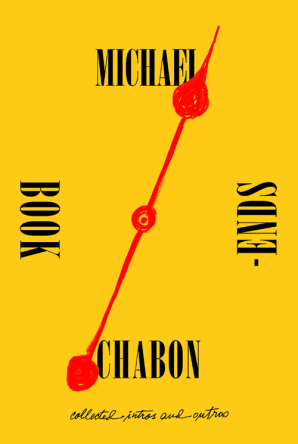
When Electric Literature was invited to The MacDowell Colony’s December event for Michael Chabon’s special edition book project, Bookends, I was confused. Wasn’t MacDowell a writing residency in New Hampshire? What were they doing in this big noisy city? It turns out The MacDowell Colony’s mission extends beyond the (somewhat legendary) residency, and their new space at West 23rd St. and 10th Ave. is part of that larger project to encourage collaborations among artists and community for their work.

With the addition of the Chelsea space, The MacDowell Colony hopes to bridge the gap between the idyllic but isolated New Hampshire colony, whose cachet comes in part from how insulated it is from the demands of the real world, and the broader public. It’s a place where people will be able to discover new artists through panel discussions, performances, readings, exhibitions and more. And like the residency, it also fosters collaboration within the artistic and literary worlds.

Purchase the book

Chabon, the chairman of The MacDowell Colony, opened the event by highlighting the work MacDowell has made possible for him and others through the rare gift of time. For most, it’s an invaluable moment to finish a work that demands finishing. But for others, something strange happens: A poet may discover what she actually wants to create is a project in collaboration with a composer she met over dinner. An architect leaves with a series of paintings. A composer leaves with a novel. The sheer quantity of time gives artists permission to interrogate their work and discover new directions, even new disciplines for it, in collaboration with others. As Chabon began to read from his collection, I could see the scaffolding of the literary community come into view. Had I but world enough and time, I wondered, what would I make? And with whom?

Michael Chabon and I spoke before the event on the relationship between writing and literary citizenship, how to keep discovery alive, and why we all need to put our phones away.

Erin Bartnett: Writing about motherhood has reached a kind of zenith, and you’ve written so deftly about fatherhood. What do you see as the interplay between those two roles in life and in fiction?

Michael Chabon: I think part of being a writer, regardless of gender, is trying to get more material to write about. And I think it’s inevitable–as men have increasingly become involved in the work of childrearing, it was inevitable, simply because of that brute economics. And I don’t mean economics in the monetary sense–but, there’s always a scarcity of material. So you have this whole load of material, and it’s very natural but also sort of necessary sometimes: “What am I going to write about?” Or you notice this thing emerges in relation to one of your kids, and you just think, “Oh, I’d like to write about that.” I think for me it was natural: here’s material, I’m going to use it in some way, both in my fiction and in nonfiction.

But also, I had a column in Details magazine and I frequently would write about aspects of being a father, being a parent, there. And it did feel like–not that I had the field to myself, entirely–but it did feel like it was very under-trafficked still. And so that’s always appealing, when you feel like you’ve got something to say about something, and you haven’t seen it said too much before in quite the same way. Male writers of prior generations, it just wasn’t–they were men of their generation. It wasn’t part of their lives. For example, I’ve written about my dad. He was–by today’s standards–he was not a good dad in the most everyday sense of the word. He didn’t touch a diaper in his life. He never changed a diaper. When the baby needed to be changed, he’d just hand him to my mom, and that was that. That wouldn’t fly today, I don’t think, in most partnerships. But that was probably true for most men of that time. Whether it was your Bellows, or your Updikes, or whoever. Changing a diaper, to take the one example, just wasn’t part of their experience. For me, it is a part of my experience, so I’m going to write about it.

It’s inevitable as men have increasingly become involved in the work of childrearing that we start writing about fatherhood.

EB: I was struck by this moment in your interview with Fatherly when you talked about about your kids’ view on the future that is kind of pessimistic. You refuse that view. I understand the inclination toward pessimism very well, but obviously want to resist that urge, too. How do you think literature can contribute to that resistance, can combat anti-semitism, xenophobia, and just the general malaise of now?

MC: The thing that I believe about literature more than any other art form, is that it works by putting you into someone else’s shoes. It only works–that’s how it works–by putting you into the mind and the experience of another. When you pick up a novel, and start reading–whether it’s the character living in a time, living in a place, living in a set of circumstances that are completely alien from those that you live in, or whether the author his or herself is writing from a completely different experience–as soon as you immerse yourself in the narrative, as a reader, you are living another life, another person’s life. And there is only one way to do that that we’ve ever invented, in the whole history of the human race, and that’s through literature. Watching a movie is different. Other art forms give you other kinds of points of view on experience not your own, but not in the same sense of that vicarious experience of another consciousness. And I do believe the more you are exposed to that experience, the greater your capacity to imagine the lives of the people around you becomes. Whether those are the people in your own immediate circumstances, or people you pass on the street who are coming from completely different experiences than yours. I think it does strengthen your imaginative muscle, and by strengthening that muscle, it then increases your capacity for empathy. I really do believe that. I’d be very surprised if the world’s torturers spend a lot of time reading literature. The capacity to detach yourself, to punish another person and to see them as less than you, less than human, I’d like to think that’s harder to do if you’ve been exposed to a lot of literature.

Other art forms give you other kinds of points of view on experience but only literature gives the vicarious experience of another consciousness.

EB: Writing is a solitary act, but one that does depend, to my mind, on a community for the writing we put out into the world, a kind of literary citizenship we’re required to take up in one way or another. What is the relationship between the writing and community for you? Where does literary citizenship play into your writing career?

MC: I think you can have the first without the second. And most people, I would imagine — certainly when it comes to writing fiction, maybe it’s different for other kinds of writing — but I think people who become writers tend to be, without overgeneralizing, people who like to be by themselves. People who enjoy their own company or are comfortable being alone. People who, as kids, lived in their heads, and played in imaginary lands, and drew maps of imaginary countries. That’s a kind of paracosmic idea of play, and living in this imagined world by yourself, is, I think, a driving impulse to become a writer.

Writing is, like you say, a very solitary business. And people who do well at it, I mean not financially but creatively, are people who probably are less likely to stand up on a soapbox, or be on the barricades, or lead a march or a protest. While that does happen, I don’t think the responsibility for that kind of activity — to lead a resistance of some kind — I don’t think that’s unique to writers, or even to artists. We all have that responsibility. But it might come less easily to writers than other kinds of people. It’s definitely something that, just speaking for me, I’ve had to learn how to do, how to be that way. It doesn’t come naturally to me.

EB: To be alone or to be a part of the community?

MC: To be part of the community. I’m naturally a very shy person. And I would much prefer not to meet people, not to have to talk to people. Like at parties, I’d much rather be standing in the corner. And I’ve had to learn and fight to overcome that. It’s partly the process of taking on responsibilities as I’ve gotten older. But I really did have to learn how to do it, grow into it. To enter into a room full of people and speak up about something is not part of… to me I don’t think it’s part of a writer’s toolkit. I think it’s definitely another skill set, completely. And some people, I’m sure some writers have both naturally. But I am not one of them.

For example, to be a Chairman of the Board of The MacDowell Colony. When the phone call came it was a message on my answering machine. That’s how long ago it was, 10 years ago, people still used answering machines. And it was Cheryl Young, MacDowell’s Executive Director. She said, “Michael, you’ve probably heard Robin MacNeil’s stepping down as Chair of the Board and I was hoping we could talk to you.” I played the message and I looked at my wife and said, “Oh, she’s probably calling to get some suggestions from me about who could be the next one.” And my wife said “Don’t be an idiot, she’s calling to see if YOU would be…” And I said, “What? That is impossible. Why would they ask me? I can’t do that. I can’t lead things, or schmooze people, or be someone who runs a board meeting.” I didn’t even know what being a Chairman really meant. I figured it was fundraising, and talking to people, and I’m a terrible choice for that. But then, it turned out Ayelet was right. That was what they wanted. And every fiber of my being wanted to say no, I just want to stay in my room, write my books, be with my family. But I love MacDowell, and I had gotten so much benefit from MacDowell, my work had benefited so much from my time at MacDowell. I felt like if they thought I could do it, I would just have to take their word for it.

The capacity to detach yourself, to punish another person and to see them as less than you, less than human, is harder to do if you’ve been exposed to literature.

EB: I recently spoke with Deborah Eisenberg about the advice writers need but don’t often hear. She said writing is both embarrassing and takes a long time (which is part of what makes it so embarrassing). I wonder, what is the one piece of writing advice you think new writers need but don’t often hear?

MC: Well, the thing about it taking a long time, that’s definitely true for me. People say, “How long did it take you to write a book?” And I’ll say three or four years. And they’re always like, “What?!” And then I see it from their point of view, and that does sound like a long time. It feels like a long time. But that’s how long it takes! Like waiting for the wine you’ve made to be ready to drink. It’s just part of the process. I don’t think vintners hear as much of people saying, “Whoa, it takes eight years for it to be ready?”

I used to always have the same sort of pretty “blah” pieces of advice: “Read a lot.” Just the usual kind of things. And those are all still true, but there’s one now that I’m more aware of. And it’s advice I give to myself, as much as to anyone, but especially to younger writers. Writers coming up now. Which is put your — put this [points to phone] — away. When you’re out in the world, when you’re walking down the street, when you’re on the subway, when you’re riding in the back of a car, when you’re doing all those everyday things that are so tedious, where this [phone] is such a godsend in so many ways. As in that David Foster Wallace graduation speech, when he talks about standing in line at the grocery store. When you’re in those moments where this [phone] is so seductive, and it works! It’s so brilliant at giving you something to do. I mean walking down the street looking at your phone — that’s pretty excessive. But in other circumstances where it feels natural, that’s when you need to put this [phone] away. Because using your eyes, to take in your immediate surroundings… Your visual and auditory experience of the world, eavesdropping on conversations, watching people interact, noticing weird shit out the window of a moving car, all those things are so deeply necessary to getting your work done every day. When I’m working on a regular work schedule, which is most of the time, and I’m really engaged in whatever it is I’m working on, there’s a part of my brain that is always alert to mining what can be mined from that immediate everyday experience. I don’t even know I’m doing it, but I’ll see something, like,“That name on that sign is the perfect last name for this character!” Or the thing I just overheard that woman saying, is exactly the line of dialog I need for whatever I’m doing. And if you’re like this [phone in your face], you miss it all. Leaving aside the whole issue of screens being such time-sucks, how when you’re at your desk your computer is sucking your writing time, because we all know that. We all fight against that. It’s when you’re in those tedious, boring, everyday situations where it’s so seductive and so easy to get your email done, or message with somebody. Just put that phone away, and be where you are. That’s my advice.

Is Slow Communication the Future?

EB: Just to push that advice a little further: If I’m on the subway, I may not be on Twitter but I’m usually reading a book. Of course, I want to say that’s different, but is it? How?

MC: I think reading a book is different, because you’re very close to what’s around you still. You can hear it, your eye can drift off the page for a moment and you might see something and then go back to what you’re reading. But there’s something so riveting and all-consuming about your phone. As soon as you get into one of those moments where your attention might dip, if you’re reading a book, you look up, take a look around you. But on your phone, if your attention dips, you just swipe to a different app. Instagram. Now email. Your phone is always there with something new for you. A great book is an immersive experience but your environment can still intrude in useful ways.

EB: Okay, final question. You’ve just put out Bookends, this compilation of your thoughts on literature from some introductions and afterwords you’ve written for other authors’ work. I loved it. There was something very energizing about discovering these books, films, and artists through your enthusiasm for their work. So this project was for me about discovery, because now I have a list of people I very eagerly want to read. I wonder, where are you going to discover new work now? How do you discover new language, new literature?

MC: The most reliable way is the same as it’s always been: through other writers. Things you read lead to other things. You’re reading an essay by Flannery O’Connor and she talks about, I don’t know, some Catholic American writer that you’ve never heard of. For me, it’s almost always been about writers leading me to other writers. In Bookends I talk about Susan Sontag’s intro to Roland Barthes. I had a real thing for Sontag when I was in my early twenties, and here she was going on and on about Roland Barthes. So then I went to check out Roland Barthes, because she’s a passionate recommender. Then there are recommendations that come from people around you. And then finally, I make these accidental, fortuitous discoveries. I’ll just stumble on something, or a new edition comes out of some forgotten book you’ve never heard of. That’s why I think it’s still so important to go into bookstores. That’s where I’ll discover that some publisher just brought out a reprint of some amazing looking book, and I’ll wonder, “How did I never hear of this writer before? This seems so perfect for me!”

Right now I’m reading William Blake and the Age of Revolution by J. Bronowski, which was just lying on a table at, I think I got it at Mo’s, in Berkeley. It’s used. I’ve never heard of it — the cover just caught my eye right away. I like William Blake, and I’ve never heard of this book before, and I love the cover, so…. And it turns out, it’s so incredibly well-written. The opening paragraph I’ve reread about twenty-five times, now, because it’s so magnificently written. And that happened, I made a new friend of this book, just by going into a bookstore. In a way it’s analogous to what I was talking about with the phone. Sure, you could go online and buy books. And you can “browse” that way, and it kind of works, but it’s not like those chance discoveries, where something just catches your eye like that. The book was orange. It was very 1970s. And then that typeface.

EB: I love it. I mean, who is J. Bronowski? I’ve never heard of him.

MC: He was apparently a mathematician, and he was also sort of a literary amateur. I think it was published in 1965, and this edition came out in 1970. And, as I mentioned before, in it he’s made reference to a couple of other English poets that maybe I’ve kind of heard of a little bit over the years, but I’ve never really checked out their work. Lesser-known English poets from the same time as Blake. And now Bronowski’s making me want to go check out their work.

Why Are Men So Much Worse At Writing Sex Than Women?

Every year, I look forward to the moment when the self-regard and PR hustle of the year-end best-of list season is punctured by the announcement of literature’s most nose-thumbing honor, a true leveler that can pit a star like Haruki Murakami against the authors of Scoundrels: The Hunt For Hansclapp: The Literary Review’s Bad Sex in Fiction Awards. Mighty and unknown alike are mocked for their cudgeled phalluses, supernaturally objectified vaginas (this year’s “enameled pepper mill” from Scoundrels haunts my dreams), and surging ejaculatory tsunamis.

Almost any writer, no matter how otherwise accomplished, could wind up in the running: nominees have included David Mitchell, Thomas Pynchon, Tom Wolfe, and Norman Mailer. Sexual intimacy is a realm into which humans travel together and alone, a fraught environment that conceals as much as it reveals, a forbidden, universal place both theater and sincere. Of course it’s hard to write; what could be harder for mere mortals than explaining the divine?

It seems, however, that sex is much harder to write for some of us. Since 2002, nearly 80 percent of nominees for the Bad Sex Awards have been male — 114 men to 31 women. (It’s hard to find the full shortlist before 2002, but before that, all the winners back to the prize’s inception in 1993 were male.) Among the relatively few female writers who have been up for the honor, authors Erica Jong and Eimear McBride stand out, but famous women writers are rarely nominated, while male critical darlings such as Jonathan Franzen and the prize’s laureate John Updike have made multiple appearances on the finalist list. While the gender bias in literature might explain away some of this trend, the male dominance of the honor is not a mere reflection of the fact that men are more published than women. The Bad Sex Awards favor men even more heavily than perpetual VIDA Count worst offender The New York Review of Books; like that storied journal, the Awards, too, could be said to evidence a “continued […] pattern of apathy toward gender parity.”

What, exactly, is being (dis)honored with a Bad Sex Award nomination? Some of the writing is inarguably poor in quality, but the award could hardly be said to be singling out the very worst prose of the year. The quality they recognize is far subtler: what unites the works nominated for the Bad Sex in Fiction Award, year after year, is failure of the imagination. The majority of nominees are not just men but cishet white men, and their work often manifests a classic sexist inability to realize female characters. In Grace’s Day, William Wall characterizes his adolescent girl protagonist’s reaction to her unpleasant first sexual experience as a “pain […] primitive as the clay.” Luke Tredget’s Kismet features a woman rendered “an empty vessel for what feels like disembodied consciousness” by lazy afternoon sixty-nining. The tortured metaphors in Gerard Woodward’s The Paper Lovers intertwine with centuries of misogynist imagery (paging Flaubert and Emma Bovary’s hissing snake corset) to become their own chimeric yet dimensionless female body with “her long neck, her swan’s neck, her Alice in Wonderland neck coiling like a serpent.” And not one but two finalists seem caught in a diminishing feedback loop that lamely links their male characters’ fantasized breastfeeding memories with adult sexual tit play.

What unites the works nominated for the Bad Sex in Fiction Award, year after year, is failure of the imagination.

What makes this sex writing bad is not the writing itself but the revelation of each author’s poorly drawn erotic landscape, in which an overabundance of insisted-upon excitement corrodes and obscures the possibility of intimacy. In this realm of unrivaled joining, they conceptualize the other, the desired one, the obscure object, the lover as flat and dim, a mere surface upon which the protagonist’s fantasies and self-absorbed interiority are projected. A refusal to examine the experience of the other is not only an artistic failing, but a moral one, that perpetuates the restrictive sexual mores that punish everyone, artist or not.

The world of the body is discreet, and tracking and describing its ecstatic experiences is a hazardous endeavor, full of potential misunderstandings, egotistical presumptions, and false starts. “Eating something you’ve never had before is exhilarating,” says the late great food critic Jonathan Gold in City of Gold, the stellar film about his love affair with Los Angeles. “But then what’s even better, I think, is you get through the exhilaration. You go through the infatuation phase over the next couple of meals. And then maybe if you’re really lucky you get to the place of understanding.” Sex is as amorphous and foreign as any unknown realm — we can only visit, taste, and wonder, and try our hand at describing the experience. Bad Sex nominees are too sure of the territory, not reverent enough towards its mysteries, not self-conscious of their limitations.

Nowhere is this more true than in this year’s winning text, James Frey’s Katerina. Given Frey’s rapacious appetite for soul-grinding repetition, quoting Katerina here seems besides the point; if you want to know what the book is like, just interpolate the words “fuck” and “cum” with random nouns. In what I believe is a very genuine attempt to express deep truths about a young person’s heady experience of powerful sexual connection while traveling abroad, Frey is not only cloddishly puerile but even worse, boring. The harder he tries to strike at the secret heart of enigmatic power — its G-spot, if you will — the limper and less sexy he becomes. Like a tech CEO offering a tour-in-pictures of the genocide-torn country where he took a nice meditation vacation, Katerina is all about the solipsistic and juvenile preoccupations of the man at its center and not at all about the world he passes through. He can’t see outside of himself, because he has never departed his perspective. Katerina herself might as well be a Beauty and the Beast-style anthropomorphized Fleshlight.

The harder he tries to strike at the secret heart of enigmatic power — its G-spot, if you will — the limper and less sexy he becomes.

In The Guardian, Sian Cain argued that Frey’s book could only have been published by a privileged white man: “The day someone young, black or unknown publishes something as bad as Katerina, I’ll sing L’Internationale.” Privilege’s impoverishment of the empathetic creativity necessary to meaningfully portray sex has rarely been more exactly portrayed than in the Bad Sex Award nominees. Women’s imaginations can be and often are impoverished by privilege. But women have more experience at countering the limitations of a single story, and they have always had to work harder to prove themselves — as, indeed, have queer and gender-nonconforming writers, disabled writers, non-neurotypical writers, and writers of color. Occupying a subject position outside the presumed norm — able-bodied, white, male — forces upon the human mind intrinsic lessons about how to call others into their world. This type of storytelling is a survival skill, one that demonstrates, over and over again, the outsider’s humanity to those for whom it is optional to recognize it.

“A sex fiend is someone who actually likes sex, not just the getting-off part but the dirty parts, the salty mess of it,” Maggie Nelson wrote in The New Yorker in memoriam of Prince, celebrating “the real divine electric dirtiness that is possible between excited young bodies who have accepted that they have desire and somehow manage to find each other.” The Bad Sex Awards honor poorly imagined sex, sex drenched in Frey’s favorite “cum” and “residue” (thanks, Tredget) but utterly bereft of texture and color and taste. That men have received many more Bad Sex Awards than women suggests not that they are worse than women at writing sex, but rather that they are more likely than women to approach the erotic interior as an already conquered known world rather than respecting it as terra incognita.

A Reading List for Understanding the Prison Industrial Complex

The United States incarcerates 2.3 million people in federal, state, and local facilities as well as immigration detention centers. That’s approximately 21% of the world’s incarcerated population. But America doesn’t have more crime than other countries—it just has more prisons.

The war on crime disproportionately targets people of color. African Americans disproportionately constitute 34% of the prison population, though only 12% of the overall population. And incarceration isn’t just hard for those behind bars: after release, people with criminal records face systematic discrimination when applying for jobs, housing, education and in many states, they are stripped of their voting rights.

This reading list acts as a primer to understand how and why America developed its prison industrial complex and what it will take to end mass incarceration.

Are Prisons Obsolete? by Angela Y. Davis

Angela Davis, a brilliant feminist scholar, writer, and activist makes a powerful argument for the abolition of prisons entirely.

The New Jim Crow: Mass Incarceration in the Age of Colorblindness by Michelle Alexander

The New Jim Crow was first published in 2010 but is still as timely as ever. Legal scholar Michelle Alexander shows the ways in which policies like crack/cocaine sentencing disparities, over-policing, and mandatory minimums resulted in a disproportionate number of African American men being incarcerated, a phenomenon she christened “The New Jim Crow.” Alexander’s book makes an important argument, but also fundamentally changed the way we talk about mass incarceration and policing in America.

Blood in the Water: The Attica Prison Uprising of 1971 and Its Legacy by Heather Ann Thompson

This Pulitzer-prize winning book tells the story of the Attica prison uprising and the subsequent legal battles in exhaustive detail. Heather Ann Thompson spent a decade writing this book, gaining access to never before used sources and interviewing the people involved in the uprising.

Restricting Books for Prisoners Harms Everyone, Even the Non-Incarcerated

Sing, Unburied, Sing by Jesmyn Ward

Jesmyn Ward’s novel tells a beautiful story about drug addiction, racism, and incarceration in Mississippi. It’s a road novel filled with ghosts, alluding to both Faulkner and Morrison, while also making the impact of incarceration on her hometown quite clear. I wrote more about it here.

From the War on Poverty to the War on Crime: The Making of Mass Incarceration in America by Elizabeth Hinton

Though many associate the rise of mass incarceration with the Nixon and Reagan administrations “tough on crime” policies, historian Elizabeth Hinton shows the ways in which state apparatuses developed during Lyndon B. Johnson’s War on Poverty became instrumentalized to “fight crime.”

From Deportation to Prison: The Politics of Immigration Enforcement in Post Civil Rights America by Patrisia Macías-Rojas

From Deportation to Prison focuses on how the wider rise of mass incarceration led to the increasing criminalization of immigrants through the Criminal Alien Program. This book is a timely and necessary read that highlights the brutality of the for-profit system of immigration detention (one shocking revelation is a government mandates that 30,000 beds in immigrant detention centers must always be occupied).

Rachel Kushner Thinks Prisons Should Only Exist in Fiction

Wall Tappings: Women Prison Writings, 200 A.D to the Present edited by Judith Schleffler

Many of the most well known prison writers are men — think Martin Luther King Jr, Malcolm X, and even Oscar Wilde. Wall Tappings: Women Prison Writings, 200 A.D to the Present is a one volume introduction to writing by incarcerated women, some famous activists and others virtually unknown.

My Brother Moochie: Regaining Dignity in the Face of Crime, Poverty, and Racism in the American South by Issac Bailey

Isaac Bailey was just nine-years-old when his brother was imprisoned for life. His book is a raw exploration of his relationship to his brother and incarceration writ large, as well as an analysis of the factors that entrap young black men in the South in the criminal justice system.

Locking Up Our Own: Crime and Punishment in Black America by James Forman Jr.

Winner of the 2018 Pulitzer Prize for nonfiction, James Forman Jr.’s book explores why many African American politicians and officials supported “tough on crime” policy that led to mass incarceration of black men.

About the Author

Holly Genovese is a Ph.D student in American Studies at UT Austin. Her work has been published in The Washington Post, Teen Vogue, The LA Review of Books and many other publications. Find her on twitter @hollyevanmarie.

There’s a Little Godzilla in All of Us

When I was eight years old, my parents rented Godzilla 1985 for our weekly movie night. It was meant to be a sci-fi treat, a fun flick with popcorn and a few gentle scares for the kids. My father could not have predicted that I would spend the last 20 minutes of the film in convulsive tears, my tiny fingers digging into the couch with a tension that marred the upholstery for years, my little heels banging against the floor so loudly that the dog hid in the basement for the rest of the night. My mother chastised him for renting a movie that was too frightening for me, a sheltered orchid of a child who could not handle the 6:00 news without tears. She took me aside and explained that Godzilla was not real, he could not harm us, and that his giant foot would never lay waste to our split-level ranch home half a world away from his natural habitat.

“I don’t care about that!” I wailed in reply. “I want them to be fair! He just woke up!”

From my perspective, Japan was the problem, not Godzilla. After all, this was the third in a long series of Godzilla videos I had seen sitting on the video store shelves. The scientists and military officials obviously knew that Godzilla existed from the previous movies, so how did they not see this coming? They should have been aware that a mighty beast slumbered off the coast of Japan, and that when another human mistake inevitably woke him up, he would not be happy about it. But instead of accepting Godzilla for what he was — a confused and exhausted beast, born once more in a world not built to accommodate him — they brought the fist of the military industrial complex to his big rubber chin. The plastic tanks, the paper-mache rockets propelled on tiny wires into his big glass eyes: it was too much for me. Too unkind. The poor thing had just gotten out of bed and they were already sending helicopters after him. Would it have killed them to just bring Godzilla a coffee and try to talk it out?

Would it have killed them to just bring Godzilla a coffee and try to talk it out?

Perhaps I knew I loved monsters from a young age because I felt I could find a greater sense of acceptance among them. I was a fat, anxious kid that grew into a fat troubled adolescent that grew into a fat clinically depressed adult. If we look to art and culture to mirror our ideal selves back to us, the only mirrors that looked anything like me came from the back of a funhouse. The women who looked like me and acted like me were always portrayed as monsters. Big Bertha. Ursula. Moaning Myrtle. And so on.

I am not unique in identifying as monstrous. We all have our ugly sides, our secrets, the things we fear will draw the mobs of villagers and their pitchforks to our doors. The things we are taught to hide. Who among us hasn’t known the loneliness of the Creature from the Black Lagoon, watching an exclusive beach party of beautiful people from a hidden cove of envy and lust? Who hasn’t hungered for the love and acceptance of others and rebelled against authority to claim it, just as Frankenstein’s monster did? What is female puberty if not a werewolf story? (After all, in what other stage of your life do you grow so much hair and spend so much time trying to get incriminating blood stains out of upholstery?)

Given my empathy towards beasts, it seems only fitting that I would eventually embrace being one. It wasn’t for a lack of trying. I have put great efforts into becoming a villager, rejecting monstrosity, but they were all for nothing. In my life I have gained and lost literally hundreds of pounds, spent years bouncing in and out of therapist’s offices, taken countless pills and cures to address that which is ugly in me. I have never eaten wolfsbane, but I did spent the 15th year of my life drinking Slim-Fast and vomiting it back up whenever anyone’s back was turned. I have never considered a stake to the heart, but I have spoken to a doctor about tying my stomach in literal knots — a process that he cheerfully acknowledged carried a nonzero chance of reducing me to dust. I have let people talk to me and treat me this way without question and without complaint because I understood that, as a monster, I should only wait to be slain.

I even attached hope to these cruelties. I wanted them to work so badly. All monsters do. The promise of being human, being normal, being loved seems worth the pain. It’s worth the lightheadedness, the mood swings, the weakness, the insomnia, the clumps of hair in your drain. These are the sacrifices you make to be seen as human someday. To be seen as worthy of love.

It never works for some of us. I’d say probably for most of us. The curse can’t be broken. So what’s next?

The stories we tell about monsters tend to follow a similar arc. A monster is discovered or created, it imposes its will upon human victims, and then it is either killed or cured. This is despite the fact that the plight of the monster is often a sympathetic one; they are creatures of an understandable desperation, struggling to survive in a world that meets them with pitchforks and torches at every turn. Regardless of how the dreaded creature came into being, we are supposed to be pleased that it ends up dead. It’s a theoretically happy ending, unless you find yourself on the other end of the pitchfork.

As a person who empathizes with monsters, I can’t help but wonder if there’s a way to build a new mythology for these feared beasts. Consider the new stories we could tell if we decided that instead of fantasizing about killing our monsters, it would be worthwhile to imagine safe places for them in the fictional worlds they inhabit. Instead of driving them to the edges of society, our fictional villagers could welcome them, even find ways to live alongside them. Imagine Eagle Scouts at a campfire, roasting marshmallows and telling stories about chipped and tagged werewolves roaming our national parks and rescuing lost tourists from avalanches. Imagine seeing big summer movies where mummies are summoned not by a curse, but by a request from a dashing anthropologist to accurately place ancient artifacts in their appropriate human epoch. Imagine new adult erotica about fetish hookup websites just for vampires and their willing human prey. How would our stories about monsters change, and what would we learn?

Consider the new stories we could tell if we decided that instead of killing our monsters, it would be worthwhile to imagine safe places for them.

The Godzilla films, for all of their faults, eventually end in a place of tolerance for their massive rubber star. Despite Toho’s best efforts to make Godzilla scary, it never really worked: children like me just fell in love with his big doofy face, and we wanted to see him win. Partially because Toho recognized that they were sitting on a merchandising gold mine, and partially because Godzilla became so entwined with Japan’s national identity overseas that it became a self-defeating effort to continue blowing him up, the world of kaiju (or Japanese monster movies) began to expand. Other monsters entered the scene. Some were destructive and yet quietly benevolent, like Mothra, the massively elegant moth whose heart only beat for her children. Some were powerful enemies, like the fearsome three-headed Ghidora, with whom Godzilla maintained a brutal rivalry throughout the 70s and 80s. And some, like the giant floppy lazer-eyed dog known as King Caesar, were just deeply stupid. But one by one, they all joined the campy kaleidoscopic world of kaiju, and Godzilla was the grudging king of them all. He kept the peace, kept them in line, and generally acted as a buffer between the tiny snack-sized people he used to terrorize and the massive plastic new gods born into the world with every subsequent film.

The Japanese people learned to like Godzilla, even trust him. Godzilla was soon given a home of his own: Monster Island, a remote isthmus in the South Pacific Sea, where the new kaiju could live together in peace under his giant immobile eyes. That isn’t to say their lives were conflict-free from then on. Godzilla’s relationship with humans remained mercurial, and the kaiju fought each other in literally every movie, because that’s what they do. But they also teamed up and protected each other, and took care of each other, and defended the people of Japan from a thousand imminent disasters. There’s a true beauty in the harmony between humans and monsters in these films. Just because a giant flaming space turtle is out of the ordinary, there’s no reason we can’t all get along.

Perhaps this view is too optimistic or too childish to hold much weight. What do old cheesy movies about monsters have to do with anything real? And yet, I grew up rooting for Godzilla, and I remain a fan. I have seen every Godzilla movie that has been released in American theaters, although my absolute favorite is Godzilla: Final Wars. Final Wars was billed as the ultimate ending to the Godzilla franchise. It was a no-holds barred battle between humans, aliens, and the kaiju caught between them. And yes, I did cry at the end. Not because I was frightened, or sorry to see my big rubber monster friend put out to pasture, but because the film ended so happily. The music swelled as Godzilla and his large lizard son walked hand-in-hand into the pink sunset ocean, humanity waving him a tearful farewell. Harmony, achieved at last.

As long as Godzilla has been fighting us, we have been fighting him too. It’s never really worked out for either side.

It was especially touching to me considering how the previous film, Godzilla 2000, had ended. After yet another kaiju battle royale, Godzilla had emerged victorious, and was celebrating by throwing himself a building-punching bar mitzvah in Tokyo Square. Watching from a rooftop, a group of scientists argued about why Godzilla keeps coming back. Why do Godzilla’s truces with humanity never last? Why does he defend Japan from alien monsters, and then immediately attack a city for the ten-thousandth time? The scientists’ weary conclusion is that there is a little Godzilla in all of us, an inner monster we ultimately fail to conquer. Godzilla was awoken by Japan’s nuclear ambition, and has endured as an enemy because the society that created him doesn’t know how to stop provoking him, even when it’s trying to be good. It’s a dour ending for a campy film, but it’s worth considering: as long as Godzilla has been fighting us, we have been fighting him too. It’s never really worked out for either side. If we can’t find a way to live with Godzilla, this is just how it’s going to be.

Final Wars, with its happy ending for Godzilla and his son, subverts this in a beautiful way. Yes, Godzilla had to kick his way through a river of rubber-suited carnage to win. And yes, the residents of Monster Island were utterly vanquished this go-around. But Godzilla is undeniably the hero of the film. The ending where humanity celebrates him and allows him to make his own way home is framed as a triumph. Japan has finally accepted the love it has in its heart for its most monstrous son, and this has allowed peace.

For now. I mean, he’s coming back eventually. He’s Godzilla.

If there’s a moral here, it’s that we have to accept that there’s a little Godzilla in all of us. And maybe he’s scary at first, and hard to control, and he might torch a few buildings and crush a couple of tanks while you get to know him. But in the right setting, Godzilla can be a hero too. You can’t kill Godzilla. The only way to win is to treat him with empathy, house him humanely, and learn how to get along with him. There’s a little Godzilla in me, and in you, and that beast within us deserves an island home and playmates of its own and a happy ending where the credits roll as he strides into the ocean, head held high, finally accepted and understood for what he is. Maybe that’s the world we should create for our monsters: the world that we would want to live in, too.

The monster in me recognizes the monster in you.

Processing Trauma by Overthinking Bubble Guppies

It’s two in the morning, and my son wakes up howling. Jack’s maybe a year old. He’s in the midst of a whopper of an ear infection. As I take over for my wife and settle with him on the couch, I see why he hasn’t yet calmed down. The YouTube app on the TV is stuck on its loading screen.

“It’s okay, Jack,” I say. Then I start singing the theme song to Betty Boop: “Made of pen and ink, she can win you with a wink…”

Finally our playlist of pixelated Fleischer cartoons, both public domain and pirated, loads. Jack calms down enough to exit the Snot Cycle. (You know — discomfort leads to crying, leads to mucus, leads to more discomfort, leads to crying harder, and so on.)

Let’s ignore for a moment the fact that showing a child cartoons from the 1930s is unconscionable. Black-and-white cartoons are a history, in miniature, of racial and patriarchal oppression.

Because when you’re a literary analyst and it’s stupid o’clock, you need something to chew on. Your brain needs something full of contradictions (the Fleischers, for instance, were Jewish, and included Jewish in-jokes in some cartoons — but also flagrant antisemitism in others. They creatively collaborated with African American musicians — but also played up racist stereotypes for laughs.) Whereas something meant for infants, like those soporific Baby Einstein videos, is going to melt your brain faster than Darth Vader armed with Van Halen on a Walkman.

When you’re a literary analyst and it’s stupid o’clock, you need something to chew on. Your brain needs something full of contradictions.

Here’s a thought experiment. Take a series of animated cartoons developed for a certain situation: movie theaters where folks are filtering in, chatting, finding their seats, trying to escape the reality of the Great Depression. These cartoons are decidedly not for children. These cartoons are trying to outdo the competition, upping the ante with physical comedy and sexiness and straight-up weirdness, to ensure their continued purchase and distribution. In short, these cartoons were never meant to be watched over and over again, back to back, for months. So. After you watch every Betty Boop cartoon that exists for the fiftieth time, what happens?

I’ll tell you what happens. One of your son’s first words is “boop boop be-doop.” This is not so bad.

But I’ll tell you what else. You develop theories. Despite the fact that these cartoons were never meant to have continuity, you assign them continuity. You debate with your wife whether Betty’s father, in “Minnie the Moocher” (1932), is wearing a kippah. You’re pretty sure Betty and Koko the Clown have a thing going on the side. You insist that the bearded babies in “The Old Man of the Mountain” (1933) are the result of a rape.

I’ll tell you what happens. You develop theories. Despite the fact that these cartoons were never meant to have continuity, you assign them continuity.

You decide that, when Betty, a supporting character in the Talkartoons series (1930–1932), is given her own series, there’s a reason for the character redesign. As most cartoon historians know, in the Talkartoons, she’s an anthropomorphic dog. Makes sense: she exists in an anthropomorphic world and is romantically involved with another dog-person, Bimbo, the song-and-dance man. In “Bimbo’s Initiation” (1931), for example, Betty has dog ears and a black button nose. But in “Stopping the Show” (1932), the first time she headlines, Betty’s floppy ears have been transformed into hoop earrings, and her nose is a human one.

If you are me, and have inadvertently become the leading expert in the Betty Boop mythos, you know she has changed appearance because the Talkartoons present us with reality from Bimbo’s subjective viewpoint. He, being attracted to Betty, sees her as a dog like himself. But in the Betty Boop series, we see her as she really is, a human.

The results of the experiment are in. You discover — that is, if you are me — that you have become a practitioner of a dark fandom art. You have developed a headcanon.

You discover that you have become a practitioner of a dark fandom art. You have developed a headcanon.

Headcanons, if you’re an old fart, are what happen when fans fill in narrative gaps with plot and character information. This is different from fanon, which is agreed upon by a large camp within a fandom. And different again from canon — what’s actually in the book, the movie, the series.

While headcanons and fanon are similar features of participatory culture, their motives and aims are distinct. Fanon seems to be about proposing plausible extensions of narrative, and seeking consensus, and pitting your camp’s fanon against a rivals. But a headcanon is personal, idiosyncratic, offered with caveats and apologies. Headcanons tend to be more about denial and wish-fulfillment than they are about reason and plausibility.

When he was about a year and a half old, Jack got into Bubble Guppies. He was mesmerized by the gang of six young merpeople and their preschool teacher, an orange fish named Mr. Grouper. The show got us through a lot. Teething molars. Stomach viruses. Eight-hour car trips.

Headcanons tend to be more about denial and wish-fulfillment than they are about reason and plausibility.

Only a certain number of episodes are available on Netflix and Amazon Prime. And they don’t sell compiled seasons on the overpriced DVDs. There are 80 episodes of Bubble Guppies, but Jack, my wife and I have only seen about 40. Over and over and over.

Without a headcanon? Unsurvivable.

I could chew your ear off about the guppies — their expanded universe, their backstories, their relationships off-screen. I could tell you all about Mr. Grouper’s checkered past, his depression, his substance abuse.

I can tell you a lot about Nonny, the redhead merboy with glasses. In canon, he has poor gross motor skills, doesn’t smile, and can recall many facts. Another parent posted on Reddit her “theory” that he is on the autism spectrum. But I don’t buy it.

In my headcanon, Nonny is a malcontent. In Season 2, episode 8, the other guppies spend an entire musical number pressuring him to smile. On screen he is forced to relent. But in my heart, I know Nonny finds all their well-oiled cheeriness fake. To keep from exploding, he brings order to the things he can — like the badling of ducks that interrupts a marching band performance (Season 1, episode 5). If he’s so rankled by the saccharine atmosphere of Mr. Grouper’s school, why don’t his parents transfer him elsewhere? A good question. We never see his parents in the show, or any other adult merpeople.

In fact, one blogger posed the idea that the guppies are orphans, the last of an endangered species. And she posed it as an example of a headcanon one might hold.

In my headcanon, the guppies have parents. Someone has to pack those crazy lunches.

In my headcanon, though, the guppies have parents. Someone has to pack those crazy lunches. And when Mr. Grouper helps Gil adopt Bubble Puppy, we can’t assume the dog lives at school. The puppy swims to school with Gil, though we never see where they are swimming from.

I can tell you a lot about Gil, too, actually.

He’s got blue hair, he’s outgoing, he loves sports. And despite being a bit of a screwup, Gil is front and center. He shares hosting duties with Molly, the talented, biracial, pink-haired mergirl he’s always upstaging. (This is problematic. The ensemble cast is diverse enough; but Gil seems to be the de facto lead simply by white, hetero-normative, male default.) And Gil’s relationship with Bubble Puppy is unmistakably the emotional core of the series.

Other characters experience anxiety (over a friend with a broken bone) or loss (over a toy truck buried at a construction site). But only Gil experiences profound, sustained emotion. When he wishes he could take the puppy home, you can hear the heartache in his voice.

Only Gil experiences profound, sustained emotion. When he wishes he could take the puppy home, you can hear the heartache in his voice.

Even worse is Season 3, episode 7. Bubble Puppy is sick, and has to go to the veterinary hospital. Gil spends the episode trying to put his grief into words (while his friends make cookie-cutter get well cards). Finally, Gil writes an eloquent poem, and with Mr. Grouper’s prodding, reads it out loud. I cry manly tears. Every time.

Jack, my son, identifies with Gil. Both are, after all, little white boys with extrovert tendencies.

But in my headcanon, there’s another, deeper reason. Gil is more like my son than Jack realizes.

The show supplies no information about Gil’s family, but I know, without a doubt, that his parents lived through a trauma. This is why he’s a little spoiled. Why his mom and dad don’t hesitate to arrange a spur of the moment dog adoption, lest Gil be unhappy for a moment.

The show supplies no information about Gil’s family, but I know, without a doubt, that his parents lived through a trauma. This is why he’s a little spoiled.

See, in my headcanon, Gil was born two months premature. His mermaid mother suffered a placental abruption. The blood pooled in the uterus, slowly smothering Gil, and his parents made it to the hospital just in time to save his life.

Of course, this is Jack’s story. My wife’s story. And mine.

The day Jack was born was a blur. There’s a lot I don’t remember. But like the C-section scar my wife now wears, certain vivid details will stay in my mind forever. Any birth is a psychological, emotional roller coaster. Many couples are not so lucky as we were.

But trauma is trauma. What we experienced turned our lives into frayed threads. And it happened to do so at a time in our cultural history when serial television shows can be consumed at speeds they were never intended to be consumed. Outside of this moment, this culture of binge-watching, we would never have thought to make Jack a Betty Boop playlist we could auto-loop. Intense amounts of binge and repeat watching, impossible a generation ago, are common viewing experiences now. And the availability of that accelerated narrative consumption is, I believe, the engine powering the proliferation of headcanons.

I had my own reasons for creating my headcanons. They helped me cope. Based on my experiences, it seems to me that headcanoneering, as a practice, is more than just a participatory way to enjoy stories. It’s more than just the intersection of creative writing and criticism, or a natural response to characters and ideas we love — love so much we can’t help but patch up all their holes.

Headcanon is a safe place to indulge in denial. To take into our hands a wonderful but broken world, and hold the mess to our heart and patch it up.

Headcanon is a safe place to indulge in denial. To take into our hands a fictional reality that is as messy or incomplete as a pregnancy cut short by abruption. To take into our hands a wonderful but broken world, and hold the mess to our heart and patch it up. A headcanon is, as Robert Frost would put it, “a momentary stay against confusion.” A kind of poetry. A kind of solace.

One night, lying in bed talking, my wife told me she still wasn’t over being robbed of her last two months of pregnancy. The job still felt incomplete. We were living a story, an amazing story of becoming parents — but with a big hole in it.

Faced with this truth, I’ve come to think of a headcanon as a creative expression of postmodern philosophy: the fact that reality, as we experience it, is socially constructed. Headcanons are about finding value in pathological denial. They’re about finding a healthy place where we can vent our refusal to accept reality. And transmute that denial into creativity. Fixing a hole in Doctor Who or the Harry Potter series can be a form of complaint, of criticism, to be sure. But a form of criticism that adds to, rather than takes away from, a work of art. A headcanon is an expression of the deepest and most generative kind of love.

Now, if you’ll excuse me, I have some questions about Dinotrux.

As a Writer, You’re Already Dead

I s there a difference between writing a book and making a book? I’ve worked in publishing for a bit now, and while I’ve seen how many hands go into getting one book out into the world, I’ve never fully revised my understanding that a book is written, not made. Shelley Jackson’s book Riddance has troubled this idea. Why should that matter?

Purchase the book

Riddance follows Sybil Joines, the Headmistress and founder of the Sybil Joines Vocational School for Ghost Speakers and Hearing-Mouth Children. A stutterer since childhood, she founded the school as a haven for stuttering children. But she is an early explorer in the field of necrophysics. Stutterers, Sybil Joines, argues, have the capacity to communicate with the land of the dead. Their stutter is a hiccup in time that allows stutterers to straddle both worlds. These children are also a resource for her studies. Jane, a student at the school, becomes Joines’s stenographer as she travels into the land of the dead. But when a student disappears, the school starts to get the wrong kind of attention.

But story is not all this book is made up of. Riddance is a physical artifact, a material object you need to hold in your hands to fully understand. Riddance defies the existing categories we have for understanding what writing is so Jackson can make space for a new argument about what writing can do. How does she do it? In part, some of the meaning is in the making — the book is organized into chapters that break down into three repeating sections, “The Final Dispatch,” “The Stenographer’s Story,” and “Letters to Dead Authors,” and each chapter is peppered with readings from a visiting scholar’s observations on the architecture of the school or a textbook, Principles of Necrophysics. There are maps and diagrams, beautiful etches of disturbing contraptions to ease a child’s stutter.

Reading Riddance is an experience in being haunted, not by ghosts per se, but by the growing sense that writing itself is a haunted enterprise. Riddance is haunted by undead histories, undead traumas, undead authors, and undead words that were never really our own, that illuminate why a book that is not only written, but made. The parts may be undead, but Shelley Jackson has assembled them, made them through her writing, all come to life again.

Shelley Jackson and I corresponded over email about book-building, meaning-making, and the dead words that haunt our writing.

Erin Bartnett: Riddance is this great assemblage of different writing spaces: there are the “Final Dispatches” from the Headmistress, the “Stenographer’s Story,” the Readings from textbooks on necrophysics, notes from a visitor on observing the school, and then a single letter written from the Headmistress to a dead author.

What about the form — the “scholarly work with the popular appeal of a crime novel” or “the eccentric, muscled back into the white light of judgement” as the editor describes Riddance — was compelling for you while constructing this book?

Shelley Jackson: Riddance began with an essay on the relationship between language, mediumship, speech impediments, and ghosts. Though I was exploring real ideas, I did so through a fictional lens: the point of view of the headmistress of an imaginary school. More pieces followed, elaborating on the history of the school I had imagined, its customs, its philosophy, its homework assignments. When I decided these could make up a larger project, it wasn’t a novel that I imagined. I thought it might be a fake .edu web site, say, plus a scattering of supporting references around the internet, enough to create a little alternate reality, one that you might stumble upon and never quite figure out whether it was real, fiction, a lie, or sincere madness. Even once a story grew up around this material, I wanted to preserve the feeling of an archive of ephemera, related but not bound to a strict narrative throughline or single point of view.

EB: I was interested in the way you use the historical lens of the spiritualist movement. The book is in heavy conversation with the icons and landmarks of the late nineteenth/early twentieth century when the Fox Sisters, mesmerism, and hoaxes, for instance were popular. And then there are also the excerpts from textbooks and scholarly articles on necrophysics. What about that moment in time when science and spirituality were so entwined was important for you in writing Riddance?

SJ: I was struck by how these spheres that we normally think of as unrelated were for a time joined. How grief and yearning showed through the science, how fantasy and logic converged in bizarrely concrete ways — in spirit photography, in electric devices that purported to contact the dead, in detailed and pedantic descriptions of the nature of the afterlife. For a while, because of scientific advances in our understanding of reality, stranger things suddenly seemed possible. If electricity, if light, if sound — apparently immaterial things — could have measurable, material effects, then why not ghosts? Writing rests on a similar sort of faith, that feelings, dreams, ideas, memories can move the world. I’ve come to regard it as a kind of technologically-assisted mediumship. Not because I use a computer to write, but because for me language itself is a sort of machine or device, but one through which spirits blow. Maybe that’s what a human being is, as well.

Writing rests on the faith that feelings, dreams, ideas, memories can move the world.

EB: One of the most interesting pieces (and there are many!) of this book project is the way you incorporate images of men, women, and children with instruments strapped to their mouths, or scraps of attendance sheets and school records and instructions for teaching particular lessons. They create an uncanny medical history narrative of their own. I’m convinced many of them are “real” artifacts. How did you create these?

SJ: I created some of the images — the drawings of mouth objects, for instance, and the big map — and originally wanted to make all the images myself. But eventually I recognized that if they were all in my own hand (since I’m not versatile enough to convincingly imitate a bunch of different artists’ styles) it would undermine the impression of an archive of real historical ephemera. By that point, however, I had started seeing evidence of the Vocational School everywhere — at a certain stage in a big project, you’re so attuned to the themes of your book that the world outside seems to body forth your ideas completely unbidden. I started collecting found images from out-of-print books I owned or found online (19th century dentistry manuals, experimental pedagogy textbooks, books on how to “cure” stuttering, and so on). My designer did too. We manipulated some of them a little, but they were already so good, with a mysterious quality I couldn’t have created if I tried, that they didn’t need many changes to feel like part of my world.

EB: The stutter, which manifests itself physically in the mouths of the children at the Sybil Joines Vocational School for Ghost Speakers and Hearing Mouth Children, becomes a tool that can be used to access the stutter between “then” and “now” in which ghosts speak. The body has figured heavily in so much of your work, I was wondering if you could talk more about how your focus changes from a project like SKIN, where the literal bodies of volunteers were tattooed with words in your story, to Riddance. Can you talk about what makes the body such an important part of your work?

SJ: In SKIN I was mainly interested in the written word, in the way it bodies forth its meaning, but also competes with it. I wanted to give my words a private life of their own, setting them free to wander around the world.

In Riddance I’m more interested in the spoken word. But the body is involved in speech as well; in, specifically, the physical production of speech, this choreographed dance of tongue and jaw and vocal cords, a process which becomes all the more palpable when it’s a problem, as it is for stutterers, and how that relates to the more ethereal body that is the sound wave and its even more ethereal meaning. In a broad sense it’s the same thing I’m interested in all my writing: how meaning relates to matter. How matter means. How meaning matters. I’m interested in that first as a person, as someone who’s always been a bit bemused by being or having a body, and what the relationship is between that body and who I think I am. But I’m also interested in it as a writer and a reader, who is accustomed to handling the bodies of words, and is conscious that they are not identical with, don’t dissolve into their meaning and that for me that resistance to subsumption is exactly what makes writing writing.

EB: You’ve done a lot of work with hypertexts, and with other ephemeral or “mortal” mediums for your writing — like skin, and snow. The Headmistress, in one of her final dispatches says, “A book is a block of frozen moments — of time without time, which can nonetheless be reintroduced to time, by a reader who runs her attention over it at the speed of living.” For a book about ghosts, I wondered about these “frozen moments” in the book as a physical object. Why did you decide to make Riddance a physical, bound book?

SJ: Riddance is deeply rooted in the 19th century, and I wanted it to feel like a distant relative of the books that gave rise to it, and to take its place among them. And since I’m particularly interested in the tension between ideas and their embodiment, it felt important when writing about ghosts to make a book that took an undeniably physical form, heavy and cornered. Where ghosts are concerned (and ghosts are always concerned, in my opinion) it’s the way they rub up against more material things that interests me. That’s what a book is: a haunted object.

The Only Good Thing About Winter Is This Story Written in Snow

EB: In one of the Headmistress’s final dispatches she asks the stenographer to “turn the page” to see what happens next, but then catches herself in the error. “You cannot flip forward to a page you have not yet typed, to see what is written there. That is something time does not permit. But wait! If what I say comes true in being said, then — listen closely — if I say what she is doing there, two pages from now, as for instance ‘In two pages she will be walking up a cypress-lined drive,’ will it be true? Is it already true in being said? Can I, then, determine the future?” Many moments in Riddance felt to me, like a kind of ars poetica. Can you say more about how writing and being haunted resemble one another?

SJ: The section you’re quoting is dictated from the land of the dead, and describes the experience of traveling there, which in my very particular conception of it is very much like the experience of writing about it: In order to travel there, you have to invent at every moment both the road you’re walking down and yourself, walking. This is also, I hope, close to the experience of the reader, who if I’ve done my job should glimpse the void through the gaps between words, should feel held up only by the flimsiest of descriptions, and those subject to revision or rejection at any moment. Many of my favorite writers — Kafka, Beckett, Calvino — make a sentence feel like a tightrope whose other end isn’t fastened to anything. I suppose it is what dying must be like. Or living, come to think of it.

But writing is like being haunted in a different sense too. We’re all haunted, as users of language. Language is handed down to us from the past. The words of people long since dead are in our mouths. I think writers feel this more keenly than other people do, for the obvious reason that we are more concerned with language, and more aware of how much of what we write is borrowed (almost everything). We are spoken to and through by writers of the past, and speak back to them in our work. It is very easy to have the impression, as a writer, that you’re already dead.

Language is handed down to us from the past. The words of people long since dead are in our mouths.

EB: One of the recurring sections of Riddance is told from the perspective of the scholar studying language, who believes that language is born out of mourning. Language is fixed in some way for him. While for the headmistress, language, once freed from her “self” but “fixed on a page” brings about more interesting questions: “‘ On paper I could be anyone. There was nothing to be stuck in or to stick, only boundless elasticity, boundless subtlety, clarity, rarefaction, light and space and freedom; in a word, joy.” How did your relationship to what language can do, and the ways language makes/unmakes us change while writing this book?

SJ: Writing is more fixed than everyday speech: fixed on the page… fixed in time (while speech dies out an instant later, falls silent)…responsible to (relatively) fixed norms of grammar, usage, punctuation. But it’s also freer: not bound by the even stricter norms of everyday politesse, not bound to the first person or directed to a specific other, and above all free to invent, to fictionalize.

Of course I knew all these things already. But I would say my awareness deepened as I worked, for years, and as I tried to make my fictional philosophy as sound as nonsense could ever be. I was trying to mean what I said on some level, despite my fantastical premise, and I kind of succeeded.

EB: Jane, who is constantly being made aware of the fact that she is a black girl in a school made up of mostly white boys and girls, is haunted by the way her body has been appropriated and described by others after her mother’s death. Before coming to the school, when she arrived at her aunt’s house, I was particularly struck by the way she describes her experience being transplanted into this new language about her body she does not align with herself: “I was given a new home, new clothes, and a new body. This body had various names: stutterer, colored girl, poor relation. I did not recognize it….What I still called my self flickered around this marker, homeless and very nearly voiceless.” The children at the school are taught to listen for what is said in the silence — spoken by those who have been silenced. Does racism figure as a “silence” Riddance is trying to listen to?

SJ: Jane is an attempt to reckon with the real-world consequences of a philosophy that valorizes silence and self-erasure, like the one the headmistress promotes. Is the voluntary silence of a sovereign subject the same thing as the silence of someone denied full personhood by a racist culture? Are the consequences the same for Jane as for the headmistress, who is white? Is there actually a paradoxical power to an openness so radical that it resembles total disempowerment, or is the headmistress, blinded by her relative privilege, playing right into the hands of a not only racist but sexist and ableist culture? I may not answer those questions, but yes, I’m listening to them.

We are spoken to and through by writers of the past, and speak back to them in our work. It is very easy to have the impression, as a writer, that you’re already dead.

EB: I was hoping we could talk more widely about ghost stories. In Parul Sehgal’s recent essay on the ghost story in American Literature, she writes “Far from obsolescent, how hardy the ghost story proves as a vessel for collective terror and guilt, for the unspeakable. It alters to fit our fears. It understands us — how strenuously we run from the past, but always expect it to catch up with us. We wait for the reckoning, with dread and longing.”

Do you think the ghost story is immortal? How do you think it changes, or will continue to change?

SJ: I don’t think it’s immortal so much as undead. And as we know from the movies, the undead are really hard to kill. They just keep staggering on, losing body parts, picking up other people’s. Yes, I do think the ghost story will stagger on, in whatever form. The approaching unthinkable fact of our death is, I think, at the center of what it is to be alive, and the ghost story is a way of taking reconnaissance of that blank spot, or playing around its edges.

Stories are letters to dead authors, letters to dead readers, letters from dead authors to living readers, letters from dead authors to dead authors…

EB: I want to return to something you mentioned earlier about death and authorship. In the Headmistress’s letter to the dead author “Mr. Melville,” she writes: “Perhaps I am more comfortable with the dead than the living, though there seems to me to be scant difference between a dead and a living writer. This is not so much because dead writers seem alive in their words, as because the living ones seem already dead in theirs.” The headmistress is writing a one-way correspondence. These authors cannot write her back.

Is writing, for you, a form of corresponding with the authors that have come before you? Or perhaps even the readers who will read your work, but never “write back” in quite the same way?

SJ: Yes. Stories are letters to dead authors, letters to dead readers, letters from dead authors to living readers, letters from dead authors to dead authors… Life is a temporary condition, a sort of prep school for future dead folks. As a writer you’re always aware of the din of dead voices, and the desire to join them.

There’s Such a Thing as a Happy Ending

Dry Creek Road

A gay pastoral after Brother Lawrence

The firepit past midnight spat nails
and its heat hammered over us — each got
a big bronze shield. We were royal,
or said so. Sequin and chain. Line of beads
weighty on my white gauze front. I sat
ghostly for hours beside a nodding boy
while others bobbed and left — the lifting
of a shield in layers, flaking and resettling.

Were they bronze feathers? Hot and bright.
Above of course the sky was stamping silver
coin after coin, to fall in the cool wet woods —
how do I sit so long?

Holding the threads
between us — those were gold. I possess God
in as great measure as if I were on my knees.

Is There Such A Thing?

Well, Helen. Watered
the garden after dark: avoided

watering rabbits & fireflies. All running
around in a sweet cool

evening, getting too excited.
Me too. Sip wine: how fast

it goes, one glass. Soles
dirty, atrocious, there in the bedroom

mirror. But somebody likes everything.
Get a massage, Dan said to Johnny

this afternoon. I can’t, he said, I have
a problem with people touching me.

Then I get hard. There’s such a thing,
I said, as a happy ending. He was

delighted. They always think
I’m joking. No one’s joking! Always.

Brought home lots of boxes: iceberg,
romaine, ciabatta, lemon. Next move, Helen,

another happy ending? Second heaven?

Girly Noises

You made a cake with yeast
and a sugar crust:
brushed butter over the top
and baked it, St. Valentine’s day.

We got home too late
for more than a slice
so I ate it for breakfast,
day after. I never made

better pastry. Luxury,
kindness. Dwarf iris, dog violet
now drenched or frosted
on lawns all over. What’s the truest?

What’s truer? Storms outside
on my dream roof, red tin.
Say I reached the horizon
of happiness: my hedonometer

bounced at its brim and stopped.
Your medallion, aureate
under my clothes. Hollyhocks
all set to explode, and glorious

marigold. Have all my indoors:
this is yours, this is yours.
Medicine, temper, intemperance:
and what do we turn towards?

Houses, houses. Heavens.
One trouble becomes another,
or holds. A returning cold.
Still growing: yet ever

I’ll be the trembler. Be merrier.
The house opens, closes,
keeps roses and oven smells.
It swells: girly noises

I make with your arm around me
in the warm room, loitering:
rising in late light, pearly:
going inside, early.

About the Author

Liam O’Brien grew up on a small island. Recent work can be found in the PBS Newshour, the HIV Here & Now Project, New South, and The Iowa Review. He completed his MFA at the Iowa Writers’ Workshop, where he was an Iowa Arts Fellow. He is one of the founding editors of Vetch: A Magazine of Trans Poetry & Poetics.

“Dry Creek Road,” “Is There Such a Thing?” and “Girly Noises” are published here by permission of the author, Liam O’Brien. Copyright © Liam O’Brien 2018. All rights reserved.

10 Moments That Shook the Literary World in 2018

Well, this year sure has been a hundred years long! As we struggle out of this enormous frying pan and before we drop into the inevitable fire, let’s revisit some of the stories that took over our news and Twitter feeds this year (and were then immediately supplanted by, like, a Nazi running for Congress and entirely forgotten). We tried to mix it up so that some of them are… well not fun exactly, fun was hard to come by this year, but at least dripping with schadenfreude.

10. Overlooked Women Writers (and Others) Get Belated Obituaries

In the 167 years that The New York Times has been covering notable deaths, only 20 percent of the obituaries have been for women. This shocking (or maybe not so shocking) statistic came out this year when Amisha Padnani, the digital editor at the obituaries desk, and Jessica Bennett, the first gender editor at the Times, teamed up to start an ongoing series dedicated to the remarkable people that the newspaper had previously deemed unworthy of taking up space in their pages. Padnani, after joining the obit desk and discovering this blatant oversight, wrote, “It is difficult for me as a journalist to see important stories go untold. But perhaps more important, as a woman of color, I am pained when the powerful stories of incredible women and minorities are not brought to light.” The series, Overlooked, began on March 8th with essays celebrating the lives of Sylvia Plath, Nella Larsen, and Charlotte Brontë, to name a few, and has since been publishing weekly articles. Because of the unique responsibility of these essays to honor people that died in the past, they diverge slightly from the typical obituary style, highlighting accomplishments achieved during their lifetimes as well as the legacies they left behind.

Sylvia Plath, Nella Larsen, and Charlotte Brontë Finally Get New York Times Obits

9. Tomi Adeyemi Takes On Nora Roberts, Does Not Win

Tomi Adeyemi, the (rightly!) highly-praised and bestselling author of fantasy novel Children of Blood and Bone, has… perhaps never been in a grocery store? That’s the only reason we can think of for why she would accuse Nora Roberts—yes, that Nora Roberts, the one for whom the word “bestselling” is inadequate—of trying to “shamelessly profit off” her fame with a novel called Of Blood and Bone. Roberts set her right with a blog post that a) serves double duty as a primer on publishing (titles can’t be copyrighted! A book that comes out eight months after yours was probably already written when yours was published!), b) serves triple duty as a rousing indictment of social media mobs, and c) belongs in the “I don’t know her” hall of fame. The two apparently spoke afterwards to clear things up, and Adeyemi eventually deleted her tweet alleging plagiarism, but not before giving her publicist a heart attack probably.

This Romance Novelist Trademarked the Word ‘Cocky’

8. Incomprehensible Marketing Decisions Rock Twitter

The usual maxim “any publicity is good publicity” got put to the test this year, with baffling book (and book-adaptation TV) marketing schemes that broke, or at least bewildered, the internet. In July, Hulu announced—and, after online outcry, swiftly canceled—a line of three Handmaid’s Tale-themed wine varietals. As we noted at the time, this was a particularly head-scratching entry in a long list of dubious Handmaid’s Tale merchandising schemes, including lingerie. And in August, every tweet on the timeline was briefly about “dick soap,” due to subscription service Book Boyfriend Box choosing to send the above memento in a package (lol) themed after Sarah J. Maas’s A Court of Thorn and Roses series. Read more about the dick soap here, including an explanation of sorts from Book Boyfriend Box (although be warned that we made the same “package, lol” joke. It’s irresistible under the circumstances!).

Young Adult Novel Twitter Is Losing Its Absolute Mind Over Penis-Shaped Soap

7. The Summer of Scam Makes Its Way Into the Writing World

Call it Grifter Season, call it the Summer of Scam: 2018 was marked by several sensational deep-dive stories about con artists. Anna Delvey, Anthony Gignac, William Baekeland, Donald Trump — we were mesmerized and horrified in equal measure by their schemes. In July, the literary world got its own grifter: Anna March (a fake name), whose fraudulent acts included charging up to $3,000 for nonexistent writing workshops and raising nearly $50,000 for a magazine that offered writers $25 per piece — and didn’t actually pay it. If you love these kinds of stories, this is the kind of story you’ll love. (And you can follow it up with our list of grifters in literature.)

6. Instagram Post of a Tattoo Reveals Plagiarism

Up-and-coming poet Ailey O’Toole celebrated her Pushcart prize nomination by getting a tattoo of a line from her poem on her arm. After seeing O’Toole’s Instagram post, her former co-worker, Kristina Conrad, felt certain that she has seen that phrase before. Conrad googled the phrase, revealing that it had been lifted from blud, a poetry collection by Rachel McKibbens. Conrad emailed O’Toole’s literary press, Rhythm & Bones, with her findings, which led to the cancellation of the poet’s upcoming collection. In a misguided attempt at damage control, O’Toole DMed McKibbens on Twitter, writing that “in paraphrasing you, I had hoped to put our poems into conversation with each other and go on to explore new terrain opened up for me by your work.” Obviously, this did not sit well with McKibbens, nor did the tattoo’s questionable artistic merits. She told Vulture: “This Trapper Keeper, hollow bubble font. You took the music out of my words, you pulled the teeth out of it, you lessened the work when you rewrote it, and then you went and put it in a really shoddy font. That hurts.” Further investigation revealed that O’Toole had plagiarized from several other poets. And she probably could have gotten away with it if she hadn’t gotten that tattoo!

Avoiding Plagiarism Sometimes Requires a Leap of Faith

Photo by Megan Brown

5. Lauren Groff Makes Q&As Feel Important Again

Leave it to Lauren Groff to shatter a form we thought we knew and turn it into something glittering and sharp. Not once, but twice this year, Groff used the standard Q&A as an opportunity to illuminate the realities of being a woman writer. First, as part of The New York Times’s “By the Book,” Groff was asked which three authors she would have to dinner (a standard question for the column). Her response: hundreds of women writers with “unlimited quantities of excellent wine and we would get blitzed and the conversation may eventually meander to touch on that most baffling of questions: When male writers list books they love or have been influenced by — as in this very column, week after week — why does it almost always seem as though they have only read one or two women in their lives?” It’s worth reading the whole thing — and then going on to read our own Read More Women series, which Groff’s gracious fury helped inspire. But she wasn’t done reinventing the Q&A. When The Harvard Gazette asked how, as a mother of two, she manages the balance between work and life, Groff put the question to bed: “Until I see a male writer asked this question, I’m going to respectfully decline to answer it.​” Mic dropped.

Kicking Off Our ‘Read More Women’ Series with Maria Dahvana Headley

4. Shitty Media Men (and Women) Fight Back

Last year was marked by the (initially private) distribution of the “Shitty Media Men” spreadsheet, an anonymously crowdsourced document naming alleged abusers in the media and literary landscapes. It was first circulated as a kind of centralized whisper network, where women shared their warnings about who to avoid, but it almost immediately blew up publicly, causing a great deal of anger—though mostly not directed towards the men. In early January, allegedly threatened with exposure by a (woman) writer seeking to undermine the list in Harper’s, Moira Donegan came forward as the person who started the spreadsheet. (If you read one article on the whole mishegas, make it that piece, which is wonderful.) In October, on the anniversary of the list’s first appearance, professional Aggrieved Man Stephen Elliott (who had already written a long essay about his sexual proclivities/hassling of people who rejected him/conviction that being named on the spreadsheet was the only reason his book didn’t sell) filed a $1.5 million lawsuit against Donegan. Elliott also demanded the names of every woman who contributed to the spreadsheet so he could sue them as well. Gosh, we stand corrected—you must not be shitty after all.

3. Sherman Alexie and Junot Díaz Accused of Abusing Women

Continuing last year’s theme of men occasionally facing a single consequence for their actions, Sherman Alexie and Junot Díaz — each hailed as a star of literary culture — were both accused of abusive actions towards women. Alexie, who was accused of sexual misconduct by at least ten women, lost several honors (the Institute of American Indian Arts renamed its Sherman Alexie Scholarship, the American Indian Library Association rescinded an award it had conferred ten years ago, and Alexie turned down his recently-awarded Carnegie Medal). Díaz, accused of verbal abuse and one instance of inappropriate physical contact, briefly stepped down from but is now back on the Pulitzer board.

What Do the Allegations Against Sherman Alexie Mean for Native Literature?

2. Ursula K. Le Guin Dies, Releases Album

Science fiction mastermind Ursula K. Le Guin was not the only literary figure we lost this year, but she was the most influential and legendary. Not only did she write dozens of seminal novels, children’s books, and short stories; win multiple Hugos, Nebulas, and World Fantasy Awards; and achieve the rank of “Grandmaster of Science Fiction”—she also developed a folk/electronica album to accompany one of her books, which was rereleased after her death. It’s no wonder that she’s inspired not only generations of writers, but several musicians. Celebrate her legacy with an essay about her little-known piece “Introducing Myself,” read some of her previously unpublished poems that first ran in the Commuter, or go back to last year for an excerpt about how to build a vision of utopia.

Ursula K. Le Guin‘s Folk/Electronica Album Can Teach Us a Lot About Storytelling

1. The 2018 Nobel Prize for Literature Canceled

For the first time in almost 60 years, there was no Nobel prize in literature this year. Why? The short: a sexual assault scandal, corruption, and nepotism. The long: eighteen women came forward accusing photographer Jean-Claude Arnault of sexual assault (he is also accused of groping Swedish Crown Princess Victoria). Arnault is the husband of poet Katarina Frostenson, and Frostenson is a member of the Swedish Academy that is responsible for handing out Nobel prize in literature. The assaults allegedly occurred in apartments owned by the academy. The couple are also accused of misusing academy funds and of illicitly profiting from Frostenson’s insider knowledge of the Nobel prizewinners.