Electric Lit’s 15 Best Nonfiction Books of 2018

Counting your blessings is a struggle in 2018, but this year did bring us a handful of good things: Black Panther, Dirty Computer, novelist Alexandra Kleeman’s dog being confused by a string bean, and a few new books we loved. We asked Electric Literature staff and contributors to vote for their favorite books of the past year, and here are their picks for essays, memoir, and reported work. (Read to the bottom for our #1 pick!) When you’re done, check out our picks for top collections and top novels of the year.

Heart Berries by Terese Marie Mailhot

This memoir of trauma and family dysfunction—and learning to write your way out—turns pain into poetry. Read our interview with Terese Mailhot.
And Now We Have Everything by Meaghan O’Connell

O’Connell’s relatable motherhood memoir doesn’t sugar-coat the experience of having a child. Read our interview with O’Connell, and an essay about how her book’s sometimes brutal forthrightness helped ease the anxiety of motherhood.
Impossible Owls by Brian Phillips

This collection of essays about culture from the former Grantland writer ranges from princesses to Prince, and from sumo wrestlers to sled dogs.

The Cost of Living by Deborah Levy

Levy’s memoir in essays, about finding her place in the world after a divorce, is not only a personal reflection but a meditation on what is demanded of women.
The World Only Spins Forward by Isaac Butler and Dan Kois

Expanding on their oral history of Tony Kushner’s masterpiece play Angels in America in Slate, Kois and Butler meticulously trace the play’s creation, reception, and legacy by talking to dozens of the people involved. For more, read Helena Fitzgerald’s essay about the book and its focus text.
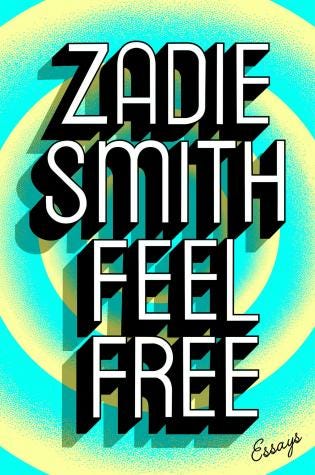
Feel Free by Zadie Smith

Listen, we don’t have to tell you to love Zadie Smith! You already love Zadie Smith, and these are her essays about books, culture, politics, social media, and more.
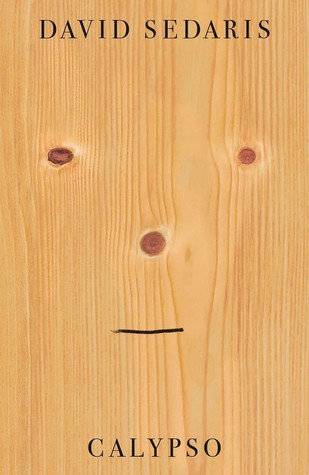
Calypso by David Sedaris

Sedaris’s work, often informed by his character-packed childhood, has always been a little zany and a little sad. This collection, in which he grapples with aging and loss, leans more towards the poignant side.
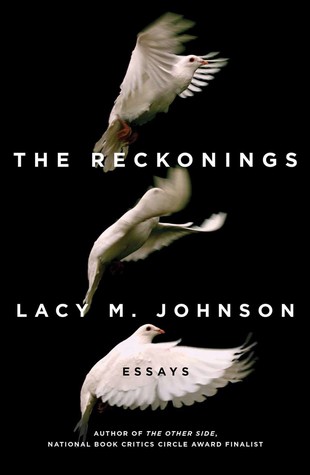
The Reckonings by Lacy Johnson

This essay collection, which deals with bleeding-edge issues like sexual violence, social justice, and the misuse of power, feels like a necessary read for our times. For more, read our interview with Johnson.
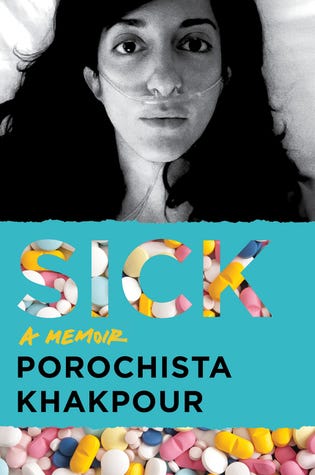
Sick by Porochista Khakpour

What happens when your body starts to revolt, and nobody knows why? Khakpour’s self-revealing memoir deals with physical and mental illness, and also with the illnesses of our culture. Check out our interview with Khakpour.

Dead Girls by Alice Bolin

In her collection of essays, Bolin tracks the female corpse through books and TV, investigating how our love of female suffering shows up fault lines in our culture. For more, read our interview with Bolin, or Scarlett Harris’s essay about how the dead girl is now giving way to the killer woman.
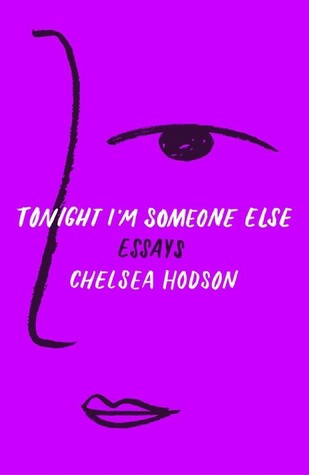
Tonight I’m Someone Else by Chelsea Hodson

Hodson’s debut essay collection combines threads of intimacy and longing with mediations on cultural artifacts from classical music to Grand Theft Auto. We caught up with her about why being a writer is such a slog.
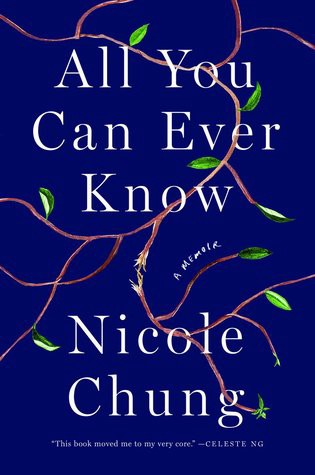
All You Can Ever Know by Nicole Chung

Adopted by a white family as a premature infant, Chung never really intended to look for her biological roots—until she got pregnant herself. Her book is an exploration of identity, belonging, and family. Here’s Chung on her own story and Taylor Moore on what the book meant to her as a transracial adoptee.

The Recovering by Leslie Jamison

Jamison’s ambitious memoir is not only about her own recovery from alcoholism, but about how intoxication, addiction, and recovery function in our culture. Read our interview with Jamison here.
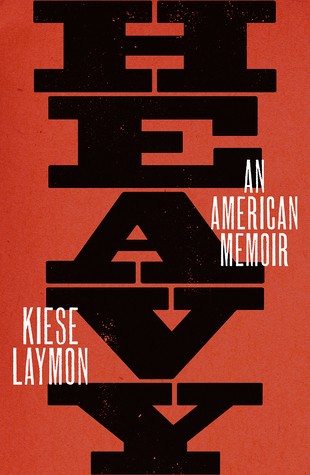
Heavy by Kiese Laymon

Dealing with family secrets, eating disorders, sexual violence, and other personal struggles, Heavy is heavy indeed—but it’s also lofty and elevating. Laymon talked to us about truth in personal writing.

How to Write an Autobiographical Novel by Alexander Chee

Chee’s essays look at the forces (and personal effort) that shaped him into a writer, but also the ones that shaped him into a human being. Find out the five books by non-men Chee recommends, or read a discussion among four Korean American writers about his influence.

When the Land That Made You Goes Up in Smoke

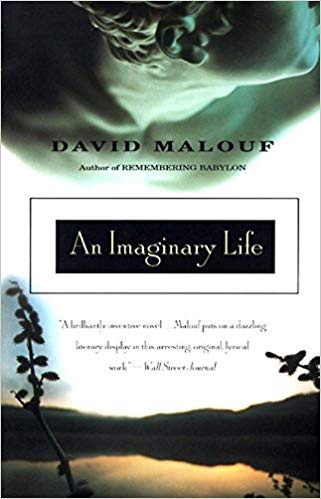
In An Imaginary Life, his novel about Ovid’s exile from Rome in the 1st century, Australian author David Malouf examines how separation from a beloved landscape can offer fertile ground for the imagination. Malouf’s Ovid describes with rapture how the discovery of a single poppy in an otherwise barren field causes memories to come cascading:

Poppy, scarlet poppy, flower of my far off childhood and the cornfields round our farm at Sulmo, I have brought you into being again, I have raised you out of my earliest memories, out of my blood, to set you blowing in the wind…Suddenly my head is full of flowers of all kinds … I am Flora. I am Persephone …

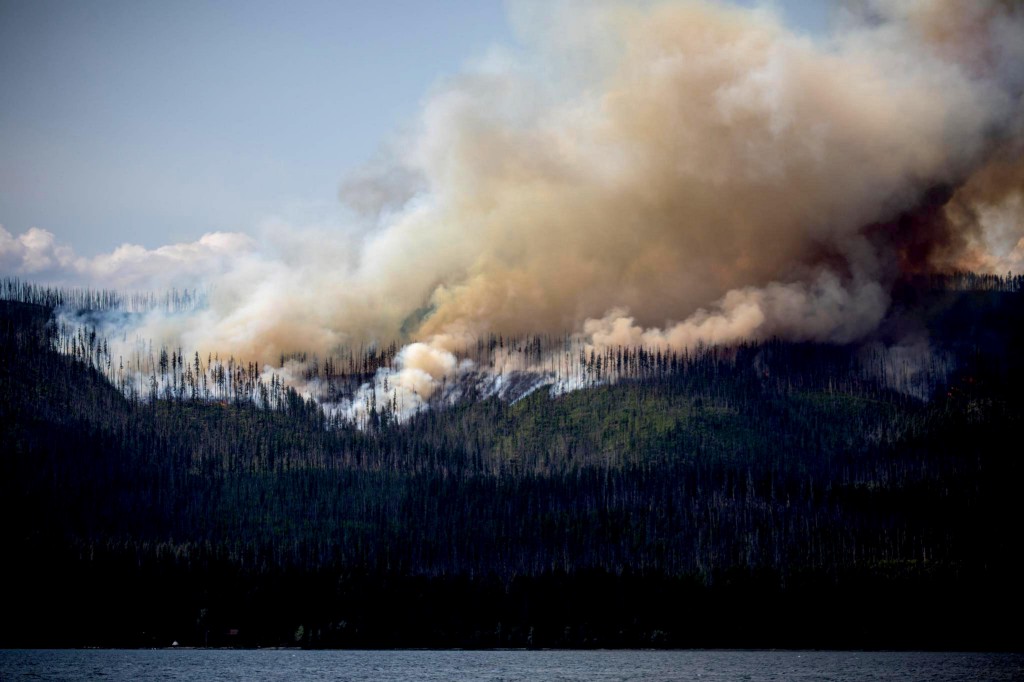
Ovid’s Rome burned less than a century after he was banished. Listening to the voices of people fleeing fire in the California I love and left, the voices of my friends on the telephone, I imagine Ovid in our current era of tech and disaster, watching his home burn from afar. While the first snow falls outside my window, I scroll through pictures of a California obscured by smoke and search my memory for a landscape I can recognize. I wonder if the blaze, had he seen it, would have also consumed the garden in his mind.

The spring I began attending the Buddhist meditation in Columbia, Missouri, where I now live, was the year the Deepwater Horizon oil rig exploded and then sank into the Gulf of Mexico. The images caught on the “spill-cam” were the stuff of nightmares: the oil bloomed underwater like a poisonous mushroom. It gushed while you brushed your teeth, while you went to work, while you slept, even now, while you meditated, waiting for the bell.

An American public with no prior knowledge of wells and the specific nature of their hazards soon became familiar with the various attempts to stop the leak. The Top Kill and Junk Shot failed spectacularly on live television, which didn’t seem all that surprising given that the second rested on a strategy of pumping trash and golf balls into the blowout preventer of the rig. No matter what the engineers did, the oil kept coming. Soon, the slick was as large as South Carolina.

In the discussion after the meditation a woman who had grown up in the area of the spill confessed that she found it hard to think of anything else. She wasn’t sleeping. The landscape she loved was dying and she couldn’t concentrate on work or family. Listening to her voice we could all sense loss rising inside her like the giant plumes of undersea oil. Part of the practice of Buddhism is to keep the awareness of change in the forefront of your mind, to live as though you understand you are dying. I recognized the panicky feeling I got when I watched coverage of the spill as related to my own fear of death. The Deepwater Horizon catastrophe seemed to be a good metaphor for what led me to Buddhism in the first place: the question of impermanence and the inevitability of loss. The disaster was different for her, however. She came from the Gulf area. This wasn’t about death or loss in an abstract sense. It was personal.

In An Imaginary Life Malouf imagines the poet speaking to us two thousand years into the future. He acknowledges that there is much he cannot know about our lives. Do we still read Latin, he wonders? He imagines us among furnishings he would not recognize, our gardens blooming with flowers he does not know. But given all those unknowns he nonetheless trusts that we still look to the landscape to find ourselves, as he has done. He writes:

If the gods are there, it is because you have discovered them there, drawn them up out of your soul’s need for them and dreamed them into the landscape to make it shine.

In the absence of calamity, it is easy to overlook the fact that the land around us is changing, as we are. Usually it happens too slowly for us to notice. I suspect that because the landscape seems permanent, our relationship with it seems to offer us a kind of permanence, too. We see the abrupt disasters that we have wrought rather than the gradual erosion of mountains, though both are occurring. In that same way, we forget that our bodies are changing when we are in good health; it sometimes takes a catastrophic event to make us notice how much of what we took for granted is already gone. There is a big difference, however. In spite of the pluming oil, the spreading flames, and all the other injuries we are inflicting on the landscapes we love, it is we who are dying.In the absence of calamity, it is easy to overlook the fact that the land around us is changing, as we are. Usually it happens too slowly for us to notice.

When asked how his own fiction might have been different had he never left his hometown of Brisbane, Malouf said, “I don’t think I ever left. I don’t believe you ever, as a writer, leave the first place you know.”

His is an answer that resonates with me both as a writer and as someone who has strayed far from home. Though I’ve been in Missouri for half of my life now, I was raised in Marin County, California, just across the Golden Gate Bridge from San Francisco. San Francisco is my Brisbane. My fiction has unfolded over and over again in a western, coastal landscape.

One of the first things I published was a short story called Men and Fish, about a woman who wrote a fishing column for a Bay Area newspaper. She had fled the Midwest where she had experienced a great loss, to remake herself in California. She was wary, suspicious and slow to forgive. By the time I wrote that story, my father, born in Missouri, had been fishing for salmon off the coast of northern California for over thirty years. Among the many things I borrowed from him for that story were the names of the lures and flies (Cable Baiter, Royal Wulff, Pale Morning Dun), the skepticism between anglers (the first line of the story is: Men lie about fish) and the fact that the biggest salmon were called pigs because of their pink flesh.

In the absence of calamity, it is easy to overlook the fact that the land around us is changing, as we are.

It takes about three hours to get from where my father kept his 22-foot Bay Liner to the waters around Duxbury Buoy, off the southern tip of Pt. Reyes. He always left just at dawn. My husband, Robert, tells the story of bobbing on the ocean one morning, the light of the rising sun hitting the red cliffs before Stinson beach, while my father bent to work on the aging engine. Holding his coffee thermos with both hands, asking my father again if he could help and being rebuffed, my husband turned to see the glistening back of a grey whale pushing through the water a few feet from the boat. The back of the whale grew in a rapidly expanding oval, like an enormous baby crowning, as silent as an ocean swell that rises without breaking. It could have easily dumped them both into the water, my husband reported, without even meaning to do them harm.

“Jim.”

Hearing awe and more than a bit of panic in my husband’s voice, my father straightened his back and turned to look.

“He wasn’t scared at all,” said Robert later. “He was just extraordinarily calm.”

My father was rarely that calm on land. Though life on the coast had changed him in important ways, he had never really been able to leave the Midwestern fields of soy and corn, or who that landscape had made him, behind. He remained wary, suspicious and slow to forgive. For years the salmon had been declining in the Pacific and my father noted the change each time he chugged through the gate toward the open sea. In 2002, in what has come to be called the Klamath Die Off, tens of thousands of Chinook rotted on their way to spawning grounds. My father attributed the diversion of river water for agriculture and the resulting decimation of that particularly large salmon run to greed and stupidity. He was rarely surprised by the human capacity for either.

Crossing the Golden Gate at the beginning or end of any visit, I look west toward the Farallon Islands and strain to see the fishing boats, wondering if any friends of my father’s stand on their decks. I glance down at Kirby Cove beach and remember camping there as a small girl, the icy water hitting my legs as I waded. Wherever I go in the county where I was raised I see personal landmarks, each one stamped with a plaque of memory: the hillside where hiking with my brother I was almost hit by a car, the bench where I sat radioactive with my first broken heart, the 7-Eleven where my friends and I lurked in the parking lot, searching for someone to buy us beer. It doesn’t really matter that the 7-Eleven was long ago converted to a gourmet deli and that most of my friends, like me, have moved away.

Wherever I go in the county where I was raised I see personal landmarks, each one stamped with a plaque of memory.

It’s hard not to imagine that some memory of me doesn’t also remain in the place itself, to match the ones I take with me when I leave. It’s easy to imagine that these memories are shared between us, between me and the land, in the way they might be with a friend or a parent or a lover. In this post-industrial age we have a unique sense of the damage we have done to the earth and may yet inflict upon it. This awareness colors our feelings for the land, I suspect, in the way that you can grieve for your lover even when they are sitting right next to you, because you know you will inevitably lose them. And you will, yourself, be lost.

When my husband and I reversed my father’s migration, moving from the West coast to Missouri to work and raise our children, he visited only reluctantly. He always seemed a bit stunned to find himself back in the place he had been so determined to leave behind. He had fled Kansas City on a motorcycle after the war, confident that he could remake himself on the coast. In Kansas City he had come from the poor half of a large family. He had spent time in the care of a charitable organization when his single mother couldn’t manage him. Sent to Boonville, Missouri for military school, he had been a Jew among gentiles who never invited him into their homes. Required to go to church on Sunday, he had rotated among all the churches in town so that he wouldn’t have to join one.

My father believed he could find a new version of himself in a new place, in a radically different landscape. In that he might have agreed with Malouf’s Ovid, who cautions against viewing the land we inhabit as something entirely outside of us. It is something we create, he argues, and we create it together.

The spirits have to be recognized to become real. They are not outside us, nor even entirely within, but flow back and forth between us and the objects we have made, the landscape we have shaped and moved in.

Though Kansas City indeed remained a part of him, my father did not fail in this project. The Californian he was to become would be wealthy where he had once been a poor cousin, he would be a world traveler and no longer the person who reached adulthood before going to the bathroom in a gentile’s home. He may have been born a landlocked Midwesterner, but the Californian my father would become was at home on the water.

During his last visit to Missouri, when he fell and broke four ribs, it made sense to me that he and my mother would stay with us where they had help. However, my father did not intend to die in the state where he was born. Though confused and in pain, he did not find it at all comforting that the accents of the nurses and nurse’s aides in the hospital resonated in his memory. The rain turned to ice against the windows. When I asked my mother where she thought they should be when the music stopped she said, “California.”

Less than a year after his fall, we spread my father’s ashes in the water off Stinson beach and Kirby Cove, within range of Duxbury Buoy. Where the whale breached and where he had seemed calm and at home. This was the message I wrote to my friends on the day of his death: When I heard my father died this morning I pictured a hot air balloon. A burst of flame, a gust of wind and there he goes, over Mt. Tamalpais, through the Golden Gate, out over open sea.

The wind that carried my father’s spirit away, if it existed at all, would not have ruffled the waves below or moved even a grain of sand on the beach at Kirby Cove. My father is now part of the landscape in a new way, and even so, it is indifferent to him, as it is to my memories of him.

My father is now part of the landscape in a new way, and even so, it is indifferent to him, as it is to my memories of him.

The love that we carry for Brisbane or San Francisco or the Gulf may feel like a relationship, but if it is one, it is unrequited. This here is the truth: when I am gone and my children are gone and their children, if they have any, are gone, the land will not remember us. Even if we are the last, if we have in fact done that to ourselves, neither the ocean nor the mountain will care.

The California my father returned to at the end of his life was both a physical place — the yellow hills, the redwoods, the bay — and the place he needed to find. It was a California made for a man who carried Missouri inside him. The California I think of my home is the place where his spirit resides. I look out my window and see snow, though it looks to my eyes like ash. It doesn’t look back or notice me at all. It just falls.

8 Place-Based Novels That Are as Good as a Trip Around the World

When writers get asked how their novel came to them, some might answer that a character spoke first or a sentence sounded to them, and for others, like me, we require an arrival of a place, or rather, our arrival to one. More often than not, a place to a writer involves double vision — of a public site in a physical world, with its palpable dirt and smells and history, and of its twin conjured from uncertain imagination and memory. It’s the dual life of any one place — perhaps a city or a house — that offers me the necessary energy for genesis.

Purchase the book

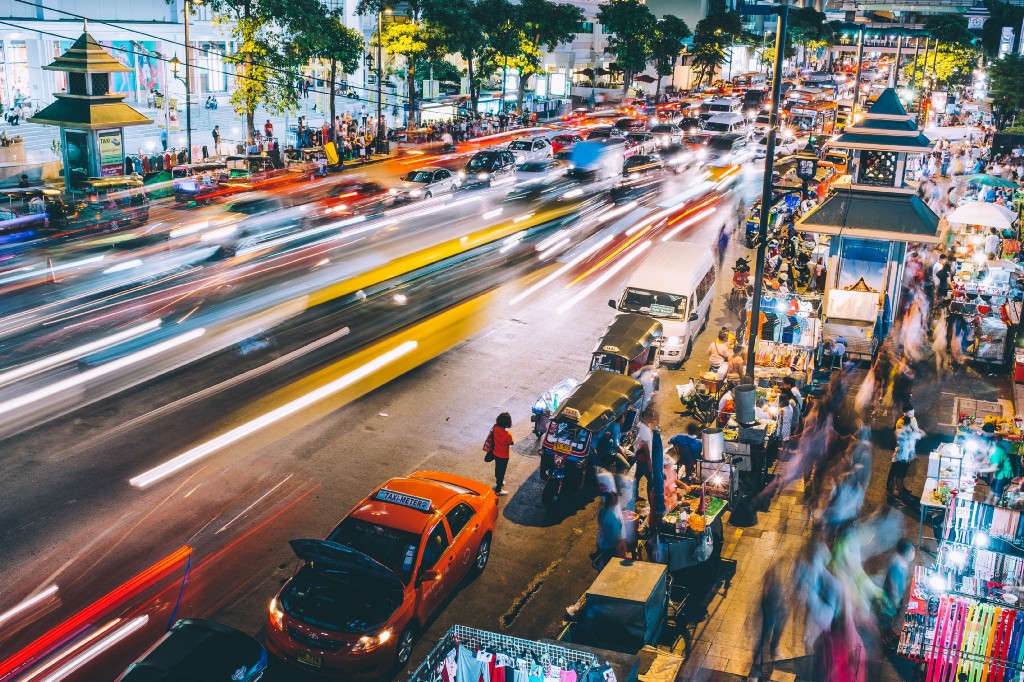
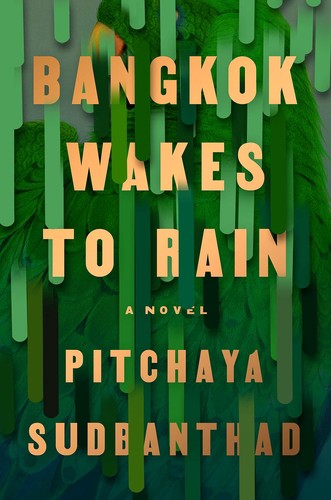
My writing allows me my visitations to many places. I’m an eavesdropper and archivist; I go and return, bringing back leaves of documentation; a sack of coded images; the recording of conversations. I don’t think I’m alone or even a rarity in this travel. To me, many novels invite the reader farther into the narrative, by virtue of a place that feels as alive and necessary as the characters within them. I wrote my novel Bangkok Wakes to Rain in this way, letting my mind wander in
the city where I was born and hearing the city tell me stories. I arrived at the site of a house that, to me, became a theatrical stage where characters — from a self-exiled jazz pianist to a former student revolutionary — entered and left; I followed them, like a clandestine voyeur, across time and worlds, old and new.

Eudora Welty perhaps said it best:

It is through place that we put out roots, wherever birth, chance, fate or our traveling selves set
us down; but where those roots reach toward-whether in America, England or Timbuktu-is the deep and running vein, eternal and consistent and everywhere purely itself, that feeds and is fed by the human understanding.

Brandenburg, Germany: Visitation by Jenny Erpenbeck

In Thailand, we believe in entities called land spirits, who invisibly co-inhabit the places where we live. This novel by Jenny Erpenbeck feels like it could be told from the point-of-view of such an entity. Starting from the prehistory of the land, the narrative never veers from an estate in Brandenburg, Germany. From this fixed shot, we witness how its occupants — including an architect, a Jewish merchant family, and occupying Russian soldiers — come and go, no different from the plants that change, season after season. Only a gardener remains constant, dutiful to the grounds to the end.

The Azores Islands, Portugal: The Woman of Porto Pim by Antonio Tabucchi

I’ve never been to the Azores, but I feel as if I’ve glimpsed the heart of the islands through this slim book by Antonio Tabucchi. Told in fragments, Tabucchi’s mosaic portrait of a place and its fading culture pulls in dreamed mythologies of island gods, accounts of whaling that recall Melville’s, and stories of doomed love. Like the whales that they hunt, the seafaring people that Tabucchi tells of feel bound to the sea and its eternal drift.

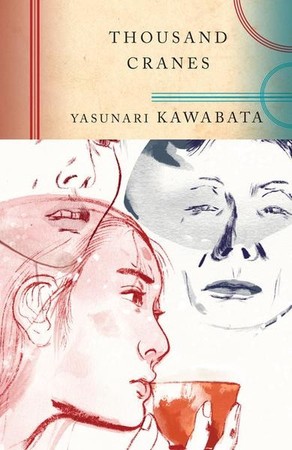
Tokyo, Japan: Thousand Cranes by Yasunari Kawabata

I first read this novel when I was very young, and I think it was only after reading it much later did I appreciate how much Kawabata coiled into its pages. In the novel, an inherited place becomes a conduit for the past to re-manifest. A young man of high social status finds himself unable to escape the relationships and complexities left behind by his dead father. The drama unfolds quietly, the rites and objects of tea ceremonies fraught with tension at a tea cottage that serves almost as a stage set. The book paints a portrait of a Japanese society, like that of many other Asian countries, lurching towards modernity while caught in the inertial pull of the past.

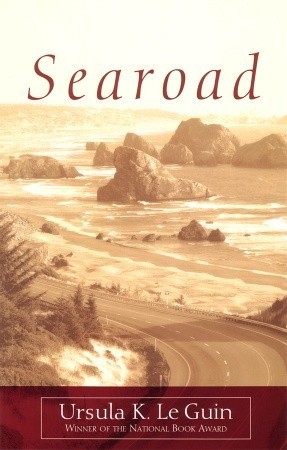
A Fictional Town in Oregon: Searoad by Ursula K. Le Guin

Most people know Ursula K. Le Guin as a pioneer of science fiction and fantasy, but the first book I’d read of hers didn’t involve extraterrestrial worlds or wizardry. Searoad takes place at a fictional seaside town in Oregon and concerns the lives of its myriad residents. I feel that I’ve always been a fan of works that move through many narratives over time to create a fragmented view of a place. With these, a caution flag often flies up when it comes to the balance of depth vs. breadth. With Le Guin, no flag ever flew.

Three New Poems by Ursula Le Guin

Harlem, New York: Jazz by Toni Morrison

Amidst a very snowy winter in woodsy New Hampshire, the coldest weather I’d ever experienced as someone from the tropics, New York was the place most on my mind. Jazz was the reason. I’d borrowed the book from the artist colony library, and soon the collective soul of Harlem — the streets and buildings and multitudes of lives in a neighborhood — called out to me. The city and its multitudes are seemingly the voyeuristic storyteller of a love triangle gone fatally awry. I spent a lot of time by myself that winter, but when I opened up this book, I was never alone.

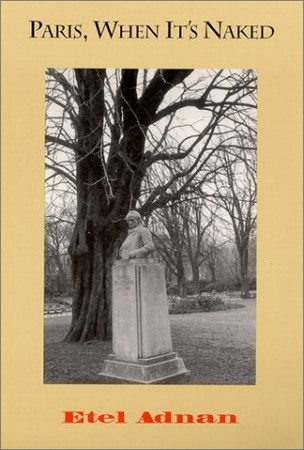
Paris, France: Paris When It’s Naked by Etel Adnan

Sometimes a worldly city is best captured not by a native but a transplant. Etel Adnan, originally from Beirut, offers a highly sensorial, flaneur-like account of a life in Paris. She defies any urge to satiate a touristic gaze of the city. Yes, it’s a romantic city but also one that exacerbates loneliness, “…a mixture of paradise and hell…” Protests seem to happen every day; there’s always something terrible in the news that sends the narrator’s mind overseas from the imperial capital; a Pan-Europe encroaches, unnerving this Parisian convert. No real discernible narrative is set in motion. Nothing is at stake but everything that a mind can contemplate in a changing place.

Image result for unnecessary woman

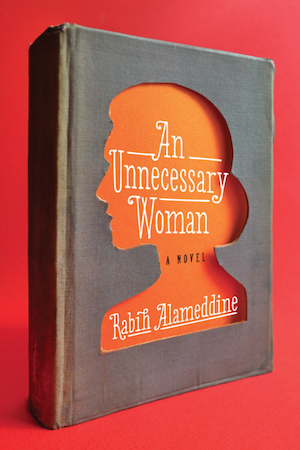
Beirut, Lebanon: An Unnecessary Woman by Rabih Alammedine

War brings devastation to a place, but to the narrator of Rabih Alammedine’s novel, that place, despite its scars and threats of violence, will always be home, like it or not. To her, “Beirut is the Elizabeth Taylor of cities: insane, beautiful, tacky, falling apart, aging, and forever drama laden.” It’s here, at the building that she refuses to leave — part of a wartorn cityscape in which the reader also comes to find deep familiarity — that she takes refuge into the worlds offered by Western literature and music. As with all recluses and isolationists, she cannot turn away a place and its community forever.

Gerolimenas, Greece: A Separation by Katie Kitamura

Although I haven’t read much of the mystery and whodunit genre, I could appreciate how Katie Kitamura’s novel turns what I know of mystery/thriller tropes on their heads. The book’s narrator goes to look for her missing husband at a seaside Greek village where he’d been studying funeral rites, but her search refuses to yield the usual procedural answers. The southern Greek landscape that she evokes, with spartan houses and land scorched from wildfires contrasting with a more luxurious resort for honeymooners, provides a seemingly extraterrestrial setting that turns the narrator into a strange visitor of a foreign place and her own autopsied history, with little that turns out to be knowable.

Electric Literature’s Top Posts of 2018

We’re not sorry to be saying goodbye to 2018. There were bright spots—Democrats delivered an absolute spanking in midterm elections for the House of Representatives! That’s the only one we can remember right now—but overall it’s been pretty grim. Climate change, disasters, government corruption, inhumane detention of refugees, the all-consuming rot of capitalism… well, here’s to a better 2019, right? Ha hahaha ha.

BUT ANYWAY. While every day was basically bad in some significant, all-consuming way, there were also many days on which Electric Literature published stuff you liked, or at least stuff you read! Here’s a look back at the most popular posts of this year. We hope they slightly leavened the experience of struggling through 2018, or at least gave you something new to think about for a few minutes.


The Fun Stuff

If you learn one thing from reading Electric Literature, we hope it’s this: Talking about books doesn’t need to be dorky or dull. (Well, maybe a little dorky.) Here, in ascending order of popularity, are your favorite humor pieces, charts, and diversions from this year.

Books Where the Dog Dies, Rewritten So the Dog Doesn’t Die

The thing we all needed to read in 2018.

These Book Covers Are So Terrible You Won’t Believe They’re Real

Madeline Raynor introduces us to Wordsworth Classics, the budget editions that have to be seen to be believed.

10 Book Designers Discuss the Book Covers They Rejected, And Why

These before-and-after shots (or sometimes before, after, after after, and after that) show the artistic and conceptual process of designing a perfect book cover. Electric Lit associate editor Jo Lou interviewed ten designers about their process, their changes, and how they landed on their final products.

What’s Your Author Horoscope?

Are you a Didion? A Butler? An Angelou with Atwood rising? Electric Lit’s resident astrologer Jeanna Kadlec (who is also now doing seasonal horoscopes!) encourages you to forget about those un-relatable scorpions and water-bearers and embrace a Zodiac sign that really speaks to you.

Title Your Inspirational Memoir With Our Handy Chart

Party, Snack, Nap. Complain, Dawdle, Tweet. Sleep, Worry, Cry. There are so many options for your personal Eat, Pray, Love, generated from your initials!

10 Satirical Covers for the Terrible Books You Can’t Get Away From

What does the cover of Novel About the Sexual Awakening of a Young Woman look like? How about 20-Something Man from New York Writing About His Isolation? You’ve seen these books hundreds of times, but maybe you couldn’t picture them—until now. Designer Matthew Revert’s covers, paired with fake blurbs by Jo Lou, roast the everloving daylights out of the literary world.

What Does Your Favorite Shakespeare Play Say About You?

After reading your social media reactions to this highly scientific piece by Helena Fitzgerald and Electric Lit editor-in-chief Jess Zimmerman, we have one more to add: If your favorite Shakespeare play is Twelfth Night, you have a 90% chance of saying “Drag me” when you post this link on Twitter.

This Handy Chart Automatically Generates a Pitch for Your New Novel

Y’all loved these handy charts this year! This one helps you devise a plot—or at least marketing copy—for your highly anticipated novel. We heard even Jonathan Franzen used it to plan his next book, a darkly comic autobiographical novel about an unlucky man’s expedition to avenge his fear of spiders. That’s just what we heard.

If You’re Not Sure How a Male Author Would Describe You, Use Our Handy Chart

This chart and its companion piece, our post about the “describe yourself like a male author would” Twitter thread, blew everything else this year out of the water. Any literary site will let you read about, say, Jane Austen, but only Electric Literature will inform you that if a male novelist were describing her, he’d write “She had curves like a silken bedsheet and I resolved to ravish her.”


The Serious Stuff

Jokes and infographics are all well and good, but for a lot of you, the real fun of reading comes from criticism, scholarly investigation, and generally thinking deeply about how books and other storytelling media influence, and are influenced by, the culture at large. In ascending order, here are the essays you were most excited to dig into this year.

The Medieval Roots of Bro Culture

Scholar Carissa Harris investigates the deep roots of our cultural problems with sexual consent. Call it #MedievalToo.

‘Call Me By Your Name‘ Finally Shows the Kind of Bisexual Narrative I Want to See

Anna Rose Iovine applauds both book and movie for providing much-needed nuance.

Why the ‘Good Place’ Personality Test Is Better than the Myers-Briggs

The most metaphysical show on TV succeeds because its characters represent specific aspects of moral failure, says Sulagna Misra.

It’s Okay to Give Up on Mediocre Books Because We’re All Going to Die

Do you need permission to put that book you hate in the donate pile or stop renewing it at the library? Janet Frishberg will give you permission. Life is short.

Why Do So Many Judges Cite Jane Austen in Legal Decisions?

Were you aware of this weird phenomenon? Matthew Birkhold was, and he’s got some ideas about what’s behind it.

Kazuo Ishiguro’s ‘Never Let Me Go’ Is a Masterpiece of Racial Metaphor

Mimi Wong explains how a book full of (probably) white British people is also a brutally effective exploration of the minority experience.

A Brand New Interview with David Foster Wallace

Eighteen years after it was conducted, and ten years after Wallace’s death, Eduardo Lago’s interview with the author is finally published in English.

The Secret Writing Tips I Learned from Kendrick Lamar

This was the year Kendrick Lamar won a Pulitzer prize, and it was well-deserved. Leila Green’s beautiful essay shows her learning from Lamar’s music and applying his lessons to her fiction.

The Literary Roots of the Incel Movement

Does our culture encourage bitter young men, and allow their violence to thrive, by endlessly repeating the idea that men’s sexual frustration is all-important? Erin Spampinato says yes.

In Praise of Tender Masculinity, the New Non-Toxic Way to Be a Man

Terra Loire brings us good news: machismo is out, and it’s being replaced (in books and movies, at least) by a kinder and gentler masculinity.


The Middle of the Venn Diagram

We’re not sure where to put Helena Fitzgerald’s essay “Magic Mike XXL Is Basically ‘The Odyssey,’ But With Butts,” which is a serious investigation of how a particular work of cinema both enacts and reinscribes Joseph Campbell’s Hero’s Journey, but is also mostly about pointless sexy dancing. But we feel we have to mention it, because we loved it, and so did you.


The Recommendations

Electric Lit often publishes lists of books on a theme, so that readers interested in a particular country, time period, subject matter, or character type can populate their TBR lists. Here, in ascending order, are the lists you were most interested in this year.

Animals who have broken into the library

Okay, Erin Bartnett’s list of wildlife that’s invaded library property isn’t technically recommendations, but we do HAVE some recommendations. For instance, put a capybara in the library!

Books about women’s rage

A syllabus for understanding why all the women in your life are so pissed off, by Kate Harding.

Literary podcasts

Jo Lou brings us this list of listening options. It’s like talking to your friends about books, except you don’t have to have friends!

Books by writers from “shithole” countries

Our shithole president gave EL staff an excuse to put together this list celebrating authors he wouldn’t want in the U.S.

Books by women of color to read in 2018

R.O. Kwon’s annual list of books by WOC to watch out for is always a highlight of our year. We can’t wait to read the one for 2019!

The Fiction

Here’s the most beloved of the contemporary fiction we published this year in Recommended Reading. With recommendations by George Saunders, Sheila Heiti, and more, you don’t even have to take our word for it.

With Jazz” by Bobbi Ann Mason, recommended by George Saunders

A story about wandering through the still-beautiful but ever-hostile American dreamscape, from a writer who was revolutionary for her time.

“On the Town” by Helen DeWitt

A fantasy tale about having competent people in charge.

“i love you” by Kathy Fish and “Thank you for Your Order” by Dorothy Bendel, published in honor of our 300th issue.

Tiny stories inspired by the shit boyfriends say.

“A Strange Tale from Down By the River” by Banana Yoshimoto, recommended by the Storyological Podcast.

A story about making peace with the way life ebbs and flows.

“Last Night” by Laura van den Berg, recommended by Electric Literature.

An original short story about the survivor’s guilt of the suicidal.

“Someone is Recording” by Lynn Coady, recommended by Electric Literature.

This story was far and away our most popular, despite the fact that reading it feels like doing a full-body wince.
The Book That Nearly Drowned Me

Novel Gazing is Electric Literature’s personal essay series about the way reading shapes our lives. This time, we asked: What’s a book that almost killed you?

When I was twelve years old I turned into a mermaid.

I had already learned to hate myself by then. I was trapped shuttling between the two poles of a spectrum I could never reach the middle of, always either too quiet or too loud. My laugh was penetrating, my shyness crippling, my body not a body anyone could want. I trailed behind all the girls I knew: last to a mobile phone, last to getting my ears pierced, last to make-up and tight tops and boobs.

Before lessons and in the playground and at home in the evenings, I cracked open books and left my last-place life for as long as I could. I became a dragon rider and a woman knight and a witch at a school for magic. I fought villains, loved heroes, and was loved in return by both.

Best of all, I was beautiful. I was elegant, smart, brave. I could fascinate people, charm them or kiss them or kill them. As long as I was reading, I could be anything at all, so long as it wasn’t myself.

It was a cold day when I picked up The Tail of Emily Windsnap at the library. I liked the cover, with its shiny fish tail, and I’d always had a secret adoration for anything to do with mermaids. I liked thinking they were out there, I guess — a little bit of magic the ocean was holding onto, keeping safe from the rest of us. Mermaids were lame by then, of course, the same way unicorns and play-acting were. But I loved them anyway.

I read the whole thing in a day and I was gone.

Emily Windsnap wasn’t much like me in most ways. She was skinny, for starters, and she lived on a boat, and she turned into a mermaid when she was immersed in water. But in other ways, I related to her so badly. Like me, she lived in a little town in England where nothing much happened at all. She wanted friends. She wanted magic. She wanted to feel part of something bigger and better than the regular world. She wanted to find part of her that she thought was missing — even if, in her case, that was a merman father. Best of all? She went out and got it all.

I wanted a bit of Emily’s magic so badly that for the first time in years, I went swimming for pleasure. I’d loved swimming as a child, but the grubbiness of local pools, the horror of changing in front of other girls, and the sheer grimness of putting tights back onto damp legs had pushed me away from it. It was only now, with the promise of magic laid out before me, that these problems were suddenly worth braving.

Sliding into the chlorinated water felt like getting closer to that mystical mermaid girl. In the water, goggles on, I was free. I could see all the way to the end of the pool, the light filtering through the water like liquid gold. I was weightless, slippery, graceful. It didn’t matter that my thighs jiggled or that my laugh was annoying. In the water, I was silent. I was beautiful.

It didn’t matter that my thighs jiggled or that my laugh was annoying. In the water, I was silent. I was beautiful.

I swam and swam and swam. I learned to hold my breath longer and longer, to use the water rather than to fight against it. I spent hours during our summers abroad in the pool, dolphin kicking my way from one end to the other, pretending with all my might that my pale white legs were a long and beautiful tail. So long as I was in the water, my looks and my personality didn’t matter. The water loved me just the way I was.

Knowing that I could go back to the water whenever I felt particularly down about myself made it more bearable. I was never that fast or strong or co-ordinated, so I was never at risk of being plucked out and plopped onto a school team for anything. Swimming always just belonged to me, and only me. It couldn’t be bent into someone else’s shape, the way I was always trying to do with my body.

But I still wasn’t quite as close to Emily Windsnap as I wished I could be. She swam in saltwater, after all, in the open sea. I swam in amber-lit pools filled with chlorine that dried my hair and skin out and made me itch all over sometimes.

So when we took a family holiday to Madeira, I was overwhelmed with the chance to do it at last. The hotel we stayed in had a tiny, rocky pool down at the base of the cliff it perched on where the waves slopped in and kept the water fresh naturally. No chlorine, just seawater. You could swim right up to the edge, poke sore elbows against the hard rock, and lift yourself right up into the waves as they washed in.

It was the best pool I’d ever swum in. At last, I felt like I was the closest I could get to being a mermaid.

Then my parents went one better. There was a bigger pool on the island, they said. Our little rockpool on steroids. Public use, for anyone, where the waves swept right out of the Atlantic and crashed together onto the swimmers. Immediately, I had to go.

And we did. We set our towels down at the shallow end, where the rock sloped gently into the water, and my younger siblings splashed happily about where it wasn’t too deep.

I swam at that end for a while, turning around in the water, imagining I was slender and shiny and scaly. I clamped my legs together and dolphin-kicked in circles, tasting the salt on my tongue. It was the freest I’ve ever felt.

Then my father said he would swim out with me to the far end of the pool. I turned and looked. The waves came in high at that end. Really high. Occasionally, two met coming in at the same time and turned into one super-wave, slamming down onto the swimmers below. They always popped back up, laughing, right away.

So, wide-eyed, I said, “Yes please!”

Out we swam, strong and sure. Breast-stroking, not dolphin-kicking, because without a tail dolphin-kicking was actually quite hard. With breast stroke, though, I could scud along for hours.

The bottom of the pool was so far away I couldn’t see it from the top. My mouth tasted of iodine and my eyes were sore and red. I was thrumming with the love of it, all the water around me, my last-place body so light and elegant beneath me.

Then the wave came in. Twice as big as the one I’d seen, a Frankenstein’s monster of a wave that must have been maybe three or four smaller waves combined. It may have been nothing to the older and more experienced swimmers but to me it filled the whole sky, tall as a tsunami.

It crashed onto my head and down I went. My feet kicked out for the bottom, to shoot up to the surface the way I’d done for many times, and met only empty water.

The air bubbled out of me frantically, I set myself against the water, and the water began to win. I was panicking, utterly and completely, arms and legs thrashing as I fought to get myself back to the surface.
I wasn’t a mermaid any more. In that moment, salt knifing up my nose, I wasn’t beautiful or weightless or strong. I was just a stupid girl who had swum too far out of her depth.
I wasn’t a mermaid any more. I was just a stupid girl who had swum too far out of her depth.

I made it to the surface, though I don’t remember how, and had time to drag in the tiniest bit of air before another wave came in. It wasn’t as big, this one, but it was enough to toss me under again, turning me over like I was nothing. Like I’d never had any power at all.

My dad saved me, the way the best dads always do. I think he caught me by my hair, in the end, hauled those long blonde strands up out of the water and towed me, choking, back to where the rock sloped up and out.

The saltwater burned coming back up. I started crying at some point between all the coughing and retching.

You have to understand — I’d been swimming my whole life, since the first time my mother took me to baby swimming classes and the instructor supposedly told her I was a natural, instinctively going for a rudimentary breaststroke instead of the messy doggy-paddle of the other children.

And I had never, not once, felt out of control the way I had beneath that wave.

That is the only time in my life that water has felt like an enemy. Like something out to hurt me, instead of to make me feel beautiful.

My parents, good people, did exactly the right thing: they took me right back into the water and floated with me. We swam some breaststroke at the shallow end, up and down and up and down, and they showed me how to trust the water again. We didn’t go back towards the waves.

Back at home after the holiday, I picked up the Tail of Emily Windsnap and read it for maybe the fourteenth time.

I realized then that I would never find the world that she had, deep beneath the waves. That magical ocean didn’t exist. The real ocean was vast and disinterested and strong, and it wasn’t made for people to live under. It didn’t love me or want me or even care one whit about what happened to me.

Don’t get me wrong, I still dreamed of living in that world of hers, with secret cracks in rocks that led to mermaid towns and school classes in Siren Singing and Hair Brushing. I dreamed of being beautiful and weightless and elegant, with a shimmering silver tail.

That magical ocean didn’t exist. The real ocean was vast and disinterested and strong, and it wasn’t made for people to live under.

But I understood, thanks to that monster wave and the crushing panic that followed it, that the world around me was the one I had. There was no magic in it for me to go and find. My body was the one I was stuck with, and it was never going to grow a tail. The water couldn’t turn me into anything I wasn’t already.

I also understood that if I wanted magic, I was going to have to make it myself.

That summer was the summer I wrote my first short story, about a group of girls who — shocker — turn into mermaids.

This summer, thirteen years later, I turned in my third novel draft to my agent, and we might be readying it to send to publishers soon. It’s not about mermaids or mysterious underwater kingdoms, but I’m hoping at least one reader, somewhere, will find a little bit of magic in it. Will learn after it, the way I did with The Tail of Emily Windsnap, that you can find a way towards not hating yourself without having to turn into a mermaid first.

A Reading List of Women Rewriting the West

I spent my teenage years with bitterly callused hands and my neck sunburned red. I’ve been kicked in the face by a steer the size of a car and I stick like velcro to rank horses. But, in 2017, when I had my first ever call with a New York publisher, his opening words to me were: “As a young woman, what gives you a right to write about this stuff?”

Purchase the book

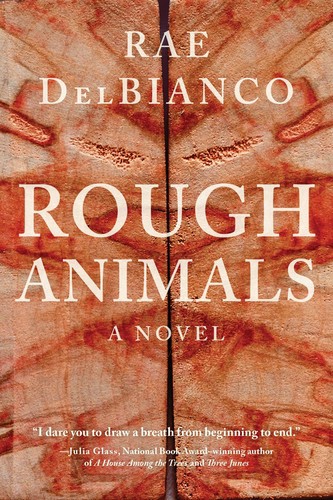
The Western is the unfortunate casualty of a double definition: it is at once a living world and a species of genre fiction. This summer, I published my debut novel, Rough Animals, the story of a young Utah rancher, his twin sister, a fourteen year old female cartel assassin, and the harrowing family secret that their war against the elements and each other unravels. Rough Animals centers on the human costs of the everyday violence required in living off the land. While my farming life took place in Pennsylvania, the grit and dirt and animal struggles in the novel are all my own experience.

Two of Rough Animals’s three main characters are women: one adept at surviving in the woods, the other at killing in the desert. They are at once the true story of the West and a challenge to the Western: the real wilderness, from Utah all the way to my homeland in Pennsylvania, requires skill, strength, competence, and courage to eke a living from the ground. There are no “damsels in distress.” The West was and is a cruel place, and none of the following authors deny that. But if we step away from the Western as genre — the dramatic tropes, the binary good versus evil, the sexism and bigotry — we can yet look to the West as the core piece of our American identity that it still is. The following stories do not rewrite the West in the sense of updating a genre. They are among those few who are telling it truthfully, part of a voice that has been quietly persisting and is now, finally, growing too loud to be dismissed.

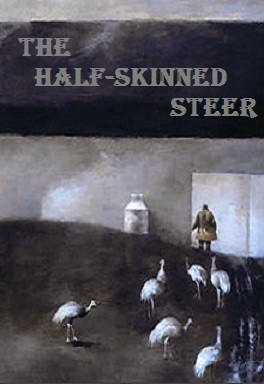
The Half-Skinned Steer by Annie Proulx

My all time favorite short story is a tale of time, age, and the brutality of nature. The Half-Skinned Steer tracks an octogenarian’s return to his Wyoming childhood ranch for the funeral of his brother. On the way, he relives with intensity the discovery of sexuality that made him leave the rural life decades before.

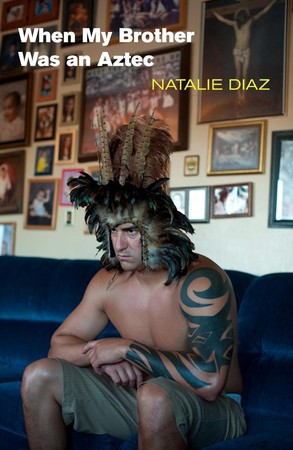
When My Brother Was An Aztec by Natalie Diaz

I first heard Diaz read at the Tin House Summer Workshop, the same week that Manuel Gonzales lectured to us on her poem “A Woman With No Legs”, a deeply moving, emotionally ravaging, and tactile work about a Mojave woman with diabetes. As a fellow queer woman writer, I admire her voice for the LGBT community as much as I admire her art.

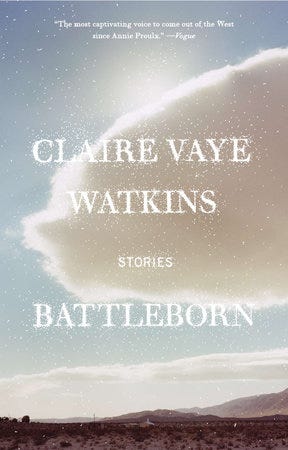
Battleborn by Claire Vaye Watkins

This short story collection is as forceful and unapologetic as the title suggests. In equal parts beautiful and brutal, Watkins’ West never shies away from difficult emotions, personalities, or truths in a landscape of chaos.

John Larison Fights the Toxic Cowboy Myth By Giving His Western a Female Hero

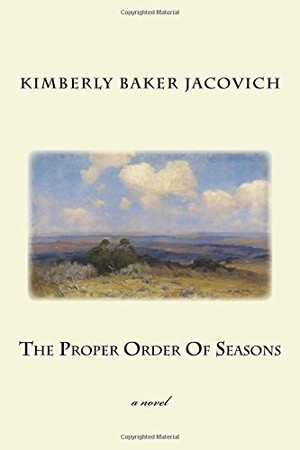
The Proper Order of Seasons by Kimberly Baker Jacovich

Tracking a former Civil War soldier’s homecoming to Texas, The Proper Order of Seasons is as emotionally riveting as it is violent. I believe that violence, when done well, can be one of the most powerful tools in literature, and Jacovich wields it to its full potential.

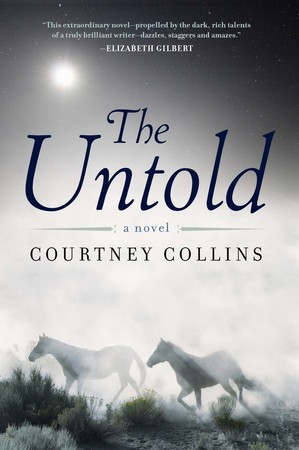
The Untold by Courtney Collins

While The Untold takes place in Australia, its capturing of ranch life, wilderness, and life’s frontiers makes it too relevant not to include here. With a first chapter narrated by a dead baby, Collins is intent on overturning the difficult and brutal in life, and the reader is too fascinated not to join on the ride.

Image result for The Golden State

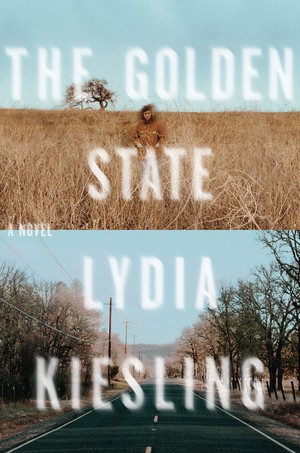
The Golden State by Lydia Kiesling

Kiesling’s debut is truly exceptional in its portrayal of motherhood as her main character navigates a desert world and the changes of her postpartum body. The book is a stunningly candid look at the ongoing fight in what we call “holding one’s life together,” as well as the first time I have ever seen one of the Carhartt jackets I grew up with on the cover of a book.

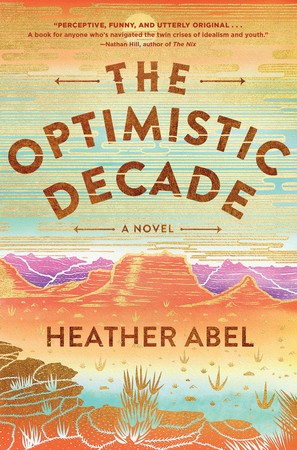
The Optimistic Decade by Heather Abel

Another 2018 debut, Abel’s take on the West creates a world that mirrors our own within the Colorado desert. Abel looks at action, in all of its forms, and its role in our lives as we strive for meaning. Her narrative is among those defining our contemporary relationship with the West — one of activism, rather than the exploration and exploitation of its violent past centuries.

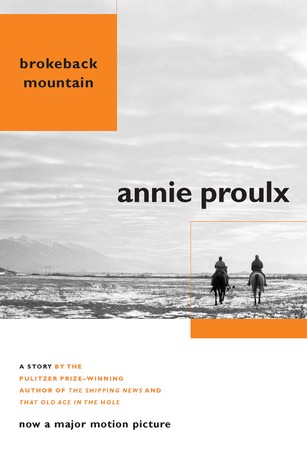
Brokeback Mountain by Annie Proulx

I must start and finish with Annie Proulx, one of the greatest writers the West has ever had. Brokeback Mountain is not only a landmark work for the LGBT community, it is the most resonant story I have ever read on regret. Proulx captures the pain of choosing the safe option in life out of fear, then realizing too late that going after what and who you loved most would have been worth every risk.

About the Author

Rae DelBianco grew up in Bucks County, Pennsylvania, where she raised livestock, founding a beef cattle operation at fourteen. She attended Duke University on a Robertson Scholarship, and is an alumnus of Curtis Brown’s Six Month Novel-Writing Course in London and of Tin House Summer Workshop. Rough Animals is her first novel, and has been featured by Vogue, Vulture, New York Magazine, NY Post, Publishers Weekly, Nylon, Southern Living, Outside Magazine, Chicago Review of Books, Refinery29, Ralph Lauren Magazine, and Literary Hub.

Everything Is Super Normal and Definitely Nothing Is Weird at All

“The House Guest,” a story by Beau Golwitzer

There was a wife and husband.

The wife and husband were named Lindsay and Steve.

“Hi, my name is Lindsay, and that’s my husband, Steve.”

One day, Steve and Lindsay were entertaining a house guest; however, neither of them knew who the house guest was, exactly.

The house guest had just appeared, exactly.

Suddenly, the house guest was just standing in the middle of their kitchen, exactly.

Lindsay offered the house guest a sandwich. “Would you like a sandwich?”

The house guest’s face lit up. “That would be excellent!”

The house guest had this rather large, square face that when lit up looked scary.

At the sight of the house guest’s face lit up like that, Lindsay turned white, then she went to prepare the sandwich.

While Lindsay was preparing the sandwich, Steve sat with the house guest.

The house guest smiled at Steve and Steve smiled back.

Steve didn’t know what to say, so he remained in silence, but smiling.

Finally, Lindsay slid a plate in front of the house guest. “Eat up!”

The house guest took a rather large bite of the sandwich.

“Wow, what a big bite!” Steve said.

“Thank you,” the house guest replied soberly, then with his next bite ate the rest of the sandwich.

The house guest licked his fingers, until he had licked all of them — one, two, three, four.

Which was when Steve realized that the house guest had only four fingers.

“Oh, God, I have to use the bathroom,” the house guest declared.

“The restroom,” Steve corrected him.

“Where the fuck is it?” the house guest asked, smiling.

Steve and Lindsay both turned white.

Lindsay pointed upstairs with a shaky finger. “The bathroom is up-up-upstairs.”

When the house guest had gone, Lindsay whispered, “Who is that, Steve? He really liked my sandwich.”

“He loved your sandwich, Lindsay, and I don’t know who it is.”

Steve thought for a moment. “Is it Tamara’s brother?”

“Wasn’t Tamara’s brother killed in a water-skiing accident?”

“I almost hate to say it, but he was impaled upon a ski,” Steve said, shaking his head.

“Horrible,” Lindsay said, shaking her head.

The house guest returned. “Actually, I couldn’t find the restroom. I searched and searched.”

The house guest was covered in some kind of white powder, but both Steve and Lindsay were too afraid to ask why.

“Perhaps I gave poor directions,” Lindsay said.

“Language is slippery,” the house guest said.

“One, two, three, four,” he said, counting with his four fingers.

“I’ll take you upstairs,” Steve said.

Steve led the house guest to the bathroom and then returned to the kitchen. “Maybe it’s Kristen’s brother? Do you remember Kristen’s brother?”

Lindsay thought for a moment. “Didn’t Kristen’s brother — ?”

“That’s right,” Steve said, taking a deep breath. “The common cold.”

“In any case,” Steve continued, “I keep feeling like I’m about to recognize him, then I don’t. It’s like that time in the mountains. Remember?”

“When we were hiking and suddenly that man appeared?” Lindsay said.

“Yes, and then he stayed in our cabin for the night?” Steve said. “The next morning, though, he wasn’t there? And we thought we had dreamt him?”

“Then, I couldn’t find my passport?” Lindsay said. “And we thought he’d stolen it? But then I found it later?”

“Yes!”

The house guest returned to the kitchen. “I thought all I had to do was pee, but then I had to take a shit.”

Steve turned white.

The house guest laughed. “You turned white, Steve. Is that because I took a shit?”

“Haha, no.”

“I hope it wouldn’t be too much trouble for me to spend the night,” the house guest proposed.

Lindsay looked at Steve. “Of course not. Then you would be a real house guest.”

Steve turned to the house guest. “My name is Steve.”

“No duh, Steve,” the house guest said.

“I’ll get the bed ready for you, Steve,” Steve said.

Then he laughed, somewhat maniacally. “I called you Steve — when I am Steve!”

The house guest looked very serious. “I am not Steve.”

As Steve was getting the bed ready, Lindsay sat with the house guest in the TV room.

“Do you want to watch a documentary?” she said, turning on the TV.

Soon, she had found a documentary — on elephants.

The elephants on screen were bathing themselves in a pool of muddy water.

“That gives me an idea,” the house guest said. “May I have a bath?”

The elephants on the screen seemed to look directly out at Lindsay and the house guest — perhaps with a look of concern?

One of the elephants lifted its trunk and blew out a loud snort.

“Of course,” Lindsay said.

On the way to the bathroom, they passed the bedroom, where Steve was struggling, wrapped up entirely in one of the bedsheets.

In the bathroom, Lindsay plugged the tub, turned on the faucet. “Do you like it very hot? My name is Lindsay.”

“I like it steaming, Lindsay!” the house guest said. “I like to hurt, Lindsay!”

Lindsay turned red.

The house guest patted his pants pockets. “Dammit, I forgot my toothbrush. I go nuts if I can’t brush my teeth.”

Trembling, Lindsay said, “I’ll see if we have an extra one.”

She dug around in the bathroom closet. “Steve!”

Steve limped to the door. “I think I pulled a hamstring.”

“Is there an extra toothbrush?”

The house guest was pointing at his mouth. “Ah ah ah.”

Steve looked in the closet, but couldn’t find one.

“Steve, if I may use yours,” the house guest proposed.

“Yes,” Steve said, with his head down.

As the house guest bathed, Lindsay and Steve huddled in the hallway.

Steve held Lindsay’s hand, caressing the back of it with his thumbs.

“Maybe it’s my cousin, Max,” Lindsay whispered.

“No, Lindsay,” Steve whispered.

Soon, the house guest had rejoined them.

He was wearing Steve’s clothes, and they were soaking wet. “I couldn’t find a towel so I put on Steve’s clothes.”

“The towels are,” Steve began.

“The towels are what, Steve?” the house guest asked.

“The towels are white,” Steve said, “in case you’re looking for them next time.”

“Thank you, Steve.”

The three of them walked through the kitchen, and then out onto the back deck.

The house guest went into the yard, picked a blade of grass, threw it in the air. “There’s no wind.”

Steve and Lindsay returned to the house.

At first, it appeared the house guest had not returned with them.

Then, he was standing there with them.

“What do you think we’ll have for dinner?” the house guest said, smiling.

“I don’t know,” Lindsay said disconsolately.

“Then breakfast, then lunch?” the house guest continued.

His weird square face lit up like a burning house.

Lindsay looked at Steve helplessly.

“Dinner, breakfast, lunch!” the house guest began to chant. “Dinner, breakfast, lunch! Dinner, breakfast, lunch!”

He made a conducting motion with his arms, ordering Lindsay and Steve to join.

“Dinner, breakfast, lunch,” Lindsay began to chant.

“Dinner, breakfast, lunch,” Steve began to chant as well.

“Louder!” he demanded.

They got louder. “Dinner, breakfast, lunch! Dinner, breakfast, lunch!”

“One, two, three, four!” the house guest shouted. “Now we’re doing it!”

Steve and Lindsay, chanting, huddled together.

The house guest joined them, putting a hand on Lindsay’s shoulder, the other on Steve’s head.

Steve screamed, Lindsay screamed, the house guest smiled.

About the Author

Beau Golwitzer’s writing has appeared in such journals as BOAAT and Wigleaf. He lives in Chicago with his wife.

“The House Guest” is published here by permission of the author, Beau Golwitzer. Copyright © Beau Golwitzer 2018. All rights reserved.

14 Literary Podcasts That Aren’t Hosted by Three White Guys

If you have a long daily commute to work, or generally spend a significant amount time on public transit, you probably understand and appreciate the benefits a good literary podcast. Rather than listening to the sounds of the train, you can put on your headphones and drown out the couple fighting next to you with the sound of a witty voice talking about literature.

But a good literary podcast that is not hosted by a white man — or, even more typically, a trio of white men — is not so easy to find. More often than not, literary podcasts are offering a pretty pale literary landscape; the hosts and of the writers they interview rarely celebrate diversity in the literary world. For those looking to make up for lost time spent on the subway, here is a list of podcasts that do.

Minorities in Publishing

Minorities in Publishing, hosted by Electric Literature contributing editor Jennifer Baker, “is a podcast discussing diversity (or lack thereof) in the book publishing industry with other professionals working in-house as well as authors and those in the literary scene.”

The VS Podcast

In this bi-weekly podcast, poets Danez Smith and Franny Choi “have conversations with the people who have chosen to stand between the world and its articulation into language.” They talk about and with poets who are changing the world of poetry, centering the discussion around the artists’ craft as well as the questions they seek to answer in their art.

I Found This Great Book

Subtitled “A Home for Readers of Diverse Books,” this podcast covers books, both new and old, with an emphasis on subjects and authors of under-represented groups.

Black Chick Lit

“The Black Chick Lit Podcast features in-depth discussions of the latest and greatest works penned by black women. Join Danielle and Mollie as they talk prose, judge every character’s decisions and laugh at their own jokes.” From The Hate U Give to Beloved, from film adaptations to new releases, Danielle and Mollie discuss it all.

Mostly Lit

“Through their pioneering podcast and social media they promote the message that anyone and everyone can be a reader and Mostly Lit strives to create more inclusive and diverse publishing and media landscape that also reflects that message.” The creator and host, Alex Reads, is a writer and actor whose passion for literature and performance lends itself to an engaging voice in his podcast alongside co-hosts Raifa Rafiq and Derek Owusu. Together, the trio talk about the “multicultural millennial” experience as it pertains to literature, pop-culture and film.

Food 4 Thot

Disclaimer: this podcast is not about food, they just like the pun. Food 4 Thot discusses “sex, relationships, race, identity, what we like to read & who we like to read.” The thots — I mean hosts — are a poet, an editor, a writer, and a scientist, bringing a wide range of experience to an interesting range of topics.

17 Literary Podcasts to Ease Your Commute

Books and Boba

Every month at Books & Boba, co-hosts Marvin Yueh and Reera Yoo select and highlight one book by an Asian or Asian America author. Their selections, which have included the likes of Ishiguro’s Never Let Me Go and Han’s To All the Boys I’ve Loved Before, are explored through discussions about the impact they’ve made on the host and interviews with the author. In between episodes about the month’s selection, they host a “Book News” episode, in which they talk about publishing news and new releases in Asian American Literature.

Not Another Book Podcast

From their bio: “Every fortnight we share popular and unpopular opinions about the books you love.” Hosted by a culture critic, a book blogger, and a writer/editor/translator, this trio of witty voices lends a refreshing, insightful, and even snarky take on news in the African literature scene.

Three Percent

From the website: “In this age of globalization, one of the best ways to preserve the uniqueness of cultures is through the translation and appreciation of international literary works.” The name of this podcast — and the site from which it comes — acknowledges the fact that only around three percent of the books published in the United States are translated from other languages. Hosted by the creators of the site, Chad Post and Tom Roberge, the podcast explores an array of topics about international works, from evaluating different translations to introducing the recipients of the Best Translated Book Award.

AAWW Radio

Asian American Writers’ Workshop is a national nonprofit committed to telling the stories of Asian Americans. Their podcast has featured beloved writers like Hanya Yanagihara, Roxane Gay, and Claudia Rankine. “We’ve got it all: from avant-garde poetry to post-colonial politics, feminist comics to lyric verse, literary fiction to dispatches from the racial justice left.”

Black & Read

Sometimes talking with friends about books doesn’t yield many new or fresh opinions, especially if your experiences are similar. In this podcast, host Terry Brown aims to bring something different to the bookclub (even if the bookclub consists of just you and your headphones). “Each week Terry and his guest will discuss a piece of literature from the unique perspectives of a person of color.”

Books, Beats, and Beyond

“Books, Beats, & Beyond focuses on alternative and marginalized history, progressive issues, and provocative and thought-provoking music.” Taj Salaam — self-described as just your average human who reads an above-average amount — interviews writers, journalists , musicians, scientists, and scholars.

Can’t Lit

This podcast is devoted exclusively to Canadian literature. Co-host Jen Lee said in an interview with CBC, “The thing about Canadian literature is that people think it’s staid or boring, and that discussions about inclusion or diversity aren’t happening. We try to meander into these conversations, but in a natural and organic fashion. And we are both interested in craft. [Co-host] Dina [del Bucchia], of course, is also a poet and she can ask wonderful questions about poetry that are well above my pay grade. And I care about things like how culture is being represented in our fiction, and people can present stories that we haven’t heard from yet.”

We Want the Airwaves

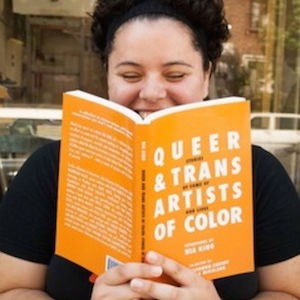
Host Nia King explores intersectionality in the literary and political world through this podcast by seeking out and talking with “political queer artists, trans artists, and artists of color who seem to have figured out how to make art and make rent without compromising their values. Nia King’s trying to figure out if her dream of making a living as an art activist is beyond reach.”

Please Do Not Give Me Another Freaking Bookmark

The most addictive and perplexing content of the holiday season is the magazine gift guide. I’m fascinated by this calculated approach to goodwill and how it encourages me to reduce my friends and family to single entities: The Baker, The Tech Fiend, The Mom, The Guilty, The Innocent.

If you’re shopping for The Reader, you’d be forgiven for concluding that a Reader is someone who spends all their free time drinking tea in bed and taking luxurious candlelit baths. You yourself may read a lot of books, but that’s not enough to be a Reader as far as gift guides are concerned. You have to also covet Jane Austen-themed socks and a witty Oscar Wilde mug.

So what do you get for the reader who’s just a reader, not The Reader? What do you get for people who like to read books instead of wearing them on a scarf? Here’s our list of things to avoid, and alternate gifts that readers may actually like.

What Not To Get: A Bookmark of Any Kind

So you think your literary friend might enjoy a bookmark! Your impulse is probably to buy the fanciest version you can find, which is, presumably, why a Secret Santa once gave me a metal one (bronze? Steel? It had the feel of a screwdriver). Perhaps you’ve seen the type; the body has a thin U-shaped cut out and they’re essentially meant to work like a giant paper clip, which, incidentally, is not something you should ever use as a bookmark. The weight of the thing made me apprehensive of what did, in fact, occur after I clipped it onto my book: it made the page flop sadly over, then tore the paper when I tried to slide it off, having far overreached its goal of marking my page. This bookmark was clamped on with such force that I would have been able to find my place even if I’d been sucked into a tornado and spat back out again. As I, regrettably, don’t know anyone who lives in Kansas and might enjoy such a feature, I later re-gifted it as a money clip. I’ve also received: an over-dyed suede bookmark that left two pages of my book smudged with purple, a tasseled bookmark that my dog pulled out of the book and tore to shreds, and a bookmark printed with the facade of a museum I’d never been to. I can appreciate that some people have real pet peeves about creasing a book (I think it adds a sense of being loved, like splatters on a cookbook) but you can do better by even your most perfectionist friend than buying them a bookmark.

Get instead: A book from a local bookstore which comes with its own paper bookmark tucked inside (two gifts for the price of one!)

Photo by Wicker Paradise

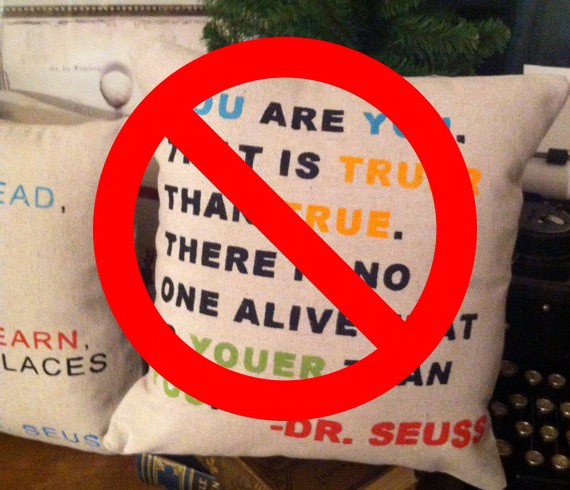
What Not To Get: A pillow embroidered with a literary quotation

I have five embroidered pillows; my mother needlepoints them by hand and they’re delightful. Once when I was selling an old kitchen table through Craigslist, a young woman came to my apartment, took one look at my couch, and asked if the pillows were also for sale. She thought she’d be able to get a 10-foot table home on the L train during rush hour, but still! Let’s agree there is nothing wrong with decorative cushions. However there is a time and place for quotations, namely graduation speeches, sympathy cards, and tote bags. Quotations can start books and sell books, but they shouldn’t adorn a pillow. As Cicero says, “A room without books is like a body without a soul,” and a room decorated with literary quotations is like telling everyone your favorite book is Moby Dick and what a shame so many people are intimidated by its length!

Get instead: Electric Lit’s “Writing Well Is the Best Revenge” tote.

Photo by Bryan Clark

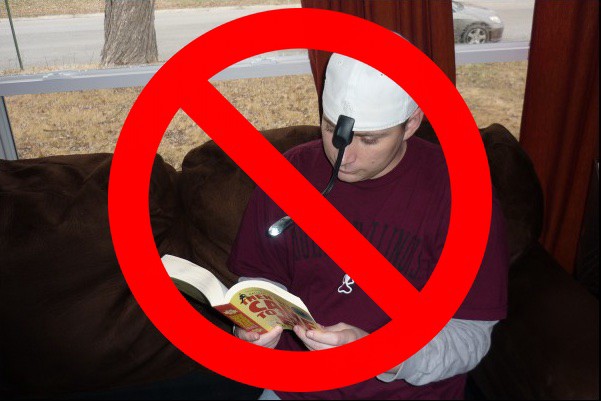
What Not to Get: A clip-on reading light

If you’ve ever stood in the checkout line at Barnes and Noble, you’ve probably seen these lights, which are about the size of a keychain flashlight and clip onto the cover of your book. The appeal, as I understand it, is that they allow you to read in bed while your partner sleeps, and since my husband needs less sleep than I do and we still haven’t figured out what to do when he wants to keep reading in bed and I want to pass out, we decided to try it. The overhead lights went off, he turned his mini light on, and I lay there, feeling like I was trying to sleep next to a man going spelunking, or, judging by the size of the light, a child working in the mines. The worst part was that the light was perceptible on my side of the bed, a guilt-inducing luminescence that reminded me that my better half was more committed to literature than me. He was reading Turgenev while I was trying to catch a few extra Zs because I’d stayed up too late the night before watching The Great British Baking Show. In short, I recommend skipping the artificial light in favor of the gift of daylight hours, free to read.

Get instead: Grocery delivery, babysitting coupons—anything that will allow your friend some leisure time to get reading done before bed.

What Not To Get: Tea

It’s time to banish the cliche that book lovers drink tea. It comes from the easily rebutted yet enduring belief that people who love books must either be tweedy scholars or homely women. The tweedy scholar drinks tea because he is modeled off a British person — no matter how many times Ricky Gervais hosts an award show, Americans can’t seem to shake the image of Brits as erudite, literary aficionados — and the homely woman does so because she’s not drinking anything stronger. This is a little more troubling than giving British people more credit than they’re due because it implies that if you love coffee or movies or large dogs or speed-skating, then a book is not for you. This readers-as-nerdy-homebodies trope is especially strange when you consider how we also love to stereotype writers as aspiring Hemingways who chase their coffee with whiskey and bad behavior, yet writers are among the most avid readers. But more to the point: if you haven’t read My Struggle with a generous glass of Pinot at hand, you’re doing it wrong.

Get instead: A pourover coffee maker and a bottle of wine for every volume of Knausgaard.

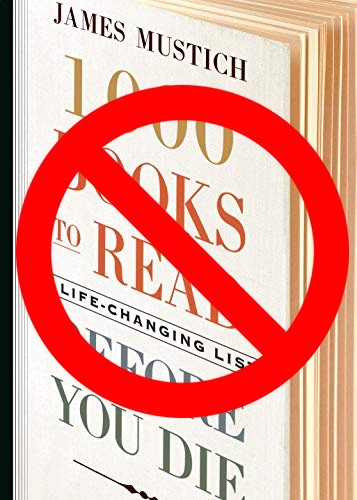
What Not To Get: 1,000 Books to Read Before You Die by James Mustich, or any other compendium of books you should read

You think you’ve read a lot of books? You think you’ve covered most of the classics and are making headway on the important books of our time? Proud of your Goodreads list, you say? Able to stave off the anxiety that all true book lovers feel when they realize they can’t read everything before they die? Well, read this book, and think again. Essentially, this book combines the gift of condescension with the gift of panic.

Get Instead: Electric Literature’s Papercuts party game, so that they can feel good about all the literary knowledge they already have!

What Not To Get: Bookends

I hate to point out the obvious, but the purpose of bookends is to keep books upright when your shelf isn’t full. If you’re buying a gift for a true bookworm, they’re probably having the opposite problem and their shelves are packed end to end with books, their floor is covered in books, and their nightstand looks like a colorful game of Jenga.

Get instead: Floating shelves, because every wall looks better with books, even the one above your toilet.

How to Give Your Characters Unforgettable Names

Harry Potter. Sherlock Holmes. Willy Wonka. The best character names will worm their way into the apple of your memory — but that doesn’t mean they grow on trees. An iconic name might sound simple (James Bond) or simply outlandish (Katniss Everdeen), but whether it came from a name book or from a seemingly random collection of syllables, chances are your favorite character’s moniker wasn’t just picked from a hat.

So, to paraphrase Juliet, what is in a name? Well, that’s a hard question to answer. Dracula, for instance, has its etymology rooted in Romanian history, while Harry Potter was just a combination of a first name that J.K. Rowling liked and the surname of her childhood neighbors. And A.A. Milne named Christopher Robin’s beloved donkey Eeyore, because what does a donkey say? “Hee Haw.” Classic onomatopoeia.

No matter how the most famous characters got their appellations, there are certain types of names that are guaranteed to stick in your readers’ minds. Here are a few of the best ones — as well as tips on how to come up with some unforgettable names yourself.

Those that roll trippingly off the tongue

Shakespeare sure had a lot to say about words, words, words, didn’t he? Fitting, given his own contributions to the English language. And indeed, Hamlet has some choice words for a band of traveling actors, as he urges them to deliver speeches “trippingly on the tongue.” This advice remains among the Bard’s best, as a surefire way for creating a turn of phrase (or in this case, a name) that gets stuck in your head like a pop song.

Huckleberry Finn

The trick to creating a “catchy” name is in the pronunciation. Anna Karenina’s Stepan Arkadyevich Oblonsky might sound good in Russia, but in English, Arkadyevich is just a tough word to say. Huckleberry Finn, on the other hand, pours off the tongue like Mississippi molasses.

If it doesn’t sound good out loud, it probably won’t sound good in your reader’s head either. So say your character names out loud before you decide on one. And if it sounds good in the air, trust that it’ll be good on the page, too.

If it doesn’t sound good out loud, it probably won’t sound good in your reader’s head either.

Victor Frankenstein

Creative uses of consonance can also carry a name. Get it? Repeating consonants (or at least the sounds they signify, like Vic and Frank) is one effective way to forge a memorable turn of phrase.

But consonants can also call to mind certain associations in a way that vowels don’t. In the words of Dwight Schrute, “‘R’ is among the most menacing of sounds. That’s why they call it murder, not mukduk.” The hard T’s and R’s in “Victor Frankenstein” give it an unmistakably menacing sound — perfect for the protagonist of a gothic horror novel.

Atticus Finch

Finally, when it comes to giving your character a name, pay attention to syllables. Like Huckleberry Finn, To Kill A Mockingbird’s Atticus Finch has a multisyllabic first name and a monosyllabic last name. This way, there’s almost a rhythm to saying it. And nothing’s more catchy than rhythm.

Those that look good on the page

Character names that sound interesting are all well and good… but this is Electric Literature, not Electric Longform Spoken Content. Books are first and foremost a visual medium, so some of the best names in literature are the ones that look good on the page, too.

Bilbo Baggins

J.R.R. Tolkien’s eponymous Hobbit is a perfectly notable character all by his lonesome, but would his name be equally notable if it wasn’t for the back-to-back B’s? As you probably know, alliteration — repeating the first letter across multiple words — is a classic tool in the writer’s kit, and repeating the first letter across a first and last name should be, too.

Humbert Humbert

Or you could simply opt to repeat the first name itself. Repetition is another widespread literary device that is underutilized when it comes to character names. Take this example from Lolita, where Nabokov uses repetition to double down on the humiliation of his villain protagonist Humbert Humbert. Not to mention, seeing double makes it that much easier to pick the name out on the page.

How to Decorate Your House Like Victor Frankenstein

Pip

Dickens wrote one of the greatest novels of the 19th century and then gave the protagonist a three-letter name. Let’s just call that what it is: a power move. But it works, because Pip just looks good on the page. Why?

Well, for one thing, it’s a palindrome (albeit a very short one), and it’s one letter off from being onomatopoeic, too (for peep). But at the end of the day, when it comes to naming your character, sometimes shorter is just better.

Granted, Pip isn’t a classic character just because his name looks good on the page. The moniker Pip is also fitting of someone small and seemingly insignificant who can grow to become enormous and stately. A character with great expectations, in other words.

But, despite being a prolific creator of fun names (Martin Chuzzlewit, Mr. Pumblechook, Betsy Trotwood… the list goes on and on) Dickens is far from the only author to use names to convey something about characteristics. We’ll look at some more examples of this next.

Those that evoke characteristics

Consonants have connotations, but sometimes a name can be even blunter than that in conveying meaning. Here are some examples of names that tell you everything you need to know about a character.

Hannibal Lecter

Thomas Harris’s Lecter is the most noted cannibal in literature. Is it a coincidence that his first name is Hannibal?

It’s not like you should always rhyme your character’s name with their primary characteristic — that’s probably a slippery slope that could result in you creating Mr. Mostman the Postman, or Abigail Dressler, the wrestler. But when done with sufficient nuance, the payoff can be huge.

Don’t always rhyme your character’s name with their primary characteristic — that’s probably a slippery slope that could result in you creating Mr. Mostman the Postman, or Abigail Dressler, the wrestler.

Holly Golightly

The protagonist of Truman Capote’s Breakfast at Tiffany’s, made famous by Audrey Hepburn in the film of the same name, bears the name Golightly — a common surname, but also suggestive of her airy disposition and reluctance to take things too seriously. This is a neat trick on Capote’s part: he creates a realistic sounding name that nevertheless conveys something about the character.

Veruca Salt

The resident narcissist of Charlie and the Chocolate Factory, Veruca Salt simply sounds like a spoiled brat. That might seem accidental until you consider that Salt derives from the same root as “salary,” carrying connotations of wealth, while a verruca is a kind of foot wart that will send chills down the spine of anyone who’s ever used communal showers. So on a deeper level, Veruca Salt roughly translates to “rich wart.” And on the surface, the idea of pouring salt on a foot wart is just gross.

That’s why considering a name’s etymology isn’t just about leaving an Easter egg for the reader. It can be used to produce a reaction from them, even if they aren’t quite sure why.

Those that have made it into the modern lexicon

Penetrating pop culture is a fickle thing: who would’ve ever guessed that a name like Inigo Montoya would catch on in the way that it did? (R.I.P. William Goldman.) But sure enough, character names have been working their way into the modern lexicon since we started calling loverboys “Romeo” — and there are lessons to be learned from each of them.

Character names have been working their way into the modern lexicon since we started calling loverboys “Romeo.”

Scrooge

Dickens’ cold-hearted Scrooge, the Christmas-hating miser from A Christmas Carol, has become synonymous with those who hate the giving season and keep their money to themselves.

No one knows for sure how he got the name or why it caught on, but it’s suggested that Dickens saw the name Ebenezer Scroggie on a gravestone inscribed “a meal man” and misread it as “a mean man.” Whether this story is true or not, it’s a prime example of why, sometimes, the best character names come from real life.

Grinch

Dr. Seuss’ small-hearted Grinch, the Christmas-hating green monster has become synonymous with those who… well, you get the picture. And who knows how Theodore Geisel came up with this one? His most normal character name, The Cat in the Hat, was picked from a list of words that first graders can read, so all bets are off.

The fact is, it’s impossible to fully predict what names will stick in popular culture. Sometimes, the best approach might be to just pick one at random. But no matter what, with these tricks up your sleeves, you should never have to fall back on “Mary Sue” again.

About the Author

Emmanuel Nataf is the CEO of Reedsy, a marketplace that connects authors and publishers with the world’s best editors, designers and marketers. Over 5,000 books have been produced via Reedsy since 2015.