RFID Machines in British Libraries Are Producing Charming Found Poetry

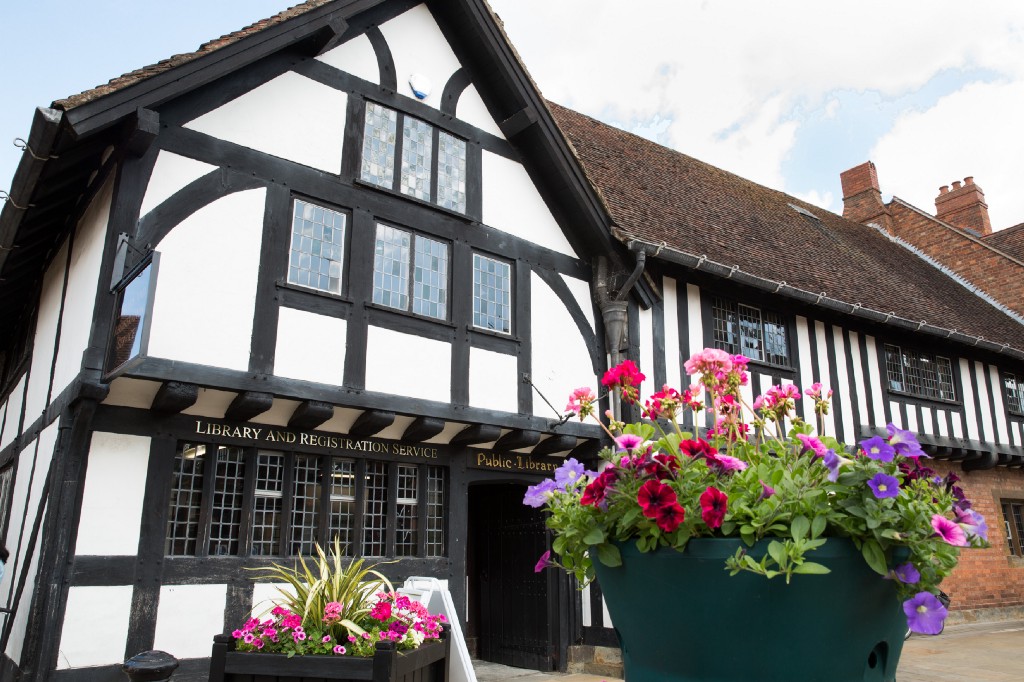
Stratford-upon-Avon is usually thought of as the birthplace of Shakespeare, but perhaps in the future it will be known as the birthplace of our greatest accidental machine poet: an RFID-based book scanning machine that turns returned titles into verse.

Patrons at the Stratford library and other libraries in Warwickshire, England can use the machines to easily check out and return books—just stack them in the scanner, and the machine can read their details from a chip embedded in the spine. If you like, it can print out a receipt confirming your return. Librarians also use the machines to record books that are dropped off, and last month, a Stratford staffer noticed that some of those receipts were downright lyrical.

Since then, several other Warwickshire libraries have joined in—all in the spirit of fun, says Stephanie Bellew, a reader development librarian at Warwickshire Libraries: “There is no rivalry/competition between our libraries — we’re just sharing the words and hopefully others will join in or simply gain pleasure/inspiration from our offerings.” However, perhaps due to its literary heritage, the Stratford branch is still the most prolific (and, as below, occasionally disturbing).

Machines are notoriously bad at generating or even interpreting literature—see, for instance, our reporting about an artificial intelligence trying unsuccessfully to write the first line of a novel, or this article on the difficulty of machine translation. Usually, when they write something decent—like those predictive text novels and scripts that blow up Twitter occasionally—it’s because there’s been a massive amount of human editing on the back end.

The RFID machine in the process of creating. (Photo courtesy of Stephanie Bellew)

Is there human involvement in this case? Well, humans write the book titles, which is probably primarily responsible for the success of the RFID poems; they’re using a limited number of input strings, all of which are already meaningful phrases. Humans also select which books to check out, which can lend a theme to a poem. But librarians swear the scanners do the rest themselves. Bellew spoke to a Stratford library staffer who insisted that selecting titles in order to force a good poem would be “going against the essence of the art.” She herself is a little more lenient: “I definitely think that there is room for ‘manipulation’ with this art form and I’m convinced that there are some very clever library staff out there who will be producing some amazing ‘carefully crafted’ poetry as we speak,” she admits. But if they are, “we should celebrate this as a win for creativity.”

Verse by the RFID machines includes this paean to father-child relationships:

This ballad of the homesick witch:

And this lightly disturbing three-part series that we’re thinking of as “Nikola Tesla animates the Bride of Frankenstein”:

“We are really appreciative of our wonderfully creative staff and the fantastic job that they do, and it is so great to be able to showcase this to the wider world,” Bellew told us. And we are also proud of the machines. It’s nice to know that when they take over, we’ll still have poetry.

Electric Lit Is Delighted to Welcome Its Newest Board Member, Meredith Talusan

Electric Literature is excited to welcome Meredith Talusan, the executive editor of Them, Condé Nast’s recently-launched LGTBQ website, to its board of directors.

Originally from the Philippines (where she was a child actor in a popular sitcom!), Talusan earned an MFA in creative writing and an MA in comparative literature from Cornell University. Fairest, her memoir exploring race, gender, immigration, and intersectionality, is forthcoming from Viking Press.

Before joining Them, Talusan worked as a staff writer at BuzzFeed covering LGBTQ issues, and has received a GLAAD Media Award for Outstanding Digital Journalism, as well as awards from the Society of Professional Journalists and the National Gay and Lesbian Association. In addition to her stellar editorial work at Them, she has spearheaded special projects like an interactive map and voting guide focused on LGBTQ issues, in partnership with Google. She brings her passion for creative digital initiatives to Electric Literature.

“I love Electric Literature’s mission and the way it bridges the worlds of traditional books and whatever the future has in store,” says Talusan. “It’s vital to keep pushing literature forward, while staying rooted in a tradition of art and scholarship.”

Science Fiction and Fantasy Novels That Take Us Beyond the Gender Binary

Talusan is the first new member of Electric Literature’s board since Nicole Cliffe, writer and co-founder of the Toast, joined in December 2017. Talusan’s activism as a transgender writer, and as an editor amplifying trans, queer, and genderqueer voices, fits right in with Electric Lit’s goal of making literature relevant, exciting, and inclusive.

“The principles of our mission should be reflected by our board,” says Electric Literature’s Executive Director, Halimah Marcus. “We want our readers to feel represented in our leadership as well as in our subject matter and bylines.”

Talusan will join Cliffe and other board members Andy Hunter, Electric Lit’s co-founder and publisher of Catapult and Lit Hub; acclaimed novelist Michael Cunningham; Bookforum publisher Danielle McConnell; the vice president and executive editor of HarperCollins, Sara Nelson; and the vice president and executive editor of Farrar Straus and Giroux, Sean McDonald.

Summer Horoscopes for Writers

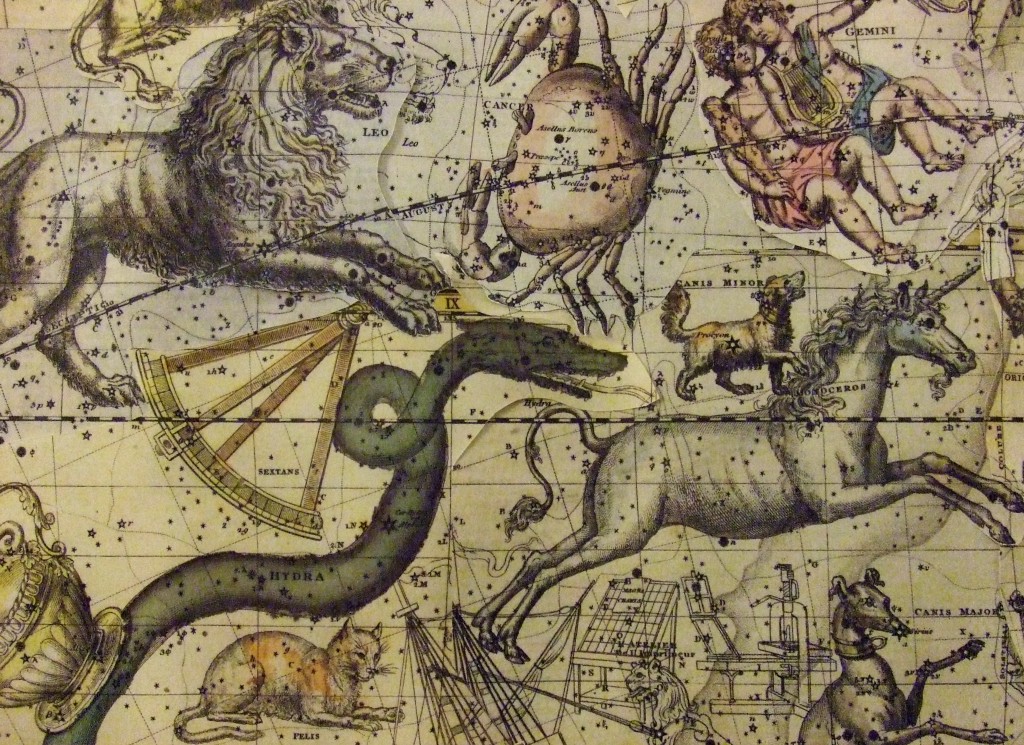
This is the summer of retrogrades. Almost every planet in the sky will be retrograde at some point this summer — Mercury, the planet of communication; Mars, the planet of action; Jupiter, planet of expansion; Saturn, planet of responsibility and work; Uranus, planet of revolution and change; Neptune, planet of dream and vision; Pluto, planet of transformation.

It’s also a summer of solar and lunar eclipses — three of them, starting in July and going through August. Two of these eclipses are in Leo and Aquarius, completing a story of eclipses we had in summer 2017 as well as early 2018; work you began last summer may feel as though it is now reaching its fullness. Alternately, if there were projects you began last summer, especially around end-of-summer eclipses, and then left for dead, now may be a time of rebirth. After all, retrogrades are a good time to do anything with a “re” in front of it. Revise the work you’ve been meaning to get to. Return to old projects, or nascent ideas, that have been on the back burner. Allow yourself the time for revitalization. And rest. Also rest. Always rest.

For writers, we will focus on two retrogrades in particular: the personal planets. That’s Mars, which will be retrograde all summer — June 26–August 27 — and Mercury, which hits us with a quickie July 26–August 18.

Retrograde is also a time to slow down — especially when it’s Mercury and Mars retrograde, which it will be for most of summer. Instead of starting something new, consider starting something old so that it feels new. A project that you abandoned. A turn to a genre that you forgot about loving long ago — turning back toward the essay form, or returning to your fiction roots. Now is a time for memory: Neptune is retrograde in Pisces, its home planet, a place where it feels comfortable to dream, to imagine.

Instead of starting something new, consider starting something old so that it feels new. A project that you abandoned. A turn to a genre that you forgot about loving long ago.

Meanwhile, the moon is active, with multiple major eclipses continuing in the signs of Leo and Aquarius. You don’t have to be a Leo or Aquarius for this to be important. These two signs are each others’ opposite; the 12 signs of the zodiac divide into six pairs, each of which tells us something unique, revealing a central tension in the human existence. Leo and Aquarius highlights the tension between the ego and the group. For Leo, all the world’s an audience, while Aquarius is known as the humanitarian of the zodiac. How do we hold these two wildly divergent creative energies within us? Both are deeply, richly creative: Leo shows us how to express the richness of personal experience, while Aquarius teaches us how to integrate our own experience with that of others within our own community.

The first eclipse of summer, though, kicks off in Cancer, which deals with the private, with the family. The moon is at home in Cancer, but at this eclipse, it is directly opposing Pluto in Capricorn — the public to Cancer’s private, though both are concerned with legacy. Pluto is the planet of transformation. The moon rules our emotions, so we’re looking at short-term emotional disruption meeting long-range emotional disruption. The feelings and realizations that this eclipse unlocks, here in the dog days of the summer, will set the tone for the rest of the season — and possibly redirect your creative course.

What's Your Author Horoscope?

ARIES

This is going to be a big summer for you, Aries. Uranus, the planet of revolution, turbulence, and change, just rolled into your house of value and material assets, shining a light on how you treat your cash, your budget, and your possessions. New financial opportunities coming your way? Probably — especially given that this summer is supercharging your creative energy and social consciousness. Get out there and pitch, but be extra-savvy about what you’re worth.

First, the universe wants to clean house. Mid-July boots you in the ass with an eclipse in your house of habits, work, and health, revealing that what has worked for you in the past may not work for you going forward. Does the amount of time you spend on your writing life match the value you’re getting for your career? The eclipse on July 12th is going to provide you with an opportunity to release what isn’t working and set some new intentions around newer, healthier habits.

Meanwhile, this summer will highlight your relationship between your sources of inspiration and how you implement that inspiration in your daily work. Mars retrograde through your house of social consciousness asks you to reexamine your relationship to the group, which in our case means writing communities. Whether in-person writing groups or online author communities (Twitter, anyone?), this summer gives you an opportunity to reboot how you interact in the group. Is it time to step it up, or is it time for a much-needed break? How can you revise the role you play? It’s not always on you to be the kindling.

Writing Prompt: What is the eye of the storm in your current project? Where in your life do you currently feel like you are the eye of the storm?

TAURUS

Retrograde season feels comfortable to a Taurus. Finally, everyone is moving at your pace. You know how to grow shit. You know that things take time. Everyone else is slowing down, and that suits you just fine.

But. But.

Uranus, the planet of rebellion and change, has just moved into your house of self and identity — and it’s gonna be here for, umm, seven years. There’s a massive shift that’s starting underneath your feet — in how you present yourself, in how you understand yourself. You know, better than any other sign, how to grow and nurture; how to take a seed of a project and make it something spectacular. But now you’re the seed, Taurus, and Uranus is here to disrupt the fuck out of you. If this summer starts to feel turbulent and unsettling, like a big ol’ thunderstorm watering all those new plants, remember that growth takes time.

The good news? The first eclipse of the summer, on July 12, will jumpstart your writing, hitting your house of communication and short-term plans. Now is a great time to focus on pitching, newsletters, PR — any communication that has to be public-facing.

Shortly after, the next eclipses arrive, on July 27 and August 11. These ones are hitting two diametrically opposed parts of your chart — the house of home and hearth, and the house of fame and public recognition. In other words, the relationship between your home and your career. Even if you work at home — especially if you do, or if you write at home in the morning, evening, or on weekends — you should think about where you’re drawing your boundaries. Literal boundaries, in terms of where you work and where you don’t, but also emotional boundaries, in terms of the work you bring to yourself and the self you bring to the work. Historically, what have these boundaries looked like for you? How are they changing? Where are you redrawing lines?

WRITING PROMPT

How is your concept of yourself changing? What have you discovered through therapy, spiritual work, journaling, or other self-discovery over the last few years? How are you integrating that into your overall identity? And how — if at all — has that affected your idea of yourself as a writer?

GEMINI

No one moves faster than you, Gemini — but this summer, maybe take a pause. You’ve got some major eclipses and retrogrades coming for your house of communication and short-term plans, as well as your house of travel, philosophy, and long-term plans. What does that mean? You’ll be reviewing what you want to do now, and what you want to do later — and how it all fits together. Plus, since your house of long-term plans also rules philosophy, religion, and travel, you’ll also be considering how your underlying beliefs fit in with where the heck you want to be in all of this.

Meanwhile, Uranus in Taurus is digging up some buried stuff in your most private house of rest, retreat, spirituality, and intuition. Now is a good time to journal, to meditate, to do the unconscious work of creativity and writing. Sometimes, we just need to sleep and let our minds do the unconscious connective work that our conscious minds can’t always force.

Uranus is revolution, turbulence. Uranus whips shit into shape. Uranus disrupts. And it’s transiting the house that the ancients called “the house of self-undoing.” Certainly, a good zone for a writer like you who delights in the unpredictable — but also something you want to be sure to have a handle on, to make sure you’re taking care of yourself.

WRITING PROMPT

Feed your curiosity. Get a bead on your latest interest — you know, the one that can do you absolutely no good right now (can’t make you money, can’t get you that person you’re interested in, can’t be of use to you). Something that has no utility, but something that just fucking interests you, and that you haven’t managed to make time for yet. That one. Go do that thing, and then write about it.

CANCER

The summer solstice marks the beginning of Cancer season: summer is your time, Cancer, meaning that you get an extra energy boost for your solar return even as the energy around us slows into a season of retrogrades. The first solar of eclipse of summer on July 12 is also in Cancer, in your first house of self and identity, putting the spotlight on you. The first eclipse will give you a confidence boost, that’s for certain, and it will be a great time for pitching, publishing, PR, sending newsletters. Mark your calendar.

The next eclipses highlight your zones of assets and intimacy. Mars retrograde will have you focusing on sexuality and intimacy, doing deep work; Mercury retrograde will have you reviewing your money and material possessions. Especially for freelancers, this is a time to clean up your budget, check for any unpaid invoices you have lying around, and see who owes you what. Get your money tight. You’re running a business. But also consider how your business is working for you: What do you need for your business? Have you been making do, skimping?

After the nurturing of Cancer season, Leo season comes along and asks us to invest in ourselves, to see ourselves as worthy. The Leo eclipse in your house of assets and material possessions hits the nail on the head. Whether it’s investing in gear for your desk that will prevent carpal tunnel, paying extra for a personal trainer at the gym once a week, or hiring someone to come in and clean your house, your ideas around money, worth, and value — and specifically, what is worth money, and what is valuable to you — are going to be up for review. (Also? Maybe think about your freelance rates. Just a thought.)

WRITING PROMPT

What do you most need — and deserve — to take credit for in your work life? In your writing life? Write about that, from the perspective of the person who most pumps you up. You are a great support for others, Cancer — but sometimes you need to be able to cheerlead yourself. This summer, get ready for that solar eclipse that’s going to put the spotlight on you.

LEO

All eyes are normally on you, Leo, but this summer, they’re really on you — you’ve got planets and eclipses lighting up your house of self and identity. For you, this summer is about the self you want to be. The self you’re growing into. The self you’re becoming. So the question is: how do you feel about that? Are you happy with where you are, with who you are? Is the work you’re producing an accurate reflection of you and your values?

This will particularly be on your mind since Uranus, the planet of revolution and change, has just entered your house of fame and public recognition (also called the house of career). Leos are known as performers who crave a stage, but what kind of stage do you crave? Uranus in Taurus is going to rock the shit out of your public face, out of your fame, out of your career, and this is a time to reconsider the alignment of that public self with your identity. Just because you love a stage, Leo, doesn’t mean that you always have to reveal your most private self to the world.

Early this summer, take advantage of the first eclipse on July 12, which will hit your house of rest and spirituality. Late summer — late July and August, especially — are really your time to shine. Get some rest and rejuvenation (spa days, writing days, alone time) while you can get it.

Another major theme for you this summer, although not perhaps explicitly connected to work, is committed partnerships. Eclipses later this summer will be lighting up your house of committed partnerships — which can be romance and marriage, but also major business partnerships and long-term contracts. How are you ready to partner? Is the work you’re doing bringing you into alignment with the kind of identity you are growing into?

WRITING PROMPT

If you were guaranteed an adoring audience for your most obscure, wild, mind-boggling, budget-blowing creative project, Leo, what would that project be? The sky is (probably not) the limit.

VIRGO

You don’t like focusing on yourself, Virgo, but your house of rest, intuition, and spirituality is going to have a big bright spotlight on it late this summer, unearthing all the shadows, with an eclipse and a Mercury retrograde. With your analytical, taskmaster self, you’ll have no problem identifying areas for improvement — the key this summer, with retrogrades tripping us up everywhere, is slow integration.

You have a mind for efficiency, but don’t push yourself to do everything at once. Don’t insist on finding all the patterns or needing to do all the shit now, immediately. Give yourself time to uncover new things. Time to rest. Time to recuperate. And time to integrate new discoveries into your work habits, into your daily routine; your house of daily habits, work, and health is getting an eclipse, too. Eventually, everything you’re learning about yourself and your creative process will be grist for the mill — but don’t rush it.

An idea: occupy your mind with a new class, skill, or hobby this summer, to keep yourself sharp while avoiding the unproductive hamster wheel and allowing those other parts of your mind and spirit to rest.

Also? Uranus has just entered your house of long-range plans, philosophy, religion, travel. You like security, but Uranus, the planet of revolution and change, is shaking that up. Hold things loosely, with an open palm. Uranus is in Taurus right now, and when it’s in Taurus, it likes to grow things. Some plans you’ve had for a while might be up for review, which might scare you a little. But lucky for you, Virgo, you’re the master of the harvest, adept at identifying the right time to move in, scoop up the crop, and take the win — a useful skill. Be open.

WRITING PROMPT

The devil is in the details. Make a list of all the projects you’ve been meaning to get to, or forgot about, or abandoned. Sit for a minute, and think about what you forgot about. Now: list what you want to do that you won’t even let yourself list because you don’t think you have the time or money. How can you integrate these lists? This is the list for your Summer of Retrogrades, Virgo.

LIBRA

Summer technically starts with the solstice in late June, but it really greets you, Libra, with a solar eclipse on July 12 that lights up your house of fame and public recognition. Cancer season gives your career an energy boost anyway, and this eclipse puts all eyes on you. Take advantage — this is a great time for you to be in the limelight. Get your work ready for publication, line up some PR, and get those Twitter threads ready. to. go. Since the spotlight will be super amplified, just be sure to polish up everything and make sure you’re putting your best foot forward (but we probably don’t need to tell Libras that, right?).

The opportunities you create for your career during Cancer season will continue to grow and manifest as we move into Leo season later this summer. Leo season brings with it an eclipse and a Mercury retrograde in your house of social consciousness, friendships, and the internet, which means putting extra time into reviewing your online presence, newsletters, and any social or professional commitments that come your way this summer. This isn’t to say don’t do those things — just, take time to review! Dot your i’s and cross your t’s.

Mars retrograde lasts all summer and will be hanging out in your in your house of creative energy. If you find your work changing a bit, or coming more slowly than usual, don’t sweat it. Pick up a meditative activity that helps you really sink into your process, and be gentle with yourself. Things will pick up again when Mars goes direct on August 27. Until then, enjoy the lessons that the planet of action has to teach you about the ebb and flow of inspiration.

WRITING PROMPT

Go to your favorite place to hang out and eavesdrop on an interesting conversation. (Yes, eavesdrop.) Write down some of the best dialogue — maybe even spiff it up a bit — and then imagine the backstory for the people involved.

SCORPIO

Mars, the planet of action, is moving backwards through your most private house of family, home, and nesting, scraping the nooks and crannies of your most privately held moments and memories. You’re a private person, already, Scorpio, so this summer might have you might be feeling extra raw. While this is happening, the sun shines a light on you, with a big ol’ solar eclipse in your house of fame and public recognition — great for your career, great for publicity, not so great when all you want to do is crawl into a corner and write your feelings away.

So there’s a real tension, with both the inner core of you going through some major reassessing while you’ve got some good attention coming your way. For deeply self-protective Scorpios, a solar eclipse lighting up your house of fame and public recognition is going to force you — uncomfortably — into the limelight, reckoning with owning the achievements you have been working for, all while Mars, the planet of action, is moving quietly behind the scenes, needling through your home and rooting up the most private and uncomfortable of issues from the past. Meanwhile, you’re creatively bolstered by Jupiter, the planet of expansion, which is tracking through your house of self and identity, making you even more magnetic than usual.

This summer, you’re both tremendously vulnerable and a positive magnet for attention. How do you hold all of these feelings simultaneously? How do you feel raw and exposed within, while also putting on an authentic face publicly and owning that deserved recognition without feeling fake? This summer is a time when you learn multiple things can be true.

WRITING PROMPT

If you could rewrite one myth, what would it be? How would you retell it?

8 Books About Witches and Spirits That Will Bring Magic to Your Life

SAGITTARIUS

The summer opens with Cancer season, including an eclipse that highlights your house of intimacy. The deep waters of intimacy are not so much your comfort zone, but we’ve been spending a lot of time here over the last year — what have you been learning about yourself in intimacy, Sagittarius? When you dive deep into Cancerian water, you can end up finding a treasure chest — and this is gold for your creative process. When you understand the depth and the darkness of what drives you, there is magic.

You can transmute that in Leo season, where you get to indulge your adventurous, freedom-loving spirit, with lots of attention paid to communication, travel, philosophy, and your plans. The catch? There’s a lot of retrograde action — which could slow you down. Remember: any word that starts with “re.” Revisit, revise, rebirth. You don’t like to be contained, and your fire always has any number of projects going — maybe take one of your projects off the back burner? With an eclipse hitting your sweet travel spot, a trip might be just the thing to help jumpstart an old project.

Meanwhile Uranus has just entered Taurus and is revolutionizing your house of work, daily habits, and health. Put extra attention on health stuff that might flare up. Drink water. And dream big.

WRITING PROMPT

What is your favorite place to visit? Why? Take us there: smells, sound, visuals. Make a map.

CAPRICORN

The summer solstice opens with a full moon in your sign, Capricorn — and not just any full moon, but one that’s right next to Saturn. You’ve been doing some intense growing, and Saturn, moving through your house of self and identity, is rooting through the weeds, pulling up everything that no longer represents who you are. The full moon is a time of releasing, doubly so since by this point in early summer, Jupiter, Saturn, Neptune, and Pluto will all be retrograde, asking you to seriously slow down and do the work.

Now’s the time to get ready, because come mid-July, the eclipses start coming in like lightning. First up is a solar eclipse in Cancer, which lights up your house of committed partnerships. Next is a lunar eclipse in your house of value and assets, followed by a massive solar eclipse in Leo, which highlights your home of intimacy.

This summer of retrogrades and eclipses — Leo and Aquarius, the signs of self and other — directly hit your houses of value and intimacy. You’ll have Mars retrograde in your house of value — how do you take action when it comes to materiality, but also to determining what and how you show what you value? You have a reputation for being all about money and finance (which are really just things that provide a means to an end for you), but this summer will really highlight how you use those energies in your life. Remember that ultimately, money is a resource, an energy, that enables you to do other things. (Writing is a business, but it’s not just a business. Are you taking on projects that you actually enjoy, that contribute overarching value to your life?)

Stewardship and legacy is a major theme of your life, and this summer will bring that out for you. Meanwhile, Mercury retrograde in your house of intimacy will highlight the deeper emotions underneath the values, getting at the root of your relationships, not only with others, but also with yourself — how do you communicate ideas around sexuality and intimacy and, yes, value?

WRITING PROMPT

Write your dream book tour. What are you wearing? Who is introducing you? Where are you going? Who are you working with? What cities and bookstores are you traveling to and why? What publications are you excerpting in?

AQUARIUS

This is a big summer for you, Aquarius. Eclipses in Leo and in your own sign of Aquarius have been rocking your houses of self and other, of identity and partnership, for the last year, and they will continue to push on that story throughout this summer. Who you are and how you partner is changing, which means your work is probably changing, too.

As an Aquarian, you get a reputation for being someone who can roll with the punches, but here’s the thing — your classical ruler is Saturn, the planet of rules and responsibility. Yes, you’re an independent and forward thinker, but you are a fixed sign (read: stubborn AF) who can be a bit particular about how things are done. With so much disruption in your life lately, the routines in your life have probably shifted dramatically over the last few months, which might have you feeling pretty unsettled. The good news is that with so many retrogrades this summer, you’re going to get to slow down a bit and get some time to adjust.

Retrogrades allow us to review, revisit. This is a good time to pick up old projects. Meanwhile, Neptune is in your zone of value and assets, encouraging you to reconsider and watch for any monetary opportunities you may have let go of (in other words: go through your inbox — and social media DMs, for that matter — again).

Uranus (your modern ruling planet) is going through your house of home and hearth, of your family and your roots. Uranus is the planet of revolution and change, and it’s coming for a seven-year ride through this part of your chart to completely reconceptualize your relationship with home, whatever that means to you. Think about the environments you work in. Where do you work, and how? A home office? A desk in your bedroom? Where is home, to you? Why? While it isn’t perhaps the time to move across the country or completely undertake a home renovation (or, idk, maybe it is), there is a lot of energy around opening up your space and making sure the world you live in is working for you, and not against you. The spaces we occupy affect us, and Uranus is here to remind us of that.

WRITING PROMPT

If you haven’t done spring cleaning around your bedroom, now is the time to do it. If you have a storage unit you haven’t visited in a while, go clean it out. Donate old clothes. Rearrange your bookshelves. Undertake a task around your work space in your home, Aquarius, small or large, and write about whatever that experience kicks up. (And then? See how changing your space affects your writing routine.)

PISCES

Just before the summer solstice hits, marking the beginning of the season, Neptune turns retrograde. But this isn’t the start of Neptune’s story for you: the planet of dreams has been trekking through your house of self and identity, rippling through your most treasured beliefs about yourself, turning over childhood fantasy and adolescent illusion. This can be a challenging transit: it can reveal fantasies and illusions for what they are just as easily as it can instil the greatest and grandest hopes and desires. But a Neptune transit done well is rewarding beyond measure, especially for a Pisces. After all, Neptune is your planet. Neptune asks, what’s the dream? Who do you want to be? Who did you dream of becoming as a child, and who do you want to become, now? Neptune delights in the unconscious, just like you. Neptune invites you to swim along for the ride.

Meanwhile, Uranus, the planet of rebellion, has just entered your house of communication, perhaps disrupting your writing and communication. What genre do you usually work in? What’s your typical writing routine? If you’ve noticed a shift — or if you experience a shift this summer — Uranus might be asking you to plant some new seeds. Don’t be afraid of experiment.

On a more practical level, the summer’s eclipses are lighting up your houses of work and daily habits, of rest, spirituality, and intuition. The everyday right alongside the subconscious and ecstatic. It can be tempting, to push through the everyday when there’s that still, small voice telling us to slow down, to tap into mystery instead of going with the known. Listen to that voice.

Plan activities or time or trips for yourself this summer that enable you to get in touch with your subconscious, with your creativity, with your spirit, with your past, with your rest. Remember: breakthroughs take time.

WRITING PROMPT

Describe a story you wrote as a child. The first one that comes to mind. Do you see any similarities to any stories you’ve written now, as an adult? Any characters, places, themes, settings?

8 Memoirs By Women With Unconventional Jobs

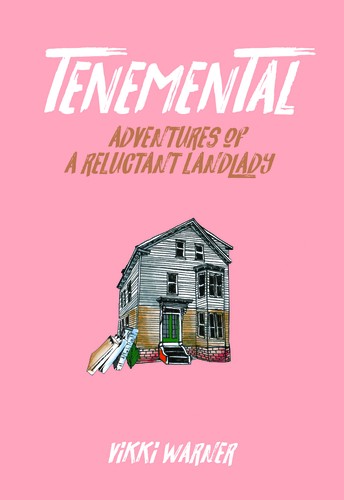
I’ m a landlady; I own a three-family apartment building in a smallish New England city. For years, I took pains not to look at this endeavor as a job, but as an adventure in collective living. My ideology focused on shirking authority, not claiming it. I’ve been more concerned with being liked than with running a tight ship. I’m still thusly inclined, but after 14 years I have grasped that using my authority (in measured ways) is healthy. I’ve only recently begun taking it easier on myself, allowing the work to be a little less crushing. And, admitting that this thing I do is in fact a job.

Purchase the novel

Not coincidentally, memoirs by tough, ambitious women are the beating heart of my to-read pile. Their immediacy is startling. The idea of a woman setting out to create a thing, do a job, achieve a goal is simple, yet it feels novel every damn time because the obstacles are vaster for us.

The authors in this list are not known to take it easy. These women push themselves to endure the pain and stress of difficult work in order to find some self-realization, or to help others, and usually both. Some learned on the job; some had long years of training or education. Some had to lie or misrepresent themselves to get a foot in the door. These women openly admit that in life and at work, flawlessness is elusive; mistakes are made; and hope is always there somewhere, scampering around at the edges.

Sideshow Performer

The Electric Woman: A Memoir in Death-Defying Acts by Tessa Fontaine

Scurrying between her mother’s continued health crises after a nearly fatal stroke, Tessa Fontaine is tired and shut down. She has always been afraid of losing her mother, always been afraid of life’s small daily risks and pitfalls; she knows that she must conquer these fears in order to seize her own spirit. On a whim, picturing her vivacious mother pre-illness (and having lied about her skills in this rather specialized field), she joins a traveling circus sideshow. The work is grueling and uncomfortable, but also personally transcendent (the title refers to Fontaine’s eventual act, in which she runs enough electrical current through her body to illuminate a light bulb with her tongue). Fontaine’s singular debut shifts between her sideshow evolution, to stinging interactions with her mother, to historical sideshow lore that advances the narrative.

Supreme Court Justice

My Beloved World by Sonia Sotomayor

Much of the love has gone to RBG of late, but I have a persistent soft spot for the amazing story of Sonia Sotomayor, the first Latina ever to serve on the Supreme Court. Sotomayor’s memoir focuses on her early life, from her modest youth as the child of two Puerto Rican immigrants in the Bronx, to her attainment of what seemed to her a distant dream — being appointed a federal judge in New York. Young Sonia is tough and perceptive, a kid who’s already looking after herself in the face of parental strife and juvenile diabetes. Her tenaciousness continues to save her through law school and right into her law career, and we all know where that has led her. It’s a richly detailed, endearing portrait of a self-made woman.

Cab Driver

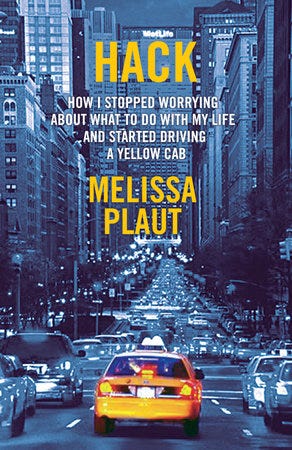
Hack: How I Stopped Worrying About What to Do with My Life and Started Driving a Yellow Cab by Melissa Plaut

I’m not much for ride-sharing services, but one jewel in their crown is that they’ve got plenty of women drivers — about 30% of Lyft drivers, for example, are women. In the world of the NYC yellow cab, though, that figure is only around 4%. That’s the world Melissa Plaut inhabits. In her funny and clear-eyed memoir, she laments her lack of a calling; while her friends and family settled into mostly satisfying careers, she tried a million things, but never found her thing. Enter cab driving: Plaut takes the licensing exam, nails it, and takes her pleather seat behind the wheel. The intricacies of this hidden world, and Plaut’s unusual place within it, are compelling — even mundane tasks like finding a restroom take on new meaning when one is dealing with a work culture entirely set up for someone else.

The 12 Worst Workplaces in Contemporary Literature

Mortician

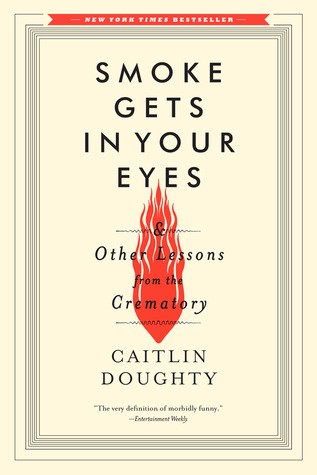
Smoke Gets in Your Eyes: And Other Lessons from the Crematory by Caitlin Doughty

Indulging an all-encompassing fascination with death, twenty-something Caitlin Doughty seeks out a job at a crematory. Although she starts the job somewhat unaware of its duties, she quickly learns the intimacies of death and dead bodies, and how to operate a retort — the chamber where the cremation magic happens. Meanwhile, she continues to hone her free-thinking and unflappable approach to death. Doughty writes with amusing lightness about the whole affair, critiquing our modern approach to death — we just hide it away, and run in the other direction, for as long as we can. She has made it her life’s work to demystify our deaths when they’re still many years away. It’s an act of generosity and care that feels right coming from a woman.

Jail Psychiatrist

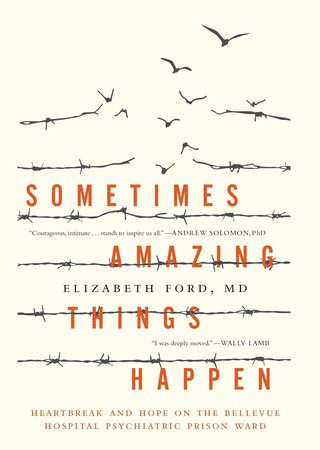
Sometimes Amazing Things Happen: Heartbreak and Hope on the Bellevue Hospital Psychiatric Prison Ward by Dr. Elizabeth Ford

Ford writes with gravity about her experience as a psychiatrist treating the incarcerated population at New York’s Bellevue Hospital — men charged with crimes who are shuffled and re-shuffled through the system as they await trial. Her work brings constant apprehension as her patients show aggression and anger, but also reveal deep scars from brutal childhoods, the prison system, and lifetimes of disenfranchisement. She doubts herself; she doubts her patients. But in the end, she is also able to write with hope about moments of kindness, and small victories that may bring larger ones for these men — even the tenuous possibility that some may extricate themselves from the prison and mental health system for good.

Long-Distance Swimmer

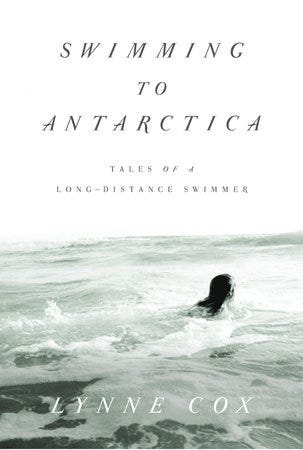
Swimming to Antarctica: Tales of a Long-Distance Swimmer by Lynne Cox

Open-water swimming may not sound like a job at all, but the risks involved with Lynne Cox’s vocation — sharks, hypothermia, churning storms, hell, even extreme bathing-suit chafe — roundly beat any missed deadline or deflating phone call I’ve had to endure at mine. So let’s just go ahead and call it a job, shall we? Cox describes heeding the call, while still a child, to leave the safety of the pool and swim in open water. By age sixteen, she held the world record for swimming the English Channel. And her feats get still more towering from there. A story of extreme endurance by a woman who defines the word “unstoppable,” this memoir is about following the mystery of crazy goals — and achieving every last one.

The Day Jobs of 9 Women Writers

Urban Farmer

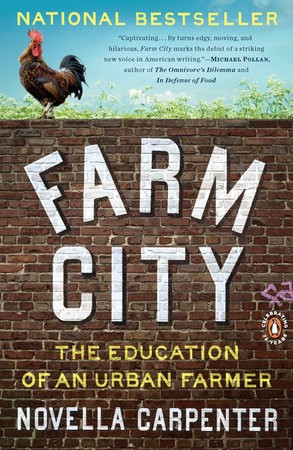
Farm City: The Education of an Urban Farmer by Novella Carpenter

Back-to-the-land memoirs can be formulaic affairs, but when the land being gone back to is a wasted fragment at the end of a dead-end street next to a freeway in Oakland, the story defies simplification. Carpenter’s book is about starting a rag-tag squatter’s urban farm — complete with chickens, turkeys, ducks, and a myriad of vegetables — and growing it into a dependable food source. Her use of the word “ghetto” to describe her poor, largely nonwhite neighborhood — of which she admits to being terrified at first — is discomfiting and unimaginative. But her transformation of a scrap of city land left for dead is a story worth following.

Geobiologist

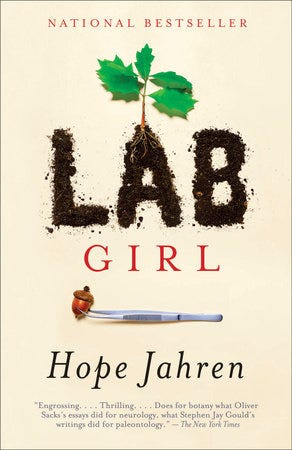
Lab Girl by Hope Jahren

As a child, Hope Jahren followed her scientist father, a longtime college professor, around his lab; she writes that for him, science was not just a job, but an identity. Her passionate writing makes clear that her own identity is similarly centered on science. Jahren describes an emotionally hollow family and childhood, where science was a comfort, a “safe place” that she always believed would lead her to a career despite her inconvenient gender. In beautiful, lilting language, she compares her own evolution in the lab to the growth and characteristics of plants. There is plenty of detailed yet dynamic writing about lab procedures and concepts in botany; it is juxtaposed with the story of her debilitating depression and hospitalization. We don’t often get to see scientists’ emotional innards; here, Jahren lays it all gloriously out, and the results are riveting.

About the Author

Vikki Warner is an acquisitions editor with Blackstone Audio and a freelance writer. Her work has appeared in BUST, The Boston Globe, and Zagat, among others. She is the author of Tenemental: Adventures of a Reluctant Landlady.

Literary Nonprofits Using Books to Make a Difference

It’s hard to feel like there’s any way to make a difference right now. Children have been ripped away from their parents, toddlers of a “tender age” have been put in cages, families seeking asylum have been ripped apart and lost on either side of 1-800 numbers that fail to translate the trauma into anything close to an answer.

It’s important to keep paying attention to the unimaginable horror being played out in real time right in front of us. And it’s also important to make sure we continue to celebrate the organizations that have been plodding through the thick of so many of our problems for so long. “We tell ourselves stories in order to live,” Joan Didion claimed. And while many of the organizations on this list are keeping our community alive in holistic ways, others are offering specific life services like healthcare, legal services, clothing, shelter. All by way of the book. There are countless organizations advocating for writers specifically (such as Kundiman, Cave Canem, Lambda Literary, and Vida, to name a few), we wanted to focus on those nonprofits using books as a tool, as a defense of sorts against what feels like the End of Days.

“Hope” as Rebecca Solnit wrote, is “an axe you break down doors with in an emergency. Hope should shove you out the door, because it will take everything you have to steer the future away from endless war, from the annihilation of the earth’s treasures and the grinding down of the poor and marginal.”

Here are nine organizations giving the world a few more axes, and a few more reasons to be hopeful.

The Telling Room, Portland, ME

This one is the nearest to my heart. The Telling Room was established in 2004 by writers Sara Corbett, Mike Paterniti, and Susan Conley, who founded the non-profit writing center on the premise that children are our best storytellers. Not only do we need to listen to them, but we need to celebrate and publish their stories, too. (Anthologies of paraticipants’ stories are for sale on the Telling Room website!) This is particularly crucial in a city like Portland, Maine, where there is a growing community of immigrant and refugee families from all over the world. The Telling Room runs in-school writing workshops, after school and summer programming, publishing workshops, author mentorships, and so much more. Their Young Writers and Leaders program, which is an after-school program for multilingual students, was awarded the Youth Writers a National Arts and Humanities Youth Program Award. I worked with the organization for a year and can honestly say that I have never met a group more committed, more passionate, more engaged than the folks at The Telling Room.

How to get involved: No matter where you live — buy one of their books! There are annual themed anthologies, novels and memoirs and poetry collections written by middle school and high school writers (because I mean didn’t you write a novel before you could drive a car?), and more. You can also donate here. And if you live in the Portland area, give yourself the best gift and volunteer your time.

Barrel of Monkeys, Chicago, IL

Barrel of Monkeys puts kids’ artistic imaginations center stage — literally. Here’s how it works: BOM teaches creative writing workshops to kids ages 7–13 in Chicago Public Schools and in after-school programs during the week. Then, a team of BOM actors and musicians take the students’ work, and adapt it into sketches and songs which they perform for the school, and then the public. How does it get any better than that? And why don’t I live in Chicago?

How to get involved: If you live in the Chicago area, you can volunteer to help out with front-of-house duties during performances. And if you’re an educator, you can even take a class from BOM on how to incorporate its teaching methods into your classroom. Or go to one of their shows! If you don’t live in Chicago, you can always donate to BOM here.

Housing Works Bookstore and Cafe, New York NY

Alongside its many thrift stores, the bookstore and cafe in SoHo is home to thousands of donated books. The bookstore and cafe are run mostly by volunteers, and all the proceeds go directly towards Housing Works’ twin missions: to eradicate AIDS in New York by 2020 and worldwide by 2030 while also working to eradicate homelessness. The organization offers services and support such as healthcare, job training, legal services, and housing opportunities.

How to get involved: Visit and buy a book (or several)! Become a volunteer! Or donate here.

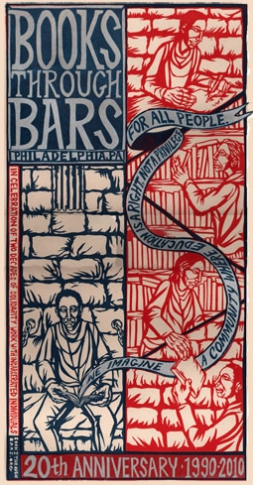
Poster Designed for Books through Bars by Erik Raum

Books Through Bars, Philadelphia PA

Books Through Bars started nearly 30 years ago in 1990 when a bookseller in Philadelphia received a letter from a prisoner, asking for damaged or overstocked copies of books. When the bookseller, Todd Peterson, responded to that letter with a few free books, he received more letters with the same request. Thousands of volunteers are now part of the effort, receiving prisoners’ requests and sending copies of donated books directly to them.

How to get involved: If you live in the Philly area, you can drop off books for donation by following these instructions. You can also volunteer with Books Through Bars here, and make non-book donations here. There are also many other local initiatives in line with Books through Bars throughout the country—look up prisoner book programs in your area.

Books = Superhero Juice

826, Nationwide

826 was founded in 2002 by Dave Eggers and the educator Nínive Calegari. What started as an after-school creative writing program in Valencia, CA is now an eight-city strong collaboration between centers, educators, and the community, to serve under-resourced kids between the ages of 6 and 18 by celebrating creativity and writing stories. And all the centers are super cool — 826 Brooklyn is a legit Superhero Supply Store with a secret entranceway to the writing space and library.

How to get involved: If you live in one of the eight cities blessed by 826, you can find out more about volunteering here. You can also learn about other ways to donate and contribute to the cause here.

Open Books, Chicago, IL

Here’s another bookstore, and another great Chicago non-profit proving that books are to superhero work as spinach is to Popeye. Open Books is a literary non-profit that runs two bookstores. 100% of the proceeds from those bookstores go towards their literary advocacy. They deliver high-quality books to readers of all ages all over Chicago, as well as guided writing workshops and publishing opportunities for students through 12th grade.

How to get involved: If you live in the Chicago area, go donate some books! Volunteer to work in the bookstore or help out with programming. And for the rest of us, we can all donate here.

First Book

Susan Neuman, a professor at NYU, conducted a study in Philadelphia to determine how many books were available in a given low-income neighborhood. She reported to NPR that in one neighborhood, there were a total of 33 books available for 10,000 children—versus the more affluent neighborhoods, where there were 300 books per child. Access to physical books is important for children’s development, bonding with their parents, and vocabulary development. That was nineteen years ago, and change is slow to come. First Book is trying to change that by creating partnerships and marketplaces with publishers to get books and other necessary supplies to children in low-income communities in more than 30 countries.

How to get involved: You can donate in lots of different ways (fundraisers, direct contributions, partnerships, etc.) and find more about that here.

Donald Windham Wrote the Essential Gay Fiction You Didn’t Know You Were Missing

Two People: Chapter One

by Donald Windham

A number of people jumped from bridges into the Tiber yesterday. Forrest saw the item in a newspaper lying on the projecting terrace of the Pincio.

Their intention, it turned out, was diversion, not suicide. The newspaper was a month old and jumping into the Tiber is a Roman way of celebrating the New Year.

He turned away from the Pincio terrace and entered the park. Ahead of him, beneath the obelisk in the center of Viale dell’Obelisco, two boys wearing pale blue coveralls inscribed with the name of a garage were teasing two girls dressed in the white uniforms of a hairdressing establishment. All four were beautiful, but in the encounter the girls suffered the disadvantage of having to play their parts with frowning disapproval, while the boys, each with an arm around the other’s neck, and holding hands in the pocket of one of their coveralls, laughingly threw themselves before, between, and behind the girls. Like true sportsmen, they enjoyed the game more the greater the opposition of their adversaries. They switched direction whenever the girls did. The procession, continually turning on itself, came back toward Forrest each time it went a short way ahead of him. Then it was four o’clock. The girls marched off in one direction; the boys, holding onto each other, reeled off in the opposite.

Forrest followed the girls toward Trinità dei Monti. At the top of the Spanish Steps, he leaned on the balustrade and watched the girls descend. It consoled him to look at the Spanish Steps. The church of Trinità dei Monti, behind him, had been there first, at the top of the hill; at the bottom, Piazza di Spagna and the low fountain. The architect had come into this disordered landscape and given it a center so perfect that it was difficult to believe that the surrounding constructions had not grown up around the steps. How satisfying it would be, he thought, to fit so well into your situation that your presence seems to have produced it.

As Forrest leaned there, wondering what he was going to do, he caught sight of a black-haired boy in a white raincoat coming up the steps toward him. He had seen the boy once before, in the same place. He had been standing at the balustrade with Robert, a travel representative for an airline, in whose apartment he was staying. Robert was an old friend of Forrest’s wife. Forrest had met him upon their arrival in Rome when Robert, who was being transferred to Athens, had offered to sublet them his apartment. They had agreed to take the apartment and moved in. Then Forrest’s wife had gone back to the States and left him alone.

He remembered the black-haired boy in the white raincoat because that first day the boy had frowned and stopped in his tracks when he caught sight of Forrest. He walked on after an instant, disappearing into the last flight of steps, and reappeared soon afterward at the end of the balustrade. His frown was the sort that can come from self-consciousness but that can also come from ill temper, and in his case it looked like ill temper. He walked slowly past, then stopped in front of the obelisk that rises at the top of the Spanish Steps, like the obelisk in the center of the Pincio. After a minute, he turned toward Forrest and Robert and gave them a long look.

“Is that a friend of yours?” Forrest asked. And Robert, glancing at the boy, replied:

“No, I’ve never seen him before.” Forrest had often seen Robert talking to boys at the Steps. He had met one or two of the boys leaving the apartment. Robert did not talk about his friendships, but he made no effort at concealment. And Forrest, although similar conduct was accepted by the people he knew in New York, was surprised to find that here with these young Romans it had no hint of limitation or perversion. He was curious and impressed by how pleasantly Robert lived, as though the ambient air of Rome, with its innocent male conviviality, gave a more permissive aspect to this activity. In any case, Robert was an embodiment of his profession: whomever he went to bed with, there was no hint that he had any permanent attachment in Rome. His directness gave him the air of meaning exactly what he said and no more. One day he had said to Forrest that promiscuous encounters are to Italian boys what ice cream sodas at the corner drugstore are to their American counterparts. Forrest considered this an extreme opinion, but he had no grounds on which to contradict it. The boy in the white raincoat was the first that he had mentioned to Robert.

The boy had seemed in a hurry while he was walking that first day. When he stopped, a look of business and purpose still separated him from the aimless people around him. His immobility was a deliberate move; it entirely lacked the gracious air, so nearly universal among the young workmen and students Forrest had seen on the Steps, of their being there for their own diversion, to pass their own free time, regardless of the form that the passing of it might take.

“I’ve seldom seen a Roman frown like that,” he said.

“A Roman usually doesn’t,” Robert replied. “He’s probably from Florence.”

The boy had been watching them when they walked on. But it was less the boy than it was the conversation that Forrest had had with Robert at dinner in the evening that made him remember the day so well.

Robert had taken him to a small trattoria on Via di Repetta. They entered past a long table loaded with artichokes alla Romana; stuffed tomatoes; platters containing tiny clams in their shells; spiedini of sausages, livers, laurel leaves; and every kind of roast meat, poultry, and game. The trattoria had no menu. As soon as they sat down, the waiter rattled off a list of other dishes available that day. The Italian ideal, Robert added, was to think up some pasta or other concoction besides those offered and to give precise instructions for its preparation.

“I came here last year on Befana with three Englishwomen,” Robert said toward the end of the meal. “Afterward, we went to Piazza Navona to watch the crowd. My friends all wore their hair cut short and one had a small mustache. The children kept circling around them, asking for presents. They thought that they were disguised as witches.”

Forrest laughed.

“They must have been furious.”

“On the contrary. They were delighted. They’d never been such centers of attention before.”

“That’s surprising, from the way you describe them.”

Robert pushed away his fruit plate and gave Forrest a look.

“Rome is full of surprises.”

“What do you mean?”

“It was here that your wife left you.”

Forrest, disconcerted, reached for a cigarette before he remembered that he had stopped smoking.

“That had something to do with Rome, didn’t it?”

“Perhaps. She said that Rome made her nervous. But she’d said that about most of the places we’d been.”

“I hope it didn’t have anything to do with me.”

“Of course not.”

“Well, wives have a way of being annoyed if their husbands don’t like their old friends, and just as annoyed if they do. Also, it can be difficult for a couple to share an apartment with a third person, even for a few days.”

“She enjoyed seeing you. Our troubles started much earlier.”

“And I didn’t bring them to a head?”

“No.”

“I’m glad. Perhaps, as I said, it’s just that Rome is full of surprises.”

“I hope so. I really don’t know what happened between us. Maybe she just wanted to get back to the children. Anyway, I’m sure that everything will work out all right.”

“Good. Maybe Rome will take care of it, in its roundabout way.”

It had rained while they were eating. The rain had stopped, and Robert suggested that they walk to Piazza Navona. As they went, Forrest tried to say clearly in his mind what had happened between him and his wife. It was difficult. His memory of their discord was like the memory of a conversation where one person says “What?” and the other replies with the same word. The first explains, “I didn’t say anything, I was asking what you said.” The second objects, “I didn’t say anything.” And the first, “Oh, I thought that you did.”

They had argued from the beginning of their holiday in Europe. At first, his wife had blamed it on his having been ill and on his having given up smoking. Their arguments seldom originated from anything that either of them cared about. The discord came from within, but it was momentary and petty difficulties that called it out. In England, where they had more acquaintances and the life was more familiar, there were only minor disturbances. They were sufficiently in control of the situation when things went wrong to surmount their annoyance or to turn it on outsiders. The situation became worse, however, as soon as there were mysteries of language and custom. In France, it was easier for them to be nonplussed by the behavior of taxi drivers and waiters. They blamed each other for not taking the initiative in difficulties, then both assumed command of the situation, or resigned it to the other, at the same moment.

In Italy, her need to stand between him and new experiences — which worked fairly well at home — did not work at all. How deeply she needed to do this was recalled to him by something that had happened before they left the States. He had gone into a drugstore one day when they were packing and bought tubes and bottles of all the pharmaceutical products that they used. As they were traveling on a boat and were to be away a long time, he bought the large size of each. She took them all back the next day and changed them for smaller sizes. It seemed a pointless opposition, yet pointless to argue about, and he let it go.

By the time they reached Rome, communication was impossible between them when something went wrong. Suddenly, they had to repeat the simplest sentence, to explain the simplest story, to elaborate the simplest statement. One of them would not know what the other was talking about although it was the same thing that they had been talking about a moment before. Communication short-circuited, and they no longer were able to fall back on the ordinary explanations used by people who have not lived together for eight years.

Forrest wished that they had disagreed over Robert, or over something specific. It would have been a help if a distance had come between them. But without the children and without his work they were too close together, not too far apart. The week that Robert was in Milan and they moved into the apartment, each day ended in a fight. The trouble began as the daylight faded. He lit the fire of wooden logs in the front room. She mixed drinks. They sat down, believing that everything would be all right and that they would have a pleasant evening. Misunderstanding came as suddenly as the Roman air changes from warm to cold as you step from sun to shade. The conversation split in two. Humor, friendliness, civility vanished. His wife said that she had told him something that he had not heard. That was possible. Then she said that he had made a statement that he had not made. That was impossible. Soon, each was staring into the fire, saying things that would be regretted. And one morning she had announced that she was returning home.

Befana, the eve of Twelfth-night, when Italian children receive their presents, is a combination of Halloween and Christmas. Piazza Navona was as crowded as though it had not rained. The light-strung toy stands set up around the long stadium-shaped piazza were crowded with customers; the shouting torrone vendors were doing a good business. The din was terrific.

Forrest and Robert found themselves pressed so closely in the slowly revolving mob that it was impossible to avoid having whistles blown directly in their ears. A group of boys, grinning furiously to show that their intentions were friendly, pounded them over their heads with sponge-headed hammers. Forrest, feeling the same homesickness that he had felt at Christmas, pushed his way to one of the stands and looked at the toys displayed. His two little girls did not care much for dolls, but they were fond of anything to do with animals; and here were cats riding tricycles, elephants driving trains, dogs tending bar. When he had bought two of the toys and turned to look for Robert, he saw him near the Fontana del Moro at the end of the piazza, talking to the boys with the sponge-headed hammers.

As Forrest came up, the boys were passing Robert’s notebook from hand to hand, writing their names and telephone numbers in it.

“They say that we are sympathetic foreigners,” Robert explained, “and that they want to be our friends.”

Each of them introduced himself to Forrest. One of them suggested that they accompany Forrest and Robert for the evening. Robert declined the offer.

“I hope that you didn’t want to bother with them,” he added to Forrest when they were walking again.

“Either way.”

“In any case,” Robert said, tearing the page out of his notebook, “I’ll give you this. I go to Naples tomorrow. When I come back, I’ll be leaving for good. And it might come in handy for you.”

“What for?”

“They could be useful at showing you around sometimes.” Robert held out the piece of paper. “Take it.”

“I’ve decided to leave Rome, too,” Forrest said. “I don’t think, after all, that I want to stay on here alone.”

“At least stay until the quarter’s rent is up. You’ve paid me and I’ve paid the landlady, and we’ll never get anything back out of her.”

“Don’t you know someone that you’d like to give the place to?”

“I can’t hear you,” Robert shouted over the blast of a horn. “Let’s get out of here and go somewhere quiet for a coffee.”

In the narrow street that led off the piazza, Forrest crumpled up the notebook page and dropped it. He did it quickly, where it was dark; but when they were around the corner, instead of finding the bar that Robert was looking for, they entered a section where the electricity had failed. The effect was in complete contrast to Piazza Navona, and in contrast to most things that Forrest had seen in Rome. Since his arrival, the city had struck him as familiar and unreal. The traveling Luna Parks. The earth-colored buildings. The endless traffic jams. The businessmen with liverish faces. His quarrels with his wife. Despite the ruins and monuments of Vecchia Roma, he missed the sense of the past that he had expected. The familiarity was modern and nervous, and he had been impressed, even in the poorest quarters, by the absence of medieval darkness and mystery. Suddenly, with an intensity that made the hairs of his neck stand on end, he was in the midst of it. A century separated him from the shops and buses of the Ludovisi quarter. Candles shone on tables inside a small trattoria. In the dark narrow space between the high walls of the street, sounds carried with an extraordinary sharpness. The voice of an unseen youth in a doorway, calling “Avanti, vieni qua!” seemed to come from lips almost touching Forrest’s ear. The girl’s laughter that answered was innocent and intimate. He and Robert and the girl were all making their ways up the street. There had been a garbage collectors’ strike for several days and rubbish, thrown from doors and windows of the buildings, had not been collected. As they neared Campo dei Fiori, something soft and wet squish-squashed beneath Forrest’s shoe. The youth’s call was repeated in the doorway ahead, answered by the girl’s laughter and by a harsher voice from above. Looking up, Forrest saw a line of washed clothes silhouetted against the sky with an umbrella propped above to protect them from the rain.

The morning after the evening that he had first seen the black-haired boy in the white raincoat and had gone to Piazza Navona with Robert, he spent surrounded by the musty volumes of the Biblioteca Vittorio Emanuele. Disappointingly, the books did not give him as strong a sense of the past as he had had the night before, but he stayed in the library until lunch-time. Following his wife’s departure, finding himself with nothing to do much of the time, he had decided to fill part of his days by searching out documents on the last years of the life of Giordano Bruno, the Dominican who was burned as a heretic in Campo dei Fiori in 1600 and who had been the subject of Forrest’s thesis when he was at Columbia, majoring in history and not yet thinking of marrying and becoming a broker.

Since his marriage, he was not used to being alone. In New York, his days were as full as the briefcase he carried to work each morning and as much alike as the business suits he wore. Twice a week, he played handball after he left the office; about as often, he and his wife had guests to dinner or called a baby sitter and ate at the house of friends. But he never found himself alone with time on his hands. When he had first come to New York from the Middle West, he had felt that living in Manhattan was like being at a party given by rich and interesting people whom he knew only slightly. He missed his family’s house, full of brothers and sisters, and he could not get used to living alone in one room. He looked on the city with round, friendly eyes, whose irises exactly touched the tops and bottoms of their openings; but his amiable disposition was combined with a shyness that made him slow in making friends. This problem disappeared when he fell in love with his wife. He spent as much time with her as possible. Her large circle of friends — business acquaintances of her father’s, among whom she had met him, actors and writers — became his. Then there were the children.

The sparsity of his days in Rome, compared with their plentitude in New York, had taken on a baffling quality that brought to his mind the Italian word for nothing: niente. The slide of its nasal syllables, pronounced by Italians as an answer to almost any question that they did not care to discuss further, turned nothing into a reality as formidable as a day of twenty-four hours stretching before him with no appointments, yet with no chances for his fulfilling its opportunities. Niente was not merely blank, as his days had been during the months he was sick in bed with hepatitis. And it was not merely weak, as he had been after he went back to work and began to buckle under the pressure. Niente was the intangible barrier that by some negative means, now that he was well and strong, shut him out from the intimate Roman life that he saw Robert and others enjoying, just as loneliness had shut him out from New York life before he was married.

The Biblioteca Vittorio Emanuele was a makeshift for the research he wanted to do. He had inquired shortly after his wife left for a permit to use the Vatican Archives. But if he was not going to stay long in Rome he could not count on receiving it before he left. He might as well settle for these state libraries which were more accessible. Nevertheless, he did not cut short the effort he had started to obtain the permit. The second evening after his walk in the dark near Campo dei Fiori, he went to dinner at the house of a friend who had arranged for him to meet an American cardinal who could give him the recommendation he needed for the Vatican permit.

The weather, following the shower on the night of Befana, had turned to the kind described in dispatches from Rome as “partly cloudy.” The sky was black on and off all day. Storms rained themselves out and started again hourly. In between, it thundered. The sun came out by late afternoon. While Forrest was dressing, there was a magnificent sunset. The clouds cleared. The moon rose. Then, at the moment he started out, a downpour filled the streets with water up to the tops of his shoes.

His hostess lived in a small street of new buildings near Piazzale delle Medaglie d’Oro. The bus that he took crossed the river and started up a long tree-lined street with a lighted fountain in the distance. On the other side of the fountain, it twisted up a hill into the dark, as though leading into the country. Then blocks of new apartment houses appeared.

Forrest had explained on the telephone that his wife had gone back to the States, but he was forced to repeat his explanation as he was taking off his raincoat in the vestibule. His hostess listened carefully, then took his hand, patted it, and led him into the room to introduce him to the other guests.

After dinner, the cardinal told him that if he was allowed to see unpublished documents about Giordano Bruno in the Archives, which was unlikely, and if they were legible, which was more unlikely, they would be in such bad Latin that unless he was an optimum scholar of the vagaries of medieval Latin, most unlikely of all in a non-Catholic layman, he probably would be unable to read them. The cardinal’s series of warnings was given jovially, with smiles, almost with laughter. It ended in an offer to find him, if he wished, a gifted, unprejudiced young student of theology who knew his way through the Porta di Sant’Anna and would help him. Then he gave Forrest the recommendation.

He mailed it the next day, together with a letter to his wife saying that he thought he would leave Rome and asking if he should return to New York. Afterward, he went back to his books in the government library. They kept him pleasantly in motion. The Biblioteca Nazionale is in several buildings scattered about the section of Vecchia Roma, full of ecclesiastical stores and cats, that is near the Pantheon. He went from one to another, dodging showers. Nothing abruptly decisive happened. He did not progress fast enough to accomplish anything if he left Rome soon. A book that he asked for might be ready if he went back in twenty-four hours. If it was not, he went back in forty-eight. The chances of his receiving it then were about the same as his chances of arriving where he was going before it rained — fifty-fifty.

Several unpleasant surprises awaited him at the apartment in the evenings. The first was an answering letter from his wife. When she had left he had felt sure that she wanted him to go with her. Now she wrote that they should remain apart. And he admitted to himself that he was afraid to return. He did not believe, as he had said to Robert, that everything would work out all right. He resented that their fights had ruined Rome for him, and he felt that if he went back with nothing changed there would be no more for them in marriage as they had known it. But it upset him to know that his wife felt the same way. Instead of trying to get back their apartment in New York, she had told the people who had sublet it that they could keep it for the original six months. She would stay with her parents in Southport, where the children had been all along. After that, they would discuss what would happen.

He did not eat that night. The depression returned that he had experienced during the evenings of discord when they were in Rome together. He had skipped dinner the evening before, because he did not have an engagement and did not feel like eating alone. Remembering this, he went out with the letter in his pocket and walked around. But he could not make up his mind to enter any of the restaurants that he passed. He ended by ascending the steps from Piazza del Popolo to the Pincio and crossing the Villa Borghese to Via Veneto where he drank a negroni standing at the counter of a bar. After two drinks, he knew that he should go out and eat or he would be drunk. But when he was outside again, the idea of food was no more possible than before.

He missed the apartment in New York. It was a clutter of large and small rooms, perhaps unimpressive in comparison with the apartment he was occupying in Rome; but he wished that he could sleep there that night. His wife must no longer love him if she had not wanted to return there. All their happiness was associated with it, and the seemingly useless small rooms had come after the children were born. They had even been able to close up one of them, full of toys, clothing, and mementoes, when they prepared the apartment for subletting. And it depressed him further to think that strangers gone into that room, too.

He drank caffè latte in the morning and tried to make a telephone call to his wife. The operator said that the connection would go through in the early evening, about the same hour that he had received the letter the day before. At lunchtime, he was not hungry and did not eat, hoping that abstinence would stimulate his appetite and make him hungry at dinner. He walked by the river, crossing it first on Ponte Sant’ Angelo, then recrossing it on Ponte Garibaldi. The idea of jumping in did not tempt him; nevertheless, the water viewed from the bridges suited his mood. He spent a long time standing at the top of the Spanish Steps, looking at the pools of rain in the dark sponge-holes of the travertine. When he returned to the apartment, he collected all the small rugs from the various rooms, put them beneath his feet on the cold terrazzo floor in the dining room, and tried to write a letter while he waited for the call.

It was noon in Connecticut. His wife, ready to go to New York for the day, said that she was sorry that her letter had upset him. Nevertheless, it was better to face facts. He agreed, but when he tried to tell her that the whole difficulty was a misunderstanding, she did not want to listen.

“There comes a point,” she said, “when you don’t want to be told any more.”

“Do you mean that you want to divorce me?”

“No. If I wanted to divorce you, it would solve everything. But I don’t want to talk about it now.”

He asked to say hello to the children. They had gone shopping with their grandmother.

“I sent them some toys last week,” he added. “Like the ones we bought them at Christmas, but different. Is your father there?”

“He’s in the city. It’s noon here, you know.”

“Doesn’t he think it odd of me to stay on without you?”

“No. I told him that it was more of a rest for you.”

“He hasn’t written me since you’ve been back.”

“I’ll tell him to write. He said that he hasn’t heard from you, either.”

“I haven’t known what to say.”

The children were well, his wife added: the older one had lost one of her front teeth and looked funny; the younger had become so fond of a pair of artificial hairbraids that she wore them in bed at night.

“Are you all right?” he asked.

“Yes, everything is all right.”

“And you’re sure you don’t want me to come back?”

“There’s no need for you to come back.”

“All right. I don’t know what I’ll do. I’ll write. Take care of yourself.”

Just before they said good-bye, she added: “Take care of yourself, too.”

The conversation plunged him into a depression that was composed less of thinking than of wandering through thoughts that he had thought before. Eating was as impossible as it had been the previous night. He felt no perverse desire to starve himself, but he felt no more need for food than if he were a ghost or an angel. A lightness, almost a weightlessness, buoyed him up; food would have been a deadly weight on it. He went for a walk, trying to connect to the city, telling himself that he had wanted to stay in Rome without his wife. He should enjoy it.

The night was clear and cold, and the dark was comforting. But the wind, touching his cheeks, his brow, his wrists, increased his loneliness.

Three days had passed since he had eaten when, the next afternoon, Forrest followed the two girls down from the Pincio. Standing at the top of the Spanish Steps, he wondered how long he could go without nourishment. He suffered no bad effects; there was not even a growl from his stomach. But there seemed to be no more reason for him to eat than for him to be in Rome. He felt trapped. He had been to the libraries that morning, but he might as well have slept. There seemed, really, no more reason for him to do one thing than another. Perhaps this had been a good thing the last time he had experienced it, after his return from Korea and before he finished college, when he had spent an aimless year in the Village. But at thirty-three his life should be settled. And a few months before, it had been.

He was wearing a cashmere shirt and a Shetland jacket. The warmth of the sun lay across his head and shoulders as intimately as a hand. As he stood there and watched the black-haired boy in the white raincoat coming up toward him, he longed to forget about himself and become a part of the convivial people around him. The boy’s unpleasant air of surveying him for a purpose was the same as it had been the earlier time. His expression, once again, was the kind that appears on a person’s face when he wants to end an encounter. But once again he acted as though he wanted to start one. When he reached the top of the steps, he walked past Forrest. The sight of his face was replaced by the arched lines of his neck and the childlike shape of his skull.

He stopped at the Pincian end of the balustrade and looked down the way he had come. Then he glanced from the steps toward Forrest and back again. There was no hint of friendliness in the look. It was a look that accused rather than invited. Something in it, and in its recurrence, annoyed Forrest. He felt trapped enough, cut off from his own life and the life of Rome, without being surveyed this way each time he encountered this boy. Then the boy, his attitude carefully balanced between the indifference of a departure and the deliberateness of an approach, walked past the people between them and toward Forrest in the sunshine. He kept his eyes up, but his expression did not soften or give any hint that a greeting was forming behind it. And Forrest thought: This has gone far enough; I will put a stop to it.

When he spoke, his “buon giorno” had a magical result. He had seen the same effect before, but never to the same degree. The syllables broke an enchantment. The boy’s smile changed every detail in his face. All hint of ill temper disappeared. His features became as youthful as the shape of his head. The eyes glowed like the eyes of a child of six. He put both hands to his chest in a gesture like that of a squirrel in Central Park hoping for a nut, and asked:

“Me?”

Forrest was disconcerted. He felt that he had spoken to a different person from the one he had decided to speak to, and he wanted to say the opposite of what he had planned to say. The best that he could manage was:

“It’s a beautiful day.”

The boy agreed and waited. Forrest asked if he lived in Rome.

“Yes.”

“Do you work nearby?”

“I go to school.”

“Near here?”

“At Piazza Venezia.”

“What do you study?”

“History. Italian. Trigonometry.”

He enunciated the words with affable distaste of them. The two of them stood for a moment, the boy’s smile a part of the sunshine. Out of the same sunshine, Forrest heard his own voice asking:

“Would you like to come home with me?”

A shadow passed from Piazza di Spagna, up the white travertine theatre of the steps, and over the obelisk. The boy frowned, then smiled.

“Yes.”

Forrest felt a sudden guilt that made him question his intention at the same moment that he became aware of it. Self-conscious, he did not want to descend the steps under the eyes of all the people there. He pointed in the direction of the Pincio and the boy nodded. As they walked beside the wall that runs toward the outdoor café facing the Villa Medici, he asked if the boy studied English. The answer was yes, but the boy would not attempt a word of it. Even in Italian, he only answered questions. He did not ask how long Forrest had been in Rome, if he was married or single, lived in an apartment or hotel, was American or English — none of the Mediterranean questions. And he replied to Forrest’s demands with the bare precision of a child responding to a catechism. His name was Marcello. He was seventeen. He had two sisters and a brother. He lived in Monte Mario.

“Piazzale Medaglie d’Oro is in Monte Mario, isn’t it?”

“Yes.”

“I went there the other night.”

The word to go is conjugated in Italian with be rather than have as auxiliary. Forrest knew this, but he usually said it wrong. The boy corrected him. So far from being usual, this was the first time any Roman had ever admitted to him that his broken Italian was anything but perfect. He was delighted. The correction, however, ended the boy’s spontaneous remarks. He continued to smile and to answer, but in between he was as silent as he was beaming. The impression he made was so different from the impression he had made a few minutes before, as well as the other day, that Forrest was inclined to believe that there must be some innocent explanation of his boldness. Perhaps someone had pointed him out to the boy for some reason. Maybe this was a further exaggeration of the Italian gregariousness that he did not understand, and when they reached the apartment the boy would be embarrassed or surprised and take his leave in confusion. Or maybe, at the door of the building, he would politely say good-bye, shake hands, and walk away.

As they turned down the steep incline of Via di San Sebastianello and into the far end of Piazza di Spagna, Forrest said:

“There are more Americans every day at the Spanish Steps.”

The statement was an unexpected success. The boy’s face burst into a smile that equaled his first one.

“Wait until summer!” he exclaimed. “There are more. Many more! More Americans than Italians.”

They turned on to a side street in the neighborhood of Robert’s apartment. Forrest saw shopkeepers whom he recognized and was once more embarrassed. At the building, without a word, the boy followed him inside and up the four flights of stairs. At the sight of the front room of the apartment, with its high white walls and transparent-draped windows, its wide expanse of modern and antique furnishings, the boy gave one more expression of unguarded enthusiasm. Then he stopped, as though remembering that this was something that he did not do. On Forrest’s invitation, he took off his raincoat and sat down on one of the upholstered chairs that rose like green silk rocks from the terrazzo floor. As Forrest looked at him, sitting there passively with his curved hands lying palms up on his knees, he could think of nothing to say. The boy had retreated into the air of a child paying a visit with adults, resigned to wait until the adults finish their business. He looked alone rather than ill at ease, as though he might be in a doctor’s foyer or a train station, with no relation between him and anyone else who happened to be there. There was no longer any hint of either the defiance or the delight that he had shown in the sunlight at the top Spanish Steps. His face was serenely beautiful.

Alone before this person whom he did not seem to have seen before or to have any intentions toward, Forrest did not know what to do. His Italian disappeared. He could not even manage the words for: Come and see my room. Instead, he held out his hand. The boy allowed himself to be pulled to his feet and led through the apartment. It was a big apartment. As they walked across the long, bare dining room, Forrest felt more than ever that he had made a mistake, from his viewpoint as well as from the boy’s. Obviously, he had started something that he would regret that would end without anything having come of it. He decided that he might as well get it over with as soon as possible. He sensed, in the sound of their footsteps across the terrazzo floor, the emptiness which he remembered from the promiscuous encounters of his early days in New York when he had found himself alone again so soon that he was unable to believe afterward in the brief series of embraces that separated solitude from solitude. When they reached the bedroom, he decided to be as precipitant as possible. Putting his arms around the boy, he kissed him on the lips. The kiss was returned.

They stood facing one another, Forrest looking at a cluster of freckle-flat moles on one of the boy’s cheeks. There was no longer any question of his having been abandoned by his Italian: he had never known the word for undress. He pantomimed pulling his clothes over his head, and once again expected to be opposed. The boy nodded, looked around for a chair, sat down, and began to untie his shoelaces.

The room, the first of two bedrooms, was sparsely furnished: a bed, two chairs, a chest.

When Forrest was in his underwear, he crossed to the bed and turned back the covers. The boy, wearing a short-sleeved brown wool undershirt and white cotton jockey shorts, followed him. He gave a smile and a shiver as he jumped beneath the turned-back covers.

“Are you cold?”

“Only my feet.”

Forrest put his feet against the boy’s. They were icy. As he pressed them between his own to warm them, he looked down into the brown eyes gazing up at him. Only innocence could be read there.

“In English, we say that someone has cold feet when he is afraid.”

The boy nodded.

“Also in Italian.”

Forrest pulled his head back and saw that the lips of the face beneath his own were curled up with a hint of amusement. The boy’s hands slipped around him, touched the back of his neck, and came to rest lightly on his shoulders.

“We don’t need these,” Forrest said, throwing back the sheets and blankets far enough for him to remove his underwear. The boy followed suit; then, with another smile and shiver, pulled the covers up close around them.

Forrest dressed while the boy was in the bathroom. He was fully clothed when he watched the Italian get ready to leave. Unself-consciously, the boy removed the robe and slippers that he had borrowed. He pulled on his brown wool undershirt with slow, precise movements, drew it down under the white jockey shorts and out beneath them at the bottom, to finish by tucking the ends in again under the crotch.

When he had put on his trousers, he sat on the chair and tied his shoelaces as though it were morning and he were at home dressing for school. Then he asked permission to use Forrest’s comb and, smiling as though to excuse his vanity, combed his hair at the mirror above the chest.

Forrest watched him, no more sure now than before what sort of person this was. He had heard Robert say that the boys who hung out at the Spanish Steps to be picked up wanted money. But this boy possessed none of the puppylike characteristics that he had seen in the youths who spoke to Robert, and nothing about him coincided with Forrest’s imagination of those boys’ characters.

He stood there with his hand on a thousand-lire note in his pocket and wondered if he should give it to the boy. Would he expect nothing? Would he be insulted? Or would he, showing another face that Forrest had not yet seen, threateningly demand a larger sum? Forrest had received so many surprises that one more surprise would not have surprised him. But he had to make up his mind. He fell back on his idea that in no situation is it wrong to offer money to an Italian. When the boy turned from the mirror, Forrest put the bill into his hand.

“May I?”

The boy looked down. Without a muscle in his face moving, a smile came into his eyes. Then he lowered his lids, the smile descended to his lips, and he said:

“Grazie.”

He had blushed.

Longing that evening for a friendly, ordinary atmosphere to be in, Forrest remembered the trattoria that Robert had introduced him to. It was run, as Robert had pointed out, by a family. The oldest waiter was the owner. The youngest waiter was his son. There were other hints of a family atmosphere: a dark-faced woman who sometimes poked her head out of the kitchen and a small boy who brought and took away empty plates, making as many mistakes as was possible. Forrest was recognized when he came in. It was early for dinner, just eight o’clock, and all the time that he was there he heard the waiters addressing the arriving clients by name and watched the son joking with a table of soccer players, apparently regular customers, sitting across from him. There was no bill at the end of the meal, as there was no menu at the beginning. The waiter stared at the ceiling, frowned, and announced a sum not much more than half what the food would have cost in most restaurants.

Forrest saw the boy again a week later at the Spanish Steps. He was descending, the boy ascending, and they met on the middle level. After they had talked a few minutes, he asked the boy back to the apartment. His action surprised him, and he tried to reassure himself that what he was doing was unimportant. When he had thought of Robert’s going to bed with Roman boys, he had not considered it something that he disapproved of, but something that, as far as he was concerned, there was no point to. Now he remembered an incident that had long been pushed to the back of his mind. When he was a year or two younger than the boy, something had happened that he had never understood. He had been staying at the house of an aunt and uncle in the country. In the middle of the night, his uncle, who had been on a hunting trip, had returned and gotten into bed with him. His uncle’s sexual advances awakened him; he was excited and responded. The incident was not repeated. And neither then nor later was it referred to. He went to the country only occasionally and knew his uncle mainly as the father of several of his older cousins, a convivial man, liked by everyone, who had no noticeable eccentricities. For a long time, Forrest watched him whenever he had a chance and listened to what people said about him, expecting to discover some secret. But he discovered nothing. He was left with what had happened and with his uncle’s genial character — and no explanation between them. In the years since, the memory of this had occasionally affected his thinking about other people, but he had not given thought to it in connection to himself. The incident was one of those do not fit into categories and therefore suggest that categories do not account for everything; but his own life, from the time that he had grown old enough to connect sex with love, had fallen into the most conventional patterns.

This second encounter upset him more than the first. He had not expected to experience again the pleasure that he had felt that earlier afternoon. He considered their meeting a phenomenon, a sport of Rome, not a personal attraction. He could not find a category to put this new desire into, just as he could not fit the boy into any category he knew. The boy’s figure, lean and rounded, evoked neither masculinity nor femininity, rather the undivided country of adolescence; and his silent receptivity, open equally to tenderness and passion, spoke of no special desires, but of a need for love so great that it prevented him from asking for it.

That second afternoon, Forrest tried to hide his bewilderment about himself behind his curiosity about the boy. But he could not get the boy to answer any personal questions, and he was unable to retain him after he put on his clothes. With the donning of his garments, the creature who a moment before had seemed removed from all contingencies of time and place, hurried away like any Roman schoolboy with a schedule. During the week that followed, Forrest talked to other youths at the Spanish Steps and to the son at the trattoria. But these efforts had an effect the opposite of that which he wished for. He found these boys perfectly comprehensible, but also perfectly ordinary. He could imagine them doing anything, playing any part, even that of the boy whom he had taken home; and he knew that the counterfeiting of innocence is one of the oldest professions. But what is counterfeited must exist. The imitation has an original. On the other hand, why should he have found the original scowling at him from the top of the Spanish Steps?

Robert returned one morning while a coal-dust-covered giant from a nearby carbonaio shop was filling the carved chest in the entrance hall of the apartment, once a receptacle for some family’s silks and brocades, with wooden logs for the fireplace. After greeting Forrest and the maid, whose day it was to clean, Robert put his suitcase down beside the sofa in the front room and announced that he had met an old friend on the plane who would be arriving in a few minutes. He was a director and would be on location in Rome for a week or two, making “postcard” shots for a film. Robert had invited him to stay at the apartment.

Forrest was disappointed that a stranger was to join them. He wanted to tell Robert about the boy, but he was not sure that he would be willing to talk in front of a third person. He could bring up the subject right away, but that would make it seem to have an exaggerated importance, and besides he was put off by the maid’s presence. She was an absurdly short and plump and slow woman whose cleaning consisted mainly of circling around the apartment with a dreamy expression on her face as she dusted the tops of valances and doorways with a long-handled feather duster. Instead, he told Robert that he would like to keep the apartment until the end of the quarter, as they had originally planned.

“Apparently no one either wants or expects me back at the moment,” he said, “and if I am going to be idle and homeless it may as well be in this apartment.”

Robert was delighted. He apologized for having invited the director to stay there, but he had done it in the belief that Forrest would be leaving any day. He immediately telephoned the landlady. A long conversation ensued that consisted, as Forrest found most Italian conversations did, of the same few sentences repeated over and over. At the end, Robert said that the apartment was Forrest’s through March. And while he was explaining a few more things about the agreement, the director arrived.

Forrest liked him. He was a Latin American, full of charm and like a lean Italian in appearance. He had been to Italy shortly after the war and he was convinced that the population were all criminals of varying degrees. As soon as he had installed his luggage, he left to see some of the “extortionists” who were arranging his business. He agreed to meet Robert and Forrest for lunch at the trattoria. While they were waiting for him there, Forrest said:

“There’s something that I ought to tell you.”

“What?”

“Do you remember the boy in the white raincoat that we saw at the Spanish Steps? The one who frowned?”

“Yes.”

“I brought him to the apartment the other day.”

Influenced, perhaps, by the director’s conversation, Robert looked grave.

“Did something unpleasant happen?”

“No, not at all. I just thought that I ought to tell you.”

“Well, you don’t have to confess to me, you know.”

“I’m not confessing. I just want to talk. I didn’t understand him at all. He seemed so experienced and yet so innocent.”

“You have to remember that Roman boys like to see new reflections of themselves in foreigners, not the same ones that they get from their mirrors at home. They talk a lot, but you can discount most of what they say.”

“This one hardly talked at all. He told me that his family are Sicilians — ”

“Sicilians,” interrupted the director, who arrived at this moment, “are the only people in the world more treacherous than Italians. I think that the people I have just left must be Sicilians.”

Forrest was not able to ask the questions he wanted to. His curiosity remained unsatisfied. But the conversation probably would not have satisfied it, anyway. Robert left that evening, looking forward to Greece. Forrest and the director shared the apartment without difficulty. During the mornings the next week, Forrest went to the libraries and to the Salvator Mundi Hospital for liver function tests. In the afternoons, he often visited the locations where the film unit was working and watched the crowds who stood around. Between takes, the director confided to him:

“These people are not looking because they are really interested. They are used to movie people. It is because they hope to steal something. Watch the way they look at the boxes and cables and chairs. Some of them would grab the camera itself if they had the chance.”

Forrest did not see the boy in the crowds, as he had imagined that he might. Then, one afternoon after he had given up, he caught sight of him, again at the top of the Spanish Steps.

It was the last day of carnival. In the Pincio gardens, hanging above Rome like those of Nebuchadnezzar above Babylon, the film unit had been photographing color views of the sun setting behind Saint Peter’s. Beneath the trees, young men and women walked around with confetti in their hair. The pale pebbles of the paths between the flower beds were mixed with the many-colored circles of paper. Small bullfighters, Portuguese grandees, gauze-winged bats, Colonial ladies, and Eskimos ran in and out among the flowering azaleas, forsythia, and camellias.

The director and Forrest were walking back toward Trinità dei Monti. It was twilight. Forrest, who had been to the Steps at this time the last few days, had noticed that the streetlights came on three minutes later each evening. He was telling this to the director as they approached the obelisk. The two of them were watching to note the precise moment when the globes of the iron lampposts along the balustrade would be illuminated. They were almost past the boy before Forrest saw him, standing by the balustrade and talking to a man. He had left off wearing the raincoat; his figure was displayed in dark trousers and a crew-neck sweater over the top of which Forrest could see the collar of a pink shift. Forrest said ciao as they passed. The boy returned the greeting, as one returns the greeting of a casual acquaintance, then went back to his conversation. At the end of the balustrade, Forrest suggested to the director that they stop and look at the view for a moment.

There was a small blue and white airplane travel bag on the balustrade at the boy’s side. Forrest wondered if it belonged to him or to the man he was talking to. The man’s business suit looked more like an Italian’s than an American’s, but Forrest was not sure which he was. The director’s presence made him self-conscious and he pretended to pay no attention to the couple down the balustrade. Nevertheless, their presence was at the center of his consciousness. He was aware when the boy picked up the airplane bag and he and the man started down the far flight of the Steps together. They paused beside the flower stands when they reached the bottom, then crossed the traffic-filled Piazza di Spagna and turned into the crowd beneath the neon signs of Via Condotti. Once, when they had to step out into the street to pass people on the narrow sidewalk, he saw the man put his arm around the boy and pat him on the shoulder. Via Condotti is straight; its name changes, but it goes on without a turn and diminishes in a direct line, like an illustration in a book on perspective. Forrest could look into it from the top of the Steps all the way to the vanishing point. The two figures grew smaller, disappeared into groups of people, reappeared, then disappeared again, until at last they were lost in the foreshortening of distance, somewhere near the Tiber.

The Plane Crash that Blew Up an Empire

I n Hannah Pittard’s newest novel, Visible Empire, a plane crashes in 1962 in Paris, but it is the city of Atlanta, Georgia that is blown up. Atlanta residents from all socioeconomic and racial backgrounds suffer the effects of this crash, a true-to-life accident that killed 121 white Atlanteans in one fell swoop. There are bombshells and destruction. Not actual bombs, but the aftermath of devastation and what such an extreme and unannounced change grief can incite. Personal, political, racial, and social fires ignite throughout the city, revealing the brutal bones buried beneath America’s Southern gentry and opulence. These bombshells force either ruin or an opportunity for rebuilding.

Purchase the novel

Pittard is a winner of the 2006 Amanda Davis Highwire Fiction Award, a MacDowell Colony Fellow, and a consulting editor for Narrative Magazine. Her writing has appeared in the New York Times, American Scholar, Oxford American, McSweeney’s, TriQuarterly, BOMB, and many other publications. She directs the MFA program in creative writing at the University of Kentucky. Visible Empire is her fourth novel.

The author and I spoke over the phone about the aftermath of a plane crash that blew up an empire, the grandeur and brutality of the South, and negotiating the new reality of today’s America.

Tyrese L. Coleman: What made you want to write about the Air France 007 crash?

Hannah Pittard: I was born in Atlanta and grew up there. My father was born there and grew up there. My mother moved there when she was very young. Obviously, I was not alive when the plane crashed. My mom was 13. My dad was 20. It’s been a story and an incident that has loomed large in my life, first as a little girl living in Atlanta, and then as I got older and became a professional storyteller. I’ve always been fascinated by the incident. It seemed, for me, a platform for talking about the things I wanted to talk about: money, class, race, love, the way that communities are divided, the way that communities can sometimes reunite. It seemed like a really interesting and provocative way to talk about those things that I think are relevant today but using the podium of 1962.

At the end of the day, I write to make sense of the world — to make sense of the things that terrify and confuse me.

TLC: We see the crash in the book but it also feels symbolic, more surreal and less of an actual event, as if it is something that happened to these people yet not actually concrete.

HP: I love that word symbolic. Obviously, this was a very real incident, but I think that’s the right way to look at it because this is not a book about the crash. This is a book about the aftermath of the crash. In many ways, the crash is just the incident that allows the story to be told. Symbolic is not the wrong way to be thinking of it. One of the characters who we visit a few times is Ivan Allen’s wife. She’s a fictitious character but she’s struggling to believe this, to make sense of this incident, and her husband keeps saying, “It’s real. It’s real,” and she’s saying, “Prove it.” The way that I’ve personally responded to loss and to tragedy is disbelief and a desire for evidence. And I don’t want the evidence because I want it to be real. I want the evidence because I don’t want it to be real. My brain is working against learning the new normal, adapting to this new way of life that includes a loss I’m unprepared for.
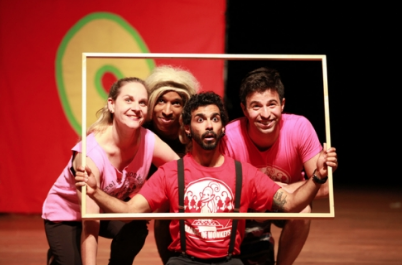
TLC: I find the title Visible Empire symbolic as well. I think of this crash as a blowing up of an empire that existed prior to this event and 1962 being a catalyst for the blowing up of what feels like an empire within this country.
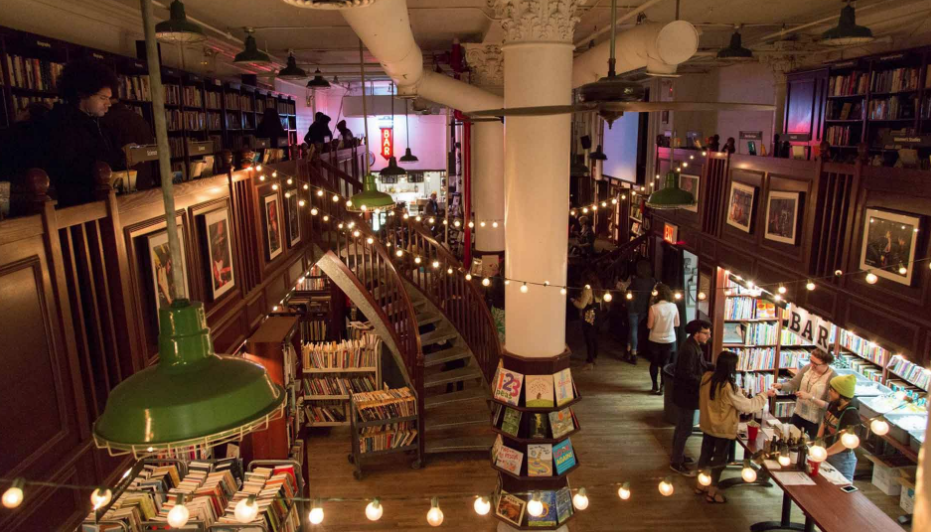
HP: The full name of the KKK is the Invisible Empire of the Knights of the Ku Klux Klan. That whole name nods at power that is not seen, power that is deadly because of its invisibility. Visible Empire as a title begs the question of our responsibility in regards to power we can see but that we choose to ignore or choose not to examine because it’s so ingrained in our way of thinking.

There are four epigraphs at the beginning of the book. The first recounts the fact that this is the biggest and deadliest accident involving a single airplane. The second one is mayor Ivan Allen saying this is Atlanta’s greatest tragedy. The third is Malcolm X essentially praising the crash as the work of God, and the fourth is an unnamed man quoted in the New York Times who lost two loved ones, and he says this thing is so overwhelming, maybe “I’ll feel it tomorrow.”

For me, Visible Empire really captures the tension between the two middle epigraphs: Ivan Allen juxtaposed next to Malcolm X. Suddenly, the world was paying attention to Atlanta because of an incident involving 121 White Americans, and the world was paying attention in a way that it hadn’t been previously paying attention to the South’s legalized racism or the city’s incipient civil rights movement. I thought it was a provocative title and, in my mind, good fiction invites the reader to ask questions. I hope that this title invites questions about what we allow on a daily basis, what we accept on a daily basis, what we choose not to accept on a daily basis. I hope that this book starts some good conversations and engenders some good questions out of readers.

“Visible Empire” as a title begs the question of our responsibility in regards to power we can see but that we choose to ignore or choose not to examine because it’s so ingrained in our way of thinking.

TLC: When I think of the term “empire” and the settings in the book, the Pink Chateau is the epitome of what I imagine and of someone being part of and controlling an empire. I think it was Piedmont who pointed out that they were partying on the Fourth of July at a place where a whole family was lynched, setting off firecrackers and celebrating freedom. I cannot imagine that level of hypocrisy, entitlement, and privilege happening anywhere else in this county other than Atlanta.

HP: There’s this coming together of intense privilege. I think the book needed a moment of hypocrisy at this scale. Whether or not this level of hypocrisy could only happen in Atlanta, I don’t know. In fact, the more I read the newspaper, the more I see that this sort of hypocrisy is available just about anywhere at any time. But the South certainly lends and loans itself, especially in the 60’s, as a study to showcase that level of hypocrisy. Ivan Allen is really an interesting character in real life. He became increasingly progressive throughout his career. But later in 1962, he actually allowed a wall to be built between a black community and a white community. He thought he was doing the right thing. Fortunately the wall was found to be unconstitutional and it was torn down.

TLC: Maybe I’m conflating Atlanta as a representation of all of those cities in the South where you see the grandeur of the South that relates specificity to a certain gentry. It’s a fairy tale, obviously, but fairy tales are really brutal and have underbellies. I felt the dichotomy of being in this really opulent place and knowing that that brutality is always ever present and lurking.

HP: That was part of the question I was asking myself as I was writing. In the novel, the Pink Chateau is a place where a mass lynching once occurred but the tree has been torn down and now there’s this home in its place, and there’s this opulent pool where the tree once stood.

The question that I’m asking is how much time is ever enough time to pass. When is it ok to forget? It’s never ok, right? Just the idea of a place like that existing makes me feel profoundly uncomfortable yet we know there are these landmarks all over our country and all over the South in particular. These places that have been torn down and built up upon. It makes sense to me why Atlanta seemed like the stand in for all of the opulence of the south.

I hope that what I’ve done with Visible Empire is write a book that actively invites people to talk about how individuals from different backgrounds can learn and connect during moments of extreme change.

TLC: It also makes me think of our current moment in history. If you look at the Pink Chateau as a monument to the grandeur and brutality of the South and the argument for pulling down confederate monuments. How does this book resonate with our current moment in history?

I’ve been wanting to write this book for as long as I’ve been a professional writer but I was just never ready. I’m really glad that I was never ready to write it before because I don’t think it would have been as relevant as it is now.

Just read the paper, right? What we see everyday are different forms of privilege that are no longer being taken for granted. Black Lives Matter. #MeToo. The world around us is changing. I hope that what I’ve done with Visible Empire is write a book that actively invites people to talk about how individuals from different backgrounds can learn and connect during moments of extreme change.

Perhaps part of me is being optimistic in this moment, hoping for extreme change, but it does seem like the world that we are living in right now — the America we are living in right now — is blowing up everything, all of what we’ve gotten used to is just changing radically and changing quickly. I woke up this morning and looked at the paper and there is a letter from the President on the front page of the New York Times and it’s like reading the Onion. This isn’t real and yet it is real, and something that we’re going to have to figure out as a community is how to negotiate this new reality.

All of my books have been about loss either on a small scale or on a large scale, and this is the book that most tackles a large scale loss. I’ve been reading the news, watching the news. These school shootings, these church shootings, it feels like these last four or so years have showcased community after community after community losing people. As a writer and as an empathetic human being, on the one hand, I’ve been really lucky not to have been personally affected by any of these large scale losses around the country, on the other hand I think about it all the time. My sleep is affected by it. How I think about writing is affected by it. When I was working on this book, I was very much aware of the America we are living in today and the communities across the country that have been dealing with large scale losses. At the end of the day, I write to make sense of the world — to make sense of the things that terrify and confuse me. All this loss — it terrifies and confuses me.

Reading True Crime Memoir Helped Me Lay Claim to My Own Traumatic Story

I have never been a person who actively sought out crime dramas, much less true crime. I grew up with a mother who watched episode after episode of Law and Order: SVU, and I remember remarking to her once, “Why would any woman want to watch a show entirely devoted to rape?” My friends watched shows like CSI and Investigation Discovery, or nurtured childhood serial killer obsessions. The concept baffled me. They were entertaining themselves with tragedies that could have happened, or did happen, and could have happened to them.

I’ve shied away from true crime because, personally, I’m absolutely terrified of just about everything. I collect phobias the way many people collect books or figurines — just picking them up every place I go. I’ve always been anxious, but a brush with death as a teenager only made it worse. When I was 16, I was stuck inside my high school as a record-breaking tornado struck the building, killing eight of my classmates and injuring countless others. It’s been over 10 years now, and much of me still feels like I’m living inside the 4 minutes it took for the tornado to touch down and destroy the part of being a child we are all entitled to: the complete and utter ignorance of death, and of the ways in which my body was out of my control. I spent the rest of my adolescence hyper-aware of all the ways I could die; the idea of reading true crime felt like poking a wound.

I spent my adolescence hyper-aware of all the ways I could die; the idea of reading true crime felt like poking a wound.

But then one day I was depressed and unmotivated, lying on the couch flipping through Hulu, and I unexpectedly found myself scrolling back to SVU over and over again, my thumb lingering over the button. When I decided to play the pilot, I was thinking of my mom, who I missed so desperately, and I was thinking about a story I had just read, by Carmen Maria Machado in her collection Her Body and Other Parties, which I had been given to review before it was released. Machado’s story “Especially Heinous” rewrote the episode synopses for all 270 episodes of SVU. She’s said since then that the story is one of the most polarizing moments in the collection, but I loved it. I read it, and the next day I found myself watching the show.

After that, crime dramas and true crime became something I sought out, though I would be hard-pressed, even now, to explain why. Suddenly, a genre I long avoided pulled at me. In the beginning, I thought I was filling the hole that SVU left behind — I enjoyed the mystery of it, the twists revealed in the last few moments, and, as much as I hate to admit it, I found myself enthralled by the horrible, gruesome crimes. It was good storytelling, I told myself. But when I moved from fictional police procedurals loosely based on actual crimes and moved onto true crime, I realized it was less about the storytelling and more about confrontation. I felt addicted to confronting things that terrified me, like it was a thrill. I would read longform investigative journalism about unhinged roommates and power-drunk lawyers; I watched true crime documentaries on Netflix. I had nightmares, I became jumpy, and I walked quickly from my car to the apartment when it was dark, but I couldn’t stop. The wound was open, and I was poking and prodding like it was a compulsion.

Finally engaging with true crime changed the way I think about the genre; it still makes me anxious, but I feel like that anxiety has a purpose. But more than that, it changed the way I think about writing. Even before I became a true crime convert, I’d begun to slowly build my writing career on the foundation of my own trauma: telling the exact same story over and over again. I’ve written about my near-death experience through the lens of Harry Potter; I recalled a time when my master’s thesis, about Flannery O’Connor and female Medieval mystics, was a way for me to root myself in my own traumatic experiences; and I’ve written strange narrative nonfiction essays that I was too afraid to turn into a proper memoir. I knew the idea of confronting my trauma head-on made me anxious; I knew this was why I kept approaching it sidelong. But watching and reading true crime helped me understand what, exactly, I was frightened of. I’m afraid that I’ll misremember this terrible thing that happened to me, and I’m afraid that, in my retelling, I’ll offend the hundred other people who shared the same experience. Reading true crime stories, which are, at their core, true reports of trauma, I realized that I’ve been writing around something, that I’ve been too afraid to face it, because I worry that I can’t do it justice — or worse, that I have no business writing about my own trauma at all. Rather than reporting on my experience, retelling it scene by scene, I’ve only gestured toward it. Is it my story to tell? It happened to me, it changed me, but I didn’t die. I didn’t lose best friends or lovers or siblings. Why am I the one who gets to speak? And what if I do it wrong?

Is it my story to tell? It happened to me, it changed me, but I didn’t die. I didn’t lose best friends or lovers or siblings. Why am I the one who gets to speak?

In this respect, Piper Weiss’ You All Grow Up and Leave Me, billed as a true crime memoir about Weiss’ experience as a student of the tennis coach-turned-stalker Gary Wilensky, was a revelation. I went looking for it because the fusion of genre intrigued me: it seemed to answer so many questions I had about how I might begin to tell my own story. It reinforced my suspicions that simply retelling what had happened to me wasn’t going to be possible for me, I wasn’t going to be reporting on my own trauma while removing myself from it. That’s not possible. But I also hoped it would ease fears I had about getting too close to the story and owning collective trauma that might not necessarily belong to me.

Knowing only vaguely what it was about, I looked up reviews. A particular trend piqued my interest: reviewers complained that Weiss, who studied with Wilensky but was not abused by him, had no standing to write her story. One complained: “85% of this book was boring stories about the vapid author and her completely average teen life and friends. Most of it had nothing to do with Gary Wilensky and his crimes.” Another: “Entirely too much detail about the author’s uninteresting life as a teenager…I mean, where is the story here? Cut to the chase!” And another: “This is a deeply self-indulgent book.” It was as if the reviewers were channeling my worst fears. I bought it immediately.

You All Grow Up and Leave Me is a fusion of reportage and memory, a retelling of a horrific event told in a brazenly emotional way by a woman who witnessed it peripherally. Weiss defiantly uses the backdrop of a crime to revisit her own teenagehood, her trauma and the fraught feelings of jealousy and guilt that can only come from escaping a life-changing event that happened to everyone but you. That so many had disliked this book on the basis of those things, because Weiss dared to write a book about an experience that happened to her, but didn’t happen to her enough, sold me on it immediately. The phrase “true crime memoir” ensnared me, the very idea of it so rich with possibilities. It seemed to me that the goal of true crime-memoir is to maintain a safe enough distance that you can be objective, while simultaneously blending in the most subjective of devices: your own memory.

In the Venn diagram of truth and trauma, true crime memoir sits in the middle overlap, unrepentant. It says, “This is a thing that happened to me, and facts alone are not enough to tell this story.”

Piper Weiss and I had entirely different adolescent experiences. She grew up a wealthy Jewish teenager on New York’s Upper East Side, attending private schools and taking tennis lessons. I grew up a middle-class half-Arab teenager in the suburbs of Alabama, in public school classes with the same kids for all 12 grades. But we share a peculiar experience: the life-altering force of trauma on top of the already traumatizing nature of being a teenager. This is the crux of Weiss’ memoir — the confusion, guilt, and fear that’s inextricably tied with being a teenage girl, magnified by her proximity to the incomprehensible crimes of an abuser she once considered a friend. Reading You All Grow Up and Leave Me, I was left with thoughts about my own writing, my own navel-gazing. Could I be as brave as she was? To write a confessional book about something that ruined people’s lives, but left me relatively unscathed? I found the answers in the same pages I found the questions — Weiss isn’t being self-indulgent, as one reviewer put it. Or rather, she is, but why shouldn’t she be? The thing about collective trauma is that it’s almost never an equalizing force: someone always had it worst. But trauma ripples outward; tremors are felt by everyone in its proximity. My entire life was completely changed inside those four minutes when I was 16, sitting in my high school and waiting to die, and I get to own that.

The thing about collective trauma is that it’s almost never an equalizing force: someone always had it worst. But trauma ripples outward; tremors are felt by everyone in its proximity.

My current true crime read is Michelle McNamara’s I’ll Be Gone in the Dark, a book wait-listed in libraries across the country after the Golden State Killer, the subject of the book, was identified. There’s a line early on where McNamara turns the lens inward, to try and decipher why she has always been obsessed with cold cases and serial killers. It started with a crime near her childhood home, an unsolved murder of a young female jogger. She remembers being asked why she felt compelled to solve it, and she writes, “I need to see his face. He loses power when we know his face.”

There’s no crime to be solved in Weiss’ memoir. Gary Wilensky committed suicide before he could be caught, and he left detailed sketches and notebooks about his intended crime: the rape and torture of a teenage girl he’d been stalking for years. There were no clues to follow, no linear structure of questions leading to an answer at the end — but the method is the same. It’s still an uncovering. This is a different way to look at memoir, but it’s not that different at all. We write memoirs and confessional essays because we’re trying to see a face — even if sometimes, the face is our own. The writing of a memoir sometimes feels like the telling of a crime.

Telling Queer Love Stories with Happy Endings Is a Form of Resistance

When people ask me what my new novel is about, I usually answer that it’s a romantic comedy about gender and sexuality — and specifically that it’s a love story between two women, one who’s more on the feminine side, and one who’s more on the masculine side. I generally don’t get into the nitty-gritty of why, exactly, I set out to write a novel like this. I don’t, for example, pull up a soapbox, stand on top, and pontificate about how even with all the progress we’ve seen over the years in relation to the LGBTQ community, so much of that culture remains invisible to America at large. And normally, I also don’t yell and scream about how frustratingly rare it is to engage with a story about LGBTQ characters that doesn’t involve death or illness or some identity-based misfortune. But as publication day approaches, and my book is still one of the few queer love stories that doesn’t end in disaster, I think it might be worth talking about why I did this — and why I hope I’m not the last.

During my lifetime, we’ve seen huge leaps in the quantity of LGBTQ stories that make it into mainstream representation — but the quality still leaves something to be desired. We see so many stories about the strife of coming out, the devastation it can wreak on relationships with family and community, the pain of living in the margins. But while those are important narratives to engage with — to peel apart so we can better understand the way the world works — the struggle shouldn’t always be the story.

We see so many stories about the strife of coming out. But the struggle shouldn’t always be the story.

I came of age on the LGBTQ stories available to me, which arose in the form of books I could get from the library: The Well of Loneliness by Radclyffe Hall; Rubyfruit Jungle by Rita Mae Brown; Stone Butch Blues by Leslie Feinberg. All of these hold a special place in my heart, but all of them feature main characters who suffer phenomenally on account of their gender and sexuality. Has there ever been a more self-explanatory title than The Well of Loneliness? Rubyfruit’s Molly Bolt, groundbreaking as she was for her time, still portrays a difficult to ignore hatred of masculine women. Feinberg’s Jess becomes a “stone butch” as a direct result of severe trauma.

For years I searched out movies starring women who fall in love: Foxfire; Bound; All Over Me. None of these films by any stretch of the imagination could be described as cheerful stories. Collectively they depict queer drug addiction and homelessness, excessive violence, and a prejudice-motivated death by stabbing. Even the satirical romantic comedy But I’m A Cheerleader, my favorite of the bunch and the closest any of the queer movies I discovered come to a happy ending, is centered on a conversion therapy camp to cure gay teenagers.

The recent movie Carol, based on Patricia Highsmith’s brilliant novel The Price of Salt, was a thrill to watch on a big screen and it sort of ends triumphantly, I guess, but still, one of the protagonists pretty much loses everything.

It just doesn’t feel like enough.

Where are the books and movies that convey the empowerment and joy that I feel attending the Pride parade each year, dancing in the streets to Lady Gaga or Madonna or Beyoncé, waving a rainbow flag like I just don’t care? In spite of what much LGBTQ media would have us believe, being queer doesn’t have to be a burden; it can be awesome. I highly recommend it.

When Katie Met Cassidy by Camille Perri

My intention is to spread some of that around. I want to add value to the conversation and leave my mark by contributing in a positive way, with a happy story. That’s my wheelhouse. And I don’t care who doesn’t like it. (Straight white men, not everything is for you.)

LGBTQ people are people. We have the same ups and downs, highs and lows, as anybody else. So why should the stories about us always be about the bad stuff? We deserve the romantic comedy, the late night barfly scene, the silly, light-hearted stuff of life reflected back at us. Because the reality is, that’s as much a part of our lives as the sad stuff. So why wouldn’t that be reflected in fiction?

I’m hopeful we as a culture are on the brink of a new normal when it comes to depictions of diverse characters in situations beyond the tragic and gloomy. The recent romantic comedy The Big Sick, written by Kumail Nanjiani and Emily V. Gordon, is a notable example. The movie is about an interracial couple, but it was Nanjiani’s comment from the Oscar night red carpet that drove home what I consider to be their truly groundbreaking accomplishment. He said, “Emily, my wife, had this idea where she wanted to start a website called ‘Muslims having fun,’ which is just, like, Muslims eating ice cream and riding roller coasters and laughing and having fun. Because she gets to see that, and most of America doesn’t.”

I’d rather readers of my book get swept up in the fun of the story than take home any sort of political message. I want them to be too busy rooting for these characters, who may or may not be like anyone they’ve met in real life, to be aware of the underlying machinations of the novel. But the fact of the matter is, in the current social and political climate of our country, queer visibility is more imperative than ever. Our current administration can’t even be depended on to provide us with equal rights, never mind a sense of belonging. This was very much on my mind while composing this novel.

Happy gay art or entertainment, or art and entertainment about happy gay people, may not be about politics — but the fact of its existence is political. Just because a story is entertaining and funny doesn’t mean it necessarily backs away from serious issues. A celebratory queer love story in the midst of all the hatred and bigotry present in our daily collective conscious is, as far as I’m concerned, a form of resistance. An accessible, romantic comedy about two women that’s free from tragedy is in its own way radical.

A celebratory queer love story in the midst of all the hatred and bigotry present in our daily collective conscious is a form of resistance.

What has struck me over the course of this past year is that positive images are just as powerful as negative ones — if not more so. Conquering inequality doesn’t have to be achieved solely through struggle and suffering, and art and entertainment doesn’t have to be overtly oppositional to be subversive. Whether we’re conscious of it or not, positive images of people who are different from us are nourishing. I wish we lived in a world where depictions of Muslims eating ice cream and riding roller coasters and laughing and having fun weren’t so foreign to an American audience, but I’m glad as a culture that we are — at last — visibly moving in the right direction.

I don’t expect my queer romantic comedy to do much on its own to change the way the world at large views LGBTQ people. It’s more of a cumulative effect I hope to play a part in — a paradigm shift toward inclusivity that future generations will look back on as inevitable. Discrimination and bigotry won’t be defeated quickly or easily, but in the meantime we all deserve a happy ending every once in a while.

Ralph Ellison’s Unfinished Magnum Opus “Juneteenth” Was 40 Years in the Making

Each month “Unfinished Business” examines an unfinished work left behind by one of our greatest authors.

“The novel has got my attention now,” Ralph Ellison told The New Yorker’s David Remnick in early 1994, “I work every day, so there should be something very soon.” Two months later, Ellison would pass away of pancreatic cancer, and the novel he had been referring to, a long-awaited follow-up to 1953’s Invisible Man was at last uncovered by his executor, John Callahan.

In the introduction to Juneteenth, the version of that novel published in 1999, Callahan described the scene in Ellison’s office on his first day. “Mrs. Ellison walked me into his study […] still wreathed in a slight haze of cigar and pipe smoke. As if to protest [Ellison’s] absence, the teeming bookshelves had erupted in over his desk, chair, computer table, and copying machine, finally covering the floor like a blizzard of ash.” There were over 2,000 pages, some handwritten, some typewritten. Some had been collected in binders and filing cabinets since the 1970s, “painstakingly labelled according to character or episode.” There were mimeographs and there were floppy disks. There were notes scribbled onto newspaper clippings and magazine subscription cards. There were print-outs, first dot-matrix and then laser. The project had survived four decades of advances in word processing technology: Ellison’s typewriter had been replaced by the Osborne Executive computer bought in 1983, which was then replaced by an IBM in 1988. Between them all, Callahan would find a range of overlapping narratives, some long enough to be novels unto themselves — but no finished book.

“‘Beginning, middle, and end,’ Mrs. Ellison mused,” to Callahan. “‘Does it have a beginning, middle, and end?’”

The project had survived four decades of advances in word processing technology.

Ralph and his wife, Fanny Ellison, had chosen John Callahan, a scholar of African-American literature and a close friend, to be the executor of Ralph’s literary estate. Callahan would ultimately publish the 366-page Juneteenth in 1999, and then in 2010, a new, fuller assemblage of excerpts and notes called Three Days Before the Shooting…, clocking in at around 1,100 pages — still just half of what Ellison had left behind. But neither of these books is really the book that Ellison first began envisioning back in 1951 when he, perhaps a little optimistically, wrote to his lifelong friend, Albert Murray, “I probably have enough stuff left over from the other [Invisible Man] if I can just find the form.”


Ellison left all his papers to the Library of Congress, where he had frequently worked. On a C-SPAN BookTV special in 1999, Alice Burney, of the Library’s manuscript division, described how the novel was first brought to them in “reams of chaotic scribbled papers […] hundreds of cartons” and that over “the good deal of 1996 and 1997” these were carefully sorted into “seventy-six acid-free banker’s boxes” and “thirty-two additional flat containers.” Deteriorating pages had to be specially preserved by conservators. It took another six months to then identify separate essays, stories, and various overlapping drafts of his second novel’s many sections. Ellison had never settled on a title for the project, she explained, but the project was referred to as “The Hickman Novel,” the name he had used most frequently.

According to Callahan, Ellison “dreamed of a fiction whose theme was the indivisibility of American experience and the American language as tested by two protagonists.” These are, in Juneteenth, an African-American jazz musician turned con-man named Reverend Alonzo Hickman and the orphaned boy he’s raising, Adam Bliss, of “indeterminate race who looks white.” Bliss becomes part of Hickman’s ministry, following him around as he preaches to and occasionally scams (in the name of God) his fellow men. Bliss finally leaves Hickman, during an evening celebration of “Juneteenth,” the holiday commemorating the end of slavery. He then “reinvents himself in the guise of a moviemaker and flimflam man” and finally becomes a “race-baiting” senator known as Adam Sunraider.

Juneteenth follows this fraught father-son relationship through the first half of the 20th century in the segregated American South, up and down the Mississippi river and the East Coast over the course of 50 years, exploring the “intellectual depths” of both two men, their “values and purposes.”

Through Hickman and Sunraider, Ellison sought to characterize both American and African-American culture, music, religion, politics, values, and desires. Ellison described the novel as a dialogue between himself and Mark Twain and William Faulkner — with some Ernest Hemingway and F. Scott Fitzgerald in there as well. “In conception and execution,” Callahan writes, “Juneteenth is multifarious, multifaceted, multifocused, multivoiced, multitoned.”

Excerpts of it were published, over the years, to eagerly-awaiting fans. Saul Bellow, with whom Ralph Ellison lived in Tivoli, New York, recalled that he had read “a considerable portion of it” and that “all of it was marvelous stuff, easily on a level with Invisible Man.” And James Alan McPherson, after hearing an excerpt of the book in 1969, concluded that “in his novel Ellison was trying to solve the central problem of American literature … I think he was trying to Negro-Americanize the novel form, at the same time he was attempting to move beyond it.” At one point Ellison and McPherson discussed the possibility that truly this was a novel in three volumes, which would each have to be published separately.

The finished novel was originally contracted to be delivered to Random House in 1965, which was then extended to the fall of 1967. Ellison told people that year that he was feeling good about finishing it, working hard on revisions at a summer house that he had bought in the Berkshires. Allegedly the novel was almost finished in November of that year, when a great tragedy occurred.

Allegedly the novel was almost finished in November of 1967, when a great tragedy occurred.

Ellison and his wife returned from shopping to find their house on fire. It would be completely destroyed, with all the furniture and personal possessions inside lost — including the manuscript to Ellison’s novel. Fanny would later lament that she had not been able to break into the burning house to save the book, and sometimes this story involved firemen restraining her from entering the house to do so. “I knew right where it was,” she would tell Callahan, years later.

But a few weeks later, Ellison wrote that while had lost most of the revision work from the summer, he had it all very fresh in his mind and thought it could be redone by early the following year. Friend and critic Nathan Scott Jr., stated in an interview that Ellison had written to him with reassurances about the novel’s state. “Fortunately,” Scott Jr. recalled, “he had a full copy of all that he had done prior to that summer.”

But Ellison would not turn in the manuscript the following year, or the year after that. His story about the damage done by the fire began to change, possibly as a justification for his delays. Ellison’s biographer, Arnold Rampersad, noted that a year after the fire he told one reporter that sadly he had lost 365 pages in the fire, and that this number later grew to be 500 or more. Perhaps on some level this was true, but the larger problem was that, as he wrote privately to critic Richard Kostelanetz, the book had “become inordinately long — perhaps over one thousand pages — and complicated.”

And there may have been deeper layers to the tragedy. Rampersad speculated that while the fire might not have physically consumed his manuscript in progress, the experience had created a trauma that then became a deep wound for Ellison in the years that followed.

By then Ellison had won the National Book Award (he was the first black author to win the prize) and two Presidential Medals. He had joined the American Academy of Arts and Letters and worked at the American Academy in Rome. He’d helped to found the National Endowment for the Humanities, and dined at the White House with President and Mrs. Johnson. Invisible Man had already become a crucial book in the American 20th century canon.

But according to Rampersad, “owning a home in New England” held a private and special meaning to Ellison, in terms of his place in American literature. Ellison felt that living and working there, in that community “placed him in what once had been the center of American artistic and moral glory, to Emerson and Melville and abolitionism.”

Officially, the cause of the fire had been faulty electrical wiring, but years after Ellison’s death, Fanny wrote that he ‘knew, I’m sure, that it was arson, but he made no complaint to the town.’

The destruction of this home by that mysterious fire would afterwards loom “as a cruel symbol” in his mind. Fanny described that they were both “very much traumatized” by this “nightmare image we will long, long see.” Officially, the cause of the fire had been faulty electrical wiring, but years after Ellison’s death, Fanny wrote that he “knew, I’m sure, that it was arson, but he made no complaint to the town.”

Their neighbors sent letters to the Ellisons, expressing their deep sympathy, and a hat was passed around to collect “$205 ‘to get something for your new home.’” Reportedly, the Ellisons would drive up to inspect the ruined house, and then leave again, in melancholy. It would take them more than six years to rebuild their New England home.

Meanwhile, the deadline for the second novel was moved to 1975. Then 1980. And then fourteen more years would pass with Ellison still hard at work, until his death in 1994, just after his 80th birthday.


Juneteenth climaxes in the shooting of the racist Senator Sunraider by a young black man. Over the course of several days in a hospital bed, Sunraider tries to reconcile with Hickman and his memories of his childhood as Adam Bliss, a member of the black Baptist community. Sunraider comes back to the Juneteenth night that he left. He dismisses the holiday initially as “the celebration of a gaudy illusion.” Ninety years later, were the black men and women of America really free?

In his introduction to Juneteenth, Callahan reminds us why the holiday is celebrated on the anniversary of June 19th, 1865, and not September 22nd, 1863, the day the Emancipation Proclamation was delivered by President Lincoln. The reason is that it would take two and a half more years for Union troops to march through the defeated South and reach the thousand men, women, and children enslaved in Galveston, Texas, to relay the news that they were now free. Callahan notes that the delay “is a symbolic acknowledgement that liberation is the never-ending task of self, group, and nation, and that, to endure, liberation must be self-achieved and self-achieving.”

In the end, the dying Senator Sunraider reconsiders. He sees that leaving the black community to present himself as white was an “evasion” of his identity. That night he believed that he had escaped, but ultimately feels that he was cast out from “his true American self,” and that his true kinship is to the people he has betrayed, both in his words and with his political power — he is kin, even, to the young man that shot him. Hickman and the community celebrating Juneteenth had been his family, and whatever his own unknown racial make-up might be, Sunraider ultimately realizes that he is also “somehow black.”


According to Callahan, Ralph Ellison saw a meaningful parallel between his never-ending work-in-progress and the “‘crazy country’ he loved and contended with.” If, at the start of “the Hickman novel,” in the America of 1951, Ellison saw his chance to argue for “the indivisibility of American experience and the American language” and to contend with “race and identity, language and kinship in the American experience,” then how must that story have evolved itself as the next 40 years occurred?

He was working on it when Emmett Till was murdered. And as the Los Angeles riots raged in 1992, Ellison was still working on it.

Two days after the Supreme Court’s decision in Brown vs. Board of Education, Ellison wrote that he had “the whole road [of post-segregationist America] stretched out at it got all mixed up with this book I’m trying to write and it left me twisted with joy and a sense of inadequacy.” He was working on it when Emmett Till was murdered. Working on it during the boycott of the Montgomery bus service and the arrest of Rosa Parks. Working on it when Martin Luther King, Jr. led the march to Selma, and when he was assassinated. Working on it during the summer of 1967, when Loving v. Virginia was decided — working on it at the proud New England home that was soon destroyed. And, 25 years later, as the Los Angeles riots raged in 1992, Ellison was still working on it, by then with his IBM computer and his laser printer — trying to finish a novel that might somehow encompass, and answer, the ongoing struggle of black Americans in the 20th century.

Two thousand pages begins to feel like it could hardly scratch the surface.