7 Books About Escaping Religious Fundamentalism

It wasn’t until the Episcopal Church ordained its first woman bishop in 1989 that I realized all the other bishops in our church, past and present, were men. I remember standing in our kitchen holding the newspaper clipping with Barbara Harris’s photo in my hand. I remember learning about the death threats and overhearing that a faction of the Church had decided to splinter off to protest her ordination. It was horrible. But what was worse, in my mind, was that the Church I loved and that I thought loved me, the Church for which my own father worked as a priest, had condoned a status quo equivalent to the sort of discrimination I thought it stood against. I was ten years old.

Purchase the novel

This feeling of awakening and betrayal is central to my debut novel, The Book of Essie, in which seventeen-year-old Esther Hicks is forced to question the authority of her own parents and her father’s cChurch when she discovers she is pregnant. The stakes are high for Essie, the star of her family’s reality show, but they may be even higher for her family, whose entire media empire would be threatened if the truth about Essie’s pregnancy became known.

In writing The Book of Essie, I drew from my own reading of other stories in which characters struggle to express themselves within the confines of a fundamentalist religion, some of whom find it necessary to break free. Here are a few favorites.

Disobedience by Naomi Alderman

The author is currently receiving accolades for her best-selling and timely novel The Power, but her debut (newly adapted into a movie) is equally lovely. In it, Ronit Krushka narrates her return to London from New York following the death of her father, an Orthodox Jewish rabbi. Prior to her moving away, Ronit had a brief and forbidden affair with her friend Esti, who is now married to Dovid, Ronit’s cousin and her father’s heir apparent at the synagogue. Ronit must negotiate these relationships and their complicated history, while at the same time learning how to grieve a father from whom she had been so long estranged.

‘The Power’ Is the Perfect Book for the #MeToo Movement

The Handmaid’s Tale by Margaret Atwood

In this groundbreaking tale, the narrator is referred to only as Offred, her own individuality having been forcibly supplanted by her role as handmaid to the commander, Fred, whose name she assumes for the duration of her assignment. We learn that the Republic of Gilead was established after a religious revolution in the former United States and that fertile women are scarce. To combat low birth rates, these women are assigned to high-level government officials, a form of sex slavery rationalized by its Biblical origins. Offred’s ordeal is horrific, but it is also based, according to the author, on historical precedent. In addition to being adapted into an award-winning Hulu series, the novel is sadly more relevant than ever.

The Scarlet Letter by Nathaniel Hawthorne

This classic, frequently taught in schools, is the story of Hester Prynne, who is shamed for an “illegitimate” pregnancy in 17th century Puritan Massachusetts, an area I call home. When she refuses to name her lover, Hester’s judgment is decided jointly by government and church officials and they consider putting her to death. Ultimately, in a sentence considered merciful, Hester is instead punished by being forced onto the town’s scaffold for a period of public scorn. She is also forced to wear a scarlet A on her chest, marking her as an adulteress forever.

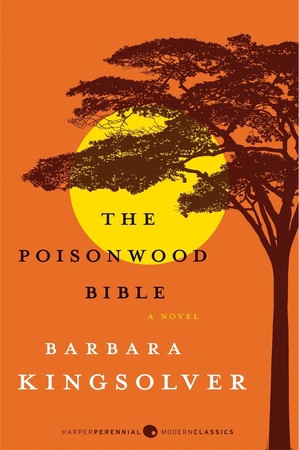
The Poisonwood Bible by Barbara Kingsolver

The Price family — mother, father, and four daughters — travel as missionaries to a remote village in the Belgian Congo in the late 1950s. The novel is largely narrated by the Price girls, each of whom is impacted differently by the move itself and by their father’s fumbling attempts to deliver the local villagers from what he sees as Godlessness and ignorance. Kingsolver does an excellent job of dismantling Nathan Price’s white savior complex and leaves the reader with a richer understanding and respect for the region in which the story is set.

Lolita in Tehran by Azar Nafisi

In this haunting memoir, the author describes her own experiences after the Iranian Revolution and the establishment of the Islamic Republic of Iran. Nafisi, a professor of English literature, was teaching at the University of Tehran in 1979 when Ayatollah Khomeini decreed that all women must adhere to the Islamic dress code, including compulsory head covering. Nafisi refused and was expelled from the university. She later adopts the mandatory dress and teaches elsewhere for many years. After resigning, she teaches privately in her home and her students read, among other works of western literature, Nabokov’s Lolita.

Vladimir Nabokov Taught Me How to Be a Feminist

Ruby by Cynthia Bond

Liberty Township is a small and isolated African American community in east Texas when the novel opens in 1974. Ephram, the late preacher’s son, lives with and is worried over by his sister, Celia, who aspires to a position of prominence in their church. Ruby, with whom Ephram played as a child, has returned from New York and is widely understood to be crazy, an assessment based on her tendency to walk naked through the streets. Ephram is drawn to Ruby and, through their touching and unconventional love story, the two are able to piece together her traumatic past. They are opposed, however, by their congregation, who prefer to ostracize Ruby rather than help her heal.

Persepolis by Marjane Satrapi

This graphic novel is a memoir set against the backdrop of the Iranian Revolution, which occurred when the author was ten. Satrapi recounts how schools became segregated by gender and girls were forced to wear veils. The revolution was followed by the Iran-Iraq War, during which a Scud missile destroyed a neighbor’s house and killed Satrapi’s friend. In the wake of this loss, she becomes more rebellious, even speaking out against the regime. Eventually, fearing that Satrapi could be arrested or even killed, her family decides to send her to Austria to complete her education. Persepolis 2 describes the author’s homecoming and young adulthood in Iran.

Believe It or Not, I Learned Something About Love and Virtue from “Atlas Shrugged”

Novel Gazing is Electric Literature’s personal essay series about the way reading shapes our lives. This time, we asked: What’s a book you misunderstood?

I misunderstood three things the summer I ran off to New Orleans in 2009. The first was love. The second was goodness. The third was Atlas Shrugged.

It was my first summer after college, and I returned to my small town in Wyoming to work at a local grocery store and deli. I chopped and stacked piles of cured meats and pulled the guts out of rotisserie chickens for eight hours a day. It was a monotonous $7.50/hour, punctuated only by daydreams about the big story that I was going to write.

After about a month on the job, I learned that my female co-workers were making 50 cents less than me an hour. I promptly confronted the store owner about this, and when he denied any knowledge of what was going on, I typed a strongly-worded letter, taped it to his door, and quit my job. Then I ran away to New Orleans to build houses with Habitat for Humanity.

At this point, you’re probably getting a pretty good sense of the type of person I was. I was a perpetual do-gooder, blindly throwing myself at any cause that happened to get in my path. Building houses post-Katrina, building latrines in Kenya, mentoring troubled youth — this was where I put my energy. At the time, I believed that my participation (or lack thereof) in things was important, that in order to be good you must perform goodness.

What I didn’t realize at the time was that my feelings about do-gooding were inextricably tied to my self-hatred.

But before we can talk about that, we have to talk about how Atlas Shrugged and I made our way to New Orleans. I’d ordered the book online after I’d seen an internet forum thread that practically yodeled its praises. A big part of my performing goodness was reading books that I believed would teach me how to be good. And what better book to bring on a trip to do good than a door-stopping guide to capitalism?

I remember fondly the colorful front facade of the small hostel that greeted me when I stepped from my airport taxi. While I forget the name, it had a small placard hanging from the front that just welcomed you right in. The place had a constant influx of new arrivals from various countries, plus a few old hands. The former were people like me (Rand-boy) and a young chain-smoking man who was emulating Kerouac; the latter included a recent USMC veteran who sat by the pool that nobody swam in all day and a pot-smoking couple who worked in movies.

I smoked pot for the first time with that couple, I got drunk for the first time with the veteran (we ate watermelon soaked in vodka). While I did all this, I read and misinterpreted what Ayn Rand was saying, all the while trying to look deep while I was doing it.

Rand was writing that all our problems arise from us not doing capitalism right. Worth, in Atlas Shrugged and her other work, is directly connected to creating things in your mind and making them real objects. Your worth is in what you do. It sounds nice, especially to a teenager. I think this quote (when we’re being introduced to John Galt’s utopia) sums it up:

Miss Taggart, we have no laws in this valley, no rules, no formal organization of any kind. We come here because we want to rest. But we have certain customs, which we all observe, because they pertain to the things we need to rest from. So I’ll warn you now that there is one word which is forbidden in this valley: the word “give.”

For Rand, the ultimate failing of the world is that people do things for other people rather than themselves. We create worth for others, in her metric, by creating it for ourselves with impunity. In this framework, cooperation is not the thing that got us out of the caves — will to power and creativity did.

I read somewhere once about the teenage impulse to point at the world and call bullshit. My teenage impulse was different. My impulse was to point at myself and call bullshit. Every single page, from John Galt’s ridiculous million-page monologue to the most unromantic relationship of all time between two characters whose names I’ve forgotten, felt like an indictment of who I was. A useless do-gooder. A “giver.” Secretly, I believed it. If I truly wanted to help others, I would help myself first.

During the day, I would install soffit (the material that allows a roof to vent on the eaves of a home) on the sides of quick-build relief housing for victims of Katrina. At night, I would read a bristling fusillade criticizing the weak and the downtrodden. At the time, the contradiction meant little to me.

Then, I met Renna.

Renna was German. She was beautiful, but that was secondary. She had seen the movies I had seen, read the theater that I cared about, and carried herself with a grace and intelligence that I still try to emulate. The first second I met her, I was in love, and in the second second, I knew that I was never going to be enough, because a person that thinks in binaries is uninteresting to those who don’t.

The first second I met her, I was in love, and in the second second, I knew that I was never going to be enough.

We met because people meet in places like this, and I had borrowed scissors from the front desk to cut my fingernails (like a barbarian, which the desk clerk informed me of after she snatched them from my hands having seen what I was doing). After this little tiff, Renna walked over and struck up a conversation with me. She did not agree with the clerk’s shaming.

For the next few weeks, I adapted to a routine: wake up, go build houses and explore the city a bit, return to the hostel, and follow Renna around like a puppy dog.

When you’re a teenager, all you can see is the bullshit and the suffering. When you become an adult, you learn to ignore it. You learn the impracticality of caring when it comes to suffering. How can one person take on the weight of the world? One person is so small, so insignificant, so overblown with their sense of importance.

What I hadn’t realized at the time was the bald-faced cruelty of a philosophy like Objectivism. It caters to self-hatred, and the hatred of the other because it divides people into the weak and the strong, the capable and the incapable. You are in one camp or the other. And when you can only see the world in two extremes — bad and good, love and hate — it’s a simple switch from one extreme to the other.

When you can only see the world in two extremes — bad and good, love and hate — it’s a simple switch from one extreme to the other.

It violates one of the most important values I now hold dear: that every human being is a unique entity. There will never be another like you, twee as that sounds. That is the true crime that a philosophy like Objectivism caters to — it tells the weak (i.e. everyone) that to bond, to cooperate, to serve others and ask the same in return, is the tack of the feeble-minded and frail. Contributing to capitalist machinery that is driven by human suffering is not a choice for most of us, but to pump our fists as it chews its way through our neighbors and loved ones is a special type of dark and cruel ideology.

Renna and I connected on social media at the end of her trip, and I think she felt something for me before she left, but I don’t think that matters. Don’t mistake this for some sort of story about how if I’d been enough of a bad boy, enough of a man, I would have gotten what I wanted. That’s violent, masculine nonsense, driven and reinforced by works like Atlas Shrugged. Weak loses, strong wins. That philosophy is reductive and demeaning. I did not understand it at the time, but the truth was that I had no idea what I wanted. I was a blank slate, allowing others to paint my beliefs for me.

Because of this, I failed Renna and myself. The truth was that I couldn’t even see her. My inattention made her a non-character, an object on my path to whatever I was seeking — sex, attention, validation, I still don’t know what it was. But what likely happened was that I was so consumed with my thoughts about self-worth, my thoughts about whether I was valuable or not, I failed to see a person.

I had no idea what I wanted. I was a blank slate, allowing others to paint my beliefs for me.

In the height of my self-hatred, I actually believed and internalized what this book had to say. That we are transactional beings, that our worth is in our labors and our service to our goals and God-given skill. That somehow, if I quit my job in service of a principle, that if I went and did ostensibly “good” things, that if I was kind enough, nice enough, skilled enough, what I wanted would simply make itself available to me — the labor itself would craft a way forward. I would get the girl, and I would get love. Because I had earned it. Ultimately, it was not my doing good that was the problem, it was my reasoning.

Something that I’ve learned after many long and painful lessons (and continue to learn daily), is that the beating heart of love is in asking. It is not in proving or earning. You don’t “get” love. Loving and being loved is a profound act of bravery and vulnerability because you ask simple questions that can never be fully answered: “Will you care for me? Will you think about me before yourself? Will you cooperate with me?”

Maybe I didn’t read Atlas Shrugged wrong at all. Maybe I read it exactly the right way. But reading in this way leaves you with an empty heart. There is always more work to be done. Goodness is hard, and there is no reward for it. There is no reward in a life well-lived. Goodness and kindness are only worthwhile because the alternative is an impoverished life spent reducing everything to objects and obstacles, including things you claim to love.

Somehow, John Galt didn’t manage to get that across.

Alissa Nutting Recommends a Story About the Aftermath of Abuse

“Lady Tigers”

by Nick White

Rusty sat behind the wheel of the bus and watched the sky turn sour. A year ago, when his father had coached the Lady Tigers, he’d been expected to serve as the team’s water boy in addition to his regular duties as their bus driver. But Coach Culpepper, bless him, had no such expectations. He told Rusty he could stay on board. After all, Rusty was a senior and probably had important tests to study for. He didn’t.

Last night, after her shift at the Piggly Wiggly, his mom had brought him home the latest Catwoman to help him pass the time during the ball game, but his attention had been sidetracked by the onslaught of sky bracketed within the bus’s windshield. Skies were bigger in the Delta than in the hilly country he was used to. He knew that — everyone did — and yet its bigness still surprised him. The sky pushed on and on. Great swaths of blue every which way. It was a marvel the Lady Tigers could hobble bases and throw balls with so much vastness bearing down on them. Eventually, he spotted in the distance a blue so deep it was purple. Only not purple, no. A sootiness inching toward the ballpark. An infection.

For two innings, the thundercloud spread, billowing out of itself like smoke, soaking up light as it grew. The bus didn’t face the diamond, but Rusty could make out the sounds of the game, the clink of metal bats, the random chants from the opposing team, the Lady Stars. Now hush, you don’t want none of us! Before he realized it, late morning looked more like early evening, and a vein of lightning cracked through the cloud mass. Fat raindrops followed, slapping hard against the windshield, warping the world liquid.

Then he heard them: the Lady Tigers, as they slammed against the side of the bus like blind cows, hollering to be let inside. He pulled the lever above the stick, and the accordion-like door squeezed open. In they hurtled, one by one, smelling of sweat and hair spray, popping Bubble Yum, clad in their black and gold uniforms. Number 12 lumbered up first. Eyeblack smeared down her rosy cheeks, her topknot all but destroyed. The bat bag strapped to her shoulders nearly clocked him in the side of the head as she plodded by. More of them were close behind, pushing to get in out of the rain: Numbers 45 and 62 and 33 and 8. They were yammering on about a female ref’s bad calls and possible “dykeyness.” “Licky, Licky,” said Number 16, the only black Lady Tiger, causing her teammates to squeal.

By the time the coach shoved on, he was soaked. His black polo clung to his torso, his nipples poking through. He held a clipboard in one hand and toted an orange Gatorade cooler with the other.

“Naw, your poor coach don’t need any help,” he said, fake mad and huffing.

The Lady Tigers tittered. “You’ll melt in the water, Coachie,” Number 36 said. “You so sweet.”

Rusty tried to grab the cooler, but the coach waved him away with his clipboard, dousing Rusty’s glasses with rain water.

“Crank us up.” The coach threw the clipboard onto the seat behind Rusty and slung the cooler down the aisle, colliding it with Number 8’s hindquarters.

“Hey!” she said. “That’s my caboose!”

He told her he knew good and goddamn well what it was and to shut up about it and set the cooler on top of the spare tire while she was at it.

Turning back to Rusty, he said, “Why ain’t we movin’?”

The bus door was still open, and rain spat in.

“Looks kind of bad, don’t it?” he said. “Shouldn’t we, um, wait it out?”

The coach leaned forward and removed Rusty’s glasses. He called over Number 2, who was somehow remarkably drier than the others, and used her jersey to wipe off the lenses. As he placed them back onto Rusty’s face, his fingers grazed Rusty’s ears, sending a shock of gooseflesh down his back.

“You get us on home now,” the coach said, using the same steady voice he’d used the week before when reciting a Miller Williams poem to Rusty’s AP English class.

“Well,” Rusty said. “Sure thing, Coach.”

He woke up the engine, balancing his feet between the clutch and brake. The bus roared alive, two parts diesel, one part magic. He could feel it in his groin, the energy all throttled up. Before he let off the brake, the coach yelled, “Hey, Rus, you may want to close the damn door.”

Door, yes. After it had been snapped shut, he shifted to first and guided the massive enterprise toward the road. The exhaust pipe popped off like a shotgun blast, the noise so deep he felt it in his molars. He was already on the interstate before he realized the sound had not been the bus backfiring at all, but thunder.

Only about five feet of road showed itself to Rusty at a time even with the headlights on bright. The rest was coated in murk. They were going along at forty, sometimes slower when approaching pockets of muddy water pooled in dips in the road. It was a solid two hours from home at a normal pace, but at this rate, it would be dinnertime before they rolled up to the high school.

Not that anyone on board seemed to mind. The Lady Tigers he eyed in the big circle mirror had donned headphones. Bone Thugs-N-Harmony’s latest CD E. 1999 Eternal had been making the rounds on some of their Walkmans. To Rusty, their music was softer than what the girls normally listened to. Eerie lullabies more spirit than music, as if the singers were performing their melodies somewhere between the here and the hereafter. Two seats back, Numbers 12 and 8 sang along to parts of “Tha Crossroads,” their voices not as ethereal as the original but just as mournful and loud enough for him to make out over the kerplunking rain and almost, almost, enjoy.

The coach lay on the seat behind him. Prime viewing in the rectangular mirror directly above Rusty when he leaned forward a little and cocked his head. A dangerous position, he knew, since it took his focus off the road, but he allowed himself a few glances anyhow. Not likely to have another chance like this one anytime soon: The coach had stripped down to his khaki shorts. He was dozing with his legs bridged across the aisle, his bare feet resting on the seat where his polo and socks had been draped to dry. He’d peeled his clothes from his pink and hairless body with a slowness Rusty had thought impossible in real time.

Lord, he said to himself, remembering it, and put his eyes back on the road. Wind was batting harder against the bus now. An invisible hand nudging them sideways. The coach had claimed the rain would slack up once they’d put some distance between themselves and the Delta. The god-awful Delta, he called it. Like with so many things, the coach had been wrong. The bus seemed bound for perdition, not away from it. Rusty believed in two versions of the coach: the one who taught literature to seniors and wrote poems for the school newspaper, The Growl, and the other one who was desperately over his head and had led the Lady Tigers to the end of a thankless season with no wins. During the era of Rusty’s dad as coach, there had been trophies, special segments devoted to him and “his rowdy girls” on the local news channel, interested recruiters from as far away as Nashville and Hattiesburg. The Lady Tigers had been unbeatable their last season, state champions.

Rusty didn’t like to wallow in thoughts about what went on last year, so he was glad when the coach came to and asked about their location. When he told him, the coach said, “My god, the Delta — it just goes on, don’t it?” Before Rusty could respond, the coach nestled back into his napping position and closed his eyes.

Rusty tilted forward and stole another glance. The coach was not much older than he was. Twenty-three or twenty-four. Fresh out of a nearby regional university with a teaching license. Rusty had been prepared to hate him out of some lingering loyalty to his dad. But his dislike evaporated during his first class with the coach, who came in reciting the famous soliloquy from Macbeth: “Tomorrow and tomorrow and tomorrow.” Forney Culpepper — the name stuck in your throat. But otherwise he was beautiful. A boyish face, sandy hair he kept pushed behind his ears. According to The Growl, the coach was from the Delta, which maybe explained why he hated it so much, and a poet, which was what first drew Rusty’s attention. According to Rusty’s mom, who’d seen the coach milling about the Piggly Wiggly, he was also a lover of garbanzo beans and tofu. “Hippy-dippy shit,” she called it, but not unkindly, for she wished him well, thank you very much, and didn’t care who knew it.

Around the end of the first nine weeks of school, The Growl published one of the coach’s poems. A sestina called “Hooch” about a dog killed by a couple’s willful neglect of the animal. After reading it, Rusty bolted from study hall for the bathroom to wipe the wet from his face. He decided not to look at it a second time, though he could recite the repeating end words without even trying: muscle, map, song, touch, trap, break. Rusty mumbled them now as he plunged the bus deeper into a storm that showed no signs of letting up. He noticed the coach was changing positions, sitting up. He was scrutinizing the goings-on outside, and Rusty thought he was about to tell him to pull over. Instead, he placed a foot on the running handrail that separated the driver’s seat from the passenger’s. The foot was not in range of any of Rusty’s mirrors, but he could picture it regardless. The smooth sole, the color of sunrise, relaxing against the chrome bar. The neat toenails, the instep, the delicate wrinkling of skin at the knuckles.

His eyes stayed ahead of him on the road, but he might as well have been turned around, ogling the foot, the naked foot, with his tongue hanging out like that woebegone dog in the coach’s poem. Because he never saw it coming. Whatever it was — a chunk of asphalt, hail, god’s own right fist? A diagonal crack slicing from the bottom left to the top right of the windshield was the only evidence it left behind of itself. After it ricocheted off, Rusty lost control and sent them careering off the road.

The week after he had told his mom he liked boys, his dad confessed to inappropriate behavior with one of the Lady Tigers.

Rusty was stunned.

Not because it had happened, but because he had been around his dad and the Lady Tigers for years and hadn’t suspected a thing. After he showed no talent for sports, Rusty was tasked with being his dad’s lackey, going with him to all the games, keeping stats, pretending to care. His parents were worried about him, the way he did things like a girl, though that’s not exactly how they put it. “Curious,” they called it. When Rusty turned seventeen, his dad insisted he try earning a commercial driver’s license and add chauffeur to his list of duties for the Lady Tiger’s ball club. To his surprise, he passed both the written and driving portions of the test. So he spent his junior year carting the Lady Tigers around the state all while his dad had been sparking with one of them right under his nose.

Rusty had been distracted by his own secrets that year. His name was Robert, but everybody called him Sparse because he was so thin. He was black and wore glasses and had a tongue as red as a canary. When Sparse’s parents found out about them, they sent him to live with an aunt in Memphis, and Rusty had been so depressed he confided in his mom, telling her everything. His mom said at first that she didn’t believe in homosexuals. Rusty told her he was real enough all right, but they both knew what she meant. She suggested that they keep this between them.

So when Rusty’s parents had called him into the living room one evening for a conversation, he assumed he knew the reason. His mom had caved. His dad knew. But no: He was all wrong. In fact, he probably couldn’t be more wrong. His mom did most of the talking. Very factual. The details: His dad had done this and this, and now this was going to happen. Rusty recognized the words but couldn’t comprehend the language.

“Which one?”

Rusty’s dad wouldn’t say at first, and when he finally told him, the name meant little to Rusty. Because they were more pack than team and more team than individual people, he never bothered to learn their names.

“Who?”

Rusty’s dad said, “The pitcher.”

“Oh.” He knew then. “Double zero.”

“What?” His mom said. “What did you say?

“It’s not important.”

She grabbed her purse and stormed outside. They heard the car pull out of the driveway into the street.

“She’ll be back,” Rusty’s dad said.

Rusty had his doubts.

“Dad, right, so I’m gay.”

“What? No. What?”

“Yeah.”

“You sure?” Rusty nodded.

“Hmmm.” His dad walked into the kitchen and poured himself three fingers of Crown Royal.

The next morning Rusty found his mom on the couch, dipping the ashes of her Virginia Slim into an empty can of Tab. “Your father,” she said. “He’s skedaddled.”

“Where to?”

She didn’t know, or if she did, she wasn’t telling.

His glasses had been knocked off, his shirt torn. His nose had taken the worst of it, smashing against the wheel. He remained semiconscious throughout. Conscious enough to realize the coach had been thrown into the stairwell. At first, the coach appeared more flustered than hurt. He clambered out of the entranceway and proceeded to call the Lady Tigers a bunch of bitches and Rusty a shit for a driver. Then his eyes rolled. His feet came out from under him, and he tumbled back down into the stairwell. The Lady Tigers rushed toward him, Number 12 barking orders to everyone else.

Meanwhile, Rusty tasted copper. Blood was eking from his nostrils into his lips. Without asking, Number 45 plugged his nose with tampons. When he tried to stand, Number 8 pushed him back down. She shined a small flashlight into his pupils and declared him to be concussed. He felt okay and tried to say so, but Number 8 said for him not to waste his breath — her mom was a nurse and she knew things, okay? His arms and legs worked. No cuts or bruises. Slowly, surely, the world settled down around him, and he began to understand a few things. For one, the bus rested at a slight angle, its grille buried in the gully of a ditch, the whole front end leaking smoke. For another, the Lady Tigers had divided into two groups. One to see about him, and the other to tend to the coach.

The sight of the shirtless coach being toted out of the stairwell by Numbers 12 and 2 reminded him of a painting. Christ being carried down from the cross. The artist and title of the work escaped him though it was a favorite of his. Just zipped out of his ear into the ether. Maybe he was concussed. They took the coach to the back of the bus and propped him up on the last seat. Because of the incline, they had trouble with his head — it kept drooping forward. Number 62 tried slapping him. When nothing happened, she did it again. Rusty got to his feet and lunged toward them. “What are y’all doing?” he wanted to know. Numbers 45 and 8 blocked the aisle. So he took to the seats, monkey-climbing from one to the other. The whole team swarmed him. Hands grasped at his clothes, and he twisted his body through the melee, pushing against the tangle of arms.

“Coach!” he cried, as Number 45 tackled him, knocking the tampons from his nose. After a mild struggle, she pinned him to the floor.

“I cannot breathe.” Number 45’s heft muffled the edge in his voice.

Number 12 said, “That’s the point.”

A slap of thunder rattled the window latches, and they all seemed to remember the storm outside. Number 2 wondered aloud if they’d ever see a sunny day again. Both Number 8 and 16 remembered passing a gas station a few miles back. One of them even recalled its name: the SpaceWay. “Sounds like salvation to me,” Number 12 said. A plan began to form. They’d wait out the weather, and as soon as it was clear, they’d backtrack to the Space-Way and phone for help. “911 and no fooling,” Number 12 added. Number 62 worried about the coach looking so puny. She suggested another slap to rouse him. Number 8 disagreed, claimed she’d seen something on 20/20 about how violent people got if you woke them up from being knocked out. “That’s sleepwalkers, dummy,” Number 45 said, before asking Number 12 if she thought it was all right if she got up off the sissy. “My ass,” she said, “is falling asleep.”

“I second her proposal,” Rusty said from beneath her.

Number 12 squatted and wanted to know if he was prepared to behave himself. He replied that he didn’t see how he had much of a choice, being outnumbered and all. Which seemed good enough for her. She nodded, and Number 45 pushed off. He leaned up, the blood rushing back to his skull. He yawned so big that his jaws popped. Now closer to the coach, he noticed the knot on the man’s forehead. The Lady Tigers regarded Rusty warily, as if he were a wild animal they weren’t sure would bite or not, as he made his way over to the coach. Rusty rubbed his fingers across the swollen skin. The coach felt warm. Feverish.

“He looks so peaked,” he said. “And we could be here a while.”

“I’m open to suggestions.” Number 12 crossed her arms.

He shook his head. “I’m fresh out.”

“So did you just run us off the road for fun or what?” Number 45 asked.

“Or what,” he told her.

Something like a smirk fixed itself on Number 12’s face, and she told him to call her DeDe.

Thirty minutes later, Number 45 spotted a funnel cloud and screeched. The other Lady Tigers scrambled up and pressed their faces to the windows, looking. Rusty and the coach remained where they were, the very last seats in the back of the bus, Rusty on the right seat and the coach on the left. The coach’s head had tilted against his window, his breath fogging the glass, a dewdrop of spittle in the corner of his mouth. Rusty didn’t like the look of the knot. All shiny, it seemed to grow bigger each time he eyed it. He looked away. He imagined they are still on the road, bound for home. He’s driving and the coach is talking. Not the way he does around the Lady Tigers, but in that quiet, hungry way that falls over him when he considers poetry. “A genuine word eater,” he once described himself, and Rusty tells the coach about Sparse. The time in the park, the time at his house after school. The way it burned the first time he touched himself after Sparse had been sent away. Eat these words. The coach, he understands. All too well, he says. The coach has known heartache too. Their eyes meet in the bus mirror — let’s say the circular one. A hand finds Rusty’s shoulder, squeezes.

The Lady Tigers hadn’t moved for some time. Their faces were turned from him, on alert for cyclones outside. He tried speaking, I am in a dream!, but the words wouldn’t come. The Lady Tigers turned as if they had heard him anyway. They turned and their mouths dropped open and they spoke with thunder.

He jumped awake.

Number 8 sat beside him, cussing. “You have a concussion, dumbass,” she was saying. “No sleepy time for you.”

“What about the coach?”

She told him the coach was a different matter but didn’t bother to elaborate.

A greasy jar of peanut butter was making the rounds. The Lady Tigers used the same spoon to dig out a fat dollop and eat. Number 45 had opened the cooler and was passing out paper cups of whatever liquid was inside it — something purple. Seeing her reminded Rusty of the funnel cloud and he asked Number 8 about it.

“False alarm,” she said, whispering. “She sometimes says things for attention.”

DeDe, who was lounging in the seat in front of them, leaned over and told Number 8 she had an idea for how to keep the sissy awake. They’d tell stories, like around a campfire.

Number 45 trotted back down the aisle. “What kind of stories?”

“The kind with words,” DeDe said, and everyone groaned.

Patting Rusty on the knee, Number 8 proclaimed she had one. “A real doozy,” she said. “And it relates to our current predicament.” She went on to describe this girl she knew in the first grade. “She had brown hair and was tiny, tiny. She rode horses and her parents were veterinarians.” She snatched the jar of peanut butter and shoveled some brown goop in her mouth.

Number 16 gawked. “That ain’t no story.”

DeDe said, “And?”

Number 8 finished chewing and offered Rusty the jar. He declined.

Number 45 said, “What the fuck is even happening right now?”

As if that were her cue, Number 8 said, “Oh, yeah, a tornado killed her.” She paused, and when nobody said anything, she continued. “Well, not the tornado itself. See, she slept with her mouth open.” She paused, and again, when nobody spoke, she added more. “So when the tornado ripped off her bedroom wall, her mouth filled up with all this, what do you call it, debris?”

DeDe interrupted her to ask the point of the story.

“Point?”

Rusty clarified: “Why are you telling us this?”

“I guess — I don’t know — bad things can happen? Shit.”

Number 16 grabbed the coach’s limp hand and waved it at Number 8. “Hello, I think we know that already.”

Even Rusty laughed while Number 8 waved her middle finger for all to see.

Number 62 said, “Coach Culpepper is the storyteller.”

Rusty said, “He’s a poet.”

“Same difference.”

DeDe told them to hush. She had one.

“Your nosebleed,” she said, looking at Rusty. “Reminds me of Carrie-Anne.”

Number 45 said, “Oh, jeez: the nosebleeds.”

Rusty remembered. Nosebleeds had been her trademark. As she warmed up her throwing arm before a game, she sometimes got them. “Nerves,” his father had called it. But they became the stuff of superstition. She was a force on the pitcher’s mound anyway, lobbing balls past hitters twice her size. But during the games her nose oozed blood, she pitched perfect shutouts, not allowing a single player from the opposing team even a base hit.

Rusty said, “Double zero.”

DeDe’s eyes narrowed. “I saw her mama last month.”

Number 16 said, “Thought they moved.”

“Just to have the baby.”

Rusty thought about the time he’d found them alone in the field house before a home game. His dad and Double Zero. He was holding a bag of ice to the bridge of her nose, trying to clot the bleed. He was up to his elbows in red, and the sight made Rusty feel sick. His dad should be more careful, he remembered thinking, letting her bleed all over him like that.

“I didn’t know,” he blurted out.

No one heard him: They were listening to DeDe. How she was in the Sunflower. How she was minding her own business, looking at crochet needles for her mom, when who rounded the corner? Carrie-Anne’s mom, that’s who. For a moment, a split second, DeDe considered hiding. “But I thought to myself: No. We didn’t do nothing to be ashamed of, did we?” So they spoke. First about the weather. Then Carrie-Anne’s mom said her girl was doing “just fine.” Had earned her GED. Was taking classes at the community college. “And the shit of it is — she just pushed her cart on, went to the next aisle. Pretty as you please.”

“I didn’t know,” Rusty repeated. “Promise.”

Numbers 16 and 45 glanced his way. He couldn’t make out their expressions. Something between pity and contempt. He didn’t have the word for it, but he knew it well. It was the same look his mother gave him when he told her about Sparse.

“I used to drive by y’all’s house after I found out.” This was Number 8. She looked at her lap. “I used to think about driving my car into his bedroom.”

“I used to think worse,” said Number 45.

“Me too,” said Number 16.

“I promise, I promise,” Rusty was saying. He saw his mom dipping ashes in the soda can. She was telling him they’d be better off. With his dad gone. “It never happened,” she’d said. “And I refuse to speak on it anymore.”

Number 45 spoke up. “What I can’t understand is why you kept driving us?”

Rusty nodded to the coach across the aisle, still unconscious. He wasn’t sure if they understood what he meant until Number 8 said, “Figures.”

“Her mom had the baby with her.” DeDe was wiping her face. “Looks like you too. Same eyes.”

“I promise,” Rusty said again. “I promise, I promise.”

DeDe reached toward him, and he violently jerked back. She was only placing a sweat rag against his nose. “Here,” she said. “You’re bleeding again.”

The Lady Tigers stuck to their plan. As soon as the weather cleared, some two hours after the wreck, they were trailing down the interstate toward the Space-Way. None of them wanted to stay behind with Rusty and the coach. Number 8 assured him they were both out of danger. Her mom was a doctor after all. When Rusty said he thought she was a nurse, Number 8 squinted. “Nurse practitioner,” she said. He doubted very much that he was ever in danger, but the coach was a question mark. His knot still looked nasty. He came to when the girls were out of earshot and stumbled outside to puke in the ditch.

Rusty searched the front of the bus until he found the Catwoman comic wedged under the gas pedal. He looked it over: The raven-haired Selina Kyle had found herself in the jungles of South America, fighting drug lords with her usual mix of stealth, sass, and double-jointedness. The coach had put on his polo and was shoving his feet into his New Balances when Rusty stepped off the bus.

The weedy ditch felt soggy beneath Rusty’s feet, a loud sucking sound with each step.

“I think they may try to fire me over this,” the coach said. He stumbled to his knees when he tried to walk over to Rusty. The ground made more ugly noises as he straightened back up. “Second thought, I think I may just quit.”

Rusty climbed the small bank and stood on the edge of the interstate. Bits of sunlight burned through the remaining overcast. Birds wheeled around in the big sky, crazed by the stillness left after the storm. Not a single car coming in either direction. That was the Delta for you: so empty it could convince you it was big. He rolled up the Catwoman and peered through it. The Lady Tigers were about half a mile away, toting their bats in case of trouble. But Rusty knew there wouldn’t be any. They would probably confuse the hell out of whoever was working the Space-Way until DeDe explained everything. First to the Space-Way attendant, then to whomever she got on the pay phone. When Rusty got home tonight after being checked out by the hospital, he wouldn’t begin with the wreck. He would cut to the quick: the baby. Why didn’t anybody tell me? he would ask his mom. He tried imagining her answer, but none came.

“Rus?” The coach had managed to make it up the ditch somehow and stood beside him. “We got to think about what we’re gonna tell them. What we’re going to say.”

Rusty kept looking at the Lady Tigers. The Delta was flat enough that he could watch them walking away for a long time. He dropped the comic and stretched out his palm. Like this, in forced perspective, he held the Lady Tigers in his hand.

“You wrecked us, but my ass is the one on the line, you see.” The coach picked up the comic and swatted at Rusty’s hip. “We need to be friends on this. Stick together. You know what I mean?”

Little by little, the Lady Tigers shrank. He regretted not learning all their names. Maybe there was still time. At school, around town. But he couldn’t exactly picture them hanging out with him after this. Carrie-Anne. He knew that name. Sister. Well, he knew that one too. The coach kept on talking, and Rusty didn’t listen to a word of it. He wanted to hold the team, all of them, in his palm for as long as he could, as they continued to get smaller and smaller until, at last, they were no more.

How Writing Fiction Helps Me Give Shape to the Chaos of Trauma

I started writing my second novel in the aftermath of violence. In a more-common-than-you-think incident — one that is often used for titillation or as the opening scene of some revenge movie involving a father or a husband with a gun — a friend of mine was raped. I was haunted by the details: the red binders of mugshots my friend searched through at the police station; the bizarrely stubborn fingerprint dust smeared all over her walls. I was haunted by what happened to her but also what had happened to me, because of course I also have my own versions of this story, which I have never told.

It’s not that I don’t want to. It’s more that I don’t know how. For me, as a fiction writer, narrative has a purpose: it’s how we humans create meaning. It’s where our lessons are. Our maps. But my stories have no beginning, no ending. No cause and consequence. No comeuppance.

They happened. I escaped.


The first time a strange man stuck his hand up my skirt, I was standing in a New York subway car. I turned, reflexively, smacking him in the face, and he came after me, violent and outraged that I would hit him. It wasn’t until the man I was with, who had gotten into a different door and had missed the whole thing, arrived and confronted him that he backed off. No bad enough, you might say. And then, there’s that short skirt.

The second time, I was at a political rally in Pakistan, where I had traveled for a conference. My companions, a flaming redhead who had grown up in India in a family working in international relief, and the Pakistani female journalist who had suggested and organized our outing, helped me change into a conservative shalwar kameez and dupatta as we hurried to hear Pakistan’s first female Prime Minister speak.

Narrative has a purpose: it’s how we humans create meaning. But my stories have no beginning, no ending. No cause and consequence. No comeuppance.

The rally was supposed to begin at 4 p.m. We got there early. The platform for the speakers was a stone structure in the middle of a space bigger than a football field. We started toward it, and I didn’t notice that we had drawn a crowd.

Of men.

They were talking to us, or trying to. We were brushing them off, politely. Then there were more of them, and then there it was: a hand grabbing between my legs.

I seized the arm attached to the hand, but it didn’t withdraw. I followed it to a face that looked at me as if I was a rabbit, cornered. He had me, as it were, but he didn’t see me. I was nothing, not human.

What would forever stay with me was that look he gave me — the hostile glare, the gaze that said I was no more than an animal, albeit one who would not stop screaming. A reality I once believed in, about myself, my safety, my place in the world, was suddenly running through my fingers. His view of me erased my own.

The mob around us was attracting attention. Our journalist leader managed to raise enough of a ruckus that an older man broke through the group that was groping us, and they stepped away. He apologized profusely and led us toward the dais, which was surrounded by double loops of razor wire lying on the ground. Who knew it was such a simple thing to step down on razor wire so one could cross over it? We should have paid more attention, but we were now safe in the press area as the hours ticked by and the field filled with three-quarters of a million people, almost all men, mostly bussed from rural areas for the spectacle.

It wasn’t until after 8 p.m. that Benazir Bhutto took the stage. In the twilight before that, the crowd grew restless and tired of waiting, and there was a surge as the men rushed through the barbed wire and sent us scrambling. The only place to go was literally up: in front of us was the rock wall of the dais, and about halfway up the side, a small perch or outcropping about five feet below the edge, almost like the conductor’s platform in the orchestra pit below a stage. We managed to scramble up, helped by some spectators who were already perched there. We three women were literally hanging out for all to see as the final hour ticked by, and the sympathetic men who shared the perch assured us that they would keep us safe once the rally was over.

They were the first ones to grab my friend’s ass when we stood up to leave.

This story, when I try to tell it, devolves into a painful litany of “and then.” We made it down to the ground, delivered directly into the waiting crowd. Some of the men we had been sitting with did help us. A double circle of them locked arms around us trying to keep the others away. At times, other men would join the circle, pretending to want to help us so they could make it to the front and lunge at us. It felt endless. My friend was screaming my name; our circle was a bubble on the surface of the ocean, looking for a way out, but we were going around and around the dais — at one point past a line of about 40 policemen.

Until then, it was all thuds and squeezes, screams in the dark, but I remember looking up and there they were, clearly in my view. Had I thought they would help, that line of uniformed protectors with their machine guns? They were peacekeepers, after all. At what point did I understand that we were simply passing them as they looked on and did nothing? Who were they there for, if not for us?

This story, when I try to tell it, devolves into a painful litany of ‘and then.’

Eventually, our circle found a bus — who knows who it belonged to or where it was going? — but they got us on it. As the door closed behind us, the mob fell on the bus, or rather they climbed onto it, trying to get into the windows, plastering their bodies onto the windshield. We could hear feet on the roof. Knees and elbows. The bus started rocking, and the driver stepped on the gas and pushed through the crowd.

And that was all. We were lucky.


Trauma is a loop. It is disorder, by definition: a break in understanding and time. The narrative stalls; it goes nowhere, repeats, leaving you stuck in feelings and fragments that can be too hard to bear. I have found this trauma loop in much of my research for each of my three books, including most recently, among the survivors of Hiroshima, who lived through something so far beyond nightmare that the only way to pull themselves out of it was to create a narrative to make sense of the senseless, or to block it, as much as possible, from their minds.

Trauma is a loop. It is disorder, by definition: a break in understanding and time.

The book of mugshots, the fingerprint dust, the elevated subway platform. You will find them in my latest novel. That line of stone-faced policemen and their automatic weapons appear more in spirit, asking the question: whose peace do they serve? The ease with which my attackers erased and claimed control over me, their entitled gaze and my disappearing safety…These fragments have yet to shape themselves into a narrative I can make meaning out of, but they find their way in through my obsessions:

What do we do when we are broken, or are reminded that we could be?

How do we move forward, especially when we know there is so rarely justice?

Why does it keep happening, again and again?

In recent years, we have seen the wax and wane of memoir, and the rise of testimony and witness. We are asking to be seen. But it takes great courage to stand alone in the spotlight of your own story and try to make sense of it. The central question asked in memoir is “How did this happen and what do I do about it,” which requires a kind of healing and reclamation I have not yet found. My recounting of the attack in Pakistan is more akin to testimony, a rawer and more simple, “This happened to me.” Upon rereading, my story floats, unfinished. The structure I have imposed on it — of time and one sentence following another — wraps it up neatly and robs it of its power. It reads as if that evening is not still there, resonating in some small pocket in me.

The structure I have imposed on it — of time and one sentence following another — wraps it up neatly and robs it of its power.

Fiction works differently. My imagination gives me a framework to process the grief and terror and the consequences, even when I myself have not found any resolution. It allows me to enter my own traumatic experiences sideways and linger inside them, if I know I can give them to characters who might be lucky enough to find the antidote: love, connection, community, family. In other words, I can enter — and exit — the trauma loop through stories that are not exactly the same as mine.

This goes for the reader also. Recent studies periodically assure us that stories — literary fiction, hardcover books, even the simple act of reading — promote empathy. We rarely have identical experiences, so fiction is how we practice linking our similar or parallel realities so we can feel them. This seems particularly useful in our current society, where we are all so separated, and are working so hard to block the violence that keeps happening to us from our minds.

Fiction connects us, and it can also contribute to our healing. When we see ourselves in worlds we don’t live in, like The Handmaid’s Tale or The Color Purple, sometimes, that very different violence helps us finally process our own. Because as much as our memoirs and testimonies are brave and validating, fiction does not just mirror our truths so they are safe to experience; it also helps us endure the aftermath. Because long after the immediate experience is over, survival struggles onward, in every moment of our daily lives.

Fiction does not just mirror our truths so they are safe to experience; it also helps us endure the aftermath.

The morning after the rally in Pakistan, the rioting was in the newspaper. It didn’t mention us. But it did note that one of the “lady ministers” who was on the dais with Prime Minister Bhutto had been attacked by the spectators and that “her clothes were removed.” I read that in my hotel room with a room service breakfast, after assuring the organizers of the conference that I was okay and ready to start my workday. Then I went to the elevator to go down to the main hall, and when the doors slid open, it was crammed full with men, who all stared at me.

I looked at them. They looked at me. It was not night; they were not precisely a crowd, but panic coursed through me at the thought of having to step in with them. I froze, but the elevator wasn’t moving and they pushed into each other to make a space for me.

I knew it would be rude to wait for the next one. It felt equally impossible to step into the elevator and keep my back to the door. I did what was polite — stepped in and turned around — even though everything in me screamed not to present my defenseless back to anyone I could not see. It was a new awareness, implanted in my body by the men who attacked me. I ignored it. I pretended everything was fine because I did not want to offend anyone, and that too, is the long, slow, reality of violence, one that fiction can reflect back to us. The reminder that living life as a target of violence is a process, and escaping the trauma loop takes time.

Lauren Groff on Climate Change and Ugly Feelings

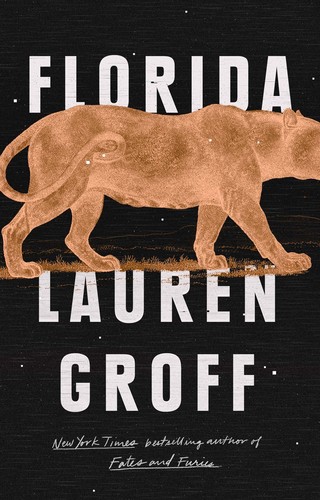
When someone handed me a copy of Lauren Groff’s Fates and Furies, I shut out the world and consumed it in long, luxurious gulps. Since then, I have been waiting for the next book from Groff with an anticipation I can only liken to something like waiting for summer in the middle of February.

Purchase the novel

Now, summer has arrived and so has Florida, Lauren Groff’s latest story collection. Each story in Florida, peels up a pretty rug to reveal a teeming tangle of questions. The stories give voice to how our minds consume us and create us. There are whispering ghosts, rotting friendships, and yawning children to reckon with. But Florida also explores how the external world, one we have trampled over, is devastated by our rapid, mindless consumption — filled with hungry panthers, poisonous snakes, and screaming weather patterns. The landscapes in the short stories are silty, rich, sun-bleached, cold as stone. They are strong characters of their own that will not be ignored.

Roping through these stories were two imposing topics we might want to run away from—ugly feelings and climate change — one an internal hole of despair, the other, external. But in Florida, Groff makes these two topics speak to each other, creating in each story a tense conversation about how we feel the beauty, confront the ugly, and why we have to do both.

I corresponded with Lauren Groff over email to talk about climate change, ugly feelings, and where hope lives in her writing practice.

Erin Bartnett: You write so beautifully, perceptively, about the way fear — and its friends anxiety, shame, dread, and impending doom — stalk us. There are a lot of reasons to be afraid in 2018, and for me, the fear can be totally paralyzing. Where does fear live in your writing process? How do you channel fear as an emotion in your writing without letting it paralyze you?

Lauren Groff: I think often about how we are taught from a very early age to be repelled by ostensibly negative emotions like fear, doubt, rage, shame, vindictiveness, and on and on. Strong emotions like these are seen to be ugly, and are particularly undesirable for women to show. But these emotions are some of the most powerful motivators for good in the world: there is nothing like the cold clarity of focused rage to spur our better angels on.

Also, if you wait for happiness, love, or joy to motivate your work, you’d be lucky to be able to write one novel’s worth of good sentences in a lifetime, mostly because joy comes from the very moment of living, and writing comes from stillness and reflection (you can find joy within the stillness and reflection, but it’s a product of the moment, not the bright source of the moment).

I think some of the answer is to make the emotion intentional, to take a long look at your dread or your shame — whatever beasts you’re fighting — to square yourself to them, invite them into the work, and then let their energy spur you.

Strong emotions are seen to be ugly, and are particularly undesirable for women to show. But these emotions are some of the most powerful motivators for good in the world.

EB: One of the biggest things I noticed in this collection, was where you planted fear and let it grow. In some stories, it appeared to be a concrete object, animal, or place that we can point out and move away from. But in most stories, the fantasy that our fears are something we can contain and run from or mask behind something else proves to be false — fear can’t be contained in those objects, animals, or places — and for that reason, is more dangerous. One of the most profound examples, I think, is in “The Midnight Zone” — a story about a mother and her two sons, in a house stalked on the perimeter by overgrown scrub and a hungry Florida panther. How did you go about planting fear in the landscapes of these stories?

LG: The feeling that you’re calling fear here I think I might shift a little to one side and call dread — fear seems to be a manifestation in the body of externally imposed anxiety, which can act on the brain; dread is more surreptitious and psychic, more of a foundational or underlying feeling, which comes from a less clearly identifiable place and imposes itself on the body and the world at large. Fear can be a logical response; dread is often projected onto the world by the person who bears it. I think in these stories, dread is like a lens that falls over the eyes of the characters and imposes itself on what they see.

Take a long look at your dread or your shame — whatever beasts you’re fighting — to square yourself to them, invite them into the work, and then let their energy spur you.

EB: That’s a really useful clarification, which makes me think more about how you oriented the perspective in these stories — the way internal observations shape the external realities. Many of the short stories in this collection are written from the perspective of unnamed narrators, who are in one way or another alone (whether that loneliness is caused by anxiety, severe weather, a breakup, or a little bit of all three.) How did the perspective of the unnamed narrator figure into your stories?

LG: The desire to communicate is the wish to leap over my own loneliness and visit you in yours. All these years that I’ve lived in Florida, I have been immersed in the strange loneliness of a family, where you can touch other humans all day long, wiping bums and noses and hands, sometimes even creating your own future friends inside your body, and yet you can still feel like you’re standing on an iceberg in the Arctic. The unnamed solitary narrator was probably a projection of this iceberg feeling.

EB: Florida obviously holds a titular role in the collection, but I was really struck by the ways you make the realities of climate change come to life. I was hoping you could comment on how elements of climate change are woven into your stories. Neither polemical or apocryphal, it’s just there. In some stories, the concept of climate change is enough to cause anxiety, but in others, storms and snakes and sinkholes are very concrete forces of nature. There’s this book by Rob Nixon (maybe you’ve read it?) called Slow Violence, in which Nixon argues that climate change moves at a pace that doesn’t work for quick, image-inspired political activism — but your work definitely challenges that. How do your short stories convey the violence, and accumulative damage of climate change? Do you think we need to fear or dread climate change in order to make us change our ways?

LG: I love Rob Nixon very much, and this is something I’ve been struggling with mightily. To complicate things even further, we have sped geologic changes up to a human timeline, but we have all collectively somehow decided to react to climate change with geologic slowness. It’s perverse.

I’m wary of polemical fiction because it’s too much of a blunt instrument; the most effective fiction works because it’s indirect and uses layering and atmosphere and suggestion. The question is how to go about talking about climate change by using a scalpel, not a hammer to do so, which is extraordinarily difficult to do. Dread is useful; since it’s an outward projection, it can encompass the reality that nature is in fact robust, nature wants to thrive, and if humanity committed fully to trying to mitigate climate change, we could do so, and with some ease. Dread can have hope and movement in it, not ataxia and flight.

EB: With that in mind, I want to turn to Florida. In the “Flower Hunters” the narrator describes Florida as “A damp dense tangle. An Eden of Dangerous Things.” I understand you live in Florida — and maybe have a complicated and intimate relationship with the setting — but what is it about Florida that created the fodder for writing about climate change?

LG: My part of Florida doesn’t have the big, operatic seasons I grew up loving in New York; it has dozens of tiny micro-seasons based on what plants are in bloom at any time. Changes in the landscape are subtler, and I run nearly every day out on the prairie, so it’s easier for me to actually see the swift onset of climate change with my own eyes. I’m reminded every single day how we’re destroying this place. Sea-level changes are going to sink Miami in the not-distant future; salt-water incursions into the aquifer are going to be gigantic problems for human life on this gorgeous peninsula. It’s pretty hard to ignore.

I’m reminded every single day how we’re destroying this place.

EB: I want to return to the idea you raised earlier— the idea that dread can have hope in it is fascinating to me. It also makes me think more about how survival changes the way your characters relate to emotions like dread, fear, anxiety. In a few of your stories in particular, there are women and children in literal survival mode: whether they are young children abandoned on an island, destitute and then homeless graduate students, or widowed women confronting a powerful storm in the company of ghosts. What I noticed about those stories in particular was that emotions like fear and dread kind of drain out and observation becomes so heightened, the world becomes nearly surreal. How does survival change the way the characters relate to the world around them in your stories?

LG: I wonder if it isn’t a little bit like making a decision on the top of the roller coaster to just relax the body into a kind of boneless pudding: you’re still plummeting downward, but because you’re not seizing up, the fear transmutes to something kept at a distance from your body, something that slows time down and allows you to see individual faces in the crowd below and the texture of the hair of the girl in the seat in front of you.

EB: In “Ghosts and Empires,” the narrator describes her relationship to reading: “I read and savagely mourn, as if reading could somehow sate this hunger for grief, instead of what it does, which is fuel it.” In “Flower Hunters” the narrator is obsessed with the 18th century naturalist writer, William Bartram: “She buries her failure in this, as she buries all her failures, in reading.” And in “Yport” the narrator travels to France for research on Guy de Maupassant because at one point his work had made her feel “less alone, less inept” but his work has not aged well, the times “too troubled” and “urgent.” What role does reading play in your own work, and do you think it helps distract us from those ostensibly negative emotions or does it make us confront them?

LG: It’s a struggle right now. Part of me only wants to escape, to read for entertainment, which means literature that just reinforces what I already know of the world — what people actually want when they grumble that a character isn’t “relatable.” But I feel that navel-gazing in times like these is cowardly (I’m speaking only for me — I don’t judge anyone else for their hungers), and I know that I need to be invested in the kinds of questions that seriously grapple with the problems of our time, to be unsettled and uncomfortable, to see the world made strange. That means I need to read art. But art sometimes takes a lot more energy than I have at the end of a day or of a string of days in which the news hits like a 2-by-4 to the face. The ideal would be to find a book that miraculously does both, that seduces you into a brisk sail of entertainment while actually setting off a set of torpedoes under the surface of the water.

Buy Your Dad One of These Books by Women for Father’s Day

Until a few years ago, the books I bought my dad for Father’s Day were always by male authors, featuring male protagonists. The ratio of books I gifted him to books he enjoyed was high. Ragtime, Dr. Copernicus, We Are Not Ourselves, The Quiet American: he loved these male-authored books, whereas he hadn’t comparably loved the books by women he’d tried. This was partly my fault. Dad’s a feminist, but I was dragging him into the trap of selection bias.

After realizing that I’d been unconsciously recommending male-authored books to my male students, while female students got a more even-handed mix, I decided to consciously change my book recommendation process. The reason my dad didn’t love books by women — it occurred to me — was partly because I’d been hand-picking books by men for him, knowing what he’d go for, and partly because when he’d tried reading books by women, they’d been Mum’s books, which simply weren’t to his tastes. When it came to finding the right books by women, he didn’t know where to start. Male-authored books are marketed neutrally, whereas books by women are packaged as if they’re for women only, even if only subtly so. This is particularly true for fiction. My dad wouldn’t have bought my own book, because of its cover.

My dad wouldn’t have bought my own book, because of its cover.

Last year, in the interest of exposing Dad to books by women, I bought him Danielle McLaughlin’s Dinosaurs on Other Planets and Lorrie Moore’s Birds of America. Though he was initially taken aback — two women authors? — he’d also come to understand that some books that might appear to be meant for a different audience could actually be right up his alley.

Maybe your dad (or whatever other person you buy gifts for on Father’s Day) is ready for the same discovery.

I’ve compiled 30 books authored by women — 15 fiction, 15 non-fiction — to appeal to dads of all literary predilections. By offering a long list, I hope to have included at least one good choice for your father, for Father’s Day. Inevitably, this list is informed by my own tastes (the fiction choices betray my love of humorous or wry writing with rich, complex societal portraiture undercut with poetry … sorry but all tastes are idiosyncratic!), but I am almost certain that all of these are excellent books. Here’s hoping they convert your fathers and father figures into lifelong readers of books by women.


FICTION

For emotionally intelligent dads, or dads who want to be: Zadie Smith, On Beauty

A gorgeous family saga involving an American one-time-activist and a British Rembrandt scholar who doesn’t rate Rembrandt, 30 years into a troubled marriage. Their passionate, intelligent, compelling children demand more optimism and authenticity than their parents can provide. The book asks significant philosophical and practical questions. Both personal and political, funny and wise.

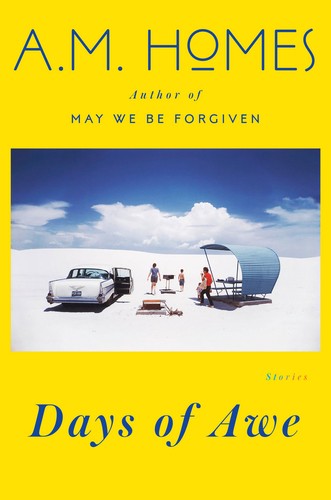
For dads against toxic masculinity: A.M. Homes, May We Be Forgiven

For fans of offbeat characters and comedic writing, this is a darkly comic (hilarious) story following two dysfunctional brothers in modern America — a Nixon scholar and a has-it-all T.V. executive — about aspirations worthy and unworthy, the reality of a seemingly covetable life, the violent potential of masculinity, and the unpredictable ways people can respond to upheaval.

For dads who wonder about retiring to Florida: Lauren Groff, Florida

New York Times-bestselling author of Fates & Furies (one of Obama’s books of the year), Groff has outdone herself in this collection of short stories, all set in storm-beleaguered, snake-riddled, sinkhole-prone, hot-and-bothered Florida, from the domestic to the wild, spanning centuries. These stories are so good: well-written, immersive, affecting, moody, precise, captivating.

For dads confused about cultural appropriation: Nell Zink, Mislaid

One of the funniest, sharpest books I’ve read. A white woman flees her marriage and moves to a village in Virginia, where she passes herself and her pale, fair-haired daughter off as black. The novel spans many years, following the characters as they squat in a house in an African American settlement before moving to a housing project, through to when the daughter lands a minority scholarship at the University of Virginia. The finale of this book is riveting, side-splitting, and sublime.

For historical fiction and murder mystery fan dads: Margaret Atwood, Alias Grace

Set in 1843, this novel follows Grace Marks as she serves a life sentence for the murders of her employer, his housekeeper, and his mistress. Spiritualists who believe her to have been mentally ill seek a pardon for Grace, and a doctor tries to unlock her memories of that day. Written in Southern Ontario Gothic style, Atwood highlights the social ills of the time; the corruption and moral hypocrisy of the upper class.

For dads who love James Joyce and/or modernism: Eimear McBride, A Girl is a Half-formed Thing

This multi-award-winning novel revitalizes the form; situating the reader inside a young woman’s mind, as she navigates a world bereaved of her brother. It’s a challenging read, but a few pages in, your vision adjusts to the shuddering, devouring dark, and you see something new.

For geek dads, philosophers, and horror-happy dads: Mary Shelley, Frankenstein

Mary Wollstonecraft Shelly was a genius. She started writing this Gothic thriller at the age of eighteen. It is arguably the first ever work of science fiction, exploring the dangers of science, the origins and nature of life, the role of human beings within the universe. It is as relevant now as ever (especially in light of illegal genome editing experiments)!

For dads interested in New Zealand, and dark, dense, difficult rewarding fiction: Keri Hume, The Bone People

With this haunting, mesmerizing, myth-rich, culture-dizzy novel, Hulme was the first New Zealander to win the Man Booker Prize. It encapsulates complex Kiwi landscapes, the luxury and oppression of isolation, the postcolonial stamp bearing the bust of a monarch few care to name or recognize; national identities and pathologies — shoulder to shoulder, and even nose to nose, but far from hand in hand. More prescient now than ever, as we grapple with patriotism, tradition, co-existence, and tolerance.

For dork dads with a sense of humor and social justice: Nafissa Thompson-Spires, Heads of the Colored People

This debut collection of short stories is characterized by a refreshing, dorky (yet dark) sense of humor — at times satirical — and intelligence. The author presents lives/moments/interactions you haven’t seen in fiction before, delving into black citizenship, social mobility, and contemporary American life.

For dads with feelings: Lorrie Moore, Birds of America

Moore’s work is characterized by wry humor, a humane worldview, and an astonishing gift for observation and portraiture (of character, place, relationships, society). These twelve short stories will blow you away, in their range, their emotional force, their wit and wisdom. If you’re not convinced, there’s a story called “Which Is More Than I Can Say About Some People”—the best title ever.

For dads seeking a bracing meditation on life and love: Jenny Offill, Dept. of Speculation

For a book so slim, this is hugely satisfying. The thin plot centers on the fallout of infidelity, but the book — written in sculpted vignettes — is all jaw-dropping, conscience-shaking, allusion-rich ruminations on intimacy, loyalty, stalled ambitions, art’s seduction, self-destruction, heartache and what we owe our loved ones. “Cool precision,” says the publisher, and that is exactly right. It does shimmer with rage, wit, intelligence, and fierce longing.

For wild-west dads: Claire Vaye Watkins, Battleborn

Hard to believe this multi-award-winning short story collection is written by one person, such is its range and scope. Myth sings in the American West of these stories (in the vein of Cormac McCarthy); their effortless social observation and wisdom is reminiscent of Annie Proulx and Richard Ford; their humor and custom, of Denis Johnson. From Gold Rush ghost towns to desert brothels, this collection is expansive.

For dads into politics and historical writing at the top of its game: Hilary Mantel, Wolf Hall

At 653 pages, this Man Booker-winning historical novel about 1520s England is a bottomless feast for history aficionados. Set during a perilous moment for England — when King Henry VIII may die without a male heir, sending the country into civil war — the story centers on Thomas Cromwell: a savvy politician, a charmer, and an ambitious opportunist.

For psychology, anthropology, and sci-fi fan dads: Ursula K. Le Guin, The Left Hand of Darkness

This classic, groundbreaking, Hugo and Nebula Award-winning work of science fiction, we journey with an emissary to Winter — a world where inhabitants can choose and change their gender at will. The emissary’s goal is to include Winter in a growing intergalactic civilization, but to do so, he must come to understand and respect the utterly different culture he encounters there.

For dads who love Steinbeck: Hillary Jordan, Mudbound

Winner of the PEN/Bellwether Prize for Socially Engaged Fiction, this slim novel is set in 1946 on a Mississippi Delta farm. It’s a subtle and highly engaging depiction of rural tensions in the Jim Crow South, when soldiers have returned from the war to work the land. I’ve gifted this book many times, and it always begets strong feelings in the recipient.


NON-FICTION

For dads wanting to take a hard look at our political history: Hannah Arendt, The Origins of Totalitarianism

For those interested in 20th century political history, this 1950s text is the definitive work on the rise of colonial imperialism, totalitarianism, and anti-Semitism in central and western Europe in the 1800s. Arendt explores the institutions and operations of totalitarian movements; eerily exposing how the use of terror, isolation and loneliness are preconditions for totalitarian domination.

For David Attenborough-fan dads: Elizabeth Kolbert, The Sixth Extinction: An Unnatural History

Using case studies aplenty, New Yorker journalist Elizabeth Kolbert takes the reader on a journey over the last half-billion years, from species to species, surveying each one’s extinction. Take a guess which species the sixth extinction might be reserved for. Frank, entertaining, moving, superbly informative, this is a paragon of interdisciplinary writing.

For cerebral dads interested in love and the body: Maggie Nelson, The Argonauts

A philosophy book disguised as a memoir, this meditation on desire, identity, queer family-making, the limitations and possibilities of love, gender and language floored me. It is astonishingly wise and generous and insightful. It’s dense and the subject matter is difficult.

For dads who quote Heidegger at the dinner table: Sarah Bakewell, At the Existentialist Café: Freedom, Being, and Apricot Cocktails

This book tells the story of modern existentialism, in an enjoyable, accessible way. From the ‘king and queen of existentialism’–Sartre and de Beauvoir–to their wider circle, including Camus, Heidegger, Merleau-Ponty and Murdoch, Bakewell weaves biography and thought, framing the philosophical ponderings about what we are and how we are to live.

For cool, interested, open-minded dads: Ashleigh Young, Can You Tolerate This?

New Zealander Ashleigh Young has broken through internationally with a book of personal essays. This never happens. Essays rarely make people famous. This is a roaming, wry, raw, poignant collection of thoughts on what is tolerable, fair and possible in this life.

For highbrow dads: Siri Hustvedt, A Woman Looking at Men Looking at Women: Essays on Art, Sex, and the Mind

This is an extremely brainy book — intellectual (to the point of academic) in tone, approach, and rigor — and it is a tome. A collection of essays on art, feminism, neuroscience, genetics, psychology, philosophy, the human condition, and all that jazz. I don’t remember if jazz gets distilled here, but probably. Hustvedt is confusingly broadly informed and interested. She builds bridges between the sciences and the humanities, because she knows engineering too. Why not.

For mansplaining-apologist dads: Rebecca Solnit, Men Explain Things to Me

Solnit’s famous title essay is housed here with six other comic, scathing, shocking, revealing, galling terrifying, depressing, mystifying, original takes on misogyny, marriage equality, violence against women and girls, and more. Solnit somehow manages to crack many a laugh amid all this seriousness.

For dads interested in addiction: Erica Garza, Getting Off: One Woman’s Journey Through Sex and Porn Addiction

An unflinching account of sex and porn addiction. Garza reveals how her addiction developed and took over; how she fled from one side of the world to the other to break free of it―from East Los Angeles to Hawaii to the brothels of Bangkok and the yoga studios of Bali. Garza narrates her experiences with therapy, twelve-step programs, rehab and the prospect of marriage.

For dads into education: Tara Westover, Educated: A Memoir

A riveting memoir about a young woman who leaves her survivalist family in the mountains of Idaho and, though seventeen before she ever set foot in a classroom, goes on to earn a Ph.D. from Cambridge University. (Doctors had been forbidden in her youth, but that didn’t stop her from becoming one!) A book about the struggle for self-invention, self-belief, and seeing one’s history anew.

For woke dads: Franchesca Ramsey, Well, That Escalated Quickly: Memoirs and Mistakes of an Accidental Activist

Video blogger and star of MTV’s Decoded, Franchesca Ramsey explores race, online activism and communication in the age of social media rants, trolls and call-out wars. Her video “What White Girls Say. . . to Black Girls” reached twelve million views, likely because Ramsey discusses American injustices in an approachable, constructive way.

For venturesome, city-loving dads: Lauren Elkin, Flâneuse: Women Walk the City in Paris, New York, Tokyo, Venice and London

Cultural critic Lauren Elkin explores the notion of the “flâneur” (“one who wanders aimlessly” — a figure who was historically assumed to be a man), celebrating women who navigated urban spaces on foot — inherently a political act.

For environmentalist, progressive dads: Naomi Klein, This Changes Everything

A rigorous and compelling examination of how climate change is changing and will change every aspect of our cultures, societies, and environments. Worthily, an international bestseller. (An alternative, if you dad read and loved this, is Adventures in the Anthropocene: A Journey to the Heart of the Planet We Made by Gaia Vince.)

For dads into business, finance, organizations, and anthropology: Gillian Tett, The Silo Effect: The Peril of Expertise and the Promise of Breaking Down Barriers

Award-winning journalist, anthropologist and senior editor of the Financial Times on our tendency to create functional departments — silos — that hinder our work, our ability to innovate and to react to risks and opportunities.

For dads up for a spiritual, cultural, and intellectual challenge: Patricia Lockwood, Priestdaddy: A Memoir

An intelligent, unconventional, funny, prose-perfect memoir about religion, gender norms, class issues and the author’s relationship with her highly unusual, religious family.

For nerd dads who joke about your “ripped genes”: Nessa Carey, The Epigenetics Revolution: How Modern Biology is Rewriting Our Understanding of Genetics, Disease and Inheritance

In the age of the Human Genome Project having successfully sequenced human DNA, the question of where-to / what-next is ubiquitous. If you don’t already know how stupidly, improbably fascinating the gene and epigenetics (the fastest-moving field in biology) is, then you need to read this book, and if you do already know, you’ll discover new (worrisome) wonders here.


About the Author

Caoilinn Hughes’s debut novel, Orchid & the Wasp, will be published on July 10th with Hogarth (U.S.). It has just been released in the U.K., where the Sunday Times described it as “a highly ambitious fiction debut [that] contains multitudes.” Irish-born Hughes is also a prize-winning poet. Her writing has appeared in Granta, Tin House, POETRY, and elsewhere.

A.M. Homes on What it Means to be A Moral Writer

A.M. Homes’s Days of Awe is a strong short story collection that scales and unpacks, without judgment, the labyrinth of layers that influence human behavior in what Homes celebrates as being “in all its inglorious beauty.” In the path blazed by Grace Paley, her former teacher, Homes writes the truth according to her characters. Brother on Sunday, the collection’s opening story, embodies Homes’s uncluttered intelligence to trust that a story can be kept simple and remain complex, stinging, ambitious and ongoing.

Purchase the novel

Days of Awe’s precise details straddle comfort and pain with authenticity. Its meticulous pacing borrows from a gymnast’s scissoring and soaring routine on a pommel horse. The non-autobiographical material tunnels into the territory of global consciousness at a critical point in our history. Homes’s devoted readership will take pleasure in a few pieces that are legacy tales from her earlier works, and which provide a continuation and evolution of preexisting characters. And those new to Homes’s work will appreciate her mastery of the dynamics of siblings, life partners, friends, strangers and strangeness all of which are both contrasting and combustible.

The author and I corresponded via email about writing stories to illustrate the human heart, why we shouldn’t care if characters are likeable, and what it means to be moral writer.

Yvonne Conza: The title story Days of Awe circles around a love affair sparked between former friends reunited at a genocide conference. What were you going for in this story in the big and small picture?

A.M. Homes: I am always trying to tell the story as well as I can, and to be true to my characters. Grace Paley always said, write the truth according to the character.

I am interested in how quickly awareness of the Holocaust is fading –how we don’t seem to notice that there are genocides all over the world and how even in these horrible moments, people want a sense of connection, they continue to be human, they mate, they love and when it is all over those who have survived have mixed feelings about what it means to survive and their duty to those who were lost. To me it’s heartbreaking and so very real. And then we make judgments about whose story is most valid, who has the right to tell the tale — and I find that interesting as well. And now, many Holocaust survivors have died from old age — and I am conscious of who is left to tell the story — who is left to remind us. My work is often about taking the collective unconscious and making it collectively conscious.

My work is often about taking the collective unconscious and making it collectively conscious.

YC: The Days of Awe are the ten days from Rosh Hashanah to Yom Kippur when the sins of the previous year are examined and repented for. Each of the stories in the collection resonates with the ideas of reflection and repentance, with a depth that goes beyond the literal . What went into your process of tailoring a more individualized and nuanced interpretation of “Days of Awe” to each story?

A.M.: I’m not exactly sure how to answer it –except to say that the resonance you felt, is what I intended. I am interested in history and how it plays out over many years on the lives of people — somehow we often separate historical events from human lives. There are three stories about war in the collection — two deal with fall out from WW2 (“Days of Awe” and “Whose Story Is It, and Why Is It Always on Her Mind?”). “Whose Story Is It, and Why Is It Always on Her Mind? is set in Europe/England. AndThe National Cage Bird Show” — a modern story about war written in relation to Salinger’s For Esmé, with Love and Squalor.

One thing I’m thinking about in all of these stories is how the human cost of war doesn’t change. We may have new ways of fighting, new implements, but there is no soldier who comes home un-scarred. And I think a lot about what that means — and how we could do a much better job of healing the psychological wounds of war — by employing veterans to do work in their communities — it would give them a sense of connection, place and some time to recover. But now, I sound like I’m running for office rather than working as a fiction writer.

Regarding the Jewish holidays, I have always been fascinated by Yom Kippur, and the idea that goes across religions of repenting, or making good, what one has done to hurt oneself, others, and in Jewish writings — even the ideas of what one might do — it goes beyond guilt and into thinking about who one is — the way we move through the world and how our actions and inactions affect the lives of others. Bottom line — that’s what being a writer is all about as well, human behavior in all its inglorious beauty.

We make judgments about whose story is most valid, who has the right to tell the tale.

YC: You have said, in response to this being called a “powerful” book: “Regarding the power of the book — it took a long time and is very much tied to other work I’ve done/been doing, thinking about thinking about the world we live in.” Talk about this more. It’s a compelling statement that feels right with this book.
A.M.: It’s hard for me to describe — except to say we are living in interesting times, the pace of our social, cultural, political world is moving so fast that it is hard to get ones footing. A writer depends on a kind of terra firma — in order to go off screen into the imagination — and know that when one comes back to the surface — things will for the most part be the same. At our current speed of acceleration — one worries that one might surface another (unfamiliar) world entirely. My work is drawn from ideas and ‘issues’ I see before us — history, the forgetting of history, the human cost of war, what one expects of family, of marriage of oneself… in order to explore these ‘non-fiction’ sometimes almost philosophical ideas I have to turn inward — which feels difficult when all one is compelled to do is read/watch the news — as if bearing witness.

YC: Do you think a writer’s past work remains in the DNA of current and future works? If so, which of your previous books or short stories have influenced you the most in writing Days of Awe?

A.M.: The short answer is yes always, as different as each/all of the work is it is part of a progression that in some ways is invisible to others… for example the character Henry Hefelfinger in Rockets Round The Moon, is the early (younger) version of Geordie Harris, in The Chinese Lesson, who is actually an early iteration of Harold Silver, the main character in May We Be Forgiven. So that’s a very concrete example and there are literally dozens of those.

Going back through you can see that my interest in human behavior — why people do what they do — and how it affects them and those around them is at the core as is a kind of morality which I never can tell if I should ‘advertise’… ie what does it mean to be a moral writer — and is that a good thing? I’m not passing judgment on my characters — in fact kind of the opposite — I give them room to expose themselves, to come to know themselves in ways that before we spend time together they might not. Here’s the big reveal — and it’s not about me as a writer — but about an idea that concerns me a lot. People sometimes say, am I supposed to “like” that character…. The notion of whether or not a character is likable worries me, it’s a very-very modern and troubling idea #1 was Fyodor Dostoyevsky’s Raskolnikov likable? Vladimir Nabokov’s Humbert Humbert? And do we want the character to be “likeable” so we can “relate” to them — and can we only see ourselves in a likable person — i.e. we need to be made to feel good about ourselves and our reflection in literature? This to me opens a whole world of discussion and perhaps a course I should teach someday called: I Don’t Like You, I Love You, the problems of Q-Rating Literature.

Do we want the character to be “likeable” so we can “relate” to them? Do we need to be made to feel good about ourselves and our reflection in literature?

YC: This collection represents a faceted diamond in which light and illumination is always possible, even when there is disruption or loss. Can you speak to this?

A.M.: I like your idea of faceted diamond where light and illumination is always possible…that’s lovely. I am always trying to tell the stories of my characters lives, of their experiences and these are in some ways just slices of the fullness of their lives and hope to capture the essence of both what we know and what we don’t know about ourselves, our lives, our histories. And yes, even in disruption and loss I am looking for light — which doesn’t mean dismissing gravity but light as illumination — learning, discovery. I want to remain always curious, engaged, looking and thinking.

YC: In your earlier books, reviewers often remarked about being shocked or surprised by your writing about certain topics that were “haunting, terrifying, twisted, dangerous …” Did you find those descriptors as helpful or too summarizing?

A.M.: Words like haunting, dangerous come easily — but at the same time they’re not very specific and perhaps leave too much room for one to simply project into that word whatever one wants — so I think the more specific one can be in describing something the better — even if one disagrees with it — at least you can understand exactly what the person is saying.

I’ve always been bothered by the idea that that I am writing to shock people — that’s something applied to my work from the outside. I’m writing to tell stories — to illustrate the human heart — and if people find it shocking, well, that means it hit a nerve, but I don’t set out to shock or disturb. What happens in a career that spans quite a few years is that reviewers go back and they don’t read the past books — they read the reviews, and they bring those misconceptions forward and apply them to new material, so it’s hard to escape.

YC: Who are the emerging writers that you’re reading?

A.M.: I’m very involved with my students and what they’re doing and I do a lot of things like judging for awards and Granta’s Best Young American Novelists. I’m always reading, always looking at all kinds of things, newspapers, books, photographs — and I love hearing about and reading new writers.

This Choose-Your-Path Fairy Tale Justifies the Existence of Twitter

Most of the time, people just use Twitter for the same thing everyone else is using Twitter for: world-weary jokes about the news, outraged RTs of the president, and trying to get people to explain Tuov theory. But every so often, a light shines out in the dim murk that is Twitter, and someone uses the platform in a way that transcends its daily grind. Sometimes, that person is the social media manager of a British farm museum appreciating a rotund sheep. Fully half the time, it’s a dog being awesome. And much of the rest of the time it’s Jared Pechacek.

You may remember Pechacek from his dystopian fashion show story or his modern fashion show Dante’s Inferno. But this time he broke out of the Fashion Week mold with an eerie fairy tale powered by user decisions. Over the course of seven hours, Pechacek—with the help of his followers—spun a narrative that was a little King Lear, a little Cinderella, a little Tam Lin, and 100 percent a bright spot in the usual Twitter slog. We’re posting the full story, with Jared’s permission, and hopefully it inspires other people to use Twitter’s capabilities for a righteous cause.

This Twitter Thread About a Fashion Show is the Best Dystopian Novel We’ve Read in Ages

Twitter Fiction Turns a Fashion Show into Dante’s Inferno for the Modern Age

How a 1960s Japanese Novel Turned an Atheist Into a Believer (Sort Of)

I can’t recall being taught about Hell. I feel like I’d remember. I was a literalist little kid who took religious lessons seriously, understanding, for example, that since my parents didn’t have any money I should pray instead to my “real Dad,” the father of us all in Heaven, for PlayStations and bikes, making the deal that if I was good I’d get them. My religion was all clear-cut transactions between me and Himself upstairs: virtues were rewarded; thoughts recorded; prayers heard. If the ministers who came to our school once a week wearing warm porridge-colored jumpers had told me about the chance that I would suffer for eternity too, I’d have incorporated it into my world view.

But ours was a gentle and diluted religion. The separation of church and state in the United States means churches cut their teeth in the real world and know how to hold your attention. In the U.K. we have a national church, which means it has to put in no effort and shrugs along on precedent. With no fireworks to catch your eye, no great threat to pin you to your seat, it’s all on you to care. Rejecting it is as easy as not bothering to think about it at all.

As it happens I was the type to think about it, but since religion doesn’t really hold up to clear-cut interpretation, my hard-headed way of thinking lead me elsewhere. When I was a teenager, and quite despite having no real enemy or torturous upbringing to resent, I built my villain in the air with a minister’s face and rebelled against it. I put on the uniform of a New Atheist and got in line to fight the fight I found in books like Letter to a Christian Nation and The God Delusion and God is Not Great and Rational People Like You Aren’t Really Stupid Enough To Need Religion Are They. I hated people I’d never met. I read the right websites, learned all the rhetorical moves, and treated people I did meet like those I hadn’t: as containers of bad ideas, foils for practicing how to argue. “Have you heard of cargo cults? Comforting ≠ true. Creationists are thicker than the mud and fossils they don’t believe in. Of course there are atheists in foxholes. We all die and become trees and there’s grandeur in this view of life.” If you knew me, I’d make sure I told you that I respected your right to believe whatever you wanted, but this too was just a rhetorical trick, a move in the game. I had no respect for your imaginary friend. You could keep him, though, because I liked being right, knowing that you, in your deepest inner life, were wrong.

A generous interpretation of my own self is that I was a very smart, very awkward kid, who liked ideas and craved company, and the internet has a way of weaponizing loneliness. A less generous interpretation is easy enough.

If you knew me, I’d make sure I told you that I respected your right to believe whatever you wanted, but this too was just a rhetorical trick, a move in the game.

Life went on. I went to university for eight years and got a Ph.D. I took the only job I could get working minimum wage, and lost the will to live. Work is the sudden goodbye to being a young person who dreams of contributing anything of value to the world, and the slow hello to being an adult with an ending, resigned to living out the same day, over and over and over again until it’s over and you die and become one with the empty howling meaninglessness under everything. When I was at university I read books for a living. When I left I had to read books to stay alive, to be anywhere but where I was. I was still me, but didn’t know what I thought anymore.

It felt like an accident when, around this time, I first read Shusaku Endo’s novel Silence (1966). I hadn’t been consciously seeking out religious fiction. Why would I? I came to it because I was reading through the big Japanese names — reading literature from close to home didn’t take me far enough away — and Endo happened to be the next on my list.

You may have heard of the novel, or perhaps of Martin Scorsese’s recent seven-hour long adaption, but in case you haven’t, Silence is an historical-fictional account of the arrival of two Jesuit priests in 17th century Japan. This was at the time of the Shogun Ieyasu, who, in 1614, issued an edict of expulsion to get Christianity and its proselytizers off Japanese soil. Christianity had only arrived in Japan some sixty years before, and the few Japanese Christians who remained after the Shogun’s expulsion were driven underground by the authorities, afraid of their friends and neighbors and, if discovered, subject to torture and forced conversion. Sebastian Rodrigues is our main character, one of the two Jesuits who come to Japan on a mission to both keep the light of Christ alive with the locals, and investigate the reported apostasy of Rodrigues’s own mentor, Ferreira. The first hundred pages comprise Rodrigues’s letters back to Rome, describing his arrival in Japan and the happiness and hope he brings to the small Christian community he finds there. The letters stop and the novel shifts when it all goes wrong.

Shusaku Endo was himself a Catholic in relatively un-Catholic 20th Century Japan. Much of his writing deals with alienation and culture shock, and Silence is his masterpiece. William Johnston’s translation of the novel is beautiful and powerful, full of humanity and tragedy, and absolutely worth reading. Like most Japanese fiction the prose is simple and sparing and much heavier than it looks. Endo paints a world it is easy to believe once existed: the characters seem absolutely real, and you’ll feel the sea on their faces and the blackness of their long nights. There’s so much to talk about, all sorts of stuff about Japan’s identity and the way religious meaning transforms in the minds of other peoples; about the sincerity of missionaries and “the forcing of love upon someone”; about belonging and unbelonging; about cowardice and courage; about the yawning chasm between past and present and the timeless suffering of human beings.

How Writing Filled the Void Left by Losing God

But what I want to talk about now, and what really got under my skin when I read it, were the scenes of forced apostasy around which the whole story hinged. When the authorities in Endo’s Japan suspect someone of being Christian, there is a banal “cross-examination” at the “magistrate’s office,” a “mechanical question and answer” to prove that they are not of the wrong faith. As a test of their (lack of) Christian faith, Mokichi and Ichizo, two of Rodrigues’s followers, are asked to “trample” on the “image of the Virgin and Child [which] was placed at their feet.” Rodrigues tells them to step on the picture to save their lives, but they cannot do it, or at least not in such a way that anyone believes they meant it They fail the next test of spitting on the image just as badly. For this they are strapped to two wooden crosses (a cruelly ironic torture), and slowly wasted and beaten by the rising tide. God’s world has many means of murder.

It is one of the novel’s great strengths that it does not glorify Mokichi and Ichizo’s deaths. It is tragedy only. As Rodrigues writes in one of his letters back to the Church: “I had long read about martyrdom in the lives of the saints — how the souls of the martyrs had gone home to Heaven. […] But the martyrdom of the Japanese Christians I now describe to you was no such glorious thing. What a miserable and painful business it was! The rain falls unceasingly on the sea. And the sea which killed them surges on uncannily — in silence.” Anything else would be dishonest. If the novel’s God parted the sea and lifted them up to Heaven, it would be unbelievable, a grotesque lie. Yet if the novel’s God truly existed, and his believers are supposed to trust his love while he does nothing as they suffer, it is just as grotesque.

If the novel’s God parted the sea and lifted them up to Heaven, it would be unbelievable, a grotesque lie. Yet if his believers are supposed to trust his love while he does nothing as they suffer, it is just as grotesque.

Rodrigues himself is so shaken by their pointless deaths that he doubts, hard. If God “does not exist,” he writes, “how absurd the whole thing becomes. What an absurd drama become the lives of Mokichi and Ichizo, bound to the stake and washed by the waves.” Yet “the silence of God” is “something [he] could not fathom.”

Me neither. Their deaths are pointless and cruel and absurd.

But they dislodged something in me. It is difficult to articulate why this scene affected me so much, and why I think it’s so tied up with Endo’s skill as a writer. Here’s the thing. The reason that Mokichi and Ichizo are ultimately tortured is so . . . stupid. Just step on the picture! Fake it! It doesn’t make sense. Do they think their God will be insulted by their attempt to preserve their lives? (What kind of god . . .). Do they believe they’ll be rewarded in Heaven for suffering needlessly? (What kind of god . . .). It is illogical. And, most importantly, Endo allows that Mokichi and Ichizo might be wrong. The novel does not mock their beliefs, but neither does it prove them right. They die for what they believe in and what they believe in is silent.

The novel does not mock their beliefs, but neither does it prove them right. They die for what they believe in and what they believe in is silent.

What was so jarring, and so brilliant of Endo I think, is that the torturers were as cold and logical and modern as me. As one official says to Rodrigues, later, “It’s a tiring business; but the sooner you go through with it, the sooner you get out of here. I’m not telling you to trample out of conviction. If you just go through with the formality, it won’t hurt your beliefs.” This is so profoundly banal and unsettling: Torture yourself with this formality we don’t really care about or we’ll torture and murder you. It forces the victim to value their own beliefs as little as their torturer does. Not wanting to offend your god is your own problem, a uniquely human torture in which your own mind is the device. To the torturer, the solution is easy. To the tortured, getting out with your body and your life intact means that all you have to sacrifice is (what you truly believe is) your soul.

Hell for me was always fundamentalist and American, a pop culture joke. This was different. This Hell is not fire and pitchfork nonsense, the Bible’s “fiery lake of burning sulphur,” but a Hell that is skull-shaped and yours alone. Yes, Endo’s Hell is the material “hell of boiling water,” but it’s more than that: it is Hell as indignity, Hell as the absolute silence of whatever god you believe in, Hell where the mind tortures itself. Endo’s believers keep believing, and we see, though they do not, that they get nothing in return. This ugly, realistic portrait of their martyrdom brings alive in the reader a complete and deep feeling of loss, that feeling that you matter though you do not, that belief that you have value though you have none.

Call it my hard-headed ignorance, but I didn’t expect to find this kind of crisis in a religious novel. The religion I grew up on was irritatingly sure of itself, and I thought religious books were all your John Bunyans with his dweeby rhyming couplets, your All Things Bright and Beautifuls, your You Are Specials. There’s no crippling doubt and horror in Sunday School Ur-texts like If you could ask God one question, which treats the Bible as an authority one need only cite to be right. Like the church assemblies I was made to attend in our big school hall, it’s all self-satisfied and banal anathema.

Endo’s Hell is the material “hell of boiling water,” but it’s more than that: it is Hell as indignity, Hell as the absolute silence of whatever god you believe in.

Teaching children they’re going to burn in Hell is vile. But teaching children that everything is wonderful and that God loves each and every little one of them seems, to me, equally dishonest. There is nothing interesting or human about endless fawning. As stories go, those that do nothing but praise God and regurgitate his word just aren’t worth reading, and religion is least interesting when it’s about Biblical specifics, about the age of the earth and the historicity of Jesus and how to get a ticket to heaven. This is all so much noise.

What reading Endo taught me is that great religious writing starts with what “the Bible passes over in silence.” It’s where God can’t explain himself, where he has nothing to say, that we have to work it out for ourselves. This is why the Book of Job, in which the Lord gives Satan his good man Job for testing, far surpasses any Good News Gospel. You know the old joke about how to make God laugh? Tell him your plans. God does what he likes with us, and oh! “How little a portion is heard” of him when he does. We suffer endlessly and God explaineth not, which is why people write poetry: “Although affliction cometh not forth of the dust, neither doth trouble spring out of the ground; Yet man is born into trouble, as the sparks fly upward.”

If Endo was an accident, now I really was seeking this stuff out. I found it in Brian Moore’s little novel Catholics (1972), where Hell is that “no feeling, that null, that void” that consumes Abbot Tomás. I found it in Marilynne Robinson’s Lila (2014), whose titular character is a slice of fire who starts with the Bible’s “very hardest parts,” the Book of Job, which speaks direct to her long struggling soul. Hell is the only language that makes sense in Walter M. Miller Jr.’s wonderful, witty, tragic novel A Canticle for Leibowitz (1960), about an absurd and charming flock of monks who worship blueprints from the old world, and fear the rise again of nuclear “weapons of such might that they contained the very fires of Hell.” In this Book of Job for the 20th century, generations perish one after the other, victims of their “clockwork” design and God’s “Infinite Sense of Humor.”

9 Books About Faith That Even Atheists Can Believe In

Following this (admittedly, completely scattershot) literary line I also discovered Blaise Pascal. If you read all the same books I did as a teenager you probably know Pascal as the guy who came up with the wager. As Richard Dawkins summarizes it: “You’d better believe in God, because if you are right you stand to gain eternal bliss and if you are wrong it won’t make any difference anyway. On the other hand, if you don’t believe in God and you turn out to be wrong you get eternal damnation.” (“But wouldn’t God know you’re a sycophant?” is the New Atheist retort, if you’re interested). Who knew that Pascal also wrote beautifully in his Pensées about what it’s like to be born into trouble: “Man’s greatness comes from knowing he is wretched: a tree does not know it is wretched. Thus it is wretched to know that one is wretched, but there is greatness is knowing one is wretched.” Preach!

I found something in Endo and Job and Pascal that I never knew I needed, and never knew I wasn’t getting from any atheist book. The mantra of contemporary secular philosophies is that we make our own meaning, science illuminates a vast and beautiful universe, we are lucky to be alive. There appears to be no room for horror. In Unweaving the Rainbow, Richard Dawkins argues that pseudo-scientific and religious thinking are symptomatic of a misapplied sense of wonder, one that could be better turned towards the beauty and majesty of the real world the religious deny. As Dawkins puts it in The God Delusion, the “truly adult view” (as opposed to the “infantilism” of religion) “is that our life is as meaningful, as full and as wonderful as we choose to make it.”

Perhaps it’s just hard to take advice from someone who does what he loves for a living. But maybe, just sometimes, Dawkins’s chipper dismissal of the great dark zero we all live in also feels like a kind of denial. Why is it only religious writers who feel complete horror in the face of the cold and silent and pointless universe? Do you have to believe in God to dread his absence?

Why is it only religious writers who feel complete horror in the face of the cold and silent and pointless universe? Do you have to believe in God to dread his absence?

Job might be the truest book in the Bible, but it is also, narratively, one of the worst. In chapter 38 there is a literal deus ex machina, when God speaks “out of the whirlwind” and tells Job how great he (God) is, gives Job “twice as much as he had before” so Job conveniently forgets about all the evil done upon him, and passes over his gross bet with Satan in silence. Pascal is much the same. For Pascal, the deep dark sadness inside us, “this craving,” “this helplessness,” is in fact the proof of “some better state” that exists, somewhere, and from which we “must have fallen.” This is the leap of faith I won’t be making.

My belief in the non-existence of God is as rock hard as it was when I was a teenager at the start of this essay. I’m as atheist as they come. But when I show up to work every day to watch my face age in the mirror, singing to myself my little I-wish-I-was-dead ditty, I’ve found I find no comfort in atheistic thinking. In atheist books the silence of God is an empirical and uninteresting fact. In religious writing, the silence of God is something like Hell and worth talking about. Though I share the Christians’ starting point (the horror, the madness, the endless cold), they have to go on to their conclusion without me (so therefore God). There is no comfort for me in the thought of a loving god. But it is comforting to know that others suffer with you.

I don’t believe in God, but I believe in God’s silence. I don’t believe in a literal Hell or soul, but I believe they are powerful metaphors if you want to put a human life into words.

Part of the reason that Endo’s Silence is now my own religious Ur-text is that it doesn’t really make this leap either. Wikipedia tells me that Endo was devout, but his novel is not a diatribe and not certain of anything. Endo is honest enough to recognize that the world we live in is, for all intents and purposes, one in which God might as well not exist. A believer could read Silence and come out of it believing harder. But at least we can agree on the sadness and the silence.

If what I’ve undergone is a conversion, then, it’s a conversion not to religion exactly but to a religious sensibility. I don’t believe in God, but I believe in God’s silence. I don’t believe in a literal Hell or soul, but I believe they are powerful metaphors if you want to put a human life into words.

Perhaps a better way to put it is that I have a fictional sensibility. Stories that are literally untrue can still be profoundly true, and religious writing is valuable to me when, like all good fiction, it is honest and full of doubt and not really about God at all but about human beings and the way we act and think and suffer. In our story, God and his writers have the monopoly on dread and despair. So call me a believer.

Celebrate Grifter Season With These 9 Literary Scammers

Anna Delvey, the grifter who swindled loads of money out of New York’s elite by claiming she was a millionaire heiress, is our newest canonized saint of grifters. After New York magazine published a riveting longread on her implausible exploits, The New Yorker’s Jia Tolentino declared the opening of grifter season, which this year also includes venerable grifter Elizabeth Holmes of Theranos, a fake expert on the Royal Family, a spurious Saudi prince, and an ersatz Arctic explorer. “Grifter season comes irregularly, but it comes often in America, which is built around mythologies of profit and reinvention and spectacular ascent,” Tolentino writes. “The shady, audacious figures at its center exist on a spectrum, from folk hero to disgrace.”

For more concrete examples of the Great Grifter, we turned to books and found eight of literature’s finest swindlers and con-artists. The best grifters, it turns out, are those people who understand what we want more than we do. They take our money, sure. But what they actually swindle is our sense of self. They make a game of showing us exactly how much we’ll give up in order to believe we are who we say we are. And are we not entertained?

Mr. Wednesday in American Gods by Neil Gaiman

Shadow stoically and obediently endured a three-year prison sentence to return to his beloved wife. But days before his release, he learns that his wife has died in a car accident while engaging in a sexual act with Shadow’s best friend (awkward). On his way home for the funeral, he meets Mr. Wednesday, a con-man, who offers Shadow a shady job (Shadow/shady, I couldn’t help myself). Shadow, faced with limited employment prospects as an ex-con, reluctantly agrees to take the job. Slowly, strange details of Shadows own life surface in the reflections of people he meets on the job. A disturbed Shadow realizes too late that he’s stuck in an elaborate con of Mr. Wednesday’s design with no way out.

Manley Pointer in “Good Country People” by Flannery O’Connor

Manley Pointer is a Bible salesman with a gift for reading people. When he meets Helga, a well-read atheist and Mrs. Hopewell, her socially religious mother, he preys on both their sensibilities in succession — Mrs. Hopewell’s assumption that he is “good country people” and Helga’s desire to manipulate his desire. If you haven’t read this one, I don’t want to spoil the ending, but suffice it to say that Flannery O’Connor delivers her usual deflating crack that waits at the end of any hunt involving humans. While Manley Pointer may be the grifter in this short story, it’s the judgements that Helga and Mrs. Hopewell throw at each other that make this short story a devastating blast to read.

Louise, Social Creature by Tara Isabella Burton

29-year-old Louise is keeping the New York hustle alive — which is to say, she feels like she’s being slowly killed by working three jobs, living in a less-than-favorable part of Brooklyn, and trying to ignore the numbers (or lack of?) in her bank account. All this because she wants to be a writer. But when she meets Lavinia, the 23-year-old breezing through New York on a glittery sabbatical from her studies at Yale, Louise gets some of that sparkle stuck in her eye. Lavinia takes her to parties, introduces her to the people thriving in the city she’s barely surviving in. They even move in together, coming closer to collapsing the difference/distance between the two women. But when Lavinia starts to lose interest in their duo, Louise is determined to do whatever it takes to stay (near) Lavinia. In the words of the author, Social Creature is a story of how “the grifter represents a fundamental and universal truth. In a place like New York City, we are all faking it.

Kevin Kramer Starts on Monday by Debbie Graber

A college dropout, Kevin Kramer manages to con his way into becoming the senior vice president of a company that he destroys through nonsensical changes disguised as cost-cutting measures. Even as the company sinks into chaos (and bankruptcy), no one seems to challenge Kevin Kramer’s authority presumably because he’s straight white man who “always maintains eye contact” and speaks authoritatively “in a low baritone”. Ahh, white male privilege.

Kevin Kramer Starts on Monday

P.T. Barnum in The Colossal P.T. Barnum Reader, edited by James W. Cook

If you thought the circus was a great con — swindling your money for overpriced peanuts and pictures next to abused animals— step right up to glare at P.T. Barnum’s first attractions. We have P.T. Barnum to thank (or curse?) for the “art of humbug.” Humbug, according to P.T. Barnum, was a pretty trick with entertainment value. This book is a collection of P.T. Barnum’s slick, brash articles commissioned by newspapers in the 19th century to advertise his attractions like Joice Heth, the 161 year-old slave nanny of President George Washington (whom he would later claim was a robot), and the Feejee Mermaid (which was actually an orangutan’s head, sewed onto a baboon’s midsection, sewed onto a fish’s tale). P.T. Barnum presented a prescient challenge: if the most important thing is your entertainment, who cares if I swindle you to make it happen?

Tom Ripley in The Talented Mr. Ripley by Patricia Highsmith

The iconic grifter of the 20th century is one we end up problematically rooting for. Pitched on the publisher’s website as “the ultimate bad boy sociopath” (?) Tom Ripley is trying to slough off his early life as a “sissy” escaping a broken home when he arrives in New York and meets Dickie Greenleaf, who’s just come back from his sojourn in Italy with his girlfriend Marge. Tom Ripley is invited into their interior circle and quickly becomes obsessed with staying there. The desire to stay then spoils into rage at having to share the interiority of Greenleaf’s life with Greenleaf at all. If I’m being honest, after I saw the film adaption with Matt Damon starring as Tom Ripley, I could never look at Damon the same way again.

Beatriz Yagoda, Ways to Disappear by Idra Novey

Beatriz Yagoda is a sixty-something badass Brazilian novelist who smokes cigars and does want she wants — including disappear. Her adult children, Raquel and Marcus, and Beatriz’s ever faithful publisher can’t find her. Emma Neufeld, her devoted translator and fangirl decides to join the hunt, leaving her boring boyfriend in Pittsburgh. Though Raquel is reluctant to let Emma into their lives, Emma plods through the clues left behind by Beatriz Yagoda like the Portuguese texts she has translated for so many years. Emma encounters what gets lost in the translation, from words written down to the life being lived. Beatriz, meanwhile, remains a shadow over the text. Amid gossip columns in local papers, passages from Beatriz Yagoda’s previous works, and emails from Emma’s boring beau back in Pittsburgh, Emma and Beatriz’s children discover that the disappearance was a setup, and for reasons that only become apparent once everyone is in danger.

Gustavo (Highway) Sánchez Sánzhez in The Story of My Teeth by Valeria Luiselli

Gustavo (Highway) Sánchez Sánzhez sells off his old teeth as relics from well-known celebrities like Virginia Woolf, Borges, Montaigne, even Plato. What does he do with his earnings? Buys back his own grift by purchasing the teeth of Marilyn Monroe. Life is good until his own son knocks him out and steals his pearly Marilyns. Highway, deserted, eventually befriends Voraigne, who might be retelling the story we are reading. Where’s the truth? Somewhere between Highway’s stories, the photo series, the quoted passages from Voltaire and H.G. Wells, and Luiselli’s own afterword all wonderfully puzzled together in The Story of My Teeth.

Mr. Monck Mason and Mr. Harrison Ainsworth in “The Balloon Hoax” by Edgar Allan Poe

Mr. Monck Mason and Mr. Harrison Ainsworth are totally made up, but the Ballon Hoax was a real fake that actually happened. In 1844, The Sun newspaper in New York ran a series of articles penned by two scientists — Mr. Monck Mason and Mr. Harrison Ainsworth — who were making a three-day journey across the Atlantic Ocean in a gas balloon. The articles had diagrams and everything, so people believed the article was true. But two days after the articles ran, no balloon showed up on the East Coast, and the whole thing was revealed as a hoax perpetrated by Edgar Allan Poe. So I guess that makes Poe the grifter — famously swindling truth away from newspapers, creating fiction so good that it resembles like fact.