Reading My Childhood Diary to My Kids Made Me Realize How Hard it Is to Be Honest

Last summer, I embarked on a 1,200-mile drive with my three sons and my new boyfriend to view the total solar eclipse. The trip — from Oakland, California to Redmond, Oregon — felt daunting. Facebook was awash with Eclipse-Ageddon predictions: gas stations with no fuel, water shortages, overburdened sewer systems, and roads gridlocked with the crush of road-trippers headed towards the path of totality.

Yet the threat of being parched, stranded, or lacking a place to poop paled in comparison to the risks the trip posed for my relationship. This was the first time my boyfriend of four months had ever travelled with my kids. When I reluctantly invited him to come, he accepted without hesitation, offering to drive us in his brand new car with blithe enthusiasm; this 38-year old guy (who couldn’t recall ever riding in a car with kids in his adult life) had no idea what he was getting into.

I packed every screen and device we possessed, along with all the movies and video games their paltry memory and data plans could handle. I bought miniature versions of Battleship and checkers; crosswords, comic books, and Mad Libs; and an arsenal of refined sugar in all forms to use as bribes. It still didn’t seem like enough.

I bought miniature versions of Battleship and checkers; crosswords, comic books, and Mad Libs; and an arsenal of refined sugar in all forms to use as bribes. It still didn’t seem like enough.

I called my little sister, who has four kids, to ask her for ideas. She suggested everything from drugging the kids with Benadryl so they would nap (“I think it’s okay if it seems like they might have a cold?”) to bringing my ukulele and a collection of sing-along campfire songs to play in the car.

“I’m looking for ways to spare my boyfriend from being traumatized. Not to reveal how insane I truly am,” I told her.

“Bring something to read aloud. Like your childhood diary!” she suggested.

I unearthed my diary from a tattered box that had somehow survived the Marie Kondo-inspired scorched-earth decluttering campaign I had been waging since 2014. I hadn’t seen its blue cover, fastened shut from prying eyes with a cheap tin lock, since packing up to move out of my parents’ house as a teenager almost 25 years earlier. I threw it in my bag thinking it would take a truly desperate moment for anyone to want to listen to what must be in there: A list of all the names of my stuffed animals? What I got for Christmas in 1985? I didn’t have a single memory of writing in it. For all I knew, it might be blank.

It would take a truly desperate moment for anyone to want to listen to what must be in there: a list of my stuffed animals? What I got for Christmas in 1985? For all I knew, it might be blank.

The desperate moment came all too soon. After only a few hours in the car, things got real: the one movie everyone agreed on hadn’t fully downloaded before we left; Mad Libs turned into a contest of who could most creatively use the words “dick” and “balls” and “snot” as nouns, verbs, and adjectives; and while walking back from the bathroom, one of the kids stepped in a pile of what was either dog or human feces, and inadvertently spread it all over the leather interior of the backseat of the truck. After cleaning everything up, we pulled back onto the highway as my boyfriend doled out a package of sour gummy worms, and I opened the diary.

Only six of the 400 pages contained writing; the dozen or so entries spanned two years — 1983 to 1984 — my girlhood from nine to ten years old. No wonder I had no memory of writing in it. But as I started reading, my kids halted their argument about who got the bigger gummy worm.
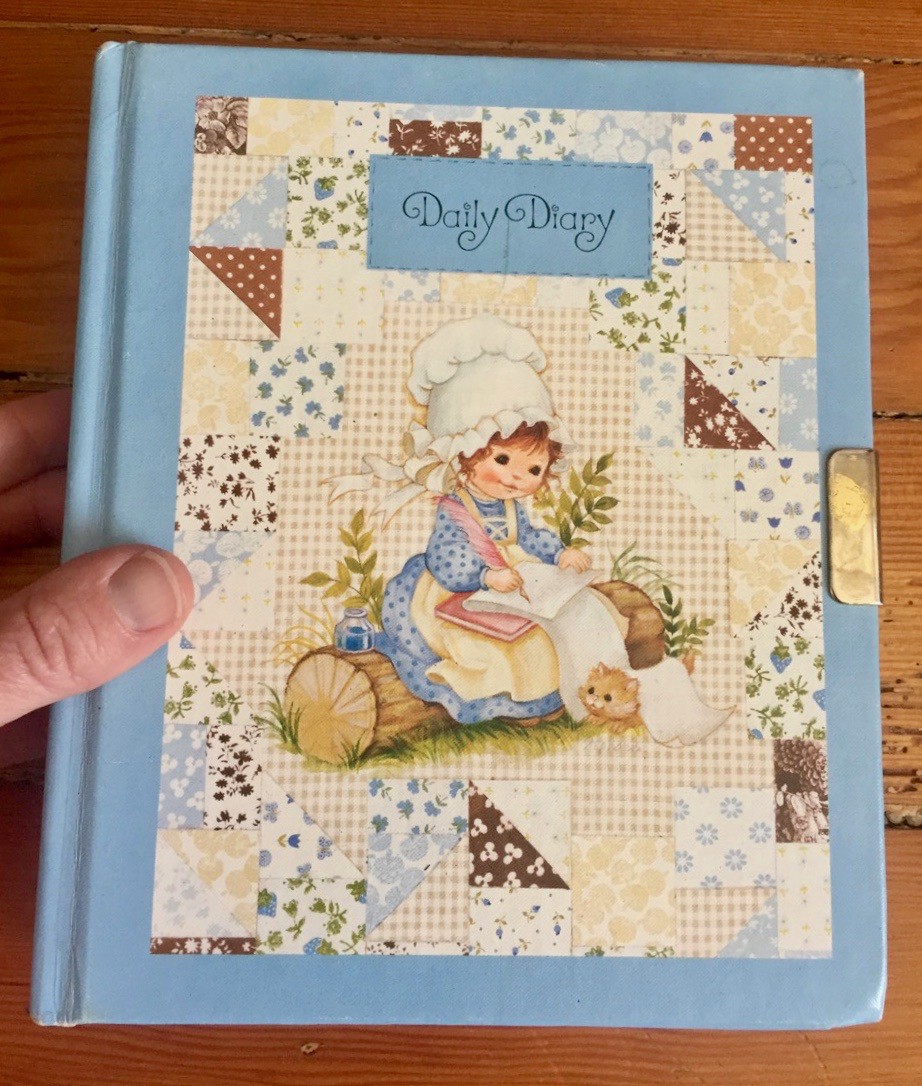
The author’s diary from age 9–10. Image: Allison Stockman

The first line, “I’m so glad I have this diary because now I can write about private stuff…like which boy I like at church,” elicited roars of laughter from the backseat. At 9, 11, and 13, my boys are simultaneously allergic to and electrified by anything mushy or romantic. They begged to hear more. I proceeded to read about an intense crush on a boy named Tadd Clelland:

“He looked at me through the church pews. I think he likes me. He said I could kiss him if he went under the ‘missile’ toe. I love him he is my boyfriend. It felt good to say that. Sometimes I lie awake in bed thinking about him.”

The kids were screaming. “What does that even mean?” and “You were flirting in church?” and “Mom, he was not your boyfriend!”

There was so much to explain.

As a Mormon, I had spent so much of my childhood at church; though it seemed crazy to them, it made sense that this would be the place where I fell in love for the first time. I explained my comic misspelling of the homophone “missile toe,” I admitted to being mystified as to why I called this kid my boyfriend though we’d never kissed or held hands. I couldn’t quite believe what I was reading — at age nine, romantic love was just bursting out of me with an idealistic abandon that I had forgotten I’d felt for anyone, ever.

I couldn’t quite believe what I was reading — at age nine, romantic love was just bursting out of me with an idealistic abandon that I had forgotten I’d felt for anyone, ever.

I read the remaining pages in fits of laughter and wonder. In one passage, I admitted to falling for Tad’s best friend, Craig. In the next, an account of my first love letter from this new crush, consisting of just one sentence: “You are my dreamboat.” Then admitting in the next breath, “I don’t like Craig that much,” and going right back to dreaming about holding Tad’s hand a picking him for the Ladies Choice song at our local roller skating rink.

The kids begged me to read it, again and again, then took the diary into the backseat and howled at the bubble letters, overwrought exclamation points, and the initials, A.S + T.C. encased in hearts decorating the margins. “Mom, I can’t believe this is you!” my 13-year-old gasped.

It was hard for me to believe, too. This was me. Before I knew what was coming; before the rollercoaster of debilitating crushes, obsessive loves, and tragic leavings that marked my high school and college years. Before the naïve union, secret agony, and terrible heartbreak of divorcing their dad. This was me before dating as a single mom in her 40s, reluctant to name anyone that I’d kissed, much less slept with several times or even for several years, my boyfriend. This was me before I knew that love was as elusive and fantastical as thinking I could keep three kids from fighting or grinding gummy worm sugar and actual shit into the backseat of my boyfriend’s new truck.

We made it to Redmond and watched the 90 seconds of totality, mouths agape. I couldn’t quite believe the enchantment I felt as the moon’s dark orb floated towards the sun; the brilliance of the solar corona during totality; and the velvety twilight that bathed the trash-strewn BLM land (on which we’d managed to camp, cook, and use as our own personal latrine) with a beautiful, purple tinge for a breathtaking minute and a half. Nothing I’d ever witnessed had ever felt so otherworldly, so significant.
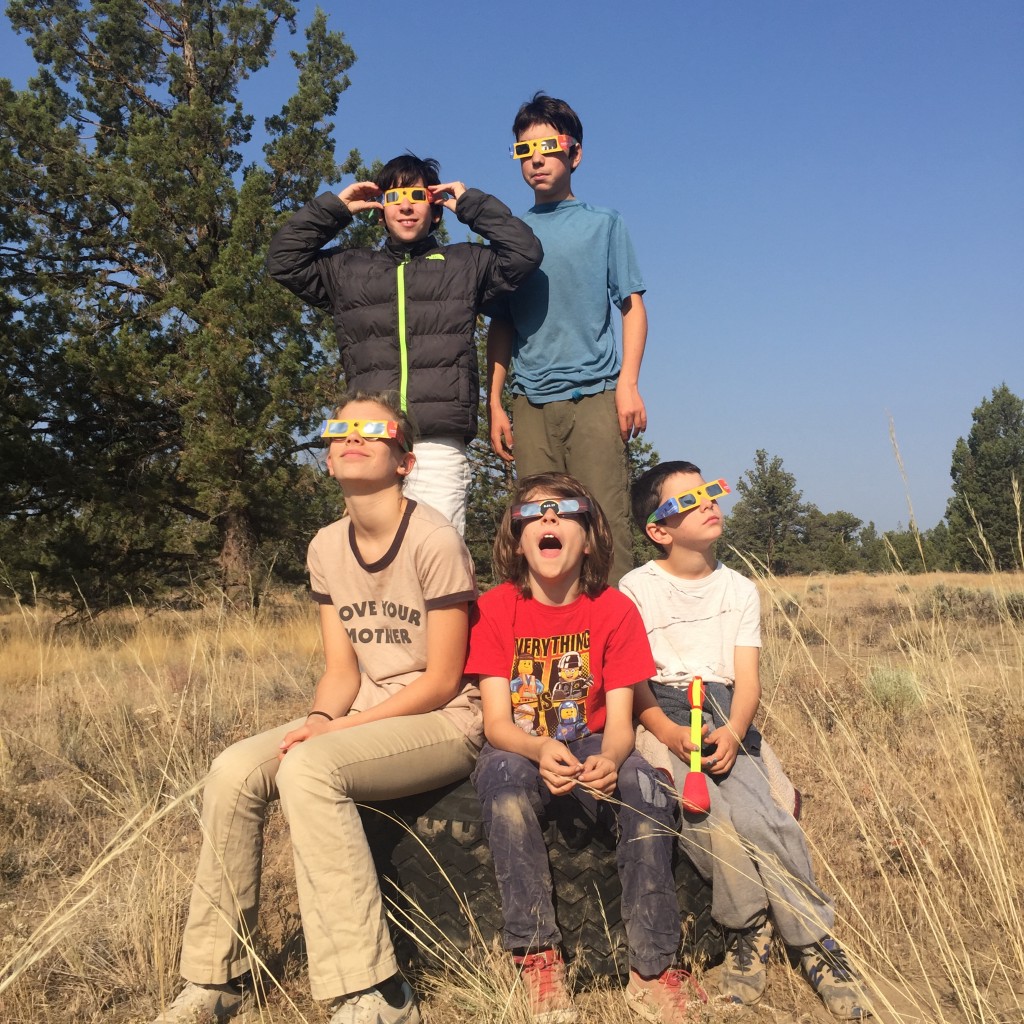
The author’s sons and two friends, watching the eclipse through glasses. Image: Allison Stockman

And then we turned around and drove home.

The gaming, fighting, swearing, singing, napping, messy eating, and movie watching resumed as we made our way down the endless stretch of I-5 toward the Bay area. Yet the diary — “Read it again, Mom. Please?” — was requested as much as candy or stops to pee. They had so many questions: Did people like me really use the word “dreamboat” in the olden days? And what is that anyway? Isn’t it bad to fall in love with someone’s best friend? Did you ever end up kissing Tadd?

Like the sun that’s there every day in the sky, yet most of the time impossible to truly see, so much of my life had been hidden from my kids. The highs and lows of finding and losing love, the wreckage and nagging regret of divorce. The awfulness of internet dating. Even on the road trip, I tried to disguise the glimmer of hope I was trying to keep alive about my new man — whose countenance and car were looking much worse for the wear than when we’d left Oakland three days prior. Before surrendering my phone to stop the insanity in the backseat, I made my kids swear on their Halloween candy not to read my messages: my diary of texted heart emojis and XXOOs between me and my boyfriend, and messages about him to my sister: I like him soooo much. But what if the kids don’t? What if he doesn’t like them?

I’m not sure how much of the real me I should let anyone see. Especially the people I selfishly brought into this heartbreaking world. Those six pages let my kids glimpse their mother — the other planetary force that is the reason they exist, that makes their days, dependably, go round and round — from a new perspective. They reminded me that though I try to tell myself I’m above it all, and so much wiser than when I was nine, I’m not. Love makes me feel the same way now as it did then. Clueless and lost. At sea on a dreamboat, throwing myself overboard once again.

Though I try to tell myself I’m above it all, and so much wiser than when I was nine, I’m not. Love makes me feel the same way now as it did then. Clueless and lost. At sea on a dreamboat, throwing myself overboard once again.

The next total solar eclipse to transverse the United States will be in 2024. Six years from now. I will be 50 years old. There’s a good chance the relationship I’m in now won’t last that long; I wonder how many more times I’ll drown in those waters. And how many more kinds of sadness I’ll have to hide from my sons. In six years, they will have started down that terrifying road of finding and losing the people who will leave a mark on their lives forever. Though I wish I could, I know there’s little I can do to stop the things that will happen to them, the things that will crack them right through, and maybe break them altogether. I can only hope to build on those six pages of honesty when the time comes.

7 Books About the Interplay of Technology and Humanity

Since Frankenstein first gave his creature the jolt — and the creature gave the scientist an existential jolt right back — novelists have been asking, “Will science save us or destroy us?” Ponder for a moment and you’ll find compelling evidence for each side of the question. Nuclear power on one hand, and nuclear warheads on the other. Antibiotics and superviruses. The Internet and…the Internet. What is certain is that science and technology are a part of our everyday lives and, therefore, a part of us. Take, as an example, yourself right here and right now: You are reading this article on a piece of technology, an item you fondle hundreds (thousands?) of times a day and gaze at for hours. Oh that your lover garnered such attentions!

Purchase the novel

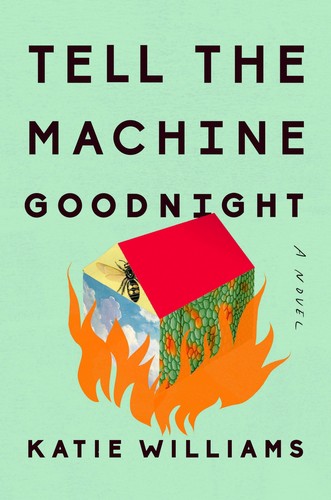
In my novel Tell the Machine Goodnight, my protagonist, Pearl, works as a contentment technician for the Apricity Corporation, wielding a technology that promises to answer that most central yet elusive of human questions: How can I be happy? As Pearl sees the effect of this “happiness machine” on both her clients and her family, she questions what happiness is and if a device can deliver us to it.

Technology is by humans and it is also of humans. It is an expression of who we are, right down to the silliest app. Literature, too, is an expression of who we are. Here are seven books that explore the interplay of technology and humanity:

Feed by M.T. Anderson

In Anderson’s Feed, we’ve plucked our devices from our laps and selfie-sticks and planted them directly into our heads. This National Book Award finalist centers on teenage Titus and his school friends whose relationship with their Internet implants is, by turns, comic, chilling, and prescient. For example, the friends eagerly engage with a Coke promo that promises free soda if they work the brand name into their conversation as many times as possible. The kids feed on the feed; the feed feeds on them.

The Windup Girl by Paolo Bacigalupi

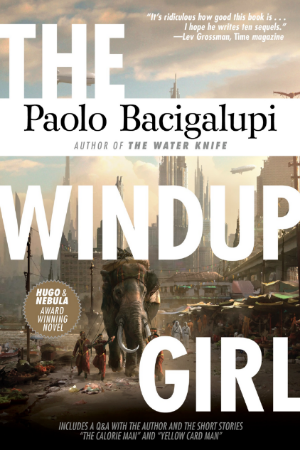
Emiko, the titular windup girl in Bacigalupi’s Hugo and Nebula Award winner, has been designed to move with a twitch, a legal requirement to visually mark her as a New Person, engineered, grown, and sold to wealthy customers. The novel follows Emiko, left behind in a brothel by the businessman who bought her, and Anderson Lake, a calorie man in search of heirloom seeds resistant to genetic blight, both of them trying to survive in a future Bangkok where the oceans rise and the crops wither. Emiko’s twitch is emblematic of the scientists’ fingers twitch-twitch-twitching in food, in people, and in nature with cascading effects.

A Closed and Common Orbit by Becky Chambers

Lovelace has been transplanted from her previous “body” as a spaceship’s artificial intelligence into human form in this Hugo Award finalist. Now, with the help of her guardian Pepper, she must cobble together a life planet-side. Working a day job, getting a tattoo, and dancing in a club might seem like small stuff, unless you used to be a spaceship. The acuity with which Chambers imagines Lovelace’s perspective shows a deep interest in not just how technology functions but how it feels. Note: A Closed and Common Orbit is the stand-alone sequel to the equally vivacious The Long Way to a Small, Angry Planet.

The Summer Prince by Alaya Dawn Johnson

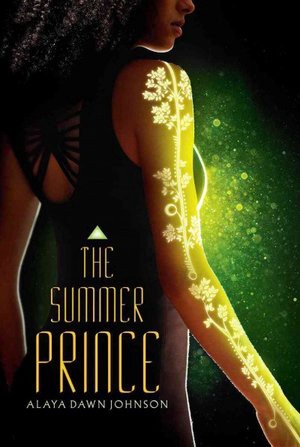
In matriarchal tech-hub Palmares Tres, Brazil, artist June Costa and her best friend Gil both fall in love with Enki, the Summer King, chosen to rule for a year and be sacrificed at its end. Enki wants to use his fleeting reign to agitate for political change, and June applies her artistic talents to the cause. Johnson’s National Book Award finalist shows young people using technology as a tool for artistic and political expression, a tricked-out megaphone for their real, raw voices.

Warcross by Marie Lu

Part World of Warcraft, part Quidditch, part Super Bowl, the virtual-reality sport Warcross is a national sensation, and bounty-hunter Emika Chen uses her hacking skills to catch people making illegal bets on the games. When Emika accidentally hacks herself onto the playing field of the Warcross Championships she catches, not her bounty, but a spot on the team and a target on her back. Fans of Ender’s Game and Ready Player One will want to hit “play” on Lu’s novel, the first in a planned trilogy.

The Binti Trilogy by Nnedi Okorafor

Binti can “tree”; that is, she can do complex mathematics in her head until they become a meditation, a pattern, and a power. This ability has earned her both the position of master harmonizer for her Himba community and an invitation to attend school at the intergalactic Oomza Uni; however these paths diverge and she can only choose one. The technology in Okorafor’s trilogy reveals itself slowly, causing the reader to re-examine what they thought they knew, and that process of re-examining one’s beliefs and biases is what these powerful Hugo and Nebula Award-winning novellas are about.

Love, Robot by Margaret Rhee

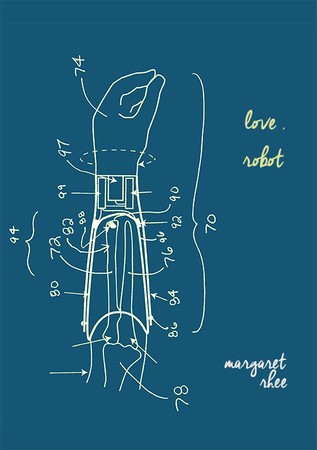
In storytelling, robots are used both as the image of humans and the negative image; what a robot isn’t allows us to define what a person is. In this captivating and playful book of robot love poems, Rhee takes this idea and turns it about, suggesting that to recognize another’s personhood is one of the most human things we can do.

Two Debut Poems by Bennet Bergman

THE WEATHER

Today it arrived in an unapologetic parcel.
I had decided to wait for it in bed

because it was taking so long,
it was February already.

Because I slept through the rain,
I didn’t know it had rained.

Meanwhile winter has gotten so big we need
special mirrors to see around it.

I don’t need to do things over and over again
before I know that I don’t need to do them anymore.

Didn’t need many nights to understand for example
the boredom of having sex with strange men.

There is a card game to teach you that,
how to deduce a pattern from any set.

But the weather does
subject us to repetition.

It arrives obliviously, as if we have
not already had some of that.

When I open it up —
what has come for me —

it is as anyone would have expected a cool bit
of iron ore, a sad anniversary.

I am going to loiter in the shower while it gets
dark out. Run my head through my hands.

BARRICADES

Each time he rose from bed before me in the morning to rinse
his face with cold water I wondered what he had done it for:
whether it was vanity, whether

this was unattractive to me. He would come back to bed
with water in his beard, mouth tasting like toothpaste,
eyes not so stopped with sleep.

He once said to someone else at a party that when he was
younger he had wanted to be in porn movies,
but Tel Aviv was such a small city. This

killed me. He had such a way of bringing exteriors
into the room with us, even when we had
lived together for many months

he would play these little shadow scenes of betrayal
across my imagination and always they were
painterly and robust:

how in the checkout aisle with our groceries he, looking
out the window at a man on the street, says brightly
but not to me, “I know him,”

and I know what he means. A unique feature of our life
together was that all its walls could be rolled down
like windows or thought of as not to exist.

As if you were just sitting in the kitchen when
the siding of your house was made
suddenly to face in;

you might think, How strange, that I am not outside
but somehow the outside
has come here.

About the Author

Bennet Bergman lives in New York and will soon be an MFA student in poetry at the Iowa Writers’ Workshop. These are his first published poems.

“The Weather” and “Barricades” are published here by permission of the author, Bennet Bergman. Copyright © Bennet Bergman 2018. All rights reserved.

Winter Has Gotten So Big We Need Special Mirrors To See Around It

Issue №17

THE WEATHER

Today it arrived in an unapologetic parcel.
I had decided to wait for it in bed

because it was taking so long,
it was February already.

Because I slept through the rain,
I didn’t know it had rained.

Meanwhile winter has gotten so big we need
special mirrors to see around it.

I don’t need to do things over and over again
before I know that I don’t need to do them anymore.

Didn’t need many nights to understand for example
the boredom of having sex with strange men.

There is a card game to teach you that,
how to deduce a pattern from any set.

But the weather does
subject us to repetition.

It arrives obliviously, as if we have
not already had some of that.

When I open it up —
what has come for me —

it is as anyone would have expected a cool bit
of iron ore, a sad anniversary.

I am going to loiter in the shower while it gets
dark out. Run my head through my hands.

BARRICADES

Each time he rose from bed before me in the morning to rinse
his face with cold water I wondered what he had done it for:
whether it was vanity, whether

this was unattractive to me. He would come back to bed
with water in his beard, mouth tasting like toothpaste,
eyes not so stopped with sleep.

He once said to someone else at a party that when he was
younger he had wanted to be in porn movies,
but Tel Aviv was such a small city. This

killed me. He had such a way of bringing exteriors
into the room with us, even when we had
lived together for many months

he would play these little shadow scenes of betrayal
across my imagination and always they were
painterly and robust:

how in the checkout aisle with our groceries he, looking
out the window at a man on the street, says brightly
but not to me, “I know him,”

and I know what he means. A unique feature of our life
together was that all its walls could be rolled down
like windows or thought of as not to exist.

As if you were just sitting in the kitchen when
the siding of your house was made
suddenly to face in;

you might think, How strange, that I am not outside
but somehow the outside
has come here.

About the Author

Bennet Bergman lives in New York and will soon be an MFA student in poetry at the Iowa Writers’ Workshop. These are his first published poems.

About the Recommended Reading and the Commuter

The Commuter publishes here every other Monday, and is our home for flash and graphic narrative, and poetry. Recommended Reading is the weekly fiction magazine of Electric Literature, publishing every Wednesday morning. In addition to featuring our own recommendations of original, previously unpublished fiction, we invite established authors, indie presses, and literary magazines to recommend great work from their pages, past and present. For access to year-round submissions, join our membership program on Drip, and follow Recommended Reading on Medium to get every issue straight to your feed. Recommended Reading is supported by the Amazon Literary Partnership, the New York State Council on the Arts, and the National Endowment for the Arts. For other links from Electric Literature, follow us, or sign up for our eNewsletter.

“The Weather” and “Barricades” are published here by permission of the author, Bennet Bergman. Copyright © Bennet Bergman 2018. All rights reserved.

The Main Character of ‘Ulysses’ Is Jewish, and That’s No Accident

The winter I was 23, two things happened to change my relationship with a country I had long privately (wistfully, romantically, perhaps childishly) thought of as my homeland.

The first occurred as two of my male Irish — that is, non-Jewish — relatives were discussing English football in a pub in Dublin around Christmastime; I and my sister were visiting for a couple of weeks, and at the time of this conversation the two of us were sitting within earshot.

“Who do you support?”

“The Spurs.”

A smirk. “You like Jews?”

“Love ’em.”

Laughter.

The second happening was unambiguous, and unlike the previous scene I was an active interlocutor: it took place as I was telling two of my Irish relatives about Taglit, a non-profit that funds young members of the Jewish diaspora to visit Israel.

“Who pays for the trips they organize?” the wife of the couple asked.

“They do.”

“That’s unlike them.”

To my deep eternal shame I did not react; I continued on as though I had not heard her remark. In Ireland, after all, that is how one deals with troubles.


The Annals of Innisfallen, an Irish medieval chronicle, reports that in 1079 “five Jews came from over sea with gifts to Tairdelbach [the king of Munster]” before being sent back. The earliest known record of Jews in Ireland, then, is also a record of expulsion. If the history of Irish Jews is long, the size of the community has always been vanishingly small: the 2016 census reported that a little over 2,500 people (over half of whom lived in Dublin) identified Judaism as their religion. One could challenge the choice to restrict Jewishness, as the census did, to a religious designation; nevertheless, it says something about a group that its most famous member is a fictional character.

James Joyce probably based Leopold Bloom on Aron Ettore Schmitz, better known as Italo Svevo, the pioneering modernist who was born in Trieste to a German Jewish father and an Italian mother. The two met when Svevo was posted to London for work and needed to improve his English. After inquiring about tutors at the Berlitz language school, he was paired with the Irish writer, and friendship between the two quickly extended past vocabulary lists and conjugation tables. Svevo and his wife, Livia Veneziana, were among the first to hear the story “The Dead”; after Joyce had read the breathtaking closing lines, Veneziana presented him with a fistful of flowers plucked from her garden.

Like Svevo (and like me), Bloom is half Jewish, born to an Irish mother and a Jewish father: his surname is the Anglicized version of the Hungarian Virág, meaning “flower.” But Bloom was not brought up a Jew: as Ulysses relates, he has been baptized three separate times. His efforts to understand the rigidly Christian society around him are deeply moving, an example of the open-hearted spirit of inquiry that animates him as a character. Early on in his portion of the novel, Bloom enters a quiet church and sits looking around the empty space: seeing a crucifix with the Latin abbreviation INRI (Iesus Nazarenus Rex Iudaeorum, or Jesus Christ, King of the Jews), he muses that it must stand for “Iron Nails Ran In.”

Bloom is never accepted: throughout Ulysses, numerous instances of antisemitism occur, from offhand comments to aggressive confrontations.

But Bloom is never accepted: throughout the monumentally unremarkable day during which the plot of Ulysses unfolds, numerous instances of antisemitism occur, ranging from offhand comments to aggressive confrontations. In the book’s first chapter, no one reacts when the Englishman Haines remarks that German Jews are becoming Britain’s “national problem”; towards its midpoint, in the chapter that represents the nadir of Bloom’s day, Bloom is chased out of a pub by a drunk (tellingly identified only as “the citizen”) who threatens to brain him for uttering Jesus’ name. Collectively, these incidents make clear that many of those around him view Bloom as a fundamental outsider, incapable of integrating no matter what he tries.

If the “overvisibility” of Bloom’s Jewishness is what courts antisemitic comments from other Dubliners, the undervisibility of my Jewishness was what permitted others to make such remarks in my presence. With the exception of a few cowlicks, I am the image of my mother when she was my age: several times when meeting her childhood friends or neighbors, I have known them to stare at me as though I were a ghost, a vision of the past stepped forth from a sun-faded photograph. My family in Dublin think of me as half-Irish, half-American, a description that is both accurate and incomplete. If I am permitted insider status, it is both because of and at the cost of this unperceived other side of who I am.


Because Ulysses transposes the epic hero’s journey into the quotidian mode, Bloom is often referred to as an everyman protagonist. Chapter Ten (or “Wandering Rocks”), with its polyphonic chorus of voice upon voice, seems to raise this matter directly: Could anyone be the protagonist of Ulysses? Could the Catholic priest be the focal character as well as the shop assistant, the daydreaming secretary as well as the gentleman placing bets on the horse races? The answer, I think, is no. Bloom is not a ho-hum man without qualities, and he is not the average Dubliner. Joyce’s choice to cast his main character as a member of a minority group about which Dublin society seems at best largely ill at ease charts the course for the entire novel.

Joyce’s choice to cast his main character as a member of a minority group charts the course for the entire novel.

In the same chapter that sees Bloom violently threatened by “the citizen,” another of the pub-goers contemptuously dubs him as a “mixed middling.” In context, this epithet refers to the perceived feminine qualities Bloom has, resulting in a “mix” of gender attributes that the speaker finds laughable. Yet it can also, I think, be stretched to include his ethnically mixed background. And the key mark of Bloom’s status as a “mixed middling” is his capacity for empathy, an idea expressed most forcefully in the final chapter, “Penelope,” which also constitutes a recapitulation of stream-of-consciousness narration. Structured as eight breathless sentences narrated by Bloom’s wife Molly before she falls asleep, much of the soliloquy’s attitude towards Bloom is anger, yet at one point, casting her mind back to her engagement, Molly softens, remembering that she chose him because he “understood or felt what a woman is.” This same wish to “understand and feel” is present everywhere, from when Bloom idly muses about how a cat must see the world to when, thinking about a female acquaintance who is in the hospital after delivering a baby, he considers the pain of childbirth and what social reforms might be enacted to ensure proper care for all expectant mothers. The quest to meet the other on equal footing is one that sets Bloom apart from so many of his interlocutors, and it is one that is engendered by his status as an outsider — the same spirit that sees him puzzling out Latin inscriptions in a church early on in the novel. Because immediate understanding is not granted to him freely, Bloom has learned the habit of imagining the world through other eyes. Those belonging to the majority — whether in Joyce’s fictional Dublin of the past or my real Dublin of the present — have the freedom not to have to imagine, a freedom which metastasizes into a desire not to understand others for whom their easy insider knowledge is not a given. To cast Bloom as an everyman, in other words, is to give short shrift to the crucial trait that distinguishes Bloom from the crowds through which he walks.


Joyce does not allow Bloom the triumphant return of Homer’s Odyssey. Odysseus defeats the suitors who have swarmed around Penelope in his absence; Bloom, by contrast, knowingly allows Molly’s lover to visit her, justifying his decision not to act with the words “Prevent useless.” Not every homecoming can be a happy one.

The winter I turned 23, the winter I encountered antisemitism in Ireland for the first time, was not so much a homecoming as a realization that perhaps I was not home at all. It was not that I had thought antisemitism did not exist in Ireland (though up until that point the dooryard of my life had been swept mercifully clear of it). But in both instances mentioned above the speakers were my family, flesh of my flesh, people whom I loved. They knew me, knew what I was, what my father was. And still they spoke as they did. Though I had been raised in America, Ireland was where we spent our summers, where I celebrated most of my childhood birthdays; it was the place I had long imagined I would move to when I grew up. But the realization that the people I cared about most understood neither Jewishness nor, seemingly, the fact of my Jewishness forced me to rethink how truly I could belong there.

Belonging, curiously, never seems to be a question that Bloom contemplates directly in the novel; any possibility of self-pity seems defeated by his own curiosity. His mind flits ravenlike from thing to thing to thing; he imagines metempsychosis, the transmigration of souls, and what if everyone were someone else, and if our spirits might all flow together over the bridges and through the streets, beneath the roofs of the city and the apathy of the stars in heaven.

Here Are the Books Every Recent Graduate Really Needs to Read

You might have heard that Bill Gates is giving a book to every person graduating college in the U.S. this year. The book is Factfulness by Hans Rosling. Rosling was a Swedish statistician, physician, and global health advocate, who wrote the book to combat the attack against facts by illuminating the ten human tendencies that keep us from seeing the facts. Then he presents loads of data to back him up. Rosling passed away before the book was published, and it was completed by his son and daughter-in-law.

The book certainly has a valiant mission — and we do need to talk about facts (now more than ever!). But along with Steven Pinker’s Enlightenment Now, Factfulness can also be understood as a book about why we are all doing better than we think we are. Which is just another way to say — “Hey graduates! Dive in to the status quo. The water’s fine enough.” Which of course, it isn’t. It’s important for graduates to feel freshly enraged. We need graduates to feel enlightened by their education and the history that precedes them, but we also need them to feel empowered to dismantle the systems the rest of us might feel like we’re already mired in.

We need graduates to feel enlightened by their education and the history that precedes them, but we also need them to feel empowered to dismantle the systems the rest of us might feel like we’re already mired in.

Gates is trying to help, and I’m sure Hans Rosling’s book has really wonderful insights to offer. But if every graduate is gifted one book as they enter the basal monotony threatening the other side of adulthood? (And we imagine a utopia in which every graduate reads it?) Then they deserve a better book.

Maybe some of Tracy K. Smith’s poetry, to remind them to look up, pay attention, and observe structures that can contain the known and unknown. Or a children’s book — like Kenny’s Window by Maurice Sendak. Or The Dispossessed, to put ideas in their heads about alternatives to capitalism. It was hard to pick one, so I reached out to authors I admire, as well as Electric Literature staff and contributors, to ask: if you had Bill Gates’s philanthropic purse, which book would you buy for every graduate in 2018? After gathering their answers I started to take notes for my own summer syllabus to keep me forever young.

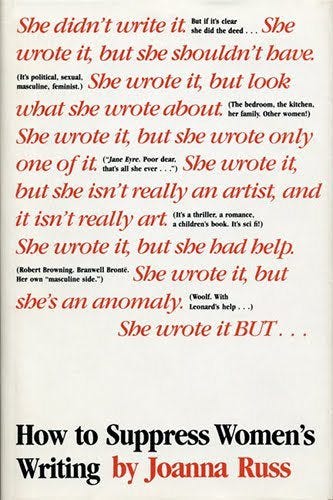
How to Suppress Women’s Writing by Joanna Russ

Because in it, she clearly and brilliantly demonstrates the ways dominant groups affect culture by (subtly, sometimes unconsciously) devaluing the art of women and other minority groups. If we gave this book to every graduate in the U.S. — or even better, assigned/taught it to every student in the U.S. — I think the world would actively become a better place. — Carmen Maria Machado, author of Her Body and Other Parties

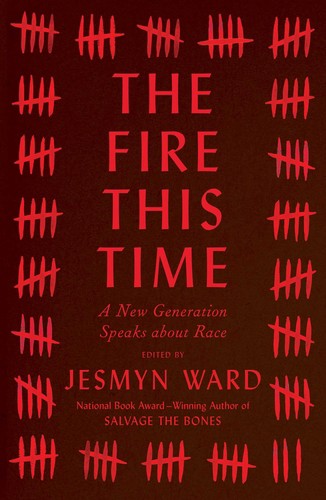
The Fire This Time: A New Generation Speaks About Race edited by Jesmyn Ward

Any and everyone should be aware of how race intrinsically affects people in America as we go into the world out of academia. Lessons learned in the classroom can be many, yet they may also be confined to a particular viewpoint. What we learn through expression as well as experience (and most importantly listening) can garner increased awareness on how to look at life but also how we each have a responsibility to be aware of how life affects others. I think The Fire This Time broaches those realities while also giving insight to a worldview that is not often taught in the classroom. — Jennifer Baker, contributing editor, Electric Literature

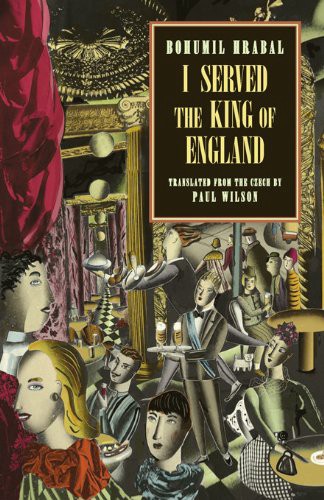
I Served the King of England by Bohumil Hrabal

About a young person starting out on the bottom, full of all the beauty, wonder, surprise, heartache and tragedy of a fully lived life. — Kelly Luce, editor, Recommended Reading Commuter

The Member of the Wedding by Carson McCullers

Frankie Addams is desperate to be included in her sister’s wedding, and the “green and crazy” summer marks a painful and exhilarating inflection point in her life. But The Member of the Wedding is much more than a coming of age novel. Frankie, like so many young people, wants to escape her circumstances. She is interested in breaking boundaries of manner and tradition, but also of gender and race, and one hopes she preserves her strong mindedness into adulthood, just when she is most at risk for allowing it to fade. — Halimah Marcus, executive director, Electric Literature

Kindred by Octavia Butler

Too many high school graduates finish with fiction the minute they finish school, but this suspenseful fable about a woman sent back in time and forced to labor on the slave plantation where her ancestors toiled checks every post-high-school box: it’s instantly likable, perpetually timely, and readably accessible to young adults without even hinting at condescension. What a lot of readers — young and old — seem to need in fiction, clear-cut heroes and villains, are represented here, as are difficult moral choices, and life lessons that have the added benefit of being true. — John Cotter, author of Under the Small Lights

The Idiot by Elif Batuman

People will think I’ve only read one book but The Idiot is a good one — it’s wonderful to read years after college but also captures all the weirdness of being between the real world and still a student. — Lucie Shelly, senior editor, Recommended Reading

Cat’s Cradle by Kurt Vonnegut

This is HIGHLY EMBARRASSING, but the first thing that sprang to mind was Kurt Vonnegut’s Cat’s Cradle. Not only a white guy, but one of those white guys white guys are always white-guying about! But one skill I think people of all ages need right now is the ability to be skeptical of the easy categories they’re handed (including “white guy,” not for nothing) — the ready-made affinity groups you can slide into and shut down thought. Sometimes finding those groups opens you up to yourself and the world, because you finally feel understood and accepted, which makes so many other things possible — but they can also warp your view of other people, both the “us-es” and the “thems,” and they’re such cozy cages that unless you’re alert to the dangers you sink right into whatever self-affirming viewpoint is being offered. At best, that gives us the beautiful explosion of proud identity groups the internet has facilitated, but at worst it gives us fucking Nazis, so you know: let’s be vigilant about granfalloons, okay? Handle with care. — Jess Zimmerman, editor-in-chief, Electric Literature

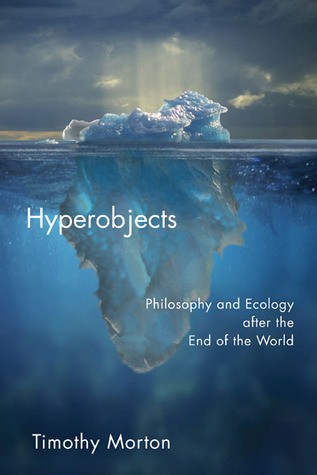
Hyperobjects: Philosophy and Ecology after the End of the World by Timothy Morton

Instead of telling graduates “Everything’s fine!” I’m thinking “Mobilize the troops!” Timothy Morton’s writing is brilliant and weird and surprisingly accessible, and definitely has the capacity to blow some minds. This book is all about why it’s so hard for us to process global warming as a concept — its massive scale in time and space dwarfs human understanding — which lulls us into inaction. But “the hyperobject spells doom now”! Even if the kids can’t stop global warming, maybe this will help them come to terms with it. — Elisa Gabbert, author of The Self Unstable, The Blunt Instrument columnist

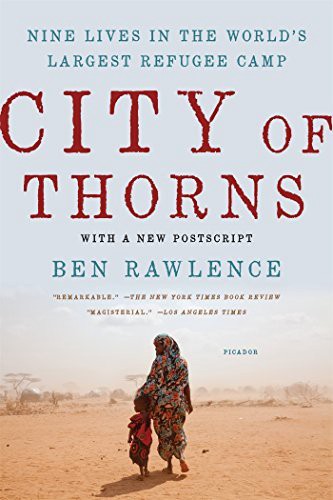
City of Thorns: Nine Lives in the World’s Largest Refugee Camp by Ben Rawlence

City of Thorns chronicles the lives of the forgotten refugees stuck in limbo in the Dadaab refugee camp in Kenya, some of whom have been there for 26 years. There are more forcibly displaced people now than ever before in history (65.6 million worldwide in 2017), but with the rise of anti-immigrant and anti-refugee sentiment across the world, fewer and fewer countries are willing to provide resettlement. In an era of fake news and xenophobia, City of Thorns is a timely read that helps to humanize and provide insight into the global refugee crisis.— Jo Lou, assistant editor, Electric Literature

The World’s Most Beautiful Bookstores

I love traveling, though sadly I suck at planning my trips. Whenever I get home whether its from another state or another country, I unpack my bags, settle in, then immediately hear of some fantastic attraction I was foolish enough to miss.

Some things I don’t mind skipping out on. Base jumping is always a pass since I’m terrified of heights. Fashion doesn’t really strike my fancy either. But there are few things more tragic than knowing I strolled through the streets of a far off city and walked right past a book attraction I may never get the chance to see again. How was I to know that inconspicuous, little doorway held a literary landscape beyond my wildest imaginings? Why couldn’t I have heard of it sooner?

I write this list with a heaping spoonful of regret. This is a collection of bookstores that got away. Each one is a marvel that I gather now in hopes that awareness of these outstanding bookstores will keep you from making the same mistake next time you travel.

Cărturești Carusel, Bucharest, Romania

Built back in the 1860s and later transformed into the headquarters for the Chrissoveloni Bank, this Romanian bookstore holds more than 10,000 square feet of library area, a bistro, and gorgeous white columned architecture that could put many art galleries to shame.

Shakespeare & Company, Paris, France

A lovely independent bookstore on the Rue de la Bûcherie in Paris, Shakespeare & Co was founded by an American George Whitman in what was originally a 17th century monastery. Fun fact: it was made to be a retreat for the literarily inclined, and early in its life, the bookstore welcomed Tumbleweeds — wandering writers, poets, and intellectuals — to sleep over on the store benches in exchange for mini autobiographies.

Merci Used Book Cafe, Paris, France

The menu might seem pricey, but their signature tea time scones and massive wall-spanning bookshelves make it all worth it. With a 10,000 used book library, guests are free to snag a book, munch on snacks, and enjoy the Parisian ambiance.

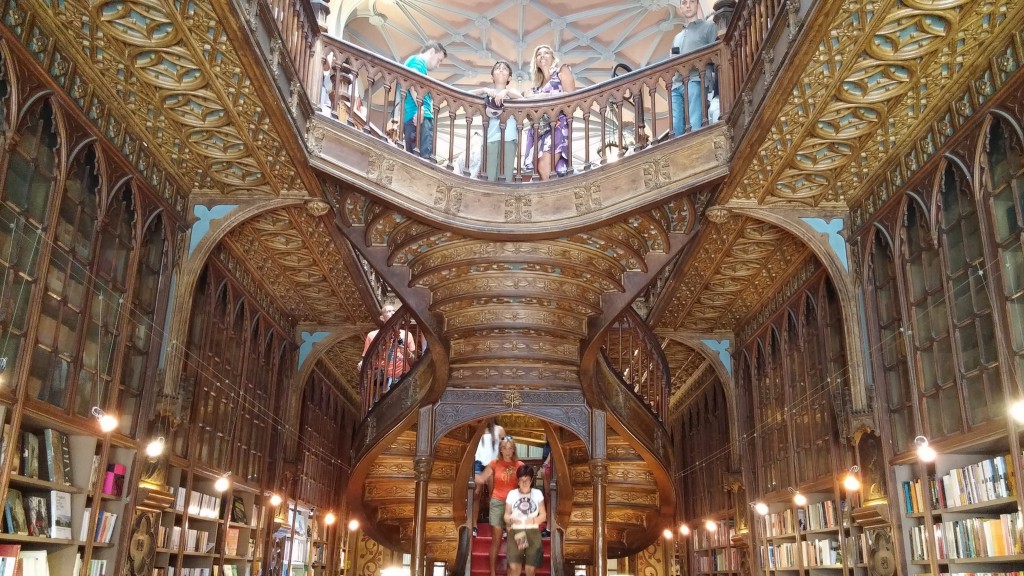
Livraria Lello, Porto, Portugal

The Lello brothers, José and António, were such big book nerds that in 1881 they opened a bookstore and publishing house of their own. Later redesigned by famous bookshop engineer Francisco Xavier Esteves, Livraria Lello’s beauty is almost overwhelming with elaborate wood carvings, stained glass, and busts of famous Portuguese writers.

Cafebrería El Péndulo, Mexico City, Mexico

Although two stories chock full of books and a delicious cafe are appealing, the real draw to this Mexico City bookstore is the greenery that sets a naturalistic mood. Leaves and vines curl around the shelves, giving visitors the experience of reading in the middle of a forest.

Libreria Acqua Alta, Venice, Italy

New and used books pile up in literal gondolas in this boat-themed book shop. And if a boat for a bookshelf isn’t wacky enough for you, then make your way to the back where you can find a tall stacked staircase of books—with a paddle for a handrail, of course.

El Ateneo, Buenos Aires, Argentina

Between the ceiling frescos, balconies, and luxuriously red curtained stage, books take the place of an audience in this repurposed theater. Renovated by architect Fernando Manzone in 2000, the book and music was once home to tango performances, a radio station, and a cinema before settling into its current form.

https://www.instagram.com/p/CNu2ECgLXk0/?utm_source=ig_web_copy_link

Boekhandel Dominicanen, Maastricht, Netherlands

Located in a 13th-century Dominican Church, which happens to be a national monument in Maastricht, the “book flat” covers two floors and nearly 200 feet of bookshelves almost as tall as the Gothic style ceiling itself. Don’t forget to grab a drink by the coffee corner in the choir.

Poplar Kid’s Republic, Beijing, China

Definitely bring your hyperactive little ones along to this playground of a bookstore. Opened by a Japanese children’s book publisher, Poplar brings to life all the reading room fantasies I had as a kid with its rainbow decor and odd reading nooks.

Zhongshuge Bookstore, Hangzhou, China

It would be easy to get vertigo in this strategically designed bookstore. Constructed with purposeful optical illusions, height-based aesthetic, and mirrored ceilings, Zhongshuge gives the impression of an infinite space composed only of books (and conveniently placed cushions for plopping down with a book).

Albertine Books, New York, U.S.

Hidden inside the French Embassy in New York, this tiny bookstore features books in French, French books in translation, and upstairs, the most beautiful ceiling east of the Sistine Chapel. Regardez les étoiles!

Housing Works Bookstore Cafe, New York, U.S.

Nestled in the heart of Soho is this hidden gem that features a grand spiral staircase, decorative columns, and rows and rows of donated books illuminated under the warm glow of fairy-lights. The bookstore cafe is staffed entirely by volunteers and 100% of their proceeds go towards benefitting the homeless living with HIV/AIDS.

The 7 Most Amazing Tunnels, Towers, and Mazes Made of Books

The Last Bookstore, Los Angeles, U.S.

The largest new and used book and record store in California, The Last Bookstore’s name is a call out and a promise that classics like vinyl and (gasp) paper books will always be in style. The bookshelf labyrinth on the upper floor gives “getting lost in a book” an entirely new meaning.

Bart’s Books, Ojai, U.S.

As the largest independent outdoor bookstore in the U.S., Bart’s has so many books that the cases comes spilling out onto the sidewalk for passersby to browse. If you find something you like, feel free to drop a few dollars in can outside, and take it merrily on your way. No need to wait in line.

Atlantis Books, Santorini, Greece

With a tagline like “A Decade of Amateur Bookselling” you know this is a shop with personality. On top of an amazing view, Atlantis organizes numerous readings, screenings, and even dance parties.

Daunt Books, London, U.K.

Built in an Edwardian style and made for an antiquarian bookseller, Daunt prides itself on catering to travelers. With shelves organized not by fiction or nonfiction but by country, the main gallery provides a wonderfully unique browsing experience that feels like a tour around the world.

Barter Books, Alnwick, U.K.

An open fire may not be the best idea in a bookstore, but it sure does feel great in the winter time. Finding a home inside an abandoned Victorian railway station, this giant second hand bookstore is remarkably cosy for its size and will tempt visitors to sit back and relax after spotting the reading material of their choice.

Word on the Water, London, U.K.

This floating bookshop was in danger of shutting down not too long ago, but after six months of drifting around, the barge has set its anchor near Kings Cross in London. Books, jazz, and a friendly dog are always ready to greet those meandering by the water.

Leakey’s Bookshop, Inverness, Scotland

Another bookstore in a church, Leakey’s boasts of a fantastic cafe and rare prints. One of the largest bookshops in Scotland, the woodburning stove and two floors of stacked literature is ideal for visitors who wander in.

Book and Bed, Tokyo

Those of us who fall asleep while promising just one more chapter will feel perfectly at home in this “accommodation bookshop.” This hostel doesn’t just sell books—it sells shelves and bunks for the ultimate “night in the bookstore” experience.

I’m Not Here to Play the Suffering Minority for White Readers

“Nice job!” says someone who’s come up behind me at the line for the bathroom.

I turn around — they’re smiling at me. A white friend of a white MFA classmate. Sara without an h, friend of Thom with an h. But I’m confused: what have I done to deserve this praise, however generically phrased? What is the job I’ve performed nicely? It’s intermission at a graduate reading and we’re standing on the second floor of a house that a group of MFA classmates share. Maybe I’m being praised for how patiently I’m waiting here to pee.

When I don’t say anything, h-less Sara adds, “That was a wonderful reading!”

And then I want to say, “Wait, whose friend are you, again?”

I want to ask, “You think I’m the one who just read? When I was in the audience, like you? You watched another Asian American writer for twenty whole minutes and then came to congratulate me? Because there can only be one?”

White writers say to me that they wish they had this kind of suffering to write about.

I have trouble remembering how I actually responded. A part of me tries to explain the incident away: Sara saw me from behind; registered my height, skin tone, and hair; made a quick guess. Still, the other Asian American writer’s hair was longer than mine, and wavy. We were also wearing different shirts, pants, shoes. I was wearing glasses. The house was brightly lit. I turned around after hearing “Nice job!”

I’ve been socialized to seek alternative explanations for white people’s erasure of me. I’ve been taught to see isolated mistakes, not a pattern of harm that began long before graduate school, a history of harm long before I came into the world. At the same time, white readers expect me to write about this harm. White writers say to me that they wish they had this kind of suffering to write about, since it’s what’s “hot” in publishing right now.

I wish the racism were not so predictable. I don’t want to seem predictable in my response. I fear that I’m playing into the image of the Suffering Minority that tends to garner praise from white readers. “Nice job!” Do they mean my wistful stare? My famously Asian stoic resilience? Do they even mean me, or do they mean someone else who looks like me — since all they’re paying attention to is a general, generic Asianness? I worry that even when I write with humor, with sarcasm and absurdity, a white reader will see only the Racial Woe. I worry that even when I write of delight and tenderness and pug dogs, a white reader will still proclaim, “This is clearly about how hard it was to immigrate.”

I worry that even when I write of delight and tenderness and pug dogs, a white reader will proclaim, ‘This is clearly about how hard it was to immigrate.’

After a recent reading, a white attendee came up to tell me how they were on their way to their Chinese friend’s place to make dumplings. They highlighted a poem of mine in which a mother and son make dumplings together; they were definitely going to mention this poem to their Chinese friend. On the one hand, I was glad this person found something to connect with in my work and I could tell they were excited by the coincidence — my poem, their plans for the rest of the evening. On the other hand, I’d thought the poem was investigating a much more complicated relationship to Chineseness, one that acknowledges the role of pop culture and texts like The Joy Luck Club, one that is hesitant to include a dumpling-making scene because of an awareness of white readers’ expectations.

I’d intended the poem to subvert such expectations. Instead, this white audience member seemed to feel that their expectations had been met. To them, the dumplings were an example of straightforward Chineseness, something that bonded two generations in their immigrant hardship. This interpretation felt like another instance of “Nice job!” — a form of praise that is about the white reader’s relationship to otherness, rather than about what the writer of color is exploring in their relationship to an identity category and the associated set of cultural practices.

How anyone ends up interpreting my work is out of my hands, of course; I can’t expect in-depth analysis every time, especially after just one reading event. I believe in the complexity of what I’ve created; I hope that readers will, in their own time, discover that. But here, too, is a pattern, a history: white readers tend to be the ones commenting on or asking about the obviously Chinese references in my work. Rarely am I asked by white readers about my references to Pablo Neruda or to Audre Lorde or to, in that same poem with the dumplings, Mahmoud Darwish. I don’t always expect close reading or listening. I’m asking for reading, listening. When I think back to that dumpling-loving white audience member, I wonder if they would’ve said exactly the same thing to Amy Tan, after a reading of hers. Is “I’m going to make dumplings with my Chinese friend” just a thing one says to any writer of Chinese descent?

When I tweeted the other week about some of these issues — in particular, how white writers say they wish they had racial suffering to write about, to get published for — I got another type of response that I’ve come to anticipate: “Those writers are just jealous of your success!” And this response was coming from white writers who seemed to understand my overall argument. I mention the “just jealousy” explanation here because it inadvertently implies that white writers are not really saying or doing racist things; they’re expressing an emotion that, while bad, is human. So once again white writers get to be fully human, full of emotions. The “just jealousy” explanation makes me think of all the times I’ve confided in a white colleague that someone said something racist and then the colleague said, “Oh they must be upset because…” or “They’re only acting like that because…” as though the problem is not racism but a personal issue, and I’m supposed to empathize.

I don’t want to do that emotional labor. And I don’t want to do a “nice job.” I want to keep digging into the messiness that is my relationship to race, as well as sexuality, as well as the napping rhino at the Seneca Park Zoo in Rochester, New York. I’m working toward a language that’s accurate about and embracing of the kinds of joy I feel, the kinds of sorrow, the kinds of emotion not visible to the white gaze. I want to say, this poem starring a napping rhino is an Asian American poem; in fact, despite it not being about how hard it was to immigrate, it is the most Asian American poem I have ever written.

7 Books About Escaping Religious Fundamentalism

It wasn’t until the Episcopal Church ordained its first woman bishop in 1989 that I realized all the other bishops in our church, past and present, were men. I remember standing in our kitchen holding the newspaper clipping with Barbara Harris’s photo in my hand. I remember learning about the death threats and overhearing that a faction of the Church had decided to splinter off to protest her ordination. It was horrible. But what was worse, in my mind, was that the Church I loved and that I thought loved me, the Church for which my own father worked as a priest, had condoned a status quo equivalent to the sort of discrimination I thought it stood against. I was ten years old.

Purchase the novel

This feeling of awakening and betrayal is central to my debut novel, The Book of Essie, in which seventeen-year-old Esther Hicks is forced to question the authority of her own parents and her father’s cChurch when she discovers she is pregnant. The stakes are high for Essie, the star of her family’s reality show, but they may be even higher for her family, whose entire media empire would be threatened if the truth about Essie’s pregnancy became known.

In writing The Book of Essie, I drew from my own reading of other stories in which characters struggle to express themselves within the confines of a fundamentalist religion, some of whom find it necessary to break free. Here are a few favorites.

Disobedience by Naomi Alderman

The author is currently receiving accolades for her best-selling and timely novel The Power, but her debut (newly adapted into a movie) is equally lovely. In it, Ronit Krushka narrates her return to London from New York following the death of her father, an Orthodox Jewish rabbi. Prior to her moving away, Ronit had a brief and forbidden affair with her friend Esti, who is now married to Dovid, Ronit’s cousin and her father’s heir apparent at the synagogue. Ronit must negotiate these relationships and their complicated history, while at the same time learning how to grieve a father from whom she had been so long estranged.

‘The Power’ Is the Perfect Book for the #MeToo Movement

The Handmaid’s Tale by Margaret Atwood

In this groundbreaking tale, the narrator is referred to only as Offred, her own individuality having been forcibly supplanted by her role as handmaid to the commander, Fred, whose name she assumes for the duration of her assignment. We learn that the Republic of Gilead was established after a religious revolution in the former United States and that fertile women are scarce. To combat low birth rates, these women are assigned to high-level government officials, a form of sex slavery rationalized by its Biblical origins. Offred’s ordeal is horrific, but it is also based, according to the author, on historical precedent. In addition to being adapted into an award-winning Hulu series, the novel is sadly more relevant than ever.

The Scarlet Letter by Nathaniel Hawthorne

This classic, frequently taught in schools, is the story of Hester Prynne, who is shamed for an “illegitimate” pregnancy in 17th century Puritan Massachusetts, an area I call home. When she refuses to name her lover, Hester’s judgment is decided jointly by government and church officials and they consider putting her to death. Ultimately, in a sentence considered merciful, Hester is instead punished by being forced onto the town’s scaffold for a period of public scorn. She is also forced to wear a scarlet A on her chest, marking her as an adulteress forever.

The Poisonwood Bible by Barbara Kingsolver

The Price family — mother, father, and four daughters — travel as missionaries to a remote village in the Belgian Congo in the late 1950s. The novel is largely narrated by the Price girls, each of whom is impacted differently by the move itself and by their father’s fumbling attempts to deliver the local villagers from what he sees as Godlessness and ignorance. Kingsolver does an excellent job of dismantling Nathan Price’s white savior complex and leaves the reader with a richer understanding and respect for the region in which the story is set.

Lolita in Tehran by Azar Nafisi

In this haunting memoir, the author describes her own experiences after the Iranian Revolution and the establishment of the Islamic Republic of Iran. Nafisi, a professor of English literature, was teaching at the University of Tehran in 1979 when Ayatollah Khomeini decreed that all women must adhere to the Islamic dress code, including compulsory head covering. Nafisi refused and was expelled from the university. She later adopts the mandatory dress and teaches elsewhere for many years. After resigning, she teaches privately in her home and her students read, among other works of western literature, Nabokov’s Lolita.

Vladimir Nabokov Taught Me How to Be a Feminist

Ruby by Cynthia Bond

Liberty Township is a small and isolated African American community in east Texas when the novel opens in 1974. Ephram, the late preacher’s son, lives with and is worried over by his sister, Celia, who aspires to a position of prominence in their church. Ruby, with whom Ephram played as a child, has returned from New York and is widely understood to be crazy, an assessment based on her tendency to walk naked through the streets. Ephram is drawn to Ruby and, through their touching and unconventional love story, the two are able to piece together her traumatic past. They are opposed, however, by their congregation, who prefer to ostracize Ruby rather than help her heal.

Persepolis by Marjane Satrapi

This graphic novel is a memoir set against the backdrop of the Iranian Revolution, which occurred when the author was ten. Satrapi recounts how schools became segregated by gender and girls were forced to wear veils. The revolution was followed by the Iran-Iraq War, during which a Scud missile destroyed a neighbor’s house and killed Satrapi’s friend. In the wake of this loss, she becomes more rebellious, even speaking out against the regime. Eventually, fearing that Satrapi could be arrested or even killed, her family decides to send her to Austria to complete her education. Persepolis 2 describes the author’s homecoming and young adulthood in Iran.

Believe It or Not, I Learned Something About Love and Virtue from “Atlas Shrugged”

Novel Gazing is Electric Literature’s personal essay series about the way reading shapes our lives. This time, we asked: What’s a book you misunderstood?

I misunderstood three things the summer I ran off to New Orleans in 2009. The first was love. The second was goodness. The third was Atlas Shrugged.

It was my first summer after college, and I returned to my small town in Wyoming to work at a local grocery store and deli. I chopped and stacked piles of cured meats and pulled the guts out of rotisserie chickens for eight hours a day. It was a monotonous $7.50/hour, punctuated only by daydreams about the big story that I was going to write.

After about a month on the job, I learned that my female co-workers were making 50 cents less than me an hour. I promptly confronted the store owner about this, and when he denied any knowledge of what was going on, I typed a strongly-worded letter, taped it to his door, and quit my job. Then I ran away to New Orleans to build houses with Habitat for Humanity.

At this point, you’re probably getting a pretty good sense of the type of person I was. I was a perpetual do-gooder, blindly throwing myself at any cause that happened to get in my path. Building houses post-Katrina, building latrines in Kenya, mentoring troubled youth — this was where I put my energy. At the time, I believed that my participation (or lack thereof) in things was important, that in order to be good you must perform goodness.

What I didn’t realize at the time was that my feelings about do-gooding were inextricably tied to my self-hatred.

But before we can talk about that, we have to talk about how Atlas Shrugged and I made our way to New Orleans. I’d ordered the book online after I’d seen an internet forum thread that practically yodeled its praises. A big part of my performing goodness was reading books that I believed would teach me how to be good. And what better book to bring on a trip to do good than a door-stopping guide to capitalism?

I remember fondly the colorful front facade of the small hostel that greeted me when I stepped from my airport taxi. While I forget the name, it had a small placard hanging from the front that just welcomed you right in. The place had a constant influx of new arrivals from various countries, plus a few old hands. The former were people like me (Rand-boy) and a young chain-smoking man who was emulating Kerouac; the latter included a recent USMC veteran who sat by the pool that nobody swam in all day and a pot-smoking couple who worked in movies.

I smoked pot for the first time with that couple, I got drunk for the first time with the veteran (we ate watermelon soaked in vodka). While I did all this, I read and misinterpreted what Ayn Rand was saying, all the while trying to look deep while I was doing it.

Rand was writing that all our problems arise from us not doing capitalism right. Worth, in Atlas Shrugged and her other work, is directly connected to creating things in your mind and making them real objects. Your worth is in what you do. It sounds nice, especially to a teenager. I think this quote (when we’re being introduced to John Galt’s utopia) sums it up:

Miss Taggart, we have no laws in this valley, no rules, no formal organization of any kind. We come here because we want to rest. But we have certain customs, which we all observe, because they pertain to the things we need to rest from. So I’ll warn you now that there is one word which is forbidden in this valley: the word “give.”

For Rand, the ultimate failing of the world is that people do things for other people rather than themselves. We create worth for others, in her metric, by creating it for ourselves with impunity. In this framework, cooperation is not the thing that got us out of the caves — will to power and creativity did.

I read somewhere once about the teenage impulse to point at the world and call bullshit. My teenage impulse was different. My impulse was to point at myself and call bullshit. Every single page, from John Galt’s ridiculous million-page monologue to the most unromantic relationship of all time between two characters whose names I’ve forgotten, felt like an indictment of who I was. A useless do-gooder. A “giver.” Secretly, I believed it. If I truly wanted to help others, I would help myself first.

During the day, I would install soffit (the material that allows a roof to vent on the eaves of a home) on the sides of quick-build relief housing for victims of Katrina. At night, I would read a bristling fusillade criticizing the weak and the downtrodden. At the time, the contradiction meant little to me.

Then, I met Renna.

Renna was German. She was beautiful, but that was secondary. She had seen the movies I had seen, read the theater that I cared about, and carried herself with a grace and intelligence that I still try to emulate. The first second I met her, I was in love, and in the second second, I knew that I was never going to be enough, because a person that thinks in binaries is uninteresting to those who don’t.

The first second I met her, I was in love, and in the second second, I knew that I was never going to be enough.

We met because people meet in places like this, and I had borrowed scissors from the front desk to cut my fingernails (like a barbarian, which the desk clerk informed me of after she snatched them from my hands having seen what I was doing). After this little tiff, Renna walked over and struck up a conversation with me. She did not agree with the clerk’s shaming.

For the next few weeks, I adapted to a routine: wake up, go build houses and explore the city a bit, return to the hostel, and follow Renna around like a puppy dog.

When you’re a teenager, all you can see is the bullshit and the suffering. When you become an adult, you learn to ignore it. You learn the impracticality of caring when it comes to suffering. How can one person take on the weight of the world? One person is so small, so insignificant, so overblown with their sense of importance.

What I hadn’t realized at the time was the bald-faced cruelty of a philosophy like Objectivism. It caters to self-hatred, and the hatred of the other because it divides people into the weak and the strong, the capable and the incapable. You are in one camp or the other. And when you can only see the world in two extremes — bad and good, love and hate — it’s a simple switch from one extreme to the other.

When you can only see the world in two extremes — bad and good, love and hate — it’s a simple switch from one extreme to the other.

It violates one of the most important values I now hold dear: that every human being is a unique entity. There will never be another like you, twee as that sounds. That is the true crime that a philosophy like Objectivism caters to — it tells the weak (i.e. everyone) that to bond, to cooperate, to serve others and ask the same in return, is the tack of the feeble-minded and frail. Contributing to capitalist machinery that is driven by human suffering is not a choice for most of us, but to pump our fists as it chews its way through our neighbors and loved ones is a special type of dark and cruel ideology.

Renna and I connected on social media at the end of her trip, and I think she felt something for me before she left, but I don’t think that matters. Don’t mistake this for some sort of story about how if I’d been enough of a bad boy, enough of a man, I would have gotten what I wanted. That’s violent, masculine nonsense, driven and reinforced by works like Atlas Shrugged. Weak loses, strong wins. That philosophy is reductive and demeaning. I did not understand it at the time, but the truth was that I had no idea what I wanted. I was a blank slate, allowing others to paint my beliefs for me.

Because of this, I failed Renna and myself. The truth was that I couldn’t even see her. My inattention made her a non-character, an object on my path to whatever I was seeking — sex, attention, validation, I still don’t know what it was. But what likely happened was that I was so consumed with my thoughts about self-worth, my thoughts about whether I was valuable or not, I failed to see a person.

I had no idea what I wanted. I was a blank slate, allowing others to paint my beliefs for me.

In the height of my self-hatred, I actually believed and internalized what this book had to say. That we are transactional beings, that our worth is in our labors and our service to our goals and God-given skill. That somehow, if I quit my job in service of a principle, that if I went and did ostensibly “good” things, that if I was kind enough, nice enough, skilled enough, what I wanted would simply make itself available to me — the labor itself would craft a way forward. I would get the girl, and I would get love. Because I had earned it. Ultimately, it was not my doing good that was the problem, it was my reasoning.

Something that I’ve learned after many long and painful lessons (and continue to learn daily), is that the beating heart of love is in asking. It is not in proving or earning. You don’t “get” love. Loving and being loved is a profound act of bravery and vulnerability because you ask simple questions that can never be fully answered: “Will you care for me? Will you think about me before yourself? Will you cooperate with me?”

Maybe I didn’t read Atlas Shrugged wrong at all. Maybe I read it exactly the right way. But reading in this way leaves you with an empty heart. There is always more work to be done. Goodness is hard, and there is no reward for it. There is no reward in a life well-lived. Goodness and kindness are only worthwhile because the alternative is an impoverished life spent reducing everything to objects and obstacles, including things you claim to love.

Somehow, John Galt didn’t manage to get that across.